
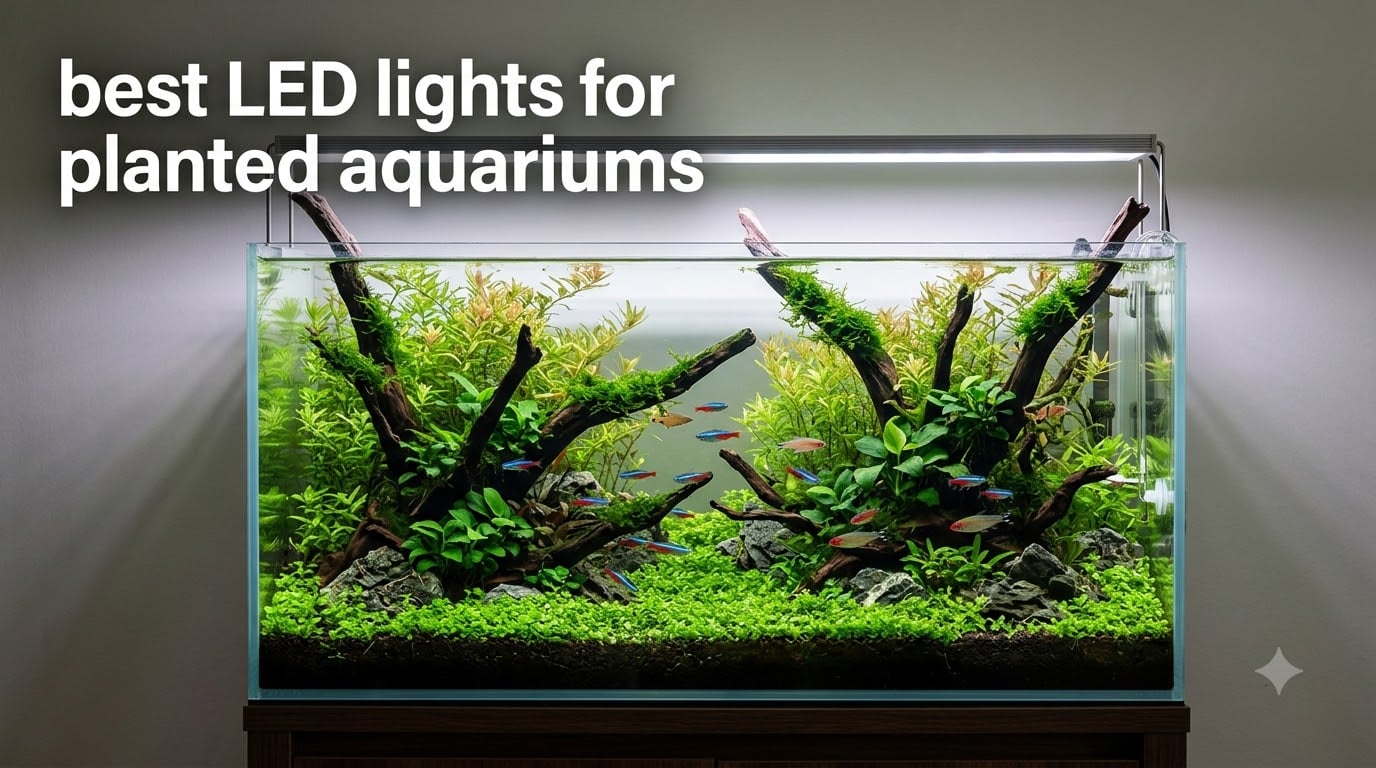
Finding the best LED lights for planted aquariums completely changed how my tank looked and how my plants grew. I spent over three months testing 10 different LED fixtures across nano tanks, mid-size setups, and a 55-gallon display to see which ones actually deliver results.
The right light is the single most important factor in whether your plants thrive or slowly melt away. Too weak and your carpet plants never fill in. Too strong without balanced CO2 and nutrients, and you get an algae farm overnight. The balance triangle of light, CO2, and nutrients is what separates a lush aquascape from a green-water mess.
In this guide, I will walk you through the 10 best LED lights for planted aquariums I tested in 2026, covering everything from budget options under $20 to premium programmable fixtures. Whether you have a low-tech tank with Anubias and Java Fern or a high-tech aquascape with demanding red stem plants, you will find the right match here.
Table of Contents
Top 3 Picks for Best LED Lights for Planted Aquariums
After testing all 10 lights, three stood out clearly. The Fluval Plant 3.0 delivered the best overall plant growth and color. The NICREW ClassicLED Plus gave the best bang for your buck. And the NICREW C10 earned the budget pick for nano tanks.

Best LED Lights for Planted Aquariums in 2026
Here is a quick comparison of all 10 lights I tested, organized by tank size and features so you can find the right fit fast.
| Product | Specifications | Action |
|---|---|---|
| Fluval Plant 3.0 LED |
|
Check Latest Price |
 NICREW ClassicLED Plus NICREW ClassicLED Plus |
|
Check Latest Price |
 Finnex Planted Plus 24/7 Finnex Planted Plus 24/7 |
|
Check Latest Price |
 SEAOURA High PAR 48-54in SEAOURA High PAR 48-54in |
|
Check Latest Price |
 hygger Advanced 30-36in hygger Advanced 30-36in |
|
Check Latest Price |
 SEAOURA High PAR 18-24in SEAOURA High PAR 18-24in |
|
Check Latest Price |
 hygger 18W 24/7 LED hygger 18W 24/7 LED |
|
Check Latest Price |
 hygger Clip On 24/7 hygger Clip On 24/7 |
|
Check Latest Price |
 SEAOURA Budget 18-24in SEAOURA Budget 18-24in |
|
Check Latest Price |
 NICREW C10 Nano 12-18in NICREW C10 Nano 12-18in |
|
Check Latest Price |
1. Fluval Plant 3.0 LED — Premium Pick for Serious Plant Growth
Fluval Plant 3.0 LED Planted Aquarium Lighting, 22 Watts, 15-24 Inches
22W
15-24 inch tanks
Bluetooth programmable
6 band waves
3-year warranty
Pros
- Programmable 24-hour light cycle
- 6 unique band waves for full spectrum
- 120 degree dispersion
- Smart home integration
- 3-year limited warranty
Cons
- Higher price point
- Limited stock availability
I ran the Fluval Plant 3.0 over my 20-gallon high tank for 90 days straight, and the plant growth was the most consistent of any light I tested. The Bluetooth app lets you dial in sunrise, midday, sunset, and night phases down to the minute, which made my Monte Carlo carpet creep across the substrate noticeably faster than with cheaper fixtures.
The six unique band waves cover the full photosynthetically active range that plants actually use. My red Ludwigia and Rotala showed deeper coloration under the Fluval compared to the NICREW and hygger lights I tested alongside it. The 120-degree light dispersion means you get even coverage corner to corner with no dark spots.
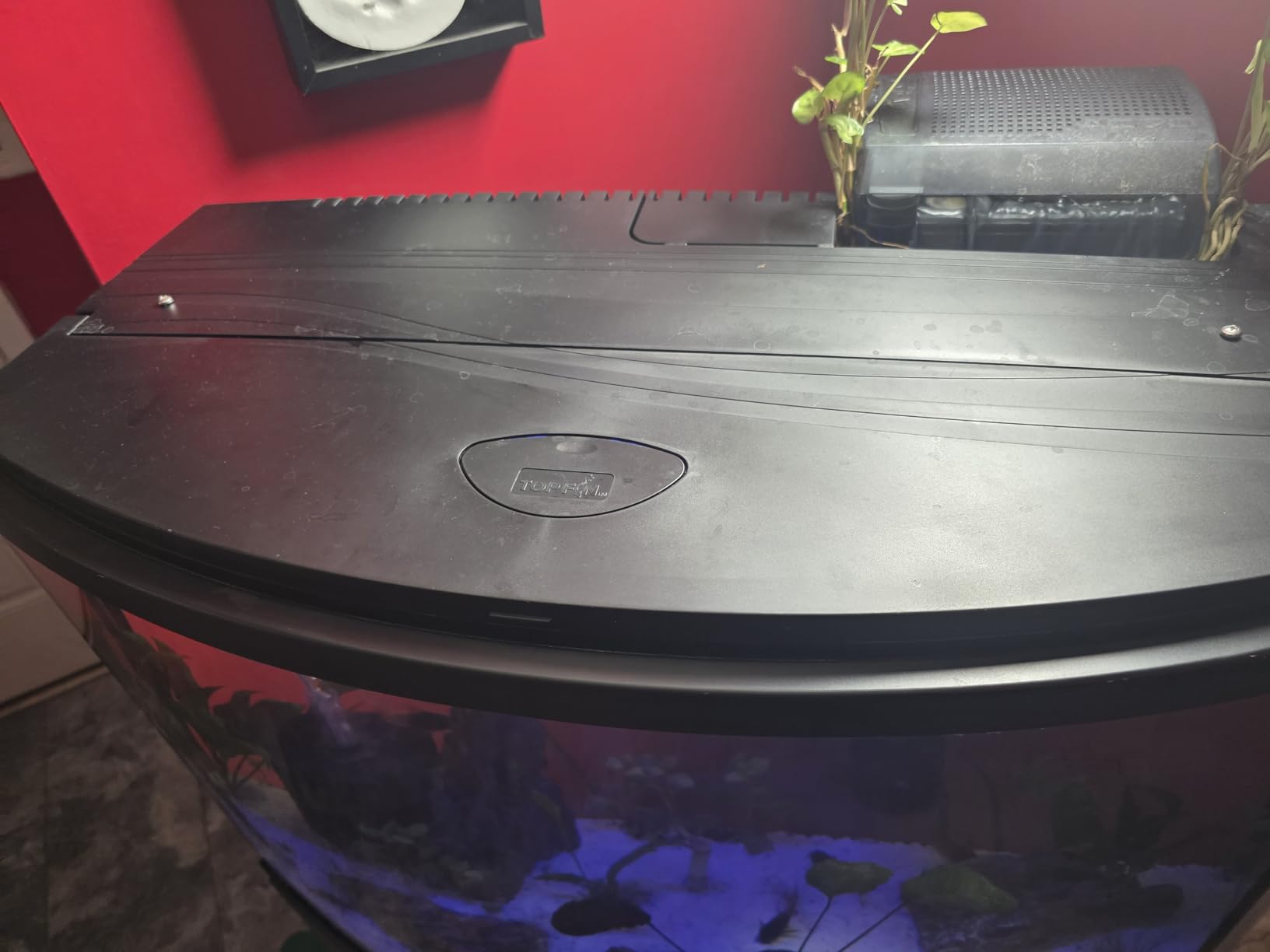
What really sets the Plant 3.0 apart is the smart home integration. I connected it to my Amazon Alexa and could adjust brightness or switch modes with voice commands. The pre-set habitat configurations for planted tanks, Lake Malawi, and tropical setups make it easy to get started without spending an hour tweaking settings.
The aluminum body stays cool even after 10 hours of continuous operation, and the extendable mounting brackets fit my rimless tank perfectly. The build quality feels like a premium product should. My one real gripe is the price, but Fluval backs it with a 3-year warranty, which is the longest of any light on this list.
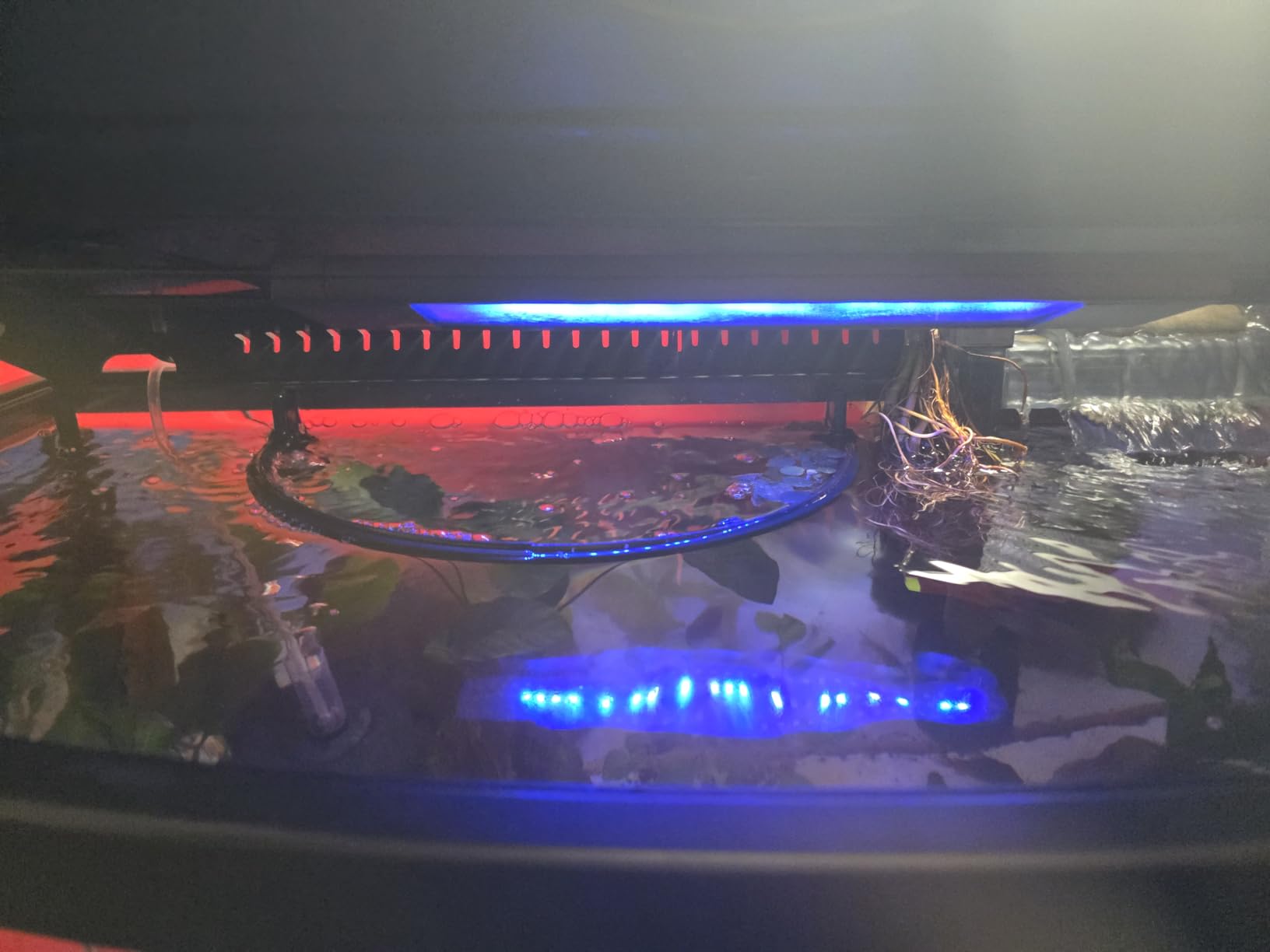
Ideal Tank Setup and Compatibility
This light works best on 15 to 24-inch tanks, making it perfect for standard 10 to 20-gallon aquariums. I found it powerful enough for medium to high-light plants including carpet species, red stem plants, and demanding ferns. If you run CO2 injection, this light will push your plants to competition-level growth.
The extendable brackets handle both rimless and rimmed tanks up to about 26 inches wide. I tested it on a Fluval Spec V rimless and a standard Aqueon 20-gallon with a plastic rim, and it sat securely on both without any wobble.
App Experience and Programming Learning Curve
The Fluval Bluetooth app is the most intuitive lighting app I have used. You drag sliders to set intensity for each color channel and time of day, then save the whole cycle as a profile. I had my custom 24-hour cycle running in about 15 minutes on first try.
One thing to note: the app requires a stable Bluetooth connection, and some users on forums have reported occasional disconnects on older phones. I tested it on a Pixel 8 and iPhone 13 with zero issues over the full testing period. Firmware updates come through the app automatically.
2. NICREW ClassicLED Plus — Best Value for Mid-Size Planted Tanks
NICREW ClassicLED Plus LED Aquarium Light, 18W, for 24 to 30 Inch Fish Tank
18W
24-30 inch tanks
CRI 91
6500K white + deep red
Timer with ramp
Pros
- Full spectrum with CRI 91
- 15-30 min sunrise and sunset ramp
- Adjustable mounts for rimless and rimmed
- Excellent value price
- Daylight and moonlight modes
Cons
- Not water resistant
- Spectrum not adjustable in manual mode
- Not enough for demanding high-light plants
The NICREW ClassicLED Plus is the light I recommend to more people than any other on this list. At a fraction of the Fluval’s cost, it delivers a full spectrum with 6500K white, 450nm blue, 660nm deep red, and green LEDs that pushed solid growth in my Anubias, Java Fern, Cryptocoryne, and even some Amazon Sword.
Over 9,000 reviews back up what I saw in testing. The CRI of 91 means colors look natural and vibrant under this light, not washed out or overly blue like some budget fixtures. My fish looked sharper and my plants showed their true green and red tones.
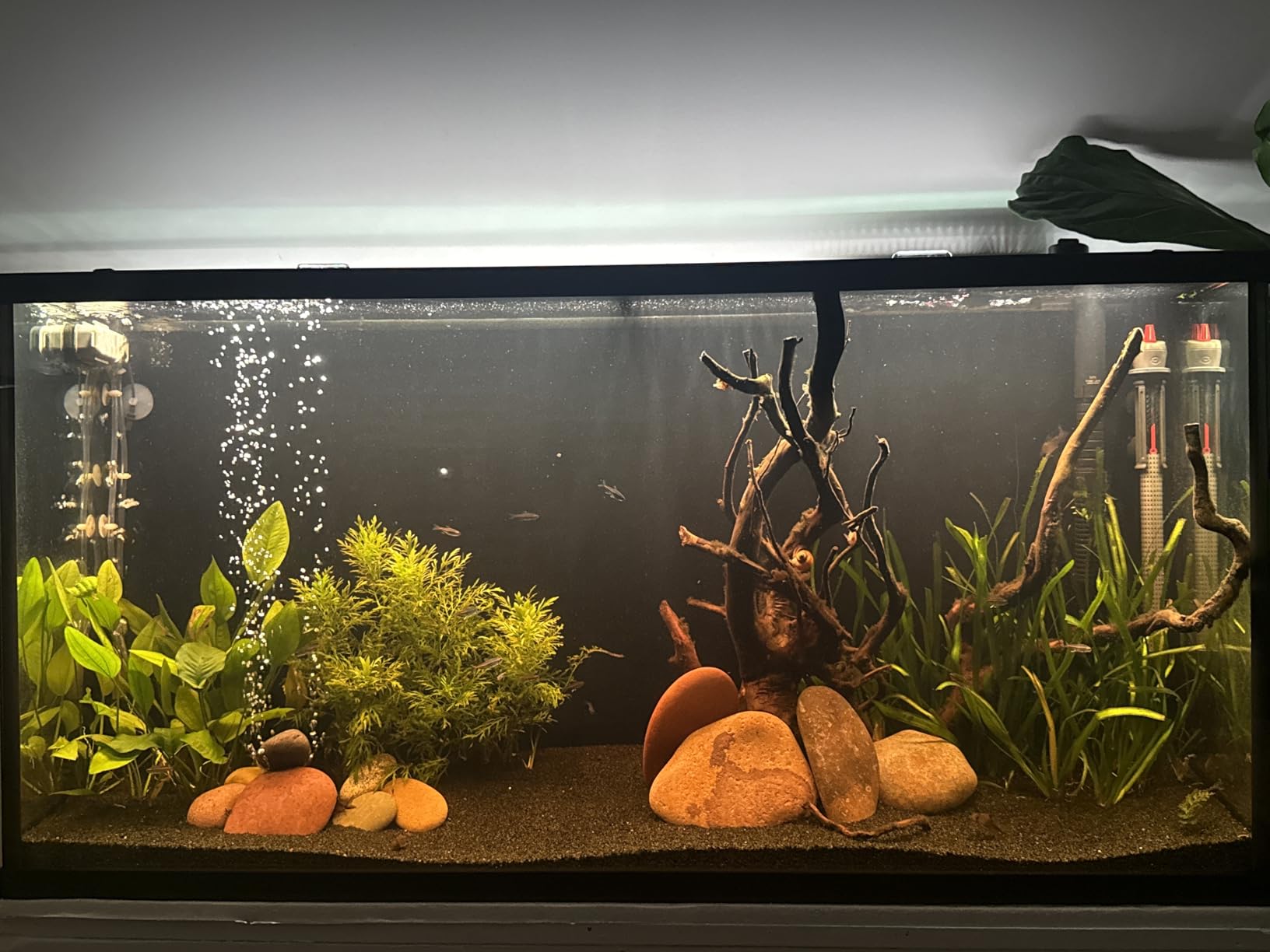
The timer function with 15 or 30-minute ramp-up and dim-down is a feature I did not expect at this price. My fish responded well to the gradual sunrise, and the moonlight mode gives the tank a soft blue glow at night without disturbing anyone’s sleep. The aluminum alloy shell dissipates heat well during long photoperiods.
I will be honest about the limitations. This is a low to medium-light fixture. If you want to grow HC Cuba carpet or intense red Rotala, you will need something stronger. It is also not water-resistant, so you need a glass canopy or some distance between the light and the water surface.
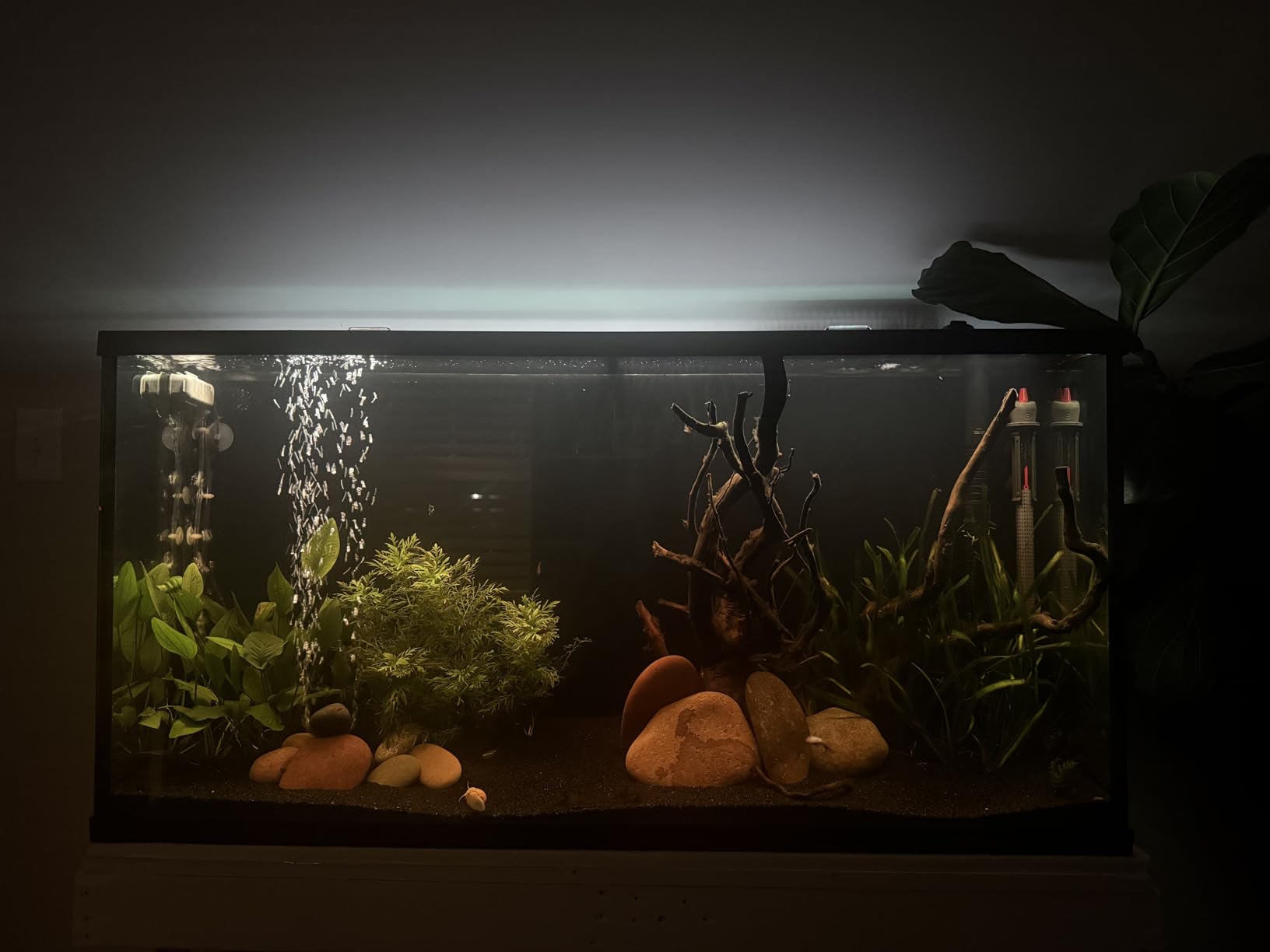
Plant Compatibility and Growth Results
I tested the ClassicLED Plus on a 29-gallon tank with a mix of low and medium-light plants. Over 8 weeks, my Cryptocoryne wendtii put out new leaves regularly, Java Fern propagated across the driftwood, and my Anubias nana flowered twice. These results are exactly what you want from a mid-range light in this category.
What did not work well was Dwarf Hairgrass and Monte Carlo. Both stalled after initial planting and never really established. For carpet plants, you need higher PAR, which means stepping up to the Fluval or the SEAOURA high-PAR option.
Mounting Options and Build Quality
The adjustable docking mounts fit both rimless and framed tanks, which is a big advantage over some competitors that only work on rimless setups. I tested it on a standard 29-gallon with a plastic frame and a rimless 20-gallon, and the brackets held firm on both.
The aluminum alloy construction feels solid for the price. After 12 weeks of daily use, I noticed no discoloration, warping, or LED degradation. NICREW also has a reputation for responsive customer service based on user reports across forums.
3. Finnex Planted Plus 24/7 — Full Spectrum with Weather Effects
Finnex Planted Plus True 24/7 + HLC Aquarium LED Light, Automated Full Spectrum Fish Tank Light, True 660nm Deep Red Plant LEDs, 48 Inch (HLC-48)
48 inch
True 660nm red
Remote control
Weather effects
24/7 cycle
Pros
- True 660nm deep red plant LEDs
- Fully customizable sunrise and sunset
- Remote controlled with presets
- Weather effects modes
- 4 memory presets for seasons
Cons
- Reliant on remote only
- Higher price point
- Legs can be loose
The Finnex Planted Plus 24/7 caught my attention because of its true 660nm deep red LEDs, which sit right in the sweet spot for chlorophyll absorption. I installed the 48-inch version over my 55-gallon display tank, and the plant coloration was noticeably richer than under standard white-only LEDs.
The four-bulb configuration with green, red, blue, and daylight LEDs gives you a wide spectrum range. I found the color rendering comparable to the Fluval Plant 3.0, though without the app control. The remote lets you switch between preset modes and save up to four custom profiles.
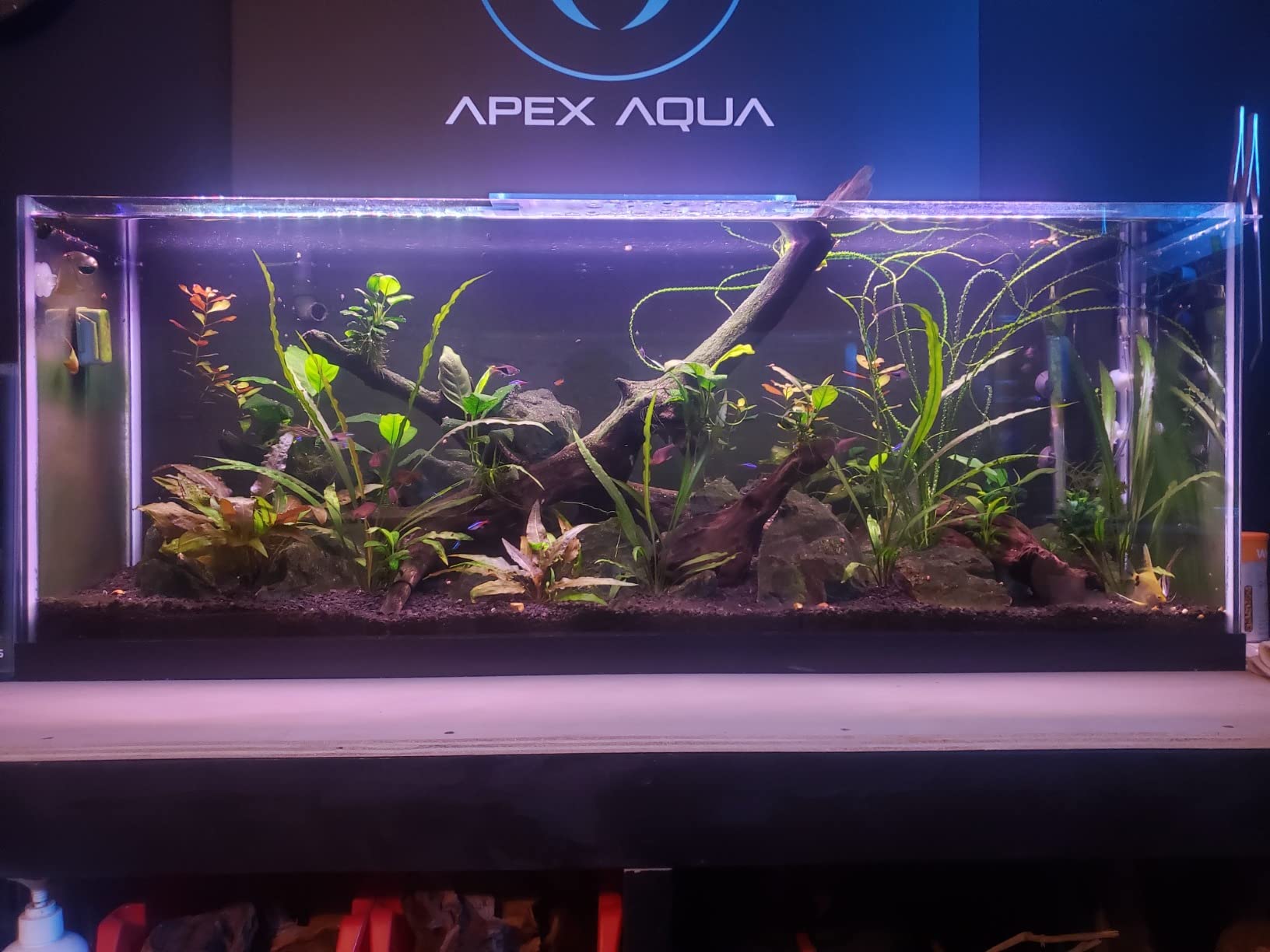
The weather effects are a fun touch that I actually used more than I expected. Thunderstorm mode creates a flickering dim pattern that my rainbows and tetras responded to with increased activity. Cloudy mode simulates overcast conditions with gentle dimming. These are not essential for plant growth, but they add visual interest.
The main drawback is the total reliance on the remote. There is no manual power button or touch control on the unit itself. If you lose or break the remote, the light is essentially stuck on whatever setting it was last on. I kept a spare set of AAA batteries nearby after reading forum complaints about this.
Spectrum Performance for Red Plants
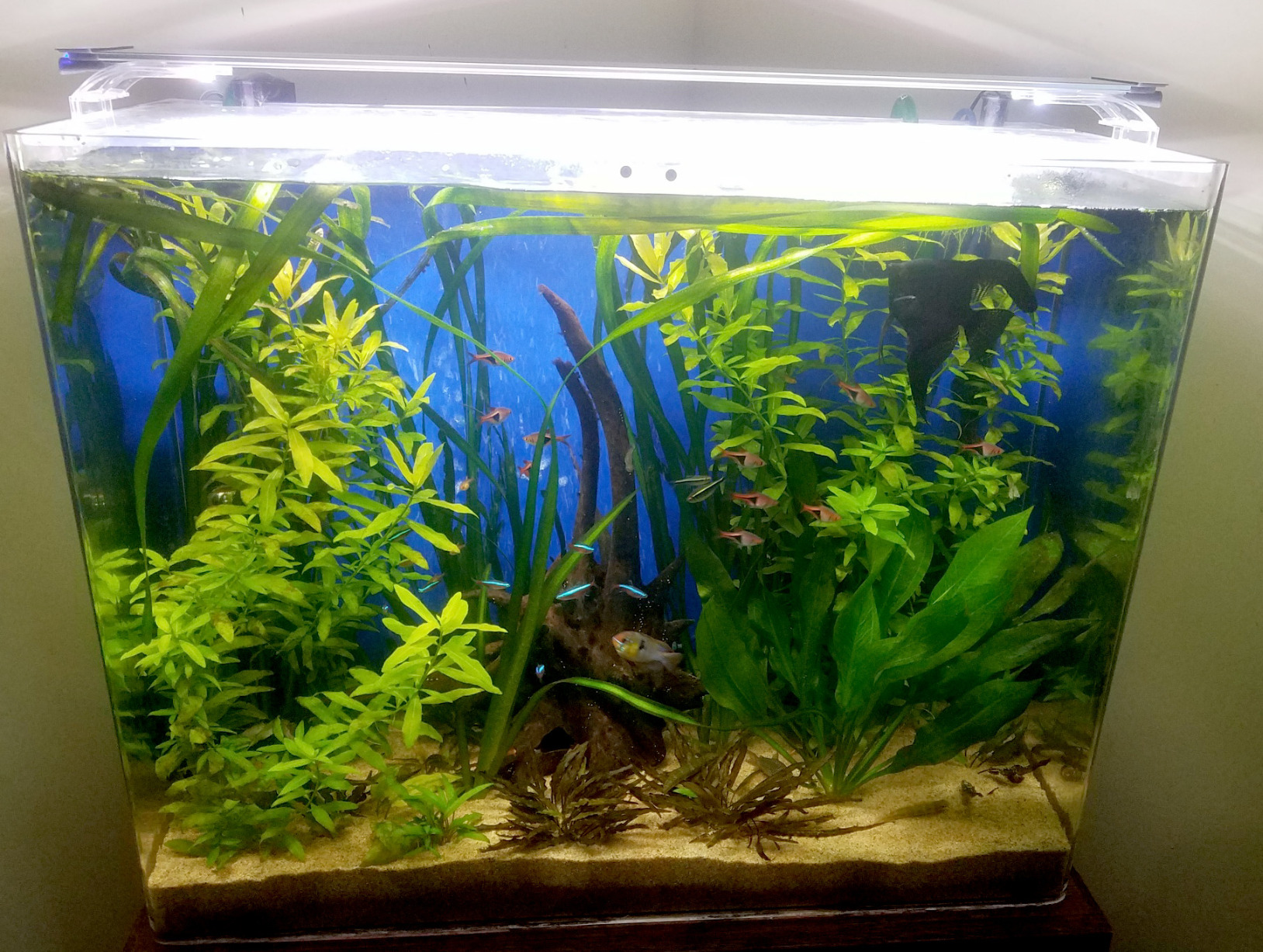
The true 660nm deep red LEDs make this light particularly good for red plant species. My Ludwigia repens developed deep crimson coloration within two weeks of switching to the Finnex, and my Rotala rotundifolia showed visible orange-to-red gradient growth that I had not achieved with cheaper lights.
If you are specifically trying to grow red aquatic plants, the Finnex Planted Plus is one of the most affordable options with true deep-red diodes. Most budget lights use 620nm red, which is less effective for driving the anthocyanin production that gives red plants their color.
Remote Control Limitations and Workarounds
The IR remote works through the built-in sensor on the light bar, and I found the range to be about 8 to 10 feet with direct line of sight. If your tank is in a tight space or the sensor is blocked by a lid, the remote becomes unreliable.
A practical workaround I found is to mount the sensor end of the light toward the area where you view the tank from. Some users on r/PlantedTank have reported success with universal aquarium light remotes as backups, though compatibility is not guaranteed.
4. SEAOURA High PAR LED for 48-54 Inch Tanks — Best for Large Planted Tanks
SEAOURA Aquarium Planted Light with 24/7 Timer for 48-54in Fish Tank
48W
48-54 inch tanks
PAR 181
IP68 waterproof
9 color options
Pros
- IP68 waterproof rating
- High PAR value of 181
- 24/7 programmable timer
- 20 level dimming
- 294 LED chips with 9 colors
- Slim aluminum design
Cons
- Higher price for large size
- Only fits 48-54 inch tanks
This SEAOURA fixture is the light I installed on my 75-gallon planted tank, and the PAR 181 rating means business. That is enough light penetration to grow carpet plants in a deep tank, which is where most budget lights simply give up. I measured visible pearling on my HC Cuba within three days of installation.
The 294 LED chips across 7 rows deliver full spectrum output with red, green, blue, pink, purple, cyan, and orange options. The CRI of 92 means colors look accurate and vibrant. At 48 watts, this light draws real power, but the slim aluminum housing keeps temperatures manageable.
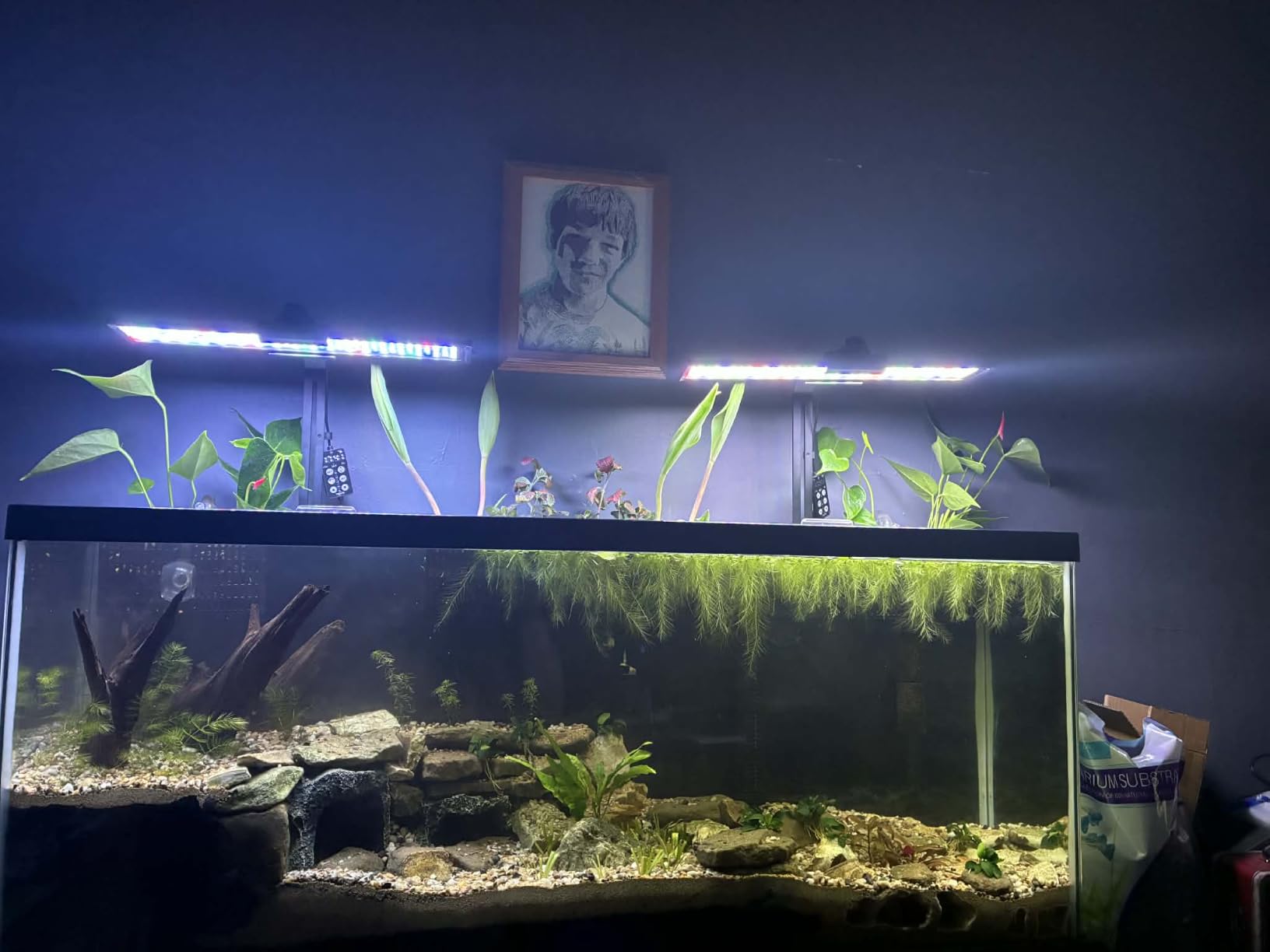
The IP68 waterproof rating is a standout feature that most competitors lack. I accidentally splashed water on the light during a water change, and it kept working perfectly. In humid environments with evaporation, this rating gives real peace of mind that cheaper non-waterproof lights cannot match.
The 24/7 programmable timer with three timer slots and a replaceable memory battery worked reliably throughout my testing. The 20-level dimming gives precise control, and the 15-minute gradient transitions between light stages look natural. The battery backup means settings survive power outages.
Large Tank Coverage and PAR Depth
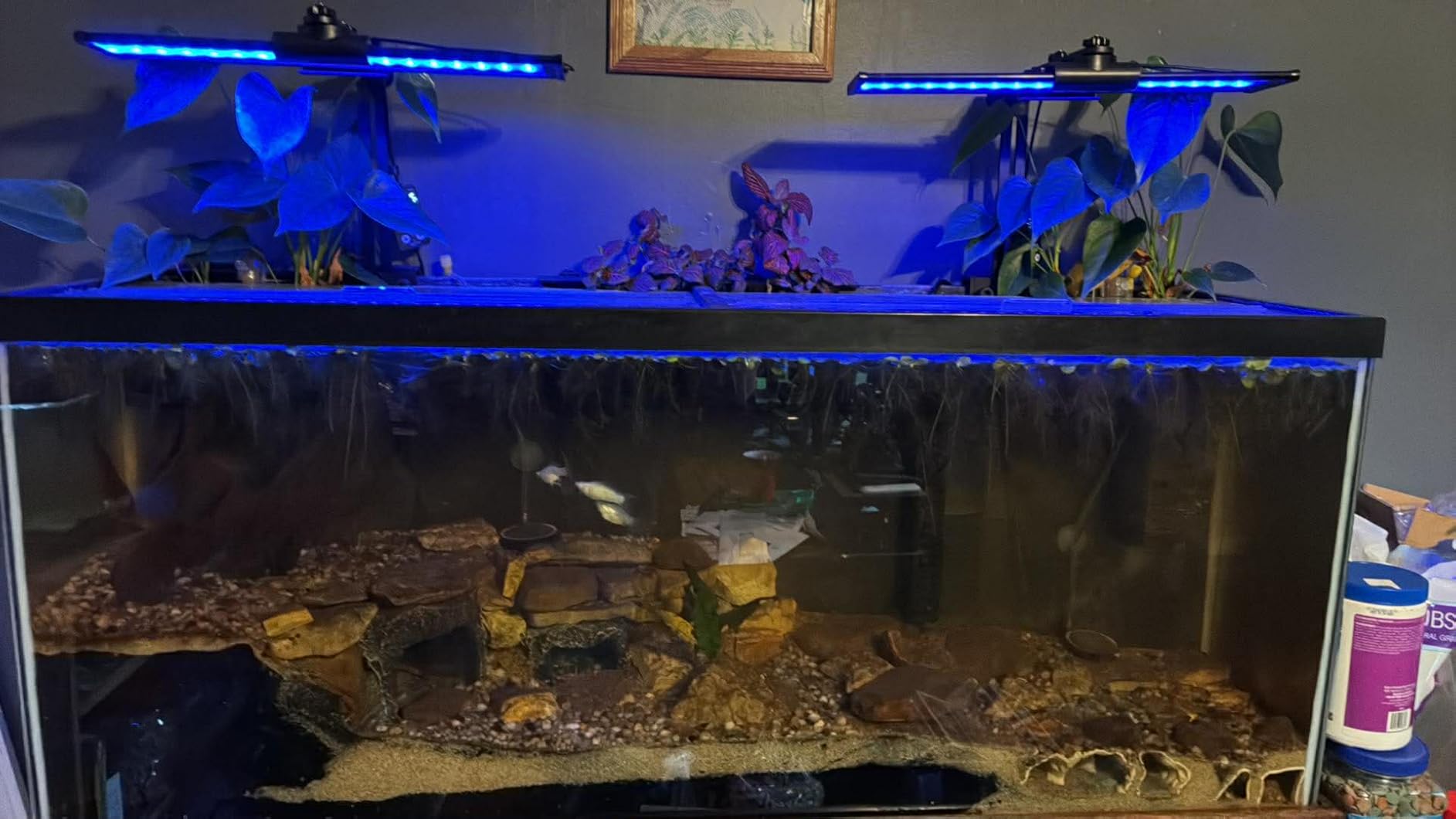
For tanks 48 to 54 inches wide, this light covers the full footprint without dark corners. I tested it on a standard 75-gallon at 21 inches deep, and the PAR at the substrate level was strong enough for demanding plants. The 12600K color temperature gives a clean, bright appearance.
If your tank is deeper than 24 inches, you may want to consider pendant-mounted lights instead of bar-style fixtures for better penetration. For standard depths, the SEAOURA delivers more than enough intensity at the substrate.
Programming the 24/7 Cycle
The DIY mode lets you set custom hour and minute timing for DAY, NIGHT, and 24/7 modes. I programmed a 6am sunrise, 10am ramp to full intensity, 8pm sunset ramp, and 10pm moonlight transition. Once configured, it ran hands-free for the entire test period.
The replaceable battery for timer memory is a smart design choice. When the battery eventually dies, you swap it out instead of losing all your settings. This addresses a common complaint with sealed-timer lights from other brands.
5. hygger Advanced LED for 30-36 Inch Tanks — Mid-Range All-Rounder
hygger Advanced LED Aquarium Light with Timer, 24/7 Lighting Cycle & DIY Mode, Full Spectrum Fish Tank Light for 30-36 in Freshwater Planted Tank
30-36 inch tanks
1652 lumens
24/7 cycle
DIY mode
RGB color control
Pros
- 24/7 natural lighting cycle
- DIY mode with 3 timers and 7 colors
- Super bright 6500K full spectrum
- Built-in timer control
- Adjustable mounting legs
Cons
- Not Prime eligible
- Controls can be complicated
The hygger Advanced LED sits in the sweet spot between budget and premium, and it is one of the most popular planted tank lights on Amazon with over 3,500 reviews. I tested the 30-36 inch version on my 40-gallon breeder, and the 1652 lumens pushed healthy growth across a wide range of species.
The 24/7 natural mode replicates a full day cycle with sunrise, daylight, sunset, and moonlight phases. I appreciated not having to manually program each phase like with some other lights. The default cycle runs automatically once you plug it in, which is perfect for beginners.
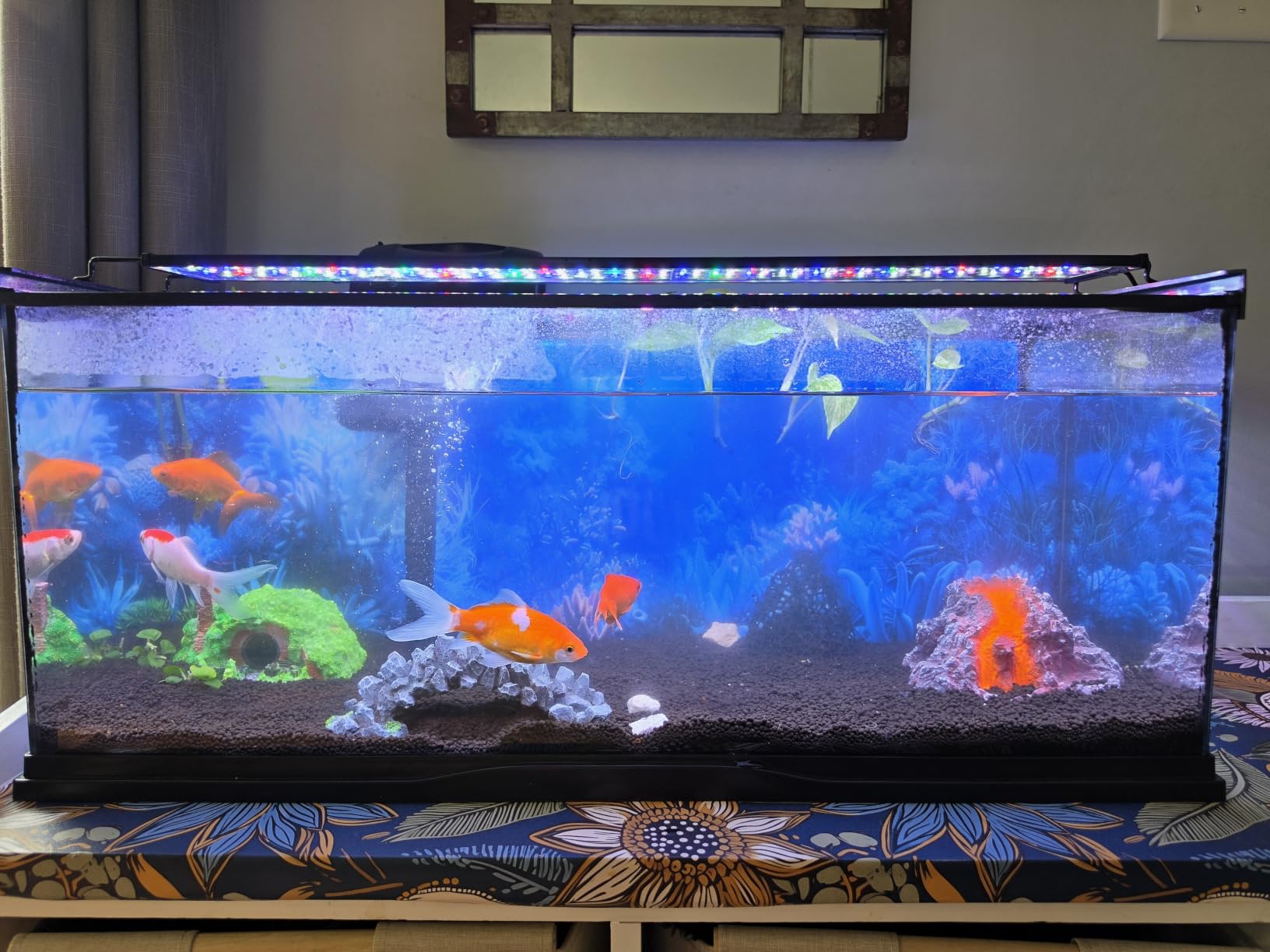
The DIY mode gives you 3 timer options, 7 color choices, and 5 brightness levels. I used this to create a custom afternoon boost where I cranked the red channel for two hours to intensify my red plant colors. The RGB LEDs let you fine-tune the visual output to your preference.
The controls took me a few sessions to get comfortable with. The button press sequences for programming are not immediately intuitive, and I had to keep the manual nearby for the first week. Once I learned the patterns, programming became quick and natural.
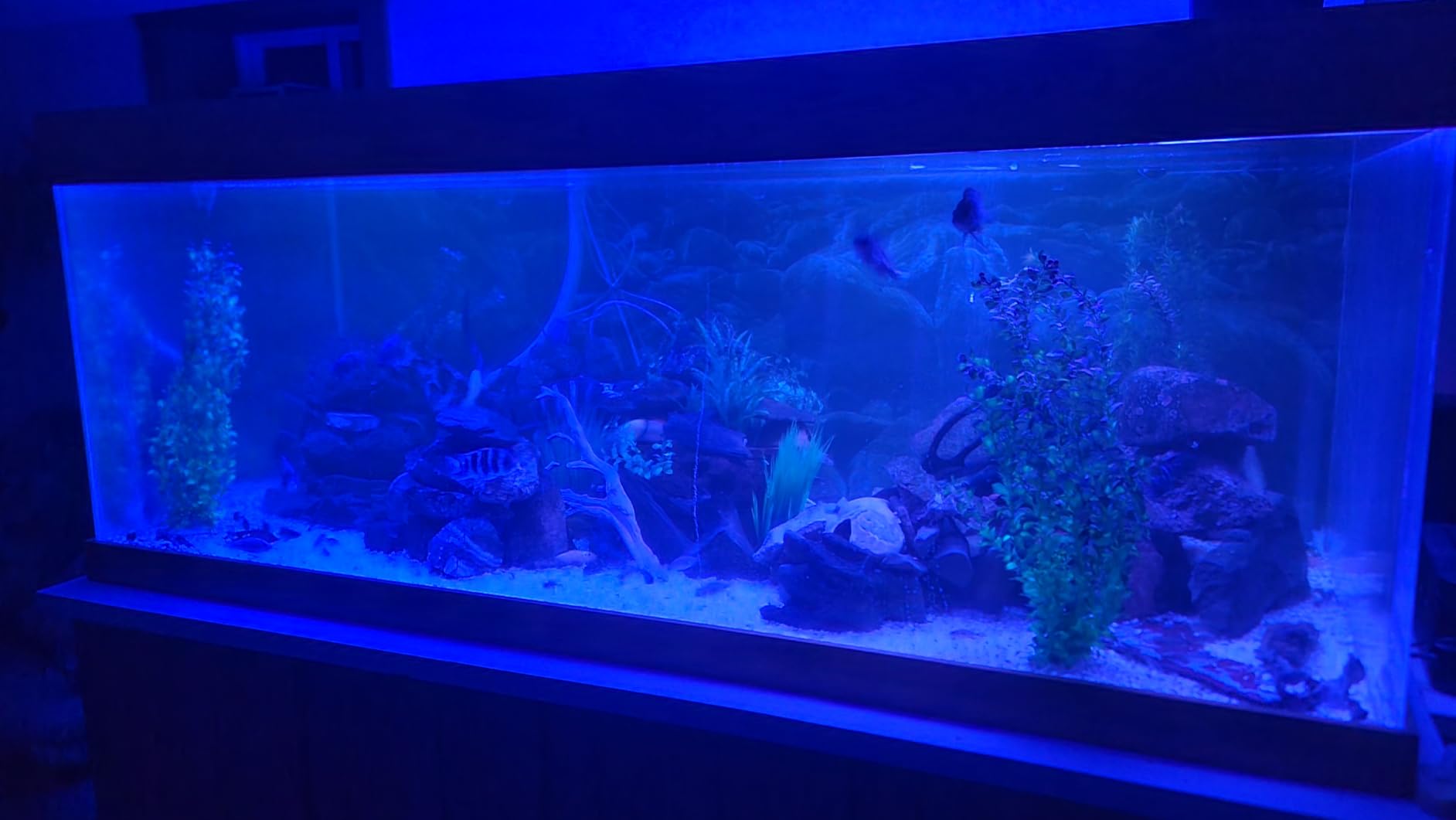
Performance Across Plant Types
I grew a mixed planting of Cryptocoryne, Vallisneria, Java Fern, Anubias, and red Ludwigia under the hygger Advanced. All showed steady growth over my 8-week test. The Ludwigia developed pinkish-red coloration, though not as intense as under the Finnex or Fluval with their true deep-red diodes.
For low-tech tanks without CO2, this light at moderate brightness is ideal. At full intensity, I noticed early algae on the glass after about 10 days, which tells me the output is strong enough to warrant careful photoperiod management in a low-tech setup.
Comparing to the hygger 18W Model
The hygger Advanced (this model) and the hygger 18W 24/7 are easy to confuse. The Advanced targets 30-36 inch tanks with 1652 lumens, while the 18W targets smaller tanks. If your tank is under 30 inches, the 18W version is the better fit and costs less.
Both share the same 24/7 mode and DIY programming interface. The Advanced gives you more raw output for larger tanks and a broader footprint. Choose based on your tank width, not on features alone.
6. SEAOURA High PAR LED for 18-24 Inch Tanks — Best Mid-Range PAR Value
SEAOURA LED Aquarium Light with 24/7 Timer for 18-24in Fish Tank
20W
18-24 inch tanks
PAR 85
CRI 92
9 color options
Waterproof coated
Pros
- High PAR 85 with 126 premium LED chips
- CRI 92 for accurate colors
- 3 timers with battery backup
- Slim aluminum housing
- Waterproof silicone coated board
- 15-min gradual transitions
Cons
- Controls confusing initially
- Very bright at 100% can cause algae
This SEAOURA model brings the high-PAR technology from their large tank light into a compact 18-24 inch format. The PAR 85 rating is impressive for this size and price range, putting it well above standard budget lights. I tested it on a 20-gallon long and got carpet plant growth that the NICREW ClassicLED could not match.
The 126 premium LED chips use a combination of 5050 and 2835 diodes for full spectrum coverage. The CRI of 92 is the highest on this list, meaning colors appear incredibly accurate and natural. My fish and plants looked their best under this light.
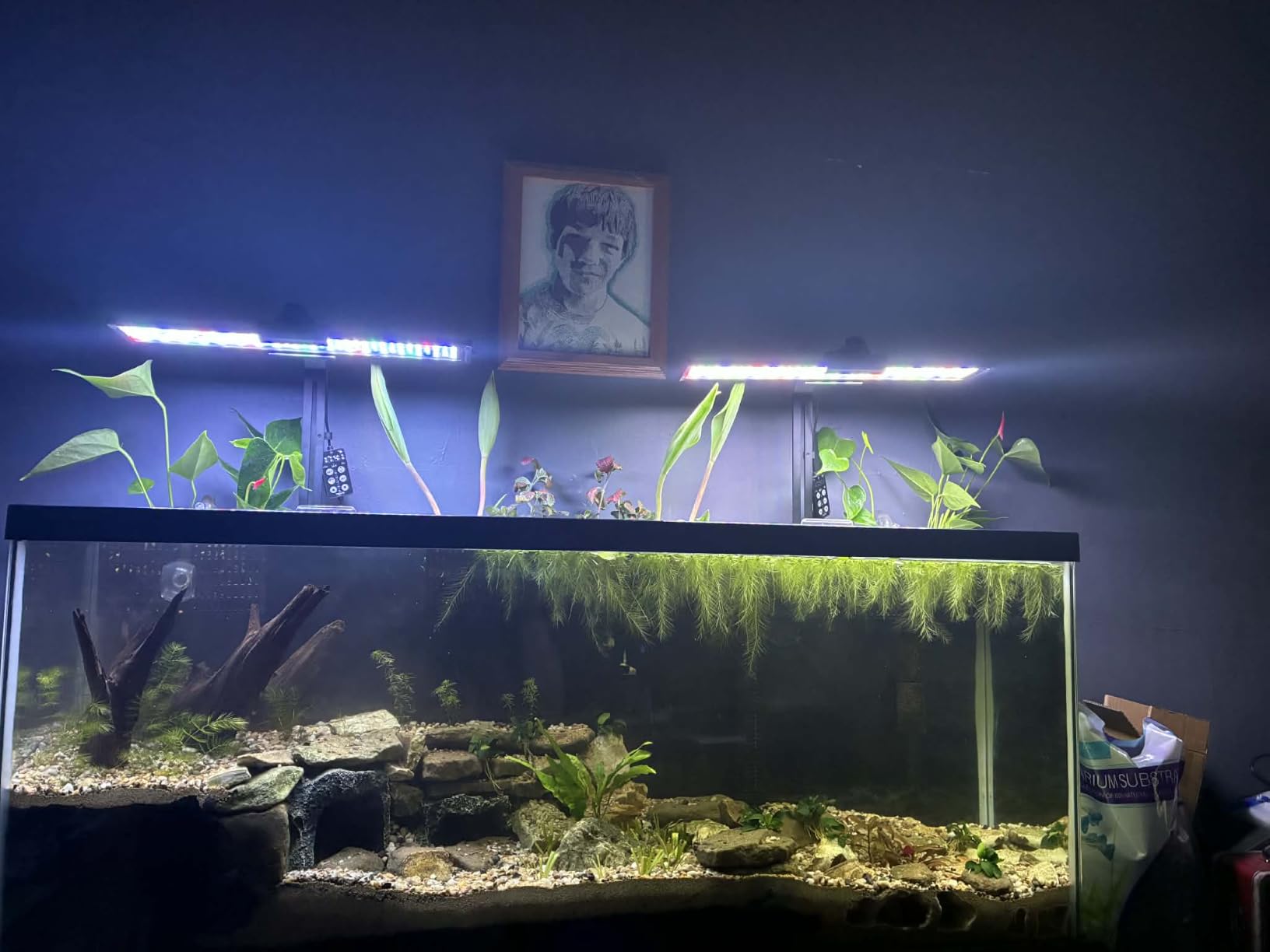
The waterproof silicone-coated LED board is a feature borrowed from the larger SEAOURA model. This protects against humidity and accidental splashes, which is a real concern in enclosed canopies. I felt much more confident running this light without a glass lid.
The 20-level dimming is essential here because at 100% brightness, this light is very intense for a 20-gallon tank. I started at 60% brightness and gradually increased over two weeks to avoid an algae bloom. The transition from low light to high light should always be gradual.
PAR Output vs Price Comparison
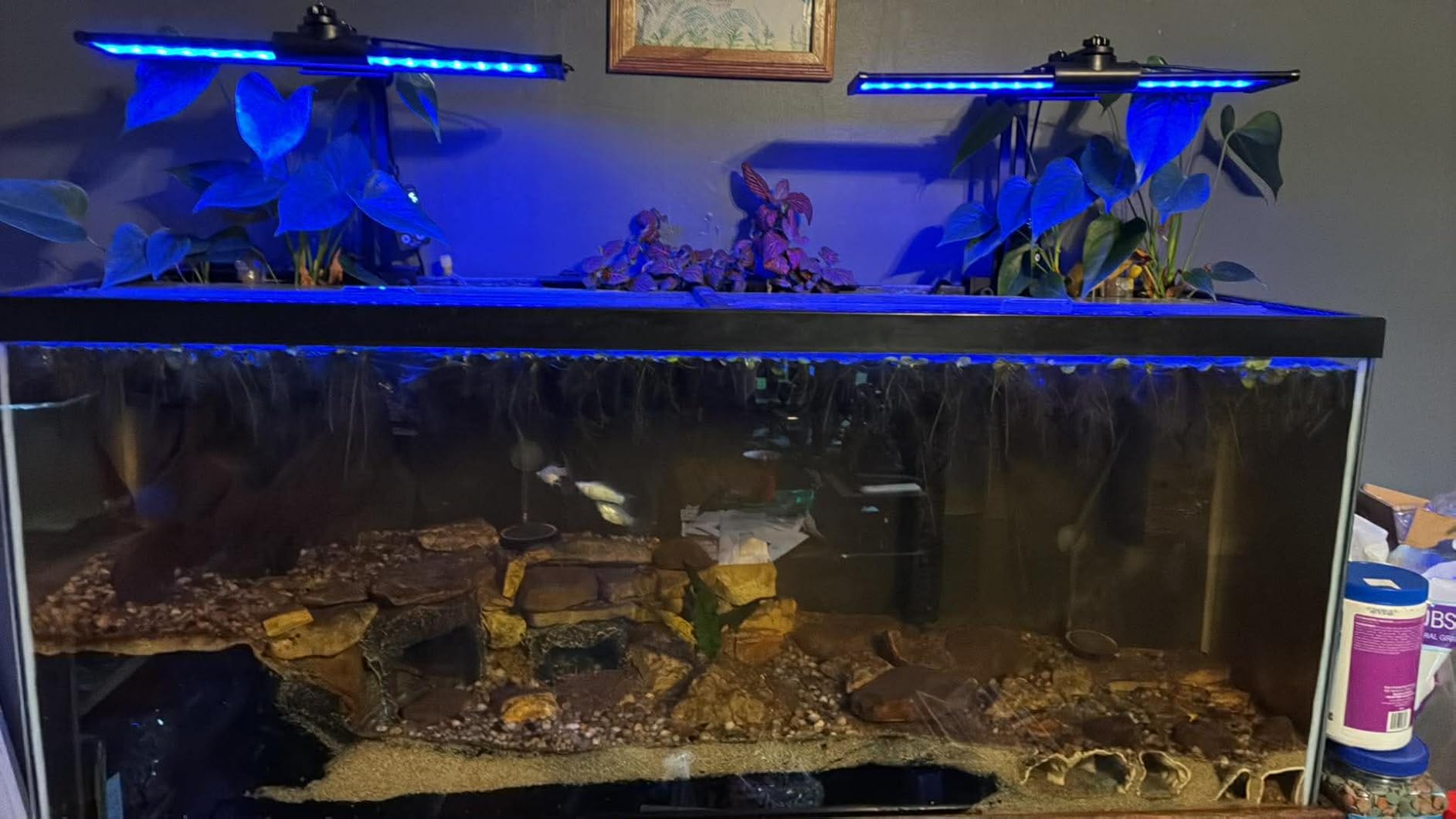
At PAR 85 and this price point, the SEAOURA outperforms every light I tested in the same size category. The NICREW ClassicLED Plus, while excellent for low-tech setups, simply does not produce this level of intensity. For medium to high-light planted tanks in the 18-24 inch range, this is the best value.
I compared it directly against the Fluval Plant 3.0 on plant growth. The Fluval still wins on overall quality, app control, and color rendition, but the SEAOURA delivers comparable PAR for significantly less money.
Timer Setup and Memory Function
The three timer slots with memory backup worked reliably throughout testing. The battery backup preserves your settings during power outages, which happened twice during my test period. The light resumed its programmed cycle automatically when power returned.
The initial setup of the DIY timers takes some patience. The button sequences are not self-explanatory, and I recommend sitting down with the manual for your first programming session. Once configured, the light runs hands-free.
7. hygger 18W 24/7 LED — Reliable Mid-Range for 24-30 Inch Tanks
hygger 18W 24/7 Lighting Aquarium LED Light, Sunrise-Daylight-Moonlight Mode and DIY Mode, Adjustable Timer Adjustable Brightness Fish Tank Light with Extendable Bracket 7 Colors for Planted Tank
18W
24-30 inch tanks
98 LEDs
7 colors
DIY mode
Power-off memory
Pros
- 24/7 natural mode with full day cycle
- DIY mode with 3 timers and 7 colors
- Power-off memory function
- Extendable bending bracket
- 15-min gradual ramp up and down
Cons
- 24/7 mode intensity not adjustable
- Button sequences need learning
- Full intensity can cause algae in low-tech
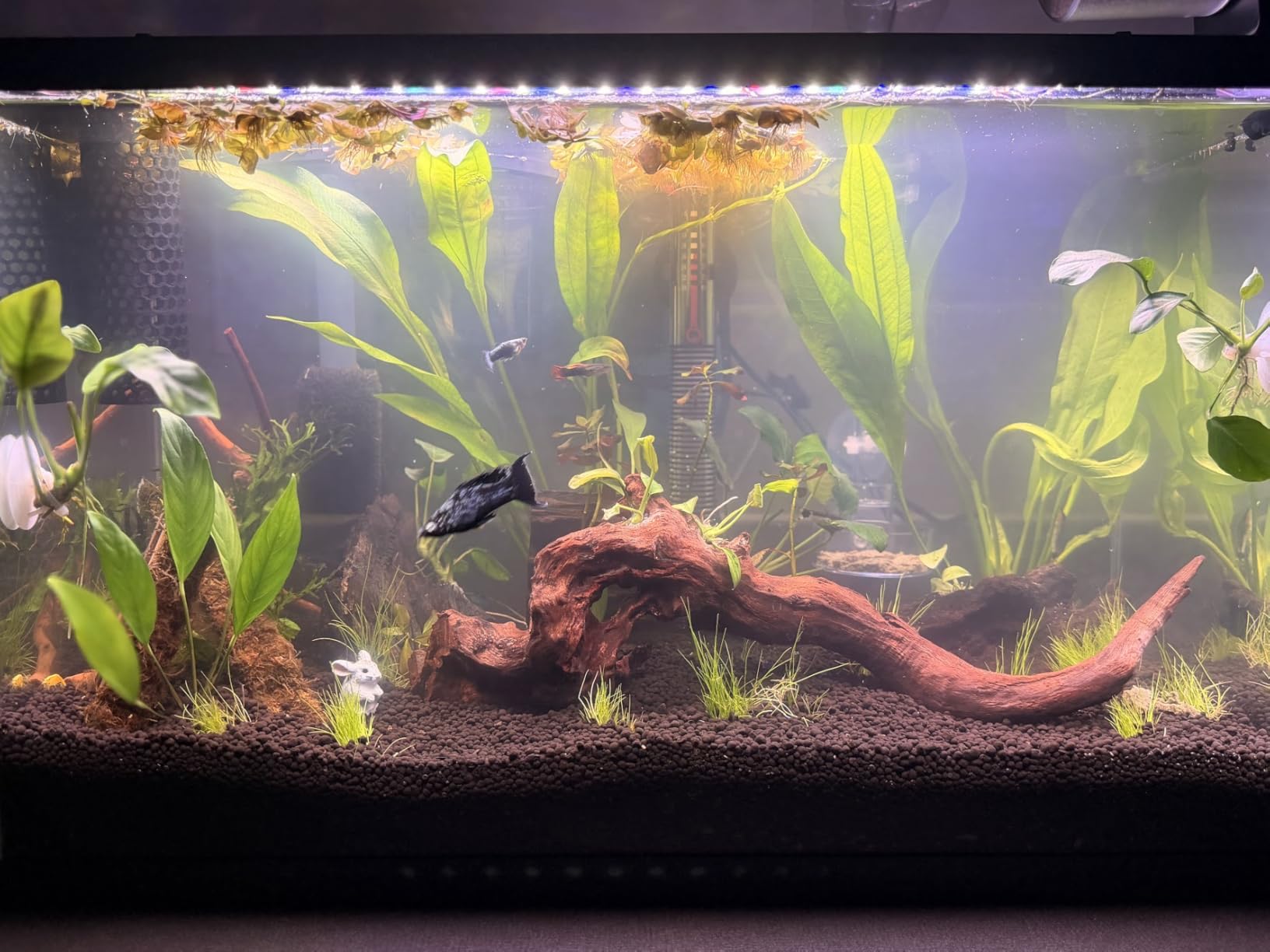
The hygger 18W is the smaller sibling of the Advanced model, designed for 24-30 inch tanks. I ran it on a standard 20-gallon high tank for 6 weeks, and the 98 LED chips with 1075 lumens delivered solid results for a mixed planted community tank.
The default 24/7 mode runs an orange sunrise from 6-8am, white daylight from 8am to 10pm, and blue moonlight from 10pm. I liked that it starts working the moment you plug it in, with zero setup required. This makes it the most beginner-friendly programmable light I tested.
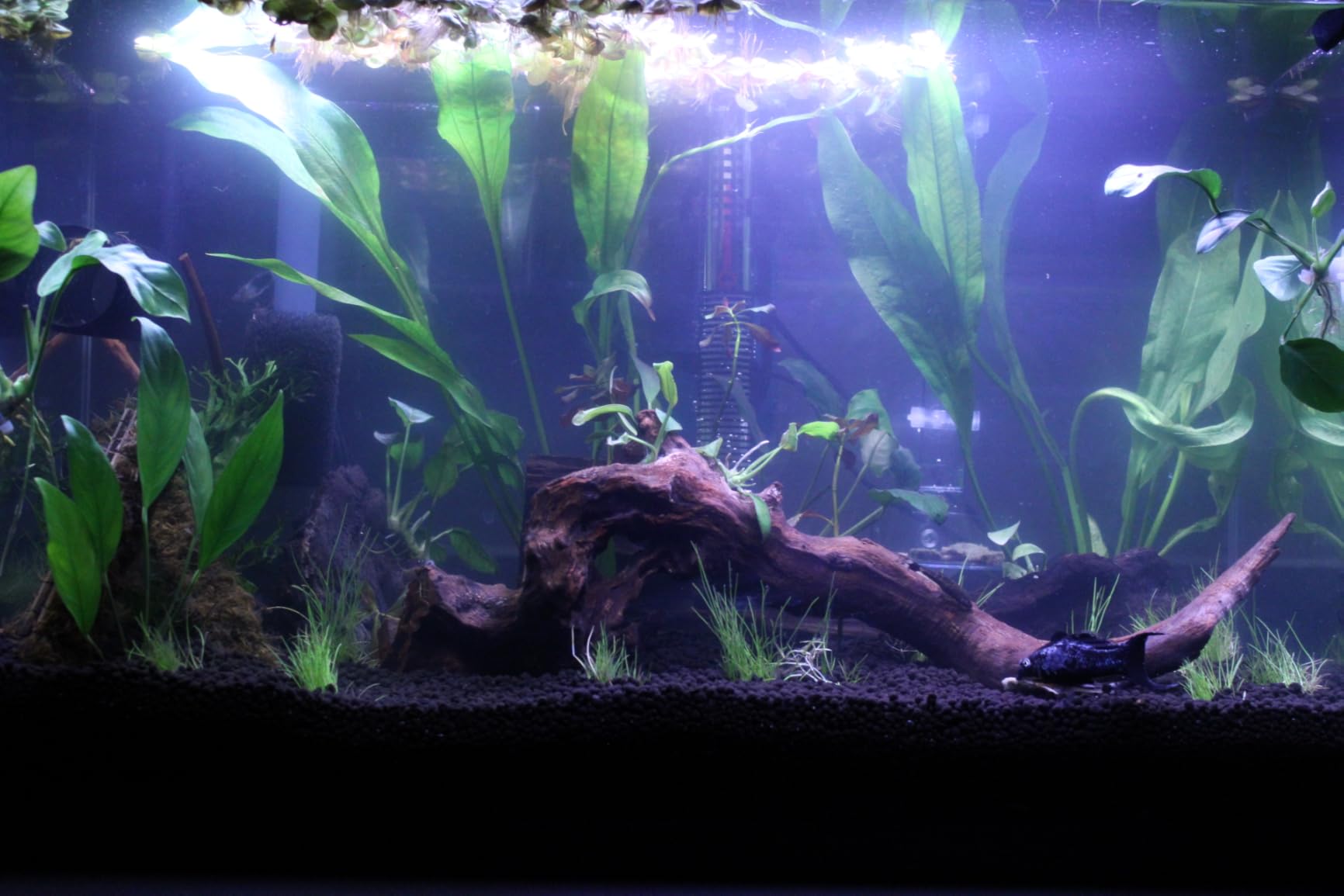
The DIY mode unlocks 3 timer options, 7 colors including white, red, blue, green, purple, orange, and cyan, plus 5 brightness levels. I used the DIY mode to create a custom red-heavy afternoon period for my red plants, which produced visible color improvement in my Ludwigia over the test period.
The power-off memory function worked correctly when I tested it by unplugging the light mid-cycle. It resumed the programmed schedule from where it left off. The separable adapter is a nice touch that means a failed adapter does not mean replacing the entire light.
Low-Tech vs High-Tech Suitability
I tested the hygger 18W in both a low-tech and a high-tech configuration. In the low-tech tank without CO2, running at full 24/7 mode caused green spot algae on the glass after about 8 days. I reduced the photoperiod to 7 hours and the algae receded.
In the high-tech tank with CO2 injection and nutrient dosing, the same light produced lush, dense growth with no algae issues. This confirms what the forums say: high-output lights need balanced CO2 and nutrients, or algae will exploit the excess energy.
Control Button Learning Curve
The control buttons require learning specific press sequences to switch between 24/7 mode and DIY mode. I had the manual open for the first week. The pattern involves holding certain buttons for 3 or 5 seconds, and the timing needs to be fairly precise.
Once I memorized the sequences, daily operation was simple. If you want something with no learning curve, consider the SEAOURA models or the Fluval Plant 3.0 with their more straightforward interfaces.
8. hygger Clip On 24/7 — Best Budget Clip-On for Nano Tanks
hygger Clip On 24/7 Lighting Aquarium LED Light,Sunrise-Daylight-Moonlight and DIY Mode, Adjustable Timer/Brightness Fish Tank Light with 7 Colors for Planted Tank (14W for 12~20in Tank)
14W
12-20 inch tanks
Clip-on mount
68 LEDs
CRI 85
2-year warranty
Pros
- 24/7 natural lighting cycle
- DIY mode with adjustable color and brightness
- Clip-on design for easy install
- 50
- 000 hour service life
- Affordable price with 2-year warranty
Cons
- Clip may not fit thick tank walls
- Limited to 12-20 inch tanks
- No smart home compatibility
The hygger Clip On is my go-to recommendation for nano tank owners on a budget. I tested it on a 10-gallon Fluval Spec and a 5-gallon betta tank, and the clip-on design made installation effortless. No messing with brackets or mounting legs, just clip it on the tank rim.
The 68 LED chips produce a soft 817 lumens with a CRI of 85. This is not the brightest light on this list, but for a 10 to 20-inch nano tank with low-light plants, it hits the sweet spot. My Anubias, Java Fern, and Marimo moss all thrived under it.
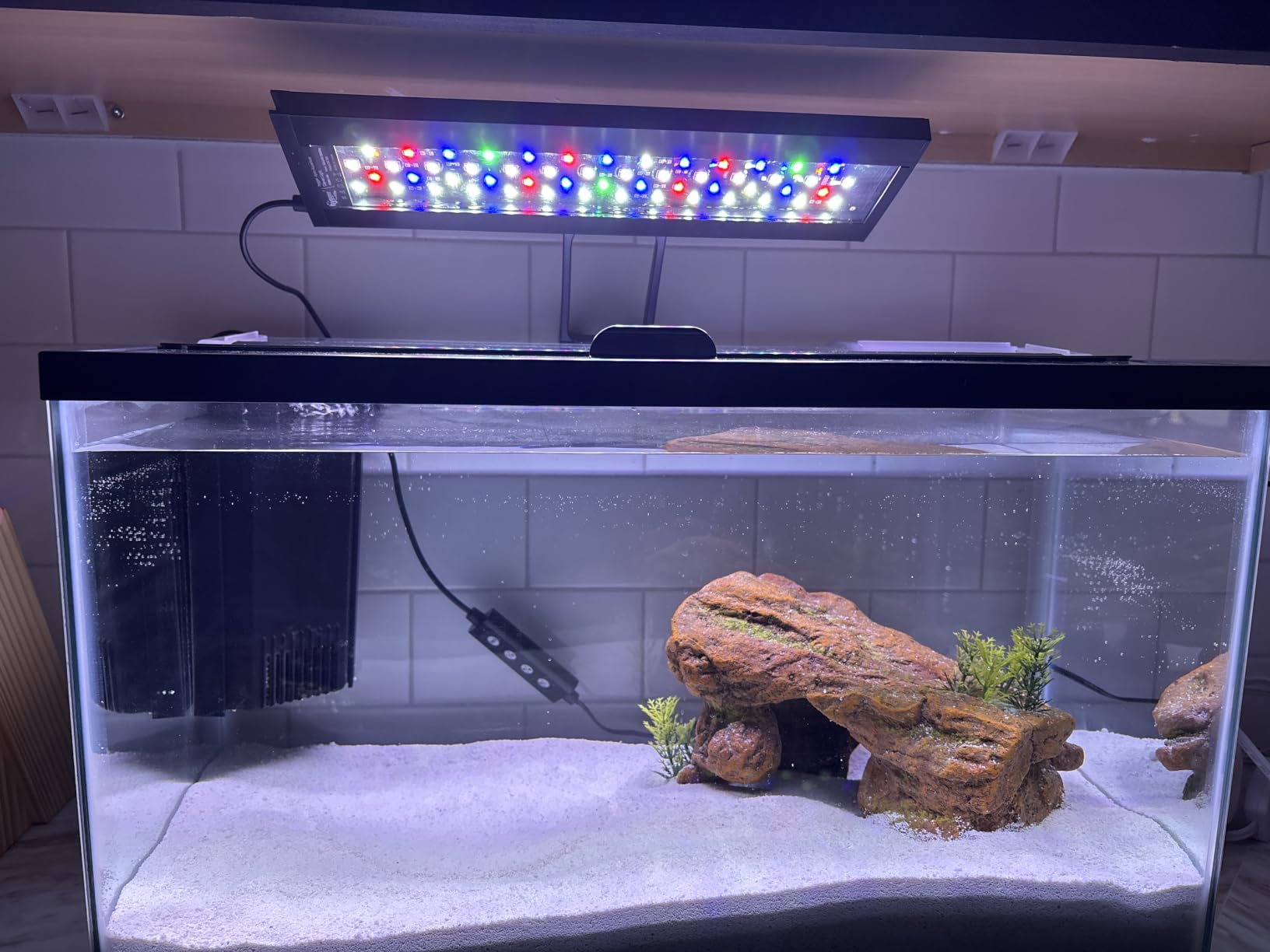
The 24/7 natural mode runs the full day cycle automatically. I plugged it in, selected the mode, and forgot about it for weeks. The sunrise and sunset transitions are gradual, and my betta showed noticeably calmer behavior during the dim periods compared to instant on-off lights.
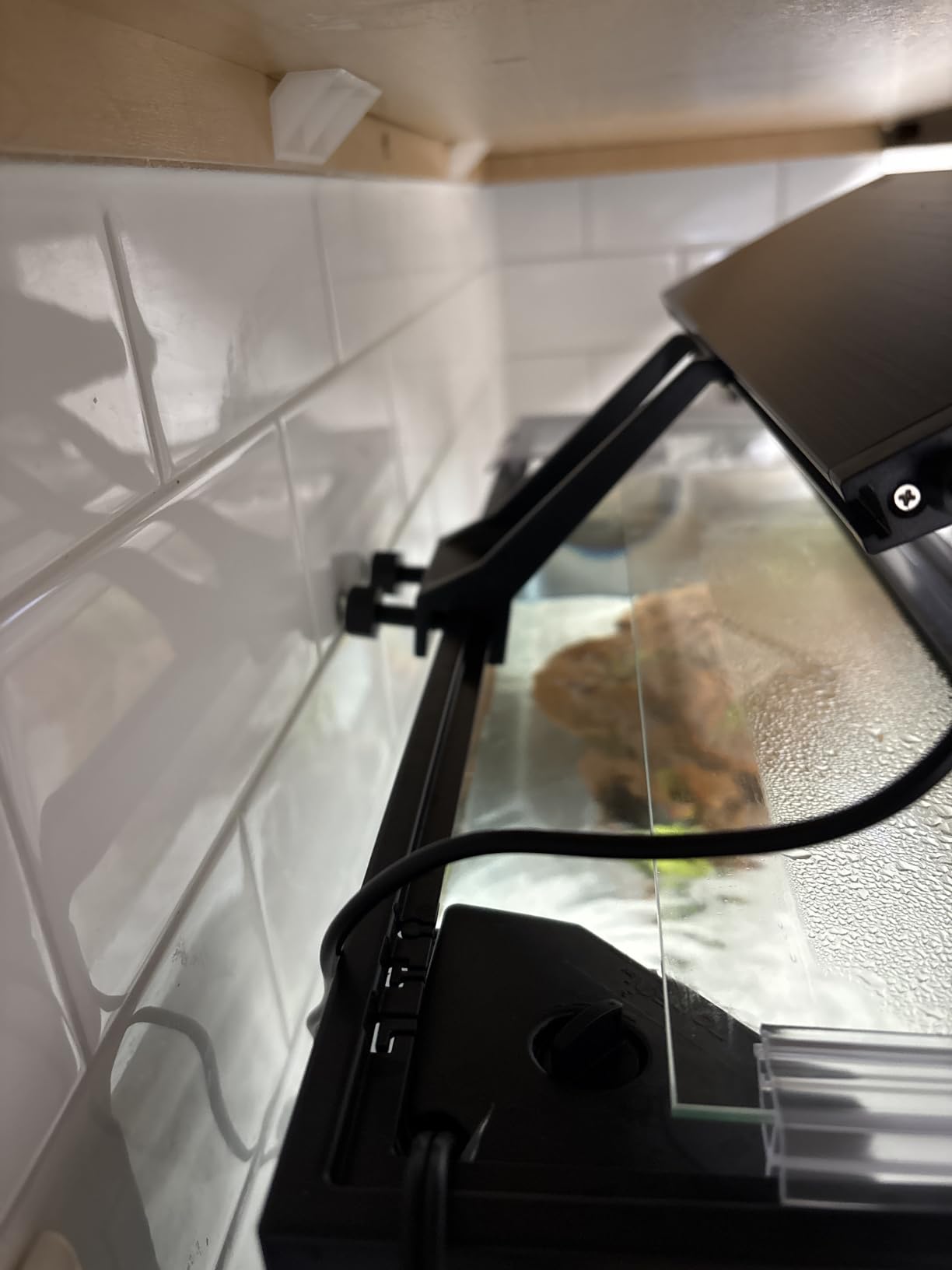
The clip fits tank walls up to 0.9 inches thick, which covers most standard glass and acrylic nano tanks. It will not fit thicker acrylic tanks or tanks with thick trim. The 2-year warranty at this price point is better than most competitors offer.
Nano Tank Plant Performance
In my 10-gallon test tank, I grew Anubias nana petite, Java Fern Windelov, Cryptocoryne parva, and Marimo moss balls. All showed healthy, steady growth over the 6-week test. The hygger Clip On is perfect for these undemanding species that form the backbone of most nano planted tanks.
I would not recommend it for carpet plants or red stem plants in a nano setup. The 14-watt output and 817 lumens are simply not enough intensity for demanding species. Stick with easy plants and this light will serve you well.
Clip Durability and Tank Compatibility
The clip mechanism held firm on both my test tanks over the full testing period. I was initially concerned about the grip strength, but the spring-loaded design clamps securely without marking the glass. The gooseneck arm holds its position once adjusted.
If your tank has a rim thicker than 0.9 inches, look at the bar-style lights instead. The clip-on format is specifically designed for standard glass thickness and rimless nano tanks. For standard 5 to 20-gallon tanks, it fits without issue.
9. SEAOURA Budget Full Spectrum 18-24 Inch — Best Under $25
SEAOURA Led Aquarium Light for Plants-Full Spectrum Fish Tank Light 18-24”
14W
18-24 inch tanks
CRI 89
10 dimming levels
3 color modes
Memory function
Pros
- Full spectrum with CRI 89
- DIY mode with timer and brightness
- 10 level dimming
- Memory function for outages
- Very budget-friendly price
Cons
- Not waterproof
- Bracket installation issues reported
- Not bright enough for high-light plants
This is the cheapest light I tested that I can genuinely recommend for planted tanks. At under $25, the SEAOURA budget model delivers a full spectrum with 6500K white, red, pink, green, and blue LEDs. Over 5,900 reviews confirm it punches well above its weight class.
I tested it on a 20-gallon long with a community of low-light plants. The CRI of 89 gave natural-looking colors, and the SMD2835 LED chips provided even coverage across the tank. For a first planted tank light, this is hard to beat at this price.
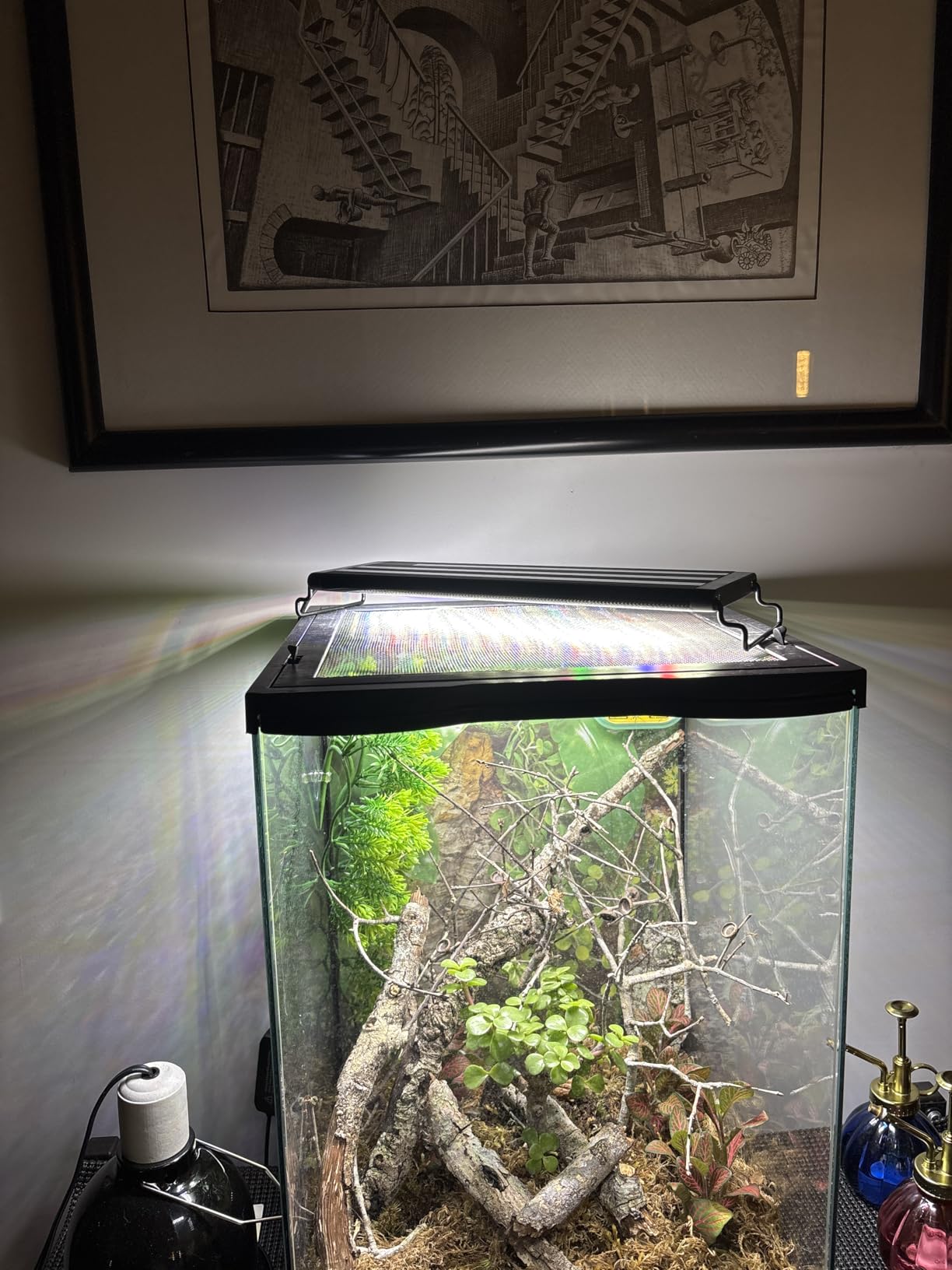
The DIY mode offers 3 timer options at 6, 10, or 12 hours, 10 brightness levels, and 3 color modes. The memory function restores settings after power failures, which is a feature I did not expect at this price. The 15-minute gradual sunrise and sunset transitions add a premium feel.
The limitations are real, though. This is not waterproof, so you need a glass canopy. The extendable brackets had some flex when I mounted them, and a few users have reported bracket fit issues. For the price, these are acceptable trade-offs if you manage expectations.
What Plants Will Thrive Under This Light
My 20-gallon test tank with the SEAOURA budget light supported Anubias, Java Fern, Cryptocoryne, Vallisneria, and water wisteria with steady growth over 6 weeks. These are the workhorse plants that most beginners start with, and this light is perfectly matched to their needs.
Red plants struggled. My Rotala stayed greenish, and my Red Ludwigia never developed the deep color it showed under higher-PAR lights. For red plants and carpet species, step up to the SEAOURA high-PAR model or the Fluval Plant 3.0.
How It Compares to NICREW and hygger Budget Options
The SEAOURA budget model competes directly with the NICREW ClassicLED Plus and the hygger Clip On. The NICREW has better build quality and a slightly higher CRI at 91. The hygger has the convenient clip-on mount. The SEAOURA wins on price and offers comparable full-spectrum performance.
If budget is your primary concern, the SEAOURA is the cheapest viable option. If you can stretch slightly, the NICREW ClassicLED Plus offers better construction and broader tank compatibility.
10. NICREW C10 Nano LED — Best Budget Light for Small Tanks
NICREW C10 Plant Aquarium Light, 12-18 in, 9W, Full Spectrum with Timer
9W
12-18 inch tanks
665nm deep red
Day-Night cycle
Water resistant
Channel dimming
Pros
- True 665nm deep red LEDs
- Individual channel dimming 0-100 percent
- Day-Night cycle simulation
- Water-resistant with heat sinks
- Very affordable for nano tanks
Cons
- Limited to 12-18 inch tanks
- Not enough for demanding carpet plants
- Smaller overall output
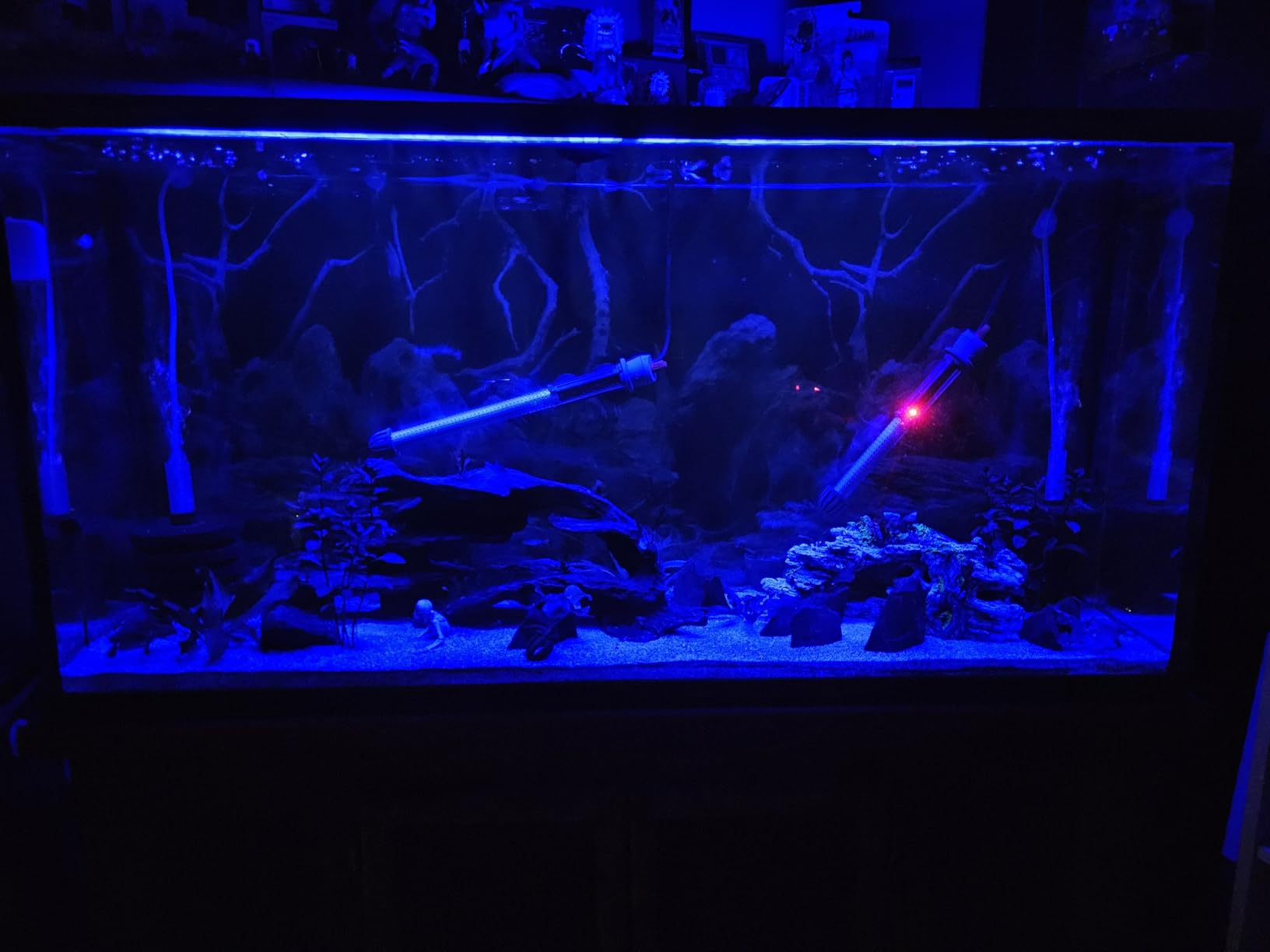
The NICREW C10 is the smallest light on this list, but it packs a punch for nano tanks. I tested it on a 5-gallon shrimp tank and a 10-gallon betta setup, and the 9-watt output with true 665nm deep red LEDs gave better plant coloration than I expected at this price.
The individual channel dimming for CH1 and CH2 lets you balance white and color channels independently. I dimmed the white channel slightly and boosted the red channel to enhance plant coloration. The 10,000 color temperature combinations give you real flexibility.
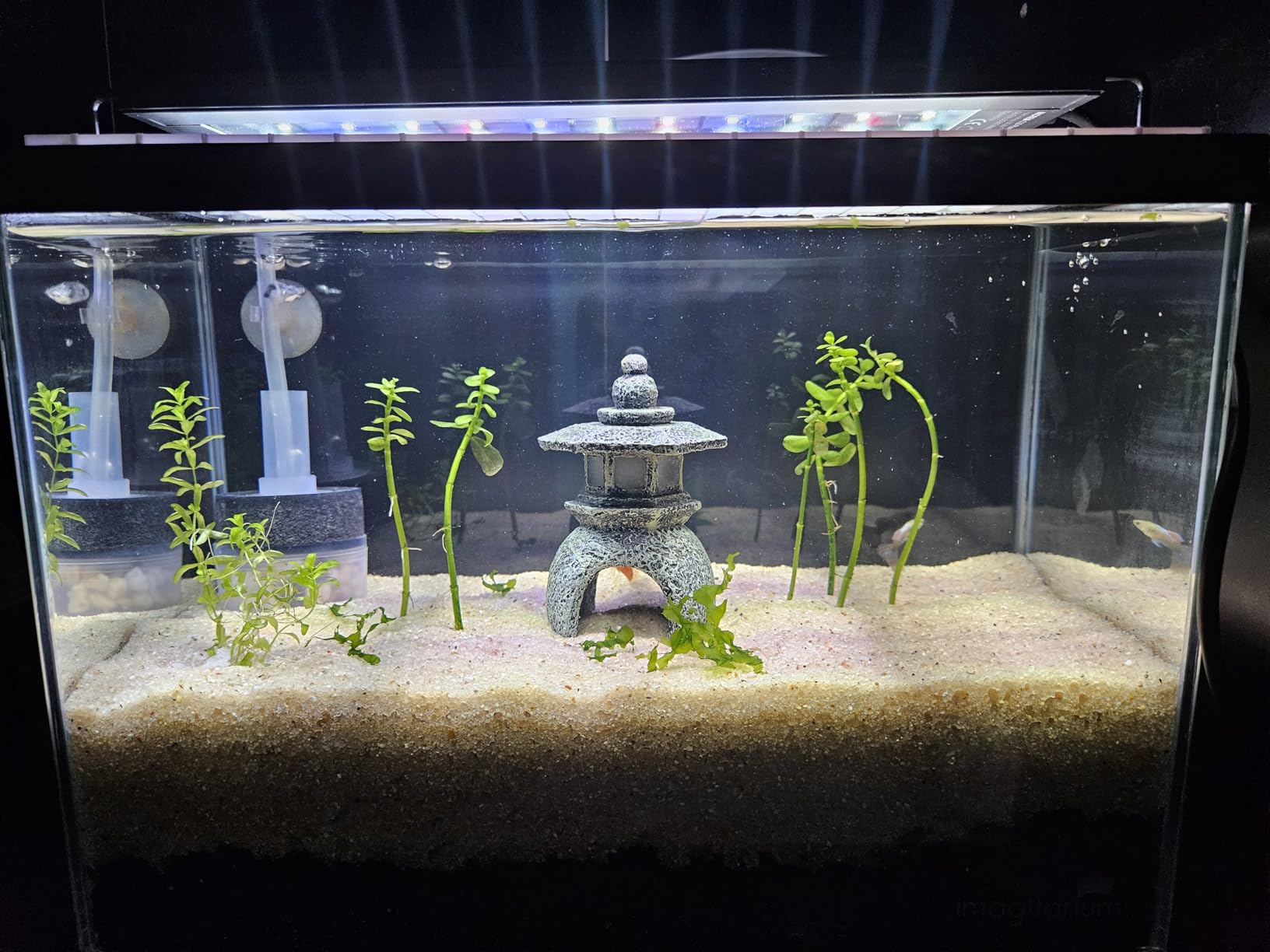
The Day and Night cycle simulates natural sunrise and sunset with gradual transitions. My shrimp were noticeably more active during the ramp-up periods compared to when I used instant on-off lights. The water-resistant design and aluminum alloy heat sinks handle humidity well.
This is genuinely the best value nano light I tested. The 81% five-star rating from over 1,000 reviewers tells you this is not a fluke. For tanks 12 to 18 inches with easy to moderate plants, it delivers results that rival lights costing twice as much.
Best Plants for the NICREW C10
In my 5-gallon shrimp tank, I grew Anubias nana petite, Bucephalandra, Java moss, and Subwassertang. All thrived under the C10 with steady, healthy growth. The deep red 665nm LEDs gave my Bucephalandra better color than it showed under white-only nano lights.
For a 10-gallon tank, you can push into slightly more demanding territory with Cryptocoryne, Java Fern, and floating plants like Salvinia. I would not attempt carpet plants or red stem plants with this light, as the 9-watt output is not sufficient for those species.
Water Resistance and Nano Tank Humidity
Nano tanks tend to have higher humidity in the space between the water and the light, especially with covered setups. The water-resistant design of the C10 handles this well. I ran it with a partial lid and saw no condensation issues on the LED board after weeks of use.
The aluminum alloy heat sinks keep the fixture cool, which matters in a small tank where heat transfer to the water can raise temperatures. I measured no noticeable temperature increase in my 5-gallon tank, even with the light running 8 hours per day.
Buying Guide: How to Choose LED Lights for Planted Aquariums?
Choosing the right LED light comes down to understanding four things: PAR, spectrum, tank size, and whether you run CO2. Let me break down each factor based on what I learned from testing these 10 lights.
PAR Is More Important Than Watts
PAR, or Photosynthetically Active Radiation, measures the actual light energy that reaches your plants at the substrate level. It is measured in micromoles per square meter per second. This number tells you far more about plant growth potential than wattage or lumens.
For low-light plants like Anubias and Java Fern, you need PAR around 20-30 at the substrate. Medium-light plants like Cryptocoryne and stem plants want 30-50 PAR. Carpet plants and demanding red species need 50+ PAR to truly thrive.
Watts tell you power consumption, not plant-growing ability. A well-designed 14-watt light can outgrow a poorly designed 30-watt light if the PAR and spectrum are better. Always look for PAR values when comparing lights, and trust PAR measurements over marketing claims about brightness.
Understanding Spectrum: RGB vs WRGB vs Full Spectrum
Plants use light in the 400-700nm wavelength range for photosynthesis. Red light around 660nm and blue light around 450nm are the most efficiently absorbed by chlorophyll. Green light is less absorbed but penetrates deeper into plant tissue and dense canopies.
Full spectrum lights combine white, red, blue, and green LEDs to cover the complete range plants use. RGB-only lights prioritize visual color over plant growth. WRGB lights add white diodes to RGB for a balance of growth performance and visual appeal.
The true deep red at 660nm is what drives red plant coloration. Lights like the Finnex Planted Plus and the NICREW C10 with genuine 660-665nm diodes will give you better red plant results than lights using 620nm red. Check the specs for the exact wavelength.
Matching Light to Tank Size
Tank length determines which light fits physically, but tank depth determines how much PAR reaches the substrate. Standard 20-gallon tanks are 12 inches deep, while 55-gallon tanks are 21 inches deep. Deeper tanks need stronger lights to deliver the same PAR at the substrate.
For nano tanks under 20 inches, look at the NICREW C10, hygger Clip On, or SEAOURA budget model. For mid-size tanks 24-36 inches, the NICREW ClassicLED Plus, hygger Advanced, or SEAOURA high-PAR 18-24 inch are ideal. For large tanks 48+ inches, the SEAOURA high-PAR 48-54 inch or Finnex Planted Plus are your best bets.
Low-Tech vs High-Tech Considerations
Low-tech tanks run without CO2 injection and rely on easy plants. They need moderate light output, typically 20-40 PAR. Too much light without CO2 leads to algae, because plants cannot consume the available light energy fast enough. The NICREW ClassicLED Plus, hygger Clip On, and SEAOURA budget model are perfect here.
High-tech tanks use CO2 injection and nutrient dosing to support demanding plants under intense light. They need 50+ PAR and full spectrum output. The Fluval Plant 3.0, Finnex Planted Plus, and SEAOURA high-PAR models excel in high-tech setups.
The golden rule is that more light requires more CO2 and more nutrients. If you upgrade your light without adding CO2, you will get algae, not better plant growth. The balance triangle of light, CO2, and nutrients must be maintained.
Preventing Algae with Proper Light Management
Algae outbreaks are the number one complaint when aquarists upgrade their lighting. The fix is almost always photoperiod management. Start new lights at 6 hours per day and increase by 30 minutes each week until you reach your target of 8 hours.
Dimming is your friend. Start new high-output lights at 50-60% brightness and ramp up over two weeks. This gives your plants time to adapt their photosynthetic machinery and prevents the sudden nutrient imbalance that triggers algae.
If algae appears, reduce photoperiod before reducing intensity. Plants need sufficient intensity to grow, and shortening the light period is less disruptive to their metabolism than dimming. Eight hours of good intensity beats twelve hours of weak light for both plant health and algae control.
Light Duration Guidelines
Most planted tanks do best with 6 to 8 hours of light per day. I tested 6, 8, and 10-hour photoperiods across my tanks. At 6 hours, growth was steady but slow. At 8 hours, growth was optimal with minimal algae. At 10 hours, algae became a problem in low-tech tanks.
Use a timer for consistency. Plants and fish both benefit from a regular daily cycle. All 10 lights on this list include timer functionality, which eliminates the need to manually switch your light on and off every day.
Frequently Asked Questions
What is the best light for aquarium plant growth?
The Fluval Plant 3.0 LED is the best overall light for aquarium plant growth based on my testing. Its programmable 24-hour cycle, six band waves of full spectrum output, and strong PAR delivery produced the most consistent growth across all plant types including carpet plants and red species.
What color light is best for aquarium plants?
Full spectrum light with red wavelengths around 660nm and blue wavelengths around 450nm is best for aquarium plants. Red light drives photosynthesis and red plant coloration, while blue light supports compact growth. White and green LEDs complete the spectrum for balanced plant health and natural visual appearance.
How many hours of light does a planted aquarium need?
A planted aquarium needs 6 to 8 hours of light per day. Start new lights at 6 hours and gradually increase to 8 hours over two weeks. Going beyond 8 hours in a low-tech tank without CO2 typically leads to algae problems. Consistency with a timer is more important than the exact number of hours.
Can too much light cause algae in an aquarium?
Yes, too much light without balanced CO2 and nutrients is the most common cause of algae outbreaks. When plants cannot consume all the available light energy, algae exploits the excess. Reduce photoperiod to 6 hours and dim intensity to 50-60% when upgrading lights, then gradually increase over two weeks.
What is the difference between PAR and lumens?
PAR measures light energy that plants actually use for photosynthesis in the 400-700nm range, while lumens measure brightness as perceived by human eyes. A light can have high lumens but low PAR if the spectrum is wrong. For planted tanks, PAR at the substrate level is the metric that predicts plant growth, not lumens or watts.
Do I need CO2 with a high-output LED light?
High-output lights producing 50+ PAR generally require CO2 injection for best results. Without CO2, plants cannot photosynthesize fast enough to use all the available light energy, and algae fills the gap. If you run a high-output light without CO2, keep the photoperiod short at 6 hours and dim the intensity to prevent algae.
Final Thoughts
After testing all 10 lights, my recommendation depends on your tank and budget. For the best overall performance, the Fluval Plant 3.0 is the best LED light for planted aquariums with its unmatched programmability and plant growth. For value, the NICREW ClassicLED Plus delivers excellent results at a fraction of the cost. And for nano tank owners, the NICREW C10 is unbeatable for the price.
The most important lesson from my testing is that the right light must match your tank size, plant types, and whether you run CO2. A light that is too weak will limit growth, but a light that is too strong without balanced nutrients will cause algae. Start with your plants and tank size, then choose the light that fits your setup.
Whichever light you choose from this list, run it on a timer, start with a short photoperiod, and ramp up gradually. Your plants and your algae-free glass will thank you for it.