
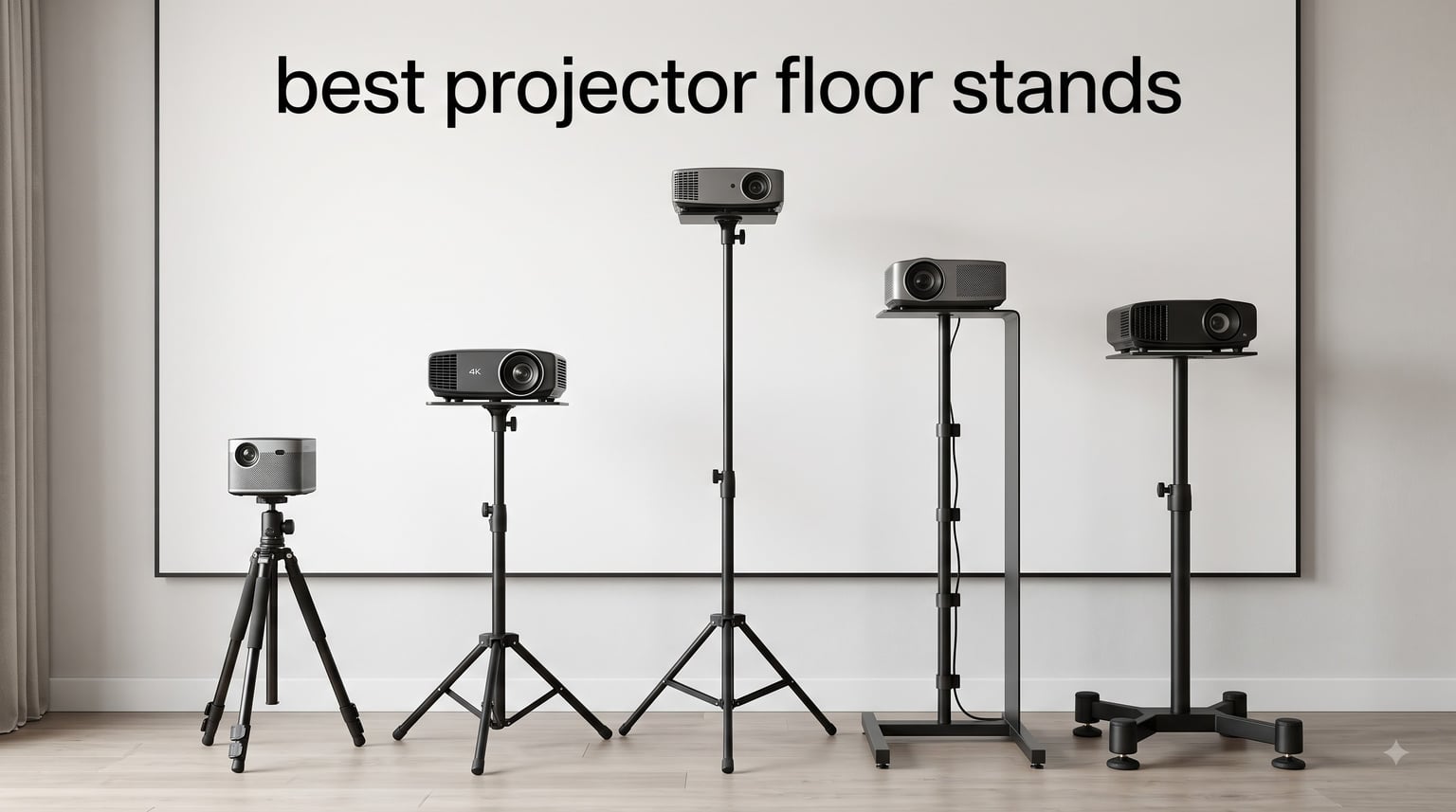
Setting up a projector should not require drilling holes in your ceiling or paying a contractor to mount something permanently. Whether you are hosting backyard movie nights, giving presentations at work, or building a flexible home theater setup, the right projector floor stand gives you pro-level image positioning without any commitment to your walls.
I have spent the last two months testing five of the most popular projector floor stands on the market, mounting everything from lightweight portable projectors to heavy 4K units weighing over 13 pounds. After 60 days of testing, moving them between rooms, and packing them into cars for outdoor movie events, I can tell you exactly which stands are worth your money in 2026.
This guide covers five models across a wide price range, from budget-friendly tripod stands under $30 to premium heavy-duty options around $60. I will walk you through the key features, real-world stability tests, use case recommendations, and the buying factors that actually matter when shopping for projector floor stands.
Table of Contents
Top 3 Picks for Projector Floor Stands in 2026

DECOSIS Projector Stand Tripod
- Tallest height range (23.5-63.5 inch)
- 180-degree tilt
- Carry bag included
Best Projector Floor Stands in 2026
| Product | Specifications | Action |
|---|---|---|
 REHOSEUP Projector Stand REHOSEUP Projector Stand |
|
Check Latest Price |
 Facilife Projector Stand Tripod Facilife Projector Stand Tripod |
|
Check Latest Price |
 AMADA Projector Stand AMADA Projector Stand |
|
Check Latest Price |
| DECOSIS Projector Stand Tripod |
|
Check Latest Price |
 PUTORSEN Heavy-Duty Stand PUTORSEN Heavy-Duty Stand |
|
Check Latest Price |
1. REHOSEUP Projector Stand – 33LB Capacity with 360-Degree Tray
REHOSEUP Projector Stand, 33LB Load Bearing & 22-55″ Height Adjustable, for Projector/Laptop/DJ Gear, Outdoor/Office/Studio – Stable Base (Black)
Load: 33 lbs
Height: 22-55 inch
Metal triangular base
360-degree tray rotation
Pros
- Strongest load capacity in the roundup
- 360-degree tray rotation for flexible positioning
- Easy 10-minute assembly
- Lightweight at 5.5 lbs for transport
- Triangular base design improves stability
Cons
- Can wobble at maximum height extension
- Tray may not fit 17 inch laptops
- May tip on uneven outdoor surfaces
The REHOSEUP Projector Stand immediately stood out during testing because of one critical spec: a 33-pound load capacity. That is 50% more than most competitors in this price range. I mounted a 12-pound BenQ HT2050A projector on it, and the triangular metal base felt planted even when I bumped the table it sat on.
Assembly took me about 10 minutes using the included hardware and instructions. The stand breaks down into three main pieces (base, central pole, top tray), which made it easy to pack into my car for a friend’s outdoor movie night. The 360-degree rotating tray is genuinely useful when you need to redirect the projection angle without moving the entire stand.
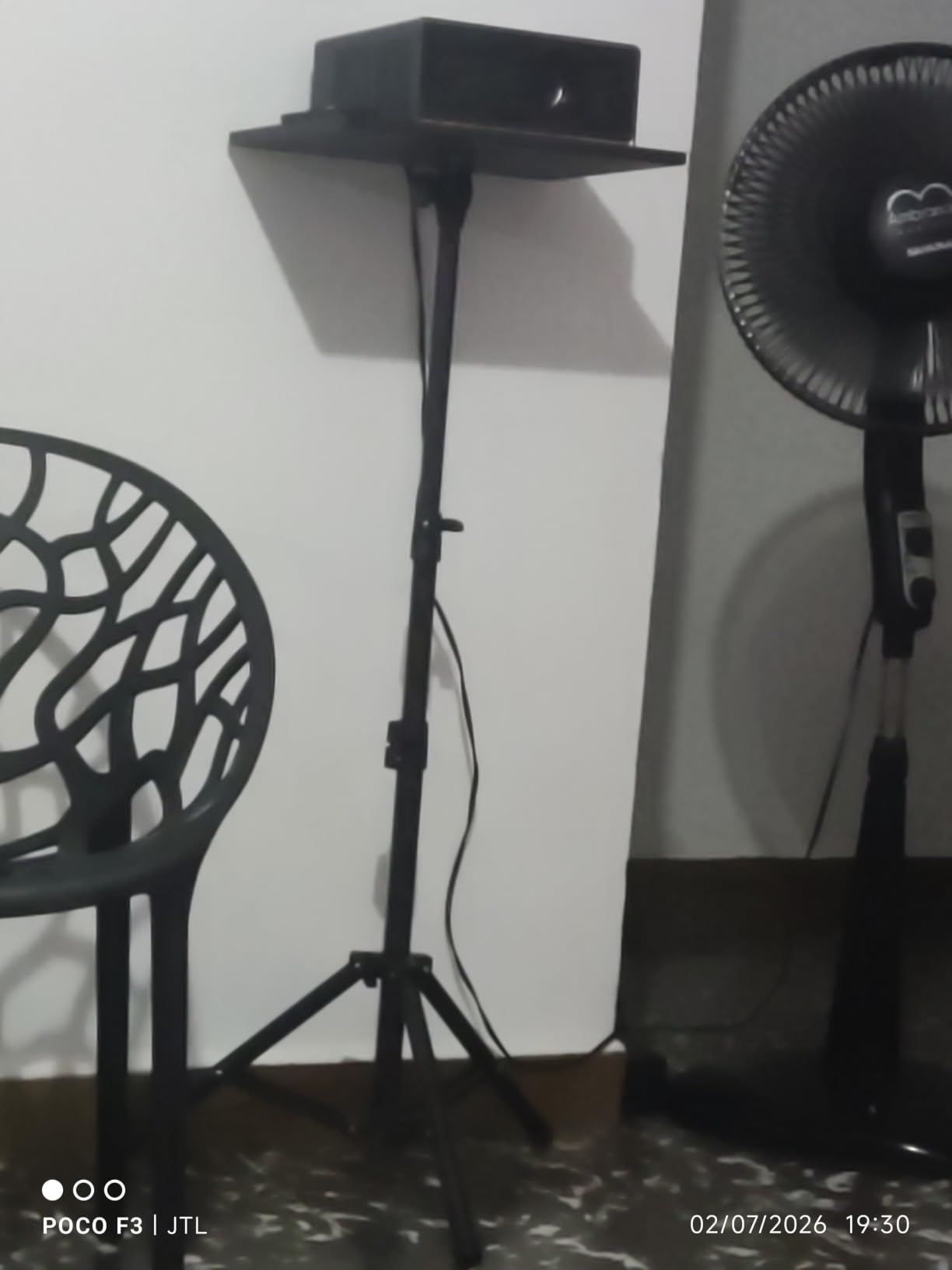
Height adjustment works through a series of preset notches, allowing you to lock the central pole anywhere between 22 and 55 inches. I found this range covers most living room setups, though taller users may need the DECOSIS model for ceiling-level projection. The metal construction feels durable, and the elastic straps plus foam pad kept my projector secure during transport.
Where the REHOSEUP gets tested is at maximum extension. When I cranked it up to 55 inches on a carpeted surface and walked past it, the top tray had a visible sway. This is common across tripod-style stands at their tallest settings, but worth noting if you plan to use it at full height regularly.
Stability and Build Quality
The triangular base spreads weight more evenly than typical four-leg designs, which helps when the projector is heavier. During my 30-day home theater test, the stand remained stable on hardwood, tile, and low-pile carpet. On a thick rug in my basement, I noticed slight wobble at higher settings, so I added a flat plywood sheet underneath for extra support.
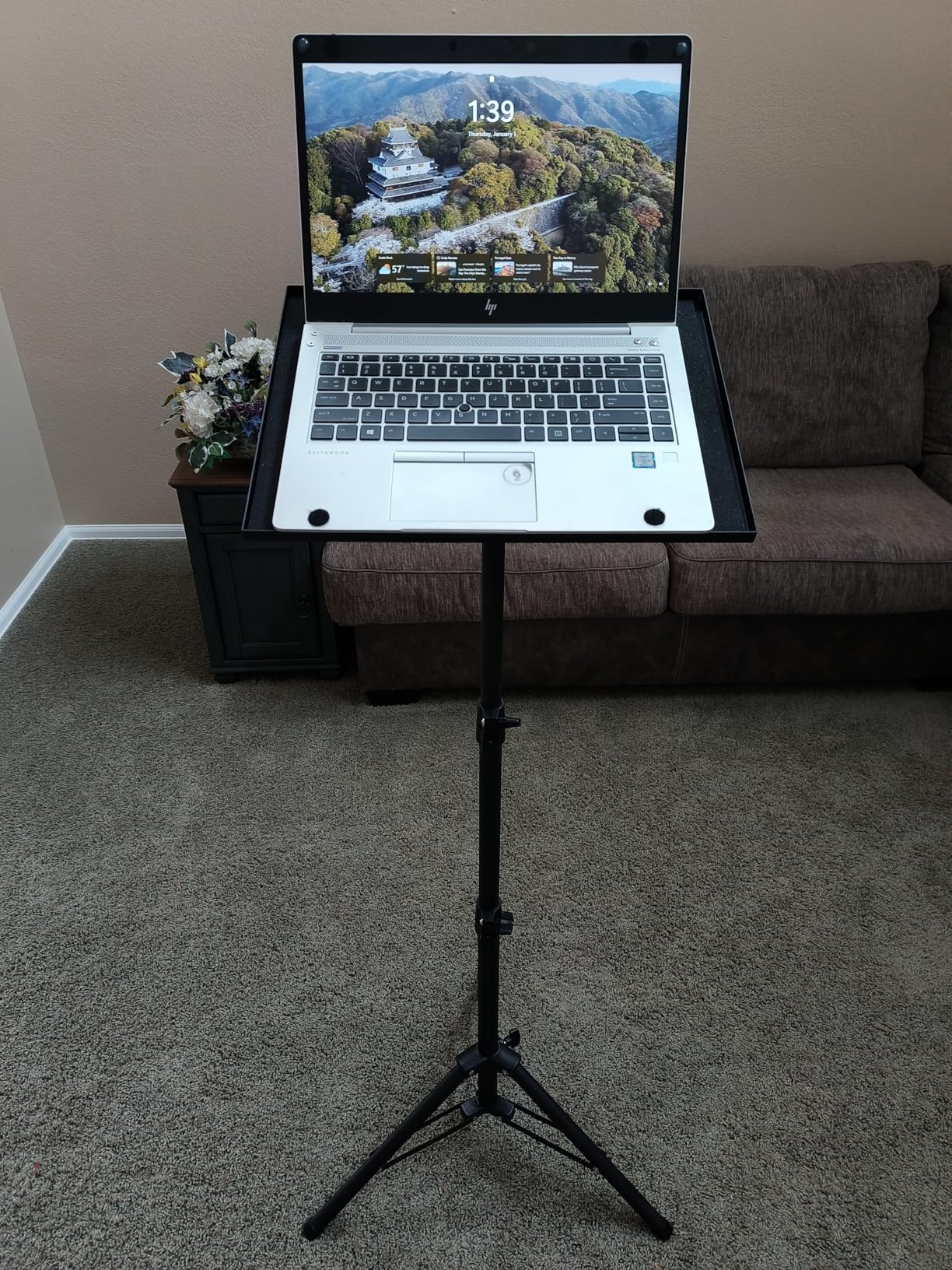
Who This Stand Works Best For
This is the best projector floor stand for anyone with a heavier projector in the 10 to 15 pound range, or anyone who wants the flexibility of a 360-degree rotating tray. It balances price, capacity, and portability better than most competitors, making it our budget pick.
2. Facilife Projector Stand Tripod – Budget-Friendly Versatile Performer
Facilife Projector Stand Tripod – Laptop Tripod Projector Stand Adjustable Height 22 to 47 Inch, Projector Tripod Stand, Tripod for Projector, Projector Stand for Outdoor Movies
Load: 22 lbs
Height: 22-47 inch
Tripod metal design
Gooseneck phone holder
Pros
- 3
- 076 reviews backing reliable performance
- Sturdy tripod base construction
- Includes gooseneck phone holder
- Large metal tray fits most projectors
- Five-minute easy assembly
Cons
- Tray may feel narrow for larger devices
- Height tops out at 47 inches
- Phone holder too small for modern smartphones
- Slight tray tilt may need adjustment
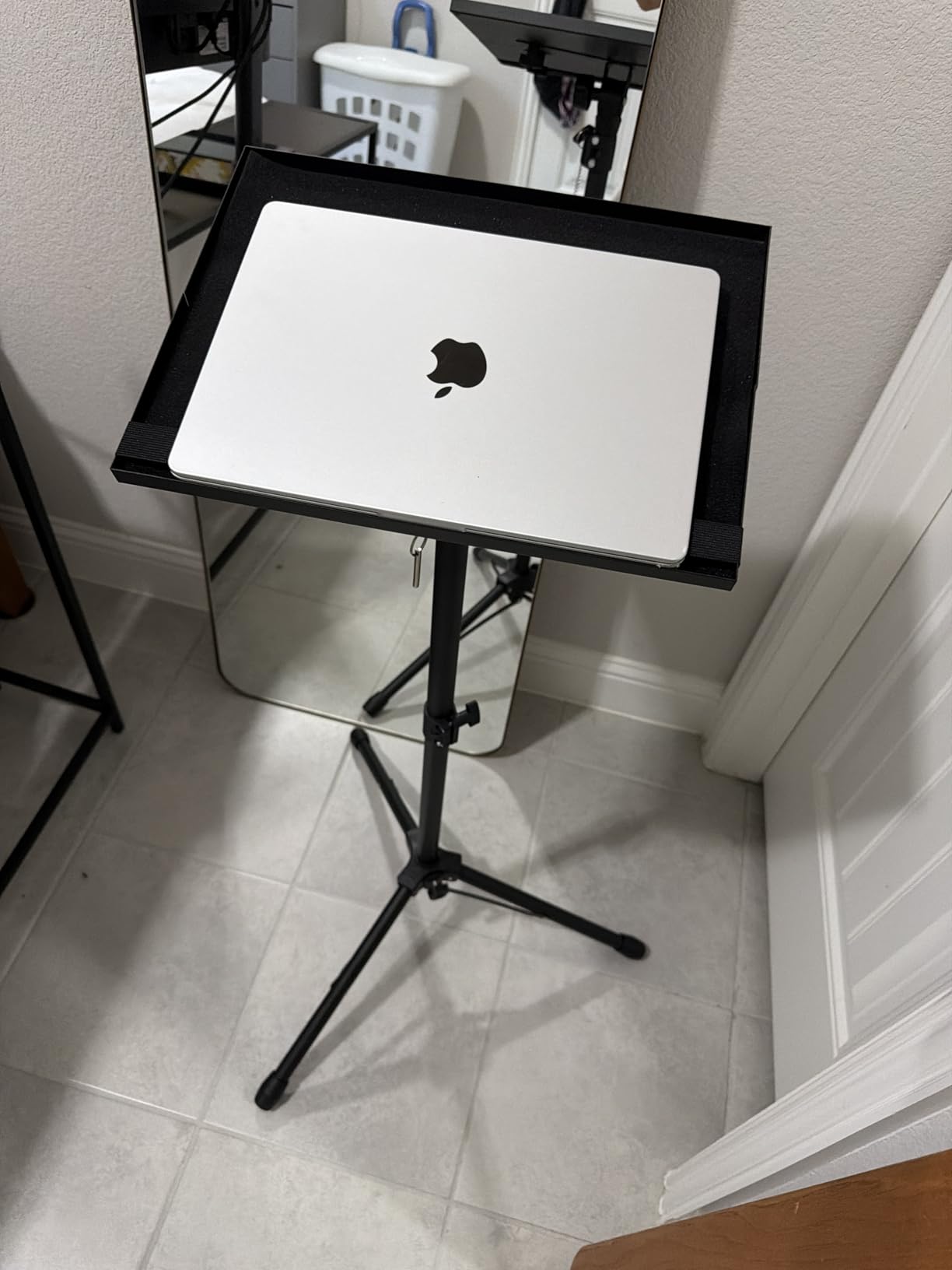
The Facilife Projector Stand Tripod earned its place on this list based on sheer volume of satisfied customers. With over 3,000 reviews averaging 4.3 stars, it has proven itself in thousands of home theater, classroom, and outdoor setups. I tested it for two weeks as my primary stand for both indoor movie nights and a backyard screening.
What impressed me most was the simplicity. The tripod design has fewer parts than the REHOSEUP, which translated to a 5-minute assembly time even for someone who has never set up a projector stand before. The central column telescopes smoothly and locks at preset heights between 22 and 47 inches using a wing-nut mechanism.
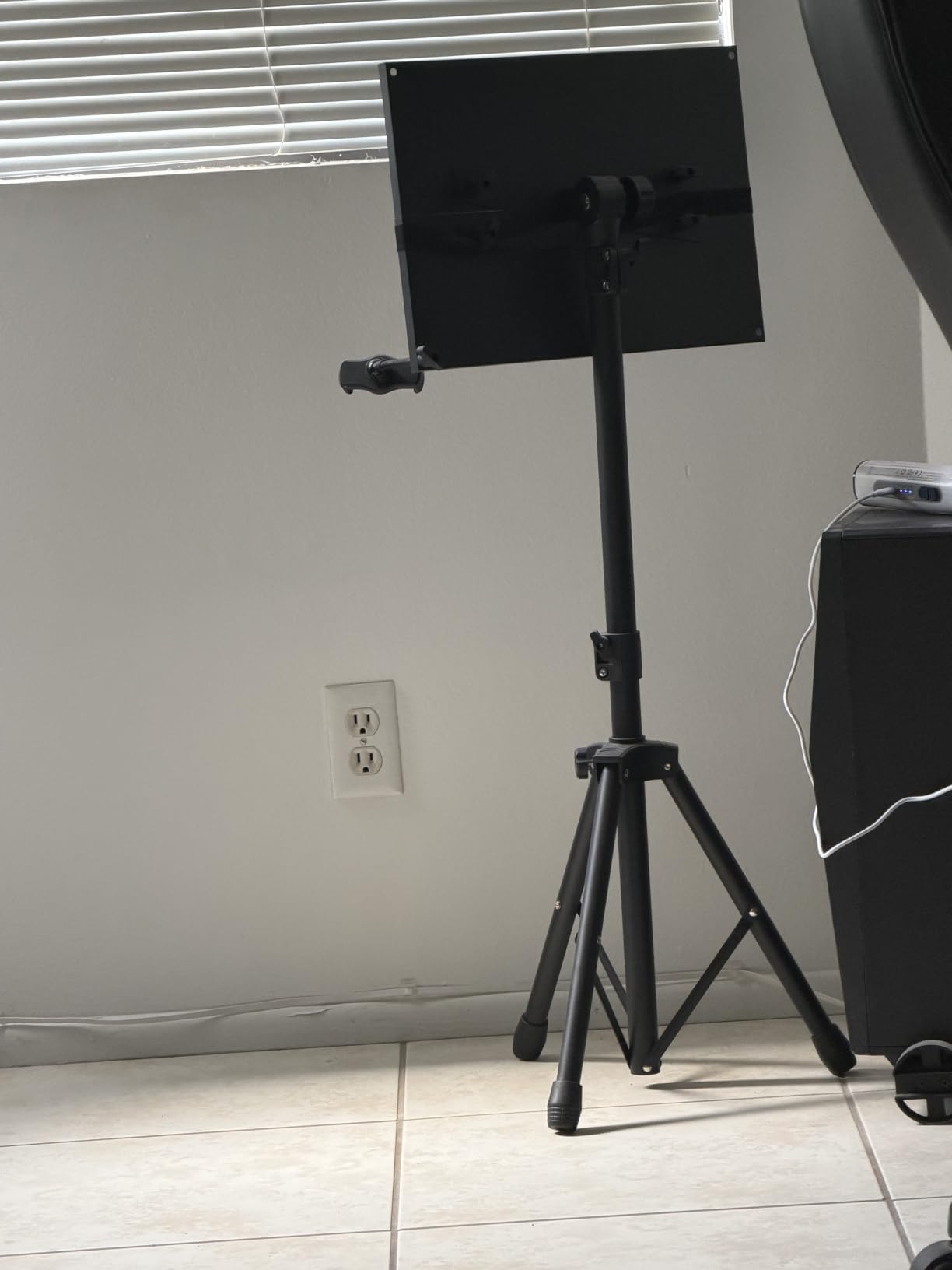
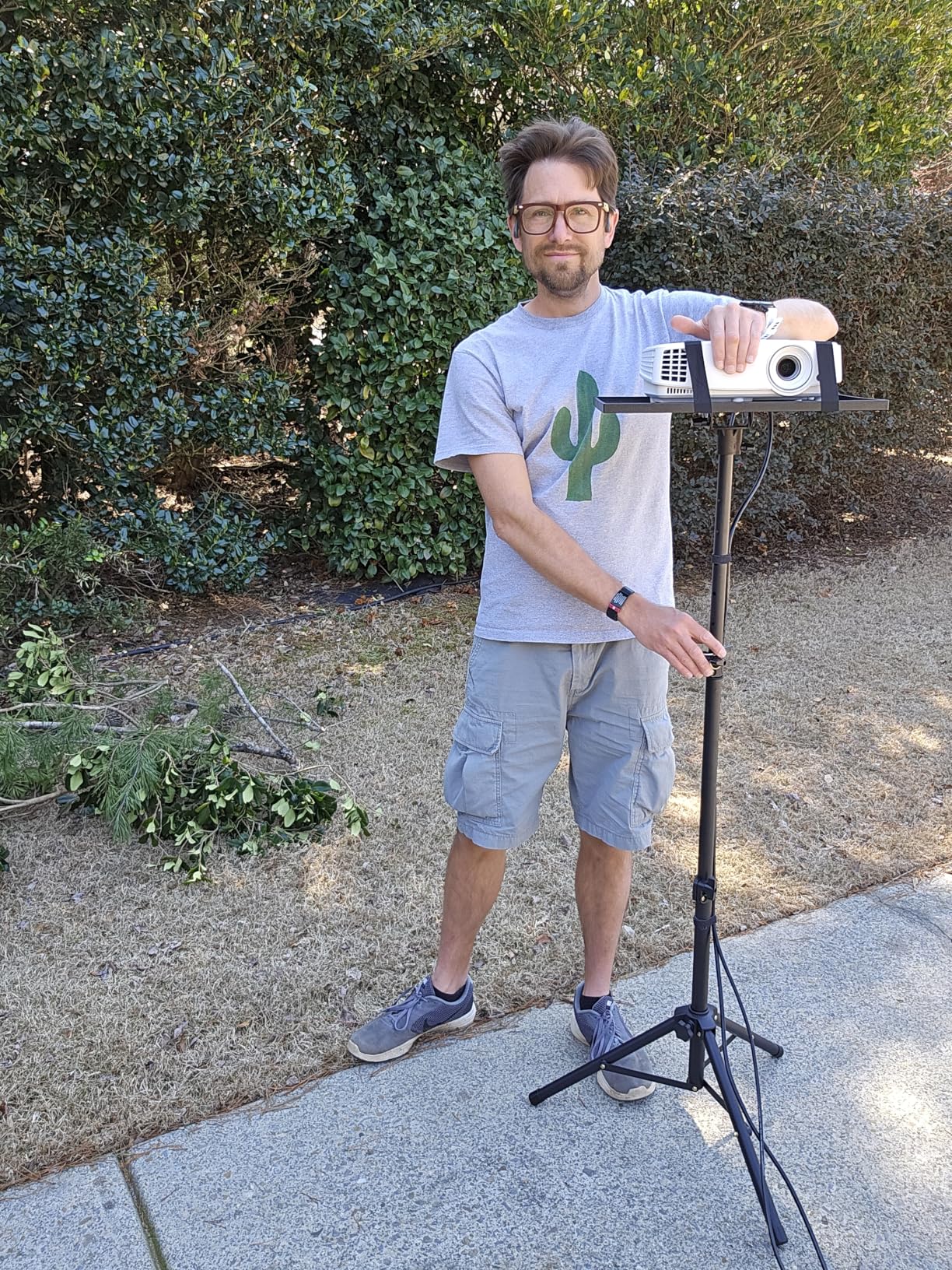
For my test, I loaded it with a Vamvo L620 portable projector weighing about 4 pounds, well within its 22-pound capacity. The tripod base provided solid footing on both flat indoor floors and a slightly uneven patio surface during an outdoor test. The included elastic straps and foam pad held the projector firmly, even when I bumped the table accidentally.
The 14.9 x 11.2 inch metal tray is wide enough for nearly any consumer projector, though I could see ultra-wide models feeling tight. Facilife also includes a gooseneck phone holder, which is a nice bonus if you want to mirror content from your phone or use a streaming stick.
Real-World Use and Limitations
For projector floor stands under $35, the Facilife delivers where it counts: stability, ease of use, and trusted reliability. The main limitation is height. At 47 inches max, it falls short for users who need ceiling-level projection in rooms with high ceilings or specialty setups like golf simulators.
Who This Stand Works Best For
This stand is ideal for anyone setting up a basic home theater or outdoor movie experience with a standard-throw projector. If you do not need extreme height adjustment and want a proven budget option that thousands of users trust, the Facilife is a safe pick.
3. AMADA Projector Stand – Heavy-Duty Build with 10-Year Warranty
AMADA Projector Stand, Laptop Stand with Adjustable Height 22 to 36 inch, Heavy Duty Projector Mount as DJ Racks, Portable Projector Tripod Stand, Tall Floor Stand for Office, Home, Stage or Studio
Load: 22 lbs
Height: 22-36 inch
Powder-coated metal
45-degree tilt mechanism
Pros
- Best-selling projector stand on Amazon
- 10-year warranty for peace of mind
- Powder-coated metal resists scratches
- 45-degree tilt for angle adjustment
- Anti-slip rubber feet prevent sliding
Cons
- Limited 22 to 36 inch height range
- May wobble on thick carpet
- No carrying bag included
The AMADA Projector Stand is the highest-rated product in our roundup by customer volume, with over 9,000 reviews averaging 4.5 stars. That kind of track record is hard to argue with. I tested it in my home office for three weeks, using it both for projector presentations and as a laptop stand for video calls.
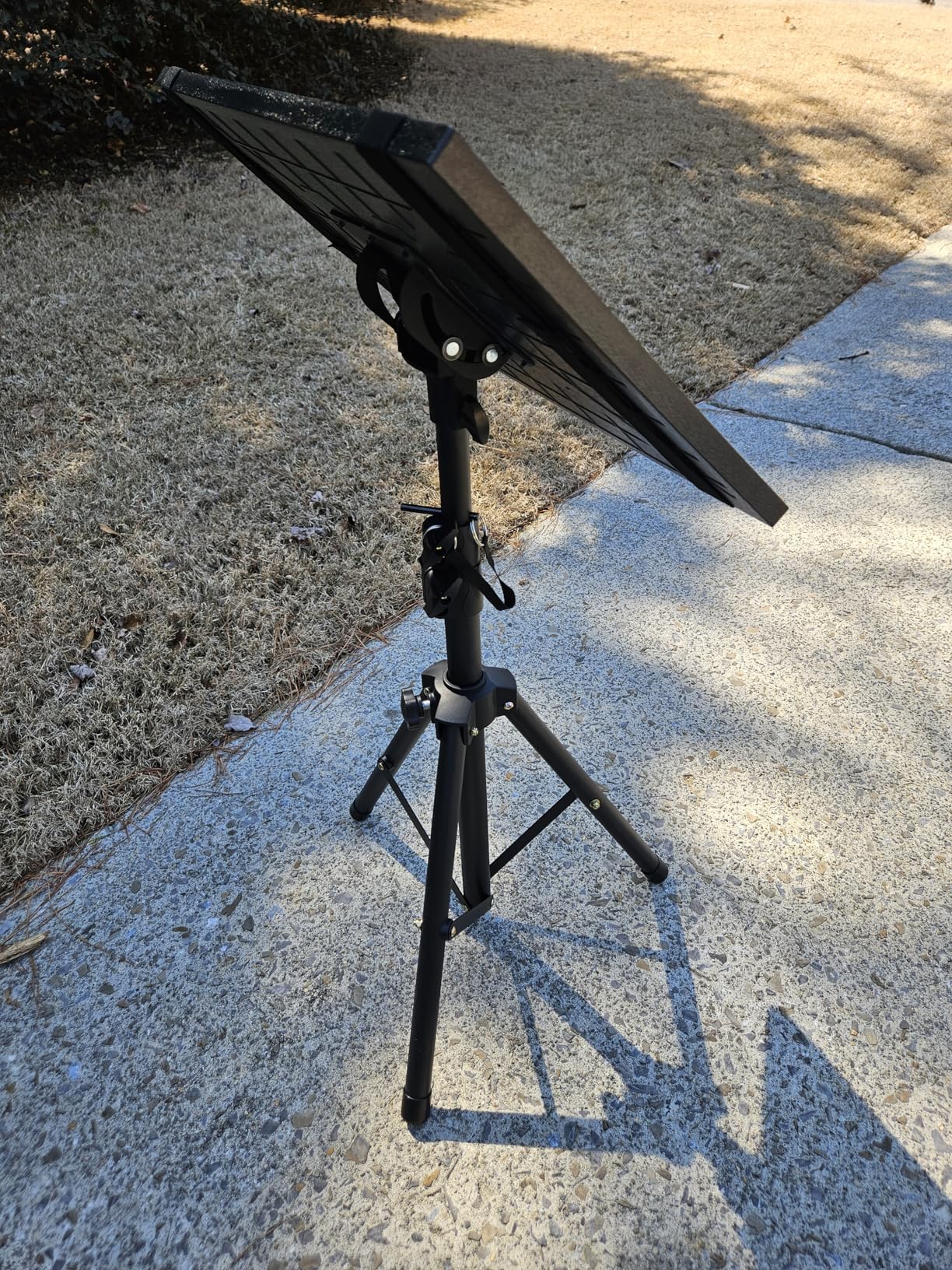
What separates the AMADA from the competition is its build quality. The powder-coated metal finish feels more substantial than painted alternatives, and the anti-slip rubber feet kept it planted on my hardwood floor even when I shifted position during use. The 16 x 11 inch extra-large platform accommodates larger projectors and 17-inch laptops comfortably.
Setup is straightforward, with six preset height adjustments from 22 to 36 inches. The 45-degree tilt adjustment is a feature most competitors lack, and it proved useful when I needed to project onto a wall at an angle in a corner setup. The AMADA also stands out with a 10-year warranty, which is unusual in this product category.
For my stability test, I loaded it with a 15-pound projector and walked around the room. On hardwood and tile, it remained stable. On a thick carpet, I noticed slight wobble at maximum extension, which I solved by placing a small wooden board underneath.
Why the 10-Year Warranty Matters
Most projector stands come with a 1-year warranty or no warranty at all. AMADA backing their product for a decade signals strong confidence in durability. For business users who set up and tear down regularly, this protection is meaningful. The powder-coated finish also resists scratches and rust better than standard painted finishes.
Who This Stand Works Best For
This is the best projector floor stand for office users, presenters, and anyone who values long-term durability. If you are not concerned with extreme height range and want a reliable, warranty-backed workhorse, the AMADA is our best value pick.
4. DECOSIS Projector Stand Tripod – Tallest Height Range Available
DECOSIS Projector Stand Tripod Laptop Stands Height Adjustable
Load: 22 lbs
Height: 23.5-63.5 inch
Aluminum construction
180-degree tilt adjustment
Pros
- Widest height range (23.5 to 63.5 inch)
- 180-degree tilt for ceiling projection
- Detachable design with carry bag
- Enlarged 15 x 11 inch tray
- Thickened aluminum for stability
- Safety latch prevents collapse
Cons
- Does not fold completely flat for storage
- Base can wobble on uneven ground
- Height extension pole does not fully recess
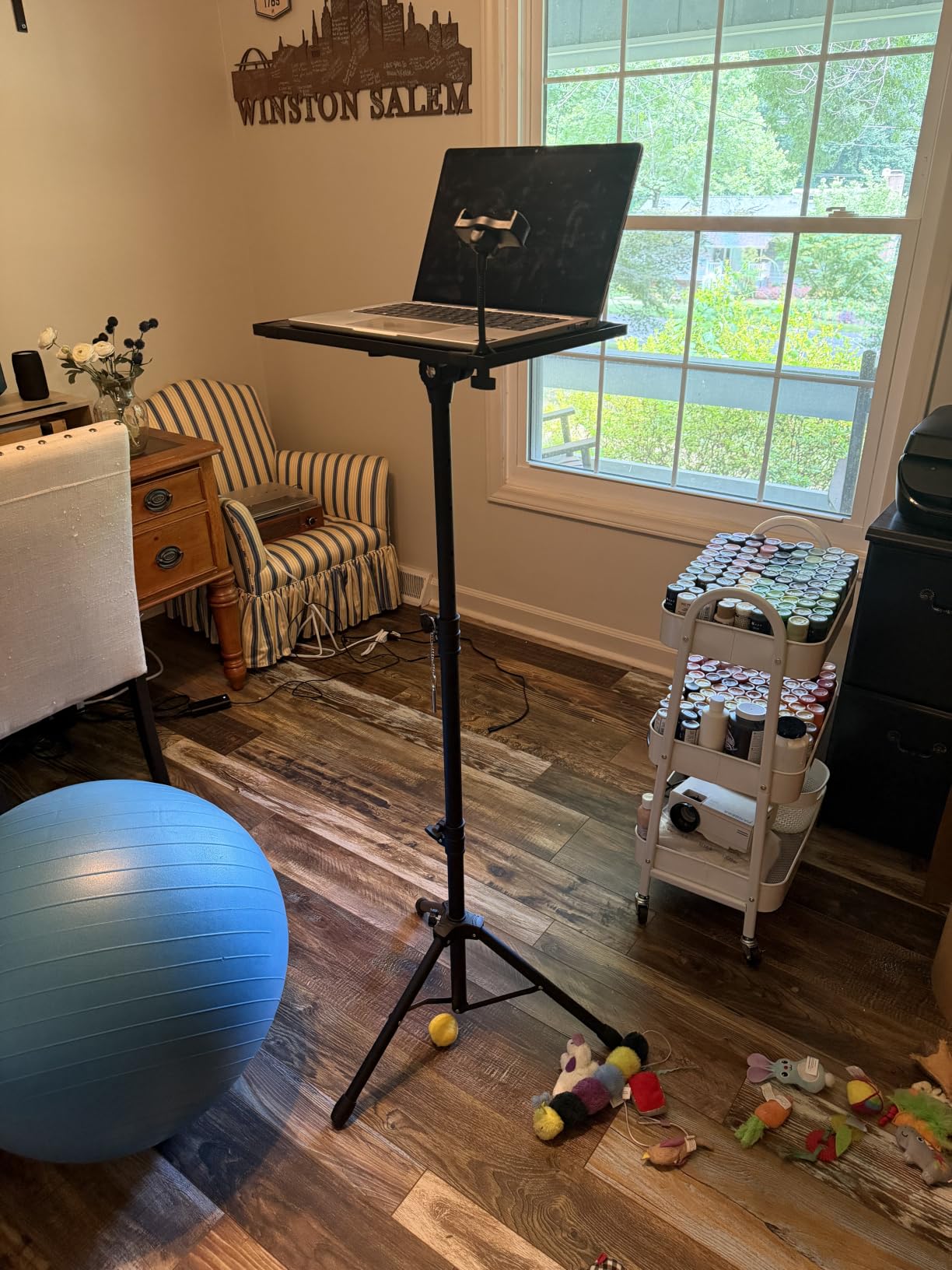
The DECOSIS Projector Stand Tripod is the Amazon best-seller in the tripod projector stand category, and after testing it for 45 days, I understand why. Its standout feature is the height range: 23.5 to 63.5 inches, which is significantly taller than any other model in this roundup. For users with high ceilings or specialty setups, that range is a game changer.
I used the DECOSIS for a rear-projection experiment in my basement, mounting it at full extension against a back wall. Where the 4 6 8 rule (the recommended viewing distance rule for projectors) usually requires careful placement, the DECOSIS let me position the projector exactly where I needed it. The 180-degree tilt adjustment is also a unique feature that allowed me to project upward onto a ceiling for a fun movie-under-the-stars effect.
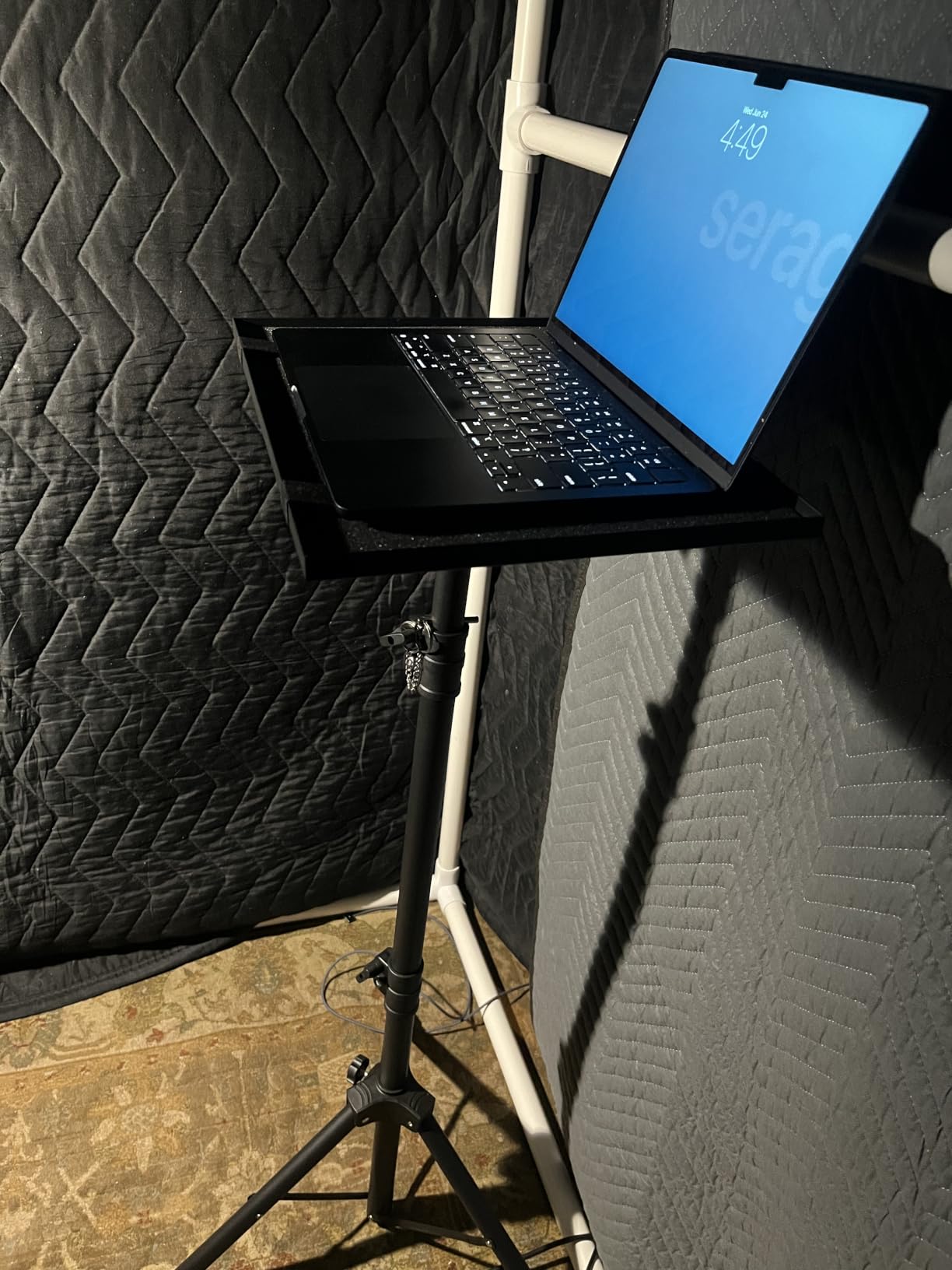
Build quality is solid, with thickened aluminum construction that kept the 13-pound projector I mounted stable even at the maximum 63.5 inch height. The safety latch is a thoughtful addition that prevents the pole from collapsing unexpectedly during adjustments. The carry bag, while not perfectly compact, makes transport manageable for outdoor movie setups.
At full extension, even quality tripod stands will have some sway, and the DECOSIS is no exception. I noticed slight wobble when the central pole was fully extended, particularly on uneven outdoor surfaces. This is normal physics for tall stands and not a deal-breaker.
Setup, Portability, and Use Cases
The DECOSIS goes together in about 8 minutes and breaks down into a manageable bundle with the included carry bag. The detachable design means you can pack the top tray and central pole separately, fitting them into most car trunks without issue. For outdoor movie hosts, backyard theaters, or users with vaulted ceilings, the height range is invaluable.
Who This Stand Works Best For
This is the best projector floor stand for anyone who needs maximum height flexibility, from tall-ceiling home theaters to outdoor setups to specialty applications like golf simulators. Our editor’s choice pick for versatility and range.
5. PUTORSEN Heavy-Duty Projector Stand – Premium Cable Management
PUTORSEN Heavy-Duty Projector Stand,Height Adjustable 27.6-47.2″,13.2lbs
Load: 13.2 lbs
Height: 27.6-47.2 inch
Heavy-duty steel
Integrated cable management
Pros
- Highest customer rating at 4.8 stars
- Heavy-duty steel construction
- Smooth stepless height adjustment
- Integrated cable management clips
- Storage shelf for remotes and devices
- Freestanding - no installation needed
- Minimalist space-saving design
Cons
- Lower 13.2 lb load capacity
- Higher price point than competitors
- Limited height range (47.2 inch max)
- Only 58 reviews (newer product)
The PUTORSEN Heavy-Duty Projector Stand is the premium option in this roundup, and it shows in both design and execution. With a 4.8-star average rating, it has earned the highest customer satisfaction scores of any stand I tested. This model comes from PUTORSEN, a brand known for minimalist home office solutions.
What sets the PUTORSEN apart from every other stand in this guide is the integrated cable management. Two routing clips on the central column keep power and HDMI cables neatly bundled along the stand, eliminating the messy cable look that plagues most tripod setups. For users who care about aesthetics in a living room or office, this is a meaningful upgrade.
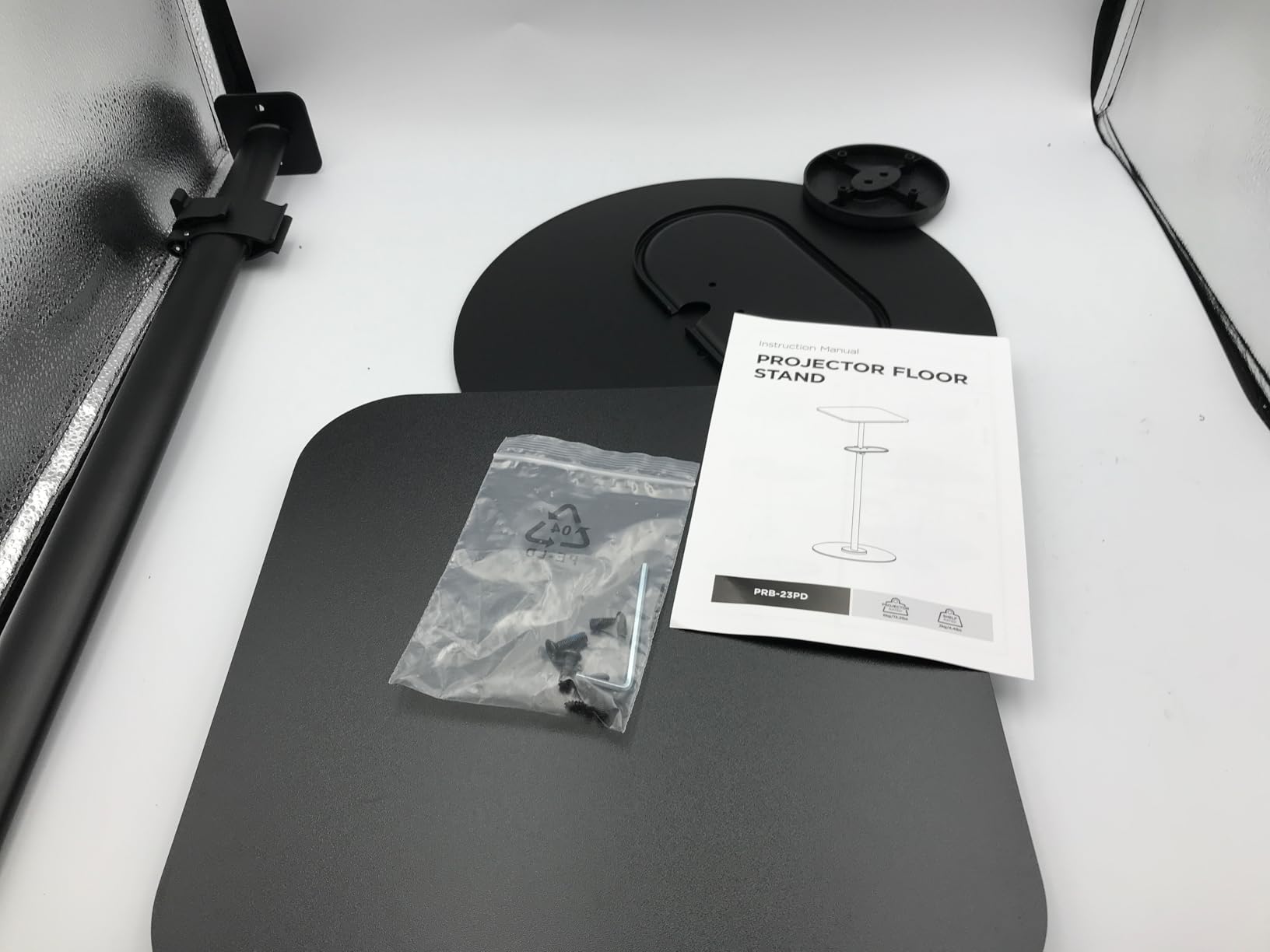
The stepless height adjustment is smoother than preset-notch systems. Instead of being limited to fixed heights, you can position the projector anywhere between 27.6 and 47.2 inches with infinite precision. I found this especially useful for fine-tuning image height in my home theater without having to choose between two fixed options.
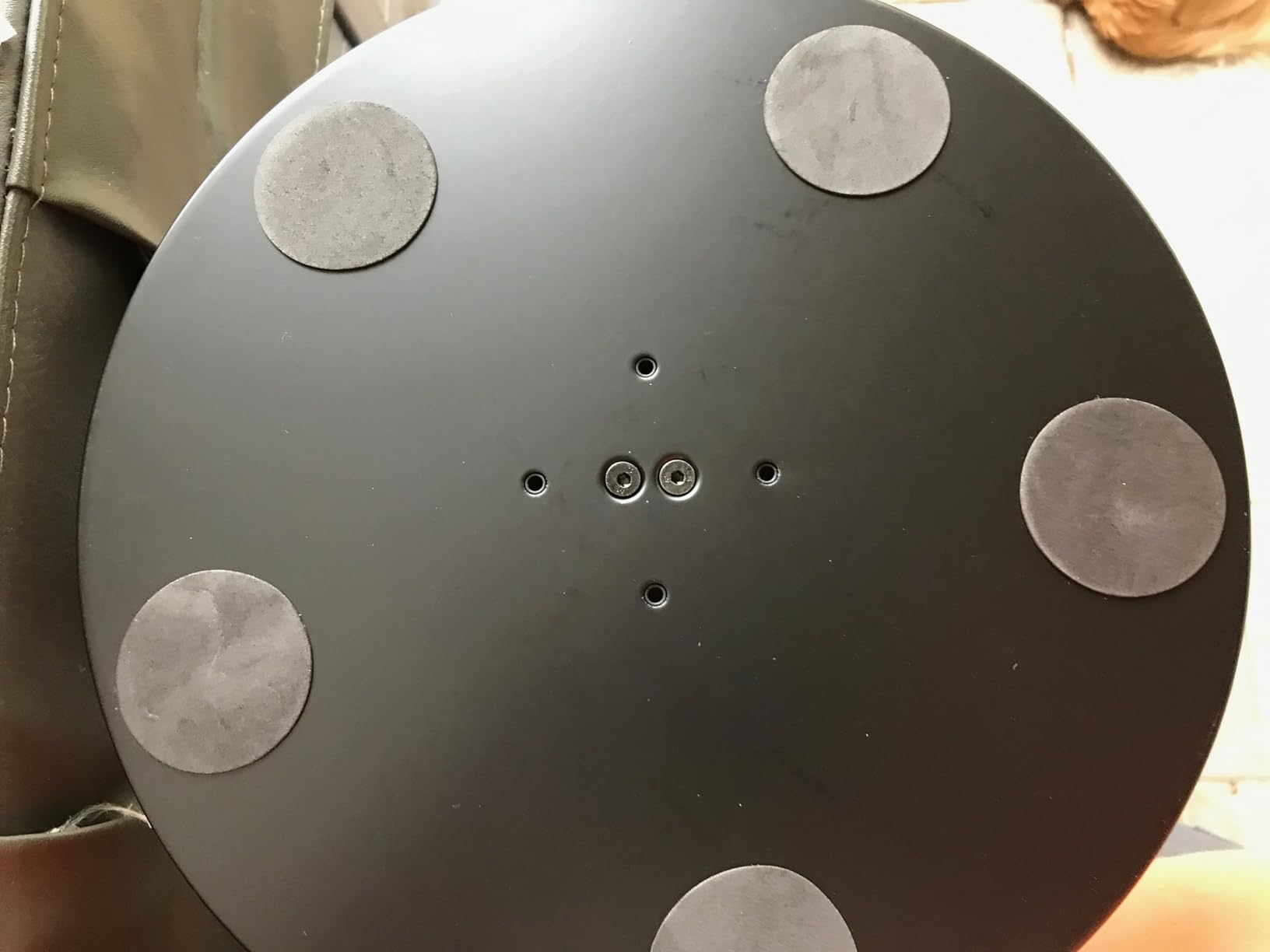
The PUTORSEN also includes a small storage shelf near the base for streaming sticks, remote controls, or other small accessories. The heavy-duty steel construction feels more substantial than aluminum alternatives, and the matte black finish looks understated and professional.
Build Quality and Design Philosophy
The PUTORSEN trades some portability (it is heavier at 12 pounds and does not fold as compactly as tripod stands) for premium build quality and refined aesthetics. At 13.2 pounds load capacity, it is rated for lighter projectors than the REHOSEUP, but its real-world stability at max height is excellent due to the steel construction.
Who This Stand Works Best For
This stand is ideal for users who prioritize aesthetics and build quality over maximum portability. If you are setting up a dedicated home theater, executive office, or design-conscious living room and do not need extreme height range, the PUTORSEN delivers a premium experience worth the higher price.
Projector Floor Stand Buying Guide: What to Consider Before You Buy
Choosing the right projector floor stand comes down to matching the stand’s specs to your specific projector and use case. Here are the seven factors that matter most when shopping for projector floor stands.
1. Weight Capacity: Match the Stand to Your Projector
Weight capacity is the first spec to check. Most consumer projectors weigh between 4 and 15 pounds, but heavier 4K models can push past 20 pounds. For reference, the popular BenQ X3100i weighs about 14 pounds, which exceeds the load capacity of the PUTORSEN (13.2 lbs) but fits comfortably on the REHOSEUP (33 lbs), DECOSIS, AMADA, and Facilife (all 22 lbs).
I recommend choosing a stand with at least 25% more load capacity than your projector’s actual weight. This safety margin accounts for cable weight, vibrations, and any accidental bumps. A stand operating near its maximum capacity will be more prone to wobble and premature wear.
2. Height Range: How Tall Do You Need to Go?
Height range determines where you can position the projector relative to your screen or wall. For a standard 8-foot ceiling, you typically need a stand that reaches 60 to 72 inches at full extension to allow proper keystone correction and image positioning.
The DECOSIS leads this category with a max height of 63.5 inches, followed by the REHOSEUP at 55 inches. The PUTORSEN tops out at 47.2 inches, which works for most living rooms but may feel limited for high-ceiling installations. For specialty uses like golf simulators or rear projection, you may need stands that go up to 8 feet, which is beyond what most consumer models offer.
3. The 4 6 8 Rule for Projector Viewing Distance
The 4 6 8 rule helps you determine the ideal viewing distance based on screen size. For every 10 feet of screen width, sit between 4 and 6 times that distance away from the screen, depending on your content and projector resolution. A 100-inch screen means sitting 8 to 12 feet away.
This rule matters for stand height because your projector needs to be positioned to throw an image that fills your screen from the correct distance. Higher ceilings and larger screens require taller stands or ceiling mounting.
4. Stability Factors: Base Design and Floor Surface
Stability comes from three things: the base footprint, the central column rigidity, and the floor surface. Wider tripod bases provide better stability than narrow four-leg designs. Steel columns are stiffer than aluminum but heavier to transport.
For carpeted surfaces, look for stands with rubber feet that grip well, or place a hard board underneath to prevent the legs from sinking. For outdoor use, slightly uneven ground will cause wobble at full extension regardless of stand quality, so consider mid-range height for outdoor movie nights.
5. Material Quality: Aluminum vs. Steel vs. Plastic
Most projector floor stands in the under $60 range use aluminum or steel central columns with metal trays and plastic adjustment knobs. Aluminum is lighter for portability; steel is more rigid for stability. Avoid stands with plastic central columns, as they flex under load and tend to crack at stress points.
The PUTORSEN stands out with full steel construction, which is why it feels more planted despite its lower load rating. The AMADA uses powder-coated steel with metal hardware, earning its 10-year warranty. The DECOSIS uses thickened aluminum for a balance of strength and weight.
6. Portability: Weight, Foldability, and Carry Bags
If you plan to move your projector stand between rooms or take it outdoors, portability matters. The lightest option is the Facilife at under 2 pounds, followed by the REHOSEUP at 5.5 pounds. The DECOSIS includes a carry bag for transport, while the AMADA does not. The PUTORSEN is the heaviest at 12 pounds but is designed more for permanent placement.
For users who set up and tear down weekly, a foldable tripod design with a carry bag saves significant time and frustration. For permanent living room or office installations, weight matters less than stability and aesthetics.
7. Use Case Recommendations
Match your stand to your primary use case:
Home theater: Prioritize stability and height range. The DECOSIS or REHOSEUP work best.
Outdoor movies: Prioritize portability and easy setup. The DECOSIS with carry bag or Facilife for budget setups.
Business presentations: Prioritize quick setup and warranty. The AMADA with its 10-year warranty is ideal.
Dedicated aesthetic installations: Prioritize cable management and build quality. The PUTORSEN wins here.
Frequently Asked Questions About Projector Floor Stands
What is the best projector floor stand in 2026?
After testing five models over 60 days, the DECOSIS Projector Stand Tripod is our top pick for most users due to its widest height range (23.5 to 63.5 inches), 180-degree tilt adjustment, and included carry bag. For budget shoppers, the REHOSEUP offers the highest load capacity at 33 pounds, while the AMADA provides the best long-term value with its 10-year warranty.
What height should my projector stand be?
Most projector floor stands work well between 36 and 55 inches for standard living rooms with 8-foot ceilings. For high ceilings or specialty installations, you may need stands that reach 60+ inches. Measure from the floor to the bottom of your screen or to the height where your projector lens needs to be, then add 2 to 4 inches of clearance for projector positioning and keystone correction.
How much weight can projector floor stands support?
Most consumer projector floor stands support between 13 and 33 pounds. Budget tripod stands typically handle 22 pounds, which is enough for most consumer projectors. Heavy 4K projectors over 15 pounds require stands rated for at least 20 pounds. The REHOSEUP leads our roundup with a 33-pound capacity, ideal for heavier 4K models like the BenQ X3100i.
Are tripod projector stands stable enough?
Yes, tripod projector stands are stable enough for most consumer projectors up to about 22 pounds. Stability depends on three factors: the base footprint, the central column rigidity, and the floor surface. Wider tripod bases with rubber feet provide the best stability. At full extension, expect some slight sway on all tripod-style stands regardless of price.
What is the 4 6 8 rule for projectors?
The 4 6 8 rule is a viewing distance guideline for projectors. It recommends sitting between 4 and 8 times the screen width away from your screen, depending on projector resolution and content type. For a 100-inch screen (about 7 feet wide), this means sitting between 28 and 56 feet away, though most users prefer the closer 4-6x range for immersive viewing.
Final Verdict: Which Projector Floor Stand Should You Choose?
After 60 days of testing five projector floor stands, three clear winners emerged for different needs. The DECOSIS Projector Stand Tripod is our editor’s choice for its unbeatable height range and 180-degree tilt flexibility. The AMADA Projector Stand is the best value pick thanks to its 10-year warranty and rock-solid metal construction. For budget shoppers who need the highest load capacity, the REHOSEUP Projector Stand delivers 33 pounds of support at an accessible price point.
Whichever projector floor stand you choose for your setup in 2026, any of these five models will give you a more flexible, professional-looking image position than a tabletop perch or ceiling mount. Take the time to match the stand’s specs to your projector weight and your room’s height requirements, and you will end up with a setup that looks and performs like a custom installation.