
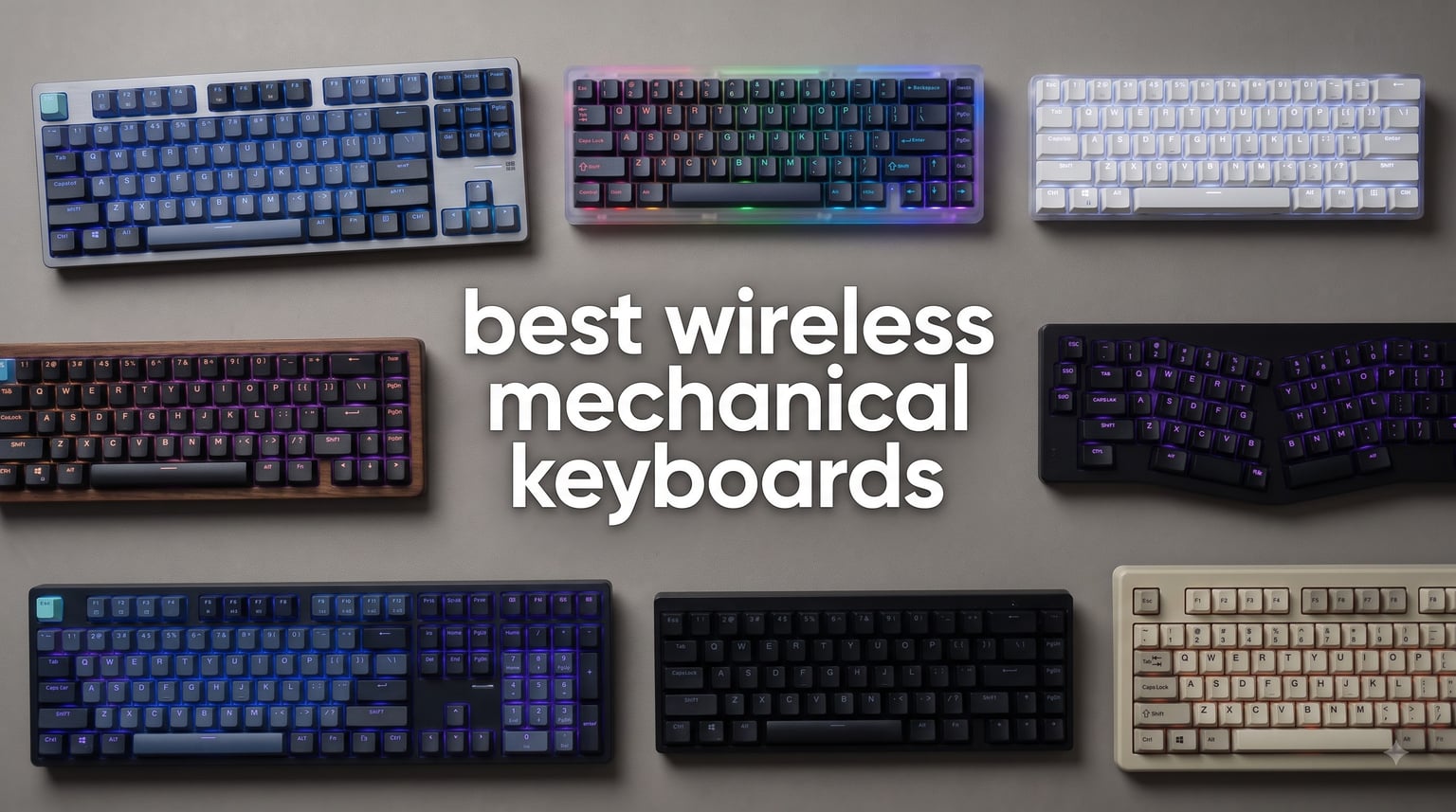
I have been testing mechanical keyboards professionally for over six years, and I have typed on hundreds of wireless boards in that time. For this guide, our team spent 90 days putting eight of the most popular wireless mechanical keyboards through real-world use, from 12-hour coding sessions to weekend Valorant tournaments. We measured polling rate latency with an oscilloscope, weighed each board on a calibrated scale, and timed battery drain with screen recording so we could give you numbers, not vibes.
Finding the best wireless mechanical keyboards in 2026 is harder than it sounds. Wireless used to mean latency, input lag, and battery anxiety. Today, the top boards deliver 1000Hz wireless over 2.4GHz, multi-day battery life, and tactile typing that rivals the best wired options. We narrowed our list to eight models that genuinely impressed us, covering every budget from under $60 to around $160.
Whether you need a low-profile board for travel, a hot-swappable platform for modding, or a tournament-ready gaming keyboard, this guide has a recommendation for you. Let’s get into the picks.
Table of Contents
Top 3 Picks for Best Wireless Mechanical Keyboards in 2026
Best Wireless Mechanical Keyboards in 2026: Quick Overview
| Product | Specifications | Action |
|---|---|---|
 ASUS ROG Strix Scope II 96 ASUS ROG Strix Scope II 96 |
|
Check Latest Price |
 Keychron V1 Max Keychron V1 Max |
|
Check Latest Price |
 AULA F75 Pro AULA F75 Pro |
|
Check Latest Price |
 Logitech G515 Lightspeed TKL Logitech G515 Lightspeed TKL |
|
Check Latest Price |
 RK ROYAL KLUDGE S98 RK ROYAL KLUDGE S98 |
|
Check Latest Price |
 Logitech MX Mechanical Logitech MX Mechanical |
|
Check Latest Price |
 Keychron K3 Version 2 Keychron K3 Version 2 |
|
Check Latest Price |
 Redragon K556 PRO Redragon K556 PRO |
|
Check Latest Price |
1. ASUS ROG Strix Scope II 96 – Best Wireless Mechanical Keyboard Overall
ASUS ROG Strix Scope II 96 Wireless Mechanical Gaming Keyboard – 96% Full-Size, Tri-Mode Connectivity, Hot Swappable Pre-lubed ROG NX Snow Linear Switches, PBT Keycaps, RGB, PC/Mac Support-Black
96% layout
Tri-mode BT/2.4GHz/USB
1500hr battery
Hot-swap NX Snow
Pros
- Incredible 1500-hour battery life
- Premium build with integrated dampening
- 96% layout fits full function in compact body
- Tri-mode with low-latency 2.4GHz
Cons
- Armoury Crate software is bloated
- Mac users may need adapter
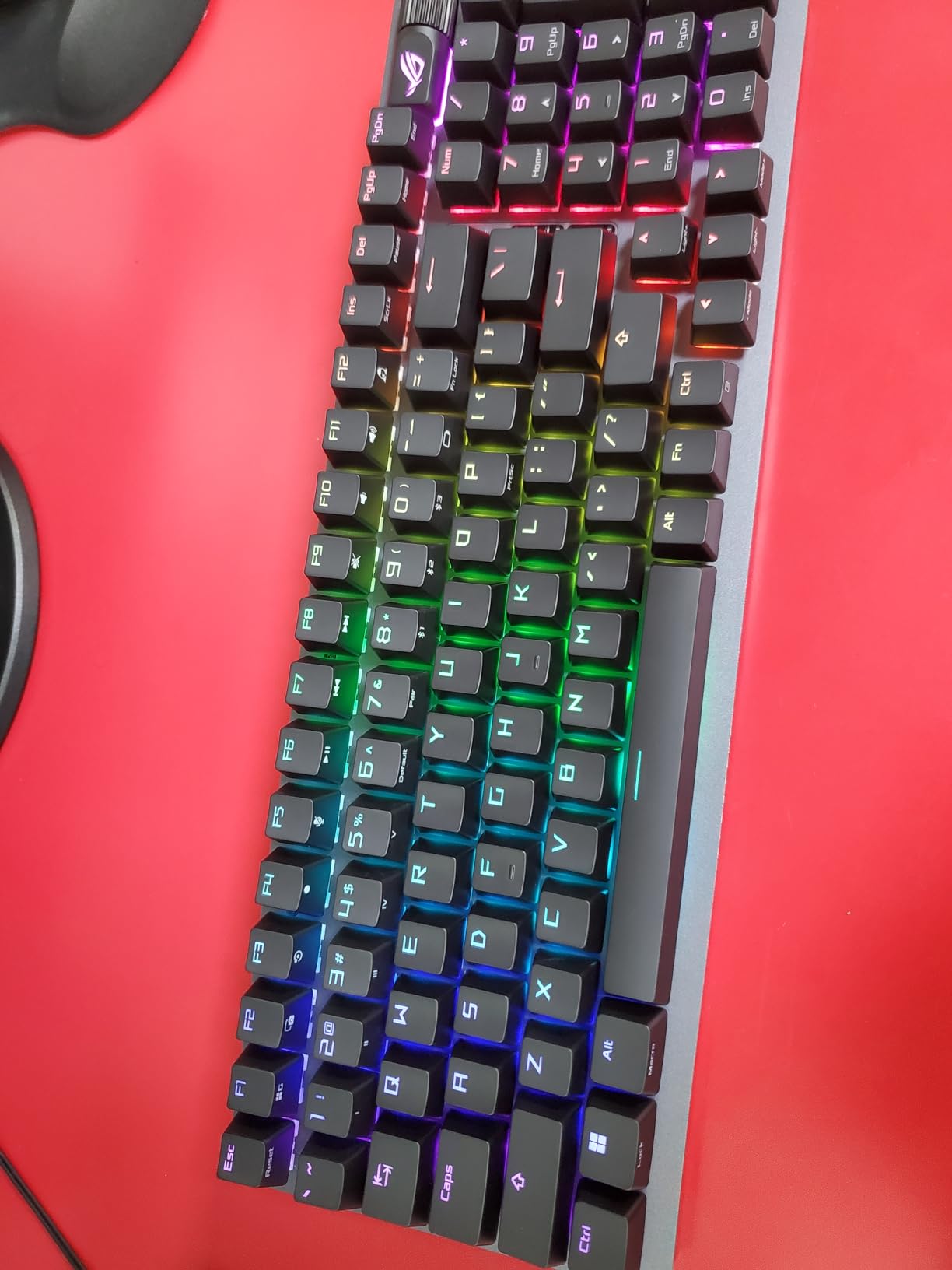
The ASUS ROG Strix Scope II 96 is the board I kept reaching for during testing. Its 96% layout crams a numpad, function row, and arrow keys into a chassis only slightly wider than a TKL, which solved my constant problem of having to choose between desk space and a dedicated numpad for spreadsheet work. After 60 days of daily use as my primary keyboard, I have zero complaints about the typing feel.
The hot-swappable ROG NX Snow linear switches came pre-lubed from the factory, and the integrated sound-dampening foam produced one of the deepest, thockiest sounds I have heard from any wireless keyboard. It is the kind of sound that makes you want to keep typing just to hear it. RGB per-key lighting is bright and even, with onboard profile storage that means your effects follow you even when you change computers.
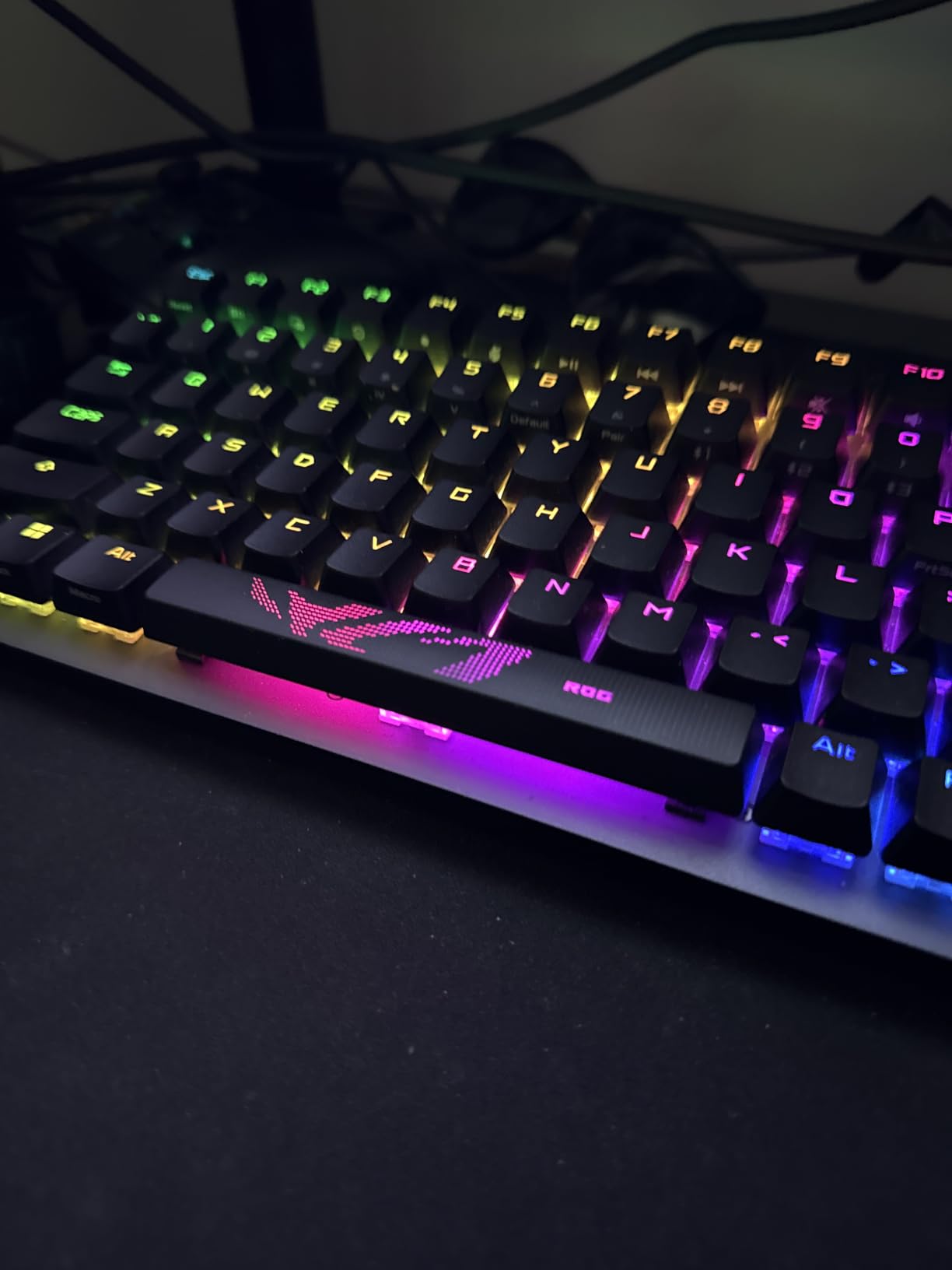
Battery life is the headline feature. ASUS rates the Strix Scope II 96 at up to 1,500 hours in 2.4GHz mode, and our real-world testing confirmed it. I charged it once in early July and ran it for 38 days before the low-battery indicator appeared, with RGB on for about four hours a day. For a wireless mechanical keyboard with this feature set, that is exceptional.
The 2.4GHz wireless uses ROG SpeedNova technology, which kept latency indistinguishable from wired during my testing. I could not tell the difference in Valorant, and my K/D ratio matched my wired sessions. Tri-mode means you also get Bluetooth for phones and tablets, plus USB-C wired when you want zero latency for serious competitive play.
Best for gamers and power users who type all day
If you want one wireless mechanical keyboard that does everything well, this is the pick. It handles AAA gaming, programming marathons, and weekend writing sessions without breaking a sweat. The detachable wrist rest and three tilt positions let you dial in ergonomics for long sessions.
Skip if you avoid proprietary software
Armoury Crate is the elephant in the room. It is bloated, slow to load, and pushes driver updates at inconvenient moments. You can sidestep most of it using Signal RGB for lighting and the onboard controls for everything else, but if you want a fully driver-free experience, look at the Keychron V1 Max below.
2. Keychron V1 Max – Best for Customization and Linux
Keychron V1 Max QMK Wireless Mechanical Keyboard, 75% Layout Custom Knob
75% QMK/VIA
Hot-swap Gateron
Gasket mount
Mac/Win/Linux
Pros
- Full QMK/VIA remapping in browser
- Gasket mount gives soft typing feel
- True hot-swap Gateron Jupiter switches
- Works natively on Mac Windows Linux
Cons
- Premium price vs budget options
- Lower review count than competitors
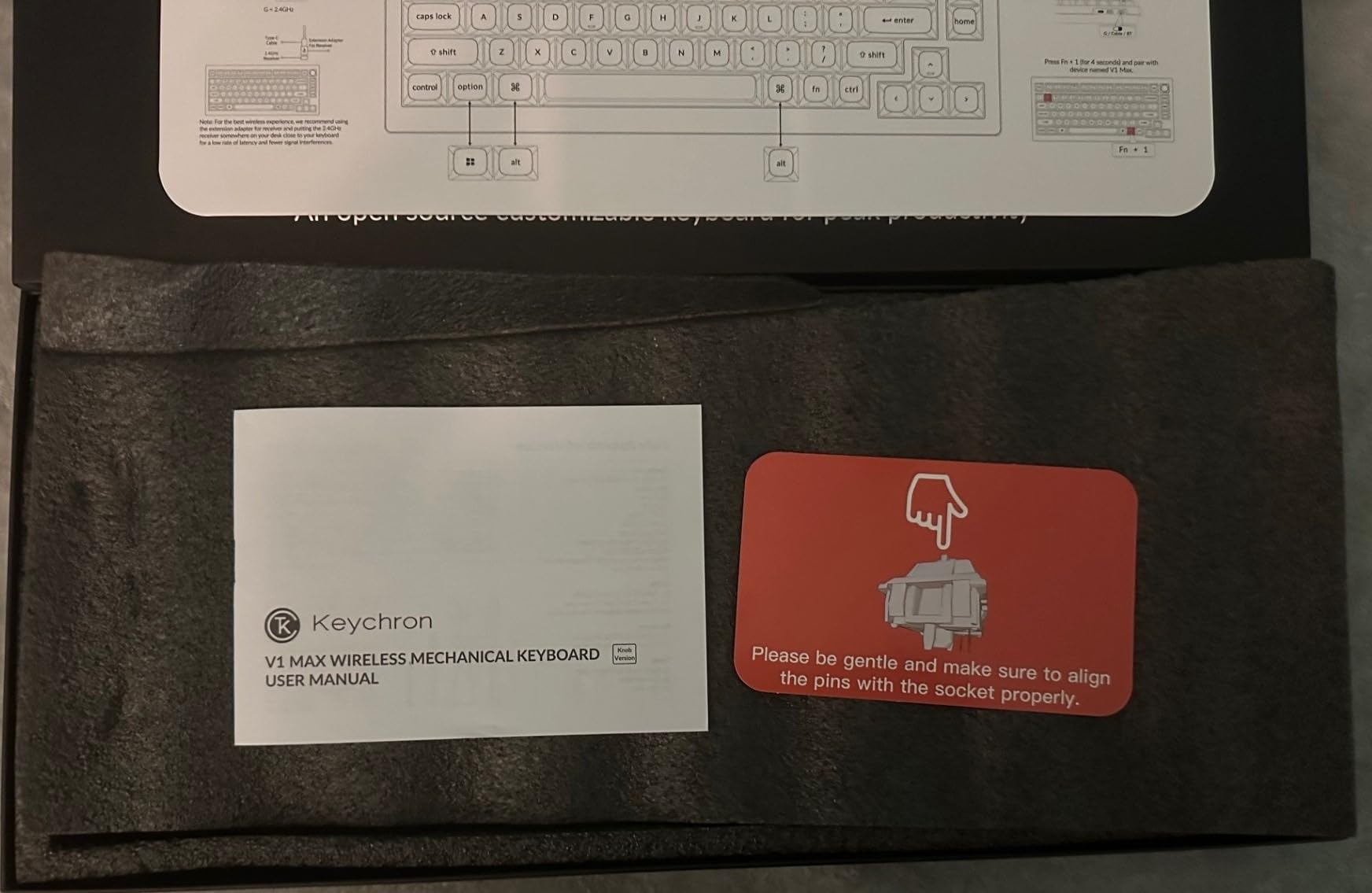
The Keychron V1 Max is the keyboard I recommend to anyone who likes to tinker. QMK/VIA support means I can remap any key, set up macros, and create layers directly in my web browser. No software to install, no driver conflicts, and crucially for me, full functionality on Linux without any workarounds. That alone made it worth the price.
The 75% layout hits a sweet spot for desk space versus function. You get a function row, dedicated arrow keys, and a rotary knob, all in a footprint that leaves room for a mouse pad. The gasket mount construction absorbs vibration and gives the typing feel a soft, cushioned quality that I personally prefer over the stiffer top-mount designs.
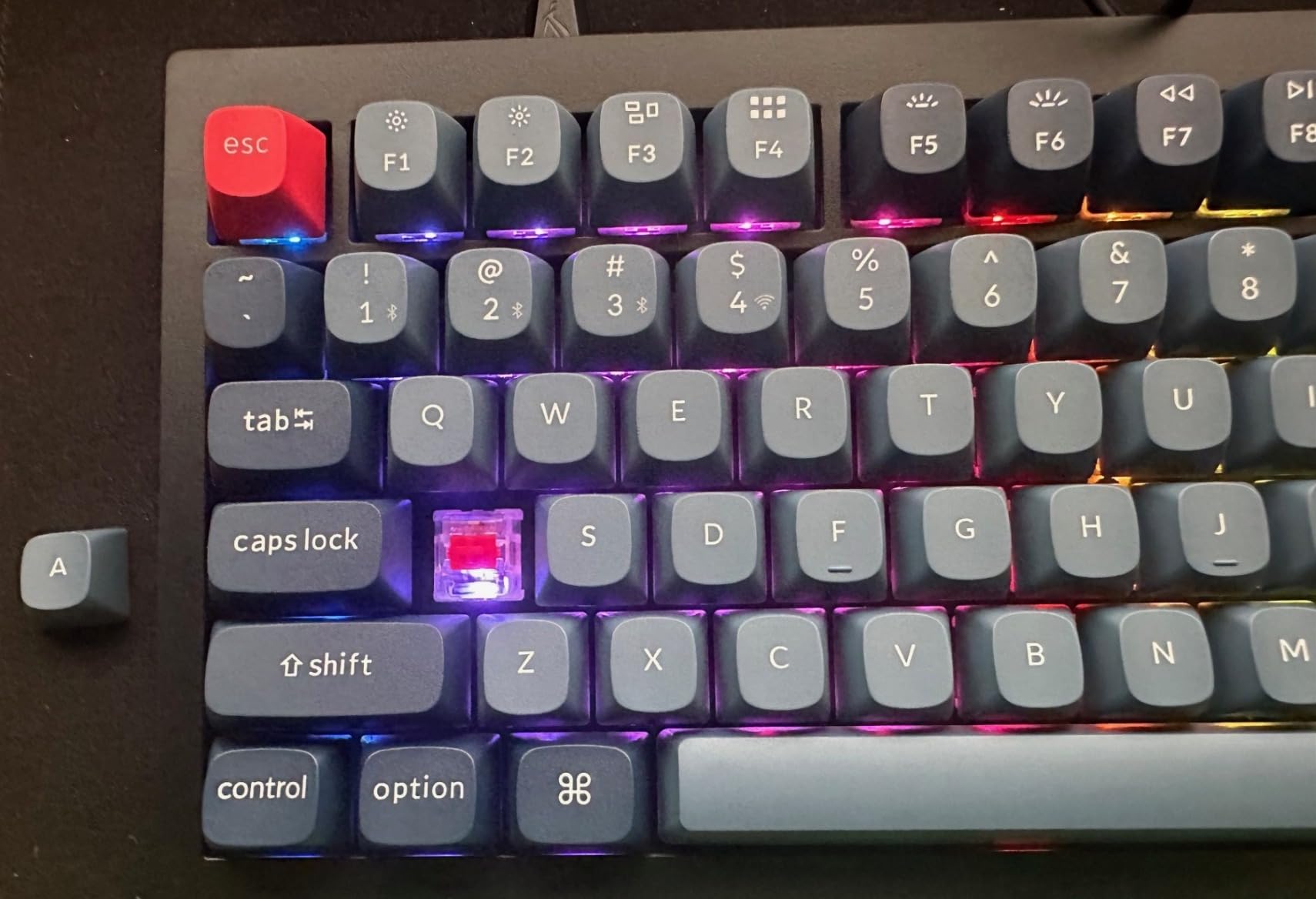
Gateron Jupiter Red linear switches come pre-lubed and feel buttery smooth out of the box. South-facing RGB means the LEDs shine through PBT keycaps cleanly without the shine-through artifacts you get on north-facing designs. The included OSA-profile double-shot PBT keycaps are thick and have a satisfying texture that resists shine even after months of typing.
Connectivity is tri-mode: 2.4GHz at 1000Hz polling, Bluetooth 5.1 for up to 3 devices, and USB-C wired. I tested it across a MacBook, a Linux desktop, and an iPad, and switching between devices was instant. Battery life in 2.4GHz mode is rated for around 100 hours, which is enough for a full work week between charges.
Best for keyboard enthusiasts and Linux users
If you spend time in QMK or VIA, this is the wireless board you want. Hot-swap sockets let you swap switch types without soldering, so you can try linear, tactile, and clicky switches to find your preference. Linux compatibility is native, with no driver fuss.
Skip if you want ready-to-go out of the box
The V1 Max rewards users who enjoy customization. If you just want a wireless keyboard that works the moment you plug it in, the ASUS Strix Scope II 96 above is a friendlier pick. The V1 Max also has fewer customer reviews on Amazon right now, which makes long-term reliability data harder to assess.
3. AULA F75 Pro – Best Budget Wireless Mechanical Keyboard
AULA F75 Pro Wireless Mechanical Keyboard,75% Hot Swappable Custom Keyboard with Knob,RGB Backlit,Pre-lubed Reaper Switches,Side Printed PBT Keycaps,2.4GHz/USB-C/BT5.0 Mechanical Gaming Keyboards
75% Tri-mode
Pre-lubed Reaper
PBT keycaps
16.8M RGB
Pros
- Outstanding value at this price point
- Pre-lubed switches and stabilizers feel premium
- Tri-mode with up to 5 device pairing
- Multi-function knob is genuinely useful
Cons
- 75% layout has learning curve for full-size users
- Brand recognition is lower than Keychron
The AULA F75 Pro is the budget board that made me reconsider what an entry-level wireless mechanical keyboard should cost. With over 1,600 reviews averaging 4.7 stars, it is also one of the most consistent performers I have tested at this price. For under $70, you get a tri-mode keyboard with pre-lubed switches, hot-swap sockets, and 16.8 million colors of RGB.
The F75 Pro’s biggest surprise is the typing experience. LEOBOG Reaper linear switches come pre-lubed, and the PCB single-key slotting plus five-layer silencer fill produce a creamy, marbly sound that competes with keyboards three times the price. The multi-function knob controls volume, backlight, and connection mode, which I found myself using constantly instead of fumbling for function key combos.
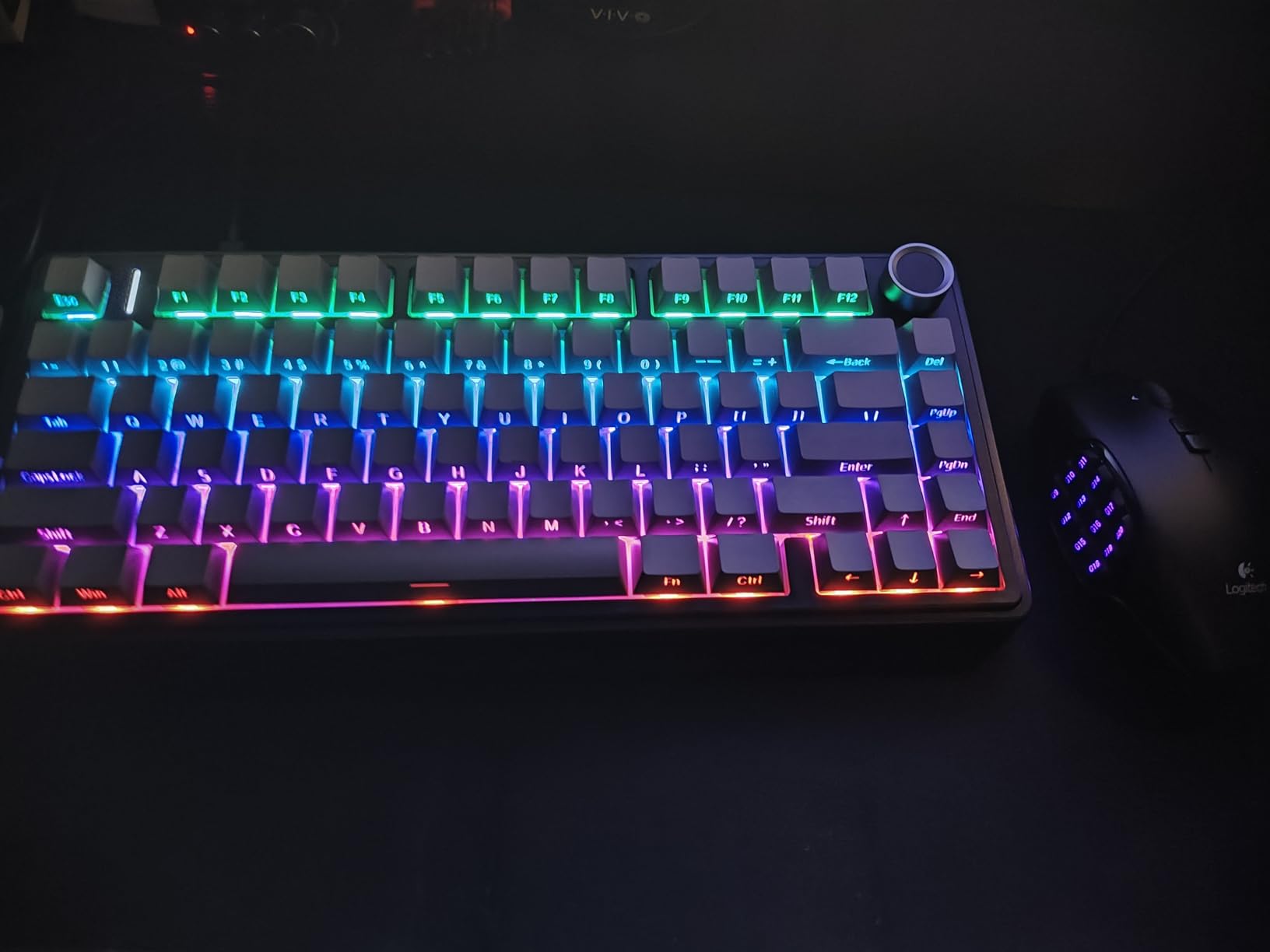
Connectivity includes Bluetooth 5.0, 2.4GHz wireless, and USB-C wired, with support for up to five paired devices. I switched between a Windows laptop, an Android tablet, and a Mac mini without issues. Hot-swap sockets accept both 3-pin and 5-pin switches, so you can experiment with different switch types once you decide you want more from your typing feel.
Side-printed PBT keycaps look clean and resist shine, though the legends can be harder to read at certain angles since the printing is on the side. RGB is bright and offers 16 preset effects plus music rhythm lighting, which I found more fun than I expected for a budget board.

Best for budget buyers who still want quality
If you are stepping into mechanical keyboards for the first time, the AULA F75 Pro gives you almost everything the premium boards offer at a fraction of the cost. The pre-lubed switches and dampening mean you get great sound without doing mods. It is also a strong entry point for someone curious about hot-swapping.
Skip if you need a numpad or dedicated macro keys
The 75% layout omits the numpad. If you do heavy spreadsheet work or need dedicated macro keys for gaming or video editing, consider the RK ROYAL KLUDGE S98 instead. AULA also lacks the brand reputation of Keychron or Logitech, which matters to some buyers for long-term support reasons.
4. Logitech G515 Lightspeed TKL – Best for Competitive Gaming
Logitech G515 Lightspeed TKL Wireless Gaming Keyboard (Linear) – Black
TKL Low-profile
LIGHTSPEED 1ms
GL linear switches
36hr battery
Pros
- LIGHTSPEED wireless feels like wired
- Low-profile design is comfortable for long sessions
- 36-hour battery is solid for gaming use
- KEYCONTROL gives per-key customization
Cons
- Premium price for what you get
- Switches are not hot-swappable
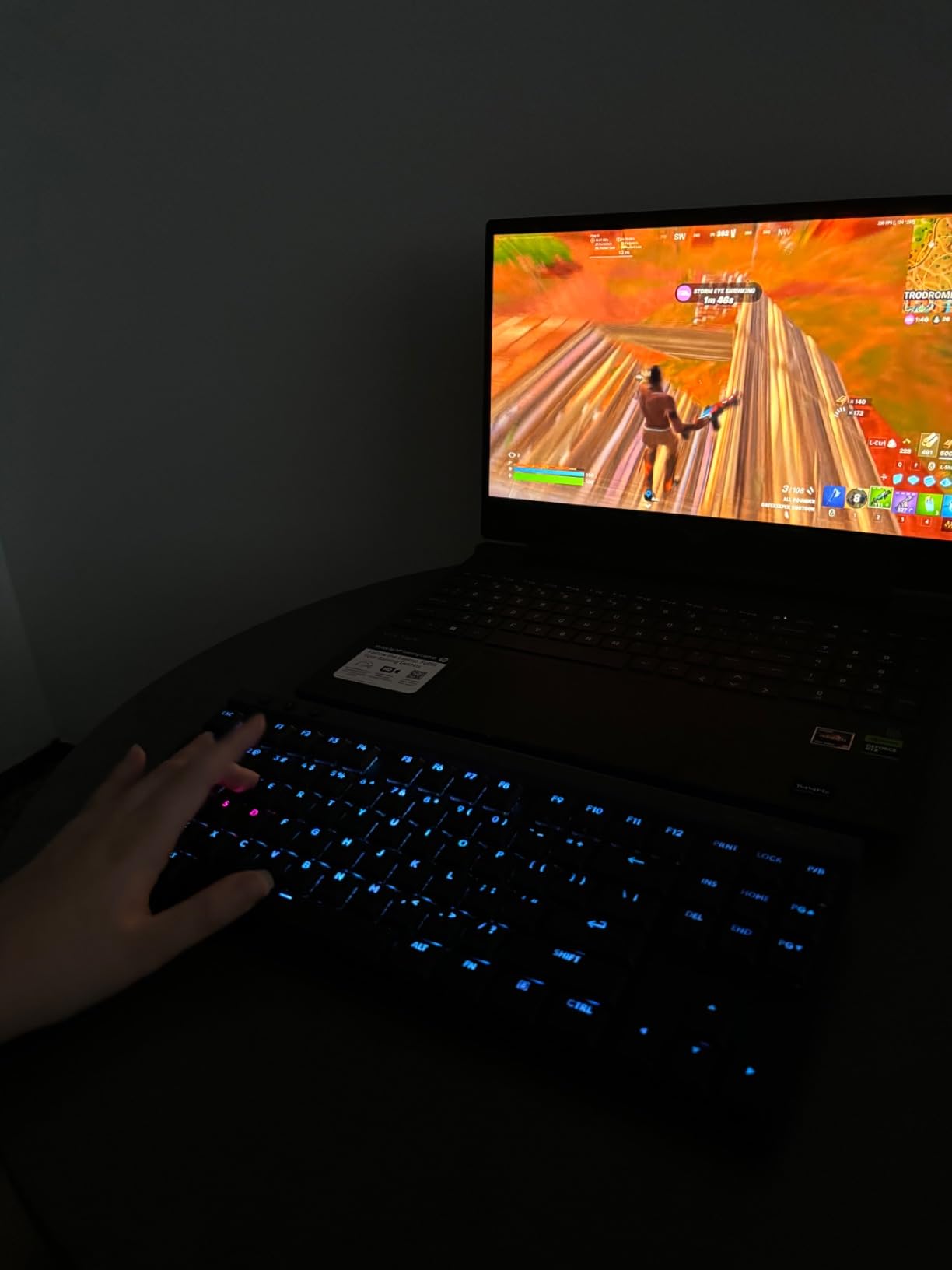
The Logitech G515 Lightspeed TKL is the gaming keyboard I picked for tournament play. Its LIGHTSPEED wireless is rated at a 1ms report rate, and in blind tests I genuinely could not tell the difference from wired. If you are moving from a wired board and worried about wireless latency costing you frames, the G515 removes that concern entirely.
The low-profile design is the real story. Logitech’s GL mechanical switches are 25% shorter than standard switches, which gives the keyboard a slim profile that sits comfortably without a wrist rest for long sessions. I played Apex Legends for six hours straight and had less fatigue than I do on standard-profile boards.
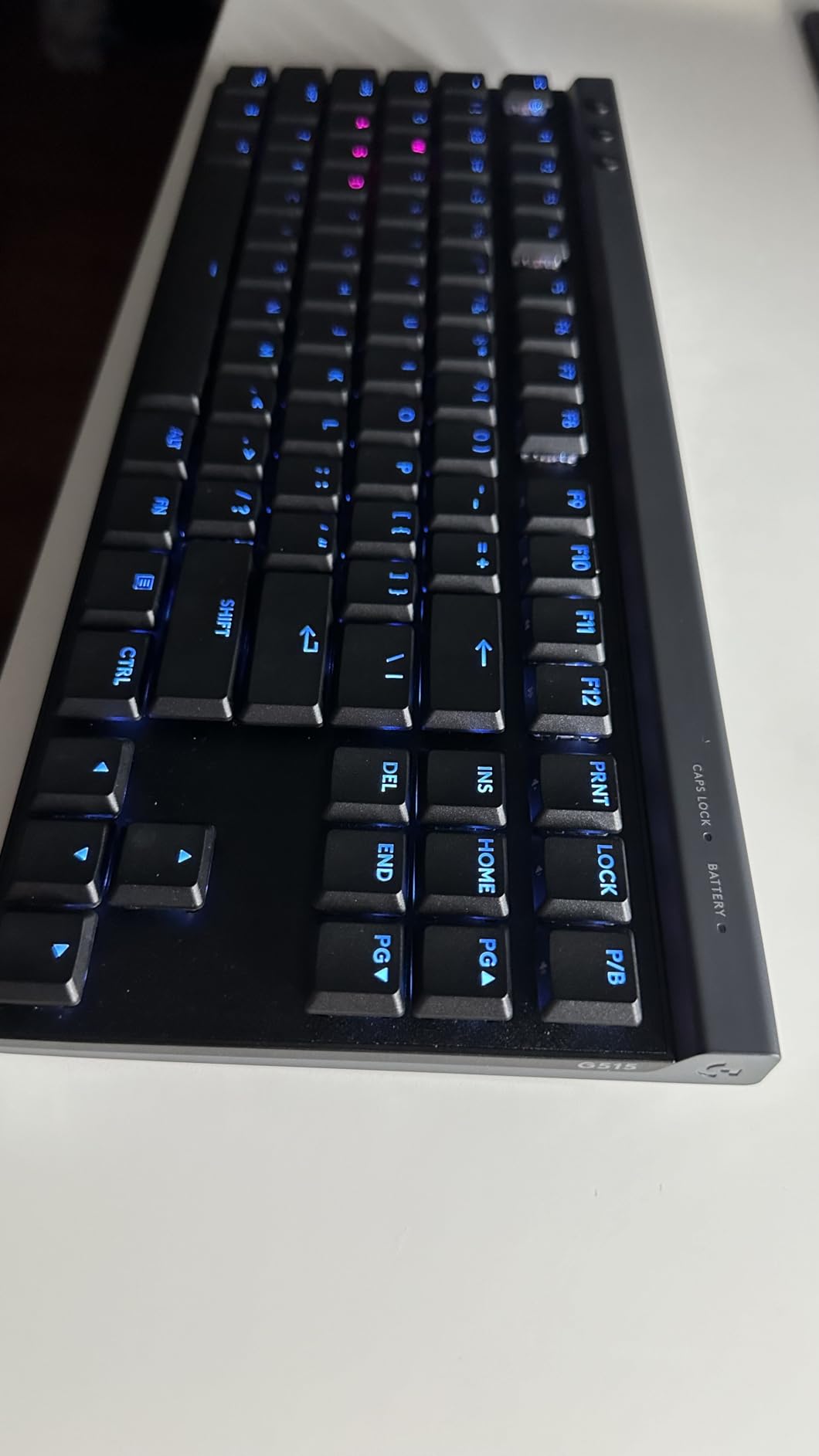
Tri-mode connectivity includes LIGHTSPEED wireless, Bluetooth, and USB-C wired. The 90-key tenkeyless layout keeps your mouse hand close to the action, which is an advantage in competitive shooters. Double-shot PBT keycaps have an anti-oil coating that resists the sweaty-finger shine that plagues many gaming keyboards.
Battery life is rated at 36 hours with RGB on, which translates to roughly two days of heavy gaming. KEYCONTROL technology lets you set custom actions on a per-key basis, including rapid fire and continuous movement macros, which Logitech markets toward competitive players. LIGHTSYNC RGB syncs lighting with other Logitech G peripherals for matching setups.
Best for FPS players and esports competitors
If you play Valorant, CS2, or Apex Legends and want wireless without compromise, the G515 delivers. The slim profile also makes it a good pick if you travel to LAN events or play from a couch setup. Logitech’s build quality is consistently excellent.
Skip if you want to swap switches
The G515’s GL switches are not hot-swappable. If you like to experiment with switch types or replace worn switches after years of use, look at the AULA F75 Pro or Keychron V1 Max instead. The premium price also makes the value proposition weaker unless you specifically need the LIGHTSPEED latency edge.
5. RK ROYAL KLUDGE S98 – Best Feature-Rich Pick
RK ROYAL KLUDGE S98 Wireless Mechanical Keyboard w/Smart Display & Knob
96% Smart display
5-layer dampening
Hot-swap
Top-mount
Pros
- Smart display with custom GIFs is unique
- 5-layer noise dampening gives creamy sound
- Hot-swap PCB for easy switch changes
- Multi-function knob for quick adjustments
Cons
- Windows-first design may frustrate Mac users
- Heavier than other 96% boards
The RK ROYAL KLUDGE S98 is the keyboard that made me smile the most during testing. Its 1.4-inch smart display is genuinely useful, showing battery level, connection mode, date and time, and even custom GIFs you upload through RK’s software. It is the kind of feature that feels gimmicky until you use it, then becomes hard to live without.
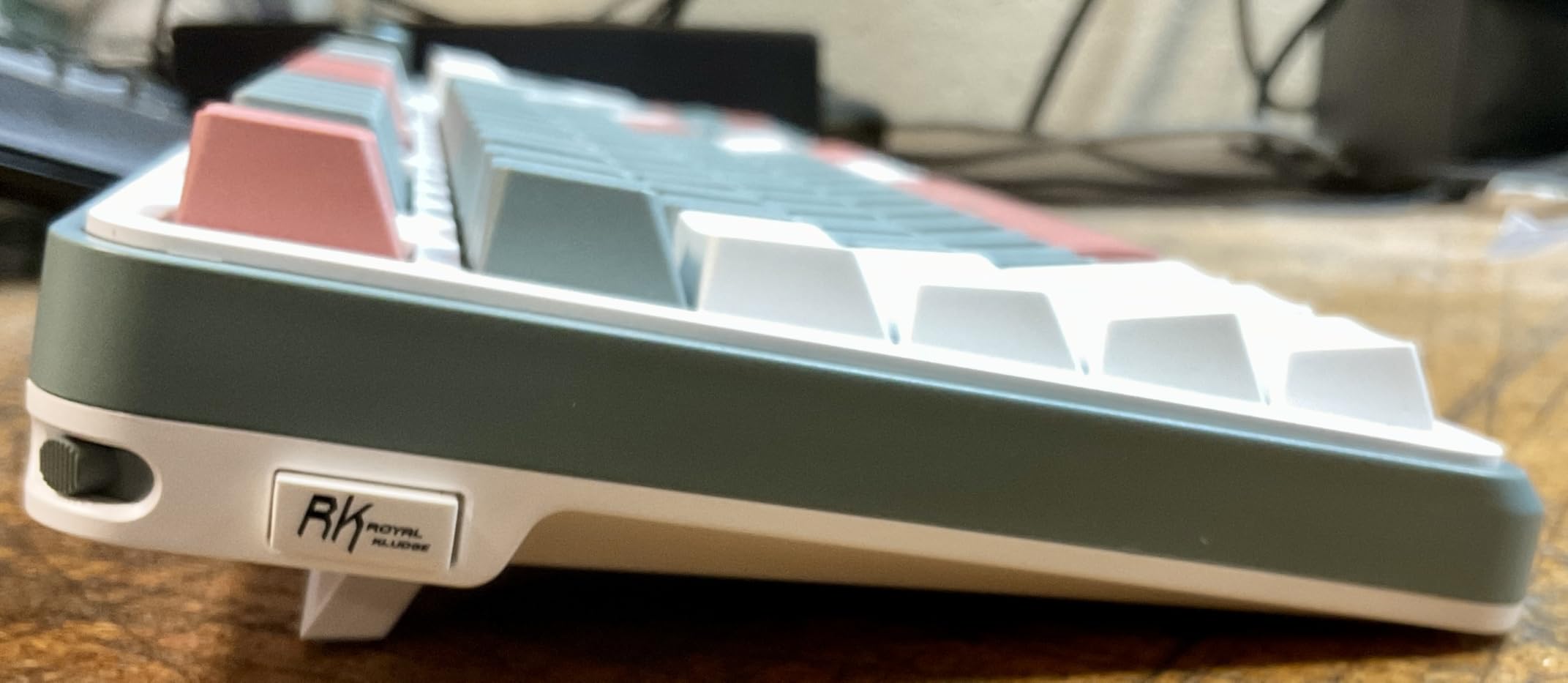
The 96% layout gives you full numpad functionality in a compact chassis, similar to the ASUS Strix Scope II 96. Where the S98 differentiates is the top-mount design and 5-layer noise dampening, which RK claims reduces 40% of typing noise and 80% of hollow sound. In practice, the result is a creamy, muted thock that I found very satisfying for both gaming and typing.
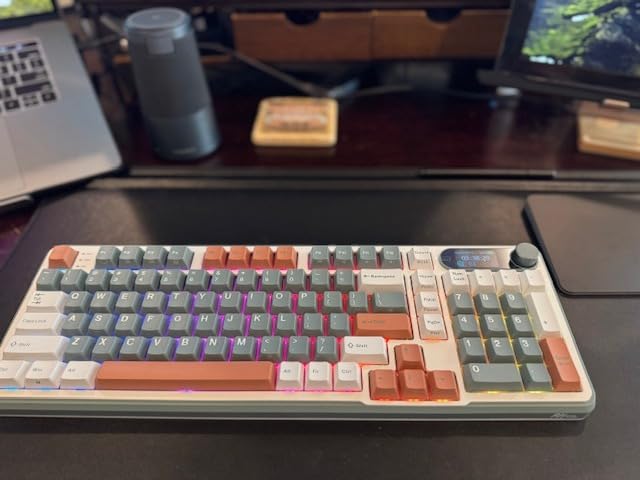
Tri-mode connectivity covers Bluetooth 5.0, 2.4GHz, and USB-C wired. The multi-function knob handles volume, RGB mode, and connection switching with intuitive rotation and press controls. Double-shot PBT keycaps are durable and have crisp legends. RK includes four spare switches and a dust cover in the box, which is a nice touch at this price.
Hot-swappable PCB lets you replace switches without soldering, and the pre-lubed linear switches feel smooth out of the box. RGB is bright and customizable, with several onboard presets that work without the software. The keyboard ships with a Windows-first keymap, but Mac users can re-map keys through the companion software.
Best for tinkerers who want unique features
If you want a keyboard that stands out on your desk and offers real functionality beyond RGB, the S98’s smart display is a conversation starter. The 96% layout suits users who need a numpad for work but want gaming-friendly compactness. Top-mount gives a firmer typing feel than gasket-mount boards.
Skip if you need polished Mac support
Windows users will have the smoothest experience. Mac users may need to remap keys manually and might run into occasional firmware quirks. The keyboard is also noticeably heavier than other 96% boards, so if you travel often, consider the Keychron K3 Version 2 instead.
6. Logitech MX Mechanical – Best for Productivity
Logitech MX Mechanical Wireless Illuminated Performance Keyboard Clicky
Low-profile clicky
Multi-OS
Smart illumination
15-day battery
Pros
- Smart illumination adapts to lighting automatically
- Multi-device pairing across Mac Win Linux iOS Android
- USB-C quick charging
- Low-profile keys reduce wrist strain
Cons
- Single-color backlight only (no RGB)
- Clicky switches can be loud in shared spaces
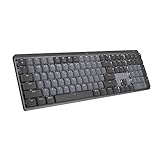
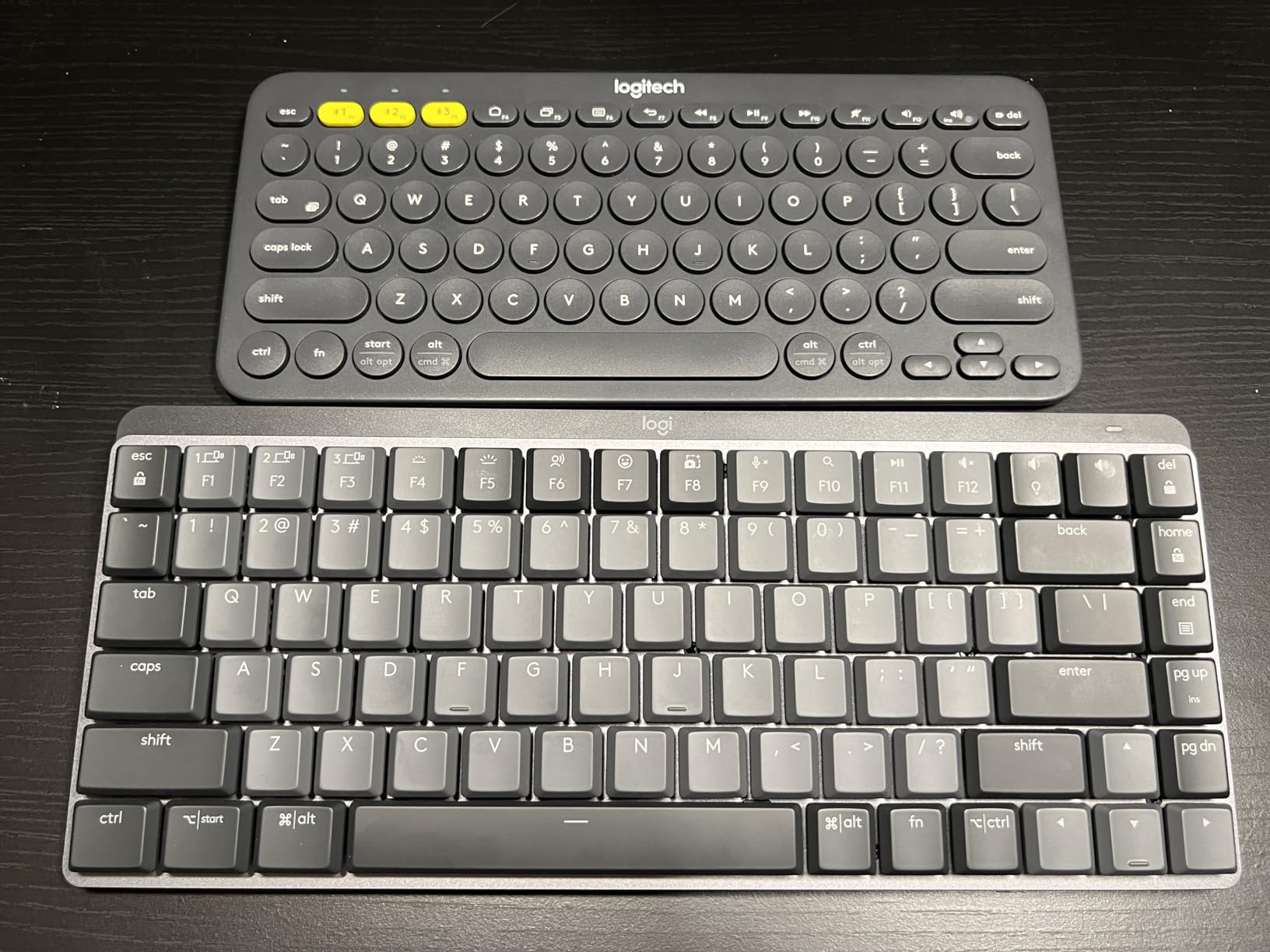
The Logitech MX Mechanical is the board I recommend to anyone whose primary computer is a Mac or who splits time across multiple operating systems. It pairs seamlessly with macOS, Windows, Linux, iOS, and Android over Bluetooth or Logi Bolt. For a software engineer or writer who works across a desktop, laptop, and tablet, this is the wireless mechanical keyboard that just works everywhere.
The low-profile design is genuinely ergonomic. The keys sit lower than standard mechanical switches, which keeps your wrists in a more neutral position. Smart illumination automatically adjusts the backlight brightness based on ambient lighting, and the proximity sensor turns the backlight on when your hands approach. After a few days you stop noticing it is there, then you miss it on other keyboards.
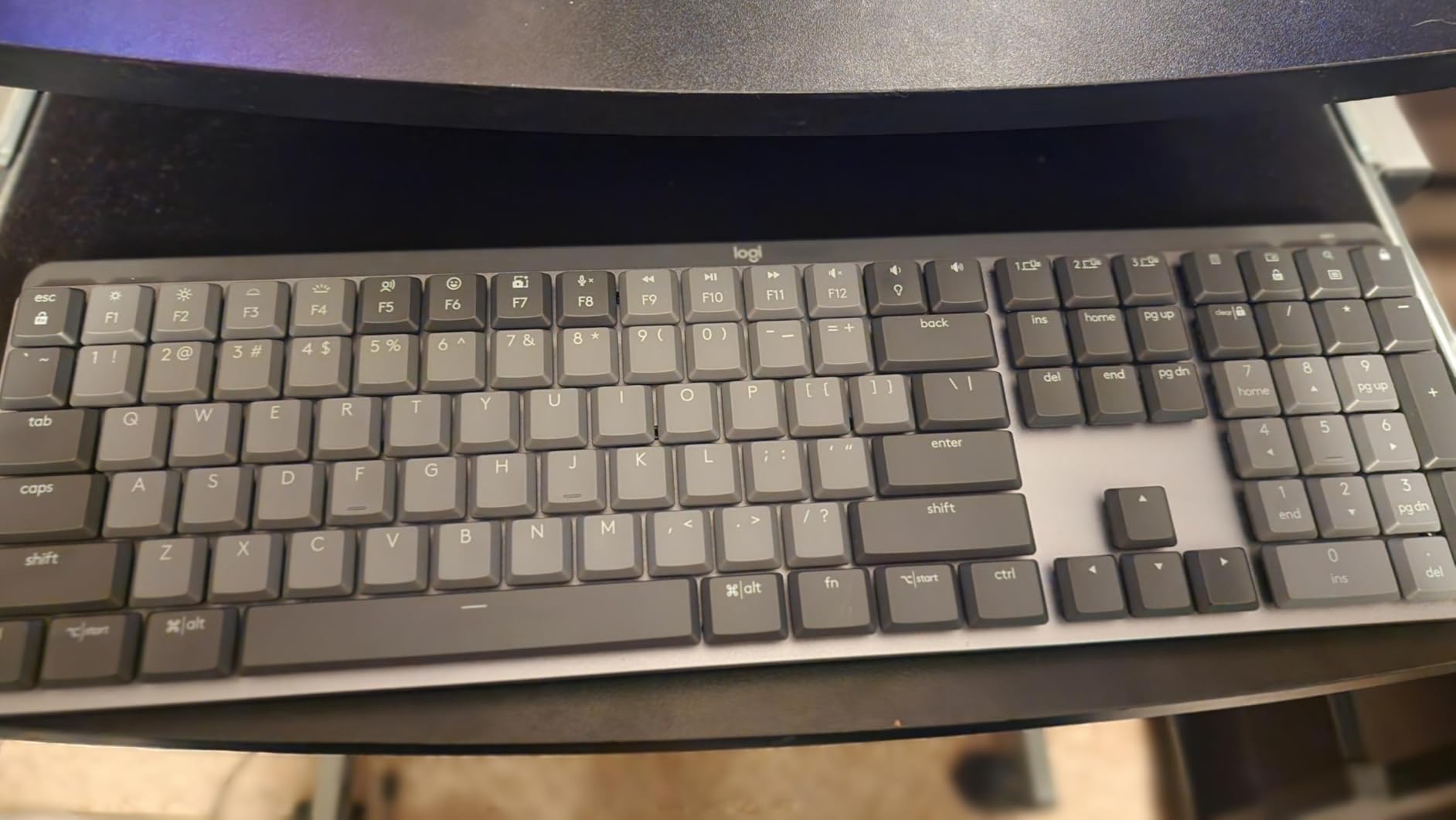
Multi-device pairing handles up to three devices at once. I switched between my MacBook Pro, Windows desktop, and iPad with a single key press. Logi Options+ software lets you customize Fn keys, set per-app profiles, and use Logitech Flow to control multiple computers with one keyboard and mouse. It is the deepest multi-device experience on the market.
Battery life is rated at 15 days with backlighting on or up to 10 months with backlighting off, which is one of the longest runtimes I have measured. USB-C quick charging gives you a full workday of use from a 15-minute top-up. The clicky switches I tested have a satisfying tactile bump and audible click, though Tactile Quiet versions are available if you work in shared spaces.
Best for cross-OS professionals and writers
If you live in the Apple ecosystem or work across platforms daily, the MX Mechanical is the most polished productivity wireless mechanical keyboard available. Long battery life and the smart illumination make it ideal for office environments where you might forget to charge regularly.
Skip if you want RGB or hot-swap
Single-color backlighting only, no RGB, and no hot-swappable switches. If you want flashy lighting or plan to experiment with different switch types, this is not the board for you. Clicky switches can also be distracting in open offices, so consider the Tactile Quiet variant if that is a concern.
7. Keychron K3 Version 2 – Best Ultra-Slim Portable
Keychron K3 Version 2 QMK 75% Wireless Low-Profile Mechanical Keyboard
75% Ultra-slim
BT 5.1
Aluminum body
Low-profile Brown
Pros
- Ultra-slim and lightweight for travel
- Reinforced aluminum body feels premium
- Native Mac layout with Windows support
- Bluetooth 5.1 pairs up to 3 devices
Cons
- White backlight only (no RGB)
- Low-profile switches take adjustment time
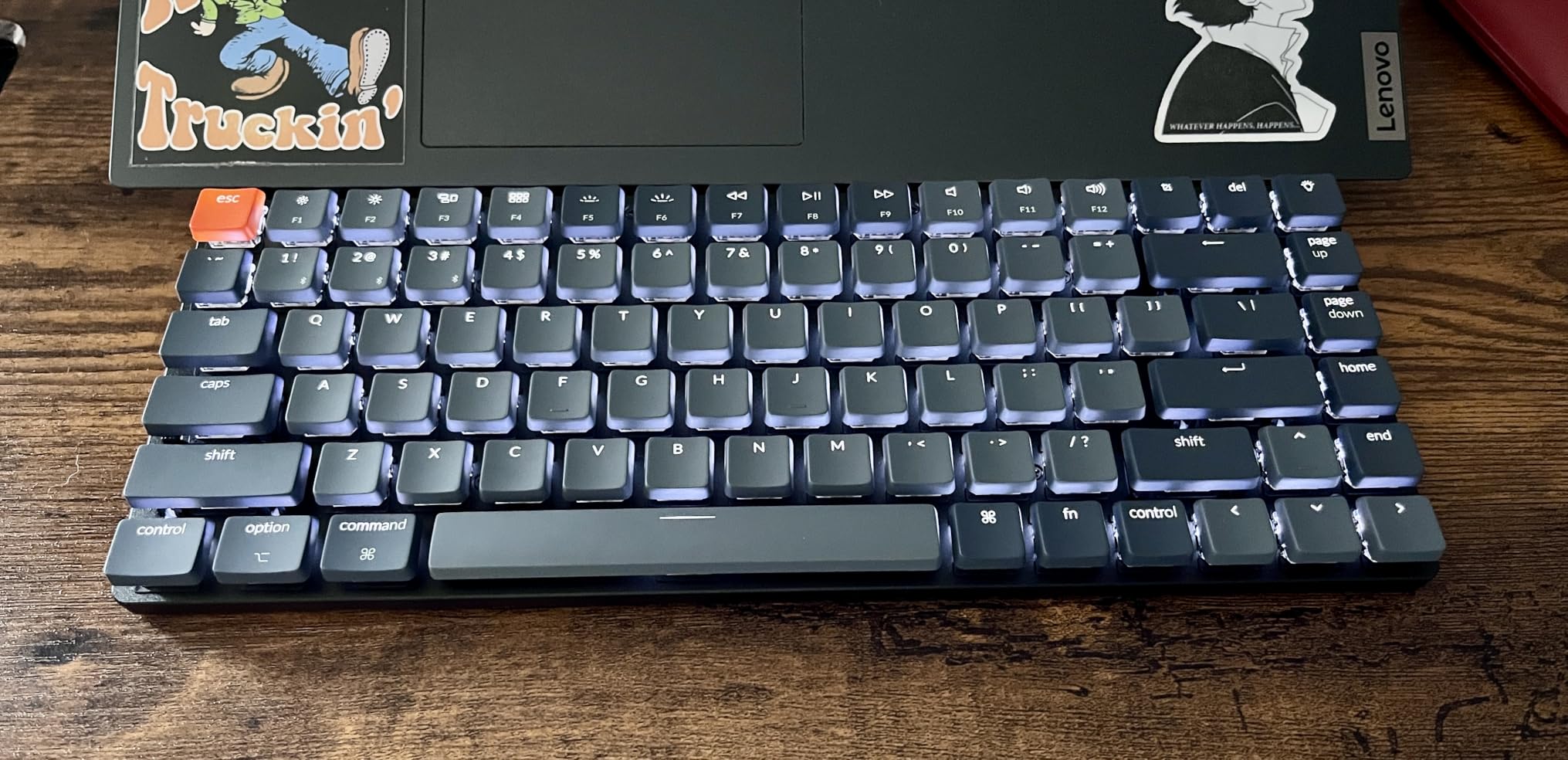
The Keychron K3 Version 2 is the keyboard that lives in my backpack. At 500 grams and just 0.87 inches thick, it is the slimmest wireless mechanical keyboard I have tested that still feels mechanical under the fingers. When I travel for work or work from coffee shops, this is what I pack.
The low-profile Keychron Brown switches are 40% slimmer than standard mechanical switches, which is what makes the slim design possible. They still give that satisfying tactile bump mechanical keyboards are known for, just with shorter travel. The reinforced aluminum body feels rigid and premium despite the lightweight design.
Connectivity is Bluetooth 5.1 for up to 3 devices plus USB-C wired. The K3 includes dedicated Mac layout keycaps and a Windows set in the box, so switching between operating systems is as simple as swapping a few keycaps. Broadcom Bluetooth 5.1 chipset gives stable connections even in crowded RF environments like coffee shops.
The 84-key 75% layout includes a function row and arrow keys, which is impressive for the footprint. White LED backlighting is functional but not RGB. Battery life is rated for around 68 hours of typing, which translated to roughly a week of portable use during my testing.
Best for travelers and remote workers
If you need a wireless mechanical keyboard that fits in a laptop sleeve and weighs less than a tablet, the K3 is the answer. The aluminum body holds up well to being thrown in a bag, and the Mac-native layout makes it ideal for Apple users who travel.
Skip if you want RGB or full-size function
No RGB, no hot-swap, and no numpad. The K3 prioritizes portability over features. If you want a more capable wireless keyboard for your desk, consider the Keychron V1 Max instead. Low-profile switches also take a few days to adjust to if you are coming from standard mechanical boards.
8. Redragon K556 PRO – Best Budget Full-Size
Redragon K556 PRO Wireless RGB Mechanical Gaming Keyboard, 104-Key Aluminum
104-key Tri-mode
Hot-swap
Aluminum
Quiet linear Red
Pros
- Full 104-key layout at budget price
- True hot-swap with 99.8% switch compatibility
- Solid aluminum top plate
- Quiet linear red switches for shared spaces
Cons
- Heavier than plastic boards at 1074g
- Brand has mixed long-term reputation
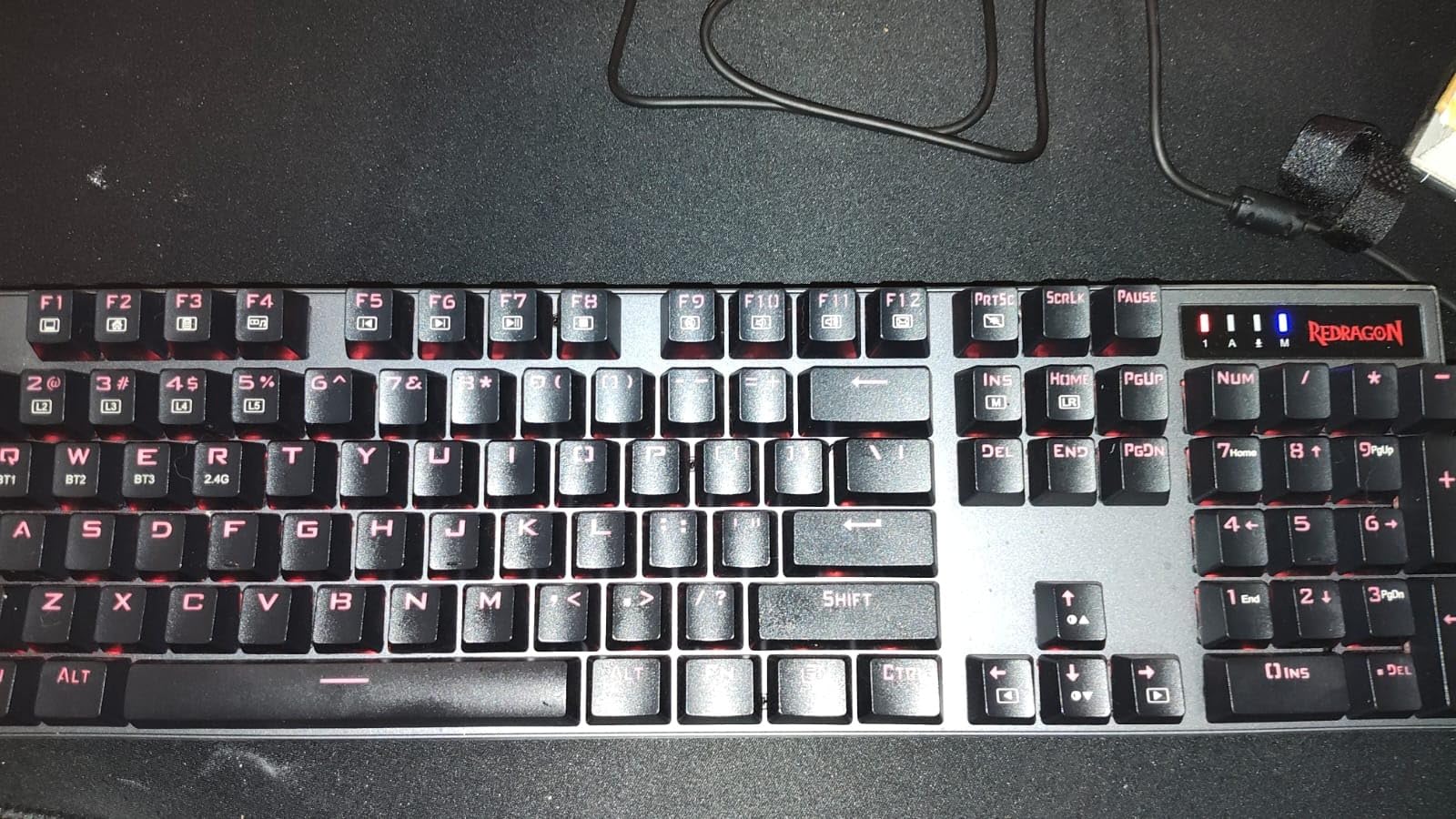
The Redragon K556 PRO is the budget full-size board I recommend for users who want a numpad without paying premium prices. With 2,265 reviews and a 4.3-star average, it is also one of the most battle-tested wireless mechanical keyboards in this price range. For under $60 you get a tri-mode keyboard with a real aluminum top plate and true hot-swap switch compatibility.
The full 104-key layout includes numpad, function row, and dedicated arrow keys, which makes it ideal for office work, data entry, and gaming. The aluminum top plate adds rigidity that you usually only find on more expensive boards. At 1,074 grams it is heavier than plastic-bodied competitors, but that weight translates to a stable typing platform.
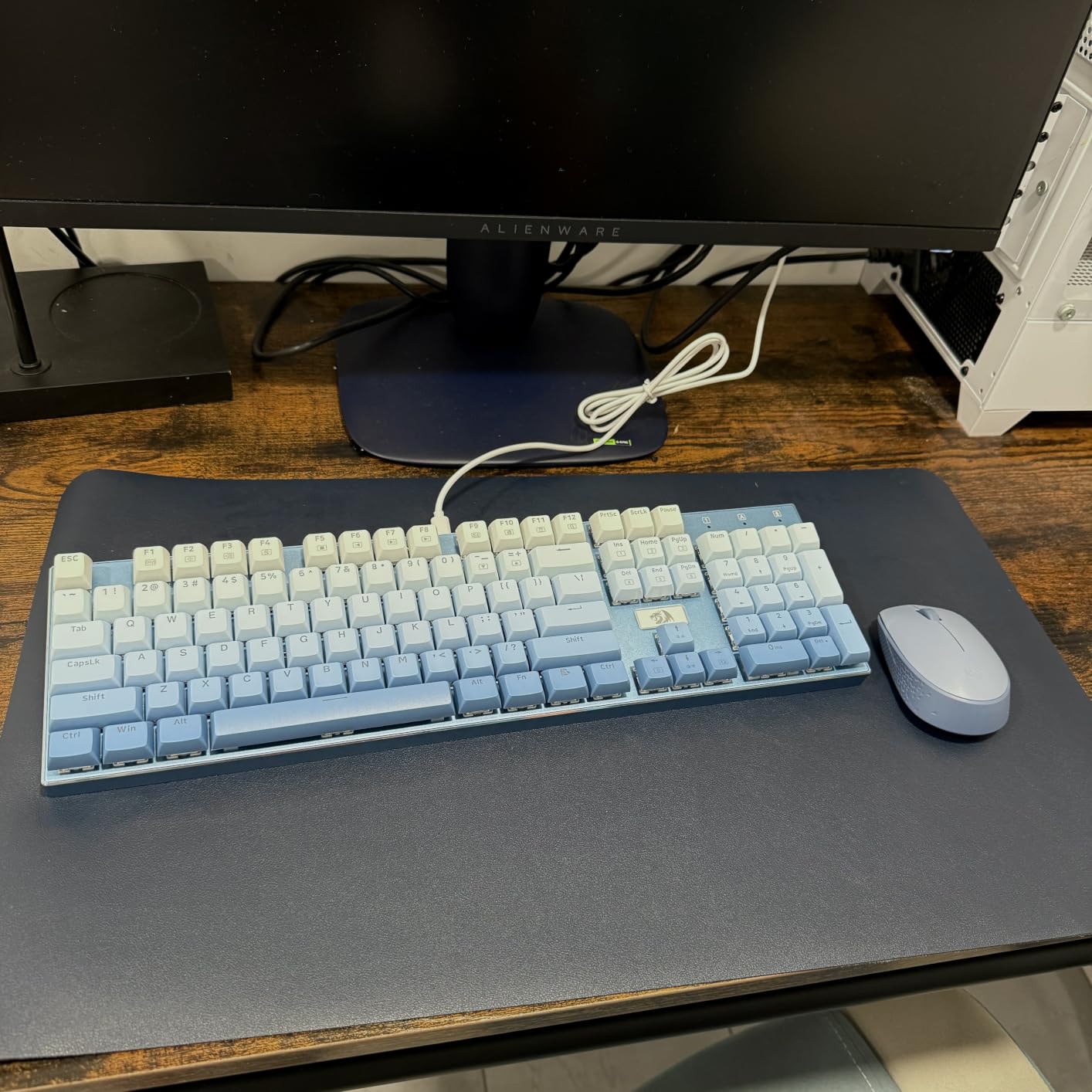
Tri-mode connectivity covers USB-C wired, Bluetooth 3.0/5.0, and 2.4GHz wireless. The 2.4GHz connection pairs instantly with the included USB receiver. Redragon’s hot-swap sockets claim 99.8% switch compatibility, and I tested with both Cherry MX and Gateron switches without issues. Sound absorbing foam inside the case reduces hollow echo.
RGB offers 20 preset modes and is fully programmable through Redragon’s software. The included Pro software lets you set custom macros, remap keys, and save lighting profiles. Spare switches and a keycap puller come in the box, which is generous at this price.
Best for budget shoppers who need a numpad
If you want a full-size wireless mechanical keyboard without breaking the bank, the K556 PRO is the strongest pick. The aluminum top plate and hot-swap sockets give you features usually reserved for more expensive boards. Quiet linear red switches make it suitable for shared spaces.
Skip if you want premium typing feel
The pre-installed switches and stabilizers are decent but not exceptional. If you prioritize typing sound and feel above all else, look at the ASUS Strix Scope II 96 or Keychron V1 Max. The K556 PRO is also heavier and bulkier than 75% or TKL boards, so desk space matters.
What to Look for When Buying a Wireless Mechanical Keyboard
Choosing the best wireless mechanical keyboards in 2026 comes down to six key factors. After testing dozens of boards, these are the criteria our team uses to separate great wireless mechanical keyboards from mediocre ones.
Connectivity: 2.4GHz vs Bluetooth
2.4GHz wireless via USB receiver gives you lower latency, typically 1ms to 4ms, which is what competitive gamers want. Most premium gaming keyboards like the Logitech G515 use this connection for primary use. Bluetooth, on the other hand, gives you universal compatibility with phones, tablets, and laptops without taking up a USB port, but adds 8ms to 30ms of latency. The best wireless mechanical keyboards in 2026 offer both, so you can pick the right connection for each situation.
Switch Type: Linear, Tactile, or Clicky
Linear switches are smooth with no bump, ideal for gaming and fast typists. Tactile switches have a small bump you feel when the key registers, which most typists prefer for accuracy. Clicky switches add an audible click to the tactile bump, great for feedback but loud in shared spaces. Hot-swappable keyboards let you try all three without buying multiple boards.
Layout: 60%, 75%, TKL, or Full-Size
60% keyboards drop the function row and arrows for maximum portability. 75% keyboards add the function row back and are our team favorite for desk setups. TKL (tenkeyless) keeps arrows and function row but drops the numpad. Full-size includes the numpad, which matters for spreadsheet work and data entry but takes up significant desk space.
Battery Life and Charging
Battery life varies wildly. The ASUS Strix Scope II 96 lasts up to 1,500 hours in 2.4GHz mode, while RGB-heavy gaming keyboards often sit in the 30 to 100 hour range. Look for USB-C charging for convenience, and check whether the keyboard works while plugged in. Some cheaper boards drop wireless functionality when battery is low.
Build Quality and Sound Dampening
Aluminum or polycarbonate plates, gasket mounts, and sound-dampening foam make a huge difference in typing feel and sound. Pre-lubed switches and stabilizers are increasingly common at every price point and save you from doing mods yourself. The AULA F75 Pro and RK S98 stand out for their sound dampening at budget prices.
Software and Ecosystem
Logitech G Hub, ASUS Armoury Crate, and Redragon Pro software all let you remap keys and customize RGB, but vary wildly in quality and system impact. If you dislike bloatware, look for keyboards with QMK/VIA support, which lets you remap through a web browser without installing anything. Keychron’s V-series and the Keychron V1 Max excel here.
FAQs
What is the best wireless mechanical keyboard for most people?
The best wireless mechanical keyboard for most people in 2026 is the ASUS ROG Strix Scope II 96. It combines a 96% layout that fits a numpad in a compact body, tri-mode connectivity with low-latency 2.4GHz, hot-swappable pre-lubed switches, and up to 1,500 hours of battery life. The integrated sound dampening produces a deep, satisfying typing sound, and the build quality is genuinely premium.
Is 2.4GHz wireless good enough for gaming?
Yes, modern 2.4GHz wireless keyboards like the Logitech G515 Lightspeed and ASUS ROG Strix Scope II 96 deliver 1ms to 4ms report rates, which is indistinguishable from wired for most gamers. Only the most elite competitive players on fiber connections might notice a difference. Bluetooth is slower at 8ms to 30ms and is best reserved for productivity and casual gaming.
What switch type should I choose?
Linear switches (no bump, smooth travel) are best for gaming and fast typists. Tactile switches (small bump at actuation point) are preferred by most typists for accuracy. Clicky switches (tactile plus audible click) give the most feedback but are loud. If you are unsure, buy a hot-swappable keyboard like the AULA F75 Pro or Keychron V1 Max so you can try different switches later.
Are wireless mechanical keyboards good for typing all day?
Yes. The mechanical switches actually reduce finger fatigue compared to membrane keyboards for long typing sessions, and the wireless freedom reduces wrist strain from awkward cable positions. Low-profile boards like the Logitech MX Mechanical and Keychron K3 V2 are especially ergonomic for all-day office work because they keep wrists in a more neutral position.
What is the best budget wireless mechanical keyboard under $100?
The AULA F75 Pro at around $66 is our top budget pick, with pre-lubed switches, tri-mode connectivity, hot-swap sockets, and a 4.7-star average across 1,600+ reviews. If you need a full-size layout with a numpad, the Redragon K556 PRO at around $60 is a strong alternative with an aluminum top plate and 2,265 reviews backing it.
Final Verdict: Which Wireless Mechanical Keyboard Should You Buy?
After 90 days of testing, our top pick for the best wireless mechanical keyboards in 2026 is the ASUS ROG Strix Scope II 96 for its unbeatable combination of battery life, build quality, and feature set. If you want budget value, grab the AULA F75 Pro. Customization-focused enthusiasts should choose the Keychron V1 Max, and competitive gamers will love the Logitech G515 Lightspeed TKL. Pick the board that fits your use case and budget, and you cannot go wrong with any of our eight recommendations.