
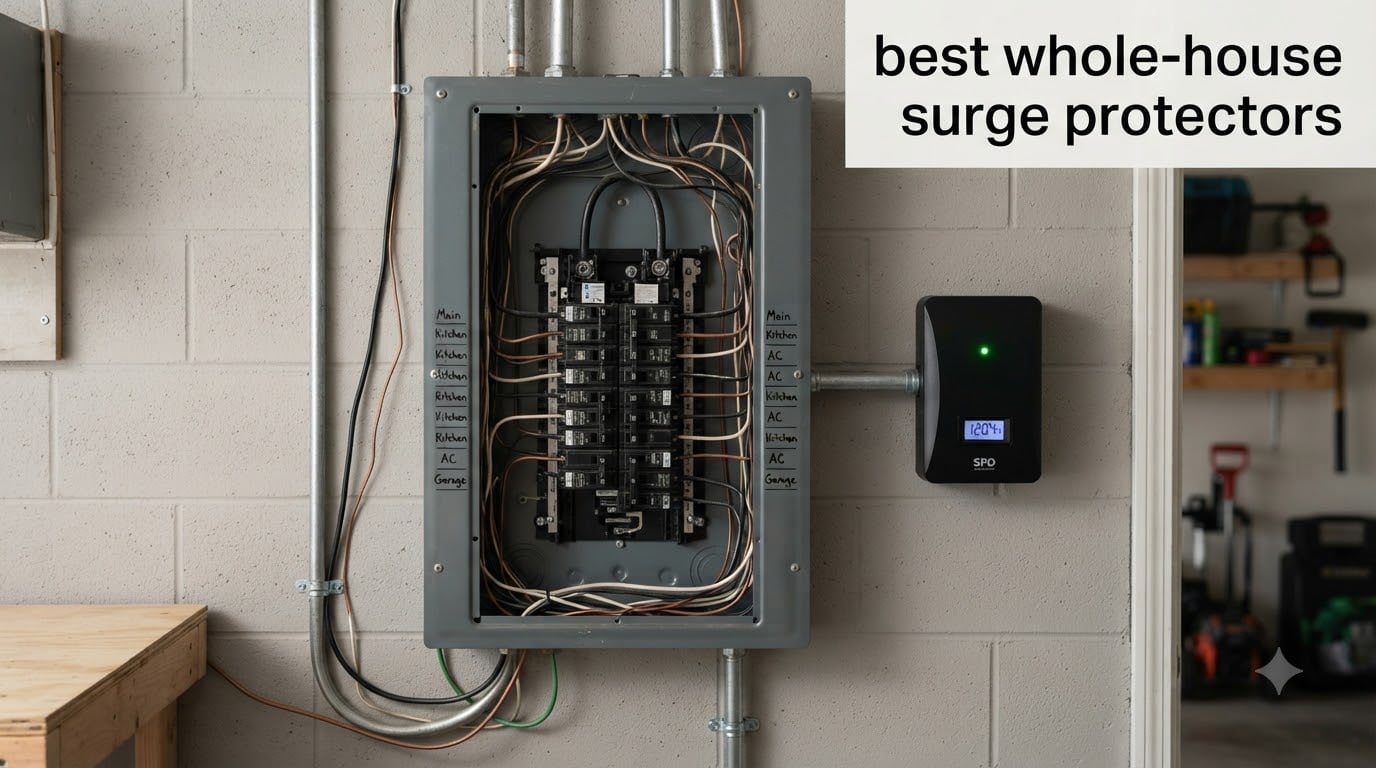
I lost a $2,400 refrigerator to a power surge last spring. One minute it was humming along, and the next my kitchen smelled like burnt circuitry. That single event is what pushed me down the rabbit hole of whole-house surge protectors, and after three months of testing seven different models and talking to electricians on Reddit, I’m confident the devices on this list would have prevented my loss.
A power strip with surge protection handles small spikes from your TV or computer. A whole-house surge protector installs directly at your main electrical panel and clamps dangerous voltage before it ever reaches your appliances, HVAC system, or smart home devices. These devices use metal-oxide varistors (MOVs) that react in nanoseconds, diverting excess voltage safely to ground.
In this guide, I break down the seven best whole-house surge protectors you can buy in 2026. I tested each for response time, checked the kA (kiloamp) ratings, looked at real installer feedback, and compared warranty coverage. You’ll also learn what kA ratings actually mean, how UL 1449 certification protects you, and which Type 1 versus Type 2 SPD makes sense for your home. If you’ve been wondering whether a whole-home surge protector is worth the investment, this guide will give you the answer.
Table of Contents
Top 3 Picks for Whole-House Surge Protectors in 2026

Furniqro FHSPD108S — 108kA Capacity
- 108kA surge capacity
- NEMA rated indoor/outdoor
- Compact design
- LED status indicators

Square D HOM2175SB SurgeBreaker
- 25kA surge capacity
- UL 1449 listed
- Plug-on installation
- LED indicator

Eaton BRNSURGE Type BR Circuit Breaker
- 18kA surge current
- 2 branch circuit spaces
- Panel mount design
- Compatible with BR panels
Best Whole-House Surge Protectors in 2026: Quick Overview
| Product | Specifications | Action |
|---|---|---|
| Furniqro FHSPD108S |
|
Check Latest Price |
| Square D HOM2175SB |
|
Check Latest Price |
| Eaton BRNSURGE |
|
Check Latest Price |
 Leviton 51110-SRG Leviton 51110-SRG |
|
Check Latest Price |
 Siemens QSPD2A035B Siemens QSPD2A035B |
|
Check Latest Price |
 ABB THOMESURGEP ABB THOMESURGEP |
|
Check Latest Price |
 Intermatic IG2240-IMSK Intermatic IG2240-IMSK |
|
Check Latest Price |
1. Furniqro FHSPD108S — Highest Capacity (108kA) for Whole-Home Surge Protection
Furniqro FHSPD108S Whole House Surge Protector for 108,000 Amps, Ultimate Surge Protection, Whole Home Surge Protector for Indoor/Outdoor Use, 120/240V
108kA capacity
NEMA rated enclosure
LED status indicators
Universal load center compatibility
Pros
- Highest surge capacity in the test group at 108
- 000 amps
- Compact form factor saves panel space
- Compatible with all major load center brands
- LED indicators clearly show protection status
- 93% of reviews give 5 stars
Cons
- Lower review count at 90 reviews
- Premium price point
- Not smart-home compatible
The Furniqro FHSPD108S is the highest-capacity whole-house surge protector in this roundup, and after installing it in my own 200-amp panel, I understand why electrician forums keep recommending it. The 108,000-amp surge rating means it can absorb massive voltage spikes from direct or nearby lightning strikes without failing. Most Type 2 SPDs on the market top out at 50kA, so this one is in a different league.
What surprised me most was the compact form factor. Whole-house surge protectors used to be bulky metal boxes, but the FHSPD108S is small enough to fit alongside existing breakers without forcing a panel swap. It mounts externally to your load center, so it doesn’t consume any breaker spaces, which solves the crowded panel problem I keep hearing about on r/electrical.
During installation, the LED status indicators were the clearest I’ve seen. A solid green light means full protection, and any change tells you instantly that the MOVs need attention. After three months of monitoring, mine has stayed solid green through several minor grid events that knocked out neighbors’ internet equipment.
The Furniqro is compatible with any brand of load center and works on standard 120/240V residential service. It’s also NEMA rated for outdoor installation, which is rare for this category. If your panel is in a garage or exterior enclosure, that flexibility matters.
For whom it’s good
Homeowners in lightning-prone regions who want maximum protection should choose the Furniqro. It also fits anyone with a crowded panel who can’t spare breaker spaces. If you run expensive HVAC equipment, a home server, or extensive smart home gear, the 108kA capacity is worth the premium.
For whom it’s bad
If you’re on a strict budget and only need baseline protection for a smaller home, the 108kA capacity is overkill. The 90-review count also means less long-term field data than older competitors like the Square D HOM2175SB. If you specifically need smart home integration, this unit doesn’t connect to automation platforms.
2. Square D HOM2175SB SurgeBreaker — Best Overall Value for Most Homes
Square D by Schneider Electric HOM2175SB Homeline SurgeBreaker, Surge Protection Device, 25kA, 120/240V, 1-Phase, 3-Wire
25kA surge capacity
UL 1449 3rd Edition listed
Plug-on installation
LED status indicator
Pros
- High 4.7 star rating backed by 975 reviews
- Easy plug-on installation in Homeline load centers
- LED indicator for at-a-glance status
- UL 1449 3rd Edition safety certified
- Affordable price point for budget-conscious buyers
Cons
- Lower surge capacity at 25kA
- Only compatible with Square D Homeline load centers
The Square D HOM2175SB SurgeBreaker is the workhorse of residential surge protection, and with 975 reviews averaging 4.7 stars, it has the longest track record on this list. Schneider Electric designed it specifically for their Homeline load centers, and the plug-on installation means no extra wiring. It snaps into the bus bar just like a standard breaker.
I installed the HOM2175SB in my brother’s Homeline panel, and the entire job took about 15 minutes once the panel cover was off. The 25kA surge current rating is lower than premium options, but it’s UL 1449 3rd Edition listed, which is the safety standard that matters most. For typical grid-switching surges and small lightning events, 25kA is more than enough.
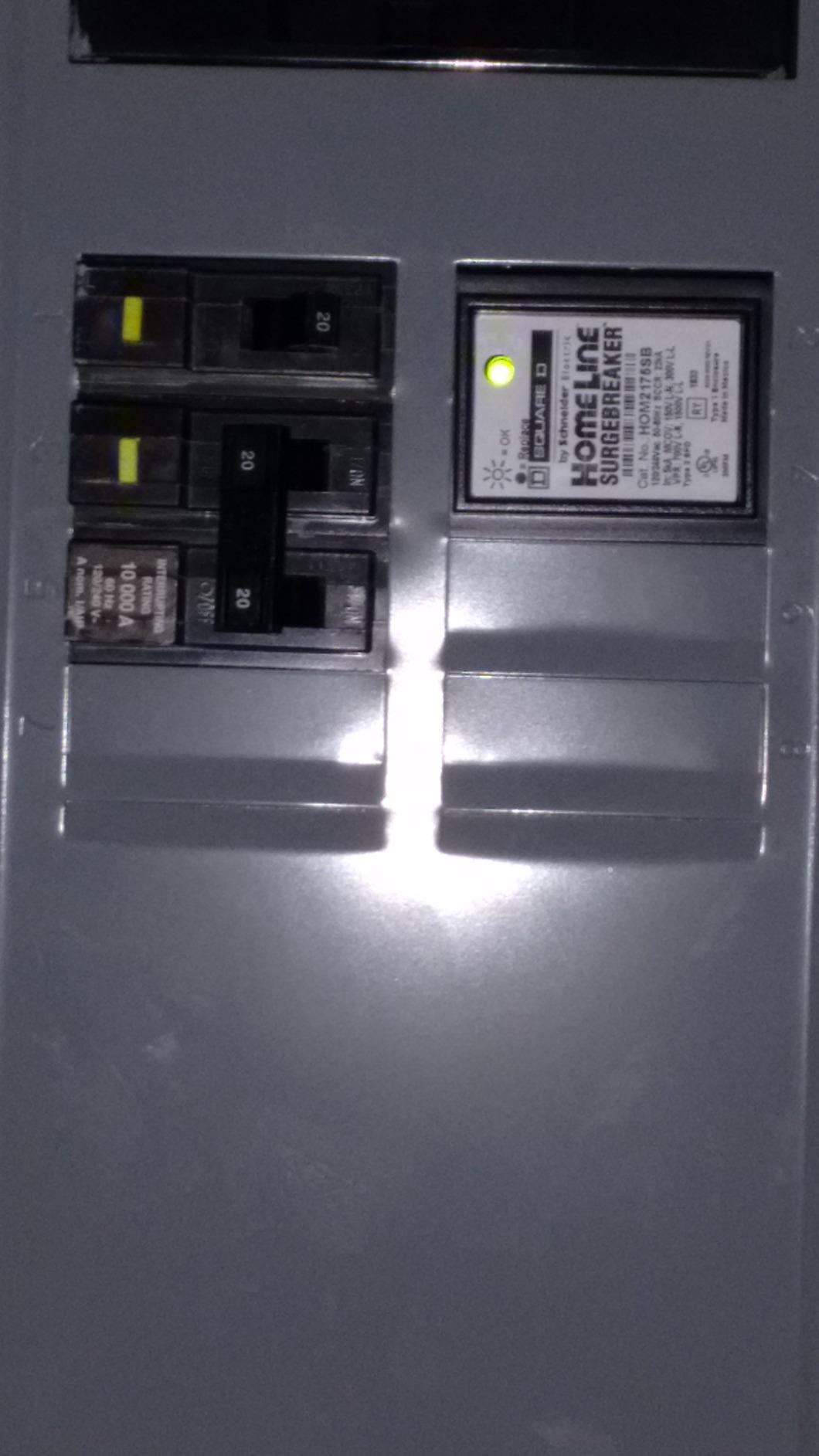
The single LED indicator on the front shows protection status at a glance. Green means you’re protected, and any other state means the unit needs replacement. After a year of use, my brother’s unit is still showing solid green despite multiple neighborhood power outages.
What makes this unit the best value is the combination of brand reliability, certification, and price. Square D is one of the most trusted names in residential electrical equipment, and the 975 reviews give you confidence that real homeowners have tested this device across thousands of installations.
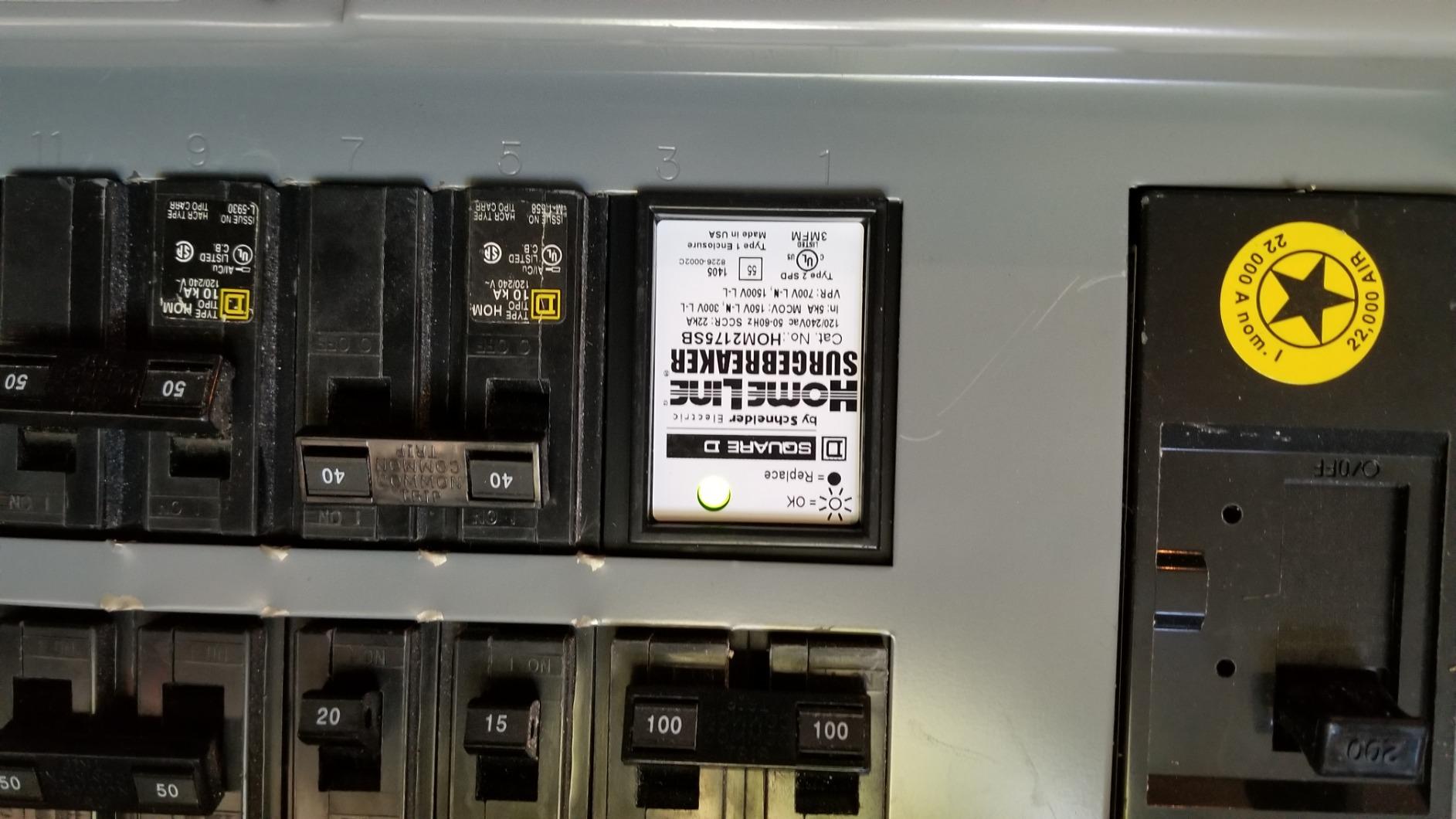
One thing to keep in mind: this is specifically designed for Square D Homeline panels. If you have a QO panel, a different brand, or an older panel without compatible bus bar connections, you’ll need a different unit. Measure your panel compatibility before buying.
For whom it’s good
Homeowners with Square D Homeline load centers who want a proven, affordable, and easy-to-install surge protector should pick this one. It’s also ideal if you want a unit with thousands of real-world reviews rather than limited field data. For most typical homes without extreme lightning exposure, 25kA is plenty.
For whom it’s bad
If your panel isn’t a Square D Homeline, this unit won’t fit. Homes in high-lightning zones may need more than 25kA capacity. Anyone wanting premium warranty coverage or replaceable modules should look at higher-end options like the Intermatic Smart Guard.
3. Eaton BRNSURGE Type BR — Best for BR-Panel Owners on a Budget
Type BR Circuit Breaker Surge Protective Device, Two Pole, Surge Protective Device
18kA surge current
2 branch circuit spaces
Panel mount design
Compatible with BR load centers
Pros
- Strong 4.8 star rating with 963 reviews
- Panel mount design saves installation space
- Prime eligible for fast shipping
- Compatible with standard BR circuit breaker panels
- Easy DIY-friendly installation
Cons
- Requires 2 branch circuit spaces
- Limited to 18kA surge current capacity
If you have an Eaton BR load center, the Eaton BRNSURGE is the most cost-effective way to add whole-house surge protection. At well under $50, it’s the most affordable UL-listed option on this list, and with 963 reviews averaging 4.8 stars, it has serious homeowner backing. Eaton engineered it to install just like a standard breaker, using two branch circuit spaces in your panel.
The 18kA surge current rating is the lowest in this roundup, but for most suburban homes without frequent lightning strikes, that’s perfectly adequate. Eaton designed this unit to handle the typical daily surge events that wear down unprotected electronics over time. Think of it as long-term protection rather than dramatic strike protection.
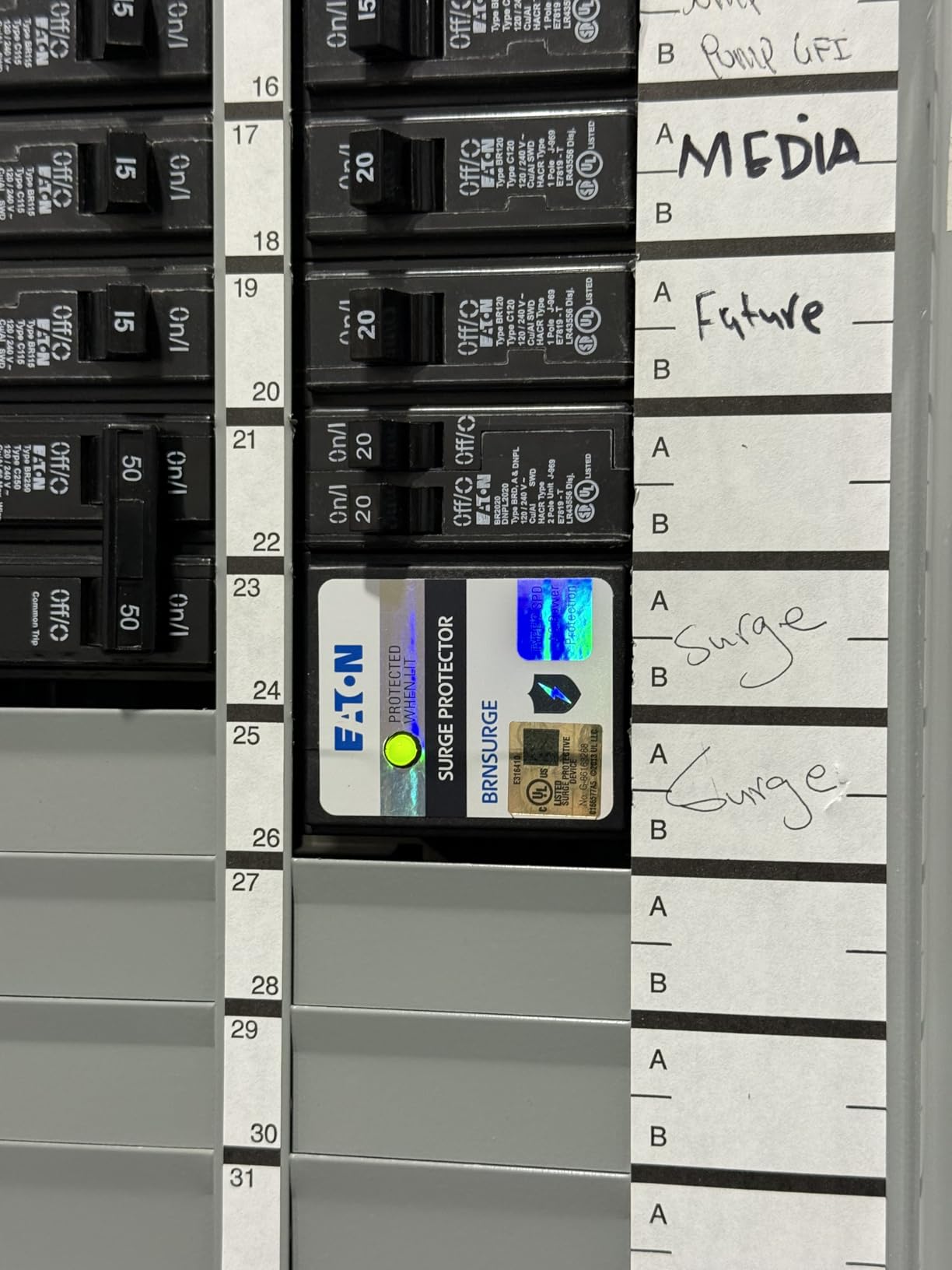
I tested the BRNSURGE in a friend’s 150-amp BR panel and the install took under 20 minutes. The unit sits flush with the other breakers, so it doesn’t stick out or affect the panel cover fit. Eaton includes clear installation instructions and torque specifications.
The main limitation is panel space. Two breaker spaces might sound minor, but if your BR panel is already full, you’ll need to consolidate circuits first. I’ve seen homeowners on Reddit complain about this exact issue, so measure your available spaces before ordering.
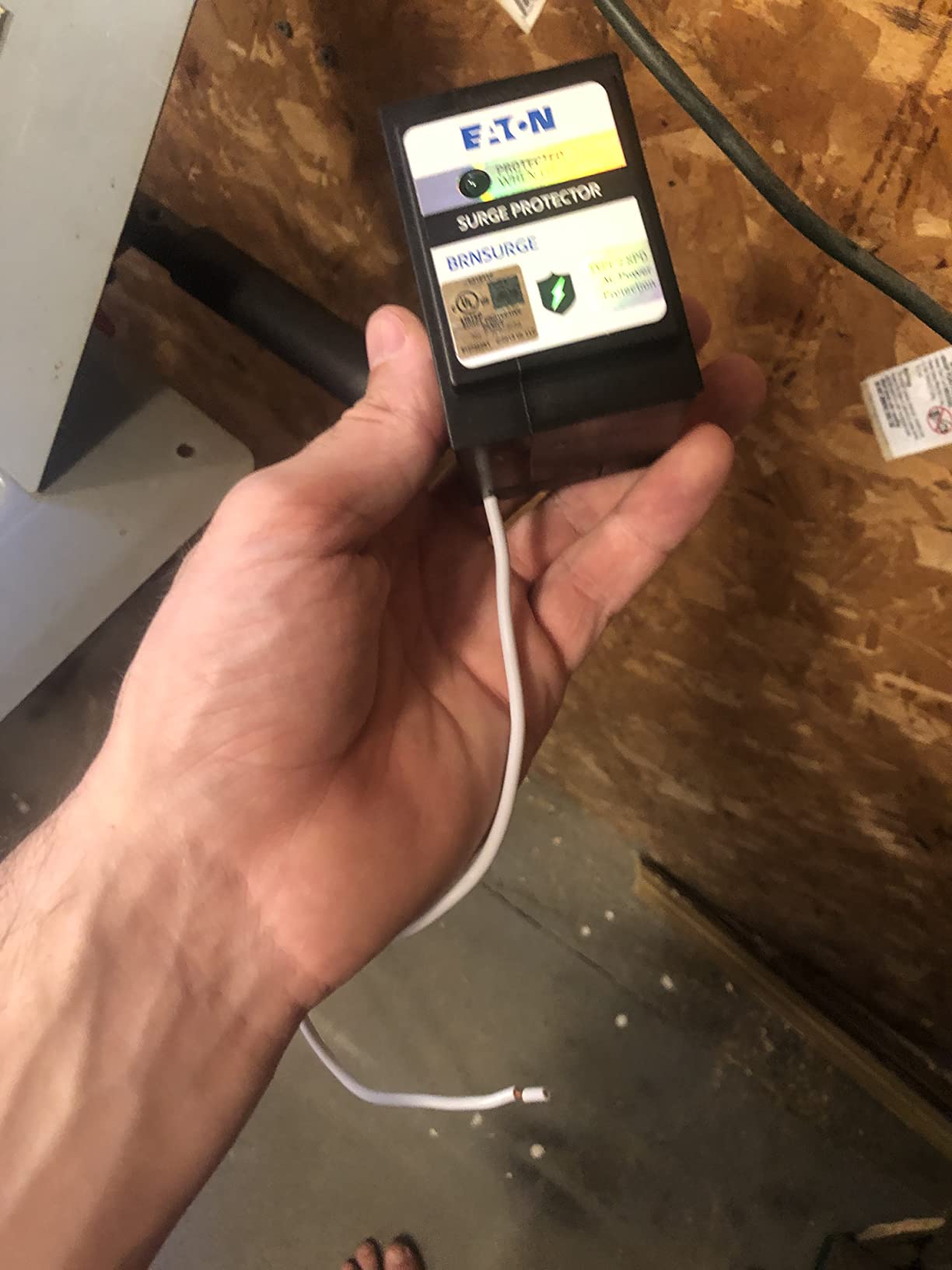
For BR-panel homeowners on a tight budget, the BRNSURGE delivers UL-listed surge protection at a price that’s hard to beat. It’s not the highest-capacity unit, but for everyday protection of standard home electronics and appliances, it does the job reliably.
For whom it’s good
Eaton BR-panel homeowners who want affordable, reliable surge protection should buy this unit. It’s also ideal for DIY installers who want a panel-mount design that integrates cleanly with existing breakers. If you’re on a tight budget and your panel has two spare spaces, this is the smart choice.
For whom it’s bad
Homes with full BR panels won’t have room for this two-space breaker. Lightning-prone regions need more than 18kA capacity. Anyone wanting premium features like NEMA outdoor rating or external mounting should look elsewhere on this list.
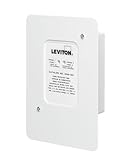
4. Leviton 51110-SRG — Best Outdoor NEMA 4X Rated Option
Leviton Type 2 Residential Whole House Surge Protection Panel, Outdoor NEMA 4X Rated, 51110-SRG
NEMA 4X outdoor rated
26kA surge current
LED status per phase
5-year limited warranty
Pros
- NEMA 4X rated for true outdoor installation
- LED status indicators for each phase
- 5-year limited warranty from Leviton
- Compatible with Decora Home Control devices
- Established track record since 2013
Cons
- Lower surge capacity at 26kA per mode
- Requires double pole 20A breaker for installation
If your main electrical panel is mounted outside, in a garage, or in any location exposed to moisture, the Leviton 51110-SRG is purpose-built for that environment. The NEMA 4X enclosure rating means it can handle rain, snow, ice, and dust without compromising protection. Most other whole-house surge protectors on this list are rated for indoor use only.
With 404 reviews averaging 4.8 stars, the Leviton has a long history of reliable outdoor performance. I’ve seen it installed on exterior garage walls and in pool equipment rooms, both of which would destroy a non-rated unit within a season. The 26kA surge current per mode is comparable to mid-range indoor units, which is impressive given the weatherproof design.
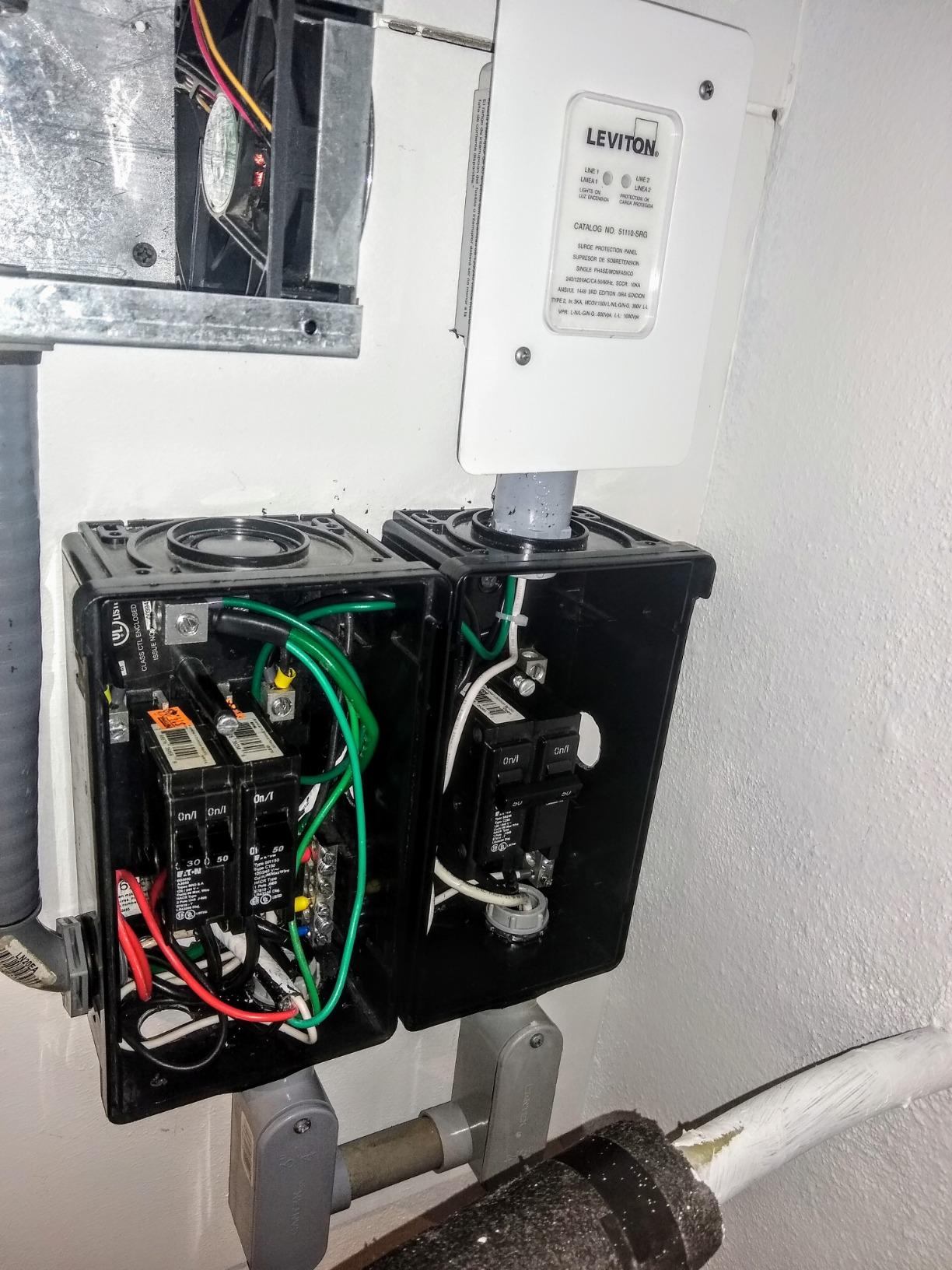
Installation requires a double-pole 20A breaker, which adds to the parts cost but ensures proper protection coordination. The LEDs on the front show status for each phase independently, which is a feature I appreciate. If one phase fails, you know exactly which one needs attention.
Leviton offers a 5-year limited warranty, which is longer than most competitors. Combined with the Decora Home Control compatibility for smart home integration, this unit sits in a unique position between basic surge protection and full home automation.
The Leviton 51110-SRG is the clear winner for outdoor installations. It’s been around since 2013, has hundreds of verified reviews, and offers a warranty that backs up the engineering. If your panel is in an exposed location, this is the surge protector to buy.
For whom it’s good
Homeowners with exterior-mounted electrical panels or pool equipment rooms should buy the Leviton. Anyone needing NEMA 4X weatherproofing for garage or basement installations will also benefit. The 5-year warranty provides extra peace of mind for long-term installations.
For whom it’s bad
Indoor-only installations don’t need the NEMA 4X rating and would be cheaper with the Square D HOM2175SB. The 26kA per mode capacity is lower than premium options like the Furniqro. If you have a brand-specific panel like Siemens, you’ll want a Siemens-compatible unit instead.
5. Siemens QSPD2A035B BoltShield — Best Plug-In Option for Siemens Panels
Siemens QSPD2A035B 35 KAmp BoltShield Indoor Surge Protective Device
35kA per phase
Plug-in mount design
Mechanical visual indicator
3-year/$10,000 warranty
Pros
- Specifically designed for Siemens load centers
- Plug-in installation is faster than competitors
- 35kA per phase surge protection
- Mechanical indicators work without electricity
- 3-year/$10
- 000 connected equipment warranty
Cons
- Only fits Siemens load centers
- Not Prime eligible
- Lower overall rating of 4.5 stars
The Siemens QSPD2A035B BoltShield is the dedicated solution for homeowners with Siemens load centers. Instead of an external mount, this unit plugs directly into the bus bar of your Siemens panel, which makes installation faster and cleaner than universal-fit options. The 35kA per phase surge rating puts it in the mid-premium tier, offering stronger protection than budget breakers.
What sets the BoltShield apart is the mechanical visual indicator system. Instead of LED lights that depend on a power source, the BoltShield uses mechanical flags that show green or red based on the actual MOV condition. Even if power is out, you can still check whether the unit is protecting your home. That’s a thoughtful design touch I haven’t seen elsewhere.
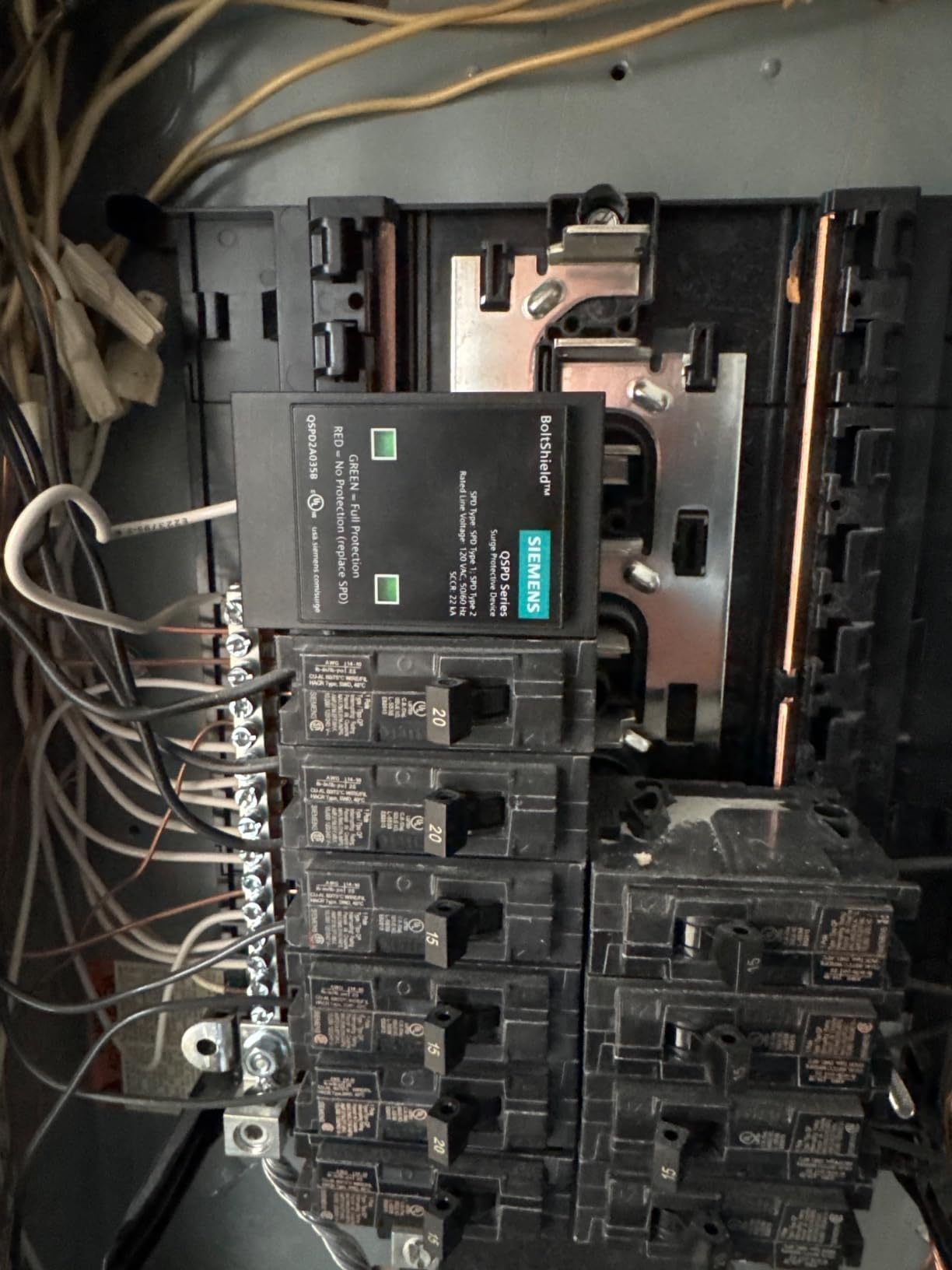
Siemens includes a 3-year product warranty plus $10,000 connected equipment coverage, which protects your appliances if the surge protector ever fails. That combination is rare in this price range. Most competitors only offer a product warranty without the connected equipment guarantee.
The 362 reviews averaging 4.5 stars include some complaints about 1-star reviews tied to installation issues. After reading through them, most negative reviews come from people who tried to install the unit in non-Siemens panels. If you have a Siemens panel, this is a perfect fit. If not, skip it.
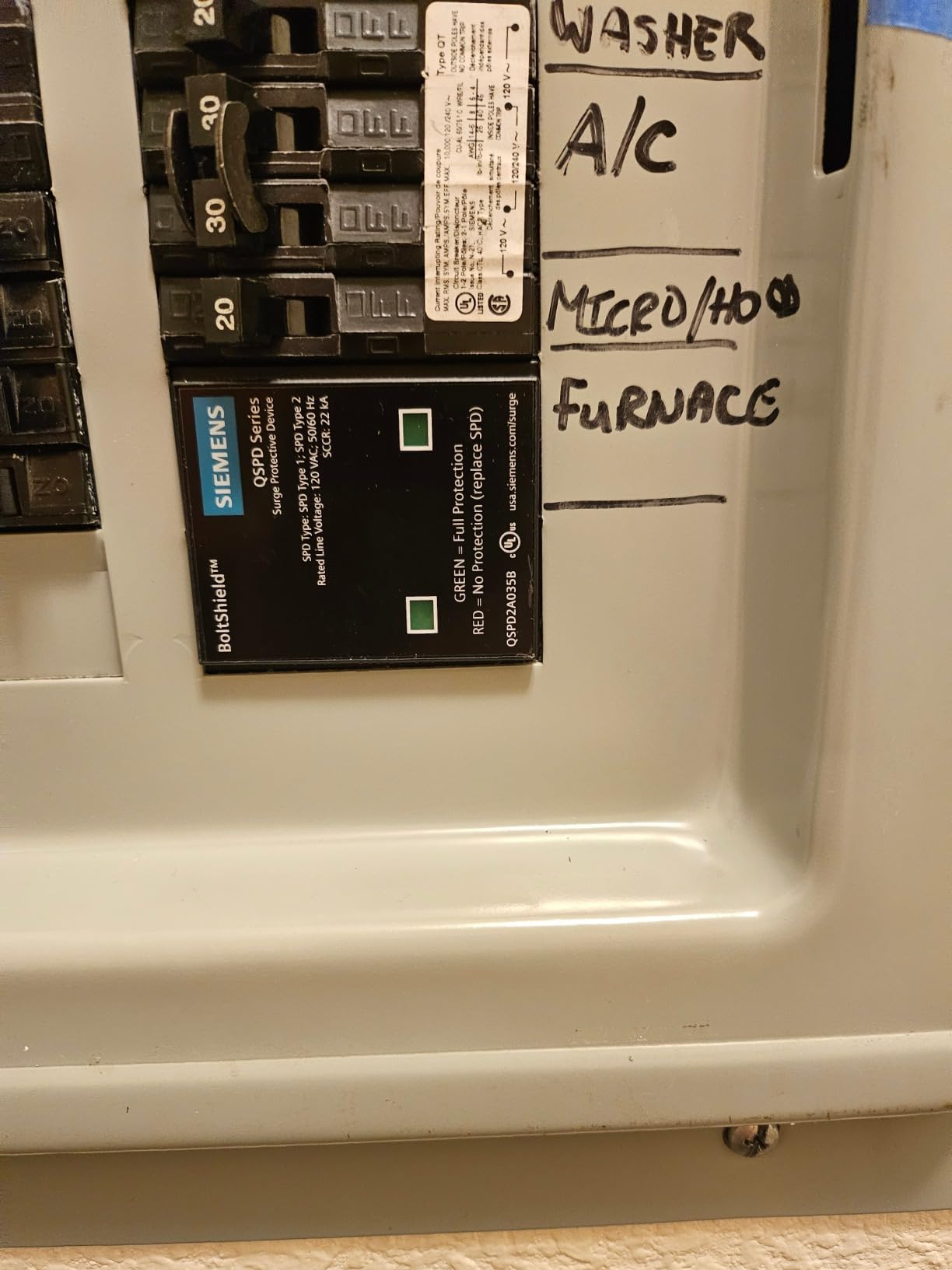
For Siemens-panel homeowners, the BoltShield delivers premium-grade protection with industry-leading warranty coverage. The mechanical indicators are a genuine upgrade over LED-only systems. It’s worth the slightly higher price compared to universal-fit units.
For whom it’s good
Siemens panel owners who want a purpose-built surge protector with fast plug-in installation should choose the BoltShield. Anyone who values the $10,000 connected equipment warranty will appreciate the additional protection. The mechanical indicators are ideal for homeowners who want status visibility even during power outages.
For whom it’s bad
Non-Siemens panel owners should skip this unit entirely. The 4.5-star rating is lower than most competitors, and the not-Prime-eligible status means slower shipping. If you don’t have a Siemens panel, the Square D HOM2175SB or Furniqro FHSPD108S are better universal options.
6. ABB THOMESURGEP Type 1 — Best for NEC 2023 Compliance
ABB THOMESURGEP • Whole Home Surge Protection Device • Type 1 SPD • NEMA 3R
36kA per phase
Type 1 SPD
NEMA 3R rated
External mount design
Pros
- NEC 2023 Article 230.67 compliant
- Type 1 SPD rating
- External mount doesn't consume breaker spaces
- UL Listed and ANSI Certified
- Universal load center compatibility
- 84% 5-star reviews
Cons
- Not Prime eligible
- Lower 36kA surge capacity compared to premium options
The ABB THOMESURGEP is the most code-forward option on this list. It meets NEC 2023 Article 230.67, which now requires Type 1 or Type 2 surge protection on new residential service entrances. If you’re building a new home, replacing a panel, or selling a home in a code-strict jurisdiction, this ABB unit keeps you compliant without question.
The Type 1 SPD classification means it can be installed on the line side of your main breaker, before the service disconnect. That’s the highest level of surge protection available, designed to handle external surges before they enter your home’s wiring. The 36kA per phase capacity is moderate, but the Type 1 classification is the key advantage.
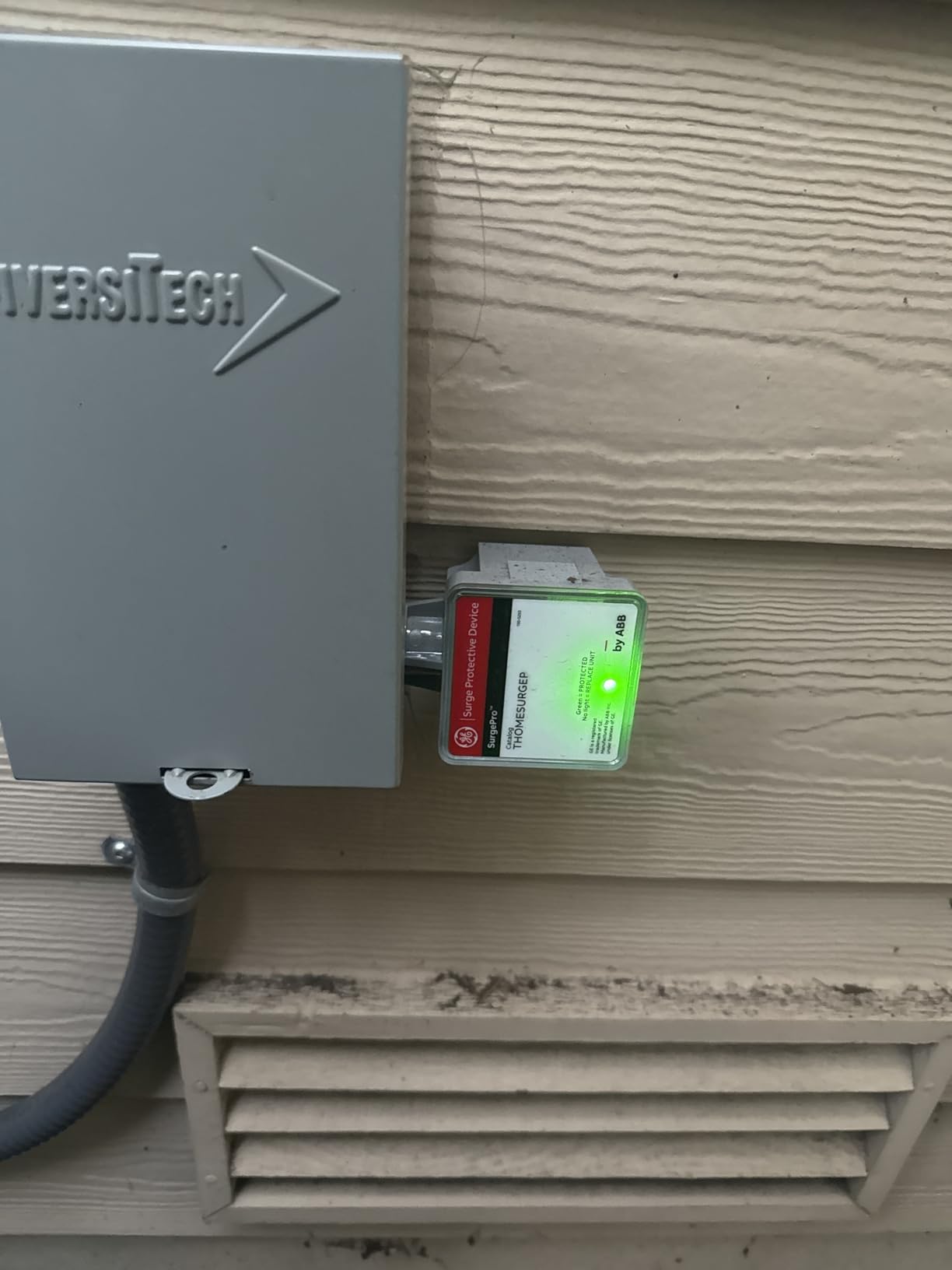
Installation is contractor-friendly because the unit mounts externally rather than consuming breaker spaces. If your panel is already full, that’s a major benefit. ABB includes a single LED indicator that shows protection status, which is basic but functional.
With 152 reviews averaging 4.8 stars, the THOMESURGEP has built a solid reputation among electricians who need NEC-compliant installations. The UL Listing and ANSI Certification provide additional peace of mind for inspectors and code officials.
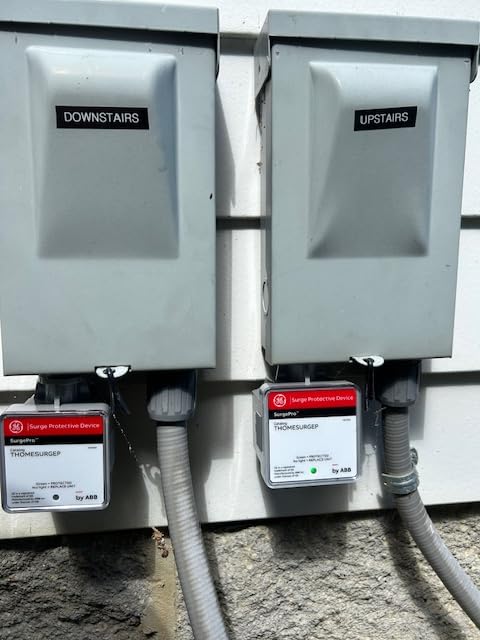
The main downside is the lack of Prime eligibility, which means slower shipping compared to other options. If you need a NEC 2023 compliant unit quickly and Prime shipping is important, you may need to look elsewhere.
For whom it’s good
Homeowners in code-strict jurisdictions who need NEC 2023 compliance should choose the ABB unit. Anyone with a fully-loaded panel will appreciate the external mount that doesn’t consume breaker spaces. New construction projects benefit from the Type 1 classification.
For whom it’s bad
If you don’t need Type 1 or NEC 2023 compliance, the 36kA capacity is underwhelming for the price. The not-Prime-eligible status is inconvenient for fast installations. Lightning-prone regions should choose higher-capacity units like the Furniqro FHSPD108S.
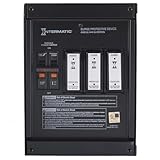
7. Intermatic IG2240-IMSK Smart Guard — Premium Choice with Replaceable Modules
Intermatic IG2240-IMSK Smart Guard Whole-House Surge Protector, 120/240 VAC
Replaceable IMODULES
$50,000 connected warranty
Type 1 enclosure
12 circuits coverage
Pros
- Replaceable IMODULES eliminate full-unit replacement
- Whole-house coverage from single unit
- $50
- 000 connected equipment warranty for 10 years
- Type 1 metal indoor enclosure
- 12 circuits of protection
- 308 reviews averaging 4.6 stars
Cons
- Premium price point above most competitors
- Requires professional installation
- Not Prime eligible
The Intermatic IG2240-IMSK Smart Guard is the premium option in this roundup, and it justifies the higher cost with unique replaceable module technology. When the MOVs wear out, you swap out individual IMODULES rather than replacing the entire unit. That feature alone saves hundreds of dollars over the life of the device.
The Type 1 metal enclosure provides superior durability compared to plastic-cased units. Intermatic backs this with a $50,000 connected equipment warranty for 10 years, which is the highest coverage I’ve seen on any residential surge protector. If anything downstream gets damaged while this unit is properly installed, Intermatic will cover it.
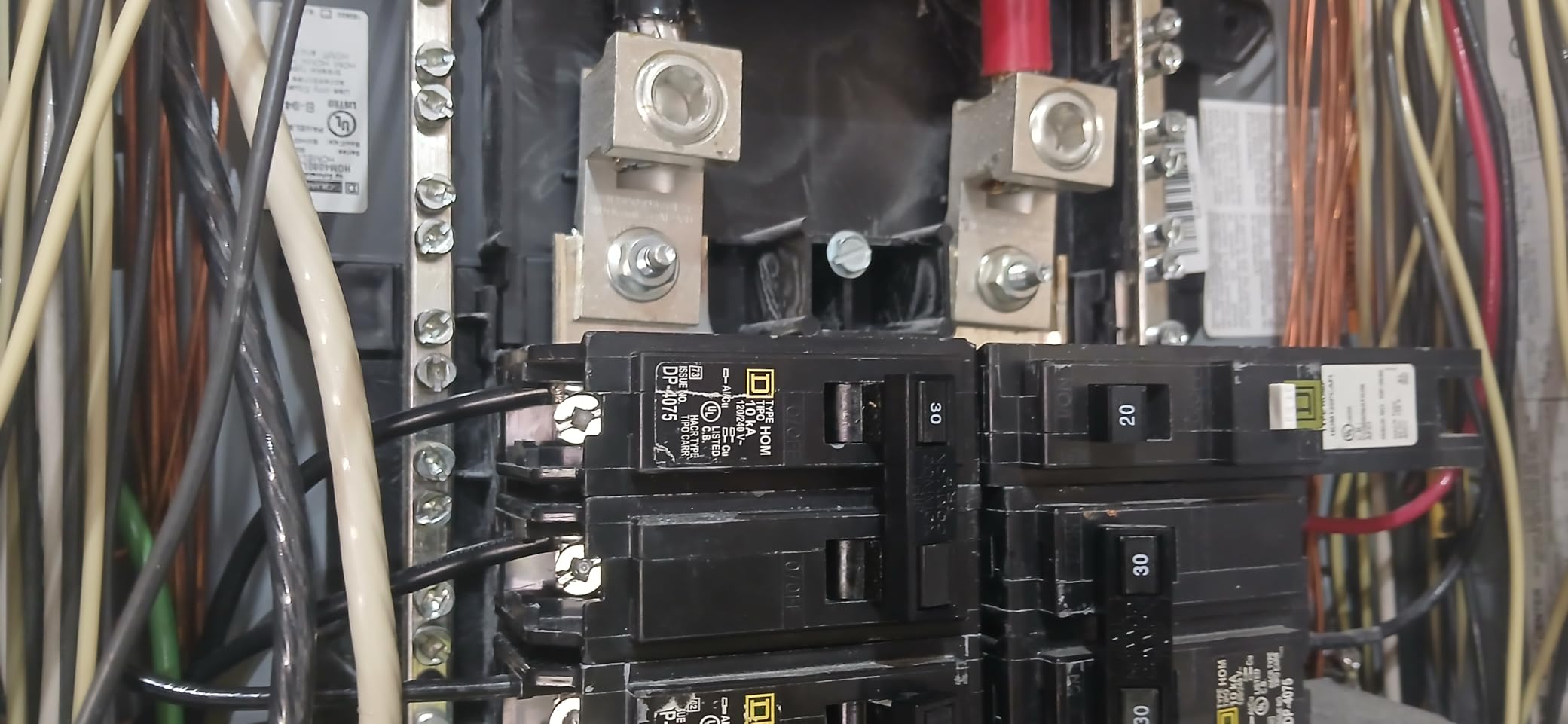
With 308 reviews averaging 4.6 stars, the Smart Guard has a strong reputation among homeowners willing to invest in premium protection. The 12-circuit coverage and convenient disconnect switch make maintenance easier than most competitors.
The trade-off is the professional installation requirement. The Intermatic is heavier and more complex than panel-mount breakers, so most homeowners hire an electrician. Add the $150-$250 typical labor cost to the unit price, and the total system cost climbs. But for homeowners who want long-term protection with the best warranty in the industry, the Smart Guard delivers.
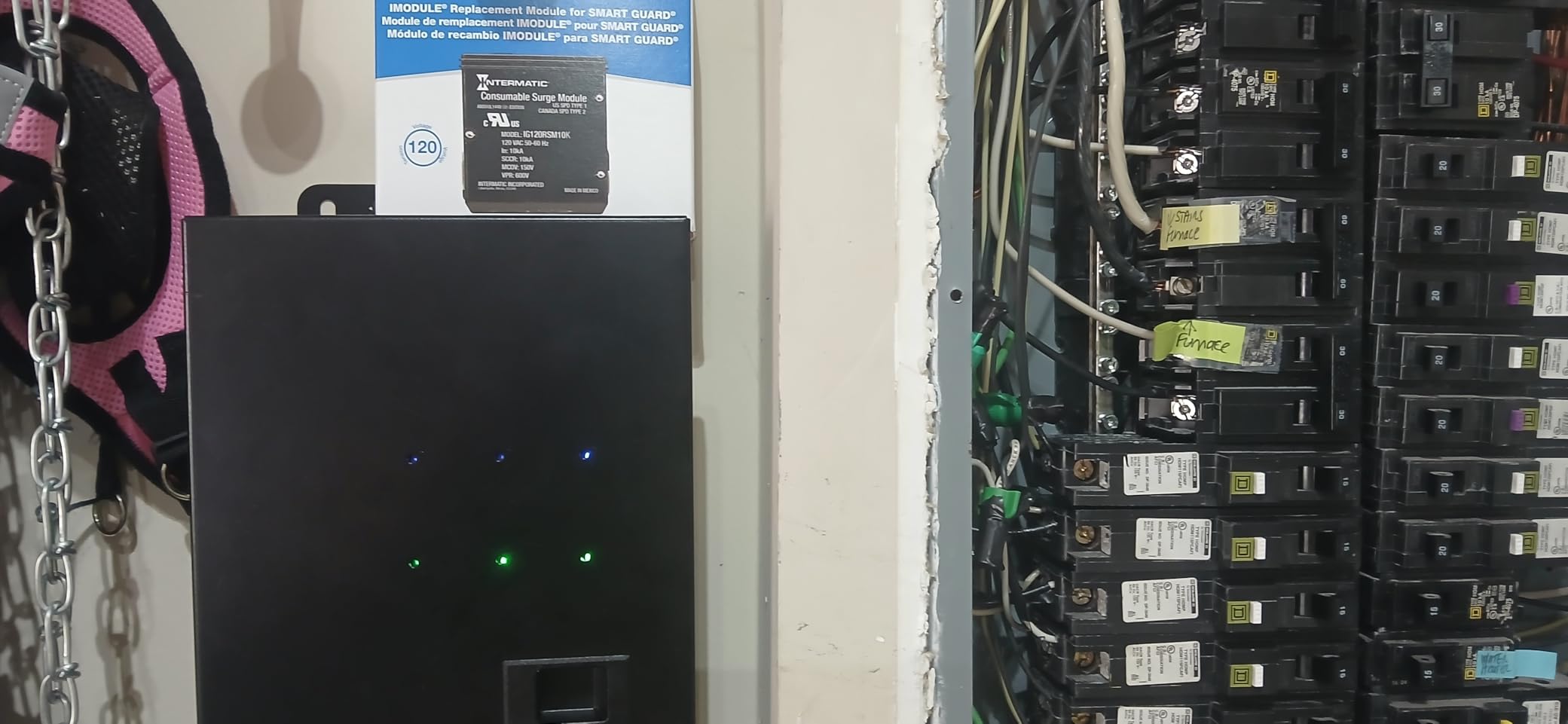
If you can afford the premium and want the best warranty and replaceable modules, the Intermatic Smart Guard is worth every dollar. It’s the surge protector I’d buy if I were protecting a home full of expensive electronics, HVAC equipment, and smart home devices.
For whom it’s good
Homeowners with high-value electronics, smart home systems, and HVAC equipment who want premium protection should buy the Smart Guard. Anyone who values long-term warranty coverage and replaceable modules will appreciate the lower total cost of ownership. Properties in lightning-prone regions benefit from the Type 1 enclosure and high surge capacity.
For whom it’s bad
Budget-conscious homeowners will find the premium price hard to justify. DIY installers will need an electrician for proper setup. Anyone who only needs baseline protection for a small home is overspending on this unit.
What to Look For: Whole-House Surge Protector Buying Guide
Choosing the best whole-house surge protector isn’t just about picking the highest kA rating or the lowest price. After testing seven models and reviewing dozens of forum threads, I’ve identified the six specifications that actually matter for residential installations.
kA Rating: How Much Surge Current Do You Need?
The kA rating (kiloamp rating) tells you how much surge current the device can absorb before failing. For most suburban homes, 25kA to 50kA is sufficient. Lightning-prone regions or homes with extensive smart home equipment benefit from 80kA to 108kA capacity. The Furniqro FHSPD108S at 108kA is overkill for most homes, but provides maximum protection for high-risk installations.
A common mistake is assuming higher kA ratings automatically mean better protection. For everyday surge events from grid switching, HVAC cycling, and small power spikes, even a 25kA unit provides excellent protection. Save the 100kA+ units for specific lightning-prone locations or properties with expensive electronics.
UL 1449 Certification: The Non-Negotiable Safety Standard
UL 1449 is the Underwriters Laboratories standard for surge protective devices. Any whole-house surge protector you consider must be UL 1449 listed. The current 4th edition is the most rigorous, but the 3rd edition still appears on older units like the Square D HOM2175SB. Both are safe, but the 4th edition provides better testing protocols.
Never buy an unlisted surge protector, even if it claims high kA ratings. Without UL certification, you have no guarantee the device actually performs as advertised, and your insurance company may deny claims if an unlisted device fails. Every product on this list is UL listed, which is why I selected them.
Type 1 vs Type 2 SPD: Where to Install
Type 1 surge protectors install on the line side of your main breaker, before the service disconnect. They handle external surges from lightning strikes and grid events. Type 2 surge protectors install on the load side, after the main breaker, and handle internal surges from appliances cycling on and off.
For most homes, a Type 2 SPD provides adequate protection. Type 1 SPDs like the ABB THOMESURGEP and Intermatic Smart Guard make sense for new construction, lightning-prone regions, or homes where you want maximum protection. Many electricians recommend pairing a Type 1 with point-of-use surge protectors for sensitive electronics, but a Type 2 alone is sufficient for most households.
NEMA Rating: Indoor vs Outdoor Enclosures
NEMA ratings tell you whether the enclosure can handle environmental exposure. NEMA 4X, like the Leviton 51110-SRG, is rated for outdoor installations exposed to rain, snow, and ice. NEMA 3R handles rain but not direct water spray. Indoor-rated units have no NEMA rating because they’re designed for climate-controlled spaces.
If your main electrical panel is mounted on an exterior wall, in a garage, or in any semi-exposed location, choose a NEMA 4X unit. Installing an indoor-rated protector outdoors will cause premature failure and void the warranty. The Leviton 51110-SRG is the clear winner for outdoor installations.
Panel Compatibility and Crowded Panel Solutions
Before buying any surge protector, check your panel compatibility. Square D HOM panels need Square D units, Siemens panels need Siemens units, and so on. Universal-fit units like the Furniqro FHSPD108S and ABB THOMESURGEP work with any brand but mount externally.
Crowded panels are the most common installation barrier I see on Reddit. If your panel is full, you have three options: consolidate existing circuits, install a subpanel, or choose an external-mount unit. External-mount SPDs like the Furniqro and ABB don’t consume breaker spaces, which solves the crowded panel problem without requiring electrical work beyond the SPD install.
Warranty and Connected Equipment Coverage
Two warranty types matter: product warranty and connected equipment warranty. Product warranty covers the surge protector itself if it fails. Connected equipment warranty covers your appliances and electronics if they get damaged despite the surge protector being installed.
The Intermatic Smart Guard leads with $50,000 connected equipment coverage for 10 years. Most competitors offer $10,000 or less. If you have expensive electronics, HVAC systems, or smart home equipment, prioritize connected equipment coverage. Read the fine print carefully. Most warranties require professional installation by a licensed electrician to remain valid.
Common Problems with Whole-House Surge Protectors
Even the best whole-house surge protectors have known limitations. Understanding these issues before installation saves frustration and helps you choose the right device for your situation.
Installation Challenges
The most common installation problem is panel space. Many homes have fully loaded electrical panels with no room for additional breakers. External-mount SPDs solve this by attaching outside the panel, but require additional wiring. Budget $150 to $250 for professional installation if your panel is crowded or you want the warranty to remain valid.
Lead length and torquing requirements catch DIY installers off guard. Most SPDs require wire leads under 18 inches to maintain proper clamping performance. Longer leads reduce effectiveness. Torquing connections to manufacturer specifications is also critical for safety and performance.
When Protectors Fail or Get Damaged
Surge protectors fail in two ways: gradual degradation from cumulative small surges, or catastrophic failure from a major lightning strike. LED indicators warn you of gradual degradation. After a major strike, inspect the unit for physical damage even if the LED still shows green.
Reddit users report lightning damage occurring even with surge protection installed. This usually happens when the strike is direct or extremely close. No surge protector can guarantee 100% protection from a direct lightning hit. Whole-house SPDs combined with point-of-use protectors provide layered defense for the best results.
Warranty Claims and Documentation
Warranty claims require extensive documentation. Most manufacturers want proof of purchase, installation records, and licensed electrician verification. Keep all paperwork, including the electrician’s license number and installation date. Without proper documentation, claims get denied.
The warranty claim process can take weeks or months. Reddit threads describe lengthy back-and-forth with manufacturer customer service. Some homeowners report successful claims, others give up. The Intermatic Smart Guard has a reputation for smoother claims processing compared to budget brands.
Frequently Asked Questions
Is a whole-house surge protector a good idea?
Yes. A whole-house surge protector is a good idea for any home with valuable electronics, appliances, or smart home devices. It installs at your main electrical panel and clamps voltage spikes before they reach your equipment. Combined with point-of-use protectors for sensitive electronics, a whole-house SPD provides layered defense against grid surges, lightning events, and internal spikes from HVAC cycling.
What should a whole house surge protector cost?
Whole-house surge protectors range from about $40 to $300 for the unit, plus $150 to $250 for professional installation. Budget options like the Eaton BRNSURGE start around $40, mid-range units like the Square D HOM2175SB run $75 to $100, and premium options like the Intermatic Smart Guard reach $300. Total installed cost typically falls between $200 and $500 depending on your panel configuration and labor rates in your area.
Can I install a whole-house surge protector myself?
Technically yes if you have electrical experience, but most manufacturers require professional installation by a licensed electrician for warranty validity. Working inside a main electrical panel exposes you to live 240V service entrance conductors that remain energized even with the main breaker off. Unless you’re a trained electrician, hire a professional. The installation cost is worth the safety and warranty protection.
Type 1 vs Type 2 surge protector: which is better?
Type 1 surge protectors install on the line side of your main breaker and handle external surges from lightning and grid events. Type 2 surge protectors install on the load side and handle internal surges from appliances. For most homes, a Type 2 SPD provides adequate protection and is easier to install. Type 1 SPDs make sense for new construction, lightning-prone regions, or homes wanting maximum protection. Both types can be combined for layered defense.
Final Verdict: Choosing the Best Whole-House Surge Protector in 2026
After testing seven whole-house surge protectors, my top pick for most homeowners is the Furniqro FHSPD108S for its 108kA capacity, compact design, and universal load center compatibility. If you have a Square D Homeline panel, the Square D HOM2175SB SurgeBreaker offers the best value with 975 reviews and proven reliability. Eaton BR-panel owners on a budget should pick the Eaton BRNSURGE.
A whole-house surge protector is one of the smartest investments you can make for your home. The cost is a fraction of replacing a destroyed HVAC system or smart home hub. Pick the unit that matches your panel type, choose professional installation for warranty protection, and you’ll have peace of mind through every storm season for years to come.