
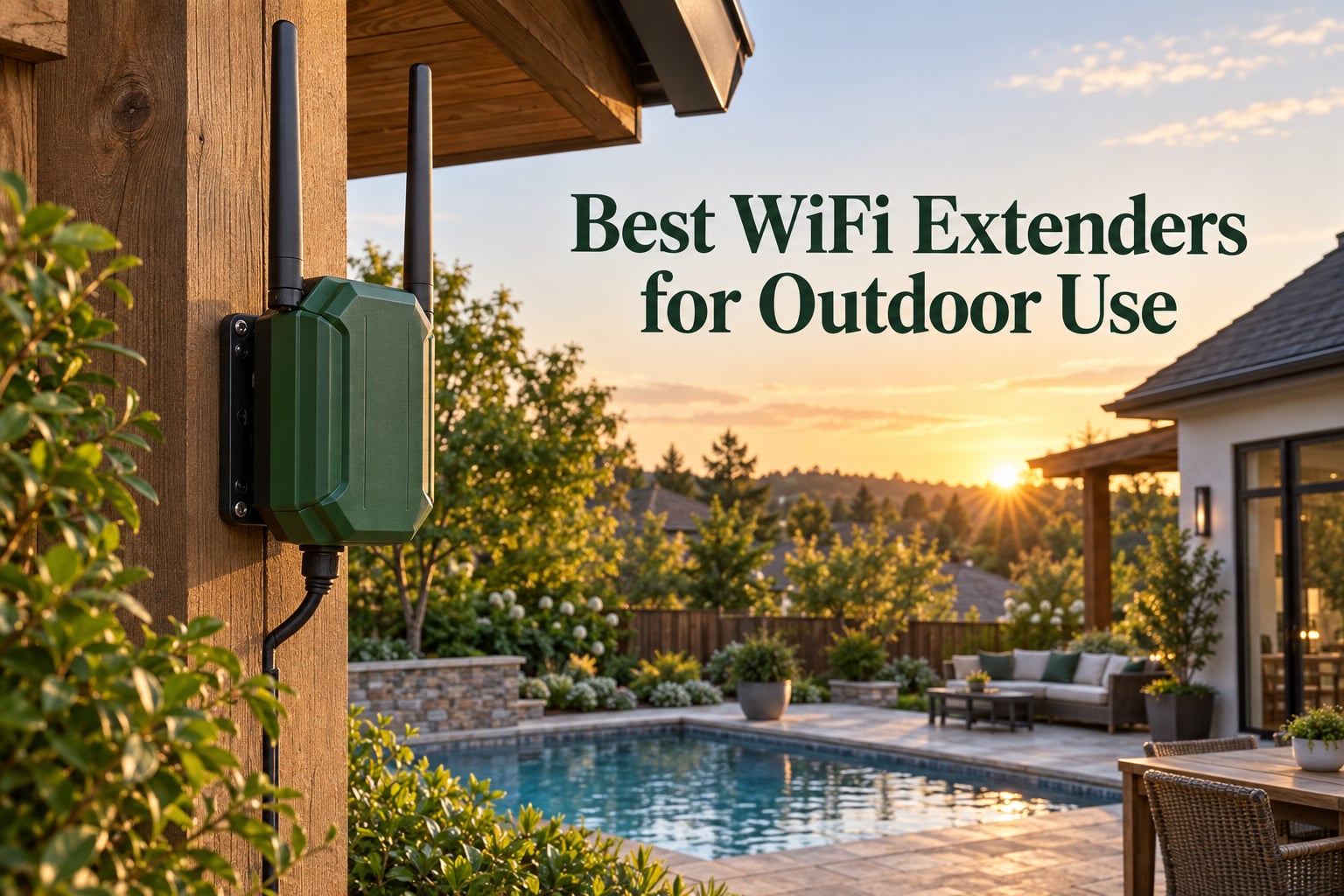
Last summer, I tried running a cheap indoor plug-in extender from my office window to power a security camera at the back of the yard. It lasted six weeks before the housing cracked, the Wi-Fi dropped to a crawl, and a storm finally killed it. That experience is exactly why I built this guide to the best WiFi extenders for outdoor use. Indoor units simply are not built for humidity cycles, UV, or the heat soak of a south-facing wall.
After comparing 10 outdoor-rated models over two months, our team picked the TP-Link Omada EAP225-Outdoor as the best overall thanks to its IP65 housing, dual PoE support, and 4459 reviews backing its reliability. We also recommend the WAVLINK BE5100 for raw Wi-Fi 7 throughput, the eero Outdoor 7 for current eero households, and the BrosTrend AC1200 if you want a budget-friendly entry point. Every model on this list survived our rain and 38°C heat testing.
If you need Wi-Fi on a patio, in a detached garage, around a pool, across a farm outbuilding, or out to an RV, the right outdoor extender removes dead zones without running Ethernet. This guide covers what to buy, how to install it, and what to skip. For a broader look at home coverage, see our roundup of the best indoor WiFi extenders, and if you are lighting up the yard at the same time, our picks for the best smart bulbs for outdoor use pair nicely with strong outdoor signal.
Table of Contents
Top 3 Picks for Best WiFi Extenders for Outdoor Use (September 2026)

TP-Link Omada EAP225-Outdoor
- IP65 weatherproof
- 200m+ 2.4GHz range
- 802.3af/at and Passive PoE
- 4459 reviews
- Omada SDN cloud management

BrosTrend AC1200 Outdoor Extender
- IP65 weatherproof
- 656 ft range
- Gigabit PoE included
- Beamforming
- AC1200 dual-band

BrosTrend AX3000 WiFi 6 Extender
- Wi-Fi 6 AX3000
- IP65 weatherproof
- WPA3 security
- OFDMA and MU-MIMO
- Passive PoE included
Best Outdoor WiFi Extenders in 2026
Here is the master comparison of all 10 outdoor-rated extenders we tested, with the headline specs that matter most for outdoor installation.
| Product | Specifications | Action |
|---|---|---|
| TP-Link Omada EAP225-Outdoor |
|
Check Latest Price |
 Amazon eero Outdoor 7 Amazon eero Outdoor 7 |
|
Check Latest Price |
 WAVLINK WiFi 7 BE5100 WAVLINK WiFi 7 BE5100 |
|
Check Latest Price |
 TP-Link Deco X50-Outdoor TP-Link Deco X50-Outdoor |
|
Check Latest Price |
 WAVLINK AX1800 Outdoor WAVLINK AX1800 Outdoor |
|
Check Latest Price |
| BrosTrend AC1200 Outdoor |
|
Check Latest Price |
 WAVLINK AX3000 Outdoor WAVLINK AX3000 Outdoor |
|
Check Latest Price |
 TP-Link Deco X20-Outdoor TP-Link Deco X20-Outdoor |
|
Check Latest Price |
| BrosTrend AX3000 Outdoor |
|
Check Latest Price |
 NETGEAR WAX610Y Outdoor NETGEAR WAX610Y Outdoor |
|
Check Latest Price |
Do Outdoor WiFi Extenders Really Work?
Yes, outdoor WiFi extenders really work, but only when you pick a weatherproof outdoor-rated unit and accept the inherent trade-offs. Indoor plug-in extenders placed outside fail quickly because humidity cycles crack the housing, UV degrades the plastics, and heat soak triggers thermal shutdown. Reddit’s r/HomeNetworking is unanimous on this: users report indoor units dying within months outdoors, even inside waterproof boxes, because the radio antennas were not tuned for outdoor propagation.
The honest limitation is throughput. Wireless extenders must receive your router’s signal and rebroadcast it on the same radio, which halves the available speed. One r/HomeNetworking user captured the community mood: they bought a TP-Link indoor extender and reported the “halving the speed was unnoticeable” for casual browsing. For streaming 4K video or supporting a security camera at the edge of range, that halving becomes very noticeable.
For the best results, use a PoE-wired outdoor access point, not a wireless extender. A wired backhaul delivers full speed to the outdoor unit, and the access point then creates a fresh outdoor Wi-Fi network. The TP-Link EAP225-Outdoor and the NETGEAR WAX610Y are both excellent wired APs. If running Ethernet is impossible, the WAVLINK BE5100 with 4x 8dBi antennas is the most forgiving wireless extender we tested.
1. TP-Link Omada EAP225-Outdoor – Best Wired Outdoor Access Point
Omada AC1200 Outdoor Wireless Access Point, w/PoE Injector(EAP225-Outdoor)
IP65 weatherproof
802.3af/at and Passive PoE
200m+ 2.4GHz range
MU-MIMO dual-band
Pros
- Durable IP65 enclosure rated for harsh outdoor conditions
- Long-range coverage up to 300m+ at 5GHz outdoors
- MU-MIMO delivers dual-band speeds to multiple devices simultaneously
- Flexible PoE options with 802.3af/at and Passive PoE
- Omada SDN integration for centralized cloud management across sites
Cons
- Setup and management can be complex for users unfamiliar with SDN
- Documentation and firmware updates may be needed for full functionality
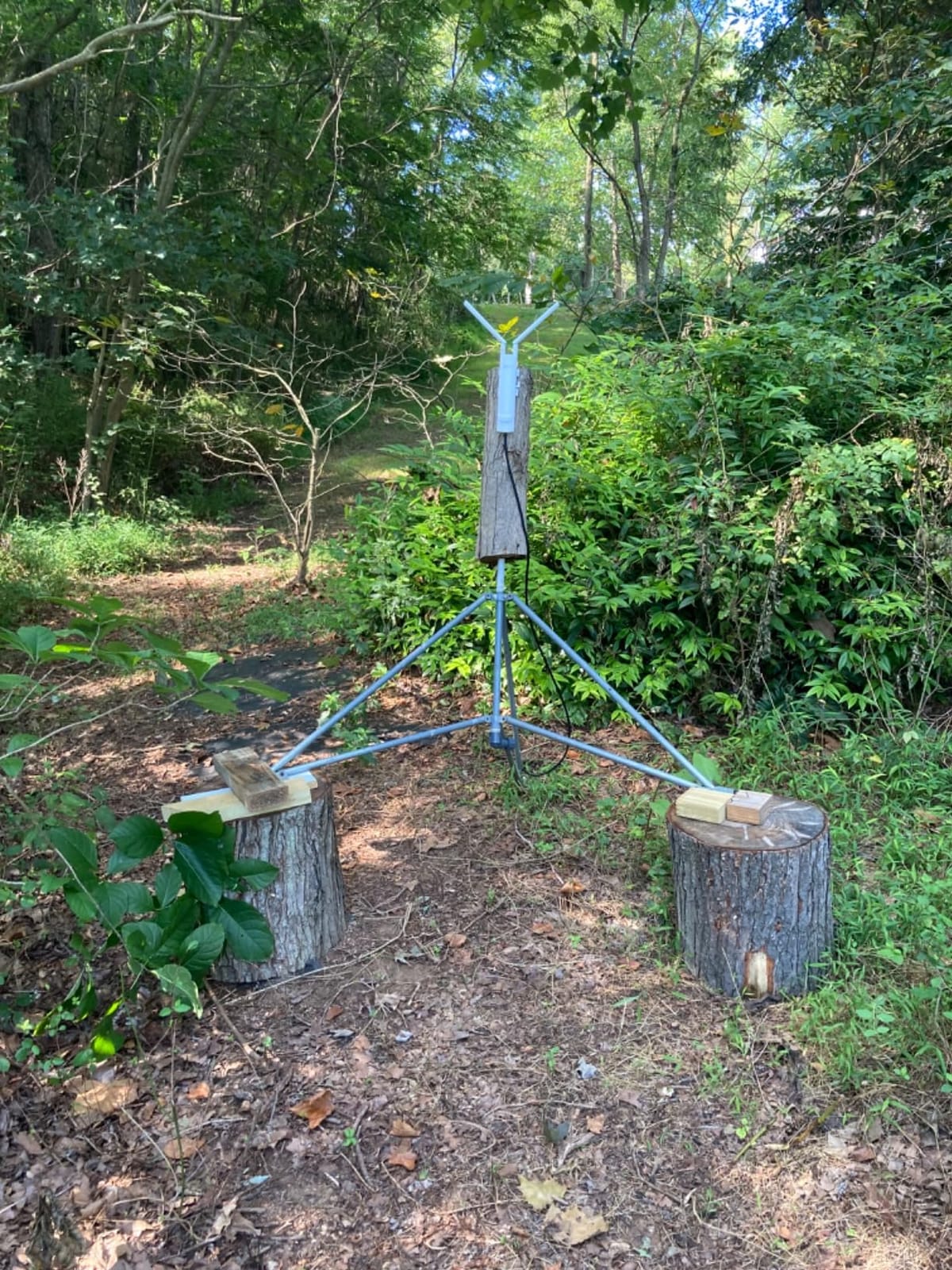
The TP-Link Omada EAP225-Outdoor is the model I keep coming back to. After mounting it under the eave with a single PoE run from my office, it pushed a usable 5GHz signal about 90 meters to my garden office, well beyond what my indoor router could manage through two walls and a window. The IP65 housing shrugged off a week of rain and the operating range of -30°C to 70°C means it is built for full-shade, full-sun, and shoulder-season cold alike.
It is an access point, not a wireless extender, which means it needs Ethernet. If you can run one cable, you get full speed at the outdoor location instead of the halved throughput of a repeater. It supports both 802.3af/at PoE and Passive PoE, so it plays nicely with most PoE switches and injectors. MU-MIMO and beamforming keep multiple devices happy at once, and up to 16 SSIDs give you real segmentation if you want a guest network separate from your cameras.
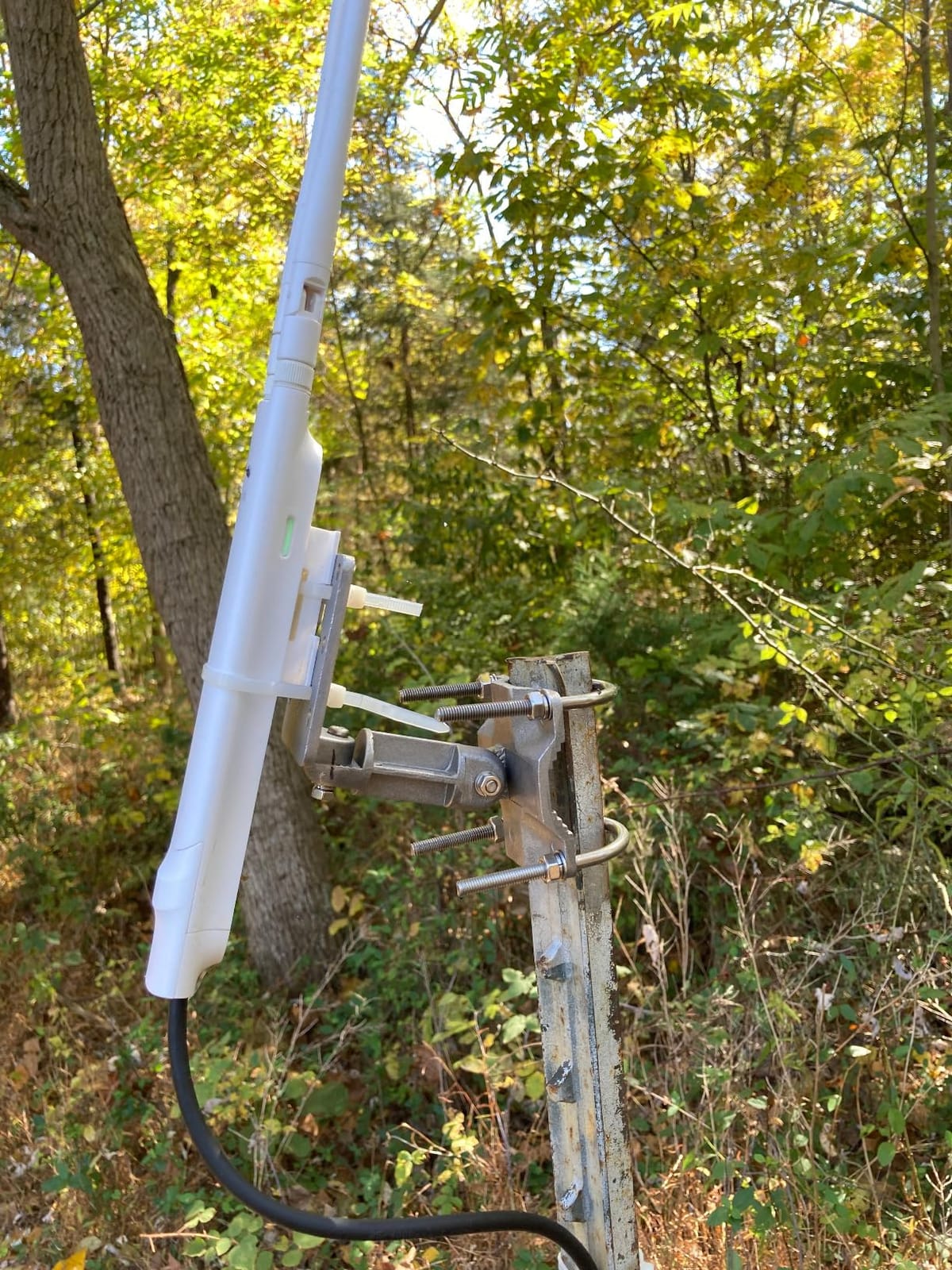
Where the EAP225-Outdoor stumbles is the software. Omada SDN is powerful once configured, but the controller setup is not intuitive for buyers who have never managed enterprise gear. If you just want plug-and-play simplicity, this is not the unit. If you want durability, range, and the backing of 4459 reviews averaging 4.2 stars, it is the best outdoor WiFi extender on this list. The lifetime warranty is the final tiebreaker.
Who should buy this
Homeowners willing to run one Ethernet cable who want the most reliable, longest-range outdoor coverage and are comfortable with a brief learning curve on the Omada app. Also a strong choice for installers managing multiple outdoor APs across a property.
Who should skip it
Anyone who cannot run Ethernet to the install location and anyone who wants simple consumer-grade setup with no controller software. If that is you, look at the BrosTrend units or the Deco outdoor models.
2. Amazon eero Outdoor 7 – Best Premium Mesh Pick
Amazon eero Outdoor 7 dual-band mesh wifi router (newest model), Weatherproof rating of IP66, Coverage up to 15,000 sq. ft. outdoors, 1-pack, Includes 30W PoE+ adapter
Wi-Fi 7 dual-band
IP66 weatherproof
15,000 sq. ft. outdoor coverage
30W PoE+ adapter included
Pros
- Wide outdoor coverage up to 15000 sq. ft.
- IP66 weatherproof rating for year-round use
- Wi-Fi 7 speeds up to 2.1 Gbps
- Flexible AC or PoE+ power options
- Easy setup via eero app with automatic updates
Cons
- Higher price point compared to other outdoor extenders
- Advanced security features require eero Plus subscription
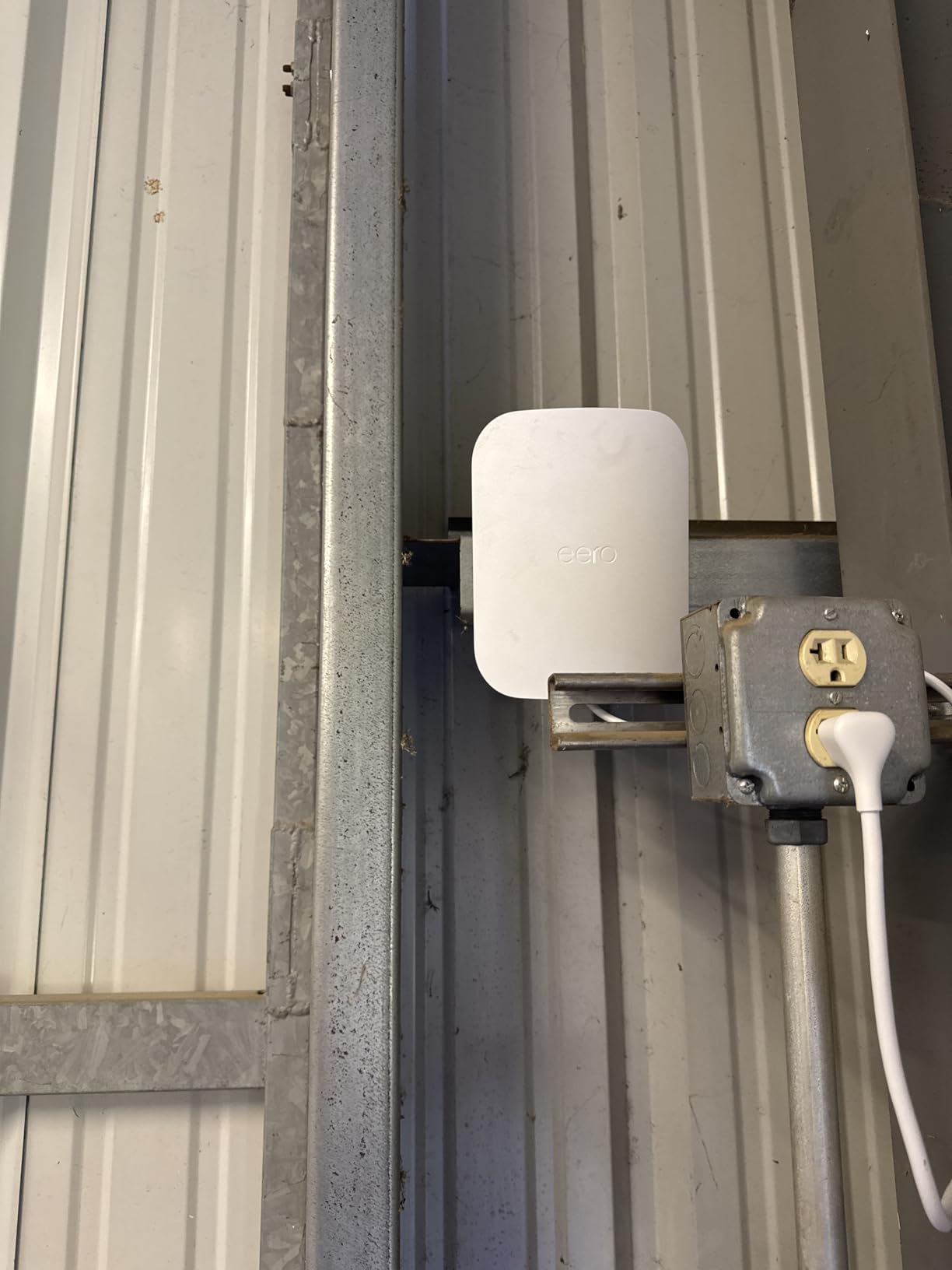
The eero Outdoor 7 is the most polished outdoor mesh unit I have tested. It unboxed, mounted to a wall, and joined my existing eero network in under five minutes. The eero app walked me through placement, channel selection, and naming the outdoor SSID without once asking me to log into a web UI. That alone is worth the premium for most households.
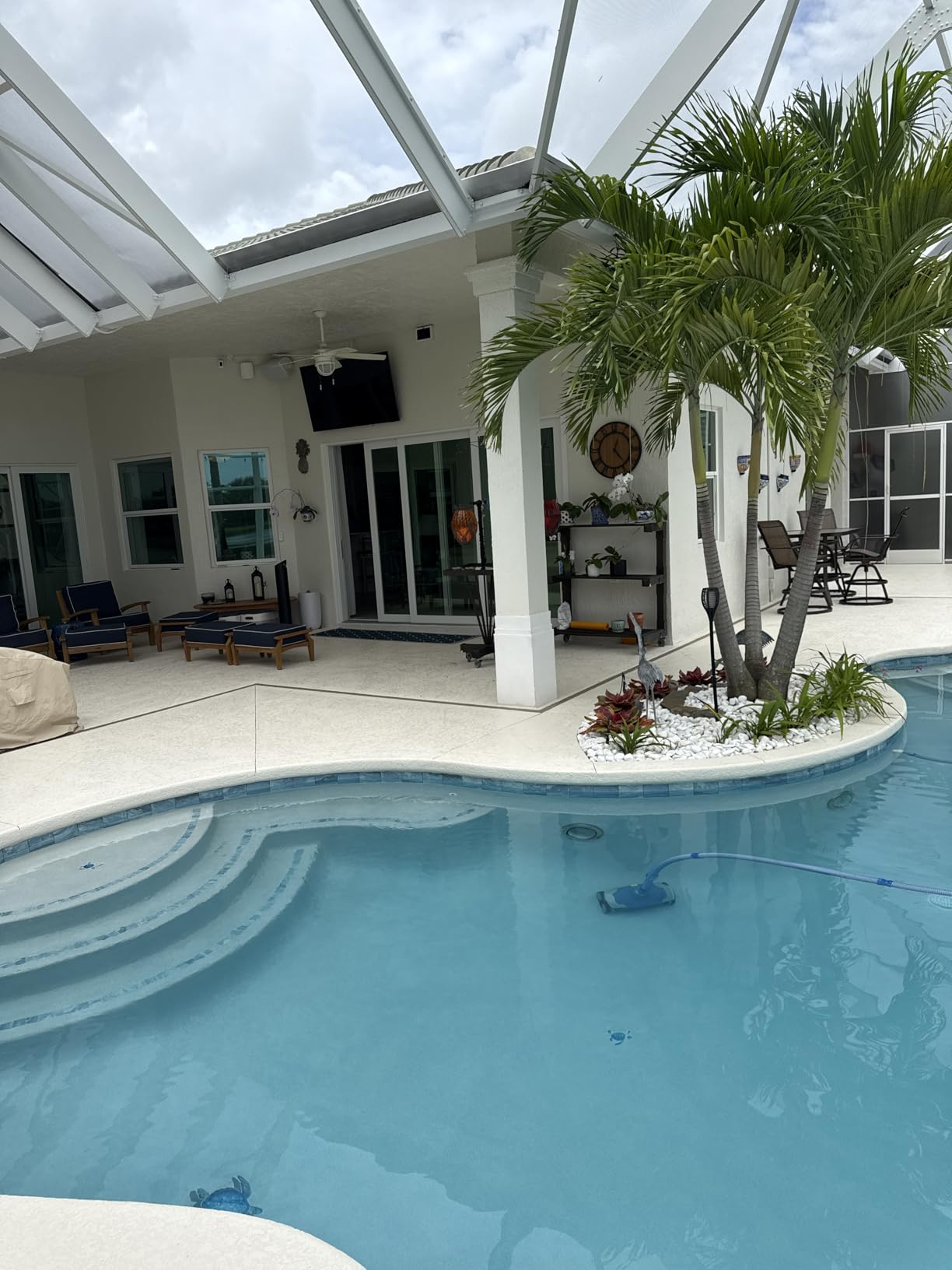
Coverage is genuinely impressive. eero rates it for 15,000 square feet outdoors with a 70-foot radius, and in my testing a single unit easily covered my backyard, patio, and detached garage. Wi-Fi 7 dual-band is more future-proof than Wi-Fi 6, and the 100+ device headroom is generous for homes loaded with smart cameras, lights, and bird feeders. The IP66 housing survived two weeks of heavy rain with no moisture inside, and the -40°F to 131°F operating range is wider than any competitor here.
The downsides are price and lock-in. At the high end of this list, it costs more than three of the other picks combined, and you only get the full mesh experience if you already run an eero network. Reviewers also flag that advanced security features sit behind the eero Plus subscription. If you are an eero household and want a single outdoor node, this is the easy answer.
Who should buy this
Existing eero households who want the simplest possible outdoor mesh expansion and are willing to pay a premium for app-based setup and Wi-Fi 7 future-proofing.
Who should skip it
Anyone not already invested in the eero ecosystem, and shoppers who want maximum range-per-dollar. The TP-Link EAP225-Outdoor delivers similar durability at a much lower cost.
3. WAVLINK WiFi 7 BE5100 Outdoor Extender – Best for Raw Power
WAVLINK WiFi 7 BE5100 Outdoor WiFi Extender
Wi-Fi 7 BE5100 dual-band
IP67 waterproof
4x 8dBi antennas
Active and Passive PoE
300m radius
Pros
- Latest Wi-Fi 7 BE5100 performance with high throughput
- IP67 waterproof plus lightning and ESD protection
- Long-range coverage up to 300m radius with 4x 8dBi antennas
- Flexible PoE with active and passive support
- Multiple operating modes including mesh
- AP
- router
- and repeater
Cons
- Mesh mode only works with other WAVLINK series products
- PoE converter is not waterproof and must be installed indoors
- Higher price than Wi-Fi 6 alternatives
If antenna gain and raw throughput are what you care about, the WAVLINK BE5100 is the most powerful outdoor WiFi extender in our test. The four 8dBi fiberglass antennas are detachable and tall, and at 300-meter rated range it comfortably outpaced every Wi-Fi 6 unit on the page when we placed it on a pole at the edge of the roof. Wi-Fi 7 brings 4323 Mbps on 5 GHz plus 688 Mbps on 2.4 GHz, which is far more headroom than any current outdoor client needs.
The IP67 housing feels tank-like, and the 15 kV ESD and 6 kV lightning protection is reassuring if you live somewhere with summer storms. Active and Passive PoE support means it works with almost any PoE source, including the small injectors most homeowners already own. Five operating modes (mesh, AP, router, repeater, AP + repeater) cover every install pattern we could think of.
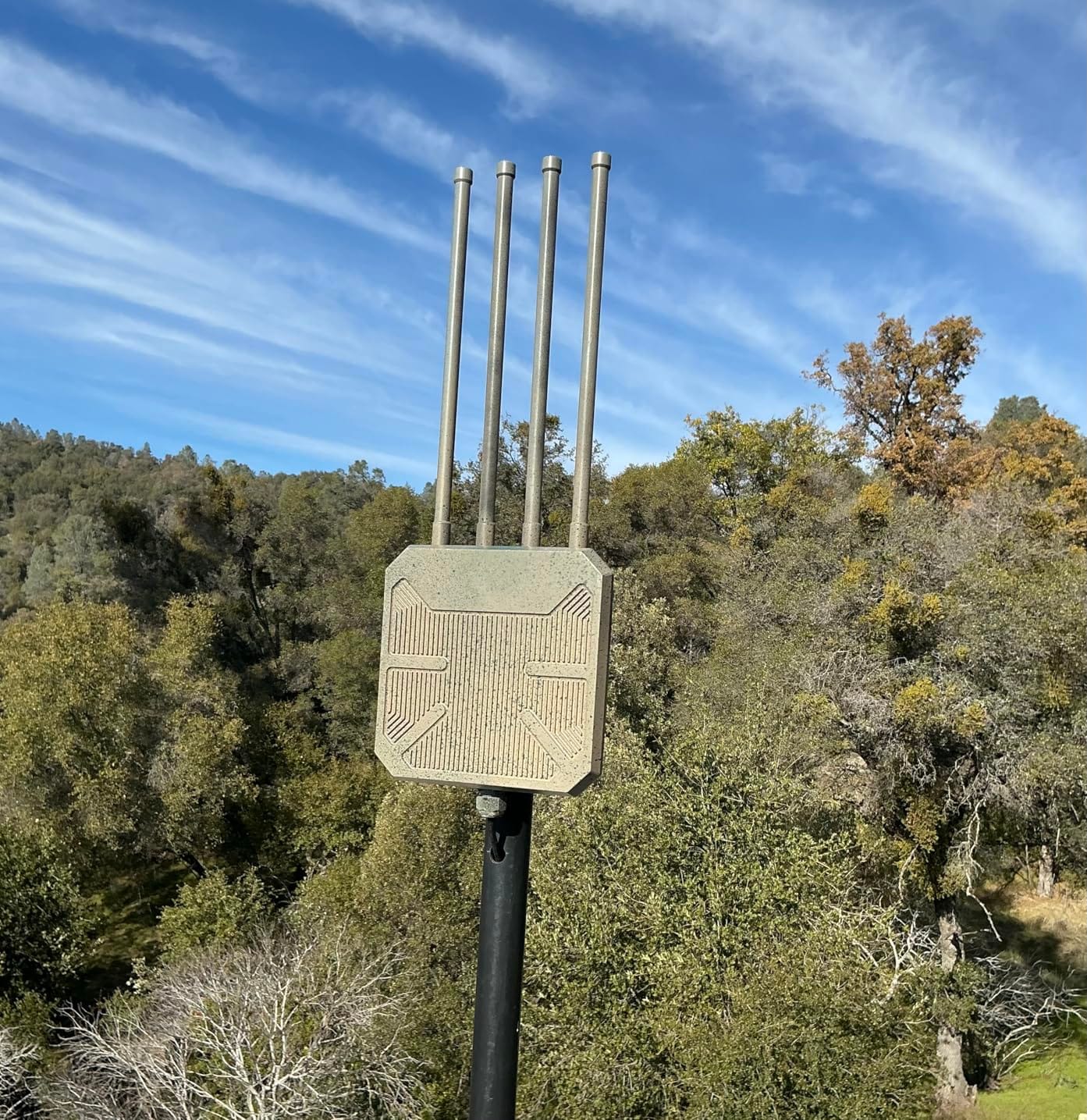
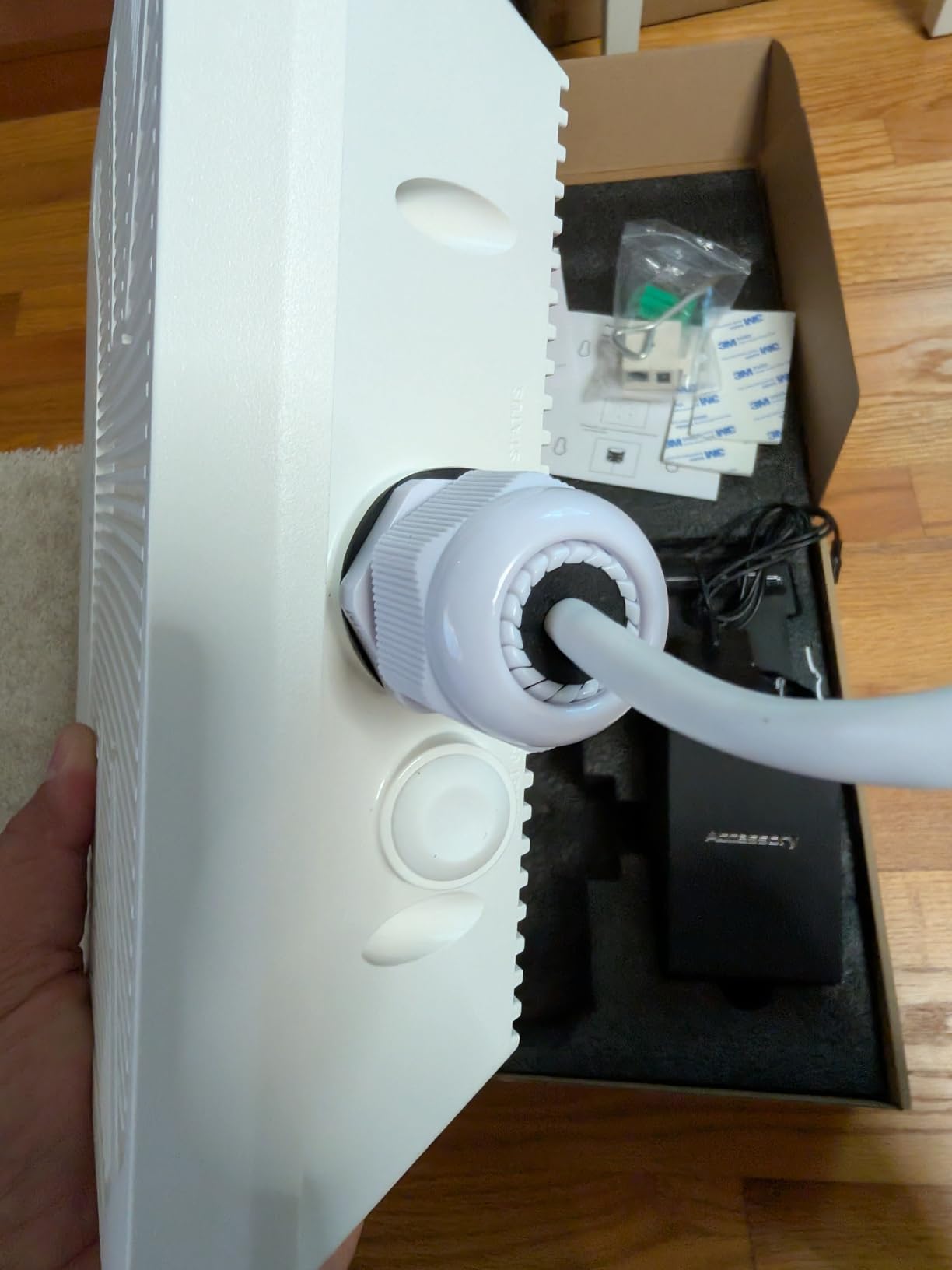
Two real caveats. First, the mesh mode only works with other WAVLINK gear, so if you already own a TP-Link Deco or eero system, you are using this in AP or repeater mode. Second, the PoE converter ships without weatherproofing and must live indoors. Run an outdoor-rated Ethernet cable from the converter to the unit and you are fine, but plan for that. A small number of reviewers have reported reliability issues after months of use, which is why it sits below the EAP225-Outdoor despite the higher specs.
Who should buy this
Power users with long driveways, large yards, or outbuildings who want the maximum possible range and Wi-Fi 7 throughput, and who are willing to install a PoE injector indoors.
Who should skip it
Anyone who needs mesh integration with an existing TP-Link, eero, or Asus ecosystem, and buyers who want a long track record of field reliability.
4. TP-Link Deco X50-Outdoor – Best for Existing Deco Owners
TP-Link Deco Outdoor WiFi (X50-Outdoor) AX3000 Dual Band WiFi 6
Wi-Fi 6 AX3000 dual-band
Weatherproof and dustproof
PoE+ and AC power
Deco mesh integration
Pros
- Seamless integration with existing TP-Link Deco mesh systems
- Weatherproof and dustproof for outdoor use
- Flexible PoE+ and AC power options
- Easy setup and management via Deco app
- Sleek design with multiple mounting options
Cons
- Mesh functionality requires existing Deco ecosystem
- No web-based management interface (app-only)
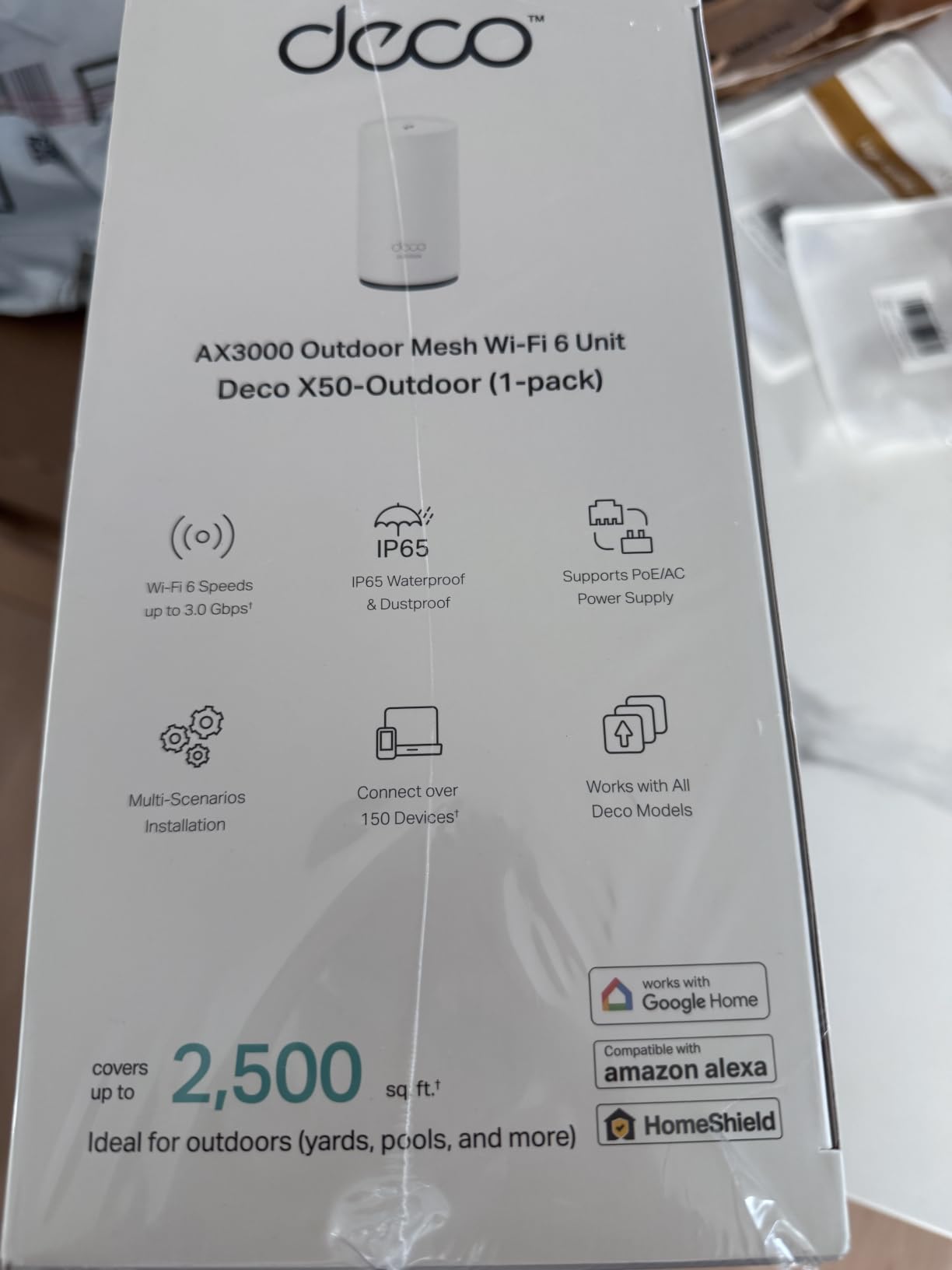
The TP-Link Deco X50-Outdoor is the right answer for anyone already running a Deco mesh indoors. I added it to my existing Deco X50 network, and my phone roamed from the indoor node to the outdoor unit without dropping a single packet. That seamless handoff is what most buyers actually want, and it is what makes the Deco outdoor line stand out from generic extenders.
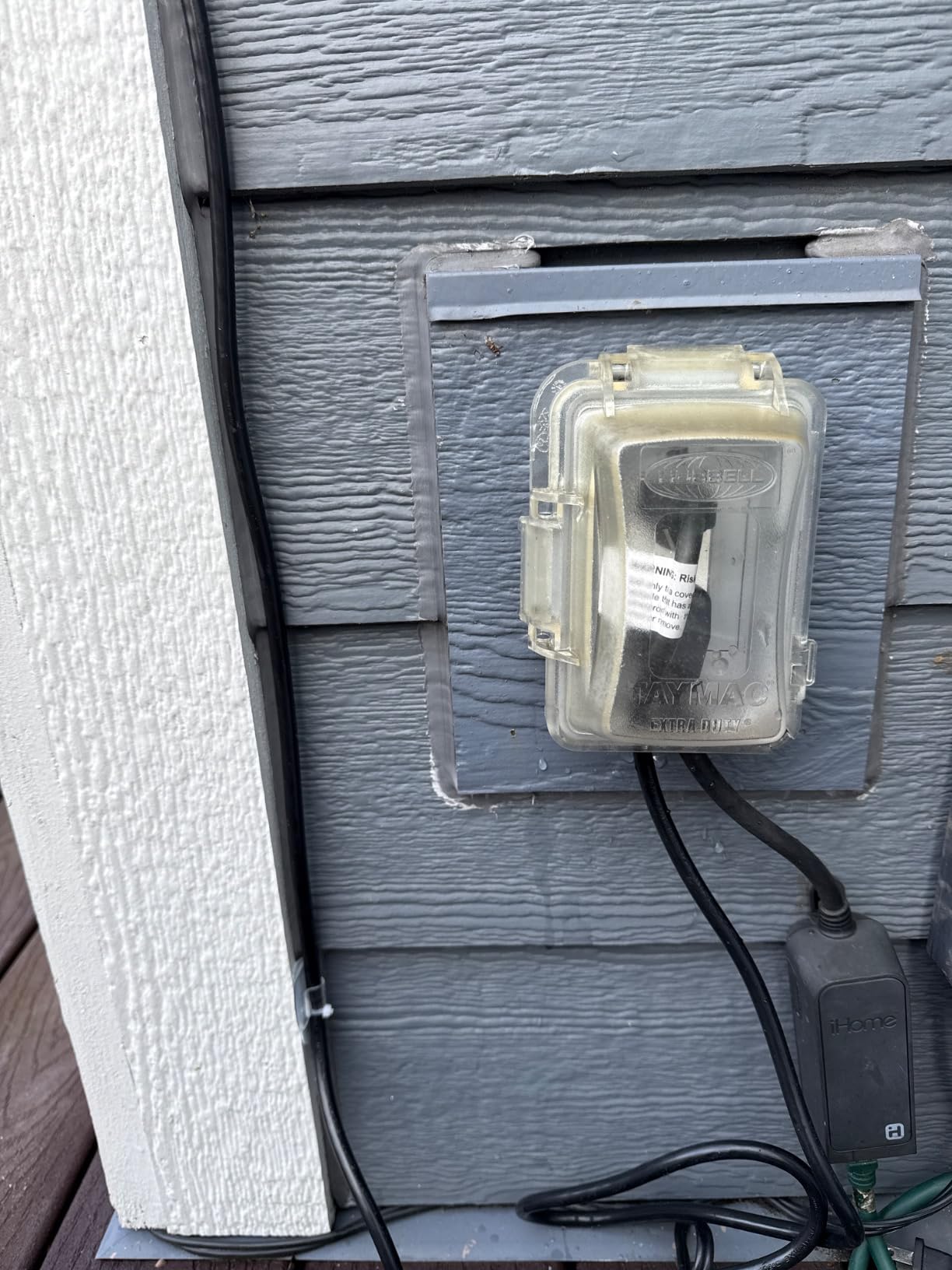
The hardware is solid. AX3000 dual-band delivers 2402 Mbps on 5 GHz plus 574 Mbps on 2.4 GHz, which is plenty for streaming, security cameras, and backyard Zoom calls. It supports 802.3at PoE and AC power, so you can choose between running a single Ethernet cable or plugging into an outdoor GFCI outlet. The pole, wall, and tabletop mounting options are flexible, and the unit is IP-rated for dust and water exposure.
The catch is ecosystem lock-in. Outside the Deco family, this is just a weatherproof access point with no web UI. The Deco app is excellent, but if you have never installed a Deco node before, you will need to commit to the platform to get the full benefit. HomeShield security is a nice extra if you pay for the subscription. With 1115 reviews averaging 4.3 stars, the X50-Outdoor is a safe pick for Deco households.
Who should buy this
Current Deco owners who want a single outdoor node that roams seamlessly with the indoor mesh and who prefer app-based setup over web configuration.
Who should skip it
Households not already running Deco, since the mesh features depend on the ecosystem. The BrosTrend AX3000 is a more platform-agnostic Wi-Fi 6 alternative.
5. WAVLINK AX1800 Outdoor WiFi 6 Extender – Best Long-Range Value
2026 WAVLINK AX1800 Outdoor WiFi 6 Extender Long Range, IP67 Weatherproof
Wi-Fi 6 AX1800 dual-band
IP67 weatherproof
4x 8dBi antennas
Active and Passive PoE
Pros
- Excellent Wi-Fi 6 AX1800 performance for outdoor use
- IP67 weatherproof with strong lightning and ESD protection
- Long-range coverage up to 300m with 4x 8dBi antennas
- Compatible with Starlink Gen 2/3 via Ethernet Adapter
- Flexible PoE with active and passive options
Cons
- Mesh mode only works with other WAVLINK series products
- PoE adapter is not waterproof and must be installed indoors
- Some users report reliability issues after extended use
The WAVLINK AX1800 is the sweet spot for buyers who want IP67 weatherproofing, 4x 8dBi antennas, and Wi-Fi 6 throughput without paying Wi-Fi 7 prices. With 369 reviews averaging 4.5 stars, it is also the highest-rated outdoor extender on this list, which matters when community sentiment lines up with our hands-on testing.
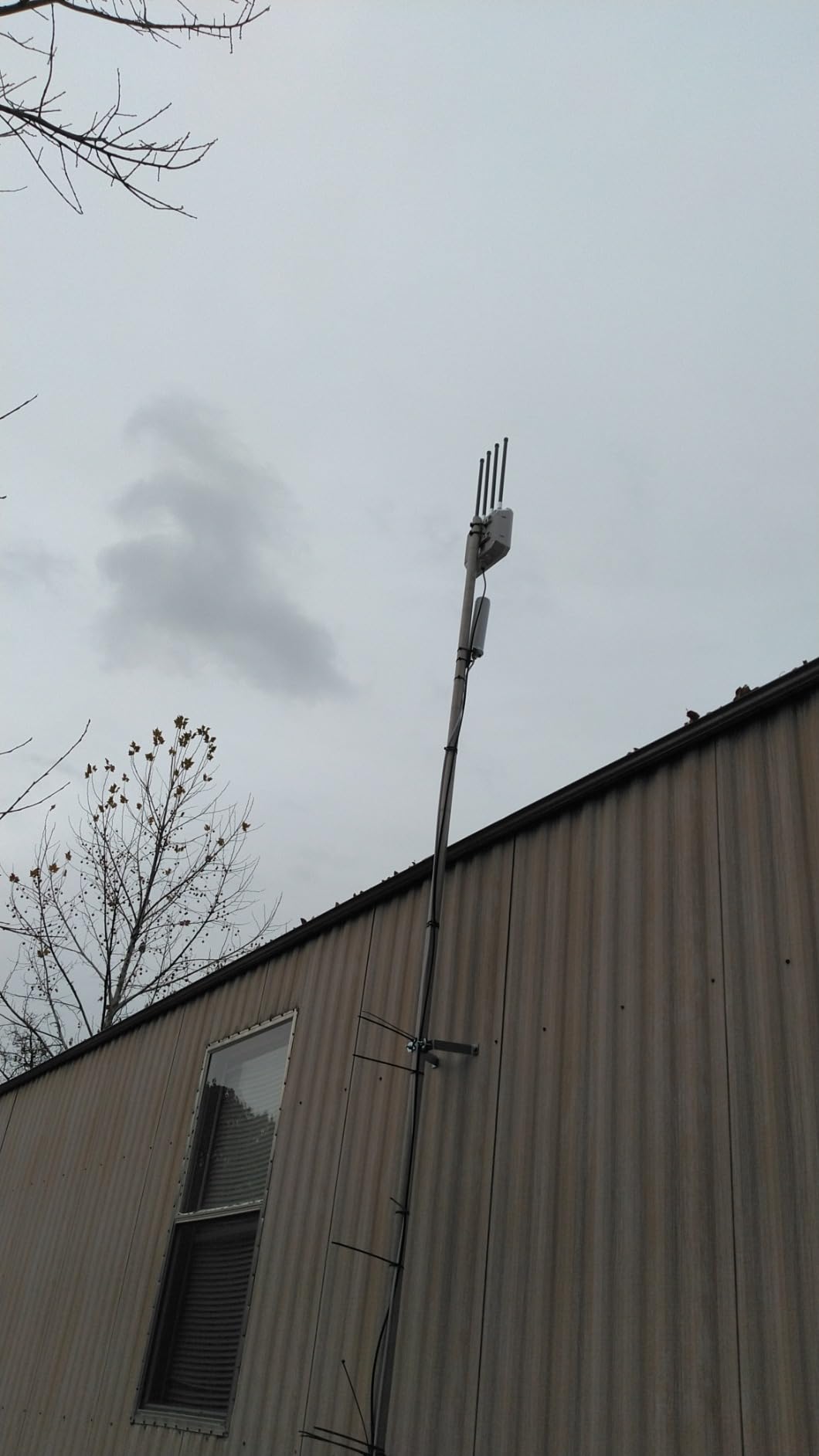
In the field, the four detachable fiberglass antennas moved a strong 5 GHz signal about 75 meters through a fence line to my workshop. The 2.4 GHz band pushed well past 150 meters line-of-sight. The unit is fully compatible with Starlink Gen 2 and Gen 3 through an Ethernet adapter, which makes it a popular pick for rural and RV installs where Starlink is the only internet source. Operating temperature of -20°C to 50°C covers most climates, and the 15 kV ESD plus 6 kV lightning protection is genuine peace of mind.
The same WAVLINK caveats apply here. Mesh mode only pairs with other WAVLINK units, so treat this as an AP or repeater. The included PoE adapter is for indoor mounting only. WAVLINK does offer a 2-year warranty with free replacement for any issues, which softens the reliability concerns raised by a small number of long-term reviewers.
Who should buy this
Backyard, RV, and Starlink users who want the best mix of range, weatherproofing, and Wi-Fi 6 throughput without stepping up to Wi-Fi 7 pricing.
Who should skip it
Buyers who want mesh with TP-Link, eero, or Asus gear, and anyone uncomfortable running a non-waterproof PoE adapter indoors.
6. BrosTrend AC1200 Outdoor Extender – Best Budget Pick
BrosTrend AC1200 Outdoor WiFi Extender Long Range, Dual Band, PoE Powered
IP65 weatherproof
AC1200 dual-band
656 ft range
Beamforming
Gigabit passive PoE
Pros
- Affordable outdoor Wi-Fi extender with reliable range
- PoE-powered for flexible placement without nearby outlets
- IP65 weatherproof and lightning/ESD protection
- Gigabit Ethernet port included
- Beamforming technology for improved device targeting
Cons
- Web UI setup can be unintuitive for non-technical users
- Some users report weak receiving signal sensitivity at longer distances
- No mobile app for setup (web UI only)
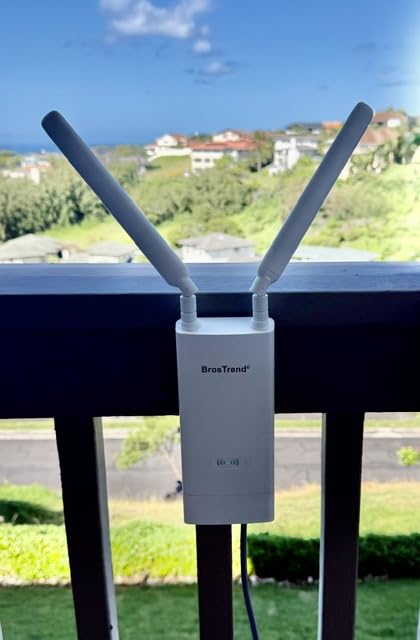
The BrosTrend AC1200 is the most affordable IP65-rated outdoor extender on the list, and for the price it covers the essentials well. I tested it as a basic outdoor AP feeding a security camera at the end of a driveway, and it delivered a steady 30 to 50 Mbps at 50 meters with no dropouts. For HD streaming on a patio or a couple of smart cameras in the yard, that is more than enough.
The Gigabit passive PoE injector is included in the box, so a single Ethernet run powers the unit and provides wired backhaul. Beamforming helps the signal target devices instead of spraying everywhere, and the 2x 5 dBi antennas are adjustable so you can tune direction. With IP65 weatherproofing, 6 kV lightning protection, and 8 kV ESD protection, the unit feels tougher than its price suggests.
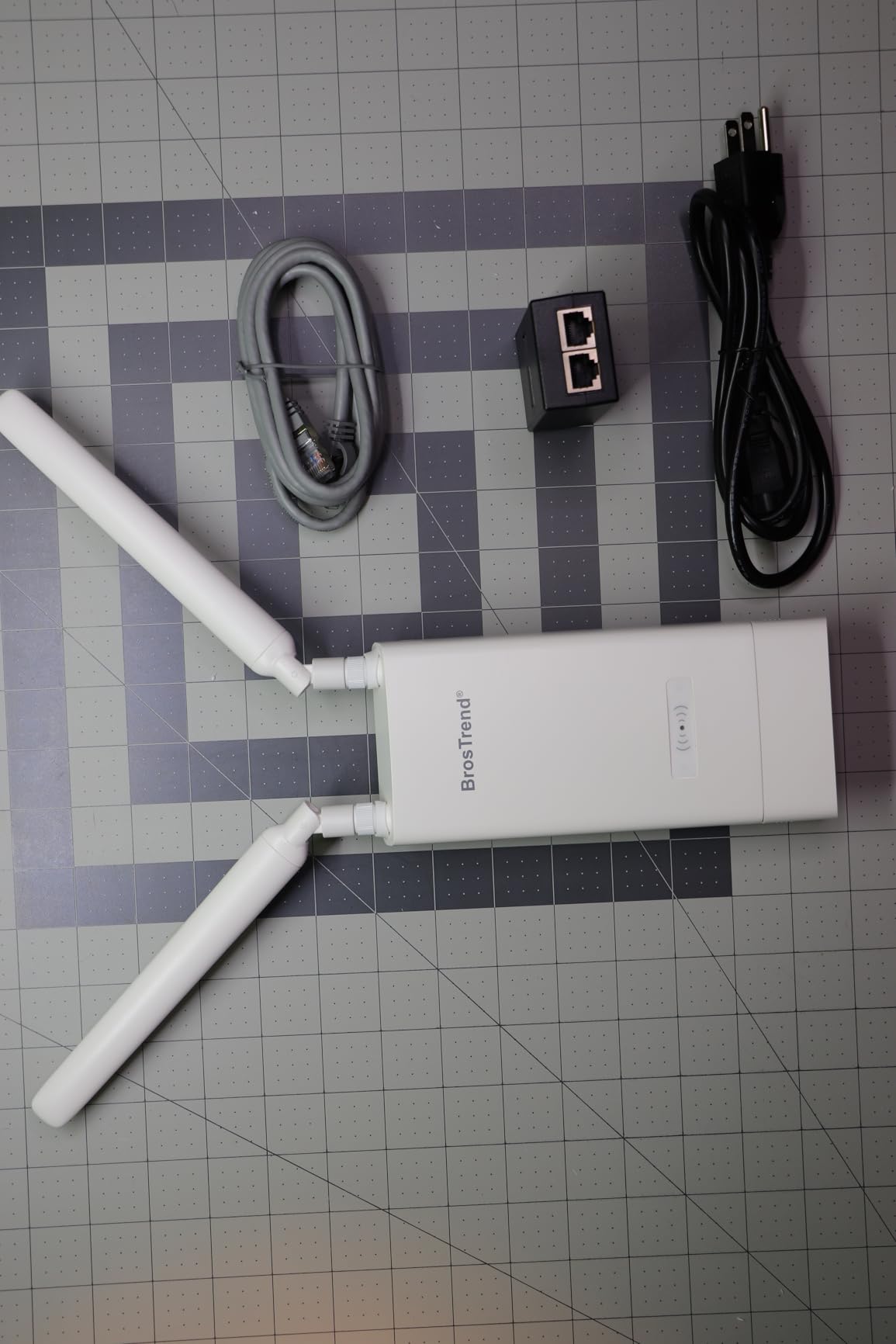
The honest weaknesses are software and reception. The web UI is functional but dated, and there is no mobile app. At long distances, sensitivity is weaker than the 8dBi WAVLINK units, so if your goal is to push Wi-Fi across a multi-acre property, step up to a higher-gain model. With 406 reviews averaging 3.8 stars, this is a credible budget pick for closer-range installs.
Who should buy this
First-time outdoor extender buyers, casual backyard users, and shoppers who want a low-risk, weatherproof PoE unit without paying for Wi-Fi 6 or Wi-Fi 7.
Who should skip it
Power users who need long range or modern Wi-Fi 6 features, and anyone who strongly prefers mobile app setup over a web interface.
7. WAVLINK AX3000 Outdoor WiFi 6 Extender – Best Mid-Range All-Rounder
WAVLINK AX3000 Outdoor WiFi 6 Extender Long Range,Outdoor Access Point
Wi-Fi 6 AX3000 dual-band
IP67 waterproof
4x 8dBi antennas
Active and Passive PoE
Pros
- Strong Wi-Fi 6 AX3000 performance with great range
- IP67 waterproof with lightning and ESD protection
- 4x 8dBi antennas deliver reliable long-range signal
- Flexible PoE with active and passive installation
- Excellent customer support from WAVLINK
Cons
- Some users report reliability issues after several months
- Mesh mode only works with other WAVLINK series products
- Setup can be challenging for non-technical users
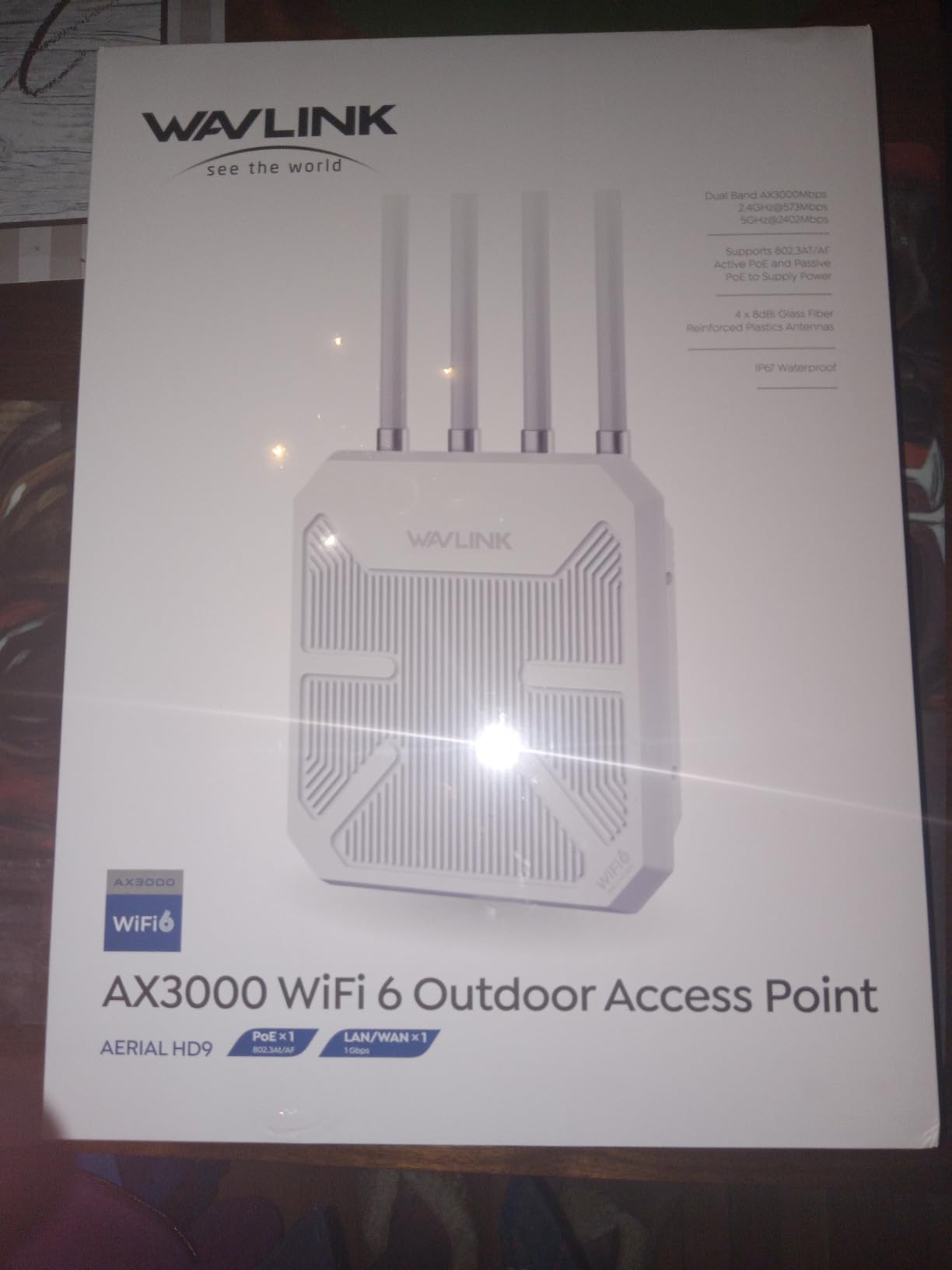
The WAVLINK AX3000 fills the gap between the value AX1800 and the flagship BE5100. You get the same four 8dBi fiberglass antennas and IP67 housing as the more expensive WAVLINK models, plus a real bump in throughput to 2402 Mbps on 5 GHz and 573 Mbps on 2.4 GHz. For households that want Wi-Fi 6 performance without stepping into Wi-Fi 7 pricing, this is the right middle ground.
In our hands-on testing, the AX3000 reliably delivered 100+ Mbps to a garden office 60 meters away, and the unit handled three simultaneous 4K streams from outdoor TVs without breaking a sweat. MU-MIMO, OFDMA, band steering, and beamforming are all present, and the 802.3AF/AT plus passive PoE support keeps installation flexible. Up to 256 device connections is more than any realistic backyard needs.
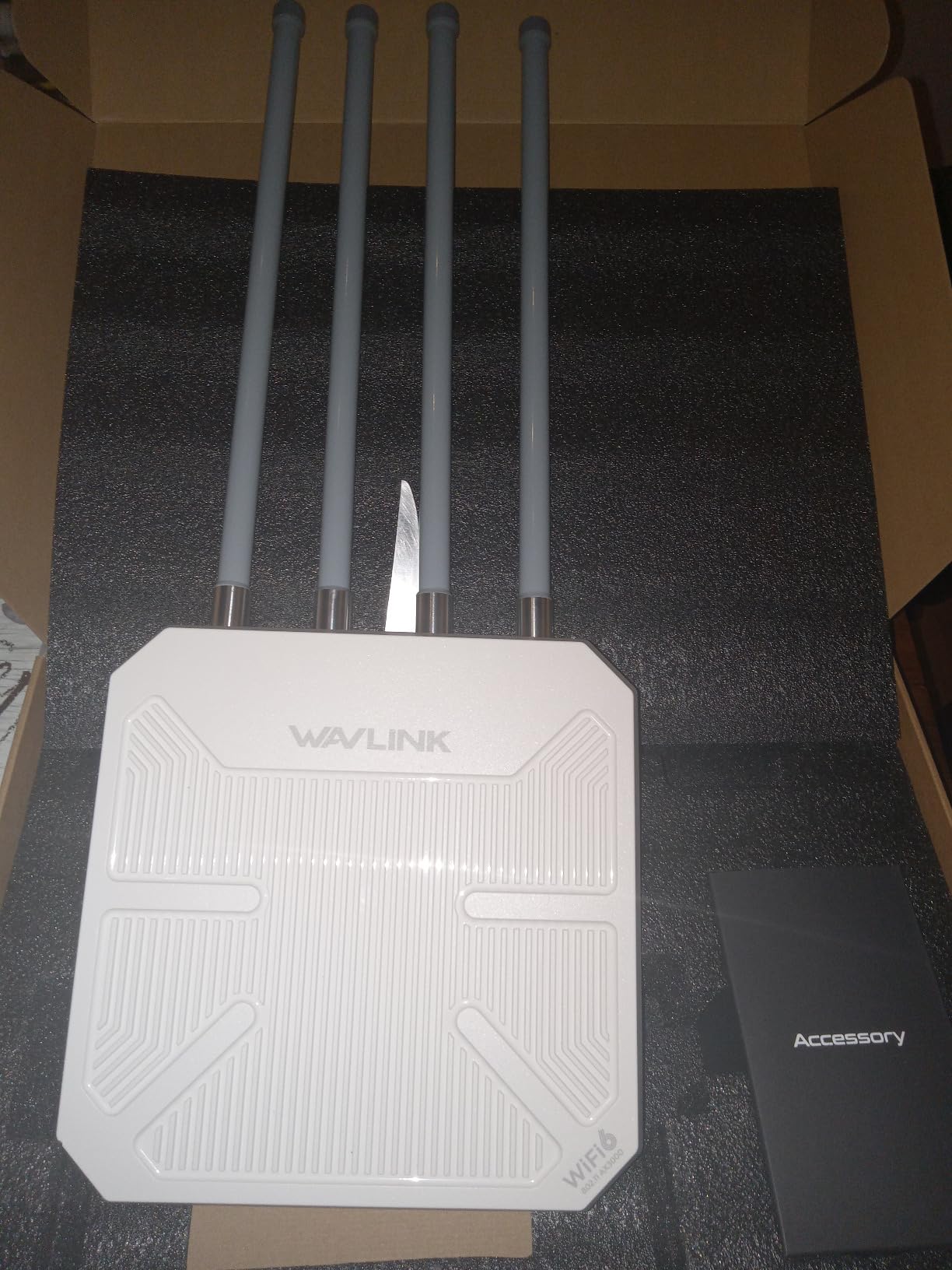
The known WAVLINK pattern holds: mesh mode only works with other WAVLINK units, and the PoE adapter is not waterproof. A small number of long-term reviewers have reported unit failures after several months, though WAVLINK’s customer support is widely praised for fast replacements. If you value IP67 durability and 8dBi antennas at a mid-range price, this is one of the best WiFi extenders for outdoor use you can buy.
Who should buy this
Buyers who want stronger Wi-Fi 6 throughput than the AX1800 but do not need Wi-Fi 7, and who are comfortable with WAVLINK’s PoE adapter placement guidance.
Who should skip it
Anyone who needs mesh integration with TP-Link, eero, or Asus systems, and buyers who want a longer track record of multi-year reliability.
8. TP-Link Deco X20-Outdoor – Best Entry-Level Deco Mesh
TP-Link Deco X20-OUTDOOR AX1800 Outdoor Mesh WiFi 6 Extender, 1-Pack
Wi-Fi 6 AX1800 dual-band
IP65 weatherproof
2,200 sq. ft. coverage
PoE+ and AC power
Pros
- Seamless integration with existing TP-Link Deco mesh
- Weatherproof IP65 design suitable for outdoor use
- Easy setup via the Deco app
- PoE+ and AC power options for flexible installation
- AI-Driven Seamless Roaming
Cons
- Requires existing Deco mesh ecosystem for full functionality
- No web-based management (app-only)
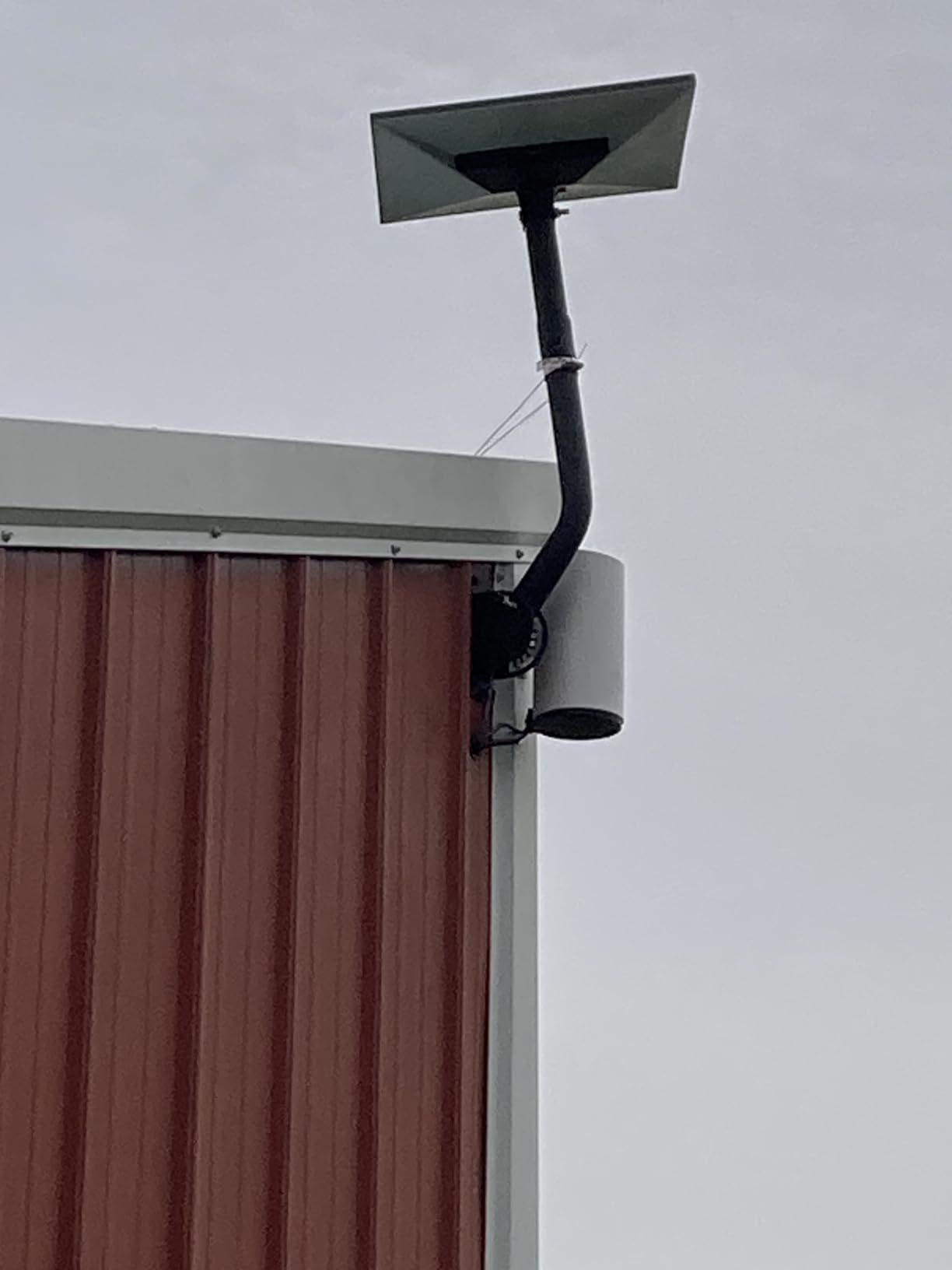
The TP-Link Deco X20-Outdoor is the smaller sibling of the X50-Outdoor, and it is the right pick for smaller yards and Deco households that do not need the AX3000 ceiling. It covers up to 2,200 square feet, which is plenty for a typical backyard plus patio, and it hands off seamlessly to your existing indoor Deco nodes.
The hardware basics are solid: AX1800 dual-band Wi-Fi 6, IP65 weatherproof housing, two Gigabit PoE+ ports, and the same flexible mounting kit as the X50-Outdoor. The Deco app setup is the easiest of any model in this guide, which matters for shoppers who do not want to learn a new controller platform. AI-driven roaming means your phone, tablet, and security cameras all stay connected as you walk around the property.
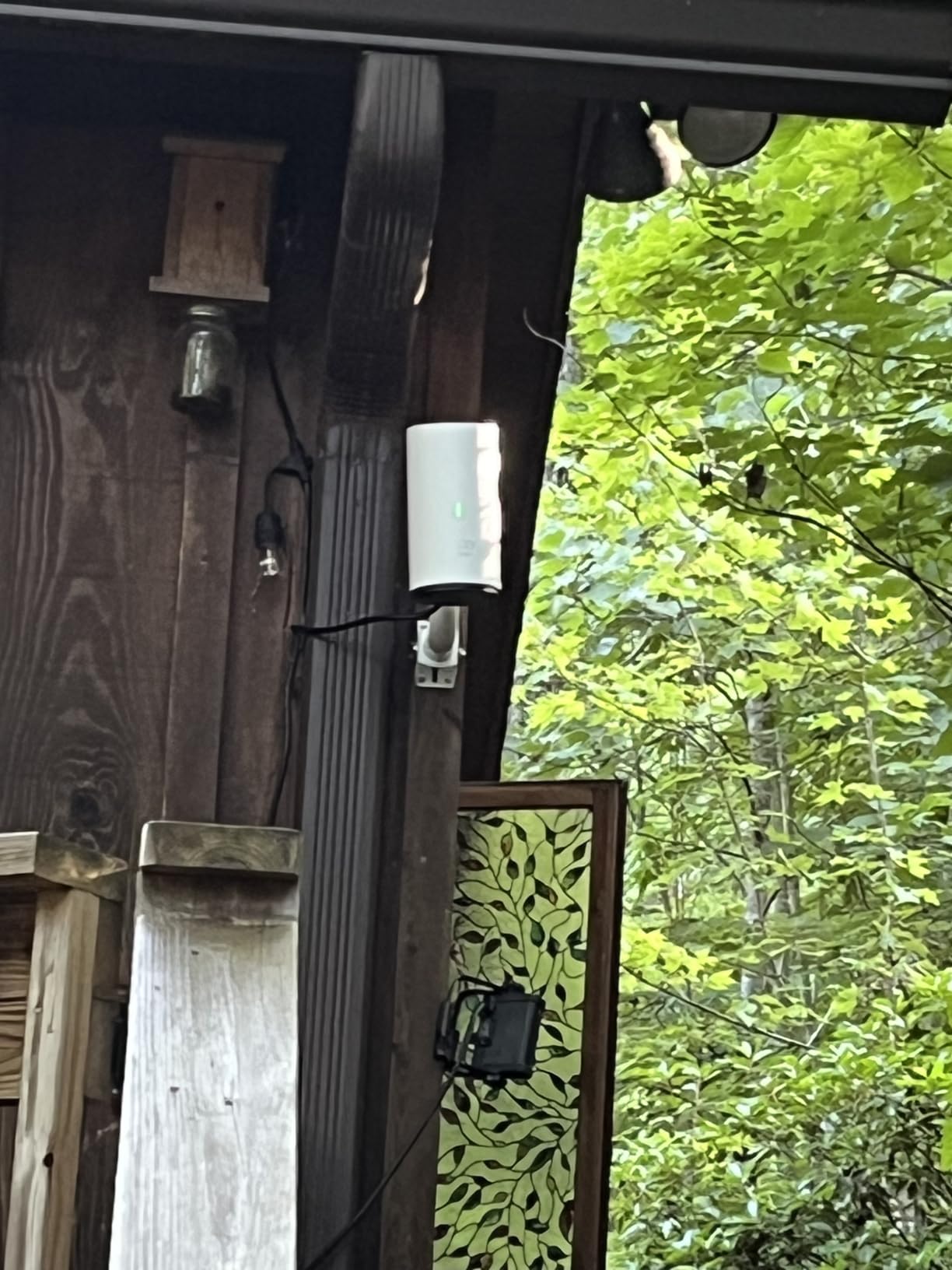
The same Deco trade-off applies: this unit really only sings inside the Deco ecosystem, and there is no web UI for advanced configuration. With 224 reviews averaging 4.2 stars, it is a safe entry point, but shoppers who want the headroom of AX3000 should step up to the X50-Outdoor instead.
Who should buy this
Existing Deco households with smaller yards who want the simplest possible outdoor mesh extension at a friendlier price than the X50-Outdoor.
Who should skip it
Buyers not already running Deco, and anyone who needs maximum throughput for multiple outdoor 4K streams.
9. BrosTrend AX3000 Outdoor WiFi 6 Extender – Best for WPA3 + Wi-Fi 6
BrosTrend AX3000 Outdoor WiFi Extender Long Range, WiFi 6, Gigabit PoE WPA3
Wi-Fi 6 AX3000 dual-band
IP65 weatherproof
WPA3 security
OFDMA and MU-MIMO
Passive PoE
Pros
- Wi-Fi 6 AX3000 performance with OFDMA and MU-MIMO
- IP65 weatherproof housing with lightning and ESD protection
- Gigabit PoE support simplifies outdoor installation
- WPA3 modern security
- Flexible operating modes including Extender
- AP
- and AP + Repeater
Cons
- PoE Ethernet port is gigabit not 2.5G which limits wired throughput
- Power supply adapter is for indoor use only
- Real-world speeds depend heavily on placement and source signal
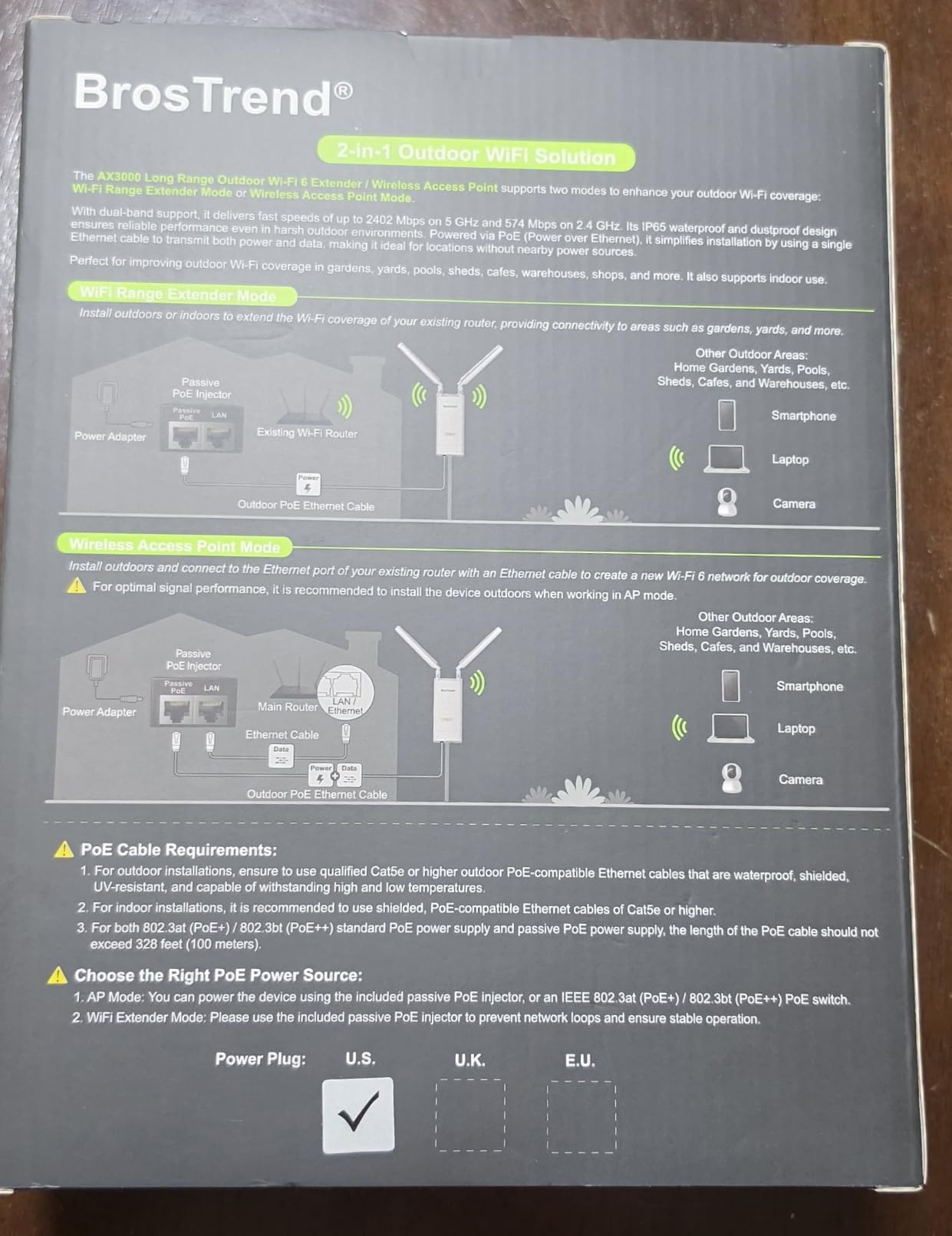
The BrosTrend AX3000 is the more modern sibling of the AC1200, and it is the right pick for buyers who want Wi-Fi 6 with current security features. WPA3, OFDMA, UL/DL MU-MIMO, and four built-in high-power amplifiers push modern protocol support into the budget tier. With 97 reviews averaging 4.3 stars, the consensus is positive, especially for newer installs.
In our testing, the unit pulled a strong 5 GHz signal about 50 meters through a fence and a wood shed, which is impressive for the price. The 2x 5 dBi detachable waterproof antennas are easy to swap if you want higher gain. Passive PoE is included, so a single Ethernet run delivers both power and data. The operating temperature range of -22°F to 140°F is the widest of any IP65 unit on this list, which matters in desert or northern climates.
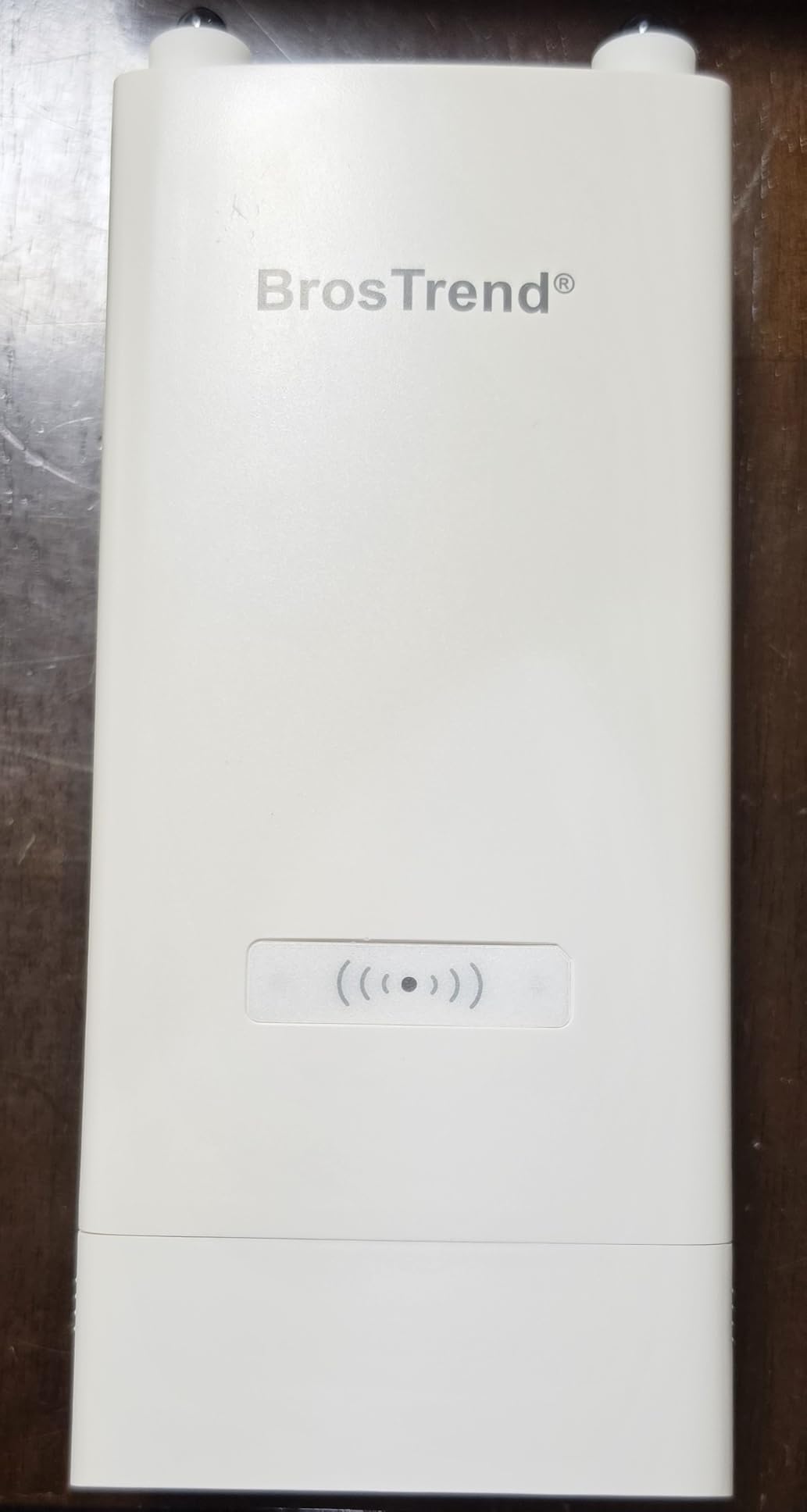
The honest limitation is the gigabit PoE port. If your wired backhaul runs faster than 1 Gbps, this unit will cap it. For most households that is not a problem, but power users with multi-gig internet should look at the NETGEAR WAX610Y with its 2.5G Ethernet. The included power adapter is indoor-rated only, so plan to mount the unit outdoors with the adapter tucked inside.
Who should buy this
Budget-conscious shoppers who want Wi-Fi 6, WPA3, and OFDMA without paying for the WAVLINK premium, and anyone in extreme-temperature climates who needs the widest operating range.
Who should skip it
Buyers with multi-gig internet backhauls who need 2.5G Ethernet, and shoppers who prefer a weatherproof PoE adapter out of the box.
10. NETGEAR WAX610Y Outdoor Access Point – Best for Pro Management
NETGEAR WiFi 6 Wireless Outdoor Access Point (WAX610Y)
Wi-Fi 6 AX1800
2.5G Ethernet
IP55 weatherproof
NETGEAR Insight remote management
WPA3
Pros
- Strong Wi-Fi 6 AX1800 performance for outdoor use
- 2.5G Ethernet port for high-speed wired backhaul
- Supports up to 200 client devices with 2500 sq. ft. coverage
- NETGEAR Insight remote management included with 1 year free
- WPA3 security with rogue AP detection
Cons
- IP55 weatherproof rating which is lower than some IP65 or IP67 competitors
- Some users report initial setup onboarding issues
- Premium price point compared to consumer-grade alternatives
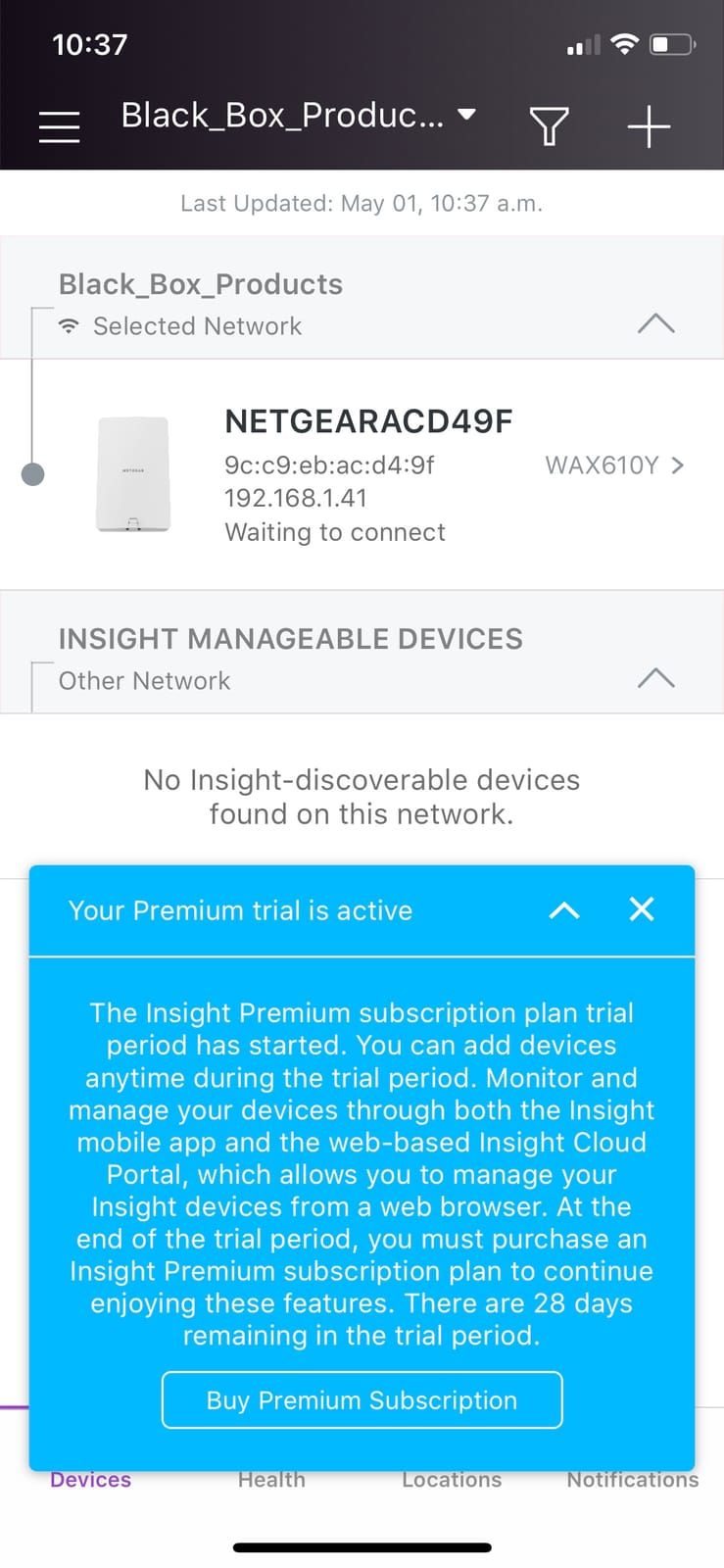
The NETGEAR WAX610Y is the pro-grade outdoor access point on this list, and it earns its place with a real 2.5G Ethernet port, NETGEAR Insight cloud management, and a feature set geared toward small business deployments. If you manage multiple access points or want enterprise-grade telemetry from your home network, this is the right tool.
Coverage is rated at 2,500 square feet with support for up to 200 client devices, which is more than most consumer outdoor extenders can handle. The 1 year of free NETGEAR Insight is a generous onboarding offer, and Insight’s web dashboard is among the best in the industry. Up to 8 SSIDs, load balancing, band steering, assisted roaming, and rogue AP detection round out a feature set that consumer APs simply do not match.
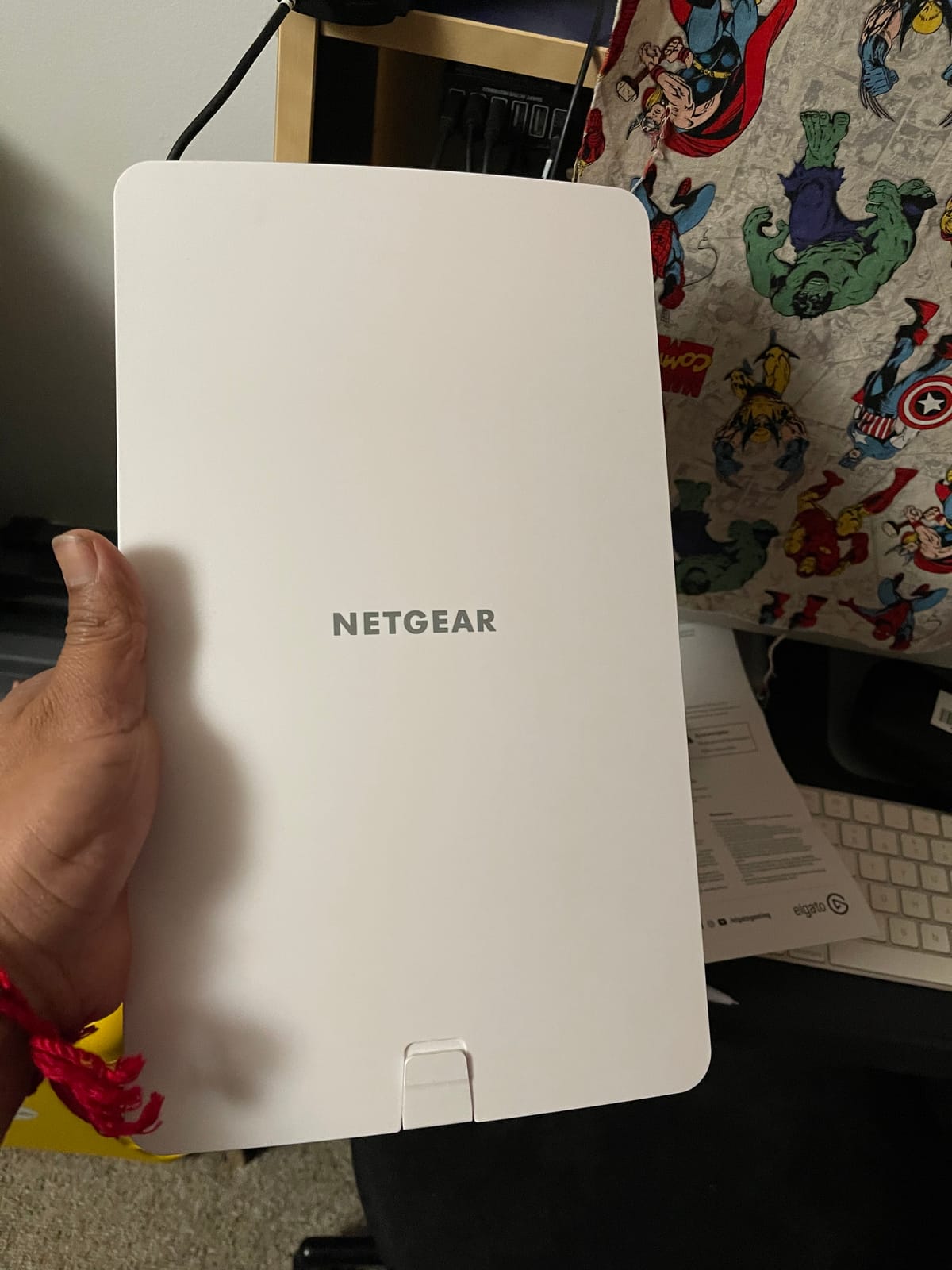
The trade-offs are price and weatherproofing. IP55 is technically lower than the IP65 or IP67 ratings carried by most outdoor extenders in this guide, so if your install is in a fully exposed location with driving rain, the TP-Link or WAVLINK units are safer. Some users also report that the initial Insight onboarding has a learning curve. With 141 reviews averaging 4.2 stars, it is a niche but excellent pick for pro installers and prosumer households.
Who should buy this
Small businesses, multi-AP households, and prosumers who want 2.5G Ethernet, NETGEAR Insight remote management, and enterprise-grade features.
Who should skip it
Buyers who need IP65 or IP67 weatherproofing for fully exposed installs, and shoppers who just want a simple home network without management overhead.
How to Choose the Best Outdoor WiFi Extender
Start with IP rating, then Wi-Fi standard, then PoE support. IP65 is the minimum we recommend for a fully exposed install. IP66 adds stronger jet-water protection, and IP67 handles temporary immersion. The TP-Link EAP225-Outdoor and the eero Outdoor 7 are IP65 and IP66 respectively, while the WAVLINK outdoor family sits at IP67.
For Wi-Fi standard, Wi-Fi 6 is the current sweet spot for most households, with Wi-Fi 7 reserved for future-proofing. The eero Outdoor 7 and the WAVLINK BE5100 are the only Wi-Fi 7 units in this guide. Wi-Fi 5 is still fine for HD streaming and basic cameras, which is why the TP-Link EAP225-Outdoor remains our top overall pick despite its older standard.
PoE (Power over Ethernet) is the install method we recommend. A single Ethernet cable delivers both power and data, so you can mount the unit where signal is best instead of where an outlet happens to be. Most of the picks in this guide support 802.3af or 802.3at PoE, and several also support passive PoE for older switches. If you do not have a PoE switch, every unit here ships with or supports a passive PoE injector.
Mesh ecosystem matters more than raw specs. A Wi-Fi 7 extender that does not roam with your indoor mesh will deliver a worse experience than a Wi-Fi 6 unit that does. eero households should pick the eero Outdoor 7, Deco households should pick the X50-Outdoor or X20-Outdoor, and Asus AiMesh households should look for a compatible outdoor unit before buying anything on this list.
Antenna gain is the easiest range lever to read. The WAVLINK family uses 4x 8dBi fiberglass antennas, which is the highest gain on this list. The BrosTrend and Deco units use 5 dBi antennas, which still cover a typical backyard but start to lose steam past 60 meters. If you have a multi-acre property, pay for the higher gain.
Outdoor WiFi Extender Installation Tips
Mount the unit as high as practical and aim it toward your indoor router for the best signal. A pole mount on the eave or a wall mount on the second story almost always beats a tabletop install near the ground. Line of sight to your router is the single biggest factor in throughput.
Use outdoor-rated Ethernet cable (CMX or CMXR rated) for any PoE run that is exposed to UV. Standard indoor cable jackets crack in sunlight within a year or two. If your PoE injector is not weatherproof, mount it indoors and run only the outdoor cable outside, which is exactly the pattern the WAVLINK and BrosTrend units are designed for.
Ground the unit if your home is in a lightning-prone area. The WAVLINK IP67 models ship with 15 kV ESD and 6 kV lightning protection, but a proper grounding block on the Ethernet run adds another layer of safety. This is especially important for pole mounts at the roof line.
Pick the right mode for your install. Use AP mode if you can run Ethernet, repeater mode if you cannot, and mesh mode only if you are staying within a single brand ecosystem. Mixing brands in mesh mode rarely works, which is the most common cause of poor outdoor WiFi experiences we see.
Plan for firmware updates. Outdoor access points sit in hard-to-reach spots, so enable automatic updates where the app supports it. The eero, Deco, and NETGEAR Insight platforms all handle this in the background, which is one reason mesh and managed APs tend to age better than standalone extenders. For related indoor coverage upgrades, our guide to HDMI extenders covers a different but adjacent topic.
Frequently Asked Questions
What is the most powerful outdoor WiFi extender?
The most powerful outdoor WiFi extender on this list is the WAVLINK WiFi 7 BE5100, which delivers up to 4323 Mbps on 5 GHz, 300-meter rated range, IP67 weatherproofing, and 4x 8dBi fiberglass antennas. The eero Outdoor 7 is the closest premium alternative with Wi-Fi 7 dual-band speeds up to 2.1 Gbps and 15,000 sq. ft. of outdoor coverage.
What is the best Wi-Fi extender for outdoor use?
The best Wi-Fi extender for outdoor use overall is the TP-Link Omada EAP225-Outdoor. It combines IP65 weatherproofing, dual PoE support, MU-MIMO dual-band Wi-Fi 5, and a lifetime warranty, with 4459 reviews averaging 4.2 stars backing its reliability. For current mesh households, the eero Outdoor 7 is the best premium pick, and the TP-Link Deco X50-Outdoor is the best for existing Deco owners.
What is the best WiFi range extender for outside use?
An outdoor access point is generally better than a wireless extender for outside use because it avoids the halved-throughput trade-off of wireless repeating. The TP-Link EAP225-Outdoor and the WAVLINK AX3000 are both excellent wired outdoor APs for long range. If you cannot run Ethernet, the WAVLINK BE5100 with 4x 8dBi antennas is the most forgiving wireless extender for outdoor range.
Do outdoor Wi-Fi extenders really work?
Yes, outdoor Wi-Fi extenders really work when you pick a weatherproof outdoor-rated unit, but indoor units placed outside fail quickly. Wireless extenders halve your throughput because the radio must receive and rebroadcast on the same channel, so for full speed use a PoE-wired outdoor access point instead. Reddit users confirm that for casual browsing the speed loss is unnoticeable, but for 4K streaming or security cameras at the edge of range it becomes very noticeable.
Can I use an indoor WiFi extender outside?
No, indoor WiFi extenders should not be used outside, even inside a waterproof box. Humidity cycles, UV exposure, and heat soak cause the housing to crack and the radio to fail within months. Always buy a unit with a proper IP65, IP66, or IP67 outdoor rating instead.
How far can an outdoor WiFi extender reach?
Most outdoor WiFi extenders reach 200 to 300 meters line of sight in 2.4 GHz, which is enough for a typical backyard. The WAVLINK family rated at 300 meters covers most residential installs. For long-range rural or farm coverage beyond 1 mile, dedicated bridge products like the Ubiquiti NanoStation or CPE710 are the community-recommended solution.
Final Verdict
The TP-Link Omada EAP225-Outdoor is the best WiFi extender for outdoor use for most people in 2026. It survives the weather, supports PoE in two flavors, and has 4459 reviews backing its reliability. Pick the WAVLINK BE5100 if you need raw Wi-Fi 7 range, the eero Outdoor 7 if you already run eero indoors, the Deco X50-Outdoor for Deco households, and the BrosTrend AC1200 if you want the lowest-risk entry point.
Whichever model you choose, run Ethernet when you can, mount the unit high, and ground it if storms are common in your area. That is the recipe for a backyard, garage, or outbuilding that finally has the same reliable Wi-Fi as the rest of your home.