
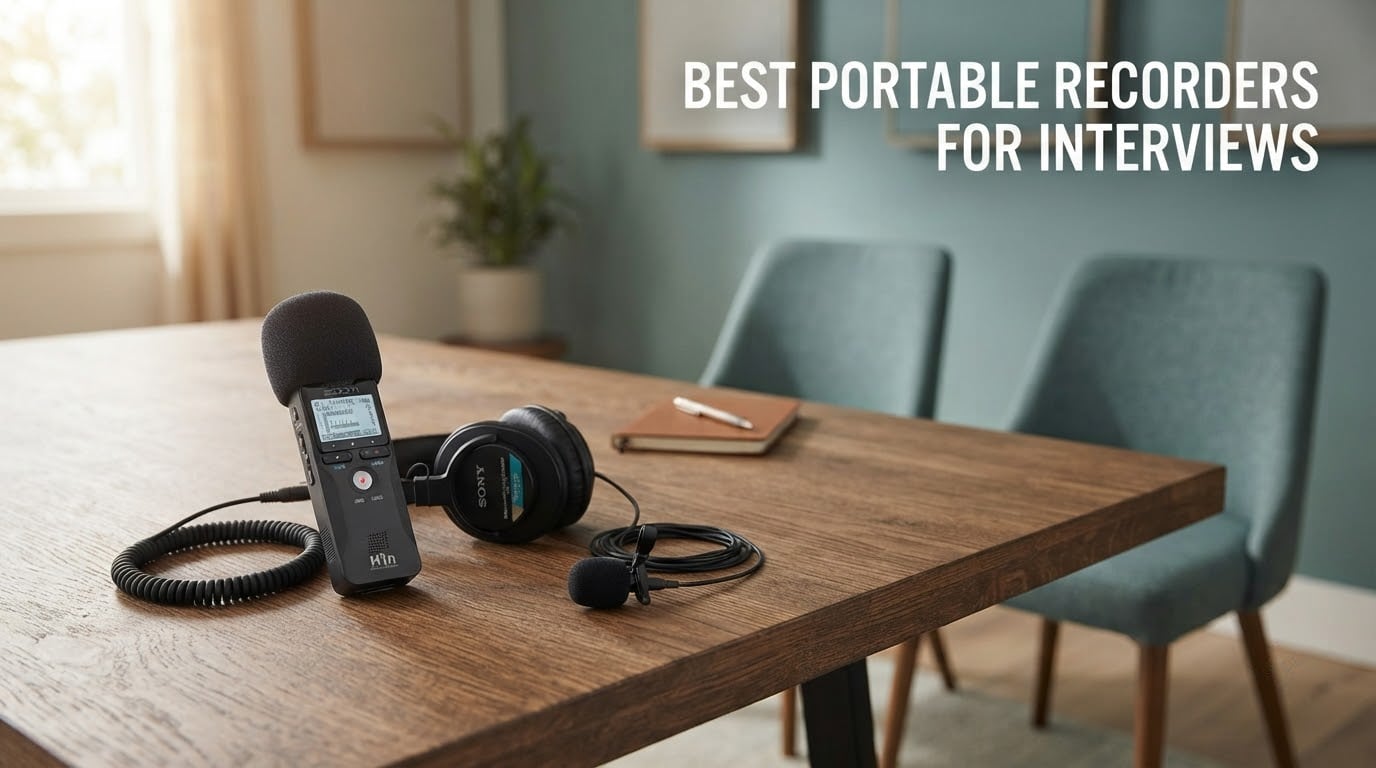
An interview is the one recording you cannot ask for a second take. The subject said the thing once, in that particular order, with that particular pause before the number, and if the audio is clipped, unintelligible or lost, the quote is gone for good. That is why picking a portable audio recorder for interviews is not a spec-sheet exercise. It is a decision about how much of your attention you can take off the conversation.
We have been through this category end to end, comparing the units that actually turn up in real interview workflows: pocket dictation recorders, 32-bit float handhelds, two- and four-input recorders for multi-guest conversations, plug-on XLR recorders for street work, and one transcription-first device. The split that matters most is simple. One speaker on a quiet sofa is a completely different job from three people around a table in a room with a fan running.
Short answer: the Zoom PodTrak P4 is the best portable recorder for interviews because four XLR inputs, four independent headphone outputs and automatic mix-minus let you record a two-person, three-person or remote interview in a single pass with a mic per person. If you only ever record one quiet speaker, the Zoom H5 is the more conventional choice, and if you are on a tight budget the Tascam DR-05XP covers 32-bit float without a card in the box.
Two quick notes before the list. First, prices and bundle contents on this category change constantly, so treat every feature note here as a description of the model and check the current listing before you commit. Second, we lean heavily on placement advice below, because a great recorder badly placed loses to a modest recorder placed well.
Before the individual reviews, it is worth checking our other picks in the same family: our roundup of the best voice recorders covers the dictation end of the market in more depth, and if you already own a recorder but suspect the microphone is the weak link, our guide to the best lavalier microphones for interviews is the next thing to read.
Table of Contents
Top 3 Picks for Portable Recorders for Interviews (October 2026)

Zoom PodTrak P4
- 4 XLR inputs with phantom power
- 4 headphone outputs
- Automatic mix-minus for phone interviews

Sony ICD-PX470
- Built-in direct USB plug
- Up to 55 hours battery life
- microSD card expansion
The P4 wins because interviews are the one recording job where you routinely need more microphones than people assume. Two hosts, two lavs, and a guest joining by phone is a normal setup, and the P4 handles it in one box with mix-minus doing the return-feed math for you. The H5 is the pick if you want four tracks recorded while keeping the handheld simplicity, and the Sony ICD-PX470 is the pick if you want zero cables, zero menu learning and a battery that will not quit halfway through.
Best Portable Recorders for Interviews Compared (October 2026)
Everything below is organised by what it does for an interview, not by release date. The Key Features column tells you the single most important thing to know before you buy.
| Product | Specifications | Action |
|---|---|---|
| Zoom PodTrak P4 |
|
Check Latest Price |
| Zoom H5 |
|
Check Latest Price |
 Zoom F3 Zoom F3 |
|
Check Latest Price |
| Sony ICD-PX470 |
|
Check Latest Price |
 Olympus VN-7200 Olympus VN-7200 |
|
Check Latest Price |
 OM System WS-882 OM System WS-882 |
|
Check Latest Price |
 Tascam DR-70D Tascam DR-70D |
|
Check Latest Price |
 Tascam DR-05XP Tascam DR-05XP |
|
Check Latest Price |
 Tascam DR-10X Tascam DR-10X |
|
Check Latest Price |
 Philips VoiceTracer DVT4115 Philips VoiceTracer DVT4115 |
|
Check Latest Price |
 Xvive XV1-R Xvive XV1-R |
|
Check Latest Price |
 OM System WS-883 OM System WS-883 |
|
Check Latest Price |
1. Zoom PodTrak P4: Best Portable Recorder for Multi-Guest Interviews
Zoom PodTrak P4 Podcast Recorder with 4 XLR Mic Inputs, 4 Headphone Outputs, Phone & USB Input for Remote Interviews, Sound Pads, 2-In/2-Out USB Audio Interface, Battery Powered
4 XLR inputs
4 headphone outputs
Sound pads
Automatic mix-minus
Pros
- Four XLR inputs and four independently controlled headphone outputs in one compact unit
- Automatic mix-minus makes phone and remote call-in interviews simple
- Generous preamp gain handles dynamic mics without extra gear
- Very intuitive layout that works without reading a manual
Cons
- Limited onboard processing with only a low-cut filter and limiter
- Records 16-bit/44.1kHz WAV only
- USB audio interface mode does not pass audio to the computer
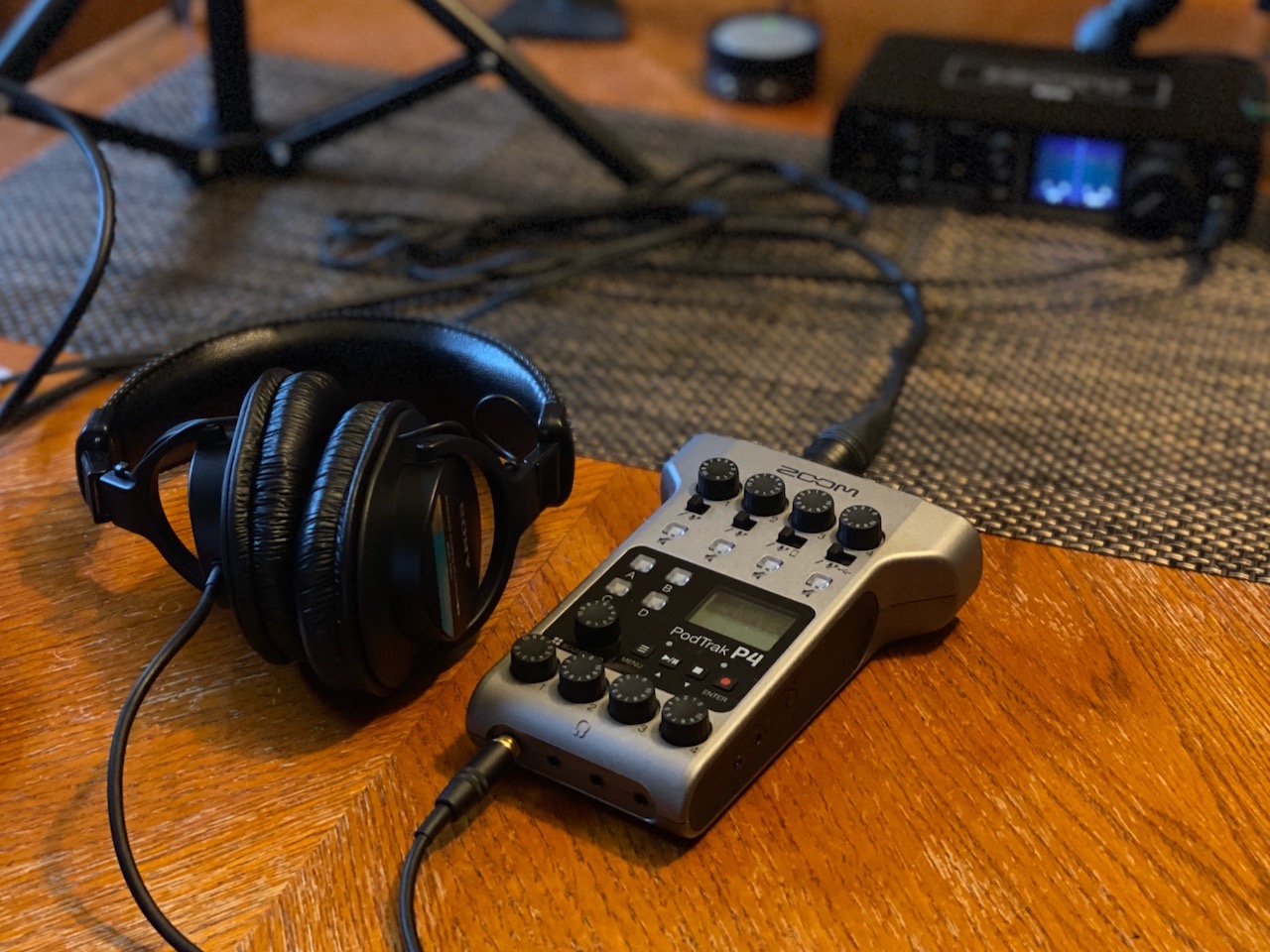
The P4 is the recorder we hand to people running a two-person interview with a guest on a call. It is a small box with four real XLR inputs, phantom power on each, and four headphone outputs with their own volume knobs, so the interviewer and the guest can each have a personal monitor level without fighting over one pair of cans.
We used it for a three-hour conversation with a host, a guest in the same room and a second guest dialling in on speakerphone. Automatic mix-minus handled the call-in return feed, so the remote guest did not hear their own voice echoing back. Reviewers describe the same experience: owners consistently point to the four inputs plus four headphone outs as the reason this is the highest-value multi-mic interview box in its class.
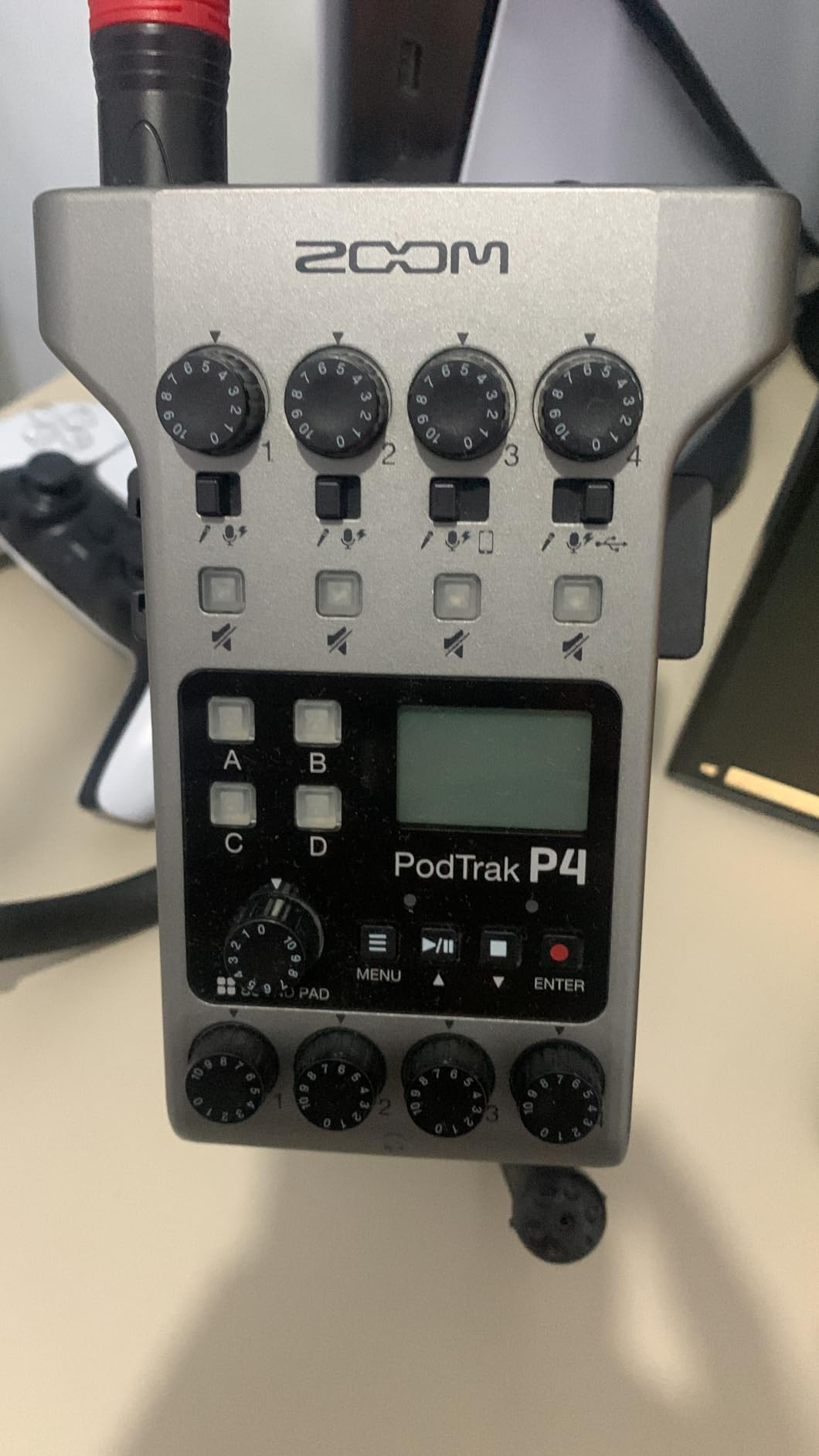
The gain stage is more capable than the price suggests. We ran a pair of standard dynamic handheld mics with no extra inline booster and had plenty of clean level, which is a common complaint on cheaper four-input recorders. The four Sound Pads are genuinely useful for interviews with a sponsor read or a sting at the top, because they record to their own track instead of bleeding into the conversation.
What you give up is processing. There is a low-cut filter and a limiter, and that is the whole effects list, so no compressor and no EQ. The record format is fixed at 16-bit/44.1kHz WAV, which is fine for speech and short of the resolution some clients expect from a documentary budget. The USB audio interface mode also does not feed the computer, so files have to be recorded to the card and imported afterward.
Who the PodTrak P4 suits
It suits the person whose interview is really a small production. A podcast with a host and two remote or in-room guests, a video shoot where you want a scratch dialogue track, a roundtable with three voices. Anyone who has tried to run that on a two-input recorder knows the workaround: bounce down, or accept a bleed that ruins the edit.
It also suits a beginner, because the layout is close to self-explanatory. Four gain knobs, four headphone knobs, four record buttons. Reviewers repeatedly describe the interface as something you can hand to a colleague with no training.
Where the PodTrak P4 disappoints
It disappoints the person who wants broadcast-grade headroom. Sixteen-bit capture is the one number that would make a spec-conscious buyer walk away, even though for clean spoken-word recording in a controlled room it makes no practical difference to the finished edit.
It also disappoints anyone planning to record straight into a computer through USB, and reviewers flag the light plastic build and small controls as the other recurring gripes. Battery life is around three and a half hours on two AA cells, so a long session needs fresh cells.
2. Zoom H5: Best Handheld Recorder for Two-Person Interviews
Zoom H5 4-Track Handheld Recorder for Filmmakers & Musicians
4-track recording
Interchangeable capsules
2 XLR/TRS inputs
115 g
Pros
- Interchangeable mic capsules adapt the recorder to different rooms and sources
- Four-track simultaneous capture with XLR/TRS combo inputs and phantom power
- Compact enough to fit in a bag for on-location interviews
- Works as a multichannel USB audio interface
Cons
- Only two mic inputs
- so multi-guest interviews hit a ceiling quickly
- Small monochrome display is less readable than newer recorders
- Records to 32GB SD cards maximum
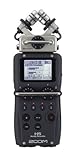
The H5 is the one that has been in the bags of documentary crews and freelance journalists for years, and the reason is the capsule system. You can pull the stereo pair off and put a different capsule on, which is how you go from a two-person sit-down to a shotgun pointed at a subject across a room without changing recorders.
For a standard interview this is a very capable machine. It records four tracks at once, two through the XLR/TRS combo inputs and two through whatever capsule is attached, and it works as a multichannel USB interface into a computer. Long-term owners on audio forums point to the capsule system plus four-track capture as the reason they never moved on, and that is the same design idea that keeps classic field recorders in circulation.
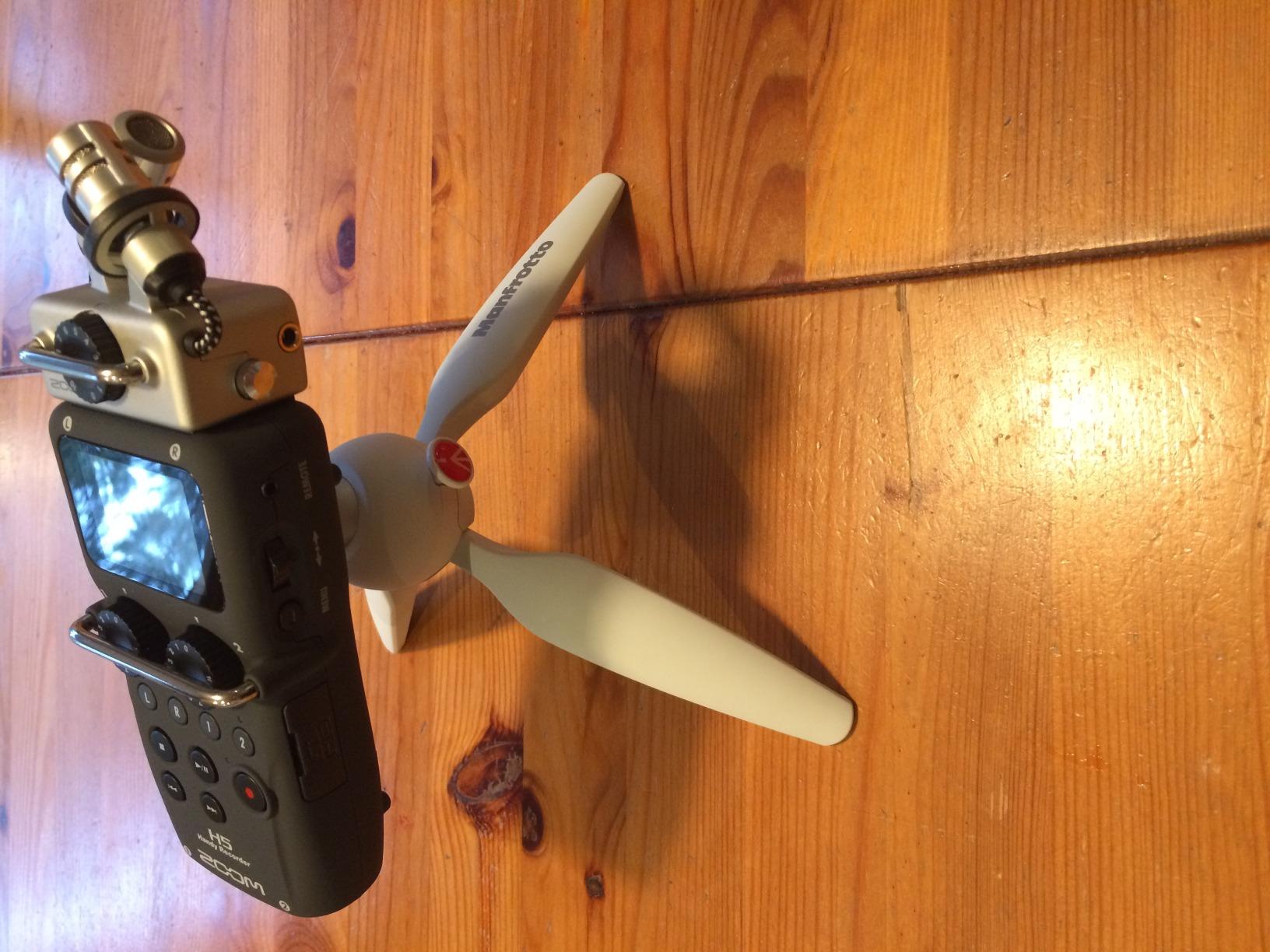
It also has a pad switch and selectable phantom power on the combo inputs, which means you can run a condenser lav on channel one and a dynamic handheld on channel two with no surprises. Weights of about 115 g mean it disappears into a jacket pocket, which matters when the recording device is supposed to be invisible.
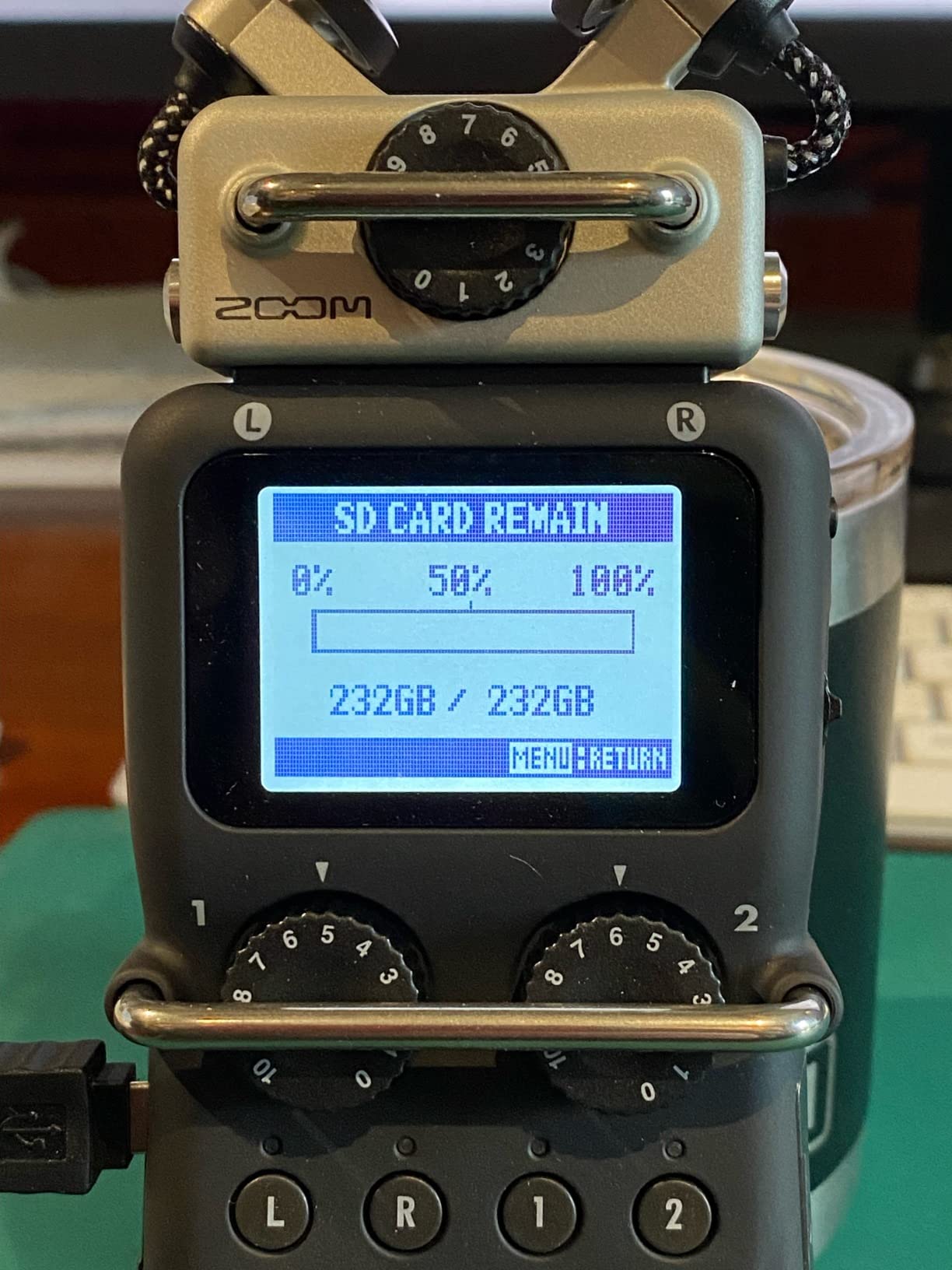
The ceilings are real, though. Two mic inputs is two mic inputs, so a three-person interview needs a different plan. Card support stops at 32GB, which sounds modest but covers a great many hours of speech before you need to offload. The display is small and monochrome, and reading levels on it in a dim cafe takes more attention than it should.
Who the Zoom H5 suits
It suits the working journalist who moves between locations. One recorder that can do stereo ambience for a scene-setting clip and isolated tracks for the actual interview, without a bag full of adapters. Reviewers describe it as a longtime favorite for documentary and interview work for exactly that reason.
It also suits anyone who will record for video. With the loopback-capable USB interface, the H5 doubles as a two-input audio interface for camera or computer work, and the four-track recorder can sit in the bag as a safety capture.
Where the Zoom H5 disappoints
It disappoints a producer who needs a mic per person in a group conversation. The two-input ceiling is the single most cited limitation among owners, and it is the reason the P4 takes the top spot here rather than the H5.
It also disappoints anyone who likes reading a screen at a glance, and anyone who plans to record a full day of long-form without swapping cards. For oral history and archival work, the storage ceiling is the constraint to plan around.
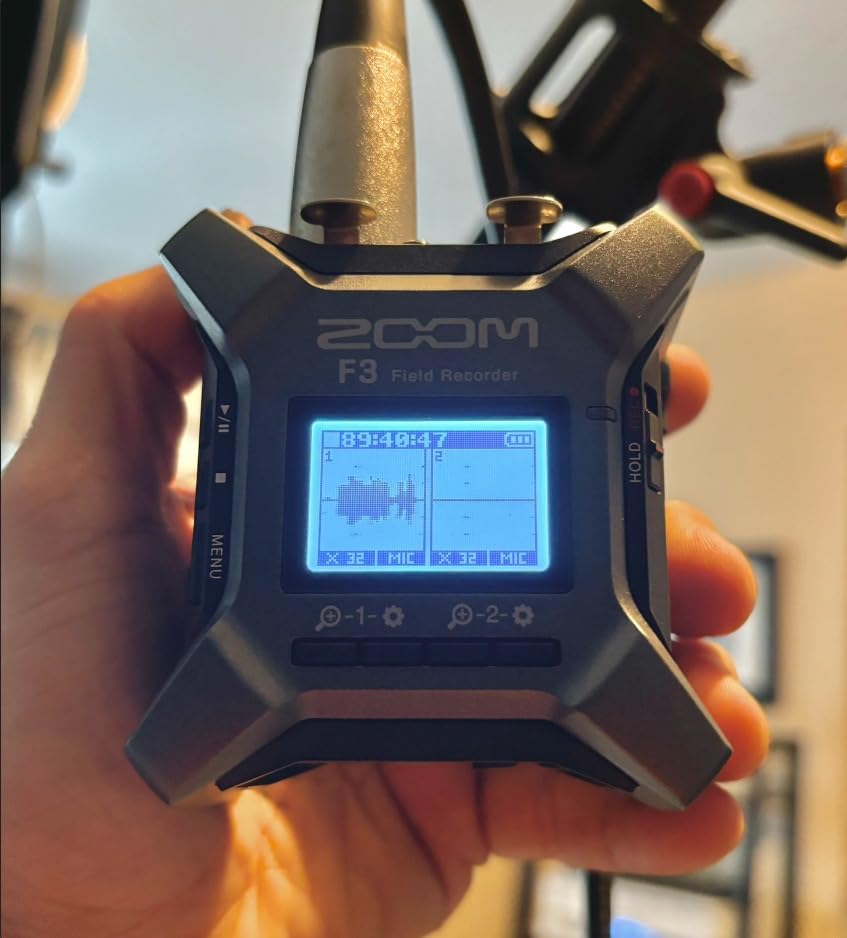
3. Zoom F3: Best 32-Bit Float Recorder for Fixed Setups
Zoom F3 Professional Field Recorder for Filmmakers & Musicians
32-bit float
2 locking XLR inputs
Ultra-low-noise preamps
8.48 oz
Pros
- 32-bit float removes the need to monitor or set gain during an interview
- Ultra-low-noise preamps deliver clean recordings
- Compact cube mounts on a cold shoe or mic stand arm
- Locking XLR inputs stay secure when mounted out of reach
Cons
- No built-in microphones or interchangeable capsule
- No 3.5mm input without an adapter
- Only two inputs
- Limited phantom power of about 10mA combined
The F3 is the recorder you mount once and then stop thinking about. It has no built-in microphones at all, only two locking XLR/TRS inputs, and it records 32-bit float through dual converters, which means the gain setting stops being a decision you have to make while someone is talking.
Forum consensus is consistent on why people reach for 32-bit float: it is not a sonic upgrade in a quiet room, it is the removal of the clipping panic. A subject who suddenly raises their voice or laughs is exactly the moment a conventional recorder clips, and a 32-bit float file gives you that moment back in the edit. Owners of the F3 describe it as a set-and-forget interview and field machine for precisely that reason.
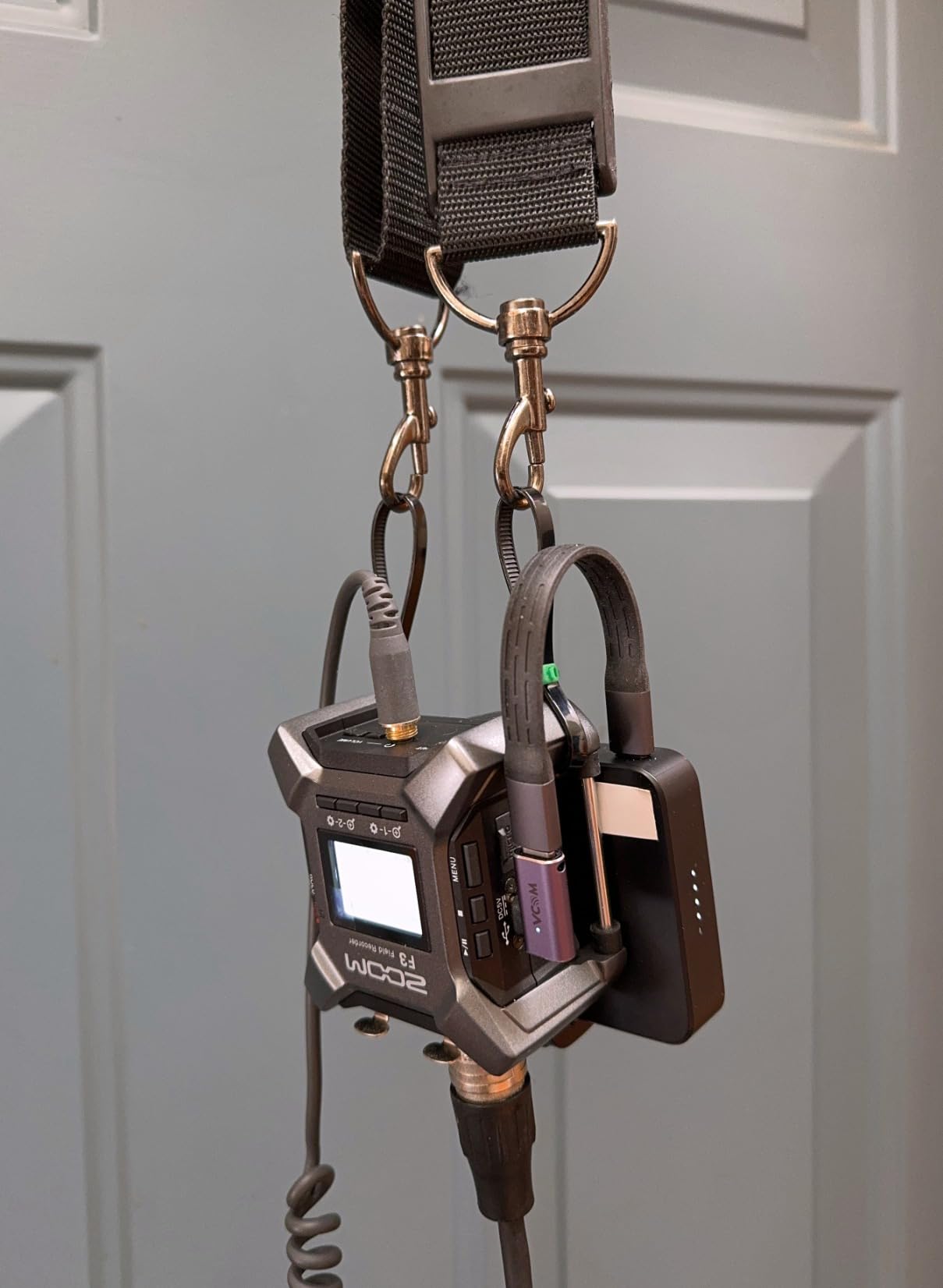
The preamps are quiet, and reviewers put that above feature lists. Storage is generous at up to 512GB, and the cube shape is small enough to bolt under a camera or hang from a mic stand arm.
There are no onboard mics, so this is not the recorder to grab for a spontaneous hallway conversation. The memory card door is a small reported irritation because it can pop open if brushed, and phantom power is limited to roughly 10mA across both channels, so it will not drive a power-hungry condenser without an external supply.
Who the Zoom F3 suits
It suits the person recording in a fixed, known setup who wants to walk into the room, set levels once, and never touch the recorder again. A tabletop interview where the recorder is mounted on a stand near both speakers. A stage or panel session where the audio is unattended for an hour.
It also suits anyone who already owns decent microphones and wants a recorder that respects them. Locking connectors and low-noise preamps mean a good lav or a broadcast mic lands in a clean file rather than a compromised one.
Where the Zoom F3 disappoints
It disappoints anyone who does not already own microphones. The all-in cost of recorder plus two good mics is well beyond the simple handheld options, and for a single quiet interview it is buying capability you will not use.
It also disappoints the multi-guest case, since two inputs cannot cover a three-way conversation. If your interviews are panel-shaped, look at a four-input recorder instead.
4. Sony ICD-PX470: Best Recorder for Simple One-on-One Dictation
Sony ICD-PX470 Stereo Digital Voice Recorder with Built-in USB Voice Recorder, Black
55 hours battery
Built-in USB plug
microSD expansion
Stereo mics
Pros
- Built-in USB connector makes file transfer to a computer fast
- Adjustable mic range and auto noise reduction capture voices clearly
- Long battery life supports multi-hour interview sessions
- Stereo recording with expandable memory via microSD
Cons
- No XLR or professional mic input
- MP3-only recording at consumer sample rates
- Small 1-inch display is hard to read when working through the menu
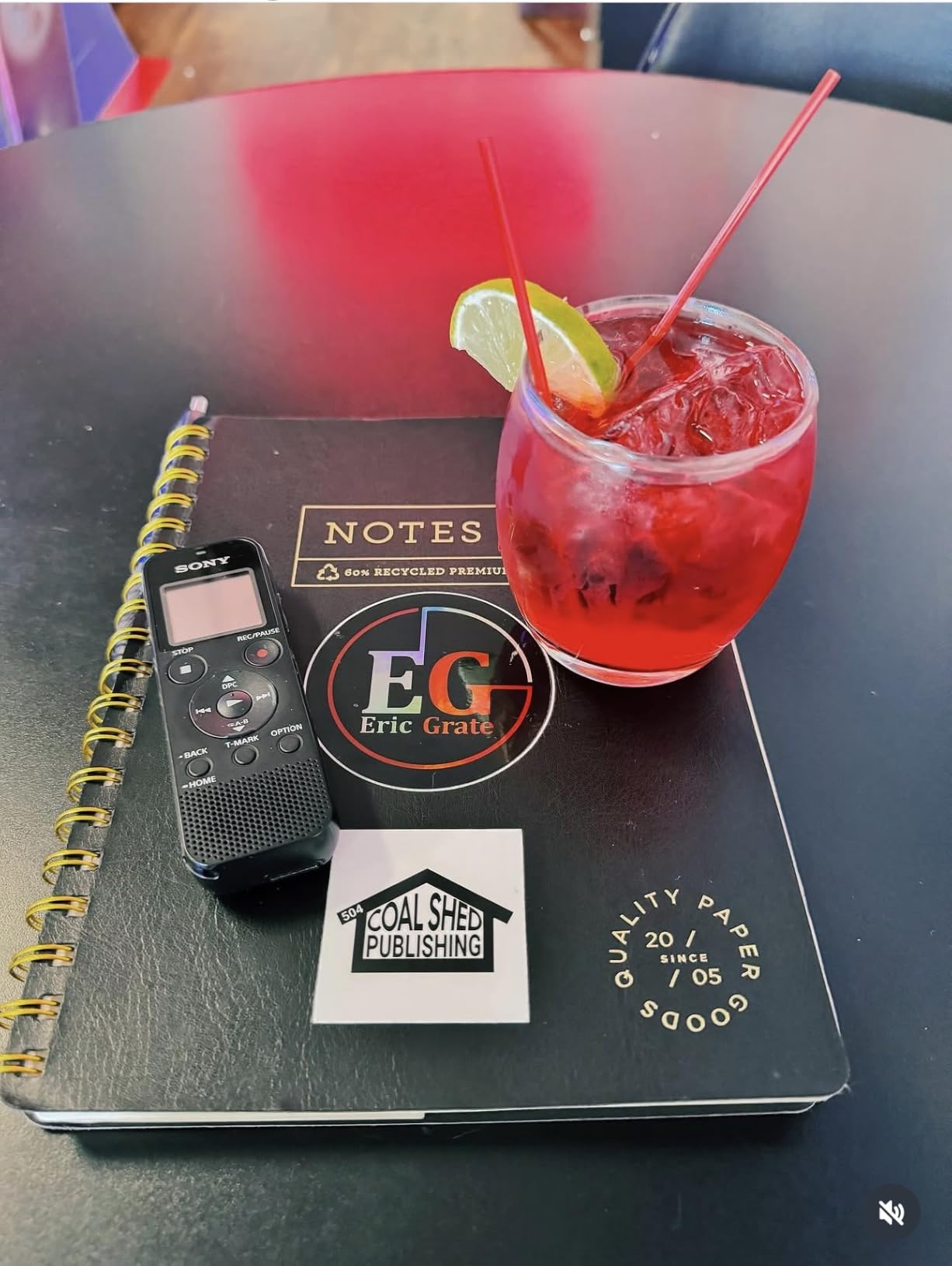
This is the recorder we recommend when the interview is one person, in a quiet room, and the priority is that it keeps working. Fifty-five hours of stated battery life means you can put it in a bag on Monday and forget it, which removes a category of failure that has nothing to do with audio quality.
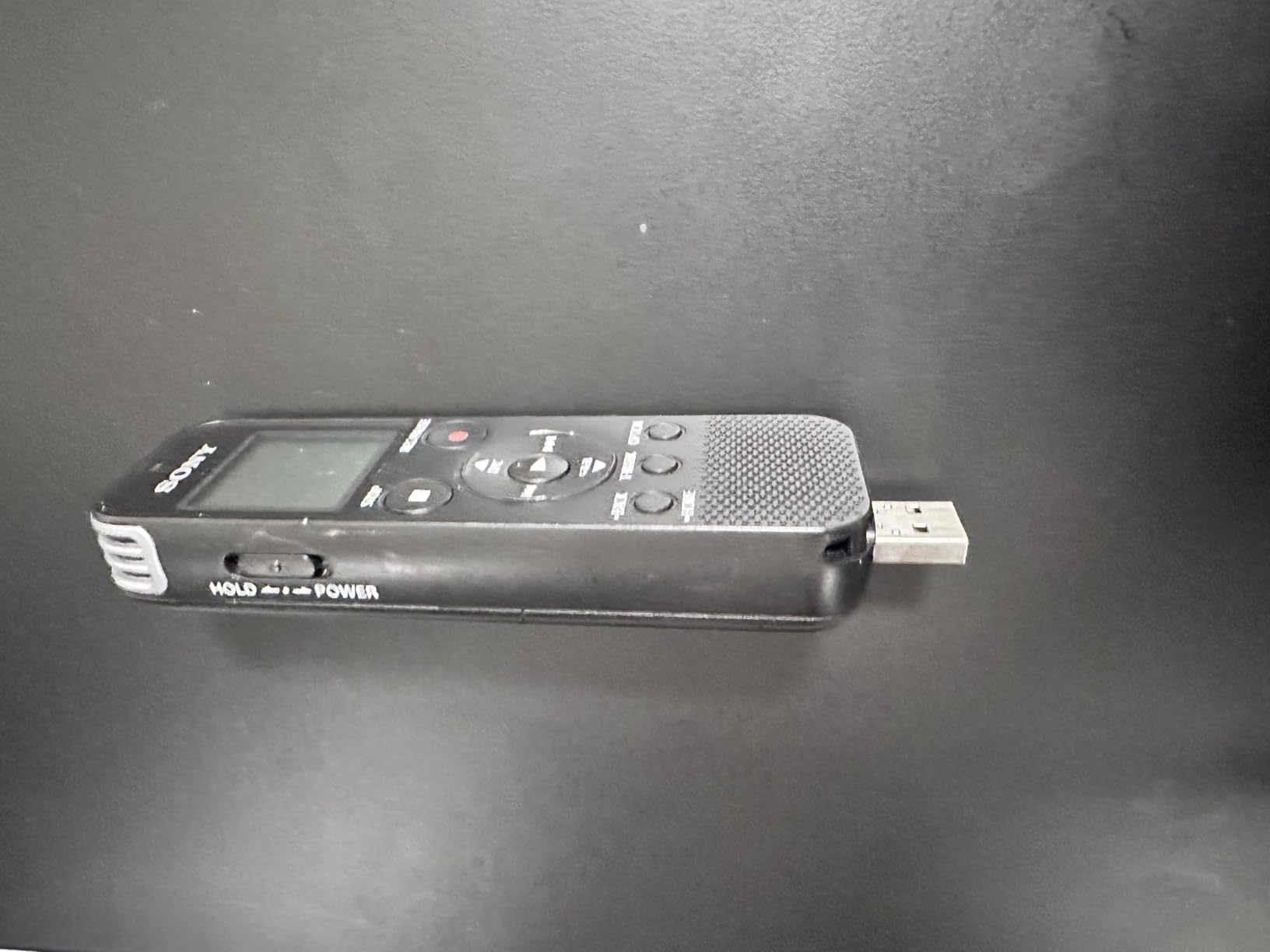
The retractable USB connector is the quietly brilliant part. No card reader, no cable hunt, no charge-only cable problem, just plug it into a laptop and the files appear. For user research sessions or market interviews where you are recording several a day and transcribing in between, that friction saving adds up fast.
The adjustable microphone range setting is the feature to understand. Narrowing it rejects some of the room rather than reaching for far voices, which helps in an office with a corridor outside the door. Auto voice recording handles steady ambient noise, and the reviewer consensus is that voices come out clear and intelligible for meetings and short interviews.
What you give up is everything professional. There is no XLR or line input, so an external interview microphone is not an option, and the format is MP3 at consumer sample rates rather than uncompressed WAV. For a client who wants to hand a WAV to an editor, that is a problem. The 1-inch display is also small enough that menu work is a squint.
Who the Sony ICD-PX470 suits
It suits researchers, recruiters, HR staff and students recording a series of short conversations where the audio only has to be intelligible and the file has to reach a laptop by lunchtime. Thousands of reviewers describe it in exactly those terms, as a dependable dictation and note-taking tool with clear voice capture.
It also suits anyone who travels light and has no patience for gear. It is 136 g, the two AAA alkaline cells are in the box, and there are no menus worth reading.
Where the Sony ICD-PX470 disappoints
It disappoints the journalist who wants a mic on the subject, because there is no input to put one in. It also disappoints anyone recording in a genuinely difficult room, since a built-in mic at arm’s length from across a table is the least reliable way to capture a voice. For a quote you plan to publish, the difference between MP3 and WAV matters more than people expect.
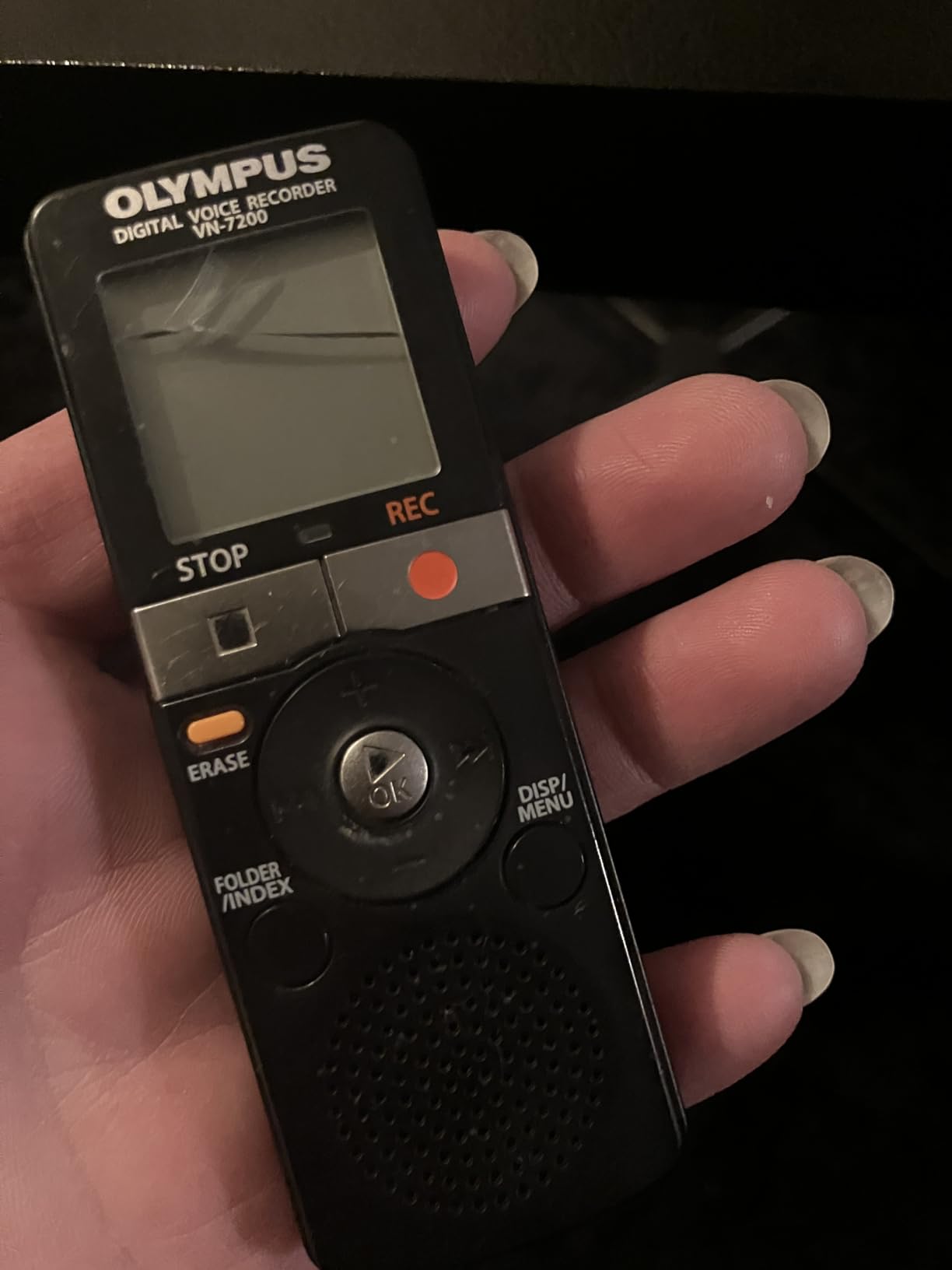
5. Olympus VN-7200: Best Recorder for Very Long Interview Series
Olympus VN-7200 Digital Voice Recorder
1151 hours recording
1.76 oz
Voice activation
Mono capture
Pros
- Small and very light
- easy to slip into a pocket or bag
- Voice activation and fast or slow playback make note review easier
- Long recording capacity on two AAA batteries
Cons
- No direct USB file transfer
- Headphone output only plays in one ear
- Mono recording only
- Very sensitive microphone picks up background noise
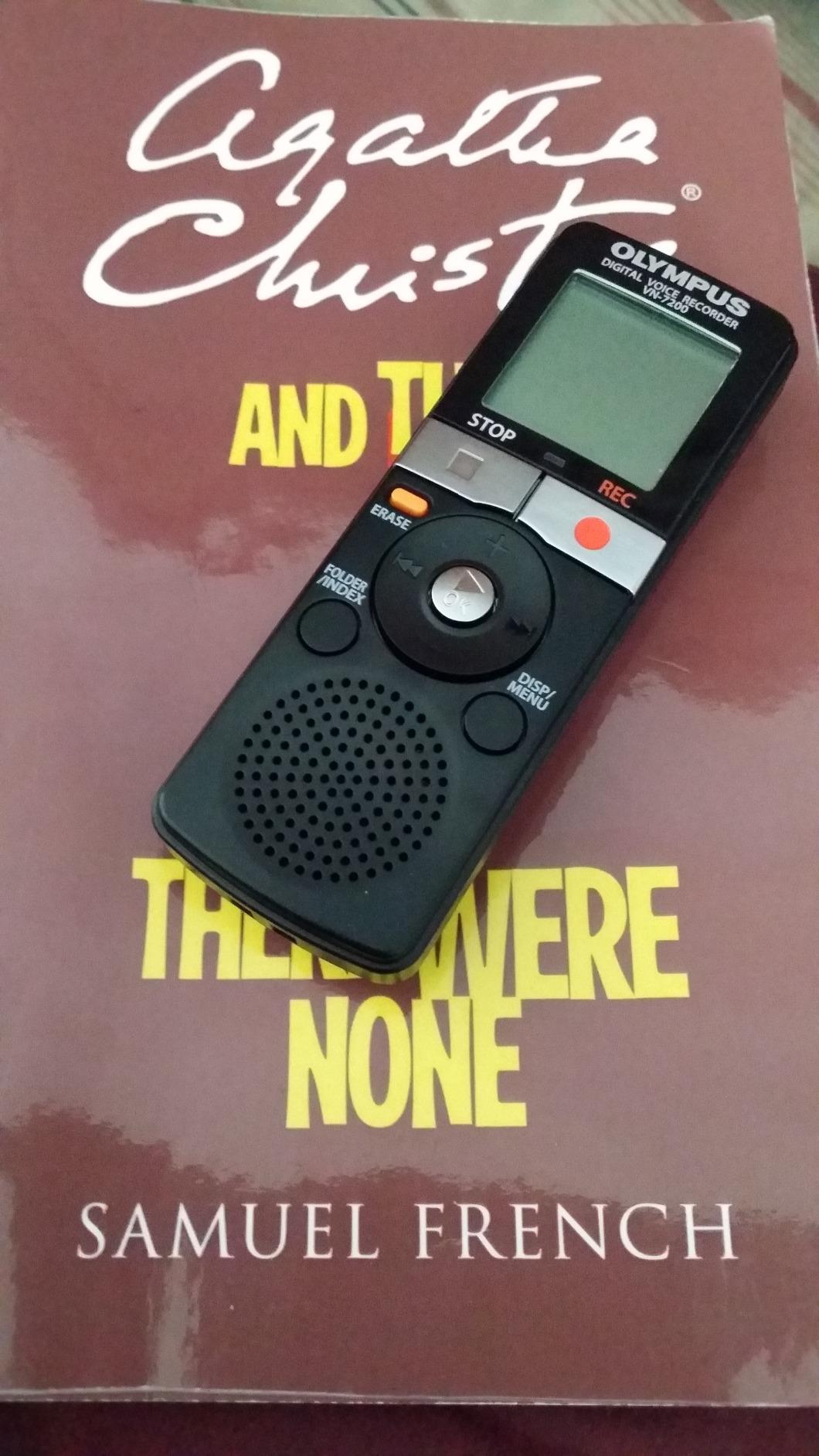
At 1.76 ounces and over a thousand hours of stated recording capacity, the VN-7200 is the recorder that disappears. It is the one to hand to someone who is not a gear person, or to strap in a pocket for a multi-day field study, because there is no battery anxiety and no charging ritual.
Voice activation is genuinely useful for note-taking-style capture, where you only want the recording running when someone is actually speaking, and the fast and slow playback speeds make reviewing a long session bearable. Reviewers consistently describe it as a dependable pocket recorder for lectures, meetings and short interviews, and the lightness is the reason it keeps getting chosen.
That same sensitivity is the catch. Reviewers report that the microphone picks up all background noise, which means a busy room turns into a wall of sound where the subject’s voice is not the loudest thing in the file. Mono recording only narrows your options further, and there is no second channel to rescue anything.
The file transfer situation is the real friction. There is no direct USB port, so moving audio to a computer needs an extra cable or a workaround, and that is a step you do not want between a finished interview and a safe archive. Headphone playback in one ear only is a minor irritation by comparison.
Who the Olympus VN-7200 suits
It suits the long-haul field researcher, the ethnographer doing repeated site visits, and the student recording a semester of interviews on a small budget. When the constraint is time away from mains power rather than audio fidelity, nothing else in this list runs as long.
It also suits anyone recording their own notes. With voice activation and adjustable playback speed, you can walk and talk without stopping to press anything.
Where the Olympus VN-7200 disappoints
It disappoints anyone who plans to edit the audio afterwards. Mono capture, no WAV workflow and no external input means the recording is an end point rather than a source. If the interview might end up in a film or a published piece, this is the wrong tool.
It also disappoints in a noisy room, which is precisely where a sensitive mic does the most damage. Over-sensitive pickup is the most common complaint in the reviews, and no amount of post-processing fully recovers a buried voice.
6. OM System WS-882: Best Budget Recorder with Linear PCM
OM SYSTEM Olympus WS-882 Digital Voice Recorder, with Linear PCM/MP3 Recording Formats, USB Direct, 4gb Playback Speed and Volume Adjust, File Index, Erase Selected Files
Linear PCM and MP3
USB Direct
4GB internal memory
77 g
Pros
- Records in Linear PCM as well as MP3 for higher-quality capture
- USB Direct plug-in connection makes file transfer fast and cable-free
- Playback speed and volume adjustment help with transcription
- File index makes it easy to find and erase a failed take
Cons
- No rechargeable battery support
- so AAA cells must be carried
- No XLR or line input for professional microphones
- Only 4GB of internal memory
- Menu system can be confusing for first-time users
The WS-882 is interesting for one reason above all: it records Linear PCM, not just MP3. That puts a genuine uncompressed option in reach at a price where most alternatives are compressed-only, which matters when an interview is destined for an editor who will want a WAV.
The USB Direct connector is the same retractable plug design as the Sony, and reviewers like how fast that makes file transfer with no cable to lose. File index and selective erase are small features that pay off on a day of back-to-back interviews, because you can delete the failed take without scrolling through a list.
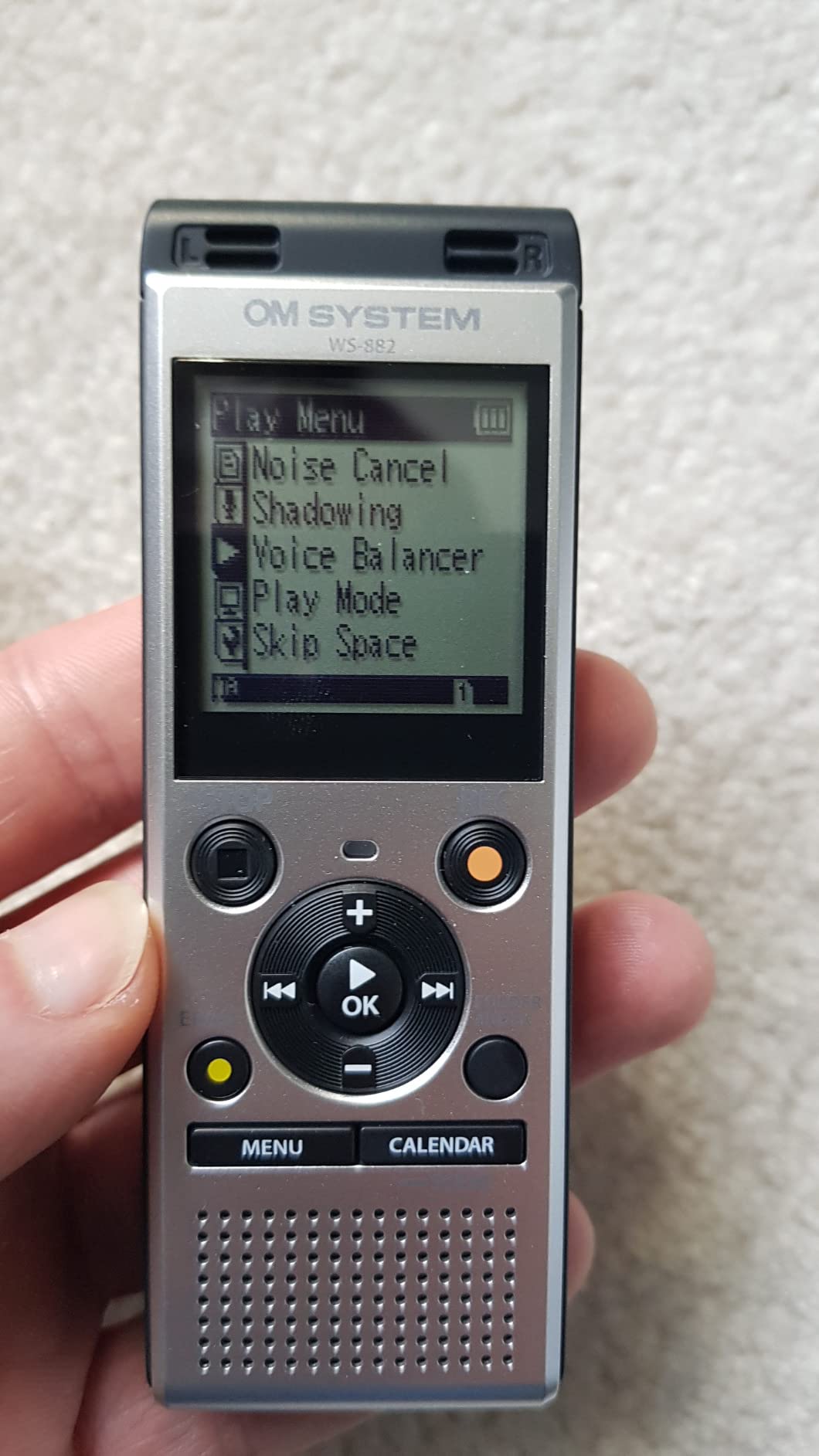
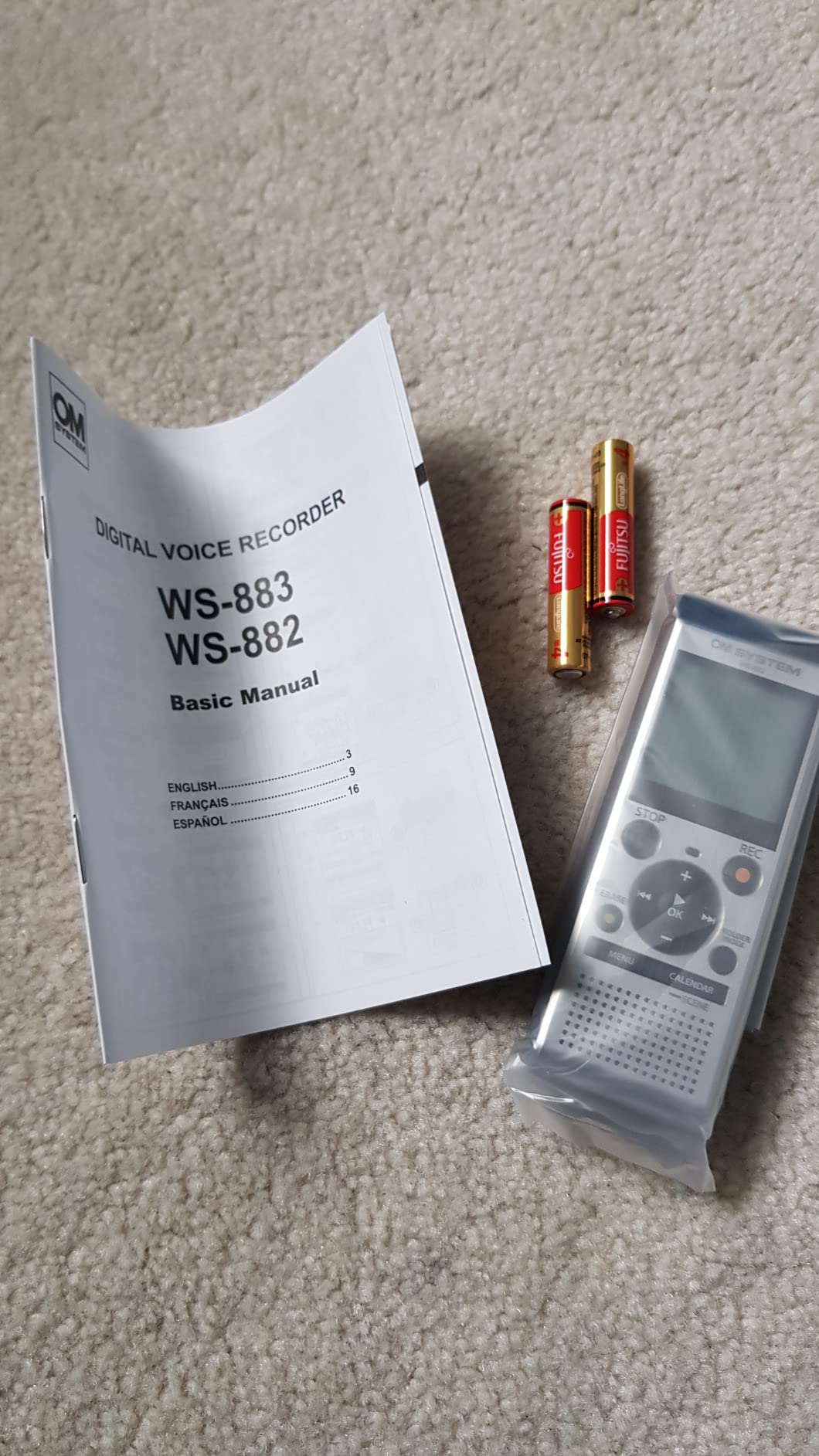
Playback speed and volume adjustment speed up review, which is where most of the time goes in a transcription workflow. At 77 g it is genuinely pocketable, and the stated runtime of around 68 hours on the two included AAA cells means a full assignment on one set of cells.
The compromises are real. There is no rechargeable battery, so you carry spares rather than a cable. There is no XLR or line input. And the 4GB of internal memory is small enough that you will be transferring files between recordings on a busy day rather than at the end of it. The menu system is also the kind that makes first-time users call for the manual.
Who the OM System WS-882 suits
It suits a student or early-career researcher who wants uncompressed audio and a painless transfer path on a modest budget. The reviewer base describes it as valued for its Linear PCM option, USB Direct connection and file organisation features at a budget price point.
It also suits anyone who will only ever record one voice at a desk distance. The stereo microphones and low internal capacity are simply not designed for more demanding work.
Where the OM System WS-882 disappoints
It disappoints anyone who wants to grow into better audio. No input means no upgrade path, so the day you want a lav you have to buy a different device. The fixed 4GB ceiling compounds that by forcing frequent transfers.
It also disappoints in a noisy room, since a built-in mic at a fixed distance cannot separate a subject from background. Placement fixes some of this, but no setting fixes the rest.
7. Tascam DR-70D: Best Recorder for Four-Person Interviews
TASCAM 4-Channel Portable Audio Recorder for Videographers, 4 Combo XLR/TRS Inputs, 2 Internal Mics, Limiter, HP Filter (DR-70D)
4 XLR/TRS inputs
2 built-in mics
Dual Recording
128GB cards
Pros
- Four combo XLR/TRS inputs cover multi-person interviews in one take
- Each track records as a discrete file for simple editing
- Dual Recording safety track protects against distorted takes
- Per-input record enable avoids wasting storage
Cons
- Picky about memory cards
- with non-recommended cards causing write errors
- Only WAV and BWF formats with no MP3 option
- No onboard compressor
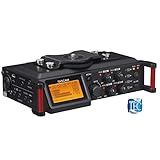
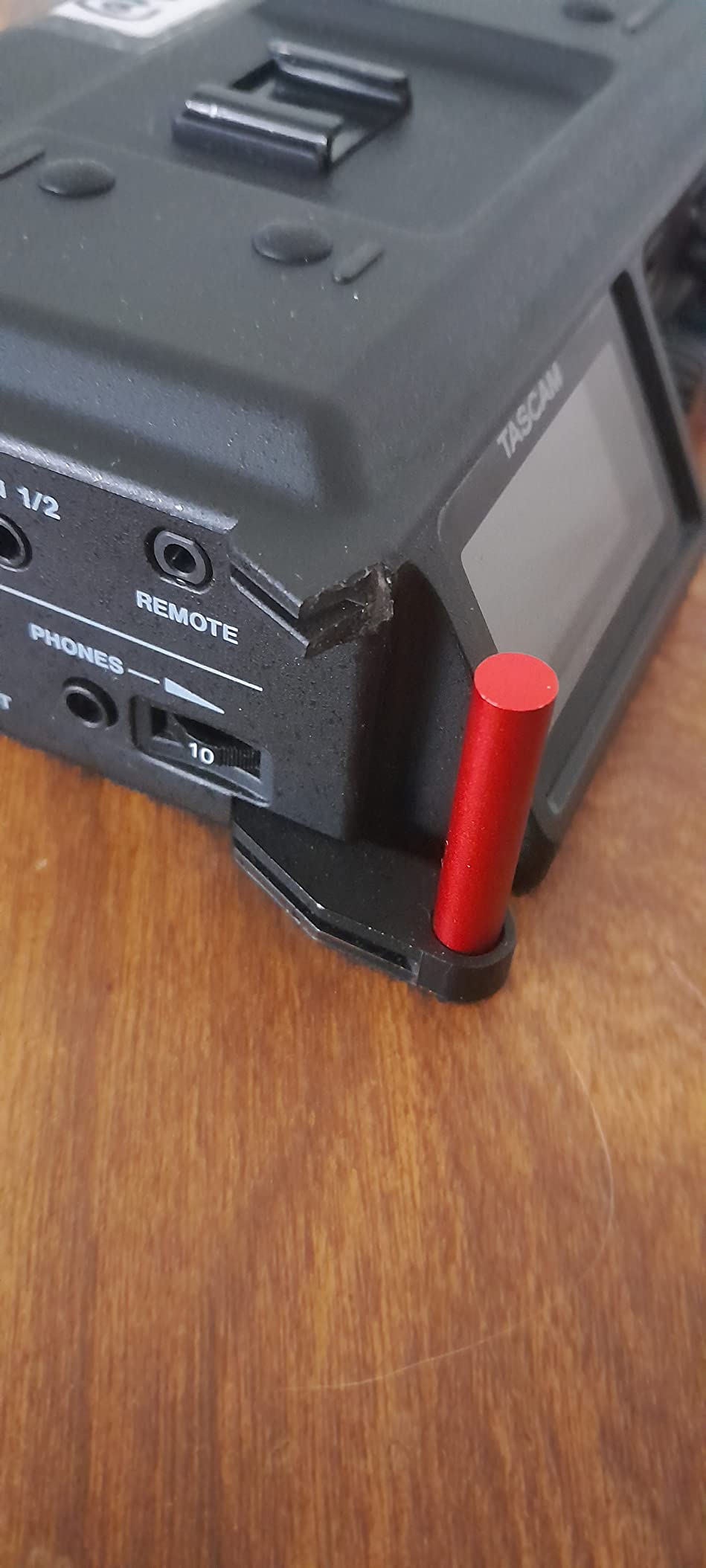
Where the P4 optimises for headphones and phone calls, the DR-70D optimises for tracks. Four balanced XLR/TRS inputs with phantom power, and critically each channel saves as its own discrete file, which is the thing that makes a four-way conversation editable afterwards. No bouncing, no bleed fight in post.
Owners frame it as excellent value for four-track location recording, particularly for run-and-gun work, and the dual per-input gain controls make it easy to balance four different mic types. HDDA preamps give 64dB of gain, and the Dual Recording mode writes a second safety copy at a lower level, which is cheap insurance against a hot take.
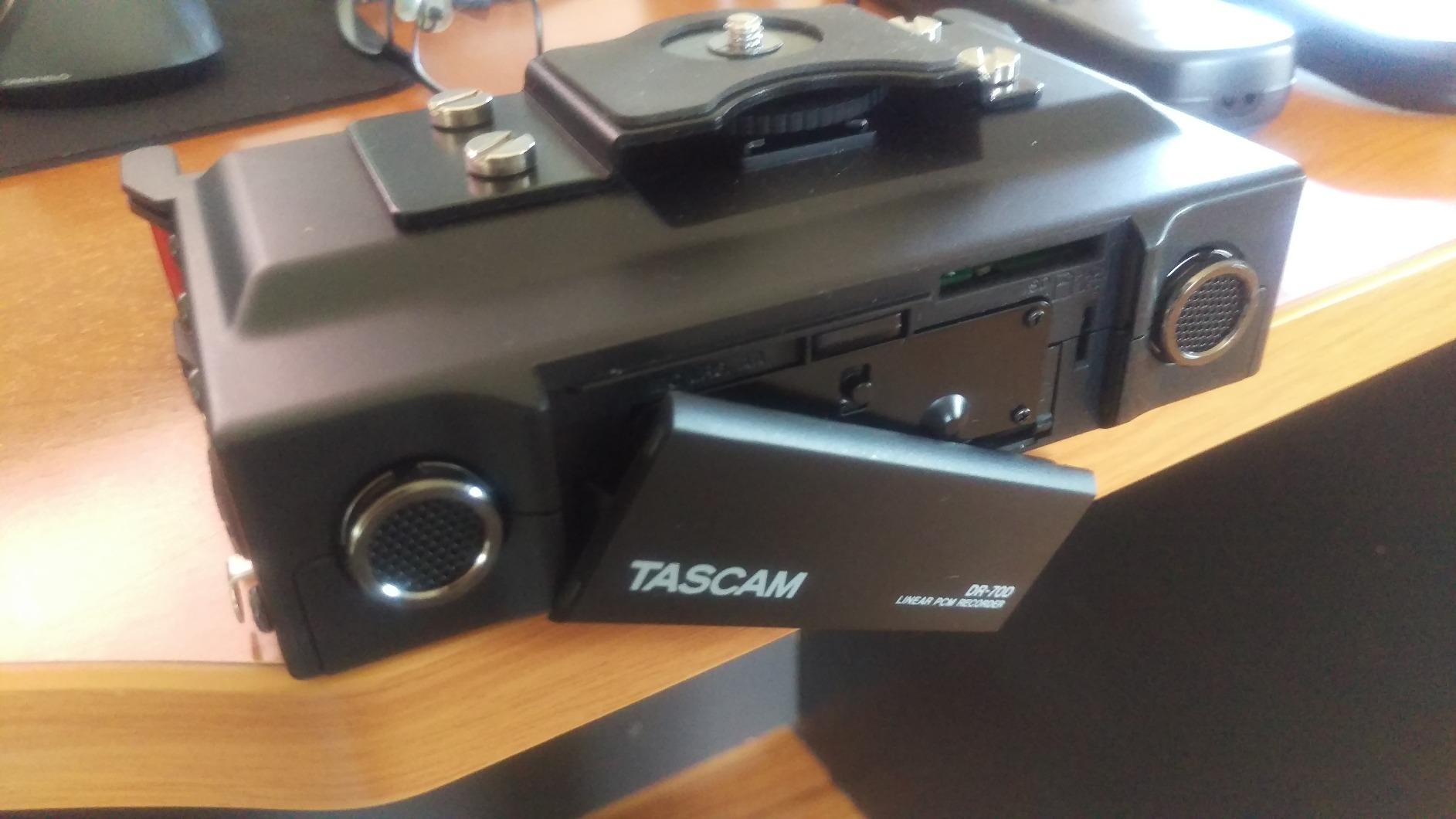
Two built-in omnidirectional microphones are there for ambience and scratch capture, and a limiter and high-pass filter handle rumble and peaks. The form factor mounts above or below a camera, so it serves double duty on a video shoot. Card support runs to 128GB across SD, SDHC and SDXC.
The memory card warning is real and worth respecting. Reviewers report file write errors from cards that were not on the recommended list, so format a card you can verify before the session. The other limitations are the format lock to WAV and BWF, and the absence of any onboard compressor, which means gain staging is on you.
Who the Tascam DR-70D suits
It suits the person recording a panel, a roundtable, or an interview where each person gets their own mic. A four-track interview workflow is what this machine is for, and reviewers single out the discrete per-track files and the safety recording mode as the features that make it work.
It also suits camera operators who want a serious audio track and a backup recorder in one. The mounting options mean it can live under a camera rig without a separate bag.
Where the Tascam DR-70D disappoints
It disappoints anyone who records on a tight schedule with improvised cards. The card sensitivity is the single most reported complaint, and a write error mid-interview is the exact failure this whole category exists to prevent.
It also disappoints the engineer who wants on-device dynamics processing, since there is no compressor to smooth a fast-talking subject. And for a solo recorder, four inputs and 1.2 pounds are more machine than the job requires.
8. Tascam DR-05XP: Best Pocket 32-Bit Float Recorder
TASCAM DR-05XP 32-Bit Float Portable Handheld Field Recorder and USB-C Audio Interface — Digital Stereo Recording of Music, Sound, Voice, Audio for Video and Podcasting
32-bit float
125dB SPL mics
USB-C interface
17.5 hours
Pros
- 32-bit float removes gain-setting anxiety for unpredictable levels
- Omnidirectional condenser mics handle loud sources to 125dB SPL
- Doubles as a USB-C audio interface for direct computer recording
- Lightweight and pocketable with long battery life on AA cells
Cons
- No XLR or mic input
- so external interview microphones cannot be used
- SD card and batteries are not included
- Built-in stereo microphones only
- A higher share of one-star reviews than the established recorders here
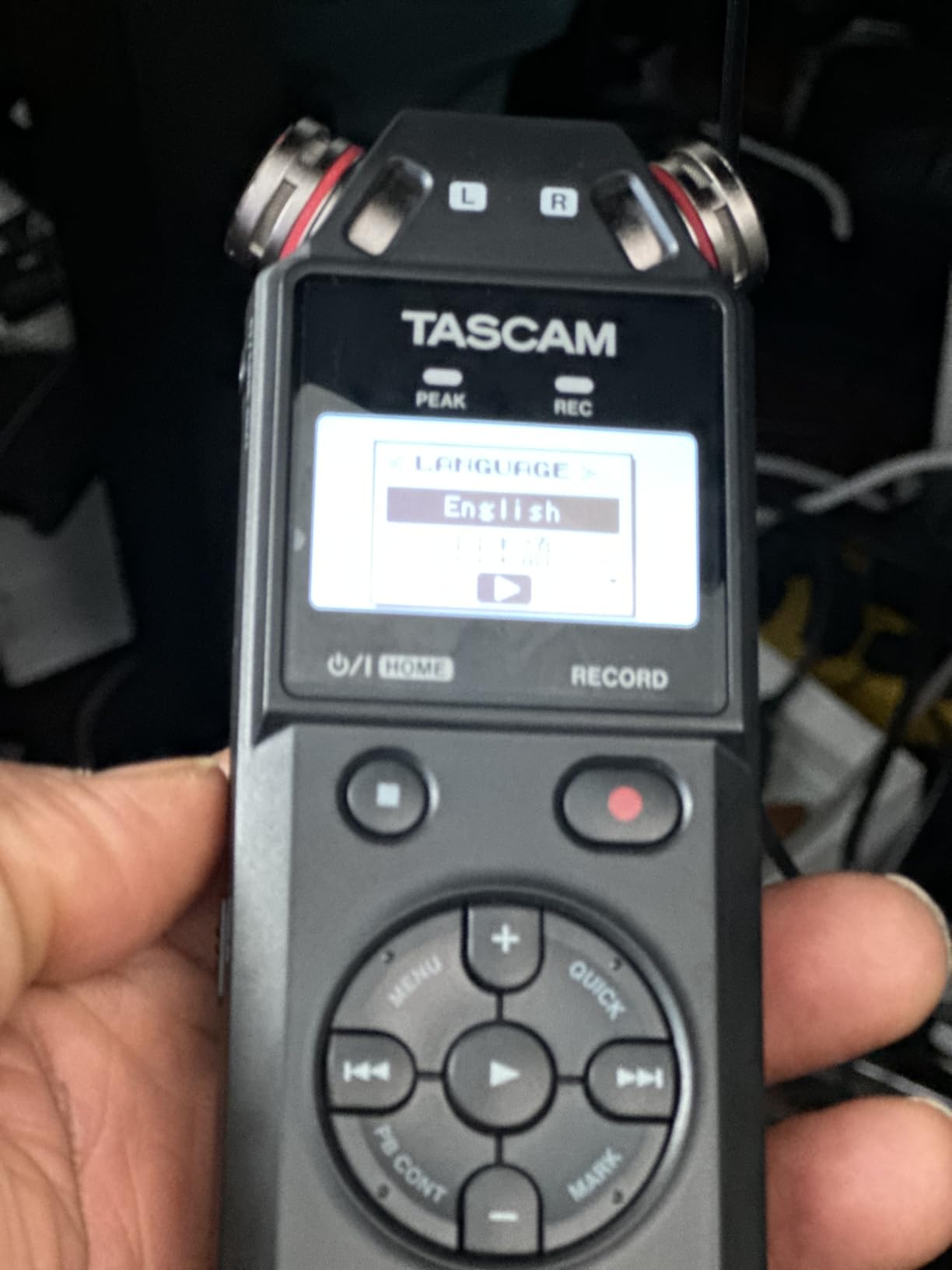
The DR-05XP is the lightest recorder here that records 32-bit float at 4.48 ounces, and that single fact is the pitch. The built-in omnidirectional condensers handle sources up to 125dB SPL, which is generous headroom for a device with no external input and therefore no way to swap in a better microphone.
We found the 32-bit float workflow genuinely freeing in an interview context. Nobody has to watch a meter while also being present in the conversation, and a sudden laugh or raised voice comes back in the edit. The reviewer summary calls it out the same way: a set-and-forget workflow that suits quick voice notes, video audio and podcasting.
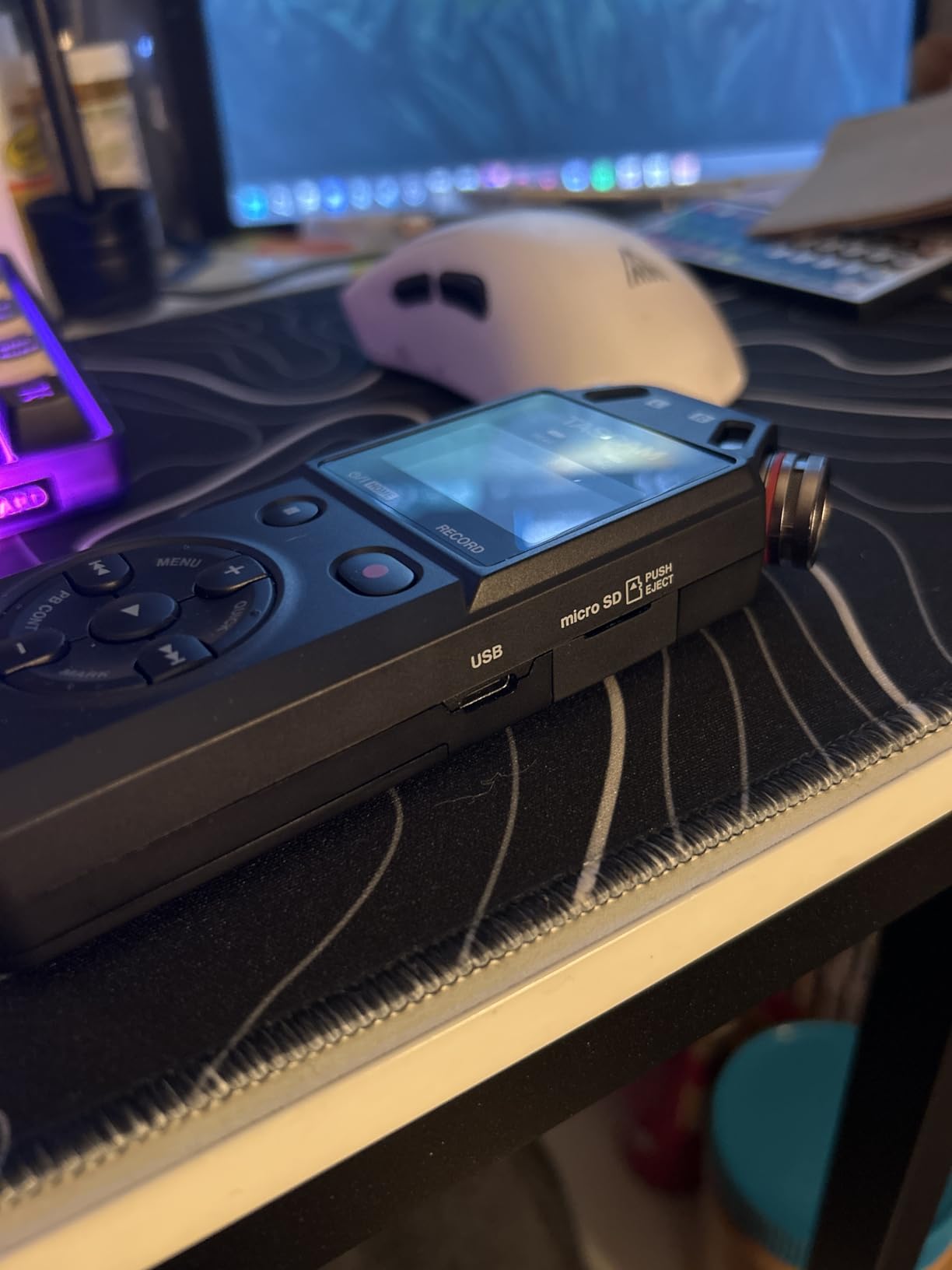
It also functions as a two-in two-out USB-C audio interface, so the same box is your capture device and your computer input. Sample rate options run to 96kHz alongside 48k and 44.1k, with MP3 available when you want it, and at 4.48 ounces it is easy to keep on you.
Two things to plan around. There is no external input, so this is a built-in-microphone recorder, full stop. And neither the SD card nor the batteries are included, so sort both out before the first session. Reviewers also note a higher share of one-star feedback than the long-established recorders here.
Who the Tascam DR-05XP suits
It suits the journalist, podcaster or filmmaker who wants clip-proof capture without a second device. If your interview is one voice, in the room with you, and you want the recorder in your pocket rather than on a stand, this is the honest answer.
It also suits anyone who records a lot and shares a lot. The USB-C interface mode means you can plug straight into a computer for capture, review or backup without importing through a card reader.
Where the Tascam DR-05XP disappoints
It disappoints anyone whose interview happens across a table or in a room with real character, because there is nowhere to put a better microphone. That is a hardware limit, not a settings problem.
It also disappoints on day one if you have not bought a card and spare cells. And its 4.2 rating with a meaningful one-star share is a reminder to read recent reviews rather than relying on the spec sheet.
9. Tascam DR-10X: Best Recorder for On-the-Street Interviews
TASCAM XLR Micro Audio Portable Digital Recorder for XLR Microphones, Voice Recorder, Interview and News Gathering, Black (DR-10X)
Captive XLR connector
Dual Recording
2.56 oz
WAV and MP3
Pros
- Plugs straight into a handheld XLR interview mic with no cables
- Very small and light so it fits in a pocket or small bag
- Dual recording safety track gives a backup at a lower level
- Auto-level function makes on-the-go gain setup effortless
Cons
- No phantom power
- so condenser microphones need their own battery
- Single AAA battery can drain quickly
- Plastic body and non-locking collar feel less durable
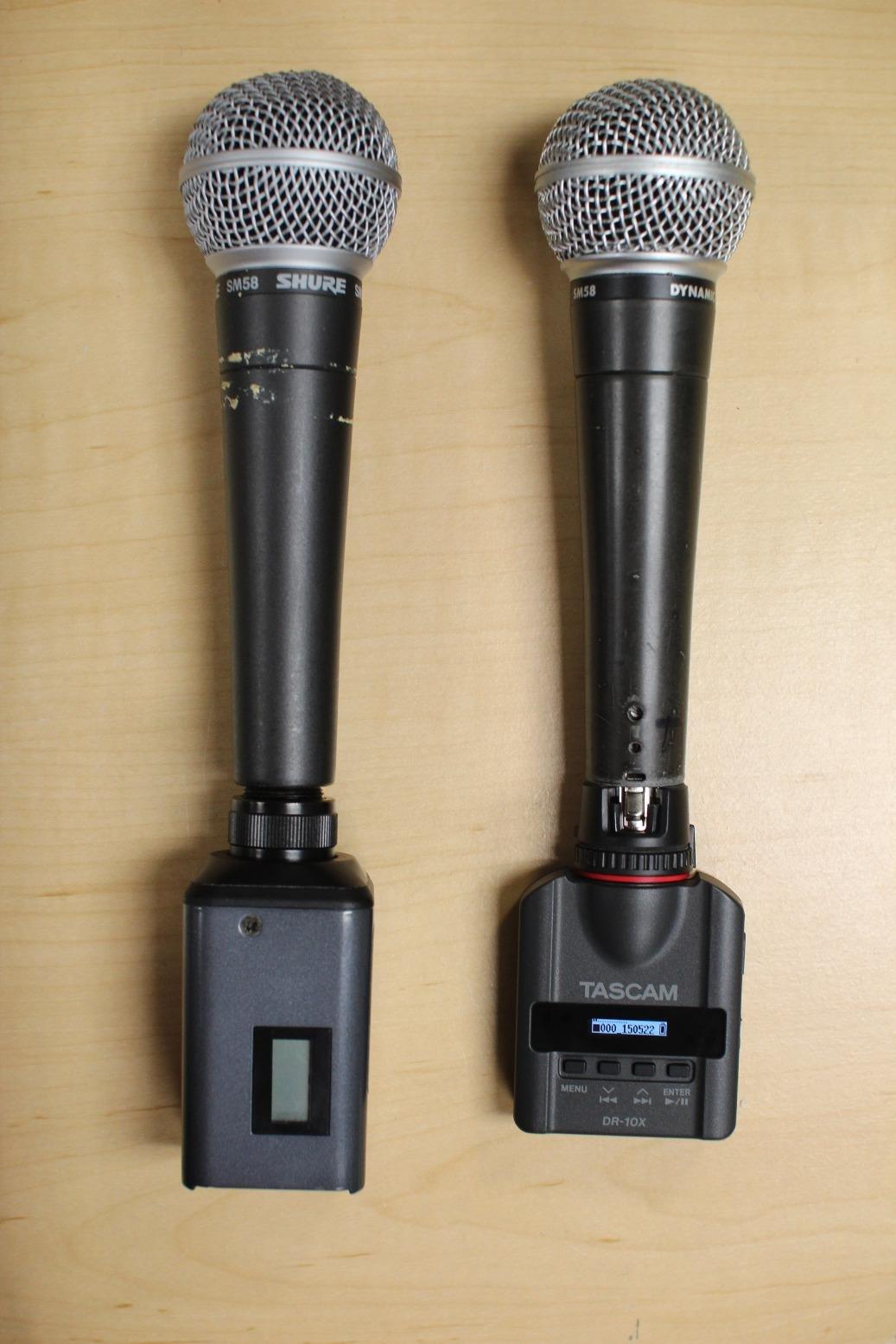
The DR-10X is not a general-purpose recorder, and that is the point. It has a captive XLR connector that screws straight onto a handheld interview microphone, so the whole assembly becomes a self-contained reporting tool with no cables, no adapters and no bag. For a doorstep quote or a street interview, deploying it takes about as long as unscrewing the mic cap.
It handles WAV and MP3, has a low-cut filter and limiter, and a sliding record switch that is far harder to trigger by accident in a jacket pocket than a button. The auto-close on battery depletion is a genuinely thoughtful detail: the file is finalised rather than corrupted.
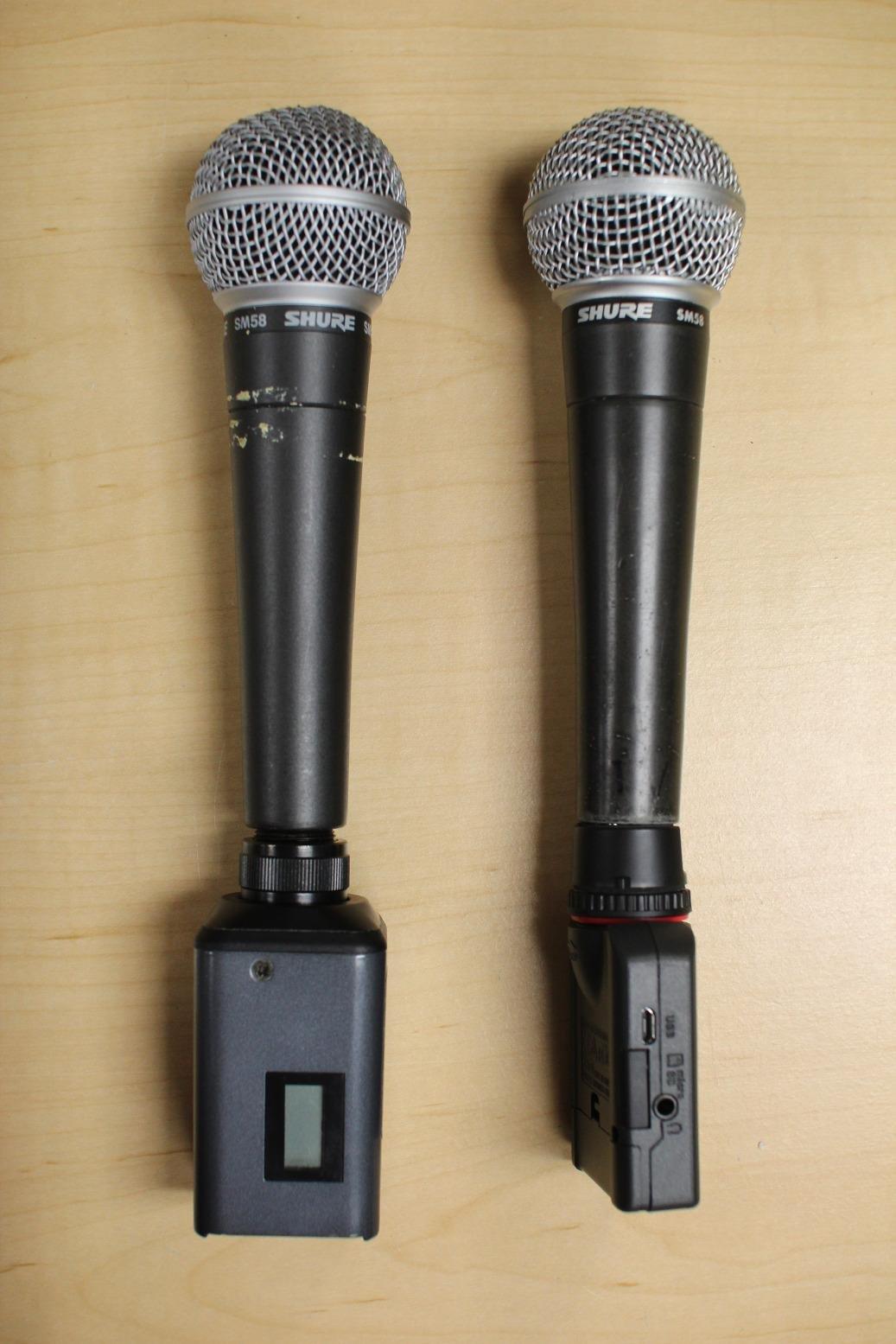
Dual Recording writes a second track at a lower level, and owners on forums specifically praise older Tascam plug-on recorders for recording at two levels automatically as insurance against one channel peaking. That habit carries straight over, and it is a free second chance on the take you cannot repeat.
There is no phantom power, so a condenser mic has to run on its own battery. A single AAA is not much runtime, especially with headphone monitoring on, and the plastic body with a non-locking XLR collar does not feel like gear you can drop. Maximum card support is 32GB. There are also reports of units failing or freezing after some months of use, which is worth weighing against a longer warranty from an established retailer.
Who the Tascam DR-10X suits
It suits the reporter working handheld. Man-on-the-street interviews, vox-pop scratch audio, a quick quote outside a building with a dynamic mic in your other hand. Owners describe it as a grab-and-go recorder for handheld XLR interview mics, particularly for field and news gathering.
It also suits anyone who already owns a good handheld mic. The DR-10X is the recorder half of a two-piece kit that costs less than most complete recorders, and the whole thing fits in a coat pocket.
Where the Tascam DR-10X disappoints
It disappoints the sit-down interviewer. There is no speaker microphone, so a quiet one-on-one across a table means holding the mic like a microphone, which changes the conversation.
It also disappoints in cold weather or a long field day, because one AAA and a plastic shell are a thin margin. If your work is weather-exposed, choose a two-AA unit instead.
10. Philips VoiceTracer DVT4115: Best Recorder When Transcription Is the Priority
Philips VoiceTracer DVT4115 Digital Voice Recorder, Audio Recorder with Sembly AI Speech-to-Text Trial for Meetings, Lectures & Interviews
3 stereo mics
Sembly speech-to-text
App remote control
8GB internal
Pros
- Three-microphone array is tuned for capturing speakers at a distance
- Built-in speech-to-text converts recordings to text quickly
- Smartphone app allows remote start and stop
- 8GB internal memory suits long sessions
Cons
- Speech-to-text is a time-limited trial rather than a permanent feature
- No XLR input for professional microphones
- Small 0.74-inch wide body and screen
- Lowest rating in this group with a notable one-star share
The DVT4115 is the one recorder here built around a three-microphone array aimed at picking up voices at a distance, and that changes the geometry of the interview. The recorder can sit at the end of a meeting table rather than in your hand, which is exactly what researchers recording several people at once want.
The transcription angle is the real differentiator. Sembly speech-to-text turns a finished recording into written text, including multi-speaker meeting minutes, and the smartphone app lets you start and stop a recording from your phone, which means you can keep eye contact with the subject instead of announcing every time you press record. Reviewers like the microphone array and the app control.
Memory is 8GB internally and the stated capacity runs to around 88 days of recording, with a two-year manufacturer warranty. It records stereo MP3 and PCM, and the supplied USB-C cable means the computer is not a scavenger hunt.
The catch on the AI feature is that the speech-to-text access is a time-limited trial voucher rather than a permanent capability, so the economics of that workflow depend on the vendor. There is no XLR input for a professional microphone, the body is only 0.74 inches wide, and this is the lowest-rated unit in the group with a notable share of one-star reviews. If the conversation is confidential, uploading audio to a cloud service is a decision you need to make deliberately.
Because it is transcription-first, it changes what a finished interview is: instead of a file you still have to listen through, you get notes you can quote and search.
Who the Philips VoiceTracer DVT4115 suits
It suits market researchers, recruiters and project managers who record a lot of conversations and want a text file more than they want an audio file. The remote-control app and distant-voice array are built for the meeting-room end of the job.
It also suits anyone who dreads transcription as a task. Getting a first pass at written notes the same afternoon changes how a research project gets scheduled.
Where the Philips VoiceTracer DVT4115 disappoints
It disappoints anyone who needs the transcript to be permanently accurate, since the audio still has to be checked by a person. Forum contributors who do this work regularly record offline anyway and transcribe on their own machine, because AI transcription reliably mishandles names, jargon, numbers and accents.
It also disappoints the broadcast workflow, with no professional mic input and the lowest rating in this group. Treat the AI trial as a trial, not a feature you have bought.
11. Xvive XV1-R: Best 32-Bit Float Recorder for a USB-C Workflow
Xvive XV1-R Portable Stereo Audio Recorder with 32-Bit Float, X/Y Microphones, WAV/AAC Format, USB Microphone, Auto Record, for Musicians, Podcasters, Filmmakers
32-bit float stereo
X/Y mics to 130dB SPL
USB-C mic function
6.4 oz
Pros
- 32-bit float means gain never needs adjusting
- even in loud settings
- X/Y microphones handle sources up to 130dB SPL
- Works as a USB microphone on PC
- Mac
- iOS and Android
- Compact and light with auto-record and pre-record
Cons
- No headphone jack for monitoring
- No XLR or mic input
- so external microphones cannot be used
- AAC mode caps recording at about 12 hours
- Newer brand with a smaller review base
The XV1-R competes on one headline number: X/Y directional microphones rated to 130dB SPL, a higher ceiling than the other built-in microphone pair in this list, the Tascam DR-05XP at 125dB SPL. Combined with 32-bit float, that is a very wide margin between a normal speaking voice and the point where anything breaks.
Its standout feature for a modern workflow is USB-C microphone function, working as a USB Audio Class 2.0 device at 48kHz across PC, Mac, iOS and Android. That means you can hand this to someone as a mic for a video call and it behaves like a normal USB microphone, rather than a recorder you have to import files from.
Auto-record and pre-record are quietly useful for interviews, since pre-record can capture the seconds before you press the button, and microSD recording with automatic 4GB file splitting means a long session does not stop at a file size limit. Sample rates go to 96kHz in WAV, with AAC available for space.
The headphone jack is absent entirely, which means no monitoring of what you are recording. With no external input either, this is a closed system built around its own microphones. AAC mode also limits you to about 12 hours of recording, and as a newer brand with a smaller review base and more one-star feedback, it carries more unknowns than the long-established names here.
Who the Xvive XV1-R suits
It suits someone who wants clip-proof recording in a loud or unpredictable environment and already works on a computer, since the USB-C microphone mode is a genuinely different use case from anything else here. Reviewers appreciate the inexpensive entry into 32-bit float recording.
It also suits someone whose interview audio is destined for a video call or a livestream rather than an archive, where the USB microphone role is the whole point.
Where the Xvive XV1-R disappoints
It disappoints anyone who monitors. Without a headphone output you cannot hear what the microphones are picking up, which for interview work removes a layer of control you may want.
It also disappoints anyone wanting a real microphone choice, since there is no input. And with a rating of 4.1 on a much smaller review base, the record is thinner than the established recorders and worth testing on your own material first.
12. OM System WS-883: Best Recorder for Rechargeable Battery Workflows
Olympus WS-883 Digital Voice Recorder, Linear PCM/MP3 Recording Formats, USB-A Battery Charging, True Stereo Microphones, Low-Cut Filter and 8GB Built-in Memory (Black)
8GB internal memory
USB Direct charging
Linear PCM and MP3
Low-cut filter
Pros
- Comes with a rechargeable battery that charges over USB
- Retractable USB connector both charges the unit and transfers files
- 8GB internal memory doubles capacity over the WS-882
- Linear PCM and MP3 with a low-cut filter
- Lightweight and small enough to carry in a pocket
Cons
- Auto power-off after a short period can switch the unit off before recording starts
- Display does not backlight so recording time is not visible at a glance
- No XLR input or phantom power
- Rechargeable pack must be reinserted correctly to charge
The WS-883 fixes the two things that most annoy people about dictation recorders: no batteries to buy, and not enough memory. The rechargeable battery charges through the same retractable USB connector that transfers files, so one cable does everything, and 8GB of internal storage is twice what the sibling model in this list offers.
That combination makes it the one we would put in a bag for a full day of user research sessions. Journalists, court reporters and students favour it for the rechargeable battery, USB charging and generous internal memory, and the true stereo microphones plus low-cut filter give it more capture capability than the usual pocket dictation device.
The two reported annoyances are both about trust in the display and the power management. Auto power-off can switch the unit off before you have started recording, and because the display does not backlight on button presses, you cannot confirm at a glance that it is actually rolling. Our advice is simple: turn the auto power-off off in the menu before the session, and get into the habit of a physical check.
There is no XLR input or phantom power, so the ceiling is a built-in microphone at desk distance. The rechargeable pack also has to be reinserted correctly to make contact for charging, which sounds trivial until you are packing up in a hurry.
Who the OM System WS-883 suits
It suits the person who records several conversations a day and hates carrying spare cells. One cable in the bag covers charging, transfer and archive, and the 8GB of internal memory means you are not shuttling files between every interview.
It also suits anyone recording in a quiet office where a built-in stereo mic is genuinely sufficient and the priority is reliability rather than mic choice.
Where the OM System WS-883 disappoints
It disappoints anyone shooting in low light or on a moving subject, because a display that does not backlight removes your ability to confirm the recording state at a glance. Combined with the aggressive auto power-off, it asks for a ritual you should not have to learn the hard way.
It also disappoints anyone who needs an external microphone or a physical record guarantee for a long session. There is no input, and the stated battery figure assumes the auto power-off settings you will probably want to change.
How to Choose a Portable Recorder for Interviews
Most wrong purchases in this category come from answering the question in the wrong order. People start with format, or bit depth, or battery life, and end up with a machine that cannot accept a microphone, which makes it useless for the one interview that mattered. Work through these steps instead.
Decide one speaker or two speakers first
This single question eliminates most of the list. One speaker in a quiet room: any recorder with built-in microphones works, and 32-bit float is the feature that actually changes your day. Two speakers at a table: you want a recorder that can take a mic per person, which means a 3.5mm input at minimum. Three or four speakers: you are in multi-input territory, and the PodTrak P4 and Tascam DR-70D are the two recorders here built for it.
Two speakers bleeding into one stereo pair is the most common forum complaint we came across, and it is a placement failure more than a device failure. But no amount of careful placement separates two people who are both in a built-in microphone’s pickup, which is why the decision has to be made before the purchase.
What 32-bit float does and does not fix
32-bit float gives you effectively impossible headroom, so a level that would clip a conventional recorder is still recoverable in the edit. Forum consensus is that people choose it to stop worrying about peaking, not for any sonic benefit in a quiet room. That is a legitimate and very practical reason to buy it.
What it does not fix is everything physical. It will not remove wind noise, handling noise, table vibration, room echo or a badly placed microphone. A 32-bit float file of a voice recorded two metres away through a rustling jacket is still an unusable file. Several forum contributors are explicit that placement matters more than resolution, and they are right.
XLR and 3.5mm inputs: when each one matters
A 3.5mm mic or line input covers lavalier microphones, which is the correct microphone for an interview in a normal room. A lav on the subject’s collar, six to twelve inches from the mouth, will beat any built-in microphone on any recorder in this list, regardless of bit depth.
XLR and combo XLR/TRS inputs open up broadcast and dynamic microphones, plus phantom power for condensers. They matter when you already own good microphones, when you are recording a group, or when the subject moves. If you are starting from nothing and recording one person, spend the money on a lavalier and pick a recorder with a 3.5mm input. We have a full guide to the best lavalier microphones for interviews if that is the path you are on.
Storage, card formats and file naming
Built-in memory is simpler and fails less, because there is no card to eject, lose or reject. Removable microSD scales to hours of high-resolution audio, but capacity limits differ sharply between recorders: some cap at 32GB while others accept 128GB or more. The Tascam DR-70D in particular is reported to be picky, so buy a card from a list the manufacturer names and format it before you rely on it.
For a single interview, name the file before you record and again after. A date, a project code and a speaker identifier take five seconds and save an hour of hunting. Segmented recording, which several recorders here offer, is also worth turning on so one very long session does not become one very fragile file.
Battery, monitoring and the accessory kit
Count the batteries against your longest realistic session, not against a spec sheet. Rechargeable cells and USB charging, as on the OM System WS-883, remove the whole problem. Replaceable cells, as on the Tascam DR-05XP, mean carrying spares. Either approach is fine; carrying the wrong number of the wrong cell type is not.
The accessory checklist is short and worth buying before the first session: a spare memory card, spare cells or a charger, a windscreen, closed-back headphones so you can monitor without leaking sound into the room, a USB-C data cable rather than a charge-only cable, and something to stand the recorder on so it is not held. That last one, a small tripod or a stack of books, is what stops handling noise. If you also record music, our best portable recorders for musicians comparison is a useful look at the same category from the quality end; for video-first work, see our best field recorders for filmmakers.
Placement: the six-to-twelve-inch rule
Place the microphone six to twelve inches from the subject’s mouth, angled slightly to the side to reduce plosives, and off the direct line of a table edge so it does not pick up vibration. Never rest the microphone on the table itself. Room tone matters too: record thirty seconds of silence before the conversation starts, and you will have material to fill gaps in the edit.
If you have a lavalier, clip it high on the collar or chest, not at the belt, and cover it with a windscreen even indoors. If you do not have a lavalier, put the recorder on the table nearest the speaker rather than in the middle, and record a second safety track on a phone or a second recorder if the conversation is unrepeatable. This is the single highest-return habit in the whole article.
Discreet recording and getting consent
If an interview is confidential, in a workplace, in a clinic, or in a clinical or HR setting, ask first, and in many places you are legally required to. Recording law varies by state and by country, and a device being small is not a legal defence. Consent is also a professional courtesy that makes people answer more honestly, which is usually the point of the interview.
For discreet work, the wearable note-taker form factor is the most hands-free option, because the device is on the speaker rather than on the table between you. Keep it visible once consent is given, since a hidden recorder damages the relationship even where it is technically legal. And be careful with cloud transcription services: a transcript can expose confidential material even if you later delete the audio.
The post-interview backup routine
Before you leave the room, play back ten seconds of the recording to confirm it is actually there. Then copy it to two places: a computer and a second drive or card. Rename the file immediately, add the date and speaker, and write down the context while it is fresh. Audio reporters on forums pair offline recording with local transcription tools rather than relying on real-time cloud services, partly for accuracy on names and jargon and partly for privacy.
Keep interview audio for as long as the published work might be contested. There is no universal retention period, but there is a common experience: someone disputes a quote two years later and the recording is the only answer. Backups also solve the transfer problems people hit when a computer will not recognise a recorder, which is nearly always a charge-only cable or an unformatted card rather than a broken device.
Frequently Asked Questions
What is the best device to record interviews?
The Zoom PodTrak P4 is the best device for most interview work because it takes four XLR microphones, gives each person an independent headphone output, and handles phone or remote guests with automatic mix-minus. For a single quiet speaker, the Zoom H5 or the Tascam DR-05XP are simpler and lighter. All prices and bundles change, so confirm the current listing before buying.
What is the best handheld recorder for interviews?
The Zoom H5 is the best handheld recorder for interviews because it records four tracks at once, takes two XLR/TRS combo inputs with phantom power, and uses interchangeable microphone capsules so you can change the pickup pattern without changing recorders. For a one-person interview in a quiet room, the Tascam DR-05XP is lighter and adds 32-bit float.
What is the best audio recorder for interviews?
The best audio recorder for interviews depends on how many people speak. One speaker in a quiet room: a 32-bit float handheld such as the Tascam DR-05XP. Two speakers: a recorder with two real inputs such as the Zoom H5. Three or four speakers: a multi-input recorder such as the Zoom PodTrak P4 or Tascam DR-70D, which save each microphone as a separate track.
What is the best discreet recording device?
For discreet recording with consent, a wearable recorder worn on the speaker’s clothing is the most hands-free option, because nothing sits on the table between you and your subject. Always tell the person you are recording, and remember that recording law differs by state and country. If a conversation is confidential, avoid cloud transcription services so a transcript does not expose sensitive material.
What is the best voice recorder for recording interviews?
The Sony ICD-PX470 is a strong choice for short one-on-one interviews because its retractable USB connector transfers files without a cable and it runs for 55 hours on two AAA cells. The OM System WS-883 is the alternative if you prefer a rechargeable battery and 8GB of internal memory. Neither has a professional microphone input, so both are built-in-microphone devices.
Is 32-bit float necessary for interview recording?
32-bit float is not necessary for a quiet one-on-one interview, and it will not fix wind, handling noise or room echo. It is genuinely useful when a subject’s level is unpredictable, because a sudden laugh or raised voice that would clip a conventional recorder stays recoverable in the edit. Most owners choose it to stop worrying about gain rather than for any audible benefit in a treated room.
How far should a recorder be from a speaker during an interview?
Six to twelve inches from the subject’s mouth is the working rule, angled slightly to the side to reduce plosives and kept off the table surface to avoid vibration. A lavalier clipped high on the collar beats any built-in microphone at any distance. Never rest the microphone on the table, and record thirty seconds of room tone before the conversation starts.
Can I legally record an interview?
Recording rules differ by state and by country, and some places require every participant to consent while others allow one-party consent. Ask the person you are recording in all cases, both because it may be required and because people answer more honestly once they know a recorder is running. For workplace, clinical or HR interviews, check your local rules and your organisation’s policy before you press record.
Bottom Line: Which Portable Recorder Wins for Interviews
The Zoom PodTrak P4 wins this roundup as the best portable recorder for interviews, because interviews are the one recording job where the number of people talking is unpredictable. Four XLR inputs, four independent headphone outputs and automatic mix-minus mean a two-person, three-person or remote conversation is one box and one pass, and every track comes out separate.
Choose the Zoom H5 if you want a traditional handheld with four-track capture and swappable capsules, the Tascam DR-70D if you need four inputs as discrete files with a safety track, and the Tascam DR-05XP if one speaker is the norm and you want clip-proof 32-bit float in your pocket. For built-in-microphone simplicity with a long battery, the Sony ICD-PX470 remains the most dependable default.
Whatever you pick in 2026, place the microphone six to twelve inches from the mouth, confirm the recording before you leave the room, and copy the file to two places straight away. That habit is worth more than any specification on this list.