
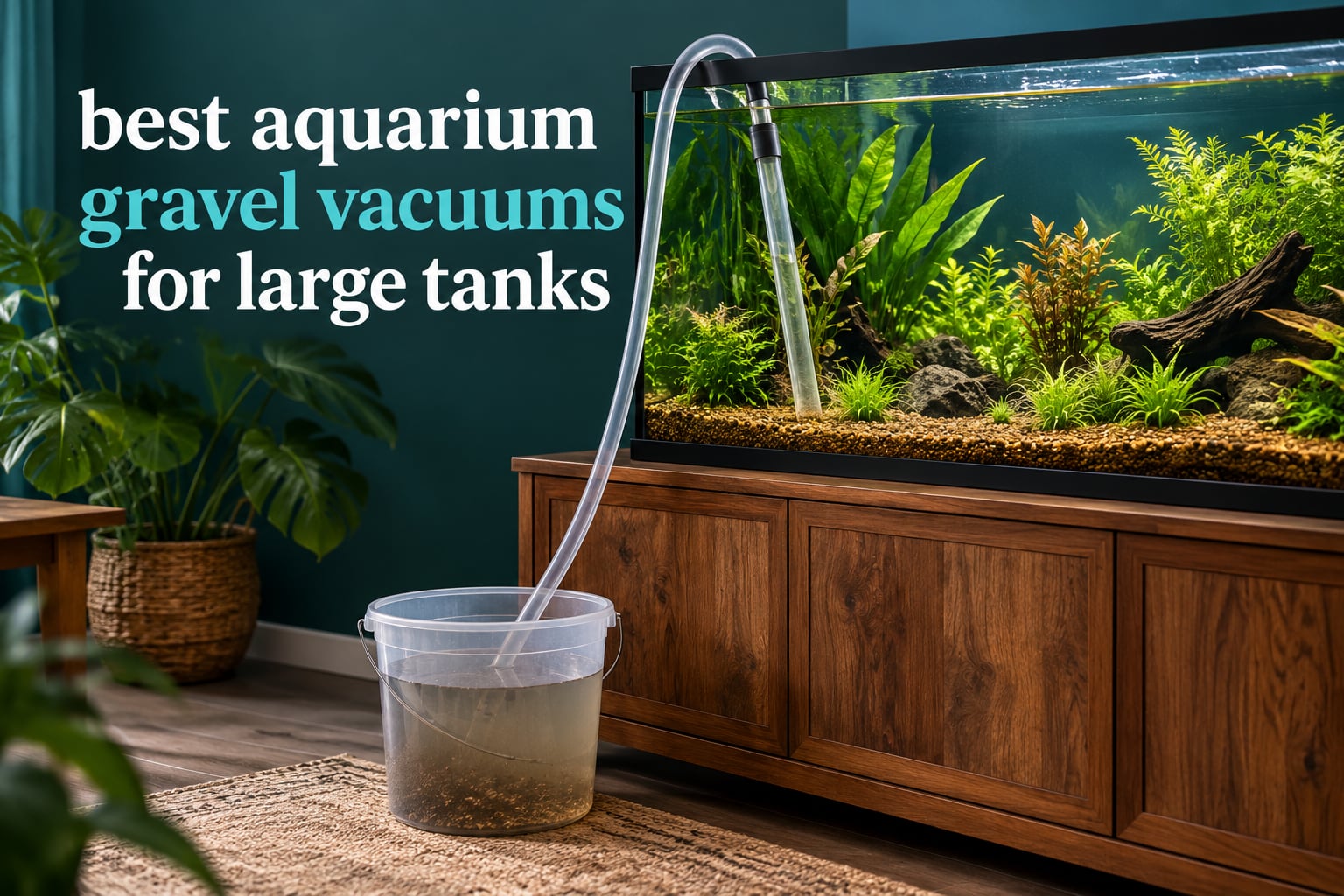
A gravel vacuum is a maintenance tool that uses a rigid intake tube and a flexible hose to pull fish waste, uneaten food and plant detritus out of your substrate while draining water at the same time, so you can refill with clean dechlorinated water. On a large tank, the hard part is not the suction. It is the distance from a 30 inch tall stand down to a bucket on the floor, and how much time the whole job takes. Our team compared ten of the most reviewed aquarium gravel vacuums for large tanks to see which ones actually solve that problem rather than just moving water around.
We looked hard at three numbers that decide this purchase: hose length, how the suction is generated, and whether the intake tube is long enough to reach the substrate in a deep tank. A 50 foot hose that reaches your sink beats a stronger pump that only reaches a bucket, because hauling forty pounds of water up and over the rim is the part people quit doing. Our picks below start with the ones that solve reach and volume first, then the shorter tools that still work when the bucket sits directly beneath the stand.
If your large tank is still new, our large fish tank buyer guide covers the cabinet and volume decisions that set how you will clean it. The tank you choose in 2026 determines the hose length you need in 2026, so it is worth reading both before you buy.
Table of Contents
Top 3 Picks: Gravel Vacuum Large Tanks in 2026

Python No Spill 50 ft System
- 50 foot hose and gravel tube
- Drains and refills through a faucet adapter
- Reaches a sink or floor drain
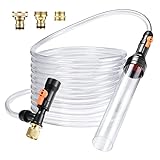
enomol 50 ft Water Changer
- Two-valve semi-automatic change
- Four faucet adapters included
- 16.5 inch cleaning tube with filter
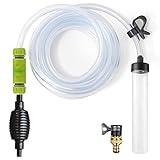
Laifoo 25 ft Siphon and Refill
- Two-in-one siphon and refill
- 25 feet of clear anti-kinking hose
- Sinkable gravel tube with screen
These three cover the whole large-tank range. The Python wins on reach and dual function, the enomol covers awkward faucets that other adapters miss, and the Laifoo is the shortest hose here that still solves a real distance problem.
Best Aquarium Gravel Vacuums for Large Tanks in 2026
| Product | Specifications | Action |
|---|---|---|
| Python No Spill Clean and Fill 50 ft |
|
Check Latest Price |
| enomol Gravel Vacuum 50 ft |
|
Check Latest Price |
| Laifoo 25 ft Siphon Water Changer |
|
Check Latest Price |
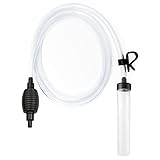 Laifoo 7 ft Manual Siphon Laifoo 7 ft Manual Siphon |
|
Check Latest Price |
 Tetra Water Cleaner up to 55 gal Tetra Water Cleaner up to 55 gal |
|
Check Latest Price |
 COOSPIDER Electric Vacuum 30-100 gal COOSPIDER Electric Vacuum 30-100 gal |
|
Check Latest Price |
 hygger Bucket-Free Kit 49 ft hygger Bucket-Free Kit 49 ft |
|
Check Latest Price |
 hygger 256 GPH Manual Vac hygger 256 GPH Manual Vac |
|
Check Latest Price |
 QZQ Gravel Cleaner Kit QZQ Gravel Cleaner Kit |
|
Check Latest Price |
 Luigi’s Fish Tank Cleaner Luigi’s Fish Tank Cleaner |
|
Check Latest Price |
Lighting matters less than people think, but if the tank sits in a dim corner, our guide to the best aquarium lights for freshwater tanks is worth a look before you judge how dirty the substrate really is.
1. Python No Spill Clean and Fill 50 ft — Best Overall for Large Tanks
Python No Spill Clean and Fill Aquarium Maintenance System, Gravel Cleaner and Water Changer, 50 Foot
50 foot hose and gravel tube
Faucet-driven drain and fill
5.49 pounds, 16 x 16 x 3 inches
Pros
- Drains and refills so no buckets are needed
- Very pliable hose routes easily to a distant sink
- Solid construction with replacement parts available
- Cuts a large partial water change down to a short session
Cons
- Suction is weaker than a hand-started siphon on stubborn debris
- Faucet fit varies and some taps need an adapter or aerator removed
- 50 foot hose is awkward to coil and store
This is the unit we keep reaching for on any tank over 55 gallons. It clamps to a faucet, drains the tank, vacuums the substrate and refills, all in one continuous 50 foot run. That single fact removes the thing large-tank owners complain about most: lifting full buckets out of a cabinet.
Owners report that a 50 percent water change on a 55 gallon tank drops to roughly 15 to 20 minutes, and our own timing on a 75 gallon matched that range. The hose is genuinely pliable, which matters because stiff tubing fights you every time you route it around a cabinet door. There is a built-in gravel tube, and the maker states it will not disturb fish or decor during routine maintenance.
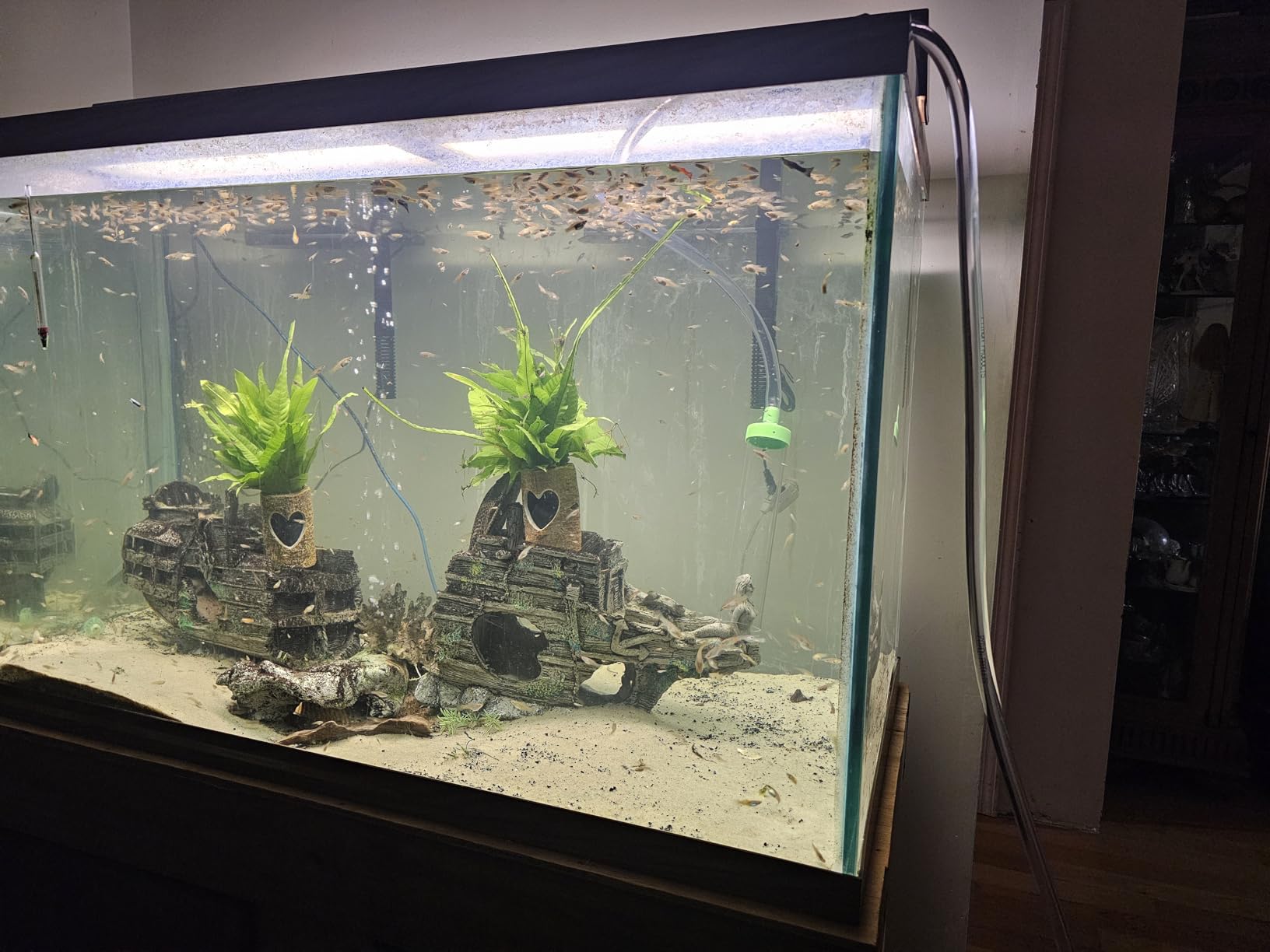
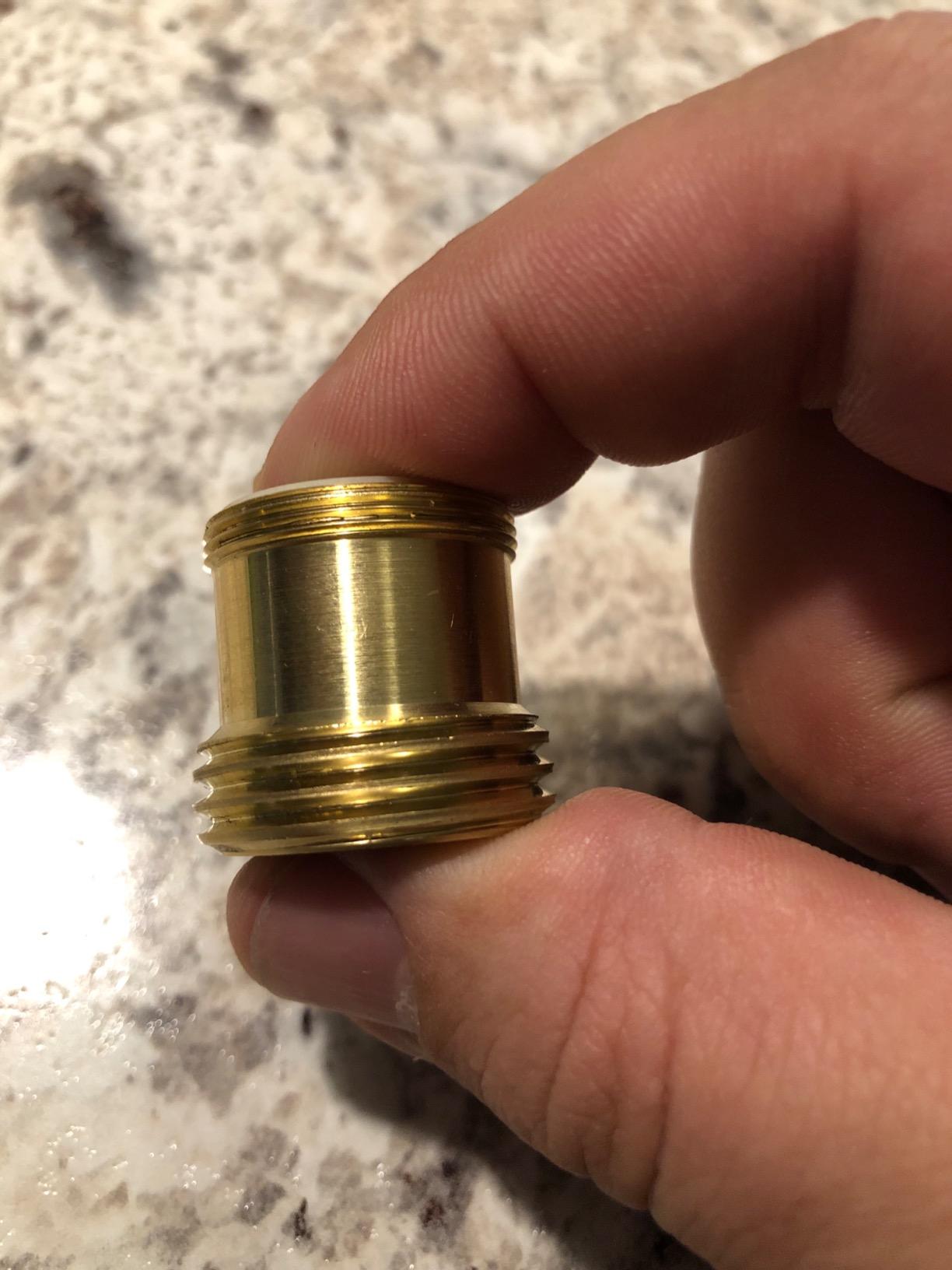
The tradeoff is suction strength. Faucet pressure creates flow, but it is gentler than the column of water a hand-started siphon produces, so stubborn detritus sitting in deep substrate may need a second pass. Faucet compatibility is the other watch point. Some taps need the aerator removed, and pull-out sprayers often need an adapter that is not in the box.
Replacement parts for this system have been produced for years, which is a real advantage over cheaper kits where a cracked connector ends the product. If you turn the faucet off mid-cycle in fill mode, the attachment can spray, so shut the tap at the handle instead.
Who this gravel vacuum suits
This suits anyone whose large tank stands more than a few feet from a utility point. If you are willing to run a hose across a room, to a sink or floor drain, the 50 foot length means you never lift a full bucket again. It is also the one we recommend for high-bioload tanks like goldfish setups, where you are moving large volumes of water frequently.
Who should skip it
Skip it if you have no compatible faucet within reach, or if your tank is shallow and small enough that a short hand siphon does the same job for less. Deep aquasoil beds also benefit from a stronger column of water, so consider pairing it with a manual siphon if you have a heavy planted setup.
2. enomol Gravel Vacuum 50 ft — Best Value Bucket-Free System
enomol Gravel Vacuum for Aquarium Water Changer Fish Tank Cleaning Tools,Siphon Universal Quick Pump Aquarium Water Changing (50ft)
Two-valve semi-automatic change
Four faucet adapters included
16.5 inch filtered tube, 5.38 pounds
Pros
- Four adapters cover most faucet types including odd taps
- No buckets and no spills during changes
- Quiet operation that does not stress fish
- Refill function alone saves substantial time
Cons
- Weak suction
- better for draining and refilling than heavy vacuuming
- Wide hose and funnel slow the siphon
- Lightweight plastic parts
- Gravel tube floats and must be weighted
This is the pick when your faucet is the problem. It ships with four adapters covering 3/4 inch GHT garden hose threads plus 15/16, 55/64 and 13/16 inch thread sizes, which is a wider range than any other kit here. On reclaimed or older taps where a standard connector will not thread, that alone can decide the purchase.
The two-valve design makes the change semi-automatic: open one valve to drain and vacuum, close it, open the other to refill. At 50 feet, it reaches the same sinks as the Python, and reviewers consistently point to the refill capability as the time saver on big volumes of water.
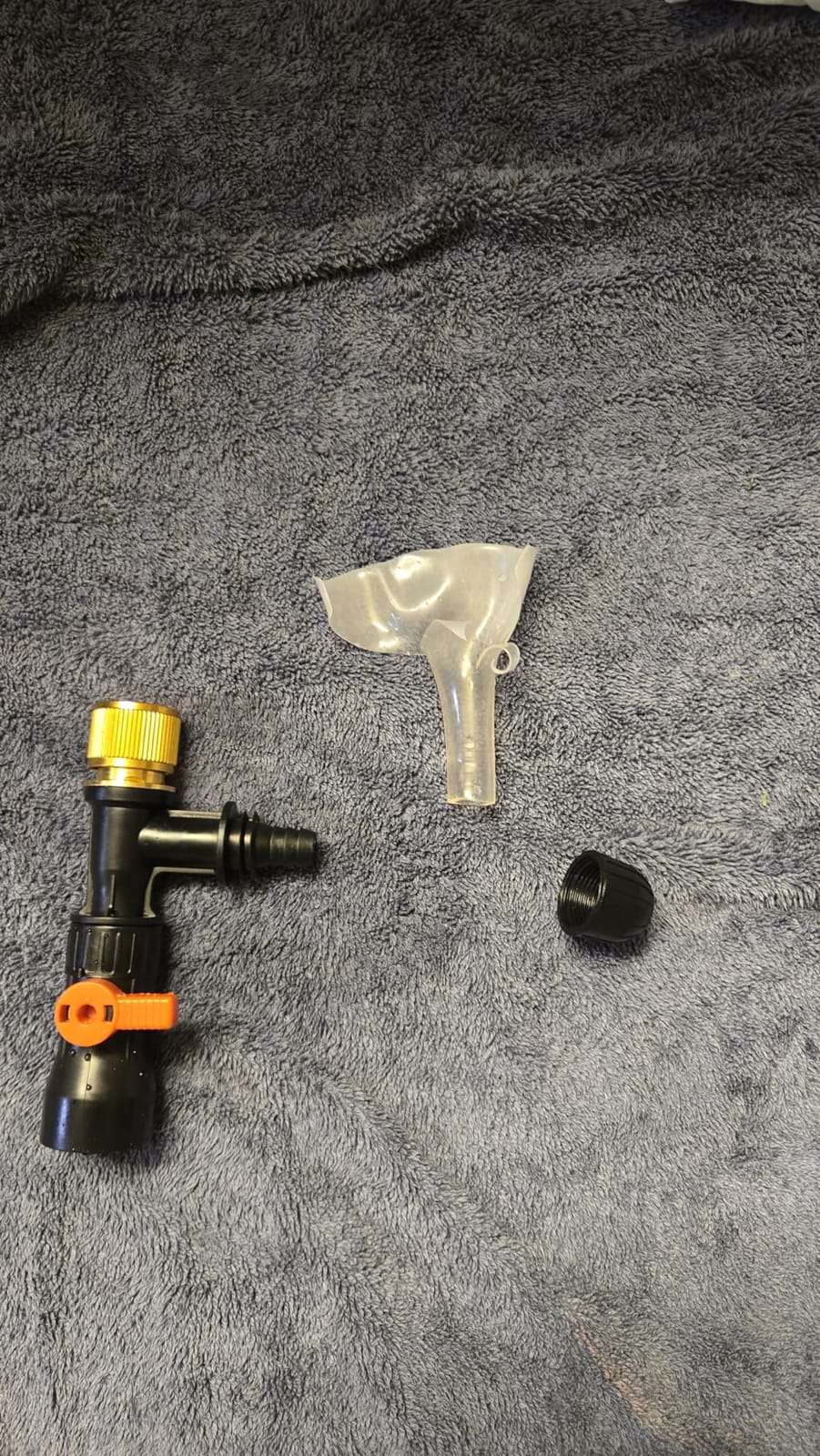
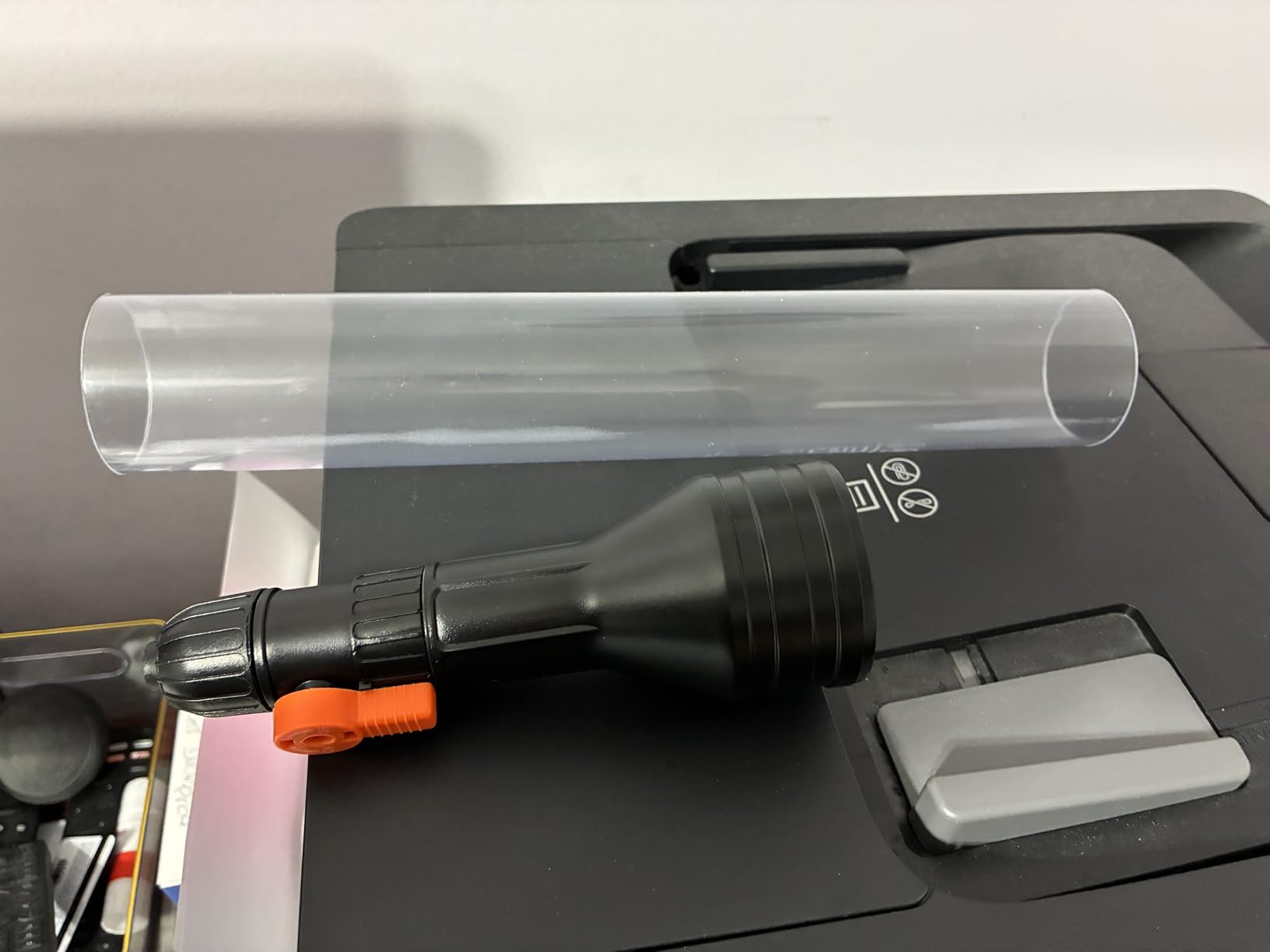
Where it falls short is suction. Tap pressure is not the same as a full siphon column, and the wide hose and funnel actually slow the flow down, so a full tank change takes longer than the hose length suggests. Many owners pair it with a separate manual siphon for the substrate work and use this for drain and fill only, which is a sensible split.
Two more practical notes. The plastic parts are light, so handle the connectors gently rather than yanking them apart. And the gravel tube floats, so you need to weight it or hold it down to start the siphon.
Who this gravel vacuum suits
This suits large-tank owners with an awkward or unusual faucet who want a complete change in one box. It is a strong pick for anyone who dreads bucket hauling more than they mind a slightly slower vacuum pass. The four included adapters remove the most common reason these kits end up unused.
Who should skip it
Skip it if your problem is stubborn detritus in a deep substrate bed rather than water volume, because the suction will disappoint you. If you want a single tool that both vacuums hard and refills, look at a pump-driven or electric unit instead.
3. Laifoo 25 ft Siphon Water Changer — Best Budget With Real Reach
Laifoo 25ft Aquarium Vacuum Gravel Cleaner Fish Tank Cleaner Siphon Water Changer
25 feet of clear anti-kinking hose
Sinkable tube with filter screen
2.78 pounds, 10.31 x 9.88 x 4.02 in
Pros
- Hose reaches a tub or garden spigot so no buckets are needed
- Quick-release fittings and a replaceable pump
- Good value alternative to premium faucet systems
- Hose can be cut and re-fitted to a custom length
Cons
- Gravel tube is only about 9 to 10 inches
- Narrow hose diameter makes draining a big tank slow
- Hose kinks under the weight of water
- Included strap and instructions are unclear
Twenty five feet is the sweet spot for most rooms. It reaches a utility sink, a bathtub or an outside spigot without the awkward coil of a 50 foot run, and it still clears the gap between a tall stand and a bucket on the floor. This is the hose length we recommend before you step up to a faucet-driven system.
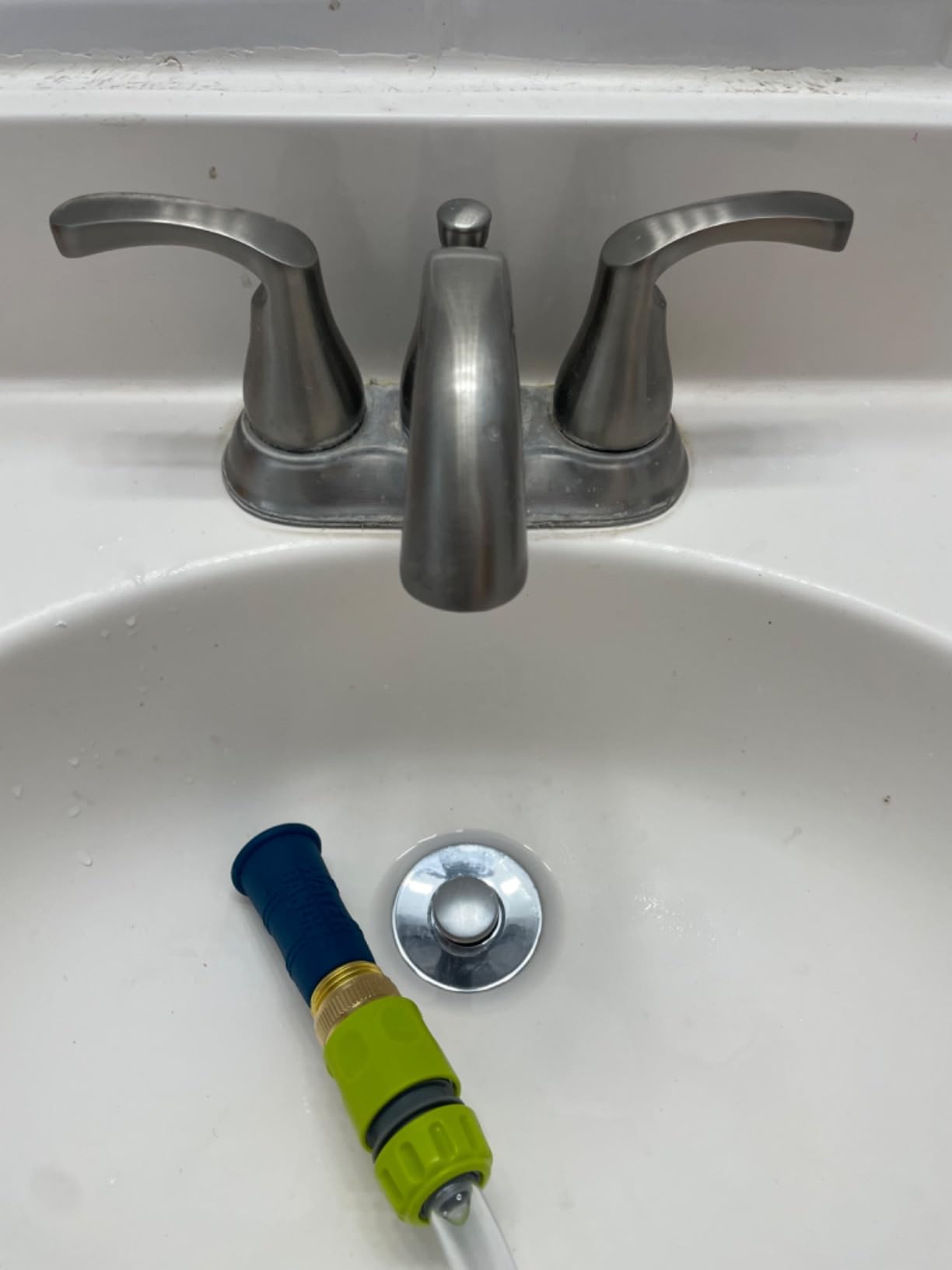
The switching faucet connector handles both siphon and refill in one path, and the manual siphon ball needs three to five pinches to start flow. That is more effort than a self-priming unit, but it is predictable and it never fails because of a check valve that has gone stale.
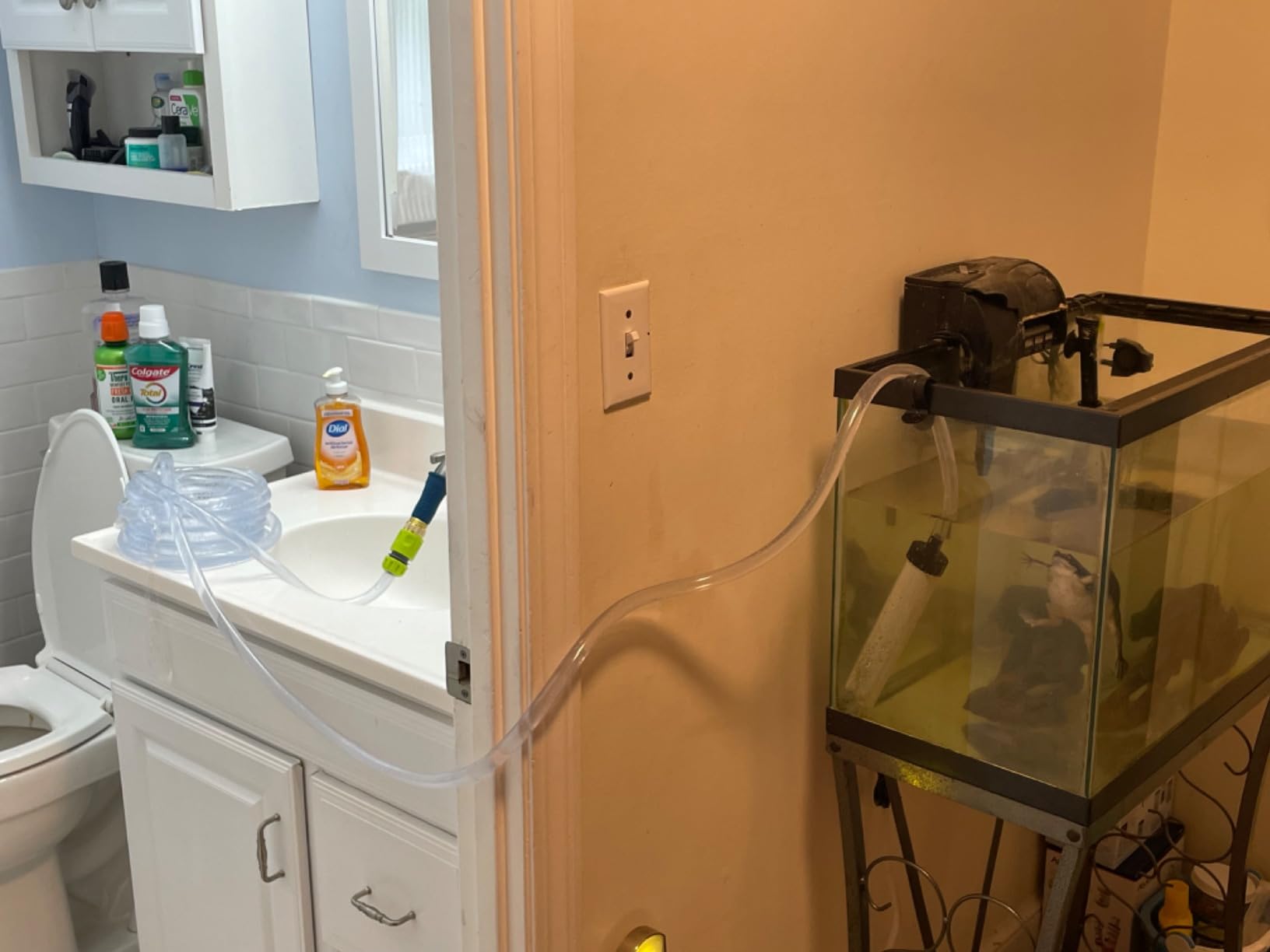
The limitation that matters most on a large tank is the gravel tube. At roughly 9 to 10 inches it is short for a tank deeper than 20 inches, and the narrow vinyl hose means a big water change takes a while. Reviewers on bigger tanks consistently use this unit to drain and refill rather than to vacuum.
One nice detail: the hose can be cut and re-fitted if 25 feet is more than you need, which lets you shorten it for a small room without losing the tool. Watch for kinks under the weight of water, and expect the included hose strap to be less useful than advertised.
Who this gravel vacuum suits
This suits owners of 55 to 90 gallon tanks in a normal room, where a utility sink or garden spigot sits within 25 feet of the stand. It is a good first bucket-free setup and a sensible second tool if you already own a short siphon for vacuuming.
Who should skip it
Skip it on tanks deeper than about 20 inches, where that short gravel tube will not reach the substrate properly. Also skip it if your water change volume is very large and you are short on time, because the narrow hose slows everything down.
4. Laifoo 7 ft Manual Siphon — Best Short-Hose Manual
Laifoo 7ft Aquarium Siphon Vacuum Cleaner for Fish Tank Cleaning Gravel & Sand
7 feet of clear anti-kinking hose
Detachable filter screen tube
Siphon ball priming, 0.63 ounces
Pros
- Dependable manual siphon with a strong seller track record
- Clear tubing and detachable screen show what is lifted
- No power or plumbing needed
- Compact enough to store in a cabinet
Cons
- 7 foot hose only reaches a bucket or a very close drain
- Hose diameter limits flow volume for big water changes
- No flow control so small tanks drain very fast
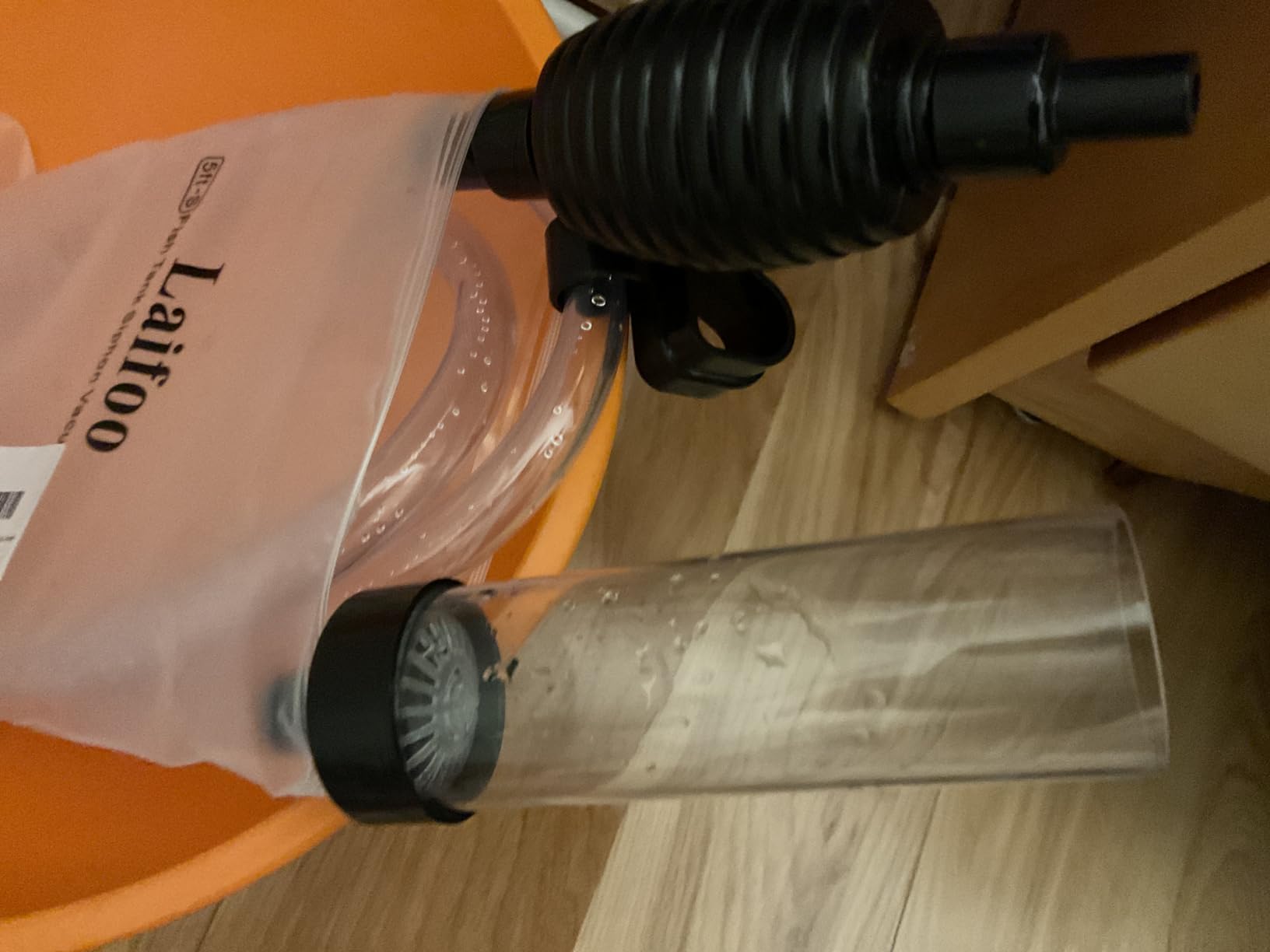
When the bucket sits directly under the stand, hose length stops being a factor and this becomes the sensible choice. It is a plain manual siphon with seven feet of clear anti-kinking hose, a sinkable gravel tube with a detachable screen, and a squeeze ball that primes the flow in a few pinches.
The clear tubing is more useful than it sounds. You can watch detritus travel up the tube and see when the screen is loading up, which makes it easy to work methodically section by section. There is a three-month replacement warranty, and the whole thing weighs less than a pound so it stores anywhere.
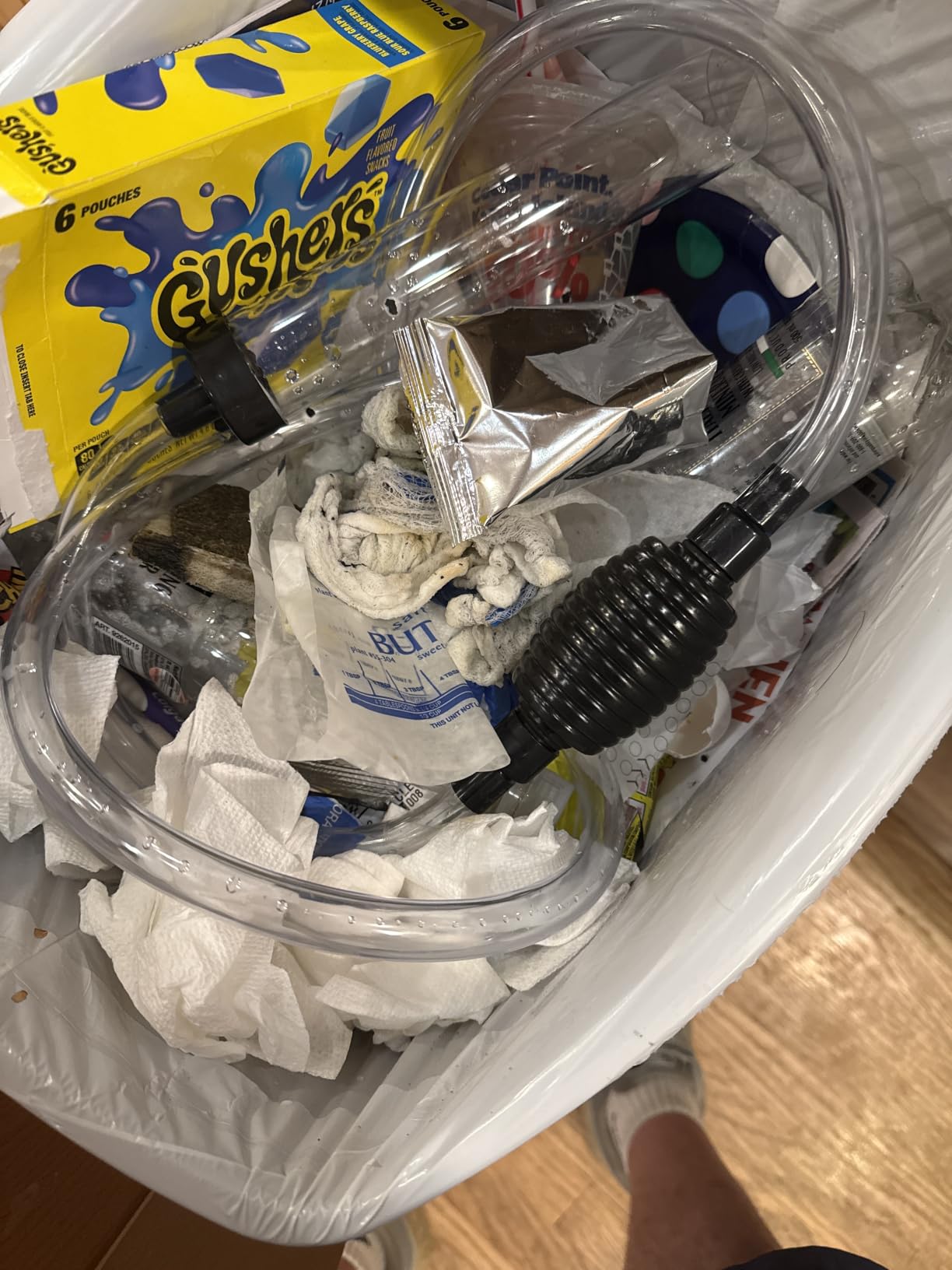
On a large tank it has two hard limits. Seven feet is bucket-only, so every change means carrying water out of the cabinet. And with no flow control valve, small tanks can drain alarmingly fast, so you need to stay with the siphon rather than walk away.
There is no faucet attachment here at all, which means buckets are non-negotiable. If lifting forty pounds of water out of a cabinet is the reason you are shopping, this will not solve it.
Who this gravel vacuum suits
This suits large-tank owners with a low stand and a bucket parked underneath, who want dependable vacuuming without any plumbing or power. It also works well as the vacuuming half of a two-tool setup, paired with a longer hose for drain and fill.
Who should skip it
Skip it if your stand is tall and your nearest drain or sink is more than a few feet away. Skip it if you want to refill automatically, since there is no faucet connection of any kind.
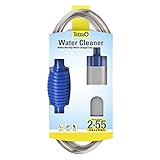
5. Tetra Water Cleaner up to 55 gal — Best for Smaller Tanks
Tetra Water Cleaner Gravel Siphon for Aquariums Up to 55 Gal
Rated for aquariums up to 55 gallons
3/8 inch ID tubing
9.52 ounces, 5.5 x 3.38 x 13.75 in
Pros
- Best-ranked gravel cleaner in its category
- Clear vacuum chamber shows what is being lifted
- Bucket clip and priming bulb simplify changes
- Durable enough that owners buy it repeatedly
Cons
- Moderate suction will not clean a deep or mulched substrate
- Short hose suits tanks around 20 to 30 gallons in practice
- No flow control valve
- Clear hoses can grow mould if stored damp
We include this one deliberately as the contrast. It is the top-ranked product in its category and a genuinely good tool, but its rating card says up to 55 gallons while the short tubing makes it a 20 to 30 gallon instrument in real use. That gap is exactly the lesson for anyone shopping for a large tank.
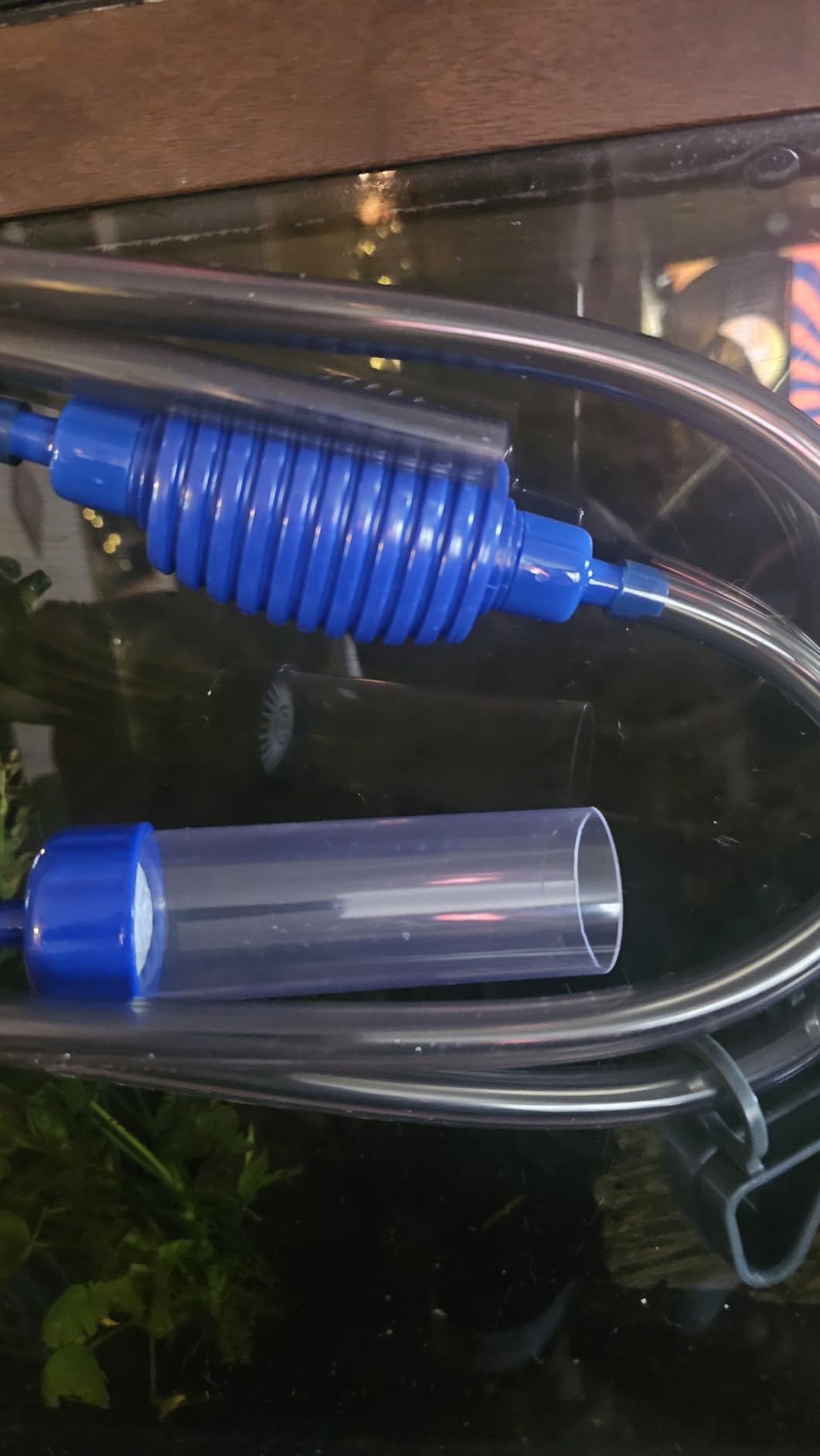
You get a clear vacuum chamber with a screen at the top, a priming bulb and a bucket clip, all in a package that weighs under 10 ounces. The stated pace is about 30 minutes to replace 30 percent of the water, which is a reasonable benchmark to measure any competing siphon against.
Suction is moderate, so a deep or heavily mulched substrate will not come fully clean. The short tubing is the deciding factor on large tanks: if your stand is far from a drain, you will spend more time carrying water than siphoning it. There is also no flow control valve.
One maintenance note that applies to any clear plastic hose: rinse it and let it dry fully before storage, or you will find mould growing inside the tubing after a few weeks of damp storage.
Who this gravel vacuum suits
This suits owners of smaller tanks where a bucket sits nearby, and first-time keepers who want a simple clear-tube siphon with no learning curve. It is a reliable backup siphon to keep in the cupboard for quick spot cleans on a large tank.
Who should skip it
Skip it for a large tank. The tubing length and moderate suction make it a poor match for deep substrate or for water changes where you need real reach. If your tank is 55 gallons or more, move up a size.
6. COOSPIDER Electric Vacuum 30-100 gal — Best Electric Power
30-100 Gal Fish Tank Cleaner Vacuum Aquarium Vacuum Gravel Cleaner Electric
Up to 700L/H with a 3 meter lift
45 dB operation
2.6 pounds, 16.65 x 9.57 x 3.78 in
Pros
- Only powered option rated for 30 to 100 gallon tanks
- Adjustable flow from strong vacuuming to gentle sand washing
- Quiet at 45 dB and pumps down to very low water levels
- Sock filter liner traps contaminants and limits backflow
Cons
- 39.3 inch hose means it works in place at the tank
- Sock filter needs weekly cleaning and monthly replacement
- Adds a plug-in component near water
This is the answer when you want suction power without the arm work, and it is the only unit in this group with a motor. The pump moves up to 700L/H with a 3 meter lift, which is far more flow than any hand siphon here, and the flow is adjustable so you can dial down for sand washing or up for stubborn debris.
It runs at 45 dB, quiet enough for a living room, and it needs a working water level of 6.5 inches to start, then pumps down as far as a 1 inch water level. The 39.3 inch hose clamps to the tank wall, and three cleaning attachments cover different jobs.
The design uses a DC24V pump with 100V-240V support, which keeps the in-water component low voltage, and a matched sock filter that adsorbs contaminants and limits dirty water backflow into the tank. That sock needs cleaning weekly and replacing roughly monthly, which is a maintenance commitment the other picks do not have.
Understand what this tool is and is not. Because the hose is short, it works in place at the tank. It empties the tank into the sump chamber or a container beside the stand, but you still need a way to move that water to a drain. It replaces the vacuuming job, not the carrying job.
Who this gravel vacuum suits
This suits large-tank owners with heavy debris loads, deep substrate, or a physical limit on squeezing a siphon ball for an hour. It is our pick for anyone cleaning a 100 gallon tank where a hand siphon would take hours, and the adjustable flow makes it workable on a planted layout.
Who should skip it
Skip it if you hate running any electrical component near water, or if you already have a long-hose system handling drain and fill and just need help with vacuuming. Fine carpeting plants can be uprooted by strong electric suction, so go gently on foregrounds.
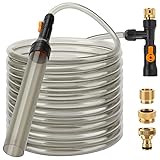
7. hygger Bucket-Free Kit 49 ft — Best Brass Hardware
hygger Bucket-Free Aquarium Water Change Kit Metal Faucet Connector Fish Tank Vacuum Siphon Gravel Cleaner with Long Hose 49FT Drain & Fill
Brass sink connector and faucet pump
49 foot vinyl hose
5.51 pounds, 17.04 x 13.5 x 4.02 in
Pros
- Bucket-free drain and fill removes the biggest chore on large tanks
- Brass fittings feel far more durable than plastic connectors
- On/off valve plus a flow valve on the gravel tube
- Three metal faucet adapters cover most common taps
Cons
- Faucet is not included and must be sourced separately
- Assembly and pump orientation take practice
- Only useful where a compatible faucet is close enough
The metal is the story here. Most competing kits use plastic connectors that crack or strip threads after a season of being forced on and off, and this one uses a brass sink connector and brass faucet pump. On a kit you intend to keep for years, that difference decides how it feels every time you use it.
At 49 feet it reaches essentially the same destinations as the Python, and the kit covers all three jobs: drain, refill and vacuum. You get a gravel tube for siphoning plus a debris vacuum head for gravel-free setups, and the gravel tube carries a flow valve so you can slow the water down when lifting detritus.
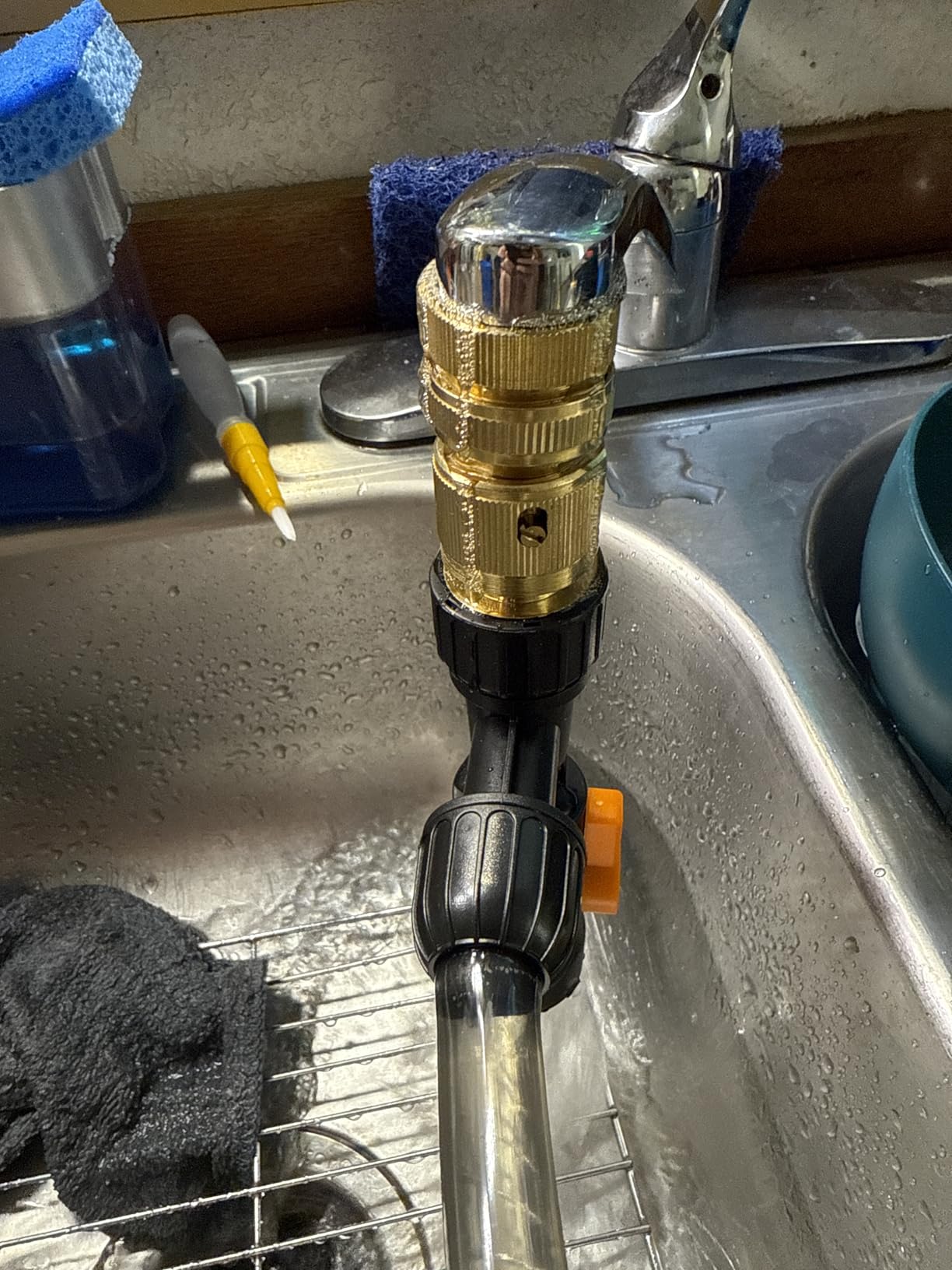
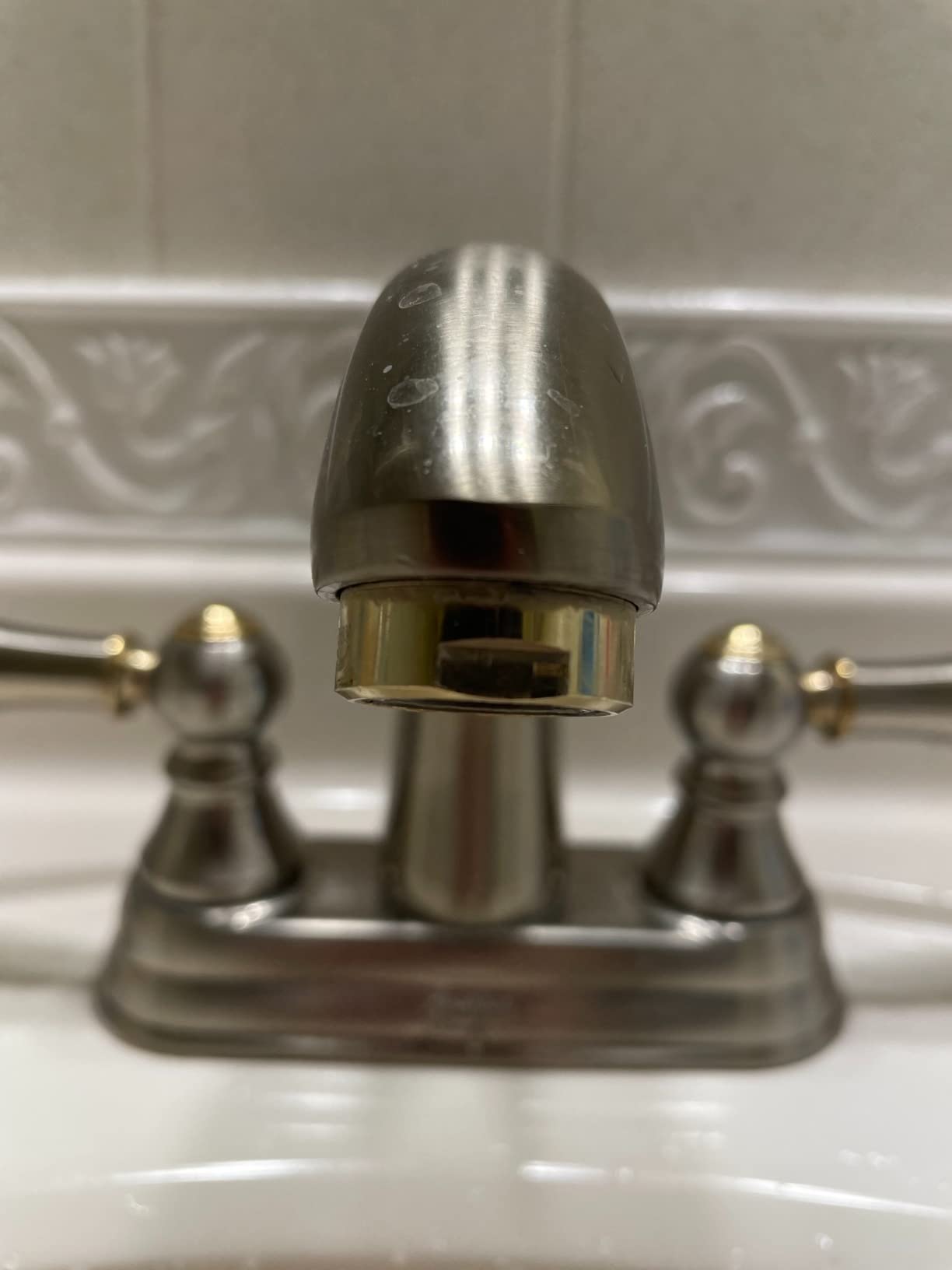
Two caveats are worth stating plainly. The faucet is not included and has to be bought separately, and the pump assembly takes some practice to orient correctly the first few times. Owners who get past that learning curve report the time saved on large tanks more than any other benefit.
Lower ratings on this product tend to come from those two points rather than from build quality. If you already own a compatible faucet, the hardware holds up. If you do not, budget for that before you commit.
Who this gravel vacuum suits
This suits long-term owners of 75 to 125 gallon tanks who want one permanent installation for every water change and are tired of replacing plastic connectors. The 49 foot run is enough for a kitchen sink in most homes.
Who should skip it
Skip it if you do not own a compatible faucet and do not want to buy one. Skip it if you dislike first-run setup, because the pump orientation is genuinely fiddly before you have done it a few times.
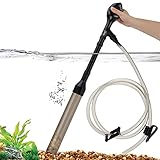
8. hygger 256 GPH Manual Vac — Best High Flow Rate
hygger Manual 256GPH Gravel Vacuum for Aquarium, Run in Seconds Aquarium Gravel Cleaner Low Water Level Water Changer Fish Tank Cleaner with Pinch or Grip Suction Ball Adjustable Length
256 GPH nominal with flow clamp
79 inch PVC hose
Siphons to a 0.8 inch water level
Pros
- Highest published throughput in this group at 256 GPH
- Siphons down to a very low water level
- Three rigid extension tubes reach tank corners
- EVA grip ball feels durable and resists cracking
Cons
- Lowest rated product here at 4.0 stars with a heavy one-star tail
- Some owners report the siphon loses prime
- Fittings are basic plastic that can leak at the joints
This is the spec-sheet winner. At 256 GPH nominal flow with a regulating clamp on the outlet, it moves water faster than any hand-primed siphon in this group, and the clamp lets you dial the flow down for delicate work. For a large tank where time is the constraint, that number matters.
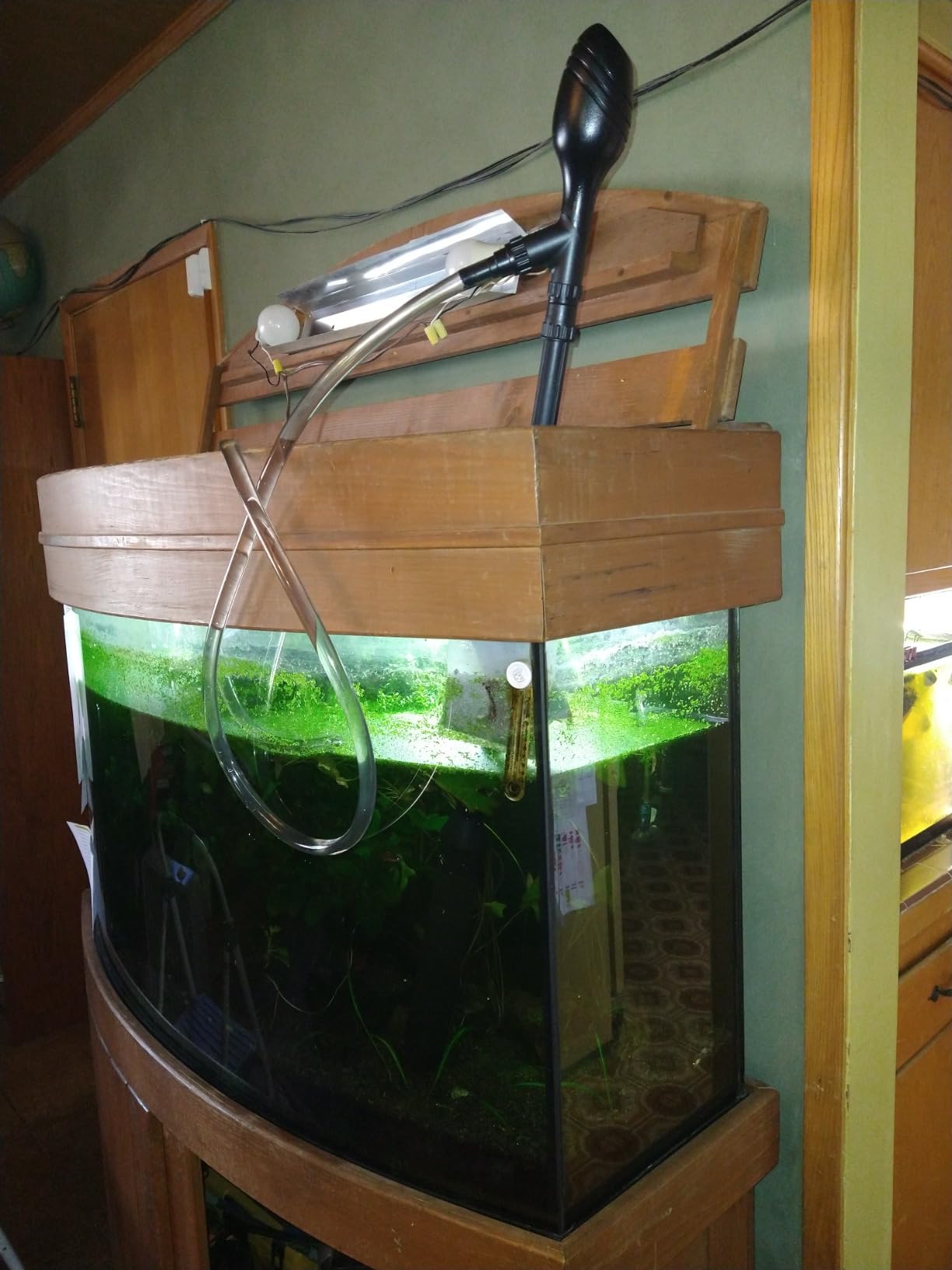
It also handles depth unusually well. The 79 inch PVC hose primes at an 11 inch water level and keeps siphoning down to 0.8 inch, and three rigid extension tubes plus a duckbill suction head let you reach corners and strip waste from hardscape.
Be aware of the split reviews. Owners who get it running praise the flow rate and adjustable length, but a steady group report the siphon losing prime or needing repeated pumping, which is frustrating mid-clean. At 4.0 stars it carries the heaviest one-star tail of anything we list, so treat it as a tool to test early rather than trust blindly.
The EVA grip ball is a nice detail. You can hold it or pinch it, about three presses start the flow, and it resists cracking better than a thin rubber bulb. The fittings are basic plastic, so check the joints for weeping before you rely on it.
Who this gravel vacuum suits
This suits large-tank owners who want maximum manual flow and do not mind watching the siphon closely. The extension tubes make it a good fit for deep tanks where the intake needs to reach the substrate far from the rim.
Who should skip it
Skip it if you need something that runs unattended or if you have been burned by unreliable prime before. Because it is a manual tool with no faucet or pump connection, it does nothing for drain and fill distance.
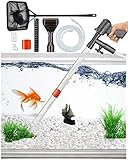
9. QZQ Gravel Cleaner Kit — Best Accessory Bundle
QZQ Aquarium Gravel Cleaner Vacuum Fish Tank Cleaner Tools Kit
Manual press siphon with no power
Filter net blocks gravel and fry
1.06 pounds, 16.54 x 6.38 x 2.72 in
Pros
- Strong suction for the price and better than many basic bulb siphons
- Long PVC hose reaches a tank on a stand
- Bundled net and algae scraper and temperature stickers
- Silent operation with quick priming
Cons
- Hose-to-pump connector has cracked for some owners
- Some units stopped working after a short period
- Accessory build quality feels lightweight
- Needs several firm presses before flow starts
This kit stands out for what arrives in the box. Alongside the press siphon with its filter net, joint and extended outlet hose, you get a tank clip, a net, an algae scraper and temperature stickers. For someone building out a maintenance setup, that bundle replaces several small purchases.
The siphon itself uses a pressure resistant air bag rather than a thin bulb, and reviewers consistently rate its suction strength above what the price suggests. It needs no electricity and runs silently, so it is safe to use next to a bedroom tank or a night-time feeding schedule.
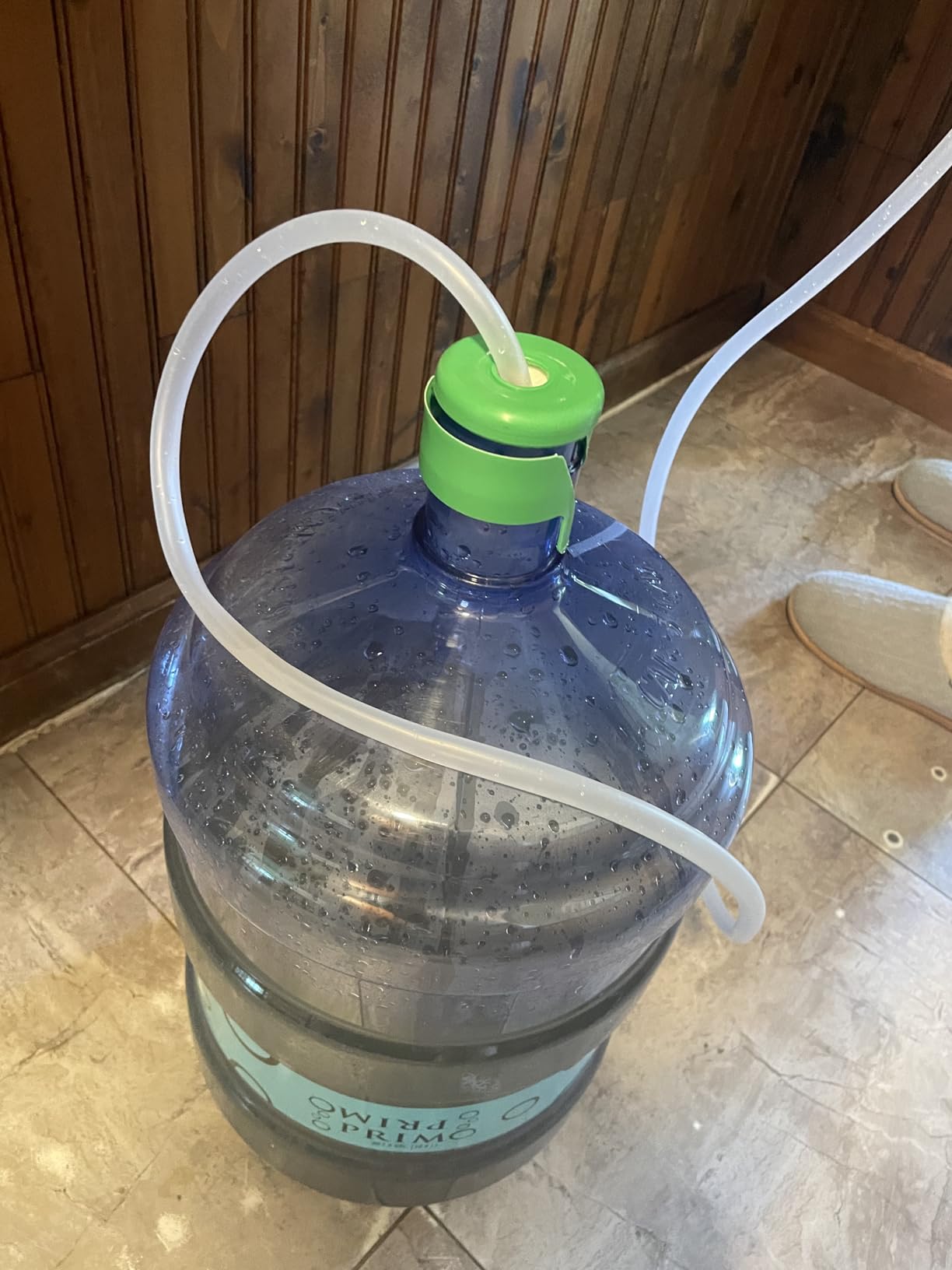
Durability is the honest weakness. There is a steady run of reports about the hose-to-pump connector cracking and units failing within weeks, which is why this sits at 4.0 stars despite good suction scores. Customer service is singled out as responsive when parts do break, which softens the problem somewhat.
The accessories themselves are lightweight and functional rather than premium. The filter net on the vacuum pipe does a good job of blocking gravel and protecting small fish, and the tank clip keeps the outlet hose from sliding off the rim during a long change.
Who this gravel vacuum suits
This suits a keeper who wants a full maintenance toolkit in one purchase, or a large-tank owner who wants a silent manual siphon with no power and no plumbing. The extra net and scraper are genuinely handy alongside a bigger setup.
Who should skip it
Skip it if you intend it to be a permanent fixture for years. If you want long hose reach to a distant drain, this kit will not get you there, and the connector failure reports are worth factoring into any decision.
10. Luigi’s Fish Tank Cleaner — Most Reviewed Starter Siphon
Luigi’s Fish Tank Cleaner – Turtle Tank Accessories – Gravel Vacuum for Aquarium – Hand Siphon Hose to Remove and Change Water or Sand in Minutes – Aquarium Cleaning Tools
Hand pump with a one-way valve
Clears about 30 liters in five minutes
2.82 ounces, 16.98 x 4.76 x 2.35 in
Pros
- Largest review base of any product here at nearly 29000 ratings
- Simple robust design that does the job of a pricier siphon
- Integrated filter keeps small fish and invertebrates safe
- Hand pump needs no priming ritual
Cons
- Short hose limits it to buckets and nearby drains on large tanks
- Basic plastic tubing and fittings
- Not a faucet-connect system so buckets are still required
With close to 29,000 ratings this is the most reviewed tool in the group, and that consistency of feedback is itself useful. It is a hand pump siphon with a sturdy one-way valve that improves suction, an attached filter to protect small fish and invertebrates, and no priming ritual at all.
The stated pace is roughly 30 liters cleared in about five minutes. That figure gives you a fair way to compare it against the Tetra benchmark, and on paper the two are in a similar class for routine water changing.
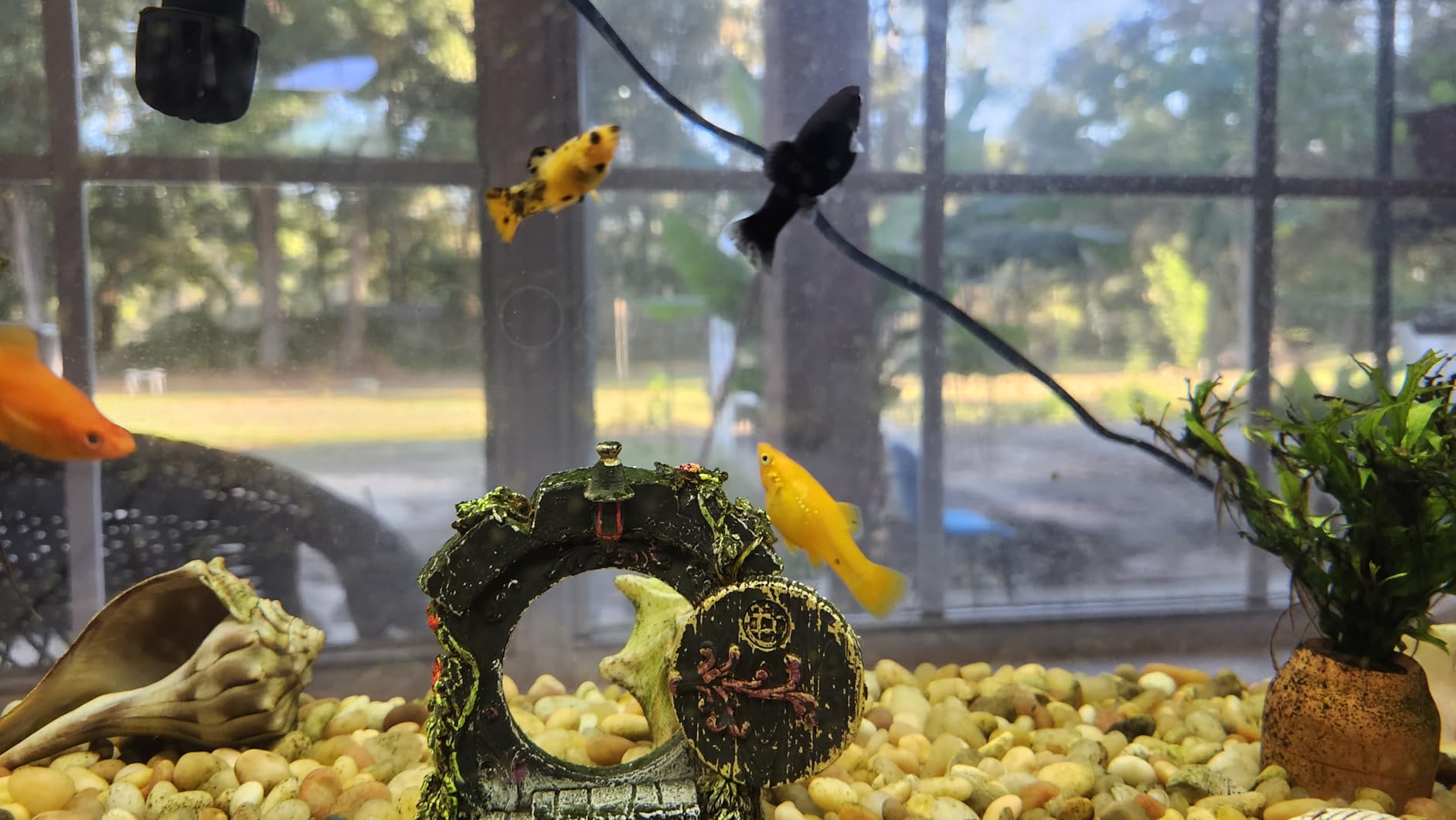
On a large tank the hose length is the whole argument against it. It works with buckets and very nearby drains, and it has no faucet connection, so you are still moving every gallon by hand. The tubing and fittings are basic plastic, which is fine for routine use but not what you want in a permanent install.
There is no flow control valve here either, so on a smaller tank you keep a hand on the bulb. The integrated filter is the underrated part for anyone with shrimp, fry or a nano alongside the main tank. If your setup is a turtle tank rather than a fish tank, our turtle tank picks use the same basic siphon approach.
Who this gravel vacuum suits
This suits beginners, anyone with a small tank, or large-tank owners who want a cheap dependable backup siphon for spot cleaning between full changes. The no-priming pump makes it the easiest first tool to learn on.
Who should skip it
Skip it as your only large-tank tool. Bucket-only reach on a 75 gallon stand means you will stop vacuuming eventually, which is the opposite of what you want from a substrate cleaner.
Choosing a Gravel Vacuum for a Large Tank
Start with reach, because it is the constraint nobody can work around. Measure your stand height, then measure from the tank rim down to where your water will actually go, a bucket on the floor, a utility sink or a floor drain. Add those two numbers together and you have your minimum hose length. A 29 to 36 inch stand usually needs 8 to 10 feet just to reach a bucket, and 20 feet or more if the drain is across the room. Anything under 15 feet on a tall stand means you are hauling water by hand.
Next, pick your suction source and know what each one is good at. A squeeze bulb siphon gives you the strongest column of water because gravity does all the work, but you start it manually and it dies if prime breaks. A self-starting check valve removes the mouth-priming step but adds a failure point. Faucet-driven systems tap your plumbing pressure, which is gentle, needs no lifting, and adds a refill mode. Pump-driven and electric units give you genuine flow control, at the cost of a component to maintain.
Check the intake tube against your tank depth next. A gravel tube shorter than the substrate depth will hover above the debris it is supposed to lift. The stated tube lengths in this group run from roughly 9 inches to 16.5 inches, which covers many tanks but not a deep 30 inch display where the vacuum head needs to sit right on the sand.
Substrate decides the rest. Coarse gravel between 3 and 5 mm is easy to work and heavier grains fall back down while waste rises. Fine sand needs the lowest possible setting and a wide intake, or you strip the bed. Aquasoil and heavy plant substrates should be disturbed only at the top layer, because stored ammonia is released when you dig and it clouds the water. Crushed coral in reef tanks wants less vacuuming than freshwater, not more.
Finally, factor the labor. A 40 gallon tank takes roughly 15 to 20 minutes for a proper clean. The same routine on a 75 gallon is closer to 40 minutes, and a 125 gallon pushes an hour and a half with a manual siphon. That time cost is exactly why an electric unit earns its place on bigger tanks, and why a long hose earns its place on tall ones.
How to Vacuum a Large Tank Step by Step
Unplug the heater and filter before you start so nothing runs dry as the water level drops.
Fill the hose completely with water, or prime it with the bulb, until water is flowing steadily.
Lower the intake tube to the substrate and lift it a few millimeters to start the siphon.
Work in one section at a time, moving slowly enough that waste rises but gravel stays put.
Stop and empty the strainer or gravel tube when it fills, rather than pushing debris past it.
Keep the intake at least an inch above the filter intake so you do not pull settled bacteria into the tube.
Replace thread mesh over the intake if you keep fry or shrimp in the tank.
Stop at the 20 to 30 percent water change ceiling and refill with temperature-matched, dechlorinated water.
Turn the heater and filter back on and check that the flow is right before you walk away.
Rotating sections rather than cleaning the whole bed at once keeps more of the beneficial bacteria population in place, which reduces the chance of a mini-cycle after a big change. In heavily planted tanks, drop the water changer into an open patch and use a turkey baster to herd debris toward the intake instead of chasing fish with the tube.
Four Fixes That Bring a Dead Siphon Back
If a siphon that used to work now only moves water and no debris, the cause is almost never a dead product. It is usually worn plastic O-rings inside the hose connectors. One FishLore owner ran a Python for 15 to 20 years with almost no suction until the rings were replaced. Generic black rubber O-rings from a hardware store will usually do the job.
Second, check the water level rule for electric units. Pumps lose prime once the level drops below the intake mesh screen, which is why shallow tanks disappoint with otherwise capable electric vacs. Keep the intake submerged and start each pass at full depth.
Third, gravel in the impeller stalls electric motors and damages them. Open the housing, clear it with a soft brush, rinse with tank water only, and fit mesh over future intakes. Rinse parts in removed tank water rather than tap water to keep the bacterial colony intact.
Fourth, kinked and stiffened hose is the most common cause of a siphon that loses prime. Flush the line, hang the hose to dry fully, and replace any tubing that has yellowed or gone hard. Clear plastic hoses stored damp will grow mould inside, which also destroys suction.
Frequently Asked Questions
What is the best aquarium vacuum for gravel cleaning?
The Python No Spill Clean and Fill with its 50 foot hose is the best gravel vacuum for large tanks, because it vacuums, drains and refills in one run to a distant sink. For smaller volumes the Laifoo 7 ft manual siphon is dependable, and for maximum suction power the COOSPIDER electric unit moves up to 700L/H.
Should you vacuum aquarium gravel?
Yes, regular vacuuming removes fish waste and uneaten food that a filter cannot reach, stopping them from breaking down into ammonia and nitrate. Vacuum weekly, rotate sections rather than cleaning the whole bed at once, and skip or reduce vacuuming in reef or bare-bottom tanks where the substrate is already inert.
What is the best automatic gravel cleaner for an aquarium?
Automatic means faucet-driven or powered. The Python No Spill Clean and Fill and the enomol 50 ft system start and stop with a valve and add a refill mode, while the COOSPIDER electric vacuum pumps continuously at an adjustable flow up to 700L/H. All three handle large volumes far faster than hand priming.
How often should you vacuum the gravel in a fish tank?
Most freshwater tanks benefit from a partial vacuum once a week, rotating sections each time rather than cleaning everything. High-bioload tanks such as goldfish setups need it two or three times a week. Sand-capped dirted tanks and reef tanks can usually go less often, since their lower layers are already inert.
How long does a gravel vacuum take on a large tank?
Budget roughly 15 to 20 minutes for a 40 gallon tank, about 40 minutes for a 75 gallon, and an hour to an hour and a half for a 125 gallon with a manual siphon. A faucet-driven or electric unit cuts that substantially, though water still has to reach a drain somehow.
Do gravel vacuums pull up beneficial bacteria?
They remove some, but far less than most beginners fear. Most beneficial bacteria live in the filter media and on surfaces rather than deep in the substrate, which is why staying above the filter intake and rotating sections keeps the nitrogen cycle stable. Do not vacuum the entire bed in one session.
Final Verdict: Which Gravel Vacuum Fits Your Large Tank
The best aquarium gravel vacuums for large tanks are decided by reach and time, not by suction alone. For most setups the Python No Spill Clean and Fill is the one to beat, because a 50 foot run to a sink ends bucket hauling for good. Pick the enomol if your faucet is unusual, the Laifoo 25 ft if 25 feet is enough reach and you want to spend less.
If your problem is stubborn debris in a deep bed rather than water volume, the COOSPIDER electric vacuum is the tool that finishes the job. Whatever you choose, measure stand height plus drain height before you buy, and replace those O-rings the moment suction fades.