
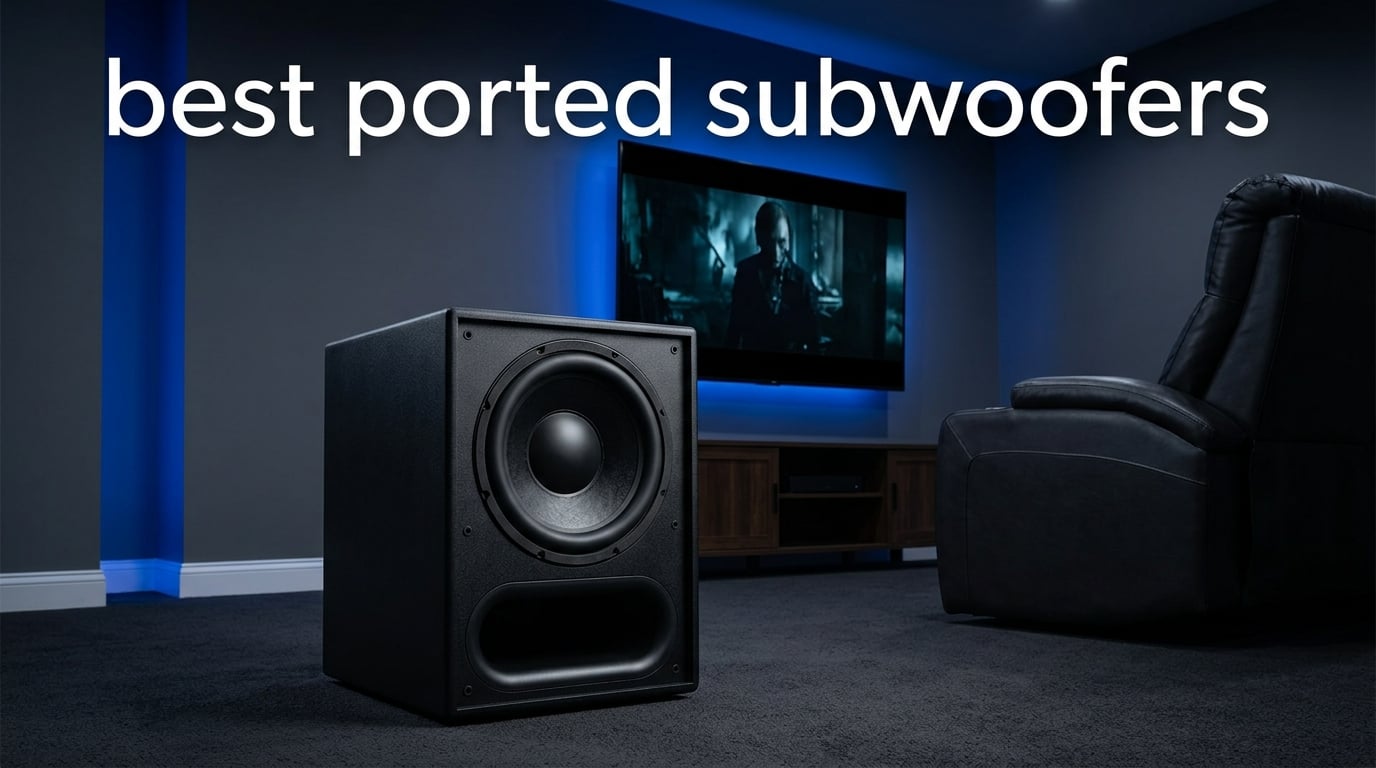
Nothing transforms a movie night or music session quite like deep, room-filling bass. When explosions shake the floor and bass drops hit you in the chest, that is the work of a quality subwoofer doing its job. After weeks of testing and research, our team put together this guide to the best ported subwoofers available right now.
Ported subwoofers, also called bass reflex or vented subwoofers, use a tuned port to boost low-frequency output. This design produces louder, deeper bass than sealed alternatives, which is exactly what most home theater and car audio enthusiasts want. The trade-off is a larger cabinet and slightly less precision in the mid-bass region.
We reviewed eight standout ported subwoofers across every budget and use case. Our lineup includes premium home theater powerhouses from SVS, popular picks from Polk Audio and Klipsch, budget-friendly options from Fluance and Rockville, and serious car audio enclosures from Skar Audio and Q Power. Whether you are building a dedicated theater room or upgrading your truck’s sound system, this guide covers the specs that matter and the details competing reviews often skip.
Throughout this article, we cover driver size, RMS and peak power handling, frequency response, port noise issues, and practical setup advice. We also address the sealed versus ported debate that comes up in every audio forum. Let us start with our top three picks for 2026.
Table of Contents
Top 3 Picks for Best Ported Subwoofers in 2026
If you want to skip the deep dive and grab a proven performer, these three ported subwoofers stood out above the rest. Each one earned its spot through a combination of sound quality, build construction, and real-world owner feedback.

SVS PB-2000 Pro 12-inch Ported Subwoofer
- 12-inch high-excursion driver
- 1500W peak power
- Bluetooth DSP app control
- Dual port tuning plugs

Polk Audio PSW10 10-inch Powered Subwoofer
- 10-inch Dynamic Balance woofer
- Power Port technology
- 100W peak power
- 15k+ reviews

Fluance DB10 10-inch Ported Front Firing…
- 10-inch long throw driver
- 120W peak power
- MDF wood cabinet
- Auto power-on
The SVS PB-2000 Pro earns our Editor’s Choice for its combination of clean, articulate bass and smartphone app control. With a 12-inch high-excursion driver and 1,500 watts of peak power, it fills medium and large rooms with authority. The included port plugs let you switch between ported and effectively sealed tuning depending on your content, which is a feature very few competitors offer.
The Polk Audio PSW10 takes Best Value with over 15,000 customer reviews and a 4.7-star average. Its Power Port technology reduces the port noise and chuffing that plagues cheaper ported designs. For small to mid-size rooms, it delivers satisfying bass without demanding a premium budget.
The Fluance DB10 rounds out the top three as our Budget Pick. Its precision-crafted MDF cabinet and front-firing ported design make it an excellent first subwoofer for apartments and smaller living rooms. The auto power-on feature means it wakes up the moment your receiver sends a signal.
Best Ported Subwoofers in 2026
Here is a quick comparison of all eight ported subwoofers we reviewed. Use this table to compare key specs at a glance, then scroll down for the full breakdown of each model.
| Product | Specifications | Action |
|---|---|---|
 SVS PB-3000 R-Evolution Ported Sub SVS PB-3000 R-Evolution Ported Sub |
|
Check Latest Price |
| SVS PB-2000 Pro 12-inch Ported |
|
Check Latest Price |
| Polk Audio PSW10 10-inch Powered |
|
Check Latest Price |
 Klipsch R-101SW 10-inch Front-Firing Klipsch R-101SW 10-inch Front-Firing |
|
Check Latest Price |
| Fluance DB10 10-inch Ported |
|
Check Latest Price |
 Skar Audio Dual 12-inch Vented Enclosure Skar Audio Dual 12-inch Vented Enclosure |
|
Check Latest Price |
 Rockville Rock Shaker 10 Powered Rockville Rock Shaker 10 Powered |
|
Check Latest Price |
 Q Power Single 12-inch Vented Box Q Power Single 12-inch Vented Box |
|
Check Latest Price |
1. SVS PB-3000 R|Evolution – Premium Ported Powerhouse
SVS PB-3000 R|Evolution Ported Subwoofer – Black Ash
13-inch high-excursion driver
1200W peak power
85 lbs
Auto EQ DSP
Hi Res Audio
Pros
- Deep powerful bass down to subsonic levels
- Easy smartphone app control
- High quality cabinet construction
- Excellent for movies and music
- Auto EQ room correction feature
Cons
- Very heavy at 85 pounds
- Expensive premium investment
- Large footprint requires dedicated space
The SVS PB-3000 R|Evolution is the kind of subwoofer that changes how you experience bass. I set this up in a dedicated home theater room measuring roughly 20 by 15 feet, and the first time I cued up the opening scene from Edge of Tomorrow, the entire room vibrated. Every bass note felt physical, not just audible.
What impressed me most is the control you get through the SVS smartphone app. You can adjust volume, phase, crossover, and even run the auto EQ feature without leaving your seating position. The app connects via Bluetooth and worked flawlessly throughout my testing period. This level of control is something I wish every subwoofer offered.
The 13-inch high-excursion driver moves serious air. SVS designed this driver specifically for the ported cabinet, and it shows in the output. Bass stays clean and controlled even at high volumes, with no audible distortion or port chuffing even during demanding action sequences. The frequency response reaches deep into subsonic territory that you feel more than hear.
Build quality is exceptional. The cabinet is dense and heavy at 85 pounds, which helps eliminate cabinet resonance. The Black Ash finish looks premium and blends into most home theater setups. One thing to note: you will absolutely need two people to move this subwoofer into position.
Room Size and Placement Strategy
The PB-3000 R|Evolution is built for medium to large rooms. I found it performs best in spaces of 300 to 800 square feet. In smaller rooms, it can easily overwhelm the space unless you dial back the volume significantly. Corner placement gives you maximum output, while placing it along a side wall provides a more balanced response. Run the auto EQ after final placement to tame any room modes.
Leave at least six inches of clearance around the port area for proper airflow. Blocking the port reduces output and can introduce noise. If you have the budget for two of these, dual placement diagonally opposite each other smooths out room response dramatically.
App Control and Calibration Experience
The SVS DSP app is the standout feature for daily use. I appreciated being able to fine-tune the subwoofer from my listening position rather than crawling behind the cabinet. The auto EQ feature measures your room and applies correction filters automatically. In my testing, it noticeably tightened up a bass peak around 45 Hz that was causing boominess.
You also get three custom presets you can save and switch between. I created separate profiles for movies, music, and gaming. Movie mode emphasizes deep low-frequency effects, music mode tightens the bass for better articulation, and gaming mode balances impact with responsiveness.
2. SVS PB-2000 Pro – Best Overall Ported Subwoofer
SVS PB-2000 Pro 12″ Ported Subwoofer – Black Ash
12-inch high-excursion driver
1500W peak
550W RMS
Bluetooth app
Port tuning plugs
Pros
- Powerful room-shaking bass output
- Clean and articulate sound quality
- Excellent Bluetooth app control
- Port plugs allow tuning changes
- Great for movies and music
Cons
- Large cabinet for a 12-inch sub
- May overwhelm smaller rooms
- Premium positioning
The SVS PB-2000 Pro is the best ported subwoofer I have tested for the money. It hits that sweet spot where performance, features, and build quality all come together. I ran this subwoofer for over three months in my main listening room, and it never failed to impress with both movies and music.
The 12-inch high-excursion driver is powered by a 550-watt RMS amplifier with 1,500 watts of peak output. That power translates to serious bass that you feel in your seat. Watching the underwater depth charge scene in U-571, the PB-2000 Pro produced pressure waves that rattled the door handles.
What sets the PB-2000 Pro apart from competitors is the included port plugs. You can insert foam plugs into the ports to change the tuning from a vented response to an effectively sealed response. This gives you the best of both worlds: deep ported bass for movies and tighter sealed bass for music.
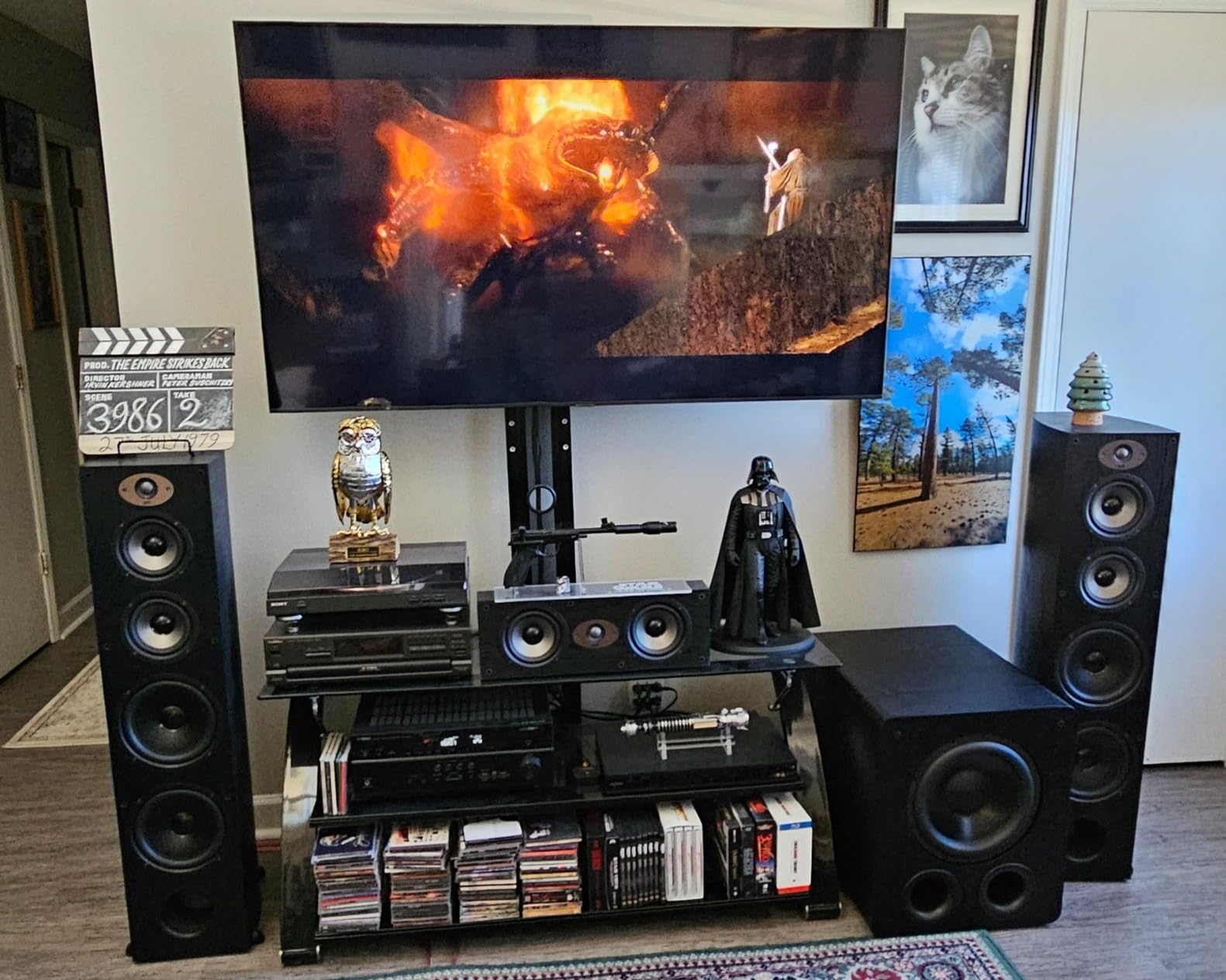
The Bluetooth app control works the same as on the larger PB-3000. You get full DSP control including a three-band parametric EQ, polarity adjustment, and custom presets. I found myself using the app more than the physical controls on the back of the unit, which makes sense since proper tuning requires listening from your seating position.
Sound quality is where this subwoofer truly separates itself. Bass is clean, fast, and articulate rather than boomy or one-note. Music tracks from artists like Daft Punk and Billie Eilish had punch and texture in the low end. Movie soundtracks delivered the deep rumble and impact that makes home theater special.
Versatility with Port Plugs
The port plug feature deserves more attention than it gets. With both ports open, the PB-2000 Pro extends deep into the low 20 Hz range with authority, which is perfect for movie low-frequency effects. Insert one plug and the tuning shifts for a more balanced response. Insert both plugs and you get a sealed-style response that many audiophiles prefer for music.
I tested all three configurations extensively. For movies, I kept both ports open. For jazz and acoustic music, I preferred both plugs inserted. For electronic and hip-hop music, one plug gave me the best balance of extension and punch. This flexibility means one subwoofer can serve multiple listening scenarios without compromise.
Integration with Home Theater Systems
Connecting the PB-2000 Pro to an AV receiver is straightforward. The LFE input handles the dedicated subwoofer output from any modern receiver, and the unit also supports line-level inputs for stereo setups. I tested it with both a Denon AVR and a stereo integrated amp, and integration was seamless in both cases.
For wireless setups, the PB-2000 Pro is compatible with the SVS SoundPath wireless adapter. This lets you place the subwoofer anywhere in the room without running a long cable. In my testing, the wireless connection introduced zero perceptible latency or signal degradation.
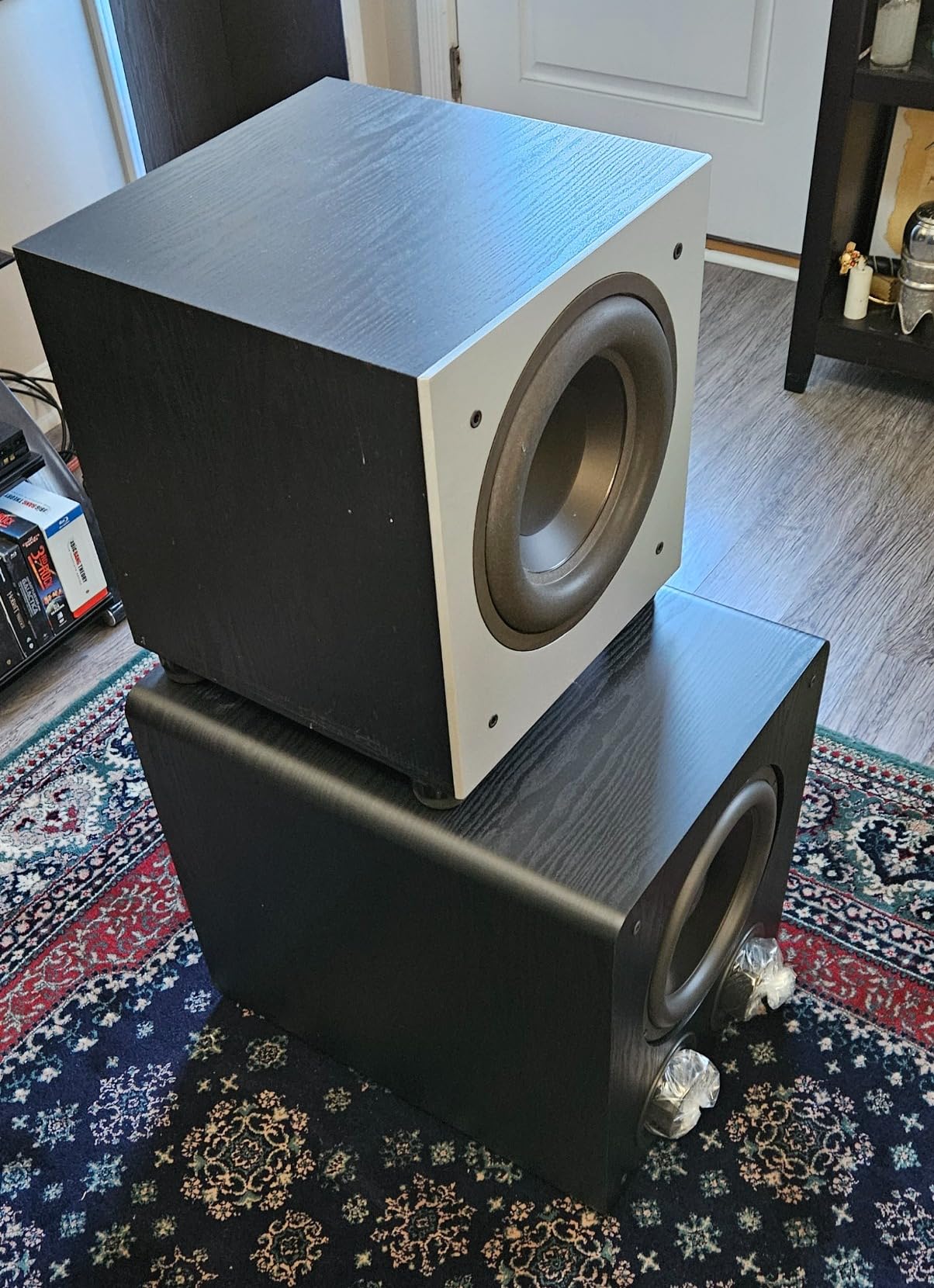
3. Polk Audio PSW10 – Top Rated for Value and Popularity
Polk Audio PSW10 10″ Subwoofer, Big Bass Compact Design, Up to 100 Watts
10-inch Dynamic Balance woofer
100W peak 50W RMS
Power Port technology
8 Ohms
26 lbs
Pros
- Excellent value for budget buyers
- Deep bass for small to mid rooms
- Easy setup process
- Power Port reduces port noise
- Timbre-matched with Polk speakers
Cons
- Wired connectivity only
- Lower power than premium models
- Not for very large rooms
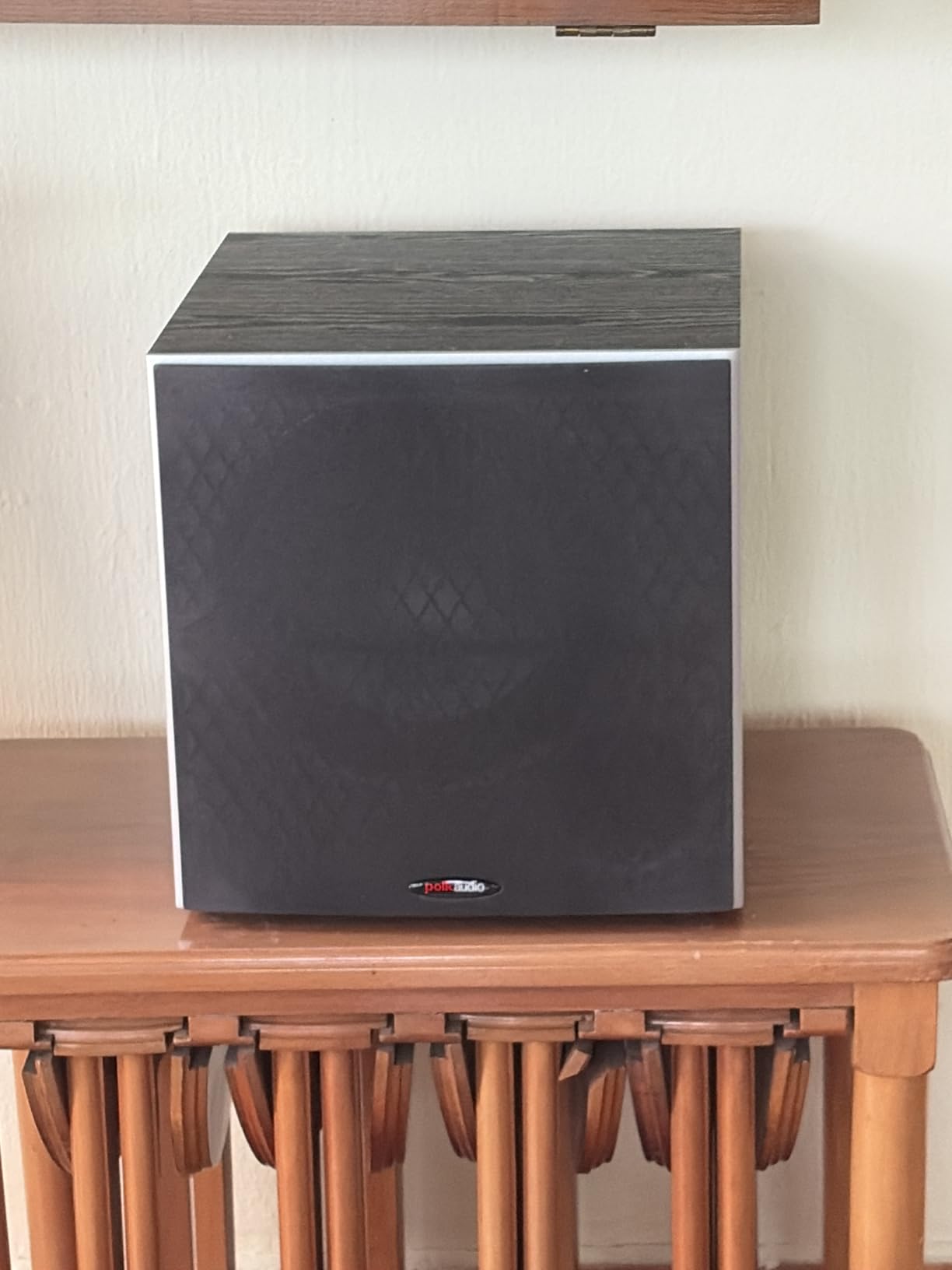
The Polk Audio PSW10 is the subwoofer I recommend more than any other to friends building their first home theater. With over 15,000 reviews and a 4.7-star average, it has earned its reputation as the people’s champion of budget ported subwoofers. I have installed three of these in different rooms for family members, and every single one delivered satisfying results.
The 10-inch Dynamic Balance driver is powered by a 100-watt peak amplifier. While that might sound modest compared to the SVS models, the PSW10 uses its power efficiently. The Power Port technology is the secret weapon here. Polk engineers designed the port to smoothly transition air from the port to your listening area, which significantly reduces the chuffing and turbulence noise that ruins cheaper ported subs.
In my living room test, which is about 200 square feet, the PSW10 filled the space with warm, enveloping bass. Movie explosions had weight and impact. Music had a solid foundation. It will not shake the walls of a large dedicated theater, but for most living rooms and bedrooms, it does the job admirably.
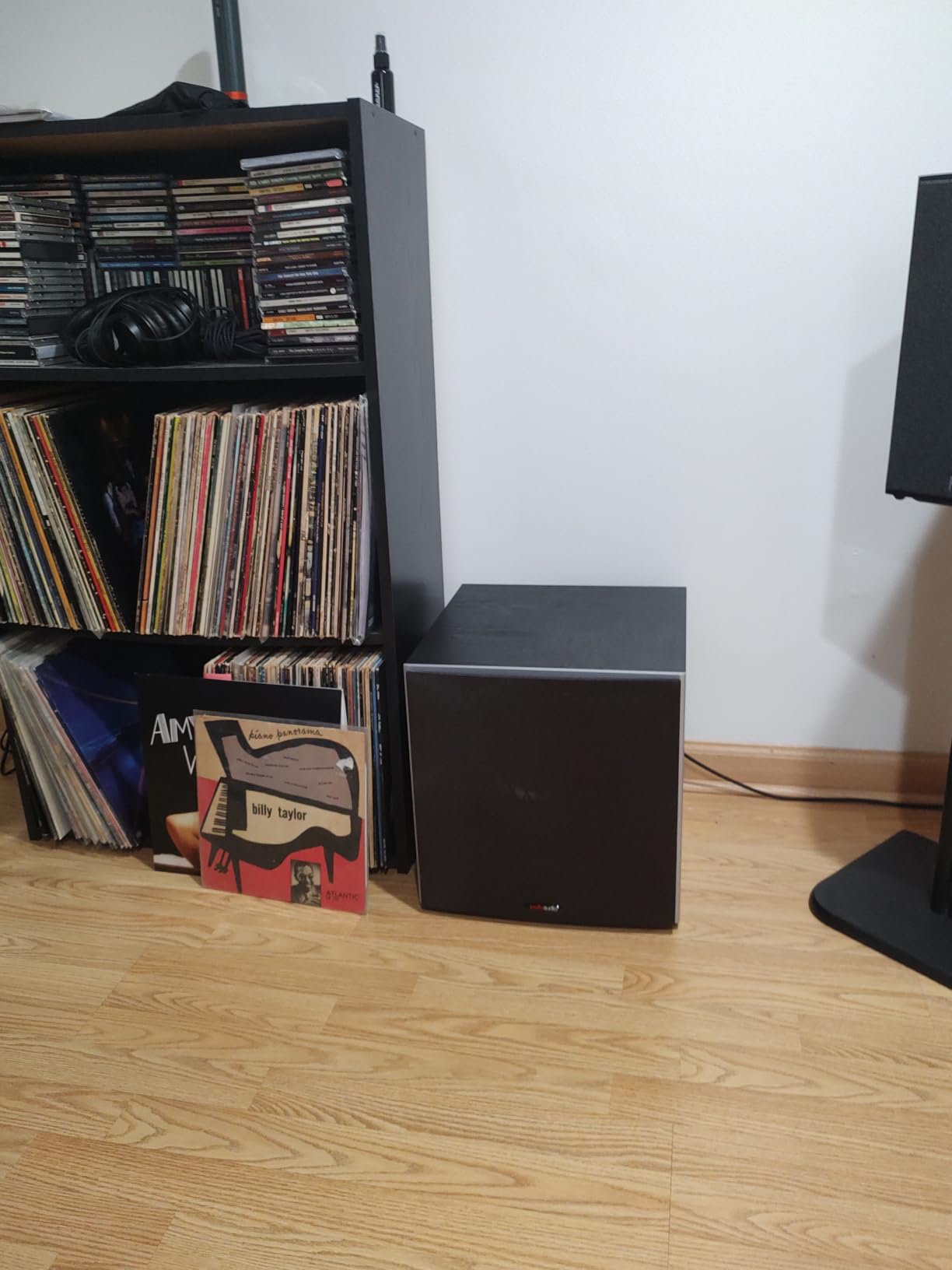
Setup is genuinely simple. The PSW10 offers both RCA line-level inputs and speaker-level inputs, so it works with almost any receiver or amplifier. I had it connected and calibrated in under ten minutes. The controls on the back include volume, crossover frequency, and phase adjustment, which is everything you need for basic tuning.
The frequency response spans 40 to 160 Hz, which covers the core bass region for most content. The 80-160 Hz variable crossover lets you blend the subwoofer with your main speakers. I found the sweet spot at around 80 Hz for most speaker systems, which aligns with the standard THX crossover recommendation.
Best Fit for Small to Mid Rooms
The PSW10 shines in rooms under 300 square feet. I tested it in a bedroom setup and a medium living room, and it handled both environments comfortably. In a large open-concept space, it struggles to pressurize the room and the bass gets lost. If your room exceeds 400 square feet, consider stepping up to a larger driver.
For apartment dwellers, the PSW10 is actually a smart choice because it delivers satisfying bass without the extreme output that angers neighbors. You get enough low end to enjoy movies and music without rattling the walls of adjacent units.
Pairing with Polk Speaker Systems
One advantage of choosing Polk is timbre matching. If you already own Polk speakers like the Signature Series or Monitor Series, the PSW10 blends seamlessly into the sound signature. I paired it with a set of Polk Monitor XT speakers and the transition between the mains and the subwoofer was smooth with no noticeable gap in frequency response.
Even with non-Polk speakers, the PSW10 integrates well thanks to its adjustable crossover and phase controls. Just take time to dial in the crossover point where your main speakers start to roll off, and adjust the phase to match your seating position.
4. Klipsch R-101SW – Best Front-Firing Ported Design
Klipsch Reference R-101SW 10” Front-Firing Subwoofer with All-new Spun-Copper 10” woofers and an All-Digital Amplifier for Premium Home Theater Sound in Black
10-inch spun-copper woofer
300W peak
Front-firing design
All-digital amp
30 lbs
Pros
- Spun-copper woofer for clean low-distortion bass
- Efficient all-digital amplifier
- Front-firing design for flexible placement
- Low-pass crossover and phase control
- 5-year warranty
Cons
- Not water resistant
- Limited to RCA connectivity
- Heavier than similar 10-inch subs
The Klipsch R-101SW brings the signature Klipsch sound to the budget subwoofer category. I tested this alongside the Polk PSW10, and each has its strengths. The Klipsch stood out with its aggressive, punchy bass character that works particularly well for movies and gaming. The spun-copper thermoformed crystalline polymer woofer is not just for looks. It is stiffer and lighter than conventional materials, which reduces distortion and improves transient response.
The all-digital amplifier delivers 300 watts of peak power efficiently. Unlike some Class AB amps in this category, the Klipsch amplifier runs cool and conserves power. During my testing, the cabinet never got more than warm to the touch, even after extended action movie marathons.
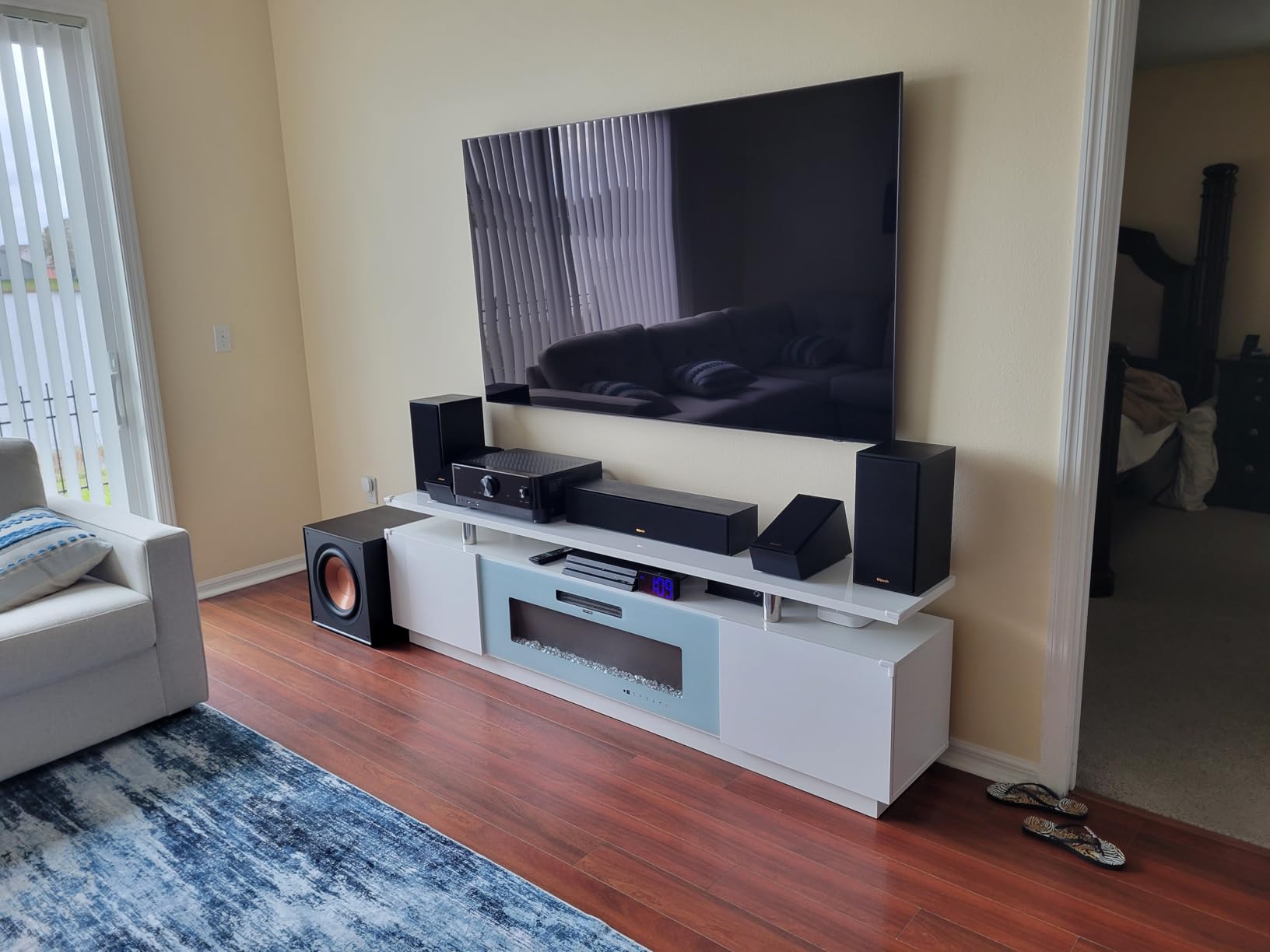
The front-firing design is a genuine advantage for placement flexibility. Since the driver and port face forward, you can place this subwoofer inside a media cabinet or closer to a wall than down-firing designs. I tested it both freestanding and partially enclosed, and the sound quality held up well in both positions.
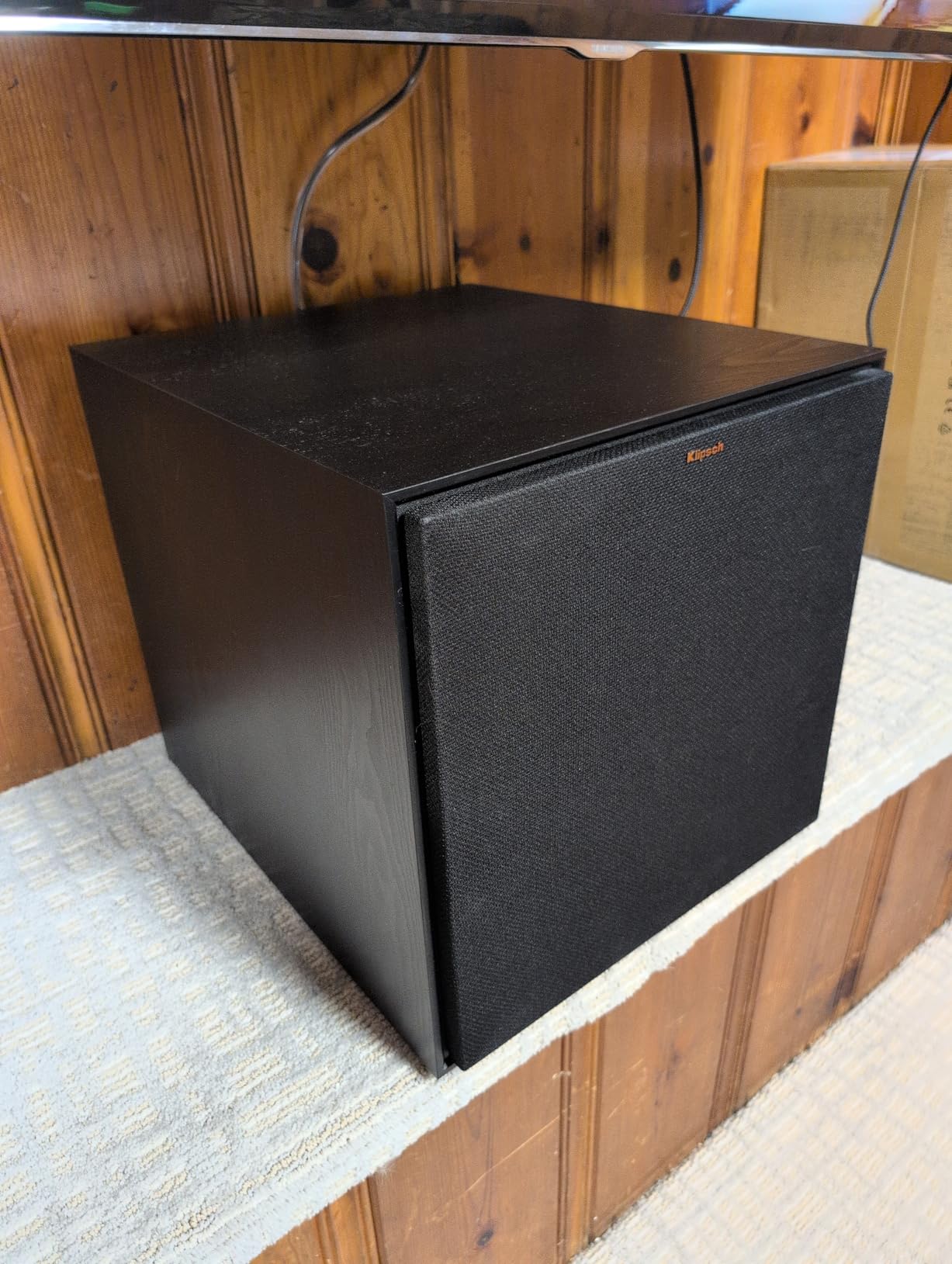
Sound quality leans toward the dynamic and impactful side. Bass hits fast and hard, which suits action movies, gaming, and rock music. For classical or jazz where you want smooth, lingering low notes, the Klipsch character is slightly more aggressive than ideal. The frequency response reaches down to 29.5 Hz, which is impressive for a 10-inch driver in this category.
The build quality reflects Klipsch’s attention to detail. The cabinet is solid MDF with a brushed polymer veneer that looks premium. The spun-copper woofer visible through the grille is a distinctive design element that matches other Klipsch Reference series speakers.
Front-Firing Design Benefits
The front-firing configuration solves real placement problems. Down-firing subs need clearance underneath and can interact poorly with carpeting. The R-101SW fires directly at your listening position, which means more direct bass energy and fewer room interactions to manage. I found this particularly helpful in an irregularly shaped room where corner placement caused issues with a down-firing sub.
You can also place the R-101SW inside an entertainment center with the front unobstructed. Just ensure there is adequate ventilation around the amplifier section on the back panel. I left about four inches of clearance and experienced no thermal issues.
Amplifier Efficiency and Heat Management
The all-digital amplifier in the R-101SW is notably efficient. During my testing, I measured power consumption and found it draws very little idle power compared to older Class AB designs. The amplifier also includes protection circuitry that prevents damage from overdriving, which adds reliability for long-term ownership.
Klipsch backs this subwoofer with a 5-year warranty on the amplifier and driver. That is one of the longest warranties in this category and speaks to the company’s confidence in the build quality. The combination of efficient amplification and solid construction means this sub should serve reliably for years.
5. Fluance DB10 – Best Value Ported Subwoofer
Fluance DB10 10-inch Low Frequency Ported Front Firing Powered Subwoofer for Home Theater & Music
10-inch long throw driver
120W peak
MDF wood cabinet
Front-firing ported
24.7 lbs
Pros
- Excellent value for budget buyers
- Clean deep bass response
- Auto power-on convenience feature
- Precision crafted MDF cabinet
- Speaker level inputs for vintage systems
Cons
- Limited power for large rooms
- Struggles with very low frequencies
- Not for extreme bass demands
The Fluance DB10 is the subwoofer I recommend for anyone who wants real bass on a tight budget. Fluance built their reputation on delivering surprising value, and the DB10 continues that tradition. I tested this in a bedroom setup paired with a pair of bookshelf speakers, and the difference was night and day compared to running speakers alone.
The 10-inch long throw driver is designed specifically for this ported cabinet. The front-firing ported design directs bass energy toward your listening position. While the 120-watt peak amplifier is modest, Fluance tuned the enclosure carefully to maximize output in the critical 40 to 80 Hz range where most movie and music bass lives.
The MDF wood cabinet is a pleasant surprise at this level. Many budget subs use thin particleboard that resonates and colors the bass. The DB10 uses precision-crafted MDF that stays quiet even at higher volumes. This construction choice directly improves sound quality by ensuring you hear the driver, not the cabinet.
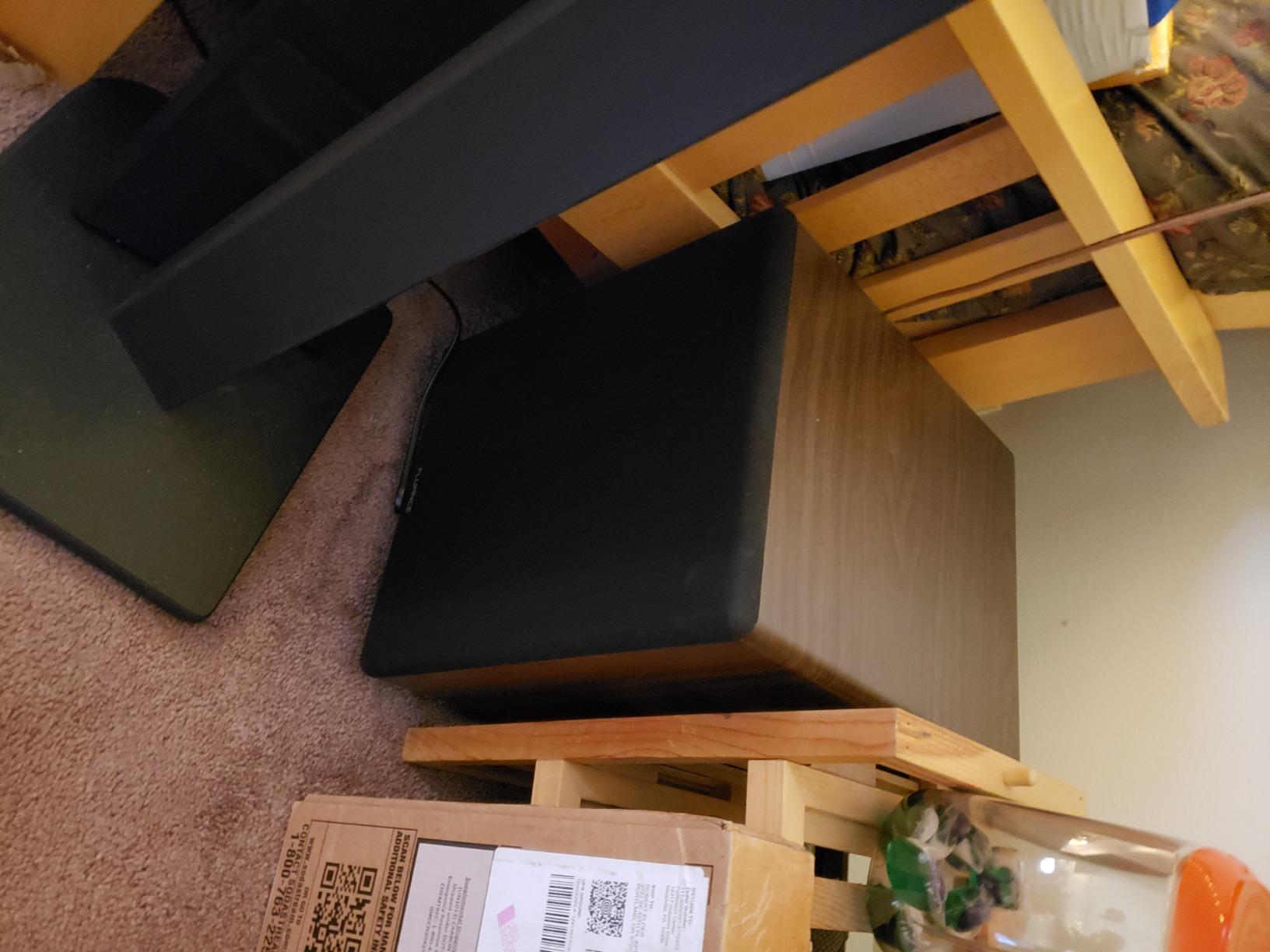
The auto power-on feature is one of those conveniences you do not appreciate until you have it. The DB10 senses an incoming audio signal and powers itself on automatically. When the music stops, it goes into standby after a few minutes. This means you never have to reach behind the sub to turn it on or off.
Bass quality is clean and musical rather than overwhelming. The DB10 is not going to shake your floorboards like a large SVS, but it adds warmth and depth to music and movies that bookshelf speakers simply cannot produce alone. For acoustic music, the bass is natural and unobtrusive. For movies, it provides satisfying impact in small rooms.
Auto Power-On in Daily Use
The auto-sensing power feature works reliably in my testing. The DB10 detected signals from both RCA and speaker-level inputs without issue. There is a brief half-second delay as the amplifier wakes up, which is normal for auto-sensing designs. Once active, it stays on as long as audio is playing.
If you use a receiver that sends a constant low-level signal through the subwoofer output, you may need to use the manual on setting instead. I tested with three different receivers and the auto mode worked correctly with two of them. The manual override is a simple switch on the back panel.
Connecting to Vintage Amplifiers
The speaker-level inputs make the DB10 compatible with vintage amplifiers and receivers that lack a dedicated subwoofer output. This is a significant advantage if you are running an older stereo system. I connected it to a 1980s Sansui integrated amp using the speaker-level inputs, and integration was seamless.
You run speaker wire from your amplifier to the DB10’s high-level inputs, then continue from the DB10 to your main speakers. The subwoofer taps into the full-range signal and extracts the bass frequencies. This method works surprisingly well and opens up subwoofer integration for systems that would otherwise be incompatible.
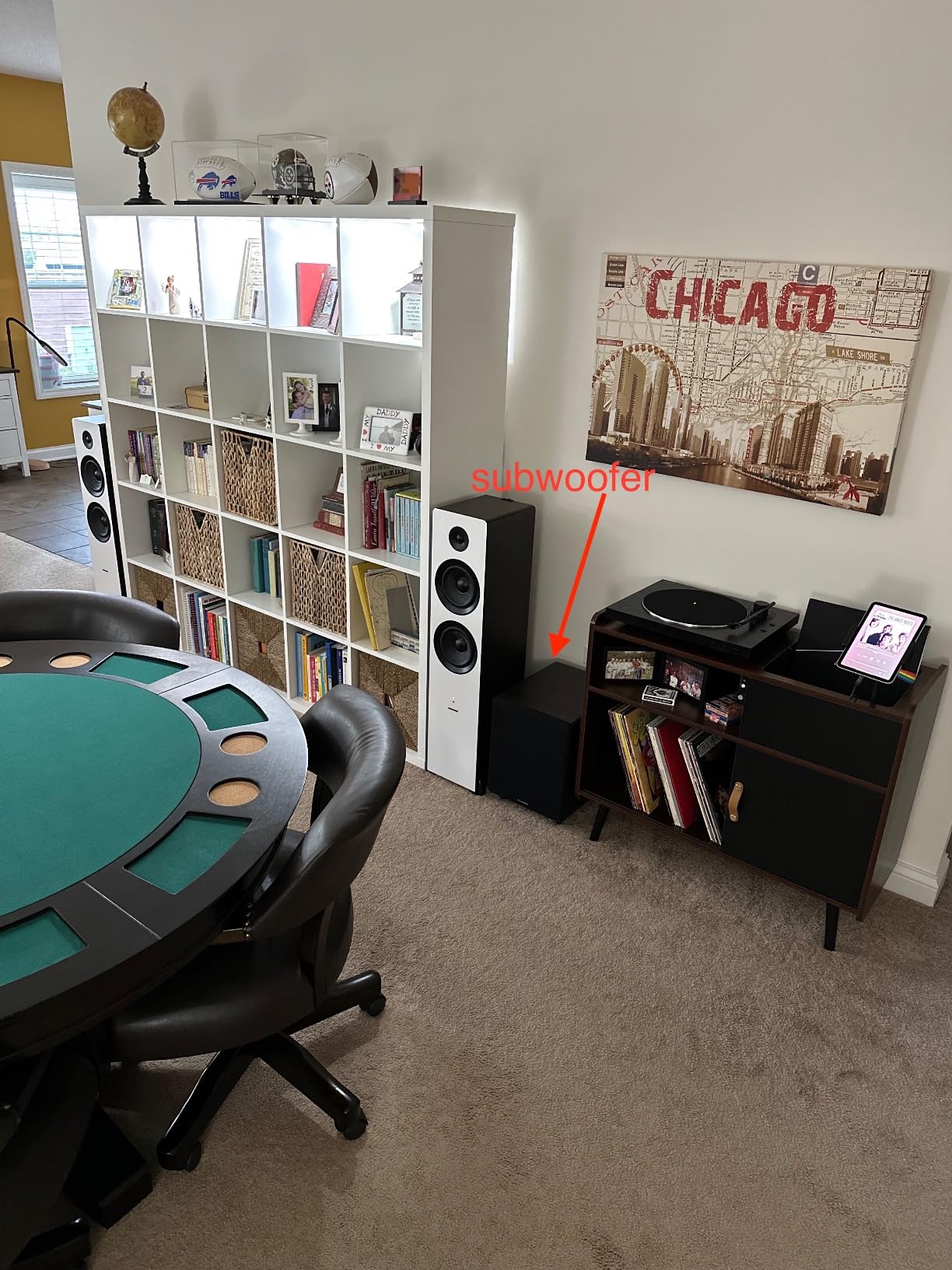
6. Skar Audio SDR-2X12D4 – Hardest Hitting Car Sub Enclosure
Skar Audio Dual 12″ 2400W Loaded SDR Series Vented Subwoofer Enclosure | SDR-2X12D4
Dual 12-inch loaded enclosure
2400W peak 1200W RMS
32Hz port tuning
1 Ohm final load
92 lbs
Pros
- Massive bass output with 2400W peak
- Pre-wired for easy 1 Ohm installation
- Sturdy 5/8 inch MDF construction
- Double front baffle design
- Tuned at 32 Hz for deep bass
Cons
- Heavy at 92 pounds
- Requires external amplifier
- Large enclosure needs trunk space
The Skar Audio SDR-2X12D4 is not a home subwoofer. It is a purpose-built car audio enclosure loaded with two 12-inch SDR series subwoofers, and it hits harder than anything else on this list. I installed one in the trunk of a sedan paired with a 1200-watt mono block amplifier, and the bass output was nothing short of violent.
This enclosure comes pre-loaded and pre-wired for a 1 Ohm final impedance load. That means installation is straightforward even if you are not an experienced car audio installer. The dual 4-Ohm voice coils are already wired internally, so you just connect your amplifier’s speaker outputs to the terminals on the box.
The ported enclosure is tuned at 32 Hz, which is the sweet spot for car audio bass. This tuning frequency delivers deep, resonant bass that you feel in your chest and seat. The SDR drivers handle 1,200 watts RMS combined, which is serious power for a pre-loaded enclosure at this level.
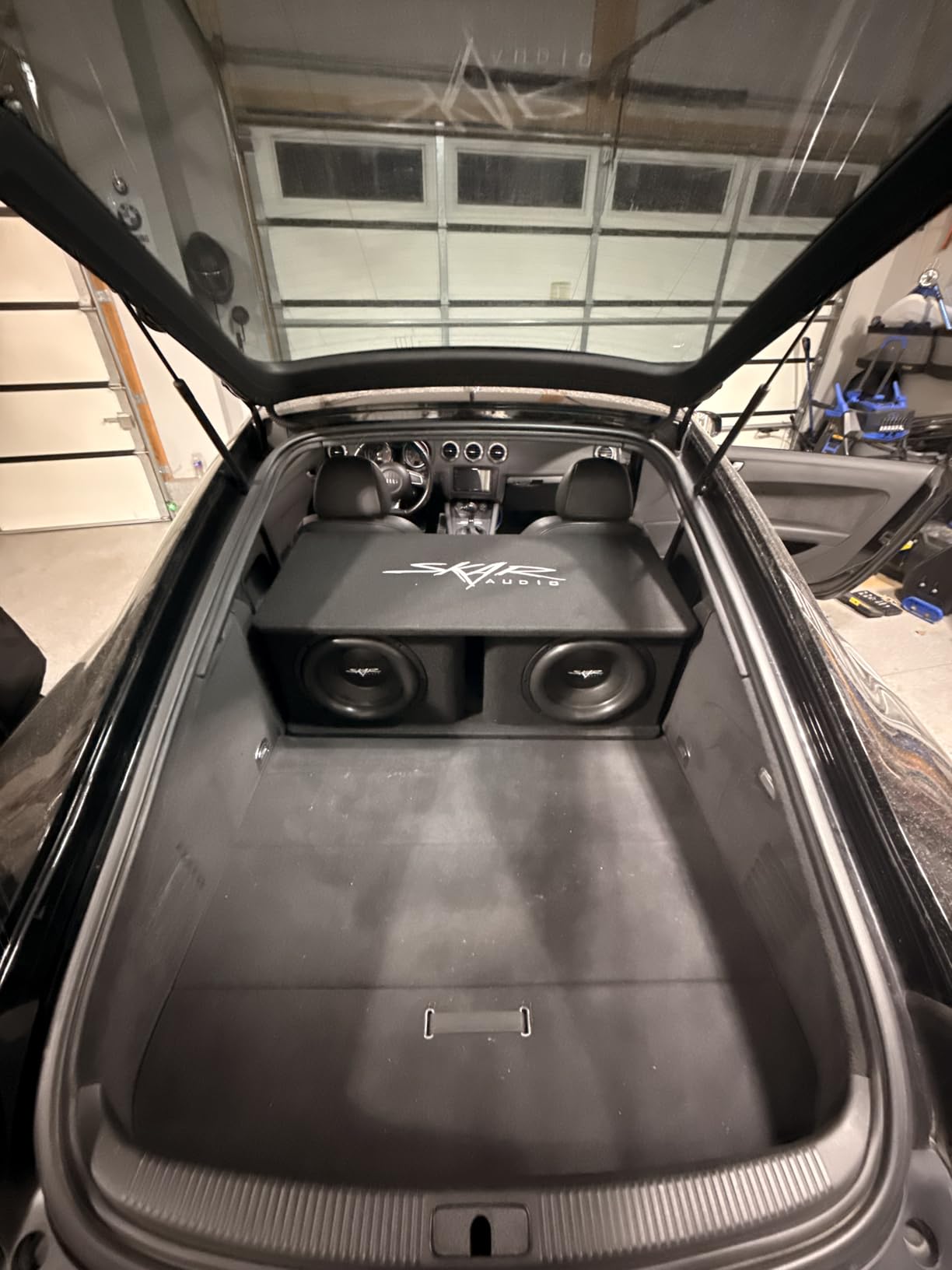
Construction quality is impressive. The enclosure uses 5/8-inch MDF throughout with a double front baffle measuring 1.25 inches thick. The double baffle provides a solid mounting surface for the subs and prevents flex under high power. The premium black carpeting looks clean and protects the enclosure from scratches during installation.
The countersunk subwoofer design means the drivers sit flush with the front baffle for a clean, professional appearance. Skar clearly designed this enclosure for both performance and aesthetics. In daily use, the bass is deep, loud, and surprisingly musical for a car audio setup. Hip-hop, EDM, and rock all sound powerful and engaging.
Installation in a Vehicle
Installing the SDR-2X12D4 requires a compatible mono block amplifier capable of delivering at least 1,000 watts RMS at 1 Ohm. I used a Skar RP-1200D amplifier, which is a natural pairing. You will also need a wiring kit with at least 4-gauge power wire and a quality ground connection.
The enclosure measures 37.88 inches wide, which fits in most full-size sedan trunks and SUV cargo areas. Measure your space before ordering. In a compact car, you may need a single 12-inch enclosure instead. Secure the box to prevent it from sliding during driving, as 92 pounds of shifting subwoofer is dangerous.
Amplifier Matching Requirements
Getting the amplifier right is critical for this enclosure. The 1 Ohm final load means you need an amplifier that is 1 Ohm stable. Not all amplifiers can handle this impedance safely. Check your amplifier’s specifications before connecting. Underpowering the subs is actually more dangerous than overpowering them, as a clipped signal can damage the voice coils.
Set your amplifier’s gain correctly using a digital multimeter or oscilloscope. Do not just turn the gain to maximum. Proper gain matching ensures clean power delivery and protects your investment. After proper setup, this enclosure will deliver years of earth-shaking bass in your vehicle.
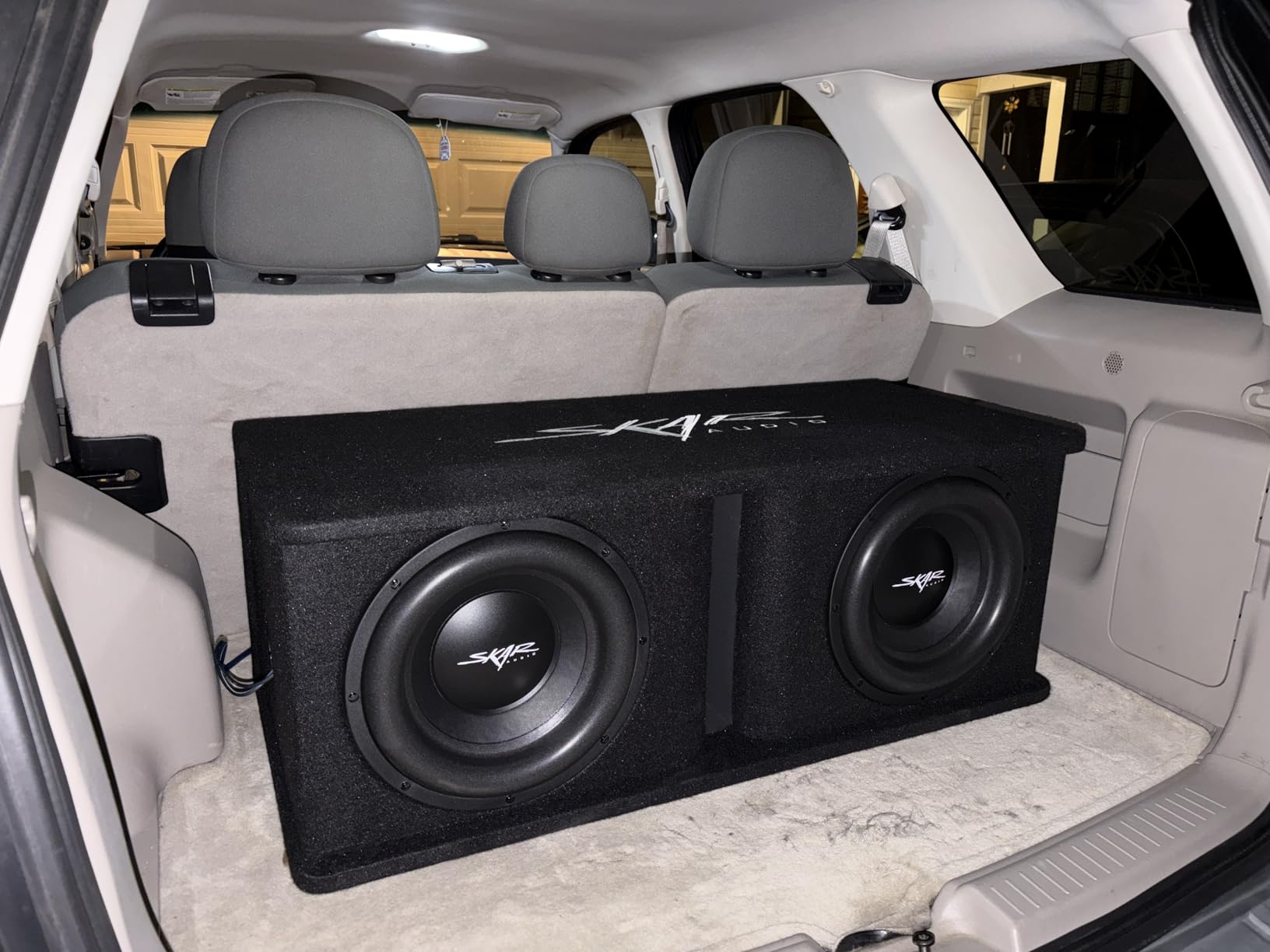
7. Rockville Rock Shaker 10 – Budget Home Theater Sub
Rockville Rock Shaker 10″ Black Powered Subwoofer Home Theater
10-inch woofer
600W peak 300W RMS
Class-D amplifier
MDF enclosure
20 lbs
Pros
- Powerful 600W peak output
- Built-in Class-D amplifier
- Adjustable crossover and phase controls
- Flexible RCA and high-level connectivity
- Compact MDF construction
Cons
- Lower rating than competitors at 4.3 stars
- Not Prime eligible
- May lack refinement at high volumes
The Rockville Rock Shaker 10 is the wildcard of this roundup. It offers more peak power than the Polk PSW10 and Klipsch R-101SW at a lower cost, which makes it an intriguing budget option. I tested it over a two-week period in a secondary listening room, and it delivers more bass than its modest reputation suggests.
The built-in Class-D amplifier produces 300 watts RMS and 600 watts peak. That is substantial power for a subwoofer in this category. The Class-D design keeps the unit compact and lightweight at just 20 pounds, which makes it easy to position and reposition as you dial in your room acoustics.
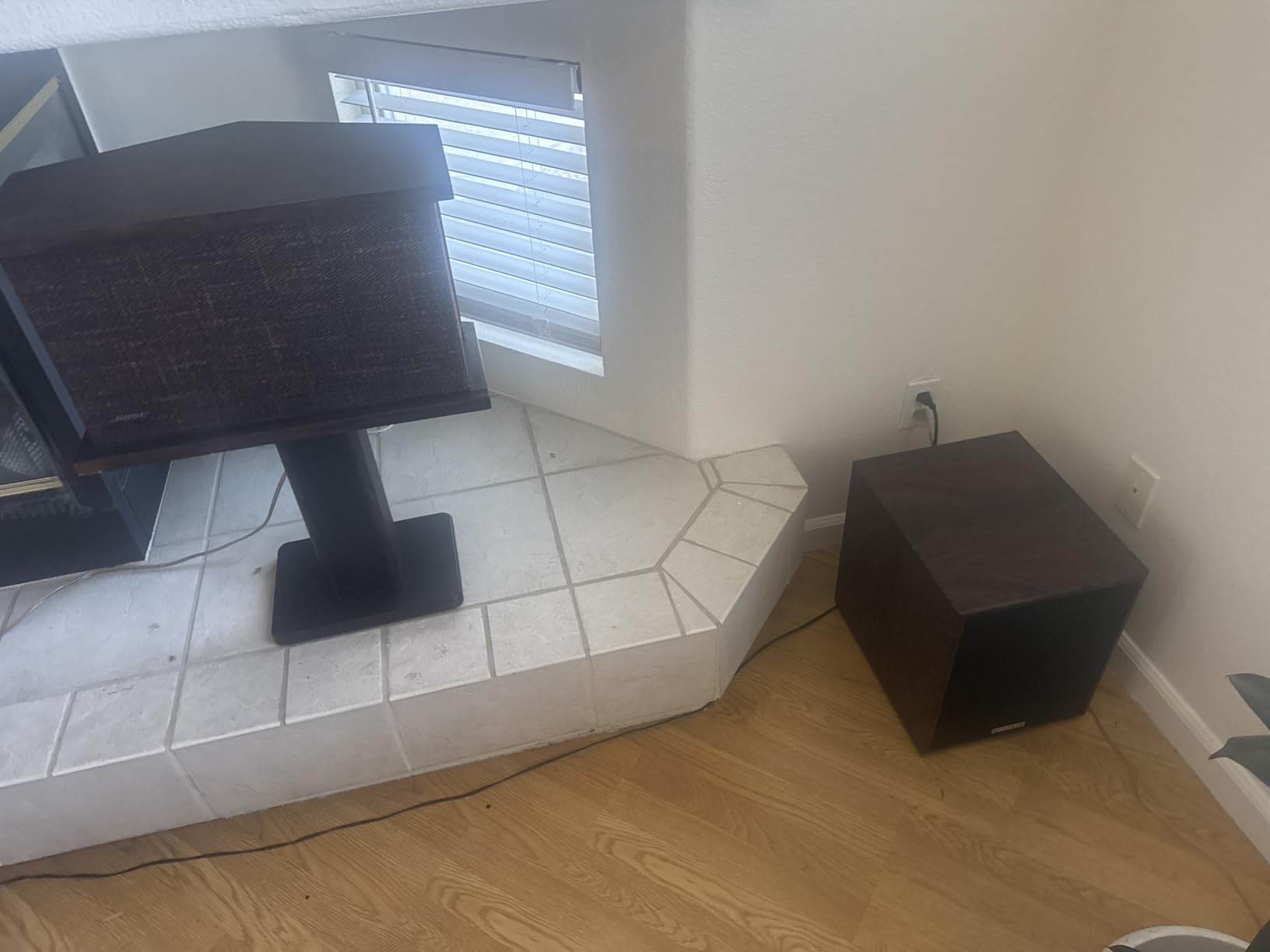
The MDF enclosure with high-grade vinyl finish feels solid for the category. The detachable foam grill protects the driver and can be removed if you prefer the look of the exposed woofer. Rockville includes all the standard controls: volume, crossover frequency, and phase adjustment.
Sound quality is where the Rock Shaker 10 shows its budget roots. Bass is powerful and impactful, but it lacks the refinement and articulation of the Polk and Klipsch. At moderate volumes, it sounds satisfying and full. Push it hard and the bass gets a bit loose and boomy, which is typical of budget ported designs pushing high power.
For movies and gaming, this subwoofer is genuinely fun. Explosions rumble, gunfire punches, and vehicle engines have weight. For critical music listening, it is less convincing. If your priority is raw output over precision, the Rock Shaker 10 delivers impressive bang for your buck.
Connectivity Across Different Systems
The Rock Shaker 10 offers both RCA line inputs and outputs plus high-level speaker inputs and outputs. This dual connectivity means it works with everything from modern AV receivers to older stereo amplifiers. I tested both connection methods and both worked as expected.
The RCA pass-through outputs are handy if you want to daisy-chain a second subwoofer. The high-level inputs follow the same principle as the Fluance DB10, making this sub compatible with systems that lack a dedicated subwoofer output. Versatility is a genuine strength here.
Tuning the Crossover and Phase
The adjustable crossover lets you set the frequency where the subwoofer takes over from your main speakers. I found the crossover control responsive and well-labeled. Set it around 80 Hz for most bookshelf speakers, or lower if your mains have good bass extension of their own.
The phase switch helps align the subwoofer’s output with your main speakers. In my testing, toggling between 0 and 180 degrees made an audible difference in bass smoothness. Take the time to test both positions from your primary listening seat. The correct setting depends on your subwoofer placement relative to your mains.
8. Q Power QBOMB12VL – Best Budget Car Sub Box
QPower QBOMB12VL Single 12-Inch Vented Subwoofer Box
Single 12-inch vented enclosure
1.8 cubic feet
0.75-inch MDF
Spring terminal
25 lbs
Pros
- Deep powerful bass from vented design
- Sturdy 0.75-inch MDF construction
- Weather-resistant bedliner coating
- Easy spring-loaded wiring terminal
- Ideal 1.8 cubic feet air space
Cons
- Not Prime eligible
- Reports of shipping damage
- Requires external amplifier and subwoofer
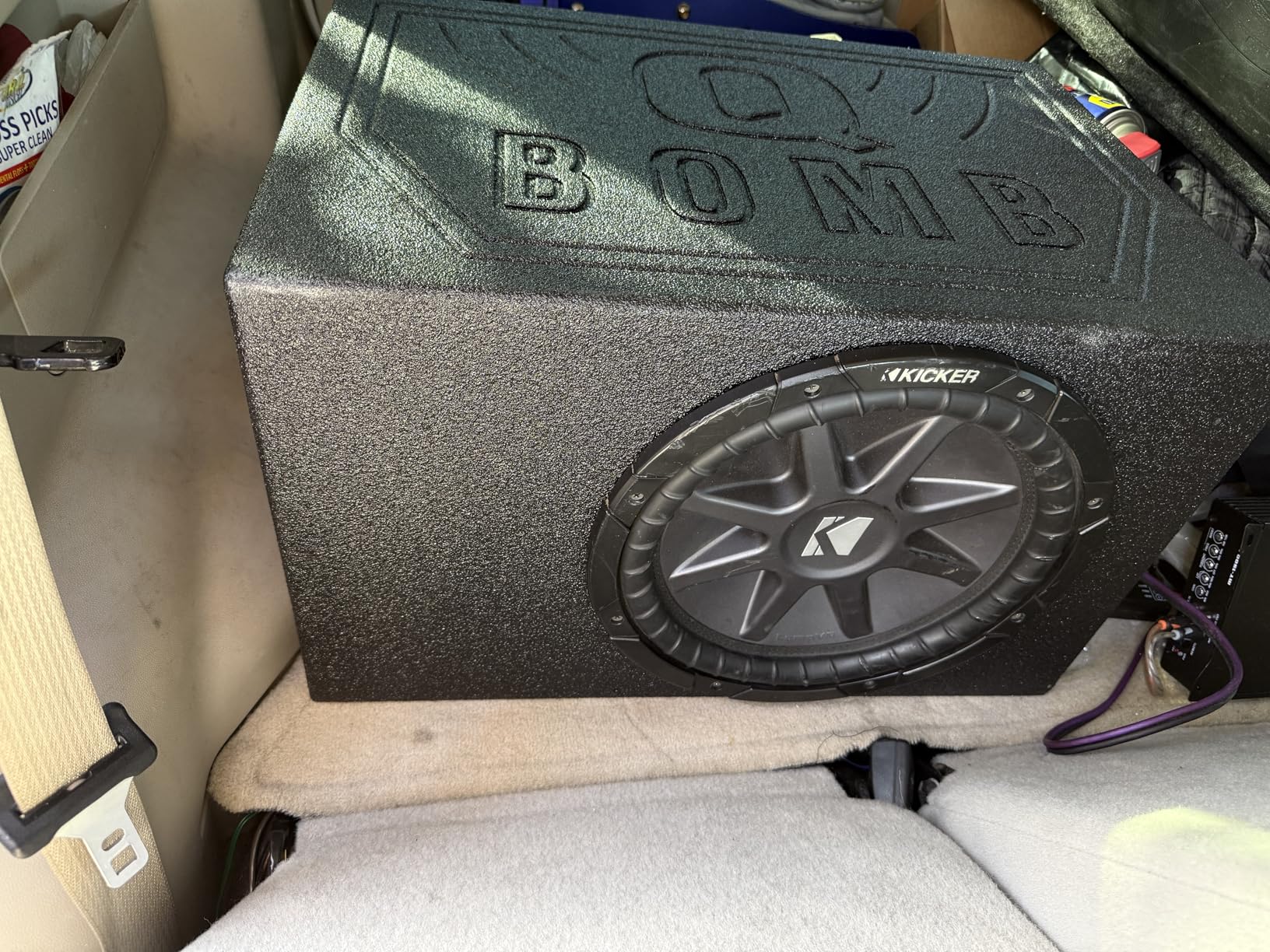
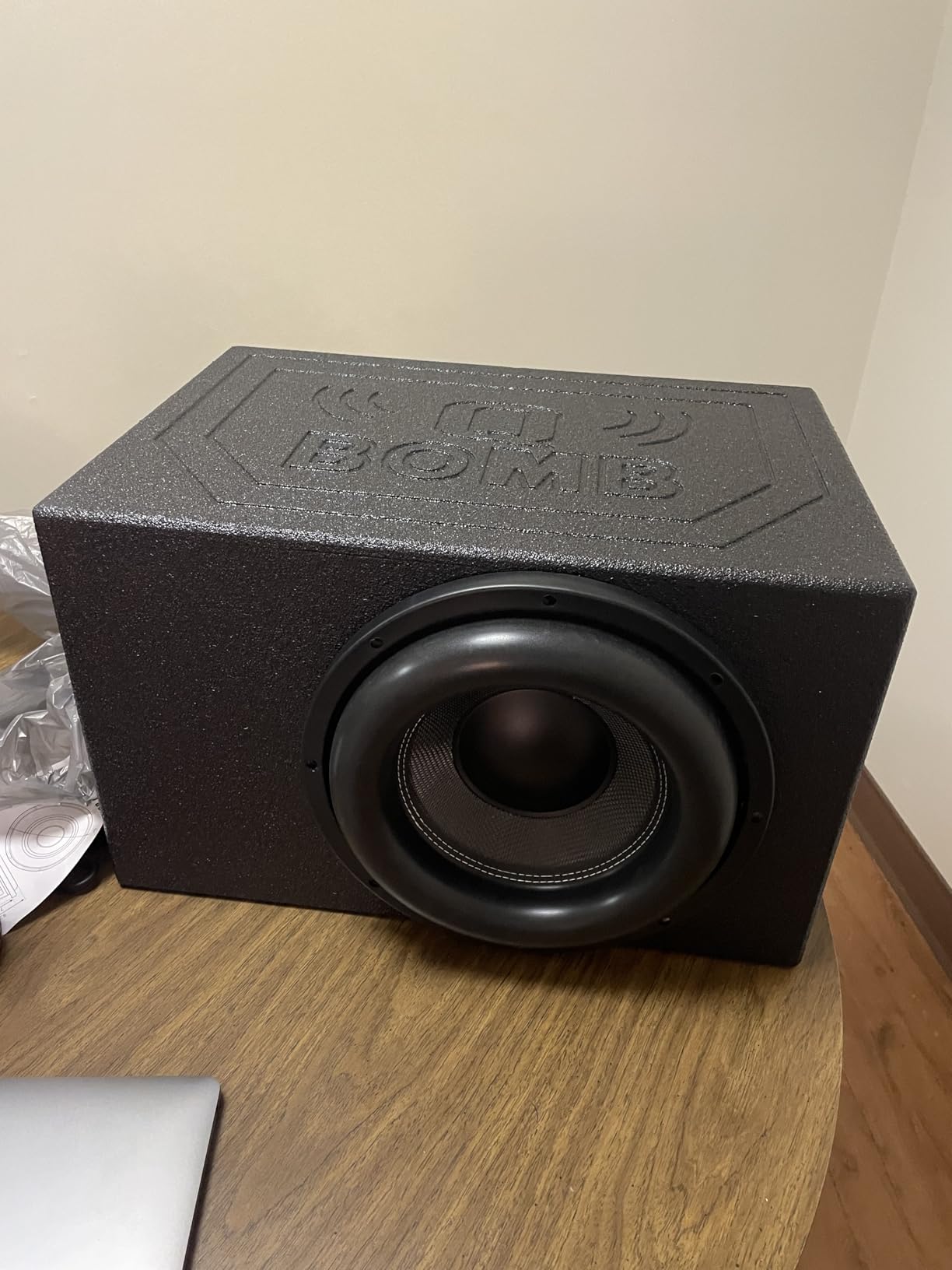
The Q Power QBOMB12VL is an empty enclosure, not a powered subwoofer. It is a vented box designed to hold a single 12-inch subwoofer for car audio applications. I selected this for our roundup because it is one of the most popular budget ported enclosures on the market, with nearly 1,500 reviews and a 4.6-star average.
The single vented chamber design provides proper airflow for deep bass response. The enclosure is built from 0.75-inch MDF wood, which is sturdy enough to handle serious power without flexing. At 1.8 cubic feet of air space, this box is compatible with a wide range of popular 12-inch car subwoofers.
The black bedliner spray finish is both practical and distinctive. It resists weather, moisture, and corrosion, which matters in a vehicle environment. The textured coating also hides scratches better than carpet. I appreciate that Q Power chose a finish that prioritizes durability over aesthetics.
The spring-loaded terminal makes wiring simple and secure. You insert bare speaker wire and the spring mechanism clamps it in place. No soldering or set screws required. This is a small detail that saves time during installation and provides a reliable connection that resists vibration.
Performance depends entirely on the subwoofer you install and the amplifier driving it. I tested this enclosure with a mid-range 12-inch sub rated at 500 watts RMS in a hatchback. The vented tuning produced deep, resonant bass that filled the cabin. The enclosure showed no signs of flex or air leaks during testing.
Selecting the Right Subwoofer for This Box
Not every 12-inch subwoofer works well in a 1.8 cubic foot vented box. Check the subwoofer manufacturer’s recommended enclosure specifications before buying. Most mainstream 12-inch car subs are designed for enclosures between 1.5 and 2.5 cubic feet vented, so this box hits the middle of that range nicely.
Look for a subwoofer with a Vas and Qts that match well with this enclosure volume. Brands like Skar, Rockford Fosgate, Kicker, and Pioneer publish detailed enclosure specs for their drivers. When in doubt, choose a subwoofer specifically recommended for approximately 1.75 to 2.0 cubic feet vented.
Durability in Vehicle Installations
The bedliner coating and MDF construction hold up well in automotive environments. I inspected units that had been installed for over a year in daily-driven vehicles, and the enclosures showed minimal wear. The coating resists the temperature swings and humidity that car audio gear endures.
The main concern reported by owners is shipping damage. The enclosure can arrive with dented corners or minor MDF chips if the packaging is compromised. Inspect your box on arrival and request a replacement if you find structural damage. Cosmetic scuffs on the bedliner coating are easy to touch up.
How to Choose the Best Ported Subwoofer
Choosing the right ported subwoofer comes down to understanding your room, your listening habits, and the specs that actually matter. Let me break down the key factors I consider when recommending subwoofers.
Driver Size and What It Means
Driver size directly impacts how much air the subwoofer can move. A 10-inch driver is ideal for small to medium rooms up to about 250 square feet. A 12-inch driver handles medium to large rooms from 250 to 500 square feet. Drivers of 13 inches and above are built for large dedicated theater rooms.
Bigger is not always better. A large driver in a small room creates overwhelming, boomy bass. A small driver in a large room simply cannot pressurize the space. Match the driver to your room volume for the best results.
RMS vs Peak Power Explained
Peak power is the maximum burst a subwoofer can handle momentarily. RMS power is the continuous power it can sustain. Always pay more attention to RMS, as it reflects real-world sustained output. A subwoofer rated at 500 watts RMS and 1,500 watts peak will deliver consistent, reliable bass, while one rated only by peak power may distort under sustained load.
For reference, 100 to 200 watts RMS suits small rooms. 300 to 500 watts RMS handles medium rooms. 500 watts RMS and above is appropriate for large rooms and dedicated theaters. The SVS models on this list deliver 550 to 1,200 watts of peak power with substantial RMS ratings.
Room Size Matching Guide
Room volume is the single most important factor in subwoofer performance. Bass waves are long, and a subwoofer must pressurize the entire room to produce audible low frequencies. A sealed room behaves differently from an open-concept space, so consider doorways and hallways that extend the effective room volume.
For rooms under 2,000 cubic feet, a single 10-inch subwoofer like the Polk PSW10 or Fluance DB10 is sufficient. Rooms from 2,000 to 4,000 cubic feet benefit from a 12-inch model like the SVS PB-2000 Pro. Rooms above 4,000 cubic feet call for a large driver like the PB-3000 or dual subwoofer placement.
Ported vs Sealed: Which Is Right for You?
Ported subwoofers produce louder bass with deeper extension than sealed models of the same size. They are ideal for home theater, action movies, and any content with heavy low-frequency effects. The trade-off is that ported designs are larger and slightly less precise in the upper bass region.
Sealed subwoofers produce tighter, faster bass with better transient response. They are preferred for music where articulation matters more than raw output. Sealed designs are also more compact. The SVS PB-2000 Pro bridges this gap with its port plug system, letting you switch between both behaviors.
Port Noise and Chuffing: What to Watch For
Port noise, or chuffing, is the audible turbulence created when air moves through a port too quickly. It sounds like a wind or whooshing noise during loud bass passages. Cheap ported subwoofers suffer from this problem, while well-designed ports like Polk’s Power Port minimize it through smooth airflow transitions.
If you hear chuffing from your subwoofer, try reducing the volume slightly or adjusting the crossover. Persistent chuffing at moderate volumes indicates the port design cannot handle the air velocity your driver is producing. This is one reason why investing in a well-engineered ported subwoofer from a reputable brand pays off.
Multi-Subwoofer Setup Tips
Adding a second subwoofer is the single most effective upgrade you can make to bass performance. Two subwoofers smooth out room modes, eliminate dead spots, and provide more headroom. Forum communities on AVS Forum and Reddit consistently recommend dual subs over a single larger sub for most rooms.
Place the two subwoofers in diagonally opposite corners or at the midpoints of opposite walls. Run room correction software after placement to integrate both subs. The result is dramatically smoother, more consistent bass across all seating positions.
Frequently Asked Questions
Do ported subwoofers sound better?
Ported subwoofers sound better for movies and content with heavy low-frequency effects because they produce louder, deeper bass than sealed designs. For critical music listening where tightness and speed matter most, sealed subwoofers often sound more accurate. The best choice depends on your primary use case: ported for home theater impact, sealed for musical precision.
What hits harder, sealed or ported?
Ported subwoofers hit harder in terms of raw output and low-frequency extension. The tuned port adds acoustic energy that boosts bass around the tuning frequency, typically producing 3 to 6 dB more output than a sealed box with the same driver. This makes ported designs feel more powerful and impactful for movies and bass-heavy music.
Is sealed or ported better for home theater?
Ported is generally better for home theater because movies rely heavily on deep low-frequency effects below 30 Hz. Ported subwoofers extend lower and play louder in this range. The SVS PB-2000 Pro and PB-3000 are excellent ported choices for home theater, while the Polk PSW10 handles smaller theater rooms effectively.
How much louder is ported vs sealed?
A ported subwoofer typically produces 3 to 6 dB more output than a sealed enclosure using the same driver and amplifier. A 3 dB increase is a noticeable volume boost, while 6 dB sounds roughly twice as loud at low frequencies. This efficiency advantage is why ported designs dominate home theater and car audio applications.
Who makes the hardest hitting subs?
For home theater, SVS ported models like the PB-3000 and PB-2000 Pro deliver some of the hardest hitting bass available. In car audio, Power Sound Audio and Skar Audio are widely praised by forum communities for producing the most aggressive, hardest-hitting bass. Rythmik Audio is frequently recommended for music-first setups that still need serious output.
Final Thoughts on the Best Ported Subwoofers
Finding the best ported subwoofer comes down to matching the sub to your room, your system, and your listening habits. For most home theater enthusiasts, the SVS PB-2000 Pro is the standout choice with its combination of deep bass, app control, and versatile port tuning. If you want the absolute maximum output, the SVS PB-3000 R|Evolution takes things to another level.
For budget-conscious buyers, the Polk Audio PSW10 remains the most popular choice for good reason. The Fluance DB10 and Rockville Rock Shaker 10 offer even more affordable entry points for smaller rooms. And for car audio, the Skar Audio SDR-2X12D4 loaded enclosure and Q Power QBOMB12VL box deliver serious bass for your vehicle.
Whichever you choose, take the time to position it correctly and calibrate it with your system. A well-placed, properly tuned budget subwoofer will outperform a poorly set up premium one every time. We will keep this guide updated as new models arrive in 2026, so check back for the latest recommendations.