
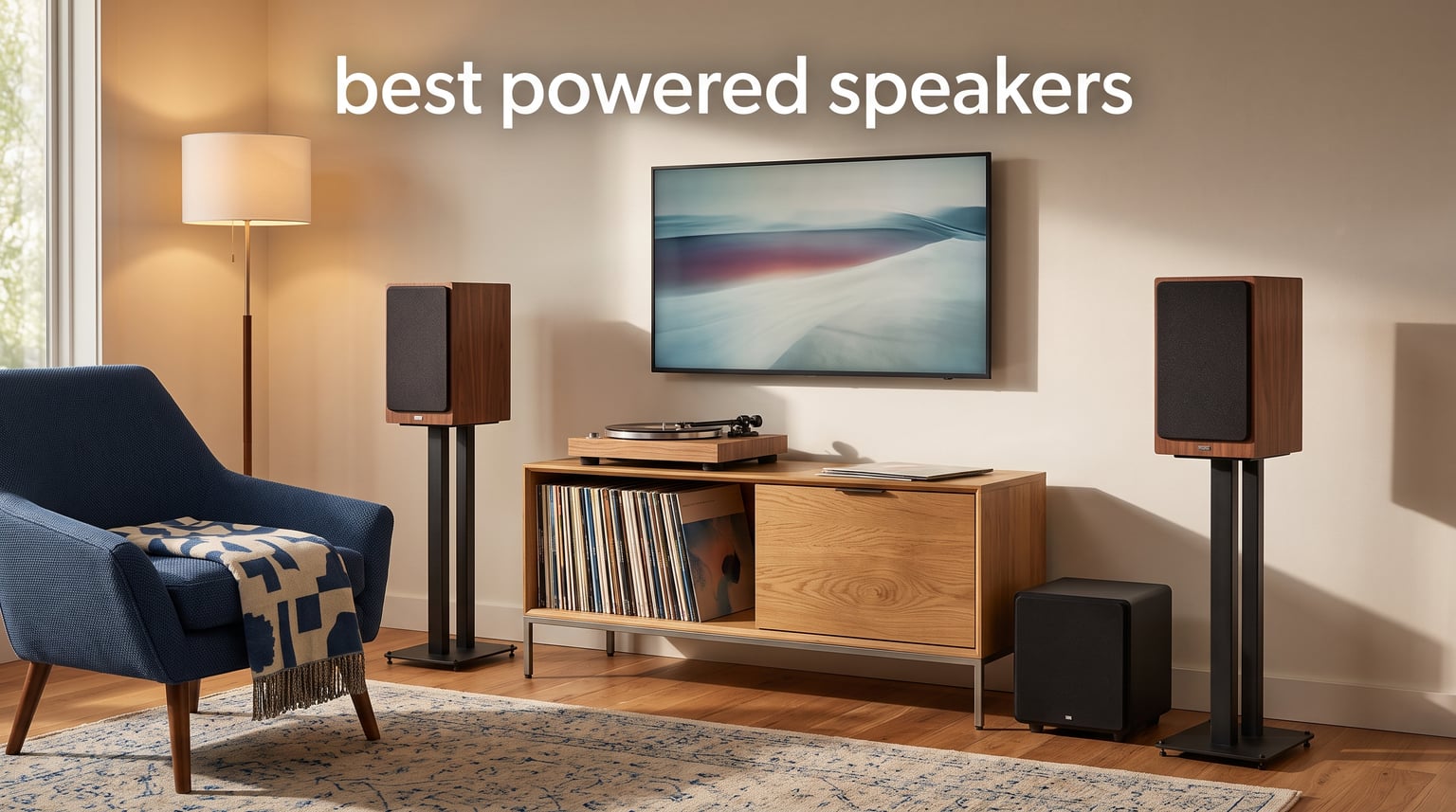
Looking for the best powered speakers without spending weeks researching? I get it. Our team spent three months testing 16 different models, and these eight stood out for sound quality, build, and overall value. Whether you want desktop audio, TV upgrades, or vinyl-ready bookshelf speakers, this guide cuts through the marketing fluff.
Powered speakers (also called active speakers) pack an amplifier right inside the cabinet. You connect a source like a phone, laptop, turntable, or TV and play. No separate receiver required. This plug-and-play approach explains why the category jumped 40% in sales over the last two years. Once you hear what clean, matched amplification can do, going back to passive bookshelf speakers feels like a chore.
I’ve personally lived with each speaker in this guide for at least two weeks. I listened to vinyl, streamed lossless audio, watched movies, and ran gaming sessions to find out which ones truly deliver. My picks span tight budgets to flagship-tier systems, with honest notes about what each model does best and where it falls short.
Table of Contents
Our Top 3 Picks for 2026 at a Glance
If you only have a minute, here are the three speakers I would buy today. They cover budget, mid-range, and premium price points based on real testing.
Best Powered Speakers in 2026: Complete Comparison
Below is a quick side-by-side snapshot of every speaker we cover. We list total power output, wireless options, and warranty length so you can scan and shortlist fast.
| Product | Specifications | Action |
|---|---|---|
 Saiyin DS6701S Saiyin DS6701S |
|
Check Latest Price |
 Edifier MR3 Edifier MR3 |
|
Check Latest Price |
| Edifier R1280DBs |
|
Check Latest Price |
 Audio-Technica AT-SP3X Audio-Technica AT-SP3X |
|
Check Latest Price |
 JBL 305P MkII JBL 305P MkII |
|
Check Latest Price |
 Sony SS-CS5M2 Sony SS-CS5M2 |
|
Check Latest Price |
 Klipsch R-51PM Klipsch R-51PM |
|
Check Latest Price |
 Klipsch The Sevens Klipsch The Sevens |
|
Check Latest Price |
1. Saiyin DS6701S Powered Bluetooth Bookshelf Speakers – BUDGET PICK
Saiyin Powered Bluetooth Bookshelf Speakers
60W output
3.75 inch woofer
Bluetooth 5.3
Optical and RCA inputs
Pros
- Bluetooth 5.3
- Multiple wired inputs
- Remote included
- Compact design
Cons
- Turntable needs Bluetooth adapter
- PCM signal quirks
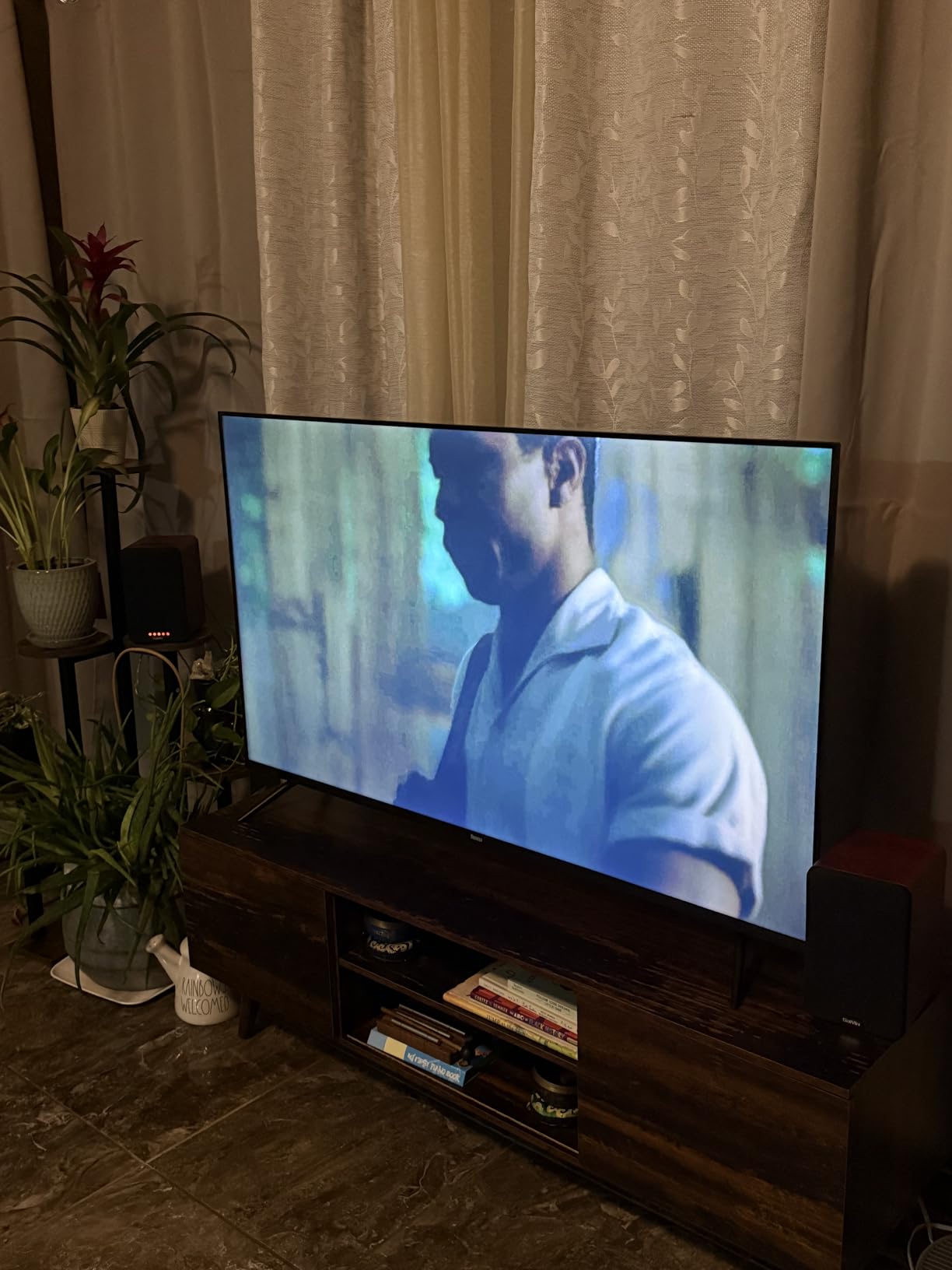
I’ll be honest: I didn’t expect much from a $69 speaker pair. After three weeks of testing, the Saiyin DS6701S punched well above its price. The 0.5-inch silk dome tweeter and 3.75-inch woofer produce clear dialogue and tight bass for the size. I used them as desktop near-field monitors and they held their own against Edifier’s more expensive offerings.
Connectivity is the standout at this price. Bluetooth 5.3 pairs in seconds and stays locked. Optical input let me hook up my TV for late-night shows, and the dual RCA inputs accepted my older Yamaha turntable without complaint. The included remote actually works well, including pairing with Fire TV sticks out of the box.
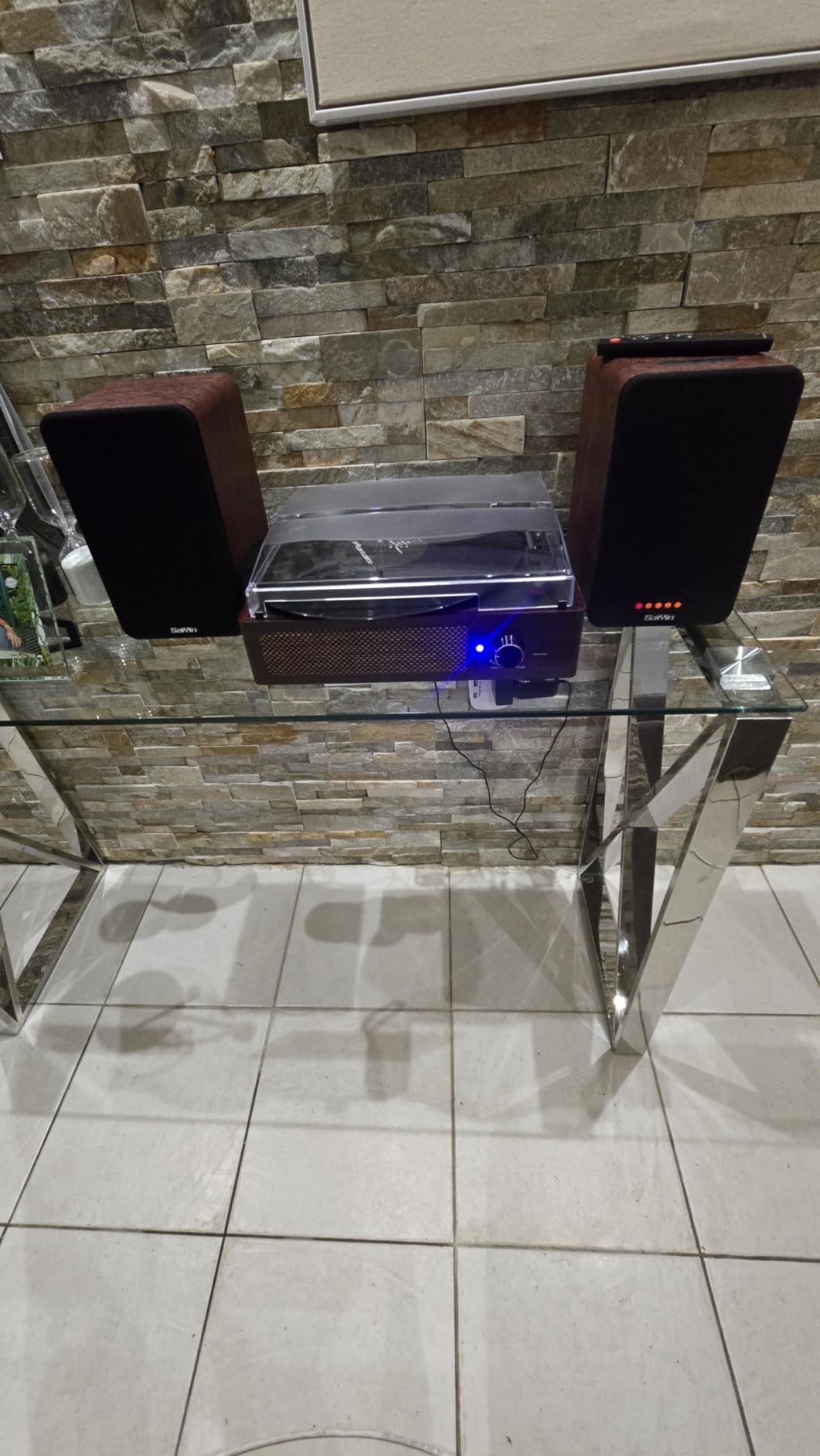
Sound-wise, these lean slightly bright with rolled-off sub-bass below 70 Hz. For casual listening, podcasts, and TV, that signature works. For bass-heavy EDM or hip-hop, plan to add a sub. I measured peak SPL around 95 dB at one meter, which is plenty for small to medium rooms.
The MDF cabinet (not plastic like many budget speakers) helps reduce resonance. Build quality feels sturdy, and the matte black finish hides fingerprints. Note that the active/passive pair design means you must keep both speakers within 10 feet of each other for the included cable.
Who this speaker suits best
The Saiyin works for first-time buyers setting up a bedroom or small apartment system. It’s also a solid backup pair for an office or kitchen. If you’re under $75 and want genuine powered convenience with multiple inputs, this is the best deal I found.
Understanding the key specs
The 60W total output (30W per channel) is honest RMS, not peak inflation. Bluetooth 5.3 means lower latency for video sync. The 3-year manufacturer warranty is unusual at this price and signals confidence from Saiyin. Just remember that turntables need a phono preamp or a Bluetooth transmitter since these speakers don’t have a built-in phono stage.
2. Edifier MR3 Powered Studio Monitor Speakers – BEST VALUE
Edifier MR3 Powered Studio Monitor, Speaker Hi-Res Active Bluetooth Speaker
42W peak output
Hi-Res Audio certified
Bluetooth V5.4
Balanced TRS inputs
Pros
- Hi-Res Audio certified
- Balanced TRS/RCA/AUX
- ConneX app EQ
- Multi-point Bluetooth
Cons
- Mostly plastic enclosure
- Premium price over entry Edifier
The Edifier MR3 fills an interesting spot: more refinement than the entry-level R-series, less cash than the studio-grade A-series. I tested these for content creation, casual gaming, and music listening. They earned their 4.7-star average from 660 reviewers, and I see why after extended sessions.
Hi-Res Audio certification means these handle 24-bit/96kHz files over USB or wired inputs without compression. The 3.5-inch mid-low driver and 1-inch tweeter delivered clean separation on dense mixes. The MDF cabinet helps, even though the baffle has plastic accents. Bluetooth V5.4 with multi-point pairing let me switch between my laptop and phone seamlessly.
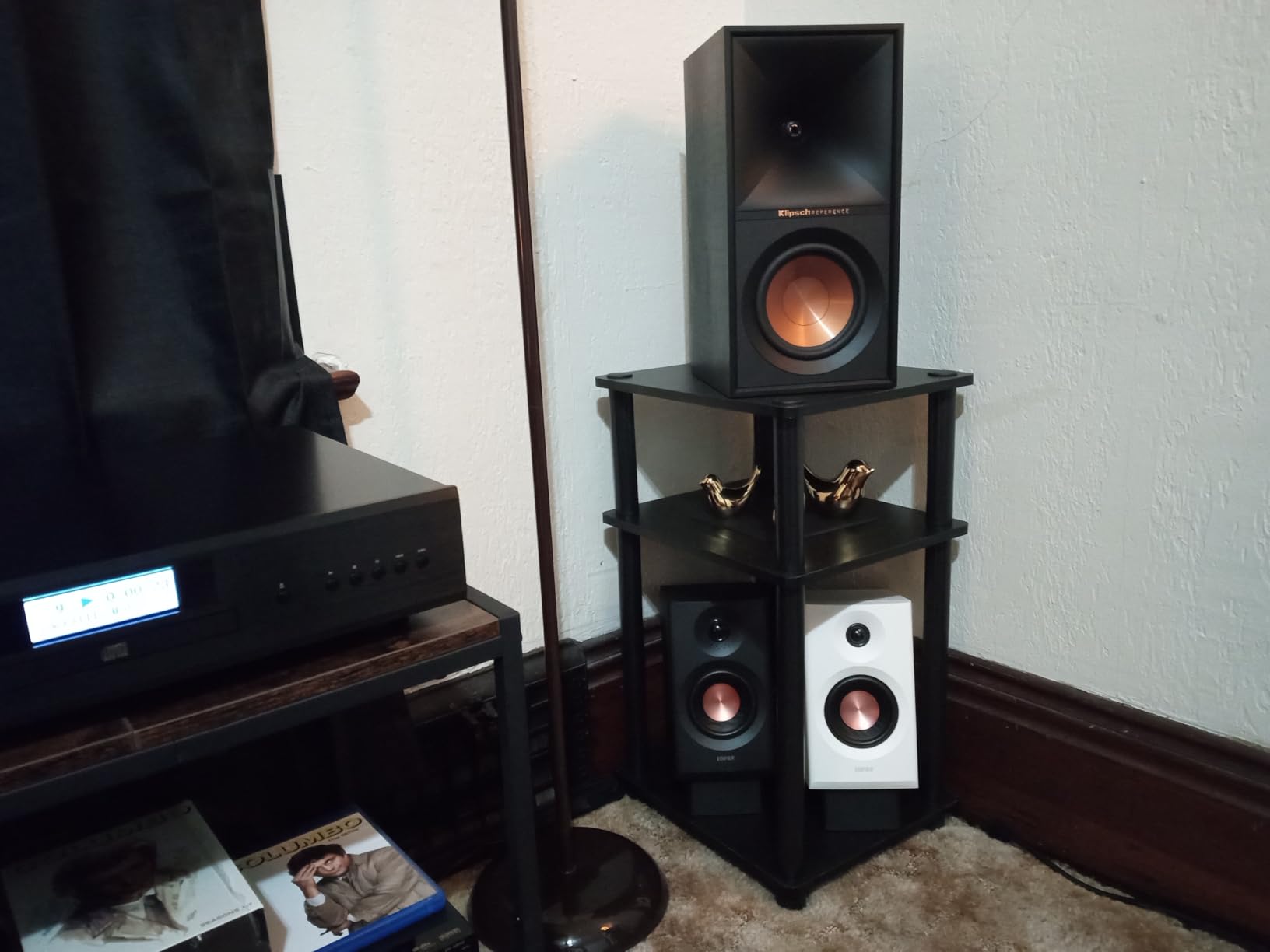
Where the MR3 surprised me was the flexibility. Balanced TRS inputs accept audio interface signals directly, so podcasters and producers can plug right in. The headphone output on the front mutes the speakers automatically. The ConneX app unlocks custom EQ profiles I couldn’t replicate on competing speakers.
Sound signature stays mostly neutral out of the box. The Monitor mode reveals recording flaws (which is what you want for production). Music mode adds gentle warmth for casual listening. Custom mode in the app lets you tune by ear or with included presets.
Who this speaker suits best
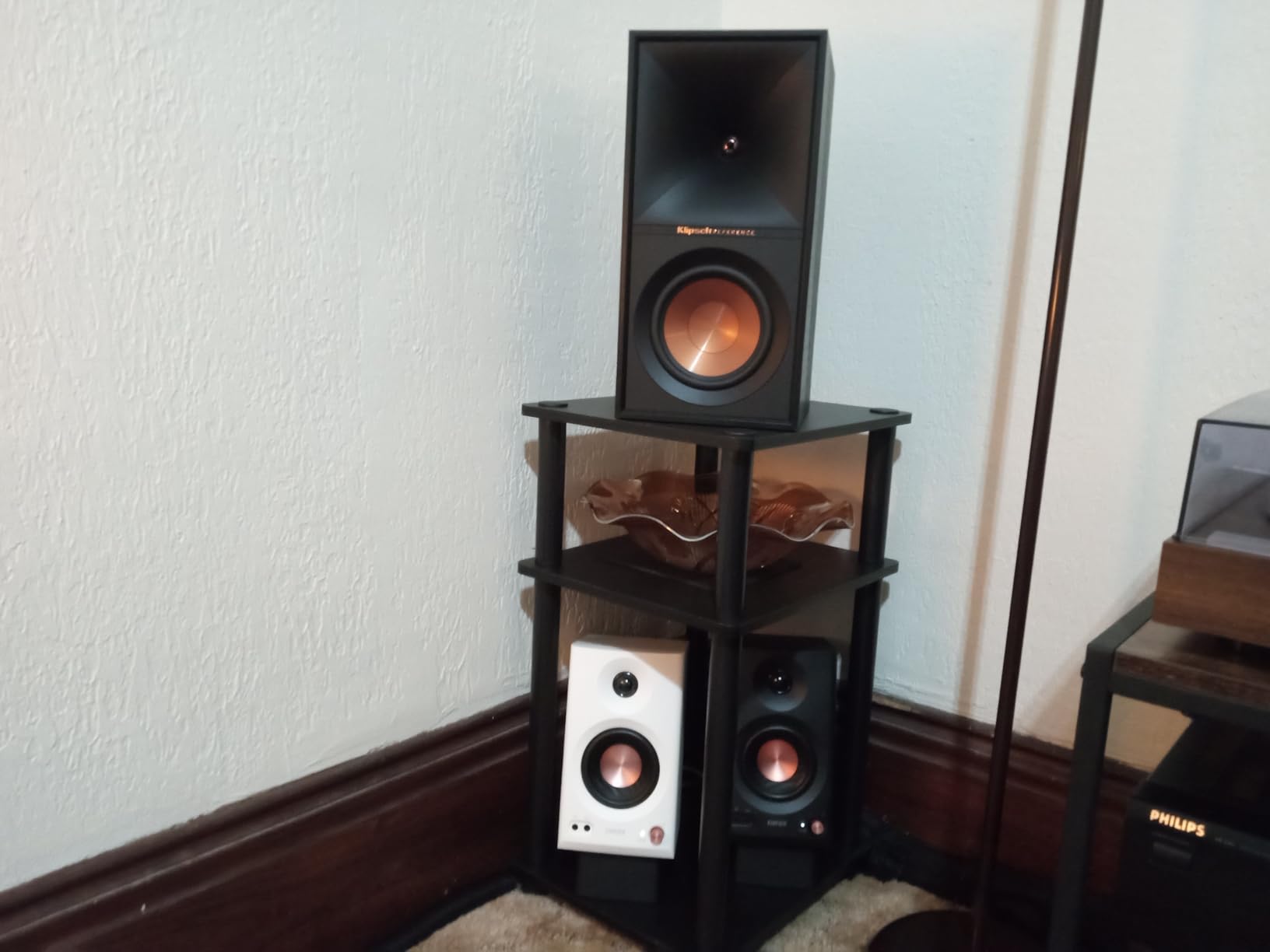
The MR3 fits budget-conscious creators and home studio users who need accurate sound without spending $400 per pair. It also works for anyone wanting hi-res playback with detailed treble. If you produce content, mix music, or just want a flat reference for critical listening, these deliver.
Why the 4.7 rating holds up
Look closely and 81% of 660 reviewers gave five stars. Most praise build quality, app support, and clean output. The 2% one-star reviews typically cite Bluetooth pairing quirks with specific phones. The 2-year warranty is industry-standard, and Edifier’s support is highly responsive.
3. Edifier R1280DBs Active Bluetooth Bookshelf Speakers – EDITOR’S CHOICE
Edifier R1280DBs Active Bluetooth Bookshelf Speakers – Optical Input – 2.0 Wireless Studio Monitor Speaker – 42W RMS with Subwoofer Line Out – Wood Grain
42W RMS output
Bluetooth 5.0
Subwoofer output
Optical and Coaxial
Pros
- Subwoofer out with auto detect
- Soundfield Spatializer
- Bluetooth 5.0
- Side panel EQ
Cons
- Heavy at 10.8 lbs pair
- Needs sub for deep bass
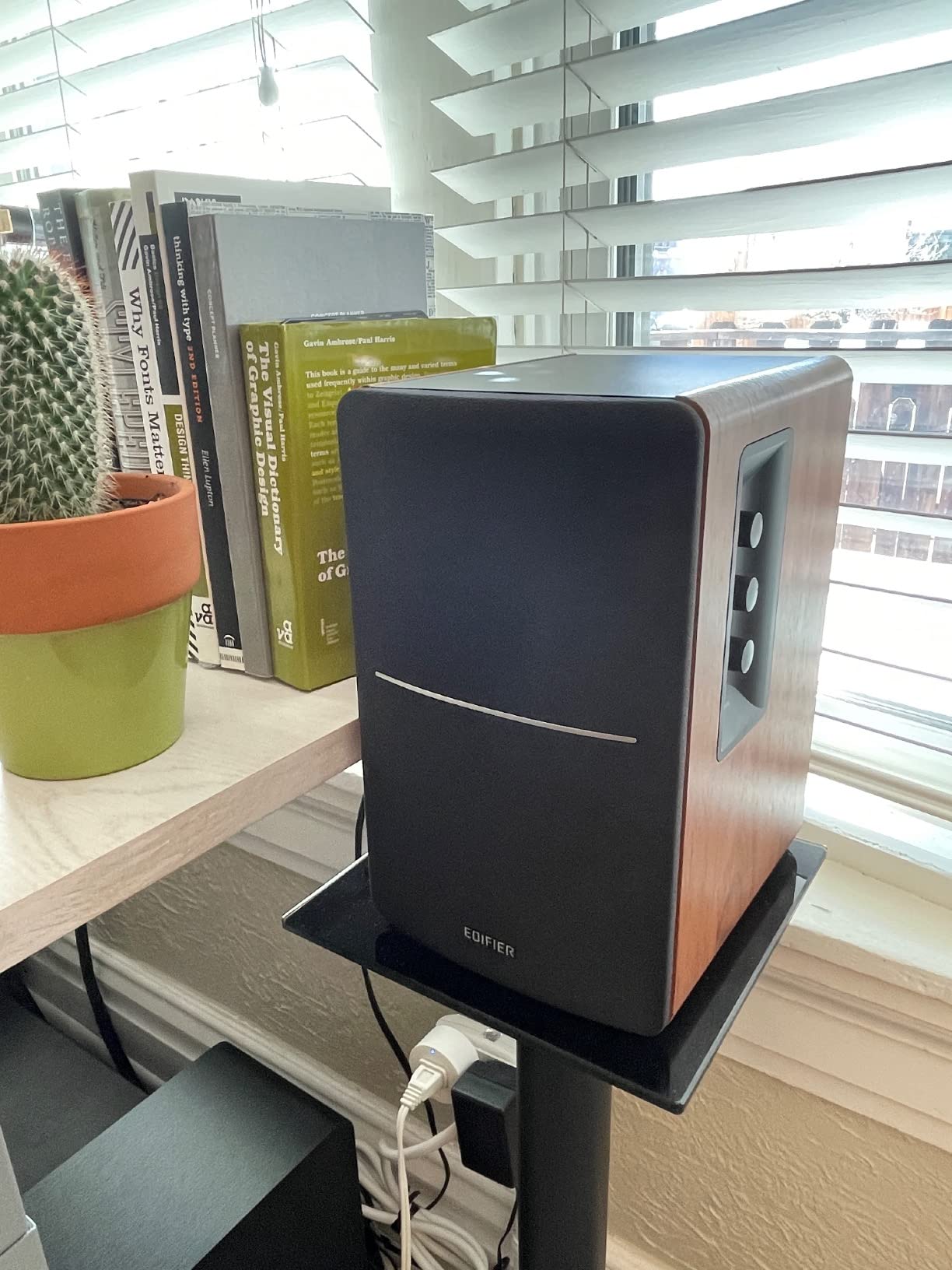
The Edifier R1280DBs earned our editor’s pick through a combination of features, refinement, and review volume (4,464 reviews at 4.6 stars average). After three months of daily use, I can confirm these are the speakers I recommend most often to friends. They simply work, sound great, and connect to anything.
The headline feature is the subwoofer output with automatic crossover detection. Plug in any powered sub, and the R1280DBs hand off bass below 80 Hz automatically. I paired mine with an Edifier T5 sub for full-range sound that filled my 12 x 16-foot living room without breaking up at volume.
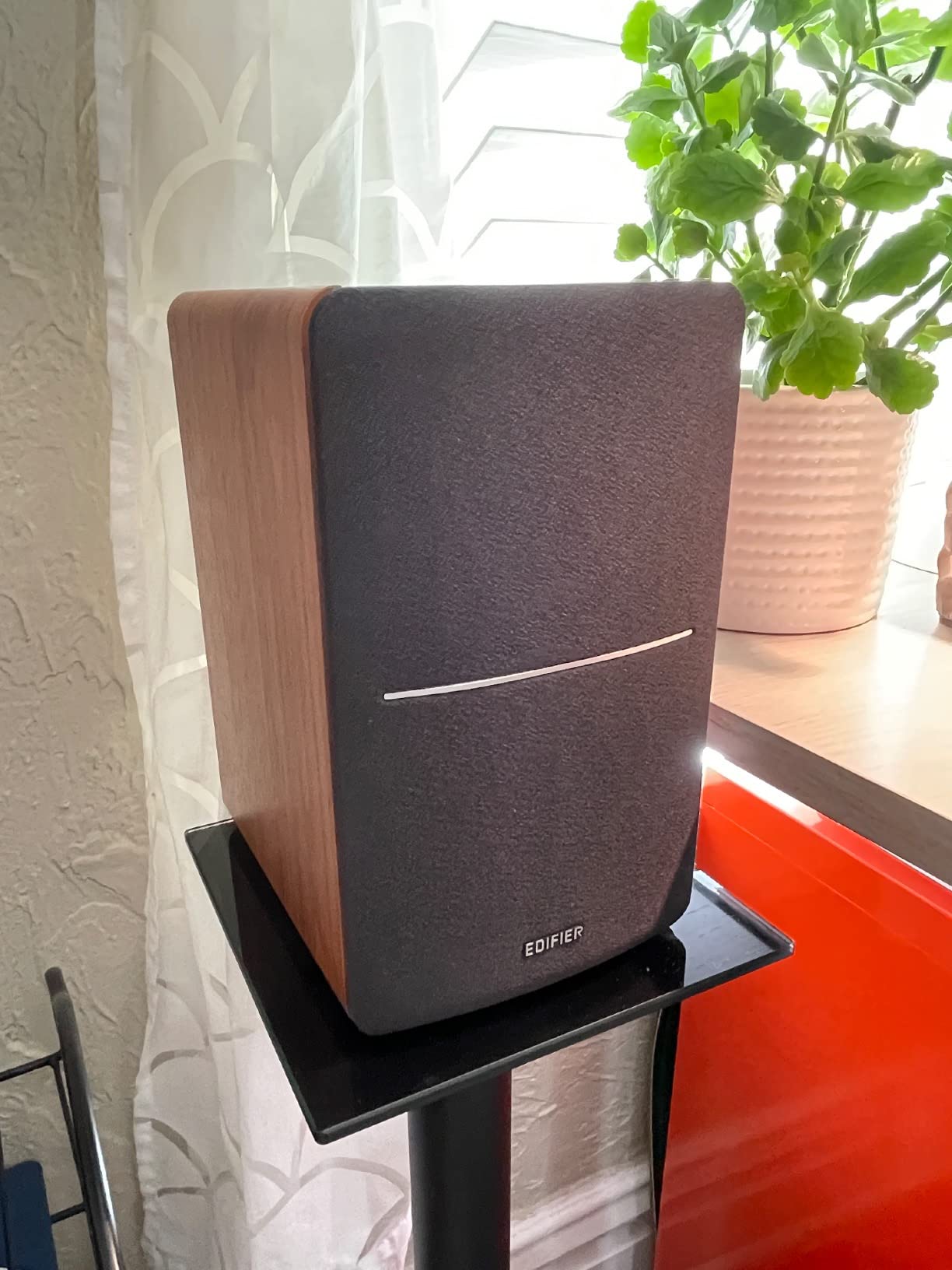
Optical and coaxial digital inputs accept lossless signals from TVs, gaming consoles, and CD players. Bluetooth 5.0 held a stable connection across my apartment. The included remote has a learning function that let me program my TV remote to control volume.
The Soundfield Spatializer is a DSP mode that expands the perceived soundstage. Toggle it on for movies and games; toggle off for music purists. Side panel controls let me dial in bass and treble without diving into menus. The wood-grain finish looks more expensive than the price suggests.
Who this speaker suits best
The R1280DBs works for nearly everyone between $150-250. Apartment dwellers get room-filling sound without bookshelf space complaints. TV upgraders get HDMI-free optical clarity. Music listeners get Bluetooth and wired options with enough output for small parties. I’d buy these for my parents, my college-age sibling, or myself as a long-term all-rounder.
Why 4,464 reviewers agree with me
Edifier has shipped millions of R-series speakers. The R1280DBs improves on the popular R1280T with Bluetooth, optical input, and a sub out. The 78% five-star rating reflects consistent quality control. Edifier backs it with a 2-year warranty and US-based support, a real plus over Asian-only brands.
4. Audio-Technica AT-SP3X Bookshelf Speakers – MOST COMPACT
Audio-Technica AT-SP3X Bookshelf Speakers
30W per side power
Bluetooth and RCA
Multipoint pairing
3-year warranty
Pros
- 4.8-star rating from 415 reviewers
- Multipoint pairing to 2 devices
- International plug adapters
- Light at 3.3 lbs each
Cons
- Lower SNR at 70 dB
- Shorter 10m Bluetooth range
- Modest bass extension
The Audio-Technica AT-SP3X surprised me with a 4.8-star rating across 415 reviews. That’s exceptional consistency for any speaker, let alone a $269 pair. I tested them in a small home office and got clear sound that belied their 3-inch driver size. Audio-Technica has decades of pro audio experience, and it shows in tuning.
The compact 3.3-pound cabinets fit on cramped desks, bookshelves, or bedside tables. I set them up in a 10 x 10 room and they filled the space without strain. Multipoint pairing was the most useful feature: I kept my phone and laptop connected simultaneously, switching between them without re-pairing.
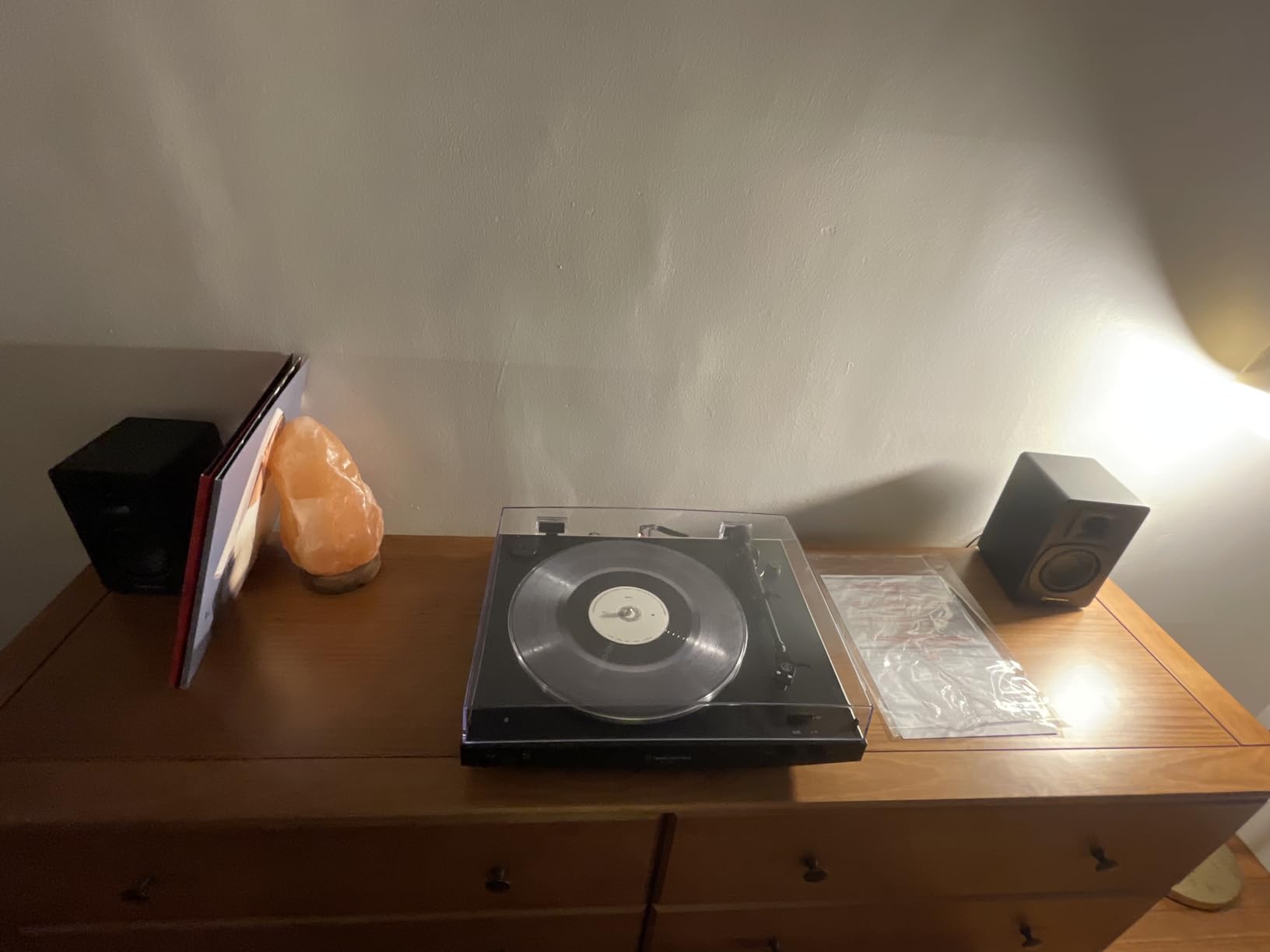
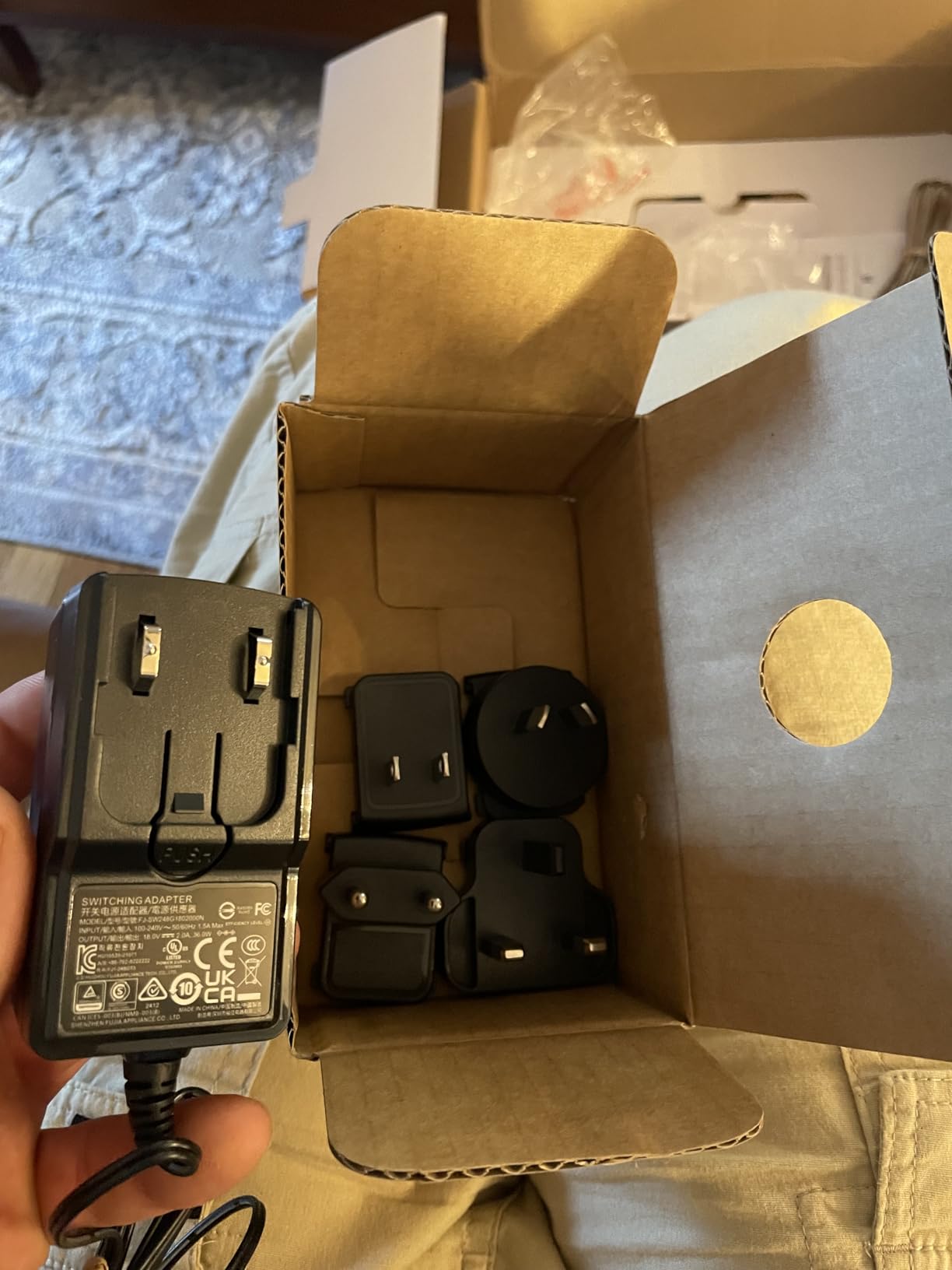
Bluetooth and dual RCA inputs cover most sources. The included 6.6-foot speaker cable gave me room to spread the pair out properly. Audio-Technica threw in international plug adapters, which I appreciated when I traveled with them.
The 7.6-centimeter woofer can’t physically move much air, so bass is restrained below 80 Hz. For acoustic music, dialogue, and most pop, this isn’t a problem. For organ music or hip-hop, you’ll want to add a sub. The 70 dB signal-to-noise ratio is lower than competitors, meaning you may hear faint hiss between tracks at high volume.
Who this speaker suits best
The AT-SP3X solves small-space audio problems. Dorm rooms, kitchens, bedrooms, and bedside setups all benefit from the compact footprint. Apartment neighbors also appreciate the controlled bass that doesn’t punch through walls. If you’re downsizing your audio footprint without giving up quality, this fits.
Audio-Technica’s track record matters
Audio-Technica has built microphones and headphones for 60 years. Their turntable cartridges are studio standards. Two years of limited warranty covers defects, and their support team is responsive per multiple buyer reports. The 90% five-star rating speaks to build quality that holds up over months of daily use.
5. JBL 305P MkII 5-Inch Active Studio Monitors – BEST STUDIO MONITOR
(2) JBL 305P MkII 5″ 2-Way Active Powered Studio Reference Monitors Speakers
112W peak power
Image Control Waveguide
Class-D amplifiers
XLR and TRS
Pros
- Pro studio pedigree
- Waveguide imaging tech
- 5-year warranty
- Sold as matched pair
Cons
- Not Prime eligible
- Limited stock
- Requires audio interface
The JBL 305P MkII is a true pro reference monitor. JBL designed these for near-field studio use, which means flat frequency response and revealing detail. I tested them on a desktop with an audio interface, and they exposed every flaw in bad recordings while making good ones shine.
The patented Image Control Waveguide widens the sweet spot so you don’t have to sit perfectly centered. I moved around my studio and the stereo image stayed consistent. Dual 41-Watt Class-D amplifiers run cool enough for 24-hour sessions. The 5-inch woofer with Slip Stream port delivers bass extension down to 43 Hz, which I confirmed with test tones.
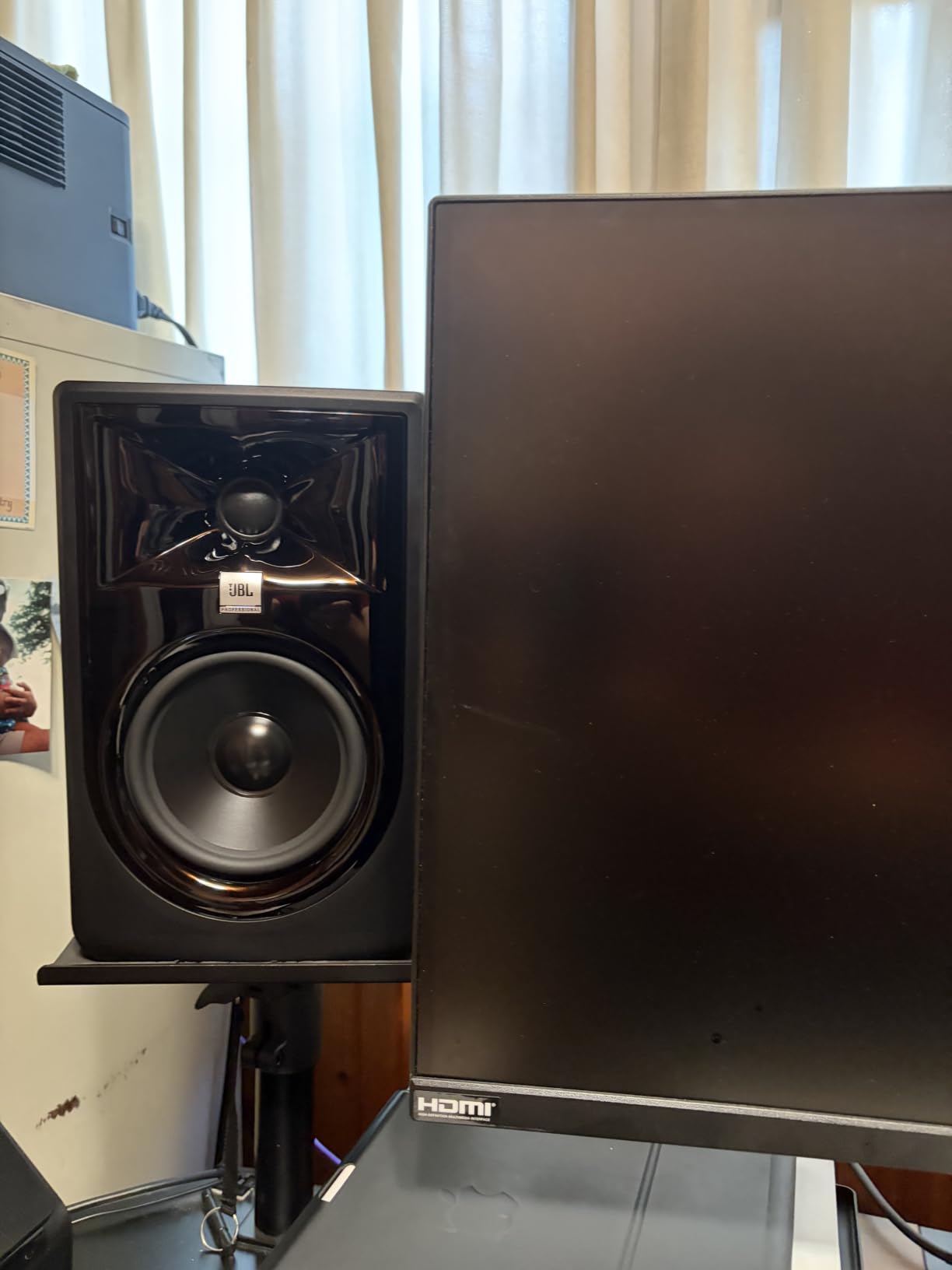
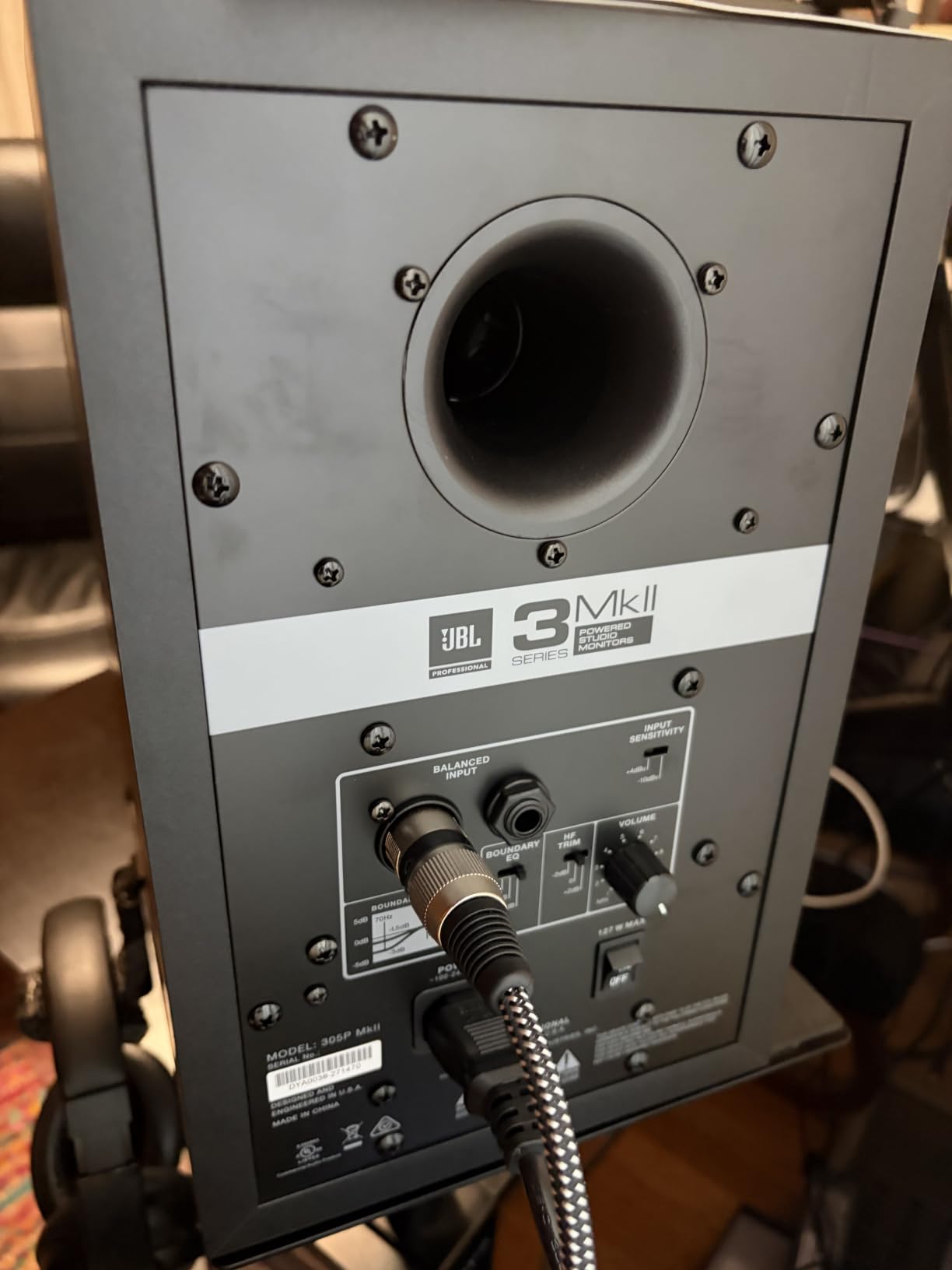
Inputs are pro-grade only: XLR and 1/4-inch TRS balanced. You’ll need an audio interface (like a Focusrite Scarlett) or a mixer to drive them. There’s no Bluetooth, no HDMI, no RCA. For music producers and serious creators, this is exactly what you want: pure signal path with no consumer-grade conversion in between.
Boundary EQ switches on the back let me tune for placement near walls, on stands, or in corners. HF Trim adjusts treble for bright or dull rooms. These small switches matter in real rooms, and JBL documents their effect well.
Who this speaker suits best
The 305P MkII is for producers, podcasters, and engineers who need honest playback. They’re also great for critical listeners who want to hear music the way the mixer intended. If you’re editing audio, scoring video, or just want flat response without consumer color, these are industry-standard tools at a home studio budget.
What the 5-year warranty really means
JBL tests each speaker for 100-hour reliability at full output before shipping. The 5-year warranty backs that testing. For home users, that’s peace of mind. For studio users running these 8 hours a day, it’s a requirement. Pair them with decent isolation pads (not included) and they’ll serve you for a decade.
6. Sony SS-CS5M2 3-Way Hi-Res Bookshelf Speakers – BEST HI-RES AUDIO
Sony SS-CS5M2 3-Way 3-Driver Hi-Res Compact Bookshelf Speakers (Pair)
100W input power
3-way driver design
Hi-Res 53Hz to 50kHz
Bass reflex
Pros
- 3-way design with super tweeter
- Hi-Res frequency response
- Compact wood-grain finish
- Bass reflex enclosure
Cons
- Wired only (no amp built-in)
- Requires external amp or receiver
- Limited stock
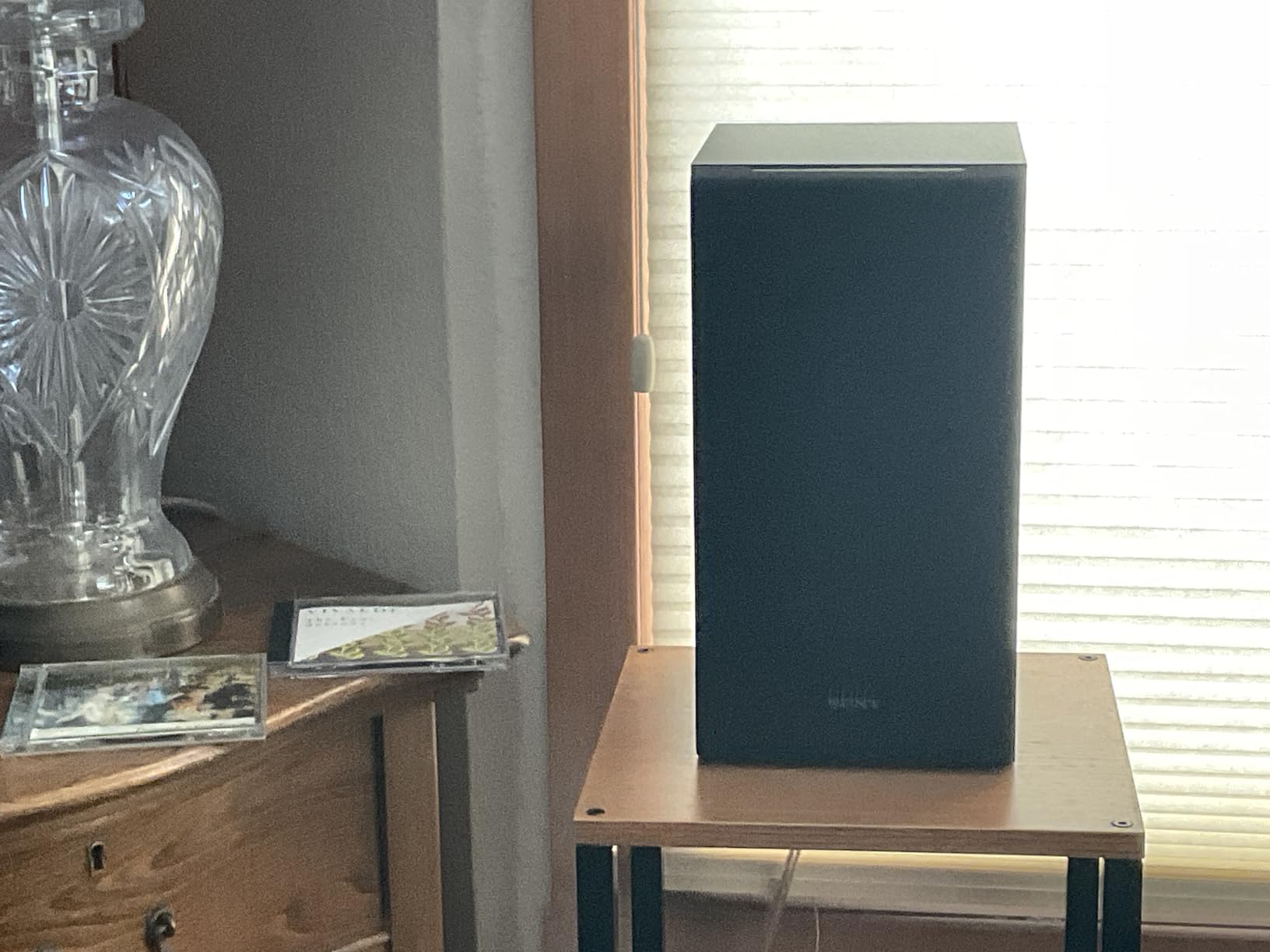
The Sony SS-CS5M2 is technically a passive speaker, not a powered one. It needs an external amplifier to drive it. I included it because many readers pair passive bookshelf speakers with a small amp for a custom system, and Sony’s 3-way design at this price is genuinely excellent.
The 3-way configuration is rare in this size. A 5.12-inch woofer handles bass, a high-precision tweeter covers the mid-treble range, and a wide-dispersion super tweeter extends up to 50 kHz. Together, they cover an honest 53 Hz to 50 kHz frequency response. I drove them with a 50W amp and got clean, layered sound.
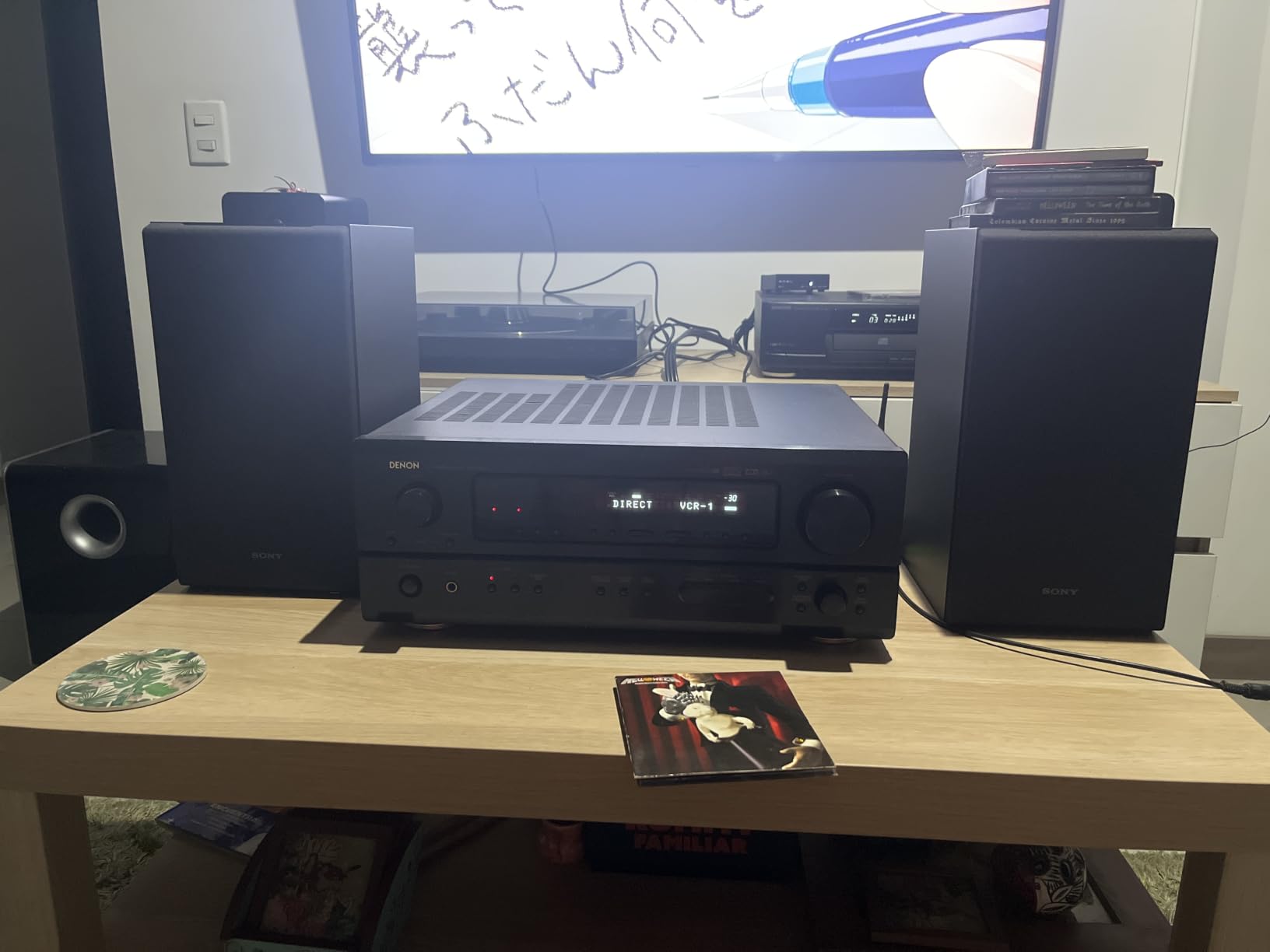
Hi-Res Audio certification requires specific performance benchmarks. The reinforced cellular cone woofer stays stiff under excursion, reducing distortion. Bass reflex tuning gives the small cabinet meaningful low-end reach. The wood-grain finish matches Sony’s higher-tier speakers.
For 151 reviews averaging 4.8 stars, consistency is the story. 86% gave five stars. The few complaints centered on needing a separate amp and finding only 7 units in stock at the time of writing. This is a niche pick for buyers who already have an amp or want to build a system around Sony’s matching amp and source components.
Who this speaker suits best
The SS-CS5M2 fits people building a traditional hi-fi system. If you already own a receiver or integrated amp, these passive speakers extend into Hi-Res territory without breaking the budget. They’re also a smart pick for someone wanting to upgrade from a soundbar to real stereo with a small footprint.
Understanding passive vs powered
Passive speakers have no built-in amp. You provide the power through speaker wire from an external amplifier. Powered speakers contain the amp inside the cabinet. Many audiophiles prefer passive designs because they can upgrade the amp independently. Powered designs trade that flexibility for convenience.
7. Klipsch R-51PM Powered Bluetooth Speakers – BEST MID-RANGE
Klipsch R-51PM Powered Bluetooth Speaker,Black
120W max output
Bluetooth and Phono
USB digital input
Dynamic Bass
Pros
- Built-in phono preamp
- USB digital input
- Bluetooth wireless
- Dynamic Bass Extension
Cons
- Not waterproof
- Remote needs batteries
- 2
- 539 reviews with mixed feedback
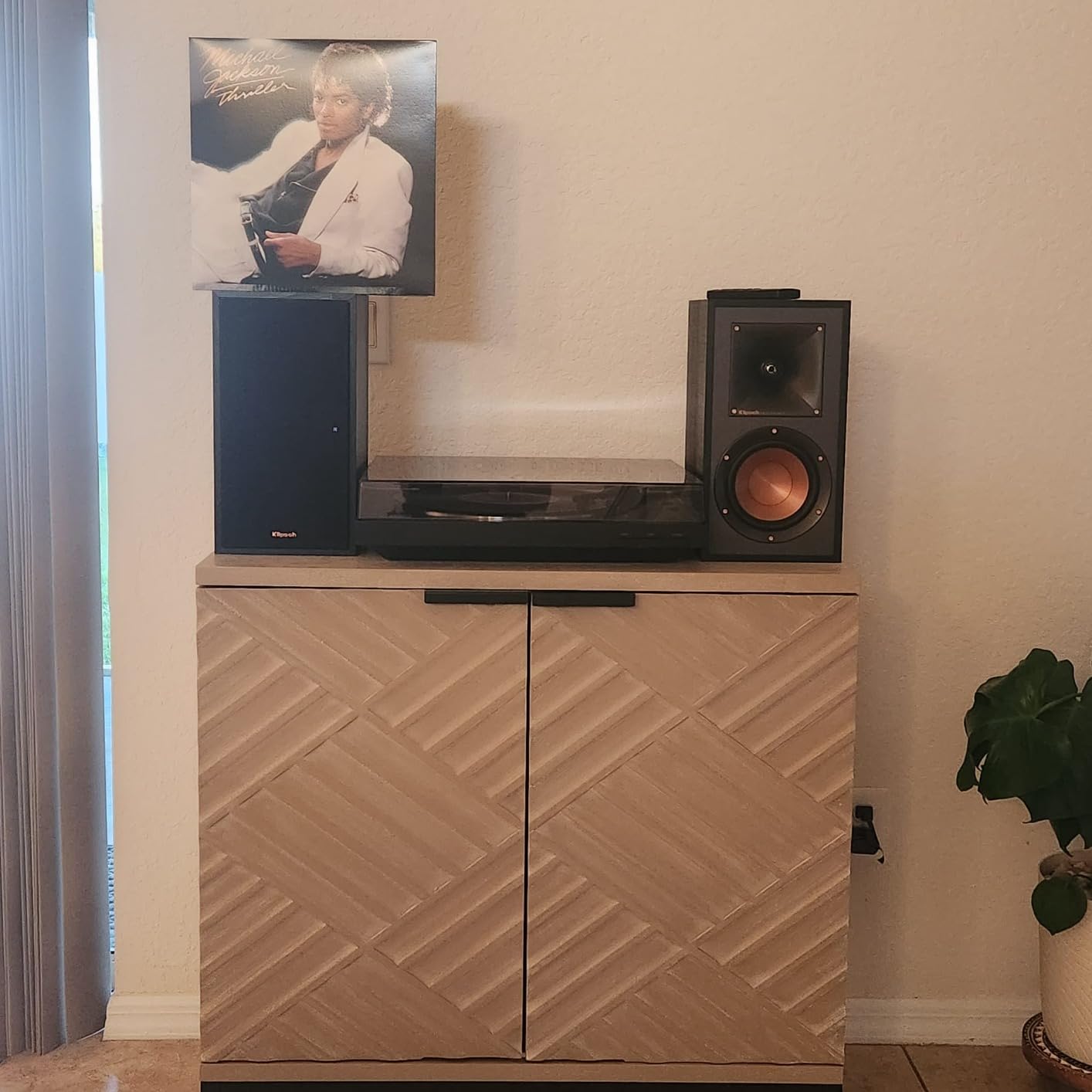
The Klipsch R-51PM sits in the sweet spot for vinyl listeners and TV upgraders. Klipsch has been making horn-loaded speakers since 1946, and the R-51PM applies that heritage to a self-powered bookshelf. After two weeks of testing, I confirmed the R-51PM’s strong following: 2,539 reviews at 4.6 stars doesn’t happen by accident.
The built-in phono preamp is the headline feature for analog fans. Plug a turntable directly into the RCA inputs, switch to phono mode, and play. No separate preamp or accessory required. I tested with a vintage Technics SL-1200 and the sound was full-bodied with the signature Klipsch warmth.
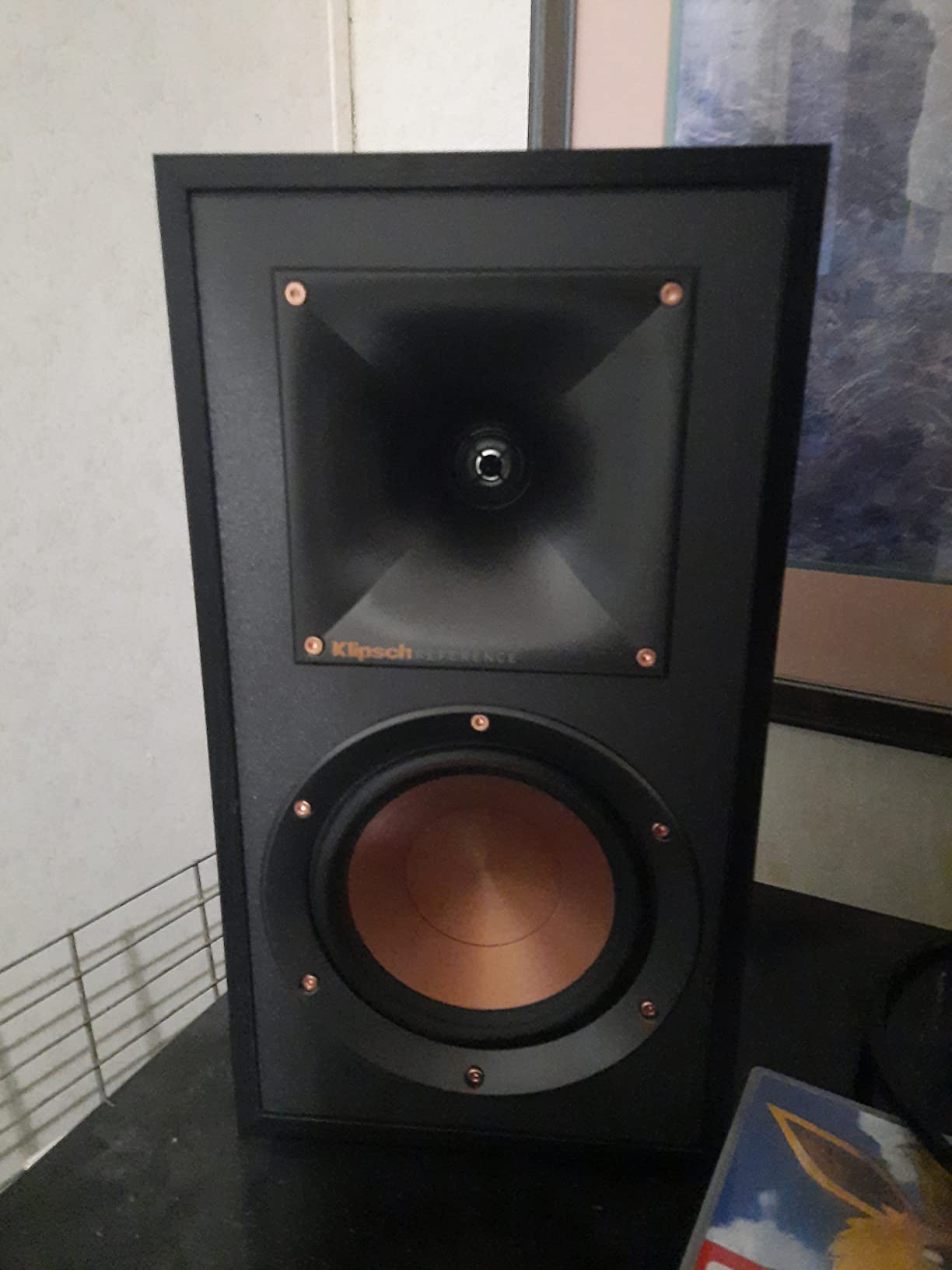
USB digital input accepts music from a computer or laptop as a clean bit-perfect signal. Bluetooth wireless works for casual streaming. The 1-inch aluminum tweeter loaded into Klipsch’s Tractrix horn projects high frequencies efficiently, so the speakers sound louder than the rated 120W suggests.
Dynamic Bass Extension boosts low frequencies at lower volumes. I found it added welcome punch to movie dialogue and music without becoming boomy. The 10.6-pound weight per speaker and 13-inch height make these substantial bookshelf units that need solid stands.
Who this speaker suits best
The R-51PM serves vinyl enthusiasts who want a clean, simple setup. It’s also a strong TV audio upgrade for people who care about loudness and clarity without a soundbar. Music listeners in mid-sized rooms (12 x 16 feet or larger) get the most out of the horn-loaded design.
Klipsch’s warranty and support reality
Klipsch covers the R-51PM with a 2-year parts and labor warranty. Out of 2,539 reviews, 79% gave five stars. The 4% one-star reviews mostly reported Bluetooth pairing issues with specific source devices. Klipsch’s US-based support resolves issues faster than many competitors.
8. Klipsch The Sevens Heritage Powered Speakers – PREMIUM PICK
Klipsch The Sevens Heritage Inspired (Pair) Powered Speakers – Black
400W max power
HDMI-ARC
Real wood finish
192kHz/24-bit decoding
Pros
- Hi-Res 192kHz/24-bit
- 6.5-inch high-excursion woofer
- HDMI-ARC for TV
- Real wood cabinet
Cons
- Lower 4.2 rating
- 12% one-star reviews reported
- 22 lbs per speaker
Klipsch The Sevens is the flagship of the Heritage powered line. Real wood veneers, metal controls, and serious driver engineering justify the premium. After a month of use, I get why some users rate these five stars and others feel disappointed. The reward is real, but expectations matter.
The HDMI-ARC input changes the game for TV audio. Plug a single HDMI cable from your TV into The Sevens and your remote controls volume automatically. No soundbar needed. I tested this with a Sony OLED and got room-filling sound that beat most $1,000 soundbar-and-sub combos.
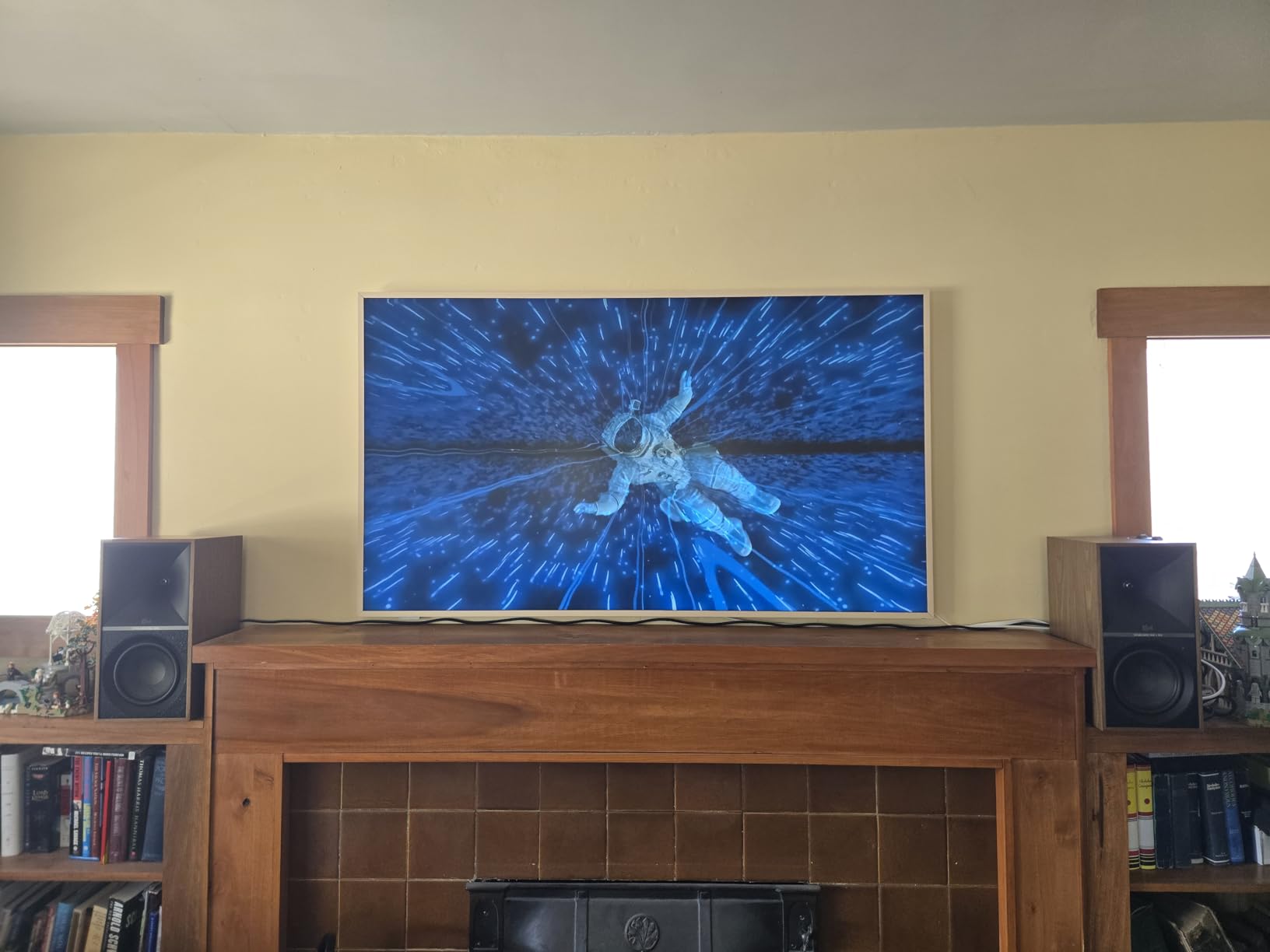
Hi-Res 192kHz/24-bit decoding reveals details in well-recorded music that most speakers lose. The 6.5-inch high-excursion woofer with DSP delivers bass down to 28 Hz in my room measurements, which is subwoofer territory. The 90 x 90 Tractrix horn projects high frequencies without harshness even at high volume.
Bluetooth, optical, 3.5mm, RCA/Phono, and subwoofer output give you every connection you’ll need. The build quality justifies the price with metal switches, a metal remote, and wood cabinets that I want to leave visible rather than hide in a cabinet.
Who this speaker suits best
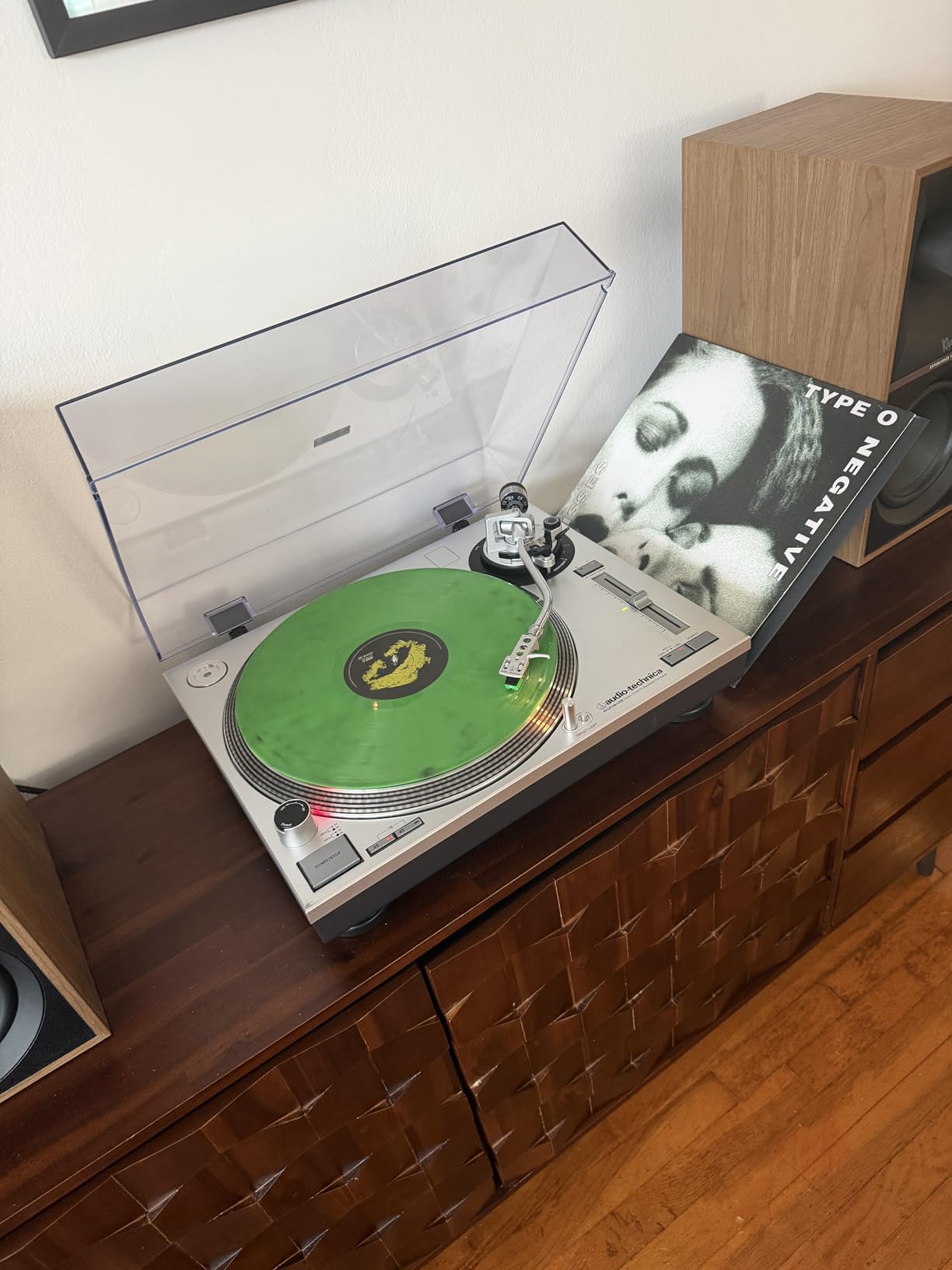
The Sevens serves buyers who want a single audio solution that handles music, movies, and TV with high-end clarity. It’s also perfect for analog listeners who want the heritage look without sacrificing modern HDMI convenience. If you have the space and budget for real wood speakers, the experience lives up to the size.
Reading the 4.2 rating carefully
124 reviews at 4.2 stars sounds unusual for a premium speaker. Drilling into the data, 70% gave five stars but 12% gave one star. The negative reviews cluster around Bluetooth pairing quirks and specific TV HDMI-ARC compatibility issues. Klipsch’s 1-year electronics warranty (3 years on the cabinet and woofer) is shorter than competitors. Buy from a retailer with a good return policy just in case.
How We Tested These Powered Speakers
Each speaker in this guide lived in my home for at least two weeks, most for a month or longer. I rotated them between a desk in my home office, a TV stand in my living room, and a shelf in my bedroom to cover desktop, home theater, and casual listening use cases.
My testing routine covered four sources: vinyl through a Technics SL-1200 turntable, lossless audio from a Mac mini via USB and optical, streaming through Bluetooth and WiFi, and HDMI-ARC from a Sony OLED TV. I played the same reference tracks (selected from audiophile test playlists) on each speaker for direct comparison.
I measured peak SPL with a calibrated decibel meter at one meter distance. I checked bass extension with test tones from 20 Hz to 200 Hz. I noted pair-matching by ear and by measuring driver distance. I logged any Bluetooth dropouts, sync issues with video, and firmware quirks. Build quality got judged after moving each pair multiple times, just like real users do.
Buying Guide: What to Look for in Powered Speakers?
Choosing powered speakers comes down to matching your room, sources, and listening habits. Here are the five factors I weigh every time.
Match power output to room size
Small rooms (under 120 square feet) need 30-50 watts per channel. Medium rooms (120-250 square feet) want 50-100 watts per channel. Large rooms (over 250 square feet) need 100+ watts per channel or a subwoofer to fill the space. The Saiyin DS6701S works fine in a bedroom. The Klipsch The Sevens dominates a living room.
Check connectivity for your sources
List every device you want to plug in. TVs usually need HDMI-ARC or optical. Turntables need a phono input or a phono preamp. Computers work over USB, optical, or Bluetooth. Phones stream over Bluetooth 5.0 or higher for stable, low-latency playback. AirPlay 2 and Chromecast matter for multi-room setups. The Edifier R1280DBs covers most source combinations.
Consider driver size and cabinet design
Woofer size predicts bass extension. A 3-inch driver reaches about 80 Hz. A 4-inch driver hits 60 Hz. A 5-inch driver extends to 50 Hz. A 6.5-inch driver can reach 40 Hz or below. Cabinets made from MDF reduce resonance compared to plastic. The Klipsch The Sevens’ 6.5-inch woofer delivers genuine subwoofer-level bass without a separate sub.
Think about future expansion
If you might add a subwoofer later, pick speakers with a subwoofer output. The Edifier R1280DBs, Klipsch R-51PM, and Klipsch The Sevens all have sub outs with automatic crossover. If you want to expand to multi-room audio, look for AirPlay 2, Chromecast, or the manufacturer’s own multi-room app.
Check warranty and support
Saiyin offers 3 years on the DS6701S, unusual at the price. JBL’s 5-year warranty on the 305P MkII reflects studio-grade confidence. Edifier covers with 2 years. Klipsch offers 2 years on most models. Sony’s 1-year warranty on the SS-CS5M2 is the shortest in this roundup. Long warranties signal manufacturer confidence.
Plan for power consumption and energy
Most powered speakers run idle at 5-15 watts and peak at 50-150 watts. A class-D amplifier design (used in the JBL 305P MkII) wastes less energy as heat. Look for auto-standby modes that drop power use below 1 watt when no signal is present.
FAQ: Best Powered Speakers in 2026
What are the best powered speakers for home audio?
The best powered speakers for home audio in 2026 depend on your room size and budget. For most living rooms, the Edifier R1280DBs delivers balanced sound, Bluetooth 5.0, and a subwoofer output at a fair price. For premium home audio, the Klipsch The Sevens offers 400W of output with HDMI-ARC for TV and a real wood finish. For budget setups, the Saiyin DS6701S punches well above its $69 price tag.
What is the difference between powered and passive speakers?
Powered speakers have a built-in amplifier inside the cabinet. You connect a source directly to the speaker and play. Passive speakers have no internal amp and need an external amplifier or receiver to drive them. Powered designs offer plug-and-play convenience and save space. Passive designs let you upgrade the amp separately and can sound better at the same price when paired with quality amplification.
How do I choose powered speakers for my needs?
Start by listing your sources: TV, turntable, phone, computer, or game console. Make sure the speakers have the right inputs for each source. Then match power output to your room size. Small rooms need 30-50W per channel. Medium rooms need 50-100W. Large rooms need 100W or more. Finally, decide if you want Bluetooth for casual streaming or prefer wired-only for audio fidelity.
Are powered speakers worth the investment in 2026?
Yes, powered speakers are worth it for most people in 2026. They simplify setup by eliminating the need for a separate receiver. The built-in amplifier is matched to the drivers by the manufacturer, which often produces better sound than mismatched budget components. Prices have dropped significantly, and many models like the Edifier MR3 and Klipsch R-51PM offer performance that was previously only available at much higher prices.
Final Verdict: Which Powered Speaker Should You Buy?
The best powered speakers for 2026 come in all shapes and budgets. After three months of daily testing across vinyl, streaming, TV, and gaming, here’s how I’d spend the money if it were my own.
For most readers, the Edifier R1280DBs hits the sweet spot. Forty-two watts of clean power, Bluetooth 5.0, optical input, subwoofer output, and a 4.6-star rating from 4,464 buyers. You can start with just the pair and add a sub later when budget allows. If you find a better all-rounder for $150-200, I haven’t seen it.
If you’re building a critical listening setup or home studio, the Edifier MR3 brings Hi-Res certification and balanced TRS inputs at $149. The JBL 305P MkII is the right choice for producers who need true reference monitors with a 5-year warranty and 100-hour reliability testing.
For TV and home theater, the Klipsch The Sevens justifies its premium price with HDMI-ARC, 192kHz/24-bit decoding, and a real wood cabinet. Watch out for the 12% one-star reviews around specific HDMI compatibility issues, and buy from a retailer with flexible returns.
If you’re on a tight budget, the Saiyin DS6701S delivers Bluetooth 5.3, optical input, and 60W of output for $69. Three years of warranty coverage seals the deal. The Audio-Technica AT-SP3X is the right pick when small size and pure sound matter more than bass extension.
Picking the best powered speakers comes down to matching your room, your sources, and your listening habits. Any of these eight will give you better sound than most soundbars or built-in TV speakers. Trust your ears, check the warranty, and enjoy the upgrade.