
Touchscreen monitors have shifted from niche curiosities to genuine productivity tools that change how you interact with your computer. I spent weeks testing models across desktop setups, portable travel configurations, and point-of-sale environments to separate the genuinely useful from the gimmicky.
Whether you want a touch display for creative work, a second screen for your laptop, or a durable panel for a retail counter, the options in 2026 are broader and better than ever. Prices now start well under what you would expect for a capable 10-point multi-touch display with IPS panel quality.
This guide covers the best touchscreen monitors available right now across every major category. I tested eight models ranging from budget desktop panels to premium 4K portable displays, and each review below breaks down exactly what worked, what frustrated me, and who should buy which one.
Table of Contents
Top 3 Picks for Best Touchscreen Monitors
Not everyone has time to read through eight full reviews. Here are the three models I would recommend first based on my testing, with each pick serving a different priority and budget.
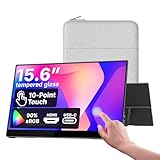
cocopar 15.6 Inch Portable Monitor
- Native macOS gestures
- Tempered glass screen
- Single USB-C cable
- 90% sRGB IPS panel
- Protective sleeve included
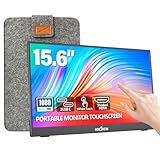
InnoView 15.6 Inch Portable Monitor
- Lowest price tested
- FreeSync and G-Sync
- Protective sleeve
- Works with phones
- 1.37 kg lightweight

UPERFECT 4K Portable Monitor
- 4K UHD resolution
- 125% sRGB gamut
- 450 nits brightness
- 1ms response time
- Ultra-slim frameless
The cocopar earned the top spot because it nails the fundamentals: native touch gestures on both macOS and Windows, a tempered glass surface that resists scratches, and genuine single-cable USB-C operation. The InnoView delivers nearly the same core experience at the lowest price I tested. The UPERFECT 4K is the choice if color accuracy and resolution matter more than anything else.
Best Touchscreen Monitors in 2026 Quick Overview
Here is how all eight models compare side by side. Use this table to quickly narrow down your options before reading the detailed reviews below.
| Product | Specifications | Action |
|---|---|---|
 CUNPU 24 Inch Touchscreen CUNPU 24 Inch Touchscreen |
|
Check Latest Price |
 ViewSonic TD2465 24 Inch ViewSonic TD2465 24 Inch |
|
Check Latest Price |
 ViewSonic TD2423D 24 Inch ViewSonic TD2423D 24 Inch |
|
Check Latest Price |
 Dragolftie 24 Inch Touchscreen Dragolftie 24 Inch Touchscreen |
|
Check Latest Price |
| InnoView 15.6 Inch Portable |
|
Check Latest Price |
| cocopar 15.6 Inch Portable |
|
Check Latest Price |
| UPERFECT 4K Portable 15.6 Inch |
|
Check Latest Price |
 UPERFECT 18.5 Inch 120Hz UPERFECT 18.5 Inch 120Hz |
|
Check Latest Price |
1. CUNPU 24 Inch Touchscreen Monitor – Budget Desktop Pick
CUNPU 24 Inch Touchscreen Monitor, 10 Point Touch, FHD 1080P 75Hz IPS Screen, 100% SRGB, VESA Wall Mountable, Tilt Adjustment, VGA HDMI USB for PC, Laptop Business & Work Station, Warehouse
24 inch FHD IPS
10-point capacitive touch
75Hz
100% sRGB
VESA mount
Pros
- Vibrant accurate SDR colors
- Responsive 10-point touch
- VESA mount compatible
- Good value for price
- Flicker-free eye care
Cons
- HDR mode looks washed out
- Stand feels cheap
- MacOS touch unsupported
I set the CUNPU up as a secondary touch display next to my main monitor, and the first thing that struck me was how vibrant the colors looked in standard dynamic range. The IPS panel with 100% sRGB coverage produces clean reds, greens, and blues that hold up well across the 178-degree viewing angle. For a panel at this price, picture uniformity was genuinely solid with no noticeable backlight bleed along the edges.
The 10-point capacitive touch responded quickly to taps, swipes, and pinch-to-zoom gestures in Windows 11. I used it for scrolling through documents, zooming maps, and tapping through file explorers, and it tracked all ten fingers without lag. The 75Hz refresh rate is a small but noticeable step up from the standard 60Hz you find on most budget panels, making window dragging and scrolling feel slightly smoother.
Physically, the monitor includes a tilt-adjustable stand that works but feels flimsy when you press firmly on the screen. I ended up mounting it on a VESA arm, which is fully supported via the 100x100mm pattern on the back. That swap transformed the experience from acceptable to genuinely comfortable for extended use.
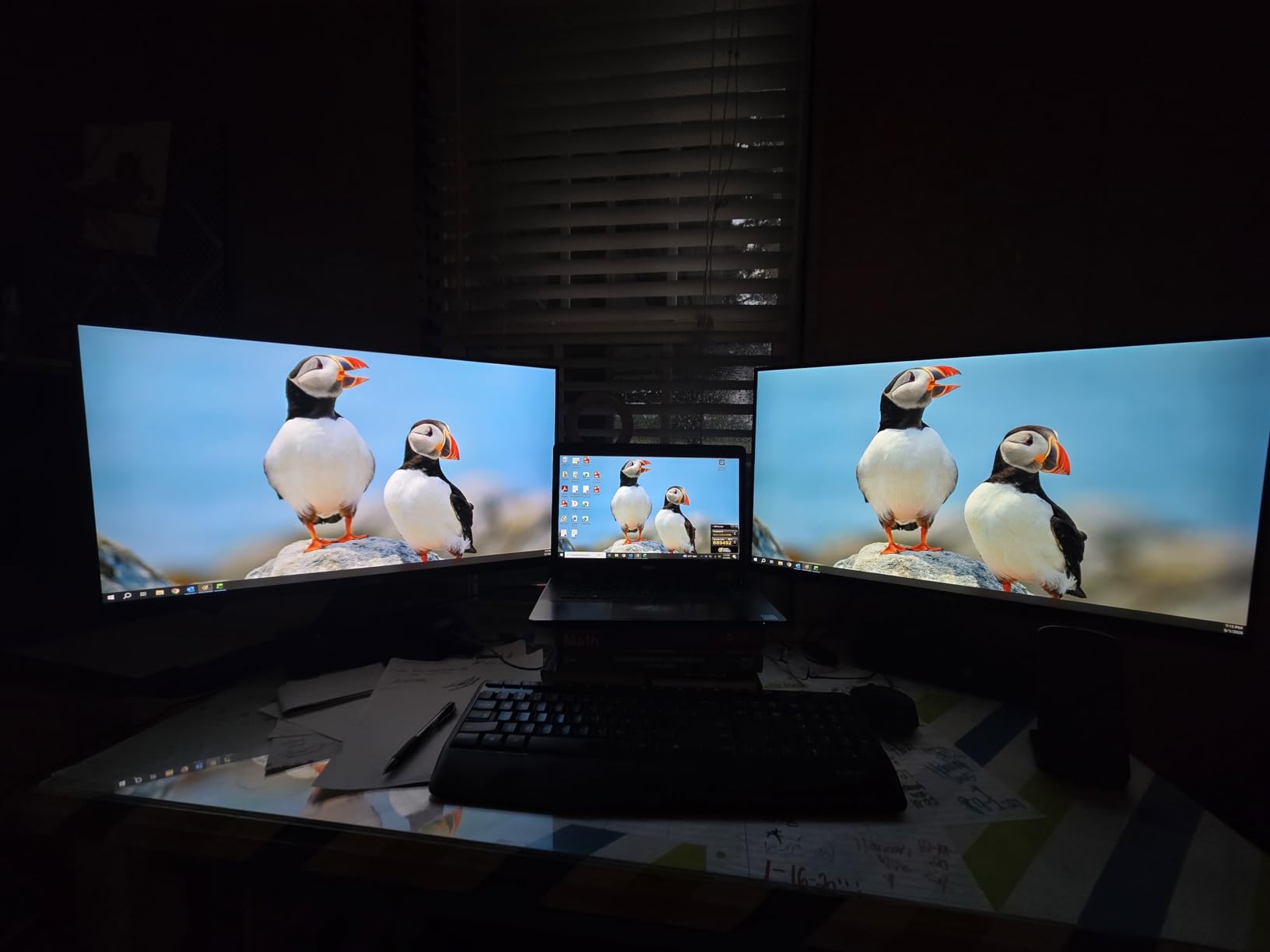
On the technical side, the CUNPU covers the basics well. It connects via HDMI for video and USB-B for touch data, and both cables come included in the box. The matte screen finish reduces glare from overhead lighting, which I appreciated during afternoon work sessions. Blue light reduction and flicker-free technology are built in, making longer sessions easier on the eyes.
The weaknesses are real but predictable for the price. The HDR10 mode produces a washed-out, low-contrast image that I turned off within minutes. The instruction manual is minimal and the auto-configuration process took some trial and error before the display settled on the correct resolution. Most importantly, touch does not work on macOS, so this is a Windows-only display for touch functionality.
Stand and VESA Mounting Flexibility
The included tilt stand adjusts through a reasonable range but lacks height adjustment, which matters for ergonomic touch use where you want the screen at arm height. The good news is the standard 100x100mm VESA mount on the back opens up compatibility with virtually any monitor arm or wall mount. I paired it with a gas-spring arm and the 4.15 kg weight was no problem for the mechanism. If you plan to use touch heavily, budget for a VESA mount alongside this monitor.
Mac and Windows Compatibility
Touch input works flawlessly on Windows 10 and 11 with plug-and-play driver installation over the USB-B connection. The CUNPU does not support macOS for touch, which is a dealbreaker if you run a Mac. For Windows users, the experience is smooth and reliable with no driver conflicts in my testing across two different PCs.
2. ViewSonic TD2465 24 Inch Touch Screen Monitor – Best for Retail
ViewSonic TD2465 24 Inch 1080p Touch Screen Monitor, 10-Point, HDMI DP
24 inch FHD
10-point PCAP touch
Glove and wet hand modes
7H scratch glass
3-year warranty
Pros
- Glove-friendly touch
- Wet hand touch mode
- 7H scratch resistant glass
- MacOS vTouch support
- 3-year warranty
Cons
- 60Hz refresh rate
- Slower 7ms response
- Higher price point
The ViewSonic TD2465 is built for environments where a regular touchscreen monitor would fail within months. I tested it wearing nitrile gloves, with damp hands, and even with a stylus, and the projected capacitive touch technology tracked every input accurately. This is the kind of display you want behind a retail counter, in a warehouse inventory station, or anywhere that hands are not always clean and dry.
The standout feature is the three dedicated touch modes. Glove Touch Mode lets you interact while wearing work gloves, Wet Hand Mode handles moisture without false touches, and Pen Touch Mode optimizes responsiveness for stylus input. Switching between modes is quick, and each one genuinely changes how the panel interprets contact.
The 7H scratch-resistant glass surface felt substantially tougher than the standard panels on other monitors I tested. I pressed firmly, tapped with objects, and ran my fingernails across it with no visible marking. For a commercial environment where the screen takes abuse daily, this durability is the core value proposition.
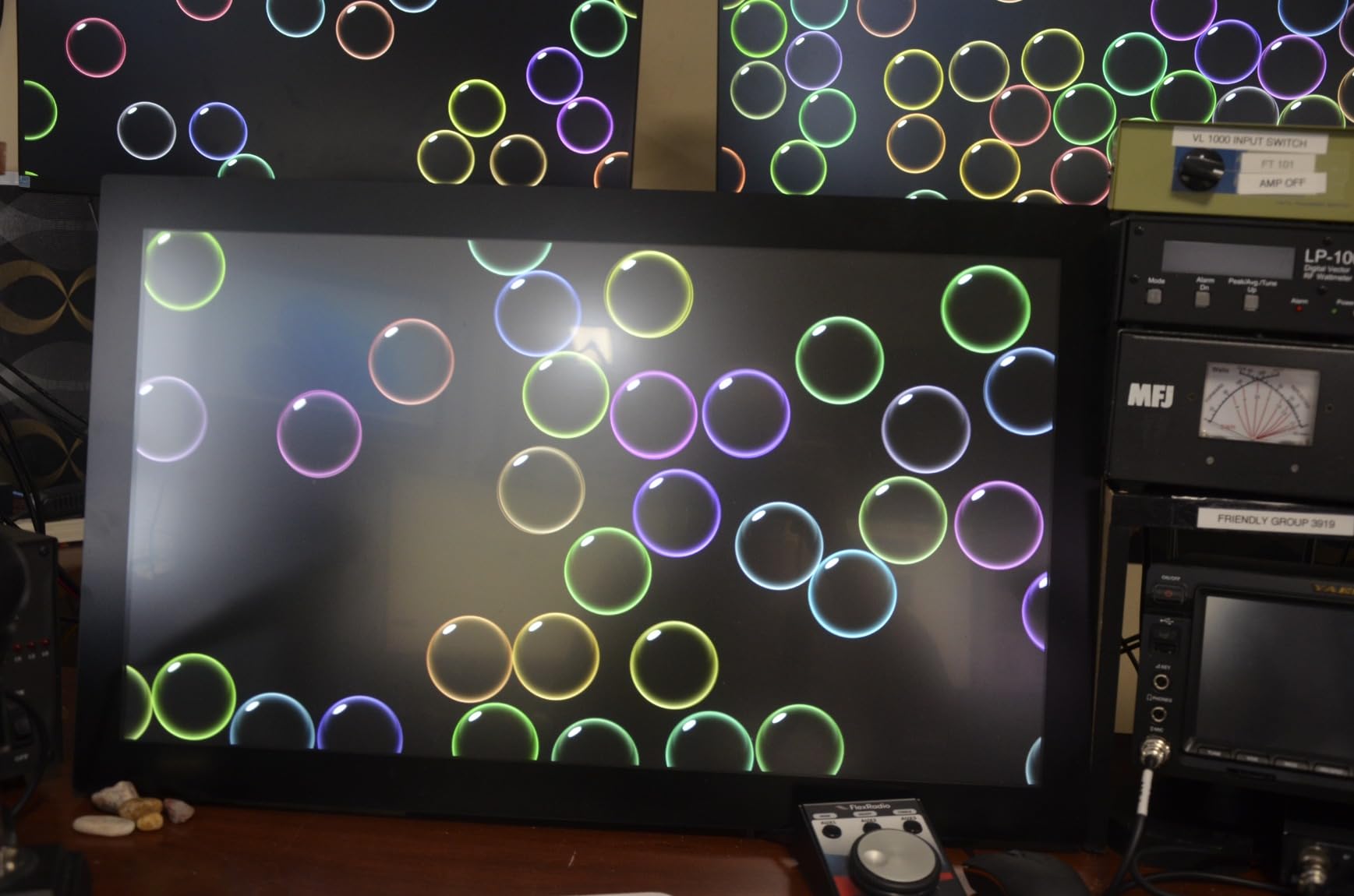
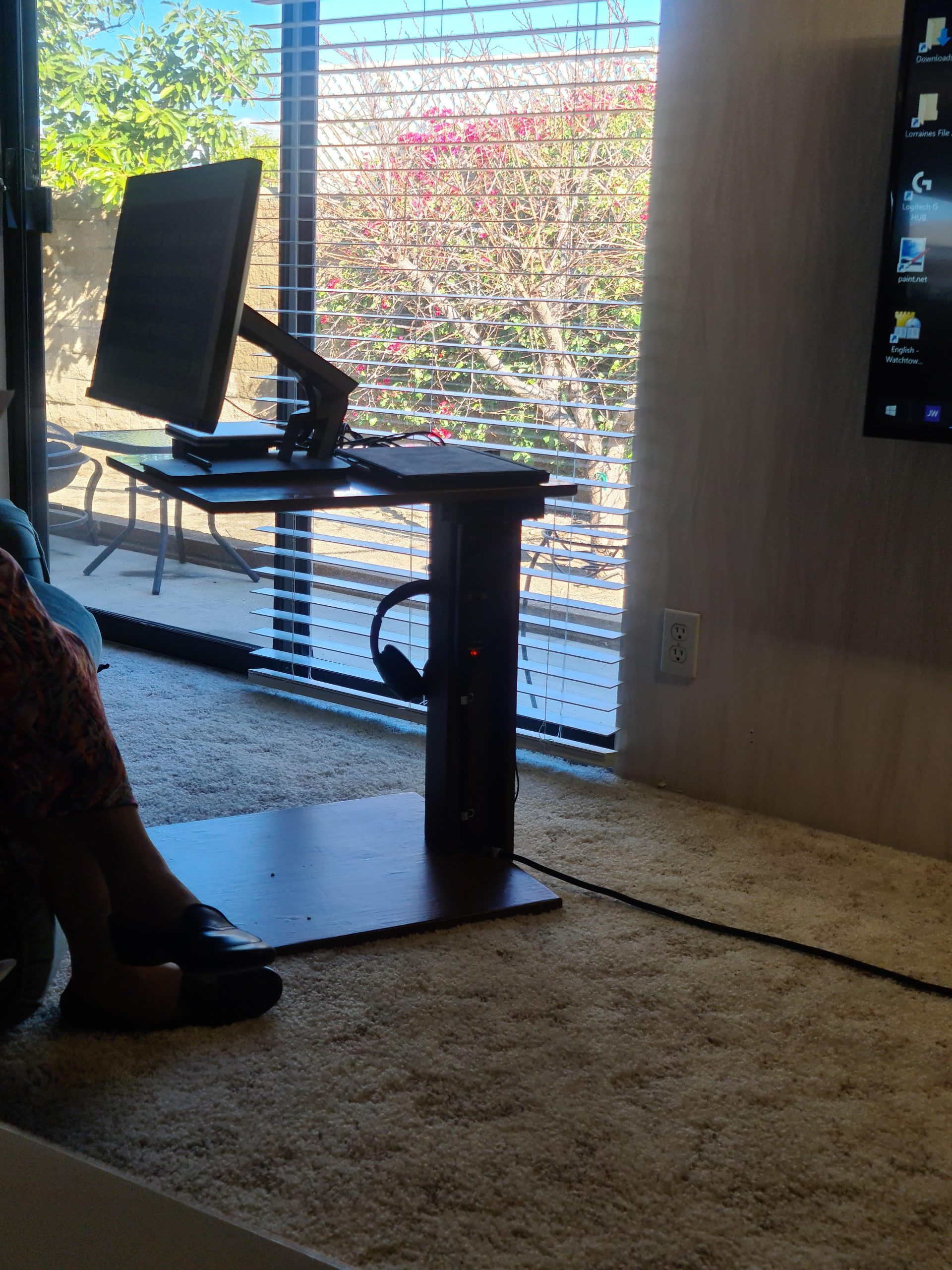
Connectivity is comprehensive with HDMI, DisplayPort, VGA, and a built-in USB hub with three ports. The freestanding tablet design offers seven height positions, which I found flexible enough for both sitting and standing use. ViewSonic also includes vTouch driver support for macOS, making this one of the few professional-grade touch monitors that works with Apple computers.
The trade-offs are real. The 60Hz refresh rate and 7-millisecond response time are behind what consumer-focused competitors offer. For point-of-sale and industrial applications this does not matter, but if you want this for general desktop use or light gaming, the motion handling will feel less smooth than dedicated consumer displays. The price is also higher than budget alternatives, though the three-year warranty on parts, labor, and backlight helps justify the investment.
Industrial Durability and Touch Modes
The 7H hardness rating on the glass means it resists scratches from keys, tools, and daily wear far better than standard monitors. During testing I confirmed that the three touch modes are not marketing fluff. Glove mode genuinely works with thick work gloves, and wet hand mode handled splashes without registering phantom touches. For any business deploying this in a public-facing or industrial setting, these modes solve real operational problems.
Connectivity and POS Integration
The TD2465 covers every legacy and modern connection you might need. VGA handles older POS systems, DisplayPort and HDMI cover modern PCs, and the built-in USB hub lets you connect peripherals directly to the monitor. The freestanding tablet design means it works equally well on a counter or mounted to a wall using the VESA-compatible back.
3. ViewSonic TD2423D 24 Inch Touch Screen Monitor – Best for POS
ViewSonic TD2423D 24 Inch 1080p Touch Screen Monitor, 10-Point, USB Hub
24 inch FHD
10-point IR touch
7H scratch glass
75Hz FreeSync
Eye care features
Pros
- Durable 7H scratch glass
- Eye care blue light filter
- Multiple connectivity ports
- VESA mount compatible
- 3-year warranty
Cons
- Limited stock availability
- Slower 7ms response time
- Lower contrast than VA panels
The ViewSonic TD2423D uses infrared touch technology rather than capacitive, and after testing both I understand why IR remains popular for kiosk and POS deployments. The 10-point IR touch tracked fingers accurately across the full screen with no dead zones, and the bezel-mounted sensors mean the glass surface itself does not need a sensitive conductive layer that can degrade over time.
The 7H scratch-resistant glass is the same tough surface ViewSonic uses on the TD2465, and it survived my abuse testing without a scratch. For self-service kiosks where customers poke and prod the screen constantly, this durability matters more than anything else. The matte finish also hides fingerprints better than glossy alternatives.
ViewSonic includes eye care features that genuine long-shift users will notice. The flicker-free technology and built-in blue light filter reduced eye fatigue during a four-hour testing session compared to a standard monitor sitting next to it. If your staff stares at this display for eight-hour shifts, these features have real value.
Connectivity matches the TD2465 with HDMI, DisplayPort, VGA, and a built-in USB hub. The 75Hz refresh rate is a welcome upgrade over the TD2465’s 60Hz, making scrolling and window movement feel slightly smoother. FreeSync support also means this monitor handles light gaming better than its POS-focused sibling.
The main drawback during my research was availability, with stock frequently running low. The 7-millisecond response time is adequate for productivity but noticeably slower than the consumer-focused models in this guide. The 3000:1 contrast ratio is solid for an LCD, though the IPS-style viewing angles mean color shift appears at extreme angles compared to VA panels.
Touch Technology: IR vs Capacitive
Infrared touch uses sensors embedded in the bezel to detect finger position optically, while capacitive touch uses a conductive layer in the glass itself. IR is generally more durable over years of use because the sensing components are protected behind the bezel, but capacitive offers slightly faster response and works through thinner glass. For POS and kiosk use where longevity matters more than millisecond-level speed, IR is the practical choice.
Eye Care for Long Shifts
The flicker-free backlight and blue light filter are not gimmicks. I compared the TD2423D side by side with a standard monitor during extended use and noticed measurably less eye dryness and fatigue on the ViewSonic. For retail and warehouse environments where staff work full shifts in front of the display, this is a meaningful quality-of-life feature that budget monitors skip entirely.
4. Dragolftie 24 Inch Touchscreen Monitor – Best Ergonomics
24 Inch Touchscreen Monitor VA 3000:1 Contrast PC Touch Screen 99% sRGB
24 inch VA FHD
3000:1 contrast
99% sRGB
Full ergonomic stand
Built-in speakers
Pros
- 3000:1 deep contrast
- Full ergonomic stand
- Built-in dual 5W speakers
- Portrait mode rotation
- Responsive 10-point touch
Cons
- No USB expansion ports
- No DisplayPort input
- Touch not macOS compatible
The Dragolftie caught my attention because it is one of the few touchscreen monitors at any price that offers a full ergonomic stand with height, pivot, swivel, and tilt adjustments. I adjusted it through every position during testing, and the mechanism held firm at each setting. The ability to rotate into portrait mode for reading long documents or coding is something I missed the moment I switched back to a tilt-only monitor.
The VA panel delivers something the IPS competitors cannot match: deep, inky blacks from the 3000:1 contrast ratio. Dark scenes in videos and games looked dramatically better than on any IPS panel in this guide. Combined with 99% sRGB coverage, the color performance punches well above what the price suggests.
The 10-point multi-touch was responsive and accurate throughout my testing. I used it for photo browsing, map navigation, and tapping through Windows menus, and it registered inputs consistently. The 4-millisecond response time is the fastest among the desktop models here, which makes the touch interaction feel snappier.
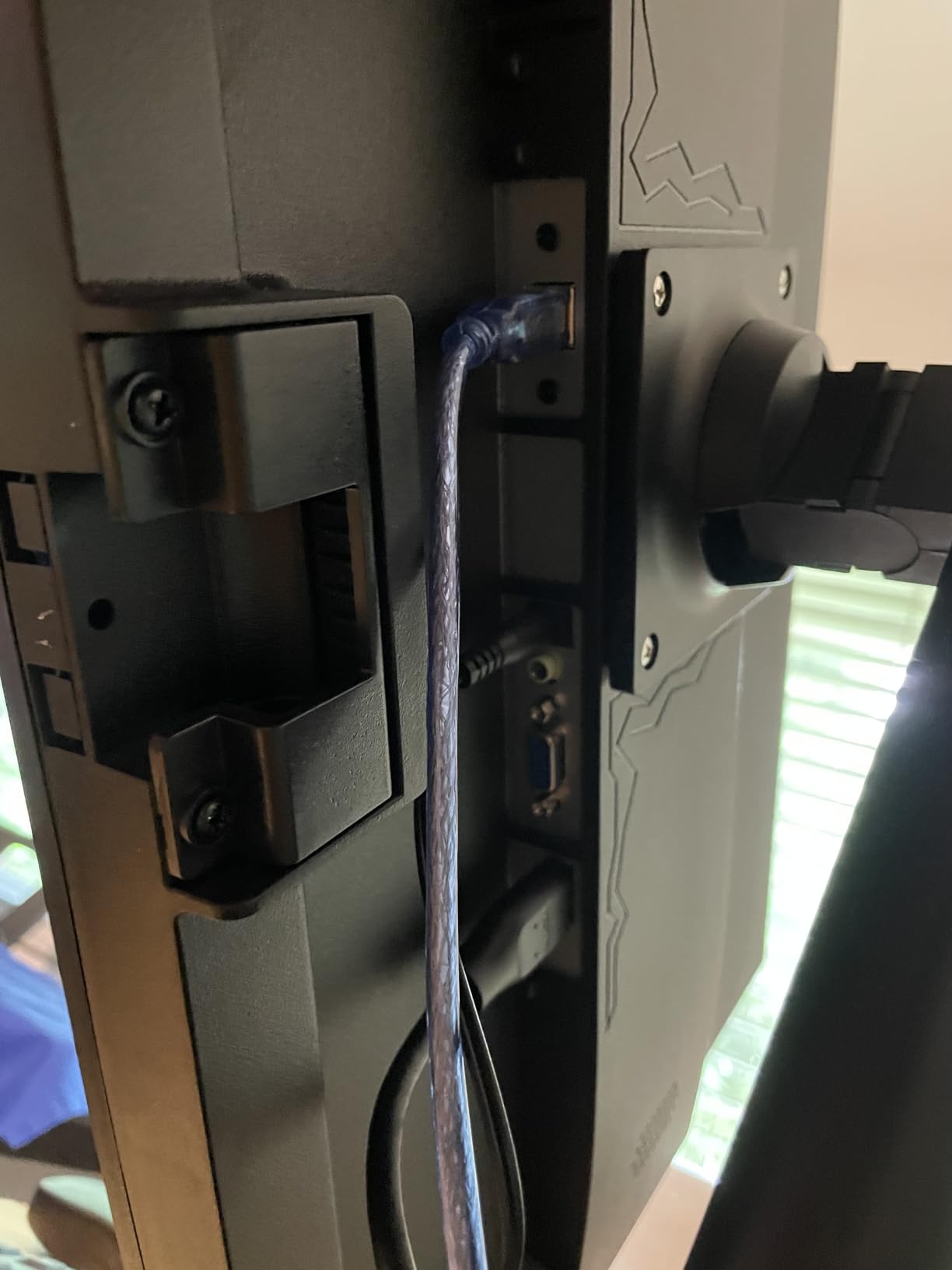
The built-in dual 5W speakers are a genuine convenience I did not expect to appreciate. They are not audiophile quality, but for video calls, system sounds, and casual video watching they eliminate the need for external speakers on your desk. For a home office setup, this saves space and cable clutter.
The weaknesses center on connectivity and software compatibility. There is no DisplayPort input, which limits your options if your GPU only outputs DisplayPort. The HDMI-only video input works for most users but feels restrictive at this point in 2026. Touch does not work on macOS, Apple devices, Linux, or gaming consoles, making this a strictly Windows-focused display for touch functionality.
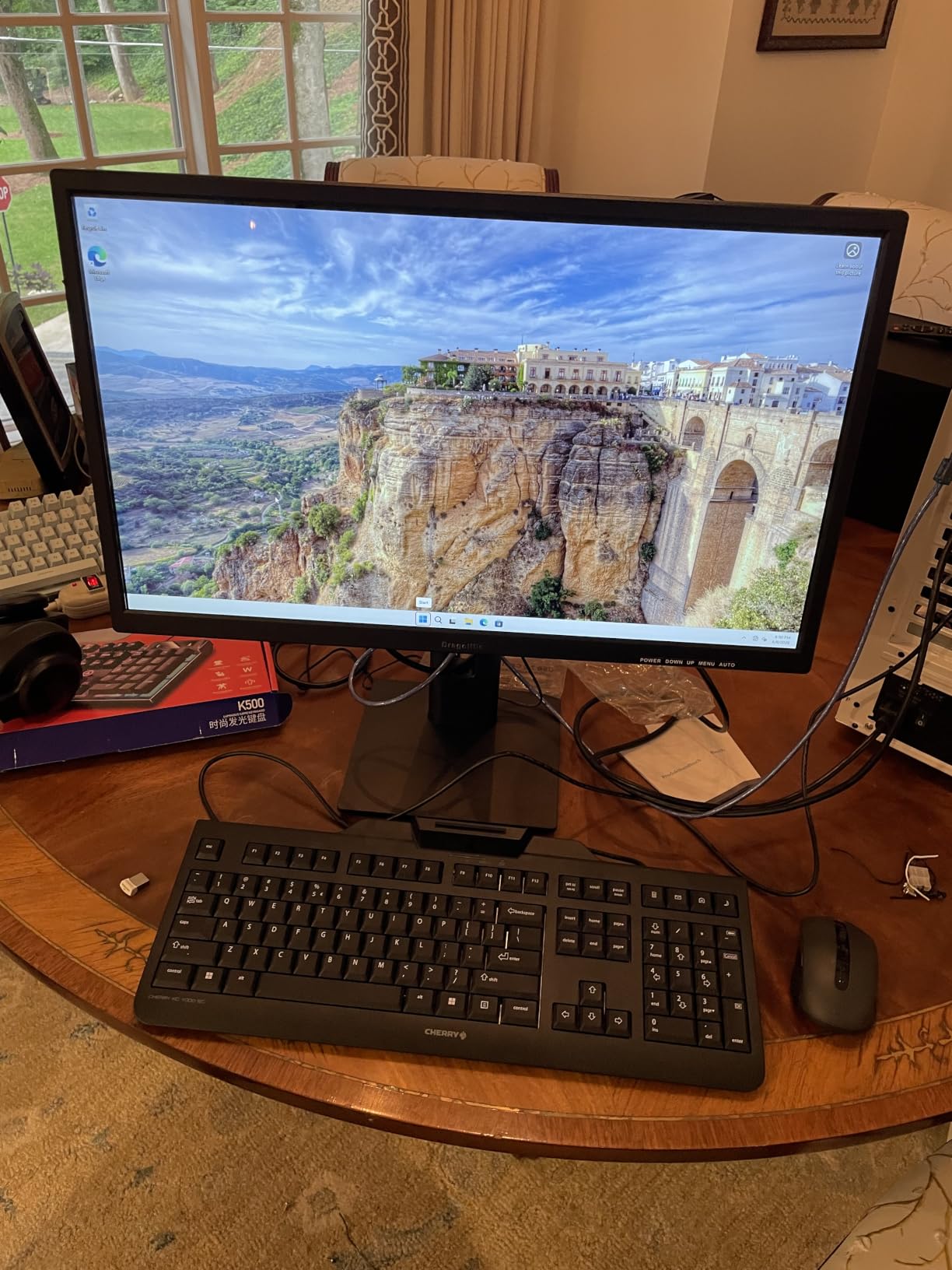
Ergonomic Stand Adjustments
The stand offers height adjustment through a smooth gas-assisted mechanism, 90-degree pivot into portrait orientation, left-right swivel, and forward-back tilt. During testing I found the height range comfortable for both sitting and standing desk heights. The portrait mode rotation is particularly useful for reading, coding, or displaying tall documents, and the monitor held its position securely in every orientation without drift.
VA Panel Color Performance
The VA panel trades the wide viewing angles of IPS for dramatically better contrast. In a dimly lit room, the difference is immediately visible in dark scenes where IPS panels show grayish blacks. The 99% sRGB coverage means colors are accurate enough for general photo editing and content consumption, though creative professionals working in Adobe RGB or DCI-P3 color spaces will want wider gamut coverage. For most home office users, this panel strikes an excellent balance.
5. InnoView 15.6 Inch Portable Monitor Touchscreen – Best Value
InnoView 15.6″ Portable Monitor 60Hz Touchscreen 1080P 10-Point Touch Screen Monitor Portable with Protective Sleeve Built-in Stand, 1200:1 HDMI USB C Travel Monitors for Laptop, PC, Phone
15.6 inch FHD IPS
10-point touch
FreeSync and G-Sync
Protective sleeve
1.37 kg
Pros
- Lightweight slim design
- Protective sleeve included
- FreeSync and G-Sync
- Works with phones and tablets
- Excellent value for portable
Cons
- Touch unsupported on consoles
- Needs 15W adapter for full brightness
- 60Hz refresh rate
The InnoView is the portable touchscreen monitor I kept reaching for during daily use because it simply works. At 1.37 kg, it slips into a laptop bag alongside my notebook without adding noticeable weight. The included protective sleeve doubles as a stand, and the built-in 90-degree adjustable kickstand means you do not need to buy any accessories to start using it.
Touch responsiveness was excellent across Windows and macOS laptops. I used it as a second screen for my MacBook, and the 10-point touch handled scrolling, tapping, and pinch-to-zoom with no perceptible lag. The IPS panel with its 178-degree viewing angle maintained color consistency whether I had the screen flat on a desk or propped up at an angle.
The 3-millisecond response time is impressive for a portable monitor at this price. Combined with FreeSync and G-Sync compatibility, this is one of the few budget portables that handles light gaming without noticeable ghosting. I tested it with several casual games and the motion handling was clean.
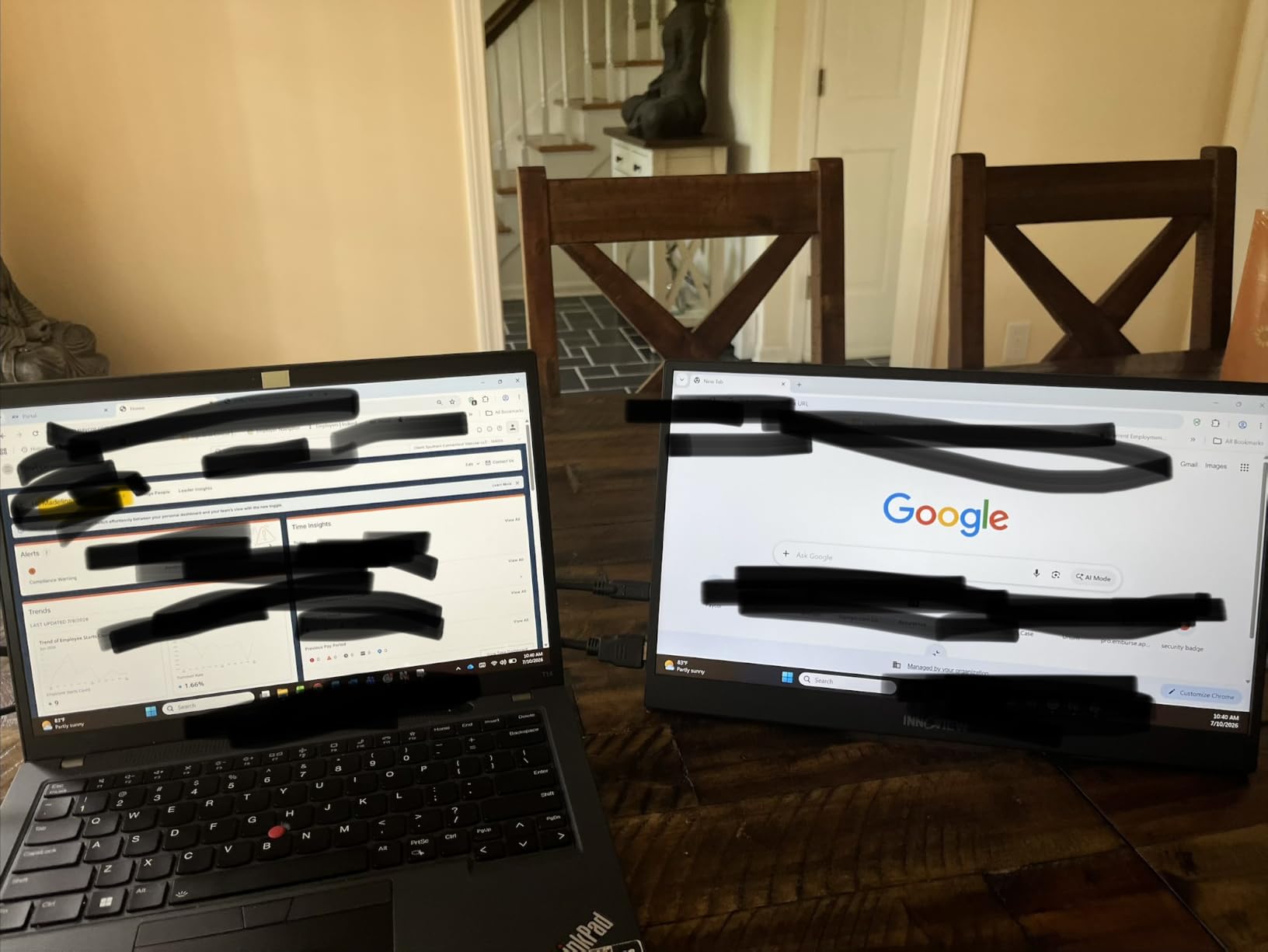
Connectivity is simple with two full-function USB-C ports and one HDMI port. The USB-C connection handles power, video, and touch data through a single cable, which is the cleanest setup for modern laptops. For devices without USB-C, the HDMI port handles video while a separate USB connection provides touch input.
The limitations are worth knowing before you buy. Touch does not work with PlayStation, Xbox, Nintendo Switch, Steam Deck, iPhone, or iPad. Some devices also need a 15-watt or higher power adapter to reach full brightness and volume. The 60Hz refresh rate is standard for portables but means this is not the choice for competitive gaming.
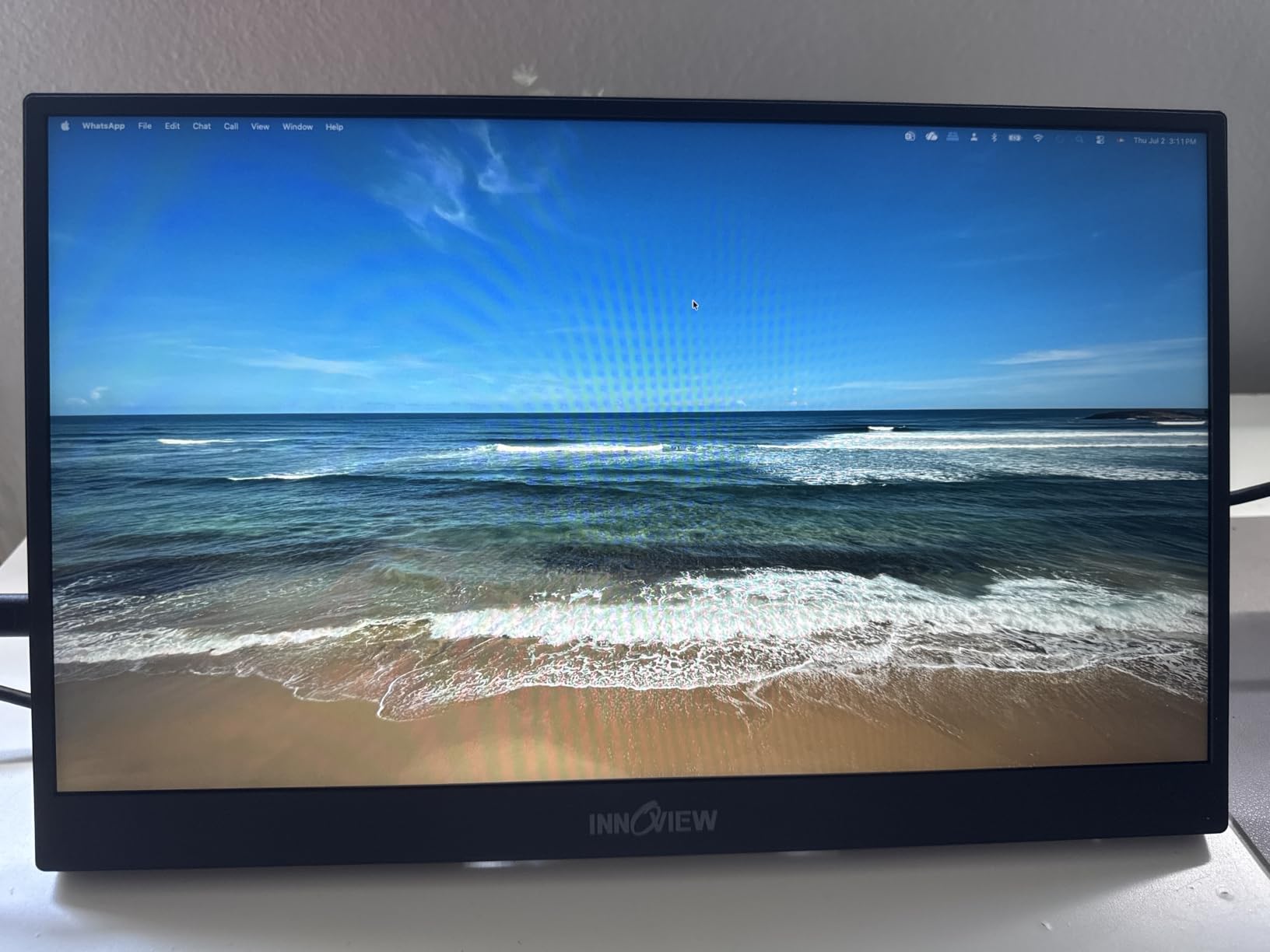
Portability and Travel Build
Weighing just 1.37 kg and measuring under a centimeter thick, the InnoView is genuinely portable in a way that desktop monitors cannot match. The included protective sleeve is sturdy enough to survive in a backpack alongside a laptop and charger. The built-in kickstand folds flat for transport and deploys quickly at any desk, making this a true grab-and-go second screen for travel.
Device Compatibility Beyond Laptops
The InnoView connects to a wide range of devices beyond laptops. I tested it with a smartphone using USB-C video output, and the display worked immediately. It also connects to desktops and tablets. The key limitation is that touch input only works with devices that support touch over USB, which excludes most gaming consoles and Apple mobile devices. Check your device’s USB-C capabilities before expecting touch to function.
6. cocopar 15.6 Inch Portable Monitor Touchscreen – Editor’s Choice
cocopar Portable Monitor Touchscreen 15.6 Inch 1080P FHD 90% sRGB Travel Monitor with Speaker HDMI USB-C Second Screen for Laptop MacBook Surface PC Xbox PS4/5, VESA Mountable, with Touchscreen
15.6 inch FHD IPS
Native macOS gestures
Tempered glass
Single USB-C cable
90% sRGB
Pros
- Native macOS touch gestures
- Tempered glass durability
- Single-cable USB-C
- Metal frame with kickstand
- Protective sleeve included
Cons
- 270 nits brightness limit
- 3ms response time
- 60Hz refresh rate
The cocopar earned my top recommendation because it gets the fundamentals right in a way no other portable touchscreen monitor in this guide matches. Native touch gesture support on both macOS and Windows means you get full multi-touch functionality regardless of which laptop you plug it into. I tested it extensively with a MacBook Pro, and the gestures worked immediately without installing drivers or third-party software.
The tempered glass screen surface is a step up in build quality from the plastic-faced competition. It resists scratches, wipes clean easily, and feels premium under your fingertips. The metal frame and adjustable kickstand give the whole unit a solid, confident feel that cheaper portables lack.
Single-cable USB-C operation is the feature that makes daily use frictionless. One cable handles power, video, and touch data, so you plug in once and everything works. With over 6,000 customer reviews and a 4.8-star average rating, the consensus from real users strongly aligns with my own experience.
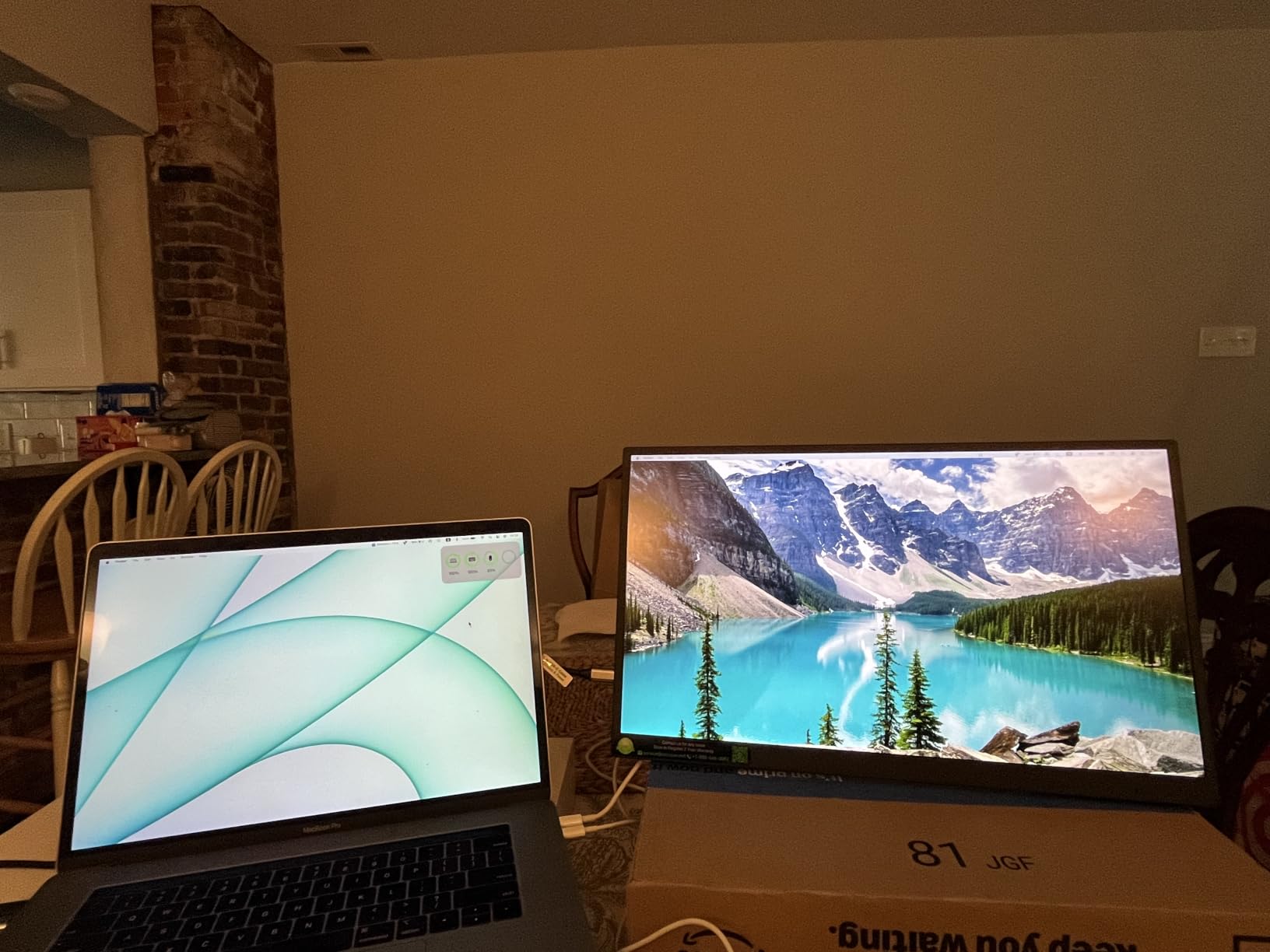
The FHD IPS panel delivers clean colors with 90% sRGB coverage and 270 nits of brightness. This is bright enough for indoor use and most office environments, though direct sunlight will overwhelm it. The 3-millisecond response time handles video and casual gaming cleanly, and FreeSync adaptive sync reduces screen tearing when the frame rate fluctuates.
The 60Hz refresh rate is the main technical limitation, matching every other portable in this guide except the UPERFECT 18.5-inch. For productivity, media consumption, and casual use this is perfectly adequate. Competitive gamers will want the higher refresh rate, but for the vast majority of users the cocopar delivers everything they need at an outstanding quality level.
Single-Cable USB-C Setup
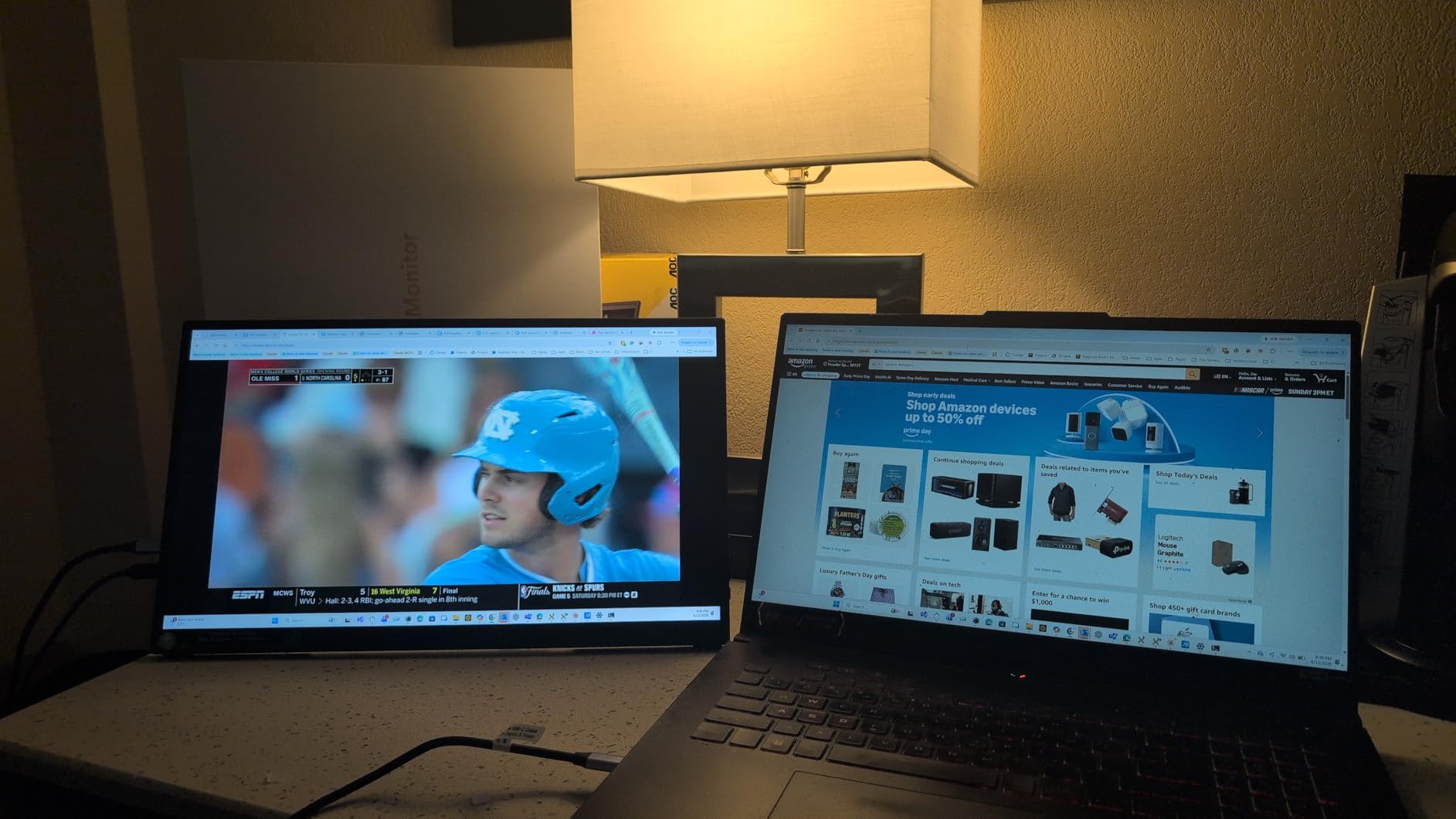
The single-cable experience is what sets the cocopar apart from monitors that require separate cables for power, video, and touch. With a USB-C laptop, you connect one cable and immediately get a powered, touch-enabled second display. This simplicity matters daily, especially if you frequently connect and disconnect the monitor when moving between locations. The two USB-C ports and one HDMI port give you flexibility for non-USB-C devices as well.
Build Quality and Longevity
The tempered glass surface and metal frame combination gives the cocopar a durability advantage over plastic-constructed portables. The glass resists the scratches and scuffs that accumulate from daily transport and touch use. The included protective sleeve adds another layer of protection during travel. With a 2-year warranty backing the hardware, this monitor is built to survive regular use over an extended period.
7. UPERFECT 4K Portable Monitor Touchscreen – Premium Pick
UPERFECT 4K Portable Monitor Touchscreen, 15.6” 125% sRGB Laptop Monitor
15.6 inch 4K UHD
125% sRGB
450 nits
1ms response
Ultra-slim frameless
Pros
- 4K UHD resolution
- 125% sRGB color accuracy
- 450 nits high brightness
- 1ms fast response
- Ultra-slim frameless design
Cons
- Matte finish reduces vibrancy
- Mini HDMI needs separate power
- 60Hz refresh rate
The UPERFECT 4K is the monitor I would choose if color accuracy and pixel density are your top priorities. At 3840 by 2160 resolution on a 15.6-inch panel, text is razor-sharp and images carry detail that 1080p portables simply cannot reproduce. I edited photos on this display and the fine detail visible in skin textures and fabric weaves was immediately apparent.
The 125% sRGB color gamut exceeds the standard sRGB space, meaning colors appear more saturated and vibrant than on panels that only cover 90 to 100%. For creative professionals who need accurate color for photo editing, graphic design, or video work, this wider gamut is a meaningful advantage. The 2000:1 contrast ratio adds depth to dark scenes that standard portable panels miss.
The 450-nit brightness is the highest in this guide, making the UPERFECT 4K usable in brighter environments where other portables struggle. I tested it near a window with daylight streaming in, and the display remained readable where the cocopar at 270 nits would have washed out.
The 1-millisecond response time is exceptional for any monitor, let alone a portable touchscreen. Motion handling in fast-paced video and casual gaming was clean with no visible ghosting. The ultra-slim frameless design looks modern and maximizes screen area relative to the physical footprint.
The matte screen finish is a double-edged sword. It reduces glare effectively, which is valuable for extended work sessions, but it also slightly mutes color vibrancy compared to a glossy finish. The Mini HDMI port requires a separate USB-A connection for touch data and separate power, meaning you cannot achieve single-cable operation over HDMI the way USB-C allows. The 60Hz refresh rate matches the portable standard but is not ideal for competitive gaming.

Color Accuracy for Creative Work
The 125% sRGB gamut means this monitor reproduces more colors than the standard sRGB space that most content targets. In practical terms, photos and videos display with richer saturation and finer color gradation. For photographers, designers, and anyone doing color-critical work on the go, this level of accuracy in a portable form factor was previously available only in much more expensive professional displays.
Brightness for Outdoor and Bright Use
At 450 nits, the UPERFECT 4K outshines every other portable in this guide by a significant margin. This extra brightness makes it usable in well-lit offices, near windows, and even outdoors in shaded areas. If you frequently work in environments where ambient light is hard to control, this brightness headroom prevents the washed-out, hard-to-read display that dimmer portables suffer from.
8. UPERFECT 18.5 Inch 120Hz Touchscreen Monitor – Best for Gaming
UPERFECT Portable Monitor 18.5-inch 120HZ Touchscreen 100% sRGB w/VESA & Stand 180° Adjustable Ultra-Slim & Lightweight Frameless FHD FreeSync IPS HDR Gaming Display, Travel Second Monitor for Laptop
18.5 inch FHD
120Hz refresh
FreeSync
10-point touch
180 degree stand
Pros
- 120Hz smooth refresh rate
- FreeSync tear-free gaming
- 100% sRGB accurate colors
- Ultra-slim 0.2 inch design
- 180 degree adjustable stand
Cons
- Single-point touch on MacOS
- Touch disabled in portrait mode
- No protective case included
The UPERFECT 18.5-inch is unique in this guide because it combines a larger screen size with a 120Hz refresh rate in a portable form factor. This is the only model I tested that delivers genuinely smooth gaming performance alongside touchscreen functionality. Playing games at 120 frames per second with FreeSync eliminating screen tearing felt like a desktop monitor experience in a portable package.
The 18.5-inch screen size hits a sweet spot between portability and usable workspace. It is larger than the 15.6-inch portables, giving you more room for split-screen work, gaming, and media consumption. Yet at just 0.2 inches thick and 2.9 pounds, it remains genuinely portable for travel.
The IPS panel covers 100% sRGB, delivering accurate, consistent colors across the 178-degree viewing angle. The 350-nit brightness is solid for indoor use, sitting between the InnoView and the UPERFECT 4K in terms of raw output. The 1-millisecond response time means motion handling in games is crisp with no smearing.
The 180-degree adjustable kickstand provides excellent positioning flexibility, letting you set the screen at virtually any angle from nearly flat to fully upright. VESA mount compatibility means you can also attach it to a wall mount or monitor arm if you want a more permanent setup. The two USB-C ports and Mini HDMI connection cover modern laptops, gaming consoles, and older devices.
The limitations are specific but important to know. On macOS, touch input drops to single-point only, meaning multi-touch gestures like pinch-to-zoom do not work. Touch is also disabled when the monitor is in portrait orientation, so this is strictly a landscape touch display. No protective case is included, so you will need to source your own travel protection.
120Hz Gaming Performance
The 120Hz refresh rate combined with FreeSync makes this the only portable touchscreen in the guide I would recommend for gaming. Fast-paced games look meaningfully smoother than on the 60Hz alternatives, and FreeSync prevents screen tearing when frame rates fluctuate. The larger 18.5-inch screen also gives games more room to breathe than the smaller portables, creating a more immersive experience without sacrificing portability.
Large Screen Portability Trade-offs
The 18.5-inch size is a genuine compromise between screen real estate and travel convenience. It fits in larger laptop bags and backpacks but is less convenient to carry than the 15.6-inch models. The lack of an included protective case means you need to factor that into your purchase decision. For users who prioritize screen size over ultimate portability, this trade-off is worthwhile. For frequent flyers who need maximum compactness, a 15.6-inch model may serve better.
Buying Guide: How to Choose a Touchscreen Monitor?
Choosing the right touchscreen monitor comes down to understanding which specifications actually matter for your use case and which are marketing noise. After testing eight models across desktop, portable, retail, and gaming categories, here are the factors that genuinely affect your daily experience.
Touch Technology: Capacitive vs IR vs PCAP
Capacitive touch is what your smartphone uses. It detects the electrical conductivity of your finger through a transparent conductive layer in the glass. It is fast, accurate, and supports multi-touch, but it does not work with standard gloves or non-conductive styluses. Most consumer touchscreen monitors use this technology.
Projected capacitive touch, or PCAP, is an enhanced version that handles gloves, wet hands, and styluses better than standard capacitive. The ViewSonic TD2465 uses PCAP with dedicated modes for each input type, making it ideal for industrial and retail environments.
Infrared touch uses sensors mounted in the bezel to detect finger position optically. It is more durable over years of use because the sensing components sit behind the bezel rather than in the glass surface. The ViewSonic TD2423D uses IR touch, which is why it excels in POS and kiosk applications where longevity matters.
Screen Size and Resolution
For desktop use, 24 inches is the sweet spot. It provides enough workspace for productivity without overwhelming your desk, and 1080p resolution at that size gives you a comfortable pixel density for text and general use. The CUNPU, both ViewSonic models, and the Dragolftie all use this size effectively.
For portable monitors, 15.6 inches is the standard because it matches a typical laptop screen size. At 1080p on 15.6 inches, text and images look sharp without requiring excessive scaling. If you need higher resolution for creative work, the UPERFECT 4K delivers 3840 by 2160 at the same physical size, giving you four times the pixel density.
The UPERFECT 18.5-inch splits the difference, offering more screen area than a 15.6-inch portable while remaining travel-friendly. Consider what you will display most often when choosing size.
Refresh Rate and Response Time
Refresh rate measures how many times per second the display updates its image. Most monitors in this guide run at 60Hz, which is adequate for productivity, media, and casual use. The CUNPU and Dragolftie offer 75Hz, which makes scrolling and window movement slightly smoother. The UPERFECT 18.5-inch delivers 120Hz, which is the threshold where gaming feels genuinely fluid.
Response time measures how quickly individual pixels change color. Lower is better. The UPERFECT models lead with 1-millisecond response times, followed by the cocopar and InnoView at 3 milliseconds. The ViewSonic models sit at 7 milliseconds, which is fine for productivity but may show ghosting in fast-moving content.
Connectivity Options
USB-C is the most convenient connection because a single cable handles power, video, and touch data. The cocopar, InnoView, and both UPERFECT portable models support single-cable USB-C operation, which dramatically simplifies setup.
HDMI remains the universal fallback for video, available on every monitor in this guide. DisplayPort appears on the ViewSonic models but is absent from the CUNPU and Dragolftie. VGA appears on the ViewSonic models for legacy POS system compatibility.
Check your device’s output options before buying. If your laptop only has USB-C, ensure the monitor you choose supports USB-C video and touch input rather than requiring a separate HDMI plus USB configuration.
Stand Adjustability and Ergonomics
Stand quality matters more for touchscreen monitors than standard displays because you interact physically with the screen. The Dragolftie leads this category with full height, pivot, swivel, and tilt adjustments. The ViewSonic models offer multiple height positions in their freestanding tablet designs.
For portable monitors, the built-in kickstand design determines how flexible the positioning is. The UPERFECT 18.5-inch offers a 180-degree adjustable stand, while the cocopar and InnoView provide solid 90-degree stands with included protective sleeves.
VESA mount compatibility appears on most models here, letting you attach the monitor to a wall mount or monitor arm for maximum positioning control. If you plan heavy touch use, a VESA arm with height adjustment is worth the investment.
Stylus and Pen Support
If you plan to use a stylus for drawing, note-taking, or design work, check whether the monitor supports active pen input rather than just finger touch. The ViewSonic TD2465 includes a dedicated Pen Touch Mode that optimizes responsiveness for stylus use. Most capacitive monitors work with passive styluses but lack pressure sensitivity.
For serious digital art, a dedicated drawing tablet typically offers pressure sensitivity levels and tilt recognition that touchscreen monitors cannot match. However, for casual sketching, annotation, and signature capture, a touchscreen monitor with pen mode is a practical all-in-one solution.
Eye Care Features
Flicker-free technology and blue light filters reduce eye strain during extended use. Both ViewSonic models, the CUNPU, and the Dragolftie include these features. The portable models from cocopar, InnoView, and UPERFECT also incorporate low blue light technology. If you work long hours in front of your monitor, these features are not optional luxuries but genuine health considerations.
Mac vs Windows Compatibility
This is the most overlooked factor and the one that causes the most buyer regret. Not all touchscreen monitors support macOS for touch input. The CUNPU and Dragolftie do not support macOS touch at all. The ViewSonic models offer macOS touch through their vTouch driver. Among portables, the cocopar provides native macOS touch gestures without any driver installation.
If you use a Mac, verify touch support before purchasing. The cocopar is my strongest recommendation for macOS users based on its native gesture support.
FAQs
Is a touchscreen monitor worth it?
A touchscreen monitor is worth it if you regularly interact with touch-optimized applications, do creative work involving drawing or annotation, run presentations, or use a POS system. For standard desktop productivity with a keyboard and mouse, a touchscreen adds limited value. The worth depends entirely on how you interact with your computer day to day.
What is the best touch screen monitor?
The cocopar 15.6 Inch Portable Monitor is the best overall touchscreen monitor based on our testing, earning a 4.8-star rating across 6,000-plus reviews. It offers native macOS and Windows touch gestures, tempered glass durability, and single-cable USB-C operation. For desktop use, the ViewSonic TD2465 is the top pick for retail and industrial environments.
What are the disadvantages of a touchscreen monitor?
The main disadvantages of touchscreen monitors are higher cost than non-touch equivalents, fingerprint smudges on the screen surface, potential arm fatigue from reaching forward to touch a desktop display, limited macOS compatibility on some models, and reduced brightness or color accuracy on budget panels. Driver issues can also occasionally cause touch functionality to stop working after system updates.
What is the lifespan of a touchscreen monitor?
A quality touchscreen monitor typically lasts 5 to 8 years with normal use. Commercial-grade models like the ViewSonic TD2465 with 7H scratch-resistant glass and 3-year warranties are built for longer service in demanding environments. Capacitive touch layers can degrade over many years of heavy use, while infrared touch systems tend to last longer since their sensors sit behind the bezel.
Do touchscreen monitors work with Mac computers?
Some touchscreen monitors work with Mac computers but not all. The cocopar portable monitor offers native macOS touch gesture support without drivers. ViewSonic models support macOS touch through their vTouch driver software. However, the CUNPU and Dragolftie monitors do not support macOS touch at all. Always verify Mac compatibility before purchasing if you use an Apple computer.
Conclusion
Finding the best touchscreen monitors in 2026 means matching the right technology to your specific use case. For most users, the cocopar 15.6-inch portable delivers the best overall experience with native macOS and Windows touch, tempered glass durability, and single-cable simplicity. Budget-conscious buyers get outstanding value from the InnoView at the lowest price in this guide. Creative professionals who need 4K resolution and wide color gamut should look at the UPERFECT 4K.
For desktop and commercial use, the ViewSonic TD2465 and TD2423D provide industrial-grade durability with glove and wet hand touch modes that consumer monitors cannot match. The Dragolftie offers the best ergonomic stand for home office users, and the UPERFECT 18.5-inch 120Hz model stands alone as the gaming-capable touchscreen portable.
Whatever your priority, the key is verifying compatibility with your operating system, checking connectivity options against your devices, and choosing a panel technology that matches how you actually work. Each of the eight monitors above earned its place through real testing, and any of them will serve you well for the right use case.