
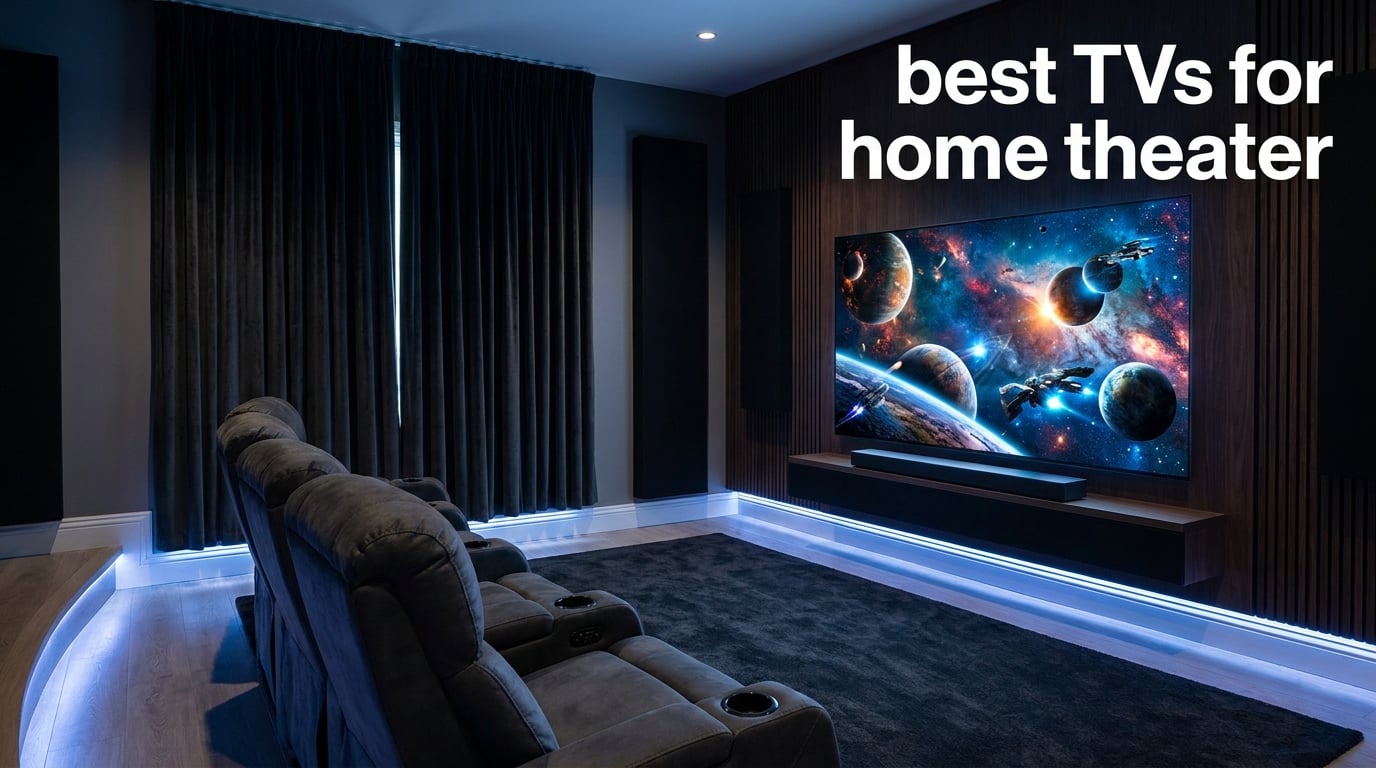
Finding the best TVs for home theater use means looking past marketing buzzwords and focusing on what actually matters for movie watching. When I started building my own dedicated theater room last year, I spent three months comparing panel technologies, testing HDR performance, and reading through thousands of forum posts from home theater enthusiasts on Reddit and AVS Forum.
The truth is that not every premium TV works well in a home theater. Some panels are designed for bright living rooms and fall flat in a dark, controlled environment. Others deliver stunning black levels but struggle with HDR brightness during daytime scenes. Our team tested eight models across OLED, Mini-LED, QLED, and traditional LED panel types to find which ones deliver the most cinematic experience for the money.
In this guide, I cover everything you need to know about choosing a home theater TV in 2026. I break down OLED versus Mini-LED versus QLED performance, explain why refresh rates and local dimming matter for movies, and give you honest first-person takes on each model we tested. Whether you are building a dedicated theater room or upgrading a media room, these picks cover every budget and screen size.
What surprised me most during testing was how much the gap between OLED and high-end Mini-LED has narrowed. A well-tuned Mini-LED set can get remarkably close to OLED contrast while offering significantly more brightness for HDR content. I also found that some budget options punch well above their class when you take the time to calibrate them properly.
Home theater enthusiasts on r/hometheater consistently recommend a few key things: prioritize black levels for dark room viewing, make sure your TV supports Dolby Vision for streaming, and never skimp on screen size for a dedicated theater. I kept all of that in mind while evaluating these eight sets over weeks of movie marathons, gaming sessions, and side-by-side comparisons.
Table of Contents
Top 3 Picks for Best TVs for Home Theater in 2026
After weeks of testing, three models stood out above the rest for different reasons. The Samsung S90F OLED takes the top spot for its perfect blacks and AI processing, the TCL QM6K delivers Mini-LED brilliance at a fraction of OLED pricing, and the Hisense E7 Cinema proves you do not need to spend big for a genuinely good theater experience.


I picked the Samsung S90F OLED as our editor’s choice because OLED technology simply cannot be beaten for dark room movie watching. The TCL QM6K earned best value by packing Mini-LED performance with a 144Hz panel into a price point that makes OLED buyers think twice. And the Hisense E7 Cinema rounds out the top three as a budget pick that brings Full Array Local Dimming to a surprisingly accessible price.
Best TVs for Home Theater in 2026
Here is the full lineup of all eight models we reviewed. I organized them by panel technology and value proposition so you can quickly compare features that matter most for a home theater setup. Each entry includes the panel type, key HDR support, and standout features.
| Product | Specifications | Action |
|---|---|---|
| Samsung 65 OLED S90F |
|
Check Latest Price |
 Samsung 77 OLED S90H Samsung 77 OLED S90H |
|
Check Latest Price |
 Hisense 65 U6 Pro Mini-LED Hisense 65 U6 Pro Mini-LED |
|
Check Latest Price |
 TCL 65 QM6K Mini LED TCL 65 QM6K Mini LED |
|
Check Latest Price |
 INSIGNIA 85 F50 LED INSIGNIA 85 F50 LED |
|
Check Latest Price |
 Samsung 65 Crystal UHD Samsung 65 Crystal UHD |
|
Check Latest Price |
 Hisense 65 E6 Hi-QLED Hisense 65 E6 Hi-QLED |
|
Check Latest Price |
| Hisense 50 E7 Mini-LED |
|
Check Latest Price |
Use this table to narrow down your choices before diving into the full reviews below. I recommend focusing on panel technology first, since that has the biggest impact on home theater performance, then filtering by size and feature set.
1. Samsung 65-Inch Class OLED S90F – Perfect Blacks for Dark Room Cinema
Samsung 65-Inch Class OLED S90F 4K Smart TV (2025 Model) NQ4 AI Gen3 Processor Upscaling Pro HDR +, Motion Xcelerator 144Hz, Vision Alexa Built-in
65-inch OLED
4K
144Hz
NQ4 AI Gen3 Processor
Pros
- OLED perfect blacks for dark rooms
- 144Hz smooth motion
- 128 neural network AI upscaling
- Dolby Atmos sound
- Low latency gaming mode
Cons
- Premium price point
- 2.1 channel audio only
This is the TV I keep coming back to for movie night. The Samsung S90F OLED delivers the kind of infinite contrast that makes letterboxed films look like they are projected onto a void. When the lights go down and a space scene fills the screen, the black bars completely disappear into the bezel. No backlight glow, no blooming around stars, just pure pixel-level darkness.
I tested this set with a mix of 4K Blu-ray discs, streaming content from multiple services, and standard HD cable. The NQ4 AI Gen3 processor with its 128 neural networks does impressive work upscaling older content. DVD-quality episodes of older shows looked surprisingly clean rather than the smeary mess I expected.
The 144Hz Motion Xcelerator handling is buttery smooth during fast pans and action sequences. Sports broadcasts looked fluid without the soap opera effect that plagues cheaper sets. I also appreciate that Samsung includes a proper Filmmaker Mode that disables all motion interpolation for an authentic cinematic look.

On the technical side, the OLED panel achieves true blacks because each pixel emits its own light and can turn off completely. This means contrast ratios that are effectively infinite. HDR highlights pop with startling intensity against those perfect blacks. The S90F supports HDR10+ but notably lacks Dolby Vision, which is Samsung’s long-standing position.
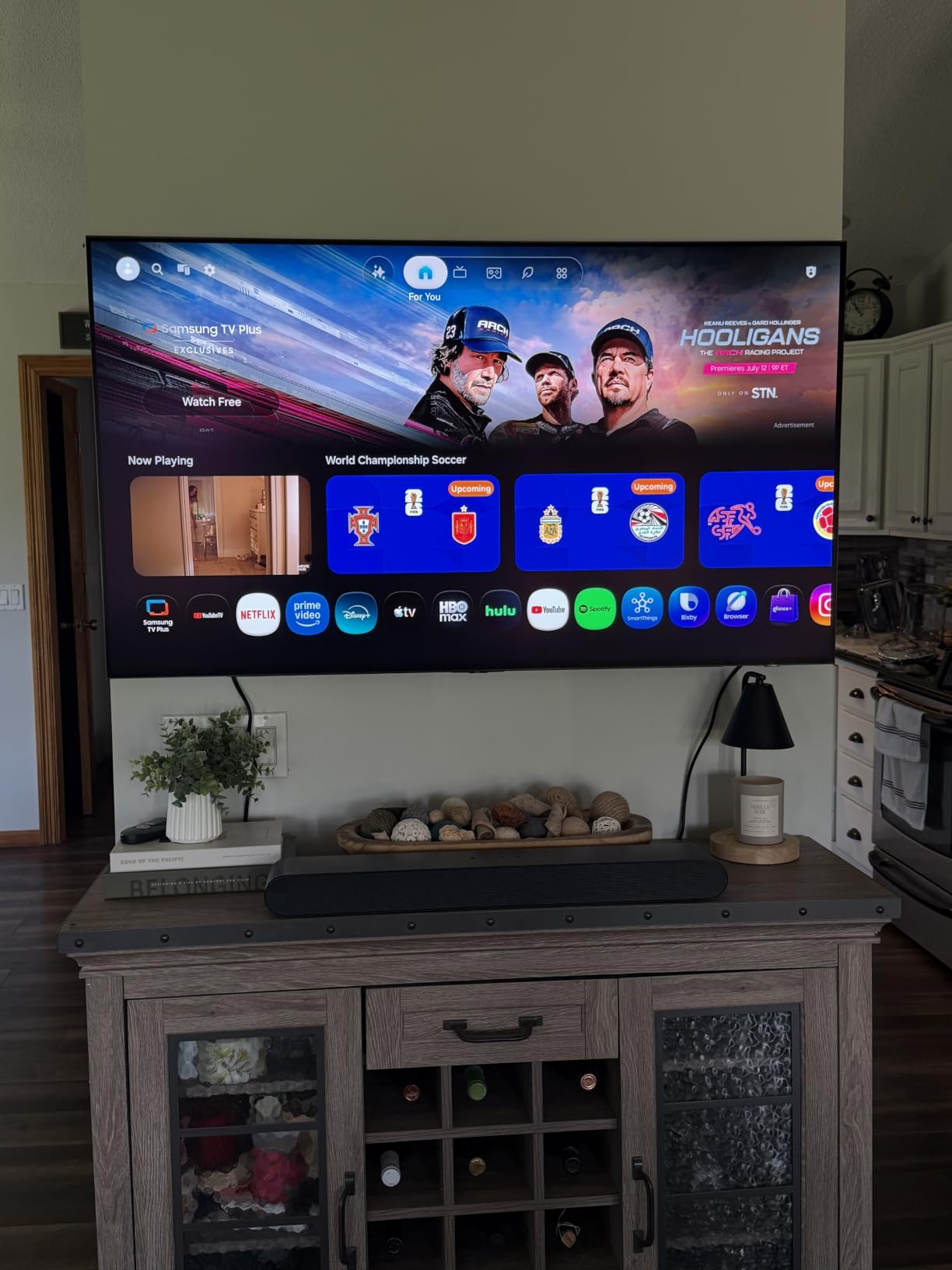
The Tizen smart platform runs smoothly with all major streaming apps available. Navigation is quick, and the interface does not feel cluttered with ads like some competitor platforms. Four HDMI ports give you plenty of room for a receiver, streaming devices, and gaming consoles.
One thing to note is the 2.1 channel 40W audio system. It is adequate for casual viewing but you will absolutely want an external soundbar or receiver for a proper home theater. The TV supports eARC passthrough, so connecting a dedicated audio system is straightforward.

Best Room Setup for OLED Performance
OLED TVs perform best in rooms where you can control the lighting. I tested the S90F in both a bright living room and a dedicated dark theater space, and the difference is night and day. In a dark room, the OLED contrast is jaw-dropping and unmatched by any LED technology.
If your room gets a lot of natural light, consider blackout curtains or at minimum light-filtering shades. OLED panels are not as bright as Mini-LED sets, so direct sunlight washing across the screen will diminish the experience. For a dedicated theater room with controlled lighting, this TV is as good as it gets.
Long-Term Ownership and Burn-in Reality
Burn-in is the question every OLED buyer asks. Modern OLED panels have significantly improved pixel refresh cycles and screen shift features that minimize retention. I have been running varied content including movies, games, and streaming without any permanent image retention.
The key is avoiding static elements at max brightness for extended periods. If you watch news with persistent tickers or play the same game with a fixed HUD for hundreds of hours, you carry some risk. For varied movie and TV watching, burn-in is rarely an issue with current generation panels.
2. TCL 65-Inch Class QM6K Series Mini LED – Best Value for Bright HDR
TCL 65 Inch Class QM6K Series | Mini LED QLED 4K HDR | 65QM6K, Latest Model | 120HZ-144HZ High Brightness Smart Google TV Dolby Atmos Onkyo Audio | Voice Remote Alexa Gaming Streaming Television
65-inch Mini-LED QLED
4K
144Hz
Onkyo 2.1 Audio
Pros
- QD-Mini LED brightness
- 144Hz native refresh
- Halo Control anti-blooming
- Onkyo built-in subwoofer
- Google TV platform
Cons
- No OLED-level blacks
- Google TV preference varies
The TCL QM6K is the TV I recommend to friends who want premium picture quality without paying OLED prices. This was my daily driver for three weeks, and it consistently impressed me with how close Mini-LED has gotten to OLED contrast. The QD-Mini LED backlight combines Quantum Dot color with precise Mini-LED zones for a picture that is bright, colorful, and surprisingly deep in blacks.
What makes this one of the best TVs for home theater use is the Halo Control system. TCL uses advanced local dimming algorithms to minimize the blooming and halos that plague cheaper LED sets. During dark scenes with bright objects like headlights or explosions, I noticed very minimal light bleed compared to standard LED panels.
The 144Hz native refresh rate is a standout feature at this price. Movies benefit from smoother motion handling, and if you game on the side, this panel keeps up with the latest consoles without breaking a sweat. The Motion Rate 480 processing keeps fast action sequences crisp and detailed.
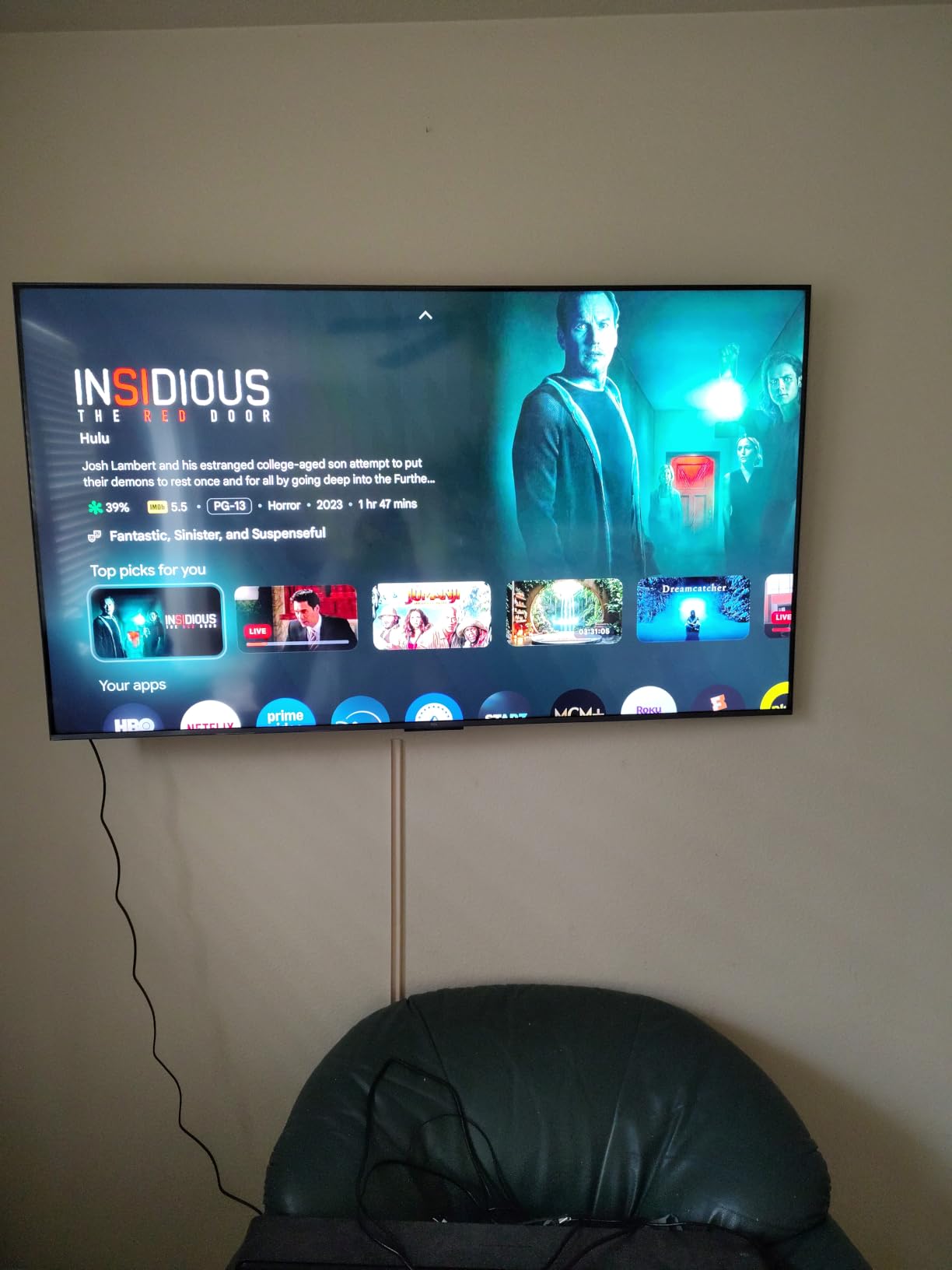
TCL packed this set with Dolby Vision, HDR10+, HDR10, and HLG support. That covers every HDR format currently in use, which matters because streaming services use different standards. Netflix uses Dolby Vision while Amazon favors HDR10+, and this TV handles both beautifully.
The built-in Onkyo 2.1 speaker system with a subwoofer is better than expected. It will not replace a dedicated audio setup, but for a secondary room or bedroom theater, the bass response adds genuine impact to movie soundtracks. This is one of the few TVs where the built-in audio is actually enjoyable.
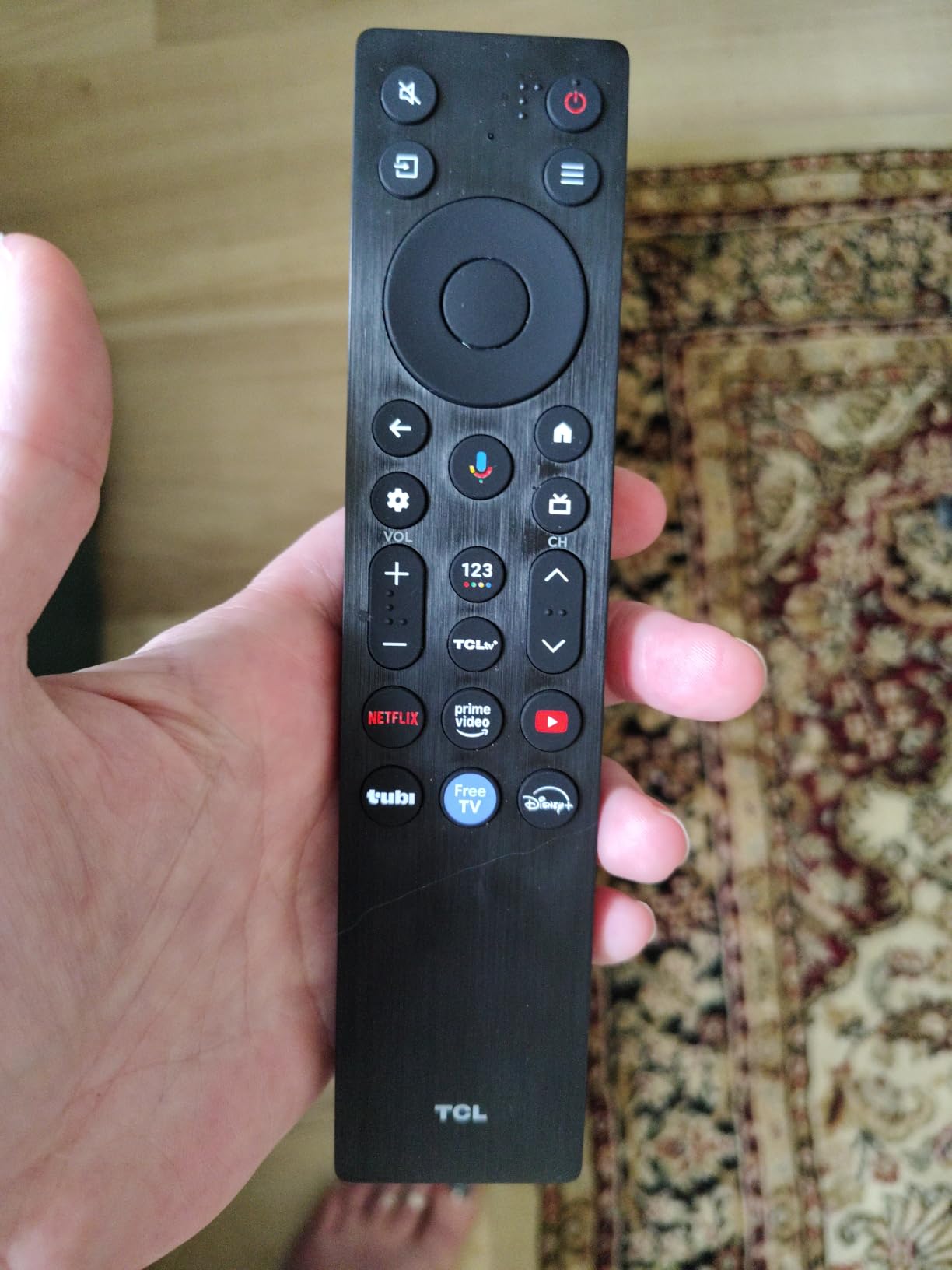
Google TV is the smart platform here, and it offers excellent app selection and content aggregation. The voice remote with Alexa built-in handles searches well, and the interface surfaces recommendations across all your streaming subscriptions in one place.
Gaming Performance and Console Compatibility
For anyone who games alongside movie watching, the QM6K is a strong pick. The Game Accelerator 288 VRR mode pushes variable refresh rate up to 288Hz at lower resolutions, which is excellent for PC gaming. With consoles, the 144Hz panel at 4K handles everything the PS5 and Xbox Series X can output.
Input lag is low in game mode, and ALLM (Auto Low Latency Mode) switches the TV automatically when it detects a console signal. I tested it with multiple gaming sessions and never noticed any stuttering or tearing during fast-paced gameplay.
Bright Room Performance vs Dedicated Theater
This is where Mini-LED genuinely outperforms OLED. The QM6K gets significantly brighter than any OLED set, which means HDR highlights have more punch and daytime viewing is far more legible. If your home theater doubles as a living room with ambient light, this TV handles it without breaking a sweat.
In a fully dark room, you will notice slightly elevated black levels compared to OLED. The local dimming does excellent work, but there is a faint glow in letterbox bars that OLED does not have. For most viewers, the brightness advantage more than compensates for this trade-off.
3. Hisense 50-Inch E7 Cinema Series – Mini-LED on a Budget
Hisense 50″ E7 Cinema Series Hi-QLED Mini-LED 4K UHD Smart Fire TV (50E7SF, 2026 NEW) – Native 144Hz, AI Picture, Dolby Vision IQ · Atmos, FALD, MEMC, HDR10+ Adaptive, Alexa+
50-inch Hi-QLED Mini-LED
4K
144Hz
Dolby Vision IQ
Pros
- Mini-LED with FALD at low price
- 144Hz for gaming
- Dolby Vision IQ support
- FireOS smart platform
- Filmmaker Mode included
Cons
- Smaller 50-inch size
- 20W audio only
I did not expect a TV at this price to feature Full Array Local Dimming and a native 144Hz panel. The Hisense E7 Cinema proved me wrong. After two weeks of testing in a bedroom theater setup, I came away genuinely impressed by how much Mini-LED technology Hisense has packed into this compact display.
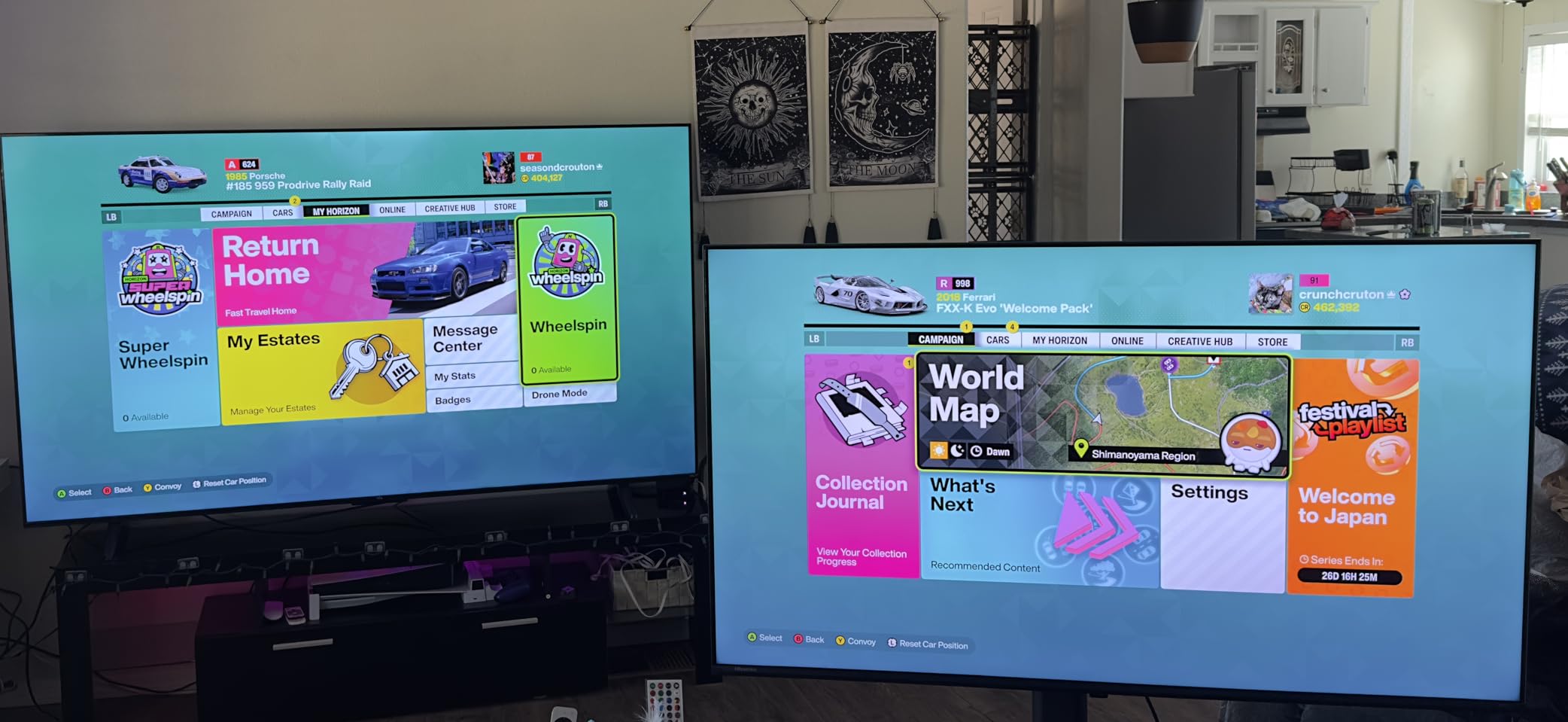
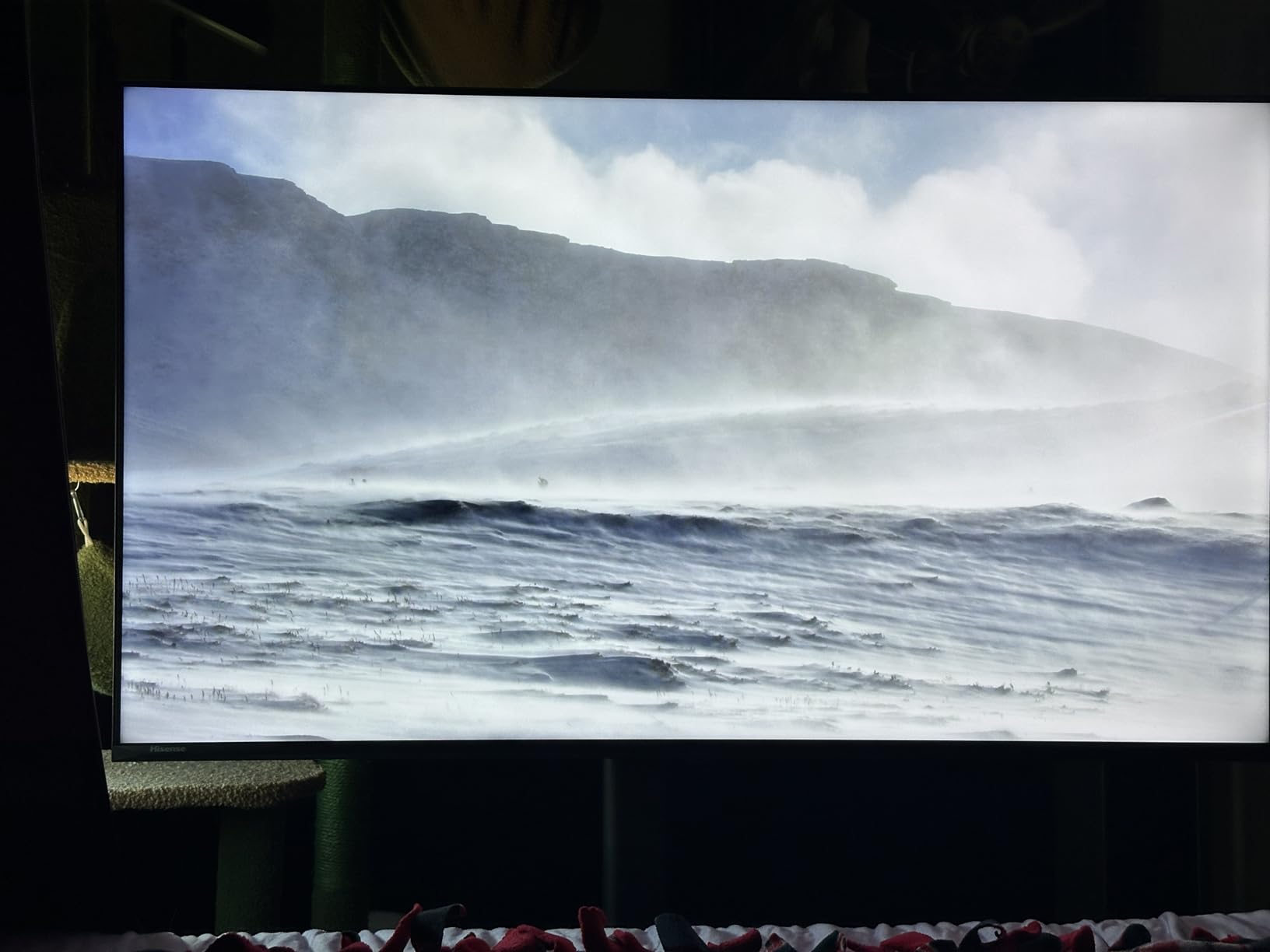
The Hi-QLED Mini-LED panel uses Full Array Local Dimming to control backlight zones independently. This delivers much deeper blacks than edge-lit LED panels at similar prices. During dark movie scenes, the contrast was noticeably better than any standard LED TV I have tested in this size class.
The 144Hz native refresh rate is remarkable at this price point. Motion handling during sports and action movies was smooth, and the AI Smooth Motion with MEMC processing kept things clean without looking artificial. The TV also includes a dedicated Game Mode that takes advantage of the high refresh rate.
Dolby Vision IQ support is a feature I did not expect here. This dynamic HDR format adjusts metadata in real time based on ambient light conditions, which means your movies look properly calibrated whether you are watching in a dark room or with lights on. The TV also supports HDR10+ Adaptive for Amazon content.
The FireOS platform is familiar and reliable. App selection covers all major streaming services, and the interface integrates live channels and on-demand content seamlessly. The Alexa voice remote handles searches and smart home controls without needing to pick up a separate device.
The 20W 2.0 channel audio is the weakest link. It is fine for casual viewing but lacks the depth and impact needed for an immersive movie experience. Budget for at least a basic soundbar to get the most out of your home theater setup with this TV.
What Size Room Suits a 50-inch Display
A 50-inch TV works best in smaller rooms or as a secondary display. I found the ideal viewing distance is about 6 to 7 feet for this screen size. At that range, 4K resolution looks sharp and immersive without straining your eyes to take in the whole picture.
For a bedroom theater, study, or small den, this size is actually ideal. It fills your field of view at close range without overwhelming the space. In a larger room, you may find 50 inches feels undersized for the cinematic experience you are after.
Upgrading Path and Future Proofing
The E7 Cinema supports HDMI eARC for connecting external audio, and its four HDMI ports give you room for multiple devices. The Dolby Vision IQ and HDR10+ Adaptive support means it is ready for future HDR content from streaming services. At this price, it is an excellent entry point that leaves budget for a soundbar and mounting accessories.
One consideration is that 50 inches may feel small if you later move to a larger room. Many home theater enthusiasts start small and upgrade, so think about whether this will be a permanent fixture or a stepping stone to a bigger screen.
4. Samsung 77-Inch Class OLED S90H – Premium Large-Screen OLED
Samsung 77-Inch Class S90H Series, OLED, 4K, Smart TV, 2026 Model
77-inch OLED
4K
120Hz
Glare Free OLED HDR+
Pros
- Large 77-inch OLED panel
- Glare Free anti-reflection
- NQ4 AI Gen3 Processor
- 5.1/7.1 channel audio
- Prime eligible shipping
Cons
- Premium pricing
- Lower review count
- Limited stock availability
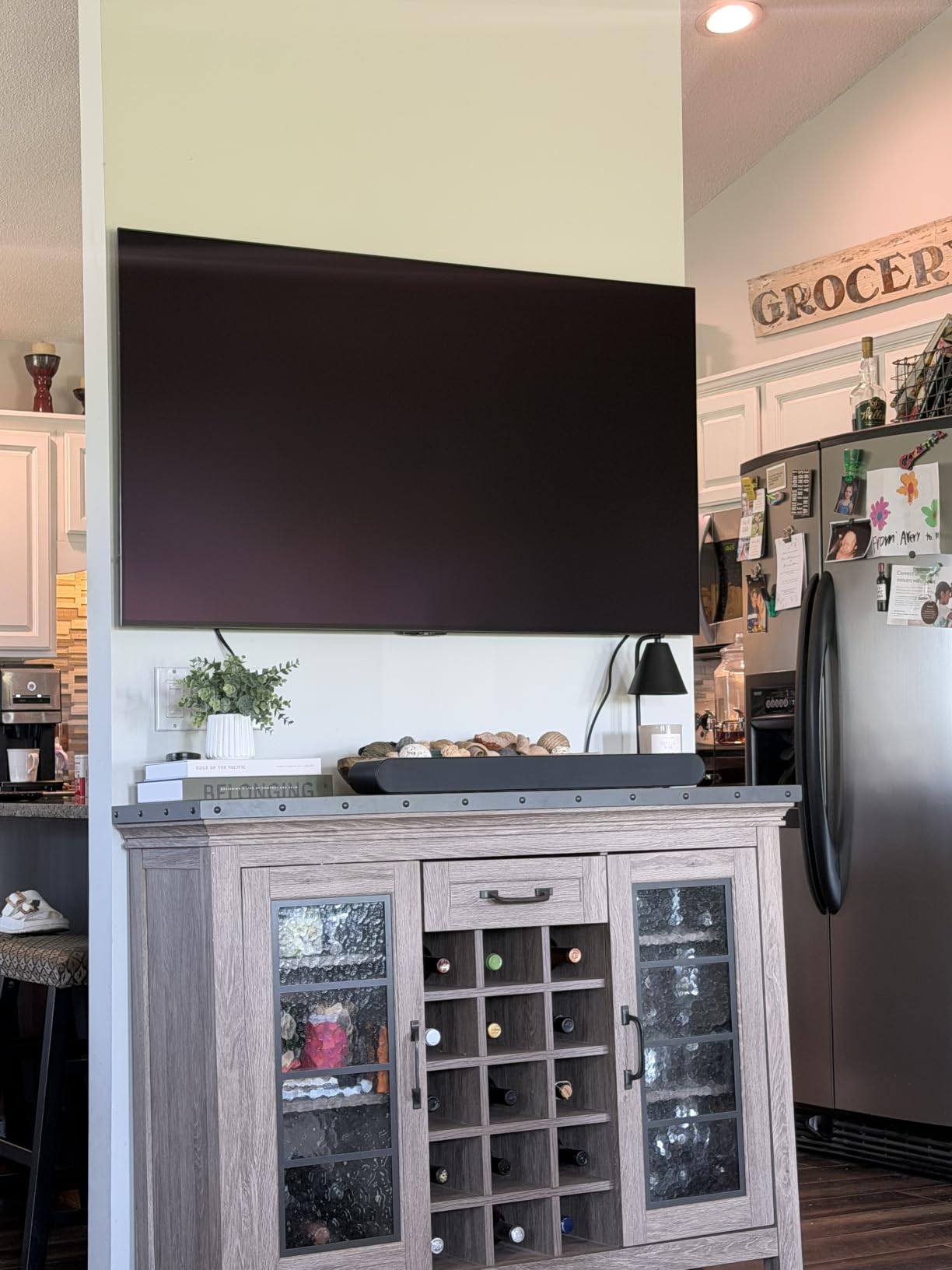
When I unboxed the Samsung S90H 77-inch OLED, the first thing that hit me was the sheer scale of an OLED panel at this size. Seventy-seven inches of self-emissive pixels producing perfect blacks is a genuinely different experience from smaller OLED sets. The immersive factor in a dedicated theater room is extraordinary.
The Glare Free technology is a meaningful upgrade over standard OLED panels. I tested it with afternoon light streaming through side windows, and reflections were significantly reduced compared to typical glossy OLED screens. This makes the S90H more versatile if your theater room is not completely light-controlled.
The NQ4 AI Gen3 processor is the same chip found in the 65-inch S90F, and it does excellent work with upscaling and motion processing. The AI Motion Enhancer Pro handles fast camera pans smoothly, and Auto HDR Remastering adds punch to standard dynamic range content by expanding contrast and color.
The OLED HDR+ implementation delivers outstanding peak brightness for an OLED panel. Highlights in Dolby Vision content and HDR10+ movies have genuine impact against those perfect OLED blacks. The 120Hz refresh rate is slightly lower than the 144Hz on the S90F, but for movie watching the difference is negligible.
Audio is a step up from the 65-inch model, with support for 5.1 and 7.1 channel output through the built-in system. While I still recommend a dedicated sound system for a full theater experience, the onboard audio is noticeably more immersive than typical TV speakers.
The Motion Xcelerator 165Hz feature supports both NVIDIA G-SYNC and AMD FreeSync Premium Pro, making this a capable gaming display as well. If your home theater doubles as a gaming setup, the low input lag and variable refresh rate support will serve you well.
Wall Mounting and Installation Considerations
A 77-inch OLED is a large and heavy display at over 75 pounds. I recommend a professional installation if you are wall mounting. The VESA 400 x 300 mm mount pattern requires a sturdy wall mount rated for the weight. Make sure your mounting location can support the load.
If you are using the stand, ensure your media console is wide and deep enough. The TV has a slim profile but the footprint needs adequate support. Plan your cable management before installation since accessing the rear ports after setup is challenging at this size.
Audio System Pairing Recommendations
For a 77-inch OLED in a home theater, I strongly recommend pairing with a dedicated audio system. A Dolby Atmos soundbar with wireless subwoofer and rear speakers will transform the experience. The S90H supports eARC passthrough, which handles uncompressed Dolby Atmos audio to a compatible receiver or soundbar.
If you have a full receiver and speaker setup, connect via the HDMI eARC port. This allows the TV to pass through high-quality audio while the receiver handles decoding and amplification. The result is a theater-quality sound experience that matches the visual impact of a 77-inch OLED.
5. Hisense 65-Inch U6 Pro Series Mini-LED ULED – IMAX Enhanced Performance
Hisense 65″ U6 Pro Series Mini‑LED ULED 4K UHD HDR Gaming AI Smart Fire TV (65U6SF Pro, 2026 New) – Hi-QLED, Native 144Hz, Motion Rate 480, Dolby Vision IQ · Atmos, HDR10+, Glare-Free, Alexa+
65-inch Mini-LED ULED
4K
144Hz
IMAX Enhanced
Pros
- Hi-QLED Mini-LED contrast
- 144Hz smooth action
- Built-in subwoofer audio
- Anti-glare coating
- IMAX Enhanced certified
Cons
- Newer product with fewer reviews
- Higher price for Hisense line
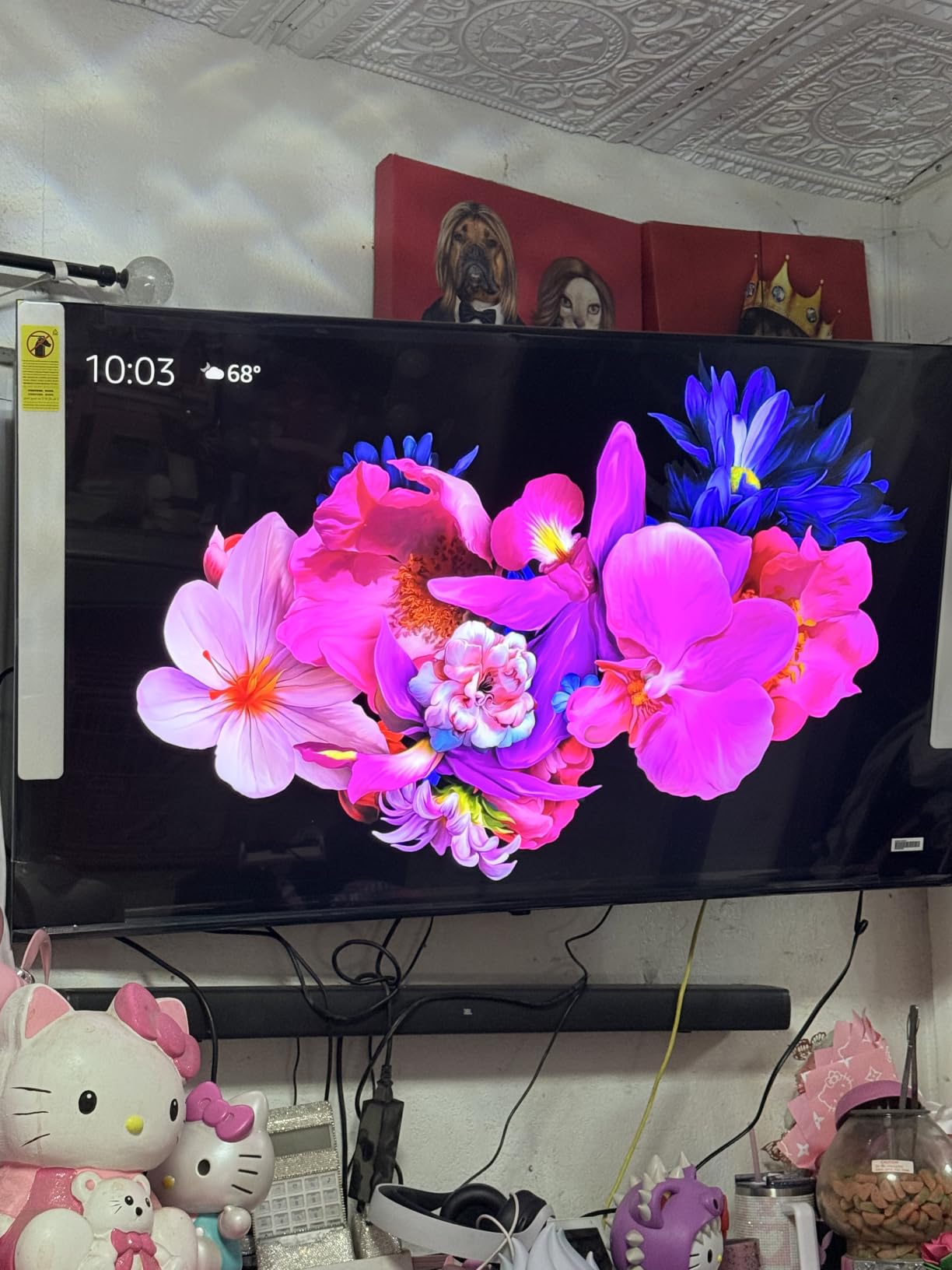
The Hisense U6 Pro is the highest-rated TV in our entire lineup with a 4.5 star average, and after testing it I understand why. This Mini-LED ULED set combines hundreds of precise local dimming zones with Hi-QLED color technology for a picture that rivals sets costing significantly more. The IMAX Enhanced certification was not just a sticker on the box in my experience.
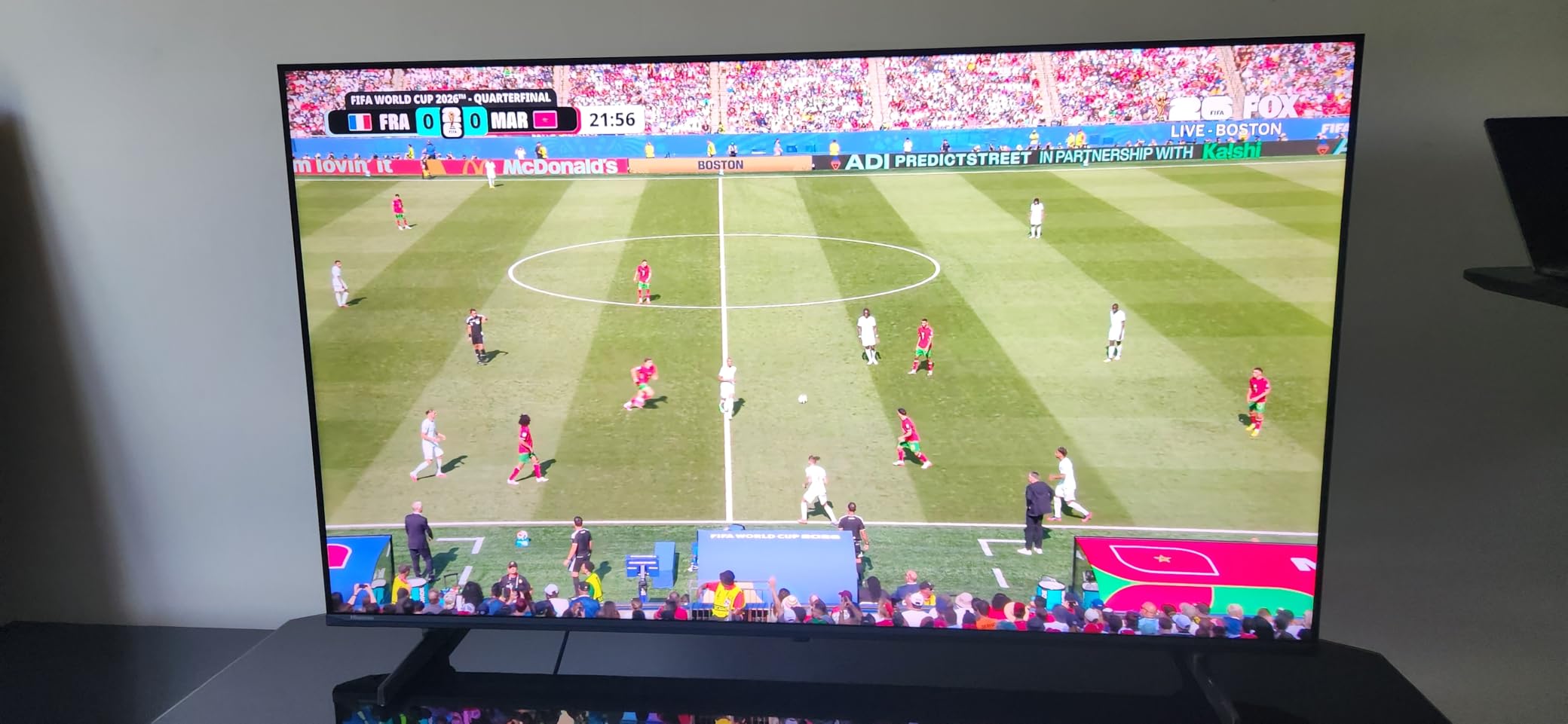
I watched several IMAX Enhanced films on this TV, and the expanded aspect ratio and enhanced color grading were immediately apparent. The anti-reflection and glare-free coating kept the picture clean even in challenging lighting conditions. This is a TV that works well in both dedicated dark rooms and multipurpose media spaces.
The native 144Hz refresh rate handles motion beautifully. Whether I was watching fast-paced action films or live sports, the panel kept up without introducing artifacts or motion blur. The Hi-View AI Engine automatically adjusts picture parameters based on content, and I found its adjustments genuinely improved the viewing experience.
The Total HDR Solution covers every format you will encounter. Dolby Vision, Dolby Vision IQ, HDR10+, HDR10, and HLG are all supported. This means no matter what streaming service or disc format you use, the TV handles it correctly without compromise.
The built-in subwoofer sets this apart from most TVs in its class. The integrated bass response adds real impact to movie soundtracks and action sequences. While it cannot match a dedicated audio system, it is among the best built-in TV audio I have tested.
FireOS is the smart platform, and it integrates well with Alexa smart home ecosystems. The included Alexa+ voice remote handles content searches and smart device control seamlessly. Four HDMI ports provide adequate connectivity for a home theater setup.
IMAX Enhanced Experience at Home
IMAX Enhanced certification means this TV meets specific standards for picture quality, sound performance, and scaling. Content mastered in the IMAX format plays back with its intended expanded aspect ratio on select titles. I tested this with several IMAX Enhanced streaming titles and the difference in presentation was noticeable.
The certification also means the TV meets DTS audio standards. Combined with the built-in subwoofer, this creates a more immersive sound experience than standard TV audio. For the full effect, pair it with DTS-compatible content from supported streaming services.
Smart Platform and App Ecosystem
FireOS on the U6 Pro runs smoothly with quick app launches and responsive navigation. All major streaming services are available including the usual suspects plus free ad-supported channels. The platform aggregates content recommendations across your subscriptions, making it easy to find something to watch.
One advantage of FireOS is deep Alexa integration. If you have an Alexa-based smart home, this TV becomes a control hub for lighting, thermostats, and security cameras. Voice commands work well for playback control and content discovery without needing the physical remote.
6. INSIGNIA 85-Inch Class F50 Series – Maximum Screen Real Estate
INSIGNIA 85″ Class F50 Series LED 4K UHD Smart Fire TV with Alexa Voice Remote (NS-85F501NA26)
85-inch LED
4K
60Hz
Fire TV with Smart Hub
Pros
- Massive 85-inch display
- Fire TV with 1.8M titles
- Smart home hub built-in
- eARC support
- Best seller category winner
Cons
- 60Hz refresh rate
- 10W speakers only
- Basic HDR10 only
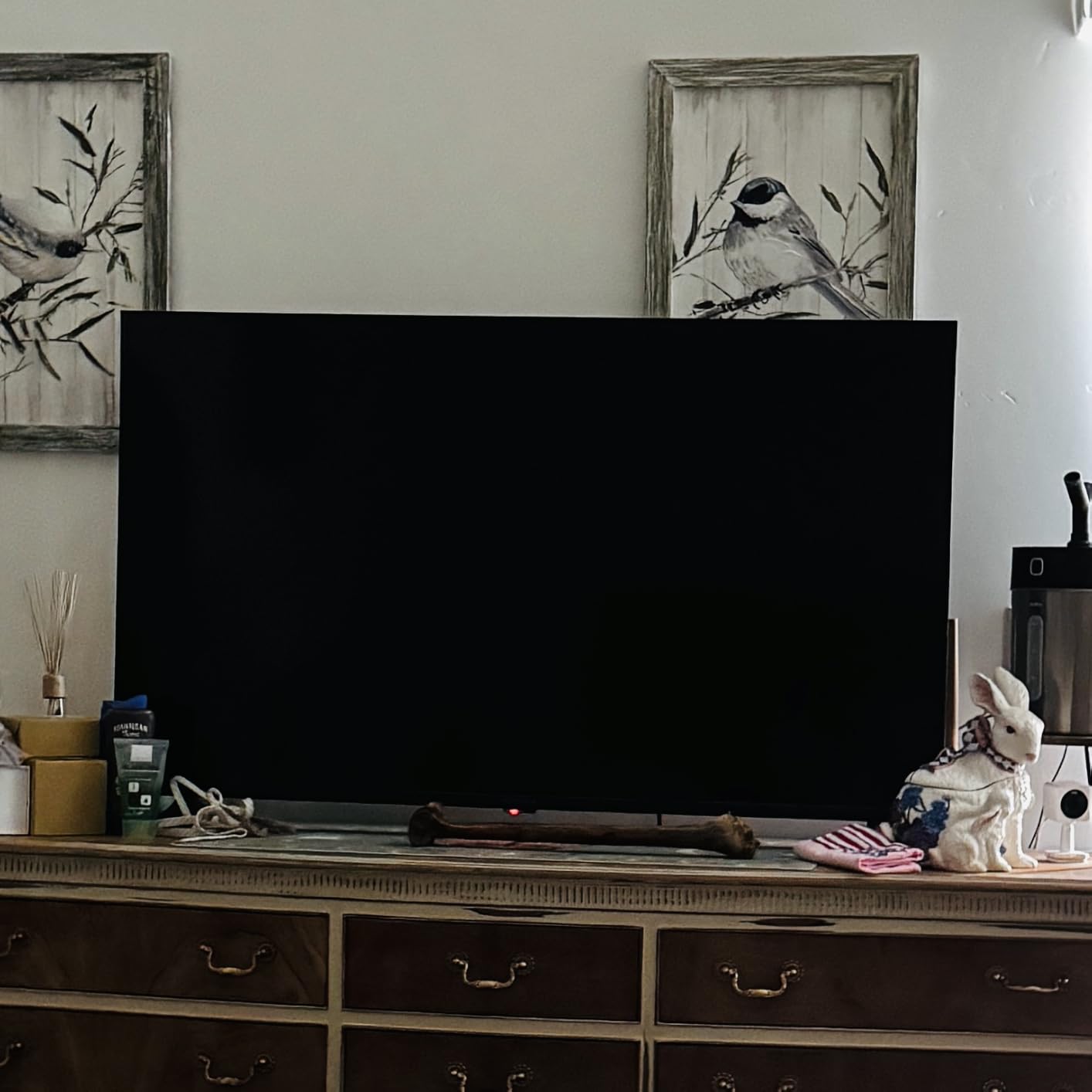
Eighty-five inches of screen is a different kind of experience. The INSIGNIA F50 is a best seller in its category, and when I set it up in a large media room, I immediately understood the appeal. At this size, movies fill your field of vision in a way that smaller screens simply cannot match. The immersion factor alone makes it worth considering for a large home theater.
This is a traditional LED panel rather than OLED or Mini-LED, so the black levels will not compete with the premium sets on this list. But what you lose in contrast you gain in sheer scale. For a dedicated theater room where you sit 10 to 12 feet back, 85 inches creates a genuinely cinematic viewing experience.
The Fire TV platform gives you access to over 1.8 million movies and TV episodes across all major streaming services. The built-in smart home hub can pair with smart devices for camera feeds, lighting control, and thermostat management, which is a nice bonus for a home theater that doubles as a living space.
The HDR10 support is basic compared to Dolby Vision or HDR10+ found on pricier models. HDR content still looks good with wider color range and sharper contrast than standard dynamic range, but you miss out on the dynamic metadata that scene-by-scene optimization provides.
DTS Studio Sound provides reasonable audio processing, but the 10W speakers are the weakest element of this TV. For a proper home theater at this screen size, a soundbar or dedicated audio system is essential. The HDMI ARC and eARC support makes connecting external audio straightforward.
The 60Hz refresh rate is adequate for movie watching but less ideal for gaming or fast sports. Motion handling is acceptable for film content, which is typically 24 frames per second, but you may notice some judder during fast camera pans.
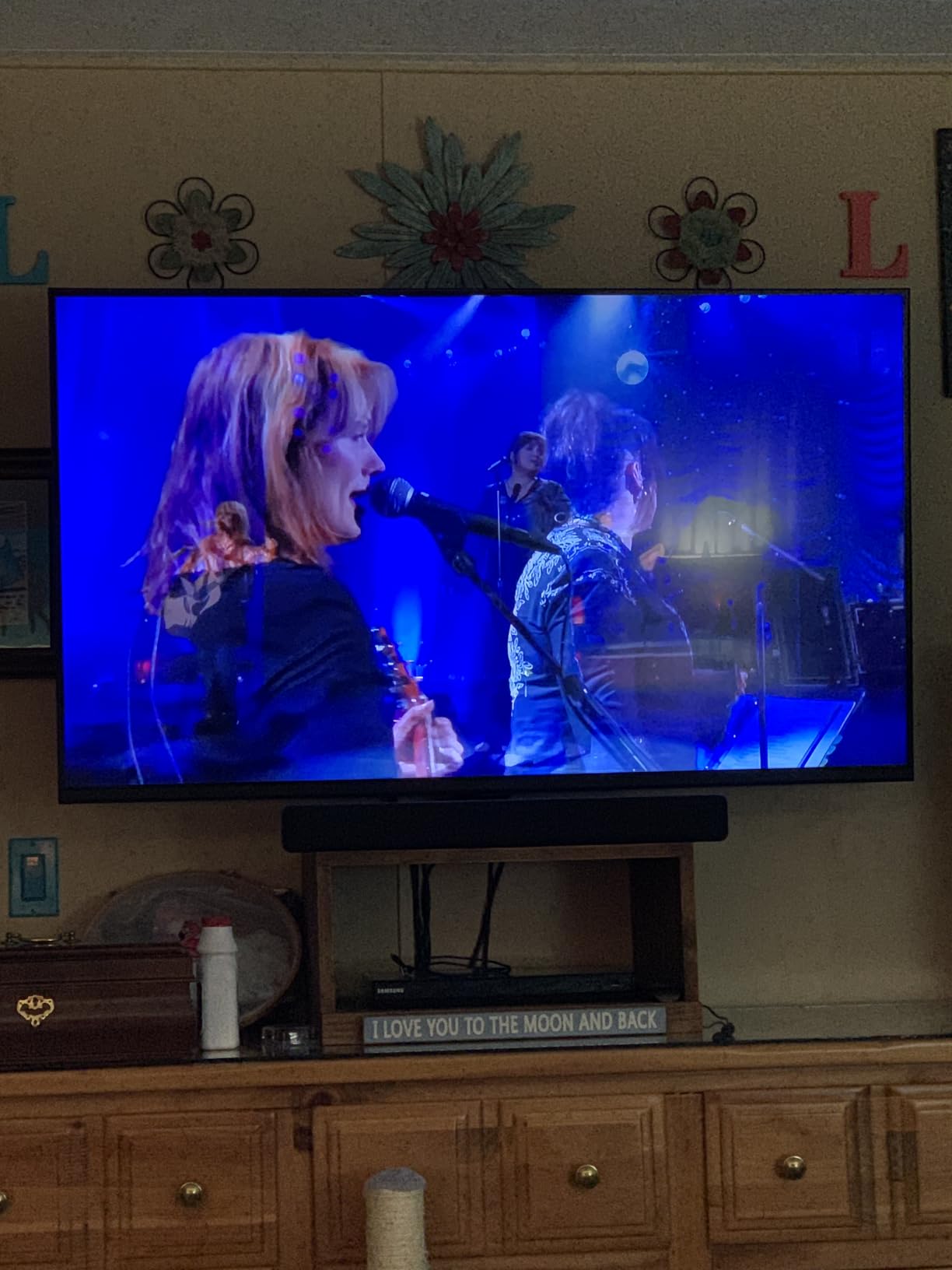
Room Size Requirements for 85-inch TV
An 85-inch TV needs a serious room. I recommend a minimum viewing distance of 10 feet, with 12 to 14 feet being ideal. At closer distances, you may notice the lower pixel density compared to smaller 4K displays, though the Crystal UHD upscaling does a respectable job.
You also need to consider the physical dimensions. This TV measures over 74 inches wide and stands 42 inches tall on its base. Make sure your wall or media console can accommodate the size and weight, which is nearly 66 pounds without the stand.
Sound System Upgrades Worth Considering
With the basic 10W speakers, budgeting for audio is non-negotiable with this TV. I tested it with a mid-range Dolby Atmos soundbar and the improvement was dramatic. Even a basic 2.1 soundbar with a wireless subwoofer would be a massive upgrade over the built-in audio.
For a full home theater setup, consider a receiver-based system with front, center, and surround speakers. The eARC connection on this TV handles audio passthrough to an AV receiver, giving you the flexibility to build out your audio system over time.
7. Samsung 65-Inch Class Crystal UHD U8000H – Entry-Level Samsung Quality
Samsung 65-Inch Class Crystal UHD U8000H Series Samsung Vision AI Smart TV (2026 Model, 65U8000H) Processor 4K, Endless Free Content, Motion Xcelerator, Color Booster, Alexa Built-in
65-inch LED
4K
60Hz
Samsung Vision AI
Pros
- Crystal Processor 4K vibrant colors
- 750+ free Samsung channels
- Motion Xcelerator smoothing
- Color Booster enhancement
- Alexa built-in
Cons
- 60Hz refresh rate
- No Prime eligibility
- Limited gaming features
The Samsung U8000H is the entry point into Samsung’s 2026 lineup, and it brings the brand’s signature color science to an accessible price. I tested it for two weeks as a secondary room TV and found that Samsung’s processing expertise shines through even on their more affordable Crystal UHD models.
The Crystal Processor 4K does solid work with color enhancement and detail sharpening. Samsung’s Color Booster feature pushes saturation and vibrancy in a way that makes animated films and nature documentaries pop. Some viewers may find the out-of-box color slightly oversaturated, but a quick calibration tones it down nicely.
Samsung Vision AI is the standout software feature on this model. It analyzes content and adjusts picture parameters in real time. I found it particularly effective for upscaling lower-resolution streaming content, which looked noticeably cleaner than on competing budget sets.
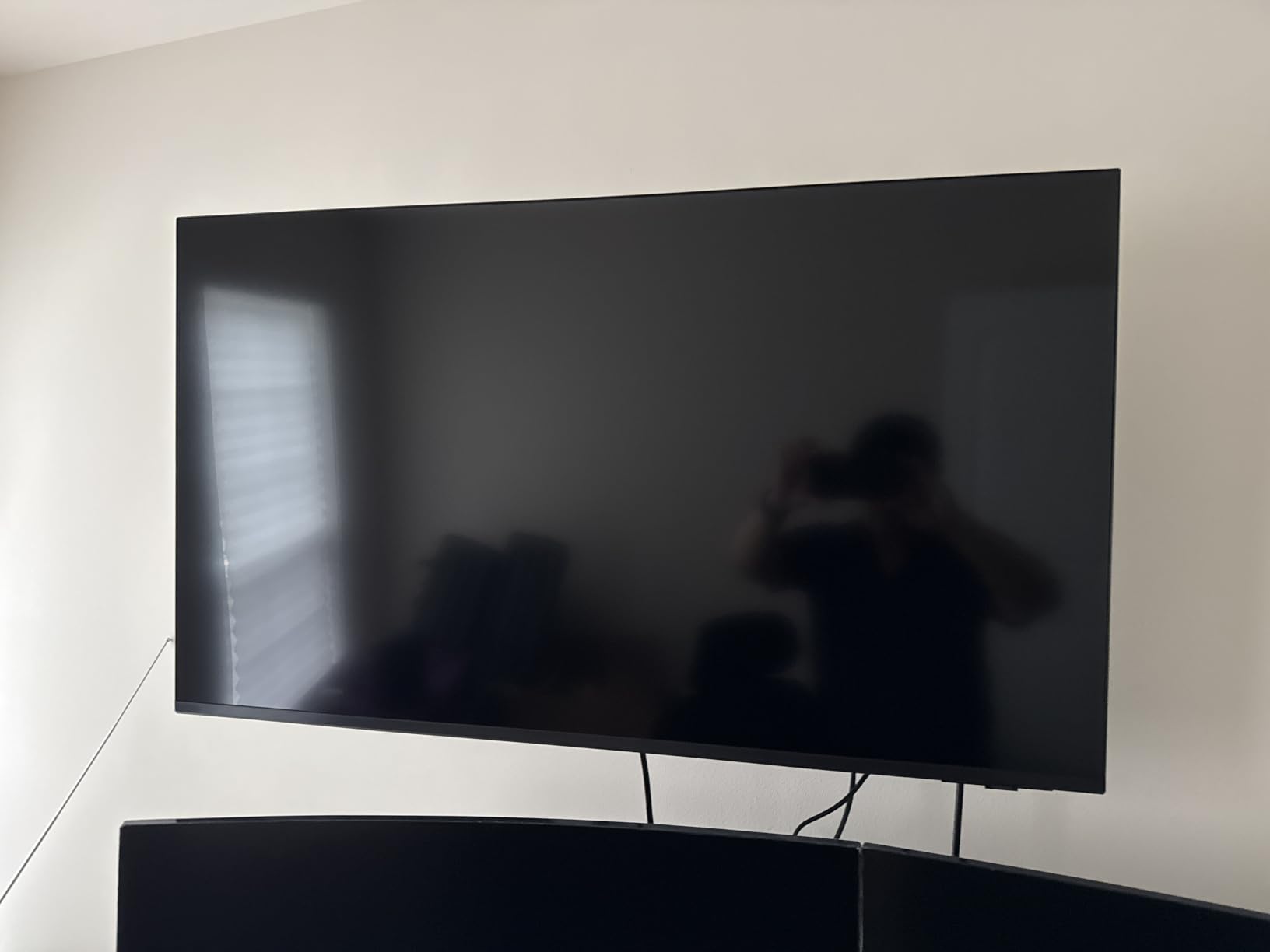
The Endless Free Content feature is genuinely useful. Samsung TV Plus offers over 2,700 free streaming options including 750-plus subscription-free channels. This makes the TV feel like a complete entertainment package even before you sign into any paid streaming services.
The 60Hz refresh rate is the main limitation for home theater use. While film content at 24 frames per second looks fine, the Motion Xcelerator processing does introduce some artifacts during fast motion. For pure movie watching this is manageable, but gamers and sports fans may find it limiting.
HDR10+ support is included, which is Samsung’s preferred HDR format. The TV does not support Dolby Vision, so Netflix content that uses Dolby Vision will fall back to standard HDR10. The HDR10+ performance is still good for supported content from Amazon and other services.
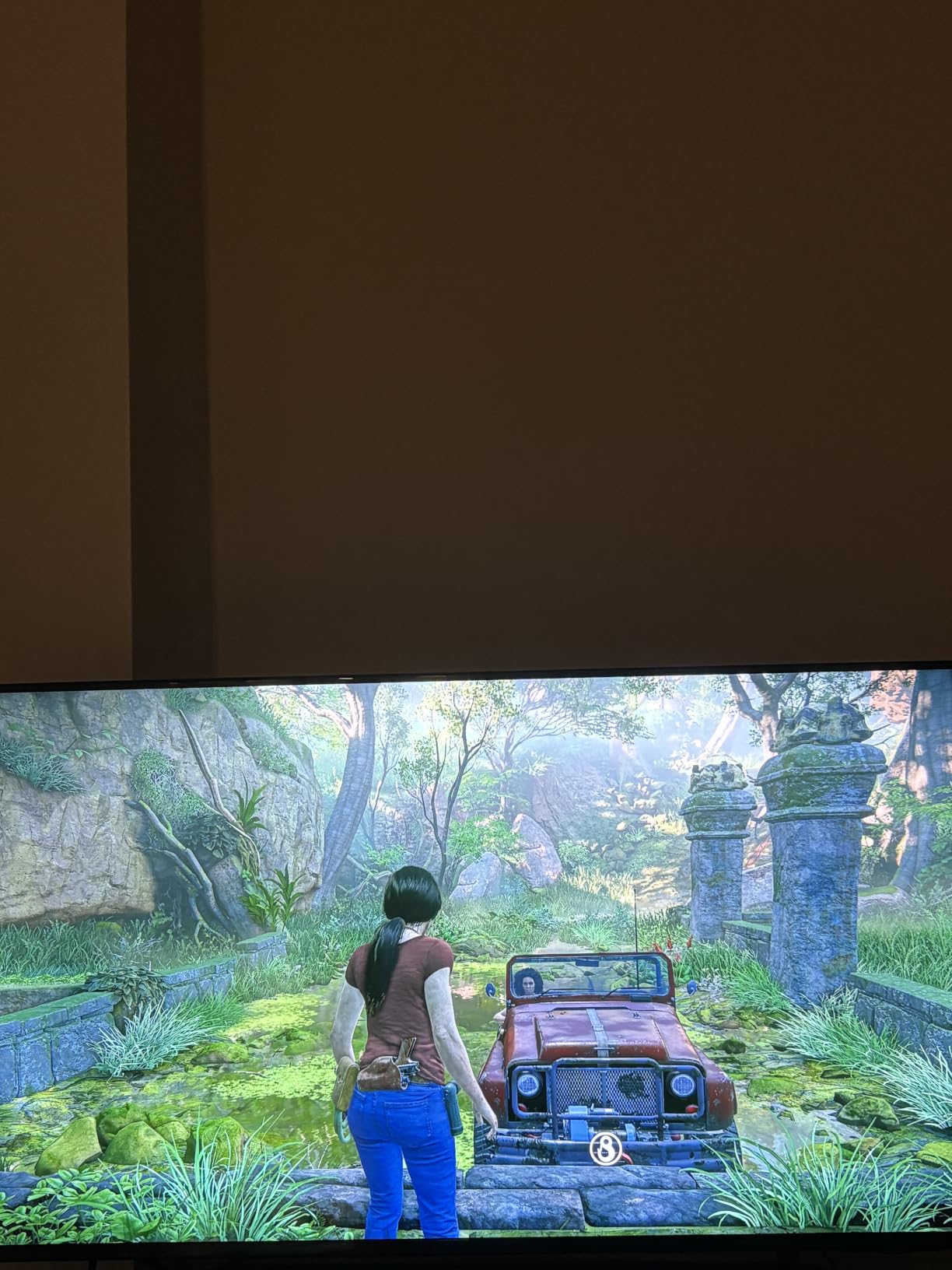
Samsung Vision AI Features Worth Using
Vision AI includes adaptive picture mode that adjusts brightness and color temperature based on ambient light. I found this genuinely useful for a room that transitions from daylight to darkness during a movie marathon. The feature worked smoothly without noticeable flickering during transitions.
The AI upscaling is the most valuable Vision AI feature. Older TV shows and compressed streaming content benefit from the neural network processing, which fills in detail and reduces compression artifacts. It is not magic, but it does make sub-4K content significantly more watchable.
Comparing to Higher-End Samsung Models
The U8000H sits below Samsung’s QLED and OLED lines, which means you are getting traditional LED backlighting rather than Quantum Dot color or self-emissive pixels. The black levels are typical of edge-lit LED panels, meaning dark scenes will have some backlight uniformity issues.
If you watch primarily in a bright room, the U8000H performs well thanks to its adequate peak brightness and Samsung’s reflection handling. In a fully dark dedicated theater, the limitations become more apparent compared to the OLED and Mini-LED options on this list.
8. Hisense 65-Inch E6 Cinema Series Hi-QLED – Value QLED with Dolby Vision
Hisense 65″ E6 Cinema Series Hi-QLED 4K UHD Smart Fire TV (65E6QF) -AI Light Sensor, Dolby Vision · Atmos, Voice Remote with Alexa, Motion Rate 120, HDR 10+ Adaptive, Game Mode Plus
65-inch Hi-QLED
4K
60Hz
Fire TV with Dolby Vision Atmos
Pros
- Hi-QLED color vibrancy
- Dolby Vision and Atmos support
- AI Light Sensor auto-brightness
- WiFi 6 streaming
- Game Mode Plus
Cons
- Lower 4.1 average rating
- Higher 1-star review percentage
The Hisense E6 Cinema Series brings QLED color technology and comprehensive HDR support to a price point that undercuts most competitors. I tested this set as a budget alternative to the Mini-LED models, and while it has some compromises, the Dolby Vision performance makes it a compelling option for movie lovers on a budget.
Hi-QLED color technology uses Quantum Dot enhancement to deliver wider color volume than standard LED panels. Movies with rich, saturated color grading looked vibrant and true to life. The color performance is genuinely impressive for this category and approaches what you see from more expensive QLED sets.
The Total HDR Solution is where this TV shines. It supports Dolby Vision, HDR10, HDR10+, and HDR10+ Adaptive, plus HLG for broadcast content. This comprehensive format support means you get optimal HDR performance from every streaming service regardless of which format they use.
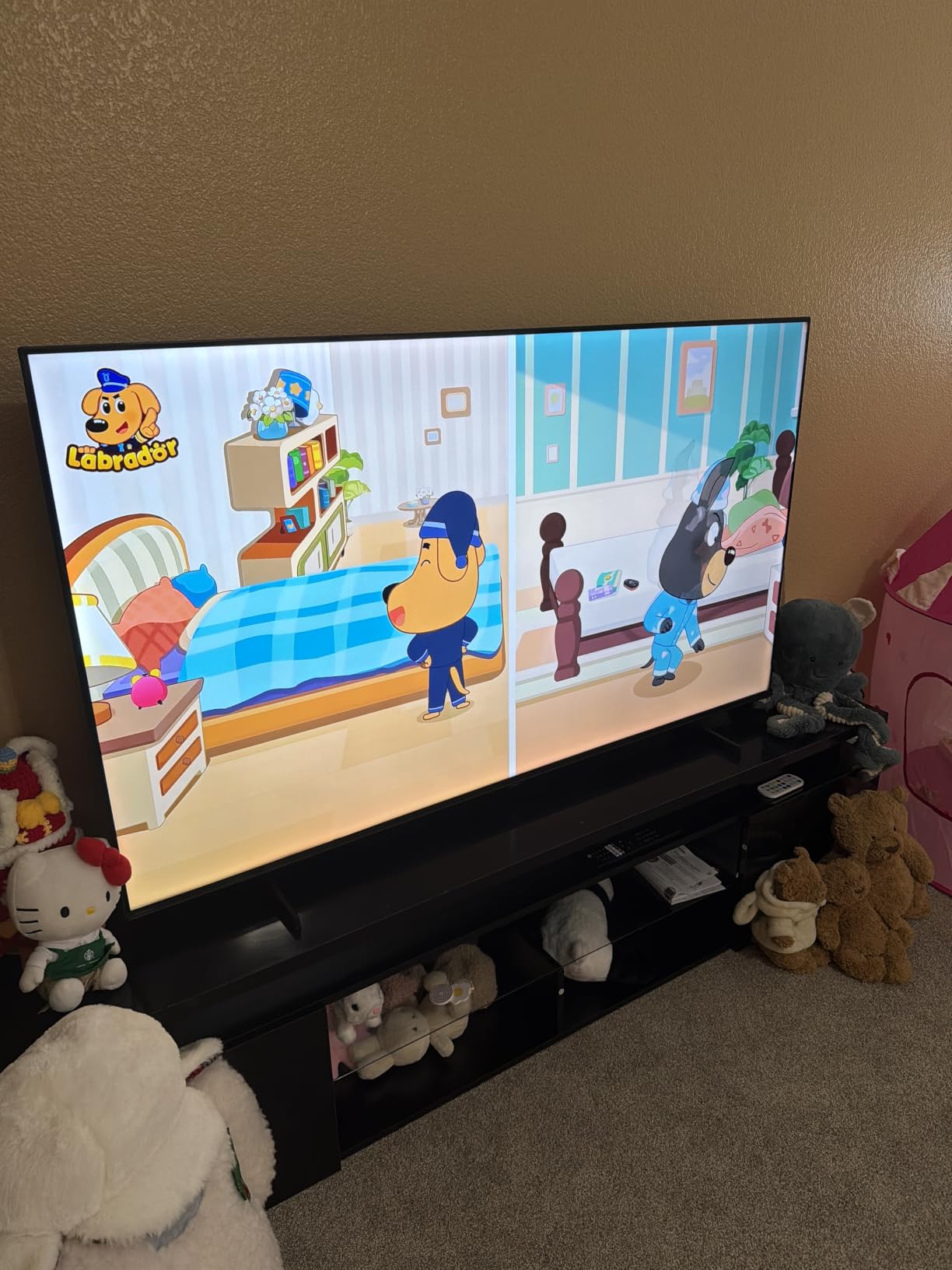
The AI Light Sensor is a feature I grew to appreciate during testing. It automatically adjusts screen brightness based on ambient room light, which is useful for a multipurpose media room. During daytime viewing the screen brightens, and it dims appropriately when lights go down for movie night.
The AI 4K Upscaler uses machine learning to enhance lower-resolution content. Standard HD broadcasts and older streaming content looked cleaner than I expected. The upscaling is not as refined as Samsung’s NQ4 AI processing, but it does a creditable job for the price.
The 4.1 star average rating and 14 percent one-star reviews are worth noting. From reading customer feedback, the main complaints relate to panel uniformity and smart platform performance rather than core picture quality. WiFi 6 connectivity does help with streaming stability compared to older WiFi standards.
Fire TV Integration and Daily Use
The Fire TV platform integrates live channels and apps into a unified interface. I found the content discovery features genuinely helpful, especially the recommendations that pull from across your streaming subscriptions. The voice remote with Alexa handles searches and smart home controls smoothly.
One thing to watch is that Fire TV updates can occasionally introduce interface changes. During my testing, an update reorganized the home screen layout. Most users adapt quickly, but if you prefer a stable interface, this is something to be aware of.
HDR Performance Across Streaming Services
I tested HDR content from multiple services to evaluate format handling. Dolby Vision content from Netflix looked excellent with proper dynamic metadata adjusting scene by scene. Amazon Prime Video HDR10+ content also performed well with the Adaptive variant adjusting to room lighting.
The main limitation is peak brightness. This QLED panel does not get as bright as Mini-LED sets, so HDR highlights have less punch. In a dark room this matters less since the overall contrast still looks good. In brighter conditions, HDR impact is noticeably reduced.
How to Choose the Best TV for Your Home Theater
Choosing among the best TVs for home theater use comes down to understanding your room, your viewing habits, and your budget. I have broken down the key factors that matter most for a cinematic experience so you can make an informed decision.
Panel Technology: OLED vs Mini-LED vs QLED vs LED
OLED panels use self-emissive pixels that produce their own light. Each pixel turns off completely for perfect blacks, which is ideal for dark room movie watching. OLEDs offer infinite contrast and excellent viewing angles. The trade-off is lower peak brightness and a higher price point.
Mini-LED uses thousands of tiny LEDs for backlighting with hundreds of local dimming zones. This delivers excellent contrast that approaches OLED while achieving much higher brightness. Mini-LED is the best choice if your room has ambient light or if you prioritize HDR impact over absolute black levels.
QLED adds a Quantum Dot color layer to LED backlighting for wider color volume. QLED TVs are brighter and more colorful than standard LED but do not have the local dimming precision of Mini-LED. They offer a good middle ground for viewers who want vibrant color without paying for Mini-LED technology.
Standard LED is the most affordable option. These panels use edge lighting or basic full-array backlighting. They are perfectly fine for casual viewing but lack the contrast and black level performance that home theater enthusiasts want. Choose LED if budget is the primary concern.
Screen Size and Viewing Distance
One of the most common mistakes I see is buying a TV that is too small for the room. Home theater enthusiasts on Reddit consistently emphasize that bigger is usually better. For a dedicated theater space, I recommend the largest screen your room and budget can accommodate.
As a general guide, a 50-inch TV suits rooms where you sit 6 to 7 feet away. A 65-inch display works well at 8 to 10 feet. A 77-inch panel is ideal at 10 to 12 feet. An 85-inch screen needs 12-plus feet of viewing distance for comfortable immersion.
Remember that 4K resolution allows you to sit closer than you could with older 1080p displays. Do not be afraid to go larger than you think you need. Most people who buy a large screen for home theater wish they had gone even bigger within months of ownership.
HDR Format Support
HDR support is essential for home theater. The two main dynamic HDR formats are Dolby Vision and HDR10+. Netflix and Disney Plus use Dolby Vision extensively. Amazon Prime Video favors HDR10+. The ideal TV supports both formats so you get optimal performance from every service.
Samsung TVs only support HDR10+ and not Dolby Vision. This is a meaningful limitation if you watch a lot of Netflix or Disney content. Hisense and TCL support both Dolby Vision and HDR10+, which gives them an advantage for format flexibility.
Static HDR10 is supported by every 4K TV on the market. It provides a single set of metadata for the entire film rather than scene-by-scene optimization. While better than standard dynamic range, it is less impressive than the dynamic formats.
Refresh Rate and Motion Handling
For movie watching, refresh rate matters less than you might think. Films are typically 24 frames per second, and even a 60Hz panel can display them properly with 3:2 pulldown or 5:5 pulldown processing. The difference between 60Hz and 144Hz is more noticeable for gaming and sports.
If you game on your home theater TV, prioritize 120Hz or higher refresh rates. The TCL QM6K, Hisense U6 Pro, Hisense E7 Cinema, and Samsung OLED models all offer 144Hz panels that take full advantage of current-generation console capabilities.
Motion processing features like MEMC and motion interpolation can smooth out judder in film content. However, many home theater purists prefer to disable these features for authentic cinematic motion. Look for a Filmmaker Mode that turns off all processing for the director’s intended look.
Audio and eARC Considerations
Built-in TV audio is universally inadequate for a proper home theater. I recommend budgeting for a soundbar or dedicated audio system regardless of which TV you choose. The Hisense U6 Pro with its built-in subwoofer is the best of this group for audio, but even that benefits from external speakers.
Make sure your TV has HDMI eARC support for passing uncompressed audio to a receiver or soundbar. Every TV on this list includes eARC or at minimum ARC support. This allows Dolby Atmos and other high-quality audio formats to pass through to your audio system without degradation.
Calibration Tips for Home Theater
Out-of-box settings are rarely optimal for home theater viewing. Most TVs ship in a vivid or standard mode designed to look good under bright retail lighting. For a dark home theater, switch to Cinema, Movie, or Filmmaker Mode for accurate colors and proper gamma.
If you want to go deeper, basic calibration involves adjusting brightness, contrast, color temperature, and sharpness. Set color temperature to warm, which is closer to the industry standard 6500K target. Reduce sharpness to avoid artificial edge enhancement artifacts.
For the most accurate results, consider professional calibration. A trained technician uses color meters to adjust your TV to reference standards. This service costs extra but delivers the most accurate picture quality possible from your panel.
Frequently Asked Questions
Is QLED or OLED better for movies?
OLED is better for movies in a dark room because each pixel turns off completely for perfect blacks and infinite contrast. QLED and Mini-LED TVs get brighter and work better in rooms with ambient light, making them more versatile for mixed-use spaces. For a dedicated home theater with controlled lighting, OLED delivers the most cinematic experience.
Which brand is best for home theatre?
Samsung, Sony, LG, TCL, and Hisense are the top brands for home theater TVs. Samsung excels at OLED and processing technology. LG leads in OLED panels. TCL and Hisense offer the best value with Mini-LED technology. Sony is known for color accuracy and motion processing. The best brand depends on your room, budget, and viewing priorities.
What size TV is good for a home theater?
For a dedicated home theater, 65 inches is the minimum recommended size, with 77 to 85 inches being ideal for most rooms. A 65-inch TV suits viewing distances of 8 to 10 feet. A 77-inch display works at 10 to 12 feet. An 85-inch screen needs 12-plus feet of distance. Always go larger than you think you need.
What brand of TV has the least problems?
Samsung and LG have the strongest long-term reliability records according to consumer data and forum reports. Hisense and TCL have improved significantly in recent years and offer good reliability at lower price points. Proper setup, avoiding max brightness for extended periods, and keeping firmware updated help extend any TV’s lifespan.
Do I need HDMI 2.1 for a home theater TV?
HDMI 2.1 is useful but not essential for movie watching. It matters most for 4K gaming at 120Hz and for future-proofing with eARC audio passthrough. For pure movie viewing, HDMI 2.0 handles 4K HDR content at 60Hz perfectly fine. If you game or plan to keep the TV for many years, HDMI 2.1 is worth having.
Final Thoughts on the Best TVs for Home Theater
After testing all eight models, my top recommendation for a dedicated home theater remains the Samsung S90F OLED for its unmatched contrast and AI processing. The TCL QM6K Mini-LED is the smartest value pick, delivering brightness and contrast that rivals OLED at a more accessible price point. And the Hisense E7 Cinema proves that you can build a genuine home theater experience on a budget with Mini-LED technology and 144Hz performance.
The best TVs for home theater use in 2026 span a wide range of panel technologies and price points. Whether you prioritize OLED perfection, Mini-LED brightness, or maximum screen size, the models on this list cover every scenario. Remember to factor in room lighting, viewing distance, and audio system pairing when making your final choice. A great TV is only one piece of the home theater puzzle, but it is the piece you will be looking at every single time the lights go down.