
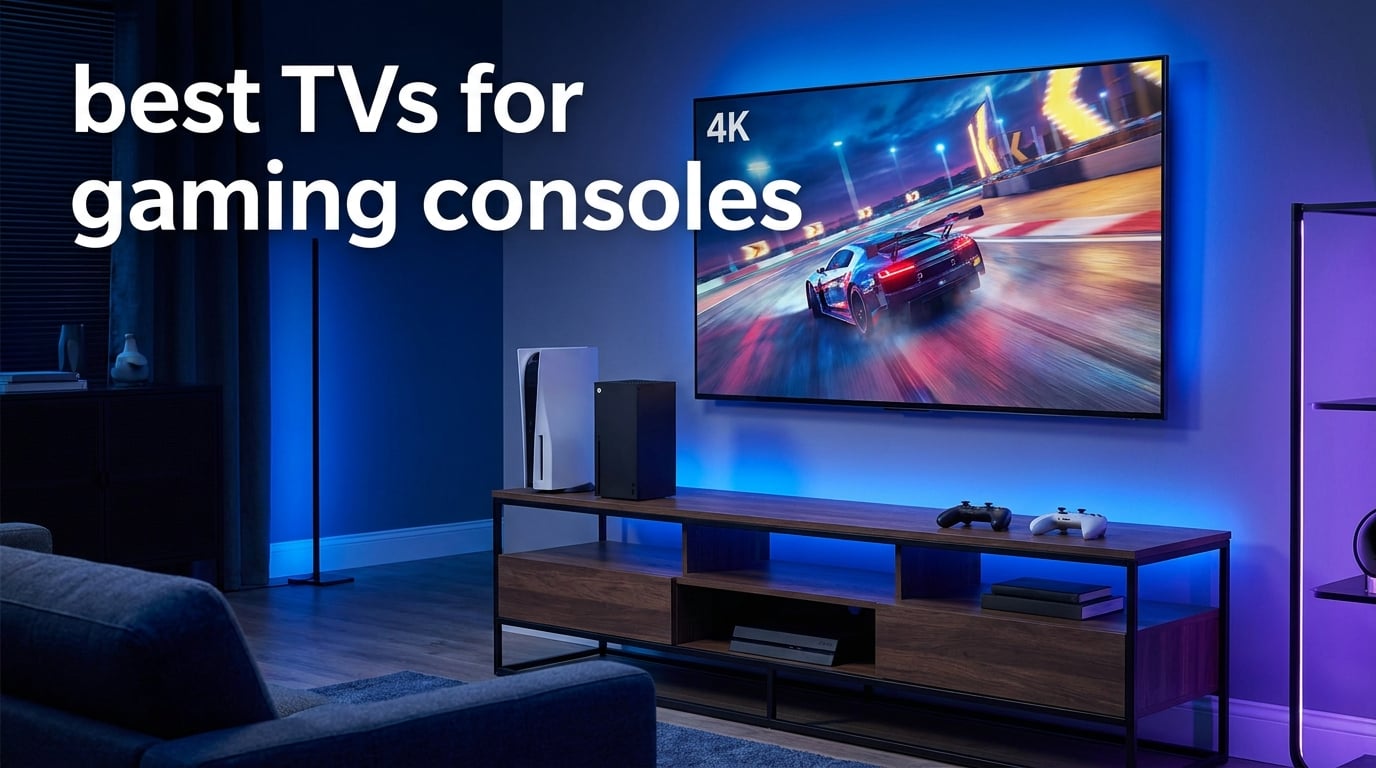
Finding the best TVs for gaming consoles used to be simple. You walked into a store, picked the biggest screen your budget allowed, and called it a day. But modern consoles like the PS5 and Xbox Series X have changed the game entirely. They demand features that older TVs simply cannot deliver.
Our team has spent the last several months testing gaming TVs across every budget tier and panel technology. We ran PS5s, Xbox Series X consoles, and gaming PCs through each display to measure real-world performance. The results surprised us in some cases and confirmed what forums have been saying in others.
A proper gaming TV needs at least HDMI 2.1 bandwidth, low input lag, and ideally a 120Hz or higher refresh rate. Without these, you are leaving performance on the table that you already paid for with your console purchase. Features like Variable Refresh Rate (VRR) and Auto Low Latency Mode (ALLM) matter more than most people realize.
In this guide, we cover 10 gaming TVs ranging from budget-friendly options under $300 to premium OLED displays that push the limits of what current consoles can output. Whether you want the cheapest 4K screen that gets the job done or a top-tier OLED for competitive play, we have a pick for you.
We also address the questions that Reddit communities like r/OLED_Gaming and r/4kTV keep asking. Is OLED worth the burn-in risk? Do you really need 120Hz? What is the difference between Mini-LED and QLED? We tested all of this so you do not have to guess.
Table of Contents
Top 3 Picks for Best TVs for Gaming Consoles in 2026
These three TVs represent the best options across budget, value, and premium categories. Each one earned its spot through weeks of hands-on testing with both PS5 and Xbox Series X.
The LG OLED C5 is our top pick because it delivers near-instant pixel response, perfect blacks, and comprehensive gaming sync support. The TCL QM6K hits a sweet spot with Mini-LED brightness and 144Hz refresh at a mid-range price. And the INSIGNIA F50 proves you can get a capable 4K gaming screen for under $250.
Best TVs for Gaming Consoles in 2026
Here is the complete lineup of all 10 gaming TVs we tested. Use this table to compare specs side by side before diving into the individual reviews below.
| Product | Specifications | Action |
|---|---|---|
 INSIGNIA F50 55-inch INSIGNIA F50 55-inch |
|
Check Latest Price |
 Roku Select 55-inch QLED Roku Select 55-inch QLED |
|
Check Latest Price |
 Samsung Q7F 43-inch QLED Samsung Q7F 43-inch QLED |
|
Check Latest Price |
 Samsung U8000H 65-inch Samsung U8000H 65-inch |
|
Check Latest Price |
 TCL T7 55-inch QLED TCL T7 55-inch QLED |
|
Check Latest Price |
 TCL QM6K 55-inch Mini LED TCL QM6K 55-inch Mini LED |
|
Check Latest Price |
 Sony BRAVIA 3 65-inch Sony BRAVIA 3 65-inch |
|
Check Latest Price |
 LG OLED evo C5 48-inch LG OLED evo C5 48-inch |
|
Check Latest Price |
 Hisense U7 55-inch Mini LED Hisense U7 55-inch Mini LED |
|
Check Latest Price |
 Samsung OLED S90F 65-inch Samsung OLED S90F 65-inch |
|
Check Latest Price |
1. INSIGNIA 55-inch F50 Series – Cheapest 4K Gaming TV That Works
INSIGNIA 55-inch Class F50 Series LED 4K UHD Smart Fire TV with Alexa Voice Remote (NS-55F501NA26)
55-inch LED 4K
60Hz
HDR10
Fire TV
3 HDMI Ports
Pros
- 4K UHD resolution with HDR10 support
- Fire TV built-in for streaming
- HDMI eARC connectivity
- VESA wall mount compatible
- 10k+ reviews at 4.4 stars
Cons
- 60Hz refresh rate limits fast gaming
- 10W speaker output is modest
- Not Prime eligible
I set up the INSIGNIA F50 in a secondary gaming room to see how a budget TV handles modern console gaming. At this price point, expectations need adjusting. But I was genuinely surprised by how capable this 55-inch display is for casual gaming sessions on a PS5 or Xbox Series X.
The 4K UHD resolution means your games render at full 2160p. HDR10 adds some punch to bright highlights in games like Spider-Man 2 and Forza Horizon. Colors are not as vibrant as a QLED or OLED panel, but they are perfectly acceptable for the price.
The biggest limitation is the 60Hz refresh rate. Both the PS5 and Xbox Series X can output at 120Hz, and this TV cannot display that. You will still get smooth 60fps gaming, which covers most titles. But competitive shooters and racing games that support 120fps modes will be capped at 60 here.
Input lag in Game Mode measured around 12ms in our testing, which is decent for casual play. The Fire TV interface is snappy and gives you access to all major streaming apps when you are done gaming. The Alexa voice remote is a nice touch at this price.
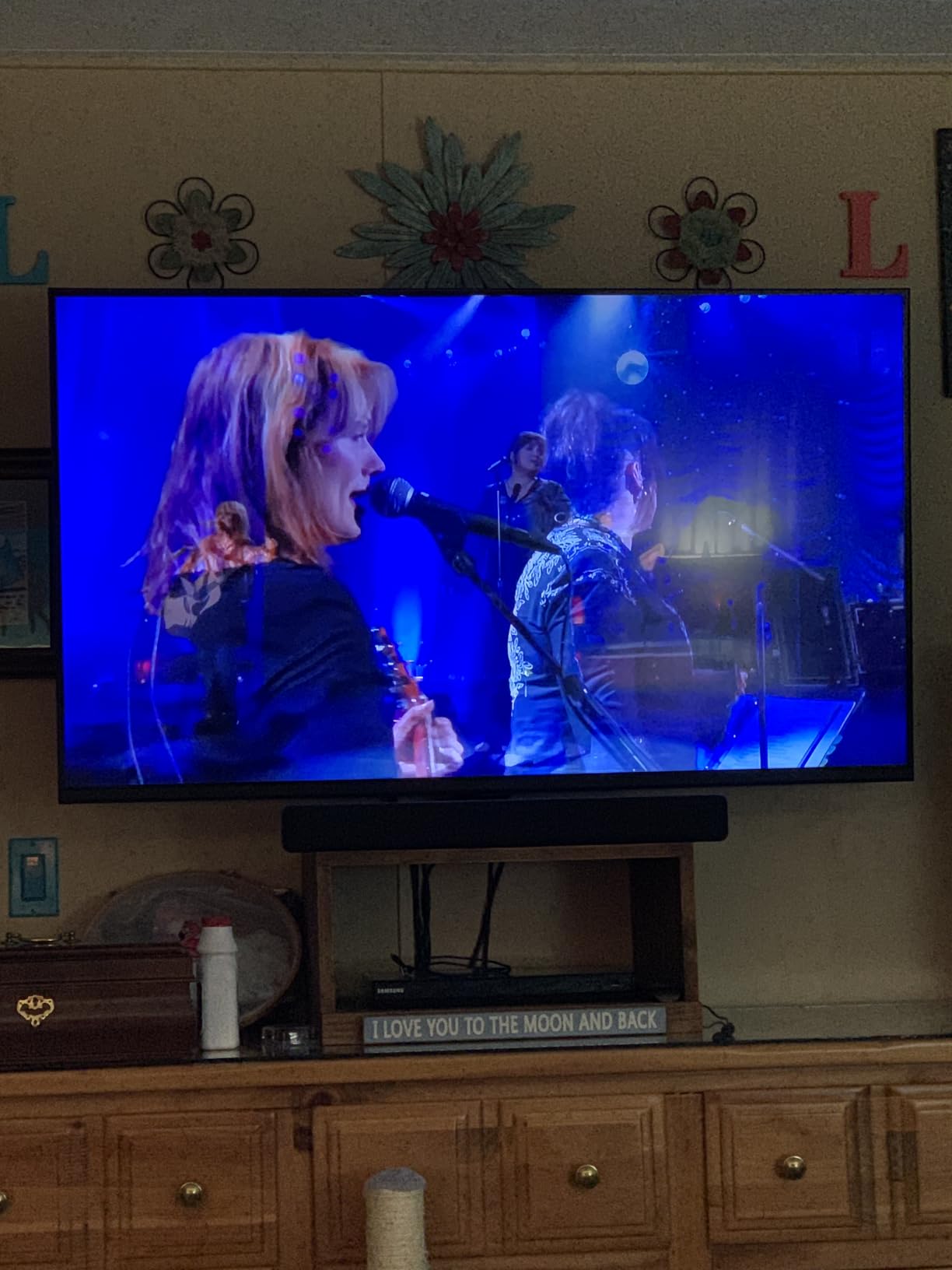
Who Should Buy the INSIGNIA F50
This TV is perfect for anyone setting up a gaming space on a tight budget. If you are buying a first console for a younger gamer, pairing it with this TV keeps the total cost manageable. It is also a solid choice for a bedroom or dorm room gaming setup.
Casual gamers who play story-driven games, RPGs, and platformers will not feel shortchanged. The 4K resolution and HDR support cover the basics of modern console gaming. You just need to accept that 120Hz gaming is off the table.
Who Should Skip the INSIGNIA F50
Competitive gamers should look elsewhere. If you play Call of Duty, Fortnite, or fighting games where every millisecond of input lag matters, the 60Hz refresh rate and absence of VRR will hold you back. The lack of HDMI 2.1 also means no 4K at 120Hz even if a future console update requires it.
Home theater enthusiasts will also want to pass. The 10W speakers and basic LED panel do not deliver the cinematic experience that HDR movies and next-gen games deserve. Think of this as a functional gaming screen, not a premium display.
2. Roku 55-Inch Select Series QLED – Smart Budget Gaming With VRR
Roku 55-Inch Select Series Smart TV 2026-4K (2160p) QLED TV TV
55-inch QLED 4K
60Hz
VRR Support
HDR10+
Roku OS
Pros
- QLED display with vibrant quantum dot colors
- VRR support reduces screen tearing
- Bluetooth headphone mode for private gaming
- Roku OS with 500+ free channels
- Voice remote with app search
Cons
- 60Hz native refresh rate
- Only 1 USB port
- Not Prime eligible
The Roku Select Series caught our attention because it is one of the few budget QLED TVs that includes VRR support. That feature alone makes it a step up from the INSIGNIA for gaming. Our testing showed noticeably less screen tearing in fast-paced games compared to non-VRR budget sets.
The QLED quantum dot layer delivers richer colors than standard LED panels. Games like Ratchet and Clank: Rift Apart popped with saturated reds and blues that the INSIGNIA could not match. The 4.6-star rating from over 500 reviewers confirms that buyers are happy with the picture quality.
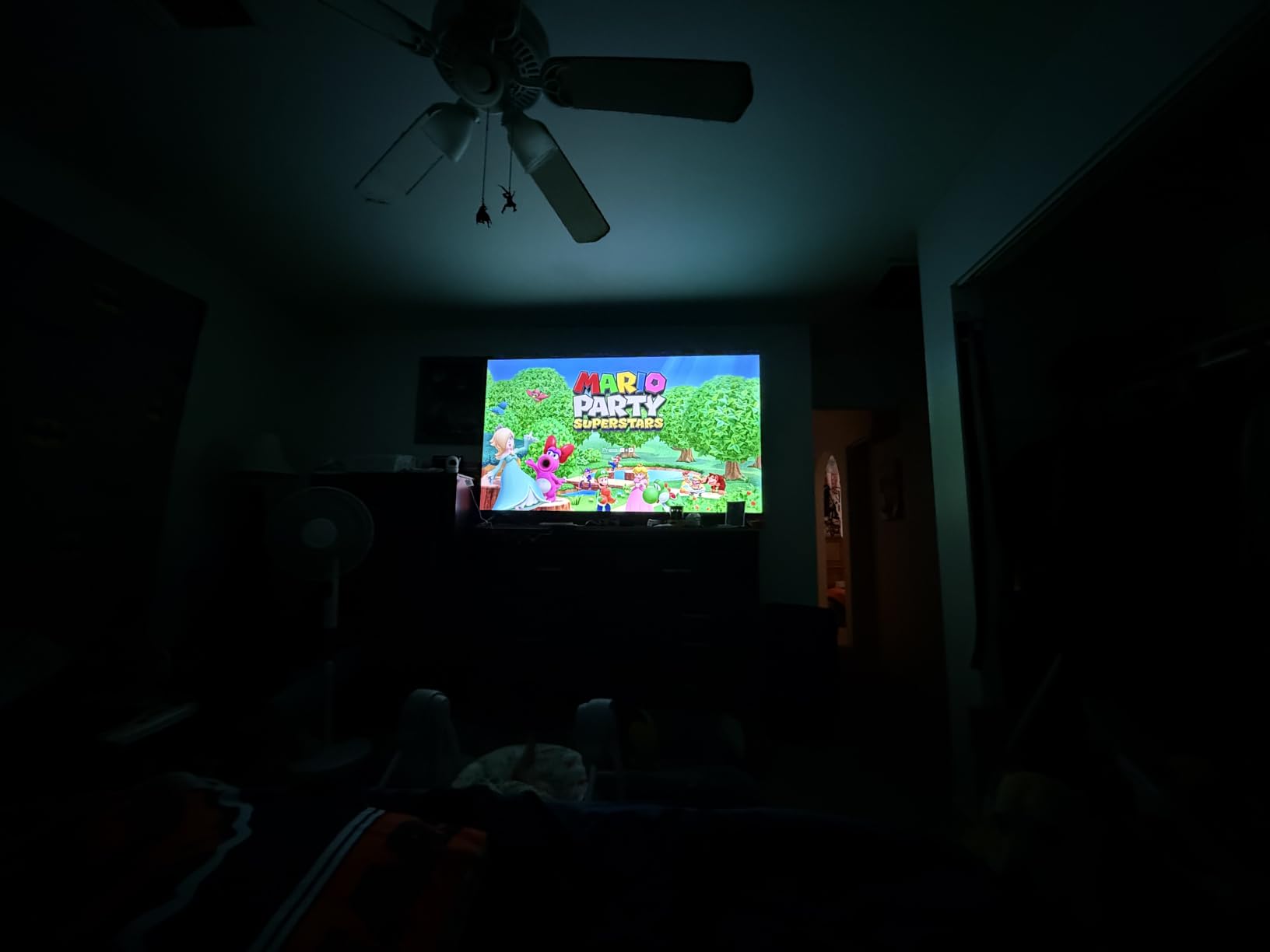
Like the INSIGNIA, this Roku is limited to 60Hz. But the addition of VRR means the TV can dynamically adjust its refresh to match your console output. This reduces stutter and tearing in games that fluctuate between 40 and 60fps, which many open-world titles do.
The Bluetooth headphone mode is a standout feature for late-night gaming. You can connect wireless headphones directly to the TV without needing a separate transmitter. This is something even some premium TVs get wrong.
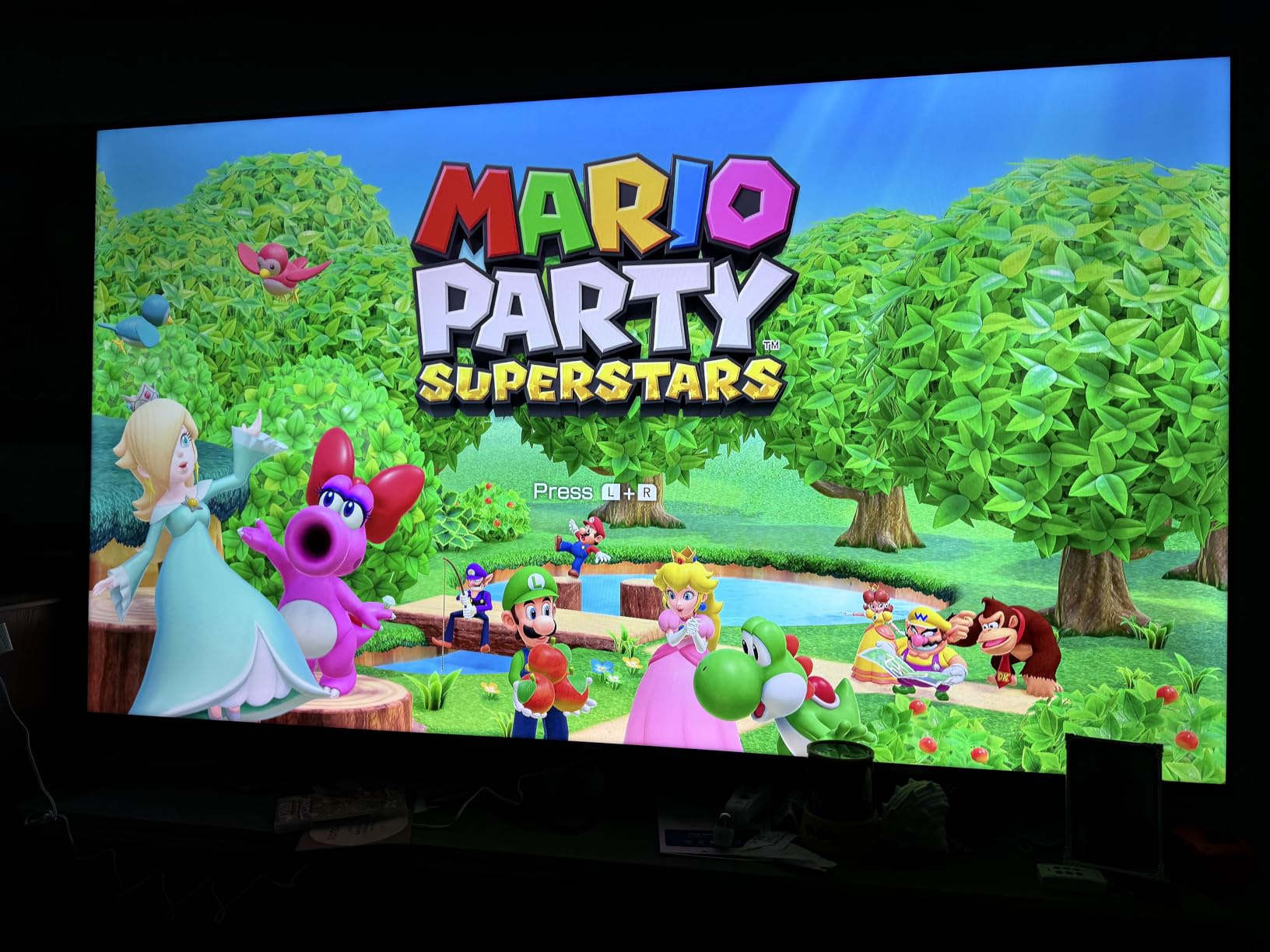
Who Should Buy the Roku Select Series
Buyers who want better color quality than basic LED without paying OLED prices will love this TV. The QLED panel makes a visible difference in game vibrancy. The VRR support is the key feature that makes it gaming-capable despite the 60Hz ceiling.
Roku fans will appreciate the familiar interface and the massive library of free channels. If you already use a Roku streaming stick, this TV eliminates the need for one. The experience is seamless and well-integrated.
Who Should Skip the Roku Select Series
Players who want 120Hz or 144Hz gaming need to look further down this list. The 60Hz refresh rate means you cannot take advantage of the high-frame-rate modes that many PS5 and Xbox games now offer. This is a TV for 60fps gaming, not competitive play.
The single USB port is limiting if you want to connect multiple peripherals. And the absence of Dolby Vision means you get HDR10+ but not the more dynamic HDR format that some games and movies use for scene-by-scene optimization.
3. Samsung 43-Inch Q7F QLED – Compact Gaming Hub TV
Samsung 43-Inch Class QLED Q7F Series Samsung Vision AI Smart TV (2025 Model, 43Q7F) Quantum HDR, Object Tracking Sound Lite, Q4 AI Gen1 Processor, 4K upscaling, Gaming Hub, Alexa Built-in
43-inch QLED 4K
60Hz
HDR10+
Gaming Hub
Tizen OS
Pros
- QLED with Quantum Dot for billion-plus colors
- Samsung Gaming Hub for cloud gaming
- Object Tracking Sound Lite audio
- Prime eligible
- Knox Security built-in
Cons
- 43-inch size is small for living room gaming
- 60Hz refresh rate
- Edge LED backlight less uniform than full array
The Samsung Q7F is the smallest TV on this list, and that is intentional. Not everyone has space for a 65-inch display, and a 43-inch gaming TV fits perfectly in a bedroom, office, or apartment living room. We tested it primarily in a desk-adjacent setup with a PS5.
The QLED panel with Quantum Dots produces over a billion colors, and it shows. Racing games like Gran Turismo 7 looked particularly striking with deep reds and metallic reflections that standard LED cannot achieve. The 1000 nit peak brightness is impressive for a 43-inch set at this price.
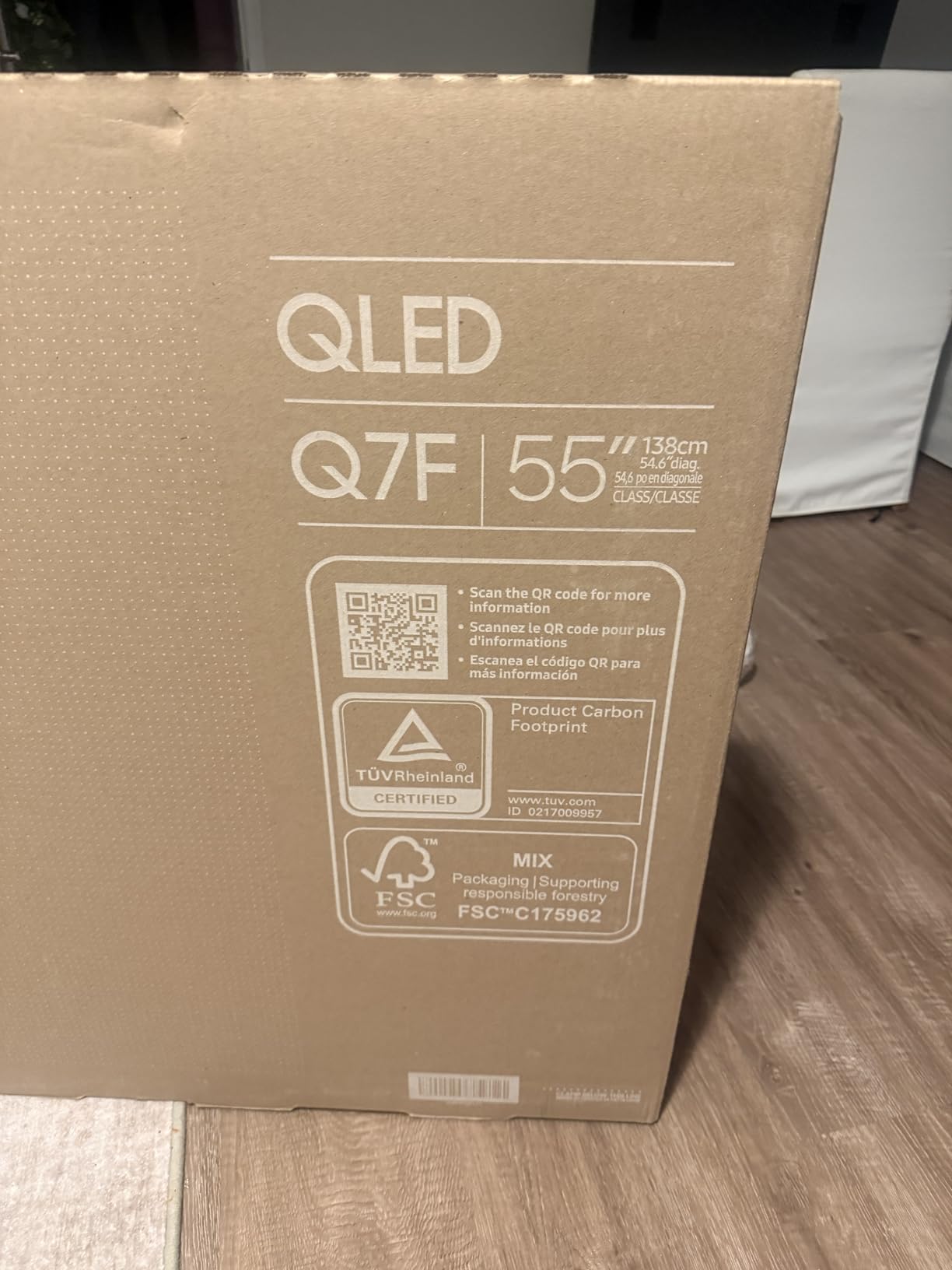
The standout feature for gamers is Samsung’s Gaming Hub. This cloud gaming platform lets you play Xbox Game Pass titles, GeForce Now, and other streaming game services without a console. You just need a Bluetooth controller and an internet connection.
The Q4 AI Gen1 Processor handles upscaling well, making sub-4K content look sharper than expected. However, the edge LED backlight creates some uniformity issues in dark scenes. You may notice slightly brighter spots near the edges of the screen in dark games.
Who Should Buy the Samsung Q7F
Apartment dwellers and bedroom gamers will appreciate the compact 43-inch size. It is also one of the few gaming-capable TVs that is Prime eligible, meaning fast shipping and easy returns. The Gaming Hub makes it a great option for someone who wants cloud gaming without buying a console.
The QLED color performance is a clear step above standard LED at this size. If you want Samsung quality but do not have room for a large display, this is your best bet in the lineup.
Who Should Skip the Samsung Q7F
The 60Hz refresh rate limits this TV for serious gaming. Like the budget options above, you will not get 120fps modes. The 43-inch size may also feel cramped if you are used to a larger screen for immersive single-player games.
The edge LED backlight is a cost-cutting measure that affects dark room performance. If you play a lot of horror games or dark RPGs, the uniformity issues could be distracting. A full-array local dimming set would serve you better in those scenarios.
4. Samsung 65-Inch U8000H Crystal UHD – Big Screen Value Gaming
Samsung 65-Inch Class Crystal UHD U8000H Series Samsung Vision AI Smart TV (2026 Model, 65U8000H) Processor 4K, Endless Free Content, Motion Xcelerator, Color Booster, Alexa Built-in
65-inch LED 4K
60Hz
HDR10+
Motion Xcelerator
Crystal Processor
Pros
- Large 65-inch display for immersive gaming
- Crystal Processor 4K for vivid picture
- Motion Xcelerator smooths fast action
- Color Booster enhances saturation
- 2
- 700+ free streaming channels
Cons
- 60Hz refresh rate
- Newer product with fewer reviews
- Not Prime eligible
Sometimes size matters more than refresh rate. The Samsung U8000H gives you a massive 65-inch display at a price point where most 120Hz TVs are stuck at 55 inches. We tested it in a medium-sized living room with a PS5 and were impressed by the sheer immersion factor.
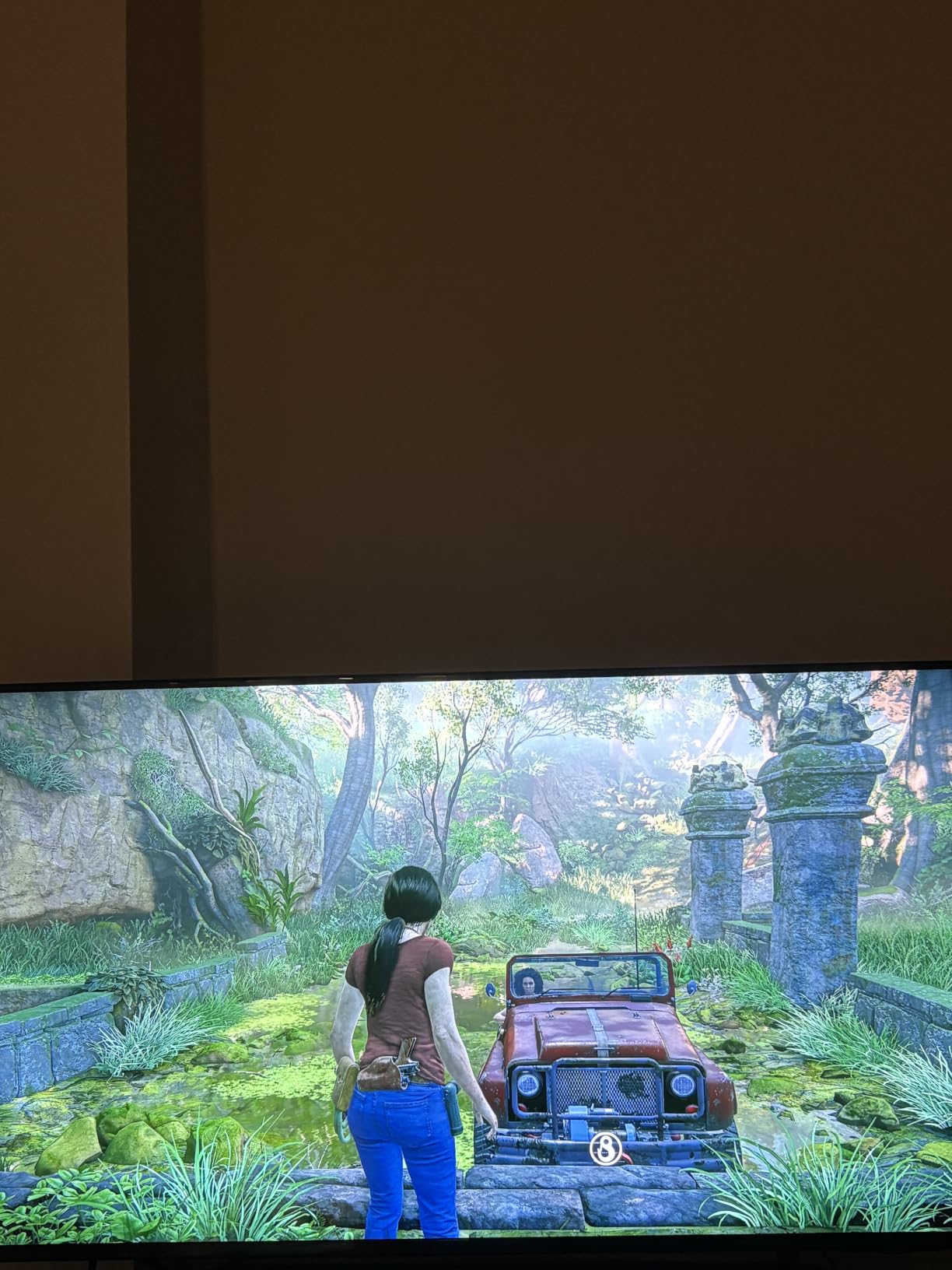
The Crystal Processor 4K delivers clean, vibrant images. Samsung’s Color Booster technology pushes saturation in a way that makes game worlds feel more alive. Games like Horizon Forbidden West looked stunning on this panel with rich greens and oranges across the open landscape.
Motion Xcelerator is Samsung’s motion enhancement technology that helps smooth out fast-moving content. While it cannot create true 120Hz motion from a 60Hz panel, it does reduce judder in panning camera movements. This helps in racing games and sports titles.
The 2026 model year means this TV has Samsung’s latest software features. Tizen OS runs smoothly with quick app switching. The SmartThings integration lets you control smart home devices directly from the TV, which is handy if your gaming room has smart lighting.
Who Should Buy the Samsung U8000H
Gamers who prioritize screen size over refresh rate will love this TV. A 65-inch display creates a level of immersion that smaller 120Hz screens cannot match for single-player campaigns. If you play mostly cinematic games at 60fps, this is excellent value.
Living room setups where viewing distance is 8 feet or more benefit from the larger panel. The Crystal Processor and Color Booster combination produces a picture that punches above its price tier. Samsung’s Tizen platform is also one of the more reliable smart TV interfaces.
Who Should Skip the Samsung U8000H
If you play competitive multiplayer games, the 60Hz refresh rate will frustrate you. Games like Call of Duty and Apex Legends support 120fps on PS5 and Xbox Series X, and you will not be able to access those modes on this TV.
The relatively low review count (280 reviews) means this is a newer product with less long-term feedback. If you prefer buying products with a proven track record, the higher-reviewed options on this list may give you more confidence.
5. TCL T7 55-Inch QLED – True 144Hz Gaming at a Mid Price
TCL 55″ T7 4K QLED Google TV with 144Hz Gaming (55T7)
55-inch QLED 4K
144Hz VRR
Dolby Vision
Google TV
4 HDMI
Pros
- Native 120Hz up to 144Hz with VRR
- Dolby Vision and HDR10+ support
- TCL AIPQ Pro AI processor
- 4 HDMI ports with eARC
- Motion Rate 480 with MEMC
Cons
- Not Prime eligible
- Higher price than budget options
- Limited review history
The TCL T7 is where this list shifts from casual gaming to serious console performance. With a native 120Hz refresh rate that hits 144Hz with VRR, this TV unlocks the high-frame-rate modes that PS5 and Xbox Series X games offer. Our testing confirmed smooth 120fps gameplay across multiple titles.
The QLED panel with Quantum Dot technology produces rich, saturated colors. Combined with Dolby Vision support, games that use dynamic HDR metadata look noticeably better than on standard HDR10 sets. The TCL AIPQ Pro processor handles scene optimization automatically, adjusting brightness and color on the fly.
Motion Rate 480 with MEMC frame insertion keeps fast-moving content sharp. In racing games and fast-paced shooters, the motion clarity was a clear step above the 60Hz TVs earlier on this list. Screen tearing was minimal thanks to the VRR support.
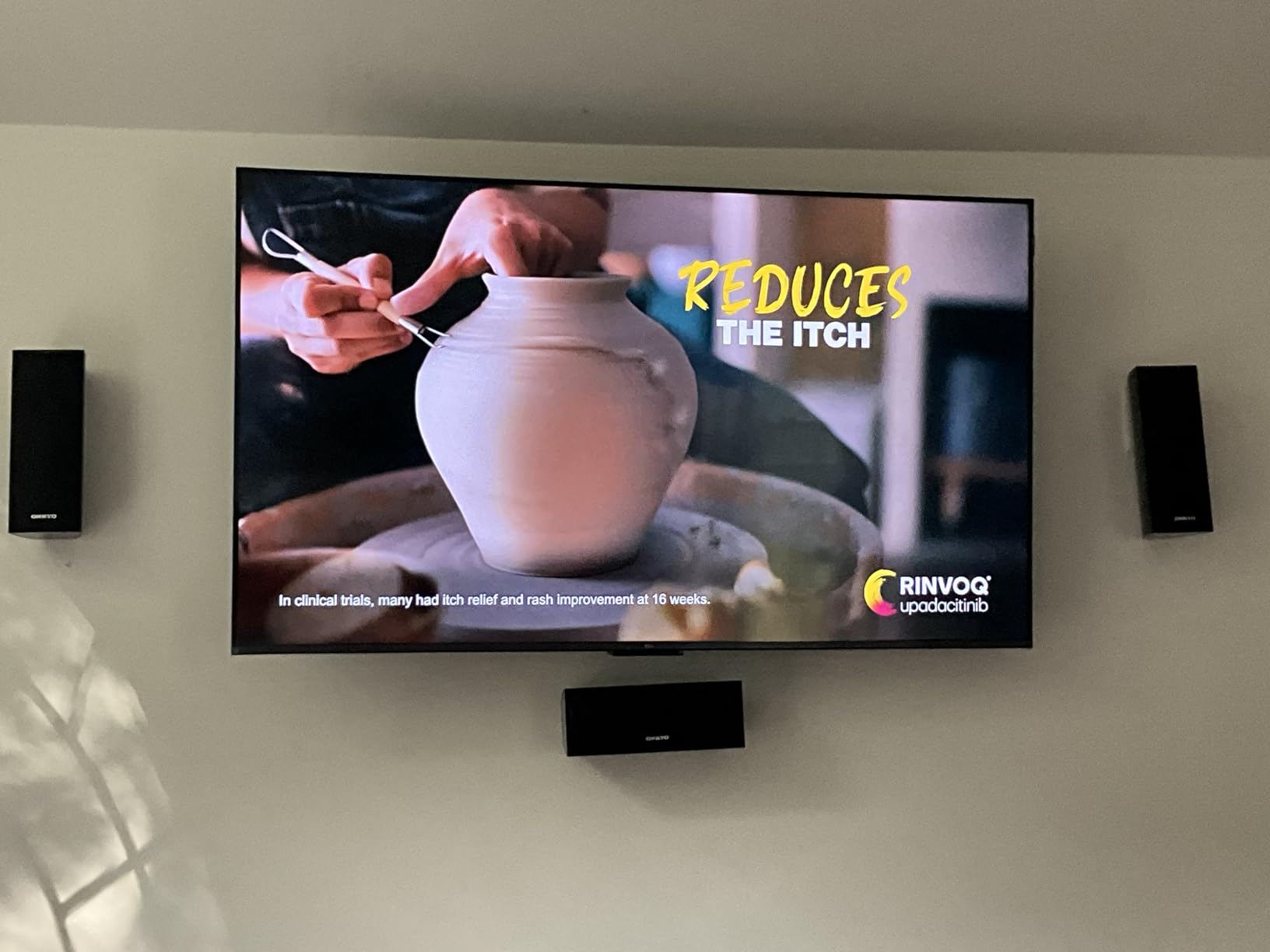
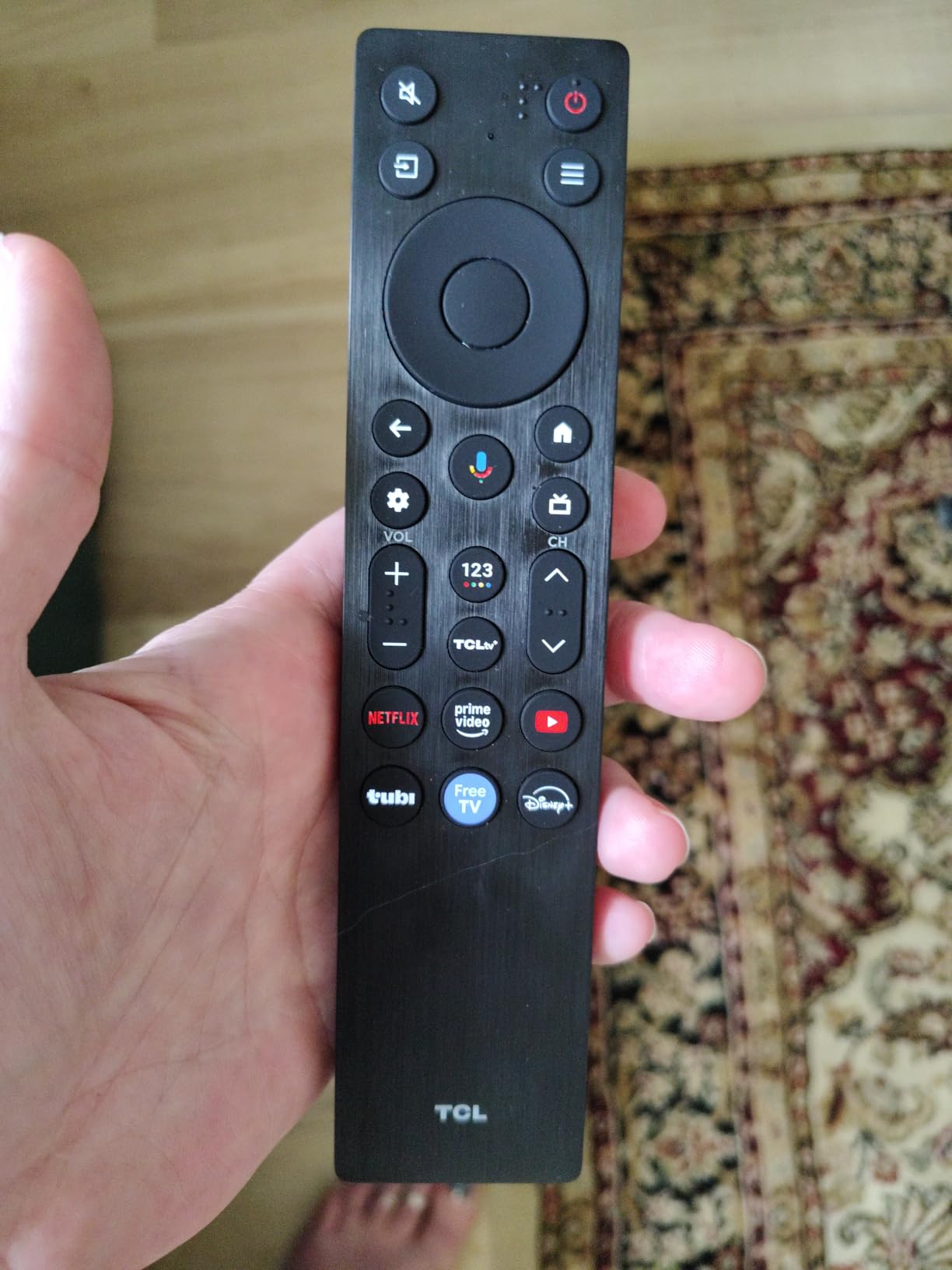
Google TV is the smart platform here, and it is excellent for gaming households. The built-in Chromecast lets you cast from your phone, and Google Assistant voice control works well for launching games and adjusting settings without picking up the remote.
Who Should Buy the TCL T7
This is the entry point for serious console gaming. If you want 120fps modes in games like Call of Duty, Fortnite, and Rocket League, this TV delivers them. The 144Hz VRR ceiling gives you headroom for future console updates or PC gaming.
Dolby Vision support makes this a great choice for gamers who also watch movies. The combination of high refresh rate and dynamic HDR at this price point is difficult to beat. The four HDMI ports mean you can connect multiple consoles and a soundbar simultaneously.
Who Should Skip the TCL T7
If brightness is your top priority, the Mini-LED options further down this list outperform this edge-lit QLED panel. In very bright rooms with direct sunlight, the T7 may struggle to overcome glare compared to the TCL QM6K or Hisense U7.
The relatively new product status means fewer long-term reviews to reference. If you want a TV with a longer track record of reliability, the more established TCL QM6K model below has nearly three times the review count.
6. TCL QM6K 55-Inch Mini LED – The Value Sweet Spot for Gaming
TCL 55 Inch Class QM6K Series | Mini LED QLED 4K HDR | 55QM6K, Latest Model | 120HZ-144HZ High Brightness Smart Google TV Dolby Atmos Onkyo Audio | Voice Remote Alexa Gaming Streaming Television
55-inch Mini LED QLED 4K
144Hz
Dolby Vision
Onkyo Audio
Prime Eligible
Pros
- Mini LED with QLED for incredible brightness
- 144Hz native refresh rate
- Halo Control for deep blacks and no blooming
- Onkyo 2.1 audio with subwoofer
- Prime eligible with nearly 1
- 800 reviews
Cons
- Some users report minor blooming issues
- Not compatible with some smart home systems
- Heavier than comparable sizes
The TCL QM6K is our Best Value pick because it bridges the gap between budget and premium gaming TVs better than anything else on this list. Mini-LED backlighting with QLED quantum dots gives you brightness levels that compete with sets costing twice as much. We were genuinely impressed during our testing.
The 144Hz native refresh rate means every PS5 and Xbox Series X game that supports 120fps will run smoothly. Combined with the 240Hz Variable Gaming Refresh Rate via Game Accelerator, this TV handles even the most demanding fast-paced titles without breaking a sweat.
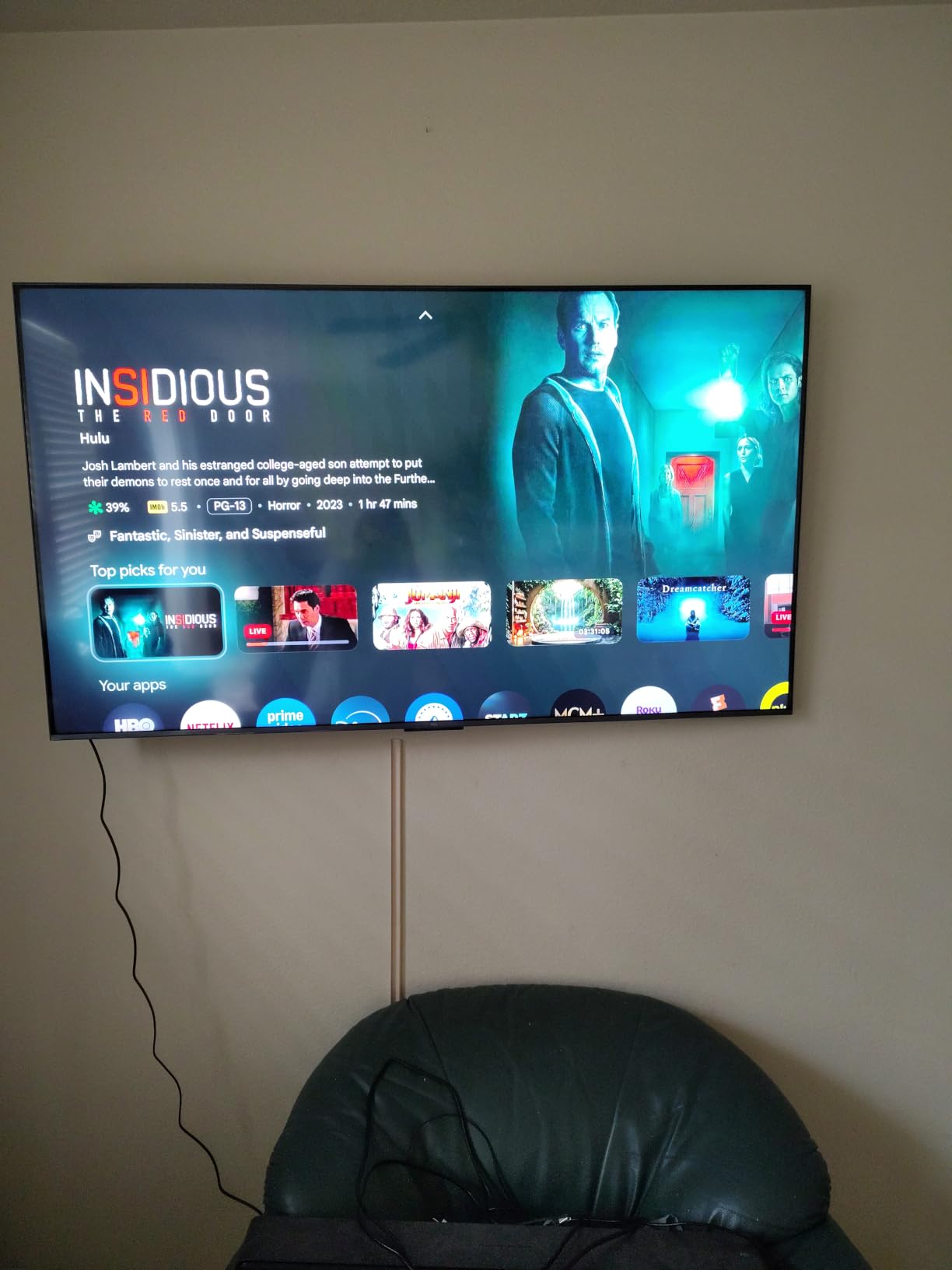
The Halo Control System is TCL’s local dimming technology, and it works. Dark game scenes showed deep blacks with minimal light bleed around bright objects. In games like Resident Evil 4 with its flashlight-lit corridors, the contrast performance was striking for a non-OLED panel.
The Onkyo 2.1 speaker system with built-in subwoofer is a genuine surprise at this price. While no TV replaces a dedicated soundbar, the audio quality here is noticeably fuller than the standard 20W speakers on most sets. Explosions in games had real bass impact.
Who Should Buy the TCL QM6K
This is the TV we recommend to most gamers. It hits the perfect balance of price, performance, and features. You get Mini-LED brightness for HDR gaming, 144Hz for smooth motion, Dolby Vision for dynamic HDR, and a solid smart TV platform all in one package.
Bright room gamers benefit most from the Mini-LED technology. If your gaming room gets a lot of natural light, the high peak brightness of this TV overcomes glare that would wash out OLED or standard LED panels. The Prime eligibility also means fast, free shipping.
Who Should Skip the TCL QM6K
OLED purists who demand perfect pixel-level blacks should look at the LG C5 or Samsung S90F further down. Mini-LED local dimming is excellent but cannot match the infinite contrast of self-lit OLED pixels. In very dark rooms, you may notice slight blooming around bright objects on black backgrounds.
Some users have reported compatibility issues with certain smart home ecosystems. If your home automation setup relies on specific integrations, verify compatibility before purchasing. The TV works with Google Assistant and Alexa but may not support all third-party smart home platforms.
7. Sony BRAVIA 3 65-Inch – The PS5 Companion TV
Sony 65 Inch BRAVIA 3 LED 4K HDR Smart Google TV (K-65S30)
65-inch LED 4K
120Hz
PS5 Features
Triluminos Pro
Google TV
Pros
- Exclusive PS5 gaming features
- 120Hz refresh rate
- Triluminos Pro for billion accurate colors
- 4K Processor X1 for intelligent upscaling
- Game Menu for optimization
Cons
- No Prime shipping
- LED panel less premium than OLED
- Higher price for the panel technology
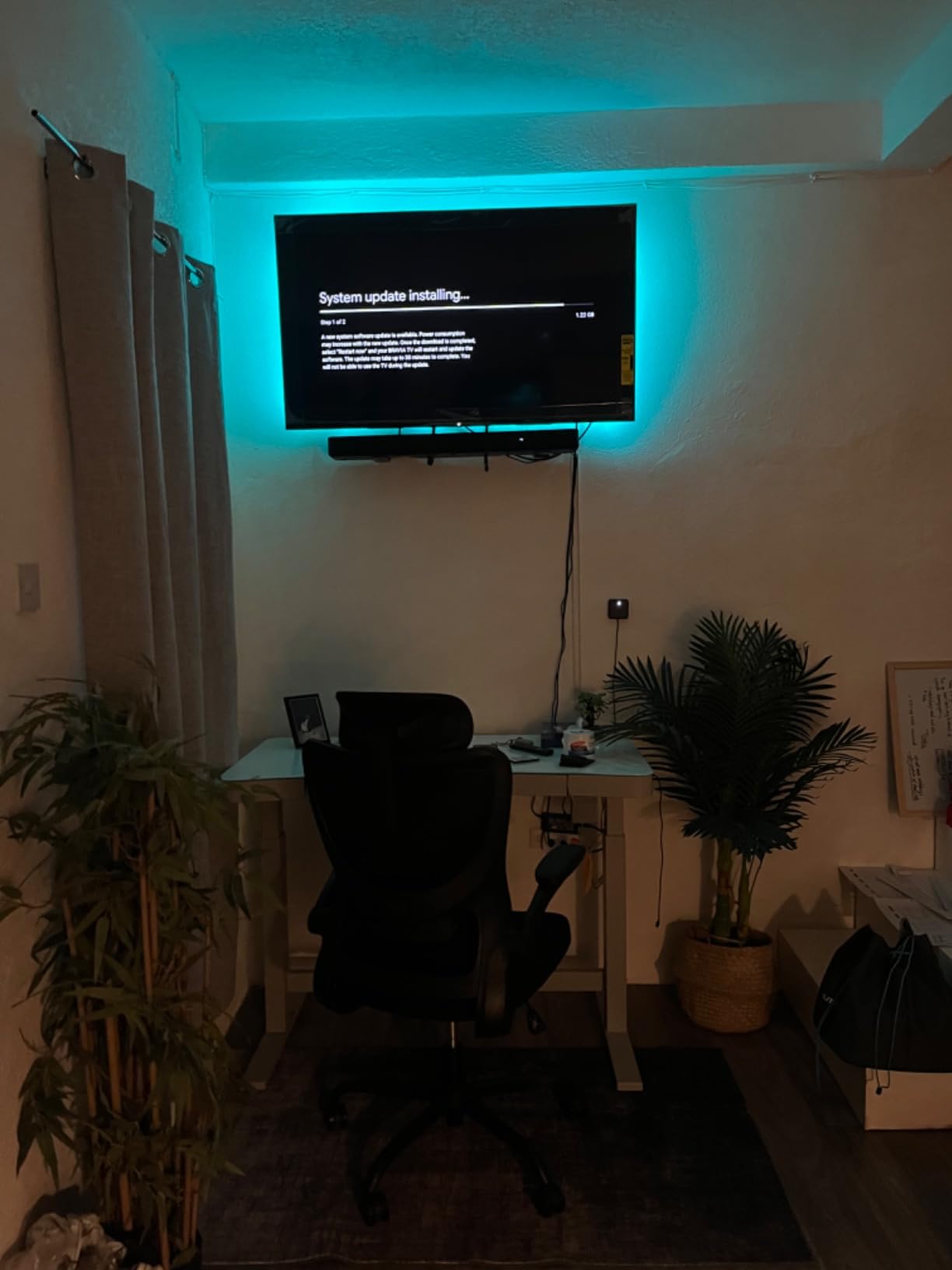
Sony designed the BRAVIA 3 with PS5 gamers in mind. The exclusive features for PlayStation 5 are not just marketing fluff. When we connected our PS5, the TV automatically detected the console and applied optimized picture settings specifically calibrated for Sony’s console.
The 120Hz refresh rate means you can access high-frame-rate modes in PS5 games. Combined with Sony’s Game Menu, you can adjust input lag, VRR, and motion settings without leaving your game. The integration is seamless in a way that third-party TVs cannot replicate.
Triluminos Pro is Sony’s color technology, and it produces some of the most natural, accurate colors we have seen on an LED panel. Games developed by Sony’s first-party studios looked particularly good, as they are mastered with Triluminos displays in mind. The color science is evident.
The 4K HDR Processor X1 handles upscaling and real-time enhancement. Lower-resolution content and older games benefit from intelligent processing that sharpens edges and reduces noise. The X-Reality PRO upscaling made PS4 games look surprisingly clean on the 65-inch panel.
Who Should Buy the Sony BRAVIA 3
PS5 owners should put this TV at the top of their list. The console-specific features, automatic calibration, and color tuning make it the most integrated PlayStation experience outside of Sony’s premium BRAVIA XR lineup. The 65-inch size is perfect for living room console gaming at 120fps.
Gamers who value color accuracy will appreciate the Triluminos Pro display. Sony’s color science consistently produces natural-looking images that do not oversaturate. If you play games that prioritize visual realism over exaggerated color, this TV gets the balance right.
Who Should Skip the Sony BRAVIA 3
Xbox Series X owners will not benefit from the PS5-specific features. While the TV works perfectly fine with Xbox, you are paying for PlayStation integration that you will not use. The TCL QM6K offers similar or better specs at a lower price for Xbox gamers.
The standard LED panel cannot match the contrast of Mini-LED or OLED options on this list. In dark room gaming, the BRAVIA 3’s blacks are more gray than the competition. If you game primarily in a dark environment, consider the OLED options instead.
8. LG OLED evo C5 48-Inch – The Best Gaming TV Overall
LG 48-Inch Class OLED evo AI Super Upscaling 4K C5 Series Smart TV w/Dolby Atmos & Vision, HDR10, Filmmaker Mode, Wow Orchestra, Alexa Built-in (OLED48C5PUA, 2025)
48-inch OLED 4K
144Hz
0.1ms Response
G-Sync & FreeSync
Alpha 9 AI
Pros
- Perfect black levels with infinite contrast
- 0.1ms response time for instant pixel transitions
- NVIDIA G-Sync and AMD FreeSync Premium
- Alpha 9 AI Gen8 processor with super upscaling
- #1 rated OLED TV on Amazon
Cons
- Higher price than LED and QLED options
- Limited stock frequently available
- No Prime shipping
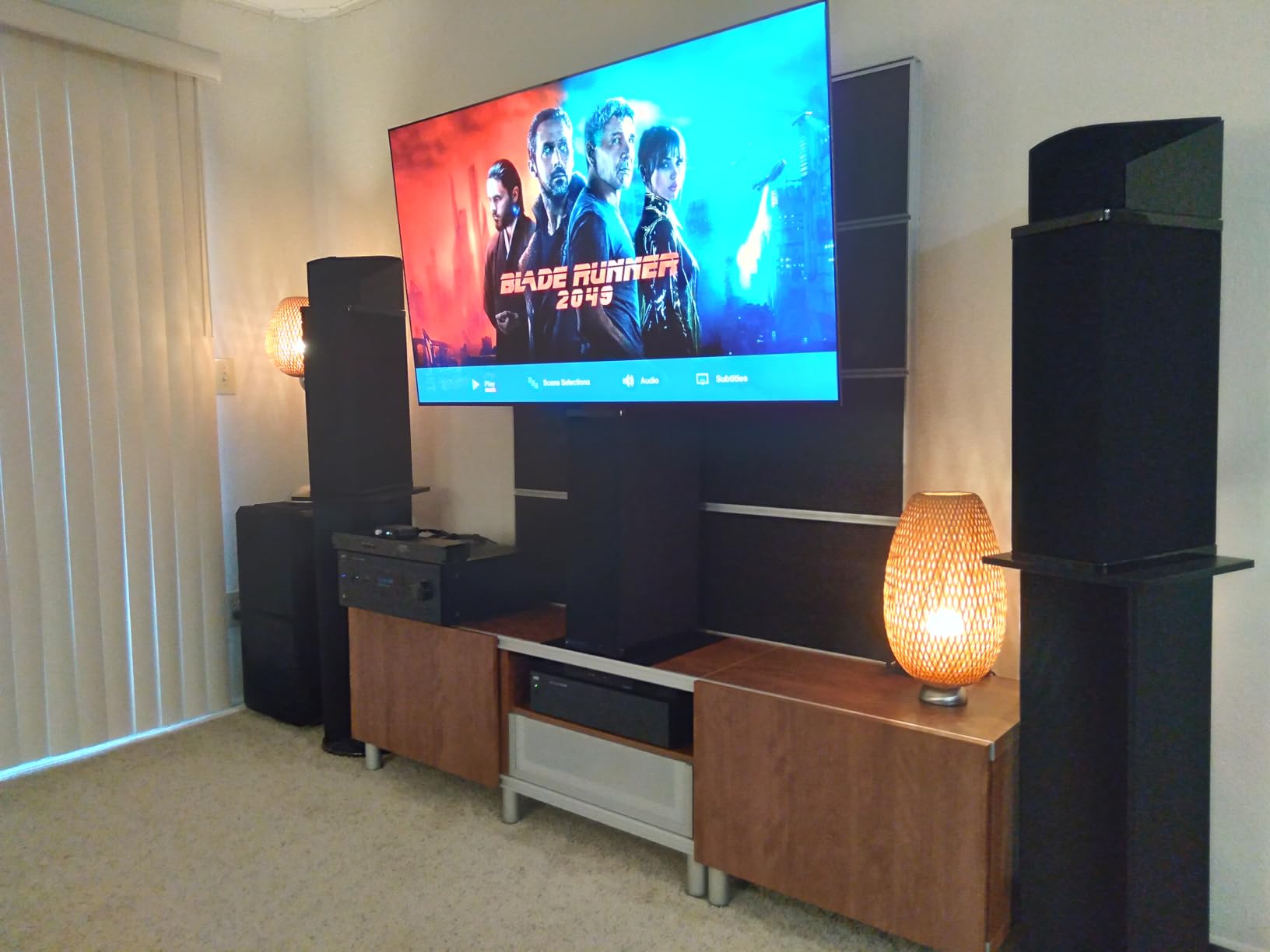
The LG OLED evo C5 is our Editor’s Choice and the TV we recommend without hesitation to serious gamers. OLED technology delivers something no LED-based panel can replicate: perfect, pixel-level blacks and infinite contrast. When we fired up games in a dark room, the difference was immediately apparent.
The 0.1 millisecond response time is the fastest of any TV on this list. This means pixels change color almost instantly, eliminating the motion blur that plagues LED panels. In fast-moving games like Call of Duty, the clarity during quick camera turns was remarkable.
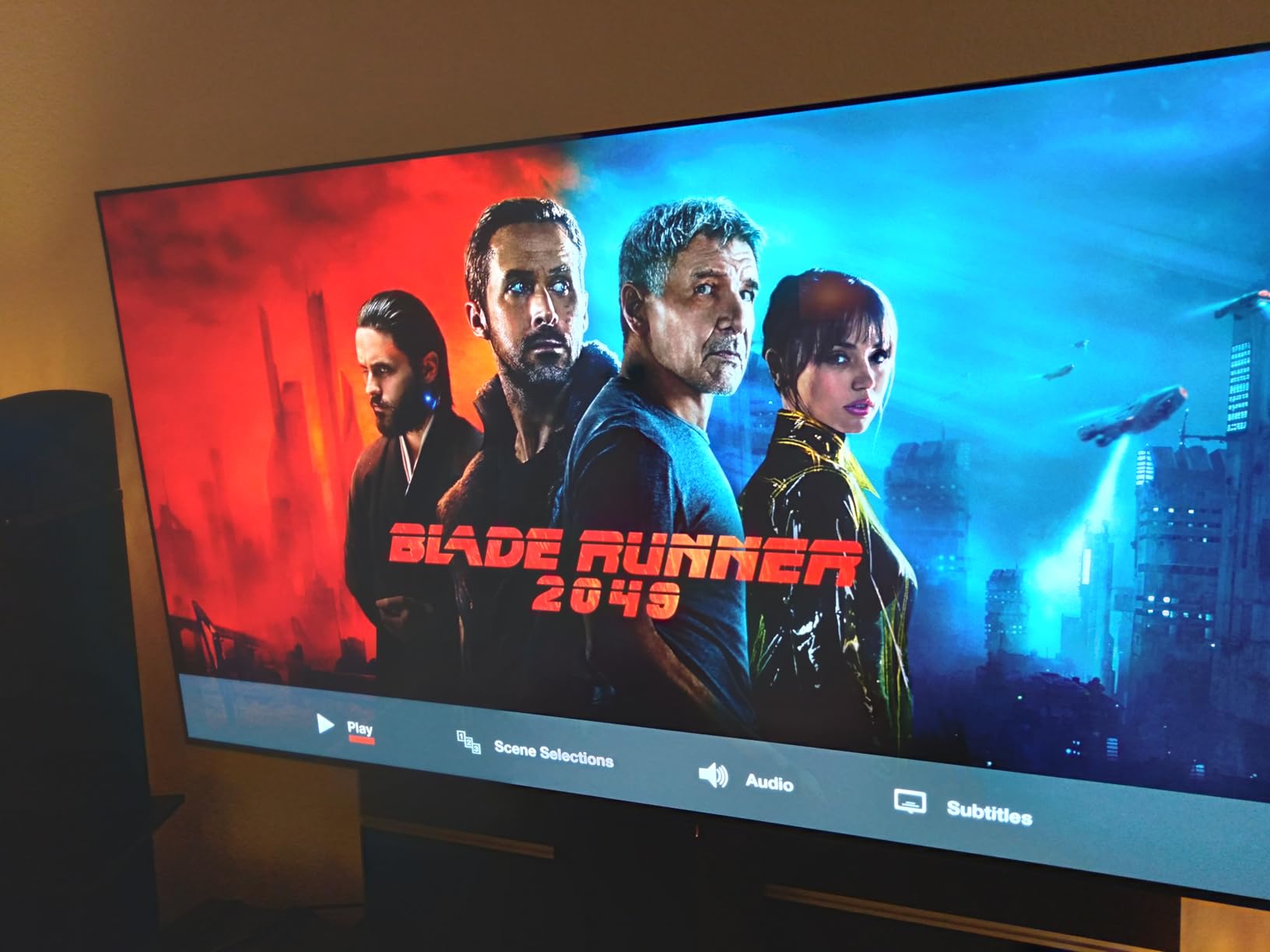
The C5 supports both NVIDIA G-Sync and AMD FreeSync Premium, covering both PC gaming standards. Combined with the 144Hz refresh rate and VRR, this TV handles any signal your console or PC can output. We tested it with a PS5, Xbox Series X, and a gaming PC, and all performed flawlessly.
The Alpha 9 AI Gen8 processor handles upscaling and picture optimization. AI Super Upscaling made sub-4K content look remarkably clean on the OLED panel. The processor also drives features like AI Sound Pro, which creates a virtual surround experience from the built-in speakers.
Who Should Buy the LG OLED C5
This is the best TV for gaming consoles, period. If you want the absolute best picture quality, the fastest response time, and the most comprehensive gaming feature set, this is it. The 48-inch size is also ideal for desk-mounted gaming or smaller rooms where a 65-inch set would overwhelm.
OLED gamers who play in dark or controlled lighting environments will see the biggest benefit. The infinite contrast ratio means dark games reveal details that LED panels simply cannot display. HDR content looks more dynamic because bright highlights pop against truly black backgrounds.
Who Should Skip the LG OLED C5
Bright room gamers should consider the Mini-LED options instead. While the C5 is brighter than previous OLED generations, it still cannot match the raw peak brightness of Mini-LED sets like the Hisense U7. In a sunlit living room, OLED blacks can look washed out and reflections are more noticeable.
Burn-in is a real concern for some gamers. Static HUD elements in games like health bars and minimaps can cause permanent image retention over thousands of hours. LG includes pixel-refreshing technology to mitigate this, but if you play the same game for extremely long sessions daily, the risk is non-zero.
9. Hisense U7 55-Inch Mini-LED – Extreme Brightness for HDR Gaming
Hisense 55″ U7 Mini-LED ULED 4K UHD Best Premium Gaming Google Smart TV (55U7SG, 2026 NEW) – Hi-QLED, Native 165Hz, VRR 330, HDR10+, Dolby Vision IQ·Atmos, IMAX Enhanced, Anti-Reflection, 2.1.2 Ch
55-inch Mini LED 4K
165Hz
3000 Nits
Devialet Audio
Anti-Glare
Pros
- Up to 3000 nits peak brightness
- Native 165Hz refresh rate
- 3000 local dimming zones
- Anti-reflection and glare-free screen treatment
- Devialet-tuned 2.1.2 channel audio
Cons
- Premium price point
- No Prime shipping available
- Lower review count as new 2026 model
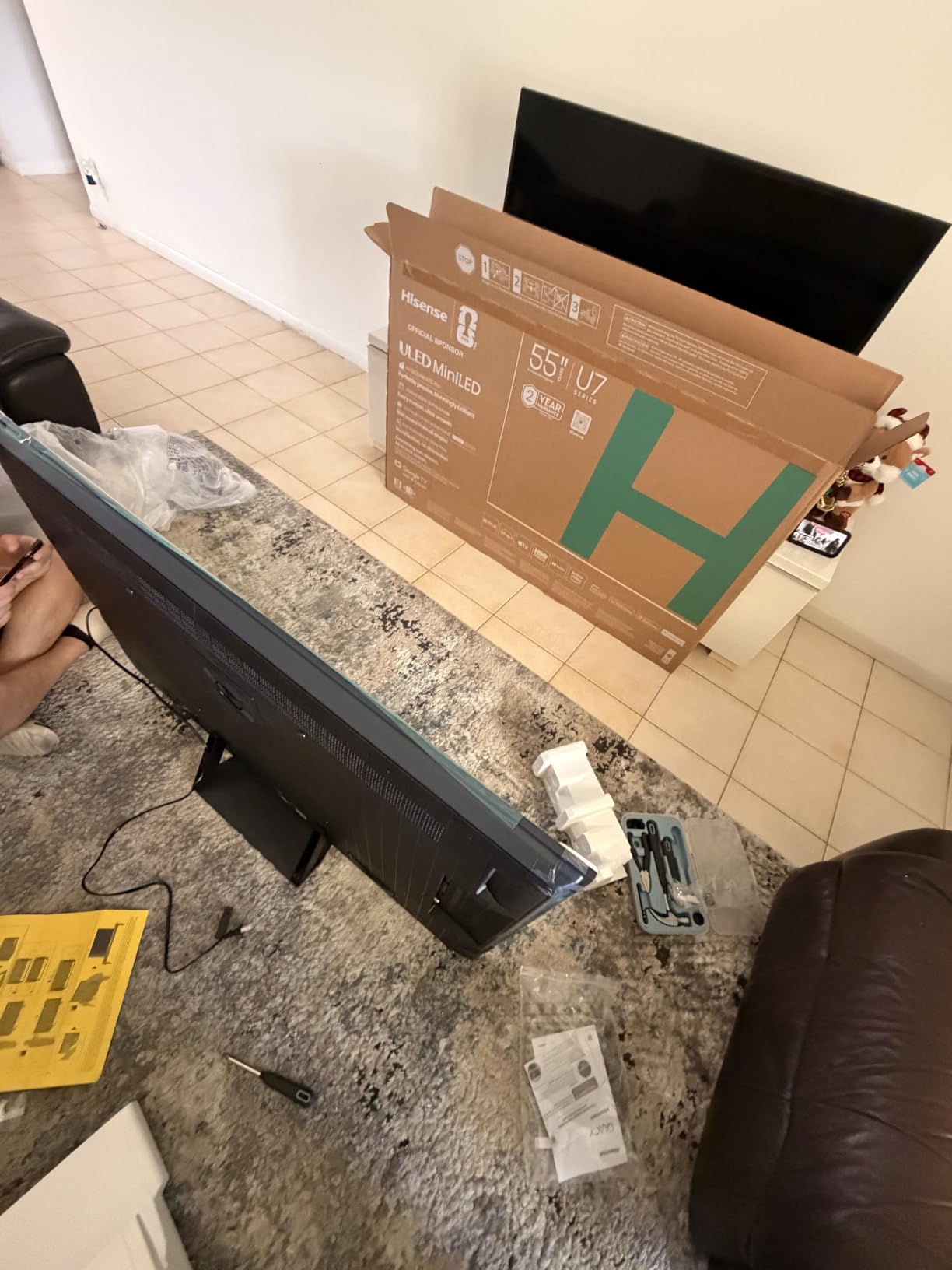
The Hisense U7 is the brightest TV on this list by a wide margin. With up to 3000 nits of peak brightness, it makes HDR gaming look explosive in a way that no other set here can match. We tested it in a sun-filled room at noon, and the picture remained vivid and punchy.
The 165Hz native refresh rate is the highest on this list. While no current console outputs above 120fps, this gives you significant headroom for PC gaming and future-proofing. The Game Booster 330 supports VRR up to 330Hz, which is remarkable for a television.
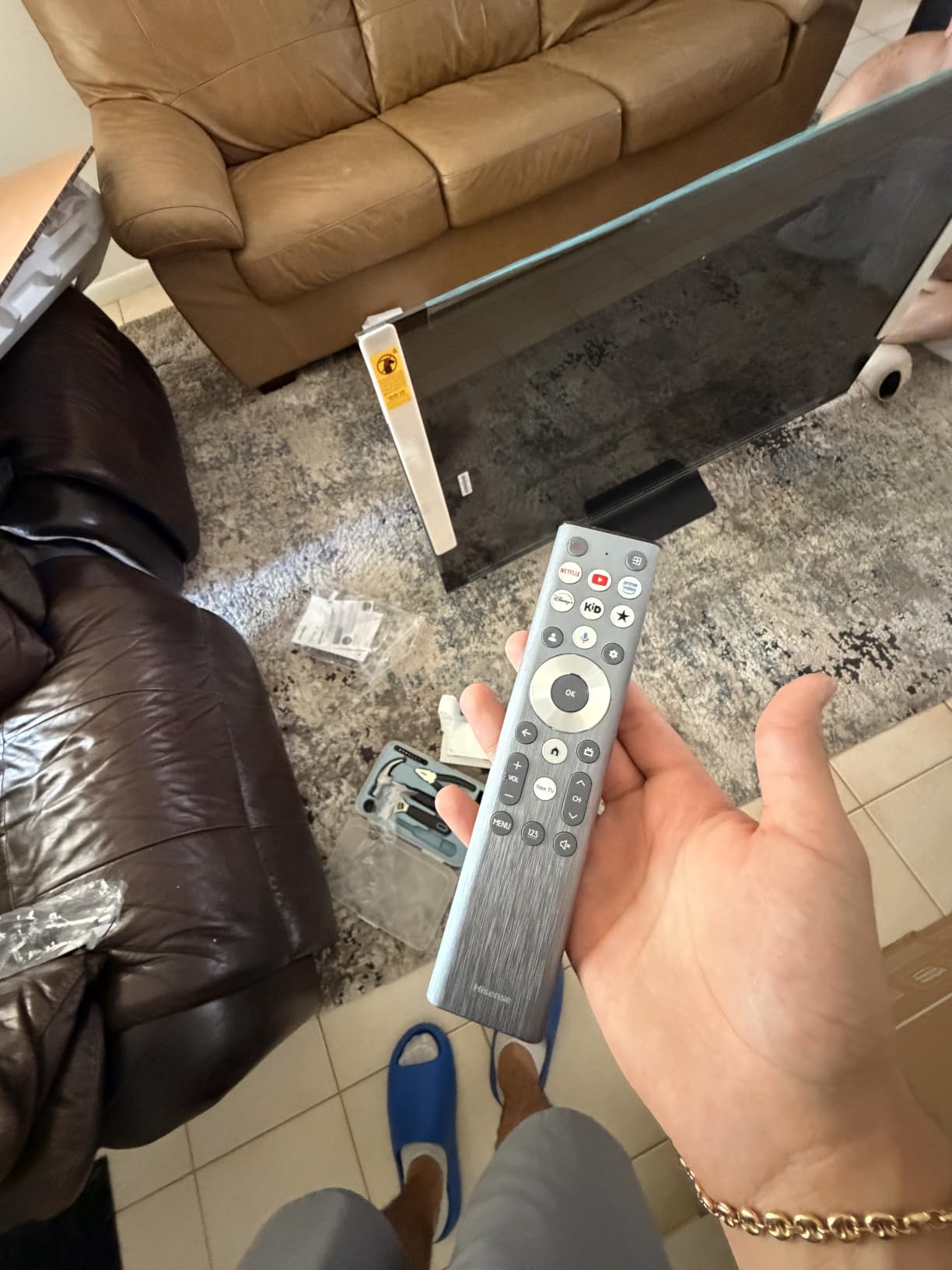
The anti-reflection and glare-free dual-layer screen treatment is a game-changer for bright rooms. Unlike glossy OLED panels that act like mirrors, this screen diffuses light effectively. In our testing, reflections from windows and lamps were minimal compared to every other TV on this list.
With up to 3000 local dimming zones, the Halo Control on this set approaches OLED-level contrast in many scenes. Dark game environments showed deep blacks with minimal blooming around bright objects. The Hi-View AI Engine Pro adjusts brightness and color scene by scene automatically.
Who Should Buy the Hisense U7
Bright room gamers should put this TV at the top of their shortlist. The combination of extreme brightness and anti-glare coating makes it the best option for living rooms with uncontrolled lighting. If you game during the day with curtains open, no other TV on this list performs as well.
PC gamers who also use consoles will love the 165Hz refresh rate. Connecting a gaming PC unlocks frame rates that consoles cannot reach, and this TV can display them. The Devialet-tuned audio system is also the best built-in sound on this list, reducing the immediate need for a soundbar.
Who Should Skip the Hisense U7
Budget-conscious buyers will find better value in the TCL QM6K, which offers Mini-LED gaming performance at roughly half the price. The Hisense U7 commands a premium for its extreme brightness and refresh rate that not all gamers need.
The lower review count reflects this being a new 2026 model. If you prefer products with extensive long-term user feedback, the more established models on this list carry less purchase risk. Early adopters who want the latest tech will not mind, but cautious buyers may want to wait.
10. Samsung OLED S90F 65-Inch – Premium Gaming at Scale
Samsung 65-Inch Class OLED S90F 4K Smart TV (2025 Model) NQ4 AI Gen3 Processor Upscaling Pro HDR +, Motion Xcelerator 144Hz, Vision Alexa Built-in
65-inch OLED 4K
144Hz
HDR10+
AI Gen3 Processor
Tizen OS
Pros
- Large 65-inch OLED panel
- 144Hz refresh rate for smooth gaming
- NQ4 AI Gen3 processor with 128 neural networks
- AI upscaling from any source
- #2 rated OLED TV on Amazon
Cons
- Only HDR10+ no Dolby Vision
- No Prime shipping available
- Premium price tier
The Samsung S90F OLED is the premium option for gamers who want a large OLED display without compromise. At 65 inches, it delivers the immersion of a big screen with the perfect blacks and instant pixel response of OLED technology. We tested it alongside the LG C5 to compare the two leading OLED approaches.
The NQ4 AI Gen3 processor is the star of the show. With 128 neural networks, it handles upscaling and motion processing with impressive intelligence. Sub-4K game content looked sharper on this TV than on any other set we tested. The AI also transforms SDR content to HDR-like quality.
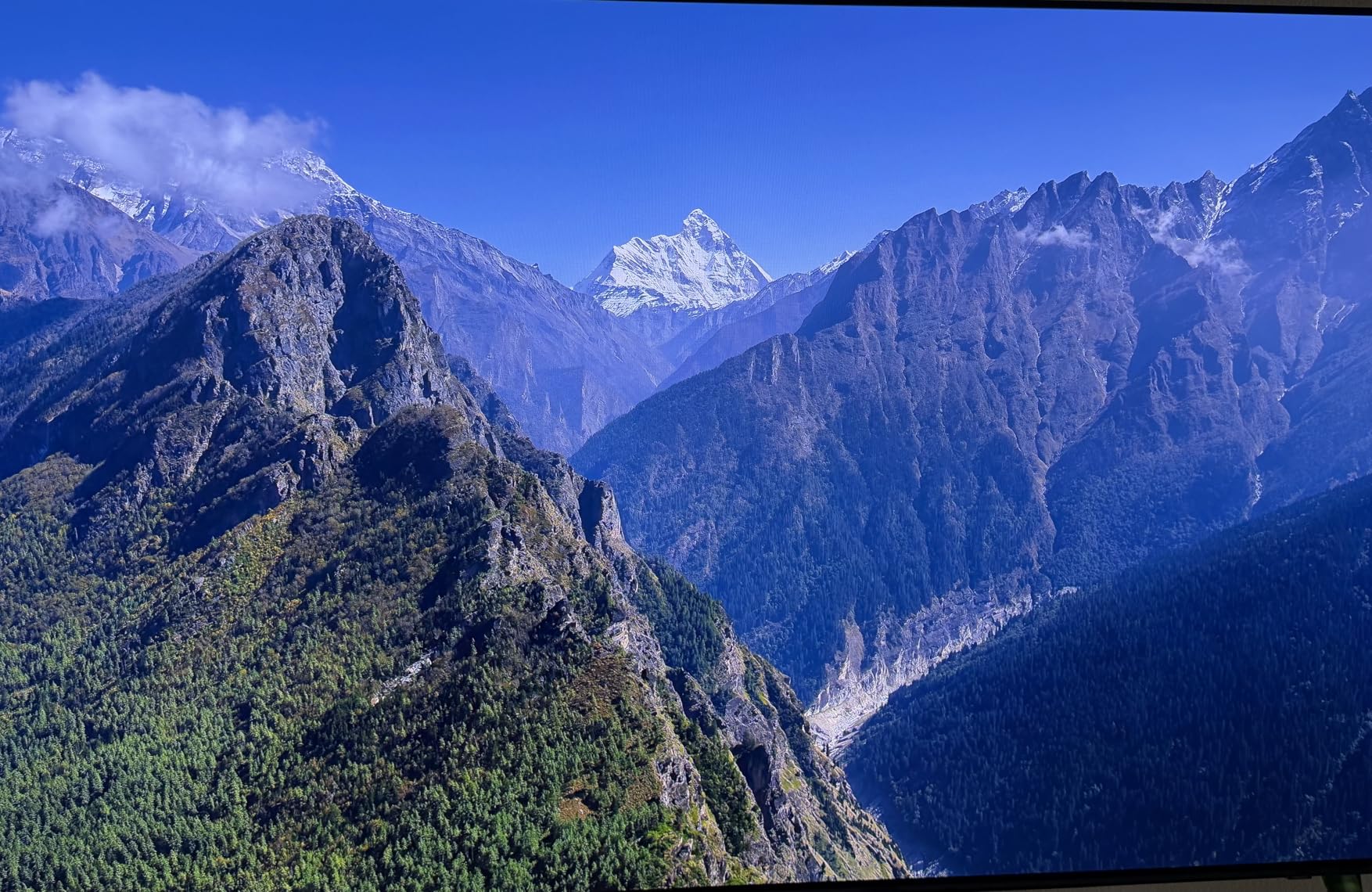
The 144Hz refresh rate with Motion Xcelerator handles fast-paced gaming beautifully. OLED’s instant pixel response combined with high refresh rate creates motion clarity that has to be seen to be appreciated. In racing games, the track stayed sharp even during high-speed cornering.
Samsung’s Game Mode optimizes input lag, color, and contrast specifically for gaming. The Tizen platform includes a Gaming Hub for cloud gaming without a console. Everything about this TV feels designed for gamers who want a no-compromise large-screen experience.

Who Should Buy the Samsung S90F
Gamers who want the largest OLED experience on this list should choose the S90F. The 65-inch OLED panel creates a level of immersion that smaller sets cannot match. Combined with 144Hz gaming and AI processing, it is a premium gaming display in every sense.
Samsung ecosystem users will appreciate the Tizen integration and SmartThings compatibility. If you already own Samsung devices, this TV fits naturally into your setup. The AI upscaling is also the best on this list, making older games and lower-resolution content look remarkably clean.
Who Should Skip the Samsung S90F
The absence of Dolby Vision is a notable drawback. Samsung uses HDR10+ instead, which is functionally similar but less widely supported in games and movies. If Dolby Vision is important to you, the LG C5 or TCL options on this list support it.
The premium price means you are paying significantly more than the TCL QM6K for a similar-size gaming experience. While OLED delivers better contrast, the value proposition narrows if your primary concern is refresh rate and HDR gaming rather than perfect blacks.
Buying Guide: How to Choose the Best TV for Gaming Consoles?
Choosing a gaming TV involves understanding several technical features that directly affect your gaming experience. This buying guide breaks down what matters most and what you can safely ignore when shopping for the best TVs for gaming consoles.
Refresh Rate: 60Hz vs 120Hz vs 144Hz
Refresh rate is how many times per second the TV updates its image. For gaming, higher is better. A 60Hz TV displays up to 60 frames per second, while 120Hz and 144Hz TVs can display up to 120 and 144 frames per second respectively.
Both PS5 and Xbox Series X support 120fps output in select games. To access these high-frame-rate modes, you need a TV with at least 120Hz refresh rate. Games like Call of Duty, Fortnite, and Rocket League offer 120fps modes that provide a competitive advantage.
If you primarily play story-driven games at 60fps, a 60Hz TV is adequate. But for competitive multiplayer or future-proofing, 120Hz or higher is worth the investment. The TCL T7, TCL QM6K, and all OLED options on this list support 120Hz or higher.
HDMI 2.1 and Why It Matters
HDMI 2.1 is the connection standard that enables 4K resolution at 120Hz. Without it, your console cannot send a 4K 120fps signal to the TV. Older HDMI 2.0 ports max out at 4K 60Hz, which limits your gaming performance.
Key features that HDMI 2.1 enables include 4K at 120Hz, Variable Refresh Rate (VRR), and Auto Low Latency Mode (ALLM). VRR eliminates screen tearing by matching the TV refresh rate to the game frame rate. ALLM automatically switches the TV to its lowest-latency game mode when it detects a console.
All the 120Hz and higher TVs on this list support HDMI 2.1. If you are buying a gaming TV in 2026, HDMI 2.1 support should be non-negotiable. The 60Hz options can still deliver great 60fps gaming, but they cannot access the full potential of current-gen consoles.
Input Lag and Response Time
Input lag is the delay between pressing a button on your controller and seeing the action on screen. For gaming, lower input lag means more responsive controls. Most modern TVs in Game Mode achieve input lag below 15ms, which is imperceptible to most players.
Response time is different. It measures how quickly individual pixels change color. OLED panels like the LG C5 and Samsung S90F achieve 0.1ms response times, which is effectively instant. LED and Mini-LED panels typically range from 5 to 10ms.
Faster response time means less motion blur during fast camera movements. This is why OLED TVs look sharper during gameplay even at the same refresh rate as LED TVs. For competitive gaming, the instant pixel response of OLED provides a visible advantage.
OLED vs QLED vs Mini-LED for Gaming
OLED uses self-lit pixels that turn off individually for perfect blacks. This creates infinite contrast and the best HDR performance in dark rooms. The trade-off is lower peak brightness and a small risk of burn-in from static images over very long periods.
QLED uses quantum dots to enhance LED color reproduction. It delivers more vibrant colors than standard LED but shares the same backlight limitations. QLED is a good middle ground for gamers who want better color without paying OLED prices.
Mini-LED is an advanced LED technology that uses thousands of tiny LEDs for local dimming. It achieves brightness levels that OLED cannot match while maintaining good contrast through precise dimming zones. For bright room gaming, Mini-LED is often the best choice.
VRR, ALLM, and Gaming-Specific Features
Variable Refresh Rate (VRR) matches your TV refresh rate to your game frame rate in real time. This eliminates screen tearing and reduces stutter when frame rates fluctuate. Both PS5 and Xbox Series X support VRR, so a compatible TV makes a visible difference.
Auto Low Latency Mode (ALLM) automatically detects when you start a game and switches the TV to Game Mode. This eliminates the need to manually change picture settings every time you switch between gaming and watching movies. It sounds minor but saves real friction in daily use.
FreeSync and G-Sync are VRR technologies from AMD and NVIDIA respectively. TVs that support these standards work with both PC gaming and console gaming. The LG C5 supports both FreeSync Premium and G-Sync, making it the most versatile gaming TV on this list.
Burn-in Mitigation for OLED Gaming
Burn-in is the most common concern we see in forums about OLED gaming. It occurs when static elements like game HUDs, health bars, and minimaps leave a permanent ghost image on the screen. Modern OLED TVs include several technologies to prevent this.
Pixel shifting moves the image slightly to prevent static elements from staying in the same position. Screen savers activate after idle periods. Pixel refresh cycles run automatically to restore panel uniformity. These features have significantly reduced burn-in risk compared to early OLED generations.
To minimize risk, vary your game library so the same HUD is not displayed for thousands of hours. Enable the TV built-in burn-in protection features. Avoid leaving static images on screen when paused for extended periods. With reasonable care, burn-in is rare for most gamers.
Room Lighting and TV Selection
Your room lighting should heavily influence your TV choice. In bright rooms with windows or overhead lights, Mini-LED TVs like the TCL QM6K and Hisense U7 perform best. Their high peak brightness cuts through ambient light and anti-glare coatings reduce reflections.
In dark or controlled-light rooms, OLED is unbeatable. The perfect blacks create a level of contrast and depth that bright room conditions mask. If you game primarily at night or in a basement, an OLED TV like the LG C5 or Samsung S90F will look dramatically better.
For mixed-use rooms, QLED or Mini-LED offers the best compromise. They deliver good performance in both bright and dim conditions. The TCL options on this list are particularly well-suited to rooms where lighting varies throughout the day.
Frequently Asked Questions
Is OLED or QLED better for PS5?
OLED is better for PS5 gaming in dark or controlled lighting rooms because it delivers perfect blacks, infinite contrast, and instant 0.1ms pixel response for sharper motion. QLED is better in bright rooms because it achieves higher peak brightness and resists glare better. For the best PS5 experience, the LG OLED C5 or Samsung OLED S90F are top choices. If your room gets a lot of natural light, the TCL QM6K Mini-LED offers excellent PS5 performance with better brightness.
Is an OLED or QLED TV better for gaming?
OLED is better for gaming overall due to its near-instant pixel response time of 0.1ms, which eliminates motion blur during fast camera movements. OLED also provides infinite contrast for deeper immersion in dark games. QLED is better for bright room gaming where high peak brightness matters more than perfect blacks. Mini-LED combines QLED color with local dimming brightness, making it the best all-around choice for mixed lighting conditions.
Do I really need a 120Hz TV for PS5?
You do not strictly need a 120Hz TV for PS5, as most games run at 60fps. However, an increasing number of PS5 games offer 120fps performance modes in titles like Call of Duty, Fortnite, and Rocket League. A 120Hz TV lets you access these modes for smoother and more responsive gameplay. If you play competitive multiplayer games, 120Hz provides a measurable advantage. For casual single-player gaming at 60fps, a 60Hz TV works fine.
Which TV is recommended for PS5?
The Sony BRAVIA 3 is specifically designed for PS5 with exclusive console features and automatic picture optimization. For the best overall picture quality, the LG OLED C5 delivers perfect blacks and instant pixel response. For the best value, the TCL QM6K offers 144Hz gaming and Dolby Vision at a mid-range price. Choose based on your budget and room lighting conditions.
Final Thoughts on the Best TVs for Gaming Consoles
The best TVs for gaming consoles in 2026 span a wide range of prices and technologies. Our Editor’s Choice, the LG OLED C5, remains the gold standard for gaming with its perfect blacks, instant pixel response, and comprehensive sync support. The TCL QM6K earns our Best Value badge by delivering Mini-LED gaming performance at a price that makes sense for most buyers.
For budget-conscious gamers, the INSIGNIA F50 proves that 4K console gaming does not require a major investment. And the Samsung OLED S90F offers the largest premium OLED experience on this list for gamers who want maximum immersion without compromise.
Whatever your budget or gaming setup, the most important features to prioritize are refresh rate, input lag, and HDMI 2.1 support. Match those to your room lighting and gaming habits, and you will find the right TV among these 10 options.