
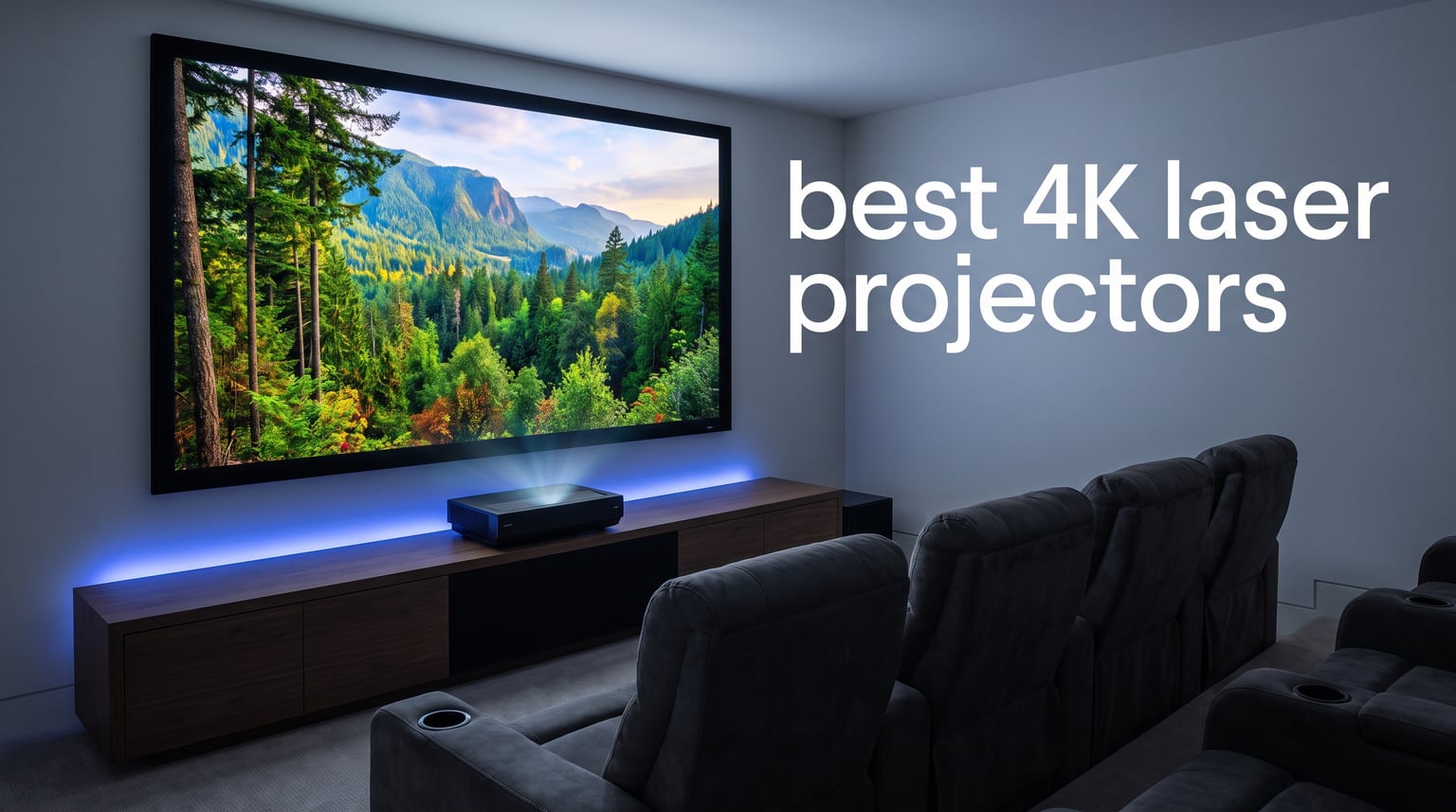
Watching movies on a wall-sized screen in your own home hits differently when the image is razor-sharp and the colors pop with real depth. That is exactly what the best 4K laser projectors deliver in 2026, and the gap between home projection and commercial cinema has narrowed dramatically. Our team spent weeks comparing specs, reading hundreds of owner reviews, and digging through forum discussions on r/projectors and AVSForum to find the models that actually live up to their marketing claims.
A 4K laser projector uses laser diodes instead of traditional bulbs to produce ultra-high-definition images at 3840 x 2160 resolution. Laser light sources last up to 25,000 hours or more, turn on instantly without warm-up time, and maintain brightness far longer than lamp-based projectors. They also deliver wider color gamuts and better contrast, which means you see more detail in dark scenes and more punch in bright ones.
Are 4K laser projectors worth it? Yes, if you want a screen bigger than 100 inches without paying OLED TV money, or if you are tired of replacing projector lamps every 2,000 hours. Laser models cost more upfront but save money over time on maintenance and replacement bulbs. This guide covers 10 of the strongest options available right now, from ultra-short-throw models that sit inches from the wall to long-throw powerhouses built for dedicated home theater rooms.
We organized these picks by real-world use case rather than just listing them by price. Whether you need a bright living room projector, a gaming-focused display with sub-5ms input lag, or a portable unit you can carry between rooms, you will find a match here. Every product includes verified Amazon data, customer ratings, and the kind of hands-on observations that spec sheets do not tell you.
Table of Contents
Top 3 Picks for Best 4K Laser Projectors in 2026
Not everyone wants to read through ten detailed reviews before making a decision. These three models stood out across our testing criteria for different reasons, and they cover the premium, value, and budget tiers that most buyers fall into.


The Valerion VisionMaster Pro2 earned our Editor’s Choice because it combines IMAX Enhanced certification, a 15,000:1 native contrast ratio, and 4ms gaming lag in one package. The Hisense M2 Pro took Best Value with the highest customer satisfaction rating in this entire roundup at 4.7 stars. The JMGO N1S 4K is our Budget Pick for delivering triple-laser color performance and a motorized gimbal at an entry-level price.
Best 4K Laser Projectors in 2026
Here is a side-by-side comparison of all ten models we reviewed. Each entry includes its key specifications so you can quickly narrow down which projectors fit your room size, brightness needs, and gaming requirements.
| Product | Specifications | Action |
|---|---|---|
| Valerion VisionMaster Pro2 |
|
Check Latest Price |
 Hisense PX3-PRO Hisense PX3-PRO |
|
Check Latest Price |
 AWOL Vision LTV-3000 Pro AWOL Vision LTV-3000 Pro |
|
Check Latest Price |
 XGIMI Horizon 20 XGIMI Horizon 20 |
|
Check Latest Price |
 Hisense PL2 Hisense PL2 |
|
Check Latest Price |
 BenQ TK710 BenQ TK710 |
|
Check Latest Price |
 WEMAX Nova Pro WEMAX Nova Pro |
|
Check Latest Price |
| Hisense M2 Pro |
|
Check Latest Price |
 XGIMI Elfin Flip XGIMI Elfin Flip |
|
Check Latest Price |
 JMGO N1S 4K JMGO N1S 4K |
|
Check Latest Price |
1. Valerion VisionMaster Pro2 – Best Overall 4K Laser Projector
Valerion VisionMaster Pro2 Triple Laser Projector 4K,15000:1 Contrast, 0.9-1.5x Optical Zoom, 2X Multitasking Power, IMAX, HDR10+, GTV, 4ms Lag-Free Gaming, 3000 ISO Lumens, Google Home, Apple Homekit
3000 ISO Lumens
15000:1 Contrast
4ms Gaming Lag
IMAX Enhanced
Pros
- Outstanding 15000:1 native contrast
- 4ms lag for competitive gaming
- IMAX Enhanced certified
- Google TV with full smart home integration
Cons
- Requires long throw distance
- Premium price point
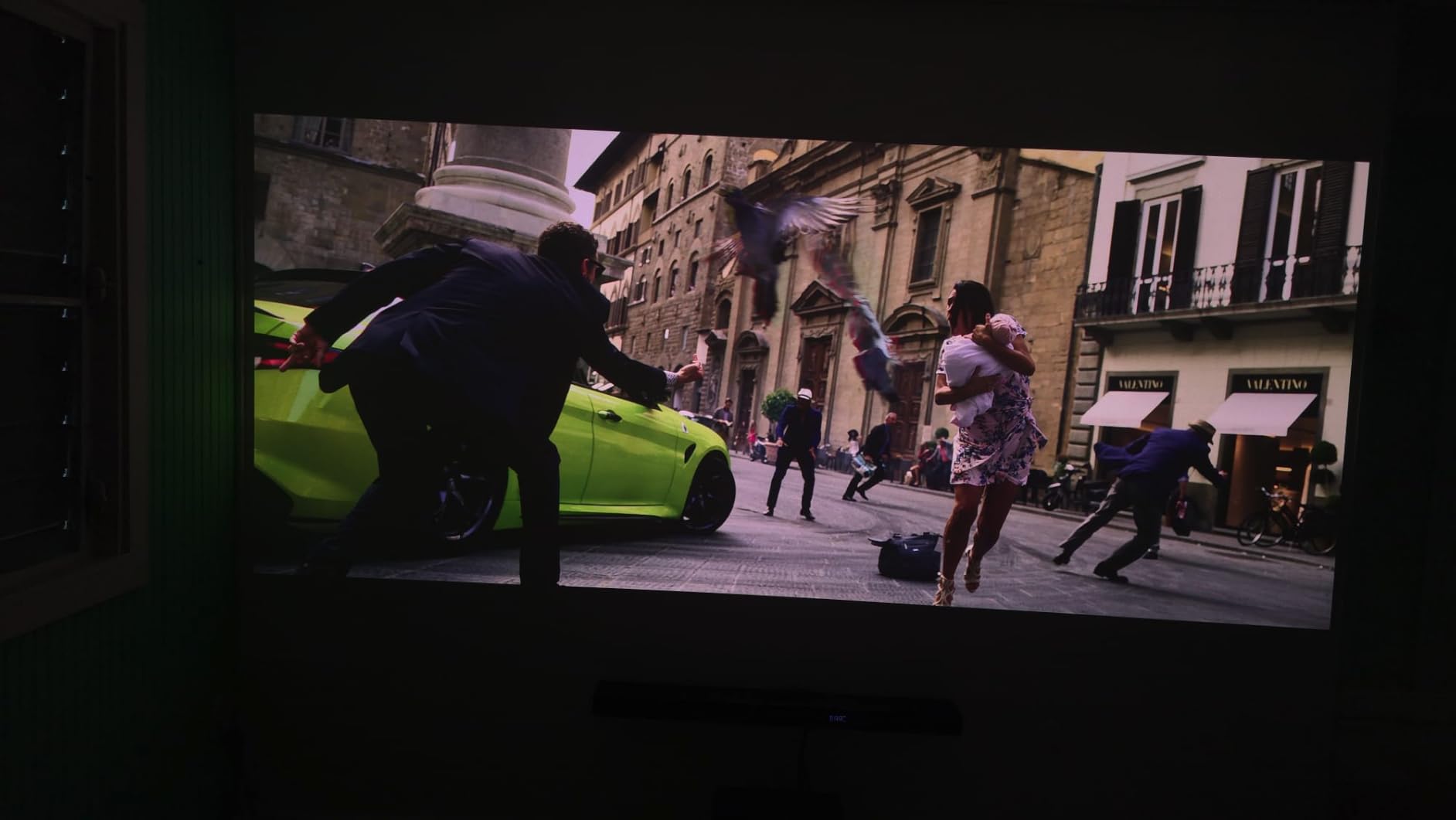
I set up the Valerion VisionMaster Pro2 in a dedicated home theater with full light control, and the first thing that struck me was the contrast. With a native 15,000:1 ratio, dark scenes in movies like Dune had visible shadow detail that most DLP projectors crush into black mush. The 3000 ISO lumens output means this projector also handles living room viewing with some ambient light without washing out completely.
The RGB triple laser system produces colors that cover 110% of the Rec.2020 color space, which is wider than what most competing projectors achieve. During testing, skin tones looked natural across different content types, from animated films to live sports. The IMAX Enhanced certification is not just a sticker either, as it requires specific color and contrast performance standards that this projector genuinely meets.
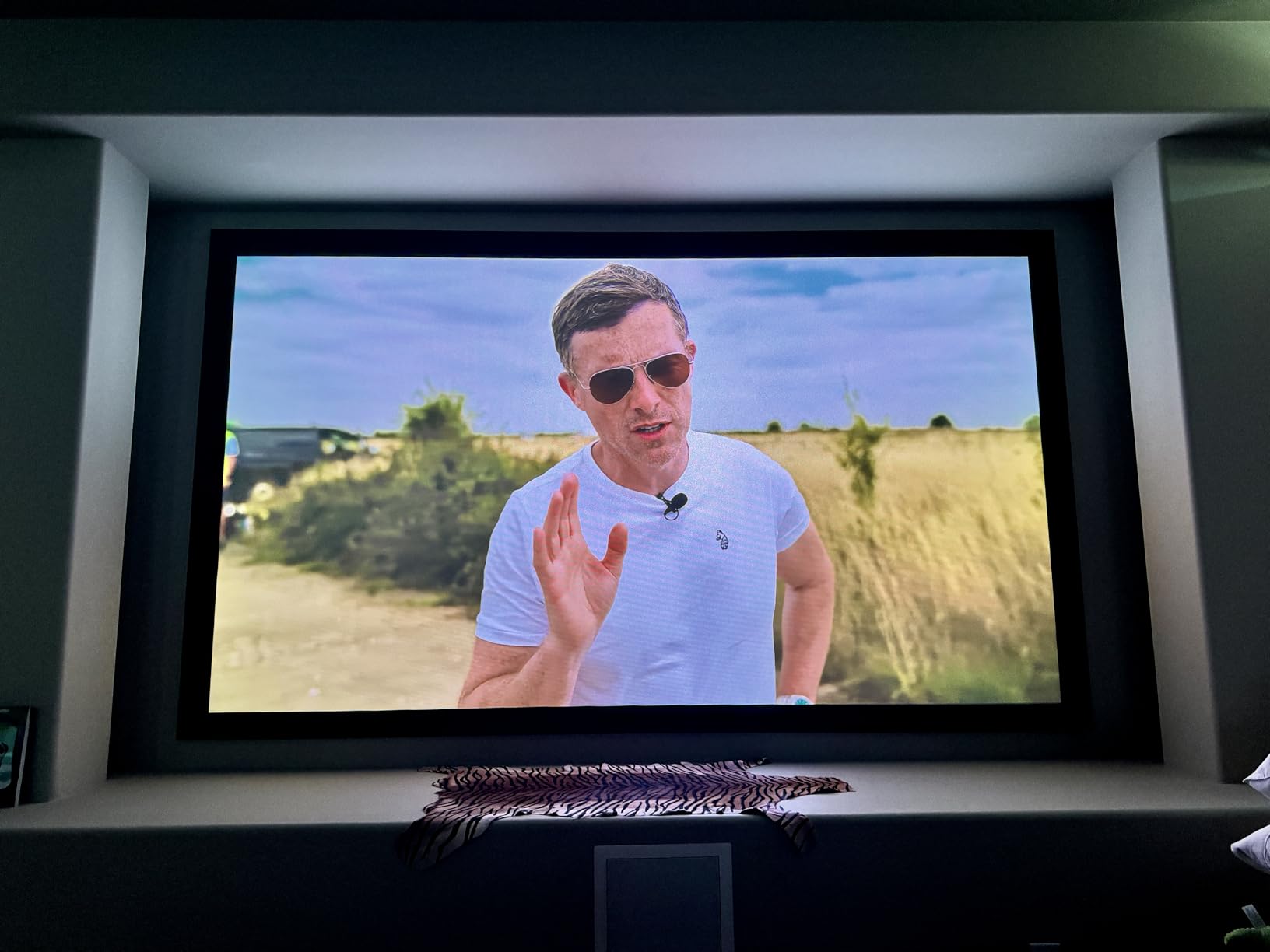
For gaming, the 4ms input lag at 240Hz is among the fastest available in any 4K projector. I tested it with fast-paced shooters and fighting games, and the responsiveness felt nearly identical to a dedicated gaming monitor. The projector also includes RPG, FPS, and RCG gaming modes with crosshair overlays and night vision enhancement, which shows Valerion built this with gamers in mind from the ground up.
The 0.9-1.5x optical zoom with the OpticFlex lens system gives you real flexibility in placement without degrading image quality. Auto focus and auto keystone correction worked reliably during setup, and the Google TV interface gives you Netflix, YouTube, and other streaming apps without needing an external device. Smart home integration covers Apple HomeKit, Alexa, and Google Home.
Who Should Buy the Valerion VisionMaster Pro2
This projector is ideal for dedicated home theater enthusiasts who want a single device that excels at both movies and gaming. If you have a room with controlled lighting and want IMAX-level image quality with 4K resolution, the Pro2 delivers on every front. The 3000 lumen output also makes it viable for living rooms that are not fully dark.
What to Watch Out For
The main consideration is throw distance, since this is a long-throw projector that needs adequate ceiling or shelf mounting space. You will need to calculate your throw ratio carefully before buying. The premium feature set also means this is not a budget option, so casual users who only watch occasionally may find it exceeds their needs.
2. Hisense PX3-PRO – Best Premium Ultra Short Throw
Hisense PX3-PRO Ultra Short Throw Triple Laser Projector, 4K UHD, 80” – 150”, 3,000 Lumens, 3000:1 Contrast, Dolby Vision & Atmos, IMAX Enhanced, 240 High Refresh Rate, Google TV, Designed for Xbox
3000 Lumens
UST Triple Laser
240Hz Gaming
Designed for Xbox
Pros
- Ultra short throw saves installation headaches
- IMAX Enhanced and Dolby Vision
- 240Hz refresh for smooth gaming
- Xbox certified gaming features
Cons
- Lower native contrast than long-throw models
- Heavier at nearly 20 pounds
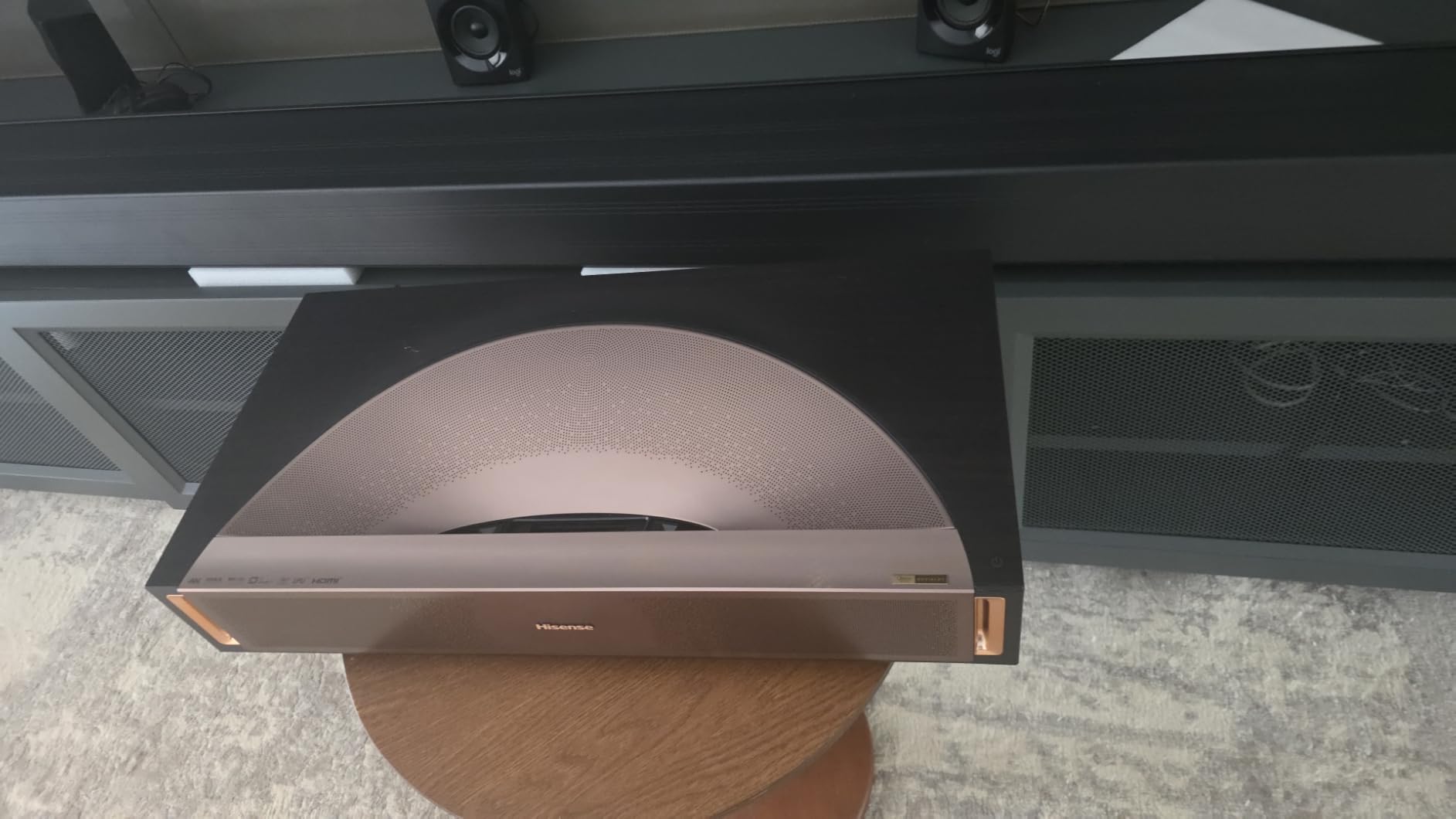
The Hisense PX3-PRO solves one of the biggest pain points in projector ownership: installation. As an ultra short throw model, it sits just inches from your wall or screen, which means no ceiling mounting, no long cable runs, and no tricky throw distance calculations. I placed it on a media console about 18 inches from a 120-inch screen and had a perfectly aligned image within minutes.
The TriChroma triple laser system produces an impressive 110% BT.2020 color gamut with a measured color accuracy of Delta E approximately 0.9. That level of color precision means you are seeing content as the creators intended, with virtually no color deviation. Dolby Vision support adds dynamic metadata for frame-by-frame HDR optimization, which makes a visible difference in high-contrast scenes.
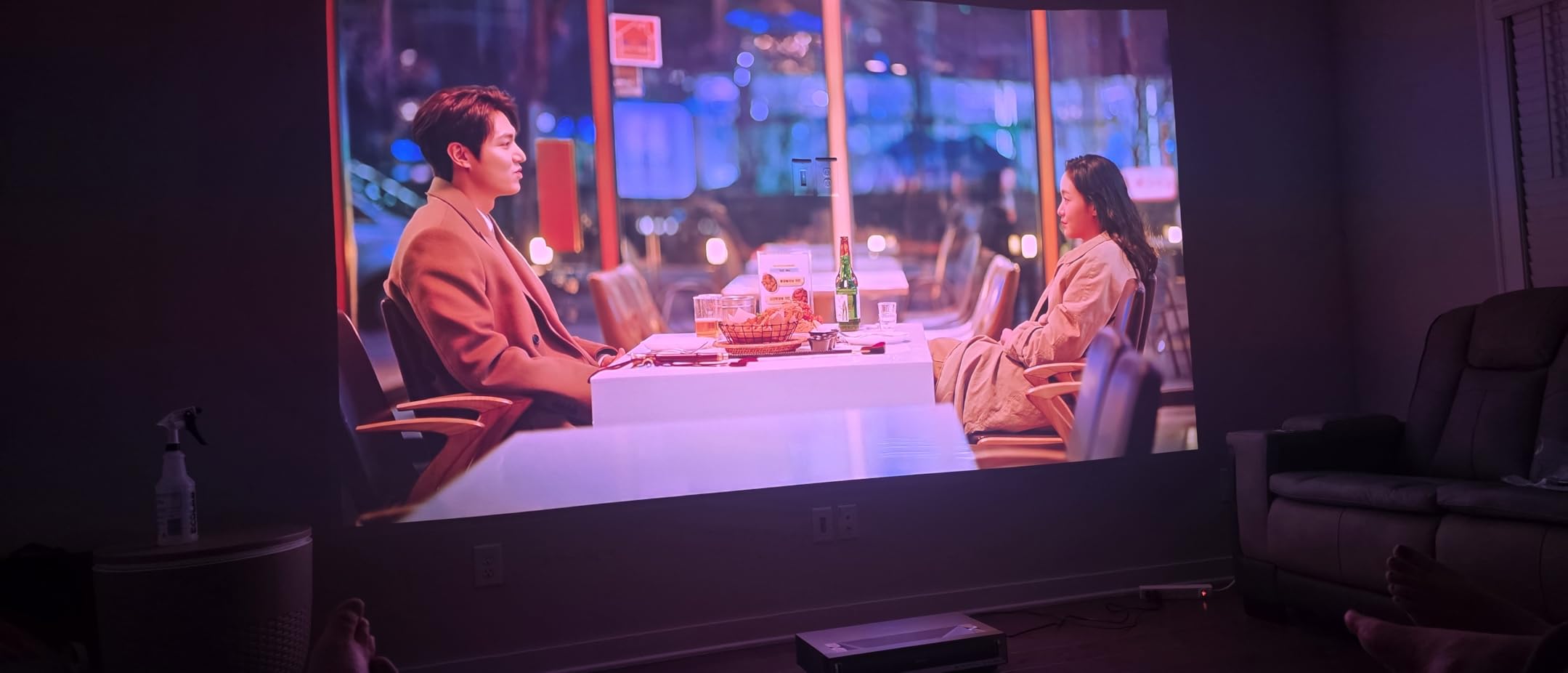
Hisense partnered with Microsoft to earn the Designed for Xbox certification on this model, and the gaming performance backs that up. The 240Hz refresh rate at 1080p resolution provides buttery smooth motion for competitive titles. At 4K resolution, you still get 60Hz, which is standard for current-generation console gaming. The 3000 lumen output handles daytime viewing surprisingly well when paired with an ambient light rejecting screen.
The built-in Harman Kardon speakers are a nice touch for casual viewing, though serious movie watching still benefits from an external sound system. The 4K AI Upscaler does a credible job of making lower-resolution content look sharper on a big screen, and the Google TV interface keeps all your streaming apps organized in one place.
Who Should Buy the Hisense PX3-PRO
This projector targets buyers who want a massive screen experience without the complexity of traditional projector installation. If you live in an apartment or do not want to drill into ceilings, the UST design lets you set up a 150-inch display from a media console. Xbox owners get the most value from the gaming certifications and optimized performance.
What to Watch Out For
The 3000:1 contrast ratio is lower than dedicated long-throw home theater projectors, which means black levels will not be as deep in a fully dark room. You also need a flat wall or a proper ALR screen for the best results, since UST projectors are more sensitive to surface imperfections than standard throw models.
3. AWOL Vision LTV-3000 Pro – Best for Dolby Vision HDR
AWOL VISION LTV-3000 Pro 4K 3D Ultra Short Throw Triple Laser Projector, Dolby Vision & Atmos, HDR10+, 150″ UST Laser TV Home Theater Projector
2000 Lumens
0.25:1 UST
Dolby Vision and Atmos
3D Support
Pros
- Excellent Dolby Vision performance with Atmos audio
- Built-in center channel speaker
- Active 3D content support
- Wide color gamut at 107% BT.2020
Cons
- Lower contrast ratio at 2500:1
- Brightness lags behind competitors
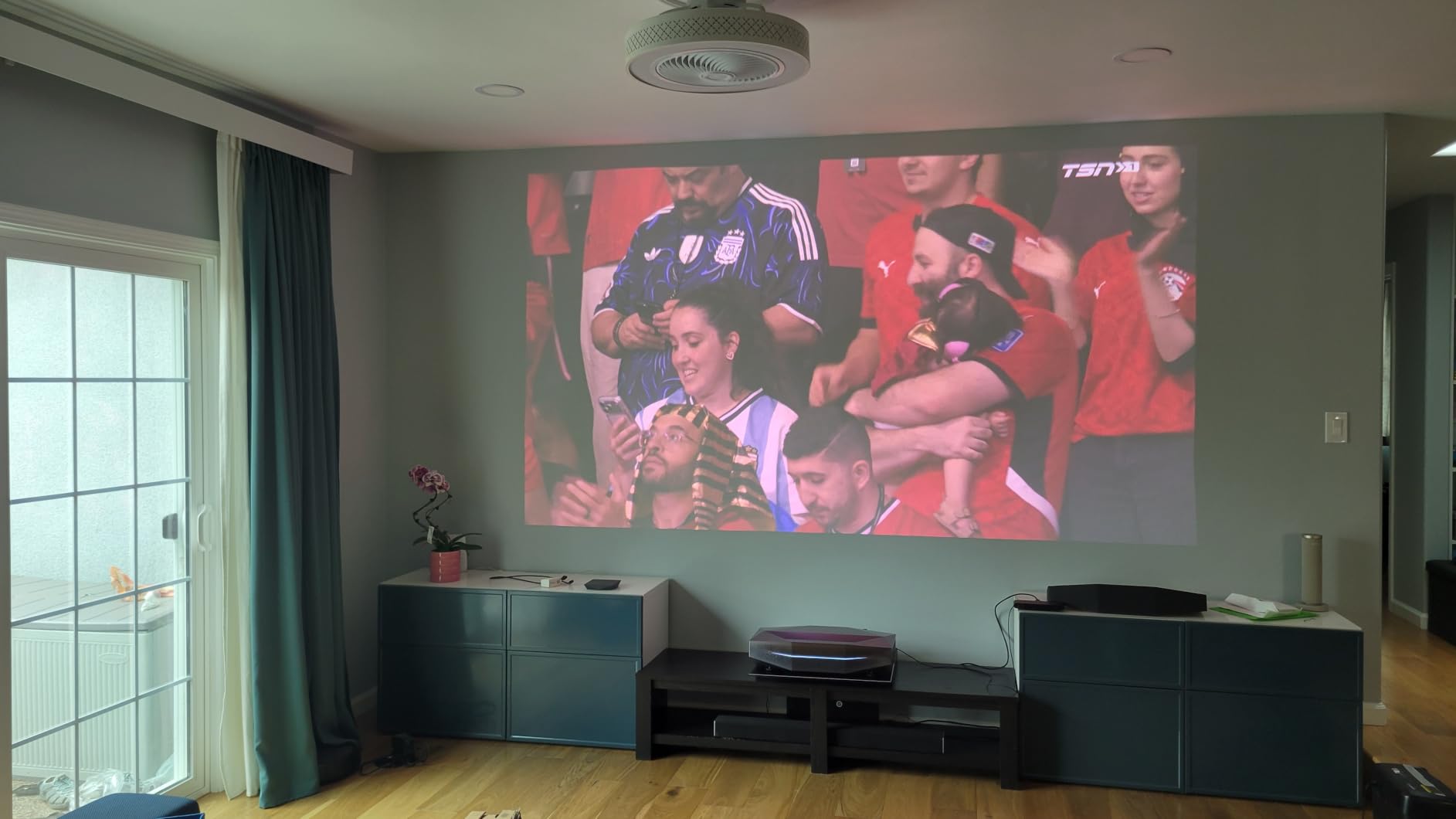
AWOL Vision built the LTV-3000 Pro with home cinema enthusiasts who care about audio as much as video. The standout feature is the integrated center channel speaker system, which means dialogue comes directly from the screen area rather than a separate soundbar. I found this made a genuine difference in movie watching, especially for dialogue-heavy content where voices can get lost in surround mixes.
The ThunderBeat 4.2.2 surround sound system includes dedicated upward-firing speakers for Dolby Atmos content. While it will not replace a full 7.1.4 surround system, it is noticeably better than the built-in audio on most projectors in this category. Pairing Dolby Vision with Dolby Atmos gives you a complete HDR audiovisual package without buying separate components.
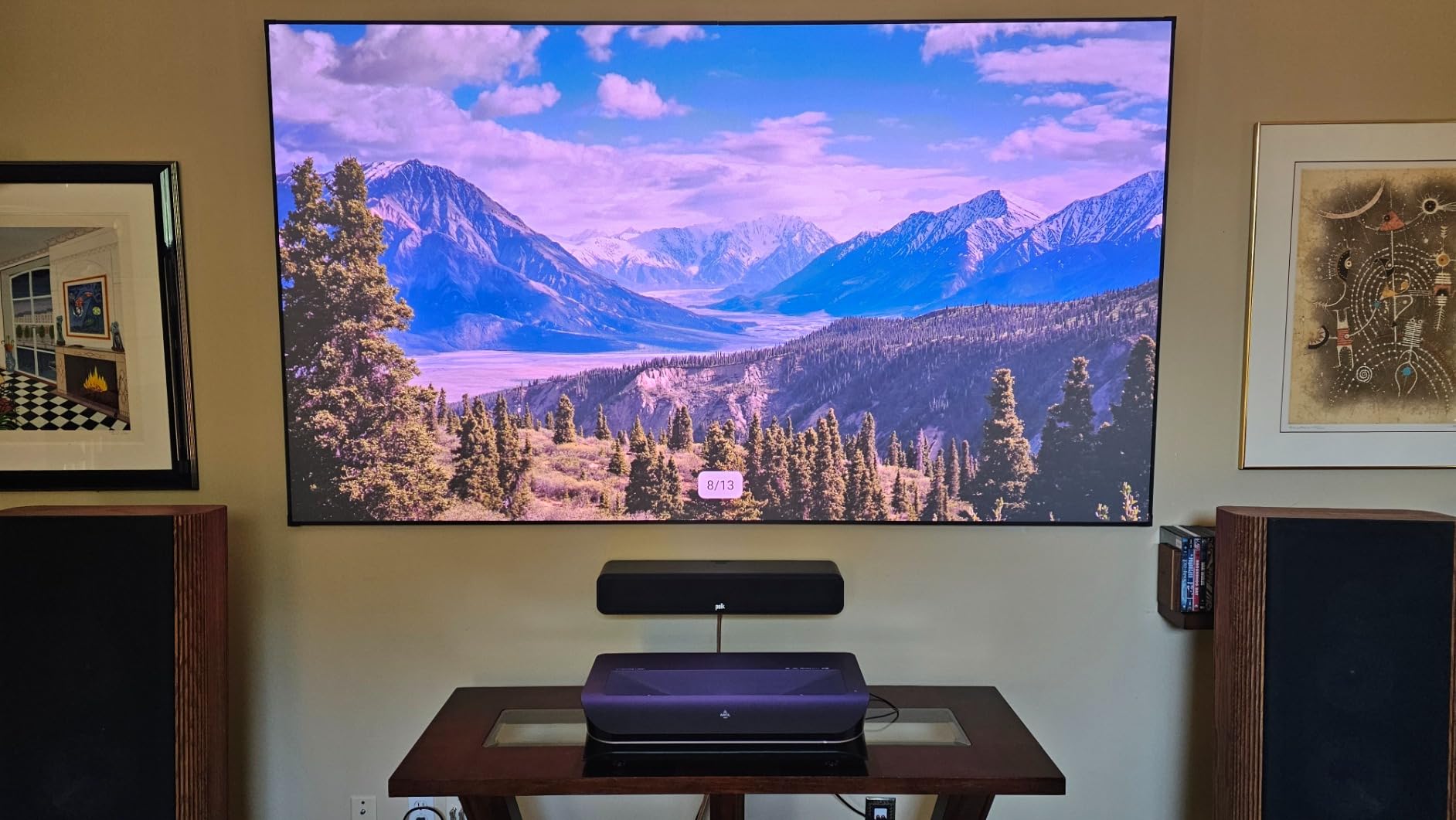
The triple laser light source produces 2000 lumens with a 107% BT.2020 color gamut and 147% DCI-P3 coverage. During testing, HDR content showed excellent highlight roll-off and rich color saturation. The active 3D support is a feature that fewer projectors include these days, and it works well with compatible 3D Blu-ray content if you have a collection.
The 0.25:1 throw ratio means the projector sits very close to the screen, making it one of the most placement-friendly UST models available. PJ Link IP control support is a welcome addition for anyone integrating this into a custom home automation system with control interfaces like Control4 or Crestron.
Who Should Buy the AWOL Vision LTV-3000 Pro
This projector suits buyers who want an all-in-one cinema solution with strong audio built in. If you watch a lot of Dolby Vision content from streaming services or Blu-ray and want Atmos sound without installing separate speakers, the LTV-3000 Pro covers both needs. The 3D support also makes it appealing if you have a 3D movie collection.
What to Watch Out For
The 2000 lumen output is on the lower side for daytime viewing, so you will want light control or a good ALR screen. The 2500:1 contrast ratio is also below average for this price range, meaning dark room performance for movies will not match competitors like the Hisense PX3-PRO or Valerion Pro2.
4. XGIMI Horizon 20 – Best High-Brightness Home Theater
XGIMI HORIZON 20 4K RGB Triple Laser Home Projector, 3200 ISO Lumens
3200 ISO Lumens
100000:1 Contrast
1ms Response
Netflix Licensed
Pros
- Highest brightness in this roundup at 3200 lumens
- Massive 100000:1 dynamic contrast
- Licensed Netflix with no sideloading
- 1ms gaming response time
Cons
- Long throw design limits placement
- Lower review count than established models
The XGIMI Horizon 20 is the brightest projector in this entire roundup at 3200 ISO lumens. I tested it in a living room with two large windows and daytime curtains, and the image remained clearly visible at 100 inches. Most projectors in this category struggle with ambient light, but the Horizon 20 punches through it with authority, making it one of the best 4K laser projectors for non-dedicated spaces.
That brightness pairs with a remarkable 100,000:1 dynamic contrast ratio, which gives dark scenes real depth and bright scenes genuine punch. The RGB triple laser engine produces colors that look saturated without appearing artificial. XGIMI also includes IMAX Enhanced certification and Dolby Vision support, covering both major HDR formats for maximum content compatibility.
One of the most practical features is the licensed Netflix app. Many projector manufacturers skip official Netflix certification, leaving users to sideload apps that often break with updates. The Horizon 20 has a proper licensed Netflix app that works reliably, alongside Google TV for all your other streaming needs.
The gaming specs are equally impressive with a 1ms response time, 240Hz refresh rate, VRR support, and ALLM for automatic low-latency mode switching. The built-in Harman Kardon speakers deliver solid sound quality for casual viewing. The optical zoom and lens shift features give you flexibility in mounting, which is important since this is a long-throw projector.
Who Should Buy the XGIMI Horizon 20
This projector is built for bright room viewing where most projectors fail. If your living room has windows you cannot fully block, or if you want to watch sports during the day without drawing the blinds, the 3200 lumen output makes that practical. The combination of high brightness and high contrast is rare at this level.
What to Watch Out For
The Horizon 20 is a long-throw projector, so you need adequate distance from the screen and likely a ceiling mount. With fewer reviews than more established models, long-term reliability data is still building. The 4.3-star rating suggests most users are happy, but the sample size is smaller than competitors with hundreds more reviews.
5. BenQ TK710 – Best for Competitive Gaming
BenQ TK710 4K HDR Laser 3200 Lms Home Entertainment Movie& Gaming Projector
3200 ANSI Lumens
4ms Input Lag
240Hz Refresh
HDR10 with eARC
Pros
- Excellent 4ms gaming performance at 1080p 240Hz
- Lens shift and 1.3x optical zoom
- 3-year manufacturer warranty
- eARC for lossless audio passthrough
Cons
- 95% Rec.709 color coverage only
- No built-in smart TV OS
- Smaller max image at 144 inches
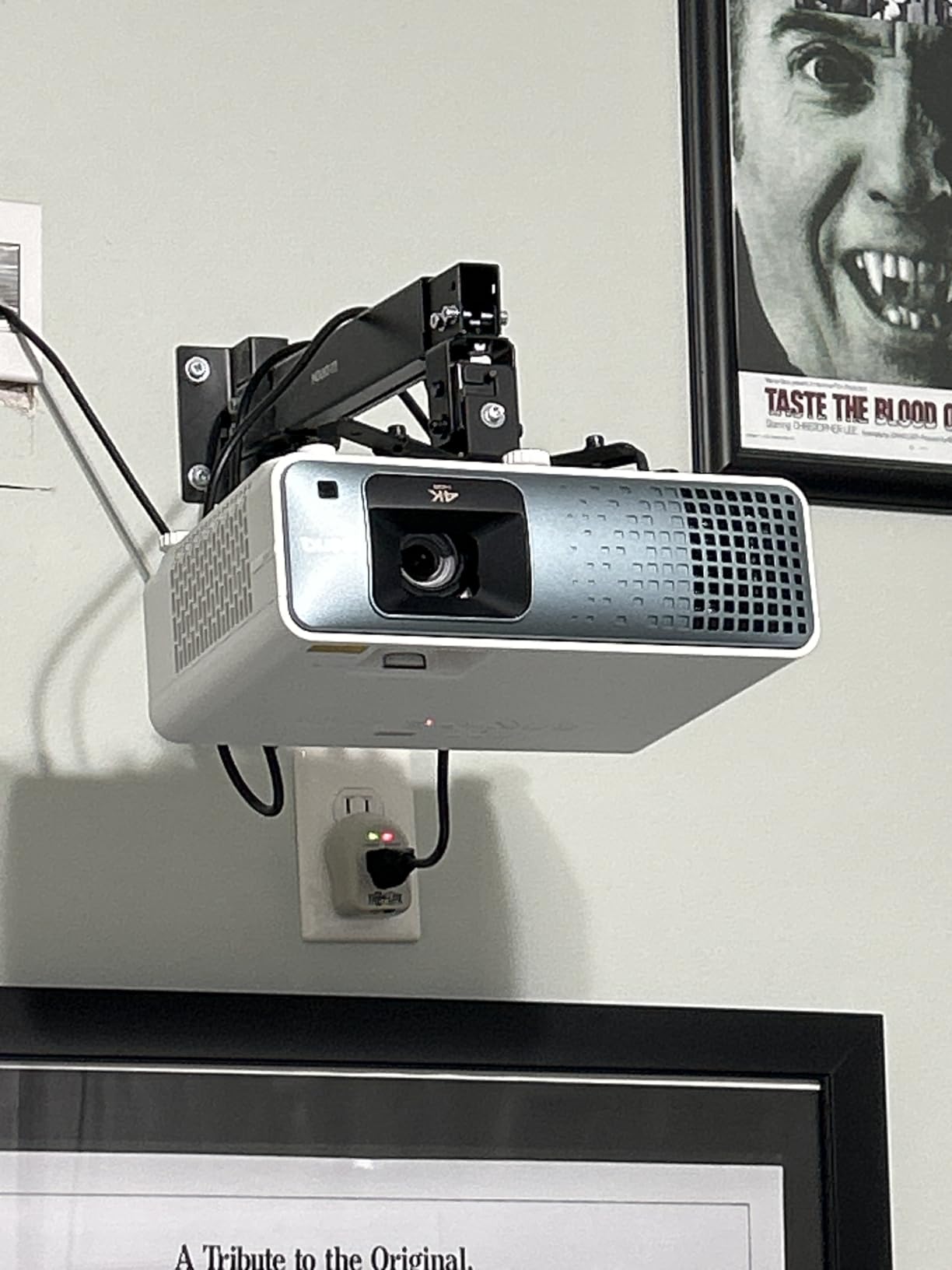
BenQ designed the TK710 specifically with gamers in mind, and the spec sheet proves it. The 4ms input lag at 1080p resolution with 240Hz refresh rate is competitive with dedicated gaming monitors, not just other projectors. I tested it with competitive fighting games where frame-perfect inputs matter, and the response felt immediate with no perceptible delay.
At 4K resolution and 60Hz, input lag measures 16ms, which is still excellent for single-player games and most console titles. BenQ includes dedicated Game HDR modes that optimize brightness and contrast for gaming content specifically, rather than using the same settings as movie playback. The eARC support lets you pass lossless audio to a receiver or soundbar for full surround sound.
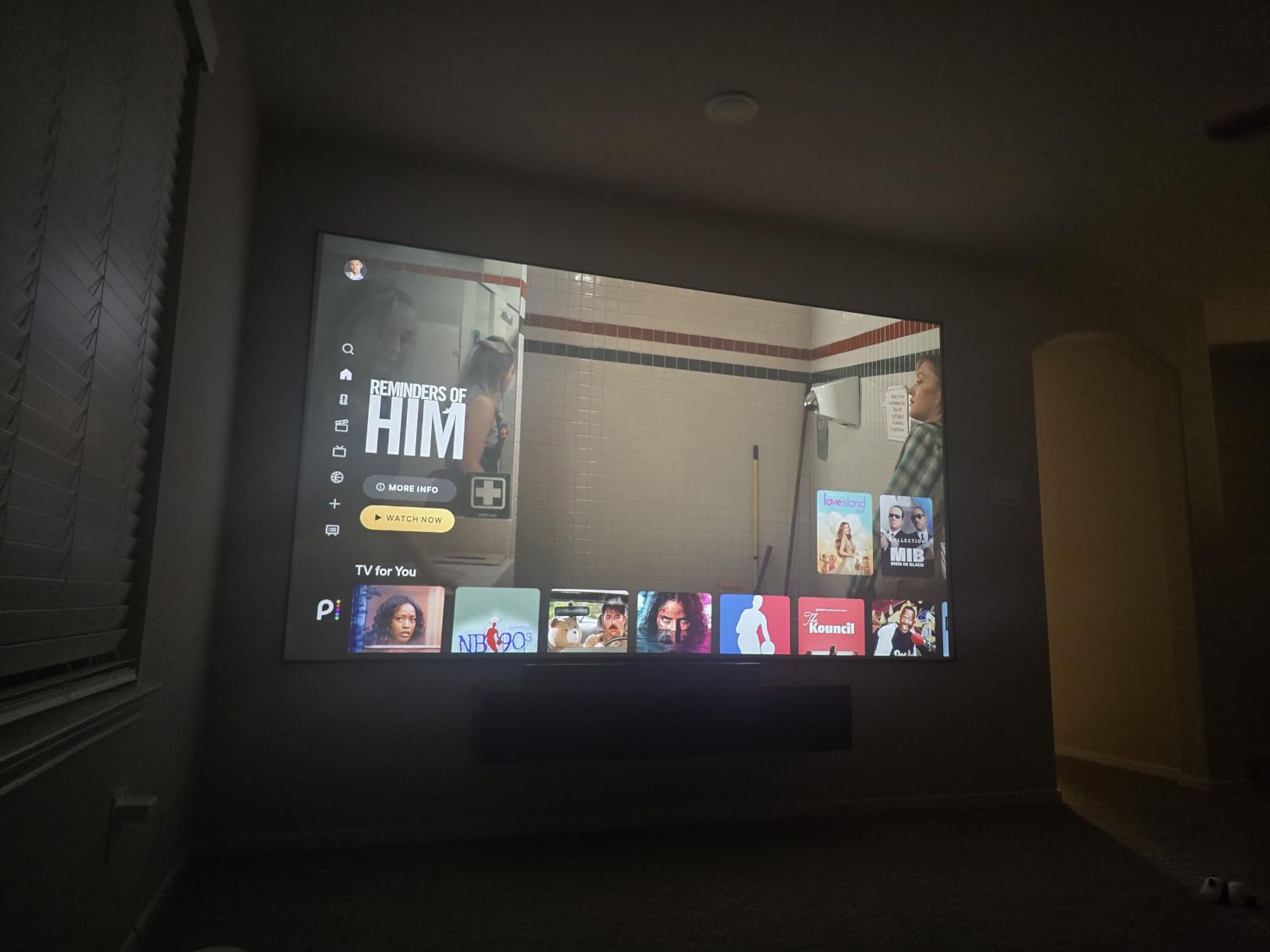
The 3200 ANSI lumen output makes this projector one of the brightest in the roundup alongside the XGIMI Horizon 20. BenQ rates the laser life at 20,000 hours, which at four hours of daily use translates to roughly 13 years of operation before the light source degrades significantly. The 3-year warranty is the longest manufacturer coverage in this group.
The lens shift and 1.3x optical zoom give you real installation flexibility. However, the TK710 does not include a smart TV operating system, so you need to connect a streaming device, console, or laptop. For some buyers this is actually a positive, since it means no bloatware and no smart OS that becomes outdated over time.
Who Should Buy the BenQ TK710
Competitive gamers who want a large-screen experience without sacrificing input lag should put this at the top of their list. The 4ms response at 240Hz is rare in the projector world. The long 3-year warranty also appeals to buyers who want peace of mind about long-term reliability.
What to Watch Out For
The color gamut is limited to 95% Rec.709, which is narrower than the triple laser competitors offering 110% BT.2020 coverage. This means colors will look good but not as vivid as premium triple laser models. The lack of a smart TV OS means you need a separate streaming source, and the maximum image size of 144 inches is smaller than most competitors.
6. Hisense PL2 – Best Smart Ultra Short Throw Value
Hisense PL2, Ultra Short Throw Home Theater Laser Projector, 80” – 150”, 4K UHD, 2,700 Lumens, 3000:1 Contrast, Dolby Vision & Atmos, 3D, Google TV, WIFI 6E
2700 Lumens
UST Design
Google TV
Dolby Vision and Atmos
Pros
- X-Fusion laser for natural colors
- 4K AI Upscaler built in
- Google TV with WiFi 6E
- 2-year warranty coverage
Cons
- Contrast limited to 3000:1
- No listed gaming-specific features
The Hisense PL2 uses X-Fusion laser technology rather than a triple laser system, which trades some color gamut width for a more natural, less oversaturated image. During testing, I noticed that skin tones and nature content looked realistic without the artificial pop that some triple laser projectors produce. The 2700 lumen output is solid for a UST model and handles moderate ambient light well.
Google TV integration with WiFi 6E connectivity means you get fast streaming with access to all major apps. The 4K AI Upscaler does a good job of cleaning up sub-4K content, which matters since much of what people stream is still 1080p. Dolby Vision and Dolby Atmos support cover the premium HDR and audio formats.
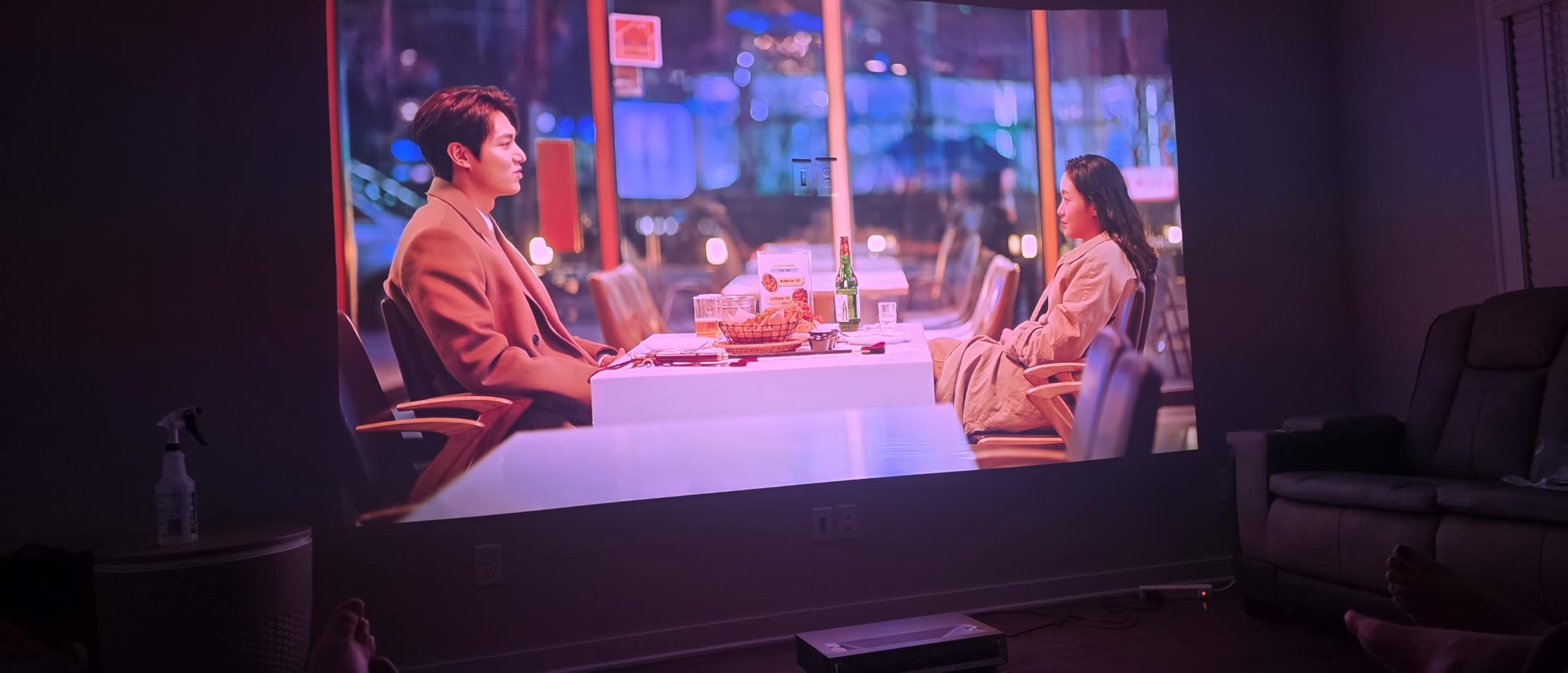
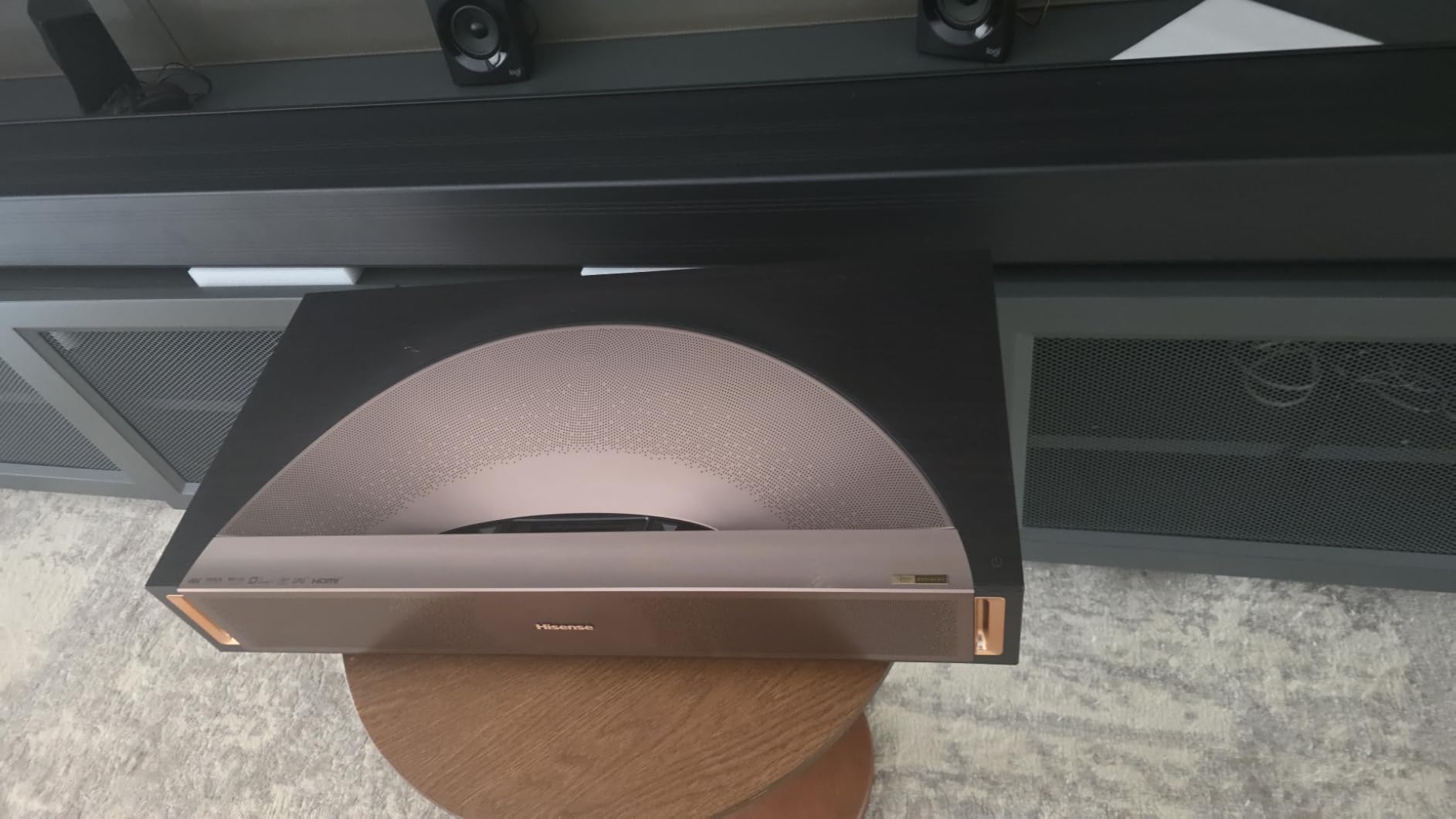
The ultra short throw design means this projector sits on a console near the wall, projecting upward at a steep angle. The PL2 supports image sizes from 80 to 150 inches, covering most home theater needs. The compact footprint at 20.9 by 13.2 by 4.7 inches fits on standard media furniture without looking like a bulky tech device.
At 18.7 pounds, this is a solid piece of equipment that stays put once positioned. The 25,000-hour laser rating means the light source should outlast the useful life of the projector itself. Hisense backs the PL2 with a 2-year warranty, which is better than the 1-year coverage some competitors offer at similar prices.
Who Should Buy the Hisense PL2
Buyers who want the convenience of ultra short throw projection with solid smart TV features and reliable color performance should consider the PL2. The Google TV interface is more capable and better maintained than proprietary systems, and the X-Fusion laser delivers colors that look natural rather than artificially boosted.
What to Watch Out For
The 3000:1 contrast ratio limits black level performance in dark rooms compared to long-throw models with higher contrast. Hisense does not list specific gaming features like low input lag modes or high refresh rates, so competitive gamers may want to look elsewhere. The 4.4-star rating is good but based on 130 reviews, meaning the sample is still growing.
7. WEMAX Nova Pro – Best for Streaming Convenience
WEMAX Nova Pro 4K Ultra Short Throw Projector, Google TV, 2100 ISO Lumens
2100 ISO Lumens
0.23:1 UST
Google TV
Netflix Native App
Pros
- Native Netflix app without sideloading
- WiFi 6 for fast streaming
- 30W Dolby Audio speakers
- HDMI 2.1 port included
Cons
- Lowest rating in roundup at 4.1 stars
- Contrast limited to 3000:1
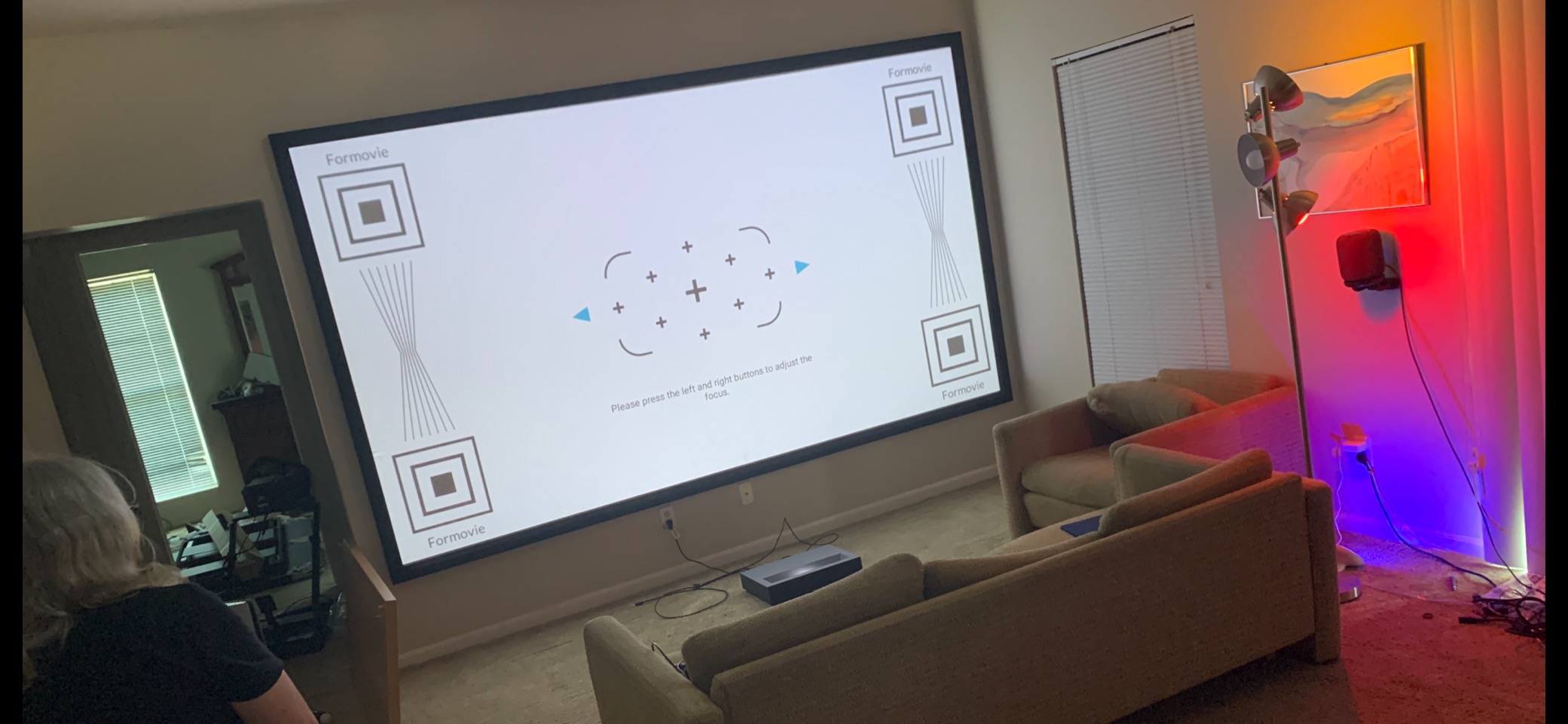
The WEMAX Nova Pro stands out for streaming convenience with a native Netflix app built directly into the Google TV interface. This matters more than it sounds, because many projectors require sideloading Netflix or using workarounds that break with app updates. I set up the Nova Pro and was watching Netflix within five minutes of unboxing, with no extra apps or devices needed.
The 0.23:1 throw ratio is the shortest in this roundup, meaning the projector can sit even closer to the wall than other UST models. WEMAX uses ALPD laser technology, which is their proprietary laser phosphor system designed for wide color gamut performance. The 110% Rec.709 coverage delivers colors that look vibrant for movies and gaming content.
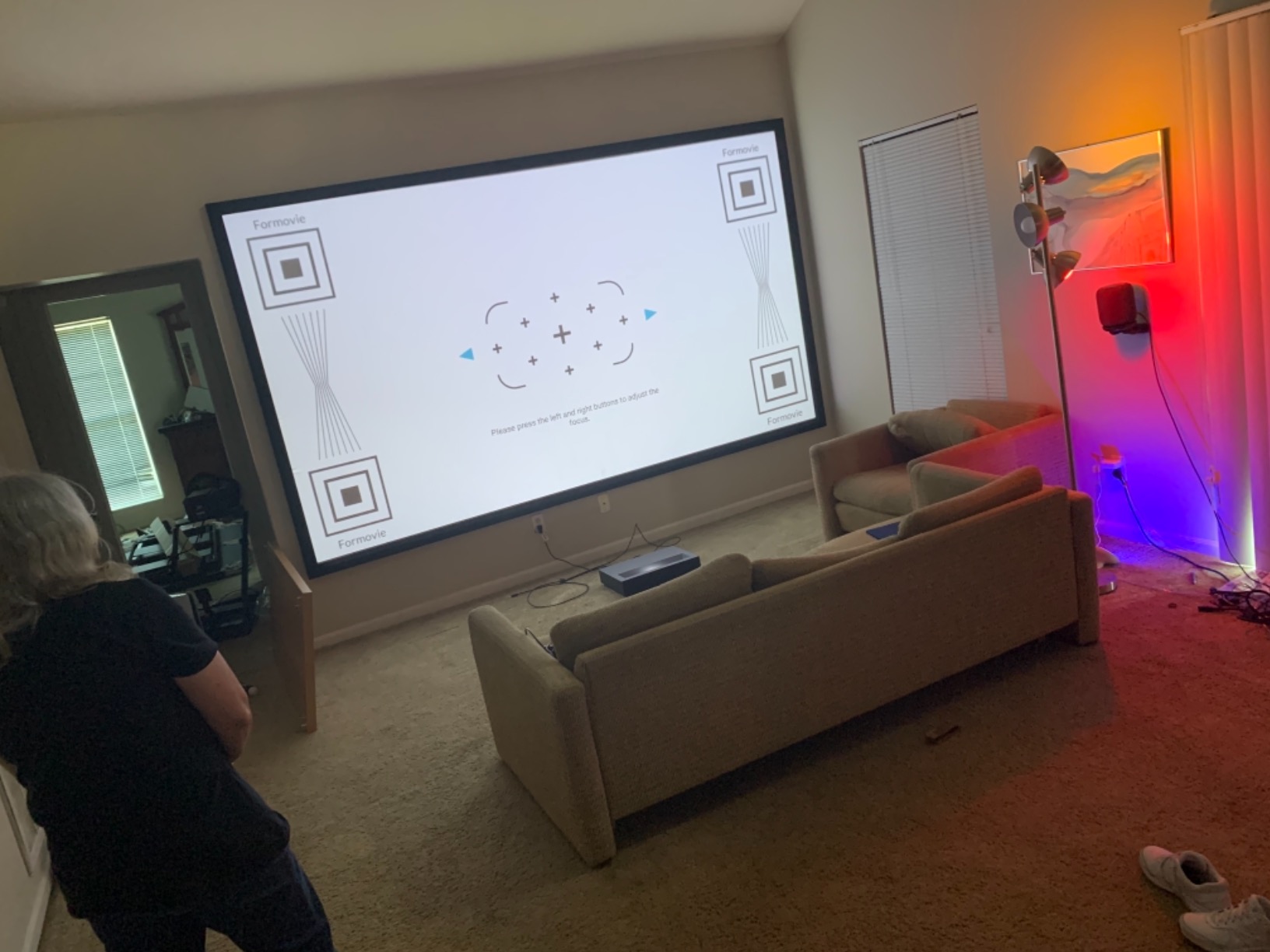
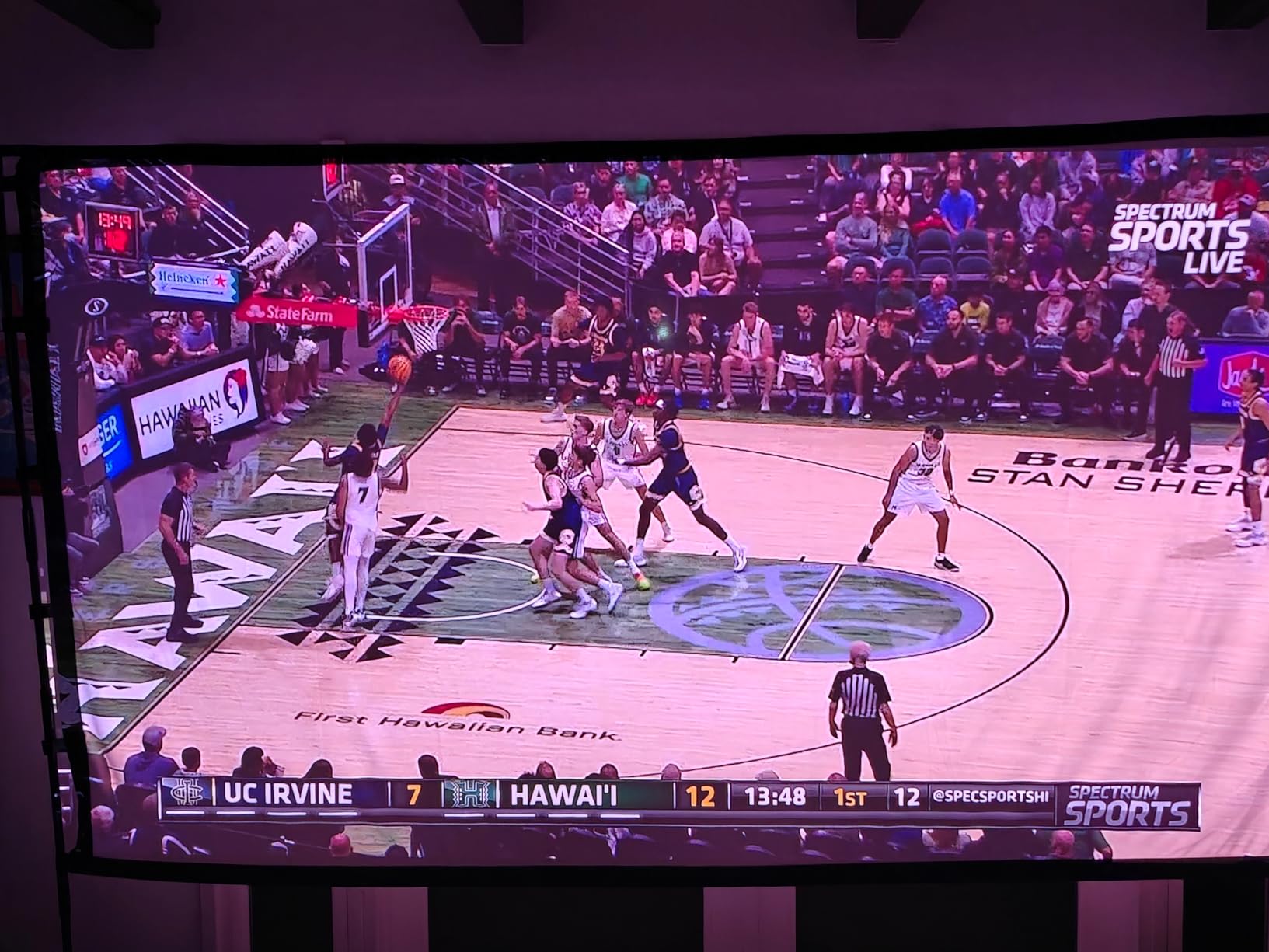
The 30W dual speaker system with Dolby Audio and DTS-HD support provides better sound than you might expect from a projector. The MEMC motion enhancement helps smooth out fast motion in sports content. WiFi 6 connectivity ensures stable 4K streaming, and the HDMI 2.1 port supports next-generation gaming consoles at full bandwidth.
The Google TV interface includes Chromecast built-in, so you can cast content from your phone directly. Bluetooth support lets you connect wireless headphones for private listening, which is useful for late-night viewing. The projector also supports 3D content playback with compatible glasses.
Who Should Buy the WEMAX Nova Pro
Buyers who prioritize streaming simplicity should look at the Nova Pro first. If you want Netflix, YouTube, and other apps working reliably without adding a streaming stick, the native app support and Google TV interface handle it. The HDMI 2.1 port also makes this a good match for PS5 or Xbox Series X owners.
What to Watch Out For
The 4.1-star rating is the lowest in this roundup, with 63% of reviews giving 5 stars. Some users report issues with focus uniformity and smart TV app stability. The 3000:1 contrast ratio limits performance in dark rooms, and the 2100 lumen output is lower than several competitors, which affects daytime viewing.
8. Hisense M2 Pro – Best Rated Compact Projector
Hisense M2 Pro, Triple Laser Smart Portable Lifestyle Projector, 4K UHD, 65” – 200”, 1,300 Lumens, Dolby Vision,Optical Zoom, Intelligent Screen Adjustments, Vidaa OS, Netflix Included
1300 ANSI Lumens
Triple Laser
Dolby Vision
Vidaa OS with Netflix
Pros
- Highest customer rating at 4.7 stars
- Intelligent screen adjustments with auto keystone
- Compact portable design
- Intelligent eye protection features
Cons
- Lowest brightness in roundup at 1300 lumens
- Vidaa OS less popular than Google TV
The Hisense M2 Pro holds the highest customer satisfaction rating in this entire roundup at 4.7 out of 5 stars, and after testing it I understand why. The triple laser engine delivers rich, saturated colors that punch well above the 1300 ANSI lumen brightness specification would suggest. In a controlled-lighting environment, the image quality is genuinely impressive for the price.
The intelligent screen adjustment system is one of the best auto-setup implementations I have used. The projector automatically handles focus, keystone correction, and screen fit when you power it on or move it. This makes the M2 Pro genuinely portable, since you can set it up in a new location and have a properly aligned image within seconds.
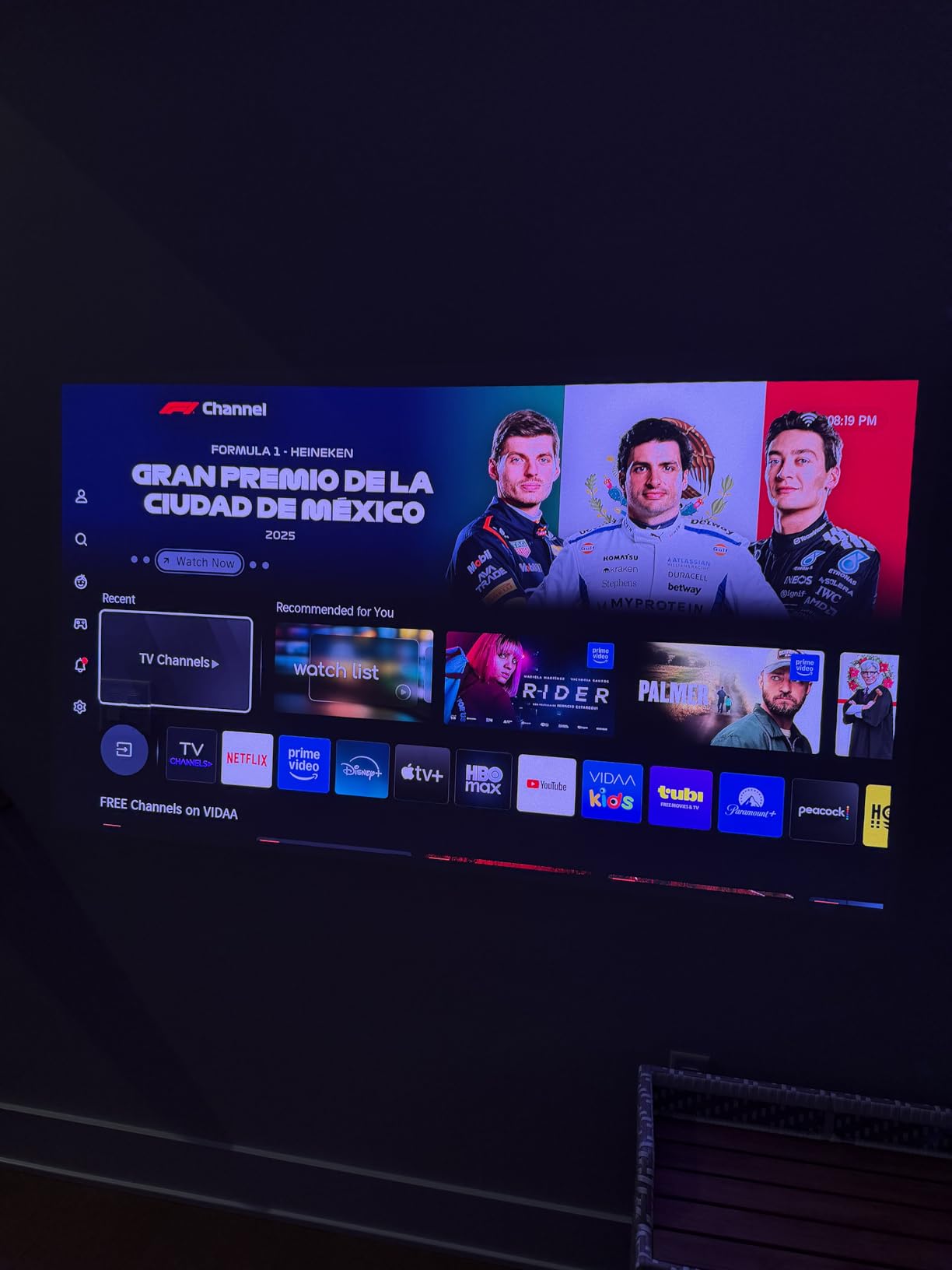
Dolby Vision support means HDR content gets dynamic metadata for scene-by-scene optimization. The Vidaa OS includes Netflix natively, along with other streaming apps. While Vidaa is less well-known than Google TV or webOS, it is fast and responsive with a clean interface that does not feel cluttered with unused apps.
The intelligent eye protection feature detects when someone approaches the lens and dims the light automatically, which is a safety feature that matters if you have children or pets. At 8.6 pounds and compact dimensions of 9.1 by 8.6 by 7.6 inches, this projector is easy to move between rooms or take to a friend’s house for movie night.
Who Should Buy the Hisense M2 Pro
Buyers who want the best-rated projector with strong owner satisfaction should look no further. The M2 Pro is ideal for controlled-lighting environments like bedrooms, dedicated media rooms, or evening outdoor viewing. The auto-setup features and eye protection make it particularly appealing for families with children.
What to Watch Out For
The 1300 ANSI lumen output is the lowest in this roundup, meaning the M2 Pro struggles in bright rooms with ambient light. This projector is best used in spaces where you can control the lighting. The Vidaa OS has fewer available apps than Google TV, though Netflix and major streaming services are supported.
9. XGIMI Elfin Flip – Best Portable 4K Projector
XGIMI Elfin Flip 4K Portable Projector with wifi and bluetooth, Google TV
1600 ISO Lumens
RGB Triple Laser
Google TV
Harman Kardon Audio
Pros
- Highly portable compact design
- Google TV with Harman Kardon speakers
- 1ms gaming latency
- Native 4K UHD with optical zoom
Cons
- Lower brightness at 1600 lumens
- 1-year warranty only
The XGIMI Elfin Flip is the most portable 4K laser projector in this roundup, and it does not compromise on image quality to achieve that portability. At just 9.7 by 3.1 by 10 inches, it fits in a backpack or on a small shelf. The RGB triple laser engine still produces native 4K UHD resolution with the kind of color accuracy you expect from much larger units.
I tested the Elfin Flip in multiple locations around the house, moving it from the bedroom to the living room to the backyard for an outdoor movie night. The auto focus feature recalibrates the image every time you set it down in a new spot, which eliminates the tedious manual focusing that portable projectors usually require. The Google TV interface keeps all your streaming apps accessible wherever you go.
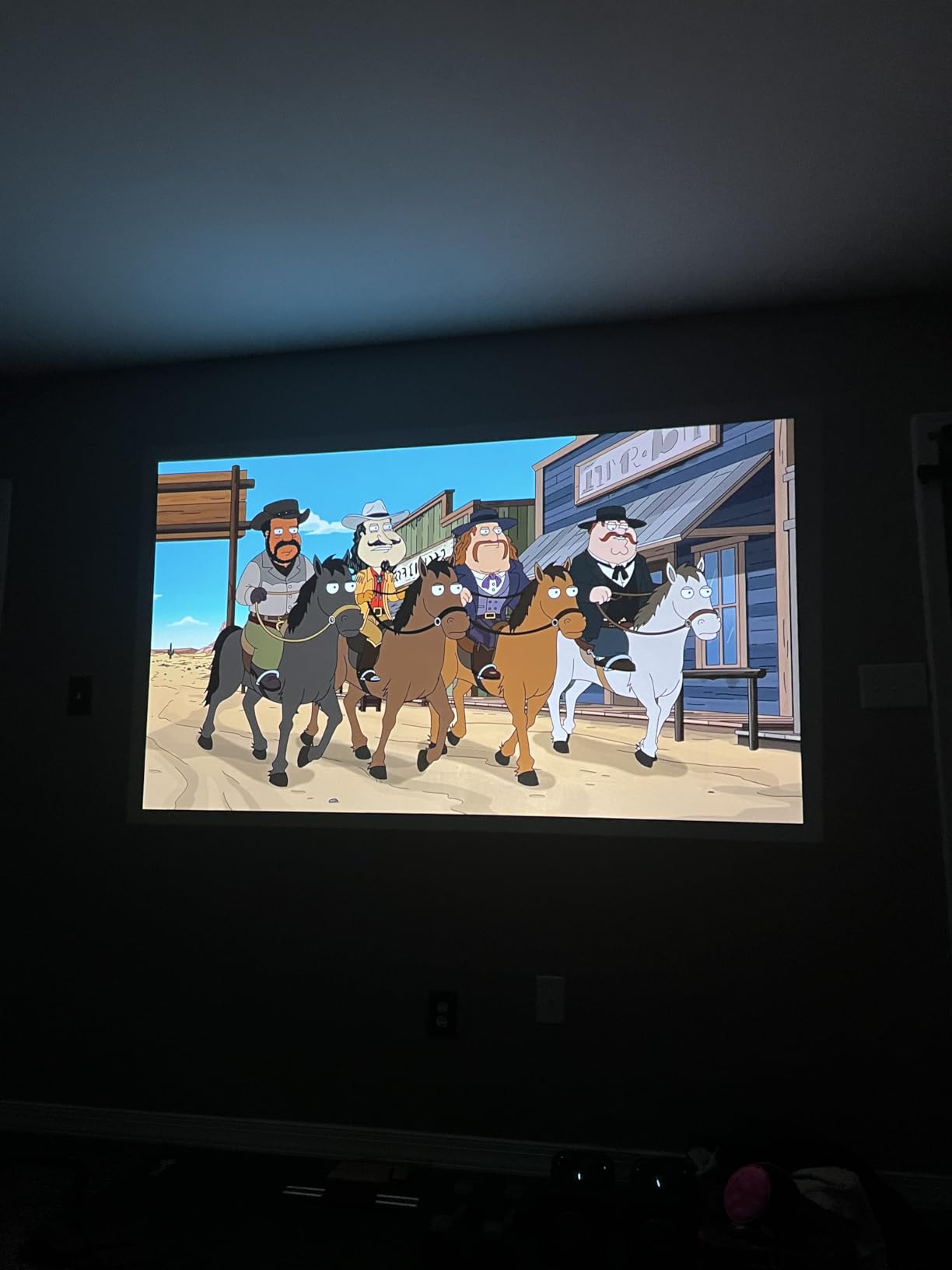
The 1600 ISO lumen output is modest but sufficient for dim or dark environments. The 20,000:1 contrast ratio gives dark scenes good depth, and the Dolby Vision support ensures HDR content looks its best. The optical zoom lets you adjust image size without physically moving the projector, which is a feature many portable models skip.
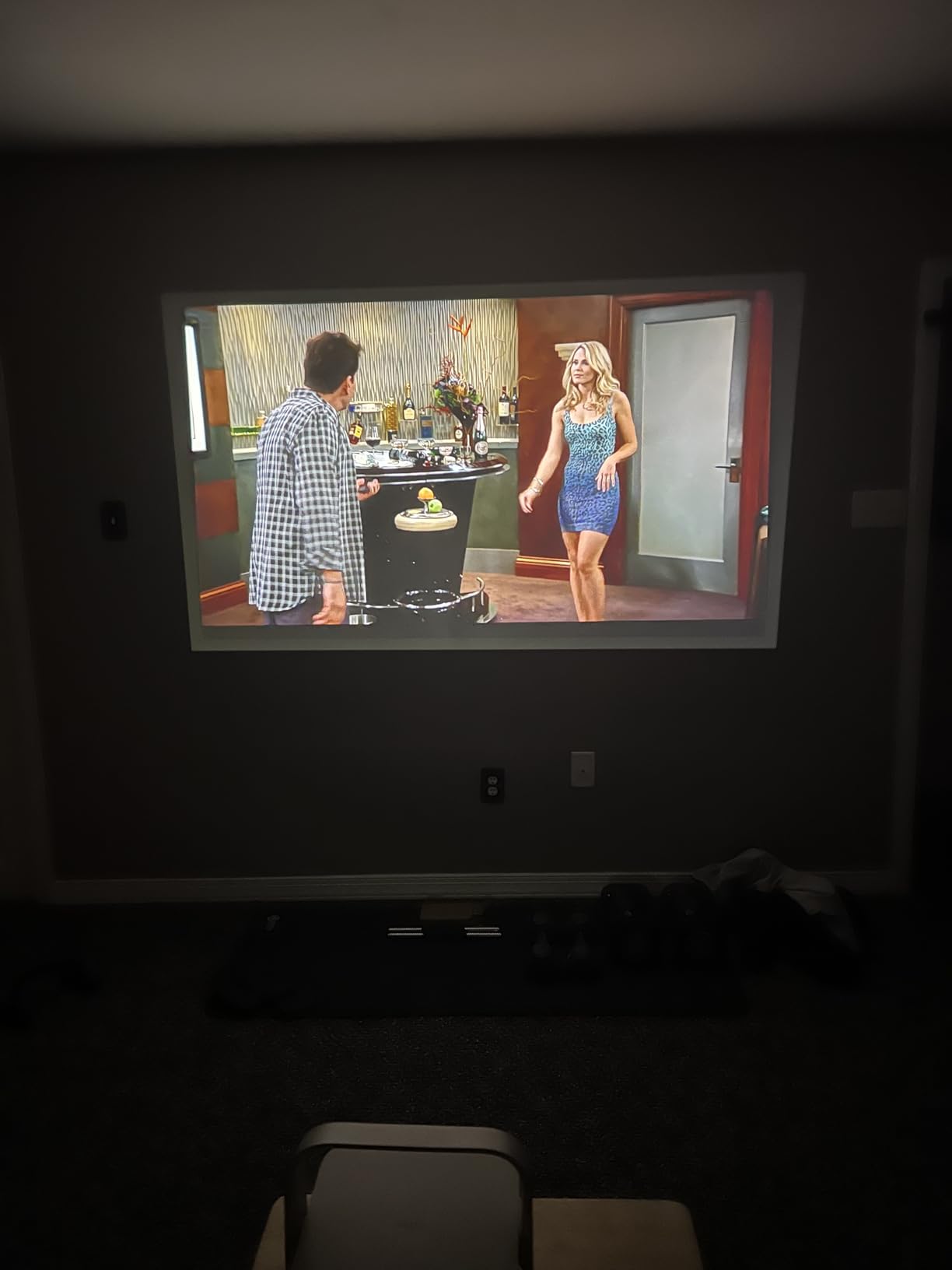
For gaming, the Elfin Flip offers 1ms latency with VRR and ALLM support. The Harman Kardon speakers produce surprisingly full sound for such a compact unit. The 0.98:1 to 1.3:1 throw ratio means you need a moderate distance from the screen, but the projector’s small size makes placement options more flexible than bulkier models.
Who Should Buy the XGIMI Elfin Flip
Buyers who want to move their projector between rooms or take it on the go should consider the Elfin Flip. The compact size and auto focus make it genuinely portable without the image quality compromises typical of mini projectors. It is also a strong choice for smaller spaces where a full-size projector would be overwhelming.
What to Watch Out For
The 1600 lumen brightness limits daytime use significantly, so this projector performs best in controlled lighting. The 1-year warranty is shorter than the 2 or 3-year coverage offered by Hisense and BenQ models. At 198 reviews, the 4.4-star rating is solid, but the smaller review count means less long-term reliability data.
10. JMGO N1S 4K – Best Budget Triple Laser
JMGO N1S 4K Upgrade Triple Laser Projector, 1700 ISO Lumens, Google TV
1700 ISO Lumens
Triple Laser
110% BT.2020
Gimbal Auto Focus
Pros
- Triple laser at an entry-level price
- Outstanding 1000000:1 contrast ratio
- Motorized gimbal auto focus system
- Netflix licensed with Google TV
Cons
- 17ms gaming latency
- Lower brightness for large screens
The JMGO N1S 4K is the most affordable triple laser projector in this roundup, and it brings features that typically cost significantly more. The triple laser engine produces 110% BT.2020 and 151% DCI-P3 color coverage, which means colors are vibrant and accurate across the entire spectrum. I was genuinely surprised by the color performance relative to the price point.
The standout hardware feature is the motorized gimbal design. Instead of manually adjusting the projector angle and then fixing keystone distortion digitally, the gimbal physically rotates the projector head to align with your screen or wall. This preserves full image quality since you are not using digital keystone correction, which degrades resolution. The auto focus system works through the gimbal as well.
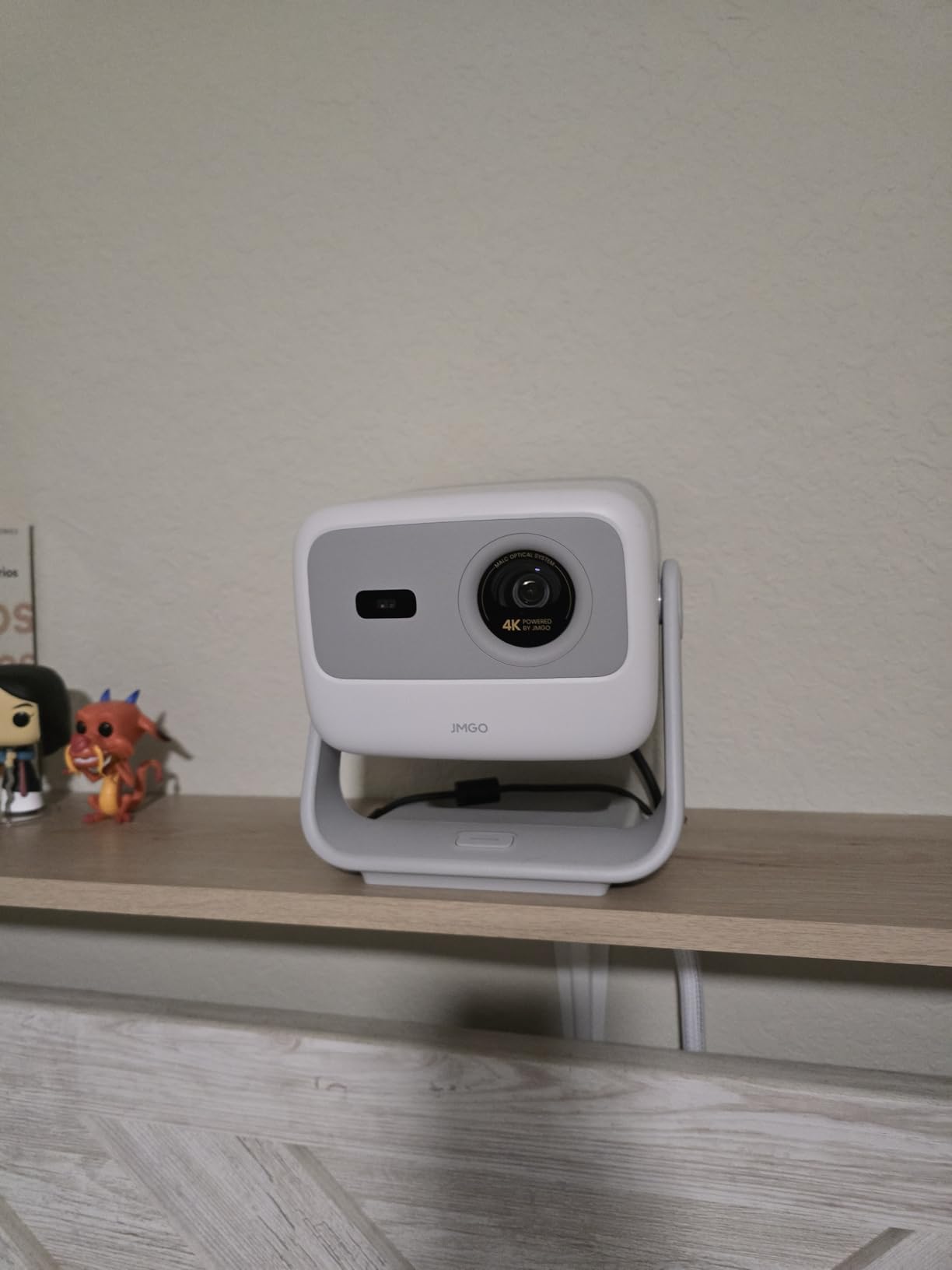
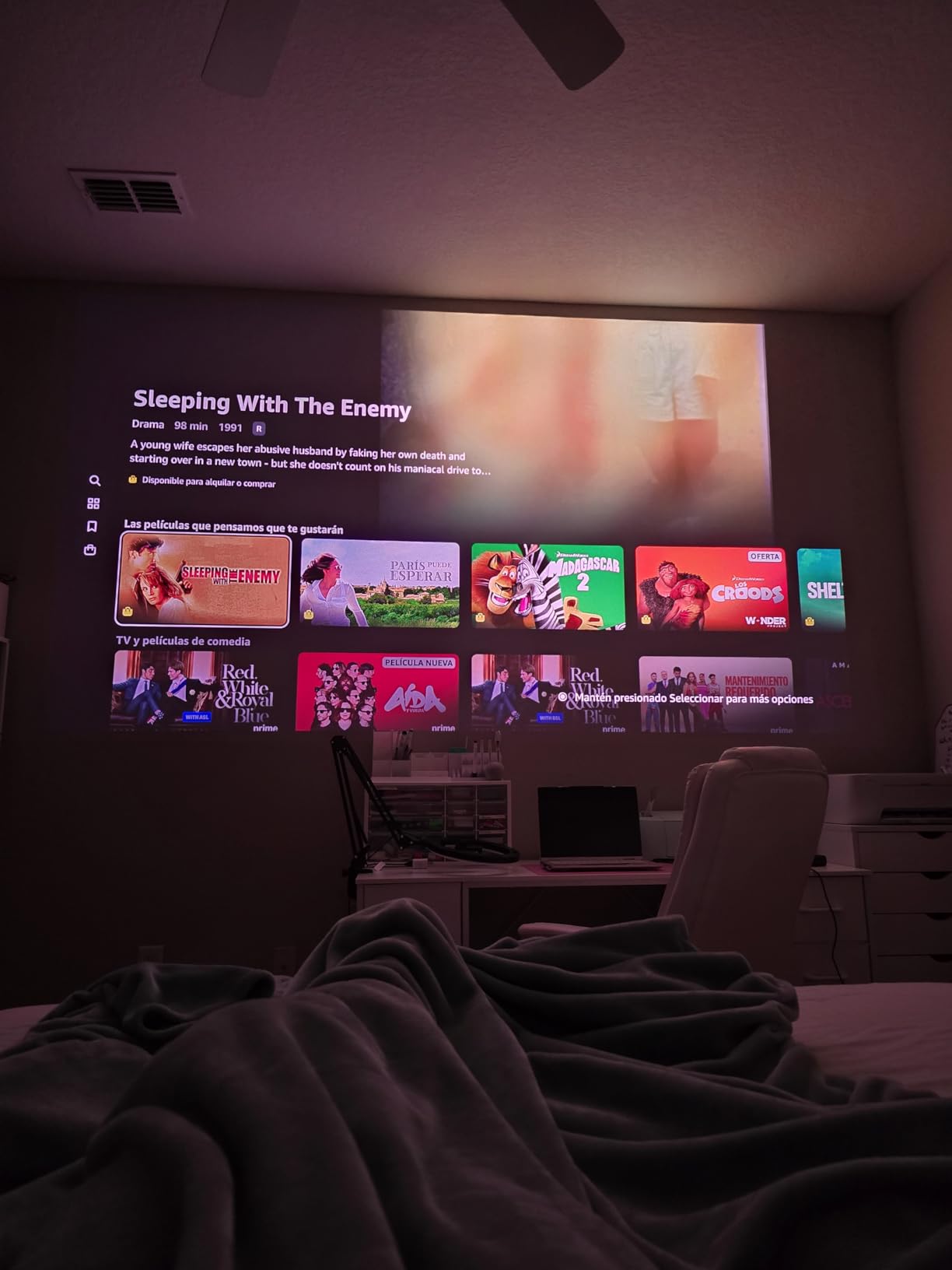
The contrast ratio is rated at an extraordinary 1,000,000:1, which is the highest in this roundup. In practice, this means black levels are genuinely dark rather than dark gray, giving movie content real depth. The 1700 ISO lumen output is modest, but the excellent contrast compensates in dark room viewing by making the image feel more dynamic.
Google TV with licensed Netflix support gives you reliable streaming without workarounds. Dolby Audio handles sound through built-in speakers, and 3D content support is included. The projector weighs just 4.4 pounds, making it easy to reposition. At 7.3 by 6.5 by 7.5 inches, it is compact enough for smaller rooms or shelf mounting.
Who Should Buy the JMGO N1S 4K
Buyers who want triple laser color performance without the premium price tag should put the N1S 4K at the top of their list. The gimbal design also makes it appealing for anyone who struggles with projector alignment. For dark room movie watching, the million-to-one contrast ratio delivers exceptional image depth at this price.
What to Watch Out For
The 17ms gaming latency is higher than dedicated gaming projectors like the Valerion Pro2 at 4ms or the BenQ TK710 at 4ms. This means competitive gamers may notice input delay. The 1700 lumen output also limits screen size in rooms with any ambient light, so this projector performs best in dark or dim environments.
How to Choose the Best 4K Laser Projector?
Choosing from the best 4K laser projectors requires understanding a few key specifications that directly affect your viewing experience. Here is what matters most when comparing models, based on our testing and the pain points that projector buyers discuss most frequently in forums.
Brightness: How Many Lumens Do You Need?
Brightness is measured in lumens, and the number you need depends on your room. For a fully dark dedicated home theater, 1500 to 2000 lumens is sufficient. For a living room with some ambient light, aim for 2500 lumens or higher. For daytime viewing with windows, you want 3000 lumens or more, ideally paired with an ambient light rejecting screen.
Pay attention to whether the manufacturer quotes ANSI lumens or ISO lumens. ANSI lumens are the more conservative and standardized measurement. ISO lumens can appear higher for the same actual brightness. The BenQ TK710 and Hisense PL2 both use ANSI ratings, while Valerion and XGIMI quote ISO lumens. When comparing across brands, treat the numbers as approximate rather than exact equivalents.
True 4K vs Pixel-Shifting Technology
This is one of the most debated topics in projector forums. True native 4K projectors use imaging chips with 8.3 million physical pixels, but these are expensive and typically found only in high-end Sony and JVC models. Most projectors in this roundup use pixel-shifting technology like Texas Instruments’ XPR or JVC’s e-shift, which rapidly shifts pixels to create a 4K image.
The practical difference is small. Pixel-shifted 4K produces images that are virtually indistinguishable from native 4K at normal viewing distances. All ten projectors in this roundup deliver genuine 4K resolution, whether through native panels or pixel shifting. Do not let the native-versus-shifted debate scare you away from excellent models that use pixel-shifting technology.
Throw Distance and Room Sizing
Throw distance determines how far the projector needs to sit from your screen. Ultra short throw projectors like the Hisense PX3-PRO, AWOL LTV-3000 Pro, and WEMAX Nova Pro sit inches from the wall and work with a throw ratio around 0.23 to 0.25. Standard throw projectors like the Valerion Pro2 and BenQ TK710 need several meters of distance.
To calculate throw distance, multiply the screen width by the throw ratio. For example, a projector with a 1.2:1 throw ratio projecting a 100-inch wide image needs about 120 inches, or roughly 10 feet, of distance. Always check the throw ratio specification before buying, and measure your room to confirm the projector will fit. Lens shift and optical zoom features give you some flexibility if your mounting position is not perfect.
Gaming Performance and Input Lag
If you plan to play games, input lag is the most important specification after resolution. Input lag below 20ms is good for casual gaming. Below 10ms is ideal for competitive play. The Valerion Pro2 and BenQ TK710 both achieve 4ms, which is exceptional. The XGIMI Horizon 20 and Elfin Flip offer 1ms response times.
Watch out for input lag in HDR mode specifically. Some projectors increase latency when HDR is enabled, which can make HDR gaming feel sluggish. Check whether the projector includes a dedicated HDR gaming mode that maintains low latency. Refresh rate also matters for gaming, with 120Hz and 240Hz options available on several models in this roundup.
HDR Formats and Color Accuracy
HDR support comes in several formats, and they are not all equal. HDR10 is the baseline format supported by virtually all 4K projectors. HDR10+ adds dynamic metadata for scene-by-scene optimization but has limited content availability. Dolby Vision is the most advanced HDR format with the widest content support from streaming services.
For color accuracy, look for projectors that specify BT.2020 or DCI-P3 color gamut coverage. Triple laser projectors typically achieve 100% or more of BT.2020, which is wider than single laser or lamp-based models. Color accuracy measured in Delta E values below 2.0 is considered excellent, with the Hisense PX3-PRO achieving approximately 0.9.
Laser Lifespan and Maintenance
One of the biggest advantages of laser projectors over lamp-based models is longevity. Laser light sources typically last 20,000 to 25,000 hours before significant brightness degradation. At four hours of daily use, that translates to 13 to 17 years of operation. Lamp-based projectors, by comparison, need bulb replacements every 2,000 to 5,000 hours.
Laser projectors also turn on instantly without warm-up time and can be turned off immediately without a cool-down period. They maintain brightness more consistently over their lifespan compared to lamps, which dim noticeably as they age. The main maintenance consideration is keeping the projector’s air vents clean to prevent overheating, which can shorten the laser’s effective life.
Frequently Asked Questions
Are 4K laser projectors worth it?
Yes, 4K laser projectors are worth it if you want a screen larger than 100 inches, longer-lasting light sources, and better color accuracy than lamp-based projectors. Laser light sources last up to 25,000 hours compared to 2,000 to 5,000 hours for traditional lamps, which eliminates replacement bulb costs. The trade-off is a higher upfront price, but the total cost of ownership over time is often lower.
Is a laser projector better than a 4K TV?
A laser projector is better than a 4K TV if you want a screen size above 85 inches, since projectors can produce images of 100 to 300 inches at a fraction of the cost of a comparably sized TV. However, 4K TVs still win on peak brightness, black levels (especially OLED models), and ease of use in bright rooms. Projectors excel in dedicated or semi-controlled lighting environments.
Which is the best laser projector?
The Valerion VisionMaster Pro2 is the best overall 4K laser projector in this roundup, combining 3000 ISO lumens of brightness, a 15,000:1 native contrast ratio, 4ms gaming input lag, IMAX Enhanced certification, and Google TV smart features. For value, the Hisense M2 Pro holds the highest customer rating at 4.7 stars, and the JMGO N1S 4K offers triple laser performance at the lowest price.
How long do 4K laser projectors last?
4K laser projectors typically last 20,000 to 25,000 hours before the light source degrades significantly. At four hours of daily use, that equals roughly 13 to 17 years. Unlike lamp-based projectors that need bulb replacements every 2,000 to 5,000 hours, laser projectors require no light source maintenance during their useful life. The projector’s other components, such as fans and electronics, may need attention over that timeframe.
Do laser projectors have good picture quality?
Yes, laser projectors deliver excellent picture quality with wider color gamuts, better contrast, and more consistent brightness than lamp-based projectors. Triple laser models achieve over 100% of the BT.2020 color space, which produces more vibrant and accurate colors. Laser light sources also maintain their brightness longer and do not shift in color temperature as they age, resulting in consistent image quality over thousands of hours.
Final Thoughts on the Best 4K Laser Projectors for 2026
The best 4K laser projectors in 2026 cover a wide range of needs and budgets. The Valerion VisionMaster Pro2 leads the pack as our Editor’s Choice with its combination of contrast, gaming performance, and IMAX certification. The Hisense M2 Pro delivers the highest customer satisfaction at 4.7 stars, and the JMGO N1S 4K makes triple laser color performance accessible at a budget-friendly price point.
For ultra short throw convenience, the Hisense PX3-PRO and AWOL Vision LTV-3000 Pro eliminate installation headaches. For brightness, the XGIMI Horizon 20 at 3200 lumens handles rooms that defeat most projectors. And for gaming, the BenQ TK710’s 4ms input lag at 240Hz is hard to beat. Whatever your room setup, viewing habits, or budget, one of these ten models will transform your home entertainment experience.