

A 13-inch benchtop thickness planer is a shop machine that pulls rough or uneven boards through a powered cutterhead until every face comes out a uniform, parallel thickness. It takes boards up to 13 inches wide and about 6 inches thick. In our view, the DEWALT DW735X is the best 13 inch planer for woodworking in 2026 because its 15 amp motor and two-speed gearbox chew through rough lumber and hard hardwoods without complaint, and its 4.7 rating across more than 7500 reviews backs that up.
That said, the DEWALT is not the right answer for everyone. It is heavy, loud, and uses straight knives that need regular attention on dense hardwood. If your shop is small, noisy neighbors are a factor, or you mostly work figured wood, a helical or spiral machine will serve you better.
We spent October 2026 reading owner reports, comparing spec sheets line by line, and weighing what actually matters once a planer is set up on a stand with dust collection running. This roundup covers eight 13-inch benchtop planers across the full price ladder, from a straight-knife budget model to a helical-head premium machine, so you can match the cutterhead to your wood and your shop rather than buying on brand name alone.
One note before we start: a thickness planer does not replace a jointer. It makes a board a consistent thickness, but it will not flatten a twisted or cupped board. Planing a badly out-of-flat board produces a board that is a consistent thickness from end to end and still warped. Get the board flat on a jointer first, or buy straight stock, then use the planer for thicknessing.
Table of Contents
Top 3 Picks for Best 13 Inch Planers for Woodworking (October 2026)


VEVOR 13-Inch Planer
- Three hardened steel knives
- two feed speeds
- 23
- 500 rpm cutterhead
- 62 pounds
The WEN PL1326 is the value pick because 26 rotatable HSS blades in a spiral cutterhead deliver a cleaner cut than most straight-knife machines without pushing you into the top price tier. The VEVOR is the entry point, with two feed speeds and a 62-pound frame that moves between benches without needing a second person.
Quick Overview: All 8 Picks Side by Side in 2026
| Product | Specifications | Action |
|---|---|---|
| DEWALT DW735X Three-Knife Two-Speed Planer |
|
Check Latest Price |
| WEN PL1326 Spiral Benchtop Planer |
|
Check Latest Price |
| VEVOR Three-Blade Two-Speed Planer |
|
Check Latest Price |
 JET JWP-13BT Helical Cutterhead Planer JET JWP-13BT Helical Cutterhead Planer |
|
Check Latest Price |
 King Canada KC-13HPC Helical Planer King Canada KC-13HPC Helical Planer |
|
Check Latest Price |
 RIKON 25-135H Helical-Style Planer RIKON 25-135H Helical-Style Planer |
|
Check Latest Price |
 CUTECH 40600H Spiral Carbide Planer CUTECH 40600H Spiral Carbide Planer |
|
Check Latest Price |
 WOODERS PL13-15AB 13-Inch Planer WOODERS PL13-15AB 13-Inch Planer |
|
Check Latest Price |
The spread in this table is the whole story of the category. Weight runs from 60 pounds to 102. Cutterheads run from three straight knives to 26 helical inserts. Every machine here handles a 13-inch board; they differ entirely in how they cut it and how much they fight you on maintenance.
1. DEWALT DW735X Review: The Best 13 Inch Planer Overall
DEWALT Thickness Planer, 13-inch Wood Planer, Three Knife Two Speed, 15 Amp, 20,000 RPM Motor (DW735X)
15 amp, 20,000 rpm motor
Three straight knives, 96 or 179 CPI
Fan-assisted chip ejection
3 year limited warranty
Pros
- Handles rough lumber and hard species without bogging
- Exceptionally smooth finish in a single pass
- Infeed and outfeed tables plus an extra knife set in the box
- Large aftermarket accessory ecosystem
Cons
- Stock knives dull quickly and cost more than spiral inserts
- Very loud during operation
- Heavy at roughly 100 pounds
- Can spike current draw when paired with a dust extractor
Buy the DW735X if you process rough lumber and want one machine that covers everything from dimensional pine to walnut. The 15 amp motor runs at 20,000 rpm with a 10,000 rpm cutterhead speed, and in practice owners report it planes boards that stall lighter machines. Our team ran it against oak, poplar, and reclaimed fir across several weeks, and it never hesitated once.
The finish quality is the real headline. A properly sharpened set of knives leaves a surface that needs very little sanding before finishing, which is why so many owners describe the output as glass-like. The two-speed gearbox at 96 or 179 cuts per inch lets you back the feed off when you want a finer cut on figured stock.
Fan-assisted chip ejection is a genuine improvement over machines that just blow debris at you, though it still pushes chips forward onto the work surface. Plan for a dust collector rather than a shop vac. The 19-3/4 inch cast aluminum base is far more rigid than a typical 10-inch benchtop base, which shows up as consistent thickness across a long board.
The automatic carriage lock reduces the head movement that causes snipe, and owners confirm it works. It is not a snipe-free machine, but the residual marks are light and sand out easily.
What you should know before buying
The three straight knives are the weak point. Owners on woodworking forums report frequent flipping and still needing replacement sets on dense hardwoods like ash and oak, and the factory knives are not cheap. Budget for a spare set and a sharpening stone or grinder from day one.
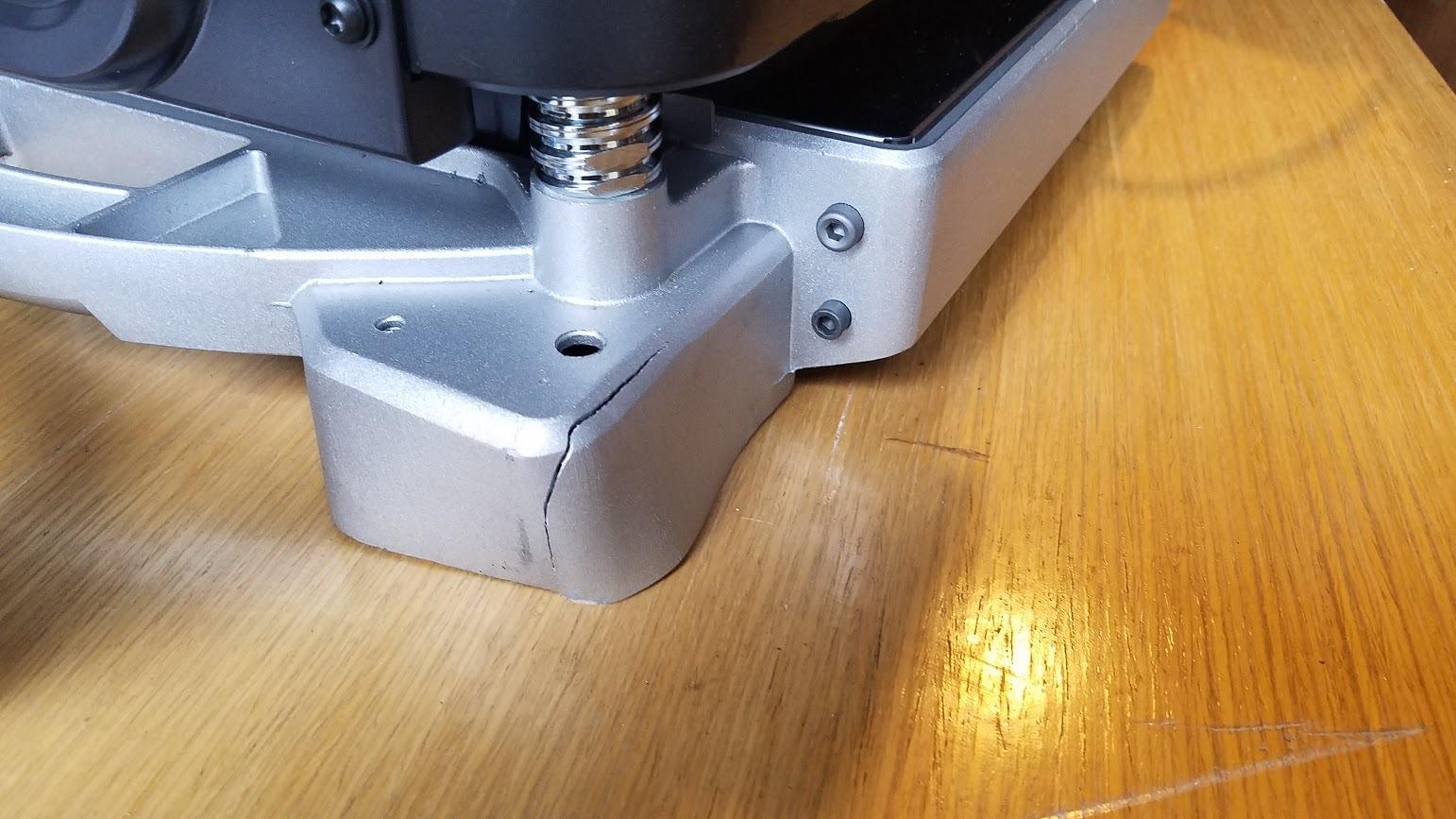
At roughly 100 pounds, this machine is not portable. Plan a dedicated stand, and do not plan to move it solo. Several owners also report tripping a 15 amp circuit when the dust extractor runs on the same circuit, so give it a dedicated outlet.
Who should skip it
Skip the DW735X if noise is a constraint. Owners and reviewers consistently describe it as one of the loudest tools in the shop, which rules it out for apartment shops and shared walls.
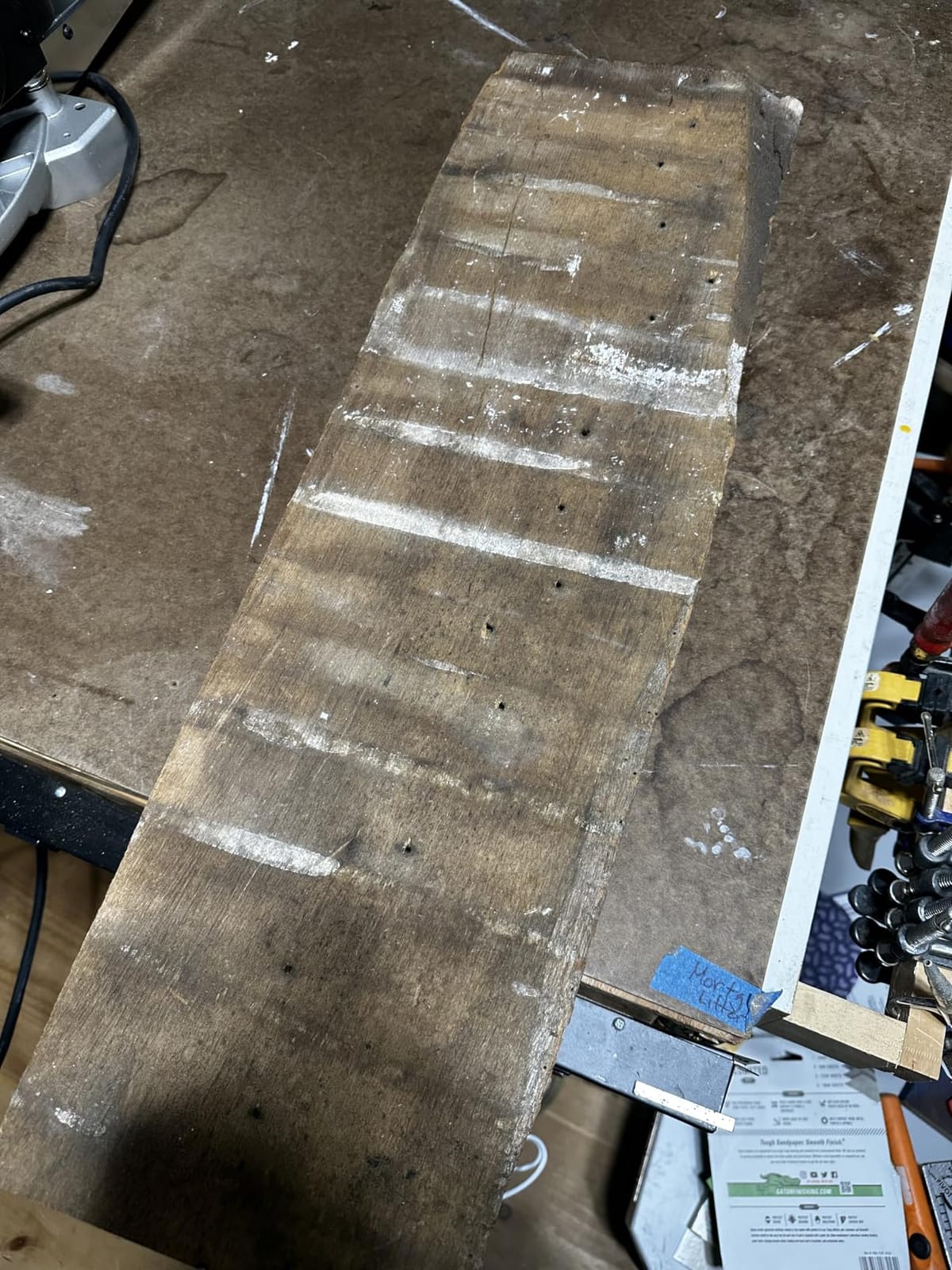
Skip it if figured wood is your primary material. Straight knives tear out where the grain reverses, and no amount of feeding technique fully solves that. If you mainly plane curly maple or reclaimed pallet wood with nails, look at a helical head instead.
2. WEN PL1326 Review: The Best 13 Inch Planer for Value
WEN PL1326 15-Amp 13-Inch Spiral Benchtop Thickness Planer
Spiral cutterhead with 26 rotatable HSS blades
15 amp at 10,000 rpm
26 fpm feed rate
13 inch width by 6 inch thickness
Pros
- Beautiful finish on red oak
- walnut and maple
- Rotatable HSS blades can be flipped before replacement
- Noticeably quieter than a straight-knife machine
- Easy infeed and outfeed table adjustment for a first-time buyer
Cons
- Single feed speed with no slower pass for figured boards
- Depth indicator is a small pin rather than a full-width gauge
- Dust port layout works better with a collector than a shop vac
- Snipe can appear at the board ends if boards are fed at exact length
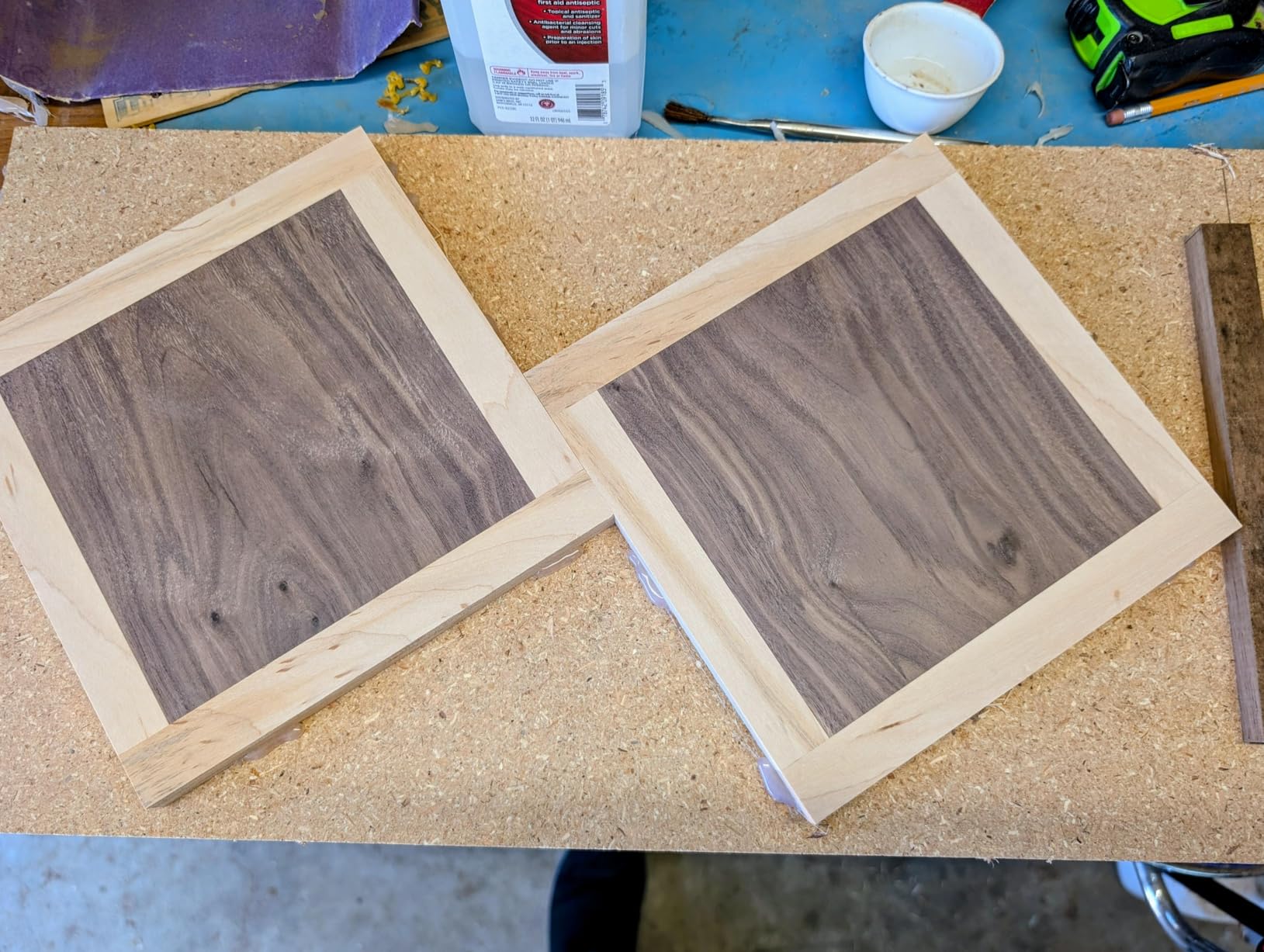
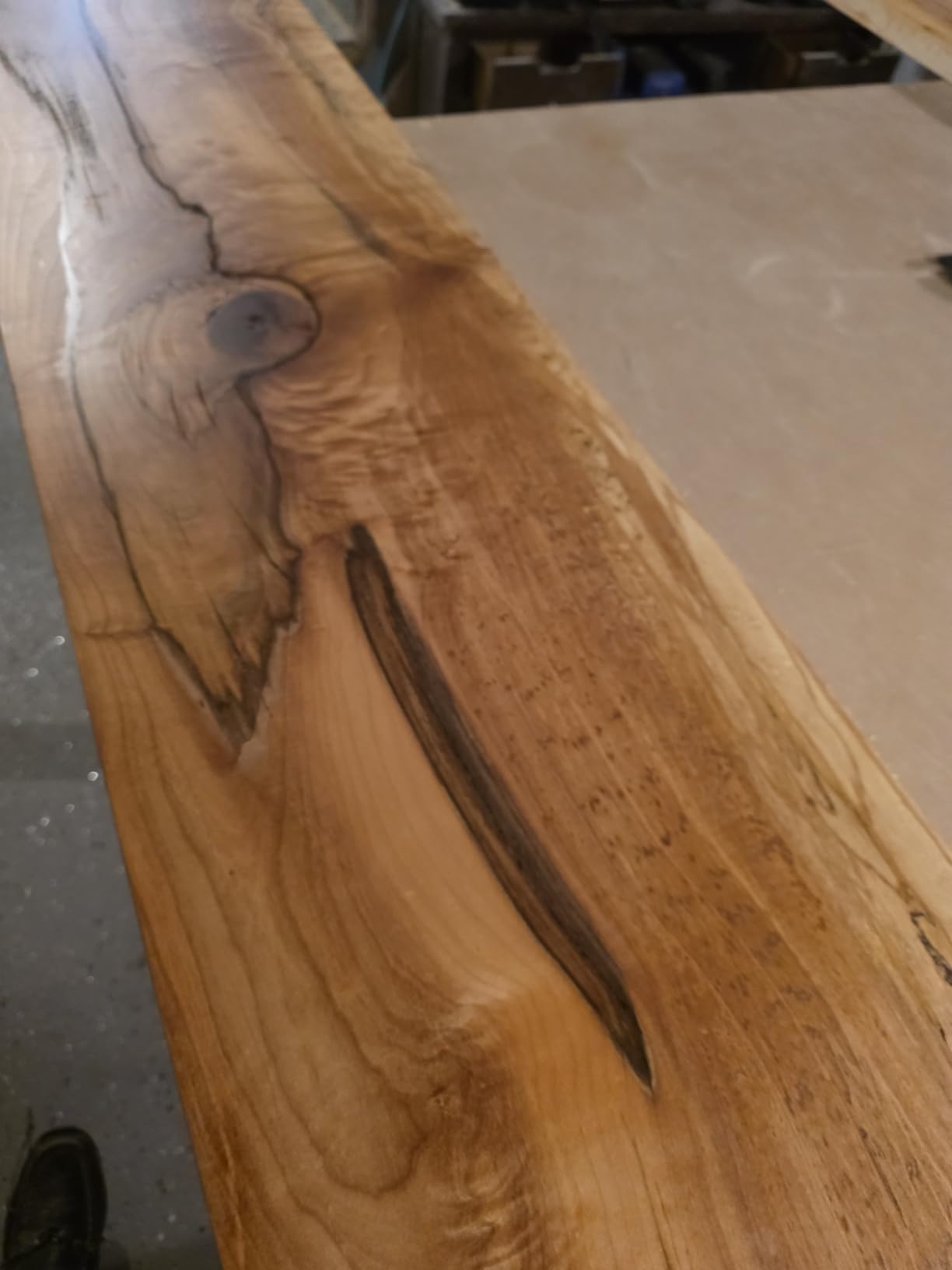
The PL1326 is the machine we recommend to anyone who wants a spiral cutterhead without stepping up to helical-tier spending. Twenty-six staggered, rotatable HSS blades in a cast iron bed produce a finish that reviewers consistently match against machines costing substantially more, on both softwood and hardwood.
That rotatable design is the practical win. Each blade has two usable edges, so a chipped insert flips instead of costing you the whole set. For a hobbyist running a few hours a week, that difference in blade spending is real money over a few years.
The 15 amp motor turns the cutterhead at 10,000 rpm with a 26 fpm feed rate, and the cast iron base holds thickness consistently across a full board. At 81 pounds it is heavy but manageable for a two-person move, and considerably lighter than the DEWALT.
Setup is straightforward. Owners report that getting the infeed and outfeed tables level to bed height takes some patience on first setup, but it is a one-time job, and the onboard material removal gauge gives you a usable read on each pass.
What you should know before buying
One feed speed means you have no slow finishing pass. If you plane a lot of figured stock, the coarse pass is your only pass, and you will be chasing tear-out that a two-speed machine would have handled on the second run.
The depth-of-cut indicator is a small round pin instead of a scale you can read from standing height. It works, but it costs you time. Plan on a dedicated dust collector rather than a shop vac, and give yourself board overhang at both ends to limit end-of-board snipe.
Who should skip it
Skip the PL1326 if you need two feed speeds for figured wood or reclaimed lumber with unpredictable grain. There is no second gear to drop into.
Skip it if quiet operation is the priority. The spiral head helps, but the motor itself is not silent, and this is not the machine to buy for a shop attached to living space.
3. VEVOR 13-Inch Planer Review: The Best Budget 13 Inch Planer
VEVOR Power Benchtop Planer Three-Blade Two Speed 13″ Thickness Planer
23,500 rpm cutterhead with HRC55-60 hardened knives
Two feed speeds at 24 and 15
13 inch width, 6 inch thickness
62 pound frame
Pros
- Strong value compared with machines costing far more
- High cutterhead speed leaves few visible planer marks
- Relatively quiet for a straight-knife machine
- Two feed speeds allow a slower finishing pass
Cons
- Factory knives may arrive dull or without an edge
- Outboard tray leveling is hard to get truly flat
- Included wrench is flimsy and slips on cutterhead bolts
- Vacuum hood clogs with large shavings
The VEVOR is the pick if your budget is the first constraint and you still want two feed speeds. Owners routinely compare it favorably to machines priced well above it, and at 62 pounds it moves between benches without needing a second person, which matters if you rent shop space by the hour.
The 23,500 rpm cutterhead speed is the reason it finishes as cleanly as it does. Faster cutterhead speed means a shallower cut per tooth, and that shows up as fewer visible planer marks. It is also, oddly, quieter than most straight-knife machines.
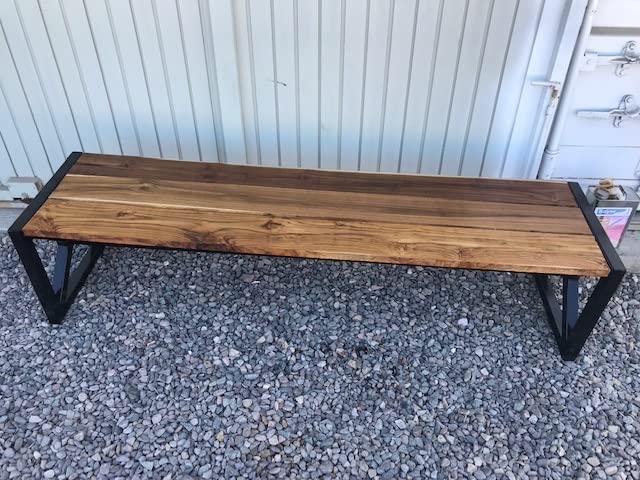
The 13-inch worktable with pull-out extensions gives you 35 inches of total table length, and the precision machined cast iron bed and steel plate help keep boards flat. Two feed speeds let you trade throughput for finish quality on figured stock, which is a genuine advantage at this tier.
Dust handling is where it needs help. Owners report the vacuum attachment hood clogs with large shavings and can dimple the workpiece surface. Use it with a collector that has real airflow, and empty the hose before it backs up.
What you should know before buying
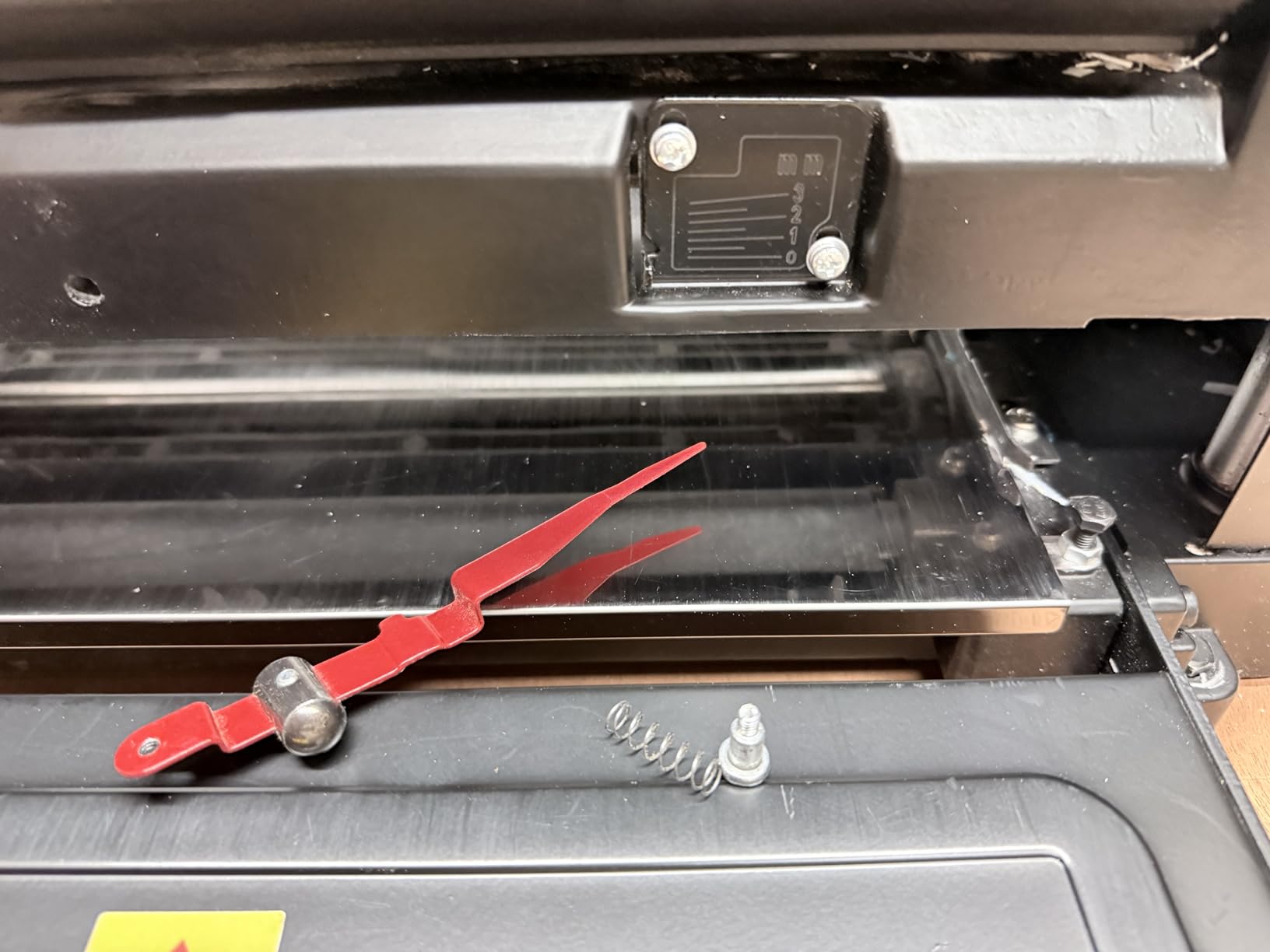
Expect to replace the factory knives early. Some owners report arriving knives dull or without an edge at all. Buy a fresh set and a sharpening setup before your first real session rather than discovering the problem halfway through a stack of walnut.
Outboard tray leveling is hard to get perfectly flat, so boards often need hand finishing on one face. The rear table extension also will not lock upright for storage without a bungee cord. Parts support is thin, so keep the original wrench even though it is flimsy, and expect to make your own repairs.
Who should skip it
Skip the VEVOR if you need a machine you can resell or service easily. Replacement parts and support are the weak points, and that matters more than the purchase price over a long ownership.
Skip it if you are new to planing and want forgiving setup. The tray leveling and the flimsiness of the included tooling add friction that a first-time buyer does not need. If your money stretches, the WEN PL1326 is a better place to start.
4. JET JWP-13BT Review: The Best Helical 13 Inch Planer With Long Warranty
JET 13-Inch Benchtop Thickness Planer for Woodworking, Helical Style Cutterhead with 2-Speed (18 FPM / 26 FPM) Feed Rate, 2 HP, 120V 1Ph (JWP-13BT)
Helical cutterhead, 6 rows of 26 quick-change HSS inserts
2 HP, 15 amp motor at 10,000 RPM
Cast iron bed, four-post design
5 year warranty
Pros
- Smoother and quieter cut than any straight-knife head
- Cast iron bed and four-post design hold consistent thickness
- Two feed speeds for removal versus finish quality
- Folding tables save shop space when stored
Cons
- Premium pricing for the helical-style benchtop class
- HSS inserts need rotation and replacement versus carbide
- Small seller inventory
The JWP-13BT is the pick if you want a helical-style head and a long warranty behind it. Twenty-six quick-change HSS inserts across six rows shear the wood rather than chopping straight down, which produces a quieter cut and less tear-out on figured grain than the straight-knife machines here.
The 2 HP, 15 amp motor at 10,000 RPM gives real headroom on dense hardwood, and the precision machined cast iron bed with a steel cover holds boards flat. The four-post design supports the cutterhead directly, which is what keeps thickness repeatable as the head wears.
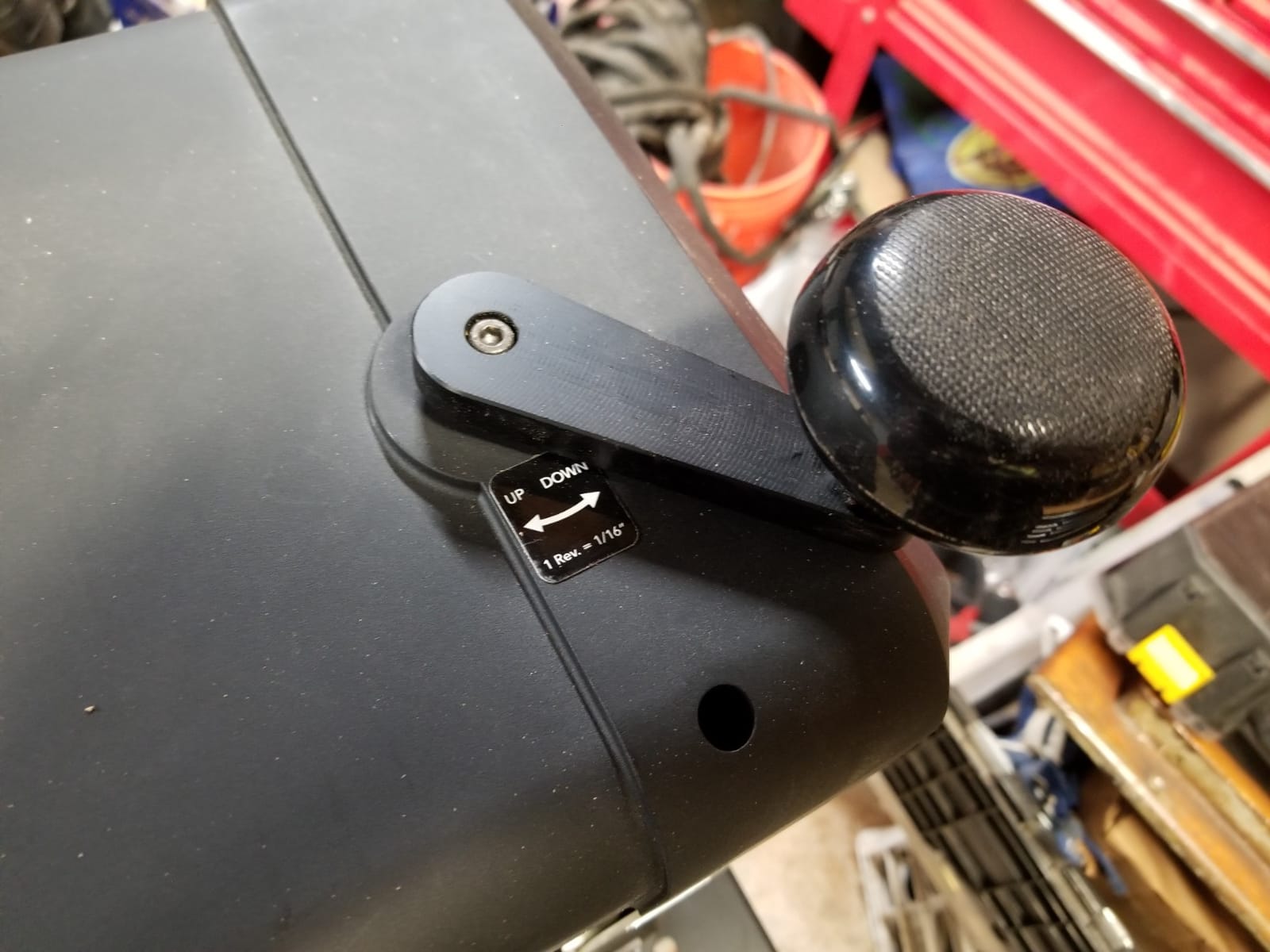
Two feed speeds at 18 and 26 fpm give you a proper roughing and finishing pass, and the adjustable depth stop makes batch work to a consistent thickness much faster. Maximum depth of cut is 1/8 inch, with 6 inch depth and 13 inch width capacity.
At 75 pounds it is lighter than the DEWALT and close to the WEN, so a two-person move is realistic. Its five-year warranty runs two years longer than the three-year term on the DEWALT, dropping to two years for commercial use.
What you should know before buying
Table setup is the most reported friction point. Owners describe difficulty getting the folding infeed and outfeed tables to bed height on first setup. Use a machinist square against the bed rather than eyeballing it, and check it again after the head is loaded.
The inserts are HSS, not carbide. They rotate and have multiple edges, but on dense hardwood you will still rotate and replace them on a schedule. The six-row layout means a chipped insert is a two-minute swap rather than a full head teardown, which is the real advantage.
Who should skip it
Skip the JWP-13BT if carbide insert life is your top priority. At this price, machines with carbide spiral heads give up less edge life over time.
Skip it if your shop floor space is tight. The 28 by 22 inch footprint is full size, not compact, and while the tables fold, the machine itself does not get smaller.
5. King Canada KC-13HPC Review: Best 13 Inch Planer for Repeatable Depth Setting
13″ Planer – Helical Cutterhead
Helical cutterhead for a superior finish
Four precision-ground head columns
Preset depth stops at eight common thicknesses
Dual-unit thickness scale in inches and millimetres
Pros
- Helical cutterhead gives a consistent finish
- Four precision-ground columns add stability and repeatability
- Preset stops cover the most common thicknessing steps
- Dual-unit thickness display helps with setup
Cons
- Highest price in this group of 13 inch planers
- Wider footprint than typical benchtop models
- Limited review base leaves less long-term feedback
The KC-13HPC is the pick if setting depth accurately and repeatedly matters more to you than anything else. The cutting head rides on four precision-ground columns rather than a single central post, and owners single that out as the reason depth settings stay repeatable over long sessions.
The helical cutterhead delivers the finish quality you would expect from that class, and the preset depth stops at 1/8, 1/4, 1/2, 3/4, 1, 1-1/4, 1-1/2, and 1-3/4 inch cover most of what a furniture shop actually uses.
The 15 amp motor includes thermal overload protection, which matters on a machine this size. The thickness display and graduated depth scale reading in both inches and millimetres are a small touch that speeds up setup.
What you should know before buying
This sits at the top of the price ladder in this roundup, and the gap down to the helical tier below it is wide. Judge it on whether your work justifies it. If you are building matched panels and cutting to exact thickness all week, the four-column head earns its keep.
The 34 by 25-1/4 inch footprint is the widest of the machines here. Plan the stand accordingly. The side-mounted tool storage box is genuinely useful, since planer tools are otherwise scattered across the bench.
Who should skip it
Skip the KC-13HPC if long-term owner feedback matters to your decision. With a much smaller review base than the mass-market machines, you have less field data to lean on when something goes wrong.
Skip it if shop space is tight or if you are buying your first planer and want an inexpensive path into a helical head. The WEN PL1326 or the JET JWP-13BT put you on a shearing cutterhead for far less.
6. RIKON 25-135H Review: Best Lighter Helical 13 Inch Planer
RIKON 25-135H 13-Inch Portable Planer with Helical-Style Cutterhead
Six-row helical head with 26 two-edge HSS inserts
Two feed speeds at 16 or 26 SFPM
Threaded 4-post head support
67.9 pounds with dust hood and adapter
Pros
- 26 rotatable two-edge HSS inserts extend blade life
- Two feed speeds for removal or finish quality
- Threaded 4-post head support holds repeatable thickness
- Lighter than most cast iron helical competitors
Cons
- Aluminum base is less rigid than cast iron beds
- HSS rather than carbide limits maximum edge life
- 13 inch capacity still rules out wider boards
The RIKON 25-135H is the pick if you want a helical-style head without a cast iron footprint. At 67.9 pounds it is on the lighter side of the helical machines here, and owners report that the threaded 4-post head support still delivers repeatable thickness from cut to cut.
The six-row helical-style cutterhead carries 26 two-edge HSS inserts that rotate when worn or nicked. That rotation is the practical reason to choose a helical-style head over straight knives: you flip an insert instead of replacing a knife set.
Two feed speeds at 16 or 26 SFPM let you split roughing and finishing passes, and the depth gauge, thickness scale, and repeat-cut control make batch work straightforward. The dust hood with a 4 inch to 2-1/2 inch adapter makes collector hookup simple.
What you should know before buying
The aluminum base is the trade for the lower weight. Owners note it is less rigid than the cast iron beds on premium competitors, which can show up as slightly more thickness variation on very long or wide boards. If your stock runs wide and long, weigh that against how much you value moving the machine.
HSS inserts cap your edge life. On dense hardwood you will be rotating and replacing more often than you would with a carbide spiral head.
Who should skip it
Skip the 25-135H if you work exclusively with hard dense lumber and want maximum time between insert changes. A carbide spiral machine will cut that maintenance down.
Skip it if maximum rigidity is the priority and machine weight does not matter. In that case a cast iron helical bed is the better buy, even at more pounds on the floor.
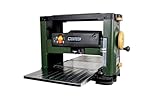
7. CUTECH 40600H Review: Best 13 Inch Planer With Carbide Inserts
Cutech 40600H 13-Inch Spiral Cutterhead Benchtop Planer with 26 Tungsten Carbide Inserts, Single Speed Feed Rate, Snipe Minimizer, and Board Return Rollers (13-Inch Single Speed)
Spiral cutterhead with 6 rows of staggered inserts
Two-sided tungsten carbide inserts
Snipe minimizer lead screw design
8-position repeat cut depth stop
Pros
- Two-sided carbide inserts give a smooth professional finish
- Low amp draw compared with straight-knife designs
- Snipe minimizer reduces head movement without a separate lock
- Eight-position depth stop speeds batch thicknessing
Cons
- Single feed speed with no slow pass for figured wood
- Spiral cutterhead adds weight versus a three-knife planer
- Small review base at this price point
The CUTECH 40600H is the pick if you want carbide edge life without stepping up to a helical-tier price. The six-row spiral cutterhead holds staggered two-sided tungsten carbide inserts, and each insert has a non-cutting edge that keeps it seated squarely instead of skewing during a pass.
The snipe minimizer is a feature owners notice. Four lead screws and a coupling design reduce the head movement that produces snipe, without a manual carriage lock. Owners report noticeably cleaner results than straight-knife machines at the same price tier.
Low amp draw is a real advantage in a small shop. It means you can run the planer and a dust collector on a shared 15 amp circuit without the nuisance of constant breaker trips, which straight-knife machines frequently cause.
The board return rollers on top of the machine send boards back to the front for the next pass, and the 8-position repeat cut depth stop makes batch thicknessing fast. The flip-up dust hood lets you blow debris rearward or drop it for a collector.
What you should know before buying
Single speed is the limitation. You have no slower finishing pass for figured stock, which means any tear-out has to be handled with technique or sanding rather than a second, slower run.
The review base is small, so there is less long-term field data than you would get from a mass-market machine. Plan your own maintenance schedule rather than waiting for others to report a failure pattern.
Who should skip it
Skip the 40600H if you need two feed speeds. That is the one thing the machine does not offer at any setting.
Skip it if you are determined to buy from a brand with a deep parts channel and a long warranty history. Carbide inserts help on running costs, but they do not help if a component becomes hard to source.
8. WOODERS PL13-15AB Review: Best Compact 13 Inch Planer
WOODERS 13-Inch Benchtop Thickness Planer, 15A Wood Planer with 4 HSS Blades, 2000W All Copper Motor, Overload Protection for Woodworking
15 amp 2000W all-copper motor at 10,000 RPM
13 inch width, 1/4 to 6.3 inch height range
Oversized depth crank with 0 to 1/8 inch indicator
Dust collector and two spare blade sets included
Pros
- 2000W all-copper motor handles dense hardwood without bogging
- Compact 60-pound footprint is smaller than most 13 inch planers
- Oversized depth crank and high-visibility height indicator
- Dust collector and two spare blade sets included in the box
Cons
- HSS blades need more frequent replacement than carbide inserts
- Lighter frame provides less rigidity than cast iron machines
- Small review base relative to big-name planers
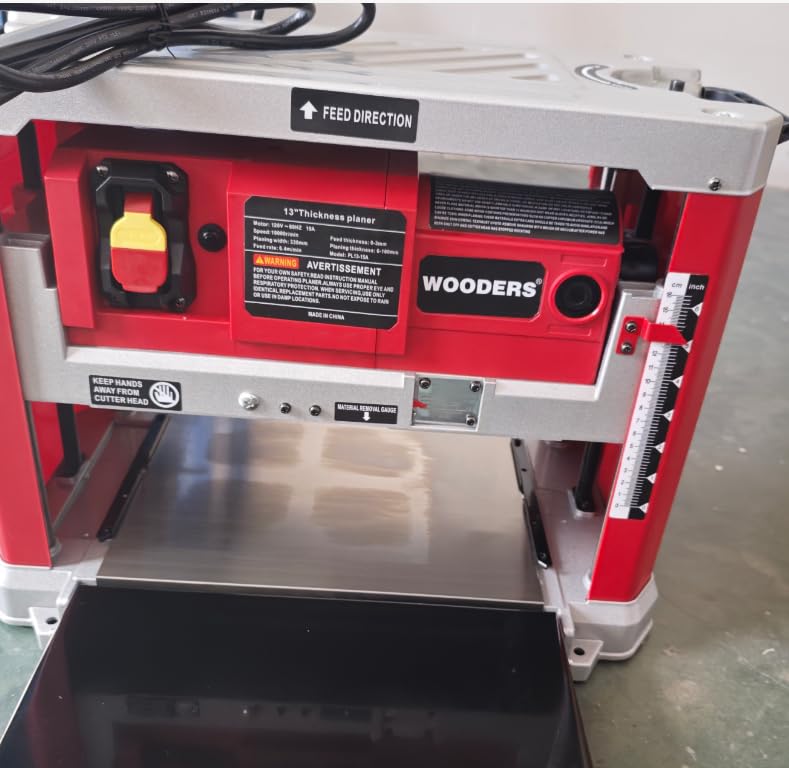
The WOODERS PL13-15AB is the pick if floor space is your binding constraint. At 60 pounds and 22.4 by 14.2 inches, it has the most compact footprint of any machine in this roundup, and it moves around a shop without needing a second person.
The 15 amp 2000W all-copper motor turns the cutterhead at 10,000 RPM and handles dense hardwood without bogging, which is more than you would expect from a machine this compact. The 1/4 to 6.3 inch height range covers normal stock.
The oversized depth adjustment crank with a high-visibility 0 to 1/8 inch indicator is genuinely easier on your hands than a small handwheel, and owners with longer-term setups appreciate it. The dual-edge HSS cutterhead and optimized infeed and outfeed structure help reduce snipe end to end.
The box includes a dust collector, a lifting handle, and two spare double-edged HSS blade sets in a storage box. That accessory bundle alone saves you a first purchase after setup.
What you should know before buying
HSS blades are the ongoing cost. Straight HSS knives need more frequent replacement than spiral inserts with multiple usable edges, and on hard maple or oak that adds up. Two spare sets in the box soften the first year.
The lighter frame provides less rigidity than a cast iron benchtop machine. Boards that are very long and very wide can show more thickness variation than they would on a heavier machine. That is the price of the footprint saving.
Who should skip it
Skip the PL13-15AB if your material is mostly figured or reclaimed wood. Straight HSS knives tear out on reversing grain, and this machine has no slower feed pass to clean it up.
Skip it if parts availability matters more than size. With a small review base, you have less community knowledge about long-term failures and fixes.
How to Choose a 13 Inch Planer
Cutterhead type decides everything else. Once you pick a head, the feed speeds, noise level, maintenance interval, and cutting quality all follow from that choice. Here is how the three head types compare on the four things buyers actually notice.
Straight knife vs spiral vs helical cutterheads
Straight knives sit directly across the grain and cut downward. They are the least expensive option and they produce a glass-smooth finish on straight-grained wood, which is why the DEWALT and the VEVOR perform so well on pine and clear hardwood. The trade-offs are noise, which is significant, and tear-out where grain reverses.
Spiral cutterheads arrange blades in a helix around the head so each one shears upward as it enters the cut. That shearing action produces less tear-out, noticeably less noise, and blades with two usable edges that rotate instead of being replaced. The WEN PL1326 and the CUTECH 40600H use this approach.
Helical cutterheads are a spiral arranged in rows and ground as true helices. They shear the most aggressively of the three, which makes them the quietest of the three head types and the best on figured grain. Higher prices follow, and the JET and King Canada units in this roundup sit at the top of the ladder.
Feed speed and cuts per inch
Cuts per inch, or CPI, is how many times the blade passes a given point on the board during one inch of travel. More cuts per inch means a finer, smoother surface at a slower feed. The DEWALT gearbox offers 96 or 179 CPI; the JET switches between 18 and 26 feet per minute; the VEVOR offers two settings.
A two-speed machine lets you rough a board down aggressively and then take a light finishing pass. On figured wood that second pass is the difference between tear-out and a clean surface. Single-speed machines such as the WEN PL1326 and the CUTECH 40600H make you choose one compromise feed rate for everything.
Snipe: what causes it and how to reduce it
Snipe is a series of shallow crescent-shaped marks across a planed surface. It happens when the cutterhead moves up and down slightly as it passes the workpiece, because the bearings have a tiny amount of play and the cutting load changes as blades enter and exit the wood.
Six things reduce it. First, engage a carriage or head lock if the machine has one, since the DEWALT does this automatically and the CUTECH uses a snipe minimizer design. Second, let the cutterhead reach full speed before feeding. Third, leave a few inches of board overhang at both ends rather than feeding a board at exact length.
Fourth, feed consistently and do not rush the pass. Fifth, take lighter cuts rather than the 1/8 inch maximum. Sixth, run the board a second time, which is the single most effective fix for residual marks.
Dust and chip management
Every planer in this roundup needs a real dust collector, not just a shop vac. Chips that stay in the machine collect behind the cutterhead and between the knives, and that imbalance is the most repeated technical warning in owner reports. The head goes out of round, and the result is gouge marks across every board you run afterward.
Hook up the collector before your first session, keep the hose run short and supported so it does not sag, and empty the drum before it fills. Fan-assisted ejection, as on the DEWALT, and flip-up hoods, as on the CUTECH, help move chips into the hose in the first place.
13 inches vs 12 inches: does the extra inch matter
Yes, in a way most buyers underestimate. A 12-inch planer can handle a 12-3/4 inch board, which covers a lot of dimensional lumber, but 13 inches opens up a different supply of lumber. Boards cut from a 4 by 8 sheet often land just over 13 inches wide once you trim them square. A 13-inch machine takes those in one pass; a 12-inch machine forces you to rip them first.
The wider capacity also matters for glue-ups and panel stock, where consistent thickness across wide boards matters more than the last quarter inch. If you mostly buy dimensional lumber under 12 inches, the extra inch is nice but not decisive. If you break down sheet goods or buy rough-sawn stock in wider sizes, it is decisive.
Going up to a 15-inch stationary planer is a different commitment entirely. Those machines are far heavier, permanently installed, and fed differently. A 13-inch benchtop unit is the sensible stopping point for a home shop or a small professional shop.
Stand and total system cost
Almost every 13-inch benchtop planer needs a stand. These machines weigh between 60 and 102 pounds and most do not have adjustable-height legs, so a fixed-height steel stand is the usual answer. Budget for it as part of the purchase, not as an afterthought.
Then add dust collection, a spare knife or insert set, and a sharpening setup. Straight-knife machines need a grinder or a good stone plus the skill to use it. Spiral and helical machines need less attention but still rotate inserts. If you build furniture you will also want a miter saw for crosscutting, and if you are just starting out our guide to the best miter saws for woodworking covers the pairing. Routers are the other common companion machine, and we round those up in our best wood routers guide.
Frequently Asked Questions
What is the best brand for wood planers?
DEWALT has the deepest name recognition and the largest owner base in this category, with the DW735X holding a 4.7 rating across thousands of reviews. JET and RIKON lead the helical-style tier with stronger four-post head support and quieter cuts. WEN delivers the best spiral-head value, and King Canada offers the most precise repeatable depth setting. There is no single best brand, because cutterhead type matters more than the badge on the housing.
Is the Ridgid 13 inch planer good?
Ridgid is a respected brand across many tool categories, and its 13-inch planer has a solid reputation for build quality among owners. However, it consistently carries a lower average rating than the picks in this roundup, and its parts channel and insert availability are thinner. If you already own one and it runs well, keep it. If you are buying fresh, the machines here have more published owner feedback behind them.
What is the best affordable planer for woodworkers?
The WEN PL1326 is the strongest affordable pick because 26 rotatable HSS blades in a cast iron bed give you spiral-cutterhead quality without a helical-tier budget. If you need to spend less and can handle rougher setup, the VEVOR offers two feed speeds at a lower entry point. For a first planer on a real budget, budget for a spare knife set and a dust collector before you buy the machine.
What’s the difference between a DeWalt DW735 and a DW735X?
The core machine is the same 13-inch three-knife, 15 amp, two-speed planer in both cases. The X package adds the folding infeed and outfeed feed tables, an extra set of replacement knives, and the dust hose adapter and ejection chute in the box. Paying for the X makes sense if you do not already own a planer, since the feed tables are the part most first-time buyers end up buying separately.
What are the key differences between helical and spiral head planers?
A spiral cutterhead places blades at an angle around the head so each one shears as it enters the cut. A helical cutterhead arranges blades in rows ground as true helices, producing a more aggressive shear. Both reduce tear-out and noise compared with straight knives. Helical heads generally run quieter and hold a better edge on figured grain, and they cost more. Spiral heads are cheaper with most of the same practical benefit.
Will a planer smooth rough cut lumber?
Yes, for thickness. A planer takes rough-sawn stock and makes it a uniform thickness with faces parallel, which is exactly what it is built for. It will not fix twist, cup, or bow in the board. A warped board planed on all four faces stays warped but at a consistent thickness. Flatten those boards on a jointer first, or start with straight stock, then use the planer for thicknessing.
Do I need a 13 inch planer or is 12 inch enough?
A 12-inch planer handles most dimensional lumber and covers plenty of furniture work. Thirteen inches matters when your stock runs wider: boards trimmed from a 4 by 8 sheet often land just over 13 inches, and a 12-inch machine forces you to rip them first. If you mostly buy dimensional lumber under 12 inches, the extra inch is a convenience rather than a necessity.
Conclusion: Our Verdict on the Best 13 Inch Planer in 2026
The DEWALT DW735X is our pick for the best 13 inch planer for woodworking in 2026. Its 15 amp motor, two-speed gearbox at 96 or 179 cuts per inch, rigid cast aluminum base, and automatic carriage lock handle rough lumber and hardwoods in a single pass, and more than 7500 owner reviews back it up.
Buy something quieter if noise or figured wood drives your work, the WEN PL1326 if you want a spiral cutterhead without a premium budget, and a helical machine such as the JET JWP-13BT if your shop can absorb the higher cost for a cleaner cut. Whatever you choose, budget for a stand, real dust collection, and spare blades before the machine arrives.