
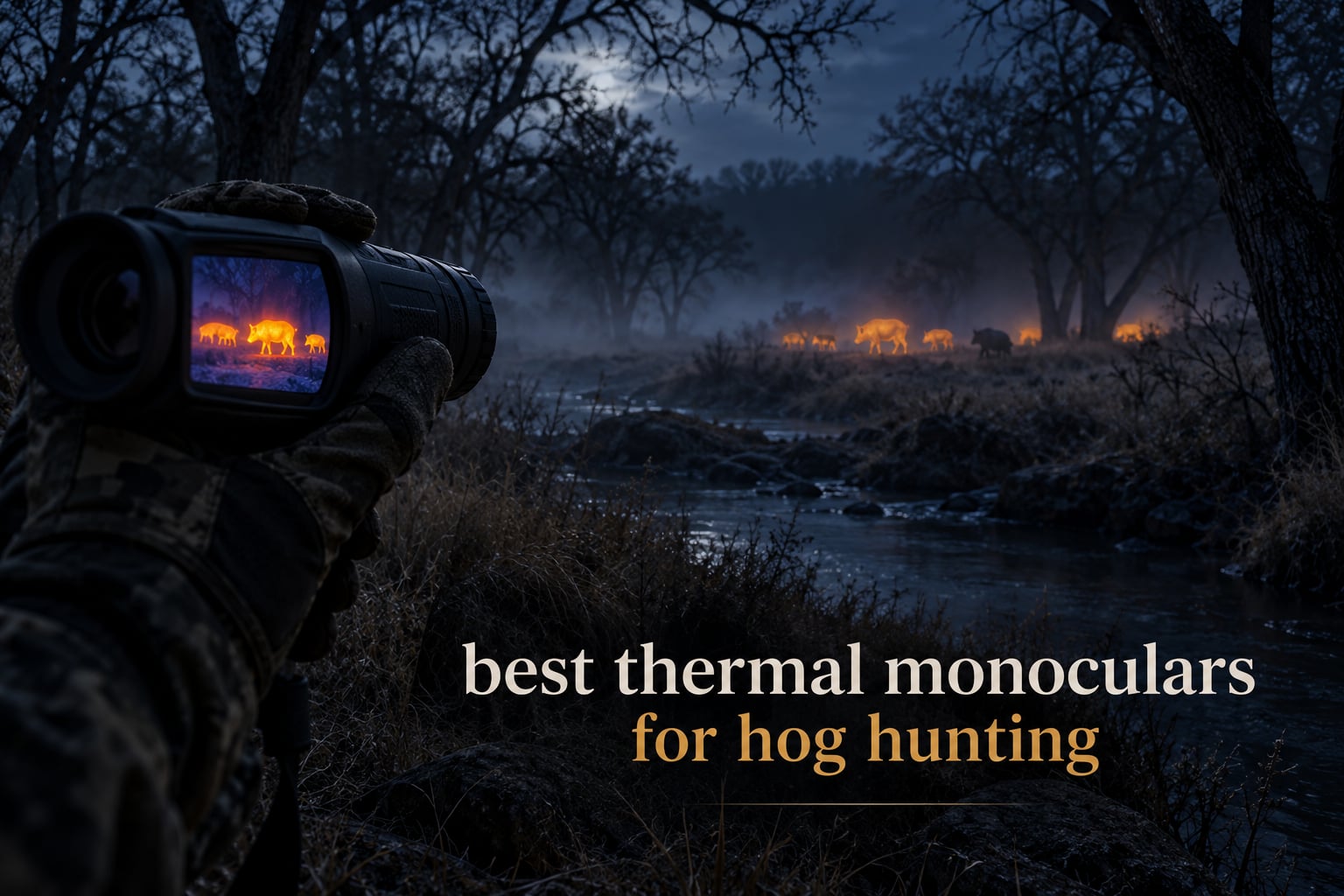
If you want the shortest possible answer: the TOPDON TS004 is the best thermal monocular for hog hunting in 2026, and the RIX Pocket K2 is the best value pick. Both find heat reliably at a couple hundred yards, both run all night on a single charge, and both are light enough to hold up during a full sit without wrecking your shoulder. Everything below is the detail behind those two calls, plus eight more options sorted by the terrain you actually hunt.
There is a reason hog hunting shows up so often in thermal monocular discussions. A feral hog is one of the strongest and most consistent heat signatures you will ever point a thermal at, and a sounder moving through timber gives you a cluster of hot spots instead of a single ambiguous dot. That makes hogs the easiest quarry to learn the craft on, and the hardest place to hide from a bad optic.
Bad optics, though, are exactly what most advertised detection ranges paper over. A device claiming 800 or 900 yards of detection on a human-sized target tells you almost nothing about the distance at which you can say with confidence that the thing in the brush is a hog. This guide converts advertised range into realistic identification distance for hogs specifically, and then matches each monocular to a specific piece of hog ground: creek bottoms, post oak, open pasture, and wet brush in December.
I compared all ten monoculars below on sensor resolution, thermal sensitivity, refresh rate, lens focal length, usable identification range, battery architecture, and how owners describe real-world performance on hogs. I do not sell any of these brands, so nothing here is steered by a margin.
Table of Contents
Top 3 Best Thermal Monoculars for Hog Hunting in 2026
The three picks below cover the most common ways people hunt hogs. The TOPDON TS004 is the all-round answer, the RIX Pocket K2 is the one you can carry all day without noticing it, and the Teslong TTS260 is the cheapest way to get real thermal instead of a gadget that disappoints at first light.

TOPDON TS004
- 256x192 sensor at 50Hz
- 5000mAh battery rated up to 11 hours
- IP67 silicone housing
- 13mm lens with detection to 410 meters


Teslong TTS260
- Super resolution to 512x384
- 12mm lens
- 8 color palettes
- built-in 32GB storage
Quick Overview: Every Pick Side by Side (October 2026)
Ten monoculars, ten different compromises. The table below lists what each one is actually built around, so you can rule out half the list in about a minute.
| Product | Specifications | Action |
|---|---|---|
| TOPDON TS004 |
|
Check Latest Price |
| RIX Pocket K2 |
|
Check Latest Price |
| Teslong TTS260 |
|
Check Latest Price |
 ATN OTS XLT ATN OTS XLT |
|
Check Latest Price |
| RIX Pocket K3 |
|
Check Latest Price |
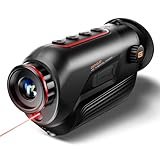 GOYOJO G215 GOYOJO G215 |
|
Check Latest Price |
 ATN BlazeSeeker-210 ATN BlazeSeeker-210 |
|
Check Latest Price |
 Pulsar Axion Compact Pulsar Axion Compact |
|
Check Latest Price |
 AGM Taipan V2 15-384 AGM Taipan V2 15-384 |
|
Check Latest Price |
 AGM Fuzion TM35-640 AGM Fuzion TM35-640 |
|
Check Latest Price |
1. TOPDON TS004 – Best Overall Thermal Monocular for Hog Hunting
TOPDON TS004 Thermal Imaging Monocular, 13mm 50Hz Night Vision
256x192 IR at 50Hz
13mm lens, 410m detection
5000mAh, up to 11 hrs
IP67 silicone body
70 g
Pros
- Consistently detects warm animals and heat sources at a couple hundred yards or more
- Multiple thermal palettes including a bird mode owners use most
- Real-world battery life of roughly 10-11 hours
- IP67 rubberized body rated for drops
- Phone app records video and stills to the device
Cons
- Digital zoom only
- so the image grows grainier the further you zoom
- Confirming a specific animal past roughly 150 yards is difficult
- Will not see through cold glass such as a closed windshield
- Files must be pulled through the app because iOS will not mount the device
The TS004 is the one I keep reaching for. It is not the sharpest optic in this list and it has no 640 sensor, but it balances the three things that decide whether a thermal monocular survives a real hog season: 50Hz refresh so a running sow does not smear, battery for most of a night on one charge, and 70 grams, which is barely more than a pocket knife.
Owners consistently report picking up warm animals and heat sources at a couple hundred yards or more. On hog ground that means a sounder crossing a creek bottom shows up as a cluster while it is still moving through shadow, well before you would have heard it.
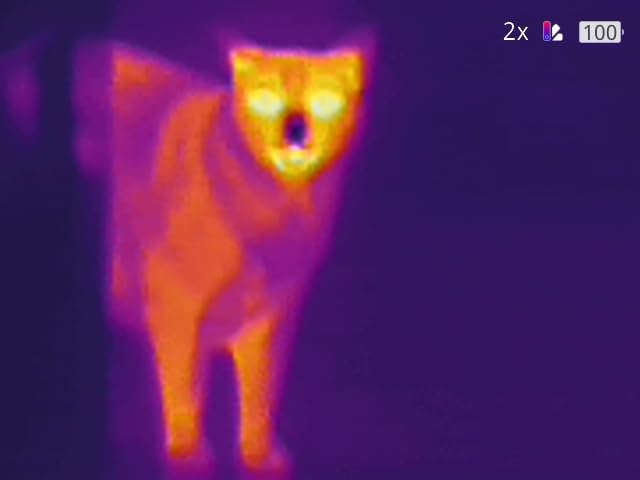
The 13mm lens gives a 13.5 degree field of view, which is wide for a handheld thermal and is exactly what you want when sweeping post oak rows. The trade is magnification. There is none optically, so if a hog is standing broadside at 200 yards you are counting on contrast rather than pixels to make the call.
Battery claims deserve a note. The quoted figure is up to 11 hours from a 5000mAh pack, and owners back that up in ordinary conditions, but that is a laboratory number and cold January nights shorten it. Reviewers also note a real limitation with iOS: the device will not mount as an external drive, so you pull footage through the app. Pointing the objective at the sun or another very bright heat source can damage the sensor, which matters if you ever glass a sunrise over a field.
What works in the field
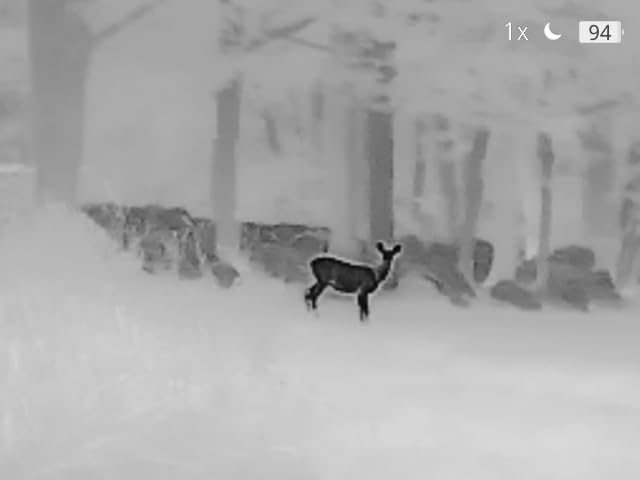
At 70 grams you forget you are carrying it, which changes how you hunt. You can glass the treeline while walking instead of committing to a setup, and you can scan continuously on a long sit without the wrist and shoulder ache that heavier bodies cause. The 50Hz refresh means a hog trotting across a lane stays a hog instead of becoming a smear.
It also holds up to weather. The IP67 silicone body takes rain, dust, and drops without complaint, and a one-year lithium ion pack means there is no proprietary battery to hunt down.
Where it falls short
Past about 150 yards, detecting a hog and identifying it are two different things. If your ground is open pasture with 300 yard shots, this is the wrong tool and you should be looking at a 384 or 640 body with a longer lens.
Summer foliage also reduces performance noticeably, since a full canopy is close to body temperature in the thermal spectrum. It is a night and dusk optic in practice, not a daylight scanner.
2. RIX Pocket K2 – Best Value for Creek-Bottom Scanning
RIX Pocket K2 Portable Thermal Monocular for Hunting, 256×192 (50Hz), Wi-Fi, Handheld Night Vision Monocular
256x192 at 12um pixels
NETD under 25mK
800x600 OLED
19.4 degree FOV
IP67
Pros
- Pocketable and very light
- comfortable to carry without a rifle in hand
- Finds small animals through brush at close to medium range
- App streaming with very little lag
- Bright high-contrast 800x600 OLED for the size
- Integrated sliding lens cover so you cannot lose a cap
Cons
- Past roughly 150 yards you detect heat but often cannot identify the animal
- Fixed focus makes small subjects hard to get sharp
- Menu controls are fiddly
- Isolated reports of units failing to power on after light use
The K2 is the pocket unit I would hand to a buddy who has never used thermal. It runs a 256×192 sensor with 12um pixels and NETD under 25mK at 50Hz, which is a better sensor spec than most of the higher priced entries in this list, and it drives an 800×600 OLED display that is bright and high contrast for something this small.
On hogs specifically, that field of view matters more than raw magnification. At 19.4 degrees it is one of the widest in the group, and a wide view is what lets you work a creek bottom where hogs are moving through drain cuts and you need to keep the whole draw in frame. A hog at 30 yards in thick willows is a much easier ID for this unit than the same hog at 150 yards across a field.
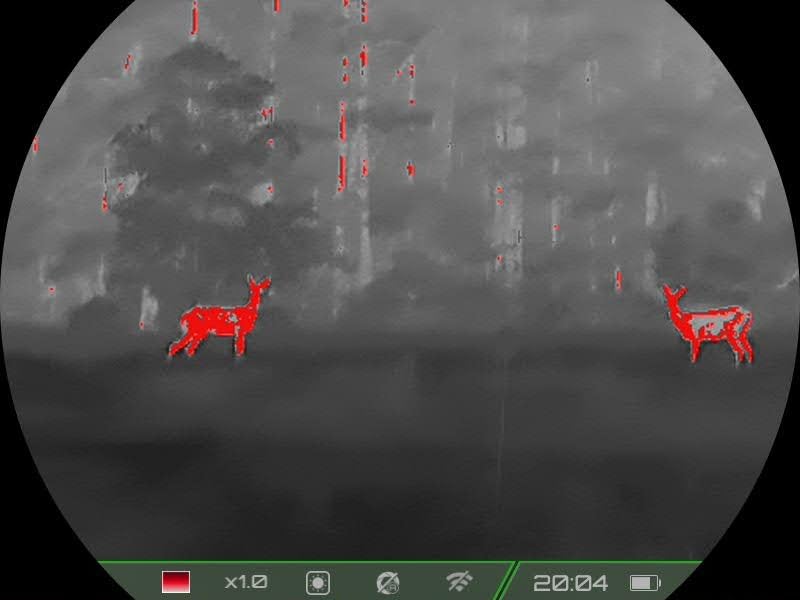
Owners like the integrated sliding lens cover, which removes an entire category of field problem. Losing a loose lens cap in the dark at a water gap is a rite of passage nobody misses, and this design simply cannot lose it. The app streams the thermal view with very little lag, so you can hand the phone to someone at the truck and show them the sounder you just counted.
Weight is 200 grams, which is a step up from the TS004 but still nothing on a long walk. If you are covering ground on foot rather than sitting in a stand, that difference is felt over several hours.
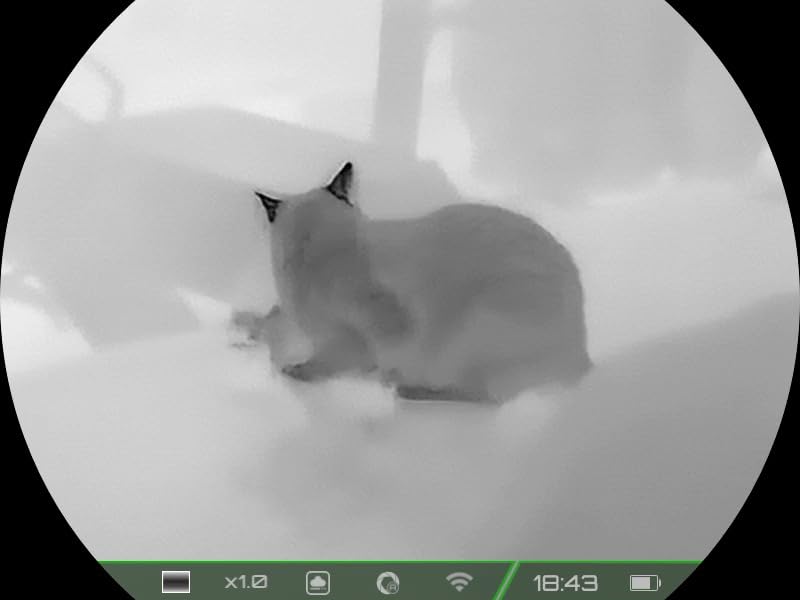
Where the K2 earns its slot
Creek-bottom and small-woodland work is the K2’s natural habitat. Owners report it picking up small critters such as rabbits through brush at close to medium range, and that same sensitivity translates directly into picking up piglets and singles working the edges of a sounder. Because you scan one eye, your unaided night vision stays intact for the walk to and from the stand.
The 800×600 OLED also holds up in fog and light rain, and the IP67 rating means you do not need to baby it.
Where it will frustrate you
The honest limit is around 150 yards for identification, and fixed focus makes smaller distant subjects soft. If you are glassing open country and need to resolve a shape, this is not the body for that job.
Some owners also find the menu controls fiddly enough that they fall back on a flashlight, and there are isolated reports of units failing to power on after light use. Check the return window before you commit to a long season.
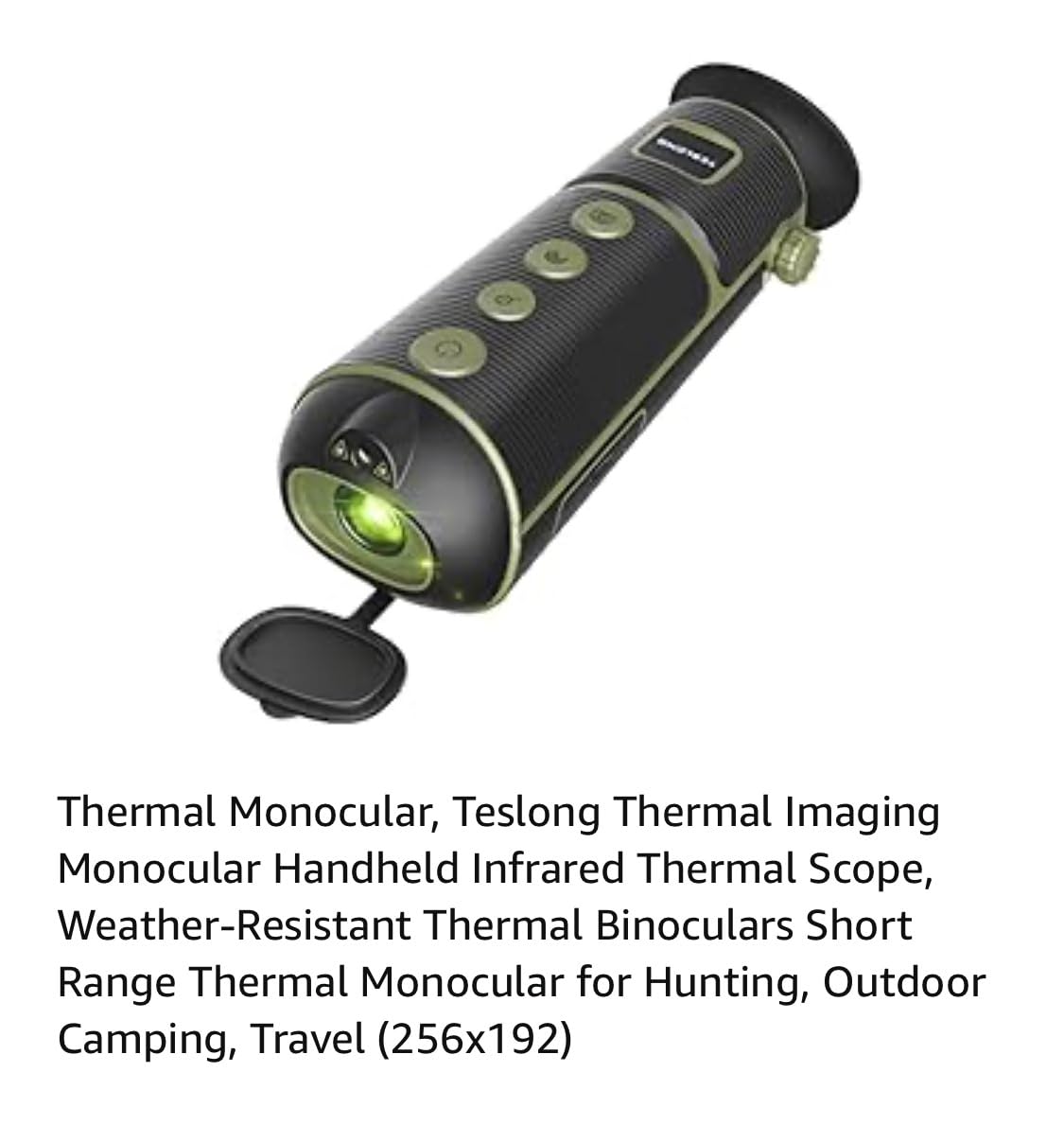
3. Teslong TTS260 – Budget Pick with Super Resolution
Teslong TTS260 Thermal Monocular 256 x 192, Super Resolution 512 x 384
256x192 native, 512x384 super resolution
12mm lens, 218m detection
55m recognition
32GB onboard
8 hours
Pros
- Super resolution processing sharpens frames toward a 512x384 look for target recognition
- 8 color palettes plus hotspot tracking to separate a target from clutter
- Built-in 32GB captures photos and video without a separate card
- Body rated for -4F to 122F operating range
- Touch buttons and adjustable diopter reduce fumbling
Cons
- 25Hz refresh is slower than 50Hz bodies
- so moving animals smear
- Recognition distance of about 55 yards is the practical identification limit
- Fixed focus at a 12mm lens gives less detail on distant subjects
- Lowest average rating in this group with a 10 percent one-star share
The TTS260 is the cheapest way to find out whether thermal actually helps you hunt hogs, and its published numbers are unusually honest. It states 218 yards of detection and only 55 yards of recognition, which is closer to the truth than most marketing on this list. Those are the exact numbers I would want from a manufacturer.
Super resolution processing pushes 256×192 frames toward a 512×384 appearance, and in practice it sharpens outlines enough to help with target recognition. Eight color palettes plus hotspot tracking give you room to separate a hog from sun-warmed grass or a warm rock. Built-in 32GB means no card management on a night when you are cold and tired.
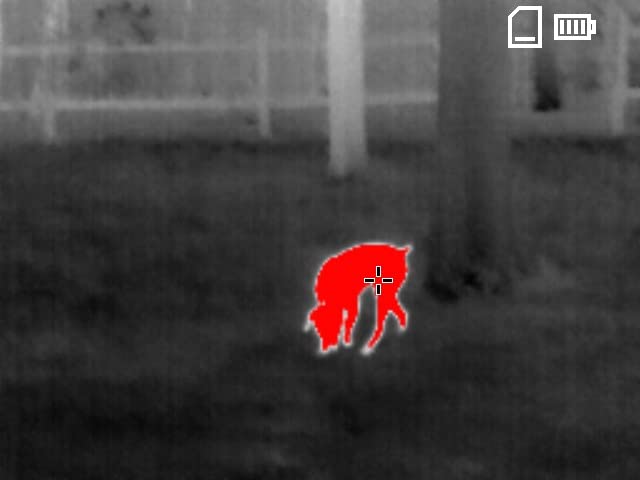
The 0.32 inch 800×600 OLED eyepiece with adjustable diopter and brightness control is a better display than the price suggests. Touch buttons and the diopter adjustment reduce the fumbling that plagues budget optics in the dark.
It also works in real winter conditions, with a listed operating range of -4F to 122F. Battery life is up to 8 hours, which covers most sits but not the all-nighters.
Best use for this monocular
Short-range hog work: water gaps, feeder stations, close creek crossings. At 55 yards of recognition you are working inside the range where hogs are actually vulnerable, which is exactly where a responsible shot happens.
Hotspot tracking is the sleeper feature here for damage mitigation, letting you follow a warm line along a fence row without guessing which patch is the animal.
Where the compromises bite
The 25Hz refresh is the main problem. Hogs move fast and a sow with piglets crossing a lane at 25Hz turns into a smear rather than an animal.
Fixed focus at 12mm also costs you detail, and the 10 percent one-star share is the largest in this group. If your hunting is long-range across open ground, step up a tier.
4. ATN OTS XLT – Built-In Rangefinder Without the Extra Weight
ATN OTS-XLT Compact Lightweight Thermal Viewer, 2-8x
50Hz thermal sensor
Smart rangefinder built in
2-8x zoom, 22.5 degree FOV
25mm objective
0.8 lb
Pros
- 50Hz sensor reduces motion blur on moving animals compared with 25Hz bodies
- Smart rangefinder gives distance readings without a separate module
- Compact and pocketable at under a pound with straightforward controls
- 10+ hour battery life from low power consumption
- White hot
- black hot and full color display modes
Cons
- Lowest average rating in this group at 4.0 with 8 percent one-star
- 2-8x zoom is modest next to 1.5-12x designs for distant hogs
- 25mm objective and 12.5mm exit pupil limit light gathering in heavy brush
- Wider spread of mid and low star ratings than peers
The OTS XLT is the one on this list with a rangefinder that just works. The smart rangefinder gives you a distance without bolting on a separate module or pulling a laser rangefinder out of a pocket, which on a hog hunt matters more than it does for larger game. You are calling short distances in the dark and having a reading in a second is genuinely useful.
The 25mm objective is longer than most of the budget bodies here, and combined with 2-8x magnification it gives you more usable reach for identifying a hog in open pasture. The 22.5 degree field of view is still wide enough to sweep a treeline, and 50Hz refresh keeps a trotting hog solid.
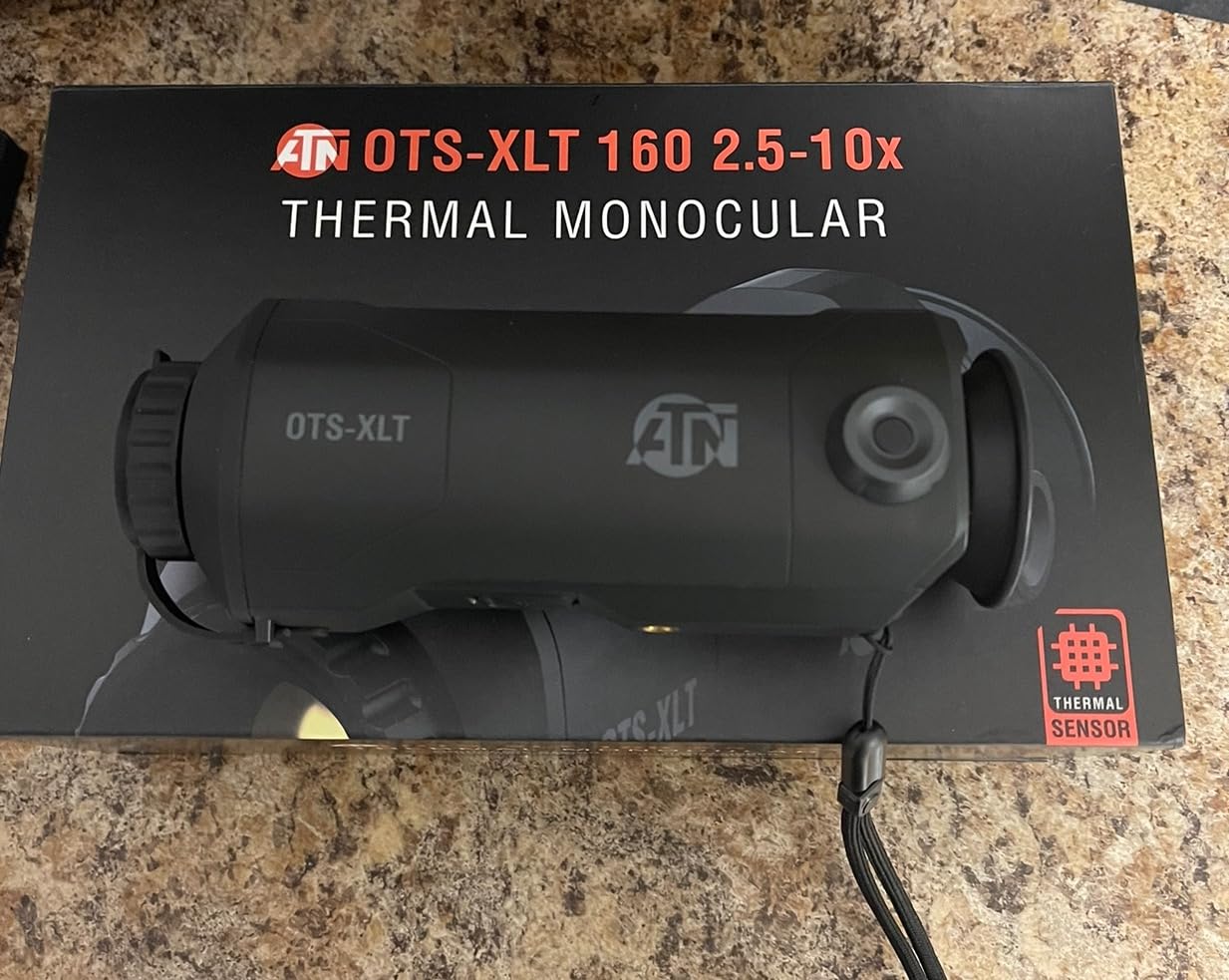
At 0.8 lb it disappears in a chest pocket, and owners cite 10+ hours of battery life from low power consumption, which comfortably covers a full night sit. Controls are described as straightforward, and there is a two year manufacturer warranty behind it.
White hot, black hot and full color display modes cover most scanning conditions without digging through menus.
What makes it worth a look
The rangefinder is the whole pitch, and for hogs it is more useful than most buyers expect. When a sounder is 40 yards out in the dark and you are not sure of the distance, having a reading lets you decide quickly instead of guessing through a scope.
The 25mm lens is also the longest objective among the sub-640 bodies on this list, which helps in light brush where a 13mm lens gathers too little.
Where you should look elsewhere
The 2-8x zoom range is modest. Pinpointing a distant hog in a wide field edge is not what this optic is built for, and a 1.5-12x body handles that better.
Its 4.0 average is the lowest here, and the 25mm objective with 12.5mm exit pupil limit light gathering in heavy brush, which is the one place you really want it.
5. RIX Pocket K3 – Lightest 384×288 Unit for Long Sits
RIX Pocket K3 Thermal Monocular for Hunting, 384×288 Night Vision Monocular
384x288 sensor at 50Hz
15mm objective, 2x base
800x600 OLED
EIS and RET processing
7.52 ounces
Pros
- 384x288 at 50Hz gives a noticeably sharper and smoother image than 256x192 bodies
- Very light at 7.52 ounces for long field scans
- Electronic image stabilization steadies the handheld view
- RET processing boosts contrast and clarity
- Replaceable power supply removes downtime concerns
- Photo
- audio and video recording with 8GB internal memory
Cons
- 2x base magnification is low
- so distant hogs sit small in the frame
- Advertised 853 yard detection is a controlled-test figure that varies with conditions
- 8GB of internal memory is smaller than rivals
- Less owner feedback than the cheaper K2
The K3 is where a 384 sensor and a 50Hz refresh rate stop being luxury specifications. Owners describe the image as noticeably sharper and smoother than the 256×192 bodies in the same line, and that difference is most visible in exactly the conditions hog hunters work: humid creek bottoms and nights with a light mist where a low-detail sensor gives you a blob instead of an animal.
At 7.52 ounces it is the lightest body in this roundup by a wide margin, and for someone sitting in a ground blind for six hours that is the difference between a tool you keep in your hand and one that ends up face down on the ground. Electronic image stabilization steadies the view handheld, which helps when you are glassing from a shaky position against a truck bed.
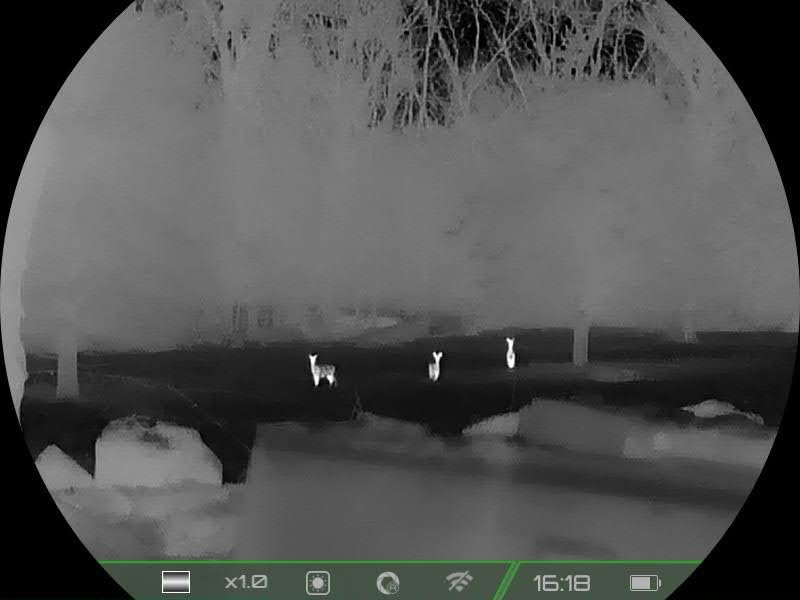
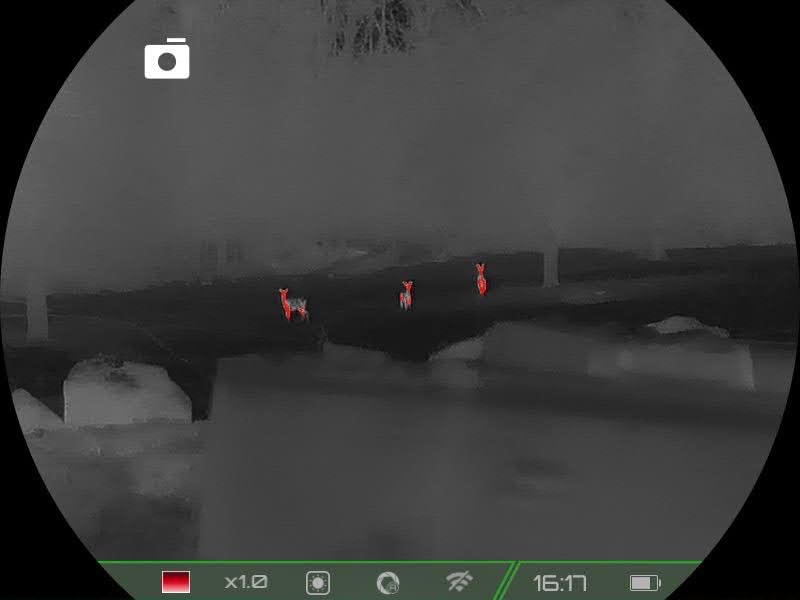
The 15mm objective and 17.5 degree horizontal field of view sit in a useful middle ground: enough reach to start resolving a shape across a pasture, wide enough to keep a sounder in frame. Built-in Wi-Fi lets a second person watch the scan on a phone, which is useful when you are working with a partner.
Replaceable power supply units mean you can carry spares instead of watching a battery gauge, and photo, audio and video recording goes to 8GB of internal memory for documentation.
Best for all-night sits
The 384×288 sensor is the deciding factor. A sharper image means you can identify a hog at a greater practical distance than any of the 256 bodies here, and identification distance is the number that actually matters on a hog hunt.
Weight is the other half. For long sits, a 7.52 ounce body with replaceable power is a package that works.
Where it comes up short
2x base magnification is low, so a distant hog sits small in the frame and you will be leaning on digital processing rather than optics to make the call.
The 853 yard detection figure is explicitly a controlled-test number that varies with temperature contrast, humidity and terrain, and the 8GB storage fills up fast on a long recording. Owner feedback is thinner than the cheaper K2, so long-term field reliability is less well documented.
6. GOYOJO G215 – Long Lens for Open Pasture and Field Edges
GOYOJO G215 Thermal Imaging Monocular for Hunting, 256×192 (50Hz) Infrared Night Vision Telescope, 15mm Focal Lens Thermal Scopes for Outdoor Night Vision Camera Telescope
256x192 at 50Hz, 12um pixels
15mm lens with 4x zoom
Six color palettes
Replaceable battery, 6+ hours
IP65
Pros
- 15mm focal length plus 4x zoom gives usable magnification for scanning open ground
- Six color palettes make it easy to separate a hog from brush
- Replaceable battery supports over 6 hours of continuous use
- IP65 holds up to heavy rain
- dust and impacts
- Wi-Fi app for real-time viewing on a phone
- One-handed design with quick startup
Cons
- Only 16GB of internal storage with no SD card slot
- 256x192 is the lowest sensor tier and limits detail at range
- Listed item weight of 1 kg is heavy for a handheld
- IP65 is a step below the IP67 rating on several rivals
- One-year warranty is shorter than some multi-year rivals
The G215 is built around one decision: a 15mm focal length. That is longer than most of the budget bodies in this list, and it is the right call for anyone hunting hogs across open pasture and along field edges where the animals are 150 yards out and there is no timber to break them up visually.
Combined with 4x zoom, owners report usable magnification for scanning open ground, and six color palettes let you pick a mode that separates a hog from brush. Those palettes are White-Hot, Black-Hot, Red-Hot, Rainbow, Iron-Red and Glimmer, and on hog work the Iron-Red and Glimmer modes do a better job of holding detail on a warm body against a warm background than plain white or black.
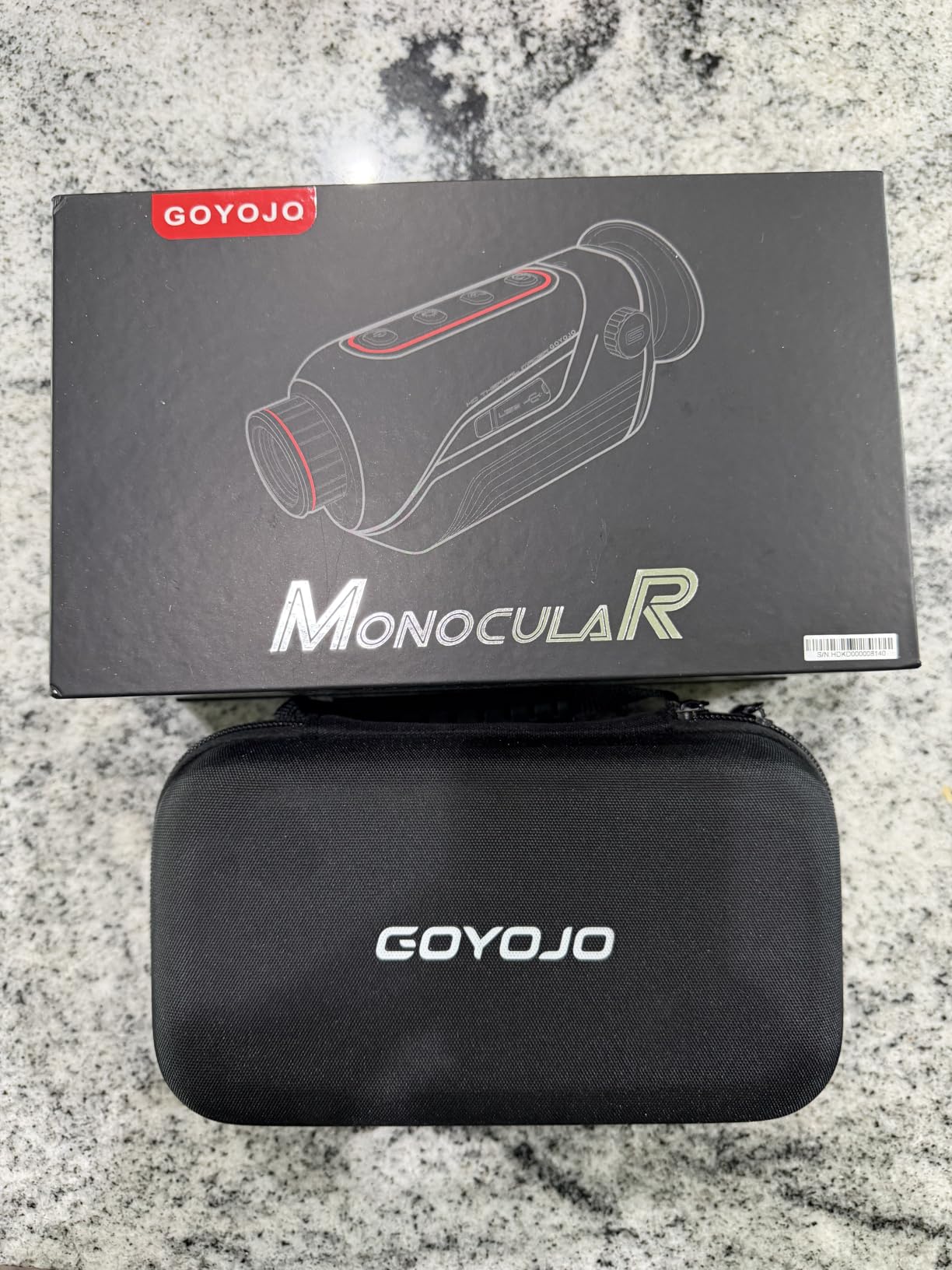
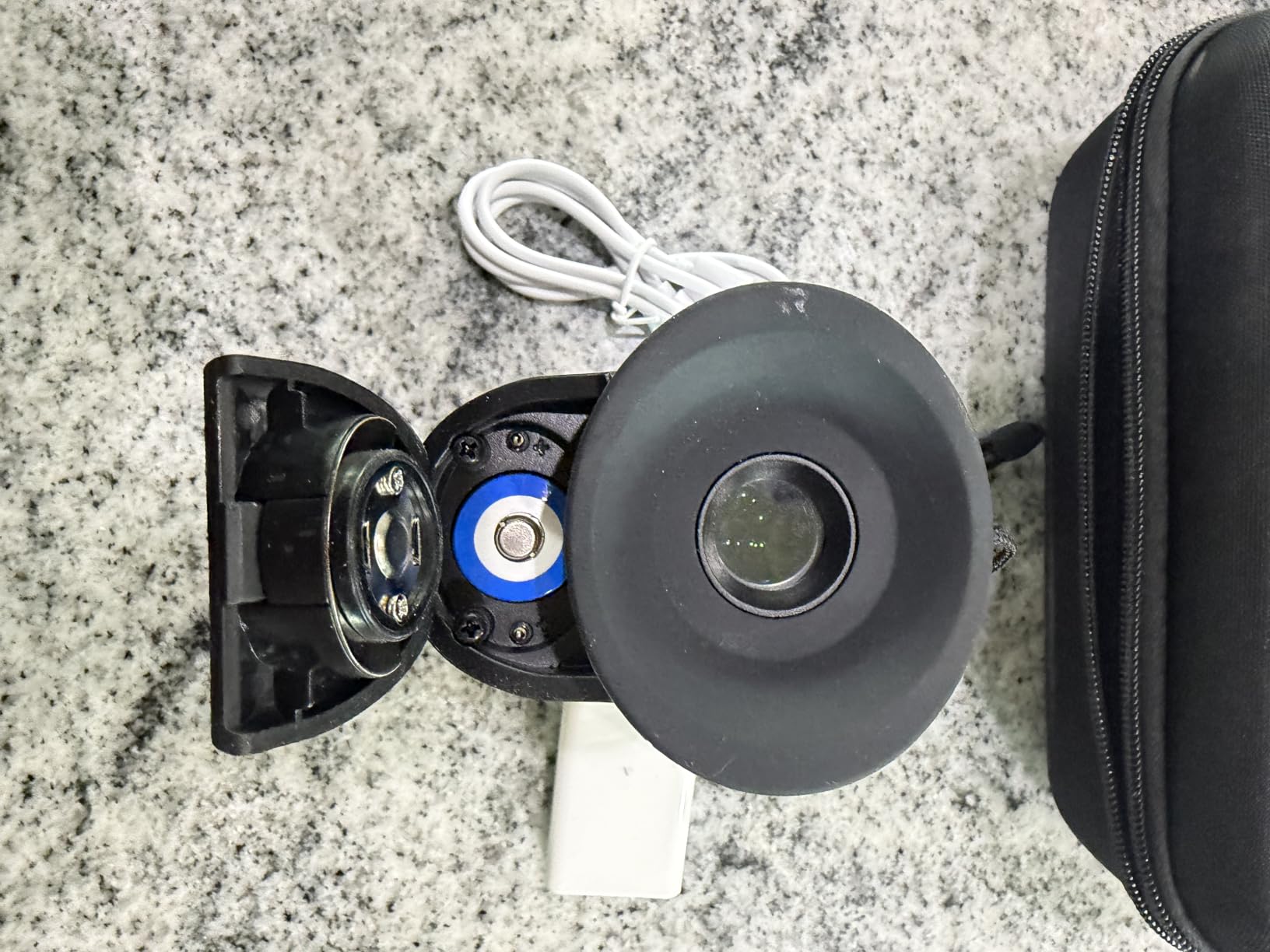
The replaceable battery is a genuine field advantage. Over 6 hours of continuous outdoor operation from a swappable cell is a meaningful improvement over a sealed pack, and a 12um detector pixel with 50Hz refresh is a solid foundation for a body at this tier.
IP65 weather resistance holds up to heavy rain, dust and impacts, and Wi-Fi app control lets you view and share captures from a phone.
Why open ground suits it
Lens focal length is the spec that decides open-country performance, and 15mm at 4x gives this body real reach without the weight of a 640 chassis. Quick startup and one-handed handling suit fast-moving field use.
What to watch out for
Storage is fixed at 16GB with no SD card slot, so you cannot expand it for a season of hog damage documentation. The 256×192 sensor is the base tier and limits detail on distant animals, and the listed 1 kg item weight is heavy for a handheld.
IP65 is a step below the IP67 on several rivals, and the one-year warranty is short next to the multi-year coverage on the AGM bodies. If your ground is wet brush rather than open field, look at a wider, lighter body instead.
7. ATN BlazeSeeker-210 – Widest Zoom Range and Expandable Storage
ATN BlazeSeeker-210 Thermal Imaging Monocular 256×192; 1.5-12x 12 Micron <35 NETD 50 Hz
256x192 at 12um pixels
1.5-12x zoom, widest here
NETD under 35mK
MicroSD up to 256GB
Wi-Fi and app
Pros
- Widest zoom range on this list at 1.5-12x for dialing in on distant hogs
- Five color palettes plus green hot for adapting to cover and weather
- 256GB MicroSD support allows far more recording than built-in storage rivals
- Built-in Wi-Fi and app let you adjust settings and record from a phone
- Three-year manufacturer warranty
- Compact
- dust resistant and slip resistant body at 9.6 ounces
Cons
- NETD under 35mK is less sensitive than sub-20mK sensors
- 256x192 is the base tier and limits identification detail at range
- Published frame rate information is inconsistent between the title and the listing
- Average rating of 4.1 with 9 percent one-star reviews
Zoom range is the headline here, and it is a real one. The 1.5-12x span is the widest of any monocular in this roundup, and on a hog hunt that spread does something specific: start wide to find the sounder, then push in to confirm you are looking at pigs and not cattle before you ever make a decision. Most budget bodies force you to choose one or the other.
Storage is the other differentiator. MicroSD support up to 256GB means you can record an entire season of hog damage documentation for a state agricultural agency without ever offloading files, which matters a great deal for anyone running a mitigation contract rather than hunting for sport.
Owners also like the app control, which lets you change settings, take photos and record thermal video from a phone, and the body is compact at 9.6 ounces, dust resistant and slip resistant. The three-year manufacturer warranty is solid.
What it does well
Wide-to-tight flexibility is genuinely useful in post oak and mixed brush where a sounder is partly occluded. You can frame the whole group, then zoom without losing the image quality an optical zoom would give you.
Five palettes plus a green hot mode let you adapt to different cover and weather, and auto focus helps when your target is at an awkward distance.
Where the compromises bite
The under 35mK NETD is the honest drawback. It is less sensitive than sub-20mK sensors, which means flatter contrast in low-difference scenes, and on a damp night after rain that is exactly the scene where a more sensitive sensor earns its cost.
There is also inconsistent published frame rate information between the listing title and the specifications, so do not assume 50Hz from the title alone. The 256×192 base sensor still limits identification detail at range.
8. Pulsar Axion Compact – Best Sensor for Rain, Fog and Humidity
Pulsar Axion XQ19 Compact Thermal Monocular, 384×288 Sensor
384x288 at 17um pixels
NETD under 18mK
640x400 AMOLED
19mm f/1.0 lens, 1.5-6x
IPX7, 8.8 ounces
Pros
- 384x288 with under 18mK NETD resolves subtle heat differences in rain
- humidity and fog
- 640x400 AMOLED is larger and more readable than tunnel-like LCD screens
- 19mm f/1.0 lens gathers bright detailed images at longer distances
- Removable APS3 battery plus included hand strap for all-night scanning
- 8 color palettes with a wide field of view that tracks subjects in dense vegetation
- App support for saving and viewing recordings
Cons
- Menu system is more complex than rivals
- so changing palettes takes navigating menus
- 1.5-6x digital zoom is a narrow range for pinpointing distant hogs
- One report of a battery arriving dead and then failing to hold a charge
- Small owner base of 40 reviews means less long-term field data
If your hog hunting happens in the wettest, ugliest conditions you can find, this is the body to look at. The Axion Compact pairs a 384×288 sensor with NETD under 18mK, which owners specifically credit with resolving subtle heat differences in rain, humidity and fog, and a 19mm f/1.0 lens that gathers a bright, detailed image at longer distances.
The 640×400 AMOLED display is the other reason it feels like a step up in the hand. Owners consistently describe it as noticeably larger and more readable than the tunnel-like LCD screens common on cheaper bodies, and on a 384 sensor that display size is a genuine gift because it makes detail you already captured actually visible.
Build quality is the reason most buyers describe it as professional-grade gear. The removable APS3 battery and included hand strap are built for all-night scanning rather than a quick trip to the treeline.
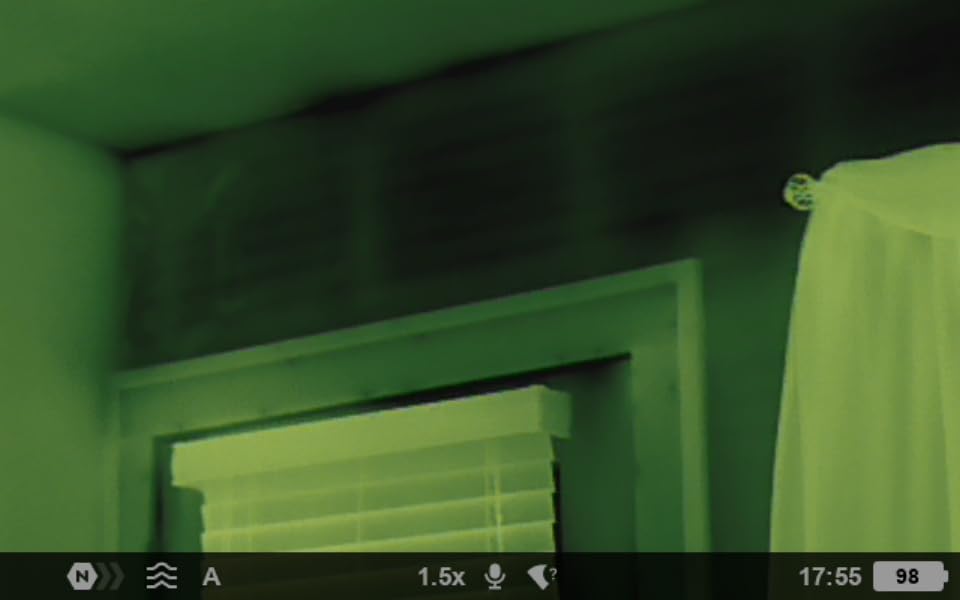
Eight color palettes and a 19.5 degree field of view let it track subjects in dense vegetation, and several owners use it specifically for hog scouting. App support handles saving and viewing recordings, and there is a five year limited warranty behind it.
Water resistance is IPX7, which covers immersion in fresh water, so creek-bottom work is not a worry.
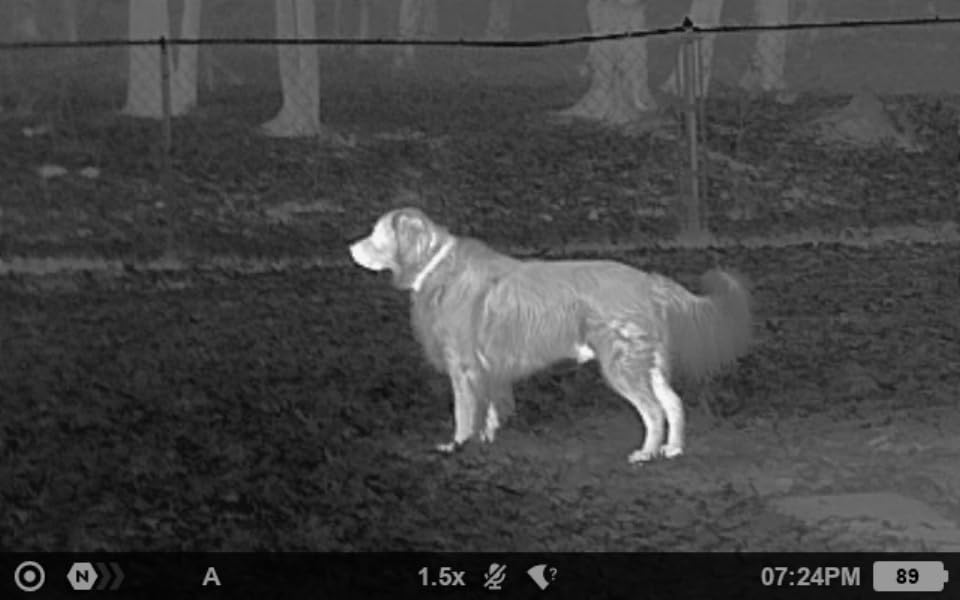
Best for low-contrast nights
NETD is the number that decides whether a thermal works on a foggy night, and under 18mK is among the more sensitive figures in this roundup. When the temperature difference between a hog and the background is only a few degrees, sensitivity is the only thing keeping the image readable.
For hunters working bayou, bottomland, or anywhere with standing water and heavy vegetation, that sensitivity is worth more than extra magnification.
Where it falls short
The menu system is more complex than rivals, so changing palettes means navigating menus rather than pressing one button, and that is annoying at 2am on a cold morning.
The 1.5-6x digital zoom is a narrow range for pinpointing distant hogs, and with only 40 reviews the long-term field record is thinner than the specification sheet suggests. There is also one report of a battery arriving dead and then failing to hold a charge.
9. AGM Taipan V2 15-384 – Sharpest Display in the Group
AGM Global Vision Taipan V2 15-384 Thermal Monocular High-Sensitivity
384x288 at 12um, sub-20mK NETD
1024x768 OLED at 50Hz
1.5x optical, up to 12x digital
750m detection
IP67
Pros
- 1024x768 OLED at 50Hz is the highest-resolution display in this roundup
- 12um 384x288 sensor with sub-20mK NETD captures fine signatures in darkness
- 1.5x optical magnification with up to 12x digital zoom
- IP67 housing with a rubberized exterior for grip in wet conditions
- 16GB internal storage records photo and video with sound plus Wi-Fi transfer
- Tilt sensor auto screen off and replaceable power extend runtime
- Five-year transferable warranty with spare parts
Cons
- 350 g is noticeably heavy for a handheld
- more than double the lightest options
- Only 24 reviews
- so long-term reliability is less documented
- 750m detection still depends on temperature contrast
- humidity
- target size and terrain
- Some listings show inconsistent magnification values
The Taipan V2 has the highest average rating in this group and the highest-resolution display, and those two facts are related. A 1024×768 OLED running at 50Hz shows you detail that a lower-resolution screen throws away, and on a 384×288 sensor with 12um pixels and sub-20mK NETD, that detail is the difference between a shape you can call and a shape you can only guess at.
Magnification is handled well, with 1.5x optical and up to 12x digital. On a hog hunt that optical base matters more than the headline maximum, because starting wide keeps a sounder in frame and the digital range lets you confirm at distance. The 15mm objective is a sensible middle for creek-bottom and light timber work.
Owners also appreciate the details that only appear after a season of use: a 90 degree tilt sensor that shuts the screen off when the unit is set down, a rubberized exterior that stays grippy when it is wet, and replaceable power with up to 6.5 hours per charge plus USB Type-C external power support.
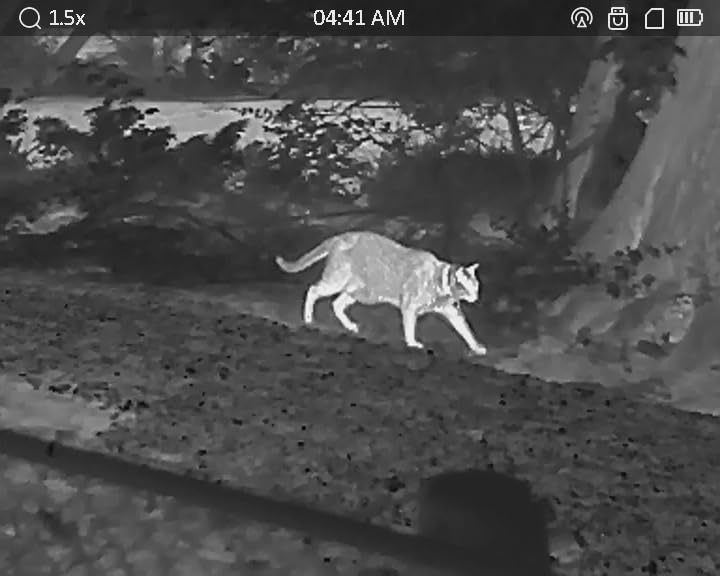
Sixteen gigabytes of internal storage records photo and video with sound, and Wi-Fi handles file transfer and remote control. Four palettes including Fusion give you enough range of contrast settings for most conditions, and a five year transferable warranty with five years of spare part availability is unusually reassuring for a device you will use outdoors in winter.
The listed detection range is 750 meters, though as always that figure moves with temperature contrast, humidity, target size and terrain.
What makes it stand out
Display resolution is the quiet hero here. Most owners who move up from a 256 body point at the screen first, because a sharper OLED makes a 384 sensor’s advantage immediately obvious in the field rather than on a spec sheet.
The 12um pixel pitch also means more detail per pixel than a 17um design at the same nominal resolution, which matters in the mixed shade of wooded hog country.
What to weigh before buying
At 350 g it is more than double the weight of the lightest bodies here, and that is real fatigue across a long sit or a long walk. If you will be on your feet, this is the wrong trade.
With only 24 reviews there is less evidence about long-term field reliability, and the warranty is strong but the sample size is small. Some listings show inconsistent magnification values, so confirm the specs with the manufacturer before you rely on the 12x figure.
10. AGM Fuzion TM35-640 – 640 Resolution with a Rangefinder
AGM Global Vision Fuzion LRF 35-640 Thermal Imaging Monocular for Hunting
640x512 at 12um pixels
1920x1080 OLED at 50Hz
35mm lens, 2-16x zoom
LRF to 1750 meters
Bi-spectrum fusion
Pros
- Highest native resolution here at 640x512 with a 1920x1080 OLED
- Bi-spectrum image fusion blends thermal and visible light for better recognition
- Eye-safe laser rangefinder measures distances out to 1750 meters
- Ultra-low illumination optical channel for low-light visibility
- Object highlight and detail enhancement speed up identification
- 2-16x magnification covers wide scanning and close identification
- Five-year manufacturer warranty
Cons
- 2 lb weight is the heaviest monocular here and tiring on long waits
- NETD of 35 mK is less sensitive than the sub-20mK sensors in this roundup
- Up to 5 hours of continuous use is the shortest battery life among the premium bodies
- Only 23 reviews
- limiting evidence on long-term reliability
- Fixed focus means no fine adjustment on close or awkward subjects
The Fuzion is the only 640×512 body in this roundup, and that changes the identification math. A 35mm lens on a 640 sensor is the combination that actually resolves a hog shape at distance rather than rendering a warm smudge, and if your ground is open country with longer shots, that is worth paying a premium for.
The 1920×1080 OLED at 50Hz is far and away the biggest screen here, and it is paired with bi-spectrum image fusion that blends the thermal channel with a visible light channel. Fusion is genuinely useful at dusk and in the last minutes of light, when a thermal silhouette needs context to become a confident identification.
The eye-safe laser rangefinder measures out to 1750 meters, which is far more than most hog shots need, and the ultra-low illumination channel gives you a visual reference when you want to confirm what you are looking at. Object highlight and detail enhancement processing both speed up identification in cluttered cover.
Magnification runs 2-16x with digital zoom at 1x, 2x, 4x and 8x, and 16GB of eMMC storage with Wi-Fi hotspot connectivity records video and snapshots. A five year manufacturer warranty is included.
You can select thermal, visible light, or the combined channel depending on what the moment calls for, which is more flexibility than any other body here offers.
Best for long-range identification
Native 640×512 resolution is the single biggest jump on this list, and it pairs with the 35mm objective to give you real reach. If you hunt hogs across open pasture, harvested fields, or long creek systems, this is the body that will let you identify rather than detect.
Fusion mode is the sleeper feature for the last hour of light, when a hog is a dark shape against sky and the thermal channel alone cannot resolve detail.
Where it costs you
Two pounds is the heaviest monocular in this roundup, and on a six hour sit that is a real endurance tax. Bring a support or swap it to a bench.
The 35 mK NETD is less sensitive than the sub-20mK sensors here, so in fog and heavy rain the picture will be flatter than a 384 body with better sensitivity, and 5 hours of battery life is the shortest among the premium units here. With 23 reviews, long-term reliability evidence is thin. Fixed focus also means no fine adjustment on close or awkward subjects.
What Specs Actually Matter for Hog Hunting
Spec sheets bury the useful information in marketing language, so here is the order that actually matters, ranked by how much each item changes your night on hog ground.
First: sensor resolution, 384×288 or 640×512 over 256×192. The 256×192 tier is the entry level and it will find hogs, but resolution is what separates detection from identification. A 384×288 sensor with 12um pixels is the sweet spot for most people, and 640×512 is the answer if you hunt open ground at distance. Be skeptical of bodies that quote a super-resolution number larger than the native sensor; that is processing, not detail.
Second: thermal sensitivity, the NETD figure. NETD is noise equivalent temperature difference, and the smaller the number the more sensitive the sensor. Under 25mK is a solid thermal monocular, and under 20mK is where you start seeing real detail in fog, humidity, and rain. Anything above 35mK will show you heat blobs on a clear dry night and disappoint you the first time you hunt after a front passes through.
Third: refresh rate, and 50Hz is the floor. Hogs move fast. A 25Hz sensor smears a trotting sow into a pale streak, and smear costs you identification at exactly the moment you need it. Every pick in this roundup except one runs 50Hz.
Fourth: objective lens focal length, and 25 to 35mm is the hog range. A 13mm lens is a wide scanner, superb for sweeping timber and counting sounders, but distant animals are tiny in the frame. A 25 to 35mm lens gives you identification reach at the cost of field of view. Creek bottoms and thick brush reward the wide end; open pasture rewards the long end.
Fifth: battery architecture, not just battery hours. Published runtime is a laboratory figure and it collapses in cold weather. A January hog sit in Texas can cut a quoted 10 hours down noticeably, and a quoted 5 hours to something shorter still. Replaceable cells or external power support matter more than the headline number, because a spare cell turns a dead optic into a five-minute inconvenience instead of a wasted night.
Sixth: IP67 weather sealing. Hog hunting means wet feet, mud, and gear that gets set down in the dirt. IP67 covers immersion in fresh water, which matters on creek-bottom ground. IP65 is dust and rain protection without full immersion, and it is adequate unless you expect to regularly dunk the unit.
Seventh: laser rangefinder, and only if you shoot at distance. For close hog work under 80 yards, a rangefinder adds little. If you are calling shots past 150 yards across open ground, the reading removes a real source of error in the dark.
Before you settle on any of this, our broader guides on choosing monoculars and night vision options cover the daytime and low-light cases these thermals do not.
Your Real Hog Identification Distance Is a Third of the Advertised Range
Every spec sheet in this roundup quotes a detection range, and every detection range is measured the same way: a person-sized target with a large temperature difference against a uniform background. A hog is smaller, is usually partially occluded by vegetation, and in creek-bottom country is frequently only a few degrees warmer than wet ground. That is the gap buyers get burned by.
The industry convention breaks range into three tiers. Detection is seeing that something warm is there. Recognition is knowing it is an animal rather than a rock or a patch of sun-warmed dirt. Identification is knowing the specific animal, which for hog hunting means confidently calling a pig rather than a deer or a cow. For thermal monoculars, realistic recognition lands around a quarter of advertised detection range, and realistic identification around an eighth to a third, depending on conditions and lens.
Worked example on the Teslong TTS260, which publishes both numbers honestly: 218 yards of detection and 55 yards of recognition. That is a ratio of about 25 percent, right in line with the convention.
Apply the same logic to the others and the picture changes. The TOPDON TS004 is listed to 410 meters, or roughly 448 yards, which puts realistic hog recognition somewhere near 110 to 150 yards, matching what owners report. The RIX Pocket K3 is listed to 853 yards under controlled test conditions, which implies detection rather than identification, and owners confirm you will be identifying well short of that. The AGM Fuzion at 640×512 and 35mm is the one most likely to approach its published reach on a real hog, because resolution and focal length are what buy identification distance.
Conditions move these numbers more than most buyers expect. A cold, dry, clear night with a hog recently moving gives you the best case, since recent movement leaves residual warmth. Warm rain, fog, and a hog that has been sitting in the shade give you the worst case, and in creek-bottom country after a front passes, that worst case is a normal Tuesday.
Thermal vs Night Vision for Hog Hunting
Thermal wins for hog hunting, and the reason is specific to the animal rather than general. A feral hog generates more consistent and higher-contrast body heat than most game, which is exactly the condition thermal needs, while a night vision unit depends on any available light and fails completely in the unlit timber where hogs spend the middle of the night. For identification at any real distance, thermal is the better tool.
Night vision still has two real advantages. It is cheaper at the entry level, and it produces a detailed, depth-rich image that makes it better at confirming a close animal you have already found by other means, and at reading body language in a safe, daylight-ish setting. For hog damage work, some mitigation shooters pair them: night vision to confirm what is at the fence line before deciding how to respond.
Where night vision loses is the middle distance. Beyond roughly 50 to 80 yards, an image intensifier needs moonlight or ambient light to perform, and a hog in a creek bottom at two in the morning under a canopy simply does not give it enough. Thermal does not care about light at all.
Our night vision monocular guide covers the cases where an intensifier is the right answer, and it is worth reading if your hog work is as much about property defense as about hunting.
What You Can and Cannot Do With a Handheld Monocular
A handheld monocular is a scanning and glassing tool. You can absolutely hunt with one, and plenty of hog hunters do, but it is a different tool from a scope and it is worth being clear about what each one does.
A monocular is handheld and single-eye. You look, you identify, you put it down. Because you use one eye, your unaided night vision stays intact, and because it is never on a firearm, it carries no additional restrictions in states that regulate illuminated sights or scopes differently. A thermal scope mounts on a rifle and lets you shoot through it. A clip-on attaches in front of a day optic. A binocular uses both eyes and gives depth, but it costs more, is heavier, and blinds your dark adaptation.
Many hog hunters who already own a thermal scope use it as a handheld. It is an unglamorous but genuinely effective budget path, and one owner on r/ThermalHunting described running a thermal riflescope handheld and picking up a pig at 20 yards. The practical difference is weight and handling, not image quality.
On legality, treat this as a question for your state wildlife agency rather than an article. Hog hunting is regulated differently from big game in many states, some states restrict artificial light or illuminated sighting devices for hogs specifically, and others do not. Check before you buy and before you hunt, and treat any general statement here as guidance rather than a legal opinion.
Hog Hunting Field Technique: Scan Bands, Palettes and False Positives
The optic matters less than how you use it, and a few habits separate hunters who consistently fill a freezer from those who wonder what they missed.
Work overlapping scan bands, not single sweeps. Pick a band about a third of the width of your field of view and move through it, then drop back down and overlap the previous band. A hog is a compact heat source and single sweeps leave gaps exactly where sounders sit.
Use two palettes, not one. Scan in a high-contrast monochrome palette, then switch to a color palette when you have a candidate. A single palette makes you either miss things or waste time adjusting constantly.
Scan broadside, not head-on. A hog moving across your view presents a wide heat profile and is far easier to identify than the same hog coming toward you. This is why hogs that show you a side read instantly and hogs facing you are often just a bright dot.
Expect false positives from wet ground. Creek bottoms, standing water, freshly turned soil, and sun-warmed rock all produce heat that a thermal cannot distinguish from an animal. After rain this is the single biggest source of frustration on hog ground, and the fix is time of night: the strongest contrast comes in the hours after midnight when the ground has given up its stored heat.
Let the unit acclimatize and let your eyes adjust. Give the sensor a minute or two to stabilize after you step out of a warm vehicle, and resist the urge to look at a bright phone screen mid-scan.
Carry a spare power source. Lab battery hours fall apart in cold weather, and a January sit can consume a charge long before you planned to move.
Finally, keep the optic off the rifle until you know what you are looking at. A handheld monocular is genuinely better for that job, and it is why the best thermal monocular for hog hunting is often the one you never fire through. If you are covering a lot of ground on foot, choosing a pack that carries your glass and spare batteries properly matters more than most buyers expect.
Frequently Asked Questions
What are the top 5 thermal monoculars for hog hunting?
Our top five, in order, are the TOPDON TS004 as the best overall, the RIX Pocket K2 for value, the Teslong TTS260 as the cheapest useful entry, the ATN OTS XLT for its built-in rangefinder, and the RIX Pocket K3 for the lightest 384×288 body. The first two suit creek-bottom and timber work, the K3 wins on image detail, and the Fuzion at the bottom of our full list is the pick for open ground at distance.
Is night vision or thermal better for hog hunting?
Thermal is better for hog hunting because feral hogs produce a strong, consistent heat signature, and a thermal monocular works in total darkness without depending on moonlight. Night vision is cheaper and gives a more natural detailed image, but it stops working past roughly 50 to 80 yards in unlit timber, which is where hogs spend the middle of the night.
What is the best budget thermal monocular for hog hunting?
The TOPDON TS004 is the strongest pick in the lower price tier, pairing a 50Hz refresh rate with roughly 10 to 11 hours of real-world battery life in an IP67 body that weighs 70 grams. The RIX Pocket K2 is the runner-up for anyone who wants a wider field of view, and the RIX Pocket K3 is the pick if you want a 384 sensor and can accept digital zoom limits.
Can you use a thermal monocular to hunt hogs?
Yes. A handheld monocular is a scanning and glassing tool that works well for finding, counting, and identifying hogs at distance, and many hunters use one as their only thermal device. Some states regulate illuminated sighting devices or artificial light for hog hunting differently than for big game, so check with your state wildlife agency before you buy and before you hunt.
How far can a thermal monocular actually identify a hog?
Realistic identification distance is roughly one quarter to one third of the advertised detection range for a good 384 body with a 25 to 35mm lens, and considerably less for the 256×192 tier. On the Teslong TTS260, which publishes both figures, 218 yards of detection translates to about 55 yards of recognition. Expect the best results on cold dry nights and the worst on warm foggy ones after rain.
Do I need a laser rangefinder for hog hunting?
Only if you shoot past about 150 yards. For close work at water gaps, feeders, and creek crossings, a rangefinder adds little. Across open ground at distance, the reading removes a real source of error in the dark, and the ATN OTS XLT and AGM Fuzion both have one built in.
Final Pick by Hunting Style
One final pick, stated plainly: the TOPDON TS004 is the best thermal monocular for hog hunting in 2026. It has the largest base of real owner feedback in this group, a 50Hz sensor so moving hogs stay solid, battery life that covers a full sit, and a body light enough that you will actually keep it in your hand.
Style the other way and the answer changes. Creek bottoms and thick timber favor the wide, light RIX Pocket K2. Open pasture and long field edges favor the GOYOJO G215 for its 15mm lens, or the AGM Fuzion TM35-640 if you need genuine 640 resolution and a rangefinder. Wet, foggy, humid nights favor the Pulsar Axion Compact for its sub-18mK sensitivity. The hardest sit of the season, all night in a blind, favors the RIX Pocket K3 at 7.52 ounces.
Whichever you choose, buy the body whose lens matches your ground and the sensor that matches your weather, then give it a full season before you judge it. Check your state rules on illuminated devices, and see the current pricing on each pick below before you commit.