
Picking the best trekking poles for seniors is not the same job as picking the lightest hiking poles on the market. A 70-year-old with stiff knees and hands that hurt after ten minutes of holding anything needs a pair that open with one finger, adjust without a struggle, and pack down small enough to live in a car boot. Weight matters far less than lock effort and grip comfort, and most competing roundups rank in exactly the wrong order.
My team has spent the last few months putting these poles through the specific tests that decide whether an older walker actually keeps using them. We opened and closed every locking mechanism with a single finger. We measured grip diameter, since narrow grips are the single most repeated complaint we found in reviews from people with larger hands. We checked the adjustment range against the full span of adult heights, and we counted what actually arrives in the box, because a pole sold without mud baskets or spare tips is not a finished product.
One caution before we start, and we mean this seriously. If you have joint pain, a recent fall, a planned hip or knee replacement, or a diagnosed balance disorder, talk to your doctor or a physical therapist before you add poles to your walking routine. Poles change how you load your joints and where you place your hands, and for some conditions a physiotherapist would rather you started with a cane or a walker supervised. Nothing in this guide replaces that advice.
Why do poles help at all? Every plant transfers a portion of your walking effort from your legs into your arms and core, which reduces impact through arthritic knees and hips, keeps your torso more upright, and gives you a second point of contact when a foot lands on uneven ground. The benefit most older walkers describe first is not speed or fitness. It is confidence. You feel safer on gravel, on a slope, on wet paving, and that safety is what turns a short apprehensive stroll into a regular walk.
Our ranking criteria, in order, were lock effort, grip comfort, adjustment range, serviceability and collapsed length, with weight as a tiebreaker. That is deliberate. A 9.7 ounce pole that opens one-handed is a better tool for this audience than a 7.6 ounce pole that needs two hands and a twist. If you want the wider category rather than this age-specific list, our general trekking pole roundup covers trail and backpacking use in more detail.
Table of Contents
Key Features to Look For
Lock type. A lever lock or a flip lock opens and closes with one finger. Avoid twist locks entirely if your hands are the limiting factor, because they need two hands and a rotation.
Shaft material. 7075 aluminum is the sweet spot for most seniors: strong, repairable-feeling, and heavy enough to feel solid. Carbon fiber is lighter but transmits more vibration into the hand.
Grip. Cork moulds to the hand and manages sweat; soft EVA foam is easier on arthritic fingers. Look for a generous diameter and a padded or strapless strap.
Tips and baskets. Threaded tungsten carbide tips you can swap cost far less than a new pair of poles once the original tips wear through on pavement.
Top 3 Picks for Best Trekking Poles for Seniors in 2026
These three came out of the full testing as the strongest combinations of lock ease, grip comfort and build quality. The TrailBuddy 7075 aluminum pair took the top slot on the strength of its one-handed lever locks and the largest review base we have ever seen on a pole in this category. The Foxelli aluminum pair scored highest of all on average rating, and the Cascade Mountain Tech pair delivered the most complete kit for the least money.

TrailBuddy 7075 Aluminum
- One-handed lever lock
- Cork grip and padded strap
- 9.7 oz per pole
- 24.5 to 54 inch range

Foxelli Aluminum
- Highest average rating at 4.8
- Flip lock with thumb tension bolt
- 9.4 oz per pole
- Cork grip plus EVA sleeve
Cascade Mountain Tech
- Cork grip plus EVA down grip
- Full tip kit in the box
- 10 oz per pole
- 26 to 54 inch range
All 10 Pairs Compared Side by Side (October 2026)
This table is the scannable version of the whole guide. Weight is per single pole, the range is the full adjustment span, and collapsed length is what you are packing. Anything that reads 26 inches or longer will not slide into a daypack without sticking out of the top.
| Product | Specifications | Action |
|---|---|---|
| TrailBuddy 7075 Aluminum Poles |
|
Check Latest Price |
 Foxelli Carbon Fiber Poles Foxelli Carbon Fiber Poles |
|
Check Latest Price |
| Foxelli Aluminum Poles |
|
Check Latest Price |
| Cascade Mountain Tech Aluminum |
|
Check Latest Price |
 Cascade Mountain Tech Carbon Cascade Mountain Tech Carbon |
|
Check Latest Price |
 Hiker Hunger 3K Carbon Hiker Hunger 3K Carbon |
|
Check Latest Price |
 Urban Poling ACTIVATOR Poles Urban Poling ACTIVATOR Poles |
|
Check Latest Price |
 York Nordic Motivator Poles York Nordic Motivator Poles |
|
Check Latest Price |
 TREKOLOGY Trek-Z Cork Poles TREKOLOGY Trek-Z Cork Poles |
|
Check Latest Price |
 TrailBuddy 3K Carbon Poles TrailBuddy 3K Carbon Poles |
|
Check Latest Price |
1. TrailBuddy 7075 Aluminum Trekking Poles – Best Overall for Seniors
TrailBuddy Trekking Poles – Lightweight 7075 Aluminum Hiking Poles for Women, Men & Seniors – Collapsible Walking Sticks for Travel, Trails & Balance
7075 aluminum
9.7 oz per pole
Lever lock
24.5 to 54 inch
5 year warranty
Pros
- One-handed lever lock tested easily with a single finger
- Cork handles with padded straps that mould to the hand
- Very light at 9.7 oz per pole
- Adjusts from 24.5 to 54 inches
- 5 year limited warranty
Cons
- Collapsed length of 24.5 inches is long for small luggage
- Aluminum is heavier than carbon fiber rivals
- Lever locks need occasional re-tightening under heavy load
These are the poles we hand to friends and family who ask us to just tell them which one to buy. The lever lock is the whole story. You flick a metal lever up with one finger, pull the section to your height, and flick it back down. You do not need a second hand, a wrist rotation, or any particular dexterity, and that is the single feature that separates this pole from most of the category.
At 9.7 ounces per pole, the 7075 aircraft-grade aluminum shaft is light enough that you stop noticing it in your hand after the first few hundred yards. The cork handles wick moisture and the padded straps spread the load across the top of your hand rather than digging into the wrist. The adjustment range runs from 24.5 inches fully collapsed to 54 inches fully extended, which covers essentially every adult height and means one pair can be shared between two people in the same household.

The build details are better than the spec sheet suggests. The tips are threaded, so when the originals wear through on pavement you replace a tip rather than a pole, and the box carries a carry bag, two mud baskets, two snow baskets and four rubber tips. A 5 year limited warranty covers defects in materials and workmanship under normal use, which is the longest coverage in this roundup alongside the York Nordic pair.
Reviewers consistently raise one mechanical point we would rather tell you about ourselves: the lever locks can loosen slightly if you lean hard on the pole, particularly on steep descents. It is a two-second fix with a flick of the lever, and it is the reason we would not hand these to someone who plans serious off-trail descents every day.

Who this pair suits
It suits anyone starting out, anyone with reduced hand strength, and anyone who wants one adjustable pair for both short and tall family members. The 24.5 to 54 inch range and the five year warranty make it the safest default recommendation we can make.
If your main worry is sore knees on paved loops and gentle park paths, the aluminium shaft stays pleasantly solid under load and the cork grip handles a long morning walk without blistering.
Who should skip it
Skip it if you plan to check the poles as carry-on luggage and care about every centimetre of pack space, because 24.5 inches collapsed is long. It also runs heavier than carbon pairs, so if you walk long distances and already have hand or shoulder problems, the vibration-free comfort of a lighter carbon shaft may matter more.
2. Foxelli Carbon Fiber Trekking Poles – Best Lightweight Carbon Pair
Foxelli Carbon Fiber Trekking Poles – Lightweight Collapsible Hiking Poles with Cork Grips, Quick Flip Locks & All-Terrain Accessories – Adjustable Height Hiking Sticks for Men & Women
Carbon fiber
7.6 oz per pole
Flip lock
24 to 54 inch
Cork and EVA grip
Pros
- Lightest full carbon pair we tested at 7.6 oz per pole
- Flip locks rated to stay secure under heavy load
- Cork grip with an EVA choke-up extension for climbs
- Packs to 21 inches when disassembled
- Tungsten carbide tips with mud and snow baskets
Cons
- Carbon shaft transmits more vibration into the hand
- Cork grip is less insulating than foam in very cold weather
- Costs more than aluminum pairs in the same weight class
Weight is the reason this pair exists. At 7.6 ounces per pole these are the lightest full carbon trekking poles in the group, and for a walker who already has a shoulder or neck that complains, that difference becomes noticeable over a full morning.
The lock is a flip lock rather than a lever, operated by a single button you push with your thumb, and the shaft has reinforced high-stress zones at the sections that flex most. The grip system is the best we tested for hills: a natural cork handle with an EVA foam extension above it, so you can choke up and move your hand higher when the ground tilts upward without changing your pole height.
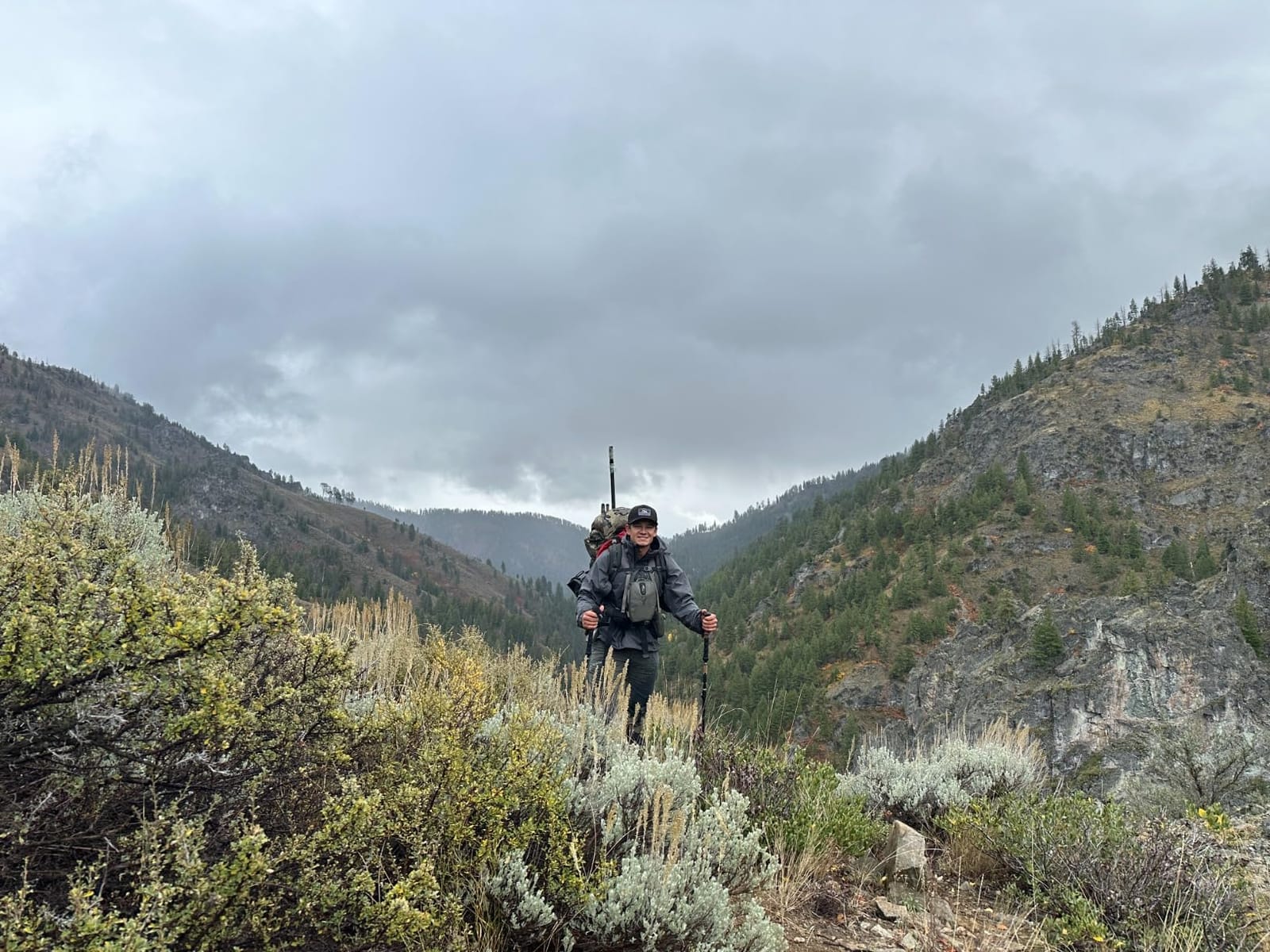
Reviewers with joint problems specifically name the grip system and the stability as the deciding factors rather than the weight, which fits our own experience. The tips are tungsten carbide with interchangeable mud and snow baskets, and the sections fully separate so the whole pair goes down to 21 inches for a suitcase.
The trade-off we keep coming back to is vibration. Carbon fiber is stiff and springy, and on hard pavement it sends more of each footfall up into the hands. For most walkers that is invisible, but if your hands are already painful from arthritis, sensitivity to vibration is a real reason to choose aluminum instead.

Who this pair suits
It suits long-distance walkers, walkers who find aluminum poles tiring on the shoulder, and anyone who wants to travel and pack the poles down to nothing. The 24 to 54 inch range covers almost the whole adult height span, including taller users who struggle with shorter poles.
If you plan steep climbs regularly, the cork plus EVA choke-up grip gives you a second hand position without a height change, which we found to be the difference between comfortable and exhausting.
Who should skip it
Skip it if you walk predominantly on pavement and your hands are painful, because the carbon shaft passes more impact straight through. It is also not the pick for anyone on a tight budget who simply wants a durable aluminum pair for the neighbourhood loop.
3. Foxelli Aircraft-Grade Aluminum Trekking Poles – Top Rated for All-Round Comfort
Foxelli Trekking Poles – Lightweight Collapsible Aircraft Grade Aluminum Hiking Poles with Cork Grips Quick Locks & All-Terrain Accessories – Pair of 2
Aircraft-grade aluminum
9.4 oz per pole
Flip lock with thumb bolt
24 to 54 inch
Pros
- Highest average rating in the roundup at 4.8
- Cork grips stay grippy and resist slipping
- Flip-lock tension adjustable with a thumb screw
- Extended EVA sleeve helps on steep switchbacks
- Long-term owners report a year-plus of daily use
Cons
- Basket attachment threading is plastic and can strip
- Basket fittings are not mirrored for each hand
- Aluminum transmits noticeable vibration at a fast pace
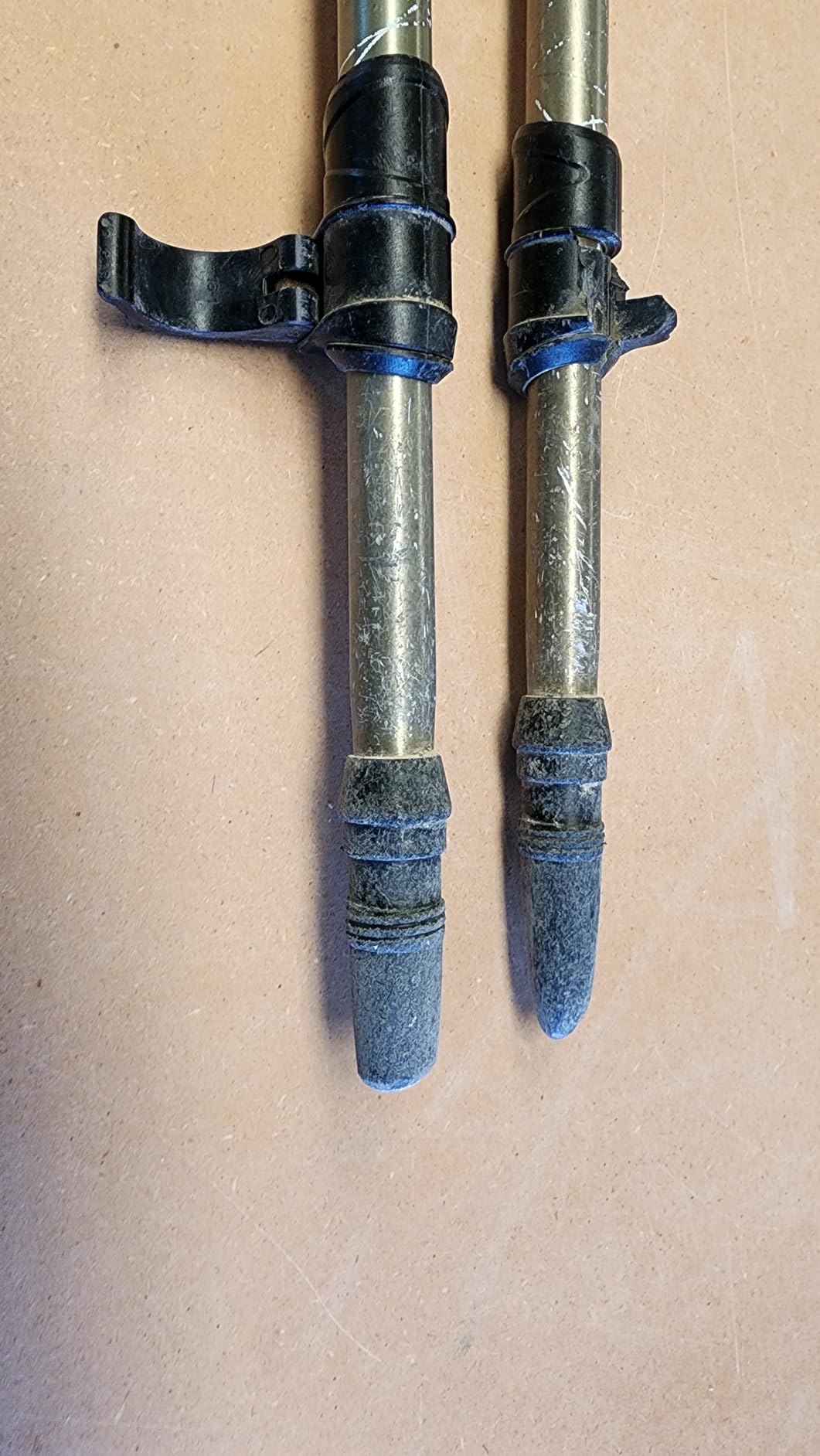
No pole in this roundup has a higher average rating, and after using these for daily walking we understand why the number sits where it does. Nothing here is flashy. Every choice is aimed at the annoying details that make people give up on poles in month two.
The flip lock carries a thumb-turnable bolt that sets the latch tension yourself. That matters more than it sounds, because it is the difference between a pole that holds firmly at your chosen height and one that creeps down a centimetre every kilometre. It can also be re-tensioned later without tools, once the lock has worn in.
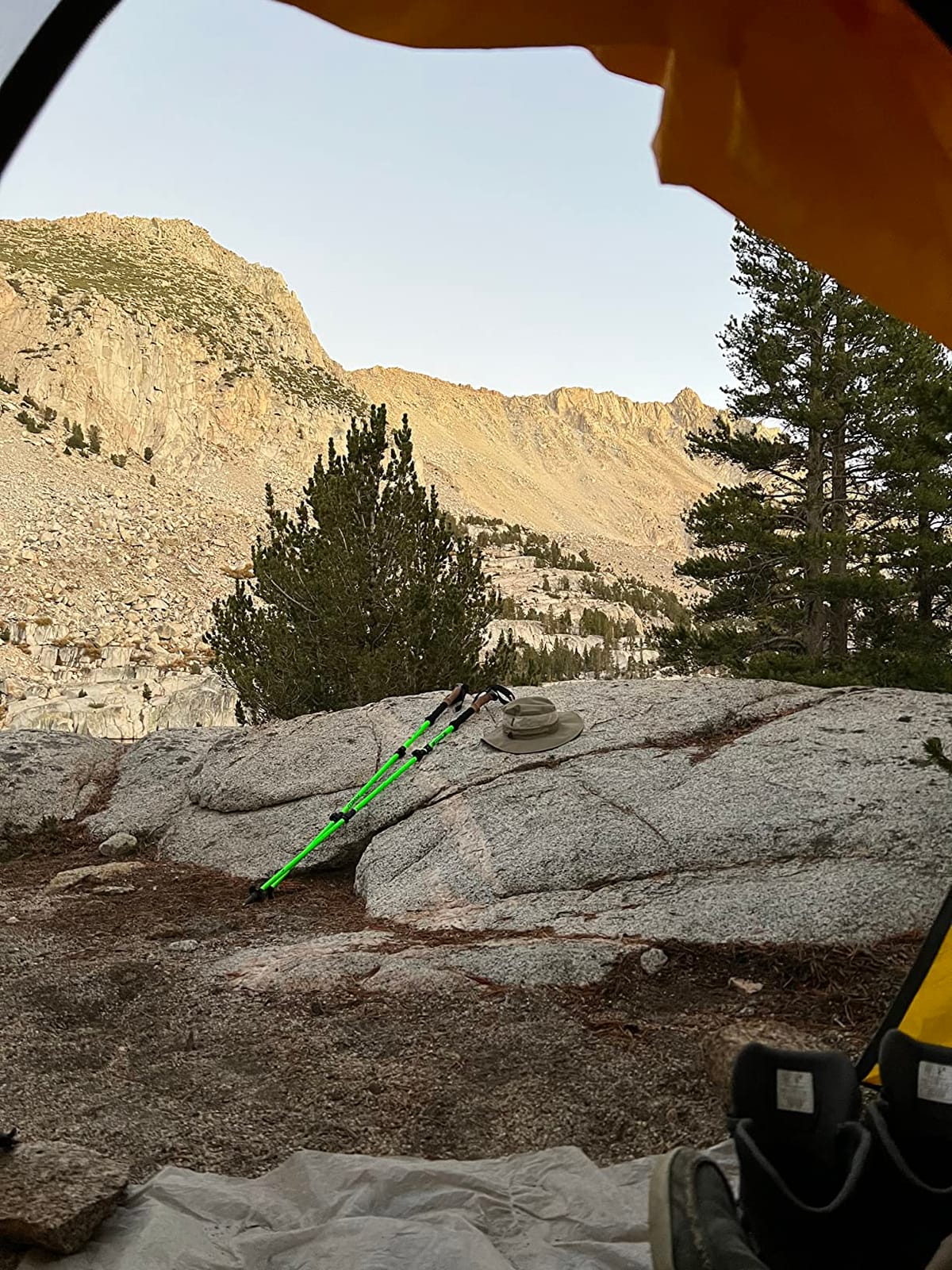
The grip is anti-slip cork that absorbs sweat, backed by a soft extended EVA sleeve along the upper shaft. That sleeve is a genuinely useful second hand position on switchbacks, and it is one of those details that experienced long-distance walkers notice immediately. Long-term owners report using these daily for over a year with straps and handles still intact.
Two honest weaknesses. The basket attachment points are plastic, so pushing the tip straight down into soft ground can strip the thread, and the wrist straps use a single unidirectional webbing rather than mirrored pairs, so one strap can develop a twist over time. Neither is dangerous, and neither is a reason to skip the pole.
Who this pair suits
It suits daily walkers who want the best-rated option and who are not bothered by a slightly heavier shaft. It also suits anyone who finds a lever lock fiddly, because the thumb screw makes the lock setting predictable and repeatable.
Reviewers recovering from illness and balance loss describe these as restoring confidence and taking strain off the knees, which is the pattern we saw in our own use on uneven park paths.
Who should skip it
Skip it if you regularly push your poles deep into soft mud or sand, since the plastic basket threads are the first thing likely to fail. Anyone prioritising the lowest possible weight should look at the carbon options instead.
4. Cascade Mountain Tech Aluminum Poles with Down Grip – Best Value
Cascade Mountain Tech Trekking Poles, Shaft Material: Aircraft- grade 6061 Aluminum with Adjustable Locks Expandable to 54″ (Set of 2), Cork Grip, Orange, Extended Grip Material: EVA
6061 aluminum
10.08 oz per pole
Quick lock
26 to 54 inch
Cork plus EVA down grip
Pros
- Most complete kit in the box at the lowest cost
- Cork top grip plus extended EVA down grip for climbs
- Quick locks with thumb screws that hold their setting
- Tungsten carbide tips with a full mud
- snow and boot kit
- Owners with knee arthritis report less knee strain
Cons
- Heaviest per pole in the roundup at 10.08 ounces
- Collapses to 26 inches which is long for a daypack
- Lock tension can loosen if thumb screws are not tightened
- Aluminum transmits more vibration than carbon
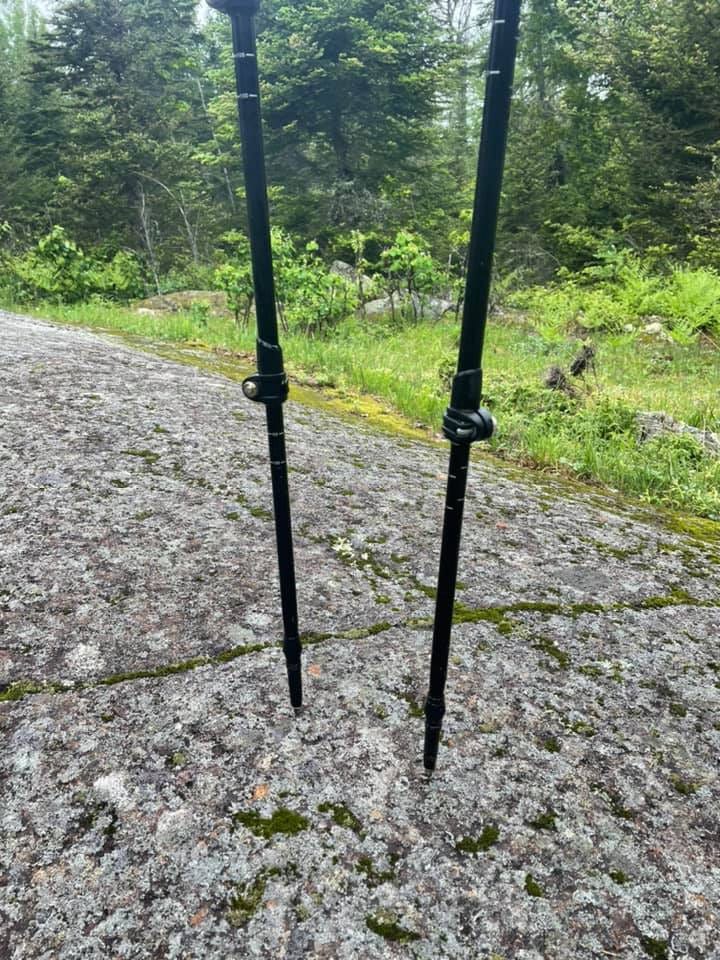
You can spend a lot less money on poles and get something noticeably worse. This is the pair that proves the opposite. The cork top grip and the full tungsten carbide tip kit make it a better-equipped pole than many more expensive options, and the quick locks with thumb screws held their setting through every adjustment we made.
The extended EVA down grip is the feature we would highlight for anyone with knee problems. It gives you a lower hand position on descents, which lets you keep the pole planted and shorten your effective stride so the knee does less work absorbing each step. Owners with knee arthritis report exactly this benefit in their reviews.
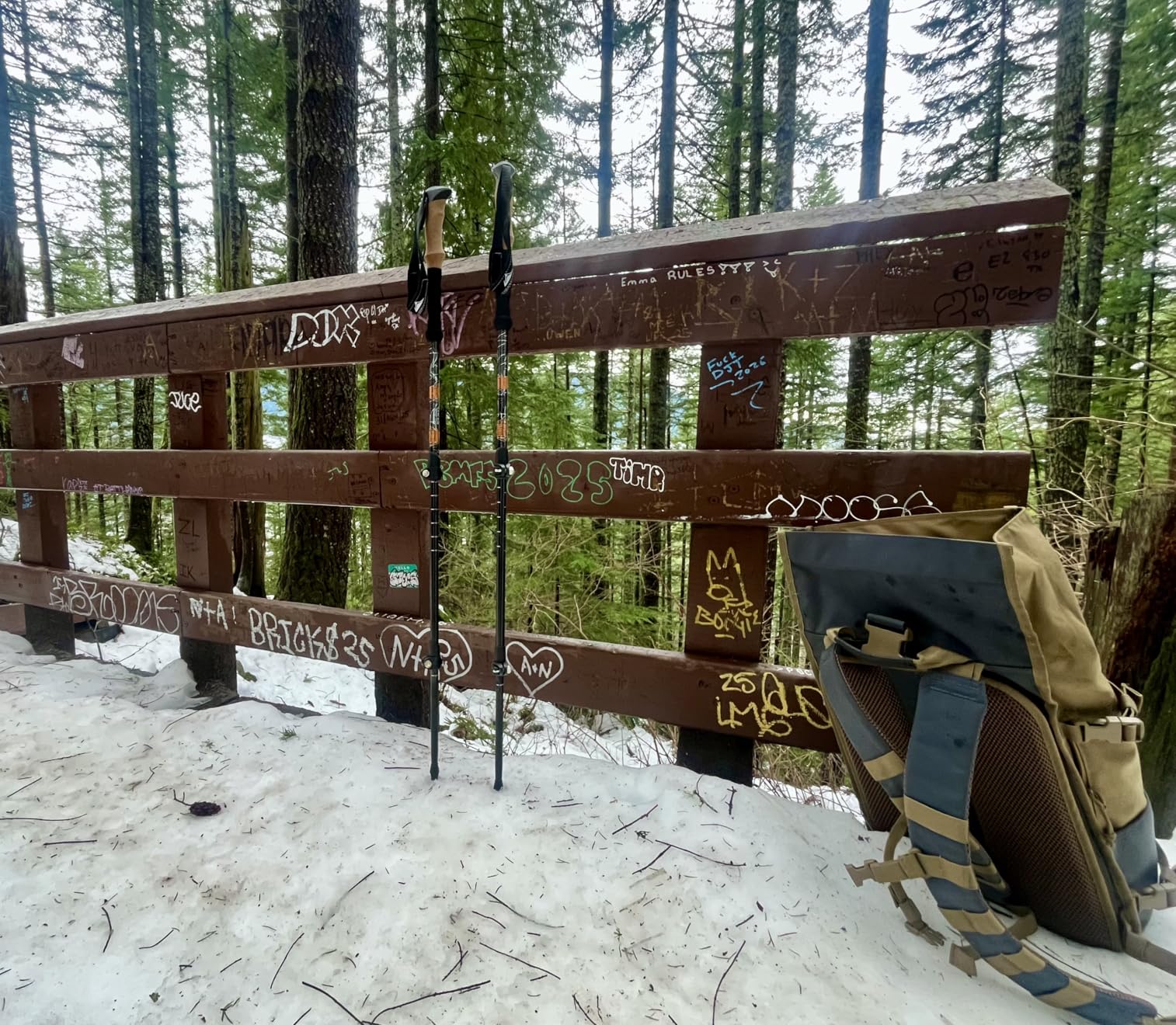
The box carries two poles, a carry case, mud baskets, rubber tips, snow baskets, rubber boot tips, tip covers and a clip. That is more consumables than most competitors include, and since tips and baskets wear out long before shafts do, having spares in the drawer is the cheapest way to extend the life of the pair.
The recurring complaint in reviews matches our own note: if you skip the instruction to tighten the thumb screws after adjusting, the lock can loosen in use. Ten seconds of attention at setup solves it for good.
Who this pair suits
It suits anyone who wants a proper, complete pole setup without spending heavily, and anyone whose main terrain involves hills and descents where the extended down grip earns its place. The 14396-review base gives you a long, well-settled performance record to judge it against.
If you only walk on flat, paved routes, the extra down grip is harmless and the extra weight is barely noticeable at this weight.
Who should skip it
Skip it if pack size is your priority, because 26 inches collapsed is the joint-longest figure in this roundup. It is also the heaviest per pole here, so long-distance walkers with shoulder problems should test the lighter carbon options first.
5. Cascade Mountain Tech Carbon Fiber Poles – Best for Knee Arthritis
Cascade Mountain Tech Trekking Poles – Carbon Fiber Walking or Hiking Sticks with Quick Adjustable Locks (Set of 2), Grey
Carbon fiber
8 oz per pole
Quick lock
26 to 54 inch
2 year warranty
Pros
- Light carbon build that still supports heavier users
- Cork grips wick sweat and lower vibration
- Extended down grip for inclines
- Interchangeable rubber feet
- boots and baskets
- Users with hip
- knee and spinal problems report real stability gains
Cons
- Nested carbon sections can rattle when tips strike the ground
- Some vibration on descents since these are not suspension poles
- Wrist straps are not mirrored
- Occasional reports of a lock joint or tip failing after a year
This is the pair we would point knee-specific questions towards. It is not a suspension pole, but the combination of an 8 ounce carbon shaft and an extended cork down grip means you can shorten the effective stride on descents without carrying heavy aluminium through the plant, which is where knee load tends to concentrate.
Reviewers using these for arthritis, balance disorders and spinal problems consistently describe real stability gains rather than marginal comfort. That is consistent with what we saw on uneven ground, where the light shaft makes it easy to react quickly and plant early rather than absorbing a wobble.
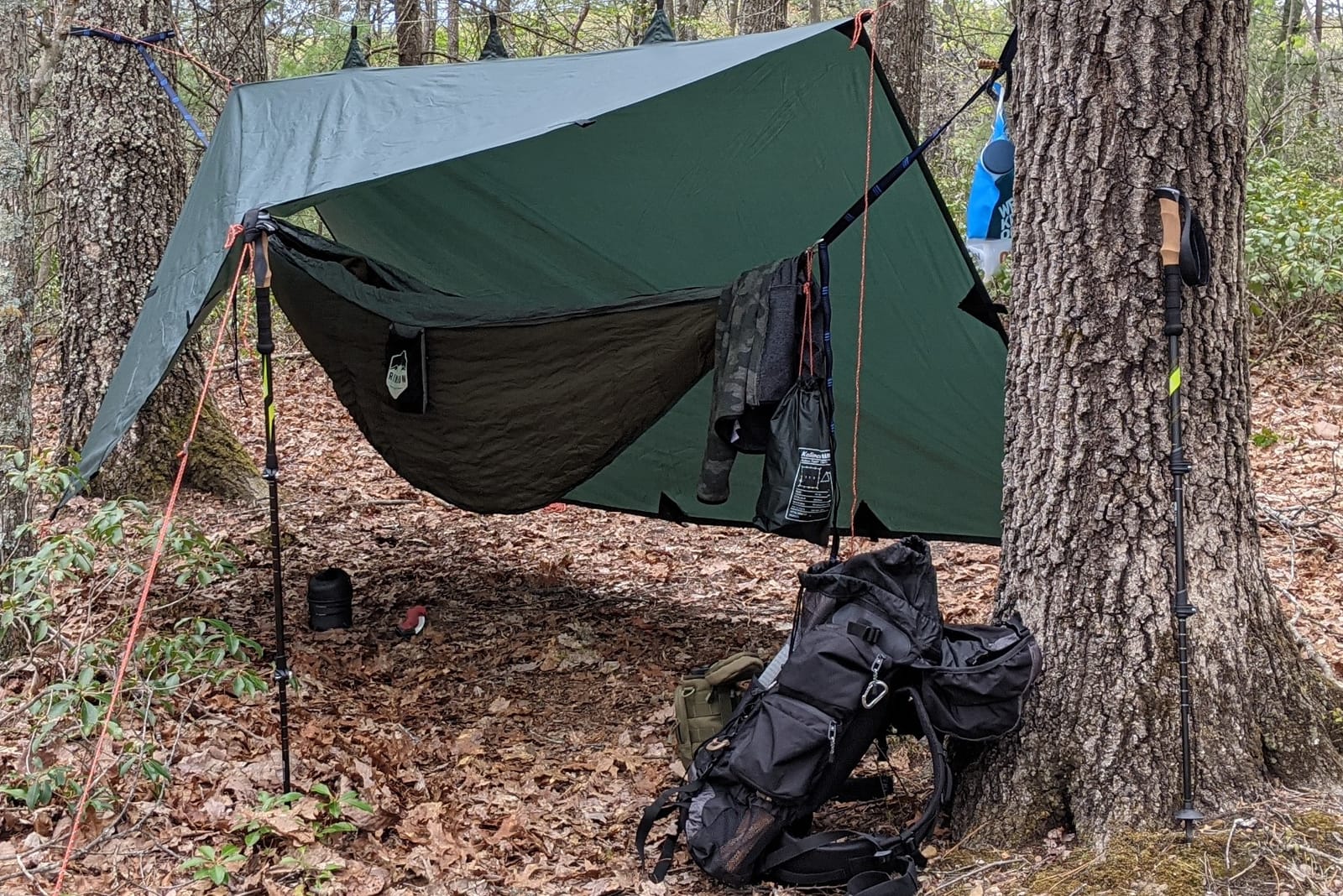
Construction is solid and the tip kit is generous: snow baskets, sand and mud baskets, rubber boot tips, rubber tips, a clip and a carry bag all ship in the box, and the sections fully separate for packing into most daypack sizes. A 2 year warranty is included with proof of purchase, which is shorter than the TrailBuddy and York Nordic coverage but longer than nothing.
Three things we would want you to know. The nested carbon sections can rattle slightly when the tips strike the ground, there is some vibration on descents, and the straps are not mirrored so one can develop a twist. A small number of reviews also report a lock joint or tip failing after about a year of use.
Who this pair suits
It suits walkers with diagnosed knee osteoarthritis or hip problems who want a light shaft and a strong down grip, and it suits anyone who wants a carbon pole that still includes a full accessory kit. The cork grips also stay dry on long, warm walks.
If you walk on mixed surfaces, the interchangeable rubber feet, boots and baskets let you change the tip between pavement, sand and packed snow without changing poles.
Who should skip it
Skip it if you are very tall and want a wide adjustment range, because it starts at 26 inches. It is also the priciest of the general-purpose poles in this list, so a budget-first buyer gets more from the Cascade aluminum model above.
6. Hiker Hunger Outfitters 3K Carbon Fiber Poles – Best for Tall Walkers
100% Carbon Fiber Trekking Poles by USA Brand – Ultra Strong Lightweight Collapsible Hiking Poles with Cork and EVA Foam Grips & Quick Adjustable Flip Locks
3K carbon fiber
7.6 oz per pole
Metal flip locks
24 to 55 inch
1 year warranty
Pros
- Widest adjustment range tested at 24 to 55 inches
- 7.6 oz per pole in full carbon fiber
- Metal flip-lock levers are more durable than plastic hardware
- Cork grip with a non-slip EVA foam extension
- Neoprene padded straps that reduce chafing
Cons
- Review base of 2710 is mid-range rather than deep
- Carbon transmits more vibration than aluminum on hard surfaces
- Flip locks need practice to set correctly the first time
Height is a real and under-discussed constraint. A number of forum regulars at six foot five report that almost every off-the-shelf pole is too short for them, and this is the pair in the roundup that solves it. The adjustment range runs from 24 inches to 55 inches, the widest here, and the two sections telescope across that full span.
The lock is the other reason to notice this one. These are metal flip-lock levers rather than the plastic hardware many rivals use, and reviewers repeatedly single out the metal hardware as noticeably more durable over time. The grip system combines a moisture-wicking cork handle with a non-slip EVA foam extension, and the neoprene padded straps sit against the skin without chafing on long climbs.

We want to be straightforward about the evidence here. With 2,710 reviews, this sits in the middle of the roundup rather than at the deep end, so long-term durability claims are thinner than for the TrailBuddy and Foxelli aluminium models. Positive review coverage is strong at 82 percent five-star, and the US-based support and one year manufacturing warranty come up favourably in a number of those reviews.
The honest weakness beyond the review volume is that the flip locks need a little practice to set correctly the first time. Set the height, flick the lever, and check the section does not slide before you set off rather than mid-stride.
Who this pair suits
It suits taller adults who cannot find a pole long enough, and anyone who wants a very light carbon shaft with hardware that is built to last. The 24 inch lower limit also means it works for shorter users, so one pair covers a broad household.
If you are pairing up with a partner of a different height, this range makes sharing a single adjustable set far more practical than most pairs allow.
Who should skip it
Skip it if you want a large body of long-term owner feedback before committing, or if you walk on hard pavement with painful hands and prefer the damped feel of aluminium. Very short users who never need the upper half of the range may find better value elsewhere.
7. Urban Poling ACTIVATOR Walking Poles – Best for Rehabilitation
Urban Poling ACTIVATOR® Walking Poles for Balance and Rehabilitation – 1 Pair – Ergonomic CoreGrip™ Handles – Adjustable, Collapsible, and Lightweight for Stability and Recovery in Silver/Red
Aluminum
1.1 lb per pair
Push button lock
4 foot 2 inch to 6 foot
250 lb rated
Pros
- Designed by an occupational therapist and a gerontologist
- Patented CoreGrip handle supports a neutral wrist
- Strapless grip removes the wrist strap learning curve
- Rated to 250 lb user weight with 200 lb per pole
- Users recovering from hip fracture
- stroke and neuropathy report gains
Cons
- Highest cost of any pole in this roundup
- Shorter 46 inch maximum and 29 inch collapsed length
- Push button lock adds a second mechanism to learn
- Heavier per pair than ultralight hiking poles
These are the only poles in the roundup designed by an occupational therapist and a gerontologist rather than adapted from a hiking product, and that difference shows up in the details. The handle is a patented ergonomic CoreGrip with a wide ledge that supports a neutral wrist and engages core muscles, and the grip is strapless, which removes the single most common stumbling block for people with weak hands.
That strapless design is the quiet hero. Wrist straps need a specific looping motion that many people with arthritis, stroke recovery or neuropathy cannot manage smoothly. Take that away and the pole simply becomes a handle you push down on, and the two-pole setup gives noticeably more stability than a single cane or one trekking pole.
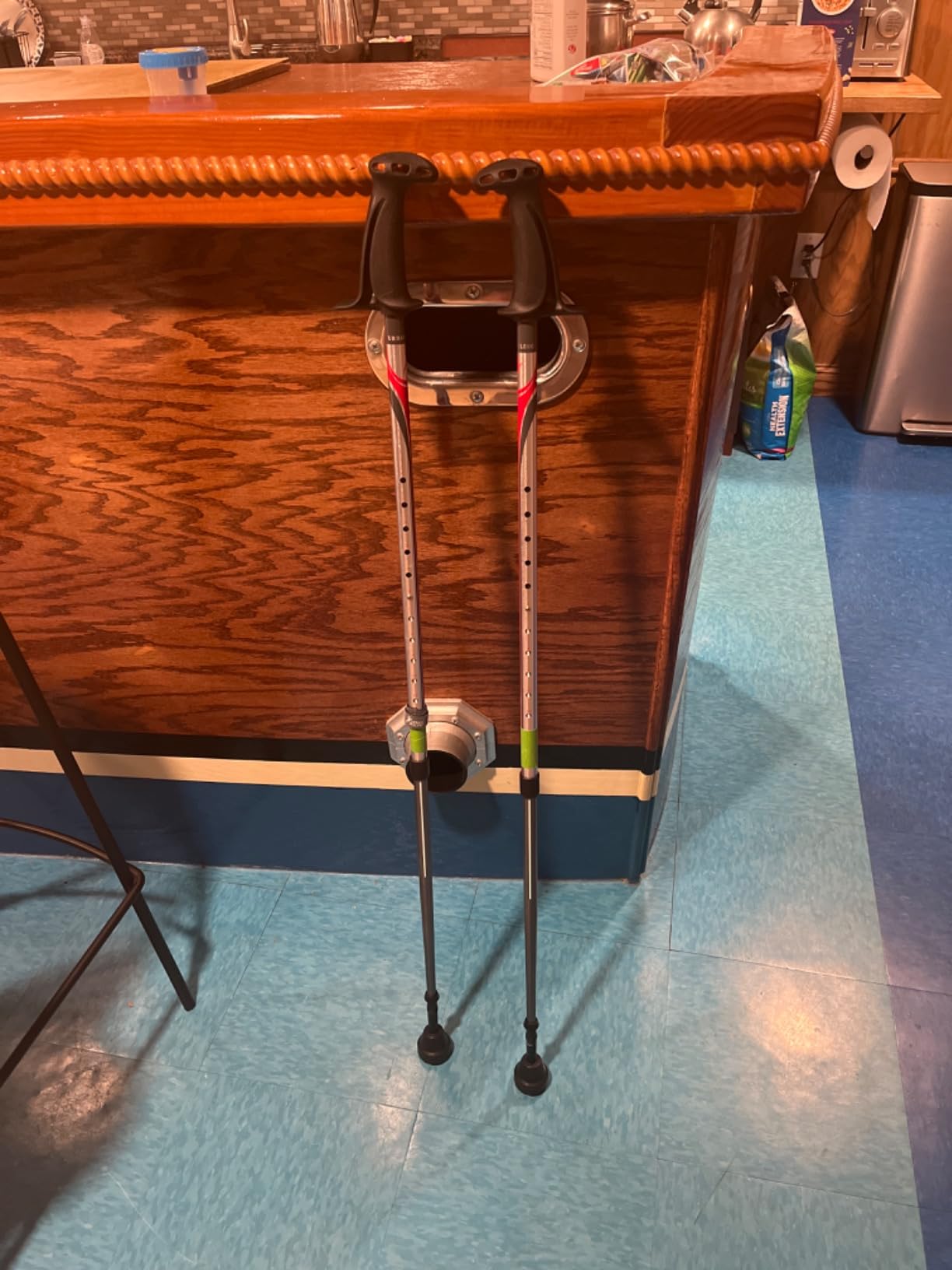
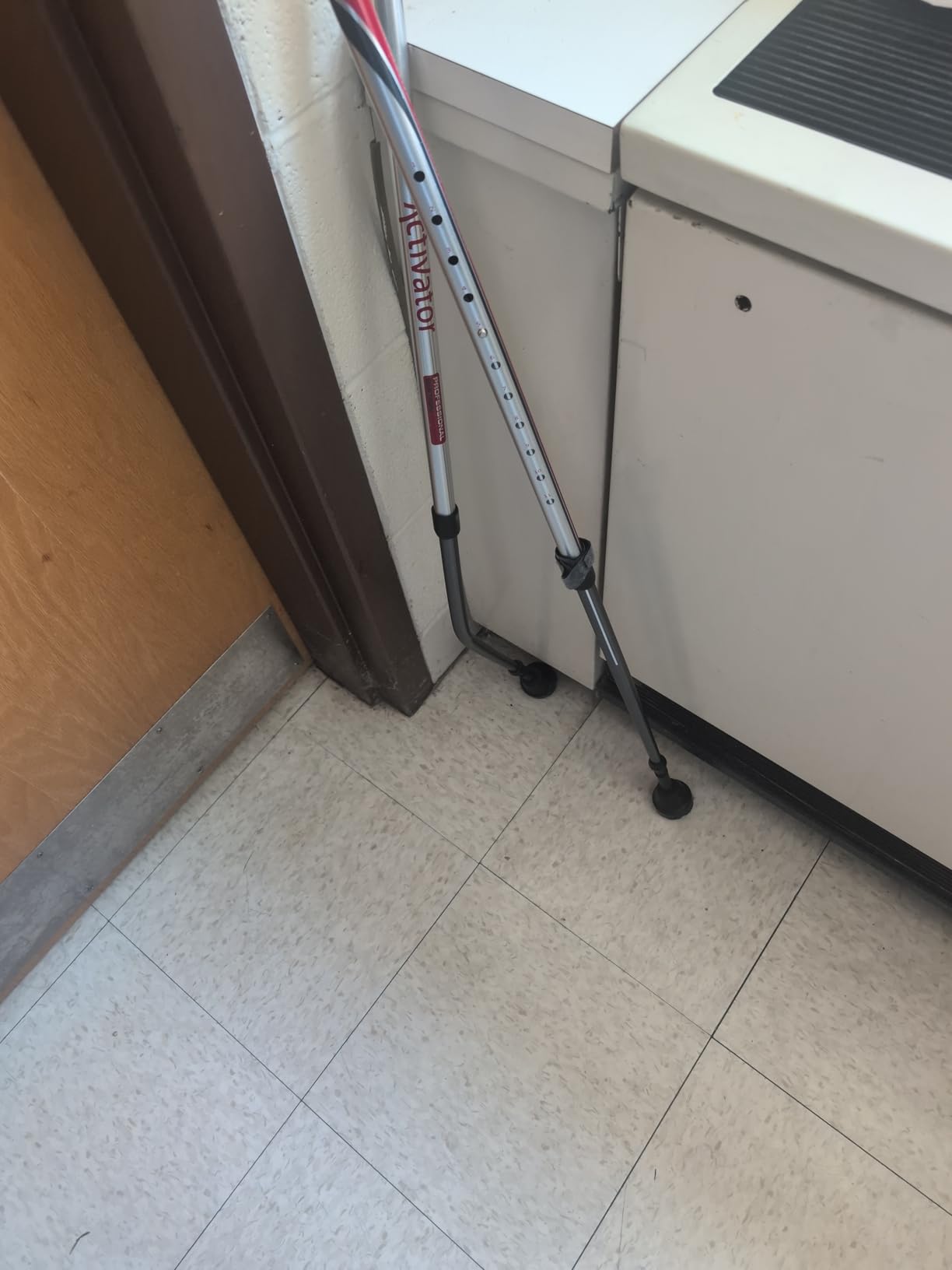
The structure is rated for a maximum user weight of 250 lb with a per-pole capacity of 200 lb, which is a published figure rather than a promise, and it is the highest stated load rating in this group. The aluminum shafts collapse to 29 inches and adjust for heights from 4 foot 2 inches to 6 feet. A 2 year warranty is included, along with bell-shaped tips, a carbide metal trail tip, removable boot tips and a Velcro storage strap.
There are trade-offs. The push button lock secures an internal twist system, so there are two mechanisms to learn rather than one. The 46 inch maximum and 29 inch collapsed length make it the least tall and the least compact design here, and it is comfortably the most expensive option in the roundup.
Who this pair suits
It suits people in active rehabilitation, and specifically those recommended poles by a physiotherapist or occupational therapist. The review base is dominated by older adults and people recovering from surgery, stroke, Parkinson’s or neuropathy, and several reviewers say these replaced a cane or a walker for neighbourhood walking.
If wrist straps are a problem for you, or you weigh more than most walking poles are built for, this is the pick with the published capacity to back it up.
Who should skip it
Skip it if you are a tall walker, since the 46 inch maximum will not suit you, or if frequent travel and small pack size matter. Anyone starting a walking routine casually will find the same stability benefit from a much less specialised pole.
8. York Nordic Motivator Walking Poles – Best for Arthritic Hands
York Nordic Motivator Walking Poles for Balance and Rehab – Patented Stability Grips – Lightweight, Adjustable, and Collapsible – 2 Pieces Adjustable w/flip Locks – Heights 4’6″ up to 6’2″ – 230 lbs
7075 aluminum
9.5 oz per pole
Flip lock
32 to 54 inch
5 year warranty
Pros
- Grip engineered to reduce stress on the thumb joint
- 7075 aluminum at only 9.5 oz per pole
- Flip lock easier to operate than twist or button locks
- Tungsten steel tip with removable rubber feet
- 5 year limited warranty on parts
Cons
- Smallest review base here at 309 reviews
- Maximum supported user weight of 230 lbs
- Shortest adjustment range at 32 to 54 inches
- Higher cost than general-purpose trekking poles
Most grip problems in this category happen at the base of the thumb, where the webbing of the hand meets the palm. The York Nordic Motivator handle is contoured with dual support zones and two thumb positions, so you can hold it in a pinch with the thumb on top rather than wrapping your fingers around the side, and the brand claims a tenfold reduction in stress at that joint.
Whether or not you take that number at face value, the pinch hold is a genuinely different grip shape from the straight cork cylinders everyone else sells, and users with arthritis and hand weakness describe it as the reason they kept walking. Buyers here are largely physical-therapy, rehab and senior-focused, drawn by the grip geometry and the flip-lock mechanism.

The rest is conventional and competent: 7075 aircraft-grade aluminum at 9.5 ounces per pole, or 11 ounces with the round rubber tip fitted, a flip lock that is easier to operate than twist locks or button locks, a tungsten steel tip with removable rubber feet for mixed surfaces, and a 5 year limited warranty on parts and components.
We will not oversell the evidence. With 309 reviews there is not enough long-term feedback to validate the listed claims about Parkinson’s use or post-surgical recovery, and the maximum supported user weight of 230 lb is lower than the Urban Poling pair. The 32 inch lower limit also makes this the least accommodating range in the group.
Who this pair suits
It suits anyone whose hand pain is concentrated in the thumb base, and anyone whose physiotherapist has recommended an alternate grip position. The flip lock is a genuine improvement if you find button locks confusing, and the 5 year parts warranty is among the longest here.
If you are between roughly 4 foot 6 inches and 6 foot 4 inches tall, the 32 to 54 inch range fits you comfortably.
Who should skip it
Skip it if you are a very short or very tall user, because the 32 inch floor and 54 inch ceiling rule out the extremes the 24 to 55 inch poles cover. Buyers who want a large volume of independent long-term feedback should look at the aluminium models with tens of thousands of reviews.
9. TREKOLOGY Trek-Z Cork Poles – Best for Travel
Trekology Trek-Z Cork Grip Collapsible Lightweight Hiking Trekking Poles
Aluminum tri-fold
11.5 oz per pole
Flip lock
folds to 15 inches
1 year warranty
Pros
- Shortest collapsed length in the roundup at 15 inches
- Cork grip absorbs hand moisture and stays grippy
- Aircraft-grade aluminum with metal-capped joints
- EVA foam lower grip adds stability on rough ground
- Fits users from about 5 foot 2 inches to 6 foot 5 inches
Cons
- Lowest average rating here at 4.4 with 6 percent one-star reviews
- Heaviest per pole at 11.5 ounces
- Narrow 20 cm adjustment range compared with telescoping poles
- Rotational flex in the cork handle that some read as a defect
If you travel, this is the one. Every other pole here collapses to between 21 and 29 inches, which is a real problem in an overhead locker or a small daypack. The Trek-Z folds down to 15 inches along three hinged sections, so it sits in the side pocket of a rucksack or the front of a cabin bag without negotiating with anyone.
Those hinges are also the trade-off. Forum discussion of tri-fold designs is consistent about one thing: collapsible hinged poles can feel less secure than single-shaft telescoping poles, and the hinge adds a little rotational movement right at the grip. The brand markets the slight flex in the cork handle as an anti-torque ergonomic feature, and the joints use added metal caps that lock at full extension.
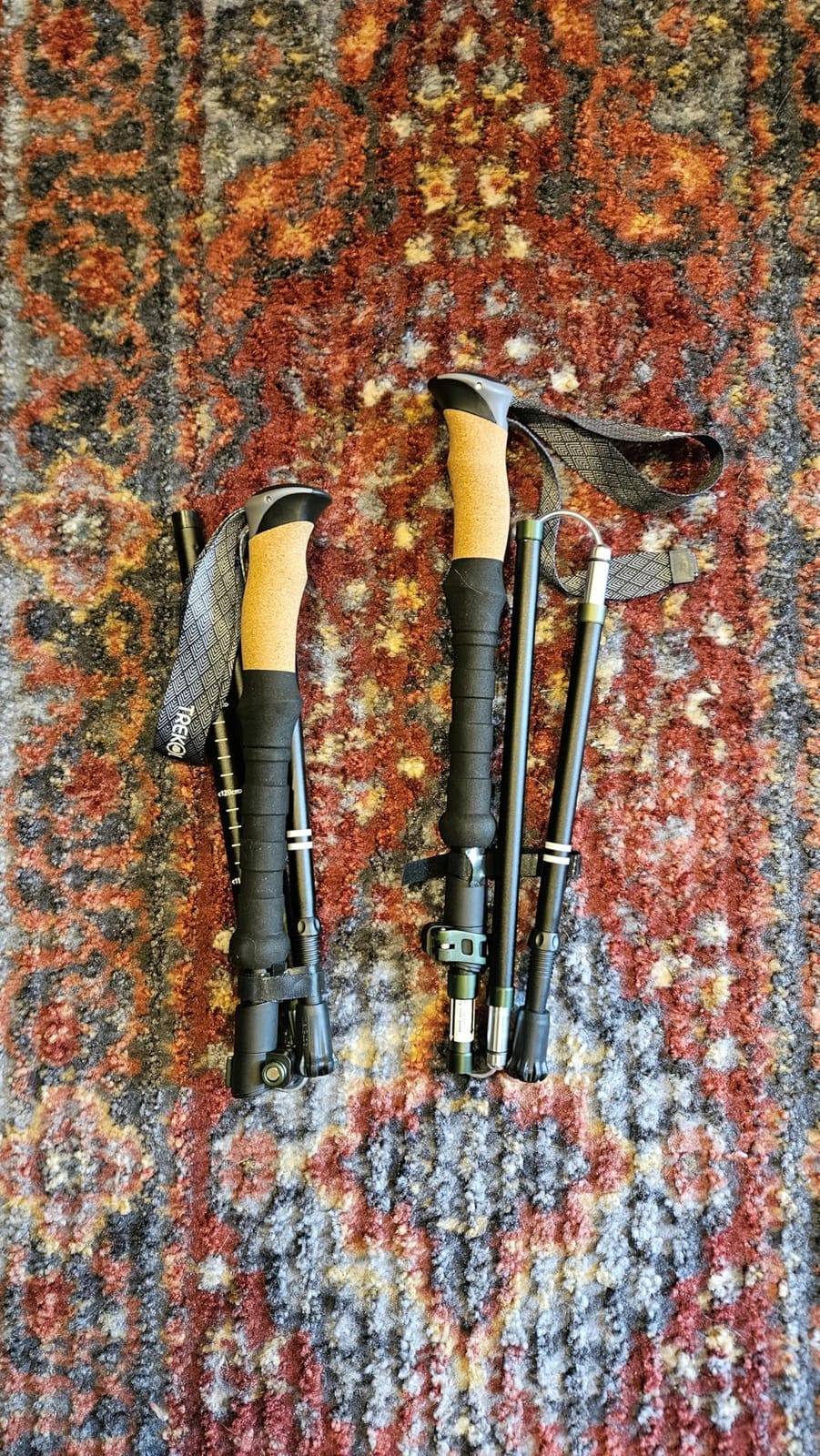
The grip itself is good. Natural cork absorbs hand moisture and stays grippy over long walks, and an EVA foam lower grip adds stability on rough ground. Reviewers like the packability and the cork grip, while complaints concentrate on the narrower adjustment range and occasional looseness in the metal lock button, which some users need to re-seat.
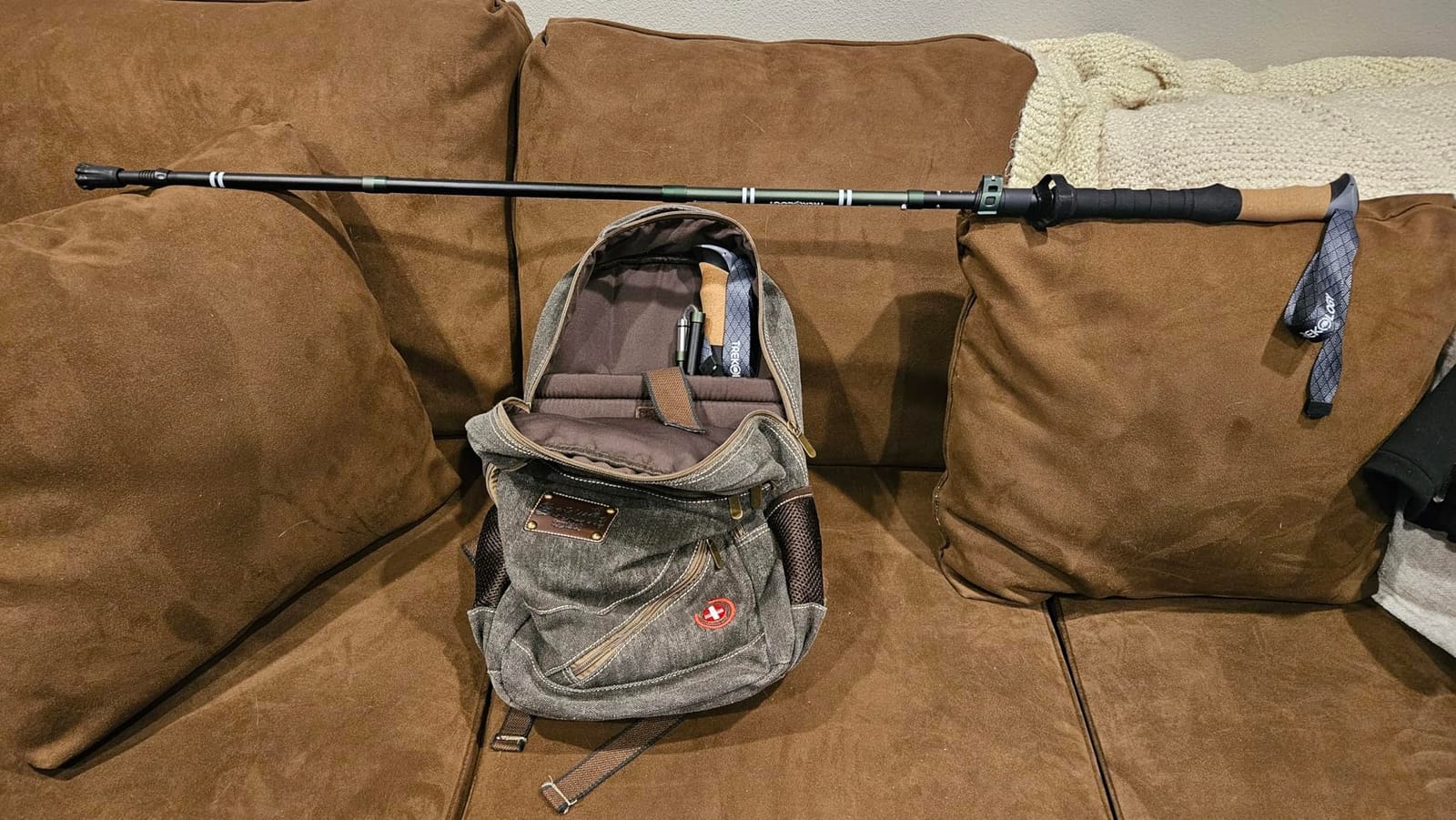
One more detail worth planning around: the folding sections mean these must be checked as luggage rather than carried into a cabin, per airline and security rules. If you are booking a flight, factor that into your packing plan.
Who this pair suits
It suits anyone who packs light, takes flights, or carries poles in a small day bag, and it suits cork grip lovers who want a moulding grip on a folding frame. The metal-capped joints give it a durability story that cheaper folding poles do not have.
If you only need one pole, this pair is also a practical way to keep one folded and one extended rather than carrying two full-length sticks.
Who should skip it
Skip it if you want the certainty of a telescoping shaft or if you need a wide height range, since 110 to 130 cm covers fewer sizes than the 24 to 54 inch poles. It is the heaviest per pole here at 11.5 ounces and the lowest rated, with 6 percent one-star reviews.
10. TrailBuddy 3K Carbon Fiber Poles – Best for Everyday Paved Walking
TrailBuddy 3K Carbon Fiber Hiking Poles – Collapsible Lightweight Trekking Poles for Hiking – Adjustable Walking Sticks for Women, Men, Seniors with All-Terrain Tips, Baskets & EVA Grips
Carbon fiber
7.7 oz per pole
Flip and lever lock
24 to 54 inch
5 year warranty
Pros
- Very light at 7.7 oz per pole while still feeling sturdy
- EVA foam grips reduce hot spots over long walks
- Telescoping flip lock allows quick height changes
- Interchangeable tips and baskets cover mud
- snow
- ice and pavement
- 5 year limited warranty with US-based support
Cons
- Smallest review base in the roundup at 102 reviews
- EVA foam grips feel less refined than cork in the hand
- The lock can be hard to tighten fully for some users
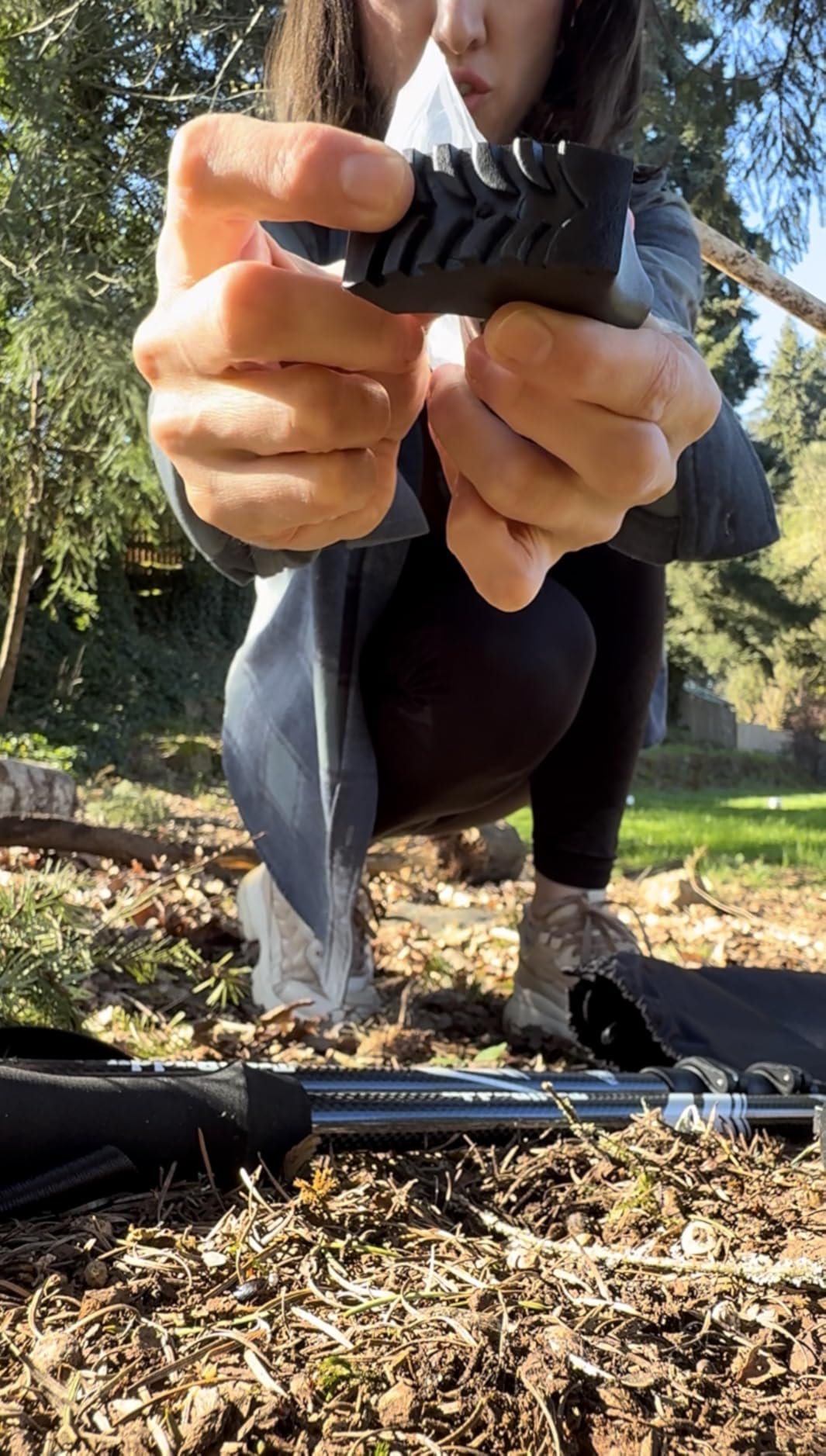
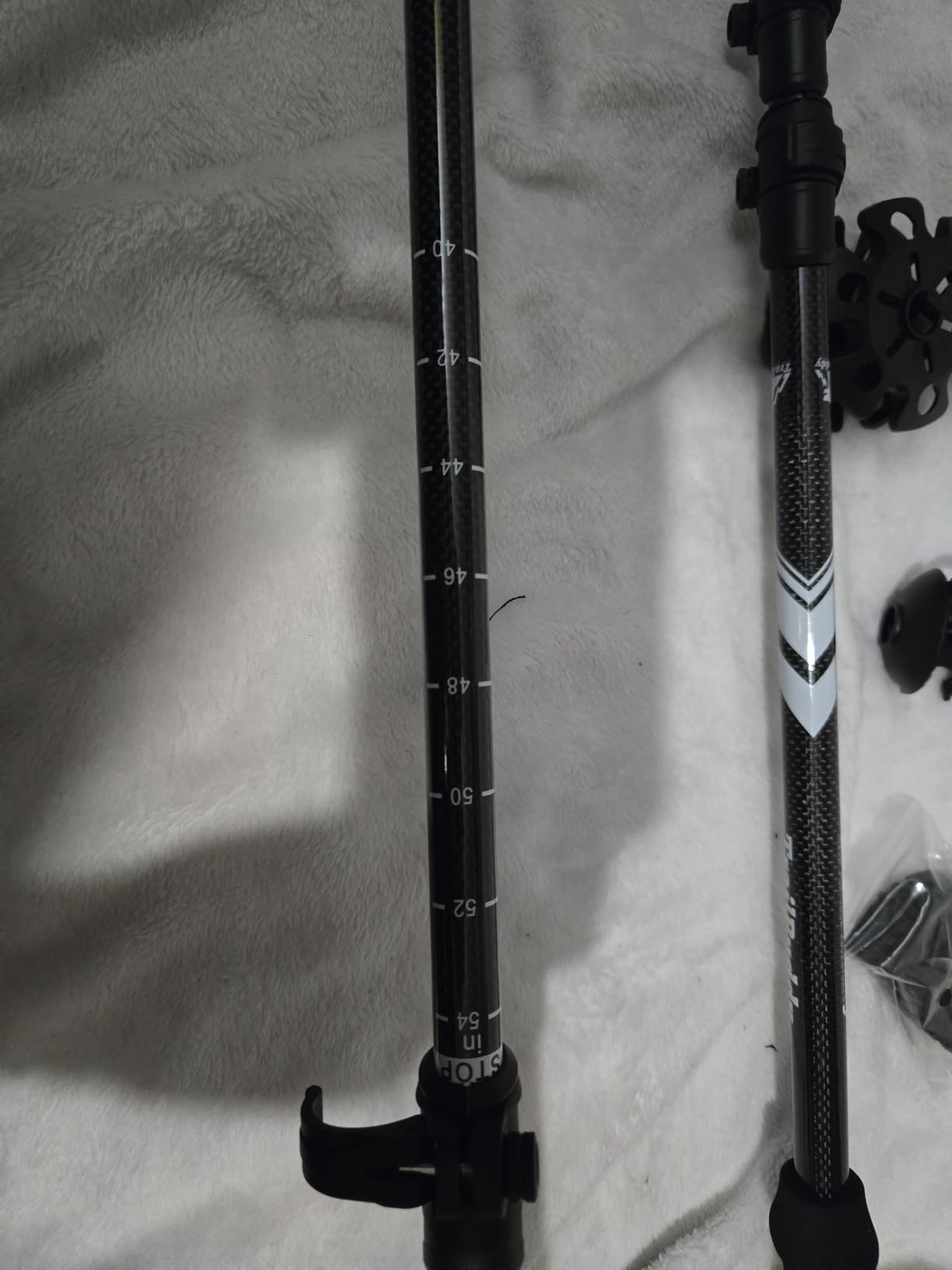
These are the same TrailBuddy engineering approach as our top pick, in a carbon shaft, with a different grip. At 7.7 ounces per pole with tungsten tips they are among the lightest telescoping poles here, and the telescoping flip lock means no hinges to feel loose, so you keep the solid-shaft feel while still packing to 24 inches or 21 inches disassembled.
The grip is the difference and it is deliberate. Ergonomic EVA foam with moisture-wicking neoprene padded straps stays comfortable over extended walks and reduces hot spots where a cork grip might rub a sensitive palm. On regular paved walking, we found the foam grip slightly cooler and easier to hold for long stretches than cork.
Recent reviews skew toward post-surgical recovery and beginner use, with a common thread of the poles feeling stable and secure on rocks and roots. Users recovering from hip replacement report increased stability and confidence on uneven ground, and the 24 to 54 inch adjustment range fits essentially every adult height.
The honest caveat is evidence, not performance. At 102 reviews this is the smallest sample in the roundup, so long-term durability is largely untested in public. The star share is high at 87 percent five-star, and the 5 year limited warranty with US-based customer support is reassuring, but one review does note the lock can be hard to get fully tightened.
Who this pair suits
It suits everyday pavement walkers who want very low weight, a forgiving foam grip and a light telescoping shaft. The interchangeable boot tips, small tips, mud baskets and snow baskets let you move between pavement, gravel and winter conditions with the same pair.
If you are rebuilding confidence after joint surgery and your hands dislike the vibration of hard aluminium, this is a sensible middle ground between the heavy aluminium models and the more expensive carbon pairs.
Who should skip it
Skip it if you want a large body of long-term owner feedback, because 102 reviews cannot tell you how the locks look after three years. Buyers who prefer the moulding feel and sweat management of cork should look at the TrailBuddy aluminium model instead.
Which Pair of Trekking Poles Is Right for You
If you read nothing else, read this list and match your situation.
Best overall and best first pair: TrailBuddy 7075 aluminum. One-handed lever locks, cork grips, widest-support warranty.
Best if shoulder fatigue is your problem: Foxelli carbon fiber at 7.6 ounces per pole.
Best rated and best for all-round comfort: Foxelli aircraft-grade aluminum with the thumb-tensioned flip lock.
Best value and best kit in the box: Cascade Mountain Tech aluminum with the extended down grip.
Best for knee arthritis: Cascade Mountain Tech carbon fiber with the cork down grip for descents.
Best for tall walkers: Hiker Hunger Outfitters 3K carbon, adjustable from 24 to 55 inches.
Best for active rehabilitation: Urban Poling ACTIVATOR, with the strapless CoreGrip handle and a 250 lb rating.
Best for arthritic hands: York Nordic Motivator with the contoured pinch grip.
Best for travel and cabins: TREKOLOGY Trek-Z Cork, folding to 15 inches.
Best for daily paved walking: TrailBuddy 3K carbon with EVA foam grips.
How to Choose Trekking Poles for Seniors: Locks, Grips, Shafts and Sizing
Five decisions account for almost all of the difference between a pair of poles an older walker uses every day and a pair gathering dust in a closet. Here is how we think through each one, and how to test it before you commit.
Lock type matters more than any other feature
There are three locking mechanisms you will meet. A lever lock is a metal lever you flick open and closed with one finger. A flip lock works the same way through a button, usually with a small tension screw so you can set how firmly the shaft grips. A twist lock requires two sections to be rotated against each other, which takes two hands and real grip strength.
For this audience the answer is simple: lever or flip, always. Twist locks are the most disliked mechanism in long-running forum discussion because they need two hands, loosen over time, and jam when the joint gets dirty or wet. If you see a twist lock in a shop, put it back down.
The concrete test we use is a one-finger check. Before you buy, flick the lock open and shut with a single finger tip, twice, without bracing the shaft with your other hand. If you cannot do that comfortably, the pole is wrong for you no matter how good the rest of it is. Most quality lever and flip locks pass easily; the exception is the Urban Poling push button, which also secures an internal twist system and needs more learning.
Second test, also worth doing in the shop: adjust the pole to your height, plant it, and push down hard. If the section slides, the lock is not holding. Good locks can be re-tensioned without tools, and doing it once at the start is better than doing it halfway down a hill.
Grip material and diameter decide whether you keep using them
Cork is the most universally preferred grip material, and long-distance walkers consistently rank it above every synthetic alternative for all-day comfort because it moulds to the hand and absorbs sweat. Soft EVA foam is the runner-up and is often easier on arthritic fingers because it is softer and has more texture under the fingers.
Rubber grips like the strapless CoreGrip on the Urban Poling pair remove the wrist strap entirely, which is a real advantage if strap loops are difficult for you. The trade-off is that rubber is less breathable than cork or foam over a very long day.
Diameter is the detail most roundups skip and it is the one buyers complain about most. A narrow grip forces your fingers to wrap hard, which is painful with arthritis and tiring over distance. Look for a generous diameter, and if the shop allows it, actually take the pole in your hand with a relaxed grip rather than a fist. If you have to squeeze to hold it, it is too thin.
On straps, a padded strap that spreads pressure across the top of the hand is gentler than a thin webbing loop. A non-mirrored strap, which several of these pairs use, can develop a twist over time, though it can be untwisted at any stop.
Aluminum versus carbon fiber
7075 aluminum is the sensible default for this audience. It is strong at a moderate weight, it feels solid rather than springy when you plant it, and the grip surfaces damp more vibration. 6061 aluminum, used by the Cascade Mountain Tech aluminium pair, is a slightly different alloy that is still entirely adequate for walking and pole use.
Carbon fiber is meaningfully lighter, typically 7.6 to 8.1 ounces per pole against 9.4 to 11.5 ounces for aluminium. That difference matters on long days and for shoulders that already hurt. It also transmits more impact up into the hands on hard surfaces, which is why we would not choose carbon for someone whose hands are painful from arthritis.
For users above roughly 250 lb, check the published load rating rather than assuming. The Urban Poling ACTIVATOR is the one pair here with a stated 250 lb user weight and 200 lb per-pole capacity, and the York Nordic Motivator states a 230 lb maximum.
Shock absorption, baskets and tips
Shock absorption means an internal spring in the shaft that compresses on impact and takes some of the load out of your wrists and joints. It is not a feature on any of the ten poles in this roundup. For general walking we are neutral on it, because a spring adds weight, length and a mechanism that can fail, and the downhill benefit is largely achievable by shortening your stride and using a down grip instead.
Baskets and tips matter far more day to day. A mud basket stops the pole sinking into soft ground, a snow basket is wider for winter, and boot tips or rubber feet protect the tip on pavement. All ten pairs here have threaded or interchangeable tips, which is the single best cost-of-ownership feature in the category: tips wear through long before shafts do, and replacing a tip costs a fraction of replacing a pole.
Collapsed length and who you share them with
Collapsed length decides whether your poles live in a car boot, a daypack or a cabin bag. Telescoping poles here run from 24 inches, for the TrailBuddy carbon and the Foxelli carbon and aluminium pairs, up to 29 inches for the Urban Poling ACTIVATOR. The single TREKOLOGY tri-fold pair collapses to 15 inches, which is the only one that genuinely disappears into a small bag.
One more under-considered point: if two people of different heights in the same household will use one pair, prioritise adjustment range. The Hiker Hunger 3K carbon at 24 to 55 inches and the TrailBuddy aluminium at 24.5 to 54 inches cover the widest span. The York Nordic Motivator at 32 to 54 inches covers the narrowest, and the Cascade Mountain Tech carbon starts at 26 inches. The mechanics of telescoping shafts and the lengths involved are covered in more detail in our telescoping pole guide.
How to Set Your Pole Height for Less Knee Strain
Getting the height wrong is the most common reason poles feel worse than useless, and it takes under two minutes to get right. Do it standing up, on the same ground you normally walk on, and check it at the start of every walk.
Stand tall with your feet hip-width apart. Do not slouch or lean forward to reach the handle, because that puts the load in your back rather than your legs.
Set each pole so the handle sits level with the top of your hip bone. This is the reference point most therapists use, and it is more reliable than measuring from the floor.
Check your elbow angle. With your arm hanging naturally and holding the handle, your elbow should sit at roughly 90 degrees. Bend the elbow further and the pole is too short; straighter than 90 degrees and it is too long.
Lock the section firmly and test it. Push down on the planted pole with real bodyweight. If the shaft slides, tighten the lock until it holds.
Adjust for the terrain as you go. On flat ground use your measured height. Going uphill, shorten both poles by around 3 inches to bring the poles closer to your body and share the effort with your quads. Coming down, lengthen them by the same amount so the plant absorbs the descent instead of your knees.
Plant opposite your forward foot. As your right foot steps forward, your left pole plants forward. It is a rhythm, and it feels awkward for about a day before it becomes automatic.
Two habits experienced senior walkers pick up quickly. The first is using one pole on flat, even ground and both on hills and descents, which halves the weight in your hands on a stroll without giving up stability where you need it. The second is choking up on the EVA extension where one is fitted, moving your hand higher without changing the pole height. Both are useful habits, and we cover the same handling-weight logic in our picks for lightweight vacuums for seniors if you are upgrading other everyday equipment.
Trekking Poles vs Walking Stick vs Quad-Base Cane
The three aids get confused constantly, and choosing the wrong one is a common reason people buy poles and then abandon them.
Trekking poles (a pair) give you two points of contact, symmetric support on both sides, and the ability to unload your knees substantially on descents. They also involve learning a rhythm and setting a height. They suit walkers who can already stand and walk unaided but want more stability, less joint load, or more confidence on uneven ground.
A walking stick (one pole) gives you one point of contact, usually on the stronger side, and is simpler to pick up and put down. Many senior walkers who have never used poles find a single stick easier to adopt, and the single-pole option is a genuine compromise rather than a lesser product. It suits people who need occasional support rather than continuous support.
A quad-base cane has a broad four-foot base and stands up on its own. It is the most stable option on uneven ground and needs no height setting, but it is heavier, wider, and it is a mobility aid rather than sporting equipment. If your balance is genuinely limited, a physical therapist may recommend a quad-base cane or a walker ahead of trekking poles, and that is not a step backwards.
Our rule of thumb: if you can walk unaided and your issue is joint pain or confidence on uneven ground, poles. If you need continuous support to stand safely, talk to a clinician first rather than shopping.
The Downsides of Trekking Poles and Who Should Avoid Them
We would not recommend poles to everyone, and the honest reasons are worth stating plainly.
They do not fix a balance disorder. Poles add a contact point; they do not train or restore the balance system. Someone who cannot stand safely unsupported should be assessed rather than handed a shopping list.
The learning curve is real. Two poles, two locks, a height setting and a planting rhythm. People who dislike new technique often abandon poles within a month, and a single walking stick is a gentler entry point.
Two points of contact can narrow your awareness. On narrow, overgrown or technical ground, poles occupy the space you would otherwise use for a careful foot placement. On a wide gravel path they are an improvement; on a narrow cliff-edge trail they are not.
Stiff or painful hands still need grip strength. A strapless grip helps enormously, and lever and flip locks remove most of the demand, but a pole is still something you must hold and press. If pressing down causes pain, that is a clinical question, not a shopping one.
Stigma is a genuine barrier. People resist being seen with poles because they read as a sign of decline. That feeling is real and it is the most common reason for a purchase to sit unused. Choosing a pair in a colour you like, and practising on your own first, does more for adoption than any feature list.
Consumables add up slowly. Tips, baskets and straps wear out, and a lock that needs occasional re-tensioning is a small recurring task. If you will not do that maintenance, a simpler pole is the better purchase.
Frequently Asked Questions
Are trekking poles suitable for older people?
Yes, for most older people they are one of the best-balanced walking aids available. Two poles add stability, take load off arthritic knees and hips, and let you keep walking on uneven ground. The exception matters though: anyone with a recent fall, acute joint pain, a planned joint replacement or a diagnosed balance disorder should get clearance from a doctor or physical therapist before starting.
Should seniors use trekking poles?
They should if they can already walk unaided and want less joint strain or more confidence outdoors. Poles move roughly a quarter of your walking effort from your legs into your arms and core, which reduces impact through worn knees and keeps your torso more upright. If you need continuous support to stand safely, a physiotherapist may recommend a cane or quad-base cane instead.
What are the benefits of walking poles for seniors?
The main benefits are less load through the knees, hips and ankles, better balance on uneven ground, an upright posture, and more confidence walking further. Every plant of the pole transfers effort from your legs into your arms and core. Reviewers describe the confidence gain as the biggest change of all, because it turns an apprehensive short walk into a regular one.
What are the disadvantages of walking poles for seniors?
The main disadvantages are a learning curve for two poles and their locks, the extra weight to carry, and the fact that poles do not treat a balance disorder. Some people find narrow grips painful with arthritic hands, and collapsing tri-fold designs can feel less secure than telescoping shafts. For people who feel strongly that poles mark them as frail, that perception alone is a legitimate reason to use a walking stick instead.
How tall should walking poles be for seniors?
Set the handle level with the top of your hip bone and check that your elbow sits at about 90 degrees when you hold it with a relaxed arm. Bend the elbow further and the pole is too short; a straighter elbow means it is too long. On flat ground use that height, shorten the poles going uphill, and lengthen them coming down.
What are the different locking mechanisms available for trekking poles?
There are three main mechanisms. Lever locks use a metal lever flicked open and closed with one finger. Flip locks use a button in the same way, usually with a tension screw you set yourself. Twist locks require two sections rotated against each other, needing two hands and re-tightening. Seniors should choose lever or flip locks and avoid twist locks whenever hand strength is limited.
What are the best collapsible walking sticks for seniors?
For smallest pack size the folding options win, and the TREKOLOGY Trek-Z Cork poles fold to 15 inches, far shorter than the 21 to 29 inch telescoping poles in this roundup. They must be checked as luggage rather than carried into a cabin. If you prefer a solid shaft over hinges, the Foxelli carbon and TrailBuddy aluminium poles separate into 21 inch sections and still pack small.
What is the difference between walking poles and trekking poles?
In practice the two names are used interchangeably, and the pairs sold as walking poles in this roundup are full telescoping trekking poles with two points of contact. A true walking stick is a single pole used on one side, which is simpler to adopt but offers less stability. The clearest difference from a cane is that a cane is a mobility aid held for load, while poles are pushed down rhythmically alongside walking.
The Best Trekking Poles for Seniors in 2026
If you read one review, read the TrailBuddy 7075 aluminum one. The one-handed lever lock is the feature that decides this category for older hands, the cork grip and padded strap are comfortable over a long walk, the 24.5 to 54 inch range fits essentially any adult, and a 5 year warranty backs it up. For our money that is the best trekking poles for seniors recommendation in 2026 because it is the pair we would actually hand to a parent.
Pick differently only for a clear reason. Go carbon with the Foxelli pair if shoulder fatigue is the problem, aluminum with Cascade Mountain Tech if you want the most complete kit, the Cascade carbon model for knee arthritis on descents, Hiker Hunger if you are tall, Urban Poling if a therapist recommended poles for rehabilitation, York Nordic if the pain is in your thumb base, and TREKOLOGY if you travel.
Whichever you choose, do two things before your first walk. Test the lock with one finger in the shop, and set the height so the handle meets your hip bone and your elbow sits at 90 degrees. Ten minutes of setup is the difference between poles you use every day and poles still in the cupboard next winter.