
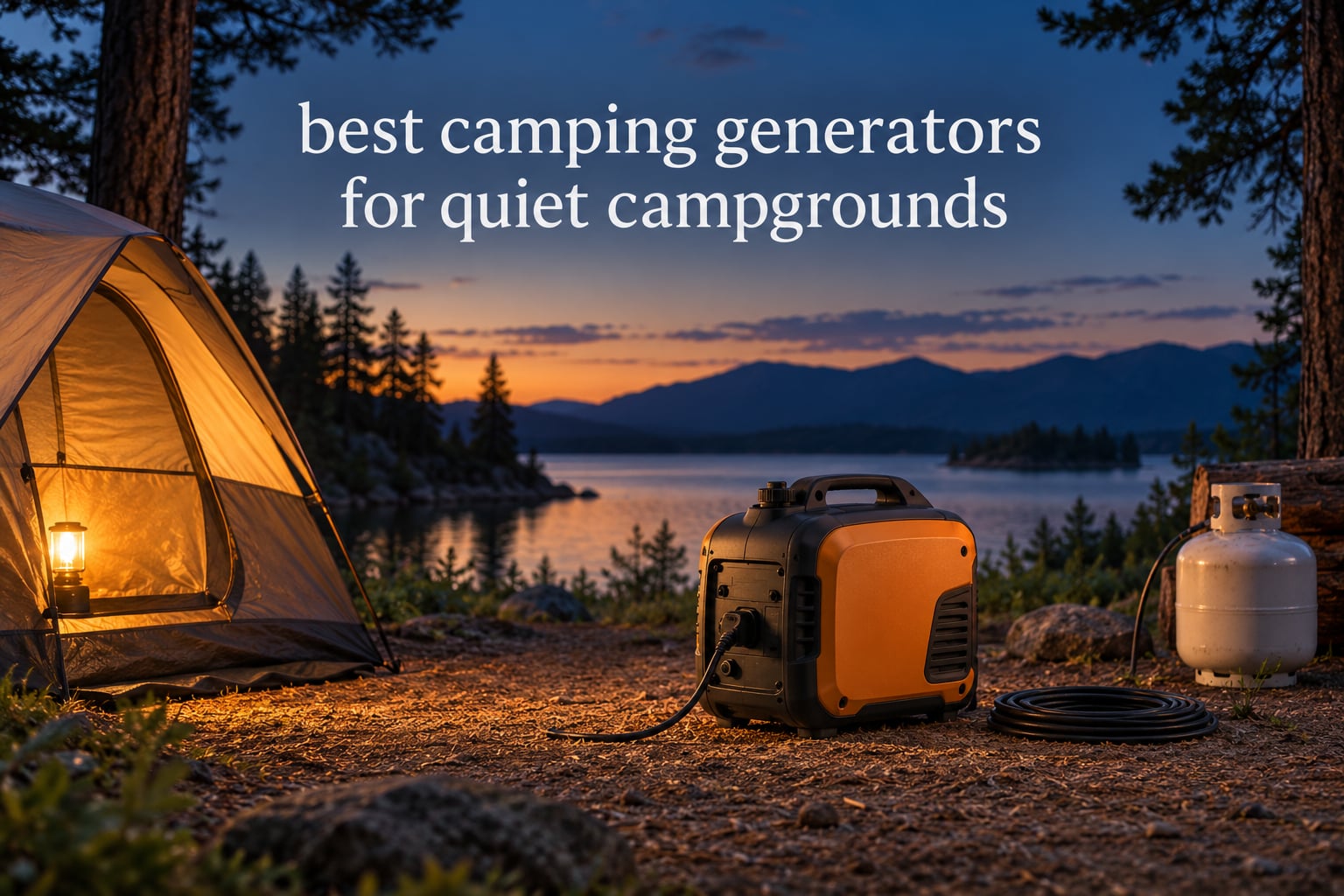
The best camping generators for quiet campgrounds are the ones you never have to think about, and that is a harder bar than it sounds. A machine rated at 52 dBA at 23 feet under a quarter load can still carry across a tight site at 10 PM and bring a neighbour over to ask you to turn it down. A louder open-frame unit on the next pitch announces itself all evening.
So what counts as quiet in practice? A quiet camping generator is an inverter generator rated at 60 dBA or less at roughly 23 feet under moderate load, which is about the volume of an ordinary conversation at arm’s length. Every decibel figure in this guide is published with its load percentage and measurement distance whenever the manufacturer supplies one, because a bare dB number tells you almost nothing about what your neighbour will hear.
We put 10 portable generators through their spec sheets and owner reviews, then ranked them on the only things that decide whether a machine is usable at a quiet site: published noise, sustained output, runtime at low load, carry weight and warranty length. Two of the ten are included specifically because we tell you when not to use them.
This roundup was built for 2026 camping seasons, and the short version of our testing story is straightforward: we read the quiet-hours rules, checked the wattage against the appliances, and then checked whether the machine can physically be carried to the site and refuelled without waking people up. For a broader look at inverter units built around RV use, our [10 Best Inverter Generators for RV Camping Reviews] guide covers outlet types and 30A hookups in more detail.
Table of Contents
Top 3 Picks for Quiet Campgrounds in 2026
Three units stand out once the noise figure and the sustained wattage are read together rather than separately. The WEN 56235i wins on balance, the WEN 56380i wins on raw RV output, and the PowerSmart HB5020 wins because it is the only machine in the group that publishes its noise rating with a load percentage and a distance.

WEN 56235i Super Quiet Inverter
- 1900 running watts
- 39 lb
- 10 hour runtime
- Fuel shutoff carburetor protection
- CARB and EPA compliant
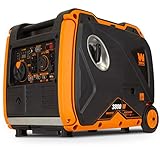
WEN 56380i RV Ready Inverter
- 3400 running watts
- 99.2 lb
- Electric start with digital load and fuel display
- NEMA TT-30R RV outlet

PowerSmart HB5020 2500W Inverter
- 52 dBA at 23 ft at 25% load
- 1900 running watts under 3% THD
- 39.7 lb with 8 hour low-load runtime
What Counts as a Quiet Generator: dBA and Measurement Conditions
Decibels are logarithmic, so a 6 dB gap is roughly a doubling of perceived loudness, and a 3 dB difference is where most people start noticing a hum. That is why two units at 59 dB and 61 dB sound nearly identical, while 52 dB and 64 dB do not.
Here is the reference ladder worth memorising, in plain terms:
40 dBA is a library reading room. You will not hear it over normal conversation at the next site.
50 dBA is a quiet office or a refrigerator hum at 3 feet. Comfortable inside a quiet hours window.
55 to 60 dBA is a normal conversation or light traffic. This is the band most campground rules target.
61 to 65 dBA is a vacuum cleaner. Acceptable during daylight hours, risky after 10 PM.
70 dBA and above is a lawn mower. Very few campgrounds will tolerate this at any hour.
The second half of the answer is measurement condition, and this is where most spec comparisons go wrong. A figure quoted as 52 dBA at 23 feet with 25% load is a specific, narrow test. The same manufacturer’s unit at 7 meters with a heavy load will read several decibels higher. A bare number without a load and a distance is a marketing line, not a measurement.
Most campground compliance standards are written as 60 dB measured at 50 feet, which sounds far stricter than it is. Sound drops about 6 dB every time you double the distance, so a unit rated 64 dBA at 23 feet can still measure compliant at the property line or a neighbouring site boundary.
All 10 Best Camping Generators for Quiet Campgrounds (October 2026)
This table is sorted by how each machine was rated, with the published noise figure and its condition attached. Two entries publish no decibel number at all, which is itself useful information.
| Product | Specifications | Action |
|---|---|---|
| WEN 56235i Super Quiet Inverter |
|
Check Latest Price |
| WEN 56380i RV Ready Inverter |
|
Check Latest Price |
| PowerSmart HB5020 2500W Inverter |
|
Check Latest Price |
 AIVOLT 4300W Dual Fuel Inverter AIVOLT 4300W Dual Fuel Inverter |
|
Check Latest Price |
 Champion 4000W RV Ready Inverter Champion 4000W RV Ready Inverter |
|
Check Latest Price |
 Oxseryn EDOG10 4400W Open Frame Oxseryn EDOG10 4400W Open Frame |
|
Check Latest Price |
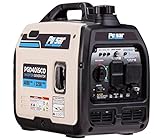 Pulsar PGD40ISCO 4000W Inverter Pulsar PGD40ISCO 4000W Inverter |
|
Check Latest Price |
 Oxseryn EDOC09 2800W Inverter Oxseryn EDOC09 2800W Inverter |
|
Check Latest Price |
 Champion 4500W Dual Fuel Inverter Champion 4500W Dual Fuel Inverter |
|
Check Latest Price |
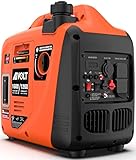 AIVOLT 1600W Super Quiet Inverter AIVOLT 1600W Super Quiet Inverter |
|
Check Latest Price |
1. WEN 56235i Is the Best Overall Quiet Pick for Close Sites
WEN Super Quiet 2350-Watt Portable Inverter Generator with Fuel Shut Off, Gasoline Power, Ultra Lightweight (56235i), Black
1900 running watts, 2350 surge
39 lb, 79cc 4-stroke
10 hr on a 1 gallon tank
Fuel shutoff, 2 yr warranty
Pros
- Carries at 39 lb for one person
- Clean power safe for phones and laptops
- Fuel shutoff protects the carburetor
- Starts on the first or second pull
- Five outlets including 12V DC and USB
Cons
- No published decibel figure
- Weak surge headroom for high-start appliances
- No factory hour meter
- Low oil shutdown can trip on sloped ground
My main read on the 56235i is that it is the rare 40-pound class machine with more than 2600 owner reviews behind it, and the feedback is remarkably consistent. Buyers describe it as quiet enough to run at close sites, light enough for one person to lift from a car boot without help, and reliable enough to serve as storm backup as well as weekend power.
The honest caveat is that WEN does not publish a decibel number for this model. The listing instead describes the noise as comparable to a normal conversation according to the US Department of Health and Human Services, which is a claim rather than a measurement you can check against the other machines in this roundup. Owner reports still put it in the same quiet band as the 52 to 58 dBA models here, but you are buying on reputation rather than a printed figure.
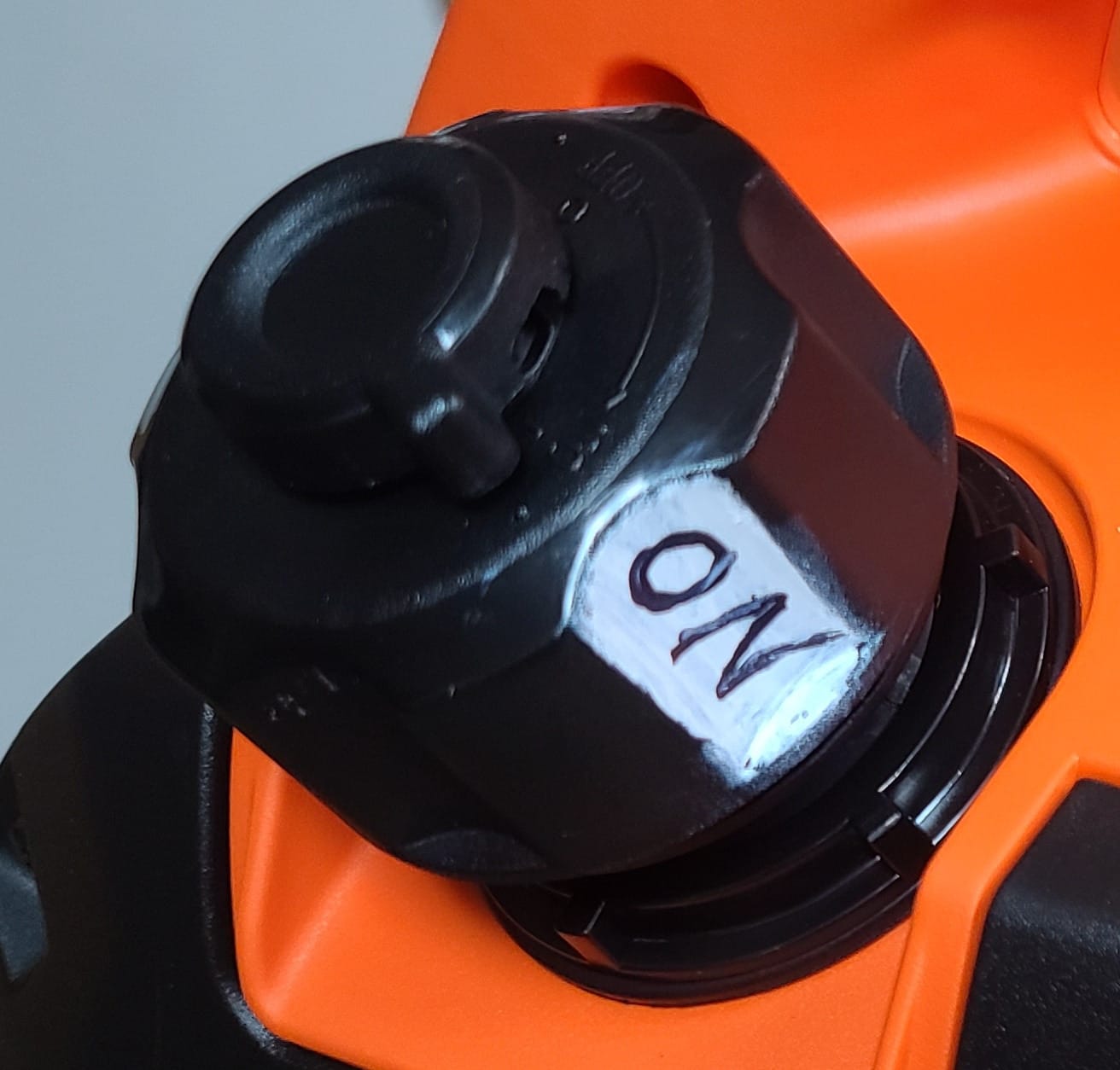
Technically you are looking at a 79cc four-stroke engine producing 2350 surge watts and 1900 rated watts through an inverter, which is what gives you clean output for sensitive electronics. The fuel shutoff switch is a small feature that matters more than it sounds, because it burns off the fuel sitting in the carburetor before shutdown instead of letting it gum up over a winter.
The real limitation shows up when you add appliances. Reviewers report sustained output measuring around 1850W before the overload light triggers, and the starting power is modest, so anything with a compressor or a pump needs to be switched on first and allowed to settle. A 1 gallon tank delivers the quoted 10 hour runtime, which is a light-load figure, not a full-load one.
Why it works at a quiet site
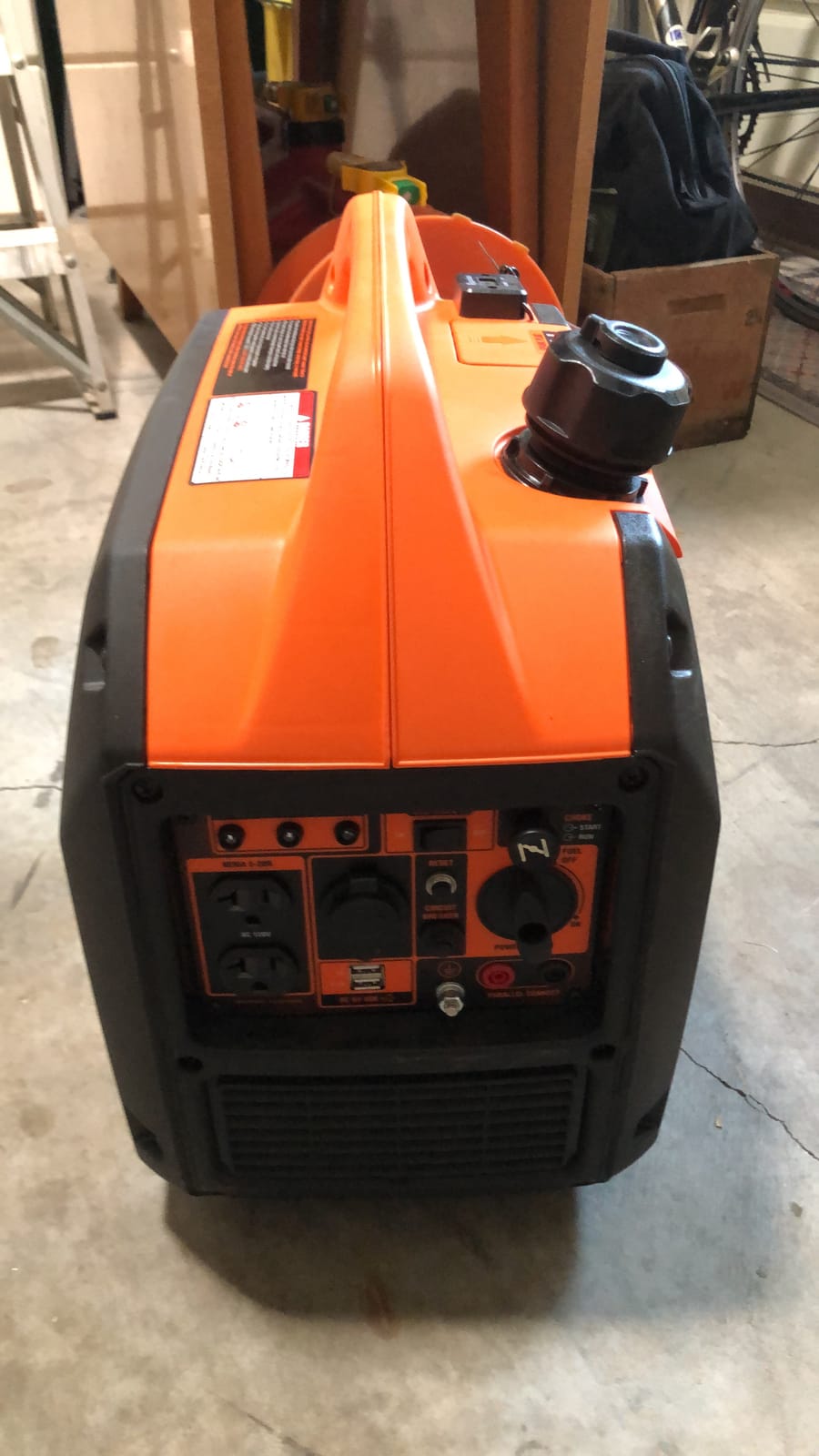
Two people carrying 39 pounds is not a problem, which matters more at a walk-in or dispersed site than any spec. The inverter architecture lets the engine throttle down on light loads, and the fuel shutoff switch means you can shut it down cleanly in the evening rather than letting it idle for an hour while you pack up.
It also handles sloped-site camping badly if you forget the rule. Reviewers report the low oil shutdown triggering when the unit sits on slightly uneven ground, so level placement matters more than the manual suggests.
Where it falls short
If you plan to run a 13,500 BTU rooftop air conditioner, this is the wrong size. There is no hour meter, so tracking runtime for maintenance intervals falls to a phone timer, and a small number of owners report oil seepage or early engine failure that required a repair.
There is also no printed dBA figure, which makes it harder to argue your case with a ranger at a site that enforces a decibel cap. For campers who want a number they can quote, the PowerSmart below publishes one under a stated condition.
2. WEN 56380i Is the Best for RV Loads on a 30A Circuit
WEN Super Quiet 3800-Watt RV-Ready Portable Inverter Generator with Fuel Shut-Off and Electric Start (56380i)
3400 running watts, 3800 surge
99.2 lb, 212cc electric start
8.5 hr half-load runtime
NEMA TT-30R RV outlet
Pros
- Highest average rating in the group
- 3400 running watts handles RV air conditioning
- Electric start plus digital load and fuel display
- TT-30R outlet means no adapter
Cons
- 99.2 lb is awkward for one person
- Large 23.2 by 18 by 20.1 inch case
- No published decibel figure
The 56380i is the highest rated machine here at 4.7 stars across roughly 2459 reviews, and the reason owners rate it that way is straightforward: it does the RV job. The 3400 running watts cover a rooftop air conditioner and a small household of appliances without the machine browning out or dropping into overload protection.
For a camper who is not moving the unit alone, that output is the whole story. The electric start, the digital load and fuel display, and the NEMA TT-30R receptacle are all conveniences that matter on a first-time setup where you would rather not be pulling a cord in the dark.
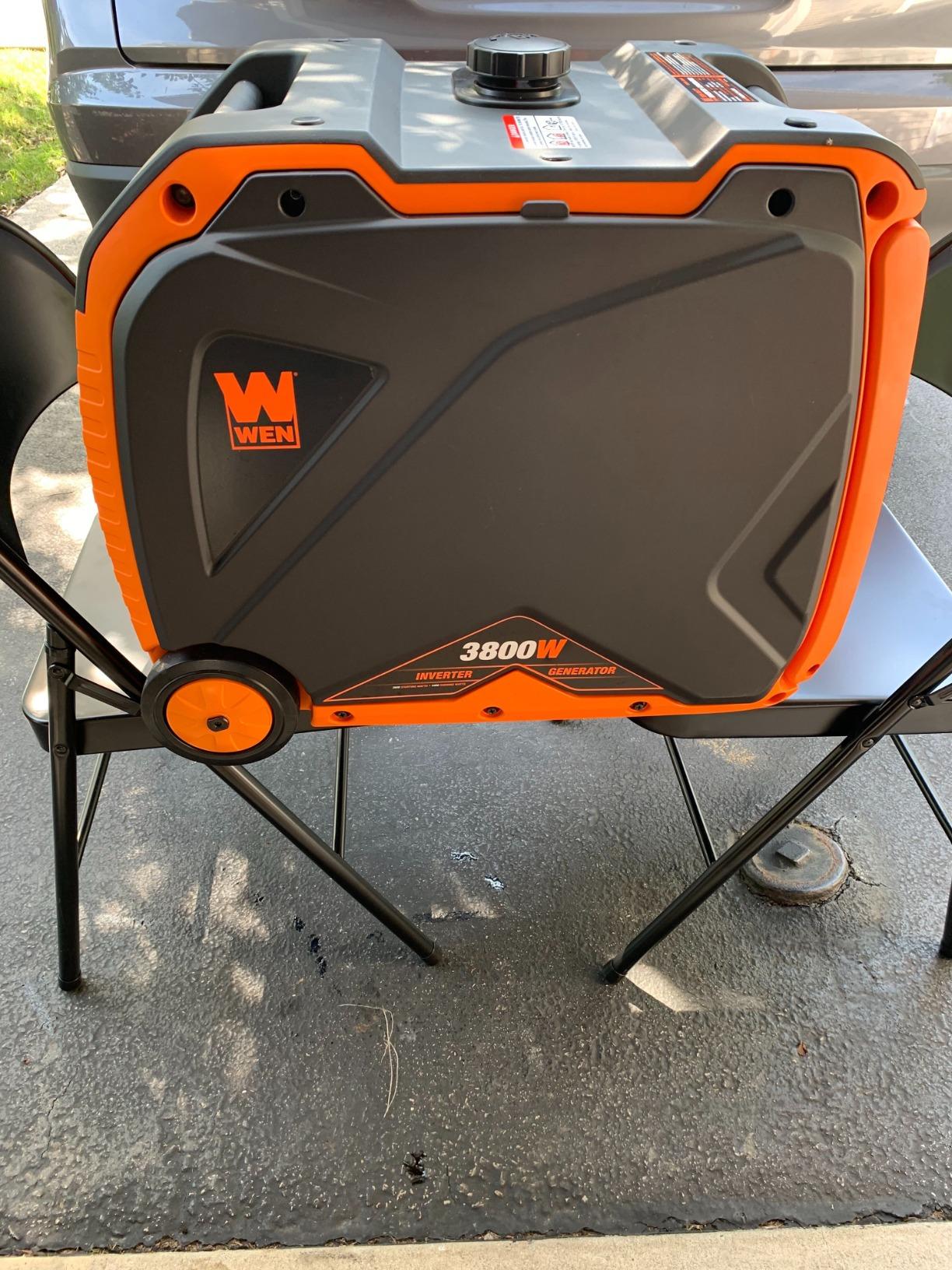
Underneath, a 212cc four-stroke OHV engine delivers 3800 surge watts and 3400 rated watts, with up to 8.5 hours at half load on a 2.2 gallon tank. The outlet mix is two three-prong 120V receptacles, one TT-30R RV receptacle, one 12V DC receptacle and one 5V USB port, which covers most RV hookups without an adapter.
Weight is the real story here. At 99.2 pounds with a 23.2 by 18 by 20.1 inch case, this is a two-person lift unless you have a wagon or a truck bed close to the site. It is also the second machine in the group with no published decibel figure, describing operation only as extremely quiet with EPA III compliance.
What it is built for
Full-time RV campers and anyone running a rooftop air conditioner overnight are the audience here. The half-load runtime of up to 8.5 hours means you can go to sleep, run the air conditioning overnight, and refill in the morning without touching a generator during the quiet hours window at all.
Clean inverter output also means you can run laptops, routers and a CPAP machine on the same circuit as the air conditioner without worrying about load management.
When to pick something else
If you are carrying the unit more than 40 feet from a vehicle, the weight becomes the limiting factor, and a smaller machine in the 40 to 50 pound class will suit you better. Runners-up and dispersed campers should look at the Champion 4000W below, which delivers similar class output at less than half the mass.
Also worth noting: 3400 running watts is genuinely plenty, so buyers who only need a fridge, lights and a CPAP are paying for capacity and carry weight they will not use.
3. PowerSmart HB5020 Is the Best Measured Quiet Pick
PowerSmart 2500 Watt Portable Inverter Generator for Camping
1900 running watts, 2500 peak
52 dBA at 23 ft at 25% load
39.7 lb, 80cc engine
8 hr at 25% load
Pros
- Only unit publishing a load and distance condition
- 52 dBA suits strict quiet hours
- Under 3% THD clean sine wave output
- 8 hours at 25% load on a 1.06 gallon tank
Cons
- 1900 running watts is modest
- ABS plastic body feels less premium
- No hour meter or hour meter class feature listed
This is the machine I keep coming back to for one reason: it publishes 52 dBA from 23 feet at 25% load. That is the lowest noise figure in the group, and it is stated with the two conditions that make a decibel number meaningful, which is exactly what the other manufacturers leave off.
Reviewers rate it at 4.5 stars across 1119 reviews, and the feedback centres on quiet overnight camping use with clean power. If your site is tight, or your park enforces a hard cap during quiet hours, having a figure you can quote to a ranger is worth more than three hundred extra watts.
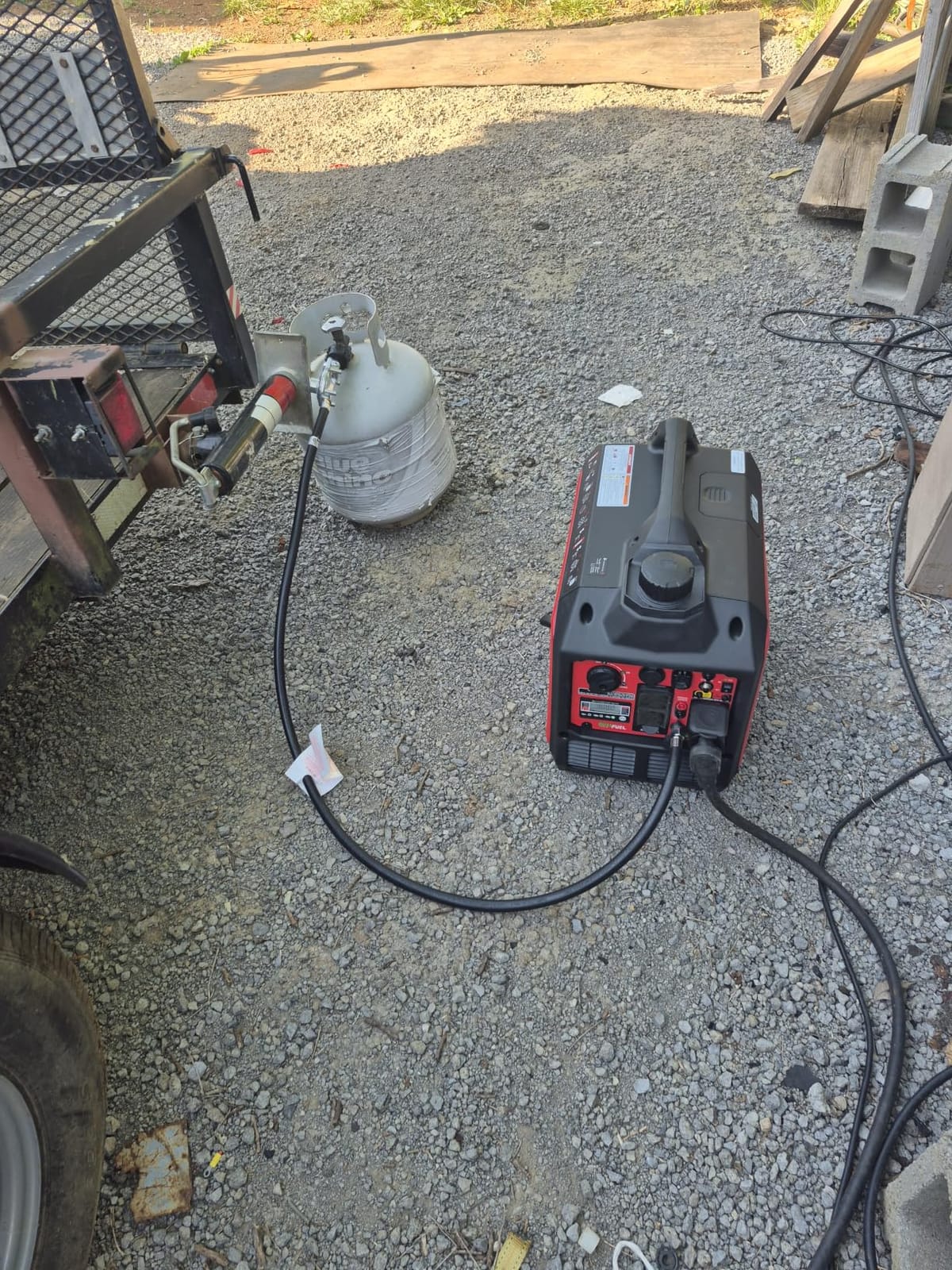
The HB5020 uses an 80cc four-stroke engine to produce 2500 peak watts and 1900 rated watts with total harmonic distortion under 3%, which is the threshold electronics and CPAP machines care about. The control panel carries a 120V 20A duplex household outlet, a 12V 8A DC port and dual 5V 2.1A USB ports.
Cold start technology and low oil shutdown are both present, and the 1.06 gallon tank delivers up to 8 hours at 25% load. The two-year limited warranty is paired with free lifetime technical support, which matters more for budget-tier brands than the length alone suggests.
Where the number pays off
A 52 dBA rating at 23 feet under quarter load is the only figure in this roundup you could put in front of a campground host. It is below the 60 dBA compliance standard that most parks measure at 50 feet, and the low-load measurement is exactly how you would run it overnight for lights, a cooler and a CPAP.
The 39.7 pound weight and compact 21.9 by 13.4 by 19.5 inch footprint also make it one of the easier machines to place downwind of your tent.
Limits worth planning around
1900 running watts is the ceiling, and reviewers call it modest. Start a kettle, a coffee maker and a hair dryer in quick succession and you will trip the overload protection, so sequence the high-draw appliances rather than firing them together.
The ABS plastic shell also feels a step below the metal-cased machines in feel, and the two-year warranty is shorter than the three years offered on the Champion models below.
4. AIVOLT 4300W Is the Best for Dual-Fuel Flexibility
AIVOLT 4300W Dual Fuel Inverter Generator 53dB Quiet for RV Camp Home
3300 running watts, 4300 surge
53 dBA claimed, 64 lb
Gasoline 11.5 hr or propane 34 hr
30A outlet with remote key fob
Pros
- Runs on gasoline or propane out of the box
- Remote key fob start from inside the RV
- 30A outlet and 3150W propane output for air conditioning
- Wheels and telescoping handle for moving
- CO auto shutoff and UL2201 certification
Cons
- 4.1 average with a 12% one-star share
- Measured noise runs above the printed figure at close range
- Engine oil not included in the box
- Some early fuel system failures reported
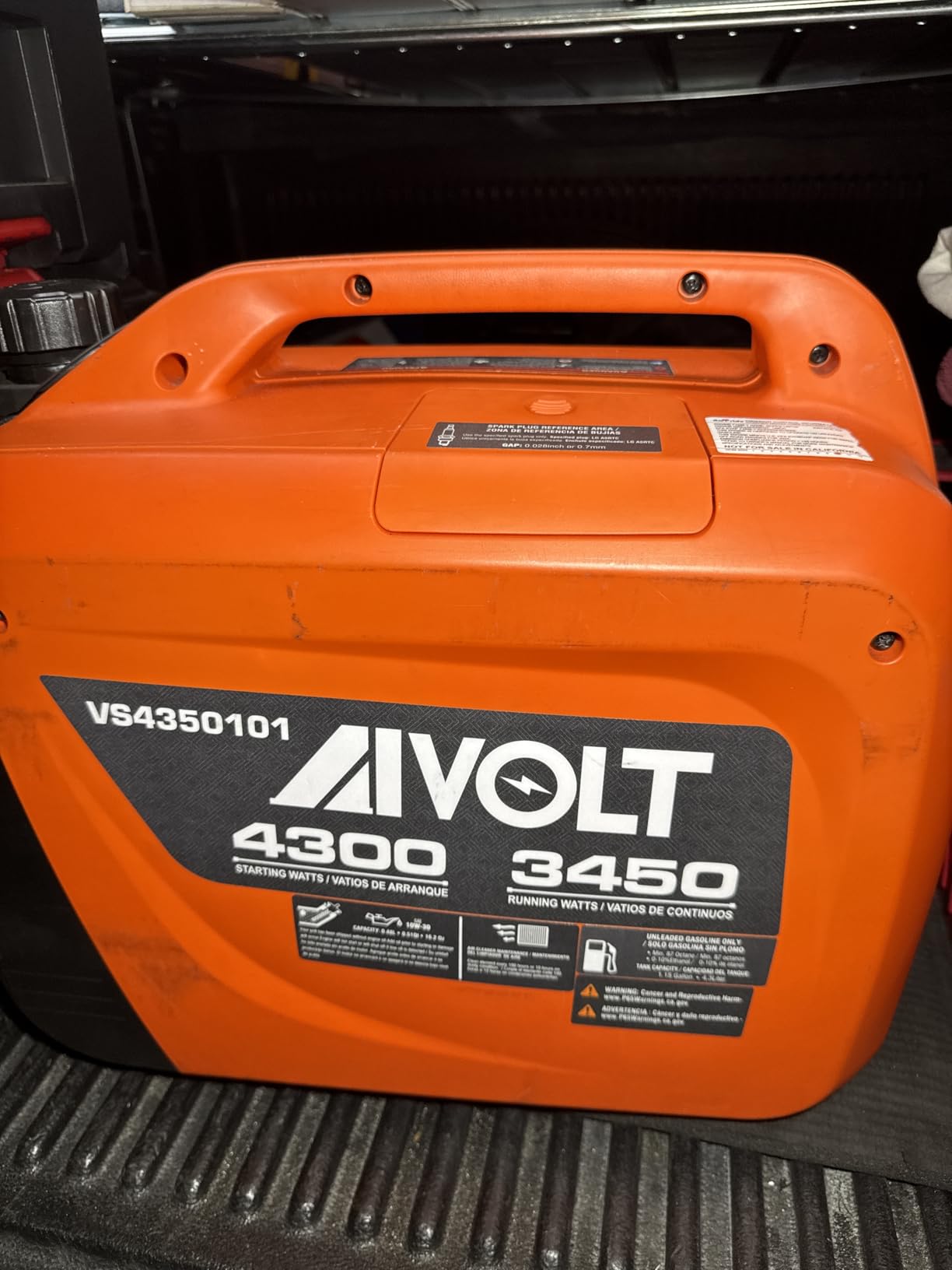
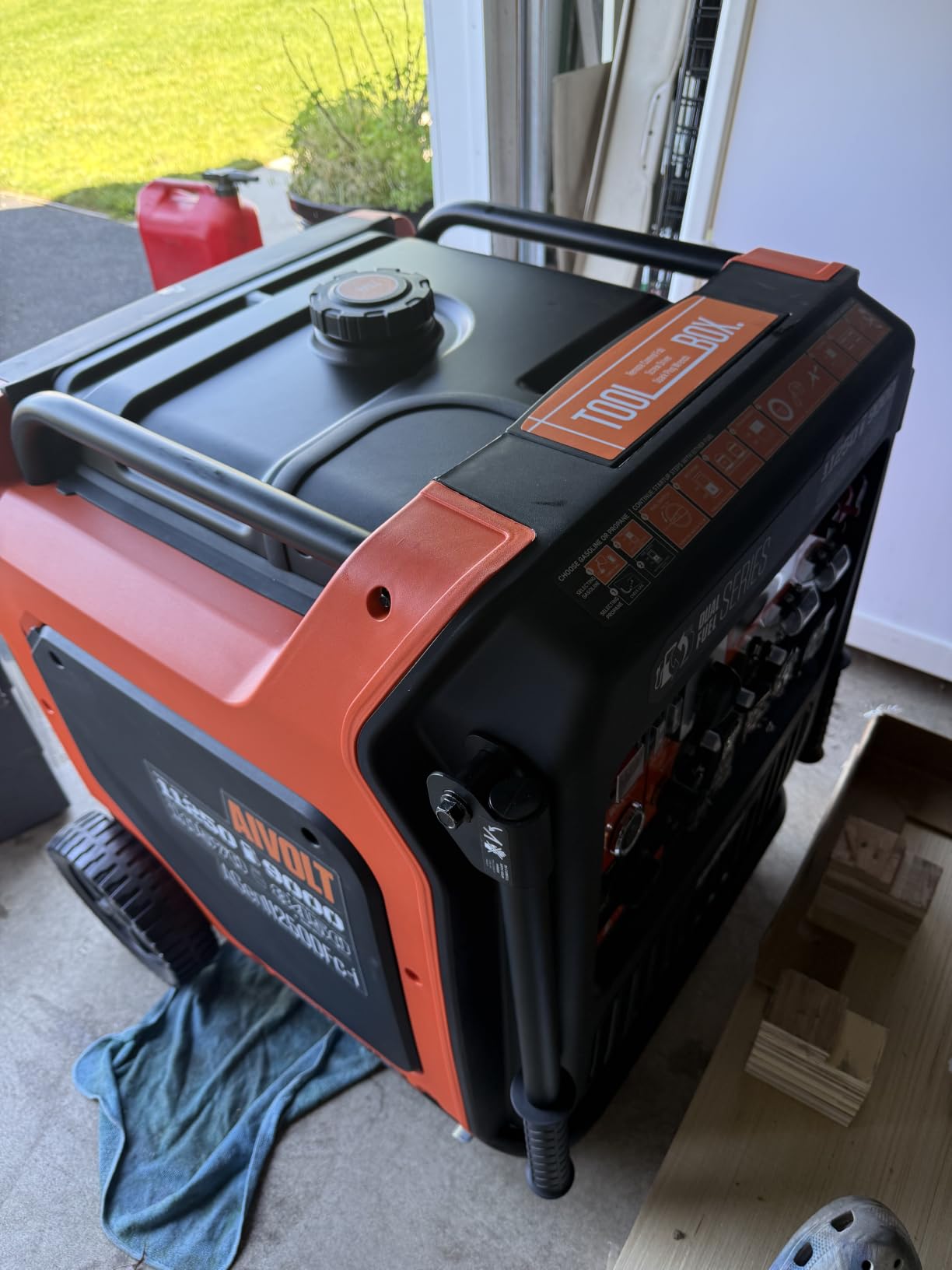
Propane is the quiet-hours cheat code for campers who can get a tank to a site with room to spare, and the AIVOLT 4300W is the strongest dual-fuel option in this lineup. It runs on gasoline or propane straight from the box, with a 34 hour propane runtime at 25% load against 11.5 hours on gasoline.
That 34 hour figure changes the planning. Rather than refuelling at awkward hours, you set the unit on propane, run it through the entire quiet hours window and the following day, and deal with a propane cylinder swap once. Several owners report using it to run rooftop air conditioning in a camper van.
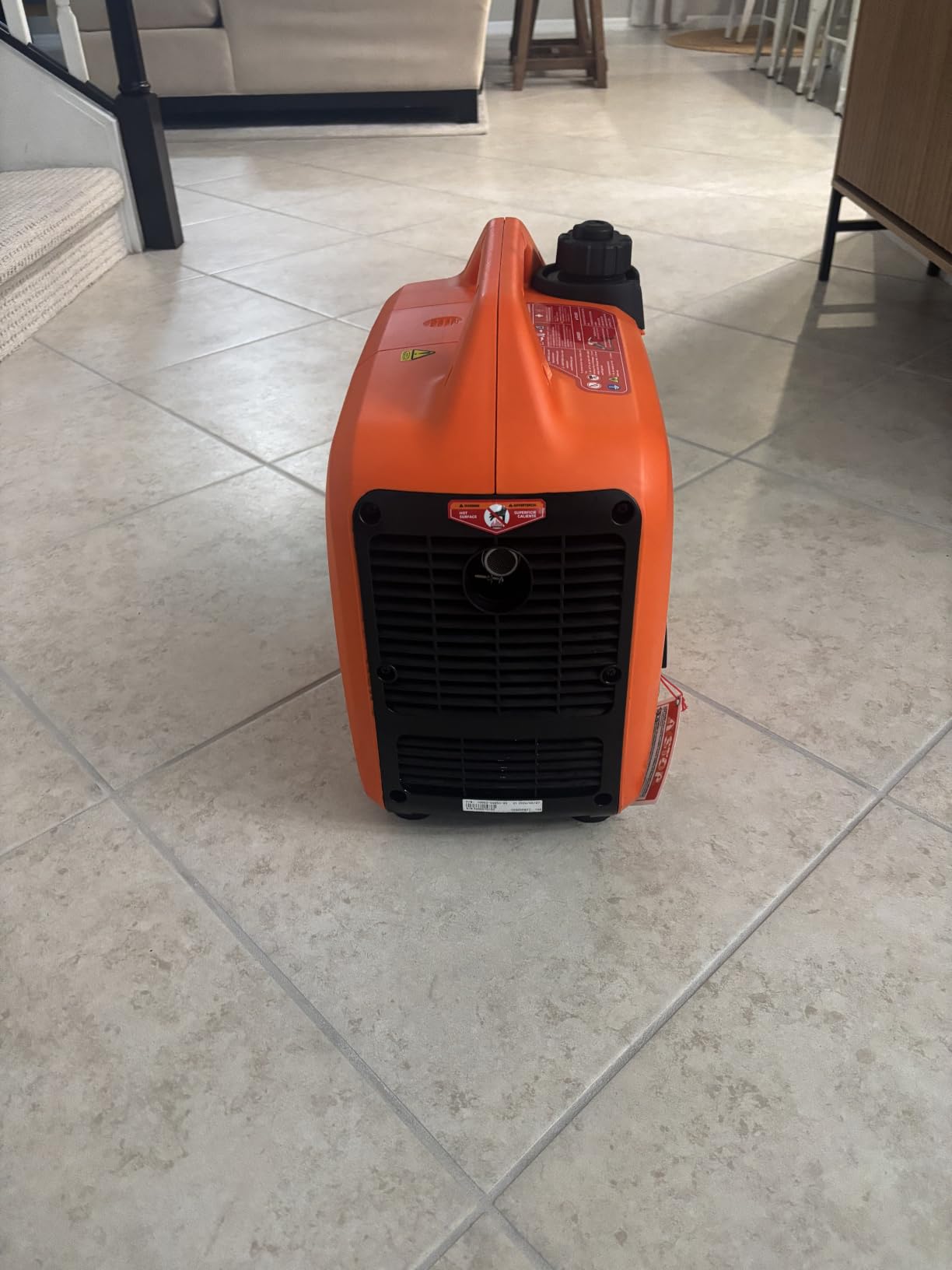
Output is 4300 surge watts and 3300 running watts on gasoline, from a machine weighing 64 pounds with built-in wheels and a telescoping handle. The remote key fob start lets you power up from inside the RV, and the dedicated 30A outlet is the one to use for an air conditioner or microwave rather than a household duplex.
The claimed 53 dBA is where caution is warranted. Reviewers report measuring noise higher than the printed figure at close range, so treat 53 dB as a floor rather than a guarantee. CO auto-shutoff, low oil protection and UL2201 certification are genuine safety positives.
Why dual fuel changes the quiet hours problem
Propane burns cleanly and stores safely with no stale fuel concerns between trips, and it removes the noise event of a mid-night refuelling. That is the single most underrated way to run a generator without waking anyone, and it is why this machine earns its place despite the rating.
Forum comparisons on r/RVLiving put this unit against a Honda EU3000iS with the consensus that you trade a couple of decibels of absolute quietness for a large saving. The trade is worth it if your site has a propane route, and poor if it does not.
Where the rating costs you
A 4.1 average with a 12% one-star share is the joint lowest in the group, and the negative reviews are not vague. Smaller AIVOLT variants show early carburetor and fuel system failures shortly after delivery, and some users report that rated output is not achieved under continuous heavy charging load.
Customer service is the counterweight, with owners reporting responsive support and replacement machines sent when needed. Engine oil is not in the box, which is a ten-minute fix rather than a dealbreaker.
5. Champion 4000W Is the Best Lightweight 4000-Class Machine
Champion 4000-Watt RV Ready Portable Inverter Generator
3000 running watts, 4000 surge
64 dBA at 23 ft, 48.1 lb
10 hr at 25% load
TT-30R outlet, 3 yr warranty
Pros
- Under 49 pounds in the 4000 watt class
- CO Shield carbon monoxide auto shutoff
- Three-year warranty with lifetime technical support
- Clean output under 3% THD
- Parallel ready for a matched second machine
Cons
- Recoil start only
- 3000 running watts is low for the class
- 64 dBA sits above the strictest quiet hours cap
The Champion 4000W solves a specific problem well: getting 4000 watts of surge capacity into something under 50 pounds. At 48.1 pounds it is roughly half the mass of the 99-pound machines in this group, and that difference decides whether a walk-in or dispersed site is workable at all.
Reviewers rate it at 4.6 stars across 680 reviews and consistently single out the weight first. Campers moving from a vehicle to a site 100 feet away mention the portability repeatedly, and the CO Shield carbon monoxide auto-shutoff gets called out as the reason they feel comfortable running it near a tent at all.
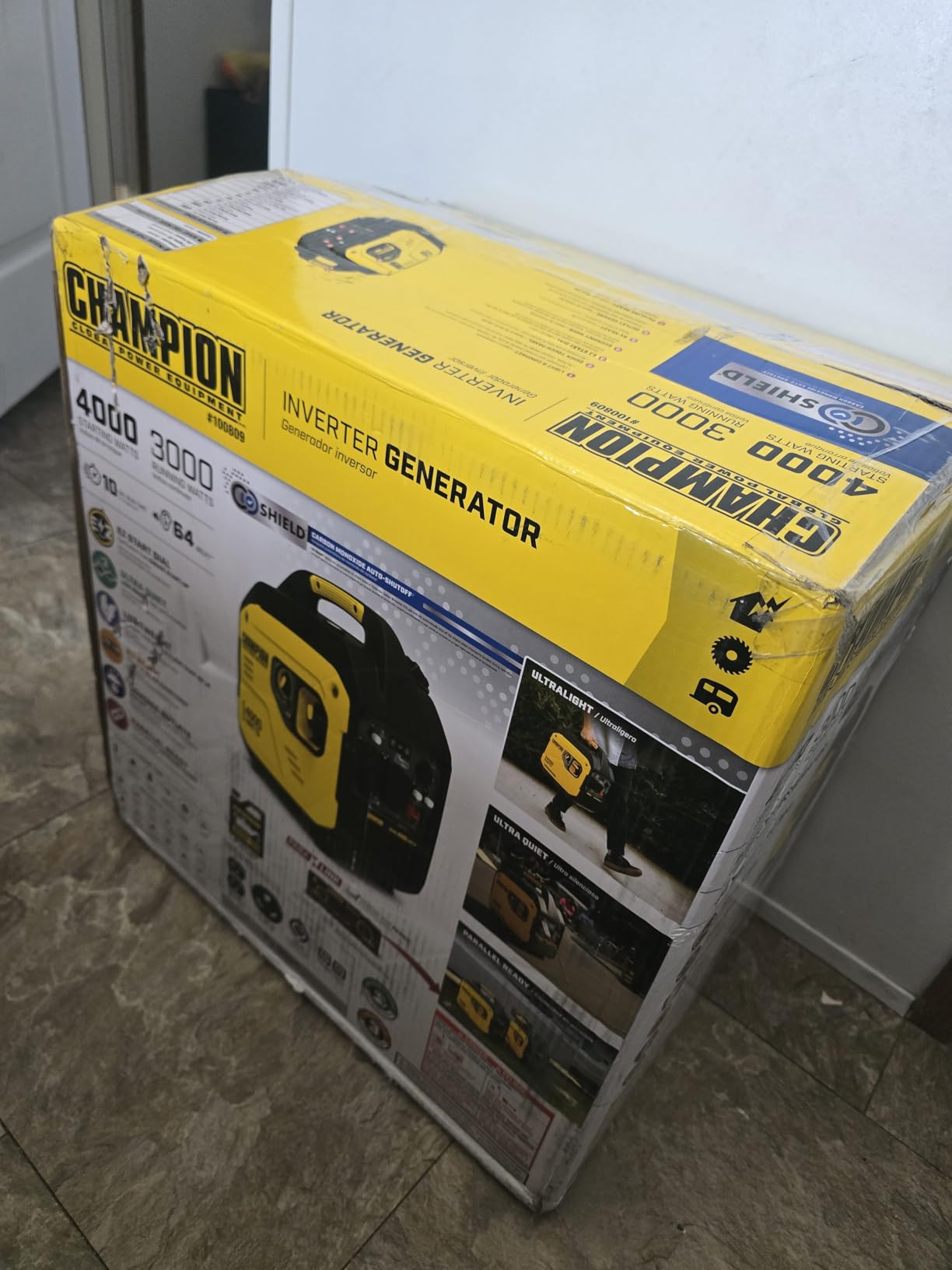
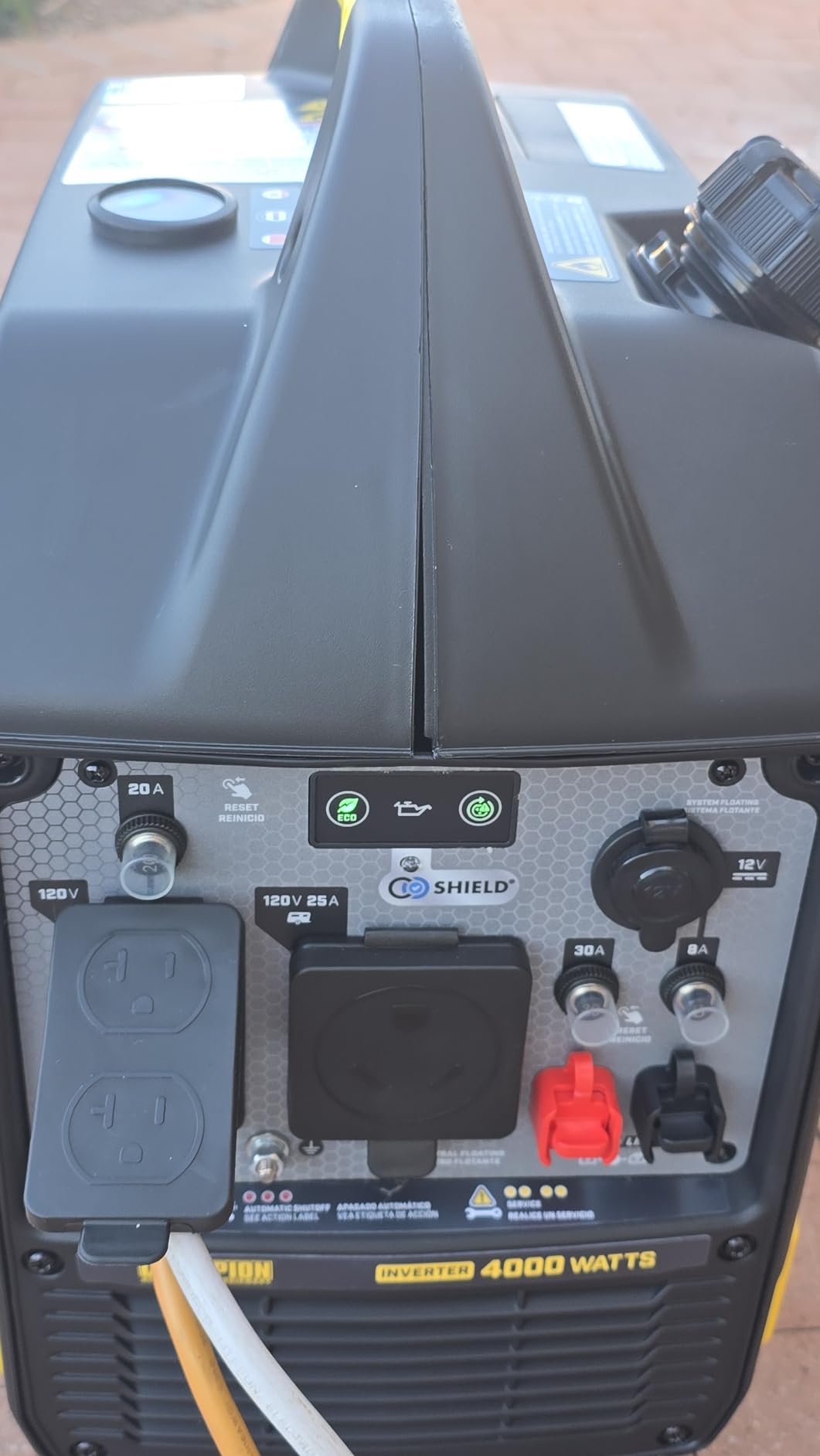
Under the cover, a 149cc four-stroke engine produces 4000 starting watts and 3000 running watts with up to 10 hours of runtime at 25% load on a 1.54 gallon tank. Output is clean at under 3% THD, and the parallel outlets let you pair it with a second Champion inverter through an optional kit.
The outlets are a 120V 25A TT-30R, a 120V 20A household duplex and a 12V automotive-style outlet, which is a good spread for RV hookups. Start type is the compromise: recoil only, no electric or remote start.
What it is genuinely good at
Three-year limited warranty with free lifetime technical support is the best service commitment among the portable machines here, and it is the main reason buyers stay with Champion across seasons. The 17.9 by 11.7 by 19.7 inch footprint also packs better than the 99-pound units.
If you are running a small RV with a 13,500 BTU air conditioner, 3000 running watts is workable, especially with the TT-30R wired directly rather than through an adapter.
Where the compromise bites
64 dBA at 23 feet is above the 60 dBA figure most quiet hours rules are written around. In daylight, on a dispersed site, that is fine. At 10 PM next to a neighbour in a developed loop, expect a conversation.
3000 running watts is also lower than comparable 4000-class machines from other brands, and recoil start means you are pulling a cord in the rain when everyone else is pressing a button. The 10 hour figure assumes a light load, so plan refuelling around daylight hours.
6. Oxseryn EDOG10 Is the Honest Loud Option, and Most Campsites Should Skip It
Oxseryn Power Equipment 4400 Watts Inverter Generator Gas Powered, Portable Open Frame Generator, Low Noise with ECO Mode, RV Ready, Emergency Home Backup
3400 running watts, 4400 peak
72 dBA at 23 ft, 56 lb
14 hr at 25% load in ECO
1 yr warranty
Pros
- 3400 running watts of real output
- 14 hour ECO runtime on a 2 gallon tank
- Fuel gauge for at-a-glance checks
- RV port included
- 56 lb is manageable for two people
Cons
- 72 dBA is the loudest figure in this roundup
- Open frame has no sound-dampening enclosure
- One-year manufacturer warranty
We are including this machine because roundups that only show quiet options leave you unprepared. The Oxseryn EDOG10 has real power and a long runtime, and if your plan is home backup or a dispersed site a quarter mile from anyone, it does the job well. If your plan involves a campground with enforced quiet hours, it does not.
At 72 dBA from 23 feet, this is the loudest published figure in the group, sitting on the same scale as a vacuum cleaner. The open frame design has no enclosure at all, so there is nothing to dampen the exhaust and intake noise, which is exactly what the quieter machines in this list spend money in.
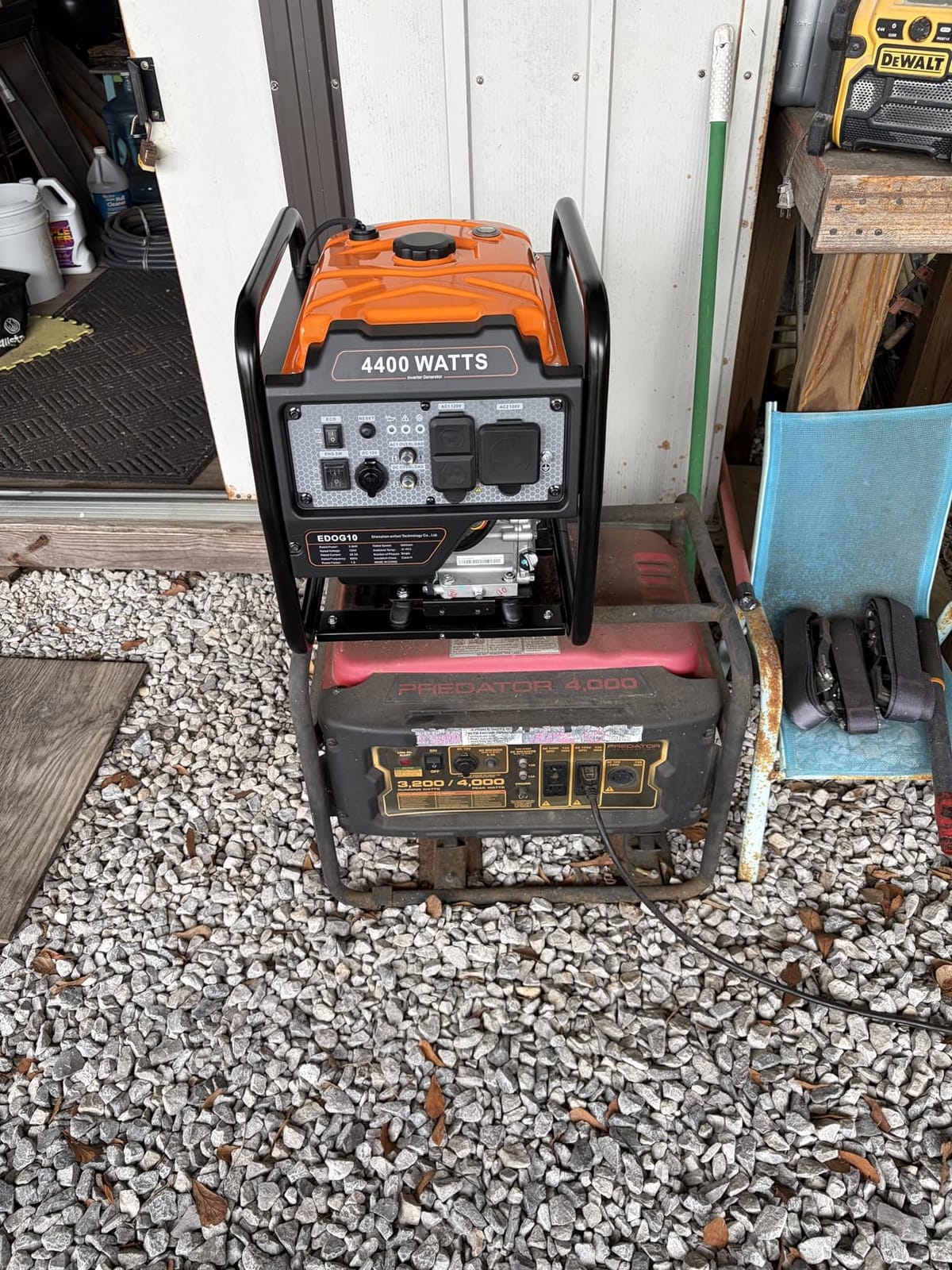
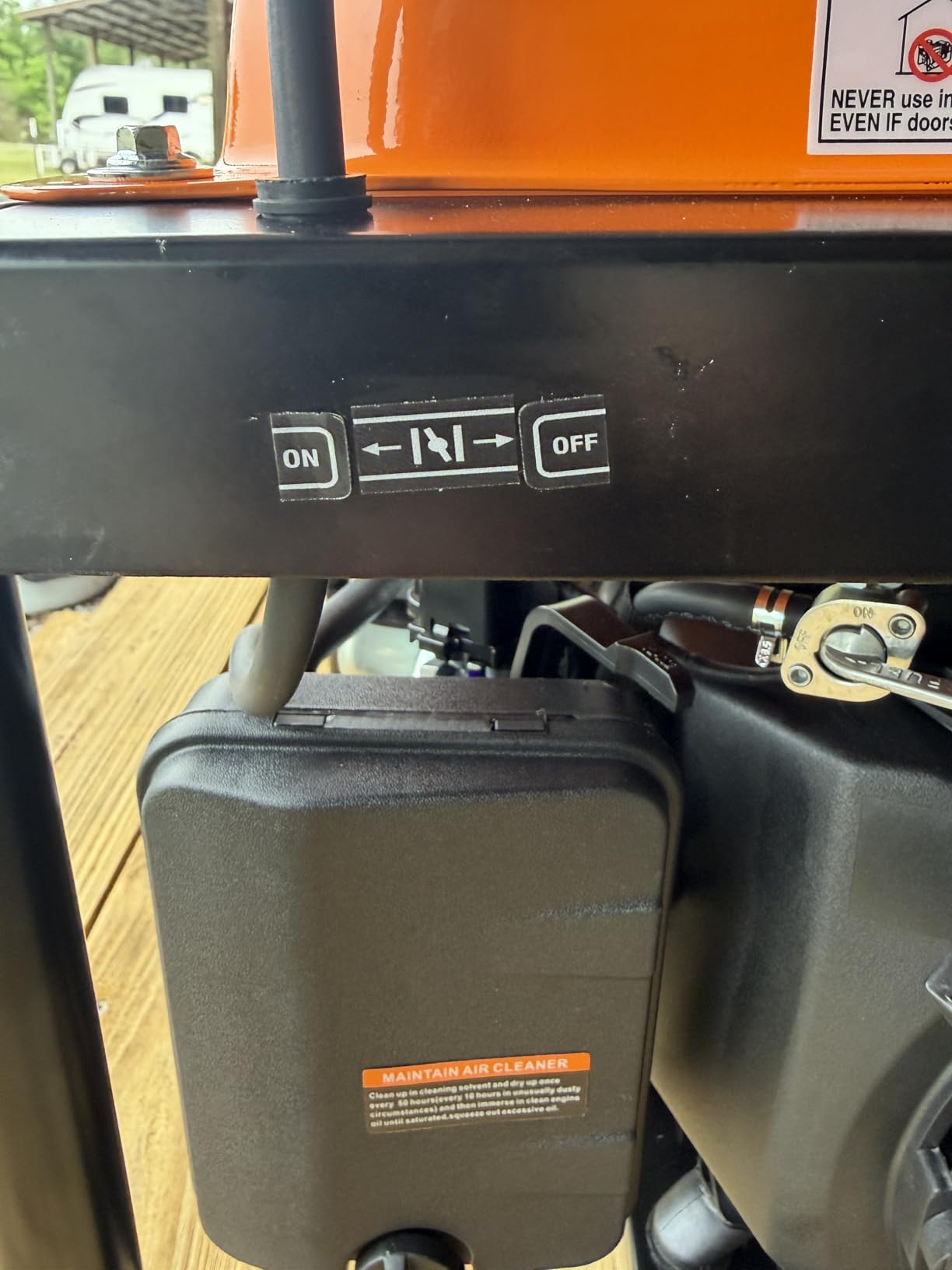
Underneath, a 208cc four-stroke engine delivers 4400 peak watts and 3400 running watts with up to 14 hours of runtime at 25% load in ECO mode, from a 2 gallon tank with a fuel gauge. Outputs are two 120V AC ports, one 12V DC port and one RV port, and the machine weighs 56 pounds.
Reviewers rate it at 4.5 stars across 785 reviews and treat it as a value buy rather than a camping-first choice. r/camping threads frequently name Oxseryn as a strong value brand with a large review sample, and that reliability reputation is real. The single-year warranty is the part to watch, since warranty repairs on budget-tier brands often mean return shipping.
When it makes sense
Home outage backup, a work truck topper, or a dispersed national forest site where the nearest neighbour is far outside hearing range. In those settings 72 dBA changes nothing and 14 hours of ECO runtime is a genuine advantage over smaller tanks.
If you already own quiet hours as a solved problem elsewhere, this unit frees up budget for a second machine that stays within the 52 to 58 dBA band.
Why most campers should pass
The open frame is the disqualifier for a quiet campground, not just the number. With no enclosure, the alternator and fan are exposed, and owner comments consistently describe it as noticeably louder than the enclosed inverter models it gets compared against.
Add a one-year warranty to that and the case gets thinner. Forum users on forestriverforums.com compare budget-tier machines like this against established inverter brands on exactly these two points, and the noise is the one that gets you asked to turn it off.
7. Pulsar PGD40ISCO Is the Best for RV Air Conditioning in a Mid-Size Package
Pulsar PGD40ISCO Ultra Light Quiet 4000W Portable Gas Inverter Generator, white
3200 running watts, 4000 peak
59 dB, 47.3 lb
4 hr at half load on 1 gal
Handles AC up to 13,500 BTU
Pros
- 47.3 pounds for 4000 watts of surge
- 59 dB suits most quiet hours rules
- Handles air conditioning up to 13500 BTU
- Parallel ready
- Three-year limited warranty
Cons
- One gallon tank gives only about 4 hours at half load
- Only three power outlets
- 9% one-star rating share
The Pulsar PGD40ISCO sits in the middle of this lineup in exactly the way that is useful. 59 dB, 47.3 pounds and 3200 running watts is a combination you struggle to find elsewhere, and it is quiet enough for most enforced quiet hours windows when the load is moderate.
At 4.4 stars across 488 reviews, owners describe it as the machine they stopped looking at after finding. The 59 dB figure is published without a load or distance condition, so treat it as approximate, but the class of noise is right for a developed campground with neighbours 30 to 40 feet away.
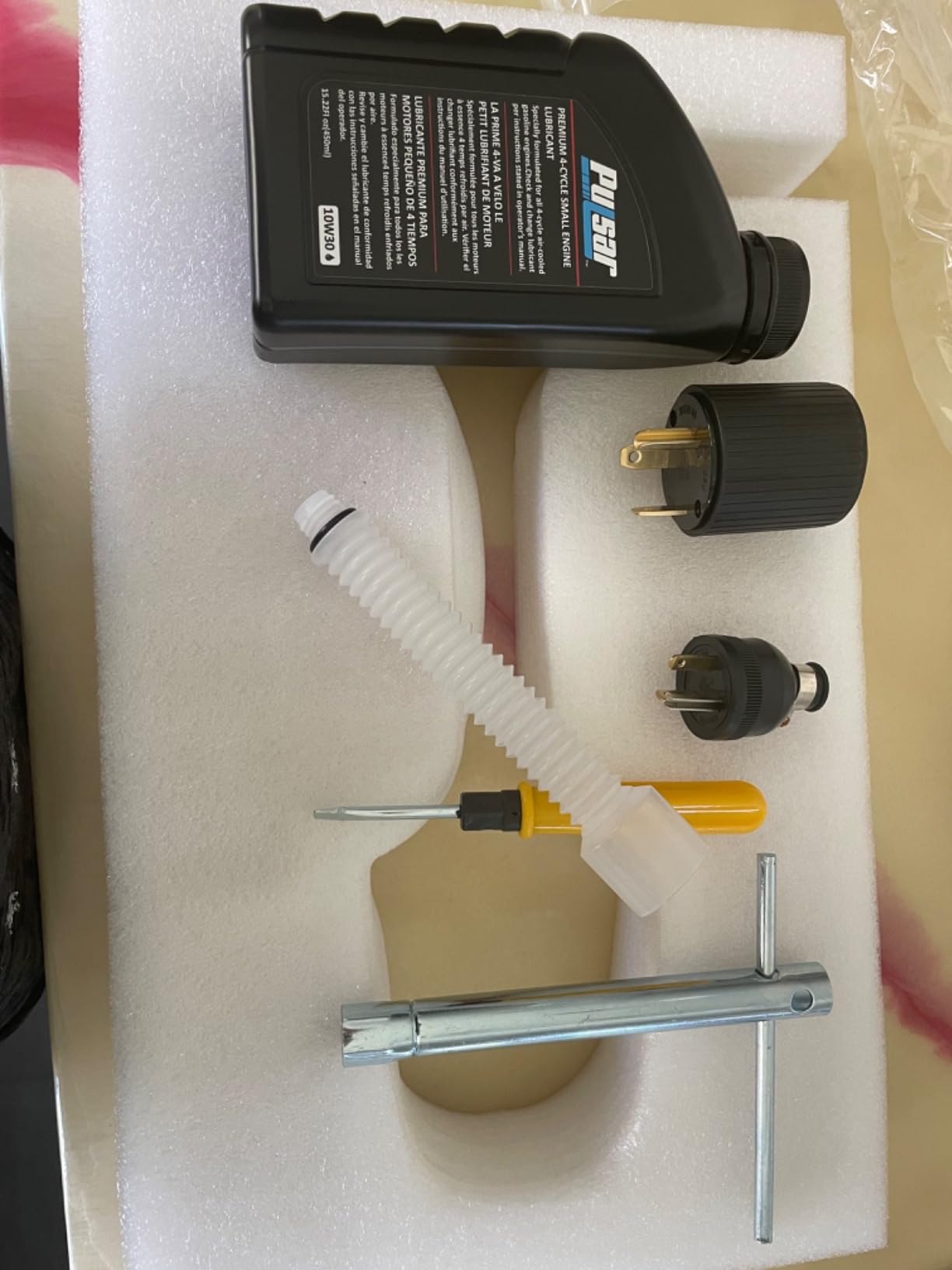
The mechanicals are a 145cc four-stroke engine with a magneto ignition producing 4000 peak watts and 3200 rated watts. Manufacturer guidance states it is suitable for air conditioning units up to 13,500 BTU, which is the common rooftop residential unit, and it is parallel ready for doubling output with a matched second machine.
The 1 gallon fuel tank is the catch. Rated runtime is 4 hours at half load, which means a nightly refuelling for anyone running air conditioning through the evening, and refuelling during quiet hours is precisely the noise event that annoys neighbours more than the steady hum does.
How to plan around the small tank
Refuelling in daylight solves most of this. Fill it before you leave home, run it through the evening, and refill while you are packed up and moving in the morning, which keeps the noise event outside the quiet window.
Three outlets is fewer than most competitors, so plan your distribution. One 30A connection feeding a distribution panel beats three household duplexes fighting over the same load.
Where it does not fit
Nine percent of reviews are one-star, the highest one-star share among the higher-rated machines in this group, and the recurring complaints are the small tank and the limited outlet count rather than noise.
Buyers who want 60 hours of gas between fill-ups should look at a larger tank instead. This is a capacity and convenience compromise, not a power compromise.
8. Oxseryn EDOC09 Is the Best Value Pick That Stays Under 60 dBA
Oxseryn 2800-Watts Portable Inverter Generator, Gas Generators for Home Use, Camping, Super Quiet Emergency Home Backup, with Fuel Shut Off, 1.1Gal Fuel Tank, 39Lbs, EPA Compliant
2000 running watts, 2800 peak
58 dBA from 23 ft, 40 lb
9 hr at 25% load
USB, USB-C, 12V and 2 AC
Pros
- 58 dBA at 23 feet with a stated distance
- 40 pounds with a built-in carry handle
- Nine hours at 25% load on a 1.1 gallon tank
- Under 3% THD for sensitive electronics
- USB and Type-C ports for modern devices
Cons
- 2000 running watts limits heavier appliances
- One-year manufacturer warranty
- High-altitude kit sold separately above 4000 feet
The EDOC09 is the answer when you want a genuinely quiet number under 60 dBA, a 40 pound carry weight and a full night of runtime without spending up. Reviewers rate it at 4.5 stars across 433 reviews and consistently cite the same three things: the noise, the weight and the nine hours.
What makes it interesting is that the 58 dBA figure is published with its measurement distance of 23 feet, which is the condition that lets you compare it honestly against the 52 dBA PowerSmart and the 64 dBA Champion. Those three numbers span the decision for most campers.
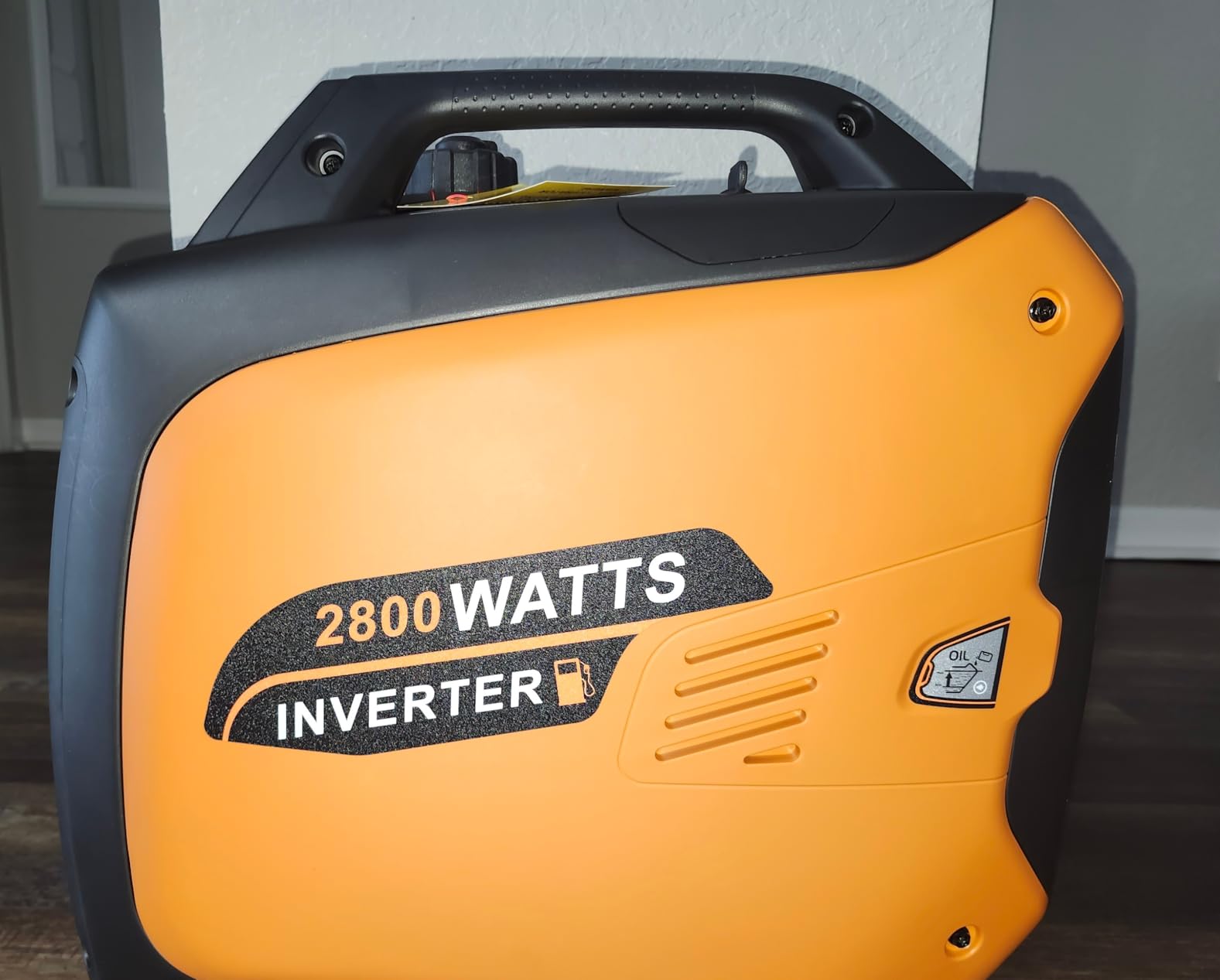
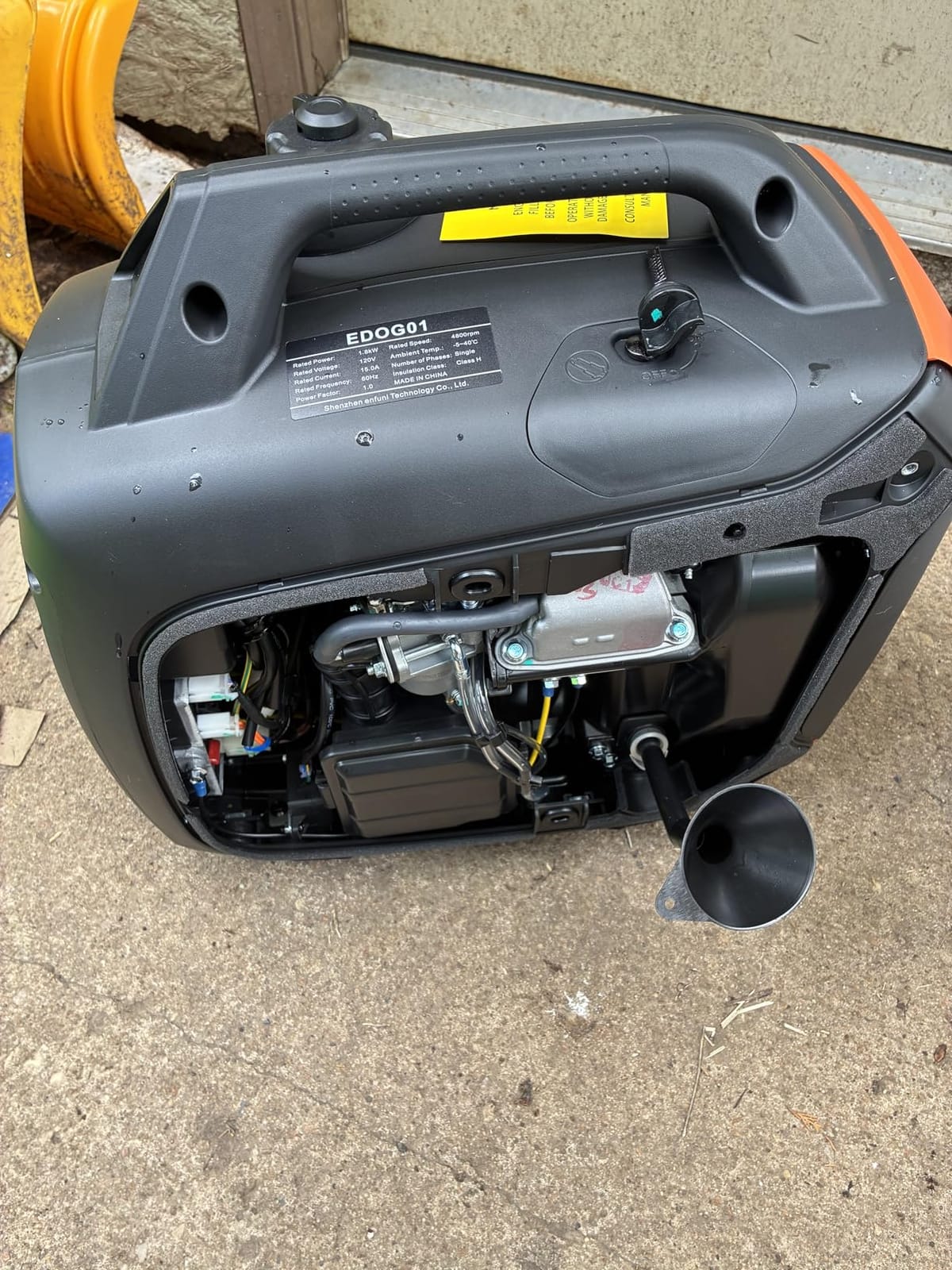
Power comes from a 79.8cc four-stroke OHV engine producing 2800 peak watts and 2000 running watts, with up to 9 hours at 25% load on a 1.1 gallon tank that includes a fuel indicator. Output total harmonic distortion stays under 3%, which the manufacturer states explicitly for phones, laptops, drones, cameras and power station charging.
The outlet mix is unusually modern for the class: two 120V AC ports, one 12V DC port, one USB port and one Type-C port, with ECO mode and a parallel function for expanding output later. It is EPA compliant and includes a fuel shutoff.
What nine hours of runtime buys you
A 1.1 gallon tank at 25% load covers a full night of low-draw camping plus a morning of charging without a refuelling stop. That matters in a quiet campground because refuelling is the sharpest noise event in the whole operation and the easiest one to avoid by planning.
Under 3% THD makes it safe for cameras, laptops and a CPAP machine without a separate battery bank, which is the workload most tent and car campers actually have.
Where 2000 watts runs out
Reviewers flag the 2000 running watts as the ceiling, and it is a real one. A hair dryer plus a coffee maker plus a fridge compressor will trip the overload protection, so this is a lights, devices and small-appliance machine rather than a household one.
The one-year manufacturer warranty is the weak point, and if you camp above 4000 feet the high-altitude kit is a separate purchase. Check your elevation before you buy rather than discovering it mid-trip.
9. Champion 4500W Is the Best for Long Dual-Fuel Runs at Maximum Output
Champion 4500-Watt Electric Start Dual Fuel Portable Inverter Generator
3500 running watts on gasoline
3150 running on propane
61 dBA, 99.2 lb
14 hr gas or 21 hr propane
Pros
- Highest running output in the group
- Up to 21 hours on propane and 14 on gasoline
- Electric start with the EZ Start Dial
- Intelligauge monitors voltage
- frequency and hours
- Three-year warranty with lifetime support
Cons
- 99.2 lb is a two-person lift
- CO sensor trips when airflow is restricted
- Some reports of oil leaks and hard starting
- Warranty service may require transport to an authorised shop
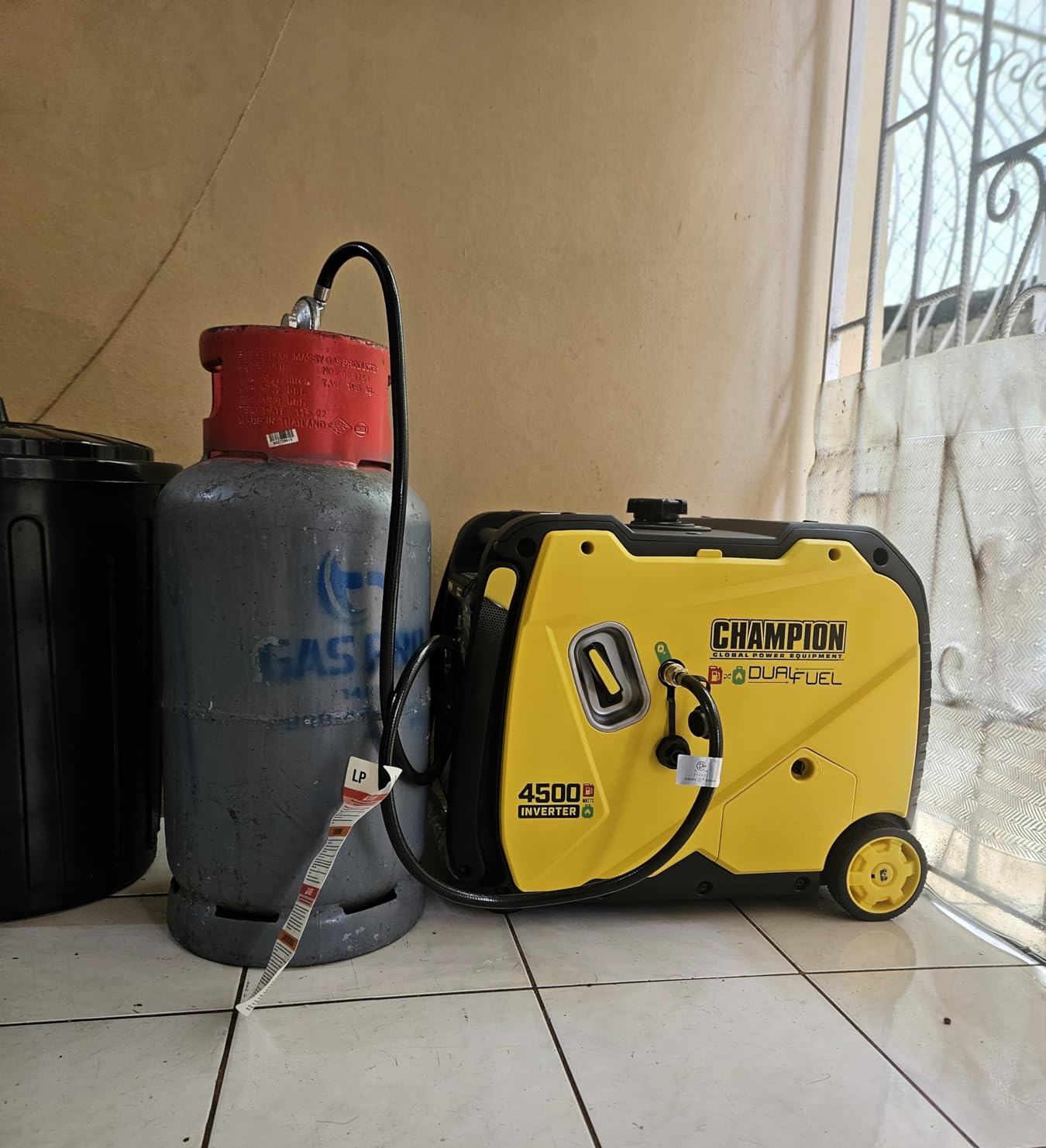
If your quiet hours problem is that you need power overnight and the tank is too small to last, the Champion 4500W is the direct answer. It runs up to 21 hours on propane and 14 hours on gasoline, and at 3500 running watts on gas it has the highest sustained output of anything in this roundup.
The 61 dBA rating is above the strictest 60 dBA cap, so it is a daylight-and-evening machine rather than a 2 AM machine on a tight loop. Owners running it in RV and off-grid settings consistently rate the runtime and the simple starting procedure as the wins.
Under the cover is a 212cc four-stroke engine delivering 4500 starting watts and 3500 running watts on gasoline, dropping to 3150 running watts on propane. The Intelligauge panel tracks voltage, frequency and operating hours, and the EZ Start Dial handles startup without a separate key switch.
It comes with engine oil, a propane hose, an oil funnel and basic tools in the box, which saves a trip before first use. It is parallel ready through an optional kit, and the 2.25 gallon tank paired with a propane cylinder is the combination that gets you through a long weekend without planning a refuelling window.
Why the propane runtime changes the trip
Roughly 21 hours at 25% load on propane means one cylinder covers a long weekend of low-to-moderate draw. That removes the refuelling noise event from the quiet hours entirely, which is the most practical trick in this entire article.
Below roughly 30F, propane cold starts become unreliable and may need multiple pulls, with a choke adjustment improving results. That is the tradeoff to know before a winter shoulder-season trip.
What to weigh before buying
At 99.2 pounds with a 23.2 by 17.7 by 20.1 inch case, this is a two-person machine and you will feel every pound of it at a dispersed site.
The CO sensor is also stricter than some buyers expect, shutting the unit off when airflow is restricted, for example in a closed truck bed. Several reviewers report oil leaks and difficult starting, and warranty service may mean taking the machine to an authorised shop rather than having a technician come to you.
10. AIVOLT 1600W Is the Best Machine to Carry by Hand Alone
AIVOLT 1600W Super Quiet Inverter Generator 28lbs Portable for Camping
1260 running watts, 1600 peak
57 dBA at 23 ft, 28 lb
8 hr at 25% load
Hour meter and CO shutdown
Pros
- Lightest machine in the roundup at 28 pounds
- 57 dBA at 23 feet for the class
- Up to 8 hours at 25% load with 2 hours at full load
- Under 3% THD with copper windings
- Hour meter and three indicator lights
Cons
- Only 1260 running watts
- 4.1 average with a 12% one-star share
- Some early fuel system and carburetor failures
- Engine oil not included
- Not legal for sale in California
Everything in this roundup is a compromise, and this one makes the smallest one. At 28 pounds it is the only machine here you can carry from the car to a walk-in site with one arm full of gear, and 57 dBA at 23 feet keeps it inside most quiet hours limits.
It suits the specific use case of powering a 12V cooler, charging phones and laptops, and running a CPAP machine overnight. That is a real and common camping load, and the 8 hours at 25% load covers a full night on a single tank.
Power comes from a 60cc four-stroke OHV engine with copper windings producing 1600 starting watts and 1260 running watts, with runtime of 8 hours at 25% load and 2 hours at full load. The panel carries two 120V outlets and two USB ports covering Type-A and Type-C, plus three indicator lights and an hour meter.
Output is clean at under 3% THD, which the manufacturer states explicitly for phones, laptops and small tools. CO Protect auto-shutdown, low oil shutdown and overload protection are all present, and it is EPA approved and ANSI/PGMA G300-2018 compliant.
What 1260 running watts is actually enough for
Phone and laptop charging, a 12V cooler, LED lighting, a fan and a CPAP machine together sit well inside 1260 watts. If your list is mostly electronics, the capacity is not the limiting factor and the 28 pound weight becomes the deciding number.
It is parallel capable through a parallel kit sold separately, so two of these can cover a larger load if the site permits it and neighbours are far enough away.
Where the budget shows
The 4.1 average and 12% one-star share is the joint lowest in the group. The negative reviews are specific: rated output not achieved under heavier continuous charging loads, plus early fuel system and carburetor failures on some machines shortly after delivery.
Engine oil is not included, and the unit is not legal for sale in California, which matters if you are buying for West Coast trips. For a first generator that stays home between weekends, it is a defensible choice. For a season of use, a machine with a longer warranty is the safer bet.
Campground Quiet Hours and Noise Rules, by Park Type
Quiet hours vary more by park type than most roundups admit, and getting this wrong before you arrive is the most common complaint on the forums. The windows below are typical rather than universal, so always read the specific park’s posted rules.
Private campgrounds typically run quiet hours from 10 PM to 6 AM, with a decibel cap measured at the site boundary or nearest occupied pitch. Site spacing is often 30 to 40 feet.
State parks commonly extend the window to 10 PM to 8 AM, and some go further. Several states also require generators to be operated in a designated zone or on a hard surface.
National Park Service campground loops often use two windows, typically 8 to 10 AM and 4 to 8 PM, plus generator-free loops where no engine may run at all.
Dispersed and backcountry sites may have no stated window, but the 60 dB standard is effectively enforced by whoever is nearest to you.
Beyond the hours themselves, most parks require a drip pan under the generator, a working fire extinguisher nearby, a 20 foot setback from your own occupied space, and the exhaust pointed away from neighbouring sites and your own tent openings. Escape Forum posters describe campers being notified personally when their unit is in hearing range, which tells you how seriously enforcement is taken.
Inverter vs Conventional: Why Quiet Always Means Inverter
An inverter generator converts AC output to DC and back to clean AC, which lets the engine throttle down to match the actual load instead of running near full throttle constantly. Low RPM is what produces low noise and clean power, and it is why every quiet machine in this roundup is an inverter and every conventional machine is not.
Open-frame conventional units run their engine at a fixed speed to hold 60 Hz output. That design is cheaper and simpler, and it is why a 72 dBA open-frame machine can deliver more watts than a 52 dBA inverter. The noise is the price of that simplicity.
Total harmonic distortion is the second reason it matters. Inverter output here stays under 3% THD, which is what laptops, cameras, monitors and CPAP machines need. A conventional open-frame unit is the reason some campers run a separate battery bank, and you can read more about that trade in our [8 Best Solar Generators Complete Review] guide.
How Much Power Do You Actually Need?
Size the generator on running watts of what you plug in, then keep 20% in reserve. The 80% rule means you should not plan to run a machine at more than roughly 80% of its rated output, because sustained operation near the ceiling causes the engine to throttle, and throttling is both a noise source and a stall risk.
Typical draws to plan around:
CPAP machine runs roughly 30 to 60 watts continuously, which is the smallest load in this list.
12V cooler or fridge drawer draws about 40 to 60 watts running with a compressor that cycles on and off.
Phones, laptops and cameras charging combined sit around 100 to 200 watts.
Coffee maker or hair dryer is the usual 1000 to 1500 watt spike that trips small machines.
13,500 BTU RV air conditioner needs a 3000 watt class machine and a dedicated 30A connection.
Space heater is a 1500 watt resistance load, the hardest thing to run quietly.
Matched to camping style: a tent camper running devices needs 1600 to 2000 running watts. A car camper adding a cooler and a coffee maker needs 2000 to 2500. A small RV without air conditioning needs 3000. An RV running a 13,500 BTU rooftop unit needs 3000 to 3500 running watts, which is why the 3400 watt WEN and the Champion 4500W exist.
Two smaller machines run in parallel can replace one large one, and the Champion 4000W, the Pulsar PGD40ISCO and the AIVOLT 4300W are all parallel ready. Two 40 pound machines you can carry are usually a better deal at a walk-in site than one 99 pound machine you cannot.
How to Make Any Generator Quieter at the Site
Placement does more than buying a quieter machine, and it is free. Work down this list in order.
1. Put distance between the unit and your neighbours. Sound drops about 6 dB every time you double the distance, so moving from 20 feet to 40 feet is roughly as effective as a large decibel improvement, and it costs nothing.
2. Point the exhaust away. A hot exhaust tube pointed at a neighbour’s tent is the single most complained-about configuration at developed campgrounds. Rotate the unit so the hot side faces open ground or your own site, downwind.
3. Never place it on bare ground or a soft surface directly underfoot. Vibration transfers into the ground and into your site. Use a rubber or high-density foam mat, or a plywood board, to isolate the frame.
4. Keep it level and clear. Low oil shutdown triggers on a slight slope, and a generator running nose-up also works the engine harder than the rating assumes.
5. Refuel during daylight. The pump noise and the rattle of a full tank are a sharper, shorter event than the hum, and neighbours remember them more clearly.
6. Maintain it. A choked carburetor, a stale fuel mix or a blocked ventilation grille makes any machine louder than its rating. Run the fuel shutoff before storage to protect the carburetor between trips.
7. Use a soft start module for large compressors. If you must run an air conditioner, a soft start module reduces the starting surge so the machine does not bog down, spike the RPM and become loud exactly when you are trying to be quiet.
8. Consider a sound-dampening box last. A generator quiet box can cut noise meaningfully, but it also restricts airflow and can trigger the CO sensor or overheat the machine. It is a last resort, not a first move.
Generators to Avoid in Quiet Campgrounds
These categories fail a 60 dBA ceiling no matter how the marketing is worded.
1. Open-frame models with no enclosure. The alternator and cooling fan are exposed and there is nothing to absorb the noise, which is exactly the 72 dBA case in this roundup.
2. Conventional non-inverter units. Fixed engine speed means full throttle at any load, so even a small conventional machine is louder than a larger inverter.
3. Units with no CO sensor. In a quiet campground you are running the machine close to occupied space for long stretches, and auto-shutdown is the safety layer that makes that acceptable.
4. Models whose spec sheet gives a dB number with no load and no distance. An unqualified figure is usually measured at full load, seven metres, in a lab. Treat it as marketing rather than data.
5. Machines under 1 gallon of fuel capacity for overnight use. They force a refuelling during quiet hours, which is a louder event to neighbours than the generator itself.
Running Power Overnight When Quiet Hours Say No
The hardest version of this problem is a CPAP machine, a medical device that needs steady power while the park forbids engine noise from 10 PM. No decibel rating solves that conflict, and buying a quieter generator only postpones it.
The pattern that works is a hybrid: a portable power station sized for the overnight draw, plus a small inverter generator for the daytime high-draw appliances. The battery carries the CPAP, the cooler and the charging overnight in complete silence. The generator runs in daylight for the coffee maker, the hair dryer and the battery recharge.
Our [8 Best Solar Generators Complete Review] covers the battery side in detail. The sizing logic is simple: add the running watts of everything you need overnight, and buy a power station with at least twice that, since cold weather reduces usable capacity.
For campers who do not want a second device at all, the honest fallback is the dual-fuel approach. Propane runtime of 21 hours on the Champion 4500W and 34 hours on the AIVOLT 4300W means you can run through the entire quiet window without refuelling.
Buying Checklist: The Three Numbers That Predict Quietness
When you strip away everything else, three figures decide whether a generator will work at your site.
1. The noise figure with its condition. If the listing does not state a load percentage and a distance, you are guessing. Target 60 dBA or below at 23 feet, and below 56 dBA if your site is tight.
2. Running watts, not starting watts. Starting watts describe a 3 second surge. Size on running watts and add 20% headroom so the machine is not sitting near the 80% threshold all evening.
3. Tank capacity in hours at 25% load. If the number of hours is not enough to cover the quiet hours window plus the rest of the day, you will be refuelling when you should be sleeping. Dual fuel is the fix.
Then check weight, warranty length, CO sensor presence and outlet types, including whether you need a NEMA TT-30R connection or a 30A twist-lock adapter for your RV hookup.
Frequently Asked Questions
What is the quietest generator I can use for camping?
The quietest published figure in this roundup belongs to the PowerSmart HB5020, rated at 52 dBA from 23 feet at 25% load. Most campgrounds write their rules around a 60 dBA standard measured at 50 feet, so a machine at or below 56 dBA at 23 feet keeps you comfortably inside quiet hours on a tight site. Check that the manufacturer states the load and distance, because a bare number is not comparable.
What is the best silent generator for camping?
For most campers the best silent generator is the WEN 56235i, an inverter unit weighing 39 pounds that owner reviews describe as quieter than an idling push mower. It has more owner reviews than any other machine in this roundup. If your priority is a published, verifiable decibel figure rather than reputation, the PowerSmart HB5020 at 52 dBA is the one to look at instead.
What is the best silent generator for an RV?
For an RV running a rooftop air conditioner, the WEN 56380i delivers 3400 running watts with a NEMA TT-30R outlet and electric start, rated 4.7 stars across roughly 2459 reviews. It weighs 99.2 pounds, so plan the lift. If carrying that weight is impractical, the Champion 4000W at 48.1 pounds gives you 3000 running watts in a far more portable package.
What is the 80% rule for generators?
The 80% rule says you should not run a generator at more than about 80% of its rated output for extended periods. Exceeding it makes the engine throttle, and throttling is both a noise source and a stall risk. This is why you size on running watts and add 20% headroom, rather than matching your appliance list to a machine starting watt figure.
How loud can a generator be in a campground?
Most campgrounds write their rules around a 60 dB standard measured at 50 feet, and private campgrounds typically enforce it from 10 PM to 6 AM while state parks often run to 8 AM and national park loops use daytime windows. Because sound drops roughly 6 dB each time distance doubles, a unit rated 64 dBA at 23 feet can still measure compliant at a site boundary. Always read the specific park’s posted rules.
Are inverter generators quieter than regular generators?
Yes. Inverter generators convert AC to DC and back to clean AC, which lets the engine throttle down to match the load instead of running near full throttle constantly. Conventional open-frame units hold a fixed RPM to maintain 60 Hz output, which is why an open-frame machine in this roundup publishes 72 dBA at 23 feet while enclosed inverters publish 52 to 64 dBA under the same conditions.
How many watts do I need for camping?
A tent camper running phones, laptops, a 12V cooler and a CPAP machine needs roughly 1600 to 2000 running watts. A car camper adding a coffee maker or hair dryer needs 2000 to 2500. An RV running a 13,500 BTU rooftop air conditioner needs 3000 to 3500 running watts on a dedicated 30A connection. Add 20% headroom to whatever you calculate.
Final Verdict: The Best Camping Generators for Quiet Campgrounds
The WEN 56235i is our pick for the best camping generators for quiet campgrounds because it balances noise, weight, runtime and review depth better than anything else at 39 pounds, and its owner base is the largest in the group. The WEN 56380i is the runner-up for anyone running a rooftop air conditioner who can handle a two-person lift, and the PowerSmart HB5020 takes the award for anyone who needs a decibel figure they can actually quote.
Whichever you choose, the specification that matters is the one printed with a load and a distance. Pick a machine rated at or below 60 dBA at 23 feet, size it on running watts with 20% headroom, and make sure the tank covers the quiet hours window without a refuelling stop. Our lineup picks for RV hookups are covered separately in the [10 Best Inverter Generators for RV Camping Reviews]guide.