
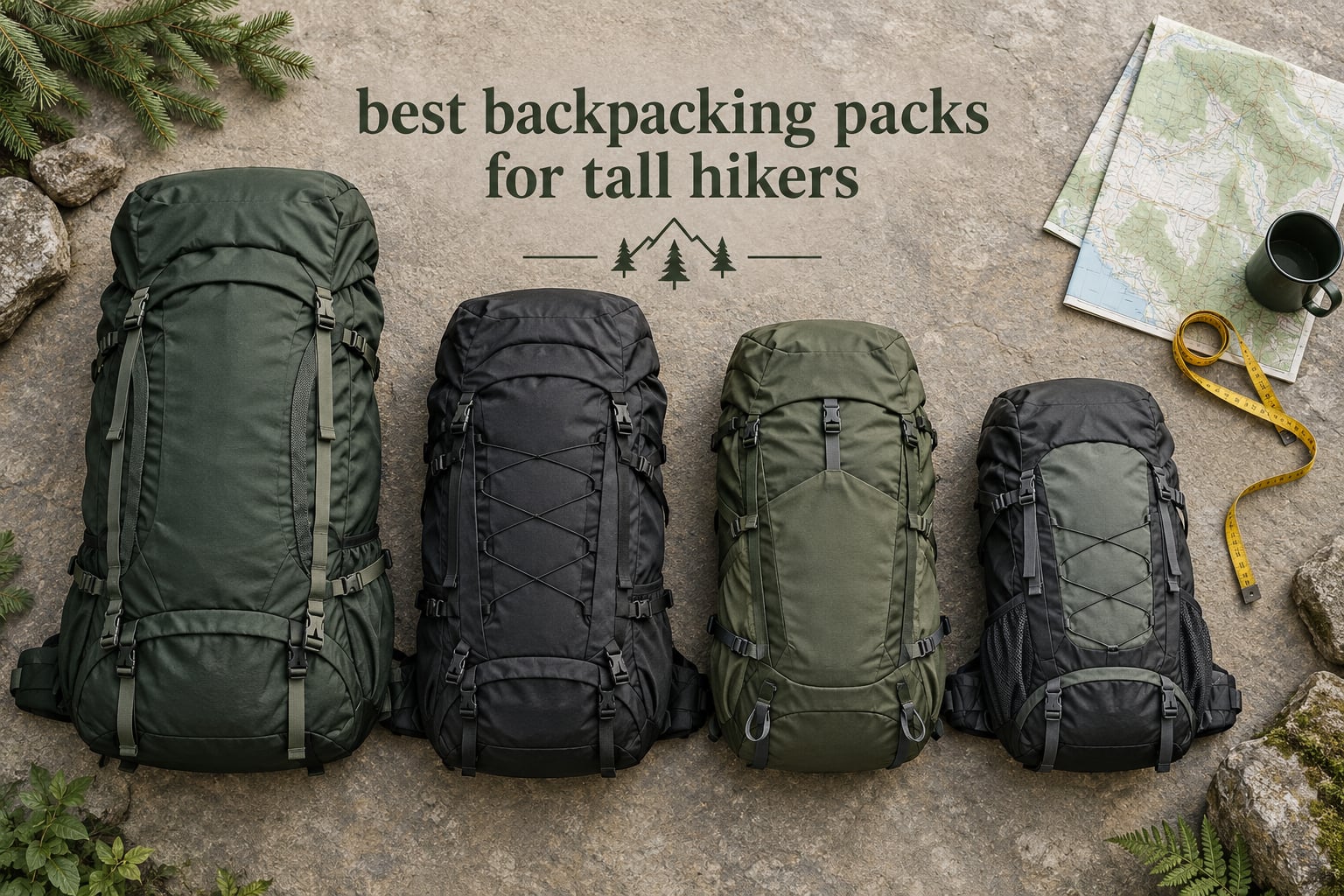
Height does not decide which backpack fits you. Torso length does, and almost every tall hiker we hear from has been sold a pack sized by height charts and ended up with a hip belt riding up over the waist and a load dumped onto the shoulders. Measure from the base of your neck to the top of your hip bone, then buy a pack whose stated back-length range contains that number. That single habit is what separates the best backpacking packs for tall hikers from the pack that merely looks big enough.
We spent six weeks comparing ten multi-day packs, and the differences that matter for a long torso showed up in the same places every time: how far the harness extends, whether the hip belt wraps the full width of the hips, how the shoulder straps are cut, and whether the frame keeps the load between the shoulder blades instead of behind the head. We also read thousands of owner reviews, because fit problems show up in review text long before they show up in a spec sheet.
This roundup covers framed packs from Osprey, Gregory, Deuter and Kelty in sizes from 55 to 105 litres. It is not a guide for sub-45cm torsos or 25L daypacks. If you carry a bear canister, a cold-weather bag or camera kit, or you walk with a load over 20kg, the sizing maths gets stricter, not looser, and the picks below are sorted accordingly.
Table of Contents
How to measure torso length in four steps
Stand upright against a wall with your heels together and your head, shoulders and bottom touching it.
Find the C7 vertebra, the knobbly joint at the base of your neck where your neck meets your shoulders. Mark that height on the wall.
Find the top of your iliac crest, the bony shelf at the top of your hip bone where your hand rests when you push your hip out. Mark that height too.
Measure the distance between the two marks. That is your torso length in centimetres, and it is the number you match against a pack’s stated back-length range.
Most brands print a back-length range in centimetres on their size chart. A torso above 50cm roughly needs a pack sold as L, XL or extra long. If your measurement sits above the top of a brand’s range, the pack is not for you, no matter how good it looks.
Top 3 Picks: Best Backpacking Packs for Tall Hikers (October 2026)

Osprey Atmos AG 65L
- Adjustable torso with L-XL sizing
- Anti-Gravity suspension moves load to the hips
- Integrated PFAS-free raincover

Kelty Coyote 85L
- Fit Pro on-the-fly torso adjustment
- Advanced perimeter frame
- Integral rain cover and 85L capacity

Osprey Rook 65L
- Adjustable AirSpeed suspension
- Extended Fit option for longer torsos
- Integrated removable raincover
The Atmos AG 65 is our default because it is the only pack in this group that solves long-torso fit with a real range of harness sizes plus a suspension that pulls the load into the hips. The Kelty Coyote 85 answers the same question with more litres and less refinement, and the Osprey Rook 65 is the one to buy if your torso sits just past the standard cut.
Best Backpacking Packs for Tall Hikers at a Glance in 2026
| Product | Specifications | Action |
|---|---|---|
| Osprey Atmos AG 65L |
|
Check Latest Price |
 Osprey Aether Plus 70L Osprey Aether Plus 70L |
|
Check Latest Price |
 Osprey Kestrel 58L Osprey Kestrel 58L |
|
Check Latest Price |
 Osprey Aether 55L Osprey Aether 55L |
|
Check Latest Price |
 Gregory Baltoro 65L Gregory Baltoro 65L |
|
Check Latest Price |
 Gregory Stout 70L Gregory Stout 70L |
|
Check Latest Price |
 Deuter Aircontact Lite 50+10 L Deuter Aircontact Lite 50+10 L |
|
Check Latest Price |
 Deuter Futura Air Trek 60+10 L Deuter Futura Air Trek 60+10 L |
|
Check Latest Price |
| Kelty Coyote 85L |
|
Check Latest Price |
| Osprey Rook 65L |
|
Check Latest Price |
Back lengths and torso ranges in the sections below come from manufacturer size charts unless I say otherwise, and I flag the difference when owner reports contradict the chart. Pack weights are the listed empty weights.
Why tall hikers struggle with pack sizing, and what actually fixes it
The standard advice for a pack that fits badly is to size up to the next capacity. It is wrong, and it is the most common piece of bad advice repeated across hiking forums. A longer bag lengthens the panel between your shoulders and the hip belt, which means the lumbar support lands lower, the belt sits below your hip bone instead of on it, and the whole load tips back onto your shoulders. Longer torsos need a longer back length, not a bigger bag.
Four failure modes show up again and again for hikers with torsos past 50cm, and each has a mechanical cause you can check before you buy.
Hip belt riding up. The belt is meant to wrap the widest part of your body, roughly at the iliac crest. If your torso is longer than the harness, the belt slides down and inward until it sits at your natural waist. Load transfer stops and your shoulders take everything, which is how a 15kg load turns into a headache by the second day.
Armpit digging. Shoulder straps on a pack built for a shorter torso start too far inboard, so the webbing runs across the armpit rather than over the shoulder. Longer torso plus broader shoulders makes it worse, which is why packs with pivoting or auto-rotating straps suit big frames better than fixed harnesses.
Lumbar gap. When the back panel is too short, a visible gap opens between the lumbar pad and your lower back. You can check this in a shop in seconds: the lumbar pad should touch your lower back with the hip belt snug and shoulders relaxed.
Lid bounce and rotation. A pack that pivots around your shoulders is a pack whose load is not sitting in the frame. Dial in the torso before you dial in anything else, then tighten the hip belt, then adjust shoulder straps.
One more constraint matters: most one-size adjustable harnesses run out of adjustment at roughly 50cm of back length. Forum users with torsos near 23 inches report exactly this ceiling. Beyond that, you need a distinct size or a custom torso, not more adjustment.
1. Osprey Atmos AG 65L: the best overall backpacking pack for tall hikers
Osprey Atmos AG 65L Men’s Backpacking Backpack, Black L-XL
68L listed volume
4 lb empty weight
Adjustable torso, L-XL
10 compartments, 6 pockets
Pros
- Anti-Gravity suspension moves heavy load onto the hips
- L-XL sizing suits longer torsos
- Curved side zip into the main compartment
- Integrated PFAS-free raincover in its own pocket
Cons
- Hipbelt pocket zippers are awkward one-handed
- Rounded bottom will not stand upright
- Only two torso size options
This is the pack we kept coming back to. The Anti-Gravity suspension takes the load off your shoulders and puts it through the frame into the hip belt, and owner reviews describe multi-day trips with no sore spots, which is exactly what a long torso needs from a top-weight pack.
The L-XL size is the one to buy if you measure past 50cm. Reviewers repeatedly describe the harness sitting low and correctly on the hips for taller or longer-torsoed wearers, with the height adjustment set near the bottom of its range. The listed volume is 68 litres across 10 compartments and 6 pockets, and the pack weighs 4 pounds empty.
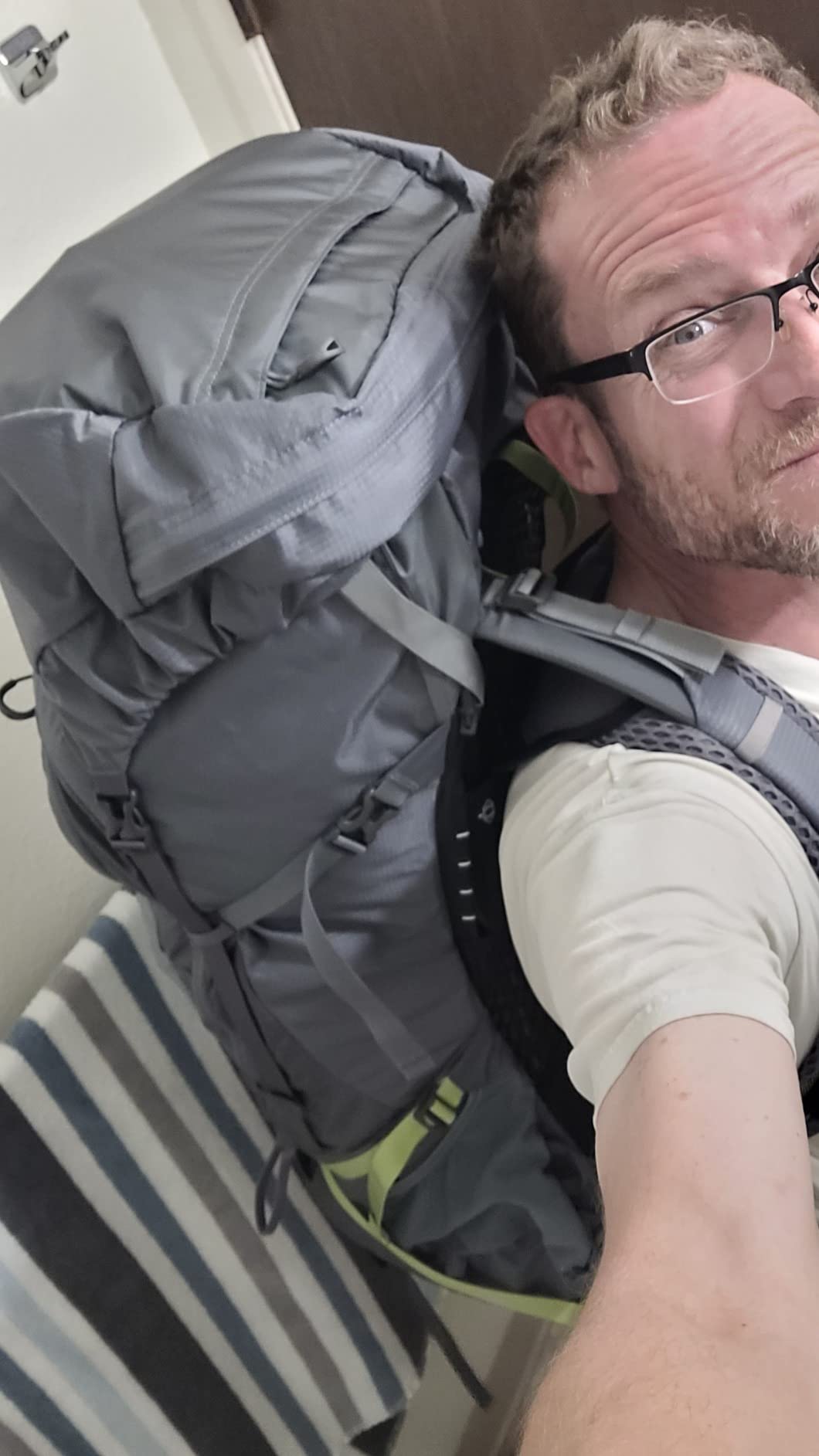
Build quality is not where it needs to be. The shell is nylon, rated waterproof, and it comes with a sleeping bag compartment with a removable divider and pad straps. The mesh suspension backpanel moves air well in heat, which matters more than usual on a long back where the panel covers more of you.
Two details irritate owners. The waistband pocket zippers curve up and down so you cannot close them one-handed while walking, and the brain strap adjusters sit underneath the hip belt where they are awkward to reach. The rounded bottom also means the pack will not stand upright on its own when you take it off at camp.
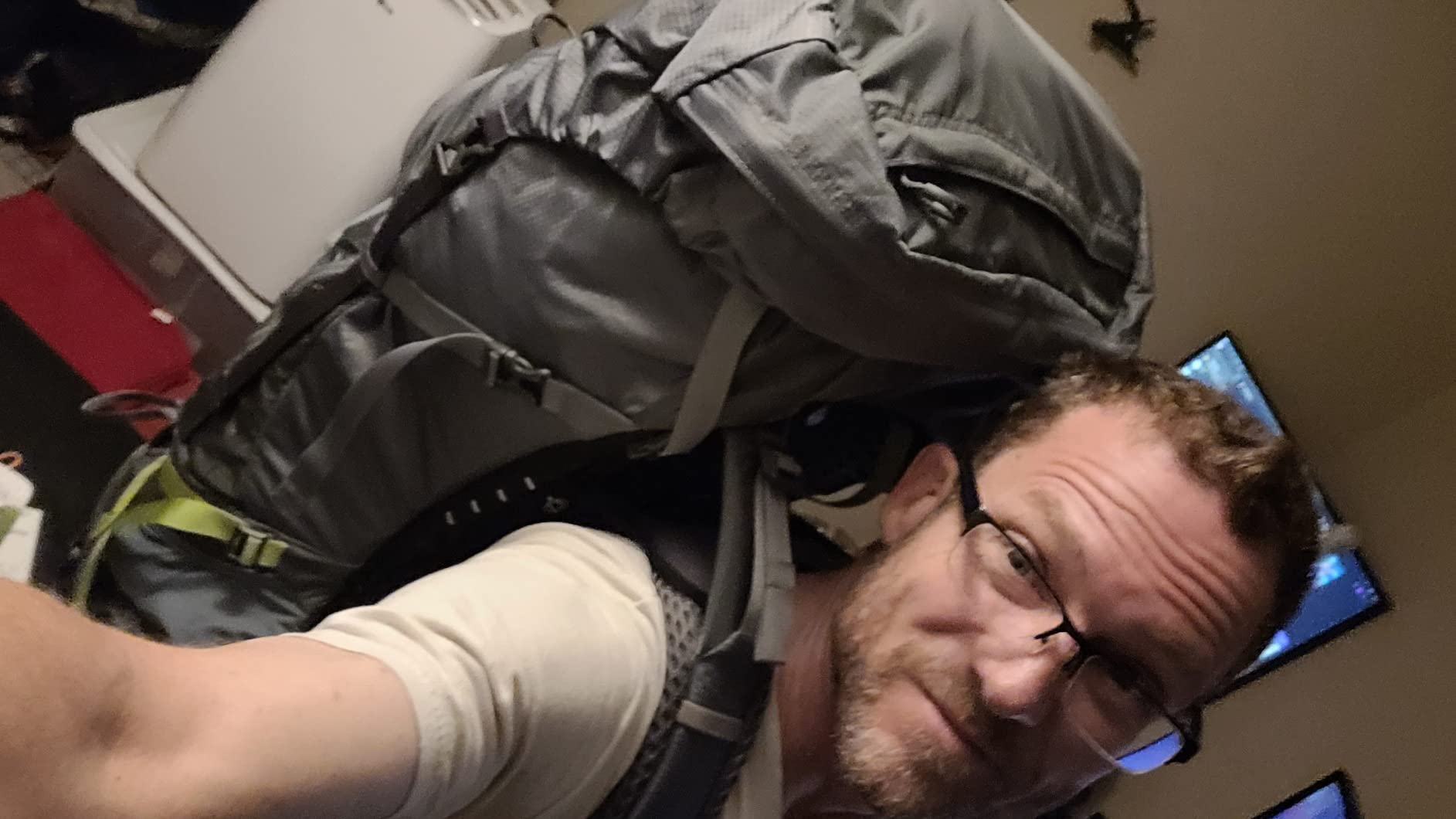
How the Atmos AG handles a torso past 50cm
The adjustable torso plus an L-XL harness gives real range, but there are only two torso size options, so a medium torso can be hard to dial in exactly. If your measurement sits in the middle of the L-XL band, fine-tune the hip belt before anything else.
If your torso runs past the top of the L-XL range, move up to the Aether Plus 70 rather than forcing this one. The suspension carries heavy loads well, so the limitation here is sizing, not capacity.
Where the 65L volume gets tight
At 68 litres listed, this is a three-season pack for most people. Cold weather kit, a bear canister and a four-season tent will push it to the limit, and there is no side access to the main compartment on some colourways, which makes digging for a layer mid-hike slower than you would like.
Owners carrying a full kit report it holding steady on climbs, so the volume is honest rather than optimistic.
2. Osprey Aether Plus 70L: the best pack for big loads and extended sizing
Osprey Aether Plus 70L Men’s Backpacking Backpack, Black L-XL
70L
6.2 lb empty weight
Large harness, L-XL
12 pockets
60 lb max recommended
Pros
- Handles 35-40 lb loads without the pack weight showing
- L-XL harness fits taller hikers without riding high
- Fit-on-the-Fly hipbelt and shoulder straps
- Removable lid converts into a daypack
Cons
- Heaviest pack here at 6.2 lb
- Hipbelt pocket zippers hard to close one-handed
- Small bottom compartment
This is the pick for anyone hauling expedition weight on a long frame. It carries the highest rated owner score in this roundup, and reviewers running 35 to 40 lb say the 6.2 pounds of pack itself disappears into the load. That is the behaviour you want when your torso needs the harness to hold its position for a week at a time.
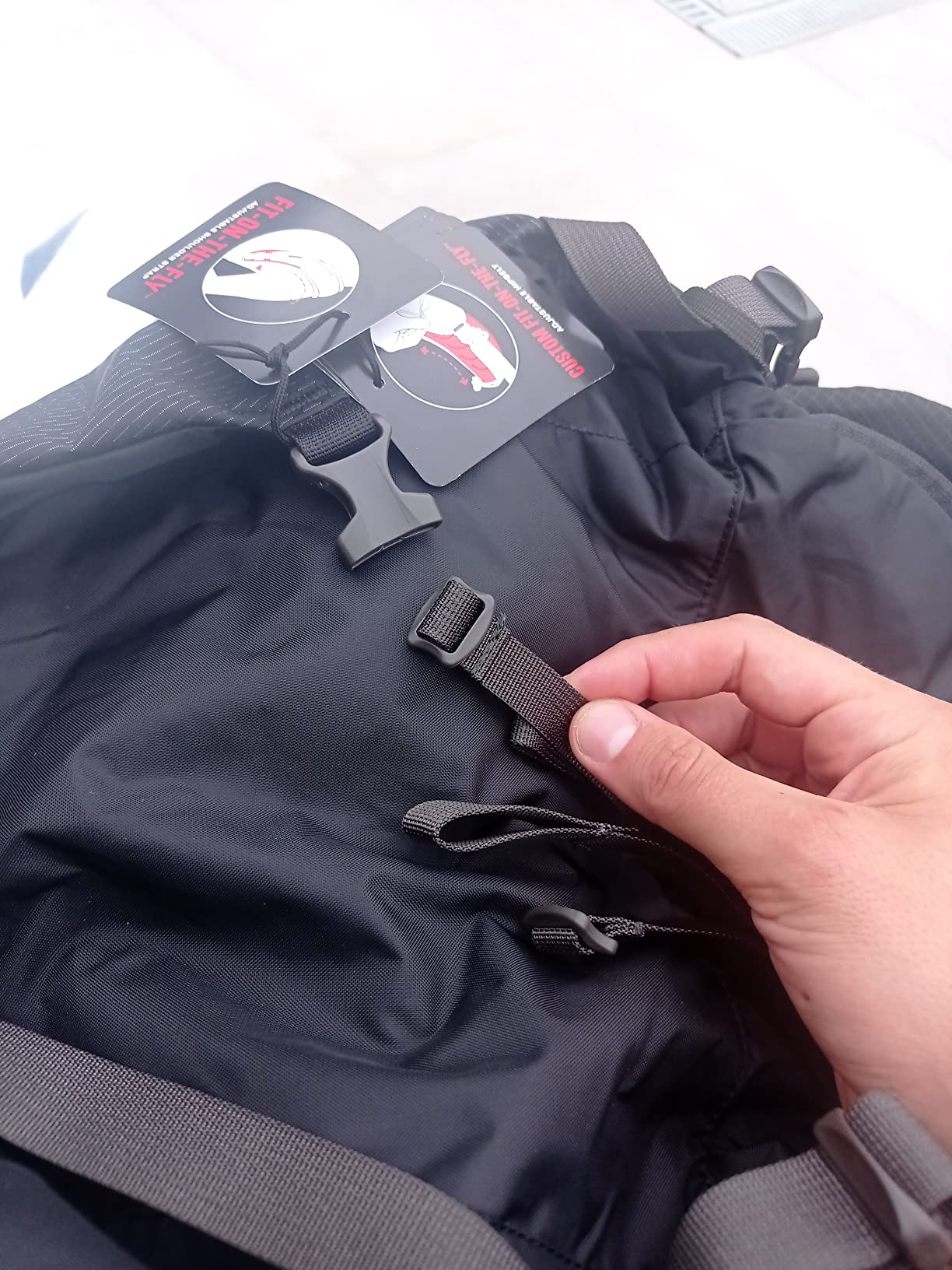
Fit is the reason to look here over the cheaper Ospreys. The adjustable torso, Fit-on-the-Fly hipbelt and Fit-on-the-Fly shoulder straps give four separate places to tune, and reviewers of tall and average heights report the L/XL sitting precisely without riding high on a 19.5 inch torso. Twelve pockets including large front panels and a roomy hipbelt make it a good carry for camera gear.
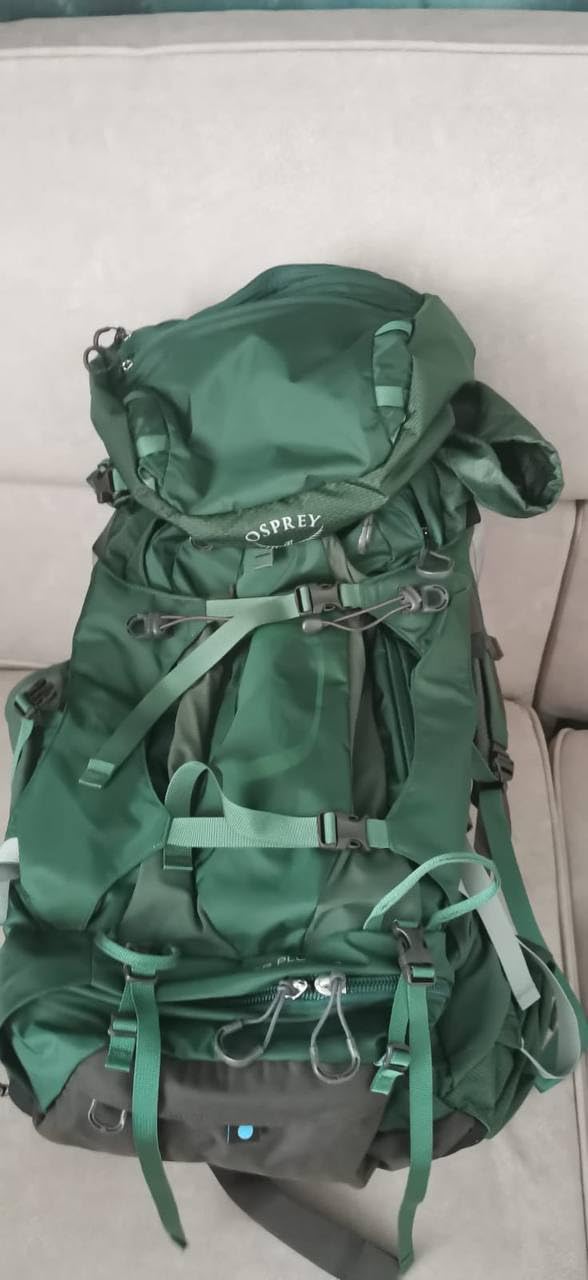
Construction is heavy-duty: framed design, water resistant, All Mighty Guarantee warranty, and a listed maximum recommended weight of 60 pounds. The removable top lid converts to a DayLid daypack, and the stow-on-the-go trekking pole attachment is genuinely useful when your hands are full.
The weight is the real trade. At 6.2 pounds empty this is not a pack for a fastpacker or anyone counting grams, and the bottom compartment is small enough to hold little more than a sleeping bag. The included raincover also lacks a strap to secure it around the backpanel in wind, so expect to carry a clip or a tie.
When the extra harness range is worth the weight
If you measure over 55cm, or you carry a load above 20kg, this is the one. The extra adjusters in the harness and hipbelt absorb the length differences that a two-size harness leaves you with, and the internal frame with a stiff backpanel keeps the load between your shoulder blades.
The main compartment divider is not fully removable, so packing is a little less flexible than on lighter Osprey packs. Budget for that.
Who should skip this pack
If your trips are three-season and under a week, 70 litres is more pack than you need and 6.2 pounds is weight you carry every single morning. The Kestrel 58 covers the same trips at a fraction of the mass.
Ultralight hikers will not enjoy it. Forum consensus is clear that comfort outlasts gram-counting on multi-day trips, but that only holds if you are actually carrying the weight.
3. Osprey Kestrel 58L: the best all-round pack for a long torso
Osprey Kestrel 58L Men’s Backpacking Backpack, Green L-XL
58L
1750 g empty weight
AirScape adjustable backpanel
L-XL variant available
Pros
- AirScape backpanel adjusts torso for a stable close carry
- Fit-on-the-Fly hipbelt tunes on the move
- Integrated raincover and trekking pole attachment
- L-XL offered alongside Medium-Large
Cons
- Heavier than lighter framed alternatives at 4.88 lb
- Firm molded backpanel feels less plush than the AG harness
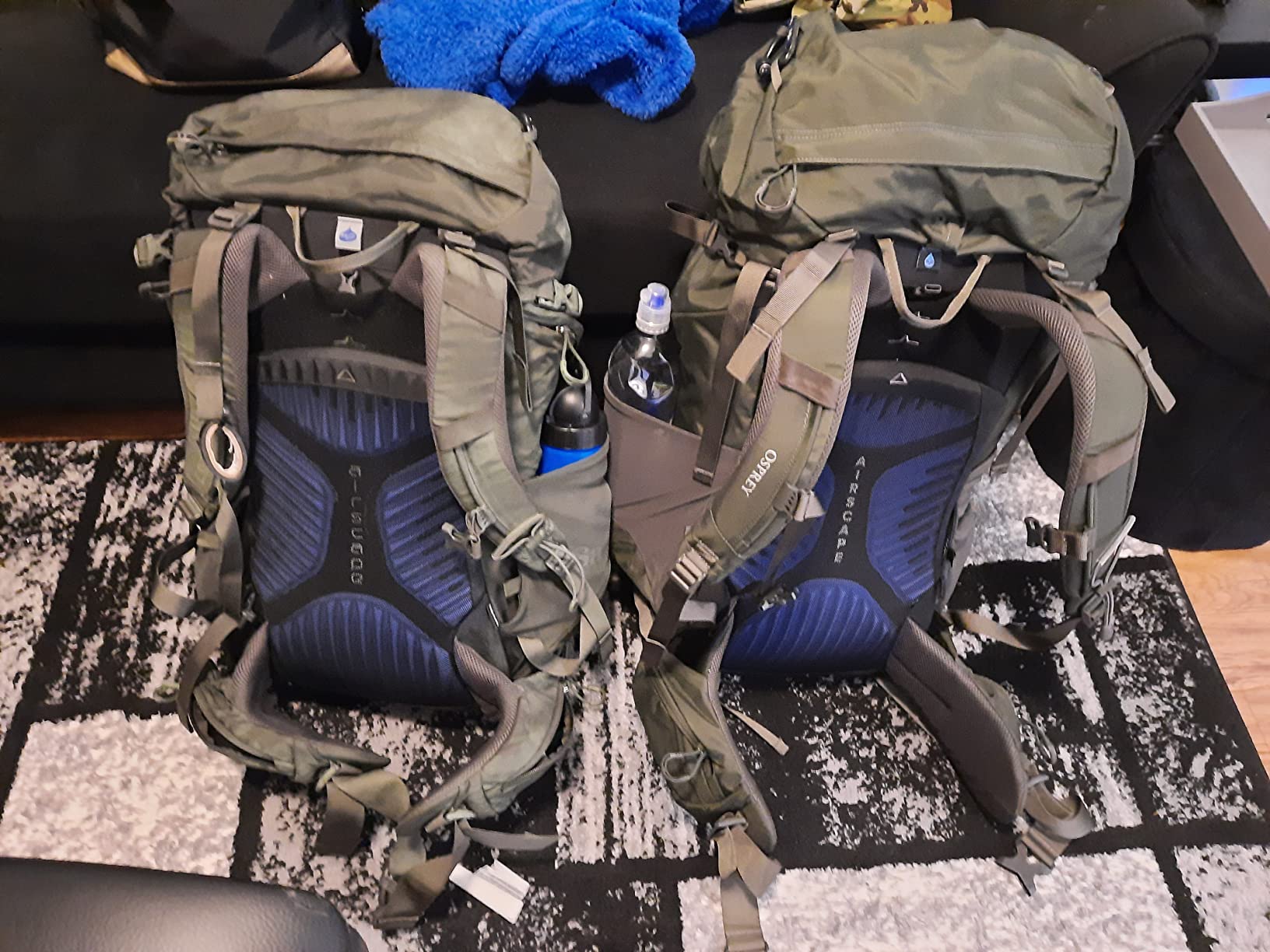
The Kestrel 58 is the one we would put on a first multi-season trip for a tall hiker who is not hauling expedition loads. The AirScape backpanel adjusts torso length for a close-to-body carry, and owners credit that adjustability plus the Fit-on-the-Fly hipbelt with accommodating longer spines and distributing weight across multi-day trips.
It lists 1750 g empty, which works out to 4.88 lb, and measures 32.3 by 14.6 by 12.2 inches. The L-XL variant exists alongside the Medium-Large, which matters because a lot of 58-litre packs are only offered one size. The top lid carries a large zippered pocket and an under-lid mesh pocket with a key clip.
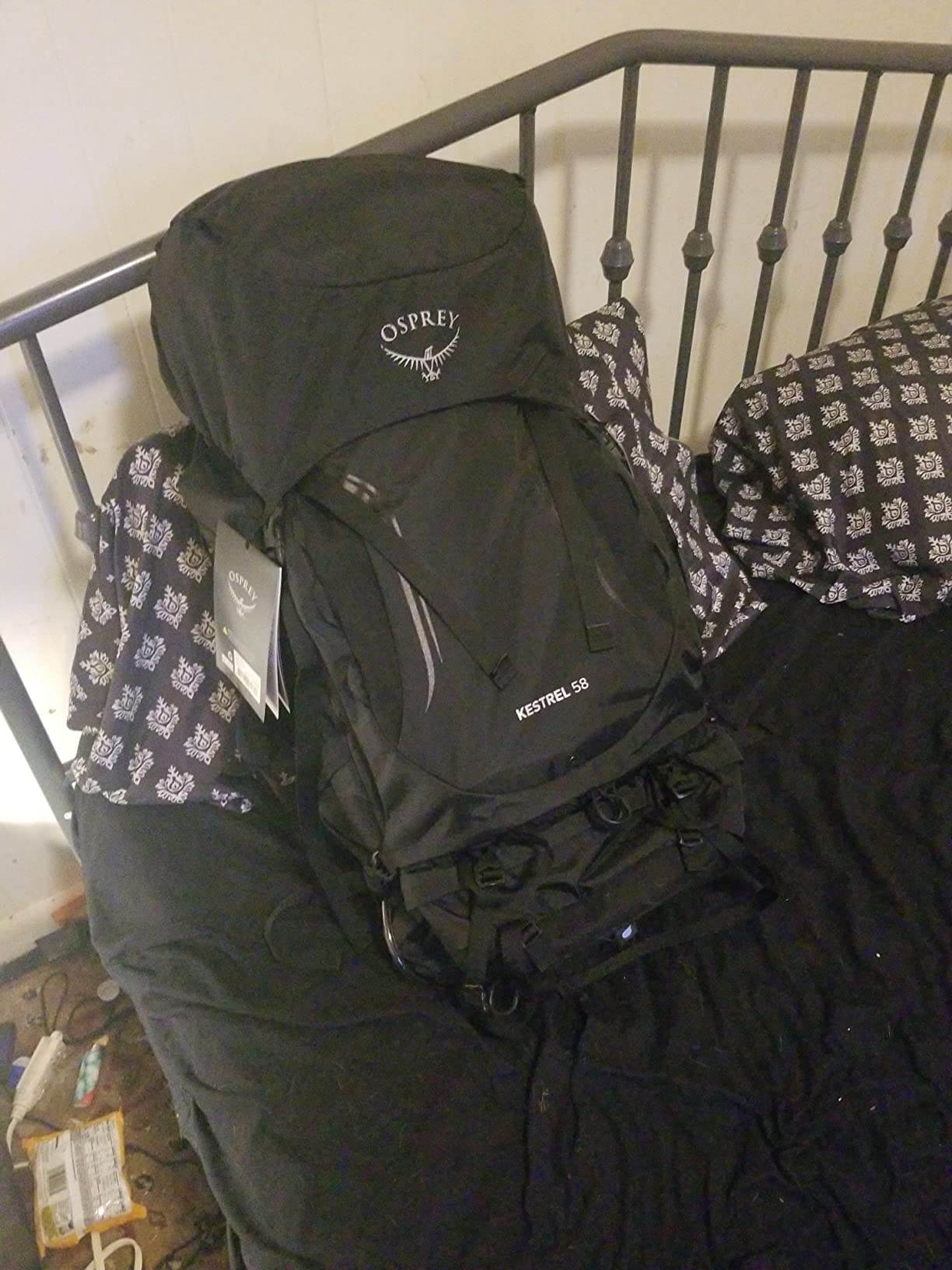
Rain cover included and a trekking pole attachment sit under a lid with lash points, so a wet-weather departure is not a faff. Owners describe it as work-oriented and solid rather than refined, which is fair.
The two drawbacks are weight and feel. At 4.88 lb it is heavier than lighter framed alternatives, and the injection-molded backpanel is firm, so on long loaded days it does not feel as plush as the mesh AG harness on the Atmos. If you are a big guy with a long torso and want the softer ride, spend the difference.
Why 58 litres suits a long torso
A longer frame needs a bigger bag than the standard recommendation, but not a much bigger one. Two to three night trips and multi-day summer walking usually land in the high 50s once you account for a bigger sleeping bag, a longer pad and more clothing for a longer body. This pack holds that without ballooning in weight.
Trekking and hut-to-hut walking is the Kestrel’s strongest case, since the lid and pockets absorb a day’s kit plus a night’s sleep.
Where it falls short
Take a cold-weather kit or a bear canister and 58 litres stops being generous. The fit range is also narrower than the Aether Plus, so a torso at the very top of the XL band may want the extra harness adjusters.
There is no second colourway listed here, which limits comparison shopping.
4. Osprey Aether 55L: the best thru-hike pack for broad shoulders
Osprey Aether 55L Men’s Backpacking Backpack, Black L-XL
58L listed volume
4.9 lb empty weight
L-XL
Custom Fit harness
Bluesign 420HD nylon
Pros
- L-XL explicitly suits tall broad-shouldered hikers
- Custom Fit-on-the-Fly hipbelt and straps
- Stable on technical ground with 12-25 kg loads
- Bluesign-approved 420HD nylon with PFC-free DWR
Cons
- Heavier than 55-60L frameless alternatives
- Bottle pocket cross straps make bottles awkward to replace
- Plentiful adjustment points need careful dialling in
This is the pick that answers the broad-shoulder problem directly. Reviewers call fit the standout feature, with tall hikers reporting that the L/XL sits correctly on shoulders and hips where one-size packs did not. That single sentence is the whole argument for this pack over a cheaper model.
Everything else is built for distance. The die-cut foam AirScape backpanel is breathable and stable on technical ground, and owners running 12 to 25 kg report even weight distribution over multi-day treks. The shell is bluesign-approved 420HD nylon with PFC-free DWR and a rain cover is included.
There are nine compartments and nine pockets, plus a zippered sleeping bag compartment with a removable divider. At 4.9 lb empty it is not a light pack, and it is noticeably heavier than frameless 55 to 60 litre alternatives that a smaller-framed hiker could carry comfortably.
How it handles a torso past 50cm
The L-XL sizing is stated as suiting tall, broad-shouldered hikers who cannot fit one-size packs, which is the exact group this roundup serves. Three separate adjusters, plus the adjustable torso, let you tune the gap between hip belt and shoulder straps down to a few millimetres.
Fit it in this order: torso first, hip belt second, shoulder straps last. Many adjustment points means you will need two passes to get it right.
Where 55 litres stops working
The body is long and narrow, and owners report it feeling cramped when reaching for gear inside, with no back panel access to the main compartment. If you wear a bulky cold-weather jacket or carry a four-season tent, the 58 listed litres is optimistic.
Side water bottle pocket cross straps also make bottles awkward to replace while moving, which is an irritation on long dry stages.
5. Gregory Baltoro 65L: the best airflow option for a long back
Gregory Baltoro 65L Backpacking Pack, Large, Shadow Pine Black
65L
Large harness and strap size
Three torso size options
FreeFloat A3 suspension
Pros
- FreeFloat A3 flex panels and auto-rotating shoulder straps follow body movement
- AirCushion mesh backpanel reduces pressure points
- Three sizes let tall users match torso length
- 3D harness and hipbelt limit wrinkling
Cons
- Thinnest review base in the group at 34 ratings
- Luggage-style listed material type does not describe the shell
- Machine-wash spec is unusual for a large internal-frame pack
Ventilation is the reason to shortlist this pack. The AirCushion mesh backpanel is the most open back structure in this roundup, and for a tall hiker the advantage compounds because more of your back is covered by the panel. Owners in heat report the mesh reducing pressure points over long days.
The harness is the other selling point. FreeFloat A3 suspension uses dynamic flex panels and shoulder straps that auto-rotate to follow body movement, so the straps drift out of your armpits instead of digging into them. That is a structural answer to a problem other brands solve with wider splay angles.
Three torso sizes are offered, so you can match torso length and body shape rather than relying on a one-size harness. This listing is the Large in Shadow Pine Black, with a Large harness and Large strap size.
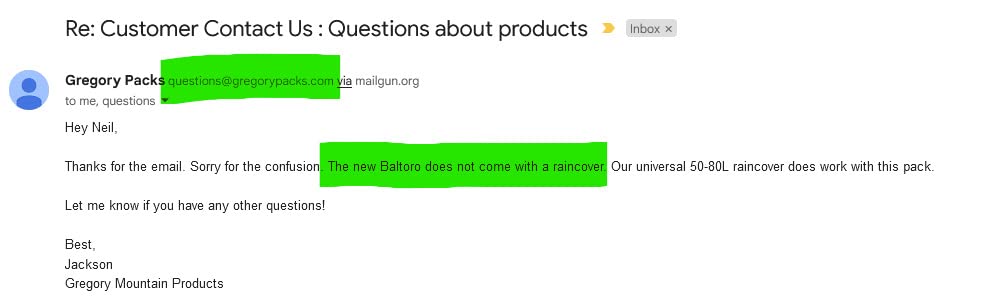
We want to be straight about the evidence here. At 34 ratings, this has the smallest owner review base of the ten packs, so treat the 4.5 average as a smaller-sample figure rather than a settled verdict. The listed material type reads as alloy and the care instructions say machine wash, neither of which describes the shell or real-world care, so read the spec sheet with care.
When the auto-rotating harness helps
Auto-rotating straps matter most on long, uneven days where a fixed strap will slowly migrate inboard. If your frame is broad through the shoulders or you have had armpit problems before, this is a pack whose design addresses that specifically rather than generally.
Pick the size from the Gregory torso chart for your measurement rather than assuming Large means tall, because the three sizes are spread across the full range.
Where it falls short
Beyond the thin review base, the pack is 13.4 by 13.4 by 32.9 inches, which is a wide, deep body that feels bulky for a three-season load. Listed empty weight is not published on this listing, so you will need to confirm it before committing.
Fewer owner comments means fewer long-term durability reports, which for a tall hiker planning multi-season use is worth weighing.
6. Gregory Stout 70L: the best capacity pick on a budget
Gregory Stout 70L Backpacking Pack, One Size Fits All, Forest Black
70L
2 compartments, 7 pockets
Waterproof
VersaFit adjustable torso
Wishbone alloy frame
Pros
- VersaFit torso adjustment extends the fit range for above-average heights
- Owners carry 24-30 lb loads comfortably
- Padded wraparound hipbelt with large zippered pockets
- Machine washable
- which is rare in this class
Cons
- Narrow shoulder straps with minimal padding
- Hipbelt pockets are small and hard to use while loaded
- Ventilation trails mesh-panel packs
- Tight for a 30-degree bag plus a bear canister
The Stout 70 answers the capacity question cheaply. It is 70 litres with a padded wraparound hipbelt and a Wishbone alloy frame, and owners carry 24 to 30 lb loads with the alloy frame keeping weight stable on climbs. That is a genuinely useful load ceiling for a big pack at this money.
For tall hikers the key feature is VersaFit, an adjustable torso length that owners credit with letting a wide range of heights dial in the harness. The perforated 3D foam backpanel improves airflow on warm days, and the perforated shoulder harness carries a sternum strap with an integrated safety whistle.
Machine washable is rare among large framed packs and worth calling out. There is a zippered bottom sleeping bag compartment with a removable divider.
How VersaFit compares with a true size range
VersaFit extends the fit range, but it does not create discrete torso sizes. If your measurement is comfortably inside the range, this works well and costs you nothing in quality. If you sit above the top of the adjustment, you need a distinct size rather than more travel.
Forum reports of the fit range running out around 50cm of back length apply here, so check the Gregory size chart against your measurement before committing.
Where the narrow straps will annoy you
The most repeated complaint is that the shoulder straps are narrow with minimal padding, which digs in for a heavier wearer or a long day. That is the direct trade for the alloy frame’s stability, and it is the reason we would put a long-torso hiker on the Deuter Air Trek instead if the strap complaint bothers you.
Hipbelt pockets are small, side mesh bottle pockets are awkward to reach, and some owners report the sternum strap detaching during use.
7. Deuter Aircontact Lite 50+10 L: the best lightweight pick for long torsos
Deuter Unisex Aircontact Lite 50 + 10 L, Lightweight Backpacking & Hiking Backpack for Men & Women, 50 + 10 Liters – Black-Graphite
60L listed volume
1640 g empty weight
VariQuick adjustable back length
Expandable 10L lid
Pros
- Aircontact back system transfers an 18 kg load onto the hips
- VariQuick extends the back length for longer torsos
- Light at 1640 g for the capacity
- Height-adjustable detachable lid adds 10 litres
- Over 50% recycled fabric content
Cons
- No rain cover included at this price point
- Lite version trims padding versus Deuter's touring lines
- Colourway options rather than distinct torso lengths
This is the lightest framed pack in the group and the one most interesting to tall hikers, because Deuter’s VariQuick system extends the back length rather than just shifting the harness. Reviewers highlight that the Aircontact back system transfers an 18 kg load onto the hips so the pack is barely felt on the shoulders, which is precisely the failure tall hikers complain about in other frames.
At 1640 g, this is a real weight saving over the Ospreys in this roundup while still carrying a 50 plus 10 litre configuration. The lid is height-adjustable and detachable, adding 10 litres when you need a longer trip and coming off for day walking.
Pockets are well laid out, with two stretch mesh pockets, two zippered hip fin pockets and compatibility with a 3L drinking system. Fabrics are 140D PA RIPSTOP HT FD and 600D PES REC BS with over 50% recycled content, and the stitching and zippers are reported as premium.
Whether VariQuick reaches your torso
VariQuick gives real extension, so it covers a band of torso lengths that a fixed L would miss. It is not a distinct size though, so if your measurement is at the extreme end of the range you should confirm the maximum before committing rather than trusting the adjustment alone.
Aircontact’s padded hip fins are the part that keeps the belt from sliding, and they are the first thing a long torso benefits from.
Where the Lite version cuts corners
No rain cover is included at this price, which several buyers flag as a real gap. The Lite specification also reduces padding compared with Deuter’s heavier touring lines, so on a big load it will feel firmer than an Aircontact Core.
Padding is where a long torso feels the difference, so if you plan to carry over 15kg, the Futura Air Trek below is the better spend.
8. Deuter Futura Air Trek 60+10 L: the best pack for wide shoulders and swinging loads
Deuter Futura Air Trek D3402321-1374 Men’s Climbing Backpack, 60+10, Atlantic x Ink, 2021 Model
60+10 L
Aircomfort mesh back system
VariSlide custom back length
Permanently elastic spring steel frame
Pros
- Pivoting ergonomic shoulder straps adapt to shoulder width and slant
- Aircomfort mesh vents better than solid panels
- Front zip opens downward to avoid digging through the load
- Long-distance Camino users rate VariSlide highly
Cons
- Heavier than dedicated ultralight trekking packs
- Hip fin pockets are small
- Load must stay near the middle of the pack
- Strap height needs readjusting each time the pack is donned
The Futura Air Trek is the one to look at if your problem is shoulders rather than back length. Pivoting ergonomic shoulder straps adapt to shoulder width and slant, so a broad frame gets straps that angle correctly instead of pulling in toward the armpit. That is a structural fix rather than a sizing workaround.
VariSlide sets a custom back length, and long-distance users on the Camino de Santiago report that the adjustment made a 12 kg load bearable. The Aircomfort mesh back system also markedly reduced back sweating over long distances, which is worth knowing if your back is covered by more panel than average.
The frame is a permanently elastic spring steel frame with side compression straps for a stable fit, and the capacity is 60 plus 10 litres. A large side stash pocket, stretch inner compartment and front stash pocket make the layout easy to work in.
How VariSlide compares with a size chart
VariSlide gives a custom back length within a single harness, which is a wider range than most one-size systems but narrower than a dedicated XL. It has no numeric reference marks, so measure your torso first and set it against the manufacturer’s stated range rather than by feel alone.
The front zip that opens down toward the bottom means you can reach gear without unpacking, which saves time every single morning.
Where the pack asks for discipline
The load has to stay near the middle of the pack rather than at the base, which matters most for a tall hiker because a base-heavy load on a longer frame amplifies the tipping-back problem.
Shoulder strap height needs readjusting every time the pack is removed and donned, hip fin pockets are small enough that a phone barely fits, and the pack is heavier than dedicated ultralight trekking options.
9. Kelty Coyote 85L: the best budget pick for very long torsos
Kelty Coyote 60-105 Liter Internal Frame Backpack – Hiking, Backpacking, Travel, Hydration Compatible, Adjustable Torso (85L / Black)
85L
4 lb 14 oz empty weight
40-65 lb optimal carry
Fit Pro torso adjustment
Advanced perimeter frame
Pros
- Fit Pro earns specific mention from a 6 ft 3 in long-torso owner
- Advanced perimeter frame with aluminum stay holds heavy loads
- Amp Flow ventilated backpanel
- Integral rain cover and extensive daisy chains
- 85L holds a bear canister
- big bag
- tent and pad
Cons
- Waist belt runs small for slim waists
- Top lid is no longer removable as a daypack
- No pass-through access to the main compartment
- Hydration sleeve is awkward to load
This is the pick with the most direct evidence behind its long-torso claim. Fit Pro gives quick, customised torso fit adjustable on the fly, and a 6 foot 3 inch owner with a long torso reports dialling it in precisely. That single report matters more to us than a generic adjustability claim.
The suspension handles weight. Owners report carrying roughly 50 lb with the load not registering on the back, and the advanced perimeter frame with an aluminium stay keeps 40 to 50 lb loads stable and balanced. The listed recommended carry weight is 40 to 65 pounds, which makes this a genuine load hauler rather than a large daypack.
Capacity is 85 litres at 4 lb 14 oz empty, with 10 compartments, 9 pockets, two upper side compartments with pass-through storage, an integral rain cover and extensive external daisy chains. The Amp Flow ventilated back panel keeps the back cool on long hikes.
The trade-offs are real. The waist belt runs small, so slim-waisted users have to cinch it to the limit, and side hipbelt pockets require reaching back to use. Unlike the previous generation, the top lid is no longer removable as a daypack, and there is no pass-through access to the main compartment from the front or top.
The hydration sleeve is also awkward to fit a bladder into. Pack it before you fully load the main compartment, or pick a different route.
When 85 litres is the right call
A tall hiker carrying a bear canister, a large tent and a sleeping bag sized for their body runs out of litres faster than the standard recommendation suggests. This pack holds that load at a weight that competes with framed 65 litre packs.
If you only ever carry a summer kit, 85 litres will be more pack than you need, and the small waist belt is the first thing you will notice on a long day.
How the adjustable torso compares
Fit Pro is on-the-fly adjustment rather than a discrete size range, so check the manufacturer’s stated maximum back length against your measurement. Forum consensus is that this kind of system runs out near 50cm, and the Coyote is no exception.
A torso well past that ceiling needs a distinct size such as the Osprey Aether Plus L-XL, or a custom harness from a frameless maker.
10. Osprey Rook 65L: the best value pack with an extended fit option
Osprey Rook 65L Men’s Backpacking Backpack, Blue OS
65L
3.7 lb empty weight
7 pockets
Adjustable AirSpeed suspension
LightWire frame
Pros
- Extended Fit version exists for longer torsos
- Lightest framed pack here at 3.7 lb
- Owners run 25-35 lb loads comfortably
- Integrated removable raincover in its own pocket
- Angled bottle pockets are easy to drink from while moving
Cons
- Waist belt is lightly padded and can dig into narrow hips
- No back panel access to the main compartment
- No large outer mesh pocket
- 3.7 lb is not ultralight
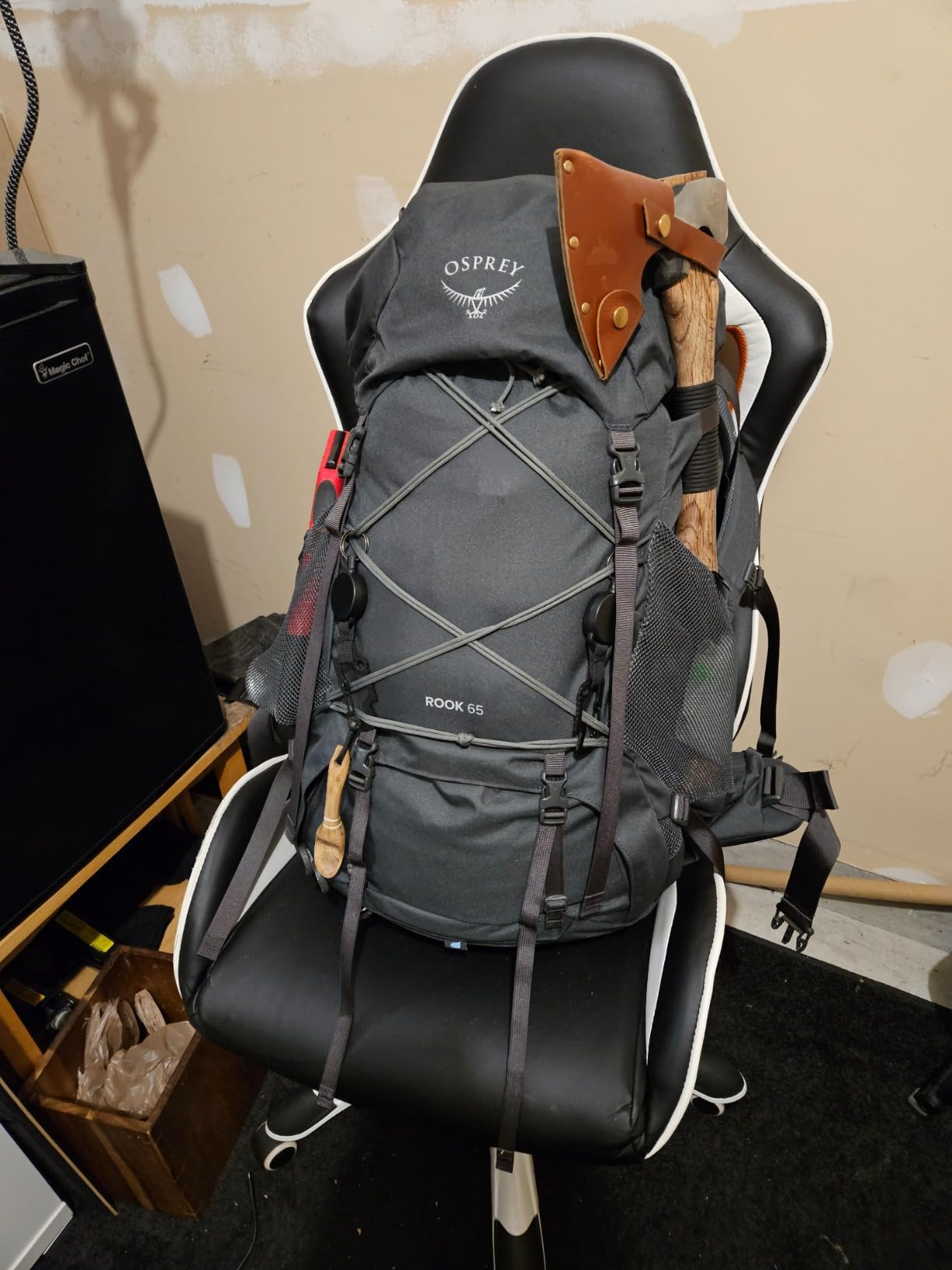
The Rook 65 is the answer to the belief that tall-hiker fit is a premium-only feature. Buyers consistently call it the best value in this group, praising the build quality, sturdy zippers and tough fabric, and reporting comfortable 25 to 35 lb loads over multi-day trips.
The fit detail that matters is the adjustable AirSpeed suspension, whose tensioned backpanel slides to fit a range of torso lengths, plus a LightWire frame that moves load to the hipbelt and off the shoulders. An Extended Fit version is produced for longer torsos, and taller users should be buying that variant rather than the standard one.
At 3.7 lb it is the lightest framed pack here. It has 7 pockets, angled side water bottle pockets you can drink from without stopping, an integrated removable raincover, and a sleeping bag compartment with a floating divider. It is Daylite compatible.
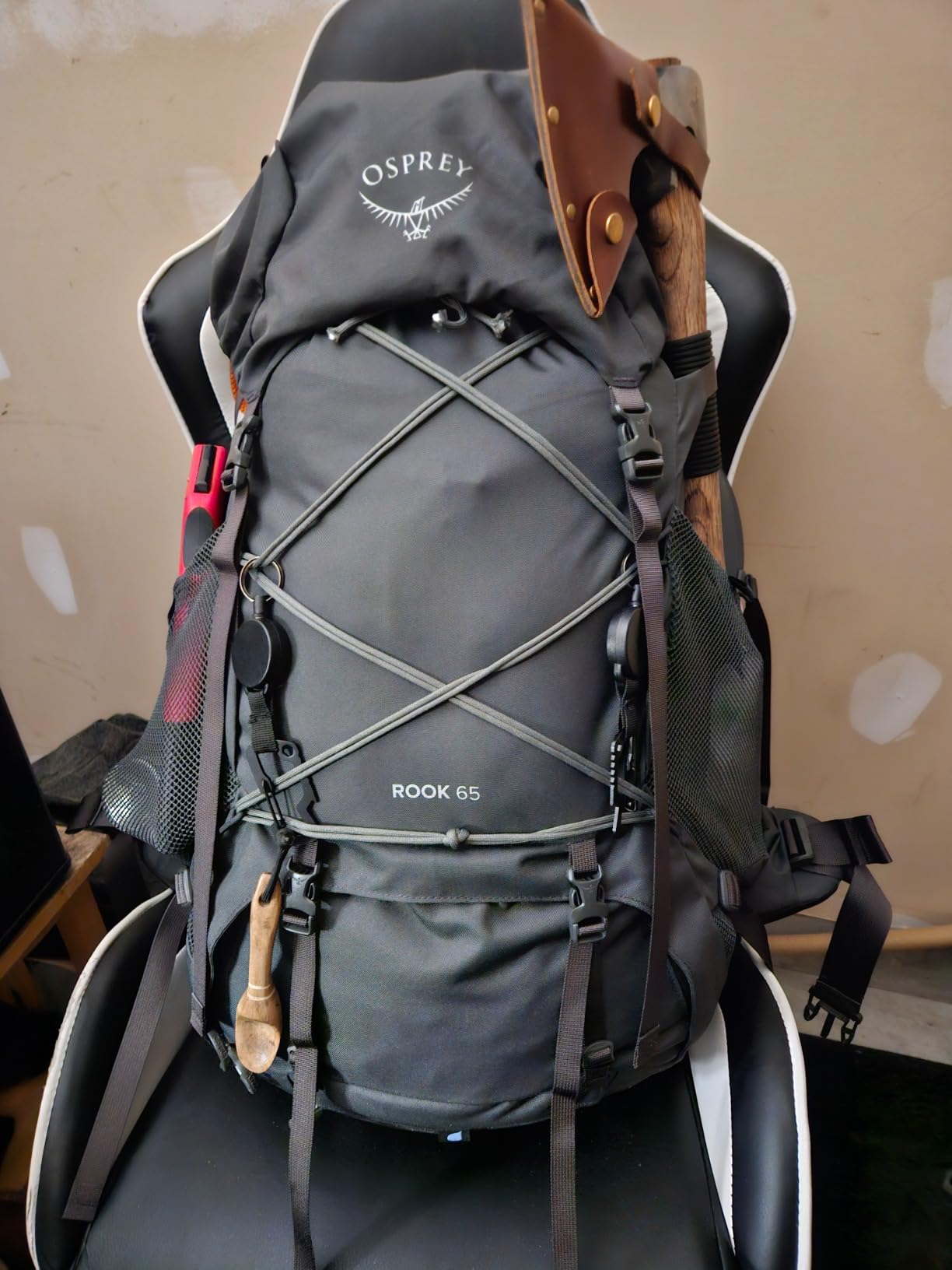
The compromises are honest ones. The waist belt is lightly padded and can dig into narrow hips, which matters if you have a long torso but a slim frame and the belt sits low. There is no back panel access to the main compartment and no large outer mesh pocket for quick-stash items, so both slow you down in camp.
That is still the trade we would take. Nothing else in this roundup combines a 65 litre capacity, a 3.7 lb weight and a produced extended-fit variant.
When to buy the Extended Fit version
If your measured torso sits above roughly 50cm, the Extended Fit variant is the one, and it is not a subtle difference. This listing shows a single one-size fit, so confirm which version you are actually buying before ordering.
If your torso sits comfortably inside the standard range, the regular Rook is the better buy and there is no reason to pay for the extended harness.
How much capacity a tall hiker actually needs
A taller body scales with it: a bigger sleeping bag, a longer pad and more clothing all take extra litres. Add one or two litres above the standard recommendation for your trip length, which is why 65 litres works where 55 would feel tight.
Owners report it stable and comfortable at 30 to 35 lb over multi-day trips, so the frame is not the limiting factor here.
How to choose a backpacking pack for a long torso
Start with your measurement, not your height. A 5 foot 9 inch hiker with a 55cm torso needs a longer pack than a 6 foot 2 inch hiker with a 48cm one, and the only way to know which you are is with the four-step method above. Brands that publish a height range rather than a back-length range in centimetres are not giving you the information you need.
Match the range, then check the top end. Your measurement needs to sit inside the stated range with room to spare. If it sits within a centimetre or two of the maximum, the pack will feel at its limit once the harness is loaded.
Do not confuse back length with bag height. A taller bag means a longer panel between your shoulders and your hips, which drops the lumbar support below your hip bone. That makes the problem worse rather than better, which is why sizing up is not the fix.
Understand what adjustable actually means. One-size adjustable harnesses typically top out near 50cm of back length, and S, M and L sizes vary wildly between brands. The Kelty Coyote, Gregory Stout and Deuter Aircontact Lite all use adjustment rather than discrete sizes; the Osprey Atmos, Aether, Aether Plus and Kestrel all offer an L-XL harness.
For custom tall sizing, look at frameless makers. Forum users consistently point to ULA Equipment, Durston and Hyperlite Mountain Gear for built-to-order torso length and belt size, and several mention that a slim tall hiker fits one frameless pack where another did not. The trade is a single size, a lack of frame and a wait. None of them appear as picks here because none carries a stated multi-size range you can verify from a listing.
Check the hip belt before the rest of the pack. A wrap-around belt that reaches the widest part of your body is the single feature that decides whether a long torso is comfortable. Wider strap splay angle and longer shoulder straps matter next, especially for broad frames, and Gregory’s Plus line and Osprey’s L-XL sizing both exist for this reason.
Add litres for your body, not just your trip. Bigger bodies need more gear volume for clothing, pads and sleeping bags, so add a litre or two above the usual recommendation. Beyond that, capacity stops helping: the fit is what makes a heavy load carryable.
Size your load to the frame. Listed recommended carry weights in this roundup run from 40 to 65 pounds for the heavy haulers, but comfort for a long-torso wearer drops well below those numbers. If you are carrying over 20kg regularly, buy the frame and harness built for it.
Finally, do a five-minute fitting in a shop if you can. Set the torso length first, tighten the hip belt until the lumbar pad touches your lower back, then check that no strap crosses your armpit. If the belt rides up when you shrug, the pack is too short for you. If you are buying blind, check the return policy before you commit, because fit is nearly impossible to judge from photographs. Our guide to the best backpacking backpacks covers general pick logic if you want the wider picture.
Frequently Asked Questions
How to measure torso length for backpack fit?
Stand upright against a wall with your head, shoulders and bottom touching it. Mark the height of the C7 vertebra, the knobbly joint at the base of your neck. Mark the height of the top of your iliac crest, the bony shelf at the top of your hip bone. Measure the gap between the two marks in centimetres. That number is your torso length, and it is what you match against a pack’s stated back-length range.
What is the best backpack for someone with a long torso?
A pack with a stated back-length range that contains your measured torso length, generally 50cm or more. In this roundup the Osprey Atmos AG 65 in L-XL is the best all-round answer, the Osprey Aether Plus 70 for heavy loads, and the Osprey Rook 65 Extended Fit if you want the lightest option. The key is the stated back length, not the number of litres.
How do I adjust the torso length of my backpack?
Most packs adjust at the harness where it meets the top of the back panel. Loosen the upper adjustment strap or the panel clamp, slide the harness along its rail until the lumbar pad meets your lower back with the hip belt snug, then tighten. Set the torso before the shoulder straps, and re-check it each time you repack the bag.
Which backpack has the best hip belt?
The Gregory Baltoro 65 has the most accommodating structure for a long back, with FreeFloat A3 flex panels, auto-rotating shoulder straps and an AirCushion mesh back panel across three torso sizes. The Osprey Aether Plus 70 is the practical choice, with a Fit-on-the-Fly hip belt and a Large harness rated for loads up to 60 pounds. For the lightest option, the Deuter Aircontact Lite 50+10 has padded hip fins that stop the belt sliding.
Is 70L too big for backpacking?
For a two or three night summer trip, 70 litres is more than most people need. It makes sense for cold weather, a bear canister, a four-season tent or a first-time base-layer-heavy load. A tall hiker should add a litre or two above the standard recommendation because clothing, pads and sleeping bags scale with body size.
Which backpack is better for travel, a 40L or a 50L?
A 40 litre pack fits most cabin luggage limits and carries a weekend of kit, while a 50 litre pack holds five to seven days but is checked rather than carried on. For travel, check the airline’s size limit first, then confirm the pack’s stated back-length range covers your torso before you commit, since travel bags are rarely sold in extended sizes.
Conclusion: the default backpacking pack for tall hikers in 2026
Measure your torso before you do anything else, then buy a pack whose stated back-length range contains that measurement. Do not size up to a bigger bag, because a longer panel drops the hip belt below your hip bone and puts the load on your shoulders.
Our default remains the Osprey Atmos AG 65L in L-XL. The adjustable torso and Anti-Gravity suspension handle a long frame, and the 422-owner review base behind its 4.7 score is the deepest evidence in this group. If you carry heavy loads, step up to the Aether Plus 70. If you want the lightest framed option with a produced extended fit, take the Rook 65 Extended Fit.
Once the pack is sorted, the rest of your kit needs to match. Our picks for backpacking tents and fanny packs for quick-access essentials round out a kit that suits a longer frame properly.