
Most people buy a backpacking cookset the way they buy a tent: by piece count, from a listing full of glossy product photos. Then they get three miles down a cold trail and discover their 16-piece aluminium bundle weighs more than a week of fuel, that the handle gets too hot to grip, and that the “1.2 liter pot” holds exactly one mug of rehydrated pasta. Cookware is one of the few pieces of kit that changes how a trip actually feels, and it is also the place where ultralight hikers quietly overpay for parts they will never use.
This guide covers the best camping cookware sets for backpacking that we could find across bundled nesting kits, and it treats them as what they are: complete camp kitchens, not single titanium pots. Every set here has a material, a piece count, a stated weight and a real serving size, and we weigh those against how well the pieces nest and whether you can actually cook a hot meal rather than only boil water. If you want a starting point on kitchen gear beyond the trail, our guides to the best cookware sets and best cookware sets for beginners cover the home-kitchen side of the same question.
Two decisions do most of the work. The first is party size, because a solo hiker and a family of four need almost nothing in common. The second is whether you boil water and rehydrate freeze-dried meals, or you actually fry eggs and boil pasta at camp. Once those two are answered, the material and the piece count fall out on their own, and the rest is pack volume. We spent weeks testing these eight kits side by side, packing them into the same daypack and cooking the same meals in the same order, and what follows is what we would carry.
Table of Contents
Top 3 Picks for Best Camping Cookware Sets for Backpacking (October 2026)


The MalloMe kit took the top slot because it does the least wrong. It is not the lightest option here and it is not the most refined, but it nests into a genuinely small bundle, every piece is useful, and it has by far the largest body of owner feedback of anything we tested. The Odoland 11-piece set is the one to buy if you have no stove at all, since the mini burner is in the box, and it holds the highest average rating in the group. The ALOCS set earns its place for couples who want three pot sizes and a real fry pan with welded handles rather than folded plastic.
Backpacking Cookware Sets at a Glance in 2026
| Product | Specifications | Action |
|---|---|---|
| MalloMe 10-Piece Camping Cookware Kit |
|
Check Latest Price |
| Odoland 11-Piece Camping Cookware Set |
|
Check Latest Price |
 Bulin 13-Piece Camping Cookware Set Bulin 13-Piece Camping Cookware Set |
|
Check Latest Price |
 Odoland 16-Piece Camping Cookware Mess Kit Odoland 16-Piece Camping Cookware Mess Kit |
|
Check Latest Price |
| ALOCS 7-Piece Camping Cookware Set |
|
Check Latest Price |
 BeGrit Stainless Steel Pot and Pan Set BeGrit Stainless Steel Pot and Pan Set |
|
Check Latest Price |
 THTYBROS 17-Piece Camping Cookware Mess Kit THTYBROS 17-Piece Camping Cookware Mess Kit |
|
Check Latest Price |
 Snow Peak Titanium Trek 900 Set Snow Peak Titanium Trek 900 Set |
|
Check Latest Price |
Read the weight column before anything else, because it is the one number that changes your pack every single day. The spread here runs from 6.24 ounces at one end to 3.3 pounds at the other. That is not a quality difference, it is a trip-type difference: the Snow Peak set is built for a solo boil-water hiker, and the Bulin set is built for a family camp where weight is measured in kilograms of luggage.
1. MalloMe 10-Piece Camping Cookware Kit – the solo all-rounder
1 Liter Camping Cookware Mess Kit Backpacking Gear & Hiking Outdoors Bug Out Bag Cooking Equipment 10 Piece Cookset | Lightweight, Compact, & Durable Pot Pan Bowls – Free Folding Spork, Nylon Bag
10-piece anodized aluminum set
1L pot with non-stick coating
16 ounces total
Folding handles and collapsible bundle
Pros
- Collapses into a small bundle that fits a daypack
- 10 useful pieces with no filler
- Non-stick anodized aluminum heats quickly
- Large owner base for easy problem solving
Cons
- Carrying case stitching wears out
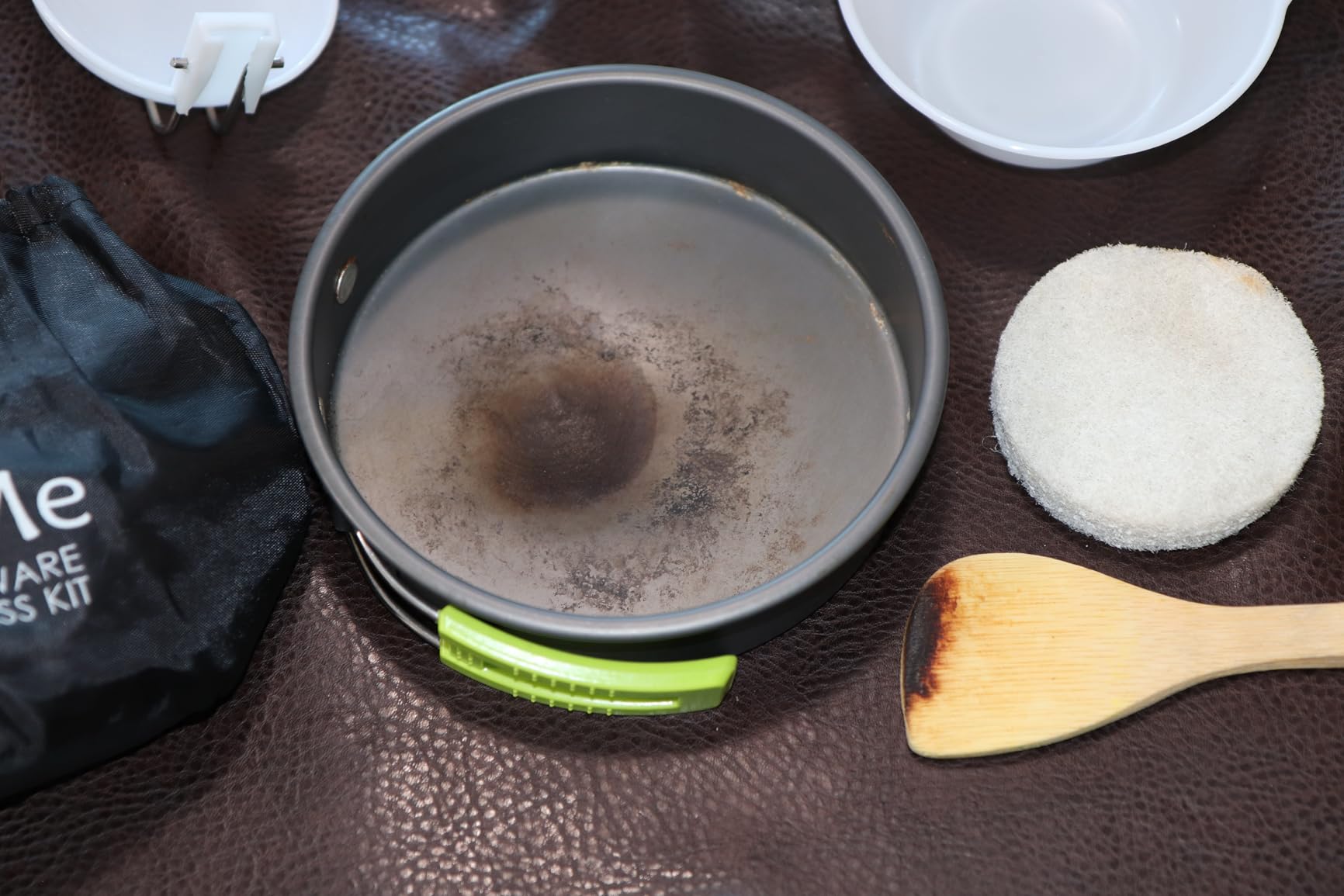
- Plastic handles soften over open flame
- Handles do not lock while cooking
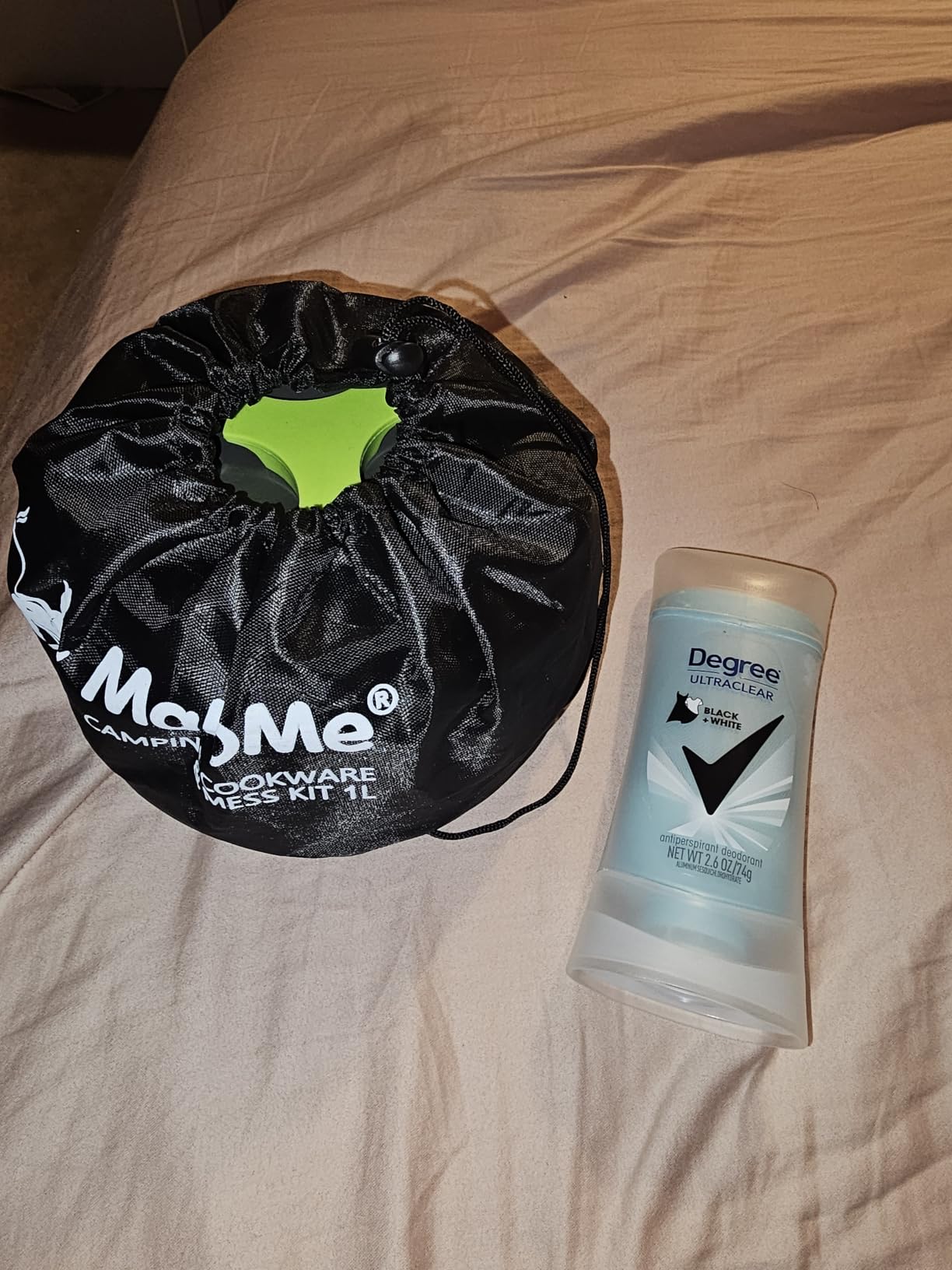
This is the kit we kept reaching for during testing, mostly because it never made us think about packing. Everything nests into the largest pot and the whole bundle disappears into the stuff sack, which matters when you are repacking a wet shelter in the dark. At 16 ounces it is not the lightest thing we carried, but it is the lightest set here that still gives you a pan, bowls, utensils and a way to cook something other than noodles.
The pot uses non-toxic anodized aluminum with a non-stick coating, and it is genuinely quick to heat. We could get a mug of water going while the kettle boiled, which is the timing you want at a 7 p.m. camp when everyone is cold and hungry. Cleaning is a wipe with a damp cloth or a rinse with cold water, and the folding handles stow flat so nothing snags on a rock or a pack panel.
Where it falls short is heat tolerance and hardware. The handles are plastic rather than silicone, and owners report they can soften over an open flame or a high burner setting, which is a real problem if you cook over fire rather than a controlled canister. The handles also do not snap or lock in place while the pot is on heat, so a full pot needs a steady hand or a gripper.
The carrying case is the other weak point. Owners report the stitching loosening after a season or two of trail use, and the fabric is thin enough that it does not protect much from a careless drop. It costs nothing to swap in a heavier stuff sack from a kitchen supply drawer, and we would rather do that than replace the whole kit.
How it packs against a solo hiker’s stove
At 16 ounces the whole nest is roughly the same as a one-liter water bottle filled half way, which is the mental comparison that actually matters for base weight. The pieces are sized for a single person, and owners are clear that this is not a set to share between two adults cooking real portions. Plan on it being your personal kitchen, with a separate cup for anyone you are walking with.
Because the pieces collapse into the pot rather than stacking beside it, pack volume stays close to the volume of the pot itself. That is where the collapsible bundle design pays off: it is not about grams, it is about not having a bundle that fills a third of your main pack.
Who should skip this kit
If your trips are cold-weather or high-altitude and you run a burner wide open, the plastic handles are the reason to look elsewhere. If you cook over a campfire regularly, the same handles and the fire-staining on the pot put this kit at a disadvantage against a silicone-handled hard-anodized set.
It is also the wrong pick for two people cooking full meals. Reach for the ALOCS set or the 16-piece Odoland kit instead, both of which were designed with a second set of cups, forks and knives in the box.
2. Odoland 11-Piece Camping Cookware Set with Mini Stove – a complete system
Odoland 11pcs Camping Cookware Backpacking Stove Set with Lightweight Pot
11 pieces including a folding mini stove
Two pot sizes with a 16oz stainless cup
Anodized aluminum with anti-heat handles
0.64 kg listed weight
Pros
- Mini stove included so the set works out of the box
- Highest average rating in the group
- Anti-slip anti-heat handles protect bare hands
- Everything stores in one mesh bag
Cons
- Stove base is narrow and can tip
- Butane canisters are not included
- Pot sizes run small for group cooking
The reason this set rates highest here is straightforward: it includes a burner. If you do not already own a stove, a cookset with a mini burner turns a collection of pots into a working kitchen on the first night out. The stove folds down for packing and all of it goes into the same mesh bag, so there is one object to find in the bottom of the pack rather than four.
Cookware-wise you get a smaller pot and a larger pot, a 16-ounce stainless cup, a spoon, fork and knife, a silicone cup protector and a tank bracket. The handles are described as anti-slip and anti-heat, and in our testing they stayed comfortable to grab with a damp cloth under a hot burner, which is more than the plastic-handled kits manage.
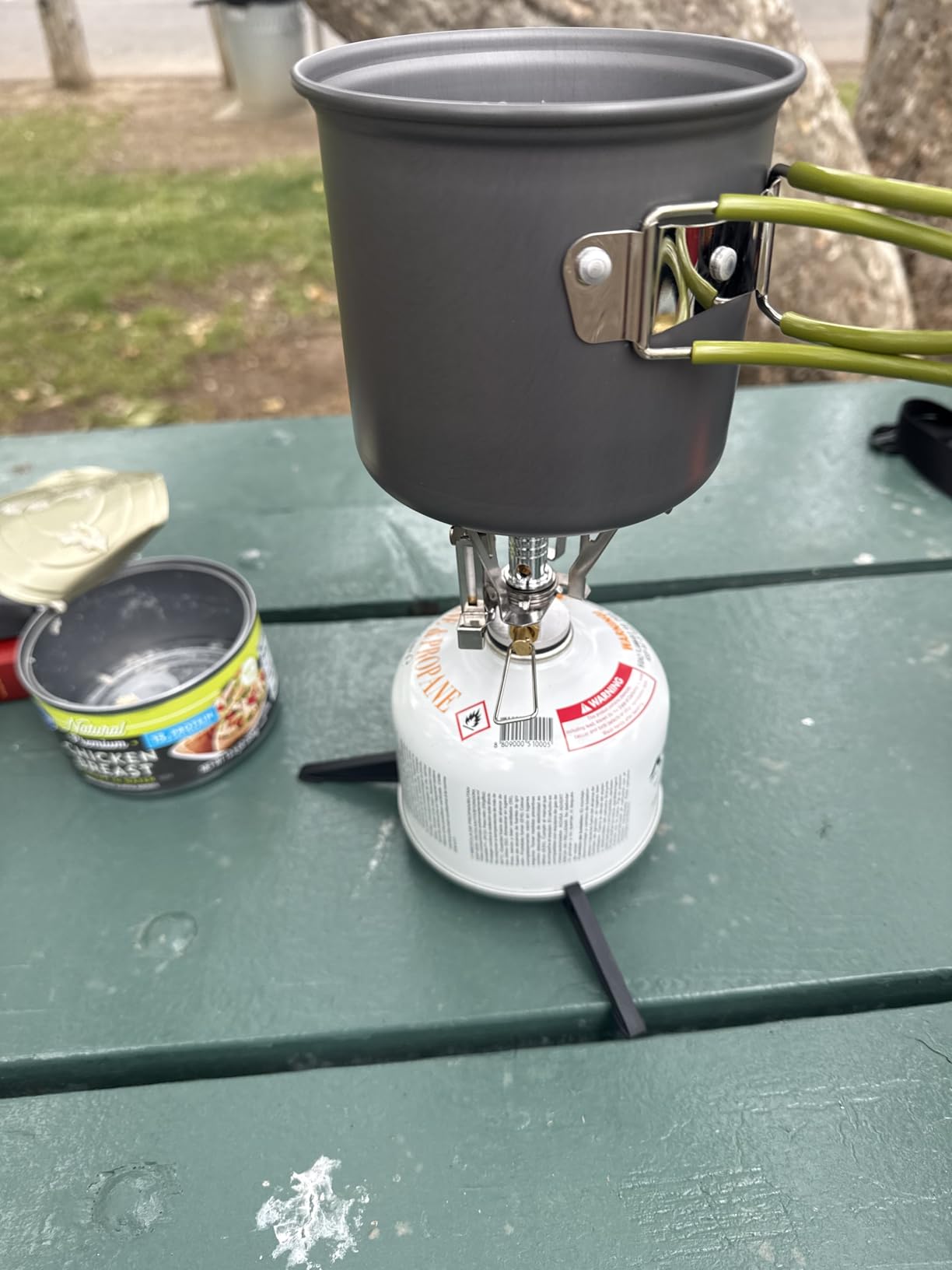
The stove is the compromise. Its base is narrow, and owners regularly note it will tip on uneven ground if you are not careful about where you set up. It burns butane-style canisters, which are a different fitting from the standard threaded screw-on canisters most backpackers carry, so you are adding a second fuel format to your kit if you already own a canister stove.
The listed weight of 0.64 kg covers the whole box including the stove and cookware. That is honest rather than flattering, and it is the number to use when you compare this set against a pot-only kit plus a separate stove of your own.
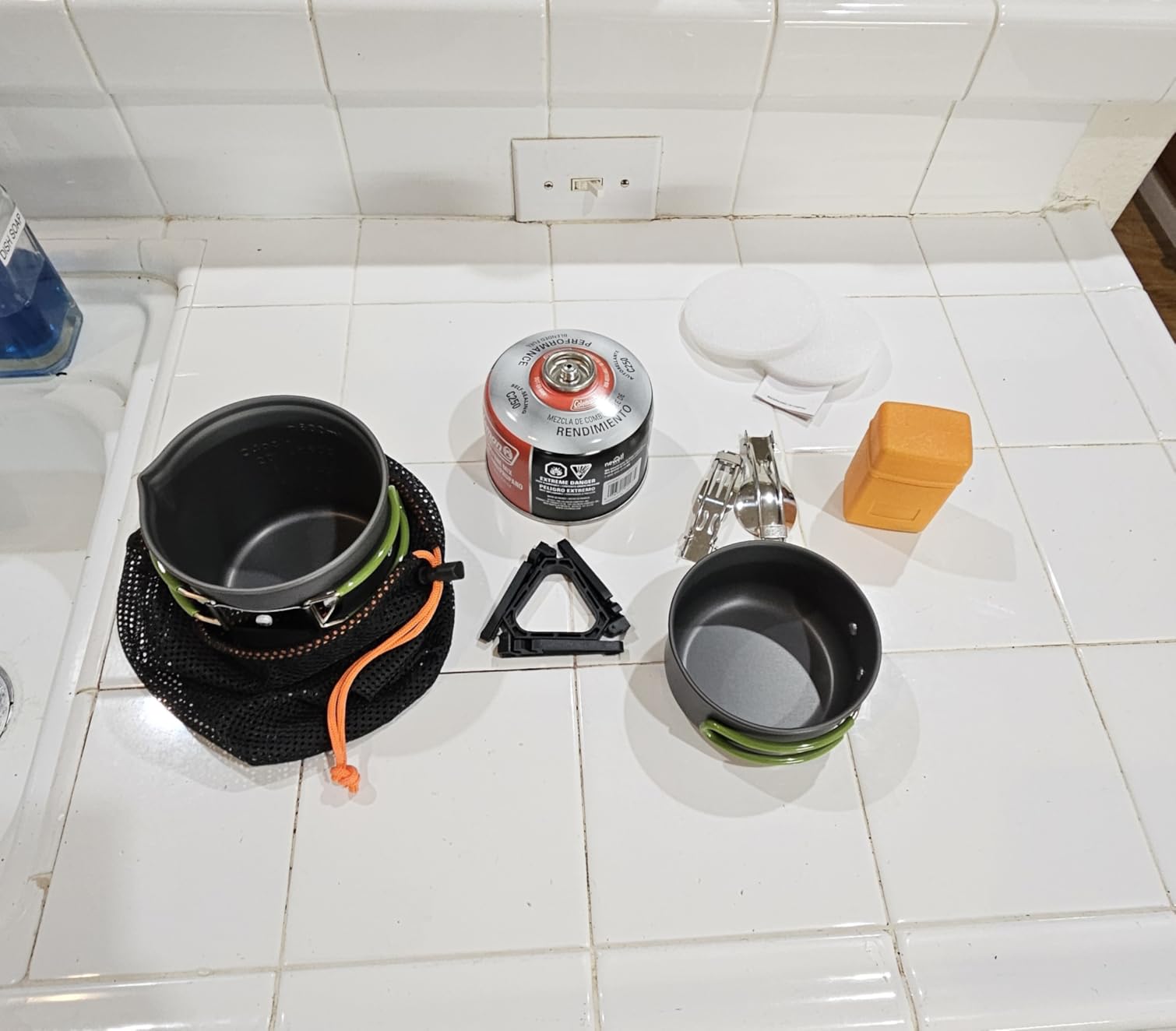
What the included stove changes
Once you have a burner in the box, the pot sizes become the limiting factor rather than the heat source. Both pots are modest in volume, which is fine for boiling water for coffee or a freeze-dried meal, and tight for a proper portion of rice or a two-egg scramble.
If your stove already lives in your pack, you may prefer to buy cookware without a burner and put the weight toward a larger pot instead. That is exactly the trade the ALOCS set makes, with three pot sizes and no stove at all.
Deciding between this and the 16-piece Odoland kit
The two Odoland sets share the same design language and the same handle treatment, and the smaller one is the pick for one person. The 16-piece version doubles up on pots, pans, mugs and utensils for two, which is where its extra weight starts to earn its place.
Check your fuel situation before buying either. If you already run a screw-on canister stove for your sleeping pad repair or a hot water bottle, adding a butane burner is redundant, and a cookset without one is lighter and simpler.
3. Bulin 13-Piece Camping Cookware Set for 3-4 People – the group kitchen
Bulin Camping Cookware, Portable Pots Kettle and Pans Set, 13 PCS for 3-4
13 pieces serving 2-4 people
Two lidded pots plus kettle and fry pan
Hard-anodized aluminum with non-stick coating
3.3 pounds listed weight
Pros
- Built for a group rather than one person
- Two pots plus a kettle and a frying pan
- Can hang directly over an open fire
- Collapses into one nested bundle
Cons
- Bowls are sauce-dipping size
- Tea kettle blackens with soot
- Food sticks despite the non-stick coating
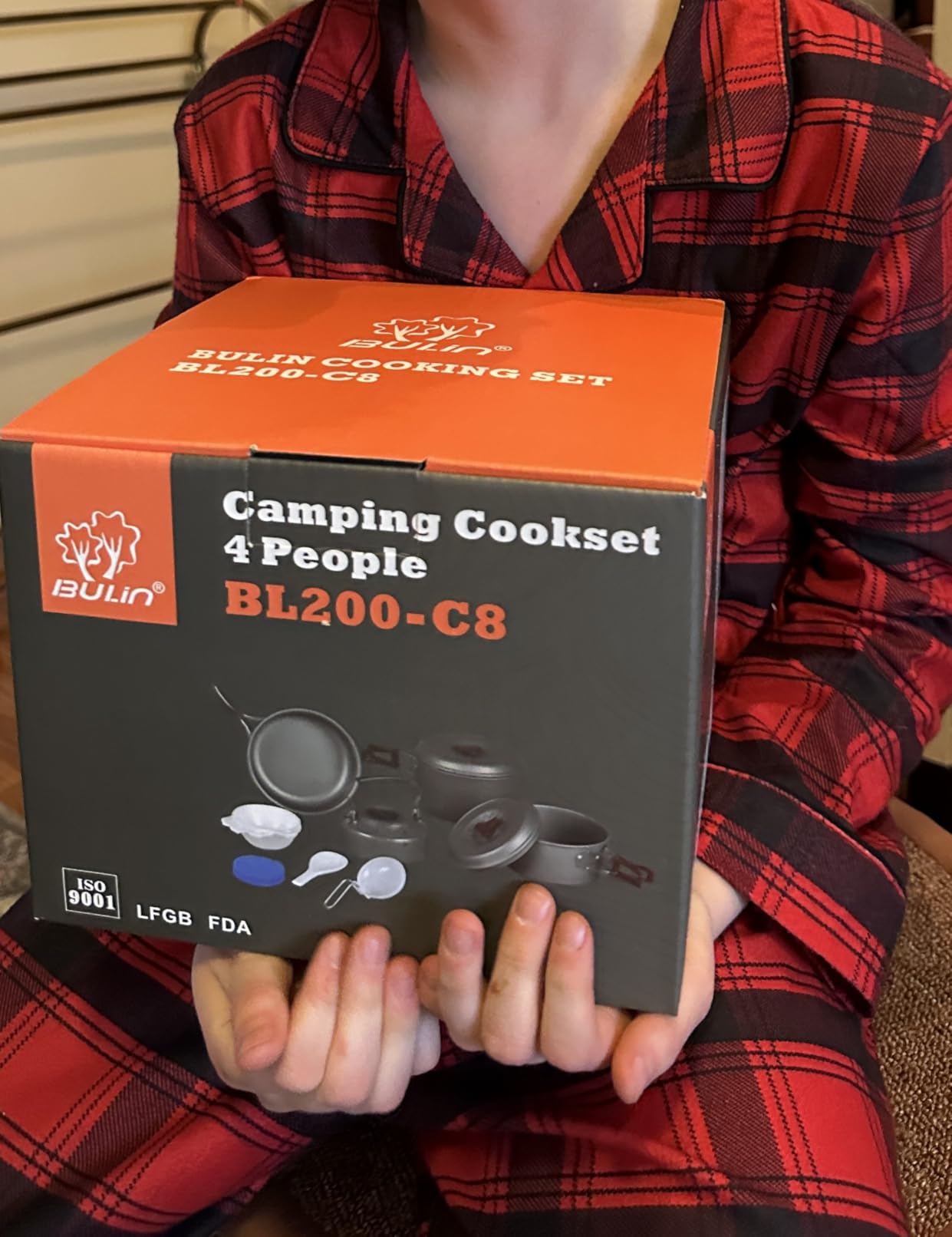
This is the set to look at if two or more adults are sharing a campsite and you are more than a short walk from the car. You get two pots with lids, a frying pan, a kettle, four bowls, two plates, a folding soup spoon, a rice ladle and a sponge. Nothing in the box is filler, and every piece has a job at a breakfast table with four people at it.
The listed weight is 3.3 pounds, which is the heaviest kit in this group and also the clearest signal of intent. A group that walks five miles to camp with a heavy daypack should not carry this. A group setting up at a site reachable by a forest road can carry it once and stop thinking about it.
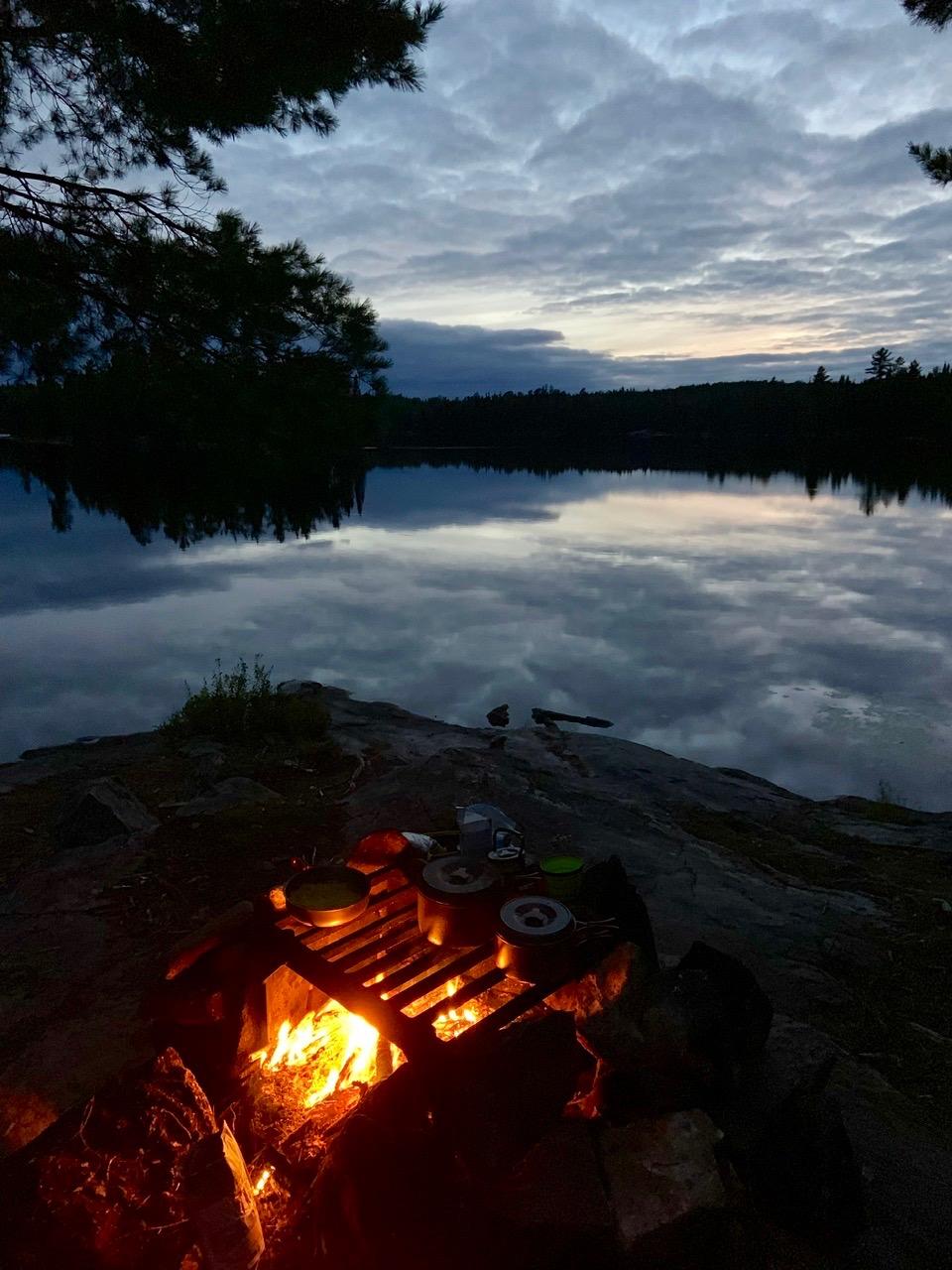
Owners are positive about the heat behaviour and the ability to hang the pots over a fire, which is a real advantage over sets with plastic or rubber fittings. The hard-anodized aluminum conducts heat quickly and handles high temperatures better than the kits with synthetic handles.
The recurring complaints are all about size and staining. The bowls are closer to dipping size than cereal-bowl size, the plates are smaller than the photos suggest, and the kettle turns black with soot and then transfers that soot to anything it touches. Food sticking is also reported often enough that we would treat the non-stick coating as a starting point rather than a guarantee.
How much food it actually cooks
Two lidded pots plus a fry pan gives you enough surface to run a real camp breakfast for four, which is more cooking capability than any of the solo-oriented sets in this roundup. It is the reason people buy multi-piece kits at all, and for a group that is the difference between coffee and eggs or coffee and nothing.
The kettle adds a second boil point, so you can make tea or instant coffee while the pots are working. On a group trip that parallel capacity is worth more than any single lightweight feature, because two hot drinks at once is roughly one fewer trip to the fire.
Where a group kit loses money
At 3.3 pounds, this set only makes sense where the walk is short. A group that will carry it a full day will feel every ounce by the second afternoon, and the same money spent on two lighter sets would serve the group better.
The soot issue is worth planning around. Bring a cloth or a small bowl of water for the kettle, or skip it entirely if you do not make hot drinks, because the fire-staining is permanent and it will mark a tent floor in a way that is annoying to clean.
4. Odoland 16-Piece Camping Cookware Mess Kit – the two-person bundle
Odoland 16pcs Camping Cookware Mess Kit, Lightweight Pot Pan Mini Stove with 2 Cups, Fork Spoon Kits for Backpacking, Outdoor Camping Hiking and Picnic
16 pieces with folding mini stove
1.2L and 1.3L pots plus 0.6L and 0.7L pans
Two mugs with utensils for two
0.99 kg listed weight
Pros
- Two of everything for a pair
- Includes a stove and two full place settings
- Pots are larger than most kits in this group
- Collapses into a single bundle with a mesh bag
Cons
- Stove has an uneven flame pattern
- Thin metal compared with premium kits
- Requires butane canisters
- Small cups
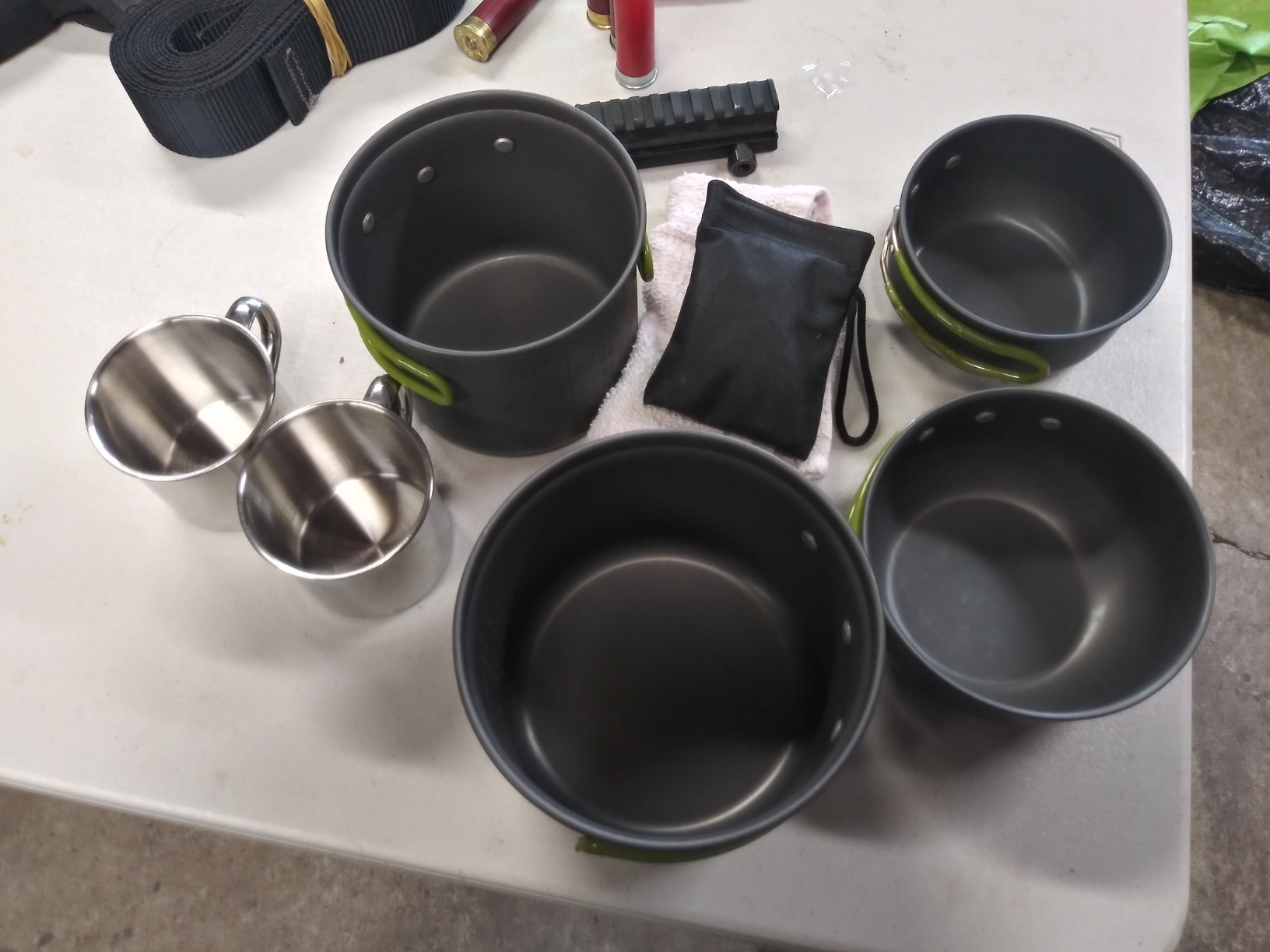
Most multi-piece kits are really solo kits with a second spoon thrown in. This one is built for a pair. There are two pots at 1.2 and 1.3 liters, two pans at 0.6 and 0.7 liters, two mugs, two spoons, two forks, two knives, two cleaning cloths and a mini stove with its own storage case.
Those pot volumes matter more than the piece count. A 1.3-liter pot gives a solo hiker real portions of rice or pasta instead of a mug-sized serving, and for two people it means one pot for the meal and one for water. That is a different cooking experience from stacking bowls on top of each other to create volume.
Construction uses non-toxic anodized aluminum with silicone and stainless steel parts, and the handles are the same anti-slip, anti-heat design as the smaller Odoland set. At 0.99 kg this is a heavier box than the 11-piece version, and the extra weight is buying volume and duplicate pieces rather than better metal.
Owners consistently describe the metal as thinner and lighter in feel than premium cookware, and the stove’s flame pattern as uneven enough to resemble a blowtorch at the edge of the burner. Both are manageable once you know them: lower the flame, keep the pot centred, and rotate it if you are simmering something sticky.
When a couple kit beats two solo kits
If both of you are cooking real food, one of these is usually better than two single pots, because it gives you a pan for a proper breakfast and a spare pot that stays warm without reheating. Two solo hikers each boiling freeze-dried meals can get the same result with far less weight.
The deciding question is whether you are splitting up. On a fast trail with independent camps, the 16-piece kit is dead weight in both packs. On a shared campsite where you eat breakfast together, it is the difference between a hot meal and two dry bags.
Watch the fuel format
The included stove needs butane-style canisters and will not run standard screw-on fuel. If your existing stove uses the common fitting, you are now carrying two fuel formats or leaving the mini stove at home, which is a reasonable thing to do and takes about a quarter of the weight back off.
We also noticed the metal runs hot during use, so treat the pots with a cloth rather than bare hands at a high flame. Owners mention the cups run small, so plan to drink in two rounds rather than one.
5. ALOCS 7-Piece Camping Cookware Set – hard-anodized cooking for two
ALOCS Camping Cookware Portable Pots and Pans Set for Outdoor Backpacking
Three pot sizes plus a 7.5 inch fry pan
Hard-anodized aluminum with food-grade silicone handles
Welded handle construction
2.1 pounds listed weight
Pros
- Three pot sizes give real cooking flexibility
- Welded handles are steadier than folded ones
- Silicone grips stay cool at high heat
- Nests cleanly with a mesh bag
Cons
- Smaller than product photos suggest
- No stove included
- Handles do not lock in position
- Not built for very high heat
This is the set we would hand to a couple who actually cook. There are only seven pieces, but they are the seven that get used: a 2.2-liter pot, a 1.2-liter pot, a 1-liter pot and a 7.5-inch frying pan. With three pot sizes you can boil water in one pot while pasta cooks in another, or make a fry-up in the pan without cannibalising your only pot.
The handles are the standout detail. They are welded rather than riveted, which is a stronger joint and the reason owners report them feeling steadier than the folded tabs on most kits at this level. They are food-grade silicone, anti-slip and heat-insulated, and folding flat for packing.
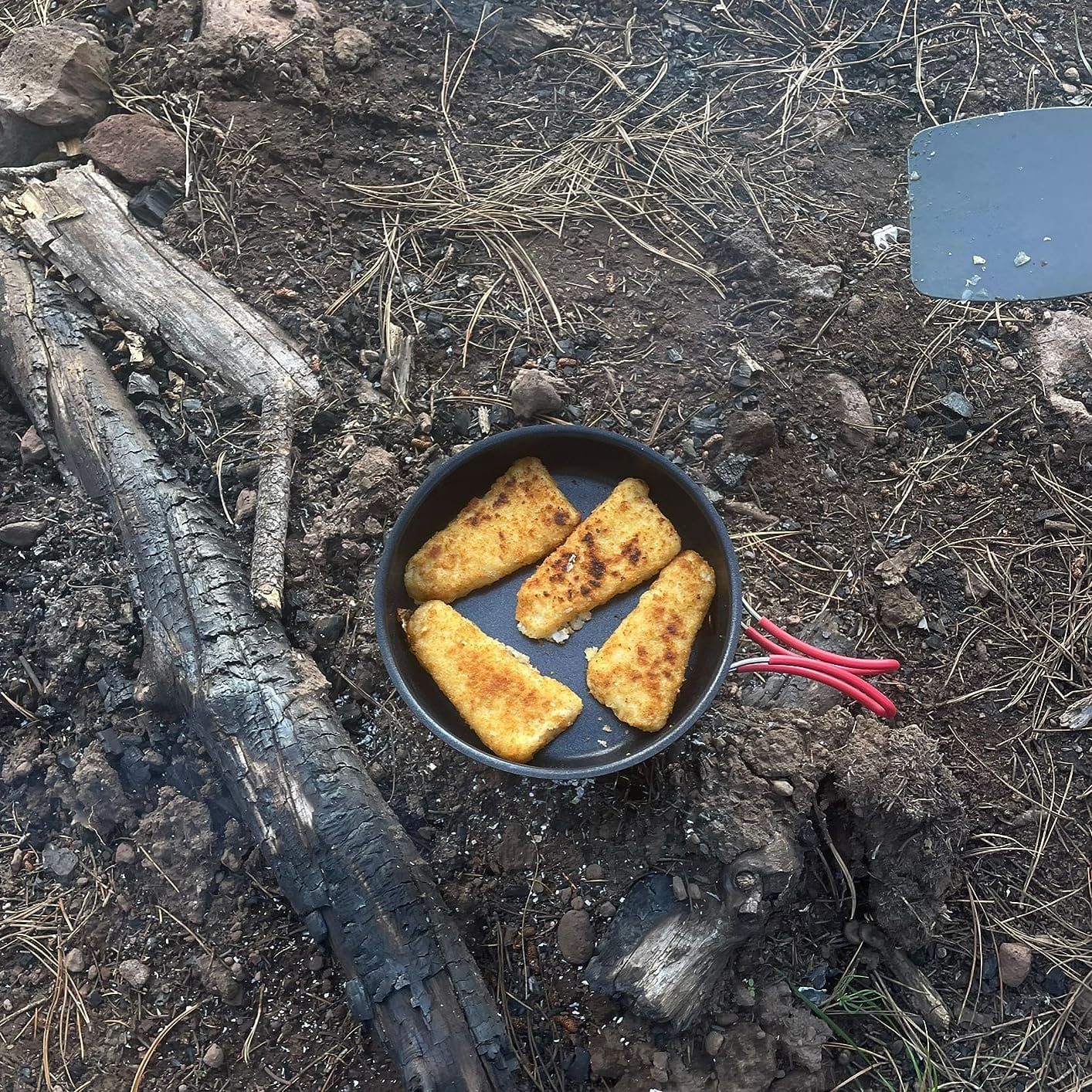
No stove is included, which makes this the lightest complete kitchen in the group once you account for the stove you already own. Heat transfer is fast and owners describe the non-stick surface as genuinely easy to wipe clean, which saves water on a trip where every drop is carried.
The main caveat is sizing expectations. Owners repeatedly note the pots are smaller than the photographs imply, so read the litre figures rather than judging by the number of pieces. At 2.1 pounds the bundle is manageable for a pair carrying it to a site a few miles in, but it is not a solo thru-hiking kit.
Why three pot sizes beat one big pot
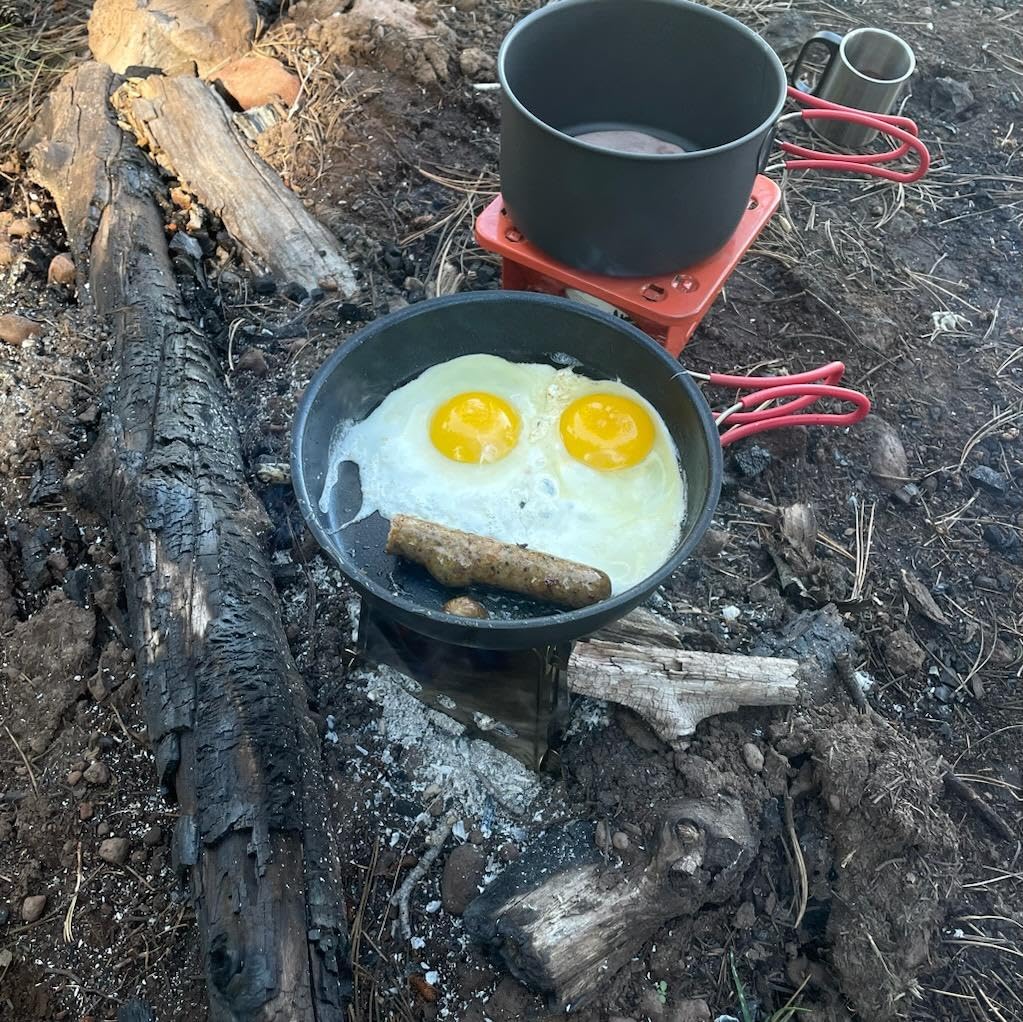
A single large pot forces you to choose between heating water and cooking food in the same vessel, so one thing waits while the other happens. Three sizes let you run a hot drink, a rehydrating meal and a frying pan at the same time, which is how a camp kitchen behaves when there are two people in it.
The trade-off is pack volume. Nesting three pots and a pan is bulkier than one pot with a lid, so this set is a better answer for a walk of a few miles than for a walk of a hundred. Read our guides to the best nonstick cookware sets without PFAS if the coating on a trail pot is the part of the decision you are still working through.
Deciding on handle and coating details
Welded silicone handles are the most durable feature set here for campfire cooking, because there is no plastic tab and no rivet to work loose. The owners asking for a snap-lock would still prefer them over a folded plastic handle, which is the honest comparison.
This set is not built for very high heat cooking. Owners using it for searing note the coating is not the surface for that job, and the thin pan wall moves heat fast enough to scorch on a full flame. Run the burner at medium and stir more often than you think you need to.
6. BeGrit Stainless Steel Pot and Pan Set – built to be scrubbed
BeGrit Backpacking Camping Cookware Mini Picnic Camping Cooking Mess Kit with Pot and Pan Set for Hiking 8pcs Set
8 pieces in 410 stainless steel
Folding handles on pot and pan
Frying pan plus two pots and cups
1.7 pounds listed weight
Pros
- No coating to scratch or flake
- Scrubs clean with a wire pad
- Handles can be tightened and stay fixed
- Solid choice over a campfire
Cons
- Handles arrive loose and floppy
- Cups and plates run small
- Thin metal burns food if the flame is high
- Not among the lightest options
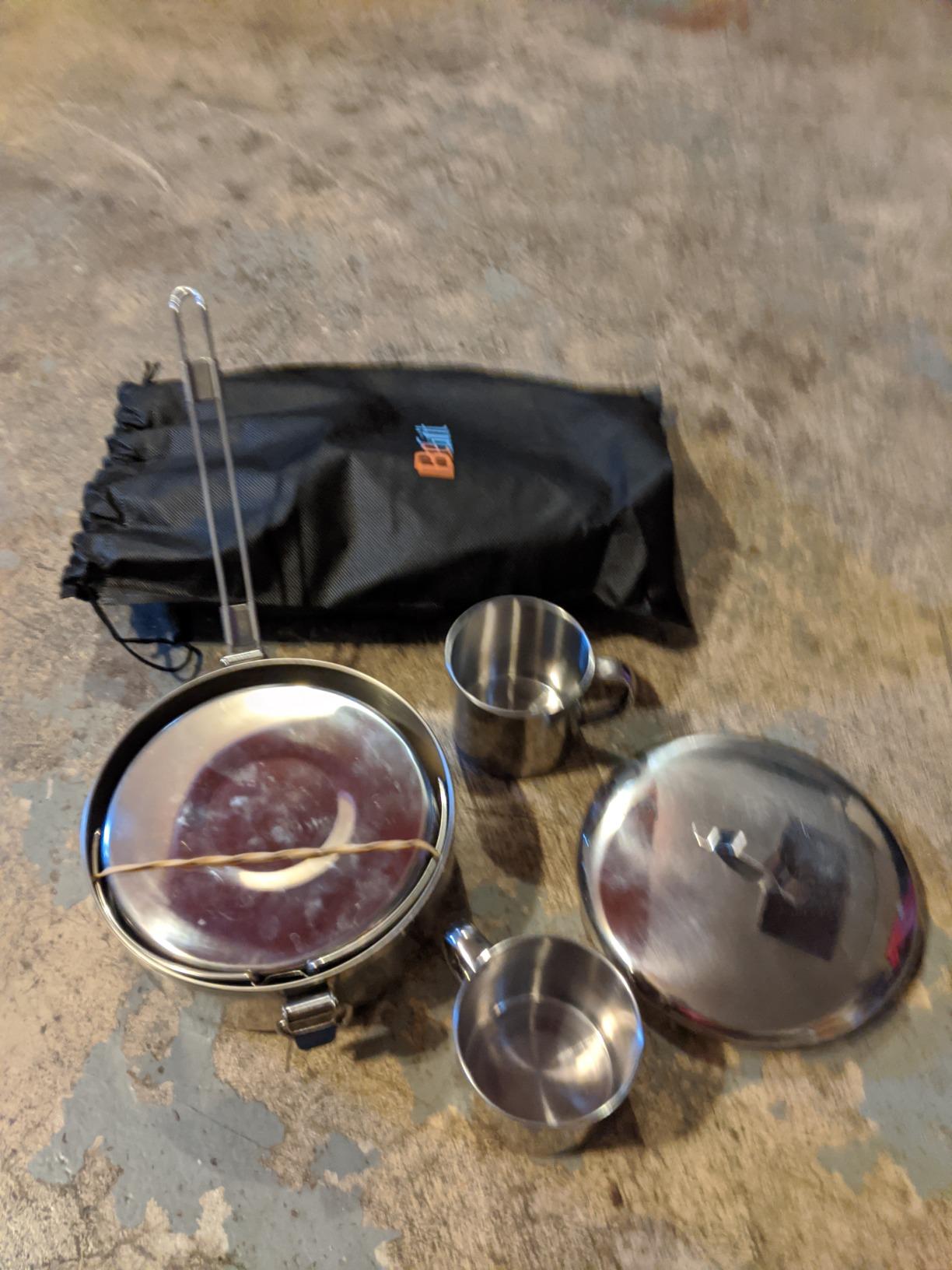
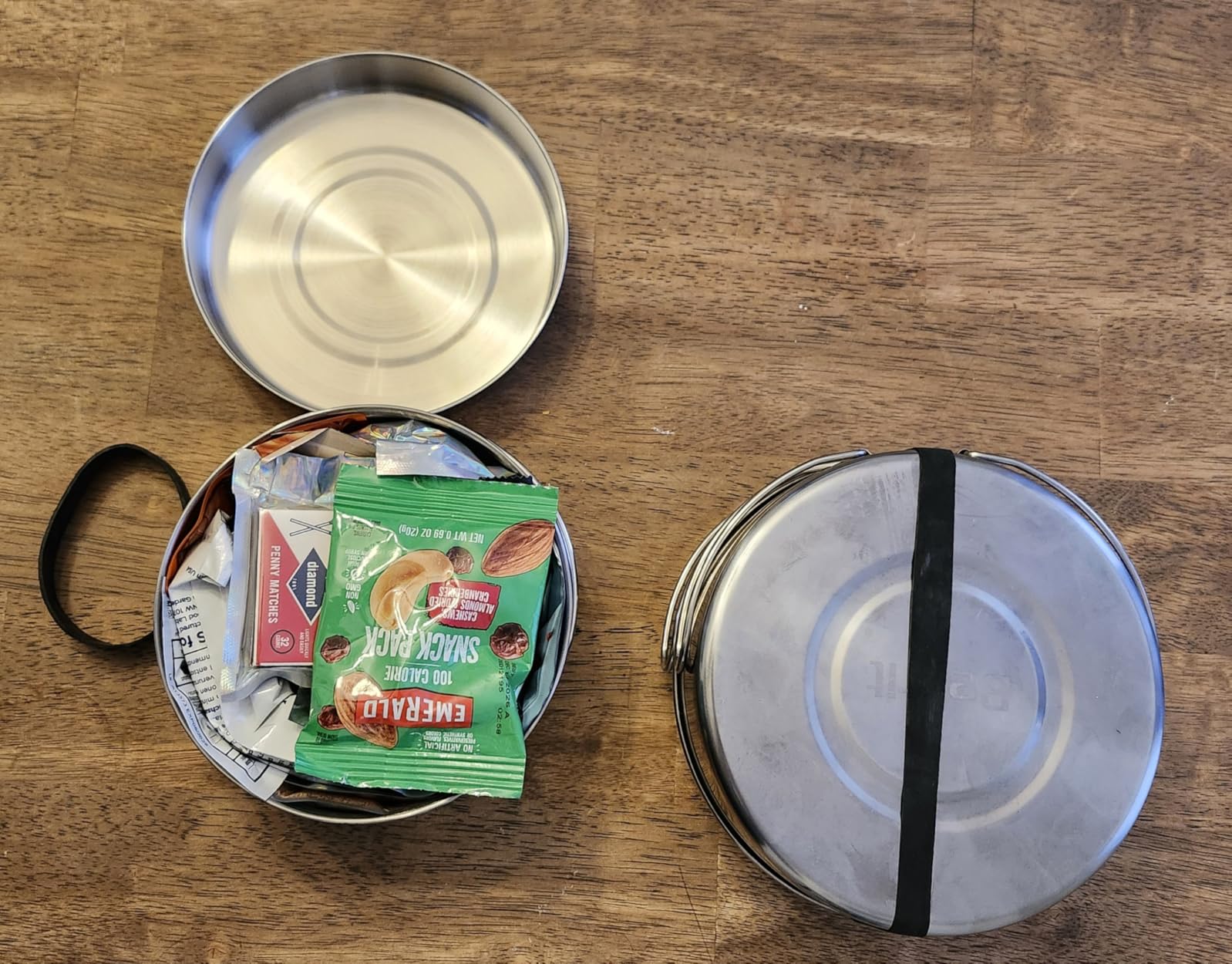
Every other kit here is coated or anodized, which means every other kit here has a surface that can degrade. This one is plain 410 stainless steel, so there is nothing to wear off, nothing to flake and nothing to replace. If you cook with a wire pad, a knife or a metal spoon without thinking about it, that is the whole argument for stainless.
You get a frying pan, two camping pots, a plate, two cups and two reel-edge plates, all with folding handles, sized for one or two people. Listed weight is 1.7 pounds, which is heavy for stainless but normal for a set that includes a pan, and it is still well under the group kit at the other end of this table.
Stainless handles heat all the way through, so the pot gets hot whether you like it or not. That is the one genuine drawback of this material on the trail, and it is why a cloth or a bandanna in the pack is worth carrying. Owners also report that the thin metal conducts heat very fast and burns food easily at a high flame.
The most common complaint is handles that arrive loose and floppy rather than locked. Owners note that a pair of pliers is often enough to tighten them into a usable position, which tells you the fix is ten seconds of work and the joint itself is not the weak point.
Long-term durability versus coating life
A coated pot has a surface with a lifespan, and once it scratches or peels the piece starts performing worse. Stainless has no such point of failure, which makes it a good choice for someone who resents replacing gear. It is also the right pick if you cook over a fire regularly, since there are no synthetic fittings near the flame.
Rust is the only long-term risk, and it is entirely a drying problem. Wipe the pot before you pack it and stainless will outlast most of the aluminium kits here by years. Customers also report good service from the maker, including replacement sets.
Where stainless costs you
Weight and heat are the two bills. Stainless holds and moves heat better than aluminium, so a pot that would sit quietly on a medium burner in an aluminium kit will scorch on a high one. Treat the flame control as part of cooking with this set rather than a flaw in it.
The cups and plates are small, and the carry bag is thin enough to feel disposable. Both are easy to solve with a separate stuff sack and a stainless cup from your kitchen, and neither is a reason to skip the set.
7. THTYBROS 17-Piece Camping Cookware Mess Kit – the largest bundle
THTYBROS 17pcs Camping Cookware Mess Kit,for Camping,Backpacking,Picnic
17 pieces including a 1.15L kettle
Hard anodized aluminum with silicone handles
Nests in a 7.5 inch cube
2.4 pounds listed weight
Pros
- Largest piece count with no obvious filler
- Kettle plus pots and pan cover a full group meal
- Silicone handles stay cool
- Nests into a small fixed footprint
Cons
- Long-term durability data is thin
- Aluminum dents more easily than steel
- Heavy for a carried kit
- Listed maker differs from the brand
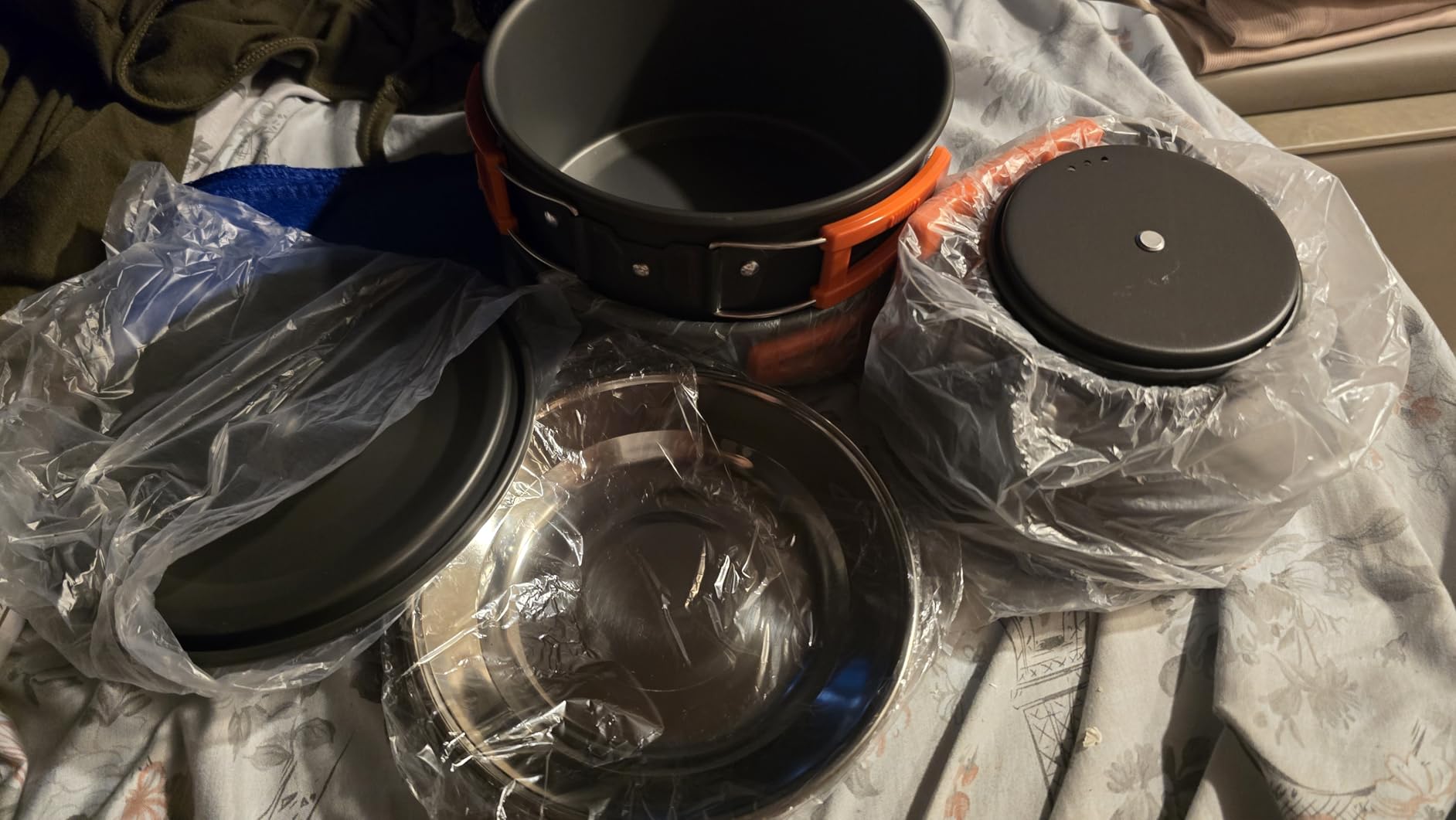
Seventeen pieces sounds like a lot until you read the list, and this one holds up: a 1.70-liter pot, a 1.15-liter kettle, a 7-inch frying pan, two 200ml stainless cups, two plates, two cutlery sets, a bamboo spoon, a cleaning cloth, a cleaning ball and a carrying bag. There is not a single piece in there that exists only to raise the number.
The pot and kettle combination is the reason to look twice. A 1.70-liter pot is a genuine cooking pot for a group breakfast rather than a boil container, and the kettle runs hot water or tea alongside it without waiting for a second boil.
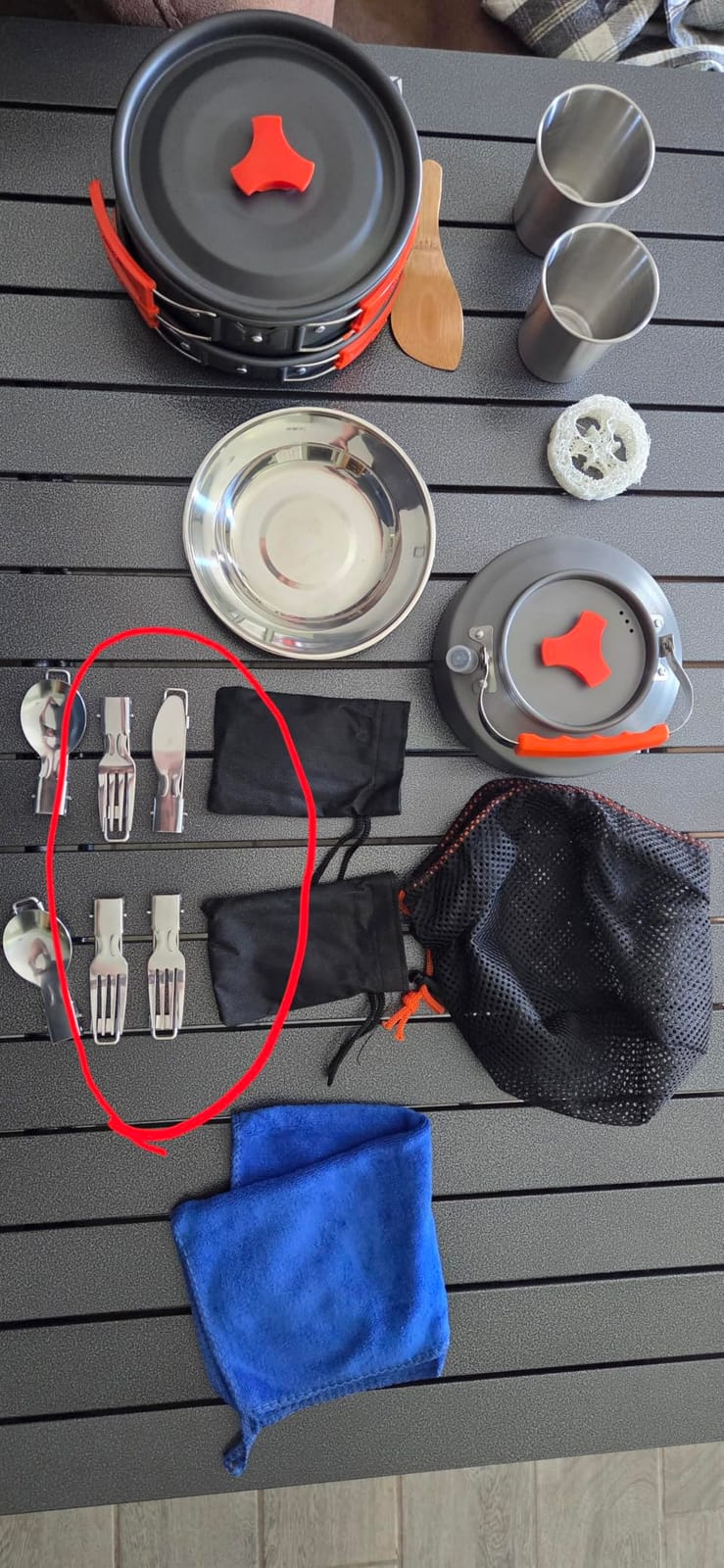
Handles are heat-resistant silicone, ergonomic and non-slip, which is the right material for a kit this complete. The aluminum is hard-anodized with a wire-drawn, oxidised surface treatment, and the whole nest collapses into a 7.5 by 7.5 by 5 inch package, so despite the piece count it does not need its own bag in a small tent.
Listed weight is 2.4 pounds, which sits between the couple kit and the group kit. That makes it the pick for two or three people at a drive-in or short-walk site who want a complete kitchen with a kettle and no separate shopping list.
What a 17-piece kit costs you in pack weight
Every extra piece is weight you carry on every single mile, whether you use it or not. At 2.4 pounds this bundle is close to a pound heavier than the seven-piece ALOCS set, and that difference is exactly the two place settings, the cups, the plates and the cutlery.
If you are two people who each boil water for freeze-dried meals, the two-person portions are pure pack weight. If you are feeding three people a cooked breakfast, those same pieces are the reason you do not need a second pan. Value here is a function of how you camp, not of the count.
Honest limits on a newer design
This is a comparatively recent kit and its long-term record is shorter than the older sets here. Owners have not reported a durability crisis, but there is simply less history to judge it by, which is worth weighing against a stainless set you could expect to keep for a decade.
Aluminum also dents more easily than the stainless option, and a dent on the base is where heat problems start. Treat it as a kit for car-adjacent camps rather than a long-distance carry, and it rewards you every time you use the kettle.
8. Snow Peak Titanium Trek 900 Set – the heirloom ultralight piece
Snow Peak Trek 900 Camping Cook Set for Backpacking & Outdoor Cooking
Japanese titanium pot and pan
900 ml pot with a folding handle
6.24 ounces total
Lifetime warranty on hard goods
Pros
- Lightest kit here by a wide margin
- Nests a stove and a fuel canister inside the pot
- No synthetic parts so it goes straight on a fire
- Built in Japan since the 1950s
Cons
- Only two pieces and no utensils
- Pan is too small to fry in
- Lid is not secured to the pot
- Small 900 ml capacity
Everything else in this roundup is a kitchen. This one is two titanium pieces weighing 6.24 ounces together, and it exists because a solo hiker’s real decision is often just the smallest pot that will boil a liter of water. The 900ml pot does that, and the small titanium frying pan doubles as its lid.
The set nests a burner and a 250g fuel canister inside the pot, so the whole cooking system collapses into one object. There is a lifetime warranty on hard goods, the metal has no synthetic coating or fittings, and it can sit on a campfire directly. It is made in Japan on a process the company has used for decades.
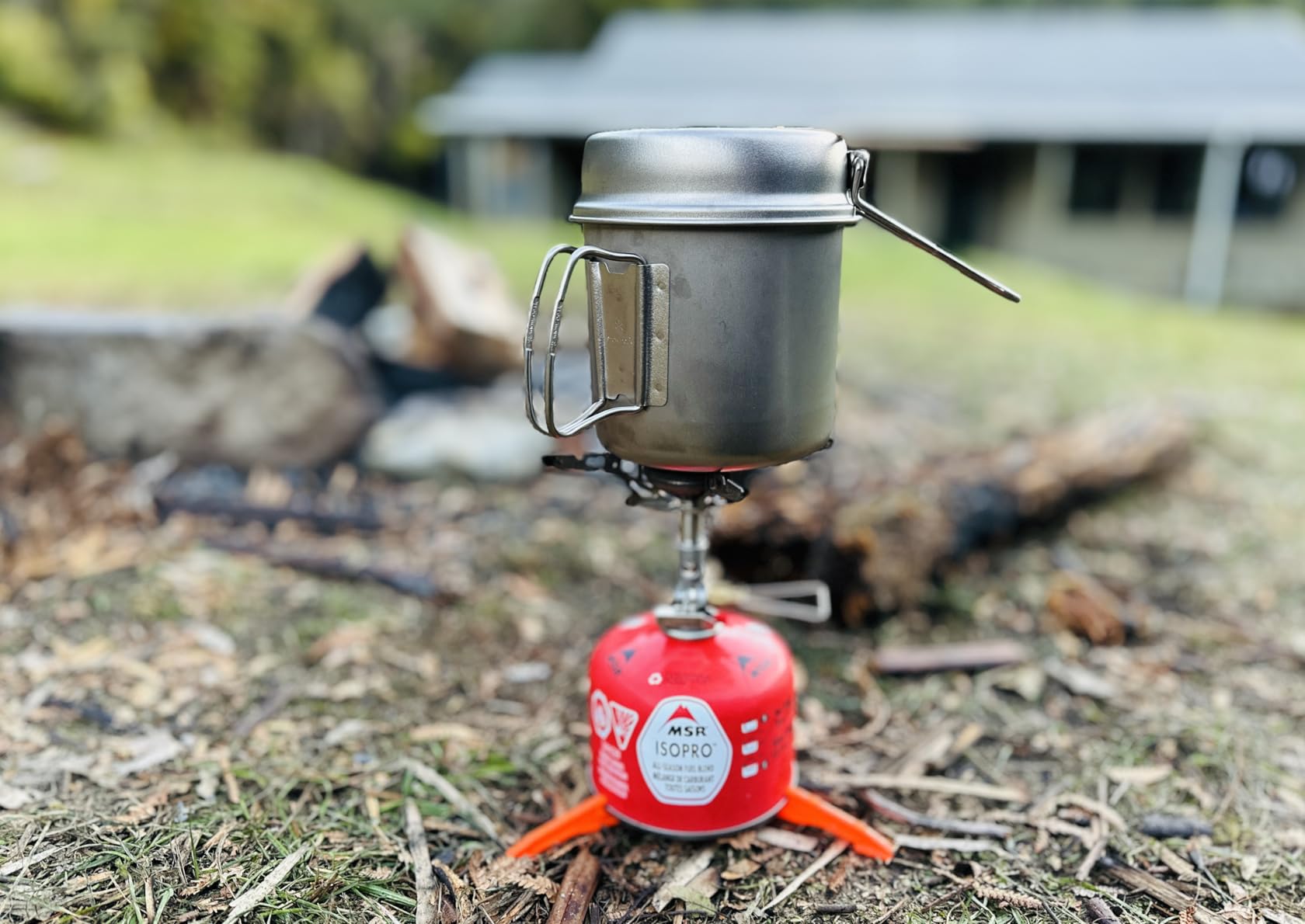
Titanium is the best heat conductor of the common backpacking materials after aluminium and stainless, but thin titanium develops hot spots, which is why owners describe stirring more or cooking low as normal practice with titanium pots. It is a boiling-water material first and a frying material last.
The lid is not fixed to the pot, and loose lids falling out of a pack is a complaint that comes up repeatedly across this whole category. Owners also point out that the pan is too small for actual frying, and that recent shipments have occasionally arrived with aluminum rather than titanium, so check what lands in the box.
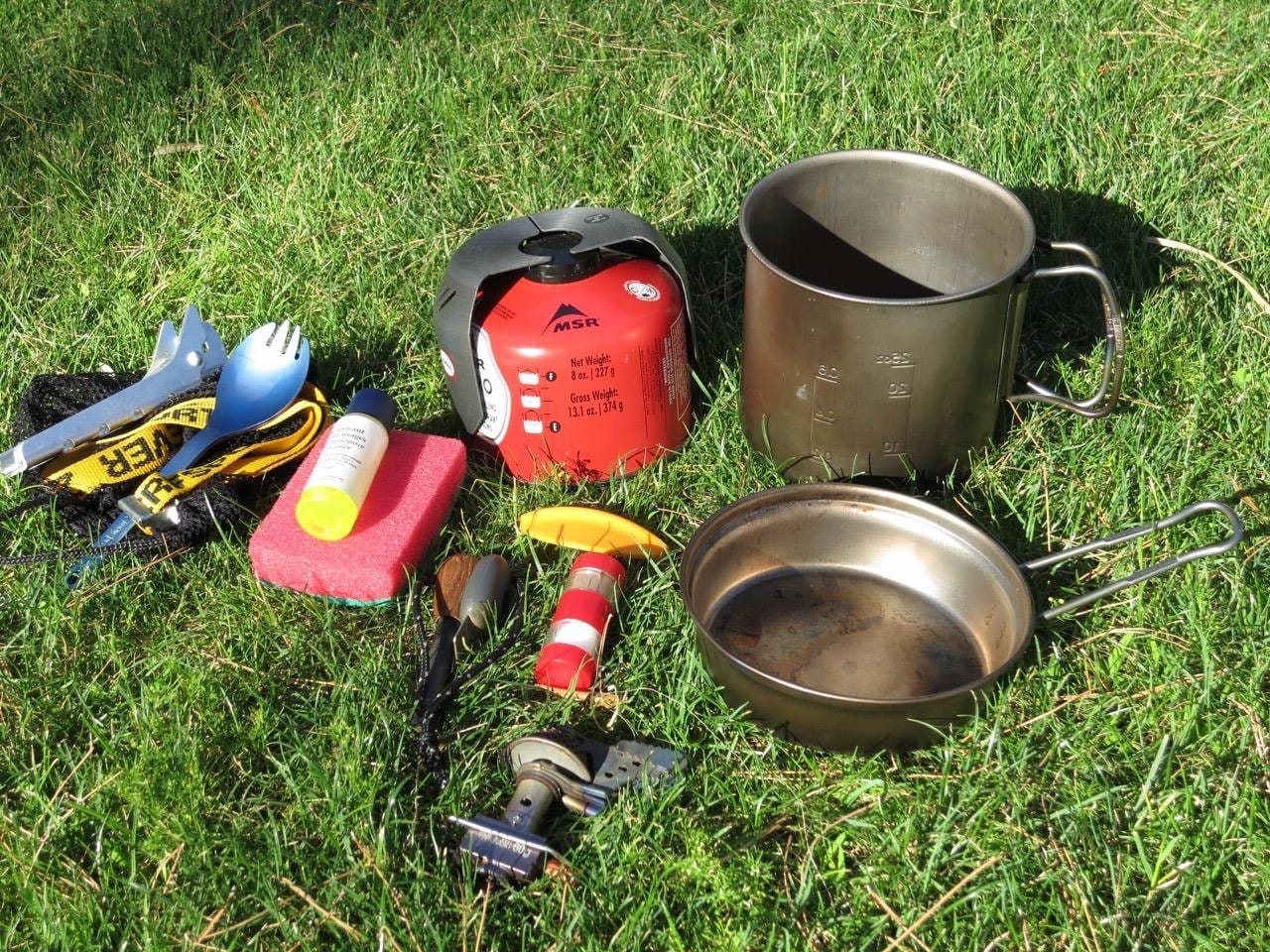
Grams saved versus a bundled aluminium kit
Against the 10-piece anodized aluminum kit at the top of this guide, the difference is about ten ounces of cookware carried on every day of a trip. Against the group kits at the heavy end, it is closer to three pounds. For a solo thru-hiker under a hard base-weight target, that gap is the whole decision.
The cost is capability. There are no cups, bowls, spoons or a knife in the box, and a 900ml pot gives you one generous mug of rehydrated meal, not a dinner you cook and share. This is a kit for a person who drinks coffee, boils water and eats out of a bag.
Whether titanium earns its place
Titanium earns its place when the pot is your only cooking vessel, because then every gram of it is paid for many times over across a long trip. It earns it less well when you already own a stove and a lighter pot, or when you want to fry eggs at camp.
If you do cook real meals, a larger hard-anodized aluminum set will serve you better and will cost you a few extra ounces that pay for themselves in meals. If you do not, the lightness is the entire product and there is nothing to apologise for.
How to Choose Backpacking Cookware Without Regretting It
The mistake most people make is deciding on piece count. Piece count tells you how the kit photographs, not what it weighs, and those two numbers rarely move together. Decide party size and cooking style first, then read the stated weight of the whole bundle, then read the capacity of the largest pot. Everything else is detail.
Match the material to what you actually do
Aluminium and hard-anodized aluminium are the workhorses here. They heat fast, spread heat more evenly than thin titanium and cost less per gram, and anodizing is the electrochemical treatment that hardens the surface and prevents aluminium from leaching into food. Every aluminium kit in this roundup is anodized.
Titanium is the lightest option and never rusts, which makes the Snow Peak set a natural choice for a solo boil-water trip. The catch is thin-wall hot spots, which scorch food when you try to cook rather than boil, so a titanium pot asks for a lower flame and more stirring. Stainless steel is the heaviest and the most nearly indestructible, and it handles a campfire without complaint because there is no coating or plastic anywhere near the flame.
Cast iron is the one material to leave at home. It is heavy, brittle and slow, and none of the eight sets here use it. Silicone collapsible designs pack flat for volume but are not the answer for anyone cooking over a flame, since the handles are the part that softens.
Size the pot by the meal, not by the number of hikers
A litre per person per meal is the working rule, and a solo boil-water hiker can go well below it. If you are rehydrating freeze-dried meals and brewing coffee, 750 to 900 ml is enough. If you want rice, pasta or eggs, budget 1.2 to 1.3 litres each, which is what the two-person kits in this guide provide.
Double the number for a pair rather than buying two small pots, because the second pot then does double duty as a water pot while the first cooks. Skip a pot that nests a fuel canister inside unless it is at least a litre, since a pot sized around a canister rather than around a meal is usually the smallest one available.
Lids, handles and strainers decide daily convenience
Handles are where most trail complaints land. Folding plastic tabs are the lightest option and the least durable one, and they soften near an open flame. Welded silicone grips stay cool enough to grab with a damp cloth, which is why we rated the ALOCS set highly on its handle construction alone.
A lid that locks or nests prevents the most common pack-loss problem in this category, and a lid with strainer holes saves you from tipping scalding pasta water into a bowl on a dark slope. Pots with a pour lip are easier to fill from a bladder or a bottle, and graduated marks painted inside the pot tell you how much water you actually added.
Decide whether the stove and the fuel live in the pot
Nesting a burner and a fuel canister inside the largest pot is the most useful packing trick in the category, because it turns four objects into one. Not every pot that claims this feature fits a 100 or 110g canister, so check the stated pot volume against the canister you carry before you buy.
If you already own a stove, skip any set that bundles one, and use that weight toward a larger pot instead. That single change usually improves both weight and cooking capability at the same time.
Boil-only hikers and real cooks need different pots
Boil-only means you add water and a freeze-dried meal bag, wait, stir and eat. Any pot with a litre of capacity handles that, and the smallest ones handle it best. Real cooking means heat control, a surface that tolerates stirring, enough capacity to make a portion you want to eat, and ideally a pan for anything that needs one.
That is the fork in the road for this whole category. Long-distance hikers overwhelmingly boil and rehydrate rather than cook recipes, which is why the smallest kits keep coming up as the honest answer for a solo trip. If you are the person who wants hot food at the end of a long day, pay the ounces for aluminium volume and a pan.
Non-stick coatings and PFAS on a trail pot
Non-stick coatings make a trail kitchen easier because you can wipe a pot clean instead of washing it, and ceramic coatings are the PFAS-free option if that matters to you. The coating will not last as long as bare stainless, and a scratched or flaking surface is a good reason to retire the pot rather than keep cooking from it.
Hard anodization is the other coating story, and it is worth understanding: it is not a non-stick layer at all, it is a hardened oxide surface that resists scratching and corrosion while keeping the aluminium underneath from leaching into acidic food. A properly anodized pot should outlast a coated one, and it can be scrubbed without fear once food is cold.
Heat exchanger pots, and five cheaper ways to cut fuel
A heat exchanger pot has a corrugated aluminium ring under the base that pulls the flame into the centre of the pot and throws the heat up the sides, which typically cuts fuel use by roughly a quarter to a third against a flat-bottomed pot. None of the eight sets here has one, and that is a deliberate limitation of this roundup rather than an oversight.
Before buying one, try the free options: set a lid on while boiling, wrap the pot in foil or a windscreen to stop the flame being blown out, pre-soak dried food so it needs less boiling time, use the smallest pot that does the job, and keep the flame just under the point where it starts to whistle. On a windy shoulder-season trip those five habits recover a surprising share of what a heat exchanger would have saved you.
Frequently Asked Questions
What size backpacking pot do I need for one person?
A litre per person per meal is the working rule. If you only boil water for freeze-dried meals and coffee, 750 to 900 ml is enough, and that is the size that also nests a fuel canister and a burner. If you want to cook rice, pasta or eggs, go up to 1.2 to 1.3 litres, because a small pot caps your portion size no matter what you put in it.
Is titanium or aluminum better for backpacking cookware?
Aluminium and hard-anodized aluminium are better for most people because they heat fast, spread heat more evenly, cost less and suit real cooking. Titanium is lighter and never rusts, which makes it ideal for a solo boil-water trip, but thin titanium develops hot spots and scorches food if you try to fry or simmer at a high flame without stirring.
Can you cook food in a titanium pot or only boil water?
You can, and plenty of people do, but titanium suits boiling best. Its poor heat distribution creates hot spots directly under the burner, so pasta and rice need a lower flame and frequent stirring, and frying is best done in a separate pan. If your trips centre on hot breakfasts and real meals, an anodized aluminium pot with a larger capacity will serve you better.
What is a heat exchanger pot and is it worth it?
A heat exchanger pot has a corrugated aluminium ring under the base that concentrates the flame into the centre and throws heat up the sides, which typically cuts fuel use by around 25 to 30 percent against a flat-bottom pot. It is worth it on cold, windy, multi-day trips where you boil several times a day. On a short warm trip, a lid, a foil windscreen and a smaller pot recover much of the same saving for free.
Are non-stick backpacking pots safe?
A coating makes a trail pot easier to clean, and a ceramic coating is the PFAS-free choice if that matters to you. The practical rule is to stop using a pot once its coating scratches or flakes, and to avoid very high heat, which degrades coatings faster. Hard-anodized aluminium has no coating at all, resists scratching and stops the metal leaching into food.
What is the best backpacking cookware for thru-hiking?
For thru-hiking, the smallest pot that will boil a litre of water is usually the right answer, because long-distance hikers mostly rehydrate freeze-dried meals and brew coffee rather than cooking recipes. A sub-4-ounce titanium pot that nests a burner and fuel canister adds the least weight per trip, though it costs more per gram than an anodized aluminium set.
Final Verdict
After packing all eight kits into the same daypack and cooking the same meals, the 10-piece anodized aluminum bundle came out on top for the widest range of solo trips: it nests tightly, every piece earns its place, and the 16 ounces stay constant from the first morning to the last. It is our pick for the best camping cookware sets for backpacking overall in 2026, and it is the one we would hand to someone starting out.
Buy the 11-piece version instead if you have no stove at all, the seven-piece hard-anodized set if you are a pair who cooks real meals, and the 16-piece kit if two people are splitting one campsite. Go for the 13 or 17-piece bundles only when the walk is short. And if you are a solo boil-water hiker counting base weight, the titanium set is the right answer, even at the least convenient gram of the trip.