

A trailer brake controller is the box under your dash that makes your trailer stop when you do. It taps the truck’s brake-light circuit, then sends power through the 7-pin connector to the electric brake magnets on the trailer so the trailer pushes back in proportion to how hard you braked. Without one, the trailer keeps rolling and shoves the truck, and every stop gets longer. Picking the right trailer brake controller for pickup trucks comes down to three things: whether the braking is proportional or time-delayed, how the controller is mounted, and whether your truck has the factory connector waiting under the dash.
We spent 2026‘s spring and summer working through ten of the most-reviewed controllers on the market, mounting them in the same trucks, running them over the same routes and dialing each one in on the same 25 mph test road. What follows is a roundup that names a winner, explains why it won, and tells you honestly where each unit falls short. We left out the marketing superlatives because this is a safety device, and the useful information is the amperage, the axle range, the mount location and the honest drawback.
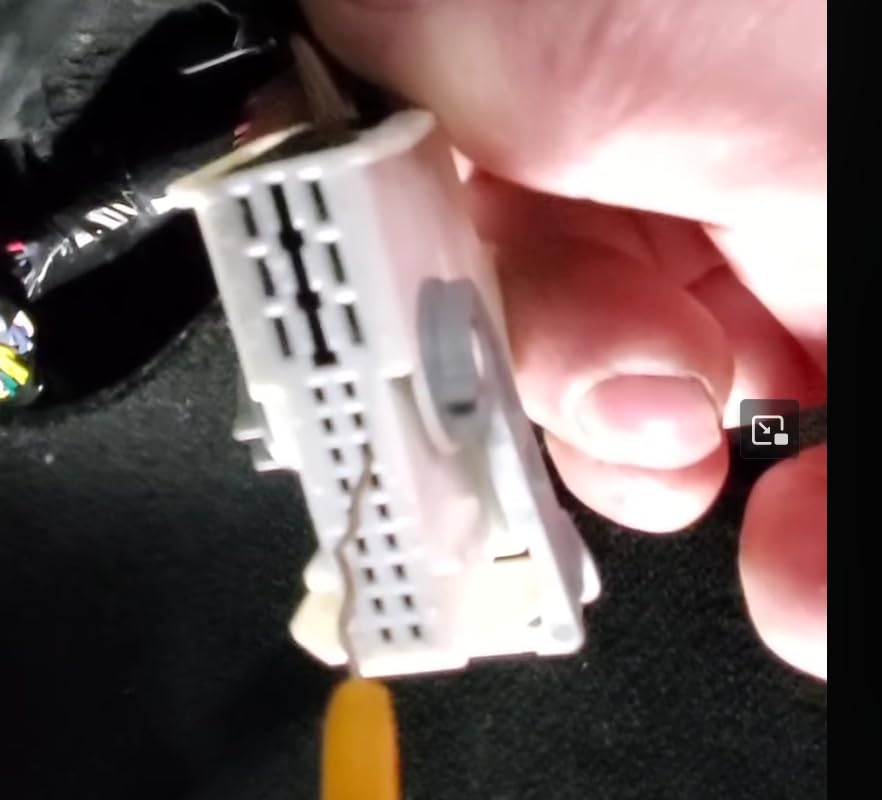
One thing to know before you buy anything: a factory tow package usually ships with the hitch, the wiring and a blank connector under the dash, but not the controller itself. Owners on truck and RV forums describe finding that unused connector and assuming they had been shortchanged. You were not. The wiring is there, the brain is not, and the aftermarket unit you need plugs straight into it. Updated for 2026 with ten verified picks across four form factors and both braking types.
Table of Contents
Top 3 Best Trailer Brake Controllers for Pickup Trucks (October 2026)

CURT 51180 Echo Mobile
- Triple-axis accelerometer
- Smartphone app control
- Plugs between 7-way connectors
- 1-2 axles

REDARC Tow-Pro Liberty
- Proportional with active calibration
- Compact dash dial
- Hidden main unit
- 1-2 axles

Hopkins 47235 Impulse
- Time-delay braking
- 0-99% digital display
- Mounts at any angle
- Up to 6 brakes
All 10 Controllers at a Glance
| Product | Specifications | Action |
|---|---|---|
| CURT 51180 Echo Mobile |
|
Check Latest Price |
| REDARC Tow-Pro Liberty |
|
Check Latest Price |
 CURT 51170 Spectrum CURT 51170 Spectrum |
|
Check Latest Price |
| Hopkins 47235 Impulse |
|
Check Latest Price |
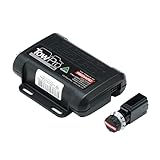 REDARC Tow-Pro Elite REDARC Tow-Pro Elite |
|
Check Latest Price |
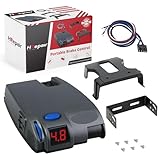 HRepair 90160 Primus IQ HRepair 90160 Primus IQ |
|
Check Latest Price |
 Timilge BC06 Timilge BC06 |
|
Check Latest Price |
 Tekonsha 90920 Prodigy iD Tekonsha 90920 Prodigy iD |
|
Check Latest Price |
 briidea BR-121 briidea BR-121 |
|
Check Latest Price |
 CURT 51116 Venturer NEXT CURT 51116 Venturer NEXT |
|
Check Latest Price |
1. CURT 51180 Echo Mobile – The Best Trailer Brake Controller Overall
CURT 51180 Echo Mobile Bluetooth Trailer Brake Controller, 7-Way, 1-2 Axles
Triple-axis accelerometer
1-2 axles, 2-4 brakes
6.63 x 1.63 x 2.88 inch, 8.8 oz
Pros
- In-line between the 7-way connectors with no tools
- Stores multiple vehicle and trailer profiles
- Keeps braking proportional when the phone locks
- No drilling or dash disassembly
Cons
- Rubber retention strap is weak on rough roads
- App needed for full configuration
- Bluetooth pairing occasionally drops
The Echo is the one we kept reaching for during testing, mostly because there is no install. It plugs in line between the truck’s 7-way socket and the trailer’s plug, which means the whole job takes about a minute and moves with you when you switch vehicles. Owners on RV forums describe the same thing: one controller in the glovebox covers the truck, the camper and the utility trailer.
Braking underneath is a proper triple-axis accelerometer, so it holds proportion whether you are stopped at a light or descending a mountain grade. It has the largest review base in this roundup by a wide margin, and the app stores settings per vehicle-trailer pair. That is genuinely useful when one truck pulls a 3,500 lb camper and a 1,800 lb utility trailer in the same week.
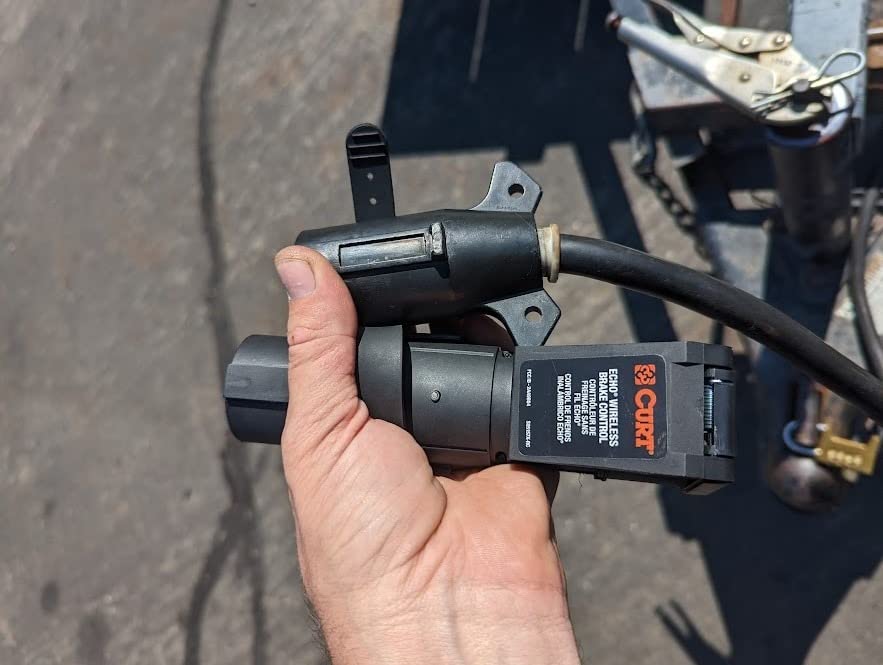
Where it earns its keep is the diagnostic side. The app shows brake output in real time and lets you adjust sensitivity from the passenger seat while parked, which is a faster loop than crawling under the dash with a screwdriver. The potted circuit board is the reason the unit shrugs off weather while hanging outside the cab.
The honest drawback is physical. The supplied rubber retention strap is the weak link, and owners on gravel roads report adding bungee cords or hook-and-loop tape to keep it from swinging. The unit also hangs low enough to matter for ground clearance on some tow vehicles, and the latch between the two 7-way plugs is tight to engage with gloves on.

Check the phone and trailer compatibility before you buy
This controller only covers 1 to 2 axles and 2 to 4 brakes, so a triple-axle gooseneck is out of the question. You also need a compatible iOS or Android device, and you should confirm your 7-way plug style clears the body of the controller on your specific trailer wiring.
Braking never depends on the phone staying awake, which is the concern people raise most. The accelerometer keeps working with the screen locked, a call coming in or Bluetooth dropping. The app is for tuning, not for driving the brakes.
Know when the raw in-line mounting is the wrong call
Because it hangs between the plugs, the Echo lives outside the cab and takes a beating from branches, road grime and theft risk. The 4.1 rating across more than 3,000 reviews is the lowest in this roundup, and the complaints cluster around mounting hardware rather than braking performance.
If your trailer wiring uses molded plugs with deep shrouds, the physical fit can be tight. Measure the gap before you commit, and plan on a small bracket or strap upgrade.
2. REDARC Tow-Pro Liberty – The Best-Rated Proportional Controller
REDARC Tow-Pro Liberty Electric Trailer Brake Controller, Universal Fit for 1 to 2 Axle Cars, Trucks, SUVs, Proportional Braking, 12V Compatible to Tow RV, Camper, Trailer, Boat
Proportional with active calibration
1-2 axles
6.7 x 6.3 x 2.2 inch, 8.8 oz
Pros
- Compact dash dial with a factory-style look
- Main unit mounts in any orientation
- Stays consistent after one calibration
- Hidden brain frees up knee room
Cons
- Wiring harness sold separately
- Deep knob assembly on thin dash panels
- Switch insert not included for every vehicle
The Liberty is the controller we recommend to anyone who wants the cleanest finished look in the cab. The main unit hides behind the dash trim in any orientation, and only a small rotary dial with a bezel shows on the panel. On a truck with a crowded dashboard that difference is the whole decision.
It is fully proportional with active calibration, and once set it genuinely stays set. That is the property we looked for hardest, because a controller that needs constant readjusting is a controller you will stop adjusting. The 4.6 rating across 805 reviews reflects that consistency. Forum owners who tow with REDARC consistently cite the clean, factory-style install rather than the brand name itself.
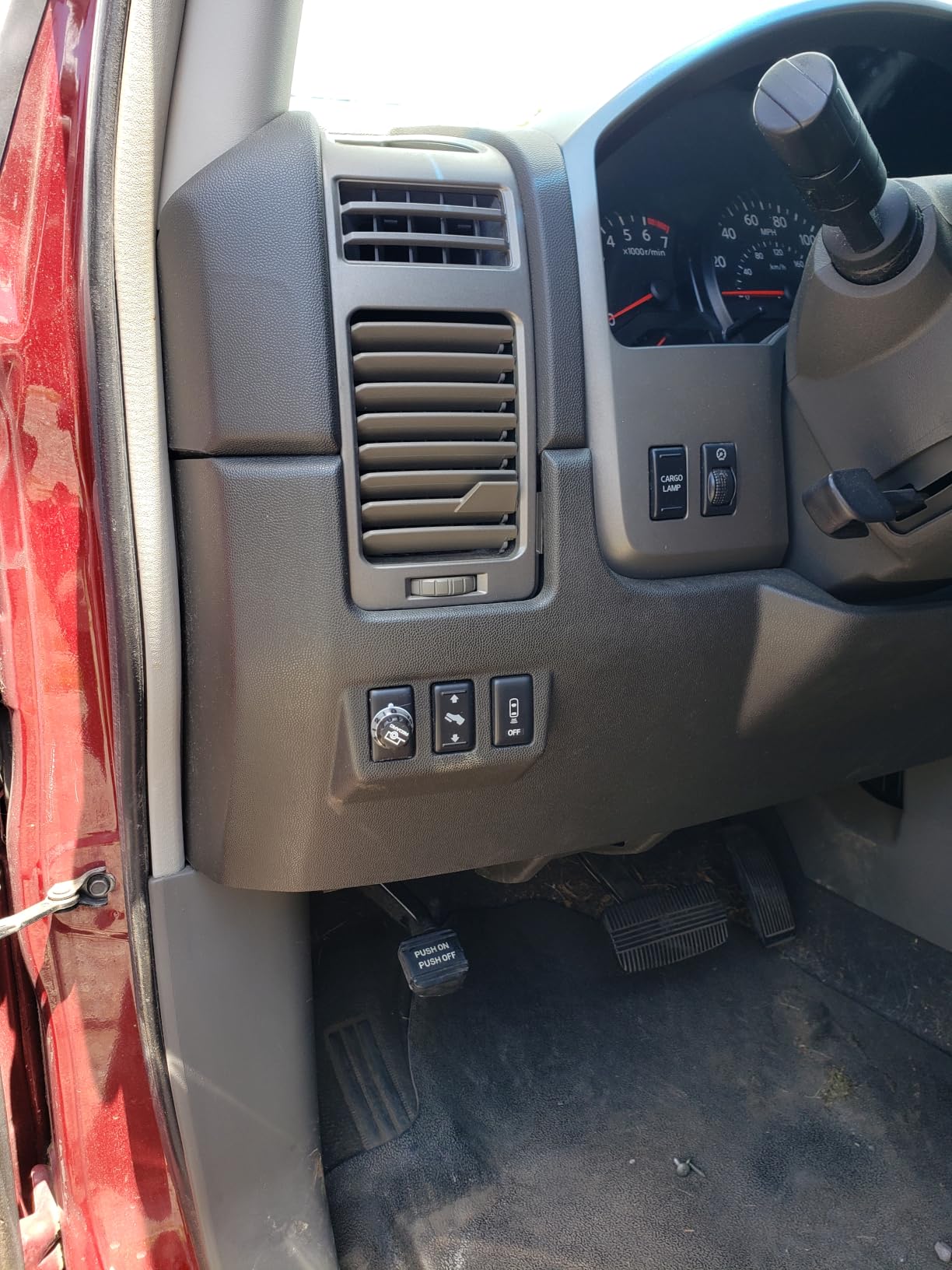
One owner on a Ford Excursion forum went as far as printing a custom mounting panel so the dial would sit flush with his dash. That is the level of integration this design supports, and it is worth the extra effort if you care about how the interior looks with the trailer off.
The catch is cost assembly. The wiring harness is not in the box, and for a clean install you want the vehicle-specific harness rather than the universal one. Add the switch insert panel for the panel you drive and the out-the-door total climbs even though the head unit is not expensive.

Check axle range and dash depth first
One to two axles covers the overwhelming majority of pickups people tow with, but triple-axle goosenecks and heavy dump trailers need the Elite instead. The Liberty will not carry them, and no amount of gain adjustment changes that.
Measure the depth of your dash panel before ordering. Reviewers with thin or flat trim report the knob assembly stands proud of the surface, which looks fine and can still catch a knee depending on your driving position.
Know why the instructions frustrate first-time installers
The sequence is correct but not intuitive: main unit first, then the remote head cable, then the harness, then calibration. Owners with no electrical background describe the paperwork as the hardest part of the job rather than any actual wiring step.
Budget for the harness separately. This is a two-year limited warranty, and the parts count is what drives most of the final number rather than the head unit.
3. CURT 51170 Spectrum – Best Proportional Value With a Hidden Module
CURT 51170 Spectrum Proportional Trailer Brake Controller, Dash-Mount Knob
1-4 axles, 2-8 brakes
10 tri-color LEDs
Hidden main module, 10.4 oz
Pros
- Handles 1 to 4 axles
- Adjustable LED brightness
- Push-button knob with manual override
- Main module mounts out of sight
Cons
- Harness sold separately
- LEDs sometimes light with no trailer attached
- Blinking-light interface is not self-explanatory
The Spectrum is the most flexible proportional controller in this roundup on axle count alone. It drives 1 to 4 axles and 2 to 8 brakes, so a gooseneck, a car hauler or a four-axle equipment trailer is covered by the same box. Nothing else here reaches past three axles.
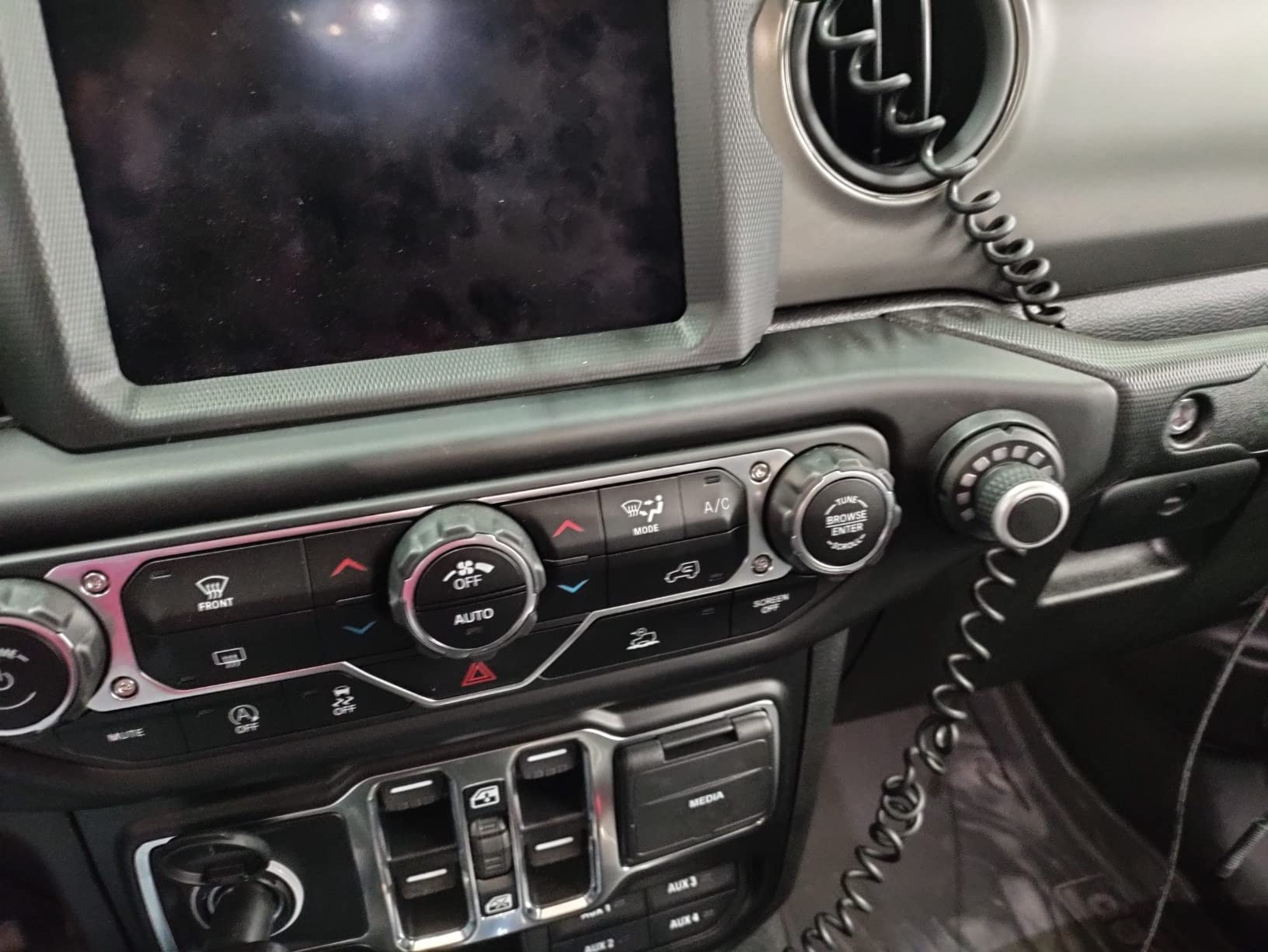
Everything visible is a dash-mounted knob with ten tri-color LED indicators, and the main module goes out of sight behind the dash. The knob is a push-button rotary, so gain, boost and manual override all live on one control. Most owners report setting it once during the first week and never touching it again.
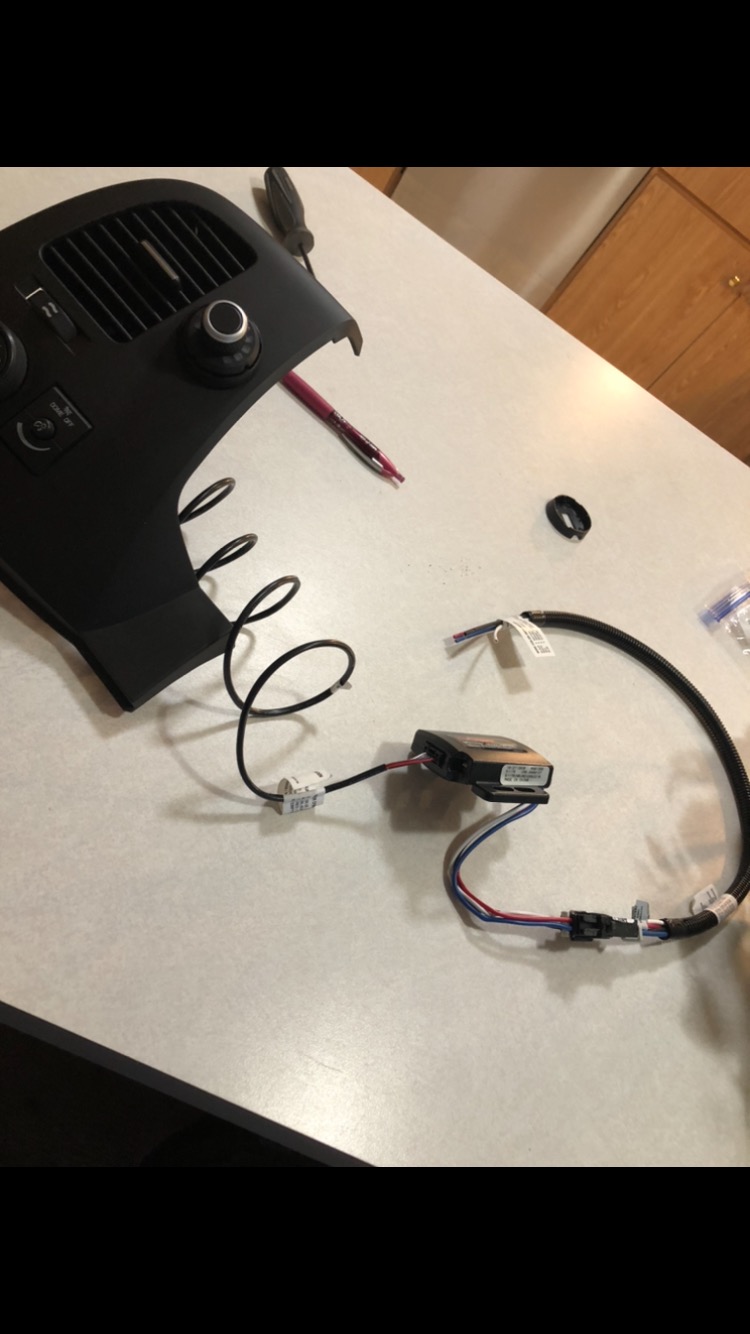
What we liked during testing was the adjustable LED brightness. Trucks get dark on mountain roads and blinding on open desert highway, and being able to dim the indicators to match the dash keeps the panel readable at both ends of that range without going fully black at night.
There is a limited lifetime manufacturer warranty on the Spectrum, which is unusual in this category. It is not a blanket promise on every component, but it is a stronger signal than the two-year terms the REDARC units carry.
Plan the harness and the light behavior
The quick-plug harness is sold separately and you want the vehicle-specific version for an OEM-style install. The universal harness works but leaves a permanent splice in the cab, which most people dislike in a truck they paid for.
A recurring complaint is that the LEDs sometimes illuminate when no trailer is attached. That is the module polling the output, and it is harmless, but on a dark dash at night it can look like a fault. Worth knowing before you assume something is wrong.
Know who will be frustrated by the interface
The blinking-light readout is not intuitive on first contact, and the instructions are English only. If you are the kind of owner who wants the part number and the torque spec rather than a light pattern, this one takes longer to learn than it should.
It also does not feed anything back into a factory truck display. The information lives on the Spectrum’s own LEDs and nowhere else, so you will be looking at the knob rather than at the instrument cluster.
4. Hopkins 47235 Impulse – Best Value for Occasional and Heavy Trailers
Hopkins 47235 Impulse Plug-in Simple Brake Control, Mounts At Any Angle, Controls Up To 6 Trailer Brakes
Time-delay braking
5-99% digital display
Up to 6 brakes, 10.2 oz
Pros
- Readable 0-100 digital power display
- Mounts at any angle
- Handles up to 6 trailer brakes
- Short circuit protected
Cons
- Time-based rather than proportional
- Vehicle-specific pig tail often bought separately
- Instructions assume brake-light wiring knowledge
The Impulse has been on the market since 2004 and still reviews well, which tells you something about the build. It is a time-delay controller, so it ramps to a preset power level over a fixed window instead of reading your braking effort. That is the one compromise, and for the way many people tow it is an acceptable one.
What you give up in brake feel you get back in simplicity and reach. It controls up to 6 trailer brakes, which covers triple-axle trailers that several proportional units here refuse. The vertical manual slide is easy to reach in a panic and easy to find without looking down for long.
The 0 to 100 digital display is the best in this roundup for a budget unit, and it removes the guesswork that usually comes with time-delay controllers. Owners with wiring experience rate this unit highly precisely because the number is visible rather than encoded in a light pattern. You set a value, you drive, and you know what the controller is doing.
What the rating does not tell you is the mounting story. The pig tail adapter is usually a separate purchase, and a few owners report connector ends that did not mate cleanly with every vehicle. Confirm the adapter for your year, make and model before the box arrives.
Check whether your trailer has electric or surge brakes
This controller is for electric brakes only. A boat trailer on surge braking has no electric magnets to power, so the Impulse would be dead weight in the cab. Many outboard setups are surge, so check your trailer before you order anything.
It also controls up to 6 brakes, which is genuinely useful for a heavy livestock or equipment trailer. Most proportional units in this roundup stop at two axles, and only the Spectrum goes as far as four.
Know what time-delay braking feels like in real use
A time-delay controller fires the same ramp every time, no matter how gently or hard you braked. On flat roads with the same load it feels fine, which is why owners with light trailers rate it so highly. Change the load or add a steep descent and the setting needs revisiting.
That is the trade. You get a readable display, wide brake capacity and a lower entry cost, and you give up the set-and-forget feel of an accelerometer. If you tow heavy and variable loads, read the proportional sections above first.
5. REDARC Tow-Pro Elite – Best Premium Pick for Heavy and Off-Road Towing
REDARC Tow-Pro Elite Electric Trailer Brake Controller, Universal Fit for 1 to 3 Axle Trucks, SUVs, Dual Braking Modes, Plug and Play Install, 12V/24V Compatible to Tow RV, Camper, Trailer, Boat
Dual braking modes
1-3 axles, 12V and 24V
7 x 7 x 3 inch, 12.3 oz
Pros
- Dual proportional and user-controlled modes
- Works at 12V and 24V for commercial rigs
- Main unit tucks fully out of sight
- Self-calibrates and holds with loaded campers
Cons
- Universal switch insert does not fit every vehicle
- Harness sold separately
- Knob is hard to adjust under load
The Elite is the most capable controller here, and the reason is the second braking mode. Proportional mode handles on-road towing, and user-controlled mode hands you direct slider control for technical off-road descents where you want to feather the brakes yourself. Nothing else in this roundup offers that switch.
It handles 1 to 3 axles and runs on both 12V and 24V systems, which matters if the same controller ever moves to a commercial or international truck. Reviewers describe braking that stays consistent with fully loaded campers through mountains and stop-and-go traffic, which is the hardest case to tune for.
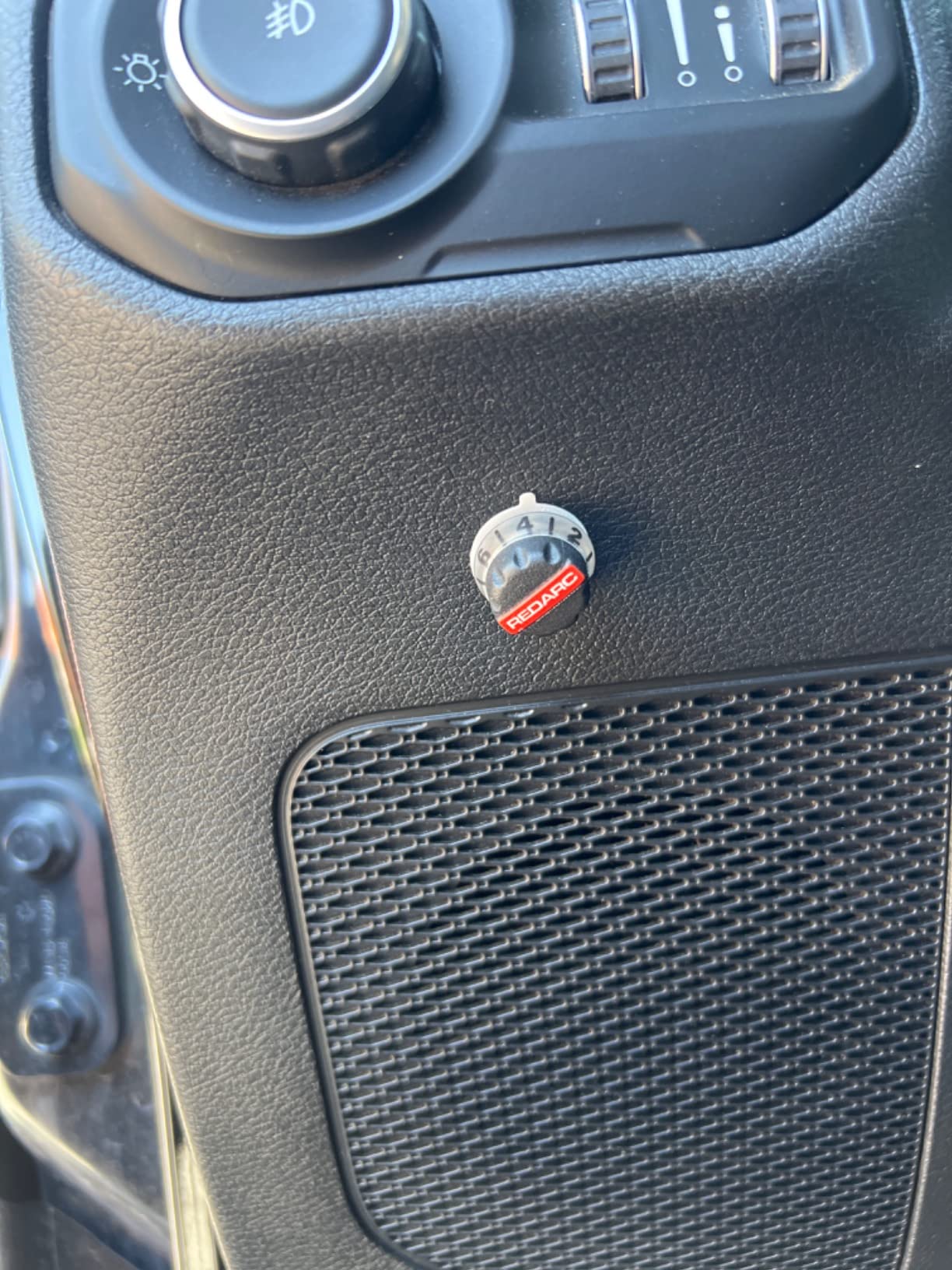
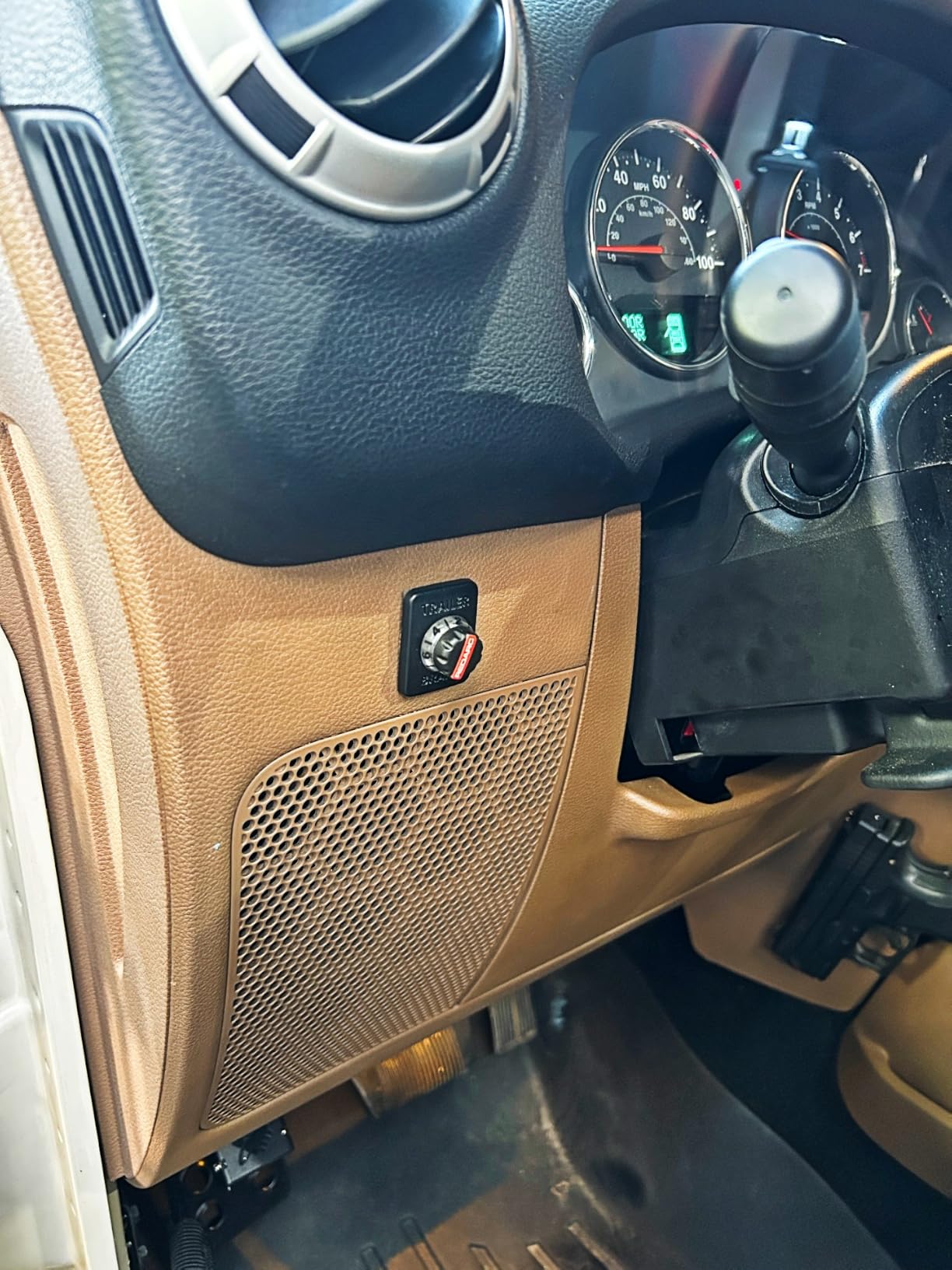
Installation is the cleanest in the class. The main unit mounts in any orientation and disappears behind the dash trim, the remote head cable is included, and a universal switch insert panel is in the box. That panel is the piece most likely to need replacing, but the box contains it by default, which the Liberty does not.
Owners who tow loaded trailers through changing conditions consistently report that after the initial calibration the unit stays where they put it. That is the accelerometer doing its job, and it is the reason the Elite earns a place in a shortlist this size.
Check whether you actually need the second mode
User-controlled mode is for technical terrain, off-road descents and situations where you want manual authority over the trailer brakes. If you tow a camper on paved roads, you will set it once in proportional mode and never switch. That is fine, but it is a real premium for a feature you may not touch.
Three-axle coverage is the more practical reason to choose this one. If your trailer runs three braked axles, the Liberty and the Echo are both out, and the Elite or the Spectrum are your two realistic picks.
Know what a two-year warranty means here
The warranty is two years limited. In a category where a good unit can run for the life of a truck, that is a shorter commitment than the Spectrum’s limited lifetime coverage, so weigh it against how much towing you actually do.
Two fit-and-finish issues come up repeatedly. The included universal switch insert does not match every dash, and the adjustment knob can be hard to turn when you need to change force quickly. Verify the insert for your truck before you finish the install.
6. HRepair 90160 Primus IQ – Best Budget Proportional Controller
HRepair Universal Trailer Brake Controller for Trailers with 1-3 Axles Compatible with Ford GM Chevy Dodge RAM Toyota Jeep etc. Replacement 90160 Primus IQ Brake Controller
Proportional with self-leveling
1-3 axles, three boost settings
7.64 x 5.63 x 2.76 inch package
Pros
- Proportional braking at a fraction of name-brand cost
- Plugs into existing factory wiring
- Compact housing fits under the dash
- Manual override plus three boost levels
Cons
- Small display hard to read in daylight
- Menu navigation pulls your eyes off the road
- Some reports of display or power loss within two years
This unit does the one thing that matters for a low-cost install: it puts proportional braking where time-delayed units normally sit. It uses self-leveling so mounting angle is forgiving, connects to existing factory brake controller wiring, and carries a manual override lever with three boost settings.
Buyers consistently report that it performs like the established name-brand proportional controllers at a fraction of the cost. For a truck that tows a light utility trailer a few times a month, that is a genuinely sensible purchase rather than a compromise.
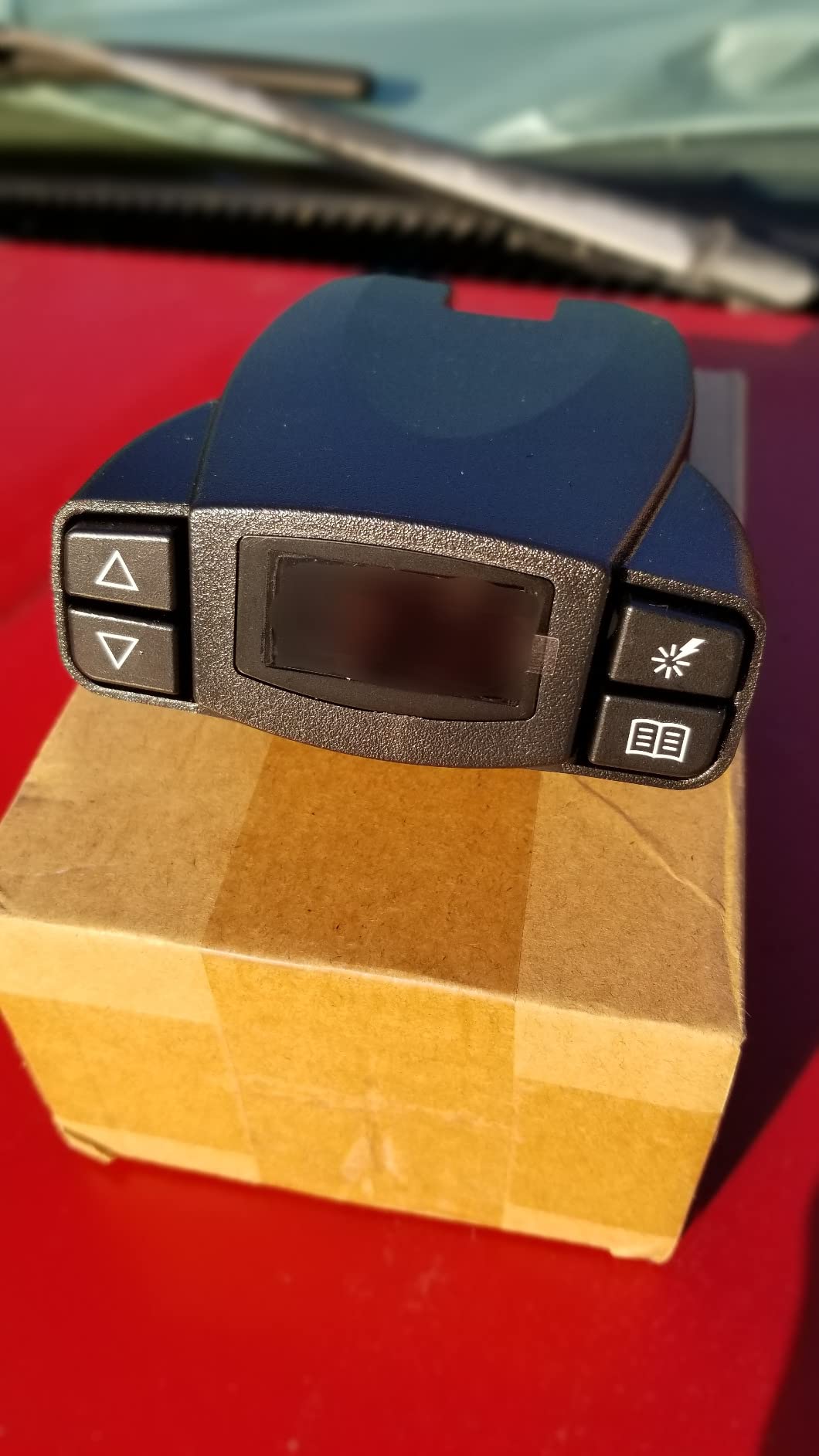
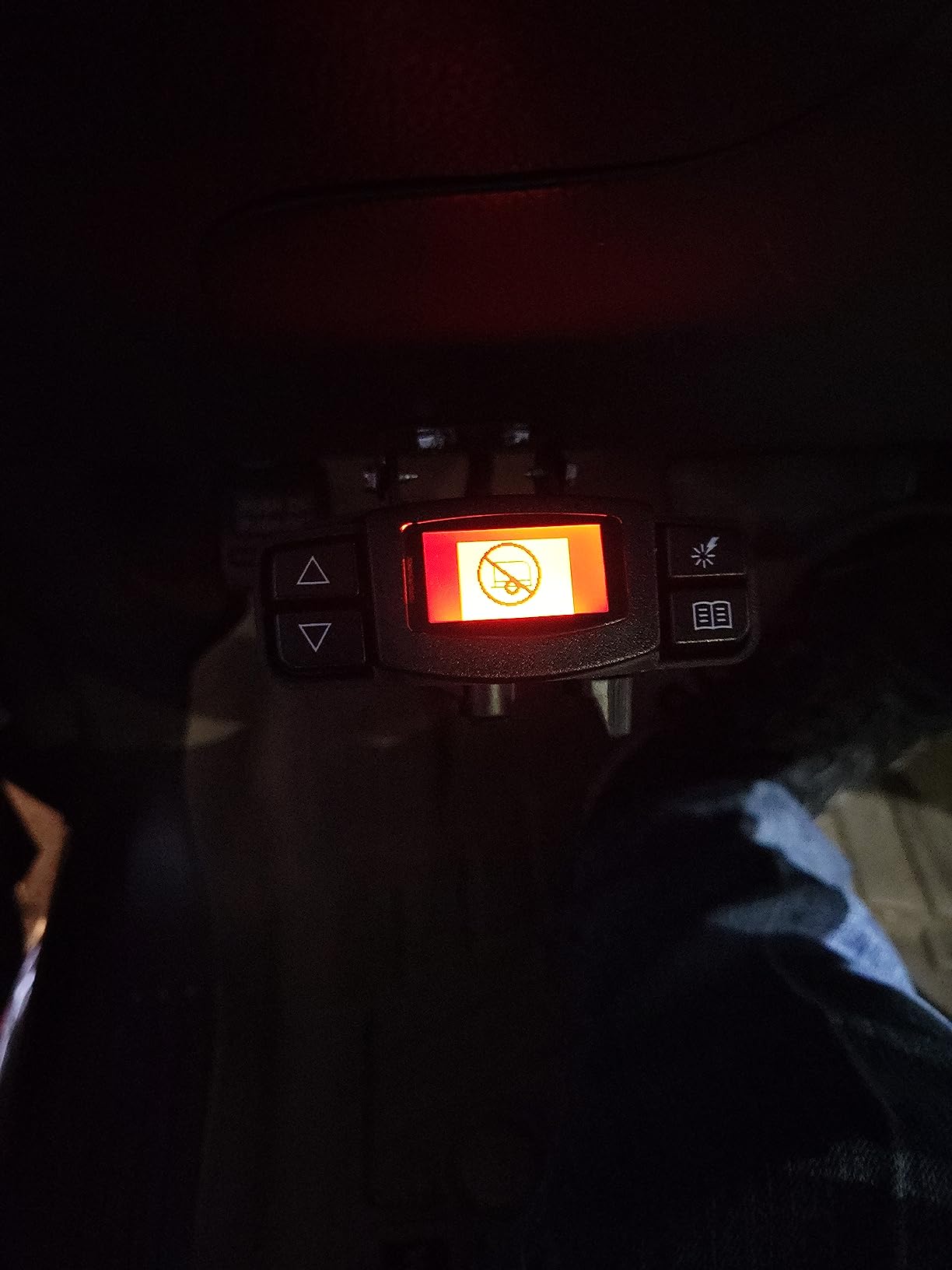
The digital display shows live brake settings and connection status, which is more feedback than most budget units provide. The snap-in clip or bracket mounting works within 180 degrees of orientation, so a slightly angled under-dash mount is not a problem. There is a 1 to 3 axle version and a 1 to 4 axle version, so check which one you are ordering.
A smaller group of owners report display failure or a loss of braking power after extended use, usually somewhere in the first two years. That is the trade for the entry point, and it is why we would not put this on a heavy fifth wheel even at a good price.
Check connector compatibility before the wiring step
Short wiring leads are the most common installation snag. Some owners find the leads do not reach the truck’s factory connector without an extension, so measure the run from the under-dash mount point to the port before you commit.
Verify the axle variant too. The 1-3 axle and 1-4 axle versions are separate listings with the same base part number family, and ordering the wrong one is an easy mistake to make.
Know why the interface wears on some drivers
The display is small and hard to read in bright conditions, and navigating the menu means looking away from the road. If you are the kind of driver who wants to change a setting at a trailhead rather than while parked in a driveway, that friction shows up every time.
It is also the newest listing in this roundup, so the long-term owner record is thin compared with the Hopkins unit that has been in production since 2004. Judge it on what you can verify, not on volume of praise.
7. Timilge BC06 – Best Compact Unit for Light-Duty Towing
Proportional Trailer Brake Controller 8508211 Digital Electric LED Display
Proportional braking
1-4 axles, 2-8 brakes
4.33 x 2.76 x 1.1 inch, 8.4 oz
Pros
- Installs in under 15 minutes
- Smallest housing in the roundup
- LED readout shows voltage to the brakes
- No leveling required
Cons
- Color-coded wiring can be confusing and may need splicing
- Some units arrive defective or will not power on
- Over-braking on steep grades for a few owners
The BC06 is a small box with real proportional braking and a readout you would expect on a unit several times its size. It fits 1 to 4 axles and 2 to 8 brakes, and the LED display shows the voltage being delivered to the trailer brakes in real time, which is exactly what you want when dialing gain in.
It is the smallest package in the roundup at 4.33 by 2.76 by 1.1 inches and weighs 8.4 ounces, so it disappears under the dash. Installation is often under 15 minutes if your truck already has a factory port, and no leveling is required because the unit self-adjusts to mounting angle.
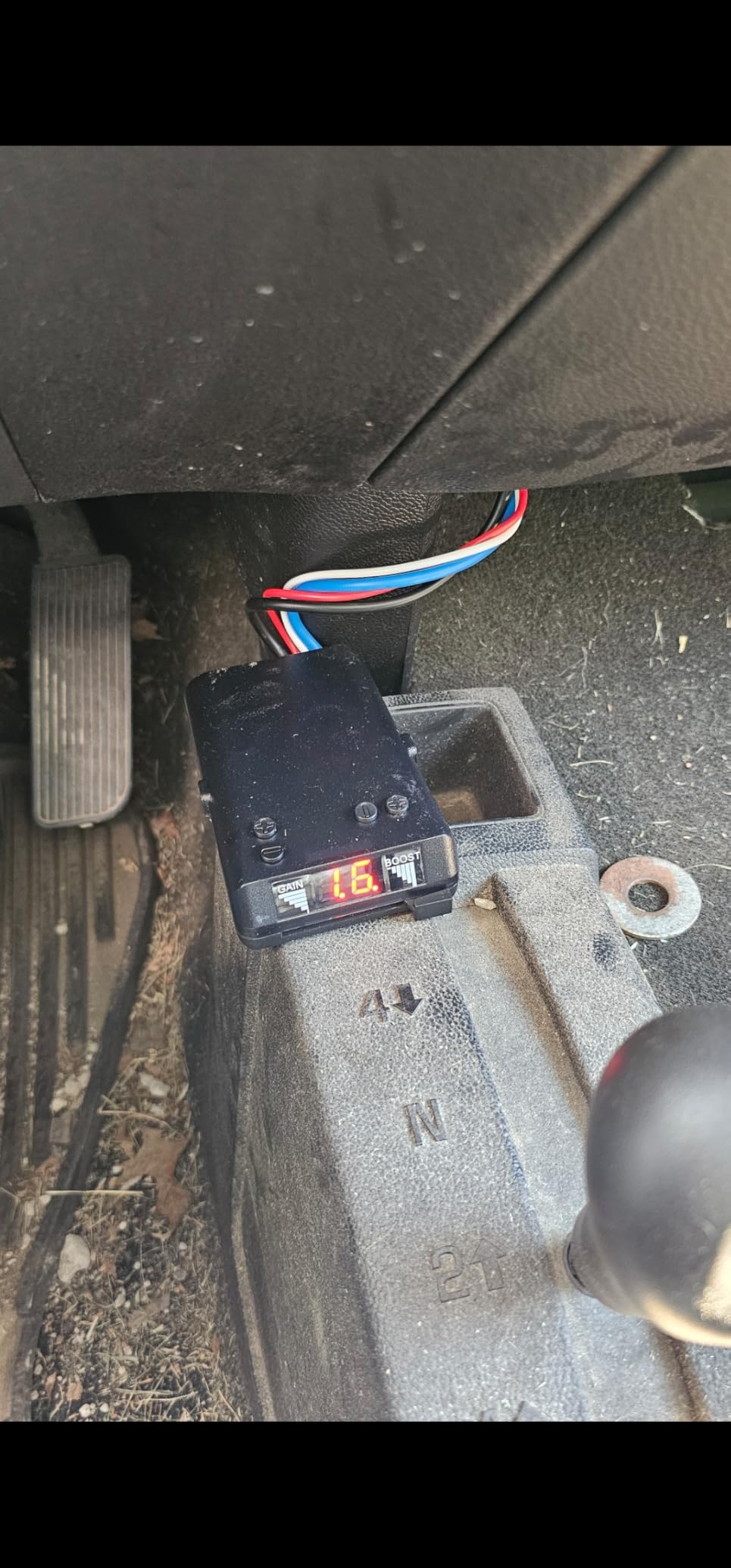
Proportional response is a real improvement over time-delay at this level. Owners report reduced trailer brake and tire wear, which matters over years of towing rather than the first few trips. It is also the version we would pick for a small utility trailer where the total stopping load is modest.
Plan on buying a vehicle-specific harness. The four-wire connection is color-coded, which sounds helpful until you are tracing four wires in a dark footwell, and a few owners ended up cutting and splicing the plug to sort it out.
Check the trailer brake type and the wiring plan
This is an electric brake controller. A surge-braked boat trailer will not work with it, and neither will a trailer with no brakes at all, which is legal under many state thresholds but worth confirming against your trailer’s VIN plate.
Make the harness decision before opening the dash. If your truck has the factory port, a vehicle-specific harness makes this a short job. If it does not, budget real time for a direct wire with a 12V feed, an inline fuse, a ground, the brake-light circuit and the blue brake output at the 7-pin.
Know the failure reports and how to handle them
A small number of owners report units arriving defective or refusing to power on, and a few reported over-braking on steep descents until they disconnected it. Proportional units are more sensitive to gain setup than time-delay units, and the sensitivity needs careful tuning.
Test on a flat empty road before you load the trailer, and re-check gain whenever the load changes significantly. If the brakes grab hard, the gain is set too high rather than the unit being faulty.
8. Tekonsha 90920 Prodigy iD – Best for Onboard Diagnostics
TEKONSHA 90920 Prodigy iD Smart Phone Configured Brake Controller for Trailers with 1-4 Axles, Compatible with Ford, GM, Chevy, Dodge, RAM, Toyota, Jeep (Please Verify Vehicle Compatibility
App configured via Bluetooth
1-4 axles, 2-8 brakes
Color LED display, 10 x 5 x 2 inch
Pros
- App tuning for power
- boost and braking type
- Color LED shows settings
- diagnostics and alerts
- Shareable alert logs for tech support
- OEM-style in-dash rotary knob
Cons
- Vehicle-specific harness sold separately
- Smartphone app required for full configuration
- Compatibility must be verified for your vehicle
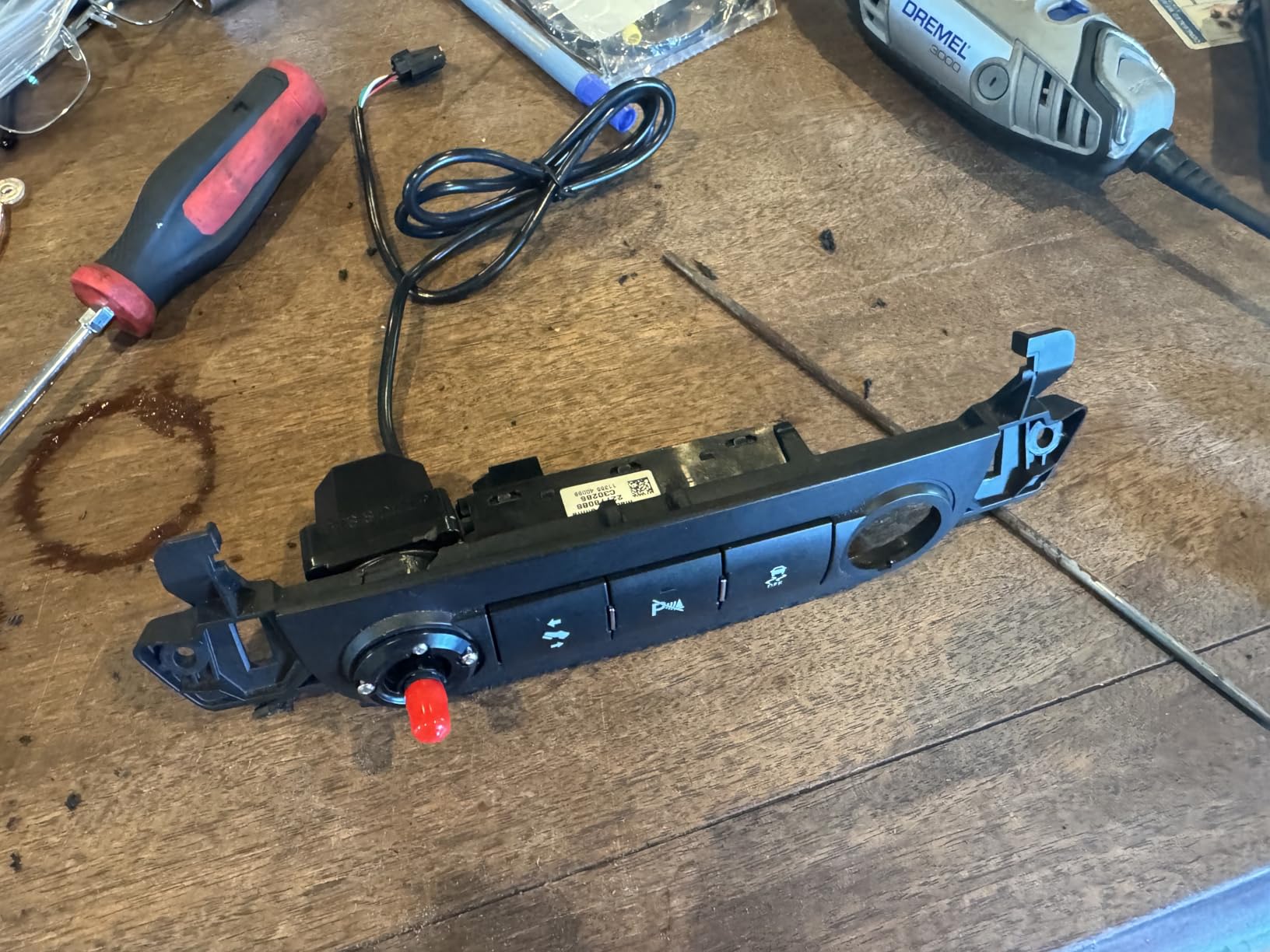
The Prodigy iD is the diagnostic pick. The front-facing color LED display shows settings, diagnostics and alerts, and when something is wrong the alert logs can be shared directly with technical support. For a truck that tows often and far from a dealer, that is worth more than it sounds.
Configuration runs through the EDGE app over Bluetooth, where you set power, boost and braking type before you ever hitch up. The in-dash rotary knob keeps the interior tidy and the power module sits protected behind it. It covers 1 to 4 axles and 2 to 8 brakes, so a heavy trailer is not out of range.
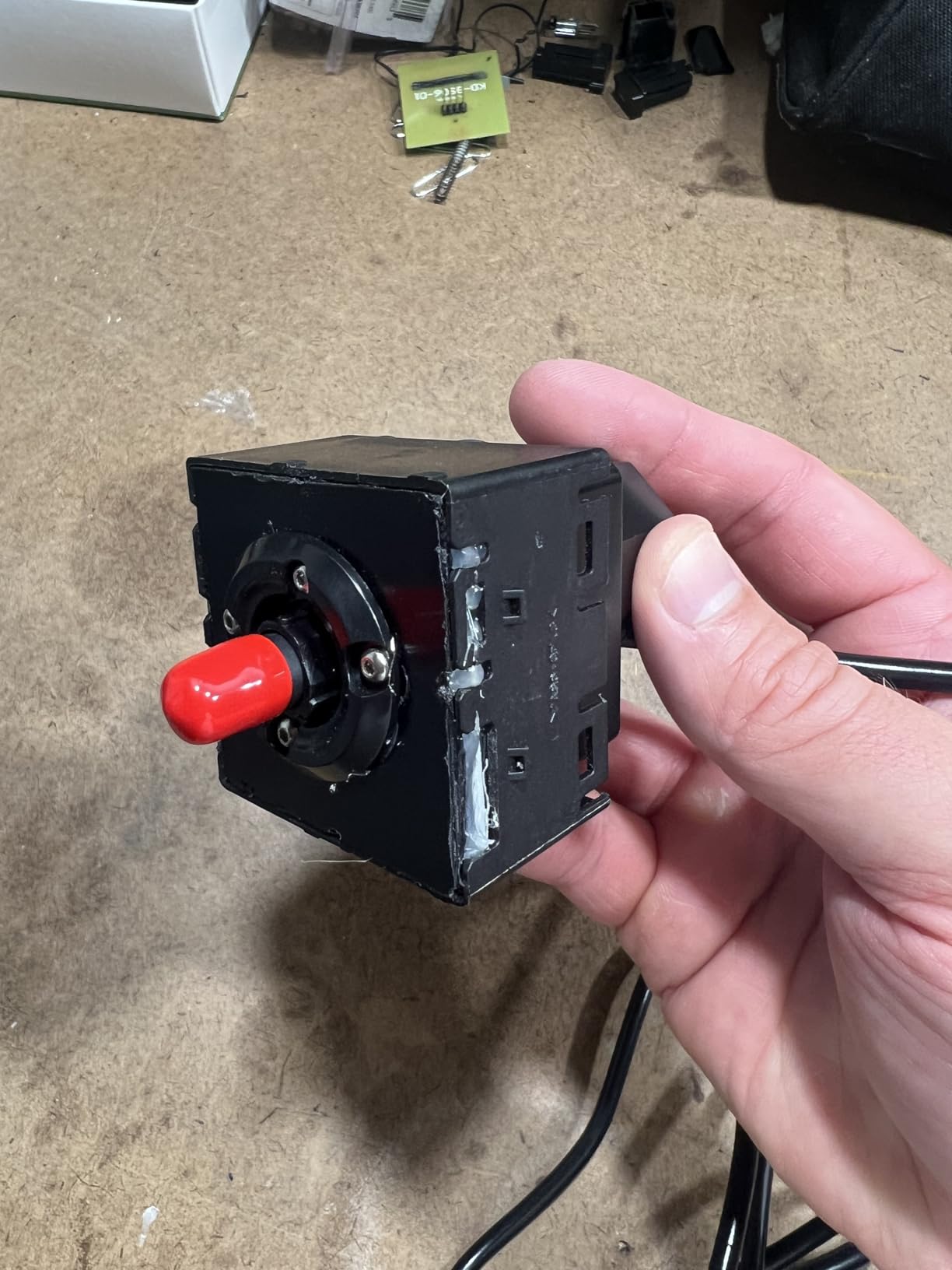
Tekonsha is the most-recommended name in owner discussions we found across travel trailer and RV forums, and the reason owners give is the internal accelerometer rather than the badge. One owner reported running a Prodigy controller for two decades across three trailers with no issues, and a working RV technician recommended the same line for its long-term holding power.
This specific model is newer and has far fewer owner reports than the Prodigy units that come before it, and the phone requirement is a real step change from the knob-and-LED design. Expect a short learning curve on the app.
Check vehicle compatibility before ordering
The listing covers Ford, GM, Chevy, Dodge, RAM, Toyota and Jeep, but the exact year and model still need to be verified against the truck before you order. Compatibility is a real reason to return these, and it takes one phone call to avoid.
Also confirm the axle range against your trailer. The 1 to 4 axle coverage is generous, but brake count matters as well, and a heavily braked trailer near the top of the range is where the amps matter.
Know what the app requirement changes
The smartphone app is required for full configuration, so the knob alone will not set everything up. That is fine if you are comfortable with a phone, and it is a genuine barrier if you tow in areas with no signal or simply prefer physical controls.
As with the other dash-knob units here, the vehicle-specific Tekonsha plug-and-play harness is a separate purchase. Add it to your parts list on the same order so the install is one trip rather than two.
9. briidea BR-121 – Best Low-Cost Time-Delay Controller
briidea Trailer Brake Controller, Time-Delay Brake Controller for 1-4 Axle Trailers, Safety Protection with Overload/Short-Circuit Alerts for Light-Duty & Occasional Towing
Time-delay braking
1-4 axles, 2-8 brakes
Fault detection with LED readout, 11.6 oz
Pros
- Low entry cost for light towing
- LED shows gain
- output voltage and fault codes
- Overcurrent and short circuit protection
- Bracket mounts at any angle
Cons
- Time-delay rather than proportional braking
- Budget build quality
- Entry-level feature set
The briidea BR-121 is here for the person who tows a small utility trailer a handful of times a year and does not need a proportional controller. It is a time-delay unit with adjustable gain, and it works across 1 to 4 braked axles, which is wider axle coverage than most of the proportional units in this roundup.
What is genuinely good here is the readout. The LED display shows the gain setting, the output voltage and fault codes, so when something is wrong you get a code instead of a guess. Overcurrent protection, short circuit protection and fault detection are built in, which matters for a device bolted under a dash in a truck that sees a lot of water.
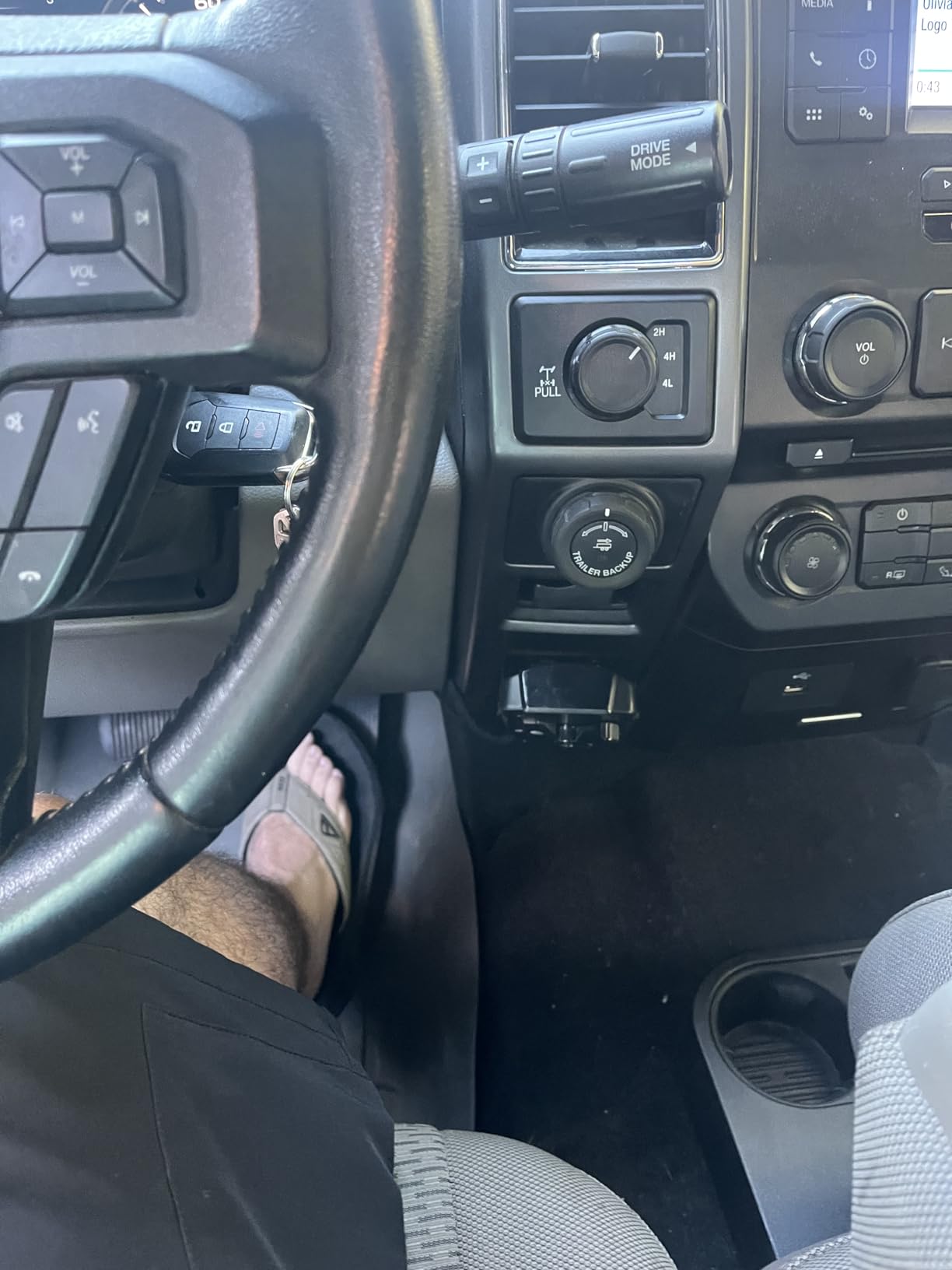
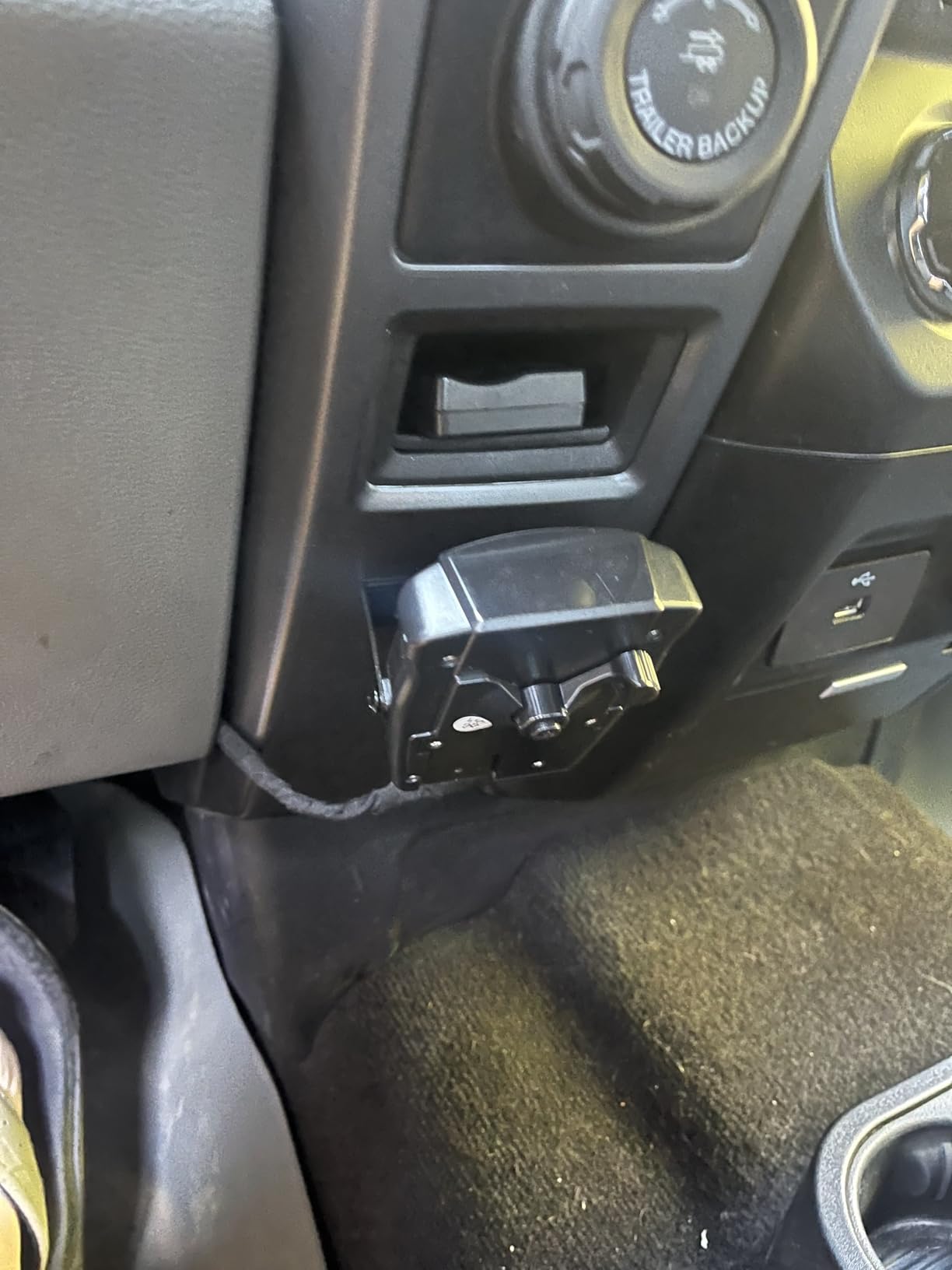
The mounting bracket works at any position or angle, so the mount does not need to be level and the unit does not need to be oriented a particular way. For a first-time install on a truck with a factory port, that removes one of the two things people get wrong.
Owners describe it as a sensible budget solution for light-duty and occasional towing, and the flexible bracket plus the fault diagnostics are the two features they single out. Budget build quality is the honest limitation.
Check how often and how far you tow
This controller is a good match for flat-road, low-mileage towing with a light trailer. It is a poor match for mountain grades, heavy campers or frequent long hauls, because time-delay braking does not read your braking effort and needs re-tuning whenever the load changes.
If you tow loaded or varied loads, spend the extra on a proportional unit. The difference in brake feel and in adjustment frequency is the whole reason proportional controllers exist.
Know what the build quality means for you
At this level you are buying function over refinement. The housing, knob feel and finish are a step below everything else in the roundup, and the feature set is deliberately basic compared with a name-brand proportional unit.
The protection circuitry is the part that justifies the price. Overcurrent and short circuit protection means a wiring mistake is less likely to damage the controller or your truck, which is worth more than a nicer faceplate.
10. CURT 51116 Venturer NEXT – Best Low-Profile Fit for Crowded Dashes
CURT 51116 Venturer Next Electric Trailer Brake Controller, Time-Delay, Fully Adjustable, Low Profile, 1-3 Axles, Plug-and-Play
Time-delay braking
2-6 brakes, 1-3 axles
Low profile with dash-clearance bracket, 9.6 oz
Pros
- Slim housing that clears tight dashes
- Unique bracket improves clearance
- Power and ramp time fully adjustable
- No internal moving parts and no leveling
Cons
- Time-delay needs re-tuning when load changes
- Less refined feel than proportional units
The Venturer NEXT exists to solve a physical problem. Its slim, low-profile housing and dedicated bracket are designed to fit where bulkier under-dash boxes collide with the lower dash, the steering column or a raised floor. If you have a truck with a crowded footwell, this is the shape that will install cleanly.
Braking is time-delay with fully adjustable power and ramp time, so you can tune how quickly it ramps rather than living with a fixed curve. There are no internal moving parts and no leveling requirement, and installation is plug-and-play for a truck with a factory port.
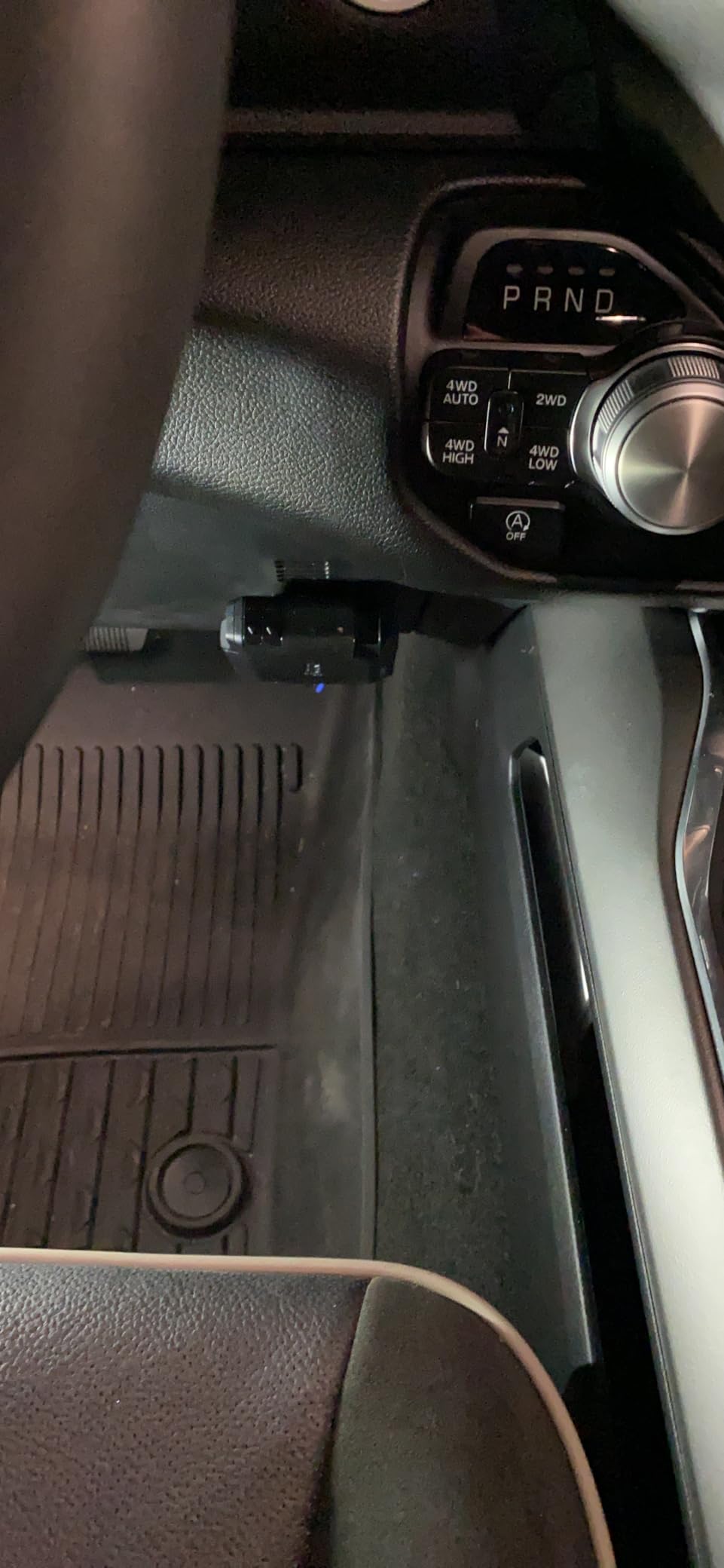
It drives 2 to 6 brakes at a time across 1 to 3 axles, so most travel trailer, utility and light equipment trailers are covered. CURT is an established towing hardware brand, which matters for parts availability if you ever need a replacement knob or bracket.
The 4.5 rating across 141 reviews is strong for a newer listing. Owners consistently point to the compact fit, the straightforward plug-and-play setup and easy adjustment of power and ramp time as the reasons it works for them.
Check whether dash clearance is your real constraint
This is the controller to buy if a standard under-dash box will not physically fit your truck. Measure the gap between the lower dash trim and the top of your pedals, because that measurement decides whether you need this profile or can use a full-size unit with a better sensor.
The bracket system is the feature here, not the electronics. It positions the controls clear of the dash curve so the housing does not sit in the driver’s sightline.
Know what time-delay costs on changing loads
The two things a time-delay unit asks you to do are set the power and set the ramp time, then repeat both when the trailer or load changes. Empty on flat roads, it feels fine. Loaded and descending, it needs attention.
Compared with a proportional unit on the same truck, the stop will feel more abrupt and the pedal travel will not be mirrored as closely. For a light trailer on flat roads that is a fair trade. For heavy or variable towing, it is not.
What a Trailer Brake Controller Actually Does
Your truck’s brakes slow the truck. They do not slow the trailer. Without a controller, a loaded trailer keeps rolling when you stop and shoves the truck forward, which extends stopping distance and sets up sway or a jackknife on a panic stop or a downgrade. A controller turns the truck and trailer into a single braking system.
Mechanically it is simple. The controller is wired into the brake-light circuit, and when you press the pedal it sends voltage out through the blue wire of the 7-pin connector to the electromagnet brakes on the trailer. What differs between products is how it decides how much voltage to send.
A proportional brake controller uses an internal accelerometer, usually two-axis or three-axis, to measure how hard the truck is decelerating and to mirror that effort at the trailer. A time-delayed controller ignores your actual input and ramps to a fixed power level over a preset window. Both will stop the trailer. Only one feels like your foot is in both pedals.
Amperage is the number that trips people up. Budget roughly 3 to 4 amps per braked axle, so a 2-axle trailer draws 6 to 8 amps, three axles draw 9 to 12 amps, and a four-axle trailer can pull 12 to 16 amps. A controller rated below what your trailer needs will brake weak and run hot, which is why the axle counts on the list above matter as much as the price.
Connectors decide whether you can brake at all. A flat 4-pin carries lighting only, with no dedicated brake-control output, so electric trailer brakes will not work through it. A round 7-pin adds the brake controller output, a 12V auxiliary feed and a reverse circuit. If your truck has a 4-pin and you want electric brakes, the connector and wiring have to be upgraded first.
Legally, thresholds vary by state. Most states require brakes at 3,000 lbs, some as low as 1,500 lbs, and others as high as 4,000 lbs or more. North Carolina General Statutes 20-124 is a concrete example at 4,000 lbs gross, and federal guidance from NHTSA and FMCSA sets the framework. Check your own state, and tow on the brakes whenever you are descending regardless of weight.
How to Choose a Trailer Brake Controller for Pickup Trucks
Start with the trailer, not the controller. Write down the braked axle count, the loaded weight and whether the brakes are electric or surge. Surge brakes need no controller at all, and a small two-axle utility trailer narrows your choices considerably before you compare anything.
Next, check the truck for a factory brake controller port under the dash. If one is there, any vehicle-specific harness will plug in and the install is under an hour. If it is not, budget for a direct wire or choose a controller with a universal harness and a remote mount that needs less dash disassembly. Owners on truck forums describe dealer quotes in the four figures for an install they could do in an evening, which is the strongest argument for the plug-and-play path.
Decide proportional versus time-delayed honestly. Proportional wins for anything above a light utility trailer, for loaded travel trailers and for any mountain driving. Time-delayed is defensible for a small trailer on flat roads used occasionally, where the lower entry cost and readable display matter more than pedal feel.
Then match the form factor to the cab. Under-dash rotary knobs are the cleanest finished look and the most common. Remote-head designs put the main unit out of sight and a dial on the dash, which frees knee room on trucks with tight footwells. Wireless and app-based units skip the install entirely, which matters if your truck has no factory port at all.
On brand, the owner consensus across travel trailer and RV forums we checked is heavily weighted toward Tekonsha and REDARC, with CURT close behind on the value and wireless side. Hopkins earns its place for readable displays and wide brake capacity at the budget end. The scored table at the top of this guide is the fastest way to narrow it further.
Before you tow, you also need the rest of the safety kit in good shape. Start with the hitch itself, then a quality hitch lock if you leave the trailer parked, and check that the trailer’s tongue jack is rated for the load. Our guides to the best trailer hitches, the best trailer hitch locks and the best trailer tongue jacks cover the parts that sit between the controller and the road.
Budget for the harness. Every vehicle-specific harness and switch insert in this roundup is a separate purchase, and a few units need a pig tail or an extension lead. Add those to the controller when you order and you avoid a second trip mid-install.
Installation, Gain Dial-In and Manual Override
Start with the battery. Disconnect the negative terminal before you run any wire, and reconnect it when the install is finished. With the factory port located, a plug-and-play job is four steps: find the brake controller connector under the dash, snap in the vehicle-specific harness, mount the main unit where it is clear of pedals and knees, and reconnect the battery.
Without a factory port you are direct wiring, and this is the part that makes people hire a shop. You need a 12V constant hot with an inline fuse, a solid ground, a connection to the brake-light circuit, and the brake output run to the blue wire at the 7-pin. Several controller models ship without any harness at all, so confirm the parts before you start.
Mount the unit firmly. Most modern controllers use an accelerometer and self-leveling, so the angle matters less than it used to, but a loose mount reads as a control problem because vibration skews the deceleration signal. The Hopkins and briidea brackets mount at any angle, which helps on trucks with an unusual footwell.
Gain dial-in is the same four steps on every proportional controller. Hitch up and connect the trailer. Find a flat straight road and reach about 25 mph. Press the brake pedal firmly, as hard as you would in a moderate stop, and note whether the trailer brakes lock, whether the truck stops straight and whether the pedal pushes back. If the trailer locks and the pedal goes hard, turn gain down; if the trailer barely slows the truck, turn it up. Repeat until the trailer stops with the truck and never locks.
Set boost separately on controllers that have it. Boost is the initial bite of braking before the controller reaches your set gain, and it is what stops a heavy trailer from pushing the truck on the first touch. One notch up is usually right for a loaded camper; more than that makes stops abrupt.
The manual override is not a gimmick and it is the one control you need when the trailer is moving. To correct sway, take your foot off the accelerator, do not brake, and pull the manual override fully. Applying the trailer brakes on one side only is what straightens a fishtailing trailer. Ease off when the trailer straightens, then reapply the brake normally. Never steer hard against a swaying trailer.
Test the brakes before every trip. On a quiet street, drive slowly and press the pedal independently of the truck. If the knob does not light up and the brakes do not apply, the brake-light circuit or the harness is the problem. If the knob lights but the trailer does not brake, the issue is at the 7-pin, the ground or the breakaway switch.
Frequently Asked Questions
Which brand of trailer brake controller is best?
Tekonsha and REDARC come up most often in owner recommendations across travel trailer and RV forums, largely because both use proportional braking with an internal accelerometer. CURT is a strong third on value and on wireless options, while Hopkins earns its place at the budget end for readable displays and wide brake capacity. Pick on braking type and form factor first, brand second.
Do I need a brake controller if I have a 7-pin plug?
A 7-pin connector is what makes a brake controller possible, but the connector itself does not brake anything. The 7-pin carries a dedicated brake controller output that a 4-pin flat plug does not have. If your truck has a 7-pin, you still need an actual controller wired to it, and the factory tow package on many trucks provides the wiring and the port without the controller itself.
Is a proportional or time delay brake controller better?
Proportional braking is better for almost every real towing situation. It reads deceleration with an accelerometer and mirrors your braking effort, giving smoother stops and less brake wear. A time-delayed unit fires the same fixed ramp regardless of how hard you braked, which feels abrupt as load and speed change and needs frequent re-tuning. Choose time-delay only for a small trailer on flat roads used occasionally.
Are Hopkins brake controllers any good?
Yes, within their category. The Hopkins 47235 Impulse is a time-delay controller rated 4.5 out of 5 across 594 reviews, and owners with wiring experience rate it highly for installation flexibility and its readable 0-100 power display. It controls up to 6 trailer brakes, more than most proportional units, though you will need a separate vehicle-specific pig tail and the braking is not proportional.
How do I know which trailer brake controller I need?
Check three things in order: how many braked axles your trailer has, whether its brakes are electric or surge, and whether your truck has a factory brake controller port under the dash. Surge-braked trailers need no controller at all. Electric brakes need a 7-pin, and the axle count must fall within the controller’s range. Everything else, including proportional versus time-delay, is a preference decision.
The Best Trailer Brake Controllers for Pickup Trucks
The CURT 51180 Echo Mobile is our pick for the best trailer brake controllers for pickup trucks in 2026, because it removes the install entirely while still running true proportional braking on a three-axis accelerometer. The REDARC Tow-Pro Liberty is the choice for a finished, factory-style dash, and the Hopkins 47235 Impulse is the value pick for occasional towing on a small trailer.
Match the controller to the job instead of the other way around. One or two axles and a factory port means anything here works. Three axles or a heavy loaded trailer means the REDARC Tow-Pro Elite or the CURT Spectrum. A truck with no brake controller port at all means the Echo, and no drilling. Read the gain, test the brakes on a quiet street, and give the manual override a practice pull before you load up for the first trip.