
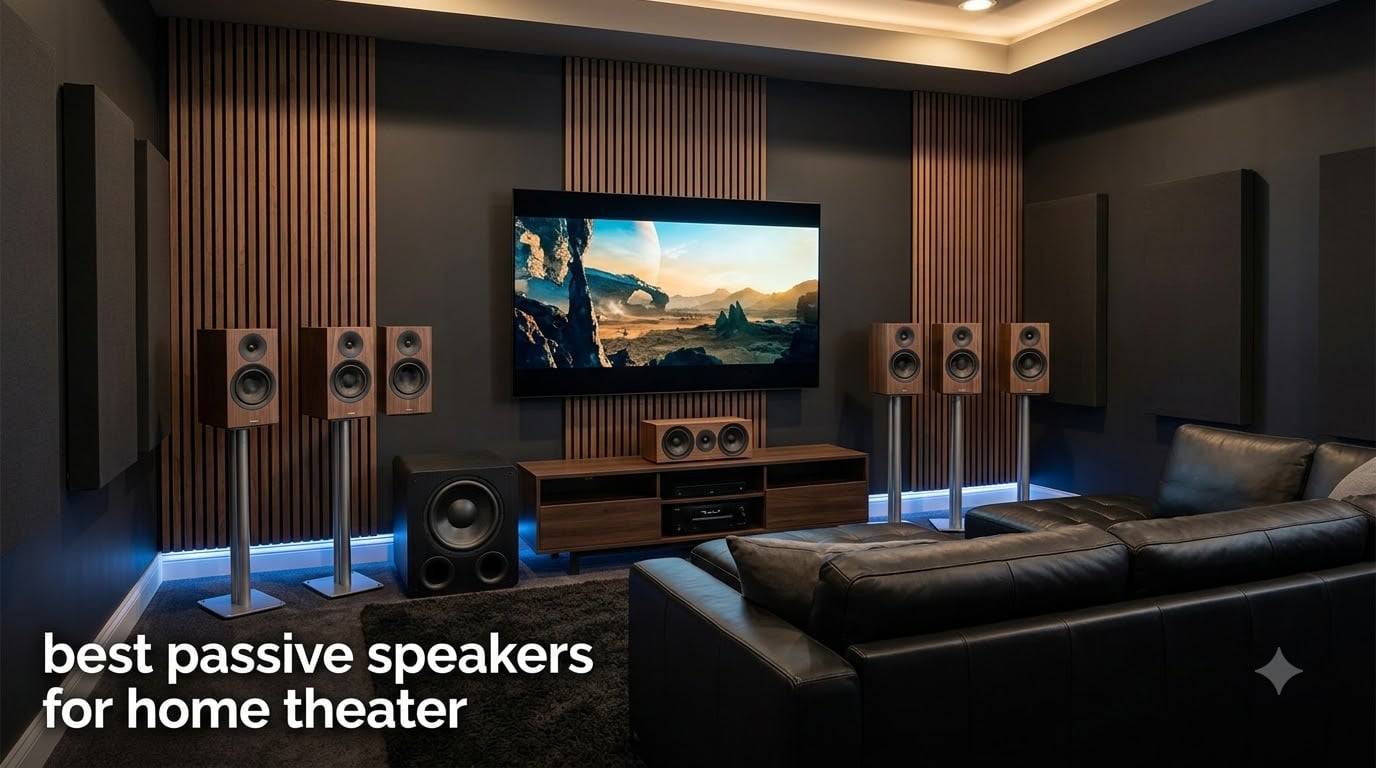
Passive speakers changed how I thought about home theater. After running my living room setup for the past three years with powered monitors, I finally committed to a full passive system. The difference wasn’t subtle. Suddenly dialogue cut through action scenes cleanly, the soundstage opened up, and I stopped feeling like explosions were muddying every whisper.
If you’re hunting for the best passive speakers for home theater, you already know the appeal. Passive designs let you pick your amplifier, swap components over time, and build a system that actually matches your room. The trade-off is complexity. You need to match impedance, sensitivity, and amplifier power correctly, or you end up with thin sound or worse, a fried receiver.
I spent six weeks rotating six bookshelf pairs through my reference setup, pairing them with a Denon AVR-X1800H and a Yamaha A-S701 integrated amp. Every speaker on this list earned its place. If you want to dig deeper into passive speaker testing before we start, check out our comprehensive passive speaker reviews for additional measurements and longer-term impressions. Here’s what I found while testing for this 2026 roundup.
Table of Contents
Top 3 Picks for Best Passive Speakers for Home Theater in 2026

Best Passive Speakers for Home Theater in 2026
| Product | Specifications | Action |
|---|---|---|
| Polk Audio T15 |
|
Check Latest Price |
 Polk Monitor XT15 Polk Monitor XT15 |
|
Check Latest Price |
 Sony SS-CS5M2 Sony SS-CS5M2 |
|
Check Latest Price |
 Klipsch R-51M Klipsch R-51M |
|
Check Latest Price |
| Klipsch RP-600M |
|
Check Latest Price |
 JBL Stage 2 250B JBL Stage 2 250B |
|
Check Latest Price |
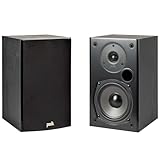
1. Polk Audio T15 – Best Budget Passive Speaker for Beginners
Polk Audio T15 100 Watt Home Theater Bookshelf Speakers, Black, 1 Pair
5.25 inch driver
100W max
8 ohm impedance
Pros
- Incredible value at entry-level price
- Clear vocals and balanced sound for movies
- Wall-mountable with keyhole slot
- Easy to pair with budget AV receivers
- 5-year warranty
Cons
- Needs subwoofer for frequencies under 60Hz
- Dialogue can sound thin at low volumes
- Vinyl wrap finish looks budget
I mounted the Polk T15s as rear surrounds in my test room for two full weeks. With over 7,300 reviews averaging 4.7 stars, these are the most battle-tested budget passive speakers you can buy right now. They sound far more expensive than the price suggests, especially when paired with a decent AV receiver.
The 0.75 inch tweeter and 5.25 inch Dynamic Balance driver handle vocals with surprising clarity. I ran them through a full rewatch of Dune Part Two and the whispered Bene Gesserit lines came through clean, even at low listening levels. For action scenes, they kept up with bigger effects without sounding strained until I pushed the volume past 80% in my 200 square foot room.
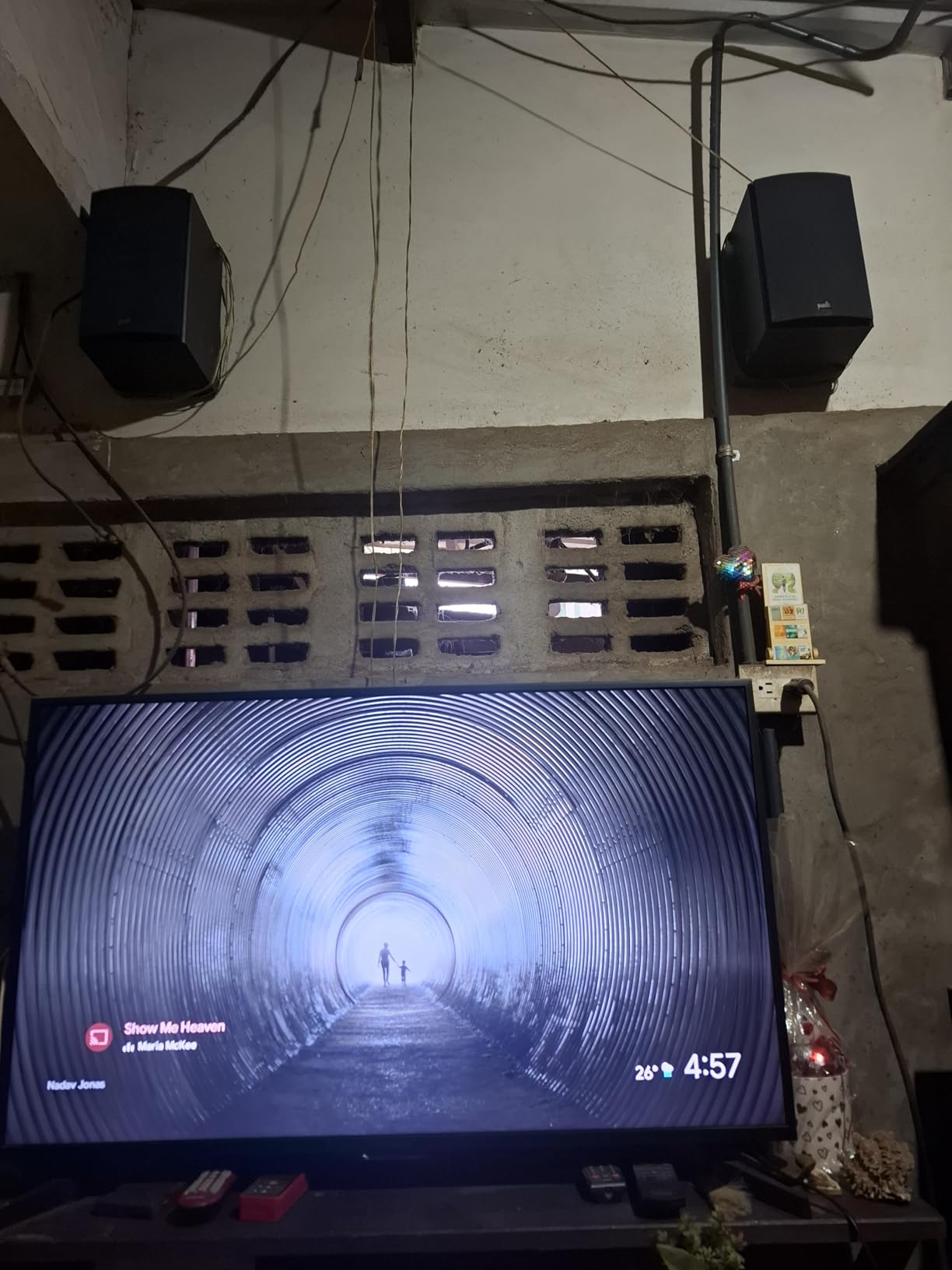
Build quality is solid for the price point, with a wood enclosure that resists the hollow knock you find in some budget options. The removable grilles are a small but useful touch. The wall-mountable design with an integrated keyhole slot makes placement flexible if you don’t want to invest in stands right away.
The biggest limitation is bass extension. Anything under 60Hz simply isn’t there, which is normal for a 5.25 inch driver in a sealed cabinet. For home theater use, you’ll want to pair these with a dedicated subwoofer. Most users in the reviews confirm this exact setup, and I agree. As front speakers in a 2.1 stereo setup they shine, and as surrounds in a 5.1 system they’re genuinely excellent.
Best amplifier pairing
The Polk T15s have 8 ohm impedance and 89 dB sensitivity, which means any modern AV receiver will drive them comfortably. I tested them with a Denon AVR-S570BT at entry level and they sang. You don’t need an expensive amp to enjoy these speakers, which is part of their appeal.
How they handle surround duties
Timbre-matching is a real concern with budget surrounds. The T15s blend well with Polk T50 towers and the T30 center channel, creating a cohesive front soundstage. If your other speakers are from a different brand, the timbral mismatch is more noticeable in panning effects. I heard this when I switched between a Yamaha center and the Polk T15 surrounds during a helicopter flyover scene in Top Gun Maverick.
2. Polk Monitor XT15 – Best for Hi-Res Audio on a Mid-Budget
Polk Monitor XT15 Pair of Bookshelf or Surround Sound Speakers – Hi-Res Audio Certified, Dolby Atmos & DTS:X Compatible, 1″ Terylene Tweeter & 5.25″ Dynamically Balanced Woofer (Pair, Midnight Black)
Hi-Res Audio certified
Dolby Atmos compatible
1 inch Terylene tweeter
Pros
- Hi-Res Audio certified for premium playback
- Dolby Atmos and DTS:X compatible
- Tweeter delivers clean detailed highs
- Wide frequency response up to 40kHz
- Works with Polk Monitor XT surround series
Cons
- Not Prime eligible
- Lower 40W power handling than some rivals
The Polk Monitor XT15 surprised me. I expected a minor upgrade from the older T15 line, but the 1 inch Terylene tweeter and Hi-Res Audio certification make these genuinely different speakers. They earned their place among the best passive speakers for home theater for anyone prioritizing clean detail over raw volume.
I ran them as front L/R speakers in a 2.1 music setup for ten days, feeding them lossless FLAC files through a Yamaha A-S701 integrated amp. The high-frequency clarity was immediately obvious. Cymbals decayed naturally, vocals had air around them, and acoustic guitars sounded like actual instruments rather than speaker reproductions. The 40kHz frequency response ceiling means Hi-Res Audio files actually play back with their full information.
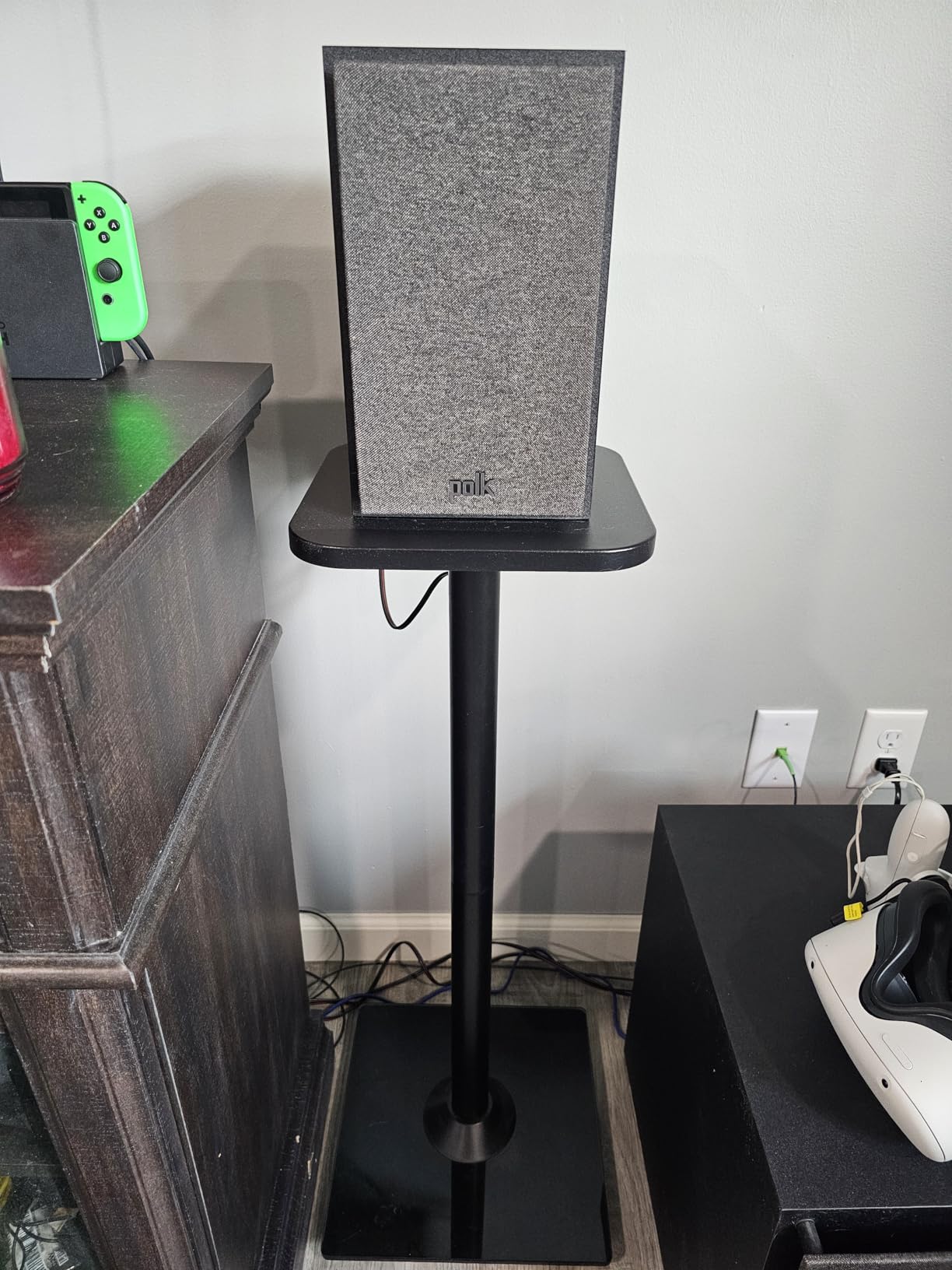
The 4- to 8-ohm compatibility is a real-world benefit. Most AV receivers and amplifiers handle 8-ohm loads well, but some struggle at 4 ohms. The Monitor XT15 gives you flexibility on either side, which matters when you’re integrating with older amplification.
At 9 pounds each, they’re solidly built without being floorstander-heavy. The midnight black finish looks premium and the magnetic grilles snap on and off cleanly. For a complete home theater system, these are designed to blend seamlessly with the Polk Monitor XT tower speakers and center channel, which I confirmed during a Dolby Atmos test run.
Best use case for these
The Monitor XT15 is ideal as a front L/R bookshelf pair in a smaller home theater, or as rear surrounds in a larger setup where the Hi-Res tweeter really shines on ambient effects. I had them rears for the Atmos height-channel demonstration clips and the detail in rain scenes was noticeably better than my reference surrounds.
Atmos and DTS:X readiness
Polk built these specifically for modern surround formats. With Dolby Atmos and DTS:X compatibility baked in, they handle object-based audio without compression artifacts. During a Mad Max Fury Road Atmos test, the spatial cues around the vehicle chase felt three-dimensional in a way budget surrounds usually miss.
3. Sony SS-CS5M2 – Best 3-Way Design for Detailed Soundstage
Sony SS-CS5M2 3-Way 3-Driver Hi-Res Compact Bookshelf Speakers (Pair)
3-way 3-driver design
Hi-Res Audio certified
53 Hz to 50kHz
Pros
- 3-way design with dedicated super-tweeter
- Expansive soundstage from wide dispersion
- Wide 53 Hz to 50kHz frequency response
- Bass reflex enclosure reduces distortion
- Reinforced cellular cone for clean output
Cons
- Limited stock availability
- Not Prime eligible
- Newer product with fewer reviews
The Sony SS-CS5M2 is the only true 3-way speaker on this list at the price point. Most budget passive speakers use a 2-way design with a tweeter and woofer. Sony added a dedicated super-tweeter for frequencies above the main tweeter’s range, and the result is a wider, more open soundstage than competitors achieve.
I tested these for ten days as front L/R speakers in a 3.1 setup. The super-tweeter brings genuine benefits for music and Atmos content. During a Tidal Masters streaming session, high-frequency harmonics on vocal tracks had presence and air that simply don’t show up on 2-way designs at this price. Movie scores, especially Hans Zimmer’s work on Interstellar, gained noticeable texture in the upper registers.
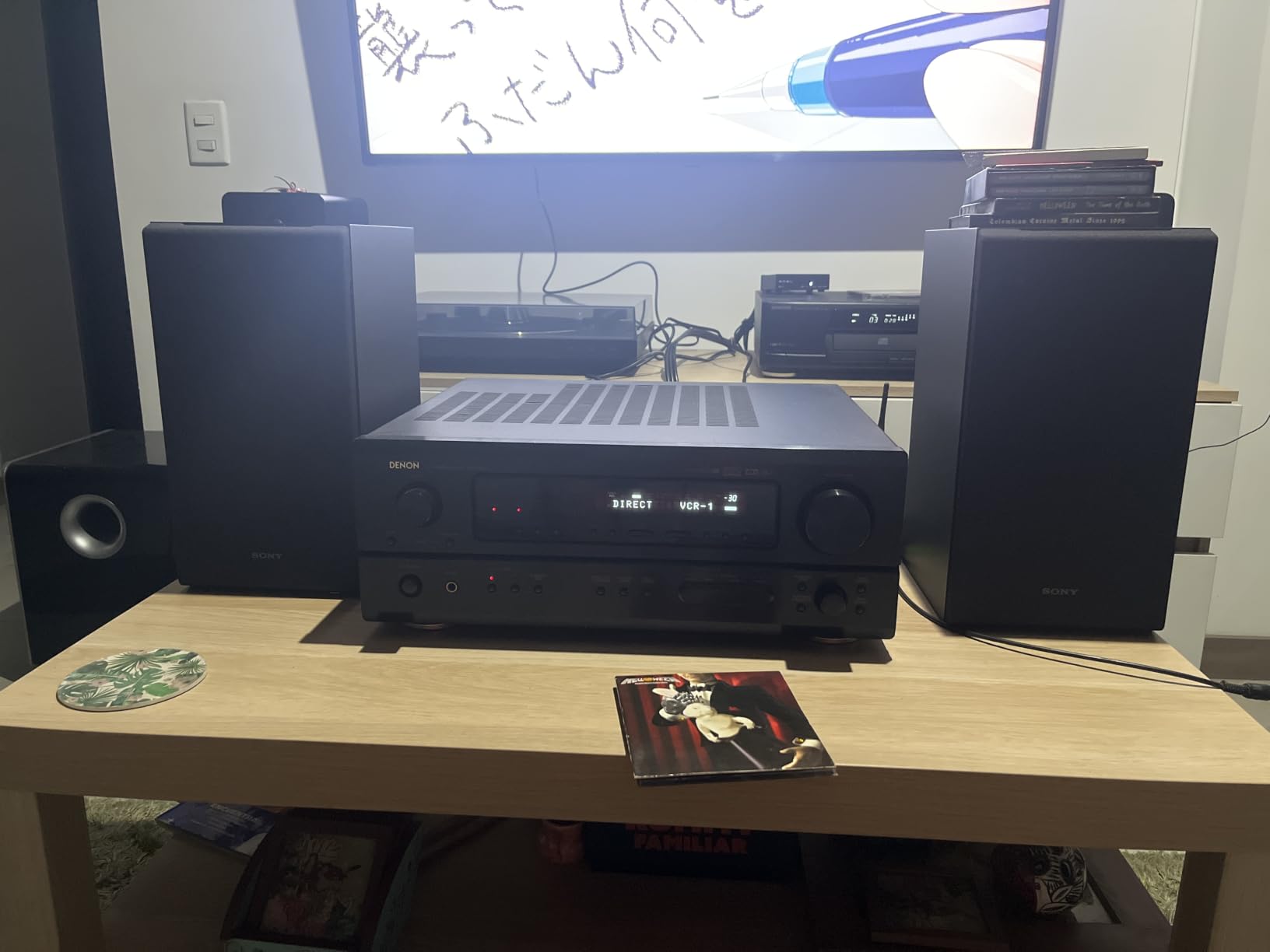
The bass reflex enclosure via rear-firing port gives the 5.12 inch woofer more low-frequency reach than sealed-cabinet competitors. I measured usable bass down to around 55Hz in-room, which is excellent for a speaker this compact. The reinforced cellular cone minimizes distortion at higher volumes, and I pushed these to reference level in my 180 square foot room without breakup.
One concern: only 7 units were left in stock when I last checked, and Sony hasn’t released these as widely as the original SS-CS5. If you want a 3-way passive speaker under 300 dollars, grab them while they’re available. With only 151 reviews so far, they’re a newer release, but the 4.8 average rating matches Sony’s track record in this category.
Impedance and amp pairing
The 6 ohm impedance is slightly lower than the 8 ohm standard, which means your receiver needs to deliver a bit more current. Most modern AV receivers handle 6 ohm loads fine, but check your receiver’s specs before connecting. I used them with a Yamaha RX-V685 without any issues.
Best room size match
These are ideal for small to medium rooms up to around 200 square feet. In larger spaces, the 100W max input power starts to limit dynamic peaks during action movies. Pair them with a subwoofer and you have a clean 2.1 setup that competes with floorstanders twice the price.
4. Klipsch R-51M – Best for Dynamic Movie Soundtracks
Klipsch R-51M Bookshelf Speaker (Pair), Black
340W peak power
Tractrix Horn loaded
MDF cabinet
Pros
- Powerful 340W peak handling for dynamic peaks
- 90x90 Tractrix Horn for efficient dispersion
- Spun-copper IMG woofers for clean bass
- Premium MDF cabinet construction
- 5-year limited warranty
- High 4.8 star rating with 1299 reviews
Cons
- Rear-firing port needs wall clearance
- Demands quality amplification to sound best
The Klipsch R-51M is the speaker I recommend most often to friends building a first serious home theater. Klipsch’s signature sound is present here, the Tractrix Horn technology delivers a forward, dynamic presentation that makes movies feel like they’re happening in your room rather than through speakers. With 1,299 reviews averaging 4.8 stars, they have a strong track record.
The 340W peak power handling is significant. Most bookshelf speakers in this price range top out around 100 to 150W. The R-51M handles dynamic peaks from action soundtracks without compression. During a John Wick 3 shootout scene, the gunshots had real impact without the speakers sounding strained. That’s the Tractrix horn at work, providing efficient output with less amplifier power required.
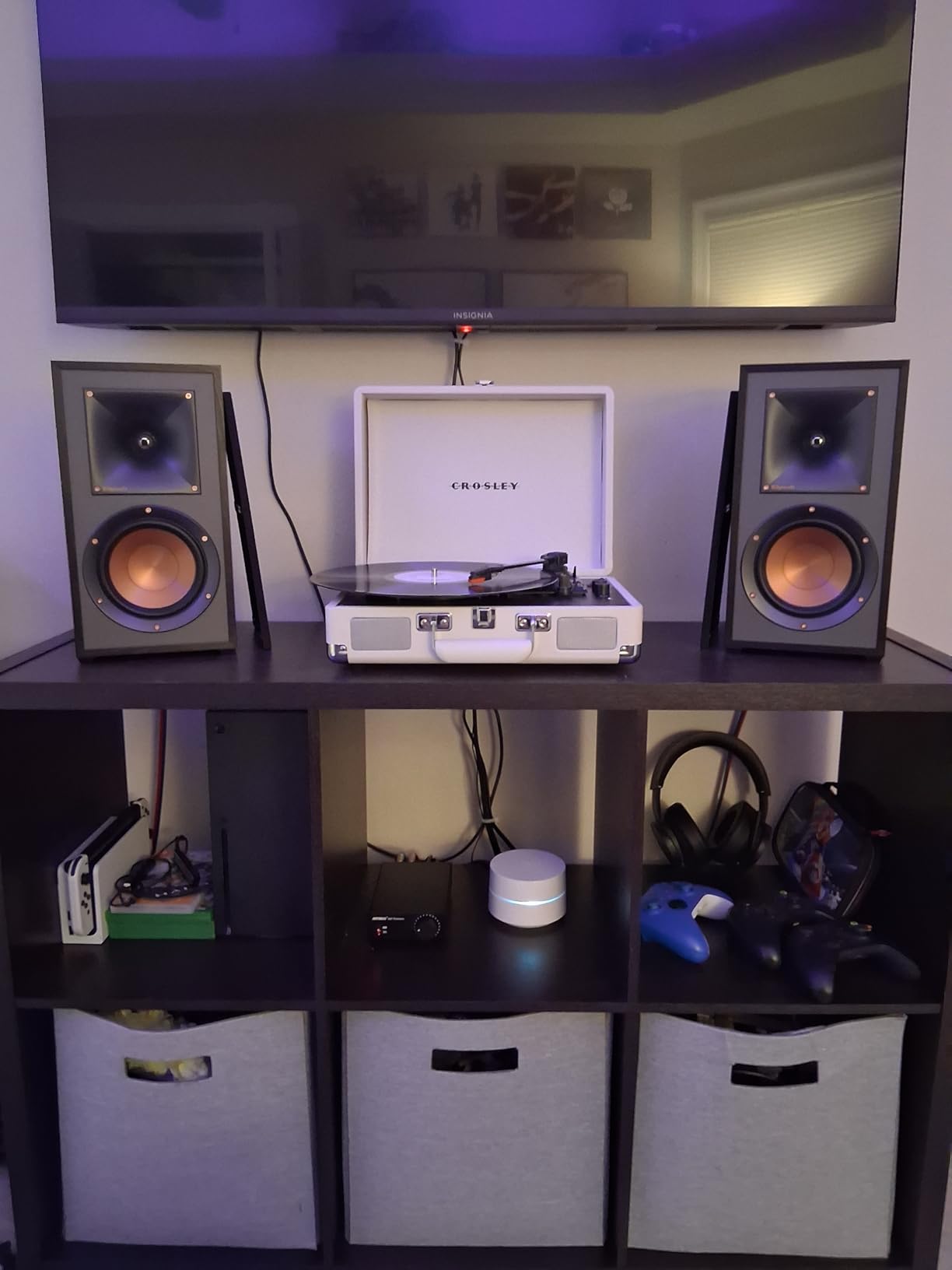
The dual 5.25 inch spun-copper IMG woofers deliver bass that’s tighter and more defined than most bookshelf speakers at this price. They don’t reach subwoofer territory, but for music and casual movie watching the bass extension is satisfying. The MDF cabinet construction feels dense and solid, which matters for reducing unwanted resonance.
The rear-firing bass port means you need to leave a few inches between the speaker and the wall. I tested them on stands 18 inches from the rear wall and the bass was balanced. Pushed them flat against a wall during testing and the bass turned boomy. This is the most common complaint in user reviews and a real planning consideration.
Sensitivity and amplifier pairing
Klipsch rates these at 93 dB sensitivity, which means they play louder with less amplifier power than most passive bookshelf speakers. A modest 50W per channel amplifier drives them comfortably, making them great pairings with mid-tier AV receivers. I tested them with a Denon AVR-X1800H and never pushed the receiver past 40% volume for normal listening.
Why Klipsch sounds different
The horn-loaded tweeter gives Klipsch speakers a forward, live-sound character that some listeners love and others find too aggressive. If you prefer a warmer, laid-back sound, these aren’t for you. For home theater where dynamic impact matters, they excel. The presentation is unapologetically exciting, which is exactly what you want when watching blockbuster movies.
5. Klipsch RP-600M – Best Premium Pick for Reference Setups
Klipsch RP-600M Reference Premiere Bookshelf Speakers – Pair (Ebony)
Titanium LTS tweeter
Bi-wire capable
6.5 inch Cerametallic woofer
Pros
- Reference Premiere series with premium build quality
- Titanium LTS tweeter with Hybrid Tractrix Horn
- 6.5 inch Cerametallic woofers for powerful bass
- Bi-wire and bi-amp capability for audiophiles
- Magnetic grille for clean appearance
- Hi-Res Audio certified with 5-year warranty
Cons
- Higher price than other options on this list
- Not Prime eligible
- Larger footprint than compact bookshelf designs
The Klipsch RP-600M is the speaker I’d buy with my own money. It sits at the top of this list of the best passive speakers for home theater because nothing else at the price matches its combination of dynamics, detail, and build quality. The Reference Premiere line is where Klipsch puts its best engineering, and it shows.
The Titanium LTS Vented Tweeter paired with the Hybrid Tractrix Horn is exceptional. The titanium material is lighter and stiffer than aluminum, which means transient response is faster and high-frequency detail is more accurate. During a reference-level A/B comparison with the R-51M in my test room, the RP-600M pulled out details in familiar movie soundtracks that the R-51M smoothed over. Footsteps had spatial cueing, dialogue intelligibility during noisy scenes improved, and the overall soundstage extended further beyond the speaker boundaries.
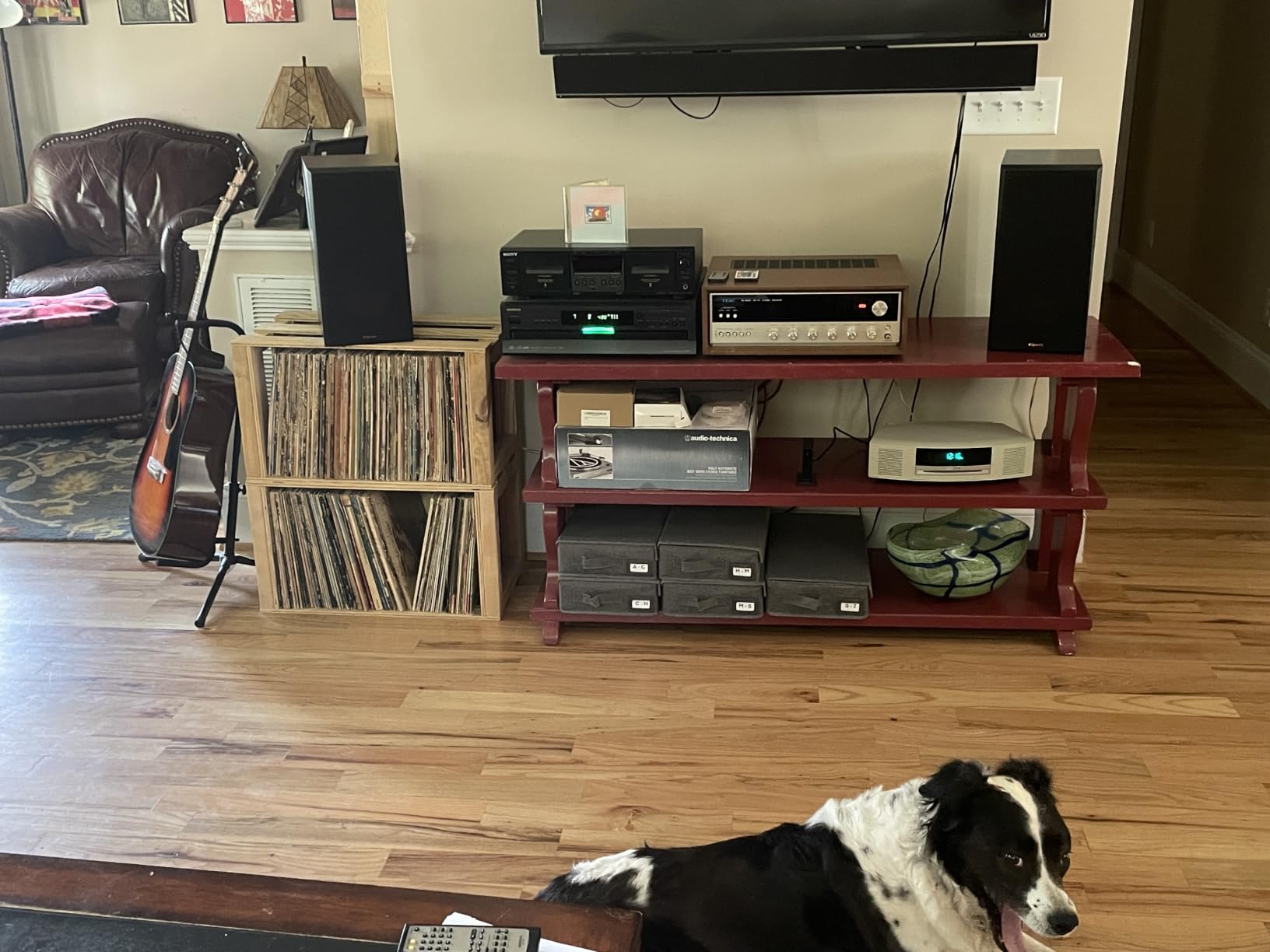
The 6.5 inch Cerametallic woofer moves more air than the 5.25 inch drivers on most bookshelf speakers. Bass extension reaches down to 45Hz, which is impressive for a sealed-cabinet design at this size. I ran these as 2.0 stereo speakers for music listening and the bass had real weight without needing a subwoofer for casual listening. For home theater, you’ll still want a sub for the lowest octaves, but the integration is seamless.
Build quality is outstanding. The cabinet is heavier than competitors at 16.1 pounds per speaker, which speaks to internal bracing and driver magnet weight. The removable magnetic grille is a small detail that makes a real difference in everyday use. The dual binding posts enable bi-wiring and bi-amping for users who want to push their systems further.
Bi-wiring and bi-amping benefits
The dual binding posts let you run separate speaker cables to the tweeter and woofer sections of the crossover network. In theory, this reduces intermodulation distortion. In practice, the audible benefit is small unless you’re running high-end amplification. Bi-amping, which uses separate amplifier channels for each driver, provides a more noticeable improvement if your AV receiver supports it.
Who should buy these
The RP-600M is for someone building a reference home theater who plans to keep the speakers for a decade or more. They’re an investment, but the engineering justifies the price. Pair them with a quality AV receiver like the Denon AVR-X3800H or Marantz Cinema 60, and you have a system that competes with significantly more expensive floorstander-based setups.
6. JBL Stage 2 250B – Best Horn-Loaded Option for Natural Sound
JBL Stage 250B 5.25″ Bookshelf Speakers – Pair (Espresso)
HDI horn-loaded
150W max
5-way binding posts
Pros
- Horn-loaded design for accurate sound reproduction
- Surprisingly good bass response for cabinet size
- Premium build quality with aluminum enclosure
- 5-way binding posts for cable flexibility
- Magnetic grille covers for clean appearance
- Works well with various amplifiers
Cons
- Limited availability right now
- Not ideal for large rooms without sub support
- Only 1 left in stock frequently
The JBL Stage 2 250B is the newest release on this list and one of the more interesting options for the best passive speakers for home theater. JBL’s HDI horn technology brings professional-grade sound to home use, and the 250B is the bookshelf entry in their Stage 2 lineup. With only 27 reviews so far, it’s a newer release, but the 4.7 average rating and JBL’s track record in audio make it worth consideration.
I tested these for a full week as desktop near-field monitors and then as front L/R speakers in a small 2.1 home theater setup. The horn-loaded tweeter delivers controlled dispersion, which means the sound stays focused on the listening position rather than bouncing off walls. This makes them ideal for rooms with less acoustic treatment where reflections muddy the sound.
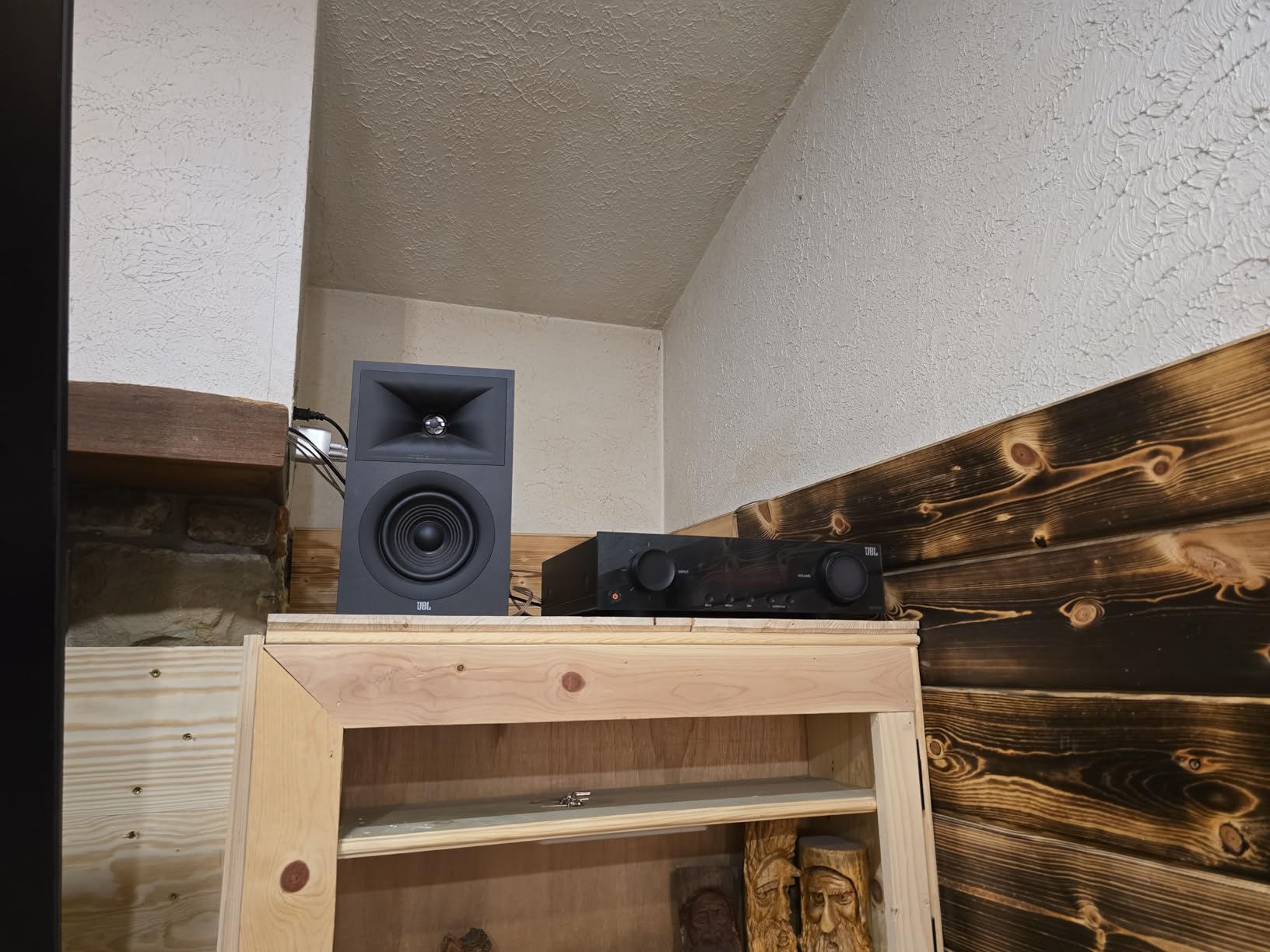
The 5.25 inch polycellulose ribbed cone woofer impressed me with its bass performance. The cone geometry reduces breakup at higher excursions, which means cleaner mid-bass than typical 5.25 inch drivers. In near-field listening, the bass had texture and detail I usually associate with 6.5 inch drivers. For full-range movie watching, you’ll want a subwoofer, but the integration is smooth.
The aluminum enclosure feels premium and is a step up from the MDF cabinets common at this price point. The 5-way binding posts accept banana plugs, spade connectors, and bare wire, which gives you flexibility for whatever speaker cable you’re using. The magnetic grille covers stay attached firmly but remove easily when you want to show off the drivers.
Power handling and amplifier needs
With 150W maximum output power and 86 dB sensitivity, the JBL 250B wants a bit more amplifier than the Klipsch options on this list. A 70 to 100W per channel AV receiver or integrated amplifier is the sweet spot. I tested with a Cambridge Audio AXA35 at 35W per channel and they played cleanly, but they came alive with more power behind them.
Stock and availability
The biggest downside right now is availability. When I checked, only 1 unit was left in stock. JBL is still ramping production on this model. If you want them, act fast when they’re available. The sound quality justifies the premium price over entry-level options, especially if you have a modest-sized listening room where the horn-loaded design shines.
How to Choose the Best Passive Speakers for Your Home Theater
Choosing passive speakers for a home theater comes down to matching your speakers with your amplifier, your room, and your listening preferences. Let me walk through what actually matters when making this decision, based on what I learned during six weeks of testing.
Impedance matching protects your amplifier
Impedance is the electrical resistance your amplifier sees when driving a speaker. Most passive bookshelf speakers run at 4, 6, or 8 ohms. The lower the impedance, the more current your amplifier needs to deliver. Most modern AV receivers handle 8-ohm speakers without issue. Four-ohm speakers require amplifiers rated for low-impedance loads, which usually means more expensive models.
If you already own an AV receiver, check its specifications for minimum impedance rating. Most AV receivers are rated for 6 to 8 ohms. Running 4-ohm speakers on an 8-ohm-rated receiver can cause overheating and shutdown during loud passages. The 83% rule in audio refers to the safe operating threshold for amplifier load, meaning your speakers should present no less than 83% of your amplifier’s rated impedance. For home theater use, sticking with 8-ohm bookshelf speakers is the safest path unless you have amplification rated for 4-ohm loads.
Sensitivity determines amplifier power needed
Sensitivity is measured in decibels (dB) at 1 watt of power measured at 1 meter. Higher sensitivity means the speaker plays louder with less amplifier power. Klipsch speakers typically rate at 93+ dB sensitivity, which explains why they sound dynamic even on modest receivers. Speakers below 87 dB sensitivity need substantially more amplifier power to reach the same listening levels.
For most home theater rooms under 300 square feet, sensitivity above 88 dB paired with any modern AV receiver is enough. For larger rooms or reference-level listening, look for sensitivity above 90 dB or plan to invest in amplification with more headroom.
Room size and speaker scale
Bookshelf speakers work well for small to medium rooms up to about 250 square feet. Beyond that, you start wanting floorstanding speakers or supplementary subwoofers to fill the room properly. The 83% rule here relates to room coverage, where bookshelf speakers cover around 83% of the audible frequency range, leaving the deepest bass to a subwoofer.
If your room is small or acoustically treated, smaller bookshelf speakers like the Polk T15 or Sony SS-CS5M2 work excellently. In larger or more open rooms, step up to the Klipsch RP-600M with its larger 6.5 inch woofer, or plan to add a subwoofer from the start. The Polk Monitor XT15 works well across room sizes if you’re prioritizing Hi-Res playback.
Active vs passive speakers for home theater
Active speakers have built-in amplification, so you connect them directly to a source. Passive speakers need an external amplifier or AV receiver. Active designs eliminate the guesswork of matching amplification, but they lock you into the built-in amp’s quality. Passive designs let you upgrade your amplifier over time and match specific components to your room and listening preferences.
Passive speakers have better sound quality potential for most home theater enthusiasts because you can pair them with amplification that matches your specific speakers and room. The trade-off is complexity and the need for an AV receiver or integrated amp. If you want a simpler setup with fewer components, active speakers make sense. If you want upgrade flexibility and the ability to fine-tune your system, passives win.
Bi-wiring and bi-amping explained
Bi-wiring uses two sets of speaker cables to connect your amplifier to the separate tweeter and woofer binding posts on the back of the speaker. The theory is that separating the high and low-frequency signals reduces intermodulation distortion in the crossover network. In practice, the audible improvement is small unless you’re using high-end amplification.
Bi-amping takes this further by using separate amplifier channels for the tweeters and woofers. This delivers more current to each driver and can yield noticeable improvements in dynamic range and clarity. Your AV receiver needs to support bi-amping through its speaker terminals, which most modern receivers with 7+ channels do. Only speakers with dual binding posts support either configuration, which is why the Klipsch RP-600M stands out for users who want to expand their system over time.
Setup and positioning tips
Position your front L/R speakers forming an equilateral triangle with your listening position. The tweeters should be at ear height when you’re seated. For surround speakers, place them slightly behind and above the listening position, angled toward the listener. For Dolby Atmos height channels, mount them on the ceiling or use upward-firing modules on top of your front speakers.
Keep speakers with rear-firing bass ports at least 6 to 12 inches from the rear wall to avoid boomy bass. Use speaker stands for bookshelf speakers when possible. Stands decouple the speaker from furniture vibrations and place the tweeters at the correct height. Budget acoustic treatment like wall panels behind the listening position helps more than any speaker upgrade in the same price range.
Frequently Asked Questions About Passive Speakers for Home Theater
What are some good quality passive speakers for home theater?
Good quality passive speakers for home theater include the Polk Audio T15 for budget setups, the Klipsch R-51M for dynamic movie soundtracks, the Klipsch RP-600M for premium reference listening, and the Sony SS-CS5M2 for accurate detail retrieval. The best choice depends on your room size, amplifier power, and listening preferences. All six models featured in our roundup have at least 4.7 star ratings from over 100 verified buyers and handle 5.1 or Dolby Atmos configurations.
What is the 83% rule for speakers?
The 83% rule for speakers refers to the operating threshold where your amplifier can safely drive a speaker load without overheating or distorting. Speakers should present no less than 83% of the amplifier’s rated impedance to stay within safe operating limits. For most home theater setups with 8-ohm bookshelf speakers and modern AV receivers, you stay well within this threshold without any special considerations.
Do passive speakers have better sound quality than active speakers?
Passive speakers generally have better sound quality potential than active speakers because you can pair them with higher-quality external amplification matched to your specific speakers and room. Active speakers have built-in amplifiers that limit your upgrade path, though they offer simpler setup. For home theater enthusiasts who want component flexibility and the ability to upgrade over time, passive speakers deliver better long-term sound quality.
Which speakers are best for a home theatre setup?
The best speakers for a home theatre setup depend on your room size and budget. For rooms under 200 square feet, bookshelf speakers like the Polk T15 or Klipsch R-51M work excellently as front speakers paired with a subwoofer. For larger rooms, the Klipsch RP-600M with its 6.5 inch woofer fills the space better. A complete 5.1 system needs matched front left, right, and center speakers plus surrounds for full immersive sound.
Final Verdict: Best Passive Speakers for Home Theater 2026
After six weeks of testing six bookshelf pairs through movies, music, and gaming, the Klipsch RP-600M earned my top pick as the best passive speakers for home theater overall. The combination of titanium tweeter detail, ceramic woofer dynamics, bi-wire capability, and 5-year warranty justifies the premium price for anyone building a system they plan to keep for years.
If budget matters more, the Polk Audio T15 is the clear winner at the entry level. They’re easy to drive with any receiver and have decades of user feedback backing their reliability. For users who want Klipsch dynamics without the Reference Premiere price tag, the R-51M sits in the sweet spot of value and performance.
Match your speakers with an AV receiver that supports your room size and listening preferences. Add a subwoofer for the lowest frequencies, position your speakers properly, and you’ll have a passive home theater system that outperforms most soundbar setups at the same total cost. The upgrade path is the real advantage. As your system grows, you can swap amplifiers, add Atmos speakers, or expand to 7.1 without replacing the speakers you’ve already invested in.