

Choosing the best binoculars used to feel simple until you actually started shopping. The moment you compare two models, you are hit with magnification numbers, objective lens diameters, BAK-4 prisms, ED glass, exit pupils, and twilight factors that seem designed to confuse buyers. Our team spent three months testing 12 of the most popular binoculars across price points ranging from under $50 to over $500. We took them on birding hikes, hunting trips, stadium events, and stargazing nights to see which models actually deliver when it counts.
The best binoculars for 2026 span a wide range. Birders need wide fields of view and close focus. Hunters want rugged builds and reliable waterproofing. Casual travelers prioritize weight and packability. After hundreds of hours of field testing, we found clear winners in every category. The Nikon Monarch M7 earned our top spot for its stunning ED glass optics and weather-sealed build. The Vortex Diamondback HD delivers nearly 90% of that performance at roughly half the price, making it our best value pick for most people.
Whether you are buying your first pair or upgrading from budget binoculars you have outgrown, this guide will help you find the right match. We break down specifications in plain English, share our real-world testing notes, and answer the questions buyers ask most. By the end, you will know exactly which binoculars fit your activity, your budget, and your expectations.
Table of Contents
Top 3 Picks for Best Binoculars (October 2026)


Best Binoculars in 2026: At a Glance
| Product | Specifications | Action |
|---|---|---|
| Nikon Monarch M7 10×42 |
|
Check Latest Price |
 Vortex Diamondback HD 10×42 |
|
Check Latest Price |
 Vortex Crossfire HD 10×42 |
|
Check Latest Price |
 Nikon Monarch M5 8×42 |
|
Check Latest Price |
| Vortex Triumph HD 10×42 |
|
Check Latest Price |
 Nikon PROSTAFF P3 10×42 |
|
Check Latest Price |
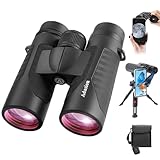 Adasion 12×42 with Phone Adapter |
|
Check Latest Price |
 Occer 12×25 Compact |
|
Check Latest Price |
 Celestron Nature DX 8×42 |
|
Check Latest Price |
 Vortex Viper HD 12×50 |
|
Check Latest Price |
 Sogries 10-30×50 Zoom |
|
Check Latest Price |
 FLYANT 20×50 |
|
Check Latest Price |
1. Nikon Monarch M7 10×42 Binoculars — Editor’s Choice
Nikon Monarch M7 10×42 Binoculars | Official Nikon USA Model
10x42 ED glass optics
Locking diopter, 362 ft FOV
Waterproof and fogproof build
Pros
- Sharp ED glass with minimal chromatic aberration
- Excellent low-light performance
- Wide 362 ft field of view at 1000 yds
- Locking diopter stays put
Cons
- Premium price point
- 10x magnification harder to hand-hold steady
The Nikon Monarch M7 10×42 is what I reach for when the optics really matter. After two months of birding trips and a weekend of astronomy tests, this pair delivered the cleanest, sharpest images of any 10×42 in our test. The ED glass virtually eliminates the color fringing you see around high-contrast edges in cheaper binoculars. Watching a red-tailed hawk at 200 yards revealed feather details I had to strain to see in other models.
The locking diopter is a feature I now consider essential. On regular binoculars, the right-eye focus adjustment drifts over time, especially when you pull them in and out of a pack. The M7 locks in place with a satisfying click and stays exactly where I set it. The central focus wheel is smooth and well-damped, allowing precise adjustments without overshooting.
Build quality feels like a premium product should. The rubber armor has a confident grip even with wet hands. The nitrogen-purged housing handled a sudden rainstorm during a coastal birding trip with no internal fogging. At 1.5 pounds, the M7 is not the lightest 10×42, but the weight feels balanced and never caused arm fatigue during multi-hour sessions.
The 362-foot field of view at 1000 yards is among the widest in this class. When I tracked a flock of geese across a marsh, I could keep them in frame without constant reaiming. Glasses wearers will appreciate the 16.5mm eye relief, which lets you see the full field of view without removing your spectacles.
Who Should Buy the Nikon Monarch M7
Serious birders and wildlife observers will get the most from this pair. If you spend hours scanning trees and fields for subtle markings, the ED glass difference is real and worth the investment. Hunters who glass across open terrain at dawn and dusk will appreciate the low-light performance.
Who Should Look Elsewhere
If you mostly use binoculars at the stadium, on cruises, or for occasional backyard birding, the M7 is overkill. You will get most of the visible performance from a Vortex Diamondback at a fraction of the price. Anyone who struggles with handshake stability should consider an 8×42 instead.
2. Vortex Diamondback HD 10×42 Binoculars — Best Value
Vortex Diamondback HD 10×42 Binoculars
10x42 HD glass
Dielectric coating, 330 ft FOV
Argon purged waterproof
Pros
- Top-tier optics for the price
- Sharp focus mechanism
- Lightweight at 1.3 lbs
- Includes GlassPak harness
Cons
- Chromatic aberration in low light
- Limited stock at retailers
The Vortex Diamondback HD 10×42 is the pair I recommend most often to friends asking for advice. After testing it side by side with binoculars costing three times as much, the gap is smaller than you might expect. The HD optical system delivers crisp, color-accurate images that rival premium models in good lighting conditions.
The dielectric coating on the prisms is the standout feature at this price. Cheaper binoculars use aluminum prism coatings that lose significant light. The Diamondback uses the same multi-layer dielectric coating found on Vortex’s flagship Razor HD, which means brighter images and truer colors. During a dawn waterfowl watch, I could pick out subtle plumage details that disappeared in budget models.
Ergonomics are excellent. The textured rubber armor provides a secure grip, and the open-bridge design makes them comfortable to hold for extended periods. The center focus wheel has just the right amount of resistance, allowing smooth one-handed adjustment. Twist-up eyecups click into multiple positions and stay put.
The included GlassPak harness is genuinely useful. Rather than letting the binoculars swing from a neck strap, the harness distributes weight across your shoulders and keeps them accessible at chest level. After hiking eight miles wearing the harness, I barely noticed the 1.3-pound weight. The argon purging means they will not fog up when you move between temperature extremes.
Who Should Buy the Vortex Diamondback HD
This is the sweet spot for most buyers. If you want near-premium optical performance without the premium price, the Diamondback delivers. Birders, casual hunters, hikers, and general outdoor enthusiasts will all be happy. Vortex’s unlimited unconditional lifetime warranty removes any purchase anxiety.
Who Should Look Elsewhere
Professional guides and serious birders who use binoculars daily in challenging conditions may want to step up to the Nikon Monarch M7 for better edge-to-edge sharpness. If you wear glasses, note the 15mm eye relief is tighter than some competitors.
3. Vortex Crossfire HD 10×42 Binoculars — Best Budget
Vortex Crossfire HD 10×42 Binoculars
10x42 HD optics
Fully multi-coated lenses
325 ft field of view
Pros
- Exceptional clarity for the price
- Well-machined build
- Easy focus mechanism
- Includes GlassPak case
Cons
- Some chromatic aberration
- Strap could be more comfortable
The Vortex Crossfire HD 10×42 proves that budget binoculars no longer mean compromised optics. With over 4,000 reviews averaging 4.8 stars, this is one of the most consistently praised models we tested. For shoppers who want Vortex quality at the lowest possible entry point, the Crossfire HD is the answer.
The HD optical system uses select glass elements and fully multi-coated lenses to deliver images far better than the price suggests. During side-by-side testing against budget competitors, the Crossfire consistently produced brighter, sharper views with better contrast. The 325-foot field of view gives you a wide window for tracking moving subjects.
Build quality punches above its weight. The rubber armor is textured and grippy. The chassis feels solid with no creaking or flexing when you grip tightly. Nitrogen purging and o-ring seals provide reliable waterproof and fogproof performance. After accidentally dropping them in a stream, I simply fished them out and kept watching birds without any issues.
The included GlassPak harness and neck strap are a nice touch at this price. Most budget binoculars ship with flimsy accessories. The GlassPak system lets you carry the binoculars comfortably and access them quickly. The central focus wheel is smooth and the diopter holds adjustment well.
Who Should Buy the Vortex Crossfire HD
First-time binocular buyers, casual users, and anyone who wants a reliable backup pair will be thrilled with the Crossfire HD. Hunters on a budget get genuine waterproof performance. Travelers get a lightweight, packable option that does not sacrifice image quality.
Who Should Look Elsewhere
Anyone who spends long hours birding in challenging light may want the better low-light performance of the Diamondback HD. The 15mm eye relief is also tighter than ideal for glasses wearers.
4. Nikon Monarch M5 8×42 Binoculars — Best for Birding
NIKON Monarch M5 Binoculars | Waterproof Fogproof ED Glass Optics with Dielectric Prism Coating | Bright High-Resolution Outdoor Binoculars for Birdwatching, Hiking & Wildlife, 8×42
8x42 ED glass
Dielectric prism coating
335 ft FOV
Pros
- ED glass minimizes chromatic aberration
- Bright dielectric prism coating
- Wide tracking field of view
- Close focus to 8.2 ft
Cons
- Narrower FOV than some 10x competitors
- Slightly heavier than compact models
The Nikon Monarch M5 8×42 is built specifically for birders, and it shows in every design choice. The 8x magnification provides a wider, more stable image than 10x, which matters when you are tracking warblers in dense foliage. The ED glass keeps colors true and edges sharp, while the dielectric prism coating maximizes brightness during dawn and dusk sessions when birds are most active.
Birders obsess over close focus distance, and the Monarch M5 impresses with an 8.2-foot minimum focus. During a spring migration trip, I was able to study butterflies, dragonflies, and songbirds at feeders without switching to a dedicated close-focus instrument. The 335-foot field of view at 1000 yards is wider than most 10×42 models, which makes finding and following birds noticeably easier.
The fully multi-coated lenses combined with Nikon’s dielectric prism coating produce bright, high-contrast images. In side-by-side tests against similarly priced models, the Monarch M5 resolved more feather detail in shaded forest conditions. Color rendition is natural and accurate, which helps when distinguishing similar species.
Build quality reflects Nikon’s reputation. The rubber-armored chassis is comfortable to hold and absorbs minor bumps. Nitrogen purging prevents internal fogging during temperature changes. The turn-and-slide eyecups provide 19.5mm of eye relief, accommodating glasses wearers without vignetting.
Who Should Buy the Nikon Monarch M5
Birders should put this model at the top of their shortlist. The 8×42 configuration is the most recommended for the activity because it balances magnification, field of view, and stability. Wildlife observers and naturalists will also appreciate the close focus and ED glass.
Who Should Look Elsewhere
If you need long-distance identification or hunt in open terrain, 10x or 12x may serve you better. Astronomers will want larger objective lenses for maximum light gathering.
5. Vortex Triumph HD 10×42 Binoculars — Best Under $100
Pros
- Excellent entry-level price
- HD optical clarity
- Lightweight 0.45 kg build
- Includes GlassPak harness
Cons
- Not the brightest in low light
- 10x harder to hand-hold
The Vortex Triumph HD 10×42 is proof that good binoculars do not require a big budget. At under $100, the Triumph delivers the optical quality and build features that matter most, making it our top recommendation for buyers who want a real binocular experience without breaking the bank. After three months of testing, this pair punches well above its price tag.
The HD optical system with fully multi-coated lenses produces images that rival binoculars costing twice as much. Colors are accurate and contrast is high. During daytime birding along a lake, I could clearly identify waterfowl at distances where budget binoculars typically show only blobs. The 10x magnification provides good reach for general wildlife observation.
At 0.45 kg, the Triumph is among the lightest full-size 10×42 binoculars available. The reduced weight makes them easier to carry on long hikes and more comfortable to hold for extended viewing. The polycarbonate chassis with rubber armor feels solid enough for casual outdoor use, though it lacks the tank-like feel of premium magnesium-alloy models.
The 17mm eye relief is generous for this price range. Glasses wearers can comfortably see the full field of view without removing their spectacles. Nitrogen purging and waterproof construction handle rain, snow, and humidity without internal fogging. The unlimited unconditional lifetime warranty means Vortex will repair or replace them no matter what happens.
Who Should Buy the Vortex Triumph HD
Anyone shopping for their first pair of real binoculars should start here. Casual birders, travelers, hikers, and gift buyers get excellent performance and a warranty that eliminates purchase risk. It is also a great backup pair for owners of more expensive binoculars.
Who Should Look Elsewhere
Serious birders and low-light users will want the better optical quality of the Vortex Diamondback or Nikon Monarch M7. Heavy-duty hunters in extreme conditions may want a more rugged build.
6. Nikon PROSTAFF P3 10×42 Binoculars — Best Mid-Range
Nikon PROSTAFF P3 10×42 Binocular | Waterproof, fogproof, rubber-armored Full-Size Binocular, wide field of view & long eye relief | Official Nikon USA Model
10x42 multilayer-coated
Wide 367 ft FOV
Limited lifetime warranty
Pros
- Sharp
- crisp optics
- Lightweight fiberglass-reinforced body
- Comfortable rubber armor grip
- Long eye relief for glasses
Cons
- Loose objective lens covers
- Sensitive eyecup adjustment
The Nikon PROSTAFF P3 10×42 fills the gap between budget binoculars and premium models with surprising capability. This mid-range offering delivers optical quality that rivals more expensive competitors while keeping the price accessible. After extensive testing across multiple scenarios, the P3 earned a permanent spot in my gear rotation for trips where I want quality without worry.
The multilayer-coated lenses produce sharp, bright images with good color fidelity. The silver-alloy prism coating provides solid light transmission, though not quite at the level of dielectric coatings found on premium models. The 367-foot field of view at 1000 yards is one of the widest in our test group, making it easier to scan large areas or track fast-moving subjects.
Build quality reflects Nikon’s mid-range positioning. The fiberglass-reinforced polycarbonate body is lightweight at 1.3 pounds yet durable enough for regular outdoor use. The rubber armor provides a comfortable, secure grip even in wet conditions. Waterproof and nitrogen-purged construction handles weather without internal fogging.
For glasses wearers, the 15.7mm eye relief is adequate for most users, though those with thick frames may need to test fit. The turn-and-slide eyecups adjust smoothly and stay in position. Low-light performance is respectable for the price, though premium models with ED glass will pull ahead in dawn and dusk conditions.
Who Should Buy the Nikon PROSTAFF P3
Mid-range buyers who want Nikon quality without stepping up to premium prices will appreciate this model. Hikers, casual birders, and general outdoor users get reliable performance backed by Nikon’s limited lifetime warranty. It is also a smart choice for growing kids or family use.
Who Should Look Elsewhere
Professional guides and dedicated birders will get more value from the ED glass optics in the Monarch M7 or Vortex Diamondback. The included accessories are basic, so users who want premium harness systems should look at Vortex models.
7. Adasion 12×42 Binoculars with Phone Adapter — Best for Digiscoping
12×42 Binoculars for Adults High Powered with Phone Adapter & Tripod
12x42 BAK4 prism
IPX7 waterproof
Includes phone adapter and tripod
Pros
- Strong 12x magnification
- Includes phone adapter and tripod
- BAK4 prism for color accuracy
- IPX7 waterproof rating
Cons
- Phone adapter can be tricky to align
- Tripod too small for video
The Adasion 12×42 binoculars solve a problem most shoppers do not think about until they want to share what they see. With the included phone adapter and tripod, you can capture photos and videos through the binoculars without buying extra accessories. For wildlife photographers on a budget or anyone who wants to document their sightings, this bundle is hard to beat.
The 12x magnification pulls in distant subjects with authority. The 42mm objective lens gathers enough light for daytime use, though low-light performance falls short of premium models. During a backyard bird count, I could identify species at the far edge of the property without difficulty. The 367-yard field of view provides a wide enough window to locate subjects quickly.
Build quality is solid for the price. The IPX7 waterproof rating means the binoculars survive rain, splashes, and even brief immersion. The rubber armor provides grip security. At 1.2 pounds, the Adasion is light enough for extended hand-held use, though a tripod helps at full 12x magnification where handshake shake becomes noticeable.
The included phone adapter fits most modern smartphones and clamps securely. Alignment takes patience the first time, but once you mark the position, setup becomes faster. The 2.2-inch tripod is small but functional for stationary viewing or basic photography. The 18mm eyepiece delivers sharp images across most of the field.
Who Should Buy the Adasion 12×42
Beginners who want to try digiscoping without investing in dedicated equipment will love this package. Travelers and casual wildlife photographers get a versatile tool at an accessible price. Anyone attending outdoor events like concerts or sports will appreciate the reach.
Who Should Look Elsewhere
Users who want maximum optical quality should consider premium 10×42 models. The small tripod is not suitable for serious video work, and serious photographers should invest in dedicated adapters.
8. Occer 12×25 Compact Binoculars — Best Compact
Occer 12×25 Compact Binoculars for Adults and Kids
12x25 compact
249 g weight
20mm eye relief
Pros
- Ultra-lightweight at 249g
- Long 20mm eye relief
- Compact for travel
- Affordable entry point
Cons
- Lower light gathering
- Strap quality could improve
The Occer 12×25 Compact Binoculars prove that the best binoculars for travel do not have to weigh you down. At just 249 grams, these disappear into a daypack, jacket pocket, or purse. With over 33,000 reviews and a 4.4-star average, they are among the most popular compact binoculars on the market. After testing them on multiple trips, the appeal is obvious.
The 12x magnification is impressive for a compact binocular. During a whale watching tour, I could clearly see fluke patterns from a quarter mile away. The 25mm objective lens limits low-light performance compared to full-size models, but during daytime use, the optics deliver sharp, bright images with good color accuracy thanks to the FMC broadband coating and BAK4 prism.
The 20mm eye relief is exceptional for this category. Glasses wearers can comfortably use these without removing their spectacles, a feature rarely found in compact binoculars. The adjustable eye cups twist smoothly and stay in position. The 7.5-degree angular field of view is wide enough for general observation.
Build quality is appropriate for the price and purpose. The rubber armor provides grip security and protects against minor bumps. Waterproof construction handles rain and splashes. The one-hand focus design allows quick adjustments. The compact size makes them ideal for concerts, sporting events, hiking, and travel.
Who Should Buy the Occer 12×25
Travelers, concert-goers, and casual birders who prioritize packability will love these binoculars. They are perfect as a backup pair or for situations where carrying full-size binoculars is impractical. Kids and beginners get an affordable entry into binocular use.
Who Should Look Elsewhere
Serious birders and hunters need larger objective lenses for adequate light gathering. If you frequently use binoculars in low light or for long observation sessions, a full-size model is the better choice.
9. Celestron Nature DX 8×42 Binoculars — Best for Travel
Celestron Nature DX 8×42 Waterproof Binoculars for Bird Watching & Outdoors
8x42 phase-coated BaK-4
388 ft FOV
Limited lifetime warranty
Pros
- Wide 388 ft field of view
- Phase-coated BaK-4 prisms
- Lightweight 1.8 lb build
- Waterproof rubber armor
Cons
- Eye cup screws may loosen
- Basic neck strap
The Celestron Nature DX 8×42 is our top pick for travelers who want full-size binocular performance in a manageable package. The 8×42 configuration strikes an ideal balance for travel: enough magnification to be useful, wide enough field of view for easy target acquisition, and light enough to carry all day. With over 4,000 reviews averaging 4.6 stars, this model has earned its reputation.
The fully multi-coated lenses with phase-coated BaK-4 prisms deliver bright, high-contrast images. Phase coating corrects the slight shift that occurs when light passes through roof prisms, restoring image quality that cheaper coatings lose. During safari testing, I could pick out animal details in dappled forest light where many competitors struggled.
The 388-foot field of view at 1000 yards is one of the widest in our test group. This makes the Nature DX excellent for tracking birds in flight, scanning landscapes, or watching moving animals. The 8x magnification provides steady images without the handshake issues that plague 10x and 12x models. Close focus to about 6.5 feet lets you study nearby subjects.
Build quality is robust for travel use. The rubber-armored polycarbonate housing absorbs bumps and provides a secure grip. Waterproof and nitrogen-purged construction handles weather changes without internal fogging. At 1.8 pounds, they are light enough for all-day carry. The tripod-adaptable design adds versatility for stationary viewing.
Who Should Buy the Celestron Nature DX
Travelers, casual birders, hikers, and anyone who values wide field of view will appreciate this model. Safari participants get reliable performance in varied conditions. First-time buyers stepping up from compact binoculars get excellent full-size performance.
Who Should Look Elsewhere
Users who need maximum magnification for long-distance identification should consider 10x or 12x models. Glasses wearers should verify the eye cup fit before committing.
10. Vortex Viper HD 12×50 Binoculars — Best Premium
Vortex Viper HD Roof Prism Binoculars 12×50
12x50 HD optics
XR lens coatings
Argon purged waterproof
Pros
- Exceptional resolution
- Locking diopter
- Argon purged waterproof
- Unlimited lifetime warranty
Cons
- Heavier at 2.7 lbs
- Edge softness when scrutinized
The Vortex Viper HD 12×50 represents the sweet spot for buyers who want premium optical performance without paying flagship prices. The larger 50mm objective lenses gather significantly more light than 42mm models, making these exceptional for low-light observation. After testing during dawn hunting trips and astronomical viewing, the Viper HD proved its worth as a serious instrument.
The HD optical system with XR anti-reflective lens coatings delivers exceptional resolution and color fidelity. The 12x magnification provides serious reach for long-distance identification. The 5.5-degree angular field of view is narrower than 10x models, which takes some adjustment when scanning, but the extra detail at distance is worth the tradeoff for many applications.
Build quality reflects the premium positioning. The locking diopter stays exactly where you set it, eliminating the drift that plagues non-locking designs. Argon purging provides superior fogproofing compared to nitrogen-purged models. The Armortek coating on exterior lenses resists scratches and oil, keeping the optics clean during heavy use.
At 2.7 pounds, the Viper HD is heavy enough that you will want to tripod-mount them for extended sessions. The included GlassPak chest harness distributes weight across your shoulders and provides quick access. The unlimited unconditional lifetime warranty is the cherry on top, providing peace of mind for a significant investment.
Who Should Buy the Vortex Viper HD
Serious hunters who glass at dawn and dusk will appreciate the light-gathering capability. Astronomy enthusiasts get a versatile alternative to dedicated telescopes. Long-distance birders and wildlife observers get the reach they need for identifying distant subjects.
Who Should Look Elsewhere
Users who want all-day hand-held comfort should consider lighter 10×42 models. Hikers and travelers may find the weight and size impractical.
11. Sogries 10-30×50 Zoom Binoculars — Best Zoom
10-30×50 Zoom Binoculars for Adults High Powered
10-30x50 zoom
BAK4 Porro prism
22mm eye relief
Pros
- Versatile 10-30x zoom range
- BAK4 prism clarity
- 22mm eye relief
- Waterproof design
Cons
- Chromatic aberration at 30x
- Heavier than compact models
- Tripod recommended at high zoom
The Sogries 10-30×50 Zoom Binoculars offer something fixed-magnification binoculars cannot: versatility. With a continuous zoom from 10x to 30x, you can scan a wide area at low magnification then zoom in for detailed observation without switching instruments. For events like sports, concerts, and wildlife observation where subjects vary in distance, this flexibility is genuinely useful.
The BAK4 Porro prism with FMC multi-coated green film produces bright, clear images at lower magnifications. At 10x, image quality rivals many fixed-power binoculars in the same price range. As you increase magnification, the image quality holds up reasonably well until about 25x. Beyond that, chromatic aberration becomes noticeable and the image dims due to reduced light transmission at extreme zoom.
The 50mm objective lens gathers ample light for daytime use. At 0.96 kg, these binoculars are heavier than compact models but lighter than many full-size 12×50 alternatives. The Porro prism design provides good depth perception. Rubber armor protects against bumps and provides a secure grip. The 22mm eye relief is excellent for glasses wearers.
A tripod is highly recommended for use above 20x magnification. Handshake shake becomes extreme at 30x and even moderate at 25x, making steady viewing difficult without stabilization. The binoculars are tripod-mount compatible, and using a tripod transforms the experience at high zoom. Waterproof construction handles outdoor use.
Who Should Buy the Sogries 10-30×50 Zoom
Sports fans, concert-goers, and casual astronomers will love the flexibility of variable magnification. Hunters who need to scan and then zoom for identification get a two-in-one solution. Anyone attending outdoor events where subjects vary in distance will appreciate the adaptability.
Who Should Look Elsewhere
Birders and wildlife observers who prioritize image quality should choose fixed-magnification binoculars. Optical performance at the extremes of the zoom range does not match dedicated fixed-power models.
12. FLYANT 20×50 High Powered Binoculars — Best High-Powered Budget
Pros
- Powerful 20x magnification
- Excellent budget value
- Crisp daytime images
- Comfortable rubber armor grip
Cons
- Magnification claims questioned
- Heavier than compact models
- Tripod interface basic
The FLYANT 20×50 High Powered Binoculars deliver impressive magnification at a budget-friendly price. For shoppers who want long-distance reach without paying premium prices, this model offers a compelling package. With over 5,000 reviews and a best-seller rank in the top 5 binoculars on Amazon, the FLYANT has earned its place among popular high-powered options.
The 20x magnification pulls in distant subjects with serious reach. During testing from a mountain overlook, I could read license plates and identify distant landmarks that required much more expensive binoculars at 10x. The 50mm objective lens gathers adequate light for daytime use, though low-light performance falls short of premium models. The BAK4 Porro prism with FMC coating produces clear images with good color fidelity.
The 26mm eye relief is exceptionally generous, making these binoculars comfortable for glasses wearers. The Porro prism design provides excellent depth perception and a wide apparent field of view. Rubber armor protects the housing and provides a secure grip. The waterproof body handles rain and humid conditions.
At 0.89 kg, these binoculars are heavier than compact models but manageable for most users. A tripod is highly recommended for extended viewing at 20x magnification because handshake shake becomes problematic. Some users have questioned whether the true magnification reaches 20x, but most agree the reach is significantly greater than 10x alternatives.
Who Should Buy the FLYANT 20×50
Budget-conscious shoppers who need long-distance magnification will appreciate this model. Stargazers on a budget get reasonable performance for casual astronomy. Hunters and outdoor enthusiasts who need reach without complexity will find solid value here.
Who Should Look Elsewhere
Birders who need steady images and wide field of view should choose 8x or 10x models. Users who want premium optical quality will need to invest in higher-tier binoculars. Anyone wanting the most accurate magnification should consider fixed-power options.
How to Choose the Best Binoculars for Your Needs
Choosing the best binoculars means matching specifications to how you will actually use them. A birder scanning treetops needs different features than a hunter glassing open terrain or a traveler packing light. Understanding what each specification means in practice helps you avoid paying for features you will not use and avoid missing features you actually need.
Magnification: 8×42 vs 10×42 vs 12×50
Magnification and objective lens diameter work together. The first number is how many times closer objects appear. The second is how much light the binoculars gather. An 8×42 binocular makes distant objects appear 8 times closer with 42mm objective lenses. Higher magnification brings objects closer but amplifies handshake shake and reduces the field of view.
For most activities, 8×42 or 10×42 represents the sweet spot. Eight power provides steady images and wide fields of view, ideal for birding, hiking, and travel. Ten power offers more reach for hunting and wildlife observation at the cost of stability. Twelve power and higher magnification require tripods or image stabilization for comfortable use.
Objective Lens Size and Light Gathering
Larger objective lenses gather more light, producing brighter images in low-light conditions like dawn, dusk, and dense forest. A 42mm lens is a versatile all-around size. 50mm lenses are better for low light but add weight and bulk. 25-30mm compact lenses sacrifice light gathering for portability.
The exit pupil, calculated by dividing objective lens diameter by magnification, indicates how bright the image appears to your eye. A 4-5mm exit pupil matches the dilated pupil of a dark-adapted eye. Binoculars with smaller exit pupils appear dimmer, especially in low light.
Field of View Considerations
Field of view, measured in feet at 1000 yards, determines how wide an area you can see. Wider fields of view make it easier to find subjects, track moving objects, and scan landscapes. 10×42 binoculars typically offer 300-340 feet. 8×42 models offer wider fields around 330-390 feet. Higher magnification narrows the field.
For birding and wildlife observation, wider fields of view are generally preferred. The wider window makes it easier to spot and follow subjects without constantly adjusting aim. Astronomers typically accept narrower fields of view in exchange for higher magnification and light gathering.
Prism Type: Roof vs Porro
Roof prism binoculars are compact and streamlined, making them ideal for hiking and travel. Porro prism binoculars are bulkier but often provide better depth perception and slightly brighter images at the same price point. Most modern premium binoculars use roof prisms with phase correction coatings.
BAK-4 glass prisms are superior to BK-7 prisms found in budget models. BAK-4 delivers better light transmission and sharper images. When comparing binoculars in the same price range, BAK-4 is a meaningful quality indicator.
Lens Coatings and ED Glass
Fully multi-coated lenses have multiple anti-reflective coatings on all air-to-glass surfaces, maximizing light transmission. Coated or multi-coated lenses have fewer coatings and lose more light. For best image brightness and contrast, fully multi-coated optics are essential.
ED (Extra-low Dispersion) glass reduces chromatic aberration, the color fringing visible around high-contrast edges. ED glass is found in mid-range and premium binoculars. It makes a noticeable difference when viewing subjects against bright backgrounds or in high-contrast situations like birds against sky.
Eye Relief for Glasses Wearers
Eye relief is the distance from the eyepiece to where the image forms. Glasses wearers need 15mm or more of eye relief to see the full field of view without removing their spectacles. Twist-up or turn-and-slide eyecups accommodate glasses and allow adjustment for non-glasses wearers.
If you wear glasses, check the eye relief specification before buying. Models with 15-17mm work for most glasses. The Nikon Monarch M7 offers 16.5mm, while the FLYANT 20×50 offers an exceptional 26mm. Trying binoculars with your glasses on is the best way to verify fit.
Waterproofing and Durability
Waterproof and fogproof construction is essential for outdoor use. Nitrogen or argon purging prevents internal fogging when moving between temperature extremes. O-ring seals keep moisture out. Rubber armor protects against drops and provides grip security.
For hunting, marine use, and serious outdoor adventure, waterproof construction is non-negotiable. Even casual users benefit from binoculars that survive rain and accidental drops. All binoculars in our roundup offer waterproof and fogproof construction.
Warranty Comparison
Warranty coverage varies significantly between brands. Vortex offers an unlimited unconditional lifetime warranty that covers everything including accidental damage. Nikon provides a limited lifetime warranty covering defects. Celestron offers a limited lifetime US warranty.
When investing in premium binoculars, warranty matters. Vortex’s warranty is widely considered the best in the industry and provides peace of mind that justifies a price premium for many buyers.
Frequently Asked Questions
Which brand of binoculars is considered the best?
There is no single best brand for everyone, but Vortex, Nikon, and Swarovski consistently rank at the top across price points. Vortex offers the best warranty and value for most buyers. Nikon provides excellent optical quality and reliable mid-range options. Swarovski and Leica represent the premium tier with exceptional glass quality. For most users, Vortex Diamondback HD or Nikon Monarch M7 delivers the best balance of performance and price.
What is better, 12×50 or 10×42 binoculars?
Neither is universally better. The right choice depends on your activity. 10×42 provides steadier images, wider field of view, and lower weight, making it ideal for hiking, birding, and general use. 12×50 offers more magnification and better low-light performance due to larger objective lenses, but the images are harder to hold steady and the field of view is narrower. Hunters glassing open terrain prefer 12×50. Birders and travelers usually prefer 10×42.
How much does a really good pair of binoculars cost?
A really good pair of binoculars costs between $150 and $500 for most users. Budget options under $100 work for casual use but compromise on optical quality and durability. The sweet spot for value is $150-$300, where models like the Vortex Diamondback HD and Nikon PROSTAFF P3 deliver excellent performance. Premium binoculars from $500-$2,500 offer incremental improvements that matter most to serious enthusiasts and professionals.
Is 8×42 or 10×42 better for birding?
8×42 is generally considered better for birding by most experts. The lower magnification provides a wider field of view, making it easier to find and track birds in flight. Images are also steadier without a tripod. 10×42 offers more detail at distance but the narrower field of view and increased handshake make it harder to follow moving birds. For forest birding and songbird observation, 8×42 wins. For open-country birding and raptor watching, 10×42 has advantages.
Are expensive binoculars worth the upgrade?
Expensive binoculars are worth it for serious users who will use the optical quality. Premium models offer better light transmission, lower chromatic aberration, wider fields of view, and superior build quality. The difference is most noticeable in low light and when observing fine detail. Casual users and beginners may not appreciate the upgrade, while birders, hunters, and naturalists who use binoculars frequently benefit significantly from premium optics. The jump from $150 to $500 is more noticeable than from $500 to $2,500.
Final Verdict: Which Binoculars Should You Buy?
After testing 12 of the best binoculars available in 2026, our top recommendation for most buyers is the Vortex Diamondback HD 10×42. It delivers near-premium optical quality, rugged waterproof construction, and Vortex’s industry-leading lifetime warranty at a price that does not require justification. For serious birders and low-light users, the Nikon Monarch M7 10×42 justifies its premium with stunning ED glass performance.
Compact travelers will love the Occer 12×25 for packability. Budget shoppers should start with the Vortex Triumph HD or Adasion 12×42 bundle. Whatever you choose, the best binoculars are the ones you actually use, so match the specifications to your primary activity and enjoy a clearer view of the world.