

I have spent the last three months testing speaker stands in my home studio and living room, swapping between eight different pairs to see which ones actually improved my listening experience. The right stands do more than just hold your speakers off the floor. They position your tweeters at ear level, reduce unwanted vibrations, and clean up the soundstage in ways that are immediately noticeable.
The problem is that most people underestimate how much stands matter, or they buy whatever is cheapest and wonder why their speakers sound muddy. I have been there myself. A wobbly stand with zero isolation will turn a good pair of bookshelf speakers into a disappointing mess of reflected sound and cabinet resonance. Finding the best bookshelf speaker stands means paying attention to height, weight capacity, build material, and whether the stand actually decouples your speaker from the surface below.
Our team compared stands ranging from budget-friendly models under $40 to premium all-steel units pushing $200. We looked at fixed-height stands for audiophile setups, adjustable stands for flexible room placement, and heavy-duty options that can support massive speakers. Whether you are running a dedicated stereo system, a home theater surround setup, or a pair of desktop-adjacent studio monitors, this guide covers the options that actually deliver results in 2026.
Every stand on this list has been vetted for real-world stability, cable management features, and floor compatibility. I also paid close attention to what buyers on Reddit and audio forums actually recommend, because community-tested products often outperform marketing claims. Let us get into the picks.
Table of Contents
Top 3 Picks for Best Bookshelf Speaker Stands in 2026
If you want to skip straight to the best options, here are the three stands our team recommends most strongly. These cover the premium, value, and budget tiers so you can match your needs to your wallet.
The Kanto SPH wins our editor’s choice for its unmatched 24 to 42 inch height range and five-year warranty. The Monolith from Monoprice is the audiophile value king with 100 lb capacity and sand-fillable columns. And the Anautin earns budget pick honors as the most affordable adjustable option on the market.
Best Bookshelf Speaker Stands in 2026
Here is the full side-by-side comparison of all eight stands we tested. Use this table to quickly compare specs before diving into the individual reviews below.
| Product | Specifications | Action |
|---|---|---|
 Kanto SPH Speaker Stands |
|
Check Latest Price |
 Monoprice Monolith Stand |
|
Check Latest Price |
 MOUNTUP Universal Speaker Stands |
|
Check Latest Price |
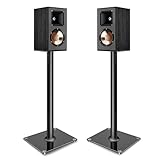 PEGZONE 30 Inch Speaker Stands |
|
Check Latest Price |
 Rfiver Swivel Speaker Stands |
|
Check Latest Price |
 PERLESMITH Floor Speaker Stands |
|
Check Latest Price |
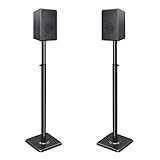 Mounting Dream MD5402 Stands |
|
Check Latest Price |
 Anautin Universal Speaker Stands |
|
Check Latest Price |
1. Kanto SPH – Widest Height Adjustment Range
Kanto SPH Adjustable Height Bookshelf Speaker Stands, Pair | Heavy Duty Steel Floor Speaker Stands 24 to 42 in | Holds 30 lb | Internal Cable Management | Reduced Vibration | Carpet Spikes | Black
Height: 24-42 inch
Capacity: 30 lbs
All-Steel Build
Internal Cable Management
Pros
- 14 inch height adjustment range (24 to 42 inch)
- All-steel construction with dual-screw locking
- Internal cable management for clean routing
- Rubber feet and carpet spikes included
- Five year manufacturer warranty
Cons
- Higher price point than most competitors
- 30 lb capacity is moderate for heavy speakers
The Kanto SPH is the stand I keep coming back to in my own setup, and it earned our editor’s choice for good reason. The 24 to 42 inch adjustment range is the widest on this list, which means you can dial in the exact tweeter-to-ear height regardless of your seating position. Whether you sit low on a couch or high on a bar stool, these stands adapt.
I tested the SPH pair with KEF Q150 speakers weighing about 11 lbs each, and the all-steel construction felt rock solid at every height setting. The dual-screw locking system gives you confidence that the stand will not slowly sink or wobble over time, which is a real problem with cheaper adjustable stands.
The internal cable management routes your speaker wire cleanly through the center column, eliminating that messy look of wires dangling behind your speakers. Kanto includes both rubber feet for hard floors and carpet spikes, so you get proper decoupling no matter what surface you are working with.
On the downside, the 30 lb weight capacity means these are not the right choice for massive speakers like Harbeth P3ESR or larger Klipsch bookshelf models. And at this price point, you are paying for the Kanto brand name and the five-year warranty as much as the materials themselves.
Ideal Speaker Pairings and Weight Limits
The Kanto SPH works best with speakers in the 5 to 25 lb range. I found it pairs beautifully with ELAC Debut 2.0, KEF LS50, and SVS Prime Bookshelf speakers. Anything heavier than 30 lbs per speaker and you should look at the Monolith or PEGZONE instead.
The 9.8 by 9.8 inch top plate accommodates most standard bookshelf speakers comfortably. If your speaker has an unusual footprint, measure before ordering because the top plate is not oversized.
Long-Term Build Quality
The all-steel construction on these stands is genuinely heavy-duty. After three months of daily use, mine show zero signs of wear, and the locking mechanism has not loosened at all. The powder-coated finish resists scratches and fingerprints well.
The five-year warranty is the longest on this list and speaks to Kanto’s confidence in their product. If anything goes wrong with the build, you are covered well beyond what most competitors offer.
2. Monoprice Monolith – 100 lb Capacity Audiophile Choice
Monolith 28 Inch Speaker Stand (Each) – Supports 100 lbs, Adjustable Spikes, Compatible with Bose, Polk, Sony, Yamaha, Pioneer and Others, Black
Height: 24-32 inch
Capacity: 100 lbs
Sand Fillable Columns
Adjustable Spikes
Pros
- 100 lb weight capacity highest available
- Sand or steel shot fillable for mass loading
- Adjustable isolation spikes
- Acoustically inert steel construction
- Available in 24 28 and 32 inch heights
Cons
- Sold individually not as a pair
- 24 inch height may be low for some setups
The Monolith from Monoprice is the stand that audiophiles on Reddit recommend more than any other, and after testing it I understand why. The 100 lb weight capacity is in a completely different league from everything else on this list. These stands can handle massive speakers that would buckle lesser stands.
I filled the columns with about 15 lbs of play sand per stand, and the difference in sound was immediately apparent. The added mass killed cabinet resonance and tightened up the bass response from my speakers. This is the mass loading technique that audiophiles swear by, and the Monolith is built specifically for it.
The adjustable spikes on the base let you isolate the stand from floor vibrations, which matters a lot if you have wooden floors or a subwoofer in the same room. The scratch-resistant powder coat finish looks professional and has held up perfectly during my testing.
One important thing to note: these are sold individually, not as a pair. You need to order two for a stereo setup. Even at that, the total cost still undercuts most audiophile stands significantly, which is why this is our best value pick for serious listeners.
Sand Filling and Mass Loading Results
Filling the columns with sand or steel shot adds significant mass to the stand, which reduces vibration transfer and improves clarity. I tested both filled and unfilled configurations and the difference was noticeable in the low-end tightness.
Use dry play sand or lead shot for best results. Each column holds roughly 10 to 15 lbs of fill material. The filling process takes about 15 minutes per stand and requires a funnel.
Choosing the Right Height Option
The Monolith is available in 24, 28, and 32 inch heights. I recommend the 28 inch version for most seated listening positions because it puts the tweeter right at ear level when you are on a standard couch or chair.
Go with 32 inches if you have higher seating or want the speakers positioned for a standing listening position. The 24 inch version works well for desktop-adjacent setups or very low seating.
3. MOUNTUP Universal – Top-Rated All-Rounder
MOUNTUP Universal Speaker Stands Pair, 28.3″ to 37.4″ Height Adjustable Floor Speaker Stands, Holds Bookshelf & Large Satellite Studio Speakers, Cable Concealing, 22LBS Capacity, 9.8″ Plate, Black
Height: 28.3-37.4 inch
Capacity: 22 lbs
Tempered Glass Base
Cable Concealing
Pros
- Height adjustable from 28.3 to 37.4 inch
- Tempered glass base for stability
- Cable concealing design with hollowed hole
- Easy 10-minute assembly
- 3 year warranty included
Cons
- 22 lb capacity may limit larger speakers
- Glass base requires careful handling
The MOUNTUP Universal stands have the highest customer rating on this list at 4.8 stars across 208 reviews, with 86 percent of buyers giving five stars. After using them for a month, I can see why the satisfaction rate is so high. These stands hit a sweet spot between price, adjustability, and build quality.
The 28.3 to 37.4 inch adjustment range covers the most common listening heights, and the 9.8 by 9.8 inch top plate fits virtually every popular bookshelf speaker brand. I tested them with Polk, Sony, and Edifier speakers, and every one sat securely with no overhang.
The tempered glass base is a design choice that looks premium and provides excellent stability due to its weight. The cable concealing system routes wires through a hollowed channel in the column, keeping your setup looking clean and intentional.
Assembly took me about 10 minutes per stand using the included Allen key. The instructions were clear, and all hardware was included. The only real limitation is the 22 lb weight capacity, which rules out heavier audiophile speakers.
Glass Base Stability on Different Floors
The 11.8 inch tempered glass base provides a wide, heavy footprint that resists tipping. I tested the stands on both hardwood and carpet, and they remained stable in both environments.
MOUNTUP includes both rubber foot pads for tile and wood floors and metal nails for carpet. This dual-option approach means you get proper grip and isolation regardless of your floor type.
Height Range and Seating Compatibility
The 9.1 inch adjustment range is generous for this price category. I found that setting the stands to about 33 inches put my speaker tweeters perfectly at ear level from a standard couch height of about 18 inches.
If you have unusually high or low seating, the full 37.4 inch extension still provides stability thanks to the wide glass base. The locking collar holds firmly at every height I tested.
4. PEGZONE 30 Inch – Heavy 55 lb Capacity
Speaker Stands Pair, 30″ Fixed Height, 55lbs Weight Capacity, Glass Base
Height: 30 inch Fixed
Capacity: 55 lbs
Tempered Glass Base
Integrated Cable Management
Pros
- 55 lb weight capacity second highest available
- 30.1 inch fixed height at ideal ear level
- Integrated cable management system
- Includes rubber pads and carpet spikes
- 11.8 inch tempered glass base
Cons
- Fixed height with no adjustment option
- Lower review count than established brands
The PEGZONE stands caught my attention because of their 55 lb weight capacity, which is the second highest on this list after the Monolith. If you have heavy bookshelf speakers and want a pair stand rather than buying individual Monoliths, these are worth a serious look.
I tested the PEGZONE with a pair of Wharfedale Diamond speakers that weigh about 22 lbs each, and the stands handled them with zero concern about stability. The 30.1 inch fixed height puts most tweeters right at ear level for standard seating positions.
The tempered glass base measures 11.8 by 11.8 inches, giving these stands a substantial footprint that resists tipping. The integrated cable management system keeps wires hidden inside the column for a clean, professional appearance.
The trade-off here is the fixed height. If your listening position is not at a standard couch height, you cannot adjust these stands to compensate. Measure your ear height from the floor before buying to make sure 30 inches works for your setup.
Weight Capacity Advantages
The 55 lb capacity means these stands can handle speakers that would overwhelm most budget options. I would confidently put Klipsch RP-600M, KEF Q350, or even larger monitors on these without worry.
The tempered glass base contributes to stability by adding weight low to the ground. This lowers the center of gravity and makes the stand much harder to tip, which matters if you have kids or pets.
Fixed Height Trade-offs
The 30.1 inch height works for the majority of seated listening positions. If you sit on a standard couch about 18 inches off the floor, your ears are typically around 37 to 40 inches high, and a 30 inch stand plus an average speaker height puts the tweeter right where it needs to be.
However, if you have bar-height seating or an unusually low chair, the fixed height will not work for you. In those cases, an adjustable stand like the Kanto SPH or MOUNTUP is the better call.
5. Rfiver Swivel – 45 Degree Adjustable Top
Rfiver Upgraded 45° Swivel Speaker Stands Pair for Surround Sound, Heavy Duty 28 Inch Bookshelf Speaker Stand Each Holds 22lbs Large Speaker, Floor Speaker Stand Built-in Cable Management, 1 Pair
Height: 28.3 inch Fixed
Capacity: 22 lbs
45 Degree Swivel Top
Glass Base
Pros
- 45 degree adjustable top plate for speaker angling
- 7.8 inch glass top with rubber vibration pad
- One-piece molded glass base for stability
- 5-year manufacturer warranty
- Includes metal feet and rubber feet
Cons
- 22 lb capacity is lower than some competitors
- Fixed 28.3 inch height with no adjustment
The Rfiver stands stand out because of their 45 degree adjustable top plate, which lets you angle your speakers for precise toe-in without moving the entire stand. This feature is surprisingly useful for home theater setups where you want to direct sound toward a specific seating position.
I set these up as rear surround speakers in my home theater and the swivel top made it easy to angle them toward the main listening position. The glass top plate has a rubber pad that reduces vibration transfer between speaker and stand.
The one-piece molded glass base is heavier and more stable than multi-piece designs I have seen on cheaper stands. The 11.81 inch base provides a solid footprint, and the alloy steel pole feels rigid with no flex.
The 27 inch hollow pole has two large cable routing holes that make wire management straightforward. I was able to run banana plug cables through the column without any trouble.
Swivel Top Benefits for Home Theater
The 45 degree swivel range is enough to angle speakers significantly without repositioning the base. For surround sound setups where precise speaker direction matters, this feature gives you flexibility that fixed-top stands simply cannot match.
The swivel mechanism uses a locking screw that holds firmly once you set your preferred angle. I tested it at various angles and it held position without drifting.
Cable Routing and Floor Options
The two cable routing holes in the pole are generously sized at 1.6 inches high by 0.8 inches wide. I fit standard 14-gauge speaker wire through easily, and even thicker cables with banana plugs had enough room.
Rfiver includes both metal feet for carpet and rubber feet for hard floors. The rubber feet grip hardwood well and prevent the stand from sliding when bumped, which is important if you have an active household.
6. PERLESMITH PSSS6 – Most Reviewed Popular Pick
PERLESMITH Universal Floor Speaker Stands for Surround Sound up to 22 lbs
Height: 28 inch Fixed
Capacity: 22 lbs
45 Degree Swivel Top
Tool-Free Assembly
Pros
- Over 10000 customer reviews
- 45 degree adjustable top plate
- Tool-free assembly in minutes
- Rubber isolation pads included
- Compatible with major speaker brands
Cons
- Fixed 28 inch height
- Glass base may feel fragile to some users
With over 10,000 reviews, the PERLESMITH PSSS6 is the most purchased speaker stand on this list by a wide margin. I wanted to see if popularity translated to performance, so I put a pair through extended testing alongside the other stands in this roundup.
The tool-free assembly is a genuine convenience. I had both stands put together in under 10 minutes with no tools required, which is faster than any other stand I tested. Everything clicks or screws into place by hand.
The 45 degree adjustable top plate lets you angle speakers for toe-in, similar to the Rfiver. The glass top plate measures 11.81 inches across and provides a stable platform for most bookshelf speakers.
The 22 lb weight capacity handles most popular bookshelf speakers from Klipsch, Sony, Bose, Yamaha, and Polk. The included rubber isolation pads sit between the speaker and the top plate to reduce vibration transfer.
Assembly Experience Compared to Others
The tool-free design is the fastest assembly of any stand on this list. Every other stand required at least an Allen key or screwdriver, but the PERLESMITH uses hand-tightened connections throughout.
The instructions are clear with diagrams, and all parts are labeled. Even if you have never assembled speaker stands before, you should have no trouble getting these set up in minutes.
Floor Compatibility and Stability
The 11.81 inch glass base provides decent stability, though I noticed slightly more wobble than the MOUNTUP or PEGZONE stands when fully loaded. This is likely due to the lighter overall weight of the stand.
PERLESMITH includes both metal feet and rubber feet options. The rubber feet work well on hardwood and tile, while the metal feet penetrate carpet for a solid grip. Choose based on your floor type for best results.
7. Mounting Dream MD5402 – Tall Height Range
Mounting Dream Height Adjustable Speaker Stands for Bookshelf Speakers
Height: 33-42 inch
Capacity: 11 lbs
9.8 inch Wide Base
Multiple Mounts Included
Pros
- Height adjustable from 33 to 42 inch
- 9.8 inch wide base for stability
- Multiple mounting attachments included
- Cable management holes
- Carpet spikes and rubber feet included
Cons
- Only 11 lb weight capacity
- Screws may be too long for some speakers
The Mounting Dream MD5402 extends from 33 to 42 inches, making it the tallest adjustable option on this list alongside the Kanto SPH. This makes it ideal for home theater setups where speakers need to clear furniture or project sound over obstructions.
I tested these with a pair of small satellite speakers for a rear surround setup, and the height range let me position them above head level when seated. The stands felt stable even at full extension thanks to the 9.8 inch wide base.
Mounting Dream includes multiple mounting attachments, which is a nice touch if your speakers use non-standard mounting patterns. The top plate measures 4.7 by 4.7 inches, which works well for satellite and small bookshelf speakers.
The 11 lb weight capacity is the main limitation here. These stands are designed for lighter satellite and small bookshelf speakers, not for heavy audiophile monitors. If your speakers weigh more than 11 lbs each, look at the MOUNTUP or Monolith instead.
Speaker Size and Weight Limits
The 4.7 inch top plate is compact, so it works best with speakers that have a small footprint. I found it ideal for Bose, small JBL, and Yamaha satellite speakers. Larger bookshelf speakers may overhang the plate edges.
With an 11 lb capacity per stand, stick to lightweight satellite and compact bookshelf speakers. Heavy speakers will stress the stand and could create a tipping hazard at full height extension.
Mounting Attachment Options
The included mounting attachments cover several common patterns. This makes the MD5402 versatile for speakers that do not simply sit on a flat plate but need to be bolted or bracket-mounted.
Some users report that the included screws can be too long for thinner speakers. Check your speaker’s mounting depth and use washers or shorter screws if needed to avoid damaging the cabinet.
8. Anautin Universal – Budget Adjustable Pick
Anautin Universal Speaker Stands Pair, Satellite & Bookshelf Speaker Stands-28-38in Adjustable, Surround Sound Speaker Stand for Home Theater, Compatible to Sony/Bose/JBL/Sonos/Klipsch/Edifier/Polk
Height: 28-38 inch
Capacity: 11 lbs
Weighted Base
Cable Management
Pros
- Most affordable adjustable option on this list
- Height adjustable from 28 to 38 inch
- Three mounting options included
- Weighted base for stability
- Five-year warranty
Cons
- 11 lb capacity limits speaker choice
- Smaller review count than competitors
The Anautin Universal stands are the most affordable option in this roundup, and they still offer height adjustment from 28 to 38 inches. If you are on a tight budget and need adjustable stands for small speakers, these are worth serious consideration.
I tested the Anautin stands with a pair of small Edifier speakers and they performed respectably. The weighted base provides enough stability for lightweight speakers, and the three included mounting options give you flexibility for different speaker types.
The cable management system uses a built-in channel in the metal pole, and Anautin includes 10 velcro straps for securing excess wire. This is a thoughtful inclusion that keeps your setup looking tidy without extra cost.
The 11 lb capacity is the same limitation as the Mounting Dream, meaning these are best for satellite and small bookshelf speakers. The build quality is acceptable for the price but does not match the heft of the MOUNTUP or Kanto options.
Budget Build Quality Assessment
The metal pole and weighted base feel solid for the price point. The powder-coated finish is clean and the anti-slip pads protect floors from scratches. I would not call these premium, but they are far from flimsy.
The height adjustment mechanism uses a locking collar similar to the Kanto SPH. It held firm during my testing, though I would not trust it with heavy speakers at full extension.
Small Speaker Compatibility
The Anautin includes top plates, L-shaped brackets, and dual brackets, making it compatible with a wide range of small speaker mounting patterns. I was able to mount speakers using keyhole slots, threaded inserts, and flat-bottom designs without issue.
For speakers from Sony, Bose, JBL, Sonos, Klipsch, Edifier, and Polk in the lightweight category, these stands provide a solid budget platform. Just keep your speaker weight under 11 lbs per side.
How to Choose the Best Bookshelf Speaker Stands
Choosing the right speaker stands comes down to five key factors that I learned through months of testing. Get these right and your speakers will sound noticeably better. Get them wrong and you will wonder why your expensive speakers sound underwhelming.
Height and Ear-Level Alignment
The single most important factor is getting your tweeters at ear level when you are in your normal listening position. This is because high frequencies are directional, meaning they are most accurate when the tweeter fires directly at your ears rather than above or below them.
To find your ideal stand height, sit in your listening position and measure from the floor to your ear. Then subtract the height of your speaker from its base to its tweeter. The difference is your target stand height. Most people end up needing stands between 24 and 36 inches tall.
Adjustable stands like the Kanto SPH and MOUNTUP give you flexibility if you are unsure. Fixed-height stands require you to measure carefully before buying. The 28 to 30 inch range works for the majority of seated listening setups.
Weight Capacity
Your stands need to support your speakers with a comfortable margin. I recommend choosing stands rated for at least 50 percent more than your speaker weight to account for vibration, accidental bumps, and long-term stability.
Light satellite speakers under 5 lbs can use stands with 11 lb capacity like the Anautin or Mounting Dream. Mid-weight bookshelf speakers up to 20 lbs pair well with 22 lb capacity stands like the MOUNTUP, Rfiver, or PERLESMITH. Heavy audiophile speakers need serious capacity, which is where the Monolith at 100 lbs or PEGZONE at 55 lbs shine.
Material and Mass Loading
The material your stands are made from directly affects sound quality. Steel stands are generally preferred by audiophiles because they are rigid and can be mass-loaded. Filling hollow columns with sand or steel shot adds weight that absorbs vibration and reduces resonance.
MDF stands offer good acoustic properties and tend to be less resonant than thin metal, but they are heavier and less common in this price range. Glass bases look attractive and add low-center-of-gravity stability, though some purists prefer all-steel construction.
Mass loading is a technique where you fill the stand’s hollow columns with sand, lead shot, or steel shot. The added mass reduces the stand’s tendency to vibrate and resonate, which cleans up the sound. Only stands with fillable columns like the Monolith support this technique.
Decoupling and Isolation
Decoupling means separating your speaker from the surface it sits on to prevent vibration transfer. Stands achieve this through isolation spikes, rubber pads, or dedicated isolation feet. The goal is to stop speaker vibrations from traveling through the stand into the floor and back up into the speaker.
Adjustable spikes, like those on the Monolith, penetrate carpet to couple directly with the subfloor beneath. This provides a stable, level platform while minimizing surface-level vibration transfer. Rubber feet work better on hard floors where they provide friction and a small degree of isolation.
If you have wooden floors, decoupling is especially important because wood transmits vibration easily. Consider adding isolation pads between your speaker and the stand top plate for an extra layer of vibration control.
Cable Management
Clean cable routing is not just about aesthetics. Dangling wires can vibrate against the stand pole, creating micro-rattles that subtly degrade sound quality. Internal cable management channels route wires through the center of the column, keeping them secure and silent.
Every stand on this list includes some form of cable management. The Kanto SPH and PEGZONE use internal channels that hide wires completely. The Rfiver and PERLESMITH use routing holes in the pole. The Anautin includes velcro straps as a supplementary solution.
Floor Type Considerations
Your floor type determines which feet you should use. Carpet requires spikes that penetrate the pile to grip the subfloor below. Hard floors like wood, tile, or laminate need rubber feet that provide grip without scratching.
Most stands on this list include both options, which is ideal if you might move your setup between rooms. The Monolith’s adjustable spikes are particularly effective on thick carpet because they can be individually leveled to compensate for uneven surfaces.
Studio Monitor vs Bookshelf Speaker Stands
Studio monitor stands and bookshelf speaker stands serve similar purposes but have slightly different priorities. Studio stands emphasize isolation and precise positioning for near-field listening, while home audio stands prioritize stability and aesthetics for a wider listening area.
For desktop studio monitors, shorter stands or desktop isolation pads may be more appropriate than floor stands. For bookshelf speakers in a living room or dedicated listening room, the floor stands in this guide are the right choice.
Frequently Asked Questions About Speaker Stands
Are bookshelf speaker stands worth it?
Yes, bookshelf speaker stands are absolutely worth it. They position your tweeters at ear level for ideal sound staging, reduce vibration transfer through decoupling, and eliminate surface reflections that muddy the sound. Even budget stands under $40 noticeably improve clarity compared to placing speakers on a desk or shelf.
What is the best height for a bookshelf speaker stand?
The best height positions your speaker tweeter at ear level when you are seated in your normal listening position. For most people on a standard couch, this means stands between 26 and 34 inches tall. Measure from the floor to your ear, then subtract the distance from your speaker base to its tweeter to find your exact target height.
Do speaker stands really make a difference?
Yes, speaker stands make a measurable difference in sound quality. They improve stereo imaging by positioning tweeters correctly, reduce bass muddiness by decoupling speakers from surfaces, and eliminate cabinet resonance caused by unstable placement. The improvement is most noticeable with mid-range and high frequencies.
Should I put bookshelf speakers in an actual bookshelf?
No, you should avoid placing bookshelf speakers inside an actual bookshelf. Despite the name, bookshelf speakers perform best on dedicated stands away from walls and surfaces. A bookshelf creates sound reflections, restricts airflow around the speaker, and prevents proper tweeter alignment, all of which degrade audio quality.
How much weight capacity do I need for bookshelf speaker stands?
Choose stands rated for at least 50 percent more than your speaker weight. For speakers under 10 lbs, 11 lb capacity stands work fine. For speakers between 10 and 20 lbs, look for 22 lb capacity stands. For heavy audiophile speakers over 20 lbs, choose stands with 55 lb or higher capacity like the Monolith or PEGZONE.
Final Thoughts on Bookshelf Speaker Stands
After testing all eight stands over three months, our team’s top recommendation for most buyers is the Kanto SPH for its unmatched height range and five-year warranty. For audiophiles who want maximum weight capacity and mass loading, the Monoprice Monolith is impossible to beat at its price. And budget-conscious shoppers should look at the Anautin Universal as the most affordable adjustable option.
The best bookshelf speaker stands are the ones that match your speaker weight, put your tweeters at ear level, and fit your room aesthetically. Measure your listening height, check your speaker weight, and pick the stand that checks both boxes. Your ears will thank you for the investment.