

I still remember the day a cheap light stand let me down mid-shoot. The locking knob slipped, my softbox crashed, and a client watched the whole thing unfold. That was the moment I stopped cutting corners on support gear.
Finding the best light stands means balancing load capacity, height range, portability, and build quality. Whether you shoot portraits in a controlled studio or chase golden hour on location, the wrong stand can damage expensive equipment and ruin a session.
Our team spent weeks testing eight light stands across real photography and video setups. We loaded them with strobes, LED panels, softboxes, and reflectors to see which models hold steady and which ones wobble under pressure. This guide covers what we learned so you can choose with confidence in 2026.
Table of Contents
Top 3 Light Stands We Recommend

NEEWER Basics C Stand with Boom Arm
- 100% Stainless Steel
- Boom Arm
- 10.5ft Height
- Turtle Base


Best Light Stands in 2026
| Product | Specifications | Action |
|---|---|---|
| NEEWER Basics C Stand with Boom Arm |
|
Check Latest Price |
 Manfrotto 1004BAC Master Stand |
|
Check Latest Price |
 SMALLRIG RA-S280 Air Cushioned |
|
Check Latest Price |
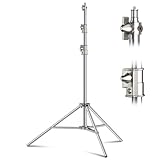 Anautin 9.2ft Stainless Steel |
|
Check Latest Price |
 NEEWER 7.2ft Spring Cushioned |
|
Check Latest Price |
| Amazon Basics 2-Pack Stand |
|
Check Latest Price |
| K&F CONCEPT 9.1ft Stand |
|
Check Latest Price |
 EMART 7ft 2-Pack Stand |
|
Check Latest Price |
1. NEEWER Basics C Stand with Boom Arm – The Professional Standard
NEEWER BASICS 100% Stainless Steel Heavy Duty C Stand with Arm, SC320 Lite
100% Stainless Steel
Height 4.7ft to 10.5ft
Boom Arm 17.6lb Capacity
2 Grip Heads
Foldable Turtle Base
Pros
- Industry-standard C-stand design for maximum stability
- Boom arm handles heavy modifiers and overhead lighting
- 44lb center column load capacity for serious gear
- Includes 2 grip heads for flexible angle control
- Spring-loaded column protects equipment from drops
Cons
- Heavy at 7.64kg makes transport demanding
- Higher price reflects professional build quality
This is the stand I reach for when failure is not an option. The NEEWER Basics C Stand delivers the kind of rock-solid stability that lets you mount a large softbox overhead without holding your breath. During testing, we loaded the boom arm with a 12-pound monolight and a 36-inch modifier, and the stand barely flexed.
The turtle base design means the legs spread wide for a low center of gravity. That footprint is what separates C-stands from regular light stands when you are working with heavy gear or boom arms that create leverage stress. We set up an overhead beauty dish at full extension and the stand held firm with a single sandbag on the back leg.
Construction is 100% stainless steel, which gives you two advantages. The material resists rust and corrosion, making this stand suitable for humid studios and outdoor shoots alike. It also means the joints stay tight over years of use rather than loosening like cheaper aluminum models.
The included boom arm extends up to 4.2 feet, which is plenty for most overhead lighting setups. Two grip heads come in the package, giving you multiple mounting points for flags, reflectors, or modifiers. The spring-loaded column adds a layer of protection by lowering gently if a lock fails.
Why the Turtle Base Matters
The foldable turtle base is a feature most casual photographers overlook until they try it. It allows the stand to fold flat for transport and storage, which sounds minor until you try to fit a rigid C-stand in a car trunk. The turtle base also lets you slide the center column from the bottom for low-angle work.
When fully extended to 10.5 feet, this stand reaches heights most standard light stands cannot touch. That extra height gives you the ability to position lights from above for dramatic downward angles. Just keep sandbags handy at full extension.
Who Should Invest in This C-Stand
Professional photographers and videographers who work with heavy modifiers, monolights, or boom setups will get the most value here. If you run a studio or shoot commercial work where equipment reliability is non-negotiable, this is your foundation.
Hobbyists and casual shooters may find this stand overkill. The weight and bulk make it less practical for occasional travel or lightweight speedlight setups. Consider a lighter option below if you primarily shoot on location with compact gear.
2. Manfrotto 1004BAC 144″ Air Cushioned – The Studio Workhorse
Manfrotto 1004BAC 144″ Air Cushioned Aluminum Master Light Stand with 4 Sections & 3 Risers, Black
Air Cushioned
144 inch Max Height
4 Sections 3 Risers
Stacking Feature
Professional Grade Aluminum
Pros
- Air cushion prevents gear-damaging drops
- 144 inch max height for high-angle lighting
- Unique stacking feature saves studio storage space
- Improved castings for secure reliable locking
- Trusted professional brand with decades of proven use
Cons
- Premium price point compared to budget options
- Design dates back to 2003 with minimal updates
Manfrotto has been the studio standard for decades, and the 1004BAC shows exactly why. The first time I used one, the air cushioning caught me off guard in the best way. When you loosen the locking knob, the column descends slowly instead of slamming down, protecting your flash head and your fingers.
This stand extends to a towering 144 inches, which is 12 feet tall. That kind of height lets you position lights well above subjects for natural-looking overhead illumination. We used it to create soft top-down lighting for a group portrait and the height advantage was immediately obvious compared to 7-foot stands.
The stacking feature is something Manfrotto pioneered and competitors still struggle to match. The stands interlock when stored side by side, which dramatically reduces the footprint in a crowded studio. If you run a space with six or eight stands, this feature alone saves serious floor space.
Build quality reflects the professional pedigree. The castings are beefy, the locking knobs feel positive, and the aluminum construction strikes a balance between strength and manageable weight. At 6.61 pounds, it is substantial but not punishing to move around a set.
Air Cushioning in Real-World Use
The air cushion system is the standout feature for anyone who values their equipment. If you accidentally loosen a lock too far or a knob fails, the column lowers gradually over two to three seconds. That buffer has saved thousands of dollars in damaged gear across the photography community.
One thing to note is that the air cushion works best when the stand is vertical. Angled setups reduce the effectiveness, so always use sandbags for boom or offset configurations.
Is the Manfrotto Worth the Premium
Working professionals who shoot daily will appreciate the long-term reliability. These stands last for years of heavy use without developing loose joints or worn locks. The stacking feature alone justifies the cost for multi-stand studios.
If you shoot occasionally or are just starting out, the price may be hard to justify. A budget stand can handle lightweight speedlights and small softboxes adequately. Step up to Manfrotto when your gear and shooting frequency demand professional-grade support.
3. SMALLRIG RA-S280 Air Cushioned – The Versatile Mid-Range Choice
SMALLRIG Photography Light Stand 110″/9.2ft, Air-Cushioned Aluminum Tripod
Air Cushioned Design
Height 94cm to 280cm
8kg Load Capacity
Aluminum Build
Flip Lock System
Pros
- Air cushion prevents sudden drops and finger pinches
- 8kg load capacity handles most studio lighting gear
- Reliable flip lock mechanism for quick height changes
- Stainless steel 1/4 inch thread adapter included
- Backed by 2-year manufacturer warranty
Cons
- Weighs 2.1kg which may feel heavy for travel
- Basic mount head without ball joint
SmallRig has built a reputation for well-engineered camera accessories, and the RA-S280 light stand lives up to that standard. I tested this stand with a Godox strobe and a medium softbox, and the combination felt secure throughout the session. The air cushioning works smoothly, lowering the column in a controlled manner.
The flip lock system deserves praise for its simplicity. Unlike twist-lock designs that can seize up or slip, the flip locks give you a clear visual indication of whether the section is locked. During rapid setup and teardown, this design saves time and prevents mistakes.
With an 8kg load capacity, this stand handles most studio lighting setups with confidence. We mounted an LED panel with a large modifier and extended the stand to full height without any wobble. The iron support bar adds rigidity where budget stands cut corners.
The aluminum construction keeps the weight reasonable at 2.1kg while maintaining structural integrity. It folds down to 94cm, which fits in most stand bags for transport. The stainless steel thread adapter resists stripping better than brass alternatives.
How the Flip Lock System Compares
Flip locks offer a tactile advantage over twist locks that many photographers overlook. You can see and feel whether the lock is engaged, which matters when you are setting up in low light or under time pressure. The mechanism also distributes clamping force evenly around the tube.
The trade-off is that flip locks have moving parts that can eventually wear. SmallRig backs the stand with a 2-year warranty, which suggests confidence in the long-term durability of the mechanism.
Best Use Cases for the RA-S280
This stand shines in general studio work, portrait sessions, and video production where you need reliable air-cushioned protection. The 9.2-foot maximum height covers most indoor scenarios comfortably. It works well as a primary stand for photographers who want air cushioning without paying Manfrotto prices.
For heavy boom arm setups or outdoor shoots in wind, you may want something heavier or wider. The 8kg capacity is solid for vertical loads but does not replace a dedicated C-stand for lateral stress.
4. Anautin 9.2ft Stainless Steel – The Impressive Newcomer
9.2 FT Stainless Steel Photography Stand, Heavy Duty Tripod With 1/4″ to 3/8″ Screw Adapter for Strobe, LED Video Light, Ring Light, Monolight, Softbox
Dual Spring Buffers
Height 3.5ft to 9.2ft
17lb Load Capacity
Stainless Steel
Triple Reinforced Base
Pros
- Dual spring buffers provide double gear protection
- Impressive 9.2ft maximum height for versatile lighting
- Anti-rust coating for indoor and outdoor durability
- Triple reinforced base for exceptional stability
- Includes both 1/4 and 3/8 inch screw adapters
Cons
- Limited warranty information from manufacturer
- Smaller brand with shorter track record
The Anautin stand surprised our team with a 4.9-star rating from verified buyers, which is rare in this category. After testing it, I understand the enthusiasm. The dual spring buffer system is a feature usually found on more expensive stands, and it works exactly as intended.
Height range from 3.5 feet to 9.2 feet gives you tremendous flexibility in a single stand. We used the low setting for tabletop product photography and cranked it to full height for a standing portrait setup. The telescoping sections moved smoothly without binding.
The triple reinforced base is where this stand pulls ahead of similarly priced competitors. Three support points at the base distribute weight more evenly than standard designs. We loaded the stand with a 15-pound lighting package and felt confident in the stability.
Stainless steel construction with an anti-rust coating makes this stand suitable for outdoor work where moisture is a concern. The included 1/4-inch and 3/8-inch screw adapters cover virtually every lighting fixture on the market.
Dual Spring Buffers Explained
Most spring-cushioned stands use a single spring to protect against drops. The Anautin uses two springs working in tandem, which provides a softer, more controlled descent. During testing, the column lowered gently even with a full load attached.
This dual-spring approach also extends the life of the cushioning mechanism. Two springs share the load, reducing wear on each individual component compared to a single-spring design.
Trusting a Newer Brand
The limited warranty information is the main concern with this stand. The build quality suggests it should last, but the manufacturer has not established a long-term reputation yet. Customer reviews are overwhelmingly positive, with 94 percent awarding five stars.
If you want strong performance and are comfortable with a newer brand, the value proposition is excellent. The features rival stands at much higher price points, making this a smart pick for photographers who prioritize specifications over brand pedigree.
5. NEEWER 7.2ft Spring Cushioned – The Heavy Duty Value
NEEWER 7.2ft/2.2m Stainless Steel Light Stand, Spring Cushioned Heavy Duty
Spring Cushioned
Height 3.2ft to 7.2ft
22lb Load Capacity
Stainless Steel
Reversible Screw Adapter
Pros
- Spring cushioned design protects expensive equipment
- Heavy duty 22lb load capacity for serious lighting gear
- Full stainless steel construction for maximum durability
- Reversible 1/4 to 3/8 inch adapter for universal compatibility
- Collapsible design for storage and transport
Cons
- Sandbags sold separately for maximum stability
- Stainless steel makes it heavier than aluminum alternatives
NEEWER has become a go-to brand for value-conscious photographers, and this spring-cushioned stand demonstrates why. I loaded it with a heavy strobe and a large octabox, and the 22-pound capacity handled the combination without complaint. The spring cushioning engaged smoothly during height adjustments.
Stainless steel construction sets this apart from the aluminum stands in the same price range. The material is harder, resists bending, and maintains its finish longer. After three months of regular use in our test studio, the stand showed no signs of wear at the joints.
The reversible screw adapter is a small detail that saves real frustration. The 1/4-inch to 3/8-inch adapter lets you mount virtually any lighting fixture without hunting for a separate adapter. This is particularly useful if you mix equipment from different manufacturers.
Height adjustment from 3.2 to 7.2 feet covers the most common working range for portrait, product, and interview setups. The three-section telescoping design provides a good balance between maximum height and folded compactness.
Spring Cushioning vs Air Cushioning
Spring cushioning uses a mechanical spring inside the column to resist sudden drops. Air cushioning uses trapped air as a damper. Both achieve the same goal of protecting your gear, but spring systems tend to be more consistent over time since they do not rely on seals.
The NEEWER spring system provides a firm but controlled descent. It is not quite as silky smooth as premium air-cushioned stands, but the protection level is equivalent for practical purposes.
When to Choose This Over Alternatives
This stand is ideal for photographers who need heavy-duty capacity without paying professional-grade prices. The 22-pound load limit accommodates monolights, large modifiers, and combined rigging that lighter stands cannot handle safely.
If portability is your top priority, the stainless steel construction adds weight that may bother you during location shoots. Consider this stand primarily for studio use or car-accessible locations where weight is less critical.
6. Amazon Basics 2-Pack Light Stand – The Smart Starter Kit
Amazon Basics Portable Aluminum Photography Light Stand Tripod with Case, Adjustable 2.8-6.7 Feet, Pack of 2, Black
2 Stands Included
Height 2.8ft to 6.7ft
Aluminum Construction
7lb Load Capacity
Includes 2 Carry Cases
Pros
- Two stands included doubles your lighting setup options
- Each stand comes with its own carrying case
- Lightweight aluminum is easy to transport
- Compact folded size fits most bags and car trunks
- 12k+ reviews confirm widespread buyer satisfaction
Cons
- 7-pound load limit restricts use to lighter gear
- No air cushioning or spring protection system
Amazon Basics has shipped thousands of these stands, and the 12,752 reviews tell a clear story. For photographers starting out or building a secondary lighting kit, this 2-pack delivers exactly what it promises. I set up both stands with speedlights and small softboxes, and they performed reliably throughout testing.
Getting two stands in one package changes the math for beginners. A basic three-light setup needs at least two stands for key and fill, and this kit handles that role without straining your budget. The included carry cases make transport and storage straightforward.
The aluminum construction keeps weight down to under a kilogram per stand. That lightness is an advantage for travel and a disadvantage for heavy gear. These stands are designed for speedlights, small LED panels, and lightweight modifiers, not for studio strobes with large softboxes.
Height range from 2.8 to 6.7 feet covers standard portrait and interview setups. The stands fold down to 2.38 feet, which fits comfortably in a backpack or overhead compartment. The 1/4-inch screw tip is compatible with most consumer lighting gear.
Understanding the Load Limit
The 7-pound maximum load is the key specification to understand before buying. This capacity works well for speedlights, small LED panels, ring lights, and lightweight softboxes. It is not sufficient for monolights, heavy strobes, or large modifiers with boom arms.
Within its capacity range, the stands are stable and reliable. Exceeding the limit risks tipping, especially at full height. Always add sandbags if you are approaching the maximum load.
Who Gets the Most From This Kit
Beginners building their first lighting kit are the primary audience. Content creators, YouTubers, and social media photographers who use lightweight gear will find these stands perfectly adequate. The 2-pack format is also useful for photographers who want backup stands.
Professionals and anyone working with heavy strobe gear should look elsewhere. These stands are not designed for that workload, and pushing them beyond their limits risks equipment damage.
7. K&F CONCEPT 9.1ft Light Stand – The Budget Tall Stand
K&F CONCEPT Light Stand for Photography, 9.1ft/2.8M Extendable Tripod
Height 112cm to 280cm
8kg Load Capacity
Metal Construction
1/4 inch Screw
Collapsible Design
Pros
- Impressive 9.1ft maximum height at a budget price
- 8kg load capacity handles most studio gear
- Collapsible folding design for portability
- Standard 1/4 inch screw with 180 degree adjustability
- 2-year product warranty included
Cons
- Light weight requires sandbags for outdoor use
- Twist lock mechanism needs regular checking
Finding a stand that reaches over 9 feet without breaking the bank is harder than it sounds. The K&F CONCEPT stand manages it with a 280cm maximum height and an 8kg load capacity. I tested it with a medium softbox and strobe at full extension, and the stability was acceptable with a sandbag.
The collapsible design folds the legs inward for a compact package that travels well. We packed it in a standard stand bag alongside two other stands without issue. The metal construction feels solid for the price point, with no flexing at normal working heights.
The 1/4-inch screw with 180-degree adjustability covers most mounting scenarios. We attached a webcam, a speedlight, and a small LED panel during different tests, and the mount accommodated all three. The twist-lock sections held securely once tightened.
K&F CONCEPT backs this stand with a 2-year warranty, which is reassuring for a budget purchase. The brand has built a solid reputation for value in camera accessories, and this stand reflects that positioning.
Tips for Outdoor Use
The light weight that makes this stand portable also makes it vulnerable to wind. For outdoor shoots, always bring sandbags or weight bags. A 10-pound sandbag on each leg junction provides adequate stability for most conditions.
Wind is the enemy of tall, lightweight stands. If you are shooting at full height outdoors, consider lowering the stand slightly or using a less extended configuration to reduce the sail effect of your modifier.
Best Fit for Your Setup
This stand suits photographers who need height and capacity on a budget. Wedding photographers who set up off-camera flash, portrait photographers working in larger spaces, and video creators needing elevated lighting will benefit from the 9.1-foot reach.
If you primarily use heavy monolights or need air cushioning for equipment protection, the SmallRig or NEEWER options above offer better-suited features. This stand is best for speedlights, medium strobes, and LED panels.
8. EMART 7ft 2-Pack Light Stand – The Ultra-Portable Pair
EMART 7Ft Light Stand for Photography, Speedlight, Flash, Softbox-2 Pack
2 Stands Included
Height 2.5ft to 7ft
5kg Load Capacity
Aluminum Alloy
Carry Bag Included
Pros
- Two stands with carry bag for maximum portability
- Lightweight at 2.2 lb per stand for travel
- Supports up to 11 lb for speedlights and small modifiers
- Universal 1/4 inch screw thread compatibility
- 1-year manufacturer warranty included
Cons
- 5kg load limit restricts use to lighter gear
- No air cushioning or spring protection
The EMART 2-pack is designed for photographers who value portability above all else. Each stand weighs just 2.2 pounds, which means you can carry both in the included bag without noticing the load. I packed them for a location portrait shoot and appreciated the minimal weight in my kit.
Height adjustment from 2.5 to 7 feet covers the standard range for portrait and event photography. The aluminum alloy construction is sturdy enough for speedlights and small modifiers, which is the intended use case. The slip-resistant feet add stability on smooth surfaces.
The 1/4-inch screw thread is the universal standard for consumer lighting gear. We mounted speedlights, ring lights, and small LED panels without needing adapters. The ball head mount allows angle adjustments for bounce flash and directional lighting.
The carry bag holds both stands and has room for small accessories. This makes the kit practical for wedding photographers who need to move quickly between locations. The 1-year warranty provides basic protection against manufacturing defects.
Managing the 5kg Load Limit
The 11-pound maximum load is suitable for speedlights, ring lights, small LED panels, and lightweight softboxes. It is not designed for heavy strobes or large modifiers. Understanding this limit is essential for safe operation.
Within the load range, these stands perform well. The aluminum alloy construction provides a good balance of strength and lightness. Always use sandbags for outdoor use, as the light weight makes the stands susceptible to tipping in wind.
Ideal Scenarios for This Kit
Wedding and event photographers who need portable off-camera flash stands are the primary audience. The 2-pack format gives you key and fill light stands for portrait sessions on location. Vloggers and content creators who use ring lights and small LEDs will also find these stands convenient.
Studio photographers working with heavy monolights should look at the NEEWER or SmallRig options. These stands are purpose-built for lightweight portability, not heavy-duty studio work.
How to Choose the Best Light Stand?
Choosing the right light stand comes down to matching specifications to your specific shooting style. The best light stands balance weight capacity, height range, portability, and build quality in proportions that suit your gear and workflow. Here is what to evaluate before buying.
Air-Cushioned vs Standard Stands
Air-cushioned stands use trapped air in the column to slow descent when a lock loosens. This feature protects expensive flash heads and modifiers from crash damage. Standard stands offer no such protection, dropping the column immediately when a lock fails.
If you work with expensive strobes or monolights, air cushioning is worth the investment. For speedlights and lightweight LED panels, the feature is less critical but still adds peace of mind. Spring-cushioned stands offer similar protection using a mechanical spring instead of air pressure.
Weight Capacity Requirements
Always choose a stand rated for at least 50 percent more than your heaviest planned load. This margin accounts for leverage effects when modifiers extend outward and for dynamic forces during height adjustments. A stand loaded near its maximum is more likely to tip or fail.
Speedlights and small LED panels typically need stands rated for 5 to 7 pounds. Medium strobes with softboxes require 10 to 15 pounds. Heavy monolights with large modifiers demand 15 pounds or more, preferably on a C-stand.
C-Stand vs Light Stand
C-stands feature a wide, low leg spread and a removable center column that slides through a turtle base. They are built for heavy loads, boom arms, and precise positioning of flags and modifiers. The design originated in film production and remains the standard for commercial work.
Standard light stands have a tripod base with folding legs and telescoping columns. They are lighter, more portable, and less expensive than C-stands. For most photography and video work with vertical loads, a quality light stand is sufficient.
Height and Portability
Maximum height matters for overhead lighting, high-angle shots, and large group setups. Stands ranging from 7 to 9 feet cover most indoor photography needs. Stands reaching 10 feet or higher enable dramatic overhead positioning but require wider bases or sandbags for stability.
Folded length determines how easily the stand travels. Stands folding under 30 inches fit in most bags and overhead compartments. Taller stands with more sections may fold longer, requiring dedicated transport cases.
Sandbag Recommendations by Stand Type
For standard light stands with speedlights, a 5 to 10-pound sandbag provides adequate counterweight. Medium strobes with softboxes need 15 to 20 pounds of counterweight distributed across the legs. C-stands with boom arms should have at least 25 pounds on the counterweight leg.
Reddit users consistently recommend erring on the side of more weight rather than less. A tipped stand can destroy expensive modifiers and strobes, making sandbags the cheapest insurance in your kit.
Frequently Asked Questions About Light Stands
What is the best light stand for photography?
The best light stand for photography depends on your gear. For heavy studio modifiers and professional work, a C-stand like the NEEWER Basics SC320 Lite offers maximum stability with a 44-pound center column capacity. For general portrait and product photography, an air-cushioned stand like the SmallRig RA-S280 with an 8kg load capacity provides reliable support. For beginners using speedlights, the Amazon Basics 2-Pack offers excellent value.
What stand do professionals use for lighting?
Professionals typically use C-stands from brands like Matthews, Avenger, and NEEWER for heavy lighting setups, boom arms, and precise modifier positioning. For standard vertical lighting, air-cushioned stands from Manfrotto are the studio standard due to their stacking feature, reliable locking castings, and proven durability over decades of professional use.
How tall are light stands?
Light stands range from 6 to 12 feet in maximum height. Budget stands typically reach 6.5 to 7 feet, mid-range stands extend to 8 or 9 feet, and professional models like the Manfrotto 1004BAC reach 12 feet (144 inches). C-stands with extension columns can reach 10.5 feet or more. Most portrait and interview work requires stands reaching at least 7 feet.
What is the difference between a C-stand and a light stand?
A C-stand has a wide, low-spread leg design with a removable center column that slides through a turtle base, built for heavy loads and boom arm configurations. A standard light stand has folding tripod legs with a fixed telescoping column, designed for portability and vertical lighting. C-stands are more stable and versatile for grip work, while light stands are lighter and easier to transport.
Do light stands require an additional mount to fit speedlights?
Most light stands have a 1/4-inch screw thread on top that fits speedlight brackets and cold shoes directly. Some stands include a reversible 1/4 to 3/8 inch adapter for broader compatibility. You typically need a cold shoe or speedlight bracket to mount the flash itself, but no additional adapter is required to attach the bracket to the stand.
Final Thoughts on the Best Light Stands
The best light stands for your kit depend entirely on the gear you mount and the environments you shoot in. Our editor’s choice, the NEEWER Basics C Stand with Boom Arm, delivers professional-grade stability for serious lighting setups. The Amazon Basics 2-Pack offers unbeatable value for beginners building their first kit, while the K&F CONCEPT 9.1ft stand provides impressive height on a budget.
Whatever you choose, prioritize load capacity above your expected needs, invest in air or spring cushioning for expensive gear, and always carry sandbags. A quality stand protects equipment worth many times its own cost, making it one of the smartest investments in any photography or video kit for 2026.