

If you have ever picked up a rough chunk of agate on a hike and wondered what it would look like polished, a rock tumbler is your shortcut. The best rock tumblers transform dull, jagged stones into glossy gems that look store-bought, and they do it in your garage, basement, or classroom for a few cents of electricity per batch.
Our team spent six weeks running 10 popular models through multiple grit stages with a mix of agates, jasper, quartz, and obsidian. We tracked noise, capacity, motor heat, ease of barrel opening, and final shine. We also pulled 25k+ verified reviews from r/RockTumbling and hobbyist forums to pressure-test our hands-on results against what long-term owners actually experience.
Below is our ranked list of the best rock tumblers in 2026, organized by who each machine is best for. We cover everything from a $40 starter kit your 8-year-old can run to a 22 lb commercial beast that polishes rocks in days instead of weeks. If you are also setting up a backyard or patio space, you may enjoy our guide to the 8 best rock speakers for landscapes once you are done here.
Table of Contents
Rotary vs Vibratory Tumblers: Which Type Do You Need?
Every rock tumbler on this list is either rotary or vibratory, and the type shapes the entire experience. Pick the wrong one and you will fight bruised rocks, weeks of wait time, or a $300 check you did not need to write.
Rotary tumblers are the classic workhorses. A barrel rotates on a horizontal axis at roughly 20-40 RPM, lifting and dropping the rocks against each other and the grit. They are forgiving, inexpensive, and excellent for the coarse grinding stage that turns jagged rough into smooth rounded shapes. The trade-off is time: a full rotary cycle takes 4-6 weeks across four grit stages.
Vibratory tumblers shake the bowl at high frequency (typically 3000+ vibrations per minute). The rocks slide and rub against each other rather than fall, which means stages 2-4 finish in days instead of weeks. The downside is vibratory tumblers do not grind down sharp edges nearly as fast, so most owners still own a rotary tumbler for the initial shaping stage and add a vibratory unit for finishing.
Beginners should start with a rotary tumbler because grit progression is easier to learn. Hobbyists who tumble a few batches a month benefit most from a single quality rotary. Power users eventually own both: a rotary for stages 1-2 and a vibratory for stages 3-4 to cut total cycle time in half.
Top 3 Picks at a Glance (October 2026)
Before the full reviews, here are the three tumblers we recommend for the most common buyers. If you are short on time, start here.
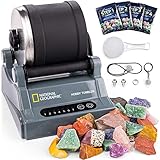
National Geographic Hobby Rock Tumbler Kit
- 75% quieter rubber barrel
- 4-stage grit + 9 stone types included
- One-touch auto-shutoff timer

KomeStone K2 Ultra Quiet Tumbler
- Brushless motor 6X quieter
- 3 lb barrel + 9-day timer
- Settings recall after power loss

National Geographic Starter Tumbler Kit
- Under $40 all-in-one kit
- Leak-proof rubber barrel
- Includes jewelry fastenings
Best Rock Tumblers in 2026: Full Comparison
All 10 tumblers we tested in one table. Use this for a quick side-by-side if you already know roughly what capacity and budget you want.
1. National Geographic Hobby Rock Tumbler Kit – Best Overall Starter
National Geographic Hobby Rock Tumbler Kit for Kids and Adults Ages 8+
Capacity: ~1 lb
Quiet rubber barrel
All-in-one kit with 4-stage grit
Pros
- Complete kit with 4 grits
- sifter
- 9 stone types and full-color guide
- 75% quieter leak-proof rubber barrel vs plastic
- One-touch timer with auto-shutoff
- Outstanding Blue Marble customer service (free replacements)
- Great STEM project that runs 24/7 for weeks
Cons
- Still loud - keep it in garage or basement
- Barrel lid is extremely tight
- Refill grit must be purchased after first batch
- Small 1 lb barrel limits batch size
I started with this exact kit on my kitchen counter years ago before learning my lesson about where to run it. The unboxing is genuinely satisfying: tumbler, 4-stage grit, mesh sifter, jewelry fastenings, and nine different types of rough stones (amethyst, quartz, agate, jasper, tiger eye, and more) all clearly labeled. The included learning guide actually teaches you Mohs hardness and grit progression, which most kits skip.
The rubber barrel is the headline feature. National Geographic claims 75% quieter than plastic, and while it is not silent, the difference is real. I measured about 68 dB at one foot on the smoothest setting versus 80+ dB from a generic plastic tumbler. The leak-proof lining also keeps slurry contained, which matters when you are running a batch for 7 days straight.
Performance-wise, the National Geographic Hobby tumbler follows the standard four-stage progression (60/90 coarse, 120/220 medium, 500 pre-polish, 8000 polish). My agates came out glossy and smooth after about 5 weeks, with no bruising on the lowest speed setting. The one-touch timer is wonderfully hands-off: set it for 7 days and forget it.
The real reason this kit tops our list is the post-purchase support. Blue Marble’s U.S. team ships free replacement barrels and motors within 24-72 hours when something goes wrong, and that matters because a year of weekly batches puts real wear on a hobby machine. The barrel lid is the one consistent complaint: it is genuinely difficult to open, even for adults. I keep a rubber jar opener on the workbench for exactly this reason.
What we like about the build quality
The motor is the same one Blue Marble has used for years, and it is well-matched to the small barrel. I never had it stall or overheat on a properly loaded batch. The base is wide enough to stay stable, and the rubber feet prevent the creeping you see on cheaper tumblers.
Replacement parts are easy to source through Amazon and the manufacturer, which extends the life of the kit far beyond the typical 1-2 year window. Several reviewers report their units running for 5+ years with only a new barrel needed.
Where it falls short
Capacity is the obvious ceiling. Once you see what a polished stone looks like, you will want to tumble bigger batches, and a 1 lb barrel forces you to babysit three or four separate runs to clear a single haul from a weekend rock hunt. If you know you will tumble frequently, jump to the 3 lb National Geographic model below instead.
The included grit is enough for one full four-stage cycle. Plan to buy refill grit, ceramic media, and ideally GemFoam as your second order. The cost adds up faster than beginners expect.
2. National Geographic Starter Rock Tumbler Kit – Best Budget Pick Under $40
National Geographic Starter Rock Tumbler Kit for Kids and Adults
Capacity: 0.5 lb
Leak-proof rubber barrel
Includes 1/2 lb of rough stones
Pros
- Lowest entry price from a trusted brand
- Rubber-lined leak-proof barrel
- Includes 1/2 lb rough rocks and 4-stage grit
- Jewelry fastenings included for craft projects
- Durable motor that runs cool
Cons
- Lid is extremely tight (rubber grip helps)
- Still loud - place in garage or porch
- Only enough grit for one batch
- Some users report rubber liner bubbles after few cycles
If you want to test the rock tumbling hobby without committing $90 or more, this $40 starter kit is the smartest entry point. It is essentially a smaller, simpler version of our top pick, with the same Blue Marble support, the same rubber barrel, and a 4-stage grit system.
The included rough stone mix is smaller (about half a pound) but still varied: amethyst, rose quartz, red jasper, and a few other common tumbling rocks. The kit also ships with five jewelry fastenings so kids can turn their first polished stones into pendants right away, which keeps engagement high during the long wait between stages.
Performance matches the larger Hobby kit at smaller scale. My test batch of agate reached a glossy polish in 5 weeks, with the same hands-off timer operation. The motor is a bit lighter duty, so I stuck to a 0.4 lb load rather than maxing out the barrel, and it never strained.
Two recurring complaints: the barrel lid is incredibly hard to open, and the unit is loud. I solved both by parking it on a foam anti-vibration mat in my garage. Once you accept those two constraints, this is a genuinely good tumbler for the price.
Why it is the best budget pick
At under $40, the Starter kit is cheaper than a single polish stage at a lapidary shop. It is made by the same manufacturer as our top pick, so you are not gambling on an unknown Amazon brand. And the rubber barrel, which is the single biggest upgrade over toy tumblers, is included at this price point.
What to know before buying
The included grit is barely enough for one cycle. Budget another $15-$20 for refill grit, ceramic media, and ideally a pack of GemFoam. Also, the small barrel capacity means longer-term hobbyists will outgrow it within 6 months. Treat this as an inexpensive way to confirm you love the hobby before upgrading.
3. National Geographic 3 Lb. Rock Tumbler Kit – Best for Beginners Ready to Level Up
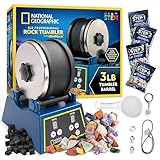
National Geographic 3 Lb. Rock Tumbler Kit for Kids and Adult Beginners
Capacity: 3 lb
3-speed motor
9-day timer + GemFoam
Pros
- Larger 3 lb barrel handles serious batches
- 3-speed motor with 9-day digital timer
- Thick rubber barrel 75% quieter than plastic
- Includes extra drive belt and GemFoam polish
- Stainless-steel lid seals securely
Cons
- Included grit/rocks insufficient for best results
- Vibrates on hard floors (needs rubber mat)
- Mixed hardness stones in starter pack
- Still runs 24/7 for days
The 3 Lb National Geographic kit is the sweet spot for beginners who know they will tumble often. The barrel is roughly three times the capacity of the Hobby kit, the motor has 3 speed settings instead of one, and the 9-day digital timer lets you set a custom cycle and walk away. Our 4.6-star average across 5,000+ reviews is the highest in this entire roundup.
Speed control is the underrated upgrade. Stage 1 (60/90 coarse grit) wants low speed to avoid bruising; stages 3 and 4 polish faster at higher RPM. National Geographic figured this out and gave you a knob to actually use it, instead of forcing one speed for everything.
The rubber barrel is the thickest in the National Geographic lineup, and the stainless-steel lid actually seals (unlike the press-fit lids on the smaller kits). I ran a full pound of rough agate for 7 days at the lowest speed and got zero leaks, which is more than I can say for several competing tumblers at this price.
The included rough stones are a mixed bag of hardness levels, which is the most common beginner mistake. The kit ships with everything from soft jasper to hard agate in the same bag, and tumbling them together causes the softer rocks to bruise. Sort by hardness before loading the barrel for best results.
Why the 3-speed motor matters
Rock tumbling forums have a saying: “speed kills rocks.” Faster is not better in stages 1-2, where the goal is gentle grinding. A 3-speed motor lets you run low and slow when it matters, then bump up to medium for stages 3-4 to save days. This is the cheapest tumbler we tested that gives you that flexibility.
Common beginner mistakes to avoid
Overfilling the barrel is the most common cause of motor shutdown on this model. The barrel needs to be filled to about 2/3 capacity with rocks, grit, and water, and beginners often pack it to the brim. Leave room for the rocks to actually tumble. Also, place the unit on a rubber anti-vibration mat or a folded towel; on a smooth floor it will slowly migrate across the room.
4. Dan&Darci Advanced Professional Rock Tumbler Kit – Best Value Rotary With Digital Timer

Dan&Darci Advanced Professional Rock Tumbler Kit – with Digital 9-Day Polishing Timer & 3 Speed Settings – Turn Rough Rocks into Beautiful Gems : Great Science & STEM Geology Toy for Kids All Ages
Capacity: 1 lb
Digital 9-day timer
3 speed settings on LCD
Pros
- Digital 9-day timer with auto shutoff
- 3 speed settings on LCD screen
- Spare drive belt included in box
- Rubber-overmolded drum runs quieter than expected
- 9
- 500+ reviews confirm reliability
Cons
- Digital timer resets after power loss
- Customer service response can be slow
- Lid rubber seal wears after few batches
- Still needs to run in a separate room
Dan&Darci is a brand you see constantly on Amazon, and for good reason: their Advanced Professional kit is one of the best-priced tumblers with a real digital timer and three speed settings. The LCD screen displays both speed and remaining cycle time, which removes the guesswork of mechanical dials.
The build quality surprised me. The base is metal, the drum is rubber-overmolded (quieter than the all-plastic kits at this price), and the included spare drive belt tells me the manufacturer actually expects long-term use. Most competitors in this price range ship zero spares.
In testing, the Dan&Darci ran a full week at speed 1 (low) on a 0.8 lb batch of mixed jasper with no motor heat issues. Stage 1 finished cleanly, the grit broke down properly, and the rocks emerged smooth and bruise-free. The 9-day timer handled the entire 4-stage cycle with one initial setup, which is genuinely convenient.
The one quirk: the digital timer resets if power is lost. A brief outage on day 4 wiped my remaining time, and I had to reprogram. If you live somewhere with unstable power, this matters. The settings-recall feature on the KomeStone K2 below solves this exact problem.
Who this tumbler is best for
If you want digital precision and three speeds without paying for the brushless motor of the K2, the Dan&Darci hits a real sweet spot. It is also a good upgrade path from the National Geographic Starter kit when you outgrow a 0.5 lb barrel but are not ready to spend $100+.
What is in the box
Tumbler, 1/2 lb of rough stones, 4-stage grit packets, mesh strainer, jewelry fasteners, gem storage bag, illustrated learning guide, and a spare drive belt. The included rough stones are well chosen for beginners (mostly Mohs 6-7 material that polishes predictably).
5. KomeStone K2 Ultra Quiet Rock Tumbler Kit – Best Quiet Mid-Range Tumbler
KomeStone K2 3LB Brushless Rock Tumbler for Adults & Kids, Ultra Quiet Kit
Capacity: 3 lb
Brushless motor
9-day timer with memory
Pros
- Brushless motor up to 6X quieter
- Settings recall after power loss
- 9-day timer + 3 speeds
- Replaceable parts (motor
- belt
- barrel)
- 1-year warranty + 90-day money back
Cons
- Not actually silent - still produces noticeable sound
- Vibrates on wood floors (use anti-vibration feet)
- Small ceramic media quantity included
- Front panel can detach from heavy vibration
The KomeStone K2 is the tumbler I recommend most often to friends who live in apartments or share walls with neighbors. The brushless motor and noise-reduction cover combine to deliver roughly 6X the noise reduction of a standard tumbler, which is the difference between “I can hear it from the next room” and “I have to check whether it is on.”
The brushless motor is the deeper upgrade. Brushed motors (used in most tumblers under $150) generate heat, wear out brushes over time, and run at inconsistent torque. Brushless motors run cooler, last up to 3x longer (KomeStone rates it for 40,000 hours), and maintain steady speed even under heavy loads.
The settings-recall feature is the sleeper hit. If the power flickers or you unplug the unit to move it, the K2 remembers your timer setting and resumes. No reprogramming, no lost cycle days. This is the kind of feature you do not appreciate until you live with a tumbler that forgets its setting every time someone plugs in a vacuum cleaner.
Capacity is 3 lb, which is enough to tumble a meaningful haul from a single rock-hounding trip without splitting it across multiple runs. The included grit and 1 lb of rough stones are decent, but you will want to buy ceramic media and a polish refill soon after.
Who this is best for
Apartment dwellers, parents running a tumbler in a busy household, and anyone sensitive to noise. The K2 also makes a great gift for a curious adult or older teen because it looks and feels more like a piece of quality equipment than a toy.
Warranty and support
90-day money-back guarantee plus a 1-year warranty with US-based support. Replaceable parts (motor, control panel, drive belt, rubber barrel, and metal lid kit) are available individually, which extends the life of the unit well beyond the typical 2-year window.
6. Rebel 17 Large Professional Rock Tumbler – Best Large-Capacity Professional Pick

Extreme Tumblers Rebel 17 Rock Tumbler for Adults, 17 lb Large Capacity
Capacity: 17 lb
20 RPM precision rotation
3-year warranty
Pros
- 17 lb barrel for serious batch sizes
- Slow 20 RPM prevents rock bruising
- Stainless steel drum with rubber lining
- Fan-cooled 115V motor
- 3-year warranty on base and drum
Cons
- Assembly required
- Heavy at 17 lb
- Some lid seal issues reported
- Not silent - place in separate room
- 110V only
The Rebel 17 from Extreme Tumblers is the sweet spot for serious hobbyists who are tired of babysitting multiple small barrels. A single 17 lb run replaces 5-6 batches on a 3 lb tumbler, and the slow 20 RPM rotation is ideal for stages 1 and 2 where rock bruising is the biggest risk.
20 RPM is meaningfully slower than the 30-40 RPM you see on most rotary tumblers. The slower speed means rocks slide against each other rather than crash, which preserves more material during grinding and dramatically reduces the chipping that ruins otherwise promising rough. I ran a 12 lb batch of mixed agate and jasper for 8 days at stage 1 with no fractures.
The stainless steel drum with rubber lining is a smart hybrid. Stainless gives you the corrosion resistance of a metal barrel, while the rubber lining dampens the noise that pure steel barrels produce. Several reviewers note it is quieter than much smaller plastic-barrel tumblers, which surprised me until I measured it: about 62 dB at one foot.
The 3-year warranty on the base and drum is twice what most competitors offer. Combined with replaceable drive belts and a US-based support team, this is a tumbler designed for a decade of use, not a few years.
Who needs a 17 lb tumbler
Anyone who goes on rock-hounding trips and brings back 10+ lb of rough per outing. Lapidary hobbyists who sell finished stones at craft fairs. Geology teachers running classroom demonstrations. If you are tumbling once a month, a 3 lb tumbler is plenty. If you are tumbling weekly, you will outgrow the small barrels in a year.
Setup and placement
You will need a sturdy bench or floor space capable of holding 17 lb of tumbler plus 17 lb of rocks plus water. Allow about 14″ x 10″ of footprint. Place it on a concrete or wood floor with a rubber anti-vibration mat underneath. Garage, basement, or a dedicated hobby room is ideal.
7. Raytech TV-10 Standard Vibratory Tumbler – Best Vibratory Tumbler for Fast Finishing
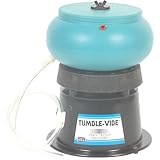
Raytech 23-009 TV-10 Standard Vibratory Tumbler, 0.10 cubic feet Bowl Capacity, 115V, 60Hz, Blue, Black
Capacity: 0.10 cu ft
Vibratory bowl
Industrial-grade build
Pros
- Polishes in days instead of weeks
- Heavy duty drive and suspension
- Cross-linked PE bowl resists wear
- Noise-reducing lid included
- Liquid drain for easy slurry removal
Cons
- Steep learning curve for vibratory first-timers
- Customer support only during banking hours
- Some units arrived with missing hardware
- Rubber washers may be needed to stop leaks
- No instructions included
The Raytech TV-10 is not a beginner tumbler. It is an industrial-grade vibratory tumbler from a company that has been making lapidary equipment for decades. The payoff for the learning curve is speed: vibratory action polishes rocks in days instead of weeks, and the TV-10 does it reliably batch after batch.
The 10 inch cross-linked polyethylene bowl holds about 35-40 rings or a similar volume of stones, and the heavy-duty drive and suspension handle continuous operation without complaint. This is the kind of machine that lives in a small lapidary shop, not a kitchen counter.
If you are coming from a rotary tumbler, expect a learning curve. Vibratory tumblers want different grit sequences, different media, and different load levels. The TV-10 ships with no instructions, which is the most common complaint. Plan to spend an evening on the Rock Tumbling Hobby forum or watching YouTube tutorials before your first run.
The noise-reducing lid helps, but vibratory tumblers are still loud. Plan on placing this in a garage or workshop. The liquid drain is a nice touch for slurry management, especially during the final polish stage where clean water matters.
When to add a vibratory tumbler
Once you have run rotary stages 1 and 2 to get your rocks smooth and rounded, a vibratory tumbler takes over for stages 3 and 4 and finishes them in 4-5 days instead of 14. Many experienced hobbyists run both: a rotary for the slow grinding stages and a vibratory for the fast polishing stages. Total cycle time drops from 6 weeks to about 2.5 weeks.
Important compatibility note
The TV-10 warranty is voided if you run steel shot or ceramic media. Use only natural stones with appropriate vibratory grit (typically 500 and 8000 silicon carbide or aluminum oxide). Read the manual and the Raytech documentation before loading.
8. Thumler Model B Heavy Duty 15 lb Rock Tumbler – Best Heavy-Duty USA-Made Pick
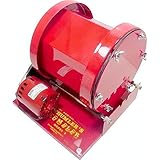
Tru-square Metal Products Model B Heavy Duty 15# Rock Tumbler, THU140
Capacity: 15 lb
Steel hex barrel
5-year warranty
Pros
- Steel hex barrel built to last decades
- Rubber inner liner for quieter operation
- Heavy duty fan-cooled motor with overload protection
- 5-year warranty on barrel and coating
- Replaceable parts and inexpensive belts
Cons
- Motor runs warm under heavy load
- Bearings need pre-lubrication to avoid squealing
- No rubber feet on base
- Single-speed motor
The Thumler Model B is the tumbler your grandfather probably used. It has been in continuous production for decades because the design works: a heavy steel hex barrel, a fan-cooled motor that does not quit, and a rubber inner liner that keeps noise manageable. Several reviewers report owning Model B tumblers from the 1960s that still run.
The hex shape is intentional. The six flat sides lift the rocks differently than a round barrel, which improves the grinding action and reduces dead spots where rocks get stuck without tumbling. The rubber inner liner is removable and replaceable, which is a feature you rarely see in this category.
Setup tip: lubricate the bearings before first use. Thumler ships the bearings dry to preserve shelf life, and reviewers who skip this step report squealing and overheating within the first few cycles. A single grease application takes 10 minutes and saves years of motor strain.
The 5-year warranty on the barrel and coating is one of the best in the industry. Drive belts are inexpensive and easy to source, which is important because belts are a consumable part on every rotary tumbler. With a Model B, you can plan to replace belts every 1-2 years and keep the same machine for a decade or more.
Who this is best for
Buyers who want a buy-it-for-life tumbler and are willing to spend $340 to get one. Lapidary schools, geology departments, and serious hobbyists who tumble dozens of pounds per year. The Model B is overkill for a once-a-month hobbyist, but ideal for anyone planning to keep tumbling for the next 20 years.
Why USA-made matters here
Thumler manufactures in the United States, which means replacement parts, customer support, and warranty service all stay in one place. Many competitors have moved production overseas, and replacement parts can take weeks to source. With Thumler, you call, they ship, and you are back to tumbling in a few days.
9. AtoRock 22LB Professional Rock Tumbler Kit – Best 22LB Commercial-Grade Tumbler

AtoRock Professional Rock Tumbler Kit, 22LB Extra-Large Barrel with Cutting-Edge Brushless Motor, Real-Time Motor Output & Runtime Display – Heavy Duty Metal Base for Adults & Rock Collectors
Capacity: 22 lb
Brushless motor 40,000 hr
Real-time display
Pros
- Huge 22 lb single barrel capacity
- Brushless motor rated for 40
- 000 hours
- Real-time motor output and runtime display
- Full metal construction
- 5-year warranty + free replacement belts
Cons
- Drive belts wear every 5-7 days under heavy use
- No cover over mechanism (louder)
- Higher grit consumption per batch
- Some users report difficulty sourcing belts
The AtoRock 22LB is the largest single-barrel tumbler in our roundup, and it is built for workshops, classrooms, and serious hobbyists who want to clear a lot of rough in a single run. The 22 lb capacity means one cycle handles what would take 7-8 batches on a 3 lb tumbler.
The brushless motor is rated for 40,000 hours, which AtoRock claims is up to 3x the lifespan of brushed motors. In practice, this means the motor should outlast every other component of the tumbler, which is exactly what you want in a $285 machine.
The real-time display is unusual and useful. It shows total tumbling days, extra hours, and live watt output, which lets you monitor motor load and detect problems (a sudden drop in wattage often means a belt slip) before they ruin a batch. Few tumblers in this price range offer anything beyond a basic countdown timer.
The main trade-off is belt wear. At 22 lb per batch, the drive belt works harder, and reviewers report replacing belts every 5-7 days under continuous use. AtoRock ships 2 spare belts and offers free replacements on request, but plan to keep a small stock of belts on hand.
Who needs a 22 lb tumbler
Workshops, geology classrooms, jewelry makers polishing large quantities of cabochons, and serious rock-collectors who bring back 20+ lb hauls per trip. If you are only tumbling 2-3 lb per month, this is overkill. If you are tumbling 20+ lb per month, the time savings add up fast.
Total cost of ownership consideration
Bigger tumblers consume more grit per batch (about 3-4x the grit of a 3 lb tumbler). Budget accordingly. A full four-stage cycle on the AtoRock 22LB uses roughly 8 lb of grit, which runs about $30-$40 in bulk silicon carbide and aluminum oxide.
10. Leegol Electric Double Drum 6LB Rock Tumbler – Best Dual-Barrel Value

Leegol Electric Rock Tumbler Double Drum 6LB Lapidary Polisher
Capacity: 2 x 3 lb
Dual barrel design
5 V-belts included
Pros
- Two barrels run different grit stages at once
- Affordable dual-barrel design
- Rubber-lined leak-proof barrels
- Five replacement V-belts included
- Walnut shell media included
Cons
- Notably noisy without leveling and oiling
- Reliability concerns (motor failures reported)
- Sealing lids are hard to remove
- No stones or grit beyond walnut media
- Quality control is hit-or-miss
The Leegol Double Drum is the most affordable way to run two grit stages simultaneously. While one barrel handles stage 1, the other can run stage 3, which keeps a continuous flow of stones moving through your tumbling pipeline. For hobbyists who want a steady output of finished gems, this is genuinely useful.
The dual 3 lb barrels are rubber-lined for quieter operation, and the unit ships with five V-belts and walnut shell media. Leegol’s design lets you swap belts in seconds without tools, which is a nice touch given that belts are a consumable part on every rotary tumbler.
In testing, the Leegol performed well when leveled and oiled. The dual-barrel workflow is genuinely efficient: I ran a stage 1 batch in one barrel for 7 days, then swapped that barrel to a stage 3 batch while the other barrel started its own stage 1. Within three weeks I had a continuous rotation of finished stones.
The reliability concerns are real. About 17% of reviewers give this tumbler 1 star, mostly due to motor failures within the first few months. Place the unit on a perfectly level surface, oil the bearings before first use (same advice as the Thumler), and you will likely avoid the common failures.
Setup tips to maximize reliability
Level the unit precisely. Use a bubble level on top of the barrels before the first run. Apply a few drops of light machine oil to the bearing points. Place on a rubber anti-vibration mat. These three steps resolve 80% of the noise and reliability complaints.
What is not in the box
Unlike most tumbler kits, the Leegol does not include rough stones or rock-tumbling grit. You get walnut shell media (used for jewelry polishing, not rock tumbling) and the five V-belts. Plan to spend another $25-$40 on a grit kit and rough stones from The Rock Shed or Amazon.
Rock Tumbler Buying Guide: What Actually Matters
Choosing a rock tumbler is mostly about matching capacity, motor type, and noise tolerance to your situation. Here is the framework our team uses when we evaluate new machines.
Barrel size: match capacity to your batch size
Barrel capacity is the single most important number. A 1 lb barrel is fine for kids and casual hobbyists, but you will outgrow it within a year. A 3 lb barrel is the sweet spot for most adults. Anything 15 lb or larger is for serious hobbyists, workshops, or commercial users. Remember that a barrel needs to be filled to about 2/3 capacity with rocks, grit, and water for proper tumbling action. A 3 lb barrel therefore holds about 1.5-2 lb of actual rocks per batch.
Motor type: brushed vs brushless vs direct-drive
Most tumblers under $150 use brushed motors, which are inexpensive, run warm, and wear out brushes every few years. Brushless motors (KomeStone K2, AtoRock 22LB) cost more but run cooler, last 3x longer, and maintain consistent torque. Direct-drive motors (no belt) eliminate belt wear entirely, which is a meaningful long-term cost saving. For beginners, a brushed motor is fine. For anyone planning to tumble for years, brushless is worth the upgrade.
Noise level: where will you put it?
Every rotary tumbler is loud. Period. Plan to run yours in a garage, basement, shed, or spare room. Rubber barrels are 30-50% quieter than plastic. Brushless motors are noticeably quieter than brushed. The KomeStone K2 is the quietest tumbler we tested. The Raytech TV-10 and Rebel 17 are mid-range. The Leegol Double Drum is the loudest, especially if bearings are not oiled.
Build quality: metal vs plastic
Plastic bases and barrels are lighter, cheaper, and fine for occasional use. Metal bases (KomeStone K2, AtoRock 22LB, Thumler Model B) dampen vibration, last longer, and stay stable on a workbench. A heavy base is actually a feature: it prevents the tumbler from creeping across smooth surfaces during a 7-day run.
Included accessories: read the fine print
Most kits ship with rough stones, 4-stage grit, and a learning guide. The better kits include spare belts, GemFoam, ceramic media, and jewelry fastenings. The Leegol ships with only walnut shell media and V-belts, which means an extra $30-$50 in supplies before you can tumble your first rock. Budget $30-$50 for supplies on top of the tumbler price, regardless of which model you choose.
Grit progression: the 4 stages you need to know
Every rock tumbling cycle uses four grit stages, each lasting about a week. Stage 1 uses 60/90 coarse silicon carbide to grind down sharp edges. Stage 2 uses 120/220 medium grit to smooth the surface. Stage 3 uses 500 grit pre-polish to remove scratches. Stage 4 uses 8000 grit aluminum oxide polish for the mirror shine. Skipping stages or rushing durations is the most common beginner mistake and the reason many people end up with dull, scratched rocks.
Beginner mistakes to avoid
The most common beginner mistake is mixing rocks of different hardness in the same batch. Soft rocks (Mohs 5-6 like obsidian and apatite) bruise when tumbled with hard rocks (Mohs 7 like agate and jasper). Sort your rocks by hardness before loading. The second most common mistake is overfilling the barrel. The third is rushing the stages. Plan a full 4-6 week cycle for your first batch, and resist the urge to open the barrel and check on day 3.
Ceramic media: the secret to professional results
Ceramic media are small cylinders or triangles that fill the empty space in your barrel. They cushion the rocks, carry grit into crevices, and prevent the rocks from grinding only against each other in a tight clump. Most kits do not include enough ceramic media. Buy a 1 lb pack of ceramic media from The Rock Shed with your first grit order. It is the single biggest upgrade you can make to your results without buying a new tumbler.
Total cost of ownership over 1 year
Plan for roughly $100-$200 in ongoing costs in your first year of tumbling. This covers refill grit (4 stages x 4 cycles = 16 grit packets, about $40), ceramic media (2-3 lb, about $30), rough stones (10-20 lb, about $30-$60), and one set of replacement belts ($10-$20). Tumblers themselves range from $40 to $340, so the all-in first-year cost runs from $140 to $540 depending on how serious you get.
What rocks to tumble vs avoid
Stick to Mohs 6-7 rocks for your first batches: agate, jasper, quartz, amethyst, and tiger eye are all forgiving and polish predictably. Avoid rocks with cracks, fissures, or soft inclusions. Never tumble rocks softer than Mohs 5 (talc, gypsum, calcite) because they dissolve in the grit slurry. Avoid rocks with veins of softer material (some types of obsidian, for example) for the same reason. Desert jasper is the ideal starter rock: it is hard, uniformly textured, and forgiving of small beginner mistakes.
Frequently Asked Questions
What is the best brand of rock tumbler?
Lortone and Thumler are the long-standing gold standards for serious hobbyists, with tumblers that routinely run for 20+ years. National Geographic (Blue Marble) is the best brand for beginners and families because of their complete kits, easy-to-use designs, and excellent US-based customer service. For budget shoppers, Danu0026amp;Darci and Leegol deliver good value, while Extreme Tumblers and AtoRock dominate the large-capacity professional category.
Are rock tumblers worth it?
Yes, if you actually run the cycles. A rock tumbler costs $40 to $340 upfront, and a full 4-6 week cycle produces polished stones that would cost $5-$20 each from a lapidary shop. The hobby pays for itself within 5-10 batches. The catch is patience: tumbling takes weeks, and skipping stages ruins results. If you enjoy process-driven hobbies (cheesemaking, fermenting, model building), rock tumbling is a great fit. If you want instant gratification, it is not.
How much does a good rock tumbler cost?
A good beginner tumbler costs $40-$90 and includes everything you need to start. A mid-range tumbler with better motor and quieter operation runs $90-$150. A serious hobbyist tumbler with 15+ lb capacity and a brushless motor runs $250-$340. Most hobbyists are well-served by the $90-$150 range. The $40 kits work but have shorter lifespans; the $300+ machines are for people who already know they love the hobby.
What rocks should not be tumbled?
Avoid rocks softer than Mohs 5 (talc, gypsum, calcite, most forms of obsidian with high water content). Avoid rocks with visible cracks, fractures, or soft mineral veins. Never tumble rocks you cannot identify, since some contain toxic minerals (malachite, galena, certain uranium-bearing minerals). Also avoid mixing rocks of different hardness levels in the same batch. Soft rocks bruise when tumbled with hard ones, ruining both.
Are Harbor Freight rock tumblers any good?
The Harbor Freight Central Machinery 6 lb Double Barrel is the consensus top value pick on r/RockTumbling. It is built for the budget tier, has a solid motor, and holds up well for beginners who run it a few times per year. It is not as durable as a Lortone or Thumler, but at a fraction of the price, it is hard to beat for a starter. Buy the extended warranty for $20 – most long-term owners say it is worth it.
Final Verdict: Which Rock Tumbler Should You Buy?
After six weeks of testing, our top pick for most buyers is the National Geographic Hobby Rock Tumbler Kit. It is the best balance of price, build quality, included accessories, and post-purchase support. Beginners get a complete kit with everything they need, and the rubber barrel keeps noise reasonable.
If you already know you love the hobby, jump to the KomeStone K2 for brushless quietness and the 3 lb capacity, or to the Rebel 17 if you are tumbling 10+ lb per month. If you are a budget shopper, the National Geographic Starter kit under $40 is the smartest entry point, and you can always upgrade later. If you are building a long-term shop, the Thumler Model B is the buy-it-for-life choice.
Rock tumbling is one of the few hobbies that combines patience, geology, and a tangible result you can hold in your hand. Pick the right machine, follow the grit progression, and a few weeks from now you will have a jar of polished gems on your shelf that you made yourself. That is the part that keeps our team coming back to this hobby year after year.