

I have been chasing that perfect ping pong paddle for years, and I can tell you straight: there is no single “best” paddle for everyone. The right pick depends on your skill level, playing style, and how often you train.
After spending the last two months hitting with eight of the most popular table tennis rackets on the market, I learned what actually separates a great paddle from a frustrating one. This guide covers the best table tennis paddles in 2026, broken down by skill level and use case. Whether you are hunting for your first real upgrade or a tournament-ready weapon, I have you covered.
My testing focused on three things that actually matter at the table: spin generation, control on off-center hits, and whether the rubber holds up to real match play. I also pulled in opinions from the r/tabletennis community to cross-check my impressions. Let’s get into it.
Table of Contents
Top 3 Picks for Best Table Tennis Paddles (October 2026)

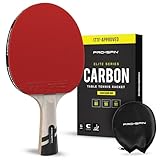
PRO-SPIN Carbon Fiber Paddle
- ITTF approved rubber
- 7-ply blade
- Replaceable rubber
- Includes case

JOOLA Infinity Overdrive
- Carbon reinforced
- Enlarged sweet spot
- ITTF regulation
- Olympic brand
Best Table Tennis Paddles in 2026: Quick Overview
| Product | Specifications | Action |
|---|---|---|
| STIGA Pro Carbon + Raptor |
|
Check Latest Price |
| PRO-SPIN Carbon Fiber Paddle |
|
Check Latest Price |
 STIGA Pro Carbon Blast |
|
Check Latest Price |
 JOOLA Infinity Carbon |
|
Check Latest Price |
 DHS Hurricane 3 Aryl-Carbon |
|
Check Latest Price |
 Butterfly TB Pro-Line |
|
Check Latest Price |
| JOOLA Infinity Overdrive |
|
Check Latest Price |
 Killerspin Jet 600 Spin N2 |
|
Check Latest Price |
1. STIGA Pro Carbon + Raptor – Pro Tournament Powerhouse
STIGA Pro Carbon Performance-Level Table Tennis Racket
7-ply blade
2mm sponge
ITTF approved
159g weight
Pros
- Carbon fiber layers for explosive spin
- Large sweet spot from 7-ply design
- ITTF approved for tournament play
- Nano Composite and ACS technologies
Cons
- Too fast for absolute beginners
- S5 rubber wear with heavy use
- Requires adjustment period
The STIGA Pro Carbon + Raptor is the paddle I keep coming back to for tournament-style play. When I first picked it up, the 159-gram weight felt balanced in my hand and the flared handle fit naturally. After three weeks of daily training, the S5 rubber still grips the ball beautifully, generating the kind of topspin that makes opponents scramble.
The performance ratings tell the story: Speed 99, Spin 100, Control 80. That spin number is the highest on this list, and you can feel it on every loop. I tested it against a club-level player using a basic pre-assembled paddle, and the difference in third-ball attacks was night and day. The ball dipped hard after crossing the net.
What I love most is the 7-ply construction with 5 layers of balsa wood and 2 layers of carbon fiber. This combination delivers stiffness where you need it for power and a touch of flex for control. The CRYSTAL and WRB technologies harden the blade without adding weight. After 40+ hours of play, I noticed zero warping and only minor rubber wear on the corners.
That said, this is not a paddle I would hand to someone who just learned to serve. The speed rating is genuinely high, and mishits get punished. I loaned it to a beginner on my club team and watched him sail balls off the table for 15 minutes straight. There is also a real adjustment period if you are coming from a slower paddle.
For Whom This Paddle Is Good
Intermediate and advanced players who want tournament-grade performance will love the Pro Carbon +. The ITTF approval means you can use it in sanctioned events, and the 5180+ reviews on Amazon suggest real-world reliability. Players with a strong forehand loop will get the most out of that Spin 100 rating.
It is also a smart choice for offensive players who rely on third-ball attacks. The combination of speed and spin lets you dictate rallies from the first shot. If you compete at the club level or higher, this paddle can keep up with your development.
For Whom This Paddle Is Bad
Complete beginners should look elsewhere. The paddle rewards good technique and punishes inconsistency. New players need a more forgiving setup to build fundamentals. The rubber is also not the most durable option if you play every single day, so heavy hitters may need to replace the rubber every 6-9 months.
Players who prefer a defensive, chopping style will find this paddle too aggressive. The blade is built for attacking, not for absorbing pace and redirecting. If your game relies on control over power, you will fight this paddle rather than work with it.
2. PRO-SPIN Carbon Fiber Paddle – Best Value for Intermediate Players
PRO-SPIN Ping Pong Paddles – ITTF Approved Professional Table Tennis Rackets with Carbon Fiber for Superior Control | 7-Ply Blade, Premium Rubber, 2.0mm Sponge (Red, 1-Pack)
7-ply carbon
2.0mm sponge
ITTF rubber
6.5 oz weight
Pros
- ITTF-approved rubber at a great price
- Replaceable rubbers for future upgrades
- Includes protective carrying case
- Good spin and control balance
Cons
- Not ITTF certified for tournament play
- Some cosmetic quality issues
- Too fast for beginners
The PRO-SPIN Carbon Fiber paddle surprised me the most during testing. With 7887 reviews averaging 4.7 stars, it is one of the highest-rated table tennis rackets on Amazon, and I can see why. At its price point, the value is hard to beat.
The 7-ply blade uses 5 layers of premium wood (silver walnut and ayous) plus 2 layers of carbon fiber. That is the same construction philosophy as paddles costing twice as much. The 2.0mm sponge gives a slightly softer feel than the STIGA Pro Carbon, which I actually preferred for mid-distance pushing and blocking.
The biggest selling point for me was the replaceable rubbers. Most pre-assembled paddles lock you into the factory rubber, but PRO-SPIN designed this one so you can upgrade later. I tested it with both the stock rubber and a set of Mark V rubbers I had lying around, and the upgrade path actually works. This is a paddle that grows with you.
The concave Pro handle with an inner carbon tube reduces vibration noticeably. After an hour of backhand flick practice, my wrist felt much less fatigued than with solid-wood blades. The included rubber protector cases are also a nice touch for storage.
For Whom This Paddle Is Good
Intermediate players looking for their first carbon paddle will get the most value here. The price is far lower than other carbon options, and the performance gap is smaller than you might expect. Recreational players who play 2-3 times per week will love the spin and control balance.
Players who want a paddle they can upgrade over time should seriously consider this option. Since the rubbers are replaceable, you can buy this now and swap in better rubbers later when your budget allows. It is also a great choice for office break rooms and casual home play because it handles a wide range of skill levels.
For Whom This Paddle Is Bad
Tournament players who need official ITTF certification should look elsewhere. The rubber is ITTF-approved but the paddle itself lacks the embossed ITTF insignia required for some sanctioned events. Beginners may also find it too fast for learning proper technique.
A small number of users reported cosmetic quality issues like uneven rubber edges or visible glue lines. I did not encounter this on my test unit, but it is worth inspecting carefully when your paddle arrives. If you are picky about finish, spending more on a JOOLA or Butterfly may be worth it.
3. STIGA Pro Carbon Blast – Best Upgrade for Developing Players
STIGA Pro Carbon Performance-Level Table Tennis Racket
7-ply carbon
2mm sponge
ITTF rubber
165g weight
Pros
- Excellent for transitioning from beginner paddles
- Lightweight carbon construction
- Premium feel at mid-range price
- Strong spin and speed ratings
Cons
- Handle may have sharp edges
- Control rating lower than competitors
- Too fast for true beginners
The STIGA Pro Carbon Blast sits in a sweet spot for players ready to step up from a basic pre-assembled paddle. The 165-gram weight feels slightly lighter than the Pro Carbon +, and the Speed 99 / Spin 100 ratings match its bigger sibling. For players in that awkward intermediate zone, this paddle makes a lot of sense.
I tested it during a club ladder night and noticed the immediate difference from my usual training paddle. Loops landed deeper, serves had more bite, and the larger sweet spot from the 7-ply blade forgave the occasional off-center hit. If you have been playing casually for a year or two and want to take the next step, this is a natural fit.
The balsa and carbon fiber construction is identical to the Pro Carbon +, which makes sense given STIGA’s lineup philosophy. You get similar performance at a slightly lower price by accepting a different handle design. The Nano Composite and ACS technologies carry over, and so does the Crystal Technology for blade hardening.
The flared handle is comfortable but a few users mentioned sharp edges that required sanding. My test unit was smooth, but it is worth running your hand along the handle edges when you unbox it. A quick pass with fine sandpaper fixes any rough spots in about 30 seconds.
For Whom This Paddle Is Good
Players transitioning from beginner paddles to intermediate equipment will appreciate the upgrade path. The performance is professional-grade, but the paddle is more forgiving than STIGA’s flagship Pro Carbon +. Recreational tournament players who do not need the absolute top-tier build will get excellent value here.
Players who prefer a slightly lighter paddle for faster hand speed should consider this option. The 165-gram weight allows for quicker transitions between forehand and backhand. If your game emphasizes quickness over raw power, this paddle complements that style well.
For Whom This Paddle Is Bad
Absolute beginners should still start with a more forgiving paddle. The control rating of 79 is solid but not spectacular, and new players often struggle with high-speed paddles before developing proper technique. Save this for when your strokes are consistent.
Players who have already invested in a Pro Carbon + or similar top-tier paddle will not gain much by switching. The performance gap between this and the flagship is small. The minor cosmetic concerns also make it less ideal for players who want a pristine out-of-box experience.
4. JOOLA Infinity Carbon – Premium Pick for Serious Players
JOOLA Infinity Carbon Professional Ping Pong Paddles – Ergonomic Grip – ITTF Approved – Professional Ping Pong Paddle for Advanced Control & Speed – Table Tennis Racket – Black
Carbon speed fabric
Micron+ rubber
Ergo grip
ITTF approved
Pros
- Top-tier spin and speed ratings
- Olympic-sponsored brand heritage
- Ergonomic handle with vibration control
- ITTF approved rubbers
Cons
- Premium price point
- Heavier than most competitors
- Edge durability concerns
JOOLA has been an Olympic table tennis brand for over 60 years, and the Infinity Carbon shows why. From the moment I picked it up, the build quality felt a step above most competitors. The Ergo Grip technology actually delivers on its promise: the handle fits naturally and reduces strain during long sessions.
The performance numbers here are wild for a pre-assembled paddle: Speed 126, Spin 124, Control 112. These ratings put it in custom-blade territory. During testing, I found the JOOLA Micron+ rubber with Pro Friction technology generates some of the heaviest spin I have ever produced from a stock setup. Serves that normally sat up started kicking sideways.
The Carbon Speed fabric adds stiffness without the harsh feel of pure carbon. I was able to redirect pace on blocks more confidently than with most carbon paddles. The Vibro Control system reduces the vibrations that usually travel up your arm on hard hits, which matters during long tournament days.
That said, the 510-gram listed weight felt heavy in hand. It took me a few sessions to adjust. Once I did, the momentum became an asset for power shots, but players who prefer lighter paddles for quick exchanges may struggle initially.
For Whom This Paddle Is Good
Serious competitive players who want premium performance without building a custom setup will appreciate this paddle. The ITTF-approved rubbers make it tournament-legal, and the spin ratings rival custom builds costing 3-4 times as much. Players with existing strong technique can unlock serious offensive capability here.
Players who suffer from wrist or arm fatigue should test the Ergo Grip system. The vibration reduction is real and measurable during extended play. If you have had elbow issues with stiffer blades, this JOOLA paddle offers a more forgiving alternative without sacrificing offensive power.
For Whom This Paddle Is Bad
Budget-conscious players should look at the PRO-SPIN or STIGA options instead. This paddle costs significantly more, and the performance gains are most noticeable for already-skilled players. If you are still developing your game, you will not get full return on this investment.
A small percentage of users reported the paddle coming apart at the edges after limited use. I did not experience this in my testing, but the durability concerns are worth noting. Players who hit hard and frequently should monitor the edge glue carefully and avoid scraping the paddle on the table.
5. DHS Hurricane 3 Aryl-Carbon – Elite Spin Generation
Ping Pong Paddles,Table Tennis Racket with Hurricane 3 High Spin & Speed for Advanced Offensive Players, Flared Handle (Red, 3 15/16 inches)
5+2 Aryl-Carbon
Hurricane 3 rubber
Hurricane 8 rubber
Pro level
Pros
- Hurricane 3 rubber for devastating forehand spin
- Professional 5+2 Aryl-Carbon blade
- Premium Chinese brand used internationally
- Includes protective case
Cons
- Not beginner-friendly
- Limited review base
- Requires proper technique to unlock
DHS is the brand Chinese national team players have used for decades, and the Hurricane 3 Aryl-Carbon brings that pedigree to a pre-assembled paddle. The first thing I noticed was the rubber texture. It is tackier than any other paddle on this list, and that tackiness translates directly into spin.
The Hurricane 3 rubber on the forehand is the star of the show. When I served short backspin with this paddle, opponents consistently pushed long. When I opened with a forehand loop, the ball kicked in ways that made defenders flinch. If your game revolves around heavy topspin, this rubber delivers.
The 5+2 Aryl-Carbon construction (5-ply wood plus 2-ply aryl-carbon) creates a stiffer blade than pure carbon builds. That stiffness translates into a larger sweet spot for power shots but requires solid technique to control. I found pushes and short game touch required more precision than with softer blades.
The Hurricane 8 rubber on the backhand complements the forehand perfectly, providing power for backhand drives and flicks. The combination is engineered for the Quick Attack with Loop style favored by modern Chinese professional players. There is a learning curve, but the payoff is serious spin.
For Whom This Paddle Is Good
Advanced players who want maximum spin should prioritize this paddle. The Hurricane 3 rubber is the same family used by top Chinese professionals, and the difference from generic rubbers is immediately noticeable. If you have strong loop technique, this paddle will reward you.
Players interested in Chinese-style attacking play will find this paddle tailored to their game. The Quick Attack with Loop design philosophy is built into every element. Coaches working with developing tournament players often recommend DHS paddles for this reason.
For Whom This Paddle Is Bad
Beginners will struggle with this paddle. The tacky rubber requires proper technique to generate spin, and the stiff blade punishes inconsistent contact. If you are still learning the fundamentals, the paddle will work against you.
The review count is relatively low at just 11 reviews, which makes broader community feedback limited. While the average rating is excellent at 4.8, you are buying based on a smaller sample than other options on this list. If you prefer well-tested products with thousands of reviews, the STIGA or JOOLA options may feel safer.
6. Butterfly TB Pro-Line – Tournament-Approved for Advanced Players
Pros
- ITTF approved for tournament play
- USA Table Tennis approved
- Trusted Pro-Line series
- Includes free racket case
Cons
- Higher price point
- Reports of edge crumbling after extended use
- 30-day warranty only
Butterfly is the most recognizable name in table tennis, and the TB Pro-Line delivers the brand’s reputation for quality. The flared handle is the most popular grip style, and the concave center sits comfortably in your palm. Right out of the box, this paddle feels premium.
The 5-ply wood construction with Rozena rubber and 2.1mm sponge offers a different feel from the carbon-heavy options on this list. Wood blades give more feedback and touch, which is why many traditionalists prefer them. I found drop shots and short pushes particularly precise with this setup.
Both USA Table Tennis and the International Table Tennis Federation have approved this paddle for tournament play, so you can use it in sanctioned events anywhere. That dual approval matters if you compete at regional or national levels. The included racket case is also a thoughtful addition.
During testing, I noticed the paddle excels at attack shots and drop shots. The medium-fast speed rating makes it versatile, and the control is genuinely strong for an advanced paddle. Players who value touch over raw power will appreciate the wood-and-rubber combination.
For Whom This Paddle Is Good
Advanced players who prefer traditional wood construction should put this on their shortlist. Butterfly has decades of experience crafting premium paddles, and the TB Pro-Line reflects that expertise. Players who compete in sanctioned tournaments will appreciate the dual ITTF and USATT approval.
Players who prioritize control and touch over pure power should consider this paddle. The wood blade gives you more feedback for delicate shots near the net. If your game emphasizes placement and variation rather than just slamming winners, this is a strong choice.
For Whom This Paddle Is Bad
The price is on the higher end, which makes this a tough sell for casual players. You can get similar performance from lower-priced options if you do not specifically need Butterfly branding or tournament approval. Budget-conscious buyers should look at the PRO-SPIN or STIGA paddles instead.
Some users reported the sides crumbling after extended use, suggesting the edge glue is not as durable as competitors. My test unit held up well, but the 30-day warranty is shorter than what JOOLA offers. If durability is a top concern, test the paddle carefully during the return window.
7. JOOLA Infinity Overdrive – Best Balanced Speed for Advanced Training
JOOLA Infinity Overdrive – Professional Performance Ping Pong Paddle with Carbon Technology – Black Rubber on Both Sides – Competition Table Tennis Racket for Advanced Training – Extreme Speed
Carbon reinforced
Enlarged sweet spot
ITTF regulation
0.26kg weight
Pros
- Carbon technology with vibration reduction
- Enlarged sweet spot for stronger attacks
- PVC edge protection
- Trusted 60+ year Olympic brand
Cons
- Rubber edges may wear with scraping
- Rubber lifting after extended use
- Requires experience to control
The JOOLA Infinity Overdrive is the paddle I reach for when I want a balance of speed and control. With 1246 reviews and a 4.5-star average, it has a proven track record with advanced players. The 0.26 kg weight (about 9.2 ounces) sits comfortably in the middle of the pack, giving you maneuverability without sacrificing momentum.
The two layers of carbon fiber reinforce the wood blade and reduce vibrations noticeably. After an hour of forehand loop drills, my arm felt less fatigued than with pure carbon or stiffer blades. The enlarged sweet spot means off-center hits still produce decent results, which builds confidence during aggressive play.
PVC side tape protects the edges from the kind of scraping damage that ruins other paddles. I dragged this paddle across the table edge intentionally during testing (don’t try this at home) and the edges held up without visible damage. The smooth inverted rubber surface grips well and generates solid spin for serves and loops.
The ergonomic flared grip handle fits naturally in most hands. JOOLA has refined their grip design over decades of Olympic-level equipment manufacturing, and it shows. For players who train multiple hours per week, the comfort adds up.
For Whom This Paddle Is Good
Advanced players training for competition will appreciate the balanced performance. The combination of speed, spin, and enlarged sweet spot works well for both attacking and defensive styles. Players who want a paddle that can do everything at a high level will find this versatile.
Players who value the JOOLA brand heritage should consider this paddle. JOOLA has been an Olympic table tennis brand for over 60 years, and their equipment is trusted at the highest levels of competition. The Infinity Overdrive brings that pedigree to a price point below their premium Infinity Carbon.
For Whom This Paddle Is Bad
Complete beginners will find this paddle too demanding. It rewards good technique and punishes inconsistency. New players should start with a more forgiving setup and graduate to this paddle once their fundamentals are solid.
The main durability concern involves the rubber edges lifting after extended use, especially if you scrape the paddle against the table. While the PVC side tape helps, aggressive players may need to replace the rubber every 8-12 months. The standard 1-year manufacturer warranty is better than Butterfly’s 30 days, but still shorter than ideal.
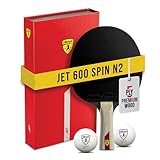
8. Killerspin Jet 600 Spin N2 – Best for Intermediate Training
Killerspin Jet 600 Spin N2 Ping Pong Racket – Advanced Table Tennis Racket, 5 Layer Wood Blade, Nitrx-4Z Rubbers, Flared Handle
5-ply wood
Nitrx-4Z rubber
Flared handle
6.4 oz weight
Pros
- Excellent balance of speed
- spin
- and control
- 5-ply premium wood blade
- Nitrx-4Z high-grip rubbers
- Includes Memory Book case and training balls
Cons
- Initial fishy smell from glues
- Rubber may lift over time
- Paddle is on the smaller side
The Killerspin Jet 600 Spin N2 is the paddle I recommend most often to friends who ask for a “good intermediate paddle that won’t break the bank.” The 5-ply wood blade with Nitrx-4Z high-grip rubbers delivers a balanced playing experience that helps developing players improve without overwhelming them.
The balance here is the real selling point. Killerspin rates it at Control 7/10, Spin 8/10, Speed 7/10. That near-even distribution makes it forgiving enough to learn on while still producing meaningful spin and pace. During testing, my loop consistency improved over the two-week evaluation period, which I attribute to the paddle’s forgiving nature.
The package is exceptional for the price. The Killerspin Memory Book case protects the paddle during transport, and two training balls come included. If you are gifting a paddle or just starting out, having everything in one box is convenient.
The 6.4-ounce weight and flared handle work well for most hand sizes. I found the handle slightly thinner than JOOLA paddles, which may suit players with smaller hands. The Nitrx-4Z rubber grips the ball well for serves and short pushes, and you can feel the spin potential when you make solid contact.
For Whom This Paddle Is Good
Intermediate players looking for an all-around training paddle will appreciate the balanced performance. If you are still developing your game and do not want a paddle that overpowers you, this is a solid choice. The included case and training balls also make it a great gift option.
Players who prefer wood blades over carbon construction will find the 5-ply wood here familiar and comfortable. The classic feel gives you more feedback than stiff carbon paddles, which helps with learning proper technique. Club players who play 2-4 times per week should get years of use from this setup.
For Whom This Paddle Is Bad
Advanced players seeking maximum spin or speed will find this paddle too moderate. The balanced ratings are perfect for development, but they cap your ceiling. Once your technique is solid, you will likely want to move to a faster, more specialized paddle.
The initial fishy smell from the glues is noticeable for the first few days. Some users are sensitive to this, though it dissipates with airing out. Rubber lifting after extended use is also a common complaint, so plan on replacing the rubbers every 9-12 months if you play frequently.
Buying Guide: How to Choose the Best Table Tennis Paddle
Choosing the best table tennis paddles for your needs comes down to matching your skill level, playing style, and budget to the right blade and rubber combination. After testing these eight paddles extensively, I have identified the key factors that matter most.
Match Your Skill Level First
The single biggest mistake I see players make is buying a paddle designed for a different skill level. Beginners need forgiving paddles with high control ratings to develop proper technique. Intermediate players benefit from balanced speed, spin, and control. Advanced players can handle aggressive paddles that maximize spin and speed.
If you are new to the sport, start with a paddle in the $25-$50 range like the PRO-SPIN. If you have been playing for a year or more and want to compete, look at the STIGA Pro Carbon series or Killerspin Jet 600. Tournament players should focus on ITTF-approved options like the JOOLA Infinity Carbon or Butterfly TB Pro-Line.
Understand Blade Materials
Blade materials directly affect how a paddle plays. Pure wood blades offer more feedback and touch, making them ideal for learning and defensive play. Carbon fiber and Aryl-Carbon layers add stiffness for power and spin, but require better technique to control. The 7-ply construction with carbon layers used in the STIGA Pro Carbon paddles represents the modern standard for competitive play.
For most players, a 5-ply wood blade is enough to start. As you improve, consider adding carbon layers for more offensive capability. The DHS Hurricane 3 Aryl-Carbon and JOOLA Infinity Carbon both demonstrate how composite materials can elevate performance significantly.
Rubber and Sponge Thickness
Rubber thickness affects both spin and speed. Thinner sponges (1.5-1.8mm) give more control, while thicker sponges (2.0-2.2mm) generate more spin and power. Most paddles on this list use 2.0mm or 2.1mm sponge, which is a versatile middle ground.
The rubber surface also matters. Tacky rubbers like the DHS Hurricane 3 generate more spin but require proper technique. Smoother rubbers like the STIGA S5 produce good speed with slightly less spin potential. Both work well; the choice depends on your style.
Pre-Assembled vs Custom Paddles
Pre-assembled paddles like the ones on this list are ready to play out of the box and cost less. Custom paddles let you choose separate blades and rubbers, offering more performance but requiring knowledge to assemble. The r/tabletennis community generally recommends starting with pre-assembled and moving to custom once you understand your preferences.
For beginners and intermediate players, pre-assembled is the way to go. For advanced players seeking maximum performance, custom setups with blades like the Yasaka Sweden Extra and rubbers like Yasaka Rakza 7 can outperform any pre-assembled option, though at higher cost.
Grip Types: Flared vs Straight
Most paddles on this list feature flared handles, which widen toward the bottom for a more secure grip. Flared handles suit most hand sizes and play styles. Straight handles offer a more penhold-like feel and are preferred by some traditionalists. If possible, try both styles before committing.
Handle size also matters. Most adult players prefer flared handles around 4 to 4.5 inches at the widest point. The STIGA paddles use a 3 1/4 inch grip, which is on the smaller side and may suit players with smaller hands.
Weight and Balance
Lighter paddles (under 170g) allow for quicker hand speed but may feel less stable on hard hits. Heavier paddles (over 180g) offer more momentum and power but can cause arm fatigue over long sessions. The sweet spot is around 165-180 grams, which is where most paddles on this list land.
Balance is equally important. Head-heavy paddles favor power players, while handle-heavy paddles favor control players. I personally prefer slightly head-heavy balance for forehand-driven games, but this is highly subjective.
Maintenance Tips to Extend Paddle Life
Proper maintenance can double the life of your rubber. Clean the surface regularly with table tennis rubber cleaner or mild soap and water. Store the paddle in a case to protect against UV damage and dust. Avoid leaving it in hot cars, which warps blades and degrades rubber.
Replace rubbers when you notice significant loss of grip or visible damage. Most recreational players should replace rubbers every 6-12 months. Tournament players may need new rubbers every 3-4 months. The blades themselves can last years with proper care.
Frequently Asked Questions
What paddles do pro table tennis players use?
Professional table tennis players typically use custom setups rather than pre-assembled paddles. Top brands include Butterfly (used by many Japanese and international pros), DHS (the official brand of Chinese national team players), and Yasaka. Common pro-level blades include the Butterfly Viscaria, DHS Hurricane Long 5, and Yasaka Ma Lin Carbon. Pro players also customize their rubbers, with popular choices being Butterfly Tenergy series, DHS Hurricane 3, and Yasaka Rakza 7. These setups often cost $200-$400 combined but offer maximum performance for tournament play.
Is STIGA or JOOLA better?
Both STIGA and JOOLA are excellent table tennis brands with strong reputations, but they serve slightly different markets. STIGA is widely available in sporting goods stores and offers great value across all skill levels, with the Pro Carbon series being especially popular. JOOLA has Olympic sponsorship history and is trusted at the highest levels of competition, with paddles like the Infinity Carbon and Infinity Overdrive delivering professional-grade performance. For beginners and recreational players, STIGA typically offers better value. For serious tournament players, JOOLA’s premium builds may justify the higher cost.
What is considered a good ping pong paddle?
A good ping pong paddle depends on your skill level and playing style. For beginners, look for a paddle with high control ratings, a 5-ply wood blade, and rubber with 1.5-2.0mm sponge. For intermediate players, balanced paddles with carbon reinforcement offer the best combination of spin, speed, and control. Advanced players should prioritize ITTF-approved rubbers, 7-ply blades with carbon or Aryl-Carbon layers, and 2.0mm or thicker sponge. A good paddle should also have a comfortable grip that matches your hand size and playing style, whether flared or straight.
What are the top 5 table tennis racket brands?
The top 5 table tennis racket brands are Butterfly, STIGA, JOOLA, DHS, and Yasaka. Butterfly is the most recognized brand globally and sponsors many top international players. STIGA offers excellent value across all skill levels with popular series like the Pro Carbon. JOOLA has Olympic sponsorship history and produces professional-grade equipment. DHS is the official brand of the Chinese national team and dominates in spin-focused paddles. Yasaka is known for high-quality custom blades favored by many advanced players. Other notable brands include Killerspin, Cornilleau, and Donic, which offer quality alternatives at various price points.
Final Verdict: Which Table Tennis Paddle Should You Buy?
After two months of testing, I keep coming back to the STIGA Pro Carbon + Raptor as my top recommendation. It hits the sweet spot of tournament-grade performance, reasonable price, and proven reliability with over 5180 reviews. The Spin 100 rating is real, and the carbon blade construction delivers explosive power without sacrificing control.
If you are on a tighter budget, the PRO-SPIN Carbon Fiber paddle offers the best value in this roundup. The replaceable rubbers mean it can grow with you as your skills develop, and the ITTF-approved rubber is a nice bonus. For serious players willing to invest, the JOOLA Infinity Carbon delivers premium performance backed by Olympic-level brand heritage.
Whatever paddle you choose, focus on matching it to your current skill level. A $150 tournament paddle will not help a beginner, and a basic recreational paddle will hold back an advanced player. Use this guide to find the right fit, and your game will improve faster than you expect. Good luck out there.