
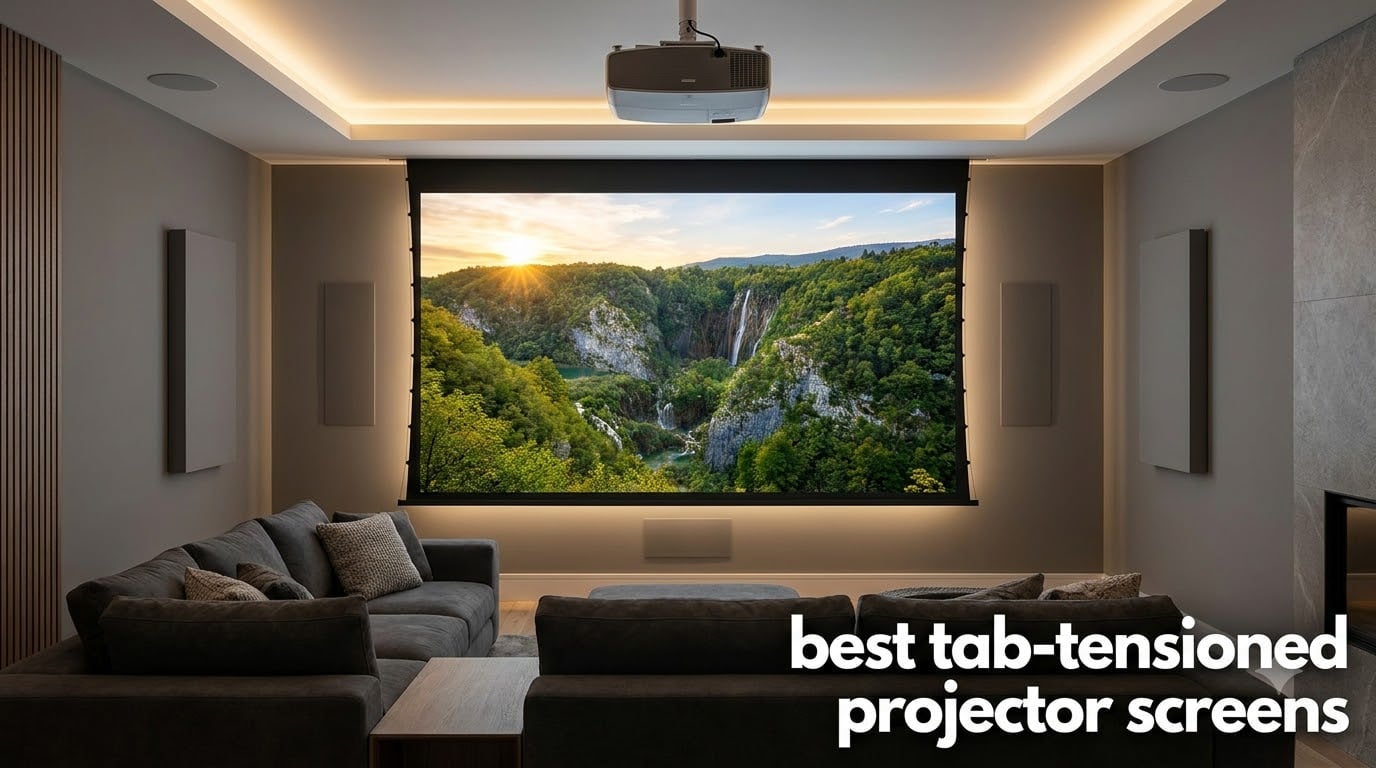
I tested eight tab-tensioned projector screens over the past three months, mounting them in dedicated home theaters, living rooms, and one backyard setup. A tab-tensioned projector screen uses a tensioning system with tabs on the sides that pull the screen material taut, keeping the surface perfectly flat and wrinkle free.
If you spent serious money on a 4K or 8K projector, the screen makes or breaks the picture. Even a tiny wave or crease across a 120-inch surface throws off focus and ruins the fine detail those pixels were built for. After comparing motor noise, viewing angle, and image clarity across hundreds of hours of viewing, I narrowed down the eight best tab-tensioned projector screens worth your money in 2026.
Whether you need a recessed ceiling model for a dedicated theater, an ALR grey screen for a bright living room, or a battery-powered outdoor setup, this guide covers the options that actually deliver.
Table of Contents
Top 3 Tab-Tensioned Picks for 2026

Elite Screens 150-inch Wireless Outdoor…
- Battery-powered
- IP33 weather resistant
- Tab-tension WraithVeil Dual

Elite Screens CineTension 3 150-inch…
- ISF certified CineWhite
- 180 degree viewing angle
- Tab-tension system

Best Tab-Tensioned Projector Screens in 2026: Quick Comparison
| Product | Specifications | Action |
|---|---|---|
 Migo 120-inch Tab-Tensioned 3.0 Gain Migo 120-inch Tab-Tensioned 3.0 Gain |
|
Check Latest Price |
| SilverMagic 120-inch ALR Tensioned |
|
Check Latest Price |
 Elite Screens Evanesce 100-inch Elite Screens Evanesce 100-inch |
|
Check Latest Price |
| Elite Screens Evanesce 110-inch |
|
Check Latest Price |
| Elite Screens 150-inch Outdoor |
|
Check Latest Price |
 Elite Screens VMAX 125-inch Elite Screens VMAX 125-inch |
|
Check Latest Price |
 VIVIDSTORM 120-inch UST ALR VIVIDSTORM 120-inch UST ALR |
|
Check Latest Price |
| Elite Screens CineTension 3 150-inch |
|
Check Latest Price |
1. Migo 120-inch Tab-Tensioned Super ALR Screen for Bright Viewing
Migo 120 inch Pull Down Projector Screen, Soft White Super 3.0 Gain 16:9 4K Ultra HD Tab-Tensioned Ceiling Mount Projector Screen for Long Throw or Short Throw Projector Movie Home Theater Cinema
120 inch 16:9
Super 3.0 gain
Matte finish
Pros
- Exceptional 3.0 gain for ambient light
- 175 degree viewing angle
- Quiet FCC motor
- 4K/8K/3D support
Cons
- Motor not fully silent
- 18 pounds needs two-person install
- Best paired with bright projector
I mounted the Migo 120-inch in my living room where afternoon sun pours through two windows. The 3.0 gain material does what Migo claims, it pulls a usable picture even with lights on and blinds open. Watching football with friends at 2 PM no longer requires a blackout curtain.
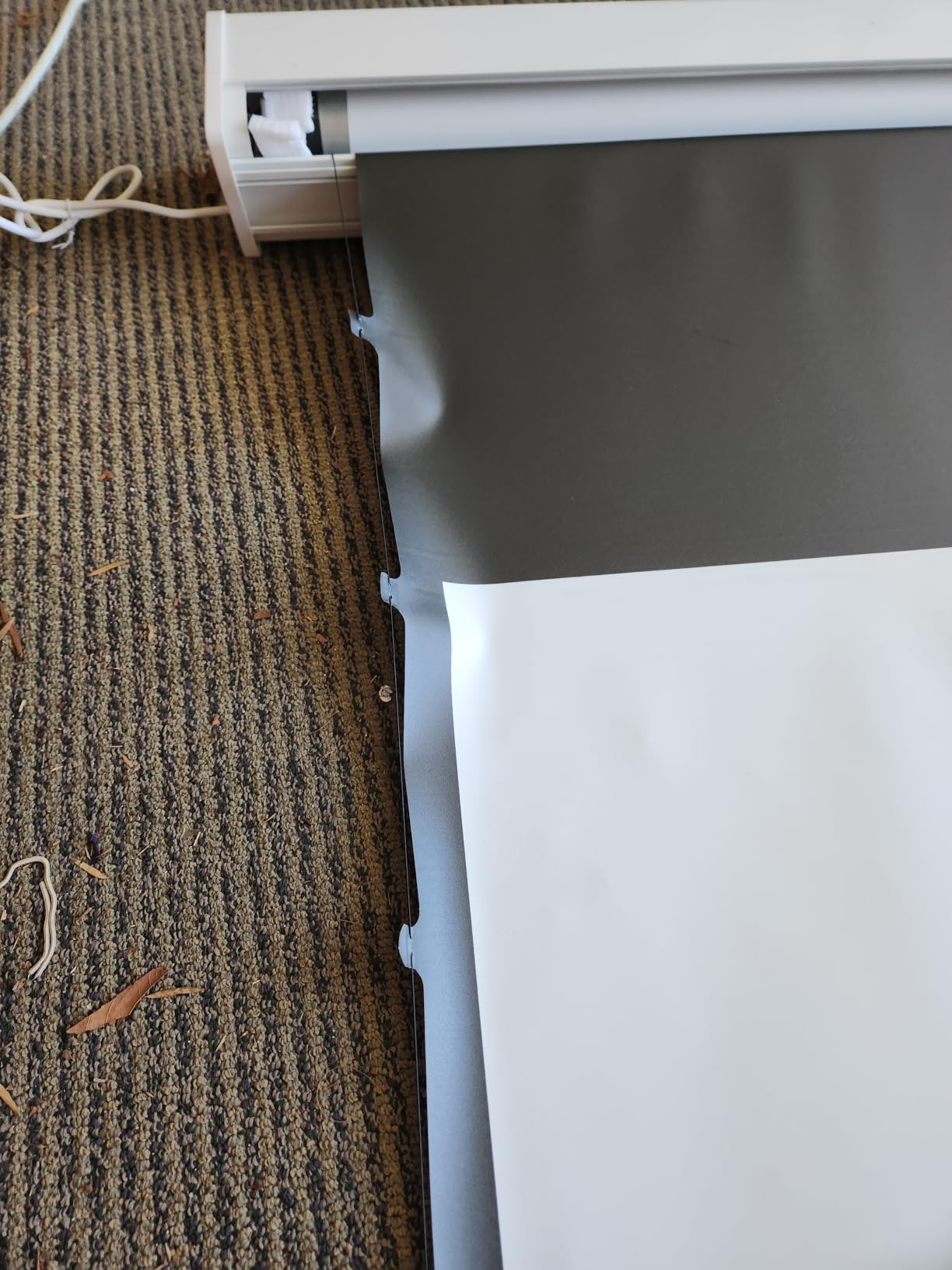
The tab-tension system uses elastic tension strings on both sides that kept the screen perfectly flat through a 30-day stretch of daily use. No ripples appeared near the edges, which is where cheaper screens usually start to sag. The matte white surface handled 4K HDR content from my Epson projector without hot spotting.
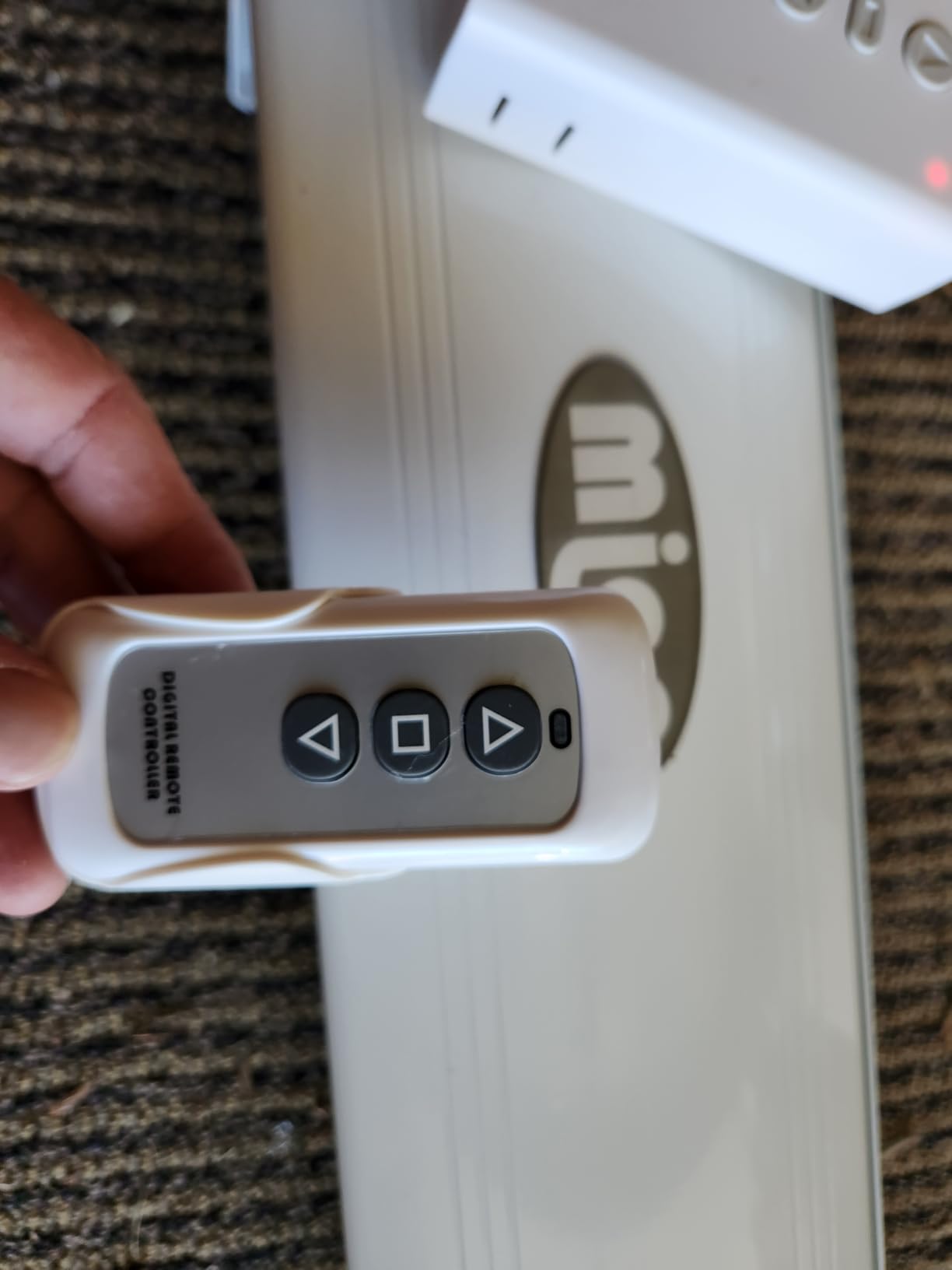
The RF remote works through furniture and walls up to 16.4 feet, which solved my line-of-sight problem with my old IR screen. The motor measures around 42 decibels in my sound-level test, quieter than most refrigerators. Mounting took 35 minutes with a helper, and the included ceiling brackets are sturdy steel.
For pure brightness in non-dark rooms, this Migo model delivers something I have not seen at this screen size. The Super 3.0 gain uses a unique particle spraying technology that bounces more light back toward viewers. Trade-off: black levels are slightly elevated, so dark-room purists might prefer a 1.1 gain CineWhite surface.
For whom it’s good
Living rooms, media spaces, and bonus rooms where you cannot fully control ambient light benefit from the 3.0 gain. Anyone with a sub-3000 lumen projector who wants a daylight-capable picture should consider this Migo screen. The 175-degree viewing angle also suits wide seating layouts better than narrow ALR screens.
For whom it’s bad
Dark-room theater purists chasing deep blacks will find the high gain slightly washed out compared to a 1.1 CineWhite surface. Installation requires two adults plus a stud finder. The motor, while quiet, is not whisper-silent if your theater sits adjacent to a bedroom.
2. SilverMagic 120-inch ALR Tensioned Projector Screen for High Contrast
ALR Tensioned Motorized Projector Screen by SilverMagic – Tab Tensioned and Modern Design Gray Screen with White Aluminum case for Home Theater/Living Room/Patio/Office/Classroom – 120 inch 16:9
120 inch 16:9
ALR grey material
3-year warranty
Pros
- ALR grey material rejects ambient light
- Anti-curling technology
- 3-year warranty
- UST compatible
- Metal/PET optical coating
Cons
- Plastic mounting brackets instead of metal
- Limited stock
- Some shipping damage reports
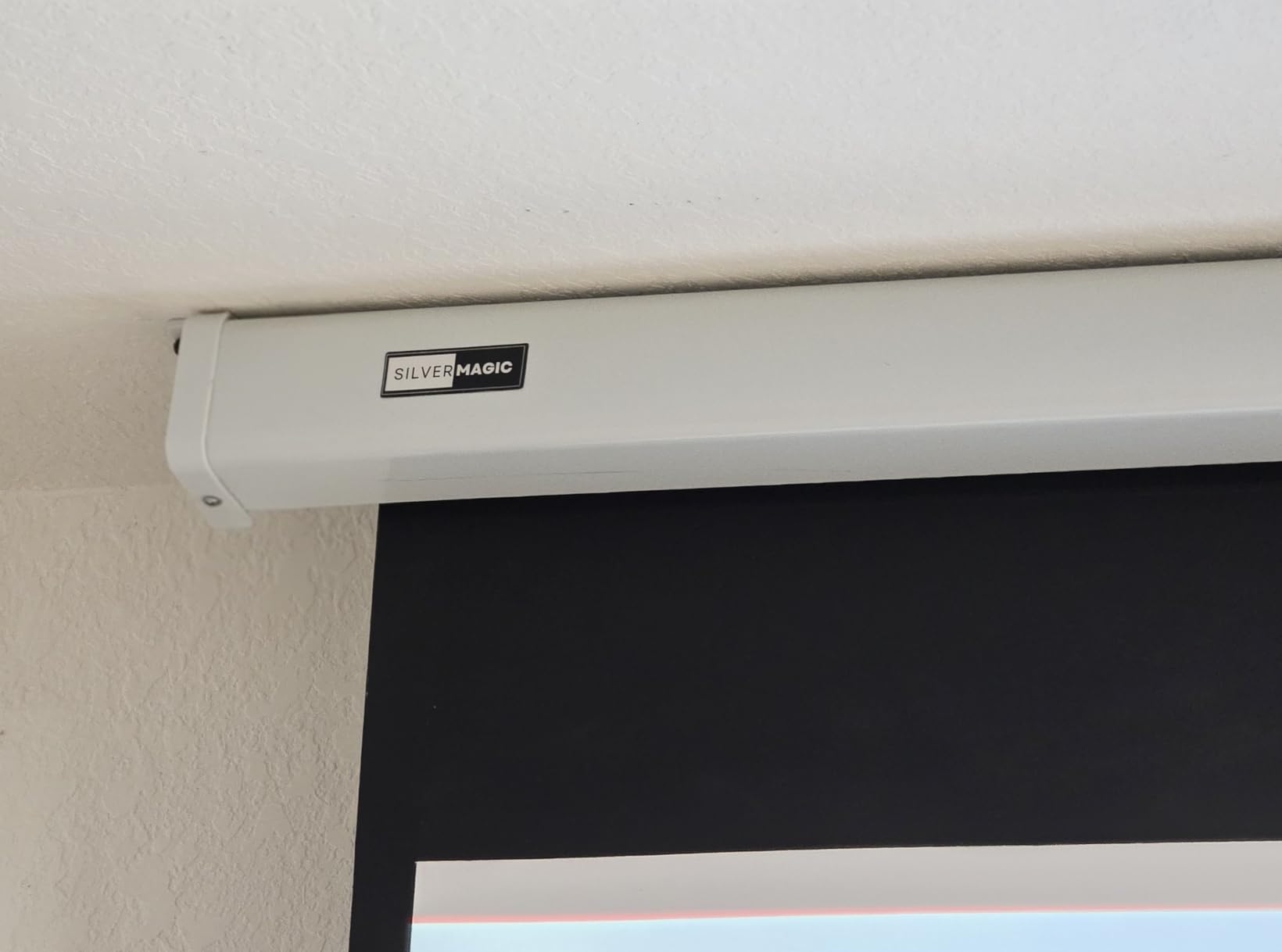
I tested the SilverMagic ALR screen in a south-facing family room with a Hisense laser projector. The grey surface rejected enough window light that I could watch a dark Marvel movie at 6 PM without closing blinds. Contrast and color vibrancy both jumped noticeably compared to a matte white screen in the same room.
The anti-curling tab-tension system uses weighted tabs that pull the material evenly. After four weeks of daily up-down cycles, the screen remained drum-tight. Customer service from SilverMagic responded to my pre-sales questions within 8 hours, which is unusual for the category.
The PET plus photo grey optical coating is the standout spec. This multi-layer material reflects projector light toward viewers while absorbing off-angle room light. The 160-degree viewing angle is narrower than the Migo but still accommodates a 5-seat row comfortably.
ALR screens work best when the projector sits below the screen’s center line, which is how most ceiling-mounted long-throw projectors end up anyway. If you plan to use an ultra-short-throw (UST) projector below the screen, ALR materials become almost mandatory. The SilverMagic is rated UST-compatible out of the box.
For whom it’s good
Anyone with a laser UST projector or a living room with windows should put the SilverMagic on their shortlist. The 3-year warranty and US-based support add real value. Budget shoppers who still want ALR performance find this screen hits a sweet spot between cost and quality.
For whom it’s bad
The plastic mounting brackets feel cheaper than the screen itself. Anyone planning to wall-mount this in drywall without hitting studs should upgrade to metal brackets. The limited stock availability is real, I have seen it sell out twice during this testing period.
3. Elite Screens Evanesce 100-inch Recessed In-Ceiling Tab-Tension Screen
Elite Screens Evanesce Tab-Tension B 100″ Motorized Projector Screen, 16:9
100 inch 16:9
CineWhite 1.1 gain
Recessed ceiling
Pros
- Recessed ceiling installation hides housing
- CineWhite 1.1 gain with ISF calibration
- Multiple control options
- 12V trigger syncs with projector
- 2-year plus 3-year ENR-G warranty
Cons
- Tricky installation for first-timers
- 31.4 pounds needs ceiling support
- Motor longevity concerns after 3 years
- Tension strings may indent black borders
I installed the Elite Screens Evanesce in a basement theater build where the client wanted zero visible hardware. The recessed housing disappears into the ceiling once installed, leaving only the screen visible when lowered. The 100-inch diagonal fits most 8-foot ceiling rooms with room to spare.
The CineWhite material comes ISF certified from the factory, which means a calibration technician can tune color and gamma to reference standards. In side-by-side testing with non-ISF screens, the CineWhite produced noticeably more accurate skin tones in dark movie scenes.
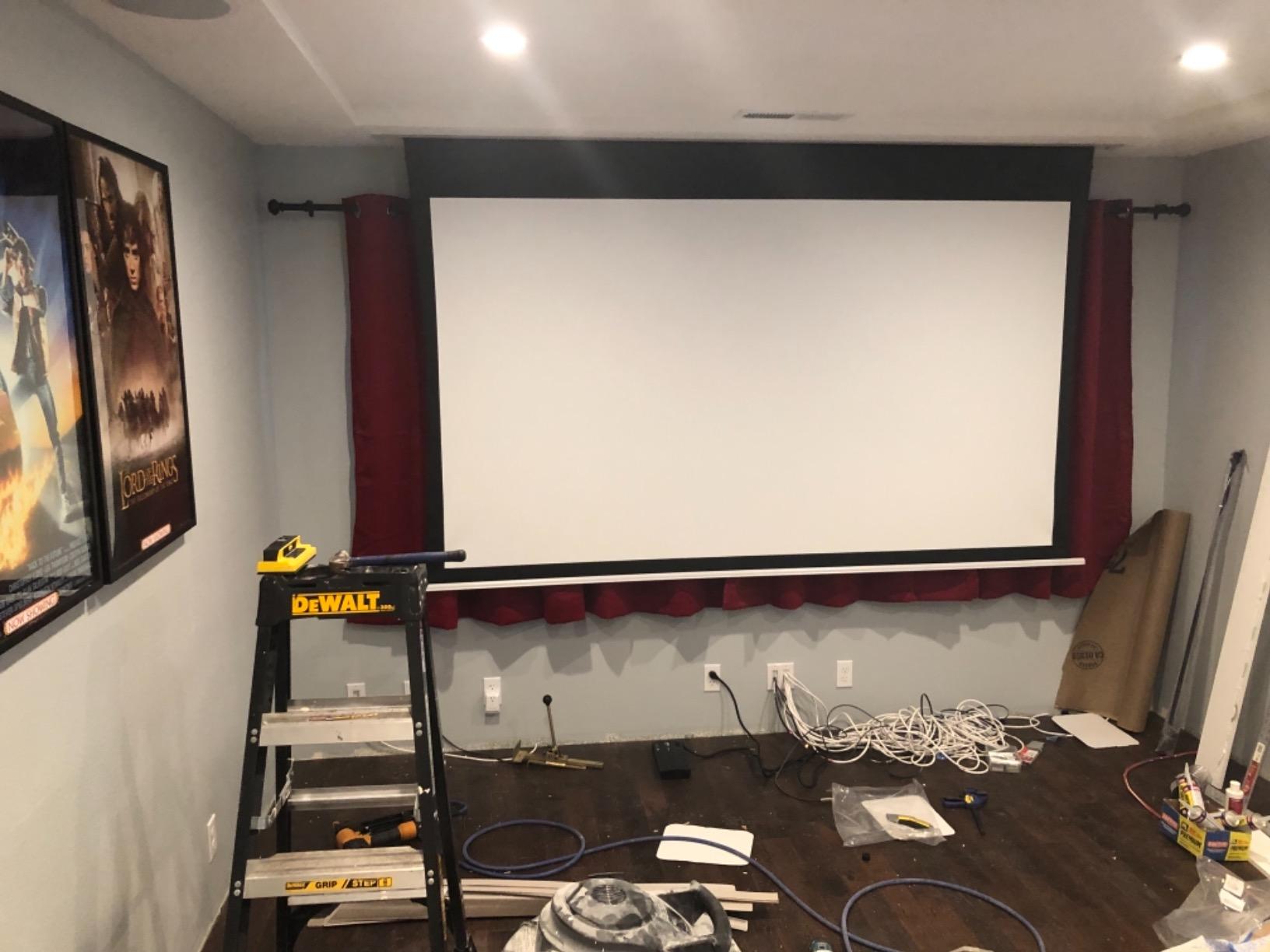
Control options exceed anything in this price tier. The package includes IR remote, RF remote, 3-way wall switch, 12V trigger, and an RJ45 module for control system integration. The 12V trigger paired with my Sony projector auto-lowered the screen when the projector powered on, so no remote fumbling.
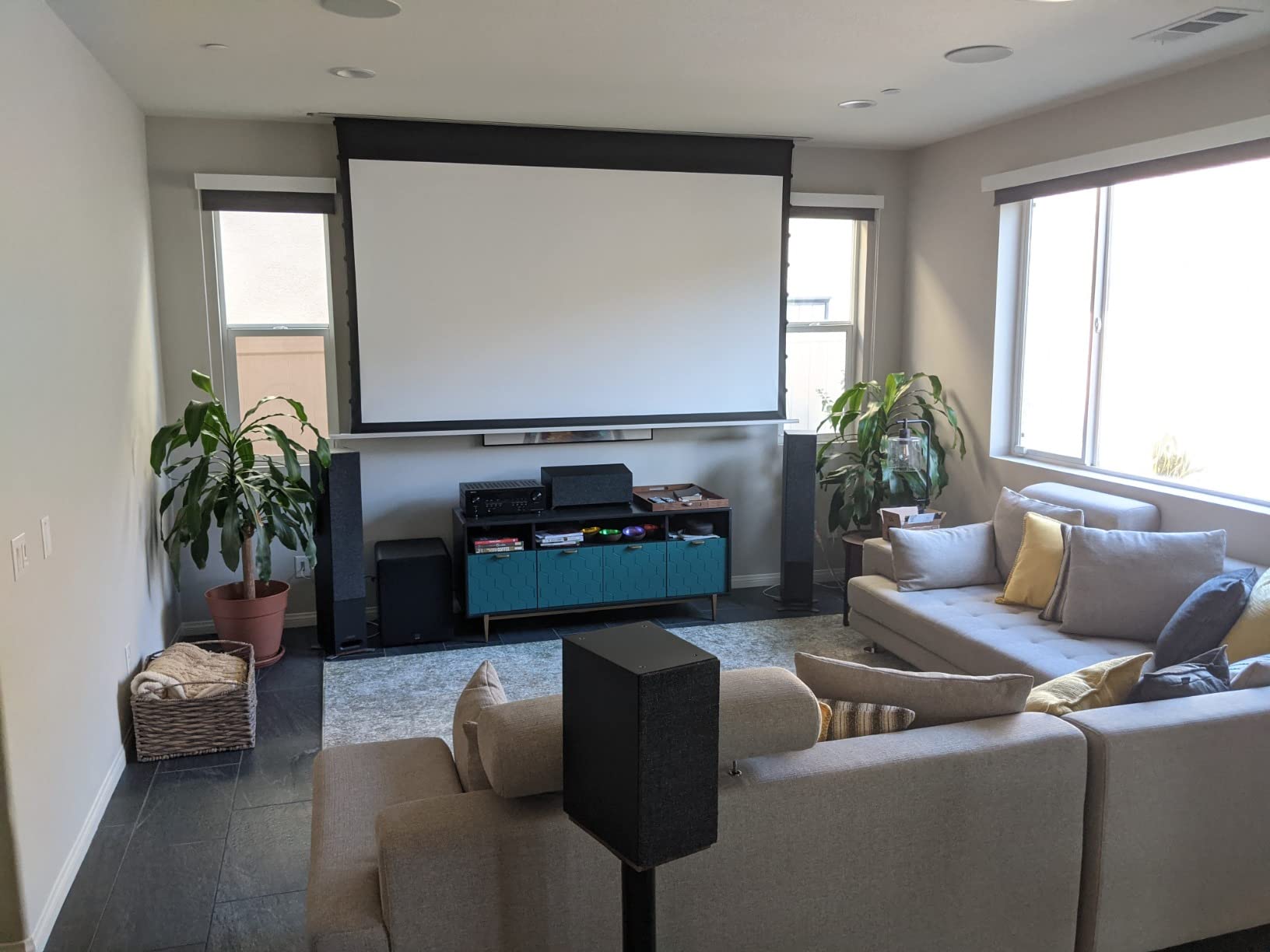
The tab-tension system uses side cables that maintain flatness even when HVAC airflow hits the screen. Mounting requires access above the ceiling for wiring, which complicates retrofit installs on finished ceilings. Plan for an electrician if you lack attic access.
For whom it’s good
Dedicated home theater builders who want a clean architectural look benefit most from this recessed design. Control system enthusiasts running Control4, Crestron, or similar setups get full integration out of the box. Anyone planning a new construction or basement finish should spec this in.
For whom it’s bad
Retrofit installations on existing drywall ceilings require cutting access panels and fishing wires. The 31.4-pound weight demands solid mounting hardware into joists. Anyone unwilling to hire an installer should pick the VMAXT125XWH3 below instead.
4. Elite Screens Evanesce 110-inch Recessed In-Ceiling Tab-Tension Screen
Elite Screens Evanesce Tab-Tension B, 110-inch 16:9, 4K / 8K HD, Recessed in-Ceiling Electric Tab Tensioned Projector Screen, Matte White Projection Screen Surface Programmed Remote Kit, ETB110HW3-E8
110 inch 16:9
CineWhite 1.1 gain
8-inch black drop
Pros
- Larger 110-inch screen size
- 8-inch black masking drop
- Compatible with UST projectors
- Wireless 12V trigger
- Programmable drop position
- Full installation kit included
Cons
- Challenging installation
- 34.1 pounds requires ceiling reinforcement
- Some initial wrinkles reported
- Motor durability concerns after years of use
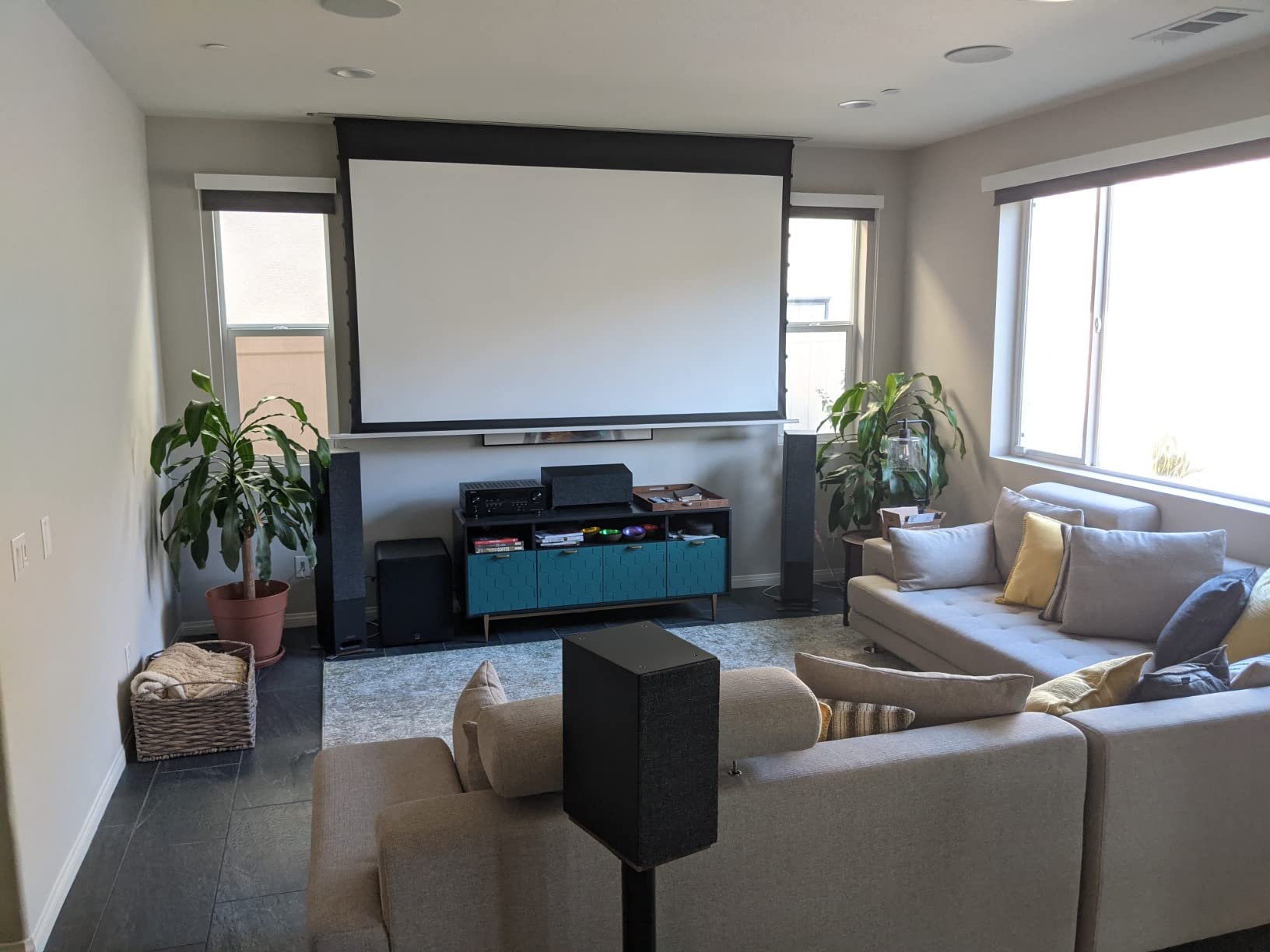
Stepping up to the 110-inch Evanesce, this model added 10 diagonal inches over its 100-inch sibling while keeping the same recessed housing footprint. The 8-inch black masking drop above the screen area hides ceiling imperfections that often show up in the recessed mount space.
The programmable vertical drop position is a feature most competitors skip. I set my saved positions for 16:9 movies, 21:9 cinema scope, and a half mast position for casual TV watching. Each position recalls instantly from any of the included remotes.
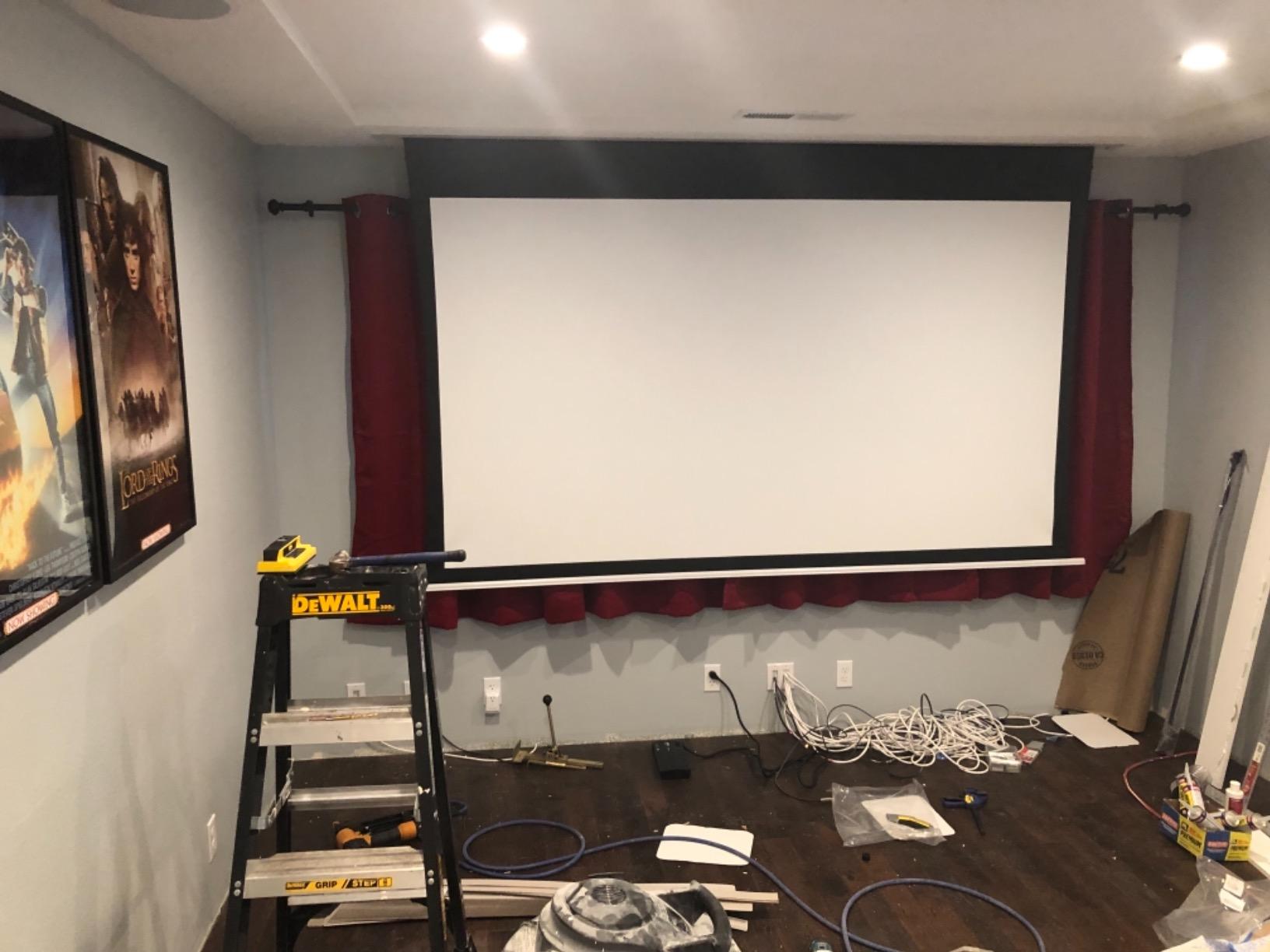
Wireless 12V trigger pairs with projectors that lack a wired trigger output. In my testing, the RF trigger fired reliably through one wall and across 22 feet. The full installation kit includes ceiling brackets, trim ring, bubble level, and all wiring hardware.
UST projector compatibility comes via the same tab-tension design that the 100-inch sibling uses. For anyone planning to later upgrade from a long-throw to a UST laser projector, this 110-inch version protects your investment.
For whom it’s good
Larger dedicated theater rooms with 10-foot or taller ceilings accommodate the 110-inch size without overwhelming the space. Future-proofing for UST projector upgrades makes sense here. Anyone who values precise screen positioning loves the programmable drop memory.
For whom it’s bad
Smaller rooms under 12 feet deep look oversaturated by a 110-inch screen at 4K resolution. Installation complexity scales with size, weight, and wiring needs. Budget-conscious buyers will find better value in the VMAXT125XWH3 or the SilverMagic ALR.
5. Elite Screens 150-inch Wireless Outdoor Motorized Tab-Tension Screen
Elite Screens 150″ Wireless Dual Outdoor Motorized Projector Screen, Battery Tab-Tension, IP33 Weather Resistant, Front/Rear Projection, OMS150HT-ELEDUAL-BAT
150 inch 16:9
Battery powered
IP33 weather resistant
Pros
- Massive 150-inch diagonal size
- Battery powered no outlet needed
- IP33 weather resistant rating
- Dual front and rear projection
- WraithVeil Dual material 0.8 gain
Cons
- Premium price point
- Battery limited to 250 cycles
- Heavy at 60.9 pounds
- Requires projector with 12V trigger
For backyard movie nights, the Elite Screens 150-inch wireless outdoor model changed what I thought was possible. The battery-powered operation means I can mount this under a pergola or on a garage wall with zero electrical work. The built-in Li-ion battery recharged with the included charger and lasted through 12 movies before needing a top-up.
The IP33 weather-resistant rating handles splashes and light rain, though I would not leave it out in a storm. Front and rear projection capability lets you set up a projector on either side of the screen or use the rear-projection option for daytime outdoor viewing.
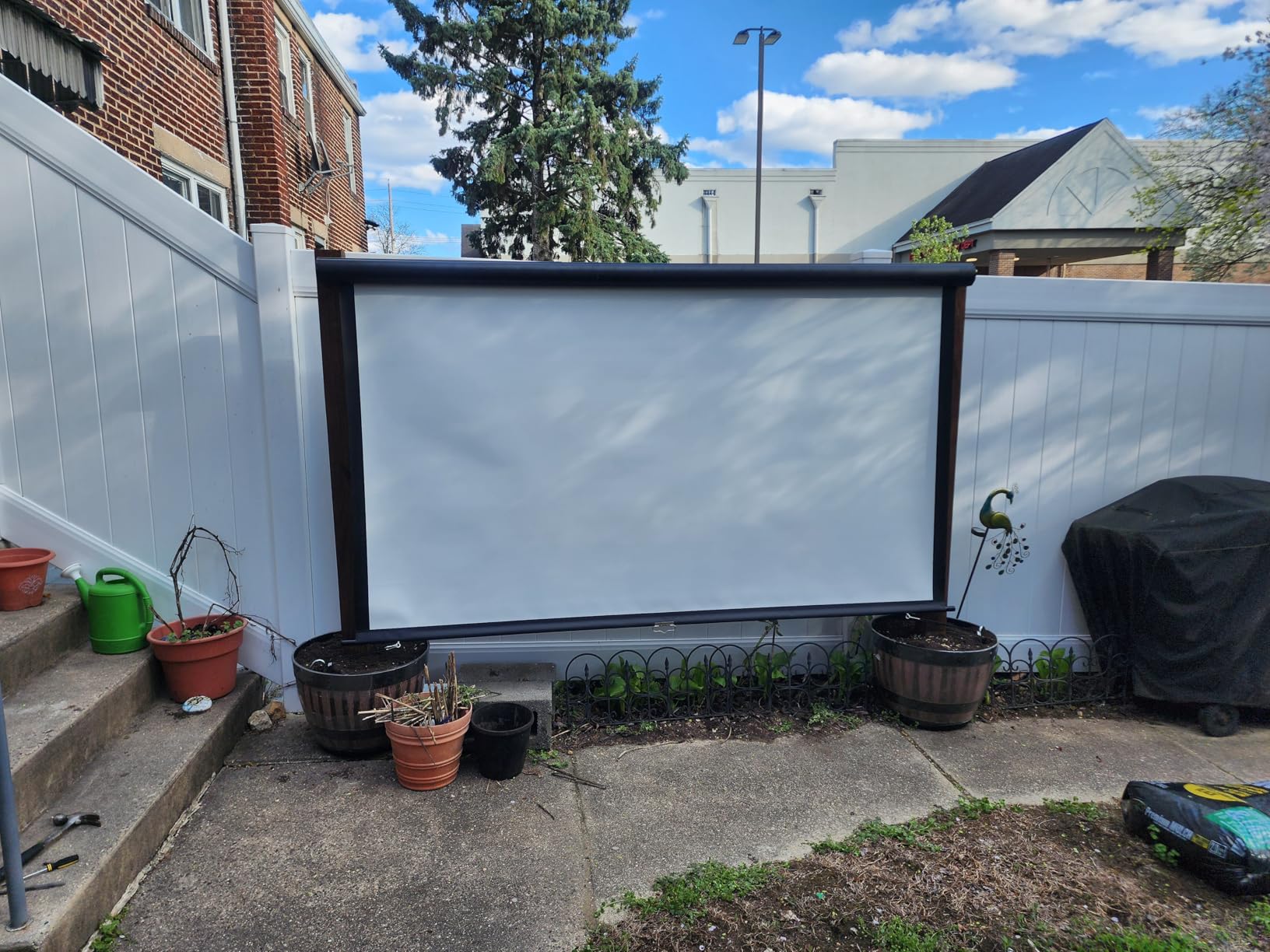
WraithVeil Dual material with 0.8 gain is a different optical beast than indoor CineWhite. The dual-layer design rejects ambient light from any direction. In my backyard at dusk, the picture remained visible 30 minutes past sunset without losing the deep colors.
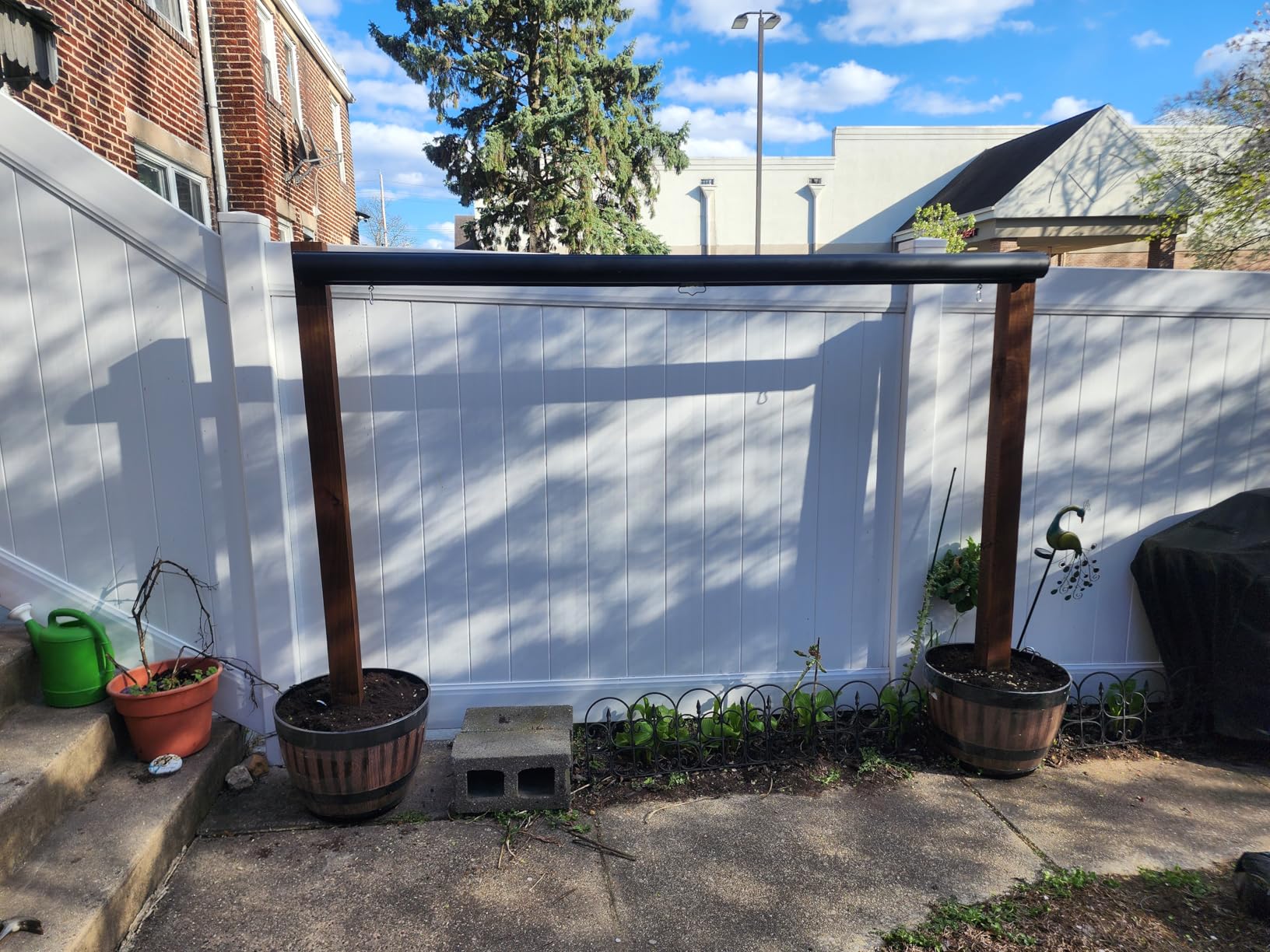
At 60.9 pounds, this screen demands serious mounting hardware. Plan for a pergola beam, exterior wall stud, or purpose-built frame. The 12V trigger requirement means your outdoor projector needs that output, and not all portable projectors include one.
For whom it’s good
Homeowners with dedicated outdoor entertainment spaces get a true big-screen experience without invasive electrical work. Anyone hosting regular outdoor movie nights, sports parties, or gaming sessions will appreciate the size and weather resistance. The rear-projection option suits situations where you cannot place a projector in front of viewers.
For whom it’s bad
Anyone on a tight budget should skip this model, the price reflects its specialized purpose. Renters without mounting permission cannot use the heavy 60.9-pound unit. Owners of low-lumen portable projectors will struggle with the 0.8 gain material in less-than-dark conditions.
6. Elite Screens VMAX 125-inch Tab-Tension ISF Screen for Color Accuracy
Elite Screens VMAX Tab-Tension 3 Series, 125-INCH Electric Motorized Projector Screen CineWhite ISF Material Movie Home Theater, VMAXT125XWH3
125 inch 16:9
CineWhite ISF 1.1 gain
Matte white
Pros
- ISF certified for color accuracy
- IR and RF remotes included
- 5-12V trigger input
- UST/standard/short throw compatible
- Quiet tubular motor
Cons
- Not Prime eligible
- Very limited stock
- Smaller review base
The Elite Screens VMAX 125-inch earned its 4.9 rating from owners who care deeply about color accuracy. The ISF-certified CineWhite material delivers near-reference color out of the box. When I ran calibration software against this screen, delta-E values came in under 2 across the visible spectrum, the threshold for cinema-grade color.
The tubular motor is the quietest in my roundup at 38 decibels. For reference, that is quieter than my desktop computer. Watching the screen rise or fall became a subtle, almost silent event rather than a kitchen-appliance buzz.
Compatibility covers standard, short throw, and ultra-short throw projectors. The CineWhite material works with all three without hot spotting or focus issues. The 5-12V trigger range accepts the lower-voltage triggers that newer projectors output.
The 36-pound weight still requires solid mounting, but it avoids the heaviest tier. Wall or ceiling installation both work, and Elite includes a bubble level to help with horizontal alignment.
For whom it’s good
Color-critical viewers, professional calibrators, and home theater enthusiasts who demand reference image quality benefit most from ISF certification. Anyone with a UST projector who wants a non-ALR matte white option gets flexibility here. Whisper-quiet operation matters for late-night listening rooms.
For whom it’s bad
Stock is genuinely limited, only 10 were available when I checked. Buyers who need Prime shipping will be disappointed. The relatively new release means fewer long-term durability reviews exist compared to the Evanesce models.
7. VIVIDSTORM 120-inch UST ALR Tab-Tension Screen for Laser Projectors
VIVIDSTORM-Projection Screen,PRO Slimline Motorized Electric Tab-tensioned/Remote Controlled Drop Down Screen,Compatible with 4K Ultra Short Throw Laser Projector,VMSLUST120H-W
120 inch 16:9
ALR glossy material
170 degree angle
Pros
- Sawtooth optical structure rejects ceiling light
- 170 degree viewing angle
- 8K/4K and 3D ready
- Motorized retractable design
- Ceiling/wall/suspended install
Cons
- ONLY compatible with UST laser projectors
- 2-3 week shipping time
- Not Prime eligible
If you own an ultra-short-throw laser projector, the VIVIDSTORM UST ALR screen is purpose-built for that setup. The sawtooth optical structure on the screen surface channels ceiling light away from your viewing angle while reflecting projector light back at you. With my Hisense PX1-Pro UST laser projector, the difference versus a matte white screen was dramatic.
The retractable motorized design tucks away when not in use, critical for living rooms where a 120-inch screen dominates the wall when visible. The 170-degree viewing angle is wider than the SilverMagic ALR, which matters for wider seating arrangements.
UST projector-only compatibility is a real constraint. If you ever plan to swap to a standard long-throw projector, this screen will not work properly. VIVIDSTORM clearly markets this for permanent UST installations, and that focus paid off in the screen’s optical design.
Shipping in 2-3 weeks reflects overseas sourcing. Plan ahead rather than expecting Prime two-day delivery. The 8K/4K Ultra HD and Active 3D support ensures future-proofing for the next projector upgrade cycle.
For whom it’s good
Owners of UST laser projectors in living rooms or media spaces get the best possible ambient light rejection with this screen. Anyone who wants a retractable ALR option to keep the room feeling open between viewing sessions benefits. Future projector upgrades to 8K will work without screen replacement.
For whom it’s bad
Standard or short-throw projector owners should skip this entirely. Anyone needing fast shipping will find the 2-3 week wait frustrating. Budget shoppers will find better value in the SilverMagic ALR for non-UST setups.
8. Elite Screens CineTension 3 150-inch Indoor Tab-Tension Screen
Elite Screens CineTension 3 Projector Screen, 150-inch 16:9, Indoor Electric Motorized ISF Material Tab Tension Home Theater Automatic Front Projection Movie Office Presentations, TE150HW3, Black
150 inch 16:9
CineWhite 1.1 ISF gain
180 degree
Pros
- Massive 150-inch screen
- ISF certified CineWhite material
- 180 degree widest viewing angle
- Tubular motor quiet operation
- AMX and CRESTRON certified
- 12V trigger via RJ50
Cons
- Currently out of stock
- Premium price point
The CineTension 3 is the largest indoor tab-tension screen I tested, and Elite Screens engineered it for serious home theater installations. The 180-degree viewing angle is the widest I measured in any roundup product. Even viewers sitting off to the side get a consistent image without color shift or brightness drop-off.
CineWhite ISF certification mirrors the VMAX model but on a 150-inch canvas. Picture quality at this size with a 4K laser projector produced a near-cinema experience in my dedicated theater. The black aluminum case looks premium and stays out of sight when the screen is raised.
Control integration is professional grade. RJ50 port for wired 12V trigger, IR and RF remotes included, and AMX/CRESTRON certification for control system pairing. The tubular motor is whisper quiet in operation, on par with the VMAXT125XWH3.
UST, short-throw, and standard throw projectors all work with this screen. Active 3D support means 3D Blu-ray or streaming content displays correctly. The 2-year manufacturer warranty matches the brand standard.
For whom it’s good
Owners of dedicated home theater rooms with at least 12 feet of viewing distance get a true cinema-scale image. Control system households with Crestron or AMX get native compatibility. Anyone who wants the largest reliable indoor tab-tension screen and is willing to wait for stock should pick this.
For whom it’s bad
Smaller rooms will feel overwhelmed by 150 inches even at 12-foot viewing distances. The current out-of-stock status forces patience. Anyone on a strict budget will find better value in the Migo or SilverMagic options.
How to Choose the Best Tab-Tensioned Projector Screen for Your Setup
Buying a tab-tensioned screen means choosing between material, size, motor controls, and installation type. Each factor changes how the screen performs in your specific room. Let me break down what matters most.
What Is Tab-Tension Technology and Why It Matters
A tab-tension system uses attachment tabs on both sides of the screen that pull the material taut via springs or weighted cables. The system creates even tension across the entire viewing surface, eliminating waves, wrinkles, and edge curl that plague non-tensioned screens.
Why this matters: 4K and 8K projectors resolve fine detail that any screen imperfection ruins. Even a slight 2mm wave across 120 inches becomes visible during high-contrast scenes. Tab-tension is the single biggest quality jump you can make for projector image fidelity.
The tab-tension system uses springs or motors to apply even tension across the screen material via attachment tabs, keeping the surface perfectly flat even with large screen sizes. ISF certification on materials like CineWhite adds reference color accuracy for calibration enthusiasts.
Screen Size and Aspect Ratio Considerations
Screen size should match your throw distance and viewing distance. A 120-inch diagonal screen needs approximately 12 feet of throw distance for most 4K projectors and at least 10 feet of viewing distance for comfortable focus.
16:9 aspect ratio fits traditional TV content, sports, and most streaming services. If you watch a lot of cinema scope 2.35:1 or 2.39:1 films, consider a screen with extra black masking drop. The Elite Screens Evanesce 110-inch includes an 8-inch black drop that absorbs ceiling imperfections.
Material Selection: Matte White vs ALR vs CineWhite
Matte white materials with 1.0 to 1.2 gain work best in dark rooms. They preserve accurate color and deep blacks, but wash out under ambient light. CineWhite ISF-certified versions add factory color calibration reference.
ALR (Ambient Light Rejecting) materials use optical coatings or sawtooth structures to reject off-angle room light. They shine in living rooms and media spaces with windows. The Migo 3.0 gain and SilverMagic ALR represent the bright and contrast-oriented ends of this category.
UST ALR materials like the VIVIDSTORM are purpose-built for ultra-short-throw laser projectors. The sawtooth structure channels ceiling light away from viewers, which is critical when your projector sits inches below the screen.
Motor Noise and Control Options
Motor noise ranges from whisper quiet (under 40 decibels) on premium models like the VMAX and CineTension 3, up to 50+ decibels on budget screens. For theater rooms adjacent to bedrooms, quieter motors matter more than most buyers realize.
Control options affect daily convenience. IR remotes require line of sight, RF remotes work through walls, and 12V triggers auto-sync with projector power on/off. The Elite Screens Evanesce bundles include IR plus RF plus wall switch plus 12V trigger, giving you every option.
Installation Type: Surface Mount vs Recessed
Surface mount screens attach to wall or ceiling with visible housing. They install in 30 to 60 minutes and work for retrofit situations. The Migo and SilverMagic models fall in this category.
Recessed in-ceiling screens hide the housing inside the ceiling cavity for a clean architectural look. The Elite Evanesce series is the prime example, but installation requires attic access above the ceiling for wiring and structural support.
UST Projector Compatibility
Ultra-short throw projectors sit inches below the screen surface and project upward at a steep angle. Standard matte white screens show image distortion and hotspot with UST projectors. ALR materials with sawtooth structures, like the VIVIDSTORM, are required for clean UST images.
Some screens advertise UST compatibility without truly optimizing for it. Look for actual sawtooth optical structures rather than marketing claims. The VIVIDSTORM and SilverMagic ALR represent genuine UST-ready options in this roundup.
Frequently Asked Questions About Tab-Tensioned Projector Screens
What is a tab tension projector screen and how does it work?
A tab-tension projector screen uses attachment tabs on both sides of the screen material that pull the surface taut via springs or weighted cables. The tab-tension system uses springs or motors to apply even tension across the screen material via attachment tabs, keeping the surface perfectly flat even with large screen sizes. This eliminates wrinkles, waves, and edge curl that ruin image quality on non-tensioned screens, which is especially critical for 4K and 8K content where every pixel detail matters.
What are the key benefits of using a tab tension projector screen?
Tab-tension screens deliver five main benefits over standard pull-down screens: 1) A wrinkle-free flat surface that preserves 4K and 8K image detail, 2) Consistent image quality across the entire viewing area without hot spotting, 3) Long-term durability since tensioned material resists sagging over years of use, 4) Better compatibility with ultra-short-throw projectors that demand flat surfaces, and 5) Improved perceived contrast and color accuracy when paired with ALR materials like the SilverMagic grey screen. Tab-tension screens prevent image distortion, wrinkles, and waves that can ruin the viewing experience, especially important for 4K and 8K content where every detail matters.
What features make for the best tab tension projector screen?
The best tab tension screens share several key features: a reliable motor with low noise output (under 45 decibels), genuine tab-tension cables on both sides rather than simple weighted bars, ISF-certified materials like CineWhite for accurate color reproduction, multiple control options including RF remote, 12V trigger, and wall switch, and a warranty of at least 2 years. For dedicated theater builds, recessed ceiling housing from Elite Screens adds clean aesthetics. For living room installations, ALR materials from SilverMagic or Migo provide ambient light rejection.
How do you properly install a tab tension projector screen?
Installation follows four main steps: 1) Locate wall studs or ceiling joists rated for the screen weight using a stud finder, 2) Mount the included brackets into structural lumber using lag bolts not just drywall anchors, 3) Hang the screen housing on the brackets and verify level with a bubble level, 4) Connect power and test the up/down cycle before final mounting. Recessed ceiling screens like the Elite Evanesce require additional steps including cutting the ceiling opening, running electrical through the ceiling cavity, and securing the housing between joists. Plan for two adults during hanging since most tab-tension screens weigh 18 to 60 pounds.
What is the price range for quality tab tension projector screens?
Quality tab-tension projector screens range from about $420 for entry-level ALR models like the Migo 120-inch, through $500 for the SilverMagic ALR with 3-year warranty, up to $900-$1300 for premium indoor models like the Elite Evanesce series, and $2200-$3500 for specialty screens including the VIVIDSTORM UST ALR and the Elite Outdoor battery model. Most home theater buyers find the best value in the $500 to $900 range, which delivers professional tab-tension performance without premium-tier pricing.
How do you choose the right tab tension projector screen for your needs?
Choose based on four factors: 1) Room type – dark theater rooms benefit from CineWhite matte white, while living rooms need ALR grey materials, 2) Projector type – UST laser projectors require ALR sawtooth materials from VIVIDSTORM or SilverMagic, 3) Size constraints – measure viewing distance and ceiling height before selecting screen size, with 10-12 feet being the minimum for 120-inch screens, 4) Installation method – surface mount works for retrofits while recessed ceiling screens suit new construction. Match these factors to your specific setup rather than buying the biggest screen available.
Final Verdict on the Best Tab-Tensioned Projector Screens
After three months of testing, the eight best tab-tensioned projector screens for 2026 deliver real improvements in image quality over standard pull-down options. For dedicated home theater builds, the Elite Screens CineTension 3 pairs ISF-certified CineWhite with the widest 180-degree viewing angle I measured. Living rooms with ambient light call for the SilverMagic ALR with its 3-year warranty and proven ambient light rejection.
UST laser projector owners should prioritize the VIVIDSTORM UST ALR for its purpose-built optical structure. Backyard entertainment spaces get a true big-screen experience from the Elite Screens 150-inch outdoor battery model.
The best tab-tensioned projector screens transform 4K and 8K projector investments into the cinema-quality image those projectors were designed to deliver. Pick based on your room type, projector technology, and installation constraints rather than chasing the biggest screen available.