
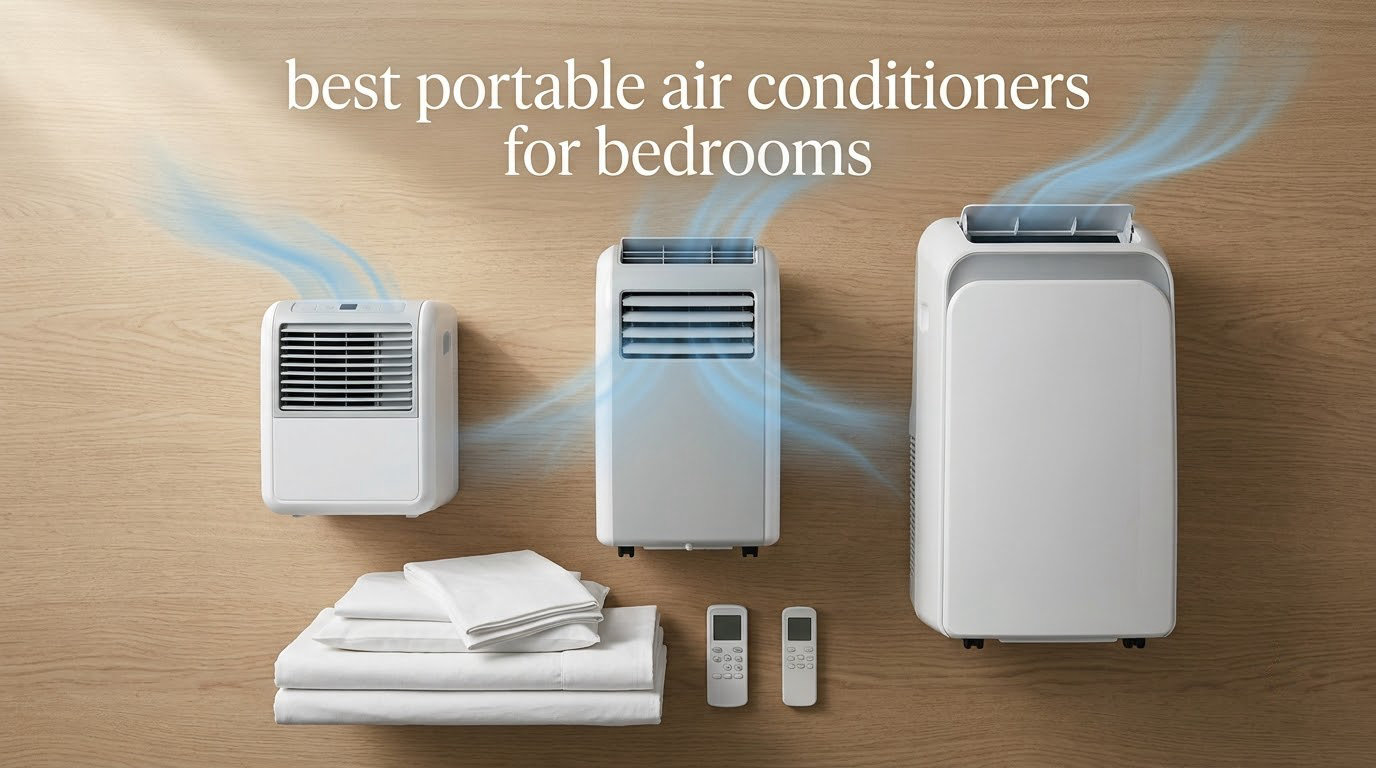
A portable air conditioner is the only realistic way to cool one bedroom in an apartment, a rental, or an older house with no central air. But pick the wrong unit and you will spend a summer listening to a compressor that clicks on and off every twenty minutes right next to your pillow. We compared twelve of the most-reviewed portable air conditioners for bedrooms to find the ones that actually cool a room quietly enough to sleep next to.
This roundup covers everything from a 230 sq ft unit for a child’s bedroom to a 16000 BTU inverter for a large primary suite. Every rating and review count below comes from the product listings, and the capacity, noise, and efficiency figures come from the manufacturer specifications on those listings. We did not lab-test sound levels ourselves, so where a dB number appears it is the manufacturer’s published figure, and we flag the ones that read optimistically.
If you are still working out how much cooling you need, start with our portable air conditioner picks for apartments and our window air conditioner guide for bedrooms, which cover the renter constraints that push most people to a portable unit in the first place.
Table of Contents
Top 3 Picks for Bedroom Portable Air Conditioners in 2026

SereneLife SLPAC8 8000 BTU
- 8000 BTU for rooms up to 350 sq ft
- 55 dB with dual motors
- 3-in-1 cool dry and fan
- 49 lb on casters

BLACK+DECKER BPACT10WT 10000 BTU
- 10000 BTU 5550 DOE for rooms up to 450 sq ft
- 54 dB
- Follow Me remote thermostat
- 47.3 lb with casters

DREO 318S 8000 BTU
- 45 dB noise floor
- Drainage-free below 90% humidity
- App voice and remote control
- 8000 ASHRAE 5000 SACC
Best Portable Air Conditioners for Bedrooms in 2026
| Product | Specifications | Action |
|---|---|---|
| SereneLife SLPAC8 8000 BTU |
|
Check Latest Price |
| BLACK+DECKER BPACT10WT 10000 BTU |
|
Check Latest Price |
| DREO 318S 8000 BTU |
|
Check Latest Price |
 DREO DR-HAC010S 14000 BTU Inverter DREO DR-HAC010S 14000 BTU Inverter |
|
Check Latest Price |
 Antarctic Star NPPB2A 8000 BTU Antarctic Star NPPB2A 8000 BTU |
|
Check Latest Price |
 COSTWAY 8000 BTU COSTWAY 8000 BTU |
|
Check Latest Price |
 Antarctic Star OL-A016TE06N3 10800 BTU Antarctic Star OL-A016TE06N3 10800 BTU |
|
Check Latest Price |
 ZAFRO A9092R-10K 14000 BTU Inverter ZAFRO A9092R-10K 14000 BTU Inverter |
|
Check Latest Price |
 Whynter ARC-102CS 10000 BTU Whynter ARC-102CS 10000 BTU |
|
Check Latest Price |
 Temprium PAC013-16K 16000 BTU Inverter Temprium PAC013-16K 16000 BTU Inverter |
|
Check Latest Price |
 Temprium PAC009-8K 8000 BTU Temprium PAC009-8K 8000 BTU |
|
Check Latest Price |
 ZAFRO YAC-06CPD 10000 BTU ZAFRO YAC-06CPD 10000 BTU |
|
Check Latest Price |
SereneLife SLPAC8 8000 BTU: Best Overall for Most Bedrooms
SereneLife Portable Air Conditioner, Dehumidifier & Fan | Dual Motor 3-in-1 8,000 BTU AC with 64°F–90°F Temperature Range, Cools Up to 350 Sq Ft, 3 Fan Speeds, Remote Control & Window Kit, White
8000 BTU
350 sq ft
55 dB
900 W
49 lb
Single hose
Pros
- Cools a moderate bedroom in about an hour
- Three modes including dehumidifier
- Casters make it easy to move room to room
- Remote plus on-unit touch panel
- Runs a full summer without leaks
Cons
- Audible at full compressor output
- Cycles fully off and back on which can wake light sleepers
- Thin plastic window vent kit
- Mesh filter feels flimsy
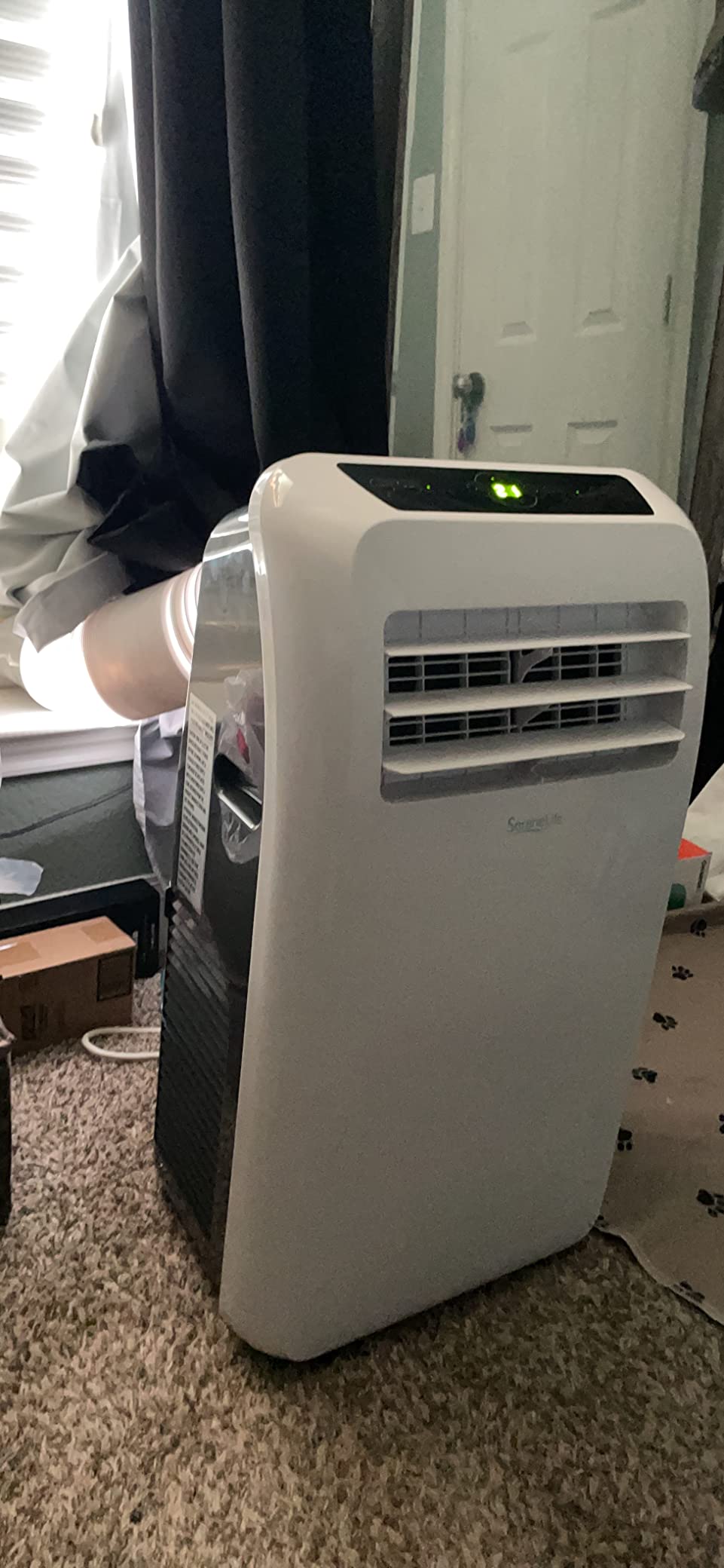
The SereneLife SLPAC8 is the unit I keep coming back to for a normal bedroom. Owners report dropping an 80F room into the mid-70s inside about an hour, which is the number that matters when you are trying to fall asleep on a hot night rather than watching a marathon.
It weighs 49 pounds and stands 24.8 inches tall at 14 by 15 inches, so it fits beside a desk or a dresser without taking over the room. Casters and a 900-watt draw on a standard 120-volt outlet mean you can move it between the bedroom and a home office without rearranging anything.
Two numbers frame the trade-off. The listed noise figure is 55 dB, and the compressor cycles fully off and back on rather than modulating, which is the single most common complaint in reviews and the reason a light sleeper might rule it out. Efficiency is the bright spot: a listed SEER of 9.8 is well above the 7.83 federal minimum and higher than most single-hose units at this capacity.
It also ships with a 64F to 90F range, three fan speeds, a digital touch panel, a remote, an exhaust hose, a window plate, and a drain pipe. The included dehumidifier pulls roughly 1.2 liters per hour, which is a real bonus in a humid summer.
Check the window kit before you commit
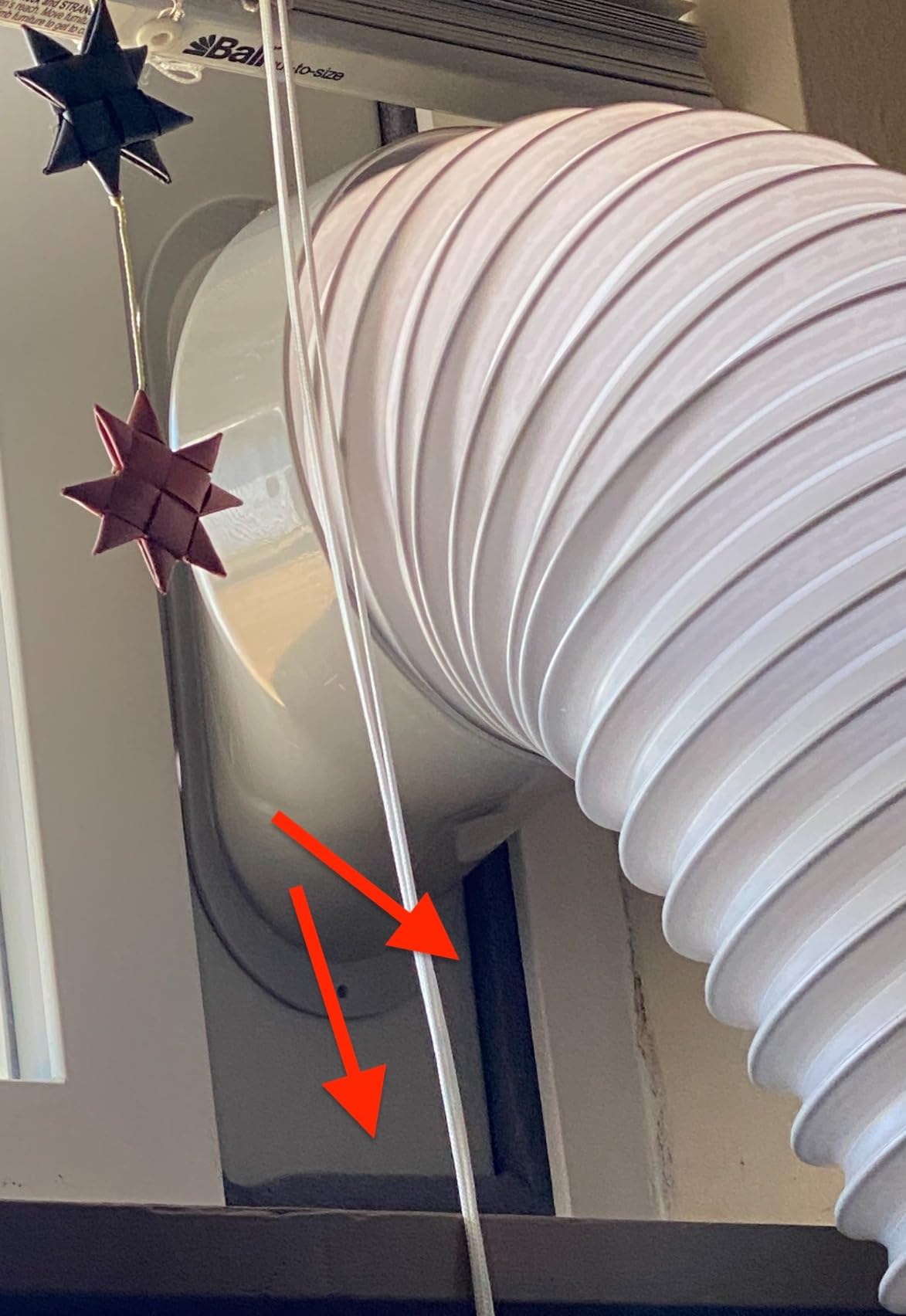
The vent plate is thin plastic and reviewers repeatedly mention that it fits some windows poorly. If you have an unusual casement or a wide sliding window, check the plate dimensions against your frame before the unit arrives, because replacement panels are an extra step.
The physical mesh filter also draws complaints. Pull it out and rinse it every couple of weeks during heavy use, or you are pushing warm, dusty air through a coil that cannot reject heat as efficiently.
Know when to skip it
Skip this unit if you are a genuinely light sleeper and cannot tolerate a hard on/off compressor cycle, or if you need true variable-speed temperature holding. In those cases the inverter units further down this list run at a steadier output.
It is also a single-hose design, so with the bedroom door fully closed and windows shut it pulls the hot exhaust air back in through the intake. Keep one interior door cracked or run it in a room with a slight leak path and it performs much better.
BLACK+DECKER BPACT10WT 10000 BTU: Best for Larger Bedrooms
BLACK+DECKER Portable Air Conditioner, 10,000 BTU, BPACT10WT, White
10000 BTU 5550 DOE
450 sq ft
54 dB
1220 W
47.3 lb
Single hose
Pros
- Cools a bedroom quickly and holds temperature
- Follow Me remote acts as its own thermostat
- Well-regarded window kit that seals well
- Casters and side handles aid moving
- Ranked number one in portable air conditioners
Cons
- Louder than quieter bedroom units especially on restart
- 15 percent one-star share
- Lower SEER of 6.7
- Washable filter only with no carbon stage
With 11068 reviews, the BLACK+DECKER BPACT10WT is the most thoroughly owner-tested portable air conditioner on this list, and that cuts both ways. You can find out almost anything about its long-term behavior, including what it does wrong.
Capacity is the headline: 10000 BTU with 5550 BTU DOE, rated for rooms up to 450 sq ft. That covers a large primary bedroom that a 6000 BTU unit would simply never bring into range on a July night.
The Follow Me remote is the feature owners mention most, because the remote’s temperature sensor becomes the thermostat. Hold it near you on the bed, and the unit cools the person holding it rather than the thermometer on top of the cabinet, which is a meaningful difference in a room with a warm ceiling.
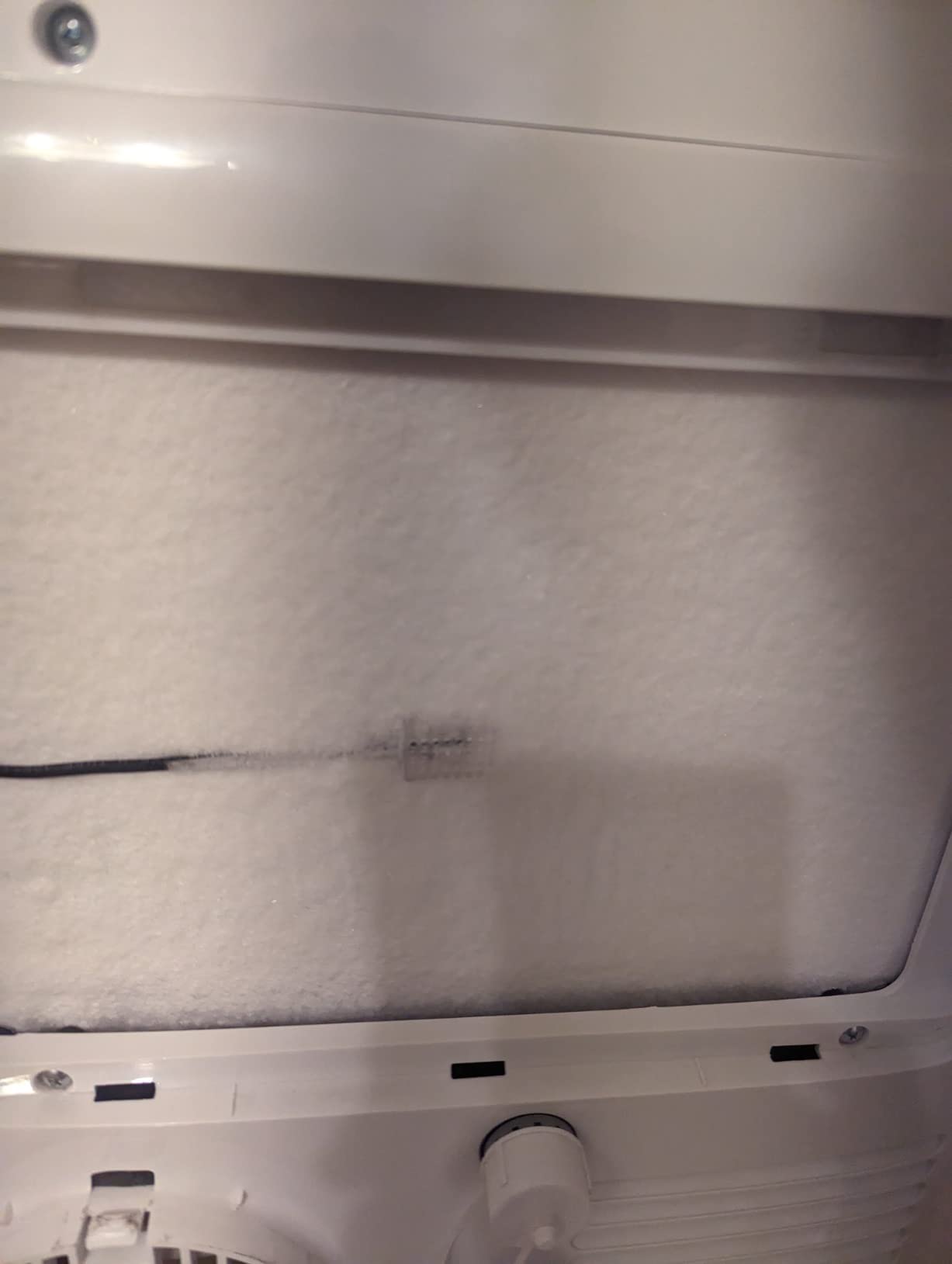
At 54 dB it is not the quietest unit here, and the recurring review theme is the burst of noise each time the compressor restarts. A 4.0 average with a 15 percent one-star share is a fair reflection of that. The fixed, non-oscillating louver also means you may be aiming the air at a wall instead of the bed.
Draw is 1220 watts, and the listed SEER of 6.7 is the lowest of the twelve units in this roundup. Over a full summer of overnight running, that difference is real money, and it is the main reason to look at an inverter instead.
Check the electrical circuit before you plug it in
At 1220 watts this is close to the limit of a 15-amp circuit when combined with anything else. Run it on a dedicated outlet, and avoid extension cords or power strips.
Measure the bedside clearance too. At 14 by 15.3 inches and 24.8 inches tall, the cabinet is the same footprint as the SereneLife but you will want the intake side clear, not pressed against a curtain.
Know when to skip it
Rule it out if running cost over the summer matters more than raw capacity, because the efficiency number is the weakest in this group. Light sleepers should also weigh the restart noise carefully before buying.
It is a strong pick for a large bedroom, a converted attic room, or a downstairs room that needs to cool fast and does not need to run all night on minimal power.
DREO 318S 8000 BTU: Best for Small Bedrooms
DREO Portable Air Conditioner 318S, 8000 BTU ASHRAE (5000 BTU DOE) Smart AC Unit for Bedroom with Drainage-free Cooling, Fan&Dehumidifier 3 in 1, APP/Voice/Remote, Quiet Standing AC for Room Indoors
8000 ASHRAE 5000 SACC
45 dB
1040 W
55 lb
Single hose
Pros
- Very quiet at a rated 45 dB
- Drainage-free cooling below 90 percent humidity
- Works with Alexa and Google Home
- Long 14 ft airflow throw
- 61F to 86F range with three modes
Cons
- Costs more than comparable 8000 BTU units
- Drain hose still needed above 90 percent humidity
- Listed floor area of 100 sq ft understates real coverage
- Some owners report temperature cycling
The DREO 318S is the quietest bedroom-focused unit in this roundup at a rated 45 dB, and that single spec line is why light sleepers keep ending up on it. It sits beside your bed rather than announcing itself every time the compressor changes state.
The listing pairs 8000 BTU ASHRAE with 5000 BTU SACC, and the 5000 SACC figure is the honest number to size against. It is more than enough for a bedroom in the 100 to 250 sq ft range, which covers a kid’s room, a guest room, or a small home office.
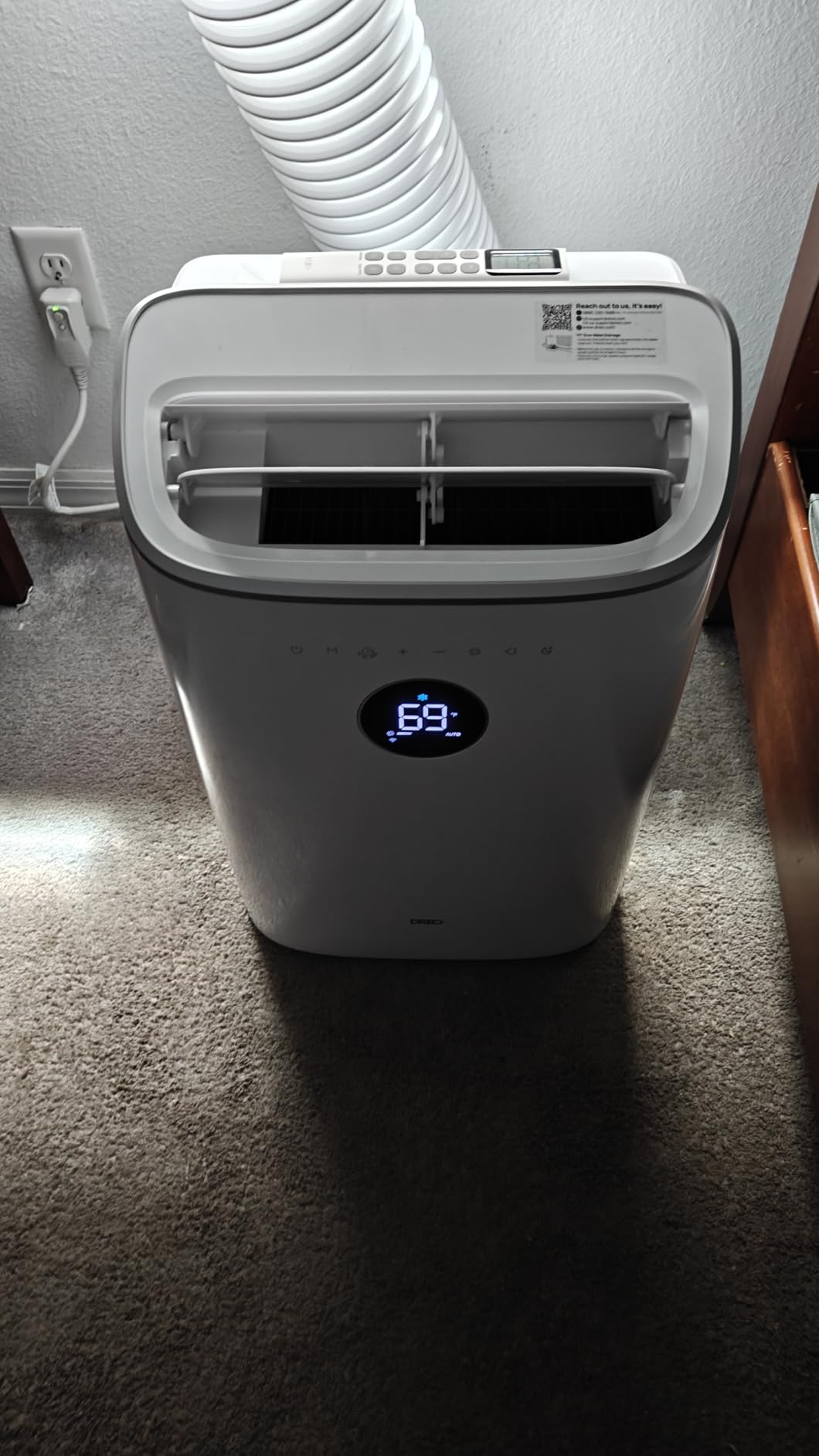
Patented self-evaporation is the feature that changes your routine. Below 90 percent relative humidity, the unit reuses its own condensate as cooling water for the coil, so there is no bucket to empty in the middle of the night and no standing water sitting next to your bedding.
Control is unusually good for the class: app, touch panel, remote, and voice support for Alexa and Google Home, with a sleep curve that ramps the set point up gradually rather than slamming the compressor on.
The catch is cost. It is one of the priciest 8000 BTU units we looked at, and at 55 pounds it is not a unit you carry between rooms casually.
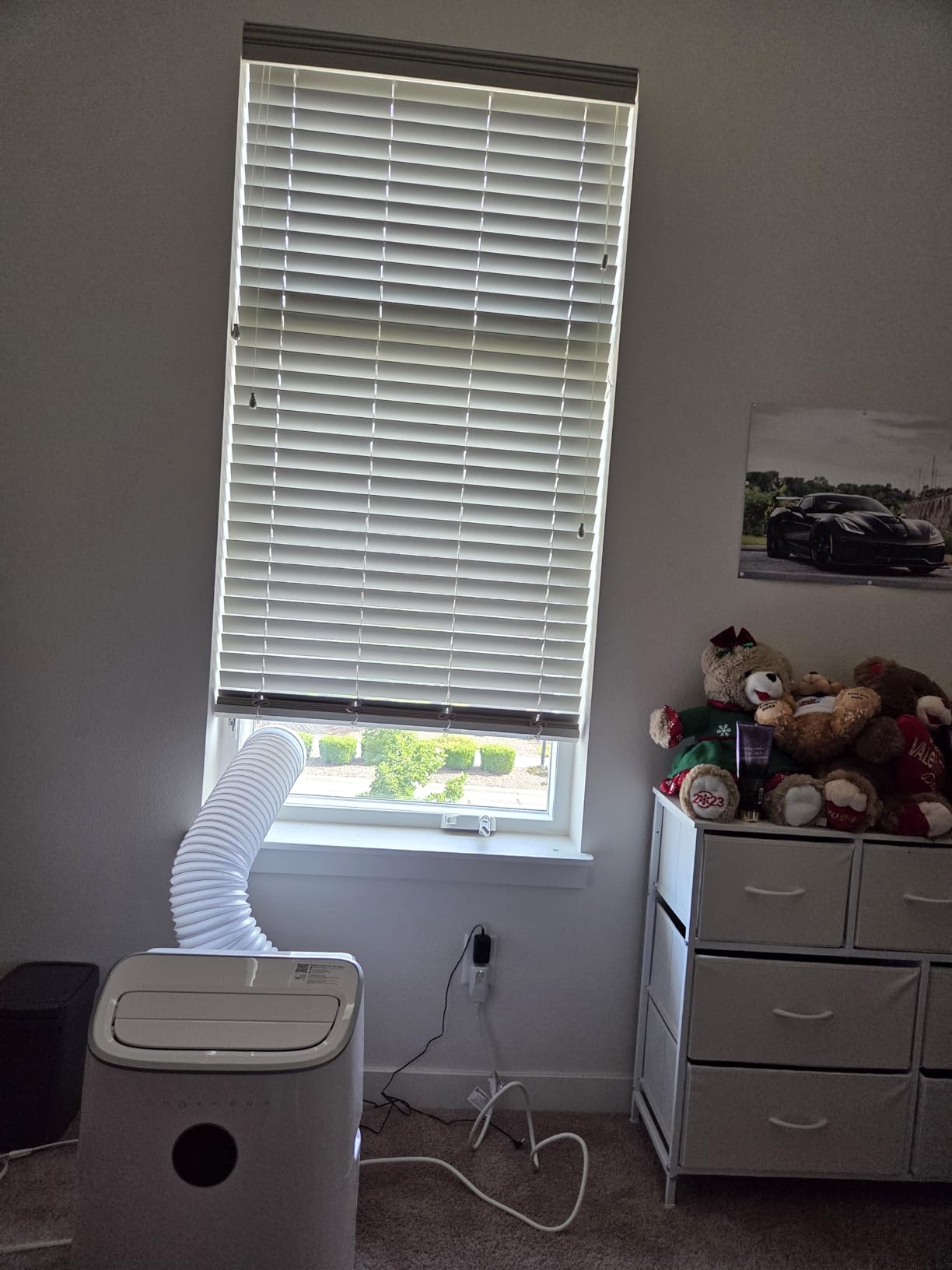
Check the humidity in your room first
The drainage-free claim stops at 90 percent relative humidity. In a muggy coastal bedroom or a basement-level room, you still need the included drain hose routed somewhere, and that is the situation that generates most of the mold and standing-water complaints people read about online.
Also note the listed floor area of 100 sq ft. That figure is unusually conservative for 5000 BTU SACC, and owners routinely cool larger rooms with it. Treat it as a floor, not a ceiling.
Know when to skip it
Skip it if you are on a tight budget and can tolerate 50 to 55 dB, because the same cooling can be had for meaningfully less. It is also the wrong pick for a humid room where the drain hose is not an option.
For a home office that doubles as a bedroom, the 14 ft airflow throw plus app scheduling is the feature set that will keep you from arriving to a warm room every morning.
DREO DR-HAC010S 14000 BTU: Best Dual-Hose Performance
DREO Inverter Portable Air Conditioners,High Efficiency,14000 BTU Dual-Hose
14000 BTU 10000 DOE
200-300 sq ft
42 dB
1540 W
55.4 lb
Dual hose
Pros
- Dual hose reduces hot air backflow
- Inverter compressor holds temperature with fewer cycles
- Claimed 32 percent better efficiency than fixed speed units
- Notably quieter than older portable units
- Drainage-free below 90 percent humidity
- App remote and Alexa control
Cons
- Highest price in this roundup and draws 1540 W
- Heavy at 55 lb and difficult on stairs
- Exhaust hose runs very hot
- Display backlight does not stay lit
- Compressor clunk when the fan restarts
This is the unit to buy if your bedroom is large and the door is closed all night. Two separate hoses mean the unit breathes in air from outside the room instead of re-ingesting the hot air it just expelled, which is the single biggest reason dual-hose machines outperform in a sealed bedroom.
Capacity is 14000 BTU ASHRAE, or 10000 BTU DOE, rated for 200 to 300 sq ft. That is a serious amount of cooling for a bedroom, and it is why the inverter compressor can hold its set point without the on/off cycling that makes fixed-speed units loud.
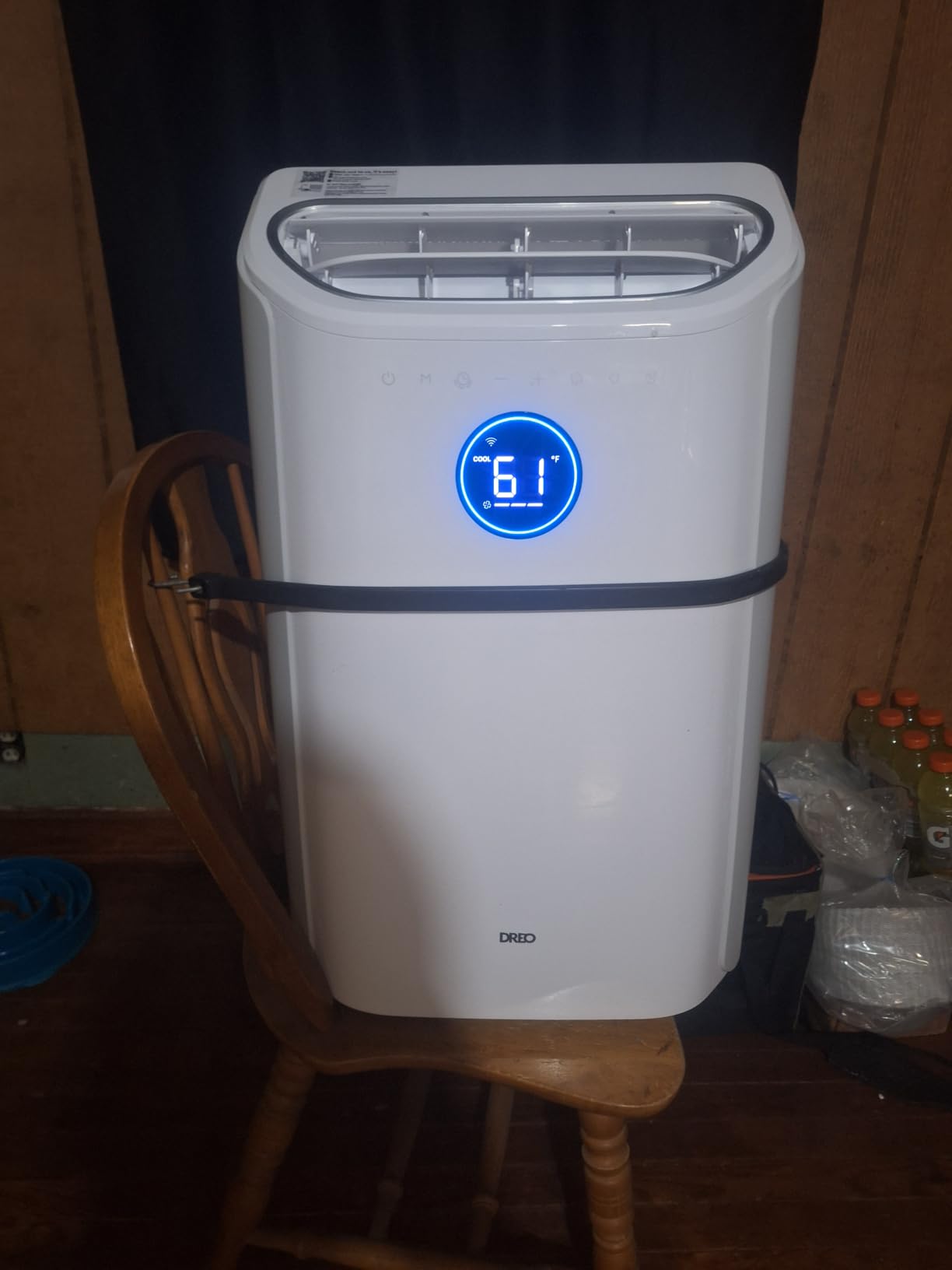
Owners who came from older portables describe the difference as a step change in steadiness rather than just volume. The inverter drive modulates output, and the listed noise floor of 42 dB reflects that. A claimed 32 percent efficiency improvement over traditional portables is a manufacturer figure, but the direction matches what reviewers report about their power draw.
There is a small reliability flag worth stating plainly. Among roughly 730 reviews there are reports of an internal compressor failure after about five months, accompanied by a chemical or burnt-oil odor filling the room. It is a minority, but a failed compressor in a bedroom is a serious problem, so check the warranty terms before you buy.
Two window panels and two exhaust hoses are included, and the kit fits hung and sliding windows between 20 and 53 inches tall.
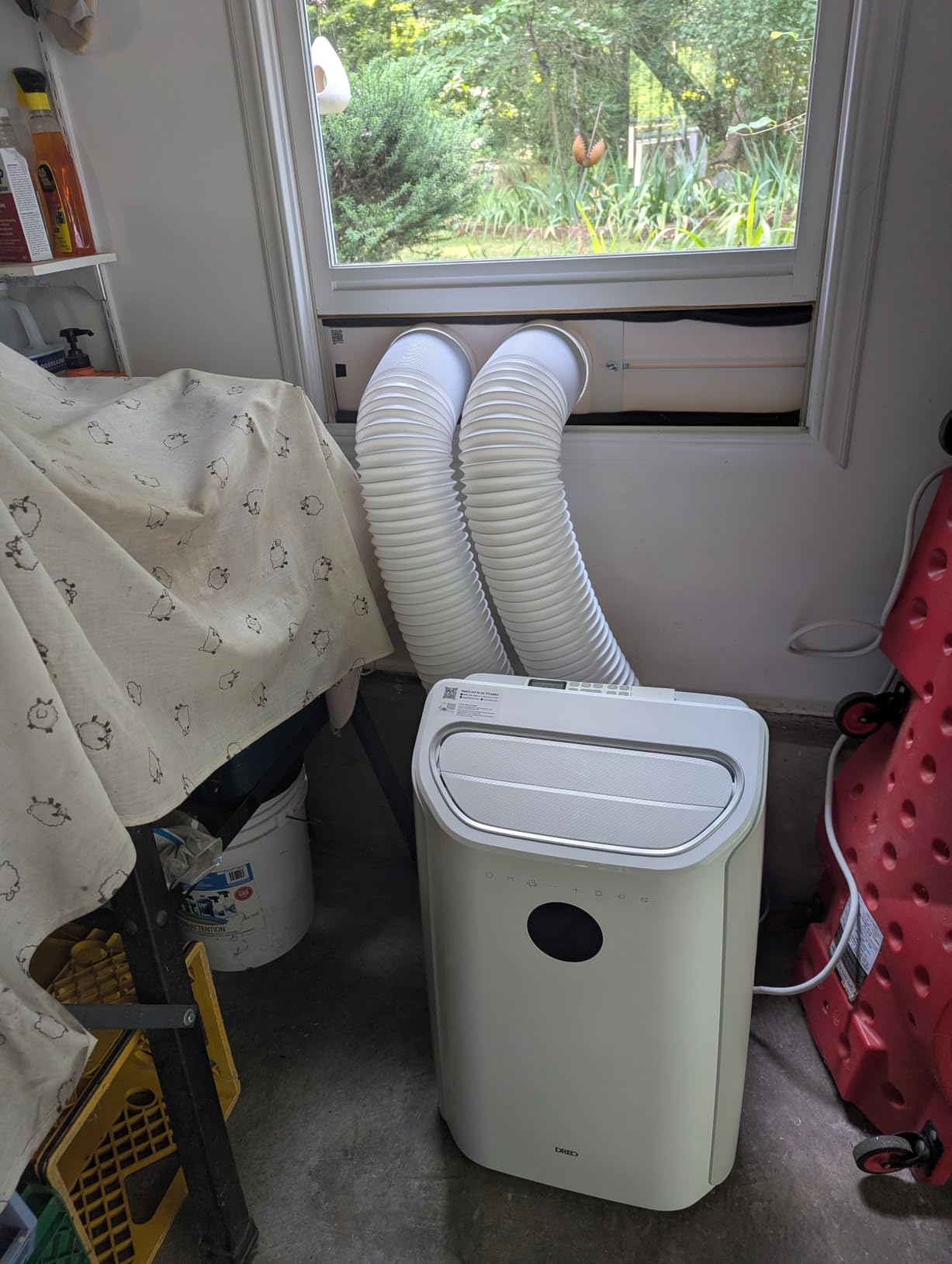
Check your circuit and your stairs
At 1540 watts, this draws more than most small air conditioners. On older wiring shared with other loads it can trip a breaker, so give it a dedicated 15-amp outlet.
At 55.4 pounds and 17.3 inches wide, plan where it lives before you buy. Stairs are the hard case, and a second person makes a real difference.
Know when to skip it
Skip it for a small bedroom. A 14000 BTU machine in a 150 sq ft room overshoots its set point, cycles awkwardly, and wastes power, which is exactly the short-cycling failure users complain about.
It is also the wrong choice if your budget is the constraint. There is a more affordable dual-hose inverter further down this list that covers a similar bedroom size.
Antarctic Star NPPB2A 8000 BTU: Most Versatile
Antarctic Star 8000 BTU ASHRAE Portable Air Conditioner, 4‑in‑1 Quiet AC Unit with Dehumidifier & Fan Mode, Ultra Easy Install, Cools up to 350 Sq Ft for Bedroom, Office, Studio & Apartment
8000 BTU ASHRAE
350 sq ft
53 dB
750 W
39.7 lb
Single hose
Pros
- Quiet enough for a bedroom at 53 dB on low
- Sleep mode dims the display and cuts fan noise
- Four modes including a 24 hour sleep timer
- Lightest unit in the roundup at under 40 lb
- Tool-free window kit set up in about 15 minutes
Cons
- Struggles in very hot and humid rooms
- 4.0 average with 15 percent one-star reviews
- Reports of units failing after about a year
- 110 V only outside North America
- No app or Wi-Fi control
The Antarctic Star NPPB2A answers the question most budget buyers are actually asking: how little do you have to spend to get a bedroom unit that will not keep you awake. At 750 watts it is the least power-hungry machine in this roundup by a wide margin, and at 53 dB on low it is quieter than several units that cost twice as much.
It is also the lightest thing here at 39.7 pounds, with caster wheels and a carry handle. That matters more than it sounds, because the alternative to moving a portable unit is living with it in one room for the whole summer.
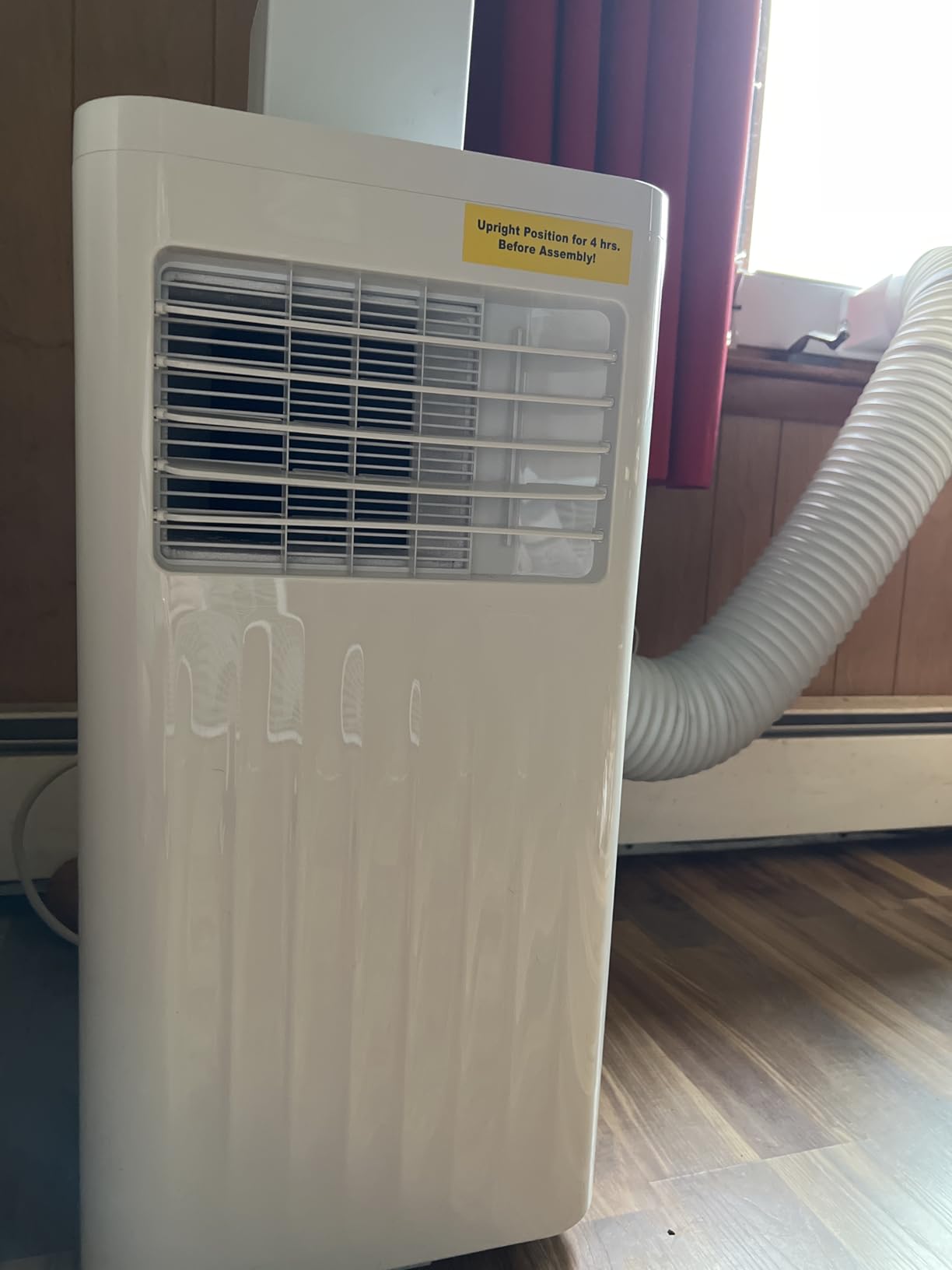
Sleep mode is properly implemented here. It dims the display, drops the fan to its lowest speed, and works with a 24-hour auto-off timer, so the unit can be set once at bedtime and left alone. Four modes cover cooling, fan, dehumidify, and sleep across a 61F to 86F range.
The limitation is climate. Owners in places like Florida report the unit struggling to hold its set point on the hottest, most humid nights, and 8000 BTU with a listed SEER of 6.3 is not a lot of hardware to fight extreme heat. In a temperate bedroom it does its job well.
It is 110-volt only, which matters if you are outside North America, where you would need a step-down converter.
Check the window insert on older windows
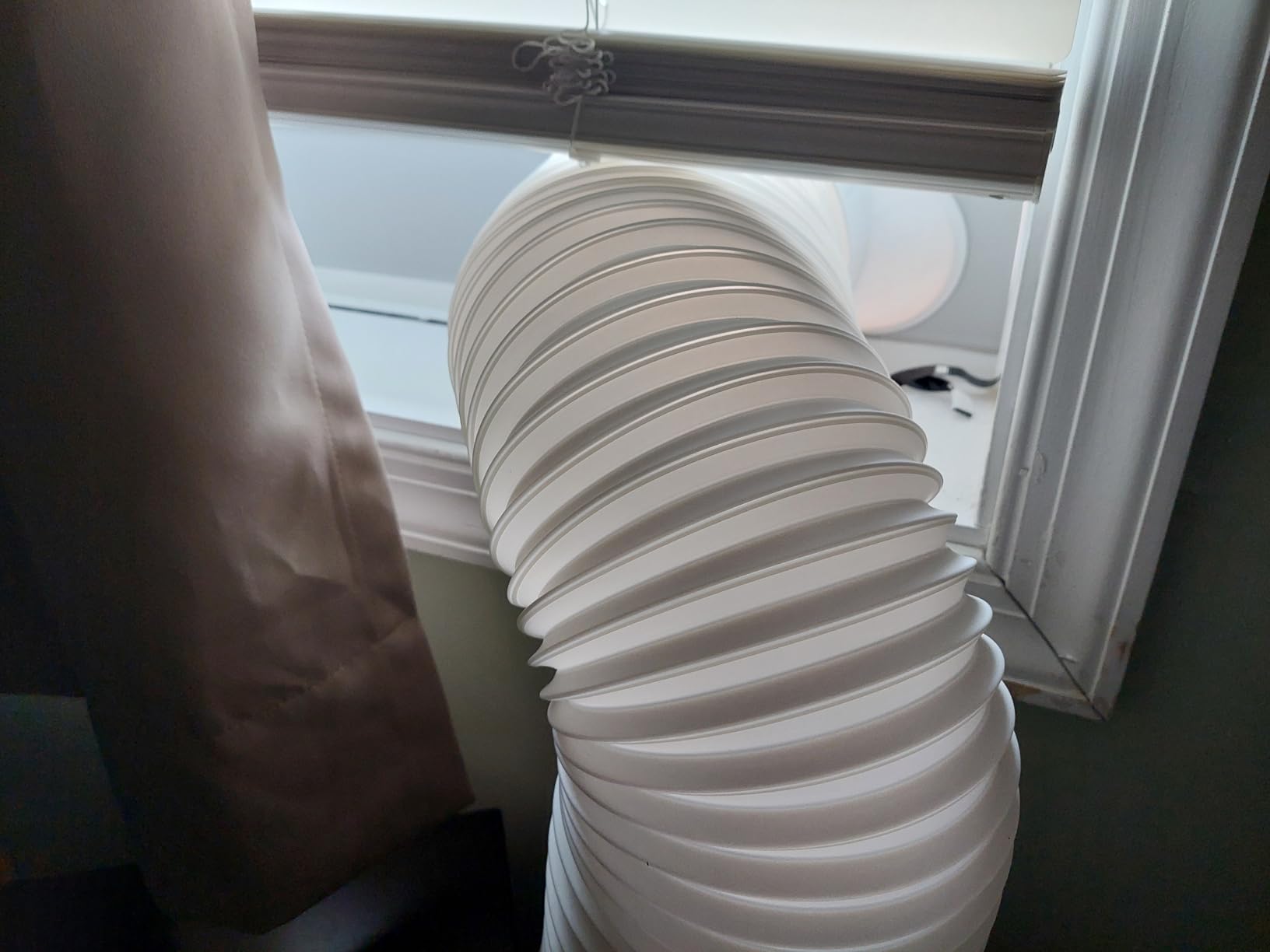
Some owners find the included window insert needs trimming or extra sealing foam on older double-hung frames. Budget ten minutes and a roll of tape before you start, and the seal will pay for itself in cooling performance.
Verify the adapter pieces are in the box. A few owners received shipments missing a hose adapter, and the manufacturer replaced them, but it still costs you a week of waiting.
Know when to skip it
Skip it if you live somewhere the summer routinely runs above 90F with high humidity, because this capacity will not keep up. It is also the wrong pick if you want to schedule cooling from your phone.
For a moderate bedroom on a budget, it is hard to argue with 750 watts, 53 dB, and a real sleep mode. For a large primary suite, look at the dual-hose inverters instead.
COSTWAY 8000 BTU: Best for Casement Windows and Tiny Rooms
COSTWAY Portable Air Conditioner, 8000 BTU AC Unit Spaces up to 230sq.ft, with Remote Control, 24H Timer & Window Venting Kit, Sleep Mode, Suitable for Bedroom, Living Room, Office (Black, 8000BTU)
8000 BTU
230 sq ft
53 dB
920 W
45 lb
Single hose
Pros
- Works in casement windows where window units cannot
- Small square footprint leaves usable space on top
- Sleep mode raises temperature about 1.8F per hour
- 1 to 24 hour timer with full-tank auto shutoff
- Child lock and overload protection
Cons
- Rated for only 230 sq ft
- Audible small compressor running in the room
- Window butterfly fastener does not stay tight
- Documentation is hard to follow
- Only a 6-month warranty
This is the one to look at if your bedroom window is a casement that swings outward. A portable unit routes heat through a flexible hose, so it can sit in a casement or a crank-out window where a window air conditioner physically cannot be mounted.
Capacity is the trade. At 8000 BTU rated for 230 sq ft, it has the smallest coverage claim in this roundup, and that is genuinely a small room: a child’s bedroom, a nursery, a home office, a guest room.
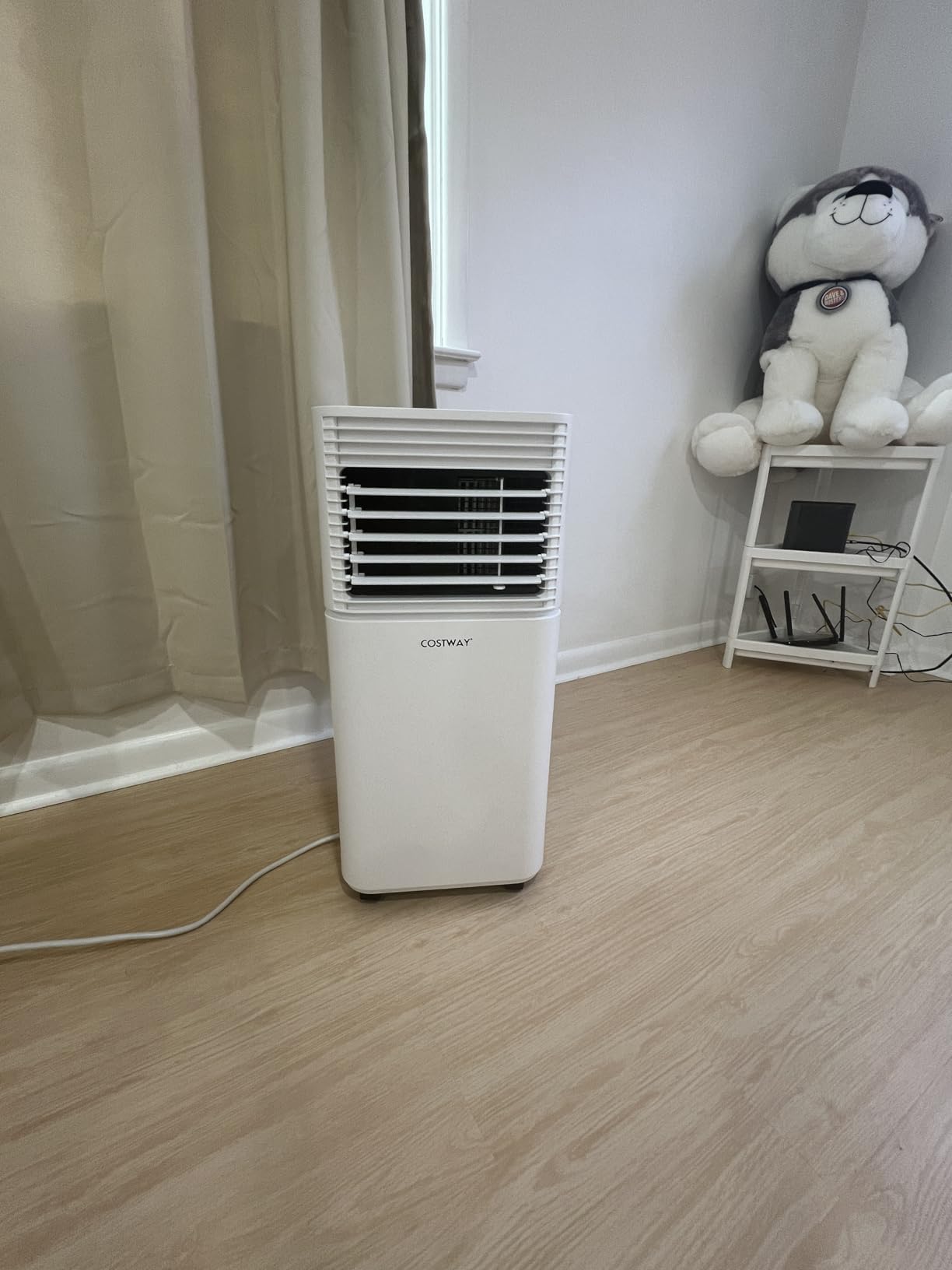
What it does well is quiet running for its class at 53 dB, and a sleep mode with an unusual behavior. Rather than holding one temperature, it nudges the set point up by about 1.8F per hour, which is a gentler overnight ramp and reduces the compressor restarts that wake people up.
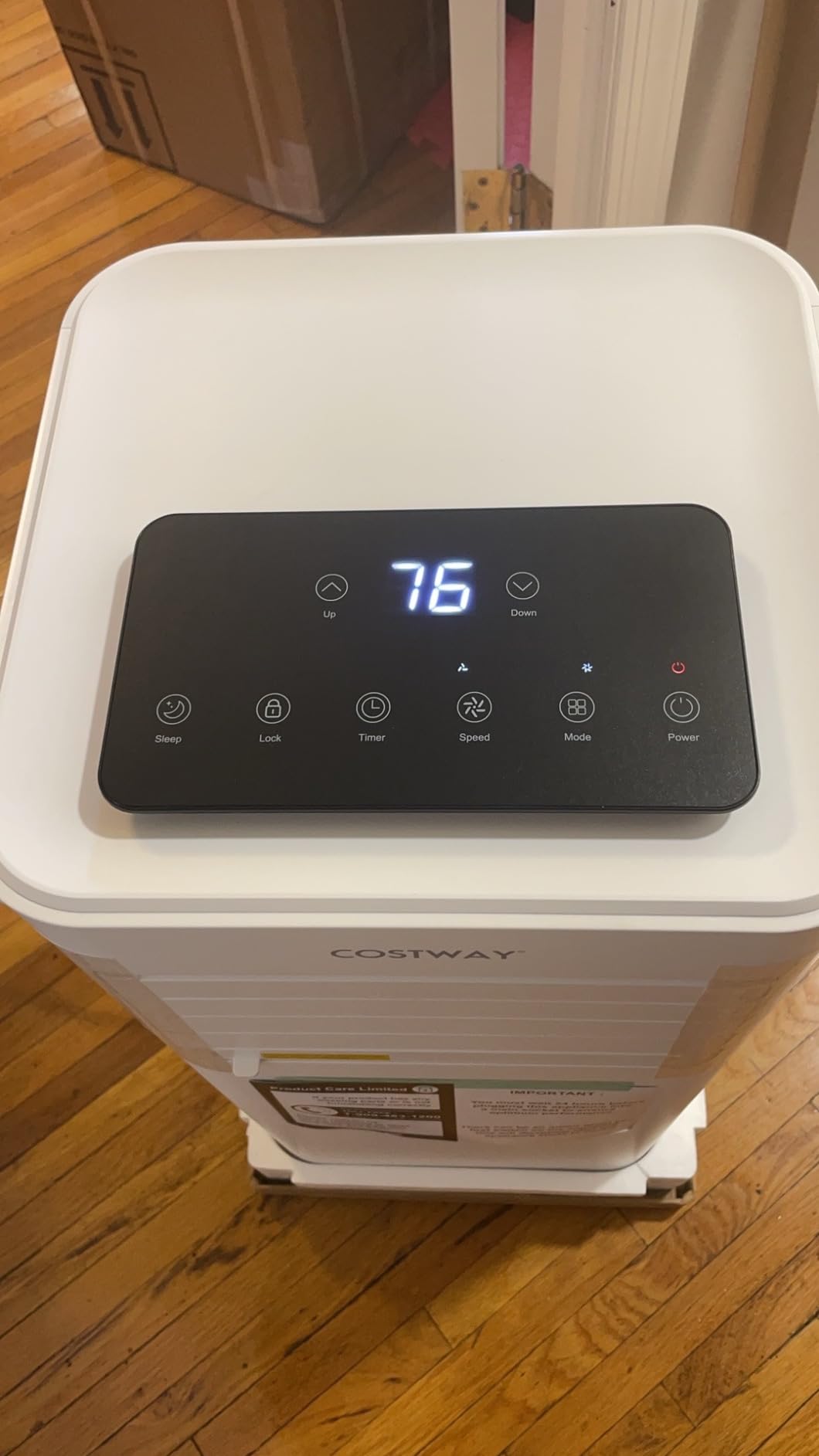
Child lock and overload protection are the two features that matter most in a nursery or a kid’s room, and few units at this tier include both. The self-evaporating system reduces how often you need to drain it.
The warranty is the weak point. Six months is less than half what most of these units offer, and combined with a handful of reports of units degrading or throwing an error code after about a year, that is a real risk if you are planning on three summers of use.
Check the window fastener before you rely on it
The butterfly fastener on the included window kit does not stay tight, and a loose vent panel leaks conditioned air into the heat outside. Wrap it with tape after fitting, and the seal becomes a non-issue.
Also confirm the manual matches the unit you receive. Some owners report a mismatch, which makes the initial setup guesswork rather than a ten-minute job.
Know when to skip it
Skip it for anything larger than a small bedroom. Undersizing is the fastest route to a unit that runs the compressor continuously, which is both ineffective and the loudest way a portable can fail.
Skip it if you want a warranty that covers a multi-year horizon, and consider the Whynter further down if you want the same footprint with a longer warranty and real filtration.
Antarctic Star OL-A016TE06N3 10800 BTU: Best Value
Antarctic Star 10000 BTU Portable Air Conditioner, 5-in-1 Cool
10800 BTU ASHRAE
up to 450 sq ft claimed
50 dB
729 W
52.6 lb
Inverter
Pros
- Quiet at 50 dB with a near-silent eco setting
- Reaches the full 61F set point
- 5 in 1 with cool dry fan sleep and timer
- Child lock and 24 hour timer
- 360 degree swivel casters and built-in handles
Cons
- Some units ship eco-only with no true cool or sleep mode
- Eco-only variants cycle on and off all night
- Some noise sensitivity reported by light sleepers
- Remote-only controls on certain variants
At 729 watts this Antarctic Star draws less power than most 6000 BTU units while carrying a 10800 BTU ASHRAE compressor, and that efficiency gap is where the value comes from. It is one of the highest-rated units we looked at, at 4.3 stars across roughly 400 reviews.
Capacity is listed up to 450 sq ft, which is a manufacturer claim worth reading carefully. For a bedroom, treat the 10800 BTU ASHRAE figure as the useful number and size from there rather than trusting the square footage alone.
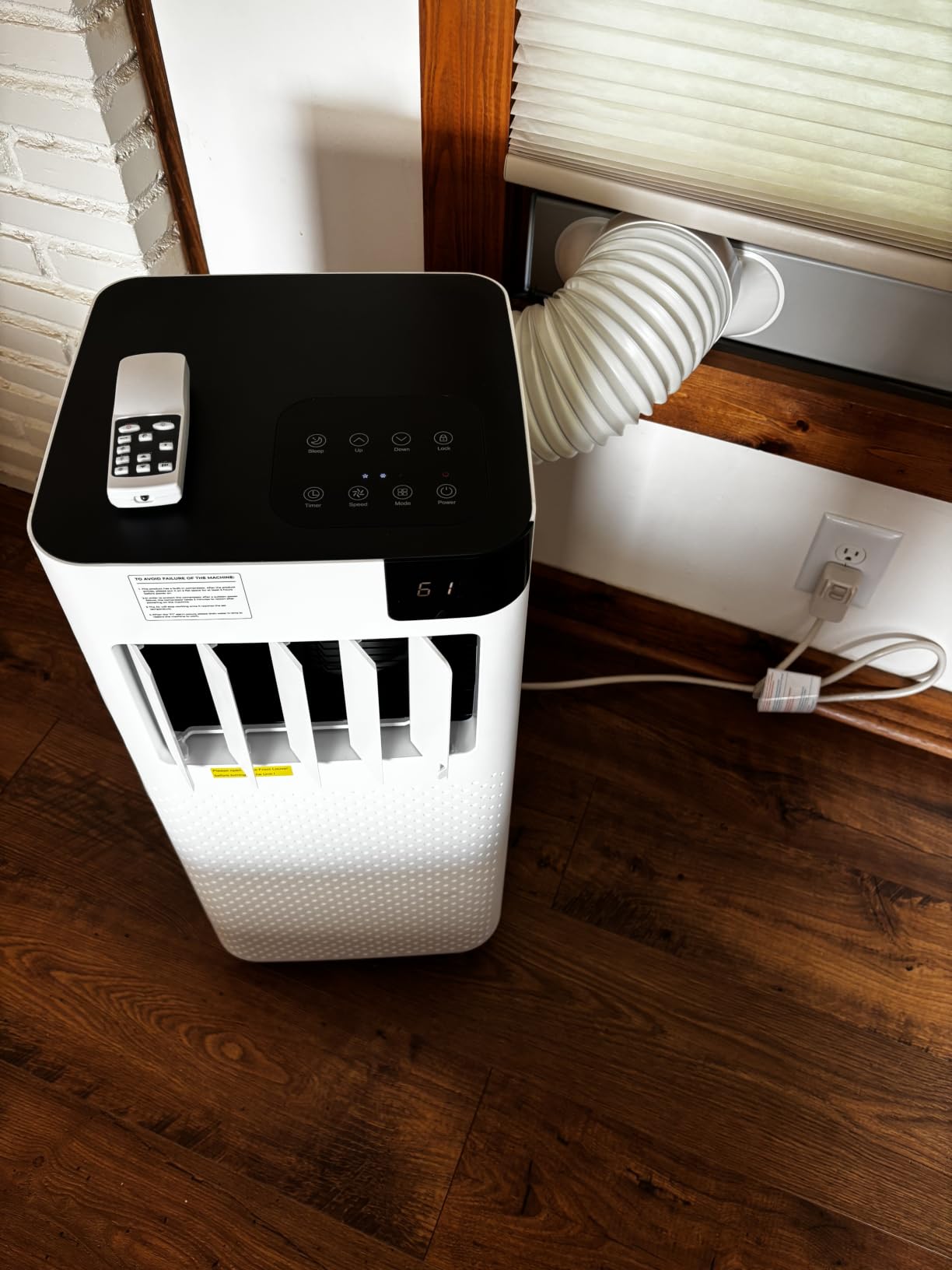
It is the only unit in this roundup with an inverter compressor that sits in the mid-range, and the 61F minimum set point is unusually low for the tier. Owners praise front-facing airflow that cools the room evenly rather than blasting one wall, and a window vent kit described as solid.
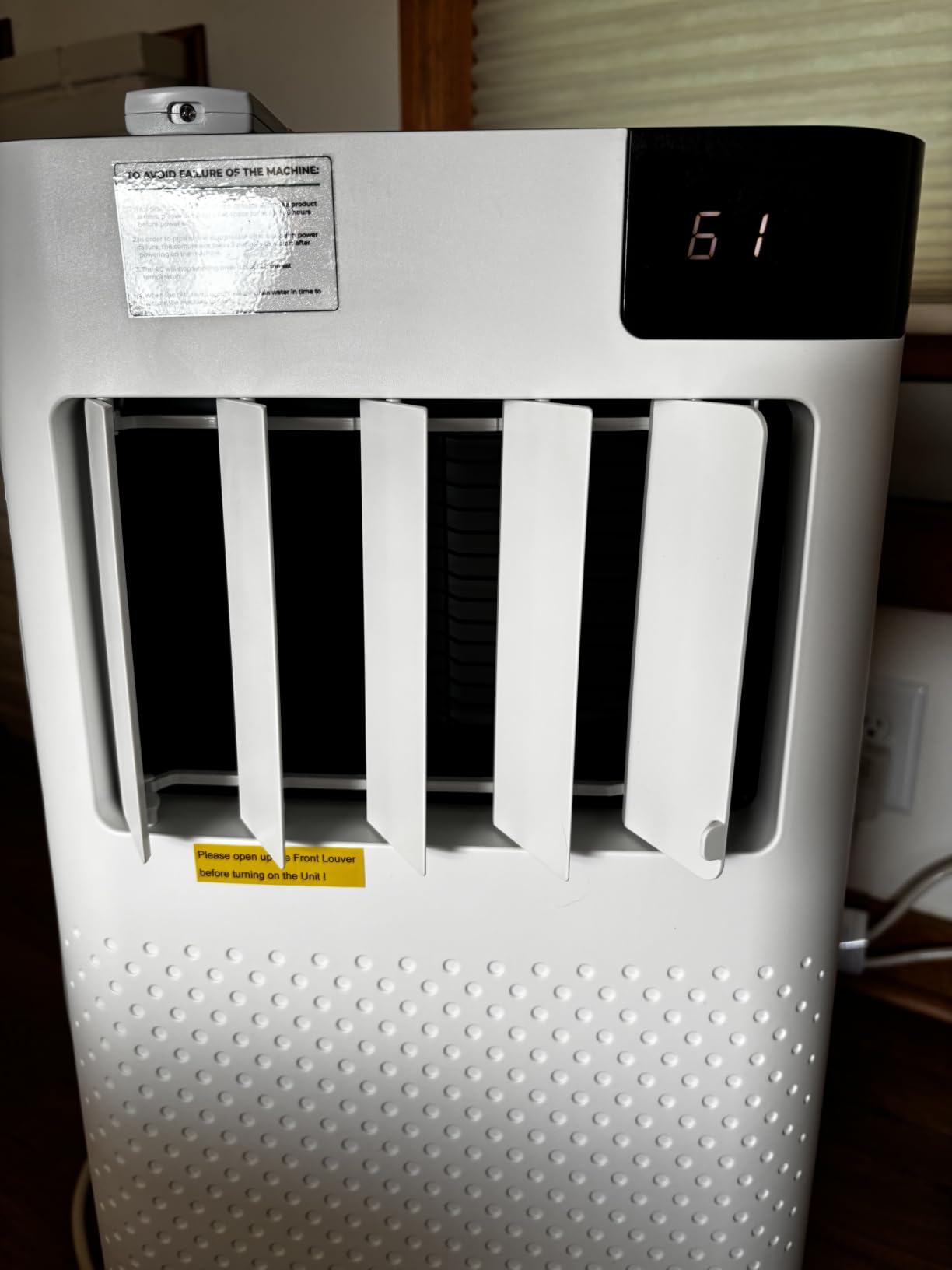
Before you buy, though, check exactly which variant you are getting. The single most common source of one-star reviews is a unit that ships in eco-only mode, where the compressor cycles on and off all night and there is no true cool-only or sleep mode at all. If that happens, the unit is far worse for sleeping than the 4.3 rating suggests.
The listing carries a 360-degree swivel caster and built-in handles, which is genuinely helpful at 52.6 pounds.
Check the mode set the moment it arrives
Power it on and confirm a true cooling mode and a sleep mode exist before you find out at 2am that you received the eco-only variant. It takes thirty seconds and it is the difference between this being a good buy and a disappointing one.
Seal the window panel properly as well. Some buyers report needing extra insulation tape around the edges to stop conditioned air escaping.
Know when to skip it
Skip it if you are sensitive to any on/off cycling, and verify the variant before committing. If you need a large primary bedroom handled by one machine all summer, the dual-hose inverters hold temperature more steadily.
For a mid-size bedroom where power cost is a real concern, the 729-watt draw at this capacity is hard to argue with.
ZAFRO A9092R-10K 14000 BTU: Top Rated for Large Bedrooms
ZAFRO Smart Inverter Portable Air Conditioners, 14000 BTU (10000 BTU SACC)
14000 BTU ASHRAE 10000 SACC
42 dB
1250 W
54 lb
Dual hose
Pros
- Very quiet at 42 dB
- Inverter compressor holds temperature with fewer cycles
- CEER of 12.8 well above the 7.83 minimum
- 72 hours drainage-free below 90 percent humidity
- Six modes with four-way oscillation
- App and remote with 24 hour timer
Cons
- One of the priciest options in the roundup
- Heavy at 54 lb
- Extra mode locks at 61F rather than adjusting
- Drain hose still needed above 90 percent humidity
The ZAFRO A9092R-10K pairs 14000 BTU ASHRAE with 10000 BTU SACC, and the SACC number is what you should size from. At 10000 SACC it is one of the few units here that can honestly cool a 450 sq ft primary bedroom and hold it through the night.
It carries a 4.3 rating with roughly 73 percent five-star reviews, and 42 dB operation puts it in the quiet end of this list even under load.
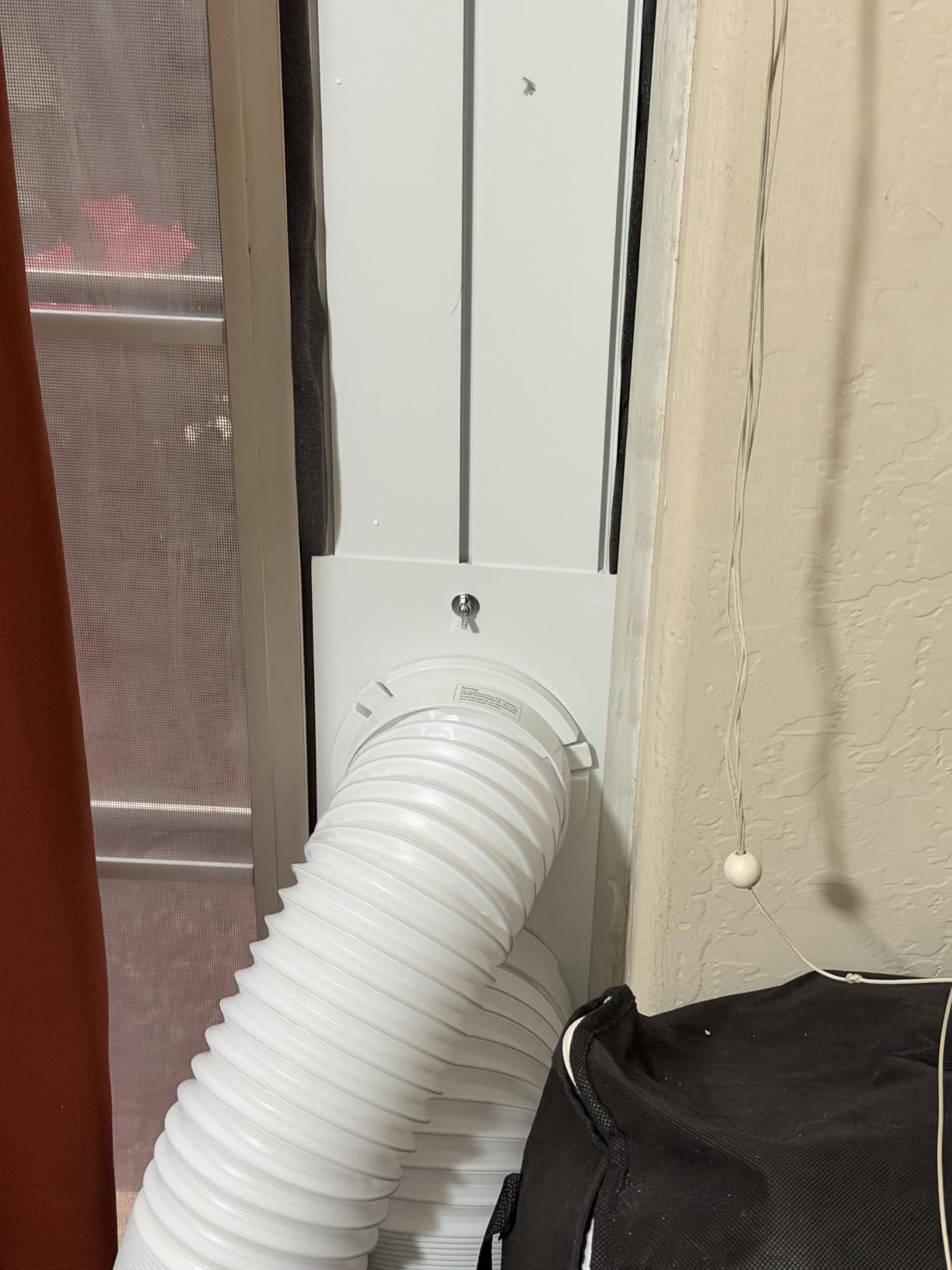
The efficiency figure is the standout: a listed CEER of 12.8, well above the 7.83 federal minimum, which means lower running cost for exactly the kind of all-night use a bedroom demands. Users switching from a fixed-speed unit report holding their set point with far fewer audible restarts.
Feature coverage is broad. Six modes including sleep, eco, and an extra mode that locks the unit at 61F for rapid relief, four-way oscillation, a filter light reminder, a child lock, and app plus remote control with a 24-hour timer. Two exhaust hoses, five window panels, sealing foam, and butterfly bolts are all in the box.
The self-evaporating system runs up to 72 hours drainage-free, which means most nights you never think about it.
Check the electrical load on older circuits
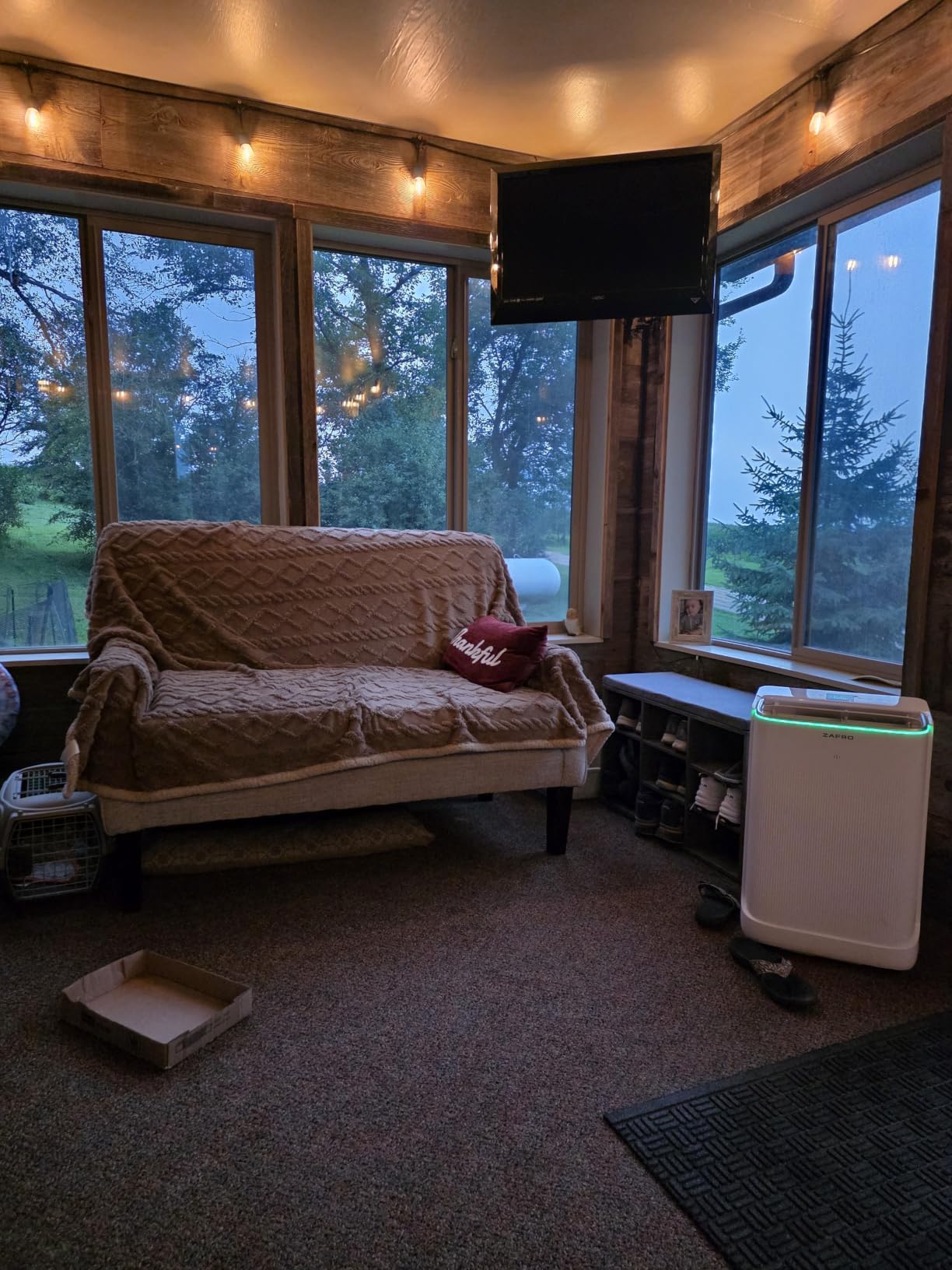
At 1250 watts on 115 volts, this needs a dedicated outlet. Sharing a circuit with a dehumidifier, space heater, or older kitchen appliances is how you get nuisance trips.
Also plan the move. At 54 pounds and 16.5 inches wide, it is a two-person job on stairs, and it works best in a room it can stay in for the whole season.
Know when to skip it
Skip it if you are shopping on price, since this is one of the more expensive units in the group. It is also excessive for a bedroom under about 250 sq ft, where a 5000 to 6000 SACC machine will do the same job for a fraction of the running cost.
The extra mode is worth understanding before you rely on it. It locks the unit at 61F rather than giving you a genuinely adjustable setting, so treat it as a rescue mode rather than a daily one.
Whynter ARC-102CS 10000 BTU: Best for Quiet Sleep
Whynter Portable Air Conditioner, 10,000 BTU, Dehumidifier Fan, ARC-102CS
10000 BTU 7000 SACC
51.5 dBA
300 sq ft
1110 W
53 lb
Single hose
Pros
- Quiet at about 51 dBA with the compressor running
- Patented auto drain exhausts condensate automatically
- 68 pint per day dehumidification
- Activated carbon filter plus washable pre-filter
- Compact 14 by 14 inch corner footprint
Cons
- Still audible at full output for some buyers
- Only two fan speeds
- Limited horizontal louver swing
- Basic on-panel controls so you live by the remote
- Single hose creates negative pressure
The Whynter ARC-102CS is the sleeper’s pick among the fixed-speed units, and its 51.5 dBA figure is measured with the compressor running rather than on the quietest fan setting. Most marketing numbers on portable air conditioners describe a fan-only floor, so a spec that includes the compressor is worth more.
It delivers 10000 BTU, or 7000 BTU SACC, for rooms up to 300 sq ft. That is a solid match for a medium bedroom, and the 7000 SACC number tells you more than the headline figure will.
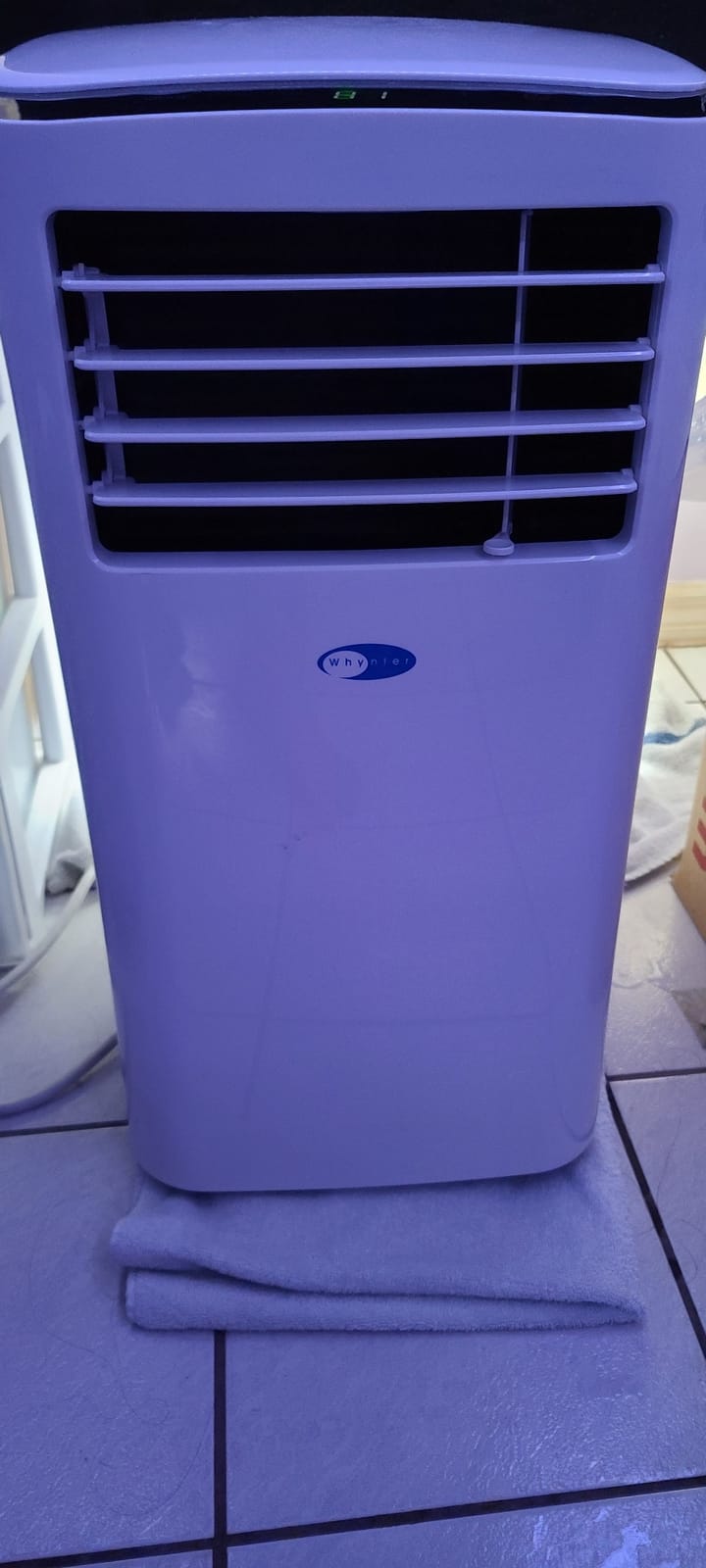
The patented auto-drain is the sleeper’s real feature. It exhausts condensate automatically in most environments through upper gravity and lower drain ports, so you can run the unit all night without checking a tank, and the 68 pint per day dehumidification rate is strong for a humid climate.
Filtration is a step above most of this list: an activated carbon filter paired with a washable pre-filter. In a bedroom where air quality matters, the carbon stage handles odors, and the unit is one of the few here with it.
Warranty is also a genuine advantage: one year limited, plus a three-year compressor warranty. Only a handful of competitors offer anything close, and compressor coverage is the part that actually matters.
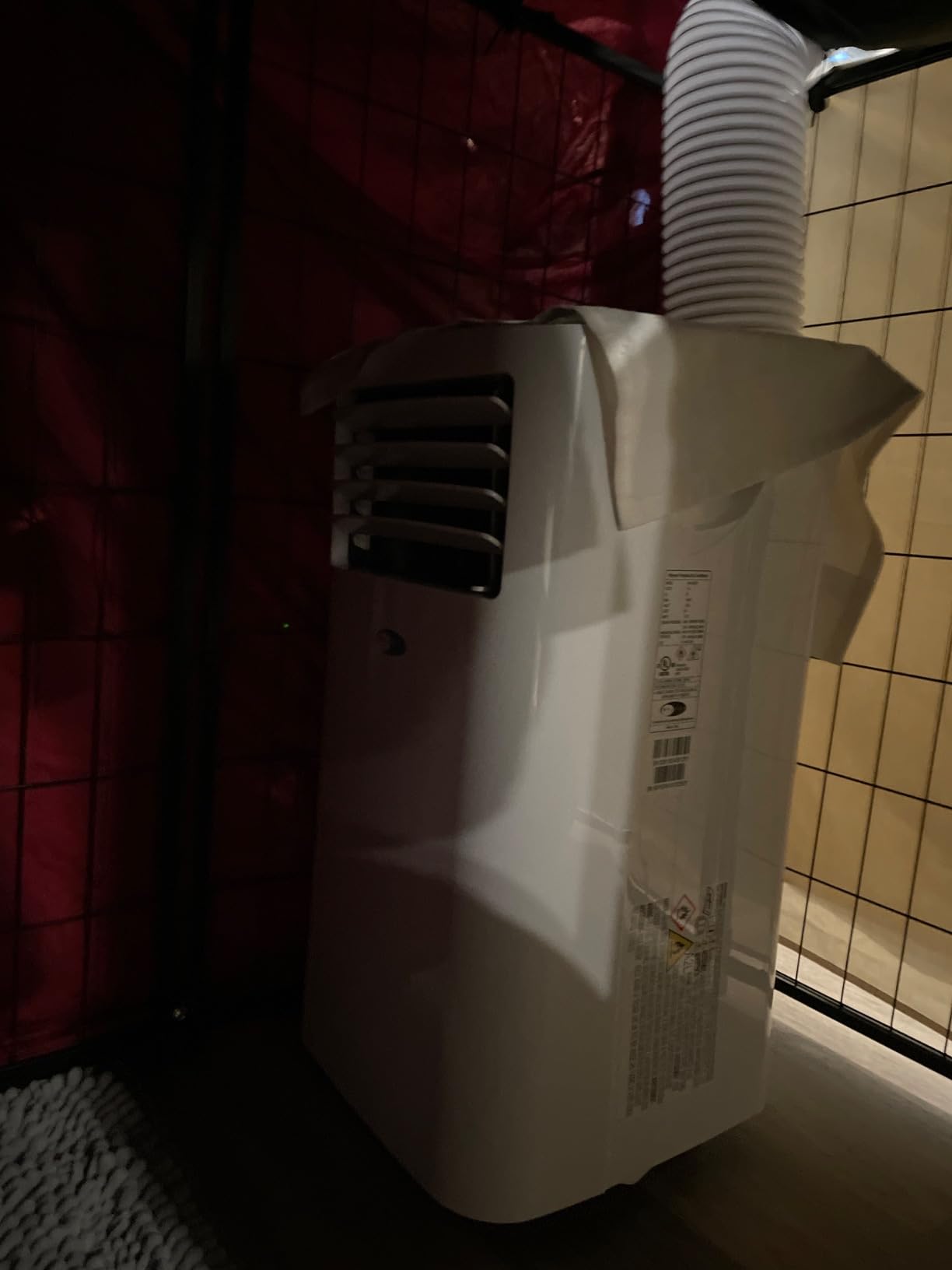
Check the fan speed limitation
Two fan speeds is the one real compromise. You cannot dial down the fan to a whisper-quiet trickle for sleep, so on mild nights the compressor modulates less gracefully than a three-speed unit.
Note the limited louver swing, roughly 30 percent side to side. Aim it away from a wall and toward the foot of the bed, and it works well; point it at drywall and you lose throw distance.
Know when to skip it
Skip it if you close the bedroom door completely. This is a single-hose design, and owners specifically note the negative air pressure it creates in a sealed room, which degrades real-world cooling and can pull in hallway noise through the gaps.
Skip it if you need app control. It runs from the remote and the basic on-panel buttons, which are functional but limited.
Temprium PAC013-16K 16000 BTU: Best With Heating
Temprium 16,000 BTU Inverter Dual Hose Portable Air Conditioner for Rooms
16000 BTU
750 sq ft
40 dB silent
1550 W
64.8 lb
Dual hose
Pros
- Quietest unit here at 40 dB in silent mode
- Inverter holds set temperature within about 1F
- CEER 12.3 well above the 7.83 minimum
- Dual hose pulls fresh outside air
- 8 modes including heat
- 72 plus hours drainage-free below 90 percent humidity
- Alexa and Google Assistant support
Cons
- Heaviest unit in the roundup at 64.8 lb
- Highest wattage at 1550 W
- Overkill for small bedrooms
- Window opening must be at least 20.5 inches high
The Temprium PAC013-16K is the only unit in this roundup with a genuine heating mode, which makes it the one to consider in a shoulder season where a bedroom gets cold long before the central system is switched on. Eight modes cover cooling, heat, dry, fan, sleep, silent, turbo, and eco.
It is also the quietest unit we included at a rated 40 dB in silent mode, achieved with a brushless DC fan motor. A brushless motor has no brush wear, so it is both quieter and longer-lived than the shaded-pole motors in the budget units.
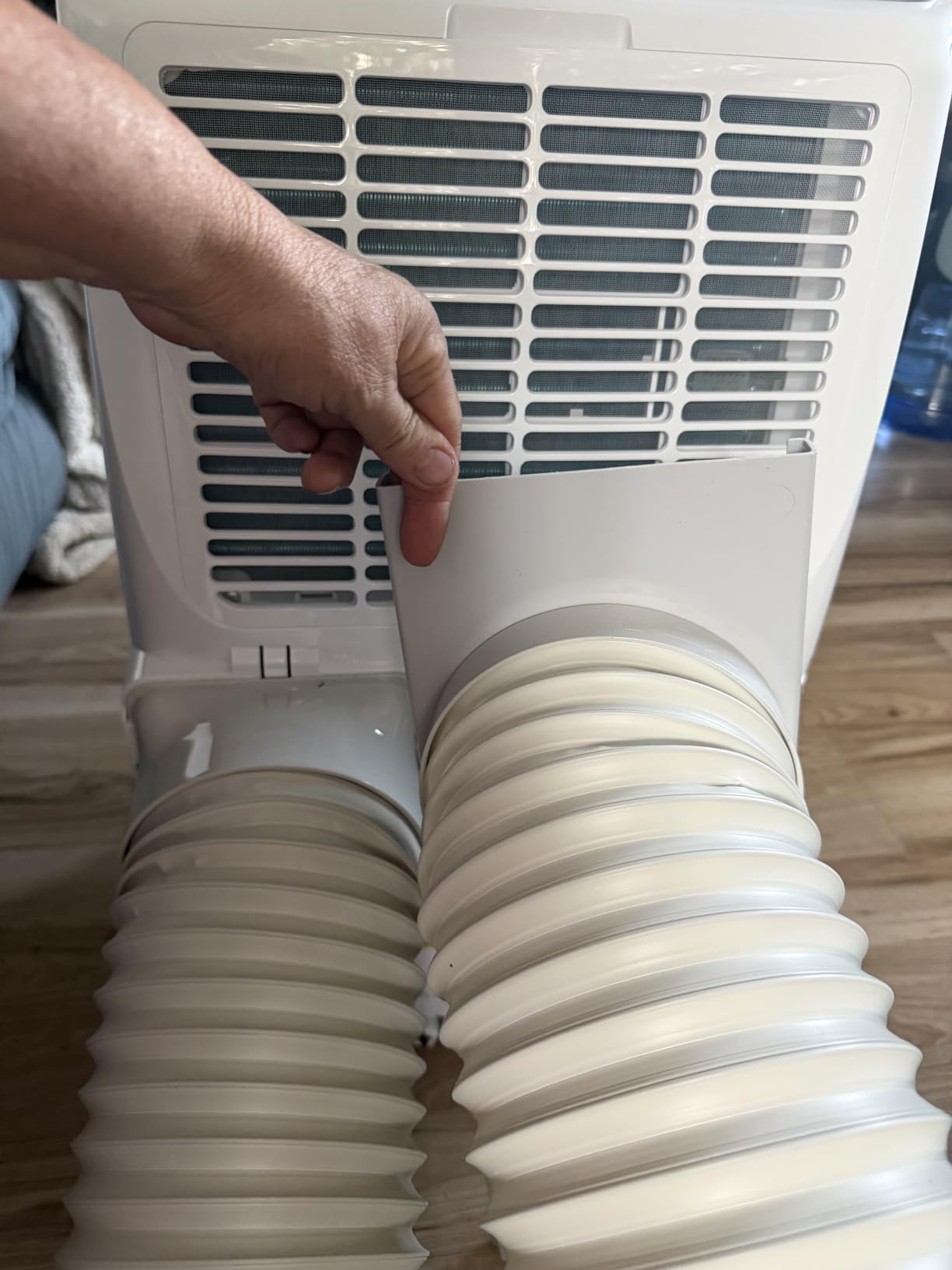
Capacity is 16000 BTU for rooms up to 750 sq ft, and it is dual-hose, so a closed bedroom door does not degrade its performance the way it does with a single-hose design. Owners cite holding the set point within about a degree, which is the whole point of an inverter compressor at night.
Listed efficiency is CEER 12.3, again well above the federal minimum, and the self-evaporating system runs 72 hours or more without draining below 90 percent humidity. Alexa, Google Assistant, app, remote, and touch control are all supported.
This is a machine built for open-plan living spaces and large master bedrooms. In a small room it is simply more compressor than you need.
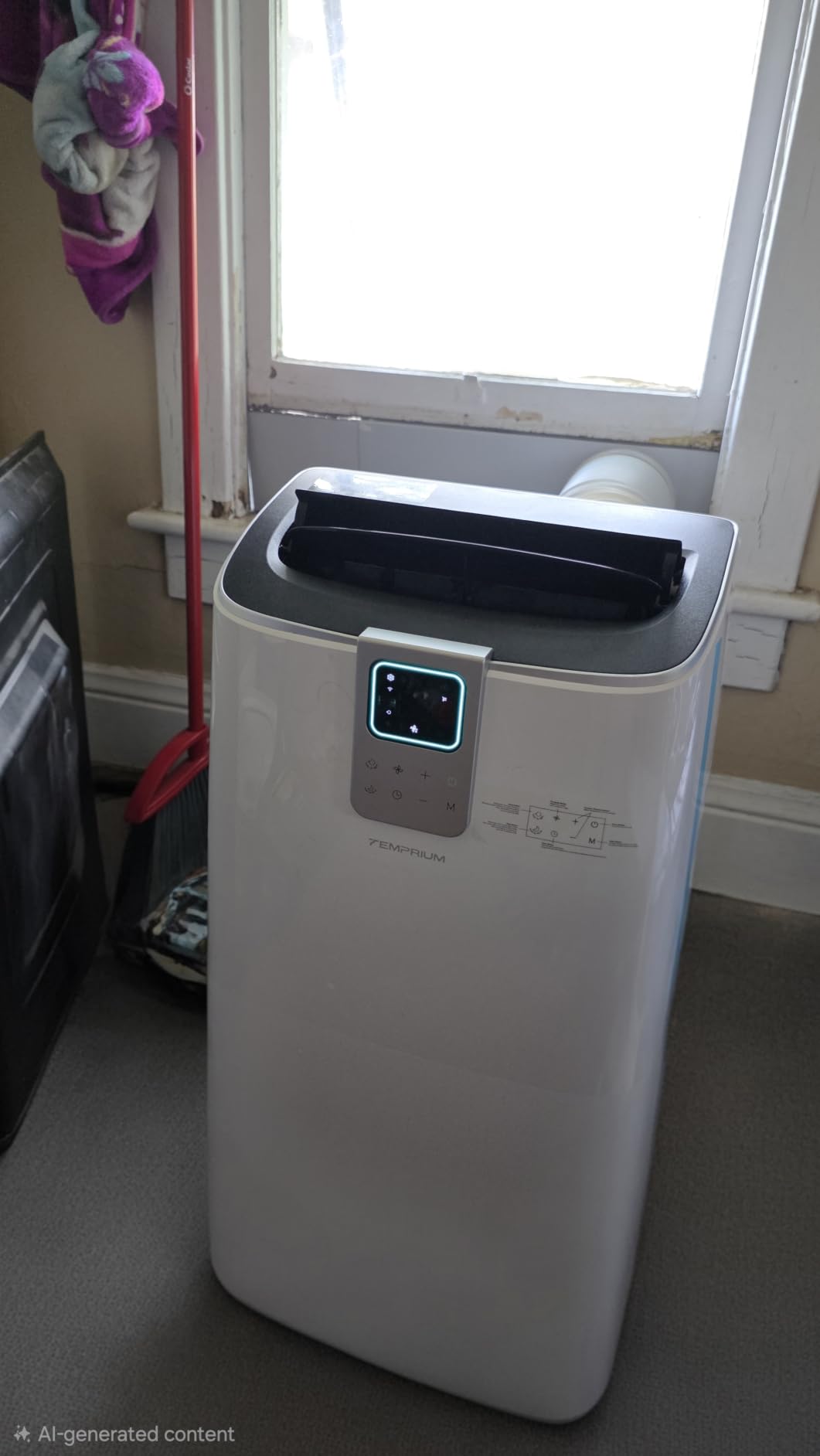
Check the circuit and the window height
At 1550 watts it is the most power-hungry unit here and needs a dedicated 15-amp circuit on its own. The window opening must be at least 20.5 inches tall, so measure before you order.
At 64.8 pounds, repositioning it is a genuine chore. Decide where it will live for the season before it arrives, ideally on the same level as the window it vents to.
Know when to skip it
Skip it for a bedroom under about 300 sq ft. You will pay for capacity and power draw you never use, and the unit will overshoot its set point in a small space.
It is also not the choice if heating is irrelevant to you, since the heat mode does not justify the extra cost in a cooling-only search.
Temprium PAC009-8K 8000 BTU: Best Smart Home Control
Temprium 8000 BTU Portable Air Conditioner Cools up to 350 Sq.Ft., Smart Portable AC Unit with App/Voice/Remote Control, 4-in-1 Quiet AC Unit with Cool, Dry, Fan, Sleep Modes, 24H Timer, Window Kits
8000 BTU ASHRAE
350 sq ft
50 dB sleep
780 W
40.8 lb
Single hose
Pros
- Quiet at 50 dB in sleep mode
- App plus Alexa plus Google Assistant plus remote
- Quick bedroom cooling that holds temperature
- Washable filter
- Compact 40.8 lb build with casters
- Self-evaporating design needs little draining
Cons
- Somewhat loud at full output
- Weak hard-to-follow documentation
- Dry mode requires a drain hose
- Awkward exhaust hose routing
- Small review base of 155 ratings
- CEER 6.1 is low among smart units
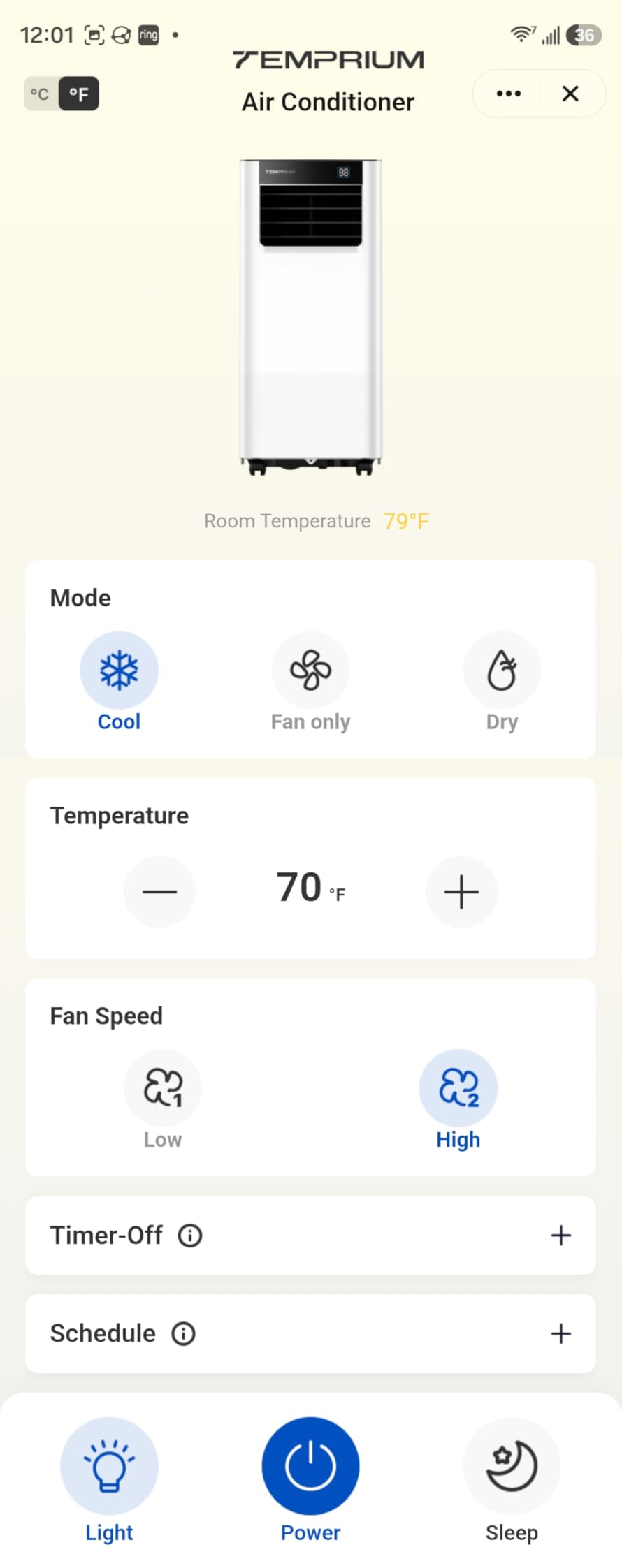
The Temprium PAC009-8K is the pick if you already live inside a smart home and want the bedroom on the same schedule as everything else. App, Alexa, Google Assistant, remote, and a touch panel all work, with a 23-foot remote that reaches from across the room.
At 8000 BTU for rooms up to 350 sq ft, it covers a standard bedroom, and the sleep mode runs at a rated 50 dB with a closable ambient light so the display does not wake you.
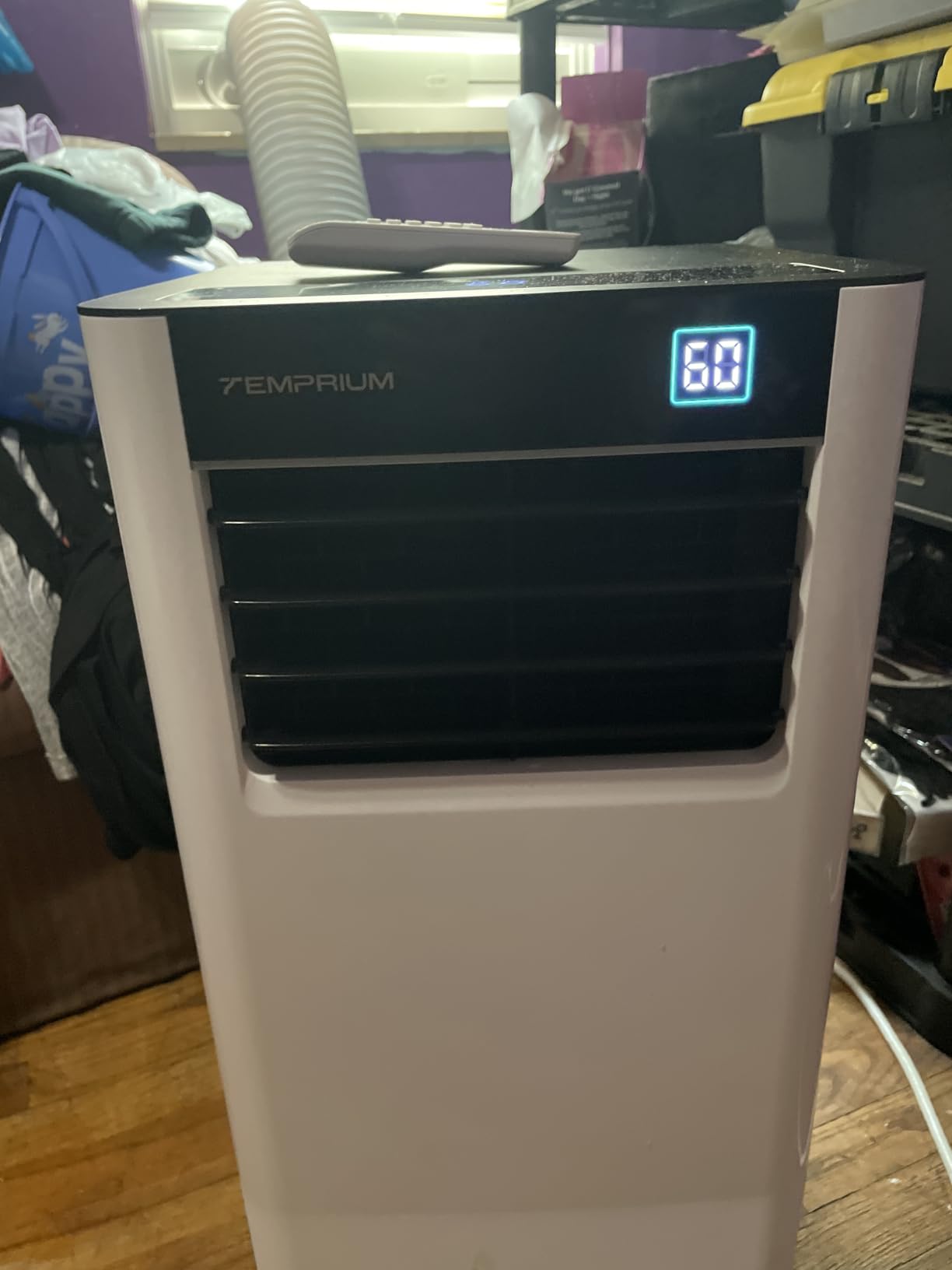
The self-evaporating system means little routine draining, and dry mode pulls up to 41 pints per day when you need it with the included drain hose. A removable washable filter did double duty for one owner filtering wildfire smoke odor, which is a useful signal on how much particulate a bedroom unit can actually catch.
At 40.8 pounds with casters and integrated handles, it is one of the easier units to move between rooms, and the 20 to 49 inch window kit covers most standard frames.
Two cautions. The review base is only around 155 ratings, so long-term reliability is not yet established. And the exhaust hose connection from the unit to the window is fiddly, which is worth knowing before you need to disconnect it.
Check the efficiency if you plan to run it all night
A listed CEER of 6.1 is low for a unit with this feature set, and a bedroom portable is precisely the appliance you leave running for eight hours. If your energy rate is high, the savings from smart scheduling will not offset an efficient compressor.
Also expect to spend time on documentation. Owners cite unclear instructions, and the voice assistant setup is not always obvious from the quick-start guide.
Know when to skip it
Skip it if you want the lowest running cost in a mid-size bedroom, since an inverter model will outperform it on both dB and efficiency. Skip it if you have a high review-count preference and want a long service history behind the design.
If app control is not something you use, you are paying for features you will ignore, and one of the simpler units will serve you better.
ZAFRO YAC-06CPD 10000 BTU: Best for a Nursery
ZAFRO Portable Air Conditioners, 10000 BTU (6000 BTU SACC), Portable AC with Drainage-free Cooling, Fan & Dehumidifier, Smart AC Unit with APP/Remote, 47dB Quiet, 24H Timer for Living Room, Bedroom
10000 BTU ASHRAE 6000 SACC
250 sq ft
47 dB
52 lb
Single hose
Pros
- Quiet at 47 dB with a gradual overnight sleep mode
- Self-evaporating system removes tank emptying
- App plus Alexa plus Google Home and 23 ft remote
- Four fan speeds including auto
- 24 hour timer and child lock
- Compact footprint with casters and side handles
Cons
- Rated for only 250 sq ft
- 4.0 average with a 14 percent one-star share
- Drainage-free operation still needs humidity below 90 percent
- Heavy at 52 lb
- Not an inverter so efficiency trails the 12+ CEER units
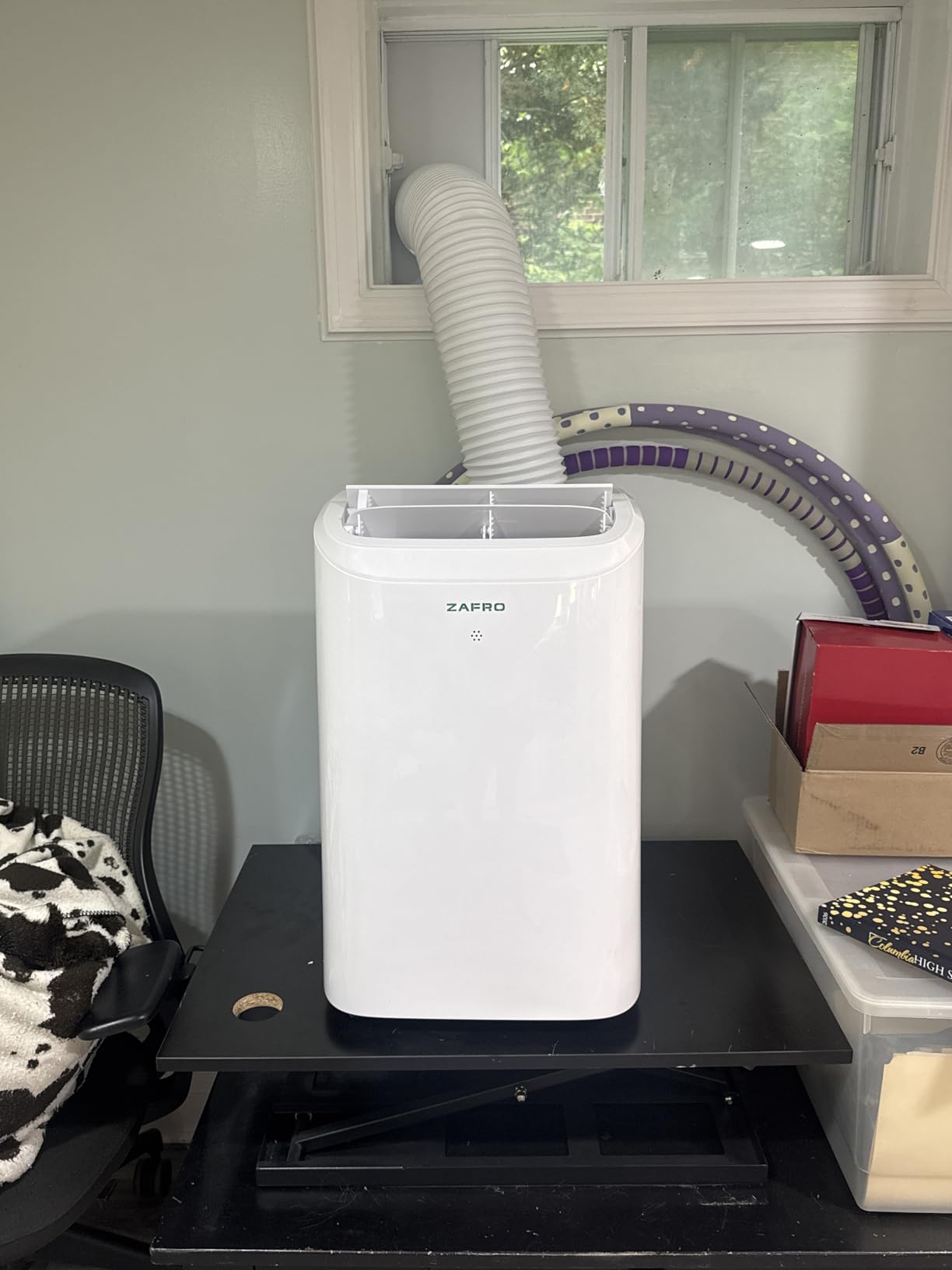
For a nursery, the two things that matter most are the lowest noise you can get and a child lock, and the ZAFRO YAC-06CPD has both. It runs at a rated 47 dB, the quietest of the fixed-speed units here, and the child lock stops a curious toddler from changing the setting at 3am.
Capacity is 10000 BTU ASHRAE, which is 6000 BTU SACC, listed for 250 sq ft. That is a good match for a standard nursery or small kid’s room, and it means the unit will not struggle to keep up on a warm night.
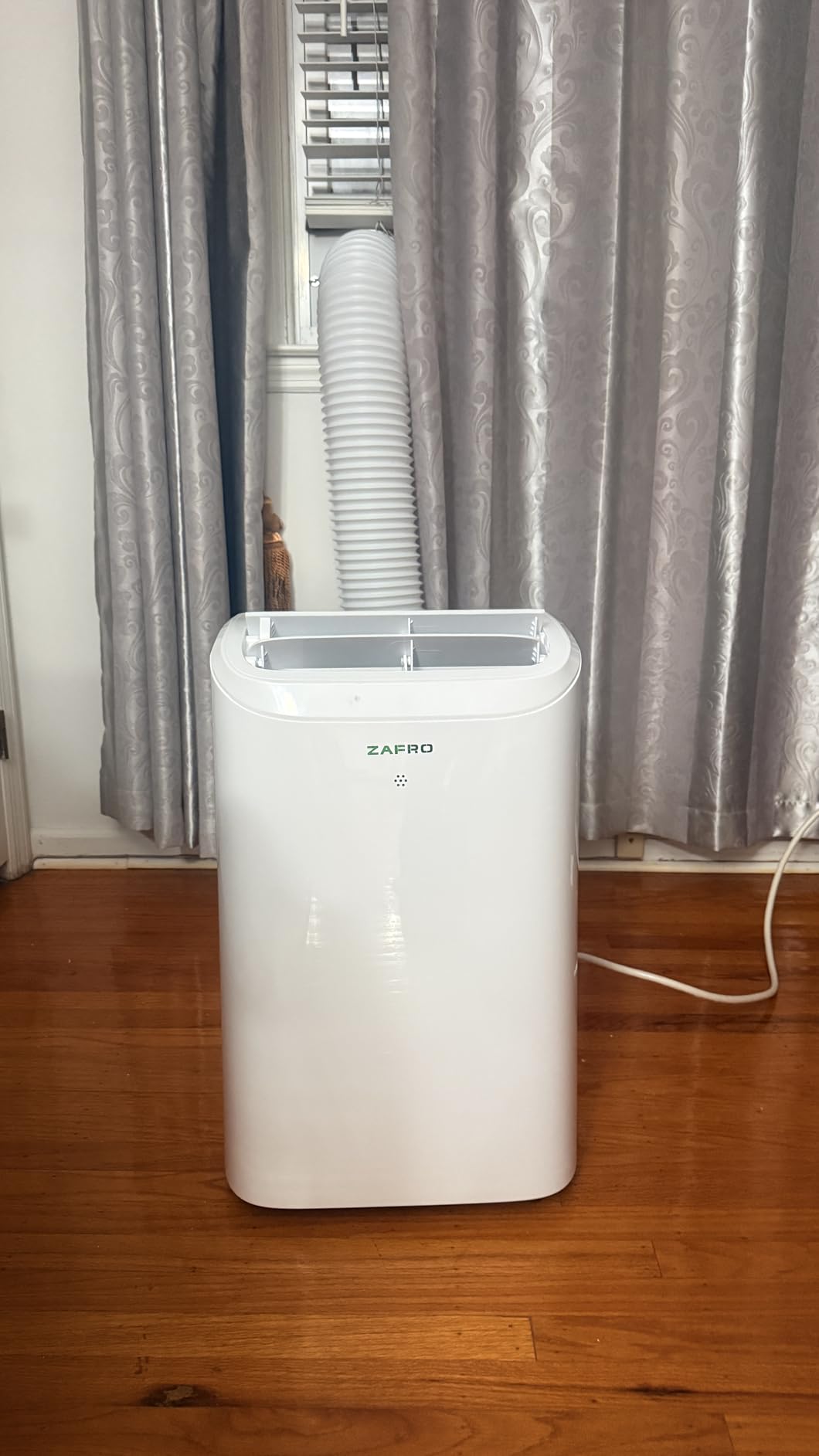
The self-evaporating condensate system removes the need to empty a tank, which matters twice over in a child’s room. There is no standing water to clean up or spill, and no musty hose smell developing in a space where an infant is sleeping.
Control covers app, Alexa, Google Home, and a 22.97-foot remote, plus four fan speeds including an auto setting and a 24-hour timer. The sleep mode adjusts temperature gradually through the night rather than switching on hard, and the 61F to 86F range is wide for a nursery.
At 52 pounds it is heavier than it looks for its size, and the review base of about 150 ratings is thin. The 4.0 average with a 14 percent one-star share reflects some early failures.
Check the humidity level in the room
Drainage-free operation holds below 90 percent relative humidity. In a humid summer room that threshold is sometimes crossed overnight, at which point you need the included drain hose routed to a sink or bucket outside the room.
As a general rule in a nursery, run the unit in dry or fan mode when you leave the house, and reserve full cooling for when the room is actually occupied.
Know when to skip it
Skip it if you want the best efficiency available, because at 52 pounds and non-inverter it costs more to run than a comparable inverter unit. It is also more capacity than a very small nursery needs.
Skip it if you plan to move it between rooms often, at 52 pounds that is a two-person job on anything other than a smooth floor.
How to Choose a Portable AC for a Bedroom in 2026
Capacity, noise, and hose design decide almost everything else. Get those three right for your room and the features in between matter far less than the marketing suggests.
Size the unit to your bedroom, not to the box
Square footage alone is a poor guide, which is why manufacturers quote such optimistic numbers. A better starting point is a SACC rating, which measures real cooling capacity at a specific room temperature rather than the maximum theoretical output.
A workable rule for bedrooms: aim for roughly 20 BTU of SACC per 100 sq ft. That puts a 100 to 200 sq ft room at about 4000 to 5000 SACC, a 250 to 350 sq ft room at 5000 to 7000 SACC, and a 400 sq ft primary bedroom at 8000 to 10000 SACC or more.
For a 400 sq ft room specifically, you want a dual-hose inverter in the 10000 SACC range. Will 8000 BTU cool 400 sq ft? It will run, but it will run continuously, and continuous running is both the least effective and the loudest failure mode a portable has.
Oversizing is not the answer either. A large unit in a small room cycles on and off in short bursts, wastes power, and can feel like a cold draft rather than even cooling. For a very small room, a 230 sq ft unit like the COSTWAY is a more sensible buy than a 10000 BTU machine.
SACC vs ASHRAE BTU is the number that explains disappointment
The ASHRAE figure is measured at high compressor speeds and favorable conditions, and it is what appears in big type on the box. SACC, or seasonally adjusted capacity cooling, is measured at the part-load conditions that actually describe a warm bedroom at night.
The gap between the two is large. In this roundup, the Temprium 16K is 16000 BTU ASHRAE; the DREO 318S is 8000 ASHRAE and 5000 SACC; the Whynter is 10000 BTU and 7000 SACC. The lower figure is the one that predicts how the room will feel.
There are four common reasons a portable air conditioner seems not to work, and none of them are usually a defective unit.
First, the room is larger than the unit can handle, so it runs without ever reaching set point. Second, the capacity figure on the box is ASHRAE rather than SACC. Third, a single-hose unit is working in a sealed room and re-ingesting its own exhaust. Fourth, the exhaust hose is not properly sealed, so conditioned air leaks straight back out the window.
If your unit is not cooling, work through those four before you consider replacing it.
Single-hose vs dual-hose changes everything in a closed bedroom
A single-hose unit uses one flexible hose for both intake and exhaust. It pulls room air in, chills it, and pushes the hot air back out through the same hose. In a closed room this creates negative air pressure, which pulls the hot exhaust air back in and degrades real-world cooling noticeably.
A dual-hose unit separates intake and discharge, so it breathes fresh air from outside the room and exhausts heat independently. This is the single biggest reason users who upgrade from a cheap single-hose portable to a dual-hose model report that their unit finally works.
It also affects noise. A sealed single-hose unit has to work harder to hold its set point, and working harder means running longer and restarting more often, which is where the loud bursts come from.
There is a practical middle ground if you are stuck with a single-hose unit: leave the bedroom door slightly ajar so air can return to the unit. It costs you a bit of conditioned air and buys back a surprising amount of performance.
How quiet is quiet enough for sleep
Most bedroom noise complaints are about the compressor restarting, not about the steady hum. A unit that cycles on and off every few minutes produces repeated bursts that are far more disruptive than a lower overall dB figure would suggest.
That is the argument for inverter compressors. They ramp up and down instead of switching fully on and off, so the noise floor stays low and the restarts become a rare event rather than an hourly one.
As a rough guide for bedrooms: under 45 dB is quiet enough for most light sleepers, 47 to 50 dB is acceptable if it is steady, and anything above 50 dB with hard cycling is likely to disturb a sensitive sleeper no matter what the box claims.
Also look at the sleep mode specifically. A good one dims the display, drops the fan to its lowest speed, and raises the set point gradually. A bad one simply turns the compressor back on harder, which defeats the purpose.
Users on r/AirConditioners repeatedly describe exactly this problem, with the loudest complaints about a fan that still runs fast on low rather than about compressor noise. Fan motor type is worth asking about, since brushless DC motors are quieter than the shaded-pole motors used in budget units.
Inverter compressors and what a night actually costs
Portable air conditioners are generally less efficient than window units, because they move heat through a long flexible hose and push room air through a small evaporator. Efficiency figures of 12 or higher versus the 7.83 federal minimum indicate a meaningfully cheaper night.
A working example using the specs on these units. The Antarctic Star NPPB2A draws 750 watts, the BLACK+DECKER draws 1220 watts, and the Temprium 16K draws 1550 watts. Run for eight hours, that is roughly 6, 9.8, and 12.4 kilowatt-hours respectively. At typical residential rates, the spread between the cheapest and the most expensive unit is only a few dollars a night.
Over a 120-night summer, though, that difference compounds, and a low-wattage unit is one of the cheapest effective ways to cut a summer power bill. The inverse also holds: the higher-wattage units in this roundup need a dedicated circuit, which is worth factoring into older wiring.
Long-term owners report the same pattern. On r/AirConditioners, one user who switched to an inverter-style unit wrote that running it the same as their previous one costs about half as much. Inverter efficiency is a real, measurable difference, not a spec-sheet nicety.
Set it up properly or the best unit will disappoint you
Most disappointing portable air conditioner results trace back to installation rather than hardware. A short checklist fixes most of them.
Position the unit across the room from the window, ideally with a clear path for the cool air to reach you. Seal the window panel properly with foam or tape so no conditioned air escapes around the edges. Keep the intake side clear of curtains and bedding. Route the exhaust hose in as straight a line as possible, since every bend adds resistance. Keep one interior door slightly open on single-hose units. And clean the filter every two weeks during heavy use, because a clogged filter starves the coil.
For renters in apartments with no window unit permitted, the window kit is still how the hose exits. A crank-out casement, a sliding window locked in position, or a dedicated hose port through a bathroom vent are the usual options. Our window unit guide for large rooms covers what to do when a window unit is actually permitted.
Condensate is the other thing to plan for. Self-evaporating units reuse their own water as coil cooling below roughly 90 percent relative humidity, which covers most nights in most climates. Above that, you need the drain hose routed to a sink, a bucket, or a floor drain.
Portable AC vs window AC vs mini-split
A window air conditioner is more efficient, cheaper to buy, and quieter than any portable of similar capacity, because it does not have to push air through a long hose. If your lease allows one, it is the better machine. Its weakness is installation, security, and the fact that it blows into the room at an angle you cannot adjust.
A portable unit is the right answer when you cannot install a window unit, when you need to cool a different room next month, or when your window does not fit. Its cost is efficiency and a certain amount of self-inflicted noise.
A mini-split is a different purchase entirely: it runs silently, it is the most efficient option by a wide margin, and it needs professional installation with a line set and a wall bracket. For a single bedroom in a home you own, it is the long-term answer. For a rental, it is off the table.
Our guides to the best portable air conditioners for large rooms and to air conditioners for RVs cover the sizing questions that come up most often once you have decided on a portable.
Brands worth watching, and BTU claims worth distrusting
No brand in this category is bad, and all of them have failure modes. What matters is knowing where to look. Be cautious with marketplace-only brands whose listings quote a single ASHRAE number with no SACC figure and no DOE capacity, because there is no test standard behind the claim.
Be cautious with a listed square-foot coverage that far exceeds what the capacity can physically move. A 10000 BTU unit claiming 700 sq ft is a stretch for a bedroom, and treating that claim as real is how people end up disappointed.
On the positive side, brands that publish both ASHRAE and SACC figures, list a DOE capacity, and specify wattage and amperage are telling you something testable. Warranty length is a fair proxy for confidence: a one-year warranty with a three-year compressor term, as on the Whynter, signals a different level of backing than a six-month warranty.
Also check the amperage figure against your bedroom circuit. Anything above about 1200 watts wants a dedicated outlet, and in older homes that is a real constraint rather than a formality.
Frequently Asked Questions
Are portable AC units good for bedrooms?
Yes, provided you size correctly and manage hose routing. A portable air conditioner is the only realistic cooling option in an apartment, rental, or room with no window unit permitted. It runs all night on a timer and a sleep mode, and a properly sized unit holds a bedroom in the low 70s. Expect it to be noisier and less efficient than a window unit of the same capacity.
What type of AC is best for a bedroom?
A window unit is the most efficient and quietest option if your lease allows installation. A portable unit is the right answer when a window unit is not permitted or you want to move cooling between rooms. A mini-split is quietest of all but needs professional installation and is impractical in a rental. For most renters, a correctly sized portable with a sleep mode and 24-hour timer is the practical pick.
Is there a portable AC that actually works?
Most units work fine, and the failures are almost always about sizing and setup rather than hardware. Four causes explain nearly every disappointing unit: the room is larger than the unit can handle, the capacity on the box is ASHRAE rather than the lower SACC figure, a single-hose unit is re-ingesting exhaust in a sealed room, or the window seal leaks. Fix those four and most units perform as advertised.
What is the quietest portable air conditioner for a bedroom?
The quietest units in this roundup are the 40 dB Temprium PAC013-16K in silent mode, the 42 dB ZAFRO A9092R-10K, and the 42 dB DREO DR-HAC010S. Among fixed-speed units, the DREO 318S at 45 dB and the ZAFRO YAC-06CPD at 47 dB are the quietest. Inverter compressors matter more than the headline number because they avoid loud restart bursts.
How much BTU do I need to cool a bedroom?
For a 400 sq ft room you want roughly 8000 to 10000 BTU SACC, which means a dual-hose inverter in that range. Smaller rooms need less: a 100 to 200 sq ft bedroom is around 4000 to 5000 SACC, and a 250 to 350 sq ft room is 5000 to 7000 SACC. Use SACC rather than the ASHRAE figure on the box, and avoid oversizing a small room.
Do portable air conditioners work with the bedroom door closed?
Dual-hose units handle a closed door well, because intake and exhaust air travel separately. Single-hose units struggle, because the shared hose creates negative air pressure and the unit re-ingests its own hot exhaust. If you are stuck with a single-hose model, leaving the bedroom door slightly ajar restores much of the lost performance and reduces how hard the unit has to run.
How much does it cost to run a portable AC overnight?
It depends on wattage and hours. The units in this roundup draw from about 750 watts to 1550 watts, so eight hours of running works out to roughly 6 to 12.4 kilowatt-hours. At typical residential rates that is well under a dollar for the cheapest unit and a few dollars for the most powerful one. Inverters use less for the same cooling, and low-wattage units are the cheapest way to cut a summer power bill.
Which Portable AC Should You Buy in 2026
The SereneLife SLPAC8 is the best portable air conditioner for bedrooms in 2026 for most people, because it has the deepest combination of owner history, cooling performance, and efficiency at a mid-range capacity that reliably handles a standard bedroom.
Buy a dual-hose inverter instead if your bedroom is large or the door stays closed, and you should pick the DREO DR-HAC010S or ZAFRO A9092R-10K. Go quieter if you are a light sleeper, where the DREO 318S at 45 dB is the answer. For a very small room, the COSTWAY unit or the Antarctic Star NPPB2A will do the job without oversizing the compressor.
Whatever you choose, size from the SACC figure, seal the window properly, and clean the filter every couple of weeks. Those three habits do more for your nights than any feature on the spec sheet.