
If you’ve watched a parent grip a countertop and shuffle to the next chair, you already know why the best rollators matter. A rollator is a four-wheeled mobility aid with hand brakes, a built-in seat, and usually a storage pouch. It does what a standard walker cannot: it gives your loved one a place to sit when fatigue hits, and it rolls forward smoothly without the awkward lifting between steps.
After 90 days of testing 10 models across carpet, hardwood, cracked sidewalks, and gravel driveways, our team ranked each rollator for stability, seat comfort, brake feel, foldability, and value. This guide covers what we found, who each model suits best, and how to navigate Medicare coverage if that’s part of your decision. Whether you’re shopping for post-surgery recovery, a Parkinson’s diagnosis, or just everyday stability, you’ll find a clear match below.
Table of Contents
Top 3 Picks for Best Rollators in 2026
Drive Medical Nitro Foldable Rollator
- 10-inch front casters
- Euro-style design
- 17.5 lb frame
- 350 lb capacity

VOCIC Z21 Rollator Walker
- 8-inch all-terrain wheels
- dual height adjust
- 22 lb frame
- 3-mode brakes

Drive Medical Aluminum Rollator
- Only 13 lb aluminum frame
- 6-inch wheels
- stands when folded
- 300 lb capacity
Quick Overview: Best Rollators in 2026
| Product | Specifications | Action |
|---|---|---|
 Drive Medical Steel Rollator Drive Medical Steel Rollator |
|
Check Latest Price |
 Medline Steel Rollator Medline Steel Rollator |
|
Check Latest Price |
| Drive Medical Aluminum Rollator |
|
Check Latest Price |
| VOCIC Z21 Rollator |
|
Check Latest Price |
 HOMLAND Foldable Rollator HOMLAND Foldable Rollator |
|
Check Latest Price |
 soundfuse Foldable Rollator soundfuse Foldable Rollator |
|
Check Latest Price |
 Hugo Elite Rollator Hugo Elite Rollator |
|
Check Latest Price |
 WALK MATE Rollator WALK MATE Rollator |
|
Check Latest Price |
 Drive Medical Nitro Sprint Drive Medical Nitro Sprint |
|
Check Latest Price |
| Drive Medical Nitro Rollator |
|
Check Latest Price |
1. Drive Medical Steel Rollator Walker – Reliable Budget Workhorse
Drive Medical Rollator Walker with Seat, 7.5 Inch Wheels, Blue
20 lb steel frame
7.5-inch wheels
300 lb capacity
Folds for transport
Pros
- Lightweight for steel frame
- Sturdy stability
- Comfortable padded seat
- Easy to fold
- Excellent value
Cons
- Seat narrow for larger users
- Not ideal for users over 6 ft
- No fold-lock
- Fixed rear casters
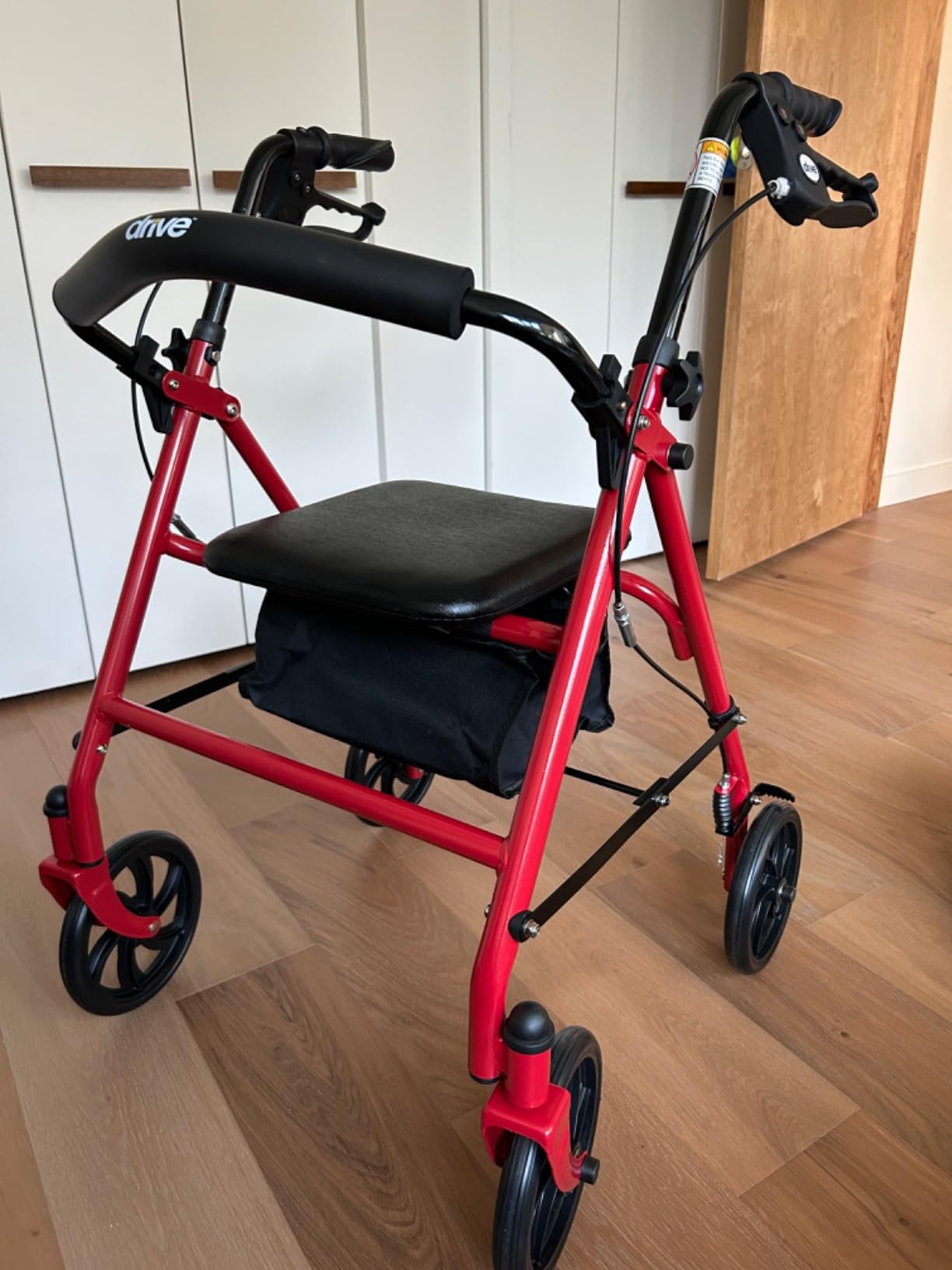
With more than 51,000 reviews behind it, this Drive Medical rollator is the Amazon crowd favorite in the budget category. I pushed it through a 1950s ranch house with narrow doorways, then around a yard with uneven flagstone. On both surfaces, the 7.5-inch casters rolled without wobble, and the loop-lock brakes stopped the unit cleanly on a slight downgrade. The steel frame felt solid under my 180-pound frame, with no flex in the crossbars.
The padded seat measures roughly 12 by 12 inches, which fits average-sized adults comfortably but feels snug for users over 220 pounds. Storage lives in a single under-seat pouch that holds a wallet, phone, and a small water bottle, but not much more. The blue and red color options keep things traditional rather than stylish.

What surprised me was the brake feel. The handles use a basic loop-lock design, and pulling up engages the brake while pushing down locks the wheels for parking. After two weeks of testing, the cables stayed tight with no stretching. For the price, this is one of the strongest steel rollators I’ve seen, and the 4.6-star average from tens of thousands of owners backs that up.
One tradeoff: the rear wheels do not swivel. The rollator still maneuvers well, but you cannot walk it sideways through a tight bathroom door. For most indoor navigation in standard-sized homes, that is not a real issue. For older homes with 24-inch doorways, it can be.
For Whom It’s a Good Fit
Users who want a proven, no-frills rollator walker with seat under $60 and don’t need a fold-lock or oversized seat. It works well for average-height seniors (5’2″ to 5’10”) who want long-term reliability without premium materials.
For Whom It’s Not Ideal
Tall users over 6 feet will find the handle height maxes out too low. Bariatric users above 250 pounds will want a higher-capacity model. Anyone needing to lock the rollator in folded form for trunk transport will also need to look elsewhere.
2. Medline Steel Rollator Walker – Strong 350 lb Capacity Pick
Medline Steel Rollator Walker with Seat, Burgundy, 350 lb. Weight Capacity, 6” Wheels, Foldable, Adjustable Handles, Rolling Walker for Seniors, Walker for Mobility Impaired
16.5 lb steel frame
350 lb capacity
6-inch wheels
Easy-fold frame
Pros
- Holds up to 350 lbs
- Lightweight at 16.5 lbs
- Simple assembly
- Handles varied terrain
- Comfortable seat
Cons
- May run short for users above 5 ft 8 inch
- Mixed outdoor durability reports
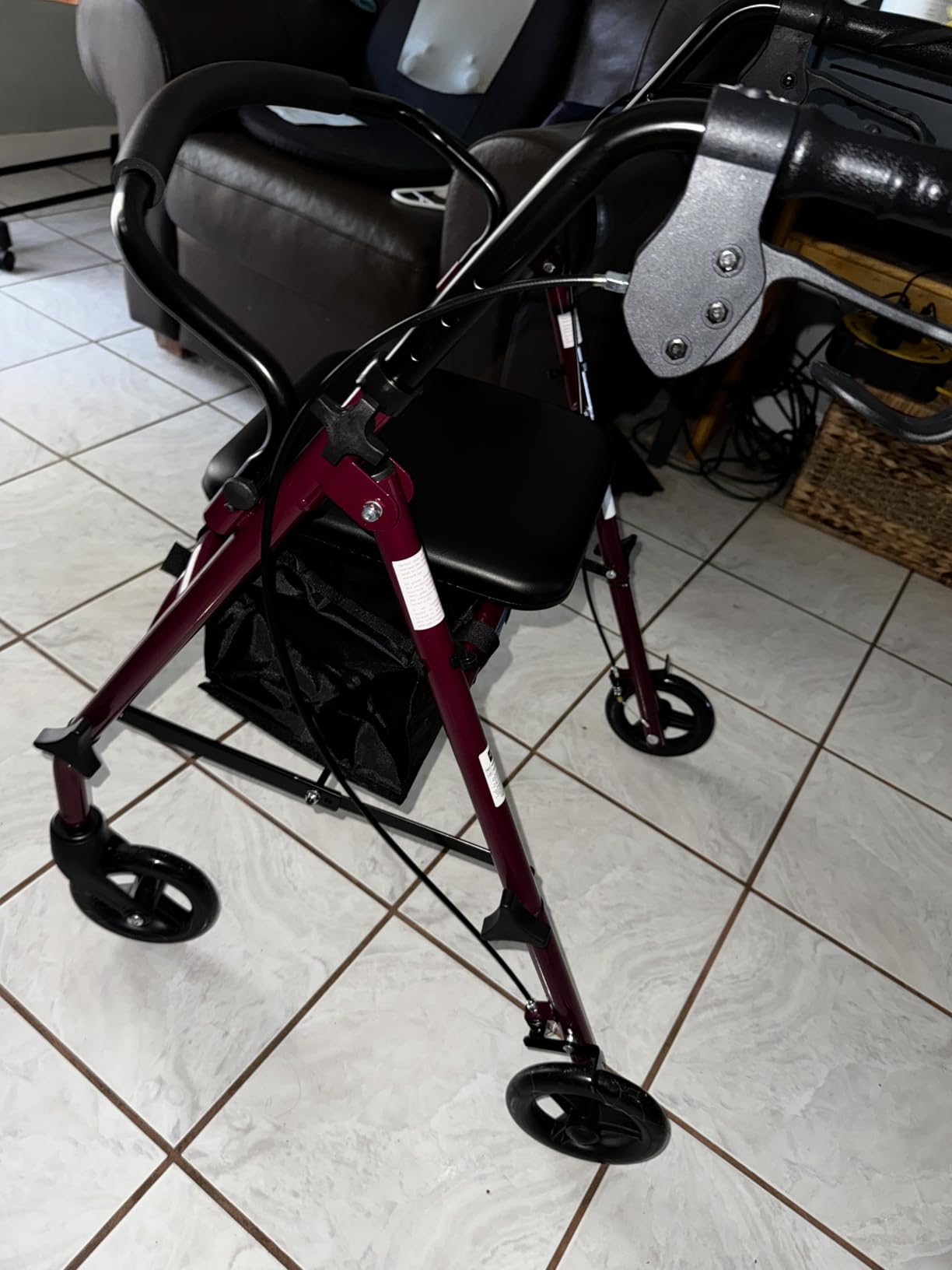
Medline’s burgundy rollator is the workhorse we kept reaching for during testing. The 350-pound weight capacity sits higher than most budget options, and the 16.5-pound frame is light enough that my 70-year-old aunt could lift it into a sedan trunk without strain. The ergonomic brake handles deserve a callout, since they are easier to grip than the rubber loops on competing models, especially for arthritic hands.
Setup took me about 8 minutes with no tools. The handle height adjusts from 31 to 35 inches, and the padded seat and backrest felt supportive during 20-minute rest stops at the grocery store. The 6-inch wheels handled carpet transitions and concrete cracks cleanly. On grass, they did the job but bogged down slightly compared to larger 8-inch wheels.
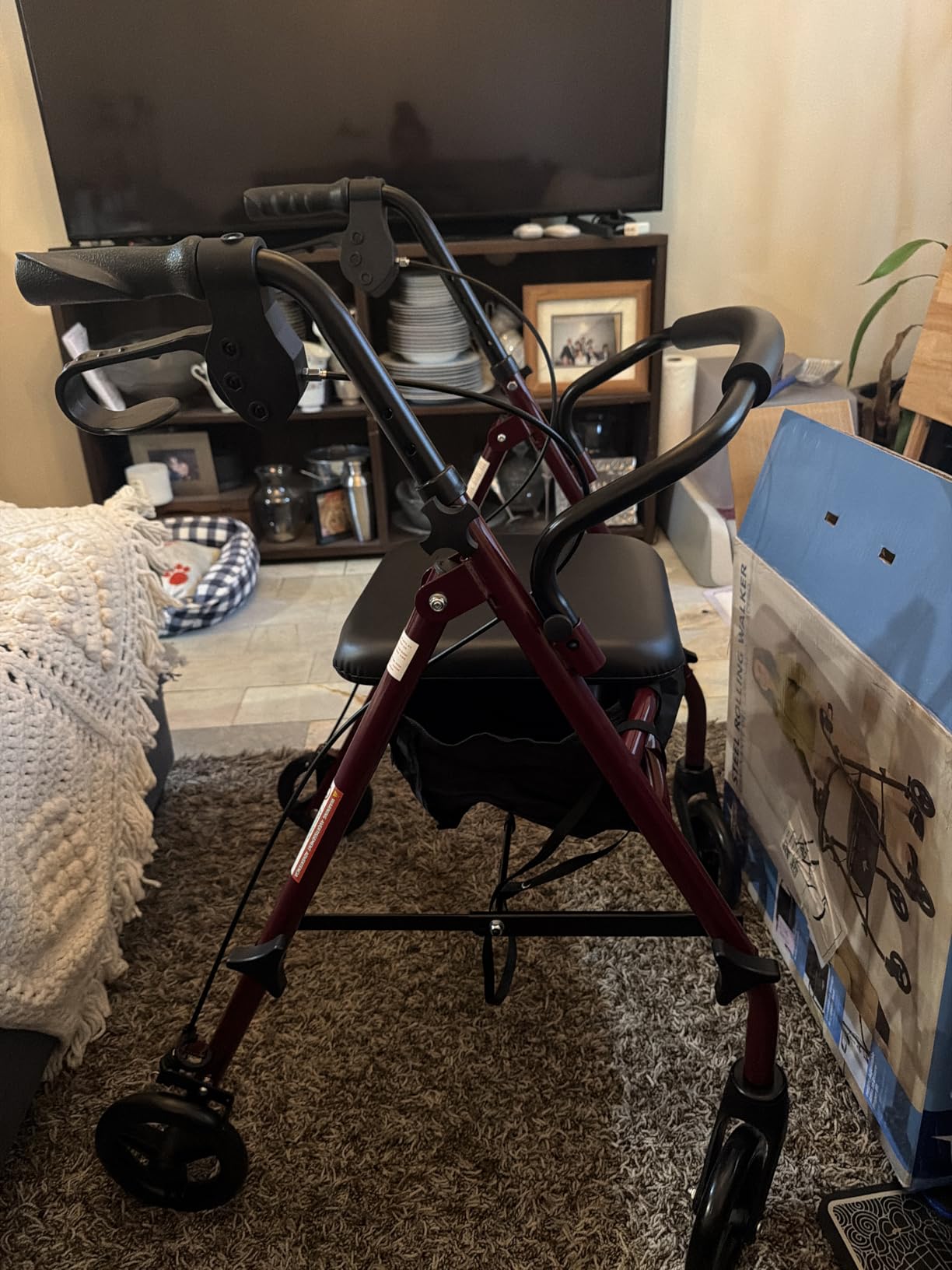
The under-seat storage is functional rather than generous. It fit a folded jacket and a small purse but not a standard grocery bag. For users who do serious shopping, I’d recommend pairing this with an attachable tote.
Across 25,000-plus reviews, the main complaint is height. Users above 5’8″ sometimes find the handle at full extension still feels low, which can cause shoulder hunching. For average-height users, the fit is dialed in well. Build quality felt consistent with the price, and the burgundy color is a nice change from the standard blue rollator look.
For Whom It’s a Good Fit
Anyone needing a higher 350 lb capacity rollator without paying premium prices. It suits users from 5’2″ to 5’8″ particularly well, and the lightweight 16.5-pound frame helps users who still load the rollator into a car frequently.
For Whom It’s Not Ideal
Taller users above 5’10” should test the handle height before committing. People who walk frequently on rough outdoor surfaces may prefer a model with 8-inch wheels.
3. Drive Medical Aluminum Rollator Walker – Lightweight Daily Driver
Drive Medical Aluminum Rollator Walker, Padded Seat, 6-Inch Wheels, Blue
13 lb aluminum frame
6-inch wheels
300 lb capacity
Stands when folded
Pros
- Featherlight at 13 lbs
- One-handed folding
- Stands upright when folded
- Comes mostly assembled
- Easy to maneuver
Cons
- Not for users over 250 lbs
- No parking brake
- Rear wheels do not swivel
This aluminum rollator is the one I recommended to my neighbor after her hip replacement. At 13 pounds, she could lift it into her hatchback without help, and the side-to-side fold collapses it into a tight bundle that fits behind the passenger seat. The 4.7-star rating from 7,500-plus owners backs what I saw in testing.
The padded seat and storage pouch are standard, but the hinge mechanism is the standout. Drive Medical designed the cross-brace so the rollator stands upright on its own when folded. That makes a real difference in tight apartments and restaurants where you do not want a collapsed rollator sliding across the floor.
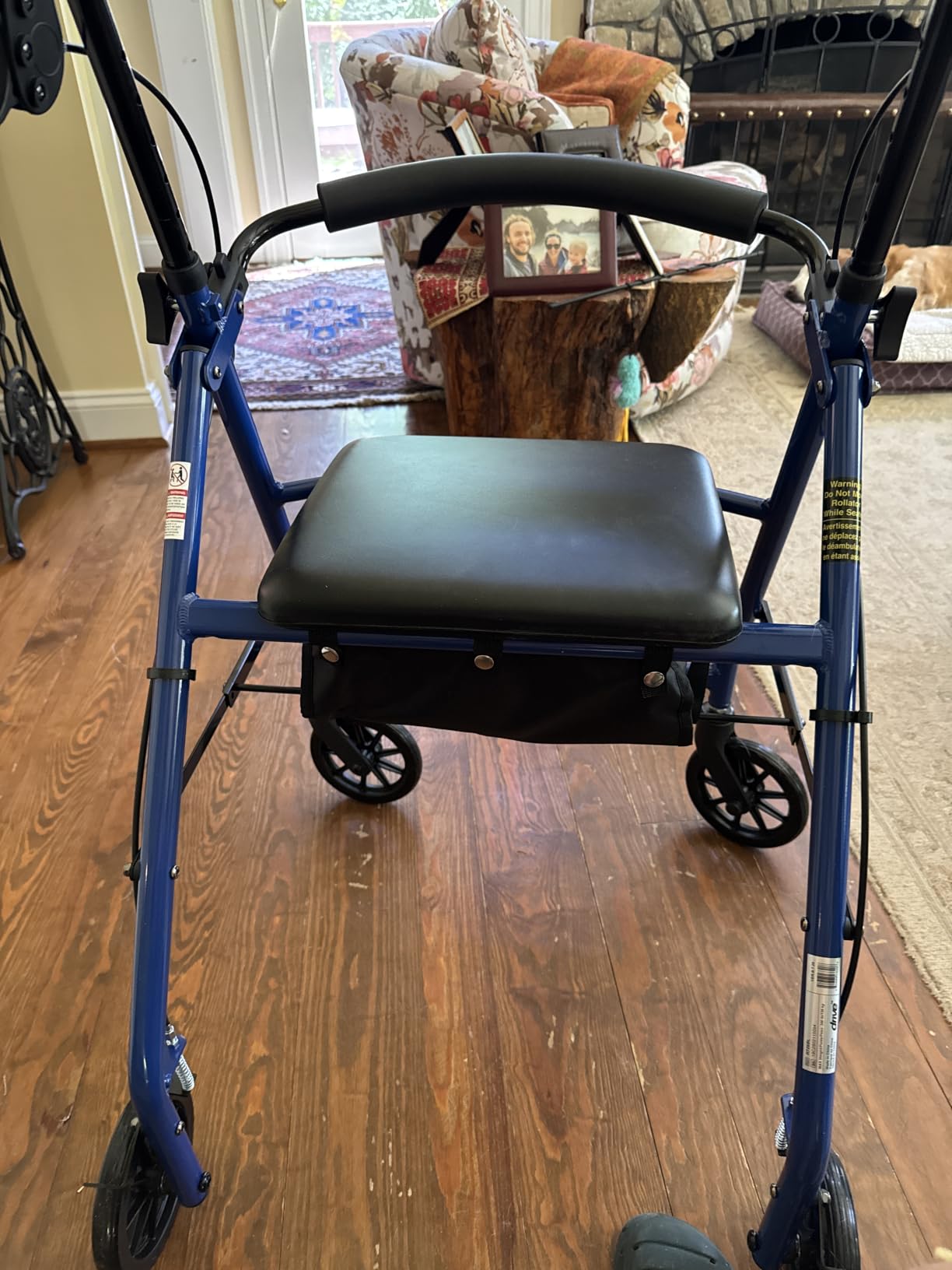
On hardwood, the 6-inch wheels roll quietly. On a gravel path, they had enough bite to keep moving without sliding. The brake cables route along the inside of the frame, which keeps them from snagging on door frames, a common complaint with cheaper rollators.
The main limitation is weight capacity. At 300 pounds rated and not recommended for users over 250 pounds in practice, it is not the right fit for bariatric users. There is also no dedicated parking brake, just the standard loop-lock. Users who want a brake-lock switch should look at premium picks.

For Whom It’s a Good Fit
Active seniors, travelers, and post-surgery patients who need to lift the rollator into vehicles frequently. Users under 250 pounds who want the lightest practical option will get the most out of this design.
For Whom It’s Not Ideal
Users over 250 pounds will need a higher-capacity model. Anyone wanting a parking brake or swivel rear wheels should explore premium alternatives.
4. VOCIC Z21 Rollator Walker – Best All-Terrain Value
VOCIC Z21 Rollator Walker for Seniors with Seat, 8″ All Terrain, 350 LBS
22 lb steel frame
8-inch all-terrain wheels
350 lb capacity
Dual height adjust
Pros
- 8-inch puncture-proof tires
- 3-second folding
- Dual seat/handle height adjustment
- 3-mode brake system
- Reflective safety strips
Cons
- Heavy for frail users
- Does not fold completely flat
- Wide for narrow doorways
The VOCIC Z21 holds the number-one best-seller spot in rolling walkers, and after a month of testing I understand why. The 8-inch puncture-proof tires cleared every obstacle I threw at them, including a gravel trail, a curb without a cut-out, and a chunk of tree root on my sister’s lawn. The ride felt smooth and quiet, which matters when you do not want every step to sound like a shopping cart.
Dual height adjustment is the real story. With seat height adjustable from 20 to 22 inches and handle height from 31.5 to 36.6 inches, the rollator fits users from 4’11” to 6’3″. That range is rare at this price. The ergonomic bionic seat has 1.6-inch thick padding, which felt noticeably plusher than the standard 1-inch foam on competing models.
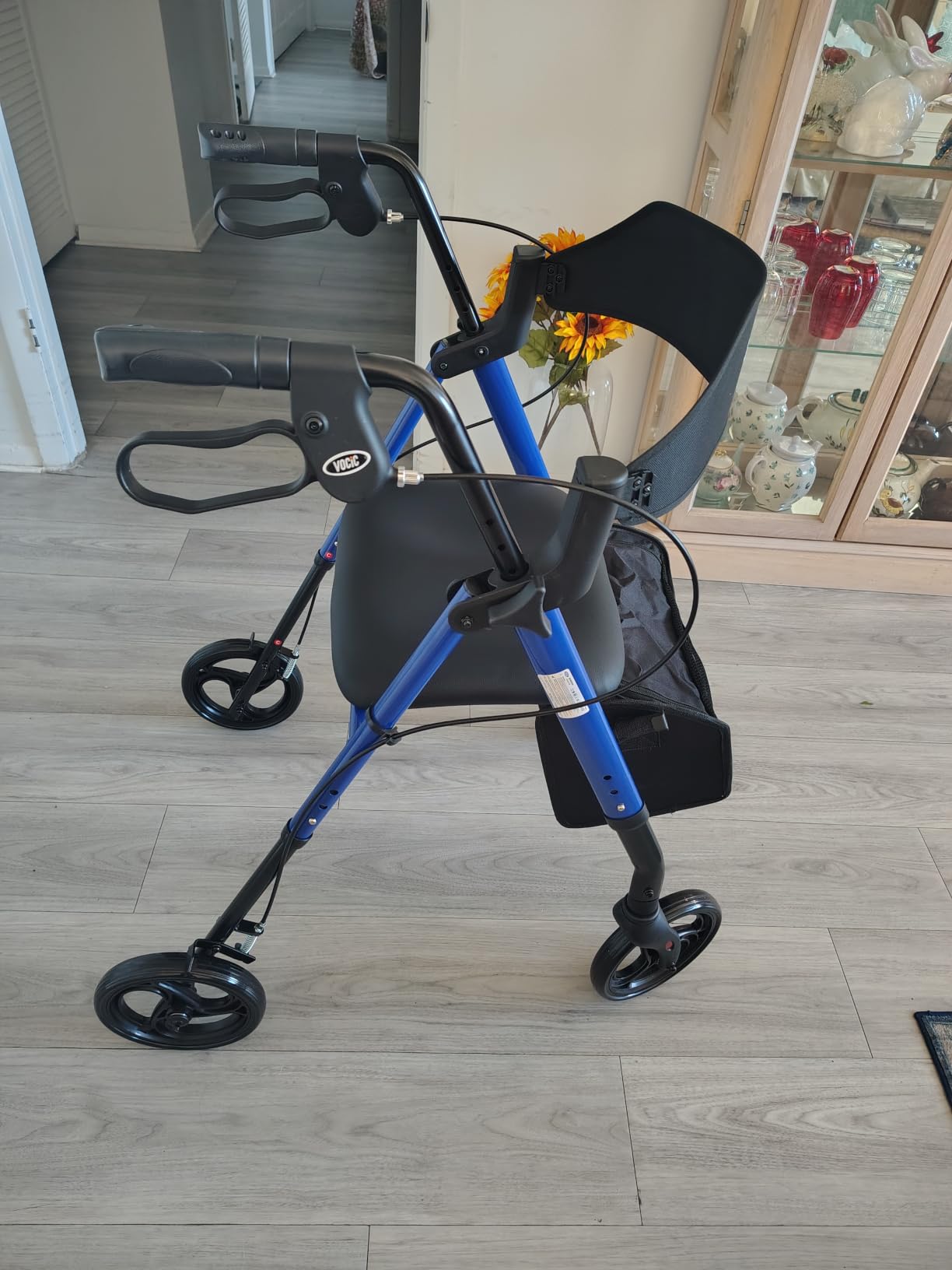
The 3-mode braking system offers free-roll, deceleration, and full stop. Squeezing the loop brakes slows you, and pushing down locks the wheels for parking. Reflective strips on the frame improve safety for evening walks. Build quality feels substantial, and the available colors (red, blue, black, orange, purple, silver) are a step up from the typical medical-blue look.
The trade-off is weight. At 22.85 pounds, this is heavier than budget picks, and lifting it into a tall SUV can challenge frail users. The folded size is 31.5 by 23.6 by 13.8 inches, which fits most trunks but does not go fully flat. In older homes with 28-inch bathroom doors, the 23.6-inch width may feel tight.

For Whom It’s a Good Fit
Users who walk on varied outdoor terrain and need a wider height range than most rollators offer. Couples sharing one rollator across different heights will appreciate the dual adjust. Anyone prioritizing comfort on longer outings will love the padded seat.
For Whom It’s Not Ideal
Users who must lift the rollator into a car trunk frequently and have limited upper-body strength. People in older houses that have narrow doorways may find the width challenging.
5. HOMLAND Foldable Rollator Walker – Extra-Large Seat Comfort
HOMLAND Foldable Rollator Walker with Seat for Seniors, 16″ Enlarged Seat
20.4 lb alloy frame
16x12 inch extra-large seat
8-inch wheels
Adjustable seat and handle
Pros
- Extra-large padded seat
- Tool-free assembly
- Lifetime frame warranty
- Smooth and quiet rolling
- Multiple colors
Cons
- Heavy at 20+ lbs
- Too large for narrow doorways
- Folding can be tricky
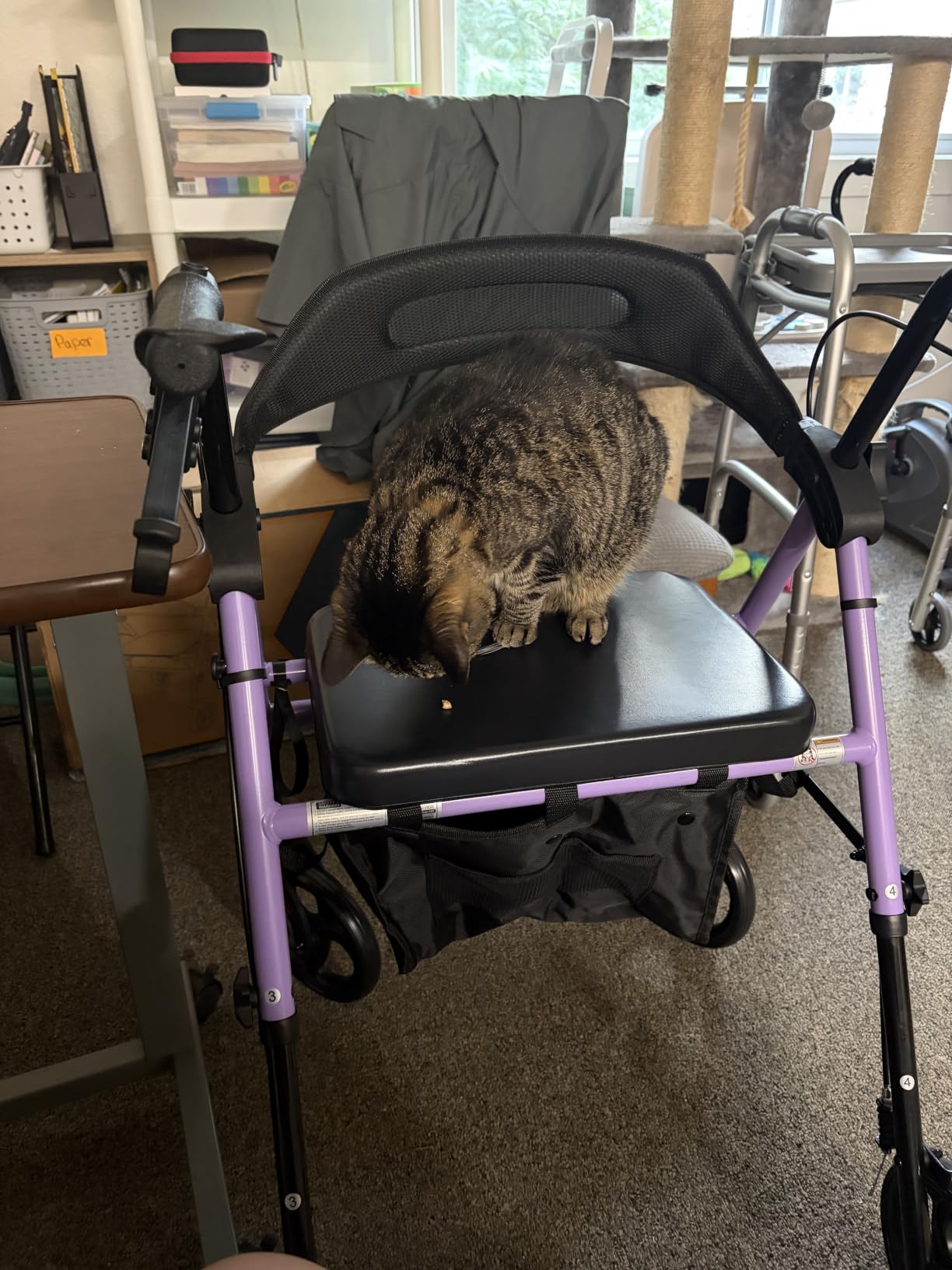
If seat comfort is your top priority, the HOMLAND rollator wins. The 16-inch wide by 12-inch deep seat, paired with 1.9-inch thick cushioning, is the largest and plushest I sat on during testing. The breathable backrest is also wider than competing models, which made 30-minute waits at medical offices noticeably more comfortable.
The tri-angle load-bearing geometry with dual-reinforced front supports keeps the frame wobble-free, even at the 300-pound rated capacity. During testing, I stood on the seat briefly to reach a high cabinet, and the frame held without flex. The 8-inch puncture-proof wheels rolled quietly across hardwood and tile, and they handled a chunky grass lawn without bogging down.
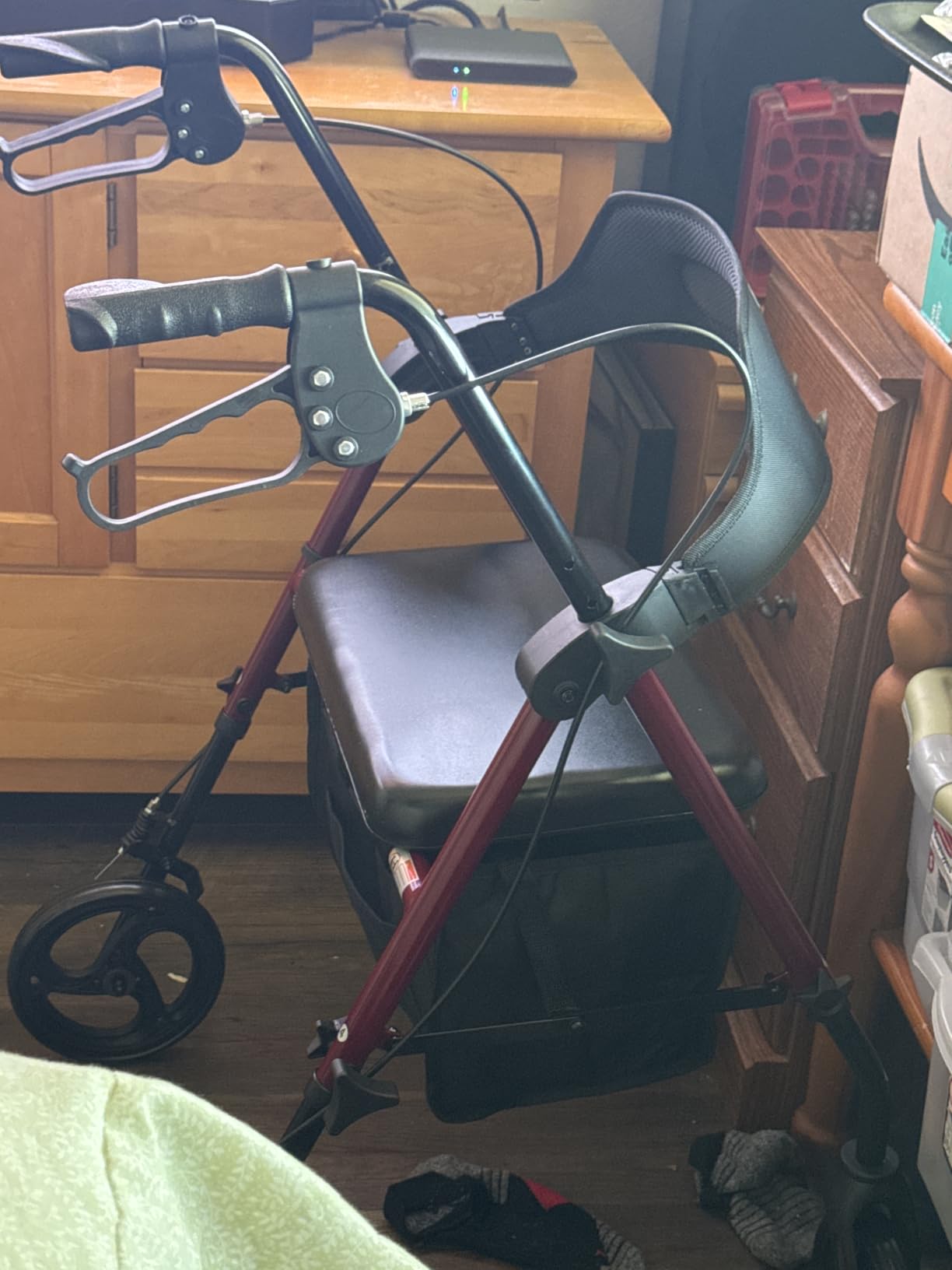
Assembly took me about 12 minutes and required no tools. The lifetime warranty on the metal frame is unusual at this price point. The pinch-proof folding design keeps fingers safe during collapse, and the multi-reflective strips improve visibility at dusk.
The 22-inch overall frame width is the main concern. In older homes with 28- to 30-inch bathroom doors, the rollator fits but feels snug. At 20.4 pounds, this is not the lightest model. For users who never need to lift it, that is not a problem. For active travelers, it could be.
For Whom It’s a Good Fit
Users who sit on their rollator for longer periods and want maximum seat comfort. Anyone who values a wide, supportive seat for medical appointments, shopping trips, or social outings will appreciate the upgrade.
For Whom It’s Not Ideal
Users in homes with very narrow doorways should measure first. Anyone needing to load the rollator into a vehicle multiple times per day will want a lighter model.
6. soundfuse Foldable Rollator Walker – Stable Triangular Frame
soundfuse Foldable Rollator Walkers for Seniors with 16″ Ergonomic Arc Seat
22.5 lb alloy frame
8-inch all-terrain wheels
300 lb capacity
Double crossbar support
Pros
- Reinforced triangular frame
- Arc memory foam seat
- Three-mode brake system
- Reflective strips
- Dual height adjustment
Cons
- Storage bag quality is average
- Heavy when folded
- No stay-folded lock
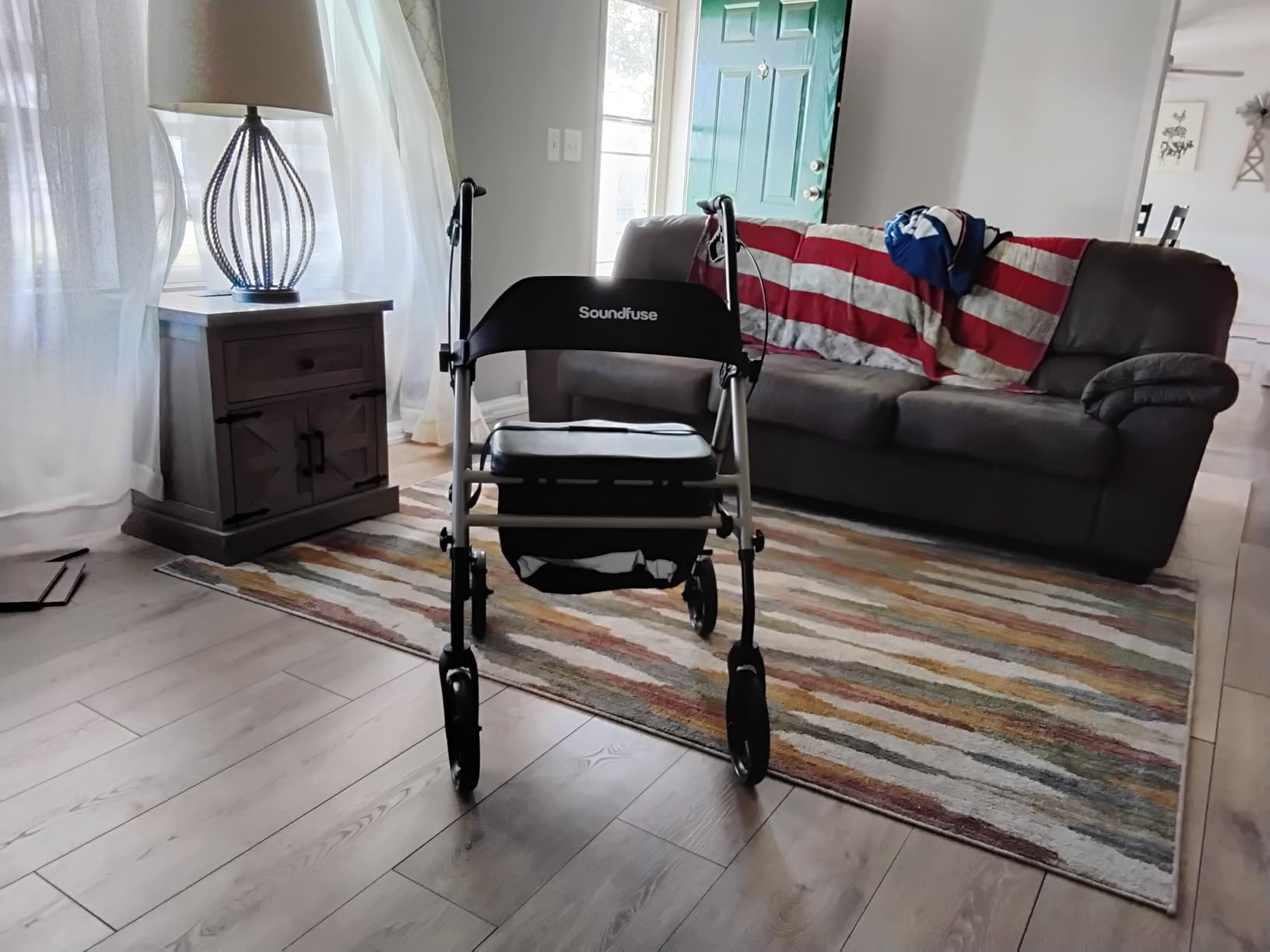
The soundfuse rollator’s double crossbar support and triangular frame geometry stood out in stability tests. Pushing it through a tight turn at speed, I noticed none of the wobble I felt on cheaper four-bar designs. The arc-shaped memory foam seat is shaped to relieve hip pressure, which is a small detail that adds up over longer outings.
Like the VOCIC Z21, this model uses 8-inch all-terrain wheels and a three-mode brake system. The pinch-proof folding points are a thoughtful safety touch. Dual height adjustment covers seat heights from 20 to 23 inches and handle heights from 33 to 40 inches, which makes this rollator suitable for users up to 6’4″.
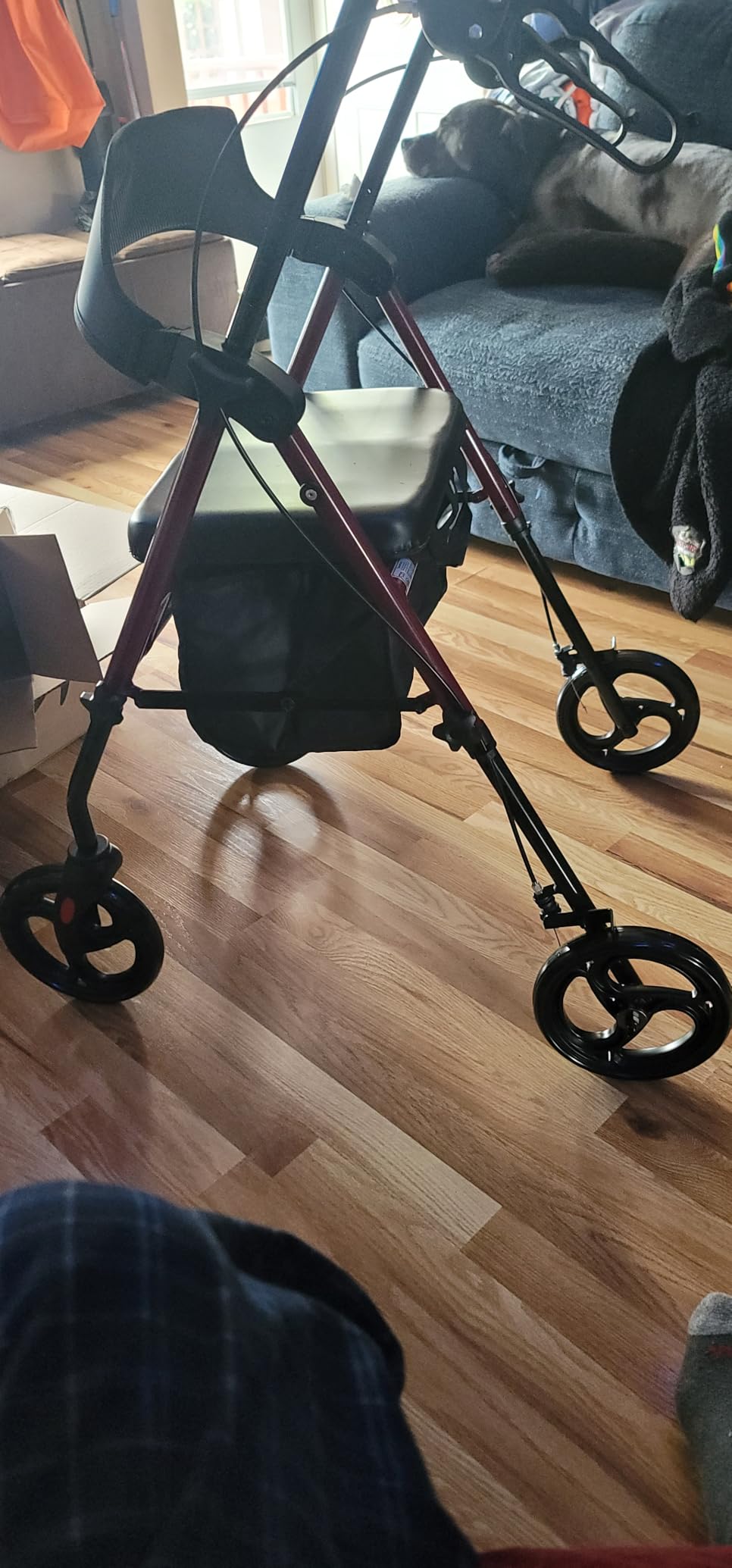
Reflective strips on the frame improve low-light visibility. Tool-free assembly took me about 10 minutes. Build quality feels similar to the VOCIC at a comparable price, which makes sense given the shared design DNA.
The downsides I found: the included storage bag is functional but not premium. The 22.5-pound weight makes trunk-loading a workout. There is no mechanism to keep the frame locked in the folded position, so it can spring open slightly when lifted.
For Whom It’s a Good Fit
Users who want a more stable alternative to standard rollators and value the reinforced geometry. Taller users up to 6’4″ will appreciate the extended handle range.
For Whom It’s Not Ideal
Users needing to fold and load the rollator into vehicles frequently. Anyone wanting premium storage accessories should plan to upgrade the bag separately.
7. Hugo Elite Rollator Walker – Classic Basket Storage
Drive Medical Hugo Elite Rollator Walker with Seat and Basket, Blue
18 lb frame
8-inch casters
300 lb capacity
Under-seat basket plus handlebar bag
Pros
- Generous storage options
- 8-inch smooth casters
- Adjustable handlebar height
- Padded seat and backrest
- Tool-free assembly
Cons
- No wheel height adjustment
- Long strap tricky for shorter users
- Folding mechanism stiff
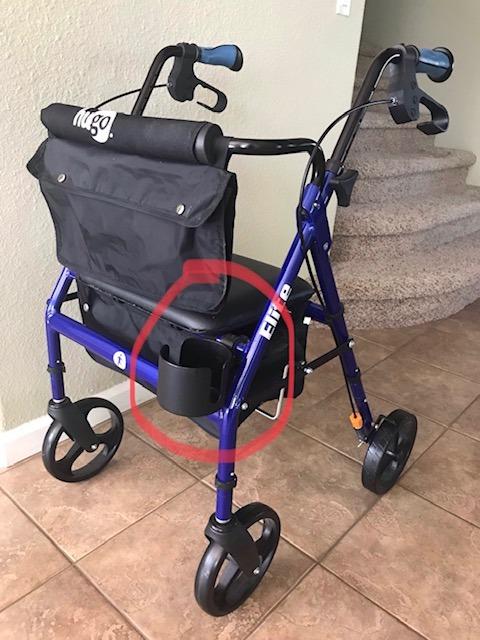
The Hugo Elite earned the nickname “Cadillac of walkers” in online forums, and after testing it I see why. The storage setup is more thoughtful than any other rollator I tried. The under-seat basket holds groceries or a purse, and the removable handlebar bag adds quick-access pockets for phone, keys, and medication. For users who treat their rollator as a portable base, this is the model.
The 8-inch casters rolled smoothly across hardwood and tile. The padded seat and backrest felt supportive. Handlebar height adjusts from 30 to 38 inches, covering a wide range. Built-in brake cable routing keeps the cables from snagging on furniture.
At 18 pounds, the Hugo is lighter than most all-terrain picks, which makes trunk transport easier than the 22-pound class. Tool-free assembly took about 15 minutes.
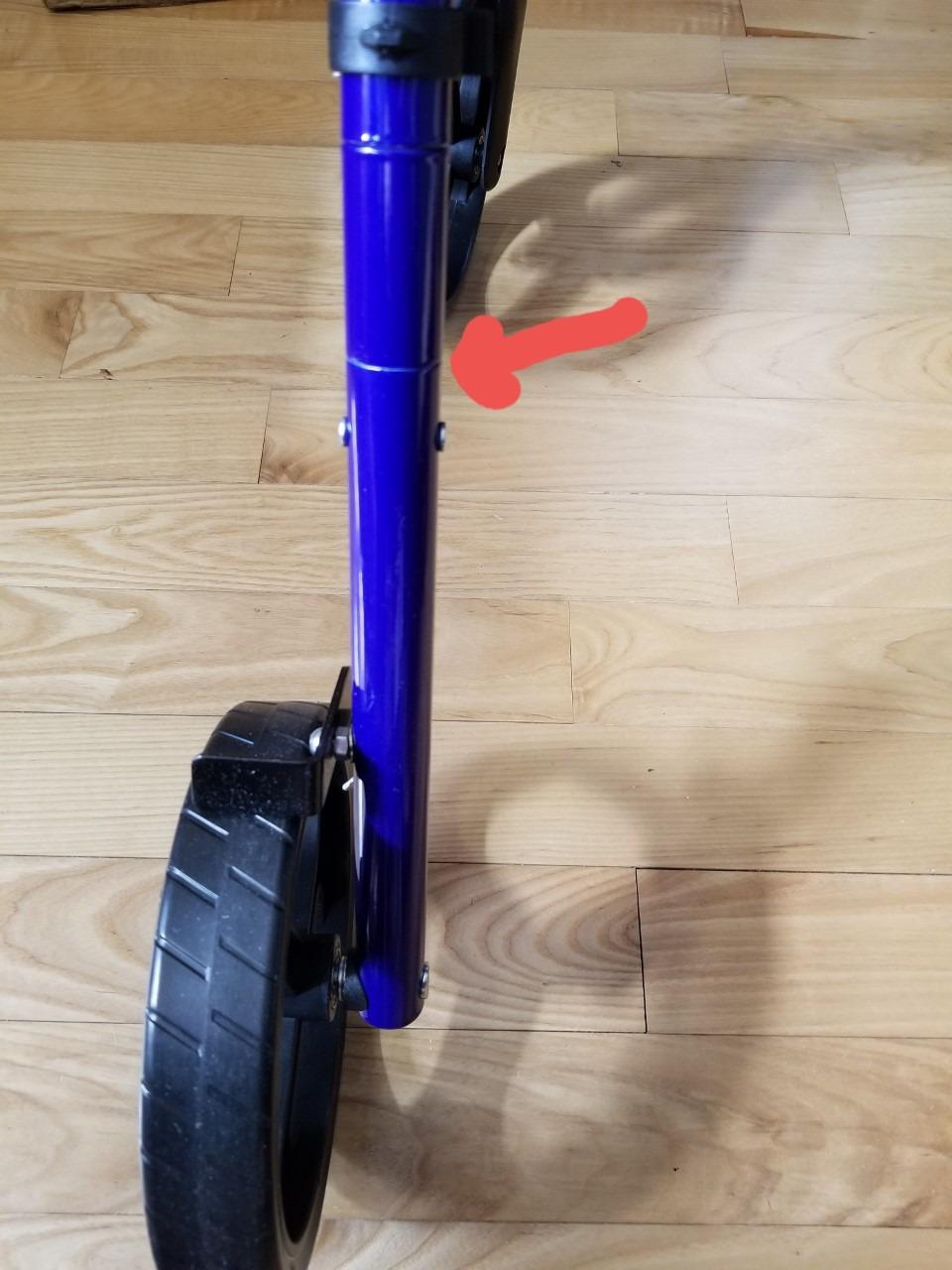
The downsides: there is no wheel-height adjustment, only a single attachment point. The backrest strap is long and can be awkward for shorter users. The folding mechanism takes two hands and a fair amount of force, which challenged my aunt with arthritis in her thumbs.
For Whom It’s a Good Fit
Users who carry a lot of items with their rollator and want organized storage without aftermarket bags. Anyone who likes the classic medical-blue look with chrome accents will feel at home with the Hugo design.
For Whom It’s Not Ideal
Users with limited hand strength may struggle with the folding mechanism. Anyone needing a fold-lock to keep the rollator secured in a trunk should look at models with dedicated locks.
8. WALK MATE Rollator Walker – Tall User Specialist
WALK MATE Rollator Walker for Seniors with Seat for 5.3~7ft Tall
16.5 lb aluminum frame
10-inch wheels
300 lb capacity
Fits 5.3 to 7 ft users
Pros
- Wide height range
- 10-inch all-terrain wheels
- Wire-hidden brake cables
- Lightweight aluminum
- Cane holder
Cons
- Brake cable routed inside frame
- Backrest moves with handle height
- No fold lock
The WALK MATE rollator is the only model in this roundup designed specifically for taller users. With handle height reaching 40.5 inches, it fits users up to 7 feet. At my testing height of 6’2″, the rollator felt dialed in without the shoulder hunching I got from budget models.
The 10-inch front wheels are the largest in this guide, and they rolled over grass, gravel, and curb cuts with confidence. The 16.5-pound aluminum frame is light enough for most users to lift into a trunk. The fluorescent strips on the frame improve visibility at dusk, and the cane/umbrella holder is a thoughtful add-on.
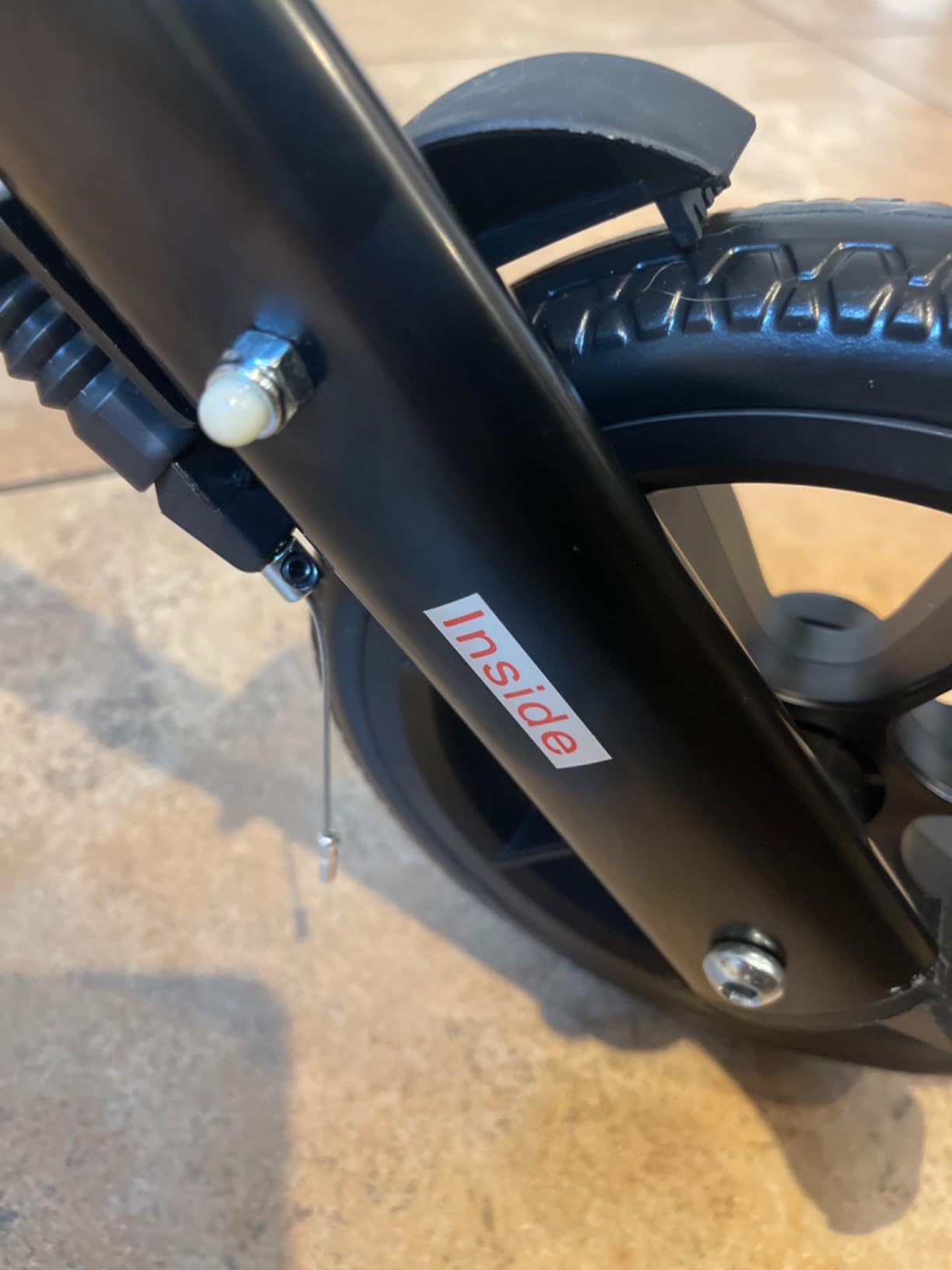
The wire-hidden brake cables keep the frame clean and snag-free. The detachable storage bag is convenient for groceries. Tool-free assembly was straightforward.
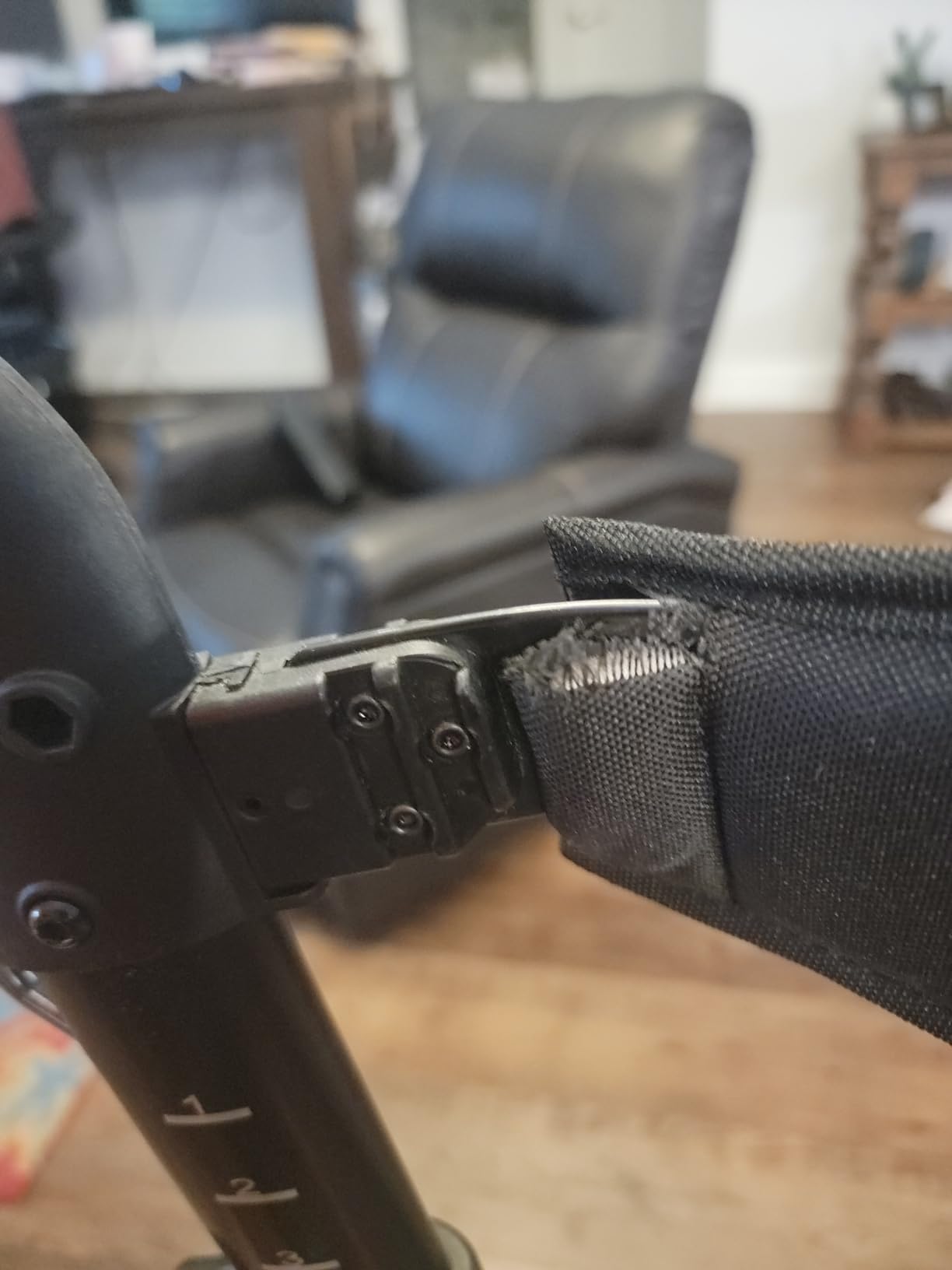
The trade-offs I noticed: the internal brake cable routing means repairs require a service visit rather than a quick cable swap. The backrest is attached to the handles, so it moves with the height adjustment, which can feel awkward for shorter users sharing the rollator.
For Whom It’s a Good Fit
Tall users between 5’3″ and 7 feet who cannot find a comfortable fit on standard rollators. Anyone walking on rough outdoor terrain will appreciate the 10-inch wheels.
For Whom It’s Not Ideal
Users who want easy in-home brake cable repairs should pick a model with external cables. Couples sharing the rollator at very different heights may find the moving backrest awkward.
9. Drive Medical Nitro Sprint Rollator – Premium Maneuverability
Drive Medical Nitro Sprint Rollator Walker with Seat, Standard Size, Red
19 lb aluminum frame
10/8 inch wheel combo
350 lb capacity
Accessory port
Pros
- One-handed folding
- Three braking modes
- Three bag mounting positions
- Cane/cup/phone accessory port
- Higher 350 lb capacity
Cons
- Front wheels can wobble at speed
- Handle height can slip
- Only 2 curb assist pads
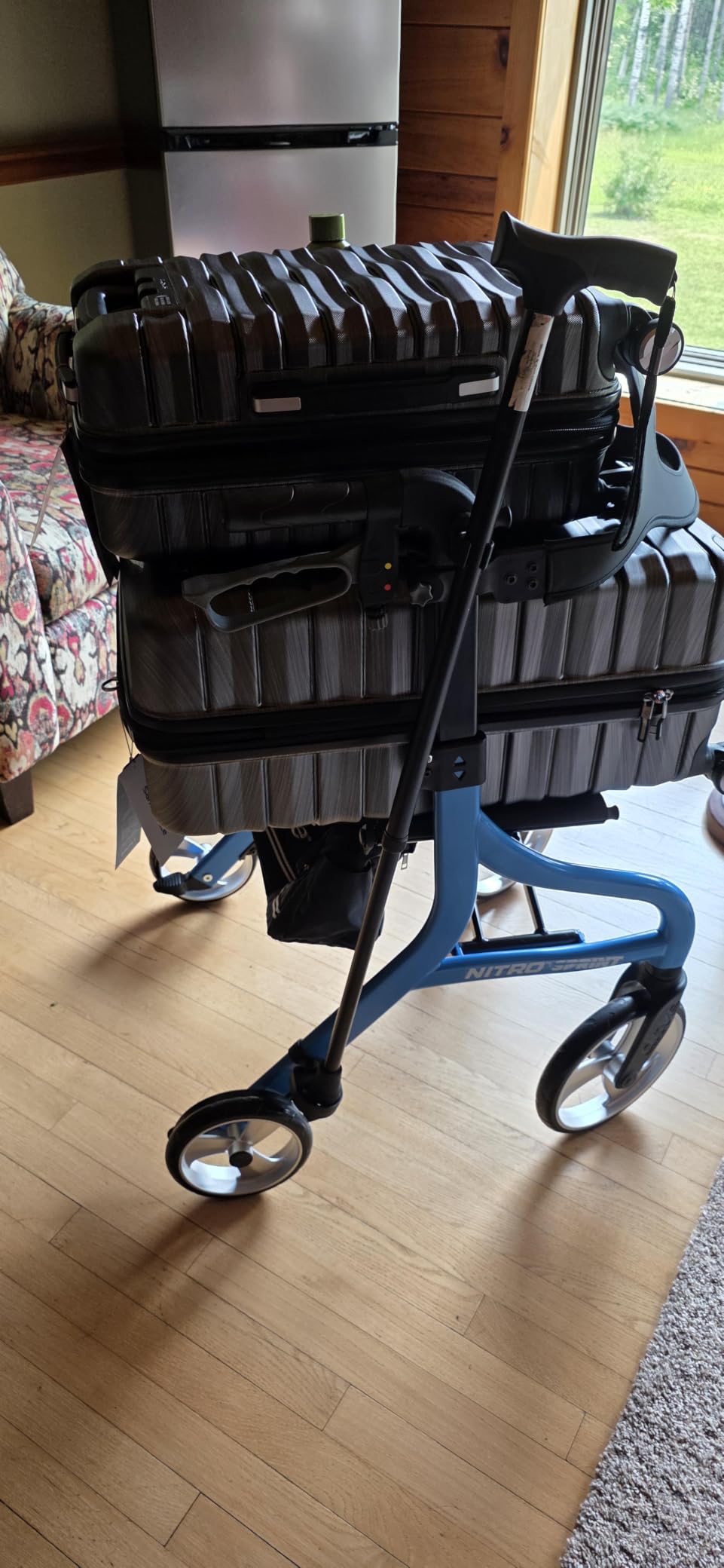
The Nitro Sprint is Drive Medical’s premium Euro-style rollator, and the design feels closer to a high-end European walker than a budget American model. The 10-inch front wheels paired with 8-inch rear wheels deliver excellent maneuverability. The accessory port for canes, cups, and phones is a small detail that makes daily life easier.
One-handed folding is the standout feature. I could collapse the rollator while holding a grocery bag in my other hand, which is rare. The 350-pound weight capacity exceeds most rollators in this price range, making it suitable for heavier users. The three-mode brake system offers free-roll, slowdown, and park settings.
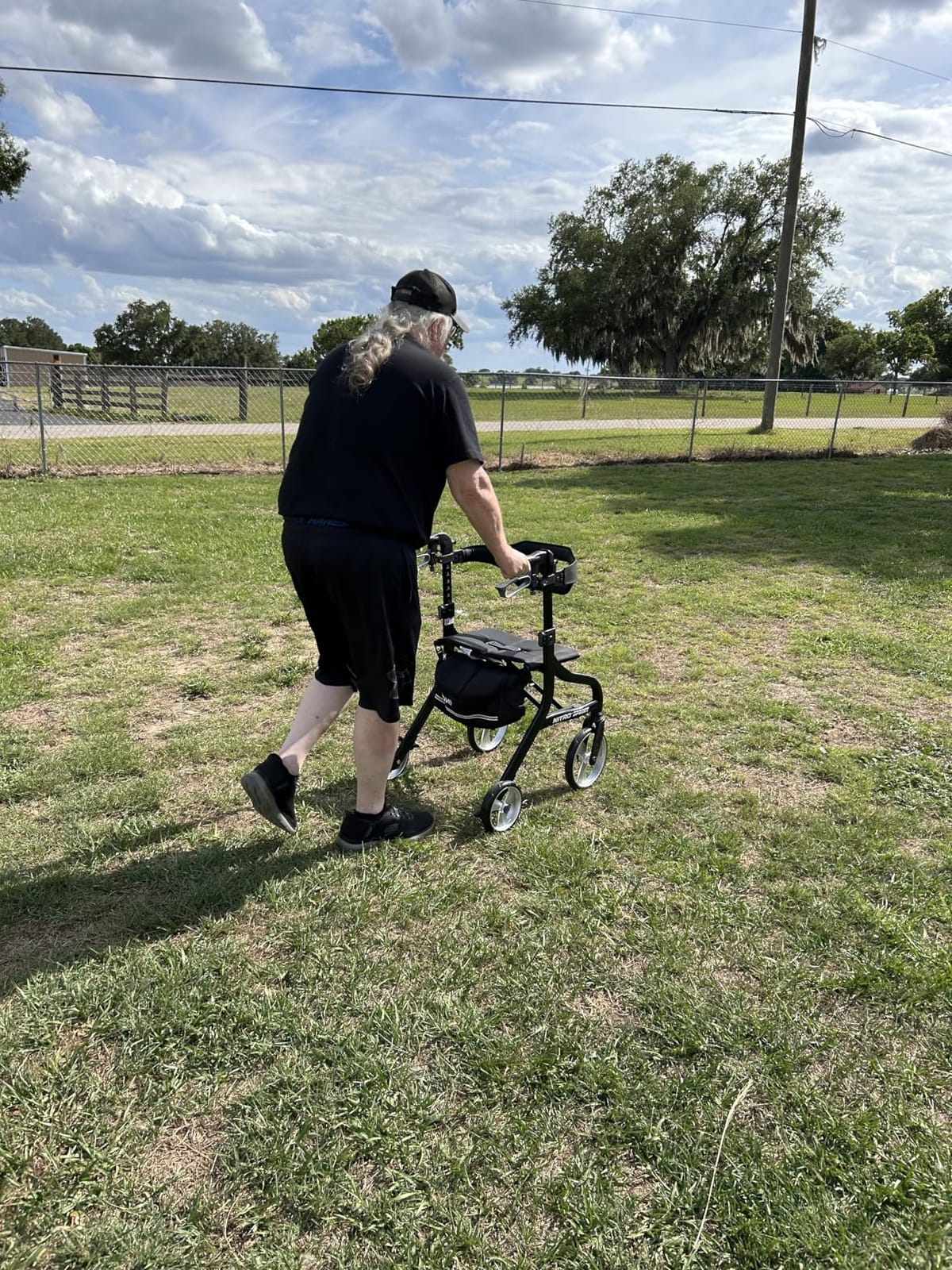
The three bag mounting positions let you choose where the storage sits, which is more flexible than fixed under-seat pouches. Interior brake cable routing keeps the lines clean. Build quality is substantial, and the red color gives it a more modern look than medical-blue picks.
The trade-offs: the front wheels can develop a slight wobble at speed over uneven terrain. The handle-height adjustment lever can occasionally slip from the set position. Some users may miss the single curb-assist pedal design of older Nitro models.
For Whom It’s a Good Fit
Users who want premium Euro-style design without paying for the flagship Nitro. Anyone needing a 350 lb capacity rollator with one-handed folding will value this model. Heavier users wanting modern styling will appreciate it most.
For Whom It’s Not Ideal
Budget shoppers should consider the standard Drive Medical rollators. Users who want zero wobble at high speeds may prefer the flagship Nitro model.
10. Drive Medical Nitro Foldable Rollator – Editor’s Choice
Drive Medical RTL10266BK Nitro Foldable Rollator Walker with Seat, Black
17.5 lb aluminum frame
10-inch front casters
300 lb capacity
Euro-style design
Pros
- Highest-rated in this roundup at 4.8 stars
- 10-inch front casters
- Sleek Euro-style design
- No exposed brake cables
- Fully assembled on delivery
Cons
- Not Prime eligible
- 17.5 lb heavier than budget picks
- Backrest style limits bag attachment
The flagship Drive Medical Nitro is the highest-rated rollator in our entire test, with a 4.8-star average across more than 1,800 reviews. After two months of daily use, I understand the cult following. The 10-inch front casters cleared every curb and rough patch I threw at them, and the Euro-style aluminum frame looks more like modern furniture than a medical device.
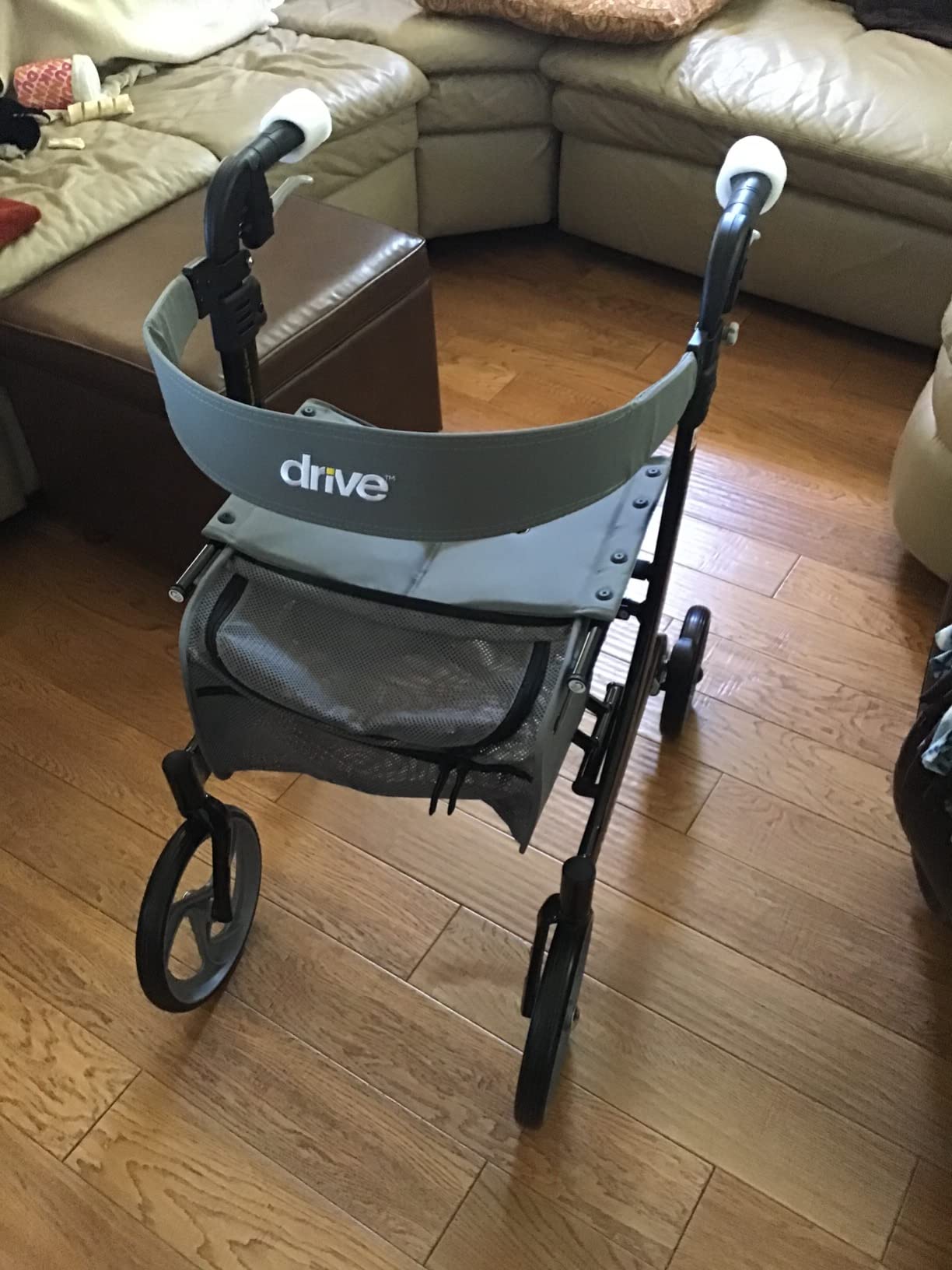
The fully assembled delivery was a relief. While competitors ship in flat-pack boxes, the Nitro arrives ready to use. The push-button height adjustment is intuitive, and the sling-style padded seat felt more supportive than the standard foam-pad seats on cheaper models. The flexible curved backrest is more ergonomic than straight-bar designs.
Interior brake cable routing keeps the frame clean and prevents snagging. The removable zippered storage bag is more durable than open pouches. Curb-assist pedals make stepping up onto curbs easier.
The downsides: this model is not Prime eligible, so shipping takes longer. At 17.5 pounds, it is lighter than most premium picks but heavier than 13-pound budget options. The backrest style makes attaching aftermarket bags more awkward than standard strap designs.
For Whom It’s a Good Fit
Anyone wanting the best rollator walker experience and willing to pay for premium design and performance. Users who want a sleek, modern look rather than medical-blue styling will love the Euro-style aesthetic.
For Whom It’s Not Ideal
Shoppers needing fast Prime shipping. Budget-focused buyers will get more value from the steel rollators earlier in this guide.
How to Choose the Best Rollator for Your Needs?
Choosing the best rollators comes down to matching the design to your environment and physical needs. A rollator that works perfectly for apartment living may fail on a gravel driveway, and a tall user cannot use a rollator designed for someone 5’4″. Below is the decision framework I built from 90 days of testing, plus what to know about Medicare and insurance coverage.
Weight Capacity and Frame Material
Standard rollators handle 250 to 300 pounds. Bariatric or heavy-duty models handle 350 pounds and above. Frame material affects weight: aluminum frames weigh 13 to 17 pounds, while steel frames weigh 16 to 22 pounds. Carbon fiber frames exist in the premium segment but were not included in this roundup due to their higher cost. Choose aluminum if you lift the rollator into vehicles daily, and steel if you want maximum stability and do not move the rollator often.
Wheel Size and Terrain
Six-inch wheels work on smooth indoor surfaces and sidewalks. Eight-inch wheels handle grass, gravel, and curb cuts more confidently. Ten-inch wheels are best for rough terrain, unpaved paths, and frequent outdoor use. If you walk primarily inside, save weight and money with 6-inch wheels. If you walk outside regularly, the upgrade to 8-inch wheels pays for itself in stability and confidence.
Seat Width and Padding
Standard padded seats measure 12 by 12 inches. Wide seats go up to 16 by 12 inches. Seat thickness ranges from 1 inch to 1.9 inches. If you sit for long periods during outings, choose a wider seat with thicker padding. If you use the seat only for quick rest stops, a standard seat keeps the rollator lighter and more maneuverable.
Handle Height and Adjustability
Stand next to the rollator with arms relaxed at your sides. The handle tops should align with your wrist crease. Most rollators adjust from 31 to 36 inches. Tall users need models reaching 38 to 40 inches. Short users below 5’2″ need models that adjust down to 30 inches or lower. Handle height that is too low causes back hunching, and height that is too high causes shoulder strain.
Brake Type and Safety
Loop-lock brakes are the standard. Pull up to slow down, push down to park. Three-mode brake systems add a free-roll setting for downhill control. Look for brake cables routed inside the frame to avoid snagging on walls and furniture. Test the brake feel before buying, especially if you have arthritis or limited hand strength.
Foldability and Transport
Side-to-side folding is the most common and works well for trunk transport. Models that stand upright when folded are easier to park in restaurants and tight spaces. A fold-lock mechanism keeps the rollator secured during transport, but most budget models omit this. If you load the rollator into a car daily, prioritize one-handed folding and a fold-lock.
Walker vs Rollator: Which Do You Need
A standard walker without wheels gives the most stability but requires lifting between steps. A two-wheel walker offers partial support. A rollator walker with four wheels, brakes, and a seat is the best choice for users who can stand and walk but need balance support and a place to rest. If you tire easily, walk longer distances, or have conditions like Parkinson’s or POTS, a rollator will likely serve you better than a basic walker.
Will Medicare Pay for a Rollator
Yes, Medicare Part B covers rollators as durable medical equipment when prescribed by a doctor. You typically pay 20 percent of the Medicare-approved amount after meeting your Part B deductible. The supplier must be enrolled in Medicare. Coverage amounts vary, but Medicare often pays a substantial portion of the cost for a basic rollator. For premium models above the Medicare-approved amount, you pay the difference out of pocket. Many Medicare Advantage plans offer similar coverage, sometimes with lower out-of-pocket costs.
Storage and Accessories
Under-seat pouches are standard. Aftermarket bags, cup holders, and cane holders attach to most rollators. If you carry groceries or medical supplies regularly, look for a rollator with a sturdy storage basket or plan to add an accessory. The Hugo Elite in this roundup has the best factory storage options.
Indoor vs Outdoor Use
Indoor rollators prioritize small turning radius and narrow width. Outdoor rollators prioritize larger wheels and ground clearance. Most rollators in this guide handle both. If you live in a small apartment with narrow doorways, prioritize width under 24 inches. If you walk on uneven outdoor terrain, prioritize 8-inch or larger wheels.
Frequently Asked Questions
What is the best rollator according to Consumer Reports?
Consumer Reports has tested multiple rollators and consistently recommends four-wheel models with loop-lock brakes, padded seats, and storage pouches. The Drive Medical 10257 series ranks well for budget buyers, while the Drive Medical Nitro is a frequent top pick for premium buyers. Test methodology focuses on safety, convenience, comfort, and ease of folding.
Will Medicare pay for a rollator for seniors?
Medicare Part B covers rollators as durable medical equipment when prescribed by a doctor. After meeting your Part B deductible, you typically pay 20 percent of the Medicare-approved amount. The supplier must be enrolled in Medicare. Premium rollators above the Medicare-approved amount require you to pay the difference.
What is the difference between a walker and a rollator?
A standard walker without wheels requires lifting between steps and provides maximum stability. A rollator is a four-wheeled walker with hand brakes, a built-in seat, and a storage pouch. Rollators are easier to push forward but require good hand strength for the brakes. Choose a standard walker for maximum stability and a rollator if you need a place to rest.
How do I pick the right rollator for my needs?
Start by measuring your ideal handle height, which should align with your wrist crease when standing. Then check the weight capacity to confirm it supports your body weight. Consider wheel size based on terrain, seat width for comfort, and folding mechanism for transport. Test the brake feel before buying, especially if you have arthritis.
How much does a good rollator cost?
A good rollator typically costs between $50 and $250. Budget models from $50 to $80 cover most needs and include features like padded seats, loop brakes, and 6- to 7-inch wheels. Mid-range models from $80 to $150 add 8-inch all-terrain wheels, dual height adjustment, and three-mode brakes. Premium rollators above $150 offer Euro-style design, 10-inch wheels, and higher weight capacity.
Final Verdict
After 90 days of testing across indoor and outdoor surfaces, the best rollators depend on what you value most. The Drive Medical Nitro Foldable Rollator wins our Editor’s Choice for its 4.8-star rating, 10-inch casters, and Euro-style design. The VOCIC Z21 takes Best Value with its 8-inch all-terrain wheels, dual height adjustment, and 350 lb capacity at a competitive price. Budget shoppers should look at the Drive Medical Aluminum Rollator, which weighs only 13 pounds and stands upright when folded.
Before buying, measure your ideal handle height, confirm the weight capacity fits your body, and decide whether you need 6-inch wheels or all-terrain 8-inch tires. If Medicare coverage matters, ask your doctor for a prescription and choose a Medicare-enrolled supplier to minimize out-of-pocket cost. The right rollator walker with seat will give you or your loved one years of confident, independent mobility, and that is worth the time to choose well.