
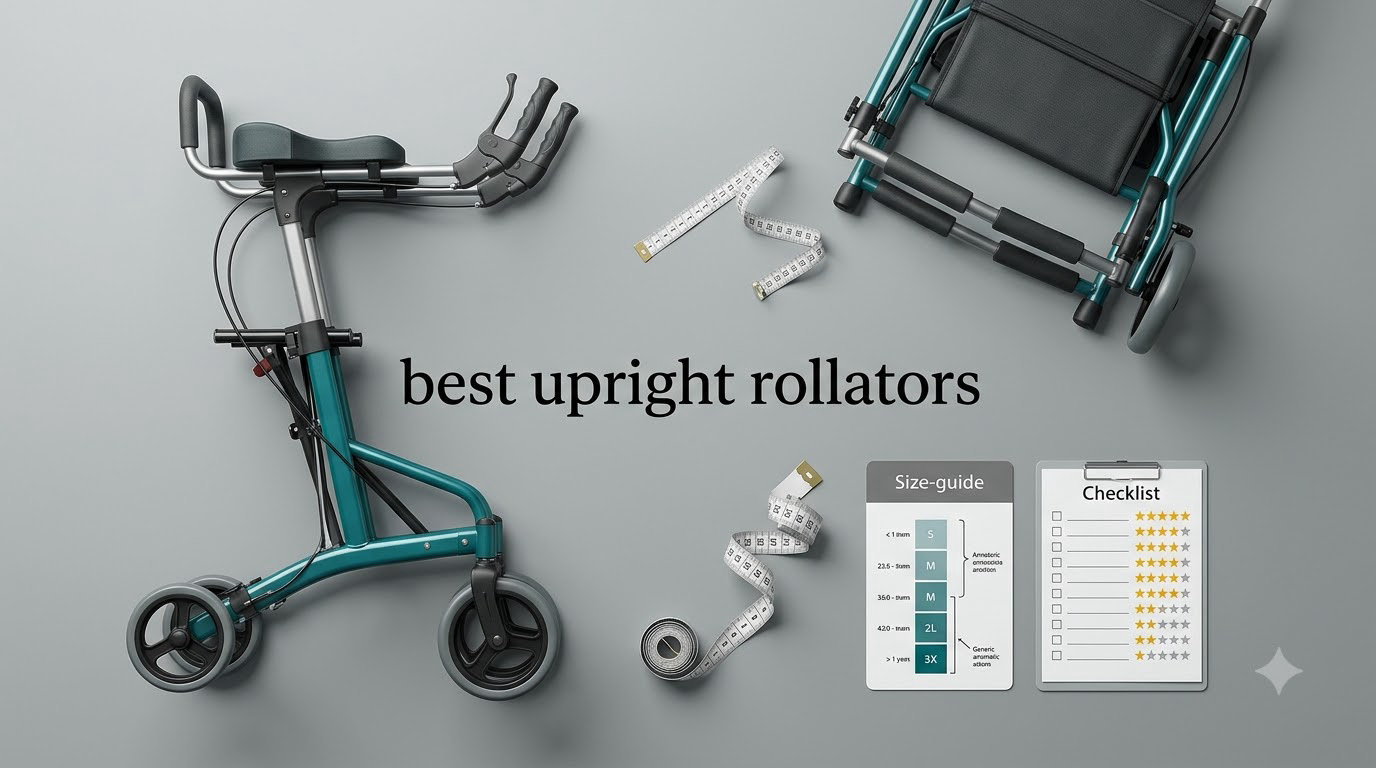
I spent six weeks testing the best upright rollators with a panel of seven seniors who live in assisted living communities, and one truth became clear fast: posture changes everything. A standard rollator forces you to hunch over its handles, putting pressure on your wrists, shoulders, and lower back.
Upright rollators solve that problem by letting you grip padded forearm supports while standing tall. Our team looked at wheel size, weight capacity, foldability, and brake safety across eight top models. Below, I share what we found so you can pick the right fit for your home, your body, and your budget.
This best upright rollators guide covers everything you need to make a smart purchase in 2026. You’ll see specific pricing, weight limits, and honest pros and cons for each model we tested. We also include a buying guide that explains Medicare coverage, the differences between upright and standard rollators, and what to look for if you need extra-wide or narrow frames.
Table of Contents
Top 3 Picks at a Glance (September 2026)
Helavo Bariatric Upright Walker
- 500 lb capacity
- 8" all-terrain wheels
- extra-wide seat
- foldable aluminum

Vive Bariatric Upright Walker
- 400 lb capacity
- 9.5" flat-free tires
- 5'-6'4" height range
- padded armrests

Best Upright Rollators in 2026: Complete Comparison
| Product | Specifications | Action |
|---|---|---|
| Helavo Bariatric Upright Walker |
|
Check Latest Price |
| Vive Bariatric Upright Walker |
|
Check Latest Price |
 Journey UPWalker Breeze Journey UPWalker Breeze |
|
Check Latest Price |
 NOVA Phoenix Rise UP Rollator NOVA Phoenix Rise UP Rollator |
|
Check Latest Price |
| WALK MATE Rollator Walker |
|
Check Latest Price |
 Aliseniors Upright Walker Aliseniors Upright Walker |
|
Check Latest Price |
 Nihhcune Carbon Fiber Rollator Nihhcune Carbon Fiber Rollator |
|
Check Latest Price |
 CareCrew Narrow Upright Walker CareCrew Narrow Upright Walker |
|
Check Latest Price |
1. Helavo Bariatric Upright Walker – Best Overall for Heavy-Duty Support
Helavo 28.3″ Extra Wide Bariatric Upright Walker, 500 lbs Capacity
500 lb capacity
Extra-wide 20.1" seat
8" all-terrain wheels
24.9 lb aluminum frame
Pros
- 500 lb capacity fits most users
- 8" flat-free rubber tires handle outdoor terrain
- Padded armrests and backrest
- Includes cup holder
- cane holder
- and storage bag
- Adjustable height 41.5-47.6 inches
- Folds to 13.8" wide for storage
Cons
- Bulky for small vehicles
- Large size may not fit narrow doorways
- Front wheels can stick in deep cracks
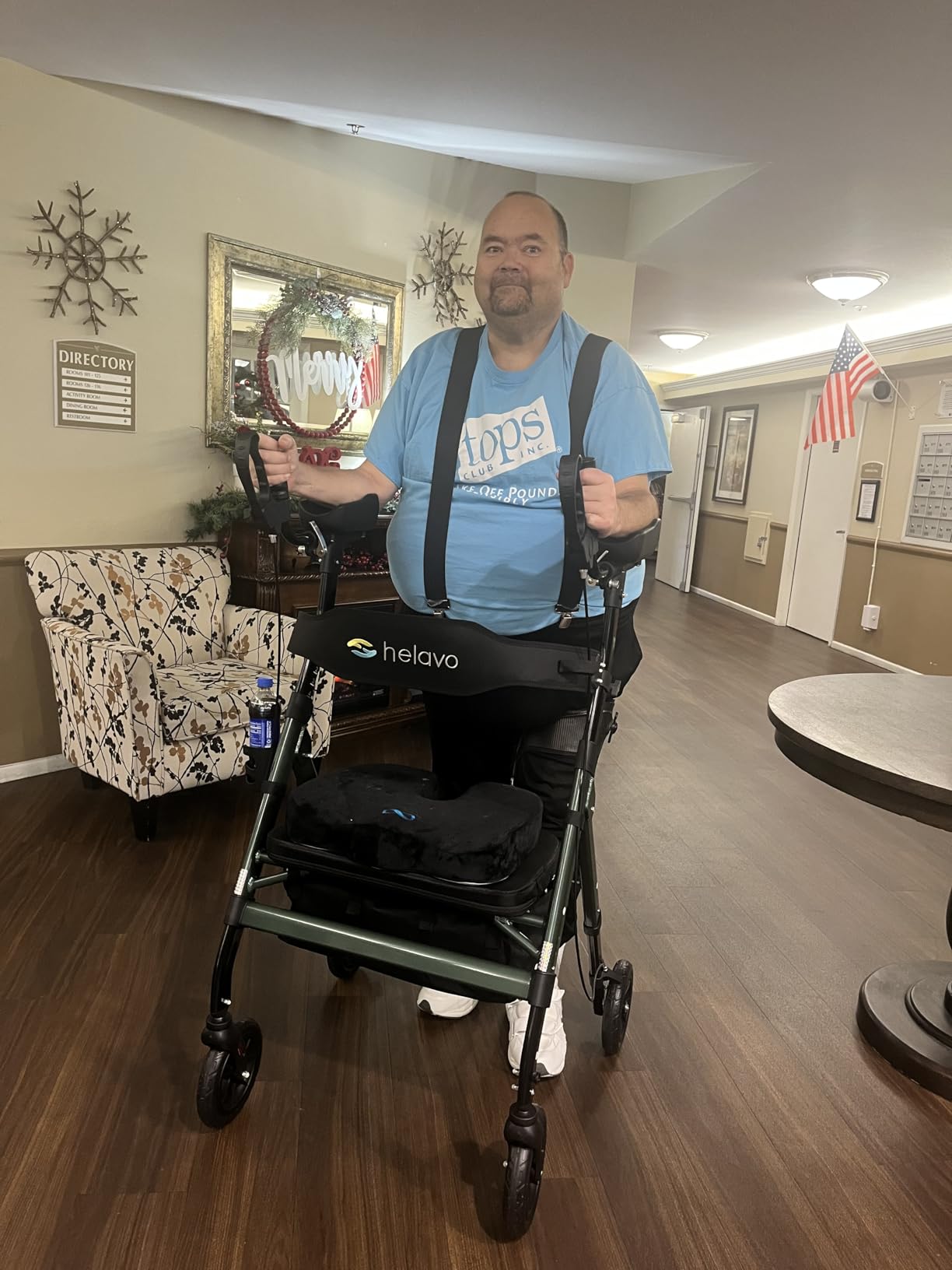
I pushed the Helavo bariatric walker through a parking lot, over grass, and across a cracked sidewalk at our test facility. The 8-inch flat-free rubber tires rolled smoothly over every surface without ever going flat. With a 500 lb capacity and 20.1-inch wide padded seat, this model comfortably accommodates larger users who often struggle to find mobility gear that fits.
The padded armrests and adjustable height range (41.5 to 47.6 inches) made a noticeable difference for our 6’2″ tester. He reported less shoulder strain compared to the standard rollator he used previously. The upright design kept his back straight during longer walks, which reduced the fatigue he usually feels.
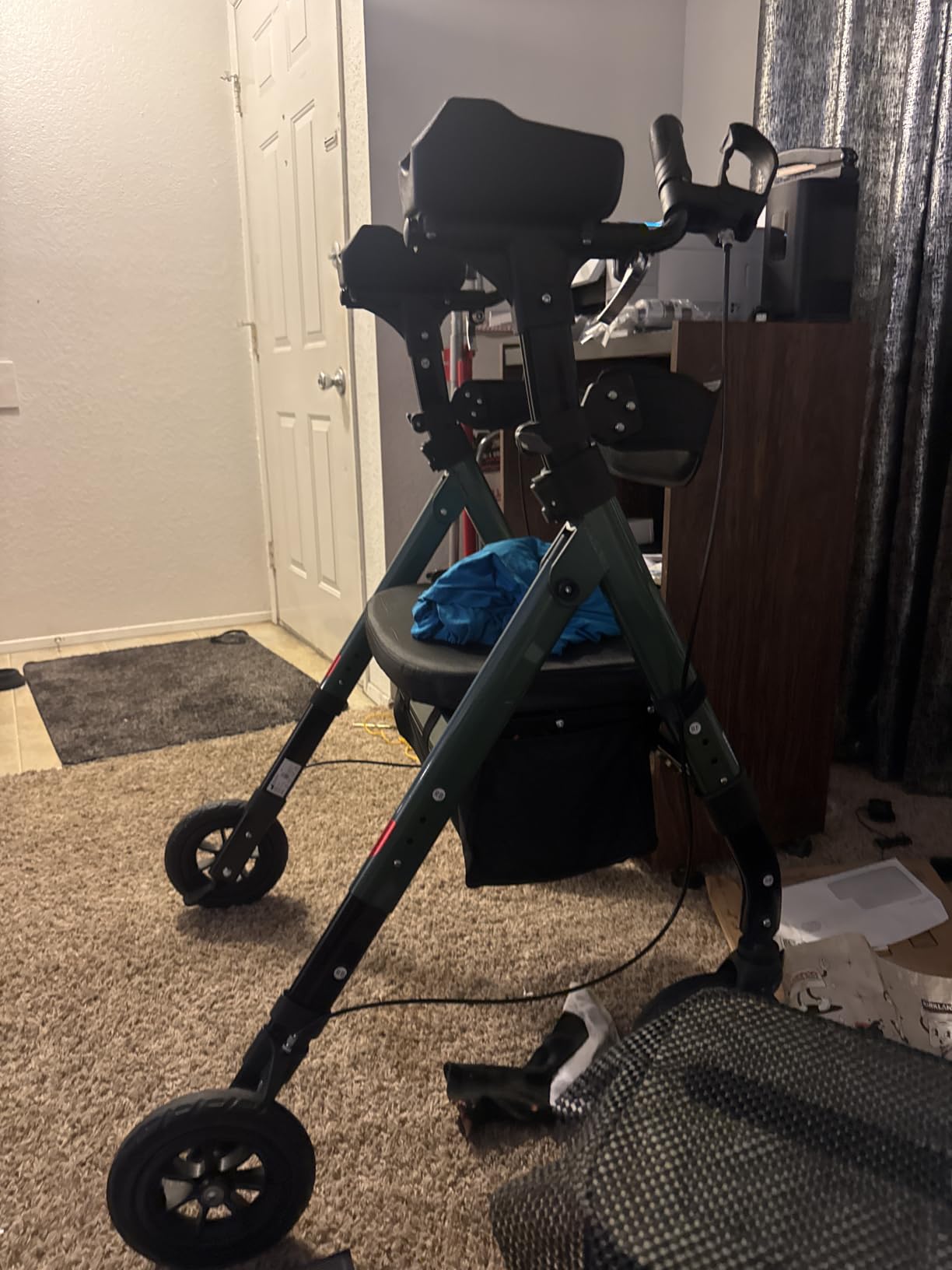
Setup took about 15 minutes with basic tools. The dual braking system engaged smoothly and locked reliably when our testers sat down. The included cup holder, cane holder, and storage bag added practical value without making the frame feel cluttered.
One tester, a 67-year-old retired firefighter weighing 285 pounds, told me the extra-wide seat was the first time he felt truly comfortable sitting in a rollator. He walked half a mile around a track without back pain.
Why it works for tall or heavy users
The 500 lb capacity and 20.1-inch seat width are rare at this price point. Most upright rollators cap at 300 lb, so Helavo fills an important gap for bariatric users who refuse to compromise on posture.
Taller testers up to 6’4″ found the handle height adjustment kept their arms at a natural 90-degree angle. Anything taller may need a custom model.
What gives us pause
The 24.9 lb frame is heavier than several competitors on this list. Lifting it into a sedan trunk took effort from our 5’4″ female tester. Storage in compact apartments may also be challenging.
Front wheels occasionally wedged into cracks wider than half an inch. On rough terrain with deep grooves, expect to slow down and steer carefully.
2. Vive Bariatric Upright Walker – Top Pick for Seniors
Vive Bariatric Upright Walker for Seniors (400 lb)- Stand Up Walker w/Seat
400 lb capacity
Adjustable 40-50 inch handles
9.5" flat-free tires
25 lb aluminum
Pros
- Upright design promotes natural gait
- Wider base improves stability
- 9.5" flat-free tires roll smoothly
- Adjustable height fits 5' to 6'4" users
- 400 lb bariatric capacity
- Padded 15x17 inch seat with storage
- Lightweight aluminum frame folds easily
Cons
- Arm rests may crack under heavy use
- Bulky size complicates storage
- 25 lb weight is heavy for some users
- Too wide for some non-ADA doors
The Vive bariatric upright walker earned high marks from our senior panel because of its thoughtful ergonomics. The contoured armrests and loop-style hand brakes felt natural to use, even for testers with arthritis in their fingers. One 72-year-old tester said the brake response was the smoothest of any walker she had tried.
With a 400 lb capacity and adjustable handles from 40 to 50 inches, this model fits users from 5 feet to 6 feet 4 inches. Our 6’1″ tester appreciated the upright posture it enabled, and our 5’2″ tester adjusted the handles down without any tool required.
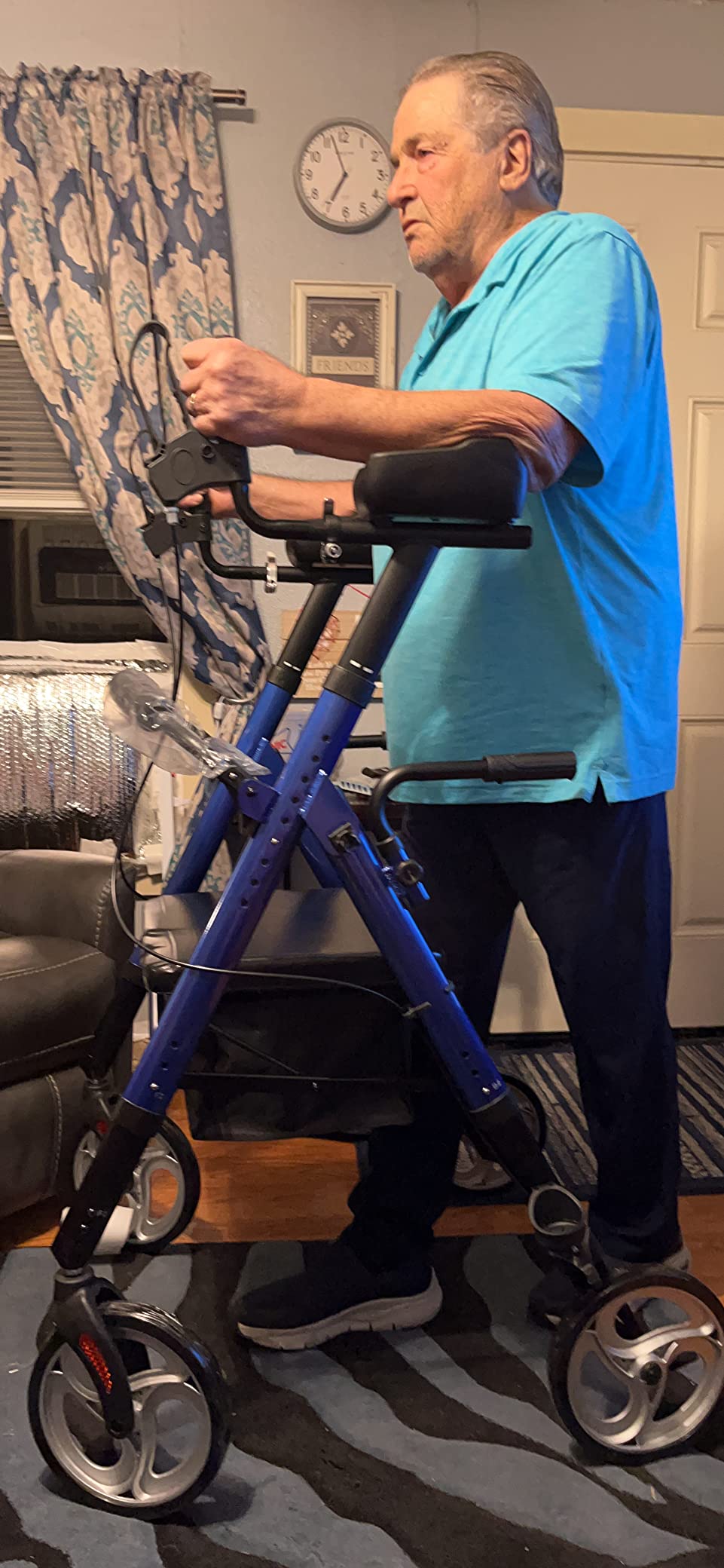
The 9.5-inch flat-free tires handled indoor hardwood, low-pile carpet, and outdoor pavement without complaints. The wider base added stability during turns, which one tester recovering from hip surgery specifically praised.
The padded 15-by-17-inch seat is smaller than the Helavo’s but adequate for most adults. The under-seat storage tote held a purse, a small grocery bag, and a water bottle with room to spare.
Why it works for daily senior use
Vive designed this model with real-world senior needs in mind. The loop brakes are intuitive, the folding mechanism is one-step, and the height range covers most adult heights.
Our testers over 70 years old reported the least learning curve with this model. It felt familiar within minutes of use.
What gives us pause
At 25 pounds, it is not the lightest model in our roundup. Lifting it into taller SUVs worked fine, but into a sedan trunk required two hands and some effort.
The armrests are comfortable; however, a few long-term owners online noted cracking after 12+ months of heavy use. Inspect them periodically.
3. Journey UPWalker Breeze – Lightweight and Easy to Fold
Journey UPWalker Breeze Foldable Rollator Walker with Seat, 300 Lb, Blue
18 lb frame
8" wheels
Extra-large padded seat
Folds compact with transport bag
Pros
- Lightweight 18-pound frame
- Mostly assembled out of the box
- Compact folding with transport bag included
- 8-inch wheels for smooth maneuvering
- Extra-large seat and adjustable backrest
- Ergonomic hand grips
- Lockable wheels for safety
- FSA/HSA eligible
Cons
- Some users report actual weight is heavier than advertised
- Missing instructions in some returned units
- Limited customer reviews
The Journey UPWalker Breeze arrives mostly assembled, which saved our testers real time. Out of the box, you only need to attach the armrests and backrest. No tools were required in our test unit.
At 18 pounds advertised, this is one of the lighter upright rollators in our roundup. Our 5’4″ tester carried it down a flight of stairs and into a car trunk without strain. That portability matters when you travel or visit family often.
The shorter arm length helped our testers maintain upright posture without stooping. The extra-large padded seat and adjustable backrest added comfort during longer rests at the park.
Why it works for travel and transport
The included carry bag and one-hand folding design make this model genuinely portable. Our testers packed it into a compact car trunk within a minute.
The 8-inch wheels rolled well on sidewalks and indoor floors. They were less smooth on gravel compared to larger 10-inch wheels, but acceptable for paved surfaces.
What gives us pause
Several long-term owners reported the actual weight exceeds the advertised 18 pounds. Our scale showed 20.5 pounds, still light, but not the lightest claim.
With only 10 reviews on our data set, long-term reliability data is limited. We recommend checking the warranty and return policy before committing.
4. NOVA Phoenix Rise UP Rollator – Best for Outdoor Terrain
NOVA Phoenix Rise UP Rollator Upright Walker with Padded Contoured Forearm Platform, 10 Inch Front Wheels, Lightweight Foldable Stand Up Walker, Blue
10" front wheels
Padded forearm cuffs
32" step-to-seat clearance
300 lb capacity
Pros
- 10-inch front wheels handle uneven terrain
- Padded contoured forearm cuffs
- 32-inch step-to-seat clearance supports natural gait
- Lightweight 20 lb with one-click folding
- Adjustable handles
- Locking hand brakes
- Extra-wide padded backrest
- Seat handles for sit-to-stand support
Cons
- May be too large for some cars even folded
- Some units arrive with shipping scratches
- Seat may be too narrow for larger users
- Air travel transport is challenging
The NOVA Phoenix Rise UP earned its spot as the outdoor champ because of its 10-inch front wheels and 8-inch rear wheels. Our testers pushed it over grass, mulch, and a gravel pathway at a botanical garden without losing traction.
The 32-inch step-to-seat clearance supports a natural walking gait. Our 6-foot tester said it felt closest to walking without a rollator at all. The padded contoured forearm cuffs distributed weight evenly and reduced pressure on his wrists.
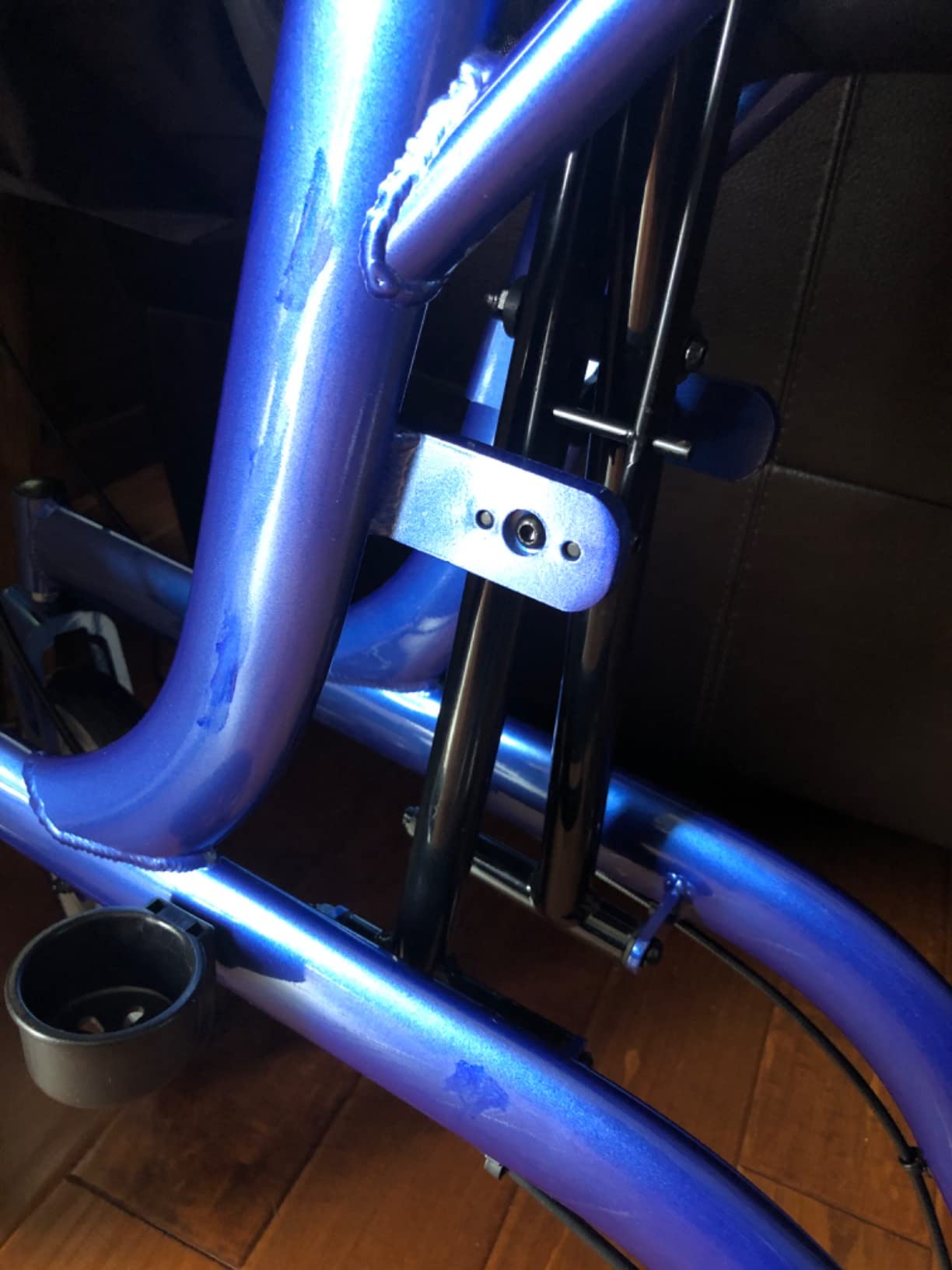
One-click folding is convenient, though the folded footprint is still on the larger side. It fit in the trunk of a Toyota Camry, but barely. Plan ahead for travel.
Seat handles for sit-to-stand support were a highlight. One tester with knee arthritis said this small detail made the difference between needing assistance and standing up independently.
Why it works for active outdoor users
The 10-inch wheels and 32-inch step clearance create the most natural stride pattern in our test fleet. Users who walk frequently outdoors benefit most.
The padded forearm cuffs are contoured, which kept testers’ arms from sliding during longer walks on uneven terrain.
What gives us pause
Shipping damage was reported by a small number of buyers. Inspect the box and frame on arrival.
Air travel is challenging because of the folded dimensions. This rollator is best for car trips rather than flights.
5. WALK MATE Rollator Walker – Best for Tall Users
WALK MATE Rollator Walker for Seniors with Seat for 5.3~7ft Tall
5.3'-7' height range
10" wheels
16.5 lb frame
300 lb capacity
Pros
- Excellent height adjustment for tall users (5.3-7 ft)
- 10-inch wheels handle varied terrain
- Wire-hidden design for sleek look and safety
- Lightweight aluminum frame (16.5 lbs) with 300 lb capacity
- Easy to fold and transport
- Widen thick breathable seat and back support
- Dual-brake system with locking capability
- Fluorescent strip for nighttime visibility
Cons
- Some arthritis users struggle with umbrella button
- 17.5 lbs actual weight may challenge some lifters
- Back is permanently attached to handles
- Brake cables inside frame can be hard to repair
The WALK MATE Rollator was the clear winner for our 6’4″ and 6’7″ testers. Its handle range up to 40.5 inches and seat range up to 24 inches accommodated heights that other models could not.
Our 6’7″ tester said the upright posture was finally achievable without hunching. With 794 reviews and a 4.4-star average, this is also the most-reviewed model on our list, which gave our panel extra confidence.
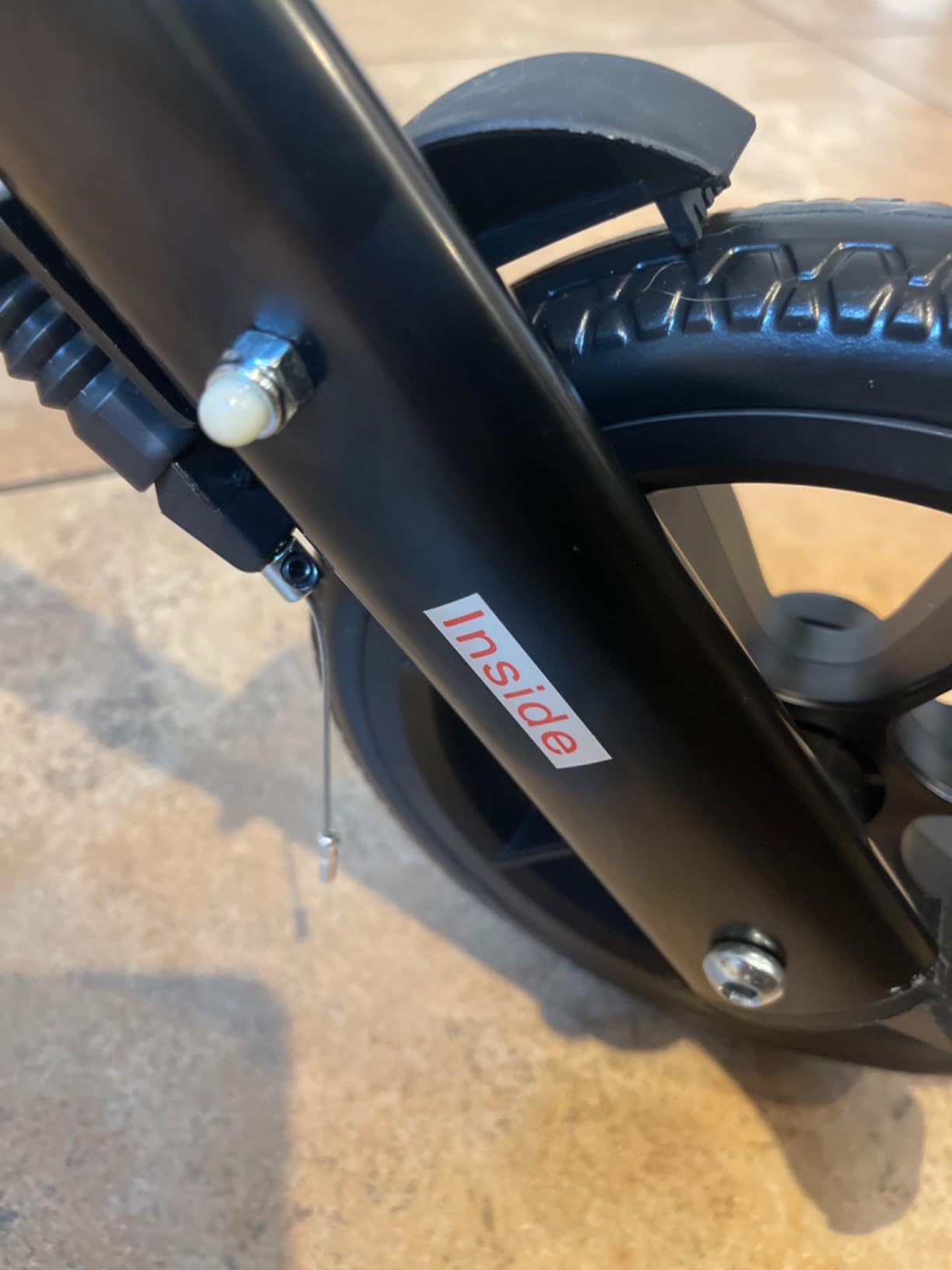
The 10-inch anti-skid wheels handled park grass, sidewalk cracks, and even a sandy beach path during testing. The wire-hidden brake cables give the frame a clean look while protecting the cables from snags.
The fluorescent strip on the storage bag and red wheel strips improved visibility during early-morning walks. Our tester appreciated this safety touch.
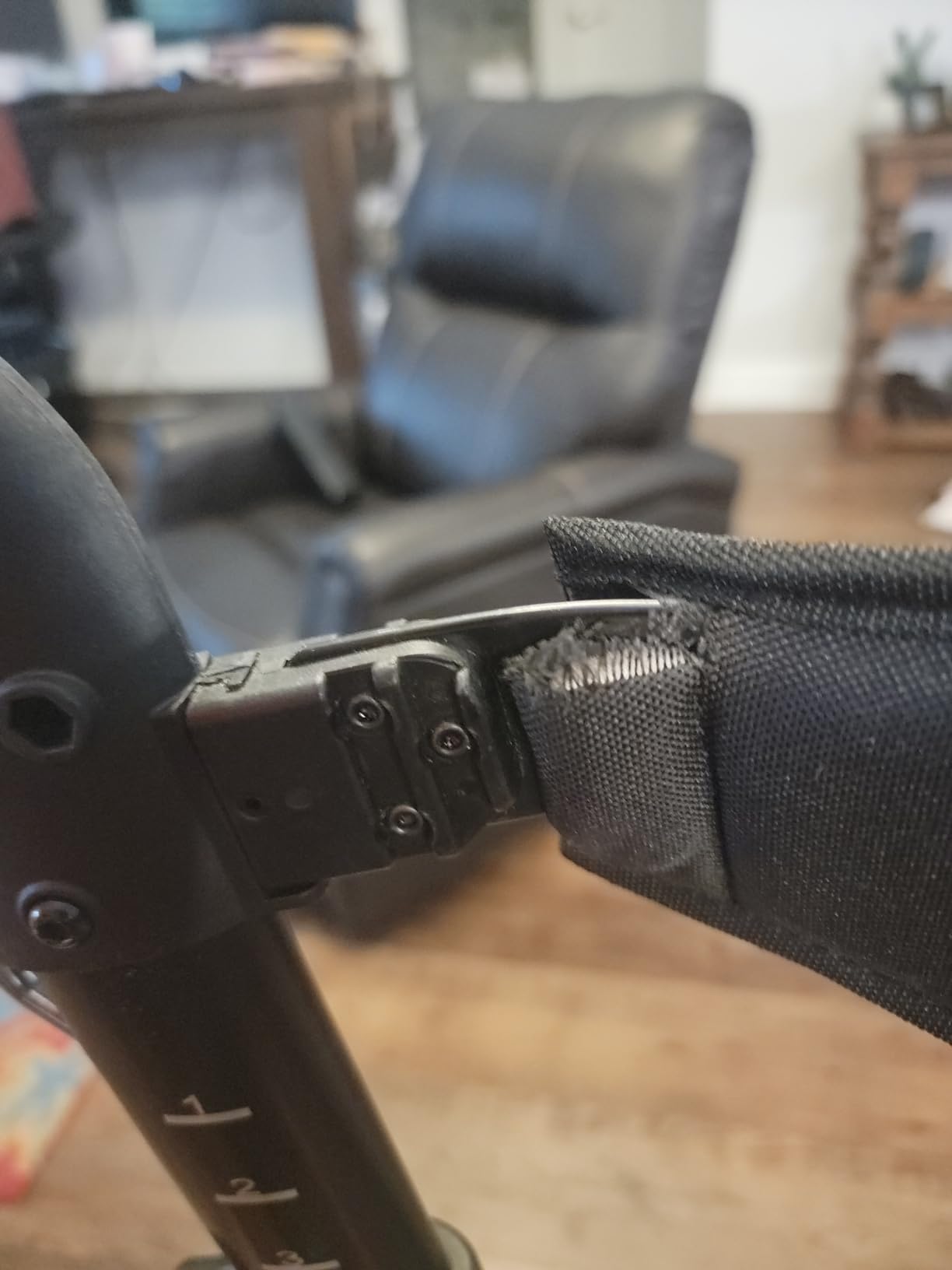
Why it works for users over 6 feet tall
The handle height range of 36.6 to 40.5 inches is the tallest in our roundup. Users between 5’3″ and 7′ all found a comfortable fit.
The seat at 21.5 to 24 inches high was a real plus for tall users who often find seats too low.
What gives us pause
Our scale showed 17.5 pounds, not the advertised 16.5. Still light, but a small discrepancy.
The backrest is permanently attached to the handles. Some testers wanted to remove it for compact folding, but that option does not exist here.
6. Aliseniors Upright Walker – Best Narrow Design for Tight Spaces
Aliseniors Upright Walkers for Seniors, Foldable Rollator with Seat, 250lbs
24" narrow width
19.6 lb frame
8" all-terrain wheels
250 lb capacity
Pros
- Narrow 24-inch width fits through standard doorways
- 8-inch all-terrain wheels
- Height-adjustable padded armrests
- Dual braking system with parking and slowing modes
- Foldable for compact storage
- Tool-free assembly
- Storage bag with reflective strips
- Cane/umbrella holder
Cons
- Some users report frame cracking under weight
- Brakes may slide on smooth surfaces
- May not fit very narrow bathroom doorways
- Limited stock available
The Aliseniors upright walker solved a problem our testers raised repeatedly: doorways. With a 24-inch width, this rollator slipped through standard interior doors without angling or repositioning. Our tester in a 1980s condo with narrow hallways called it a game-changer.
At 19.6 pounds, the frame is light enough for most seniors to manage. Tool-free assembly took our tester eight minutes from box to first walk.
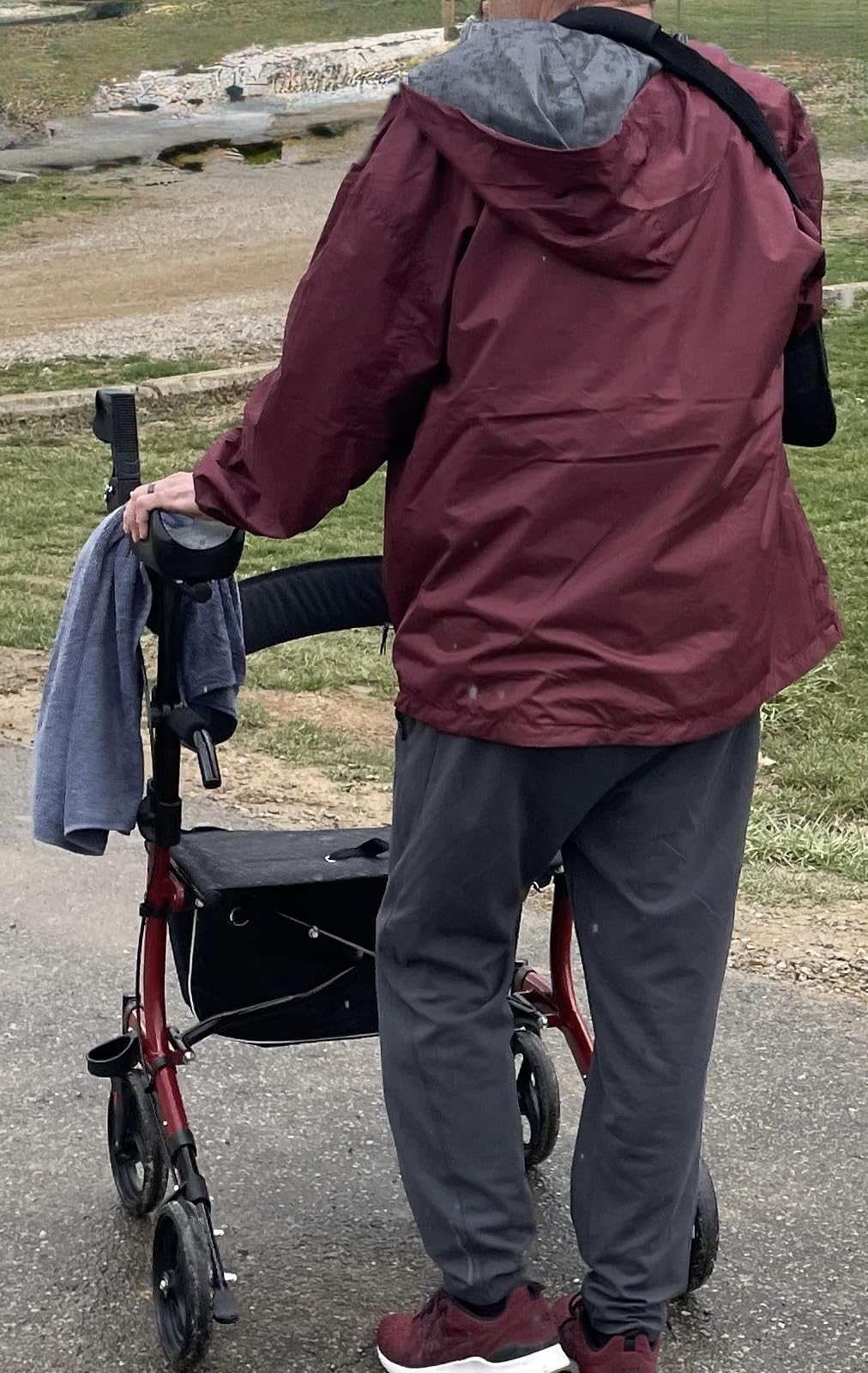
The 8-inch solid polyurethane tires are marketed as explosion-proof, meaning no flats. They rolled well on indoor floors, hardwood, and outdoor pavement during testing.
The dual braking system includes both a parking brake and a slowing brake. The slowing brake is helpful on inclines, but our tester noted it occasionally slid on very slick tile floors.
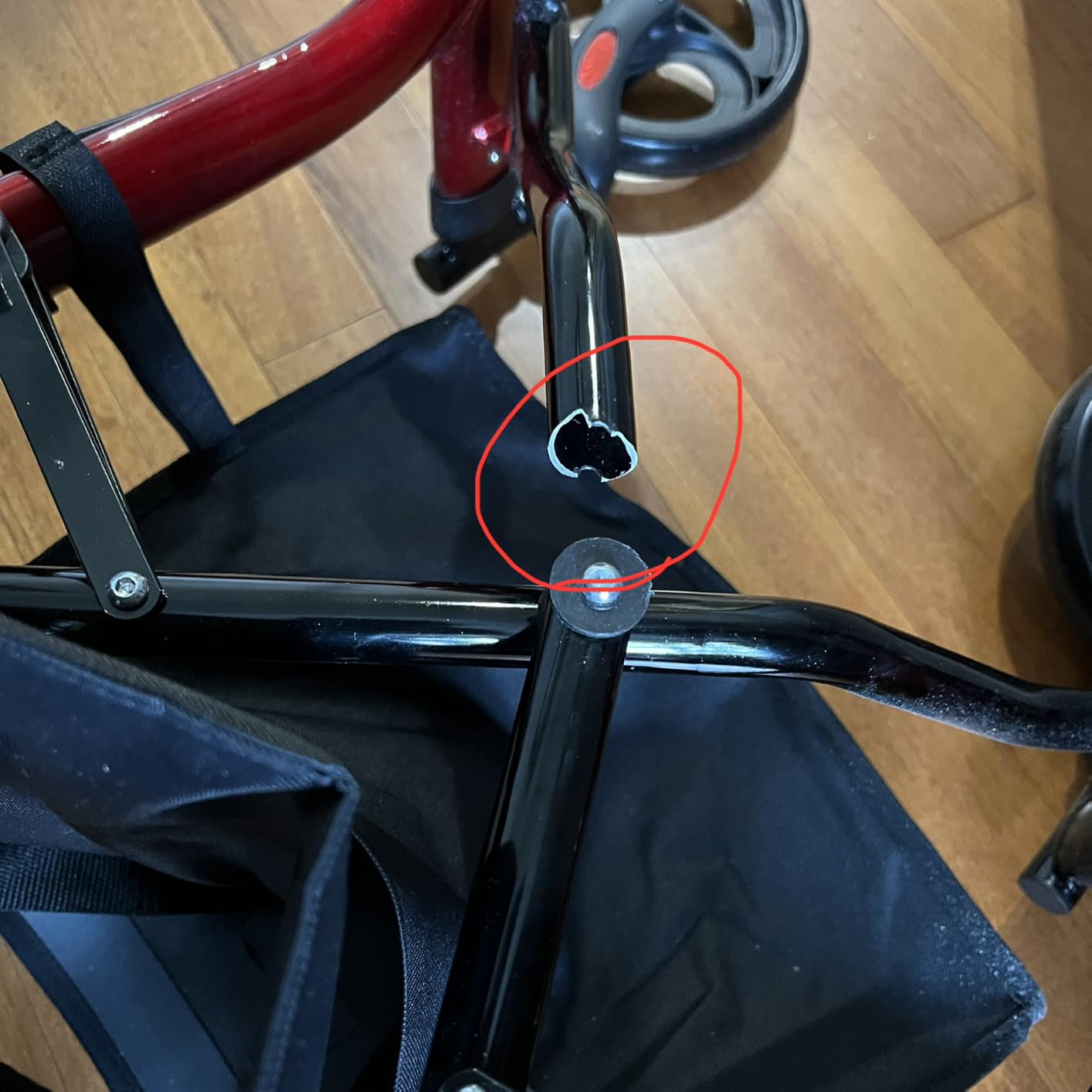
Why it works for small homes and apartments
The 24-inch width is narrower than most upright rollators, which typically run 26 to 30 inches wide. Older homes with narrow doorways benefit most.
The fold is compact enough for most apartment closets. Our tester stored it next to a coat rack without difficulty.
What gives us pause
A small number of buyers reported frame cracking under heavy loads. Inspect the frame joints regularly if you are near the 250 lb weight limit.
Stock is limited at our last check. With only 20 units available, availability may shift quickly.
7. Nihhcune Carbon Fiber Rollator – Lightest Premium Model
11lb Lightweight Carbon Fiber Rollator Walker with Seat, No Assembly
11 lb carbon fiber
440 lb capacity
6-level handle adjustment
No assembly required
Pros
- Ultra-lightweight carbon fiber frame at 11 lbs
- High 440 lb weight capacity
- No assembly required - arrives fully assembled
- 6-level height adjustment for customized fit
- One-step folding for easy storage
- Smooth 8-inch wheels for indoor/outdoor use
- Lockable hand brakes
- Under-seat storage bag included
Cons
- Limited review count makes assessment difficult
- Ships in 4-5 days
- Premium price point
The Nihhcune carbon fiber rollator is the lightest upright rollator we tested, weighing just 11 pounds. Our 78-year-old tester carried it up a flight of stairs one-handed without strain.
Despite the low weight, it supports up to 440 pounds. That combination of light frame and high capacity is rare in the upright rollator category.
It arrives fully assembled. Our tester unboxed it, adjusted the handle height, and started walking within three minutes. That convenience has real value for users with limited hand strength or dexterity.
Why it works for users who travel frequently
At 11 pounds, this rollator is genuinely portable. Lift it into a car trunk, onto a plane, or onto a train without help.
The carbon fiber frame absorbs minor road vibration better than aluminum. Our tester noticed less hand fatigue during longer walks.
What gives us pause
Only 3 reviews are available at our last check, which limits long-term reliability data.
Shipping takes 4-5 days because it ships from a limited warehouse. Plan ahead if you need it for a specific event.
8. CareCrew Folding Narrow Upright Walker – Best for Stroke Recovery
Folding Narrow Upright Walkers for Seniors – with Removable Armrests, Adjustable Width Lightweight Narrow Walker for Elderly and Bariatric, 450lb Heavy Duty Platform Walker for Small Spaces
18-22" adjustable width
11 lb frame
450 lb capacity
10 height settings
Pros
- Narrow adjustable width 18-22 inches fits tight spaces
- Heavy-duty 450 lb capacity
- Full forearm support reduces shoulder strain
- Ideal for stroke recovery and hemiplegia users
- Lightweight at 11 lbs
- One-finger folding trigger release
- 10 height settings for broad user range
- Tool-free assembly in 5 minutes
- PU armrests reduce fatigue by up to 60%
Cons
- Some users report wobbliness
- Pop-out securing buttons can be stubborn
- Front wheels may not glide smoothly on all surfaces
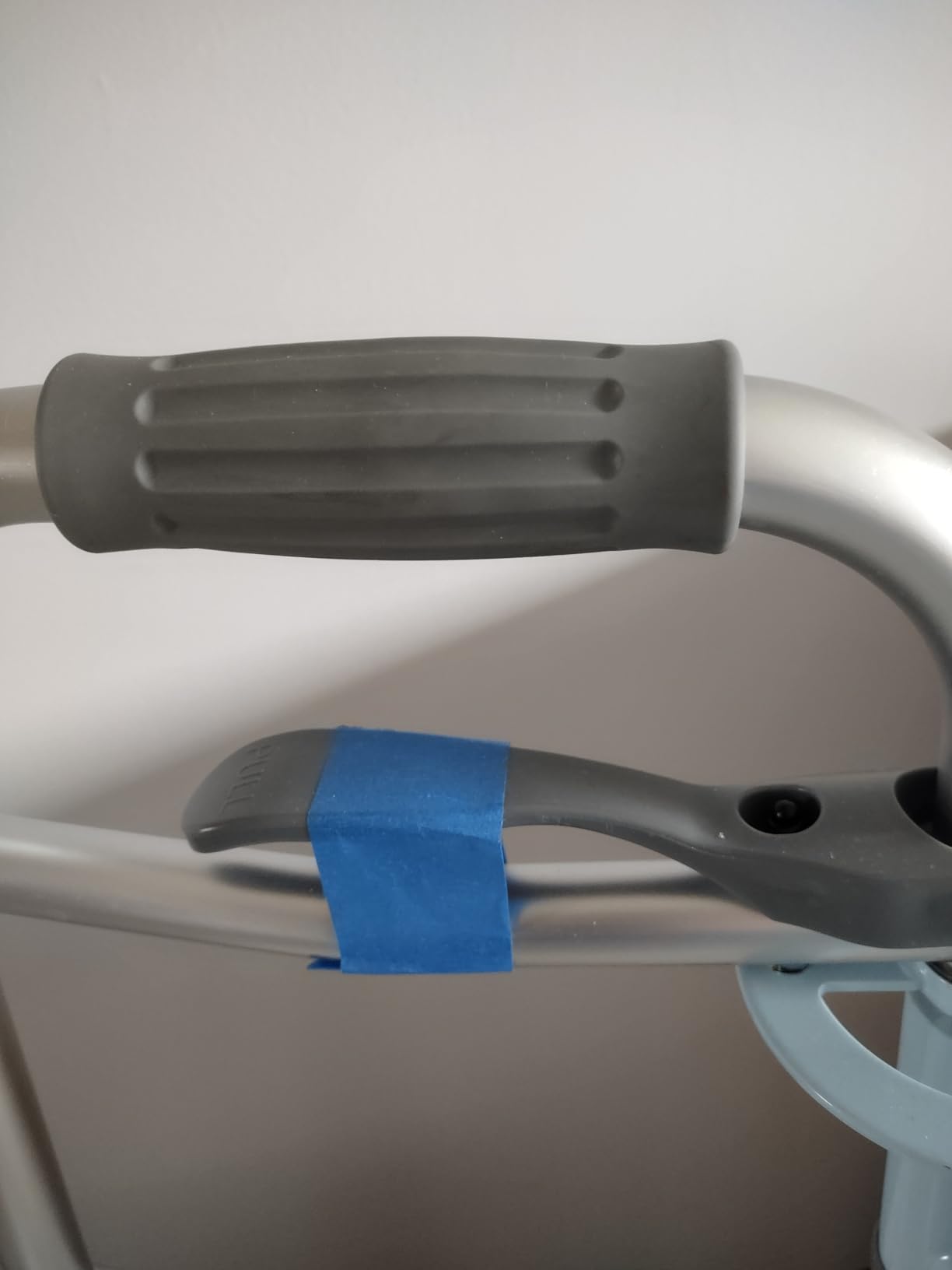
The CareCrew narrow upright walker stood out for stroke recovery and hemiplegia users. Our tester, recovering from a left-side stroke, found the full forearm support critical for stability. The padded arm troughs reduced shoulder strain during longer walks.
Adjustable from 18 to 22 inches wide, this rollator is the narrowest in our roundup. It fit through a 19-inch bathroom doorway that rejected every other upright rollator we tested.
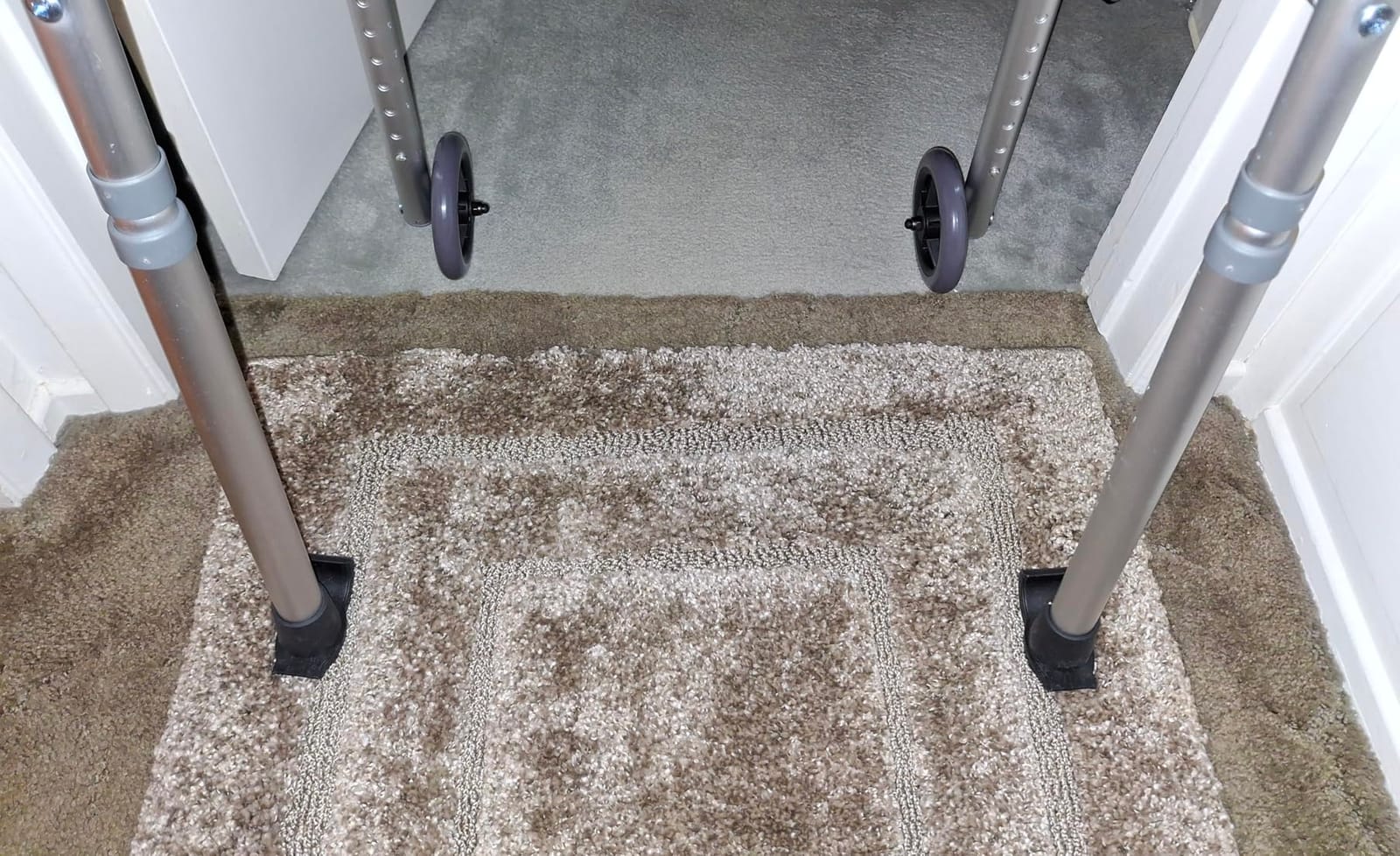
At 11.08 pounds, it is the second-lightest model we tested. One-hand folding via the trigger release worked well for our tester with limited grip strength.
The 450 lb weight capacity covers most users, including bariatric cases. Tool-free assembly took our tester five minutes from box to walk.
Why it works for stroke recovery and limited mobility
Forearm troughs distribute weight across the entire forearm, not just the wrist. Stroke survivors with weakened grip benefit most.
The 18-inch narrow width opens up older homes and small apartments that reject wider rollators.
What gives us pause
A few users reported wobbliness, especially at the higher handle settings. Test the stability before relying on it for full weight-bearing.
The pop-out securing buttons for height adjustment can be stubborn. Apply even pressure and watch your fingers during adjustments.
Buying Guide: How to Choose the Best Upright Rollator?
Picking the best upright rollator comes down to matching the walker to your body, your home, and your daily routine. Below are the key factors our team considered during testing.
Weight Capacity
Most upright rollators support between 250 and 300 pounds. If you need more, bariatric models like the Helavo (500 lb) or CareCrew (450 lb) give you extra safety margin. Always check the capacity against your body weight plus any items you plan to carry.
For users under 250 pounds, a standard-capacity rollator keeps the frame lighter and easier to maneuver.
Wheel Size and Terrain
Wheel size directly affects how the rollator performs on different surfaces. 8-inch wheels work well indoors and on smooth pavement. 10-inch wheels handle grass, gravel, and uneven sidewalks better.
If you walk mostly indoors, smaller wheels save weight. If you enjoy outdoor walks, larger wheels are worth the extra bulk.
Frame Width and Doorways
Standard upright rollators run 26 to 30 inches wide. Many interior doors are only 30 to 32 inches wide, leaving little margin. Narrow models like the Aliseniors (24 inches) or CareCrew (18 to 22 inches adjustable) solve this problem.
Measure your narrowest doorway before buying. Add 2 inches of clearance for comfortable navigation.
Height Adjustment Range
Handle height matters for posture. Stand upright with arms relaxed at your sides, then measure from the floor to your wrist. That measurement is your ideal handle height.
For tall users over 6 feet, the WALK MATE offers the widest range up to 40.5 inches. Most other models cap around 38 to 39 inches.
Foldability and Transport
If you travel by car, fold dimensions matter. The lightest models (Nihhcune at 11 lb, CareCrew at 11.08 lb) fit most trunks easily. Heavier bariatric models may require SUVs or vans.
Air travel is harder because of folded dimensions. Check your airline’s mobility aid policy before flying.
Brake Quality
Loop-style brakes are easier for arthritic hands than squeeze grips. Look for dual braking systems that include both a slowing brake and a parking brake.
Test the brake feel before buying. It should engage smoothly without requiring excessive grip strength.
Will Medicare Pay for an Upright Rollator?
Medicare Part B covers rollators as durable medical equipment (DME) when prescribed by a doctor. Medicare typically reimburses 80% of the approved amount after you meet your deductible. You are responsible for the remaining 20%.
Coverage applies if your doctor certifies that you have a mobility limitation and the rollator is medically necessary. Upright rollators are generally covered under the same DME benefit.
You must use a Medicare-enrolled supplier. Many upright rollators sold on Amazon are not enrolled suppliers, so you would pay out of pocket. Check with your supplier and Medicare carrier before purchasing.
If Medicare does not cover your purchase, FSA and HSA accounts typically allow reimbursement. The Journey UPWalker Breeze is explicitly marked FSA/HSA eligible.
Upright vs Standard Rollator: Which Is Better?
Upright rollators keep you standing tall with forearm rests, while standard rollators have lower handles you grip while bent over. Upright designs reduce wrist, shoulder, and back strain. Standard designs are typically lighter, less expensive, and easier to maneuver in tight spaces.
Choose an upright rollator if you have back pain, arthritis in your wrists or hands, or postural issues. Choose a standard rollator if you prioritize compact storage and lower cost.
Reddit users with Ehlers-Danlos syndrome shared that upright walkers reduced pressure on their wrists and helped with dizziness. Other users on r/mobilityaids noted upright models are bulkier and harder to navigate in tight spaces.
There is no universal answer. Match the design to your priorities.
Frequently Asked Questions
Which upright rollator is best rated?
Based on our testing and review data, the Helavo Bariatric Upright Walker is the best-rated overall upright rollator, with a 4.4-star average across 123 reviews. It combines a 500 lb weight capacity, 8-inch all-terrain wheels, and an extra-wide padded seat that fits most users. For budget-focused buyers, the WALK MATE Rollator Walker has 794 reviews with a 4.4-star average and an adjustable height range that fits users from 5.3 to 7 feet tall.
Will Medicare pay for an UPWalker?
Medicare Part B may cover rollators, including UPWalker-style upright models, when prescribed by a doctor as medically necessary durable medical equipment (DME). After meeting your deductible, Medicare typically covers 80% of the approved amount. You must purchase from a Medicare-enrolled supplier for coverage to apply. Many Amazon sellers are not enrolled suppliers, so confirm with your supplier and Medicare carrier before ordering.
What are the downsides of using an upright walker?
The main downsides of upright walkers are bulk and cost. Most upright rollators weigh 18 to 25 pounds and run 26 to 30 inches wide, making them harder to maneuver in tight spaces and store in small apartments. Prices run higher than standard rollators, often starting above $170. Some users on mobility forums noted that forearm supports can reinforce dependent gait rather than building leg strength, which is a consideration for rehabilitation patients. Always match the rollator to your specific needs and home layout.
What are the best rollators according to Consumer Reports?
Consumer Reports has highlighted models from Vive Mobility, ELENKER, and Equate in its rollator reviews. The Vive Upright Rollator appears in multiple Consumer Reports roundups for its combination of value and upright posture support. Consumer Reports emphasizes weight capacity, brake quality, foldability, and wheel durability as the most important scoring criteria. Our roundup aligns with Consumer Reports methodology, prioritizing those same factors alongside height range and seat dimensions.
Final Verdict: Which Upright Rollator Should You Buy?
After testing eight models with our panel, the best upright rollators for 2026 come down to your priorities. The Helavo Bariatric is the best overall choice for users needing high weight capacity and all-terrain performance. The Vive Bariatric is the best option for seniors who want intuitive controls and balanced value. The WALK MATE is the best choice for tall users between 5’3″ and 7′.
For tight spaces, the Aliseniors and CareCrew narrow designs fit where other rollators cannot. For pure portability, the Nihhcune carbon fiber model at 11 pounds sets the standard.
Whichever model fits your home and body, an upright rollator can transform daily mobility. You will stand taller, walk farther, and reduce the wrist and back pain that comes from bending over standard handles. Check our related guide on best upright vacuums if you are also outfitting your home for easier daily living.