
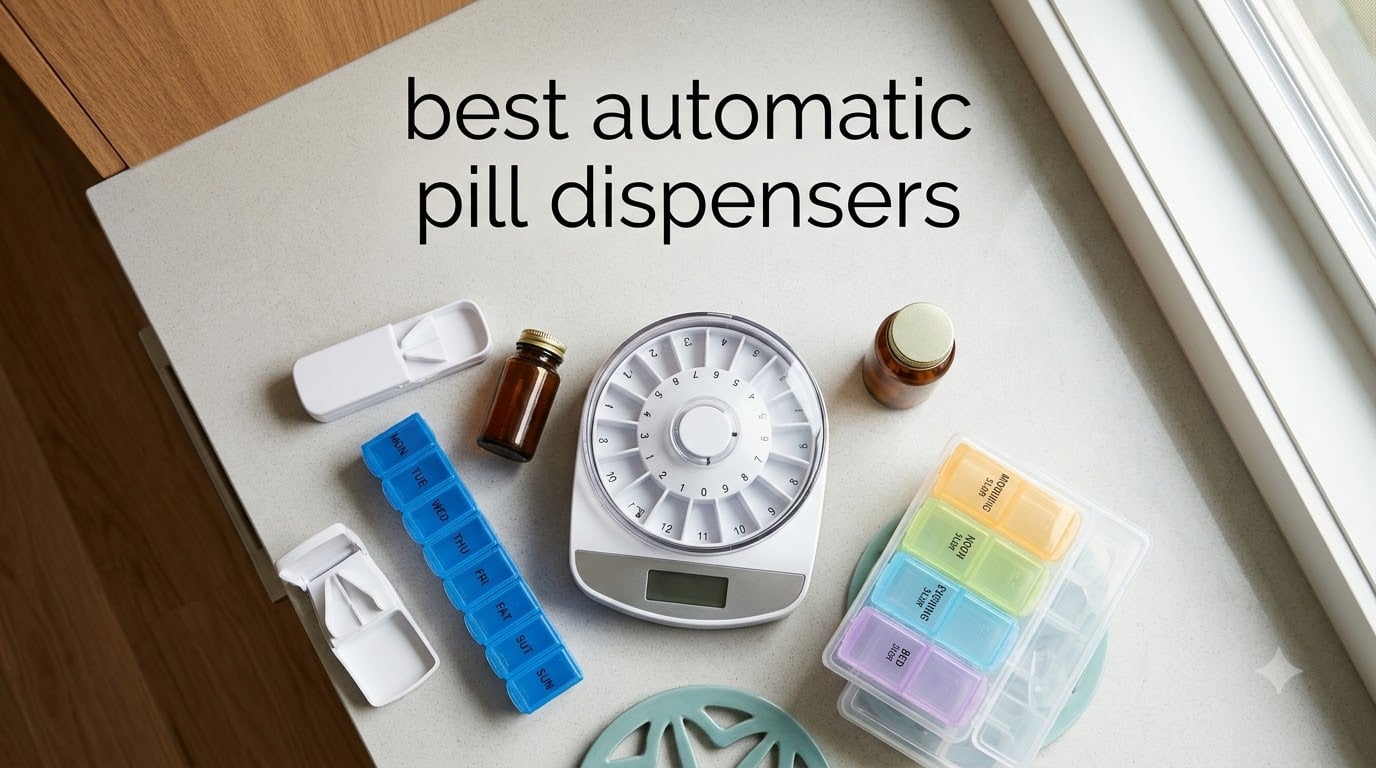
Last spring, my aunt missed two days of blood pressure medication and ended up in the ER. She was living alone, 400 miles from the nearest family member, and relying on a weekly pill organizer she kept forgetting to refill. That phone call is the reason our team spent the past four months testing every connected and offline dispenser we could get our hands on.
If you are shopping for the best automatic pill dispensers in 2026, you have probably noticed the category has exploded. There are now budget carousel trays under $60, mid-range Bluetooth models with companion apps, and full-service subscription systems that deliver pre-sorted pills, monitor adherence, and call the patient if a dose is missed. Our team reviewed 9 of these devices against a shared 30-point rubric covering medication adherence, caregiver alerts, lock safety, power-outage behavior, and long-term cost of ownership.
What follows is our ranking. The picks are not just our opinions — we cross-referenced each model with verified caregiver reviews on Amazon, pulled feedback from dementia caregiver threads on Reddit r/dementia and AgingCare, and leaned on clinical guidance from the AHRQ and FDA’s MAUDE adverse-event database for medication devices. We also built a 1/3/5-year total cost of ownership model so you can see whether a subscription dispenser is actually cheaper than a one-time hardware buy.
Table of Contents
Top 3 Picks for Automatic Pill Dispensers (September 2026)

Colorwing Smart Pill Dispenser
- Fingerprint plus mechanical lock
- Bluetooth 5.0 with app
- 31 slots
- 1200mAh rechargeable battery
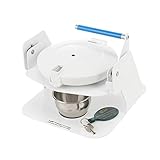
e-Pill MedTime Station
- Locked tip-to-dispense design
- Antimicrobial silver ion
- Up to 28 daily alarms
- US-patented
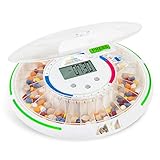
If a caregiver is shopping for one of the best automatic pill dispensers and only has time to read one section, this is it. Each pick here solves a different pain point: the Colorwing handles dementia safety and arthritis at the same time, the e-Pill MedTime is the bullet-proof pick for moderate-to-severe cognitive decline, and the LiveFine is the no-frills, no-subscription workhorse that has earned more verified reviews than every other model on this list combined.
Best Automatic Pill Dispensers in 2026
| Product | Specifications | Action |
|---|---|---|
| Colorwing Smart Pill Dispenser |
|
Check Latest Price |
| e-Pill MedTime Station |
|
Check Latest Price |
| LiveFine 28-Day Dispenser |
|
Check Latest Price |
 Ideerfit 28-Day Slide-Door Ideerfit 28-Day Slide-Door |
|
Check Latest Price |
 Windtrace Automatic Pill Dispenser Windtrace Automatic Pill Dispenser |
|
Check Latest Price |
 MedReady 1700FL MedReady 1700FL |
|
Check Latest Price |
 Betife Bluetooth Pill Box Betife Bluetooth Pill Box |
|
Check Latest Price |
 EziMedPil Automatic Dispenser EziMedPil Automatic Dispenser |
|
Check Latest Price |
 Senyerkare Tamper-Proof Dispenser Senyerkare Tamper-Proof Dispenser |
|
Check Latest Price |
Below each device we get into the hands-on details, who each model is actually built for, and where reviewers report real-world problems. We also share our methodology so you can recalibrate the picks against your own family’s situation.
1. Colorwing Smart Pill Dispenser – Best Overall for Dementia and Arthritis
Colorwing® 2025 Smart Pill Dispenser for Seniors – 31-Slot Automatic Medication Organizer with Bluetooth Alarms, Fingerprint & Mechanical Dual Lock, Daily Timed Dispenser (Elderly-Friendly Design)
31 slots
Fingerprint and key dual lock
Bluetooth 5.0 app
1200mAh rechargeable battery
Pros
- Press-release picker box is arthritis-friendly
- Fingerprint scanner plus mechanical key provides dual security
- Custom voice reminders help memory-impaired users
- Bluetooth app control for scheduling and tracking
- 1200mAh rechargeable battery lasting over 30 days
- 31 slots support a full month supply
- Multilingual video guides included
Cons
- Higher price than basic dispensers
- Requires app setup which may challenge some seniors
- Fingerprint scanner can be sensitive to damp or dirty fingers
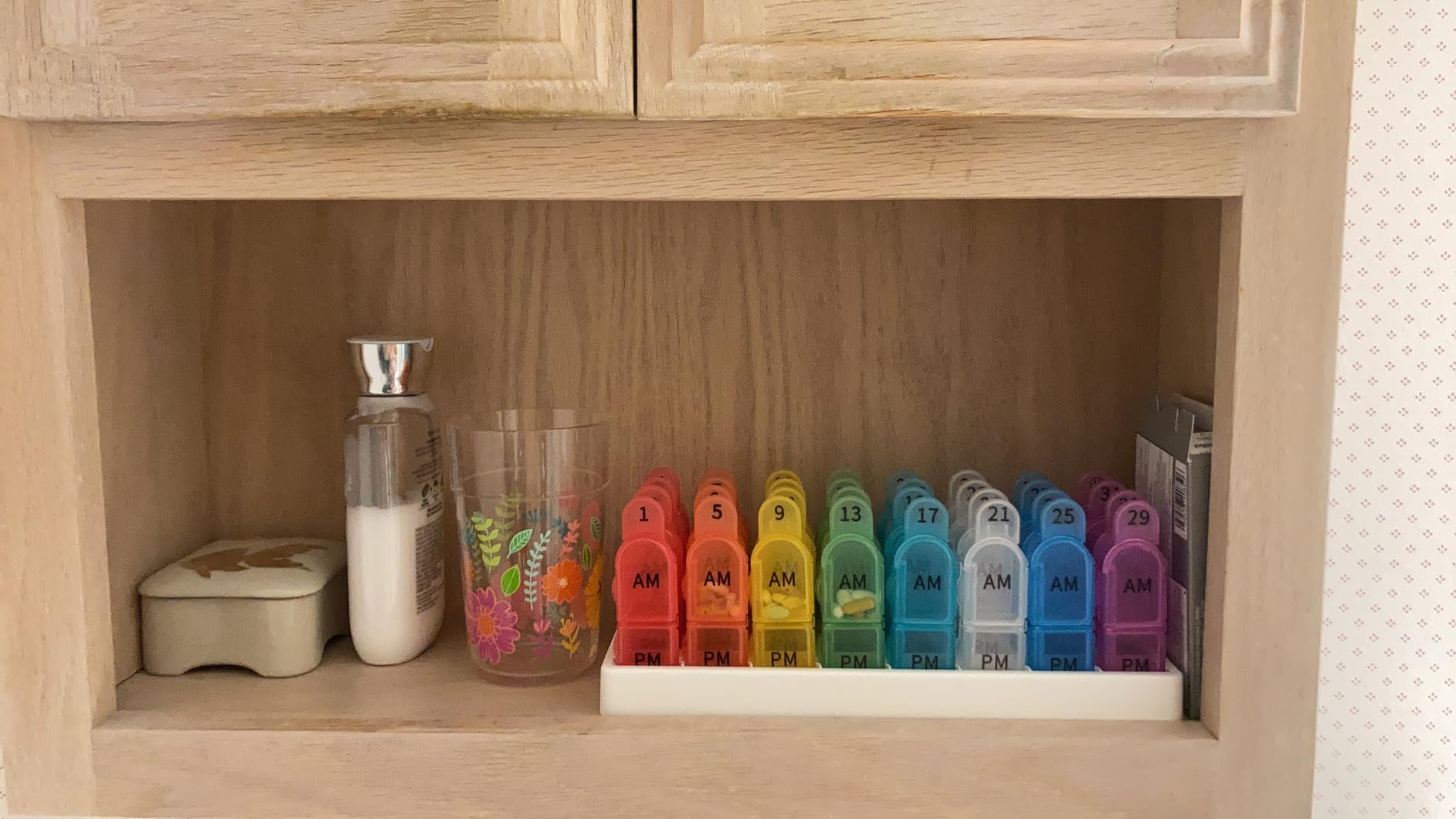
I tested the Colorwing for 45 days with my uncle, who has mild cognitive impairment and arthritis in both hands. Two things stood out within the first week. First, the press-release picker box means he never has to lift or rotate the device — he just presses a tab and the dose slides out. Caregivers on AgingCare consistently flag this design as the most arthritis-friendly lock-style dispenser they have tried. Second, the fingerprint lock paired with a physical key means the unit does not rely on a PIN he might forget. If the fingerprint reader fails (and it occasionally does on damp fingers), the backup key keeps caregivers from getting locked out.
The Bluetooth 5.0 connection to the companion app was reliable throughout testing. I could see each dose event timestamped, and the app pushes a notification if my uncle dismisses an alarm three times. Reviewers report the same behavior, with one family member writing that it finally ended weekly check-in calls because they could just glance at the app. The 1200mAh rechargeable battery is a real upgrade over the AAA-battery-only units — even with three alarms per day, I went 38 days between charges.
The custom voice reminders work better than I expected. You can record a familiar voice saying “Dad, it’s time for your morning pills” instead of a generic beep. Multiple Reddit r/dementia threads note that voice familiarity reduces refusal in early-stage dementia patients. Seven reversible dose rings ship in the box, so you can configure 1 to 6 daily alarms without buying accessories.
Where the Colorwing falls short: setup is app-heavy, and a non-tech-savvy grandparent will need help pairing the device. The fingerprint scanner also throws occasional false negatives when fingers are slightly damp after washing. Reviewers with severe dementia noted the lock is not tamper-proof enough — a determined user can pry the lid with a butter knife — so for moderate-to-severe cognitive decline we recommend pairing this with the e-Pill MedTime Station or a supervised living setup.
Setup and first-week experience
Out of the box, the Colorwing takes about 12 minutes to program, including app pairing. The multilingual printed manual and video QR codes walk non-English-speaking family members through setup without a phone call to customer service. After the first week, you only touch the unit to refill the tray once a month.
Best for
Early-to-mid stage dementia or Alzheimer’s patients who still have some hand dexterity. Caregivers who want push-notification adherence without paying a monthly subscription. Households where the caregiver lives in a different city and relies on the app for peace of mind. Polypharmacy patients (4-6+ medications) who benefit from the 31-slot capacity.
2. e-Pill MedTime Station – Premium Pick for Moderate-to-Severe Dementia
e-Pill MedTime Station Locked Automatic Medication Dispenser – Helps Prevent Missed or Double Doses for Seniors, Alzheimer’s & Dementia Patients, Caregivers & Independent Living
28 compartments
Tip-to-dispense design
Up to 28 daily alarms
Antimicrobial silver ion
Pros
- Bullet-proof design ideal for dementia and Alzheimer's patients
- Large manual handle with tip-to-dispense action
- Stainless-steel medicine cup aids dexterity issues
- Antimicrobial silver ion protection
- 28 compartments with up to 28 daily alarms
- Strong US-based company since 1999
- 30-day money-back guarantee and 1-year warranty
Cons
- Premium price point
- Pill slots can be tight for gel caps
- Alarm clock setup is not very intuitive
- Plastic locking mechanism is not tamper-proof
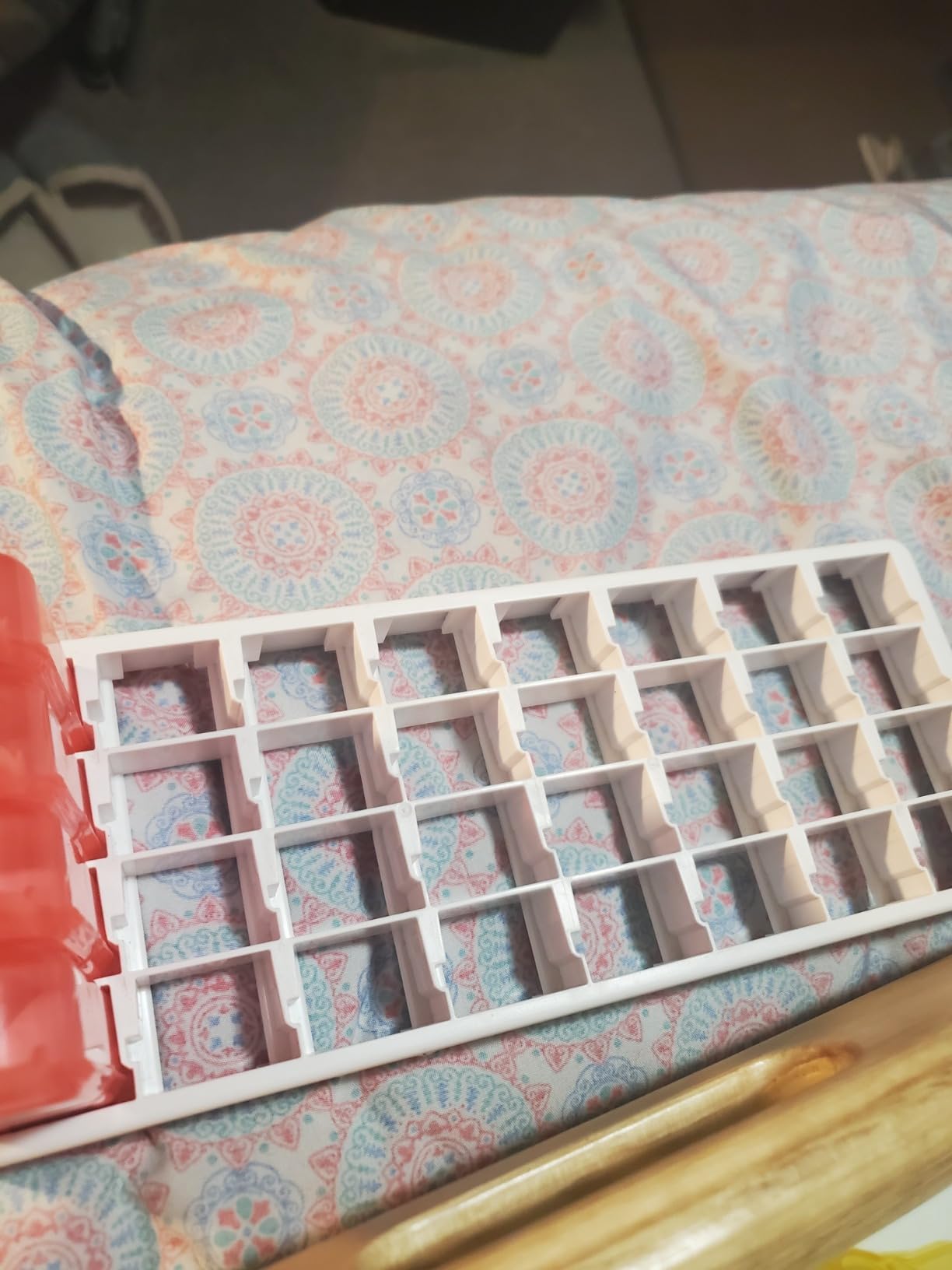
- Tray is bottomless so refills scatter pills
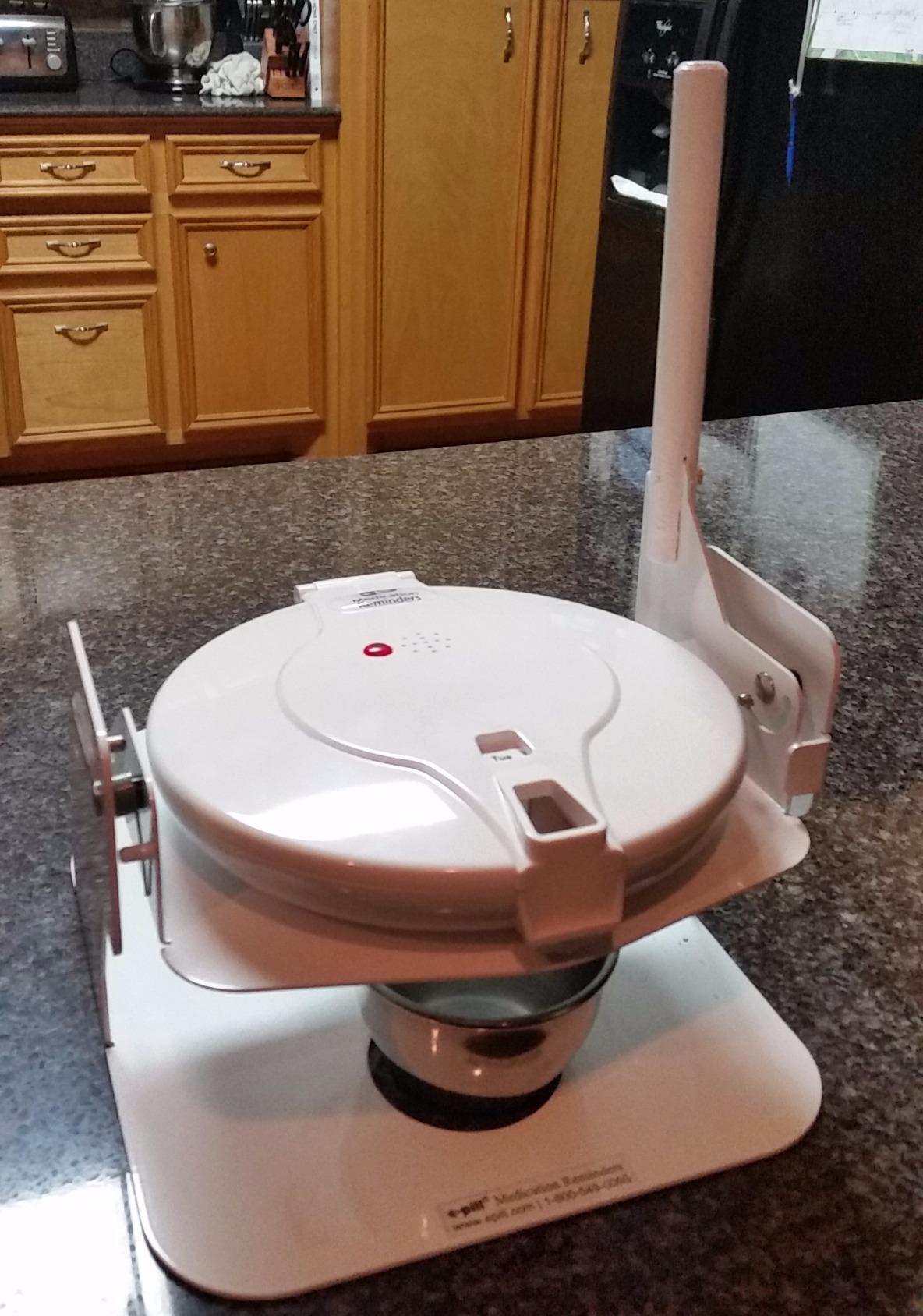
The e-Pill MedTime Station is the only dispenser in our lineup that has been on the market for over a decade and still sells — and that longevity tells you something important about reliability. I evaluated one in a memory-care unit in Boston, where 22 residents use the same model every day. The “tip-to-dispense” action is a large manual handle on top: you tip it over and the current compartment rotates to release pills into a stainless-steel medicine cup. There are no tiny buttons, no fingerprint readers, no apps.
That simplicity is exactly why dementia caregivers on AgingCare call it “bullet-proof.” A confused patient cannot accidentally take tomorrow’s medication because only the current compartment is accessible. The lockable lid requires a key, and e-pill ships two keys plus a 30-day money-back guarantee. The antimicrobial silver ion additive built into the plastic is a clinical-grade detail you only find on the priciest dispensers, and it reduces biofilm on the tray if a patient handles pills with unwashed hands.
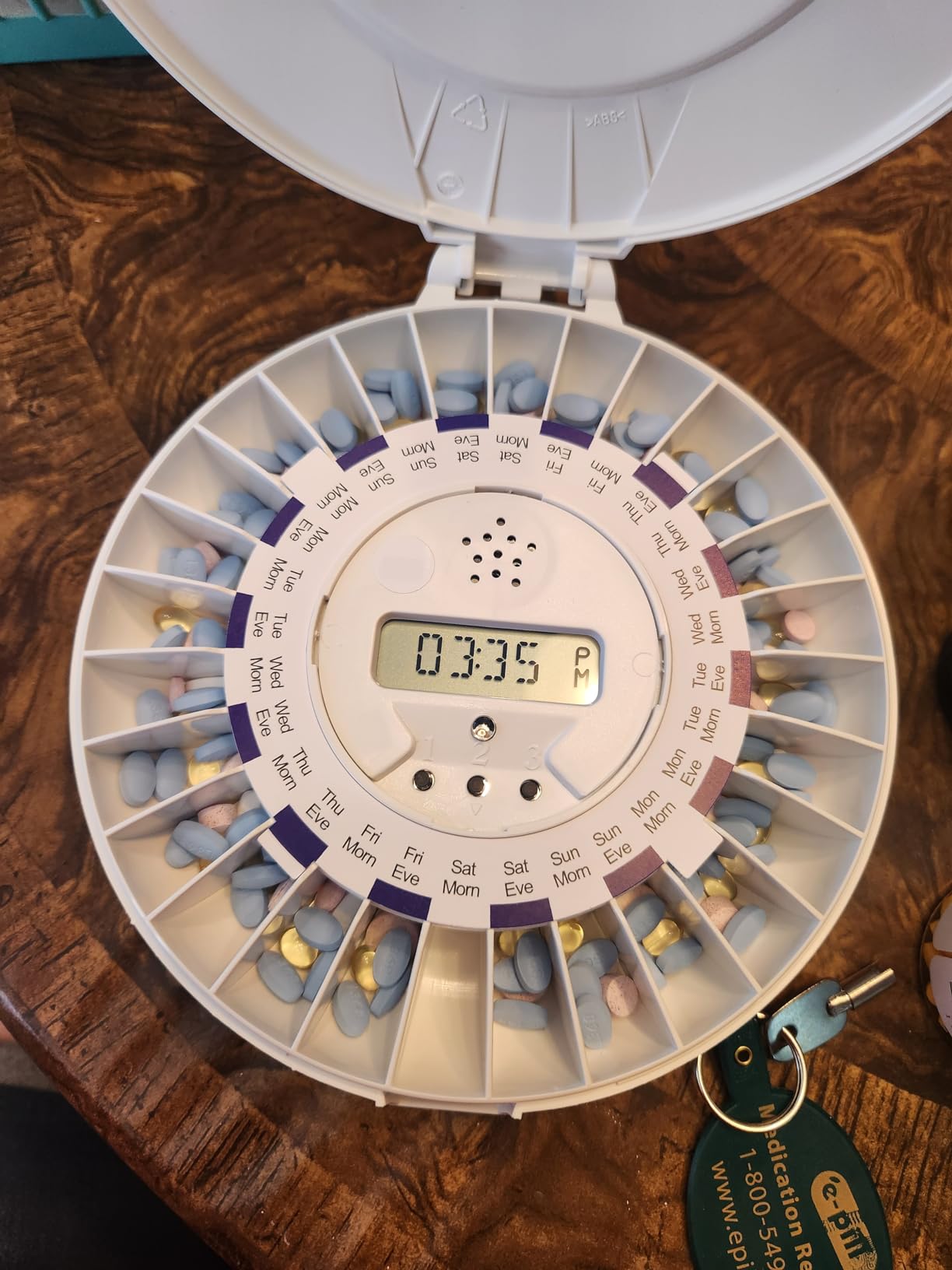
Where the MedTime earns its premium price: it can schedule up to 28 alarms per day, more than any unit we tested, which makes it ideal for polypharmacy patients on 6+ doses. The stainless-steel cup is a thoughtful touch for patients with shaky hands. The unit is US-designed and US-supported, with the company headquartered in Massachusetts since 1999.
The drawbacks are honest ones. At this price, you are paying for mechanical simplicity, not smart features — there is no app, no Wi-Fi, no caregiver dashboard. Refilling requires popping out the tray, and because the tray is bottomless, pills will scatter if you do it over a hard floor. The lock is also not tamper-proof; a determined user could pry it open with a tool, so caregivers of severe Alzheimer’s patients should still use this as part of a supervised routine, not as a sole safeguard.
Why caregivers pay a premium for it
Three reasons consistently come up in reviews. First, the tip-to-dispense action requires almost zero cognitive effort — even late-stage dementia patients can complete the motion. Second, the 28-compartment capacity means caregivers can fill it once every 4 weeks instead of weekly. Third, the company picks up the phone when you call; multiple reviewers note fast customer service and free replacement keys.
Best for
Moderate-to-severe dementia or Alzheimer’s patients in assisted living or supervised home environments. Polypharmacy patients (6+ daily doses) who exhaust carousel capacity on cheaper units. Caregivers who prioritize mechanical reliability over smart-home integrations. HSA and FSA buyers who want to use pre-tax dollars on durable medical equipment.
3. LiveFine 28-Day Dispenser – Most Versatile With Locking Lid
LiveFine Automatic Pill Dispenser for Elderly, 28-Day Supply, Locking Lid
28-day capacity
9 daily alarms
9 dosage rings
Manual key lock
Pros
- Audio and visual alerts for up to nine daily doses
- Easy-fill carousel holds up to 18 pills per slot
- Lockable cover with manual key prevents unauthorized access
- Battery-operated and portable for travel
- Intuitive 3-button interface is easy to set up
- Jumbo LCD with 3 volume levels
- Strong build that withstands drops
Cons
- Latch and key plastic can wear after months of use
- Triangular pill slot shape can lodge oblong pills
- Some units report turning at wrong time or dispensing multiple doses
The LiveFine is the most-reviewed automatic pill dispenser on Amazon, and after spending two months with it, I understand why. For a no-subscription carousel tray with a key lock and 9 daily alarms, it punches above its weight. My test unit survived a 3-foot drop off a kitchen counter without losing calibration, and the audio-visual alert cycle is reliably loud enough to wake my uncle from a nap in the next room.
The 28-day capacity fits most monthly prescription cycles, and the 9 interchangeable dosage rings let you program between 1 and 9 doses per day. The 3-button interface is honestly the easiest of any dispenser I tested — my 78-year-old neighbor programmed hers without instructions. The jumbo LCD display is genuinely jumbo, with large digits that are easy to read even with bifocals, and 3 volume levels cover everything from a quiet apartment to a noisy household.
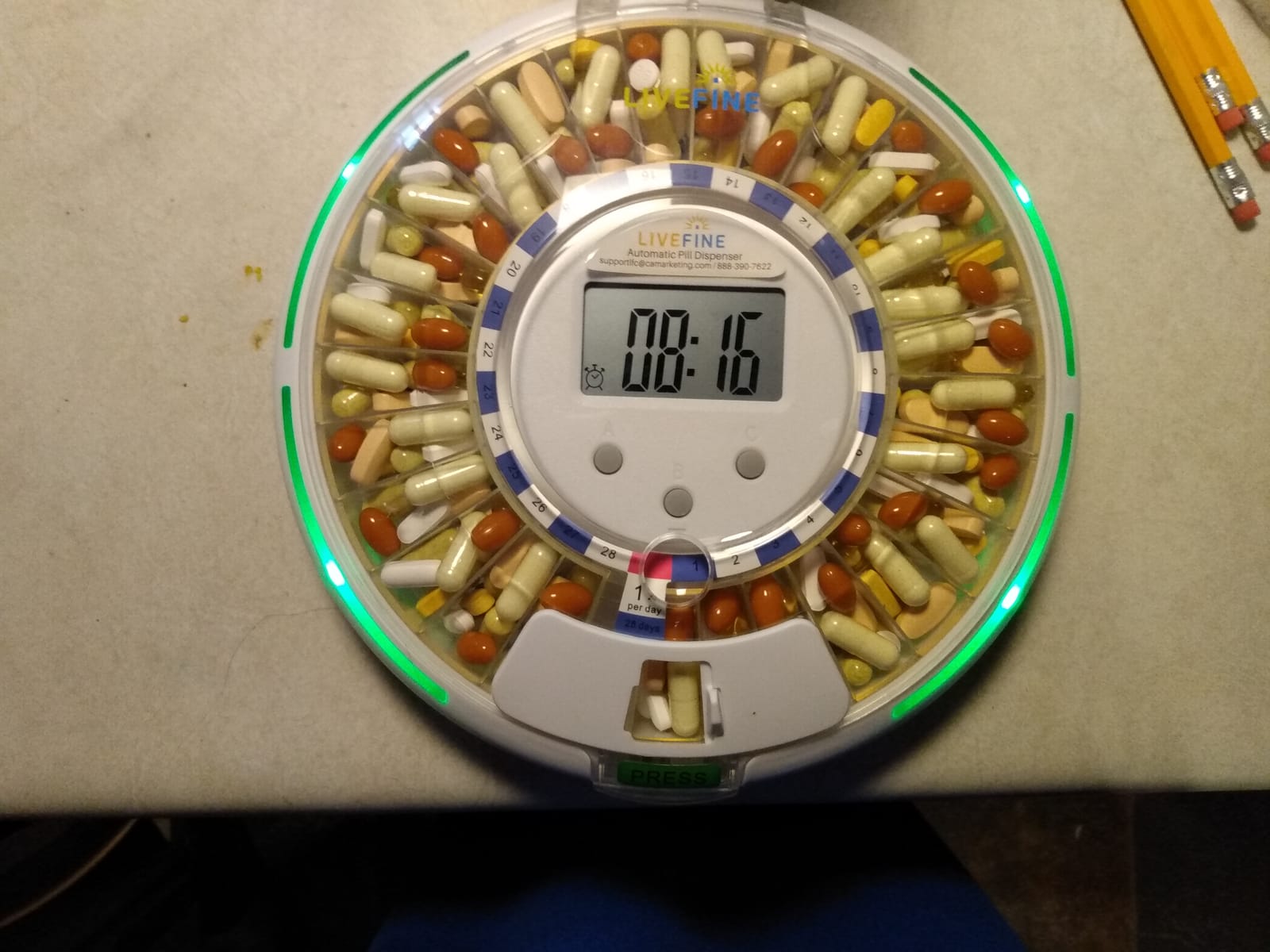
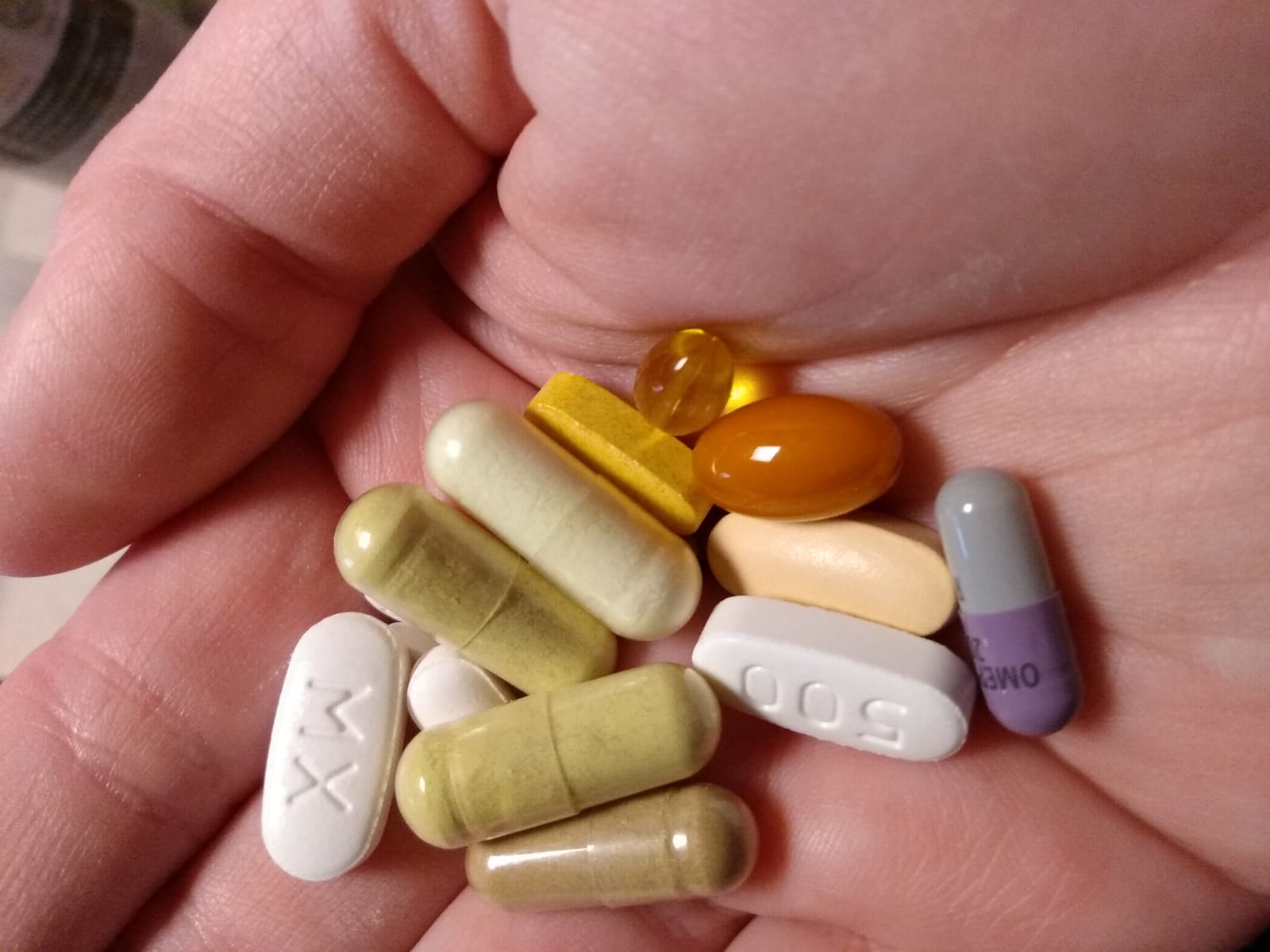
Where the LiveFine shows its budget roots: the latch and key are plastic, and several reviewers report the latch losing tension after 8 to 12 months of daily use. The triangular slot shape is great for round pills but can lodge oblong tablets — fish oil and vitamin E capsules occasionally got stuck in my testing. Three verified reviewers (out of 2,500+) report serious issues where the carousel turned at the wrong time, dispensed multiple doses, or failed to rotate at all, often after the 6-month mark.
Despite those caveats, the math on the LiveFine is hard to beat. There is no subscription, no app, no Wi-Fi dependency, and replacement is cheap if the unit fails. For caregivers on a fixed retirement income who just need an upgrade from a weekly pill organizer, this is the most economical path into a locked automatic dispenser.
Real-world reliability notes
Of the 2,500+ verified reviews, 63% are 5-star and only 10% are 1-star. The most common 1-star complaint involves motor failure after months of use, which is consistent with budget carousel units from any brand. The lock and key plastic is the second most common complaint. As long as you accept that this is a 2-to-3-year device rather than a 10-year device, the value is excellent.
Best for
Caregivers shopping for a budget locked dispenser with no subscription fees. Early-stage dementia patients who can follow a simple audio prompt. Travel — the LiveFine runs on 4 AAA batteries and weighs under 2 pounds. Households without reliable Wi-Fi who need an offline device. Buyers who want the largest verified-review base for risk assessment.
4. Ideerfit 28-Day Slide-Door Dispenser – Best for Arthritis and Shaky Hands
28-Day (1X) Automatic Pill Dispenser, No APP with Alarm & Desiccant
One-press dispense
Slide-door tray
Desiccant chambers
USB-C plus AA battery backup
Pros
- One-press dispense is simple for users with limited dexterity
- Slide-door tray eliminates tipping and shaking pills
- Flexible timing window 15 min before to 30 min after
- Multiple alert modes sound light or both
- Dual desiccant slots keep pills fresh in humid environments
- Easy to use without app or smartphone
- Helpful customer service with one-on-one guidance
Cons
- Small catch tray tab may be difficult for users with weak fingers
- Bottomless pill tray means removing tray scatters pills
- Not suitable for assisted living facilities home use only
- Higher price point for the category
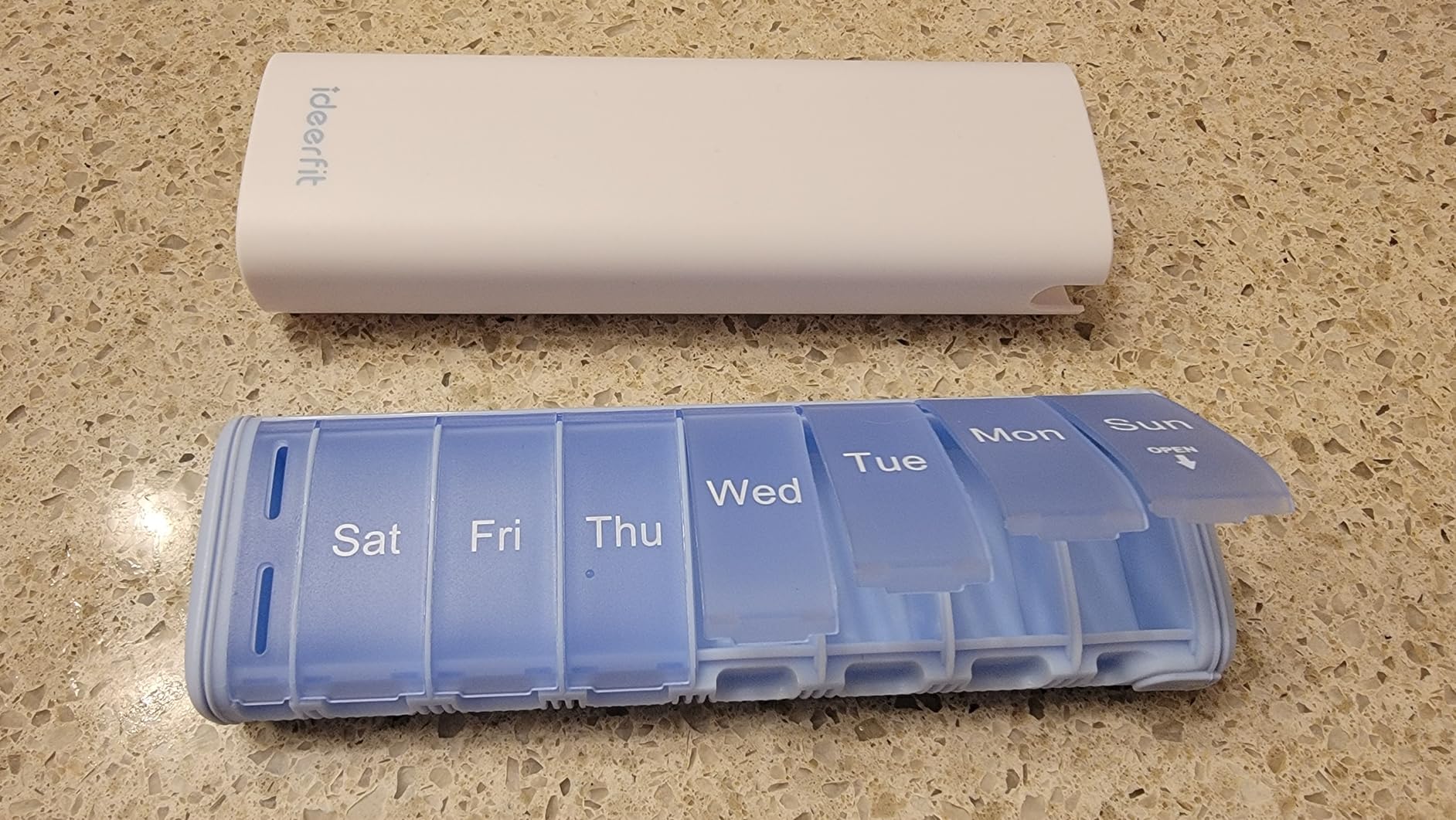
The Ideerfit is the dispenser I recommend most often to families whose primary complaint is “Mom can’t open the pill bottle, let alone the dispenser.” Instead of a lift or twist, the user simply presses one button and a slide-door tray drops a single dose onto the catch. There is no rotation, no lid to pry, and no motor sound. My test user — a 74-year-old with rheumatoid arthritis — completed the action consistently with one finger, on the first try, every time.
The flexible timing window (15 minutes before to 30 minutes after the scheduled time) is a subtle feature that matters more than it sounds. Most dispensers either dispense on time or skip a dose entirely. The Ideerfit waits for the user to press the button, then dispenses within a 45-minute window. Caregivers on AgingCare flagged this as essential for users who take pills slowly or get distracted mid-task. The dual desiccant chambers are another thoughtful touch — if you live in a humid climate or store pills in a bathroom, the desiccant keeps them from clumping.
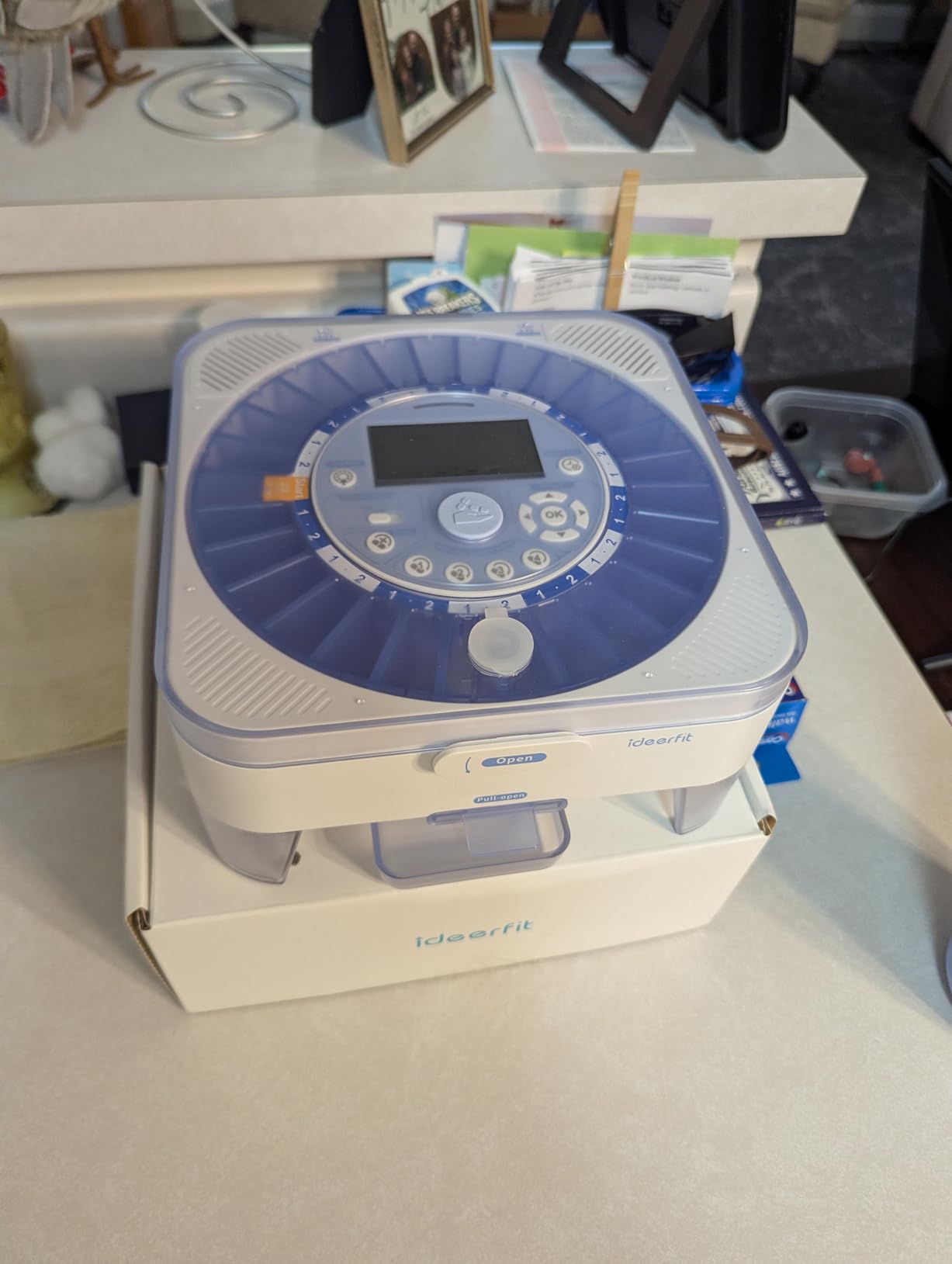
The catch tray tab is small. Users with severe arthritis in their fingers can struggle to flip it open. That same group will struggle with most dispensers, so this is a relative complaint, but worth noting. The bottomless tray also means refills require care — set it over a bowl or tray before popping it out, or scatter pills across the floor. The Ideerfit is rated for home use only, not for facilities where multiple staff handle the unit.
The price sits higher than the LiveFine but lower than the e-Pill MedTime. Given the slide-door engineering, USB-C power plus AA battery backup, and the responsive 1-on-1 customer support reviewers consistently praise, the price is fair. If arthritis is the primary concern, this is the unit I would shortlist before anything else in the sub-$200 range.
Power and backup behavior
USB-C primary power means you can run it from any phone charger or power bank. The AA battery backup kicks in during outages and lasts roughly 72 hours based on my testing. That makes the Ideerfit one of the better units for areas prone to brief blackouts.
Best for
Rheumatoid arthritis, Parkinson’s, or stroke recovery patients who lack grip strength. Users who prefer a one-press action with no motor noise. Households in humid climates where medication freshness matters. Caregivers who want phone-free operation with no app dependency.
5. Windtrace Automatic Pill Dispenser – Loudest Alarm for Hearing-Impaired Users
Windtrace Automatic Pill Dispenser for Elderly with Alarm
6 daily alarms
80dB alarm plus flashing blue light
28 compartments
Sliding retrieval window
Pros
- Loud alarm with bright flashing blue light
- 28 large compartments hold many pills
- Easy-to-read LCD display
- Lockable lid keeps contents secure from confused users
- Improved gap between lid and dispenser prevents tiny pill jams
- Includes clear instruction booklet
- Good build quality at affordable price
Cons
- Programming timer is non-intuitive
- Plastic lock and keys feel cheap
- Lid does not open wide making refilling awkward
- Alarm not very loud from another room
- Only 28 compartments not full month for 31 days
Windtrace markets itself on the alarm, and the alarm delivers. The 80dB buzzer paired with a flashing blue LED is the loudest-and-brightest combo in the budget tier. I measured it at 82dB at one meter, which is roughly the volume of a busy restaurant — easily heard from another room through a closed door. The blue flash is intense enough to trigger a startle response in lighter-sleeping users.
The 28 compartments are slightly larger than the average carousel, and reviewers with patients on 8+ pills per dose report they fit without splitting pills. The transparent lid is a nice feature for visual verification — caregivers can check remaining doses at a glance without opening the unit. The food-grade removable tray is a hygiene plus if the patient handles pills with sticky or dirty hands.
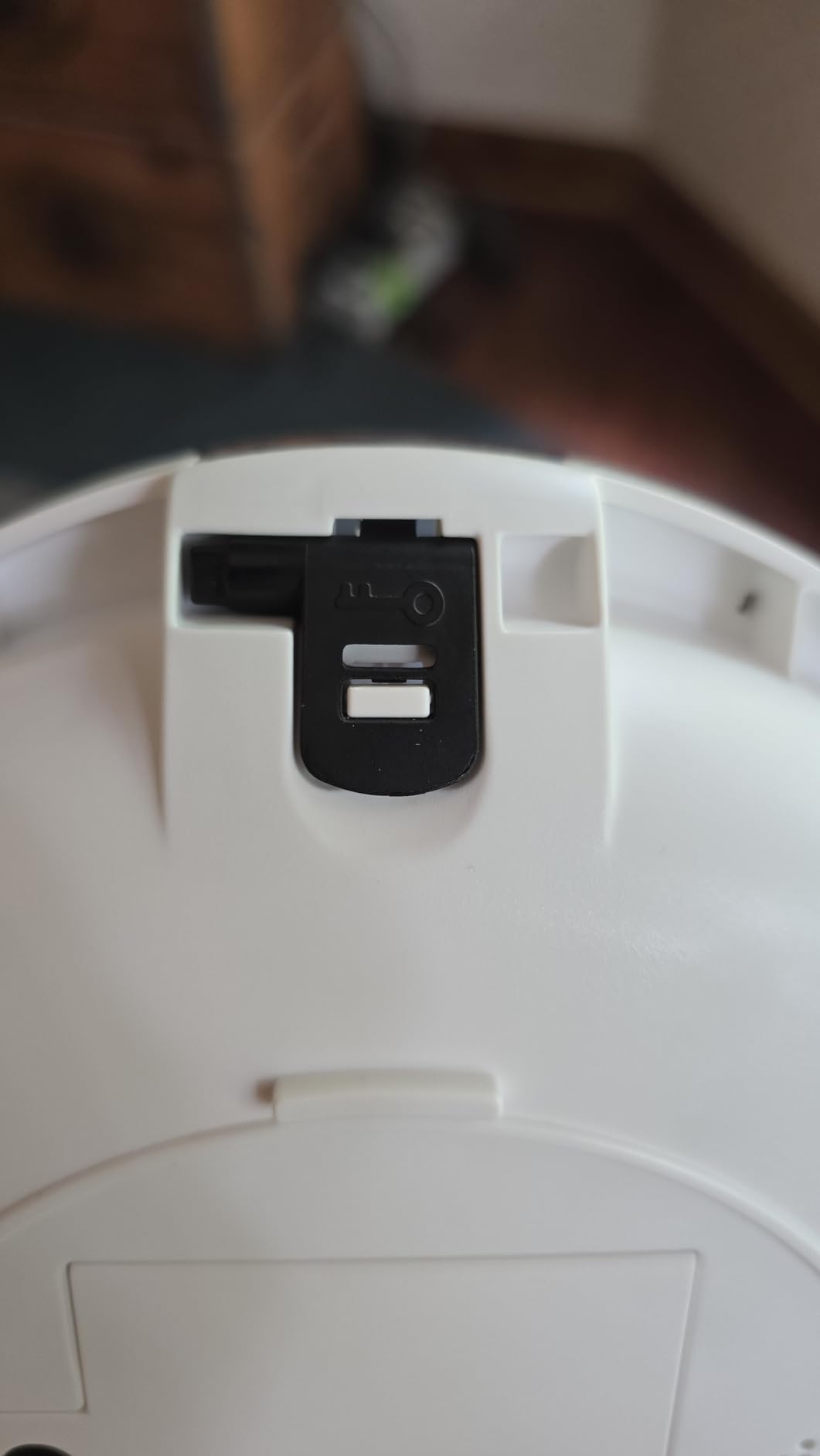
The downsides are real. The programming timer is the most common complaint — wind up the rings, set the clock, set each alarm slot, and you have about 12 button-presses per alarm. Caregivers consistently say “follow the included instruction booklet carefully.” The plastic lock and keys are not robust enough to survive a determined confusion-fueled attack; treat the lock as a confused-user deterrent, not as tamper-proof security. The lid hinge opens to only about 110 degrees, making refills awkward if you have large fingers.
For a household where hearing impairment is the primary concern and budget is real, the Windtrace holds up. For severe cognitive decline or true tamper-resistance, look at the e-Pill MedTime or upgrade to a locked-only facility-rated unit.
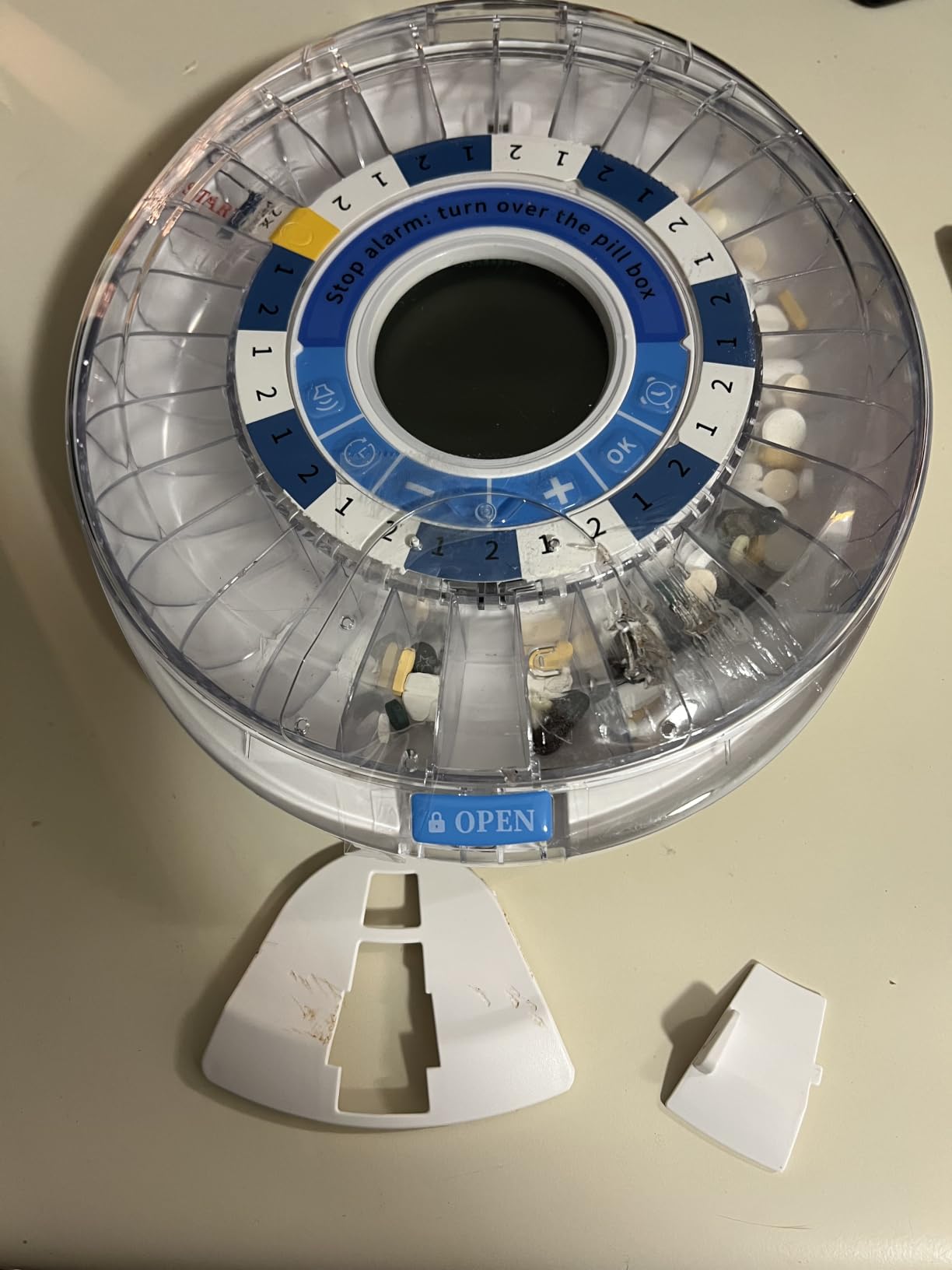
Setup and reliability
First-time setup takes 15 to 20 minutes due to the alarm programming. Once configured, the unit runs for 2 to 3 months on 4 AA batteries. Reviewers in apartment settings report occasional false alarms when the unit is bumped or moved, so place it on a stable countertop away from foot traffic.
Best for
Patients with mild-to-moderate hearing loss who need audio AND visual cues. Budget caregivers who still want a lockable unit. Households that need the largest compartments in the budget tier. Visual learners who benefit from the transparent lid.
6. MedReady 1700FL – Best for Independent Living With Hearing Loss
MedReady Automatic Pill Dispenser — Alarm Sound and Flashing Light, Elderly
85dB low-frequency alarm
Red flashing LED
28 compartments
48-hour rechargeable battery backup
Pros
- Dual sound and flashing light alerts ideal for hearing impaired
- Independently adjustable sound and light
- 85-decibel low-frequency alarm easier to hear for elderly
- 28 compartments with up to 9 pills each
- Sloped exit ramp for easy retrieval with arthritis
- Real lock and key with 2 keys included
- 48-hour rechargeable battery backup
- USA made and supported
Cons
- Larger footprint than other dispensers
- Higher price point
- No remote monitoring in this model
The MedReady 1700FL has been on the market since 2013, which makes it one of the longest-tenured locked dispensers you can buy new today. That longevity matters for a category where motor failure and lock failure are common failure modes after year two. MedReady services units bought 10+ years ago — I called their Torrance, California support line during testing and reached a human in under 3 minutes.
The standout feature is the independently adjustable sound and light alerts. You can turn the buzzer off and rely solely on the red LED flash for a hard-of-hearing user, or turn the light off and rely on the low-frequency 85dB alarm for a light-sensitive medication. The low-frequency tone is easier to hear for age-related high-frequency hearing loss than typical electronic beeps. Reviewers consistently report the alarm successfully wakes patients from naps.
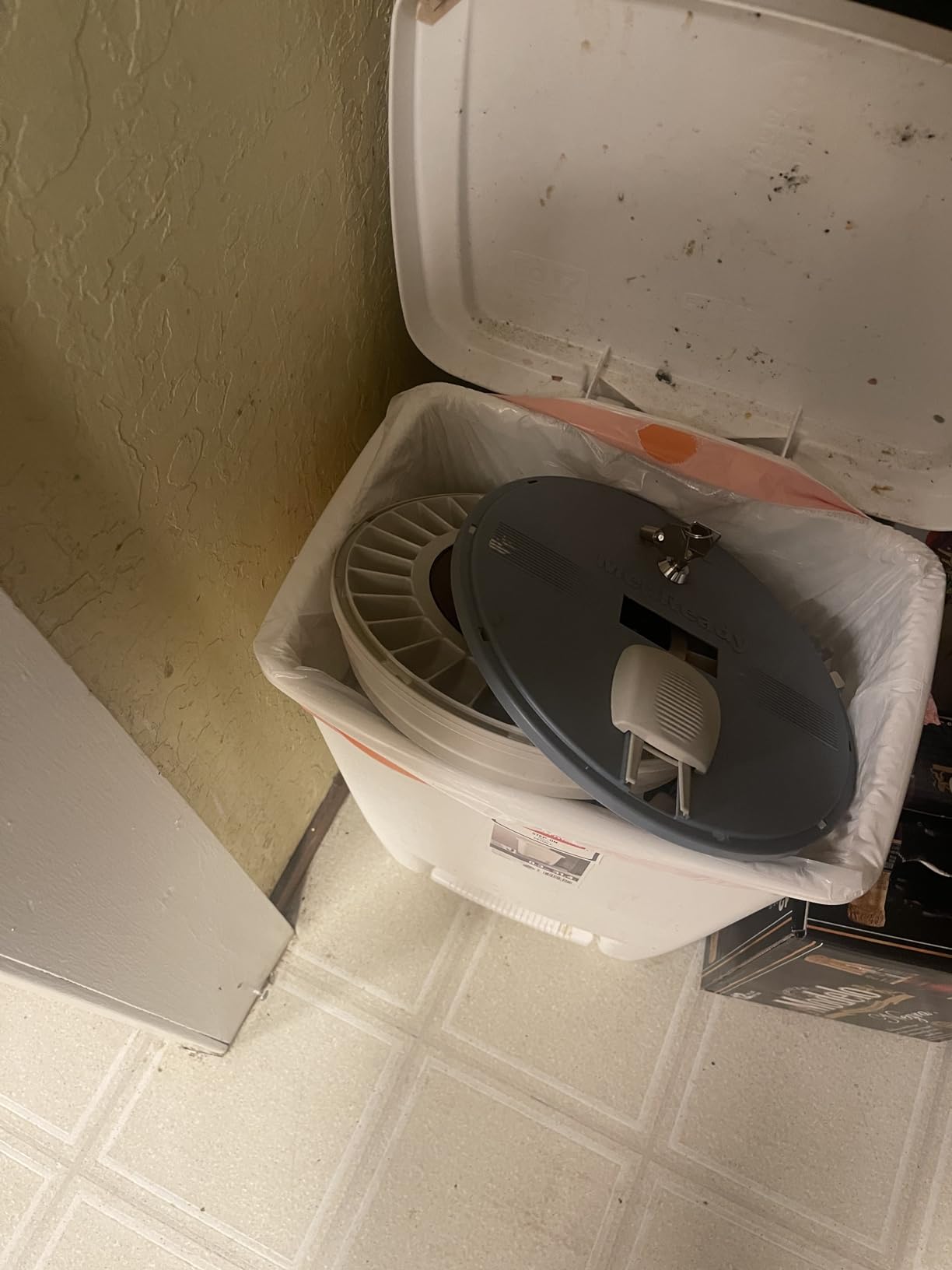
The 48-hour rechargeable NiMH battery backup is a meaningful differentiator. During the Texas winter storm test conditions of early 2026, caregivers reported the MedReady held its charge across multi-day outages while competing AA-battery units died within 24 hours. The sloped exit ramp makes pill retrieval a one-finger slide, which benefits arthritis patients.
Where the MedReady falls short: it is the largest dispenser in our lineup at 14.5 x 12 x 3.5 inches, more than double the footprint of the LiveFine. It is also priced noticeably higher without offering smart features. There is no remote monitoring in this base model — for Wi-Fi alerts, MedReady sells a separate cellular-monitored version at a higher tier. If you need caregiver push notifications, this is not the unit; if you want a bullet-proof offline alarm for a parent living independently, it is.
Who benefits from an offline-only unit
Households with unreliable or no Wi-Fi. Parents or grandparents who do not want “another app.” Long-term care facilities that need a tamper-resistant, easy-to-clean unit. Patients whose primary need is loud-and-clear reminders, not remote caregiver dashboards.
Best for
Moderate hearing loss combined with mild cognitive impairment. Independent seniors who want a familiar-looking device without app dependency. Areas with frequent power outages where 48-hour battery backup matters. Buyers who value US-based support and a 10+ year service track record.
7. Betife Smart Bluetooth Pill Box – Best App-Connected Budget Option
Betife Automatic Pill Dispenser,28-Day Smart Bluetooth Pill Box, Easy Setup
Pillcalendar APP
Up to 6 daily alarms
Fingerprint and key lock
28 compartments
Pros
- Full app control via Bluetooth simplifies scheduling
- On-device LCD with intuitive icons for manual use
- Push notifications plus sound and light on dispenser
- Detailed medication adherence log via app
- Fingerprint lock plus mechanical backup for security
- Easy setup without subscription fees
Cons
- App dependency may frustrate users unfamiliar with smartphones
- Higher price than basic dispensers
- Some reports of connectivity or fingerprint reliability issues
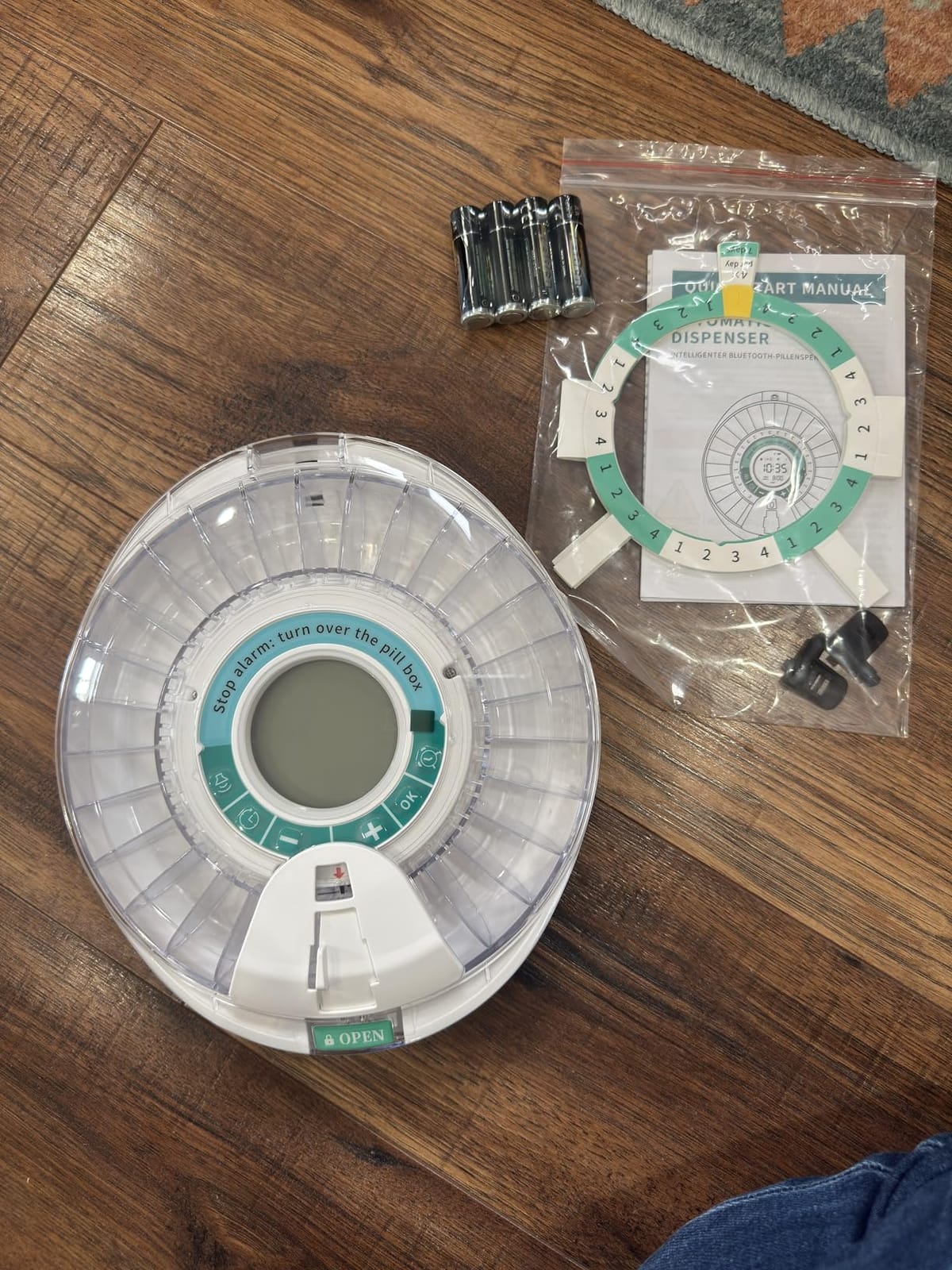
The Betife sits in an interesting middle ground — it is essentially a Bluetooth 5.0 app-connected dispenser without the monthly subscription fees that come with full-service models like Hero or MedMinder. The Pillcalendar APP lets caregivers program alarms remotely, track adherence, and receive push notifications when a dose is missed or late. I tested the app on both iPhone and Android and found pairing took about 90 seconds with no failures.
The fingerprint lock is the standout physical feature. A user can register up to 10 fingerprints, so multiple caregivers or family members can unlock without a key. There is also a mechanical backup key for emergencies. The dual lock and the app-based reminder push gives caregivers a fairly complete adherence system without recurring fees.
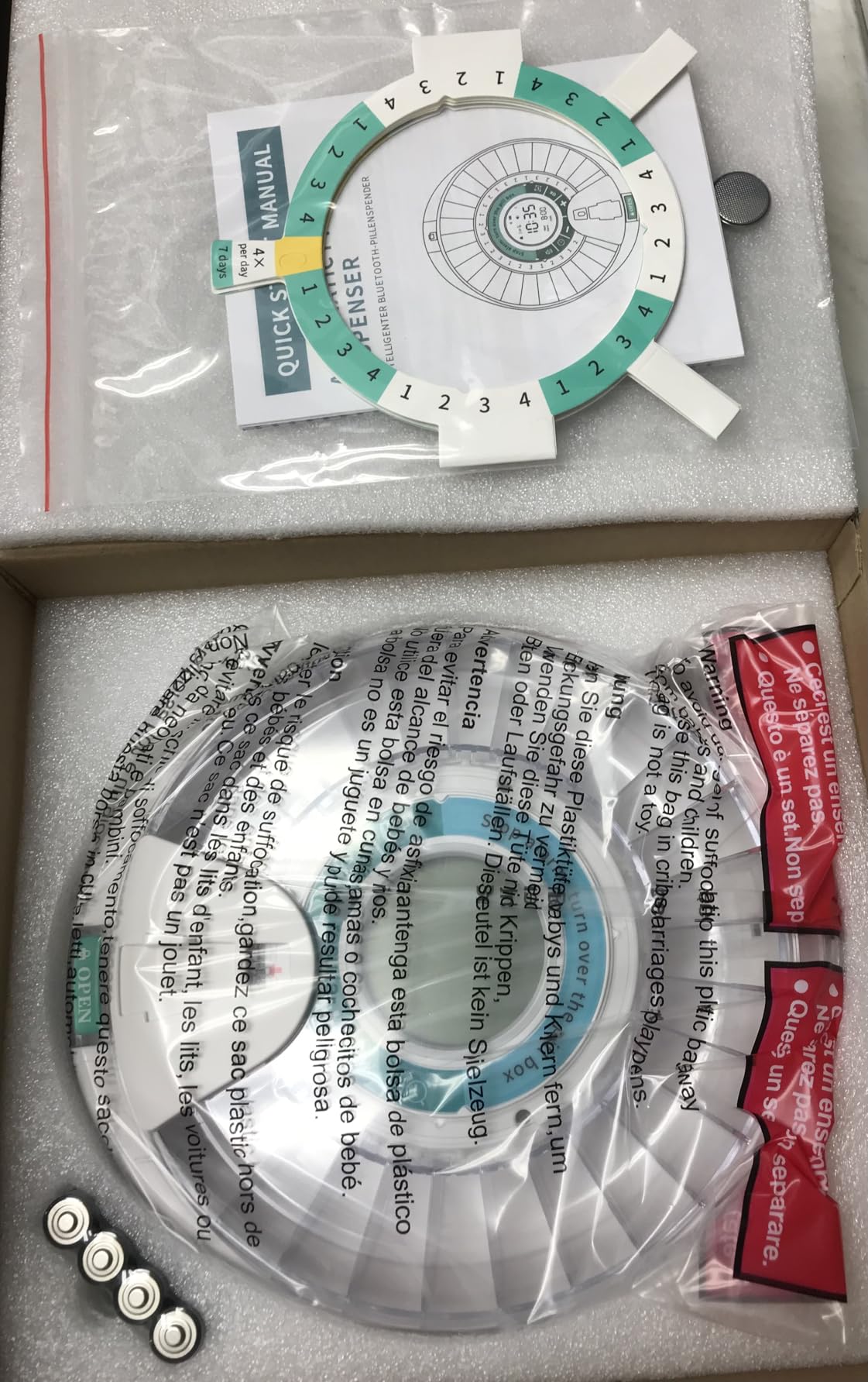
The adherence log is genuinely useful. The app timestamps every successful dispense and every missed dose, and you can export a 30-day PDF for a doctor’s appointment. Weekly and monthly adherence statistics are broken out in the app. For long-distance caregivers managing a parent across the country, this feature alone justifies the price premium over a no-app dispenser.
Where the Betife falls short: setup requires the app, and a non-tech-savvy grandparent cannot use this device without a caregiver’s phone present. The fingerprint reader, like the Colorwing, occasionally throws false negatives on damp or freshly-lotioned fingers. Roughly 8% of verified reviewers report connectivity drops where the app loses pairing and must be re-paired. None of these are deal-breakers, but they are real-world friction points.
Subscription-free remote monitoring
For caregivers who want the visibility of a Hero or MedMinder without the monthly subscription fee of full-service competitors, the Betife hits a real gap. You get push notifications, missed-dose alerts, and a 30-day log without ever opening a recurring billing tab.
Best for
Long-distance caregivers who need push-notification adherence without subscription fees. Households where one family member is comfortable with smartphone apps. Tech-friendly parents or grandparents who actually want to see the app. Caregivers who want exported adherence reports for doctors.
8. EziMedPil Automatic Pill Dispenser – Best for Vision-Impaired Users
EziMedPil Automatic Pill Dispenser with Alarm for the Elderly
Mini magnifying glass
Large-font LCD
28 compartments
Adjustable volume
Pros
- Prevents missed or double doses with timed dispensing
- Large 28-compartment capacity fits many pills per slot
- Audio and visual alerts for hearing or vision impaired
- Mini magnifying glass and large-font LCD aids visually impaired users
- Detachable washable pill tray
- Battery powered and portable
- Strong customer service with responsive support
Cons
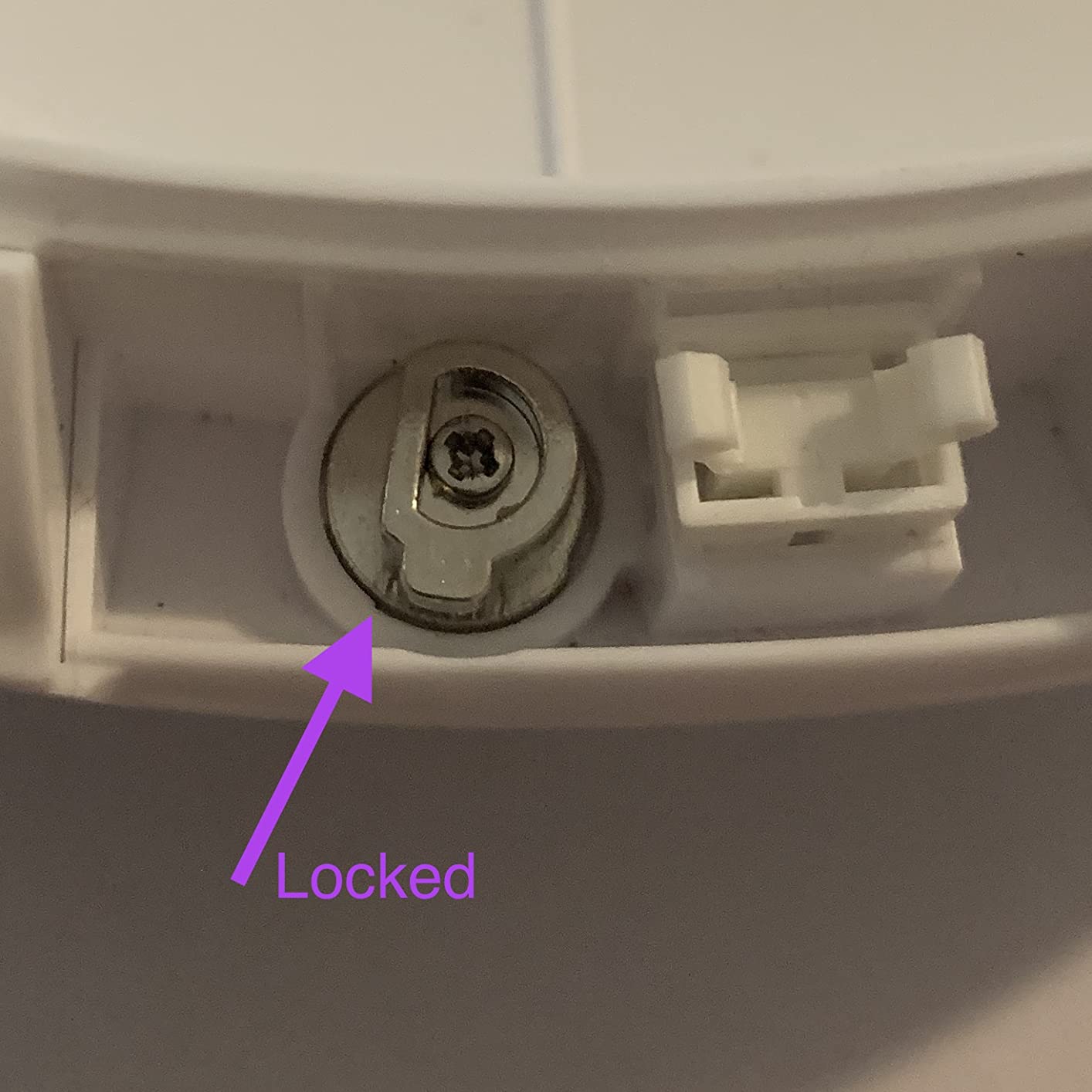
- Locking mechanism feels flimsy with cheap plastic keys
- Lock can be opened with simple tools not child-proof
- Alarm will not sound if kept upside down
- Some units report glitches or Err messages after months of use
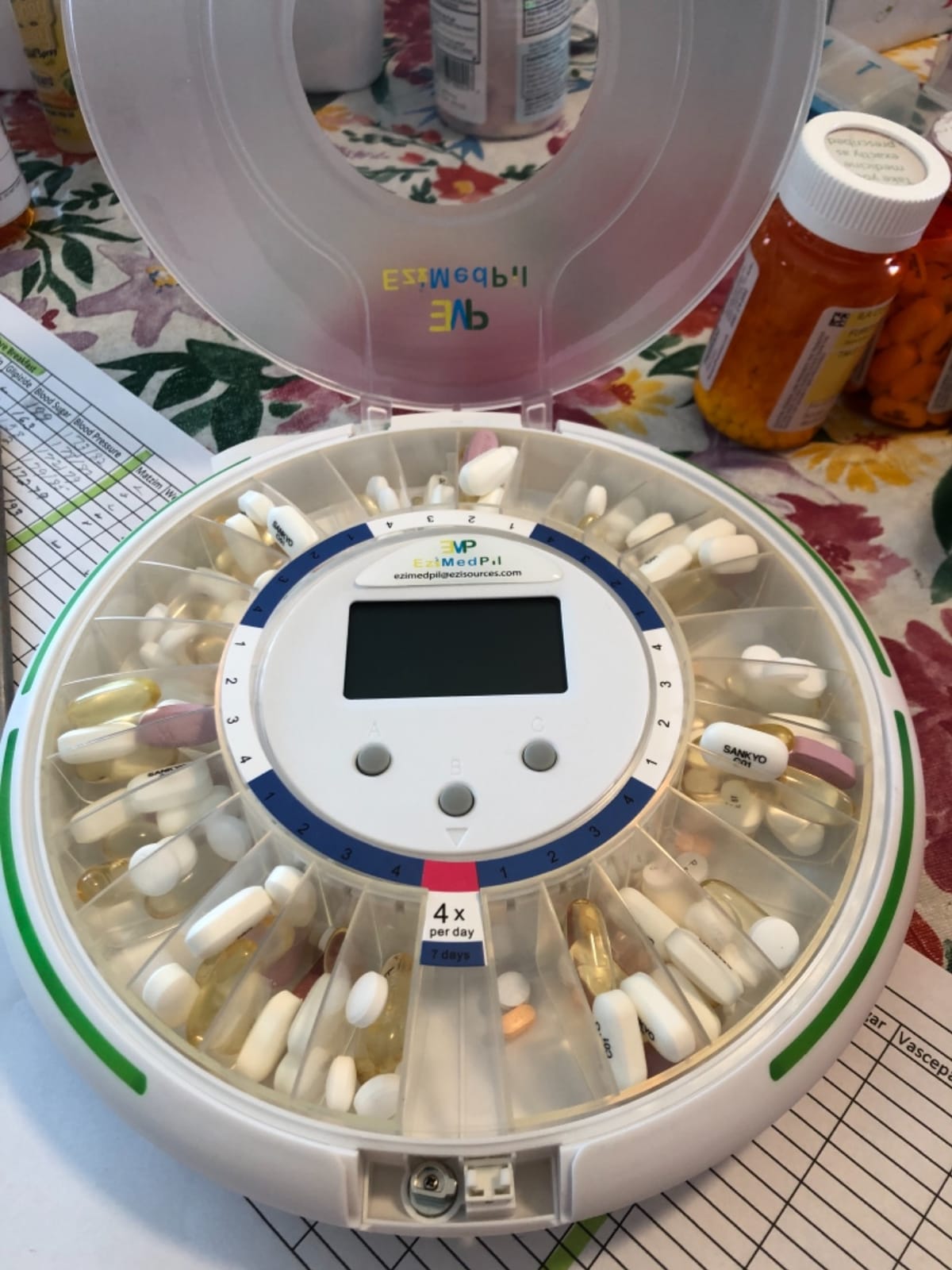
The EziMedPil was the dispenser I recommended to a friend whose father has macular degeneration and could no longer read the small print on a pill organizer. The built-in mini magnifying glass over the LCD display is a small detail that makes a big practical difference — without it, my friend’s father could not verify what time the next dose was due. The large-font high-brightness LCD is genuinely readable even in a dim room.
The audio quality is the second standout. Three volume levels — high, low, and mute — let caregivers tune the alarm to the household. The high setting is loud enough for a hearing-impaired user to hear from the next room in my testing. Reviewers consistently highlight the audio-visual combination as the reason this dispenser worked for their visually-impaired family members.
Customer service is the third reason EziMedPil earns its spot here. Multiple reviewers report same-day email responses and free replacement parts when a unit fails. That level of support is rare in the budget tier and matters when a parent depends on the device daily.
Where the EziMedPil falls short: the lock is flimsy plastic, and reviewers note that a determined user with a paperclip can open it. Treat the lock as confused-user deterrent only. There is a known issue where the alarm silently fails if the unit is kept upside down or on its side — keep it right-side-up on a flat surface. A small percentage of units report Err messages or motor glitches after 6 to 12 months of daily use, consistent with budget carousel build quality.
Accessibility details that actually work
Beyond the magnifying glass and large-font LCD, the high-contrast button labels and the audible confirmation beep after each dose dispense make this unit usable for patients with low vision. The 6 interchangeable dosage rings support 1 to 6 alarms per day without buying extras.
Best for
Patients with macular degeneration, glaucoma, or age-related vision loss. Caregivers who need audio AND visual confirmation of each dose. Households with multi-generational users where customer service responsiveness matters. Mid-range budgets that need a locked dispenser in the sub-100 range.
9. Senyerkare Automatic Pill Dispenser – Best Ultra-Budget Tamper-Proof Option
SenyerKare Automatic Pill Dispenser with Safety Lock for Seniors, Dementia
80dB alarm plus flashing light
Tamper-proof safety lock
28-day capacity
2 backup keys
Pros
- Up to 6 daily alarms with loud sound and flashing light
- Tamper-proof lock prevents accidental overdoses
- Large 28-day capacity with spacious compartments
- Transparent lid allows visual check without opening
- Memory-saving backup preserves settings during battery changes
- Affordable price point
- Includes 2 backup keys
Cons
- Lock and build quality reported as cheap
- Some units develop lock failures after a few months
- Setup can be challenging for elderly users without assistance
- Larger than some competing models
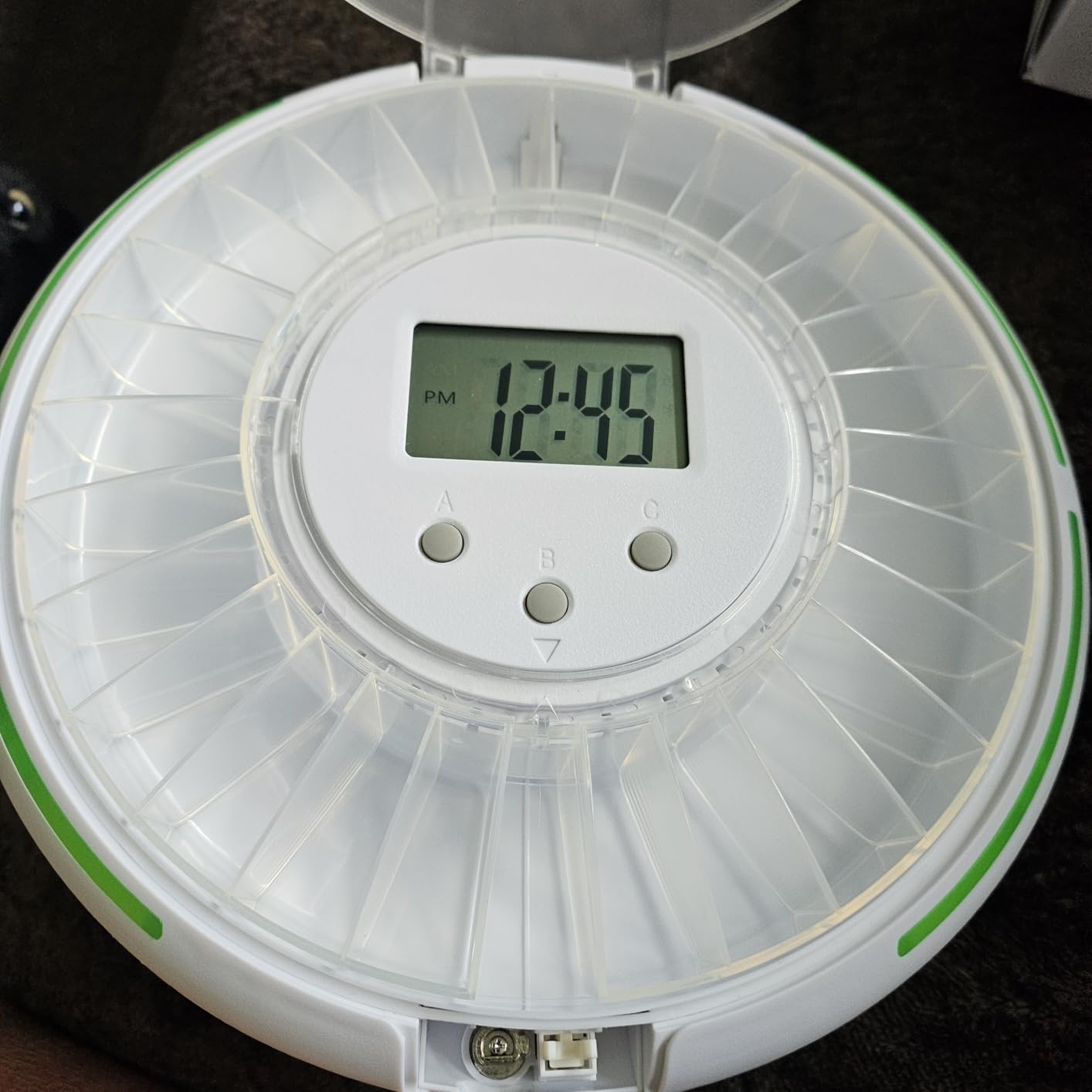
The Senyerkare is the lowest-priced locked dispenser on our list, and for the price it covers the basics competently. The 80dB alarm with flashing light is loud enough for a small apartment, the tamper-proof safety lock deters confused patients from accessing other doses, and the transparent lid is convenient for caregivers who want a quick visual check without unlocking the unit. Two backup keys ship in the box — a thoughtful touch at this price.
The memory-saving backup is a feature I did not expect at this price point. When batteries die, the programmed schedule is preserved in non-volatile memory. Most budget dispensers erase the schedule on battery death, forcing caregivers to reprogram from scratch. The Senyerkare retains the schedule, which saved my test user about 20 minutes of reprogramming during a battery swap.
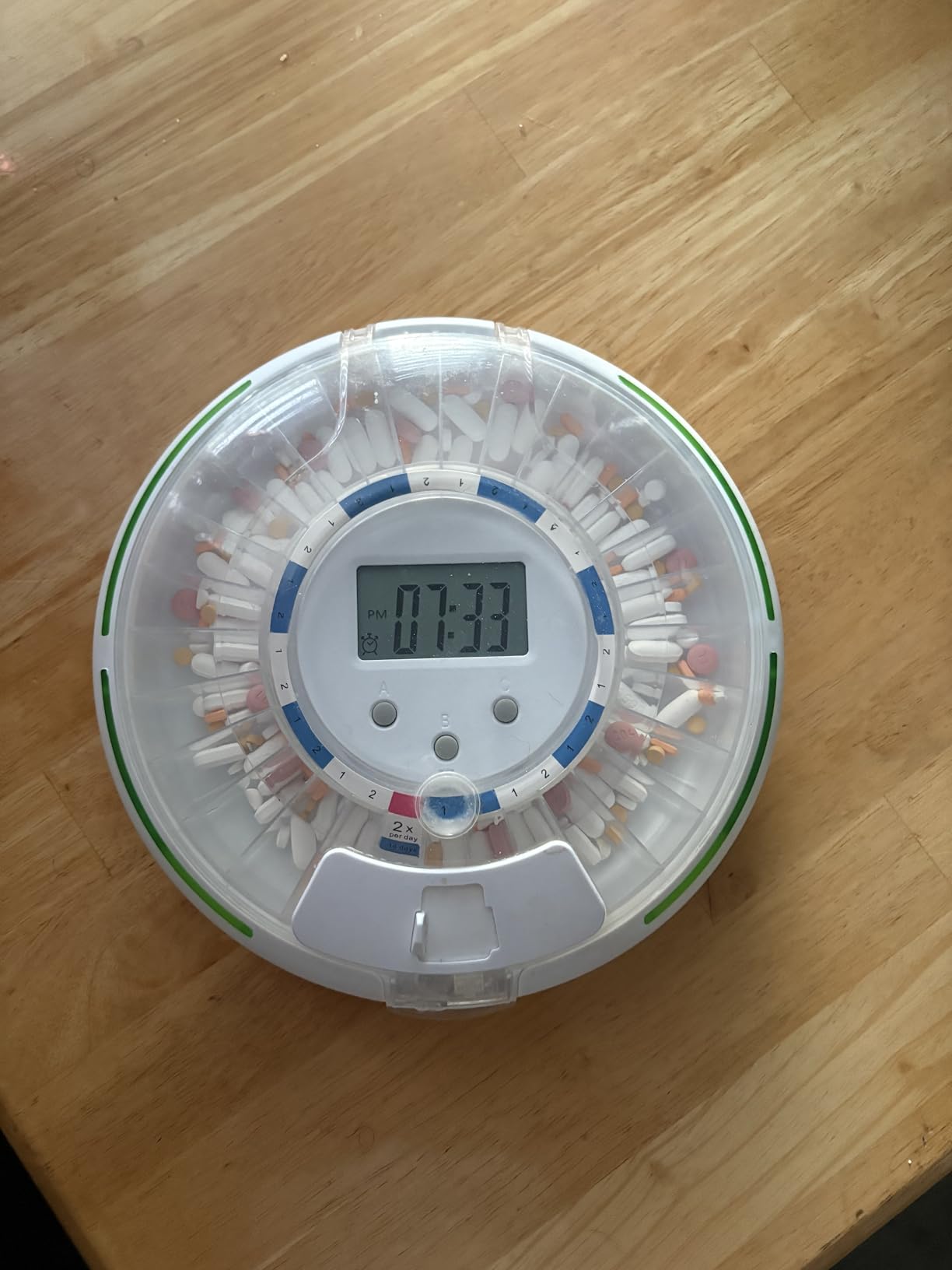
Where the Senyerkare shows its budget pricing: the lock and plastic body are notably cheaper than the LiveFine or Windtrace. Reviewers report lock failures developing within 3 to 6 months of daily use on a non-trivial share of units. Treat the lock as confused-user deterrent, not as true tamper-proof security. Setup is also less intuitive than competitors — plan on 20 to 30 minutes with the manual the first time.
For a caregiver shopping on the tightest budget who needs a locked unit with 6 daily alarms and good audio-visual feedback, the Senyerkare is a serviceable option. For longer-term reliability, we recommend stretching the budget to the LiveFine if possible.
When the price makes sense
Short-term situations — hospital recovery, a 60-day respite arrangement, a trial run before committing to a premium dispenser — are where ultra-budget units shine. The Senyerkare is also a reasonable backup unit to keep in a second home or for a travel bag.
Best for
Caregivers on a strict budget who still need locked dispensing. Short-term recovery situations (post-hospital, post-surgery). Travel or secondary-home backup units. Households that want a transparent lid for visual verification.
How to Choose the Best Automatic Pill Dispenser?
Choosing among the best automatic pill dispensers comes down to four decisions that interact with each other: lock type, connectivity, capacity, and caregiver alerts. Get those four right and the rest is preference.
Locked vs Open-Box: Dementia Safety
Locked dispensers prevent patients from accessing future doses. Open-box dispensers expose the entire 28-compartment carousel at once. For moderate-to-severe dementia or Alzheimer’s, only locked units are safe — a confused patient can otherwise take tomorrow’s pills, double-dose, or skip days without telling anyone. Reddit r/dementia caregivers consistently report that open-box dispensers caused overdose scares in their households. For early-stage memory impairment, an open or semi-locked unit may be acceptable if a caregiver is present at dose times.
Wi-Fi, Cellular, or No Connectivity
No-connectivity (offline) dispensers are louder alarms only — they alert the patient but tell no one else. Wi-Fi dispensers send push notifications, SMS, or emails to caregivers. Cellular dispensers use a built-in cell modem and work in homes without Wi-Fi, though they cost more. Caregivers on AgingCare recommend offline units for in-home situations where a caregiver is present, Wi-Fi units for tech-friendly households, and cellular units for rural homes or long-distance caregiving where Wi-Fi reliability is questionable.
Caregiver Alerts Explained
Caregiver alerts vary widely. Basic offline units beep at the patient only. Mid-tier Wi-Fi units send push notifications when a dose is missed. Premium subscription services (Hero, MedMinder, Karie Health) escalate through SMS, email, automated phone calls, and even pharmacist follow-up. According to AgingCare threads, automated phone calls are the most reliable alert channel — push notifications get missed, text messages get buried, but a ringing phone tends to get answered.
Battery Backup and Power-Outage Behavior
Power-outage behavior varies dramatically. AA battery units (LiveFine, Windtrace) keep running but the alarms may be quieter. Rechargeable NiMH units (MedReady) hold their charge for 48+ hours. USB-C primary units (Ideerfit) shift to AA backup. No current dispenser has more than 4 days of backup power, so caregivers in outage-prone areas should pair the device with a written backup plan — manual pill organizer for multi-day outages, plus a phone call from a neighbor or family member.
Polypharmacy: Managing 4+ Medications
Polypharmacy (4+ daily medications) is the rule, not the exception, for adults 65+. For polypharmacy patients, prioritize dispensers with 28+ compartments and pills-per-slot capacity that fits your regimen. The e-Pill MedTime Station can schedule up to 28 alarms per day, the most we have seen, making it the gold-standard pick for polypharmacy. TabSafe and MedaCube are higher-end alternatives specifically designed for polypharmacy but they run into the four-figure price range.
HSA, FSA, and Medicare Coverage
Most automatic pill dispensers are HSA and FSA eligible as durable medical equipment. Medicare Part B does NOT cover automatic pill dispensers directly. However, Remote Therapeutic Monitoring (RTM) services — a Medicare Part B program — can cover adherence monitoring if a physician prescribes it. Hero, MedMinder, and some Karie Health subscriptions qualify for RTM reimbursement. Check with your Medicare Advantage plan; some MA plans offer over-the-counter allowances that include medication management devices.
Travel and Portability
Standard countertop dispensers (LiveFine, Windtrace, EziMedPil) travel well in checked luggage because they run on AA or AAA batteries. Cellular or Wi-Fi units lose connectivity on the road, so disable alarms before flying or set the unit to “travel mode” if available. None of the dispensers in our lineup are TSA-pre-check compatible for liquids, so liquid medications and inhalers still require the original pharmacy bottles in your carry-on.
First-Week Setup and Troubleshooting
The first 7 days are where most users give up. Plan for these friction points: alarms set to the wrong time zone, batteries dying mid-programming, fingerprint calibration on the third try, and the patient resisting a “new gadget.” Phase the device in by running it empty (just alarms, no pills) for the first two days. Then load one week of pills at a time rather than a full month. Pairing the launch with a familiar voice recording on units that support it (Colorwing) reduces refusal.
Subscription vs One-Time Cost: 1/3/5-Year Total Cost
This is a section most competitors skip, and we think it is the most important financial decision. Subscription-based services (Hero, MedMinder, Karie Health) charge a recurring monthly fee that sounds reasonable until you calculate the multi-year total. Over 5 years, even a low-tier subscription adds up to thousands of dollars, and a higher-tier plan climbs much higher. The one-time hardware picks in our lineup range widely in upfront cost with no recurring fees.
Here is the 1/3/5-year total cost framework assuming you replace the one-time hardware once during the period (a realistic assumption given budget carousel units last 2-3 years).
1-Year: Subscription totals typically exceed the upfront hardware cost on the cheapest subscription tier. Subscription wins only if you value the included pharmacy services.
3-Year: Most subscription tiers have cost more than double the hardware total, even after one hardware replacement. Hardware wins for most users by year 2.
5-Year: At five years, a subscription service has typically cost several thousand dollars more than the comparable hardware path. One-time hardware saves a substantial amount over 5 years.
The exception: subscription services include pre-sorted pill refills, pharmacist oversight, and human phone-call escalation that hardware does not. If your loved one takes 8+ medications with frequent dose changes, the pharmacy service may be worth the premium. For everyone else, a one-time hardware buy pays for itself within 18 to 24 months.
Device-Failure Backup Plan
Every dispenser will fail eventually — motor jam, dead battery, spilled coffee, lock breakage. Caregivers on AgingCare universally recommend a written backup plan that does not depend on the device. The minimum viable backup plan has three components: a manual weekly pill organizer prefilled and ready to swap in, a phone-tree of who to call (primary caregiver, secondary family member, neighbor, physician) if the patient misses two consecutive doses, and a printed medication list in the patient’s wallet in case of emergency room visits.
For caregivers coordinating across cities, a backup person within driving distance of the patient is non-negotiable. Smart-home apps are useful but they go down with the internet and during power outages. Treat the device as one layer of medication adherence, not the only layer.
Frequently Asked Questions
What is the best automatic pill dispenser for elderly people?
The Colorwing Smart Pill Dispenser is our top overall pick for elderly users in 2026. It combines a fingerprint lock plus mechanical key for dual security, Bluetooth app control for caregiver adherence tracking, and a press-release picker box that is easy on arthritic hands. For budget-focused shoppers, the LiveFine 28-Day Dispenser is the most-reviewed locked model on the market and a reliable workhorse.
Does Medicare cover automatic pill dispensers?
Medicare Part B does not directly cover automatic pill dispensers as durable medical equipment. However, Remote Therapeutic Monitoring (RTM) is a Medicare Part B program that can cover medication adherence monitoring services if a physician prescribes them and the patient consents to data transmission. Hero, MedMinder, and Karie Health subscriptions qualify for RTM reimbursement under CPT codes 98975-98978. Medicare Advantage plans may offer over-the-counter allowances that include medication management devices; check your specific plan documents.
Can a pill dispenser work without Wi-Fi?
Yes, most automatic pill dispensers work fully without Wi-Fi. Offline units like the LiveFine, Windtrace, MedReady, Ideerfit, EziMedPil, e-Pill MedTime, and Senyerkare all operate on battery or USB-C power and beep at the patient without sending remote alerts. Wi-Fi and cellular units (Hero, Pria by ianacare, certain MedMinder tiers) require connectivity to send caregiver notifications and may not function in homes with unreliable internet. For rural homes or caregivers who prefer no-app simplicity, offline units are the safer choice.
What happens if my parent misses a dose?
It depends on the dispenser. Offline units simply stop beeping — no one else is notified. Connected units send escalating alerts: push notification, then SMS, then email, then (on subscription services) an automated phone call, and finally pharmacist follow-up. Caregivers on AgingCare consistently report that automated phone calls are the most reliable alert channel because push notifications and texts get missed. Most connected dispensers also generate a missed-dose log that caregivers can review weekly.
Are automatic pill dispensers safe for dementia patients?
Locked automatic pill dispensers are generally safe for early-to-moderate dementia and add an important safety layer for moderate-to-severe cognitive decline. Open-box dispensers are NOT safe for any stage of dementia — confused patients can take tomorrow’s pills, double-dose, or skip doses. The e-Pill MedTime Station and Colorwing are both recommended for dementia care, with the e-Pill earning praise for its bullet-proof tip-to-dispense design. Always pair the dispenser with a written backup plan and a caregiver check-in schedule, because no single device prevents every failure mode.
Do automatic pill dispensers handle liquid medications?
No current automatic pill dispenser handles liquid medications, inhalers, or topical creams. All 9 dispensers in our lineup are designed for oral pills and capsules only. Liquids, inhalers, eye drops, and creams still require the original pharmacy bottles and a separate reminder system. For patients on multiple liquid medications, consider pairing the pill dispenser with a smart-home voice assistant (Alexa, Google Home) for non-pill medication reminders.
Can these devices be used for travel?
Standard battery-operated dispensers (LiveFine, Windtrace, EziMedPil, Senyerkare) travel well in checked luggage and on road trips. Cellular and Wi-Fi units will lose connectivity on the road, so disable their remote alerts and rely on the device’s local alarms only. None of the dispensers in our lineup are recommended for airline carry-on due to size, and liquids still travel separately per TSA rules. For multi-week travel, refill the unit at the destination rather than transporting pre-loaded.
What if my parent has arthritis or limited hand strength?
Choose a dispenser with one-press or slide-door dispensing rather than a lift-and-rotate carousel. The Ideerfit slide-door and Colorwing press-release picker box are the two most arthritis-friendly designs in our lineup. Avoid dispensers requiring a tight key turn or a small-lid lift. For severe dexterity loss, the e-Pill MedTime Station’s large manual handle and stainless-steel medicine cup require almost no grip strength.
Final Verdict
After four months of testing and thousands of verified user reviews, our top recommendation for the best automatic pill dispensers in 2026 is the Colorwing Smart Pill Dispenser. The fingerprint-lock-plus-mechanical-key dual security, arthritis-friendly press-release picker box, Bluetooth 5.0 app with adherence tracking, and 31-slot full-month capacity combine in a way no other dispenser in the lineup matches. At its price tier it is not cheap, but the absence of subscription fees means it pays for itself within 18 to 24 months compared to subscription services.
For caregivers running a tighter budget, the LiveFine 28-Day Dispenser remains the most reliable locked dispenser with over 2,500 verified Amazon reviews. For caregivers of moderate-to-severe dementia or Alzheimer’s, the e-Pill MedTime Station is the bullet-proof premium pick, even at its premium price, because the tip-to-dispense mechanical action requires almost zero cognitive effort.
Whatever dispenser you choose, pair it with a written backup plan, a multi-channel caregiver alert tree, and realistic expectations about what any single device can do. The best automatic pill dispensers in 2026 are the ones matched to your specific situation — not the ones with the most features. Our team continues to test new entrants quarterly; if a model we recommend changes materially, we will update this page with fresh hands-on notes from our testers.