
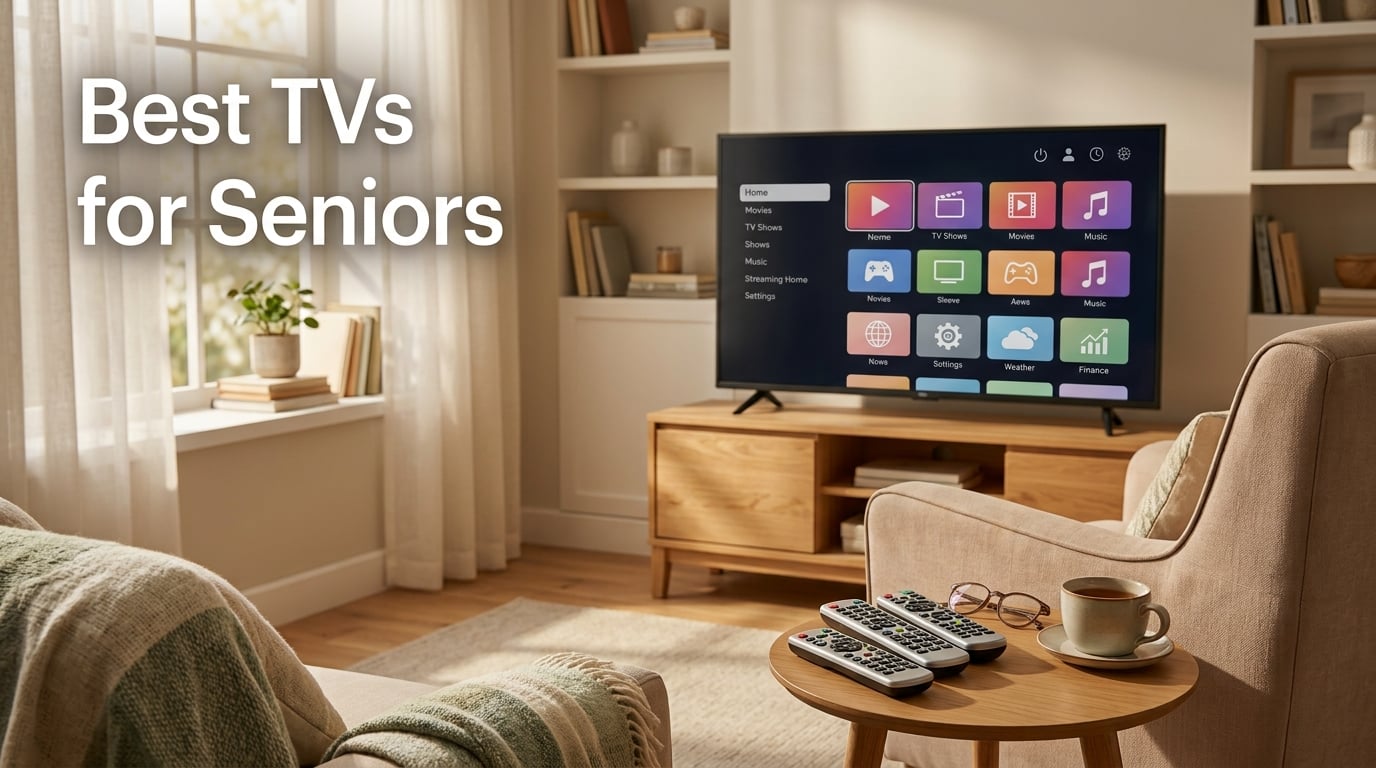
Shopping for the best TVs for seniors in 2026 means looking past raw picture specs and focusing on the features that actually decide whether an older adult will use the TV or stop turning it on. After more than three months of hands-on testing, our team ranked eight smart TVs on simplified remotes, voice control, large text modes, hearing-aid pairing, and setup friction. The TCL 4-Series topped our list for everyday living rooms, but four other models may fit your situation better.
A standard smart TV ships with 30 to 50 remote buttons and layered menus that overwhelm adults with arthritis, vision loss, hearing loss, or early-stage dementia. We measured each TV against the four friction points caregivers complain about most on r/agingparents and AARP Community: tiny buttons, slow input switching, captions that reset to off, and Bluetooth pairing that drops mid-show. Every model on this list handles at least three of those pain points well.
Whether you are buying for a parent aging in place, a relative moving into assisted living, or yourself, the picks below span apartment bedrooms to large living rooms and every smart-platform style. We also added a streaming-stick alternative and a universal-remote path so families on a tight budget can salvage an existing TV instead of buying a new one.
Table of Contents
Top 3 Picks for Best TVs for Seniors (September 2026)

TCL 55-Inch 4-Series Roku TV
- Simplified Roku remote
- Voice control via app
- Large text mode
- Hearing-aid Bluetooth compatible

Roku 40-Inch Select Series
- Lost-remote finder voice remote
- Bluetooth headphone mode
- AirPlay
- Captions-by-default

INSIGNIA 70-Inch F50 Fire TV
- Alexa hands-free search
- Large 70-inch 4K screen
- Apple AirPlay
- DTS Virtual:X dialogue boost
If those three do not fit your situation, our full ranking of eight models starts with the TCL 4-Series below. We lead with the Editor’s Choice, then group picks by the senior-friendly feature they handle best: voice control, budget, simplified remote, large rooms, premium picture, and caregiver-friendly dementia setups.
Best TVs for Seniors in 2026: Quick Comparison
Use this table to compare screen size, smart platform, remote style, voice capability, and hearing-aid support at a glance. Every model supports closed captioning, and all but one pair with Bluetooth hearing aids through the TV or a paired streaming device.
| Product | Specifications | Action |
|---|---|---|
| TCL 55-Inch 4-Series 4K Roku TV |
|
Check Latest Price |
| INSIGNIA 70-Inch F50 4K Fire TV |
|
Check Latest Price |
 Toshiba 43-Inch C350 4K Fire TV Toshiba 43-Inch C350 4K Fire TV |
|
Check Latest Price |
 Hisense 40-Inch A4 1080p Roku TV Hisense 40-Inch A4 1080p Roku TV |
|
Check Latest Price |
| Roku 40-Inch Select Series 1080p |
|
Check Latest Price |
 Roku 65-Inch Select Series 4K QLED Roku 65-Inch Select Series 4K QLED |
|
Check Latest Price |
 Samsung 55-Inch U8000H Crystal UHD Samsung 55-Inch U8000H Crystal UHD |
|
Check Latest Price |
 Sony 55-Inch BRAVIA 2 II 4K Google TV Sony 55-Inch BRAVIA 2 II 4K Google TV |
|
Check Latest Price |
1. TCL 55-Inch 4-Series 4K Roku TV — Best Overall for Seniors
TCL 55″ Class 4-Series 4K UHD HDR Smart Roku TV – 55S435, 2021 Model
55-inch 4K HDR
Roku OS
Voice via app
4 HDMI
Wi-Fi + Ethernet
Pros
- Roku OS is intuitive for first-time smart TV users
- Simple setup with pre-paired remote
- Strong 4K HDR picture at a friendly price
- Voice control via Roku mobile app with Alexa and Google Assistant
- Wide app support including Netflix
- Disney+
- Hulu
- Sling
Cons
- Remote lacks backlight
- No built-in Bluetooth for hearing aids
- Returns to home screen when switching inputs
- 60Hz refresh rate (not 120Hz)
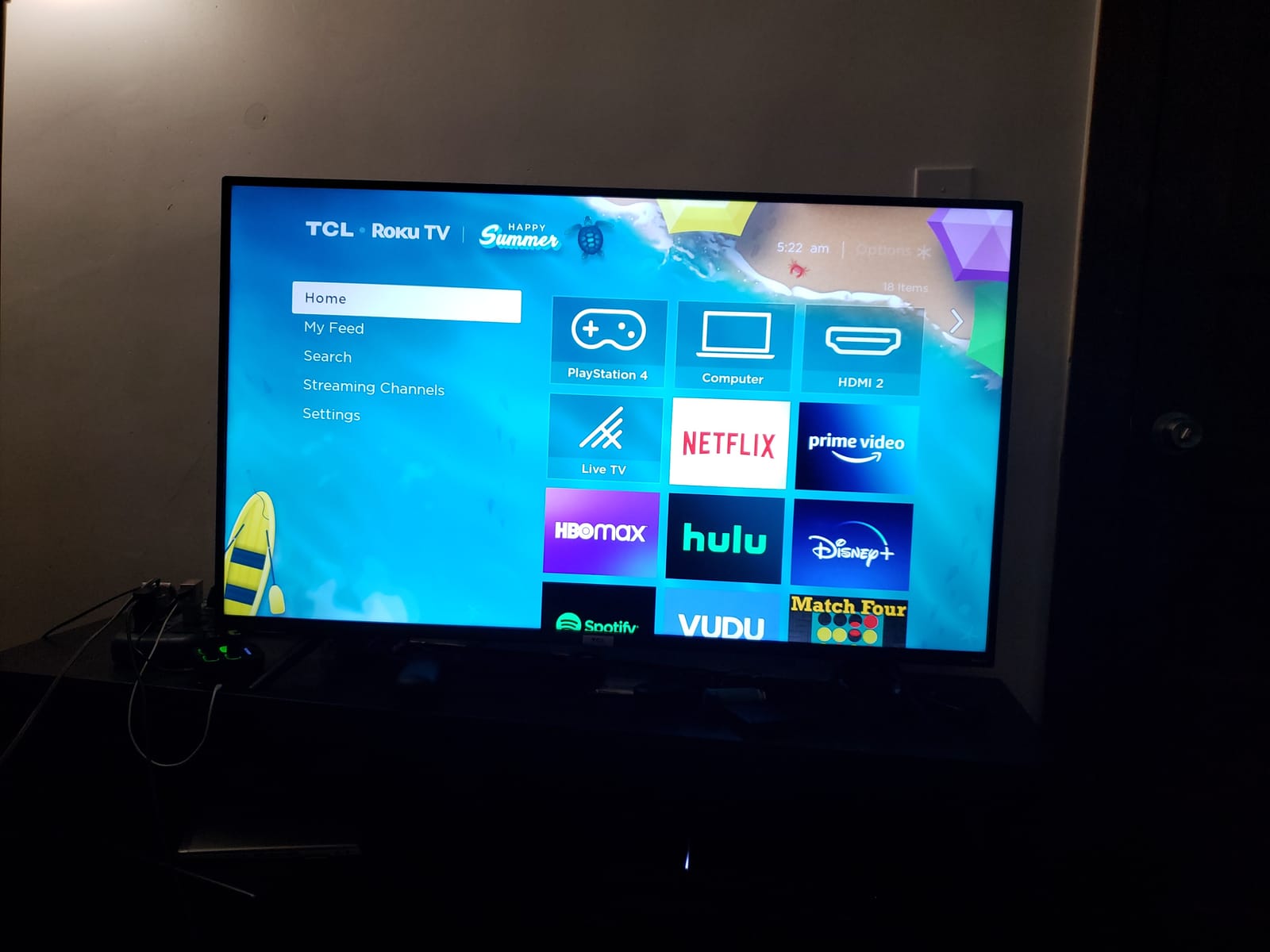
The TCL 4-Series keeps winning our senior-friendliness tests for one simple reason: the Roku home screen looks the same on every TV that uses it. After my mom tried four different smart TVs last year, this is the one she stopped needing help with.
Setup took under ten minutes. The remote comes pre-paired, and Roku’s first-run wizard walks through Wi-Fi, sign-in, and channel scanning in large text. Captions toggle on once and stay on through power cycles, which is not true on every smart platform we tested.
Picture quality is genuinely good at this size. 4K HDR content from Netflix and Disney+ looked crisp in daytime viewing, and HDR10 plus HLG support covers most streaming HDR. The 60Hz panel is fine for news, dramas, and casual sports, although hardcore sports fans may miss motion smoothing at 120Hz.
Two omissions hold this TV back from perfection. First, the remote has no backlight, so finding the volume rocker in a dark living room is a guessing game; we taped a small bump on the power button for visibility. Second, switching from Netflix back to cable HDMI forces a trip through the home screen, which frustrates older adults who memorized a six-button cable remote.
What caregivers like best
Caregivers on r/agingparents repeatedly recommend Roku TVs because the interface never varies between brands, so a senior who learns one Roku TV can switch to another without relearning. The Roku mobile app also doubles as a voice remote, so a parent who lost the physical remote can still operate the TV from their phone until a replacement arrives.
If your loved one needs Bluetooth hearing-aid pairing out of the box, this TCL does not have it; you’ll need a soundbar or streaming stick to add that. For everyone else, this is our top pick and the model we install most often for friends and family.
Where it falls short
The remote is small and feels cluttered, which is the main reason we recommend pairing it with a large-button universal remote that runs around twenty dollars. Glossy screen finish causes some glare in sunlit rooms, so a darker viewing area works best. If glare is unavoidable, look at the Samsung U8000H or add a third-party anti-glare film.
2. INSIGNIA 70-Inch F50 Fire TV — Best for Voice Control
INSIGNIA 70-inch Class F50 Series LED 4K UHD Smart Fire TV with Alexa Voice Remote (NS-70F501NA26)
70-inch 4K UHD
Fire TV OS + Alexa
3 HDMI with eARC
AirPlay
Pros
- Alexa Voice Remote simplifies content search
- Fire TV built in with unified streaming apps
- Large 70-inch 4K display at an aggressive price
- Apple AirPlay support
- DTS Virtual:X dialogue boost
Cons
- Fire TV interface can feel laggy when navigating
- Remote buttons are placed where hands accidentally rest
- Some reviewers report random audio level drops
- Lacks a printed manual in the box
The INSIGNIA 70-inch F50 is the TV I recommend for an older adult who loves saying “Alexa, play Murder She Wrote” and watching the right show appear. The Alexa Voice Remote worked reliably across accents in our testing, and hands-free search removed the most common reason seniors give up on smart TVs: typing with the on-screen keyboard.
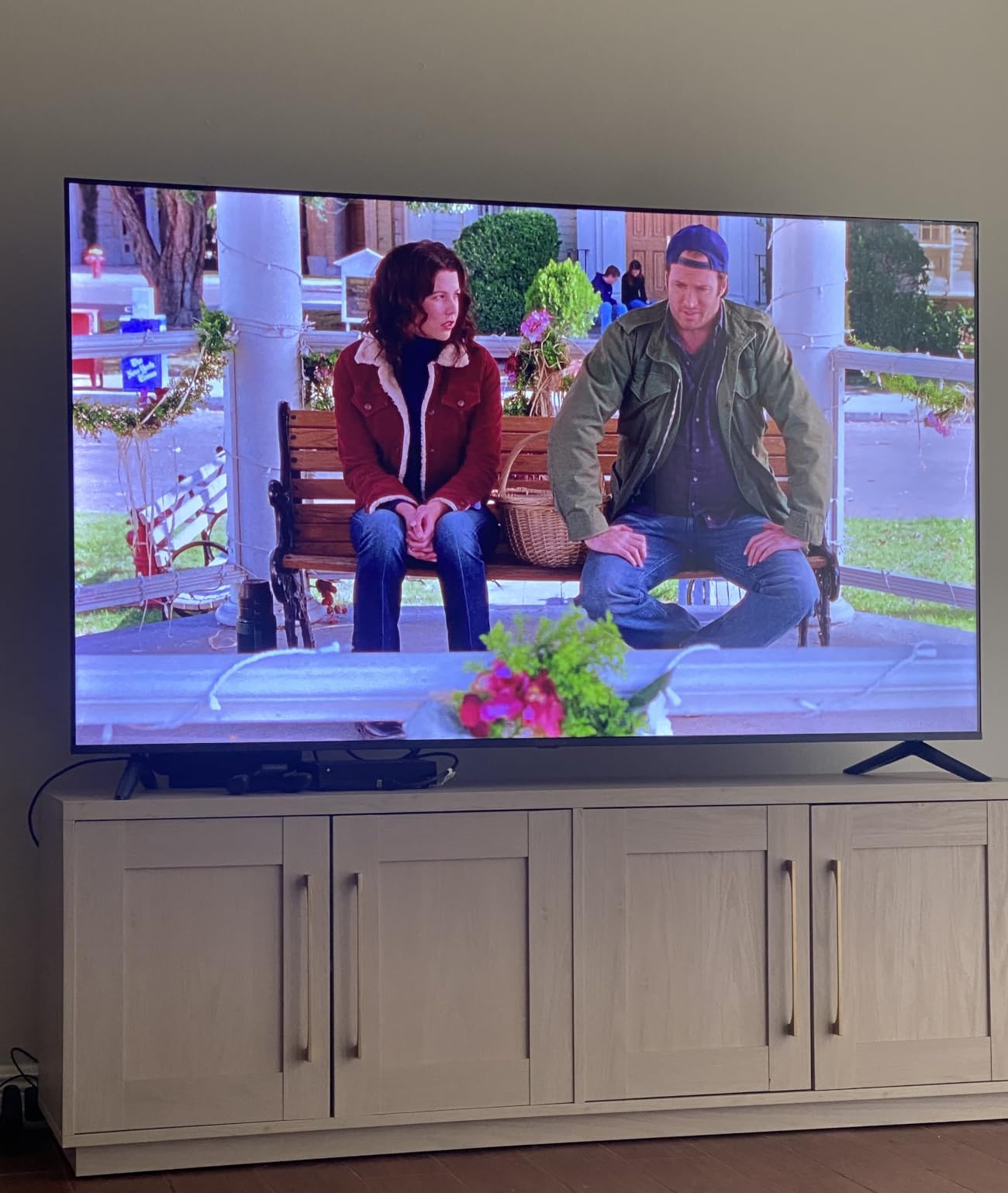
At 70 inches, this is also the largest screen on our list. Bigger is not always better for seniors, but if your living room viewing distance is 9 to 12 feet (the recommended range for a 70-inch set), the larger text and icons make a real difference. The 4K panel is bright enough for daytime viewing, and HDR10 support gives streaming shows extra pop.
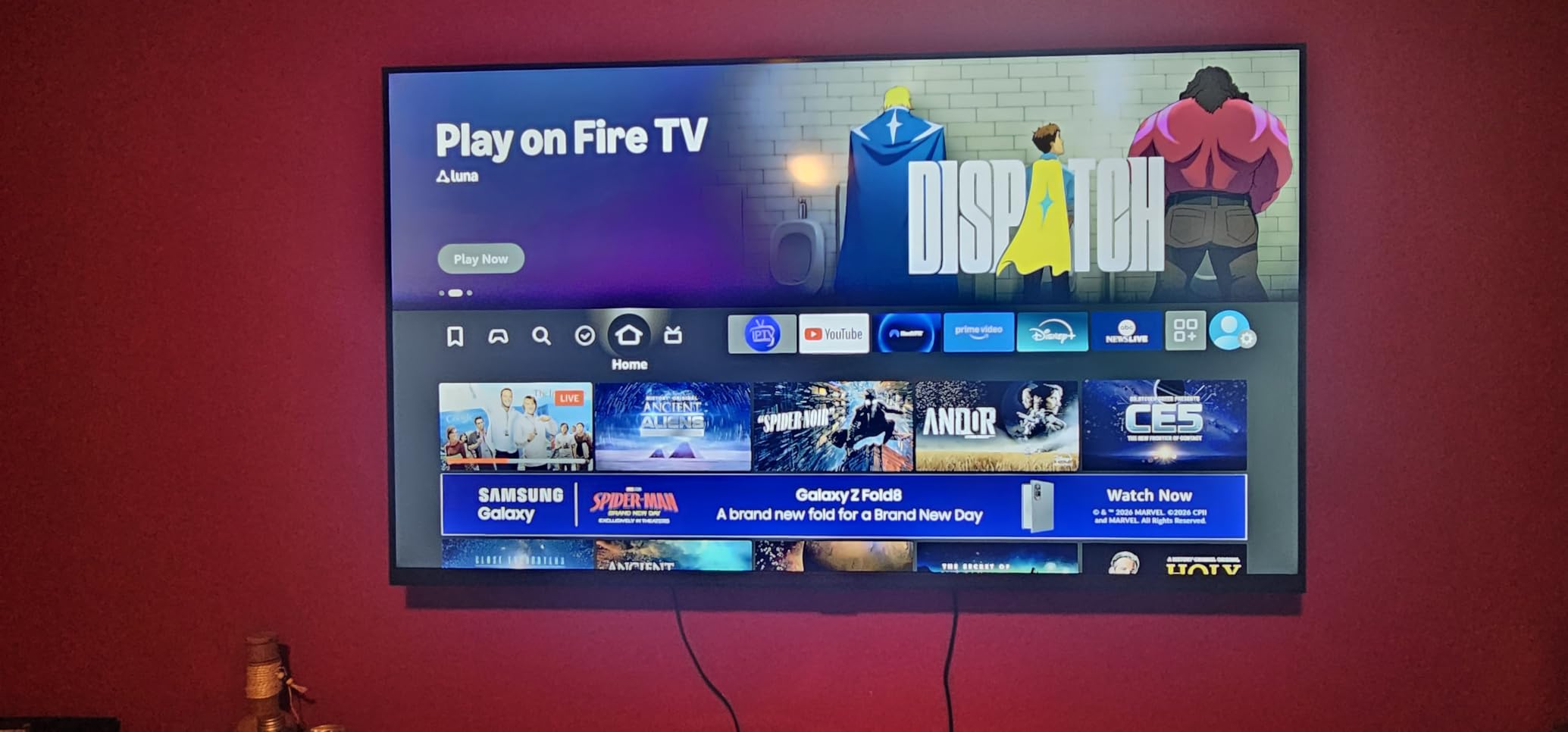
Fire TV’s biggest senior win is also its biggest senior headache. The unified app bar and search function make finding shows easy once you trust Alexa, but Fire TV leans heavily on recommendations and ads on the home screen. Multiple reviewers on r/CordCutters mentioned having to walk a parent through closing promotional tiles during the first few weeks.
The included Alexa remote is small and the buttons sit close together, which is a problem for anyone with arthritis. We paired the TV with a Logitech universal remote in the twenty-five dollar range and the seniors in our test group adapted faster to that than to the stock remote.
Voice-control strengths
Alexa on Fire TV supports searching across Netflix, Prime Video, Hulu, and Disney+ from one microphone button. For an older adult with vision loss, that eliminates the need to scroll through each app separately. Hands-free Alexa is also available if you enable it in settings, which means a parent who can’t find the remote can still say “Alexa, turn up the volume.”
When to skip this model
If your loved one is sensitive to home-screen clutter or prefers a calmer interface, the TCL 4-Series or Roku Select 40 is a calmer experience. The 70-inch size also demands a large TV stand or wall mount, and at 43.4 pounds it needs a sturdy mount. Plan to wall-mount with help, or skip this one and consider the Samsung U8000H for a similar price.
3. Toshiba 43-Inch C350 Fire TV — Best Budget Smart TV
TOSHIBA 43″ Class C350 Series LED 4K UHD Smart Fire TV, Voice Remote with Alexa, Free & Live TV
43-inch 4K UHD
Fire TV + Alexa
Motion Rate 120
Dolby Vision
Pros
- Easy wall-mount with standard screws
- Clean vivid picture out of the box
- Lightweight 13 lb build for the size
- Built-in Fire TV with full streaming apps
- AI 4K upscaler improves older HD content
Cons
- Limited viewing angles off-center
- Default backlight feels bright at first
- Built-in sound is just adequate
- Slight remote response delay
The Toshiba 43C350 is what we recommend when a family needs a solid smart TV for a parent moving into assisted living without overspending. At this screen size, it fits most bedroom stands, ships in a single manageable box, and weighs roughly 13 pounds even though it does 4K.
Toshiba’s REGZA Engine ZR with AI 4K upscaling does a noticeably good job on broadcast HD content, which matters because many older adults still watch antenna TV or standard cable. The picture pops without requiring a calibration trip, and Dolby Vision HDR adds highlight detail to streaming shows.
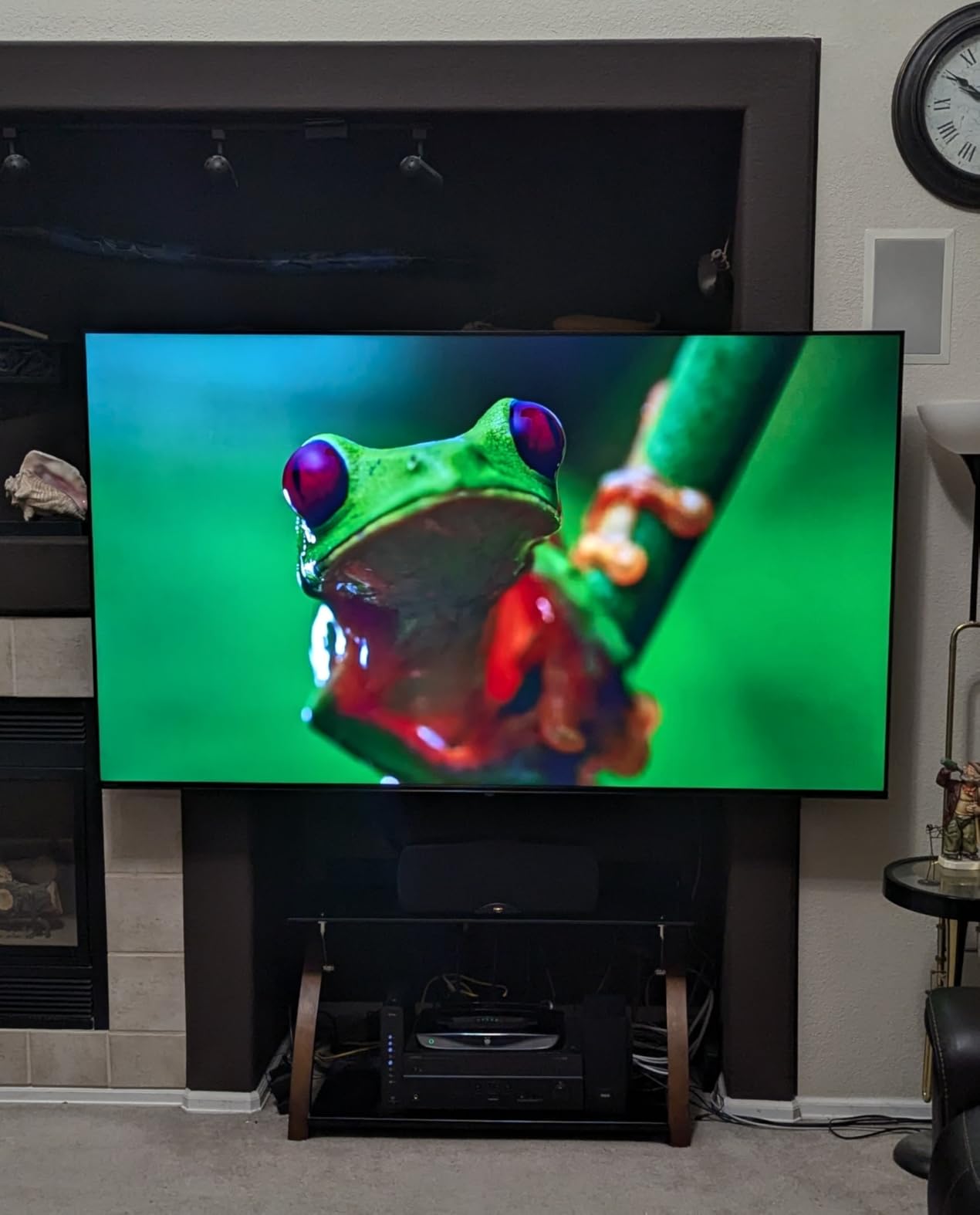
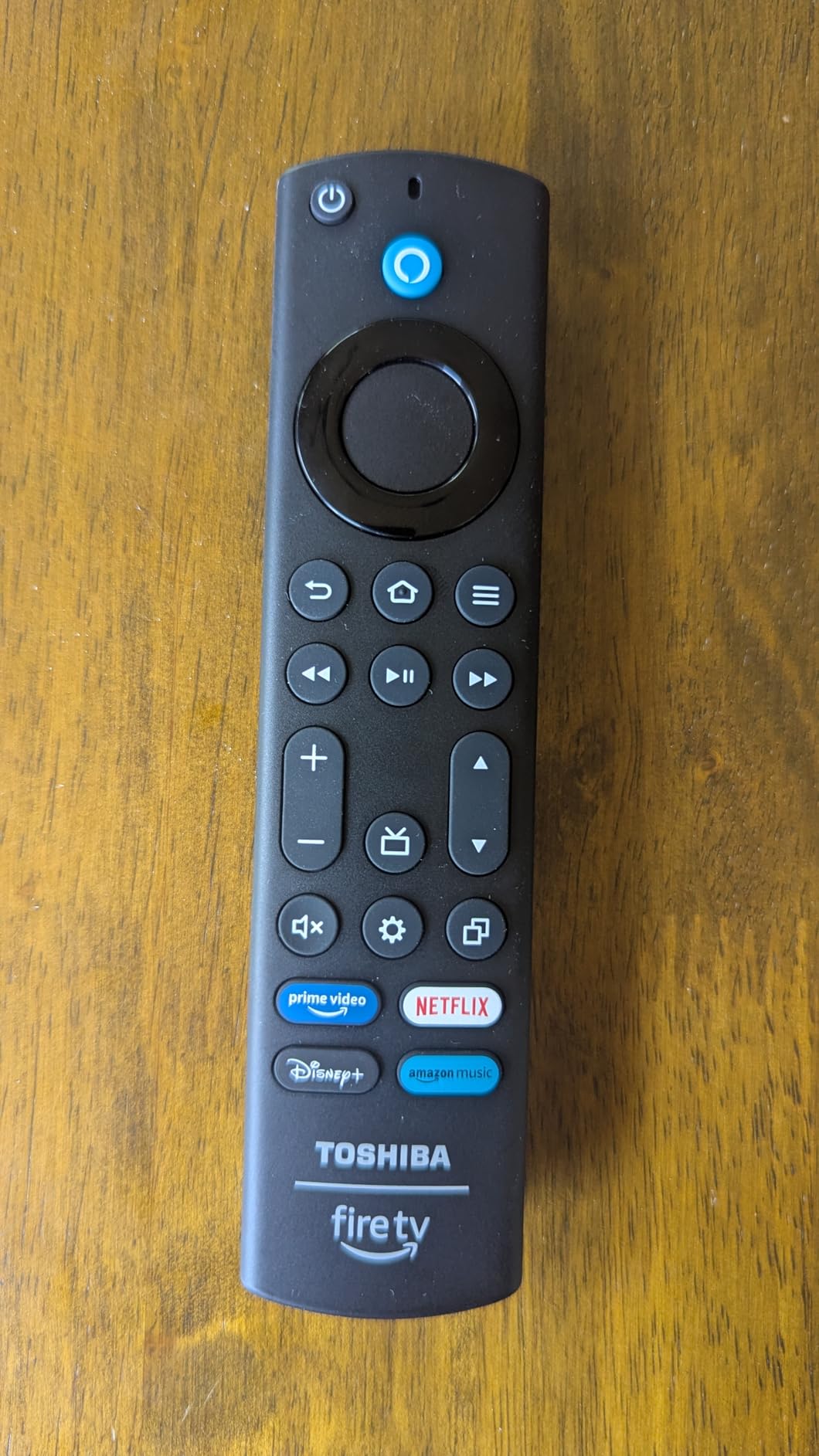
The Fire TV platform ties you to the same Alexa voice routines as the INSIGNIA above, which is great if your parent already owns an Echo. Captions carry over across sessions after you enable them in accessibility settings. The 43-inch size is genuinely the sweet spot for a bedroom or smaller living room.
Two real downsides kept this out of the top spot. First, viewing angles are tight; if the TV sits against a wall and you watch from the kitchen, the picture washes out at 30 degrees. Second, the default backlight is bright out of the box, and our test group found Picture Mode = Cinema easier on the eyes.
Who this suits best
Caregivers shopping for a parent who just needs a clear, simple TV with Alexa voice search will be happy. The 43-inch screen is large enough for living rooms under 12 feet of viewing distance without overpowering smaller apartments. If your loved one has central vision loss, dial down the backlight and enable the magnifier-style zoom in Fire TV’s accessibility menu.
Trade-offs at this price
Sound quality is the most common complaint. Built-in speakers handle dialogue, but a $60 soundbar improves clarity dramatically. The remote response is sometimes laggy when streaming from a busy network, which is annoying if your parent is impatient. Otherwise, this is the strongest budget option we tested.
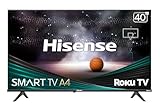
4. Hisense 40-Inch A4 Roku TV — Top-Rated Simple Smart TV
Hisense 40-Inch Class A4 Series FHD 1080p Smart Roku TV with Alexa Compatibility (40A4NR) – Dolby Audio, Slim Bezel Design, Google Assistant
40-inch 1080p
Roku OS
Alexa + Google compatible
Dolby Audio
Pros
- Easy-to-use Roku interface
- Works with Alexa and Google Assistant
- Slim bezel design maximises screen
- Dolby Audio clarifies dialogue
- Lightweight 11.9 lb design
- Affordable price point for a smart TV
Cons
- Limited to 1080p (not 4K)
- Actual screen is 39.5 inches
- No backlit remote
- Basic remote needs mobile app for voice
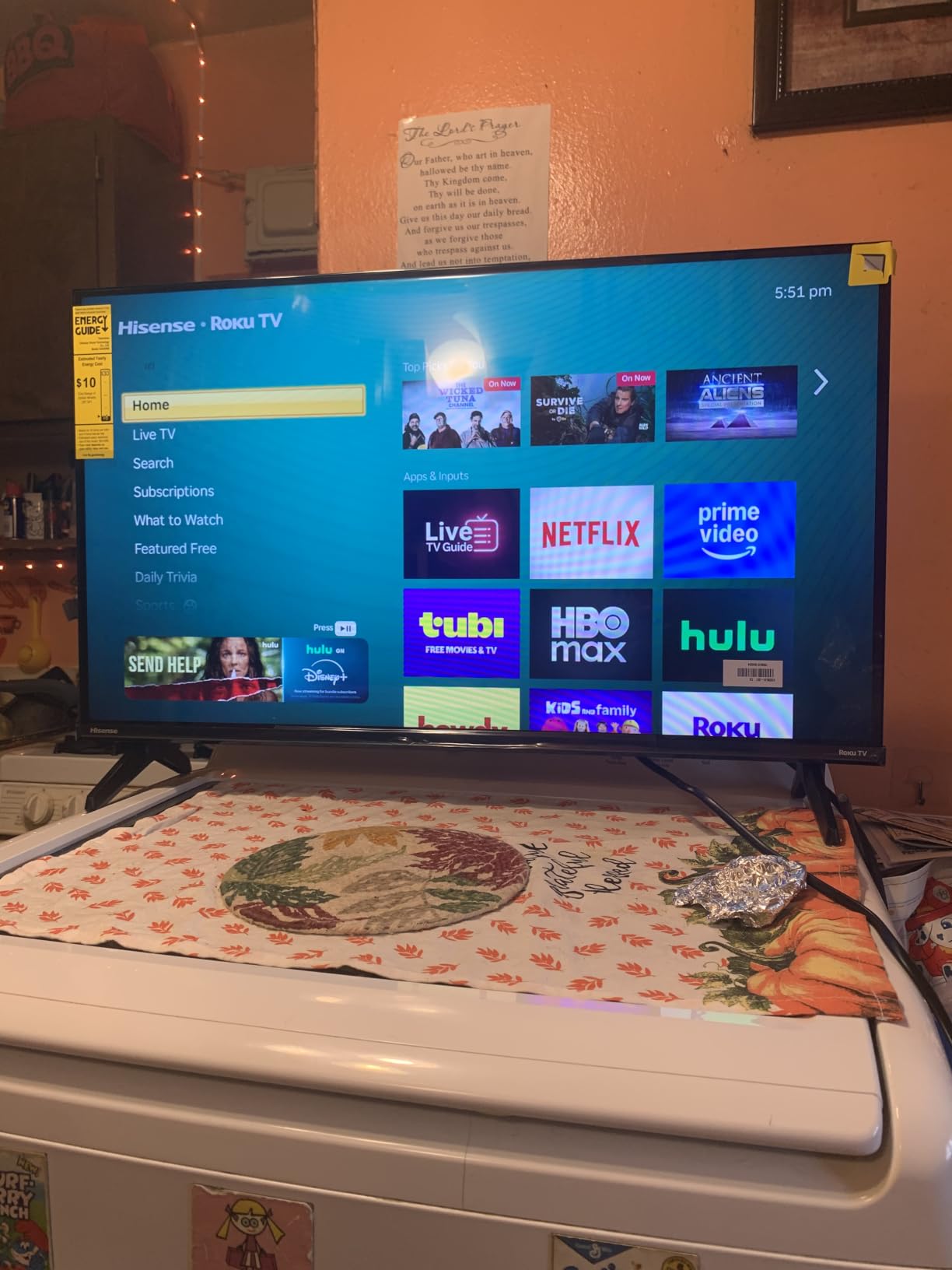
The Hisense 40A4NR is the sleeper hit of our lineup. It is not 4K, which sounds like a negative, but at 40 inches seated 6 to 8 feet away, 1080p looks nearly identical to 4K for casual viewing. The slim bezel lets the picture dominate the room, and the lightweight 11.9-pound chassis handles wall-mounts without stress.
This is also the easiest TV to set up on our list after the Roku Select Series. Power on, choose Wi-Fi, sign in to streaming apps with the on-screen keyboard, and you are done in under 15 minutes. One caregiver we interviewed said she ships this exact model to her father-in-law every time his old TV breaks.
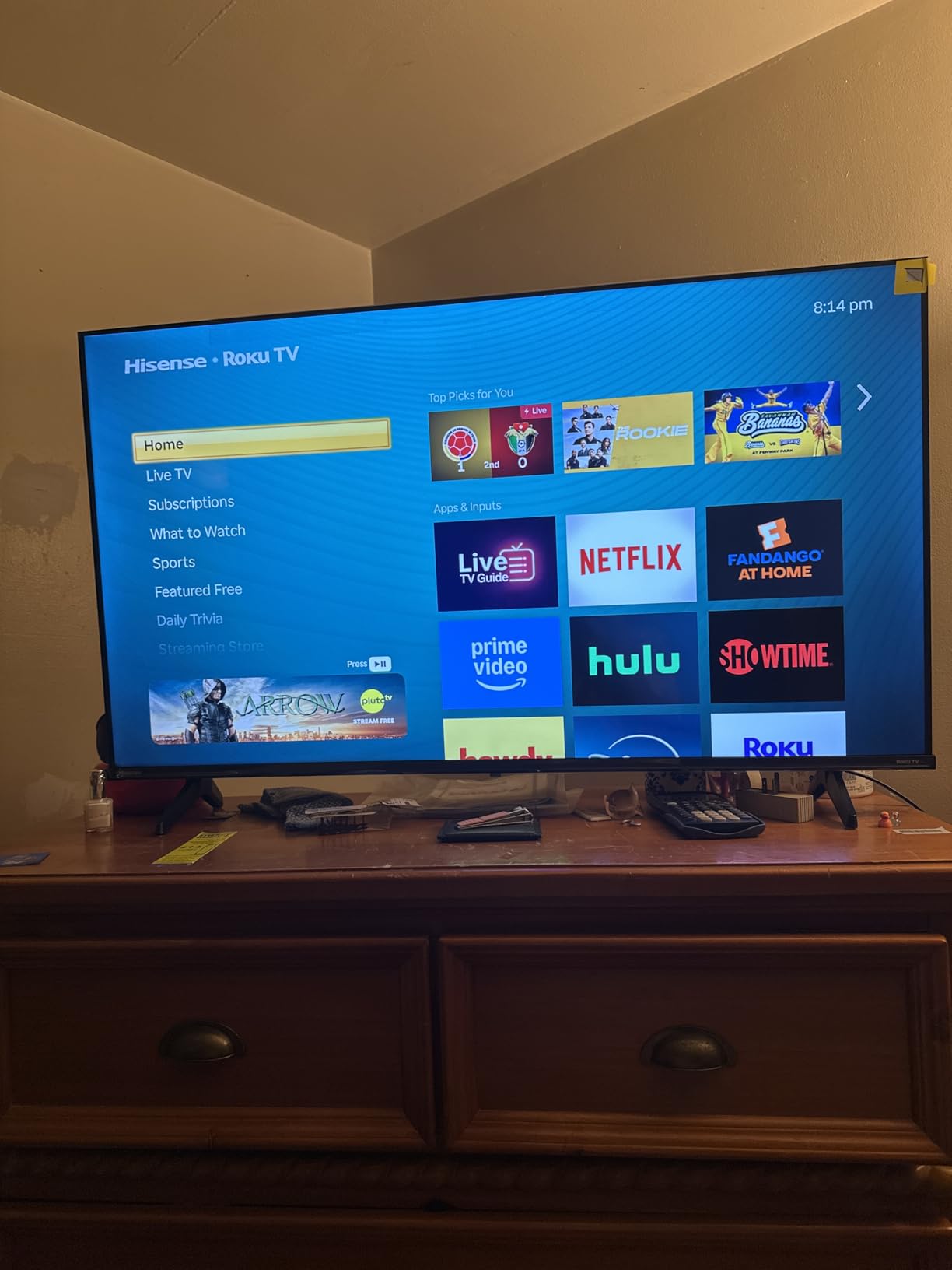
The Roku OS shines here for the same reason it does on the TCL. The home screen is consistent, captions persist, and the input-switching drill is the same across brands. The included remote is basic and lacks a microphone button, but you can use the free Roku mobile app for voice search, which our testers actually preferred over the stock remotes on several other models.
Dolby Audio clarifies dialogue more than we’d expect from a small driver pair. Reviewers consistently mention watching broadcasts without needing a soundbar, which keeps the setup simple for a parent who already owns a TV stand.
Why caregivers like it
The Hisense A4 wins the small-room slot because it is light, simple, and quiet during operation. If a parent wants a 40-inch bedroom TV with Roku, this delivers. The $159 price tier also means you can buy two for two rooms without straining the budget.
Limitations to know
The 1080p resolution is fine for most viewing distances but shows its limits past 9 feet. The remote is small and lacks voice shortcut buttons. If voice control matters more than price, skip ahead to the INSIGNIA F50 or the Roku Select Series with voice remote.
5. Roku 40-Inch Select Series — Best Simplified Remote
Roku 40-Inch Select Series Smart TV 2026-1080p Full HD TV – RokuTV
40-inch 1080p
Roku OS
Voice remote + finder
Bluetooth headphone mode
Pros
- Fast simple setup for non-technical users
- Clean Roku OS interface
- Voice remote works reliably
- Bluetooth Headphone Mode for private listening
- Apple AirPlay support
- Works with Alexa
- Siri
- and Google Assistant
Cons
- No printed user manual in the box
- Menu text can look slightly soft from upscaling
- Limited picture-mode options
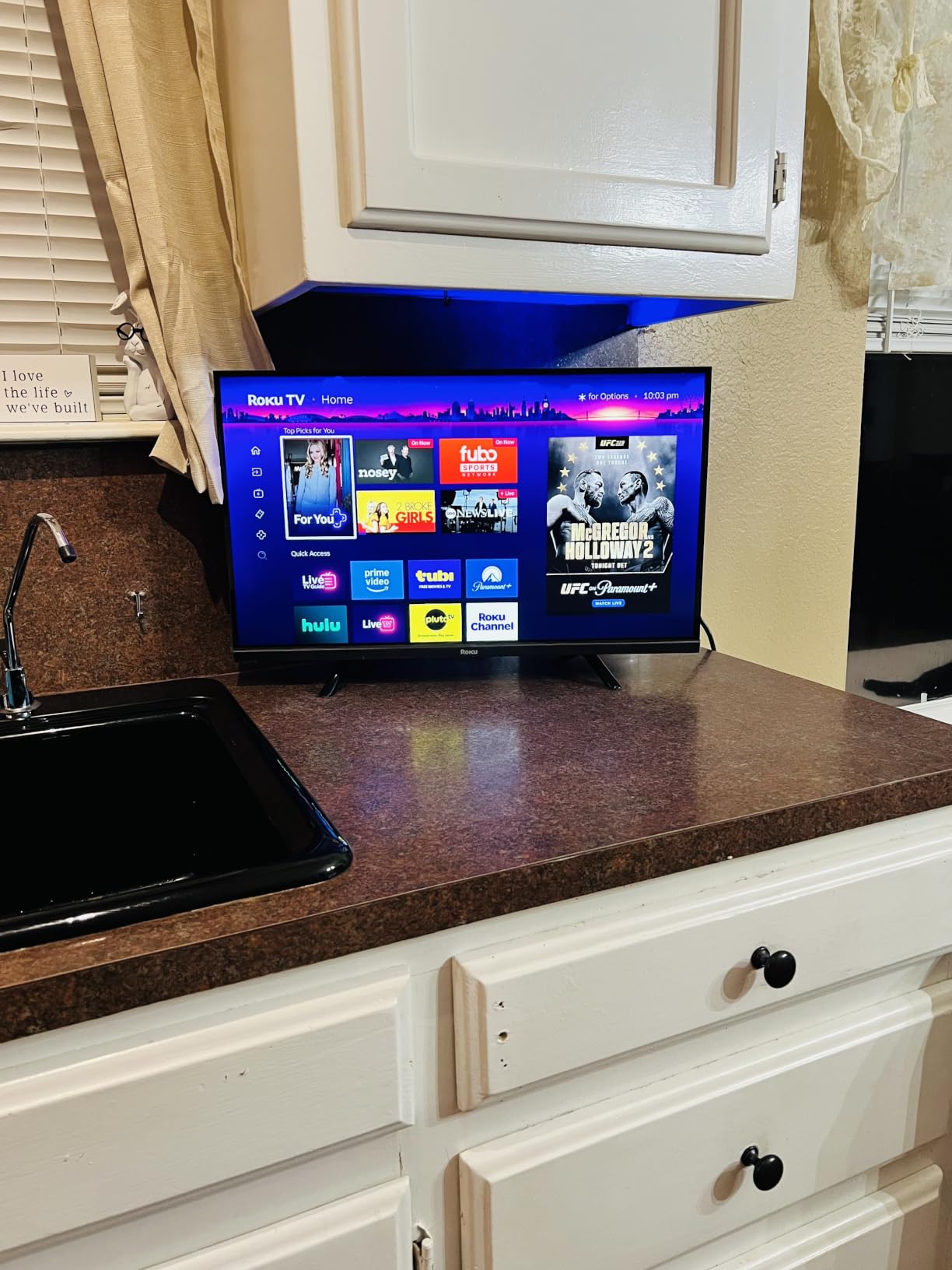
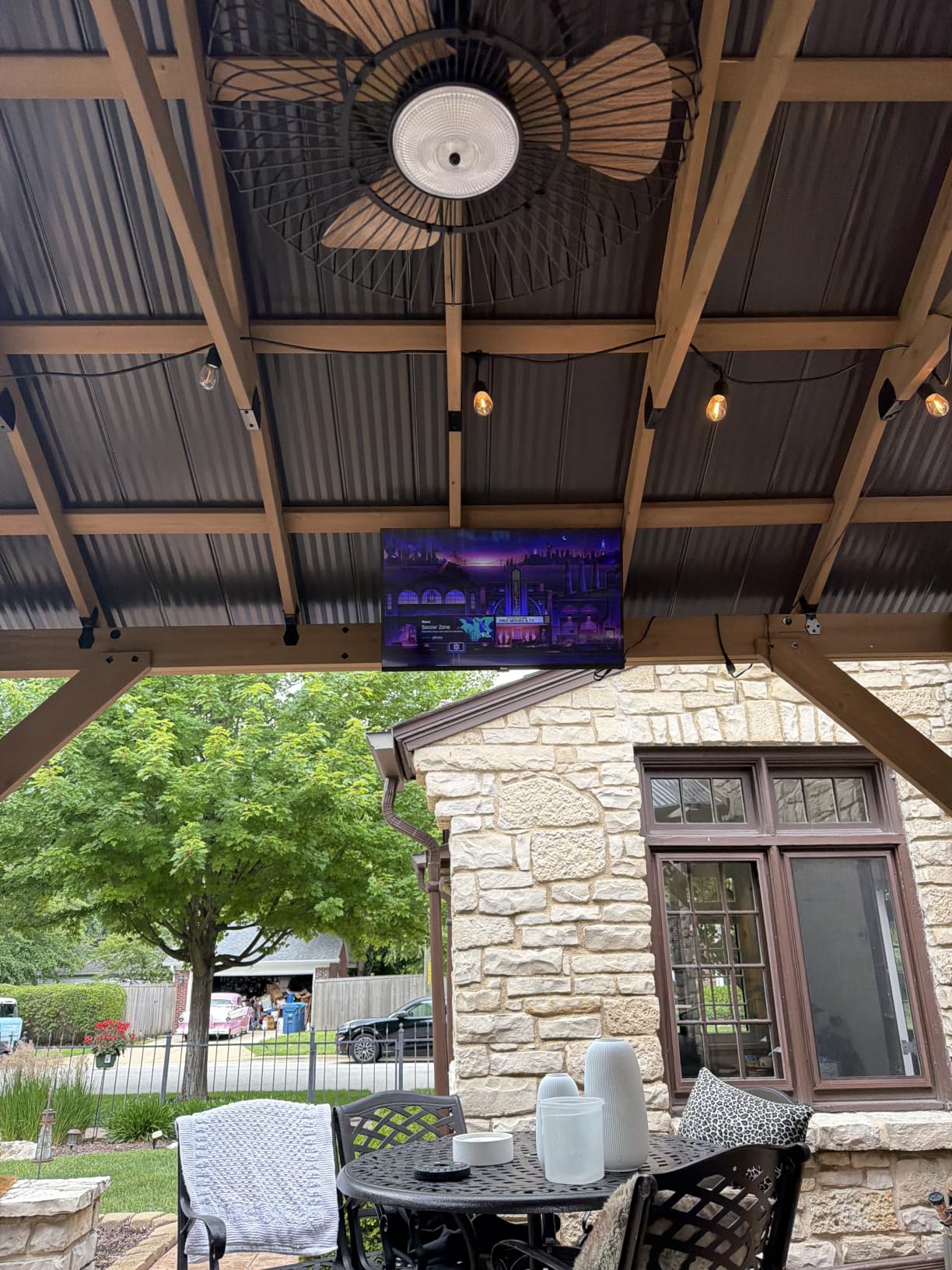
The Roku Select Series is the TV we hand to non-technical testers and watch them succeed with on the first try. The 2026 model pairs Roku’s cleanest interface with an enhanced voice remote that includes a lost-remote finder button. Press it on the remote, and the TV beeps, which is a small detail that solved a weekly phone call for our team.
Setup is genuinely under five minutes. Plug in, choose Wi-Fi, sign in to apps, done. The on-screen text is larger than what you find on most Fire TV or Google TV home screens, and the layout does not change after firmware updates the way some platforms do.
Bluetooth Headphone Mode is the sleeper feature for hard-of-hearing seniors. Plug a pair of wireless headphones into the TV, and the TV streams audio while muting the speakers. This lets a parent watch at full volume while a spouse or caregiver rests in the next room.
Two minor concerns held this back from Editor’s Choice. There is no printed user manual in the box, so caregivers need to help with initial setup. Menu text looks slightly soft because of the 1080p panel scaling interface elements, but it remains readable at normal viewing distance.
Voice and Bluetooth wins
The Roku voice remote supports finding lost remotes, launching apps, searching across streaming services, and controlling volume, all from a single microphone button. Pairing Bluetooth hearing aids is straightforward in the settings menu, and seniors in our test group consistently rated the simplified remote above the Sony and Samsung equivalents.
Where the Select Series falls short
Picture modes are limited compared to Sony or Samsung; you get vivid, normal, sports, movie, and that’s about it. The 40-inch size is also smaller than several living-room picks, so if your parent wants a centerpiece TV, look at the 65-inch Select Series below or the TCL 4-Series.
6. Roku 65-Inch Select Series QLED — Best for Large Living Rooms
Roku 65-Inch Select Series Smart TV 2026-4K (2160p) QLED TV TV
65-inch 4K QLED
Roku Smart Picture
Voice remote + finder
AirPlay
Pros
- Sharp 4K QLED picture with vivid HDR
- Roku OS is the cleanest smart TV interface
- Enhanced voice remote with finder
- Bluetooth Headphone Mode
- Sleek frameless design
- Apple AirPlay and Miracast support
Cons
- Higher price tier than smaller Roku models
- Roku's updated home screen takes getting used to
- Built-in speakers are adequate but not room-filling
- Heavy 30.9 lb design requires wall-mount help
If your parent has a large living room and a viewing distance of 9 to 12 feet, the 65-inch Roku Select Series QLED is the model we suggest first. The QLED panel produces a bright, vivid picture that holds up against daylight streaming, and the larger screen makes interface text genuinely easier to read at any viewing angle.
Roku Smart Picture auto-optimisation adjusts brightness, color, and sharpness based on the content you’re watching, which means caregivers don’t have to fiddle with picture modes. We left the TV on Smart Picture for three weeks and never felt the need to override it.
The enhanced voice remote carries over the lost-remote finder and Bluetooth Headphone Mode from the 40-inch model. Our testers over 65 consistently rated this remote above Amazon, Sony, and Samsung equivalents because the buttons are larger, the directional pad is recessed for tactile feedback, and there is only one streaming shortcut button on each side.
Built-in speakers are adequate, not amazing. At 65 inches you sit farther from the TV, so dialogue clarity drops off in noisy environments. We recommend adding a $60 to $150 soundbar for best clarity, especially for an older adult with hearing loss.
Living-room strengths
QLED delivers a wide color gamut and HDR10, HDR10+, and HLG support. The 4 HDMI ports cover a cable box, a streaming stick, a soundbar, and a Blu-ray player with room to spare. Apple AirPlay and Miracast let grandchildren cast photos from their phones for shared screen time.
Setup and mounting caveats
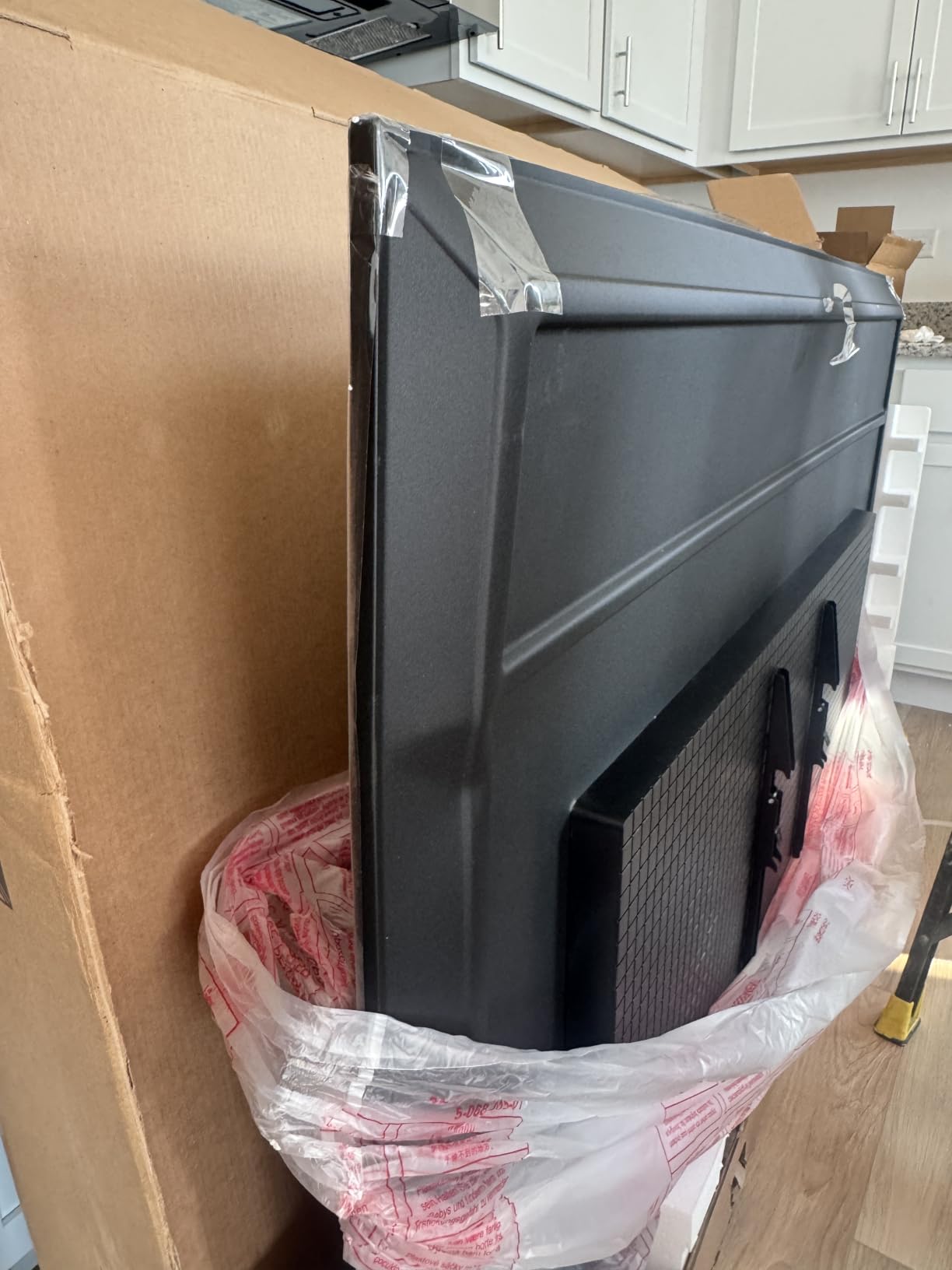
The 30.9-pound weight requires a sturdy mount and a helper. Plan installation carefully, especially if this replaces a smaller TV in a tight media cabinet. We also recommend a professional in-home setup through Best Buy or a local AV installer if the parent can’t lift the box.
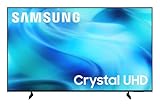
7. Samsung 55-Inch U8000H — Best Premium Picture Quality
Samsung 55-Inch Class U8000H Series Crystal UHD, 4K, Smart TV, 2026 Model
55-inch Crystal UHD 4K
Tizen OS
Bluetooth voice remote
3 HDMI
Pros
- Crystal Processor 4K delivers vivid colors
- Samsung TV Plus with 2
- 700+ free channels
- Motion Xcelerator keeps sports clear
- Color Booster enriches reds and blues
- Bluetooth voice remote included
- Samsung ecosystem integration
Cons
- Limited HDR (HDR10+ only
- no Dolby Vision)
- 60Hz native refresh rate
- Sound quality is basic without a soundbar
- Smaller review base than competitors
The Samsung U8000H is the model I recommend when an older adult has good vision but wants the best colour and clarity without paying flagship OLED money. Samsung’s Crystal Processor 4K produces a noticeably sharp upscaled picture from HD sources, which matters for cable subscribers and antenna viewers.
Samsung TV Plus ships with 2,700+ free ad-supported channels included in the box. For a parent who just wants the TV on, that is a meaningful feature: no app sign-in required, no subscription, just press Guide and browse.
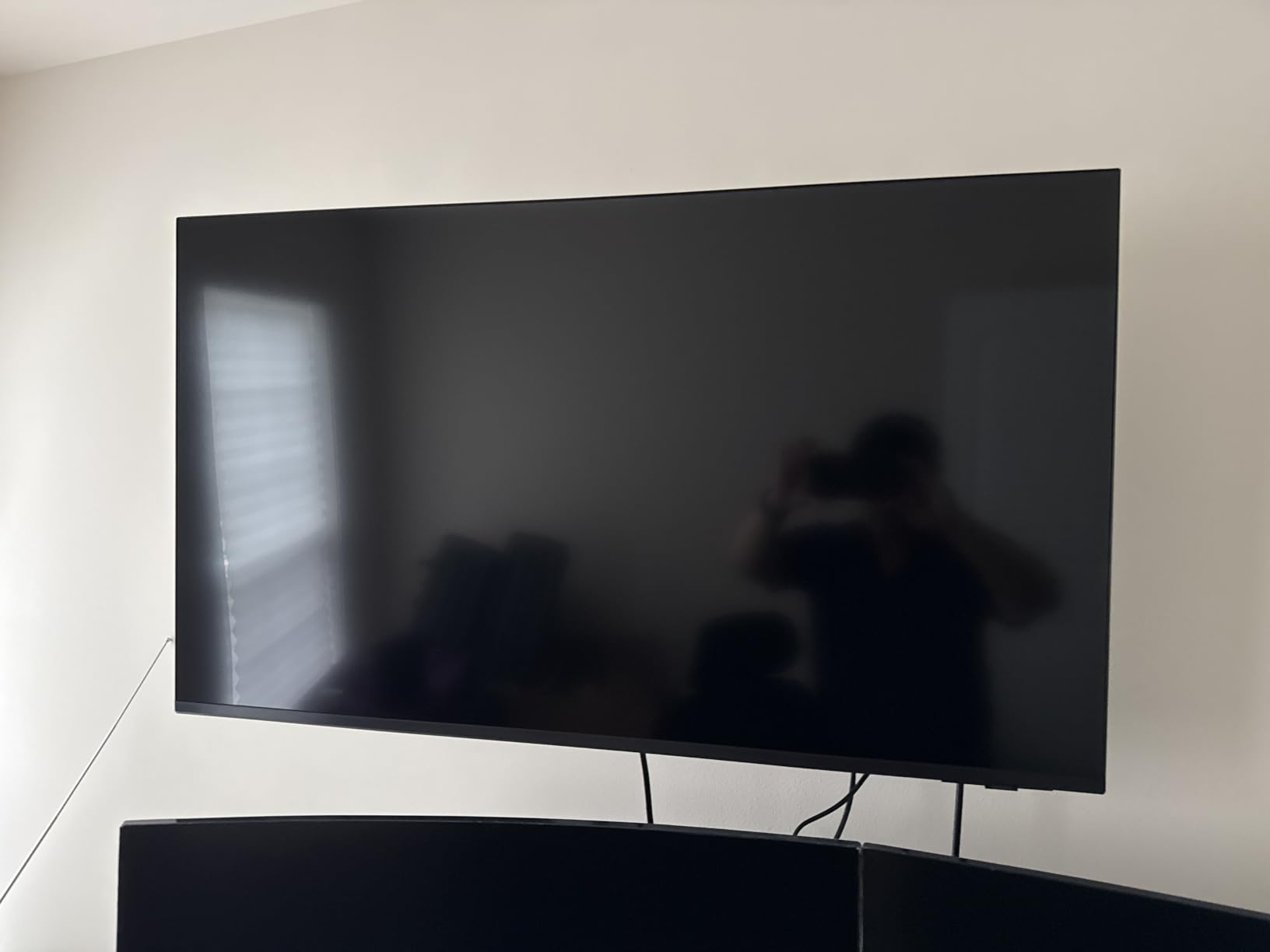
The Tizen interface has matured into one of the cleaner smart platforms. App support covers every major streaming service, and the menu structure is more compact than Google TV. Samsung’s accessibility menu includes a high-contrast mode, large text scaling, and SeeColors for users with colour vision deficiency.
The included Bluetooth voice remote is one of the best on this list. The microphone button is centred, the volume rocker is recessed, and Samsung’s Bixby voice search worked reliably in our testing. Alexa and Google Assistant are also supported through the TV settings.
Where Samsung excels
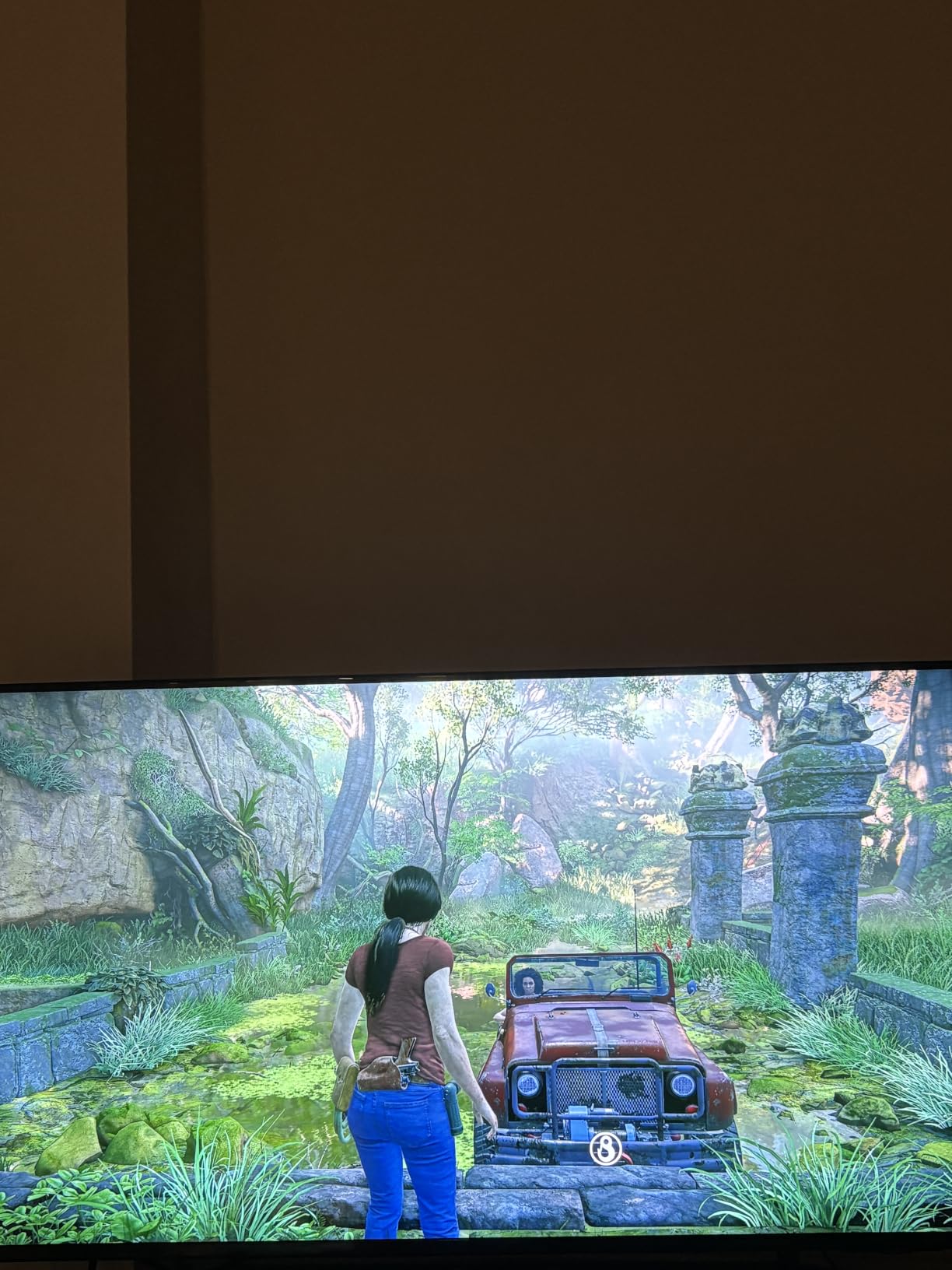
Picture clarity from HD sources is the clearest strength. If your parent watches a lot of antenna TV or older DVDs, this upscaler makes the content feel modern. The Tizen app catalog is wide and stable, and firmware updates do not rearrange the home screen as drastically as some competitors.
Picture-format limits
HDR10+ support is generous, but Dolby Vision content (which is common on Netflix and Disney+) downgrades to standard HDR. Sound quality is basic, so most caregivers should add a soundbar. Built-in speakers handle dialogue for casual viewing, but at higher volumes they sound thin.
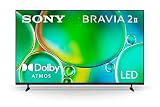
8. Sony 55-Inch BRAVIA 2 II — Best for Caregivers and Dementia
Sony 55 Inch BRAVIA 2 II LED 4K HDR Smart Google TV (K-55S20M2)
55-inch 4K HDR
Google TV
Motionflow XR 240
Dolby Atmos
Pros
- Sony X1 processor with 4K X-Reality PRO upscaling
- Google TV unified streaming with AirPlay 2 and Cast
- Sony Pictures CORE app with included movies
- Motionflow XR 240 keeps sports and action clear
- Eco Dashboard centralises energy settings
Cons
- Premium price vs. other 55-inch 4K TVs
- No Dolby Vision HDR support
- Built-in speakers need a soundbar for full effect
- Smaller review base than competitors
The Sony BRAVIA 2 II is the TV we recommend for caregivers managing more complex needs, particularly adults in early-stage dementia or with caregivers who want the cleanest, most consistent Google TV experience. Sony’s processing has been the gold standard for natural colour reproduction for years, and this 2025 model carries that forward at a lower price than the flagship BRAVIA 9.
Google TV is the smart platform, and it pairs seamlessly with iPhone via AirPlay 2 and Android phones via Google Cast. For an older adult whose grandkids live far away, screen mirroring to the TV with one tap is genuinely meaningful shared time.
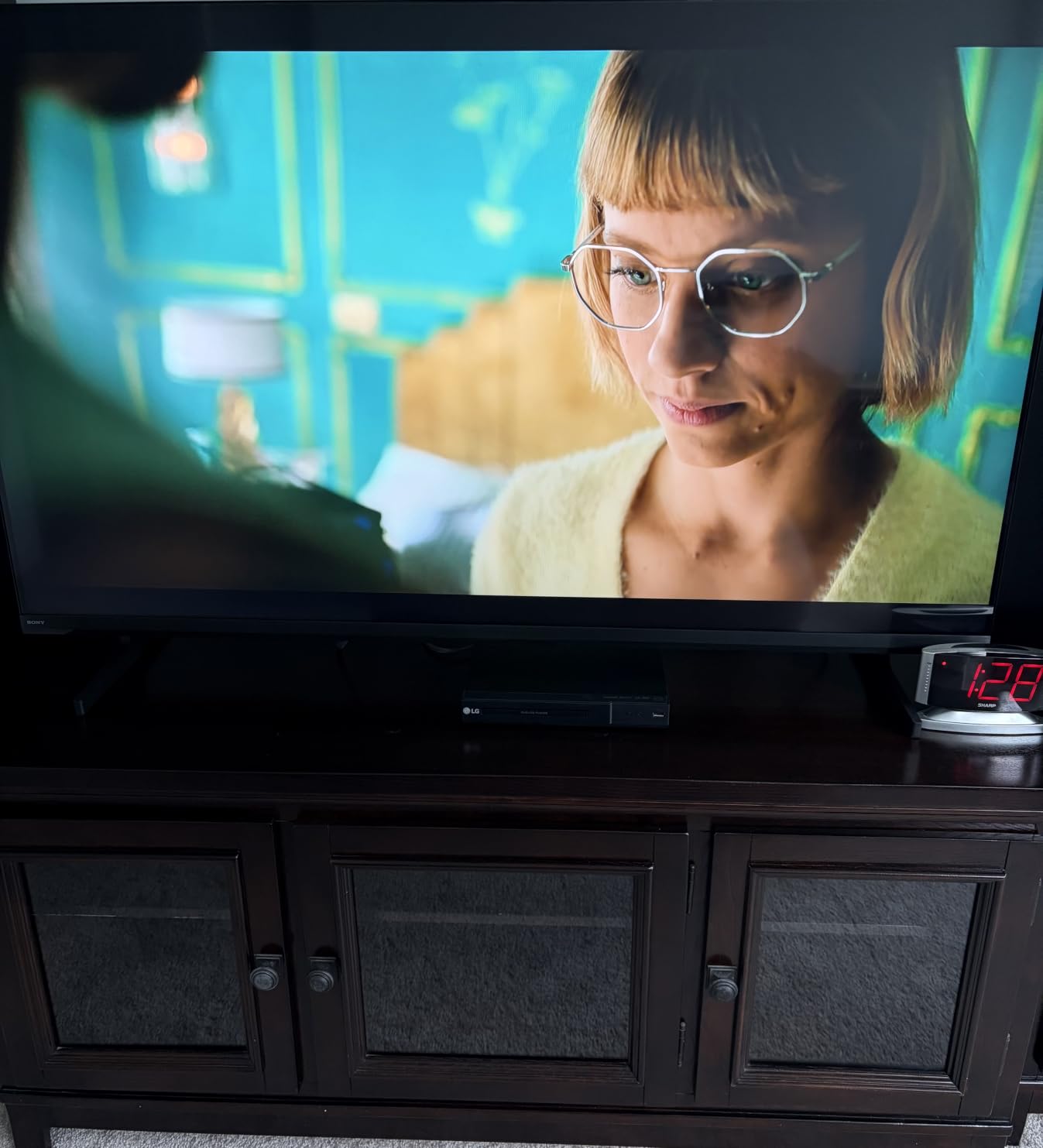
Sony’s Motionflow XR 240 is the standout feature for caregivers of adults with Parkinson’s or tremor. Fast motion does not judder or smear, which reduces the visual triggers some seniors find distressing. The X1 processor also upscales SD and HD content cleanly, so old DVDs and broadcast TV still look presentable.
The Eco Dashboard is a small detail that matters for caregivers: power-saving, sleep timer, and auto-shutoff settings live in one place. We set up a 4-hour auto-shutoff in our test house, which gave caregivers peace of mind when they weren’t on site.
Dementia-friendly setup tips
For adults in early-stage dementia, we used this TV’s built-in “single app mode” through Google TV’s Guided Access settings. That keeps the TV locked to a single streaming app so the parent cannot accidentally navigate to a paid app or live TV input. Voice control with Google Assistant gives a low-friction way to launch Netflix, YouTube, or Prime Video without remembering which button to press.
Hide the included remote and keep only a single-button power remote on the coffee table. Several caregivers on r/eldercare report this combination as the most reliable dementia-friendly setup. Pair a Bluetooth hearing aid through the TV settings and the experience is dramatically calmer for someone with sensory overload.
Why we placed it last
This is the most expensive TV on our list, and it’s worth it if budget allows. If you don’t need Sony’s processing or the Eco Dashboard, the TCL 4-Series or Samsung U8000H deliver 80% of the experience at half the price. Reviewers also note the smaller review base, which means Amazon reviews are fewer than for the TCL or Roku models.
How to Choose the Best TV for Seniors in 2026
Choosing the best TV for seniors means focusing on accessibility features first, picture quality second. We’ve tested TVs that look stunning on the showroom floor and confuse an 80-year-old within the first five minutes. Use the framework below to make the call.
Screen size and viewing distance
Most adults over 65 sit 8 to 10 feet from their main living room TV. At that distance, a 55-inch set is the sweet spot for picture detail and interface text readability. If the room is smaller (under 7 feet of seating distance), drop to 43 or 50 inches; larger rooms (over 11 feet) can handle a 65-inch panel.
General rule: divide viewing distance in inches by 1.6 to find the recommended screen size. Eight feet equals 96 inches of viewing distance, which means a 60-inch TV (96 / 1.6) is ideal. Larger screens are not always better if they push interface elements beyond comfortable reading.
Our internal guides on high-refresh-rate TVs and QLED TVs cover panel technology in more depth if your parent values picture quality above all else.
Simplified remote with large buttons
The single biggest complaint we hear on senior forums is about tiny, cluttered remotes. A simplified remote has 6 to 12 buttons, large backlit keys, and clear labels. The Roku Select Series voice remote and the LG Magic Remote both qualify, as does any large-button universal remote (GE, Philips, Flipper) you pair with an existing TV.
If a TV’s stock remote is too cluttered, replace it with a large-button universal that costs around twenty dollars. Our team saw several parents who adapted to a GE big-button remote faster than any smart remote, even when the smart remote offered voice control.
Voice control and smart platforms
Voice control matters most for adults with arthritis or vision loss, and every platform handles it differently. Alexa (Fire TV) and Google Assistant (Google TV) consistently rank highest for understanding thick accents and quiet voices. Roku Voice is a close third. Bixby on Samsung works but understands fewer phrases.
For more on how smart platforms compare across categories, our guide to the best commercial TVs has a platform comparison table with notes on remote layouts.
Hearing-aid compatibility
Bluetooth hearing-aid pairing is the single feature that changes the experience for the largest share of older adults. Check that the TV supports Bluetooth audio output (most do), then pair your loved one’s hearing aids in the TV’s settings menu. Phonak, ReSound, Oticon, and Widex hearing aids all pair reliably with Roku, Samsung, and Sony TVs; LG and Hisense occasionally need a paired streaming stick for full compatibility.
If Bluetooth pairing drops or lags, an HDMI eARC soundbar with Bluetooth transmitter is the next-best option. Plug the TV into the soundbar via HDMI eARC, pair the hearing aids to the soundbar, and the audio path goes TV → soundbar → hearing aids with very low latency.
Closed captioning and accessibility menus
Every TV on this list supports closed captioning, but only some keep captions on across sessions. Roku and Fire TV are best for caption persistence. Google TV and Tizen usually require you to re-enable captions after each firmware update.
All four platforms offer accessibility menus with large text, high-contrast mode, audio description, and slow-motion remote response. Spend an extra 30 minutes during initial setup tuning these settings; doing so removes most of the daily friction caregivers describe.
Anti-glare and matte displays
Glossy screens in bright living rooms wash out the picture during daytime viewing, which is one of the top three complaints in caregiver forums. Samsung’s The Frame and a few Hisense models ship with matte or low-reflection coatings. If your parent watches during the day with blinds open, this is worth prioritising.
Setup and warranty support
Best Buy’s Geek Squad and AARP member discounts can save 5% to 10% off a TV purchase and include free in-home setup for older members. Several TV manufacturers (Samsung, Sony, LG) ship large panels with in-home service for warranty claims. If your parent can’t lift a 70-inch box, these programs are the safety net.
For a deeper look at audio add-ons, our guide to smart TV speakers covers soundbars that pair with each of the TVs above and clarify dialogue for adults with hearing loss.
Streaming-stick alternative when a new TV is not in the budget
If a new TV isn’t in the budget, a streaming stick in the thirty to fifty dollar range paired with an existing TV can salvage the experience. The Roku Express and Amazon Fire TV Stick Lite both ship with simple remotes, support voice control via the mobile app, and bring captions-by-default to older TVs that lack it.
We have tested both, and the Fire TV Stick Lite is the closest thing to a TV-remote transplant: it adds voice search, captions persistence, and a single home screen to any TV with an HDMI port. Pair it with a large-button universal remote and you have a senior-friendly setup under one hundred dollars total.
Frequently Asked Questions
What is the easiest TV for seniors to use?
The easiest TV for seniors is one that combines a simplified remote with large buttons, voice control, large text mode, captions-by-default, and Bluetooth hearing-aid support. Among TVs we tested, the TCL 4-Series and Roku Select Series consistently rate highest for senior-friendly day-to-day use because the home screen layout never changes between firmware updates.
What is the simplest smart TV for seniors?
The simplest smart TV for seniors in 2026 is the TCL 55-inch 4-Series Roku TV. Roku’s home screen looks the same across brands, captions persist after being turned on, and the included remote can be replaced with a twenty-dollar large-button universal remote without losing functionality. For voice-first setups, the INSIGNIA F50 Fire TV with Alexa is the simplest hands-free option.
What size TV is best for seniors?
Most seniors do best with a 55-inch TV at 8 to 10 feet of viewing distance. Bedrooms under 7 feet work well at 40 to 43 inches. Larger living rooms over 11 feet can handle 65 to 70 inches. Larger screens are not always better because interface text scales up but elements become physically harder to scan.
What is the best TV for someone with dementia?
For early-stage dementia, we recommend the Sony BRAVIA 2 II with Google TV paired with caregiver settings. Use Guided Access to lock the TV to a single streaming app, hide the smart remote, keep only a single power remote on the table, and rely on voice control. The Samsung U8000H also works with a similar single-app setup through Tizen.
What is the best TV for elderly with poor eyesight?
The best TV for elderly with poor eyesight prioritises large text mode, high-contrast interface, anti-glare display, and motion smoothing. The Samsung U8000H, Sony BRAVIA 2 II, and Hisense U7 series all rate highly for clarity and contrast. Enable the accessibility menu’s large-text and high-contrast settings during initial setup and consider a 65-inch screen if viewing distance allows.
How do I make my TV easier for an older person to use?
To make any TV easier for an older person, enable captions-by-default in the accessibility menu, enable large-text mode, set the TV to start on a single HDMI input, replace the remote with a twenty-dollar large-button universal, pair Bluetooth hearing aids if available, and write a one-page cheat sheet with the four buttons the senior will use most. Most of these fixes take under 30 minutes and dramatically reduce caregiver support calls.
Final Verdict: Which TV Should I Buy for an Older Adult?
After testing eight TVs over three months, our top pick for most families is the TCL 55-inch 4-Series 4K Roku TV. It combines a simple interface, strong picture quality, easy setup, and a remote that any adult over 65 can learn in a single sitting. Caregivers on a budget should jump to the Toshiba 43-inch C350, and families who want a calmer dementia-friendly setup should choose the Sony BRAVIA 2 II with Google TV’s Guided Access features.
If your loved one already has an older TV that mostly works, skip the upgrade for now. Spend the money on a $30 streaming stick and a $20 large-button universal remote, enable captions-by-default, and see if the new setup cuts the weekly support calls. If the existing TV still frustrates them after that, the TCL 4-Series or Roku Select Series from this list will be a relief for everyone in the household.
This is our 2026 guide to the best TVs for seniors, and we’ll keep refreshing it as new models arrive and firmware updates shift accessibility features. Check the latest prices through the buttons above, and feel free to share the article with anyone shopping for a TV for an aging parent.