
The fastest way to get in trouble in a dorm room is to buy an appliance before reading the housing handbook. Residence hall rules are written around fire code, not around convenience, and they are enforced at move-in check-in by a resident assistant standing in your doorway with a list.
That is why the best dorm room appliances list is not really a shopping list. It is a shortlist of things you can actually bring through the door, plug into a wall that probably has two working outlets, and carry back out at the end of the year. Everything below has been filtered through that lens first, and specs second.
We spent weeks reading housing handbooks, comparing published dimensions against real dorm floor plans, and cross-checking review patterns across thousands of owner comments. The result is 12 picks that survive a shared room, a two-outlet wall and a move-out date. Updated for 2026.
Two things to sort out before you read a single spec. First, many halls already put a microwave in a shared kitchen on each floor or a refrigerator in the room, and buying a duplicate is the most common wasted expense in dorm move-in. Second, dorm rules vary enormously by school, so treat every policy statement here as a framework and confirm the specifics in your own handbook. If you want the deep dive on refrigerators alone, our guide to the best mini fridges for dorm rooms goes deeper on capacity and noise. For the screen side of a dorm room setup, see our picks for dorm room TVs.
Table of Contents
Top 3 Picks for Dorm Room Appliances in 2026
Three products stand out for most students: a personal blender for drinks and snacks, a kettle that boils fast in a small room, and a compact microwave with a mute button. Those three cover the highest-frequency dorm jobs without adding a single open heating element to your room.

What You Can and Cannot Have in a Dorm Room
Most schools allow exactly three heating appliances in a dorm room: a mini fridge, a microwave, and an electric kettle, plus a coffee maker that has no exposed heating element. Everything with an open coil or a hot exposed surface is banned almost everywhere because open heating elements cause the majority of dorm fires.
Here is how the categories break down. The rule behind each one matters more than the verdict, because a school will happily explain a judgment call if you ask the housing office before you buy.
Usually allowed
- Mini fridges under about 4.5 cubic feet, and some schools cap the footprint in inches as well
- Microwaves, frequently with a wattage cap such as 900 watts
- Electric kettles and hot water dispensers
- Coffee makers with no warming plate and no exposed element
- Personal blenders with a sealed base
- Cooling-only appliances such as mini fridges and personal fridges for medication
The gray zone, decided school by school
- Multi-cookers and pressure cookers: one university’s housing page lists them as prohibited, while plenty of other schools permit them. The question your RA will actually ask is whether the heating element is sealed.
- Air fryers: essentially a small fan plus a heating coil in a basket. Several schools treat them as toaster ovens in disguise and take them at check-in.
- Electric skillets and hot plates: allowed in apartment-style dorms with a kitchen, restricted or banned in traditional halls.
- Toasters: banned at most schools, and the exemption list rarely includes them.
Rarely allowed anywhere
- Hot plates and induction burners with an open coil
- Toaster ovens, waffle makers, panini presses and indoor grills
- Anything with a non-UL-listed plug or a damaged cord
- Ceiling or plug-in space heaters, which are almost always prohibited outright
Forum threads on r/college and r/UCDavis repeat the same question in different words, and the answer is genuinely different at every school. The students who avoid problems do one thing first: they read the prohibited items page on the housing website, then email the housing office with the specific model number and ask for it in writing.
How We Picked These 12 Appliances
We ranked on five criteria, in this order: will your housing handbook permit it, does it fit on a dorm shelf or desk, how much power does it pull, how loud is it, and how much owner feedback exists to confirm the claims.
Policy fit came first because a banned appliance is worth nothing regardless of its rating. Footprint came second because a dorm room has about three square feet of free counter. Wattage and outlet count came third because two appliances sharing a wall circuit is a real failure mode. Noise was ranked unusually high for this category, since a compressor that cycles every few minutes in a 150-square-foot room with a roommate is a functional problem rather than a preference one. Review volume was the final tiebreaker, and every pick below carries at least one honest drawback.
Best Dorm Room Appliances at a Glance in 2026
All 12 picks in one place, ranked. Use the buttons to check current pricing and availability for each item.
| Product | Specifications | Action |
|---|---|---|
| Ninja Fit Compact Personal Blender 700W |
|
Check Latest Price |
 Instant Pot Vortex 2QT Mini Air Fryer Instant Pot Vortex 2QT Mini Air Fryer |
|
Check Latest Price |
 Amazon Basics 1 Liter Electric Kettle 1500W Amazon Basics 1 Liter Electric Kettle 1500W |
|
Check Latest Price |
 DEZIN 1.5L Non-Stick Electric Hot Pot DEZIN 1.5L Non-Stick Electric Hot Pot |
|
Check Latest Price |
 Midea 1.6 Cu.Ft Energy Star Mini Fridge Midea 1.6 Cu.Ft Energy Star Mini Fridge |
|
Check Latest Price |
 Elite Gourmet 2.5 Qt Square Electric Skillet 600W Elite Gourmet 2.5 Qt Square Electric Skillet 600W |
|
Check Latest Price |
 COMFEE 0.7 Cu.Ft 700W Countertop Microwave COMFEE 0.7 Cu.Ft 700W Countertop Microwave |
|
Check Latest Price |
 Mr. Coffee 5-Cup Mini Brew Coffee Maker Mr. Coffee 5-Cup Mini Brew Coffee Maker |
|
Check Latest Price |
 Upstreman 3.2 Cu.Ft Mini Fridge with Freezer Upstreman 3.2 Cu.Ft Mini Fridge with Freezer |
|
Check Latest Price |
 Elite Gourmet 1000W Cast Iron Hot Plate Elite Gourmet 1000W Cast Iron Hot Plate |
|
Check Latest Price |
 Keurig K-Mini Single Serve Pod Brewer Keurig K-Mini Single Serve Pod Brewer |
|
Check Latest Price |
 BELLA Fits-Anywhere 2-Slice Slim Toaster BELLA Fits-Anywhere 2-Slice Slim Toaster |
|
Check Latest Price |
1. Ninja Fit Compact Personal Blender for Frozen Drinks and Shakes
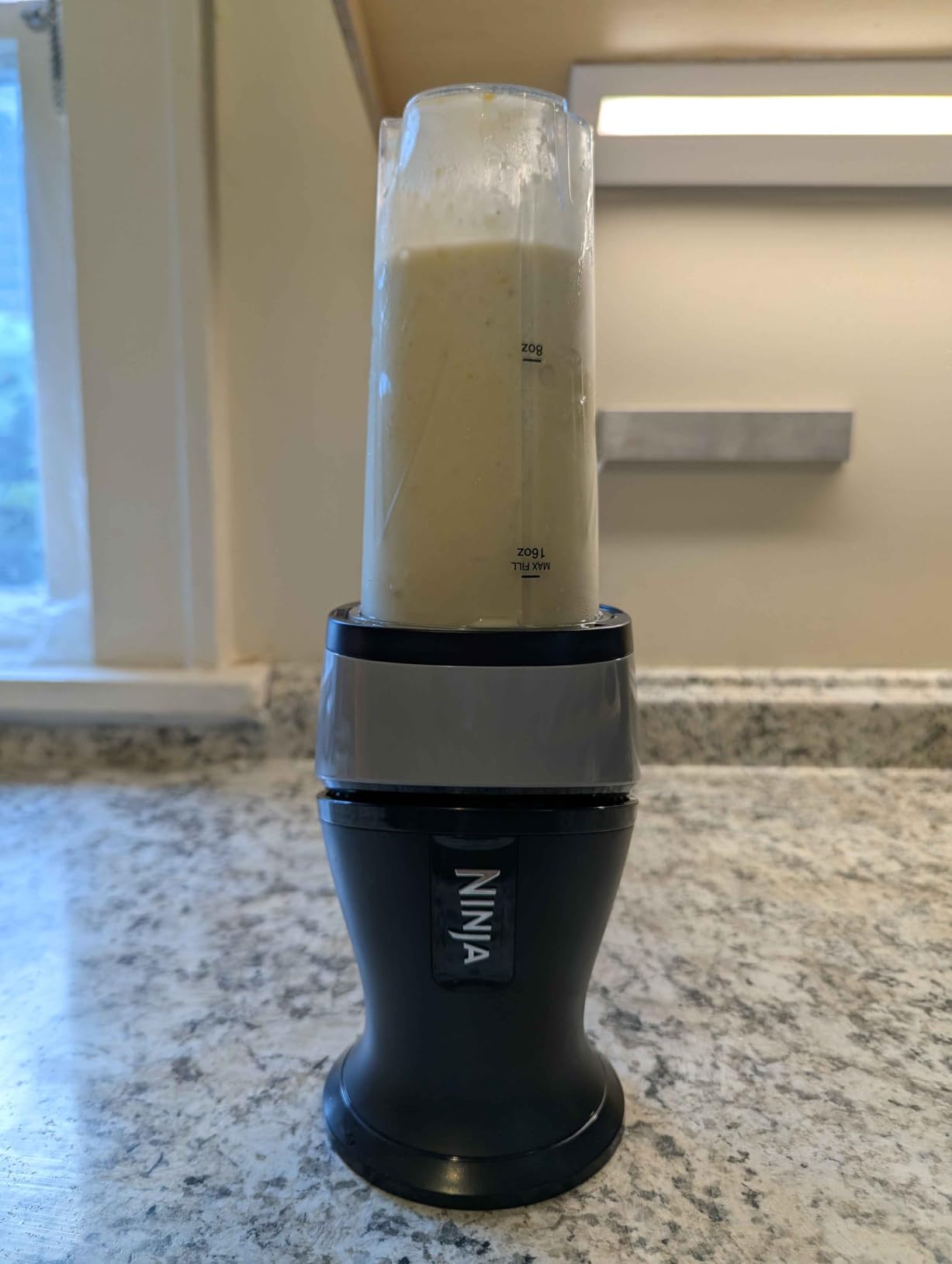
Ninja Fit Compact Personal Blender, 700W, (2) 16oz Cups, QB3001SS
700W motor
Two 16oz BPA-free cups
4.3 by 4.3 by 13 inches
3.1 pounds
Pros
- Crushes ice and frozen fruit
- Blends directly in the drinking cup
- Compact 4.3 inch square footprint
- All parts dishwasher safe
- Two cups included
Cons
- Single push-button speed
- 16oz cup suits one serving
This is the blender we would put in every first-year dorm room. It measures 4.3 inches square at the base and stands 13 inches tall, which means it fits in the gap between a dorm microwave and a wall without eating shelf space. At 3.1 pounds it is also the easiest item on this list to move between a room and a laundry closet.
The 700-watt motor base handles the two jobs dorm rooms actually generate: frozen fruit smoothies after a workout, and blended coffee or protein drinks before an 8 a.m. lecture. It crushes ice and frozen ingredients rather than just spinning around them, which is the difference between a smoothie that works and a smoothie you chew.

The design detail that sold us is that you blend and drink in the same vessel. Two 16-ounce cups with spout lids are included, so there is no decanting step and nothing to wash beyond the cup and blade. Every part is BPA-free and top-rack dishwasher safe, which matters in a room with a single small sink.
Wattage sits at 700, comfortably below the level where schools start asking questions about countertop heating appliances, and the base is fully sealed. Policy-wise this is one of the safest picks on the list, though your handbook is still the final word.
Is the Ninja Fit easy to clean and store in a dorm?
Yes, and that is the whole point. Rinse the cup, drop the blade and cup in the dishwasher, and wipe the base. There is no fixed pitcher to unwash, which is where most dorm kitchens get abandoned by week three.
Storage is straightforward too. The cups nest, and the whole stack is about the size of a tall water bottle.
Who should skip the Ninja Fit?
Skip it if you are moving into a room that already has a full blender in a shared kitchen, or if you plan to blend more than a single serving at a time. One push-button speed means you have no texture control, so smoothies come out exactly as thick as the recipe, not thicker.
2. Instant Pot Vortex 2QT Mini Air Fryer for One-Person Crisping
Instant Pot Vortex 2QT Mini Air Fryer,Small Air fryer that Crisps,Reheats, Bakes,Roasts for Quick Easy Meals,Includes over 100 In-App Recipes, is Dishwasher-Safe, from the Makers of Instant Pot, Aqua
2 quart basket
1300W
120 to 400F
Dishwasher-safe basket
7.3 pounds
Pros
- Almost no preheat time
- Dishwasher-safe non-stick basket
- One-touch programs
- Compact 2 quart size
Cons
- 2 quart basket limits batch size
- Touch controls with no detent feel
Read your housing handbook before you buy this one. Air fryers fall in the gray zone at many schools, and some residence halls treat them as toaster ovens and remove them at check-in. Where they are permitted, this is the best-performing small-batch crisper we tested, and its near-instant preheat is genuinely useful between classes.
The 2-quart basket is a single serving or a generous two. It reheats a slice of dining hall pizza in minutes and crisps frozen fries without a full oven, which is the gap a dorm room leaves open.
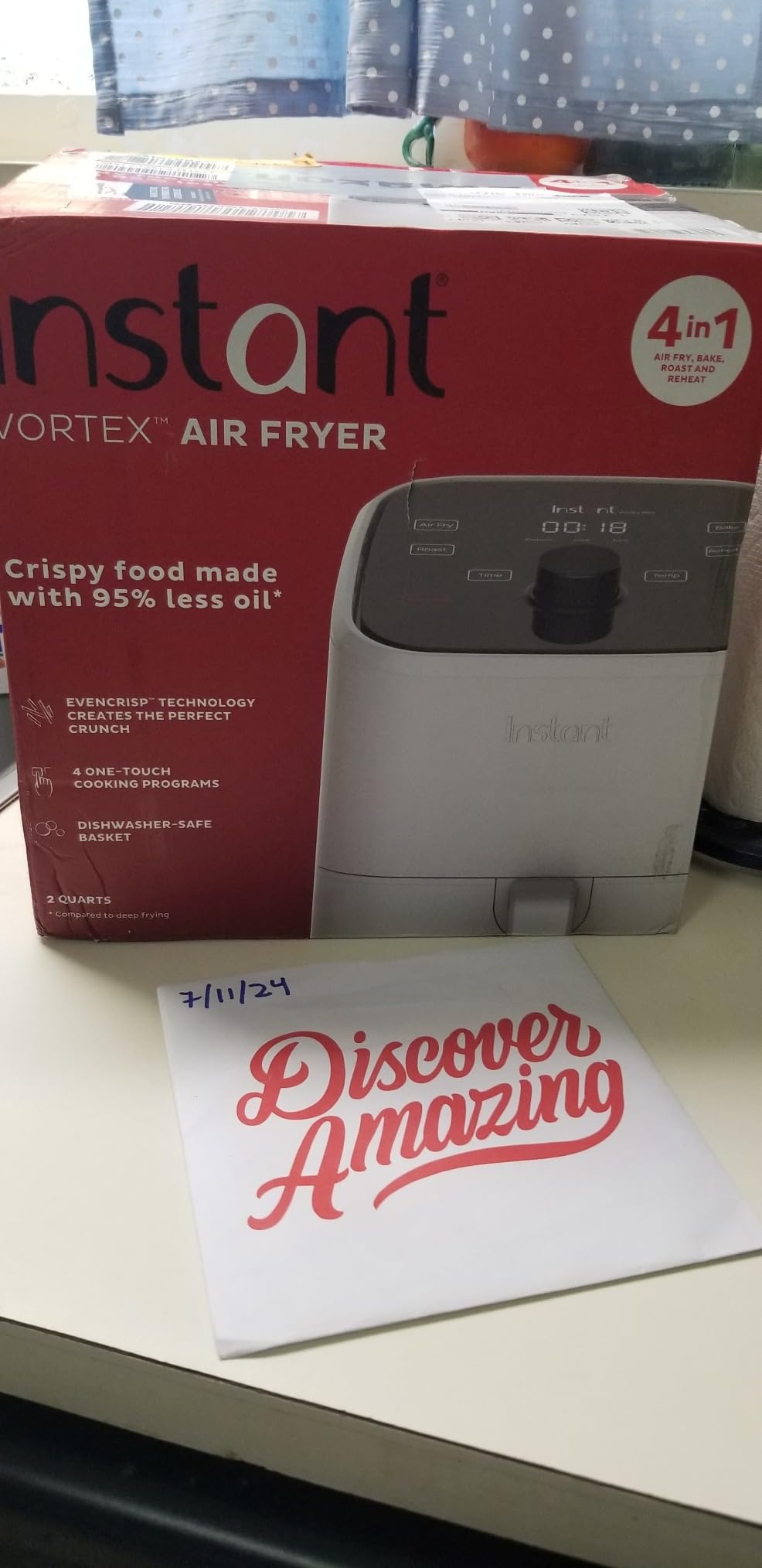
EvenCrisp top-down airflow gives consistent browning without shaking the basket, and the one-touch programs for wings, roasted vegetables and frozen snacks are a decent teaching tool if you have never cooked in a small appliance before. The basket and tray are non-stick and dishwasher safe, so the cleanup burden is low.
The number to watch is 1300 watts. That is the highest draw of any pick on this list, and it means this appliance should sit on a wall outlet rather than sharing a power strip with a mini fridge. In a room with two outlets, that constraint alone can rule it out.
Is the Instant Pot Vortex worth the policy risk?
Only if your handbook permits it and your room has a dedicated outlet. Ask the housing office with the model in hand, and get the answer in writing before move-in rather than after.
If the answer is no, the kettle and blender on this list cover most of the same meal moments with none of the risk.
Who should skip the Vortex 2QT?
Skip it in a traditional hall with strict prohibited-item lists, in a room where you already share a power strip between two other appliances, or if you cook for more than one person. A 2-quart basket runs out of space fast when you are batching meals for the week.
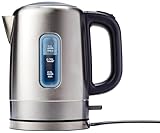
3. Amazon Basics 1 Liter Electric Kettle for Fast Morning Boil
Amazon Basics Electric Stainless Steel Kettle for Tea and Coffee, BPA-Free, Fast Boiling, Auto Shut-Off, 1 Liter, 1500W, Black and Silver
1 liter stainless steel
1500W
Automatic shut-off
BPA-free
1.9 pounds
Pros
- Fast 1500W boil
- Automatic shut-off and boil-dry protection
- BPA-free water-contact parts
- Water level indicator
- 30 inch cord wraps for storage
Cons
- Handle gets hot during boiling
- Hand wash only
The kettle is the highest-value item in almost any dorm list, and this is the one we would buy first. One liter is the right size for a room with two people: enough for instant oatmeal, tea or pour-over, small enough to boil quickly and store in a cabinet.
At 1500 watts it boils fast, which matters more in a shared room than raw wattage numbers suggest, because the noise and steam of a slow kettle is a roommate issue. Automatic shut-off and boil-dry protection cover the two failure modes that get appliances confiscated.
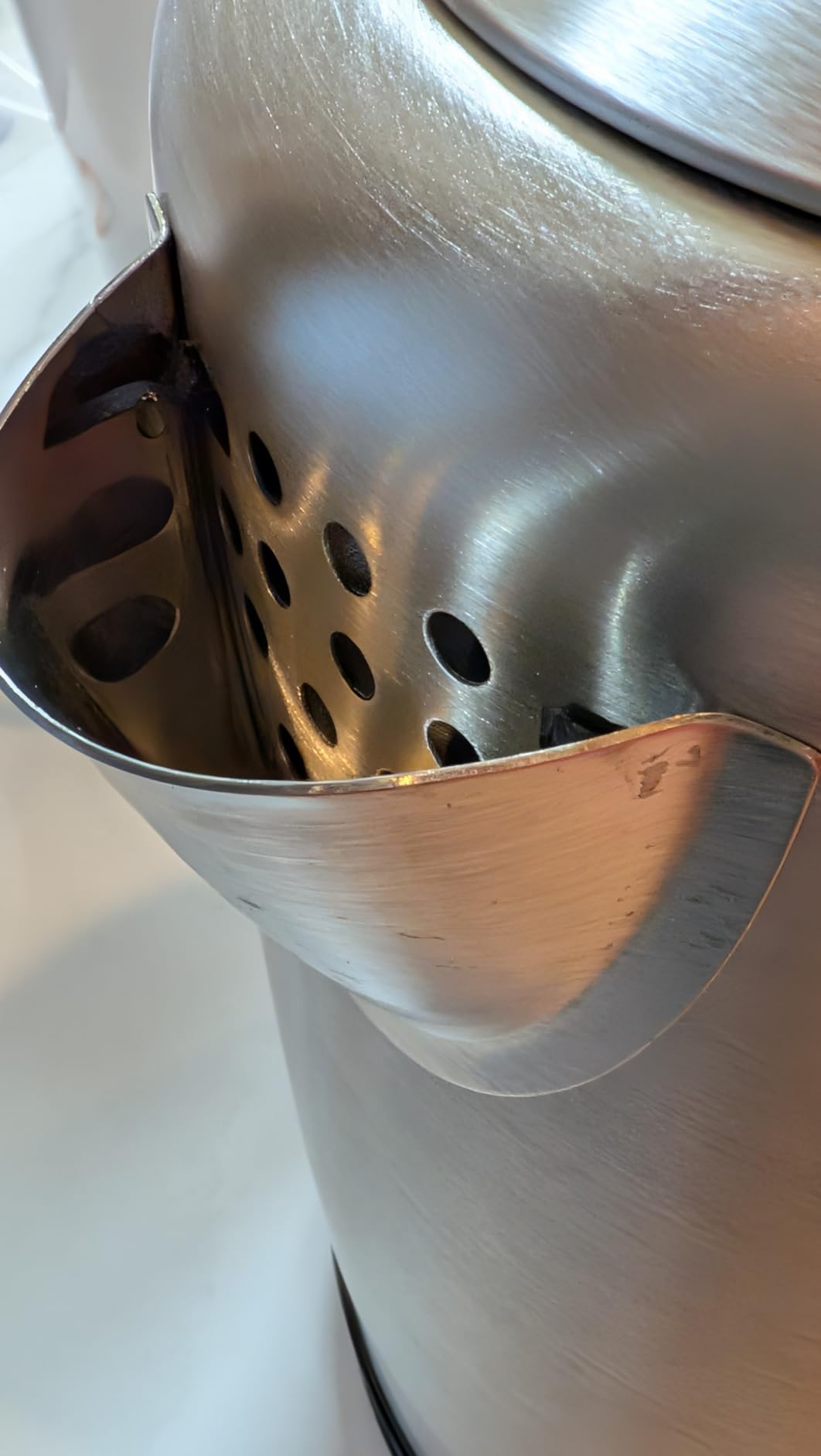
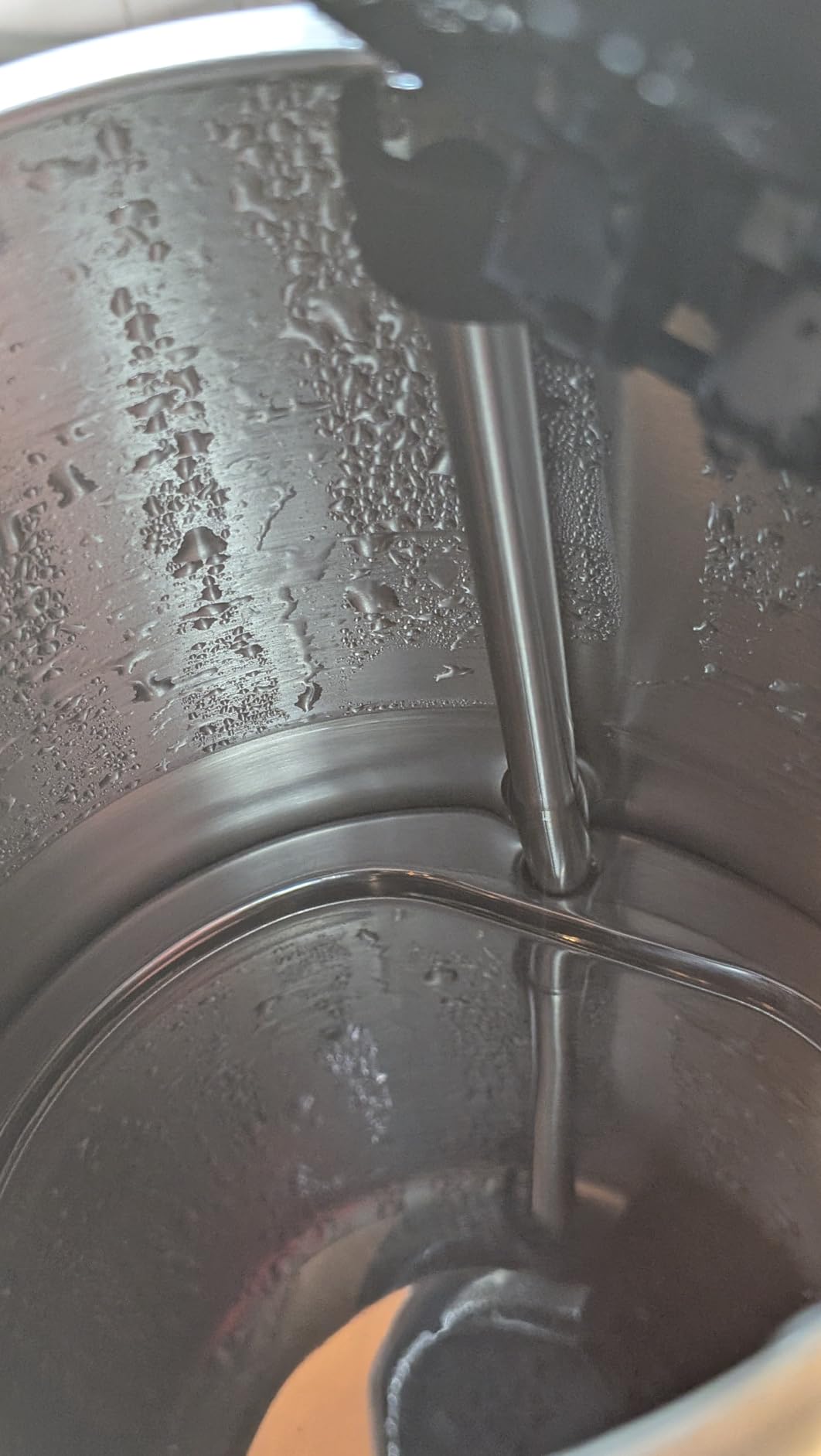
The build is simple stainless steel with BPA-free water-contact materials and a Strix thermostat control system. A water level indicator window lets you fill to a mark instead of guessing, and the wide opening makes filling and cleaning straightforward in a small sink.
Owners consistently rate it highly on speed, safety shut-off and value across one of the largest review counts of any kettle on the market. The recurring gripes are minor: the handle gets hot during a boil, and the kettle is hand wash only rather than dishwasher safe.
Will a 1 liter kettle fit under a dorm cabinet?
It measures about 5.5 inches wide and 7.9 inches tall, so it stores on its side under a desk or inside a cabinet without a dedicated shelf. The 30-inch cord wraps into the base, which keeps the footprint clean.
At 1.9 pounds it is light enough to move between rooms at the end of the year without asking for help.
Who should skip the Amazon Basics kettle?
Skip it if you need temperature control for pour-over or green tea, since this model heats to a rolling boil every time. If you share a room with someone who will bump the handle, or you prefer to run everything through a dishwasher, this is not the model.
4. DEZIN 1.5L Non-Stick Hot Pot for Dorm Cooking Without a Stove
Dezin Hot Pot Electric, 1.5L Non-Stick Portable Electric Pot, Dual Power
1.5 liter non-stick liner
300W and 700W
Overheat and boil-dry protection
2.85 pounds
Pros
- Compact size stores in a closet
- Dual power for cooking and sauteing
- Non-stick liner speeds cleanup
- Boil-dry and overheat protection
Cons
- Cord cannot be fully detached
- Hand wash only
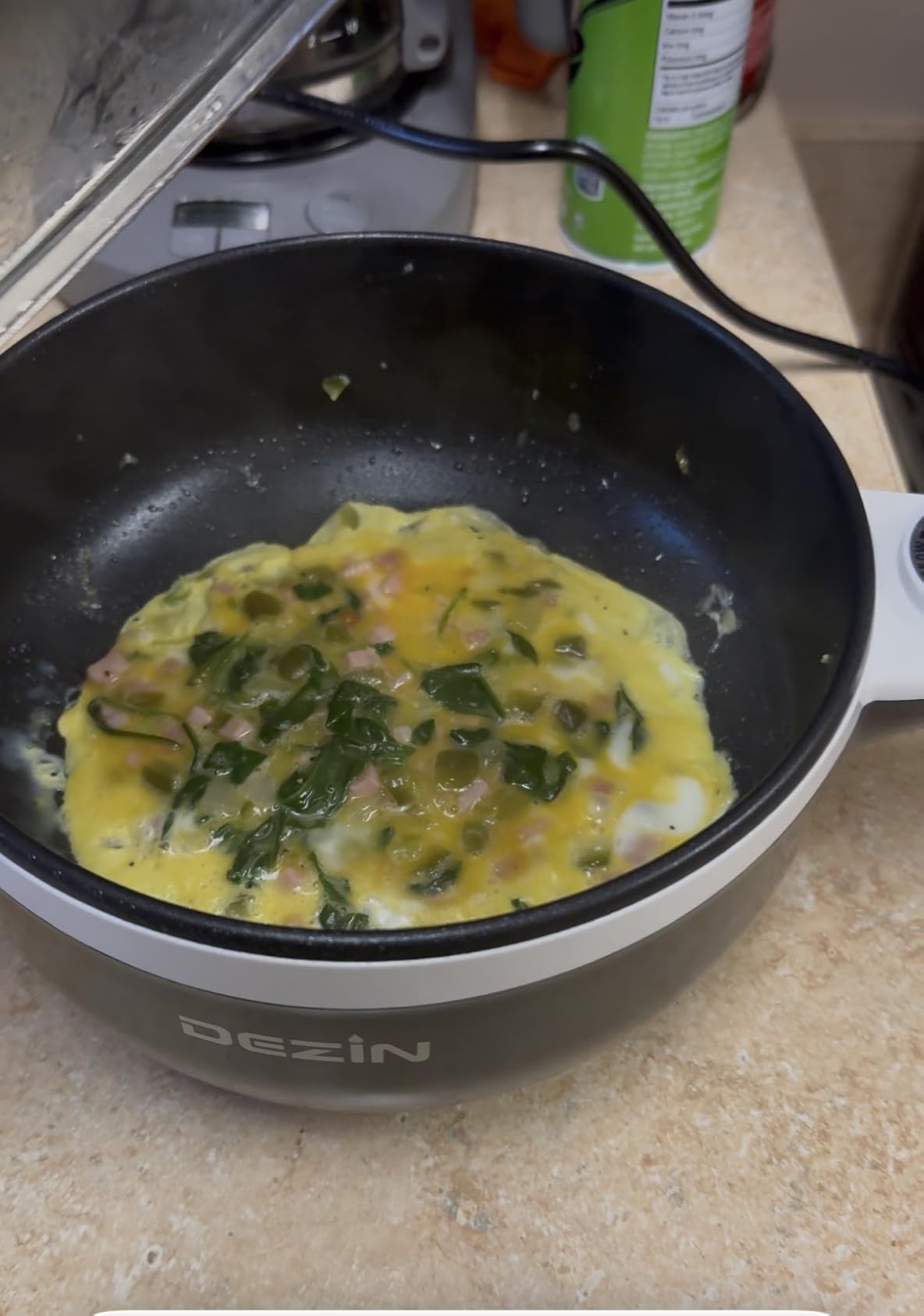
This is the appliance that replaces a stove for a single person, and owners frequently describe it as the go-to dorm cooking appliance for exactly that reason. The 1.5-liter liner is right for ramen, eggs, dumplings, fried rice and a single portion of anything else.
Two power settings matter more than they sound. At 300 watts it simmers gently enough for soup and eggs, and at 700 watts it gets a stir-fry moving. Overheat and boil-dry protection are included, which is the safety margin you want in a room with a working smoke detector.
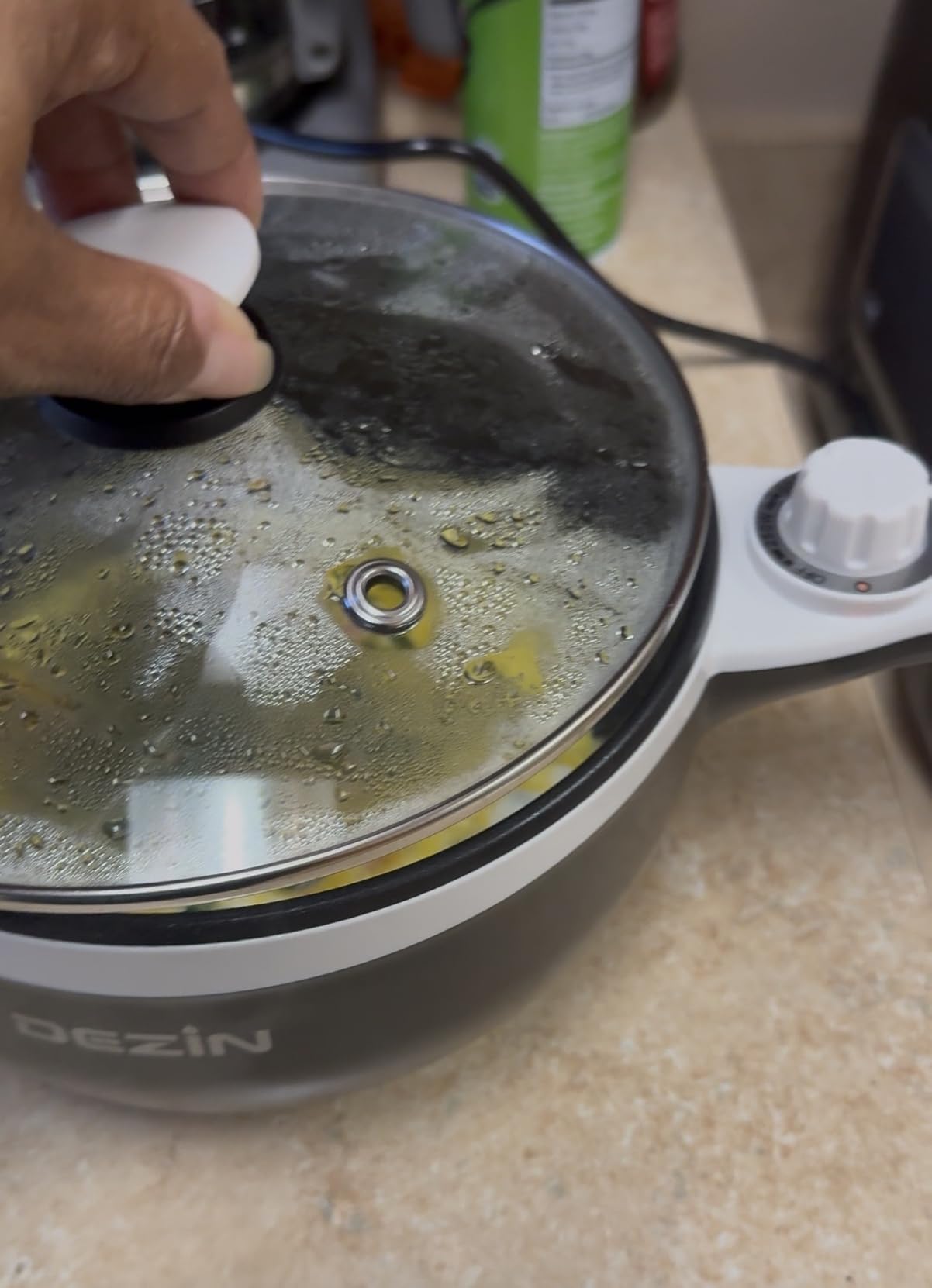
Cleanup is the biggest practical advantage. The food-grade non-stick liner reduces sticking and oil use, so most meals are done in the time it takes the water to boil, and a silicone turner is included.
Storage is the tradeoff. It measures 12.4 inches long, so it lives on a closet shelf or a lower cabinet rather than in a drawer, and the attached cord means you cannot pack it flat in a suitcase at move-out.
Does a hot pot pass dorm appliance rules?
That depends entirely on the element. A pot-style appliance with the heating element sealed into the base is treated very differently from an open coil burner, so describe your exact model to the housing office and get confirmation before move-in.
In apartment-style dorms with a shared kitchen, a unit like this is usually unnecessary because the kitchen already covers it.
Who should skip the DEZIN hot pot?
Skip it if your handbook lists multi-cookers or electric pots as prohibited items, which some schools do explicitly. It is also the wrong tool for more than two people, and it needs hand washing rather than a dishwasher pass.
5. Midea 1.6 Cu.Ft Energy Star Mini Fridge for Very Tight Rooms
Midea 1.6 Cu.ft Mini Fridge, Energy Star Certified, Low Noise for Bedroom
1.6 cubic feet
Under 42dB
ENERGY STAR, 207 kWh per year
17.7 by 18.6 by 19.4 inches
Pros
- Cools far colder than a thermoelectric fridge
- Reversible door fits either side
- Removable glass shelf
- ENERGY STAR certified
Cons
- Compressor noise noticeable when cycling
- Imprecise temperature dial
- Needs rear clearance
- Small ice box needs manual defrosting
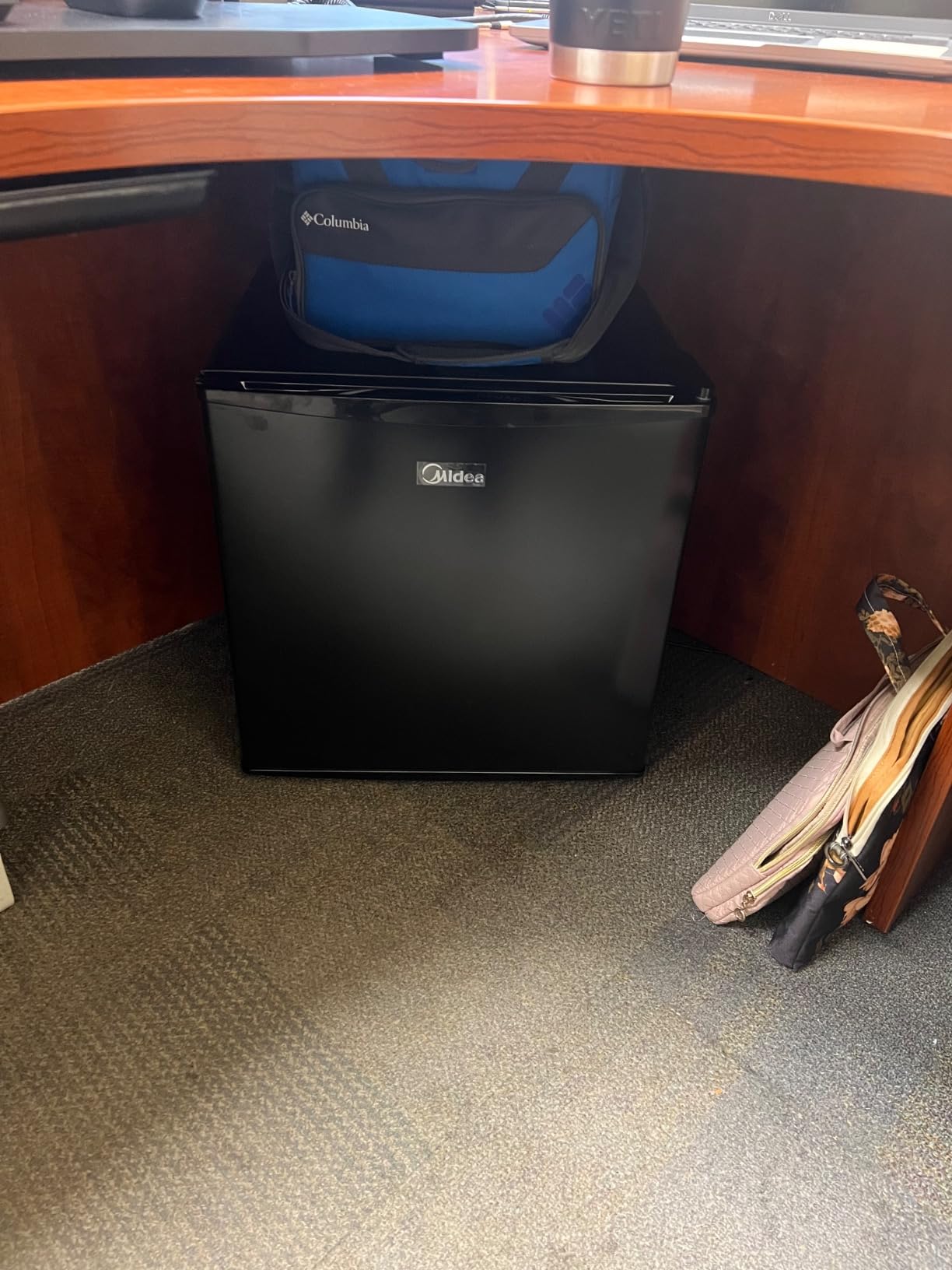
If your floor space is the binding constraint, this is the fridge to buy. At 1.6 cubic feet it fits under a lofted bed or inside a cubby, and the 18.6 by 17.7 by 19.4 inch footprint is small enough to leave a walkway intact.
Unlike the thermoelectric mini fridges that dominate the cheap end of the market, this uses a reciprocating compressor and holds genuinely cold temperatures. The adjustable thermostat runs from 28.4F to 35.6F, which is drinkable-cold rather than food-safe-but-warm.
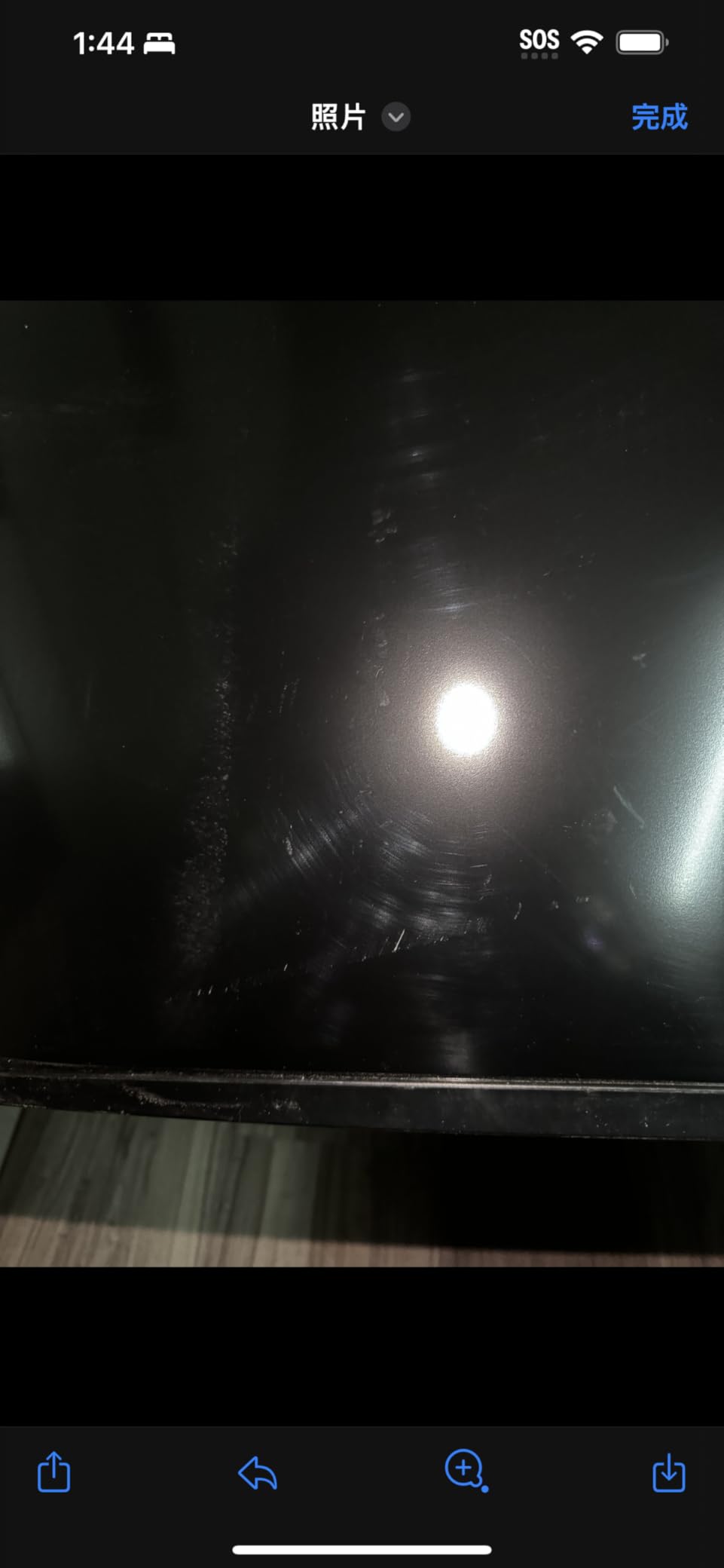
ENERGY STAR certification with 207 kWh per year is worth having in a room on a shared building circuit, and the reversible door means you can put the hinge on either side to match your layout. One removable glass shelf makes room for tall or irregular items.
Noise is the honest weakness. The published figure is under 42 dB, which is quiet on paper but audible when the compressor cycles in a quiet room. A student on r/college described buying a mini fridge that was loud and returned it, and that complaint pattern shows up in the reviews here too.
Is 1.6 cubic feet enough for one person?
For one student who shops every few days, yes. Reviewers note it holds around a dozen standard cans plus tall cans and door items. For two people sharing a room, or for a week of meal prep, it is tight and you should step up in size.
The tiny ice box compartment collects frost and needs manual defrosting, so treat it as a cold shelf rather than a freezer.
Who should skip the Midea 1.6?
Skip it if you are a light sleeper and the fridge will sit beside your bed, or if you need real freezer space. The back panel is open, so you also need several inches of rear clearance or the compressor will run hot and the cooling will suffer.
6. Elite Gourmet 2.5 Qt Square Electric Skillet for One-Pot Meals
Elite Gourmet 2.5Qt Compact Nonstick Electric Skillet, 8″x8″, 600W
2.5 quart 8 by 8 inch pan
600W
Removable thermostat 200F to 400F
Dishwasher-safe
Pros
- Square pan maximizes cooking surface
- Removable probe makes serving cord-free
- Dishwasher-safe pan and lid
- Deep sides contain splatter
Cons
- Non-stick requires wood or silicone utensils
- Dial control rather than digital
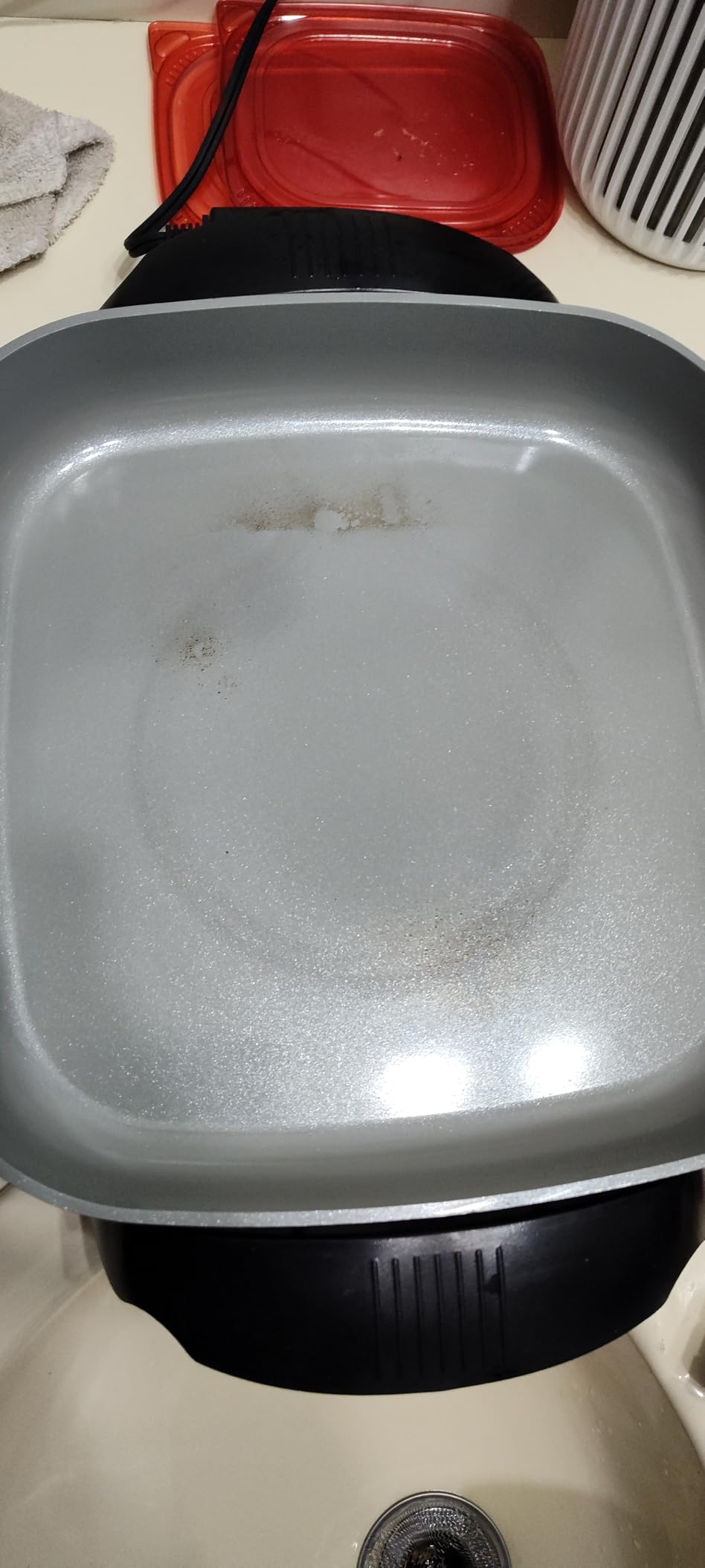
The square 8 by 8 inch pan is the reason this one works in a dorm. A round pan of the same capacity wastes a third of its surface against the walls of the pan, and on a small cooking surface every extra square inch counts.
It runs at 600 watts, the lowest draw of any cooking appliance on this list, and the removable thermostat probe dials from 200F to 400F. Pull the probe out and the pan goes to the table cord-free, which matters when the nearest counter is also your study desk.
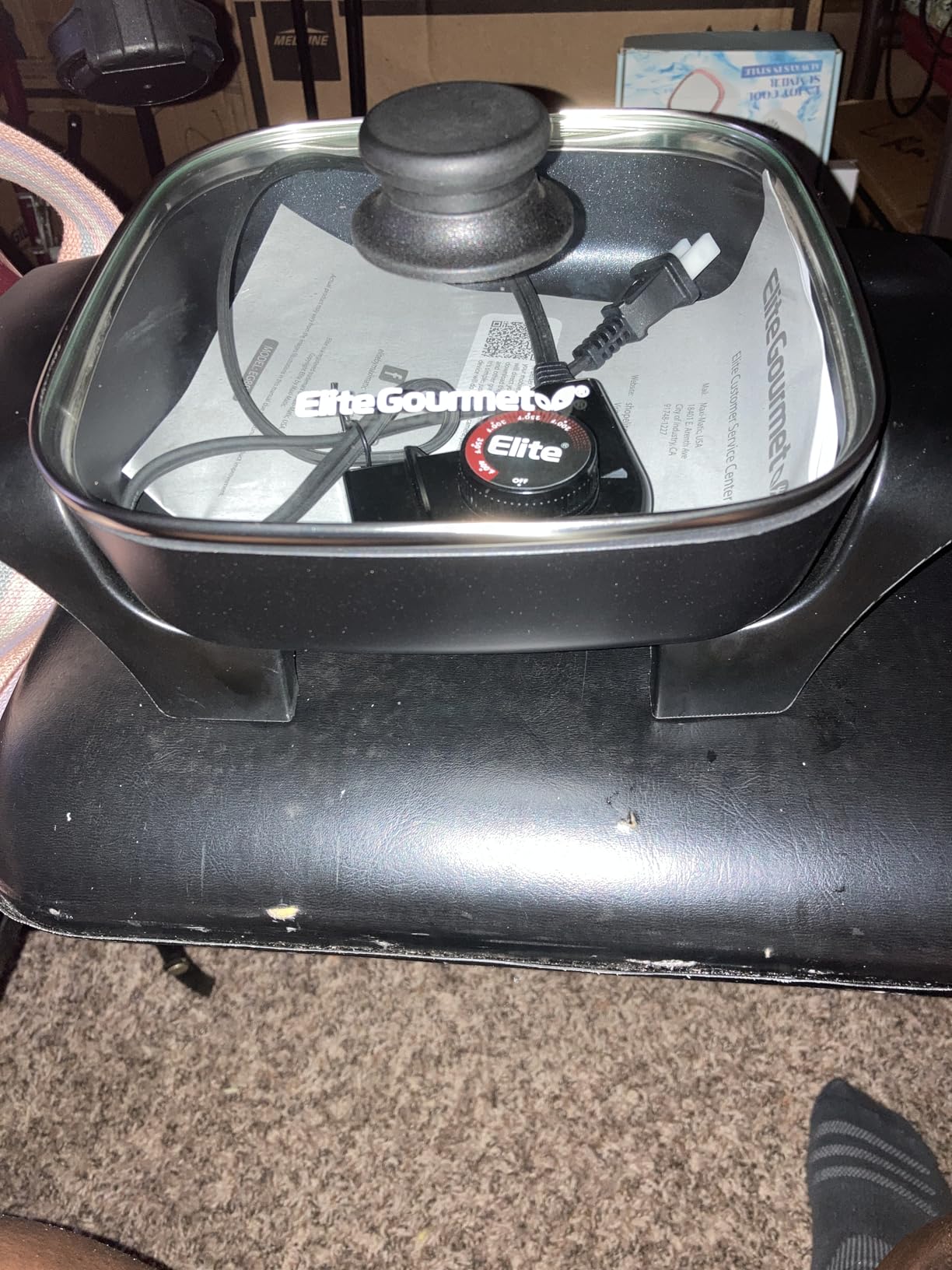
The body and vented tempered glass lid are both dishwasher safe once the probe is removed, so a full meal cleans up in one cycle. Four-inch deep sides contain splatter, and cool-touch handles keep you from burning a hand on a hot pan.
Policy note: electric skillets are usually fine in apartment-style dorms with a kitchen and frequently restricted in traditional halls. Check before you buy, because a skillet is exactly the shape of appliance that gets flagged.
Can the Elite Gourmet skillet replace a stove in a dorm?
For one person, mostly. It fries, sautés, sears, simmers, steams and slow cooks, which covers a surprising share of a weeknight meal. It will not bring a pot of pasta water to a rolling boil as fast as a full burner, so plan your timing around that.
The dual non-stick layers over primer coats are what make it forgiving, but they also mean wooden or silicone utensils only.
Who should skip the 2.5 Qt skillet?
Skip it in a hall that prohibits electric skillets, and skip it if you want precise heat control, since the thermostat is a simple dial with an indicator light. It is also a single-person pan by design, so it is a poor fit for a shared cooking session.
7. COMFEE 0.7 Cu.Ft 700W Countertop Microwave for Shared Rooms
COMFEE’ Countertop Microwave Oven, 0.7 Cu.Ft, 700W, Black, ECO Mode
0.7 cubic feet
700W, 11 power levels
Mute function
Two-step child lock
20.2 pounds
Pros
- Compact size fits a dorm counter
- Mute function removes beeps
- Two-step child lock
- ECO mode cuts standby power
- Auto-cook programs
Cons
- Heavier than other compact microwaves
- 700W heats more slowly than full-size models
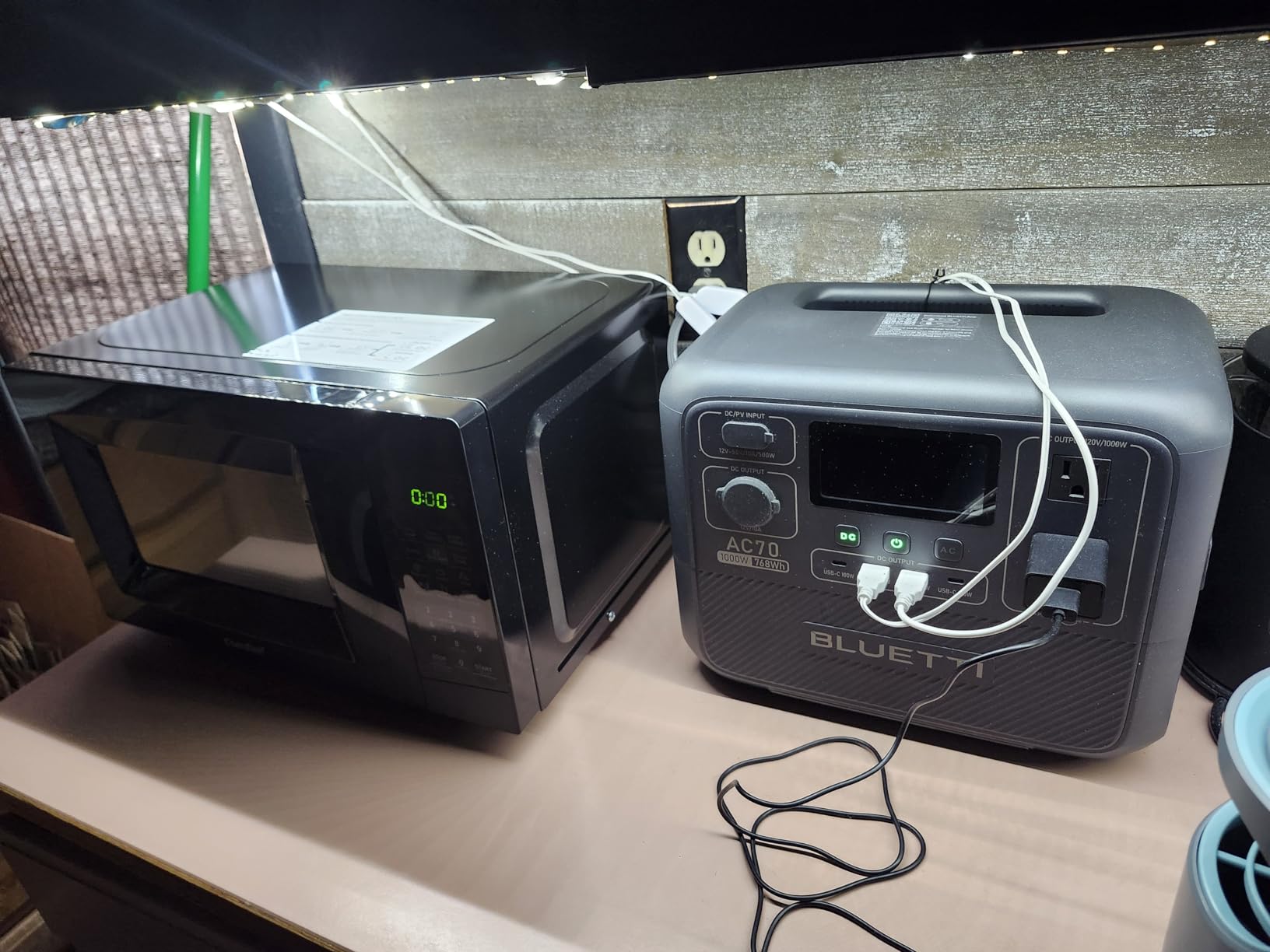
The mute button is the feature that decides this category for dorms, and this microwave has it. Hold the sound button for three seconds and the beeps stop, which turns the most common source of roommate friction into a non-issue.
Output is 700 watts, which sits below the wattage cap many schools set on dorm microwaves, so it is more likely to pass a housing review than a 1000-watt unit. At 0.7 cubic feet with a 10-inch turntable, it holds a plate, a bowl and a mug comfortably.
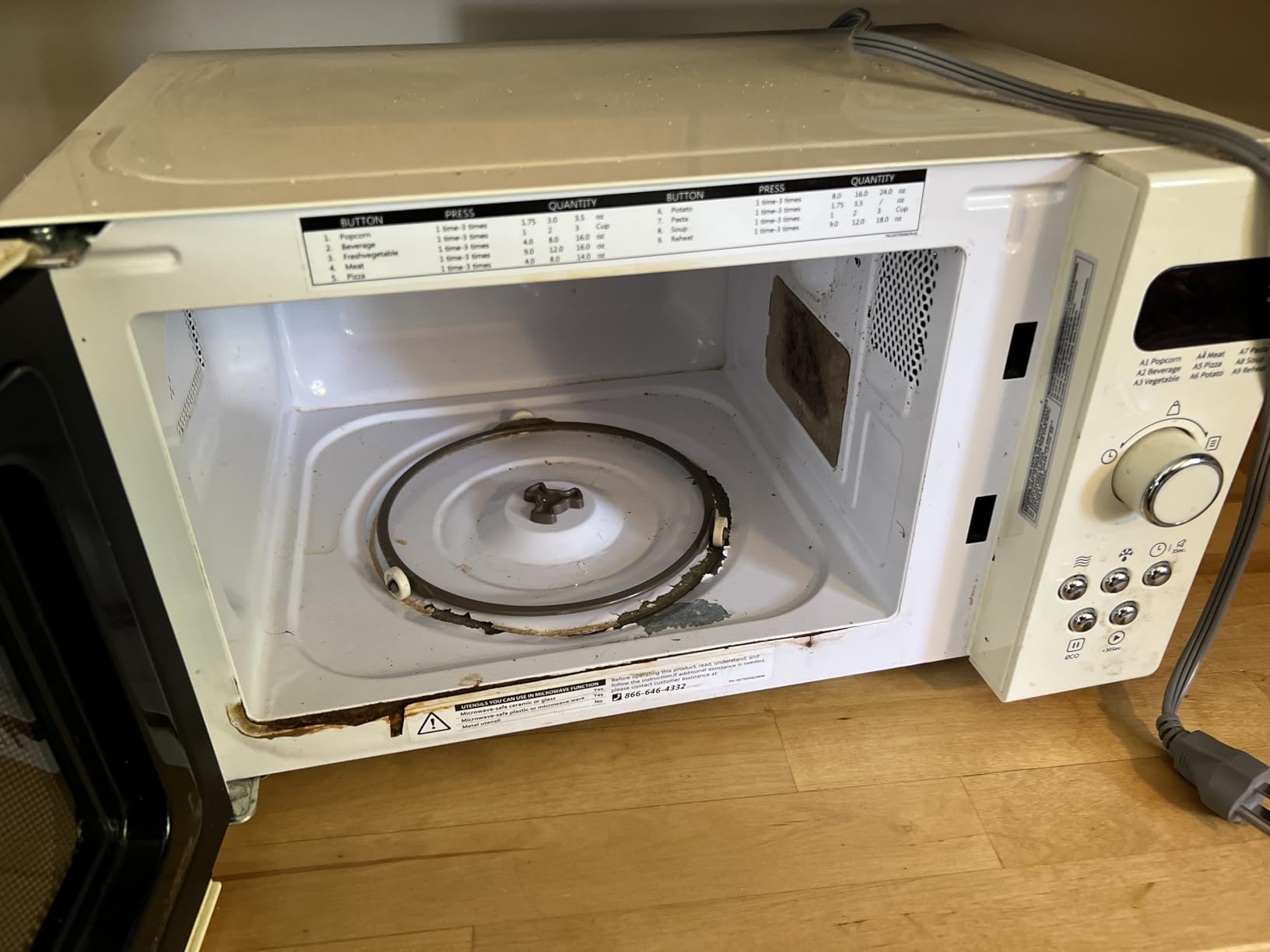
Nine auto-cook programs cover popcorn, potato, pizza, frozen vegetables, beverages and reheating, and there are 11 power levels for anything more precise. The two-step child lock requires holding two buttons, so it does not engage by accident during a late-night snack run.
ECO mode cuts standby power by 50 percent, a small but real saving in a building where every room runs off the same circuit. The enameled steel interior is durable and easy to wipe clean.
Is 700 watts enough for a dorm microwave?
For reheating, popcorn, frozen meals and beverages, yes. It will take longer than a 1000-watt full-size unit for a frozen dinner, and owners note the wait, but the smaller cavity actually heats more evenly at low power.
Check your handbook for a wattage ceiling before buying, and match the number on the door to the number on the policy page.
Who should skip the COMFEE microwave?
Skip it if your hall supplies a microwave per floor, which is common, or if you plan to move a lot of frozen food at once. At 20.2 pounds it is the heaviest item on this list, so you need a solid shelf rather than a light dorm bookcase.
8. Mr. Coffee 5-Cup Mini Brew Coffee Maker for Ground Coffee Drinkers
Mr. Coffee® 5-Cup Mini Brew Switch Coffee Maker, Black
5 cup, 25 ounce carafe
650W
Reusable filter
Grab-a-Cup auto pause
10.7 by 9.8 by 7.2 inches
Pros
- Compact footprint for a dorm room
- Brews a full carafe quickly
- Glass carafe with ounce markings
- Lift-and-clean filter basket
Cons
- Plastic carafe handle can get hot
- Ground coffee only
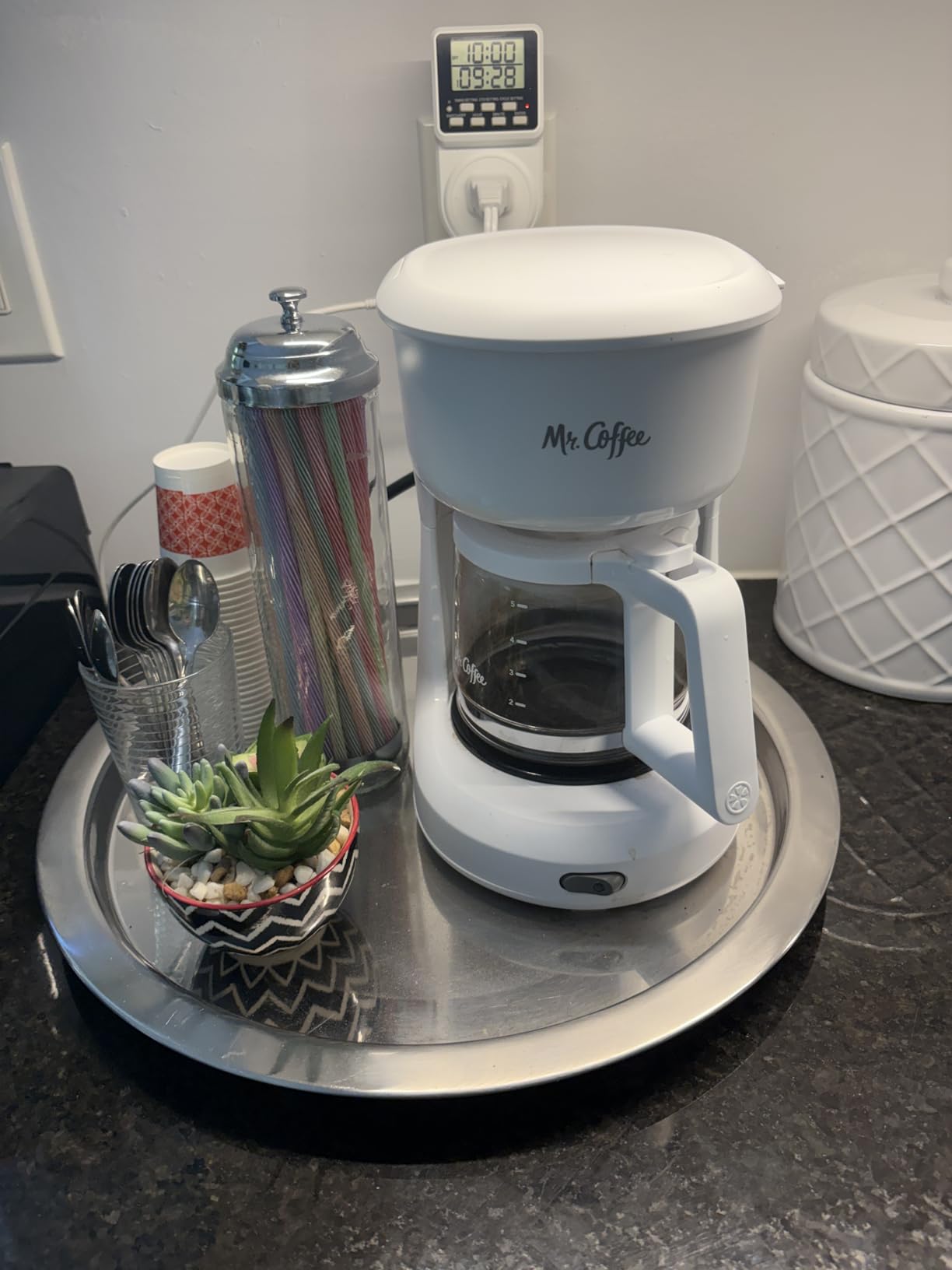
A mini drip brewer is the quiet answer to the pod-versus-drip argument, and this one takes up less counter than a single textbook. The footprint is 10.7 by 9.8 by 7.2 inches and it draws 650 watts, one of the lowest figures among the cooking appliances here.
Grab-a-Cup auto pause lets you pour before the brew cycle finishes, which is the difference between getting to class on time and watching the clock during a slow pour. The glass carafe carries ounce markings, so you can make a measured amount rather than a full pot that goes cold.
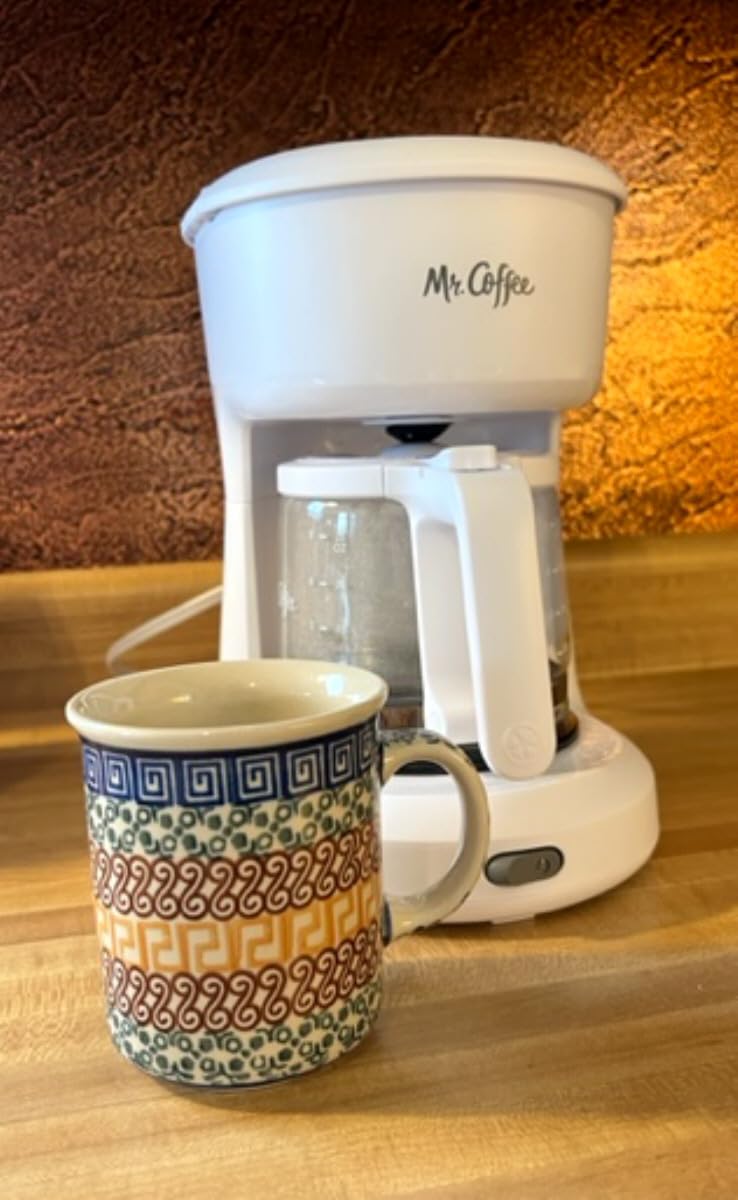
The lift-and-clean filter basket lifts out for rinsing, and the filter is reusable, so there is no recurring consumable and nothing to throw out at move-out. Operation is a single switch, with an easy-to-view water window for filling.
One policy note worth raising with the housing office: some schools allow coffee makers only when they have no warming plate, and this model has none, which puts it in the safer category.
Is a 5-cup coffee maker too much for one dorm room?
Not really. Reviewers like the small footprint for dorms and offices, and the carafe is small enough that you finish a pot in one sitting rather than leaving it to go cold on the desk.
It brews ground coffee only, so if you plan to use pods, the pod brewer later in this list is the better fit.
Who should skip the Mr. Coffee Mini Brew?
Skip it if you drink pod coffee exclusively, or if the hot plastic carafe handle bothers you, which owners flag as the main drawback. In a room where the housing handbook bans coffee makers outright, it goes back in the box, so verify the rule first.
9. Upstreman 3.2 Cu.Ft Mini Fridge for Maximum Food Storage
Upstreman 3.2 Cu.Ft Mini Fridge with Freezer, Black-BR321
3.2 cubic feet, 0.3 freezer
38 dB
Five levels 32F to 50F
Energy Star, 206 kWh per year
Pros
- Largest capacity in this roundup
- Very quiet at 38 dB
- Two adjustable glass shelves and crisper
- Reversible door
- Energy Star certified
Cons
- Small manual-defrost freezer
- One temperature control for both zones
- No interior light
- Chemical odor on arrival
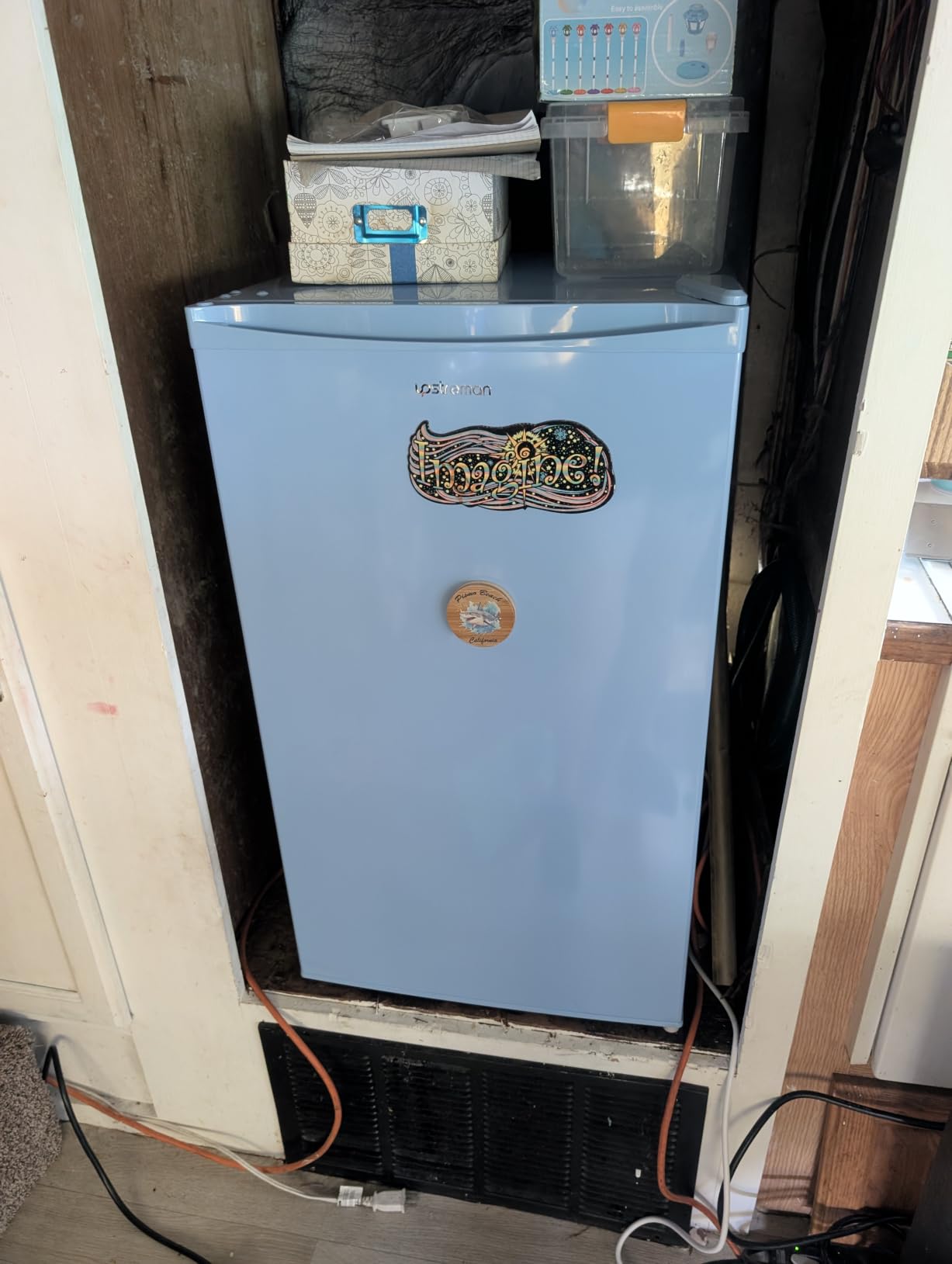
This is the fridge to buy if the priority is holding a week of food rather than fitting under a bed. At 3.2 cubic feet of total capacity it is the largest in our group, and it still stands at 33.1 inches tall, which fits beside a lofted bed frame.
The published noise figure of 38 dB is the lowest we found, and that matters more than any other spec in a shared room. A compressor that is audible every few minutes in a quiet study space is the single most common reason students return a mini fridge.
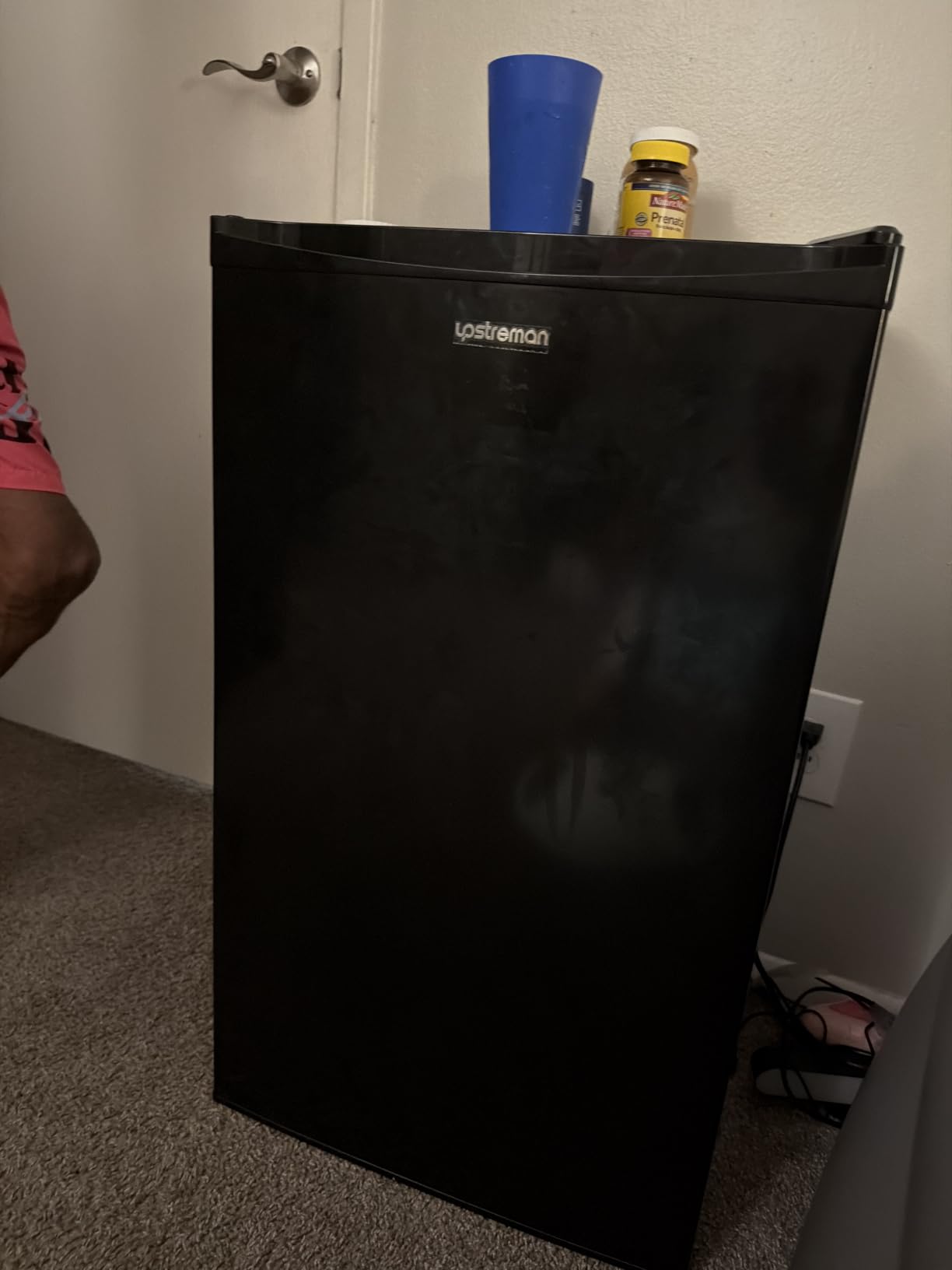
Five adjustable temperature levels from 32F to 50F give you real control rather than a two-position dial, and two adjustable glass shelves plus a crisper drawer make the interior usable for stacked containers. The reversible door, adjustable leveling feet and a tight door seal round out a well-thought-out package.
ENERGY STAR certification at 206 kWh per year keeps running costs low, and the R-600A refrigerant and rotary scroll compressor are the modern efficient combination.
Is a 3.2 cubic foot mini fridge too big for a dorm room?
Measure first. Most schools cap mini fridges by capacity at around 4.5 cubic feet and some also cap the dimensions, so a tall unit is sometimes rejected on footprint rather than volume. If your hall provides a fridge in the room, this is pure duplication.
Also give it rear and side ventilation clearance. A fridge pushed flat against a wall runs hotter and cools worse, which is a common cause of disappointing performance in small rooms.
Who should skip the Upstreman 3.2?
Skip it if you need a real freezer, since the freezer compartment is 0.3 cubic feet and manual defrost only, and users report it collects frost. There is also a strong chemical odor on arrival that needs a day of airing out, and no interior light means checking the back of a shelf in a dark room.
10. Elite Gourmet 1000W Cast Iron Hot Plate for Apartment-Style Dorms
Elite Gourmet Electric Burner, 1000W Cast Iron Hot Plate, 7 Heat Settings
1000W cast iron plate
Seven heat settings
6.4 inch surface
3.4 pounds
Pros
- Compact 9 inch footprint
- Works with virtually any cookware
- Seven heat settings
- Non-skid feet stay stable
Cons
- Slow to reach full temperature
- Maximum is modest for boiling
- Plate stays hot after unplugging
- Dial control only
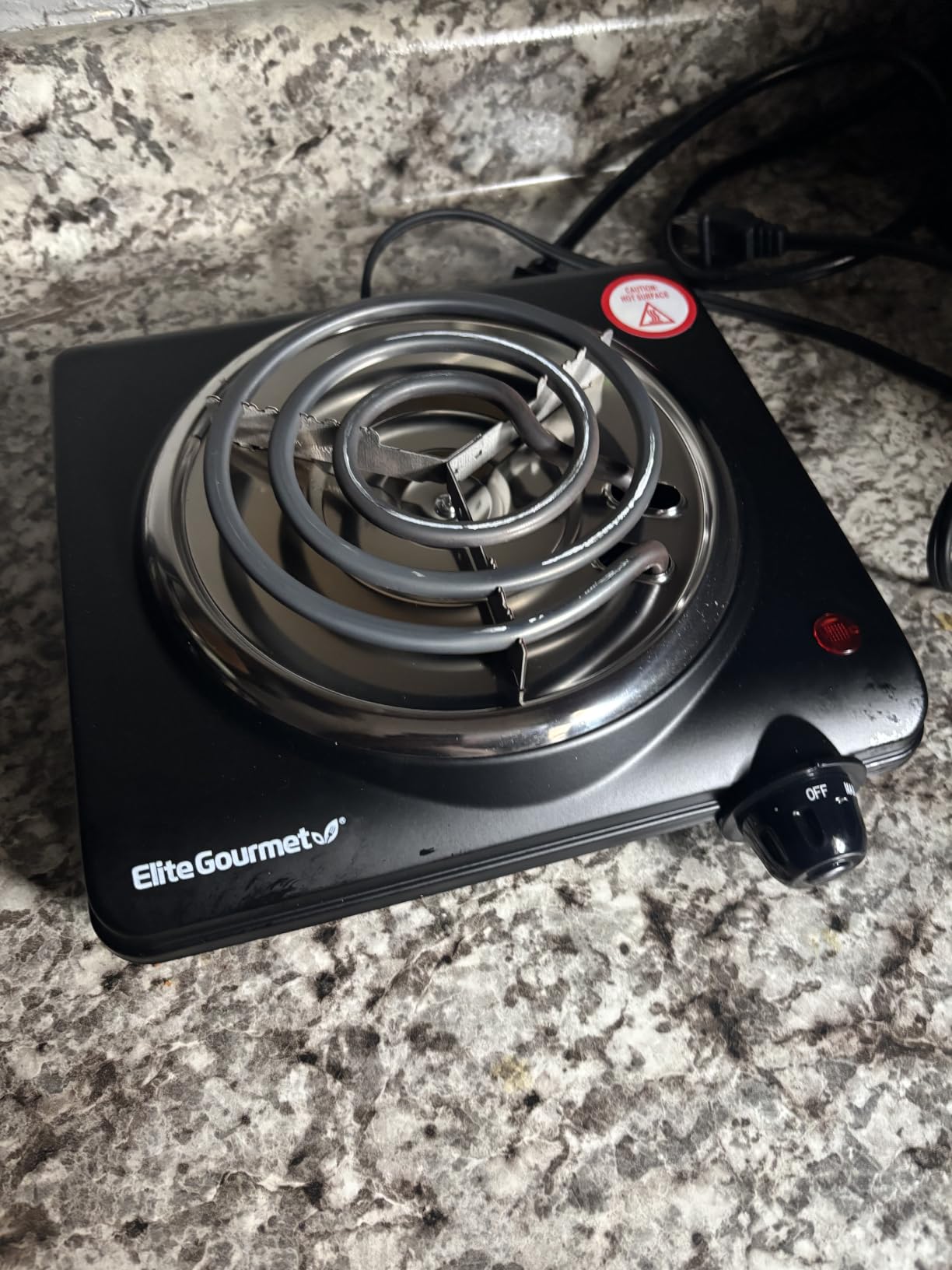
This is the highest-risk pick in the roundup and we include it deliberately. A cast iron hot plate has an open exposed heating element, which is exactly the category most residence halls prohibit outright, so do not buy this before reading your handbook.
Where a full kitchen does not exist, or where an extra burner genuinely helps, it does the job. The 6.4-inch cast iron plate accepts virtually any pot or pan, and seven heat settings run from keep-warm to a rapid boil.
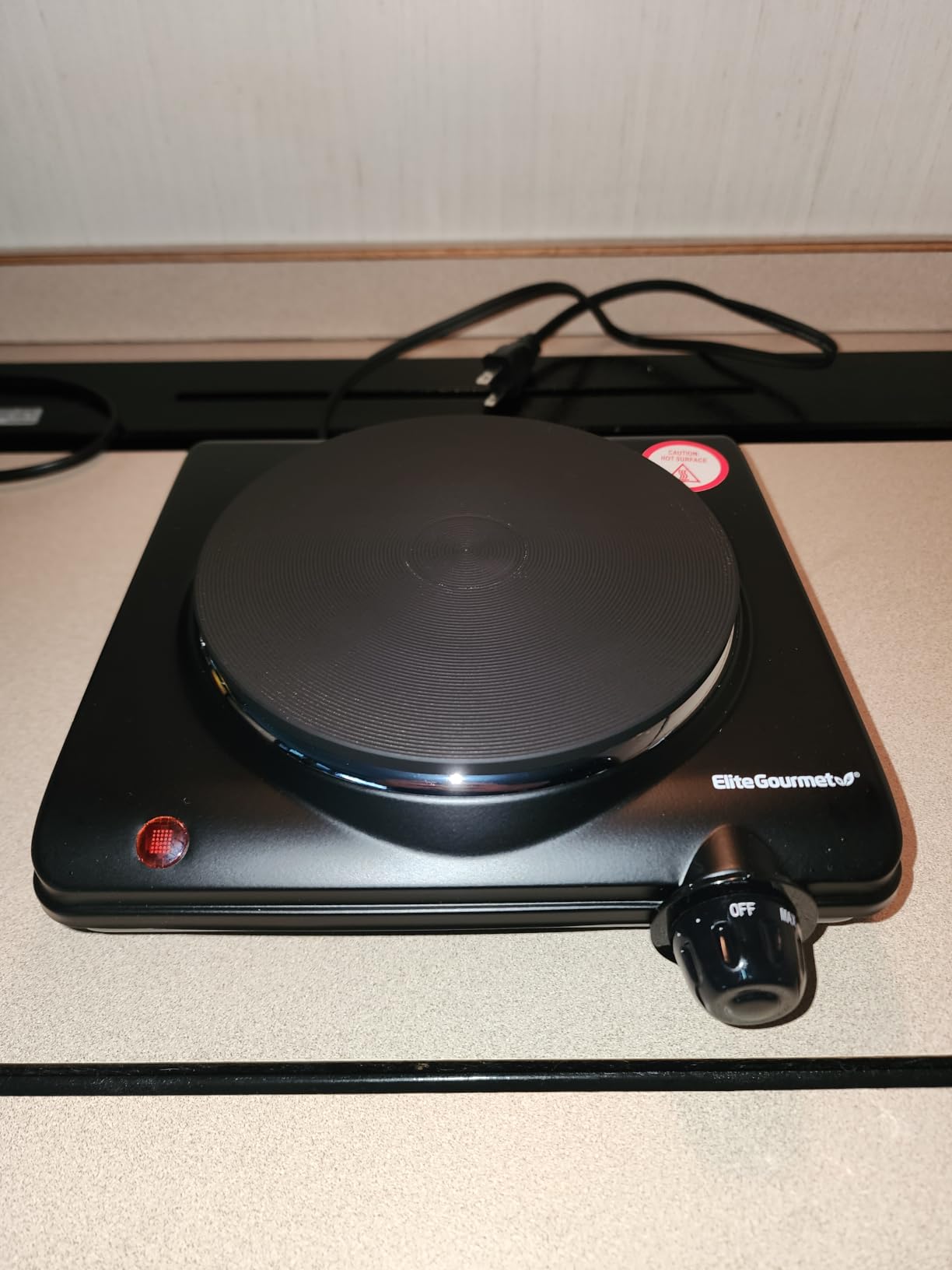
At 9 by 9.2 inches and 3.4 pounds it stores easily, and non-skid rubber feet keep a pot stable on a dorm desk, which is not a given with lighter plates. A power indicator light tells you when it is drawing current.
Performance is the honest limit. Owners report several minutes to reach full temperature, a maximum output that lands well below a full stove burner, and a plate that stays hot for a while after you unplug it.
Can you have a hot plate in a dorm room?
Usually not. Open-element burners are on nearly every prohibited items list because they are the leading cause of dorm fires, and a cast iron hot plate is as close to the prohibited archetype as an appliance gets. Some apartment-style dorms with shared kitchens permit single burners, which is why this pick exists.
If your handbook does not name it explicitly, email the housing office and describe the appliance as a single cast iron burner with an exposed coil. Get the reply before move-in.
Who should skip the Elite Gourmet hot plate?
Almost everyone in a traditional hall. It is also a poor choice for boiling a full pot of pasta, since the top setting is well short of a real burner, and the slow preheat makes it frustrating for a weeknight meal between classes.
11. Keurig K-Mini Single Serve Pod Brewer for the Smallest Footprint
Keurig K-Mini Single Serve K-Cup Pod Coffee Maker, 6 to 12oz Brew size, with Cord Storage, Perfect for Small Spaces, Studio Gray
Under 5 inches wide
6 to 12oz brew
1500W
Auto-off after 90 seconds
4.6 pounds
Pros
- Under 5 inches wide
- Brews in about a minute
- Cord storage keeps the counter tidy
- Drip tray fits 7 inch travel mugs
- Auto-off after inactivity
Cons
- Must hold the button to stop mid-cycle
- Weak brew at the 6 oz minimum
- Flimsy reservoir lid
- Short power cord
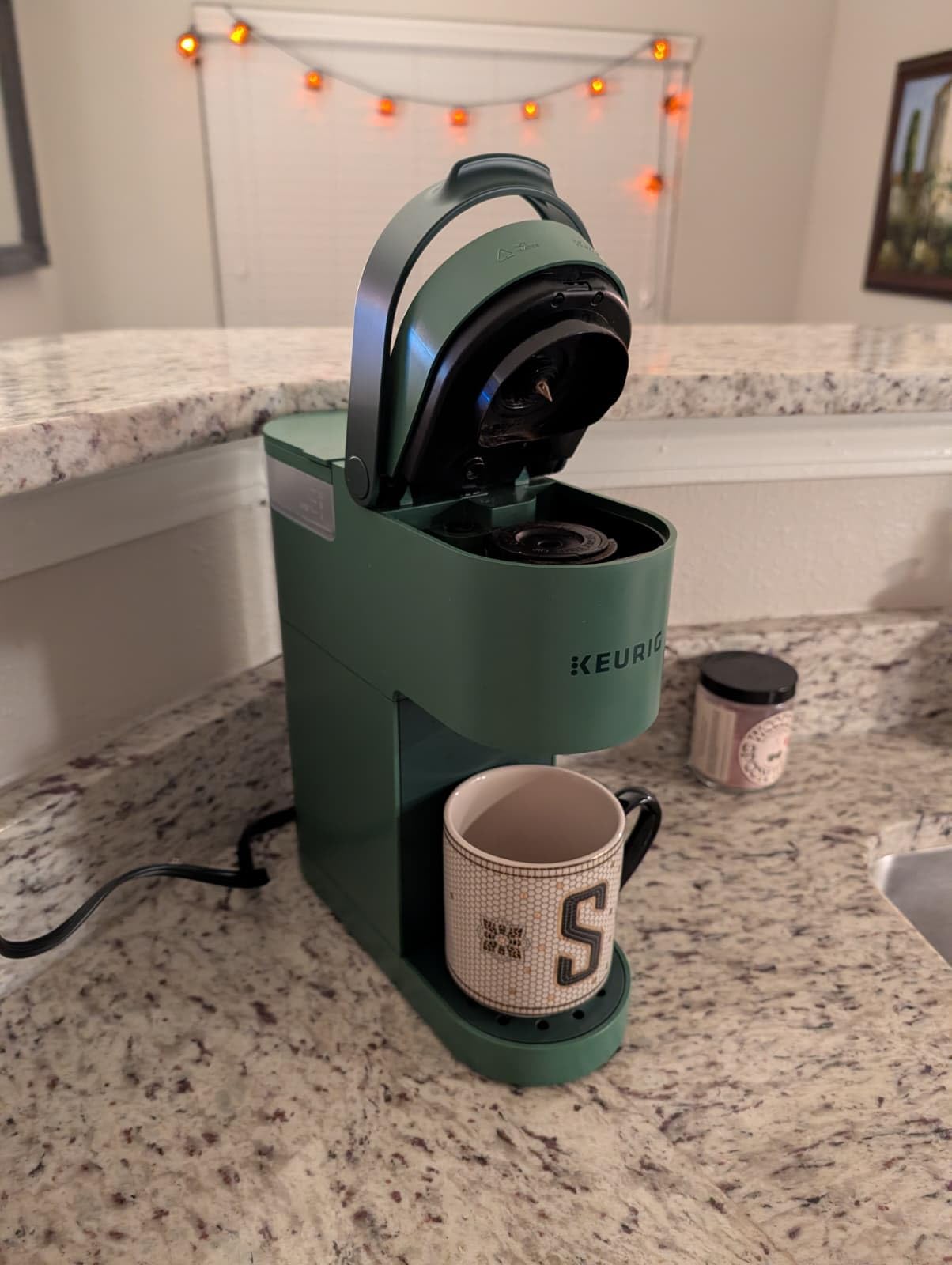
The K-Mini is less than 5 inches wide, which makes it the only brewing appliance on this list that fits a narrow dorm shelf between a wall and a stack of books. It brews 6 to 12 ounces, so one person gets a full mug rather than a carafe nobody else drinks.
Coffee arrives in about a minute, and the removable drip tray fits travel mugs up to 7 inches tall, which removes the most common small-space workaround of pouring into a separate cup. Cord storage and a one-cup reservoir keep the footprint and the cleanup minimal.
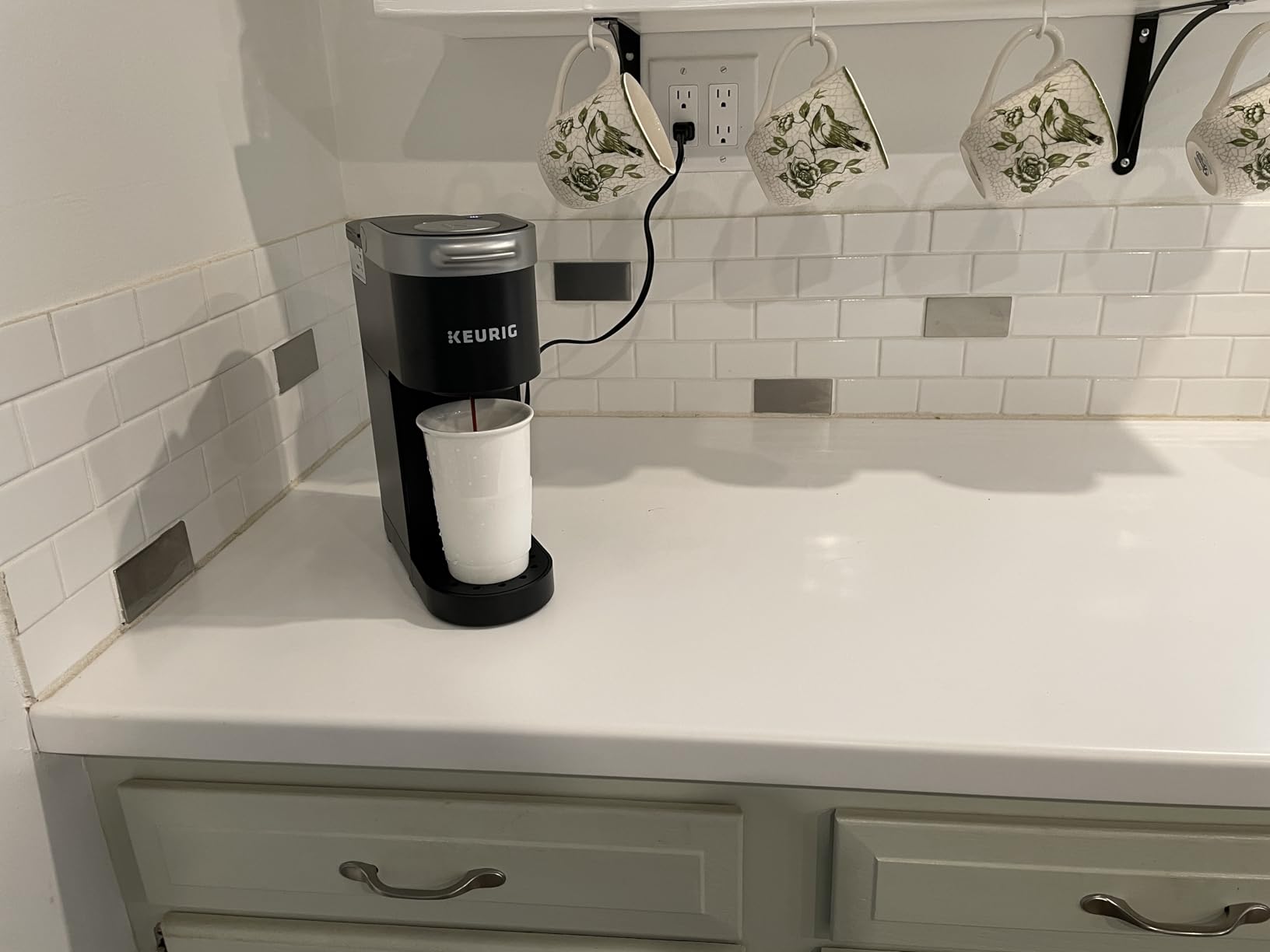
The auto-off after 90 seconds of inactivity means the machine is not a power draw in an empty room, which suits a building that monitors outlet use.
The 4.2 rating on this one is worth understanding rather than ignoring. Owners value the size and speed, but three operational issues recur: brew comes out weak if you fill to the 6-ounce minimum, the reservoir lid feels flimsy, and interrupting a brew cycle leaves water in the tank.
Is the Keurig K-Mini allowed in a dorm room?
It is one of the safer picks policy-wise, since it is a small sealed single-serve brewer with no warming plate and no exposed element. Some schools still ask for a UL-listed device, and you should check the label before packing it.
At 1500 watts it shares the highest power draw on this list with the kettle, so avoid running it and the kettle on the same circuit at the same time.
Who should skip the Keurig K-Mini?
Skip it if you are a two-cup-at-once drinker, or if you take your coffee black and care about strength, because the 6-ounce minimum produces a weak cup. It also runs at 1500 watts, so it needs a wall outlet rather than a shared power strip.
12. BELLA Fits-Anywhere 2-Slice Slim Toaster for Counter Space
bella Fits-Anywhere™ 2-Slice Slim Toaster, Long Slot & Extra Wide, Oatmilk
3.58 inch deep
10 inch long slot
900W
Six browning settings
2.5 pounds
Pros
- Only 3.58 inches deep
- Long slot fits bagels and artisan bread
- Six browning settings
- Removable crumb tray and cord wrap
- Lightweight at 2.5 pounds
Cons
- Two thick slices overlap in the slot
- Crumb tray sits at the far end
- Only two slices at a time
We are including a toaster, and we want to be direct about the catch: toasters are on the prohibited list at most schools, and this is a pop-up element appliance. Confirm your handbook before buying, because in many halls it will be taken out of your room at check-in.
Where a toaster is permitted, the engineering here is genuinely clever. The 3.58-inch depth is less than half of a standard toaster, so it sits flat against a wall or on a narrow dorm shelf, and the single 10-inch long slot holds two slices or one thick artisan loaf.
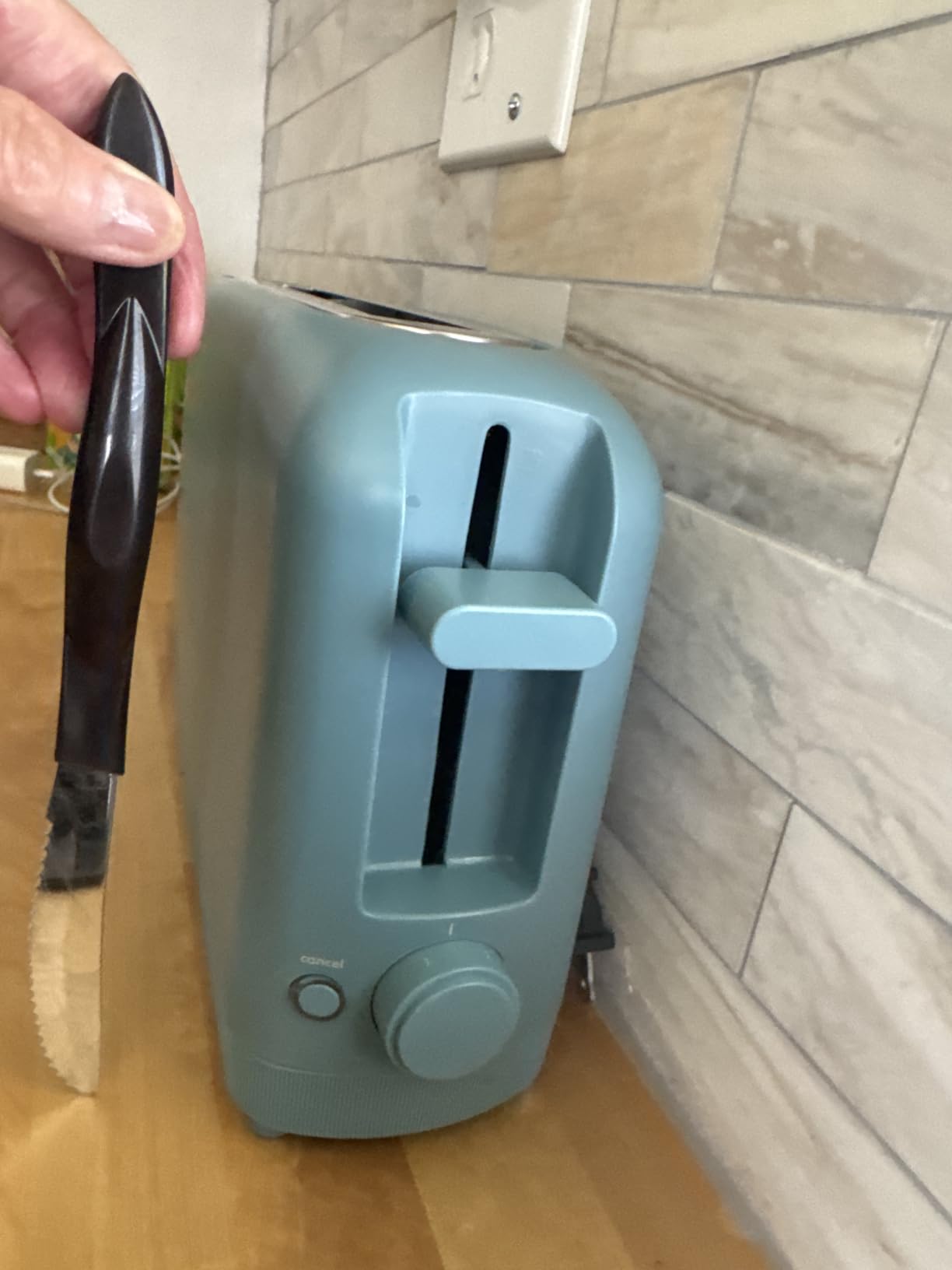
Six browning settings with a cancel function and an illuminated button give more control than a two-position toaster, and the high-lift lever handles small items like English muffins without fishing them out. At 2.5 pounds it is the lightest appliance here, and the matte finish wipes clean.
It draws 900 watts, which is right at the ceiling many schools set for dorm appliances, so a school that caps wattage may also reject this model.
How much counter space does the BELLA slim toaster save?
It is 3.58 inches deep and about 14.9 inches wide, compared with roughly 7 inches deep for a conventional two-slot toaster. On a dorm desk with a monitor, that reclaimed depth is the difference between usable workspace and a cramped corner.
Owners also like the cord wrap and the removable crumb tray, which keep the shelf tidy in a small room.
Who should skip the BELLA slim toaster?
Skip it if your handbook bans toasters, and skip it if you toast for more than one person, since two thick slices overlap in the single slot. The crumb tray sits at the far end, so its accessibility depends on how you orient the toaster in a tight spot.
Dorm Room Appliance Buying Guide
Cubic feet, watts, amps and decibels are the four numbers that decide whether an appliance works in a dorm, and none of them appear in a typical product photo. Here is how to read them before you buy.
Cubic feet: the 3.0 to 3.5 sweet spot for one person
Capacity is the first filter for a mini fridge because it is the one schools most often cap. One student can live comfortably with 3.0 to 3.5 cubic feet, which holds about a week of food for a single shopper. Below 2 cubic feet you are effectively buying a drinks fridge, and above 4.5 you risk failing a school size cap.
Measure the space, including the door swing and rear clearance, before you order. A fridge pushed flat against a wall runs hotter and cools worse, and the ventilation clearance is part of the appliance’s working volume.
Watts and amps: the two-outlet reality
Divide watts by 120 to get amps, then add up the appliances on one wall circuit. A 1500-watt kettle draws about 12.5 amps, a 700-watt microwave about 5.8 amps, and a 1000-watt hot plate about 8.3 amps. A typical dorm circuit handles 15 amps, so two of those together will trip a breaker or a power strip breaker.
Most dorm rooms have two or three outlets, and a power strip is allowed only in some buildings. The rule we would follow: one high-draw appliance per outlet, and never a mini fridge on an extension cord, because compressors do not respond well to voltage drop and a tripped breaker in a locked room is a real problem.
Decibels: the roommate test
Below about 38 dB is the comfort zone for a fridge in a shared room, because it stays under conversation level. Between 38 and 45 dB you will hear it cycle on, which some people adapt to and others do not. Above that, plan on a white-noise machine or a different placement.
Distance matters as much as the rating. A fridge in a corner and a fridge beside your pillow are not the same appliance experience.
Your room type changes the list entirely
In a traditional hall you are buying a fridge, a microwave, a kettle and a blender, and everything else is a policy question. In a suite dorm with a shared kitchen on the floor, you may only need a kettle and a personal appliance or two.
In an apartment-style dorm, a full-size refrigerator, microwave and often a range are already installed, so the picks that matter are the small appliances and the cooking tools. Our guide to kitchen appliances for small apartments covers that setup in more detail, and it applies directly to apartment-style dorms.
Before you buy anything, confirm whether your hall already supplies a microwave per floor or a fridge in the room. Forum users repeat this constantly, and buying a second fridge is the most expensive version of the mistake.
What to buy first on a tight budget
If you can only buy three things, buy a kettle first, then a microwave if your hall does not provide one, then a fridge. A kettle costs the least, gets daily use from everyone in the room, and carries almost no policy risk. A fridge is the item that most changes the experience of living in a hall, so it goes last on the list but first in importance for anyone doing a real grocery shop.
Everything else on this list is an upgrade, not a foundation. Our dorm lighting picks and the guide to lumens per room are worth reading alongside this one, because light and appliance load compete for the same desk space and the same two outlets.
Dorm Cooking and Electrical Safety
Dorm fire rules exist because the building is a wooden frame with a sprinkler system and a lot of people. Five rules cover almost every situation.
- Never run a mini fridge on an extension cord or a daisy-chained power strip. Plug it directly into a wall outlet, and if a power strip is needed for other devices, keep the fridge on its own circuit.
- Keep the heating-element distinction in mind. Sealed-base appliances such as kettles and sealed multi-cookers are permitted far more often than open coils, which is why a blocked cooking appliance is the one most likely to be confiscated.
- Leave ventilation clearance around every appliance. Blocked airflow raises the compressor temperature on fridges and starves air fryers and hot plates of the cooling they need.
- Never block or cover a smoke detector, and know where the extinguisher is before you need it. Neither the detector nor the extinguisher is decoration.
- Cook on a stable surface, unattended cooking is never worth the time saved, and any appliance with a damaged cord goes out of the room rather than into a drawer.
At move-out, plan for appliances. Fridges and microwaves with a serial number can often be returned for a shipping refund, small appliances are worth listing for resale before the semester ends rather than the weekend, and anything unclaimed usually goes to a campus donation drive. Doing this in week ten is far easier than doing it on moving day.
Frequently Asked Questions
What appliances are allowed in dorm rooms?
Most schools allow a mini fridge (usually capped near 4.5 cubic feet), a microwave, an electric kettle, a coffee maker with no warming plate or exposed element, and a personal blender with a sealed base. Open-coil appliances such as hot plates, toaster ovens, toasters, waffle makers and grills are banned nearly everywhere. Multi-cookers and air fryers vary by school, so check your housing handbook and confirm the specific model with the housing office before move-in.
Are coffee makers allowed in dorm rooms?
Usually yes, as long as the model has no exposed heating element and no warming plate. Many schools still require a UL-listed device, so check the label on the bottom before you pack it. A small drip brewer or a single-serve pod machine is the safest form to buy, because it heats water only on demand and shuts off on its own.
Can you have a hot plate in a dorm room?
Rarely, and almost never in a traditional residence hall. A hot plate has an open exposed heating element, which is the leading cause of dorm fires and appears on nearly every prohibited items list. Apartment-style dorms with shared kitchens sometimes permit a single burner. If your handbook does not name it specifically, describe the appliance as a cast iron burner with an exposed coil and get a written answer from the housing office.
What size mini fridge should I get for my dorm room?
For one student, 3.0 to 3.5 cubic feet is the practical range: enough for a week of groceries and still able to fit beside a lofted bed or in a closet alcove. Below 2 cubic feet you are buying a drinks fridge. Above 4.5 you risk failing a school size cap. Measure the space including rear and side ventilation clearance, and check whether your hall already provides a fridge in the room.
How many watts can a dorm microwave be?
Many schools set a ceiling around 900 watts for dorm microwaves, and some require a specific approved list. A 700-watt unit clears most of those limits and reheats a plate, a bowl or a mug comfortably. Check the number on the door against the number in your housing handbook, and look for a mute function, which is the feature that matters most in a shared room.
What can I cook in a dorm with no kitchen?
Realistically: water for instant oatmeal, tea, coffee and instant noodles, plus anything you can reheat in a microwave and anything you can blend cold. A sealed multi-cooker, where your handbook permits one, extends that to rice, eggs and soup. Anything requiring a real burner or a pan over direct heat is where most schools draw the line, so plan your meals around reheating and boiling rather than frying.
Final Verdict: Which Dorm Room Appliances to Buy First
The best dorm room appliances for most students are the four that are allowed almost everywhere and used every day: a kettle, a microwave with a mute button, a mini fridge sized to your handbook, and a personal blender. Our editor’s choice is the Ninja Fit Compact Personal Blender, because it does the most with the least counter space and the least policy risk of anything on this list.
Read the handbook first, confirm the model with the housing office, and check whether your hall already supplies a fridge or microwave. Then build outward from the basics. A good dorm room setup is mostly a power and space problem, and the appliance that solves both is the one worth keeping for all four years.