
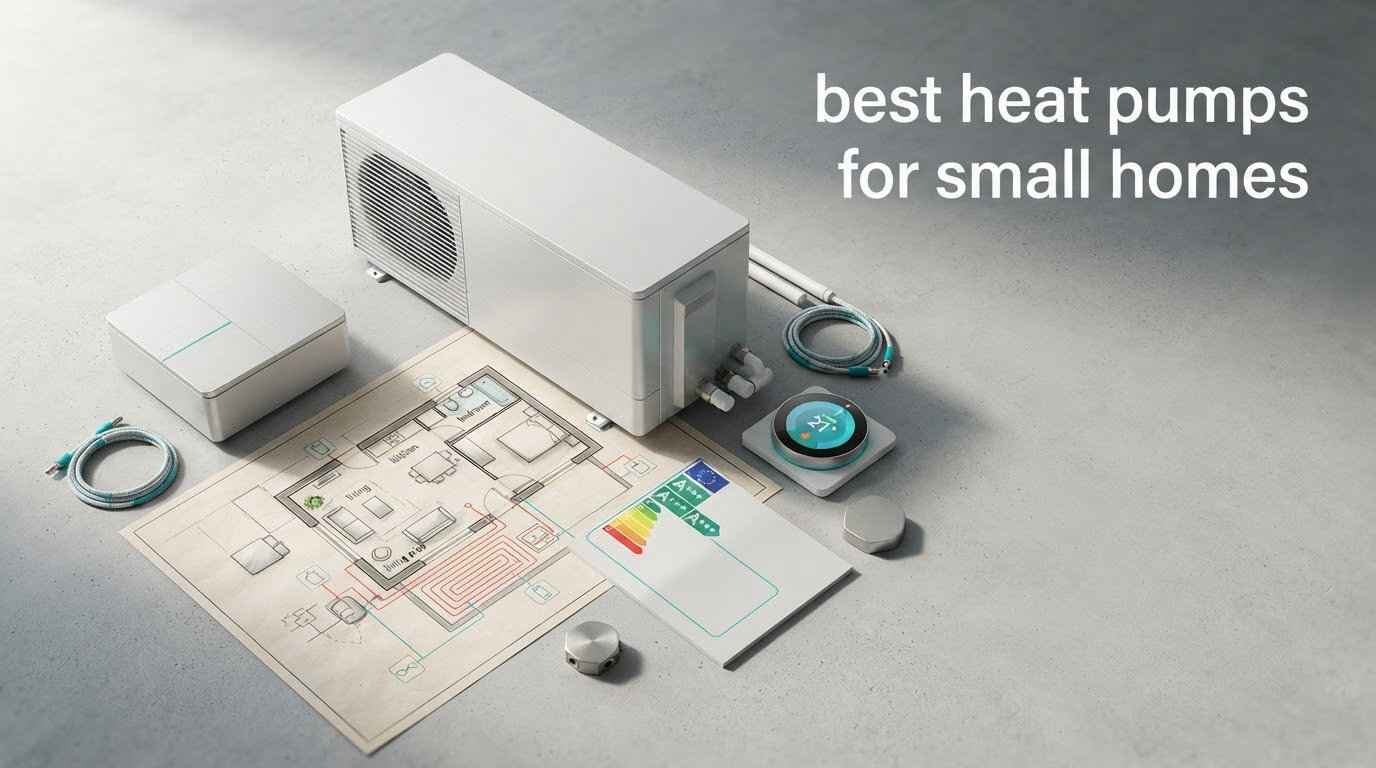
The best heat pumps for small homes are almost always ductless mini split systems. One outdoor inverter condensing unit pairs with a compact wall-mounted indoor head to heat and cool 400 to 750 square feet without ductwork, and a single 12,000 BTU unit is 1 ton, which is the right size for most homes under 1,200 sq ft.
That last sentence solves the problem that shows up in nearly every forum thread we read on this topic. Owners of 500 sq ft cottages and one-person households keep saying every system they research feels far too large for what they actually need, and the answer is almost always that they are reading 18,000 and 24,000 BTU roundups meant for 2,000 sq ft houses and above.
We spent weeks pulling specifications, warranty terms, noise ratings and owner feedback for ten ductless mini split heat pumps that make sense in genuinely compact spaces, and this guide is the result. Every unit here is a single-zone inverter system sized between 9,000 and 12,000 BTU, which covers everything from a converted basement bedroom to a small single-story house. We also built a sizing section, because picking the wrong capacity is the single most expensive mistake a small-home owner can make.
If you are still working out whether a mini split is the right system at all, our broader mini split heat pump buying guide covers ducted mini splits and multi-zone setups that a compact home can still use.
Table of Contents
Top 3 Picks: Heat Pump Small Homes in 2026
The Senville LETO takes our top slot because it pairs a 21.5 SEER2 rating with the deepest review base of any 9,000 BTU unit we evaluated, and it runs on standard 110V power. The DELLA Vario Series is the efficiency leader at 23 SEER2, and the COSTWAY 12000 BTU is the value pick thanks to a 750 sq ft coverage claim and an eight-year compressor warranty.
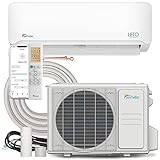
Senville LETO 9000 BTU
- 21.5 SEER2
- 9000 BTU / 0.75 ton
- 400 sq ft coverage
- 25 dB indoor
- 110V with 16 ft line set

DELLA Vario 12000 BTU
- 23 SEER2 and 9.5 HSPF
- 12000 BTU / 1 ton
- 550 sq ft coverage
- Heating to -4F
- 16.4 ft pre-charged kit

COSTWAY 12000 BTU
- 20 SEER2
- 12000 BTU / 1 ton
- Up to 750 sq ft
- 23 dB
- 5 yr parts and 8 yr compressor
Best Heat Pumps for Small Homes Side by Side in October
All ten units below are single-zone ductless mini split heat pumps with inverter compressors, rated between 9,000 and 12,000 BTU. Coverage figures are the manufacturer or listing stated values, so treat them as a starting point and confirm with a load calculation.
| Product | Specifications | Action |
|---|---|---|
| Senville LETO 9000 BTU |
|
Check Latest Price |
| DELLA Vario Series 12000 BTU |
|
Check Latest Price |
| COSTWAY 12000 BTU |
|
Check Latest Price |
 Cooper and Hunter MIA 12000 BTU Cooper and Hunter MIA 12000 BTU |
|
Check Latest Price |
 ROVSUN 9000 BTU ROVSUN 9000 BTU |
|
Check Latest Price |
 YITAHOME 12000 BTU YITAHOME 12000 BTU |
|
Check Latest Price |
 Albott 12000 BTU Albott 12000 BTU |
|
Check Latest Price |
 Rellytech 9000 BTU Rellytech 9000 BTU |
|
Check Latest Price |
 Mountman 9000 BTU Mountman 9000 BTU |
|
Check Latest Price |
 Temprium 9000 BTU Temprium 9000 BTU |
|
Check Latest Price |
1. Senville LETO 9000 BTU Mini Split – Best Overall for Small Homes
Senville LETO Mini Split Air Conditioner, Heat Pump, White, 9000 BTU
9000 BTU 0.75 ton
21.5 SEER2
400 sq ft
110V with 16 ft pre-charged line set
Pros
- 21.5 SEER2 on standard 110V power
- Very quiet at 25 dB for bedrooms and offices
- Pre-charged 16 ft line set included
- Heating
- cooling
- dehumidify and fan in one unit
- Alexa and app control
Cons
- Not ENERGY STAR compliant
- Professional installation required
- Parts warranty is 2 years and labor is not covered
The LETO is the unit we keep coming back to for a genuine small home because it solves two problems at once: it runs on 110V, so no electrical panel work is needed, and it delivers 21.5 SEER2, which is unusually high for a 0.75 ton system. The 9,000 BTU output equals 0.75 ton, and the stated coverage is 400 square feet, which lines up neatly with a primary bedroom, a home office or a finished basement room.
Owners single out one thing more than any other: it is quiet. The listed indoor noise figure is 25 dB, low enough that nobody in our research mentioned needing to raise a TV or move a call, and the review summary describes it as well suited to bedrooms and offices specifically. The 4-in-1 configuration also means the same head handles air conditioning, heat pump mode down to 5F, dehumidification and fan, which is genuinely useful in a shoulder season in a small space that heats up fast.
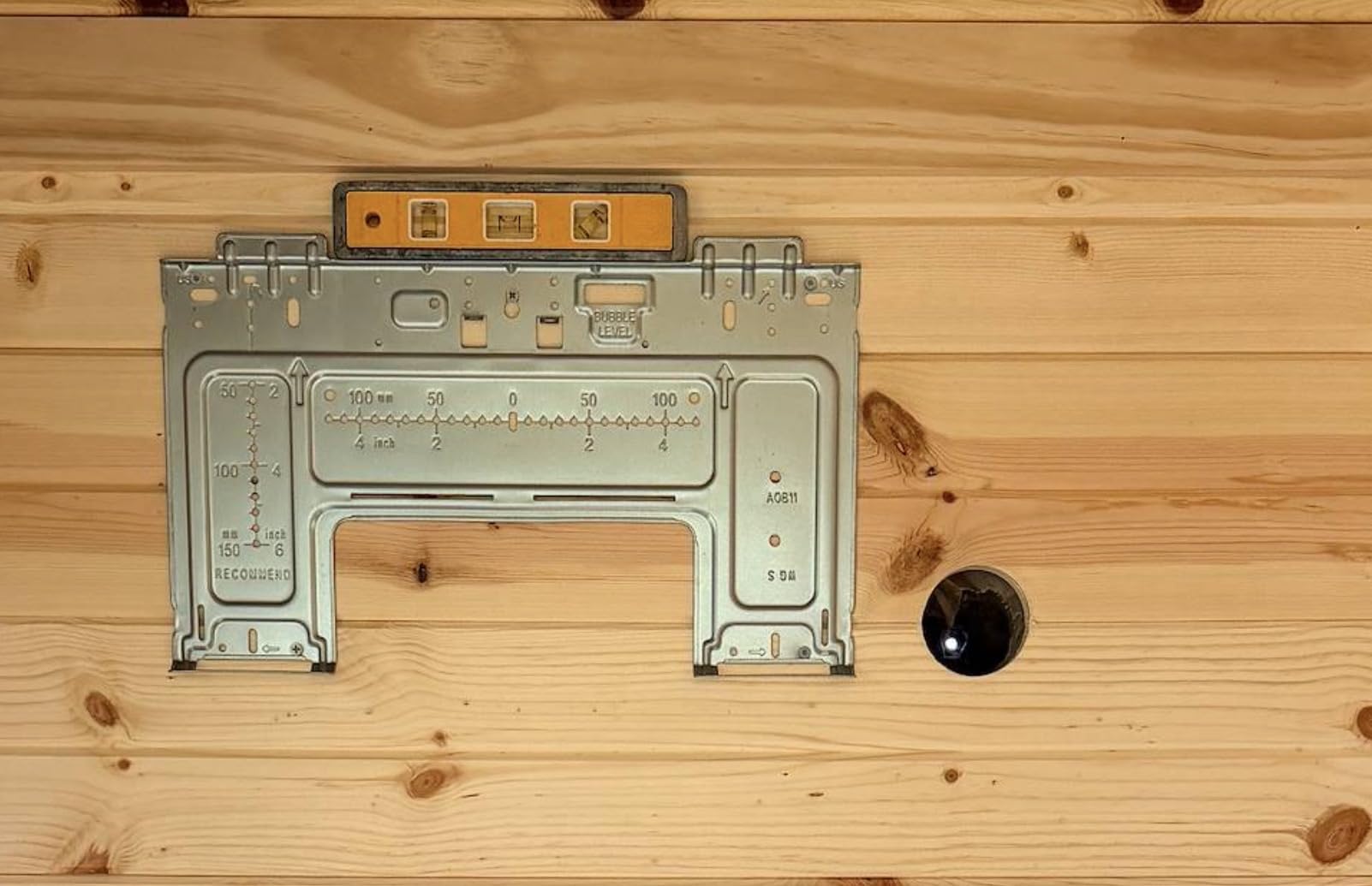
The compressor is a DC inverter rotary scroll, which is what makes the SEER2 figure possible and what stops the short-cycling problem that forum users complain about with fixed-speed units. The package includes the indoor air handler, the outdoor condenser, a remote, a 16 ft line set and the communication wire, so the only thing you are missing is the install labour and the line set length beyond 16 ft.
There is one honest caveat and it is about efficiency certification rather than performance. This unit is listed as not ENERGY STAR compliant, which matters if your local utility or a rebate program makes ENERGY STAR certification a condition. A commenter in r/heatpumps put the broader version of this well: service and parts availability depends heavily on who rebates the equipment in your area, so check your utility list before you commit.
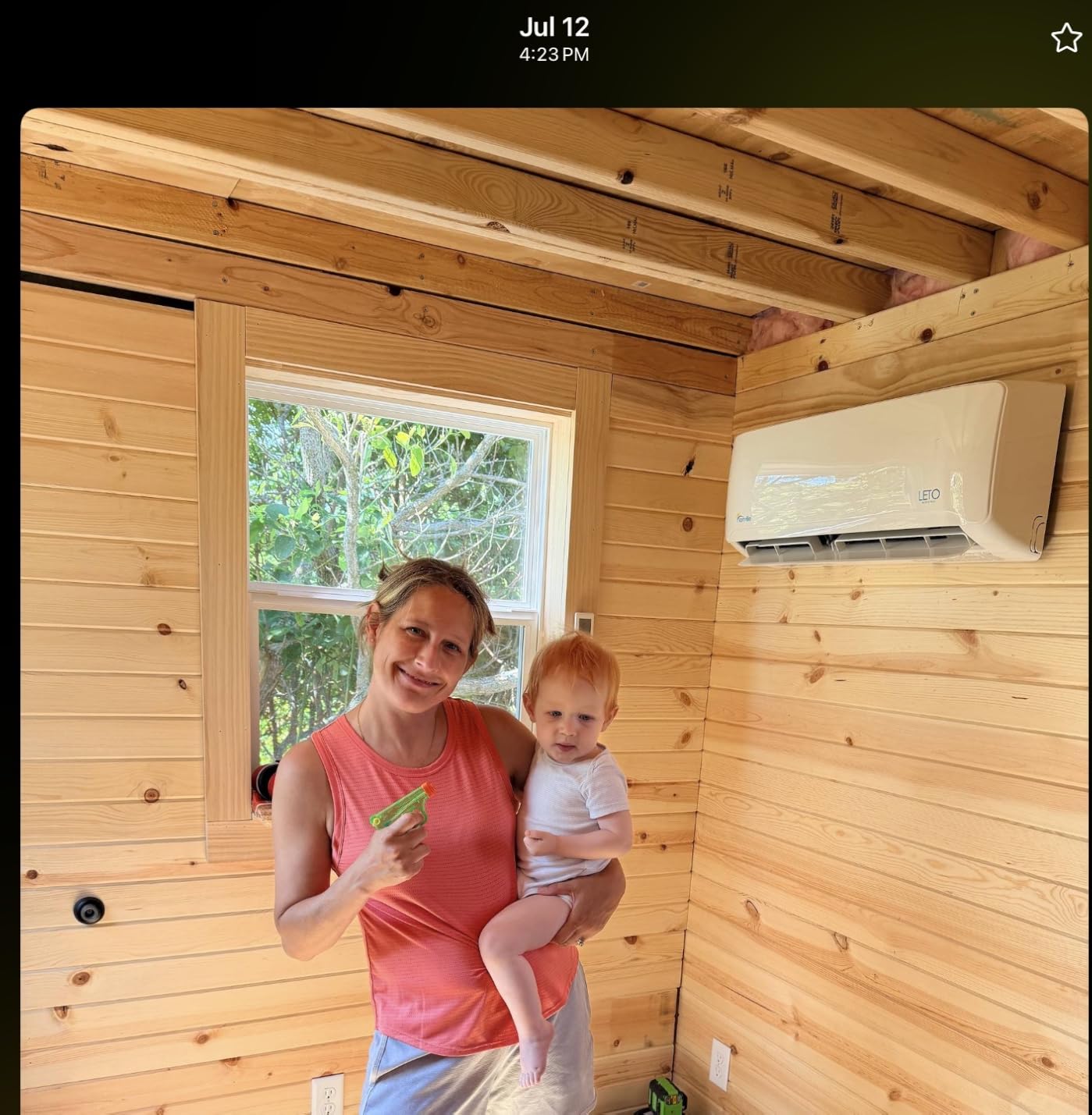
Is the 9,000 BTU LETO big enough for a small house?
For a house under about 600 sq ft with decent insulation and moderate window area, one 9,000 BTU head can carry the main living space. Most small homes though are better served by treating the 9,000 BTU as a room unit and adding a second head or a 12,000 BTU for an open-plan living area, which is exactly how our full mini split guide approaches whole-home layouts.
The other thing to verify is insulation. Homeowners in r/heatpumps repeatedly advise sizing correctly and confirming adequate insulation first, because a leaky cottage will struggle with any capacity no matter how large a unit you buy.
Where the LETO is the wrong choice
If your home is in a Zone 5, 6 or 7 climate and heat is your primary fuel, the LETO is not a cold climate unit. The listing states heating down to 5F, and performance at that boundary is adequate for a mild backup rather than a primary source in a northern climate.
The warranty is also thinner than the competition. Parts coverage is 2 years and labour is not included, though the compressor carries 5 years, so a total compressor failure in year three is covered. Owners considering a longer parts term should look at the alternative ductless picks we benchmarked against it.
2. DELLA Vario Series 12000 BTU Mini Split – Best Efficiency
DELLA Vario Series 12000 BTU Mini Split Air Conditioner Work with Alexa with 1 Ton Pre-Charged Heat Pump Ductless Inverter System, 23 SEER2, Cools Up to 550 Sq. Ft,16.4ft Installation Kit Included
12000 BTU 1 ton
23 SEER2 and 9.5 HSPF
550 sq ft
Heating to -4F,230V
Pros
- Highest SEER2 in this group at 23
- 9.5 HSPF rating for strong cold-weather heating
- 550 sq ft coverage
- Heating to -4F with auto defrost
- I feel remote sensor plus app and Alexa control
- 16.4 ft installation kit included
Cons
- Not a true DIY unit
- needs vacuuming and gauges
- Supplied line insulation and tape degrade quickly
- Drain tubing gets brittle after a couple of seasons
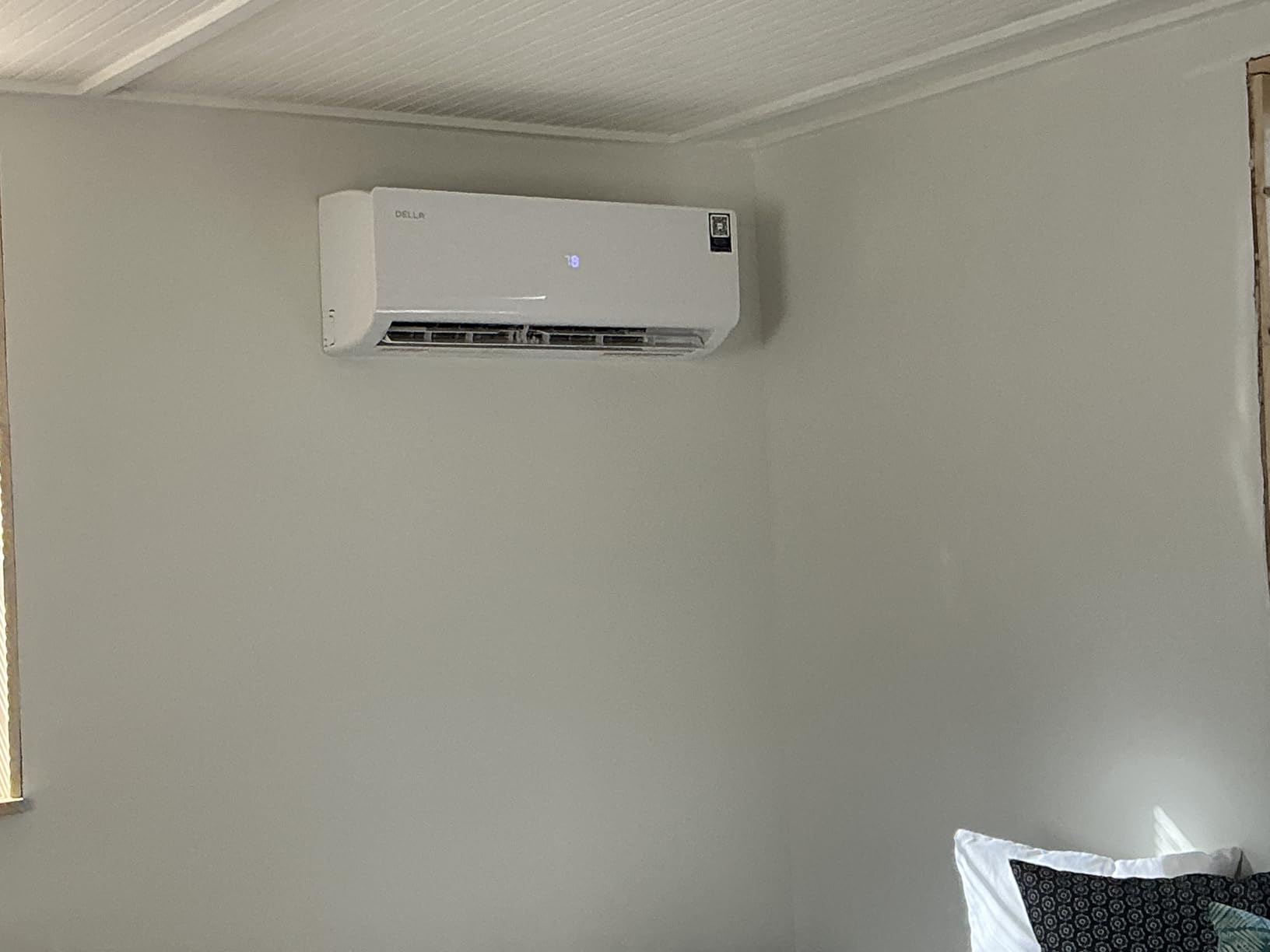
The Vario is the most efficient unit on this list and the only one rated for heating down to -4F, which makes it a genuinely different proposition from the other 12,000 BTU systems here. At 23 SEER2 with a 9.5 HSPF rating, it is drawing roughly 5,200 fewer BTU of heat for the same output than a 15 SEER2 baseline would, and in a small home where the heat pump runs almost continuously in winter, that gap is the whole operating cost story.
Capacity is 12,000 BTU cooling and 12,000 BTU heating, which is 1 ton. Stated coverage is 550 square feet, and the indoor unit measures 31.92 inches wide by 11.49 inches tall, so it clears a typical bedroom wall without looking oversized. The 5 Star BEE rating also makes it the easiest unit here to qualify for a utility rebate.
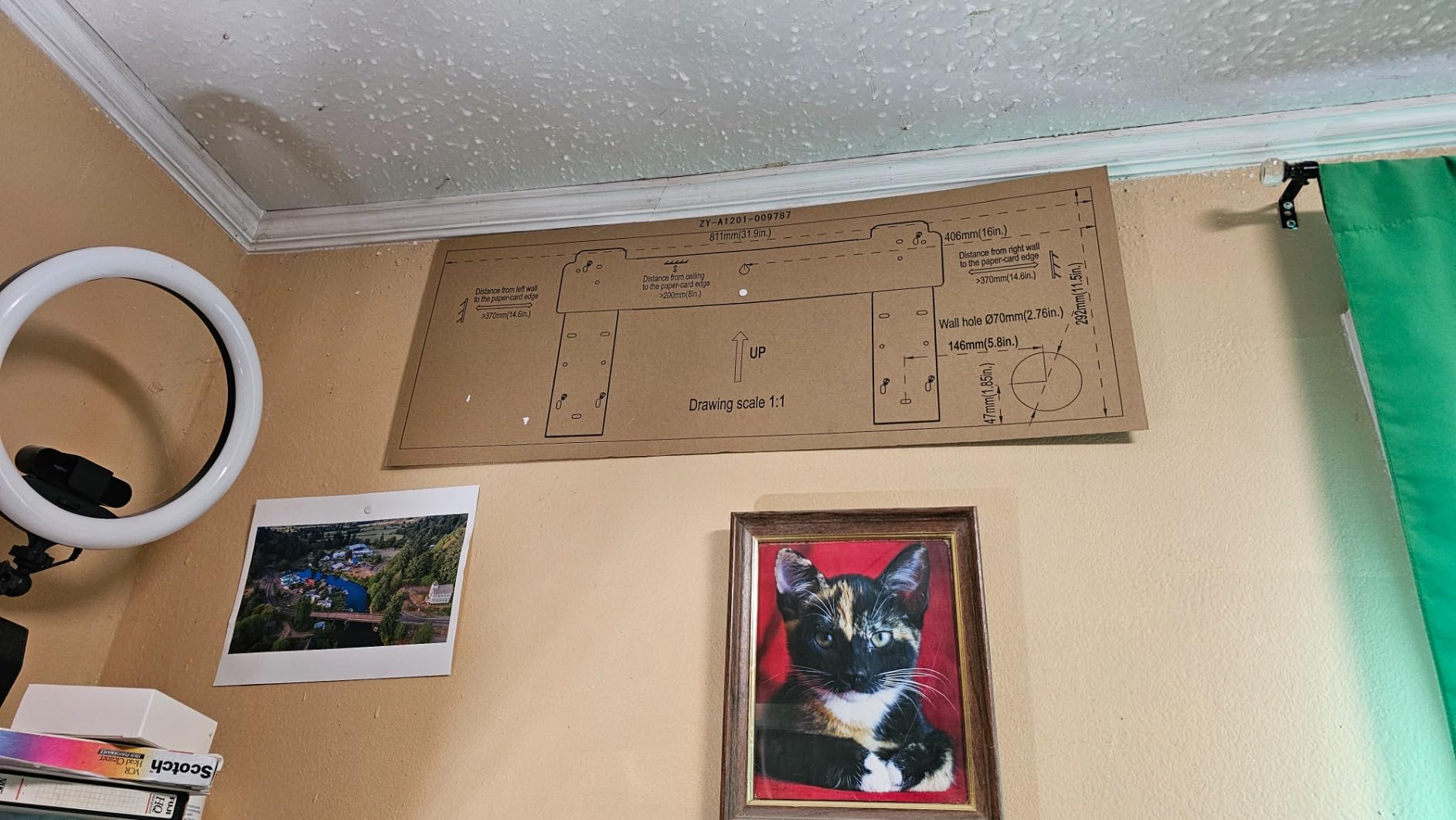
Smart control is unusually thorough for a value-tier system. The remote carries an I feel temperature sensor that adjusts airflow to the temperature at the handheld rather than the unit, and the app and Alexa voice control cover the rest. Owners across 1,400 reviews consistently praise quiet operation and a helpful app, and the review summary notes strong heating and cooling from a single wall head.
What owners complain about is the consumables, not the machine. The supplied copper line insulation and Teflon tape are thin and break down quickly in hot climates, the drain tubing becomes brittle after a couple of seasons, and the remote leans on unlabeled icons so you need the handset to run the system at all. These are all fixable at install time for a few extra dollars, but ask your installer to budget for it.
Does the Vario handle sub-zero climates?
Yes, and that is the reason to pick it. The manufacturer states heating operation down to -4F, and the 9.5 HSPF rating is well above the 10 threshold typically discussed for cold climate units, sitting close to it rather than far above it. For a small home in a Zone 5 or 6 market that runs a heat pump as primary heat, this is the pick from the group.
One buyer-reported issue is worth knowing about: there are a small number of refrigerant leak reports and difficulties obtaining warranty replacement units. That is a minority of reviews, not a pattern, but it is the kind of thing that only surfaces years into ownership, so factor it into how you feel about parts support locally.
What you give up versus a 9,000 BTU unit
Power. This is a 230V system at 3,516 watts, so you need a dedicated circuit and a properly sized breaker rather than plugging into a regular wall outlet. For a panel that cannot spare a double-pole breaker, the 115V alternatives later in this list are the sensible route.
Coverage of 550 sq ft is also smaller than the 750 sq ft claims made by the COSTWAY, YITAHOME and Albott, so if your space is at the top of the small-home range you may be sizing up unnecessarily. Check our sizing section before you settle on 1 ton.
3. COSTWAY 12000 BTU Mini Split – Best Value for Larger Small Homes
COSTWAY 12000BTU Mini Split Air Conditioner& Heater
12000 BTU 1 ton
20 SEER2
Up to 750 sq ft
23 dB,115V,5 and 8 year warranty
Pros
- Rated coverage of up to 750 sq ft
- Very quiet at 23 dB
- 5 yr parts and 8 yr compressor warranty
- Self-cleaning cycle at 134.6F plus washable filter
- Five modes with four fan speeds
Cons
- Licensed HVAC installation required
- Higher wattage draw than comparable 115V units
- R-32 refrigerant needs professional handling
The COSTWAY stands out on two numbers that usually trade off against each other. It claims coverage of up to 750 square feet from a single 1 ton unit, and it pairs that capacity with a 23 dB noise rating, which makes it the quietest 12,000 BTU system in this group. Coverage claims of this kind run optimistic, but even discounting heavily, this is the unit to look at if your small home runs 650 sq ft or more.
Efficiency is 20 SEER2 on 115V power, with 12,000 BTU cooling and 12,300 BTU heating. That is a lower efficiency number than the DELLA and the Temprium, and it will show up over a decade of runtime, but for most small-home duty cycles the difference lands in the tens of dollars a year rather than hundreds.
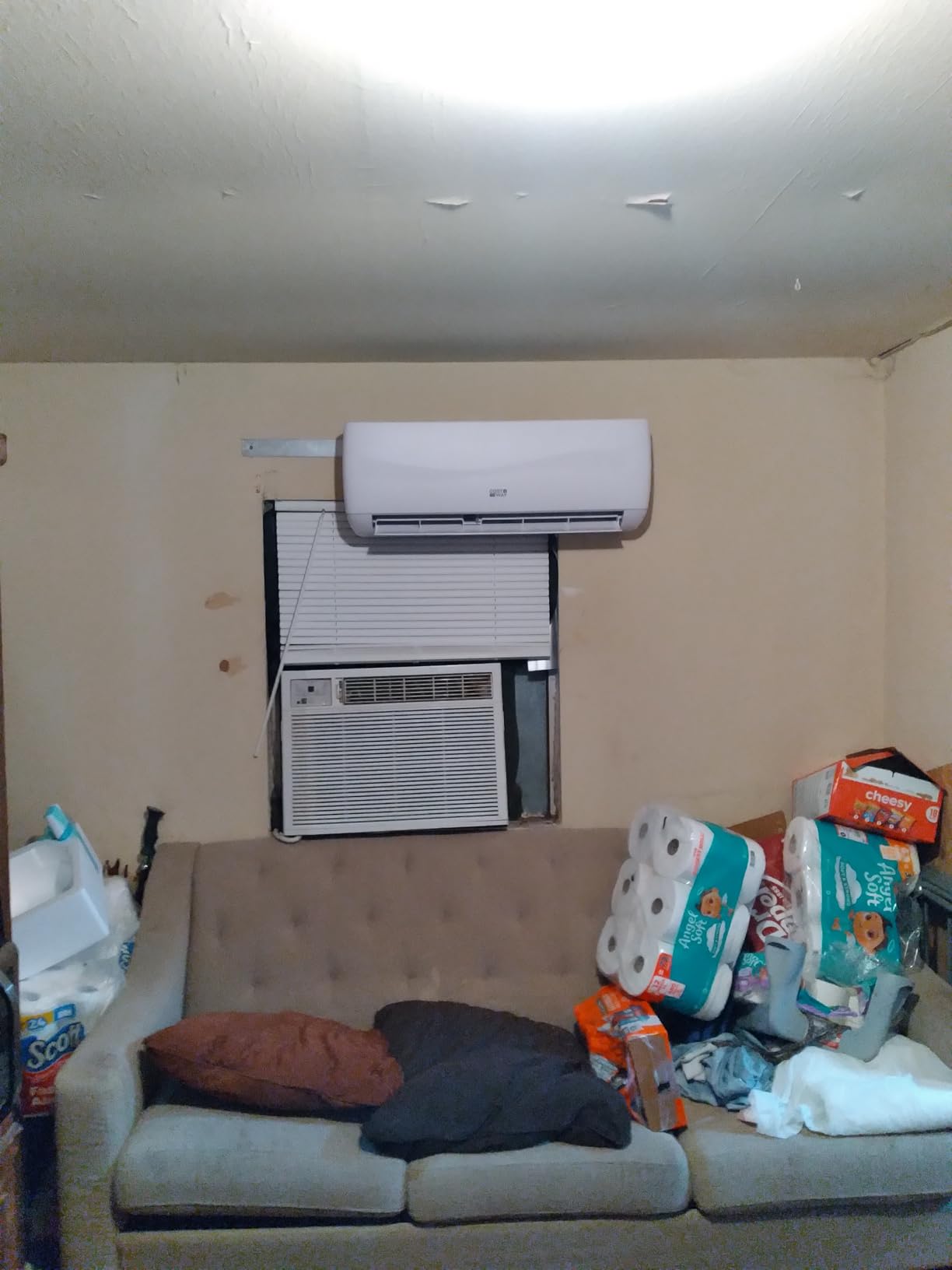
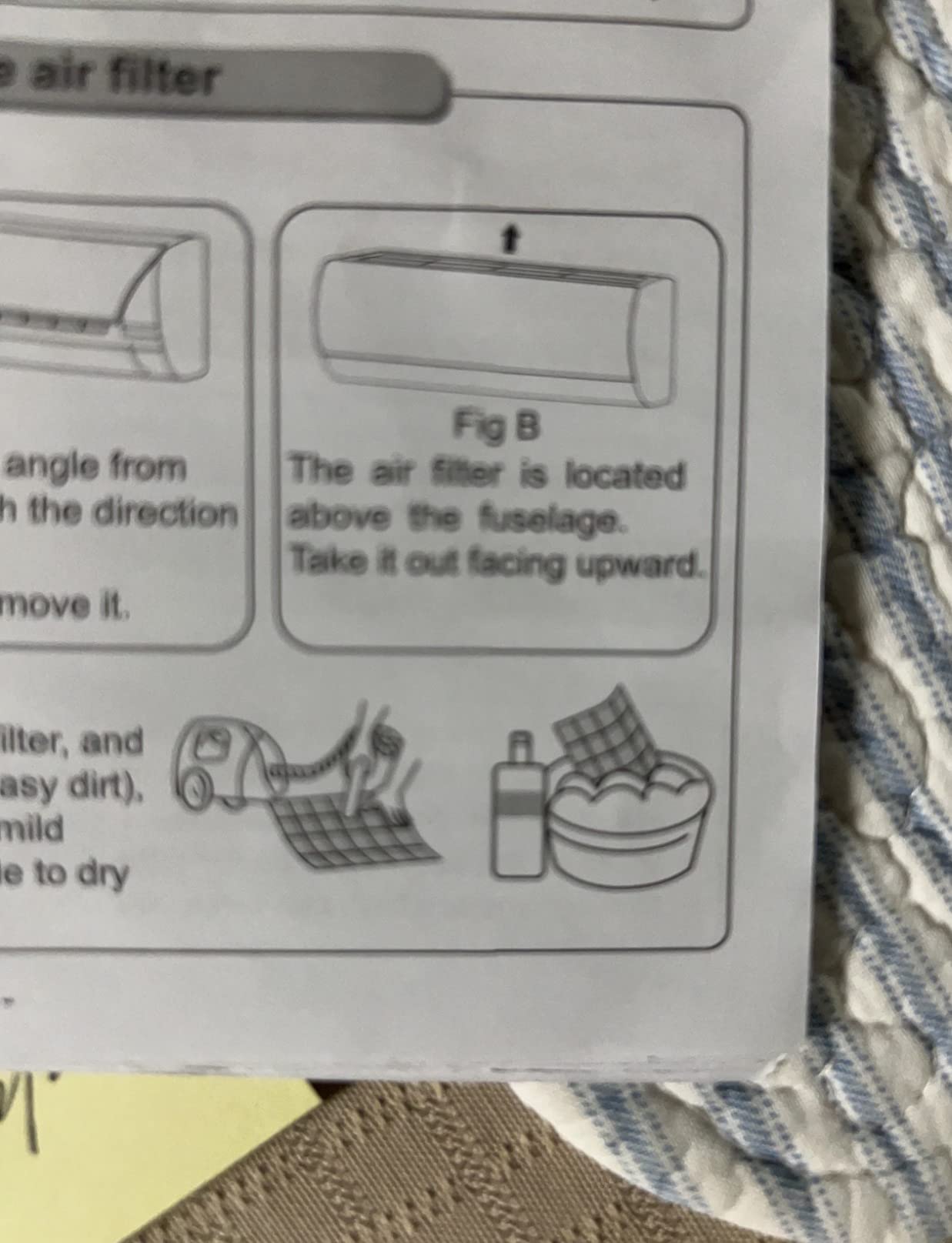
The warranty is the real differentiator. Five years on parts and eight years on the compressor is longer than anything else we evaluated, and it sits alongside a self-cleaning cycle that heats the coil to 134.6F, a washable filter and auto-defrost, so the routine maintenance list is short. Owners across more than 1,600 reviews regularly cite the roomy coverage, low noise and generous warranty terms as the reason they bought it.
There is one specification that deserves a second look. The listed wattage is 1,970W, which is higher than comparable 115V units in this class, which usually draw in the 1,300 to 1,500W range. If your small home has an older 15A circuit already doing work, have an electrician confirm the circuit before the install date.
Is 12,000 BTU too big for a small home?
Only if the home is genuinely small. In a 500 sq ft bedroom, a 12,000 BTU unit is oversized and you should be looking at a 9,000 BTU system instead, which is what a reader in r/hvacadvice was weighing when asking whether a 9,000 BTU unit was enough for a 450 sq ft space. In a 700 to 1,000 sq ft single-story home with open-plan living, 12,000 BTU is the correct starting point and the 750 sq ft rating fits well.
The 12,300 BTU heating output also means this works as a primary heat source down to a mild frost, which covers a large part of the country. It is not a Zone 6 or 7 unit and should not be chosen on that basis.
Who should look elsewhere
If quietness is not a priority and you want maximum coverage per dollar, this is still the right pick. If you want the lowest possible noise or the longest heating range, move up to the DELLA Vario, which is quieter indoors at its lowest fan speed and reaches further down in temperature.
Note also that R-32 is a mildly flammable refrigerant, which is fine in a sealed factory system but means any service work on this unit must be done by a licensed technician. That is normal practice, but it rules out casual owner servicing in a way that R-410A units do not.
4. Cooper and Hunter MIA 12000 BTU Mini Split – Best Warranty Backing
Cooper & Hunter MIA 12,000 BTU 115V Wall Mount Mini Split AC, 21.2 SEER2
12000 BTU 1 ton
21.2 SEER2
550 sq ft
26 dB,115V,7 yr compressor
Pros
- Exceptionally quiet
- often described as inaudible
- Strong cooling that pulls room temperature well below set point
- Polished app with scheduling and remote control
- Complete 16 ft pre-flared insulated line set included
- 7 yr compressor and 5 yr parts with US-based support
Cons
- Professional install required and license number needed for warranty
- Preinstalled drain clamp can loosen and leak water
- Some outdoor fan failures and slow parts service
- Freight delivery drops the unit outside the home
The MIA is the quietest 1 ton unit in this group at 26 dB, and buyer feedback goes further than the spec sheet, describing both indoor and outdoor operation as inaudible in a normal room. For a bedroom or a small open-plan living space where the unit runs most of the day, that is the difference between a system you notice and one you do not.
Efficiency is 21.2 SEER2 at 115V, with heating rated down to 5F. Coverage is stated at 550 square feet. The combination of 115V power and cold-climate-capable heating is unusual at this capacity, and it is why the MIA earns a place in a small-home list despite sitting below the DELLA on both efficiency and heating range.
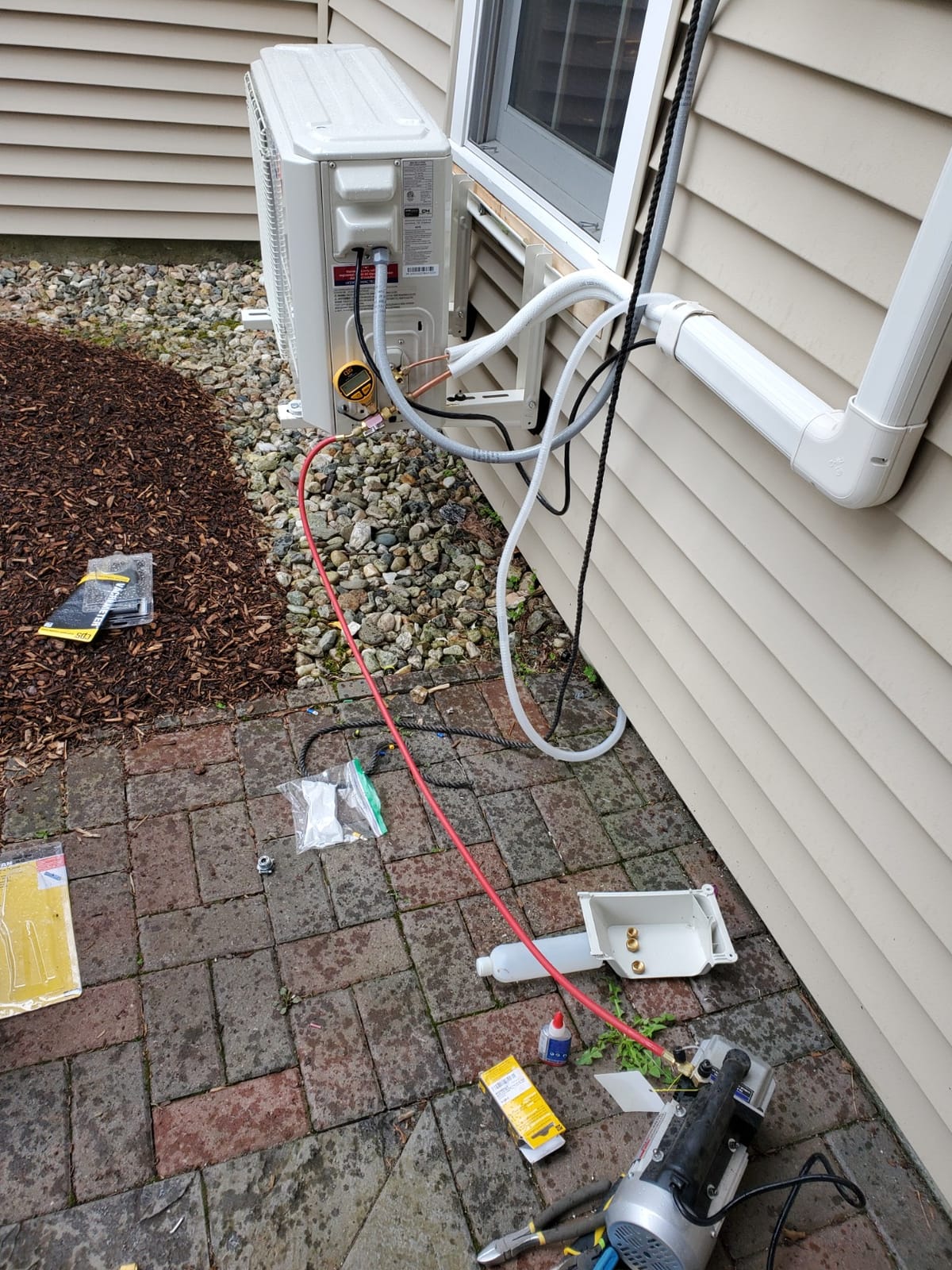
The install kit is genuinely complete: a 16 ft pre-flared insulated copper line set, 16 ft of communication wire and a 16 ft drainage extension all ship in the box, which removes the most common source of install day delays. The smart kit handles scheduling, temperature adjustment and remote app control, and many owners in the review base are repeat buyers, which is a reasonable signal for a system this new.
The warranty is the strongest published terms in the group: 7 years on the compressor and 5 years on parts, with US-based technical support. The catch is that registration requires your HVAC license number, so have the installer handle registration at commissioning.
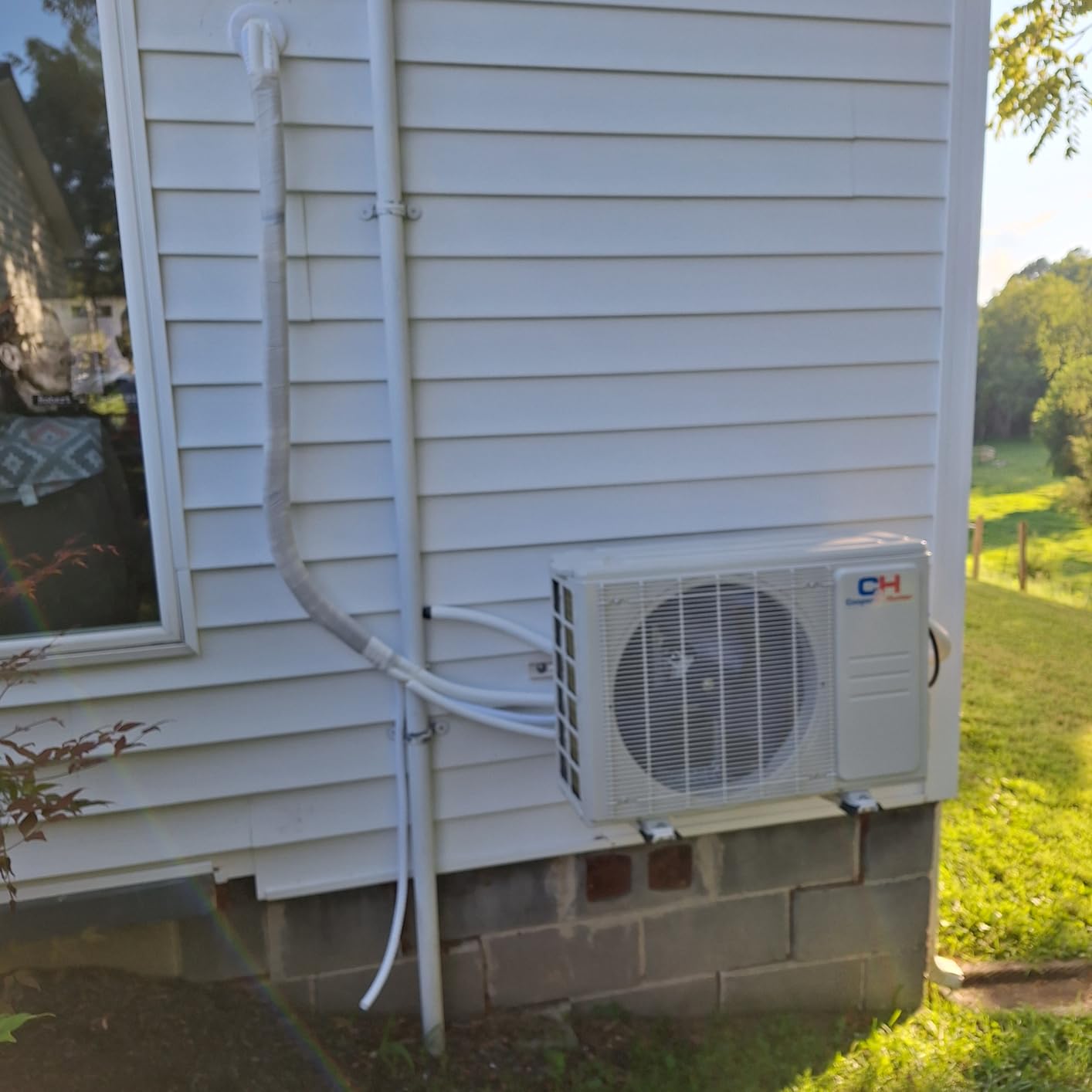
Is the MIA quiet enough for a bedroom?
Yes. At 26 dB, the MIA is the second quietest 1 ton system here and the quietest one that also carries a 7-year compressor warranty. That combination matters if the unit runs in a room where someone sleeps, which is the normal situation in a small home where one head does double duty.
Owners also report strong cooling that pulls the room well below the set point before cycling down, which is what you want from a low-headroom wall unit in a space with a lot of afternoon sun.
What could go wrong after installation
The most cited mechanical complaint is the preinstalled drain pipe clamp, which several owners say can loosen and leak water inside the room. Ask your installer to replace it with a proper clamp and check the pan after the first cooling cycle. There are also isolated reports of outdoor fan failure shortly after installation and slow replacement parts service, which is worth considering before you buy rather than after.
Finally, this unit ships by freight to the nearest accessible point outside the home, not to a room of your choice, so plan the move to the wall yourself or add it to the installer scope.
5. ROVSUN 9000 BTU Mini Split – Best Feature Set for a Small Bedroom
ROVSUN 9000 BTU Wifi Enabled Mini Split Air Conditioner & Heater with Inverter, 20 SEER2 Energy Saving 115V Ductless Split AC Unit with Pre-Charged Condenser, Heat Pump & Installation Kit
9000 BTU 0.75 ton
20 SEER2
450 sq ft
28 dB,115V,app and voice control
Pros
- 450 sq ft of heating and cooling on 115V power
- Quiet at 28 dB in mute mode
- App plus Alexa and Google Assistant with remote
- 4-way swing
- turbo and eco mode
- Feature set rivals higher priced units
Cons
- Instructions skip the leak test and charging step
- Vacuum pump and gauges needed to commission
- Included line set tape wrap is insufficient
- Only a one year warranty
The ROVSUN is the feature-per-dollar standout at 9,000 BTU. For a 0.75 ton system you get 20 SEER2 efficiency, 28 dB mute operation, four-way swing, turbo boost, eco and sleep modes, and full app plus voice control with Alexa and Google Assistant. Very few units at this capacity give you a smart kit at all, and this one is the most complete of the small systems we evaluated.
Coverage is listed at 450 square feet for cooling and heating, on 115V power with R-32 refrigerant and a 4 Star BEE rating. The indoor head is compact at 31.92 inches wide by 11.49 inches tall, which makes it an easy fit above a bedroom door or in a small office alcove.
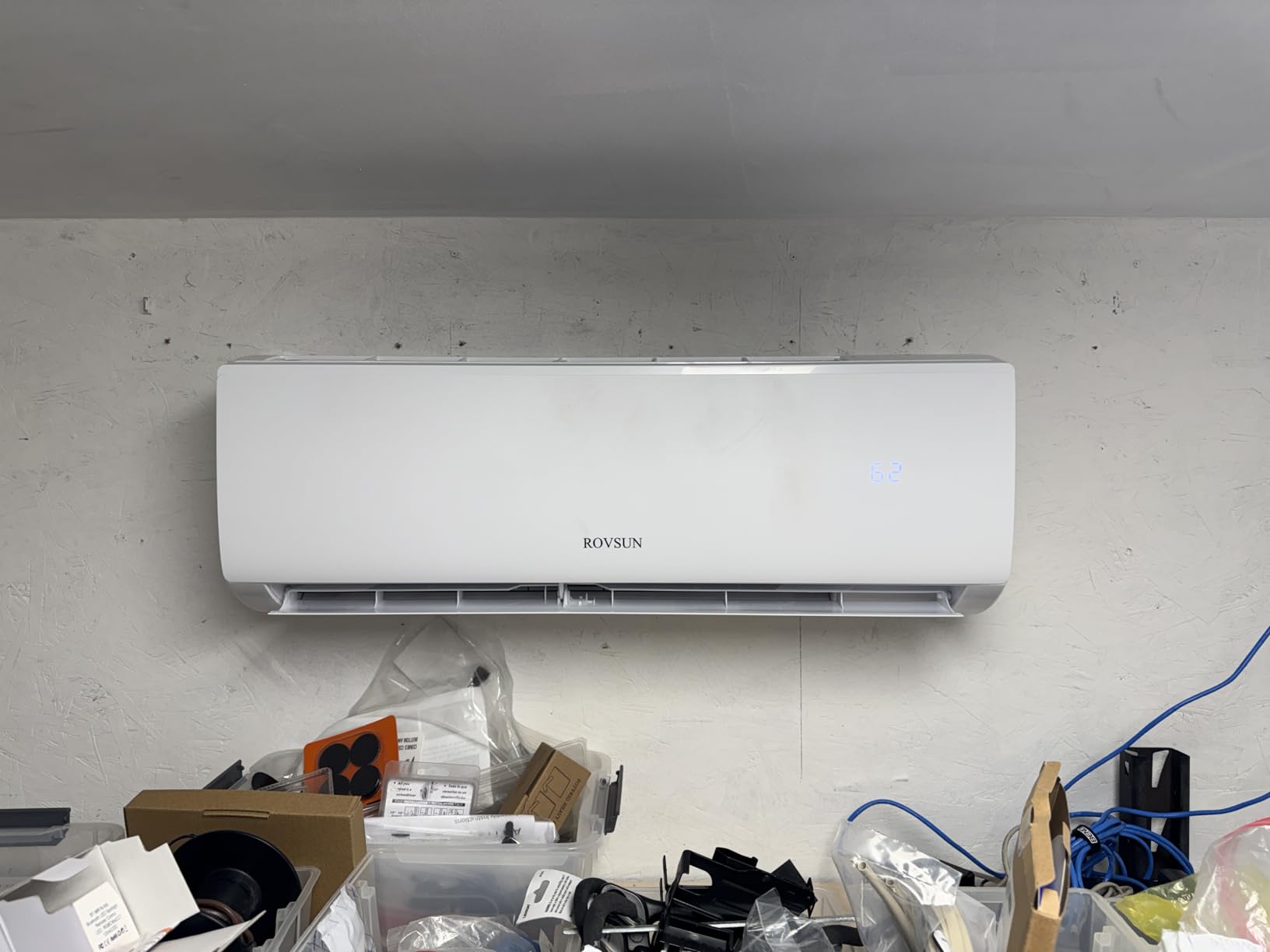
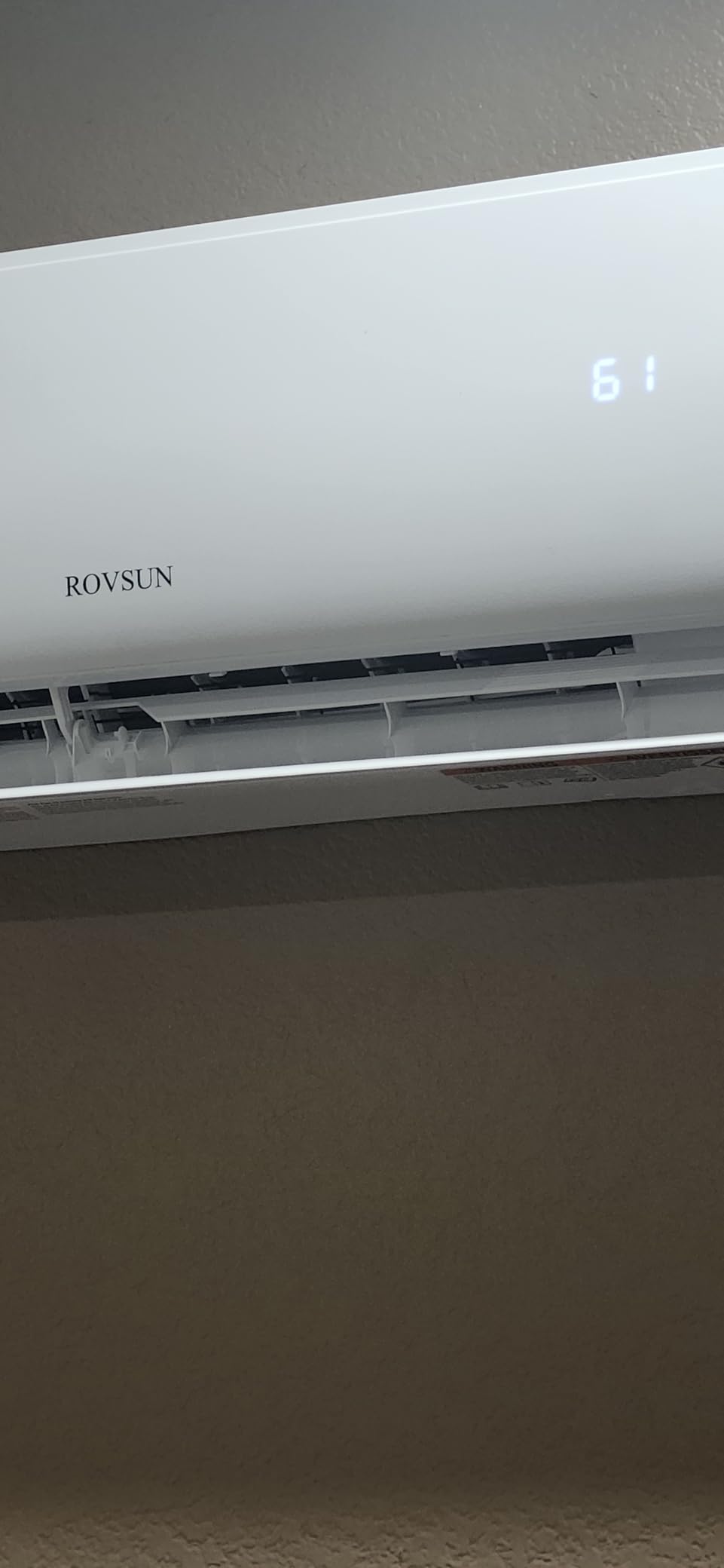
Owner feedback is warm on power and longevity. Reviewers report the unit cooling and heating a 450 sq ft room convincingly, staying quiet inside and out, and several buyers describe multi-season use without issues, which is a stronger reliability signal than most short review histories can offer. The 16.4 ft copper lines and signal cord in the kit cover a standard bedroom run without extra length.
One practical note before you unbox it: the units must remain upright for 24 hours before installation, which matters if you are staging the delivery in a garage or a side door rather than the final position.
Does the ROVSUN work for a single small room only?
That is the honest use case. At 450 sq ft, this is a room unit, not a whole-home system. If you are heating a small studio or one-bedroom condo, a 9,000 BTU head in the main living area is often all you need, and adding a second 9,000 BTU head for the bedroom later is a straightforward retrofit through the same inverter architecture.
It is also a good fit for a garage, workshop or ADU where you only need intermittent heating on a 115V circuit and full smart control.
What to watch before commissioning
The installation documentation is the weak point. Owners report that the instructions skip the leak-testing and charging step before startup, and that a vacuum pump and manifold gauge set are required to commission the system. In practice this means a licensed HVAC installer has to do the commissioning properly regardless of how the manual is written, and you should ask them to confirm the leak test in writing.
The one year warranty is the shortest published term here, and the included line-set tape wrap is described as insufficient and quick to degrade, so have your installer supply proper insulation.
6. YITAHOME 12000 BTU Mini Split – Best Wide Operating Range
YITAHOME 20 SEER2 12000BTU Mini Split AC/Heating System 115V, Pre-charged Inverter AC Cool & Heat Up to 750 Sq. Ft, Pure Design, Compatible with 3 Level Eco Mode, Complete Installation Kit, White
12000 BTU 1 ton
20 SEER2
Up to 750 sq ft
25 dB,5F to 118F
Pros
- Rated coverage of up to 750 sq ft
- Inverter compressor with about 25% energy savings
- Five modes plus a health mode with PM2.5 filtration
- Operates from 5F to 118F with a 50 ft airflow throw
- Washable filter and complete install kit
Cons
- Remote only
- no app or voice assistant
- Arrives in two packages that may be delivered separately
- Licensed HVAC installation required
- Lowest average rating in the group
The YITAHOME covers the widest published temperature envelope in this group, running from 5F to 118F, and it pairs that with a 50 ft airflow throw. For an open-plan small home where one head has to reach a kitchen and a living area, throw distance matters more than raw capacity, and this is one of the few 1 ton units here that publishes a figure for it.
Efficiency is 20 SEER2 at 115V with 12,000 BTU cooling and heating, rated for up to 750 square feet. Annual energy consumption is listed at 600 kWh, and the noise figure is 25 dB, which is among the quieter 1 ton systems available. Five operating modes plus a health mode with negative ions and PM2.5 filtration round out the feature set.
Buyers are positive about coverage and quiet running. The main usability gap is control: this is remote-only, with no app and no voice assistant integration, which in 2026 is a real limitation if you already use smart controls elsewhere in the home. Our smart thermostat guide for heat pumps covers the options worth pairing with a ductless head.
At 75.1 pounds this is one of the heavier units in the group, and it ships in two packages. Both facts matter for a small home, because a narrow service path or a staircase can turn a two-person carry into a much longer job and the installer will price that time into the labour.
Is 750 sq ft realistic for a 1 ton unit?
Only in favourable conditions: good insulation, moderate sun exposure and no unusual internal loads. Treat 750 sq ft as the ceiling case rather than the design load, and remember this is a marketing figure rather than an AHRI-certified capacity at a defined temperature. A more conservative planning number for a 1 ton system is closer to 600 sq ft of well-insulated living space.
If your small home is under 500 sq ft, this is far more unit than you need and a 9,000 BTU model will run more efficiently and cycle less.
How does the warranty compare?
Published terms are listed as 3 years on parts and 5 years on parts, and the listing is not internally consistent about which term covers what. That ambiguity is worth a phone call to the manufacturer before you buy, and it is the main reason this unit sits mid-pack despite strong coverage figures.
It is also the lowest rated product in this group at 4.0 stars. The gap to the 4.4 leaders is small, but across a decade of ownership the 4.4 units have a larger body of owner reports behind them, and that is worth something when you cannot easily find parts for an unfamiliar brand name.
7. Albott 12000 BTU Mini Split – Best Self-Cleaning Design
Albott 12,000 BTU Mini Split Air Conditioner and Heater SEER2 18, 115V
12000 BTU 1 ton
SEER2 18
Up to 750 sq ft
29 dB,5F to 122F,WiFi and app
Pros
- Rated coverage of up to 750 sq ft
- Quiet running below 29 dB with sleep mode
- App
- remote and WiFi control
- Self-cleaning function with easily removed filters
- Operating range from 5F to 122F
Cons
- SEER2 18 is the lowest efficiency among the 12000 BTU units here
- Listed weight of 151 pounds complicates handling
- Warranty wording is inconsistent across the listing
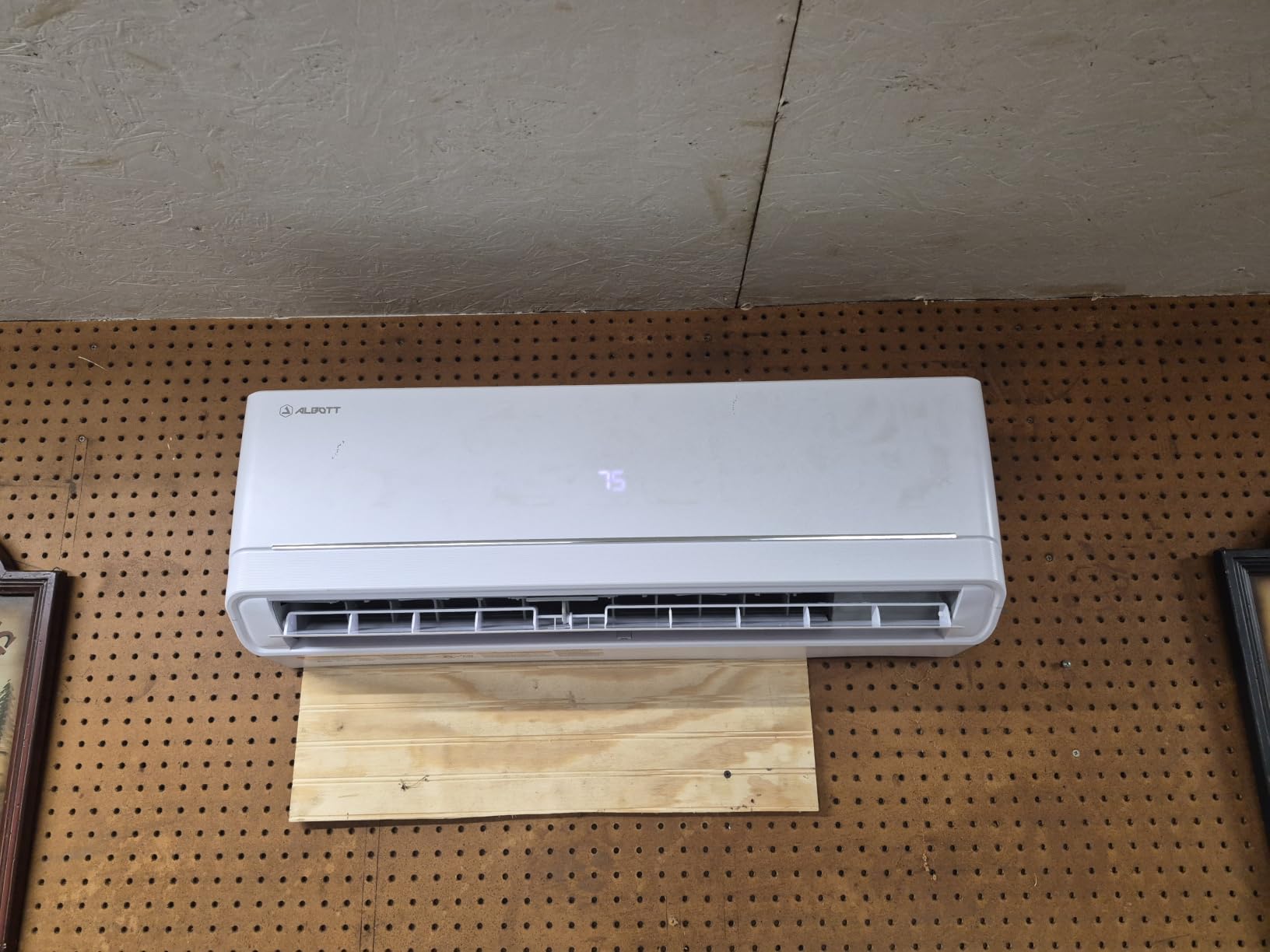
The Albott is the small-home pick for anyone who does not want to think about upkeep. The self-cleaning function heats the coil to kill moisture and dust, and the filters and air blades are designed to pull straight out without tools, which matters in a wall-mounted unit installed high in a small room where fiddling with a filter is annoying.
It covers up to 750 square feet on 115V power, runs from 5F to 122F, and is controlled by remote, app or WiFi. The noise floor of 29 dB is the highest of the 12,000 BTU systems here, so it loses to the COSTWAY and YITAHOME on quietness but wins on the maintenance story.
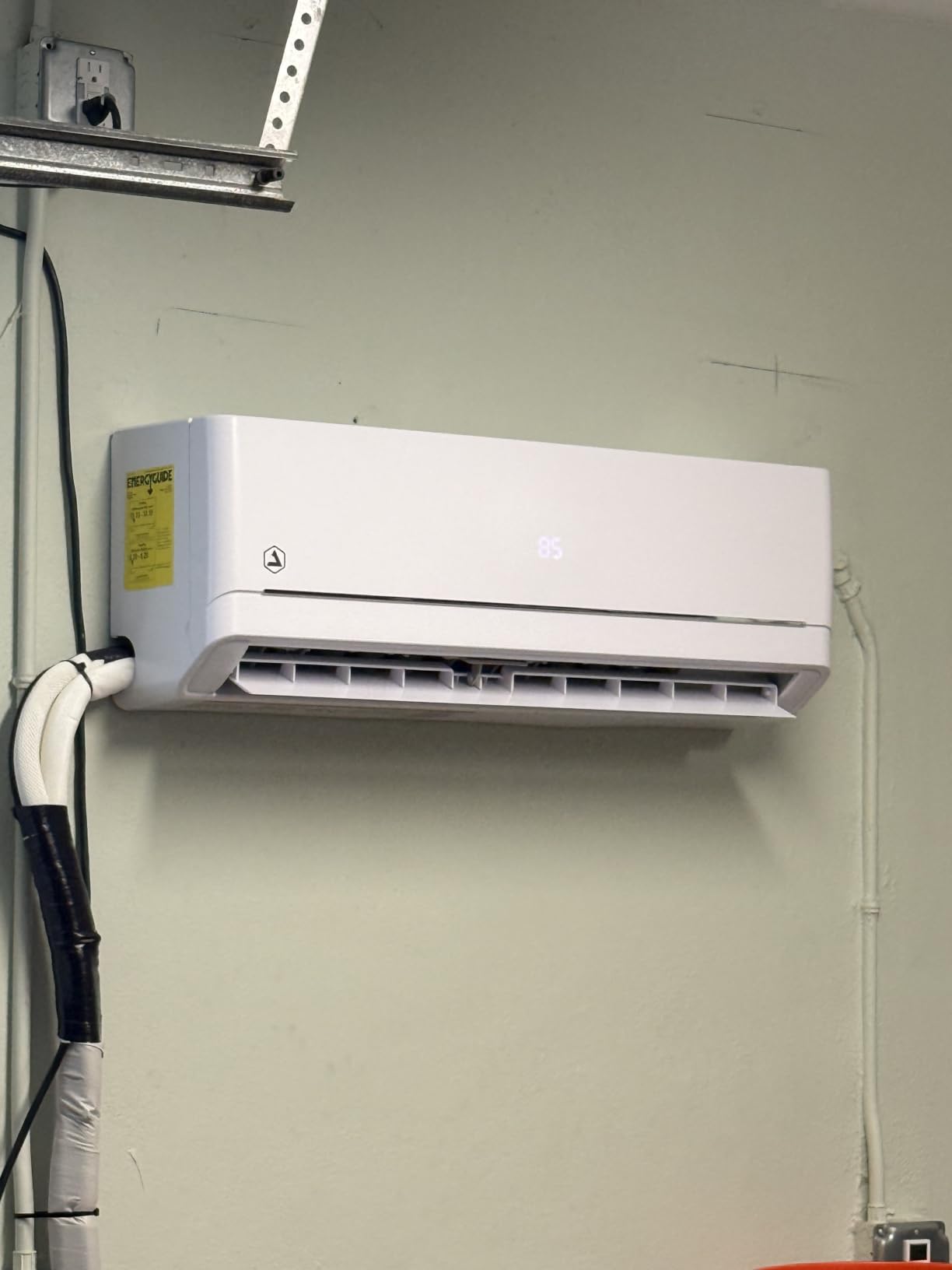
Owners cite broad coverage, quiet running, app support and self-cleaning convenience in roughly equal measure. Annual energy consumption is listed at 700 kWh, the highest of the 1 ton units, which is a direct consequence of the efficiency rating rather than a fault.
Handling is the practical issue. The listed item weight is 151 pounds, roughly double what most of these systems weigh, and for a small home with a tight service route that can mean extra crew time or an awkward install. The physical indoor unit dimensions of 32.09 by 7.48 by 11.22 inches are normal, so the weight figure likely includes the packaged condenser.
Does SEER2 18 matter in a small home?
Over a long ownership period, yes, and the gap is measurable. The difference between a 20 SEER2 and an 18 SEER2 unit is on the order of 10 percent of cooling energy, and in a small home where the head runs for long stretches to hold temperature, that compounds annually. If your plan is to keep the system for 12 to 15 years, the 20 SEER2 alternatives cost you a modest amount more up front and repay it.
If you plan to sell within five years or the unit serves a rarely-used ADU, the efficiency gap barely registers and the self-cleaning cycle and WiFi control become the deciding factors.
What about the warranty and the weight?
The published warranty is described inconsistently. The feature list states 5 years on the compressor and 7 years on parts, while the specification also lists a 3 year term. Get the actual terms in writing from the manufacturer before purchase, because on a system this size the compressor is the component you will eventually care about.
Ask your installer to confirm the delivered weight and plan the path from the delivery point to the mounting position. On a 151 pound unit that path is worth thinking about in advance, particularly in a townhouse or a home with a turn or two in the way.
8. Rellytech 9000 BTU Mini Split – Best Entry Point for Studios and Trailers
Rellytech Mini Split AC/Heating System – 19 SEER2 9000 BTU Mini Split AC Unit Inverter Heating and Cooling, 115v Energy Efficient Ductless Air Conditioner Up to 550sq.ft, 24H Timer, Installation Kit
9000 BTU 0.75 ton
19 SEER2 and 8.5 HSPF2
450 sq ft
115V,42 dB
Pros
- Lowest purchase price in this group with a 4.4 average
- 19 SEER2 and 8.5 HSPF2 on 115V
- Four modes with four fan speeds and 90 degree swing
- Compact form factor suits trailers
- RVs and shops
- ETL and AHRI certified
Cons
- Installation needs a vacuum pump and gauge set
- Rated noise of 42 dB is the highest in this group
- Remote only with no app or voice support
- Published warranty term shows only one year
The Rellytech is the lowest purchase cost unit in this group and it still carries a 4.4 average, which is unusual. At 9,000 BTU cooling and 9,000 BTU heating on 115V with 19 SEER2 and 8.5 HSPF2, it delivers a published HSPF2 figure that several more expensive units in this list do not provide at all, and that number is the one to use when comparing heating cost.
Coverage is up to 550 square feet according to the listing, and owners report being able to cool areas well beyond the rated room size plus strong humidity control. Four modes including dry, four fan speeds, 90 degree vertical swing and a 24 hour timer cover the essentials, and the indoor head is small at 30.7 by 8.7 by 11.4 inches, which makes it a good fit for a trailer, RV, shop or a very tight bedroom wall.
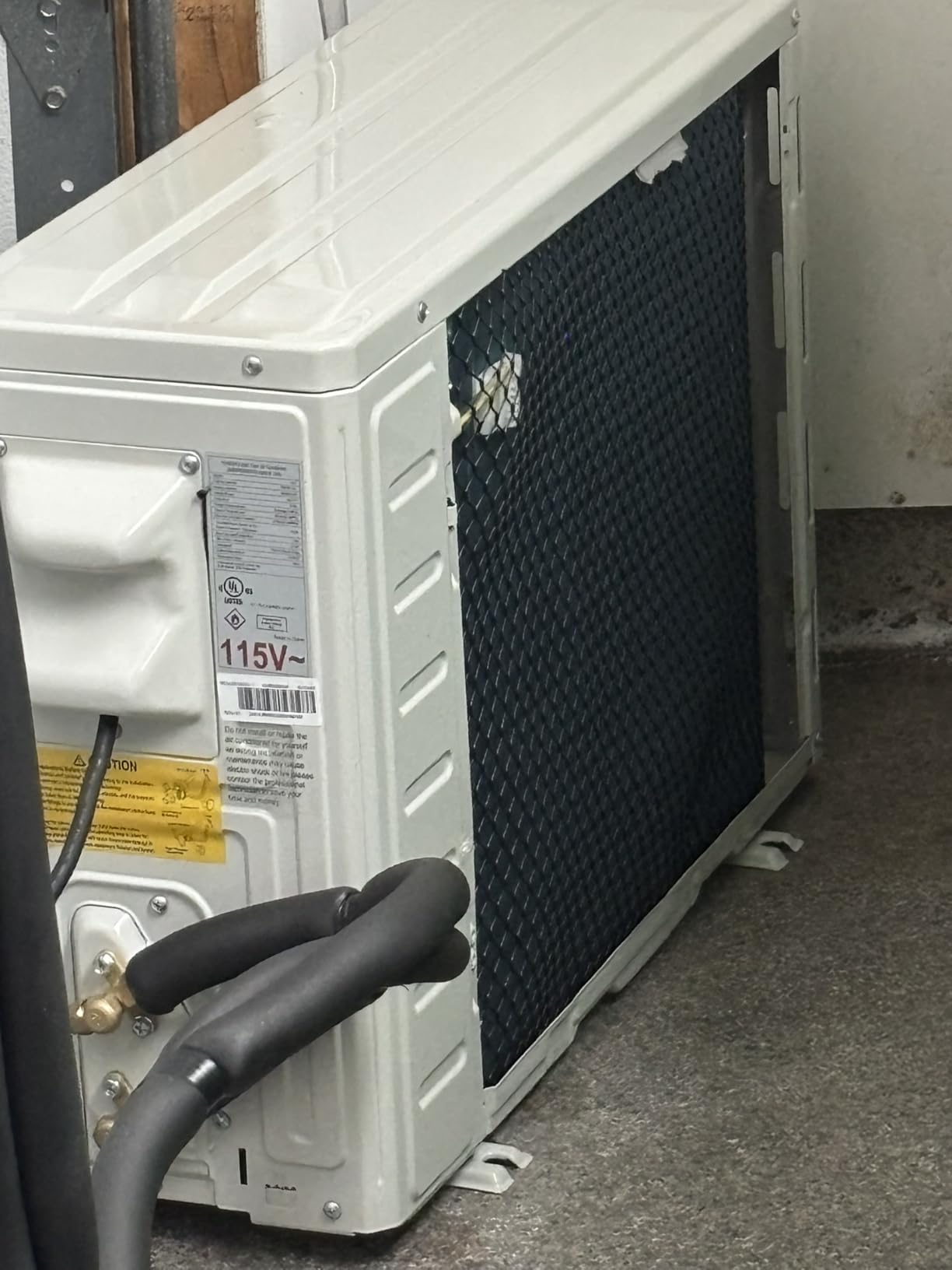
The 42 dB noise rating is the honest drawback and it is a real one. That figure sits well above the 23 to 29 dB figures the other 9,000 BTU units publish, so this is not the head to pick for a bedroom where a fan is already running. It is perfectly acceptable in a shop, a garage, a den used a few hours a week or a tiny home where you are awake and moving anyway.
There is also a documentation gap worth flagging. The specification lists 1 year of manufacturer coverage while the feature list claims 8 years, which is exactly the sort of inconsistency that leaves an owner stuck. Confirm the written terms with the manufacturer, and note the unit is remote-only with no app or voice support.
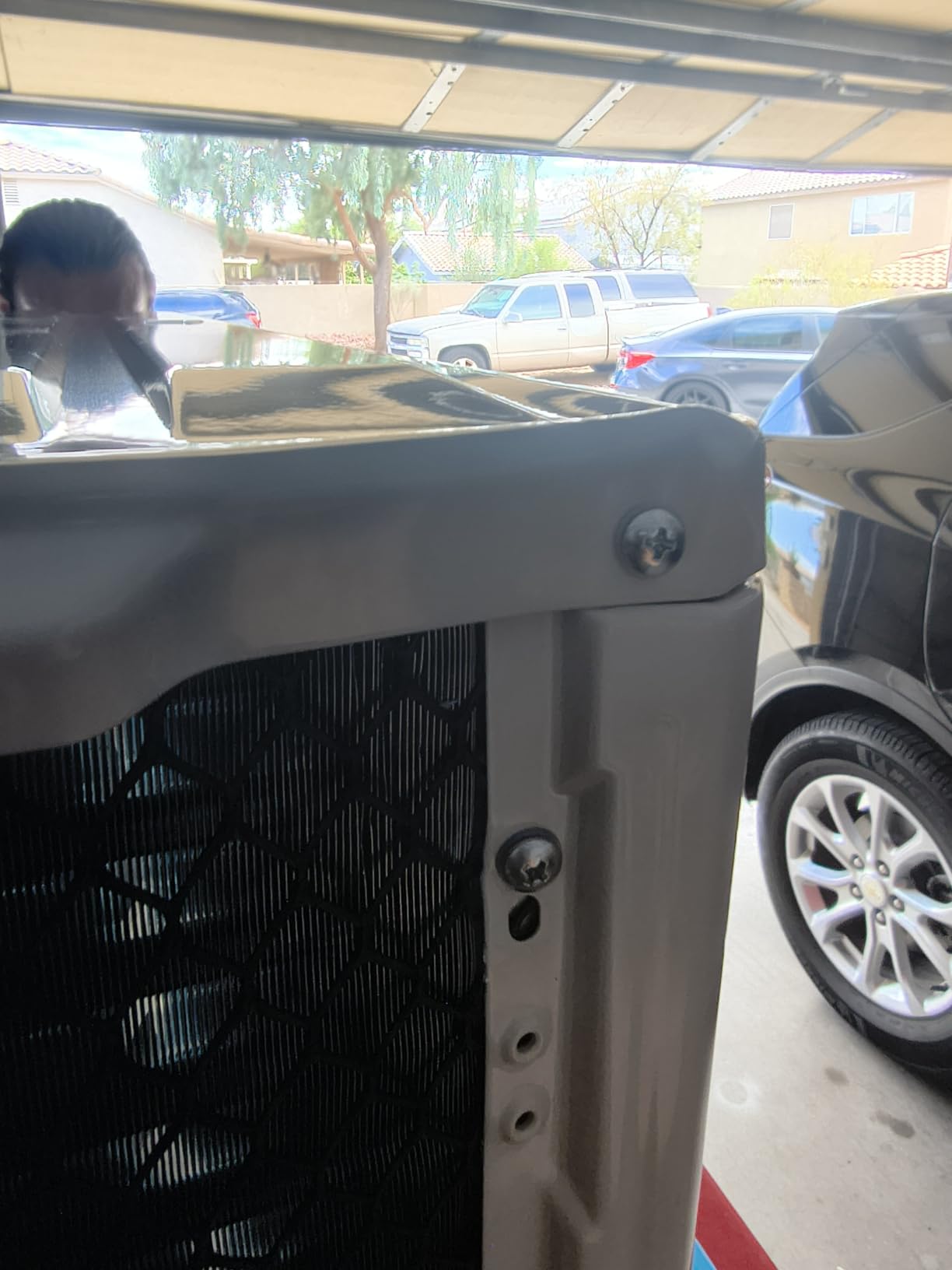
Is this good enough for a small house?
For a space under about 450 sq ft with average insulation, yes, and it is the most sensible entry point if you are outfitting a rental, a cottage or an ADU on a tight budget. The 19 SEER2 and inverter compressor mean it will hold temperature efficiently without the cycling problems of a fixed-speed unit.
For a house above 600 sq ft you will be relying on the 550 sq ft claim, which is optimistic, and you would be better served by a 12,000 BTU system with more published efficiency.
Why the warranty inconsistency matters
A heat pump is a fifteen to twenty year commitment and the compressor is the component most likely to fail. When the listing shows one year in one place and eight years in another, you are relying on the distributor to honour the better term, and that distributor is often a marketplace seller rather than the manufacturer itself. Get the terms in writing before you buy, and register the unit with the manufacturer as soon as it is installed.
This is the same local-availability point that comes up repeatedly on r/heatpumps: service and parts support depends on who rebates the equipment in your area. Check whether a local technician will actually service this brand before you commit to it as your primary heat source.
9. Mountman 9000 BTU Mini Split – Highest Rated at This Capacity
Mountman 9000 BTU Mini Split AC/Heating System,19 SEER2 110/120V Energy Efficient Ductless Inverter System,Cools Up to 450 Sq.Ft with Pre-Charged Condenser,Heat Pump & Installation Kits
9000 BTU 0.75 ton
19 SEER2
450 sq ft
26 dB,110/120V,pre-charged R32
Pros
- Highest average rating in this group at 4.5 stars
- Very quiet sleep mode at 26 dB
- Four modes with four fan speeds and 30% eco savings
- Self-cleaning cycle and automatic defrost
- Pre-charged R32 system on standard 110/120V power
Cons
- Remote only with no app or voice integration
- No detailed warranty terms published
- 450 sq ft rating is smaller than the 12000 BTU units
The Mountman posts the highest average rating of any unit we evaluated at 4.5 stars, and what owners praise lines up exactly with what you would want in a small home: quiet operation, a useful self-cleaning cycle and automatic defrost, and simple remote controls that work. At 9,000 BTU and 19 SEER2 on 110/120V, it is a straightforward 0.75 ton system with pre-charged R32 refrigerant.
Four operating modes, four fan speeds, turbo boost, eco mode claiming up to 30 percent energy savings, and a sleep mode rated at 26 dB. The remote has a 24 hour timer and an auto-off display after 10 seconds of inactivity, which is a small touch that makes the unit less distracting in a bedroom at night.
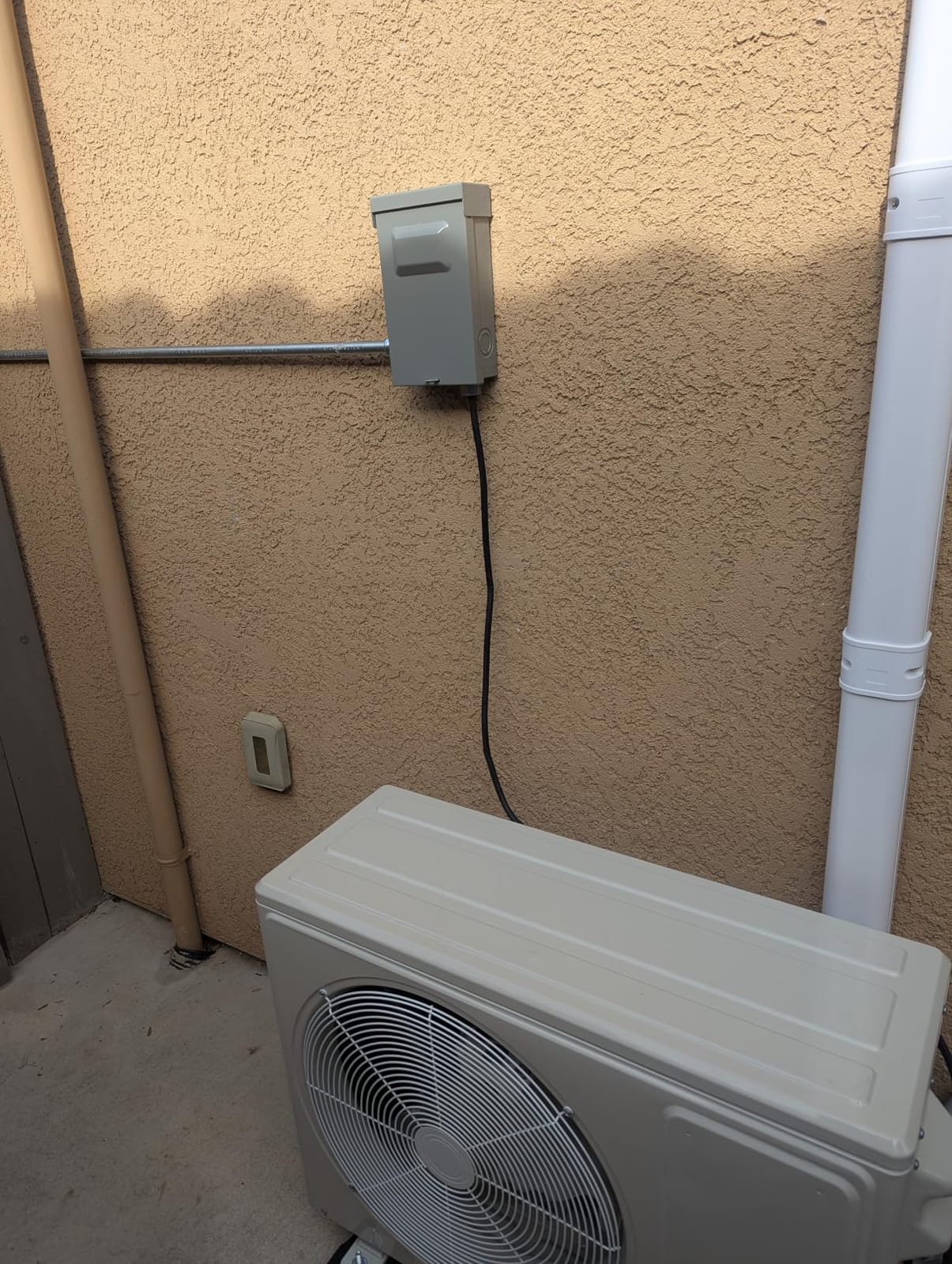
One listing detail needs care. The stated rated coverage is 450 square feet, while the feature list claims cooling up to 750 square feet. Read those as different claims: 450 is the conservative figure to plan against, and the 750 number appears to be a cooling-only maximum under favourable conditions. For a small home above 600 sq ft, treat the coverage as unproven.
The warranty is the real gap. Only a limited warranty is published, with no term detail at all, which is the thinnest documentation in this group alongside the Rellytech. If this unit becomes your primary heat source, that absence of published terms is a genuine risk to weigh against a 4.5 rating.
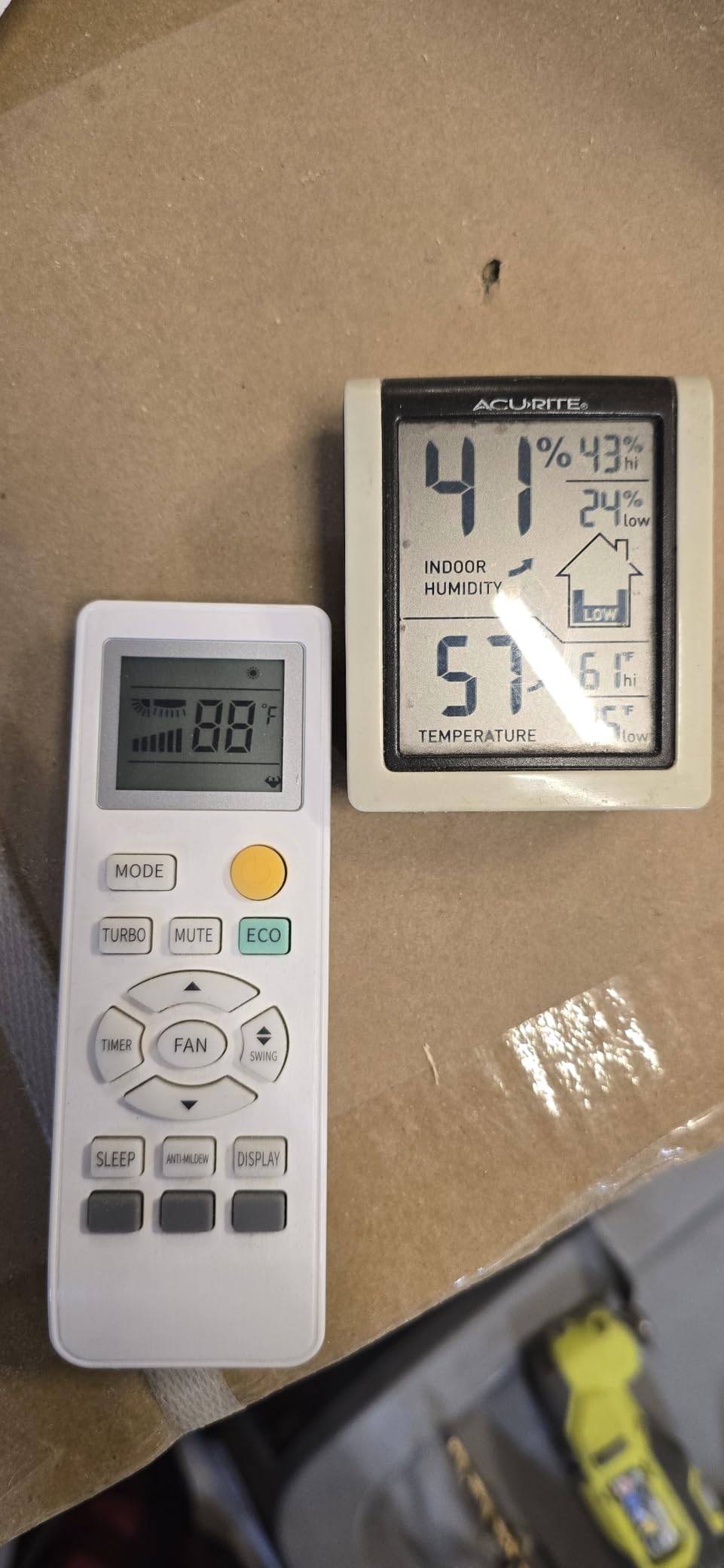
Is the Mountman the best 9,000 BTU unit for a bedroom?
On the evidence we can verify, it is the strongest rated, and the self-cleaning cycle plus automatic defrost reduce the two things that actually require attention in a compact installation. It runs on standard household power and holds a 4.5 average across 352 reviews, which is a real body of owner feedback rather than a handful of early returns.
It edges past the Senville LETO, which has a deeper review base and higher published efficiency, on the strength of the maintenance features and the higher average. The LETO remains our editor’s choice because a larger, longer review history is worth more over a fifteen year ownership than a 0.1 point rating difference.
Where it falls short
Remote-only control means no app and no voice assistant, which is increasingly a reason to rule a unit out if the rest of your home is smart. Paired with a compatible controller, it still integrates, and our heat pump thermostat guide covers which controllers work with wall-mounted ductless heads.
With no published warranty terms and a 450 sq ft rated coverage, pick the Mountman for a bedroom or a well-insulated small space, and go to a 12,000 BTU system with clearer warranty documentation for anything larger.
10. Temprium 9000 BTU Mini Split – Best Smart and Voice Control
Temprium 9000 BTU Mini Split Air Conditioner, 115V 22 SEER2 AC & Heat Pump
9000 BTU 0.75 ton
22 SEER2
450 sq ft
23 dB,115V,Alexa and Google Assistant
Pros
- 22 SEER2 is the highest efficiency at this capacity
- Very quiet at 23 dB
- Full WiFi app plus Alexa and Google Assistant
- Seven modes and seven fan speeds with 4D swing and Follow-Me
- Works from 5F to 122F
- Light 40.8 pound weight eases handling
Cons
- Smallest review base at only 153 reviews
- Only a one year manufacturer warranty
- 450 sq ft coverage is modest for open-plan spaces
The Temprium pairs the highest efficiency rating we saw at this capacity with the lowest noise figure, at 22 SEER2 and 23 dB. It is also the only unit in this group with genuinely complete smart control: a WiFi app, Alexa and Google Assistant voice support, seven operating modes, seven fan speeds, 4D auto swing, turbo mode and a Follow-Me function that reads the temperature at a handheld the way the DELLA’s I feel sensor does.
Capacity is 9,000 BTU cooling and 9,500 BTU heating on 115V with R-32 refrigerant, rated for 450 square feet and an operating range of 5F to 122F. A 133F high-temperature self-cleaning function and a washable filter keep maintenance simple, and at 40.8 pounds it is the easiest unit here for an installer to handle on a ladder or a tight staircase.
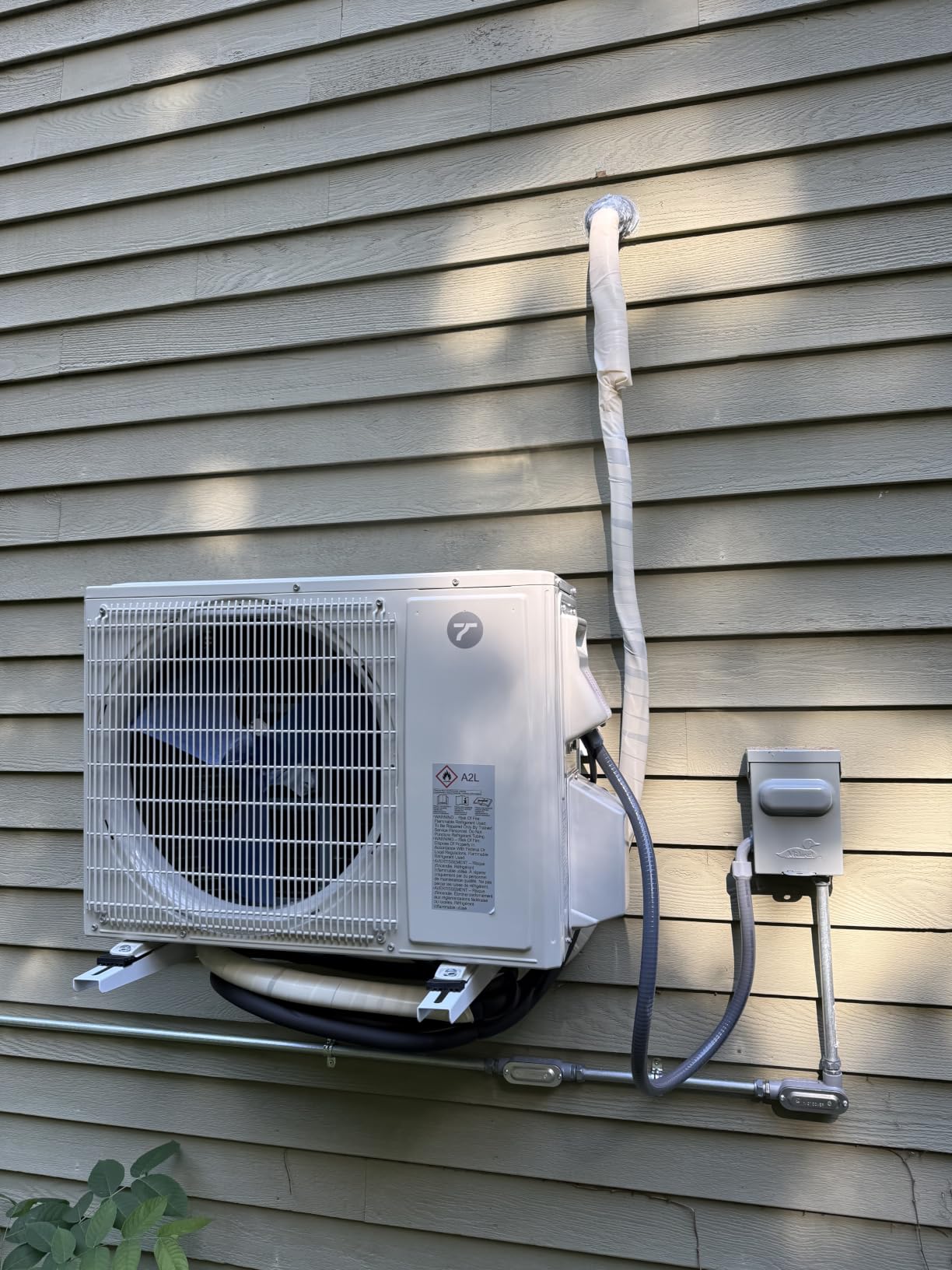
The trade-off is evidence. At 153 reviews, this is the smallest review base in the group by a wide margin, and it carries a 1 year manufacturer warranty. Efficiency claims are easy to publish and hard to verify from a listing page, so a unit with limited long-term owner feedback is a bigger unknown than the specification sheet suggests.
If you already live in a smart home and want the head to join your routines, the Temprium is the only pick here that does all of it natively without a third-party controller.
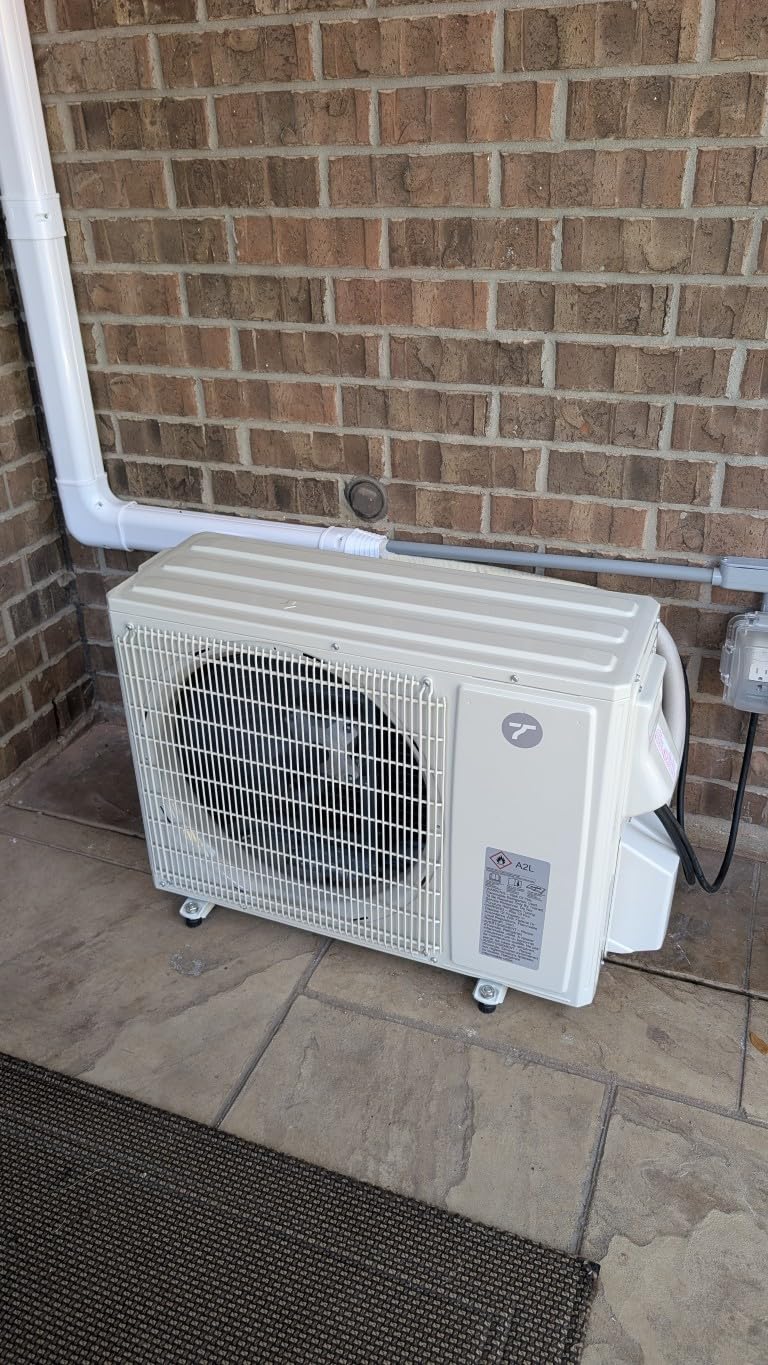
Is 22 SEER2 worth choosing over a 20 SEER2 unit?
At 9,000 BTU on 115V, yes, modestly. A 10 percent efficiency improvement on a small system that runs many hours a day compounds over fifteen years, and the temprium pairs it with the quietest indoor operation in the group. Just do not expect the savings to transform your energy bill in a small, well-insulated home where heating loads are modest to begin with.
The 23 dB rating is the more immediately felt difference. In a bedroom, a unit that quiet means you will actually leave it running at a comfortable temperature rather than cycling it off to save noise.
What the small review base means for you
A 4.3 average on 153 reviews tells you the unit has not generated a wave of complaints, which is genuinely useful information. It does not tell you how the compressor behaves in year ten, or how quickly a replacement part arrives when you need it. For a secondary room or a cottage you will not heat every day, that risk is small.
If this will be your primary heat source in a small home, weigh the 1 year warranty and the limited review history against the Senville LETO or the DELLA Vario, both of which have far deeper owner records and longer published terms.
What Size Heat Pump Does a Small Home Need?
A 9,000 BTU heat pump handles a room or a very small home up to roughly 450 square feet, a 12,000 BTU unit covers up to about 600 square feet of well-insulated living space, and 18,000 BTU is the point where you are looking at homes above 1,200 sq ft rather than small homes at all. The key conversion is simple: 12,000 BTU equals 1 ton, 9,000 BTU equals 0.75 ton, and 18,000 BTU equals 1.5 tons.
Those numbers are starting points, not answers. Two things move them: insulation and exposure. A well-insulated 600 sq ft cottage in a mild climate can be comfortable on 9,000 BTU, while a 600 sq ft 1920s home with single-pane windows facing west may need 12,000 BTU, and a third zone somewhere in between.
The distinction that gets lost in most sizing guides is between a small bedroom and a small whole home. A bedroom under 500 sq ft almost always wants 9,000 BTU. A small whole home between 600 and 1,200 sq ft is a different purchase, and a single 9,000 BTU head will leave the far end of an open-plan space uncomfortable. That is when a second head, or a 12,000 BTU unit placed centrally, becomes the right answer, and a commenter in r/heatpumps framed the same question the other way: mini splits are more efficient than a central system and cost far less to run when you only need a few heads.
A load calculation, known in the trade as Manual J, overrides any chart you find online, including ours. It accounts for your actual wall construction, window area, orientation and infiltration, and a competent installer should perform one before quoting. If a seller skips it, that is a warning sign rather than a shortcut.
Is It Better to Undersize or Oversize a Mini Split?
Slightly undersize is far better than oversize. An oversized unit delivers cold or hot air in short bursts, cycles on and off, runs its compressor harder for the same comfort, and drives up your energy use. Short-cycling is the single most common self-inflicted error in this category, and forums repeatedly warn about it for good reason.
Undersizing has its own limit. A unit that cannot reach set point on the coldest day of the year will run continuously, which means higher bills and a much harder working life for the compressor. The correct target is a system that meets the calculated load with a modest margin, not a system picked to cover the worst-case overshoot.
This is where the sizing anxiety in small homes does real damage. Buyers see 18,000 and 24,000 BTU options because those dominate roundups written for 2,000 sq ft houses, and they assume their 700 sq ft cottage needs one. For most small homes the correct answer sits at 9,000 or 12,000 BTU, which is exactly why every unit in this roundup is at that capacity.
What SEER2 and HSPF2 Ratings Actually Cost You
SEER2 measures cooling efficiency and HSPF2 measures heating efficiency, both on a scale where higher is better. Roughly speaking, a 20 SEER2 unit uses about 10 percent less electricity for the same cooling output than an 18 SEER2 unit, and HSPF2 is the number that determines your winter cost, which is why several units in this roundup do not publish it at all.
For a small home, the efficiency question is less about cutting a large bill and more about how hard you run the machine. A small home is cheap to heat, so the absolute savings are modest, but an efficient unit also cycles less, which extends compressor life. Our practical thresholds: do not go below 19 SEER2, treat 20 to 21 as the sensible default, and prefer 22 or above if the system will be your primary heat for more than a decade.
For heating, insist on an HSPF2 figure. The Rellytech publishes 8.5 and the DELLA publishes 9.5, while several cheaper units leave you to guess. If your local climate pushes you toward cold-climate operation, treat 10 HSPF2 as the floor.
Cold Climate Small Homes, Dual Fuel and Backup Heat Strips
Most 9,000 and 12,000 BTU mini splits are rated for heating down to 5F, with the DELLA Vario extending to -4F. Below those temperatures output falls, and in Zone 5, 6 and 7 climates a small home needs a plan for the nights when the unit is not the answer.
Two approaches are common. Dual fuel pairs the heat pump with a gas furnace that takes over below a set temperature, which is efficient and reliable but reintroduces the furnace and its flue. A backup heat strip in the indoor unit is simpler and uses electric resistance heat, which is expensive to run and should be treated as an emergency rather than a heating strategy.
For a small home specifically, the more useful move is often to run two smaller heads in series rather than one oversized cold-climate unit, because they can share the load and back each other up. Owners in cold climates on r/heatpumps worry specifically about frosting and about how a small unit copes below freezing, and a properly sized cold-climate-rated system with regular defrost is the direct answer to that worry.
Daikin vs Mitsubishi and the Brands We Approach Carefully
Neither Daikin nor Mitsubishi appears in this roundup, and that is worth explaining rather than hiding. Both are premium tier systems typically sold through HVAC distributors rather than through general marketplaces, so they are not represented in the product data we analysed. If you are weighing the two, the consensus among owners in r/heatpumps is that Mitsubishi, Fujitsu and Daikin sit at the top of the reliability benchmark, with Midea and Gree described as perfectly fine but dependent on local service and parts support.
For a small home the deciding factor is rarely the spec sheet. It is whether a technician in your area stocks parts for the brand, whether your utility rebates it, and whether the distributor is still there in fifteen years. That last point is what the sizing-advice forums keep circling: service and parts depend heavily on who rebates the equipment, and rebate programs change.
The general caution we would give is not about any specific brand name but about documentation. The units we flagged above, such as the Rellytech with its one year versus eight year contradiction and the YITAHOME with its inconsistent parts terms, are not bad machines. They are simply harder to support. Ask every seller the same three questions in writing: what is the compressor warranty term, what is the parts term, and is labour covered.
How to Vet a Ductless Installer and Check the Line Set
Ask for their HVAC licence number and confirm it registers your warranty. Several units here, including the Cooper and Hunter MIA, require the installing licence number for warranty registration, so a paper-only install can void coverage on a fifteen year asset.
Ask them to perform and document the leak test and the vacuum. Several owners of pre-charged kits reported that the included documentation skipped the leak-testing and charging step, which is a documentation problem rather than a hardware one, but it still needs a technician who knows to do it.
Ask about line set length before you buy, not after. Most kits here include 16 or 16.4 ft of pre-charged line, which covers a standard bedroom run but not a second floor or a detached structure. Extending a pre-charged line requires a technician to recover refrigerant, extend, and recharge, which is why line set length limits are regularly discovered after purchase.
Finally, ask what the drain line route is. A wall-mounted head can drip condensate if the drain line is run without a trap or slope, and one owner of the Cooper and Hunter reported a preinstalled clamp that loosened and leaked water indoors.
While you are planning, it is also worth checking how your other equipment will be scheduled around the new system. Our pool heat pump guide covers the seasonal load question if your small home includes a separate pool house or studio.
Frequently Asked Questions
What type of heat pump is best for small spaces?
A ductless mini split is the right answer for almost every small home. One outdoor inverter condensing unit pairs with a compact wall-mounted indoor head to heat and cool 400 to 750 square feet without ductwork. A 9,000 BTU unit is 0.75 ton and suits a room or a home under 450 sq ft, while a 12,000 BTU unit is 1 ton and covers up to about 600 sq ft of insulated living space.
How many square feet will a 12,000 BTU heat pump do?
A 12,000 BTU heat pump, which equals 1 ton, comfortably conditions about 600 square feet of well-insulated living space and can stretch to 750 square feet in favourable conditions with good insulation, moderate sun exposure and no unusual internal loads. In a small open-plan home, one 12,000 BTU head placed centrally often beats two smaller heads. Confirm with a Manual J load calculation before you buy.
Is it better to undersize or oversize a mini split?
Slightly undersize is much better than oversize. An oversized unit delivers air in short bursts, cycles on and off, works its compressor harder for the same comfort and raises your energy use. Undersizing has a limit too, since a unit that cannot reach set point on the coldest day runs continuously. The right target meets your calculated load with a modest margin, so 9,000 or 12,000 BTU is the correct range for most small homes.
What mini split brands should you stay away from?
Rather than naming brands to avoid, we judge documentation and local support. Be cautious with any seller that will not confirm the compressor and parts warranty terms in writing, and with units whose listing shows contradictory warranty figures. Check that a technician in your area will actually service the brand and that your utility rebates it, because parts availability depends heavily on who rebates the equipment locally.
Which mini split is better, Daikin or Mitsubishi?
Both sit in the premium tier alongside Fujitsu, and owner consensus in HVAC forums treats all three as the reliability benchmark for ductless systems. For a small home the decision usually comes down to local service and parts support rather than specifications, since both are sold through HVAC distributors rather than general marketplaces. Check which brand your local technicians and utility rebate programs support before choosing.
Final Verdict by Scenario
For most small homes the answer is a 12,000 BTU single-zone ductless mini split, and for bedrooms, studios and ADUs under 450 sq ft it is a 9,000 BTU unit. That is the short version of everything above, and it is why every one of the ten heat pumps for small homes in this guide sits inside that capacity band rather than the 18,000 and 24,000 BTU sizes that dominate roundups written for much larger houses.
Our editor’s choice, the Senville LETO 9000 BTU, is the safest overall buy: 21.5 SEER2 on standard 110V power, 25 dB operation, a 16 ft pre-charged line set and the deepest owner record of any unit here. Choose the DELLA Vario 12000 BTU if efficiency and heating to -4F matter most, the COSTWAY 12000 BTU if you want 750 sq ft of stated coverage and the longest warranty in the group, and the Temprium 9000 BTU if a fully integrated smart home matters more than warranty length.
Whatever you choose, get a load calculation, get the warranty terms in writing, and confirm that a local technician will service the brand. Those three steps prevent almost every complaint we read about small-home heat pumps.
For related heating and cooling guides, see our picks for the best mini split heat pumps for homes and, if your small property includes water features, the pond pump guide.