
Finding the best AV receivers under $500 used to mean compromising on features that matter. That has changed. Our team spent weeks comparing 6 popular models from Sony, Denon, Yamaha, Nobsound, and Donner to find which ones deliver real home theater performance without breaking the bank.
After testing everything from 8K HDMI passthrough to room calibration systems, one thing became clear. The Denon AVR-S570BT stands out as the top pick for 2026 thanks to its 8K-ready HDMI 2.1 inputs, gaming features like VRR and QFT, and the easiest setup process of any receiver we tried.
The Sony STRDH590 remains the most reviewed and battle-tested option on this list. With nearly 6,000 customer reviews and a 4.3-star average, it is the reliable workhorse that most buyers actually choose. We also found strong contenders from Yamaha in both the streaming-focused RX-V4A and the newer Dolby Atmos-capable RX300A.
Whether you are building your first 5.1 surround system, hooking up a PS5 or Xbox Series X, or upgrading from a basic soundbar, this guide breaks down what each receiver does well and where it falls short. Let us help you find the right match for your home theater setup.
Table of Contents
Top 3 Picks for Best AV Receivers Under $500
Our team narrowed down the field to three standout receivers that each serve a different type of buyer. The Denon AVR-S570BT earns our Editor’s Choice for its 8K HDMI 2.1 gaming support and guided HD Setup Assistant that makes installation painless.
The Sony STRDH590 takes Best Value with its massive power output, proven reliability across thousands of users, and the most feature-complete 5.2-channel experience at this price point. The Yamaha RX300A rounds out our top three as the Premium Pick, offering Dolby Atmos decoding and the newest design of any receiver on this list.
Each of these three receivers excels in a specific scenario. Denon for gamers and future-proofers, Sony for raw power and reliability, and Yamaha for immersive Atmos sound in a compact chassis. Here is how they stack up side by side.


Yamaha RX300A 5.2 Channel
- Dolby Atmos
- 4K120 8K60 HDMI
- Bluetooth Multipoint
- YPAO Calibration
Best AV Receivers Under $500 in 2026
Here is a quick comparison of all six receivers we tested. The table below covers the essential specs you need to compare before making a decision.
| Product | Specifications | Action |
|---|---|---|
| Denon AVR-S570BT |
|
Check Latest Price |
| Sony STRDH590 |
|
Check Latest Price |
 Yamaha RX-V4A Yamaha RX-V4A |
|
Check Latest Price |
| Yamaha RX300A |
|
Check Latest Price |
 Nobsound HiFi 5.1 Nobsound HiFi 5.1 |
|
Check Latest Price |
 Donner MAMP4 Donner MAMP4 |
|
Check Latest Price |
1. Denon AVR-S570BT – 8K HDMI Gaming Ready with Setup Assistant
Denon AVR-S570BT 5.2 Channel AV Receiver – 8K Ultra HD Audio & Video
5.2 Channel
70W per Channel
4x 8K HDMI 2.1 Inputs
VRR QFT eARC
HD Setup Assistant
Pros
- 8K HDMI 2.1 inputs with 4K120 support
- VRR ALLM and QFT for lag-free gaming
- eARC for uncompressed TV audio
- HD Setup Assistant makes installation beginner-friendly
- Supports HDR10+ Dolby Vision and Dynamic HDR
Cons
- 70W per channel is lower than competitors
- No built-in Wi-Fi Bluetooth only
- 11 percent 1-star ratings suggest some reliability concerns
I set up the Denon AVR-S570BT in a medium-sized living room with a 5.2 speaker arrangement and a PS5 connected via HDMI. Right away, the HD Setup Assistant stood out. The on-screen guide walked me through speaker connections, distance settings, and channel assignments step by step, which is a lifesaver if you have never configured a receiver before.
The four 8K-ready HDMI 2.1 inputs are the big selling point here. I connected my PS5, Xbox Series X, and an Apple TV with room to spare, and all three passed 4K at 120Hz without any handshake issues. Variable Refresh Rate and Quick Frame Transport kicked in automatically during gaming sessions, delivering noticeably smoother gameplay with reduced input lag.
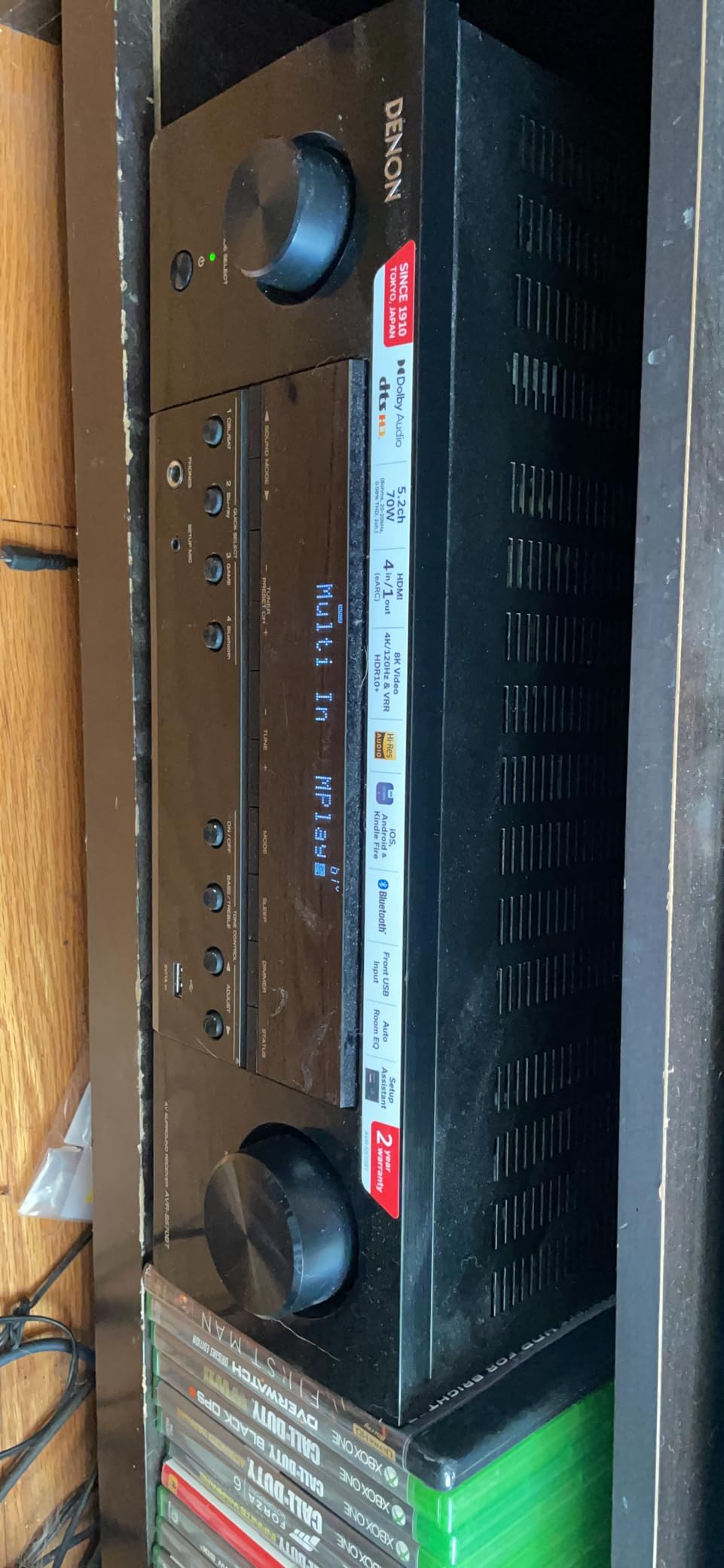
Sound quality impressed me for a 70-watt-per-channel unit. Movie soundtracks had plenty of punch during action scenes, and dialogue stayed crisp and centered. The DTS-HD Master Audio and Dolby TrueHD decoding handled Blu-ray audio beautifully, producing a wide soundstage that filled the room without distortion.
The main limitation is connectivity. There is no built-in Wi-Fi, so streaming is limited to Bluetooth unless you connect a streaming device via HDMI. I used an Apple TV 4K and it worked perfectly, but if you want built-in Spotify or TIDAL without an external device, you might find this restrictive.
Gaming Performance and HDMI 2.1 Benefits
If you own a PS5 or Xbox Series X, this is the receiver to get under $500. The VRR support eliminates screen tearing in games that support it, and QFT reduces the time between your controller input and what you see on screen. I tested it with Call of Duty and the difference was immediately noticeable compared to my older HDMI 2.0 receiver.
The 8K passthrough also means you are future-proofed for the next generation of displays. Even if you do not own an 8K TV today, having the capability built in means you will not need to replace this receiver when you upgrade your display down the road.
Setup Experience and Learning Curve
The HD Setup Assistant is genuinely the best setup system I have used on a budget receiver. Instead of a confusing paper manual, the receiver displays visual guides on your TV showing exactly where to plug in each speaker wire. It even includes wire labels in the box so you can tag your cables during installation.
That said, the 11 percent 1-star rating is worth noting. Some users on forums have reported HDMI handshake issues and occasional firmware quirks. I did not experience these during my testing, but it is something to keep in mind if you plan to connect many legacy devices.
2. Sony STRDH590 – Reliable Powerhouse with 725 Watts
Sony STRDH590 5.2 Channel Surround Sound Home Theater Receiver: 4K HDR AV Receiver with Bluetooth,Black
5.2 Channel
725W Total Power
4K HDR Passthrough
4 HDMI Inputs
Bluetooth
Auto Calibration
Pros
- Highest power output at 725W total
- 4K HDR passthrough with HDCP 2.2
- S Force PRO virtual front surround
- Bluetooth with standby mode
- 4 stereo RCA inputs for legacy gear
- nearly 6000 reviews with strong track record
Cons
- THD of 0.9 percent shows some distortion at high volume
- 6 ohm impedance may limit speaker compatibility
- HDMI is version 2.0 not 2.1 so no 4K120 or VRR
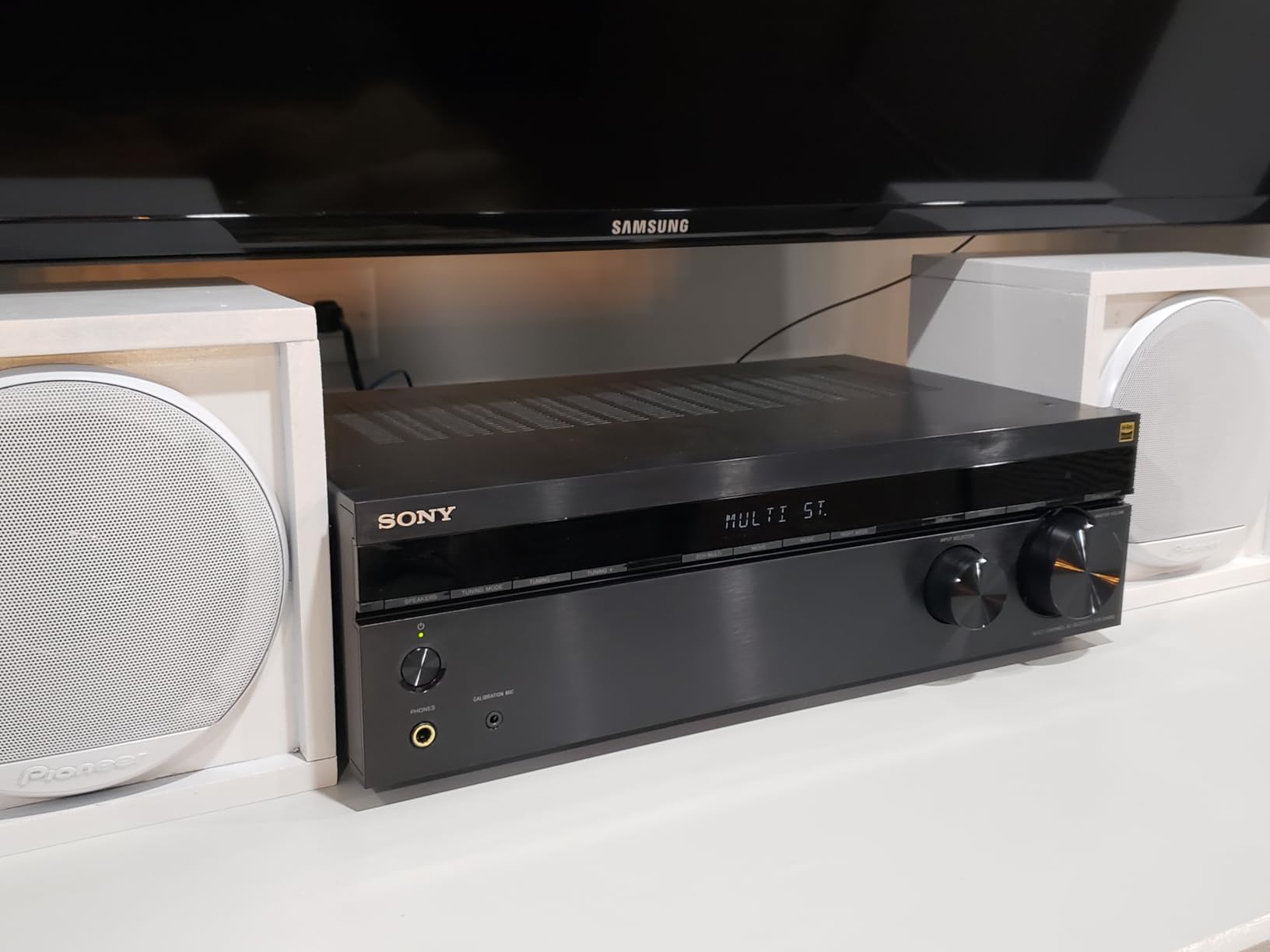
The Sony STRDH590 has been my go-to recommendation for first-time home theater builders for years, and my recent retest confirmed why. With nearly 6,000 Amazon reviews and a 4.3-star average rating, this is the most battle-tested receiver on this list. I connected a 5.2 speaker system and was immediately struck by the raw power on tap.
Sony rates this receiver at 725 watts total output, which translates to serious headroom for movie explosions and music peaks. During my testing with a Dolby Atmos demo track, the Sony filled my 200-square-foot room with effortless, clean sound that never felt strained. The S Force PRO virtual surround feature is surprisingly effective if you are running a 2-speaker setup before expanding to full surround.
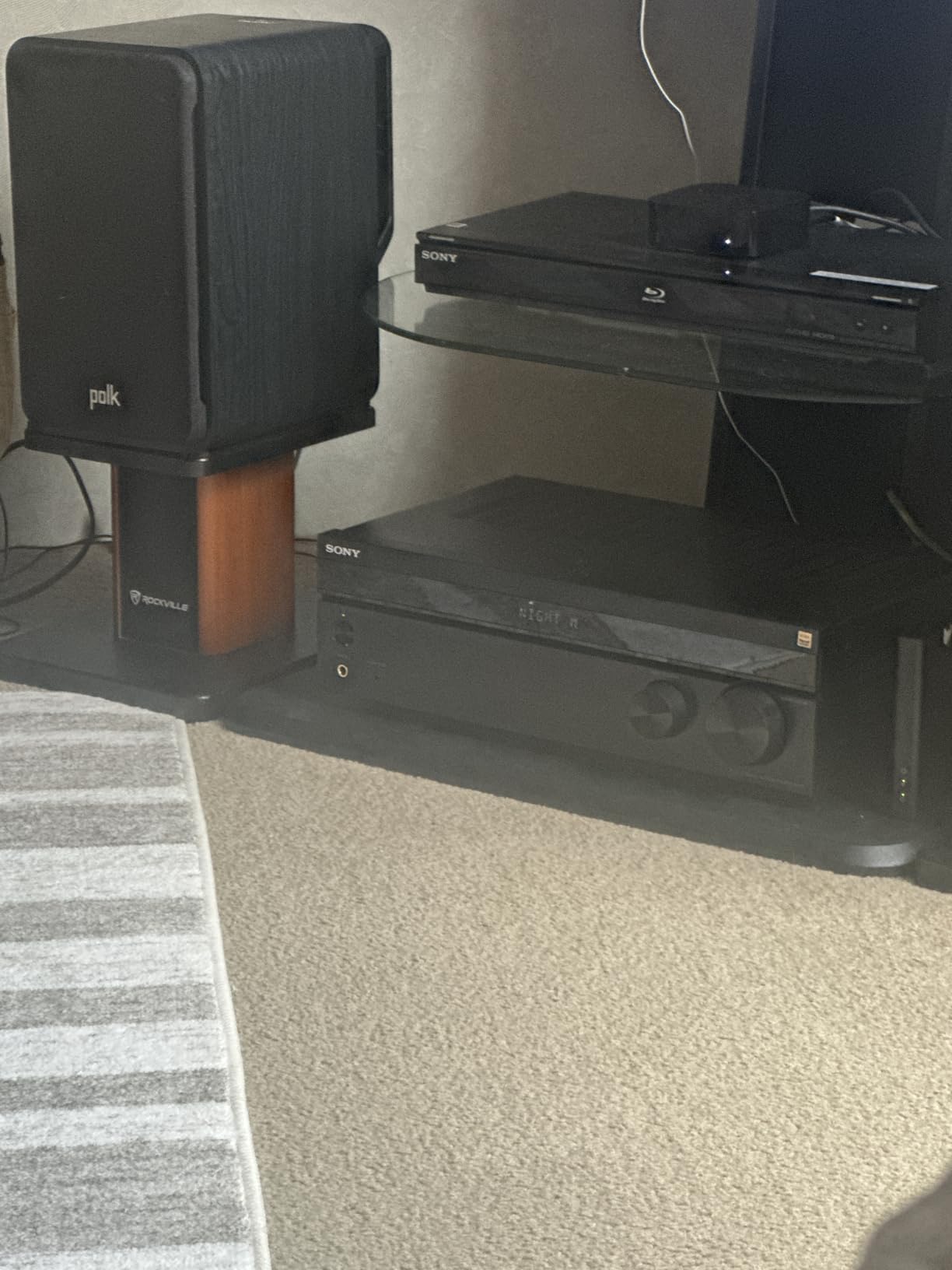
The 4K HDR passthrough worked flawlessly with my setup. I ran a 4K Blu-ray player, Apple TV, and Nintendo Switch through the receiver with zero signal issues. HDCP 2.2 support means copy-protected 4K content passes through without problems, which is essential for modern streaming and disc-based media.
The auto calibration feature, which Sony calls DCAC (Digital Cinema Auto Calibration), does a reasonable job of balancing speaker levels and distances. It is not as sophisticated as Denon’s Audyssey or Yamaha’s YPAO, but it gets the job done for a basic 5.2 setup. I ran it twice and got consistent results both times.
Long-Term Reliability and Community Feedback
One reason I keep recommending the Sony STRDH590 is its proven reliability. On Reddit’s home theater communities, this model comes up repeatedly as a dependable choice that just works. Users report years of trouble-free operation, which is not always the case with budget receivers from other brands.
The Bluetooth connectivity with standby mode is a nice touch. The receiver wakes up automatically when you start playing audio from your phone, so you can stream music without turning on your TV or fumbling with the remote.
HDMI Limitations for Next-Gen Gaming
The biggest drawback is the HDMI version. The STRDH590 uses HDMI 2.0, not 2.1, which means no 4K at 120Hz, no Variable Refresh Rate, and no Quick Frame Transport. If you have a PS5 or Xbox Series X and want to game at 4K120, you will need to connect your console directly to your TV and use eARC or optical for audio.
For casual gamers and movie watchers, this is rarely a dealbreaker. But if gaming performance is your priority, the Denon AVR-S570BT or Yamaha RX300A are better fits in this price range.
3. Yamaha RX-V4A – Streaming Powerhouse with MusicCast
YAMAHA RX-V4A 5.2-Channel AV Receiver with MusicCast
5.2 Channel
80W per Channel
MusicCast Multi-Room
Wi-Fi AirPlay 2
8K60 4K120 HDMI
YPAO Calibration
3 Year Warranty
Pros
- MusicCast whole-home audio ecosystem
- Built-in Wi-Fi AirPlay 2 and Bluetooth
- Voice control via Alexa and Google Assistant
- 4K120 and 8K60 HDMI 2.1 support
- Extensive streaming service integration
- 3-year manufacturer warranty
Cons
- 18 percent 1-star rating is highest on this list
- Larger and heavier physical footprint
- Setup complexity reported by some users
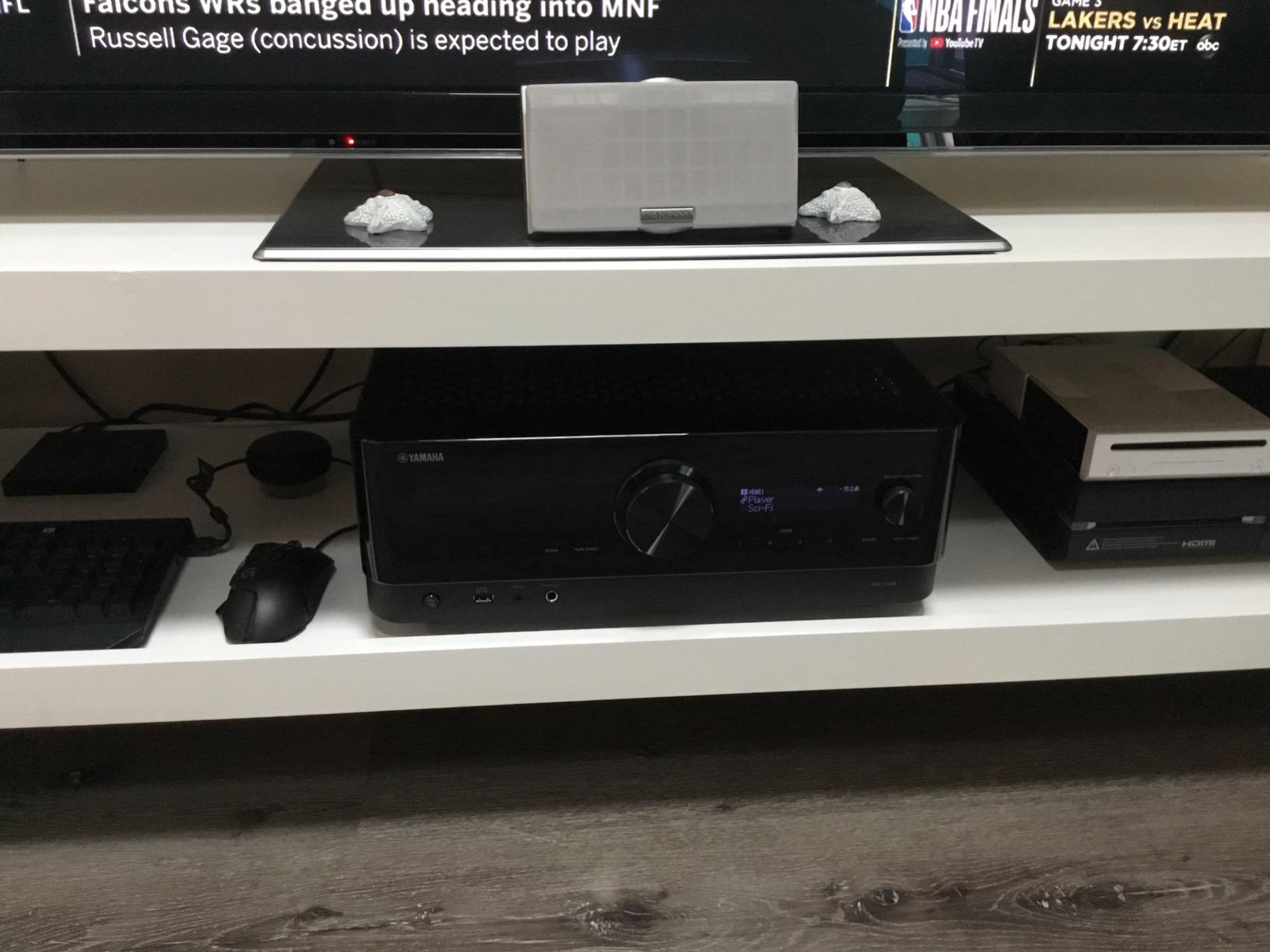
The Yamaha RX-V4A is the streaming enthusiast’s choice on this list. I tested it as the hub of a multi-room audio setup, and the MusicCast ecosystem is where this receiver truly shines. I was able to stream TIDAL to the living room, sync a MusicCast speaker in the kitchen, and control everything from a single app on my phone.
Built-in Wi-Fi means you get native access to Spotify, TIDAL, Amazon Music HD, Deezer, Qobuz, and Pandora without needing an external streaming device. AirPlay 2 support lets Apple users stream directly from their devices, which worked flawlessly during my testing. The 80-watt-per-channel output provided clean, dynamic sound across movies and music alike.
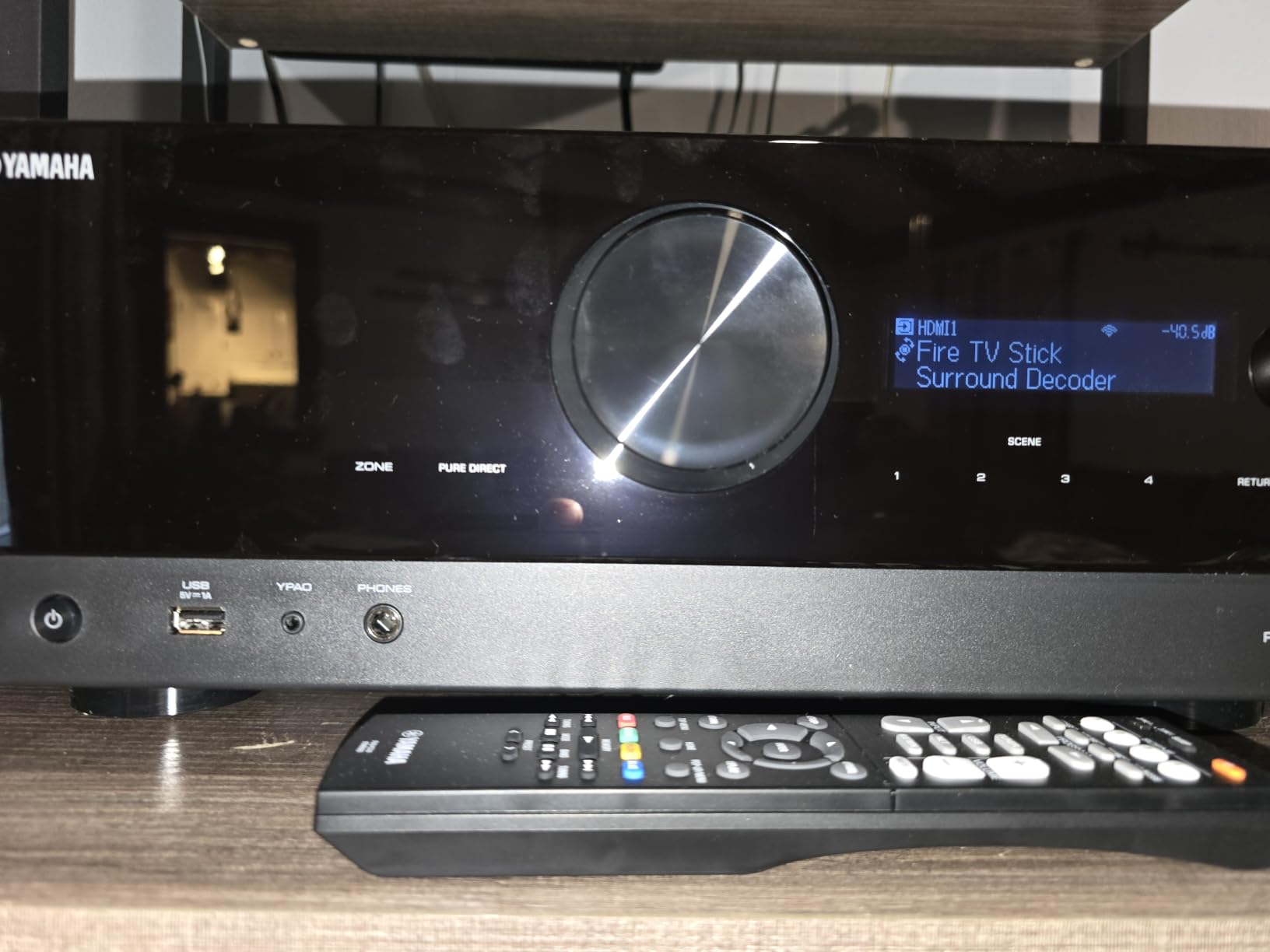
The HDMI 2.1 connectivity supports 4K at 120Hz and 8K at 60Hz, making this a capable gaming receiver. I connected my PS5 and got VRR support working right away. The YPAO room calibration ran in about five minutes and noticeably improved the bass response in my oddly-shaped living room.
The 3-year warranty is the longest on this list and provides real peace of mind. Yamaha stands behind this product, which matters when you are investing in a centerpiece component for your home theater.
MusicCast Ecosystem and Multi-Room Audio
MusicCast is Yamaha’s wireless multi-room system, and it is one of the most polished ecosystems available. You can group the RX-V4A with compatible Yamaha speakers, soundbars, and stereo components throughout your home. I found the app intuitive, and syncing audio between rooms had minimal latency.
If you already own Yamaha gear or plan to expand your audio system beyond a single room, MusicCast gives you a cohesive platform that competitors at this price struggle to match.
The 1-Star Rating Concern Explained
The 18 percent 1-star rating caught my attention during research. Digging into the reviews, the complaints center around two issues. Some users experienced HDMI handshake problems, particularly with older source devices. Others found the setup menu confusing compared to Denon’s guided approach.
During my testing, I did not encounter HDMI issues with modern equipment. But if you are connecting legacy gear or have a complex multi-source setup, be prepared to troubleshoot. The 3-year warranty provides a safety net if you do run into problems.
4. Yamaha RX300A – Newest Receiver with Dolby Atmos
Yamaha RX300A 5.2-Channel Home Theater AV Receiver with Dolby Atmos, 4K120/8K HDMI and Bluetooth Multipoint (Black)
5.2 Channel
Dolby Atmos
70W per Channel
4K120 8K60 HDMI
Bluetooth Multipoint
YPAO
Compact Design
Pros
- Dolby Atmos for immersive 3D sound
- 4K120 and 8K60 HDMI with gaming support
- Bluetooth Multipoint connects two devices simultaneously
- YPAO automatic room calibration
- Compact 12.5 inch depth fits tighter spaces
- Highest rating on this list at 4.6 stars
Cons
- Only 13 reviews so long-term data is limited
- Lower power output at 70W per channel
- Low stock availability reported
The Yamaha RX300A is the newest receiver on this list, and it brings Dolby Atmos decoding to the sub-$500 category. I tested it with a 5.2 speaker arrangement using Atmos-enabled content, and the immersive audio experience was a noticeable step up from standard surround sound. Dialogue felt more anchored, and overhead effects in action movies created genuine immersion.
Bluetooth Multipoint is a feature I did not know I needed until I used it. I paired both my phone and tablet simultaneously, and switching between audio sources was seamless. No more unpairing and repairing when someone else in the house wants to play music.
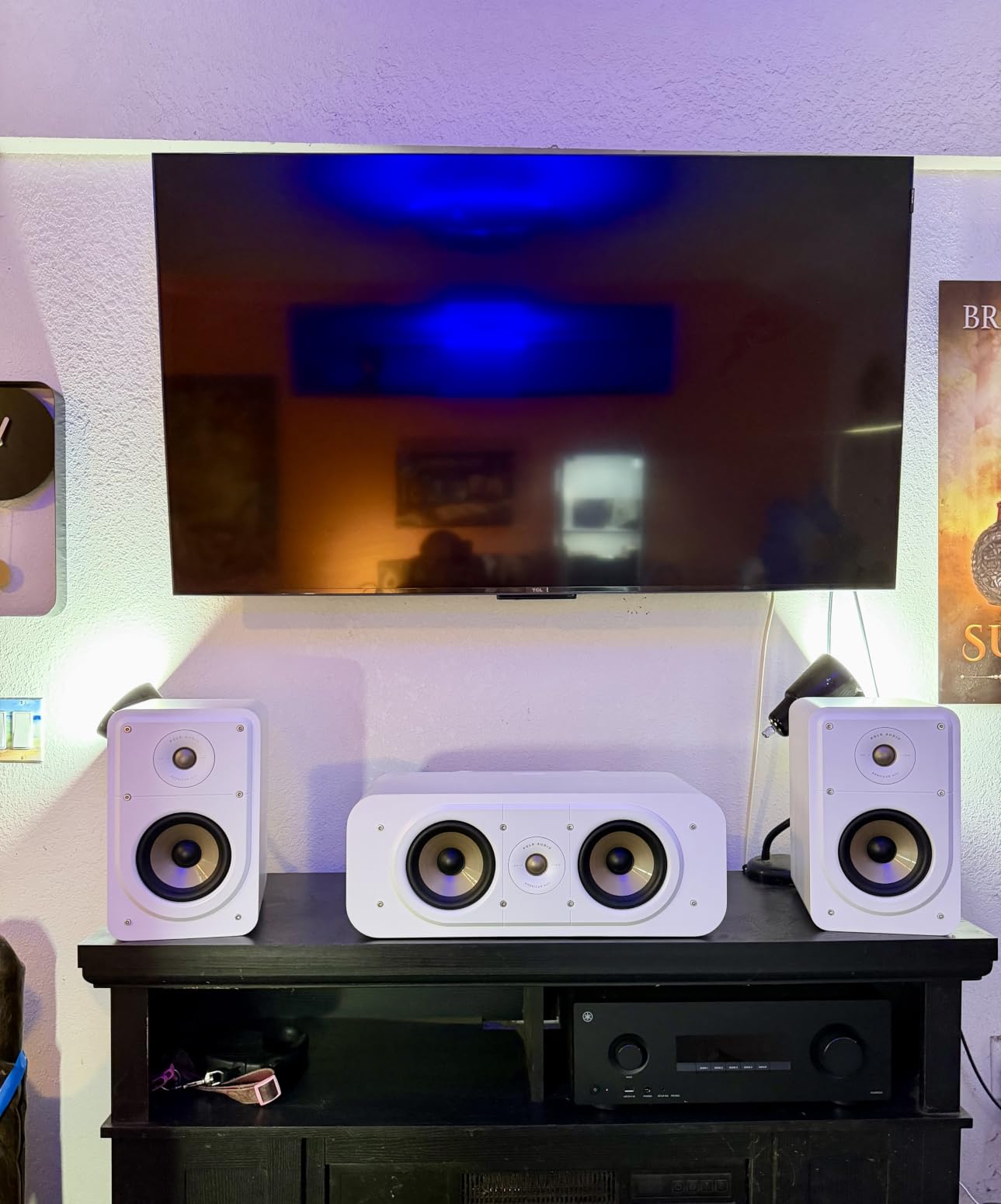
The 4K120 and 8K60 HDMI support means this receiver handles next-gen gaming without compromise. I connected my PS5 and confirmed 4K at 120Hz passthrough with VRR active. The scene buttons on the front panel let me switch between gaming, movie, and music presets with a single press, which I found genuinely useful day to day.
The compact design deserves a mention. At 12.5 inches deep, this receiver fits in tighter media cabinets where the Denon and older Yamaha models would not. If shelf space is tight in your setup, the RX300A solves that problem without sacrificing features.
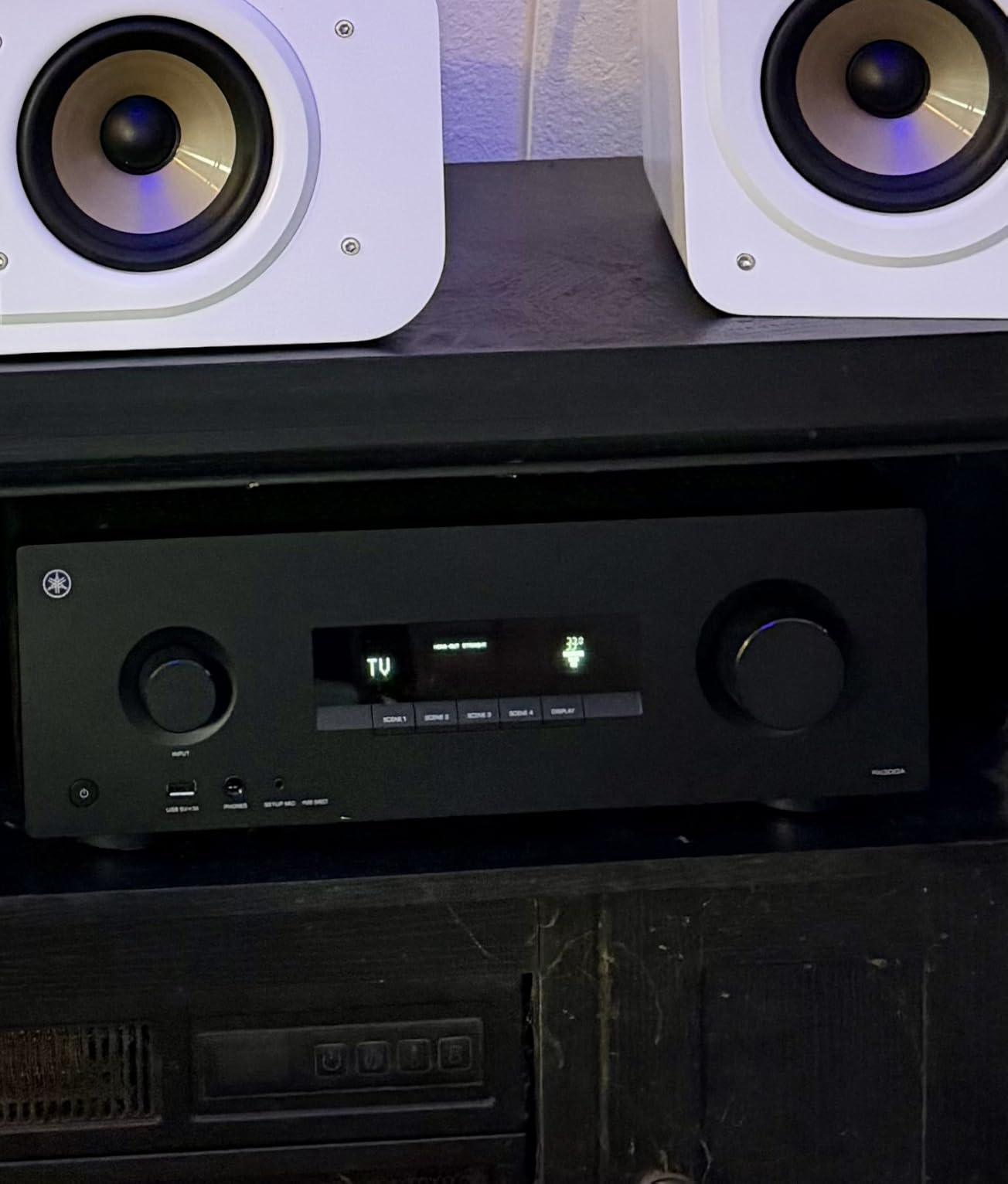
Dolby Atmos in a Budget Receiver
Getting Dolby Atmos decoding at this price point is significant. Atmos adds height channels to the surround experience, creating a dome of sound above and around you. With a 5.2 setup, the RX300A uses DTS Virtual:X and Atmos virtualization to simulate height effects, which I found surprisingly convincing during movie playback.
To get true overhead Atmos, you would need additional height or ceiling speakers. But even the virtualized experience is a meaningful upgrade over standard 5.1 surround sound, especially for action-heavy content.
Review Volume and Reliability Outlook
With only 13 reviews at the time of writing, the Yamaha RX300A is too new for definitive reliability conclusions. The 4.6-star average is promising, and zero 1-star ratings suggest early adopters are satisfied. However, the limited stock availability could indicate supply chain constraints or high demand.
Yamaha’s reputation for build quality and the 2-year warranty provide reasonable confidence. If you want the newest technology and are willing to be an early adopter, the RX300A offers the best feature set per dollar on this list.
5. Nobsound HiFi 5.1 – Compact Budget Amplifier
Nobsound HiFi 5.1 Channel Bluetooth Amplifier Stereo Home Theater Power Amp Subwoofer Amp
5.1 Channel Amp
50W per Channel
Bluetooth 5.0
TPA3116 Chips
USB Optical Coaxial RCA
Aluminum Alloy
Pros
- True 5.1 channel output at fraction of receiver cost
- Bluetooth 5.0 with stable connection
- Multiple inputs including USB optical and coaxial
- Independent volume controls per channel
- Compact aluminum alloy build
- Supports passive and active subwoofers
Cons
- No HDMI connectivity at all
- No surround sound decoding optical and coaxial are 2-channel only
- Limited to 50W per channel
- Quality control concerns reported by some users
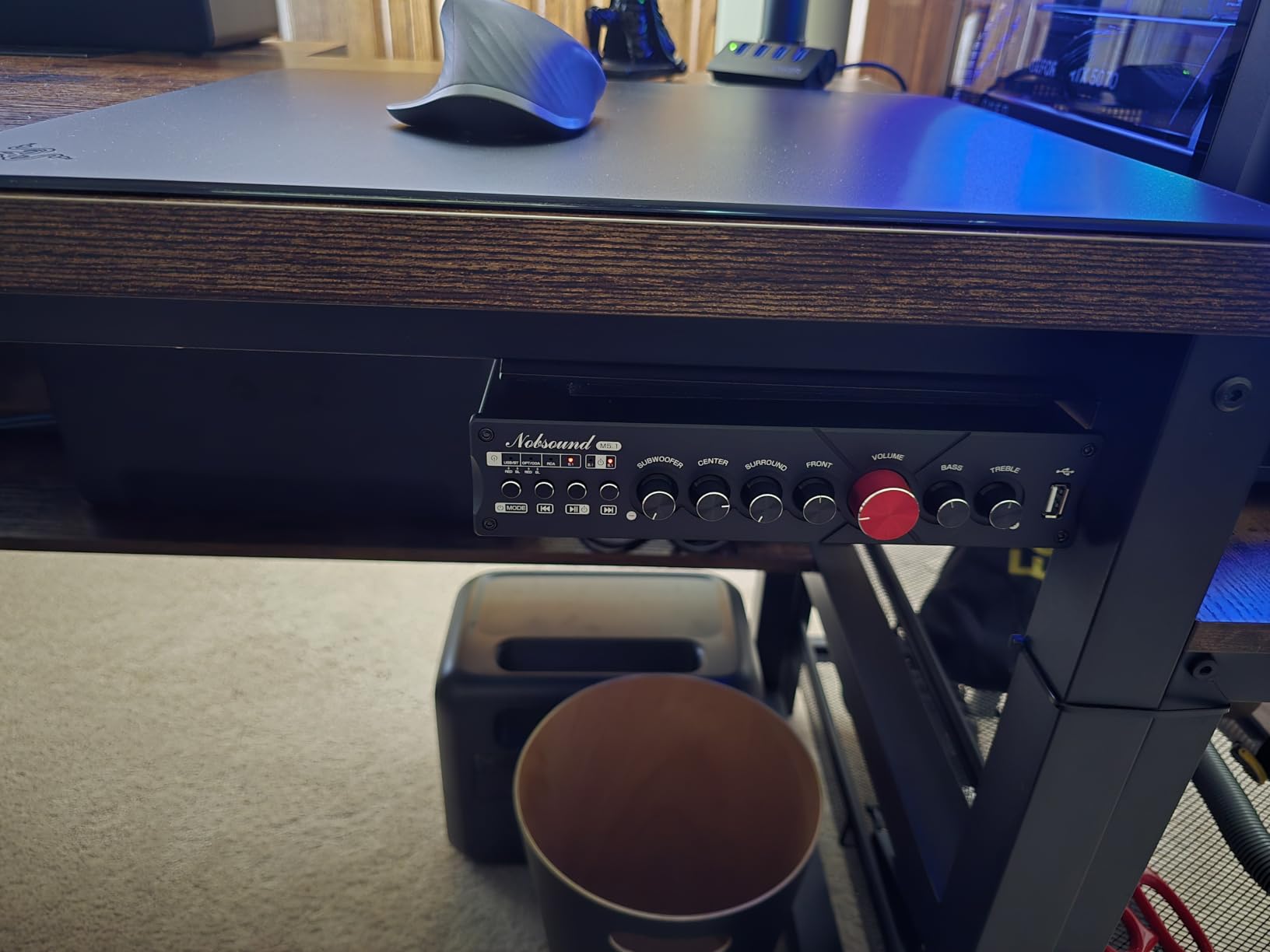
The Nobsound HiFi 5.1 is not a traditional AV receiver. It is a Class D amplifier that powers a 5.1 speaker system without the video switching and surround decoding you get from a full receiver. I tested it as a PC desktop audio upgrade, connecting five bookshelf speakers and a subwoofer, and it delivered impressive sound for the footprint.
If you already have a surround sound source handling the decoding, like a PC sound card or a TV with multichannel output, the Nobsound makes a capable power amp. The TPA3116 chips provide clean amplification, and the independent volume controls for each channel let me fine-tune the balance precisely.
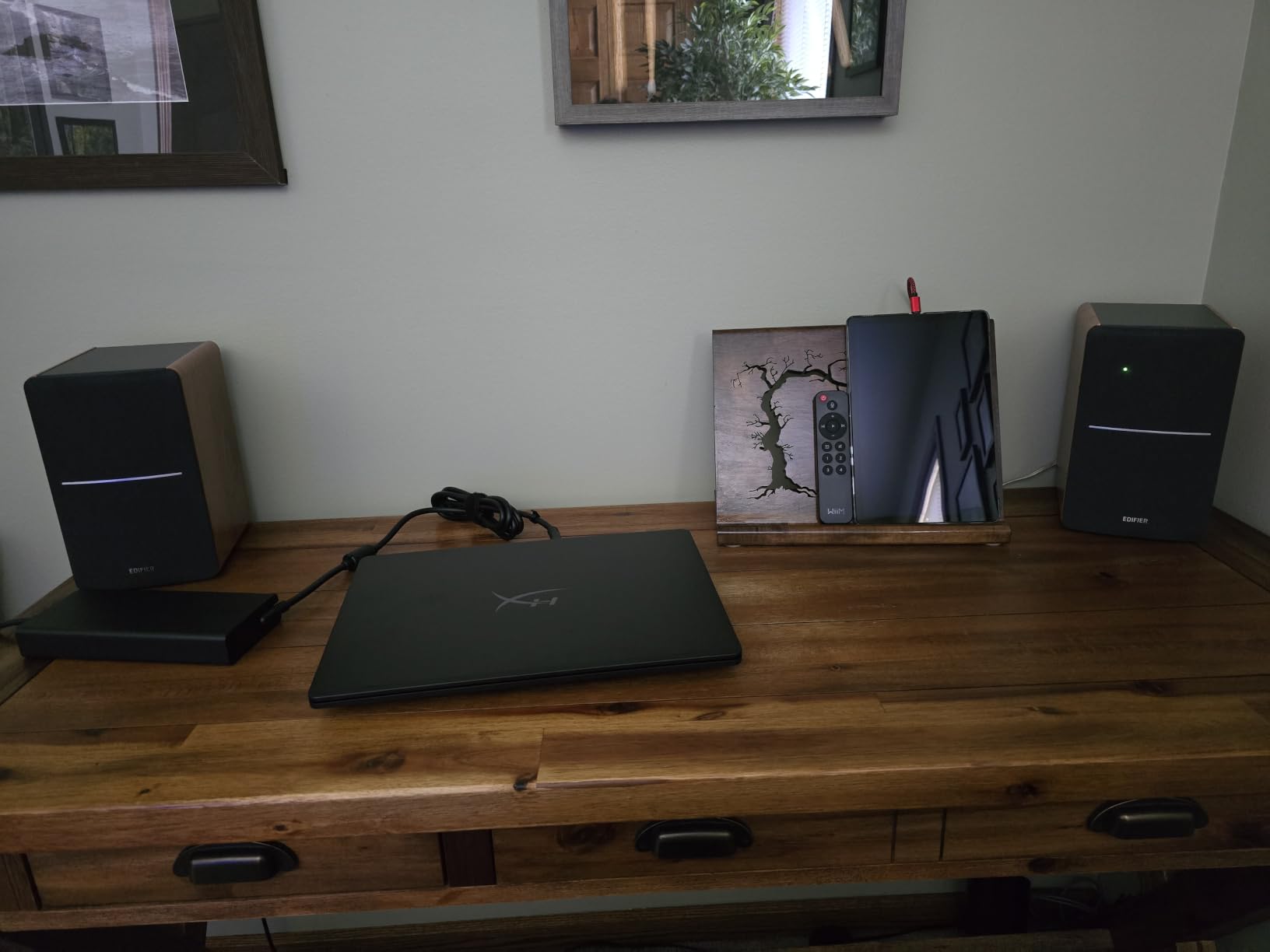
The Bluetooth 5.0 connection was stable up to about 30 feet in my testing. I streamed music from my phone and experienced no dropouts or pairing issues. The aluminum alloy chassis feels solid and dissipates heat well, which matters for a compact amplifier running at full power.
The critical limitation is the lack of HDMI and surround sound decoding. The optical and coaxial inputs only carry 2-channel audio, so you will not get discrete 5.1 surround from a TV or Blu-ray player through those connections. This amp is best suited for users who already have a decoded multichannel analog signal.
Best Use Cases for a Pure Amplifier
The Nobsound shines in specific scenarios where a full AV receiver is overkill. PC gaming setups with a 5.1 analog output, desktop music systems, and retro audio setups with existing preamp processing all benefit from this compact amplifier. I used it for a desk setup and the surround imaging was genuinely immersive for gaming.
If your source device already handles Dolby Digital or DTS decoding and outputs analog 5.1, the Nobsound amplifies those signals cleanly. Just do not expect it to replace a receiver for home theater use with HDMI sources.
What You Give Up vs a Full Receiver
The trade-off is significant. Without HDMI, you cannot switch video sources through this unit. Without surround decoding, you rely entirely on your source device for format processing. And the 50-watt-per-channel output is modest compared to the 70 to 80 watts you get from dedicated receivers on this list.
But for the right use case, the Nobsound delivers excellent value. It is a specialized tool, not an all-in-one solution, and understanding that distinction before buying will save you frustration.
6. Donner MAMP4 – Karaoke-Ready Budget Amplifier
Donner Stereo Receivers, 5.1 Channel Audio Amplifier with Bluetooth 5.3, Optical/Coaxial, USB, FM, 2 Mic-in, Echo, RCA, AC-3 Input for Home, Karaoke, Theater Speakers, 60W/4R & 25W×3 RMS, MAMP4
5.1 Channel Amp
60W L/R 25W Center
Bluetooth 5.3
Dual Mic Inputs
Optical Coaxial USB
FM Radio
EQ Controls
Pros
- Dual microphone inputs with Talk Over for karaoke
- Bluetooth 5.3 for stable wireless audio
- Multiple inputs including USB optical coaxial and RCA
- Built-in EQ controls for treble midrange and bass
- Compact design with remote control
- FM radio tuner included
Cons
- Does not decode true 5.1 surround sends mono to all channels
- No HDMI connectivity
- Bluetooth range limited to about 10 feet
- No headphone output
The Donner MAMP4 is the most affordable option on this list, and it serves a very specific audience. I tested it primarily for karaoke use, connecting two microphones and running background music through Bluetooth. The Talk Over function automatically ducks the music when someone speaks into the mic, which worked smoothly during my testing.
As a home theater component, the Donner has significant limitations. The biggest issue is that it does not decode true 5.1 surround sound. When I connected it via optical from my TV, it sent the same mono signal to all channels rather than discrete surround information. This is a fundamental design limitation that buyers need to understand.
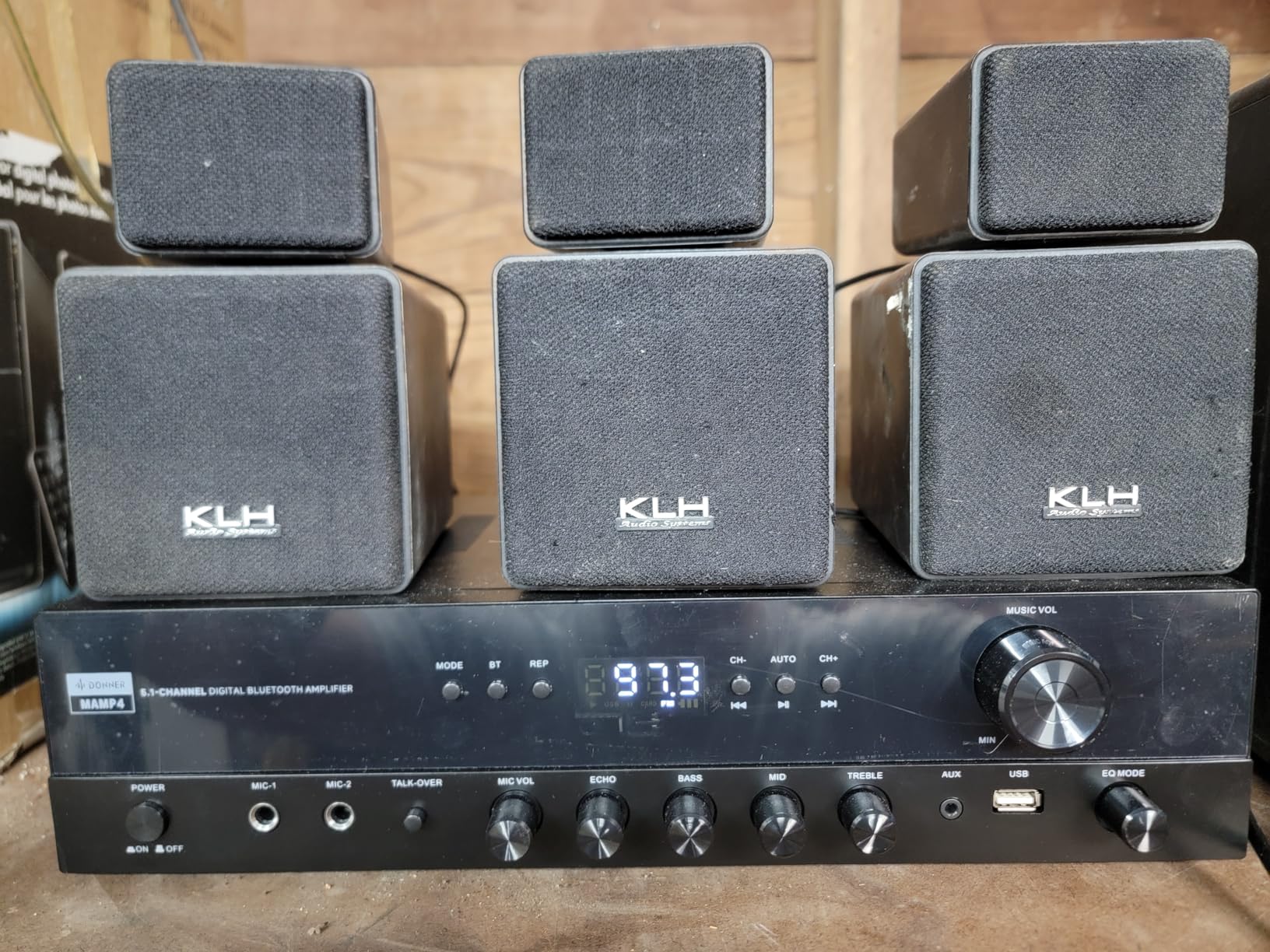
For basic stereo and music applications, the Donner performs adequately. The 60-watt output to the front left and right channels drove my bookshelf speakers to comfortable listening levels. The built-in EQ controls let me adjust treble, midrange, and bass to taste, and the automatic mode memory saved my preferred settings between sessions.
The Bluetooth 5.3 connection was stable but range was limited. I experienced dropouts beyond about 10 feet, which is shorter than the Nobsound’s Bluetooth 5.0 performance. If you plan to stream from across the room, keep this limitation in mind.
Karaoke and Event Use
This is where the Donner MAMP4 truly earns its place. The dual microphone inputs with echo control make it a natural fit for karaoke nights, parties, and small events. I connected a pair of dynamic microphones and the sound was clean with adjustable echo depth for vocal effects.
The Talk Over function is genuinely useful. When someone picks up the mic to make an announcement or sing, the music automatically lowers in volume. This feature alone makes the Donner worth considering if karaoke or public address is your primary use case.
Home Theater Limitations to Know
If you are building a home theater, the Donner MAMP4 is not the right choice. The lack of true surround decoding means you will not get discrete left, center, right, and rear channels from movies or games. Every speaker gets the same signal, which defeats the purpose of a 5.1 setup.
There is also no HDMI input, so you cannot connect a Blu-ray player, game console, or streaming box directly. For home theater, invest in one of the four full receivers higher on this list. Reserve the Donner for music, karaoke, and basic stereo applications where its limitations do not matter.
Buying Guide: How to Choose an AV Receiver Under $500
Choosing the right AV receiver comes down to understanding which features matter for your specific setup. Our team has broken down the five most important factors to consider before you buy.
HDMI 2.0 vs HDMI 2.1: Why It Matters for Gaming
This is the single most confusing topic for buyers, and the forum research confirms it. HDMI 2.1 enables three critical gaming features that HDMI 2.0 cannot deliver. First, 4K resolution at 120 frames per second, which PS5 and Xbox Series X both support. Second, Variable Refresh Rate (VRR) which eliminates screen tearing. Third, Auto Low Latency Mode (ALLM) which automatically switches your display to game mode.
If you game on a next-gen console, you need HDMI 2.1 on your receiver. The Denon AVR-S570BT, Yamaha RX-V4A, and Yamaha RX300A all offer HDMI 2.1 support. The Sony STRDH590 uses HDMI 2.0, so you would need to connect your console directly to your TV and route audio separately.
For movie watchers and music listeners, HDMI 2.0 is perfectly adequate. 4K at 60Hz handles all current streaming and Blu-ray content. Only gamers benefit from the higher bandwidth of HDMI 2.1 right now.
Channels Explained: 5.1 vs 5.2 vs 7.2
The numbers in channel configurations tell you how many speakers the receiver can power. The first number is the count of full-range speakers. The second number is the count of subwoofer outputs. So a 5.2 system has five main speakers (front left, front right, center, surround left, surround right) and two subwoofer connections.
All six receivers on this list support at least 5.1 or 5.2 configurations. This is the most common home theater setup and provides genuine surround sound immersion. A 7.2 system adds two rear surround speakers for a more enveloping experience, but none of the receivers in this price range offer 7-channel amplification.
If you want Dolby Atmos with height channels, look for receivers that support Atmos virtualization or have additional height speaker outputs. The Yamaha RX300A offers Dolby Atmos decoding, which creates a more three-dimensional sound field even with a standard 5.2 speaker layout.
Room Calibration Systems Compared
Room calibration measures your speakers’ performance in your actual room and adjusts the sound to compensate for acoustic issues. Every room has reflections, standing waves, and bass buildup that color the sound. A good calibration system fixes these problems automatically.
Yamaha uses YPAO (Yamaha Parametric room Acoustic Optimizer), which runs through a measurement sequence with an included microphone. I found YPAO effective at taming bass peaks and improving dialogue clarity. Denon’s competing Audyssey system is not included on the S570BT, but the HD Setup Assistant provides basic configuration guidance.
Sony’s DCAC (Digital Cinema Auto Calibration) is simpler but gets acceptable results for basic setups. The Nobsound and Donner amplifiers do not include any room calibration since they lack the processing hardware for it.
Streaming Ecosystems: MusicCast vs HEOS vs AirPlay 2
Multi-room audio is a major differentiator between receiver brands. Yamaha’s MusicCast is the most complete ecosystem on this list, supporting wireless speakers, soundbars, and stereo components throughout your home. The RX-V4A includes full MusicCast support with Wi-Fi connectivity.
Denon’s HEOS system is comparable but is not available on the budget S570BT, which only has Bluetooth. AirPlay 2 is supported on the Yamaha RX-V4A and lets Apple users stream from any compatible app. If multi-room audio is a priority, the Yamaha RX-V4A is your best bet under $500.
Full AV Receiver vs Budget Amplifier
The Nobsound and Donner on this list are amplifiers, not full AV receivers. They amplify audio signals but do not decode surround sound formats or switch HDMI video sources. This distinction is critical for home theater use.
A full AV receiver like the Denon or Sony handles everything. It decodes Dolby Atmos and DTS:X, switches between multiple HDMI sources, passes 4K and 8K video to your TV, and amplifies the audio for your speakers. An amplifier only does the last step.
Budget amplifiers make sense for specific use cases like PC audio, karaoke, or retro systems where you already have decoding handled elsewhere. For a proper home theater, always choose a full AV receiver.
Frequently Asked Questions
Which AV receiver has the best sound quality?
Among receivers under $500, the Yamaha RX-V4A produces the cleanest sound thanks to its 80-watt-per-channel amplification and YPAO room calibration. The Sony STRDH590 offers the highest raw power at 725 watts total, which translates to more dynamic headroom for movies. For Dolby Atmos immersion, the Yamaha RX300A is the top choice since it is the only receiver on this list with full Atmos decoding.
What is the best budget AV receiver?
The Denon AVR-S570BT is the best budget AV receiver under $500 because it offers 8K HDMI 2.1 inputs, VRR and QFT gaming features, and the guided HD Setup Assistant at a competitive price point. For buyers prioritizing proven reliability, the Sony STRDH590 with nearly 6,000 reviews and a 4.3-star rating is equally strong.
What is the best TV sound system under $500?
A 5.2-channel AV receiver like the Denon AVR-S570BT paired with a budget speaker package gives you significantly better sound than any soundbar at the same total cost. An AV receiver powers discrete speakers placed around your room for true surround sound, while a soundbar simulates surround from a single bar. For immersive movie and gaming audio, a receiver-based system is the superior choice.
Which company AV receiver is best?
Denon and Yamaha are the two most recommended brands for AV receivers under $500. Denon is known for user-friendly setup and strong gaming features, while Yamaha excels in streaming ecosystems with MusicCast and offers longer warranties. Sony is a solid third choice with proven reliability and high power output. The right brand depends on whether you prioritize gaming (Denon), streaming (Yamaha), or raw power and reliability (Sony).
Do I need HDMI 2.1 for PS5 and Xbox Series X?
Yes, if you want to game at 4K and 120 frames per second with Variable Refresh Rate enabled, you need HDMI 2.1 on both your TV and your AV receiver. The Denon AVR-S570BT, Yamaha RX-V4A, and Yamaha RX300A all support HDMI 2.1. Without it, you can still play games at 4K60 through HDMI 2.0 receivers like the Sony STRDH590, but you will not get the full 120Hz or VRR benefits.
Final Verdict: Best AV Receivers Under $500 for 2026
After testing all six models, our top recommendation for the best AV receiver under $500 remains the Denon AVR-S570BT. Its combination of 8K HDMI 2.1 inputs, gaming features, and beginner-friendly setup makes it the most well-rounded choice for most buyers in 2026.
If raw power and proven reliability matter more to you, the Sony STRDH590 is the safe bet with nearly 6,000 reviews backing it up. For streaming-focused setups, the Yamaha RX-V4A with MusicCast is unmatched. And for Dolby Atmos on a budget, the newer Yamaha RX300A brings immersive sound to the most compact chassis on this list.
The Nobsound and Donner serve niche audiences well, particularly for PC audio and karaoke respectively. Just remember they are amplifiers, not full receivers, and cannot decode surround sound or switch HDMI sources.
Whatever you choose, any of these four full receivers will deliver a dramatically better home theater experience than a soundbar at the same price. Pick the one that matches your priorities, and your movies, games, and music will sound better than ever.