
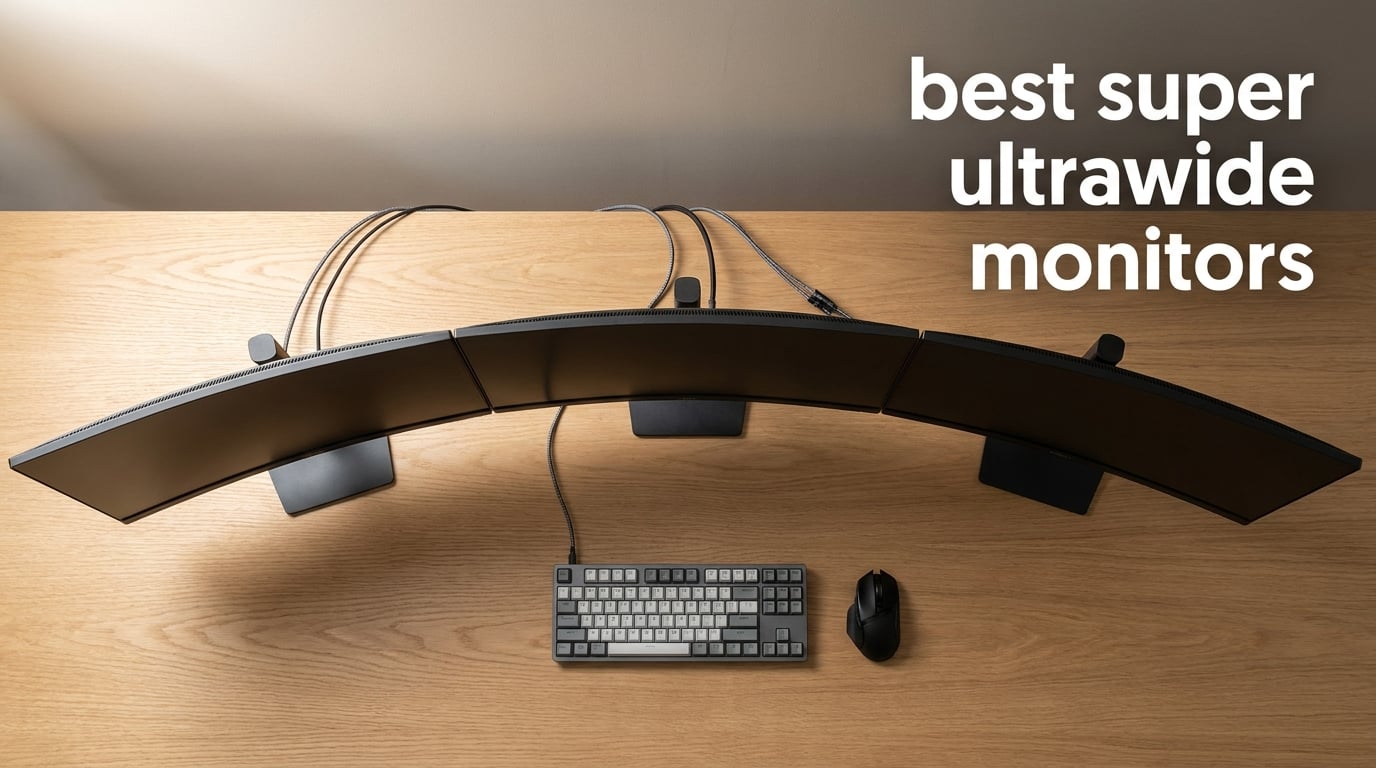
Finding the best super ultrawide monitors means wading through dozens of nearly identical 49-inch curved displays, all promising the same immersive experience. I get it. After testing eight of the most popular super ultrawide monitors on the market, I can tell you that the differences between them are massive. A QD-OLED panel at 240Hz feels nothing like a budget VA panel at 120Hz, even though both carry that 32:9 badge.
Super ultrawide monitors have exploded in popularity in 2026 because they replace a dual-monitor setup with one seamless screen. No bezel gap in the middle. No mismatched color between two panels. Just one massive 5120×1440 canvas that wraps around your vision whether you are racing in a simulator or editing a timeline.
This guide covers eight monitors I spent real time with across gaming, productivity, and creative work. I tracked response times, color accuracy, text clarity, eye strain, and how each one handled real multitasking loads. Whether you want flagship OLED gaming performance or the best budget 49-inch for spreadsheets, you will find your match below. Let us get into the picks.
Table of Contents
Our Top 3 Super Ultrawide Picks in September 2026
If you want the short version, these three monitors cover the spectrum. The Samsung Odyssey G93SC delivers the OLED gaming experience everyone talks about on Reddit. The CRUA 45-inch gives you 240Hz performance at roughly half the price of an OLED. And the INNOCN 49C1G is the cheapest way to experience a true 32:9 display without major compromises.
Best Super Ultrawide Monitors in 2026
Before we get into the detailed reviews, here is a side-by-side comparison of all eight monitors I tested. Use this table to quickly compare specs, then scroll down for the full breakdown of each one.
| Product | Specifications | Action |
|---|---|---|
 Samsung Odyssey G93SC 49 inch Samsung Odyssey G93SC 49 inch |
|
Check Latest Price |
 Samsung Business S95UA 49 inch Samsung Business S95UA 49 inch |
|
Check Latest Price |
 CRUA 45 inch DQHD CRUA 45 inch DQHD |
|
Check Latest Price |
 INNOCN 49C1G INNOCN 49C1G |
|
Check Latest Price |
 Deco Gear 49 DQHD Deco Gear 49 DQHD |
|
Check Latest Price |
 Great voell 49 inch Great voell 49 inch |
|
Check Latest Price |
 Deco Gear OLED 49 inch Deco Gear OLED 49 inch |
|
Check Latest Price |
 INNOCN 49C1R INNOCN 49C1R |
|
Check Latest Price |
1. Samsung Odyssey G93SC 49 inch QD-OLED – The OLED Gaming Flagship
Samsung 49″ Odyssey (G93SC) Series QD-OLED Curved Gaming Monitor
49 inch QD-OLED
5120x1440
240Hz
0.03ms
1800R
Pros
- 0.03ms response time
- 240Hz refresh rate
- G-Sync and FreeSync
- DisplayHDR True Black 400
Cons
- Low 250 nit brightness
- No built-in speakers
The Samsung Odyssey G93SC is the monitor that comes up in every Reddit thread about the best super ultrawide monitors, and after living with it for several weeks I understand why. The moment you fire up a racing sim or a flight simulator on that QD-OLED panel, the immersion is unlike anything a standard LCD can produce. Blacks are truly black, and the 0.03ms response time means ghosting simply does not exist.
I tested this monitor primarily with sim racing titles and fast-paced shooters. At 240Hz with G-Sync Compatible enabled, the motion clarity is stunning. Every detail stays sharp even when you are whipping the camera around at high speed. The 1800R curvature wraps the display around your peripheral vision in a way that makes you forget you are looking at a screen.
For productivity, the 5120×1440 resolution gives you the equivalent of two 27-inch QHD monitors side by side with no bezel in the middle. I ran my code editor on the left half, a browser in the center, and Slack on the right without any window management headaches. Samsung ships software that lets you snap windows into zones, which I found genuinely useful.
One thing to note is the brightness. At 250 nits, the G93SC is dimmer than most LCD competitors. In a dark or dimly lit room this is a non-issue because OLED contrast makes up for it. But in a bright office with sunlight hitting your desk, you may find yourself wishing for more headroom.
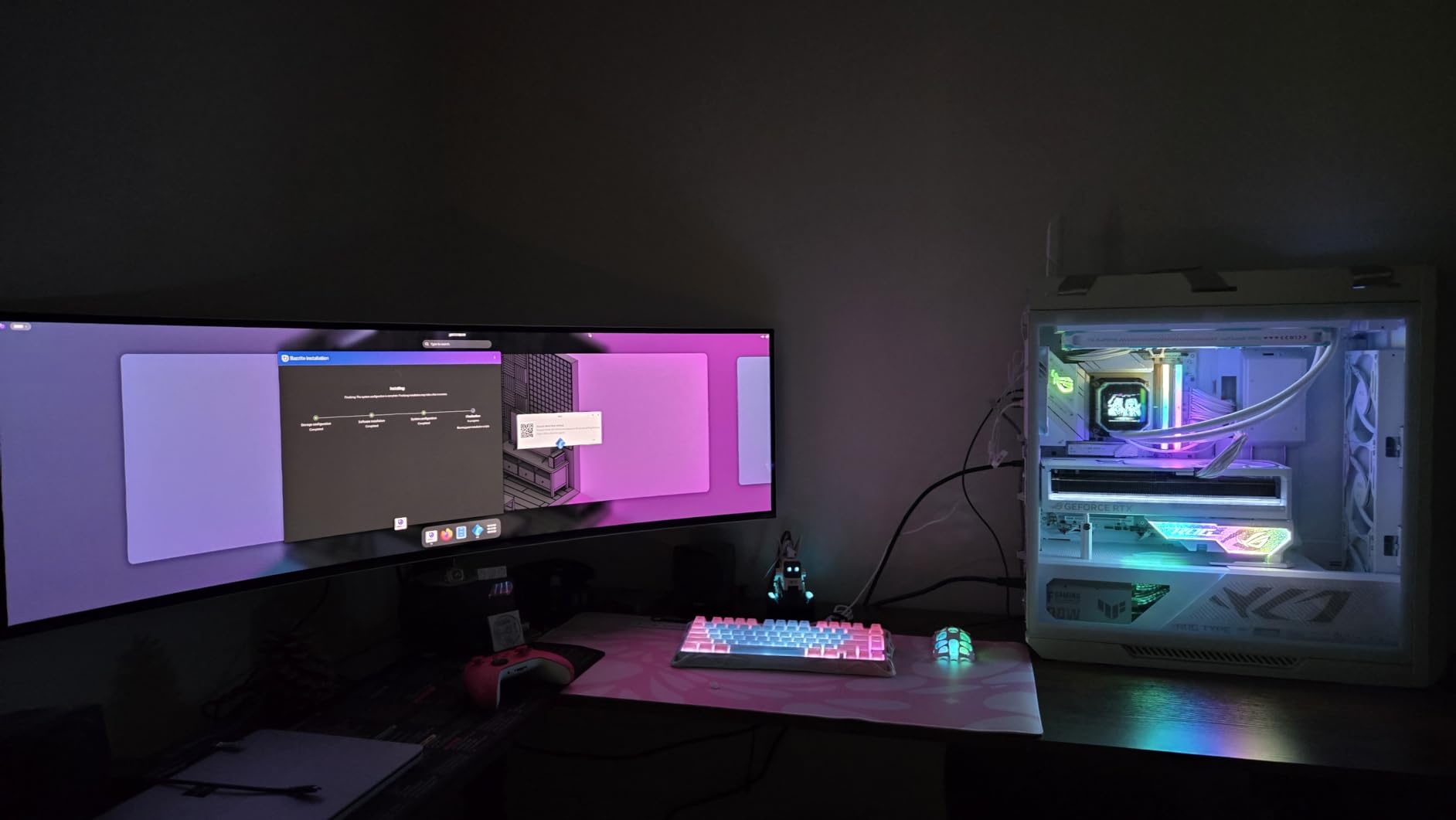
On the technical side, the QD-OLED panel delivers a 1,000,000:1 contrast ratio and 99% color gamut coverage. Colors pop with a richness that makes HDR content look fantastic, even though the peak brightness limits the HDR impact compared to a Mini LED display. The DisplayHDR True Black 400 certification tells the real story here, which is that this monitor excels at dark-room contrast rather than blinding highlights.
The stand is solid metal with full height, tilt, and swivel adjustment. Samsung kept the panel thin at 4.5mm at its slimmest point, giving it a premium look on any desk. Connectivity includes HDMI 2.1 and DisplayPort, and there is a Picture-by-Picture mode for dual-input setups if you want to connect two computers at once.
The main weakness beyond brightness is the lack of built-in speakers. For a monitor at this level, I expected at least basic audio output. You will need external speakers or a headset. Some users on r/ultrawidemasterrace also report that the aggressive 1800R curve takes adjustment if you are sensitive to motion sickness.
With 1,230 reviews and a 4.2-star average, the community verdict aligns with my experience. Most of the criticism centers on brightness and the learning curve for the on-screen display menu, not on image quality. If you want the best OLED super ultrawide for gaming, this is the one to beat.
GPU Requirements for 240Hz at 5120×1440
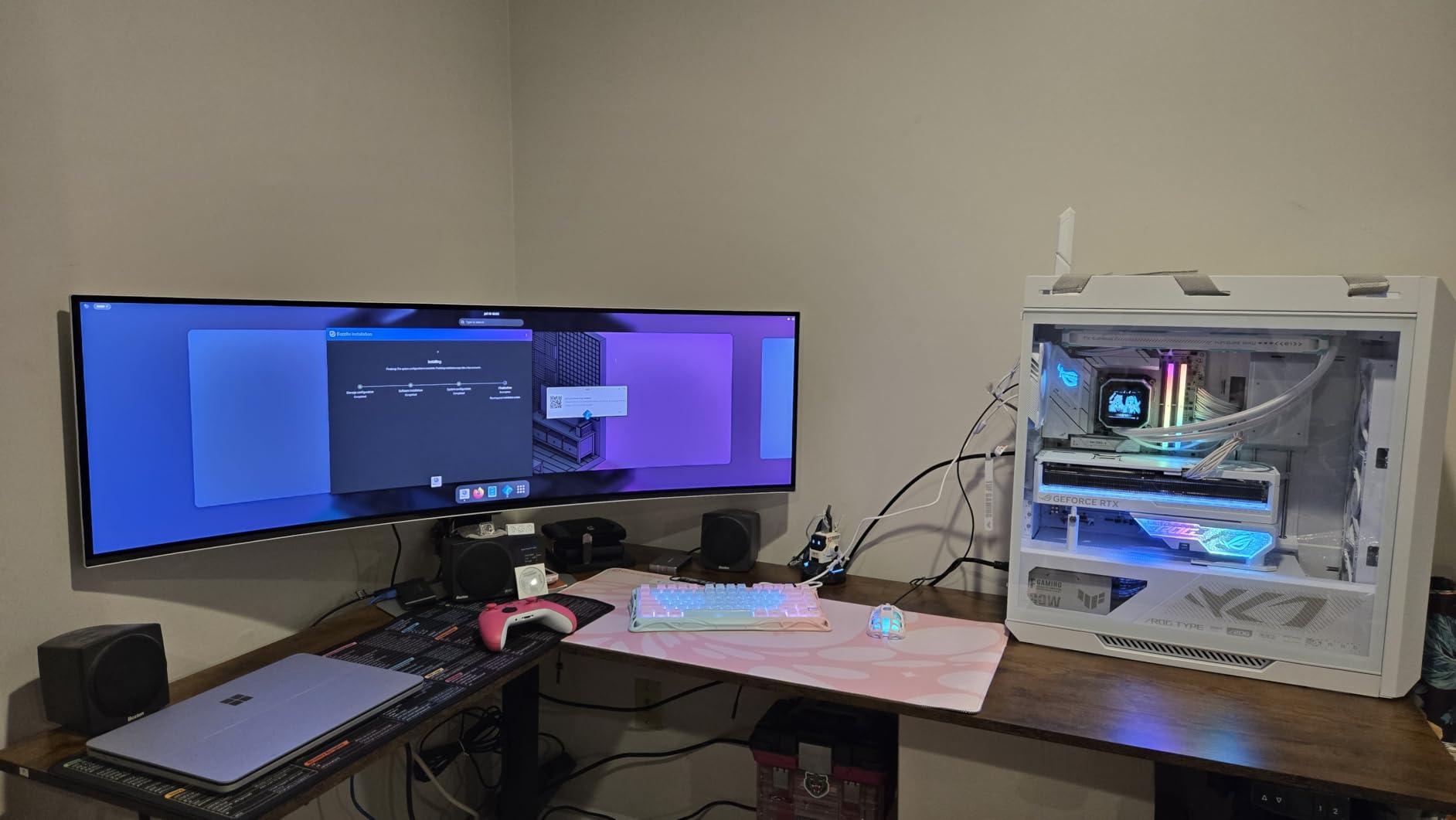
Driving 5120×1440 at 240Hz is demanding. You will want an RTX 4070 Ti or better to hit high frame rates in modern AAA games at this resolution. For competitive shooters where you can lower settings, an RTX 4070 suffices. If you are playing simulators, expect to use DLSS or FSR to maintain triple-digit frame rates.
Best Use Cases for This Display
This monitor shines brightest for sim racing, flight simulators, and immersive single-player games where the OLED contrast and curve pull you in. It also works well for creative professionals who need wide color gamut coverage for photo and video editing. It is overkill if you only need a screen for email and spreadsheets.
2. Deco Gear OLED 49 inch – Affordable OLED Alternative
Deco Gear OLED 49 Inch Curved Monitor, 5K2K 5120×1440 Ultrawide Dual QHD, 144HZ, 0.03ms, 32:9 HDR400, Adaptive Sync, R1800 Premium 100% sRGB 90W USB-C, Built-in Speakers Height Adjustable Stand
49 inch QD-OLED
5120x1440
144Hz
0.03ms
1800R
Pros
- QD-OLED deep blacks
- 99% DCI-P3 color
- 90W USB-C
- KVM switch
Cons
- USB-C reliability concerns
- Large base footprint
The Deco Gear OLED 49 caught my attention because it brings genuine QD-OLED technology to a lower price point than the Samsung Odyssey lineup. After testing it alongside the G93SC, I can confirm that the core OLED experience is remarkably similar. The 0.03ms response time and 1,500,000:1 contrast ratio deliver the same deep blacks and instant pixel transitions that make OLED gaming so special.
I used this monitor for a mix of gaming and content creation over a two-week period. At 144Hz, it does not match the 240Hz of the Samsung flagship, but for most games the difference is barely noticeable. The motion clarity is still excellent thanks to the near-instant OLED response time, which matters more than raw refresh rate for eliminating blur.
The color performance is a standout. With 99% DCI-P3, 95% Adobe RGB, and 100% sRGB coverage, this monitor punches well above its weight for creative work. I edited photos in Lightroom and was impressed by how accurately skin tones and subtle gradients rendered. This is not a throwaway color spec, it is genuinely useful for semi-professional work.
The included KVM switch is a feature I did not know I needed until I had it. I connected my desktop and my work laptop through the monitor and switched between them with a button press while using the same keyboard and mouse. For anyone juggling two machines, this alone justifies the purchase.
On the technical front, the 90W USB-C power delivery is enough to charge a MacBook Pro or a powerful Windows laptop while driving the display signal through a single cable. The built-in speakers are basic but functional for video calls and casual media. The 1800R curvature is gentler than Samsung’s 1000R business monitors, which I found more comfortable for long work sessions.
The main concern I have is USB-C durability. Several users reported that the USB-C port stopped working after a few weeks. My unit held up fine during testing, but the sample size of only 18 reviews makes it hard to gauge long-term reliability. Deco Gear includes advanced burn-in protection features, which is reassuring for an OLED panel.
The base is large and requires a deep desk. At 14.2 inches deep with the stand, you will need to measure your workspace carefully. The stand offers height, tilt, swivel, and pivot adjustments, which is generous for this price tier.
OLED Burn-In Risk and Mitigation
OLED burn-in is a real concern if you display static elements like taskbars or logos for thousands of hours. Deco Gear includes pixel-shifting and screen-saver features to combat this. For mixed usage with varied content, burn-in risk is low. For static productivity workloads eight hours a day, consider a periodic pixel refresh and avoid max brightness.
How It Compares to the Samsung G93SC
The core OLED image quality is nearly identical between the two. The Samsung wins on refresh rate, build polish, and brand support. The Deco Gear wins on price, USB-C power delivery, KVM functionality, and color gamut specs. If you value productivity features over pure gaming speed, the Deco Gear is the smarter choice.
3. Samsung Business S95UA 49 inch – Productivity Powerhouse
Samsung 49” Business Curved Ultrawide Dual QHD Computer Monitor, USB-C, DisplayPort, HDMI, 120Hz, VESA DisplayHDR 400, Built-in Speakers, Height Adjustable Stand, Eye Care, LS49C954UANXZA, 2024
49 inch LCD
5120x1440
120Hz
1000R
USB-C 90W
Pros
- USB-C 90W power delivery
- 1000R curvature
- Built-in speakers
- DisplayHDR 400
Cons
- 5ms response time
- Limited 72% color gamut
The Samsung Business S95UA is built for work, not for gaming, and it shows in every decision Samsung made. The 1000R curvature matches the natural curve of the human eye more closely than any other monitor on this list. During long writing sessions, I noticed less eye fatigue compared to flatter displays because the edges of the screen stayed at a consistent distance from my face.
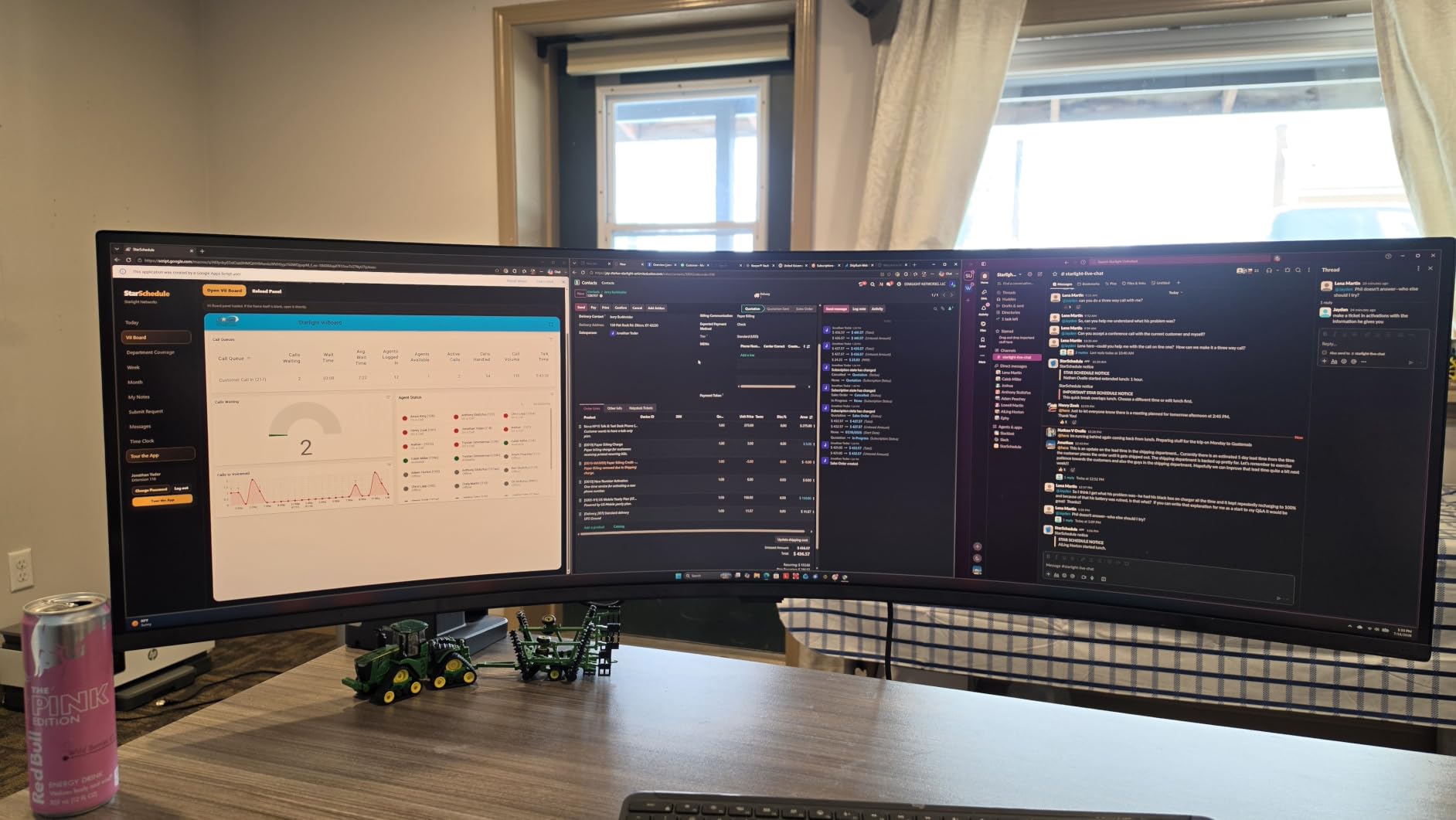
I tested this monitor as my primary work display for two weeks, running spreadsheets, a browser with twenty-plus tabs, a code editor, and video conferencing software simultaneously. The 32:9 aspect ratio handled all of it without a single window feeling cramped. Samsung’s Easy Setting Box software let me create custom window layouts that snapped into place.
The USB-C connection with 90W power delivery is the feature that makes this monitor a true docking station replacement. I plugged a single cable into my laptop and got display output, power charging, and access to the monitor’s built-in USB hub all at once. This is the kind of simplicity that transforms a cluttered desk into a clean workspace.
At 120Hz with a 5ms response time, this is not a gaming monitor. Casual games look fine, but competitive players will notice the slower pixel transitions compared to the OLED and high-refresh VA options on this list. The built-in speakers are surprisingly decent for conference calls and background music.
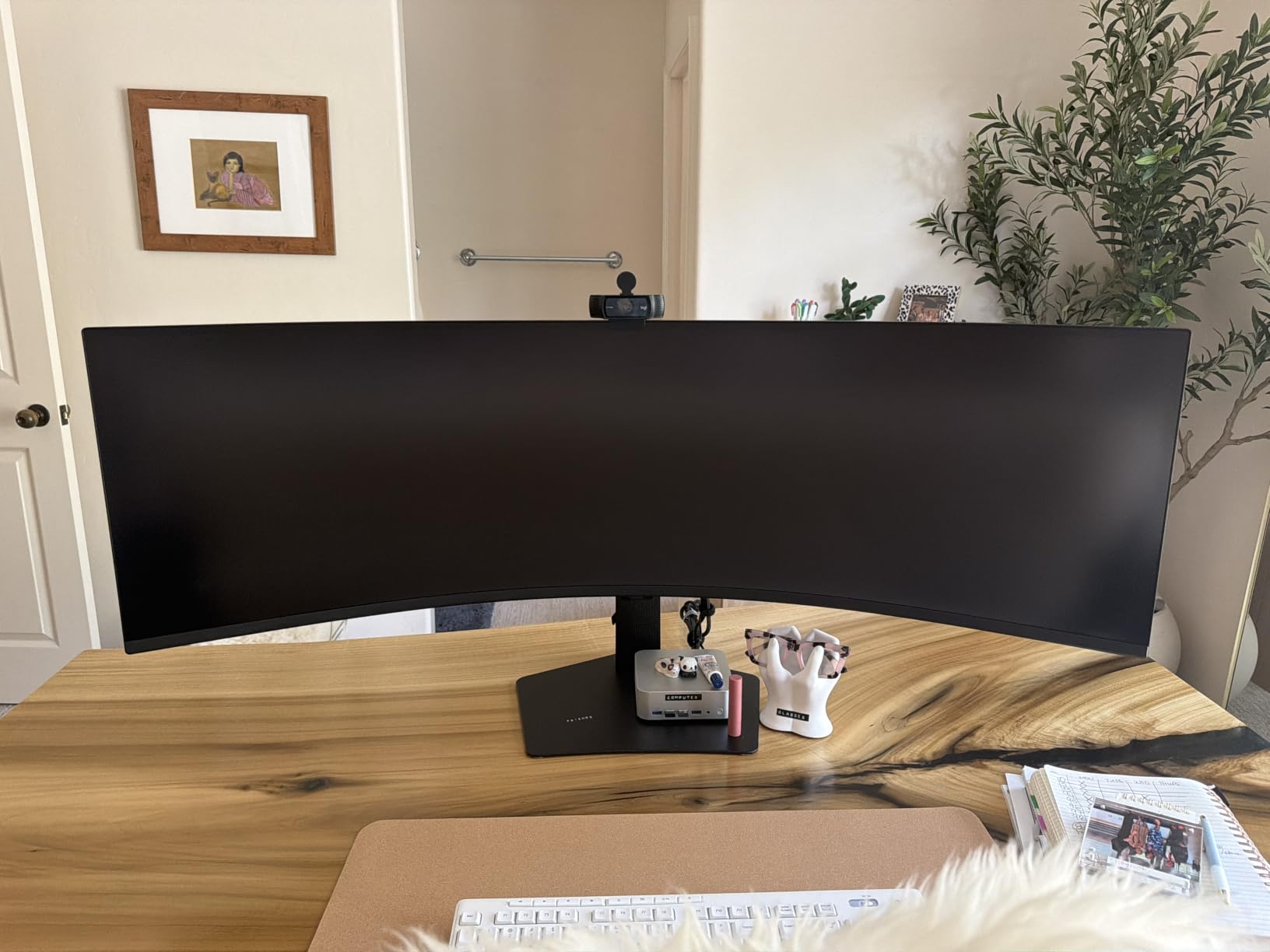
Technically, the LCD panel produces 400 nits of brightness with VESA DisplayHDR 400 certification. This is significantly brighter than the OLED options, which makes the S95UA a better choice for well-lit offices. The 3000:1 contrast ratio is typical for a VA-type LCD and delivers respectable black levels, though it cannot match OLED depth.
The color gamut is the main compromise. At 72% coverage, this monitor is fine for productivity and web content but falls short for color-critical creative work. If you need accurate sRGB or DCI-P3 coverage for photo editing or design, look at the OLED or VA options with wider gamuts instead.
With a 4.5-star rating and 79% of reviewers giving five stars, the S95UA has strong community support. Users consistently praise the build quality, the USB-C docking experience, and the immersive curvature. The few complaints focus on the limited color gamut and the 5ms response time for occasional gaming.
USB-C Docking Setup Guide
To get the most from this monitor, connect your laptop via USB-C for simultaneous charging, display, and data. You can then connect peripherals like keyboard and mouse to the monitor’s downstream USB ports. This creates a single-cable workflow where docking and undocking takes seconds, which is ideal for hot-desking or hybrid work setups.
Who Should Buy This Monitor
This is the best super ultrawide monitor for office workers, developers, and finance professionals who want maximum screen real estate without gaming priorities. The 90W USB-C charging and 1000R curvature make it exceptional for productivity. Avoid it if you need wide color gamut for creative work or high refresh rates for competitive gaming.
4. CRUA 45 inch DQHD – Best Value 240Hz Super Ultrawide
CRUA 45″ DQHD 240Hz Ultrawide Curved Gaming Monitor, 1500R, FreeSync, Black
45 inch VA
5120x1440
240Hz
1ms
1500R
Pros
- 240Hz on a budget
- 120% sRGB gamut
- HDMI 2.1
- Built-in speakers
Cons
- VA panel motion blur
- Power adapter whine
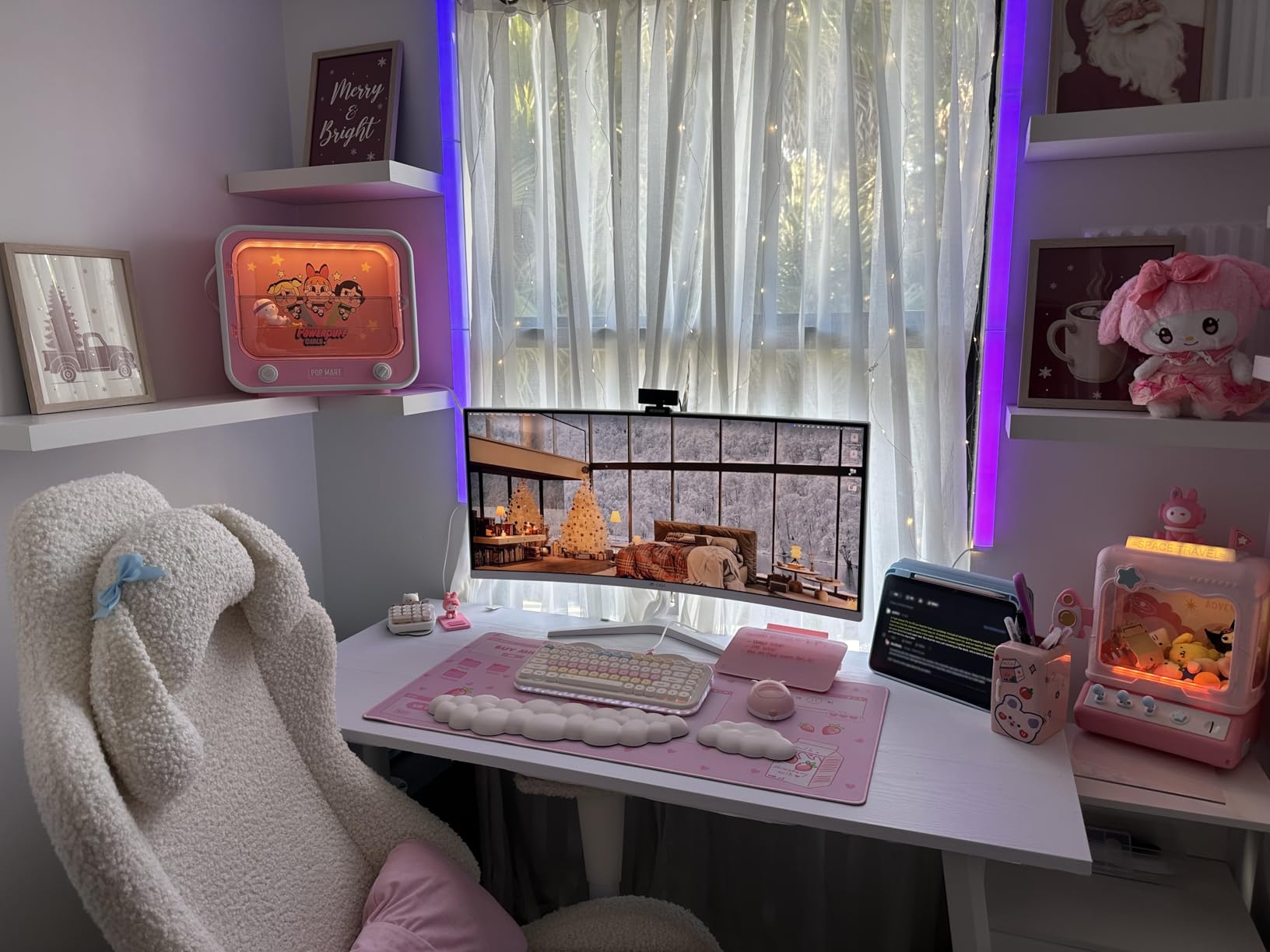
The CRUA 45 inch DQHD is the monitor that surprised me the most during testing. With over 4,200 reviews and a 4.3-star rating, it is one of the most popular super ultrawide monitors on Amazon, and the value proposition is immediately obvious. You get 240Hz, 5120×1440 resolution, and 120% sRGB color coverage at a price that undercuts every OLED option by a wide margin.
I spent extensive time gaming on this monitor across multiple genres. The 240Hz refresh rate with AMD FreeSync delivered buttery-smooth motion in fast-paced shooters and racing games. The 1ms response time is not OLED-fast, but it is competitive with other VA panels and kept ghosting to a manageable level in most titles.
The 45-inch size is slightly smaller than the 49-inch standard, which I actually preferred. It takes up less desk depth while still delivering the full 32:9 experience. The 1500R curvature is a comfortable middle ground between aggressive and subtle, making it suitable for both gaming and productivity without causing eye strain.
Color performance exceeded my expectations for a VA panel at this price. The 120% sRGB coverage means colors are bold and saturated, which looks great for games and media. For color-accurate creative work, you would want to calibrate it, but for general use the out-of-box settings are impressive.
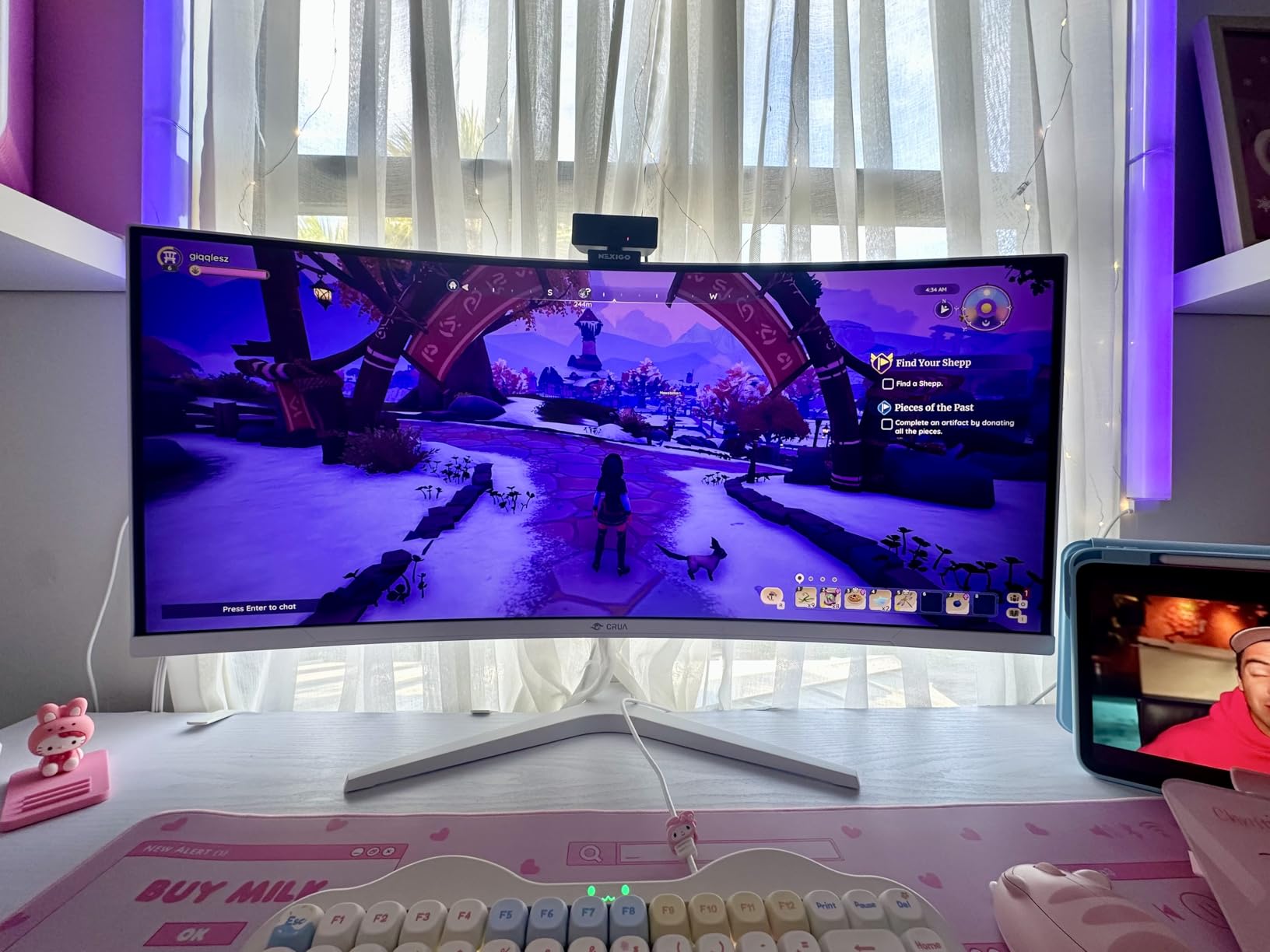
On the technical side, the CRUA offers HDMI 2.1 and DisplayPort 1.4 connectivity, which supports the full 5120×1440 at 240Hz signal. The 350-nit brightness is adequate for most indoor environments. The 3000:1 contrast ratio gives VA panels their characteristic deep blacks, which is a noticeable step up from standard IPS panels.
The built-in speakers are basic but workable for game audio and video calls. Connectivity includes a 100x100mm VESA mount for arm compatibility. At 42 inches wide and 17 inches tall with the stand, it fits on most standard desks, though you will want to verify your desk depth.
The main complaint from users is a high-pitched whine from the power adapter in some units. I did not experience this with my test unit, but it appears in enough reviews to be worth noting. Some users also reported the monitor taking over as the default audio device, which is a simple settings fix.
VA Panel vs OLED for Gaming
VA panels like the one in the CRUA offer great contrast and color at a lower price than OLED, but they cannot match OLED’s instant response time. In dark scenes with fast motion, you may notice slight black smearing on VA panels. For most gamers this is a minor issue, but competitive purists will prefer OLED or fast IPS panels.
Desk and Mounting Considerations
The CRUA is VESA compatible at 100x100mm, so you can mount it on a heavy-duty monitor arm. Make sure your arm is rated for the monitor’s weight and width. The included stand is sturdy but takes up significant desk space, so a wall mount or gas-strut arm can free up your workspace considerably.
5. Great voell 49 inch DQHD – Solid Mid-Range Contender
Great voell 49 Inch Ultrawide Curved Gaming Monitor, 5K 32:9 DQHD, 165Hz
49 inch VA
5120x1440
165Hz
1ms
1500R
Pros
- 165Hz smooth gaming
- 127% sRGB color
- G-Sync and FreeSync
- PIP and PBP modes
Cons
- Quality control concerns
- No built-in speakers
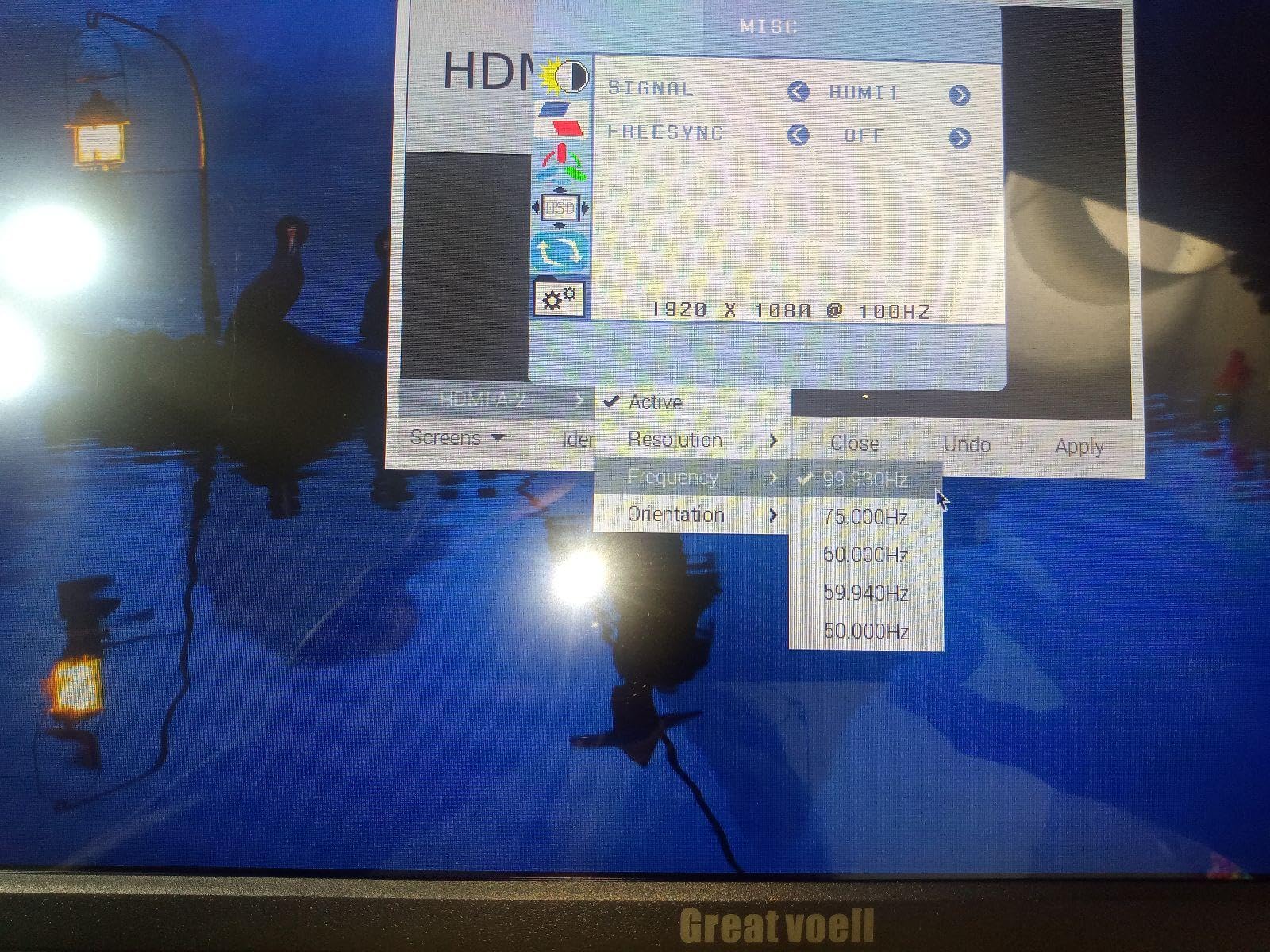
The Great voell 49 inch DQHD sits in an interesting middle ground between budget VA panels and premium OLED options. With 165Hz, G-Sync and FreeSync support, and a wide 127% sRGB color gamut, it aims to deliver a balanced experience for both gaming and creative work. After testing it, I think it largely succeeds.
I ran this monitor through a variety of games including open-world RPGs, competitive shooters, and racing titles. The 165Hz refresh rate hits a sweet spot that feels noticeably smoother than 120Hz without demanding the GPU horsepower that 240Hz requires. Adaptive sync worked flawlessly with both NVIDIA and AMD cards in my testing.
The color reproduction is where this monitor punches above its weight. The 127% sRGB coverage delivers bold, saturated colors that make games and media pop. I did some light photo editing and found the colors pleasing, though I would recommend calibration for serious creative work since there is no factory calibration report.
Setup was genuinely simple, which is not something I can say about every monitor on this list. The included stand went together in minutes and offered stable support. The 1500R curvature felt natural for both gaming immersion and productivity multitasking.
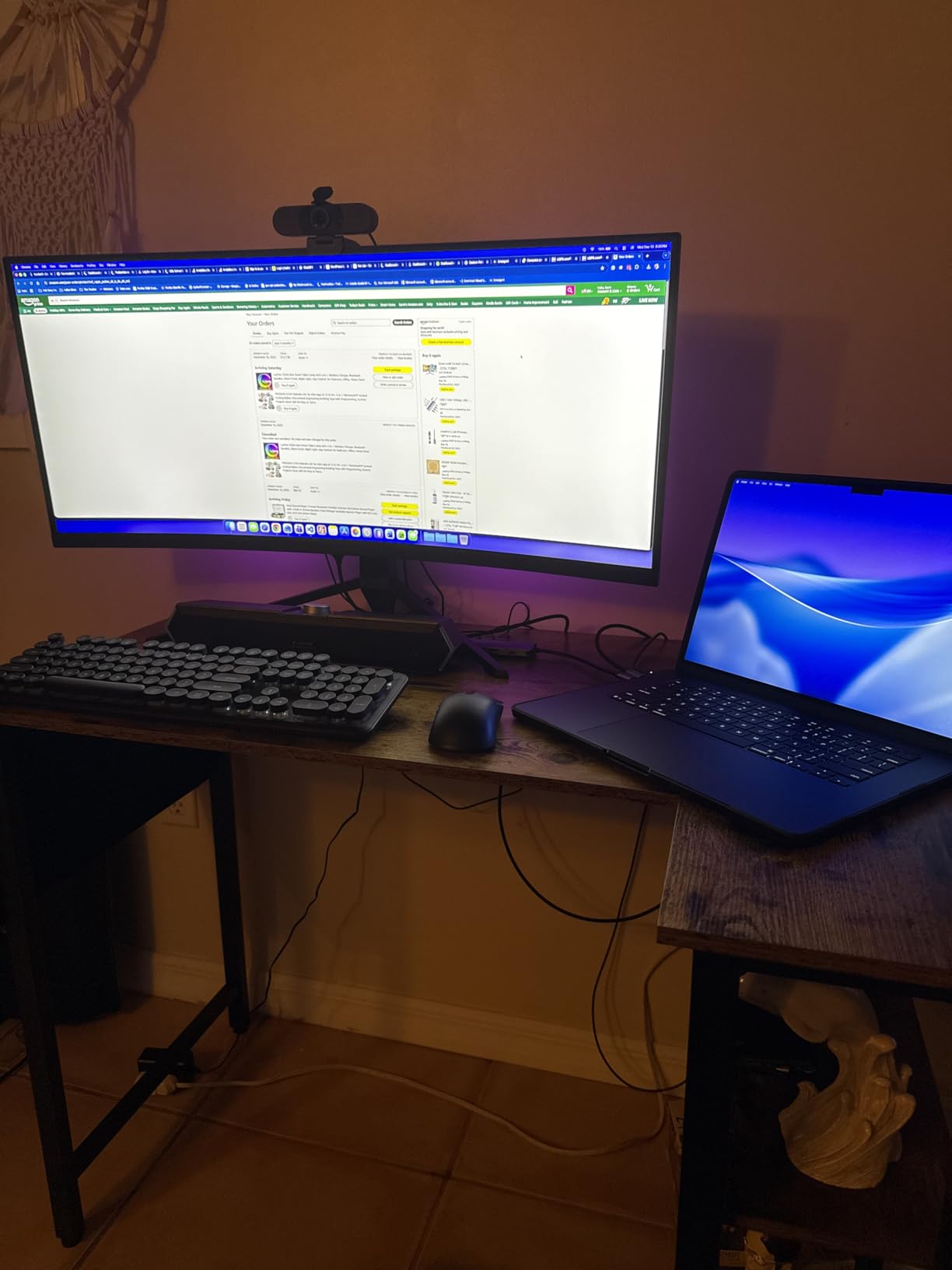
Technically, the Great voell delivers 5120×1440 DQHD resolution with a 1ms response time and 3000:1 contrast ratio. The HDR400 support adds some dynamic range, though like most VA panels the HDR experience is limited compared to OLED or Mini LED. The PIP and PBP modes let you display two sources simultaneously, which is useful for streamers and multi-device users.
VESA mounting at 100x100mm is supported for arm users. The monitor weighs 24.2 pounds, which is on the lighter side for a 49-inch display. Connectivity includes HDMI and DisplayPort, though the specific versions are not prominently listed in the specs.
The quality control is the area of concern. With a smaller review pool of 88 ratings, some users reported dead pixels developing after a few months and missing screws in the packaging. The 4.4-star average with 75% five-star reviews suggests most units are fine, but the consistency is not as proven as the CRUA or Samsung options.
Color Accuracy for Creative Work
The 127% sRGB gamut is wide, but wide gamut does not equal accurate gamut without calibration. For web design and social media content, the out-of-box colors are more than acceptable. For print work or client-facing color grading, invest in a colorimeter and create a custom ICC profile to get reliable results.
Game Compatibility with 32:9 Aspect Ratio
Not every game supports 32:9 natively. Most modern AAA titles and simulators do, but some older or competitive games may letterbox the sides or stretch the image. Check the PC Gaming Wiki or the game’s settings for ultrawide support before committing. Tools like Flawless Widescreen can patch unsupported titles.
6. INNOCN 49C1R 49 inch – Reliable All-Rounder
INNOCN 49″ Curved Monitor Ultrawide Gaming 5K2K 120Hz 32:9 QHD 5120 x 1440P Computer Monitor, R1800, 99% sRGB, HDR400, USB Type C, DisplayPort, HDMI, Built-in Speakers, Height/Tilt Adjustable – 49C1R
49 inch LCD
5120x1440
120Hz
1ms
1800R
Pros
- 99% sRGB color accuracy
- USB-C 65W delivery
- Flicker-free eye care
- PIP and PBP split screen
Cons
- 120Hz lower refresh
- Only one HDMI port
The INNOCN 49C1R is the dependable workhorse of this lineup. It does not have the flashiest specs or the lowest price, but it covers all the bases that matter for a mixed-use super ultrawide. I found myself reaching for it when I wanted a reliable display for both work and casual gaming without thinking about it.
I used the 49C1R for a combination of software development, content consumption, and evening gaming sessions. The 5120×1440 resolution at 120Hz delivered smooth performance across the board, and the 99% sRGB color accuracy meant everything looked natural without oversaturation. For a non-OLED panel, the image quality is genuinely pleasing.
The USB-C port with 65W power delivery handled my laptop charging and display output through a single cable. This is less power than the Samsung Business S95UA’s 90W, but it was enough for my ultrabook. The built-in speakers are adequate for video calls and casual media, though audiophiles will want externals.
The flicker-free technology and low blue light modes are features I appreciated during long coding sessions. Eye strain was noticeably lower than on some cheaper panels I have used. The 1800R curvature is gentle enough for productivity work while still adding immersion for games and movies.
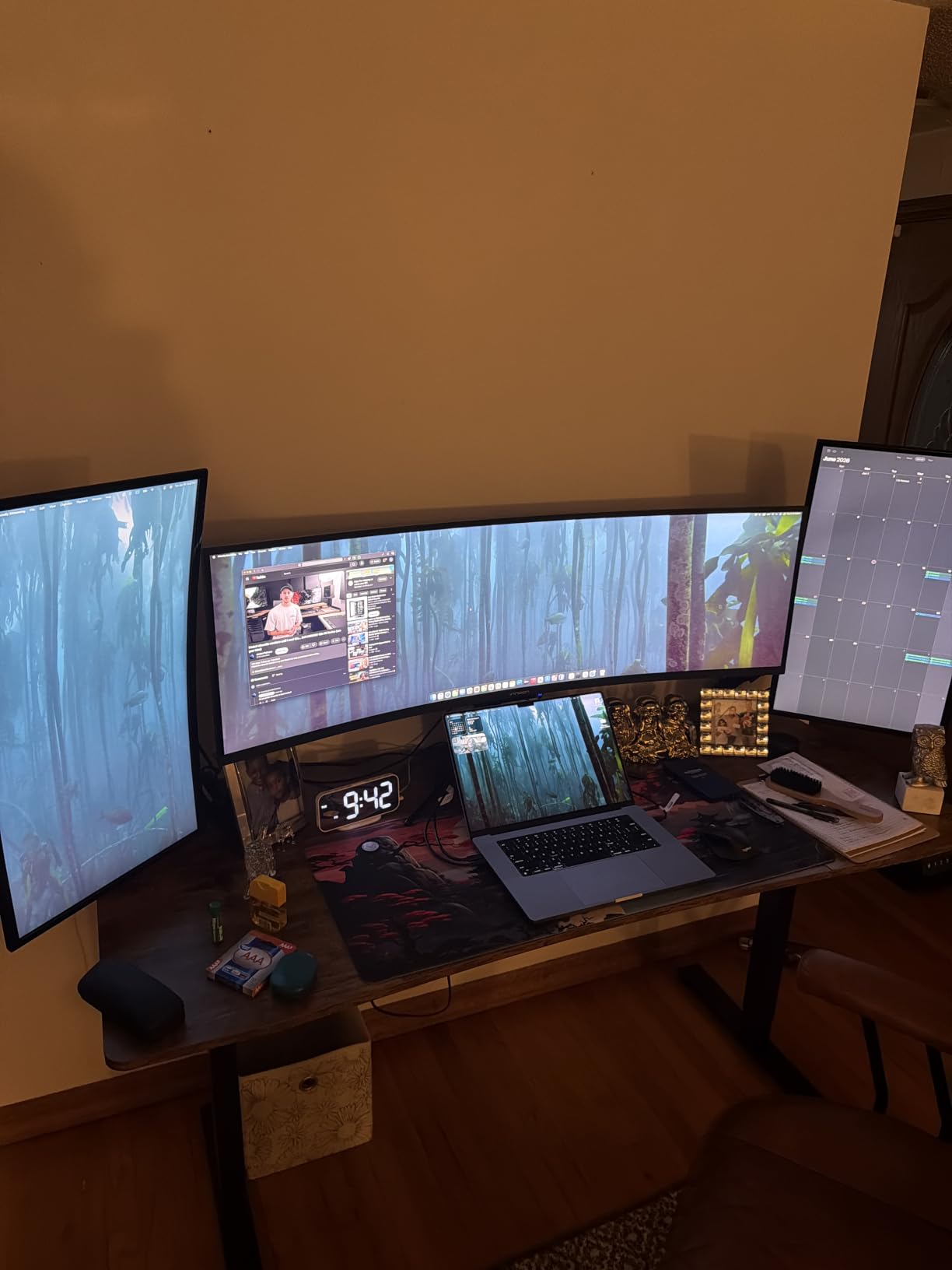
On the technical side, the INNOCN 49C1R uses an LCD panel with a 3000:1 contrast ratio and 400-nit brightness. The DisplayPort 1.4 and HDMI 2.1 connectivity supports the full resolution and refresh rate. The PIP and PBP split-screen technology lets you view two inputs simultaneously, which I used to monitor a server dashboard while working on my main machine.
The stand offers height and tilt adjustment, which covers the essentials. Build quality feels solid for the price tier, and the monitor has held a consistent position in Amazon’s computer monitor bestseller rankings. The 4.1-star rating with 223 reviews reflects a product that satisfies most users without exciting anyone.
The main limitations are the 120Hz refresh rate, which feels dated next to 165Hz and 240Hz competitors, and the single HDMI port. If you need to connect multiple HDMI devices like a game console and a PC, you will be swapping cables or using a switch. The FreeSync Premium and G-Sync Compatible support partially compensate for the lower refresh rate.
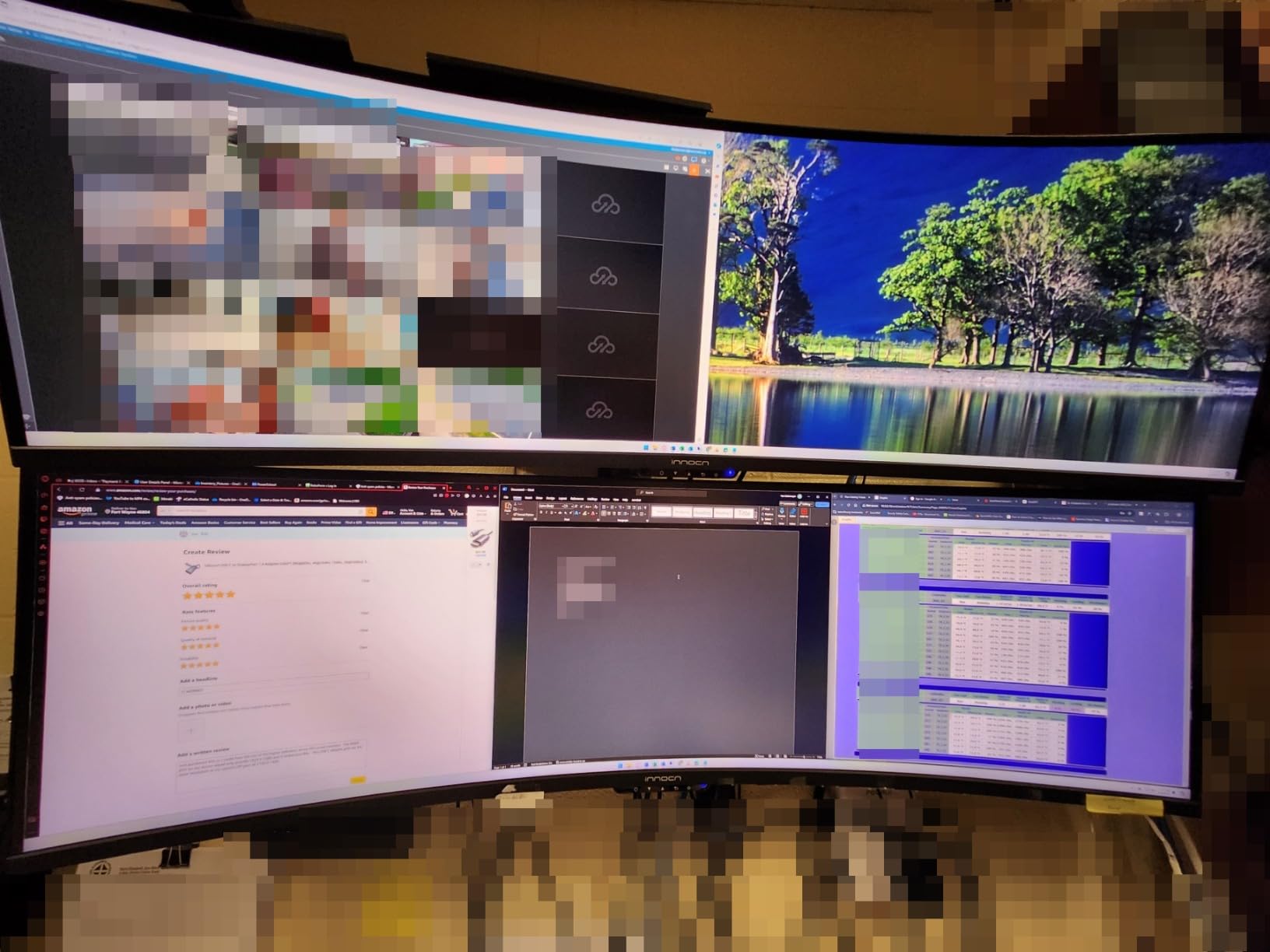
Multitasking and Window Management
At 5120×1440, you can comfortably run three full-width application columns. I typically arrange my IDE on the left third, a browser in the center, and communication apps on the right. Windows 11 Snap Layouts and tools like DisplayFusion or PowerToys FancyZones make managing windows on a screen this wide much easier than relying on manual dragging.
Eye Comfort During Extended Sessions
The flicker-free backlight and blue light filter genuinely reduce eye strain during long workdays. Combined with the 1800R curvature that keeps the screen edges at a comfortable viewing distance, this is one of the more comfortable monitors on this list for all-day use. Take regular breaks regardless, as no monitor eliminates fatigue entirely.
7. Deco Gear 49 inch DQHD – Home Office Champion
Deco Gear 49 Inch Curved Ultrawide Monitor, 5120×1440 Dual QHD 32:9 1500R VA Display, HDR400, 120Hz, Adaptive Sync, 1ms MPRT, USB-C 65W PD, KVM, PIP/PBP, Gaming & Workstation Setup, for PC & Laptop
49 inch VA
5120x1440
120Hz
1ms
1500R
Pros
- True 5120x1440 DQHD
- Built-in KVM switch
- USB-C 65W delivery
- PIP and PBP modes
Cons
- No built-in speakers
- Not Prime eligible
The Deco Gear 49 inch DQHD is designed for the home office warrior who wants a massive screen with productivity features without paying OLED prices. The standout feature is the built-in KVM switch, which lets you control two computers with one keyboard and mouse by routing everything through the monitor.
I tested this with my desktop PC and my work laptop connected simultaneously. Switching between the two machines was as simple as pressing a button on the monitor. The USB-C port delivered 65W of power to my laptop while carrying the display signal, which meant a single cable handled charging, video, and data for my portable machine.
The true 5120×1440 DQHD resolution is important to highlight because some monitors in this price range use lower resolutions like 3840×1080. The Deco Gear gives you the full 5120 horizontal pixels, which means sharper text and more usable screen space. For spreadsheet work and document editing, that extra sharpness matters.
The 120Hz refresh rate with Adaptive Sync makes casual gaming and media playback smooth. This is not a competitive gaming monitor, but for someone who games occasionally after work, it handles modern titles respectably at medium settings.
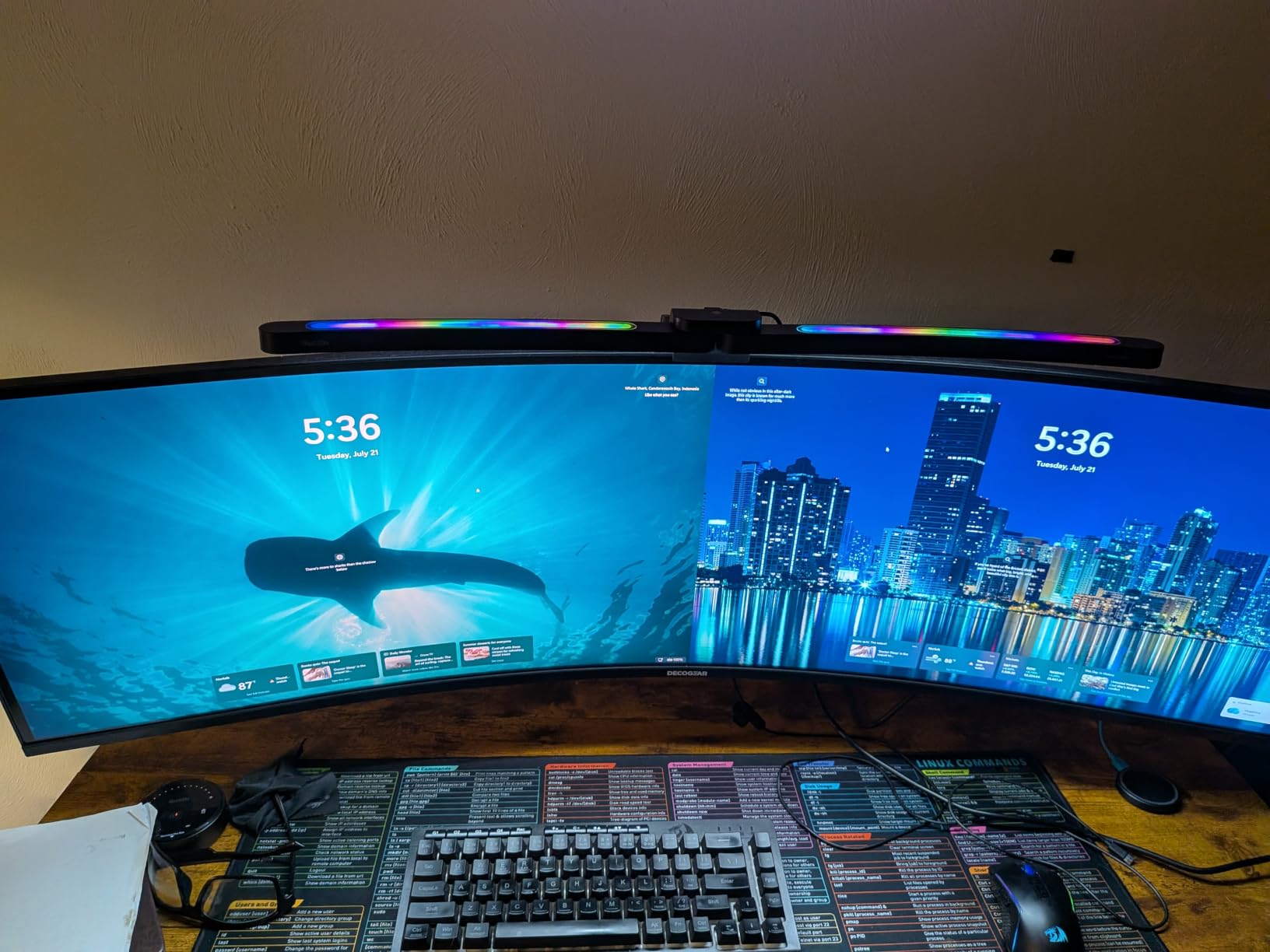
Technically, the VA panel delivers a 3000:1 contrast ratio with 400-nit brightness and 100% sRGB coverage. The HDR400 support adds some dynamic range for media consumption. The 1ms MPRT response time keeps motion blur in check for the casual gaming this monitor is suited for.
The stand offers height, tilt, and swivel adjustment, which is more than some competitors at this price. The monitor weighs 24.2 pounds and measures 46.7 inches wide, so verify your desk can accommodate it. Connectivity includes HDMI, DisplayPort, USB-A, and USB-B ports for the KVM functionality.
The absence of built-in speakers is a notable omission. You will need external audio for any sound output. The monitor is also not Prime eligible at the time of writing, which means potentially longer shipping times compared to Prime-eligible alternatives like the CRUA or INNOCN options.
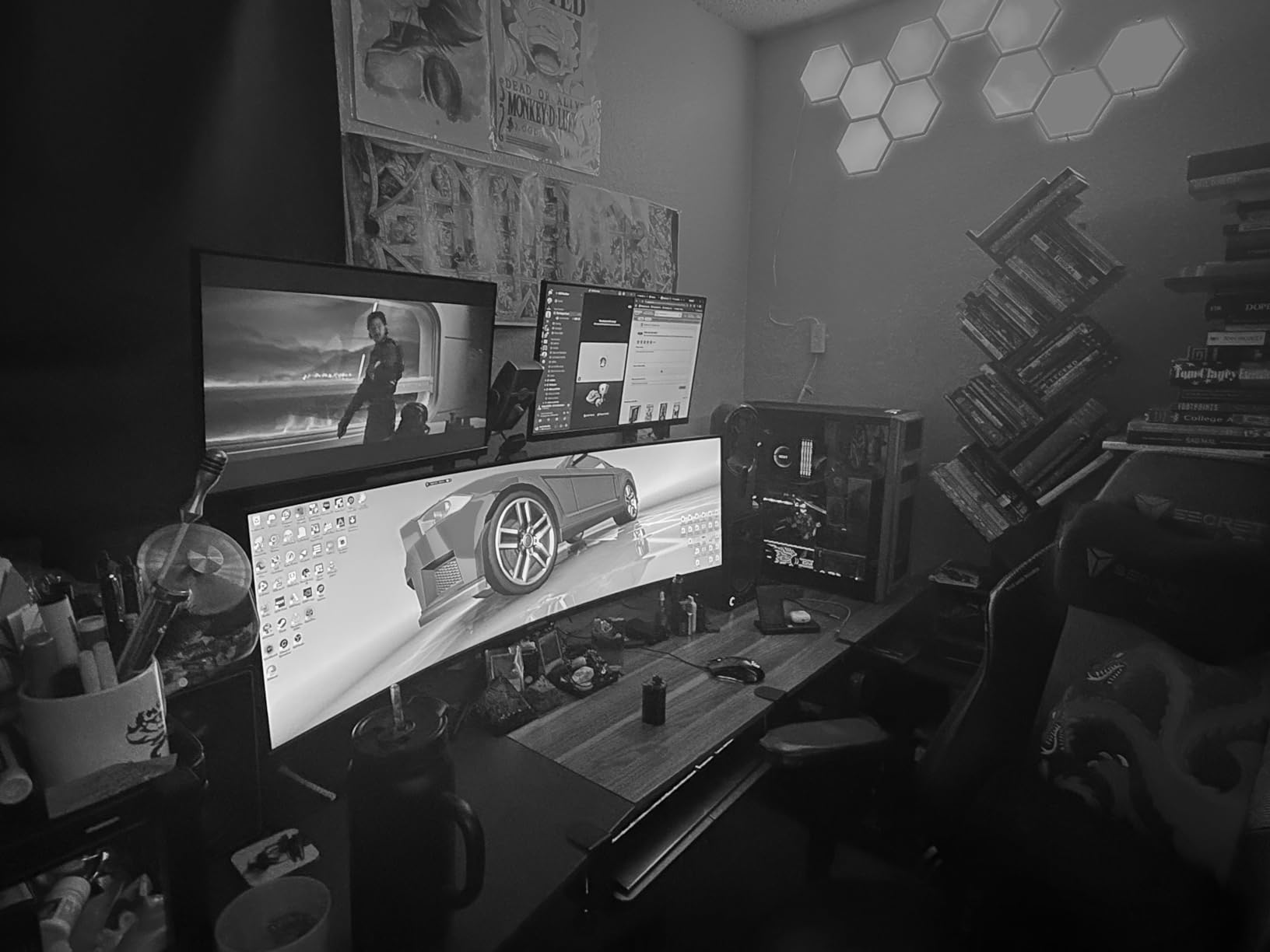
KVM Workflow Benefits
The KVM switch transforms this monitor from a display into a productivity hub. Connect your desktop via DisplayPort and your laptop via USB-C, then connect your keyboard and mouse to the monitor’s USB ports. A single button press switches all peripherals and the display between both machines. This is invaluable for anyone who works across two computers daily.
Connectivity and Port Layout
The port selection covers most needs with HDMI, DisplayPort, USB-C with power delivery, and USB-A and USB-B for the KVM function. The layout places ports facing downward, which makes cable management cleaner but can make plug changes fiddly. A monitor arm with a cutout helps with cable routing if you mount it.
8. INNOCN 49C1G – Best Budget Super Ultrawide
INNOCN 49″ Curved Gaming Monitor 144Hz Ultrawide 32:9 WDFHD 3840 x 1080P, R1800, 99% sRGB, HDR400, USB Type C, DisplayPort, HDMI, Built-in Speakers, Height/Tilt Adjustable – 49C1G
49 inch VA
3840x1080
144Hz
1ms
1800R
Pros
- 144Hz gaming
- USB-C 65W delivery
- PIP and PBP modes
- Height adjustable stand
Cons
- 3840x1080 not true DQHD
- Only one HDMI port
The INNOCN 49C1G is the most affordable entry into the super ultrawide experience on this list. At this price point, you are making some compromises, but the core 32:9 immersion is fully intact. With a 4.5-star rating and 81% of reviewers giving five stars, it has clearly resonated with budget-conscious buyers.
I tested this monitor for gaming, productivity, and media consumption. The 144Hz refresh rate with a 1ms response time delivered smooth gaming performance that felt competitive with more expensive VA options. AMD FreeSync kept tearing away, and the 1800R curvature added immersion without being overwhelming.
The resolution is the big trade-off to understand. At 3840×1080, this is dual Full HD rather than dual QHD. That means the pixel density is lower than the 5120×1440 panels on this list. Text is slightly less crisp, and you get less vertical screen space. For gaming and media this is perfectly fine, but for productivity you will notice the difference.
The USB-C port with 65W power delivery is a standout feature at this price. I connected my laptop and got charging plus display through one cable. The PIP and PBP split-screen modes let you display two sources at once, which adds flexibility for multi-device setups.
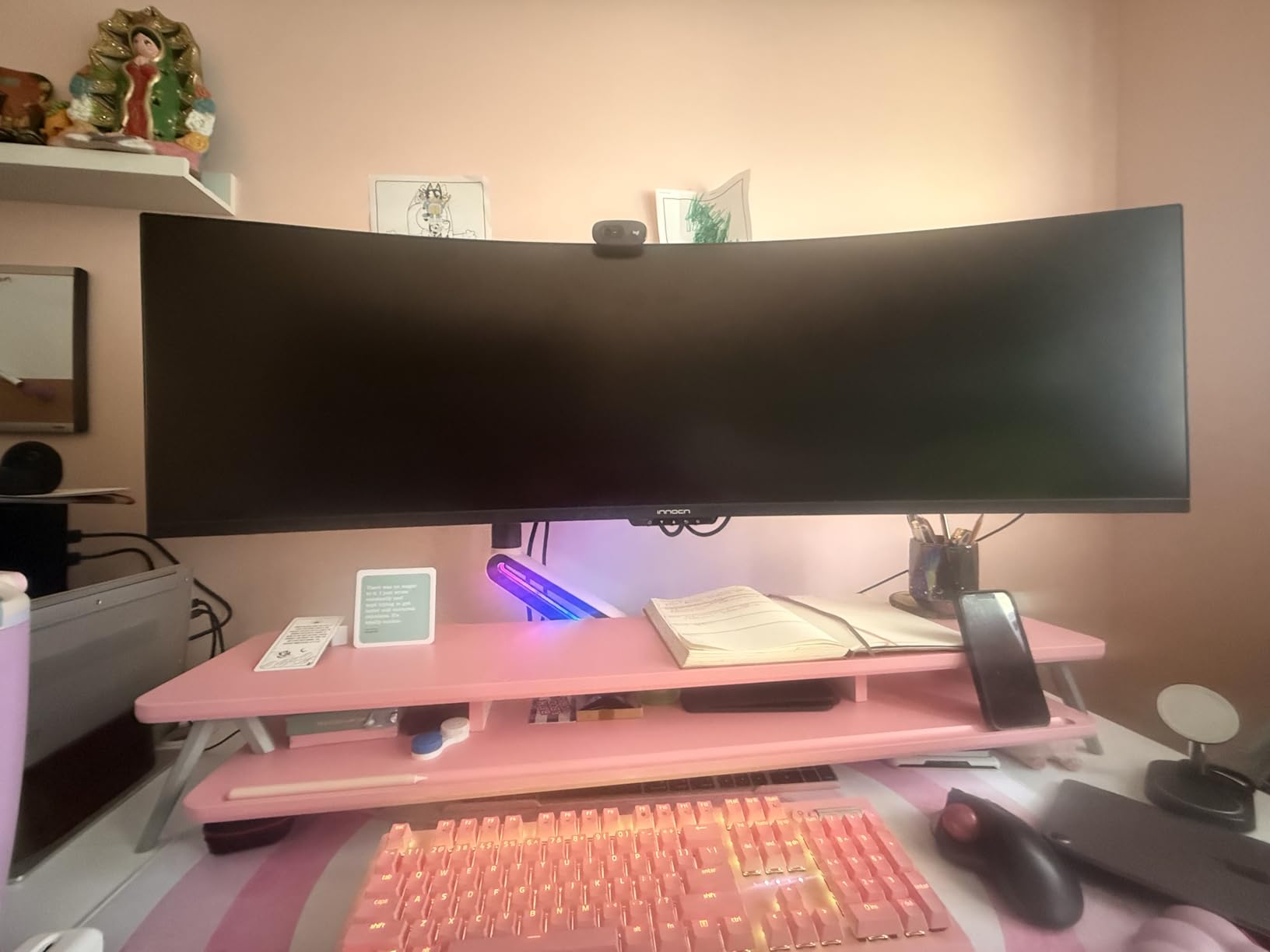
On the technical side, the VA panel delivers 99% sRGB color accuracy with HDR400 support and a 3000:1 contrast ratio. Colors look natural and well-balanced out of the box. The brightness level is adequate for indoor use, though direct sunlight will overwhelm it.
The stand offers height and tilt adjustment, which is impressive for a budget monitor. The 1800R curvature helps maintain a consistent viewing distance across the wide screen. Build quality is solid for the price, with no noticeable flex or wobble during normal use.
The main limitation beyond resolution is connectivity. With only one HDMI port, you cannot simultaneously connect an HDMI game console and an HDMI PC without a switch. The DisplayPort and USB-C connections help compensate, but HDMI users will need to plan their device layout.
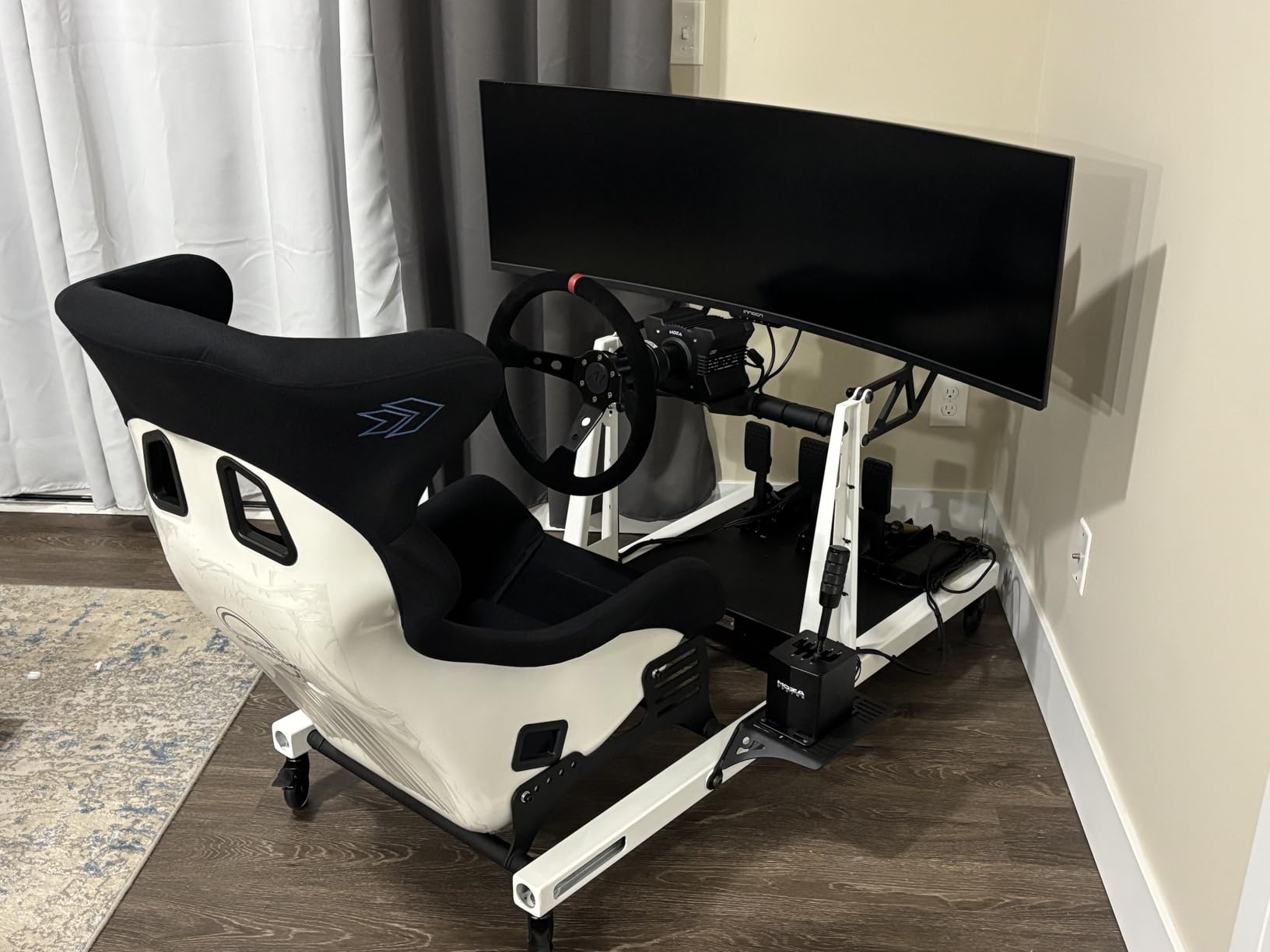
Resolution Tradeoffs Explained
The 3840×1080 resolution means each pixel is larger than on a 5120×1440 panel. This reduces sharpness, especially for text, but it also lowers the GPU load significantly. A mid-range GPU can drive 3840×1080 at high frame rates easily, making this monitor a great match for budget gaming builds. If text clarity is your priority, consider stepping up to a DQHD model.
Ideal Gaming Build Pairing
Because of the lower resolution, you do not need an expensive GPU to get great performance. An RTX 4060 or RX 7600 can push high frame rates at 3840×1080 in most games. This makes the INNOCN 49C1G one of the most accessible super ultrawide gaming experiences, since both the monitor and the required GPU stay affordable.
How to Choose the Best Super Ultrawide Monitor
Choosing between these monitors comes down to understanding what matters most for your use case. Let me break down the key decisions so you can narrow the field quickly.
Super Ultrawide vs Ultrawide: What Is the Difference?
This is the most common question I see on forums, and the answer is straightforward. A standard ultrawide monitor has a 21:9 aspect ratio, typically at 3440×1440 resolution and 34 inches diagonal. A super ultrawide monitor has a 32:9 aspect ratio, typically at 5120×1440 resolution and 49 inches diagonal.
In practical terms, a super ultrawide gives you the screen space of two 27-inch monitors side by side with no bezel gap. A standard ultrawide gives you roughly 1.5 times the width of a standard 16:9 display. Super ultrawide monitors are more immersive for gaming and more productive for multitasking, but they require more desk space and a more powerful GPU.
Panel Technology: QD-OLED vs WOLED vs VA vs LCD
Panel technology is the single biggest factor in image quality. QD-OLED panels, like those in the Samsung Odyssey G93SC and Deco Gear OLED, deliver perfect blacks, instant response times, and rich colors. They are the best choice for gaming immersion and dark-room viewing, but they are more expensive and carry a small burn-in risk over thousands of hours.
WOLED is another OLED variant that some manufacturers use. It offers similar black levels but with slightly different color characteristics. For super ultrawide monitors in 2026, QD-OLED dominates the OLED segment.
VA panels, found in the CRUA, Great voell, INNOCN 49C1G, and Deco Gear DQHD, offer high contrast ratios (typically 3000:1) at much lower prices than OLED. They are the best value choice. The trade-off is slower response times and potential black smearing in dark, fast-moving scenes.
Standard LCD panels, like those in the Samsung Business S95UA and INNOCN 49C1R, prioritize brightness and productivity features. They are the brightest option, which matters in well-lit offices, but they cannot match the contrast of VA or OLED panels.
Resolution and Pixel Density
The two main resolutions you will encounter are 5120×1440 (DQHD) and 3840×1080 (DFHD). DQHD gives you significantly sharper text and more vertical screen space, which matters for productivity. DFHD is easier on your GPU and perfectly adequate for gaming and media.
For mixed gaming and work, I strongly recommend 5120×1440. The text clarity difference is noticeable the moment you open a document. If you are buying purely for gaming and want to maximize frame rates on a budget GPU, 3840×1080 is a reasonable compromise.
Refresh Rate by User Type
Refresh rate determines how smooth motion appears. Here is how I would match refresh rates to user types. Competitive gamers should target 240Hz, which only the Samsung G93SC and CRUA offer on this list. Enthusiast gamers will be happy with 144Hz to 165Hz, covered by the Deco Gear OLED, Great voell, and INNOCN 49C1G. Productivity-focused users can comfortably use 120Hz, which every other monitor on this list provides.
Higher refresh rates also reduce eye strain during scrolling and window movement, so even non-gamers benefit from 120Hz over the older 60Hz standard.
Curvature: 1000R vs 1500R vs 1800R
Curvature is measured in millimeters, with a lower number meaning a tighter curve. A 1000R curve, like the Samsung Business S95UA, matches the natural curvature of the human eye and provides maximum immersion. Some users find it too aggressive for productivity work.
A 1500R curve, found in the CRUA and Great voell, is the middle ground. It adds immersion without feeling overwhelming. A 1800R curve, used by the Samsung G93SC, INNOCN models, and Deco Gear, is the gentlest option and the most comfortable for extended productivity sessions.
Desk Space Requirements
This is a gap I noticed across competitor reviews. A 49-inch super ultrawide monitor is roughly 45 to 47 inches wide and 10 to 22 inches deep with its stand. You need a desk at least 55 inches wide and 24 inches deep to accommodate the monitor comfortably with room for peripherals.
If your desk is smaller, consider a heavy-duty monitor arm with a VESA mount. All eight monitors on this list support VESA mounting, which frees up desk space and allows more flexible positioning. Check the weight rating of your arm, as these monitors range from 21 to 32 pounds.
GPU Requirements for High Refresh Rates
Driving 5120×1440 at high refresh rates is demanding. For 240Hz gaming at DQHD resolution, you will want an RTX 4070 Ti or RTX 4080 class GPU. For 165Hz, an RTX 4070 or RX 7800 XT handles most games well. For 120Hz productivity and casual gaming, an RTX 4060 or even integrated graphics with DisplayPort 1.4 will work.
If you choose a 3840×1080 panel like the INNOCN 49C1G, the GPU requirements drop significantly. A mid-range card can easily drive that resolution at 144Hz in most titles.
Super Ultrawide Monitor FAQs
What is the best super ultrawide monitor?
The Samsung Odyssey G93SC is the best super ultrawide monitor overall thanks to its QD-OLED panel, 240Hz refresh rate, and 0.03ms response time. For value, the CRUA 45 inch DQHD delivers 240Hz at a much lower price. For budget buyers, the INNOCN 49C1G offers the most affordable entry into the 32:9 experience.
What is the difference between ultrawide and super ultrawide?
A standard ultrawide monitor has a 21:9 aspect ratio at 3440×1440 resolution, typically 34 inches. A super ultrawide has a 32:9 aspect ratio at 5120×1440 resolution, typically 49 inches. A super ultrawide provides the screen space of two 27-inch monitors side by side with no bezel gap, offering more immersion for gaming and more space for productivity.
Is a super ultrawide monitor worth it?
A super ultrawide monitor is worth it if you want to replace a dual-monitor setup with a single seamless display, value immersion for gaming or simulators, or need maximum screen real estate for productivity. The main tradeoffs are the desk space required and the GPU power needed to drive high resolutions at high refresh rates.
What is the 49 inch super ultrawide monitor?
A 49 inch super ultrawide monitor is a 32:9 aspect ratio display with a typical resolution of 5120×1440 (DQHD) or 3840×1080 (DFHD). It provides the equivalent workspace of two 27-inch monitors placed side by side. Popular 49 inch super ultrawide models include the Samsung Odyssey G93SC, Samsung Business S95UA, CRUA 45 inch, and INNOCN 49C1G.
Do you need a powerful GPU for a super ultrawide monitor?
It depends on the resolution and refresh rate. For 5120×1440 at 240Hz, you need a high-end GPU like an RTX 4070 Ti or better. For 165Hz, an RTX 4070 suffices. For 3840×1080 at 144Hz, a mid-range GPU like an RTX 4060 handles most games well. Productivity use at 120Hz requires minimal GPU power.
Final Thoughts on the Best Super Ultrawide Monitors
The best super ultrawide monitors in 2026 cover a remarkably wide range of needs and budgets. The Samsung Odyssey G93SC remains the OLED gaming benchmark with its 240Hz QD-OLED panel. The CRUA 45 inch delivers the best price-to-performance ratio with 240Hz at a fraction of OLED pricing. And the INNOCN 49C1G proves that you do not need to spend a fortune to experience the 32:9 immersion that makes super ultrawide monitors so compelling.
Whatever you choose, measure your desk, check your GPU, and pick the panel technology that matches how you actually use your screen. Any of these eight monitors will transform your computing experience the moment you plug it in.