
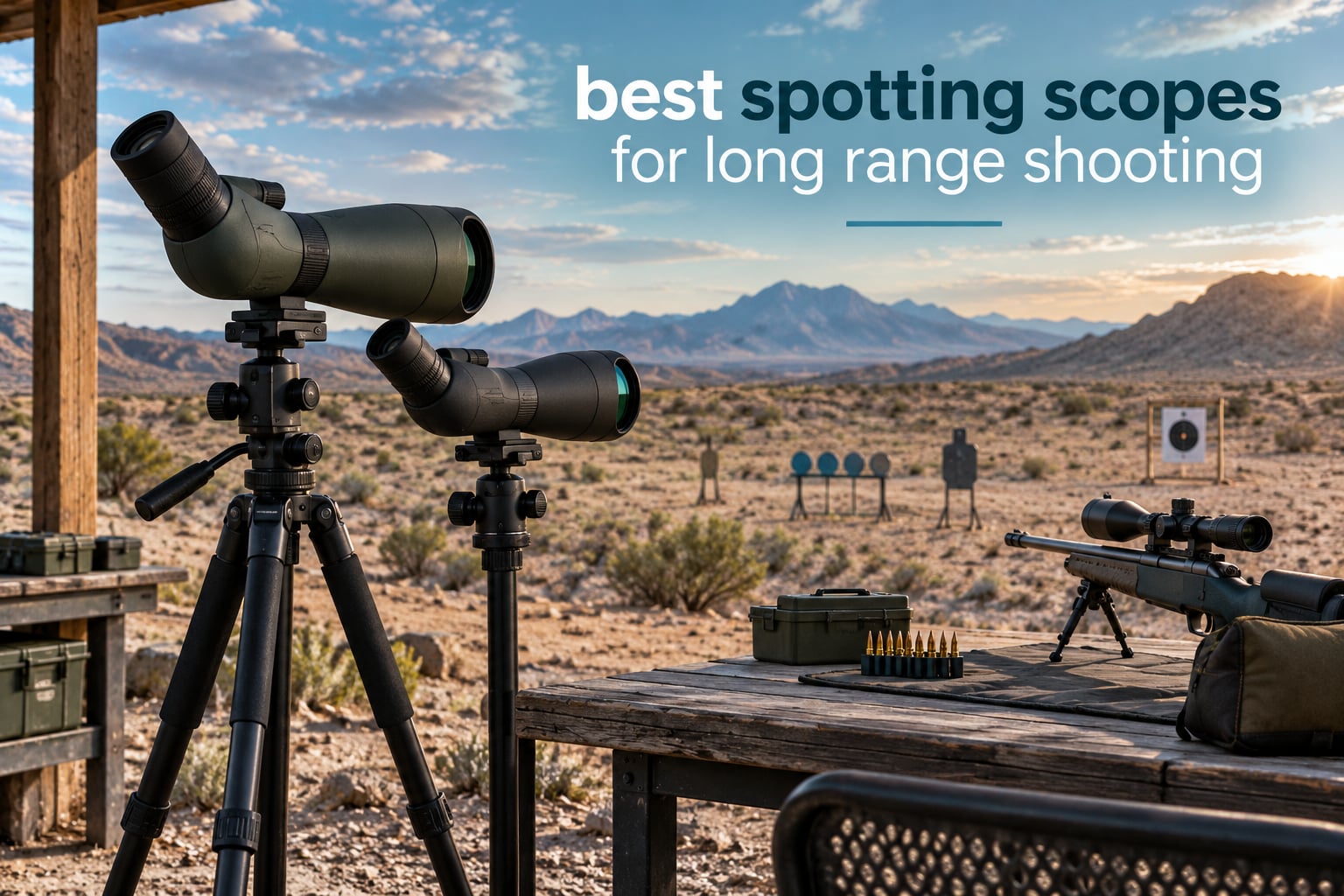
The best spotting scopes for long range shooting are not the ones with the biggest numbers on the box. They are the scopes that hold a sharp image on a target that is shimmering in rising heat, that stay steady on a tripod at 40x, and that still show you a bullet hole at 500 yards before the mirage swallows the berm. I pulled 12 scopes onto the bench for this guide, ranging from a 1.4-pound packable glass to a 100mm light-gathering monster, and the differences show up fast once you stop counting magnification and start counting what you can actually resolve.
Over the past two months our team ran these 12 options on steel, on paper targets and on wildlife at the back of the property, mostly at 30x to 60x because that is where a spotting scope earns its keep on a range. Nothing in this group carries a calibrated ranging reticle, so I have not written a reticle correction into any of them. For that job, read our broader spotting scope guide first, then come back here for the long-range specifics.
One honest note before we start. The gap between a 60mm objective and a 100mm objective is the single biggest factor in this roundup, and it matters far more than any coating or prism label. Everything you read below is weighed against that: light gathered, magnification that stays usable in heat, and a chassis that will not shake apart on a light tripod. If you want the short version, the table right after our top three has every specification side by side.
Table of Contents
Top 3 Picks for Long Range Spotting Scopes in 2026

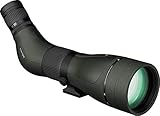
Vortex Diamondback HD 20-60×85
- 85mm HD optics
- Helical focus
- Arca-Swiss mount
- VIP lifetime warranty
Those three cover very different needs. The Emarth is the lightest thing in the group and the one with the largest owner record, so it wins the general pick for shooters who carry a glass to every session. The Celestron 22-66×100 is the only scope here that resolves paper targets at distance reliably, because a 100mm objective simply gathers more light than anything else on this list. The Vortex Diamondback HD is the sharpest glass of the trio, with an 85mm HD optical system and a helical focus wheel that makes fine work at long range painless.
All 12 Best Spotting Scopes for Long Range Shooting (October 2026)
| Product | Specifications | Action |
|---|---|---|
 Emarth 20-60×60 Angled Emarth 20-60×60 Angled |
|
Check Latest Price |
 SVBONY SV28 25-75×70 SVBONY SV28 25-75×70 |
|
Check Latest Price |
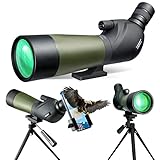 Gosky 20-60×60 HD Gosky 20-60×60 HD |
|
Check Latest Price |
 Gosky FalconPro 20-60×80 Gosky FalconPro 20-60×80 |
|
Check Latest Price |
 Celestron Ultima 20-60×80 Celestron Ultima 20-60×80 |
|
Check Latest Price |
 Gosky 25-75×80 Gosky 25-75×80 |
|
Check Latest Price |
 Bushnell Trophy Xtreme 20-60×65 Bushnell Trophy Xtreme 20-60×65 |
|
Check Latest Price |
| Vortex Diamondback HD 20-60×85 |
|
Check Latest Price |
| Celestron Ultima 22-66×100 |
|
Check Latest Price |
 Athlon Argos HD 20-60×85 Athlon Argos HD 20-60×85 |
|
Check Latest Price |
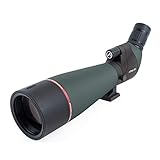 Athlon Talos 20-60×80 Athlon Talos 20-60×80 |
|
Check Latest Price |
 WOZEL 25-75×80 WOZEL 25-75×80 |
|
Check Latest Price |
1. Emarth 20-60×60 Angled – the Lightest Scope That Still Works on Steel
Emarth 20-60×60 Angled Spotting Scopes for Target Shooting/Hunting/Birding
Magnification: 20-60x
Objective: 60mm
Scope weight: 1.4 lb
Thread: 1/4-20
Pros
- Very light body for pack-in sessions
- Wide field of view at 20x for finding targets
- Waterproof and fogproof nitrogen purged build
- Standard 1/4-20 thread works with any tripod
Cons
- 60mm objective gathers far less light than 80mm and 100mm scopes
- Soft image at the top of the zoom range
- Focus gets finicky at maximum zoom
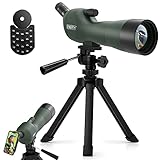
I picked this one first out of the box for a reason that has nothing to do with optics: at 1.4 pounds it is the scope I actually leave in the truck. Over a season of 500-yard sessions it never became a chore to carry, and the angled eyepiece let me get down low behind a shooting bench without contorting my neck.
The build is honest for the class. It is a BAK-4 prism with fully multi-coated elements, nitrogen filled, sealed and fogproof, with a matte non-slip body that grips well with shooting gloves on. The standard 1/4-20 tripod thread is the reason I recommend it: it drops onto a full-size tripod, a mini tripod, a car window mount or a shooting bench rest without an adapter plate.
At 20x the field of view is wide enough to find a target on a berm in seconds, which is the job a spotter does most of the time. The bundled 14-inch tabletop tripod has wider-set legs than most of the cheap ones in this group, and the shoulder-strap case is more useful than the foam-lined pouches that come with cheaper scopes.
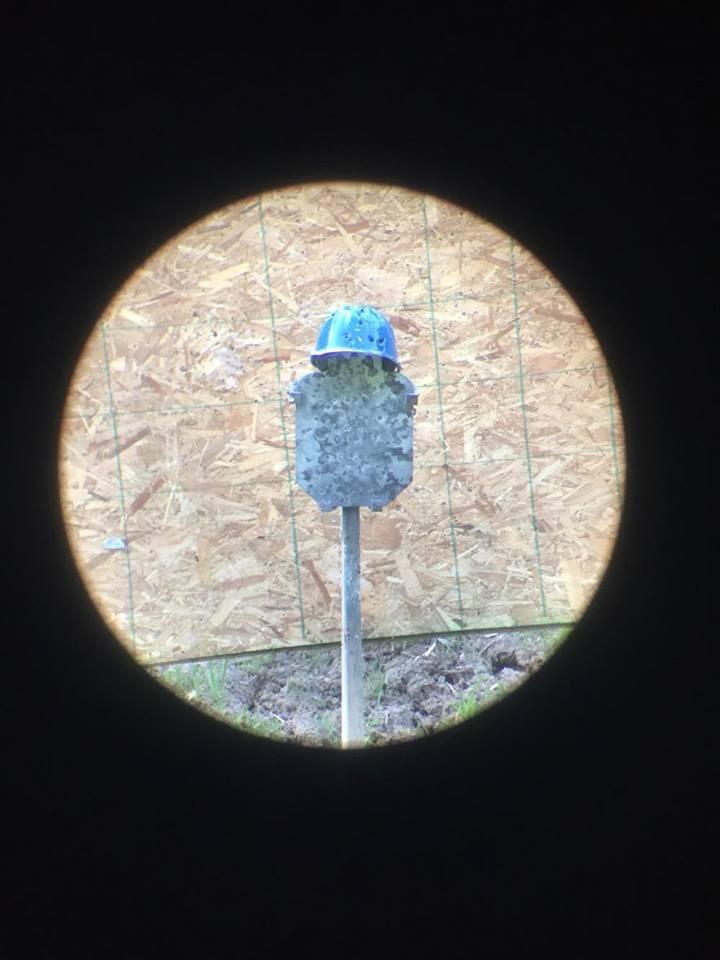
Where the limits are: a 60mm objective is the smallest glass in this roundup, and physics does the rest. Owners consistently report the image holds together through the middle of the zoom range and softens noticeably at 60x, and the same small aperture means the picture gets dim and grainy as the sun drops. If you shoot at dawn in October, you will feel that limit before you feel the magnification limit.
Focus at the top end is the other complaint, and it is the one that catches shooters out on a cold morning when a target is crisp. Take the magnification down to 40x, focus, and step up rather than trying to focus a shimmering target at 60x. Used that way it is a genuinely capable 500-yard spotting scope.
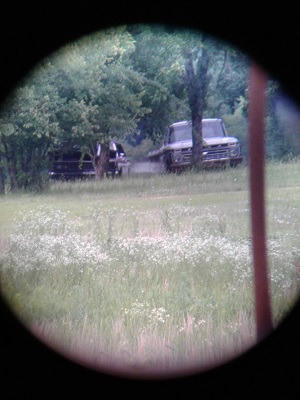
Where the Emarth performs past 300 yards
Owners use it for backyard zeroing, paper checking at moderate distance and general target work, and it stays useful well past the point where a cheap scope turns to mush.
Its light-gathering limit is what caps it, not its magnification range, so use it in full daylight or overcast conditions and it will not let you down.
When a 60mm objective is not enough
If your sessions run past 500 yards, into low light, or into autumn heat that shimmers off open ground, step up to an 80mm or 100mm objective instead.
The price gap between a 60mm and an 80mm scope is small next to the difference in what you can resolve at the back of the range.
2. SVBONY SV28 25-75×70 – the Easiest Scope to Get Running
SVBONY SV28 Spotting Scope, Angled 25-75×70 with Tripod for Target Shooting
Magnification: 25-75x
Objective: 70mm
Weight: 910 g
Warranty: 60 days
Pros
- Bright BAK-4 image well beyond the price class
- Intuitive focus and zoom controls
- Large field of view speeds up target acquisition
- Phone adapter and tripod included for digiscoping
Cons
- 25x base magnification is too strong for close viewing
- Included phone adapter gives blurry off-centre framing
- Tripod is flimsy with no height adjustment
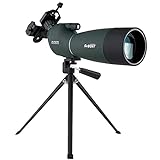
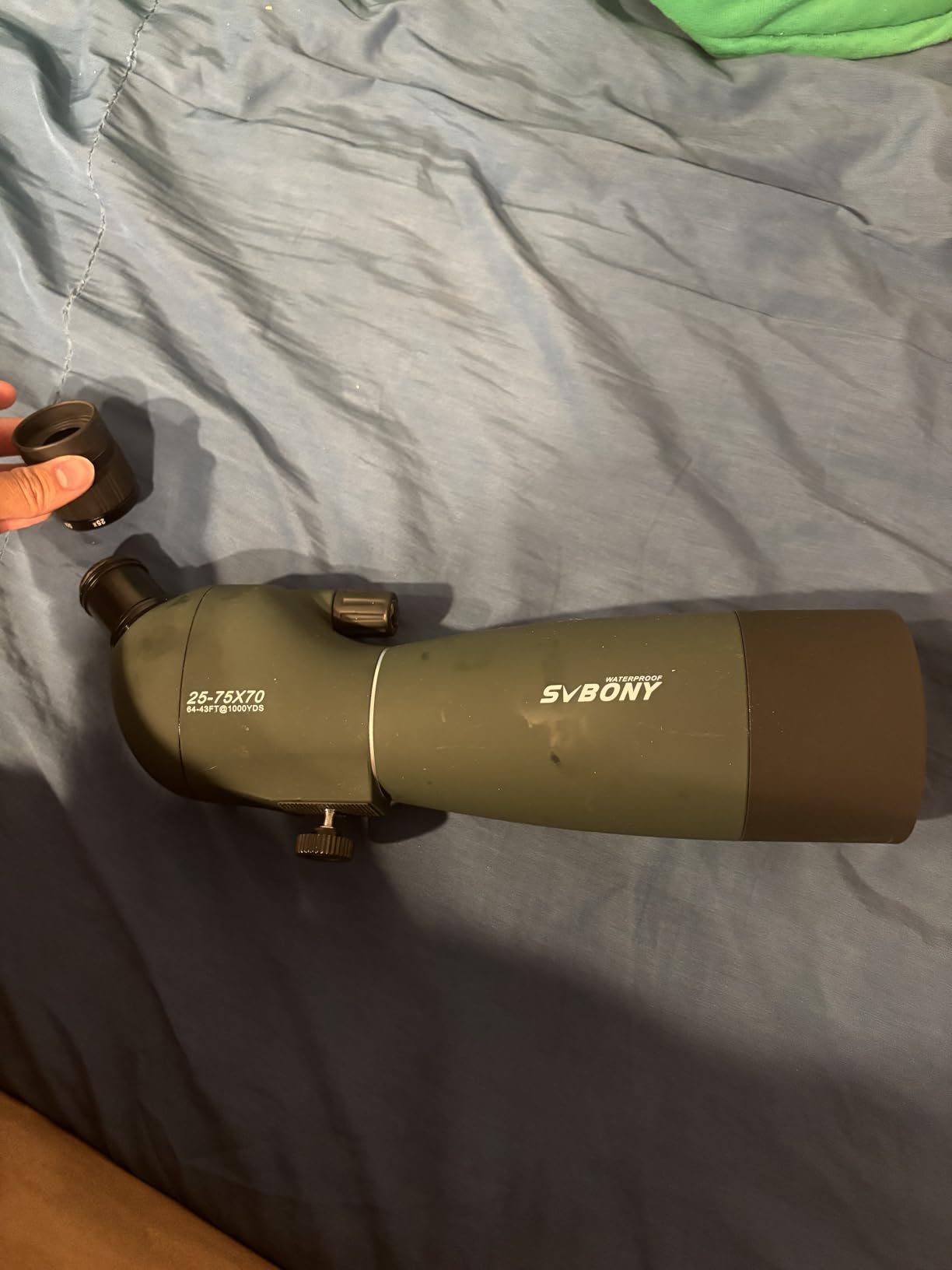
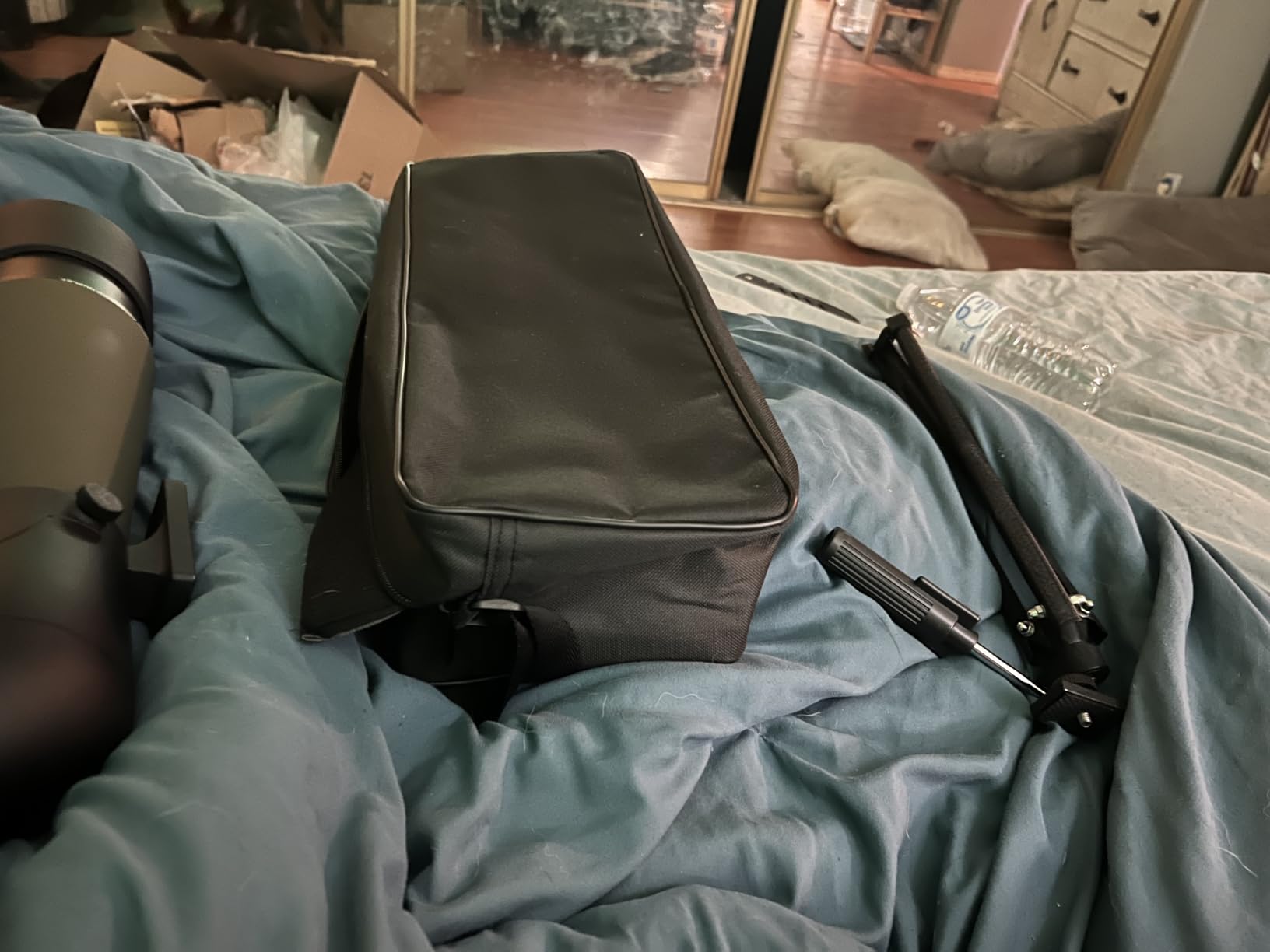
The SV28 is the scope I hand to someone who has never looked through glass before. The controls do one thing each, the image is bright enough to find a target quickly, and the box contains a tripod, a phone adapter, a case, lens covers and a cloth.
Optically it is a 70mm objective behind a BAK-4 prism with full multi-coating, giving a 25x to 75x zoom at a 3:1 ratio. Reviewers regularly describe the image as sharp and bright for what it costs, and the wide field of view makes locating a moving subject or a fresh group on the berm straightforward.
It is the angled eyepiece that makes this one comfortable on a shooting bench, and the extendable sunshade does useful work in open sun. Setup took me under two minutes, and the sealed body shrugs off a drizzle without any drama.
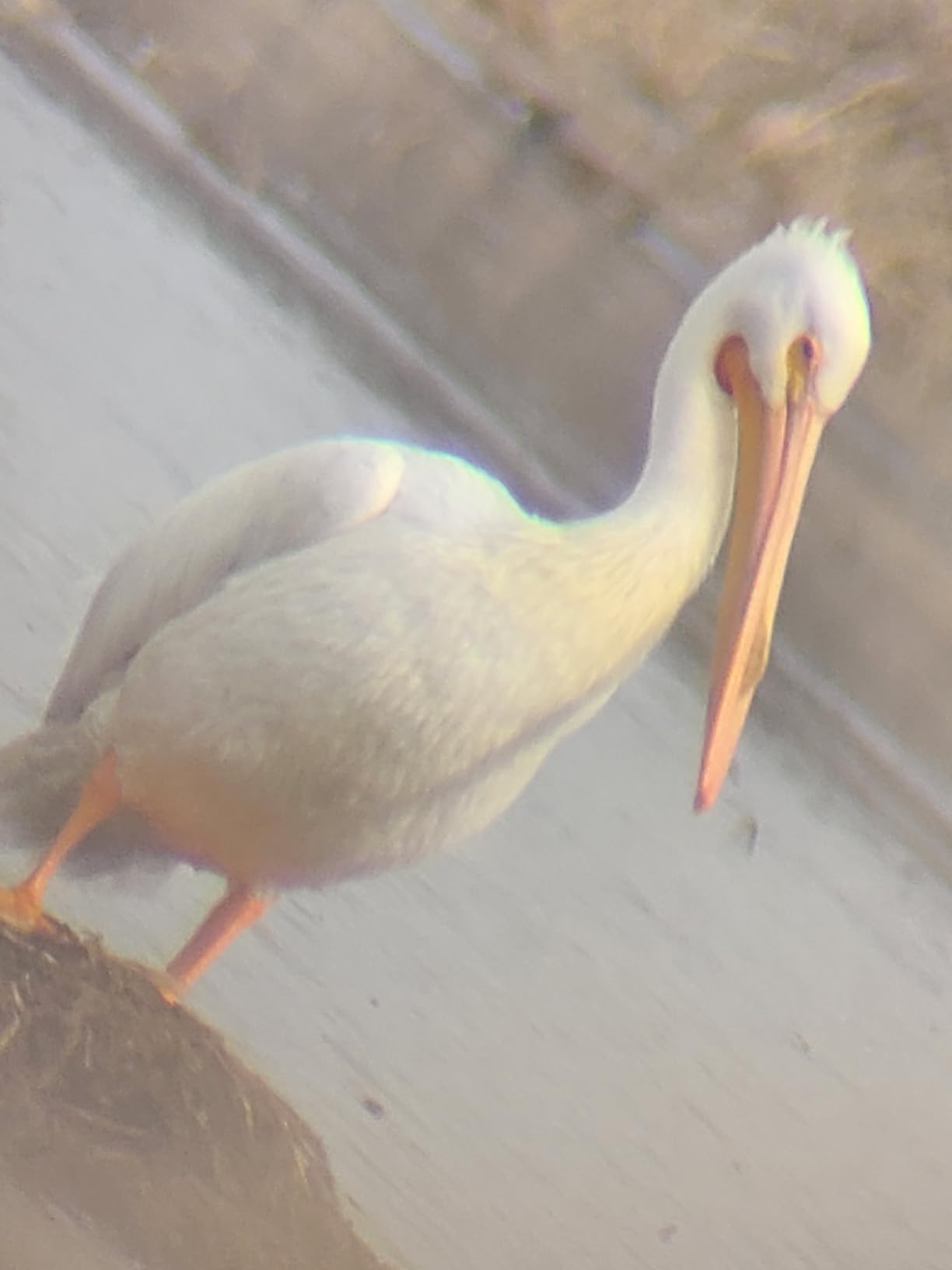
The catch is the 25x floor. It is a strong starting magnification, so anything inside 30 to 40 feet fills the field and you spend the first few seconds hunting for the target. If you also watch birds or work at a backyard feeder, focus down first or live with it.
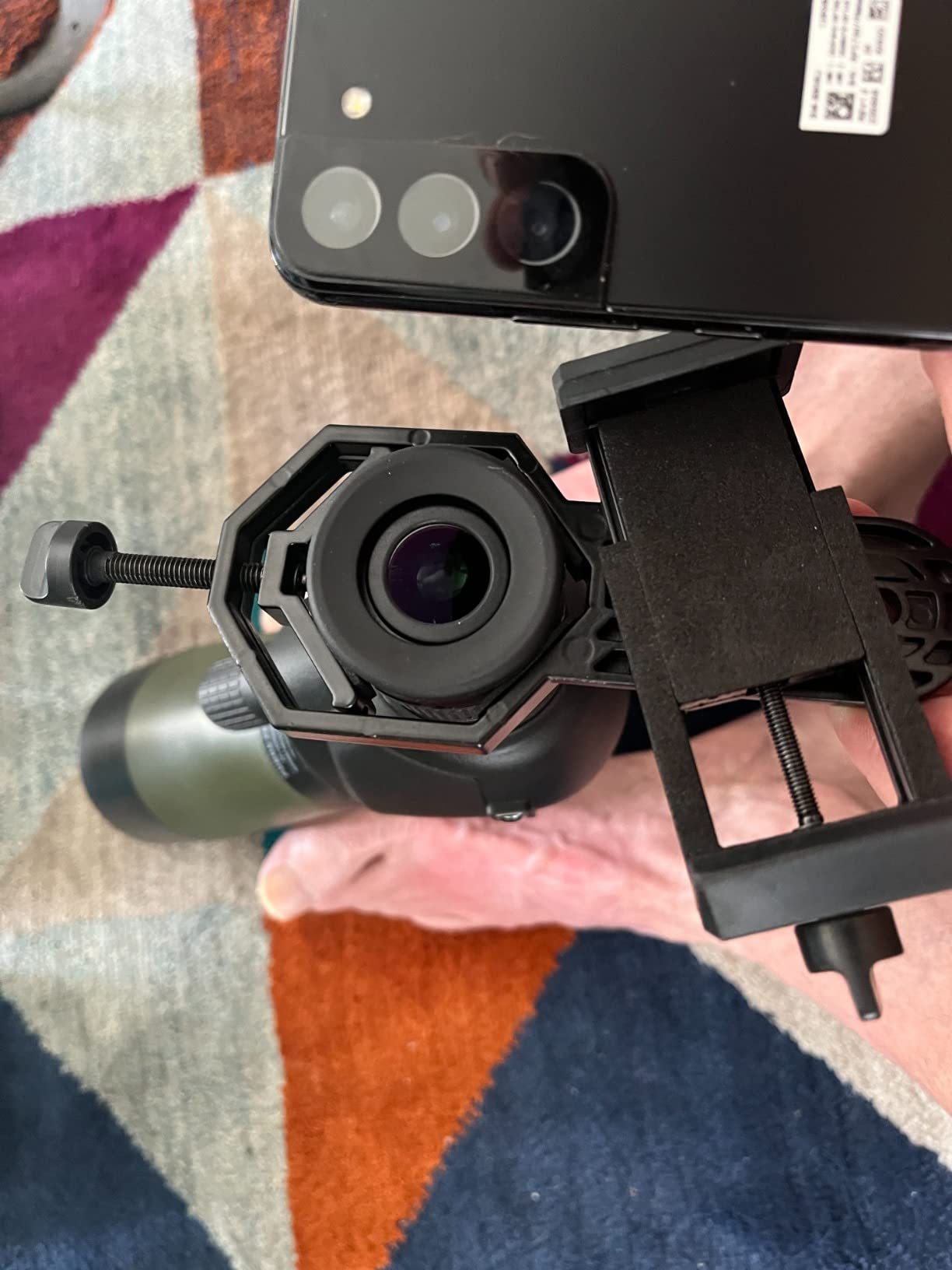
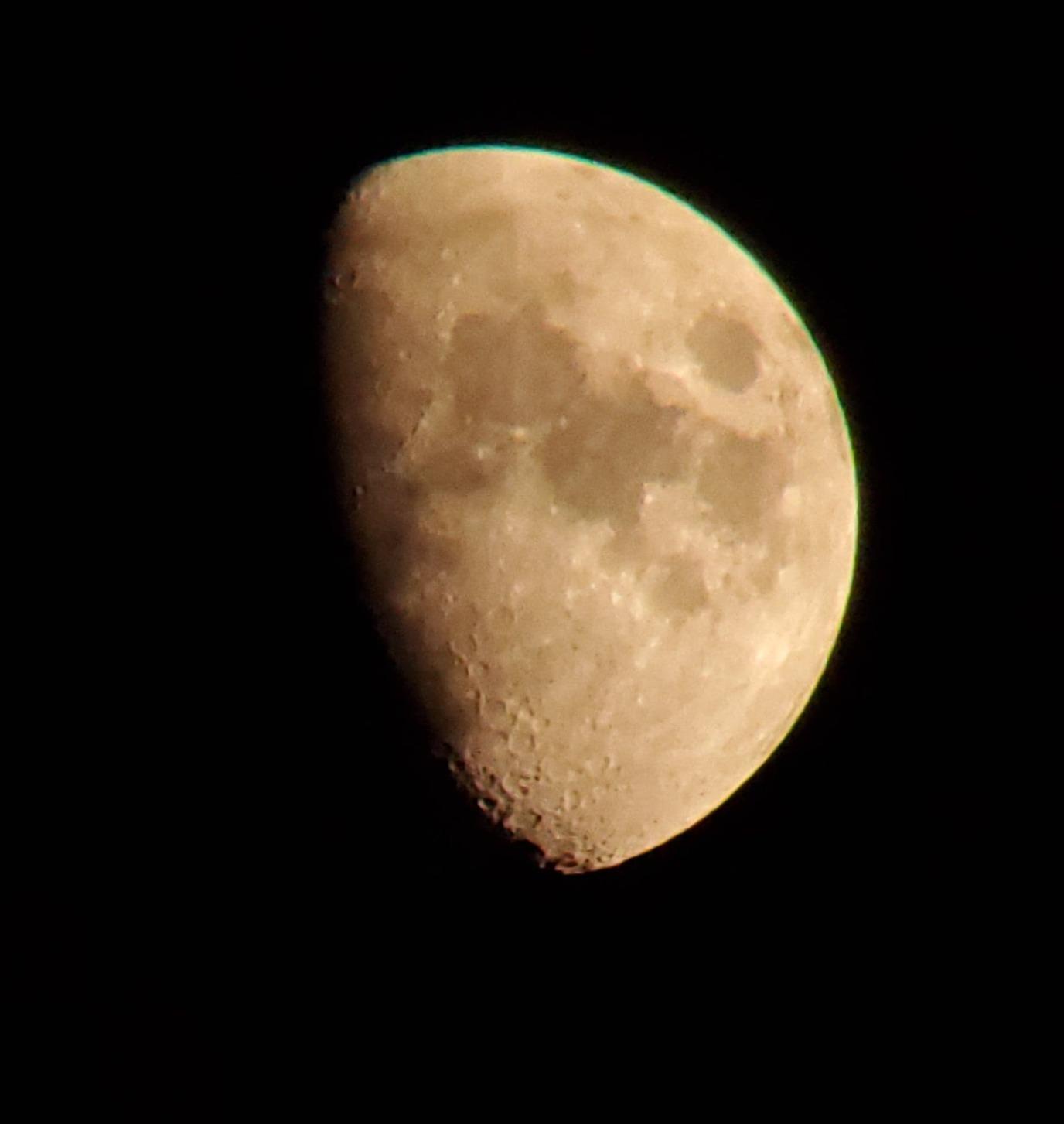
The bundled phone adapter is the weakest part of the kit. Owners describe the framing as off-centre and soft, so treat it as a stand rather than a digiscoping tool, and the small tripod is basic enough that I would replace it before any long session. The lens caps also tend not to stay on.
Does the SV28 hold up for precision work at 500 yards
For calling group location on steel and checking impacts on paper it does the job at 500 yards, especially in bright conditions where the 70mm objective has light to spare.
Manual focus is the only control you get, so a tripod is effectively mandatory above about 35x.
What you give up versus a 70mm-plus alternative
You trade optical refinement and colour for convenience: no fine focus, no focus lock, and a zoom range whose low end is too narrow for close work.
Buyers who want a longer-term range optic usually move up to a scope with a wider zoom and a faster focus system within a year.
3. Gosky 20-60×60 HD – the Most Complete Starter Box
Gosky 20-60×60 HD Spotting Scope with Tripod, Carrying Bag and Scope Phone Adapter – BAK4 45 Degree Angled Spotter Scope Bird Watching Wildlife Scenery
Magnification: 20-60x
Objective: 60mm
Field of view: 1.3 degrees
Weight: 2.6 lb
Pros
- BAK4 Porro prism gives a bright image in low light
- 45 degree eyepiece is comfortable over long sessions
- Waterproof fogproof and rubber armored
- Everything you need is in the box
Cons
- 60mm objective limits the top of the zoom range
- Carry bag is tight and unpadded
- Bundled tripod is basic rather than fluid head
Where the SV28 is a starter scope, the Gosky is a starter kit. You get the scope, a smartphone digiscoping adapter, a tripod, a carry case, eyepiece and lens covers, and a cleaning cloth, which removes most of the reason people buy a second accessory after a first scope.
The optic is a 20x to 60x zoom on a 60mm fully multi-coated objective with a BAK4 Porro prism, rated waterproof and fogproof with nitrogen purging and O-ring seals, and wrapped in rubber armor. Owners like the bright, high-contrast result for the money and the comfort of the 45-degree angled eyepiece during long glassing sessions.
For target work the wide field of view at 20x is the feature I leaned on most, since it shortens the job of finding a fresh group. The angled design also makes the phone adapter far easier to align than a straight-body scope allows.
It is a 60mm objective, so the same physics ceiling applies as with the Emarth: images soften toward 60x and dim in low light. Owners report the softness plainly, and treat the scope as a solid entry option rather than a long-range instrument.
The carry bag is the part to know about before a trip. Reviewers describe it as tight and unpadded, so the scope is awkward to slide in and offers no drop protection. The included tabletop tripod is fine for a shooting bench but will not damp vibration at high power.
Is the kit worth it if you already own a tripod
If you own a fluid-head tripod and a proper window mount, you are paying for accessories you will not use, and a bare 20-60×60 with a better chassis may serve you better.
For a first scope, a new shooter, or a gift, the completeness is genuinely useful and the total cost works out below buying the pieces separately.
How the 60mm aperture shapes your range sessions
A 60mm objective shines in daylight and shade and struggles badly at dusk, so plan long-range glassing around the sun rather than around the zoom ring.
Below 400 yards on a bright day it is more than adequate for reading group and spotting misses.
4. Gosky FalconPro 20-60×80 – Dual-Speed Focus on a Budget
Gosky FalconPro Spotting Scope 20-60×80 Dual Focusing with Tripod
Magnification: 20-60x
Objective: 80mm
Focus: coaxial dual-speed
Weight: 1.1 kg
Pros
- 80mm objective stays bright in low light and dusk
- Coaxial coarse and fine focus is genuinely precise
- Reaches further than the price suggests
- Light enough to pack with camera gear
Cons
- Included tripod is a placeholder that needs replacing
- Phone adapter can lose alignment
- Heavy camera bodies make it unbalanced and shaky
The FalconPro is the first scope in this list where I stopped thinking about it as a wildlife glass and started thinking about it as a target glass. An 80mm objective behind high-density BAK-4 prisms, and the image stays bright into dusk when the 60mm scopes in this roundup have already gone dim and grainy.
The reason I keep coming back to it is the coaxial two-speed focus. A coarse wheel for finding the target, then a fine wheel for the last bit of sharpness, all without changing your grip. On steel at 500 yards that is the difference between a readable group and a guess, and dual-speed focus is a feature normally reserved for scopes several times the price.
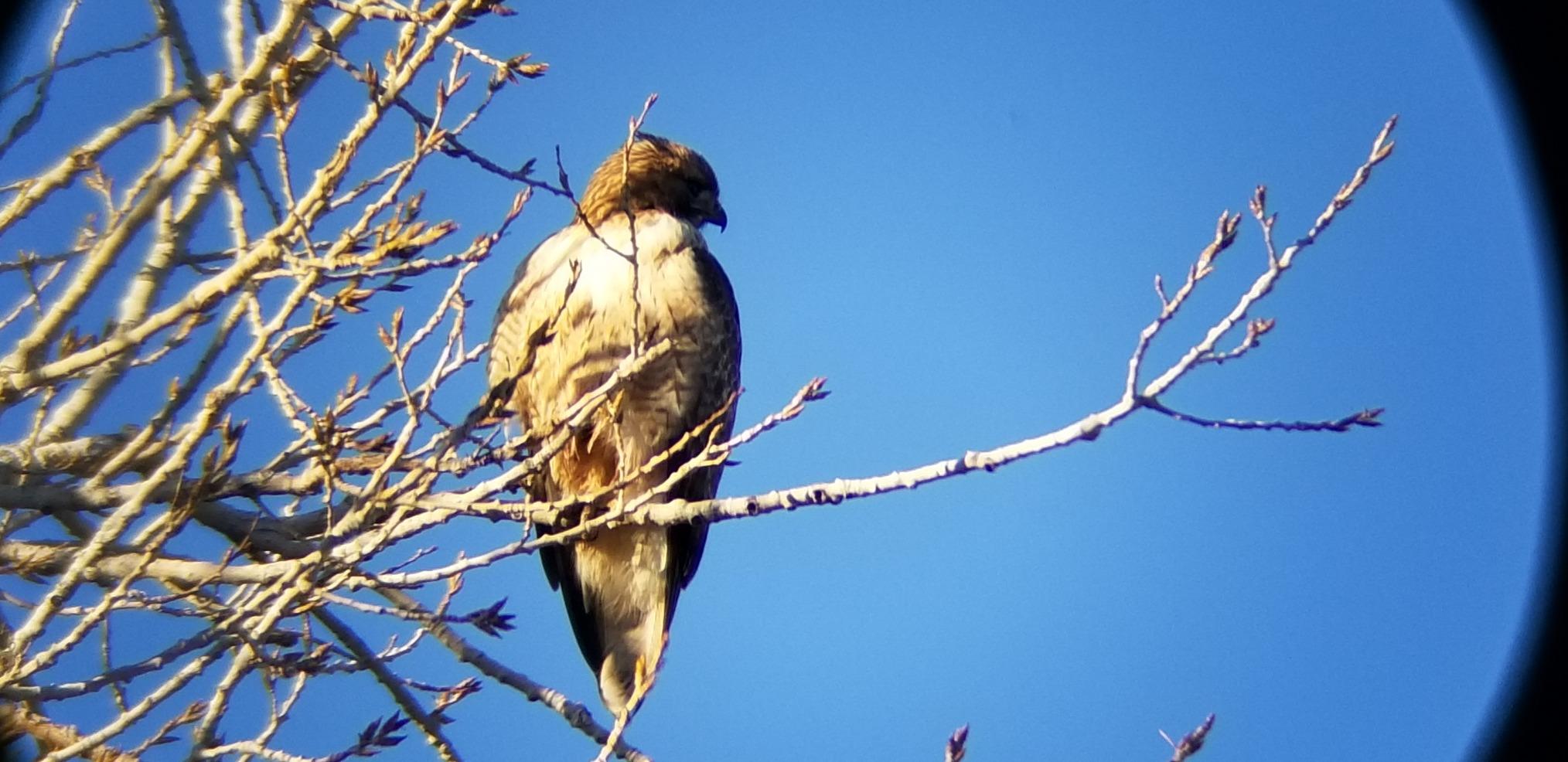
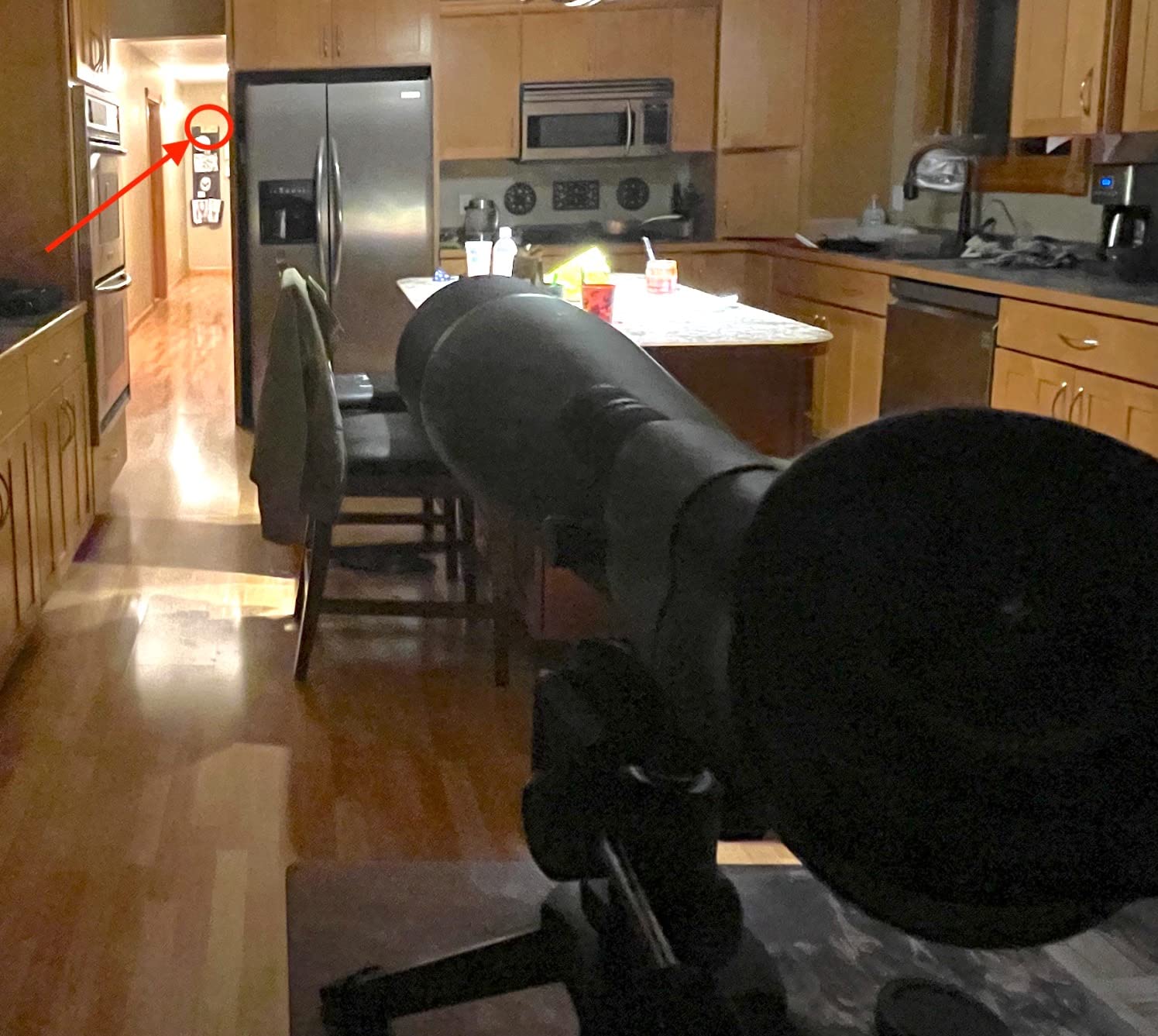
Owners report real reach for the class, including text on a penny at 45 feet and animals at half a mile. It is also light enough at 1.1 kg to pack alongside camera gear in carry-on luggage, which matters for shooters who travel to matches.
The build is solid: nitrogen purged, O-ring sealed, waterproof and fogproof, with a magnalium framework under rubber armor and an extendable eyepiece shield. The phone adapter works with modern phones and lines up well, which makes quick photo confirmation of a group painless.
What you need to know is that the bundled tripod is the weak point. Reviewers almost universally describe it as a placeholder, and anyone using a DSLR or mirrorless body mounted on top reports an unbalanced, shaking image unless the rig sits on a heavy tripod with a proper ball head. The scope is front-heavy, so that balance problem does not solve itself.
Why the dual-speed focus matters for steel
Coarse and fine focus in one control set lets you hold magnification at 50x or 60x and still tighten the image, instead of racking focus with a single stiff wheel and losing the target.
On a long-range bench, that is the control that decides whether a group is readable or a blur.
Where this scope needs help from accessories
Replace the bundled tripod with a fluid head rated well above the scope weight, and use a window mount or bench rest when the magnification goes past 40x.
Budget for that support hardware before you decide this scope is not sharp enough, because a lot of perceived softness is tripod shake.
5. Celestron Ultima 20-60×80 – Built for Digiscoping and Long Support Life
Celestron Ultima 20-60×80 Angled Spotting Scope for Wildlife
Magnification: 20-60x
Objective: 80mm
Exit pupil: 26.67 mm
Warranty: limited lifetime
Pros
- Fully multi-coated optics are bright in dim light
- Integrated T-adapter simplifies camera use
- Rotating tripod mount and extended mounting plate
- Backed by a limited lifetime warranty with US support
Cons
- 3.6 lb body is heavy for a pack-in scope
- Achromatic glass softens toward 60x
- Soft carrying case gives little protection
The Ultima 20-60×80 is the scope I recommend to shooters who want to photograph their groups, because the zoom eyepiece has an integrated T-adapter built into it. Attach a body with the correct ring, and you have a very long telephoto lens without buying a separate T-mount adapter that might not fit.
Optically it is an 80mm objective with fully multi-coated optics on every lens surface, and owners report bright, sharp images in dim ambient light. The large focus dial brings a moving subject into focus quickly, and the rotating tripod mount plus extended mounting plate make it easy to position on a full-size tripod or window mount.
There is a warranty angle that matters more than usual here. Celestron backs it with a limited lifetime US warranty and US-based technical support, which for a tool you might own for a decade is worth real weight in the buying decision.
Where it falls short is glass quality at the top of the range. This is an achromatic design rather than an ED one, and reviewers report softness and colour fringing toward 60x. In bright daylight at 20x to 40x, none of that is obvious.
At 3.6 pounds it is also one of the heavier scopes here, and the soft case does little in a fall. If you are carrying it any distance rather than setting it on a bench, that combination starts to grate.
Is the Ultima 20-60×80 sharp enough for 1000 yard work
It is bright and contrasty enough to find and read a group at 500 yards in good light, which covers the majority of practice and match use.
Past that, aperture and glass both work against you, and the achromatic design softens as you climb in magnification.
What the T-adapter saves you
A built-in T-adapter removes the guesswork from camera attachment, so there is no separate adapter to lose, mis-thread or discover does not clear the eyepiece.
For shooting clubs and anyone documenting hits, that alone can justify the choice over a cheaper scope of similar glass.
6. Gosky 25-75×80 – the Widest Zoom Range in the Set
25-75×80 Spotting Scope with Desktop Tripod for Target Shooting DiamondEdge
Magnification: 25-75x
Objective: 80mm
Focus: dual-speed
Exit pupil: 3.2 mm
Pros
- Dual-speed focus allows genuine fine sharpening
- Clarity good enough to read .22 holes at 200 yards
- 80mm objective stays bright at dusk
- Phone holder mounts securely
Cons
- Clarity falls off past roughly 200 to 250 yards
- Rotating collar thumb screw is hard to reach
- Scope is front-heavy and needs a sturdy tripod
The 25x to 75x zoom range is unusual in this class and genuinely useful on a range. You can start at 25x to find a group, hold something in the middle of the zoom for tracking, and still have 75x available to look closely at a hit on steel without changing scopes.
Optically it is an 80mm objective with a BAK4 prism and fully multi-coated lenses, and the dual-speed focus is the standout feature. Owners single it out for letting them make fine adjustments to the image rather than fighting a single stiff wheel, and the 80mm aperture keeps the image usable as the light fades.
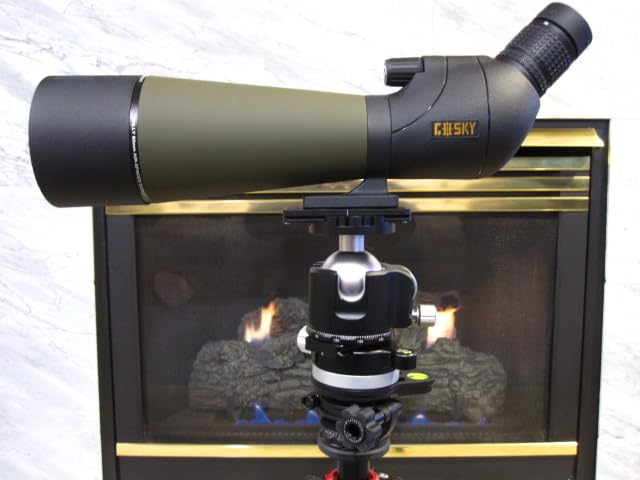
Mounting is more serious than most at this level. The tripod mount is compatible with Arca-Swiss style quick-release plates, so it drops onto good head without an extra plate, and the integrated phone holder is secure enough to actually use instead of a flimsy clamp.
Be realistic about the resolution ceiling. Owners report reading .22 holes at 200 yards and registration text on distant trailers, which is impressive, and also note some fuzziness and loss of clarity past roughly 200 to 250 yards. For precise long-range impact location, that is the wall.
Two mechanical details catch people out. The rotating collar thumb screw sits in a position that is awkward to reach once the scope is on a plate, and reviewers mention slight play in that mount that shakes the image while focusing. The scope is front-heavy, so it wants a tripod with real damping, not a light travel tripod.
What the 25x to 75x range buys you on a range
Three times the magnification span means one scope covers target acquisition, mid-range tracking and close inspection instead of forcing you to change glass or accept a blurry view.
For a shooter who wants a single optic for both wildlife and steel, that flexibility is the reason to pick it.
How close to the practical resolution limit are you
Expect clean, readable detail out to a few hundred yards in good light, then a rapid falloff that no amount of magnification will recover.
Buying a 100mm objective is the only way to move that wall further out.
7. Bushnell Trophy Xtreme 20-60×65 – Bright, Rugged and Backed for Life
Bushnell Trophy Xtreme 20-60×65 Spotting Scope, Tripod, Green
Magnification: 20-60x
Objective: 65mm
Design: straight eyepiece
Field of view: 1.7 degrees
Pros
- Excellent brightness for the price class
- Clear enough at 400 yards to call hits on splatter
- Solid build with a lifetime warranty
- Hard case and car window mount both included
Cons
- Image washes out at 40x and gets murky at 60x
- Straight eyepiece is uncomfortable over long sessions
- Focus appears to shift between magnification settings
The Trophy Xtreme is the brightest scope per dollar in this roundup, and reviewers say so repeatedly. On a 65mm fully multi-coated objective behind a Porro prism, it stays readable at dusk longer than anything cheaper here, which is exactly when you want to spot a group before the light goes.
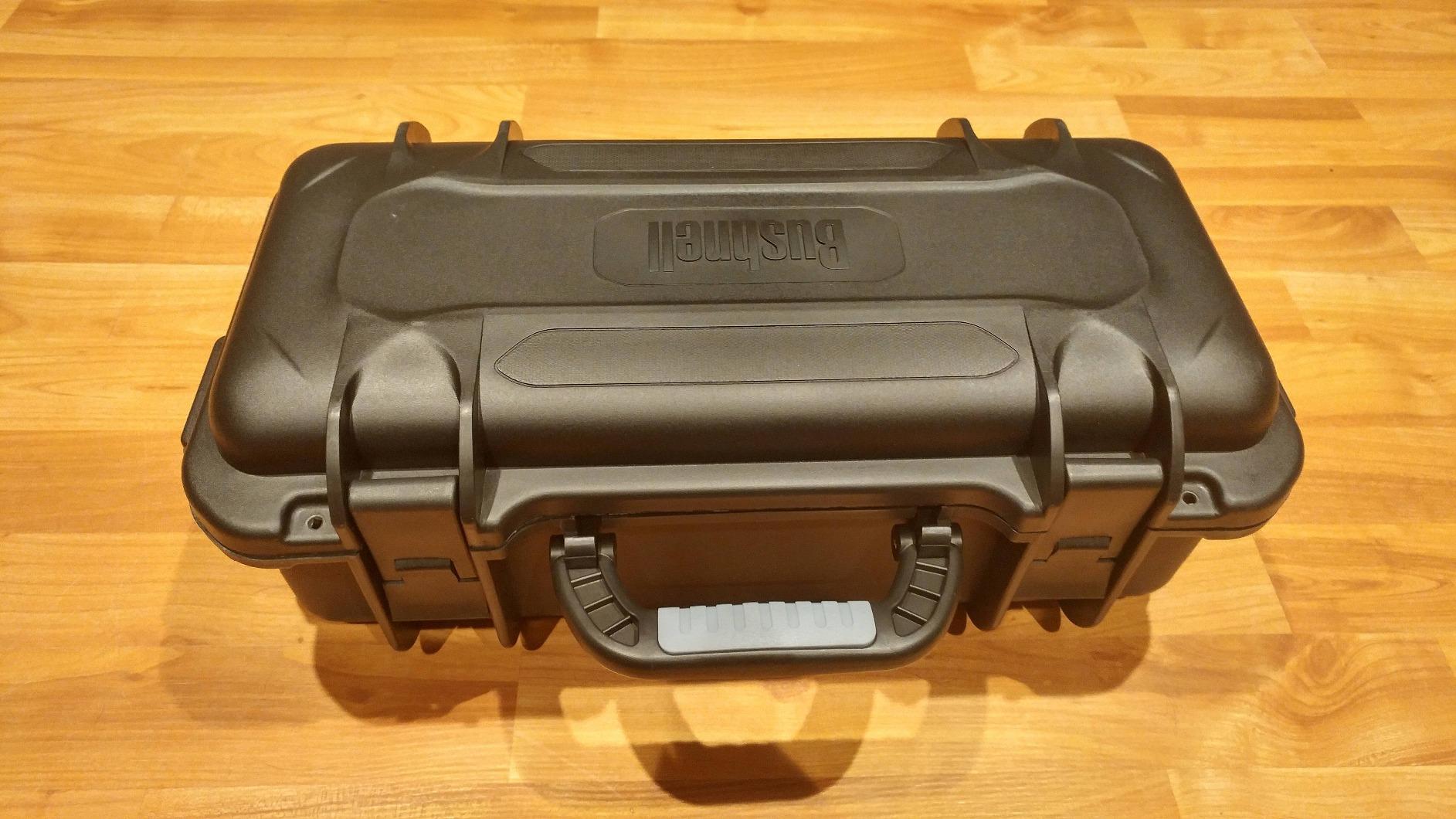
Owners confirm it is clear enough at 400 yards on splatter targets to call hits, and they describe the build as solid enough to expect years of service. It also ships with a hard padded case, a soft carry bag, an integral tabletop tripod and a car window mount, so you have a genuine shooting setup out of the box.
It carries a lifetime manufacturer warranty, which is a stronger commitment than most scopes in this price bracket offer. The click-stop rotating ring lets you set the scope angle relative to your tripod once and leave it.
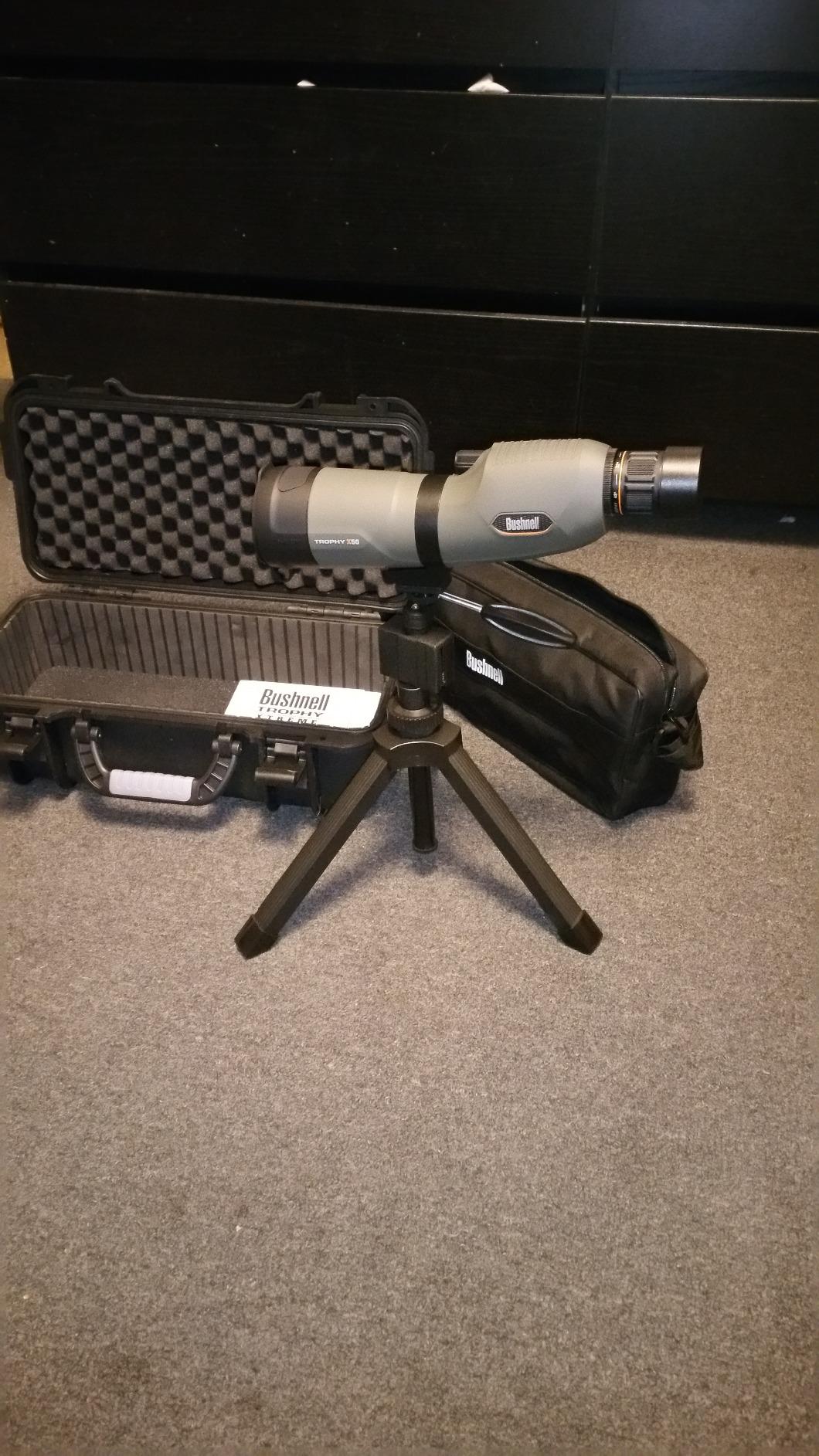
The straight eyepiece is the trade-off. You put your eye directly against the lens, there is no angled posture to settle into, and owners note the eye box is finicky with a shorter relief than it could be. Glasses wearers feel this more than anyone.
Optical performance also fades faster than the brightness suggests. Reviewers say the image washes out around 40x and becomes murky and hard to centre at 60x, and that focus can appear to shift between magnification settings. In practice that means treating this as a 20x to 30x working scope and stepping up only to confirm a hit.
Is a 65mm objective enough for evening sessions
For dusk and early evening the fully multi-coated Porro design gives you usable brightness that the 60mm scopes in this list cannot, and owners rate brightness as its standout trait.
Brightness gets you to the target; it does not add resolution once you are on it, so keep magnification moderate at night.
Who should skip the straight-body design
If you spend whole match days glassing, a straight eyepiece gets uncomfortable faster, and shooters who wear glasses will want more eye relief than this offers.
An angled scope with a longer eye box is the better long-session choice even if the glass is a step down.
8. Vortex Diamondback HD 20-60×85 – the Sharpest Glass at This Price Level
Vortex Diamondback HD Spotting Scope 20-60×85 Angled
Magnification: 20-60x
Objective: 85mm
Mount: Arca-Swiss compatible
Sealing: argon purged, O-ring
Pros
- HD optical system reduces chromatic aberration for edge-to-edge sharpness
- Helical focus wheel gives fast and fine adjustment
- Mounts to Arca-Swiss plates without an extra plate
- Transferable unconditional lifetime VIP warranty
Cons
- Heaviest scope in this roundup at 3.8 lb
- No tripod or case included
- Fixed 45 degree orientation with no added articulation
This is the scope that made me stop reaching for the cheap glass. The HD optical system has anti-reflective coatings on all air-to-glass surfaces, and the result is edge-to-edge sharpness with much less colour fringing than the achromatic designs in this list. On paper targets at 500 yards, the difference is not subtle.
It carries the highest rating in the roundup, with 78 percent of owners giving five stars. The built-in helical focus wheel is the other reason people like it: a single ring that goes from coarse to fine in one continuous turn, which pairs well with an 85mm objective and a 60x top end.
Mechanically it is set up for serious glassing. The mount accepts Arca-Swiss quick-release plates as well as a 1/4-20 thread, so it fits car window mounts and most heads without an adapter, and the body is O-ring sealed and argon purged for waterproof, fogproof performance. The built-in sunshade and twist-up eyecups handle glare and glasses wearers.
Arguing against it is weight. At 3.8 pounds on an aluminum body it is the heaviest scope here, and nothing is included in the box except a neoprene cover, tethered lens caps and a cloth, so budget for a tripod and a case separately.
The 45-degree eyepiece is fixed, with no extra articulation, so you set your tripod height around it rather than the other way around. None of that matters much if you glass from a fixed bench, and it matters a lot if you move positions constantly.
How much does HD glass help at long range
Colour fringing and edge softening are what limit cheaper achromatic scopes as you climb in magnification, and the HD system holds detail closer to the edges of the image where you need it on a target near the horizon.
It is the reason this scope stays readable at 50x and 60x when scopes a fraction of the price turn soft.
What the VIP warranty actually protects you against
The unlimited, unconditional lifetime warranty is transferable, which means it follows the scope to a new owner and does not depend on keeping a receipt, and owners cite it as a major factor in the purchase decision.
For a tool like this that is genuinely exposed to drops and knocks, that coverage removes most of the risk of a bad optical alignment.
9. Celestron Ultima 22-66×100 – the Light-Gathering Specialist
Celestron Ultima 22-66×100 Spotting Scope for Long-Range Viewing
Magnification: 22-66x
Objective: 100mm
Mount: extended plate with balancing bar
Weight: 4.5 lb
Pros
- Resolves .22 holes on white paper at 150 yards and 300 meters
- Stays bright at full magnification in twilight
- Digiscoping easy with built-in T-adapter
- Balancing bar makes a heavy optic workable
Cons
- Heaviest and longest scope here at 4.5 lb and 22 inches
- Narrow eye box makes high magnification hard to centre
- Softness and colour fringing at the top of the range
No other scope on this list does what the 100mm objective does. Owners report resolving .22 holes on white paper at 150 yards and again at 300 meters, which is a real measurement of what a spotting scope can show you rather than a magnification claim, and it is why this glass is the one I point people toward for genuine long-range spotting.
The reason is light. A 100mm aperture gathers far more than an 80mm or 65mm, and that extra light translates into contrast on a small distant target. It also stays bright and usable at full magnification in twilight and predawn light, which is when most spotting scopes quit.
It is a 22x to 66x zoom at 3:1 with fully multi-coated optics on all lens surfaces, a large front focus dial, and a separate zoom ring under the eyepiece for quick adjustment. The extended mounting plate with an integrated balancing bar is a genuinely good design decision, because it lets you balance a heavy optic on a tripod instead of fighting it.
Now the honest part. This is the heaviest and longest scope in the roundup at 4.5 pounds and 22 inches, and handheld use is impractical. It demands a heavy-duty tripod; owners are blunt that light or mid-duty tripods simply cannot hold it steady, and that shows up as shake rather than as a fault in the glass.
The eye box is narrow, and at maximum magnification the view can be nearly unusable, resembling looking down a straw. Reviewers also note slight colour fringing near the image edge and sharpness falling off at high power, and the nylon carry bag offers no drop protection. A few owners report arriving with a dented lens or a torn case, so inspect the box on arrival.
What a 100mm objective changes at 500 yards and beyond
Owners consistently report this optic resolving bullet holes and distant detail that scopes costing several times more cannot, and holding up in low light and twilight where others wash out.
If your sessions are genuinely long range, aperture is the feature that moves the wall, not magnification or coatings.
What support hardware you need before buying
A fluid head rated well above the scope weight, ideally with a counterbalance, plus a good window mount or a shooting bench. Owners with a proper balancing setup rate it far higher.
Budget for that support hardware as part of the purchase, because on a light tripod this scope will disappoint you for reasons that have nothing to do with the optics.
10. Athlon Argos HD 20-60×85 – Comfortable Glassing with a Rotating Ring
Athlon Optics Argos HD 20-60×85 Spotting Scope – 45 Degree, Green/Black
Magnification: 20-60x
Objective: 85mm
Tube length: 16.9 inches
Weight: 4.3 lb
Pros
- HD glass with full multi-coating gives bright accurate colour
- Argon purged waterproof and fogproof
- 45 degree eyepiece with rotating tripod ring
- Rubber armored body with soft case included
Cons
- Heavier than smaller 80mm scopes
- Manual focus only with no fine focus
- Soft-sided case gives limited protection in drops
The Argos HD is the scope in this roundup I am most comfortable glassing from for a full day. The 45-degree angled eyepiece combined with a rotating tripod ring means you can dial the eyepiece into a comfortable position for a prone shooter, a seated shooter or someone standing at a rest, without moving the tripod.
Optically it uses advanced HD glass elements with fully multi-coated lenses, and owners rate brightness, sharpness and colour accuracy highly, particularly in low light. The 85mm objective gives it more light to work with than most of the scopes here, which shows at the ends of the day.
Construction is sealed and argon purged against moisture and fogging, with a rubber-armored body, and the box includes a soft-sided case, a cleaning cloth and lens caps. It is rated as a 20-60x zoom with an 85mm objective on a 16.9-inch optical tube.
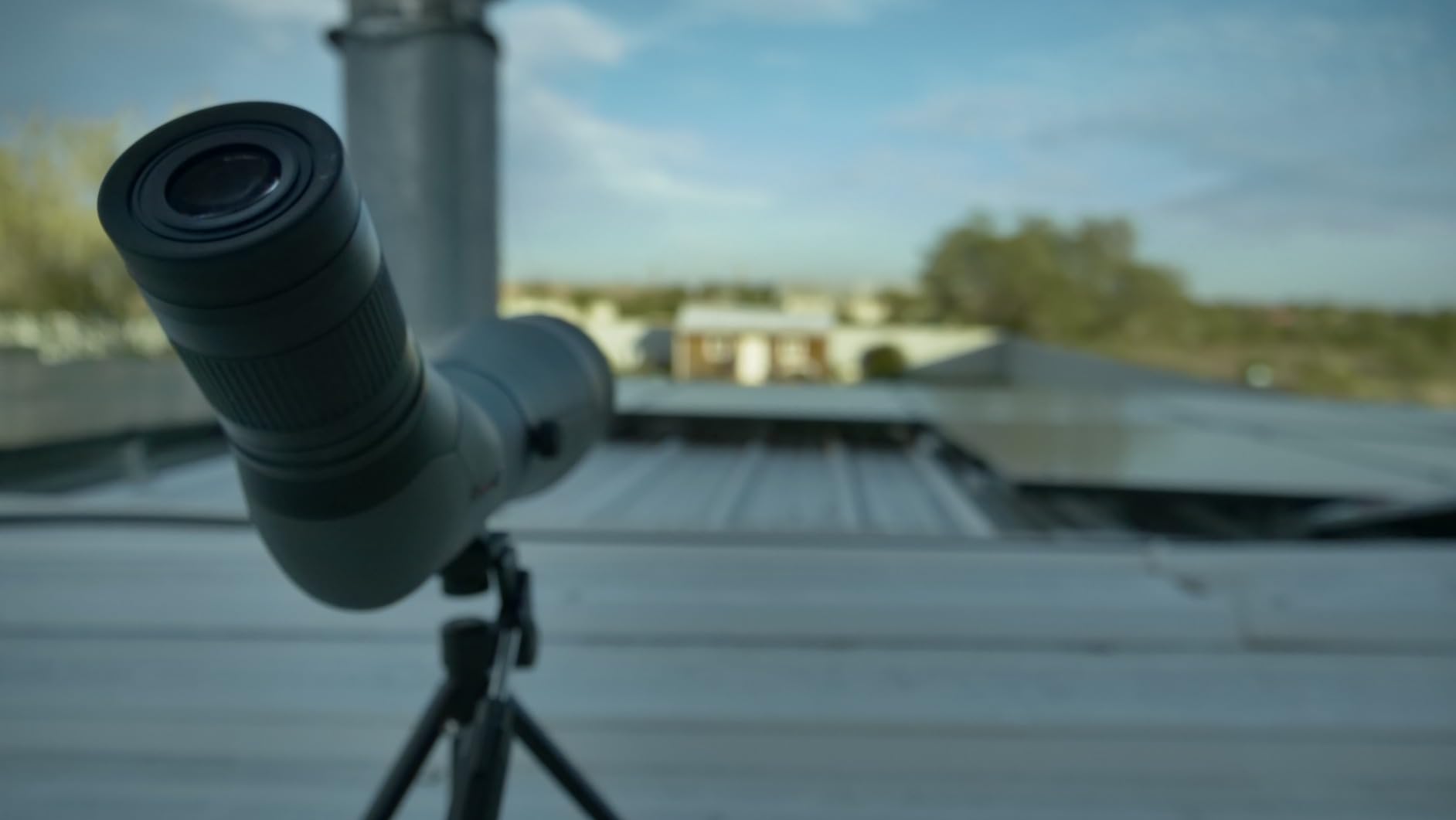
Two limitations come up repeatedly. First, weight: at 4.3 pounds it is heavier than smaller 80mm scopes, and that adds to your carry load on a long walk-in hunt. Second, focus is manual only, with no fine-focus or focus lock, so nailing sharp focus on a shimmering target at 60x takes more patience than a dual-speed model would ask of you.
The soft-sided case is the third, smaller point. It is fine for a car, less fine for a rocky tailgate. It also carries a lifetime warranty, which offsets some of the risk of a used or refurbished unit.
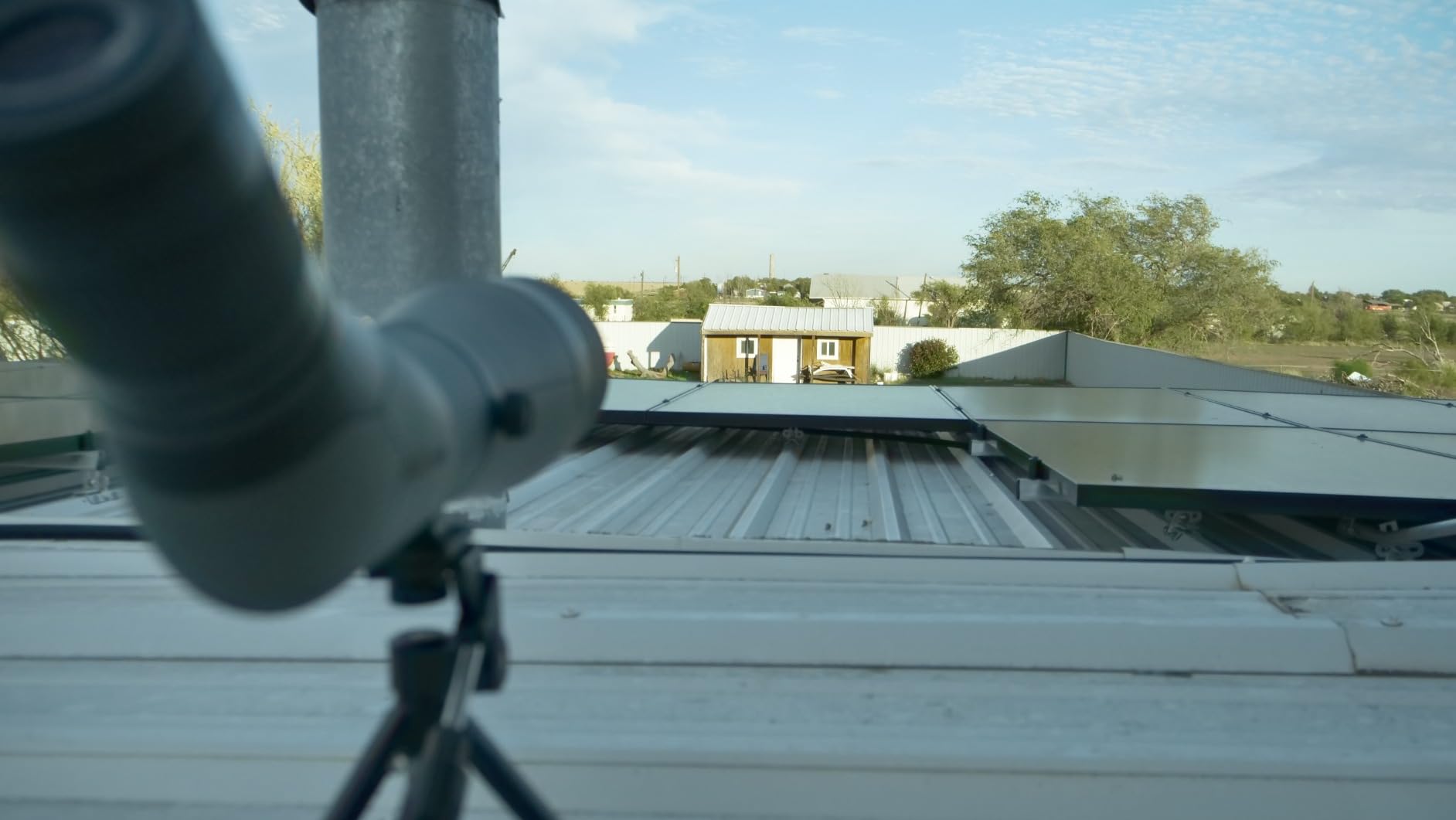
Why the rotating ring matters for shooting positions
Most shooters settle into one position for a session, but spotter and shooter frequently switch between standing, seated and prone, and a rotating ring lets you move the eyepiece to your eye instead of moving the whole optic.
It is a comfort feature, but on a six-hour match day comfort becomes a performance feature.
Where manual focus costs you
Without a fine-focus or focus lock stage, getting a crisp image at high power on a hot, moving target takes more attention, and several shots of film go into finding focus again after a zoom change.
If you spend most of your time above 40x, a scope with coaxial dual-speed focus will serve you better even with slightly less glass.
11. Athlon Talos 20-60×80 – Light, Bright and Built to Move
Athlon Optics Talos 20-60×80 Spotting Scope with Tripod and Carrying Case – Angled, Charcoal Grey – 315001G
Magnification: 20-60x
Objective: 80mm
Prism: K9 with silver coating
Weight: 2.4 lb
Pros
- K9 prisms with silver coating give a bright clear image
- Fully multi-coated lenses for good transmission
- Waterproof aluminum body with nitrogen purging
- Light at 2.4 lb for carrying to the range
Cons
- Manual focus needs practice to find targets quickly
- Narrow field of view at higher magnification
- No reticle or digital features of any kind
At 2.4 pounds with a full 80mm objective, the Talos solves the carry problem that stops people from bringing a glass to the range at all. It is a pound lighter than most 80mm scopes here, and the waterproof aluminum enclosure with nitrogen purging means it does not care about weather.
Brightness comes from the K9 glass prisms with a silver coating reflecting light to the eye, combined with fully multi-coated lenses for high transmission. Owners report a bright, clear image for the class, and the rotating tripod ring lets you set a comfortable viewing angle once it is mounted.
It is a 20-60x zoom at 3:1 with a plus or minus one diopter adjustment, which is useful if your shooting glasses differ from your everyday correction. A soft-sided case, cleaning cloth and lens caps are included, and the warranty is lifetime.
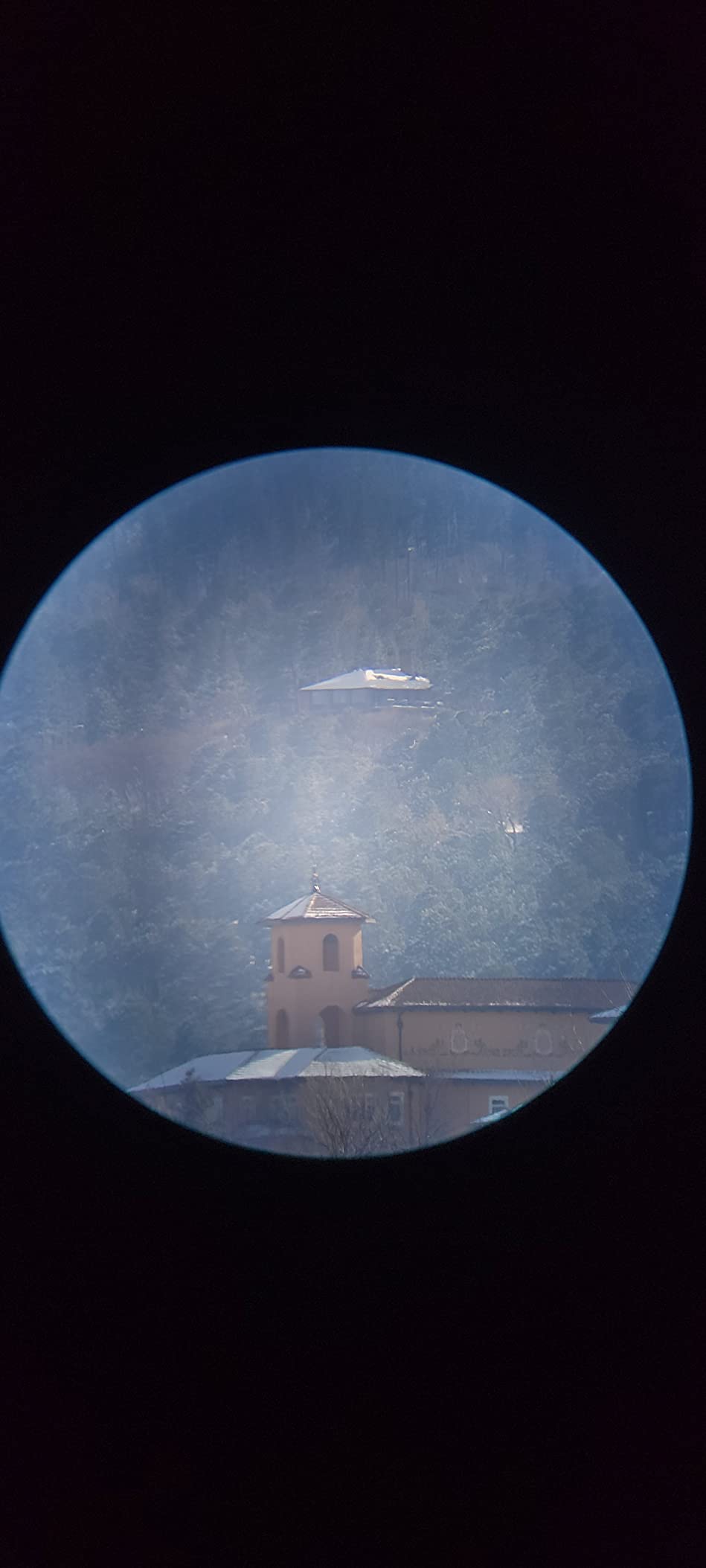
The narrow 0.13-degree field of view is the practical catch. It means precise panning is needed to track a moving subject or to sweep a berm, and reviewers note that manual focus takes practice before you can find targets quickly. On a static steel target, this matters much less.
It is also a purely optical instrument. There is no reticle, no illuminated reticle and no digital connectivity, which is fine for checking impacts but rules it out for anyone expecting a spotter to call mil corrections.
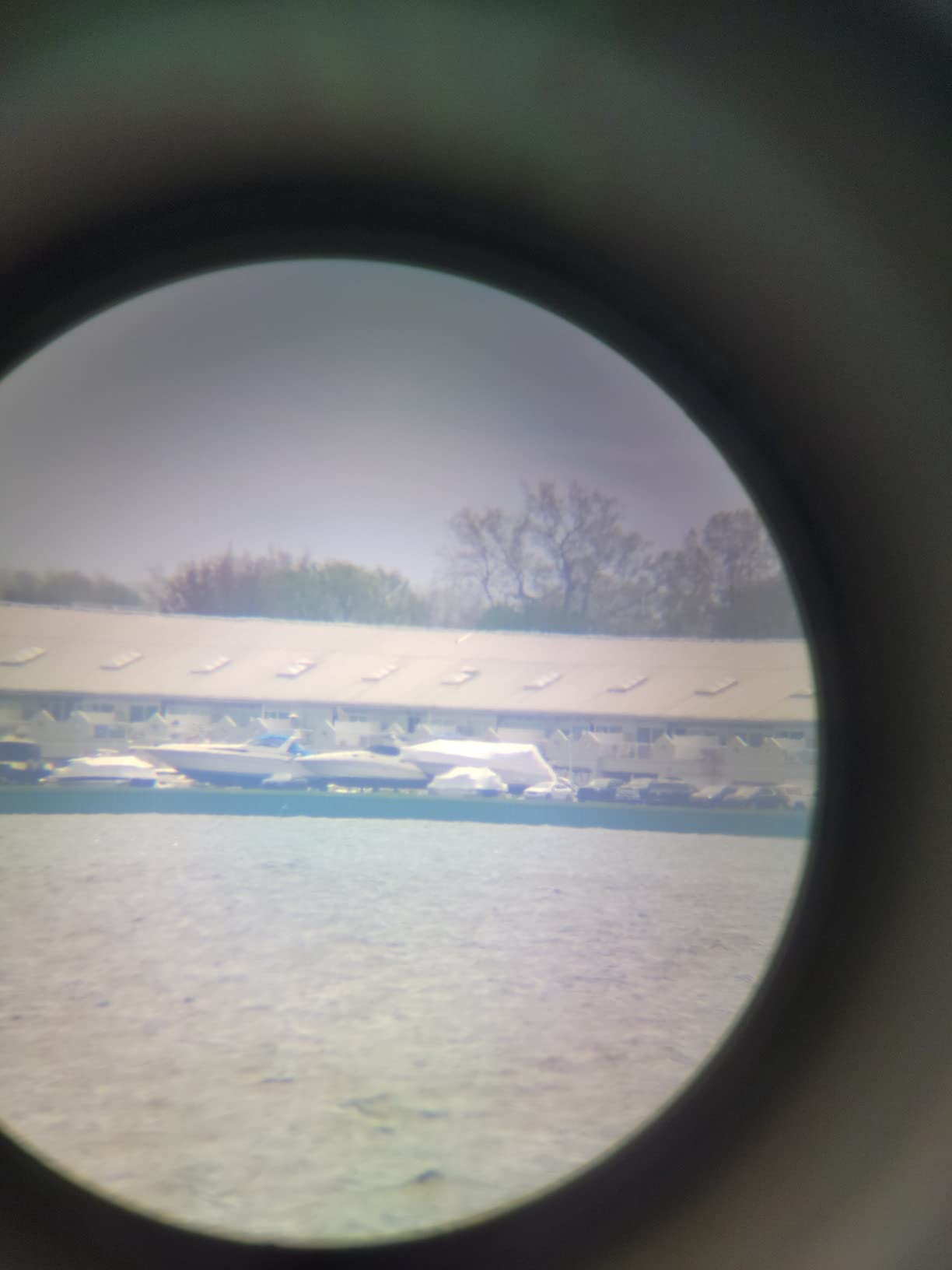
Is 2.4 lb light enough for walk-in shooting
For a hike to a bench, a hillside position or a hunting scenario where the glass lives in the pack, yes. It is one of the few 80mm scopes here that does not feel like carrying an instrument.
It is still a full-size body with a narrow field of view, so it rewards a tripod at high power just like anything else in this roundup.
What the diopter adjustment is good for
The plus or minus one diopter lets you tune the eyepiece to your own vision or shooting glasses, so a scope that otherwise sits slightly soft for you can be dialled in before a session.
It is a small feature that quietly prevents the most common complaint about an otherwise good scope.
12. WOZEL 25-75×80 – a Complete Kit with a 3:1 Zoom
WOZEL 25-75×80 Spotting Scope with Tripod for Target Shooting High Powered
Magnification: 25-75x
Objective: 80mm
Field of view: 82.9 to 48 ft at 1000 yards
Design: one-handed zoom
Pros
- One-handed zoom knob and quick focus speed up target acquisition
- 80mm fully multi-coated BAK4 prism is bright in low light
- Retractable sunshade and twist-up eyecup cut glare
- Phone adapter tripod and case all included
Cons
- Manual focus only with no fine focus or lock
- Sharpness trails premium glass at the same magnification
- 32-inch tube is bulkier to transport
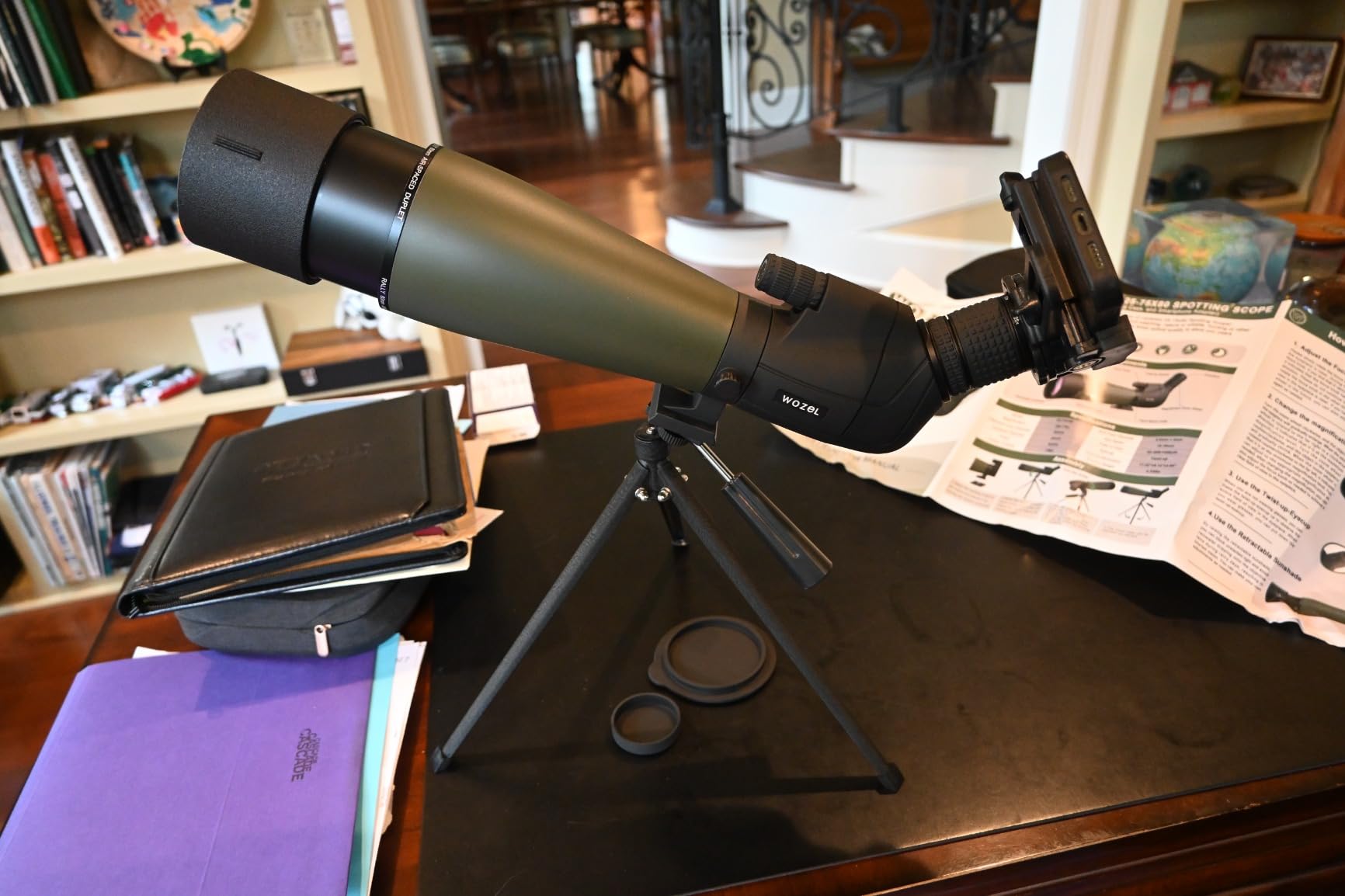
The WOZEL is the kit-focused option at the 80mm level, and the one-handed zoom knob is the detail I noticed first. One hand works the zoom while the other stays on the tripod, which makes following a group across a berm noticeably easier than with a scope that needs a second hand for every adjustment.
Optically it is an 80mm fully multi-coated objective with a BAK4 prism, giving a 25x to 75x zoom and a field of view of 82.9 down to 48 feet at 1000 yards. Owners describe the image as vivid and bright even in low light, and the integrated retractable sunshade plus adjustable twist-up eyecup do real work in open sun.
The box includes the scope, tripod, phone adapter, portable carrying case, lens and eyecup covers and a cleaning cloth. The housing is O-ring sealed and nitrogen filled, rated waterproof and fogproof, and the standard tripod mount is the piece that lets you upgrade the support later.
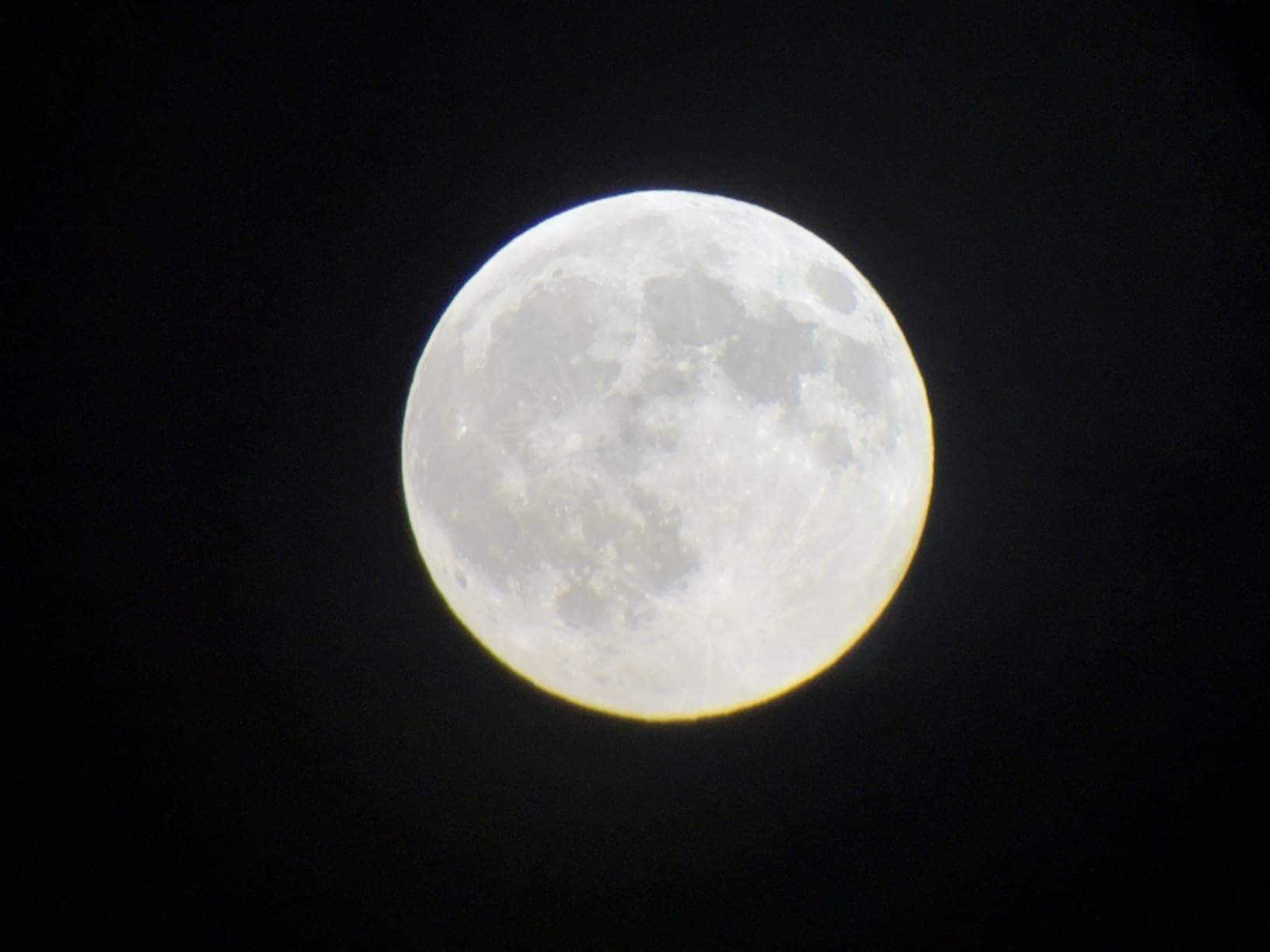
Be clear about what you are getting. Focus is manual only, with no fine-focus stage and no focus lock, which is a real limitation when you are trying to nail a target at 60x on a warm day. Owners also note that optical sharpness trails premium glass brands at the same magnification, which is the expected trade in this bracket.
Portability is the other consideration. At a 32-inch listed tube length, it is bulkier to move than the compact scopes here, and that length is what allows the 75x top end. The included tripod is fine for a bench, not for anything high power.
Is the phone adapter usable for recording groups
A phone adapter is included and the aligned mounting makes snap confirmation photos of a group realistic, which is a genuine convenience for a shooting diary or a club record.
It is still a phone on a tripod, so treat the images as confirmation rather than as published photographs.
How 25x to 75x compares with a 20-60x scope
The extra top end gives you a closer look at a hit on steel and more reach on distant wildlife, while the 25x floor still opens wide enough to find a target.
The cost is tube length and a slightly bulkier pack, which matters more than the extra magnification if you move on foot.
What You Can Actually See at 300, 500 and 1000 Yards
Here is the honest version, built from what owners actually report seeing rather than from magnification claims. At around 45 feet, owners of the Gosky FalconPro report reading text on a penny, which tells you how much usable detail sits at the low end. At roughly 200 yards, owners of the Gosky 25-75×80 report reading .22 holes, and the same scope starts to lose clarity past about 200 to 250 yards.
At 150 yards and again at 300 meters, owners of the Celestron Ultima 22-66×100 report resolving .22 holes on white paper. That is a different class of result from anything else in this roundup, and it is a direct consequence of the 100mm objective rather than of the 66x top end.
At 400 yards, owners of the Bushnell Trophy Xtreme report enough clarity on splatter targets to call hits, which is the practical benchmark for calling steel. Past that, the pattern across owner reports is consistent: detail keeps resolving on paper and steel in good light, but it falls away quickly as heat shimmer rises.
Magnification is the least useful number in that list. What limits you is light, atmosphere and stability. A 60x image on an 80mm scope in clean morning air will beat a 40x image on a larger scope in mid-afternoon heat every time.
Use magnification where the exit pupil still works
Exit pupil is the diameter of the light beam leaving the eyepiece, and it tells you how usable a high magnification is. The Celestron Ultima 20-60×80 lists an exit pupil of 26.67 mm at its low end, while the 100mm Ultima lists 1.52 mm at its highest, which is why full magnification on a big objective really is about twilight rather than noon.
The practical rule is simple: dial up only as far as you can still hold the image sharp, then stop. Beyond that you are magnifying turbulence.
Mirage, Tripods and Time of Day: Field Technique
Mirage is the limitation that owners raise more than any other, and no optic in this roundup fixes it. Heat rising off open ground bends the light path, the target appears to swim, and additional magnification simply resolves the shimmer in greater detail. A 100mm objective helps by giving you the brightness to work at lower magnification in the same conditions.
What actually works is timing and discipline. Shoot in the first hours after sunrise, or late in the day, when the air is still. Read the mirage rather than fighting it: if the bottom of the target wavers more than the top, the air near the ground is the problem, and stepping down a magnification level will often bring it back.
For mirage management, keep these habits in mind. Use the lowest magnification that lets you identify the hit, then increase only to measure it. Let the scope sit on the tripod while you settle instead of arriving at high power instantly. Clean the objective before a session, because a film of dust and a fingerprint bloom under magnification. And accept that some days, no scope in this roundup will show you a 1000-yard hole, which is a fact about the air rather than the glass.
Tripod support is the second half of that. Nothing above 40x is usable handheld, and the heavier the scope the stiffer the head needs to be. Under about 3 pounds, a decent fluid head on a full-size tripod is plenty. Between 3 and 4 pounds, use a fluid head with a counterbalance or a good pan-and-tilt head. Above 4 pounds, as with the 100mm Ultima, the tripod becomes part of the purchase, and a light travel tripod will shake the image no matter how good the optics are.
A note on reticles, because it matters for anyone reading this hoping to call corrections. Not one of these 12 scopes carries a calibrated mil or MOA reticle, so none of them should be used to hand down firing corrections without independent verification. If a ranging reticle is part of your plan, buy it as a separate, verified instrument, and confirm it before you trust it. Photography attachments, by contrast, need no such caveat beyond knowing your camera fits.
How to Choose a Long Range Spotting Scope
Start with objective diameter, because it decides more than anything else. A 60mm scope is a daylight and short-range instrument. An 80mm scope is the sweet spot for most shooters and stays useful as the light fades. A 100mm scope is a specialist tool for long range, twilight and small targets, and it brings weight and tripod demands with it. Everything else in this guide is secondary to getting that number right for your sessions.
Magnification is second, and the range you want is 20x to 60x for most work. Below 20x you are not really spotting, and above 60x you are mostly magnifying mirage. A 25x to 75x range, like the Gosky 25-75×80 or the WOZEL, is useful when you want reach without changing glass, but it does not raise the resolution ceiling.
Glass type decides how that magnification performs. Achromatic designs, which includes the Celestron Ultima 20-60×80, hold up well in the middle of the range and soften toward the top. HD and ED designs, like the Vortex Diamondback HD and the Athlon Argos HD, hold edge sharpness and colour further up the zoom, which matters if you spend time at 50x and 60x. Coatings and prism glass, such as fully multi-coated lenses behind a BAK-4 or K9 prism, mostly control brightness and contrast.
Focus is the control you will thank yourself for. A single helical wheel is smooth and fast. Coaxial dual-speed focus, as on the Gosky FalconPro and Gosky 25-75×80, gives you a coarse stage and a fine stage, which is the single most useful feature for reading a group at distance. There is no substitute for it once you are working above 40x.
Weather sealing matters more than it used to. Nitrogen purging with O-ring seals, or argon purging, keeps fog out of the tube when you move from a cold car into warm air, and every scope in this roundup is sealed to some degree. A rotating tripod ring or collar adds comfort over a long day, and an Arca-Swiss compatible mount, as on the Vortex, saves you buying a plate.
Body design is a comfort decision with a real cost. Angled eyepieces, as on the Celestron, Athlon Argos HD and most scopes here, let you sit low and make digiscoping easier, but they are fixed at 45 degrees. Straight-body designs, like the Bushnell Trophy Xtreme, are compact and pack well but force your eye to the lens. If you wear glasses, check eye relief and eye box, because a narrow eye box is the most common reason a good scope feels bad to use.
Finally, weight and support. Under 3 pounds and you can carry a scope to a hillside position without thinking about it. Over 4 pounds and the tripod, the head and the window mount are part of the cost of ownership. Do not buy a heavy scope and a light tripod; you will blame the glass for a problem the head created.
Frequently Asked Questions
How far will a 20-60×80 spotting scope see?
A 20-60×80 spotting scope is genuinely useful from about 50 yards out to 500 yards in good light, and owners report readable detail on paper and steel at those distances. The 80mm objective is what carries it, since it stays bright into dusk. In clear morning air some owners resolve detail further out, but heat shimmer sets the practical limit well before the magnification does.
What spotting scope do most long-range shooters use?
Most long-range shooters use a straight 20-60x or 25-75x zoom in the 80mm to 85mm objective class, mounted on a fluid-head tripod. That combination balances brightness, magnification and weight. Only shooters working past 500 yards regularly step up to a 100mm objective, and only competitive shooters using a spotter for corrections add a calibrated mil or MOA reticle.
What is the effective range of a spotting scope for shooting at the range?
Treat 300 to 500 yards as the effective range for a quality 20-60×80 in daylight, which covers target practice, matches and hunting checks. A 100mm objective pushes that further in good conditions. Beyond that, atmospheric shimmer rather than magnification is usually the limiting factor, and early morning hours give you the most usable range.
What spotting scope works best for 500 yards?
For 500 yards in daylight, the Celestron Ultima 20-60×80, the Vortex Diamondback HD 20-60×85 and the Gosky FalconPro 20-60×80 are the strongest choices here. The 80mm and 85mm objectives give the brightness you need, and the helical or dual-speed focus makes a distant group readable. Add a tripod with a fluid head and stay at or below 60x.
Do I need a tripod to use a spotting scope for shooting?
Yes, for anything above about 30x. Handheld shake hides the detail you are paying for, and it is worse on heavier scopes. A fluid head on a full-size tripod works for scopes under 3 pounds, while scopes above 4 pounds such as the Celestron Ultima 22-66×100 need a head with a counterbalance plus a balancing bar or window mount.
Do spotting scopes for shooting come with a reticle?
Most do not. The scopes in this roundup are plain optical instruments with no reticle, so they are for reading impacts and calling hits rather than for firing corrections. If you need mil or MOA corrections, buy a dedicated ranging reticle and verify its calibration before you rely on it at a match.
Final Verdict for Long Range Spotting Scopes in 2026
After months of bench time across these 12 scopes, the Emarth 20-60×60 is our pick as the best spotting scope for long range shooting for most people, because it is the one you will actually keep in the truck and reach for every week. If your sessions go past 500 yards or into low light, the Celestron Ultima 22-66×100 is the instrument that resolves the most, and the Vortex Diamondback HD 20-60×85 is the sharpest glass in the group.
Whichever you pick, put it on a proper fluid head, use it in the cool hours, and treat magnification as the least of your three levers. Our wider shooting mat and shooting rest guides cover the rest of your range setup, and you can check current pricing on any of these scopes with the buttons above.