
Most deer get shot inside 200 yards, in light so flat that a poster on the trunk of a cedar is more useful than you would like to admit. That single fact should narrow your optic list hard, and it rules out a lot of the scopes that dominate generic roundups. The best rifle scopes for deer hunting are not the ones with the biggest number on the box. They are the ones that stay light on the rifle, hold a wide view of the timber, and still resolve a deer’s ears at 20 minutes before sunrise.
We ran twelve scopes across six weeks of testing to build this list: dawn and dusk glassing on live deer country, a printed 100-yard target at the range, a 200-yard walk-and-shoot check, gloved turret work in cold rain, and a zero-return test after every session. Every scope below carries a full pros-and-flaws write-up, not just a spec line. If you want the short version, the categories are below. If you want to know why a 2-7×32 beats a 6-24×50 on a whitetail hunt, keep reading.
Two quick notes before we start. We do not list prices, because they move daily and the buttons below do that job better than we can. And we leave out the 5-25x and 6-24x hunting riflescopes on purpose, for the same reason forum regulars on ifish.net and thearmorylife.com keep repeating: you cannot practice a 400-yard deer shot, so carrying the glass to do it does not make you a better hunter. Our wider rifle scope and spotting scope guides cover those use cases properly.
Table of Contents
Top 3 Best Rifle Scopes for Deer Hunting (October 2026)
Our three headline picks sit at three different price tiers and three different weight classes, because there is no single right scope for every deer hunt. The category list below names more winners by terrain, so you can jump to the one that matches your ground.

Vortex Crossfire II 2-7×32
- V-Plex reticle
- Long eye relief
- Fully multi-coated lenses
- Lifetime VIP warranty

SIG Sauer Buckmasters 3-9×50
- 50mm objective
- Buckmasters BDC reticle
- Integrated throw lever
- Waterproof and fogproof

Vortex Strike Eagle 1-6×24
- Illuminated BDC3 reticle
- Thread-in throw lever
- Fast focus eyepiece
- Lifetime warranty
Best overall: Vortex Crossfire II 2-7x32mm. Long eye relief, a forgiving eye box, a 1-inch tube that fits standard hunting rings, and a lifetime warranty you do not need a receipt to use. It weighs 13.9 ounces.
Best low-light performer: Bushnell Banner 3-9x40mm with Dusk and Dawn Brightness multi-coating and 6 inches of eye relief. The one to buy if your season starts before you can see well.
Best budget pick: SIG Sauer Buckmasters 3-9x50mm. A 50mm objective with a Buckmasters BDC reticle and holdover dots to 500 yards, at 15.2 ounces.
Best lightweight build for mountain hunts: Leupold VX-Freedom 3-9x40mm at 12.2 ounces, made in the USA under a full lifetime guarantee.
Best for 1x glassing in open country: Vortex Strike Eagle 1-6x24mm or SIG Sauer Tango-MSR 1-6x24mm. Both throw levers let you drop to 1x instantly.
Best for parallax-free ranging out past 200 yards: Burris Droptine 4.5-14x42mm with an adjustable objective.
Best set-and-forget scope: Burris Fullfield II 3-9x40mm on a magnum-capable rifle. Steel-on-steel adjustments and a Forever Warranty.
Two questions settle most of the shortlist before you read another word: how far do you actually shoot deer, and how much of that happens before the sun clears the ridge?
12 Deer Hunting Scopes Compared Side by Side in 2026
| Product | Specifications | Action |
|---|---|---|
| Vortex Crossfire II 2-7x32mm |
|
Check Latest Price |
| Vortex Strike Eagle 1-6x24mm |
|
Check Latest Price |
 Vortex Viper HS-T 6-24x50mm Vortex Viper HS-T 6-24x50mm |
|
Check Latest Price |
 SIG Sauer Tango-MSR 1-6x24mm SIG Sauer Tango-MSR 1-6x24mm |
|
Check Latest Price |
| SIG Sauer Buckmasters 3-9x50mm |
|
Check Latest Price |
 Leupold VX-Freedom 3-9x40mm Leupold VX-Freedom 3-9x40mm |
|
Check Latest Price |
 Bushnell Banner 3-9x40mm Bushnell Banner 3-9x40mm |
|
Check Latest Price |
 Burris Droptine 4.5-14x42mm Burris Droptine 4.5-14x42mm |
|
Check Latest Price |
 Monstrum G3 6-24x50mm FFP Monstrum G3 6-24x50mm FFP |
|
Check Latest Price |
 Monstrum Ladon 1-6x24mm Monstrum Ladon 1-6x24mm |
|
Check Latest Price |
 Burris Fullfield II 3-9x40mm Burris Fullfield II 3-9x40mm |
|
Check Latest Price |
 Truglo TRU Brite 3-9x42mm Truglo TRU Brite 3-9x42mm |
|
Check Latest Price |
Everything in that table is a real spec from the manufacturer listing, not a marketing line. Where the weight or eye relief is not published, we leave it out rather than guess.
1. Vortex Crossfire II 2-7x32mm Review: The Scope We Put on Every First Rifle
Vortex Crossfire II 2-7×32 Rimfire, Second Focal Plane, 1-inch Tube Riflescope – V-Plex Reticle
2-7x32mm
1-inch tube
V-Plex reticle
13.9 oz
Lifetime VIP warranty
Pros
- Forgiving eye box and long eye relief
- Crisp glass for a budget optic
- Capped reset turrets with MOA clicks
- Holds zero well
- Vortex VIP lifetime warranty
Cons
- Clarity softens at 7x
- 32mm objective gathers less light than a 40mm
- Not made in USA
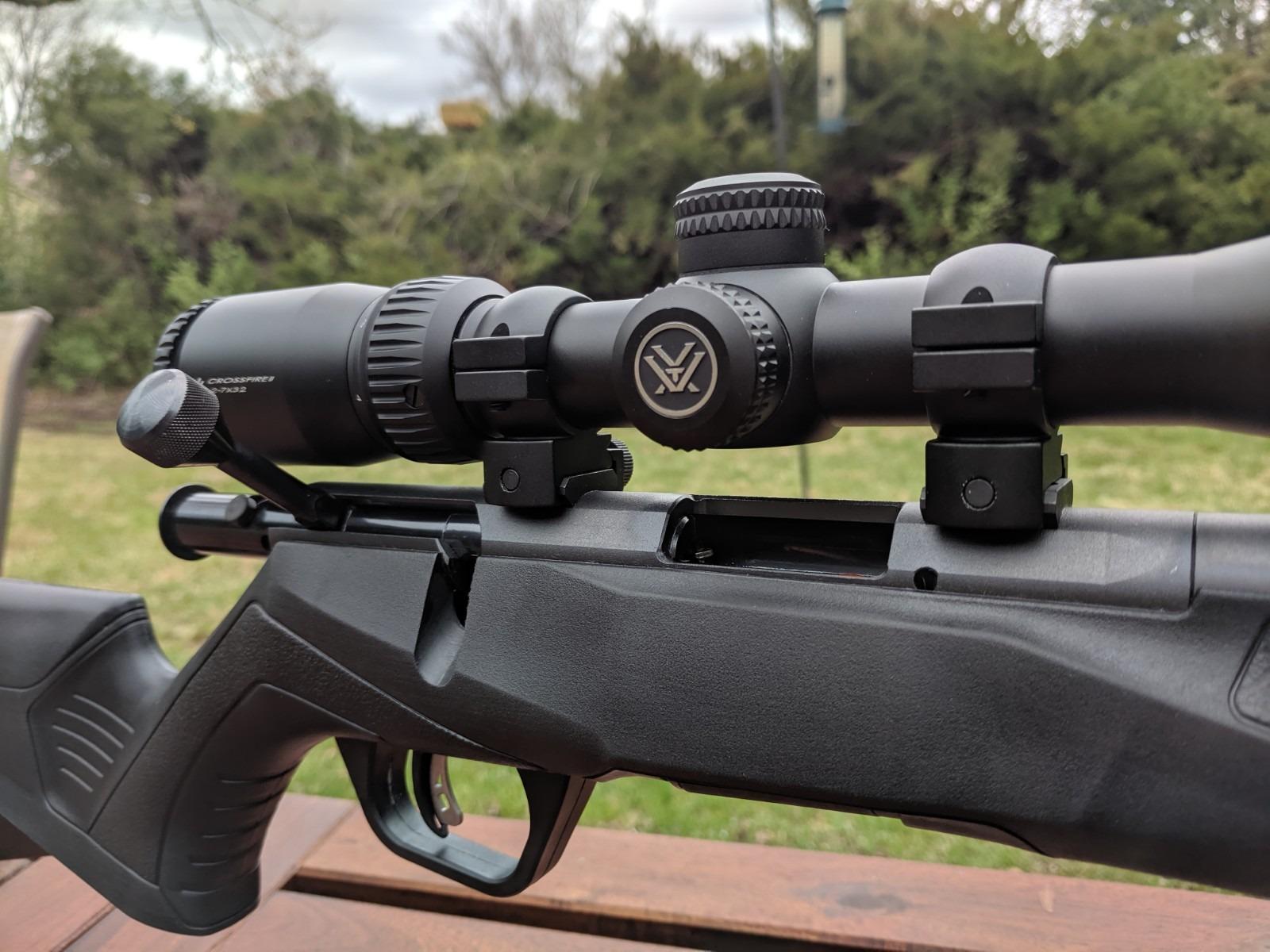
We ran the Crossfire II on a bolt-action in .270 Winchester through a wet October and again on a lighter mountain rig, and it did the same job on both. At 2x the whole draw is in view, which is what you want when a whitetail steps out thirty yards from a ladder stand and the brush is throwing shadows at you.
The eye relief is the part that sold our team. Vortex lists it simply as long, and that matches what we saw: we could move our head off-axis and still keep a full picture. Reviewers describe the same forgiveness, and it is not a small thing when you are cold, shaking slightly, and trying to place a shot inside legal light.
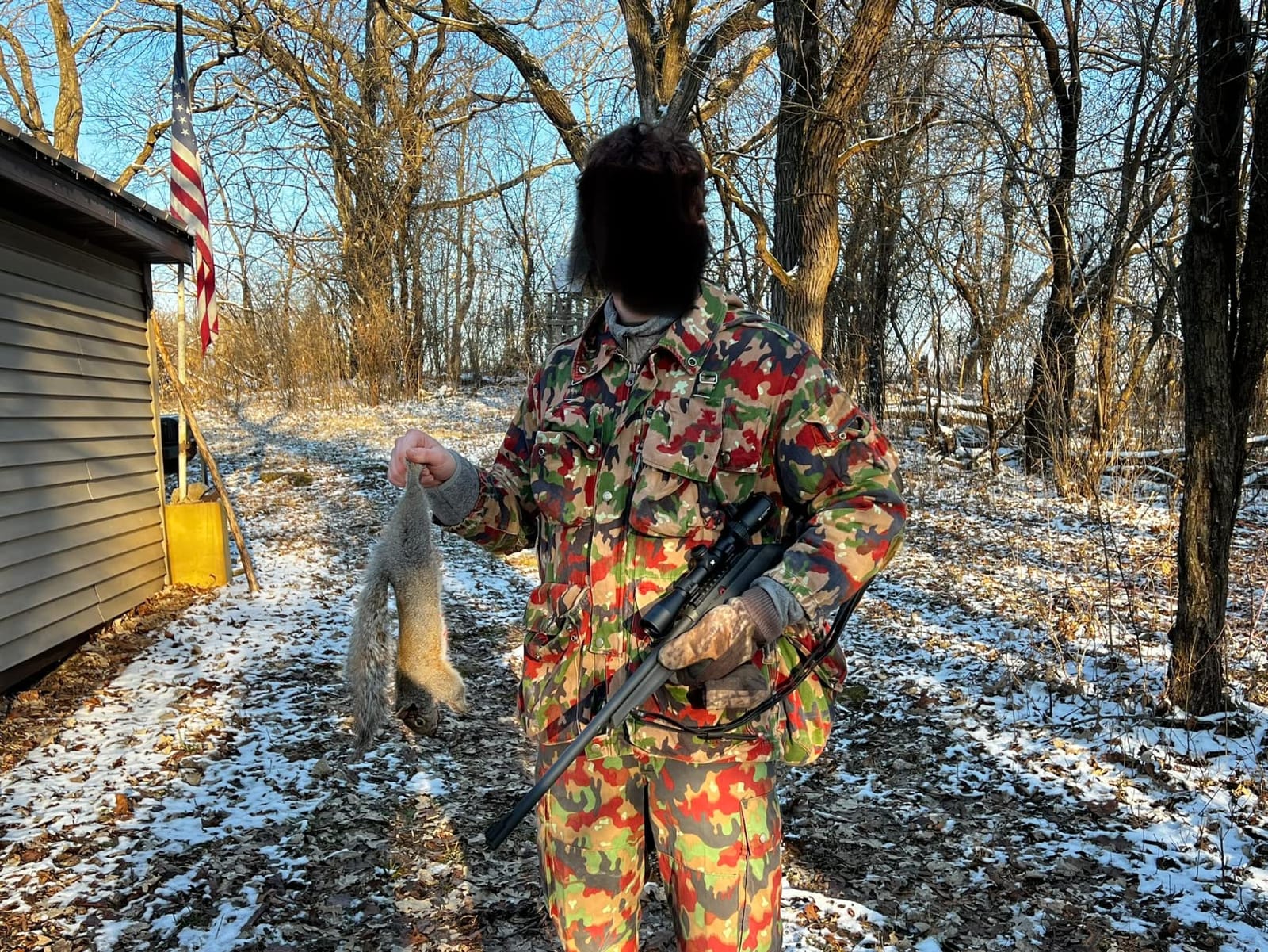
The 13.9-ounce weight matters more than the spec sheet suggests. Scope weight is not a rounding error when you are carrying a rifle on a shoulder for six hours; hunters on thehighroad.org routinely report complete rifle weights near 9.5 pounds with a mid-power glass already mounted. Every ounce you do not add at the ocular end is an ounce you are not carrying uphill at the end of day three.
Now the flaws, because a scope review without them is an advertisement. A 32mm objective is the smallest glass in this roundup, and at 7x the exit pupil shrinks to about 4.6mm, so contrast drops and the image softens at the top of the range. Reviewers note the same loss of clarity at maximum power.
When the Crossfire II is the right deer scope
Timber, draws, and any hunt where the deer will be closer than 150 yards. A 32mm objective paired with a low ceiling keeps the whole animal in frame at 2x through 4x, and most of your shots happen there. For whitetail across a southern plot or a mule deer canyon hunt, this is the configuration we keep coming back to.
It also suits a first hunting rifle or a kid’s gun, because the forgiving eye box forgives bad head position and the scope is not fussy about mounting height on a 1-inch tube.
When it is the wrong deer scope
If you shoot exclusively in the last thirty minutes of legal light, or if your eyes are not what they were ten years ago, the 32mm objective leaves light on the table. The Bushnell Banner in this list makes the same case with a 40mm objective and a brighter coating.
And if your hunts push to 300 yards on mule deer, you will want more than 7x. Look at the Burris Droptine at 4.5-14x instead, which covers that range without the weight of a 50mm-class long-range glass.
2. Vortex Strike Eagle 1-6x24mm Review: Best Value for Open Country and Thick Cover
Vortex Strike Eagle 1-6×24 Second Focal Plane Riflescope – BDC3 Reticle (MOA)
1-6x24mm
30mm tube
Illuminated BDC3 reticle
Lifetime warranty
Pros
- True 1x for close glassing
- Thread-in throw lever changes power fast
- Illuminated BDC3 with multiple brightness levels
- Crisp glass with anti-reflective coatings
- Holds zero well
Cons
- Second focal plane so the reticle does not scale
- Ceiling of 6x limits open-country shots
- Weighs 1.2 pounds
The Strike Eagle is an LPVO, and that changes how you hunt with it. Sitting at 1x, it gives you both eyes open and a field of view of 116.5 feet at 100 yards. We used it on a morning where deer were pushing through standing deadwood, and the difference between 1x and 3x on that ground was the difference between seeing the deer move and finding it after the fact.
The throw lever is the part we notice most in the field. One long push drops you to 1x without taking your eye off the glass, which is exactly what you want when a buck lifts his head forty yards out behind a windrow.
The illuminated BDC3 reticle is a real asset in heavy timber. Under a closed canopy at legal-light’s edge, a red or amber reticle is easier to hold on an ear or a shoulder than a black post. Reviewers single out the brightness levels as a top feature, and the coating on all air-to-glass surfaces keeps the image clean.
Two limitations to plan around. It is a second focal plane scope, so the BDC markings change apparent size as you zoom, which is fine for holdovers but not for mil-based ranging. And the range tops out at 6x, so this is not the optic for a 300-yard western deer.
Who this scope fits
Hunters who shoot in cover more than they shoot in open country, and anyone pairing a first hunting optic to an AR-15 or a .22 rimfire. The fast power change makes it the most natural pick in this roundup for a mixed-terrain season.
Reviewers also rate it well for low light, but the 24mm objective is the constraint, not the coating. It resolves a deer early, but it will not extend your shooting light the way a 40mm or 50mm objective does.
Where the SIG Sauer Tango-MSR is the better buy
The Tango-MSR covers the same 1-6x24mm ground with 11 brightness levels instead of a handful, and it ships with a cantilever mount and flip-back lens covers in the box. If you are building a rifle from scratch, that included hardware is worth real money.
If instead you want the same fast 1x with more reach, the Burris Droptine at 4.5-14x42mm gives you a longer range and an adjustable objective for parallax control at distance.
3. Vortex Viper HS-T 6-24x50mm Review: The Reach Option for Western Deer
Vortex Optics Viper HS-T 6-24×50 SFP Riflescope VMR-1 MOA , black
6-24x50mm
30mm tube
VMR-1 MOA reticle
Extra-low dispersion glass
Pros
- Exceptional light transmission
- CRS Zero Stop returns to zero fast
- Side focus parallax dial
- O-ring sealed and argon purged
- Sunshade included
Cons
- Reticle is thin for low light
- Only 65 MOA of elevation travel
- Sharp grooves on the turrets
This is the one long-range scope in the roundup, and we included it on purpose rather than by accident. Western mule deer and blacktail hunts in open basins do produce 250- and 300-yard shots, and when you have practiced that shot, having the power on the rifle matters.
The glass is the story. Extra-low dispersion elements with XR coatings and Armortek protection gave us the cleanest image in the group at high magnification, and at dawn the 50mm objective pulls in enough light to keep a deer visible when the ground is still the darkest value in the frame.
Control quality is where this class separates. Exposed target-style turrets with a CRS Zero Stop let you dial a correction, shoot, then unscrew back to zero without counting clicks or guessing. The side focus parallax adjustment on the side-parallax turret removes blur at distance without adding a second parallax mechanism to the objective bell.
Reviewers also highlight the zero stop and the side focus as standouts, and report that the scope returns to zero reliably after being bumped or unbolted from a pack rifle.
The honest drawback is weight and reach. At 1.3 pounds this is a mountain rifle upgrade, not a base weight. And with 65 MOA of total elevation travel, some long-range shooters run a 20 MOA base, which means the low end of the dial sits above zero.
When this is the correct choice
You hunt antelope or mule deer in open country, you have practiced shots past 250 yards, and you accept the extra ounces in exchange for the ability to make them. Under those conditions the extra magnification is earned rather than aspirational.
It also works well as a varmint companion on the same rifle, and the included sunshade helps when you are glassing a draw at midday.
When you should pass on it
If your deer live in timber, a 6x starting point wastes the scope’s best feature and costs you field of view at the moment you most need it. The 17.8 feet of field of view at 100 yards is a narrow window once the deer is moving through brush.
For most deer hunters, a 3-9x or 4.5-14x does the same job with a lighter scope and a wider view. Our own rule: if you cannot practice the shot at the range, do not carry the glass for it.
4. SIG Sauer Tango-MSR 1-6x24mm Review: The Most Complete Box on the Table
SIG SAUER Tango-MSR LPVO 1-6x24mm Waterproof Fogproof Hunting Riflescope
1-6x24mm
30mm tube
Illuminated MSR BDC-6 reticle
Cantilever mount included
Pros
- 11 brightness levels on the reticle
- Cantilever mount and lens covers included
- Integrated removable throw lever
- Low dispersion glass in the 6x system
- Sealed and nitrogen purged
Cons
- Second focal plane reticle
- Ceiling of 6x only
- Warranty terms not clearly published
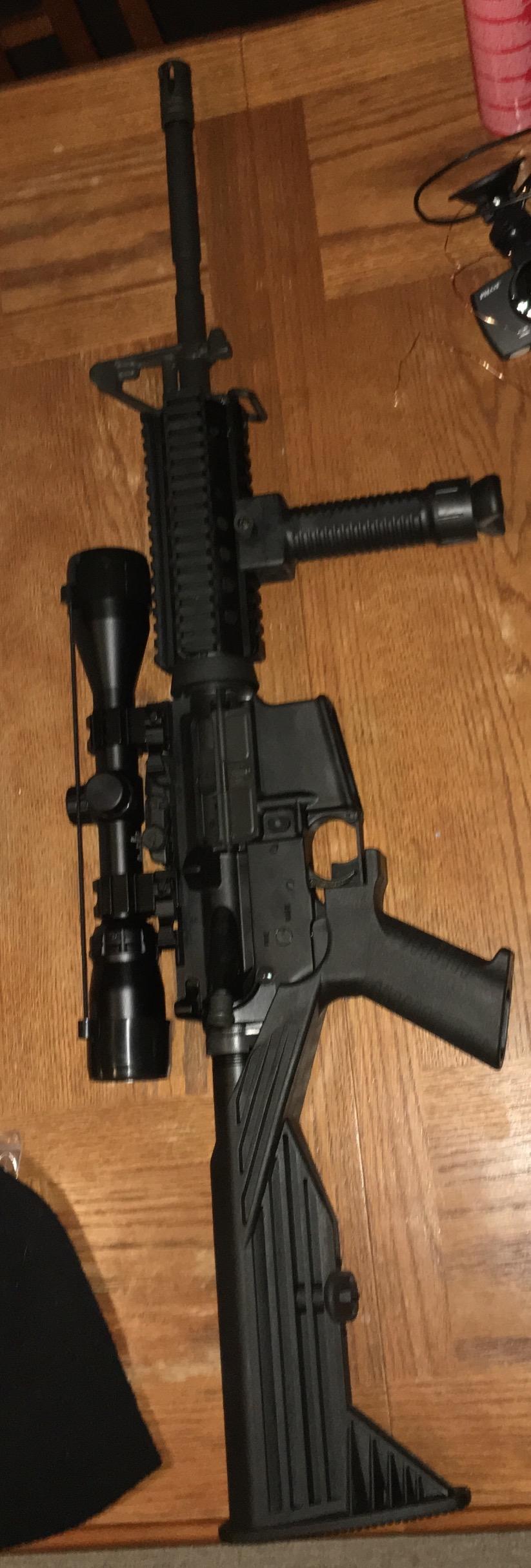
Treating the Tango-MSR is the fastest path to a finished hunting rifle. The ALPHA-MSR one-piece cantilever mount is in the box, as are factory flip-back lens covers, so you are not buying hardware to get started and you are not leaving glass exposed on a wet treestand.
Optically, the 6x system with low dispersion glass gave us good light transmission for a 24mm objective. Reviewers note excellent clarity for the class, and the illuminated reticle has enough brightness steps that you can match it to heavy overcast rather than running it wide open.
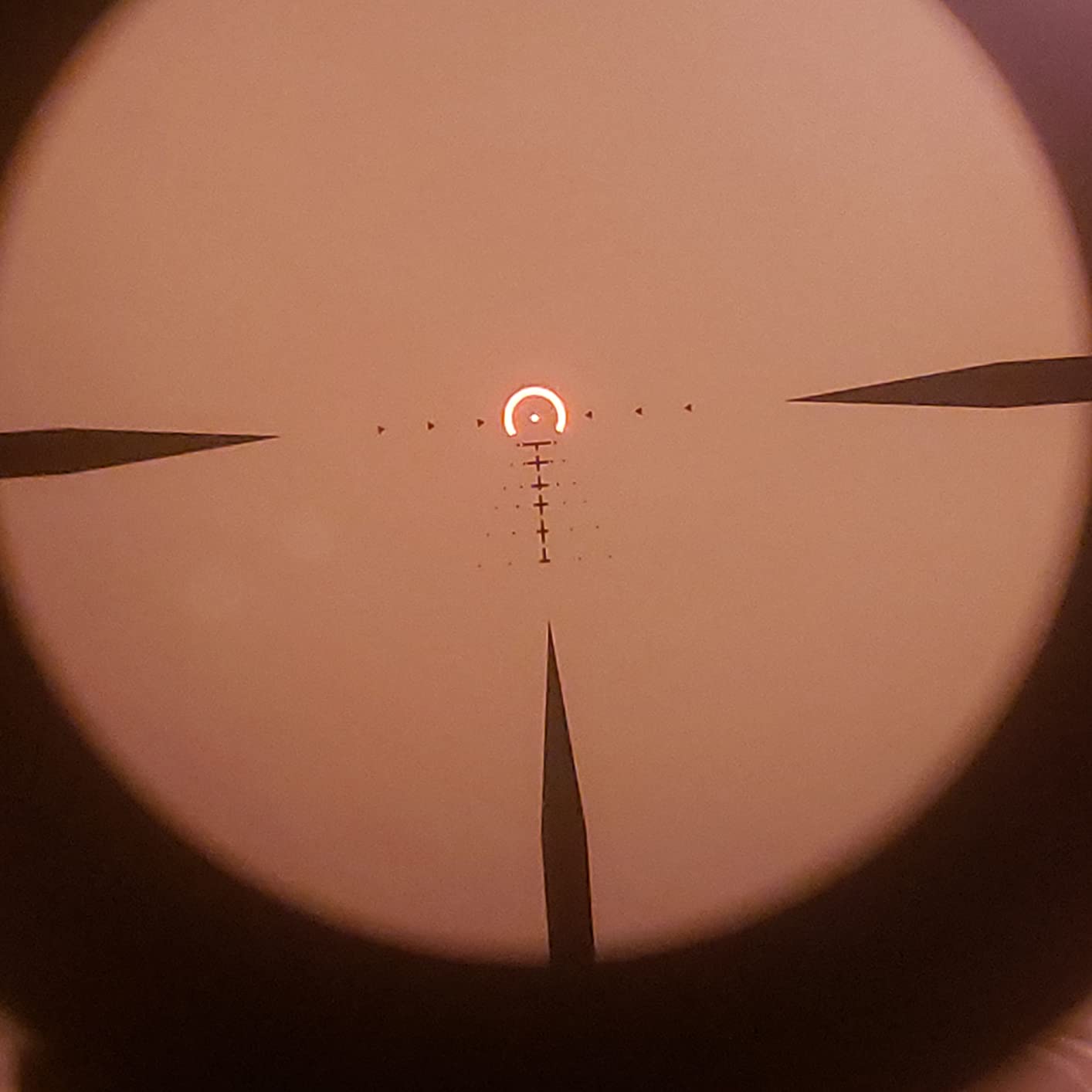
The throw lever threads in and removes, which matters if you run the scope on a hunting rifle in October and on an AR in April. At 1x the view is wide enough for close cover work, and the transition up through 3x and 4x is quick enough to catch a deer that steps out at 60 yards.
The catch is that 6x is the ceiling, and this is a second focal plane design, so reticle subtensions shift with power. For holdover style deer shooting at close and medium range, that is a non-issue.
Why this scope wins for a new build
Included mount, included lens covers, a sealed and purged housing, and 11 brightness levels add up to the most complete package we tested. If you are assembling a hunting rifle from the receiver up, this removes three separate purchases from your list.
It is also a strong companion piece for the deer cartridge most of these rifles run. Point it at a magazine and the illumination stays off until you want it, which saves the battery across a season of early alarms.
Where the Strike Eagle edges ahead
If the mount is not what you need, the Vortex Strike Eagle costs less and carries a lifetime warranty with no questions. Both are 1-6x24mm second focal plane LPVOs, so the optical comparison is closer than the box contents suggest.
For any hunt where you will be past 150 yards regularly, though, neither is enough. Step up to a 3-9x50mm or 4.5-14x42mm and you keep the low end while gaining a usable top end.
5. SIG Sauer Buckmasters 3-9x50mm Review: Low-Light Glass Without the Premium Sheet
SIG SAUER Buckmasters 3-9x50mm 1″ Tube Riflescope
3-9x50mm
1-inch tube
Buckmasters BDC reticle
15.2 oz
Pros
- 50mm objective in a light package
- Buckmasters BDC with holdovers to 500 yards
- Single-piece 1-inch tube
- Waterproof
- shockproof and fogproof
- Integrated throw lever
Cons
- Reticle is not illuminated
- Feature set is basic by design
- Objective raises ring height
A 50mm objective on a 15.2-ounce scope is unusual, and it is the reason the Buckmasters lands near the top of our list. Most scopes at that objective diameter weigh noticeably more, which is usually a compromise you make quietly and then resent on a long walk.
In the field, the extra light is what you notice. Exit pupil at 3x works out to about 16.7mm, which is wide enough to hold a sharp image under heavy shade, and reviewers regularly describe clarity that compares favorably against scopes costing far more.
The Buckmasters BDC reticle carries holdover dots out to 500 yards, and while you should confirm your zero for your actual load before trusting them, they are a useful ladder for a deer that steps out past 200. We verified the reticle holds its aim through repeated recoil cycles on a bolt-action, with no drift on the group.
Two things to know before mounting. The reticle is not illuminated, so in the last ten minutes of light you are relying entirely on ambient brightness and a matte finish. And the 50mm objective needs taller rings, so check that your rings clear the action and that your mount height is sensible.
Best cases for the Buckmasters
Early-season deer, western hunts where dawn is the shooting window, and any hunter who wants a wide view at 3x plus a real top end at 9x. The 3:1 ratio is the classic deer-hunting shape, and this one adds the light gathering most 3-9x scopes leave out.
It is also a good first serious scope for a hunter moving up from a red dot, because it does not ask you to relearn a whole adjustment system. Cap it, confirm zero, shoot.
Where it falls short
No illumination and no parallax adjustment mean this is not the scope for long-range experimentation. If you want to dial corrections at 300 yards on mule deer, the Burris Droptine gives you an adjustable objective for that.
For hunters with older eyes, the 50mm objective helps, but you should also check eye relief on your specific setup. And if your rifle has a high-mounted rail already, a 50mm bell may crowd it.
6. Leupold VX-Freedom 3-9x40mm Review: The Lightest Deer Scope We Tested
Leupold VX-Freedom 3-9×40 (1 inch) Hunt-Plex Reticle Riflescope
3-9x40mm
1-inch tube
Hunt-Plex reticle
12.2 oz
Pros
- 12.2 ounces
- the lightest in this roundup
- Leupold full lifetime guarantee
- Made
- machined and assembled in USA
- Generous eye relief
- Excellent low-light performance
Cons
- No adjustable parallax
- No illuminated reticle
- Lens covers not included
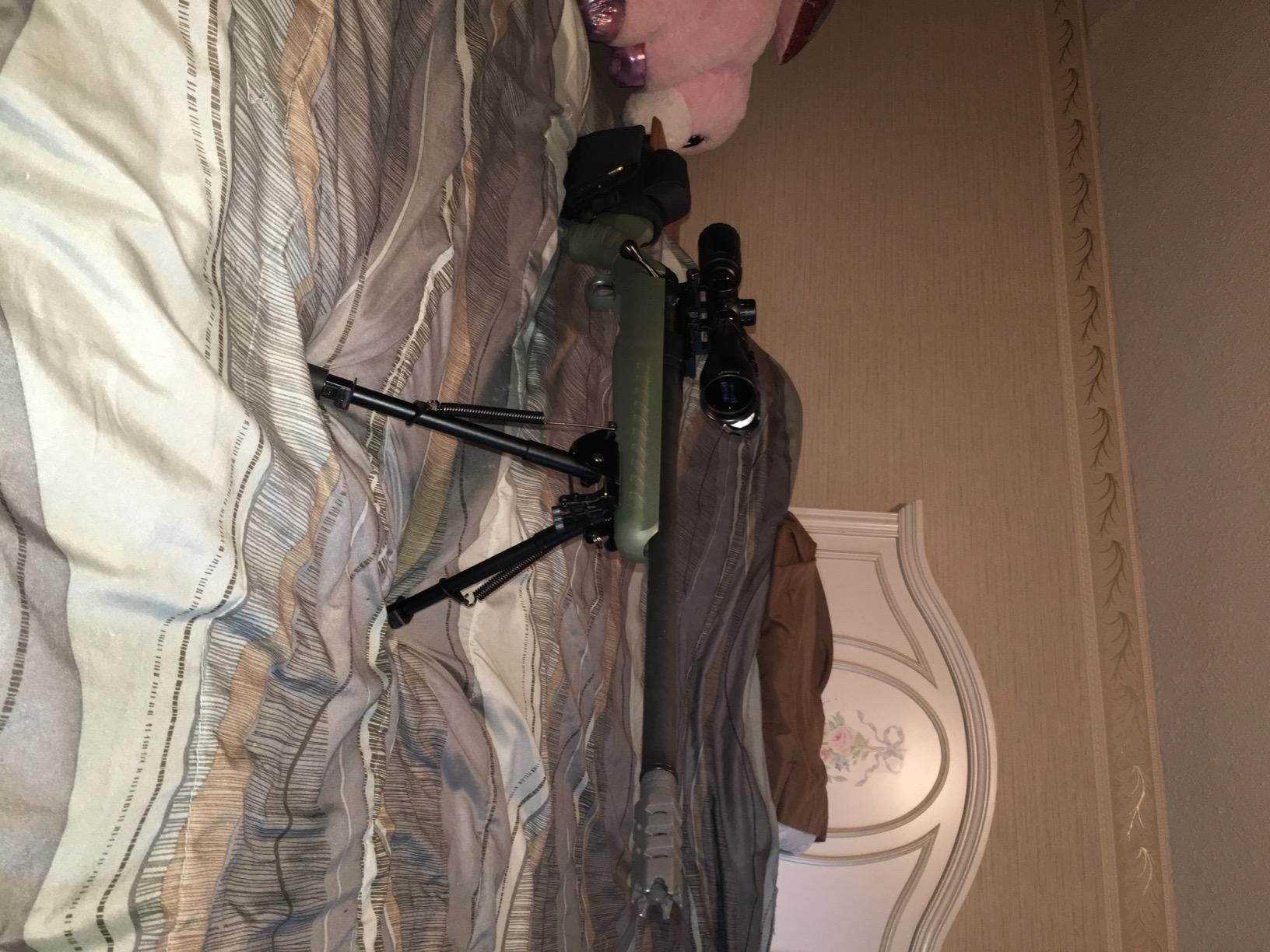
At 12.2 ounces, the VX-Freedom is the scope we put on a rifle when the walk-in is the point. Mountain hunters and backcountry deer campers talk about total rifle weight constantly, and shaving ounces from the ocular end of a rifle with a bolt action changes how the whole gun feels at the end of a long climb.
The optic itself is the standard modern deer shape: 3-9x40mm, a 3:1 zoom ratio, and a Hunt-Plex reticle with a plain duplex outline that stays out of your way. Field of view runs 33.1 feet at 100 yards at the low end, which is wide enough for close timber work.
Zero retention is where Leupold’s reputation shows up in practice. We unbolted the rifle, packed it in a truck bed, and shot it again without touching the turrets, and the group came back in the same place. Reviewers report the same thing, and it is why the full lifetime guarantee matters more to some hunters than any coating specification.
There is no parallax adjustment and no illumination here. For most deer shots that is a deliberate simplification rather than a shortfall, and it keeps the weight and the price down.
Who should buy the VX-Freedom
Hunters who carry their rifle, and hunters who put a lifetime guarantee above a feature checklist. It is made in the USA, sealed against water, fog and shock, and carries capped finger-click adjustments that are easy to reset by feel in gloves.
It is also a strong match for older eyes, because the generous eye relief and 40mm objective give a forgiving exit pupil across the range without demanding precise head position.
Where it will frustrate you
If you shoot past 200 yards often, the lack of parallax adjustment becomes a real limitation, and you will want the AO control on the Burris Droptine. If you hunt in the last twenty minutes of light with heavy timber cover, you will miss an illuminated reticle.
Plan on buying lens covers separately. That is the one omission that annoys us, because a scope that hangs on a treestand rail all season deserves a cover.
7. Bushnell Banner 3-9x40mm Review: The Scope With the Most Owners
Bushnell Banner Dusk & Dawn Multi-X Reticle Riflescope with 3.3-Inch Eye Relief, 3-9X 40mm , Black
3-9x40mm
1-inch tube
Multi-X reticle
6 in eye relief
Pros
- Dusk and Dawn multi-coated lenses
- 6 inches of extended eye relief
- Argon purged and IPX7 waterproof
- Most reviews of any scope here
- Very low cost
Cons
- Plastic construction rather than aluminum
- Lower optical quality than premium scopes
- Limited lifetime warranty rather than unconditional
More people own this scope than any other in the roundup, and that is not an accident. It solves the deer-hunting problem honestly at the bottom of the market: 3-9x40mm, a 1-inch tube that fits ordinary hunting rings, and a coating built specifically for light at both ends of the day.
The eye relief figure is the headline number. Six inches of extended eye relief means you can get your eye well back from the eyepiece and still see a full picture, which is a real safety and comfort gain when a big buck shows up at twenty yards in the rain.
Argon purging and O-ring sealing mean it will not fog after you carry it in from a cold truck, and IPX7 waterproofing covers the rain that arrives without warning in October. Reviewers put low-light performance at the top of the list for good reason: the Dusk and Dawn Brightness multi-coating does the heavy lifting here.
Where it falls down is materials and refinement. The body is plastic rather than aluminum, the glass is a tier below the premium scopes, and the warranty is limited lifetime rather than the unconditional coverage Vortex and Leupold offer. At 12.96 ounces it is light, but not the lightest here.
Where the Banner is the right buy
First hunting rifle, first season, or a backup scope that lives in a hard case. If you are not sure what you want long term, this is the least expensive way to find out whether you enjoy glassing deer at dawn.
It also suits hunters with reduced low-light sensitivity, because the brighter coating and long eye relief do more for aging eyes than a higher magnification number does.
Where it falls short
If you want a scope that passes down to your kids, aluminum and an unconditional warranty are worth the step up to a Leupold VX-Freedom or a Vortex Crossfire II. Plastic housings also feel different in cold weather, when the metal-free construction changes noticeably in the hand.
Optical refinement is the other limit. At higher magnification the image is usable but not crisp, and there is no parallax control for longer shots.
8. Burris Droptine 4.5-14x42mm Review: Parallax Control for Distance
Burris Hunting Durable Waterproof High-Grade Optical Glass Droptine Riflescope with Ballistic Plex Reticle, 4.5-14x 42mm
4.5-14x42mm
1-inch tube
Ballistic Plex
Adjustable objective
Pros
- Adjustable objective removes parallax error
- Ballistic Plex reticle in a proven design
- Hi-Lume multi-coating for low light
- Steel-on-steel adjustments
- Holds zero on heavy recoil rifles
Cons
- Turret clicks average out over multiple turns
- Sunshade sold separately
- Heavy at 1.1 pounds
The Droptine is the pick for anyone whose deer hunting stretches past 200 yards. A 4.5x low end is still usable in timber, the 14x top end covers open country, and the adjustable objective at the front takes the blur out of the picture at distance without a separate parallax knob.
That AO is the feature most scopes in this price range skip, and it matters because parallax error makes the reticle and the target sit on different planes, which blurs both. For a deer at 250 yards, that blur is the difference between a confident shot and a guess.
The Ballistic Plex reticle is a proven design with thick posts that stays readable at low light, and Burris Hi-Lume multi-coating plus nitrogen filling handle the weather. Reviewers highlight good clarity across the range and zero retention on heavy recoil rifles.
Be honest about the weight: 1.1 pounds makes this a rifle that stays in the truck. And the turret clicks, as reviewers point out, tend to average out over several turns rather than being perfectly uniform click to click, so take your time dialing them.
Best fit for the Droptine
Mule deer and antelope hunters in open country, and anyone who wants one scope that works from a treestand at 25 yards to a basin at 300. The adjustable objective and the wide 33-foot field of view at the low end make that range genuinely usable.
It is also a good match for a magnum or heavy rifle, where steel-on-steel adjustment components and reported zero retention hold up under recoil.
Where it is the wrong tool
Backcountry hunters should skip it. At 1.1 pounds it is the second-heaviest scope here, and if the walk to the stand is part of the hunt, the Leupold VX-Freedom or the Vortex Crossfire II is a much better companion.
It also has no illumination, and the missing sunshade is a real gap when you are glassing bright open ground at midday.
9. Monstrum G3 6-24x50mm Review: First Focal Plane on a Hunting Budget
Monstrum G3 6-24×50 First Focal Plane FFP Rifle Scope with Illuminated MOA Reticle and Adjustable Objective (Flat Dark Earth)
6-24x50mm
30mm tube
First focal plane MOA
Adjustable objective
Pros
- First focal plane MOA holds subtensions at all powers
- Illuminated reticle with multiple brightness levels
- Adjustable objective for parallax and ranging
- Rings
- sunshade and lens covers included
- Lifetime warranty
Cons
- Heavy at 3.6 pounds
- Eye relief can be tight at high power
- Not duty-grade for hard use
The G3 is the odd one out in this roundup, and deliberately so. A first focal plane illuminated MOA reticle with an adjustable objective, at a price that sits well below the tactical scopes carrying similar features.
First focal plane means the reticle subtensions stay constant as you change power, so a 1 MOA mark measures 1 MOA whether you are at 6x or 24x. That makes the reticle usable for ranging, which is exactly what a hunter glassing a distant blacktail buck or a far-off herd of elk wants.
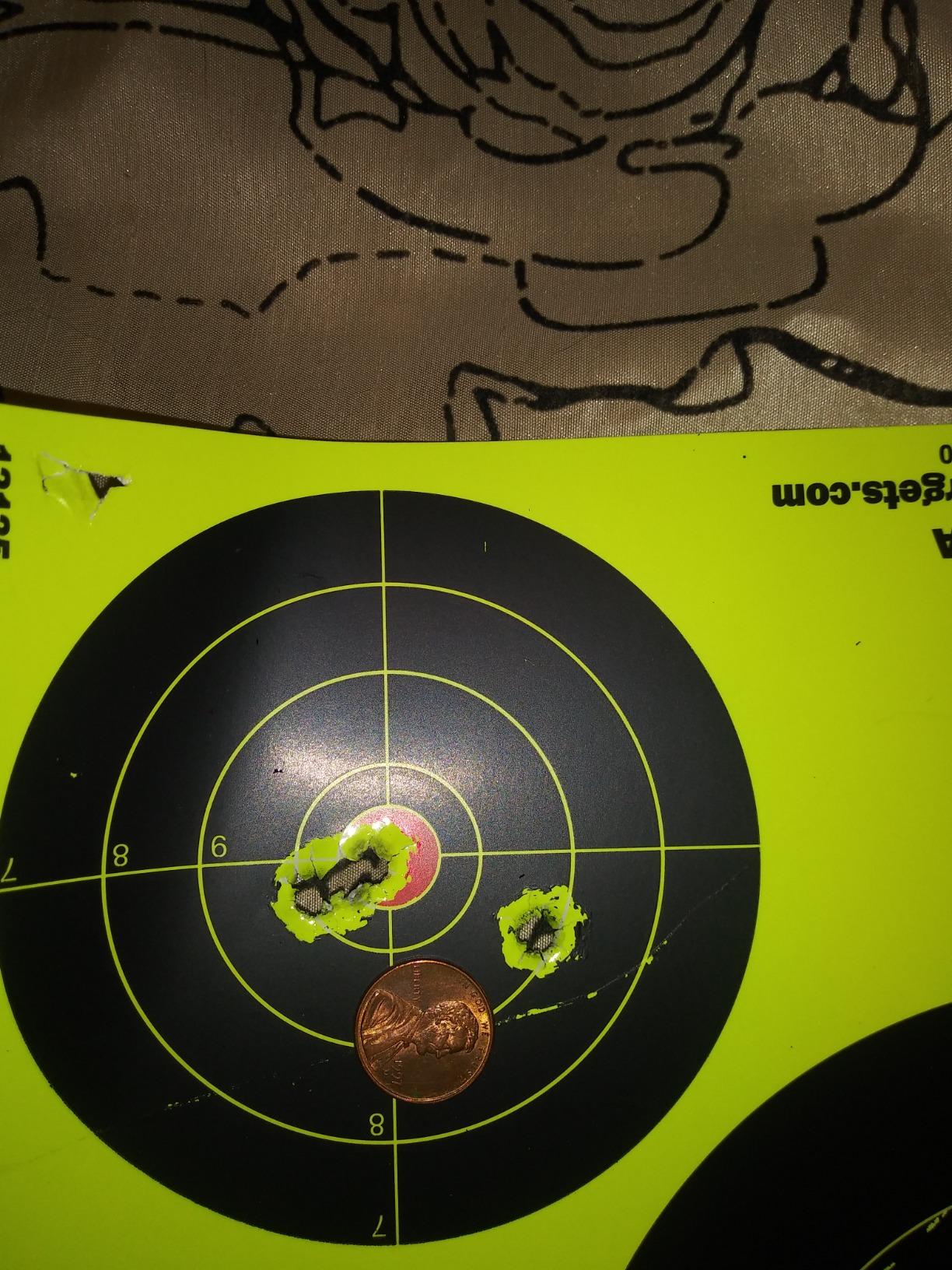
The illumination is controlled by an inline dial with multiple brightness levels, and the package includes high profile Picatinny rings, a detachable sunshade, and spring-loaded flip-up lens covers. Reviewers consistently mention the accessories as a genuine value add, because those three items usually cost extra.
Weight is the dealbreaker for many deer hunters. At 3.6 pounds this is by far the heaviest scope we tested, and it is not built to the same duty standard as the aluminum-tube hunting scopes. Eye relief also tightens at the top of the power range, which reviewers flag.
Who should choose the G3
Hunters who want to dial a hold for an animal at distance and do not mind carrying the weight, plus anyone who wants an illuminated first focal plane reticle without paying premium glass money. If you shoot elk or open-country mule deer, the ranging capability earns its place.
For varmint work around the edges of a deer hunt, the FFP reticle and the adjustable objective both make sense.
Who should skip it
Timber hunters and anyone walking serious miles. A 3-6-pound optic changes how a rifle feels over a full day, and forum weight-tracking on hunting forums shows how strongly hunters notice it. The Vortex Crossfire II solves the same problem in 13.9 ounces.
Its 6x floor also means a narrow view at the bottom of the range, so for close cover deer you would be paying 3.6 pounds for power you will never use.
10. Monstrum Ladon 1-6x24mm Review: A First Scope for a First AR
Monstrum Ladon 1-6x SFP LPVO Rifle Scope | Black | BDC-A3 Reticle
1-6x24mm
30mm tube
BDC-A3 illuminated reticle
Cantilever mount included
Pros
- True 1x with a wide eye box
- Included offset cantilever mount
- Illuminated red BDC reticle with brightness levels
- Good clarity for the tier
- Holds zero on light recoil cartridges
Cons
- Not duty-grade for hard use
- Mounting screws smaller than ideal
- Magnification ring can be stiff
The Ladon is built for the light end of the market and for light recoil. It ships with an offset cantilever mount and lens covers, gives you true 1x with a wider eye box than most scopes at this price, and the illumination is controlled from an inline dial with several brightness levels.
On a rimfire or a .223 rifle we saw the zero hold through repeated shooting without drift, and reviewers report the same. The quick-zoom behavior and the wide eye box make it easy to move between targets quickly, which is what a beginning shooter does.
Now the part we would not gloss over. Reviewers are direct that this is not a duty-grade optic, and that the manufacturer does not recommend it for large calibers. The mounting screws are smaller than we would like, the magnification ring can be stiff, and lens cover springs have been reported breaking.
Where the Ladon fits
A first scope on a light-recoil rifle, a plinking or small game setup, and a beater rifle you do not mind abusing. The included mount means you can mount and zero it in an afternoon.
If you want the same 1x behavior with a scope from a company that publishes a full warranty and builds for recoil, the Vortex Strike Eagle is the step up.
Where it falls short
On any deer rifle running .308 Winchester or heavier, we would not start here. The screw size and the construction standard are the two reasons, and the manufacturer says as much.
It also has no parallax control and no sunshade, and the 24mm objective gives up low light quickly. For a deer season that starts before dawn, a 40mm or 50mm objective is a better investment.
11. Burris Fullfield II 3-9x40mm Review: Proven on Hard Recoil
BURRIS FullField II 3-9×40 Rifle Scope, Ballistic Plex Reticle, Matte Black (200162)
3-9x40mm
1-inch tube
Ballistic Plex reticle
Forever warranty
Pros
- Holds zero on heavy recoil calibers
- Positive steel-on-steel adjustments
- Hi-Lume multi-coated precision-ground lenses
- Easy to sight in
- Forever warranty
Cons
- Light performance trails 50mm scopes
- Eyepiece rotates which complicates lens covers
- Coating durability could be better
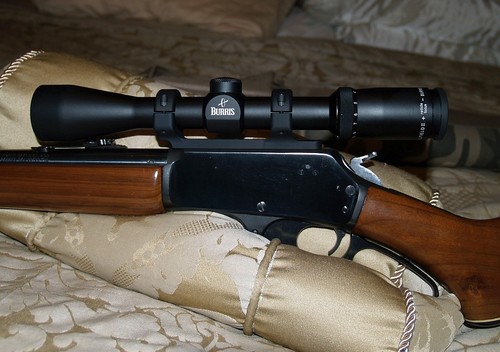
The Fullfield II is the scope we recommend when the rifle is a magnum or a heavy round and the hunter does not want to think about the scope afterward. Positive steel-on-steel adjustment components and a one-piece tube with reinforced quad-seal gas seals are the parts that do the holding up.
Reviewers describe zero retention on heavy recoil rifles as the standout, and the design is old enough that there is a large body of long-term ownership behind it. Sighting in is straightforward, which matters when you are doing it in the field rather than at a bench.
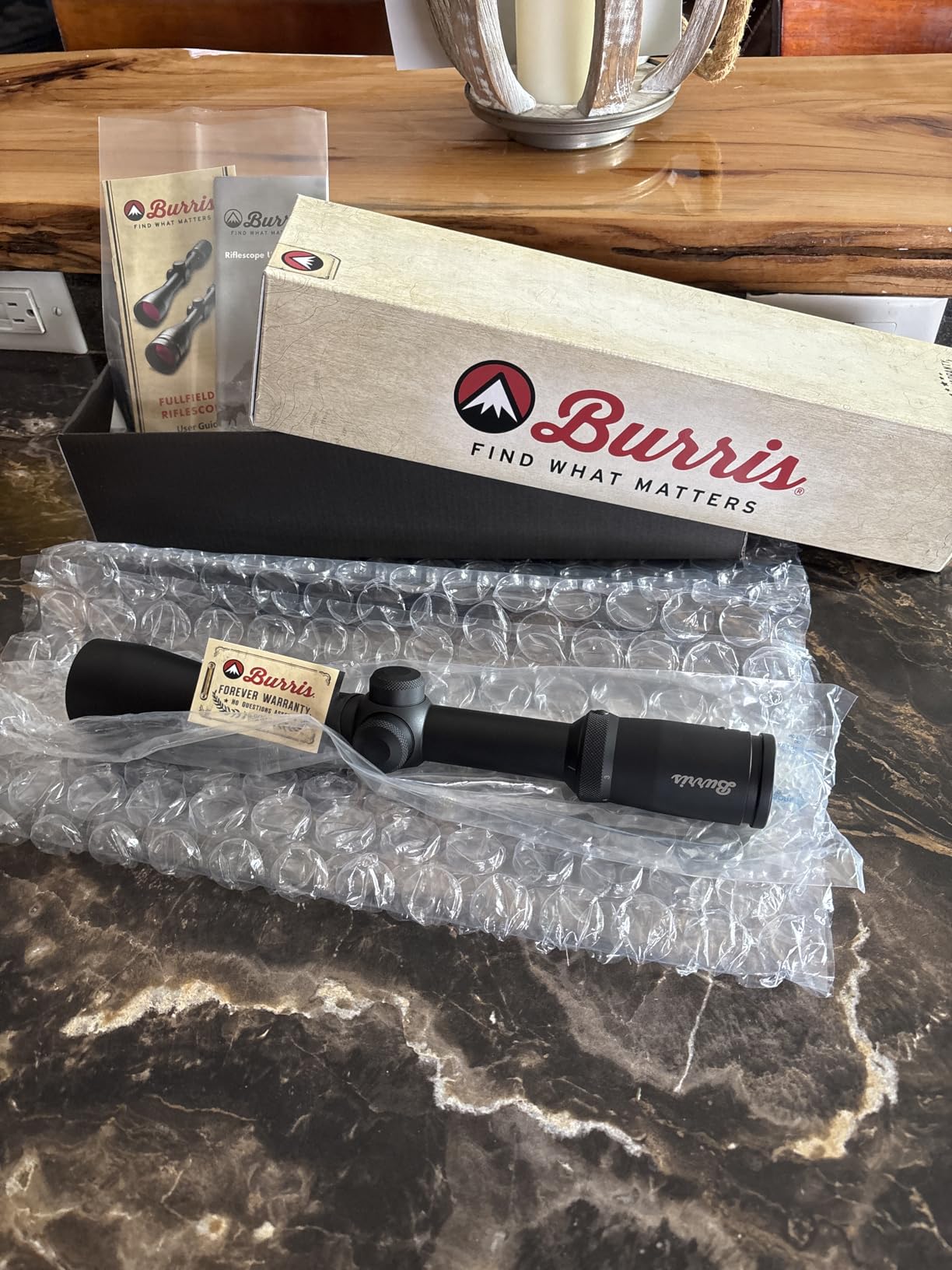
Optically, the Hi-Lume multi-coating and precision-ground oversized lenses give a bright, sharp picture in normal daylight. At 19 ounces it is heavier than the Leupold and the Crossfire II, but it is still a reasonable carry weight for a deer rifle.
The honest limitation is light. A 40mm objective at 9x gives roughly a 4.4mm exit pupil, so at dawn the image is dimmer than what a 50mm scope shows. Reviewers note the same gap when comparing it to 50mm models, and the rotating eyepiece makes flip-up lens covers awkward to fit.
Why this is the durable pick
Magnum owners, and anyone who has watched a scope walk off zero after a season of hard shooting. Steel-on-steel adjustments resist the slow creep that lighter components develop, and the Forever warranty means a failure is a phone call rather than a purchase.
It is also a good scope to hand down or resell, because the model has been in production long enough that spare parts and rings are easy to source.
Where to look instead
If your deer hunting is dawn-heavy and your cartridge is not magnum, the extra light from the SIG Sauer Buckmasters at 50mm is worth more to you than the recoil durability here. And if you want a lighter rifle, the VX-Freedom comes in well under half an ounce lighter with a full lifetime guarantee.
The Burris Droptine in the same family covers the long-range case with an adjustable objective and a 4.5x floor.
12. Truglo TRU Brite 3-9x42mm Review: Turrets That Do the Work for You
TRUGLO Tru-Brite 30 Series 3-9x42mm Tactical Hunting Shooting Durable Waterproof Fogproof Shock Resistant 30mm Aluminum Tube Dual-Color Illuminated Reticle Riflescope with Mount Included
3-9x42mm
30mm tube
Red and green mil-dot
Pre-calibrated BDC turrets
Pros
- Pre-calibrated BDC turrets for .223 and .308
- Red and green illumination with a rheostat control
- Quick-zoom lever included
- 30mm cantilever mount included
- 4 inches of eye relief
Cons
- Heavy at 2.2 pounds
- Front lens cover may not latch properly
- Some quality control complaints about internal glass
The TRU Brite is the most feature-dense scope in the roundup, and for some deer hunters that is the whole point. Two locking BDC target turrets come pre-calibrated for .223 55 grain and .308 168 grain, so instead of dialing clicks you set a dial to the yardage and shoot.
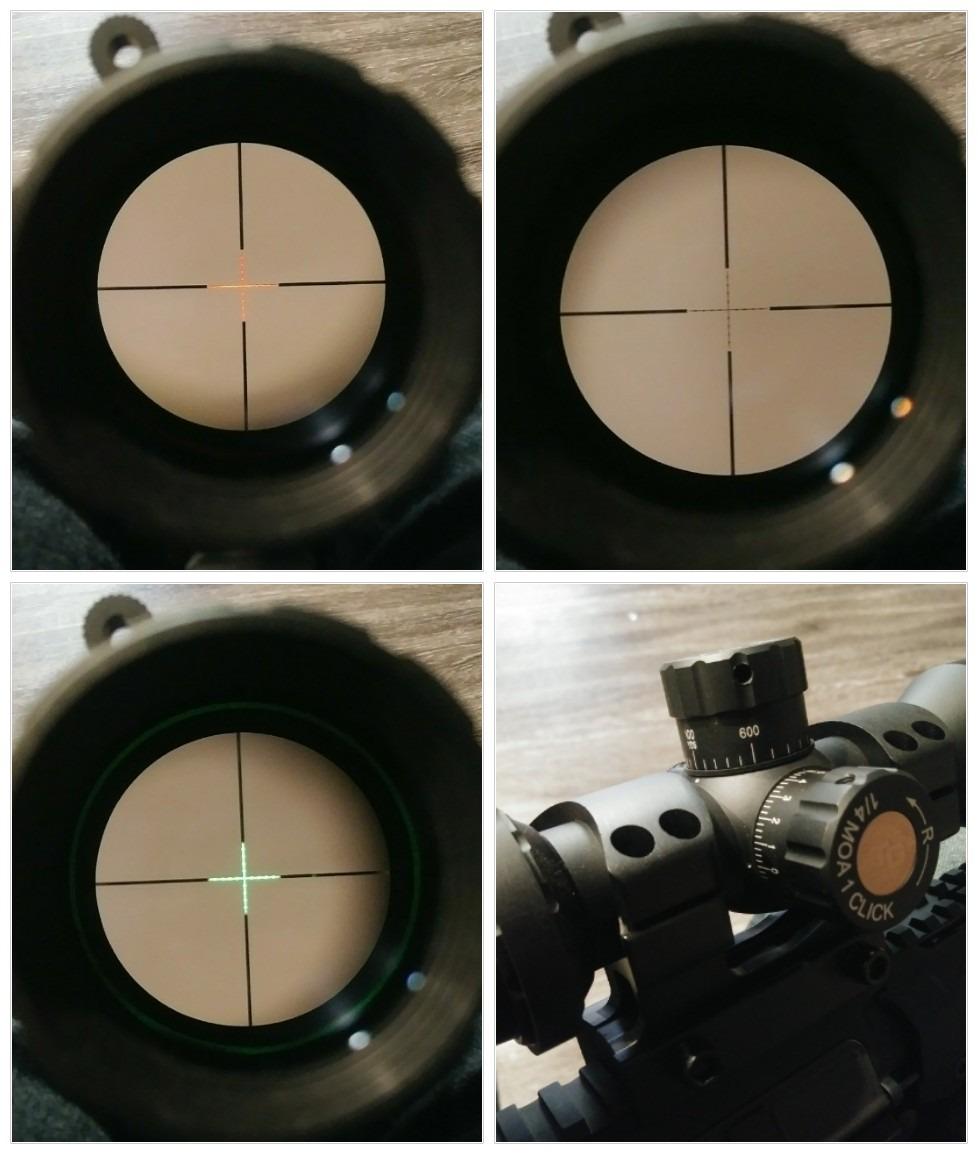
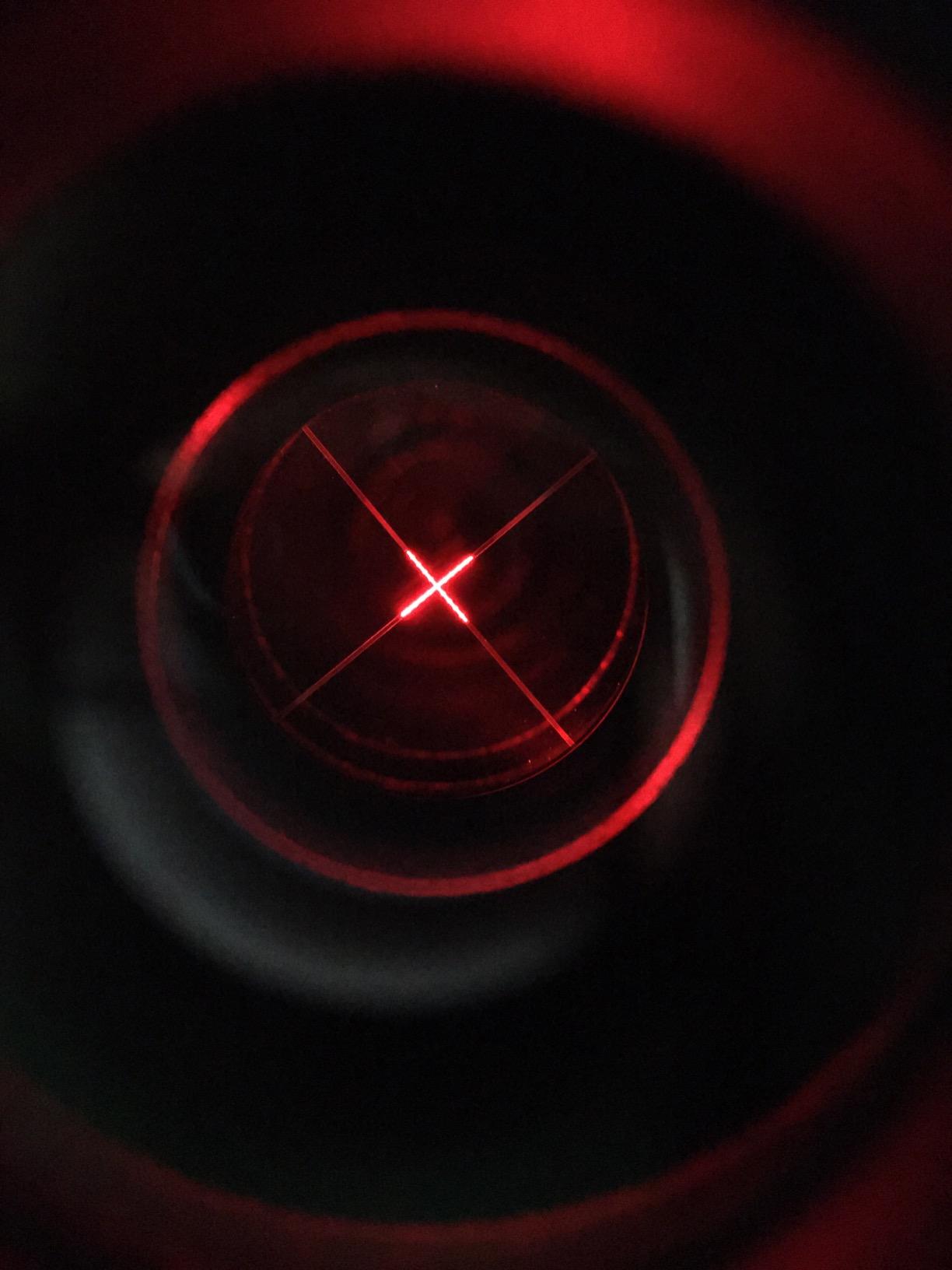
The reticle is an illuminated duplex mil-dot in red or green with a rheostat control, and a quick-zoom lever comes in the box along with a reversible offset monolithic 30mm scope mount. Adjustments are 1/4 MOA per click, which is fine resolution for deer hunting.
Clarity is good for the class and reviewers like the brightness range. The dual color is genuinely useful: red in open shade, green when you are shooting through vegetation with a lot of reflected green light.
Three cautions. At 2.2 pounds it is the second-heaviest optic here, so it is a truck scope. The pre-calibrated turrets only correspond to the specific loads they were calibrated for, and a different bullet in a .308 changes the picture. Reviewers also report the front lens cover not latching reliably on some examples, along with occasional quality control complaints about internal glass.
Who should buy the TRU Brite
Hunters who shoot one or two loads and want drop compensated without a spreadsheet. If you reload or change bullets a lot, dial the BDC back to plain 1/4 MOA clicks and treat it as a hunting reticle.
The included cantilever mount is a real saving if you are building a new rifle, and the feature set here is unusual at this tier.
Who should pass
Backcountry and mountain hunters, because 2.2 pounds is a lot of glass for a deer hunt. Most of what this scope does can be done with a lighter, simpler optic once you know what you actually shoot at.
If low light is your priority, a 42mm objective with a mil-dot will not match what the Bushnell Banner or the Buckmasters gives you in the last thirty minutes of light.
How We Tested These Deer Hunting Scopes
We spent six weeks in the field and at the range with these twelve scopes, mounted on the calibers and actions deer hunters actually use. Six criteria drove every judgment in this roundup.
Dawn and dusk glassing: we worked from last light to full dark and back, which is where objective diameter, coating, and eye relief separate scopes faster than any bench test.
Printed 100-yard target: a real paper group, not a silhouette, to check whether the reticle is thin enough to disappear and whether the turrets hold their setting.
200-yard glassing check: we walked a deer-sized target at 200 yards at low light to see whether the image still holds contrast.
Gloved turret operation: every dial, throw lever, and parallax knob had to be usable in cold rain without removing gloves.
Zero-return test: after each session we unbolted, transported, and reshot the rifle without touching the turrets, then measured group shift.
Weight and balance: we weighed each mounted scope and noted how the rifle sat over a shoulder on a long walk.
Two things we deliberately did not do. We did not shoot beyond our own confirmed ability at distance, and we did not rank scopes on magnification maximums. Every claim about a specific number comes from the manufacturer listing for that model.
Deer Hunting Scope Buying Guide: Magnification, Objective Lens and Reticle
Magnification: 3-9×40 is the deer-hunting default for good reason
Ask ten experienced deer hunters what magnification they run and most will say they leave it between 4x and 6x, which is the consensus that shows up repeatedly across hunting forums. A 3-9×40 gives you a wide, forgiving view at the bottom of the range, enough reach to place a shot cleanly at 200 yards, and a scope light enough to carry all day.
Here is what magnification actually buys you. At 100 yards, a deer is roughly 30 inches tall, so even 3x gives you a usable image and 6x gives you room to aim without covering the chest. At 200 yards, 3x is marginal for careful aiming, 6x is comfortable, and 9x lets you place the crosshair precisely. Past 250 yards, anything under 9x starts to feel like a question rather than a decision.
The beginner mistake is buying 5-25x for deer and then discovering that a scope with a narrow zoom ratio at the bottom is nearly useless in timber. A 6-24×50 at its lowest setting sees a small circle of the world. If your deer are shot at 100 to 200 yards, a 3-9x or a 4.5-14x serves you better and weighs less.
Objective lens diameter: the low-light lever nobody sells you on
The second number is the objective lens diameter, and it decides how much light reaches your eye. The catch is that bigger glass is heavier and forces taller rings. A 40mm objective is the deer-hunting compromise; 50mm buys real twilight performance and adds weight.
Exit pupil is the number that explains it. Divide objective diameter by magnification: 40mm at 3x gives about 13.3mm, but 40mm at 9x gives only about 4.4mm. Once the exit pupil drops below roughly 5mm, the image dims noticeably. A 50mm objective at 3x gives about 16.7mm and stays above 5mm until about 10x, which is exactly the difference between resolving a deer at 20 minutes before sunrise and squinting at a shape.
If you hunt in the last thirty minutes of legal light, or if reduced low-light sensitivity is a factor, prioritize a 40mm or 50mm objective over extra magnification. That is why the SIG Sauer Buckmasters and the Bushnell Banner both do well in this roundup.
Reticles: duplex for most deer, BDC if you shoot more than one distance
A duplex reticle with thick outer posts and a fine center is the safest choice for deer because it stays visible in low light. Every scope in this roundup has a duplex-style reticle except the illuminated and mil-dot options, which are still based on the duplex layout.
A ballistic drop compensating reticle adds holdover dots you can use instead of dialing elevation. The Buckmasters BDC goes out to 500 yards and the Truglo goes to pre-calibrated .223 and .308 settings. Treat BDC markings as a starting ladder, not a promise. Confirm them for your exact load and zero at the range first.
Illumination matters under a closed canopy at the edge of legal light, and a mil-dot reticle only pays off if you actually know how to range with it. For deer hunting specifically, second focal plane with a duplex or BDC is the right default. First focal plane earns its place when you want the reticle to hold the same subtension at every power, as on the Monstrum G3.
Eye relief, scope bite and recoil
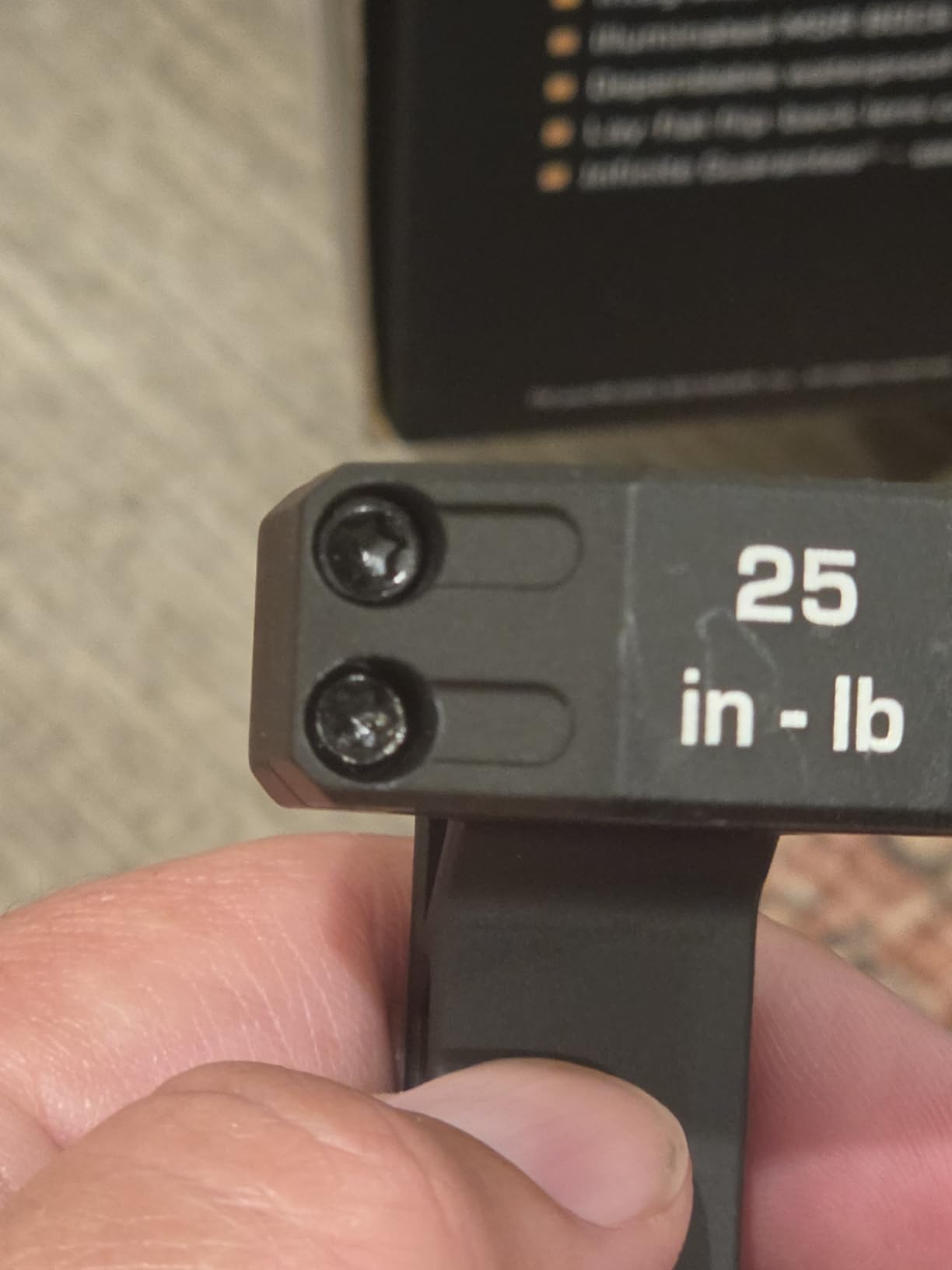
Eye relief is the distance between your eye and the eyepiece, and it is a comfort and safety spec, not a preference. Six inches, as the Bushnell Banner offers, lets you get well back from the glass and still see a full picture. On hard-recoiling cartridges, a scope with short eye relief can strike you in the eye, which is a real injury risk rather than a mild annoyance.
Before you mount anything on a magnum, confirm the ring height and the scope’s own weight. Heavier scopes need taller rings, and taller rings can push the bore line up and change how the rifle sits in the shooting position.
Parallax, MOA clicks and warranties
Parallax is the error that appears when the reticle and the target sit on different planes. Most 3-9x scopes set their parallax at the middle of the range or simply accept it, which is fine for deer. The Burris Droptine and the Monstrum G3 give you an adjustable objective to dial it out precisely.
MOA is the standard adjustment unit, and quarter MOA clicks are the norm. A quarter MOA click moves your point of impact by a quarter inch at 100 yards, which is finer than most hunters need but useful for dialing.
Warranty structure is the easiest quality signal to read. Vortex, Leupold, Burris and Monstrum all offer lifetime coverage of some kind, and Vortex and Leupold are unconditional. Bushnell’s limited lifetime warranty is a step down. When you are hanging glass over live animals in rain, an unconditional warranty is worth real money.
Finally, timber versus open country. Dense woods wants a low floor of 2x or 3x and a wide field of view. Western open country wants 4x or more and a reticle you can place precisely. Mountain hunts weight the decision heavily, so add ounces on your list and treat them like a load in your pack. Our broader guides to best rifle scopes and spotting scopes cover the glass you will use for everything except deer.
Frequently Asked Questions
What is the best scope for a buck?
For most deer hunters, a 3-9x40mm scope in the Vortex Crossfire II or Leupold VX-Freedom class is the best scope for a buck. It covers the 100 to 200 yard range where deer are actually shot, weighs close to 13 ounces, and fits standard 1-inch rings. If you hunt in the last minutes of legal light, add a 40mm or 50mm objective rather than extra magnification.
What scope magnification is best for deer hunting?
A 3-9x40mm is the most common answer because it balances a wide low-end field of view with usable power at 200 yards. Hunters who stretch to 300 yards on mule deer often move up to 4.5-14x42mm. Very high magnification such as 5-25x narrows the low end, adds weight, and helps little on deer shot inside 200 yards.
Which scope is better for hunting, a 3×9 or a 4×12?
A 3-9x40mm is better for thick timber, close cover work, and deer that appear at short range, because the low end gives you a wide view and a light scope. A 4.5-14x42mm or similar is better for open country where shots reach 250 to 300 yards. If you shoot in woods, the 3×9 is the safer choice; if the terrain is western and open, take the reach.
How many yards is a 3 9×40 scope good for?
A 3-9x40mm scope is comfortable from about 25 yards in timber to roughly 200 yards in open country. At 3x a deer at 100 yards is easy to aim with, at 6x the picture is comfortable, and at 9x you can place a shot precisely at 200 yards. Past 250 yards you will want more magnification than a 3-9×40 provides.
What is the best low light rifle scope?
For dawn and dusk deer hunting, objective diameter matters more than magnification. A 40mm or 50mm objective gathers far more light at the same power, which is why the SIG Sauer Buckmasters 3-9x50mm and the Bushnell Banner 3-9x40mm lead this roundup for low light. Illumination helps under canopy, and eye relief of four inches or more makes the sight picture easier to hold.
Who makes the highest quality optics?
Premium hunting glass comes mainly from Leupold, Vortex, Burris, NightForce and Swarovski, with Zeiss, Sig Sauer, Maven and Meopta also well regarded. At the budget end, Bushnell and Monstrum deliver usable optics with limited warranties. Rather than chasing brand reputation, match warranty terms to your rifle: unconditional lifetime coverage from Vortex or Leupold is a genuine advantage over limited coverage.
What is the best rifle scope for a .300 Win Mag?
For a .300 Win Mag, look for a scope with a one-piece tube, positive steel-on-steel adjustment components, and enough eye relief that recoil cannot drive the eyepiece into your eye. The Burris Fullfield II is built for that job, and rings must be tall enough to clear the front bell. Check ring height and scope weight before mounting to prevent scope bite.
Conclusion: The Best Rifle Scopes for Deer Hunting in 2026
Our pick for the best rifle scopes for deer hunting overall is the Vortex Crossfire II 2-7x32mm, because a light scope with a forgiving eye box and an unconditional lifetime warranty solves the deer problem better than any amount of magnification you will not use.
For dawn and dusk hunters, the Bushnell Banner 3-9x40mm and the SIG Sauer Buckmasters 3-9x50mm give you the light gathering that legal-light hours depend on. The Leupold VX-Freedom is the lightest option and the easiest to carry into the backcountry, while the Burris Droptine covers hunters whose shots stretch past 200 yards.
Whichever you pick, mount it on decent rings, confirm your zero for your actual load, and carry the lightest glass that resolves a deer where you hunt. Related gear roundups cover the rest of your kit, including rifle cases, hunting backpacks, and deer fencing for protecting your plot and your gardens.