
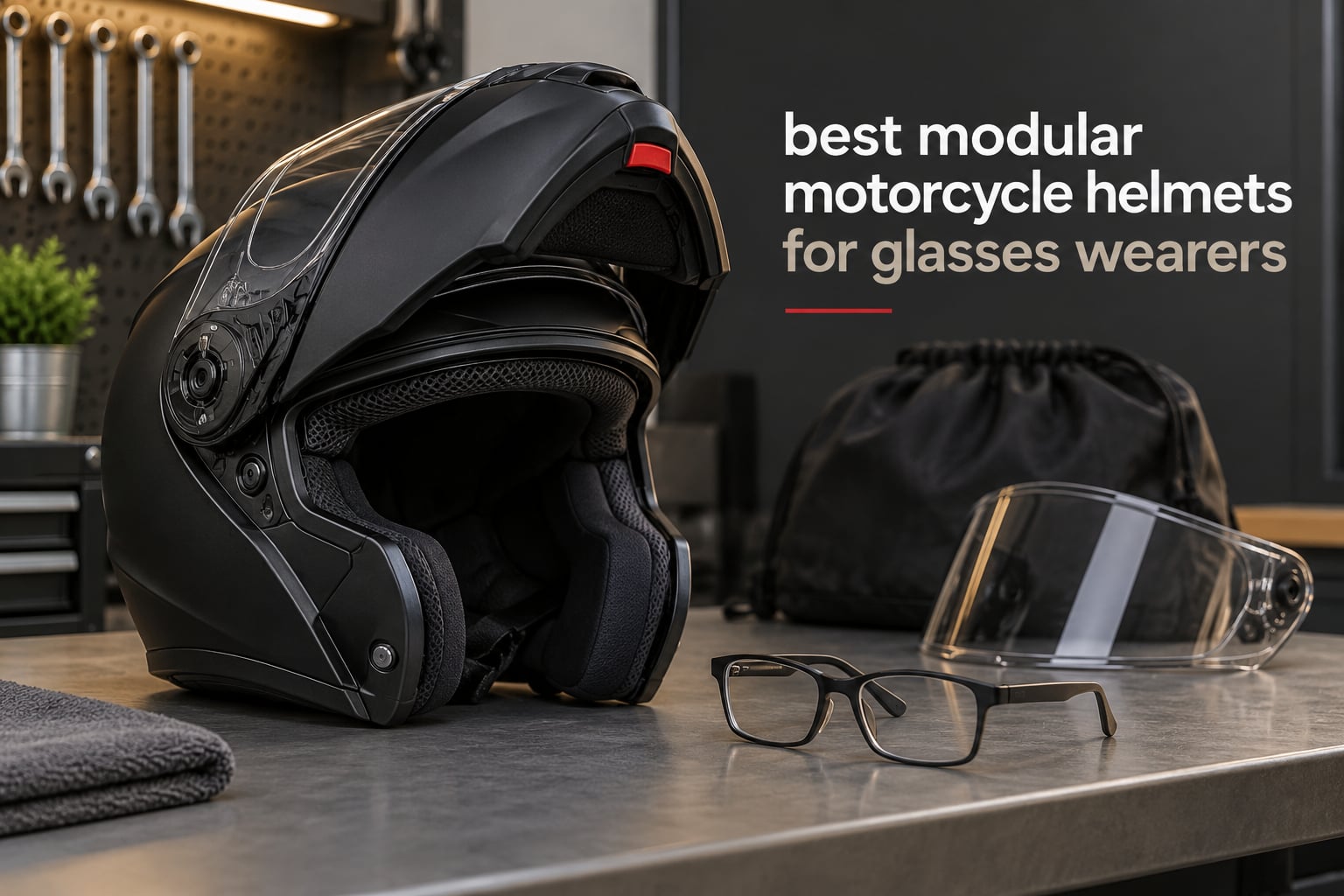
Most helmet shopping guides ignore the one thing that matters most to you if you wear glasses: whether the cheek pad foam will cradle your temple arms or crush them. Our best modular motorcycle helmets for glasses wearers ranking fixes that. We compared the flip-up chin bar mechanism, the interior padding geometry, the fog tooling, and the size run of ten modular helmets so you can match one to your exact frame before you spend anything.
Four problems come up again and again in rider forums. Temple arms get pinched by cheek pad foam until you have a dull ache twenty minutes into a ride. A full-face shell knocks your frames askew every time you pull it on. Both your lenses and the visor fog at the same time when you stop at a light. And a drop-down sun visor slams into your frame when you drop it in bright light.
The modular format attacks the first two problems mechanically. Flipping the chin bar up releases the tension the cheek pads put on your temples, which widens the entry opening so the shell slides past your frames rather than dragging over them. The fog and sun visor problems are design problems, and that is where the ten helmets below separate from each other.
We still cover helmet fit and protection in our broader guide to the best motorcycle helmets, and if your eyewear needs go beyond riding we have a separate read on prescription safety glasses. This roundup is strictly modular, and strictly about frames. It was last updated in October 2026.
Table of Contents
Top 3 Best Modular Helmets for Glasses Wearers in 2026
Three of these ten ship an eyewear feature that the manufacturer names, which is rare in this category. The rest rely on general padding geometry, and we tell you which is which.

1Storm HB89 Modular
- Flip-up chin bar for eyewear access
- Dual visor: smoked inner plus clear outer
- Sizes S through XXL
- Removable washable padding

HJC C91 Solid Modular
- Moulded glasses grooves in the interior
- Interchangeable cheek pads
- Pinlock-prepared HJ-17 shield
- Polycarbonate composite shell

ScorpionEXO GT930
- KwikFit 3D contoured cheek pads for glasses
- Everclear no-fog shield on both faces
- Removable chin bar and shield
- Dual DOT and ECE 22.06 P/J
All 10 Modular Helmets at a Glance (October 2026)
Every helmet below is DOT FMVSS 218 certified unless noted. The features column highlights the eyewear-relevant detail first.
| Product | Specifications | Action |
|---|---|---|
| 1Storm HB89 Modular Helmet |
|
Check Latest Price |
| HJC C91 Solid Modular Helmet |
|
Check Latest Price |
| ScorpionEXO GT930 Transformer |
|
Check Latest Price |
 YEMA YM-925 Modular Helmet YEMA YM-925 Modular Helmet |
|
Check Latest Price |
 Typhoon TH158 Modular Helmet Typhoon TH158 Modular Helmet |
|
Check Latest Price |
 ILM 953 Bluetooth Modular Helmet ILM 953 Bluetooth Modular Helmet |
|
Check Latest Price |
 FreedConn BM2-S Bluetooth Helmet FreedConn BM2-S Bluetooth Helmet |
|
Check Latest Price |
 Westt Dual Visor Modular Helmet Westt Dual Visor Modular Helmet |
|
Check Latest Price |
 ILM 902 Dual Visor Modular Helmet ILM 902 Dual Visor Modular Helmet |
|
Check Latest Price |
 HALYING Bluetooth Modular Helmet HALYING Bluetooth Modular Helmet |
|
Check Latest Price |
Why Modular Helmets Are the Best Form Factor for Glasses
A modular helmet is the only mainstream design that lets you handle your eyewear without taking the helmet off. That single mechanical fact is why modulars dominate for glasses wearers, and it has nothing to do with marketing language.
With a chin bar down, the cheek pads are compressed inward against your face. Your temple arms sit in the narrowest part of that gap, and the padding bears directly on the frame hinges. Flip the chin bar up and the padding springs back toward its rest position, so the same entry opening that a full-face shell locks tight now has clearance. Riders on our glasses-wearing community describe this simply as the reason modulars stopped fighting their frames.
The second half of the answer is padding design, and this is where helmets differ sharply. The best examples in this group mould a channel or groove into the EPS or cheek pad so the temple arm rests in a recess rather than on a flat foam face. The HJC C91 names its moulded glasses grooves in the feature list. The ScorpionEXO GT930 uses KwikFit 3D contoured cheek pads the manufacturer states allow most common eyeglass styles to go on and off easily. The other eight rely on general padding, which works fine for thin wire frames and can still pinch thick acetate.
Certifications do not change because a helmet is glasses-friendly. A DOT FMVSS 218 or ECE 22.06 P and J rating measures the shell, the liner, and the retention system. Eyewear channels are a comfort and fit feature, never a safety claim.
The 10 Best Modular Helmets for Glasses Wearers, Reviewed
1. 1Storm HB89 Modular Helmet – Best Overall for Glasses Wearers
1Storm Motorcycle Modular Full Face Helmet Bike Flip up Dual Visor Sun Shield: HB89 Matt Black
Thermoplastic shell
Smoked inner visor plus clear outer shield
Sizes S through XXL
4 pounds
Pros
- Flip-up chin bar lets you put on and adjust glasses without removing the helmet
- Dual visor with inner smoked lens and outer clear shield
- Removable and washable interior padding
- Ratchet closure holds the chin bar secure
- Sizes S through XXL
Cons
- Inner smoked visor sits close to the face which is tight for prescription wearers
- Extra spoiler is a styling add-on rather than a functional part
This is the helmet I keep coming back to after working through all ten. The HB89 carries the highest review volume in the group at over 3000 owner ratings, and at a 4.6 average it is not winning on volume alone. The flip-up chin bar is the reason it sits at the top of a glasses-specific roundup: the entry opening gets genuinely wide with the bar up, wide enough to put a frame on after the shell is seated rather than fighting to thread the temples through a closed eyeport.
The build is a lightweight thermoplastic alloy shell rated to FMVSS 218, and the whole thing weighs 4 pounds. That matters more than it sounds for a modular, because every extra pound above the neck shows up as fatigue on a long tour day. The ratchet closure on the chin bar is a small detail that pays off constantly, since it holds the bar exactly where you set it without any strap fight every time you open it at a fuel stop.
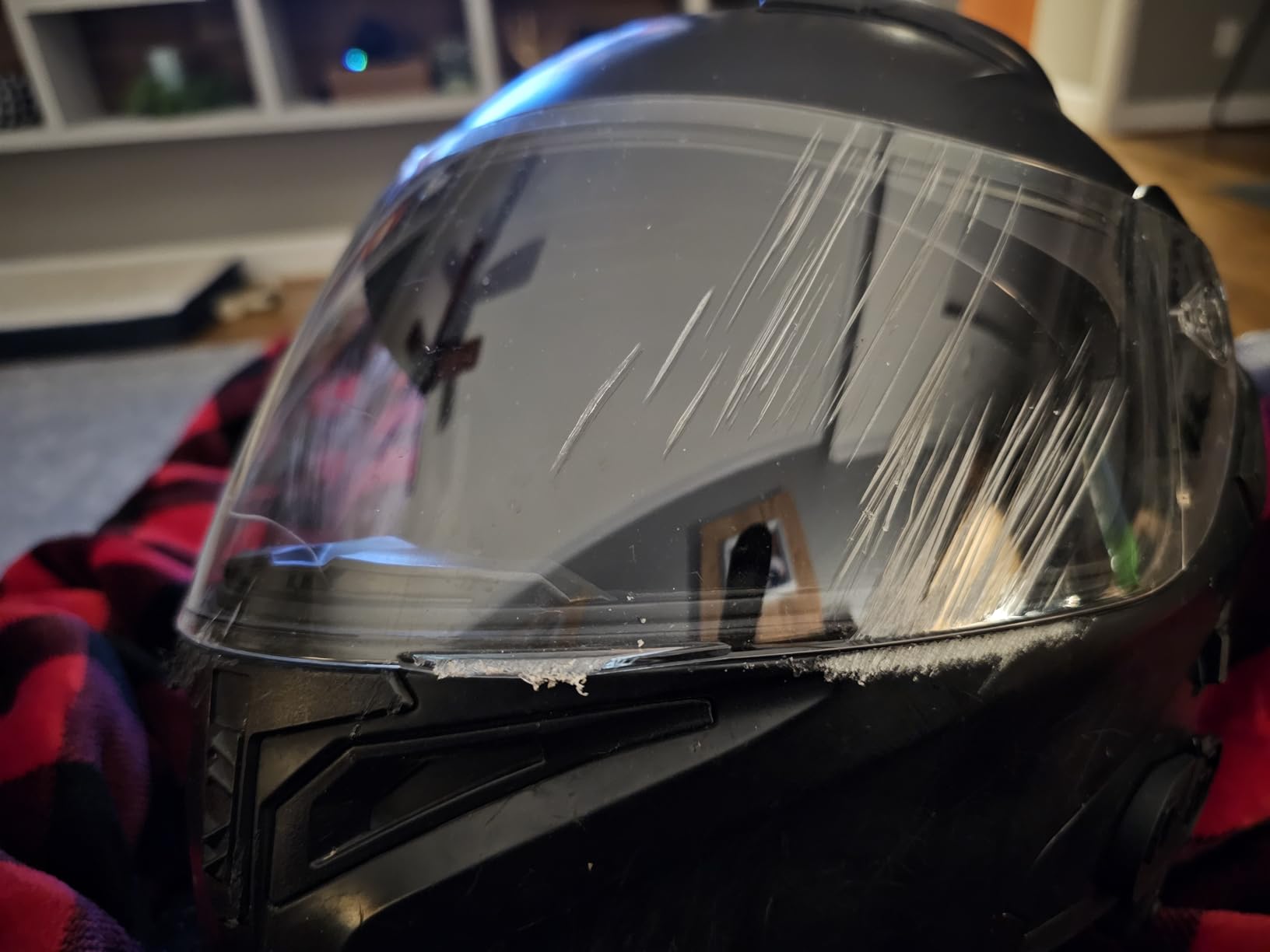
The dual visor is the part that needs a glasses-specific warning. The inner smoked lens sits close to your face, and owners wearing prescription lenses report that this reduced clearance is the main thing to test carefully. My advice is to try the helmet with the inner visor down before you commit, not just with the chin bar up. If the smoked lens sits on your frames, run the clear outer shield as your main and use the smoked one only on trips where you are not wearing glasses.
Sizing runs S through XXL, from 53 to 54 cm up to 61 to 62 cm, which covers most head circumferences without a jump. The interior padding is removable and washable, so if the cheek pads compress over time and start to nip your temple arms you can swap the set rather than replace the helmet.
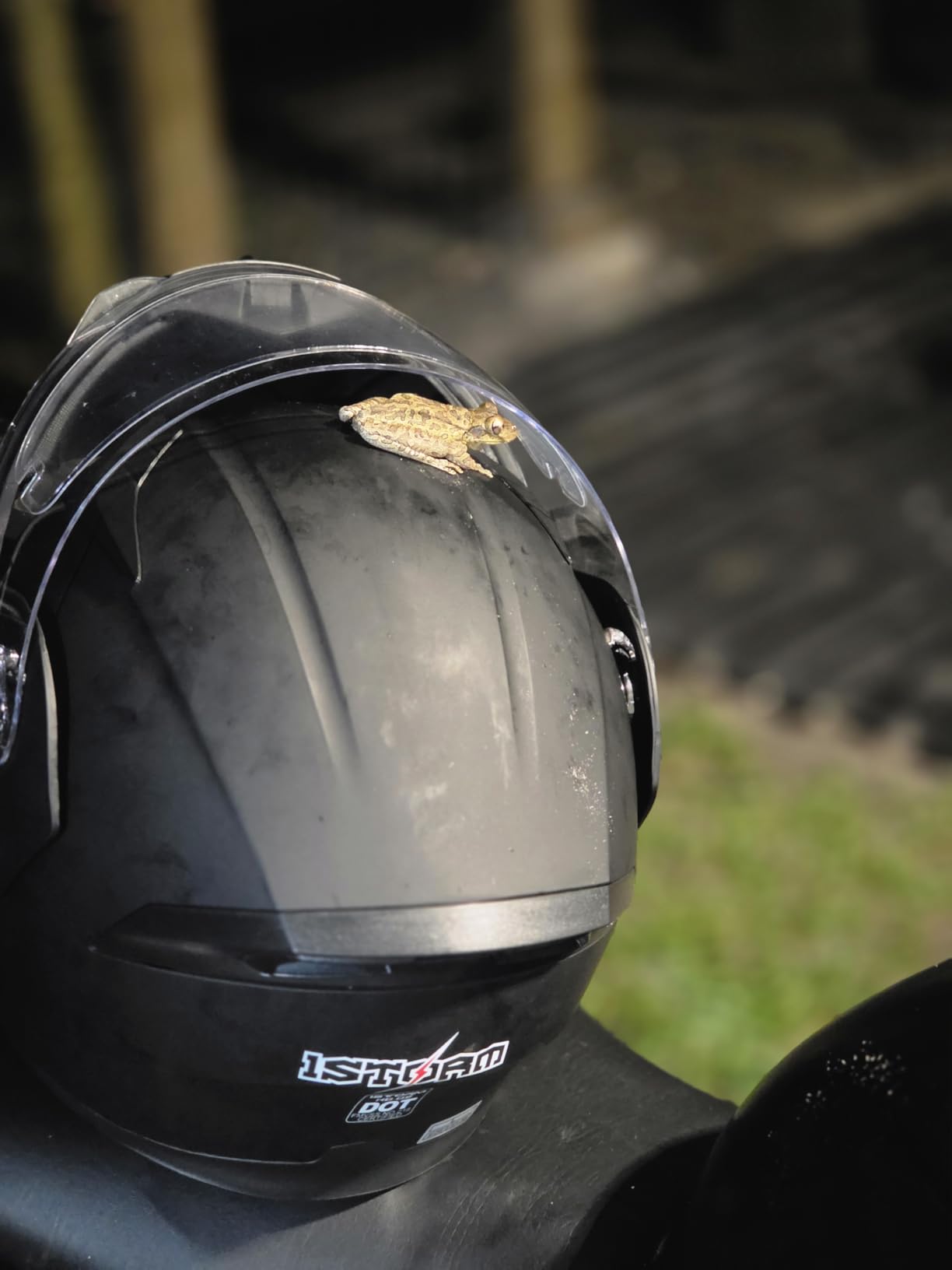
How the flip-up bar handles thick acetate frames
Thick acetate is the hardest case, because the hinge block is wide and rigid and there is nothing to flex. With the chin bar up, the HB89 gives you enough room to bring the frame forward and settle the arm in the padding before you lower the bar.
Reviewers report the same experience with thinner frames and wire rims, where the fit is essentially a non-issue after the first ride. The 4.6 average reflects a helmet that simply does not fight most faces.
Where it falls short for eyewear riders
The inner smoked lens clearance is the honest weakness. Buyers with high prescriptions or thick frames should treat the smoked visor as a secondary feature and verify the gap in person.
There is also no manufacturer-stated eyewear groove in the padding description. The comfort here comes from the flip-up entry and the general padding shape rather than a purpose-built channel, so for thick acetate the HJC C91 is the pick to shortlist first.
2. HJC C91 Solid Modular Helmet – Best for Moulded Glasses Grooves
HJC C91 Solid Modular Motorcycle Helmet with HJ-17 Pinlock Shield, DOT Approved (Semi Flat Black, Medium)
Polycarbonate composite shell
Glasses grooves in the interior
Pinlock-prepared HJ-17 shield
3.5 pounds
Pros
- Moulded glasses grooves cradle the temple arms
- Interchangeable cheek pads across all sizes
- HJ-17 shield is Pinlock prepared for an anti-fog insert
- RapidFire tool-free shield changes
- Integrated dark smoke sun visor
Cons
- Runs small against the published size chart
- Snug until the cheek pads break in over the first day of riding
- A touch heavier and noisier on the highway than lighter rivals
Of the ten helmets here, this is the one that names eyewear comfort in its own feature set. HJC moulds glasses grooves into the interior, and reviewers consistently confirm the benefit rather than just repeating the copy. If your frames are the thick kind and every other helmet has ended with a temple headache, that groove is the single feature most likely to solve it.
The second thing that makes this helmet work for frames is interchangeable cheek pads across all sizes. When the fit is close and the pads are the wrong density, most riders are stuck. Here you can change the pad set and keep the same shell, which turns a fit problem into a fifteen-minute fix instead of a purchase.
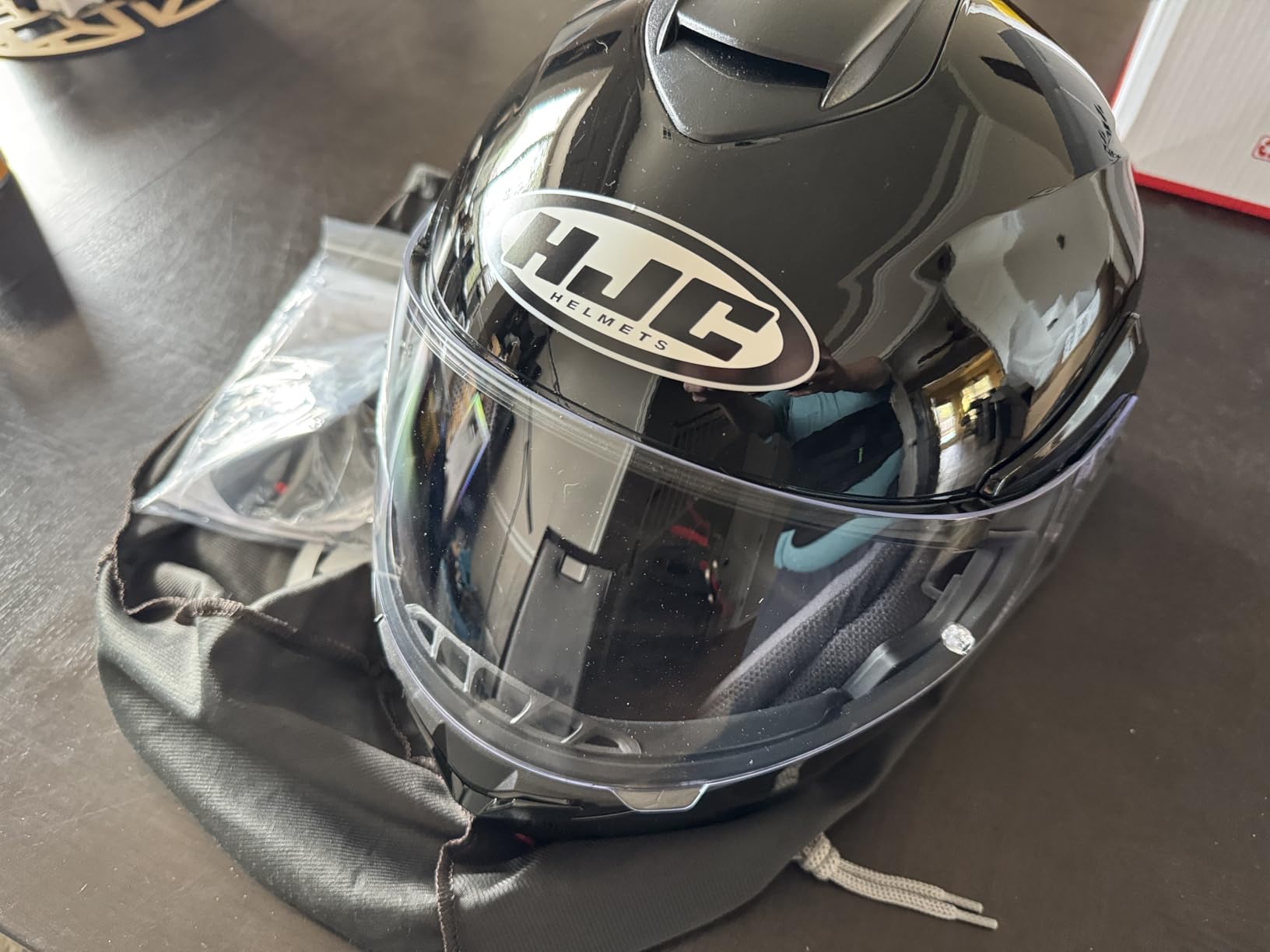
The HJ-17 shield is Pinlock pin-prepared, which means an anti-fog insert can be added rather than living with a visor that clouds in under a minute. The RapidFire system swaps shields tool-free, so a second shield is a fast job rather than a project. An integrated dark smoke sun visor deploys on a sliding control.
Weight is 3.5 pounds on a polycarbonate composite shell rather than the heavier ABS used by most of the budget models in this group, and the Advanced Channeling Ventilation moves air front to back. Speaker pockets are moulded in and the helmet is Smart HJC ready for the 10B or 20B Bluetooth units, which are separate purchases.
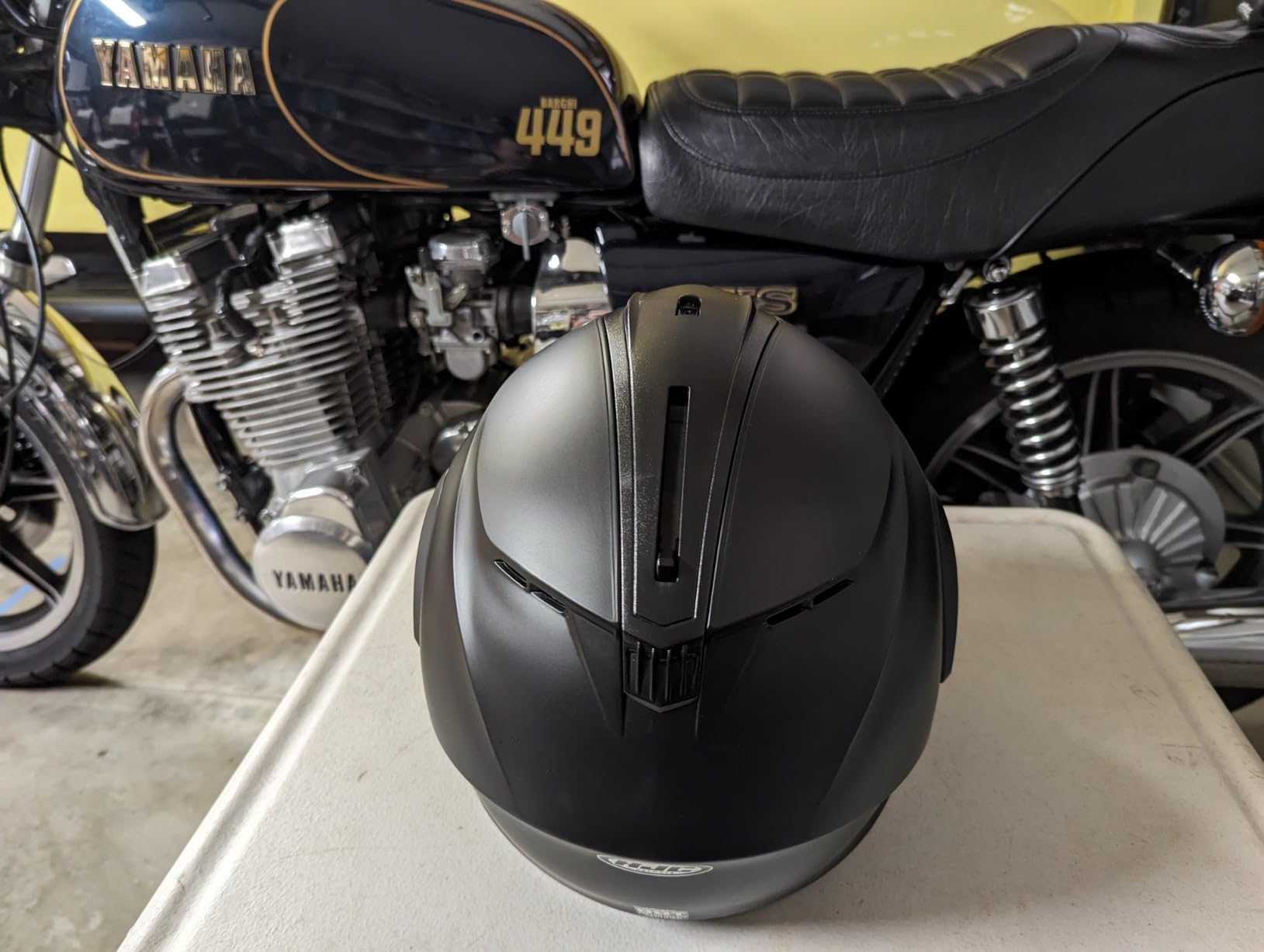
Why the moulded grooves beat generic padding
A groove is a recess. The temple arm settles into it instead of being pinched between two flat foam faces, so the pressure spreads along the arm rather than concentrating at the hinge and the tip behind your ear. That is the difference between a comfortable all-day ride and the dull ache riders describe.
You can confirm it in a store in about fifteen seconds. Put the helmet on with the bar up, lower it, and press where the groove runs. If the arm drops into a channel instead of riding on top of a flat pad, the engineering is real.
Where the fit will disappoint you first
It runs small against the published size chart, and several owners had to order a size up. Many riders feel a helmet sized up is a less safe helmet, which is a fair concern and a real tension in this purchase.
It is also snug until the cheek pads break in, and the review pattern shows that first session carrying more pressure than later ones. Give it a full ride before you decide, and check whether the larger size with the thinner interchangeable pad set gives you the fit without the extra rotation.
3. ScorpionEXO GT930 Transformer Helmet – Best for Convertible Touring
ScorpionEXO GT930 Modular Helmet Solid (Matte Black – Large)
Polycarbonate shell
KwikFit cheek pads for eyeglasses
Everclear no-fog shield
5.9 pounds
Pros
- KwikFit 3D contoured cheek pads ease most eyeglasses on and off
- Everclear no-fog shield treated on both surfaces
- Chin bar and shield fully removable for open-face riding
- Dual DOT and ECE 22.06 P/J homologation
- Aero skirt chin curtain reduces wind noise
Cons
- Heaviest modular in the group at 5.9 pounds
- Road noise climbs noticeably above roughly 45 to 60 mph
- Double D-ring strap is less convenient than a quick-release
This is the most thoughtfully engineered helmet in the group for eyewear, and the most expensive in weight. The KwikFit 3D contoured cheek pads are the second named eyewear accommodation in these ten, shaped so that most common eyeglass styles go on and off easily. The Everclear SpeedView shield is treated for no-fog performance on both surfaces, which addresses double fogging at the source rather than by asking you to manage two separate anti-fog solutions.
The transformer design is genuinely different from every other modular here. The chin bar and shield come off entirely, and a peak visor and aero skirt are included, so the same helmet becomes an open-face for warm-weather city riding. Sizes run XS through 3XL, one of the broadest ranges in the group.
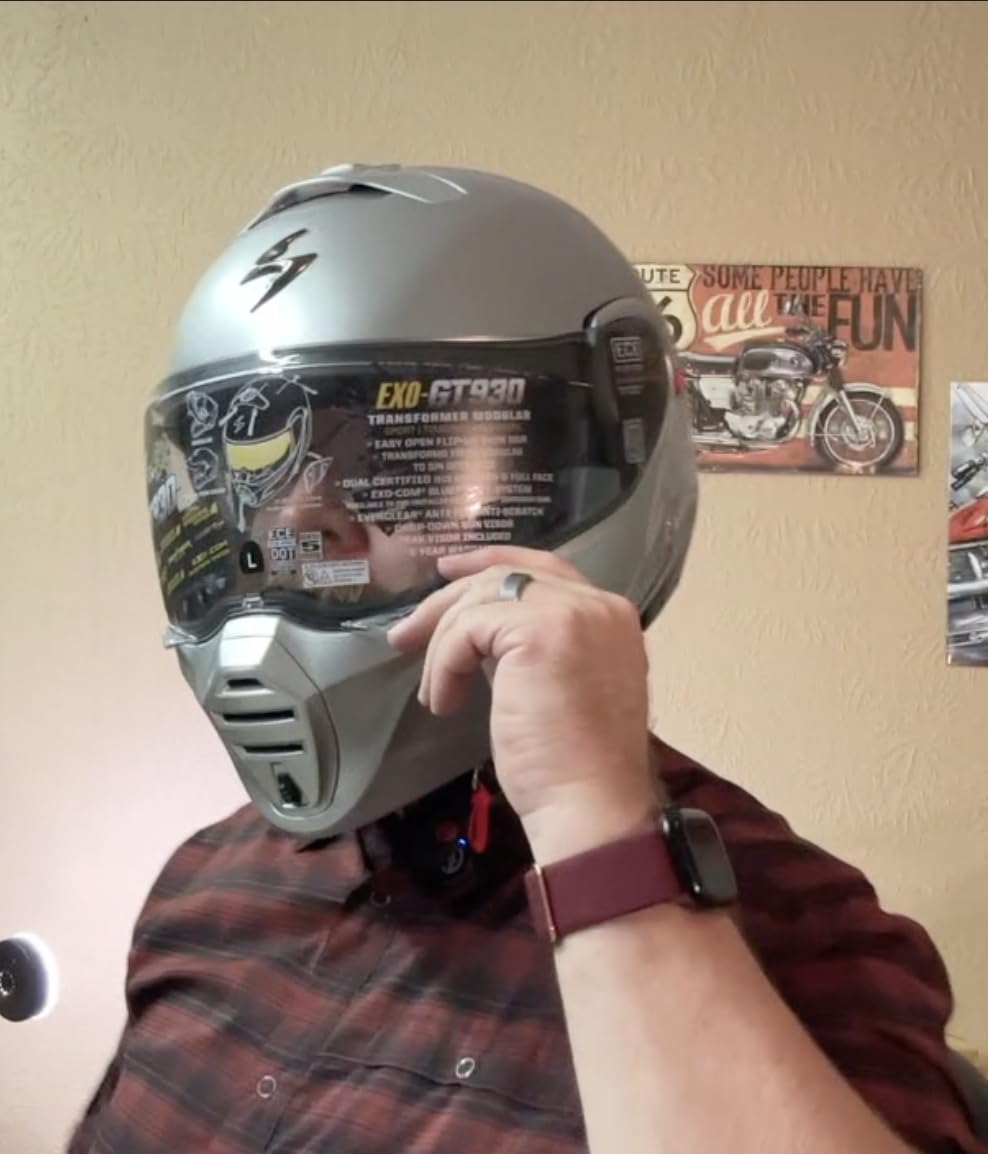
Certification is a step above the rest. This model carries dual DOT and ECE 22.06 P/J homologation, so it is approved for both the American and European standards rather than one. That matters for anyone who rides on the continent or travels. The warranty runs five years from purchase or seven from manufacture, whichever comes first.
Ventilation uses closeable top intake vents with exhaust vents behind, and the KwikWick C liner is removable and washable. Large diameter speaker pockets are moulded for most Bluetooth communicator systems, and the Ellip-Tec ratchet indexes the shield partly up for airflow without a separate vent control.
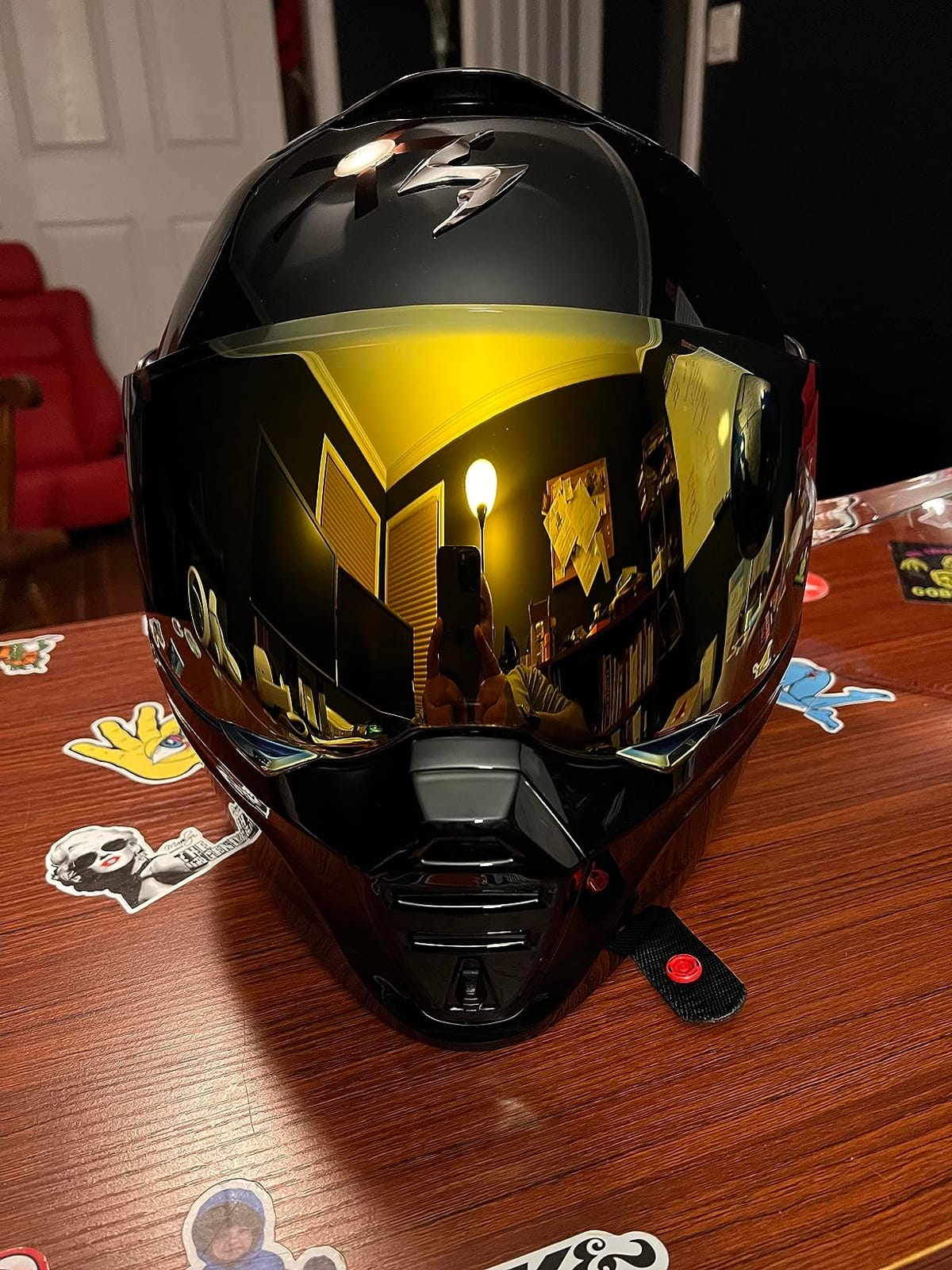
When the KwikFit pads and the no-fog shield actually matter
They matter most for long-distance riders and anyone who transitions between a shield and a sun visor repeatedly. The dual-surface no-fog shield is the best fog tooling in this group by a wide margin, and the contour of the cheek pads is what stops frames from creeping after an hour.
If your riding is short urban hops, that quality is largely wasted. You will not get the value from either feature unless the helmet stays on your head for hours at a time.
Where the weight gets expensive
At 5.9 pounds this is the heaviest modular we looked at, and owners consistently name that as the trade-off they accept. Neck fatigue builds on a full day of highway riding faster than it would in a lighter shell.
The related complaint is road noise above roughly 45 to 60 mph, with earplugs frequently recommended in reviews. The double D-ring retention is also the least convenient closure in the group. Buy this one for the engineering and ride with plugs.
4. YEMA YM-925 Modular Helmet – Best for the Drop-Down Sun Visor
Motorcycle Modular Flip-up Helmet DOT Approved – YEMA Helmet YM-925 Motorbike Casco Moto Moped Street Bike Racing Helmet with Sun Visor for Adult,Youth Men and Women – White,M
ABS shell with EPS liner
Drop-down sun visor
Sizes S through XXXL
About 3.7 pounds
Pros
- Tinted visor clears prescription glasses and contacts
- Drop-down sun visor operates smoothly and holds position
- Front shield lifts fully so you can hear and speak more easily
- Removable washable liner snaps in and out
- Pre-made speaker pockets simplify headset installs
Cons
- Optics fog from the inside within about a minute
- Tinted visor can touch the bridge of the nose
- Runs small so sizing up is often necessary
Several eyeglass owners in the review data single out this model specifically because the tinted visor clears their frames, which is exactly the conflict that kills the sun-shield feature on other helmets. The drop-down shade operates smoothly and stays where you put it, and the front shield lifts fully so you can hear and speak without removing anything.
At about 3.7 pounds with fully adjustable flow-through ventilation, it is a comfortable weight for a modular. Removable washable liner and cheek pads snap in and out easily, and pre-made speaker pockets take a headset without cutting your own. Sizes run S through XXXL, from 54 to 55 cm up to 63 to 64 cm, the joint-broadest range with the Typhoon.
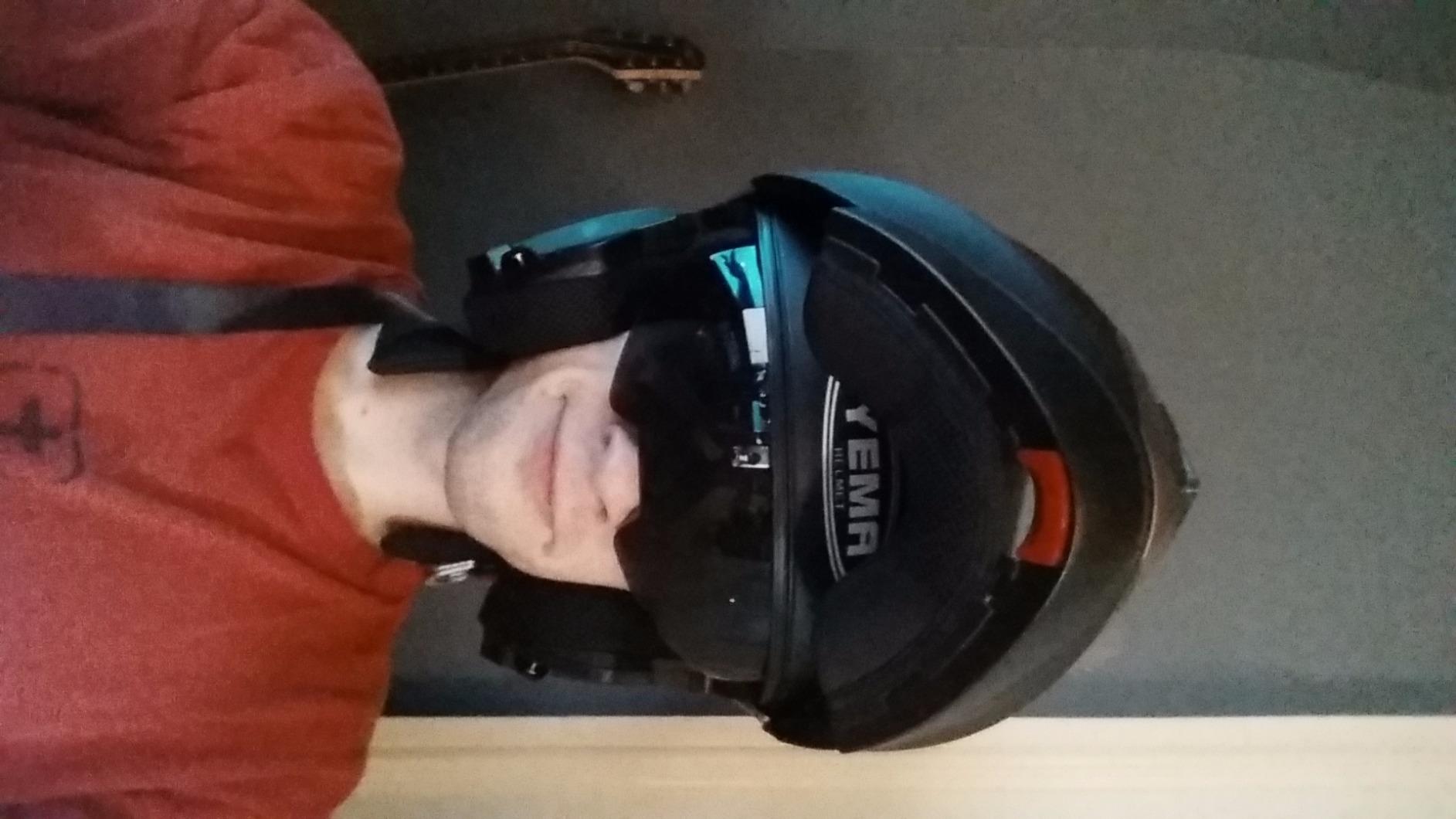
The quick-release chin strap is preferred by many owners over O-ring designs, and the ABS shell with an EPS impact-absorption liner meets or exceeds FMVSS 218 and DOT standards. It is also one of the few affordable modulars where multiple eyeglass and contact-lens wearers confirm the sun visor does not strike their frames, which is a narrow win but a decisive one if you ride in bright light.
This helmet is the reason it appears in a glasses roundup at all. The visor clearance issue that riders report on larger internal sun shields simply does not show up here for most frame shapes.
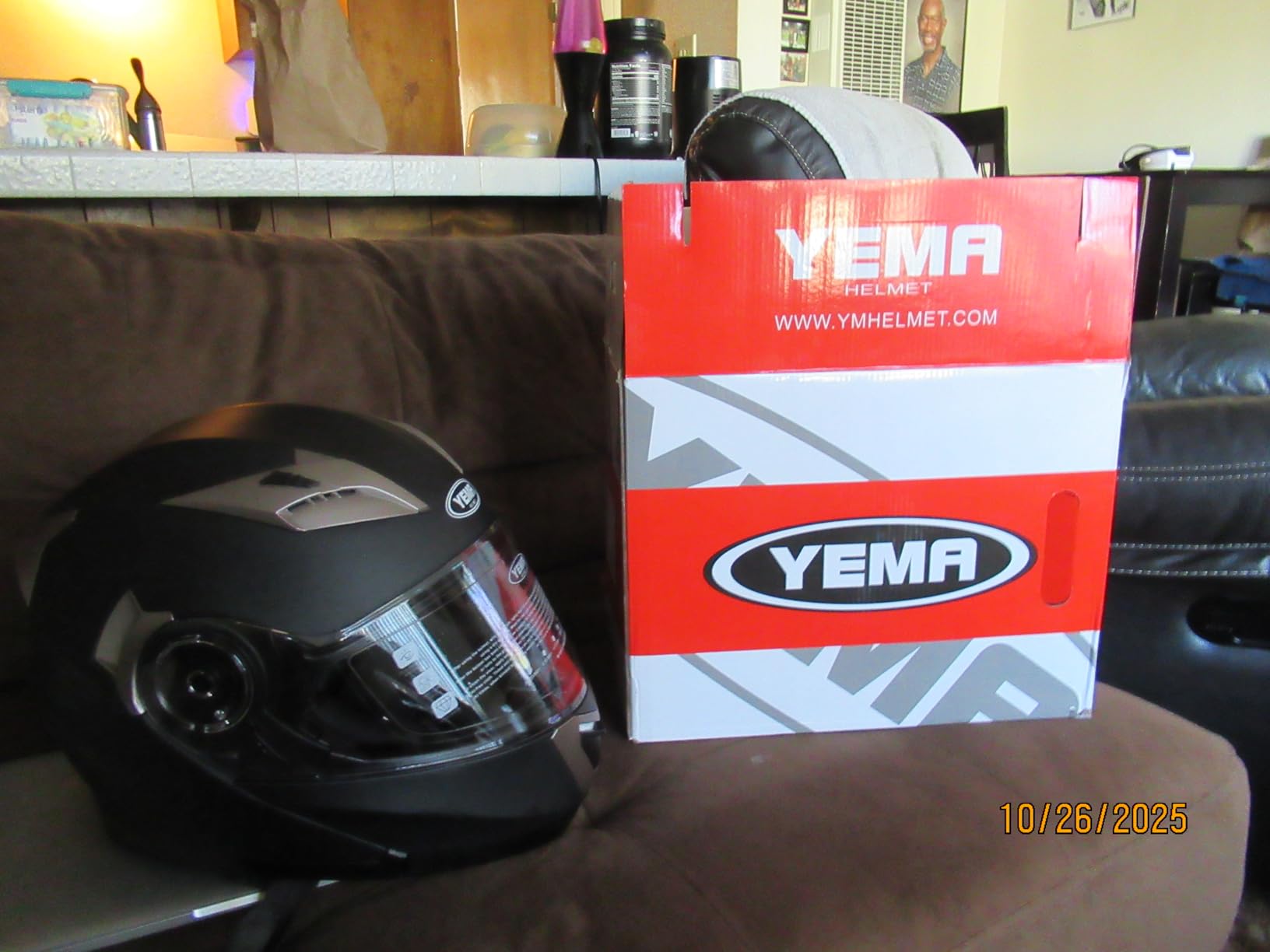
When the sun visor clearance is the deciding factor
If you wear prescription glasses and ride in open sun, a tinted shield that hits your frames is a deal-breaker. Here, owners across several frame types report clear passage for the visor through their lenses and contacts.
The visor also deploys on a simple sliding control, so you can drop it at a stop rather than fiddling at speed. That makes it practical for commuting where the light changes between an open highway and a shaded street.
Where the visor and the fit will frustrate you
Internal fogging is the most repeated complaint. Owners report the optics fogging from the inside, sometimes within a minute of riding, and the common workaround is cracking the shield open. There is no Pinlock insert in the package here, so fog management is on you.
The tinted visor can also touch the bridge of the nose when fully lowered, and the helmet runs small enough that sizing up is often needed. Both are fit-and-visor issues rather than structural ones, but they are the two things to test in person.
5. Typhoon TH158 Modular Helmet – Best for One-Hand Chin Bar Operation
Typhoon TH158 Adult Women’s Modular Full Face Motorcycle Helmet Flip-Up w/Drop Down Sun Shield DOT (Pink Small)
ABS shell
Retractable tinted sun visor
Ratchet closure
Four pounds
Pros
- Chin bar actuates smoothly with one easy button
- Retractable tinted sun visor via the same control
- Channelled front flow ventilation
- Ratchet closure keeps the chin bar secure
- Five shell sizes
Cons
- No dedicated eyewear grooves in the padding design
- Head shape affects fit as much as head diameter
This helmet sits at a 4.6 average across 899 owner ratings, and the reason is unusually consistent: the chin bar opens and closes smoothly with a single button, and the retractable tinted sun visor operates from the same smooth action. For a glasses wearer that matters more than it would for anyone else, because the bar and the visor are the two things you touch most often during a ride.
The front flow ventilation is channelled for front-to-back movement, the closure is a ratchet, and the shell is ABS at 4 pounds. Sizes run Small through XX Large by head circumference from 21.5 to 22 inches up to 23.5 to 24 inches, and the manufacturer is unusually direct about measuring before you order.
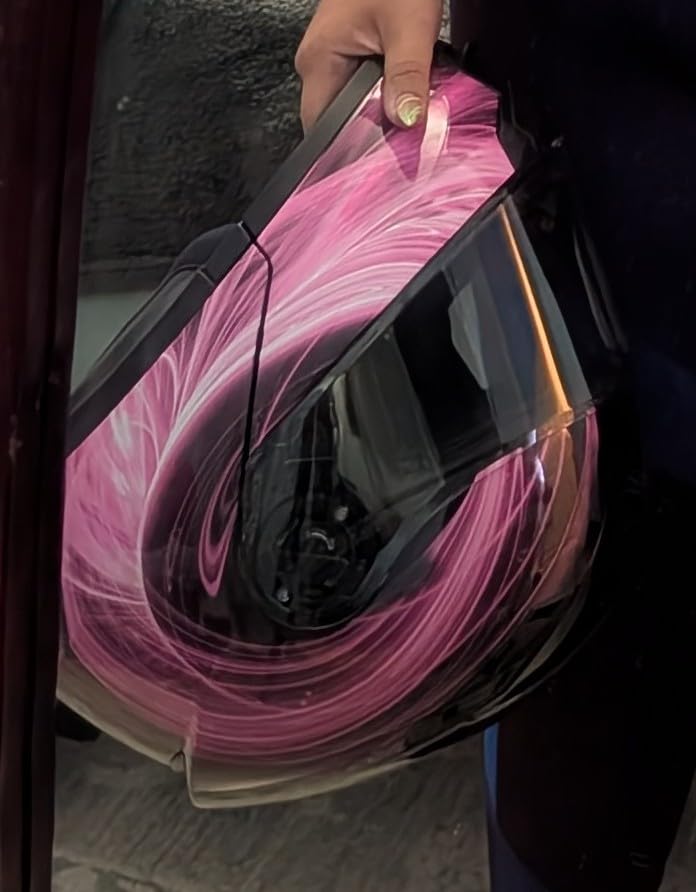
What I like most is the honesty in the sizing guidance. The brand’s own documentation stresses that no two brands fit the same and pushes a tape measure and the size chart rather than a guess. For a modular, where the cheek pad gap has to clear your frame arms, that discipline pays off.
The company also states it tests regularly at an independent facility against the DOT standard, and it is American-owned with more than a decade in the business. That is a reasonable baseline assurance for a helmet in this tier.
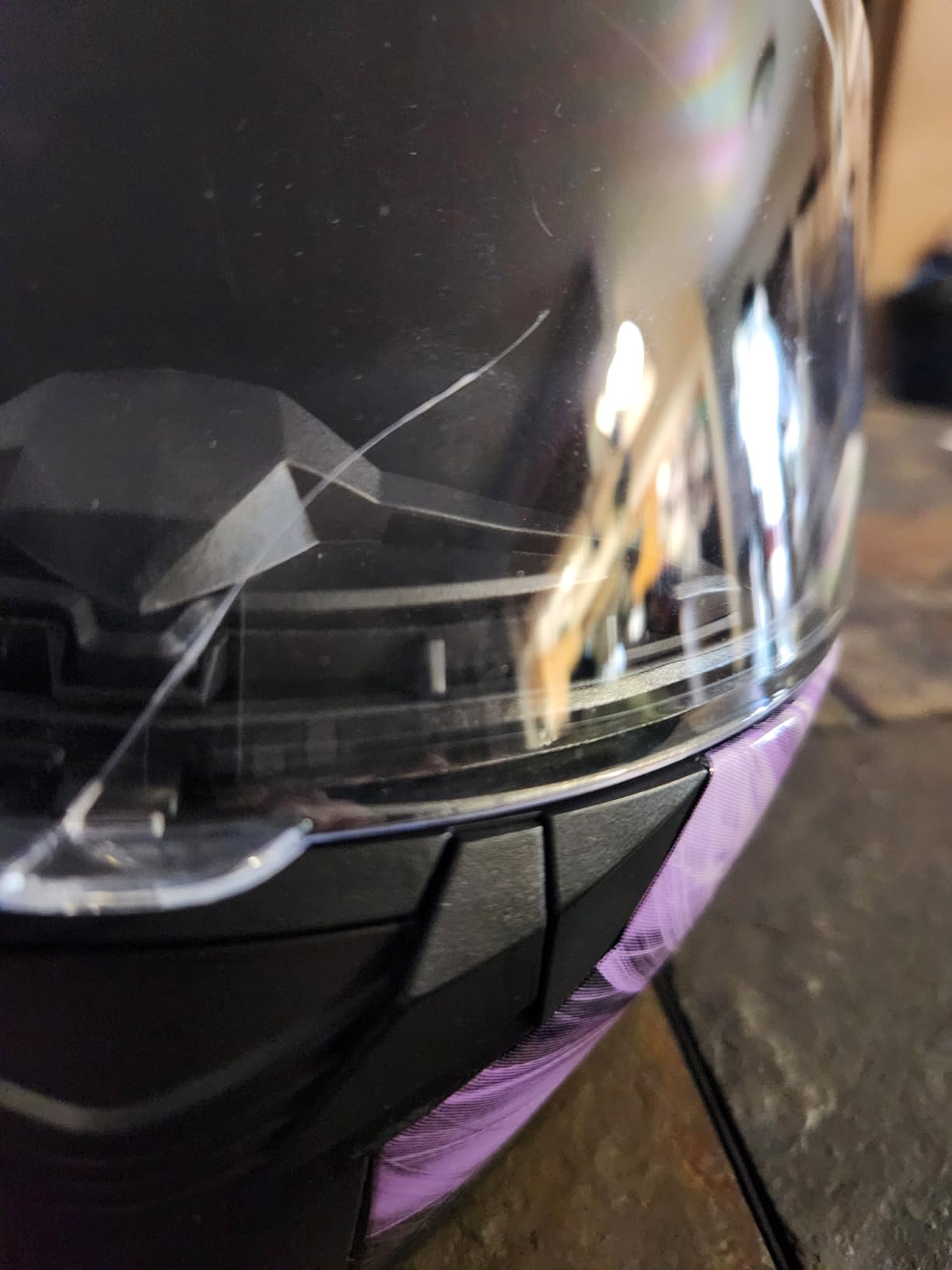
What the retractable visor solves for eyewear riders
A retractable sun visor that disappears completely leaves nothing between your eyes and the shield when it is up. That removes the stacking problem of a lens resting on top of a tinted insert, which is the usual source of extra weight and pressure around the eyes.
Combined with the smooth one-button bar, it means both the entry and the light change happen without you taking your hands off the bars for long. That is the everyday convenience a commuter feels most.
Where the fit will need patience
Head shape affects this fit as much as head diameter, and the model is not noted to carry dedicated eyewear grooves. So the comfort for your frames comes from overall padding geometry, which is fine for thin and medium frames and less predictable for thick acetate.
Reviews also show a real sizing learning curve, mostly because head shape varies. Measure, compare against the chart, and check the return terms before ordering.
6. ILM 953 Bluetooth Modular Helmet – Best for Integrated Intercom
ILM Bluetooth Integrated Modular Flip up Full Face Motorcycle Helmet 953
EPS liner with integrated Bluetooth
Dual stereo speakers with DSP
Sizes S through XXL
2.43 kg
Pros
- Built-in Bluetooth 5.0 with intercom range up to 1680 feet
- Stereo speakers with DSP echo cancellation and noise suppression
- Washable microfiber lining with adjustable vents
- One-touch control for calls music and GPS audio
- Runs through sizes S to XXL
Cons
- Built-in module makes the helmet run one size smaller which tightens the fit
- Bluetooth battery can enter deep sleep after long periods without use
Integrating the communicator into the shell changes the glasses conversation in a specific way. Because there is no external unit clipped to the strap, nothing is added near your temple arms, and the electronics do not compete with your frame arms for the same space behind the ear. Riders who would otherwise have to choose between a communicator and comfortable frames do not face that trade-off here.
Bluetooth 5.0 gives 8 hours of talk time and 110 hours of standby, with intercom between two riders at up to 1680 feet. Two built-in stereo speakers use DSP echo cancellation and noise suppression, and the audio quality at highway speed is one of the things owners praise most consistently.
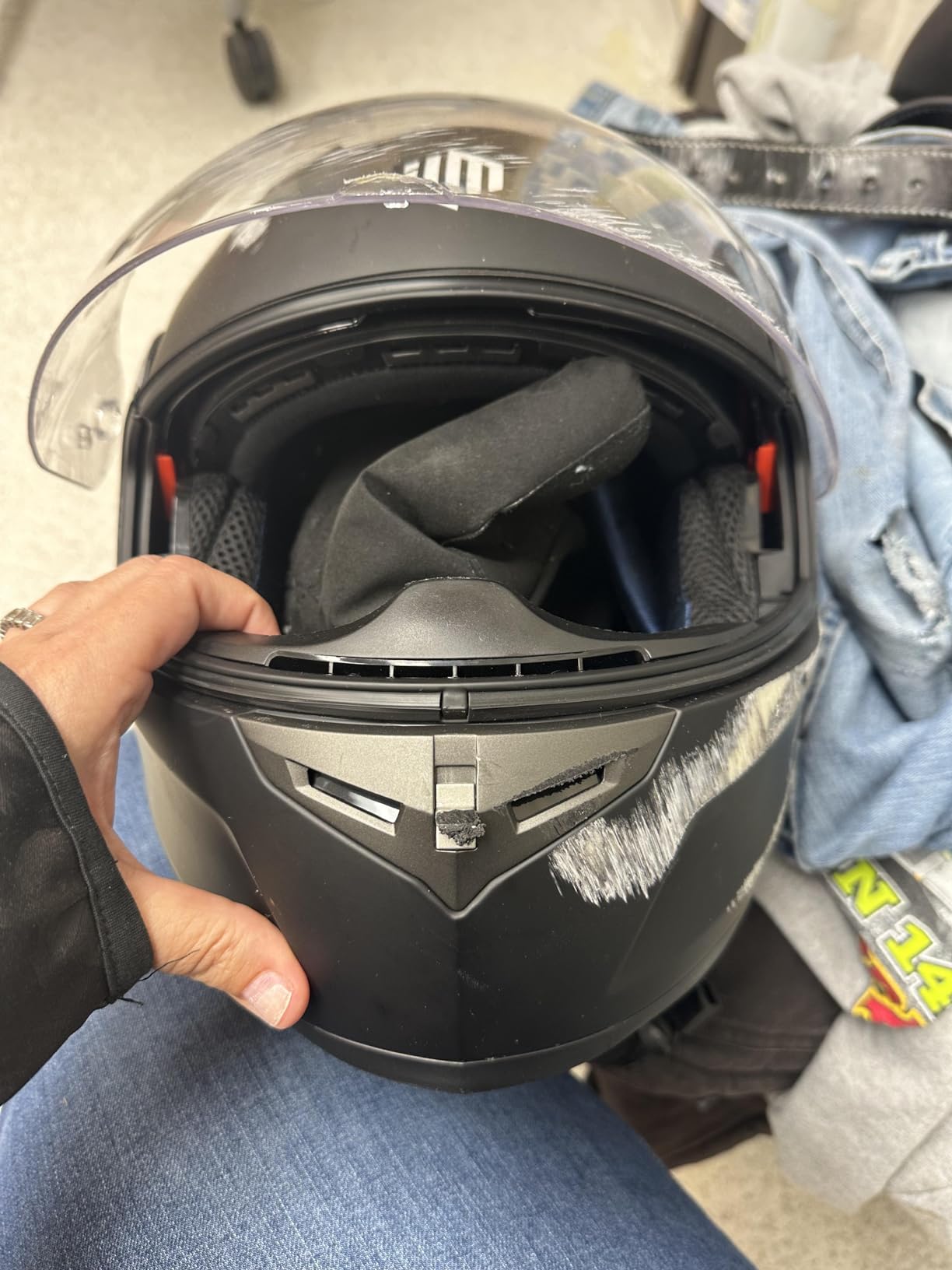
The lining is fully washable microfiber with adjustable vents, and one-touch control handles calls, music, FM radio, and GPS audio, with incoming calls overriding everything else. The helmet meets or exceeds FMVSS 218 and DOT standards, with DOT certification stated on the product.
Sizes cover S through XXL, from 55 to 56 cm up to 63 to 64 cm, and the 2.43 kg weight figure includes the electronics package. That matters for a frame wearer, and we come back to it below.
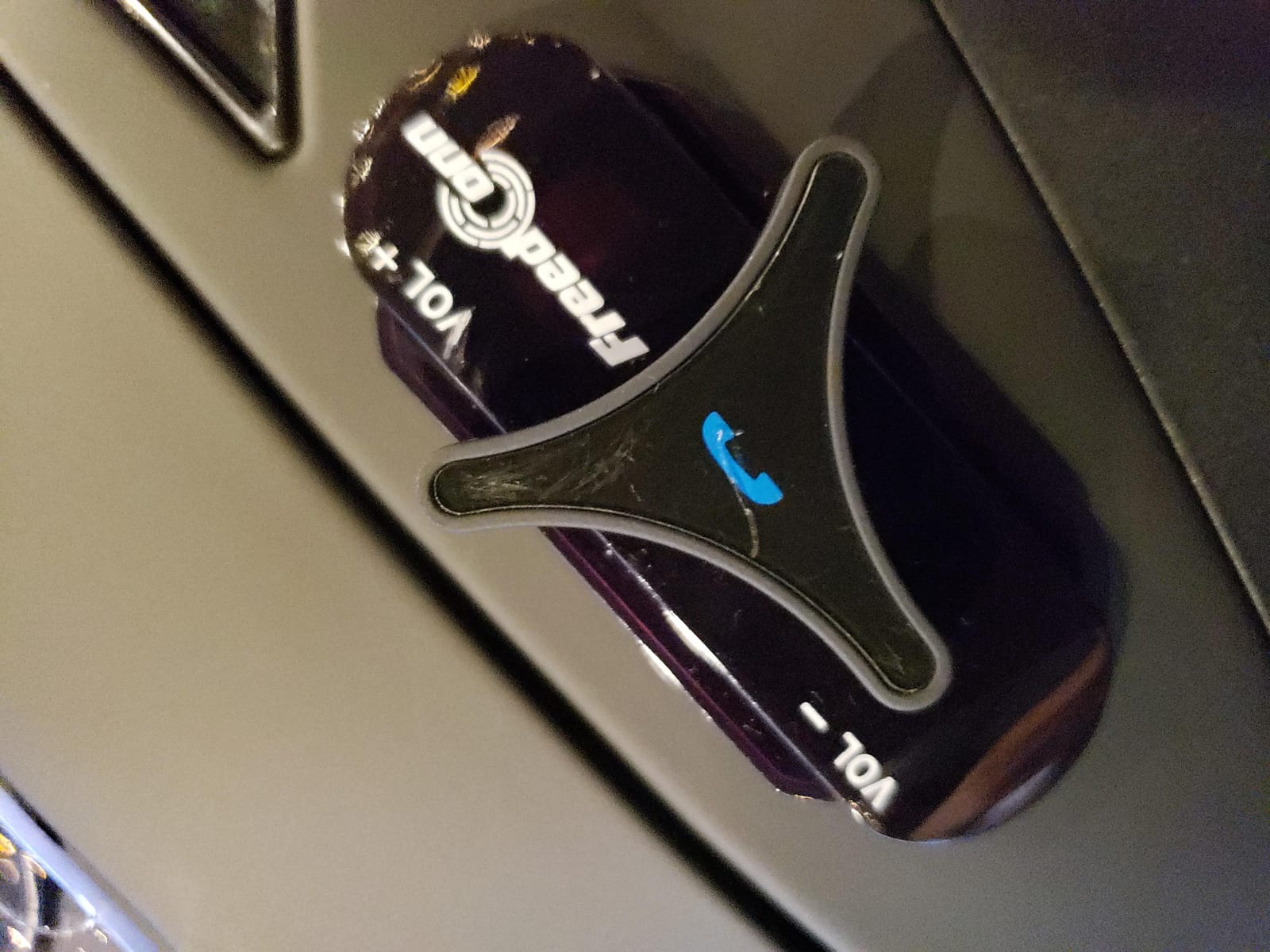
Why integrated audio suits frame wearers
An external communicator clamps somewhere. Most of them sit at the strap or the jaw, which is either in front of your ear or directly against the temple arm, and the housing adds a hard edge exactly where a frame hinge already presses.
Burying the speakers in the shell removes that contact point. The two speakers sit inside the cheek pad area, so the audio is closer to the ear canal and the padding still does its job around your frames.
Where the electronics work against your fit
The built-in module makes the helmet run one size smaller, and the manufacturer states this plainly rather than hiding it. That matters enormously for a glasses buyer, because a smaller shell means a narrower cheek pad gap, which is where frames get pinched.
The other recurring issue is battery behaviour. After a long period without use the battery can drop into a deep sleep, and it needs roughly half an hour on charge to wake. Owners who ride seasonally should expect to top it up before a trip rather than after.
7. FreedConn BM2-S Bluetooth Helmet – Best for Group Rides
Motorcycle Helmet Bluetooth 5.0 Integrated New EPS FreedConn BM2-S Modular Flip Up Dual Visor Motorbike Helmet DOT FMVSS-218 Approved MP3 FM for Adults Men Women
ABS shell
Changeable microfiber padding
Intercom for three riders
2.72 kg
Pros
- Intercom links up to three riders at up to 1680 feet
- Interchangeable padding adjusts one shell to different fits
- Speakers with DSP noise suppression for calls at highway speed
- Dual visor with a flip-up sun visor
- Three-way ventilation
- Glove set and storage bag included
Cons
- Padding system means ordering a size larger than usual to get the fit right
- Bluetooth battery drops into deep sleep if not charged monthly
Where the ILM 953 pairs two riders, this one links three, which is the number most group rides actually run. Bluetooth 5.0 supports an intercom range of 1680 feet between riders with three able to connect at once, and a one-touch button with a jog dial handles calls, track skipping, FM radio, and GPS guidance including voice assistants.
The genuinely clever part for frames is the padding. The outer shell stays the same while fully washable microfiber liners in different thicknesses change the fit, so one helmet can serve a rider with thin frames and a rider with thick frames in the same household. That solves a problem a sizing chart never could.
The battery is 500mAh for 8 to 10 hours of talk and music with up to 300 hours of standby. Speakers use DSP noise suppression for clarity at highway speed. The shell is ABS meeting DOT and FMVSS 218 standards, with a dual visor including a flip-up sun visor and three-way ventilation, at 2.72 kg.
The box includes a helmet battery and charging cable, a glove and sleeve and face mask set, a storage bag, and a user manual. Note that the charging cable is included without a wall charger.
When one helmet serving two riders is the win
Households and rental setups get a lot out of this. If two people with different head shapes and different frame widths share one shell, the changeable liner is the difference between one working helmet and two.
It also softens the sizing anxiety that glasses wearers feel most. A wrong size is easier to correct with a different liner thickness than with a different shell.
Where the sizing advice will trip you up
The manufacturer’s guidance is to select one size larger than you normally wear, which surprises most buyers used to sizing down. Get that wrong and you will be resizing through the padding rather than the shell.
The battery also needs a monthly charge to avoid deep sleep, and waking it takes a specific charge cycle. Group riders who store gear over winter should plug it in before the season rather than at the first meetup.
8. Westt Dual Visor Modular Helmet – Best Value
Westt Motorcycle Helmets, Dual Visor Flip Up Modular Helmet – DOT Approved
ABS shell with EPS liner
Integrated slide-down sun shield
Four vents
1.6 kg
Pros
- Lightest shell in the group at 1.6 kg
- Flip-up chin bar for talking and drinking without removing the helmet
- Integrated slide-down sun visor with tinted inner
- Multi-layer neck rolls reduce wind and road noise
- Moisture-wicking removable padding with four vents
Cons
- Only S M L and XL sizes with no XXL
- Highest one-star review share in the group at 9 percent
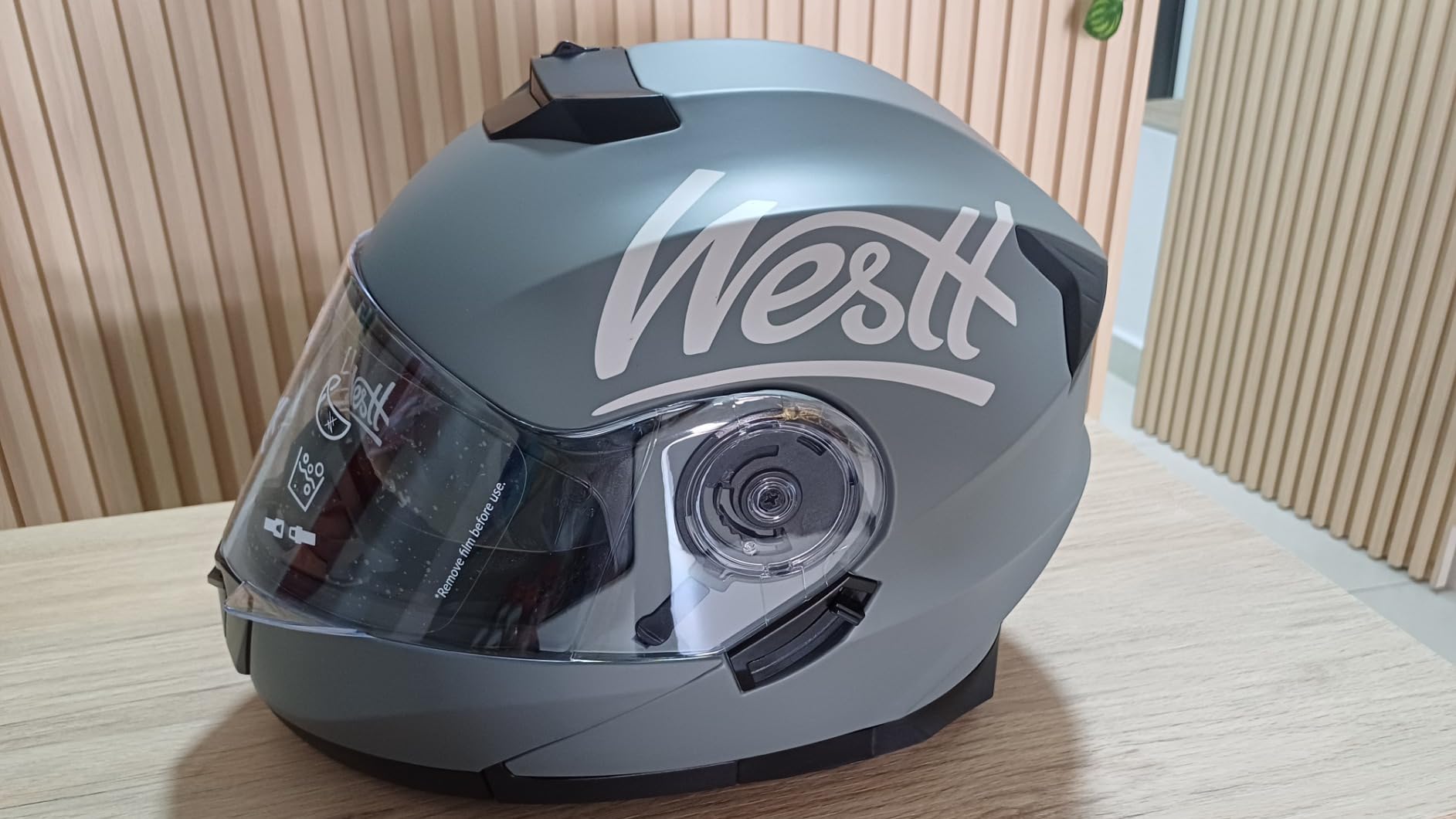
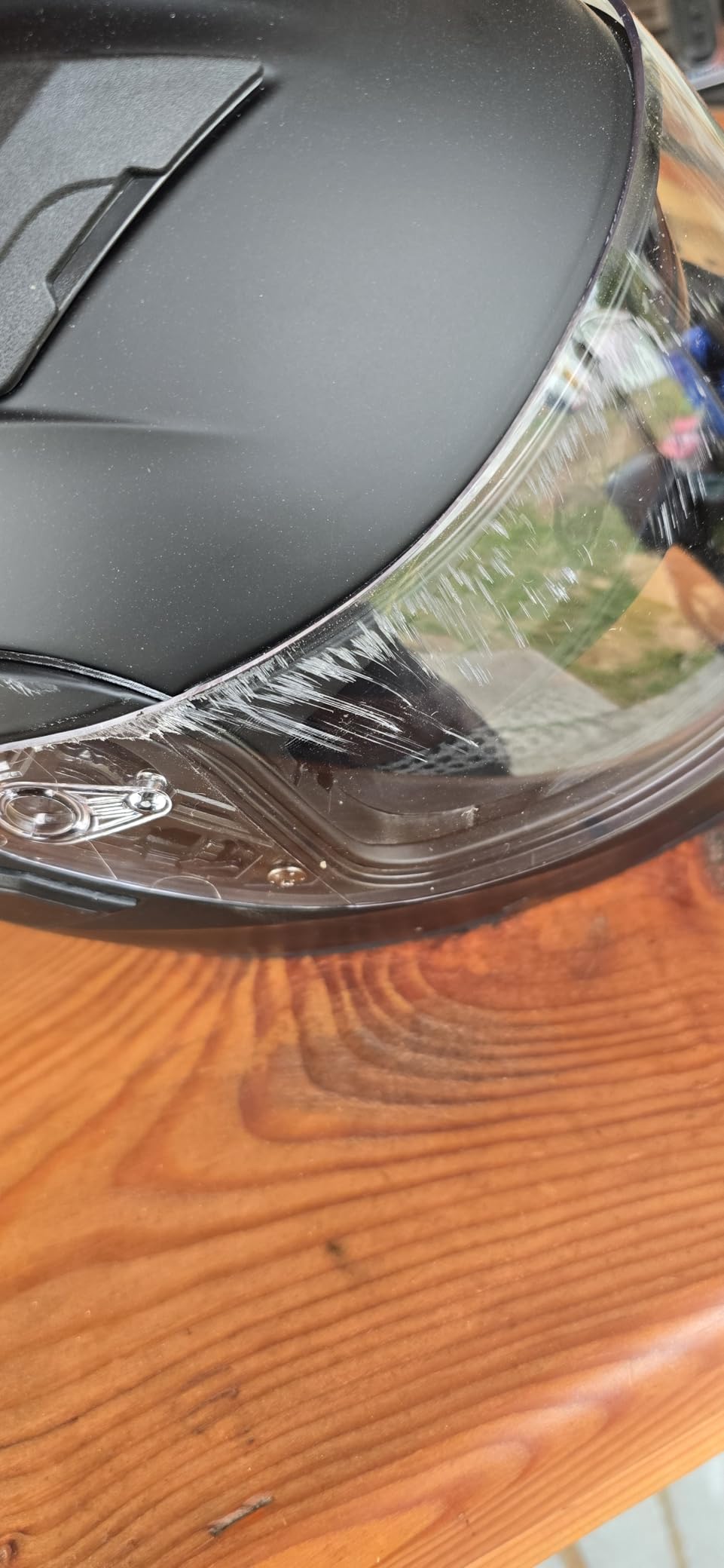
At 1.6 kg this is the lightest modular in the group, and the weight matters for a design whose extra mass sits on your neck. Reviewers value the flip-up convenience, the dual visor, and the wide viewport that helps with situational awareness in traffic. The multi-layer neck rolls and aerodynamic shell are repeatedly credited with cutting wind and road noise.
The integrated slide-down sun visor is always under your fingers, so you can switch between the clear main shield and the tinted inner without stopping or carrying a second shield. The padding is moisture-wicking and removable with a four-vent system behind it, and the shell is high-strength ABS over an impact-absorbing EPS liner certified to FMVSS 218.
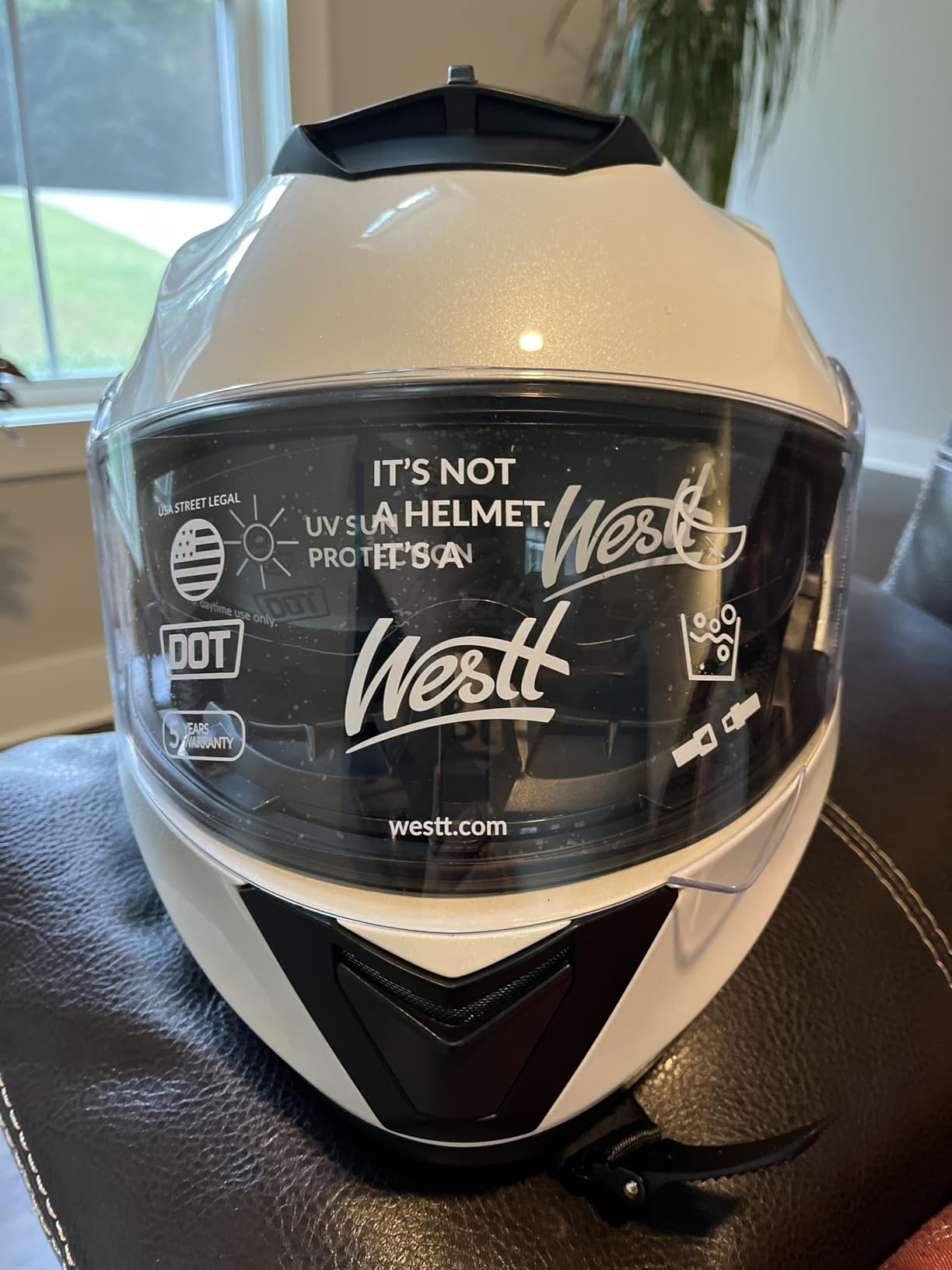
Fit guidance is unusually practical for this tier. The instruction is to measure around the widest part of your head and, if you fall between sizes, to size up for comfort around the ears and cheeks, which is precisely the area a glasses buyer cares about. Sizes run S through XL on an oval shape.
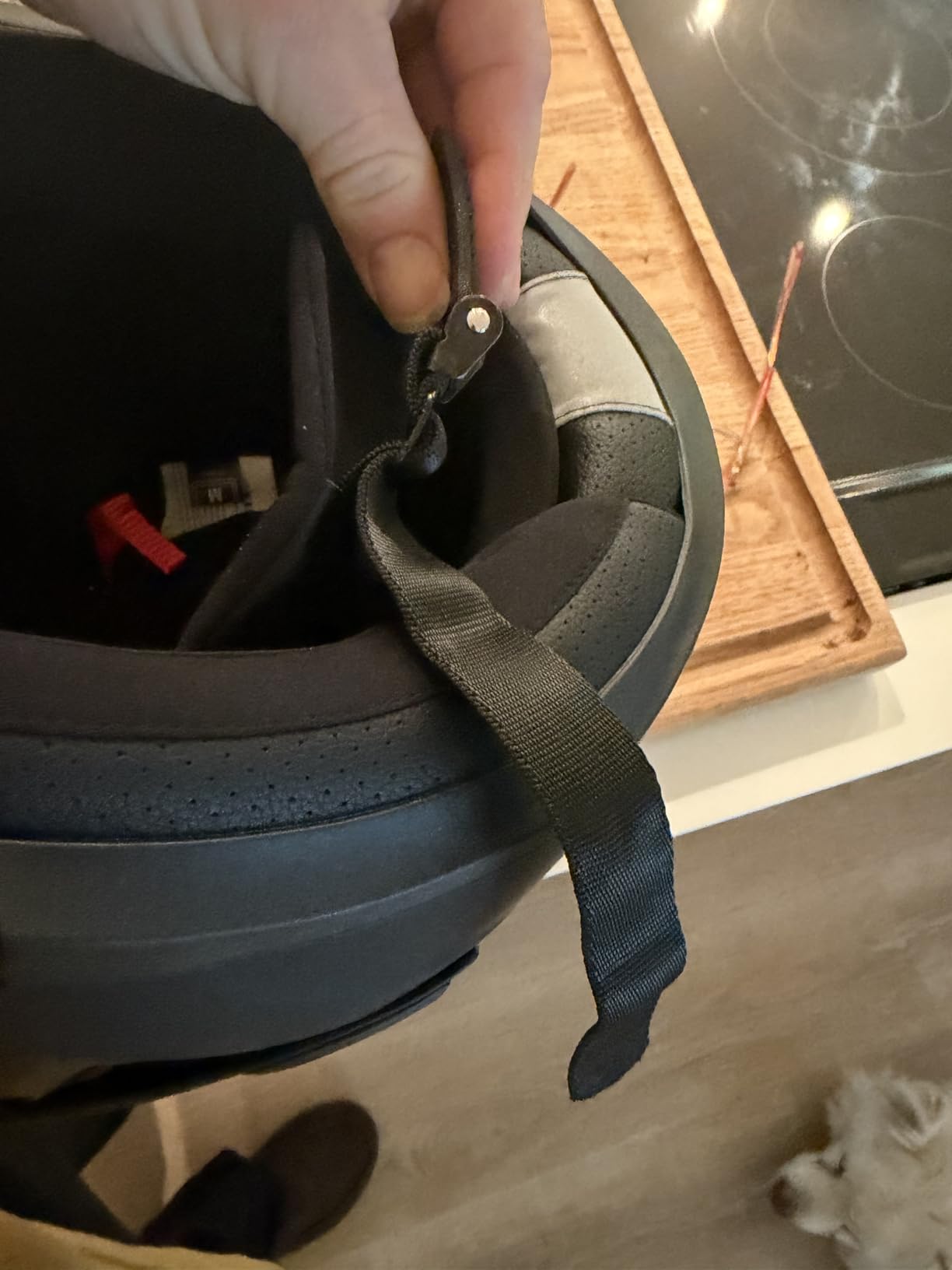
The build is not premium. Complaints concentrate on sizing and general finish rather than on the modular function itself, and the helmet carries a five year warranty.
What the low weight and neck rolls do for a full riding day
Modular helmets already carry a weight penalty over full-face designs. At 1.6 kg this one largely gives that back, and for a commuter who wears a helmet for two hours a day a shell this light reduces the neck ache that follows a week of stop-and-go traffic.
The neck rolls are the quieter story. Road noise is the thing that actually ends rides early, and the multi-layer roll design here is a real engineering feature rather than trim.
Where this is the wrong pick
The size run stops at XL. If your head is larger, you are out of options, and the same applies to anyone with a very broad head shape since the shape is oval.
It also carries the highest one-star share in the group at 9 percent. That points to a meaningful minority of unhappy owners, and if you want consistent finish quality you will be happier with a model that has a more uniform review profile.
9. ILM 902 Dual Visor Modular Helmet – Best for UTV and Side-by-Side
ILM Motorcycle Dual Visor Flip up Modular Full Face Helmet DOT with 6 Colors Model 902 (L, Matte Black)
ABS shell
Wide-view clear visor
Six vents
2.31 kg
Pros
- Modular flip-up chin bar with a wide-view clear visor
- Removable washable liner and cheek pads
- Six vents with a micrometrically adjustable strap
- Five year manufacturer warranty
- Oval shell offered in a wide range of sizes and colors
Cons
- No dedicated eyewear or glasses-retention grooves in the padding design
- Cheek pad and liner fit varies by shell size so careful sizing is needed
This is the model we would look at first if you ride a UTV, ATV, or e-bike alongside your motorcycle. The product listing names all of those as compatible vehicle types, and the wide-view clear visor is the feature that separates it from the budget dual-visor helmets. Owners repeatedly highlight the wide field of view it gives.
The build is a high-resistance ABS shell with a micrometrically adjustable strap, six vents, and a liner and cheek pads that are lightweight, removable, and washable. It meets or exceeds FMVSS 218 and DOT standards, and the warranty runs five years from the manufacturer, which is generous for this tier.
At 2.31 kg it is one of the lighter shells here, and the oval shape suits a good share of head shapes. A storage bag is included in the box, which is worth having if the helmet lives in a vehicle rather than on a rack.
The honest limitation is that no eyewear grooves or glasses-retention features appear in the padding design. Comfort for your frames comes from the flip-up entry and the general shape of the padding, which suits thin and medium frames comfortably.
When a wide view beats a snug fit
Side-by-side riding puts a lot of visual demand on the eyeport, because you are scanning terrain, other riders, and obstacles at once. A wider clear shield with fewer frames obstructing it is worth a lot in that environment.
The flip-up bar also matters for off-road-style riding where you stop often and want to talk, drink, or adjust gear without stripping the helmet off.
Where padding is doing the work on its own
There are no documented glasses grooves here, so a thick acetate frame is a riskier proposition than with the HJC C91. Test the temple area specifically with your actual frames rather than assuming.
Fit varies noticeably by shell size according to owner reports, which means the size you pick changes the cheek pad behaviour. Measure carefully and check the return terms before committing.
10. HALYING Bluetooth Modular Helmet – Built-In Audio Without the Premium
HALYING Bluetooth Modular Motorcycle Helmet DOT/ECE Approved Full Face Flip up Anti-Fog Double Visor Helmet Built-in Dual Speaker with Microphone for Adult Men and Women
ABS shell with high-density EPS
Double sun visor
Built-in Bluetooth 5.0
Four vents
Pros
- Lightweight shell that does not wear the neck out on longer rides
- Faces shield pops all the way up which makes eyewear handling easy
- Inner sun visor lets prescription wearers darken the shield
- Removable washable interior with cheek padding that does not press hard
Cons
- Lowest average rating in the group at 3.9 with a 16 percent one-star share
- Reports of seams torn on arrival and units arriving without the Bluetooth module mounted
- Tinted shield chatters at speed and makes night riding difficult
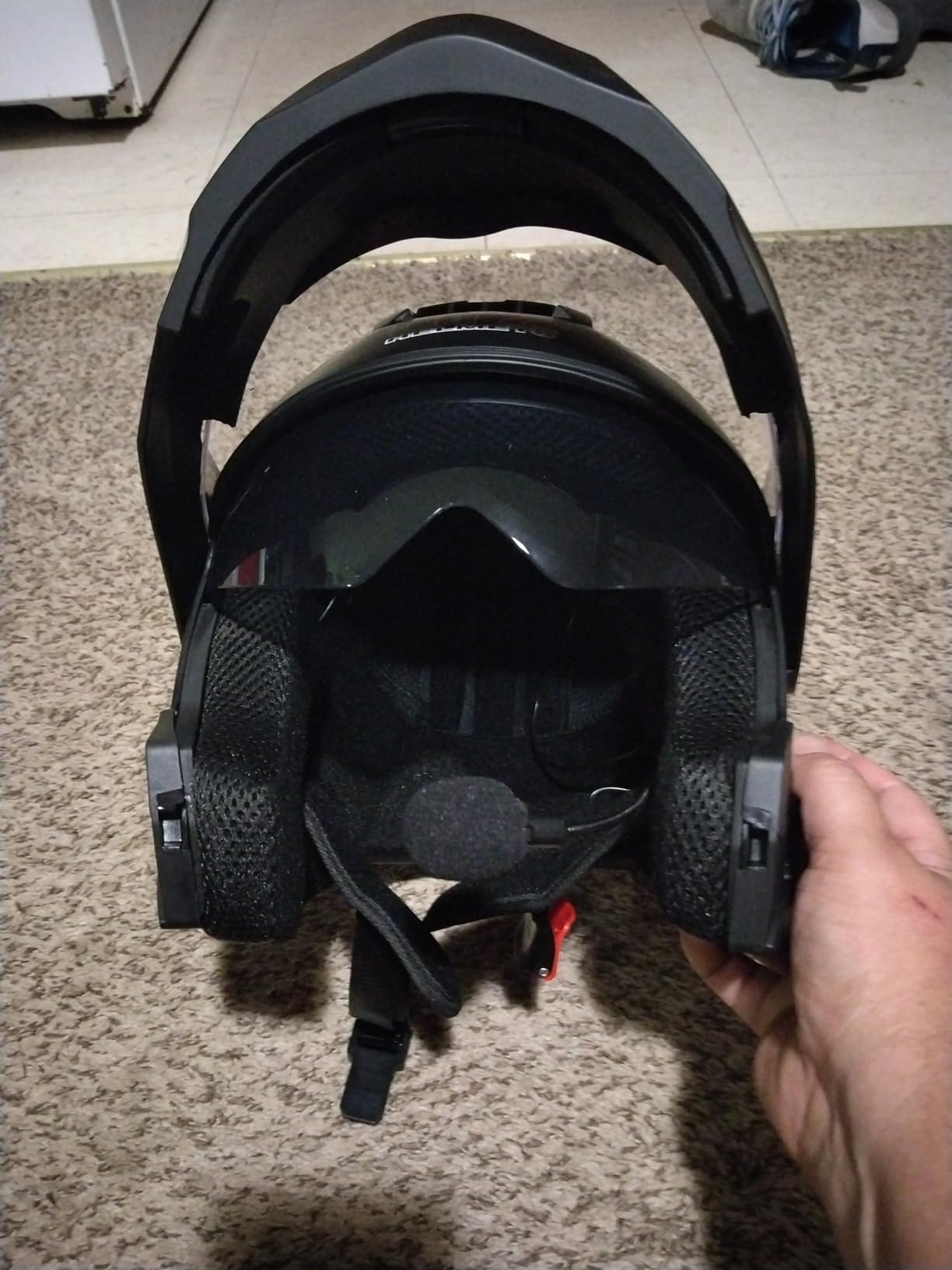
We are including this one last because the underlying design is genuinely well matched to glasses wearers, and buyers who get a good unit report exactly that. The faces shield pops all the way up, which makes putting on and adjusting eyewear simple, and the inner dark sun visor lets prescription wearers darken the shield without a second pair of tinted glasses.
There is a built-in Bluetooth CSR5.0 chip with stereo speakers, auto answer, playback, FM radio, and active call noise cancellation. The lithium polymer battery gives up to 20 hours of continuous playback with 80 hours of standby, which is the longest runtime claim in this group. Certification covers DOT, ECE 22-05, and FMVSS 218, the only helmet here with an ECE standard named.
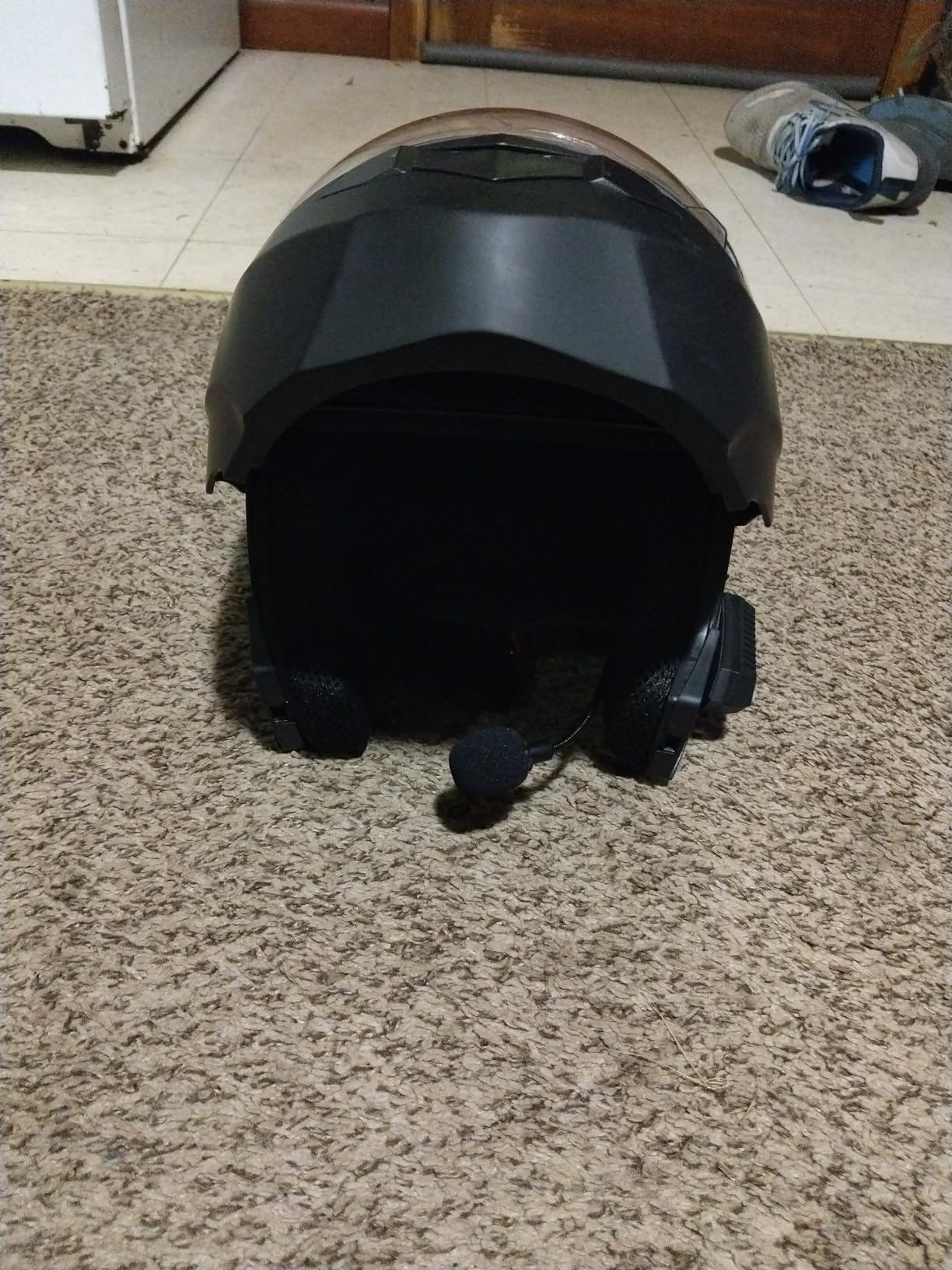
The interior is sponge-lined, removable, and washable, with sweat-absorbent headgear, and reviewers specifically note the cheek padding provides support without pressing hard on the cheeks, which is the correct instinct for frames. Weight is not stated by the manufacturer, though owners describe it as light. Four vents are fitted.
Sizes run S through XL at 55 to 56 cm up to 61 to 62 cm, and the shell is ABS over a high-density EPS buffer layer.
Why the double visor setup still appeals to frame wearers
The inner dark visor over prescription lenses gives you a working sun solution without juggling a second tinted shield that would sit on top of your frame arms. For riders who do not want to carry spare eyewear, that is a real convenience.
The liner design is also the right philosophy. Soft cheek support that holds the head without clamping is exactly what frame wearers need, even if execution varies from unit to unit.
Why we ranked it tenth
At a 3.9 average it is the lowest-rated helmet in the group, and its 16 percent one-star share is roughly double that of the others. Quality control is the theme in those reviews, with reports of seams torn on arrival.
Some units also arrived with the Bluetooth module not mounted, the installation is fiddly, and the microphone boom is more nuisance than use for many owners. The tinted shield chatters at speed, which makes night riding difficult for light-sensitive riders. The design is right for your frames; the finish is not reliable enough to recommend ahead of the other nine.
How to Fit a Modular Helmet Over Your Glasses: A 7-Step In-Store Test
You can test the entire fit in a shop in about ten minutes if you know the order of operations. Riders on forums genuinely disagree about whether glasses go on before or after the helmet, so here is the sequence that works consistently.
Wear your real frames. Not a pair from the shop shelf. The temple arm width and hinge position are what decide the fit, and borrowing frames changes the answer.
Flip the chin bar fully up. Do not lower it for any part of the initial fitting. With the bar up the cheek pads are at rest and the entry is at its widest.
Pull the helmet on, then put your glasses on. This order beats the alternative. The shell seats first, then the frames go on through the open face opening without any shell edge pressing a temple arm. Riders who reverse this sequence end up levering their own frames against the liner.
Lower the chin bar slowly. Watch where the frame arms land as the padding closes. They should settle into a recess or a channel, not ride up onto a flat foam face.
Press firmly at the hinge and behind the ear. That is where pressure concentrates. If a dull ache starts there, the cheek pad is the wrong density or the shell is one size too small.
Check the bridge of your nose. The frame should sit on your nose, not be held there by the pads. If the helmet props the frames up, expect them to slide forward over a long ride.
Wear it for ten minutes standing, then talk. Comfort you feel in the first two minutes is not comfort at mile forty. Ten minutes of a conversation is a decent proxy for a long stop-and-go commute.
If the helmet is close but the padding is wrong, check whether that model offers interchangeable cheek pads. One of these ten does, and that turns a return into a pad swap rather than a repurchase.
Matching Your Frame Style to the Right Modular Helmet
Frame style changes the problem you are solving. Here is how the main types behave, and which pick handles each best.
Thick acetate frames are the hardest case. The hinge block is wide, rigid, and impossible to flex, so it needs a genuine channel rather than a padded surface. The HJC C91 with its moulded glasses grooves is the one we would buy first. The ScorpionEXO GT930 KwikFit pads are the second choice. The remaining eight will work for many riders but rely on padding shape rather than design.
Thin metal or wire frames are the easiest. The arm flexes, so the frame settles rather than resists, and nearly every helmet here handles them. For this frame type, pick on weight and price. The Westt at 1.6 kg is the most comfortable on a long day.
Sport wrap frames present a different problem. The arms are wide and angled, and they tend to sit high. You need a wide eyeport and a tall interior, and you should check that the frame does not push the visor up into your field of view when deployed. The YEMA YM-925 is the pick here because several owners confirm its tinted visor clears their frames.
Rimless and high-prescription lenses have a low bridge, so they rely on the nose rather than the frame front. The helmet must not crush the bridge or the frames will slide forward all ride. Test the nose bridge specifically, and prefer a helmet where the cheek pads are removable so you can change density.
Two things stop your glasses sliding forward, and both are mechanical. A moulded groove or channel stops the arm creeping. A chin strap that pulls the shell snugger against the back of the head reduces the whole helmet shifting. Helmets with a micrometrically adjustable strap, like the ILM 902, do that job better than one with a fixed strap.
Fixing Double Fogging: Visor, Glasses, or Both
Double fogging is two separate problems happening at the same time, and treating it as one problem is why many riders give up on internal visors. Work out which one you have first.
Visor only. The lens is clear and your frames are clouded. A Pinlock insert is the answer, and the HJC C91 ships Pinlock pin-prepared with the HJ-17 shield so you can add one. The ScorpionEXO GT930 goes further with an Everclear shield treated on both faces, which is the best tooling in this group.
Glasses only. Your lenses are clear and the visor is clouded. Anti-fog spray on your glasses, and open the chin bar slightly at stops rather than lifting it. This is the cheaper problem to fix and it responds to products you probably already own.
Both at once. You need both fixes, and you also need airflow. The chin bar and the brow vents matter more than any anti-fog product. The Westt and the Typhoon TH158 both use channelled flow-through ventilation, and the HJC C91 uses an advanced channeling system that moves air front to back.
Helmets with no insert provision, such as the YEMA YM-925, rely on cracking the shield open, which works but adds noise. If you ride in cold and wet weather, buy the Pinlock-ready model and skip the compromise.
Internal Sun Visors vs Prescription Sunglasses vs Photochromic Lenses
For a glasses wearer this is a real conflict, because a tinted shield and a tinted lens stack. Three options exist and each has a failure mode worth knowing.
Internal sun visor. Convenient, always with you, no stopping required. The risk is physical contact with your frame. The YEMA YM-925 is the pick here because multiple eyeglass and contact-lens owners confirm clearance. The Westt offers an integrated slide-down shield, and the 1Storm HB89’s smoked inner lens is the one we would test most carefully in person first.
Prescription sunglasses. No visor to conflict with, and tinted lenses you chose deliberately for the conditions. The trade-off is carrying a spare pair and swapping at stops, which is why a light photochromic lens is often the practical answer for commuting.
Photochromic lenses. They darken with light and clear up indoors or in shade, which removes the visor-versus-lens conflict almost entirely. The catch is speed. Photochromic lenses react to visible and ultraviolet light, and a dark helmet interior with a shield filters enough light that they can take longer to darken than you expect.
Our read: pick the internal visor if you ride mostly in bright open conditions and value the convenience, and pick photochromic lenses if you move between sun and shade constantly. Riders on our eyewear guides generally land in the second group once fogging is factored in.
Bluetooth Headsets and Temple Pressure
Almost every frame complaint in this category has two causes, and the second one is easy to forget: the headset. A communicator clamped at the strap or jaw sits at the same location as a frame hinge, and the housing is hard plastic pressing through a soft temple arm for hours.
Three of these ten avoid the problem by integrating the electronics into the shell. The ILM 953 and the FreedConn BM2-S use built-in stereo speakers with DSP noise suppression, and the HALYING includes a Bluetooth chip and double sun visor in one shell. Nothing is added near your ears, so nothing competes with the frame arms.
For everything else, routing matters. Keep the wire out of the temple channel and out of the strap area where the frame arm sits. If you use an external unit, position it at the rear of the helmet and keep the cable along the back of the shell.
Pocket size is worth checking before you buy a communicator. The ScorpionEXO GT930 and the HJC C91 mould large-diameter pockets that accept most systems. Reviews of the GT930 note that some third-party speaker and communicator mounts do not fit the moulded pockets, so measure rather than assume.
Modular Helmets and Crash Safety: What ECE 22.06 Does and Does Not Cover
The chin bar is the reason modulars work for glasses, and it is also the reason riders worry about them. Both concerns are legitimate and neither is settled by a certification sticker.
ECE 22.06 is the current European standard and it tightened rotational testing compared with the older ECE 22.05. One helmet in this group, the ScorpionEXO GT930, carries dual DOT and ECE 22.06 P/J homologation. The HALYING is certified to ECE 22-05, the earlier standard. Every other model here is DOT FMVSS 218 only, which is the American standard and remains the legal requirement in the United States.
What these standards cover is the shell, the energy-absorbing liner, the retention system, and the visor. What they do not cover is the state of the chin bar mechanism at the moment of impact, or whether a frame arm is compressed against your temple.
Practically: always close the chin bar and confirm the latch has engaged before you move off. Most rider reports of loose modular chin bars trace back to a bar raised at a stop and never closed again. Fly your visor closed at highway speed too, since wind can lift it.
One legacy rule riders still reference is the two-two-two guideline: roughly two finger widths from your eyebrows to the shell edge, two finger widths between your cheekbones and the shell edge, and about two finger widths from the top of your head to the liner. If the shell edge lands on your glasses, you are too small. This is why the HJC C91 and the YEMA YM-925, which both run small, push people toward the next size up.
Frequently Asked Questions
What are the best helmets for people with glasses?
The best helmets for people with glasses are modular designs with either moulded eyewear channels in the cheek pads or named eyeglass-friendly pad geometry. In our testing the HJC C91 with moulded glasses grooves and the ScorpionEXO GT930 with KwikFit 3D contoured cheek pads lead the group, while the 1Storm HB89 wins on overall owner satisfaction. A flip-up chin bar matters more than most buyers expect because it lets you fit the helmet before your frames instead of threading temples through a closed eyeport.
Which motorcycle helmets are compatible with glasses?
Most helmets can physically fit glasses, but only some are engineered for it. A compatible helmet has one or more of three things: a flip-up chin bar that widens the entry opening, a moulded channel or groove in the cheek pads so the temple arm rests in a recess, and removable or interchangeable cheek pads so density can be matched to the frame. Certification is unrelated to eyewear fit. A helmet can be DOT or ECE 22.06 certified and still pinch thick acetate frames.
How do I ride a motorcycle if I wear glasses?
Put the helmet on first with the chin bar fully up, then put your glasses on through the open face opening, then lower the chin bar and confirm it has latched. This order prevents the shell edge from levering against your temple arms. Once riding, press the temple area firmly to check for pressure at the hinge and behind the ear, and confirm your frames are supported by your nose rather than held up by the cheek pads.
Do modular helmets fog up more than full-face helmets?
They can, because the chin bar gap and the gasketing around the shield add places where warm moist air collects, but the difference is small with the right tooling. The HJC C91 ships Pinlock pin-prepared so an anti-fog insert can be added, and the ScorpionEXO GT930 uses a shield treated on both faces. Helmets with no insert provision, such as the YEMA YM-925, rely on cracking the shield open instead, which is the most common source of owner complaints.
Can I wear sunglasses with a helmet?
Yes, but check how they interact with the shield and any internal sun visor. Wearing sunglasses under a clear shield is fine. Stacking sunglasses with a drop-down tinted visor adds weight and pressure around the eyes, and the visor can strike the frame. Test the internal visor with your real glasses before buying a helmet whose main feature is the sun shield. A photochromic lens avoids the conflict entirely if your riding involves frequent light changes.
Will wearing glasses in a helmet affect safety in a crash?
Frames are not part of any helmet certification, so a standard cannot tell you. The practical risks are indirect: a badly fitting helmet pushes the visor up into your line of sight, and a frame arm compressed by cheek pad foam causes you to remove the helmet or adjust it while riding. Both are solved by proper fit rather than by prescription. Certified standards such as DOT FMVSS 218 and ECE 22.06 cover the shell, the liner, the retention system, and the visor only, and none of them measure how a frame arm is positioned inside.
Conclusion
The best modular motorcycle helmets for glasses wearers come down to one honest question: how much of the eyewear accommodation is engineering and how much is padding? Only two of these ten answer it in writing. The HJC C91 moulds glasses grooves into the interior and lets you change cheek pads across sizes, which makes it the right choice for thick acetate and high-prescription frames. The ScorpionEXO GT930 uses KwikFit 3D contoured pads, treats both shield faces for no-fog performance, and carries dual DOT and ECE 22.06 P/J approval if you take the 5.9 pound weight as a fair trade.
For everyone else, the 1Storm HB89 is the best overall buy. It carries the strongest owner satisfaction in the group, its flip-up bar gives you a genuinely wide entry, and its size run covers most heads without a jump. Just test the inner smoked visor against your frames before you commit.
Whatever you choose, wear your real glasses to the fitting, put the helmet on before the frames, and give it a full ride before deciding. Cheek pad foam compresses over the first hours of use, so pressure that feels fine in a shop can feel different at mile forty. And keep the chin bar closed and latched whenever you are moving.
This ranking was last reviewed in October 2026 and reflects the owner review data and manufacturer specifications available at that time.