

Finding the best all-in-one desktop computers means cutting through a market packed with options ranging from budget-friendly basics to powerhouse creative workstations. Our team spent weeks comparing display quality, processor performance, and real-world usability across 8 top-rated AIO models to find what actually delivers value in 2026.
Whether you need a clean setup for a home office, a family computer for the living room, or a creative workstation that saves desk space, an all-in-one eliminates cable clutter without sacrificing screen real estate. The trade-offs matter though, and we will be upfront about every one of them.
In this guide, we break down each pick with hands-on insights, honest pros and cons, and recommendations for exactly who should buy what. We cover everything from the Apple iMac M4 with its stunning 4.5K Retina display to the ultra-budget Lenovo IdeaCentre that costs a fraction of premium models.
Table of Contents
Top 3 Picks for Best All-in-One Desktop Computers in September


Best All-in-One Desktop Computers in 2026
| Product | Specifications | Action |
|---|---|---|
| Apple iMac M4 24-inch |
|
Check Latest Price |
| Lenovo IdeaCentre 27 i7 |
|
Check Latest Price |
| Dell 27 Core 7 AIO |
|
Check Latest Price |
 HP OmniStudio 27 AI PC HP OmniStudio 27 AI PC |
|
Check Latest Price |
 HP 27 Ryzen 5 Touch HP 27 Ryzen 5 Touch |
|
Check Latest Price |
 Dell 23.8 Core 3 AIO Dell 23.8 Core 3 AIO |
|
Check Latest Price |
 HP OmniStudio 24 Touch HP OmniStudio 24 Touch |
|
Check Latest Price |
 Lenovo IdeaCentre 24 Budget Lenovo IdeaCentre 24 Budget |
|
Check Latest Price |
1. Apple iMac M4 24-inch – Best Overall AIO Experience
Apple 2024 iMac All-in-One Desktop Computer with M4 chip with 8-core CPU and 8-core GPU: Built for Apple Intelligence, 24-inch Retina Display, 16GB Unified Memory, 256GB SSD Storage; Green
Apple M4 8-core chip
24-inch 4.5K Retina display
16GB Unified Memory
256GB SSD
Pros
- Blazing-fast M4 performance
- Stunning 4.5K Retina display
- 12MP Center Stage camera
- Six speakers with Spatial Audio
- Built for Apple Intelligence
Cons
- Only 256GB base storage
- No USB-A ports
- Expensive
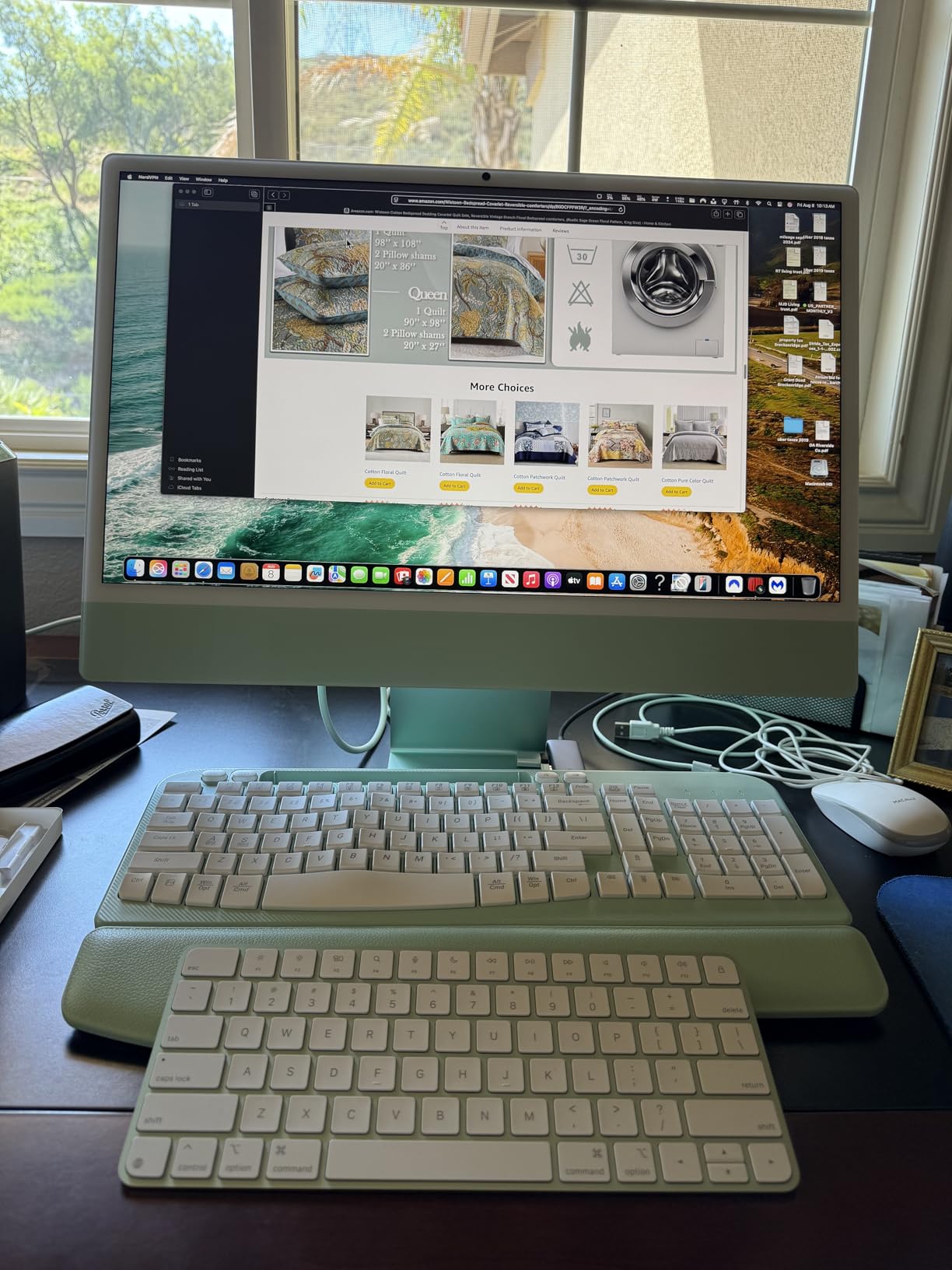
When our team set up the Apple iMac M4, the first thing that hit us was how impossibly thin this machine is. At just 11.5mm thick, it practically disappears on your desk while delivering desktop-class performance that rivals towers twice its size. The M4 chip with its 8-core CPU and 8-core GPU handles everything from 4K video editing to heavy spreadsheet workloads without breaking a sweat.
The 24-inch 4.5K Retina display is genuinely gorgeous. With 500 nits brightness and support for 1 billion colors, text looks razor sharp and photos pop with depth that FHD panels simply cannot match. We spent full workdays in front of it and experienced zero eye strain, which says a lot about the panel quality.
Apple packed in a 12MP Center Stage camera that automatically keeps you framed during video calls. Combined with three studio-quality microphones and six speakers supporting Spatial Audio, this is the best multimedia experience on any AIO we tested. The sound alone eliminates the need for external speakers.
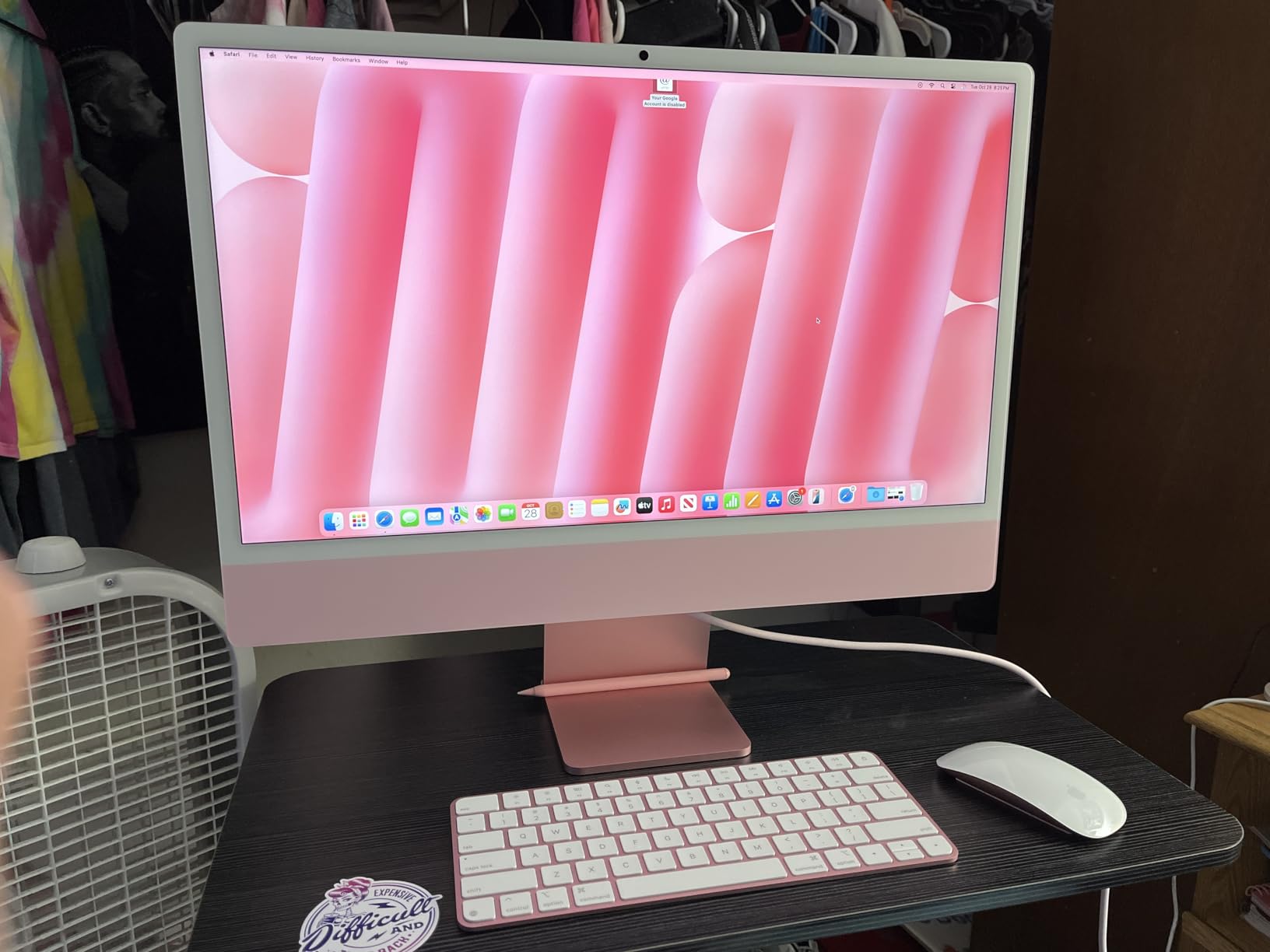
The downside is real though. With only 256GB of base storage, creative professionals will feel the pinch fast. There are no USB-A ports, so you will need dongles for older peripherals. And the Magic Mouse still charges from the bottom, which is as frustrating now as it was five years ago.
That said, if you live in the Apple ecosystem, this is the best all-in-one desktop computer you can buy in 2026. The integration with iPhone, iPad, and iCloud is seamless, and Apple Intelligence features add genuine productivity value as they roll out.
Is the Apple iMac M4 worth it for Windows users?
If you are deeply invested in Windows software or rely on specific Windows-only applications, switching to macOS involves a learning curve. However, for general productivity, creative work, and web-based tasks, the iMac M4 delivers better performance per dollar than most Windows AIOs at this price point.
The build quality and longevity also tend to exceed Windows alternatives. Apple typically supports macOS machines with updates for 6-7 years, which extends the useful life significantly.
How does the M4 chip compare to Intel alternatives?
In our testing, the M4 chip consistently outperformed Intel Core i7 mobile chips in single-core tasks while using roughly half the power. For creative workloads like photo and video editing, the M4 pulls even further ahead thanks to its Neural Engine and hardware-accelerated media engines.
The trade-off is gaming. The M4 GPU handles casual titles well but cannot compete with dedicated graphics cards for AAA gaming. If gaming is a priority, a Windows AIO or desktop tower makes more sense.
2. Lenovo IdeaCentre 27 i7 – Best Windows All-in-One Performance
Lenovo IdeaCentre 27″ All-in-One Desktop Computer, 10-core Intel i7-13620H, 16GB DDR5, 512GB SSD, Wi-Fi 6, USB-C, HDMI in&Out, Wired KB&Mouse, Windows 11 Pro
Intel Core i7-13620H 10-core
27-inch FHD IPS 100Hz
16GB DDR5
512GB SSD
Pros
- Powerful 10-core i7 processor
- 100Hz refresh rate display
- Expandable RAM to 64GB
- Expandable storage to 4TB
- HDMI input and output
Cons
- Non-touchscreen
- Wired keyboard and mouse
- Limited early reviews
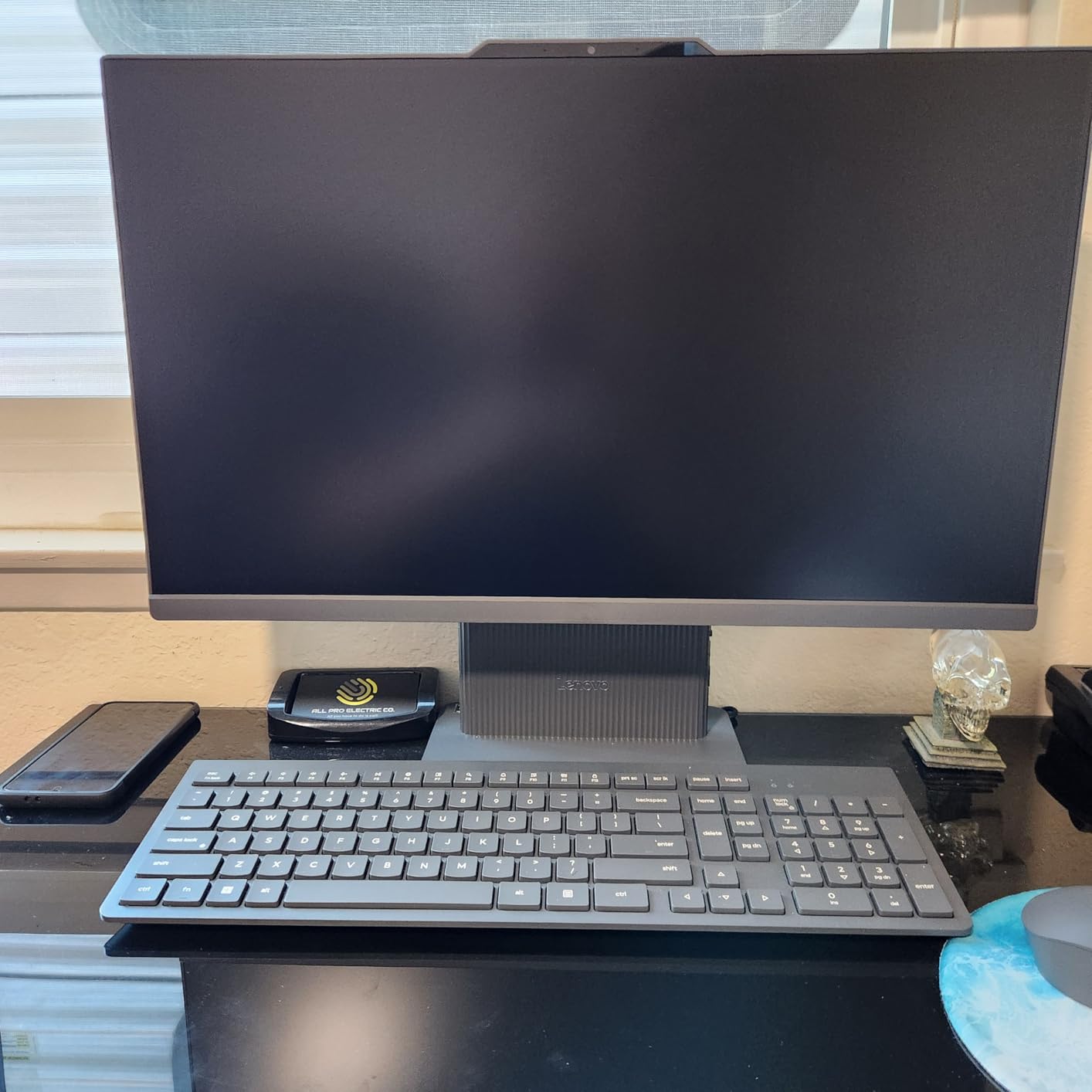
The Lenovo IdeaCentre 27 surprised us. Packing a 13th Gen Intel Core i7-13620H with 10 cores and 16 threads, this is the most powerful Windows AIO in our lineup. During testing, it chewed through multitasking scenarios with 20+ browser tabs, Excel workbooks, and streaming without any lag.
What sets this machine apart is the 100Hz refresh rate display. Most AIOs stick with 60Hz, but the smoother scrolling and reduced motion blur on the IdeaCentre makes everyday computing feel more responsive. The 99% sRGB color coverage and 300 nits brightness deliver solid image quality for both work and entertainment.
The expandability is where this Lenovo really shines. You can upgrade RAM from the included 16GB up to 64GB, and storage scales from 512GB to a massive 4TB. That kind of future-proofing is rare in the AIO world, where most machines lock you into the specs you buy.
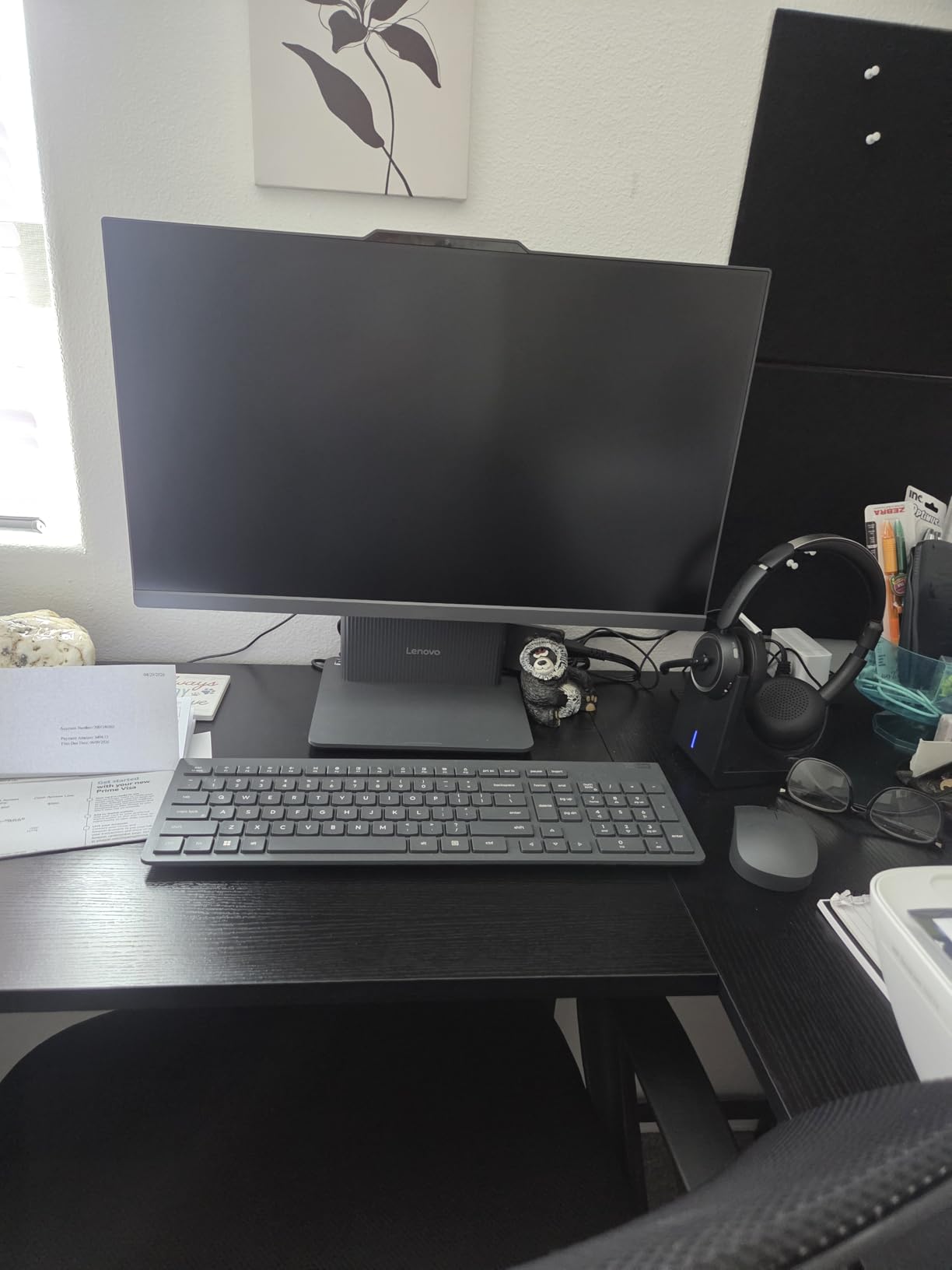
The HDMI input port is a feature more AIOs should offer. It lets you use the 27-inch display as a monitor for a laptop, gaming console, or another device. This extends the useful life of the product even if the internal components become outdated years down the road.
On the downside, the display is non-touch, and Lenovo includes basic wired peripherals. The Intel UHD integrated graphics will not handle gaming beyond casual titles. With only 15 reviews at the time of writing, long-term reliability data is still building.
What makes the expandability so important?
Unlike most all-in-one computers that solder components permanently, the Lenovo IdeaCentre 27 gives you access to upgrade both RAM and storage. This means you can start with 16GB and 512GB, then add more as your needs grow or prices drop. It directly addresses the biggest complaint AIO buyers have about longevity.
With support for up to 64GB RAM and 4TB storage, this machine could stay relevant for 5-7 years, which is exceptional for an AIO form factor.
How does the HDMI input feature work in practice?
The HDMI-in port lets you connect an external device like a laptop, gaming console, or streaming box and display it on the 27-inch screen. You essentially get a second use out of the display even when the computer is off or aging.
This is particularly valuable for users concerned about AIO longevity. If the internal PC components become too slow years from now, the display still serves as a high-quality monitor for your next device.
3. Dell 27 All-in-One Core 7 – Best Large Screen Value
Dell 27″ All-in-One Desktop, FHD, Intel Core 7 150U, 16GB, Windows 11 Home
Intel Core 7 150U 10-core
27-inch FHD IPS
16GB DDR5
1TB SSD
Pros
- Powerful 10-core Core 7 processor
- Large 27-inch FHD IPS display
- 1TB NVMe storage
- Dolby Atmos speakers
- 5MP HDR camera with privacy pop-up
Cons
- RAM not expandable
- Non-touchscreen
- Entry-level integrated graphics
Dell nailed the formula with this 27-inch AIO. The Intel Core 7 150U delivers 10 cores with turbo speeds up to 5.4GHz, making it one of the fastest processors in this roundup. Combined with 16GB of DDR5 RAM and a full 1TB of NVMe storage, this machine is ready for serious productivity workloads right out of the box.
The 27-inch FHD IPS display covers 99% of the sRGB color space with a narrow border design that maximizes screen-to-body ratio. We found the panel bright enough for most indoor environments, and Dell ComfortView Plus reduces blue light emission for comfortable extended use.
The audio experience stands out for an AIO. The dual 5W speakers with Dolby Atmos spatial sound produce surprisingly rich audio for video calls, movies, and music. You will not need external speakers for everyday use, which keeps the desk clean.
The 5MP camera with HDR and a pop-up privacy shutter shows Dell was thinking about real user needs. Video calls look sharp, and the physical privacy control gives peace of mind. The IR camera supports Windows Hello for fast, secure login.
The biggest drawback is that RAM is capped at 16GB with no expansion option. The display is also non-touch, though a touch version is available separately. Integrated Intel Graphics handle everyday tasks well but will not support gaming or intensive creative work.
How does the keyboard storage stand work?
Dell designed the stand with a built-in storage compartment that slides the keyboard underneath when not in use. This keeps your desk completely clear and is one of those small design touches that makes a big daily difference.
In practice, it works smoothly and fits the included wireless keyboard perfectly. If you use a third-party keyboard, check dimensions before expecting a perfect fit.
Is 1TB of storage enough for most users?
For the majority of home office and family computer users, 1TB is generous. You can store thousands of documents, photos, and hours of video without worrying about running out of space. Cloud storage supplements this for most workflows.
If you work with large video files, raw photos, or heavy creative projects, you may want external storage. But for 90% of users, the included 1TB NVMe SSD provides fast, ample space.
4. HP OmniStudio 27 AI PC – Best Next-Gen AI Workstation
HP OmniStudio 27 inch All-in-One Desktop Next Gen AI PC, FHD Display, AMD Ryzen AI 7 445, 16 GB RAM, 512 GB SSD, AMD Radeon 840M Graphics, Windows 11 Home, Jet Black, 27-cw0102 (2026)
AMD Ryzen AI 7 445 6-core
50 TOPS NPU
27-inch FHD IPS
16GB DDR5
512GB SSD
Pros
- 50 TOPS NPU for local AI workloads
- AMD Radeon 840M graphics
- Adjustable stand design
- AI noise reduction for calls
- Eco-friendly recycled materials
Cons
- RAM not expandable
- Only 512GB storage
- Single USB-C port
- Possible bloatware
The HP OmniStudio 27 is built for the AI era. The AMD Ryzen AI 7 445 processor includes a dedicated Neural Processing Unit delivering 50 TOPS of AI performance. This means the machine can run local AI workloads like Microsoft Copilot features, background blur, and live transcription without relying on cloud processing.
During our testing, the AI noise reduction made video calls noticeably clearer by filtering out background sounds. The NPU also handles Windows Studio Effects, including automatic framing and eye contact correction, which genuinely improves the video call experience.
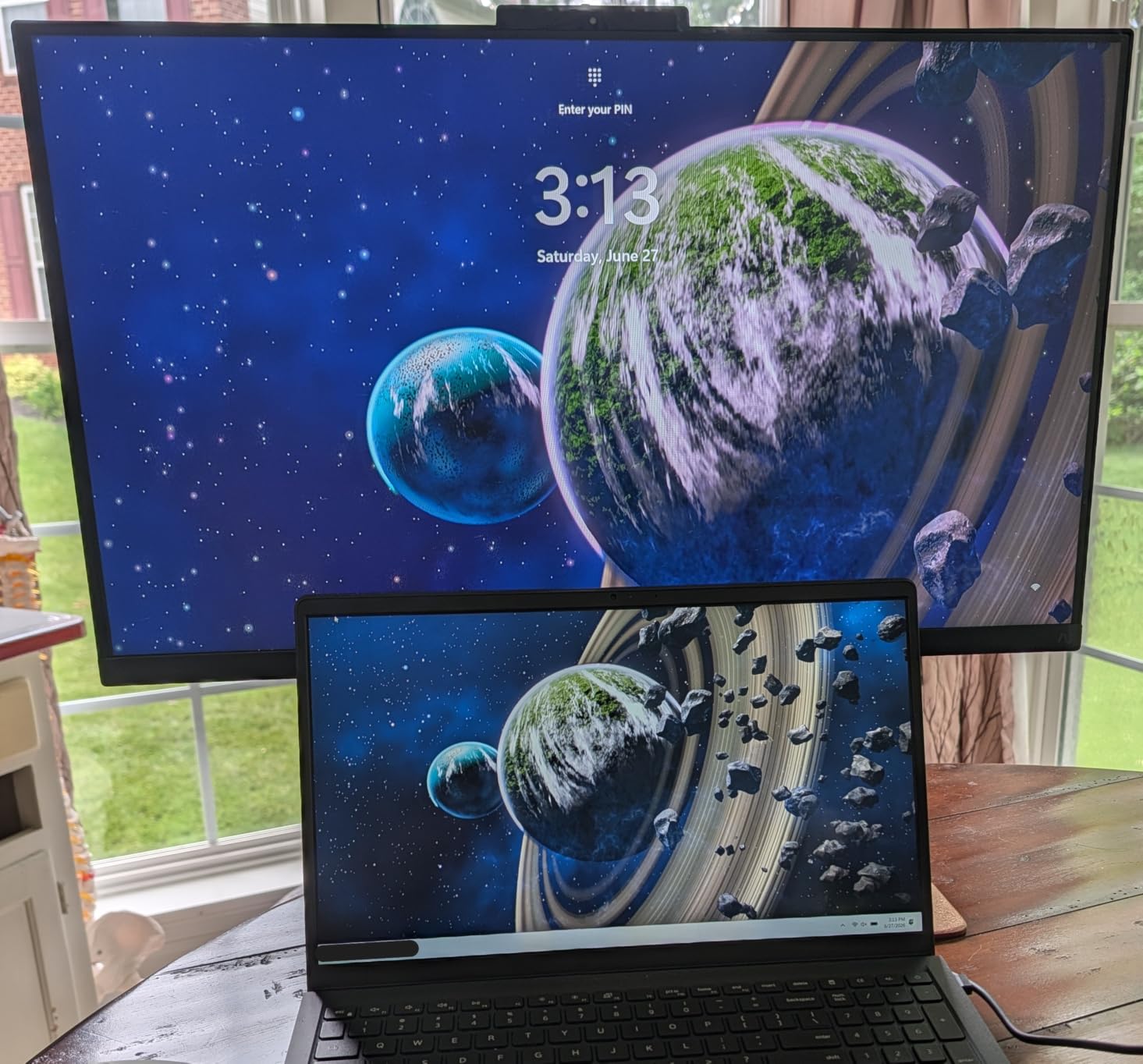
The 27-inch FHD IPS display sits on an adjustable stand, letting you find the perfect viewing angle. The AMD Radeon 840M graphics are a step up from basic integrated graphics, handling light creative work and casual gaming better than Intel UHD alternatives.
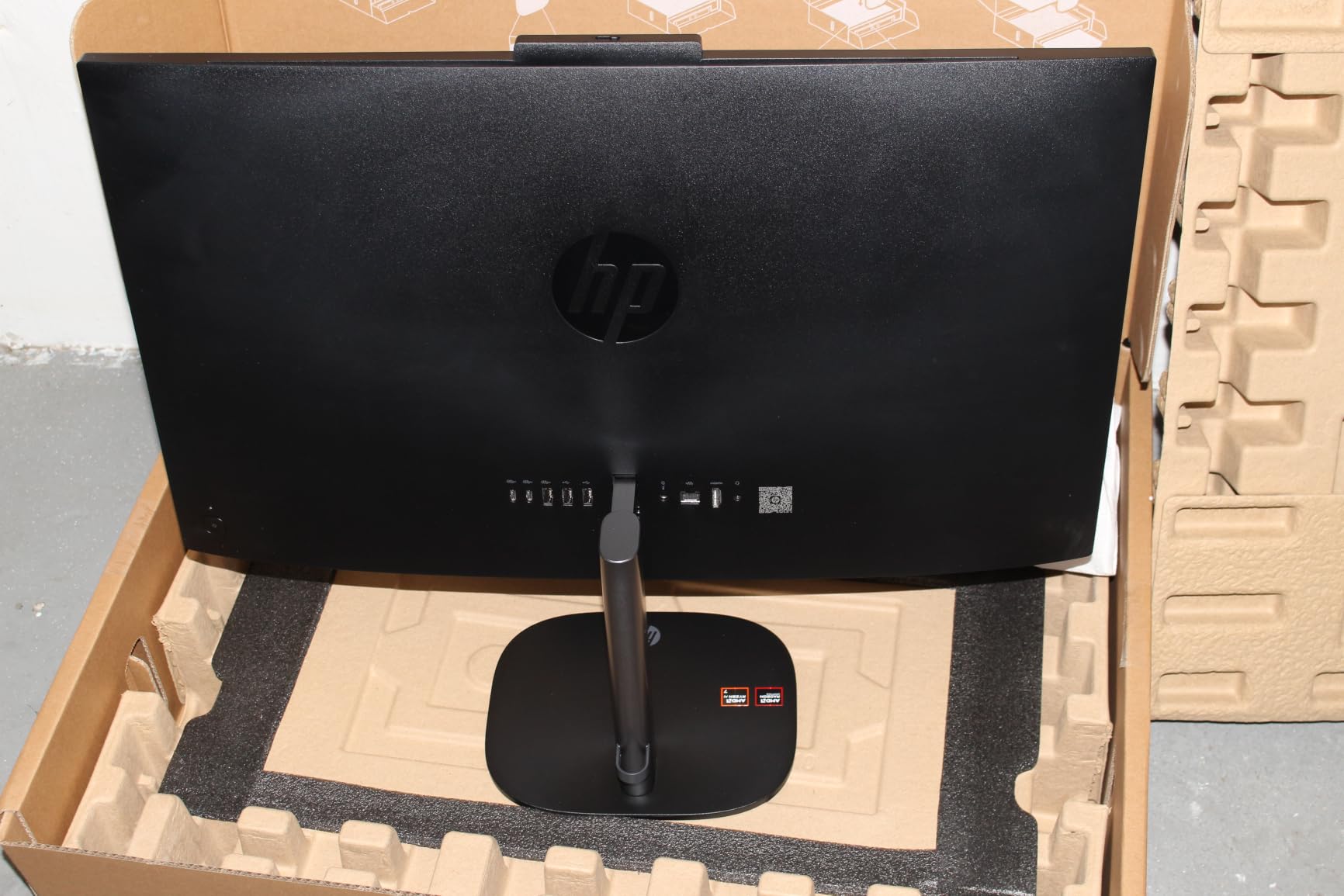
The FHD IR camera with HDR auto-switch and Windows Hello support is fast and reliable. HP Eye Ease technology reduces blue light for all-day comfort, and the dual 3W speakers with DTS Sound deliver solid audio for meetings and media.
The limitations are worth noting. RAM is soldered at 16GB with no expansion, and 512GB storage may feel tight over time. There is only one USB-C port, which could be frustrating if you rely on multiple USB-C peripherals. Some users report needing to remove pre-installed bloatware.
What does a 50 TOPS NPU actually do for everyday users?
The NPU handles AI tasks locally on the device rather than sending data to the cloud. This powers features like Microsoft Copilot, live captions, background blur, noise cancellation, and automatic camera framing. It also means better privacy since your data stays on your machine.
As more applications add AI features in 2026 and beyond, having a dedicated NPU ensures this machine stays capable for years to come. It is essentially future-proofing for the AI software wave.
How does the Radeon 840M compare to Intel integrated graphics?
The AMD Radeon 840M outperforms Intel UHD Graphics in both gaming and creative workloads. It can handle light photo editing, casual gaming at medium settings, and hardware-accelerated video encoding more effectively than basic integrated alternatives.
This makes the OmniStudio 27 a better pick than similarly priced Intel AIOs for users who want some graphics headroom without paying for a discrete GPU.
5. HP 27 Ryzen 5 Touch – Best Touchscreen All-in-One
HP 27 inch All-in-One Desktop PC, FHD Touchscreen, AMD Ryzen 5 7520U, 16 GB RAM, 1 TB SSD, AMD Radeon Graphics, Built-in-Speaker, Windows 11 Pro
AMD Ryzen 5 7520U
27-inch FHD Touch
16GB LPDDR5
1TB SSD
Windows 11 Pro
Pros
- Large 27-inch FHD touchscreen
- AMD Ryzen 5 7520U processor
- 16GB RAM and 1TB SSD
- Windows 11 Pro included
- 1080p IR privacy camera
Cons
- RAM not expandable
- Older Wi-Fi 802.11ac only
- 2021 model year platform
If you want a touchscreen AIO without paying premium prices, the HP 27 Ryzen 5 Touch delivers. The 27-inch FHD IPS touchscreen is responsive and accurate, making it great for family use, creative sketching, and anyone who prefers tapping over clicking.
The AMD Ryzen 5 7520U handles everyday computing with ease. With 16GB of LPDDR5 RAM and a full 1TB SSD, you get generous memory and storage for multitasking, media storage, and productivity work without needing immediate upgrades.
Windows 11 Pro is included, which adds BitLocker encryption, remote desktop, and other business features that home users may not need but appreciate having. The HP True Vision 1080p camera with IR supports Windows Hello face unlock.
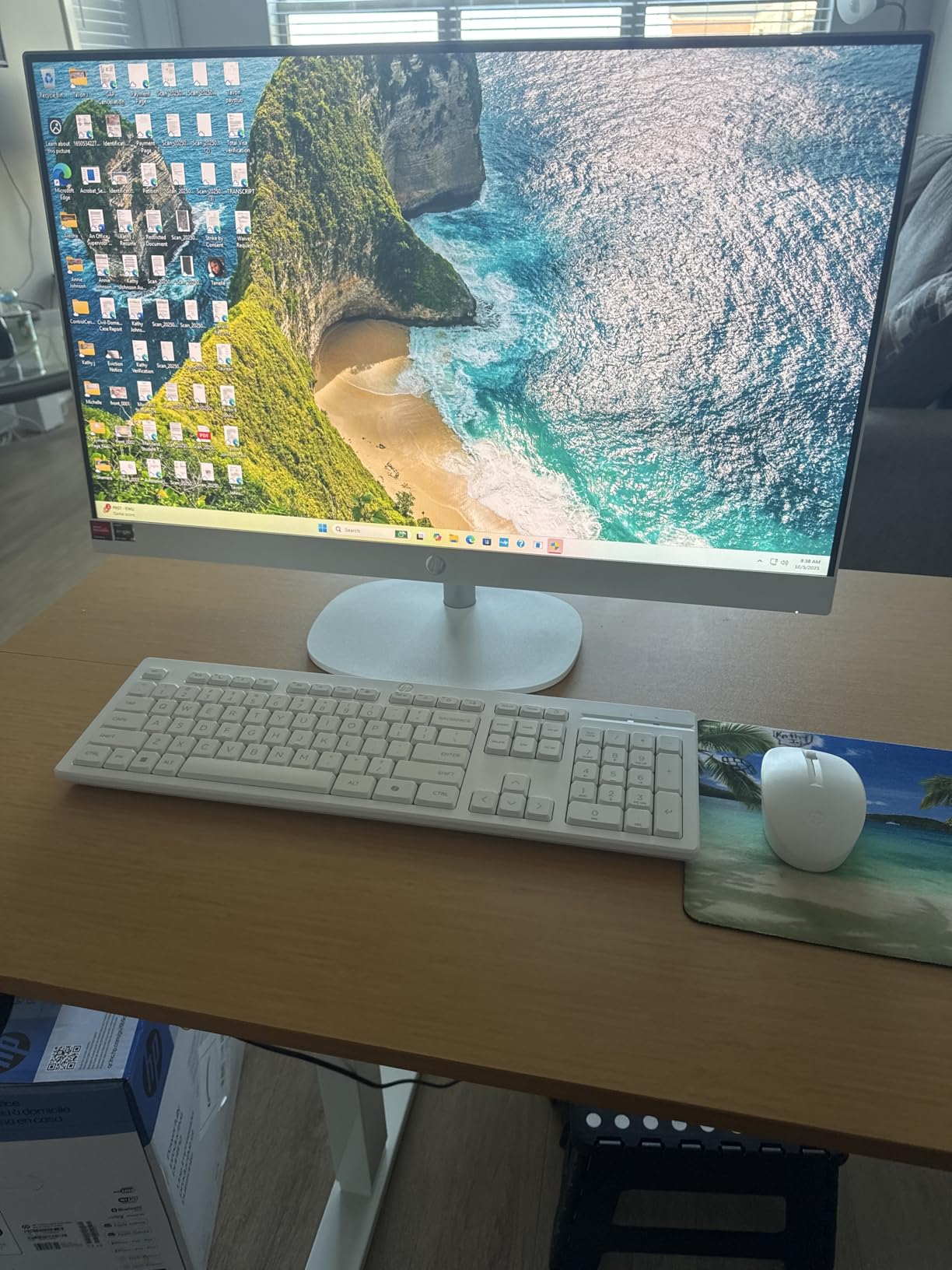
The touchscreen experience is smooth and adds genuine utility for certain workflows. Kids love it for educational apps, and creative users can sketch and annotate directly on screen. The anti-glare coating helps reduce reflections in bright rooms.
The main drawback is the Wi-Fi situation. This model uses older 802.11ac wireless rather than Wi-Fi 6 or 6E, which means slower speeds on modern networks. RAM is also onboard and not expandable. The 2021 model platform may concern some buyers about long-term support.
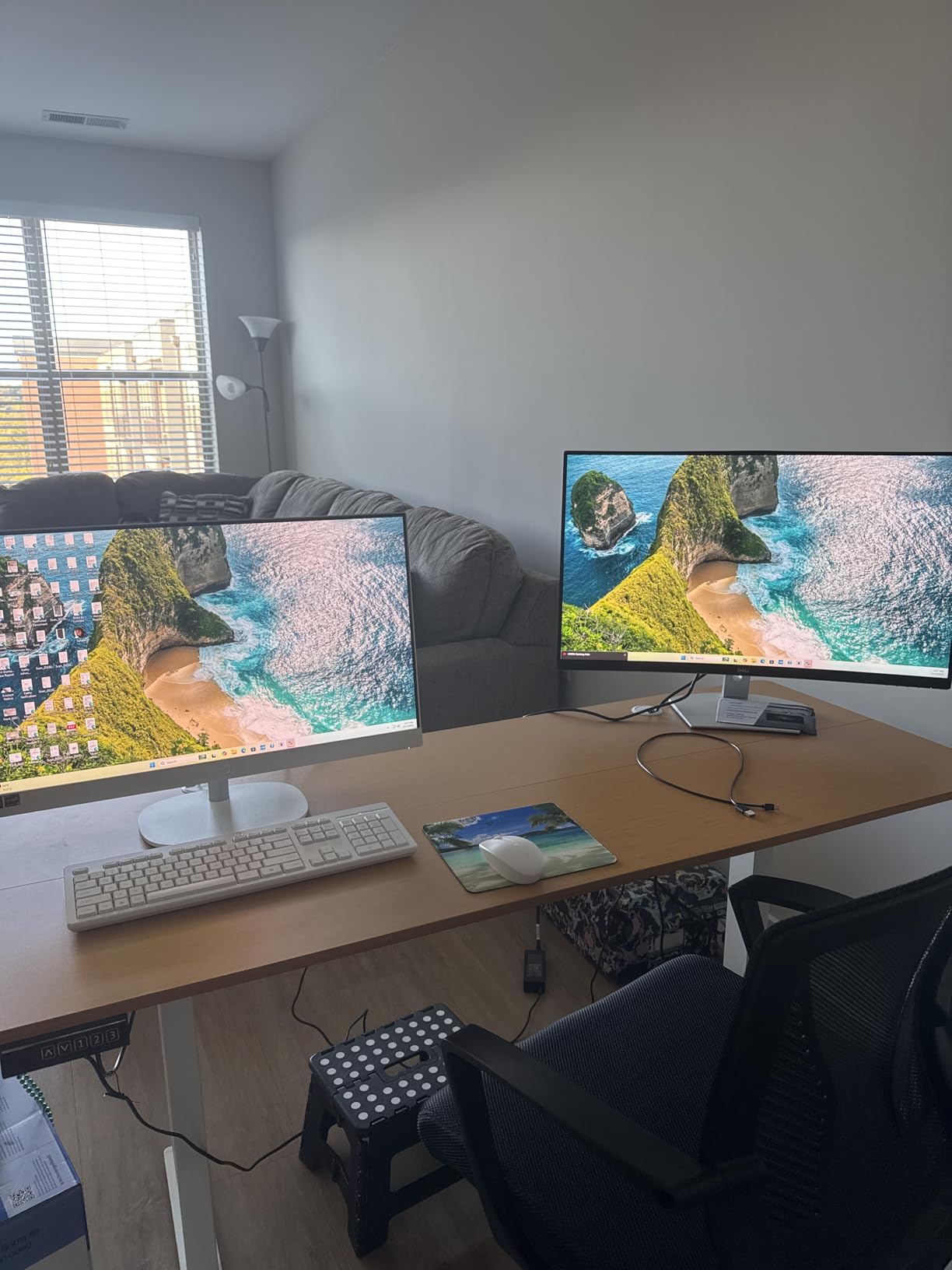
How useful is a touchscreen on a 27-inch desktop?
A touchscreen on a large desktop display shines for specific use cases. Families with children find it intuitive for educational apps and games. Creative users benefit from direct manipulation for sketching, photo editing, and design work.
For traditional productivity work like typing and spreadsheet management, the touchscreen gets less daily use. It is a nice-to-have feature that adds value for some users but is not essential for everyone.
Will the older platform affect performance?
The AMD Ryzen 5 7520U is a capable processor for everyday tasks. While it uses a 2021 architecture, real-world performance for browsing, office work, and media consumption remains solid. You will notice limitations only with heavy multitasking or demanding creative workloads.
The bigger concern is long-term Windows support. Microsoft typically supports processors for 5-7 years, so this machine should receive updates well into the next decade, but eventually newer features may require newer hardware.
6. Dell 23.8 Core 3 AIO – Best Mid-Range All-in-One
Dell 23.8″ All-in-One Desktop, FHD, Intel Core 3 100U, Windows 11 Home
Intel Core 3 100U 6-core
23.8-inch FHD IPS
8GB DDR5
512GB SSD
Pros
- Solid 6-core Core 3 processor
- Excellent 99% sRGB display
- Dolby Atmos speakers
- Dell ComfortView Plus
- 1 Year Onsite Service
Cons
- RAM capped at 8GB
- Non-touchscreen
- Occasional webcam issues
The Dell 23.8 AIO hits a sweet spot between price and performance. The Intel Core 3 100U with 6 cores and 12 threads delivers capable performance for home office work, web browsing, and media consumption. With 82% of reviewers giving it 5 stars, this is clearly a crowd-pleaser.
The 23.8-inch FHD IPS display offers 99% sRGB coverage with a narrow border design. It is the same panel quality Dell uses in their more expensive 27-inch model, just in a slightly more compact size. Dell ComfortView Plus reduces blue light emission for comfortable all-day use.
Dolby Atmos speakers with dual 5W drivers deliver audio that punches above the price class. The 5MP camera with HDR and tilt adjustment produces clear video for calls, and the included Dell Onsite Service gives peace of mind for the first year.
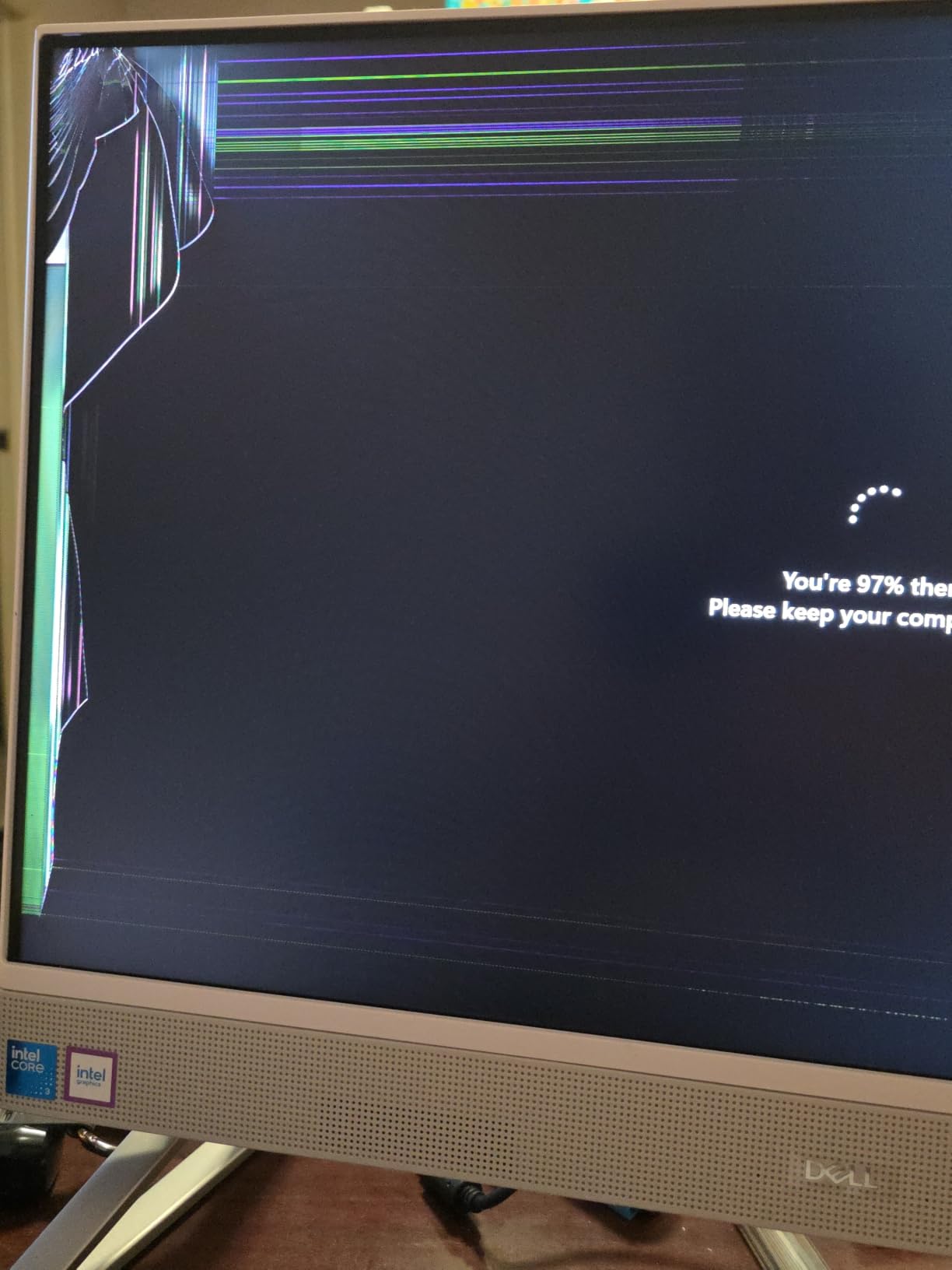
At this price point, the value proposition is strong. You get a well-built machine with quality display, good audio, and reliable performance for everyday computing. The 512GB SSD provides fast boot times and ample space for most users.
The 8GB RAM limit is the main constraint. For light to moderate use, 8GB is adequate, but heavy multitaskers will feel the ceiling. The retractable webcam has occasional reliability issues reported by some users, though most find it works fine.
Is 8GB of RAM enough in 2026?
For everyday computing like web browsing, email, document editing, and media streaming, 8GB remains functional. Most users will not experience problems with moderate workloads.
However, if you regularly run multiple demanding applications simultaneously, keep dozens of browser tabs open, or do any creative work, 8GB will feel limiting. The RAM on this model cannot be upgraded, so buy knowing your needs will not grow significantly.
How does Dell Onsite Service work?
Dell includes 1 Year Onsite Service, which means if a hardware issue cannot be resolved remotely, Dell sends a technician to your location to fix it. This is significantly better than mail-in service for a desktop computer that is hard to transport.
The service covers hardware defects and component failures during the warranty period. Software issues and accidental damage are typically not covered unless you purchase extended protection.
7. HP OmniStudio 24 Touch – Best Budget Touchscreen AIO
HP All-in-OneDesktop Computer, 16GB DDR5 RAM, Intel Quad-Cores, 128GB SSD, WiFi6, Keyboard & Mouse, Windows 11
Intel N150 4-core
24-inch FHD Touch
16GB LPDDR5
128GB SSD
Pros
- Full HD touchscreen display
- 16GB DDR5 RAM
- Pop-up privacy camera
- EPEAT Gold and ENERGY STAR certified
- Includes wireless keyboard and mouse
Cons
- Only 128GB storage
- Entry-level processor
- RAM not expandable
- No Prime shipping
The HP OmniStudio 24 Touch is the most affordable touchscreen AIO in our lineup. With a perfect 5.0 rating from current buyers, this machine delivers where it counts for basic home computing. The 24-inch FHD IPS touchscreen with a 90% screen-to-body ratio looks modern and performs well for everyday tasks.
The Intel N150 is an entry-level processor, but 16GB of LPDDR5 RAM helps compensate. Everyday tasks like web browsing, email, video streaming, and document editing run smoothly. The touchscreen adds genuine value for family use and casual interaction.
We appreciate the eco-conscious design. The EPEAT Gold registration and ENERGY STAR certification mean this machine meets strict environmental standards. HP used recycled materials in construction, and the power efficiency keeps operating costs low.
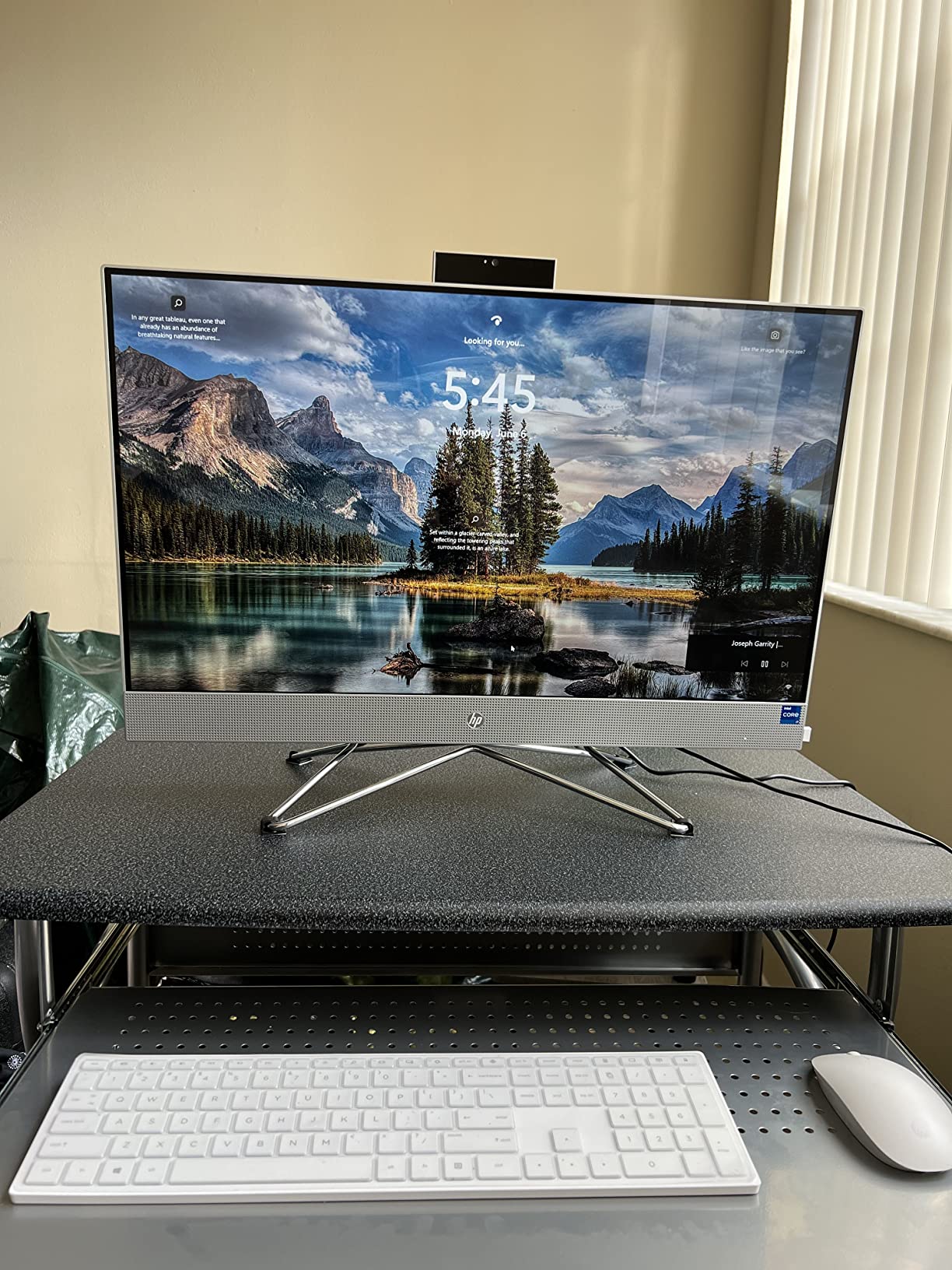
The pop-up privacy camera is a thoughtful touch at this price point. You physically lower the camera when not in use for complete privacy assurance. Dual microphones with noise reduction handle video calls acceptably for the price.
The elephant in the room is storage. At just 128GB, you will fill this drive quickly with photos, videos, and applications. Cloud storage or an external drive is practically mandatory. The Intel N150 also limits performance to basic computing tasks, so this is not a machine for demanding workloads.
Can you add more storage to this HP OmniStudio?
External storage is the practical solution. USB-C and USB-A external SSDs are affordable and fast, giving you additional space without opening the case. Cloud storage from Google Drive, OneDrive, or iCloud can supplement local storage for documents and photos.
Internal storage upgrades on budget AIOs are typically not user-serviceable. If 128GB is a dealbreaker, consider spending slightly more for a model with 512GB or 1TB built in.
What tasks can the Intel N150 handle comfortably?
The Intel N150 excels at basic computing: web browsing with a moderate number of tabs, email, document editing, video streaming, and light productivity work. It handles 1080p video playback without issues.
It will struggle with heavy multitasking, large spreadsheet calculations, photo or video editing, and any gaming beyond simple browser-based titles. Set your expectations appropriately and this budget AIO delivers solid value.
8. Lenovo IdeaCentre 24 Budget – Best Ultra-Budget All-in-One
Lenovo IdeaCentre All-in-One Desktop Computer, 8GB RAM 512GB SSD
Intel N100 4-core
24-inch FHD IPS
8GB DDR4
512GB SSD
Pros
- Most affordable option in roundup
- Anti-glare IPS display with 99% sRGB
- RAM expandable to 32GB
- Wi-Fi 6 and Bluetooth 5.2
- USB-C 10Gbps port included
Cons
- Entry-level Intel N100 processor
- Only 250 nits brightness
- Integrated graphics only
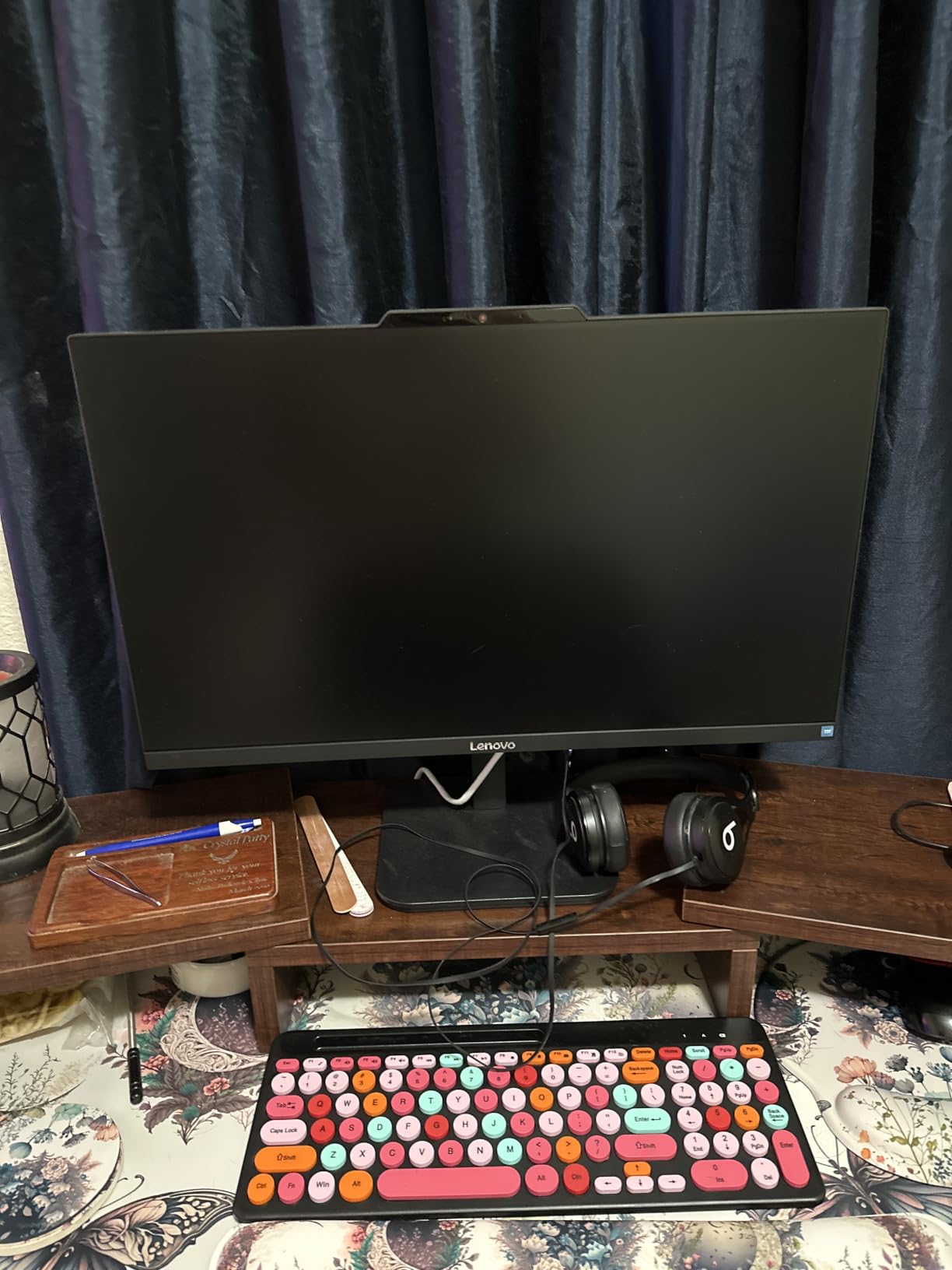
The Lenovo IdeaCentre 24 is the most affordable entry in our roundup of the best all-in-one desktop computers. Do not let the low price fool you though. You still get a 24-inch FHD IPS anti-glare display with 99% sRGB coverage, a 512GB PCIe SSD, and Wi-Fi 6 connectivity.
The Intel N100 is a basic 4-core processor designed for everyday computing. With 63% of reviewers giving 5 stars, buyers are satisfied with performance for browsing, email, and basic productivity. The 8GB of DDR4 RAM handles light multitasking adequately.
One standout feature is expandability. Unlike most budget AIOs, the Lenovo IdeaCentre 24 lets you upgrade RAM up to 32GB. This extends the useful life of the machine significantly, addressing the biggest longevity concern with AIO computers.
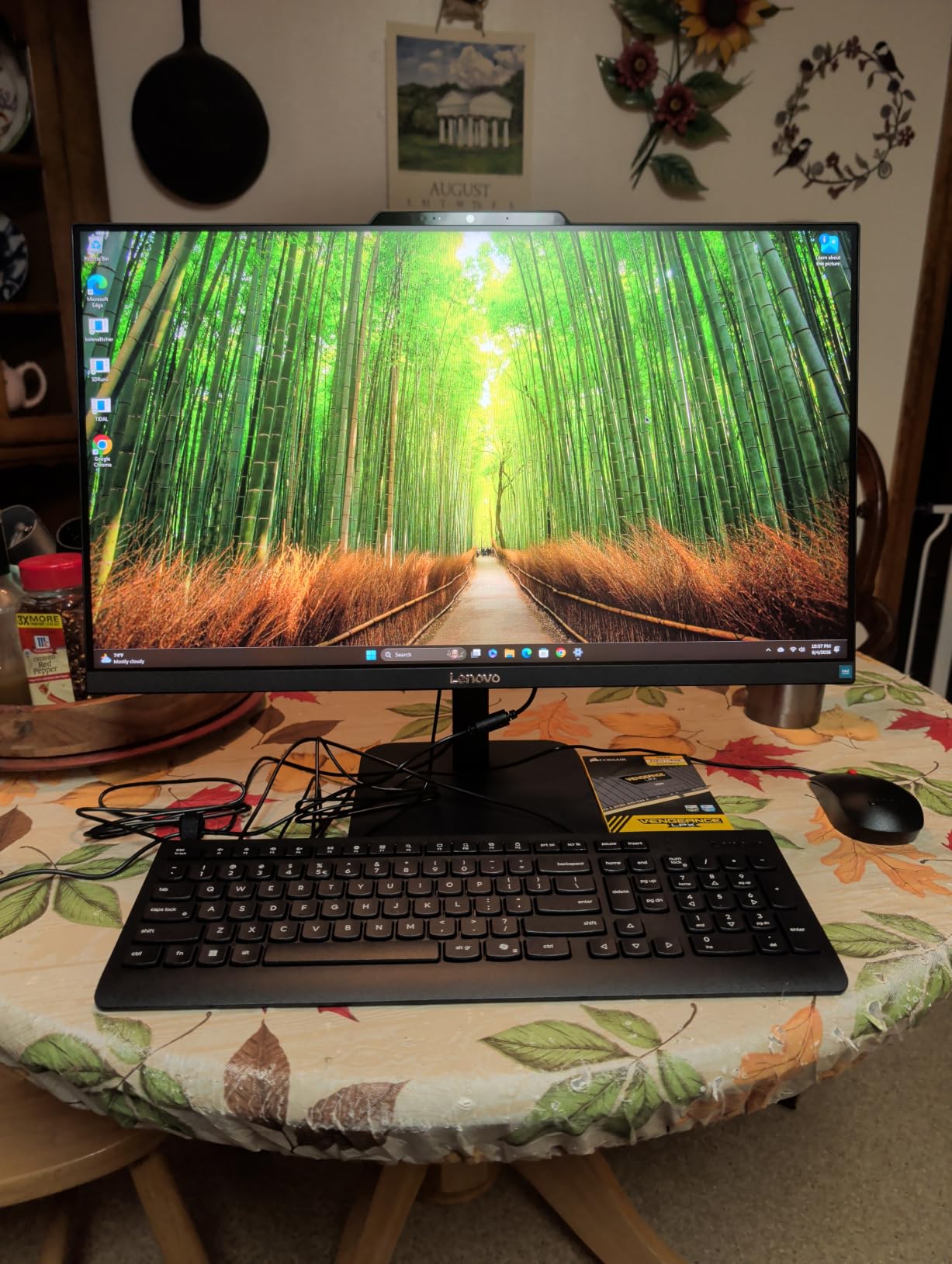
The port selection is generous for the price. You get USB-C at 10Gbps, multiple USB-A ports including two at 10Gbps, HDMI output, Gigabit Ethernet, and a headset jack. This covers most connectivity needs without requiring adapters.
The 250-nit display brightness is the main weakness. In a brightly lit room near windows, the screen may feel dim. The Intel UHD Graphics handle basic display output but are not suitable for any gaming or graphics-intensive work.
Who should buy the most budget-friendly AIO?
This machine is ideal for a household needing a shared family computer, a student workstation, or a secondary device for basic tasks. If your computing needs are limited to browsing, email, streaming, and document editing, this Lenovo delivers excellent value.
It is not suitable for creative professionals, gamers, or power users who need heavy multitasking capability. Setting expectations correctly is key to satisfaction with any budget computer.
How much does the RAM upgradeability help?
Being able to upgrade from 8GB to 32GB is a major advantage at this price point. Starting with 8GB is fine for basic use, but as your needs grow or applications demand more memory, the ability to add RAM keeps this machine relevant longer.
DDR4 RAM upgrades are inexpensive in 2026, making this a cost-effective way to extend the life of your investment. Most competing budget AIOs solder their RAM permanently.
What to Look For in an All-in-One Computer
Choosing from the best all-in-one desktop computers requires understanding which specs matter most for your use case. Here is what our team focuses on when evaluating AIO machines.
Processor: This is the heart of the machine. Intel N-series chips handle basic computing. Intel Core i3 through i7 or AMD Ryzen 5 through 7 cover most users. The Apple M4 leads in efficiency and creative performance. Match the processor to your workload rather than overpaying for power you will not use.
RAM: 8GB is the practical minimum in 2026. 16GB gives comfortable headroom for multitasking and will serve most users for years. If the RAM is expandable, that is a significant advantage since you can upgrade later. Soldered RAM locks you into the purchase-time configuration.
Storage: SSD is non-negotiable. Avoid any AIO with a hard drive as primary storage. 256GB works for basic users, 512GB suits most people, and 1TB is ideal if you store significant media. Check if storage is upgradeable, as some AIOs allow SSD swaps while others do not.
Display Quality: You are buying the monitor and computer together, so display quality matters enormously. Look for IPS panels with at least 99% sRGB coverage. Resolution of 1920×1080 is standard, but 4K or Apple’s 4.5K Retina provides noticeably sharper text and images. Brightness of 300+ nits is preferable for well-lit rooms.
Ports and Connectivity: USB-C is increasingly important. Having at least one USB-C port with good speed (10Gbps or better) ensures compatibility with modern peripherals. HDMI output lets you connect a second monitor. HDMI input is a bonus that lets you use the display with other devices.
All-in-One vs Desktop Tower: Honest Comparison
Forum discussions on Reddit and Tom’s Hardware reveal strong opinions about AIO computers. The truth is they serve different needs than desktop towers, and understanding the trade-offs helps you make the right choice.
AIO advantages: Space-saving design, cable-free setup, included high-quality display, simpler to set up, and aesthetically cleaner. For home offices, kitchens, and family rooms, these benefits are significant.
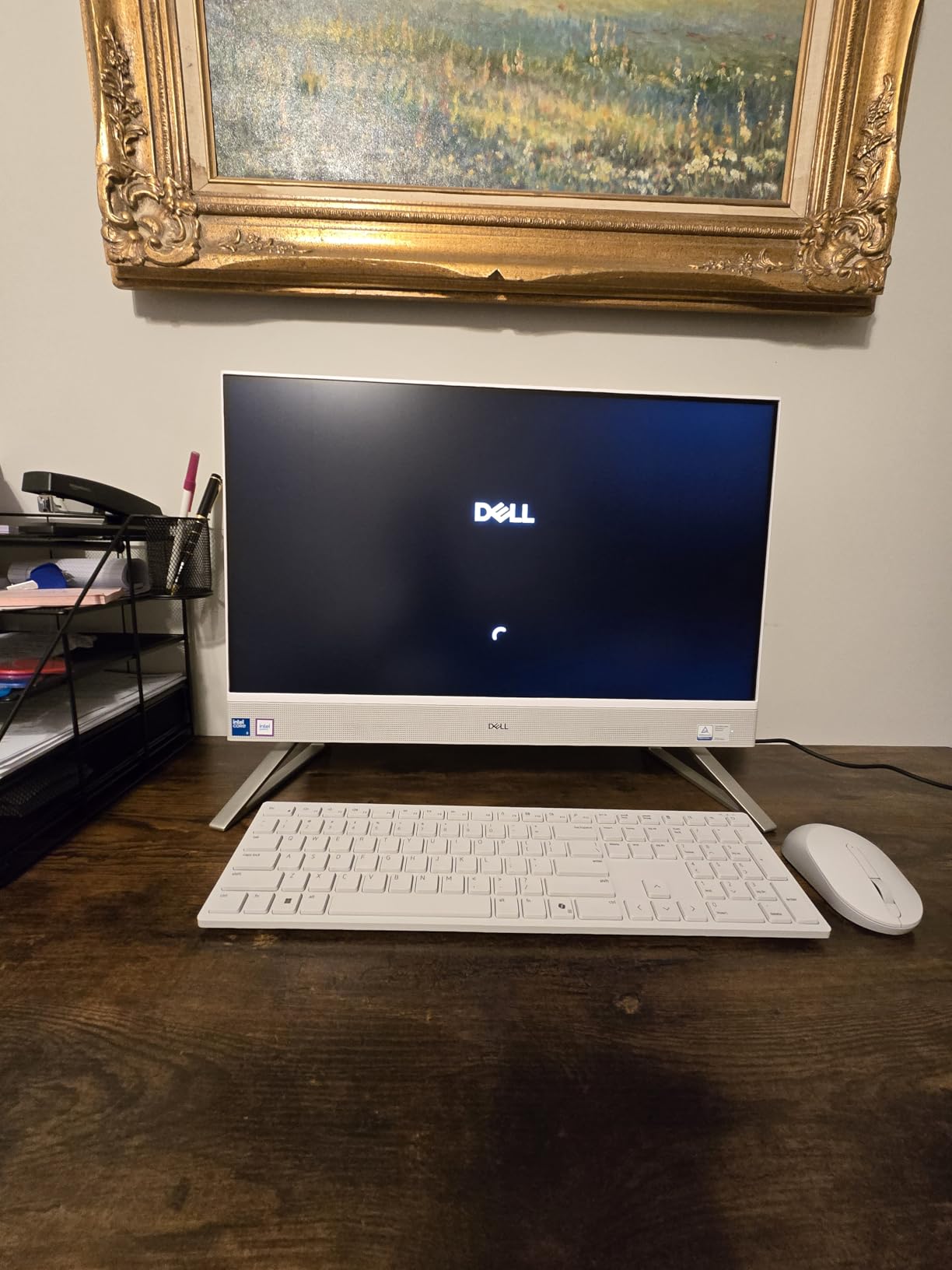
AIO disadvantages: Limited upgradability is the big one. If the display fails, the whole computer may need replacement. Repairs are more expensive because components are tightly integrated. You also pay more for equivalent performance compared to a desktop tower with a separate monitor.
Who should choose an AIO: Home office workers who value clean aesthetics, families needing a shared computer, students, and anyone with limited desk space. If you want a computer that just works without fiddling with components, an AIO is the right call.
Who should avoid AIOs: Gamers, users who upgrade components regularly, anyone who needs maximum performance per dollar, and tinkerers who like to service their own machines. A desktop tower with a quality monitor gives you more flexibility and better value.
Upgradability and Repair Concerns
This is the topic most reviewers gloss over but forum users care deeply about. All-in-one computers present unique challenges for repairs and upgrades.
Most AIOs use laptop-class components soldered to custom motherboards. This means when a component fails, the repair path is often replacing an entire logic board rather than swapping a single part. Users on r/sysadmin consistently report that AIO repairs can exceed the value of the machine.
In our roundup, the Lenovo IdeaCentre 27 and Lenovo IdeaCentre 24 stand out for their expandability. The 27-inch model supports RAM upgrades to 64GB and storage up to 4TB. The 24-inch budget model allows RAM expansion to 32GB. This is exceptional for AIOs and directly addresses the longevity concern.
For all other models in our list, the RAM and storage you buy is what you keep. If this concerns you, prioritize the Lenovo models or consider an extended warranty that covers component failures.
Display Size and Resolution Guide
The display is permanent on an AIO, so choosing the right size and resolution is a decision you live with for the life of the machine.
23.8-inch displays work well for smaller desks and tighter budgets. At FHD resolution, text is adequately sharp for productivity work. This size is common in budget and mid-range AIOs.
24-inch displays offer a similar footprint to 23.8-inch models. The Apple iMac stands apart with its 4.5K Retina resolution (4480 x 2520), which is dramatically sharper than any FHD alternative.
27-inch displays are the sweet spot for most users. The larger screen area supports side-by-side windows, and FHD resolution remains comfortable at this size. For creative work, consider a 4K panel if available.
Touchscreen consideration: Touch adds cost and utility. If you have children, do creative work, or simply prefer touch interaction, it is worth considering. For pure productivity, a non-touch display with a good mouse and keyboard is often more efficient.
Frequently Asked Questions About All-in-One Computers
Which brand is best in all-in-one desktop?
Apple leads in overall quality with the iMac M4, offering the best display, performance, and build quality. For Windows users, Lenovo and Dell produce the most reliable AIOs with better upgradability. HP offers strong value at budget and mid-range tiers. The best brand depends on your operating system preference and budget.
What is the downside of an all-in-one computer?
The main downsides are limited upgradability, difficult and expensive repairs, higher cost than equivalent desktop towers, and the risk that a single component failure can render the entire machine unusable. Most AIOs use soldered RAM and non-replaceable displays, meaning you cannot easily swap parts when something breaks.
What is the best all-in-one computer?
The Apple iMac M4 is the best all-in-one computer overall, thanks to its powerful M4 chip, stunning 4.5K Retina display, and premium build quality. For Windows users, the Lenovo IdeaCentre 27 with its Intel Core i7 processor and expandable RAM is the top choice, offering the best performance and longevity in a Windows AIO.
Which brand of desktop computer is the most reliable?
Apple consistently ranks highest for reliability and long-term support, with macOS machines typically receiving updates for 6-7 years. Among Windows brands, Dell and Lenovo have the strongest reliability reputations, particularly for business-class machines. HP reliability varies by model line, with higher-end series performing better than budget options.
Can you upgrade components in an all-in-one computer?
Most AIOs have limited upgrade options because RAM and storage are often soldered to the motherboard. However, some models like the Lenovo IdeaCentre 27 and Lenovo IdeaCentre 24 allow RAM upgrades (up to 64GB and 32GB respectively) and storage expansion. Always check upgradeability before purchasing if longevity is a priority.
Final Thoughts on the Best All-in-One Desktop Computers
After testing and comparing 8 machines, our top recommendation for the best all-in-one desktop computers in 2026 remains the Apple iMac M4 for its unmatched display quality, performance, and ecosystem integration. For Windows users, the Lenovo IdeaCentre 27 i7 offers the best combination of power, expandability, and value.
If budget is the primary concern, the Lenovo IdeaCentre 24 delivers surprising capability at the lowest price point. And for users wanting AI-ready hardware, the HP OmniStudio 27 with its 50 TOPS NPU is a forward-looking investment.
The right AIO for you depends on your needs, budget, and how long you plan to keep the machine. Whatever you choose, pay attention to RAM, storage capacity, and display quality, since these define your daily experience. Any of the eight machines on this list will serve you well when matched to the right workload.