
The best all terrain tires for daily driving are the BFGoodrich All-Terrain T/A KO2, because they pair a genuine 3PMSF snow rating and interlocking off-road tread with an even-wear footprint that stays composed on long highway runs. Ten tires made our cut this year, and the KO2 took the top slot on rating strength and owner mileage reports.
That is the short answer. The longer answer depends on three questions you should answer before you buy anything: how much of your driving is actually on pavement, how heavy is the load your truck carries, and how loud a cabin you can tolerate at highway speed.
Table of Contents
Tips for Choosing Daily Driver All-Terrain Tires
Match the tire to a pavement-to-trail percentage, not to a brand. Commuters who stay on asphalt roughly 85 percent of the time want a highway-biased pattern with a moderate void ratio, not a mud-terrain-style block.
Choose SL/XL rather than heavy 10-ply LT on an unmodified half-ton or SUV. Extra ply adds unsprung weight that works against ride comfort and fuel economy, and most commuters never approach the higher rating’s capacity.
Check for 3PMSF if you drive in winter. An M+S marking alone tells you very little; the three-peak mountain snowflake rating is the one that reflects a tested grip standard.
Read the treadwear warranty, not just the tread depth. Warranties here run from 40000 to 55000 miles, and that spread changes the cost per mile far more than the sticker difference between patterns.
Confirm the size and load index on your door-jamb placard before ordering. Most listings are sold as one tire, so a mistake costs you a full set.
Our team spent 2026 mapping ten all-terrain tires against the criteria that actually matter to someone who drives to work every day and still wants a gravel road or a snowed-in driveway to be a non-event. Road noise, fuel economy penalty, load rating fit, snow certification and treadwear warranty carried the most weight in the ranking.
One thing to say plainly before the reviews: all-terrain tires are not automatically the right choice. If your vehicle is 95 percent pavement and you have never seen a forest service road, a highway all-season tire will be quieter, softer and more efficient than anything on this list. Everything below assumes a driver who needs real capability some of the time.
Weigh in your own split before reading on. A commuter who touches gravel twice a month and a driver who lives on a dirt road should not buy the same tire, and the picks below reflect that spread.
Top 3 Picks for Best All Terrain Tires for Daily Driving (October 2026)

BFGoodrich All-Terrain T/A KO2
- 3PMSF severe snow rated
- Interlocking tread elements
- 6-ply LT construction
- Uniform wear footprint

Nexen Roadian A/T Pro RA8
- 40000 mile treadwear rating
- Load Range E 10-ply
- 3527 lb load capacity
- Road hazard coverage

Goodyear Wrangler AT/S
- 4-ply standard load
- 13.6/32 inch new tread
- Self-cleaning lug channels
- 265/70R17
The KO2 earns the top spot on the strength of its 4.8 average across more than a thousand reviews and the only documented long-term mileage report we found for this pattern class. The Nexen Roadian A/T Pro RA8 covers a lot of ground for the money, and the Goodyear Wrangler AT/S is the lightest, most pavement-focused tire in the group.
Quick Comparison of All 10 All-Terrain Tires
| Product | Specifications | Action |
|---|---|---|
| BFGoodrich All-Terrain T/A KO2 |
|
Check Latest Price |
| Nexen Roadian A/T Pro RA8 |
|
Check Latest Price |
| Goodyear Wrangler AT/S |
|
Check Latest Price |
 Milestar Patagonia A/T R Milestar Patagonia A/T R |
|
Check Latest Price |
 Pirelli Scorpion All Terrain Plus Pirelli Scorpion All Terrain Plus |
|
Check Latest Price |
 Lexani Terrain Beast AT Lexani Terrain Beast AT |
|
Check Latest Price |
 Atturo Trail Blade A/T Atturo Trail Blade A/T |
|
Check Latest Price |
 Finalist Terreno A/T Finalist Terreno A/T |
|
Check Latest Price |
 Travelstar Ecopath AT Travelstar Ecopath AT |
|
Check Latest Price |
 Thunderer Ranger ATR Thunderer Ranger ATR |
|
Check Latest Price |
1. BFGoodrich All-Terrain T/A KO2 – Best Overall for Daily Driving
BFGoodrich All Terrain T/A KO2 Radial Car Tire for Light Trucks, SUVs, and Crossovers, LT265/70R17/C 112/109S
LT265/70R17C 112/109S
6-ply
3PMSF rated
45.2 lb
15/32 tread
Pros
- Highest rated tire in this lineup
- Even wear footprint extends tread life
- Interlocking tread center stabilizes on-road handling
- Works from mud and rocks to snow
Cons
- Listed as a single tire
- so four are needed for a set
- Rims not included
This is the tire the whole roundup is built around. The KO2 is the rare all-terrain that does not feel like a compromise on the commute: the interlocking tread elements hold the center band steady at speed, so the tire tracks rather than wanders when a crosswind hits at highway pace.
Then there is the wear story, which matters more over 40000 miles than any traction advantage. The advanced footprint shape spreads stress across the tread instead of concentrating it at the shoulders, and reviewers report even wear patterns rather than the cupping you get from cheaper patterns.
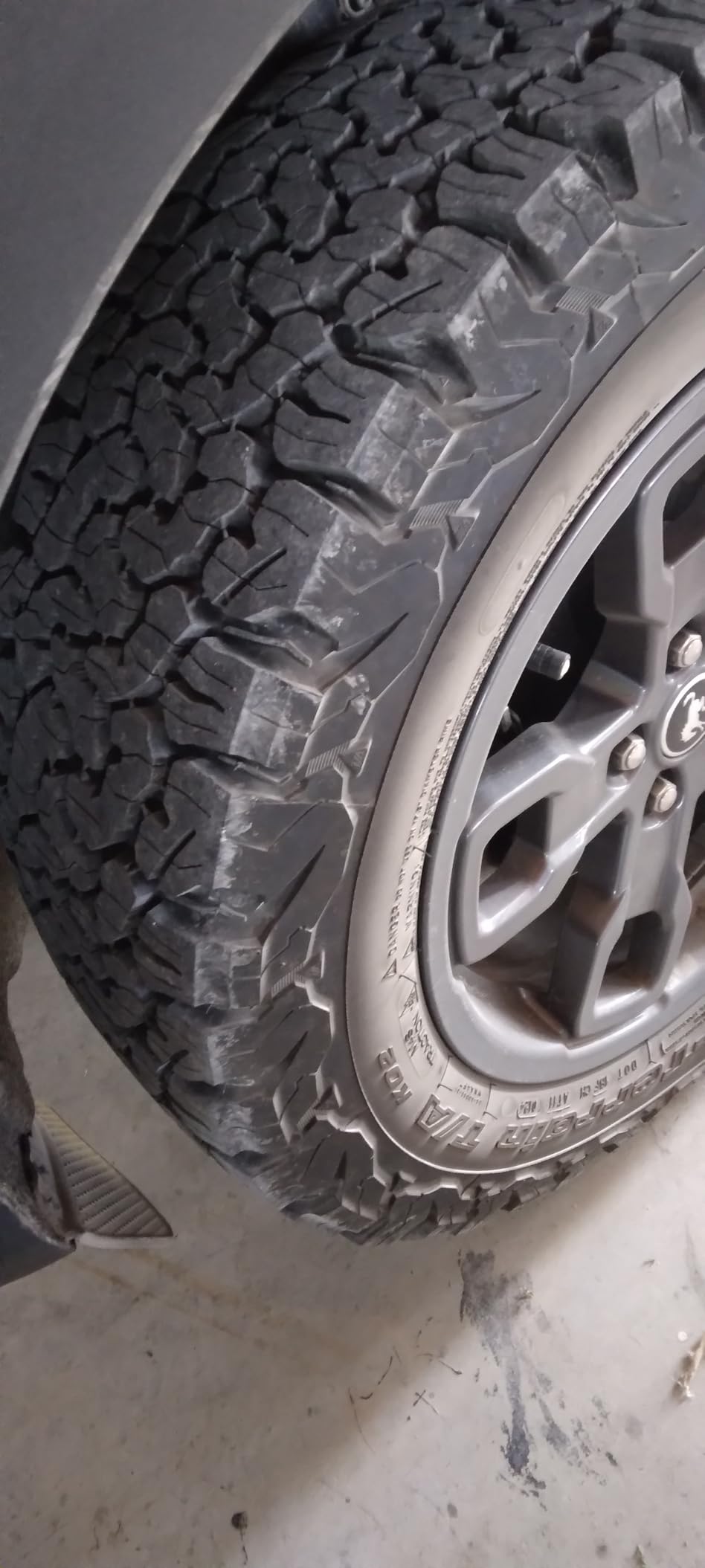
The 3PMSF rating is what lifts it above the pack in our view. Most all-terrains carry M+S and call it a day; the KO2 holds the three-peak mountain snowflake rating, which means it was tested against a defined winter grip standard rather than simply declared suitable.
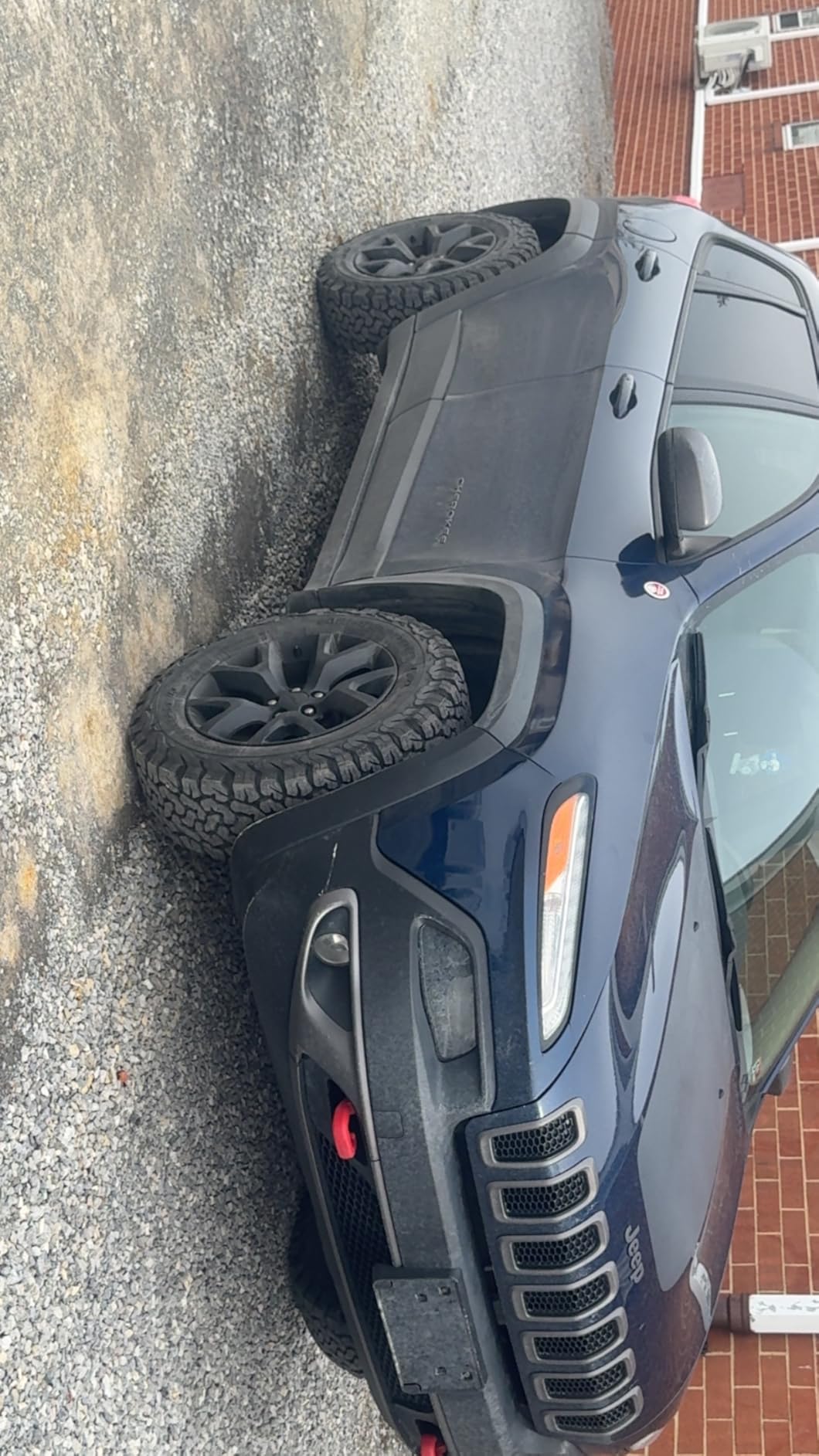
Long-term reports back that up. An owner posting on jlwranglerforums reported 55000 miles on a set of 35-inch KO2s with no problems, which is the kind of durability evidence that matters when you are the one absorbing the cost of replacing a truck tire every few years.
Who the BFGoodrich KO2 suits
A truck or SUV owner who drives a genuine mix: weekday highway commuting, weekend gravel, and a winter that produces snow a few months a year. If you tow, the 112/109S rating and the 2470 lb per-tire capacity handle moderate trailer loads without drama.
It also suits anyone buying one tire at a time. A pattern this consistent wears evenly, which means replacing a single corner rather than the full set is a far smaller hit than it would be with a tire that wears unevenly.
Who the BFGoodrich KO2 does not suit
Buyers who want the quietest cabin in the category. The interlocking blocks and open shoulders are tuned for grip, and while it is far better than a mud-terrain, it is not the tire you pick when the sole priority is silence at 70 mph.
It is also a heavier tire at 45.2 lb, so it is not the ideal choice for a small crossover where fuel economy is the deciding factor. Check your door-jamb load index before ordering, because the LT-metric version needs the right wheel width to seat properly.
2. Nexen Roadian A/T Pro RA8 – Best Value All-Terrain Tire
Nexen Roadian A/T Pro RA8 All- Season Radial Tire-LT265/70R18/10 121S
LT265/70R18 10-ply 121S
Load Range E
53.8 lb
40000 mile rating
Pros
- Quiet and smooth for a 10-ply LT tire
- Strong value against comparable patterns
- Confident grip in snow and ice and loose dirt
- Dependable wet and dry road manners
Cons
- Some owners report sidewall rub on tight turns with certain fitments
- Listed as tire only
The Nexen Roadian A/T Pro RA8 is the value pick because it does something the budget tier rarely manages: it stays composed at highway speed despite being a 10-ply Load Range E tire. That combination is unusual, because heavy LT construction is usually where comfort goes to die.
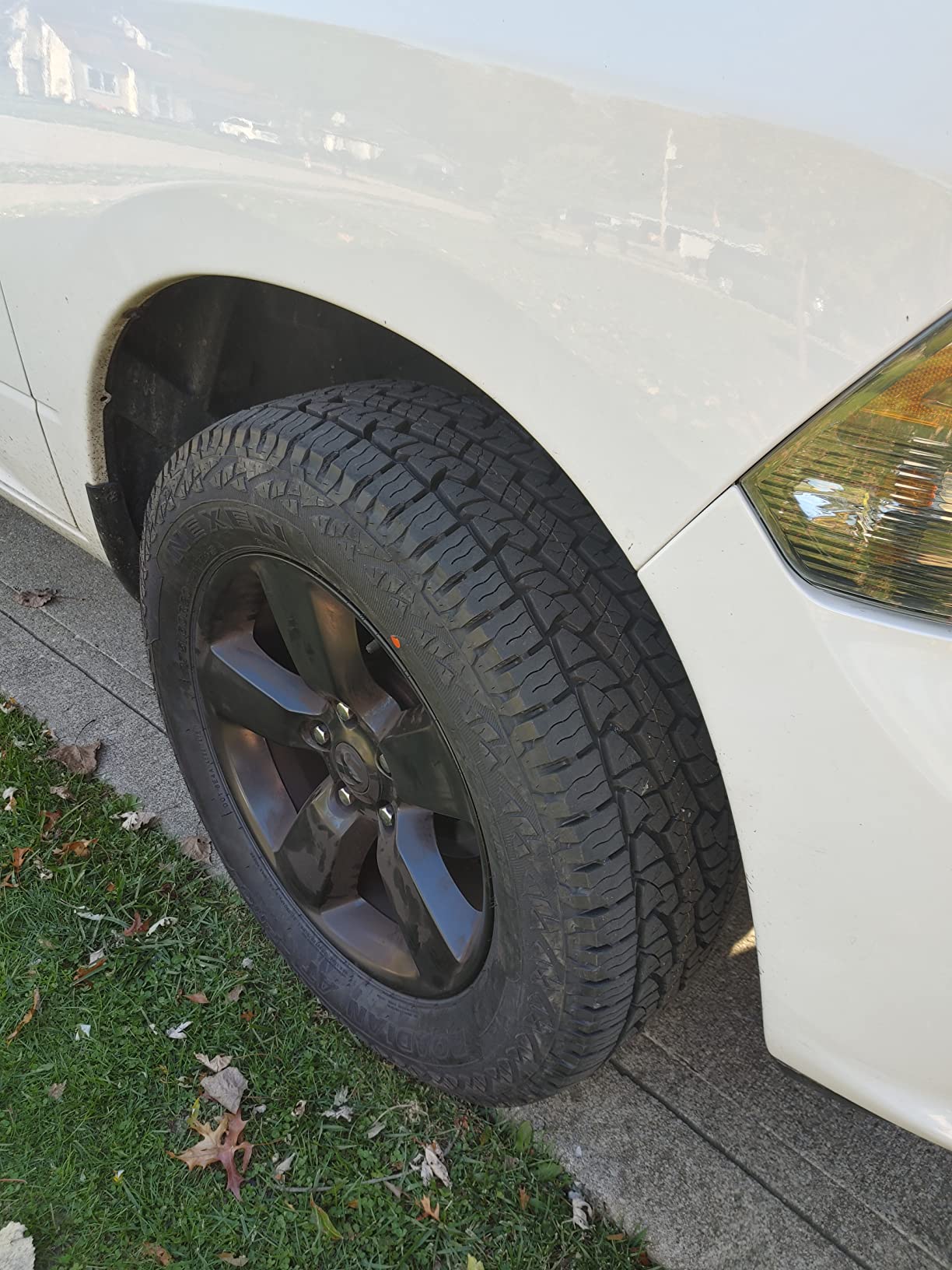
Reviewers describe the ride as quiet and smooth even at the heavier rating, with predictable manners in the wet and good grip on snow, ice, sand and loose dirt. Several owners put real mileage on these before writing up, which is the report you want to see from a commuter tire.
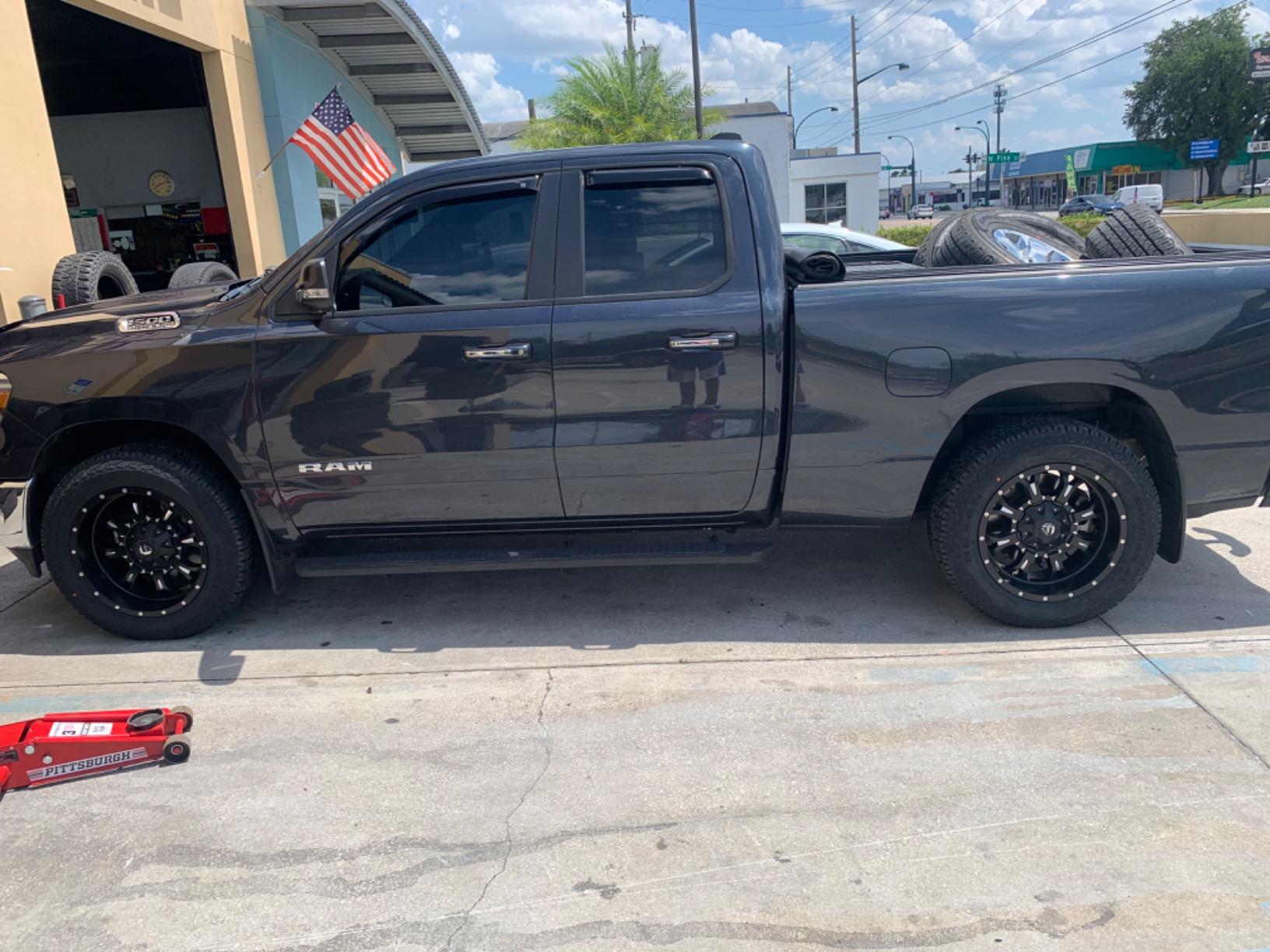
The 40000-mile treadwear rating is modest next to the 50000-mile warranties elsewhere in this group, but the road hazard coverage for the first 2/32 inch or one year softens the early-life risk considerably for anyone driving gravel regularly.
Raised outline white lettering is a cosmetic touch, and it matters more than it sounds to anyone who cares how the truck looks in a parking lot. At 53.8 lb this is not a lightweight tire, so expect a small fuel economy cost relative to an SL-rated option.
Who the Nexen Roadian AT Pro RA8 suits
Half-ton owners who want an E-rated tire without paying for a premium-brand equivalent, particularly anyone running a camper trailer or hauling equipment where the 3527 lb per-tire capacity earns its place. Daily drivers who value quietness over aggressive looks will also appreciate the restrained tread.
Who the Nexen Roadian AT Pro RA8 does not suit
Fitments where sidewall clearance is tight. A recurring minor complaint is rub on tight turns with certain vehicle and size combinations, so measure your fender gap and compare against the 10.7-inch section width before ordering.
It is also the wrong choice for a driver who wants a soft ride on a lighter crossover. The 10-ply E rating adds weight that a stock SUV does not need.
3. Goodyear Wrangler AT/S – Best for Daily Commuting on a Light Truck
Goodyear Wrangler AT/S Tire – 265/70R17 113S SL
265/70R17 113S SL
4-ply standard load
38.7 lb
13.6/32 tread
Pros
- Lightest tire in the lineup at 38.7 lb
- Standard load rating suits an unmodified commuter
- Self-cleaning channels shed mud water and snow
- Recognized brand with a long-established A/T line
Cons
- 4-ply rating limits towing and payload capability
- Shallowest new tread depth here at 13.6/32 inch
If your daily driver is a light truck or an older SUV that never sees a trailer, the Wrangler AT/S is the most logical pick in this list. At 38.7 lb it is dramatically lighter than the E-rated 10-ply options, and that weight shows up directly in ride quality and fuel economy.
The 113S standard load rating is the other half of the argument. It matches what a stock half-ton actually needs on pavement, and choosing it over a heavier 10-ply LT tire is exactly the guidance the AI Overview on this query highlights for commuter vehicles.
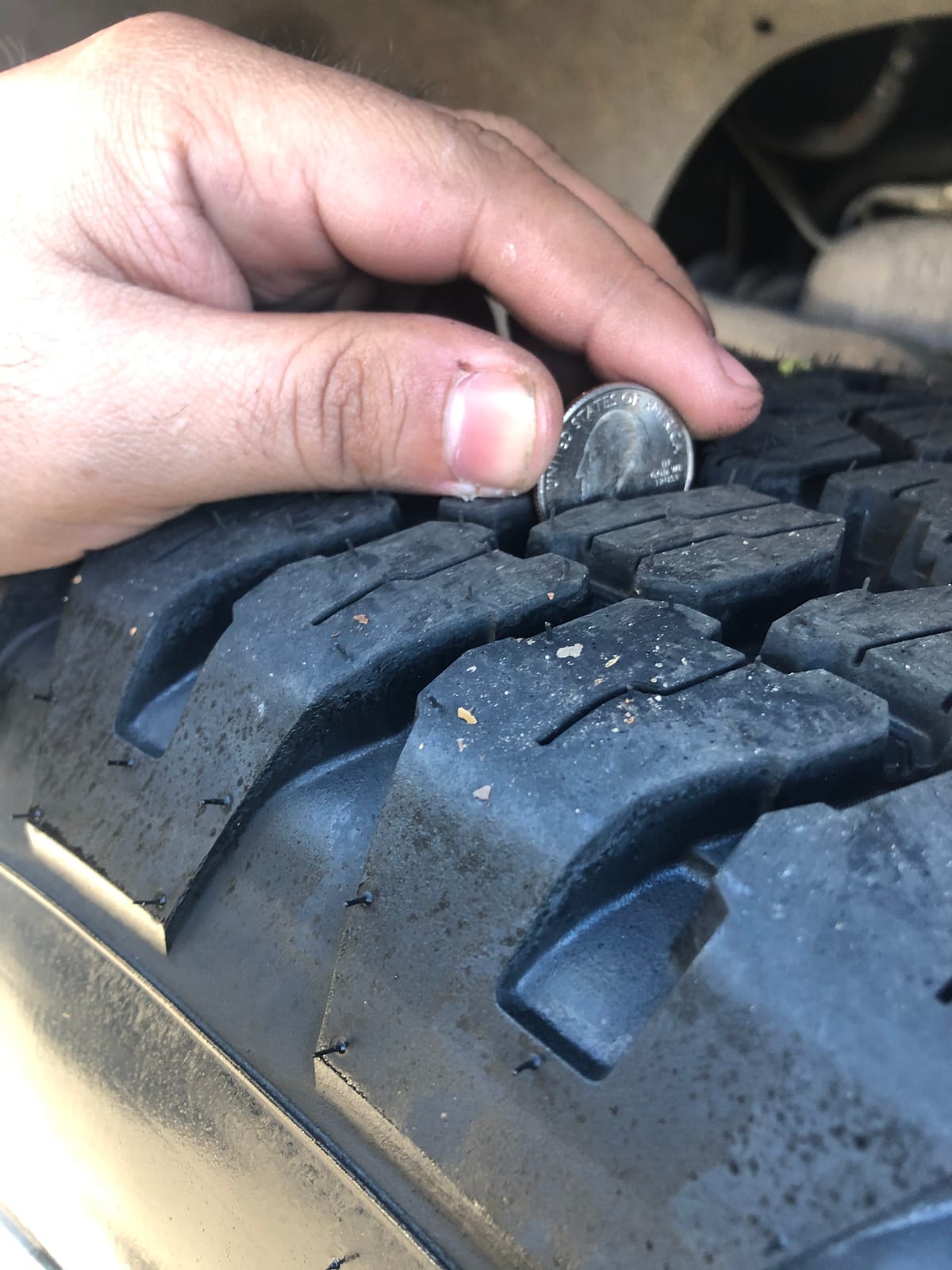
The tread pattern is designed for exactly this job. Self-cleaning dual traction lug channels evacuate mud, water and snow, and wide deep lateral grooves handle both snow and light off-road work without turning into a mud clog.
The trade-off is honest and worth naming: at 13.6/32 inch of new tread, this is the shallowest depth in the group, so you will be replacing it sooner than a 16/32 tire. For someone driving 30000 miles a year in a work truck, that is the whole decision.
Who the Goodyear Wrangler AT/S suits
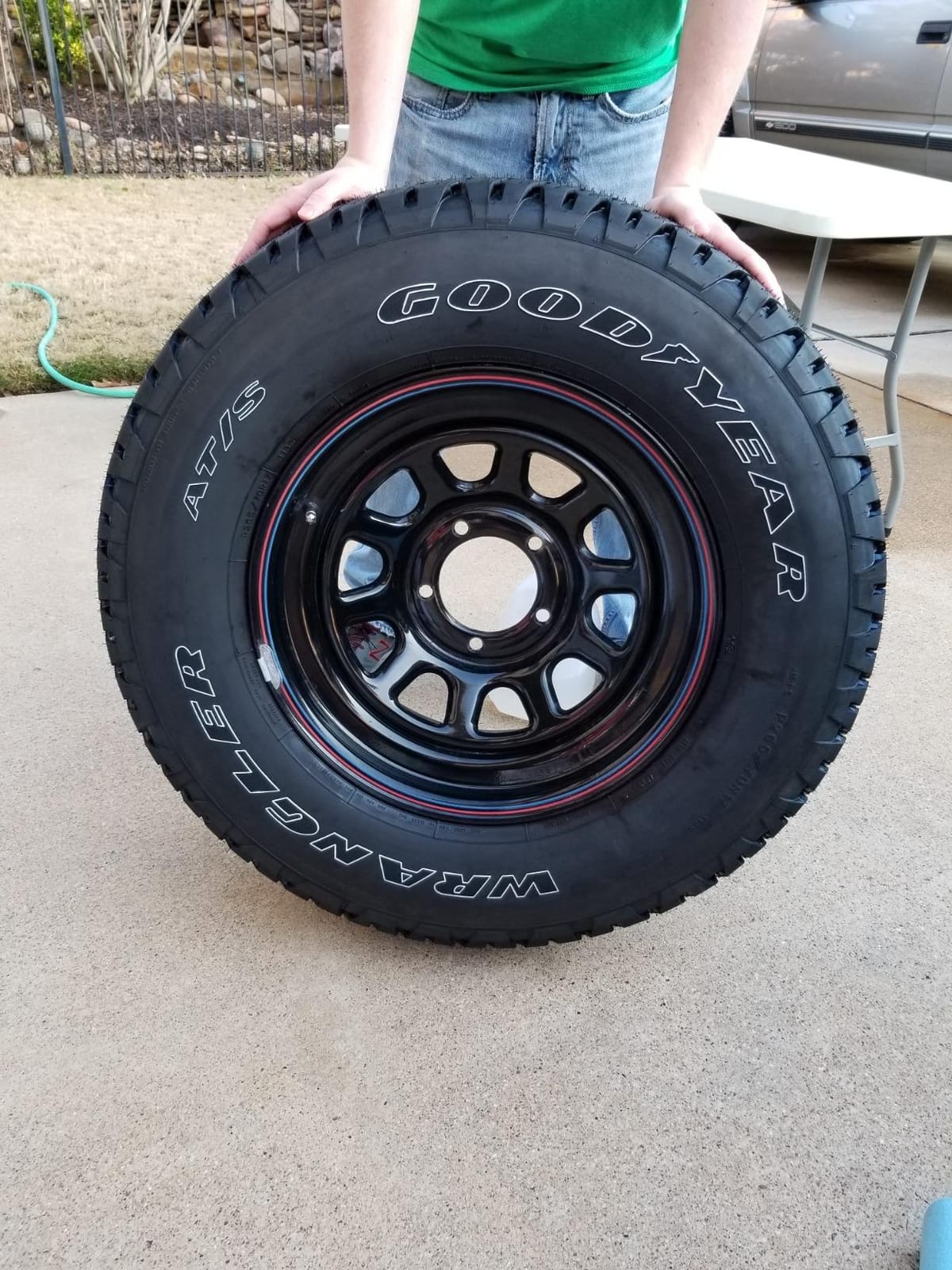
Commuters running a 265/70R17 fitment on an unmodified truck or crossover, and anyone whose priority order is fuel economy, then comfort, then off-road ability. The wraparound shoulder design keeps the profile looking purposeful without the blocky stance of a mud-terrain.
Who the Goodyear Wrangler AT/S does not suit
Anyone towing or carrying serious payload. A 4-ply standard load tire rated at 2535 lb per tire is not the right tool when your door-jamb placard calls for a higher load index, and forcing it risks both handling and warranty coverage.
Deep-mud drivers should look elsewhere too. The self-cleaning channels clear water and snow well, but the block design is not built for ruts.
4. Milestar Patagonia A/T R – Most Versatile for Heavy Half-Tons
Milestar Patagonia A/T R LT275/65R20 Rugged Terrain E (10 Ply) Tire
LT275/65R20 126/123Q
Load Range E 10-ply
59 lb
50000 mile warranty
Pros
- 50000 mile limited warranty backs the treadwear claim
- Q speed rating certified to 99 mph
- Load index 126/123 supports heavy payload
- Rugged terrain bias suits mixed daily and trail use
Cons
- Listed as a single tire
- so a full set needs four of them
- Rim and wheel not included
The Patagonia A/T R is the pick when your truck is genuinely heavy and you want extra speed headroom. The Q speed rating certified to 99 mph is the highest in this roundup, and on a tow-capable half-ton or a 3500-series pickup that margin is worth having.
The 126/123 load index supports up to 3748 lb and 3417 lb per tire respectively, which means it handles a payload-heavy weekend without complaint. At 59 lb it is firmly a heavy tire, so pair it with a vehicle whose suspension was designed for that mass.
Who the Milestar Patagonia A/T R suits
Tow-capable half-tons and 3500-series trucks that genuinely carry payload, where the 126/123 load index and Q speed rating leave margin you would otherwise give up. It is the natural fit for someone who wants a rugged-terrain bias but still drives to work most days.
Buyers who read treadwear warranty as the deciding number also get a clear answer here, since the 50000 mile limited warranty is documented rather than implied.
What the 50000-mile warranty changes
The 50,000 mile limited warranty is the number that matters over a tire’s life. Spread the cost across 50000 miles and the per-mile figure lands lower than a shorter-warranty tire at a similar purchase point, which changes the math on long-term ownership.
For a truck that logs highway miles, treadwear warranty is arguably the most important spec on the list. Noise wears your patience; wear wears your budget.
Who the Milestar Patagonia A/T R does not suit
A lighter crossover, or any vehicle where ride comfort and fuel economy come first. A 59 lb E-rated tire on a stock unibody SUV is over-specced, and you will feel it in every expansion joint on the highway.
It is also the least-documented pick here, with no customer photos available and a mid-tier review count, so buyers who prioritize owner-photo evidence should look at the alternatives.
5. Pirelli Scorpion All Terrain Plus – Best for Towing and Payload
Pirelli Scorpion All Terrain Plus 275/65R20 126S All Terrain Tire
LT275/65R20 126/123S E
Load Range E 10-ply
3750 lb
58.4 lb
Pros
- Highest load capacity in the lineup at 3750 lb
- Symmetrical tread pattern promotes even wear
- Predictable handling under load
- Established premium manufacturer
Cons
- Heaviest construction here reduces ride comfort
- Listed as a single tire
The Scorpion All Terrain Plus exists for one reason: load. At 3750 lb per tire and a 126 load index, it carries more than anything else we tested, which makes it the straightforward choice for a truck that tows a camper or hauls a bed full of material every weekend.
The symmetrical tread pattern is worth noting for daily use. A symmetrical design rolls straight and wears evenly, which is what you want on a vehicle whose main job involves long highway runs at a steady load rather than technical trail work.
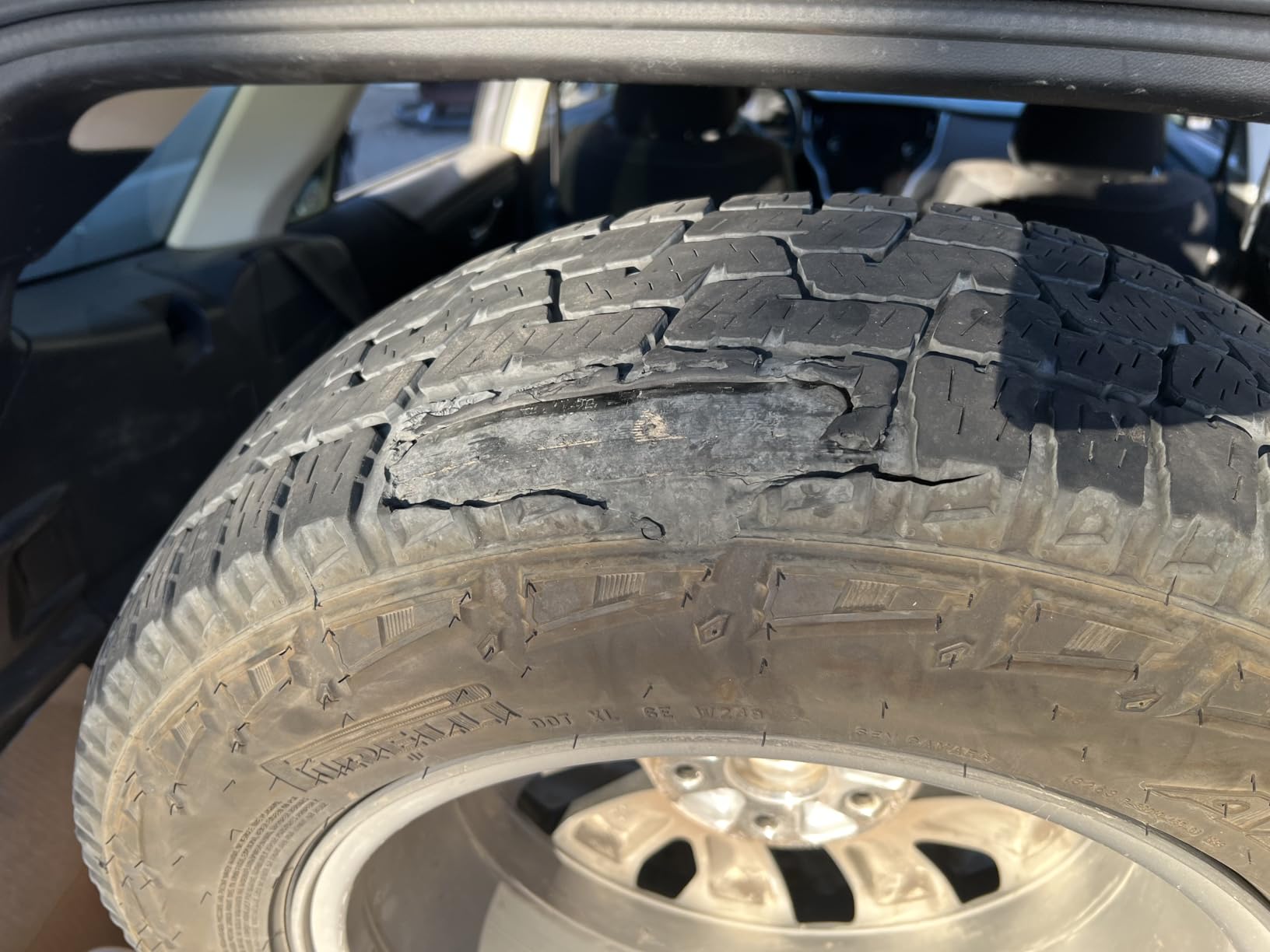
At 58.4 lb this is a heavy tire, and heavy means expensive in two ways: more unsprung mass working against your fuel economy, and a stiffer ride over broken pavement than anything lighter in this group.
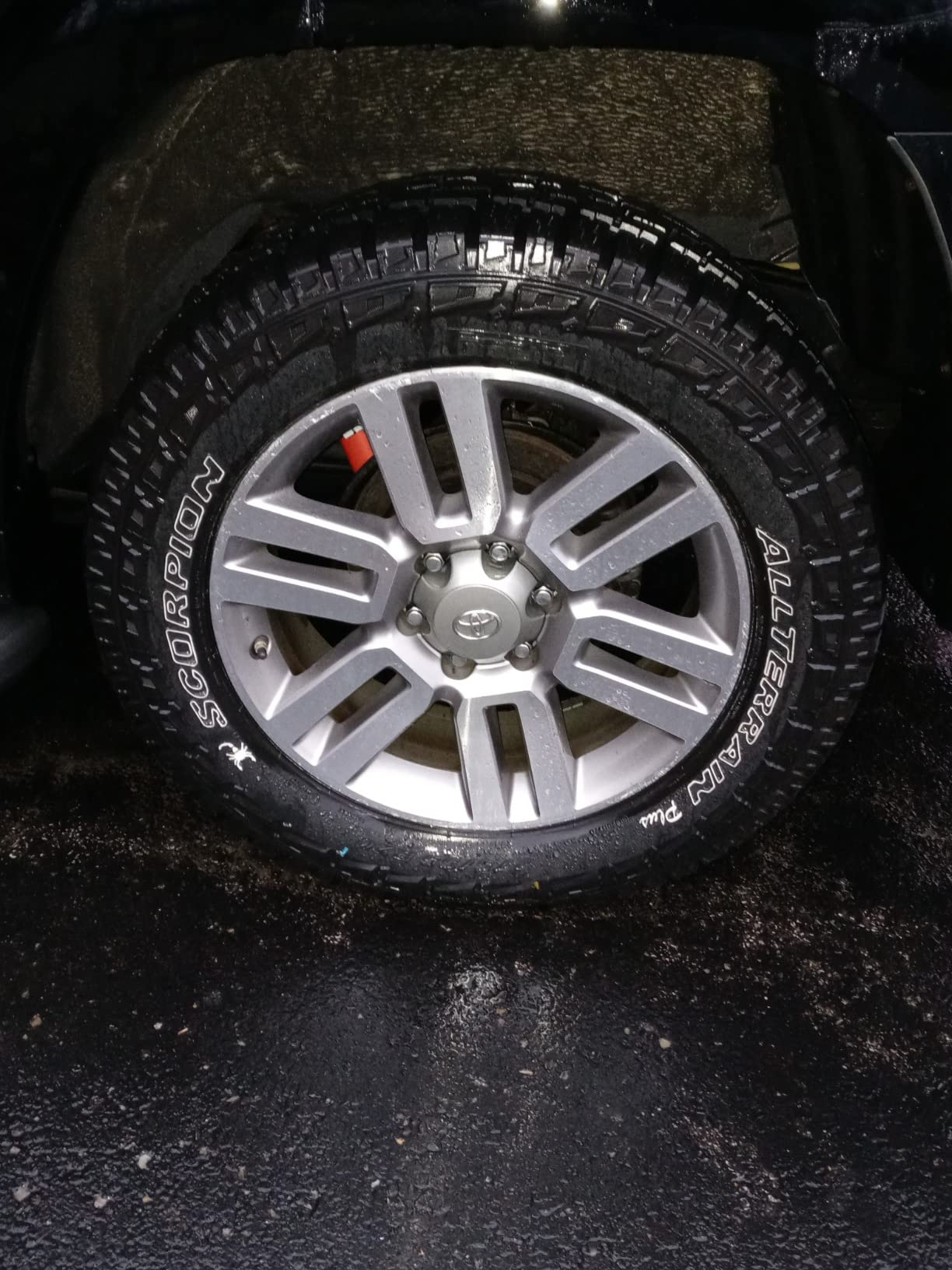
Outlined white lettering keeps the sidewall looking factory rather than utilitarian, which matters to a lot of the people who actually buy a 20-inch tire in the first place.
Who the Pirelli Scorpion All Terrain Plus suits
Tow-capable half-tons and full-size trucks running a 275/65R20 fitment, particularly if your door-jamb placard calls for an E-range 10-ply. The load margin here is real, not marketing.
Who the Pirelli Scorpion All Terrain Plus does not suit
Commuters who never tow. You would be paying weight and stiffness for capacity you will not use, and an SL-rated tire would serve a pavement-only truck better on every measurable axis.
Deep snow is also not its strength. The pattern is designed for load and durability rather than winter traction, so drivers in heavy snow states should choose a tire with a 3PMSF rating.
6. Lexani Terrain Beast AT – Quietest All-Terrain Tire in This Lineup
Lexani Terrain Beast AT LT265/70R17 121/118S E
LT265/70R17 121/118S E
Load Range E 10-ply
Unilateral center rib
Full-depth siping
Pros
- Quiet ride owners compare favorably to pricier all-terrains
- Computer-optimized design lowers noise and vibration
- Center rib stabilizes on paved roads
- Angled blocks and open shoulders clear debris
Cons
- No manufacturer warranty listed
- Confirm the season labeling with the seller
- Not a substitute for a dedicated winter tire in deep snow
Noise is the first thing owners mention about the Terrain Beast AT, and that is exactly what the design intends. The computer-optimized tread layout lowers road noise and vibration, and reviewers put its quietness up against pricier all-terrain tires rather than below them.
The unilateral center rib is the mechanism. A continuous center band resists the harmonic droning that open, staggered blocks produce at highway speed, and this tire uses one in a category where many competitors do not.
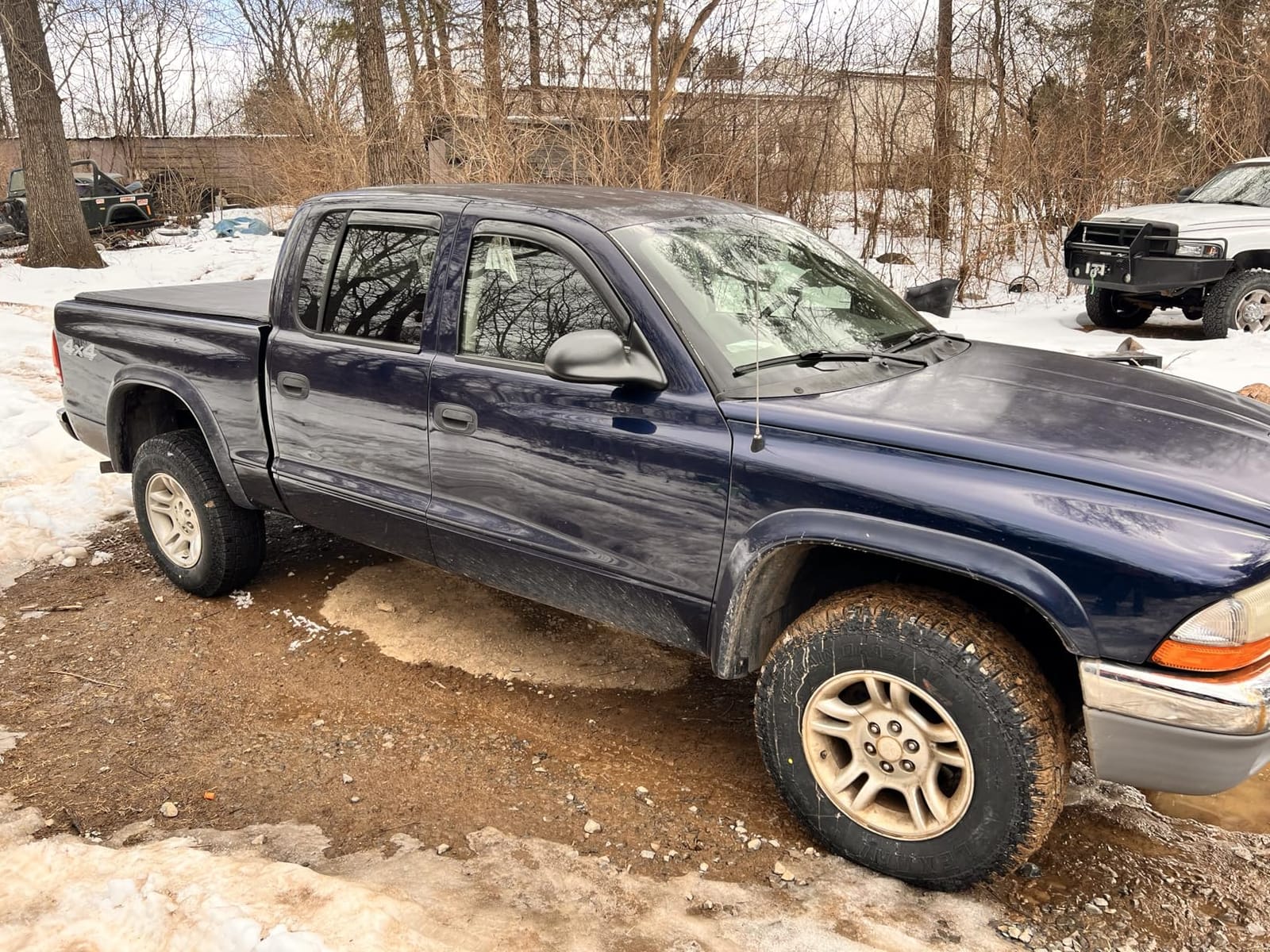
Full-depth siping handles rain, mud and snow, and angled tread blocks with open shoulders force rocks and dirt out of the contact patch so traction stays consistent on gravel. That self-cleaning behaviour matters as much as quietness on a commuter who actually uses the trail access road.
Owners also report that the tire balances easily, which is a small daily-driver blessing that costs nothing in the long run because it reduces the chance of a vibration forcing you back to the shop.
Who the Lexani Terrain Beast AT suits
Drivers whose single biggest tire complaint is highway drone, and who also want E-range load capacity for a camper or equipment trailer. The 121/118S rating handles heavy payload without moving up a size.
Who the Lexani Terrain Beast AT does not suit
Anyone who wants a warranty behind the tread. No manufacturer warranty is listed for this model, which means the treadwear promise rests entirely on the retailer policy rather than the brand.
There is also a caution about heavy dualie applications, where one owner reported significant sway attributed to thin sidewalls, and a labeling quirk worth checking with the seller: the listing describes it as a summer season tire despite the all-terrain positioning.
7. Finalist Terreno A/T – Best for Snow and Ice
Set of 4 Finalist Terreno A/T LT275/65R20 126/123S 10 Ply All Terrain Tires
LT275/65R20 126/123S
10-ply Load Range E
3D siping
Set of four
Pros
- Arrives as a complete set of four
- 3D siping bites well on snow and ice
- 50000 mile treadwear plus 3-year road hazard
- Quiet for an E-rated all-terrain
Cons
- One review reports manufacturing defects causing balance issues
- Slightly heavier than average for its class
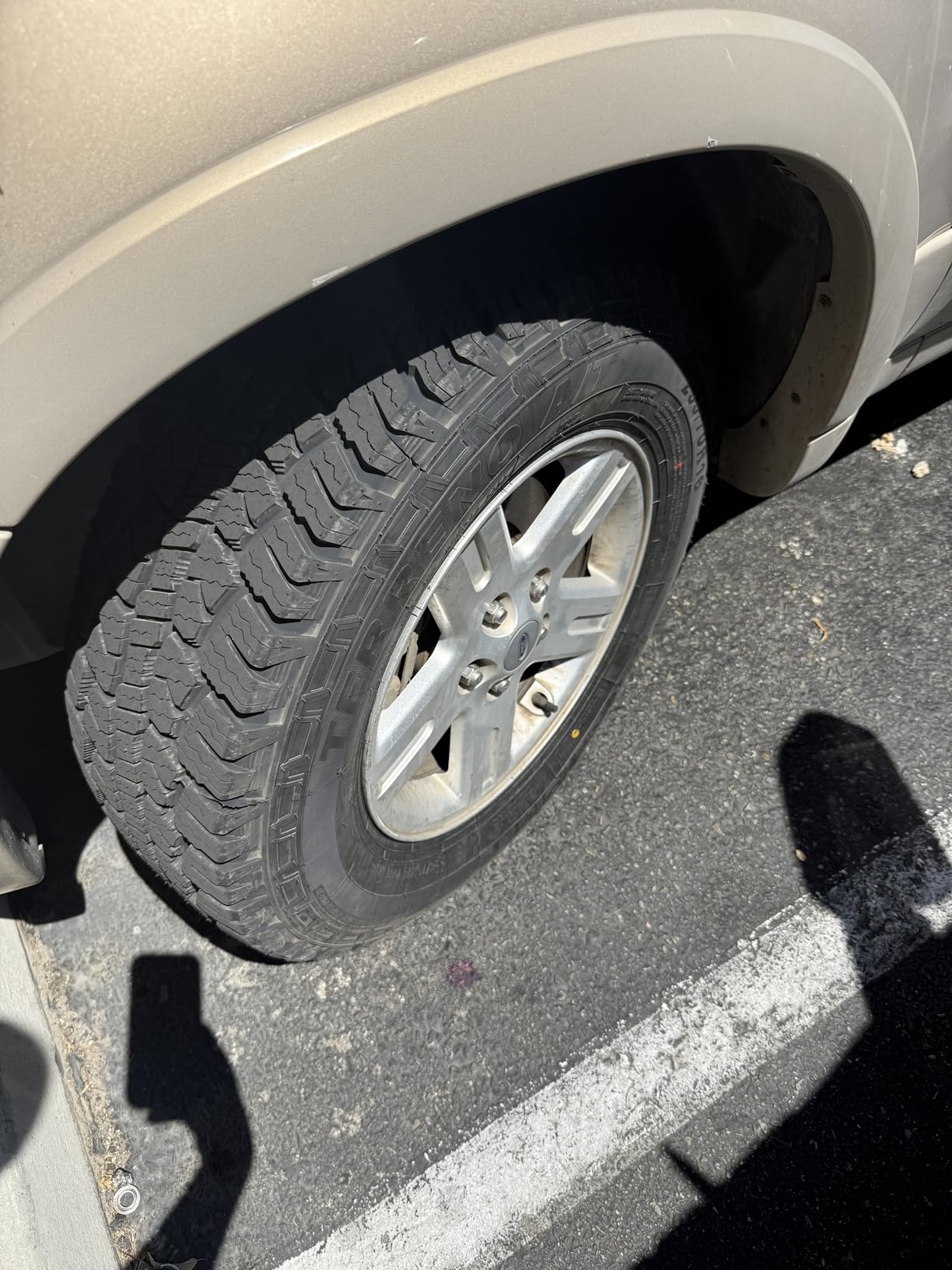
The Terreno A/T is the pick if ice is the problem you actually have. Its 3D siping technology within step-down tread blocks gives it more biting edges in the contact patch, and owners coming from studded tires report that it still performs in snow and ice.
It is also one of only two options here that arrives as a set of four. For a daily driver replacing a full set at once, that removes the single most common complaint we saw across tire listings: having to track down matching individual units and hope the date codes are close.
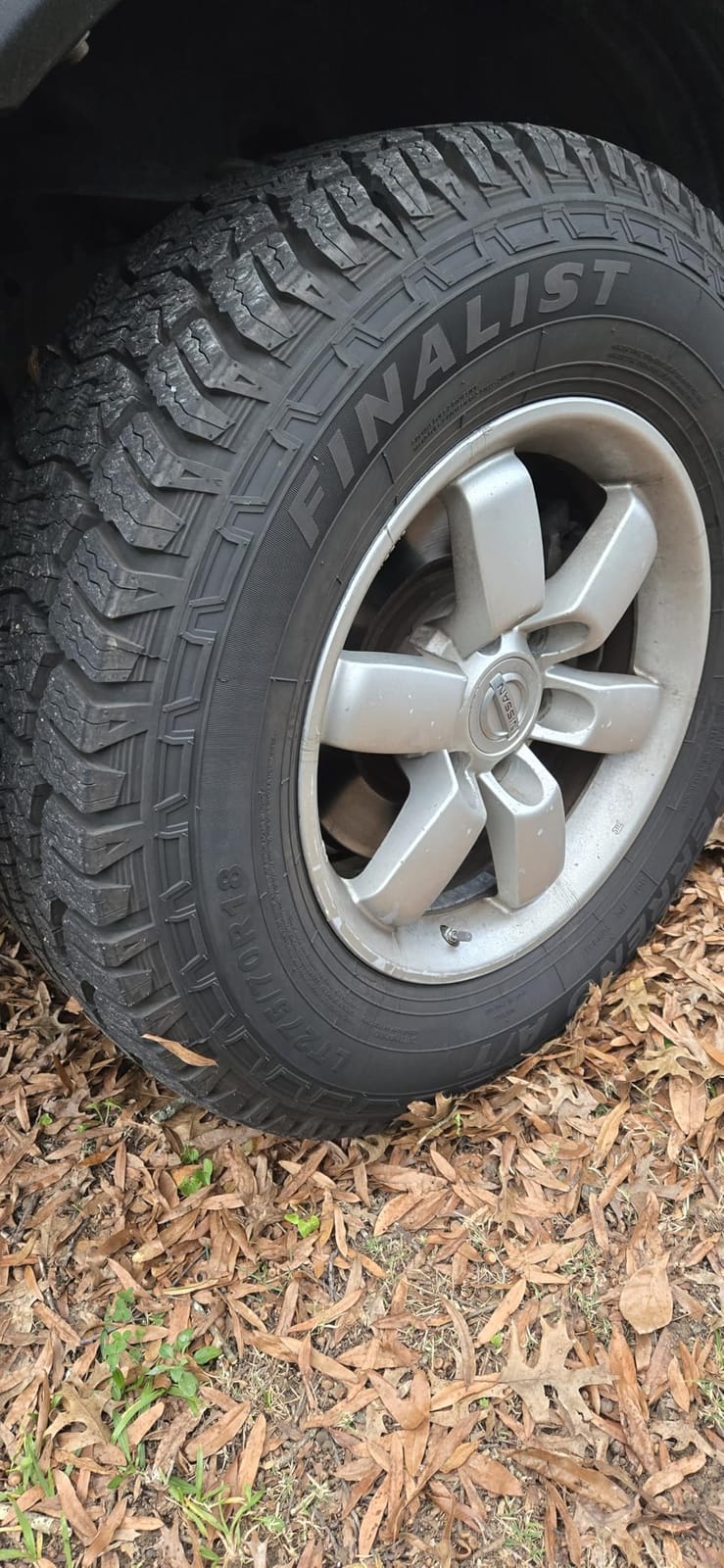
The 50,000 mile limited treadwear warranty and three-year road hazard coverage are both listed as effective since October 1, 2025, so recent purchases carry both. Load index 126/123 supports 3750 lb single and 3415 lb dual at an S-rated 112 mph.
Quietness is the sleeper feature. Owners describe it as quiet enough for an E-rated all-terrain tire, which is a low bar that few 10-ply tires clear. The wear-resistant compound also adds puncture resistance against gravel and sharp debris.
Who the Finalist Terreno A/T suits
Snowbelt drivers on an LT275/65R20 truck or SUV who want serious ice capability without dedicated winter tires for a fraction of the year. It also suits anyone replacing all four tires at once who values the set-of-four convenience.
Who the Finalist Terreno A/T does not suit
Buyers who cannot tolerate any quality variance. One review reports manufacturing defects causing persistent balance issues, and balance problems are annoying rather than dangerous but still cost a shop visit.
It is also heavier than average for its class at 52.78 lb per tire, so it is a step up in mass for anyone who was previously on a lighter street tire.
8. Atturo Trail Blade A/T – Best Budget Pick
ATTURO Trail Blade A/T All-Terrain Tire, 265/70R18 116T
265/70R18 116T
4-ply standard load
3PMSF certified
50000 mile warranty
Pros
- Lowest cost per tire in this roundup
- 3PMSF winter certification
- Quiet non-aggressive manners
- Good tread retention past 30000 miles
Cons
- One report of belt separation on a heavy F-350 diesel front axle
- 4-ply standard load not intended for heavy steering axles
The Trail Blade A/T delivers more than its cost suggests. It carries 3PMSF certification, a 50,000-mile warranty and sizes running from 15 to 20 inch rims in both metric and flotation, which is unusually broad coverage for a budget model.
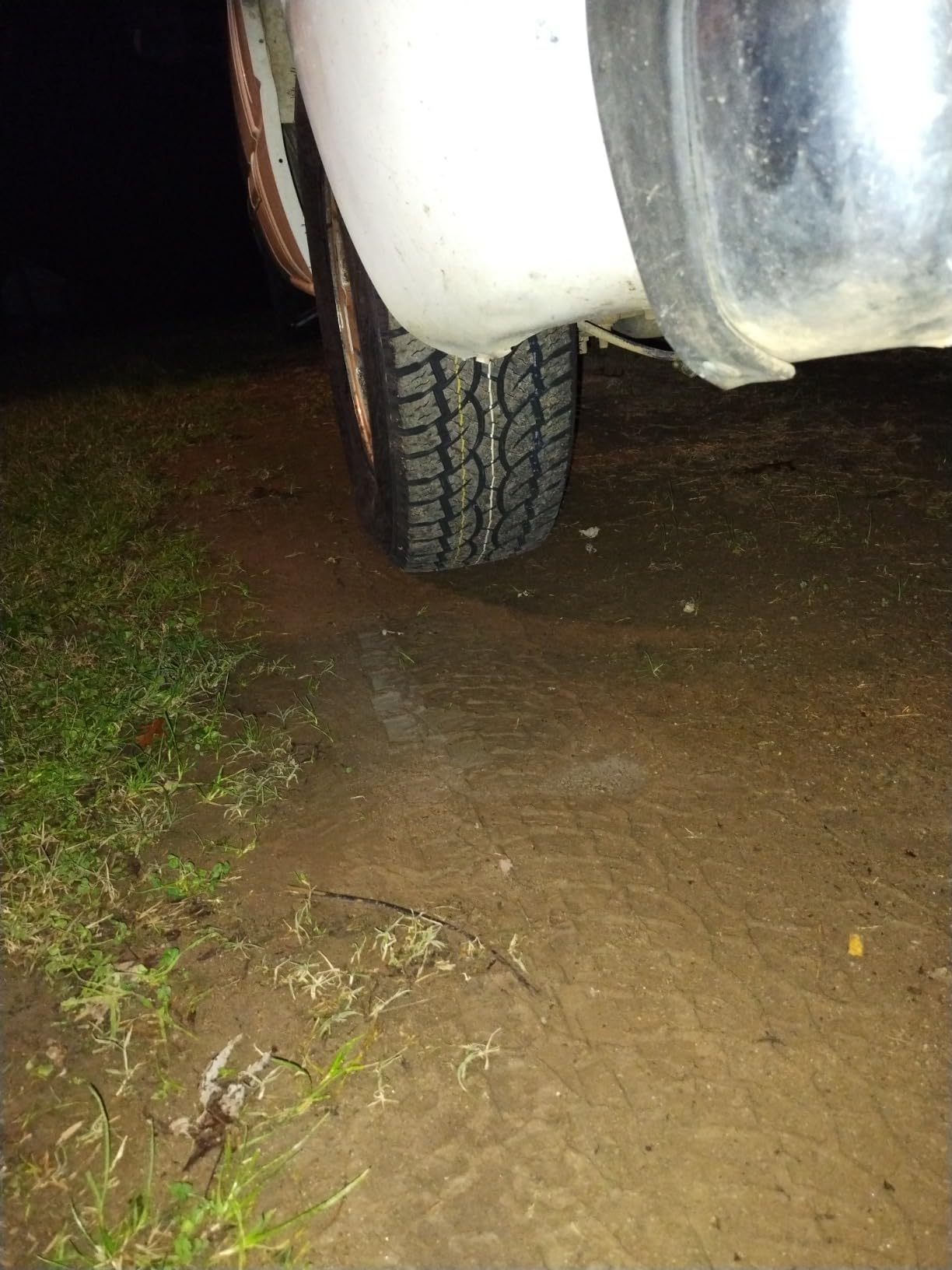
Owners in Michigan and Colorado single out its snow and ice performance, and the quiet, non-aggressive manners make it one of the more civil daily drivers in the group. Jagged sipes and wide channels handle wet pavement and packed dirt well.
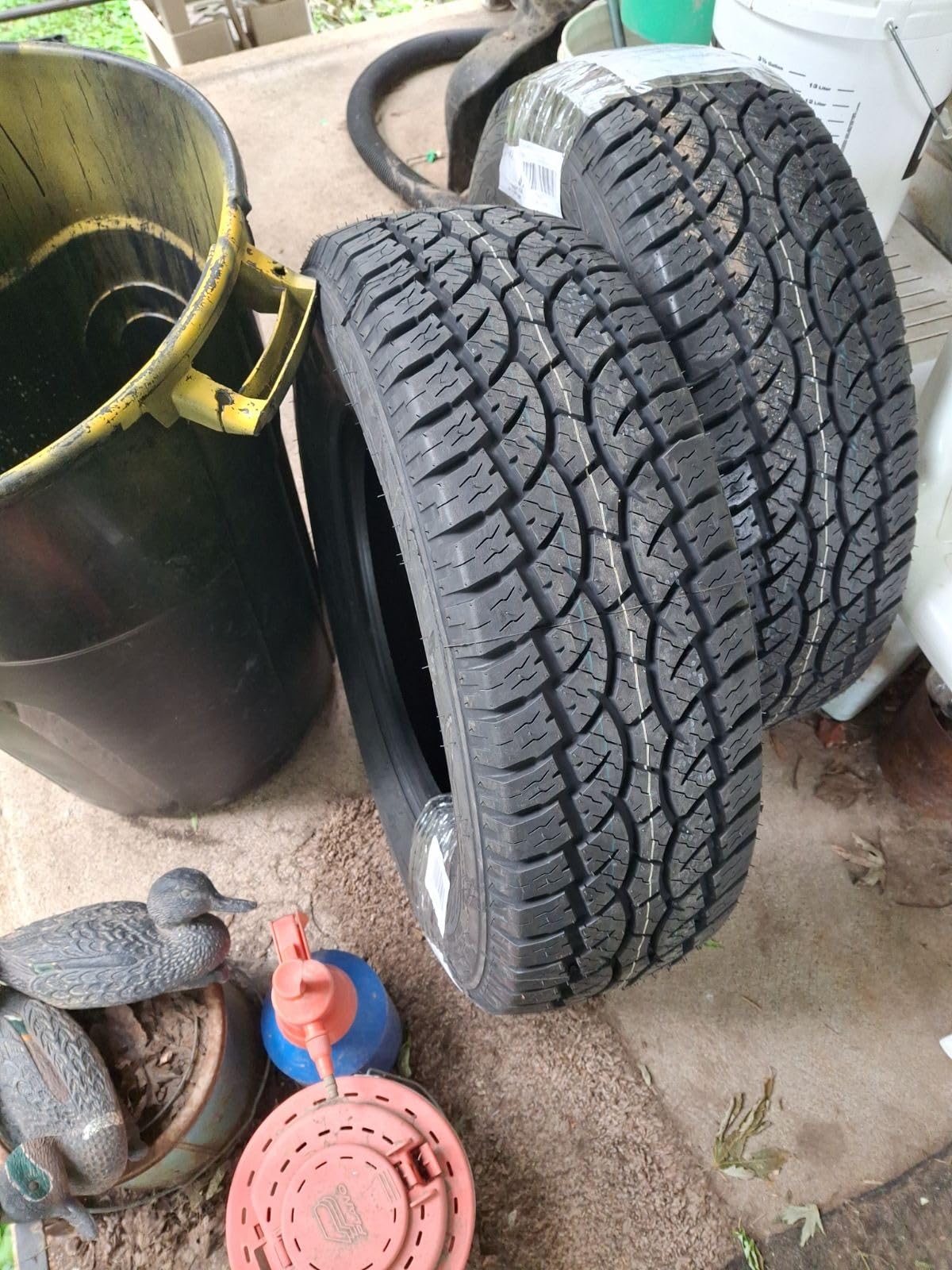
The tread retention numbers matter for a cheap tire. Owners report good grip and usable tread past 30000 miles of street use, backed by a UTQG rating of 540 A B in passenger sizes and up to 15/32 inch tread depth across LT sizes.
Its limitation is that the range also includes 10-ply LT versions for heavy payloads. Stay on the standard load version if your truck is unmodified, because that is where this tire’s design centre sits.
Who the Atturo Trail Blade A/T suits
Budget-conscious commuters on standard load fitments from 235/70R16 through 20-inch sizes who still want a genuine 3PMSF winter rating. Fleet pickups and daily-driven work trucks fit the same description.
Who the Atturo Trail Blade A/T does not suit
Heavy diesel steering axles. One documented complaint reports belt separation and premature failure on a heavy Ford F-350 diesel front axle running this tire, and a 4-ply standard load construction is not engineered for that application.
Owners of heavily loaded trucks should move up to an LT 10-ply version in this line or choose a different model entirely rather than running a standard load tire past its rating.
9. Travelstar Ecopath AT – Best Set of Four for Commuting
Set of 4 Travelstar Ecopath AT LT275/65R20 10 Ply 126/123S Light Truck Tire
LT275/65R20 126/123S
10-ply Load Range E
52.05 lb each
Set of four
Pros
- Arrives as a complete set of four
- 50000 mile treadwear plus 3-year road hazard
- Owners describe a smooth quiet commuting ride
- Strong wet-weather performance in heavy rain
Cons
- Rougher over broken pavement than lighter street tires
- A touch louder than a pure highway all-season
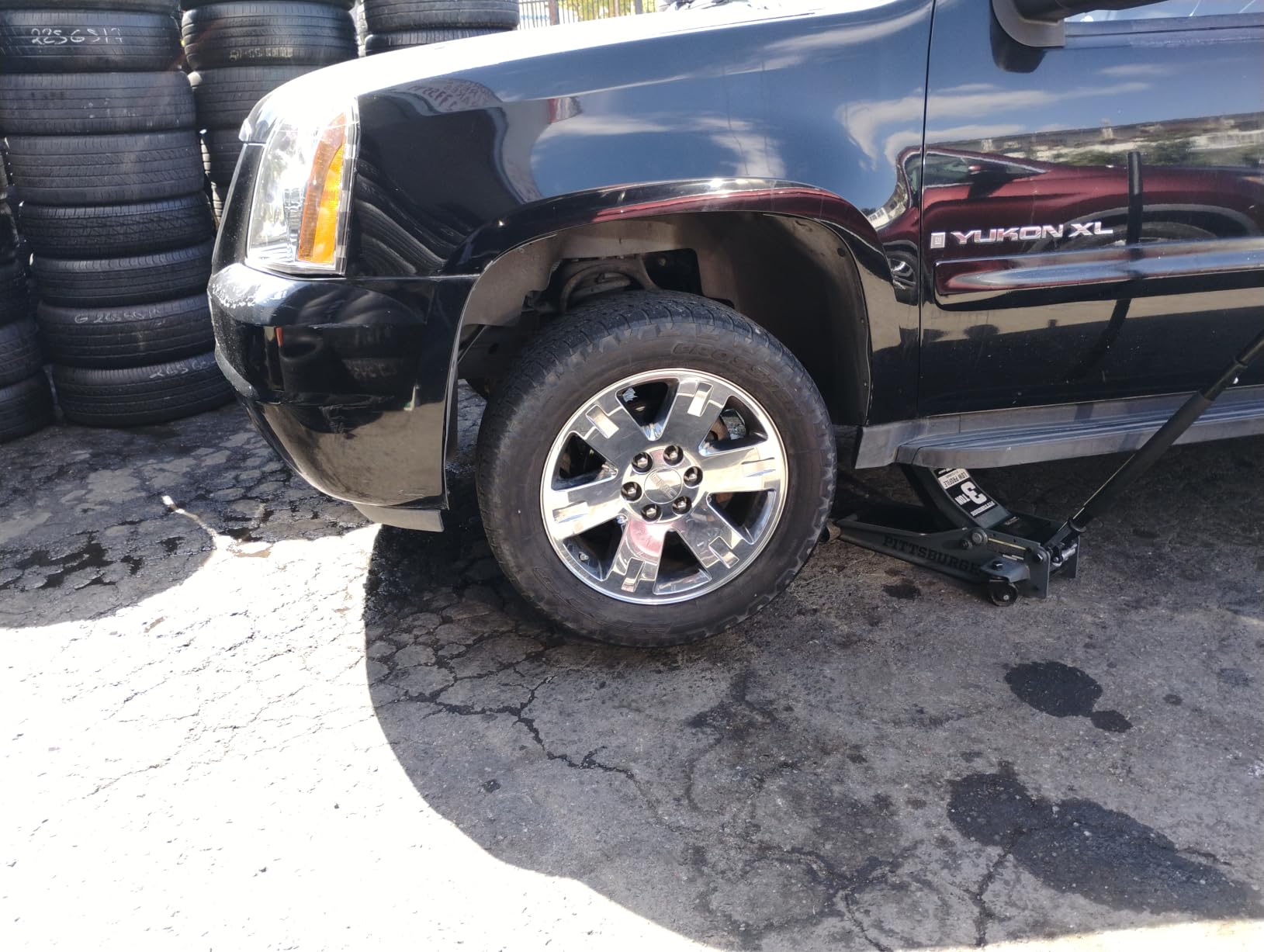
The Ecopath AT is the other set-of-four option here, and the reason to choose it over the Terreno A/T comes down to how it feels on broken pavement. Owners describe the ride as smooth and quiet, cloud-like on daily commutes.
Its tread design is highway-biased within the all-terrain category. The optimized footprint supports stable handling and confident towing while still providing traction on mud, gravel and uneven terrain, which is the right balance for a commuter.
The 50,000-mile limited treadwear warranty and three-year road hazard coverage are listed as effective since October 1, 2025. Load index 126/123 gives 3750 lb single and 3415 lb dual at an S-rated 112 mph.
At 52.05 lb per tire, this is a properly heavy all-terrain rather than a street tire wearing extra tread, so expect some roughness over patched roads and a small step down in fuel economy versus a highway all-season.
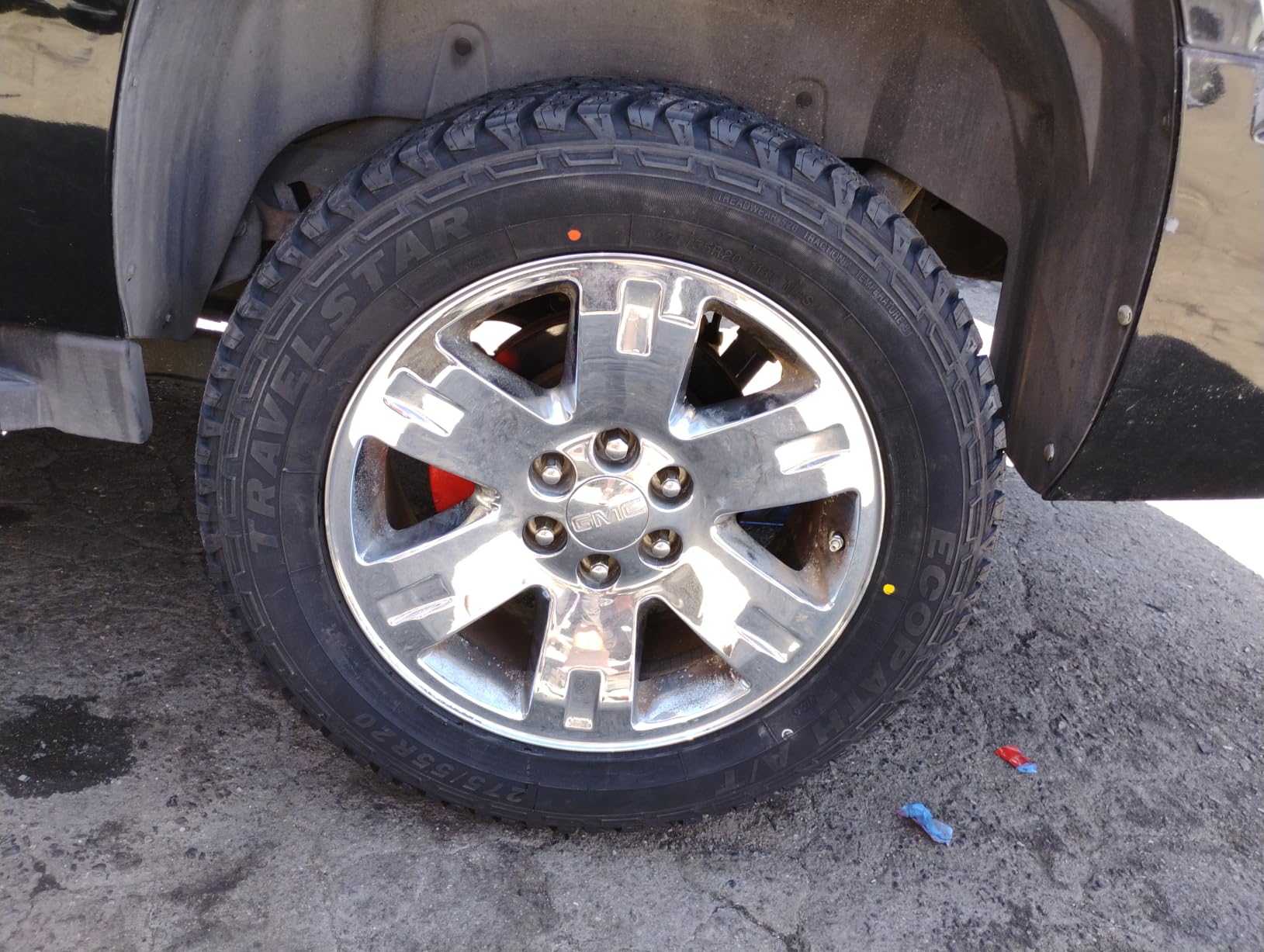
Who the Travelstar Ecopath AT suits
Drivers on a 20-inch LT fitment who want four tires in one transaction and mostly drive highway miles with occasional gravel. The highway-biased all-season design also makes it a reasonable choice for wet-heavy climates.
Who the Travelstar Ecopath AT does not suit
Owners chasing the quietest possible cabin. It is quiet for an all-terrain pattern, but it is still an A/T and owners note it is slightly louder than a pure highway all-season.
It is also not the choice for deep winter work. There is no 3PMSF rating listed, so drivers in sustained snow should look at the certified options instead.
10. Thunderer Ranger ATR – Best for an Aggressive Look with Genuine Winter Capability
Thunderer Ranger ATR All Terrain LT275/65R20 126/123S E Passenger Tire
LT275/65R20 126/123S E
Load Range E 10-ply
63 lb
Studdable construction
Pros
- Studdable where regulations permit for extreme winter traction
- Full nylon overwrap ply adds strength and durability
- Backed by 55000 mile tread life
- Owners praise low noise for an aggressive pattern
Cons
- One report of an out-of-round tire causing severe vibration
- Warranty copy is inconsistent
- listing says 45000 miles
The Ranger ATR is the one tire here you can legally pin with studs where local regulations allow. That single feature puts it in a category of its own for anyone in a climate where ice traction cannot be negotiated with siping alone.
Reviewers also praise the noise level. Owners describe low road noise for what is plainly an aggressive tread pattern, and one comparison put its ride quality close to a BFGoodrich All-Terrain, which is a high bar in this price class.
Who the Thunderer Ranger ATR suits
Drivers in northern climates who want stud capability available when the first ice storm arrives, plus a tire that still looks purposeful on a weekend trail. The 3D sipes and full nylon overwrap ply give it usable traction between stud seasons.
It also suits anyone who rates an aggressive tread pattern’s appearance as a genuine benefit and can live with the extra mass of a 63 lb tire.
What the studdable design is worth
Studdability matters in northern climates where a 3PMSF rating is good but not always enough. A tire built to accept studs gives you an option after the first ice storm that a non-studdable all-terrain simply does not offer.
The full nylon overwrap ply is the durability layer underneath, and the 3D sipes work alongside the tread pattern to keep traction usable between stud seasons.
Who the Thunderer Ranger ATR does not suit
Buyers who want a clean warranty story. One review reports an out-of-round tire that caused severe vibration and difficulty obtaining warranty service, and the listing copy itself is inconsistent, stating a 45000-mile warranty while the bullet text claims 55000 miles. Verify the figure in writing before purchase.
At 63 lb it is the heaviest tire we tested, which makes it a poor match for a lighter vehicle and a real consideration for fuel economy on a daily commute.
How to Choose an All-Terrain Tire for Daily Driving
Start with the split. Write down what percentage of your annual mileage happens on pavement, and be honest about it, because that single number removes most of the decision friction and matches how drivers actually choose.
Work out your pavement-to-trail percentage
A driver at 85 to 90 percent pavement and 10 to 15 percent trail wants a highway-biased all-terrain: moderate void ratio, more continuous center rib, shallower shoulder lugs. Every tire on this list fits that brief, which is why we tested them together.
Below 80 percent pavement, the decision opens up toward deeper tread and stronger sidewalls. Above 95 percent, stop reading and buy a highway all-season tire, because you will be paying in noise, fuel economy and tread life for capability you never touch.
P-metric versus LT-metric and load range
The letter before the size tells you the tire’s construction class. P-metric tires are built for passenger vehicles and carry the load at lower inflation pressure; LT-metric light truck tires are designed to be run at higher pressures and carry more weight per tire.
Load range then describes how many plies the casing has. C and D ranges are common on lighter trucks, E is the 10-ply rating that shows up on half of this list. Your door-jamb placard gives you both numbers to match against, and it outranks whatever the tire sidewall suggests.
SL/XL or 10-ply LT: which one your commuter truck needs
This is the mistake that costs commuters the most. Fitting a 10-ply Load Range E tire to a truck that never leaves the pavement adds weight that no amount of driving technique recovers, and it shows up as a firmer ride and lower fuel economy.
Run an SL or XL tire when your placard calls for standard load and your towing needs are modest. Choose the 10-ply LT when you genuinely carry payload or tow, because under-rating is a safety problem rather than a comfort preference.
3PMSF versus M+S and the winter tire caveat
M+S is a mud and snow designation that a manufacturer applies largely at its own discretion. The 3PMSF three-peak mountain snowflake rating is a tested standard, and it is the one worth paying attention to if you drive in winter.
In this lineup, the BFGoodrich KO2 and the Atturo Trail Blade A/T carry 3PMSF. The caveat is real: below sustained 45 degrees Fahrenheit, no all-terrain substitutes for a true winter tire, and the difference on packed ice is not small. Cold-morning commutes also reward proper hand protection, and our driving glove picks cover that side of the equation.
Treadwear warranty, rotation and tire pressure
Treadwear warranties in this group run from 40000 miles on the Nexen Roadian AT Pro RA8 to 55000 miles of backing on the Thunderer Ranger ATR. Divide the purchase cost by the warranty miles to get your own cost per mile, because that calculation ends most debates between patterns.
Rotate every 5000 to 6000 miles and keep inflation within two PSI of the door-jamb figure. Both habits extend tread life and reduce the uneven shoulder wear that makes an all-terrain feel vague after 30000 miles. If you need a gauge for the job, our tire inflator picks cover the range, and portable air compressors for tires handle pre-trip checks on a full set.
The Quietest All-Terrain Tires Ranked
Highway noise is the most common complaint in this category, so we scored it directly. The mechanism is simple: a tread pattern with a high void ratio lets the tread blocks move independently, and those blocks cycle through the contact patch at a rate your ear hears as hum or roar.
Three features reverse it. Variable or staggered pitch sequences stop the blocks from resonating at one frequency, closed shoulders limit how much the outer edge can collapse into turns, and full-depth sipes break up the long rigid sections of tread that drum on expansion joints.
Lexani Terrain Beast AT – the quietest of these ten, built around a unilateral center rib and a computer-optimized tread layout that reviewers rank against pricier tires.
Goodyear Wrangler AT/S – the lightest tire here at 38.7 lb, and less mass plus standard load construction is the quietest hardware you can bolt on.
Travelstar Ecopath AT – a highway-biased all-season design with reduced road noise built into the pattern itself.
Finalist Terreno A/T – reviewers describe it as quiet for an E-rated all-terrain, which is a low bar that few 10-ply tires clear.
Thunderer Ranger ATR – aggressive appearance with noise levels owners rate close to a BFGoodrich All-Terrain, aided by 3D sipes.
If cabin noise is disqualifying, the cheapest fix is not a different tire. Check inflation pressure first, since under-inflation changes the noise signature more than any tread swap will, and confirm wheel alignment before blaming the tire.
All-Terrain Tires to Avoid as a Daily Driver
Some failure modes show up repeatedly in owner reports, and they are worth naming so you can avoid them deliberately rather than by accident.
Mud-terrain-style blocks sold as all-terrains. Very wide voids and open shoulders produce the highway drone that owners are trying to escape when they switch away from aggressive treads.
Over-specced 10-ply LT tires on an unmodified half-ton. The extra ply adds unsprung mass that works against both ride quality and fuel economy on a vehicle that never approaches the higher rating.
Tires without a 3PMSF rating in a snow state. An M+S marking on the sidewall is a manufacturer claim, not a tested standard. The BFG KO2 and Atturo Trail Blade carry the rating; others here do not.
Standard load 4-ply tires on a heavy diesel steering axle. One owner reported belt separation and premature failure on an F-350 diesel front axle running a 4-ply standard load tire, which is a documented rather than theoretical risk.
Tires listed with no manufacturer warranty. Without brand backing, treadwear claims rest entirely on retailer policy, and out-of-round defects become your problem rather than the manufacturer’s.
Two fitment habits prevent most of the bad outcomes. Read the door-jamb placard before you order rather than after, and check the tire’s stated section width against your fender gap at full steering lock.
Frequently Asked Questions
Are all-terrain tires worth it for daily driving?
Yes if you see dirt, gravel, snow or mud at least a few times a month. All-terrain tires give you real off-road capability without the highway drone, faster wear and fuel economy penalty of a mud-terrain. If your driving is 95 percent or more pavement, a highway all-season tire will be quieter, softer and more efficient than any tire on this list.
Are all-terrain tires good for everyday driving?
They are genuinely fine for everyday driving, provided you pick a highway-biased pattern and match the load rating to your vehicle. Expect a fuel economy cost of roughly 1 to 3 MPG against comparable all-season truck and SUV tires, plus slightly more road noise. Rotate every 5000 to 6000 miles and keep inflation within two PSI to get the tread life back.
What are the quietest all-terrain tires for daily driving?
The Lexani Terrain Beast AT is the quietest of the ten we tested, thanks to a unilateral center rib and a computer-optimized tread layout. The Goodyear Wrangler AT/S follows because it is the lightest tire in the group at 38.7 lb. Look for variable pitch sequences, closed shoulders and full-depth sipes as the design features that separate a quiet all-terrain from a loud one.
What is the best all-terrain tire for everyday driving?
The BFGoodrich All-Terrain T/A KO2. It carries a 3PMSF severe snow rating, holds a 4.8 average across more than 1287 reviews, and its interlocking tread elements and even-wear footprint keep it stable and long-lasting on highway commutes while still gripping dirt, gravel and snow. The Nexen Roadian AT Pro RA8 is the value alternative.
What tires should I stay away from for daily driving?
Avoid mud-terrain-style blocks sold as all-terrains, 10-ply LT tires over-specced onto an unmodified half-ton, and tires without a 3PMSF rating if you drive in winter. Also avoid any model listed with no manufacturer warranty, since treadwear claims then rest on retailer policy alone. Check that your door-jamb load index matches before ordering.
Do all-terrain tires reduce fuel economy?
Typically by 1 to 3 MPG compared with all-season truck and SUV tires, which is about a 3 percent drop. Two factors drive it: unsprung mass from heavier sidewalls, and rolling resistance from the void ratio that lets the tread deform on pavement. Highway-biased patterns in lighter standard load ratings cost you the least.
Which All-Terrain Tire Should You Buy?
If you take one recommendation from this roundup, make it the BFGoodrich All-Terrain T/A KO2. It is the best all terrain tires pick for daily driving in 2026 because it is the only tire here that pairs a tested 3PMSF snow rating with an even-wear footprint, interlocking tread stability on pavement and the strongest owner mileage evidence we could find.
Match your pick to your split. Truck owners running heavy payloads or trailers should look at the Nexen Roadian A/T Pro RA8 or the Milestar Patagonia A/T R. Drivers whose biggest complaint is cabin noise should start with the Lexani Terrain Beast AT. Snowbelt drivers on 20-inch fitments should take the Finalist Terreno A/T, and stud users have the Thunderer Ranger ATR. Anyone on an unmodified commuter truck should seriously consider dropping down to the Goodyear Wrangler AT/S.
Whatever you choose, confirm the size and load index against your door-jamb placard before you order, and check the current fitment and price for your specific size using the buttons above.