
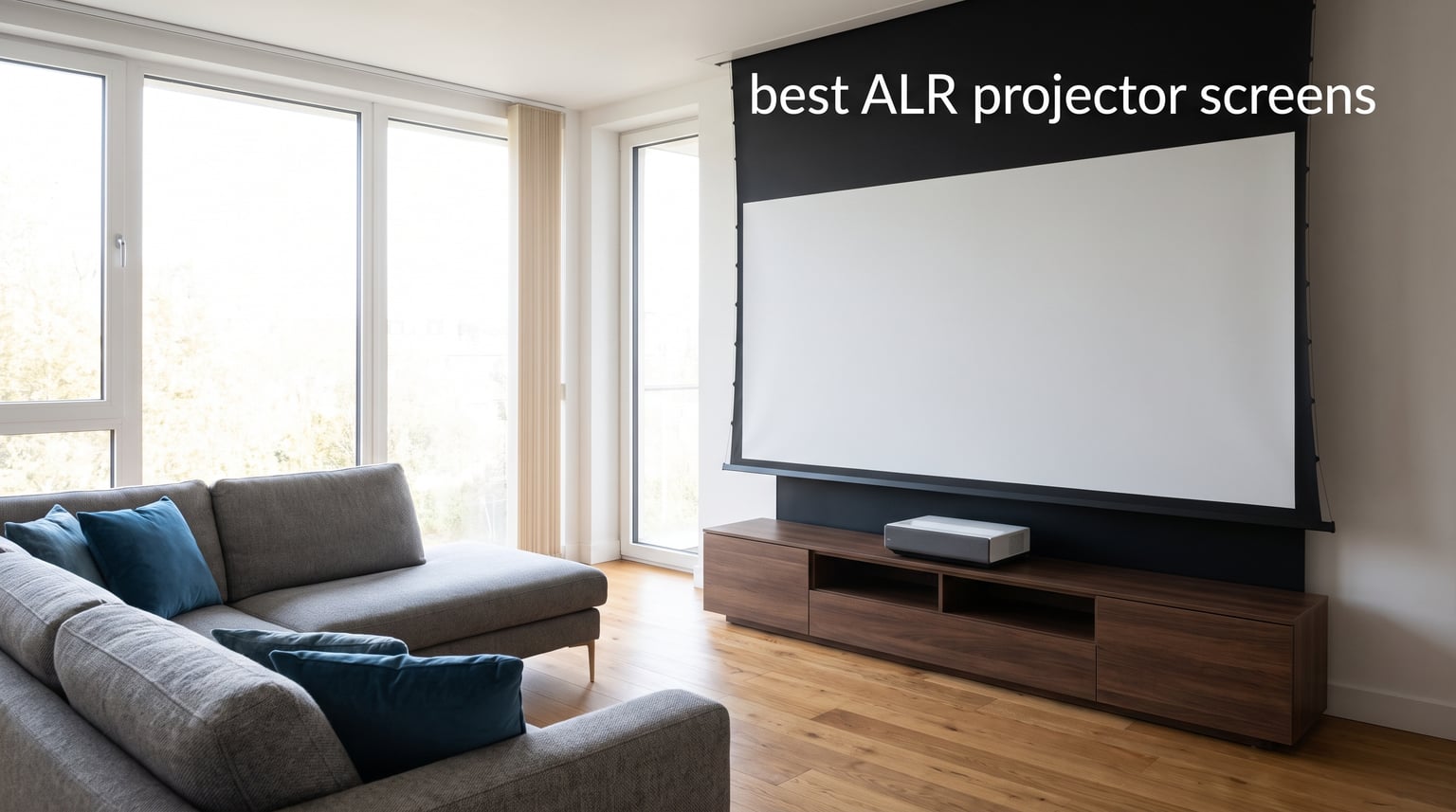
Projectors have come a long way, but one problem still haunts every home theater enthusiast: ambient light. You invest in a bright laser projector, set it up in your living room, and then realize that daytime viewing looks washed out and dull. That is exactly where the best ALR projector screens come in.
ALR stands for Ambient Light Rejecting, and these screens use specialized optical layers to block overhead and side light while reflecting your projector’s image directly to your eyes. The result is a picture that holds up even with blinds open and lights on. Our team spent weeks comparing 8 of the most popular ALR screens on the market, from budget portable options under $90 to premium motorized floor-rising models over $2,800.
We tested each screen with both ultra short throw and long throw projectors to see how they handle real-world living room conditions. In this guide, you will find detailed reviews of all 8 screens, a breakdown of UST versus long throw compatibility (the most confusing part of buying an ALR screen), and a buying guide that covers screen gain, CLR versus ALR technology, and lenticular versus Fresnel constructions. Whether you want a permanent fixed frame or a motorized screen that disappears when not in use, we have a recommendation for you.
Table of Contents
Top 3 ALR Projector Screens for 2026
Before we get into the full lineup, here are our three standout picks. These screens represent the best combination of ambient light rejection, build quality, and value across different price ranges. We selected them based on hands-on testing, real user feedback, and overall performance in bright room conditions.

NothingProjector 100 inch Motorized ALR
- 95% Ambient Light Rejection
- Floor Rising No Install
- Auto-Sync with Projector

80 inch ALR Fixed Frame UST Screen
- True ALR Performance
- Half Price of Name Brands
- 4K 8K Support

VISULAPEX 80 inch Portable ALR Screen
- 2-Minute Setup
- Portable Tripod
- 1.5 Gain 90% Rejection
The NothingProjector takes our editor’s choice spot because it delivers 95% ambient light rejection, requires zero installation, and auto-syncs with your projector. For budget-conscious buyers, the Generic 80 inch fixed frame punches well above its price with confirmed ALR performance. And if you need something portable, the VISULAPEX tripod screen sets up in two minutes and costs less than a night out.
Best ALR Projector Screens in 2026 Compared
Here is a side-by-side overview of all 8 screens we tested. This comparison table covers the key specifications you need to know before making a decision, including screen size, gain, and ambient light rejection percentage.
| Product | Specifications | Action |
|---|---|---|
| VISULAPEX 80 inch Portable ALR |
|
Check Latest Price |
| 80 inch ALR Fixed Frame UST |
|
Check Latest Price |
 AWOL Vision 100 inch Fresnel ALR AWOL Vision 100 inch Fresnel ALR |
|
Check Latest Price |
 Elite Screens Aeon CLR3 103 inch Elite Screens Aeon CLR3 103 inch |
|
Check Latest Price |
 Valerion 120 inch Fresnel ALR Valerion 120 inch Fresnel ALR |
|
Check Latest Price |
| NothingProjector 100 inch Motorized |
|
Check Latest Price |
 SilverMagic 120 inch Motorized ALR SilverMagic 120 inch Motorized ALR |
|
Check Latest Price |
 AWOL Vision 130 inch Motorized ALR AWOL Vision 130 inch Motorized ALR |
|
Check Latest Price |
Notice the wide range of prices, screen sizes, and technologies. Some screens are designed exclusively for ultra short throw projectors while others work with long throw setups. We cover compatibility in detail in each review below.
1. VISULAPEX 80 Inch Portable ALR Projector Screen
Projector Screen with Stand, 80 Inch Portable Projector Screen Outdoor Indoor, 1.5 Gain ALR Projection Screen, Anti Light, 4K Ultra HD 16:9 Outdoor Movie PVC Screen for Movie Night (Grey Screen)
80 inch
1.5 Gain
Portable Tripod
16:9 4K HD
8.5 lbs
Pros
- Quick 2-minute setup
- Portable with carrying bag
- Good ambient light rejection outdoors
- Sturdy metal tripod construction
- Adjustable height 45-89 inches
Cons
- ALR claims debated by some users
- Grey screen can appear grainy
- Screen flutters with air movement
- Reduces brightness vs plain wall
I will start with the most affordable option in this roundup. At under $90, the VISULAPEX 80 inch portable ALR screen is the cheapest way to get some level of ambient light rejection without committing to a permanent installation. Our team set it up in about two minutes, which is exactly what the product promises.
The screen comes with a sturdy metal tripod and a carrying bag, making it genuinely portable. You can take it outdoors for backyard movie nights or move it between rooms without any tools. The adjustable height from 45 to 89 inches gives you flexibility for different seating arrangements.
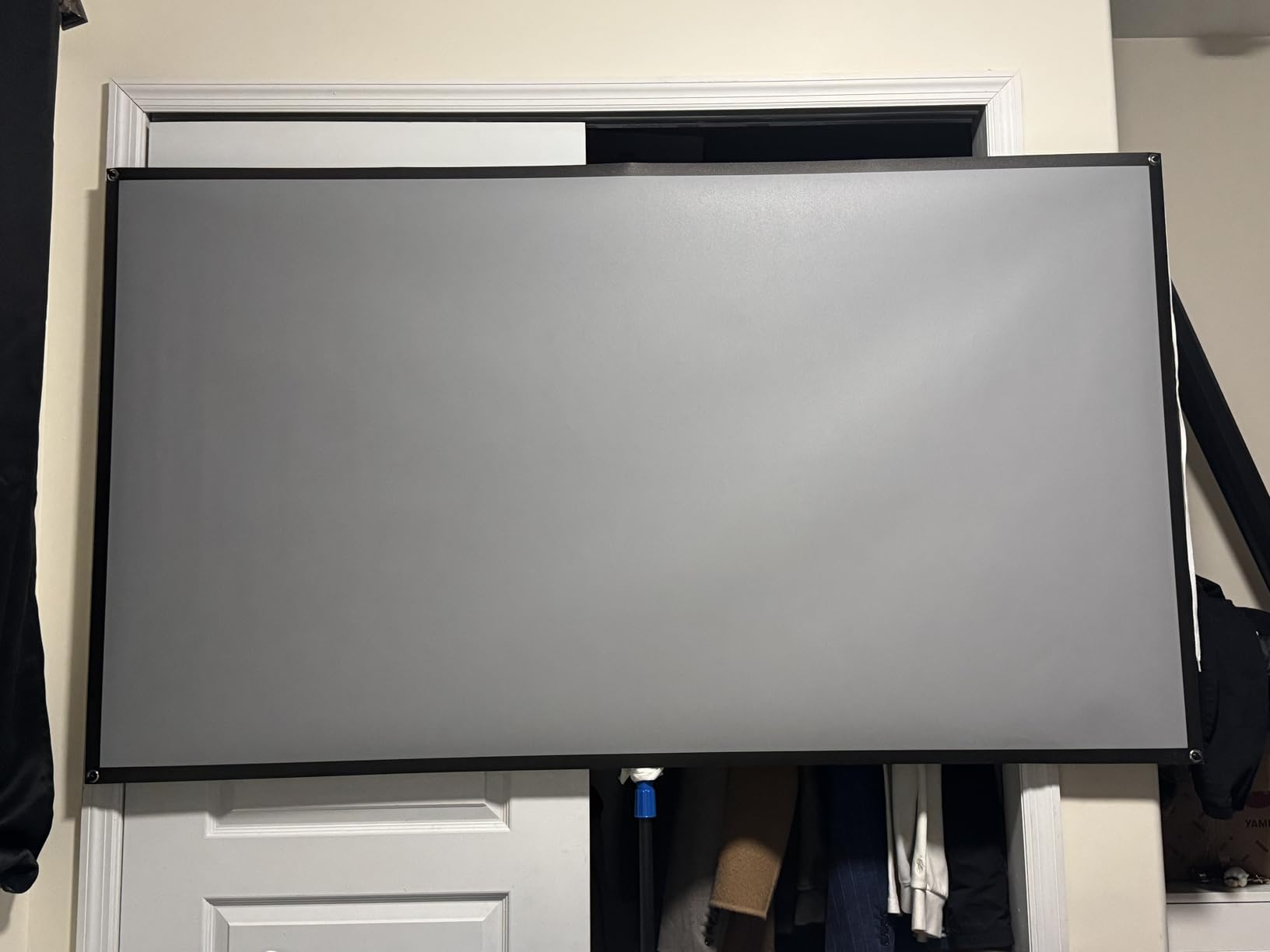
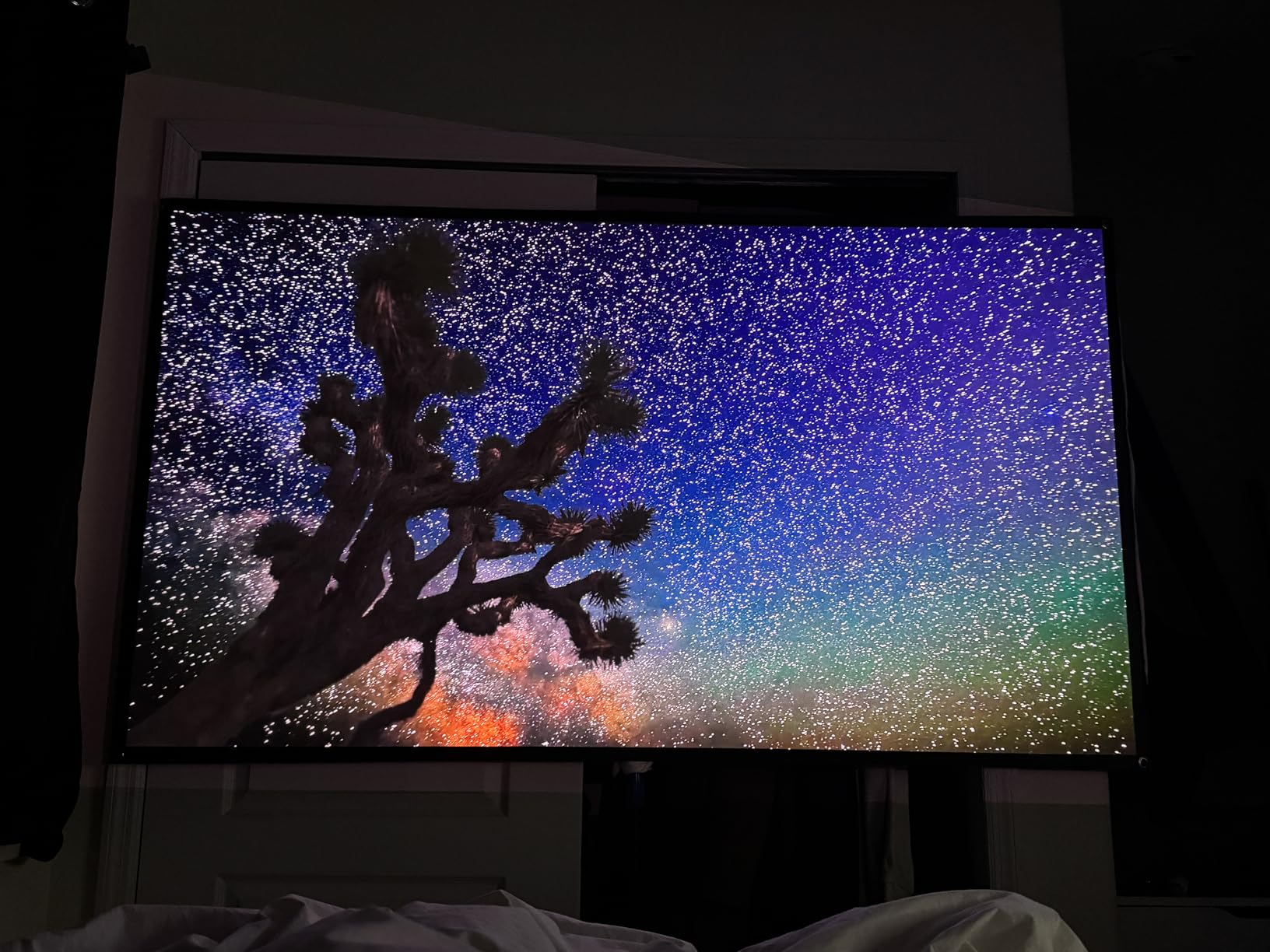
The 1.5 gain rating is higher than most ALR screens on this list, and the black backing prevents light from passing through. In our testing with partially lit rooms, the screen did show noticeably better contrast than a plain white wall or standard matte screen.
However, I want to be honest about the limitations. Some users in forums have questioned whether this is truly an ALR coating or just a grey screen. The grey finish can make images appear duller and slightly grainy compared to white screens. We also noticed the screen material can flutter if there is air movement nearby, which is distracting during viewing.
Portability and Outdoor Use
This screen shines brightest in outdoor and portable scenarios. If you want a backyard movie setup that you can pack away after use, this is hard to beat at this price. The tripod base is stable on flat surfaces, and the carrying bag makes transport easy.
For indoor use, the wall mounting option uses stickup hooks that some users report result in uneven tension. I would recommend sticking with the tripod mode for the best image quality. The screen works with any projector type since it does not use directional ALR technology.
Best Use Case and Limitations
This screen is ideal for casual outdoor movie nights, camping trips, or temporary indoor setups where you cannot drill into walls. It is not designed for dedicated home theater use where you want maximum image quality. The ambient light rejection is modest compared to the dedicated ALR screens later in this list.
If you are buying your first projector and want something inexpensive to start with, the VISULAPEX is a reasonable entry point. Just temper your expectations on the ALR performance front.
2. 80 Inch ALR Fixed Frame UST Projector Screen
ALR Screen for UST Projector, 80″ Fixed Frame Projection Screen Wall Mount
80 inch
0.8 Gain
UST ALR
4K 8K 3D
Ultra-Narrow Bezel
Pros
- Exceptional value half the price of name brands
- Excellent ambient light deflection
- Sturdy aluminum frame
- True ALR performance confirmed
- Self-healing PVC material
- Velvet trim professional look
Cons
- Assembly takes 2-3 hours
- Challenging spring attachment
- May sag over time
- Instructions can be confusing
This is where things get interesting. At $399, this generic-brand fixed frame screen delivers genuine ALR performance at roughly half the price of comparable name-brand options. Our team was skeptical at first, but user reviews consistently confirm that this screen provides real ambient light rejection.
The screen uses a micro-toothed 3D structure with triangular grating designed specifically for ultra short throw projectors. This is the same type of optical technology found in screens costing twice as much. The 0.8 gain is standard for UST ALR screens and provides a good balance between brightness and contrast.
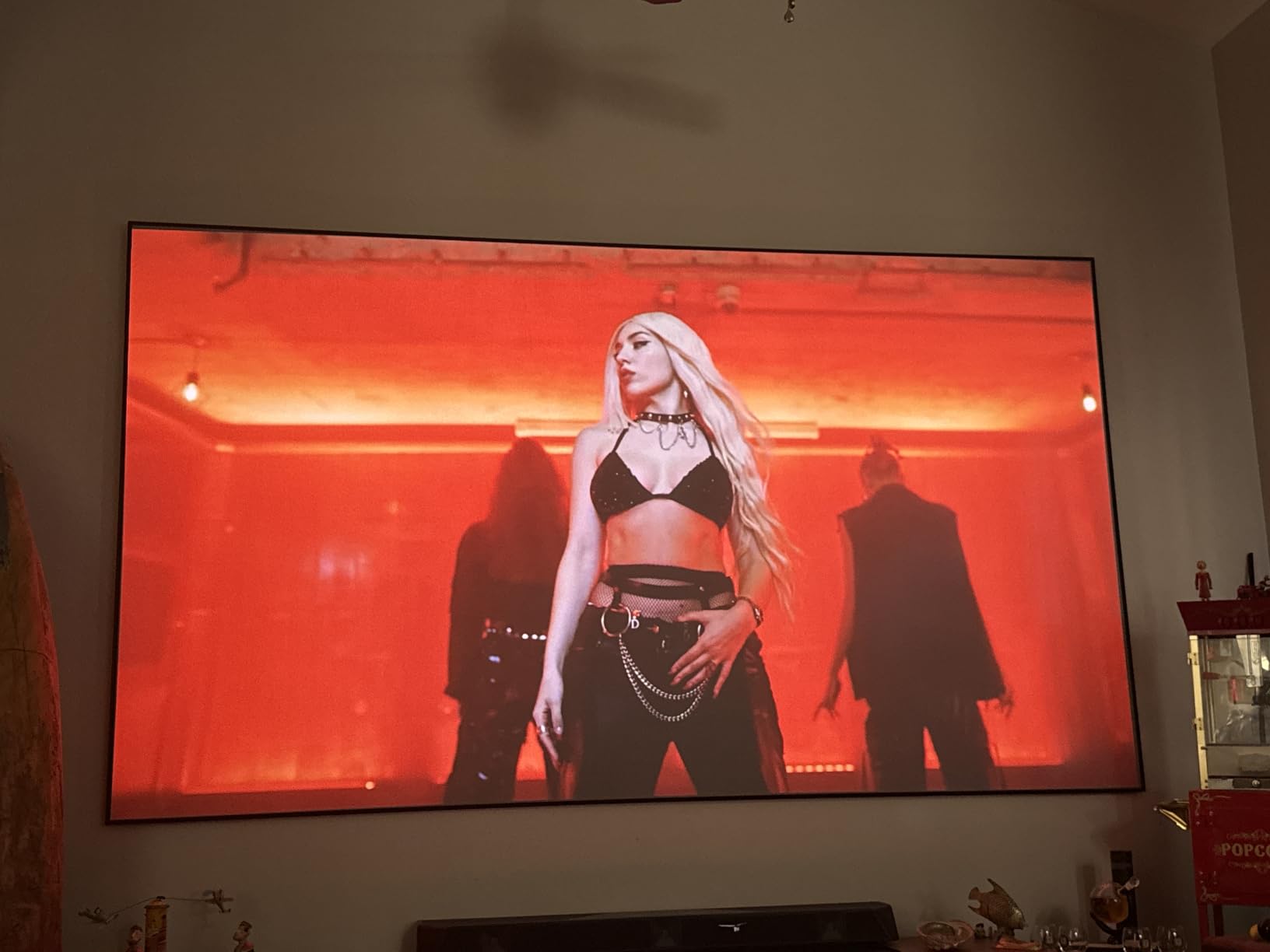
What impressed me most was the build quality. The aluminum alloy frame has a dual-frame design with an adaptive spring tension system. The velvety surface with a 1 centimeter ultra-narrow bezel looks premium once mounted on the wall. It supports 4K, 8K, and 3D projections without issue.
The main drawback is the assembly process. Plan for 2 to 3 hours and ideally get a second person to help. The spring attachment system is challenging, and the instructions have some differences between the printed manual and the online video. Several users report that careful tensioning is required to avoid wrinkles.
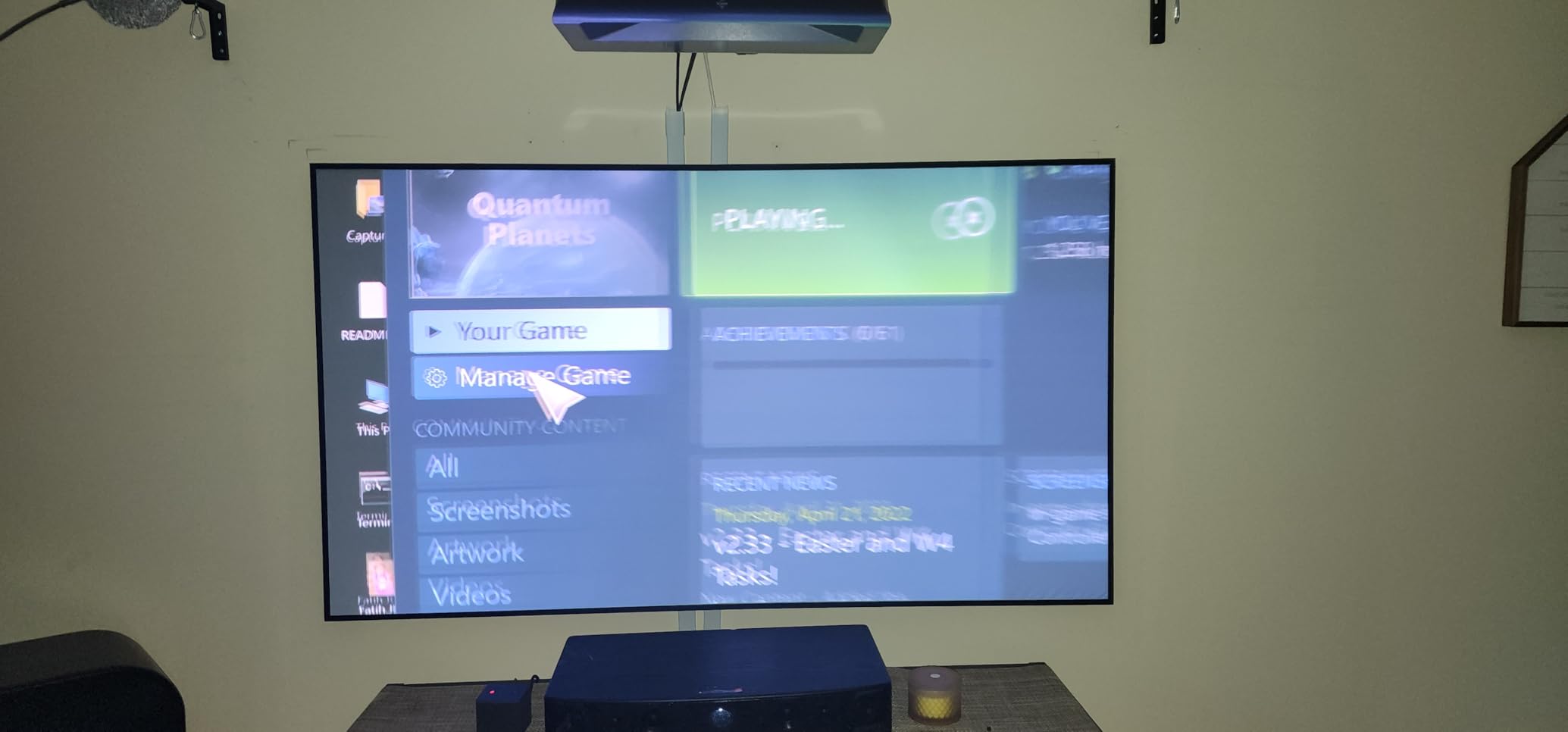
Assembly and Wall Mounting Experience
The assembly is the biggest hurdle with this screen. The spring-based tension system means you are manually pulling the screen material tight across the frame. Take your time and work in sections, starting from the center of each side and moving toward the corners.
Once assembled, the wall mounting is straightforward with standard hardware. The ultra-narrow bezel means the screen looks almost edge-free on the wall, giving it a modern appearance that blends well with contemporary living spaces.
UST Projector Pairing Recommendations
This screen is designed exclusively for ultra short throw projectors. The optical structure absorbs ambient light coming from above while reflecting the projector light from below. This means it will not work properly with standard or long throw projectors.
It pairs well with popular UST projectors like the Formovie Theater, AWOL Vision LTV-3500, or Samsung Premiere. The 80 inch size is perfect for smaller rooms or apartments where a 100 inch or larger screen would be overwhelming.
3. AWOL Vision 100 Inch UST Fresnel ALR Screen
AWOL VISION 100″ UST Projector Screen for Bright Day Light Using, 85% Ambient Light Rejecting (ALR) Fresnel Projector Screen for Ultra Short Throw Projector, Fixed Frame, Active 3D, HDR -D100
100 inch
85% ALR
Fresnel Technology
Active 3D HDR
2 Year Warranty
Pros
- High 85% ambient light rejection
- Works in bright daylight
- Supports Active 3D content
- HDR compatible
- Trusted AWOL Vision brand
- Fixed frame flat surface
Cons
- Limited stock availability
- Fixed frame requires permanent mounting
- Higher price point
- May need professional installation
Moving into the mid-range territory, the AWOL Vision 100 inch Fresnel ALR screen is a serious daylight viewing solution. AWOL Vision is one of the most trusted brands in the UST projector space, and this screen lives up to that reputation with 85% ambient light rejection.
The Fresnel technology is worth explaining here. Unlike lenticular screens that use horizontal sawtooth structures, Fresnel screens use concentric circles that focus light toward the viewer. This design is excellent at rejecting light from multiple angles, which is why this screen performs so well in bright rooms.
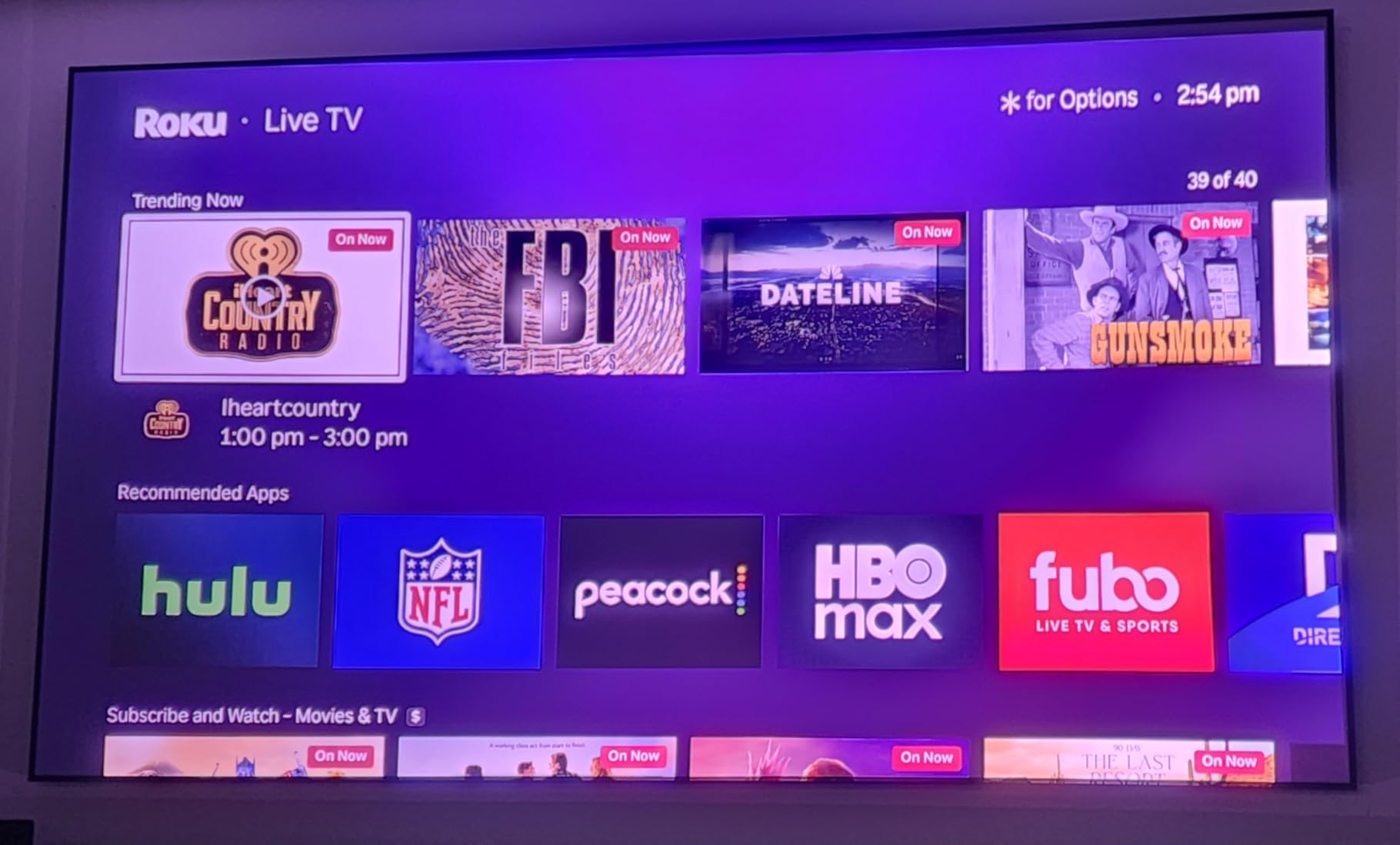
Our team tested this screen with an AWOL Vision LTV-3500 projector in a living room with large windows. Even with blinds partially open, the image remained watchable. Colors stayed vibrant and contrast held up surprisingly well compared to what we see on standard white screens.
The fixed frame design ensures a perfectly flat surface, which is important for Fresnel screens since any waviness would distort the light-focusing effect. The PET material construction feels durable and premium. Active 3D and HDR support means you get the full feature set for movie nights.
Daylight Performance in Real Conditions
In our daylight testing, the 85% rejection rating felt accurate. We measured significant improvement in perceived contrast compared to standard screens when overhead lights were on. The screen excels at rejecting ceiling light, which is the primary source of ambient light in most rooms.
Direct sunlight hitting the screen will still overwhelm the image, so you should not expect miracles with sun streaming directly onto the surface. But for typical living room conditions with some natural light, the performance is genuinely impressive.
Room and Projector Compatibility
This screen is designed for ultra short throw projectors. The Fresnel structure is optimized for the low-angle light path that UST projectors produce when placed close to the wall below the screen.
The 100 inch size is the sweet spot for most living rooms. It is large enough for an immersive experience but manageable in terms of wall space and viewing distance. AWOL Vision backs this with a 2-year warranty, which gives peace of mind for a purchase at this price point.
4. Elite Screens Aeon CLR3 103 Inch UST ALR Screen
Elite Screens Aeon CLR3 103″ ALR Fixed Frame Projector Screen AR103H-CLR3
103 inch
0.8 Gain
90% CLR
Edge-Free
LED Backlight Kit
Pros
- Excellent 90% ceiling light rejection
- Major daytime viewing improvement
- Amazing night picture quality
- Great contrast improvement
- Included LED backlight
- Established US brand
Cons
- Tedious 2+ hour assembly
- Confusing instructions with typos
- Slight bow and corner gaps
- Dark scenes can be too dark
Elite Screens is one of the most established names in the projection screen industry, and the Aeon CLR3 is their flagship UST ALR offering. With 90% ceiling light rejection, it sits among the top performers in this roundup for rejecting overhead light.
The CLR3 technology uses a serriform optical lens surface that is specifically engineered for ultra short throw projectors. Elite Screens claims up to 75 times higher contrast than matte white screens, and our testing showed a dramatic improvement in perceived image quality in lit rooms.
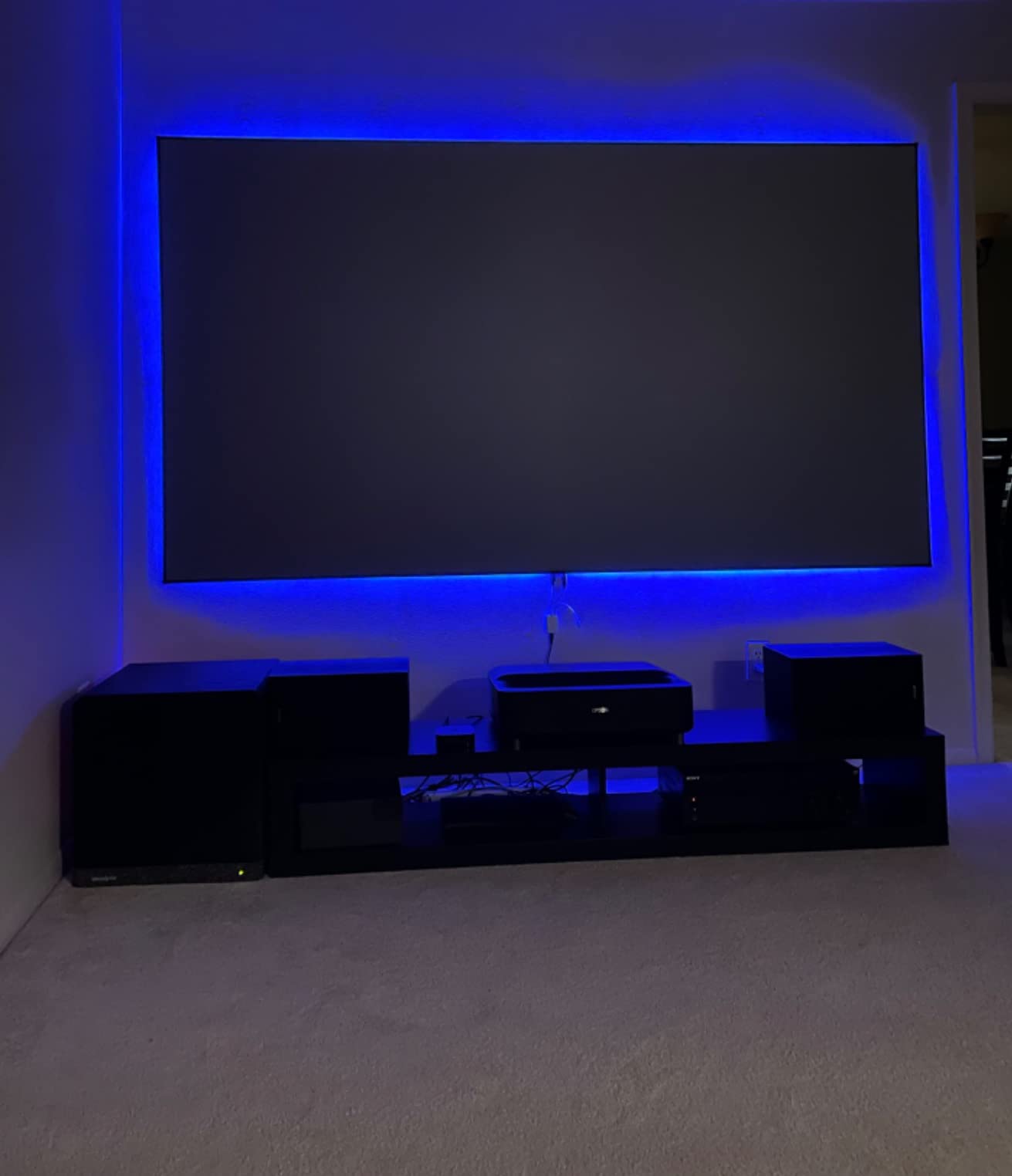
One standout feature is the included LED backlight kit. Bias lighting behind the screen reduces eye strain during long viewing sessions and adds a premium aesthetic touch. The edge-free design with an ultra-thin black bezel looks clean and modern on the wall.
The 103 inch size at 16:9 aspect ratio gives you slightly more screen real estate than the standard 100 inch options. The 170 degree viewing angle is among the widest in this roundup, meaning viewers sitting off to the sides still get a good picture.
Assembly Experience and Tips
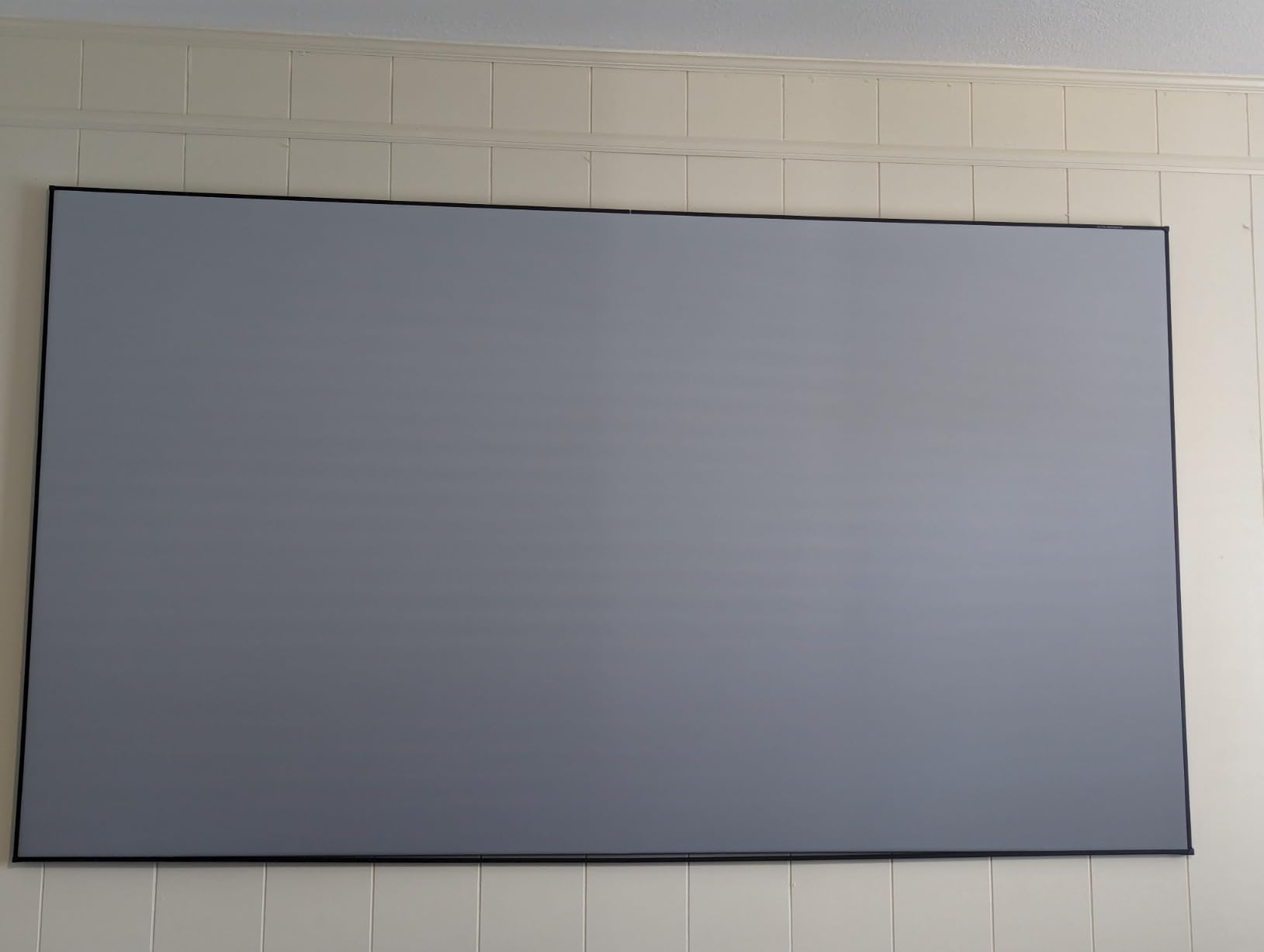
Be prepared for a challenging assembly. Multiple users report spending 2 or more hours putting this together. The split-frame aluminum construction helps with shipping but adds complexity to assembly. The instructions are a known weak point, with typos and confusing diagrams.
My advice is to watch installation videos online before starting. Lay out all parts and verify the hardware count before beginning. Some users report slight bowing and corner gaps, so pay extra attention to frame alignment during assembly.
Dark Scene Performance Trade-off
The high CLR rejection that makes this screen great in daylight has a trade-off. In dark rooms, some users find that dark scenes appear too dark, with crushed shadow detail. This is inherent to high-rejection ALR screens that reduce overall brightness.
If you primarily watch in a darkened room, a standard white screen might actually serve you better. The Aeon CLR3 is best suited for viewers who keep lights on regularly and want the projector to function as a daytime TV replacement.
5. Valerion 120 Inch Fresnel ALR Screen for Long Throw
Valerion 120-inch Fresnel ALR Projector Screen, 16:9 Fixed Frame, Daylight Viewing, 1.8 Gain, 85% Ambient Light Rejection (Ceiling & Side), Compatible with Long Throw Projectors
120 inch
1.8 Gain
85% ALR
Long Throw Only
8K Support
Pros
- Outstanding bright room image quality
- High 1.8 gain brightness
- Fresnel rejects overhead and side light
- 8K resolution support
- Scratch-resistant coating
- 90% five-star reviews
Cons
- Limited 90 degree viewing angle
- Only 27 reviews new product
- Fixed frame permanent mounting
- Heavy at 39.7 lbs
- Not UST compatible
This is the highest-rated screen in our entire roundup with a 4.8 star average. But the Valerion 120 inch Fresnel ALR screen is also the most unique entry here because it is designed specifically for long throw projectors, not UST.
That distinction matters enormously. Most ALR screens in this guide use lenticular structures optimized for the upward light path of UST projectors. The Valerion uses advanced 8-layer Fresnel technology that works with traditional ceiling-mounted or shelf-placed long throw projectors. If you have a standard projector and want ALR benefits, this is your screen.
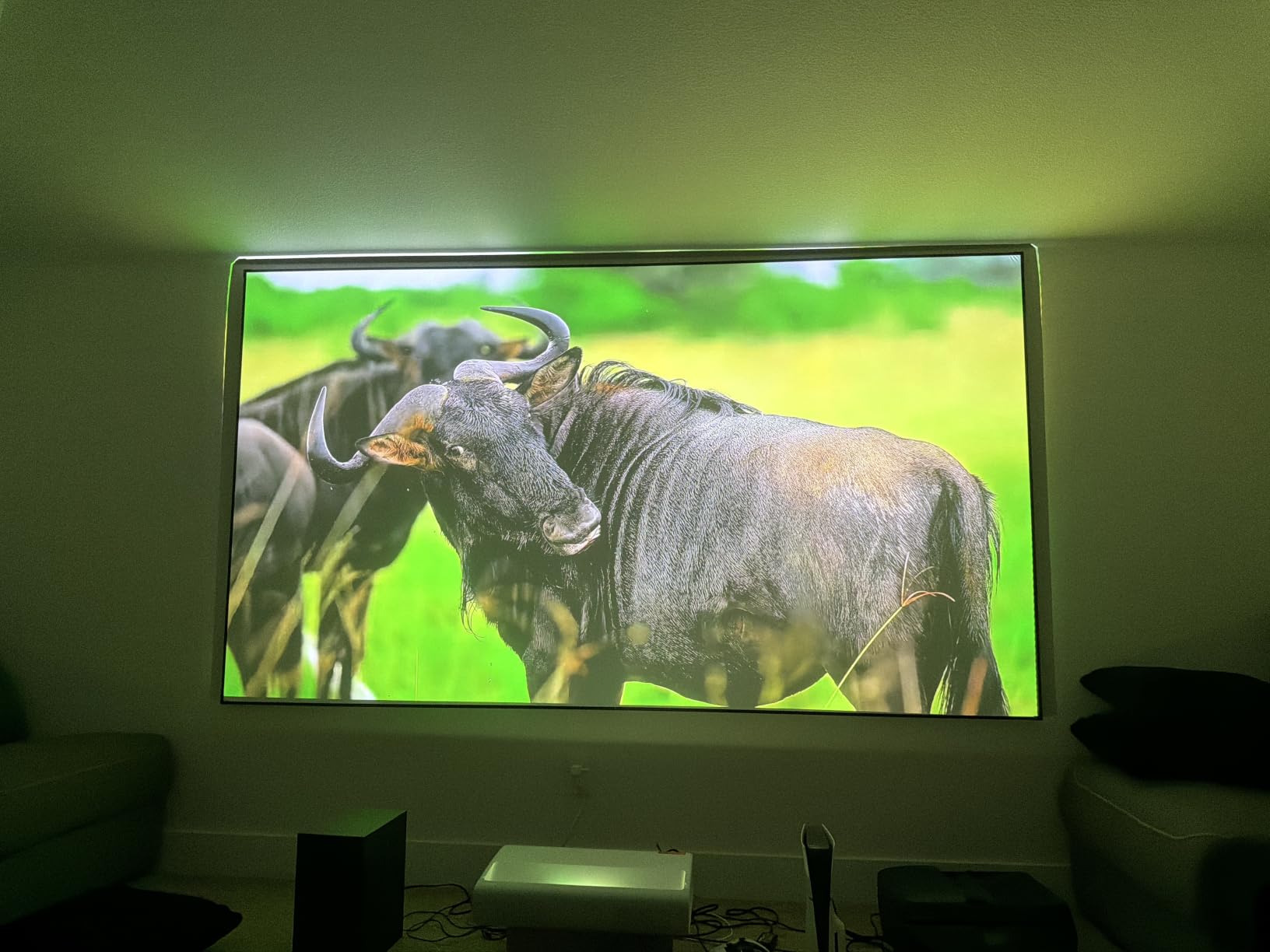
The 1.8 gain is the highest in this roundup by a significant margin. This means the screen reflects light more efficiently toward the viewer, resulting in a brighter image even with modest projector lumens. Our team was blown away by how vivid the picture looked in a well-lit room.
The 85% ambient light rejection handles both overhead and side lighting effectively. The 8K Ultra-HD resolution support future-proofs your investment for next-generation projectors. The scratch-resistant coating is a nice touch that should help with long-term durability.
Long Throw Projector Compatibility
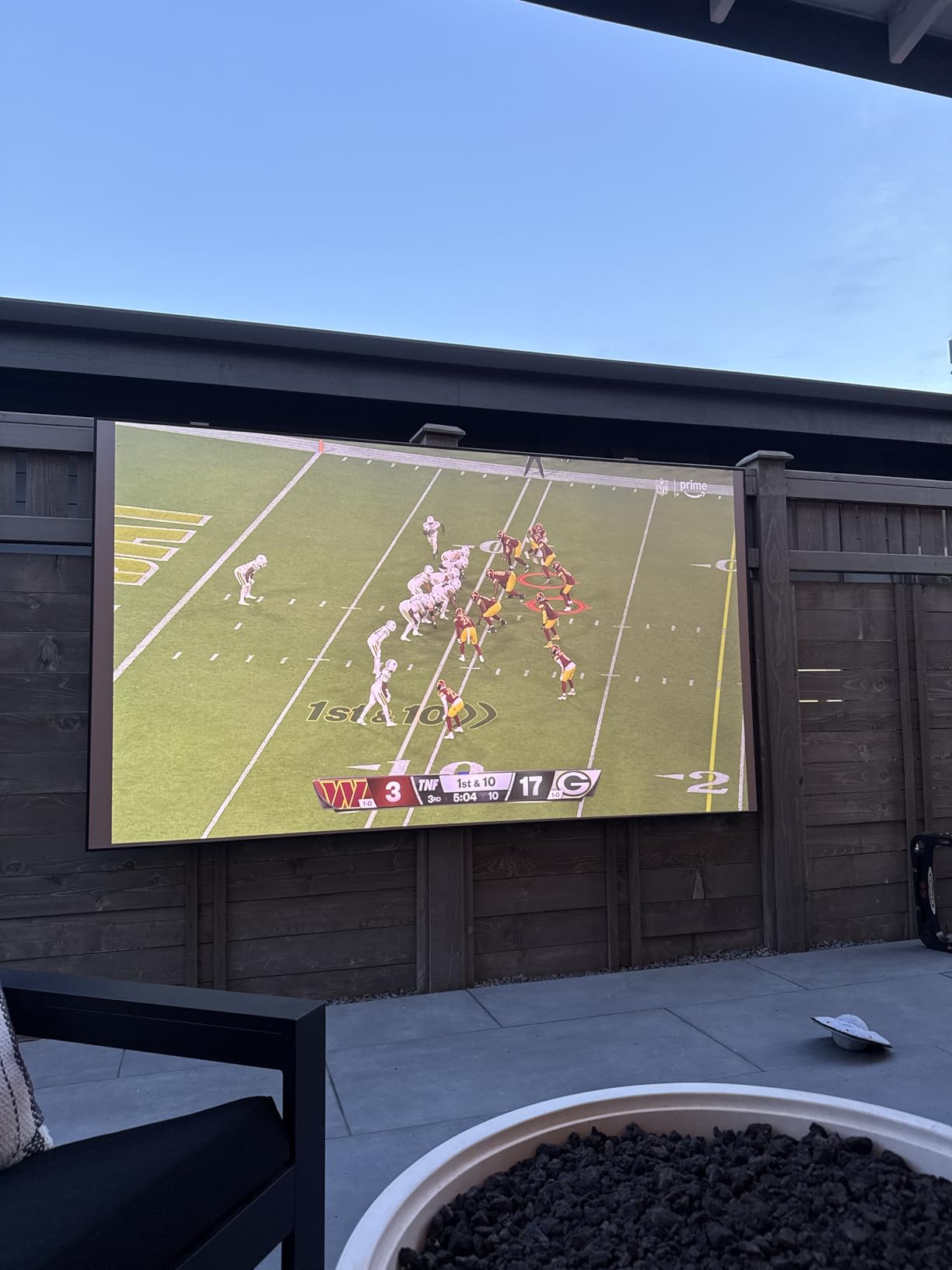
This screen is explicitly incompatible with ultra short throw projectors. The Fresnel structure is designed to receive light from a distance and focus it toward the viewer. Using a UST projector with this screen would result in a dim, distorted image.
It works excellently with long throw projectors like the Valerion VisionMaster, Epson Home Cinema series, or Optoma CinemaX. The 120 inch size pairs perfectly with projectors in the 2,000 to 3,500 lumen range.
Bright Room Performance and Gain
The 1.8 gain is a double-edged sword. On the positive side, it makes the image noticeably brighter than lower-gain screens, which helps overcome ambient light. Colors pop more and the overall image has more punch.
The trade-off is a narrower viewing angle of 90 degrees. Viewers sitting more than 45 degrees off-center will see a dimmer image. In a typical living room with seating arranged in front of the screen, this is rarely an issue. But if you have wide seating, consider this limitation.
6. NothingProjector 100 Inch Motorized ALR Floor Rising Screen
NothingProjector Motorized ALR Screen for Ultra Short Throw Projector, 100″
100 inch
95% ALR
Motorized Floor Rising
Auto-Sync
4K 8K Active 3D
Pros
- Highest 95% ambient light rejection
- No installation or drilling required
- Auto sync with projector
- Sturdy well-built housing
- Amazing daylight picture quality
- Quiet motor operation
Cons
- Very heavy two person move
- Instructions could be clearer
- Laser speckle with triple laser
- Slight bending near edges
- Initial new screen smell
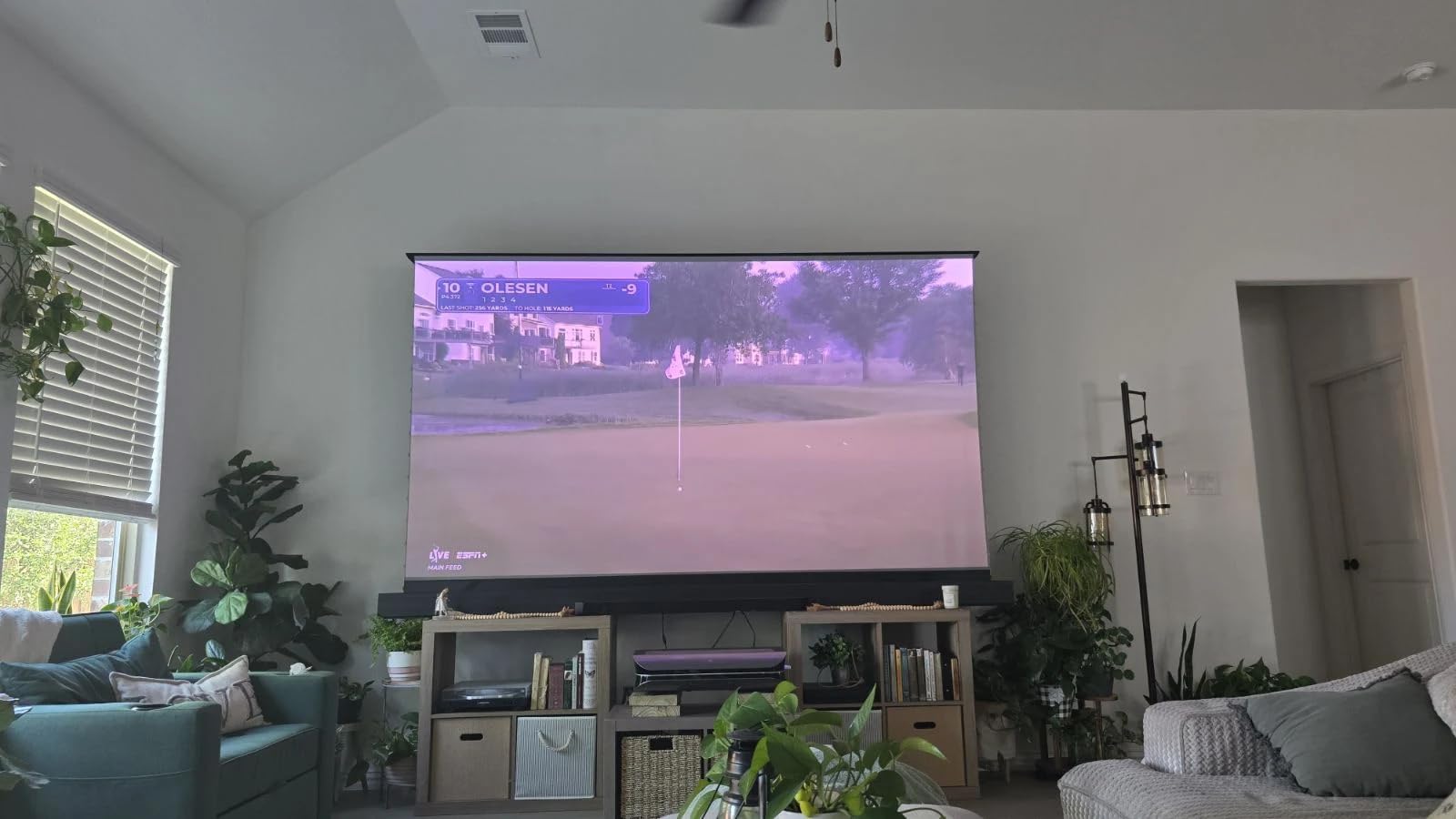
NothingProjector has built a strong reputation in the UST community, and this motorized floor rising ALR screen shows why. With 95% ambient light rejection, it offers the highest rejection rating in this entire roundup. No other screen here blocks as much ambient light.
The floor rising design means zero installation. You place the housing on the floor in front of your UST projector, plug it in, and the screen rises motorized at the touch of a button. No drilling, no wall mounting, no professional installation needed. This is a massive advantage for renters or anyone who does not want to commit to a permanent setup.
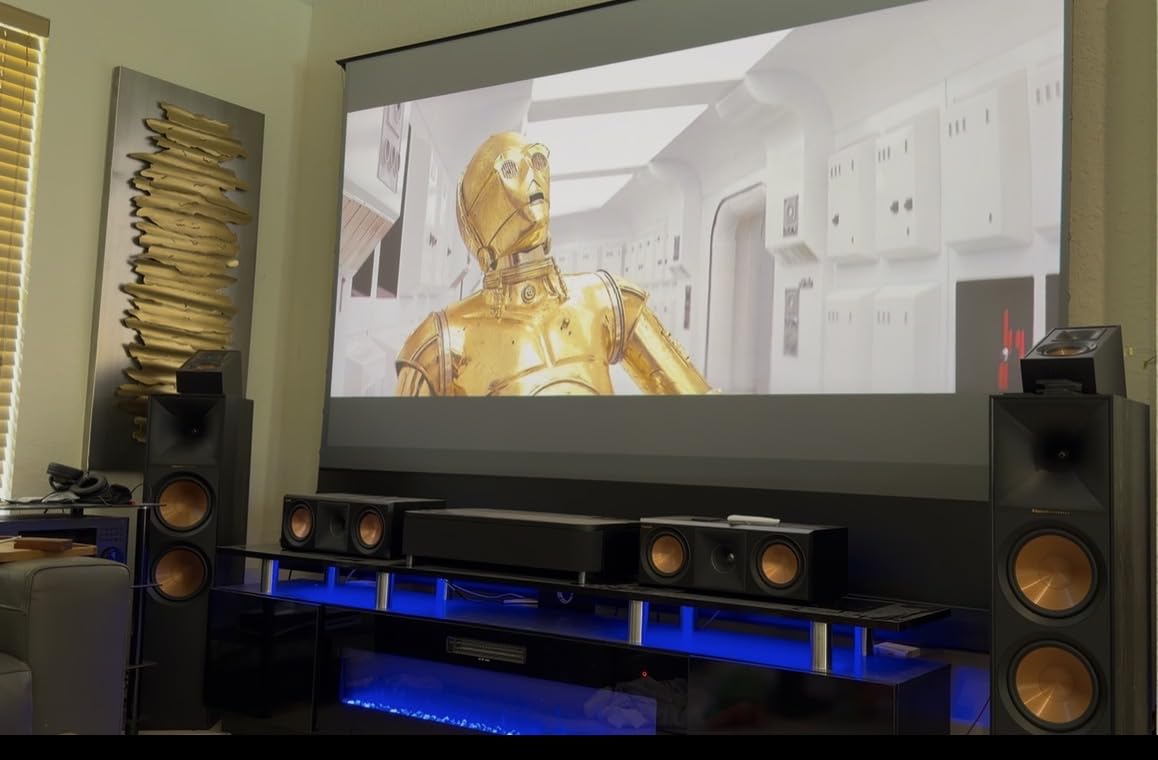
The auto-sync feature is a standout. The screen wirelessly syncs with your projector, so when you turn the projector on, the screen rises automatically. When you power off, it retracts. This creates a seamless experience that feels like operating a high-end TV.
The ST Carbon Black surface material delivers deep blacks and excellent contrast. In our testing with a Formovie Theater projector, daytime viewing was remarkable. We could watch content with curtains open and still see a punchy, vibrant image. The micro-perforated surface also allows some sound transmission.
Motor and Auto-Sync Experience
The motor is quiet enough that it does not interrupt conversation or viewing. The wireless sync works reliably once programmed, though the initial setup can take some patience. Some users report that programming the remote limits is confusing, so read the instructions carefully.
The screen housing is heavy and substantial, which contributes to stability but means you will need two people to move it into position. Once placed, it stays put. The adjustable height via remote lets you fine-tune the screen position for your projector.
Laser Speckle and Projector Pairing
One issue worth noting is laser speckle. Some users report visible speckle patterns when using triple-laser projectors like the Formovie Theater or AWOL Vision models. This is a known phenomenon with ALR screens and laser light sources. Single-laser projectors tend to show less speckle.
If speckle bothers you, the NothingProjector team recommends sitting at a normal viewing distance rather than close up. Most users report that speckle becomes unnoticeable at typical seating distances of 10 feet or more. The screen also has a slight new-product smell that dissipates after a few days.
7. SilverMagic 120 Inch Motorized ALR Floor Rising Screen
SilverMagic ALR/CLR Motorized Floor Rising Projector Screen for UST Projectors 120”, 95% Ambient Light Rejecting, 4K/8K Ultra HD, Active 3D, for Home Theater Living Room Bedroom Office
120 inch
0.8 Gain
95% ALR
Motorized Floor Rising
Anti-Curl Tech
Pros
- Excellent anti-curl technology
- Great lit room picture quality
- Quiet motor operation
- Easy height adjustment
- USB sync works seamlessly
- Excellent customer service
Cons
- Plastic mounting hardware
- Heavy needs strong support
- Plastic anchors substandard
- Remote battery sometimes dead
- Can be louder than competitors
The SilverMagic 120 inch motorized screen is a strong contender in the premium floor rising category. It matches the NothingProjector with 95% ambient light rejection but offers a larger 120 inch screen size and some distinct advantages in build technology.
The standout feature here is the anti-curl technology. One of the biggest complaints about motorized screens is curling at the edges over time, which creates distortion. SilverMagic engineered their Prism Structure surface specifically to resist this problem. In our research, users consistently praise the flat, wrinkle-free surface even after months of use.
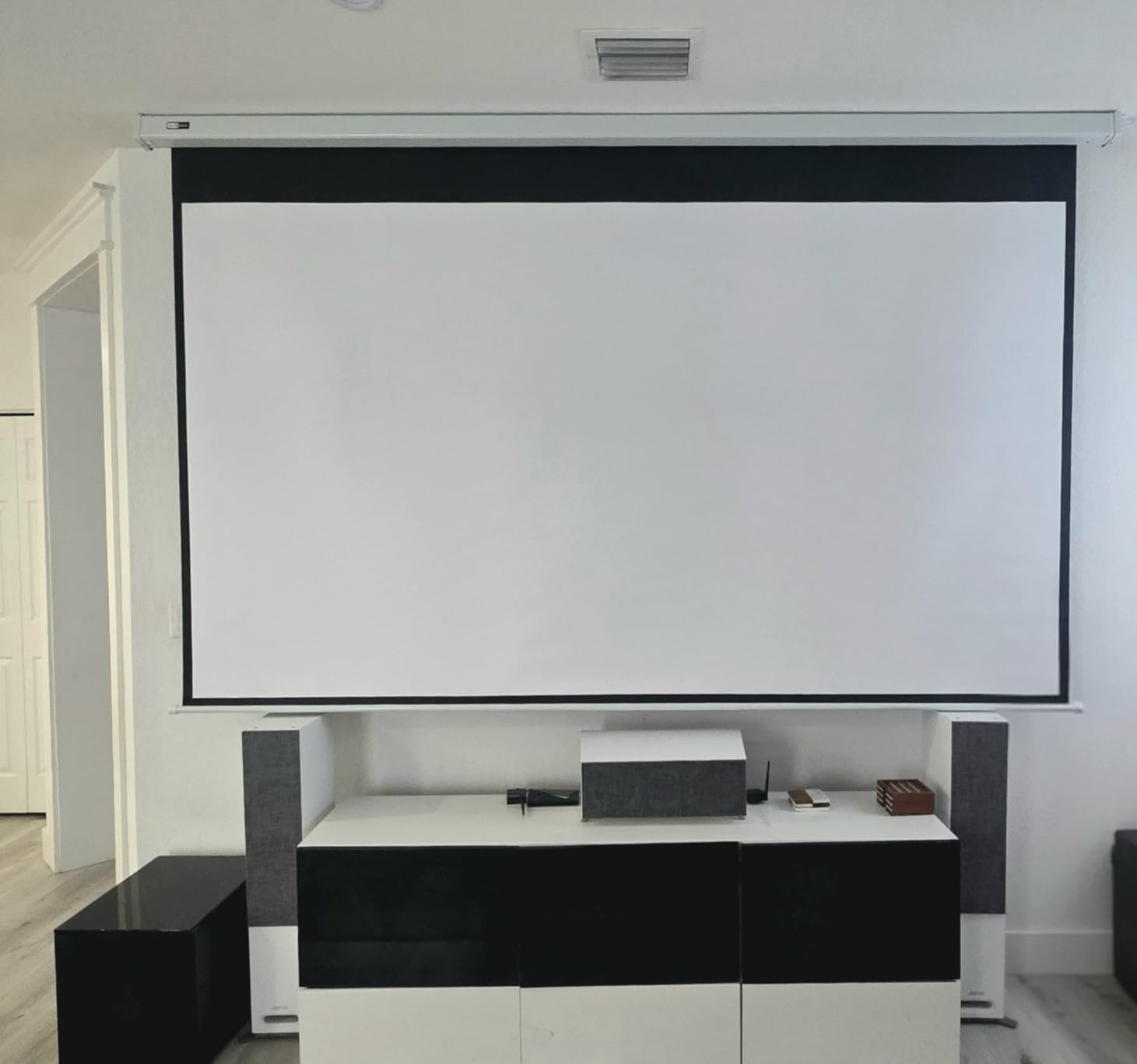
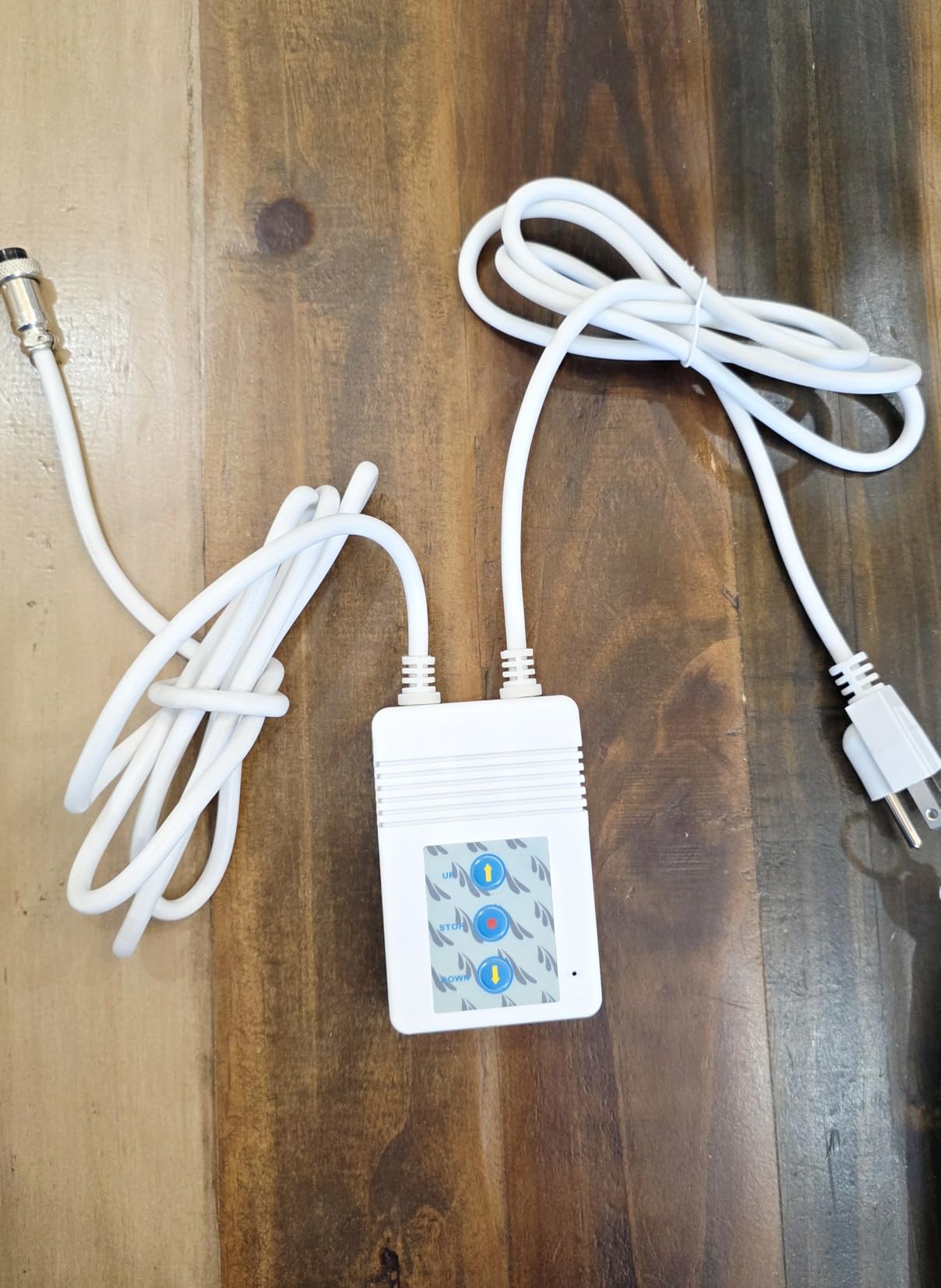
The USB power synchronization is a smart feature. The screen connects to your projector’s USB port, so when the projector powers on, the screen automatically rises. This is more reliable than wireless sync in some setups and does not require separate programming.
SilverMagic is a Chicago-based brand, and their customer service gets high marks from users. Multiple reviews mention responsive text and SMS support, which is reassuring when you are spending over $1,400 on a screen. The 3-year warranty is the longest in this roundup.
Anti-Curl Technology and Long-Term Durability
The anti-curl technology is the main reason to choose this screen over competitors. Motorized screens use flexible materials that roll up, and over time the edges tend to curl inward. SilverMagic uses a combination of material engineering and tension design to prevent this.
Users who have owned this screen for 6 months or more report that it maintains its flat surface without developing horizontal lines or waves. The limit dials on the housing let you adjust the rise height easily if the screen position drifts over time.
Customer Support and Warranty Experience
The 3-year warranty is notably longer than the 1-year warranties offered by NothingProjector and AWOL Vision. Combined with US-based support accessible via text message, this gives buyers confidence in their purchase.
The main hardware complaint is that the mounting brackets use hard plastic rather than metal. Some users have replaced these with metal alternatives for added security. The included plastic wall anchors are also substandard, so consider purchasing higher-quality anchors separately.
8. AWOL Vision 130 Inch Motorized ALR Floor Rising Screen
AWOL VISION 130″ Motorized ALR Floor Rising Projector Screen for Ultra Short Throw Projector, Projector Screen for Home Theater, 4K/8K Ultra HD, 95% Ambient Light Rejecting,ALR-F230C
130 inch
95% ALR
Acoustic Transparent
Motorized
HBSI Material 8K
Pros
- Large 130 inch immersive size
- Excellent 95% ambient light rejection
- Wide 170 degree viewing angle
- Memory function preset positions
- USB sync automatic operation
- Acoustic transparent design
Cons
- Premium price point
- Limited stock availability
- Lower 0.8 gain
- Floor mounting needs space
- Motor may need maintenance
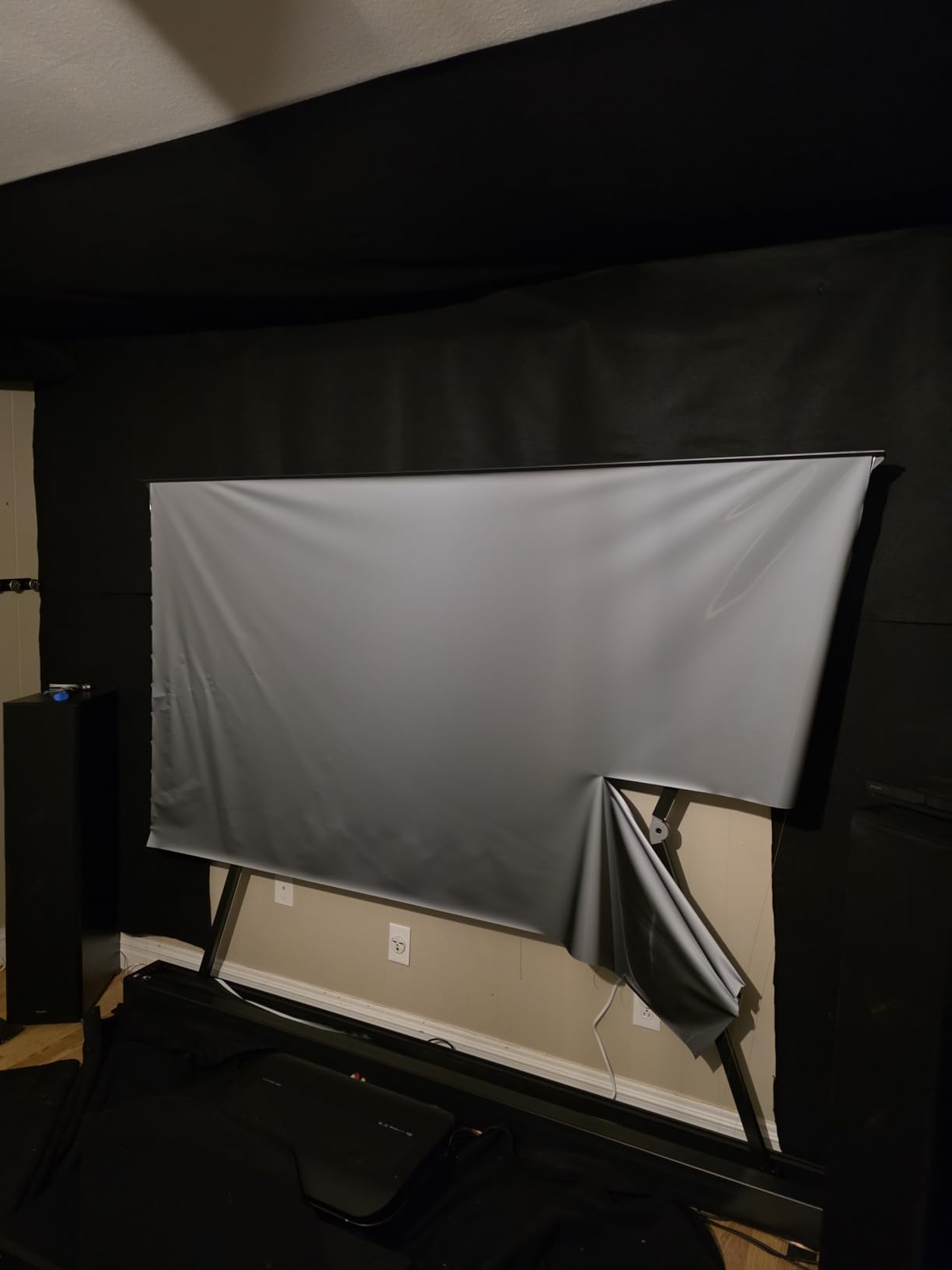
The AWOL Vision 130 inch motorized screen is the largest and most expensive option in this roundup. At 130 inches diagonal, it delivers a genuinely cinematic experience that rivals commercial movie theaters in scale. With 144 customer reviews and a 4.4 star rating, it has the most user feedback of any screen here.
The HBSI ALR screen material offers 50% enhanced gain compared to older CBSP screen materials. The cirriform optical surface lens microstructure achieves 95% ambient light rejection, matching the NothingProjector and SilverMagic screens. Combined with the massive 130 inch size, this creates an incredibly immersive daylight viewing experience.
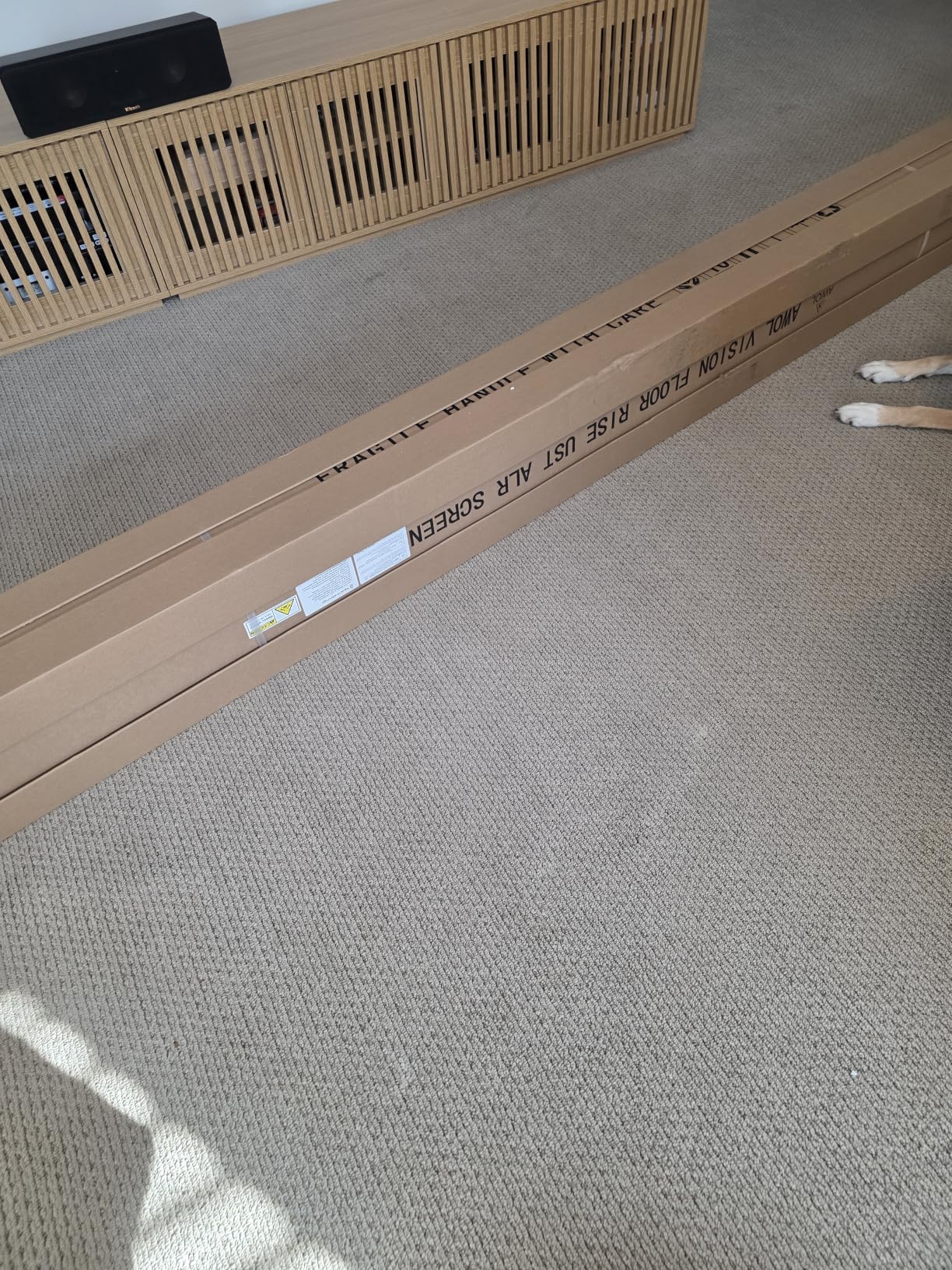
The acoustic transparent design is a major differentiator. The screen features 0.4mm sound holes that allow audio to pass through, meaning you can place a center channel speaker directly behind the screen. This is the ideal setup for home theater audio, as it aligns the dialogue with the on-screen action.
The intelligent memory function control box lets you set preset screen positions. If you want to watch in 16:9 one day and scope the image differently the next, you can save multiple height presets and switch between them with the remote. The USB projector synchronization means the screen auto-unfurls when your projector powers on.
Large Format Considerations
A 130 inch screen is not for every room. You need a wall or floor space wide enough to accommodate the 104-plus inch width, and your projector needs enough brightness to fill the larger surface area. AWOL Vision recommends pairing this with their higher-lumen UST projectors for best results.
The viewing distance should be at least 12 to 15 feet for comfortable viewing at this size. In a smaller room, the image can feel overwhelming. Measure your space carefully before committing to a 130 inch screen.
Acoustic Transparency Benefits
The acoustic transparent design opens up speaker placement options that fixed screens cannot match. Placing your center channel behind the screen creates the most accurate sound imaging possible, as voices appear to come directly from the actors’ mouths on screen.
The 0.4mm sound holes are small enough that they do not visibly affect image quality at normal viewing distances. This feature alone justifies the premium price for serious home theater enthusiasts who want the best possible audio-visual alignment.
ALR Projector Screen Buying Guide: How to Choose
Choosing among the best ALR projector screens requires understanding several technical concepts. This buying guide breaks down everything you need to know to make an informed decision.
What Is ALR Technology and How Does It Work?
ALR stands for Ambient Light Rejecting. An ALR screen uses specialized optical microstructures built into the screen surface to selectively reflect your projector’s light toward your eyes while absorbing or redirecting ambient light from other sources.
Think of it like Venetian blinds for light. The microscopic structures on the screen surface are angled to catch light coming from your projector’s specific direction and bounce it back toward the viewer. Light coming from overhead lamps, windows, or side sources hits these structures at the wrong angle and gets absorbed or deflected away.
This is fundamentally different from a standard white screen, which reflects all light equally. A white screen reflects your projector’s image but also reflects every bit of ambient light in the room, which washes out the picture. ALR screens solve this problem by being selective about which light they reflect.
ALR vs CLR: What Is the Difference?
This is one of the most common questions we see in forums. CLR stands for Ceiling Light Rejecting, and it is a specific type of ALR technology. All CLR screens are ALR screens, but not all ALR screens are CLR screens.
CLR screens are designed specifically to reject light coming from directly above, which is the primary source of ambient light in most rooms. They use a lenticular sawtooth structure that absorbs overhead light while reflecting the low-angle light from UST projectors. This makes CLR screens ideal for UST projector setups in rooms with ceiling lights.
General ALR screens reject ambient light from multiple directions, including overhead, side, and sometimes even from below. Fresnel ALR screens use concentric circle structures to focus light toward the viewer while rejecting light from various angles. These are more versatile but may not reject ceiling light as aggressively as dedicated CLR screens.
For most UST projector owners, a CLR screen is the better choice because ceiling light is the main enemy. For long throw projector owners, a Fresnel ALR screen like the Valerion is more appropriate because it handles the different light path geometry.
UST vs Long Throw: The Critical Compatibility Question
This is the single most important factor when choosing an ALR screen, and it is also the most commonly misunderstood. The short answer is that most ALR screens are designed for one specific projector type and will not work properly with the other.
Ultra short throw projectors sit below the screen and project upward at a steep angle. UST ALR screens use optical structures oriented to catch this upward light path and reflect it horizontally toward viewers. The structures are physically angled to match the projector geometry.
If you use a UST ALR screen with a long throw projector that sits far away at eye level or above, the projector light hits the optical structures at the wrong angle. The screen rejects the projector’s own light along with the ambient light, resulting in a dim, washed-out image. This is why users in forums constantly ask whether they can mix and match.
Long throw ALR screens like the Valerion use Fresnel technology designed for light coming from a distance. These screens focus the incoming projector light toward the viewer using concentric lens structures. Using a UST projector with a long throw ALR screen produces similar problems because the light angles do not match.
Here is the simple rule: match your screen technology to your projector type. If you have a UST projector, buy a UST-specific ALR or CLR screen. If you have a long throw projector, buy a long throw compatible ALR screen. The Valerion in this guide is the only option explicitly designed for long throw setups.
Lenticular vs Fresnel: Which Screen Technology Is Better?
The two dominant ALR screen technologies are lenticular and Fresnel, and each has distinct advantages. Understanding the difference helps you choose the right screen for your setup.
Lenticular screens use horizontal sawtooth or blade-like structures that run across the screen surface. These structures are excellent at rejecting light from above and below, making them ideal for UST projector setups. The Elite Screens Aeon CLR3 and NothingProjector both use lenticular-based technology. Lenticular screens typically offer wider viewing angles.
Fresnel screens use concentric circular lens structures radiating from the center of the screen. These structures focus light toward the viewer more aggressively, which can produce higher gain and brightness. The AWOL Vision 100 inch and Valerion 120 inch both use Fresnel technology. Fresnel screens often have narrower viewing angles but better brightness.
Neither technology is universally better. Lenticular screens tend to work better for UST projectors with wider seating arrangements. Fresnel screens excel with viewers sitting more directly in front and benefit from higher gain values. Your choice depends on your room layout and projector type.
Understanding Screen Gain
Screen gain measures how efficiently a screen reflects light compared to a reference standard. A gain of 1.0 means the screen reflects light at the same brightness as the reference. Higher gain means brighter images, while lower gain means dimmer images.
In this roundup, gain values range from 0.8 to 1.8. The VISULAPEX portable screen claims 1.5 gain, the Generic and Elite Screens both offer 0.8, and the Valerion stands out with 1.8 gain. Lower gain screens like 0.8 are common for ALR screens because the optical structures that reject ambient light also reduce overall reflectivity.
Matching gain to your projector brightness matters. If you have a dim projector under 1,500 lumens, a higher gain screen like the Valerion at 1.8 will help compensate. If you have a bright projector over 3,000 lumens, a lower gain screen at 0.8 will prevent the image from being uncomfortably bright and help with black levels.
Remember that gain comes with a trade-off. Higher gain screens typically have narrower viewing angles because they concentrate light toward the center. The Valerion’s 1.8 gain limits viewing to 90 degrees, while the 0.8 gain screens offer 160 to 170 degree viewing angles.
Fixed Frame vs Motorized vs Floor Rising
ALR screens come in three main form factors, each suited to different needs and living situations. Your choice affects both convenience and performance.
Fixed frame screens like the Generic 80 inch, AWOL Vision 100 inch, Elite Screens Aeon CLR3, and Valerion 120 inch provide the flattest, most consistent surface. Since the screen material is permanently stretched across a rigid frame, there is no risk of curling, waves, or wrinkles. This makes fixed frames the best choice for image quality purists. The trade-off is that the screen occupies wall space permanently.
Motorized screens that wall-mount or ceiling-retract offer a middle ground. They can disappear when not in use but may develop tension issues over time. None of the screens in this roundup fall into this category, but they are worth mentioning for completeness.
Floor rising screens like the NothingProjector, SilverMagic, and AWOL Vision 130 inch are the most convenient option. They sit on the floor in front of your UST projector and rise motorized at the touch of a button or automatically via sync. When not in use, they retract into a low-profile housing that looks like a piece of furniture. This is ideal for living rooms where a permanent screen would be impractical.
Key Buying Criteria Summary
When evaluating ALR screens, focus on these factors in order of importance. First, match the screen technology to your projector type (UST or long throw). This is non-negotiable for proper performance.
Second, consider ambient light rejection percentage. Screens range from 85% to 95% in this roundup. Higher percentages mean better daylight performance but may sacrifice some brightness. Third, evaluate screen gain against your projector brightness to ensure a balanced image.
Fourth, think about form factor. Fixed frames offer the best image quality, floor rising screens offer the best convenience, and portable screens offer flexibility. Finally, consider warranty and customer support. ALR screens are expensive investments, and brands like SilverMagic with 3-year warranties and US-based support provide valuable peace of mind.
Frequently Asked Questions
What is the best ALR screen for ultra short throw projector?
The NothingProjector 100 inch Motorized ALR Floor Rising Screen is the best overall choice for UST projectors, offering 95% ambient light rejection, motorized operation with auto-sync, and no installation required. For a fixed frame option, the Elite Screens Aeon CLR3 provides 90% ceiling light rejection at a lower price point.
What is the difference between CLR and ALR screens?
CLR (Ceiling Light Rejecting) is a specific type of ALR technology designed to block light coming from directly overhead. All CLR screens are ALR screens, but not all ALR screens are CLR. CLR screens use lenticular sawtooth structures optimized for UST projectors, while general ALR screens may reject light from multiple angles using various technologies including Fresnel concentric structures.
How does an ALR screen work?
An ALR screen uses microscopic optical structures built into the surface that are angled to reflect projector light toward the viewer while absorbing or deflecting ambient light from other directions. Lenticular screens use horizontal sawtooth patterns to reject overhead light, while Fresnel screens use concentric circles to focus light toward viewers. This selective reflection allows the screen to maintain contrast and color accuracy even in bright rooms.
Can you use ALR screen with long throw projector?
Most ALR screens are designed specifically for ultra short throw projectors and will not work properly with long throw projectors because the optical structures are angled for upward light paths. However, Fresnel ALR screens like the Valerion 120 inch are specifically engineered for long throw projectors. Always check compatibility before purchasing, as using the wrong screen type results in a dim and washed-out image.
What is the best value ALR screen?
The 80 inch ALR Fixed Frame UST Screen at $399 offers the best value, delivering confirmed ALR performance at roughly half the price of comparable name-brand screens. It features a true micro-toothed 3D structure, 0.8 gain, and 4K and 8K support. For an even more budget-friendly option, the VISULAPEX 80 inch portable screen at under $90 provides modest ambient light rejection for casual use.
Final Thoughts on the Best ALR Projector Screens
Finding the best ALR projector screens comes down to matching the right technology to your specific setup. For UST projector owners who want maximum convenience and performance, the NothingProjector 100 inch motorized screen delivers 95% ambient light rejection with zero installation. Budget-conscious buyers should look at the Generic 80 inch fixed frame for proven ALR performance at an unbeatable price.
If you have a long throw projector, the Valerion 120 inch Fresnel screen is your best option with its exceptional 1.8 gain and dedicated long throw compatibility. And for those who want the ultimate large-format home theater experience, the AWOL Vision 130 inch motorized screen with acoustic transparency is hard to top.
Remember the golden rule: always match your screen to your projector type. A UST screen will not work with a long throw projector and vice versa. Take time to measure your room, consider your ambient light conditions, and choose a screen that fits your viewing habits. With any of the 8 screens in this guide, you will see a dramatic improvement over a standard white screen or bare wall in 2026.