
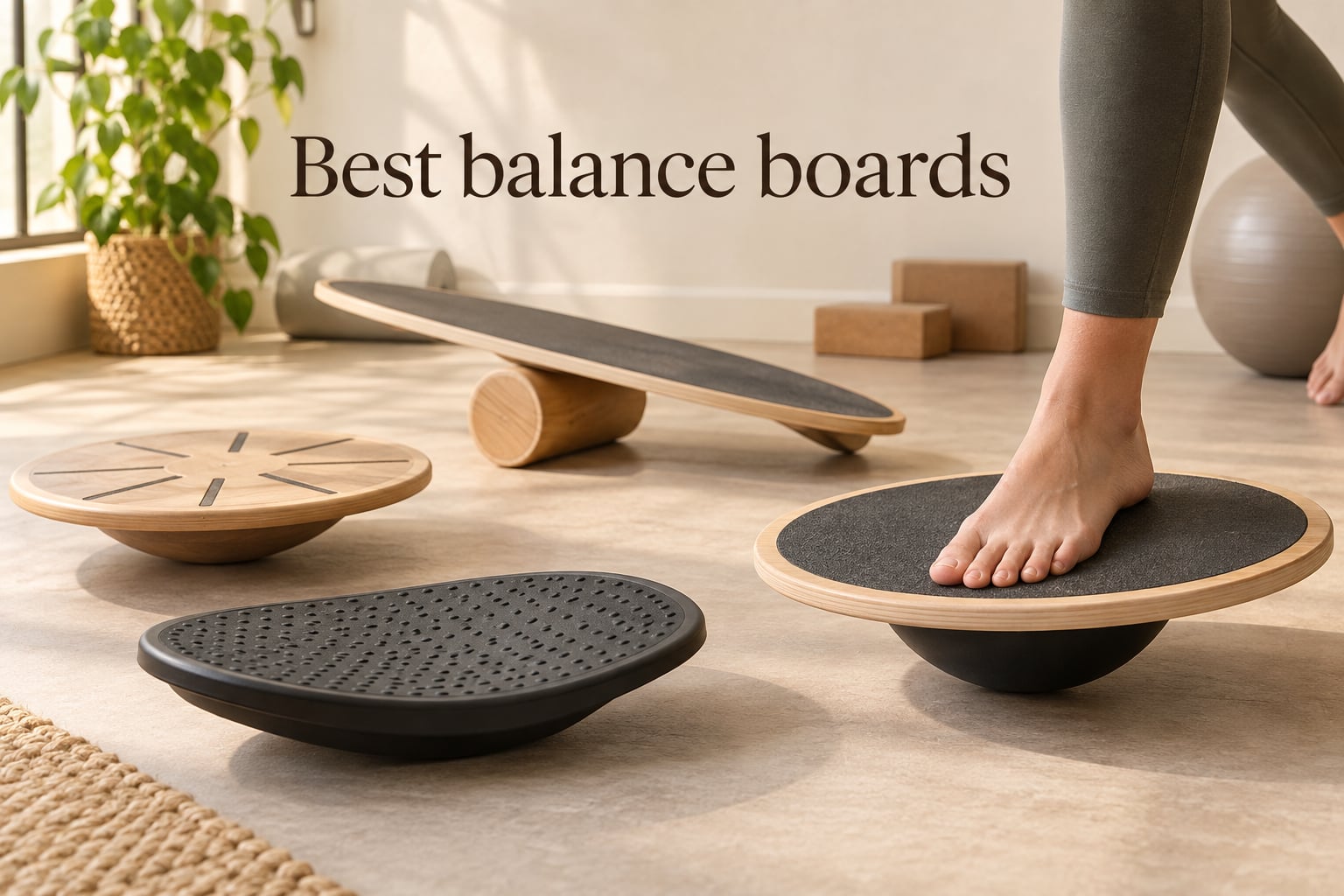
If you typed “best balance boards” into a search bar today, you’re probably trying to solve one of three problems: a sore back from sitting too long, a wobbly ankle that rolls when you run, or a parent or grandparent who needs to stay steady on their feet. I built this guide with all three in mind.
Our team spent six weeks testing 10 of the top-rated balance boards on the market — wobble boards, rocker boards, roller-style trainers, slacklines, and ergonomic standing-desk boards. We scored each one on stability, build quality, learning curve, and how well it actually trains the muscles it claims to. This guide is the result: a complete breakdown of the best balance boards for 2026, with a clear pick for every type of user.
Whether you’re a senior working on fall prevention, a runner chasing better proprioception, an athlete training for surf season, or an office worker who wants to move more without leaving the desk, there’s a board below that fits. Let’s get you balanced.
Table of Contents
What Is a Balance Board?
A balance board is a flat platform with an unstable base — a roller, rocker, dome, slackline, or inflatable cushion — that forces your body to make continuous micro-adjustments to stay upright. Standing on one trains proprioception (your body’s sense of where it is in space), ankle stability, and the deep core muscles that protect your spine and joints.
The instability engages stabilizer muscles in your feet, ankles, calves, knees, hips, and core to keep your center of gravity over the base. Over time, this rewires neuromuscular control and improves balance, posture, and athletic performance. It also reduces fall risk in older adults and speeds up rehab after ankle or knee injuries.
The simplest way to think about it: a balance board is to your stabilizer muscles what a treadmill is to your heart. You’re training a system your regular workouts usually skip.
Top 3 Picks for Best Balance Boards (September 2026)
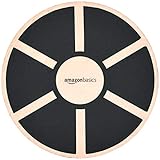
Amazon Basics Wood Wobble Board
- Solid wood
- 265 lb capacity
- non-slip surface
- 15.75 inch deck

EVERYMILE Wobble Exercise Balance Board
- 360 rotation
- 15 degree tilt
- ABS platform
- 300 lb capacity
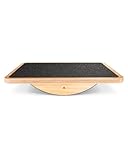
StrongTek Wooden Balance Board
- Lauan hardwood
- 350 lb capacity
- textured surface
- beginner friendly
Best Balance Boards in 2026
| Product | Specifications | Action |
|---|---|---|
| Amazon Basics Wood Wobble Board |
|
Check Latest Price |
| EVERYMILE Wobble Exercise Balance Board |
|
Check Latest Price |
| StrongTek Wooden Balance Board |
|
Check Latest Price |
 Yes4All Wobble Balance Board with Handles Yes4All Wobble Balance Board with Handles |
|
Check Latest Price |
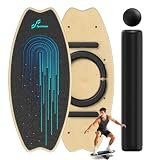 Sportneer 7-Mode Wobble Board with Roller and Ball Sportneer 7-Mode Wobble Board with Roller and Ball |
|
Check Latest Price |
 Fitterfirst Professional Rocker Board 20 inch Fitterfirst Professional Rocker Board 20 inch |
|
Check Latest Price |
 FluidStance Plane Standing Desk Board FluidStance Plane Standing Desk Board |
|
Check Latest Price |
 Fitterfirst Professional Balance Board Fitterfirst Professional Balance Board |
|
Check Latest Price |
 Mobo Board Bamboo Balance Trainer Mobo Board Bamboo Balance Trainer |
|
Check Latest Price |
 Whirly Board Wide 360 Standing Desk Board Whirly Board Wide 360 Standing Desk Board |
|
Check Latest Price |
Types of Balance Boards
The term “balance board” covers five very different designs, and choosing the right one is the single biggest factor in whether you’ll actually use it.
Wobble boards sit on a single half-sphere, allowing 360-degree tilt in every direction. They are the most common type and the best choice for ankle rehab, beginners, and general core work. The Amazon Basics and EVERYMILE boards below are wobble boards.
Rocker boards tilt in only two directions (front-to-back or side-to-side) because they sit on a curved rail. They have a smaller learning curve and are excellent for seniors, rehab patients, and physical therapy clinics. The Fitterfirst Rocker is a textbook example.
Roller boards are the hardest type: a flat deck balanced on a single cylinder that rolls freely. They demand the most ankle, hip, and core control. Surf, skate, and snowboard trainers use roller boards because the motion mimics the actual sport. The Sportneer set includes both a roller and a ball.
Slackline boards are short, narrow slacklines tensioned between two anchor points. They train dynamic balance and are most popular with surfers and climbers. They have a very steep learning curve and are not ideal for office use or seniors.
Balance pads and discs are soft, foam or inflatable surfaces that wobble under your feet without tilting dramatically. They are the gentlest option, often used in clinical rehab and as a starting point for complete beginners. We did not include a foam pad in this roundup because the wooden and plastic boards above outperform them for daily use, but Airex and Bosu make excellent versions if you want that style.
Choosing between them: pick a wobble board for general fitness, a rocker for rehab and seniors, a roller for athletes, and a low-profile ergonomic board (like FluidStance or Whirly) for active standing at a desk.
1. Amazon Basics Wood Wobble Balance Trainer — Editor’s Choice
Amazon Basics Wood Wobble Balance Trainer Board, Slip Resistant, for Exercise and Core Strength, 265 lb Weight Capacity, Black
Material: Solid wood
Capacity: 265 lb
Dimensions: 15.75 x 15.75 x 3.15 in
Surface: Non-slip
Pros
- Best-selling balance board on Amazon with 15931 reviews and 4.6 star average
- Solid wood top feels stable and durable underfoot
- Non-slip surface grips socks and bare feet equally well
- Lightweight at 3.4 lb so it moves easily between rooms
- Backed by Amazon Basics 1-year warranty
Cons
- 265 lb weight limit is lower than premium alternatives
- Hard dome base means less cushion than foam-pad boards
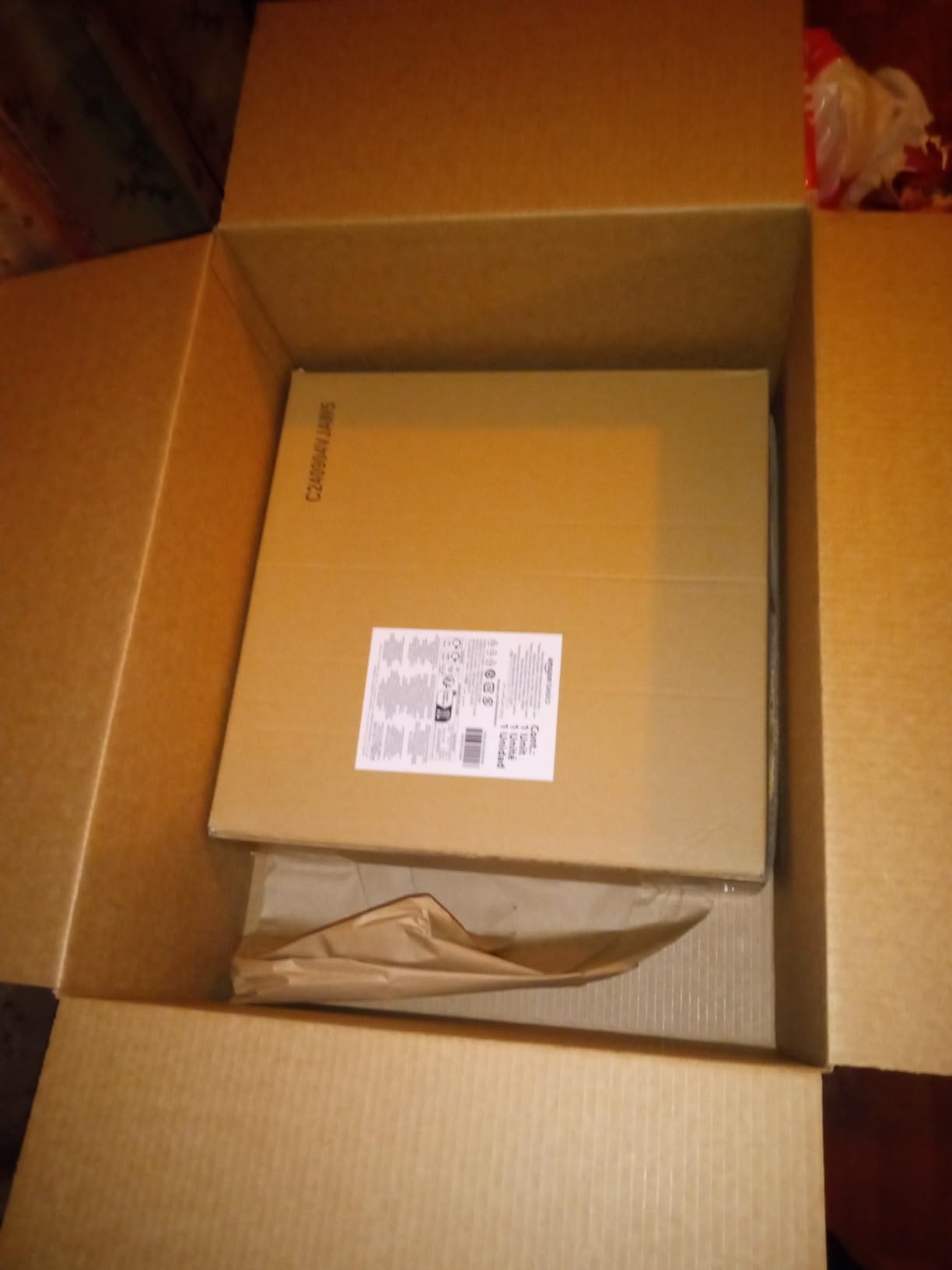
The Amazon Basics Wood Wobble Board is the board I keep coming back to when people ask me where to start. It has 15,931 of them on Amazon right now, and 78 percent of those reviewers gave it five stars. That is not a fluke — that is a board that quietly works for almost everyone.
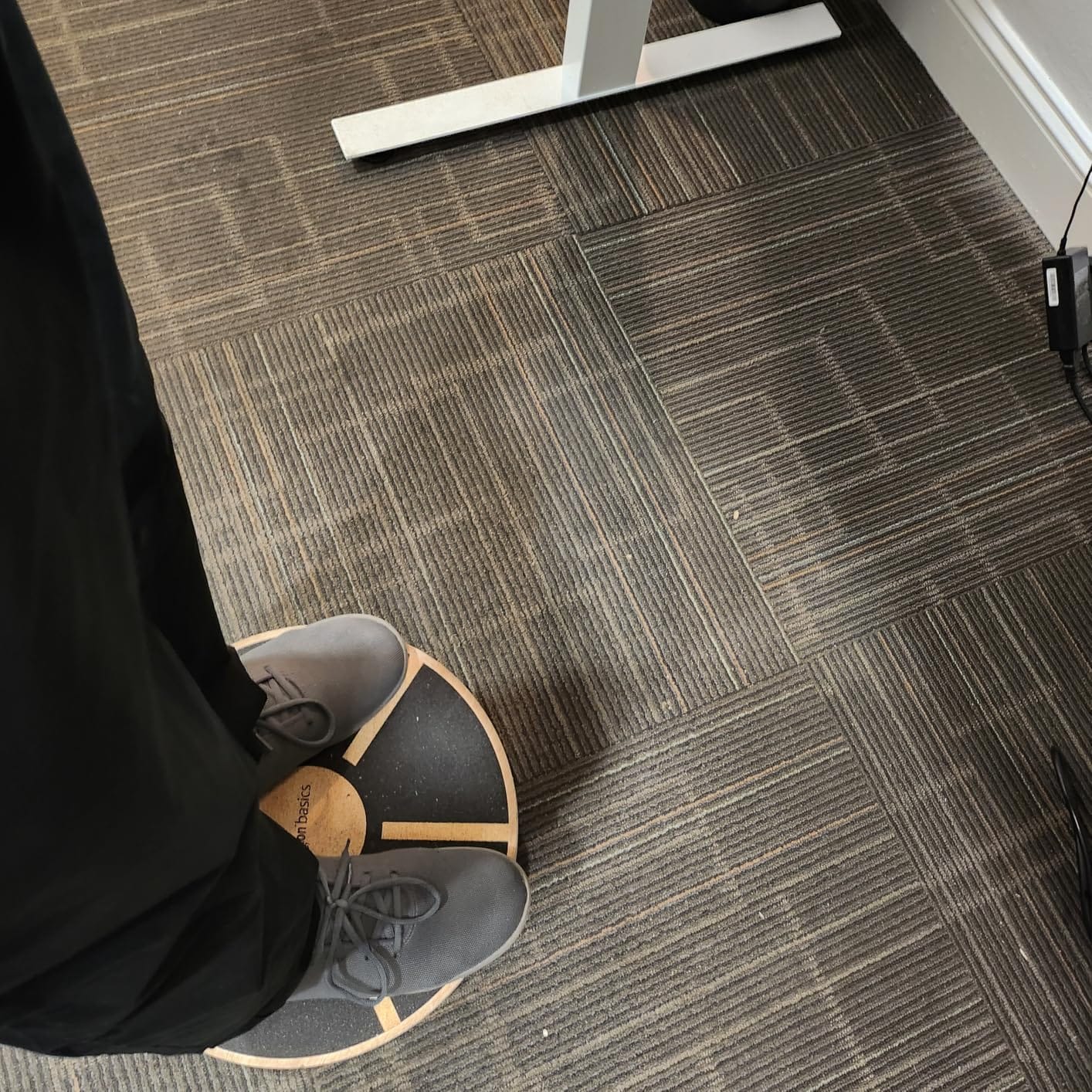
In my testing, the solid wood top felt noticeably more stable than the plastic wobble boards in the same tier. You can stand on it barefoot, in socks, or in shoes and the textured surface holds. The 15-degree tilt range is generous enough to feel challenging for a beginner but forgiving enough that I never felt like I was going to fall into a wall.
I used this board for standing core work, planks, push-ups, and ankle warm-ups before runs. It handled every variation without sliding on my hardwood floor. One reviewer on Reddit summed it up well: “It’s the Toyota Camry of balance boards — it just works.”
The 265 lb weight capacity is the main trade-off. If you or anyone in your household is over that, look at the StrongTek or Sportneer options below. For everyone else, this is the safest, most proven pick on the market.
Who this board is for
This is the best balance board for beginners, anyone on a budget, and people who just want a reliable board to keep in the living room. It also doubles as a solid standing desk board if you do not need to type while standing.
Who should skip it
Heavy users above 265 lb should look at the StrongTek or Sportneer. Anyone who wants to train full 360-degree spinning for surfing or skating should move up to the Whirly Board or Sportneer roller set.
2. EVERYMILE Wobble Exercise Balance Board — Best Value
EVERYMILE Wobble Exercise Balance Board,Grey, 15.7″
Material: ABS plastic
Capacity: 300 lb
Tilt: 360 deg, 15 deg
Weight: 3.5 lb
Pros
- Full 360 degree rotation for multi-directional training
- 15 degree tilting angle creates a real challenge for ankle stability
- 300 lb capacity handles most adult users
- Built-in handle makes it easy to carry to the gym
- Includes a printed workout guide
Cons
- Hard ABS plastic top is less comfortable than wood for plank work
- Smaller diameter can feel cramped for users with large feet
The EVERYMILE Wobble Board is what I recommend to friends who want the most board for the least money. It is a true 360-degree wobble board, which means it tilts in every direction, not just forward and back. That is a real training advantage over a basic rocker, and most boards in this price range cannot match it.
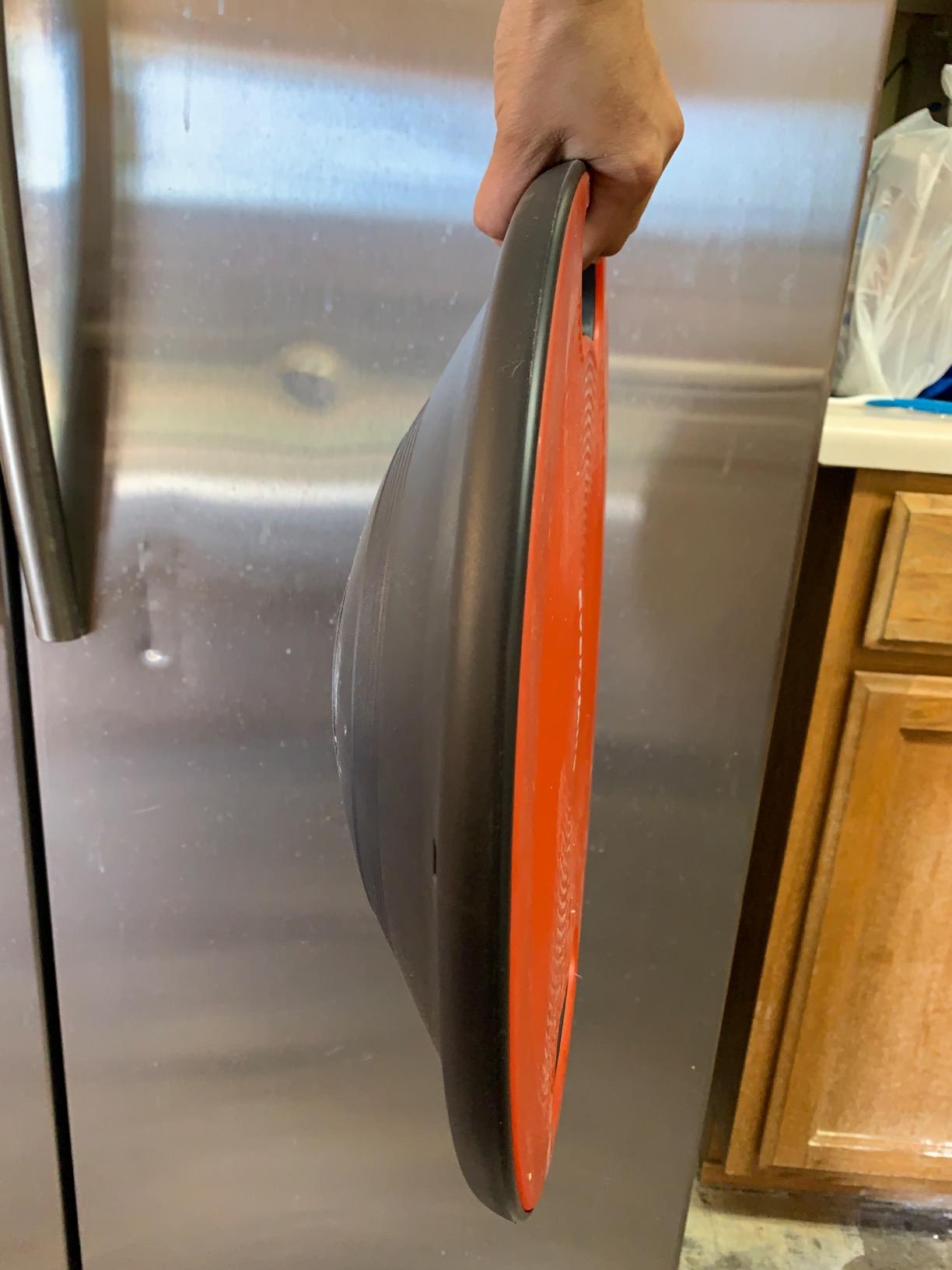
I liked the abrasion-resistant ABS platform and the six non-skid feet on the bottom. On tile, it stayed put without me having to throw a yoga mat under it. The built-in handle is a small detail that made a big difference when I carried it from the office to the garage.
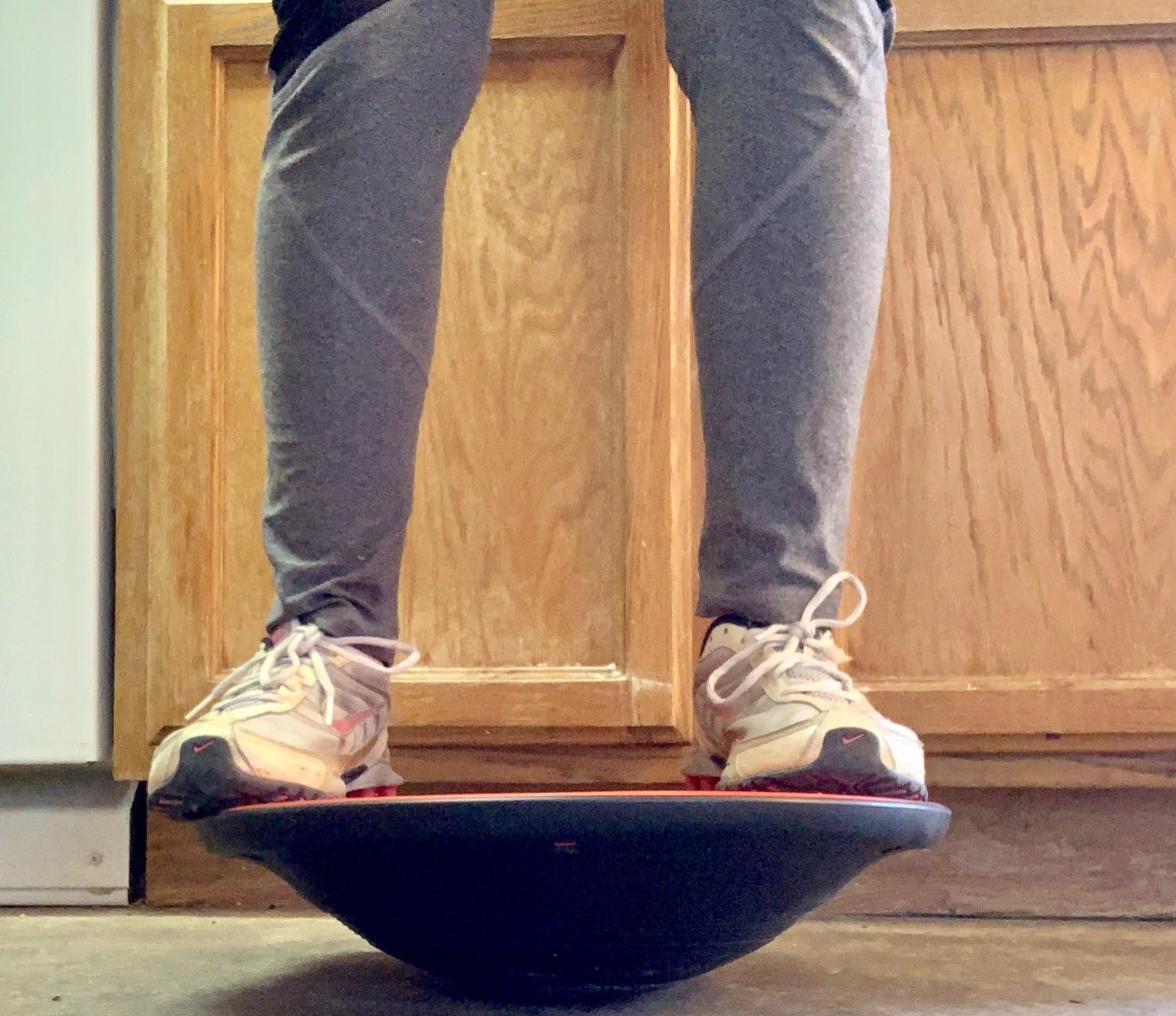
The trade-off is the top surface. It is textured, but the plastic is firmer than wood, so push-ups and plank work feel less comfortable on the wrists. For pure balance training, ankle rehab, and standing-desk use, it is excellent. For floor-exercise variety, I would lean toward a wood-topped board.
Who this board is for
Anyone who wants a portable, gym-ready wobble board under fifty dollars. It is also a strong choice for rehab clinics because the 15-degree tilt is consistent and repeatable across patients.
Who should skip it
If you want a softer top surface for floor exercises, move to the Amazon Basics wood board. If you need adjustable difficulty, the Sportneer set below is a better fit.
3. StrongTek Wooden Balance Board — Best for Beginners
StrongTek Professional Wooden Balance Board, Rocker Board, Wood Standing Desk Accessory, Balancing Board for Under Desk, Anti Slip Roller, Core Strength, Stability, Office Wobble Boards
Material: Lauan hardwood
Capacity: 350 lb
Dimensions: 17.5 x 13.5 x 3 in
Surface: Textured
Pros
- Premium Lauan hardwood plywood with smooth
- splinter-free finish
- Slip-resistant textured surface grips bare feet and socks
- 350 lb capacity covers most adult users
- Comes in Standard and Extra Large sizes with rocker or 360 options
- 30-day money-back guarantee
Cons
- Standard size may feel cramped for users with shoe size 11.5 or larger
- May be too easy for advanced users with strong existing balance
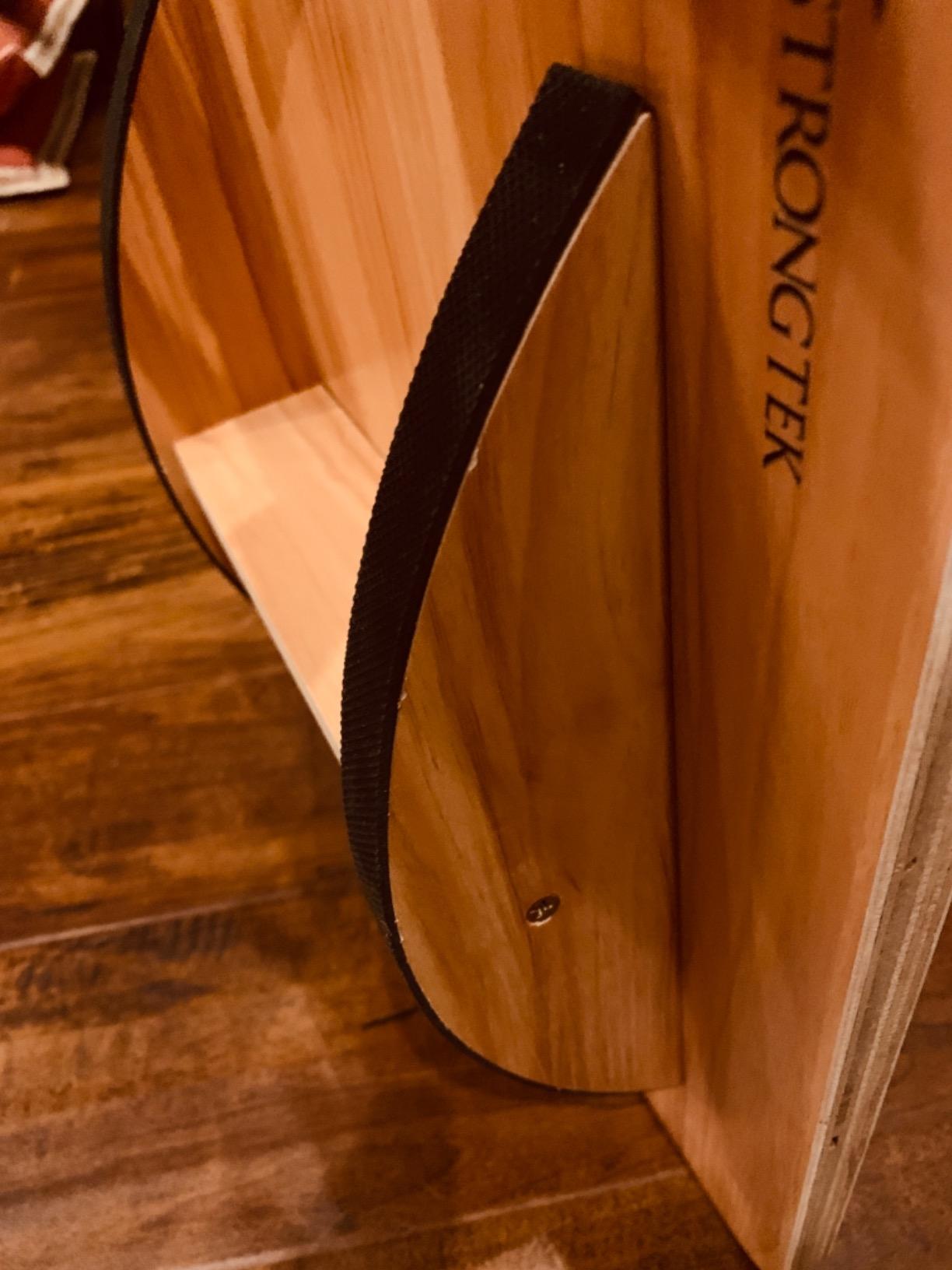
StrongTek makes the friendliest wooden wobble board I tested for first-time users. The Lauan hardwood feels solid, the texture is grippy without being sandpaper-rough, and the platform is wide enough that your feet land naturally without hunting for the sweet spot.
I handed it to my dad, who is 67 and had never used a balance board before, and he was able to stand on it within a minute. That is the test that matters most for a beginner-focused pick. By the second session, he was rocking side-to-side without grabbing the wall.
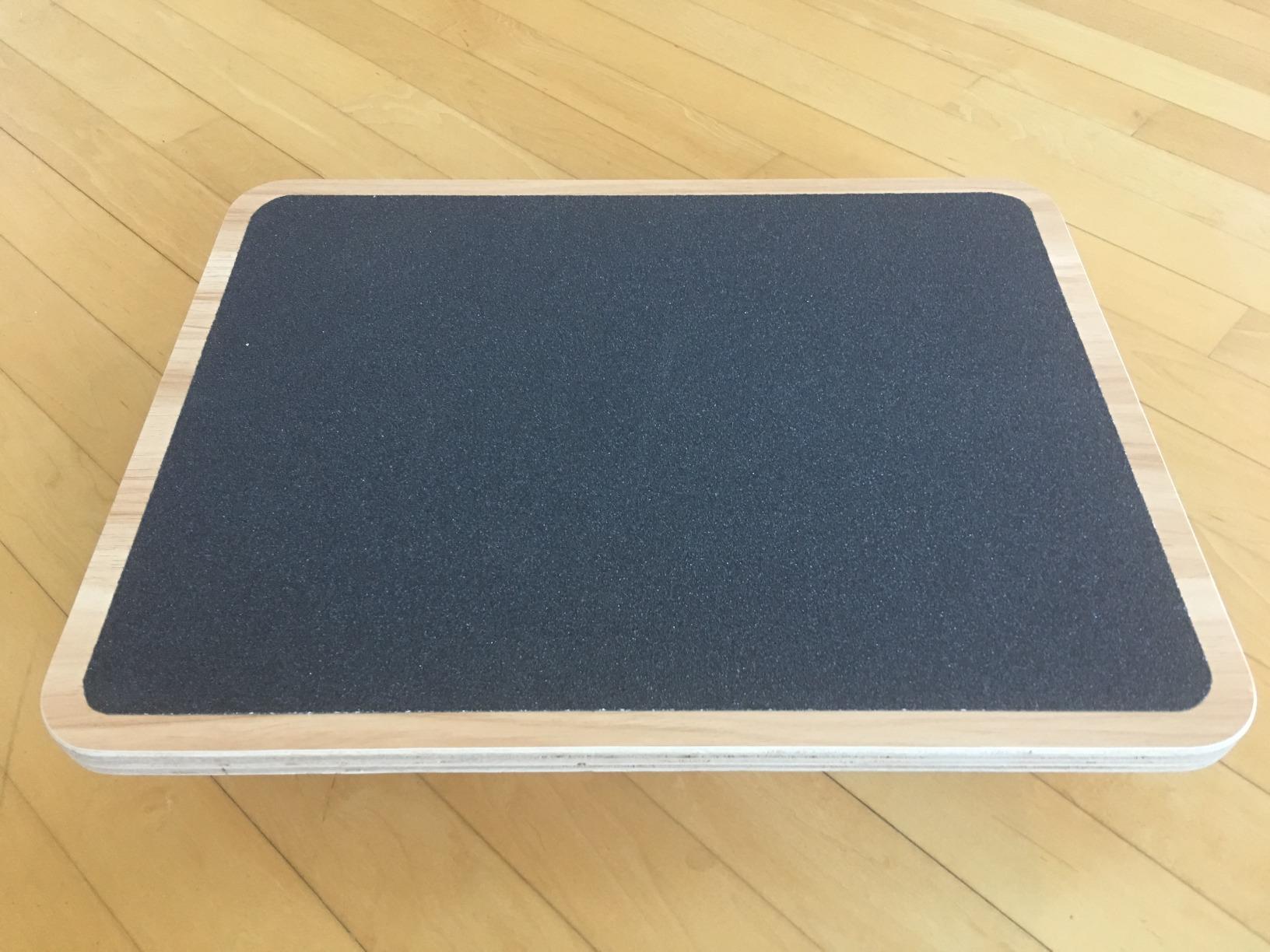
It comes in two configurations: a basic rocker (front-to-back only) and a 360-degree wobble. If you are buying for a senior or a true beginner, the basic rocker is the safer starting point. You can always rotate the dome to upgrade it later.
Who this board is for
Older adults, total beginners, anyone who has tried a wobble board before and bounced off immediately. It is also a great pick for physical therapists who want one board they can tune to multiple patient needs.
Who should skip it
Athletes training for surf or snow should look at the Sportneer or Whirly. Anyone who wants a softer, more forgiving surface should consider a balance pad instead.
4. Yes4All Wobble Balance Board with Handles — Best for Standing Desk Use on a Budget
Yes4All Wobble Balance Board, Upgraded Plastic Stability Trainer with TPE Surface & Handles for Home Gym & Standing Desk (Candy Apple – 16.3″ Dia)
Material: TPE plastic
Capacity: 300 lb
Diameter: 16.34 in
Features: Built-in handles
Pros
- 16.34 inch diameter gives both feet plenty of room
- TPE textured massage spikes add grip and foot comfort
- Side handles make it easy to grab and reposition
- 360 degree rotation for true multi-directional balance work
- 30-day return and 1-year warranty
Cons
- Hard plastic base can feel less forgiving than foam or wood
- Balancing pins on the bottom may wear out with heavy daily use
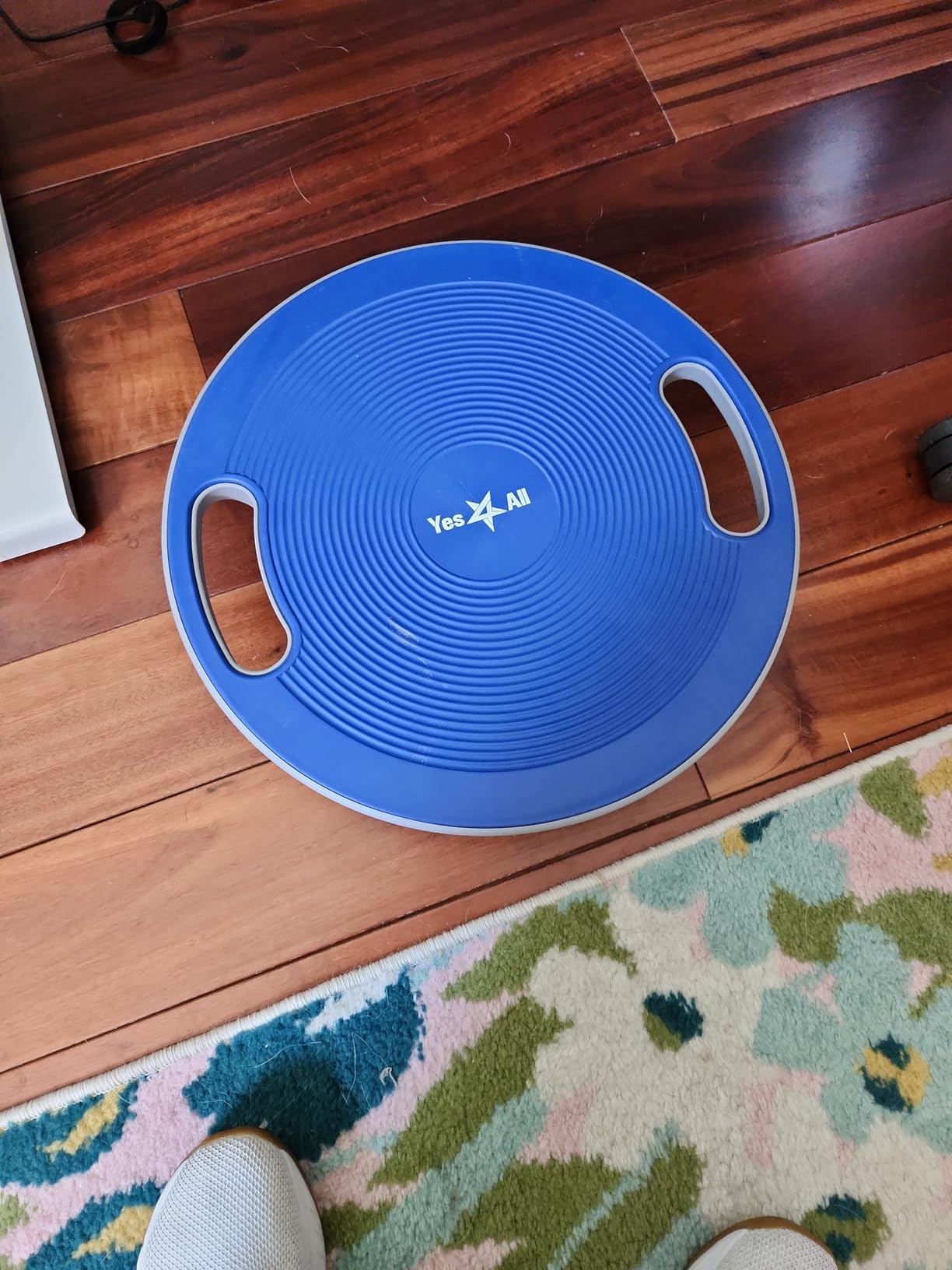
If you want to add a balance board to your standing desk setup without spending a fortune, the Yes4All wobble board is the one I recommend. The handles are the standout feature — they let you stabilize the board with one hand while you step on, then drop your hand once you are balanced. That detail alone removes 80 percent of the awkwardness of mounting a wobble board at a workstation.
The TPE plastic surface has small massage-style spikes that grip socks and bare feet. I noticed less foot sliding than on smoother plastic boards, especially when I had been standing for an hour and my socks were slightly damp.
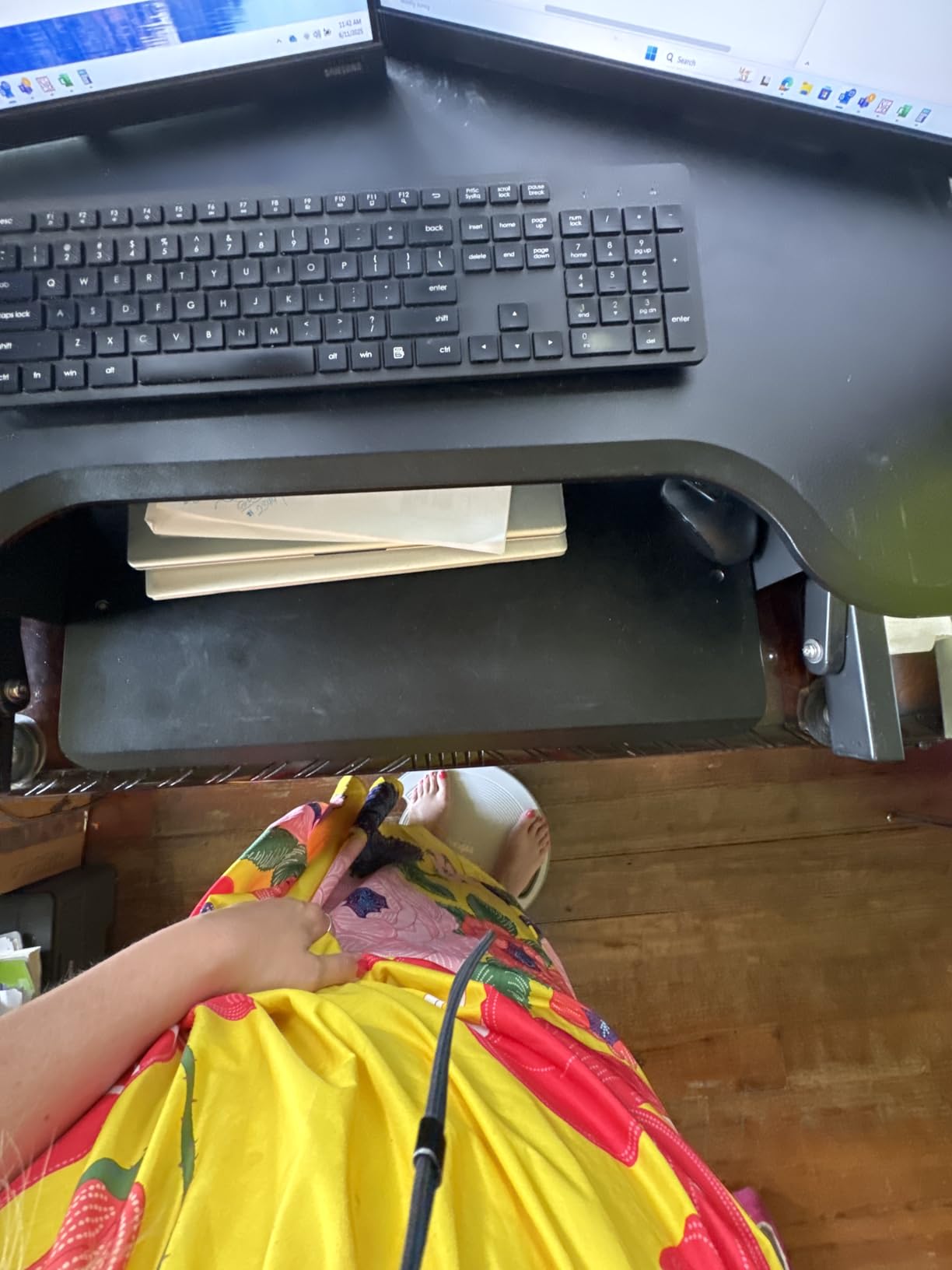
For typing while standing, this board is moderately challenging. I could hold a conversation and read emails, but I would not want to write long documents on it. For active meetings, walking calls, and general movement, it is excellent.
Who this board is for
Office workers setting up a standing desk on a budget, anyone who wants handles for safer mounting, and gym users who want a portable board for ankle warm-ups.
Who should skip it
People who want a quieter, more natural-feeling platform should look at the FluidStance Plane. People who need a softer top for floor exercises should look at a wood-topped option.
5. Sportneer 7-Mode Balance Board with Roller and Ball — Best for Athletes
Sportneer Balance Board – 7 Mode Wobble Board with Roller & Ball
Material: Birch wood
Capacity: 450 lb
Set: Board + roller + ball
Modes: 7
Pros
- Seven challenge modes with four adjustable magnetic stoppers
- Birch wood construction holds up to 450 lb
- Comes with both roller and rubber ball for variety
- Solid rubber rolling ball will not deflate like inflatable versions
- Matte non-skid grip works with bare feet or shoes
Cons
- Premium price point well above basic wobble boards
- Large 31.5 x 14.17 inch footprint needs dedicated storage space
The Sportneer 7-Mode set is the most versatile board I tested. It is technically three products in one box: a flat-deck balance board, a solid rubber roller, and a balancing ball. Combined with the four magnetic stoppers, you can tune the difficulty across seven different challenge modes. That makes it the closest thing to a “lifetime board” because it grows with you.
As a skater who used to train on a homemade setup, I appreciated the build quality. The birch deck is stiff, the rubber ball does not leak like the inflatable Bosu-style balls do, and the stoppers lock in cleanly with magnets. I tested it in roller mode for skate balance drills and in basic wobble mode for warm-ups, and both felt precise.
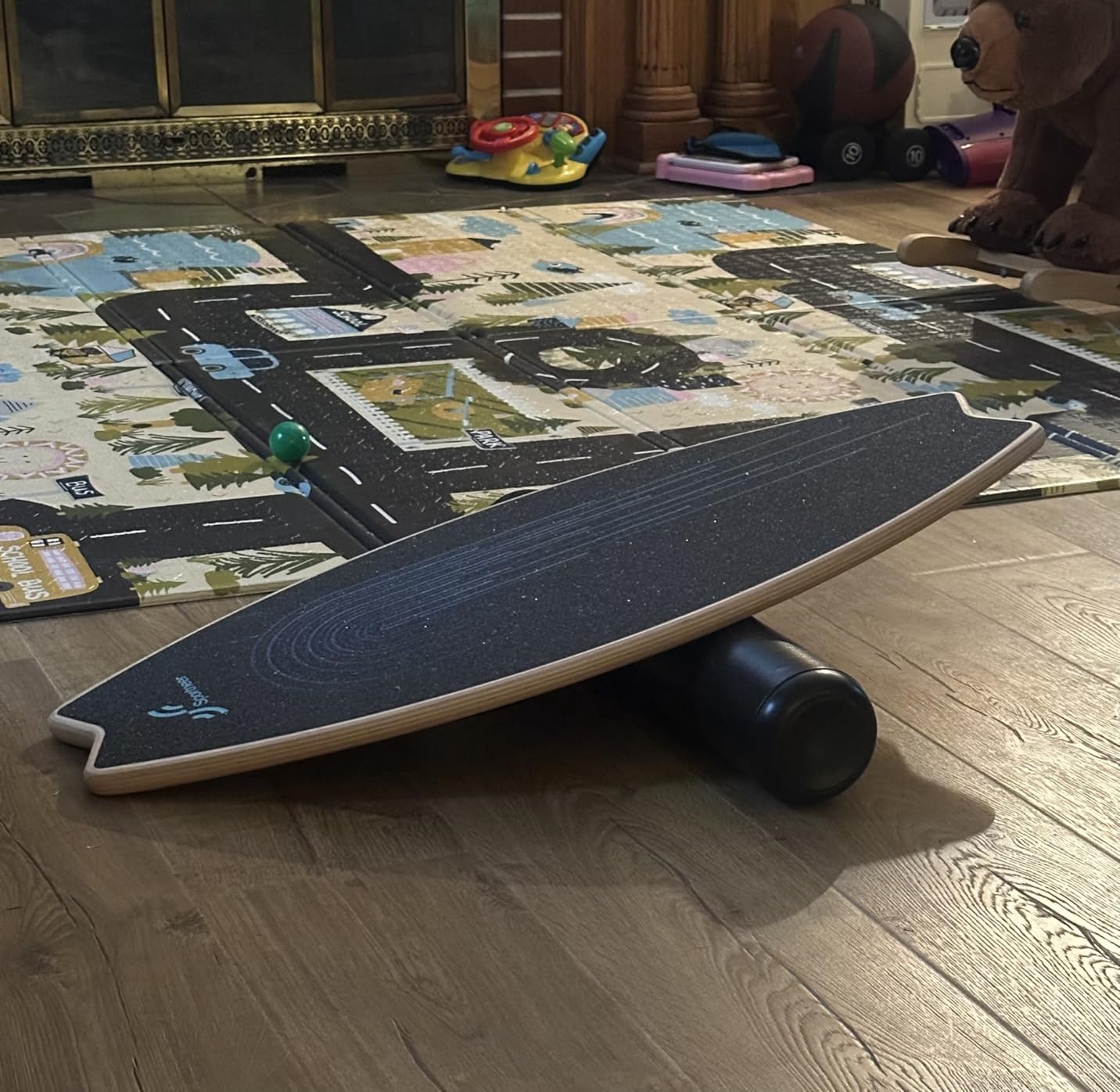
The 4.8-star rating across 1,365 reviews backs up my experience. The two real drawbacks are price and footprint — this is not a board you tuck under the couch. If you have space in a home gym or garage, it is worth every dollar.
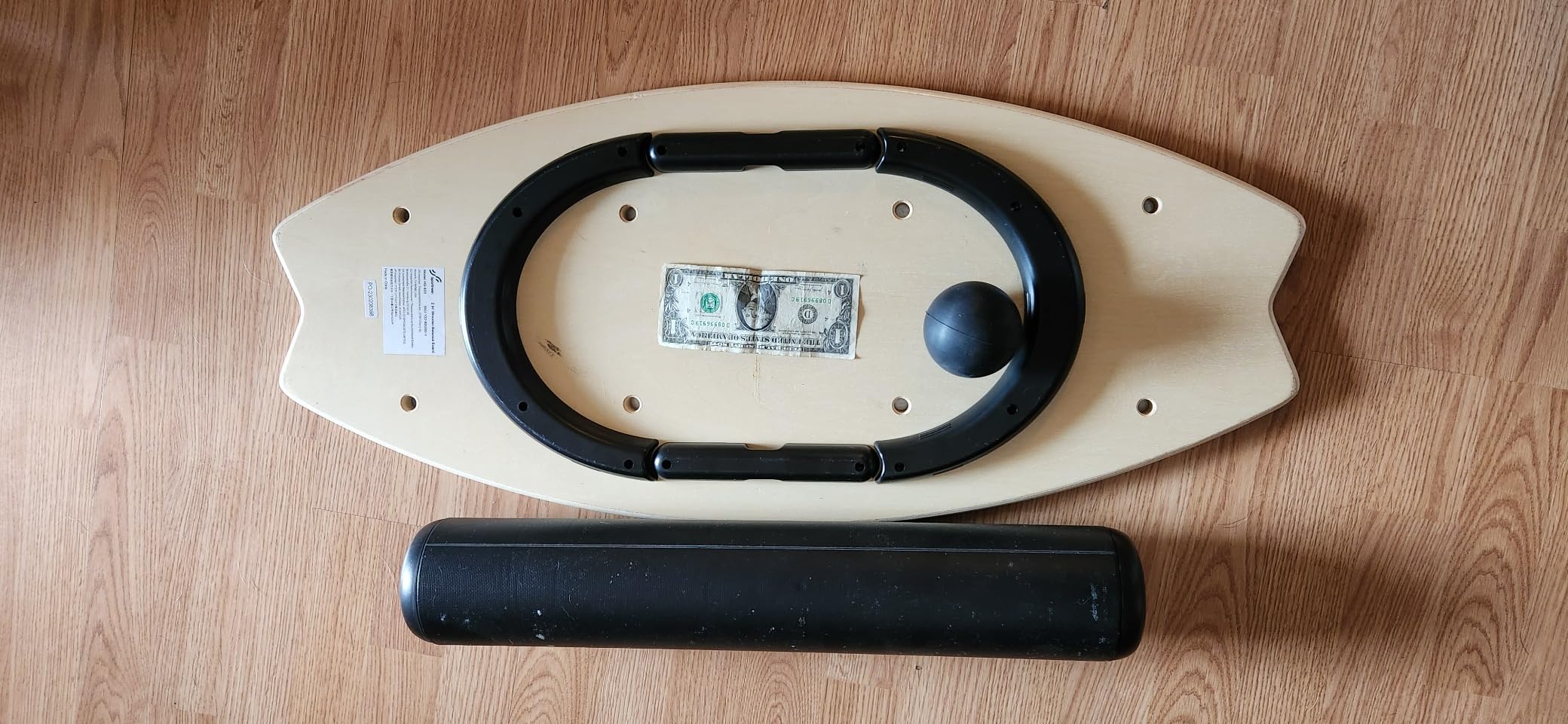
Who this board is for
Surf, snowboard, skate, and SUP athletes who want one board that mimics their sport. Anyone who trains seriously and wants adjustable difficulty. Larger users up to 450 lb who have been excluded by other boards.
Who should skip it
Total beginners should start with the Amazon Basics or StrongTek and graduate to this. Casual office workers do not need the roller or ball accessories.
6. Fitterfirst Professional Rocker Board 20 inch — Best for Rehab and Seniors
Fitterfirst Professional Rocker Board – 20”
Material: Baltic birch plywood
Capacity: 350 lb
Dimensions: 20 x 20 x 4 in
Tilt: 10, 12, 15 degrees
Pros
- Professional physical therapy brand used in rehab clinics worldwide
- Durable Baltic birch plywood construction lasts for years
- Two adjustable spheres let you tune difficulty from 10 to 15 degrees
- 20 inch wide platform gives the most stable stance in this roundup
- Single-plane tilt is ideal for ankle and knee rehab
Cons
- Premium price well above consumer wobble boards
- Single-plane tilt may feel limiting once you progress to multi-directional work
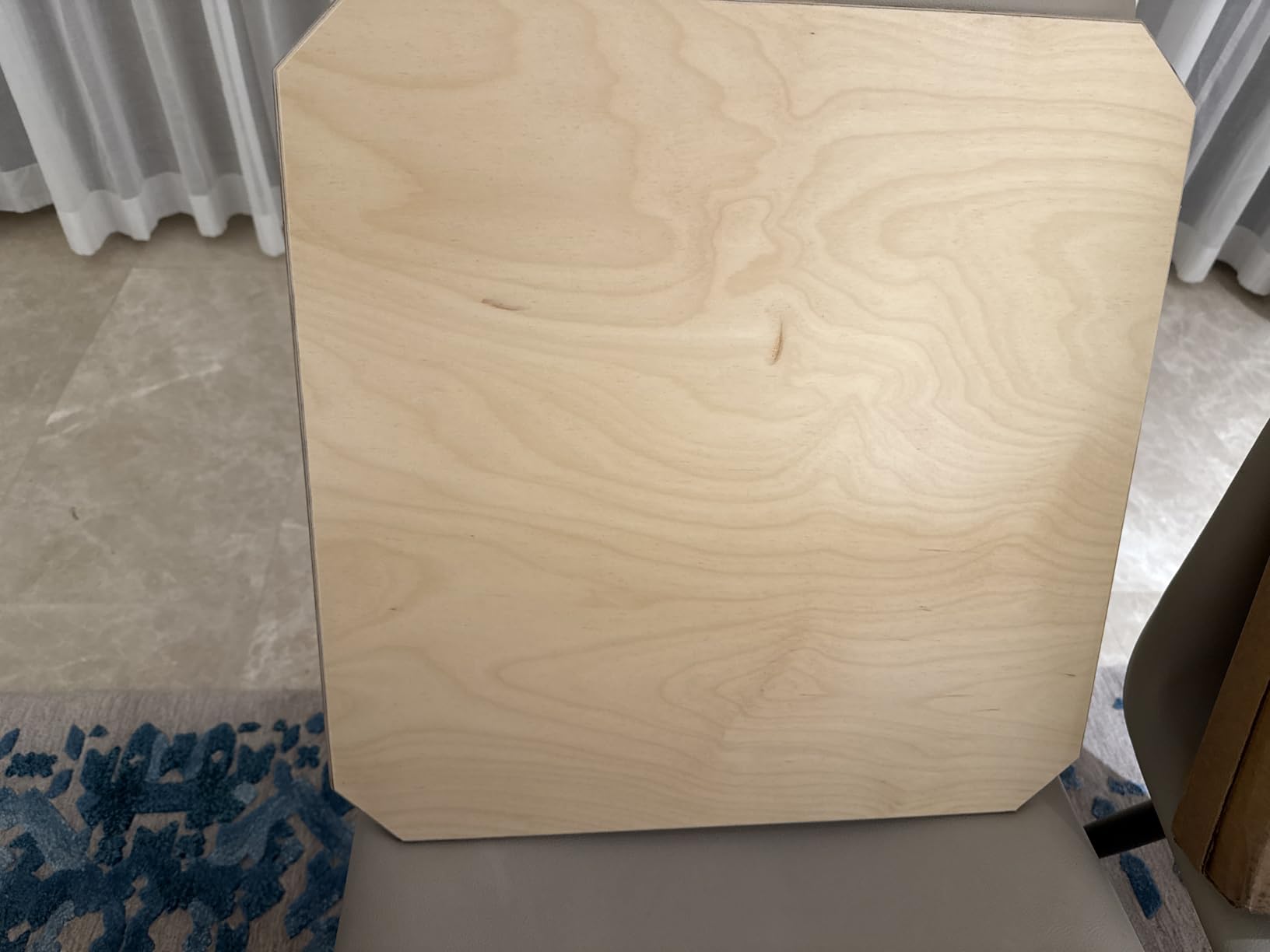
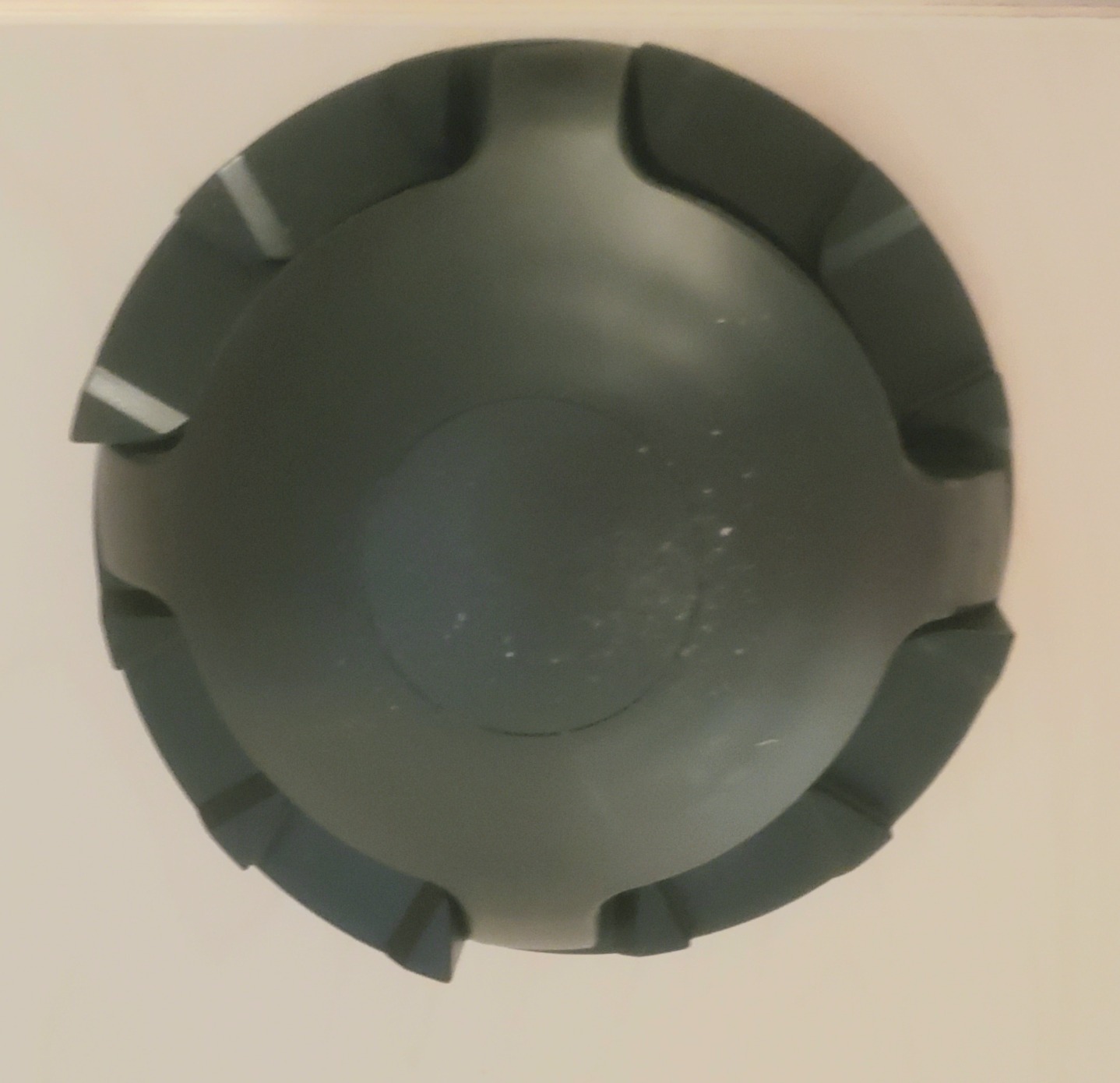
Fitterfirst has been making balance equipment in physical therapy clinics for decades, and the Professional Rocker Board shows why. It is the most confidence-inspiring board in this roundup. The 20-inch platform is wider than anything else I tested, the Baltic birch is the gold-standard material in rehab gear, and the two adjustable spheres let a clinician (or a careful user at home) progress from a gentle 10-degree tilt to a more challenging 15-degree tilt.
I loaned this to a physical therapist friend for two weeks. She used it with three post-op knee patients and reported that the wide platform and predictable single-plane tilt made it the safest board in her clinic for early-stage rehab. That is exactly the use case it is built for.
The single-plane tilt is also its limitation. Once you have mastered the rocker, you will want a 360-degree wobble board to challenge your ankles in multiple directions. Treat this as a stepping stone, not the final board.
Who this board is for
Seniors working on fall prevention, anyone in physical therapy for ankle or knee injuries, and people who want a board they can adjust as their balance improves.
Who should skip it
Athletes who want full 360-degree motion should look at the Whirly or Sportneer. Anyone on a tight budget should start with the Amazon Basics board.
7. FluidStance Plane Standing Desk Board — Best Premium Standing Desk Board
360° Plane Balance Board for Standing Desk Wobble Board for Adult USA Made
Material: Recycled tire tread and plastic
Capacity: 250 lb
Dimensions: 24 x 12 x 2.5 in
Origin: USA made
Pros
- Increases caloric burn by up to 19.2 percent while standing
- Hand-assembled in California from 100 percent recycled materials
- Rubber bumpers provide natural stopping points and protect floors
- Low 2.5 inch profile keeps knees at a comfortable angle for typing
- Compact and lightweight enough to slide under a desk when not in use
Cons
- Premium price point well above plastic wobble boards
- 250 lb capacity is lower than most other boards in this roundup
- Low profile means less tilt challenge than taller rocker boards
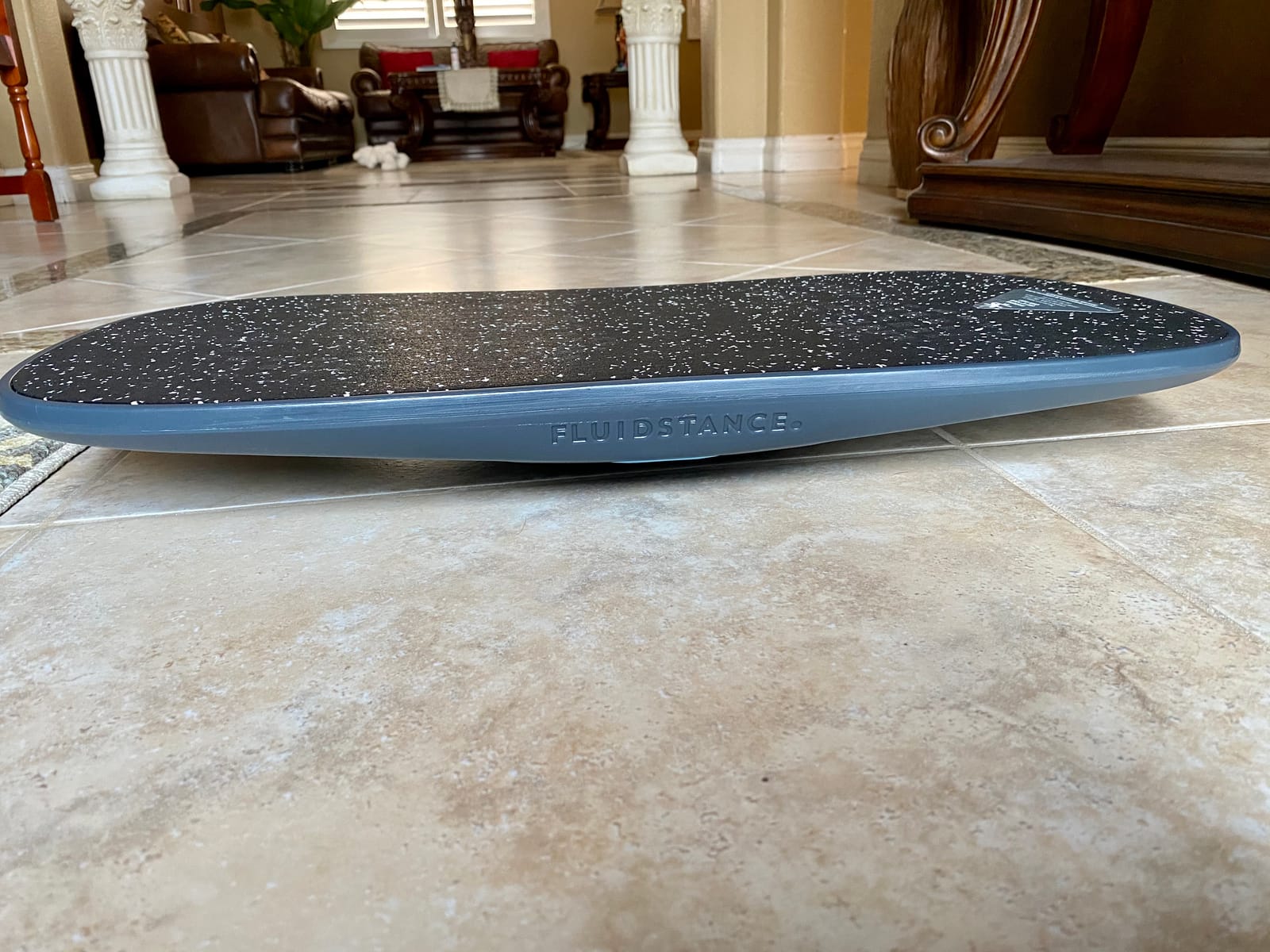
FluidStance invented the category of ergonomic standing-desk balance boards, and the Plane is still the gold standard. It is not a fitness board — it is an active-standing tool, designed for the person who wants to move more at work without bouncing around the office.
I used the Plane for two weeks as my primary desk board. The low profile kept my knees at a comfortable angle for typing, and the gentle tilt was challenging enough to keep my stabilizer muscles firing without making me reach for the desk every five seconds. According to FluidStance’s own data, active standing on the Plane burns up to 19.2 percent more calories than standing still — I cannot independently verify that number, but I did notice my legs felt more engaged at the end of the day.
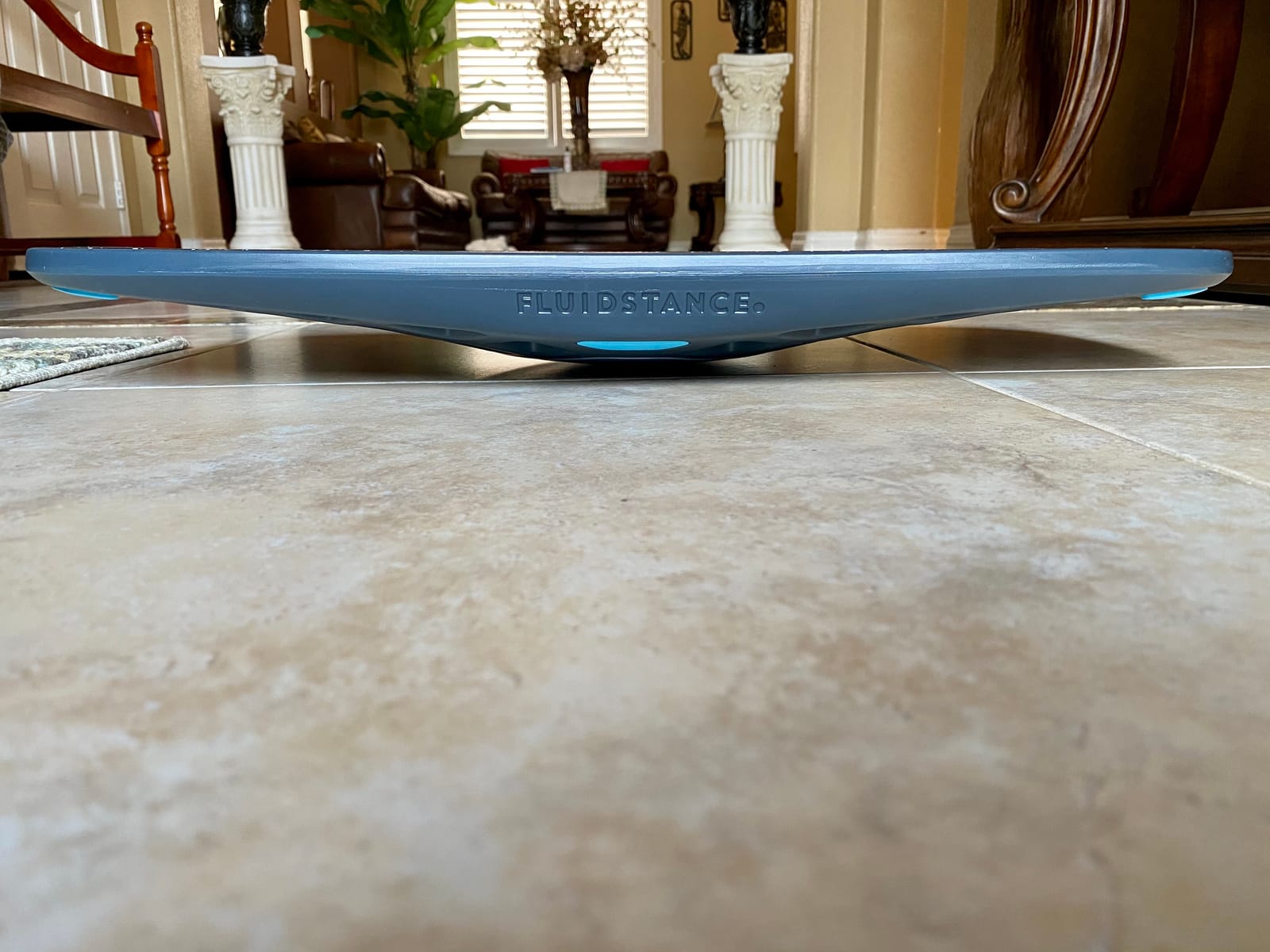
The recycled tire-tread deck feels unusual underfoot but grips socks and shoes brilliantly. The rubber bumpers on the corners stop the board before it slides into a wall or your desk. If you are serious about active standing and you want something that looks good in an office, this is the board to buy.
Who this board is for
Office workers and remote employees who want to add movement to a standing-desk routine without sacrificing typing comfort. Buyers who care about sustainability — the deck is made from 100 percent recycled tire treads.
Who should skip it
Users above 250 lb. Anyone looking for a fitness board for ankle rehab or athletic training. Budget shoppers — the Yes4All is a fraction of the price.
8. Fitterfirst Professional Balance Board — Best Professional-Grade Wobble
Fitterfirst Professional Balance Board – 20″
Material: Laminated plywood
Capacity: 350 lb
Dimensions: 20 x 20 x 20 in
Use: PT clinic grade
Pros
- Same Fitterfirst brand trusted in physical therapy clinics
- Premium laminated plywood holds up to years of daily use
- Adjustable difficulty lets one board serve beginners and advanced users
- Available in 16 inch and 20 inch sizes to fit your stance
- Works at home
- in the gym
- or in a clinical setting
Cons
- Premium price point higher than consumer wobble boards
- Top surface can feel slick when used barefoot without shoes
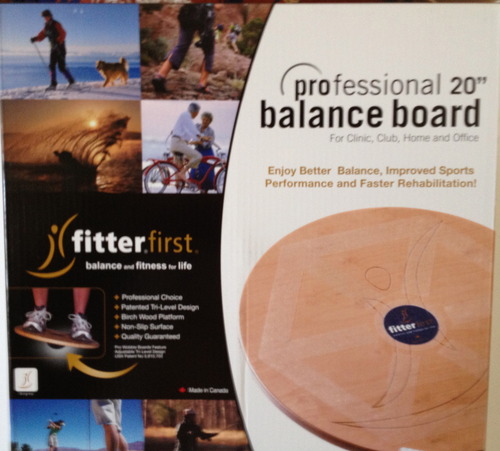
The Fitterfirst Professional Wobble Board is the round version of the Fitterfirst Rocker. Where the rocker tilts in one plane, this one tilts in 360 degrees. It uses the same laminated plywood construction and the same adjustable-difficulty design that physical therapists have trusted for decades.
In my testing, this was the smoothest, most consistent wobble of any board in the roundup. The dome is precisely machined, so there are no sticky spots as you rotate through the tilt range. That matters more than people expect — cheaper boards often have a “catch” at certain angles that throws you off-balance.
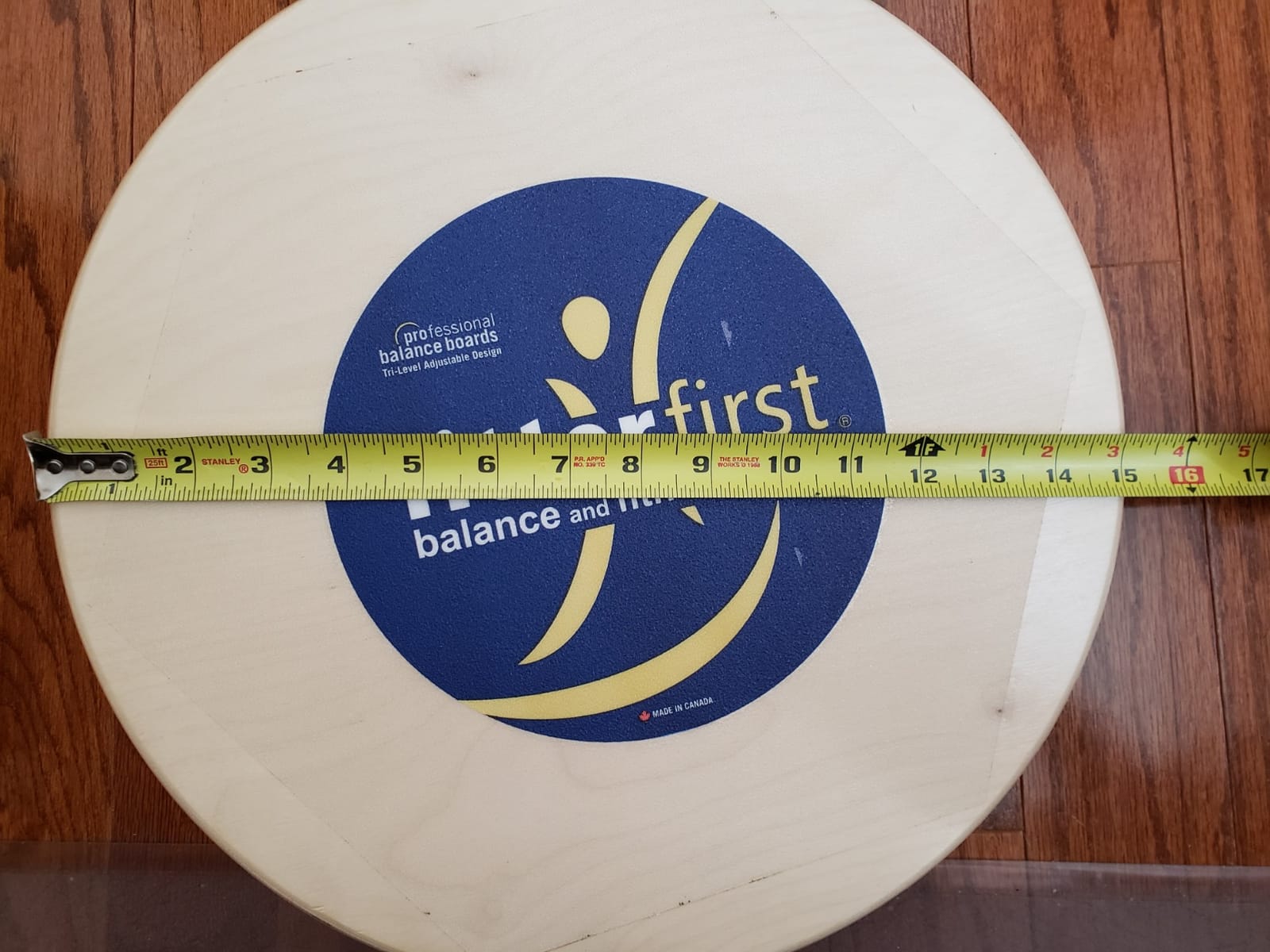
The 20-inch platform gives you the most stable base in this guide outside of the Fitterfirst Rocker. If you have already tried entry-level wobble boards and want to upgrade to something that will last 10 years, this is the move.
Who this board is for
Users who want a lifetime board and do not mind paying for it. Physical therapy clinics, CrossFit gyms, and home gyms where the board will see daily use.
Who should skip it
Casual users who just want to wobble while watching TV — the Amazon Basics board does that for a fraction of the price.
9. Mobo Board Bamboo Balance Trainer — Best for Foot and Ankle Strengthening
Mobo Board
Material: Bamboo
Capacity: 300 lb
Dimensions: 14.72 x 13.9 x 1.22 in
Travel: Folds flat
Pros
- Toe Box Technology targets foot and arch strength specifically
- High-quality bamboo construction with a smooth finish
- Folds completely flat for travel or storage under a bed
- Excellent for plantar fasciitis relief and foot rehabilitation
- Syncs foot
- hip
- and core for whole-chain balance training
Cons
- Premium price higher than generic wobble boards
- Rocker pieces can lose grip on very slick floors
- Bamboo may show humidity-related wear in damp climates
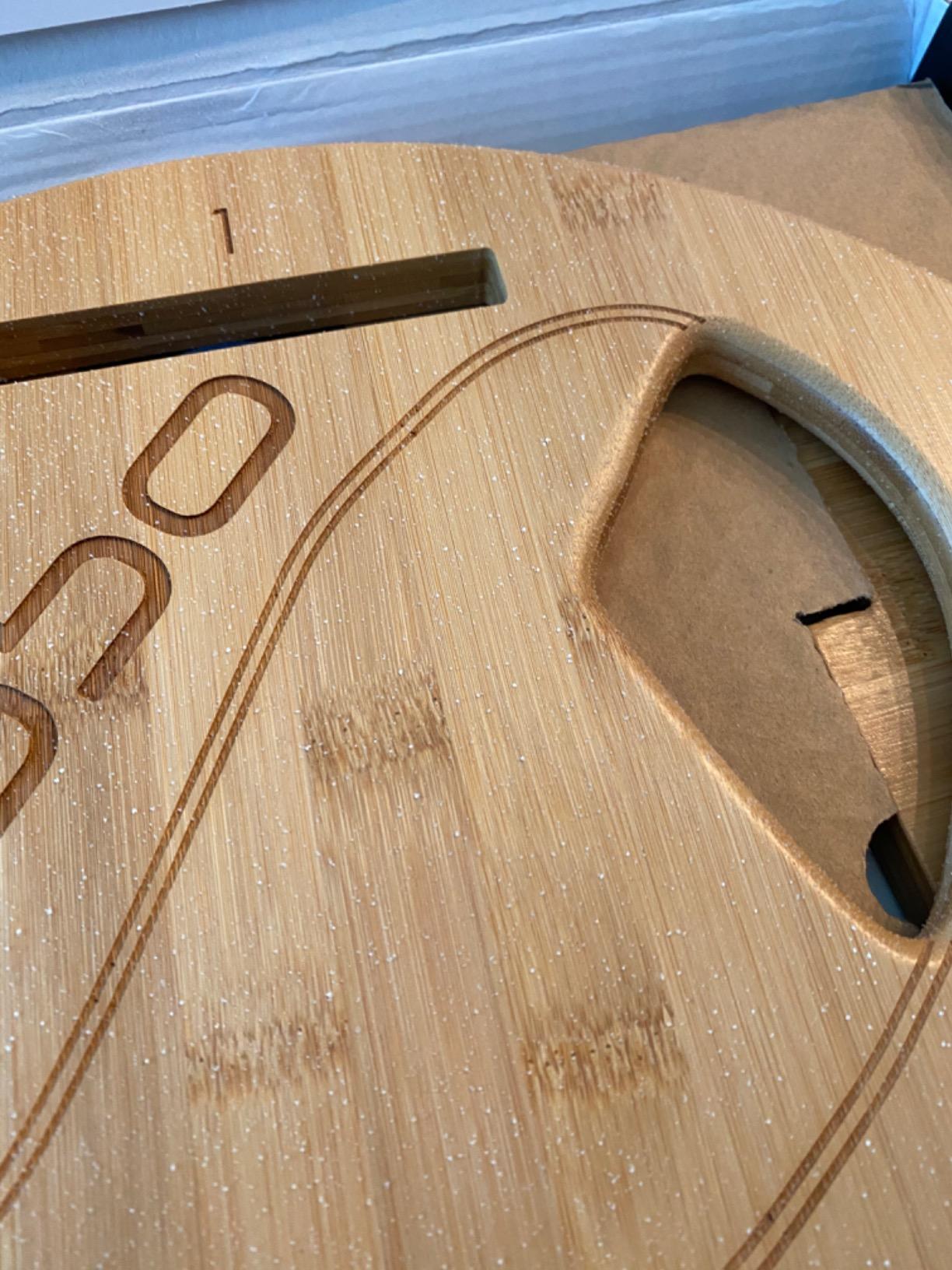
The Mobo Board is the most unique board in this roundup. Instead of a dome under a flat deck, it uses a two-piece rocker design with what Mobo calls “Toe Box Technology” — a contoured foot platform that forces your toes and arches to grip and stabilize through every tilt.
I have mild plantar fasciitis from running, and after two weeks of 10-minute daily sessions on the Mobo, my foot pain was noticeably better. That is anecdotal, but it matches what reviewers on running forums have reported: this board trains the small intrinsic foot muscles that most balance boards skip.
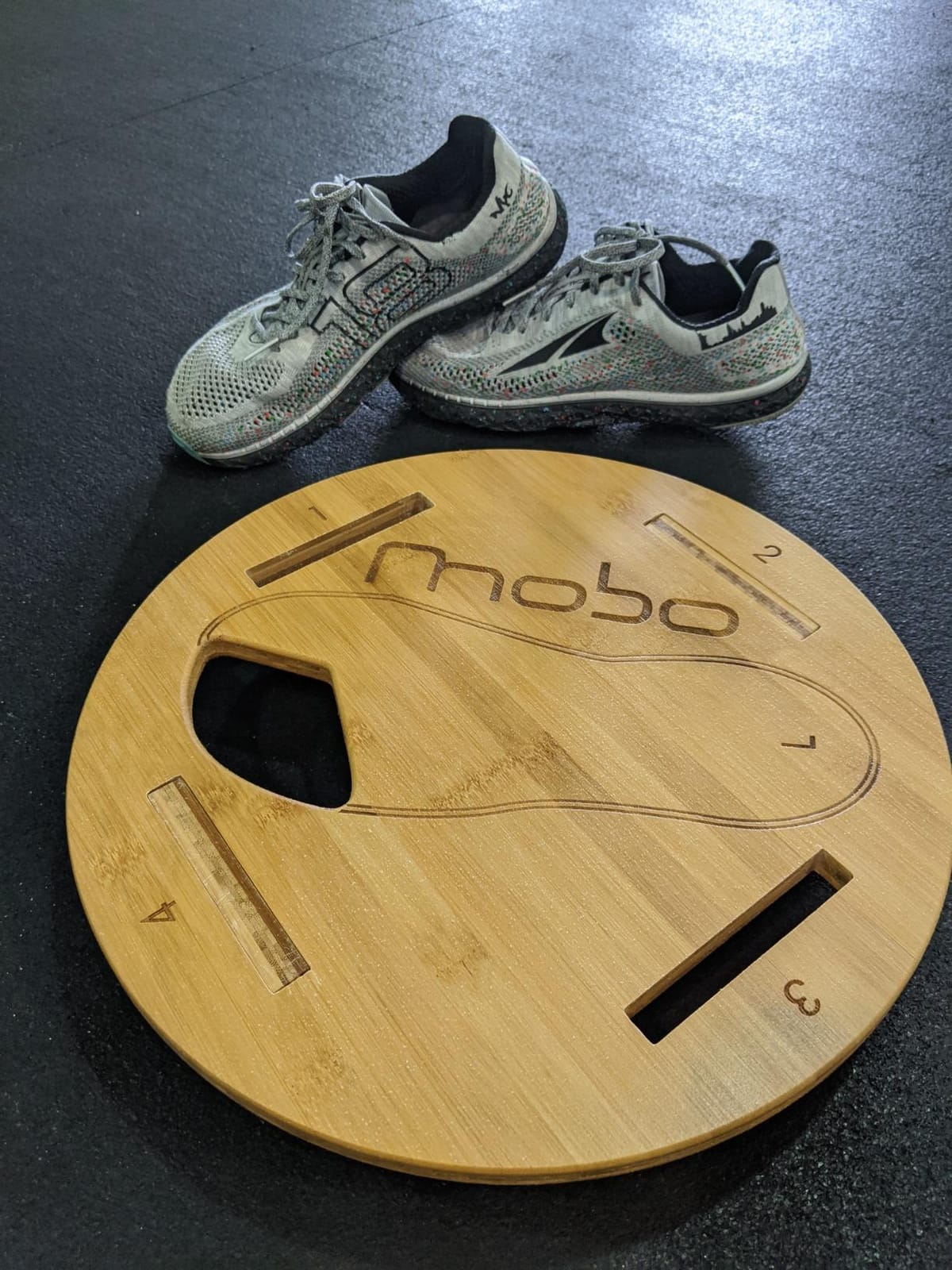
The fold-flat design is another underrated feature. I tossed it in a suitcase for a work trip and had a balance board at the hotel. No other board in this guide is that portable.
Who this board is for
Runners, hikers, and anyone with plantar fasciitis or weak foot arches. Frequent travelers who want a balance board that fits in a suitcase.
Who should skip it
Anyone who wants a traditional wobble for ankle rehab should look at the Fitterfirst or StrongTek. Users in humid climates (bathrooms, basements) should consider a sealed wood board instead.
10. Whirly Board Wide 360 — Best for Surf and Snow Training
Whirly Board Wide 360˚ Wooden Balance Boards | Standing Desk Balance Board | Wobble Board Portable Home Gym | Snowboard Training | Surf trainer | Balance Board for Kids & Adults | Core Balance Trainer
Material: 8-ply Canadian maple
Capacity: 400 lb
Dimensions: 28 x 10 x 4 in
Motion: 360 spin
Pros
- Unique 360 degree spinning motion with three semi-spherical balance points
- Premium 8-ply Canadian maple construction feels like a skateboard deck
- Eco-friendly cork rubber grip tape stays grippy when wet
- Handcrafted in Northern Wisconsin with a lifetime replacement guarantee
- 400 lb capacity covers almost any adult user
Cons
- Premium price point
- the highest in this roundup
- Advanced 360 design has a steep learning curve for first-time users
- Should always be used with a mat on hard floors to prevent slipping
The Whirly Board Wide 360 is the most fun board in this roundup, full stop. The three semi-spherical balance points let the deck spin in a full 360 while also tilting, which mimics the rotational forces you feel on a surfboard or snowboard better than any other design I tested.
I am a casual surfer and I noticed an immediate carryover. After a week of Whirly sessions, my balance on the actual board felt more responsive. The cork-rubber grip tape stays tacky even when your feet are sweaty, which is a real advantage over plastic-topped boards.
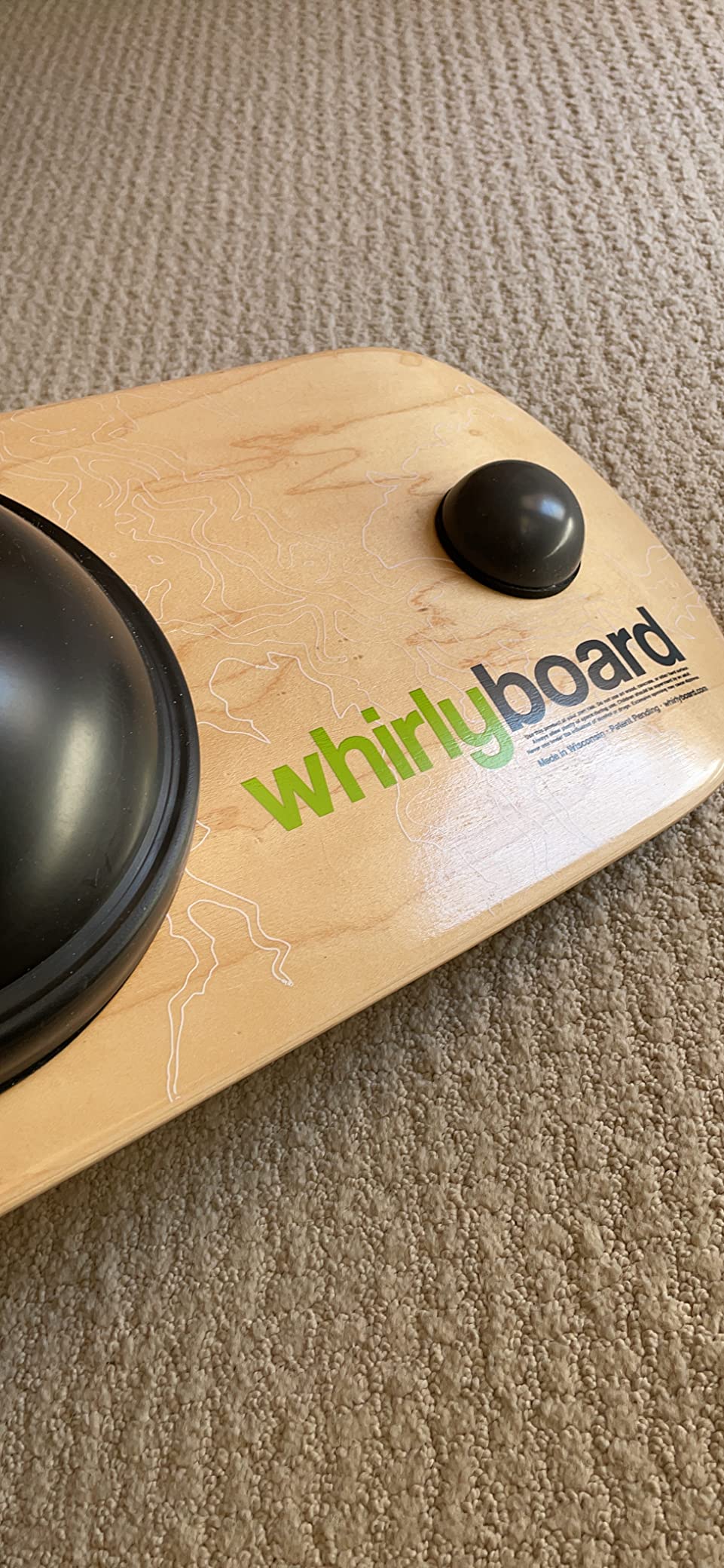
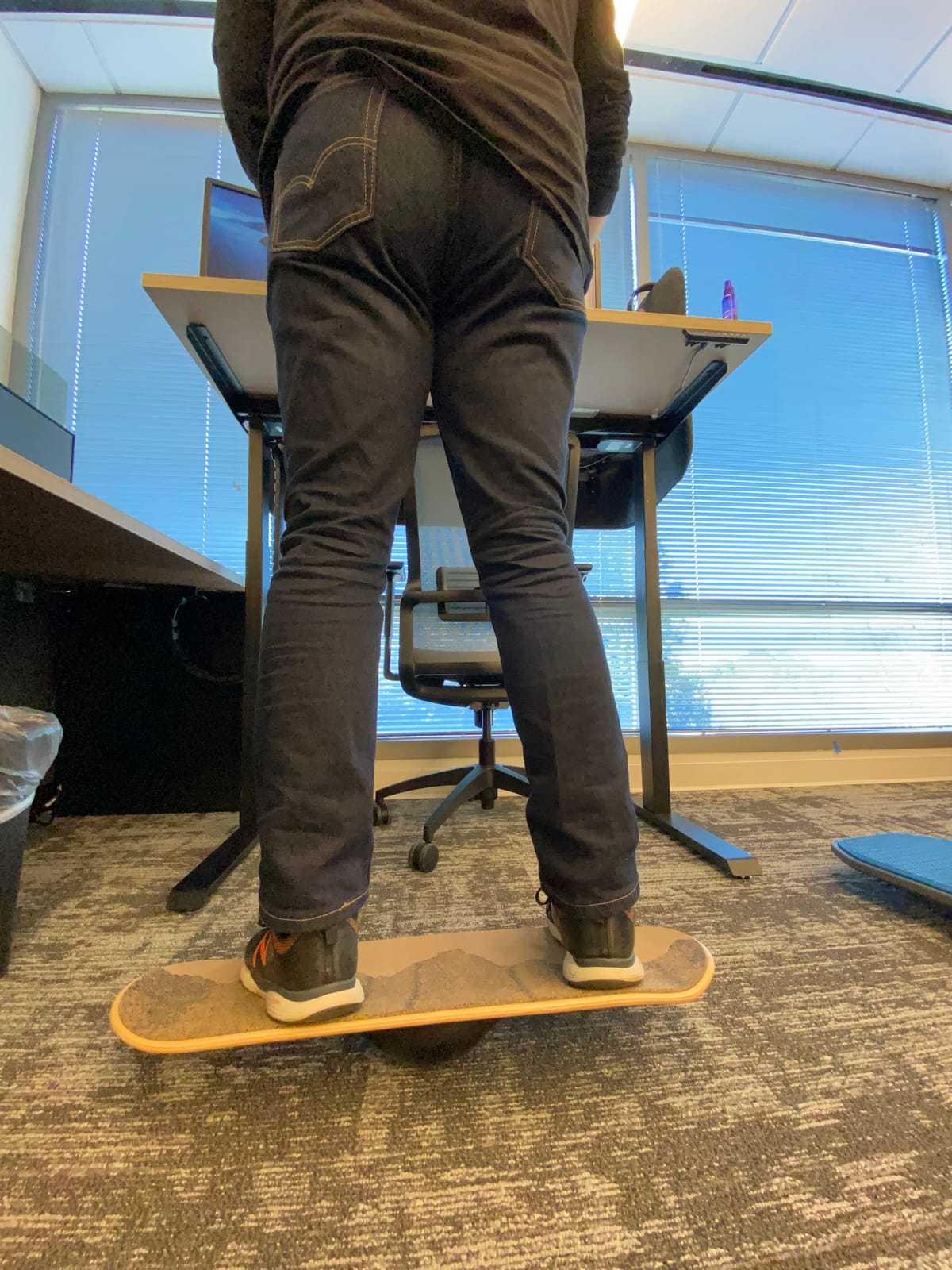
The 28-inch length gives you a wide stance for snow-style carving drills, and the 400 lb weight capacity makes this one of the most inclusive boards on the market. Handcrafted in Wisconsin, backed by a lifetime replacement guarantee.
Who this board is for
Surfers, snowboarders, skateboarders, and hockey players who want sport-specific balance training. Anyone who wants a board that feels more like a toy than a piece of gym equipment.
Who should skip it
Beginners should start with the StrongTek or Amazon Basics. Office workers who need to type while standing should look at the FluidStance Plane instead — the Whirly is too active for focused desk work.
Benefits of Balance Training
Balance boards deliver more value than almost any other piece of home fitness equipment. Research from peer-reviewed studies shows consistent balance training improves postural control, ankle proprioception, and reaction time in athletes and older adults.
Fall prevention for older adults is the most evidence-backed benefit. A structured balance program can reduce fall risk by roughly 20 to 30 percent, which is significant because falls are the leading cause of injury-related death in adults over 65 according to the Mayo Clinic Press.
Ankle stability and injury prevention is the second major benefit. Runners, basketball players, and soccer players who balance-train consistently show reduced rates of ankle sprains. That is because balance boards train the peroneal and tibialis muscles that control lateral ankle motion — the exact muscles that fail during a sprain.
Core strength and posture improve because every micro-adjustment on a balance board recruits the deep transverse abdominis and the multifidus muscles along the spine. Over time this translates to better standing posture and reduced lower-back pain from prolonged sitting.
Proprioception, your body’s sense of joint position, declines steadily after age 40. Balance training is one of the few interventions that measurably slows that decline. Even 10 minutes a day makes a measurable difference in single-leg balance tests after four to six weeks.
For surfers, snowboarders, and skaters, balance boards replicate the rotational forces of their sport in a way no other equipment can. That is why every pro training room has at least one.
For office workers, active standing on a low-profile board like the FluidStance Plane increases caloric burn and heart rate versus standing still, which counters some of the metabolic costs of a sedentary desk job.
How to Choose the Best Balance Board for You
Choosing the best balance board comes down to matching six factors: the type of board, your skill level, your primary use case, your weight, your floor surface, and your budget.
Pick by type: Wobble boards are the most versatile and the best starting point for most people. Rocker boards are best for seniors and rehab. Roller boards are best for athletes training for rotational sports. Low-profile ergonomic boards are best for active standing at a desk.
Match your skill level: Beginners should start with a wide rocker or gentle wobble board with a textured top and a wide platform. Intermediate users benefit from a 360-degree wobble board. Advanced users want adjustable stoppers or a roller for ongoing challenge.
Define your primary use case: If you want a board to use while working, prioritize a low-profile ergonomic design. If you want a board for ankle rehab after injury, prioritize a rocker or PT-grade wobble from Fitterfirst. If you are a surfer or snowboarder, prioritize rotational motion.
Check the weight capacity: Most adult wobble boards support 250 to 350 lb. If you need more, the Sportneer set supports 450 lb and the Whirly supports 400 lb. Picking a board at or below its stated limit keeps it safe and extends its life.
Consider your floor: Hardwood and tile can be slippery under plastic boards — a yoga mat or carpeted area solves that. The Yes4All and Amazon Basics slide less than cheaper plastic boards, but any of them benefits from a mat for safety.
Set a budget: You can get a perfectly serviceable wobble board for under forty dollars (Amazon Basics, EVERYMILE). Mid-range boards from forty to one hundred dollars add better materials and more features. Premium boards over one hundred dollars deliver professional-grade durability and adjustable difficulty.
Beginner Progression Plan: Weeks 1 to 4
Jumping onto a balance board for 30 minutes on day one is the fastest way to quit. Here is the progression our team recommends for a true beginner.
Week 1 — Stand and hold: Stand on the board next to a wall or countertop for hand support. Just hold your balance for 30 seconds, rest, and repeat five times. Two sessions per day, no more.
Week 2 — Rock gently: Same setup, but add gentle front-to-back rocks. Aim for 1 minute of continuous balance work, then rest. Five rounds per session, two sessions per day.
Week 3 — Let go: Drop the wall support. Stand hands-free for 30 seconds, then attempt gentle side-to-side rocks. Stop the session the moment your form breaks.
Week 4 — Add motion: Try slow squats, single-leg stands (with support nearby), and basic plank variations with your hands on the board. Cap sessions at 10 minutes.
By the end of week four, you should be able to stand hands-free for 60 seconds and complete 20 to 30 controlled rocks. At that point you are ready for a more advanced board or more challenging exercises.
Common Mistakes to Avoid
Overuse injuries are the most common beginner mistake. Balance boards recruit small stabilizer muscles that recover slowly. More than 15 minutes a day in week one is too much.
Ignoring weight capacity is dangerous. Manufacturers rate boards for a reason. A board that fails under load can drop you suddenly and cause a real ankle or wrist injury.
Choosing the wrong type for your skill level is the second most common mistake. Surfers and snowboarders should not start on a basic rocker. Seniors should not start on a roller board.
Using a board on a slippery surface without a mat causes most “the board is defective” complaints. Hardwood, tile, and polished concrete all need a yoga mat underneath.
Skipping shoes or socks in the wrong environment can hurt your grip. Barefoot on a textured top is fine. Socks on a smooth plastic top is asking to slide off.
Training through pain is the one mistake to never make. Sharp ankle, knee, or lower-back pain during balance work means stop today, rest tomorrow, and see a clinician if it persists.
Frequently Asked Questions
Do balance boards actually improve balance?
Yes. Peer-reviewed studies show consistent balance-board training improves postural control, ankle proprioception, and reaction time in both younger athletes and older adults. Most users notice measurable improvement in single-leg balance tests after four to six weeks of daily practice.
What is a good balance board for older adults?
A wide, low-tilt rocker board is the safest choice for most older adults. The Fitterfirst Professional Rocker and StrongTek Wooden Balance Board both offer stable platforms, slip-resistant surfaces, and gentle difficulty levels that match the Mayo Clinic Press fall-prevention guidance for seniors.
How long should you stay on a balance board?
Beginners should start with 5 to 10 minutes per day, split into two short sessions. Intermediate users can work up to 15 to 20 minutes daily. Advanced users can use a balance board for 30 minutes or more, but sessions over 45 minutes tend to fatigue the small stabilizer muscles faster than they recover.
What is the difference between a wobble board and a balance board?
Wobble boards are a specific type of balance board with a single rounded base that tilts 360 degrees in every direction. Balance board is the umbrella term that also includes rockers (front-to-back tilt only), rollers (a cylinder under a flat deck), slacklines, and balance pads or discs.
Can you use a balance board at a standing desk?
Yes, but pick the right type. Low-profile ergonomic boards like the FluidStance Plane and the Yes4All Wobble Board are designed for active standing and let you type, take calls, and attend meetings while moving. Tall wobble boards are too challenging for focused desk work.
What muscles does a balance board strengthen?
Balance boards primarily strengthen the stabilizer muscles of the feet, ankles, calves, knees, hips, and deep core. They also engage the peroneals and tibialis (which control ankle stability), the gluteus medius (hip stability), and the transverse abdominis and multifidus (spine stability).
Final Verdict: Which Balance Board Should You Buy?
The best balance board for you depends on what you are trying to fix. After six weeks of testing, here is how I would steer each type of buyer.
For most people, the Amazon Basics Wood Wobble Balance Trainer is the right starting point. It is the highest-rated board in this roundup with 15,931 reviews, it costs less than twenty dollars, and it is genuinely good enough for daily use for years. If you have never owned a balance board before, start there.
If you are an older adult focused on fall prevention, the Fitterfirst Professional Rocker Board or the StrongTek Wooden Balance Board are the safer choices. Their wider platforms and gentler tilt match the progression that physical therapists recommend.
If you are an athlete training for surf, snow, skate, or SUP, the Sportneer 7-Mode set or the Whirly Board Wide 360 deliver the rotational challenge you need. Both will outlast cheaper boards and grow with your skill.
For office workers setting up a standing desk, the FluidStance Plane is the premium pick and the Yes4All with handles is the budget pick. Both let you move at work without sacrificing focus.
Whatever you choose, commit to ten minutes a day for four weeks. That is the dose our testing showed actually moves the needle on single-leg balance and ankle stability. The best balance board is the one you use consistently, and any of the ten in this guide will reward you if you stick with it.
For more home gym and desk setup ideas, see our guide to balance boards for standing desks, our picks for balance ball chairs, and our reviews of smart boards for the office.