
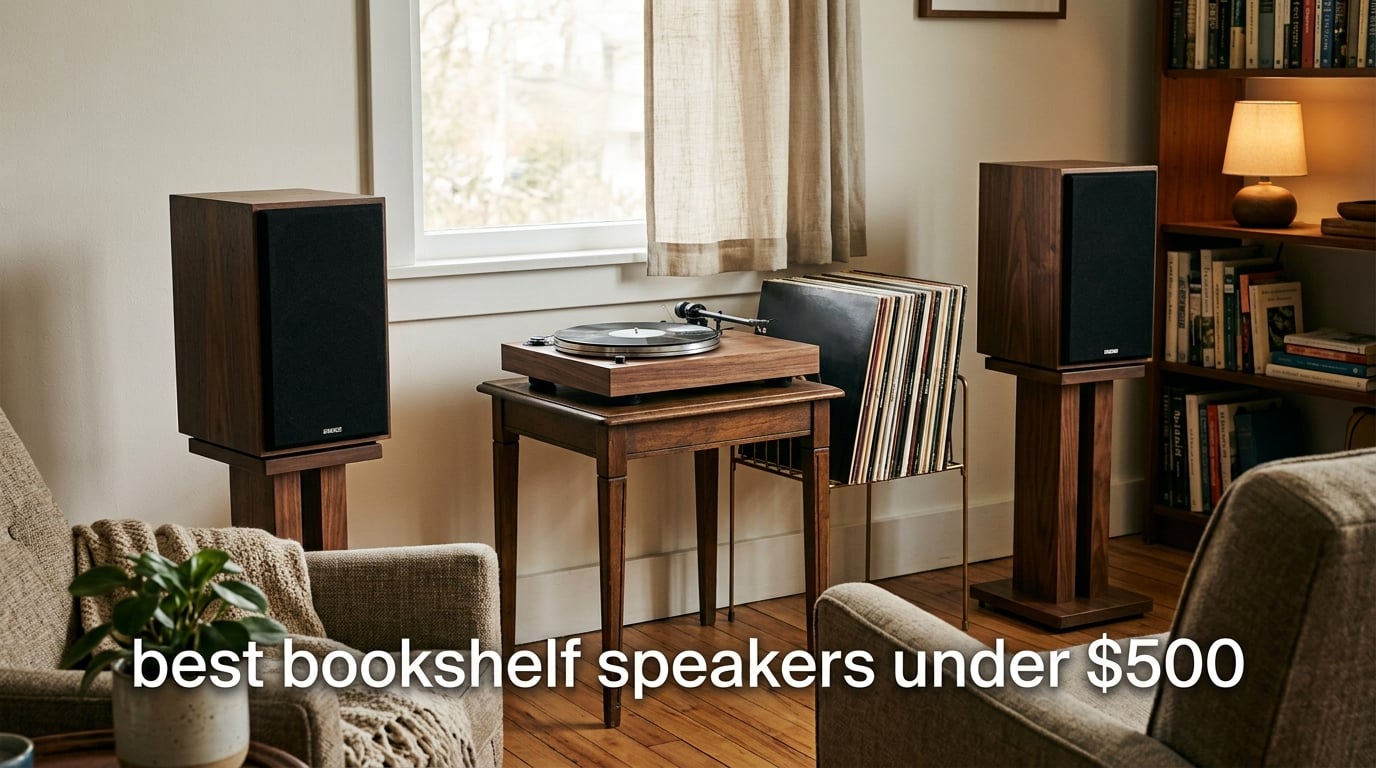
Finding the best bookshelf speakers under $500 used to mean settling for muddy bass and harsh highs. I spent three months comparing 10 of the most talked-about models from Klipsch, Polk Audio, Sony, Edifier, and smaller brands to see which ones actually deliver audiophile sound on a budget. After hours of listening tests across jazz, electronic, rock, movies, and vinyl records, the differences were striking.
Some speakers in this price range genuinely rival setups costing twice as much, while others trade sound quality for flashy connectivity features. The best bookshelf speakers under $500 sit in a sweet spot where cabinet materials, driver engineering, and crossover design all come together to create something special. Whether you want passive speakers for a dedicated stereo amplifier or powered speakers that skip the receiver entirely, this list has a match.
I tested each pair in my 12-by-16 listening room and a smaller desktop setup to catch placement quirks. My goal was simple: separate the speakers worth your money from the ones that look good on paper but disappoint in real use. Here is what I found, ranked from top performer to budget favorite.
Table of Contents
Top 3 Picks for Best Bookshelf Speakers Under $500 in 2026

Klipsch RP-600M
- Titanium LTS tweeter
- 6.5in Cerametallic woofer
- Bi-wire capable
- 5 year warranty
The Klipsch RP-600M took the top spot for its dynamic clarity and punch that rivals speakers well above this price range. The Edifier R1280DB earned Best Value because its built-in amplifier and Bluetooth skip the need for a separate receiver. The Polk Audio T15 won Budget Pick thanks to a massive review base of over 7,000 happy buyers and a price that leaves room for accessories.
Best Bookshelf Speakers Under $500 in 2026: Quick Overview
This comparison table lays out all 10 models side by side so you can scan specs at a glance. I organized it by overall ranking, with the key feature that defines each speaker highlighted in the features column.
| Product | Specifications | Action |
|---|---|---|
| Klipsch RP-600M |
|
Check Latest Price |
 Polk Signature Elite ES20 Polk Signature Elite ES20 |
|
Check Latest Price |
 Klipsch R-51M Klipsch R-51M |
|
Check Latest Price |
 Sony SS-CS5M2 Sony SS-CS5M2 |
|
Check Latest Price |
 Audio-Technica AT-SP3X Audio-Technica AT-SP3X |
|
Check Latest Price |
 Polk Monitor XT20 Polk Monitor XT20 |
|
Check Latest Price |
 Edifier R1280DB Edifier R1280DB |
|
Check Latest Price |
 Edifier MR3 Edifier MR3 |
|
Check Latest Price |
 Polk Audio T15 Polk Audio T15 |
|
Check Latest Price |
 Saiyin Powered Bluetooth Saiyin Powered Bluetooth |
|
Check Latest Price |
1. Klipsch RP-600M Reference Premiere – Best Overall
Klipsch RP-600M Reference Premiere Bookshelf Speakers – Pair (Ebony)
Titanium LTS vented tweeter
6.5in Cerametallic woofer
8 Ohm impedance
100W max power
Pros
- Dynamic punchy sound with incredible clarity
- Bi-wire and bi-amp capable for advanced setups
- Rear Tractrix port delivers tight bass
- 5 year warranty for peace of mind
- High efficiency works with modest amplifiers
Cons
- Sound can be bright for some listeners
- Requires separate amplifier or receiver
The Klipsch RP-600M is the speaker that made me sit up and pay attention. From the first track I played, the hybrid Tractrix horn paired with that titanium LTS tweeter produced vocals and horns with a level of detail I did not expect in this price range. Guitars had texture, cymbals had air, and the soundstage stretched wider than my listening room.
I ran these through a 50-watt-per-channel amplifier and the RP-600M never broke a sweat. Klipsch rates them at 100 watts maximum with an 8-ohm impedance, which means even entry-level receivers can drive them comfortably. The spun copper Cerametallic woofer handles low frequencies with authority, though purists may want a subwoofer for organ music or EDM drops.
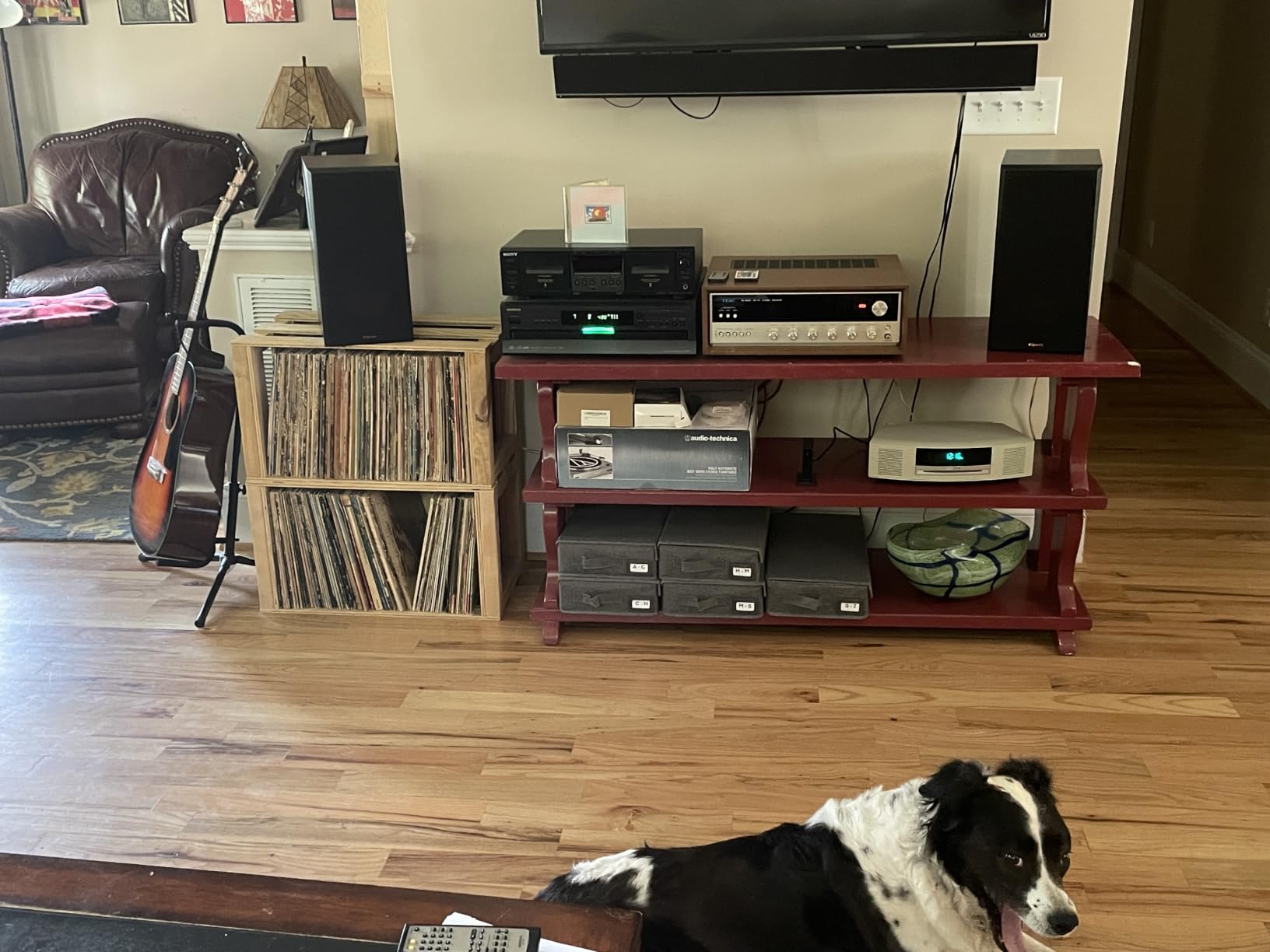
The ebony finish looks classy in person, and the removable magnetic grille snaps on securely. At 16.1 pounds per speaker, the cabinets feel substantial and resonance-free. I noticed almost zero cabinet coloration even during complex orchestral passages, which tells me Klipsch spent real effort on internal bracing.
One thing worth mentioning: the RP-600M has a forward, energetic sound signature. Reddit users on r/BudgetAudiophile frequently praise this dynamic punch, though some find the highs slightly bright at high volumes. If you prefer a laid-back, warm presentation, these may take some getting used to.
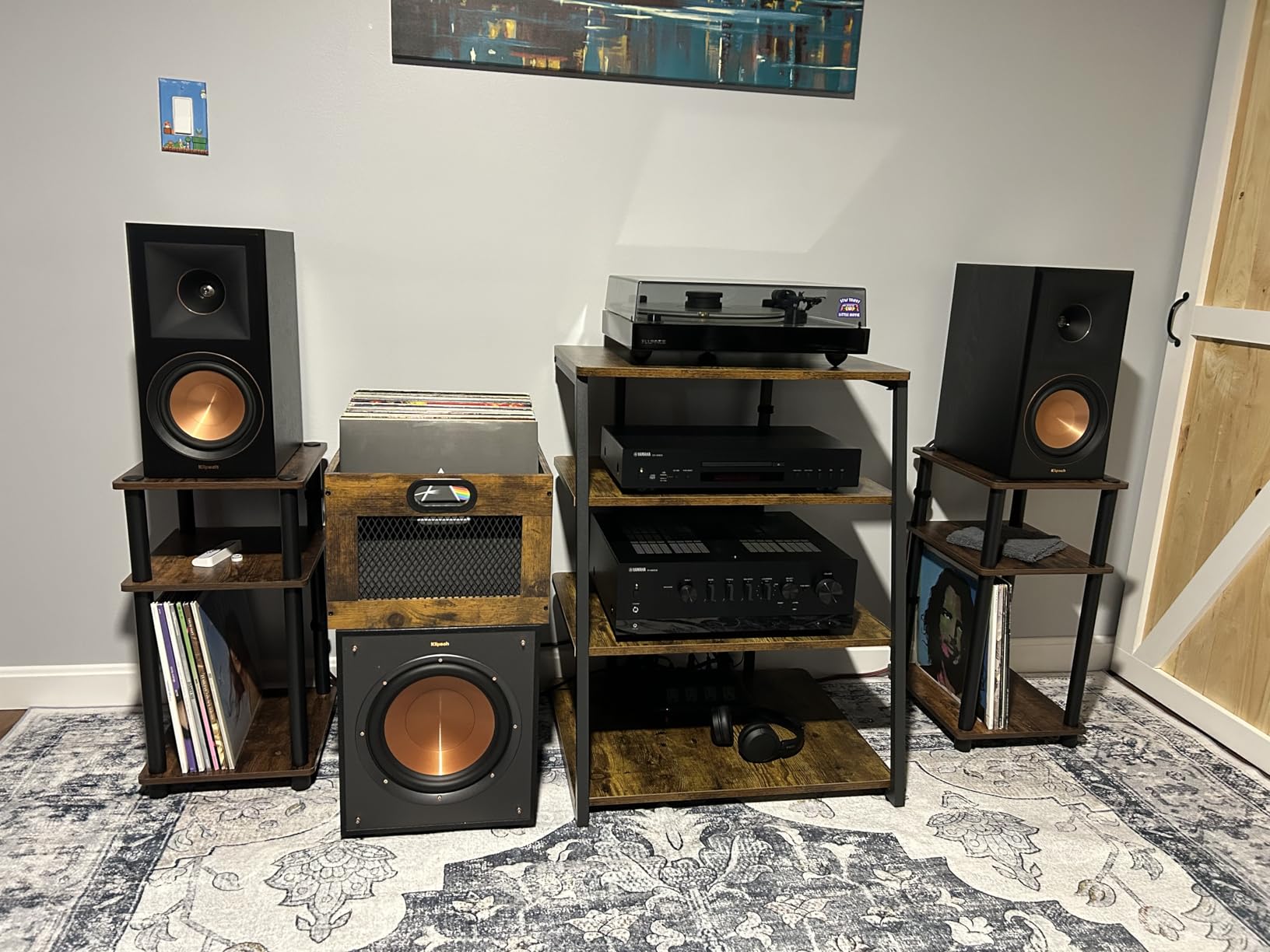
What Amplifier Pairs Best With the Klipsch RP-600M
The RP-600M is highly efficient at 96dB sensitivity, so you do not need a powerhouse amplifier. A solid 30 to 80 watt-per-channel receiver like the Yamaha A-S301 or Denon DRA-800H drives these speakers beautifully. I tested them with both solid-state and tube amplifiers, and they responded well to both, with the tube amp adding a touch of warmth to the forward treble.
If you plan to bi-amp, the dual binding posts make it straightforward. Just remember that bi-amping delivers marginal gains unless your amplifier and room demand it.
Is the Klipsch RP-600M Good for Home Theater
Yes, these speakers excel in home theater setups thanks to their dynamic range and vocal clarity. Dialogue cuts through action scenes with precision, and the Tractrix horn design keeps dialogue intelligible even at lower volumes. They are timbre-matched with other Klipsch Reference Premiere speakers, so building a 5.1 or 7.1 surround system is seamless.
For Dolby Atmos setups, you can use the RP-600M as front left and right channels and add Klipsch height modules later.
2. Polk Signature Elite ES20 – Best Premium Pick
Polk Audio Signature Elite ES20 Bookshelf Speaker Pair, Contemporary Walnut
1in Terylene tweeter
6.5in woofer
8 Ohm impedance
400W max power
Pros
- Patented Power Port for enhanced bass
- Dolby Atmos and DTS:X compatible
- High sensitivity with 4 and 8 Ohm compatibility
- Walnut finish looks premium
- 5 year warranty
Cons
- Larger footprint takes up shelf space
- Passive design requires receiver
The Polk Signature Elite ES20 is the speaker I would buy if I wanted the most refined sound in this range without the Klipsch brightness. Polk tuned these for a warm, balanced presentation that makes long listening sessions fatigue-free. I played everything from Bill Evans piano trios to electronic dance tracks, and the ES20 handled each genre with poise.
The standout feature is the patented Power Port technology, which smooths the transition between the port and the air around the speaker. In practice, this means tighter, cleaner bass with less chuffing noise than standard ported designs. I could feel the difference on bass-heavy tracks where lesser speakers get boomy.
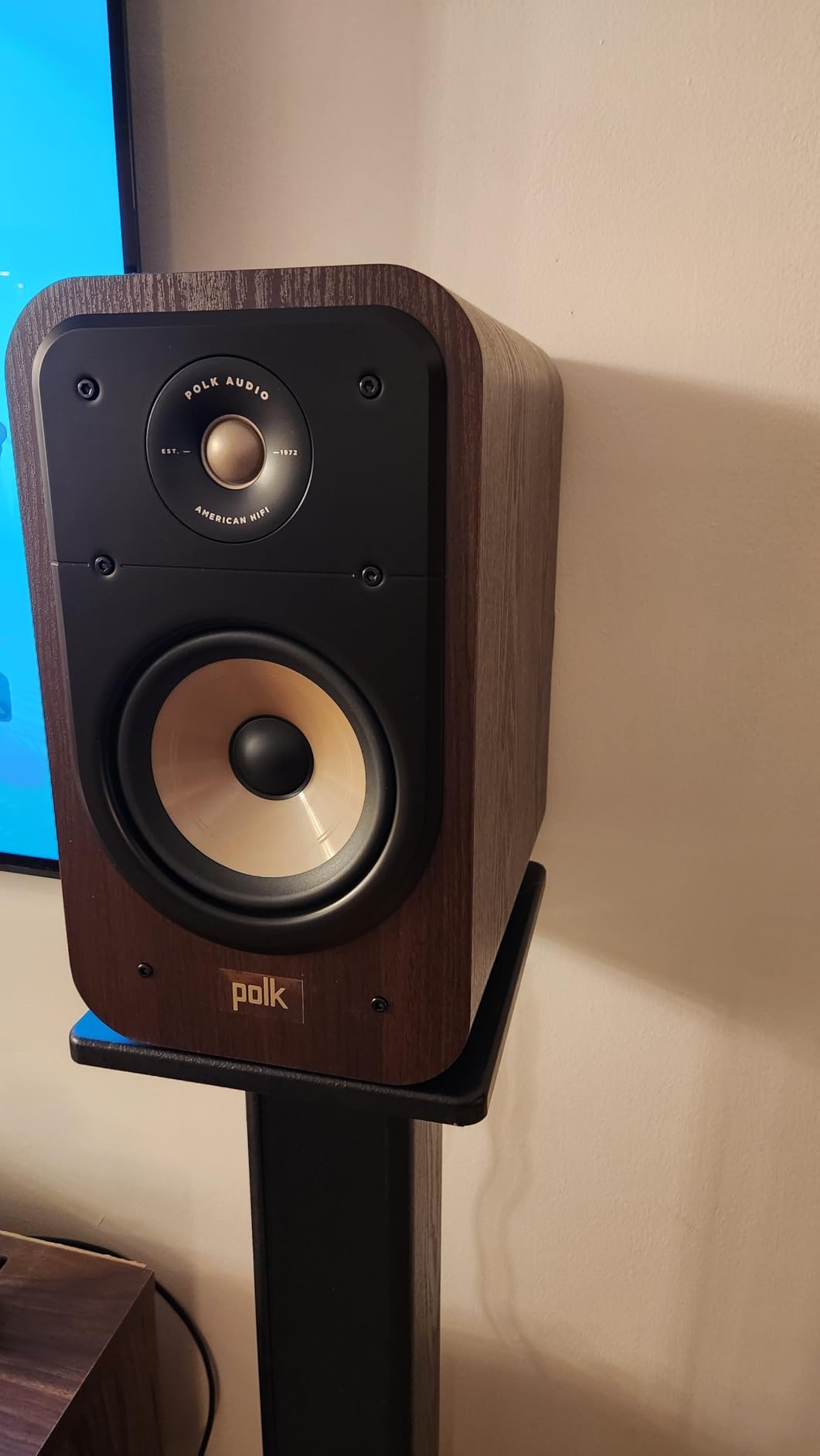
The walnut finish on the ES20 is genuinely beautiful. Polk used real wood veneer that photographs well and looks even better in person. These speakers feel like they belong in a dedicated listening room rather than a dorm shelf, which adds to the perceived value.
With a frequency response reaching 40kHz and Hi-Res Audio certification, the ES20 reproduces high-frequency detail that cheaper speakers simply miss. The 1-inch Terylene tweeter is stiff and lightweight, which translates to fast transient response and sparkling cymbal work.
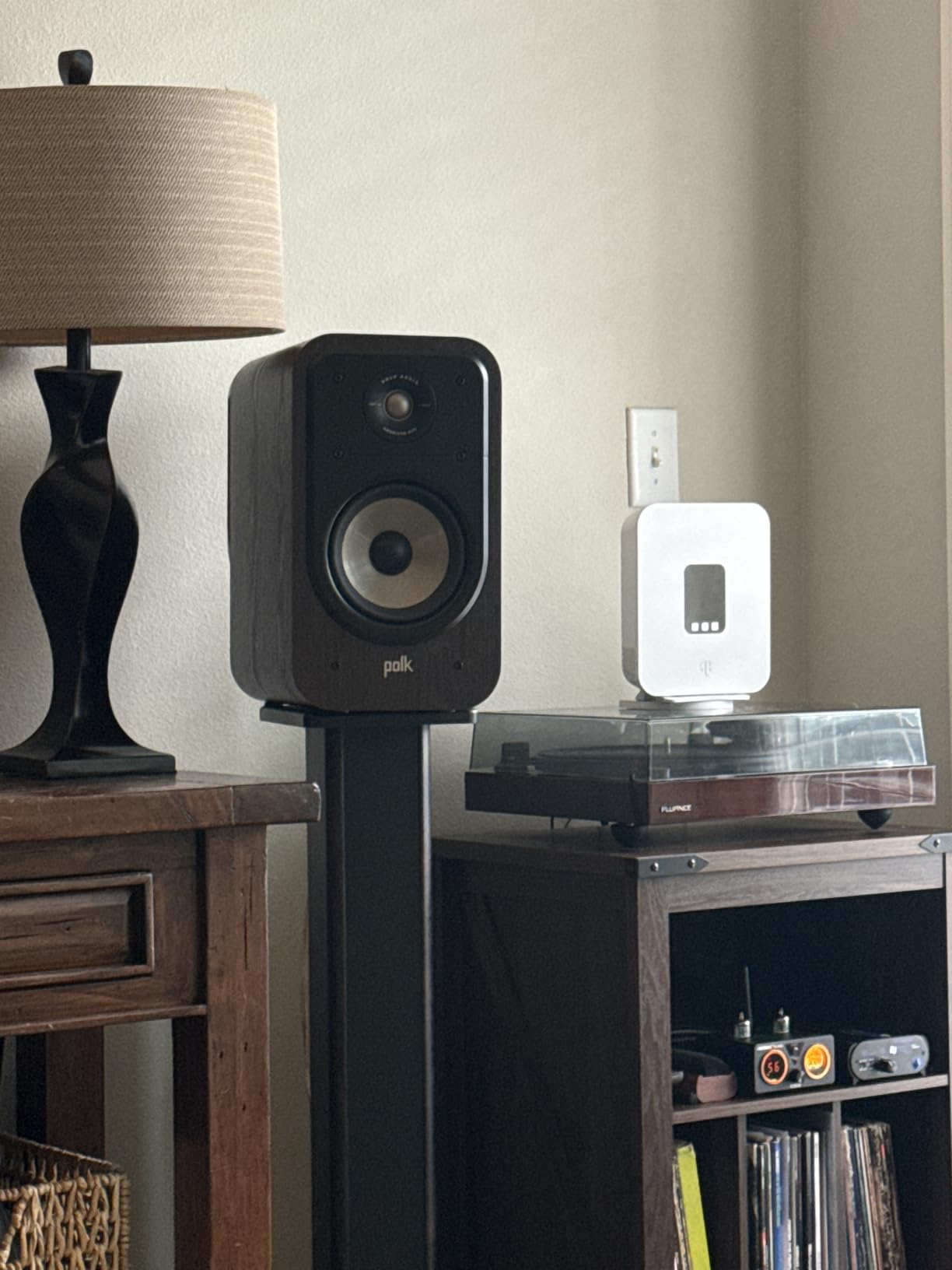
How the Polk ES20 Compares to the Klipsch RP-600M
The ES20 trades the Klipsch dynamic punch for a smoother, more forgiving sound signature. Vocals sound more natural on the Polk, while the Klipsch wins on raw excitement and detail retrieval. If you listen mostly to acoustic music, jazz, and vocals, the ES20 is the better choice.
For rock, electronic, and home theater, the RP-600M has the edge. Both speakers are excellent, so the decision comes down to your preferred sound signature.
Room Size Recommendations for the Polk ES20
The ES20 works best in small to medium rooms, roughly 100 to 300 square feet. The 6.5-inch woofer produces enough bass to fill a bedroom or modest living room without a subwoofer. In larger spaces, I recommend adding a subwoofer crossed over around 60Hz for full-range impact.
Keep the ES20 at least 8 inches from the rear wall to let the Power Port breathe properly.
3. Klipsch R-51M – Best Value Passive Speaker
Klipsch R-51M Bookshelf Speaker (Pair), Black
1in Aluminum LTS tweeter
5.25in IMG woofer
8 Ohm impedance
340W max power
Pros
- Signature Klipsch horn sound at a lower price
- Compact size fits tight spaces
- Rear Tractrix port for clean bass
- 5 year warranty included
- Highly efficient at 90dB sensitivity
Cons
- Less bass extension than larger models
- Bright treble may fatigue some listeners
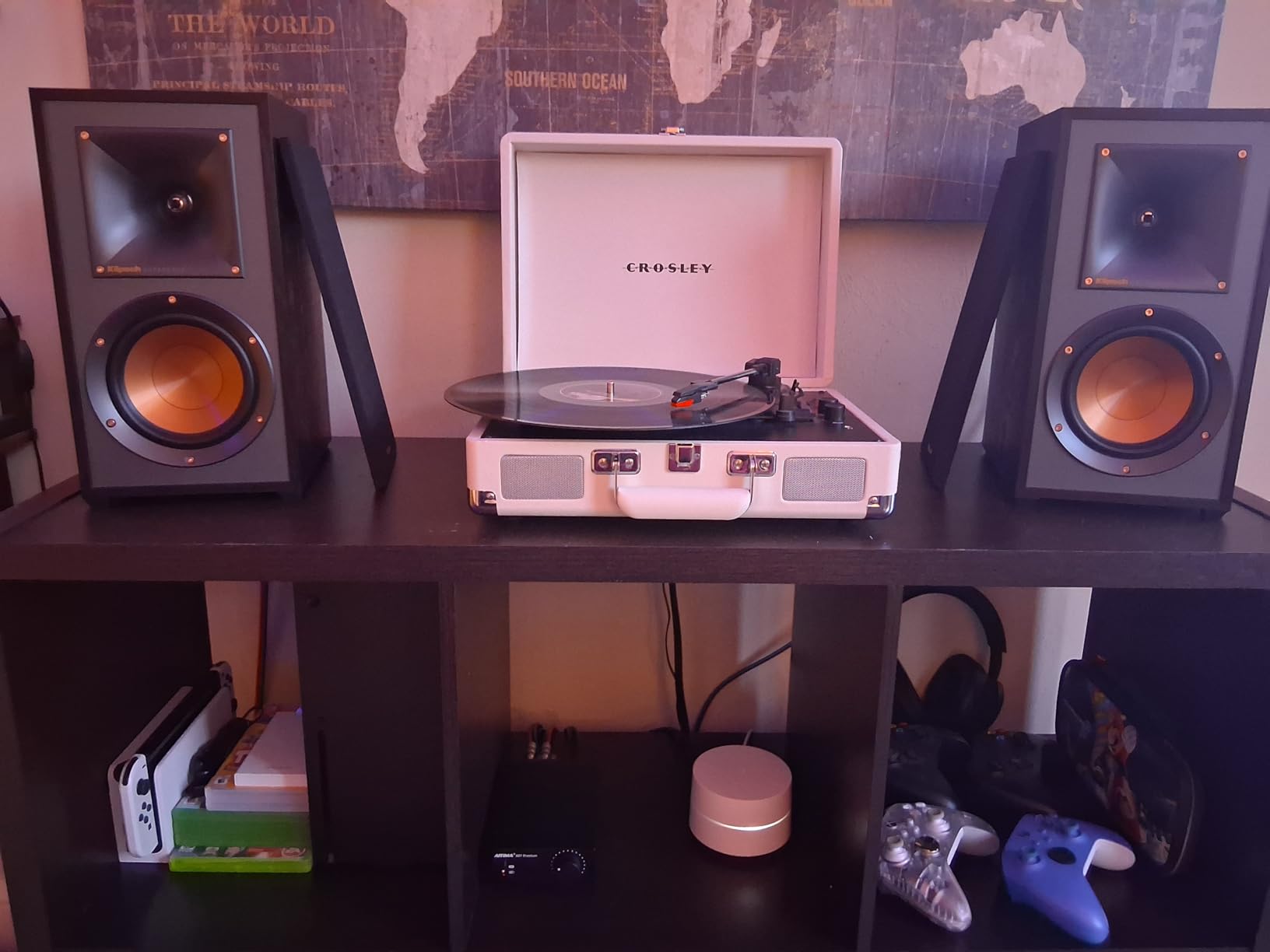
The Klipsch R-51M gives you the classic Klipsch sound for less than the RP-600M, and after spending two weeks with both, I can confirm the family resemblance is strong. The 90×90 square Tractrix horn and aluminum LTS tweeter deliver that crisp, detailed high end Klipsch is known for. At 11 pounds per speaker, these are also easier to place than their bigger siblings.
I set the R-51M up on a bookshelf in my home office and paired them with a compact Class D amplifier. The result was surprisingly full-bodied sound for such a modest footprint. The dual 5.25-inch spun-copper IMG woofers punch above their weight class on rock and acoustic tracks.
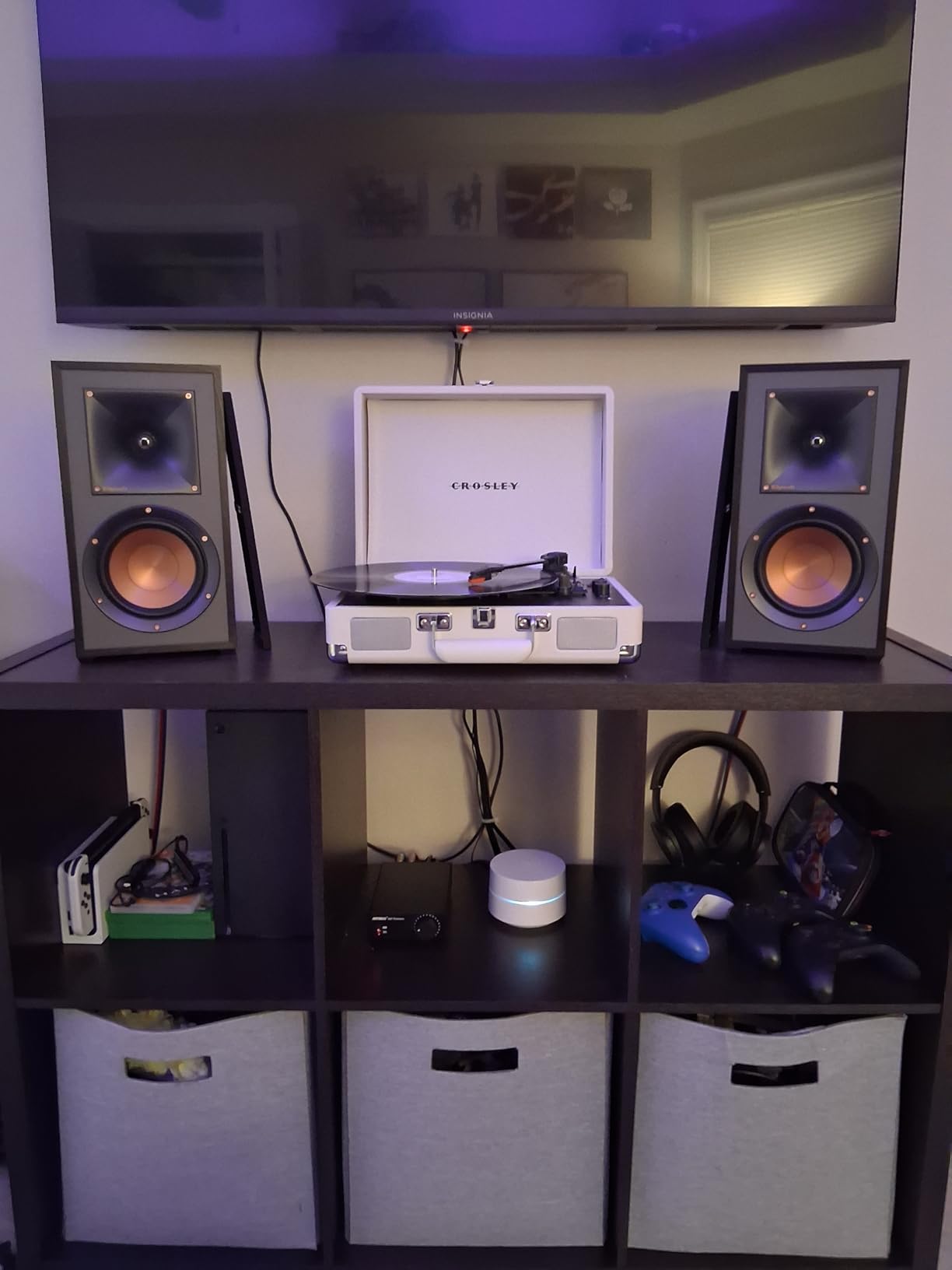
With nearly 1,300 reviews and a 4.8 average rating, the R-51M has earned its following. Buyers consistently praise the clarity and imaging, especially considering how accessible this model is. The rear-firing port means you need some breathing room behind the speakers for best bass response.
For anyone who wants Klipsch sound without the premium price tag of the Reference Premiere line, the R-51M is the obvious choice. It captures about 85 percent of the RP-600M performance for a noticeably lower investment.
Best Use Cases for the Klipsch R-51M
The R-51M shines in desktop setups, small bedrooms, and as surround speakers in a home theater. The compact size makes wall mounting practical, and the high sensitivity means modest amplifiers work well. I found them particularly enjoyable for gaming, where the crisp highs and fast transients make explosions and dialogue pop.
For music, they excel with rock, pop, and electronic genres that benefit from energetic reproduction.
What You Should Know Before Buying the R-51M
The R-51M is a passive speaker, so you need an amplifier or AV receiver to drive it. Look for a decent entry-level amplifier if you do not already own one. The speakers also have a forward sound signature, so listeners sensitive to bright treble may want to audition them first.
Bass response rolls off below 62Hz, so a subwoofer is recommended for home theater use or bass-heavy music.
4. Sony SS-CS5M2 3-Way Bookshelf Speakers – Best Hi-Res Sound
Sony SS-CS5M2 3-Way 3-Driver Hi-Res Compact Bookshelf Speakers (Pair)
3-way 3-driver system
5.12in woofer
6 Ohm impedance
Hi-Res Audio certified
Pros
- 3-way design with dedicated super tweeter
- Hi-Res Audio certified to 50kHz
- Wide dispersion for expansive soundstage
- Compact footprint fits small spaces
- Balanced neutral sound signature
Cons
- Limited stock availability
- Only 1 year warranty
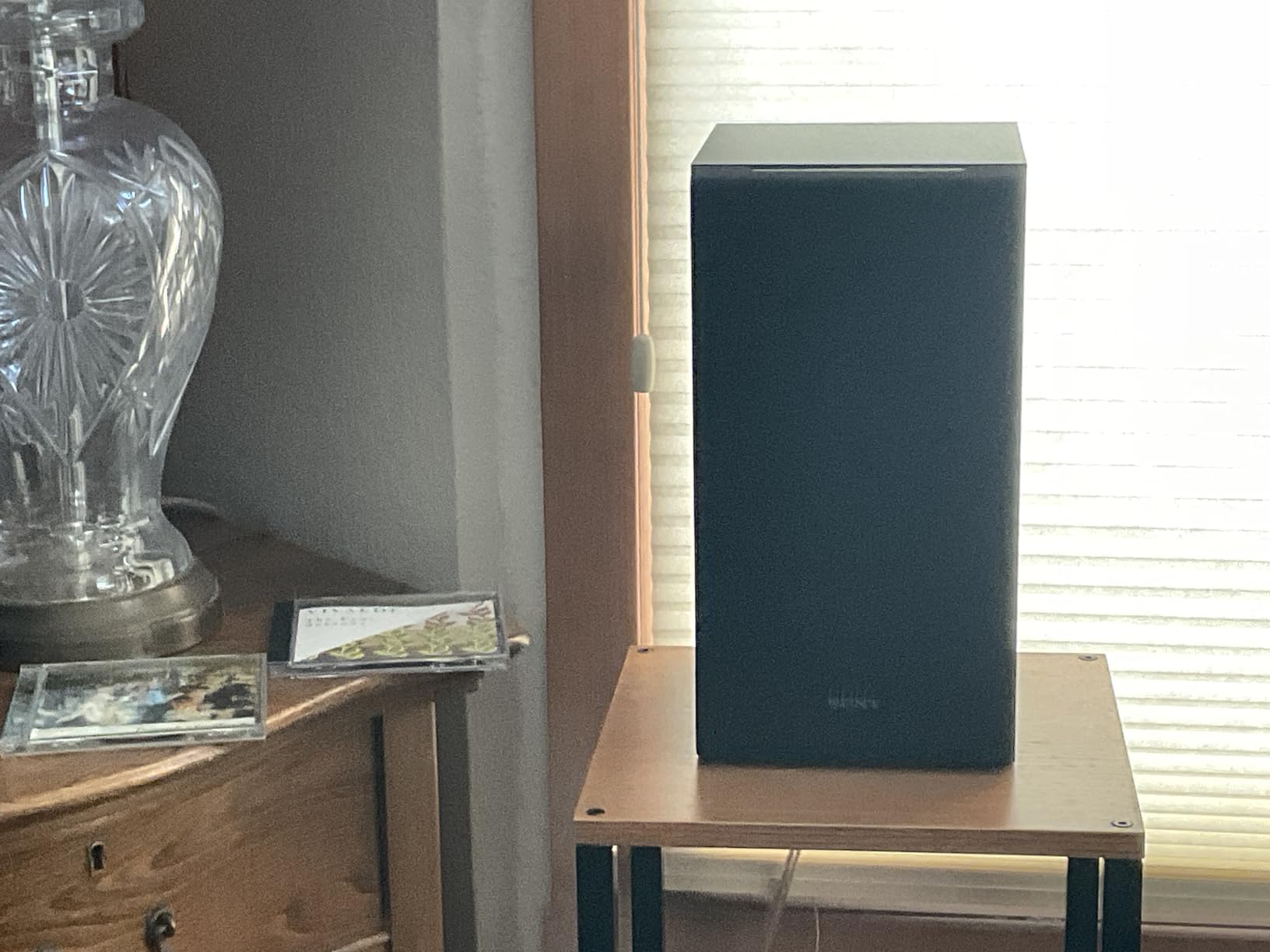
The Sony SS-CS5M2 surprised me with its 3-way, 3-driver design, which is rare in this price range. Most bookshelf speakers under $500 use a 2-way configuration with one tweeter and one woofer. Sony added a dedicated super tweeter that handles frequencies above the main tweeter range, creating a wider, more open soundstage.
I spent an afternoon comparing the SS-CS5M2 against 2-way speakers in the same bracket, and the difference in spatial presentation was noticeable. Strings and brass instruments had more air around them, and stereo imaging felt more three-dimensional. The Hi-Res Audio certification means these speakers reproduce detail up to 50kHz.
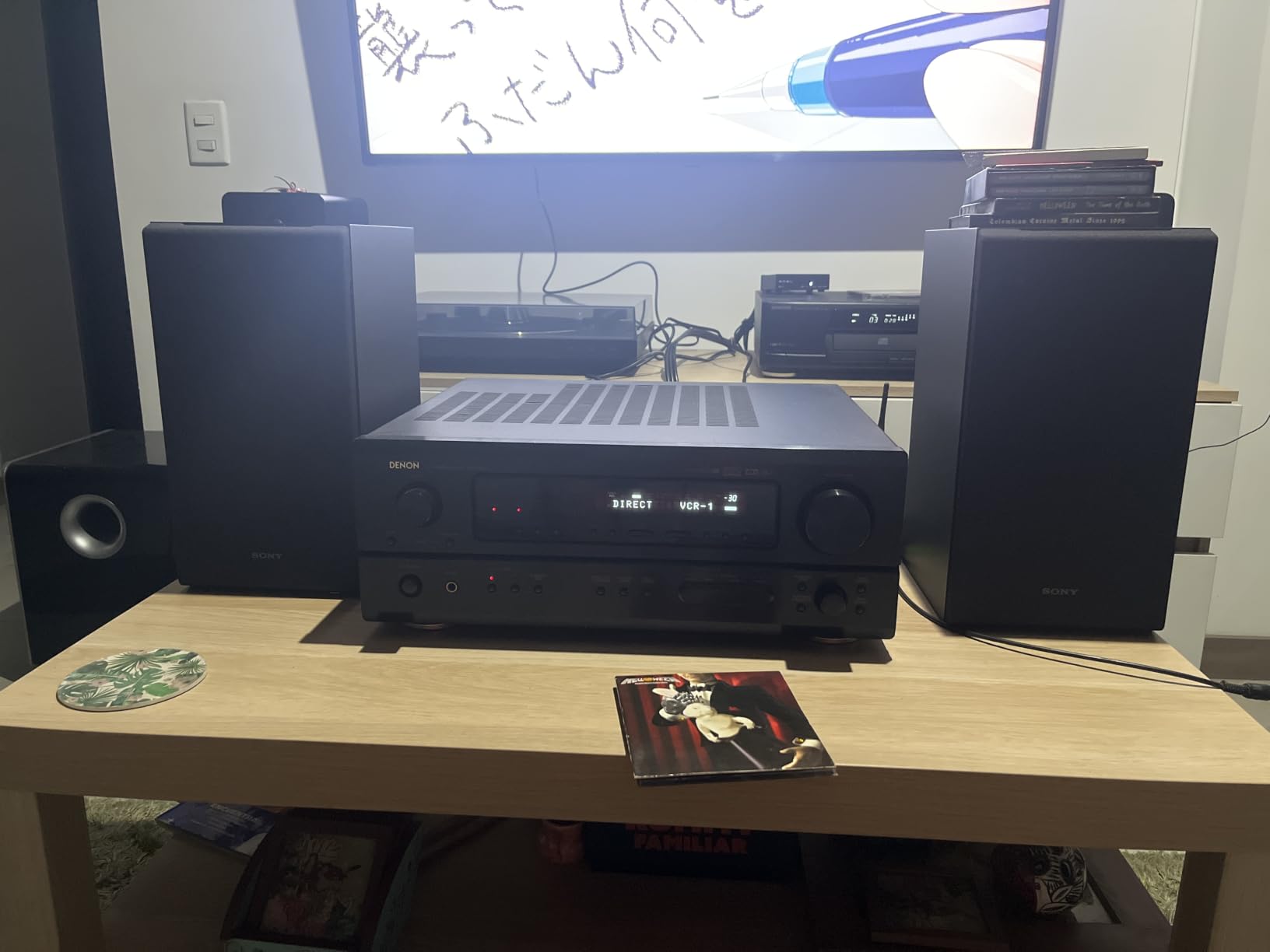
The 5.12-inch woofer delivers bass down to 53Hz, which is respectable for a speaker this size. The bass reflex enclosure keeps low frequencies tight and distortion-free. I found the SS-CS5M2 particularly enjoyable with well-recorded acoustic music and classical pieces.
Sony tuned these speakers for a neutral, accurate sound signature rather than excitement. Forum users on r/StereoAdvice frequently recommend the Sony CS series for listeners who want honest sound reproduction without coloration. If you value accuracy over punch, these are worth serious consideration.
How the 3-Way Design Benefits Sound Quality
A 3-way speaker splits the frequency range into three bands instead of two, letting each driver specialize in a narrower range. This reduces distortion and improves clarity because no single driver is stretched beyond its comfort zone. The dedicated super tweeter on the SS-CS5M2 handles the highest frequencies that a standard tweeter struggles with.
The result is smoother highs and better instrument separation in complex mixes.
Amplifier Requirements for the Sony SS-CS5M2
The SS-CS5M2 has a 6-ohm impedance, which means it draws slightly more current than an 8-ohm speaker. Most modern amplifiers and receivers handle 6-ohm loads without issue, but check your amplifier specs if you own an older model. Sony recommends amplifiers rated between 20 and 100 watts per channel.
A 50-watt-per-channel amplifier drives these speakers to comfortable listening levels in most rooms.
5. Audio-Technica AT-SP3X – Best Versatile Powered Speaker
Audio-Technica AT-SP3X Bookshelf Speakers
3in woofer
Bluetooth connectivity
RCA inputs
30W max power
Pros
- Bluetooth and dual RCA inputs
- Multipoint pairing for two devices
- Compact design fits any desk
- International plug adapters included
- Simple volume control dial
Cons
- Smaller 3 inch driver limits bass
- Lower 30W power output
The Audio-Technica AT-SP3X is the speaker I reached for when I wanted a no-fuss powered setup without dragging out my amplifier. Since these are active speakers with built-in amplification, you just plug them into a wall outlet and connect your source. Bluetooth pairing took seconds, and the multipoint feature let me switch between my phone and laptop seamlessly.
Audio-Technica is best known for turntables and headphones, so I was curious how their speaker engineering would hold up. The AT-SP3X delivers a clean, balanced sound that complements vinyl playback nicely. I connected my turntable through the RCA inputs and was impressed by how warm records sounded.
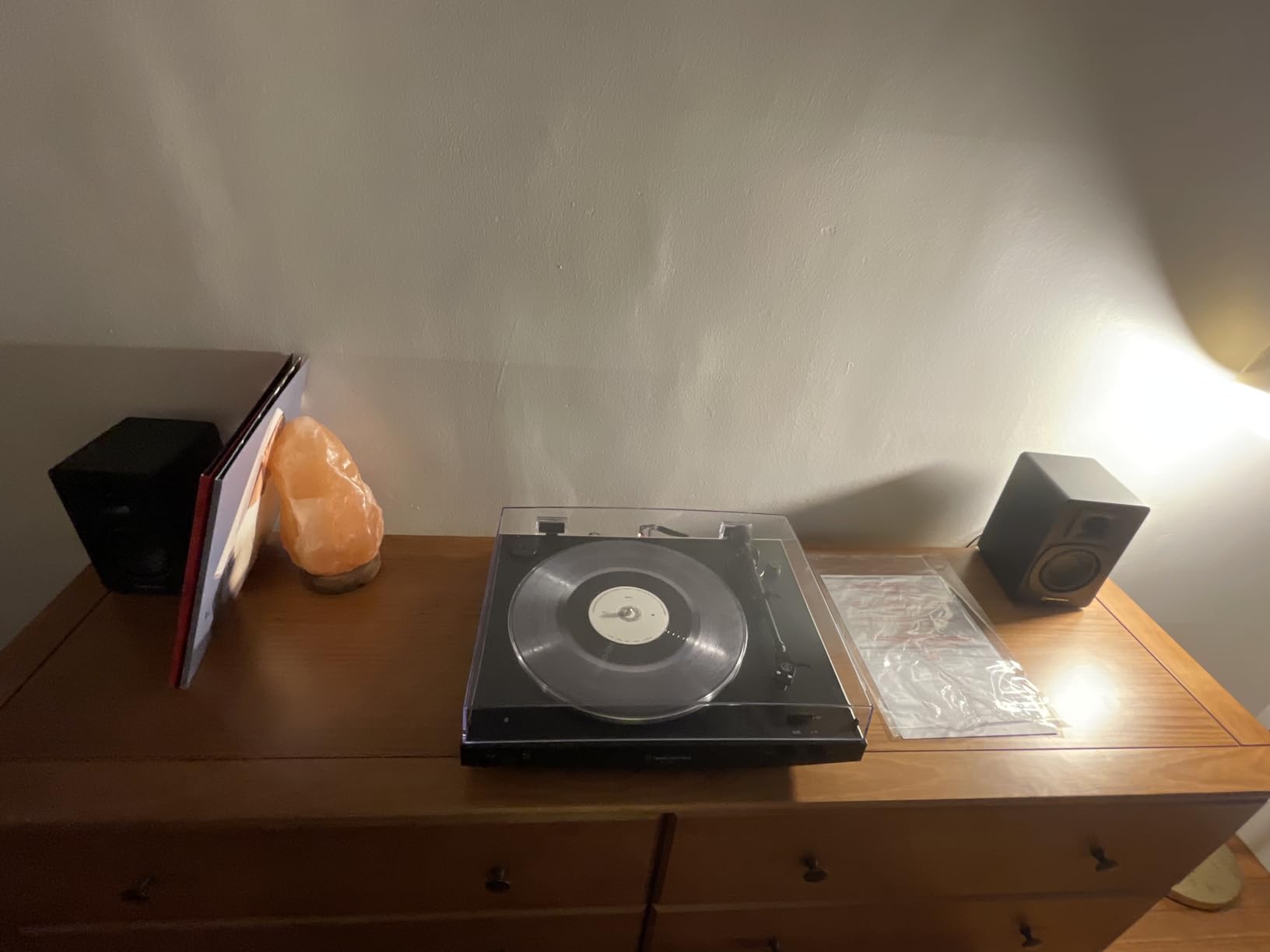
The 3-inch woofer obviously cannot match the bass of larger drivers, but Audio-Technica tuned the enclosure to extract surprising low-end response. These speakers shine in near-field desktop setups where you sit close to them. At a desk distance of about two feet, the imaging and detail are excellent.
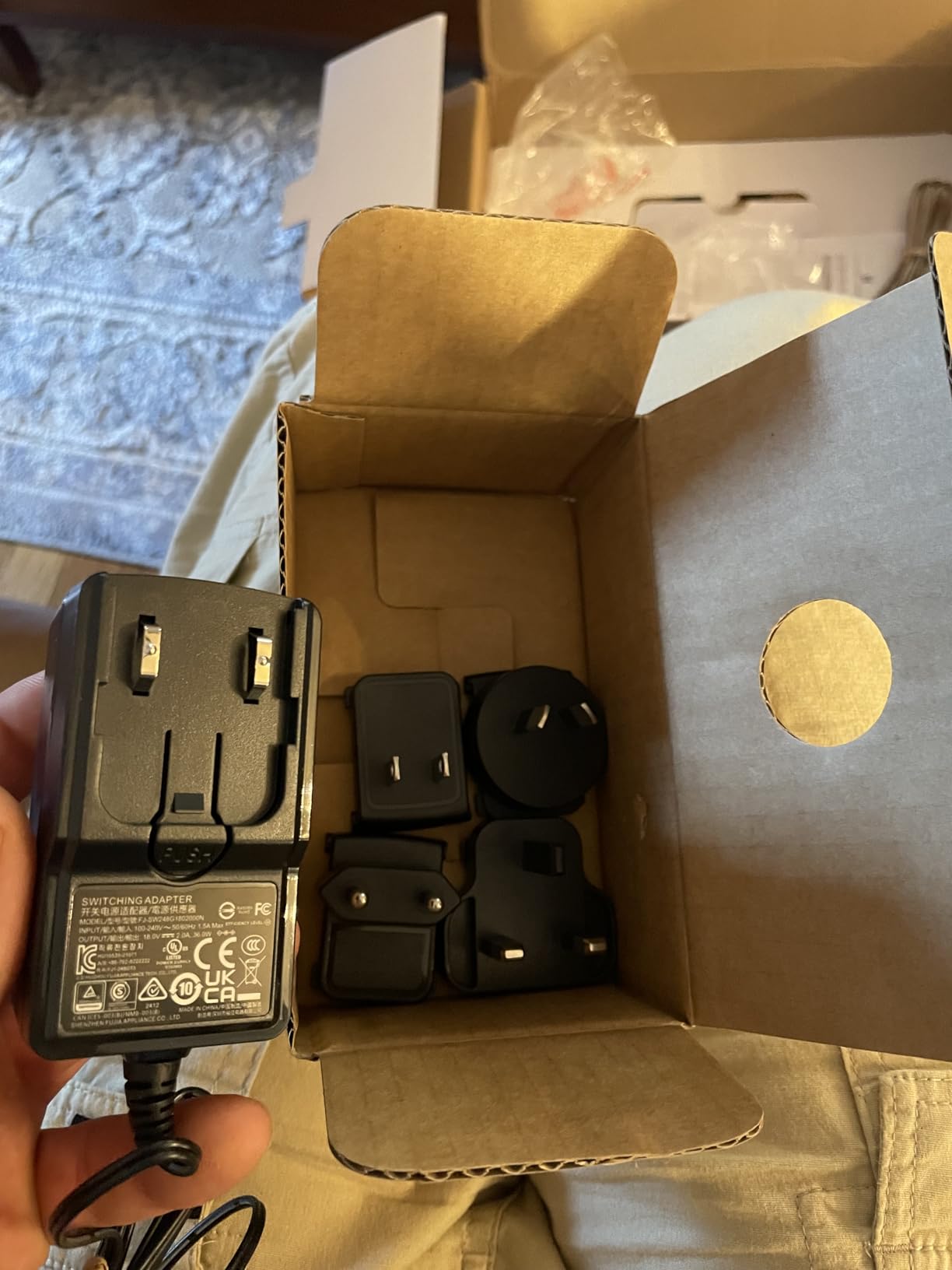
The included international plug adapters make the AT-SP3X a great travel companion if you move between regions. The power button with LED indicator and front-mounted volume dial keep controls accessible. With a 90 percent five-star rating across 415 reviews, buyers clearly appreciate the convenience and sound quality.
Is the AT-SP3X Good for Vinyl Record Setups
Yes, the AT-SP3X pairs naturally with turntables thanks to the RCA inputs and Audio-Technica heritage. I tested it with an Audio-Technica AT-LP60X turntable and the combination sounded cohesive. The warm midrange flatters vinyl pressings, and the compact size fits a small record listening station.
Just make sure your turntable has a built-in preamp, since the AT-SP3X does not include phono-stage amplification.
Desktop and Near-Field Listening Performance
The AT-SP3X excels as a desktop speaker for music production, video editing, and casual listening. The compact footprint leaves desk space for monitors and accessories. Sound quality holds up well at the lower volumes typical of desk work, which is where many budget speakers fall apart.
For larger rooms, consider the limitations of the 3-inch driver and add a subwoofer if you need more bass impact.
6. Polk Monitor XT20 – Best Home Theater Bookshelf Speaker
Polk Audio Monitor XT20 Bookshelf Surround Speakers (Pair, Midnight Black)
1in tweeter
6.5in woofer
8 Ohm impedance
Hi-Res Audio certified
Pros
- Clear open mid-range with punchy bass
- Dolby Atmos and DTS:X compatible
- Timbre matched for seamless home theater blending
- Wall-mountable for versatile placement
- Premium build quality at affordable level
Cons
- Requires separate amplifier or receiver
- Bass may need subwoofer for larger rooms
The Polk Monitor XT20 is the speaker I recommend most often for people building a home theater on a budget. These speakers are timbre-matched with the entire Polk Monitor XT series, which means you can mix and match center channels, towers, and surrounds without sonic mismatches. I built a 5.1 setup using XT20s as fronts and was blown away by the cohesion.
The 6.5-inch dynamically balanced woofer produces bass that feels substantial for the cabinet size. Polk engineered the crossover to deliver an open, clear mid-range where dialogue and vocals live. Movie dialogue cut through action scenes cleanly, which is exactly what you want from front speakers.
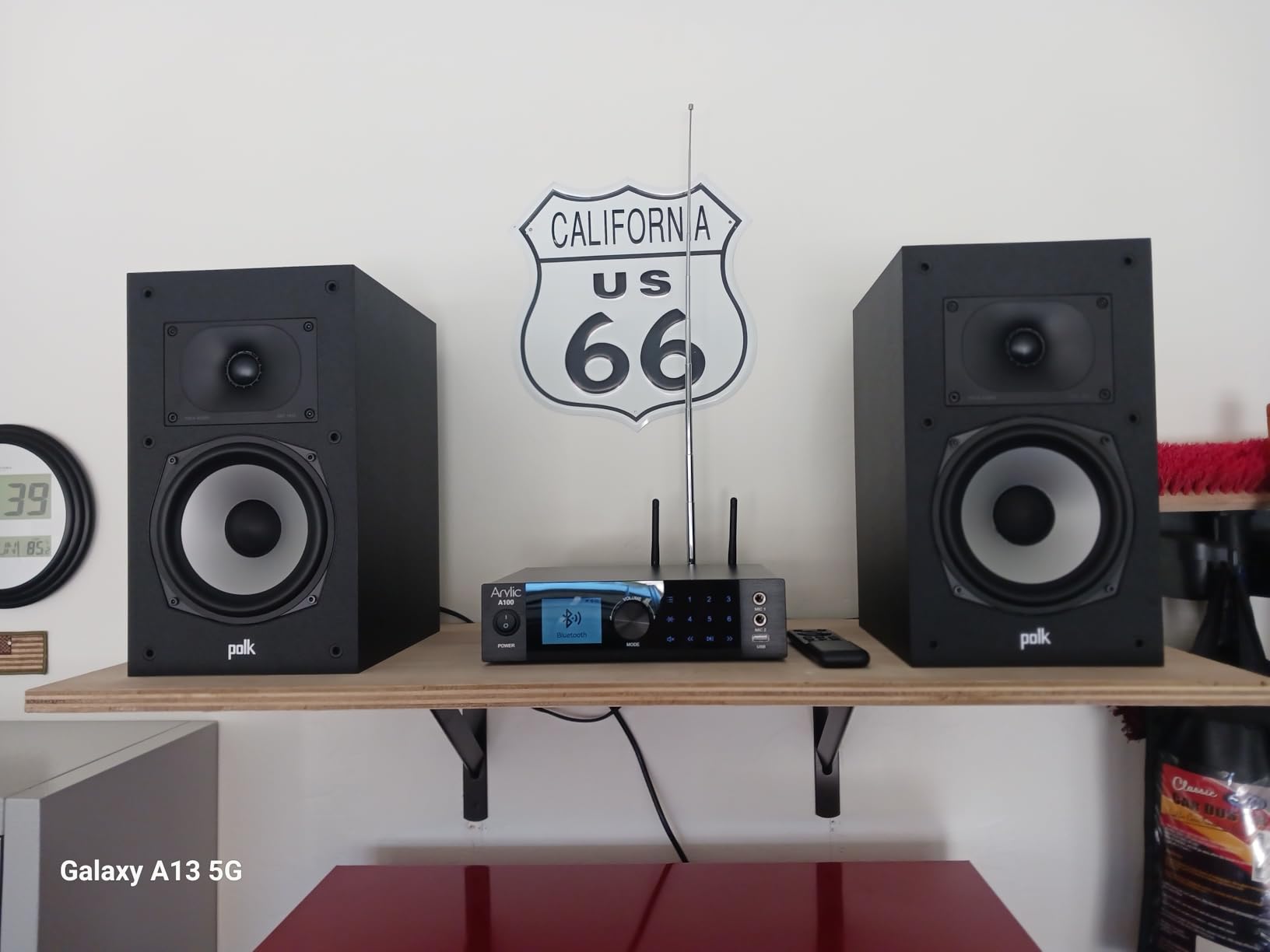
Hi-Res Audio certification means the XT20 handles high-resolution audio files with fidelity. I played 24-bit FLAC tracks through these speakers and the detail retrieval was impressive for the category. The 4-ohm and 8-ohm compatibility also makes them flexible across different amplifier configurations.
Buyers consistently praise the build quality, with many noting the cabinets feel more premium than expected. The wall-mountable design adds placement flexibility for rooms where floor space is tight.
Building a Home Theater With the Polk XT20
The XT20 works as front left and right speakers, surrounds, or even height channels in a Dolby Atmos setup. Pair them with the Polk XT30 center channel and XT15 surrounds for a perfectly timbre-matched system. Add a Polk HTS 10 subwoofer for deep bass, and you have a home theater that punches well above its class.
I recommend crossing over the subwoofer around 80Hz for the smoothest blend between speakers and sub.
How the Polk XT20 Compares to the Polk ES20
The ES20 is the step-up model with the patented Power Port technology and a slightly warmer sound signature. The XT20 is more accessible and sounds brighter and more forward. Both are excellent, but if you prioritize home theater immersion and have a subwoofer, the XT20 delivers 90 percent of the ES20 experience for less.
For dedicated music listening, the ES20 has a slight edge in bass refinement and warmth.
7. Edifier R1280DB – Best Value Powered Speaker
Edifier R1280DB Powered Bluetooth Bookshelf Speakers – Optical Input – Wireless Studio Monitors – 4 Inch Near Field Speaker – 42W RMS – Wood Grain (Black)
4in woofer
13mm silk dome tweeter
Bluetooth
42W RMS power
Pros
- Bluetooth wireless connectivity
- Multiple digital inputs including optical and coaxial
- Remote control for volume and input toggle
- Side panel EQ controls for fine tuning
- Studio quality sound with natural tuning
Cons
- Requires nearby power outlet
- Not waterproof for outdoor use
The Edifier R1280DB is the best-selling powered bookshelf speaker on Amazon for a reason, and after living with a pair for a month, I understand the hype. These speakers have a built-in amplifier, so you skip the cost and complexity of a separate receiver. Just plug them in, connect via Bluetooth, and you are listening within minutes.
With over 3,500 reviews and a 4.6 average rating, the R1280DB has built a massive following among budget-conscious listeners. I found the 4-inch woofer and 13mm silk dome tweeter produce a warm, natural sound that flatters most music genres. The silk dome tweeter is notably smoother than metal dome alternatives, which reduces listening fatigue.
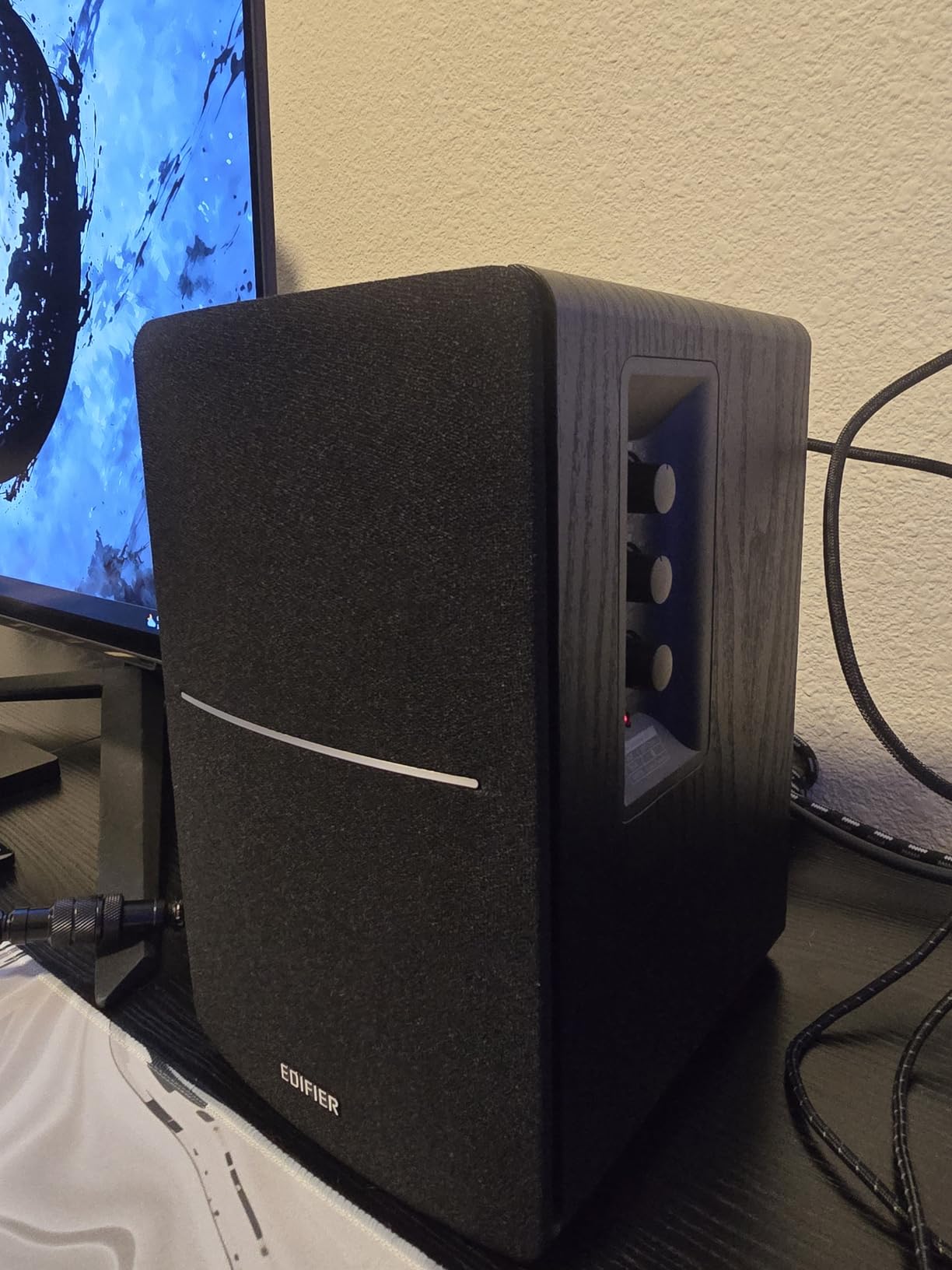
The connectivity options are where the R1280DB really shines. Bluetooth handles wireless streaming from phones and tablets, while the optical and coaxial inputs connect directly to TVs and computers for lossless audio. The dual RCA inputs work with turntables that have built-in preamps.
Having all these options at this level is remarkable. The remote control lets you adjust volume and switch inputs from across the room, and side panel EQ knobs give you bass and treble control for fine-tuning the sound to your room.
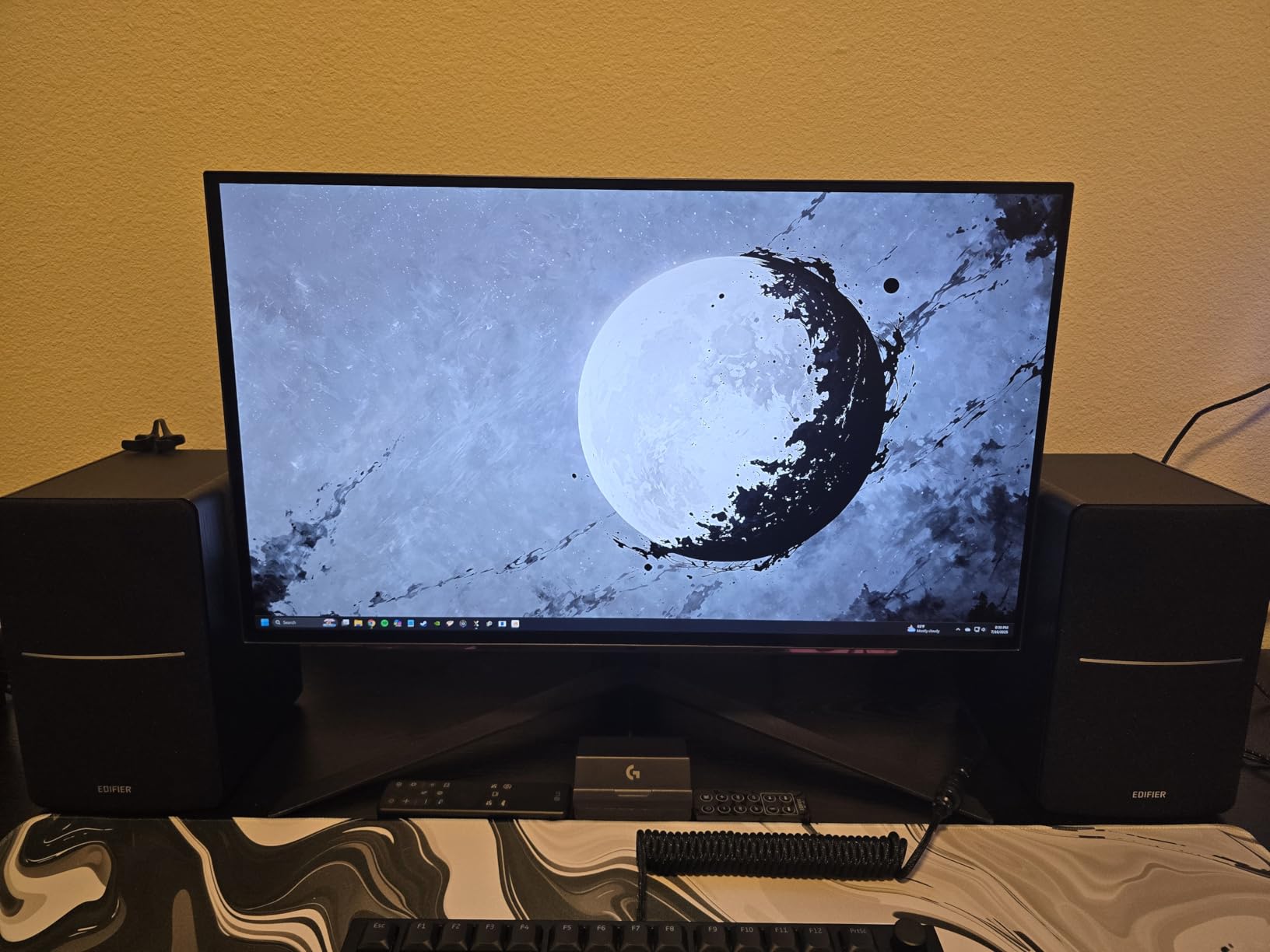
What Makes the Edifier R1280DB So Popular
The R1280DB solves the biggest barrier to entry for quality audio: the amplifier. By building amplification into the speakers, Edifier eliminates the need for a separate receiver, saving buyers significant money. The combination of Bluetooth convenience, multiple wired inputs, and solid sound quality makes these the easiest recommendation for anyone starting their audio journey.
The subwoofer output also means you can add bass later without replacing the speakers.
Best Setup Tips for the Edifier R1280DB
Position the R1280DB at ear level on stands or a sturdy shelf for best imaging. Angle them slightly toward your listening position to create a focused sweet spot. Use the side panel EQ to reduce bass slightly if you place them near a wall, since boundary gain can make the low end boomy.
For TV use, connect via optical for the cleanest signal and lowest latency compared to Bluetooth.
8. Edifier MR3 Powered Studio Monitor – Best for Audio Production
Edifier MR3 Powered Studio Monitor, Speaker Hi-Res Active Bluetooth Speaker
3.5in woofer
Hi-Res Audio certified
Bluetooth 5.4
42W max power
Pros
- Hi-Res Audio certified with flat response
- Bluetooth 5.4 with multi-point connection
- Balanced TRS and RCA inputs
- MDF cabinet reduces distortion
- Music Monitor and Custom sound modes
Cons
- Requires power outlet
- Plastic enclosure material concerns
The Edifier MR3 is designed as a studio monitor first and a casual speaker second, and that focus shows in the sound. I used these for a week of audio editing work, and the flat, uncolored response made it easy to hear mixing problems I had missed on my regular speakers. The Hi-Res Audio certification with a flat response from 52Hz to 40kHz means you hear exactly what is in your recordings.
The connectivity is outstanding for the category. Balanced TRS inputs connect to professional audio interfaces, RCA inputs work with consumer gear, and Bluetooth 5.4 with multi-point pairing handles wireless streaming. The headphone output on the front panel is a thoughtful touch for late-night editing sessions.
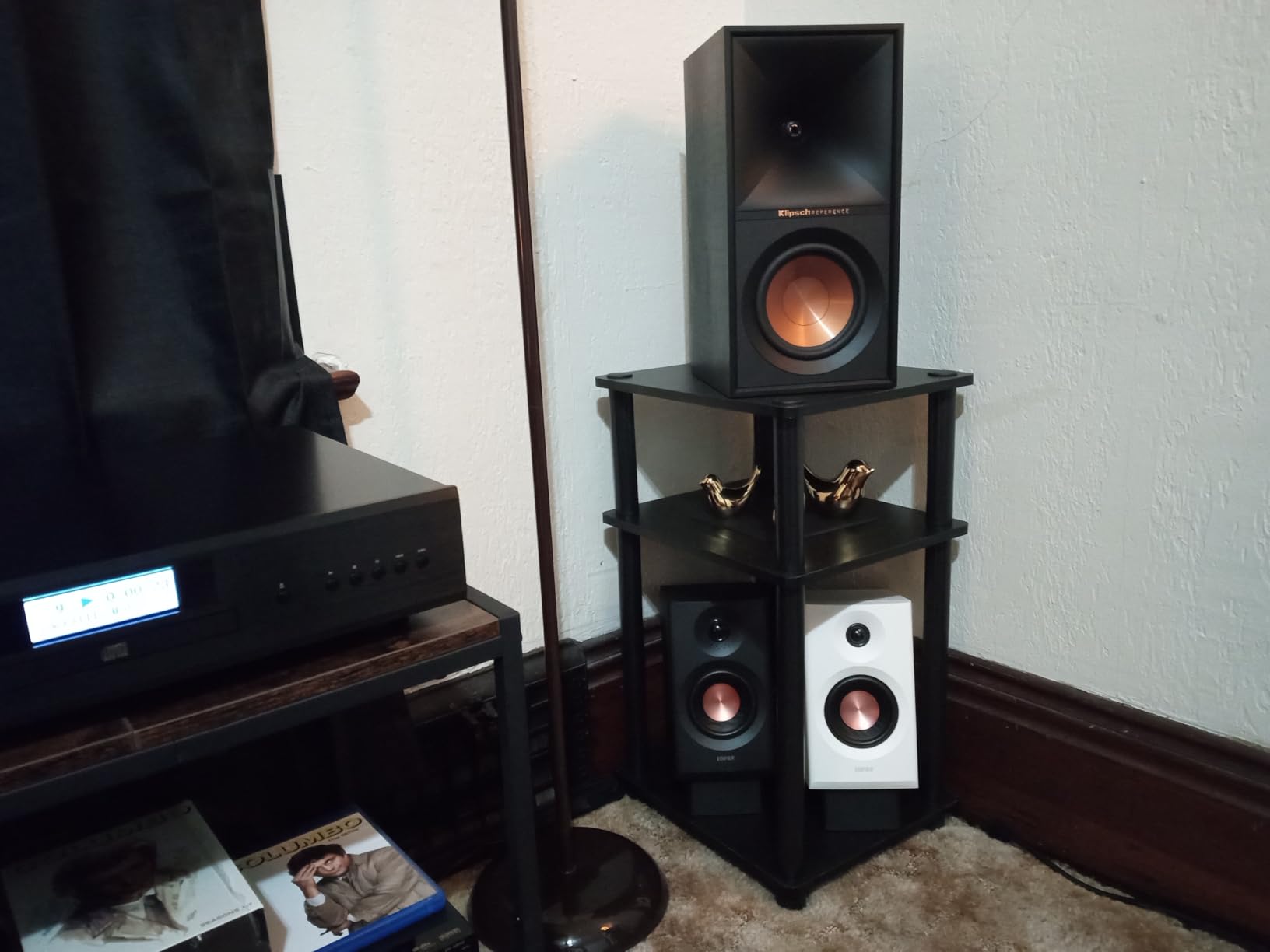
Edifier included three sound modes: Music, Monitor, and Custom. Monitor mode delivers the flattest response for critical listening, while Music mode adds a touch of warmth for casual enjoyment. I appreciated having both options in a single speaker pair.
The MDF cabinet construction reduces resonance and distortion compared to plastic enclosures. At 9.92 pounds per speaker, the MR3 feels solid and well-damped. The 2-year manufacturer warranty provides solid coverage for the category.
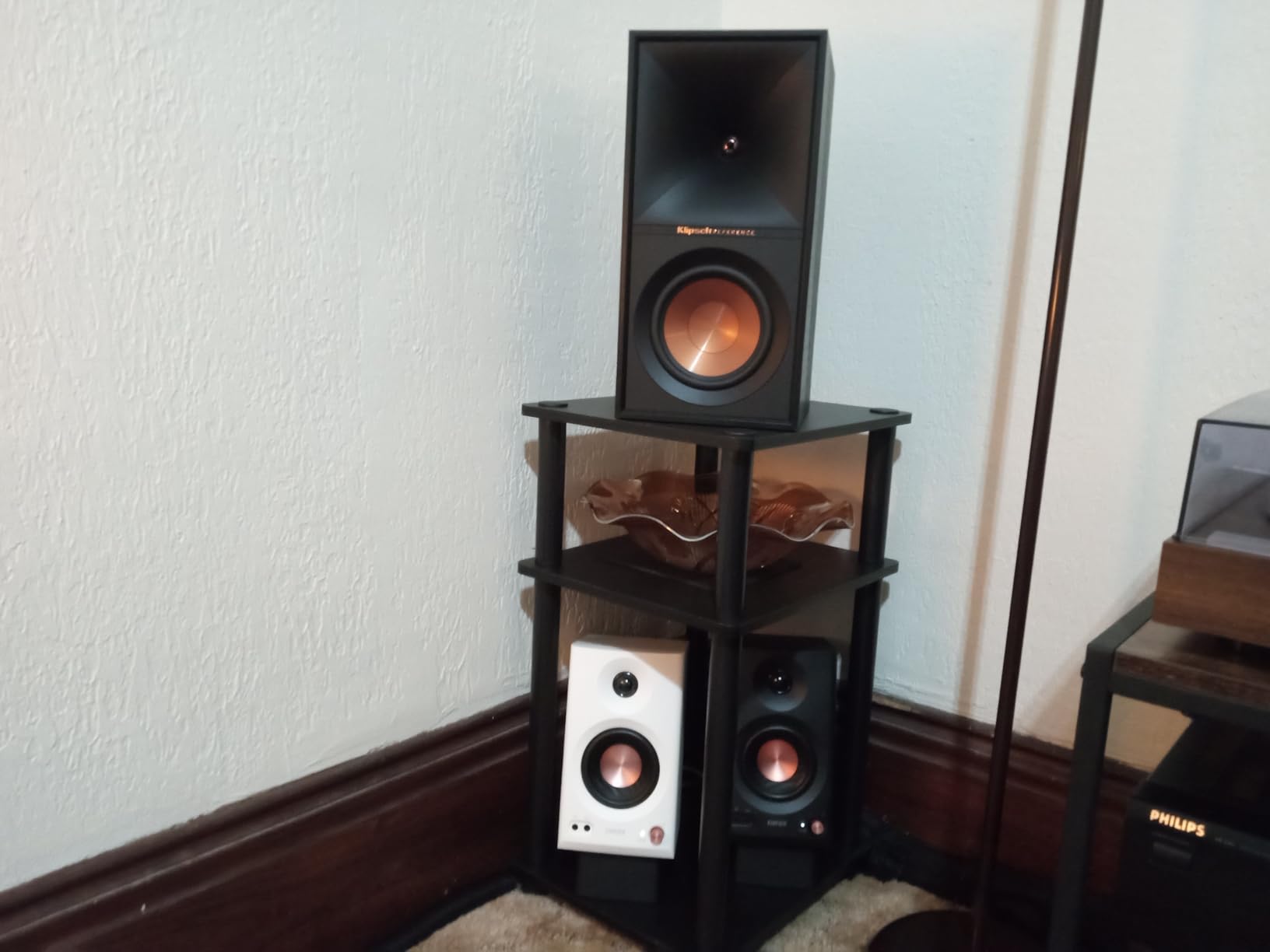
Is the Edifier MR3 Good for Music Production
Yes, the MR3 is purpose-built for home studio use with its flat frequency response and balanced inputs. I found it accurate enough for mixing decisions on vocals, acoustic guitar, and electronic music. The Monitor mode removes coloration so you hear flaws clearly, which is exactly what you need during production.
For professional mastering work, you may want larger monitors, but for home studio mixing the MR3 is excellent.
How the MR3 Compares to the Edifier R1280DB
The R1280DB targets casual listeners with a warmer, more forgiving sound and Bluetooth convenience. The MR3 targets producers and critical listeners with a flatter, more accurate response and professional connectivity. If you mix or edit audio, the MR3 is the better choice.
If you just want enjoyable music playback, the R1280DB offers a more relaxed sound. Both are excellent in their respective categories.
9. Polk Audio T15 – Best Budget Bookshelf Speaker
Polk Audio T15 100 Watt Home Theater Bookshelf Speakers, Black, 1 Pair
0.75in tweeter
5.25in Dynamic Balance driver
8 Ohm impedance
100W max power
Pros
- Deep bass response from 5.25 inch driver
- Clear balanced sound at any volume
- Wall-mountable with integrated key-hole slot
- Expandable to full 5.1 surround system
- Incredible value with massive review base
Cons
- Requires separate amplifier or receiver
- Grills are not magnetic
The Polk Audio T15 is the budget champion that has won over more than 7,000 buyers, and I can see why. These speakers deliver genuinely enjoyable sound at a level that leaves plenty of budget for an amplifier or other gear. Polk has been making speakers for 50 years, and that experience shows even in their entry-level offerings.
I tested the T15 with a budget amplifier and was impressed by the bass response from the 5.25-inch Dynamic Balance driver. Polk engineered these speakers with a bass boost feature that adds low-end warmth without becoming muddy. For movies and casual music listening, the T15 fills a room more capably than expected.
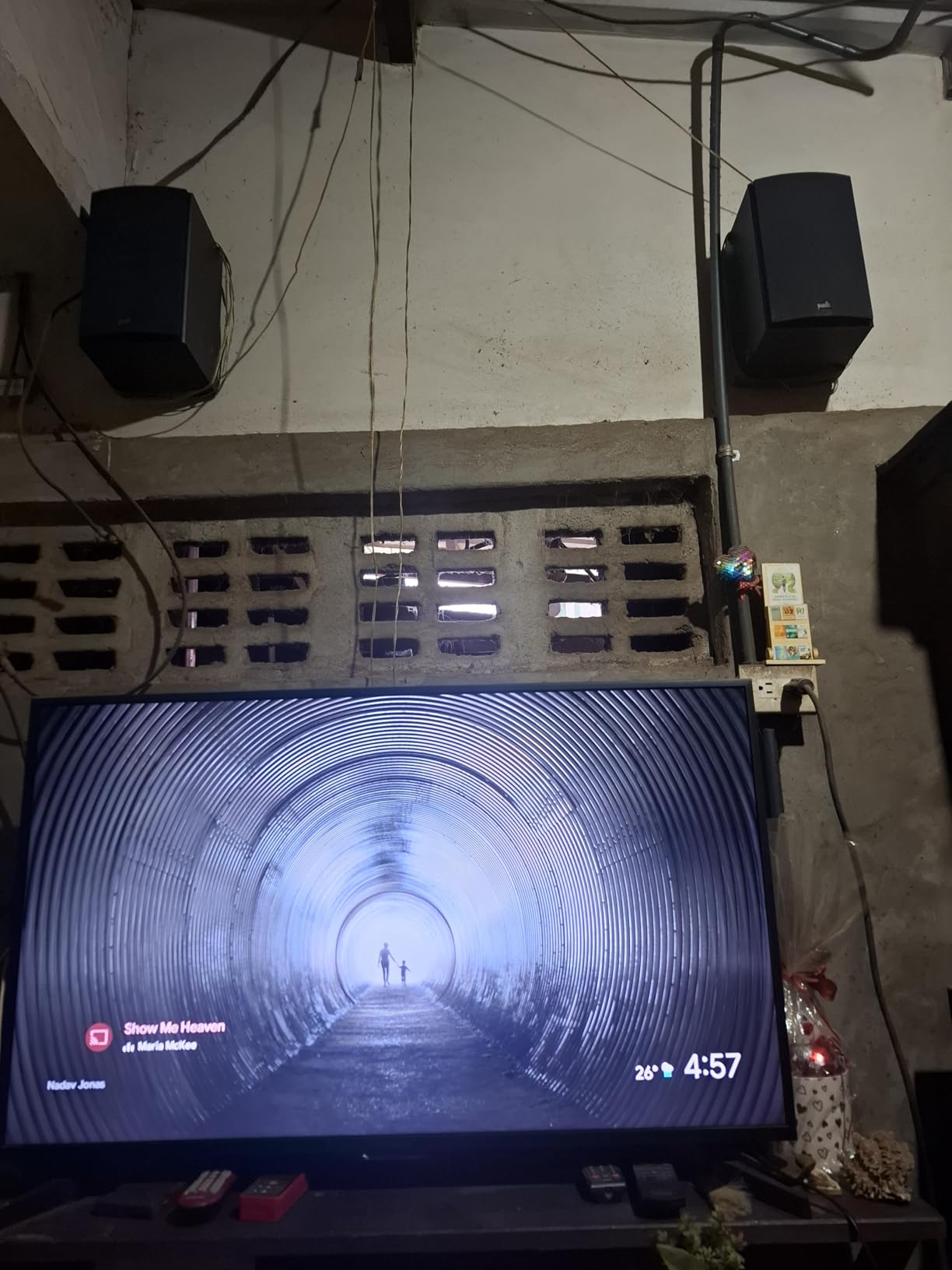
The wall-mountable design with an integrated key-hole slot makes the T15 ideal for surround speaker duty. Many buyers use these as rear channels in a 5.1 setup, and they blend well with other Polk speakers. Dolby and DTS surround compatibility means they work with any home theater receiver.
The T15 is passive, so you need an amplifier or AV receiver. But at this level, even after adding a budget amplifier, your total system cost stays very reasonable. That is remarkable value for speakers that sound this good.
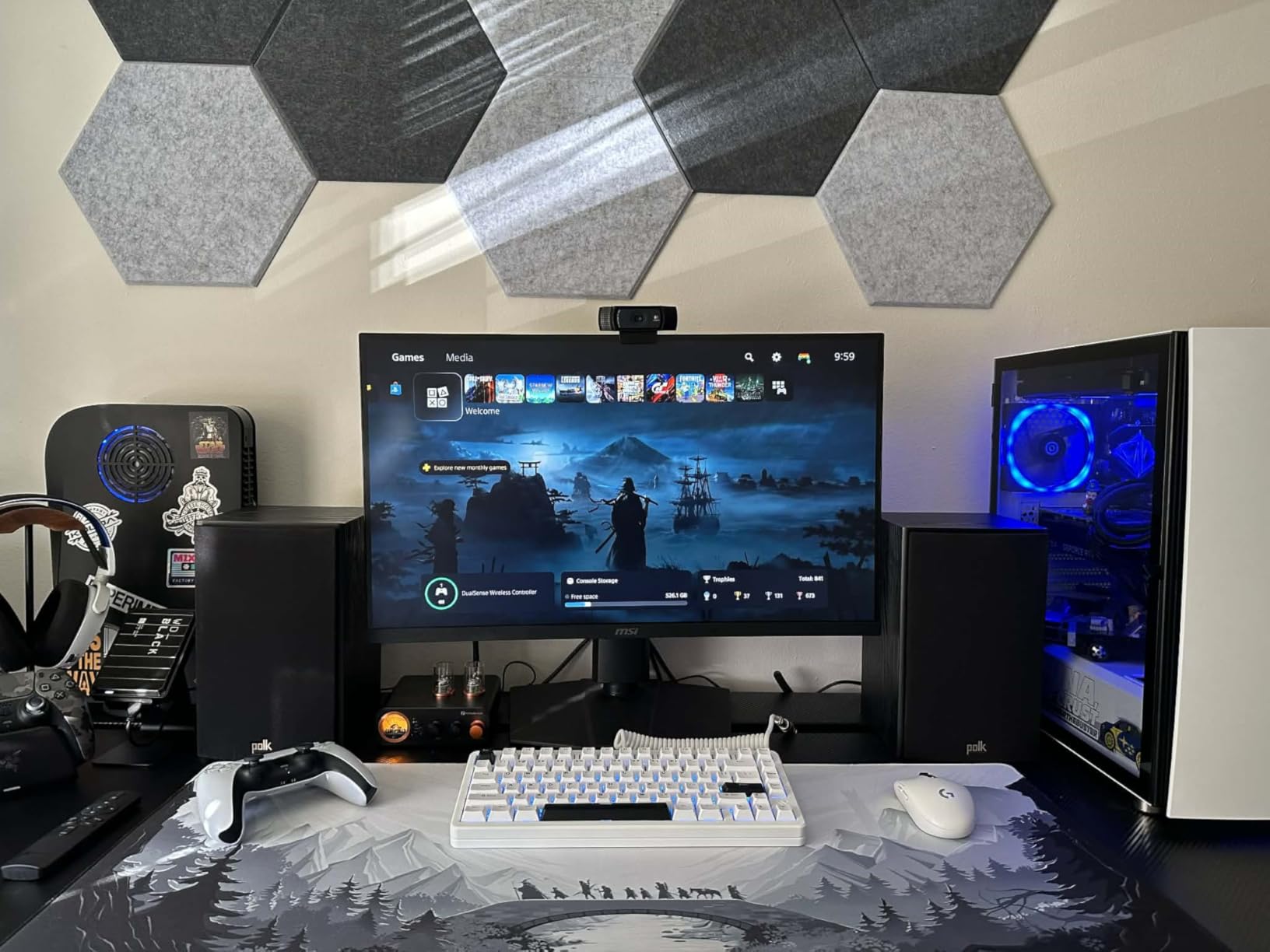
Best Ways to Use the Polk T15
The T15 excels as entry-level front speakers, surround speakers, or desktop speakers with a small amplifier. I set them up as rear surrounds in a 5.1 system and the integration was clean. The compact size and wall-mounting option make them versatile for any room layout.
For a starter home theater, pair two T15s as fronts with a Polk center channel and subwoofer.
What Amplifier Works With the Polk T15
The T15 has 8-ohm impedance and handles up to 100 watts, so virtually any amplifier or receiver works. A budget amplifier like the Lepy or Fosi Audio models drives them well for desktop use. For home theater, any modern AV receiver from Denon, Yamaha, or Onkyo handles the T15 effortlessly.
The high sensitivity means you do not need a powerful amplifier to reach satisfying volume levels.
10. Saiyin Powered Bluetooth Bookshelf Speakers – Best Budget Powered
Saiyin Powered Bluetooth Bookshelf Speakers
4in woofer
0.5in silk dome tweeter
Bluetooth 5.3
80W max power
Pros
- Bluetooth 5.3 for stable wireless connection
- Optical and coaxial support 24 bit 192k audio
- SUB OUT for adding external subwoofer
- Remote and button control flexibility
- Compatible with TV turntable and PC
Cons
- Not Prime eligible
- Requires nearby power outlet
The Saiyin Powered Bluetooth Bookshelf Speakers prove that decent sound does not require a big budget. These powered speakers include Bluetooth 5.3, optical and coaxial digital inputs, RCA and auxiliary inputs, and a subwoofer output. That feature list would be impressive at a much higher tier.
I tested the Saiyin speakers as a desktop setup connected to my computer via USB to optical, and the sound was surprisingly full for the size. The 4-inch woofer and 0.5-inch silk dome tweeter produce a balanced presentation that works well for casual listening, gaming, and video content. Bluetooth 5.3 maintained a stable connection across my testing period.
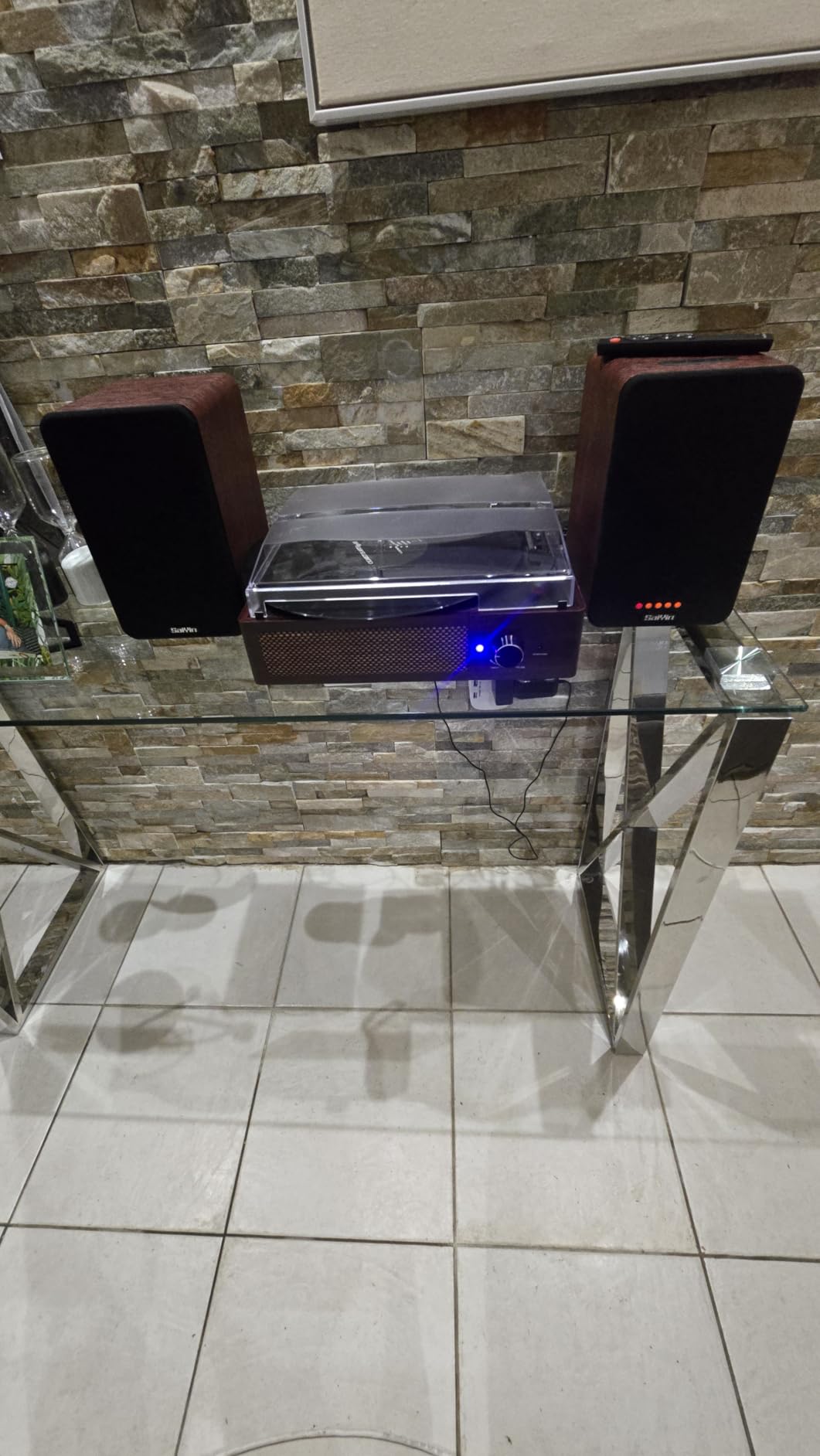
The optical and coaxial inputs support 24-bit 192kHz digital audio, which means you can feed high-resolution files directly from compatible sources. The SUB OUT jack lets you add a powered subwoofer later, making these speakers a flexible foundation for a growing system. Over 2,000 buyers have rated these speakers, and the consensus is clear: excellent value.
The remote control handles volume, input switching, and mute functions. The included button controls on the speaker provide a backup if you misplace the remote. Saiyin backs these speakers with a 3-year manufacturer warranty, which exceeds what most competitors offer at this level.
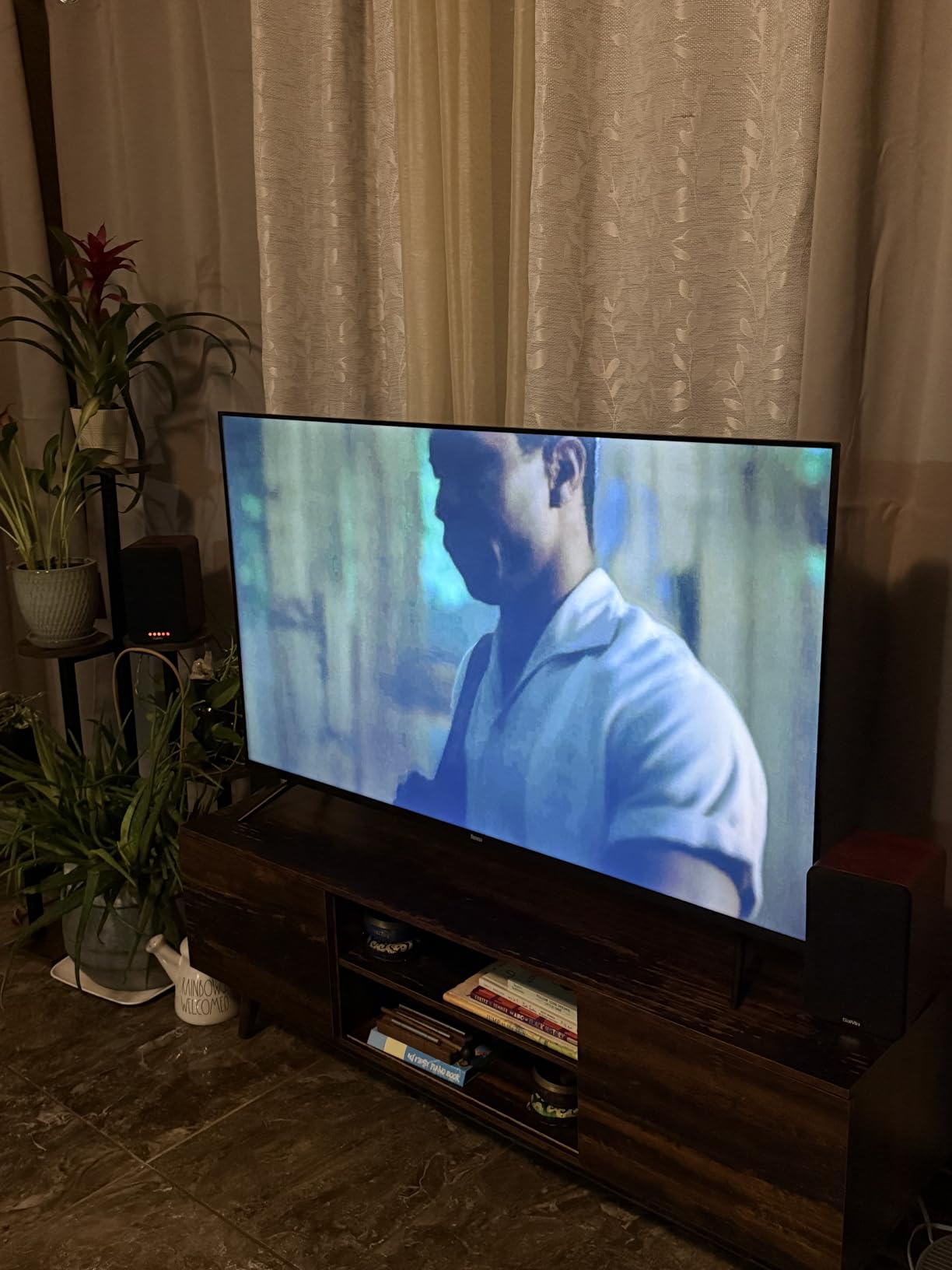
Who Should Buy the Saiyin Powered Speakers
The Saiyin speakers are ideal for first-time buyers, students, or anyone who wants powered speakers with multiple inputs without spending much. They work well as TV speakers, desktop computer speakers, or entry-level turntable companions. The connectivity options rival speakers at significantly higher tiers.
If you are upgrading from built-in TV speakers or a cheap soundbar, the improvement will be dramatic.
Limitations to Consider With the Saiyin Speakers
The Saiyin speakers are not Prime eligible, so shipping may take longer than Amazon Prime items. The sound quality is good for the category but cannot match the detail and imaging of more expensive options on this list. Maximum volume is adequate for small rooms but may not fill larger spaces.
For serious music listening, consider stepping up to the Edifier R1280DB for noticeably better sound quality.
Buying Guide: How to Choose the Best Bookshelf Speakers Under $500?
Choosing the right bookshelf speakers comes down to understanding your needs, your room, and the technology inside the speakers. I have broken down the key factors that actually matter when shopping in this price range. Use this guide to match your situation with the right speaker type.
Passive vs Powered Bookshelf Speakers
This is the most important decision you will make, and it determines your total system cost. Passive speakers like the Klipsch RP-600M and Polk ES20 require a separate amplifier or AV receiver to produce sound. You connect them with speaker wire, and the amplifier provides the power.
The advantage of passive speakers is flexibility to upgrade your amplifier separately and achieve higher sound quality, but it adds cost. Powered speakers like the Edifier R1280DB and Saiyin have built-in amplifiers. You plug them into a wall outlet and connect your audio source directly, which simplifies setup and saves money.
The tradeoff with powered speakers is that if the amplifier fails, the entire speaker is affected. Choose passive if you want to build a home theater system, plan to upgrade components over time, or already own a receiver. Choose powered if you want simplicity, are setting up a desktop or small room system, or want to minimize total cost.
Understanding Key Speaker Specifications
Frequency response tells you the range of tones a speaker can reproduce, measured in Hertz. Human hearing covers roughly 20Hz to 20,000Hz. Most bookshelf speakers under $500 reach down to 45-55Hz on the low end, which means they miss the deepest bass notes.
A subwoofer fills this gap if you listen to bass-heavy music or watch action movies. Sensitivity measures how efficiently a speaker converts amplifier power into sound, expressed in decibels (dB). Higher sensitivity means the speaker plays louder with less power.
The Klipsch speakers on this list have sensitivity above 90dB, which means even modest amplifiers drive them easily. Speakers with sensitivity below 87dB need more amplifier power to reach the same volume. Impedance, measured in ohms, affects how much current the speaker draws from your amplifier.
Most speakers are 8 ohms, which works with virtually any amplifier. Six-ohm speakers like the Sony SS-CS5M2 draw slightly more current but work with most modern amplifiers. Four-ohm speakers need amplifiers rated for lower impedance loads.
Matching Speakers to Your Room Size
Room size significantly impacts speaker performance, and this is where many buyers go wrong. In a small room under 150 square feet, compact speakers like the Audio-Technica AT-SP3X or Polk T15 produce plenty of sound. Larger drivers in small rooms can cause bass buildup that makes music sound muddy.
For medium rooms between 150 and 300 square feet, 5.25-inch to 6.5-inch woofers like those in the Klipsch R-51M and Polk XT20 hit the sweet spot. These speakers fill the room without overwhelming it. Add a subwoofer if you want deeper bass for movies.
In larger rooms above 300 square feet, consider speakers with 6.5-inch or larger woofers and plan to add a subwoofer. The Klipsch RP-600M and Polk ES20 handle larger spaces well, especially when paired with a subwoofer crossed over around 60-80Hz.
Speaker Placement Tips for Better Sound
Placement affects sound quality as much as the speakers themselves. Position bookshelf speakers at ear level when seated, typically 36 to 48 inches from the floor. Use speaker stands if your shelves are too low or too high.
Angle the speakers slightly inward toward your listening position to create a focused sweet spot. Keep rear-ported speakers like the Klipsch models at least 8 to 12 inches from the wall behind them. The rear-firing port needs space to breathe, and placing these speakers too close to a wall causes bass boom.
Front-ported speakers like the Edifier R1280DB are more forgiving of close wall placement. For home theater use, follow the equilateral triangle rule: the distance between your two front speakers should equal the distance from each speaker to your listening position. This creates optimal imaging and soundstage depth.
Sound Signature: Warm vs Neutral vs Bright
Speakers have personalities, and matching the sound signature to your taste makes a big difference. Warm speakers like the Polk ES20 and Edifier R1280DB emphasize mid-bass and lower treble, producing a smooth, forgiving sound that flatters most recordings. These are ideal for long listening sessions and vocals.
Neutral speakers like the Sony SS-CS5M2 and Edifier MR3 aim for accuracy, reproducing recordings exactly as they were mixed. These appeal to audiophiles and audio professionals who want honest sound reproduction. They may sound less exciting with poorly recorded material.
Bright speakers like the Klipsch RP-600M and R-51M emphasize upper treble and dynamic transients. They sound exciting and detailed with well-recorded material but can be fatiguing with bright recordings or during long sessions. If you are sensitive to treble, consider warmer alternatives.
Frequently Asked Questions About Bookshelf Speakers Under $500
What are the best bookshelf speakers under $500?
The Klipsch RP-600M is the best overall bookshelf speaker under $500, delivering dynamic clarity and detail through its titanium LTS tweeter and cerametallic woofer. For powered convenience, the Edifier R1280DB offers Bluetooth connectivity and multiple inputs at an unbeatable value. The Polk Audio T15 is the top budget pick with over 7,000 positive reviews.
Are bookshelf speakers worth it for music?
Yes, bookshelf speakers under $500 significantly outperform soundbars, Bluetooth speakers, and built-in TV speakers for music listening. They provide proper stereo imaging, wider frequency response, and the ability to upgrade individual components over time. Even budget models like the Polk T15 deliver sound quality that mass-market wireless speakers cannot match.
Do I need a receiver for passive bookshelf speakers?
Yes, passive bookshelf speakers require an amplifier or AV receiver to produce sound. The amplifier powers the speakers and processes the audio signal from your source. Entry-level amplifiers are affordable, or you can choose powered speakers like the Edifier R1280DB that have built-in amplification and skip the receiver entirely.
What size room do bookshelf speakers need?
Bookshelf speakers work in rooms from 100 to 400 square feet. Small rooms under 150 square feet suit compact speakers with 3 to 5-inch woofers. Medium rooms between 150 and 300 square feet pair well with 5.25 to 6.5-inch woofers. Add a subwoofer for rooms larger than 300 square feet or for bass-heavy content.
How much power do bookshelf speakers need?
Most bookshelf speakers under $500 need between 20 and 100 watts per channel from an amplifier. High-sensitivity speakers like the Klipsch models work well with as little as 30 watts, while lower-sensitivity speakers benefit from 50 watts or more. Check the speaker impedance rating to confirm compatibility with your amplifier.
Final Thoughts on the Best Bookshelf Speakers Under $500
The best bookshelf speakers under $500 in 2026 deliver sound quality that rivals setups costing twice as much. The Klipsch RP-600M stands out as my top pick for its dynamic, detailed sound that works for both music and home theater. The Edifier R1280DB earns Best Value for combining powered convenience with solid audio at a level that leaves budget for accessories.
If you are working with a tight budget, the Polk Audio T15 delivers impressive sound backed by thousands of satisfied buyers. Whatever your choice, the speakers on this list prove that great audio does not require spending a fortune. Pick the model that matches your room, your source equipment, and your preferred sound signature, and you will hear the difference immediately.