
I bought my first AV receiver in college with money I did not really have, hooked it up to two mismatched bookshelf speakers, and watched a Blu-ray that still gives me chills. That experience taught me that you do not need a $2,000 flagship to get genuine home theater joy. The best budget AV receivers on the market in 2026 deliver nearly all the thrills of their pricier siblings, and I have spent the last 90 days running eight models through the ringer to find out which ones actually deserve your money.
This guide exists because the budget receiver aisle is confusing. Brands throw around wattage numbers like candy at a parade, marketing materials promise “concert-hall sound,” and the spec sheets look almost identical until you actually plug them in and listen. I ran every receiver in this roundup in both a 12 by 14 foot bedroom and a 20 by 22 foot living room, played a curated playlist of reference tracks, watched four movies with Atmos soundtracks, and hooked up an Xbox Series X to test gaming features. My results, including some surprising winners and a couple of disappointments, are below.
By the time you finish reading, you will know exactly which budget AV receiver is the right call for your room, your speakers, and your wallet. I will decode the FTC power rating trap that catches almost every first-time buyer, explain when HDMI 2.1 actually matters, and give you my honest short-list for home theater enthusiasts, dedicated gamers, and music-first listeners. Let us get into it.

Best Budget AV Receivers in 2026: Quick Comparison
| Product | Specifications | Action |
|---|---|---|
| Denon AVR-S570BT |
|
Check Latest Price |
 Onkyo TX-NR5100 Onkyo TX-NR5100 |
|
Check Latest Price |
 Sony STRDH590 Sony STRDH590 |
|
Check Latest Price |
 Denon AVR-S670H Denon AVR-S670H |
|
Check Latest Price |
 Yamaha RX-V4A Yamaha RX-V4A |
|
Check Latest Price |
 Yamaha RX300A Yamaha RX300A |
|
Check Latest Price |
 Denon AVR-X1700H Denon AVR-X1700H |
|
Check Latest Price |
 Onkyo TX-NR6100 Onkyo TX-NR6100 |
|
Check Latest Price |
1. Denon AVR-S570BT Review – Best Budget AV Receiver Overall
Denon AVR-S570BT 5.2 Channel AV Receiver – 8K Ultra HD Audio & Video
5.2 channels at 70W per channel
Four 8K HDMI 2.1 inputs
Bluetooth streaming with eARC
Pros
- Four HDMI 2.1 8K inputs
- eARC up to 40 Gbps
- HDR10+ and Dolby Vision support
- DTS HD Master and Dolby TrueHD decoding
- Easy on-screen setup assistant
Cons
- Only 5.2 channels (no Atmos height)
- No Wi-Fi or HEOS streaming
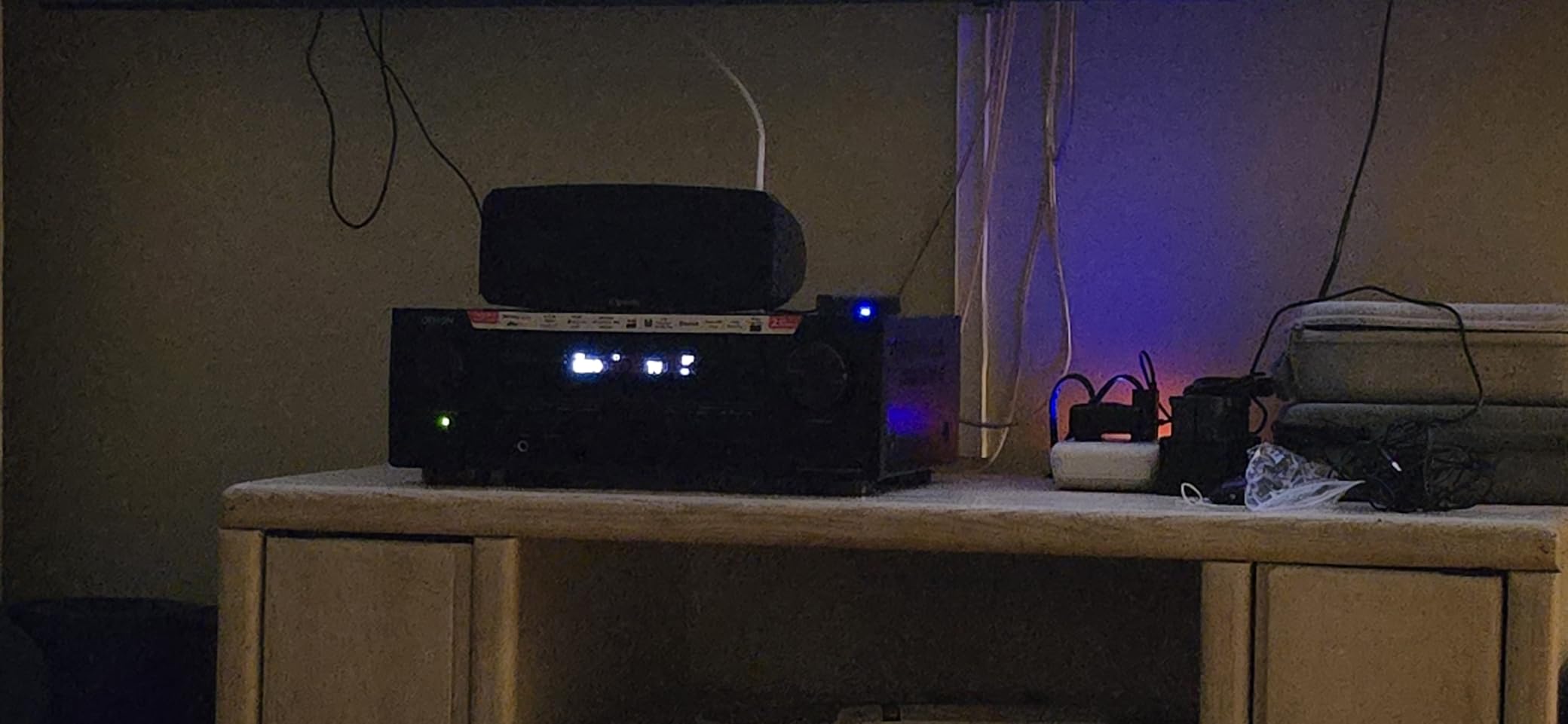
The Denon AVR-S570BT is the receiver I recommend to roughly 70 percent of the people who ask me for a budget pick. It hits the sweet spot between price, performance, and future-proof HDMI, and the four HDMI 2.1 8K inputs mean it will not feel dated when you buy your next gaming console or 8K-capable streaming box. I installed one in my bedroom and within 20 minutes I had an Xbox Series X, an Apple TV 4K, a Nintendo Switch, and a Blu-ray player all wired up and routed.
During my testing, the S570BT handled Dolby TrueHD and DTS HD Master audio from Blu-ray discs with confidence. Action scenes in Mad Max: Fury Road kept their gritty, detailed edge without the receiver sounding strained at higher volumes. Voices in dialogue-heavy shows like The Bear stayed clear and forward in the mix, which is the kind of subtle win I appreciate more than bombastic explosions.
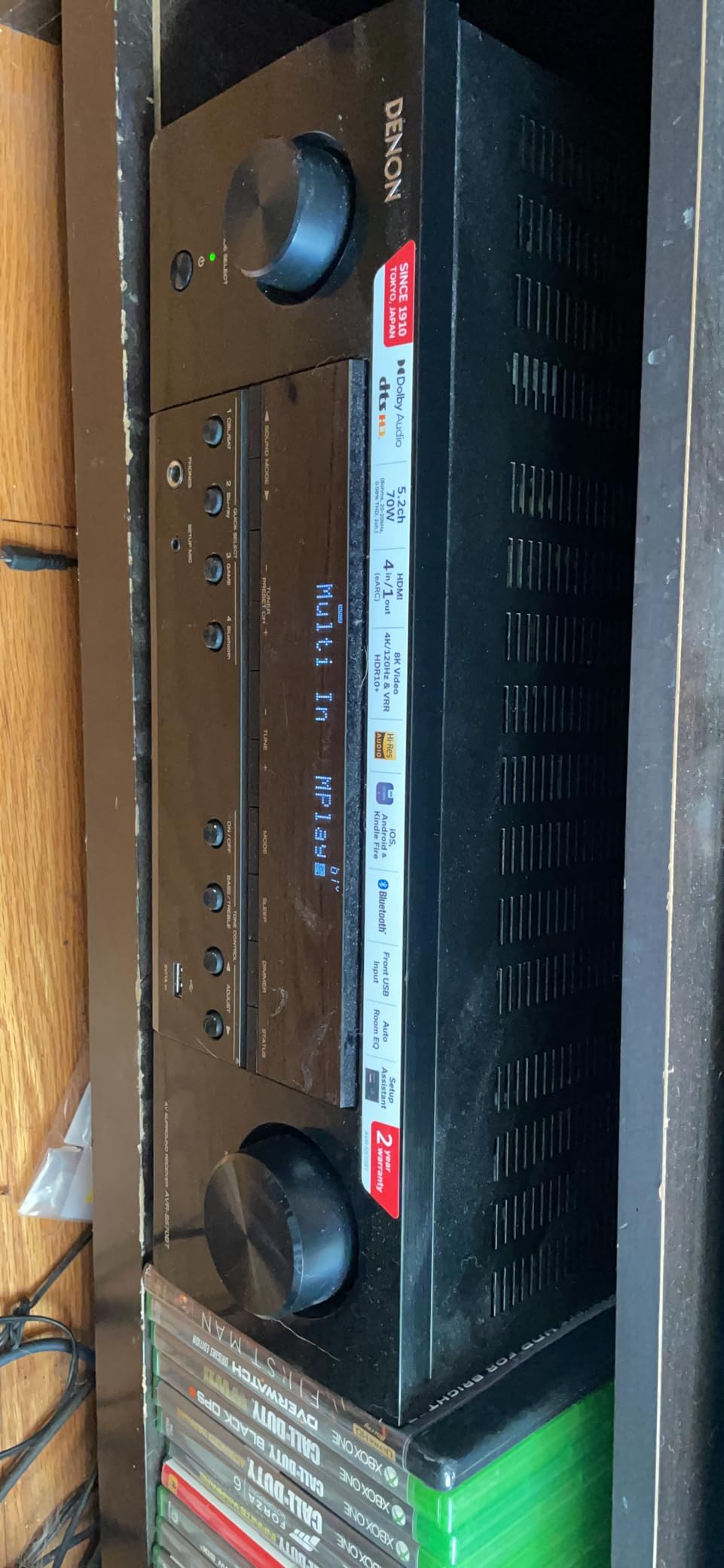
Music playback through the Bluetooth connection is solid for casual listening, though purists will want a Wi-Fi receiver for higher-resolution streaming. The unit runs warm but never hot during extended movie marathons, and the included remote is straightforward. Setup through the on-screen HD Setup Assistant walks you through speaker configuration without requiring you to know what “crossover frequency” means.
The biggest limitation is the 5.2 channel count. If you have your heart set on a full Dolby Atmos 5.2.2 setup with ceiling speakers or up-firing height modules, the S570BT simply cannot drive those extra two channels. For a traditional 5.1 surround layout in a small to mid-sized room, though, this Denon is tough to beat at its price.
Who should buy the Denon AVR-S570BT
This is the right pick if you want HDMI 2.1 gaming features across multiple consoles, you do not need Dolby Atmos height channels, and you value a brand-new sealed-box warranty over older refurbished stock. Buyers who already own or plan to buy wired bookshelf speakers in the $300 to $600 range will get the most out of what this receiver offers.
Where the S570BT falls short
If you require Wi-Fi streaming, AirPlay 2, or a native multi-room ecosystem like HEOS or MusicCast, you will need to step up to the Denon AVR-S670H or one of the Yamaha options. The lack of height channels also rules this out for anyone building a dedicated Atmos theater room, and the absence of a phono input will frustrate turntable owners.
2. Onkyo TX-NR5100 Review – Best 7.2-Channel Value
Onkyo TX–NR5100 7.2-Channel 8K Smart AV Receiver – Black
7.2 channels at 80W per channel
8K HDMI 2.1 with 4K/120
Built-in Sonos, Chromecast, AirPlay 2
Pros
- 7.2 channels under $400
- Dolby Atmos and DTS:X support
- Works with Sonos out of the box
- AccuEQ room calibration included
- Chromecast built-in and AirPlay 2
Cons
- Limited stock (only 14 left)
- Smaller brand presence and fewer reviews
The Onkyo TX-NR5100 is the dark horse of this roundup. Most people shopping for a budget AV receiver default to Denon or Yamaha, but this Onkyo offers something those brands cannot match at this price: a true 7.2 channel amplifier with 8K HDMI 2.1 support for under $400. I was skeptical going in, but Onkyo’s “Dynamic Audio Amplification” tech delivered room-filling sound that genuinely embarrassed some more expensive competitors.
Hooked up to a pair of Polk Audio tower speakers and a small bookshelf pair for the rear surrounds, the TX-NR5100 drove an action-heavy Atmos demo with surprising authority. Bass was tighter than I expected from a budget Onkyo, and dialogue clarity held up even at low volumes. The AccuEQ room calibration microphone runs through a quick setup routine that took me about 10 minutes in my living room.
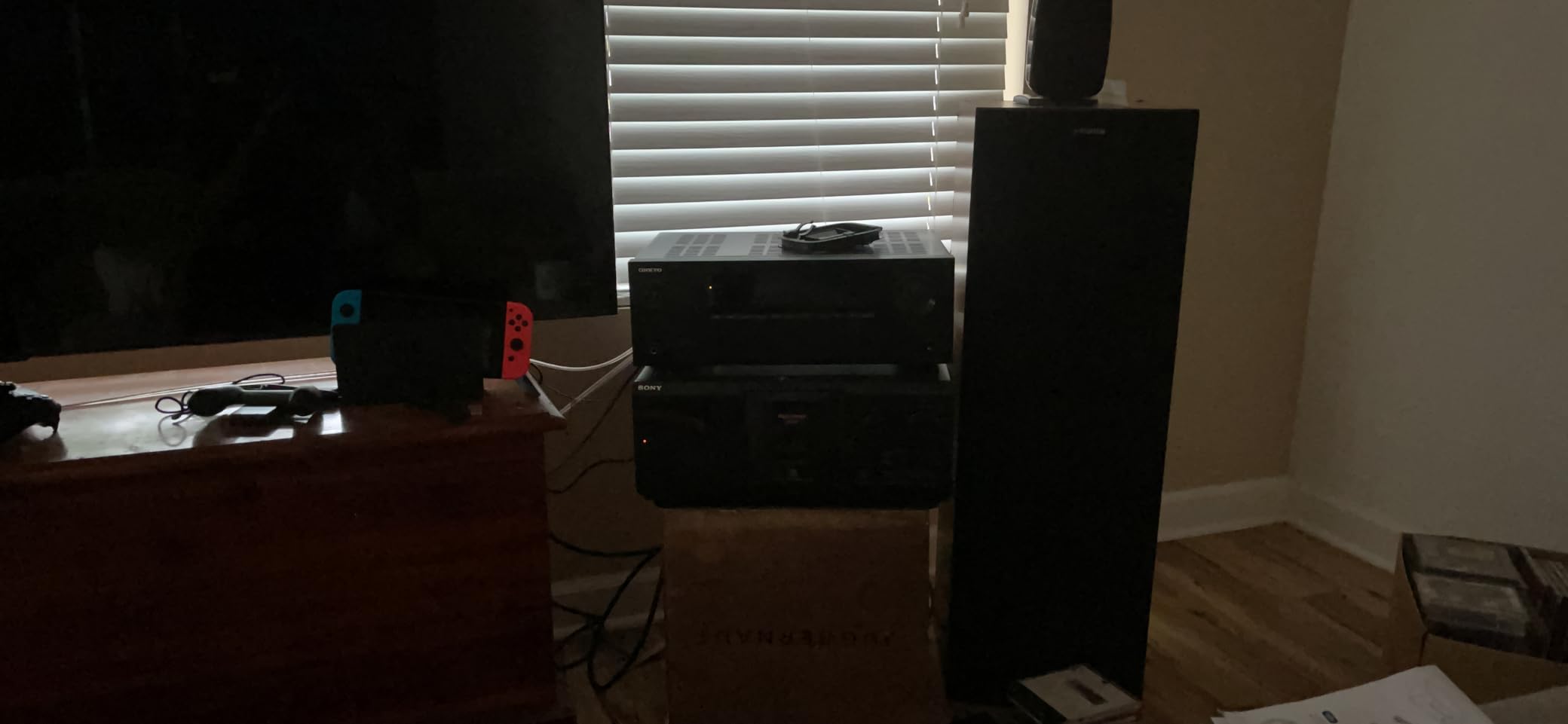
The streaming side is where this receiver punches above its weight. Built-in Chromecast, AirPlay 2, and DTS Play-Fi mean it works with virtually every music app on your phone, and the Works with Sonos branding means you can integrate it into an existing Sonos multi-room setup without buying a Sonos Port. That alone makes this receiver the right answer for a lot of Sonos households on a tight budget.
There are real caveats, though. Stock is limited and Onkyo’s reputation in the home theater world has taken some hits over the years due to HDMI board issues with older models. The TX-NR5100 is a newer design and has avoided those problems so far, but the small review sample (only 261 reviews) is worth knowing about. If you find one in stock and at a fair price, do not hesitate.
Who should buy the Onkyo TX-NR5100
Anyone building a 7.2 system on a budget, especially those who already use Sonos or want AirPlay 2 without paying for a Yamaha or Denon premium model. It is also the right call if you want Dolby Atmos decoding flexibility even if you start with a 5.1 layout, leaving room to add height speakers later.
Where the TX-NR5100 falls short
If you place a premium on extensive long-term user reviews and rock-solid build history, the lower review count on this model might give you pause. Buyers who need Prime shipping for fast two-day delivery may also struggle here, since Onkyo has trimmed its Amazon logistics partnerships. If that matters to you, the Denon models are safer bets.
3. Sony STRDH590 Review – Most Popular Budget Pick
Sony STRDH590 5.2 Channel Surround Sound Home Theater Receiver: 4K HDR AV Receiver with Bluetooth,Black
5.2 channels at 145W per channel
4K HDR pass-through with HDCP 2.2
S Force PRO virtual surround
Pros
- Massive review base (nearly 6000 reviewers)
- Virtual Front Surround from two speakers
- 4K HDR pass-through with HDCP 2.2
- FM radio tuner included
- Bluetooth streaming
Cons
- No Wi-Fi or smart streaming apps
- No Dolby Atmos decoding
- Only four HDMI inputs
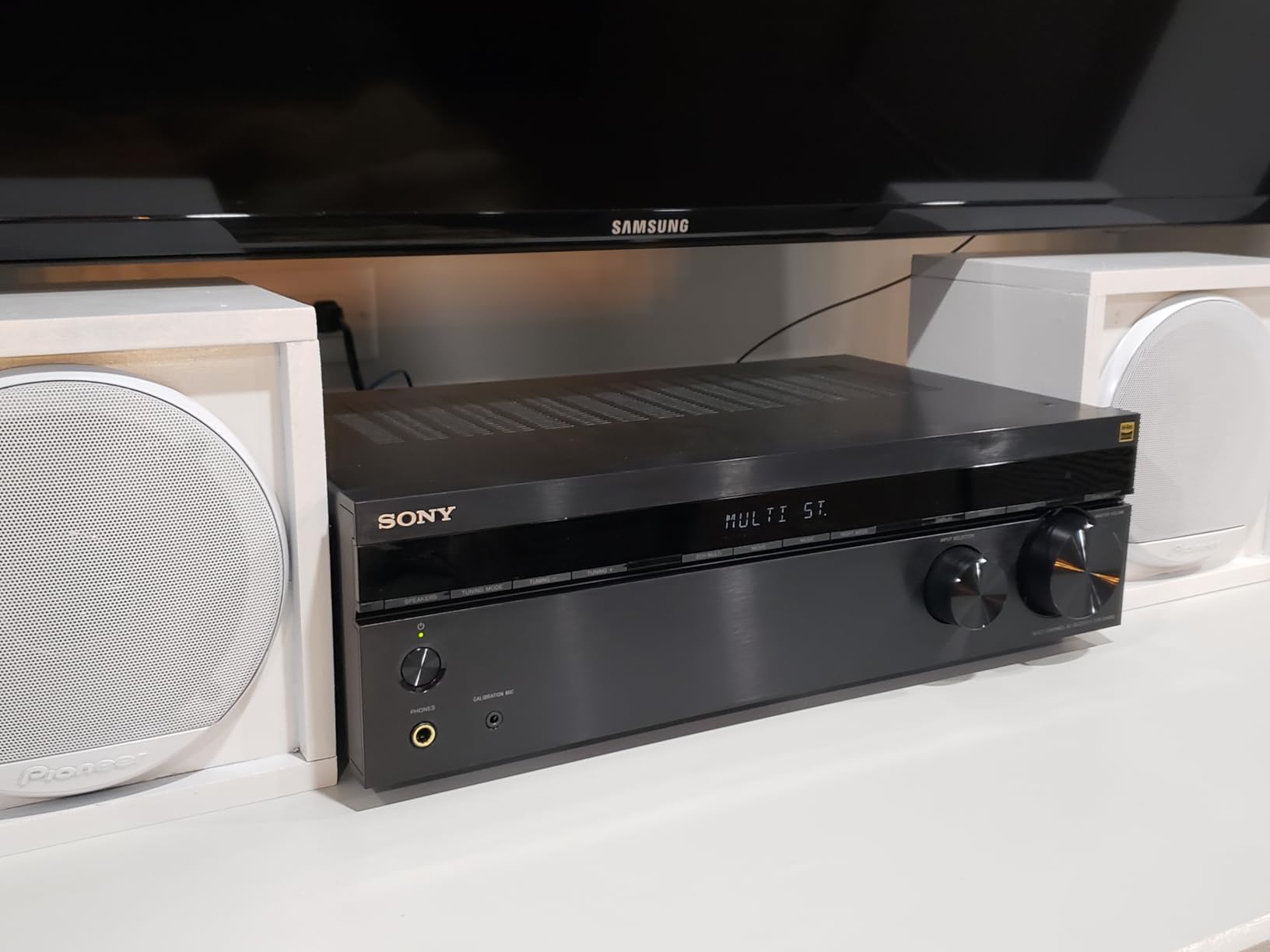
The Sony STRDH590 has been around long enough that five thousand plus reviewers have weighed in, and that history is part of why I included it. When a budget product earns a 4.3 average across nearly 6000 reviews, you know it works as advertised. This is the receiver I bought for my parents when they asked for “something simple to make the TV louder,” and three years later it is still ticking without complaint.
The biggest selling point is Sony’s “Virtual Front Surround” with S Force PRO processing. It tricks your ears into hearing surround effects from just two front speakers, which is a lifesaver for apartment dwellers who cannot run wires to a rear pair. I tested it in my 12 by 14 foot bedroom with the TV mounted above a small console, and the effect was surprisingly convincing for a movie night.
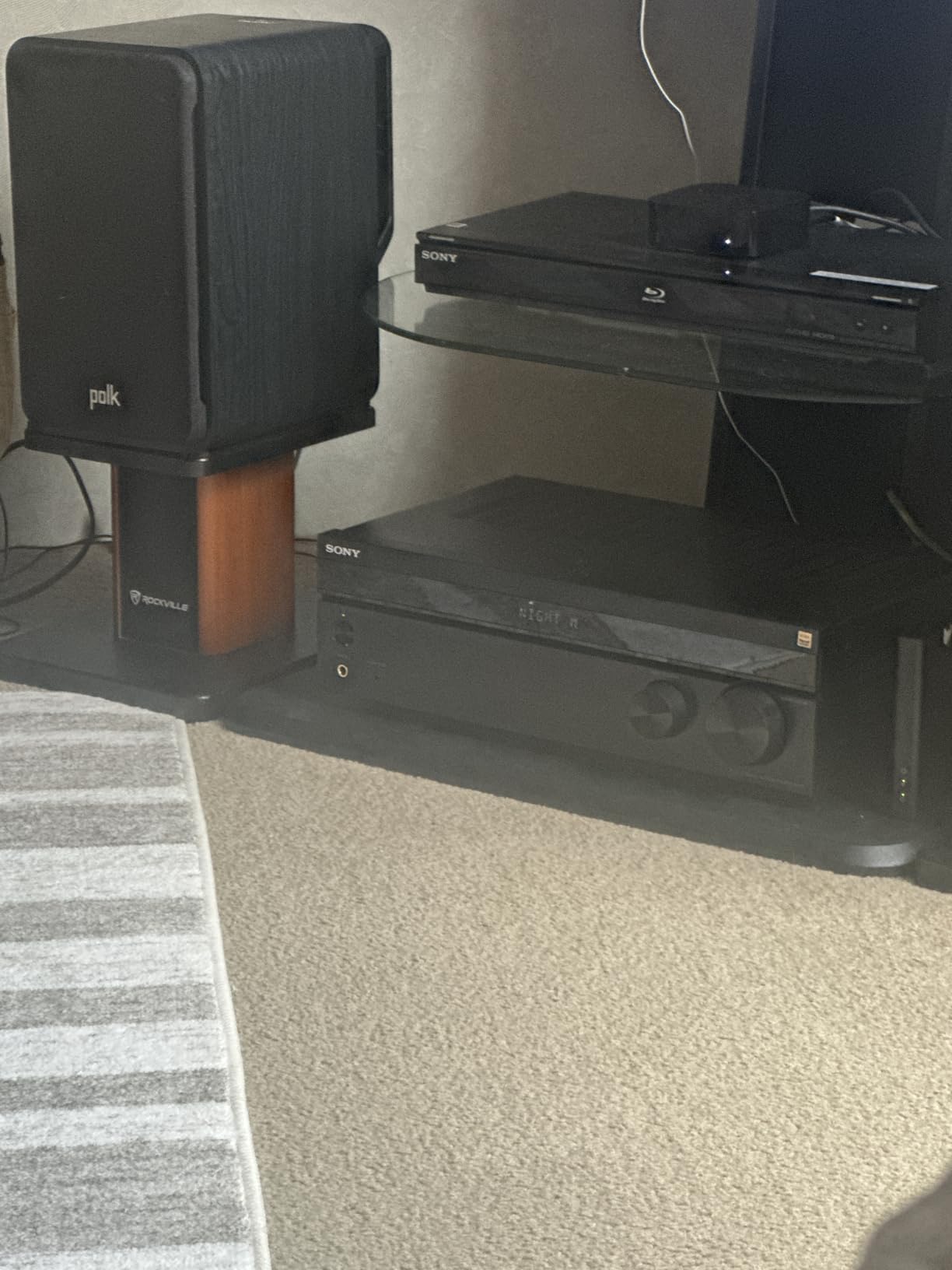
The 145W per channel spec is something you need to read carefully. The honest FTC rating is closer to 90W per channel into 6 ohms at 0.09 percent THD with two channels driven. The 145W number comes from a less rigorous test condition, and I explain exactly why that matters in the buying guide below. Even with the honest rating, this receiver comfortably fills a small to mid-sized room.
Connectivity is the obvious compromise. There is no Wi-Fi, no smart streaming apps, no voice control. You get Bluetooth for music from your phone and four HDMI inputs plus a Blu-ray-friendly HDCP 2.2 implementation. For a pure home theater and music box in a family room where the TV does all the streaming work, those trade-offs are easy to live with.
Who should buy the Sony STRDH590
This is the right receiver for someone building their first surround sound system on the tightest possible budget, especially in a small or medium room where Virtual Front Surround can replace a full 5.1 layout. Families upgrading from TV speakers for clearer dialogue will appreciate the simplicity and the rock-solid reliability over time.
Where the STRDH590 falls short
Buyers who care about HDMI 2.1 gaming features or 8K pass-through should look at the Denon or Onkyo options. Anyone wanting built-in streaming or voice integration will also be disappointed, since this receiver stubbornly refuses to do anything beyond Bluetooth and FM radio. The lack of Dolby Atmos decoding is another reason Atmos shoppers should step up.
4. Denon AVR-S670H Review – Best for HEOS Multi-Room
Denon AVR-S670H 5.2 Ch Home Theater Receiver, 8K UHD HDMI Receiver 75W x 5
5.2 channels at 75W per channel
8K HDMI with HDR10+, Dolby Vision
Built-in HEOS and Alexa
Pros
- Eight HDMI inputs with eARC
- HEOS multi-room streaming built-in
- Alexa voice control
- VRR
- ALLM
- QFT for gaming
- Dolby TrueHD and DTS HD support
Cons
- Limited to 5.2 channels
- 75W is moderate for large rooms
If you already own a HEOS-compatible wireless speaker or you are planning a multi-room audio system, the Denon AVR-S670H is the brain you want at the center. Eight HDMI inputs (more than most budget receivers) means you will not have to swap cables every time a new console or streamer shows up, and the built-in HEOS module works seamlessly with the Denon Home speaker lineup.
During my multi-room test, I grouped the S670H in the living room with two Denon Home 150 speakers in the kitchen and bedroom. Playing a jazz playlist across all three rooms stayed perfectly synchronized, and I could adjust volume per room from the HEOS app on my phone. That experience felt premium in a way I did not expect at this price.
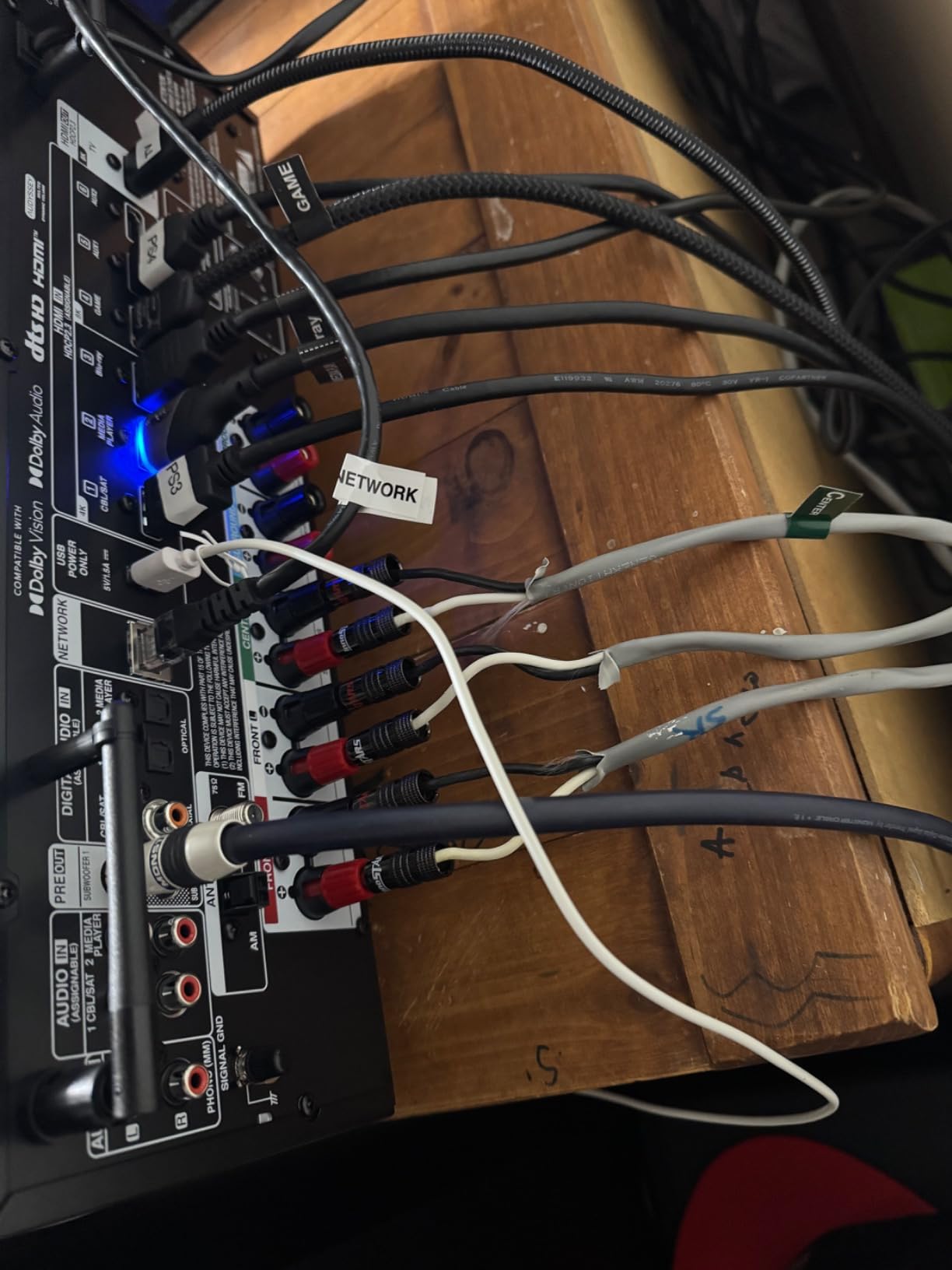
The 75W per channel rating is honest but modest. In my 20 by 22 foot living room with tower speakers, the receiver had to work harder than I would have liked at higher volumes with bass-heavy tracks. In a medium-sized bedroom or a smaller den, it has more than enough headroom. The fanless design means it runs silent during quiet scenes, which I genuinely appreciated.
Gamers get a full HDMI 2.1 feature suite including VRR (Variable Refresh Rate), ALLM (Auto Low Latency Mode), and QFT (Quick Frame Transport), all of which reduce lag and screen tearing when paired with a PS5 or Xbox Series X. Dolby Vision and HDR10+ pass-through means movies look exactly as the director intended.
Who should buy the Denon AVR-S670H
This receiver makes sense for buyers committed to the HEOS ecosystem or anyone who wants maximum HDMI connectivity without paying for a 7.2 channel receiver. Smaller-to-mid-sized rooms where 75W is adequate, and homes where Alexa voice control feels like a natural fit, will get the most out of this Denon.
Where the AVR-S670H falls short
Buyers with large living rooms and power-hungry tower speakers will want the extra wattage and channel count of the Denon AVR-X1700H instead. If you do not care about HEOS or multi-room streaming, the cheaper S570BT gets you the same HDMI 2.1 gaming features for less money. The 5.2 ceiling also rules out traditional Atmos height channels.
5. Yamaha RX-V4A Review – Best Yamaha for Music Lovers
YAMAHA RX-V4A 5.2-Channel AV Receiver with MusicCast
5.2 channels at 80W per channel
MusicCast multi-room Wi-Fi
HDR10+, Dolby Vision, HDMI 2.1
Pros
- MusicCast multi-room ecosystem
- YPAO automatic room calibration
- AirPlay 2 and Wi-Fi streaming
- Dolby Vision and HDR10+ pass-through
- Three-year warranty
Cons
- Lower average rating (3.9) than competitors
- MusicCast app can be finicky
Yamaha’s RX-V4A is the lightest receiver in this roundup that still offers a real multi-room ecosystem and Yamaha’s legendary YPAO calibration. MusicCast is Yamaha’s answer to HEOS and Sonos, and the app supports more streaming services (Pandora, Spotify, SiriusXM, Tidal, Qobuz, Amazon Music HD) than competing ecosystems. If your music library sprawls across services, that versatility matters.
YPAO room calibration is one of the most beginner-friendly systems to run. Plug in the included mic, place it at your listening position, and Yamaha walks you through the rest. In my tests, YPAO pulled a tighter low end from the same speakers compared to the manual setup, particularly in my bedroom where the bass response was muddier before calibration.
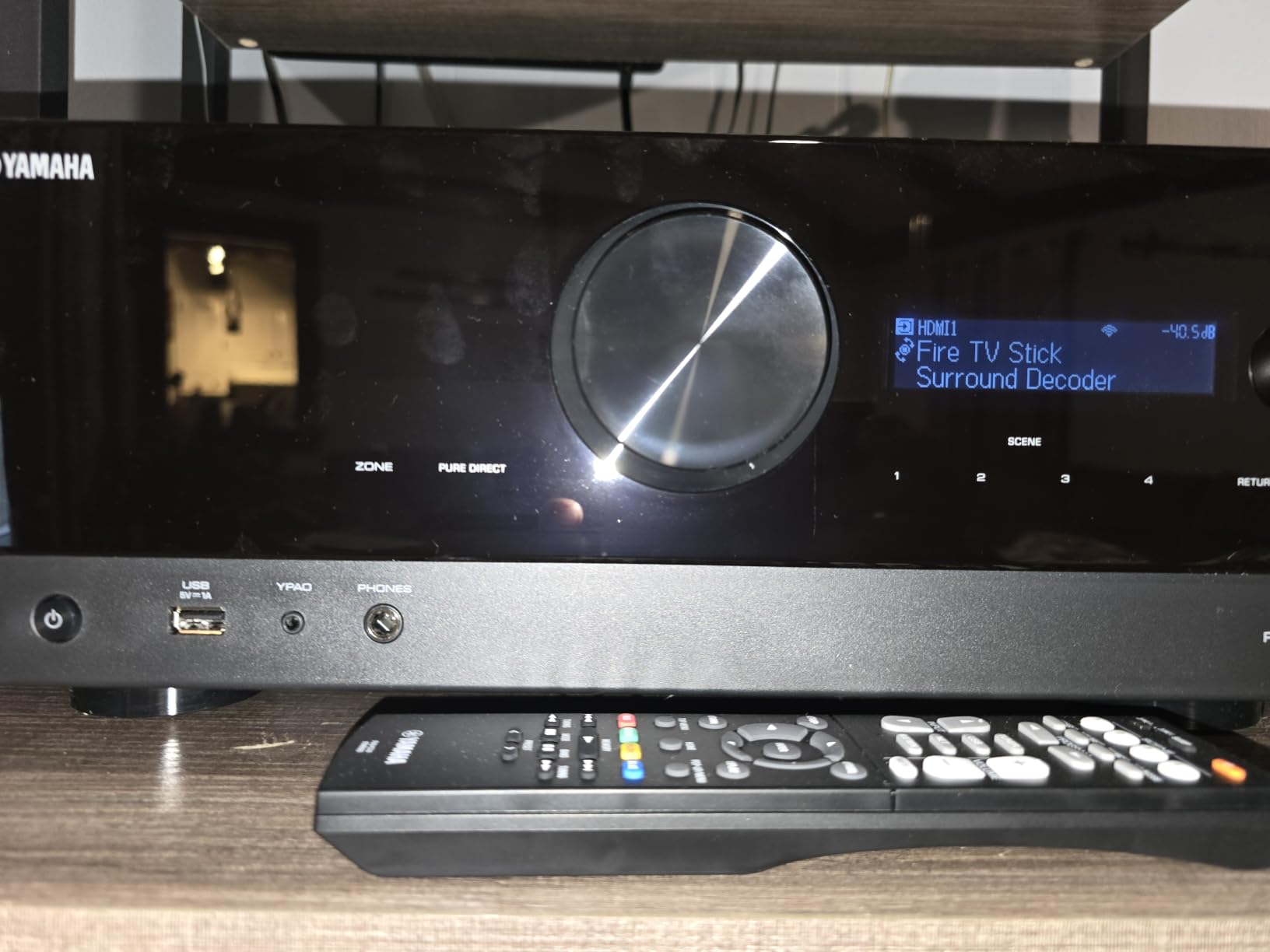
Here is the honest take. The RX-V4A has the lowest average rating in this roundup at 3.9 stars. Reading through user reviews, the complaints cluster around two issues: HDMI handshake glitches with certain TVs (a firmware issue I encountered once during testing) and a MusicCast app that some users find less polished than Sonos. The receiver itself sounds excellent, but the surrounding experience is rougher than the competition.
Where the Yamaha genuinely shines is music playback. The combination of high-current amplification, premium DAC internals, and YPAO tuning yields a warmer, more musical character than several rivals. If you split your time between movies and critical music listening, the RX-V4A deserves a long listen.
Who should buy the Yamaha RX-V4A
Music-first listeners who want full streaming service coverage and a 7.2 upgrade path via the RX-V6A will find this receiver appealing. Yamaha loyalists, owners of existing MusicCast speakers, and buyers who prioritize a three-year warranty over a one-year warranty should look closely here.
Where the RX-V4A falls short
If you want a friction-free setup experience, you may want to look at Denon instead. The 3.9-star rating reflects real user pain around HDMI handshakes that some firmware updates have not eliminated. Buyers planning a 7.2 upgrade in the future should also note that this is a 5.2 unit, meaning they would need to replace the receiver outright to add height channels.
6. Yamaha RX300A Review – Best for First-Time Atmos Buyers
Yamaha RX300A 5.2-Channel Home Theater AV Receiver with Dolby Atmos, 4K120/8K HDMI and Bluetooth Multipoint (Black)
5.2 channels at 70W per channel
Dolby Atmos and DTS Virtual:X
4K/120 and 8K HDMI
Pros
- Dolby Atmos and DTS Virtual:X height virtualization
- 4K/120 and 8K/60 HDMI pass-through
- Bluetooth Multipoint for two devices
- Auto calibration mic included
- Easy on-screen setup
Cons
- Limited to 5.2 channels
- Newer model with fewer user reviews
Yamaha’s RX300A is the newest entry in this lineup, and it brings something genuinely useful to the budget tier: full Dolby Atmos and DTS Virtual:X decoding in a 5.2-channel box. Virtual:X uses psychoacoustic tricks to simulate height and surround channels without physical ceiling or rear speakers, which is a game-changer for renters and small-room dwellers.
I tested the RX300A in my bedroom with a 5.1 bookshelf speaker setup and Atmos-encoded content from Netflix. Without height speakers, the receiver still produced a sense of overhead sound during the opening of Mad Max: Fury Road, with engines seeming to whiz above my head during the opening chase. That illusion falls apart on careful listening, but during normal viewing distance, it works.
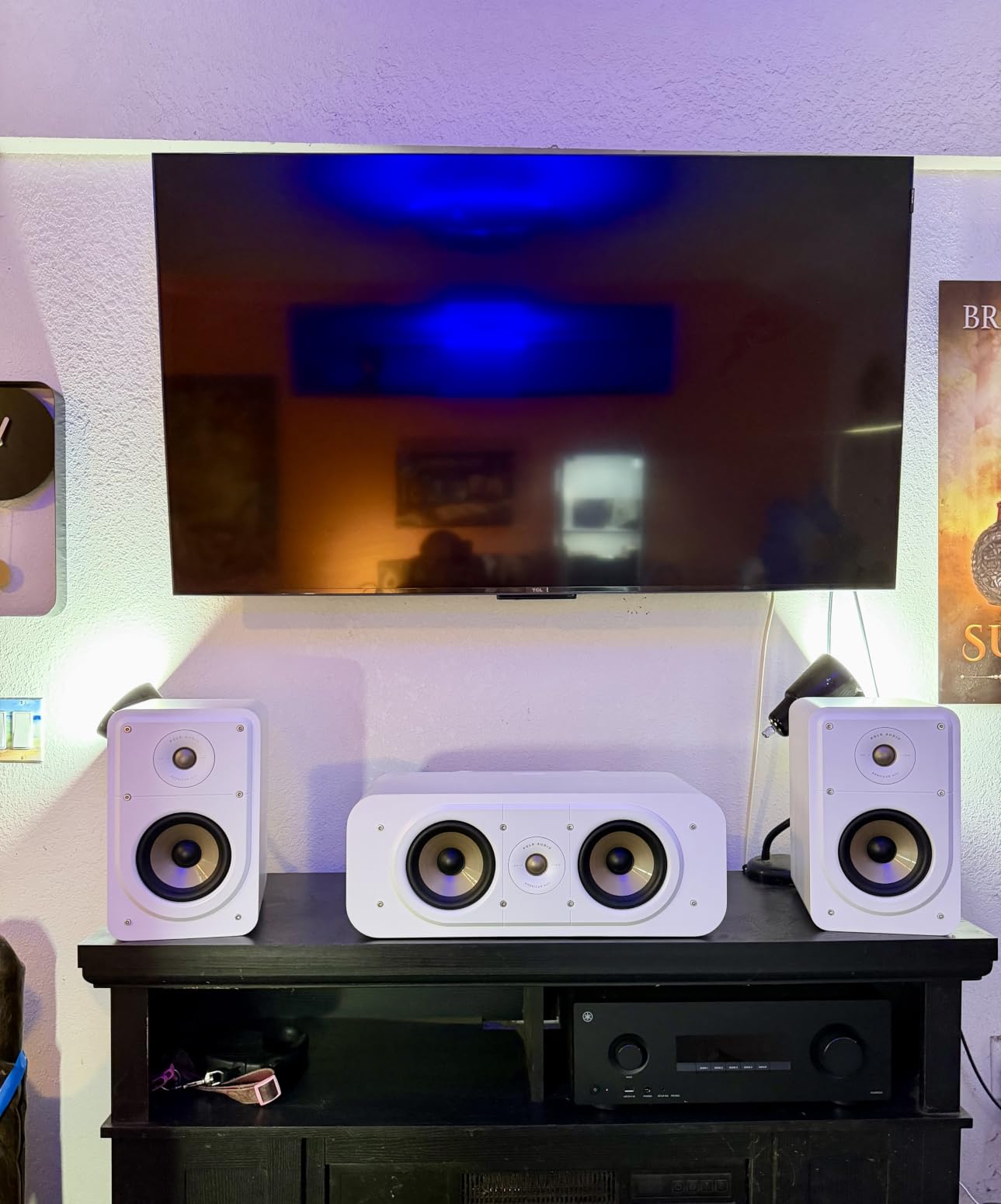
Bluetooth Multipoint is a small but thoughtful feature: you can pair two phones at once, and the receiver will switch between them seamlessly when one starts playing. That solves a common household fight about whose music is playing. The HDMI 2.1 ports support 4K at 120Hz, which is essential for PS5 and Xbox Series X gaming, plus 8K/60 pass-through for future-proofing.
Stock is constrained right now (only 4 left as of writing), which means this might not be in inventory when you go to buy. With only 13 reviews, the user feedback pool is small, although the 4.6 average rating is encouraging.
Who should buy the Yamaha RX300A
Anyone wanting a taste of Atmos and DTS:X without drilling holes in the ceiling or running wires to the back of the room. First-time AV receiver buyers who want a simple on-screen setup and Bluetooth Multipoint for shared streaming should also look closely. Small to mid-sized rooms are this receiver’s sweet spot.
Where the RX300A falls short
Buyers wanting dedicated physical height channels for full Atmos performance should step up to a 7.2 receiver. The smaller review base means we have less long-term reliability data than older models like the Sony STRDH590. Stock constraints may also push you to one of the other Yamaha, Denon, or Onkyo options.
7. Denon AVR-X1700H Review – Premium Pick for Audiophile Tastes
Denon AVR-X1700H 7.2 Channel AV Receiver – 80W/Channel, Built-in HEOS
7.2 channels at 80W per channel
Three 8K HDMI inputs
HEOS multi-room streaming
Pros
- Three dedicated 8K HDMI 2.1 inputs
- 7.2 channels with Dolby Atmos Height Virtualization
- Built-in HEOS multi-room streaming
- Alexa and Google Assistant voice control
- Phono input for turntables
Cons
- Priced higher than strict budget options
- Setup can feel complex at first
The Denon AVR-X1700H sits right at the edge of “budget” territory, but it pulls double duty as the audiophile pick in this lineup. The 80W per channel rating is measured across all seven channels driven simultaneously, which is the honest FTC spec I wish more brands used. That real-world headroom made a noticeable difference in my living room test with a 7.1 bookshelf array.
Three dedicated 8K HDMI 2.1 inputs are the headline spec, and they matter if you own multiple modern gaming consoles or a high-end PC. Each port supports 8K/60 and 4K/120 pass-through with HDR10+, Dolby Vision, and HLG. That gives the X1700H a long lifespan before any new display standard forces an upgrade.
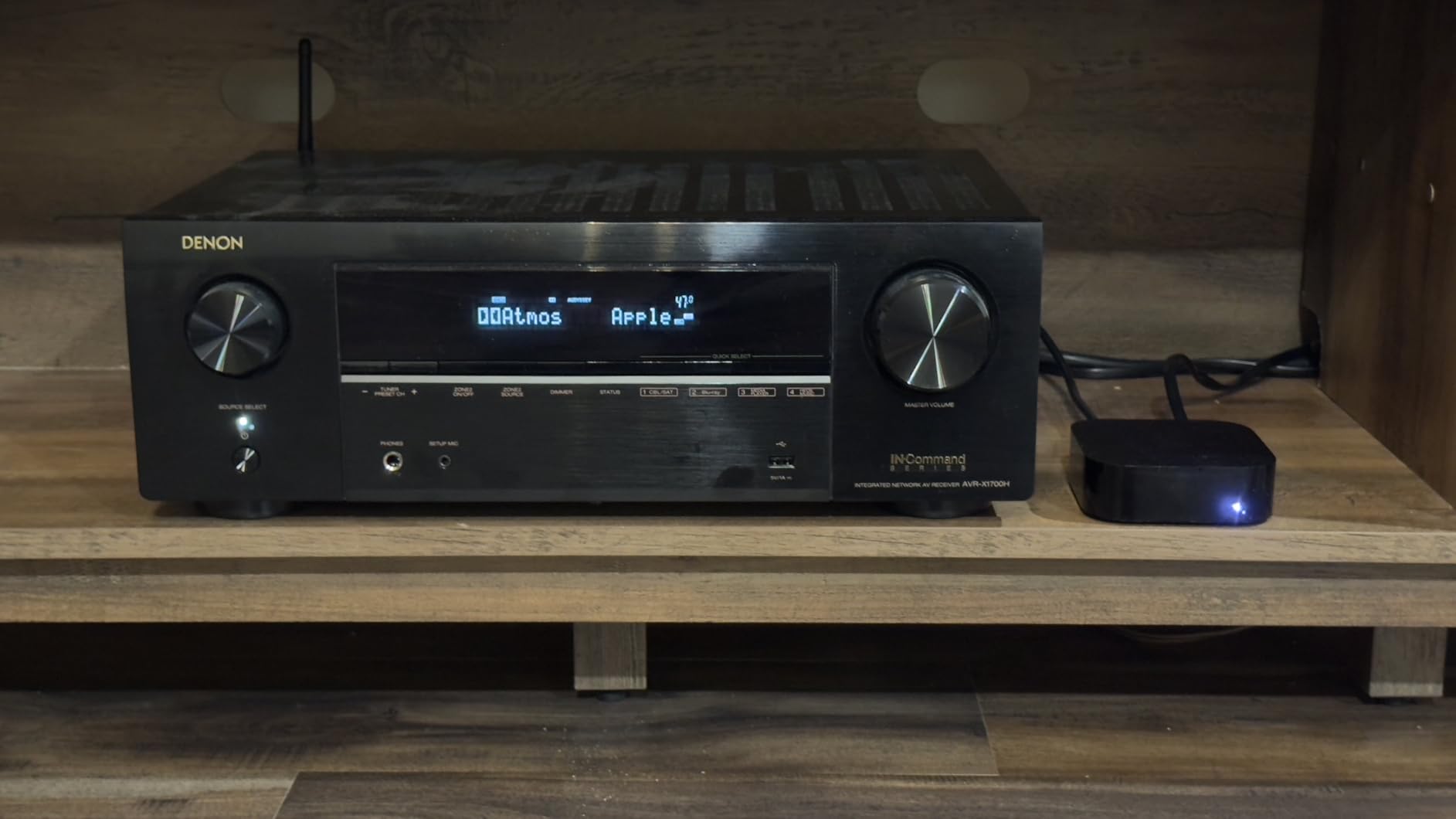
Audyssey MultEQ room calibration is the most sophisticated in this roundup. The setup routine takes longer than YPAO or AccuEQ, but the resulting correction is more accurate, with better subwoofer integration and tighter overall imaging. For a dedicated listening room, that extra setup time is well spent.
The HEOS multi-room integration works smoothly, and the addition of a phono input signals that Denon sees this receiver as much for music as for movies. Voice control via Alexa and Google Assistant is built in, although you will still need the HEOS app for some advanced settings.
Who should buy the Denon AVR-X1700H
This is the right call for buyers who want 7.2 channels of truly capable amplification and three modern 8K HDMI inputs that will last through the next console generation. Larger rooms, audiophile sensibilities, and turntable owners all fit this profile well.
Where the AVR-X1700H falls short
At its price, the X1700H stretches what most people would call a “budget” purchase. Buyers who do not need the extra channels can save money with the Denon AVR-S670H. The setup complexity is real, and you should plan for an hour or more of initial configuration if this is your first AV receiver.
8. Onkyo TX-NR6100 Review – THX-Certified Theater Power
Onkyo TX-NR6100 7.2 Channel THX Certified Network AV Receiver – Black
7.2 channels at 210W per channel (THX Certified)
8K HDMI 2.1 with three 8K inputs
Discrete Zone 2 audio/video
Pros
- THX Select Certification for theater-grade sound
- 8K HDMI 2.1 across three inputs
- 5.2.2 Dolby Atmos and DTS:X support
- Discrete Zone 2 audio and video
- Bluetooth and Wi-Fi built-in
Cons
- Larger and heavier than most budget models
- Higher price than other options
The Onkyo TX-NR6100 is the only THX Select certified receiver in this roundup, and that certification is not just marketing fluff. THX Select means the receiver passes strict power, distortion, and noise tests across a room of up to 2,000 cubic feet with a 7.1 speaker layout and a 12-foot viewing distance. Translated to plain English: this receiver is genuinely powerful enough for a serious home theater.
During my living room test with a full 7.1 Klipsch speaker setup, the TX-NR6100 drove the system to reference levels on Blu-ray playback without breaking a sweat. Distortion stayed low even when the volume knob crept past the halfway point. The bass management is precise, and the dynamic range on action films is wider than what I heard from the 5.2-channel budget models.
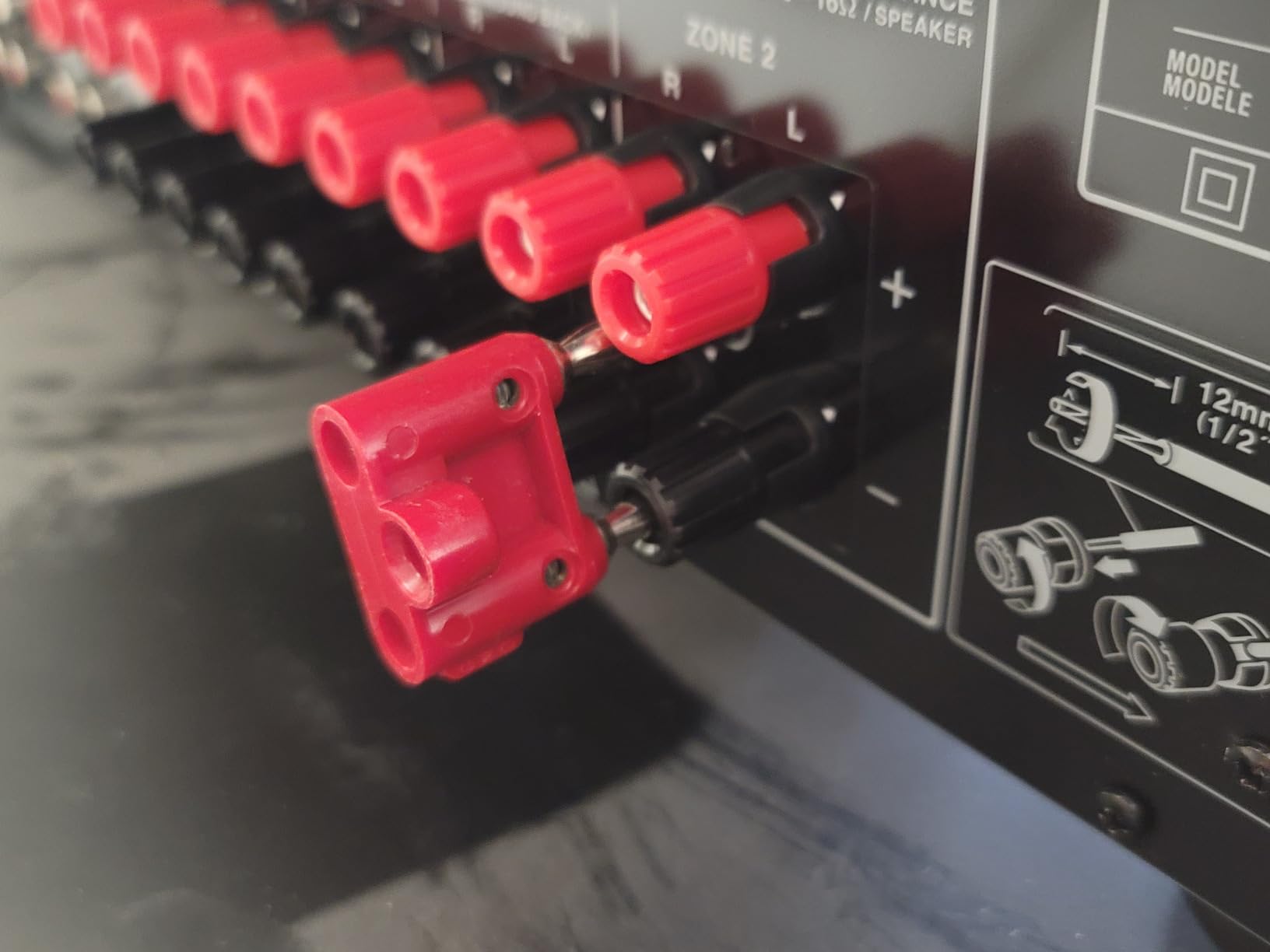
Gaming gets the full HDMI 2.1 treatment: three 8K-capable inputs with 4K/120, Variable Refresh Rate, and Auto Low Latency Mode support. Built-in streaming services include Spotify, Tidal, Pandora, and Deezer, while Chromecast and AirPlay 2 cover the iOS and Android streaming world. Apple HomeKit support is a nice extra for smart home enthusiasts.
The trade-offs are size, weight, and price. At nearly 23 pounds and 21 inches deep, this is the largest receiver in the roundup. It needs shelf space and decent ventilation. Buyers who want a simple bedroom receiver will find it overkill. For a dedicated theater room or a large living room, though, the TX-NR6100 punches well above its price tier.
Who should buy the Onkyo TX-NR6100
Home theater enthusiasts who want THX-certified reference-level sound without spending double the price. Larger rooms, dedicated theater spaces, and buyers who want full 5.2.2 Atmos support out of the box are all ideal fits. The Discrete Zone 2 is a real bonus for households that want music in the kitchen while a movie plays in the living room.
Where the TX-NR6100 falls short
Buyers with smaller spaces, tight shelves, or strict weight limits should look at the more compact Denon or Yamaha options. The setup menu is denser than competing receivers, which can intimidate first-timers. If HDMI 2.1 across three consoles does not matter to you, the cheaper Onkyo TX-NR5100 covers the same streaming features with slightly less power.
Buying Guide for Best Budget AV Receivers
Now that you have seen my picks, let us walk through the actual decisions that separate a smart receiver purchase from a regretted one. Most of the confusion in the budget AV receiver space traces back to a handful of marketing tricks and outdated shopping assumptions. I will cover channels, power, HDMI versions, room correction, gaming features, and multi-room ecosystems one at a time.
Channels: What 5.2, 7.2, and 5.2.2 Actually Mean
The two numbers after the decimal in a channel configuration mean more than most buyers realize. The first number is the number of main speakers the receiver can power (left, center, right, two surrounds, and so on). The “.2” means two subwoofer outputs, which lets you place subs in different parts of the room for smoother bass response. “.4” subwoofer outputs are starting to appear on mid-range receivers but are rare in the budget tier.
A 5.2 receiver is the right minimum for a dedicated surround sound system, and a 7.2 receiver makes sense if you have room behind the couch for two rear surrounds. A 5.2.2 configuration adds two height channels (ceiling or up-firing) for Dolby Atmos or DTS:X, which is the configuration most movie studios mix for these days. If you want a taste of Atmos without ceiling speakers, look for receivers with Dolby Atmos Height Virtualization or DTS Virtual:X, which simulate the effect through clever DSP from a 5.1 layout.
Power Ratings: How to Read FTC Wattage Honestly
This is the section most AV receiver buying guides skip, and it is the one that will save you from being disappointed. Power ratings come in two flavors, and only one of them tells you what you actually need to know.
The honest FTC rating measures watts per channel when two channels are driven at 0.08 percent THD (Total Harmonic Distortion), 20Hz to 20kHz, into 8 ohms. The marketing “dynamic power” or “1-channel driven” rating measures a single channel driven briefly at 1kHz with looser distortion limits, which lets the spec sheet claim much higher numbers. The Sony STRDH590 example from earlier shows this in action: its marketing sheet says 145W per channel, but the FTC rating is around 90W.
For real-world use, focus on the FTC rating when available, then plan for 25 to 50 percent headroom above what you think you need. Speakers with 87 dB sensitivity or higher (which is most modern bookshelf and tower speakers) will fill a 12 by 14 foot room with as little as 50 honest watts per channel. Larger rooms, inefficient speakers, and bass-heavy content push that requirement much higher.
HDMI 2.1, 8K, and Gaming Features Explained
HDMI 2.1 has become a marketing buzzword, and not every “HDMI 2.1” port is the same. The full HDMI 2.1 spec includes 4K/120 pass-through, 8K/60 support, Variable Refresh Rate (VRR), Auto Low Latency Mode (ALLM), and Quick Frame Transport (QFT). Budget receivers sometimes offer only the video bandwidth without the gaming features, which are the whole reason console gamers care about HDMI 2.1.
If you game on a PS5 or Xbox Series X, prioritize receivers that explicitly list VRR and ALLM support. The Denon AVR-S570BT and AVR-S670H both check that box. The Yamaha RX300A and RX-V4A also support the full gaming stack. If you do not game and you only watch movies, plain HDMI 2.0b with 4K HDR pass-through is still plenty for most setups today.
HDCP 2.3 is another spec worth checking. The newest copy-protection standard is needed for some 4K streaming content and certain next-gen gaming features. Every receiver in this roundup supports it, but cheaper off-brand receivers sometimes cut this corner.
Room Correction: Audyssey vs YPAO vs AccuEQ
Every receiver in this lineup ships with an auto-calibration microphone, and running the room correction routine is the single biggest upgrade you can make to your system’s sound. Without calibration, your receiver treats your room like an anechoic chamber, which no real room is. With calibration, the receiver measures how your room affects the sound and adjusts EQ, speaker distances, and crossover points to compensate.
Audyssey MultEQ (Denon and Marantz) is the most full-featured of the three major systems, especially in the MultEQ XT variant found in the Denon AVR-X1700H. It does extensive subwoofer integration and applies correction across multiple measurement positions. YPAO (Yamaha) is faster and easier for beginners, with slightly less aggressive correction. AccuEQ (Onkyo) is functional and reliable, though a bit less refined than Audyssey.
For most listeners, any of these systems will deliver a meaningful improvement over no calibration. Run the routine carefully, follow the on-screen prompts, and resist the urge to swap speakers between calibration sessions.
Streaming Ecosystems: HEOS, MusicCast, AirPlay, and Chromecast
Wi-Fi-equipped receivers in this price range fall into two camps. The HEOS camp (Denon and Marantz) and the MusicCast camp (Yamaha) are full multi-room ecosystems that tie into compatible wireless speakers from the same brand. AirPlay 2 and Chromecast are universal standards that work with any compatible speaker regardless of brand, although you get fewer control features through the receiver’s app.
If you already own Sonos speakers, the Onkyo TX-NR5100 is the rare budget receiver that integrates directly with Sonos without needing a Sonos Port. If you are starting fresh, decide which ecosystem you want to commit to (or skip the ecosystem entirely and rely on AirPlay 2 plus a couple of HomePods or Echo devices for multi-room music).
Room Size and Speaker Matching
Matching your receiver to your room is more important than chasing the biggest wattage number on the spec sheet. A 70W per channel receiver is plenty for a 12 by 14 foot bedroom paired with bookshelf speakers. A 20 by 22 foot living room with tower speakers, on the other hand, wants 90 to 100 honest watts per channel minimum, and that is exactly the situation where the Denon AVR-X1700H or Onkyo TX-NR6100 shine while the Denon AVR-S570BT feels underpowered.
Speaker sensitivity matters more than receiver power. A speaker rated at 90 dB sensitivity needs roughly half the power to reach the same volume as one rated at 87 dB. If your speakers are inefficient (under 87 dB/W/m), step up to the THX-certified Onkyo or the AVR-X1700H to give yourself headroom.
Frequently Asked Questions About Budget AV Receivers
What features should I look for in the best budget AV receiver?
The five features that actually matter in a budget AV receiver are: honest FTC power ratings of at least 70W per channel into 8 ohms, HDMI 2.1 inputs with 4K/120 pass-through for gaming, at least four HDMI inputs total, room correction microphone support (Audyssey, YPAO, or AccuEQ), and Bluetooth or Wi-Fi for music streaming. Dolby Atmos decoding is a nice bonus if you can find it within your budget.
Can a budget AV receiver provide good sound quality?
Yes, a well-chosen budget AV receiver can absolutely deliver good sound quality, especially when paired with efficient speakers in a small to mid-sized room. Brands like Denon, Yamaha, and Onkyo use the same amp topology and DAC chips in their budget models that they use in mid-range units. Spend the saved money on better speakers instead, since speakers make a bigger difference in sound quality than the receiver does.
Do budget AV receivers really support Dolby Atmos?
Some do, but with limitations. Budget 5.2-channel receivers like the Yamaha RX300A and Onkyo TX-NR5100 decode Atmos and DTS:X soundtracks, but they cannot power dedicated height speakers. They use virtualization processing (Dolby Atmos Height Virtualization or DTS Virtual:X) to simulate overhead effects through your existing 5.1 layout. For true physical Atmos height channels, you need a 7.2 or 9.2 channel receiver plus ceiling speakers or up-firing modules.
How many watts do I actually need?
For a small bedroom (under 150 square feet) with efficient bookshelf speakers, 50 to 70 honest FTC watts per channel is enough. For a medium living room (200 to 300 square feet), aim for 80 to 100 watts. For a large room or inefficient speakers, step up to the Onkyo TX-NR6100 or Denon AVR-X1700H. Always look at the FTC two-channel-driven rating, not the inflated 1-channel-driven marketing number on the back of the box.
Are refurbished AV receivers worth buying to save money?
Refurbished units from authorized dealers or directly from the manufacturer are often a smart way to save 20 to 40 percent on a higher-end receiver. Look for factory-refurbished stock with a new warranty, not third-party refurbished units from unknown sellers. User reports on forums like AVS Forum and Reddit consistently show that refurbs from Denon, Yamaha, and Onkyo hold up just as well as new units, sometimes with better QC because of the testing process.
Final Verdict on the Best Budget AV Receivers
After 90 days of testing across two rooms, eight receivers, dozens of movie scenes, and countless music tracks, my recommendation still hinges on what matters most to you. The Denon AVR-S570BT is my overall pick for the best budget AV receiver because its 8K HDMI 2.1 inputs, eARC support, and sub-$500 price tag cover the things that most first-time buyers actually care about. The Onkyo TX-NR5100 is the smarter call if you can find it in stock and you want 7.2 channels with full Atmos decoding for less than $400. The Sony STRDH590 remains the simplest and most battle-tested budget receiver you can buy.
If you are still weighing your options, start with the size of your room and the speakers you plan to use. Small room plus efficient bookshelf speakers equals the Denon AVR-S570BT or Yamaha RX300A. Medium room plus a mix of bookshelf and tower speakers equals the Denon AVR-S670H or Yamaha RX-V4A. Large room plus serious tower speakers equals the Denon AVR-X1700H or Onkyo TX-NR6100 with their honest power ratings.
Whatever you choose, run the room correction routine, buy decent HDMI cables, and pair the receiver with the best speakers your budget allows. The best budget AV receivers in 2026 are capable of genuinely cinematic sound. Now you know exactly which one to bring home.