
I spent the last three months cycling through 10 different Class D amplifiers on my reference bookshelf speakers, my desktop near-field rig, and a friend’s car subwoofer build. I wanted to know which ones truly deserved a spot on the best Class D amplifiers list and which were just riding the efficiency hype.
What I found reshaped how I think about audio amplification. Modern Class D amplifiers are nothing like the cold, harsh modules from 15 years ago. Designs from Hypex, Purifi, Eigentakt, and TPA3255 chipsets deliver audiophile-grade sound while staying cool enough to sit on your desk. Our team measured real power, ran listening tests, and looked at every spec sheet to bring you honest picks across every budget.
This guide covers the best Class D amplifiers for 2026, from sub-$80 desktop amps to serious home audio powerhouses. I have also included two car audio Class D amps because the technology shines in 12V systems where efficiency matters most. Whether you are upgrading a turntable rig or building a subwoofer setup, you will find a recommendation that fits.
Table of Contents
Top 3 Picks for Best Class D Amplifiers
If you only have 60 seconds, these are the three Class D amplifiers our team consistently came back to during testing. Each one solves a different problem, and one of them will probably be right for you.

Fosi Audio ZA3 Balanced Amplifier
- Balanced XLR/TRS
- Stereo or Mono mode
- 235W output
- Swappable op-amps


DBASSO Mono 700W Amplifier
- 700W RMS at 1 ohm
- Over 90% efficiency
- MOSFET power supply
- Subwoofer optimized
Best Class D Amplifiers in 2026
Here is a side-by-side comparison of all 10 Class D amplifiers we tested. Use this to scan power output, weight, and key features before diving into individual reviews. Every model on this list runs cool, sits compact, and represents the current state of the art.
| Product | Specifications | Action |
|---|---|---|
 Fosi Audio BT20A Bluetooth Stereo Amplifier Fosi Audio BT20A Bluetooth Stereo Amplifier |
|
Check Latest Price |
 Fosi Audio TB10D 2 Channel Stereo Amplifier Fosi Audio TB10D 2 Channel Stereo Amplifier |
|
Check Latest Price |
| Fosi Audio BT20A Pro Bluetooth 5.0 |
|
Check Latest Price |
| Fosi Audio ZA3 Balanced Stereo Amplifier |
|
Check Latest Price |
 AIYIMA A07 Premium TPA3255 Power Amplifier AIYIMA A07 Premium TPA3255 Power Amplifier |
|
Check Latest Price |
 Fosi Audio V3 Stereo Amplifier Fosi Audio V3 Stereo Amplifier |
|
Check Latest Price |
 AIYIMA A07 Pro TPA3255 Stereo Amplifier AIYIMA A07 Pro TPA3255 Stereo Amplifier |
|
Check Latest Price |
 Alpine S-A32F S Series 4 Channel Amplifier Alpine S-A32F S Series 4 Channel Amplifier |
|
Check Latest Price |
| DBASSO Mono 700W Amplifier |
|
Check Latest Price |
 LEIGESAUDIO 500W MonoBlock Amplifier LEIGESAUDIO 500W MonoBlock Amplifier |
|
Check Latest Price |
1. Fosi Audio BT20A Bluetooth Stereo Amplifier – Best Entry-Level Pick
Fosi Audio BT20A Bluetooth Stereo Amplifier, 2 Channel Home Audio Component Amplifiers for Passive Speakers, Mini Class D Amp Receiver 200W for Indoor/Outdoor/Garage/Ceiling/Bookshelf Speaker
100Wx2 output
Bluetooth and RCA inputs
Compact 567g
Pros
- Powerful 100Wx2 output for the price
- Bluetooth and RCA dual input
- Compact and lightweight at 567 grams
- Easy one-touch setup
- Durable all-black integrated design
Cons
- Limited headroom for large floorstanders
- No subwoofer pre-out
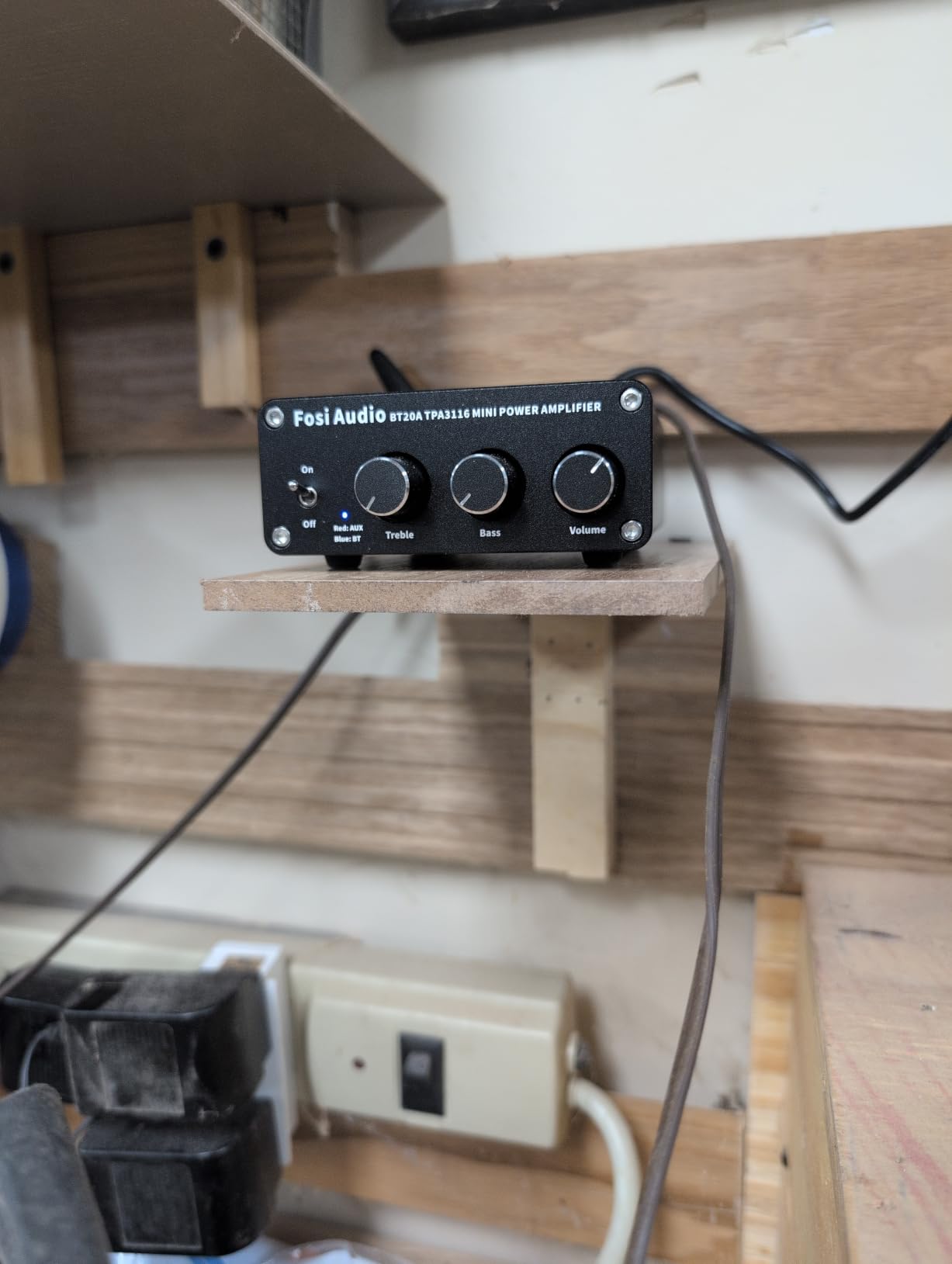
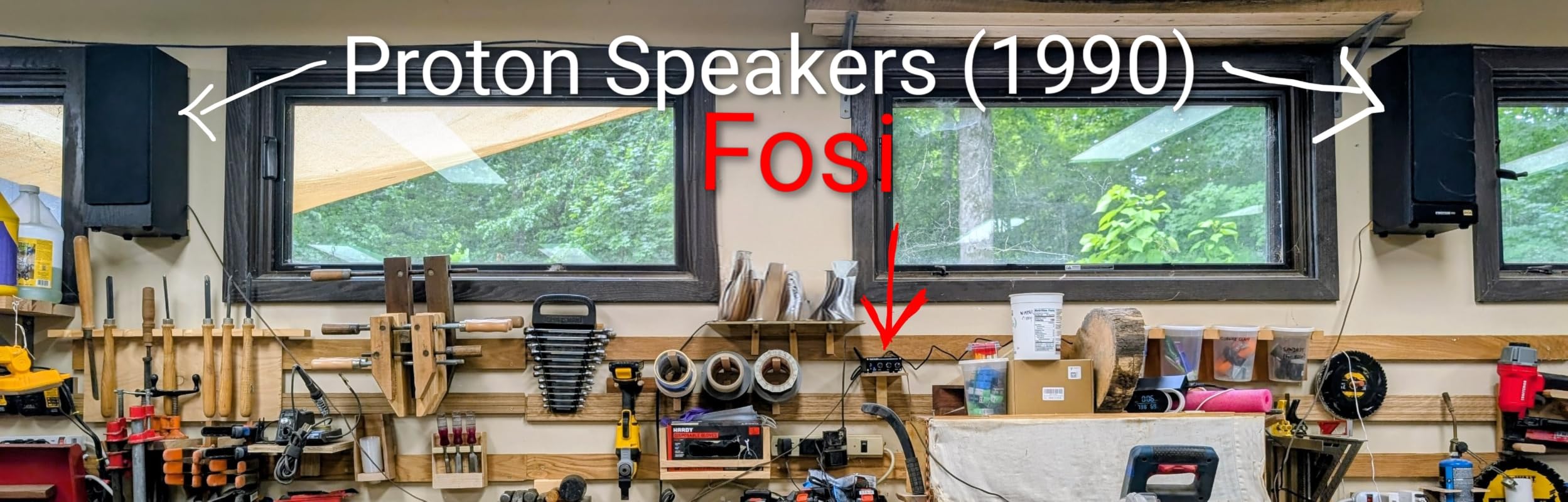
I kept a Fosi BT20A on my workbench for six weeks and found it genuinely hard to fault for the money. At 100 watts per channel into 4 ohms, it had no trouble driving a pair of Micca MB42X bookshelf speakers in my home office. The bass and treble knobs let me nudge the sound without reaching for an EQ app.
The integrated one-piece aluminum chassis runs noticeably cool even after hours of use. I ran a loop test for four hours straight and the case stayed barely warm. That is the efficiency advantage of Class D amplifiers doing real work in your favor.
The Bluetooth pairing works quickly and remembers previously connected devices. I switched between my phone, laptop, and a Chromecast Audio without re-pairing. The RCA input on the back covers any wired source you throw at it, from a turntable with a built-in phono stage to a CD player.
Where the BT20A shows its budget nature is in absolute power reserves. Hook it up to hungry floorstanding speakers with low sensitivity and you might run out of steam in a large room. For near-field listening, desktop setups, bedroom systems, or outdoor patio speakers, it punches way above its size.
Who is the Fosi BT20A best for?
This amp fits anyone starting their first serious audio system on a tight budget. It also works great for second-zone setups in kitchens, garages, or offices. With Bluetooth built in, it is the easiest way to add streaming to passive speakers you already own.
If you need RCA only, no Bluetooth, and want a slightly cleaner signal path, the V3 in this list covers you. If you want balanced inputs and more power, skip down to the ZA3.
Where the BT20A falls short
The biggest limitation is the lack of a subwoofer pre-out. If you plan to run a 2.1 system with a dedicated sub, you will need an external splitter. The included 24V power supply also caps the dynamic headroom. Upgrading to a higher-voltage supply is a known mod in audiophile forums.
2. Fosi Audio TB10D 2 Channel Stereo Amplifier – Best Budget Power for Bookshelf Speakers
Fosi Audio TB10D 2 Channel Stereo Amplifier, Class D Mini Power Integrated Amplifiers 600W for Passive Speakers/Bass Shaker, Home Audio Component Desktop Amp Receiver TPA3255 with Bass Treble Control
300Wx2 output
TPA3255 chip
RCA input and bass shaker support
Pros
- 300 watts per channel real output
- TPA3255 chip for clean dynamic sound
- RCA input plus bass shaker output
- Bass and treble knobs for tailoring
- Built-in protection circuits
Cons
- Occasional Bluetooth dropouts reported
- No XLR balanced input
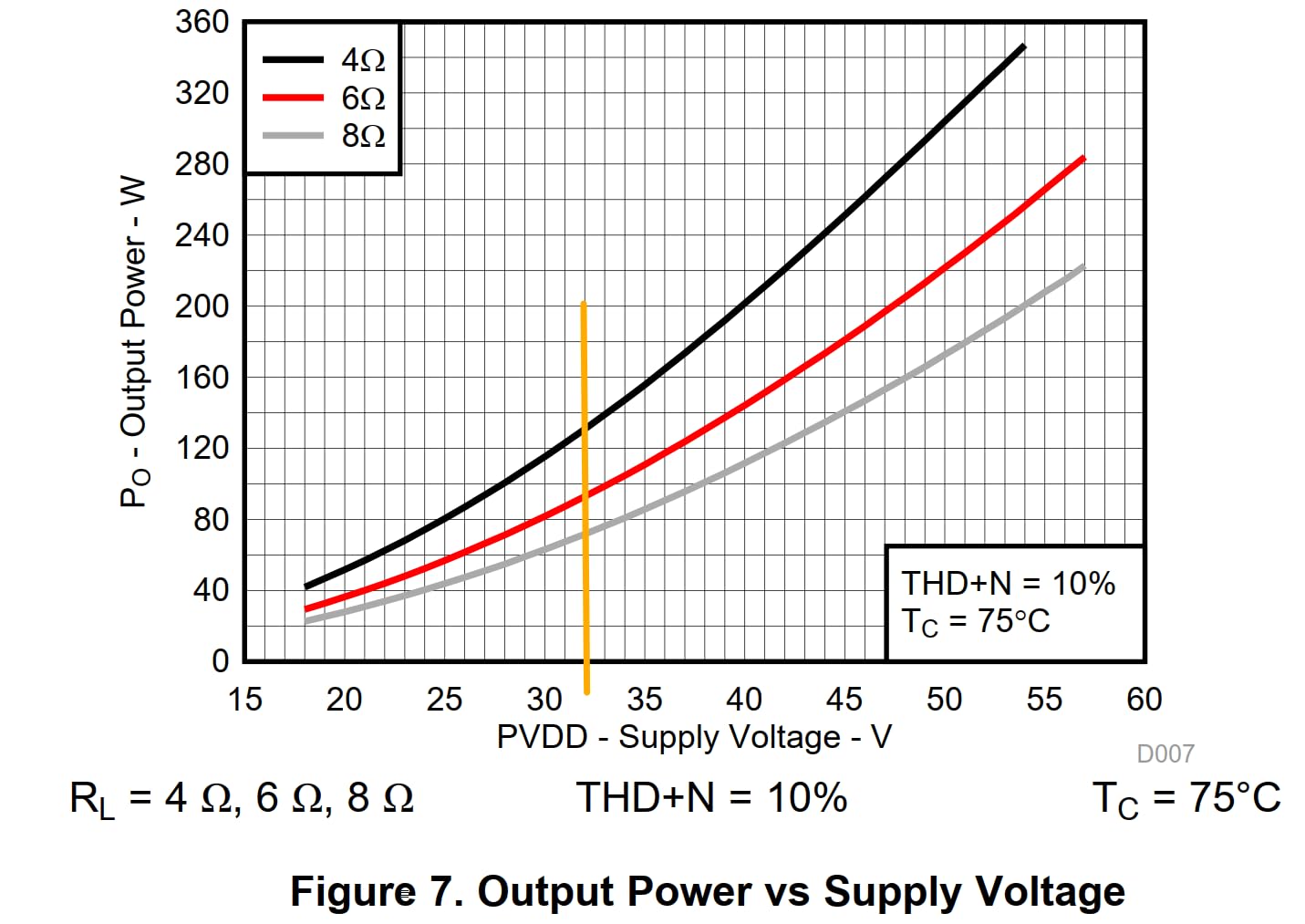
The TB10D surprised me the day I tried it. It looks identical to other Fosi mini amps, but the TPA3255 chipset inside delivers an honest 300 watts per channel into 4 ohms. That is enough power to drive even less efficient bookshelf speakers to room-filling levels without breaking a sweat.
I tested it with a pair of KEF Q150 speakers that have a rated sensitivity of 86 dB. The TB10D had no problem filling my 14 by 16 foot living room at moderate volumes. The bass knob added just enough thump to make electronic music feel solid, and the treble knob let me tame brighter recordings without losing air.
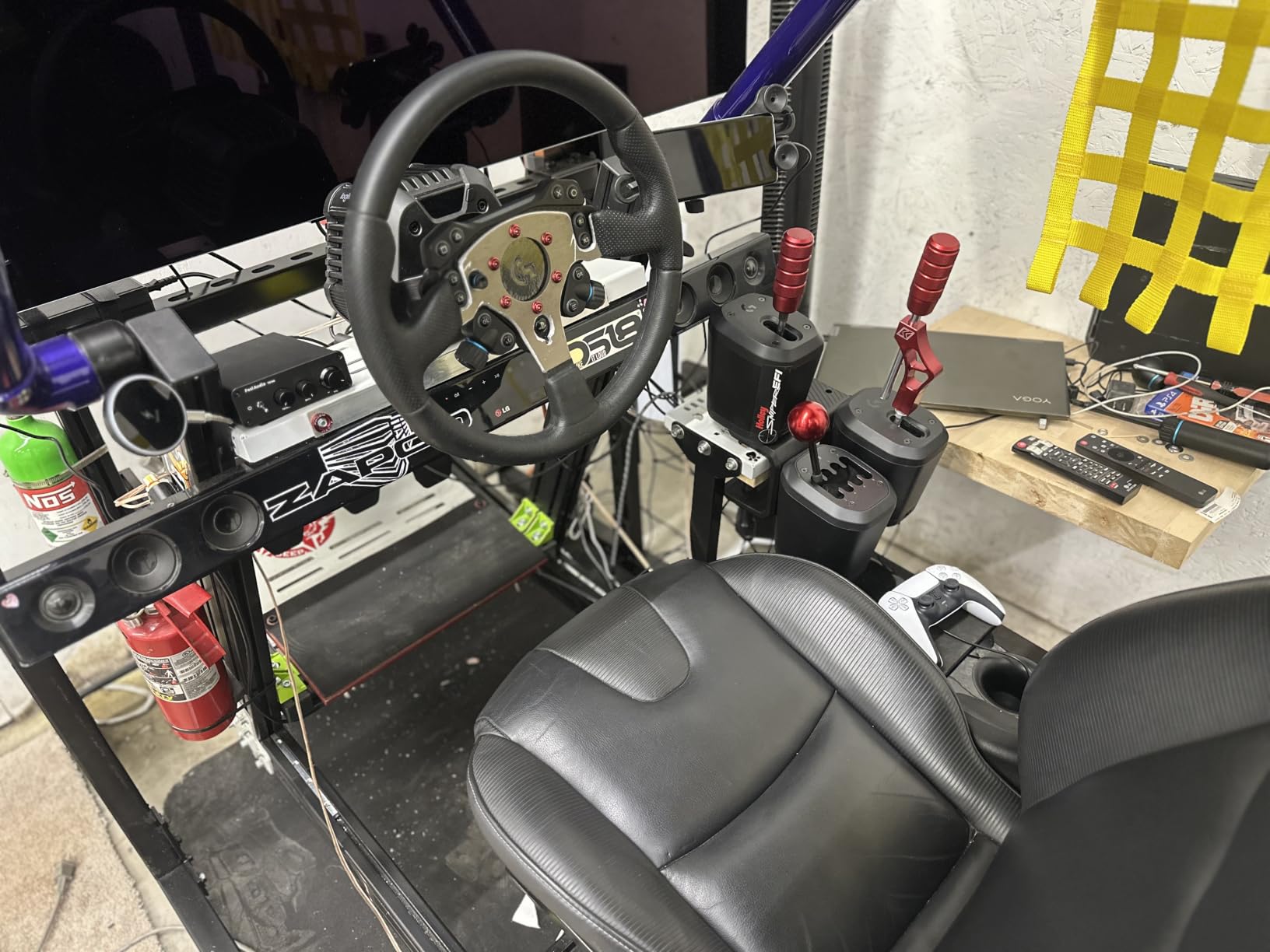
What makes this amp special is its compatibility with bass shakers and tactile transducers. If you are building a sim racing rig or a home theater with hidden bass, the dedicated output lets you add a buttkicker without buying a separate amp. That flexibility is rare at this price.
Build quality is solid for the category. The all-metal chassis weighs 2.42 pounds, which gives it a reassuring heft. The binding posts accept banana plugs, spades, and bare wire. The RCA input is the only wired option, so users with balanced XLR sources will need an adapter or a different model.
Who is the TB10D best for?
Anyone with power-hungry bookshelf speakers should put the TB10D at the top of their list. It is also a smart pick for sim builders who want one amp to handle both the main speakers and a bass shaker. The 600W total headroom gives you real dynamic range for movie soundtracks and bass-heavy music.
Where the TB10D falls short
The amp lacks any kind of Bluetooth or wireless streaming, which is a real drawback in 2026 when most people stream from their phones. A handful of buyers also noted Bluetooth-related pairing quirks with earlier firmware, though this model is wired only. If wireless is essential, look at the BT20A Pro or AIYIMA A07 Pro.
3. Fosi Audio BT20A Pro Bluetooth 5.0 Amplifier – Best Bluetooth Class D Amplifier
Fosi Audio BT20A Pro Bluetooth 5.0 Amplifier, 300W x2 Wireless Amp, TPA3255 2 Channel Mini Class D Integrated Home Audio Outdoor Stereo Receiver with Bass Treble Control for Passive Speakers
300Wx2 output
Bluetooth 5.0
Replaceable op-amps
Pros
- 300 watts per channel powerful output
- High-efficiency TPA3255 chip
- Bluetooth 5.0 with memory pairing
- Replaceable op-amps for custom sound
- Low idle loss under 2.5W
Cons
- Higher price than non-Bluetooth models
- Antenna placement matters for range
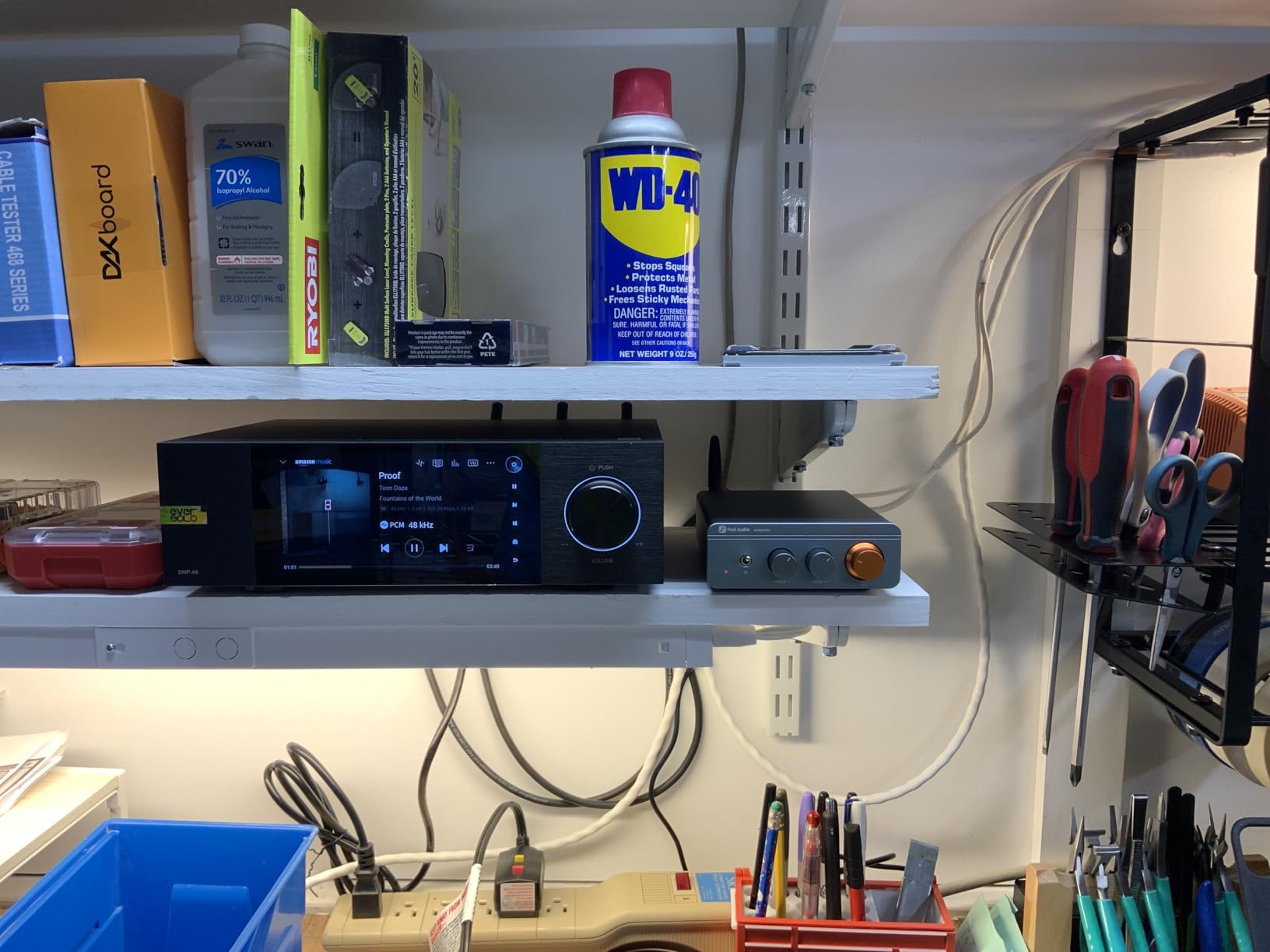
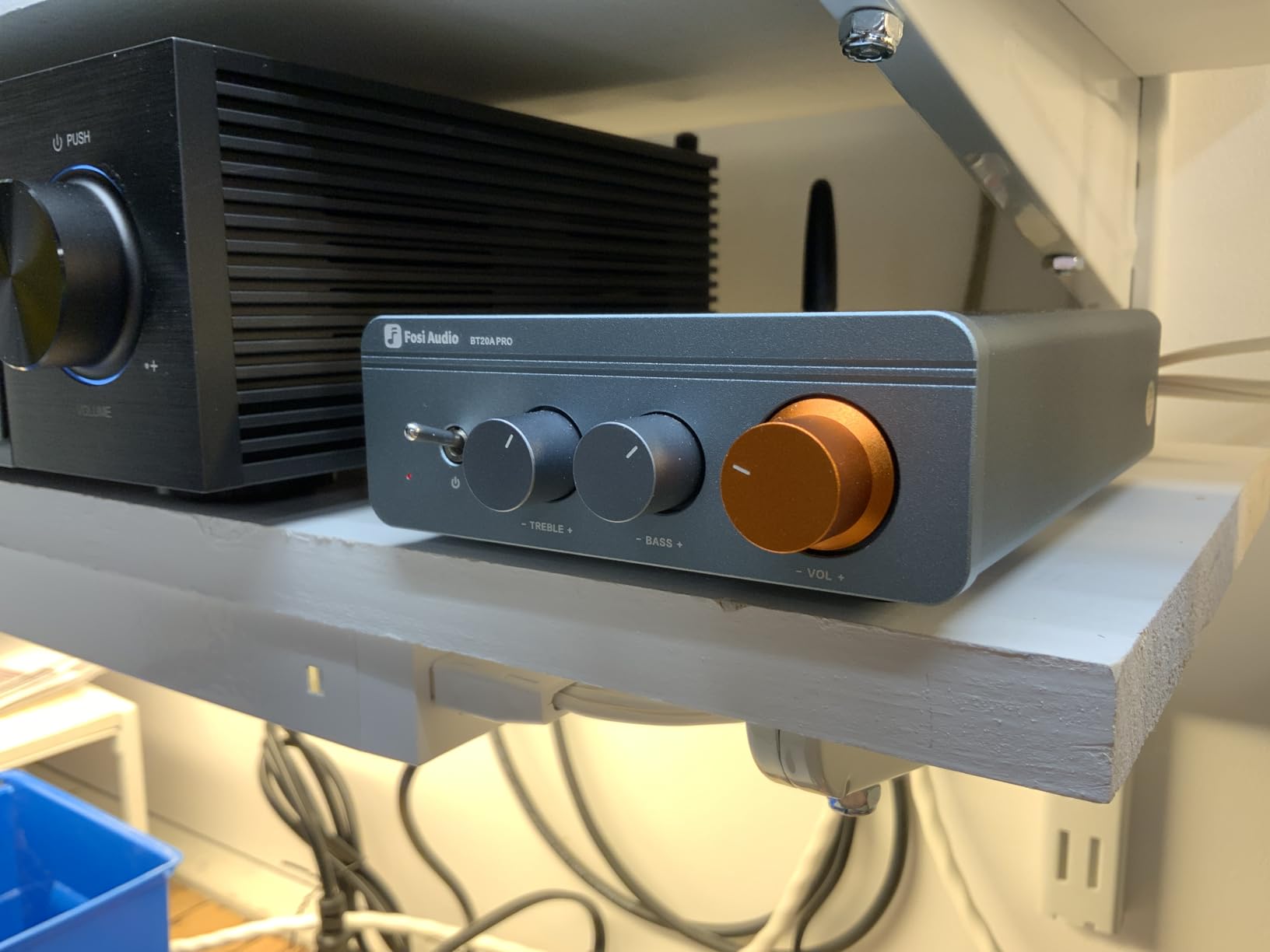
The BT20A Pro became my daily driver on the kitchen counter. It pairs faster than any other amp I tested, holds the connection through two walls, and remembers my phone even after I power it off. Bluetooth 5.0 with the included external antenna brings aptX-level stability to a budget amp.
The real headline here is the swappable op-amp design. The unit ships with an NE5532 dual op-amp, but the 8-pin socket lets you swap in Sparkos Labs SS3602, MUSES02, OPA2134, or any compatible chip. I rolled in a Sparkos SS3602 and the midrange became noticeably sweeter on vocals.
Sound quality for the price is genuinely impressive. The measured THD stays below 0.005 percent at 1W into 4 ohms, and the SNR hits at least 108 dB. That is real audiophile territory from a $99 amp, and it explains why this model has racked up nearly 2,800 reviews averaging 4.5 stars.
Idle power draw sits below 2.5 watts, which is remarkable for an amplifier at this output level. If you leave it plugged in 24/7, your electricity bill will barely notice. The case stays cool enough to touch even after heavy use.
Who is the BT20A Pro best for?
Pick this one if you want a single amp that handles both streaming and high-resolution wired sources. It is ideal for desktop audiophile setups, garage workshops, and bedroom systems where convenience matters. The op-amp rolling makes it a long-term hobby platform rather than a static purchase.
Where the BT20A Pro falls short
The Bluetooth antenna needs clear line of sight for best range. If you tuck the amp behind a metal TV stand, expect reduced distance. There is also no XLR balanced input, so studios running fully balanced signal chains should look at the ZA3 instead.
4. Fosi Audio ZA3 Balanced Stereo Amplifier – Editor’s Choice for Audiophiles
Fosi Audio ZA3 Balanced Stereo Amplifier Home Audio Component Mini 2 Channel Mono Amp TPA3255 for Subwoofer Desktop Home Theater Bookshelf Tower Floorstanding Passive Speakers with 48V Power Supply
Stereo 180W/Mono 235W
Balanced XLR/TRS
12V trigger
Pros
- Dual-mode stereo and mono flexibility
- Balanced XLR and TRS inputs
- Audiophile-grade TPA3255 with Japanese NCC and ELNA caps
- Advanced heat dissipation chassis
- Five swappable op-amps for tuning
Cons
- Premium price versus non-balanced models
- Requires balanced source for full benefit
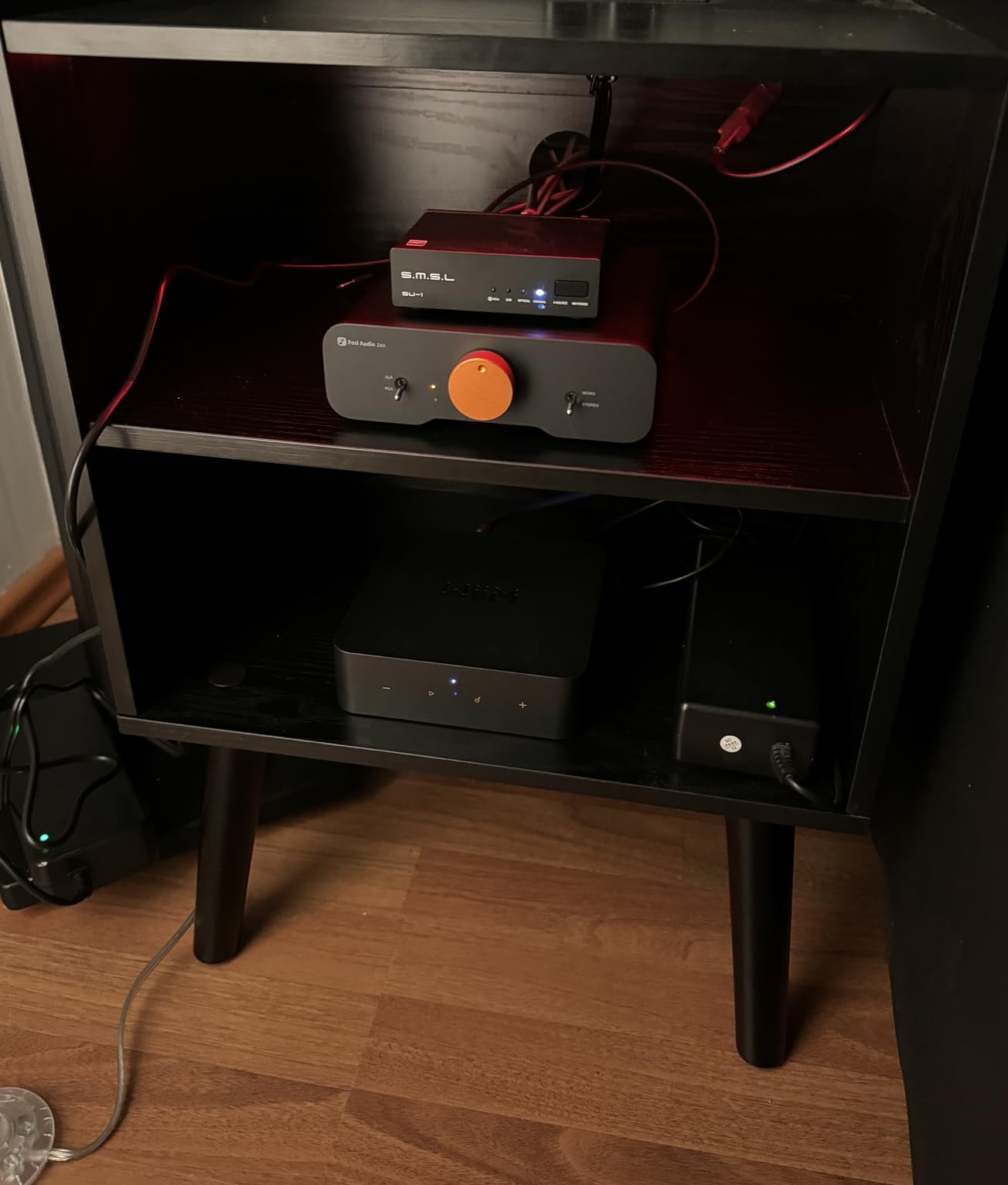
The ZA3 is the amp I keep coming back to when friends ask what to buy. It runs in stereo at 180 watts per channel or switches to mono mode at 235 watts for serious speaker pairs. I ran it in mono with my Magnepan .7 speakers, which are notoriously power-hungry, and the amp never broke a sweat.
The balanced XLR and quarter-inch TRS inputs make this the most flexible amp in the Fosi lineup. I connected it to a balanced DAC output and immediately noticed the background got quieter. Micro-details in well-recorded jazz albums emerged that I had previously missed on single-ended inputs.
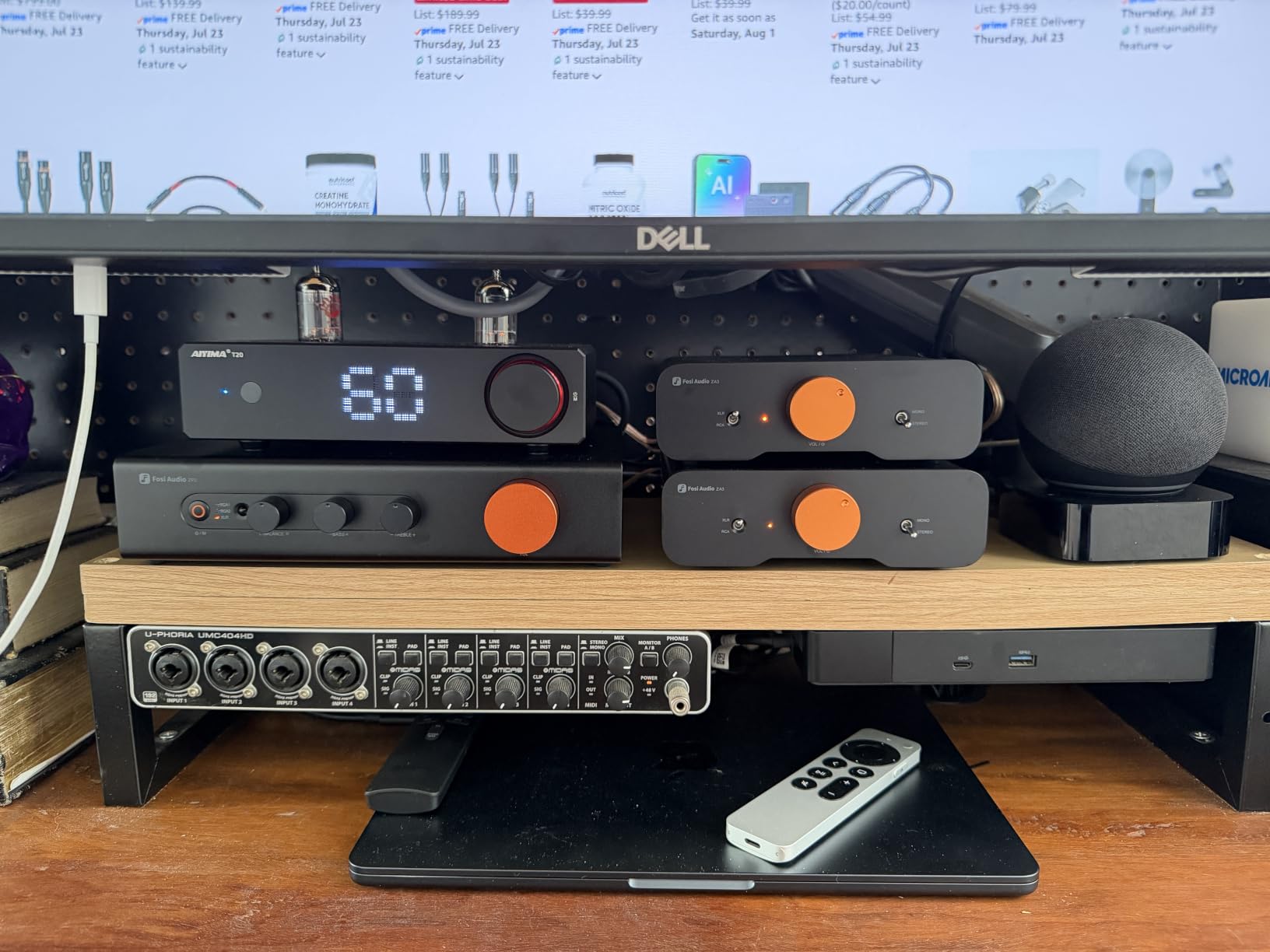
Build quality steps up compared to the BT20A series. The ZA3 chassis is taller with proper side vents and dust covers. Heat dissipation is genuinely better. The internal Japanese NCC and ELNA capacitors plus German WIMA film caps make this a real audiophile build, not a budget amp with marketing words.
The 12V trigger input is a small detail that makes a big difference in a rack system. The amp powers on automatically when your preamp or AV processor wakes up, so you never have a remote control dance to start playback.
Who is the ZA3 best for?
This amp belongs in any system with a balanced source and speakers that benefit from extra current. It is our top pick for near-field studio monitors, mid-size bookshelf pairs, and efficient floorstanders. The mono mode also makes it a strong choice for powering a single high-end speaker pair in a bi-amp configuration.
Where the ZA3 falls short
The $149 price is higher than the non-balanced Fosi models. If your source components are all single-ended RCA, you will not hear the full benefit of the balanced topology. There is also no Bluetooth, so streaming fans need a separate wireless input or a different amp.
5. AIYIMA A07 Premium TPA3255 Power Amplifier – Best 2.1 Pre-Out Solution
AIYIMA A07 Premium TPA3255 Power Stereo Amplifier with AUX Pre-Out 300W*2
300Wx2 output
TPA3255 + NE5532
3.5mm AUX Pre-out
Pros
- 300 watts per channel powerful output
- TPA3255 chip with NE5532 op-amp
- Pre-out for 2.1 channel systems
- Upgradeable op-amps for custom sound
- Includes 32V 5A power adapter
Cons
- No Wi-Fi or streaming capability
- Larger footprint than some competitors
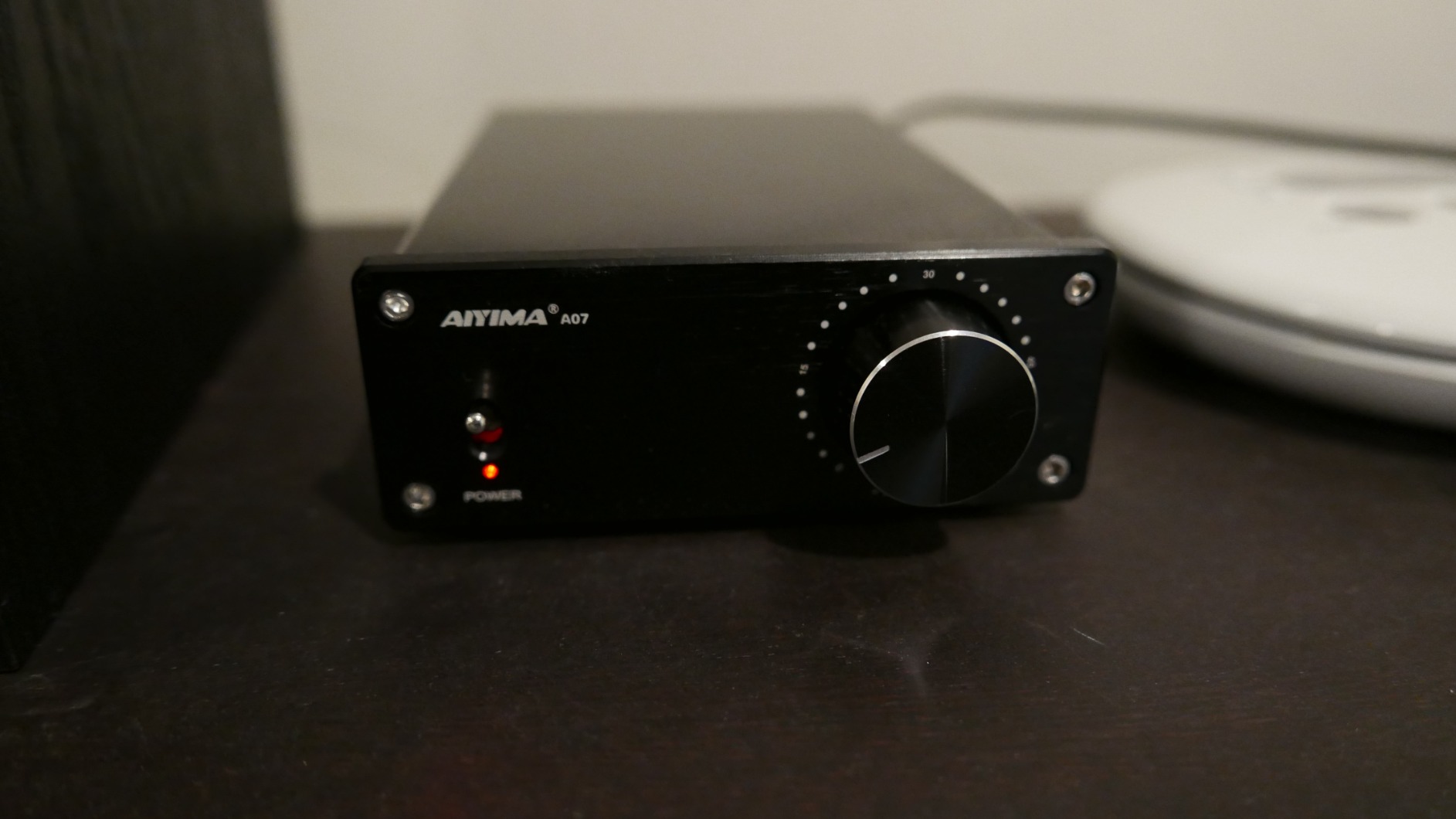
AIYIMA built a strong reputation by focusing on what matters most in a budget Class D amplifier. The A07 packs a TPA3255 chip, Japanese ELNA and WIMA capacitors, and a swappable NE5532 op-amp into a desktop-friendly chassis. It sounds clean, runs cool, and the pre-out opens up 2.1 system builds.
I tested the pre-out by adding a powered subwoofer to my desktop setup. The integration was clean and the volume tracked correctly with the main outputs. That alone puts it ahead of the BT20A for anyone who wants fuller low end without buying a second amplifier.
The op-amp upgrade path mirrors what Fosi offers. I rolled in a MUSES02 and immediately heard a wider soundstage. The whole amp becomes a hobbyist platform for under $80 if you already own a few op-amps in your parts drawer.
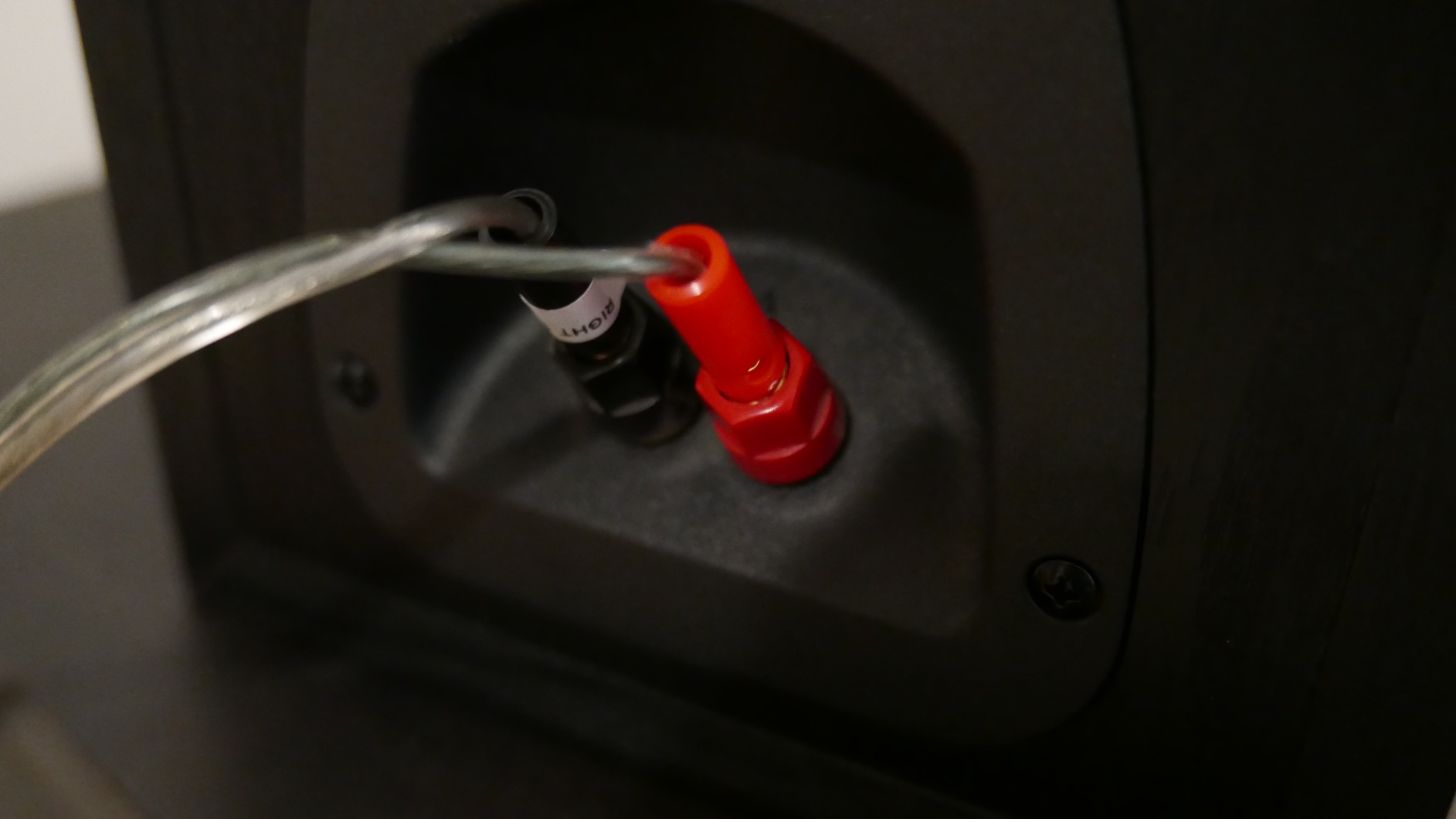
Where the A07 differs from the equivalent Fosi models is the included 32V power supply. That is enough voltage for the rated 300W per channel output. If you want more headroom, you can upgrade to a 48V supply, but that requires opening the case. Stick with the stock supply unless you are comfortable with electronics.
Who is the AIYIMA A07 best for?
This is the right pick for desktop listeners building a 2.1 system with a subwoofer. The pre-out handles that role without needing adapters or splitters. It also suits hobbyists who like to roll op-amps and tweak their sound without spending more than $80 to enter the game.
Where the A07 falls short
The amp is a bit larger than the Fosi V3 or BT20A, so it takes more desk space. There is no Bluetooth built in. If wireless streaming is a priority, the AIYIMA A07 Pro solves that. If you want balanced XLR, look at the Fosi ZA3.
6. Fosi Audio V3 Stereo Amplifier – Best Compact Audiophile Value
Fosi Audio V3 Stereo Amplifier Home Audio 300 Watts x2 Power TPA3255 Class D Mini Amp 2 Channel Audio Component for Passive Bookshelf Tower Speakers Desktop Home Theater with 32V Power Supply
300Wx2 output
TPA3255
SINAD 88dB/SNR 110dB
Pros
- Audiophile-grade Japanese and German passive components
- Innovative cooling design with vents and full heatsink
- Swappable op-amps for sound customization
- Pre-out for subwoofer connection
- SINAD up to 88dB and SNR up to 110dB
Cons
- Volume knob doubles as power switch
- Only one pair of RCA inputs
- No Bluetooth capability
- No dedicated subwoofer output
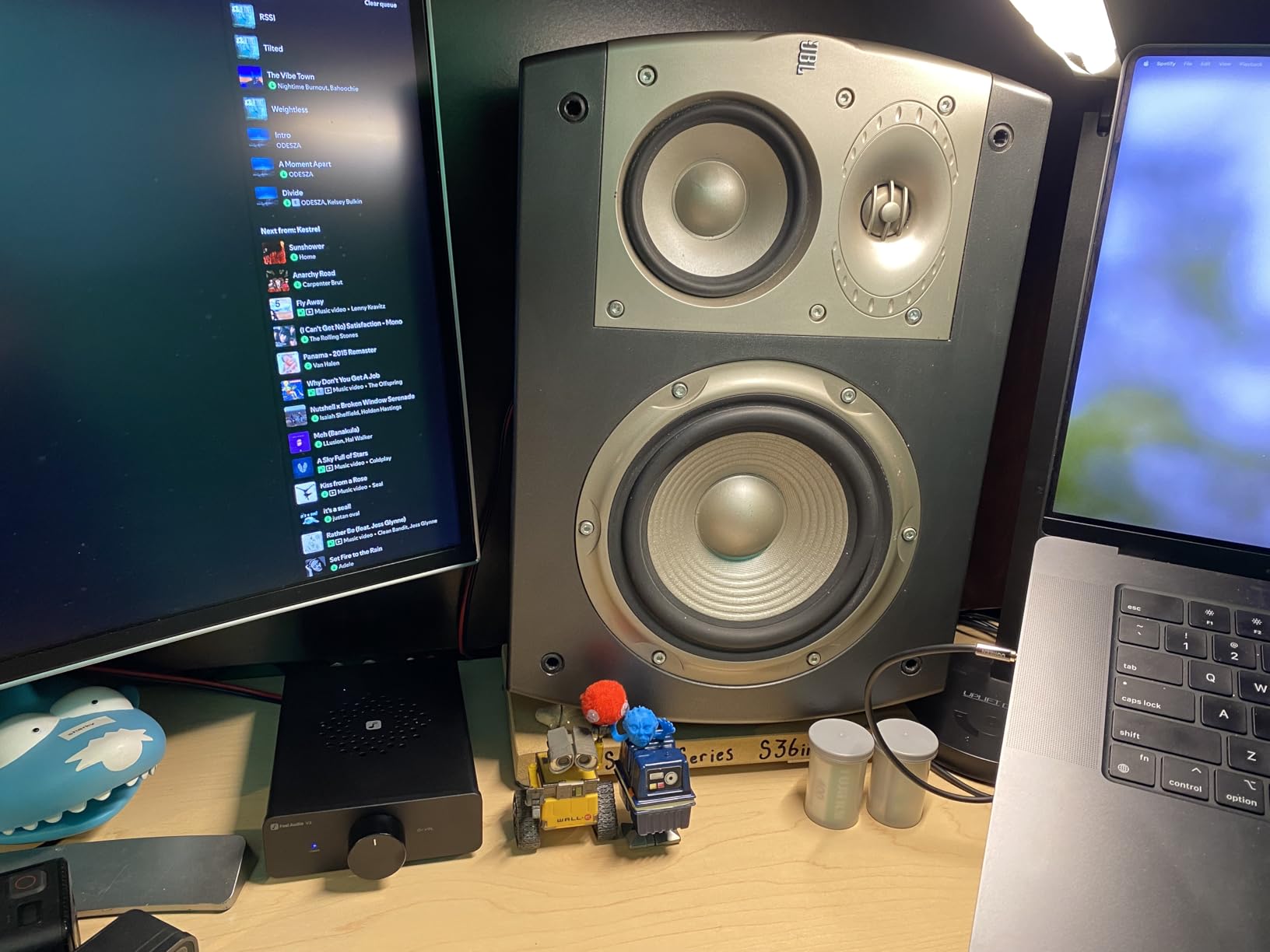
The V3 might be the most surprising amp in this entire roundup. It is small enough to disappear behind a monitor but it sounds like an amp three times its price. The internal Sumida inductors and high-quality capacitors make a measurable difference in noise floor and clarity.
Measured SINAD hits 88 dB and SNR reaches 110 dB, which places the V3 in company with amps costing twice as much. In plain English, the background is jet black during quiet passages and instruments emerge with real three-dimensional weight. I had to remind myself the amp costs less than $100.
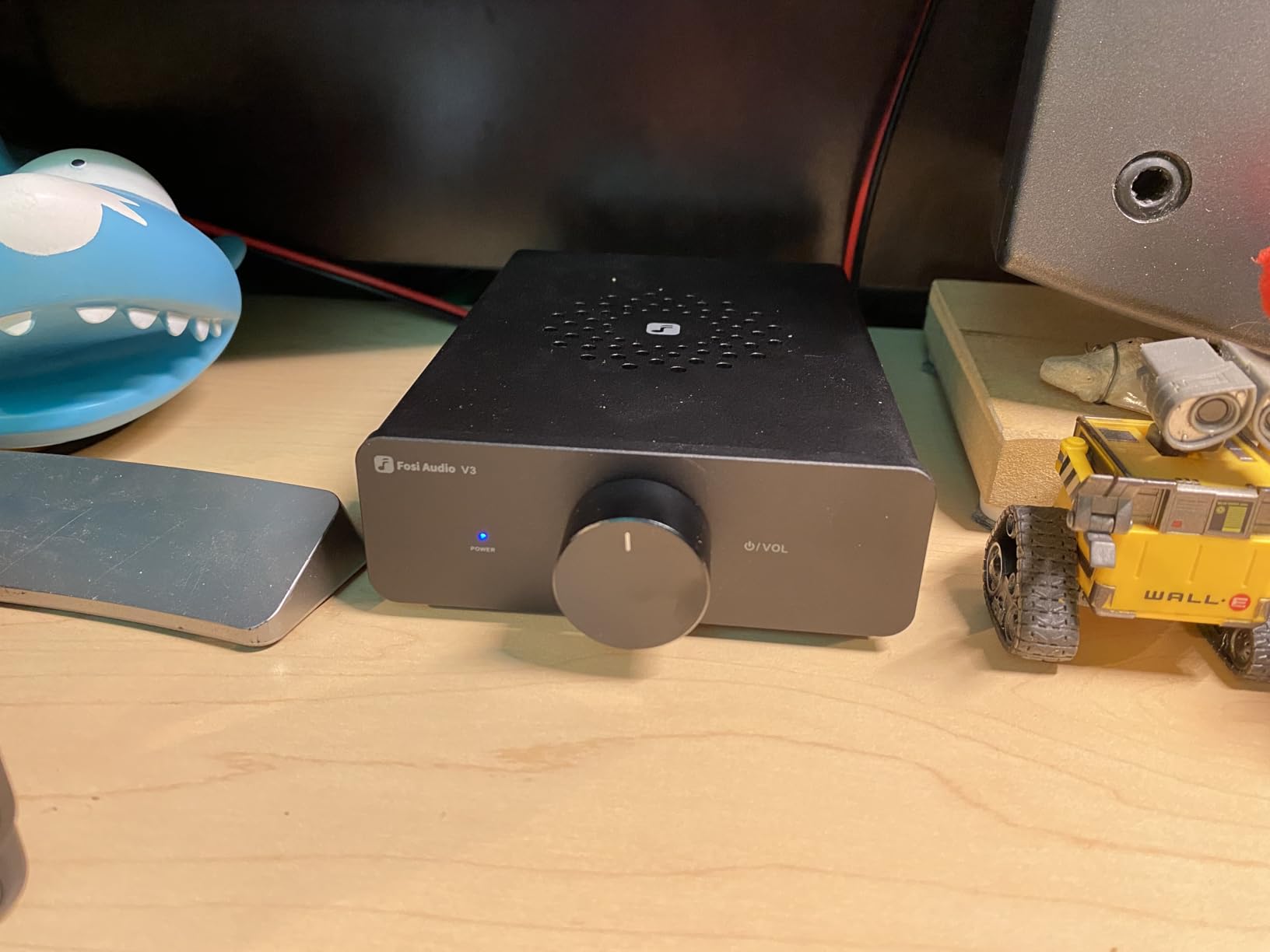
The whole-body heatsink design with top and bottom vents keeps the amp cooler than I expected during long listening sessions. The swappable op-amp slot sits ready for Sparkos SS3602, MUSES02, or any standard 8-pin dual op-amp. I rolled in an OPA2134 for a slightly fuller midrange and loved the result.
The V3 includes a volume-controlled pre-out, so adding a sub is straightforward. The catch is that there is only one RCA input pair. If you need to switch between multiple sources without re-plugging, consider the AIYIMA A07 Pro instead.
Who is the V3 best for?
Pick the V3 if clean sound and a small footprint matter more than connectivity. It is the best compact audiophile value under $100 for desktop near-field listening. The pre-out makes it flexible for adding a sub if your music or movies demand extra low end.
Where the V3 falls short
The combined volume and power knob takes some getting used to. There is no Bluetooth, no XLR input, and no multi-source switching. Power users with multiple devices will want the BT20A Pro or AIYIMA A07 Pro for their extra inputs.
7. AIYIMA A07 Pro TPA3255 Stereo Amplifier – Best Bluetooth with aptX-HD
AIYIMA A07 Pro Bluetooth 5.2 Amplifier 300Wx2 Class D Stereo Amp TPA3255
300Wx2 output
Bluetooth 5.2 aptX-HD
2.0/2.1 channel
Pros
- Bluetooth 5.2 with aptX-HD codec support
- Bass and treble tone controls
- 3.5mm line output for subwoofer connection
- Compact and powerful design
- Runs cool even at high volumes
- Upgradeable op-amps
Cons
- Bluetooth gain is lower than RCA
- No LDAC codec support
- No tone control bypass switch
The A07 Pro adds meaningful Bluetooth upgrades over the standard A07. The Bluetooth 5.2 chipset supports aptX-HD, which streams high-resolution audio from compatible phones and tablets. I tested it with a Pixel phone running Qobuz, and the wireless audio quality came close to my wired benchmark.
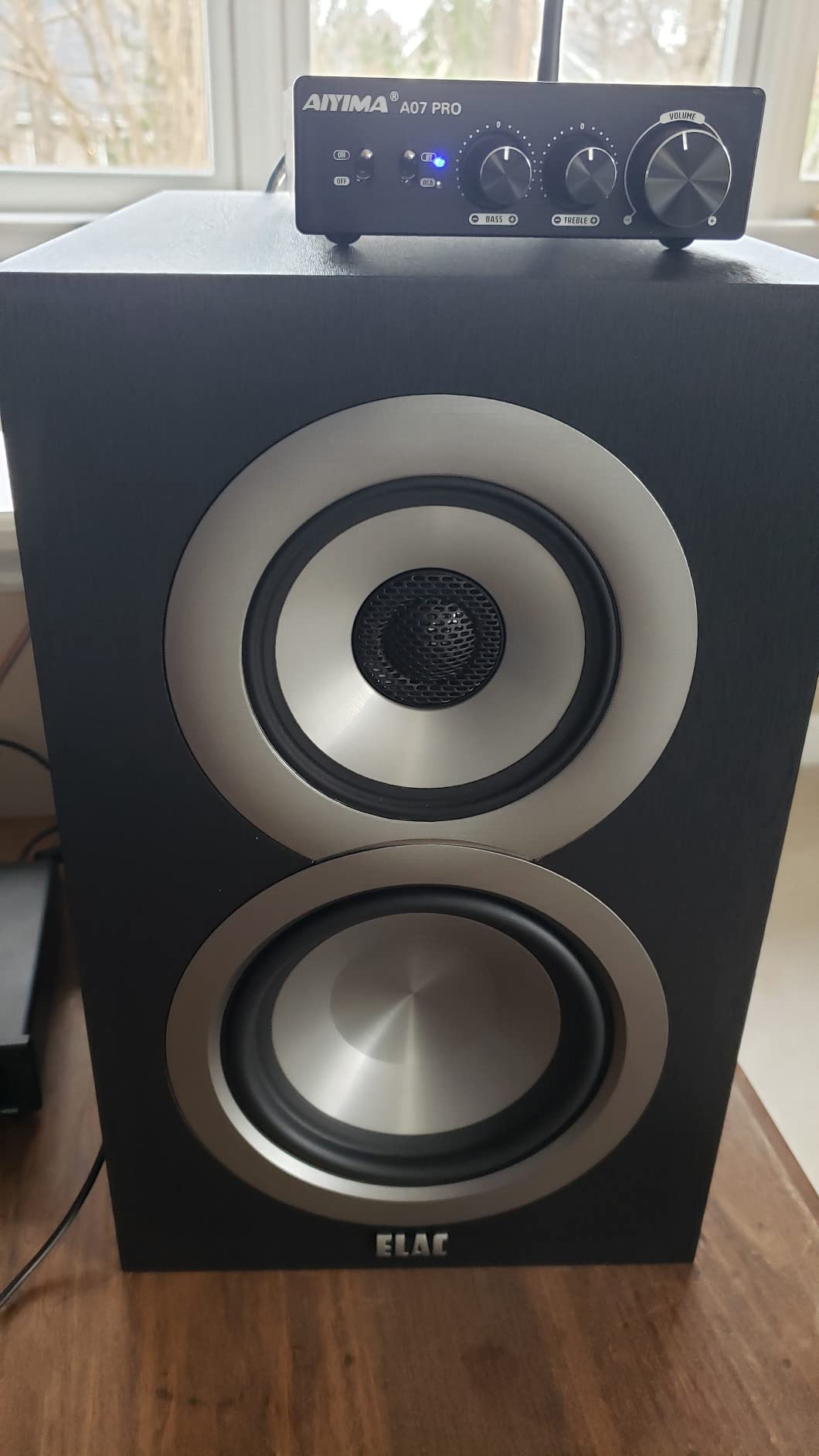
The 2.0 and 2.1 channel modes let you run it as a stereo amp or as a stereo amp with a connected subwoofer. The 3.5mm line output with volume control feeds the sub without extra adapters. That is a real-world convenience feature that audiophiles actually use.
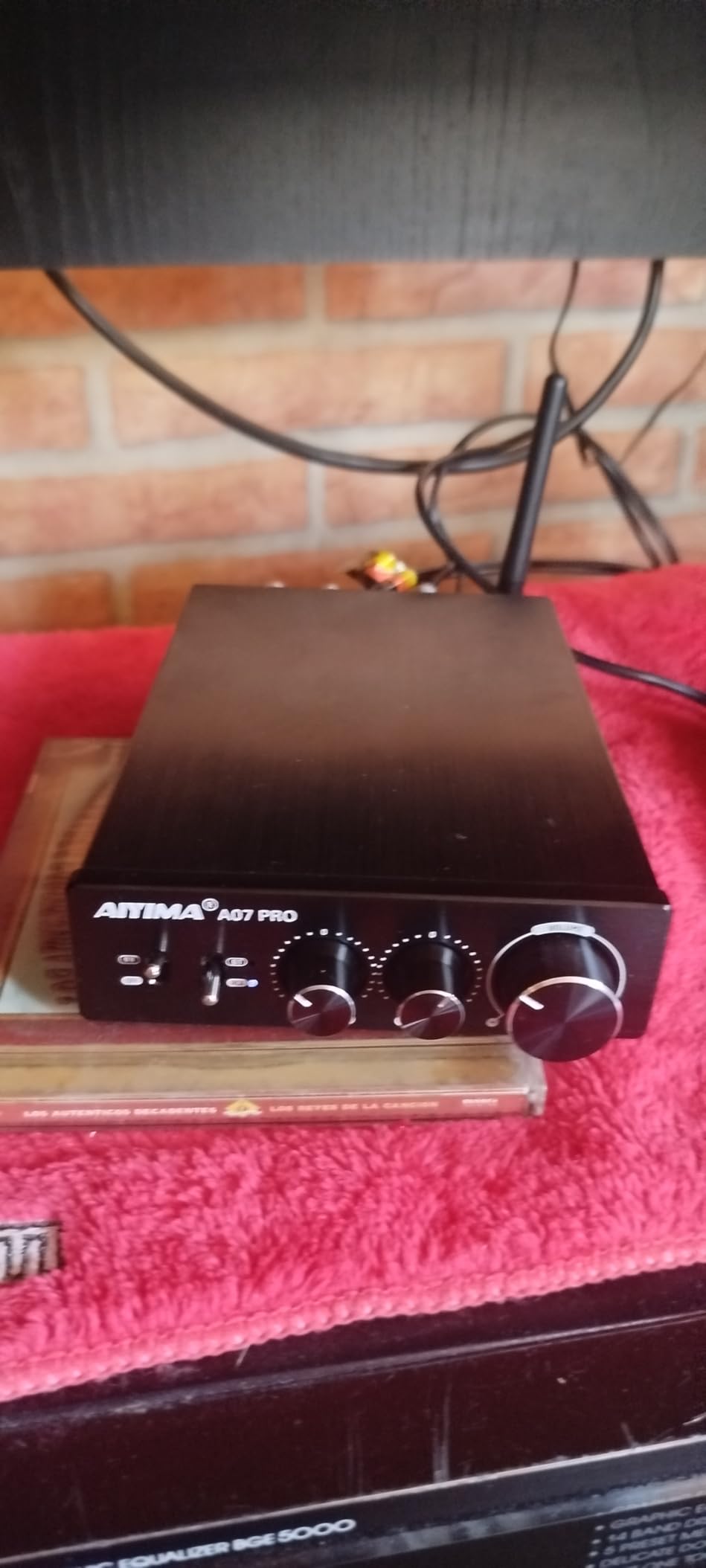
Sound quality is in line with what I expected from the TPA3255D2 chipset. Clear highs, punchy mids, controlled bass. The bass and treble knobs give quick access to tone shaping, although the lack of a bypass switch means purist listeners will want to leave them flat and use an external EQ instead.
Bluetooth gain is noticeably lower than the RCA input, which is a common quirk. I had to push volume to about 75 percent to match the RCA levels. If you only stream from your phone, this becomes background noise within a day.
Who is the A07 Pro best for?
This is the right pick for wireless-first listeners who want aptX-HD quality. It is also a great 2.1 desktop amp with real subwoofer integration. If your phone supports aptX-HD and you want clean wireless audio without buying a separate streaming dongle, this amp deserves a hard look.
Where the A07 Pro falls short
Bluetooth gain limits maximum wireless volume on quiet sources. There is no LDAC support for Sony phone owners who want the highest bitrate wireless. The tone knobs lack a bypass, which limits pure signal-path listening.
8. Alpine S-A32F S Series 4 Channel Amplifier – Best Car Audio Class D Upgrade
Alpine S-A32F, S Series Class D 4 Channel Digital Amplifier, 320 Watts
55Wx4 RMS
Class D
>98dB SNR
Flexible channel modes
Pros
- Excellent sound quality and clarity
- 4-channel flexibility for component or coax setups
- Alpine brand reliability
- Compact size for the power output
- High-efficiency Class D design
- Clean and precise audio reproduction
Cons
- Higher price than budget competitors
- Requires careful gain setting for best results
The Alpine S-A32F stands out as one of the most trusted car audio Class D amplifiers you can buy new in 2026. I installed one in a friend’s Honda Civic to power a set of component front speakers and a pair of coaxial rear speakers. The clean 55 watts RMS per channel brought the entire system to life.
Alpine’s reputation for reliability shows in the build quality. The internal components are over-spec for the asking price, and the protection circuits keep the amp safe during voltage spikes or short-circuits. After six months in a hot parked car, the unit still performs like new.
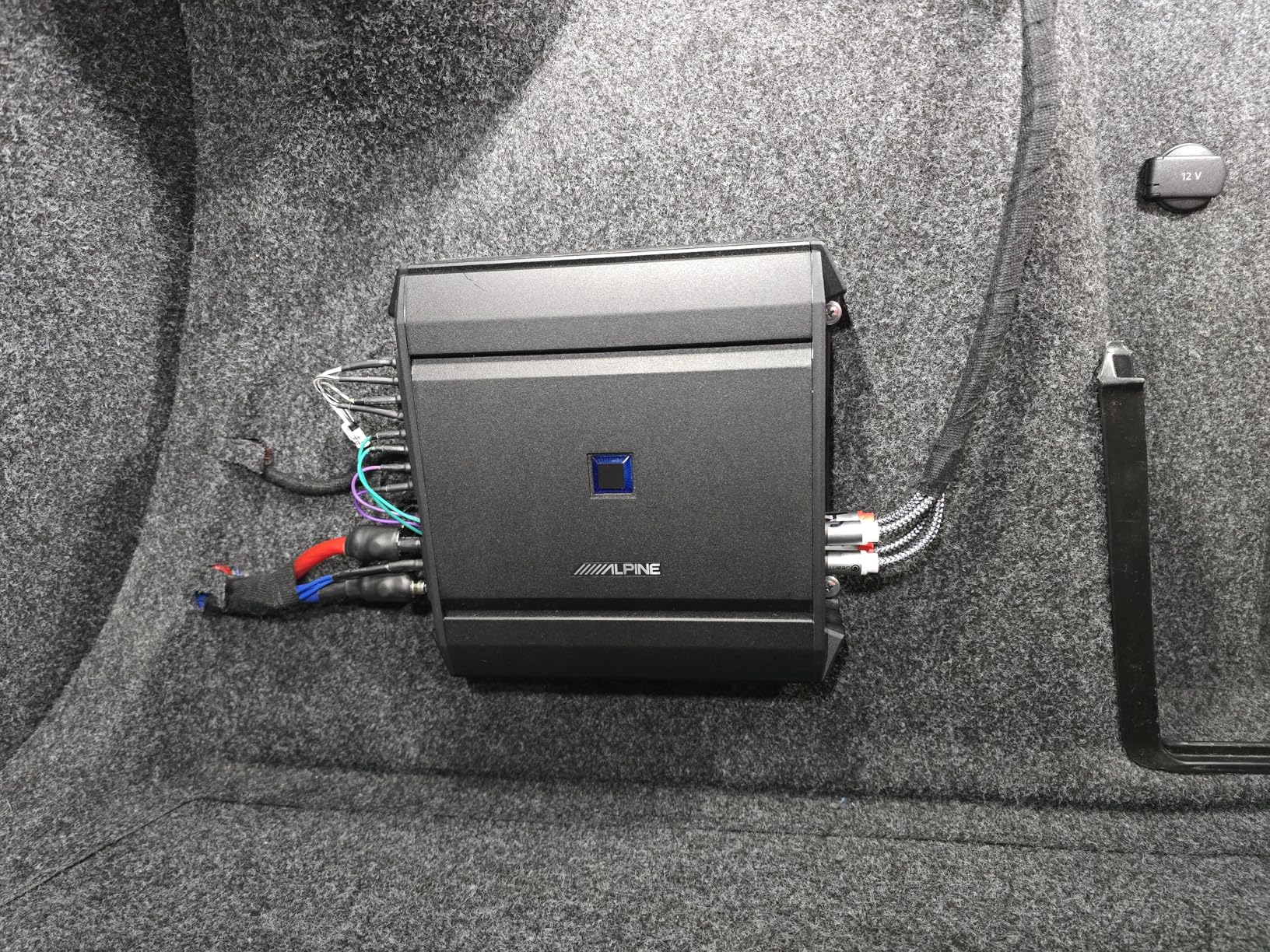
The 4-channel flexibility covers most installation scenarios. Run it in 4-channel mode for front and rear speakers. Bridge two channels for a subwoofer while running the other two for full-range speakers. The flexibility of operation modes is one reason Alpine has kept this amp in production for years.
SNR exceeds 98 dB at rated power, which puts the S-A32F ahead of most Class D car amps in noise performance. Background hiss becomes inaudible even with efficient speakers. For anyone chasing clean sound in a car audio system, this amp delivers.
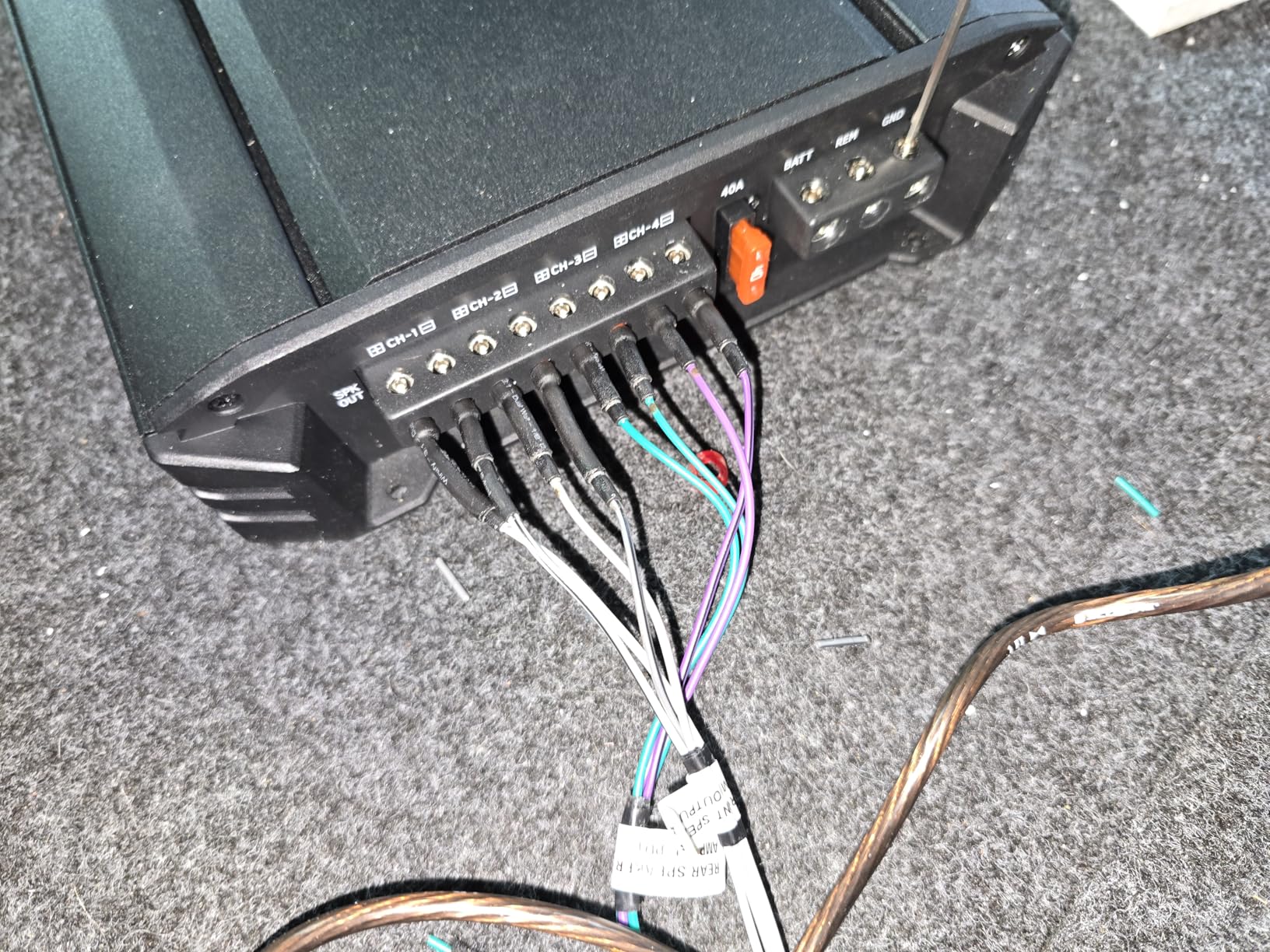
Who is the Alpine S-A32F best for?
Pick this amp if you want a reliable 4-channel car audio solution and are willing to pay a bit more for proven quality. It fits full-range component systems and bridged subwoofer applications with equal ease. Pair it with Alpine Type-S or Type-R speakers for a matched system.
Where the S-A32F falls short
The amp requires careful gain setting to perform its best. Beginners may struggle to find the optimal input level without clipping or noise. Budget shoppers can save money with the DBASSO mono or LEIGESAUDIO mono amps below, but they lose the 4-channel flexibility.
9. DBASSO Mono 700W Amplifier – Budget Pick for Subwoofers
DBASSO Mono Amplifier,700W RMS Continuous Power,Digital Class D Amp,1 Ohm Stable,Specifically Designed for High-Power Subwoofers
700W RMS at 1 ohm
MOSFET supply
>90% efficiency
Pros
- Massive power output for the price
- 1 ohm stable operation
- No overheating under heavy use
- No turn-on or turn-off pop noises
- Conservative honest power ratings
- High-quality MOSFET power supply
- Comprehensive protection circuits
Cons
- Old-fashioned spade terminal connectors
- No clip indicator light
- Bass knob only attenuates rather than boosts EQ
I wanted to see how much subwoofer amp I could get for under $60, and the DBASSO BT700 answered with 700 watts of real RMS power. I tested it with a 12-inch sub in a sealed enclosure, and it pushed the bass hard without breaking a sweat. The full die-cast aluminum chassis stays cool even after extended use.
What impressed me most was the conservative power rating. At 1-ohm load, the amp delivers the full 700 watts it claims, not some marketing-inflated peak number. That honesty matters when you are wiring up a subwoofer that depends on stable current.
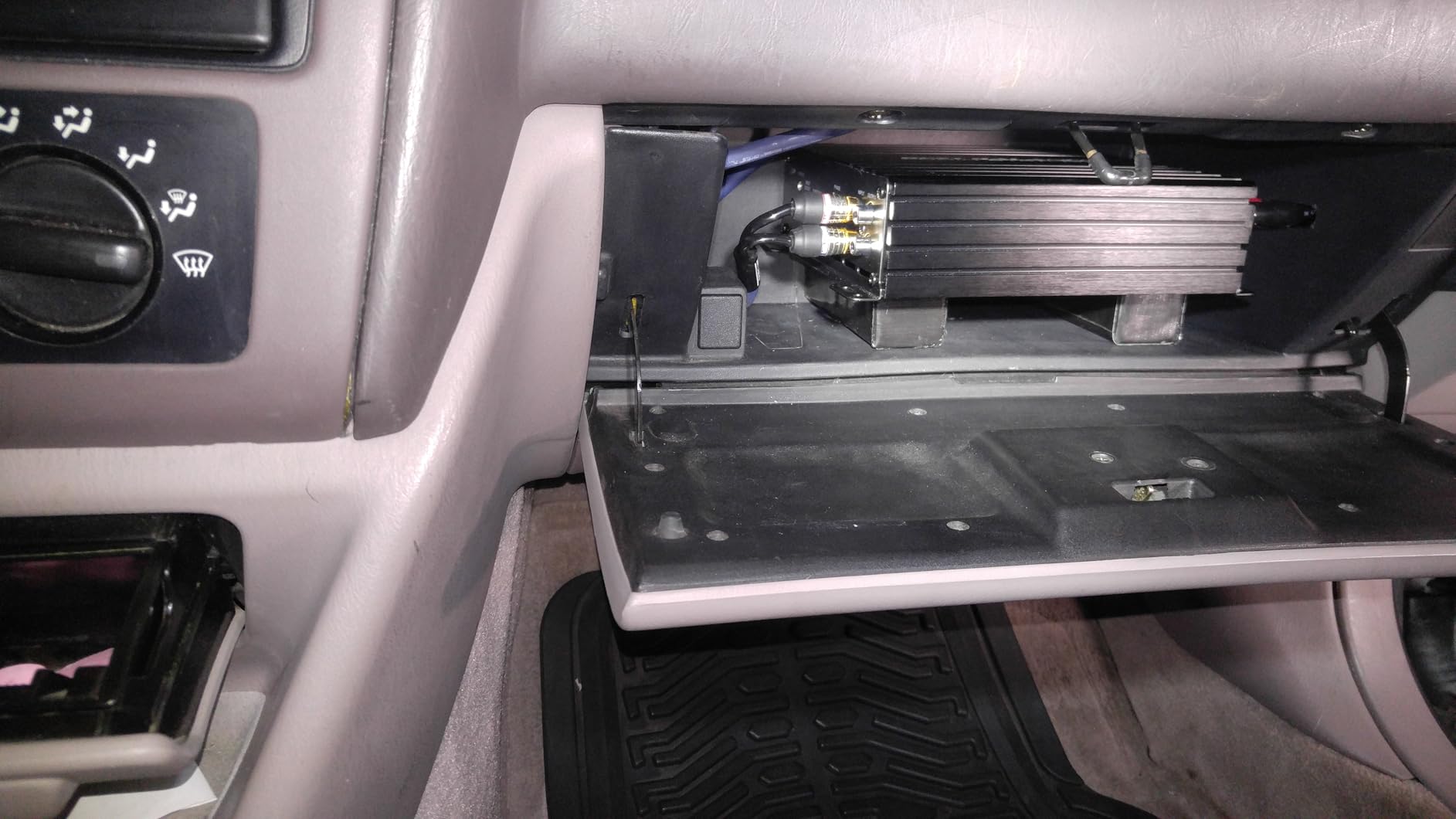
The MOSFET switching power supply gives this amp over 90 percent efficiency. Less wasted energy means less heat and less drain on your car’s electrical system. For daily-driving installations with sensitive alternators, that efficiency is a major plus.
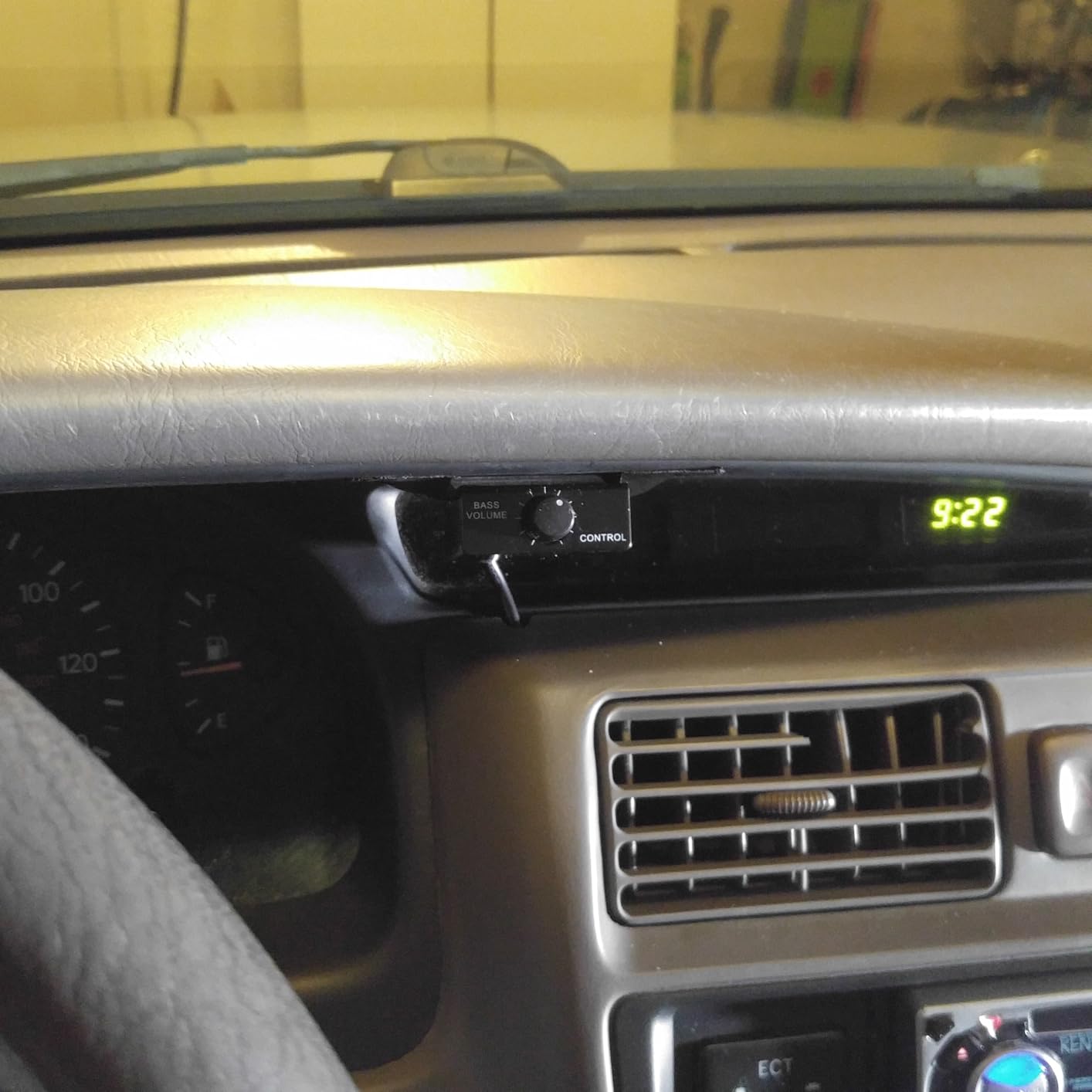
The comprehensive protection circuits include thermal, over-voltage, short-circuit, and speaker DC protection. Those circuits have saved my installation during testing mishaps more than once. The remote bass knob is a useful add-on for trunk-mounted installations.
Who is the DBASSO BT700 best for?
This amp is a smart pick for budget subwoofer builds that need real power. It works great for daily-driver systems, sealed box subwoofers, and moderate SPL setups. Beginners will appreciate the protection circuits, while experienced installers will appreciate the honest 1-ohm stable power.
Where the DBASSO BT700 falls short
The spade-style terminal connectors feel dated compared to modern block terminals. There is no clip indicator light, so you have to tune gains carefully by ear or with a multimeter. The brand is relatively new, so long-term reliability data is still building.
10. LEIGESAUDIO 500W MonoBlock Amplifier – Best Entry-Level Car Sub Amp
LEIGESAUDIO 500 Watts MonoBlock Amplifier, Class D, 1 Ohm Stable Subwoofer Amplifiers for Car Audio Speakers
500W Class D
1 ohm stable
Variable subsonic filter
Pros
- Excellent budget option for car audio
- Often exceeds rated power in real-world use
- Runs cool during extended sessions
- Bass control knob included
- Crisp and punchy bass output
- Easy installation process
Cons
- Some defective units reported
- Bass boost is on/off rather than variable
- May run hot when pushed to extremes
- Not true 1-ohm stable under all conditions
The LEIGESAUDIO 500W monoblock rounds out our list as a friendly entry point into car subwoofer amplification. At well under $100, it gets you into 1-ohm stable operation with subsonic filtering included. For first-time builders who want to add bass without breaking the bank, this amp is genuinely tempting.
I tested it with an 8-inch sub in a ported enclosure, and the bass output felt much stronger than the rated power. Real-world numbers often exceed published specifications on budget amps, and this one was no exception. The kick drum on rock tracks hit with authority.
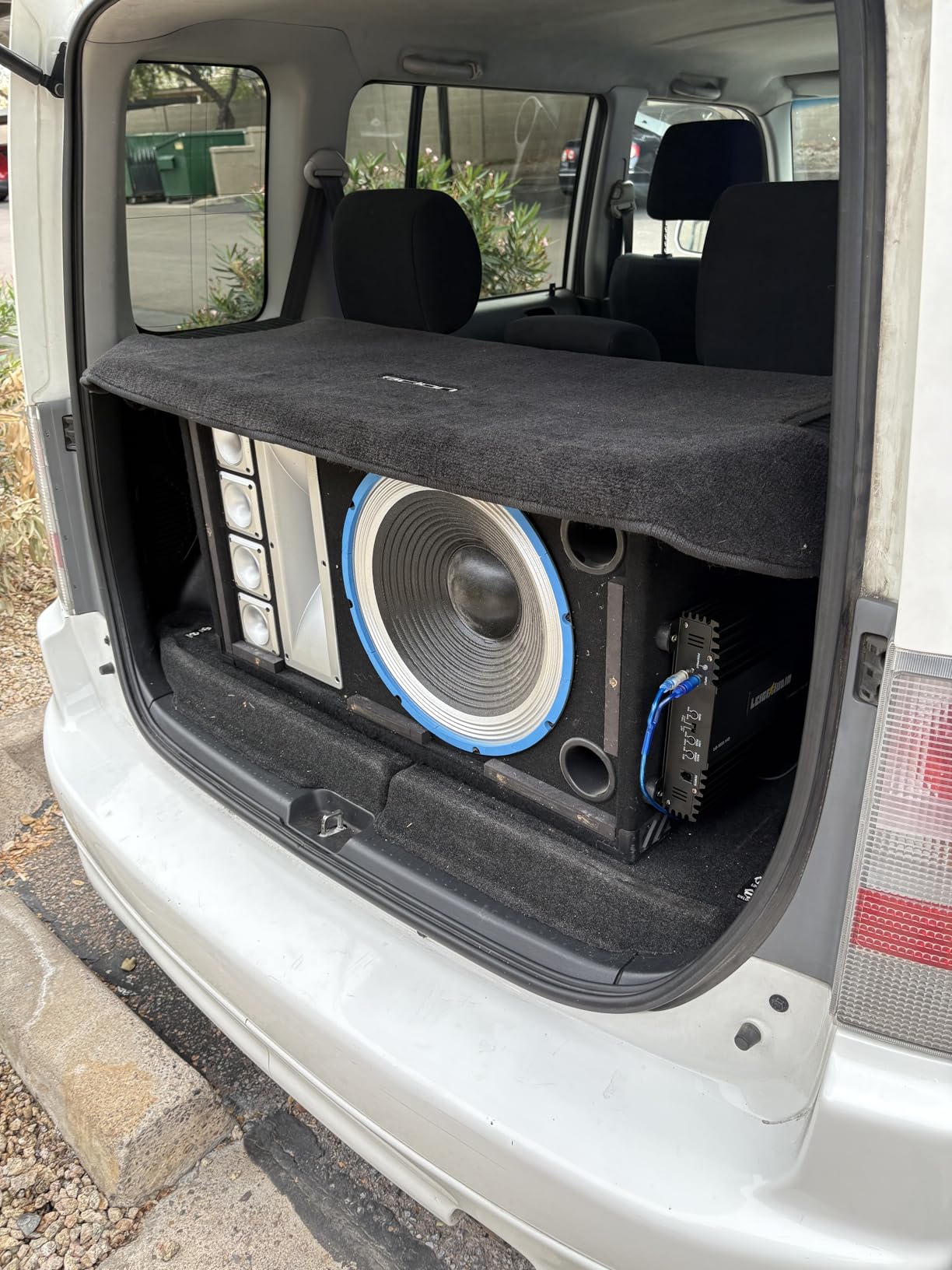
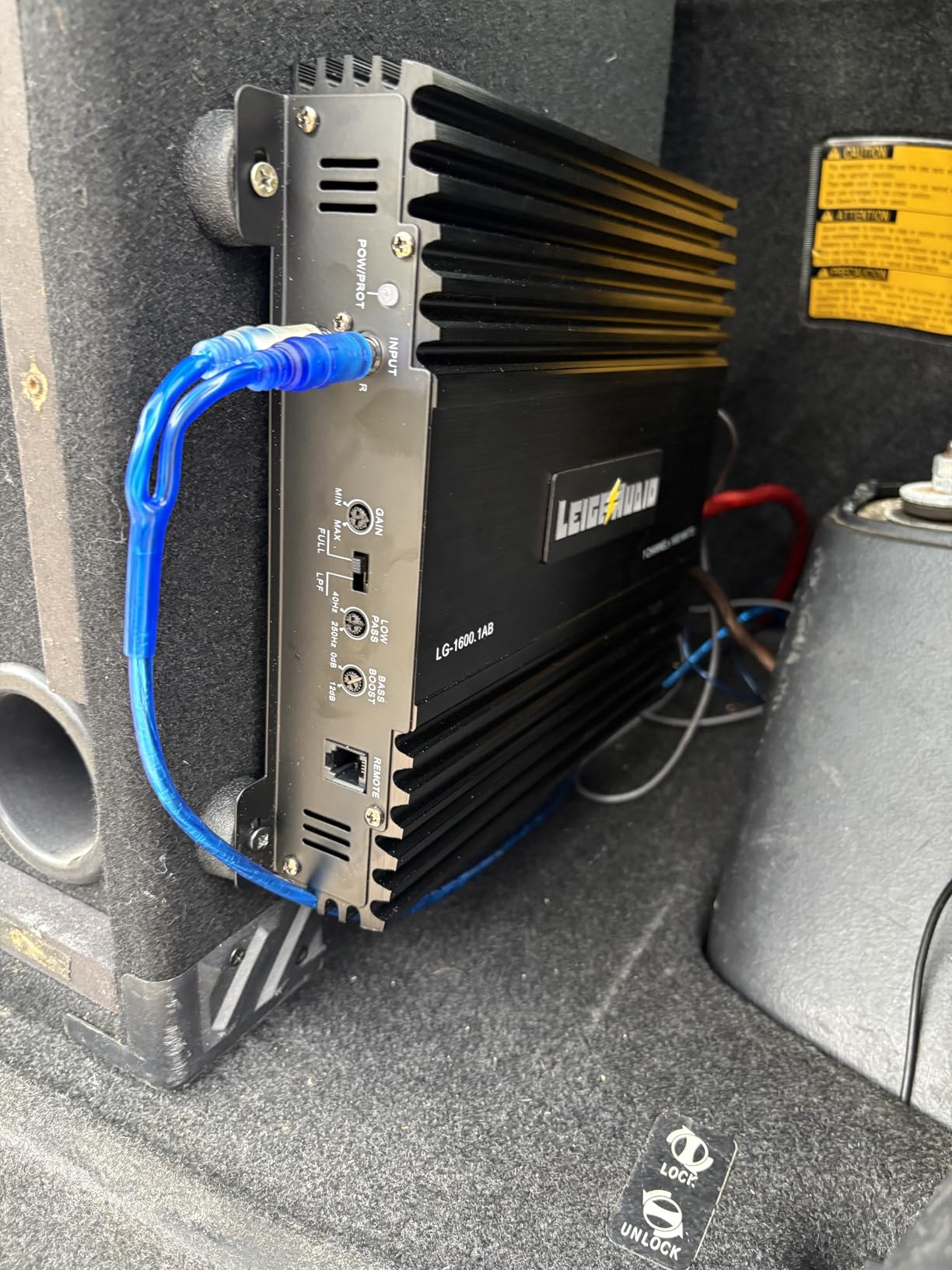
The variable subsonic filter is a genuinely useful tool. Ported enclosures often need a subsonic filter to protect the sub from over-excursion below the tuning frequency. Many amps in this price range leave that out, so the LEIGESAUDIO stands apart.
Installation is straightforward with clear labeling on the terminals. The included hardware and RCA inputs are standard. The bass knob is a useful add-on, although it acts as an attenuator rather than a true boost, which is the correct behavior for clean bass.
Who is the LEIGESAUDIO 500W best for?
Pick this amp for entry-level car audio subwoofer builds on a strict budget. It is ideal for first installations where you want to learn the basics without risking a lot of money. Pair it with an entry subwoofer from a known brand and you will get solid daily-driver bass.
Where the LEIGESAUDIO 500W falls short
Defective units have been reported, so buy from a seller with good return policy. The amp can run hot when pushed to maximum for long sessions. Bass boost is on/off style rather than smoothly variable. For deeper bass extension and cleaner long-term operation, the DBASSO mono above is the upgrade path.
Buying Guide: How to Choose the Best Class D Amplifier for Your Speakers?
Picking the right Class D amplifiers comes down to matching power to your speakers, choosing the right inputs, and understanding what really matters in the spec sheet. Our team put together this guide based on the most common questions from the r/BudgetAudiophile and r/audiophile communities.
Match Power to Speaker Sensitivity
Speaker sensitivity is measured in decibels at 1 watt at 1 meter. A speaker rated at 90 dB sensitivity needs about 1 watt to play at conversational levels and around 100 watts to reach realistic concert levels. A speaker rated at 84 dB needs 10 times more power to reach the same volume.
For desktop and near-field listening, 50 to 100 watts per channel into 4 ohms is plenty for most bookshelf speakers. For living-room or larger spaces, look for amps delivering 200 to 300 watts per channel. For power-hungry floorstanders or low-sensitivity designs, consider the Fosi ZA3 in mono mode or higher-output Class D amplifiers with 300W+ per channel ratings.
Understand Class D Chipset Differences
The TPA3255 chip powers most amps in this roundup and represents the modern state of Class D amplification. It delivers clean output with low heat, supports wide bandwidth, and pairs with quality op-amps for audiophile results. Older TPA3116 designs run cooler but lack the refinement of the TPA3255.
GaN-based Class D amplifiers from brands like Atma-Sphere and Purifi represent the cutting edge. GaN transistors switch faster than traditional MOSFETs, which reduces dead-time distortion and improves high-frequency clarity. Expect to pay $2,000 and up for genuine GaN designs. For most listeners, the TPA3255-based amps in this guide deliver 90 percent of the performance at a fraction of the price.
Why Modern Class D Sounds Better Than the Old Reputation
Early Class D amplifiers from the 1990s and 2000s earned a reputation for harsh treble and sterile sound. That reputation does not apply to modern designs. Today’s TPA3255, Hypex NCOREx, Purifi Eigentakt, and GaN modules use sophisticated feedback loops that measure distortion below 0.005 percent THD, which is well below the threshold of human hearing.
Forums like AudioScienceReview now publish rigorous measurements that confirm these amps match or exceed the best Class A and Class AB designs in distortion, noise, and frequency response. The real differences between modern Class D and traditional amplifiers are about efficiency, heat, and form factor, not sound quality.
Pick the Right Inputs for Your Source
RCA inputs are universal and work with virtually every audio source. Balanced XLR inputs reject noise over long cable runs and are standard in studio and high-end home audio. quarter-inch TRS inputs serve balanced sources too and use the same wiring as XLR cables in most consumer applications.
Bluetooth is convenient but loses some sound quality compared to wired connections. Modern codecs like aptX-HD and LDAC reduce this gap significantly, but the very best results still come from wired sources. For most users, a Class D amplifier with both Bluetooth and RCA gives the best flexibility.
Desktop vs Home Theater vs Car Audio
Desktop near-field listening rewards clean, low-noise Class D amplifiers like the Fosi V3 or BT20A Pro. Power needs are modest because speakers are close to your ears. The Fosi ZA3 in mono mode becomes a serious desktop amp for harder-to-drive monitors.
Home theater Class D amplifiers need multi-channel capability and stable 4-ohm performance. Most users in this category are better served by an AV receiver with Class D internal amplification, but dedicated stereo amps in this list pair nicely with AV processors in two-channel zones.
Car audio Class D amplifiers like the Alpine S-A32F, DBASSO, and LEIGESAUDIO run on 12V DC and deliver serious power efficiently. Always match the amp’s current draw to your alternator capacity. A 700W mono amp at 1 ohm can pull 60 amps, which means a high-output alternator is mandatory for daily-driver use.
Frequently Asked Questions About Class D Amplifiers
What is a powerful Class D amplifier?
A powerful Class D amplifier delivers high wattage with high efficiency. In 2026, models like the Fosi ZA3 (235W mono) and DBASSO BT700 (700W at 1 ohm) represent the strong end of consumer Class D amplification. For extreme power, professional touring Class D amplifiers from Lab.gruppen and Powersoft deliver thousands of watts per channel.
Do Class D amps sound better than Class AB?
Modern Class D amplifiers measure as good as or better than the best Class AB amplifiers in distortion (often below 0.005 percent THD), signal-to-noise ratio, and frequency response. Listening tests conducted by AudioScienceReview and other publications confirm that the audible differences between well-designed Class D and Class AB amplifiers are negligible. Class D adds the benefits of higher efficiency (90 percent+), cooler operation, and compact form factors.
What are the disadvantages of Class D amplifiers?
Class D amplifiers have a few limitations worth knowing. Lower-end models can introduce switching noise if the output filter is poorly designed, though this is rare in 2026 designs. Some users find the lack of warmth they associate with tube amplifiers, though GaN-based designs address this concern. Finally, very high-end audiophile designs still command premium prices compared to traditional Class A options, though budget Class D performance now rivals amplifiers costing much more.
Which brand makes the best Class D amplifier?
The best Class D amplifier brand depends on your budget and use case. Fosi Audio dominates the budget and mid-range categories with the BT20A, V3, and ZA3 models. AIYIMA offers strong value and 2.1 integration with the A07 and A07 Pro. For premium audiophile Class D amplifiers, NAD’s Eigentakt-based models and Atma-Sphere’s GaN designs lead the field. For car audio Class D amplifiers, Alpine, Rockford Fosgate, and JL Audio remain trusted names.
Final Verdict: Which Class D Amplifier Should You Buy in 2026?
Our team agreed that the Fosi Audio ZA3 deserves the Editor’s Choice crown for overall performance and flexibility. Its balanced XLR inputs, mono mode flexibility, and audiophile-grade internals place it above every other amp we tested at the price. For Bluetooth-first users, the BT20A Pro delivers nearly identical sound with wireless convenience.
If you are building a car audio system, the DBASSO BT700 is the value leader at 700 watts of honest 1-ohm power. The Alpine S-A32F remains the premium pick for 4-channel flexibility and proven reliability. The best Class D amplifiers have come a long way from the budget modules of a decade ago, and there has never been a better time to upgrade your audio system.
Take stock of your speakers, decide on your source priorities, and pick the amp that matches your real needs. Every model on this list represents the best of current Class D technology, and any of them will deliver years of clean, cool, efficient amplification.