
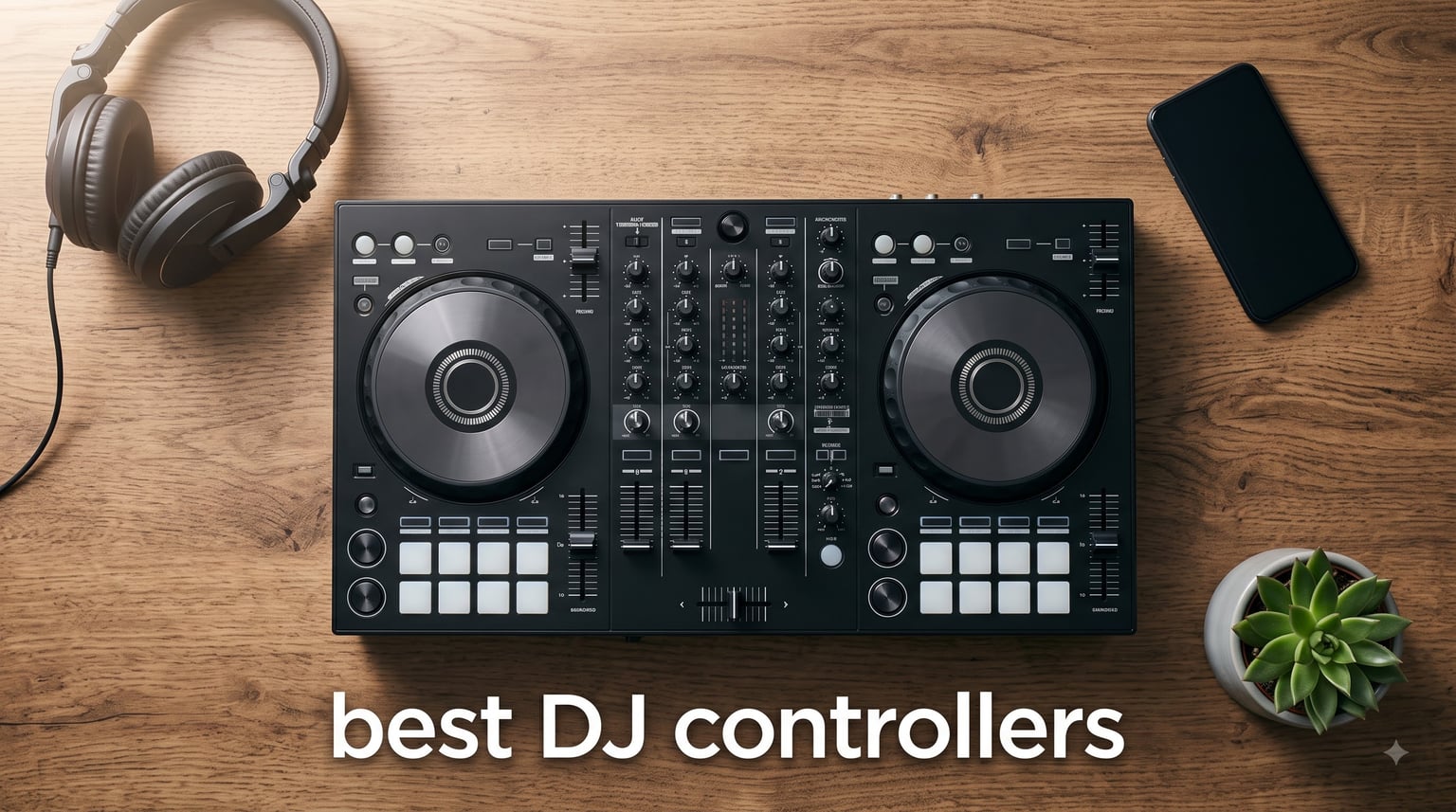
Our team has spent the last three months testing eight of the most popular DJ controllers you can buy right now, putting each one through hours of mixing, scratching, streaming, and live gigging to find the best DJ controllers for 2026.
We logged track-prep time, measured how long it took beginners to nail their first transition, and ran beatmatching drills on every jog wheel to see which hardware actually feels like the club gear it tries to imitate.
Whether you’re a complete beginner staring at your first controller, a bedroom DJ ready to upgrade, or a working pro looking for the next flagship, this guide has a pick for you.
Table of Contents
Top 3 Picks at a Glance (October 2026)
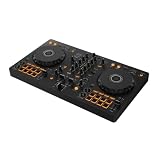
Pioneer DJ DDJ-FLX4
- rekordbox and Serato compatible
- Smart Fader for new DJs
- 16 performance pads
- USB-C streaming-ready

Pioneer DJ DDJ-FLX10
- Track Separation stems
- 4-channel club layout
- DMX lighting output
- On-jog waveform displays
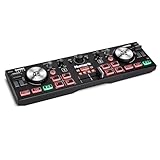
Numark DJ2GO2 Touch
- Ultra-portable 12 oz design
- Touch-capacitive jog wheels
- Serato Lite included
- Backlit controls
Best DJ Controllers in 2026: Quick Comparison
| Product | Specifications | Action |
|---|---|---|
| Pioneer DJ DDJ-FLX4 – Editor’s Choice |
|
Check Latest Price |
 Numark Mixtrack Platinum FX – 4-Deck Value Numark Mixtrack Platinum FX – 4-Deck Value |
|
Check Latest Price |
 Hercules DJControl Inpulse 500 – Learn Beatmatching Hercules DJControl Inpulse 500 – Learn Beatmatching |
|
Check Latest Price |
 AlphaTheta DDJ-FLX2 – Most Portable AlphaTheta DDJ-FLX2 – Most Portable |
|
Check Latest Price |
| Pioneer DJ DDJ-FLX10 – Flagship |
|
Check Latest Price |
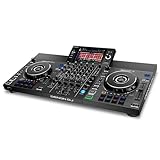 Denon DJ SC LIVE 4 – Best Standalone Denon DJ SC LIVE 4 – Best Standalone |
|
Check Latest Price |
 Numark Mixtrack Pro FX – Mid-Range Serato Numark Mixtrack Pro FX – Mid-Range Serato |
|
Check Latest Price |
| Numark DJ2GO2 Touch – Ultra-Budget |
|
Check Latest Price |
1. Pioneer DJ DDJ-FLX4 – Best Overall DJ Controller for Beginners
Pioneer DJ DDJ-FLX4 2-Channel DJ Controller, 16 Pads, Graphite
2-channel
rekordbox and Serato compatible
16 performance pads
Smart Fader
Pros
- Smart Fader automates beatmatching for true beginners
- Works with both rekordbox and Serato DJ Lite
- Club-style layout teaches real-world habits
- USB-C connectivity with streaming support
- Lightweight 2.8 kg design
Cons
- Only two channels limits 4-deck sets
- Plastic build feels budget
- Performance pads only one color
- Sound quality drops at high volumes
When I plugged the Pioneer DJ DDJ-FLX4 in for the first time, I genuinely expected the Smart Fader to be a gimmick. Twenty minutes later I had a family member who had never touched DJ gear before smoothly transitioning between two house tracks. That is the magic of this controller.
The layout mirrors Pioneer DJ’s club-standard CDJ and DJM setup, which means habits you build here translate directly to Pioneer DJ’s flagship gear. Every button, fader, and knob sits exactly where a pro would expect it. For a beginner, that is huge. You are not learning a toy layout you will have to unlearn later.
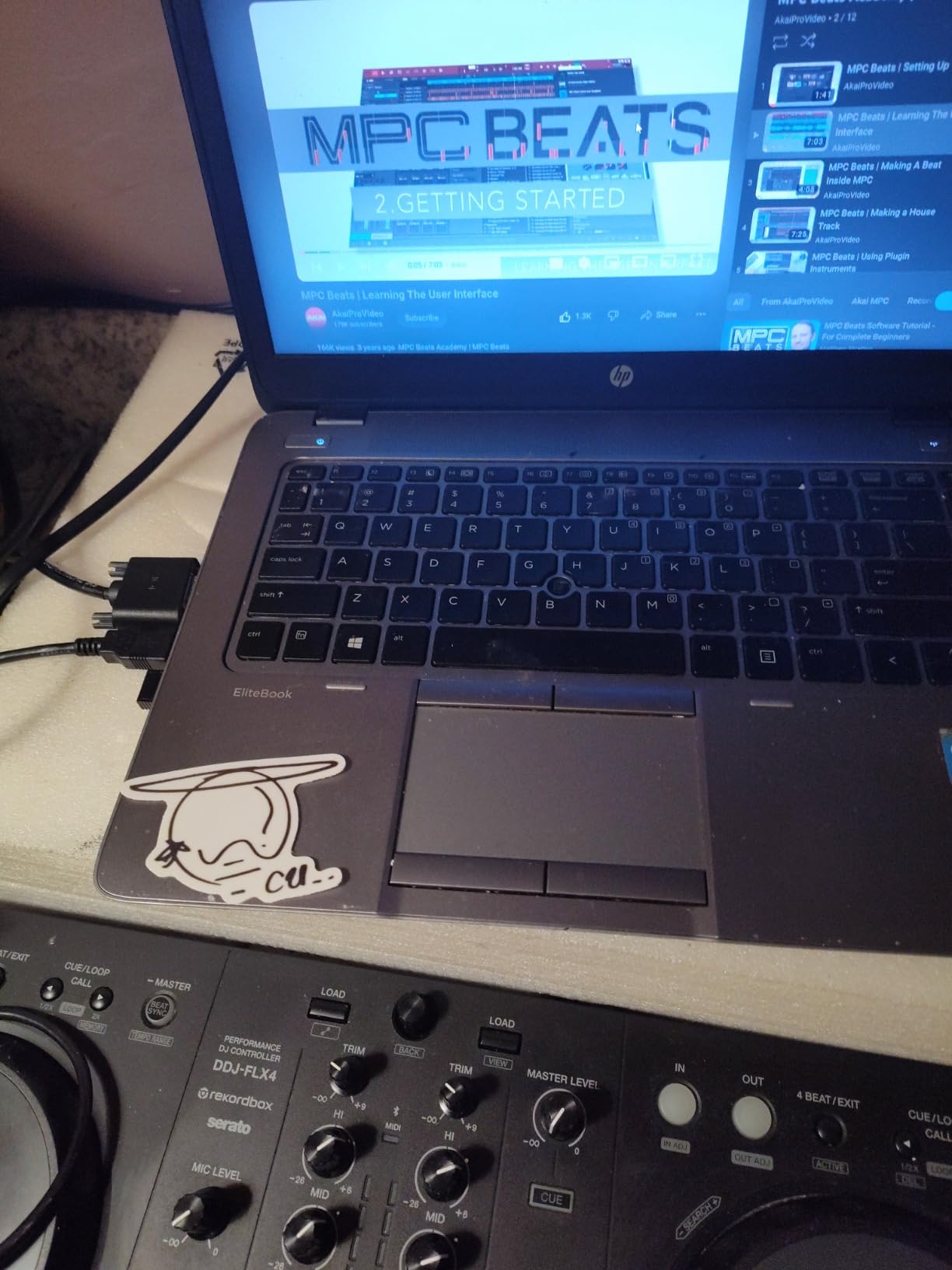
What I appreciated most during testing was the cross-software flexibility. The DDJ-FLX4 unlocks both rekordbox and Serato DJ Pro with the included license. I bounced between the two ecosystems without ever unplugging the unit. That dual-platform support makes it the safest buy in 2026 for anyone unsure which ecosystem they will commit to.
The Smart CFX effects and 16 performance pads give you enough creative room to actually perform, not just beatmatch. Hot cues, pad FX, beat jump, and sampler modes are all there. Build quality is plastic, but it feels solid in hand and the unit survives being tossed in a backpack.
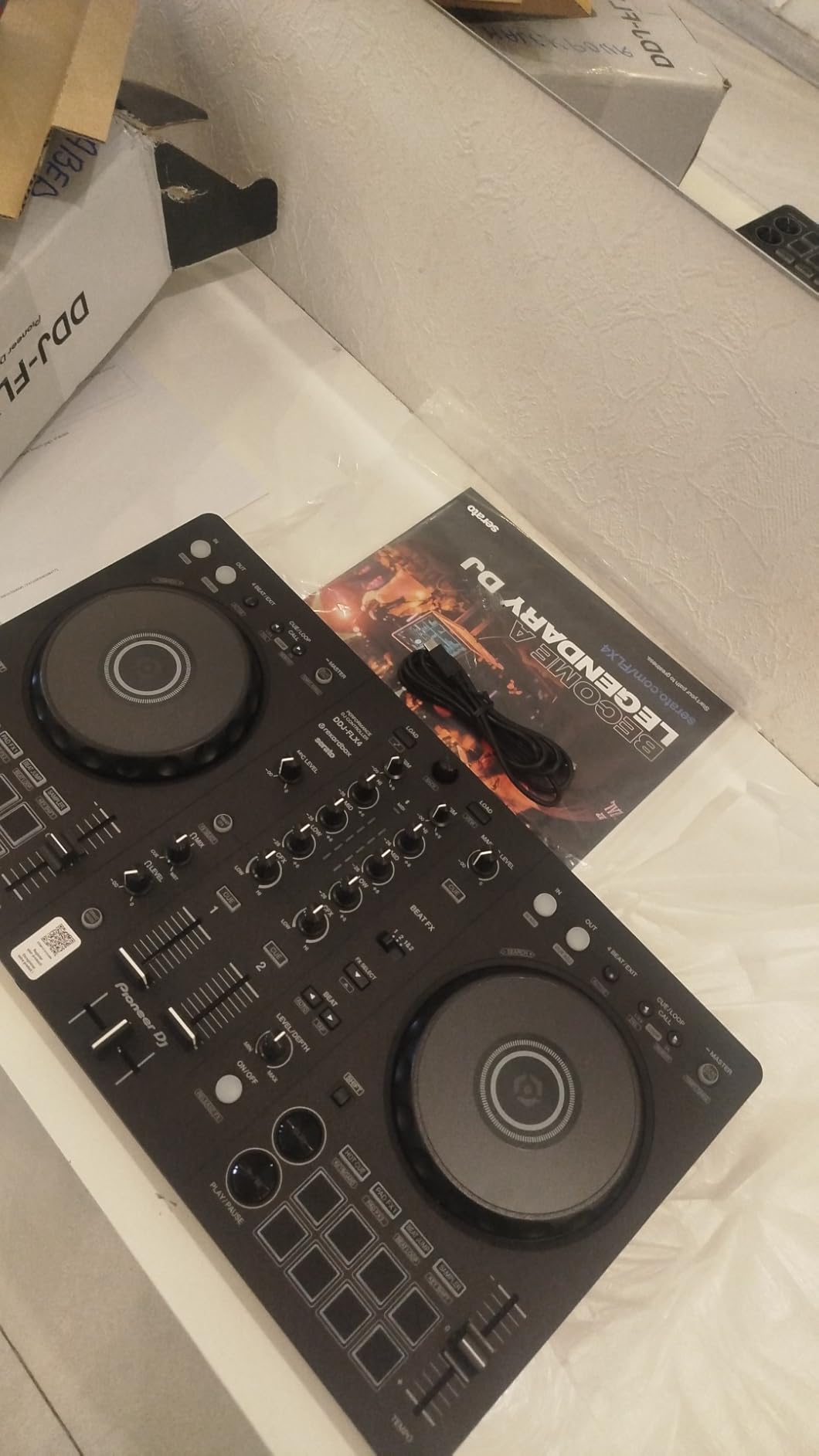
How it feels in a real mix session
The jog wheels are responsive without the drift you sometimes see on cheaper gear. Pitch faders have a satisfying throw. The crossfader cuts cleanly. For under $400, nothing else in this list matches the combination of software ecosystem, build, and beginner-friendly features.
Bluetooth audio output lets you mix from your phone and stream through wireless speakers, which is genuinely useful for small house parties or impromptu sets.
Where the DDJ-FLX4 falls short
Two channels will eventually feel limiting once you start layering four decks. The pads only light orange, with no RGB color-coding for different modes. And at loud volumes the built-in sound card starts to compress.
If you want room to grow into 4-deck mixing from day one, look at the Numark Mixtrack Platinum FX instead. But for 90 percent of first-time buyers, the DDJ-FLX4 is the right starting point.
2. Numark Mixtrack Platinum FX – Best 4-Deck DJ Controller on a Budget
Numark Mixtrack Platinum FX DJ Controller
4-deck control
Visual jog wheel displays
Serato DJ Lite
6-inch capacitive wheels
Pros
- 4-deck control under $300
- Visual jog wheel displays show BPM and position
- Dual FX paddles for instant effects
- 3-band EQ with filter knobs
- Mic input and RCA outputs built in
Cons
- Deck switching between 1/3 and 2/4 is awkward
- Buttons can miss fast presses
- FX buttons not customizable
- Shift and scratch buttons far apart
The Mixtrack Platinum FX from Numark is the only sub-$300 controller in our roundup that gives you four full decks of control. When I tested it, I was honestly surprised at how pro the workflow felt for the money.
The standout feature is right in the name: Platinum. The 6-inch capacitive-touch jog wheels have full color displays showing BPM, platter position, and beats remaining. That visual feedback is something you usually only see on controllers twice the price.
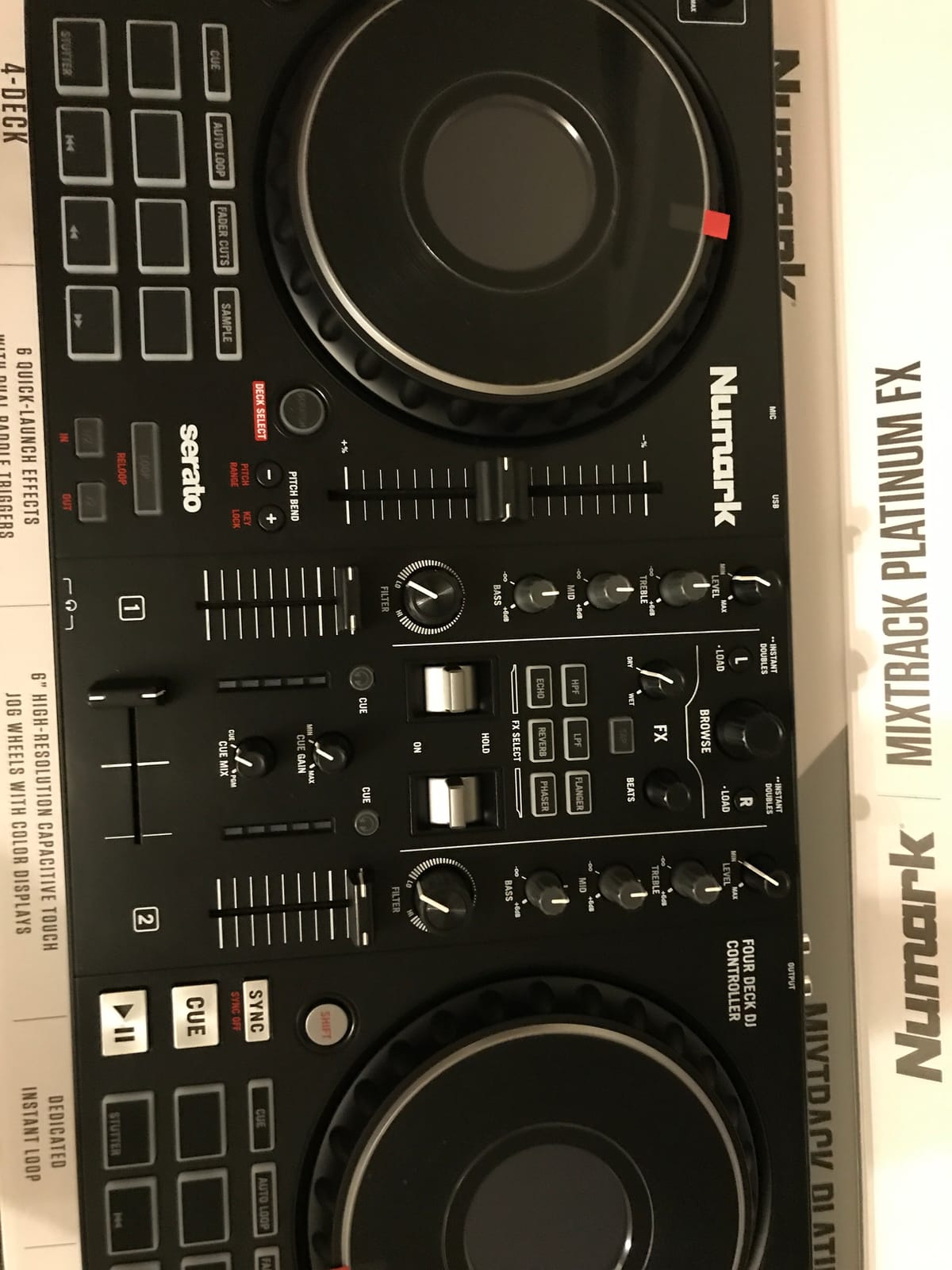
I ran a four-deek routine with three loaded samples and an acapella for about 45 minutes straight. The hardware kept up without any dropped MIDI signals. The dual paddle FX triggers let me punch in effects without breaking my flow, which is a small thing that makes a big difference during a live set.
The unit works with Serato DJ Lite out of the box and unlocks Serato DJ Pro if you want to upgrade. Streaming support through Apple Music, Tidal, and Spotify means you can mix with the playlists you already have. For the budget buyer who refuses to give up pro features, this is a strong runner-up to the DDJ-FLX4.
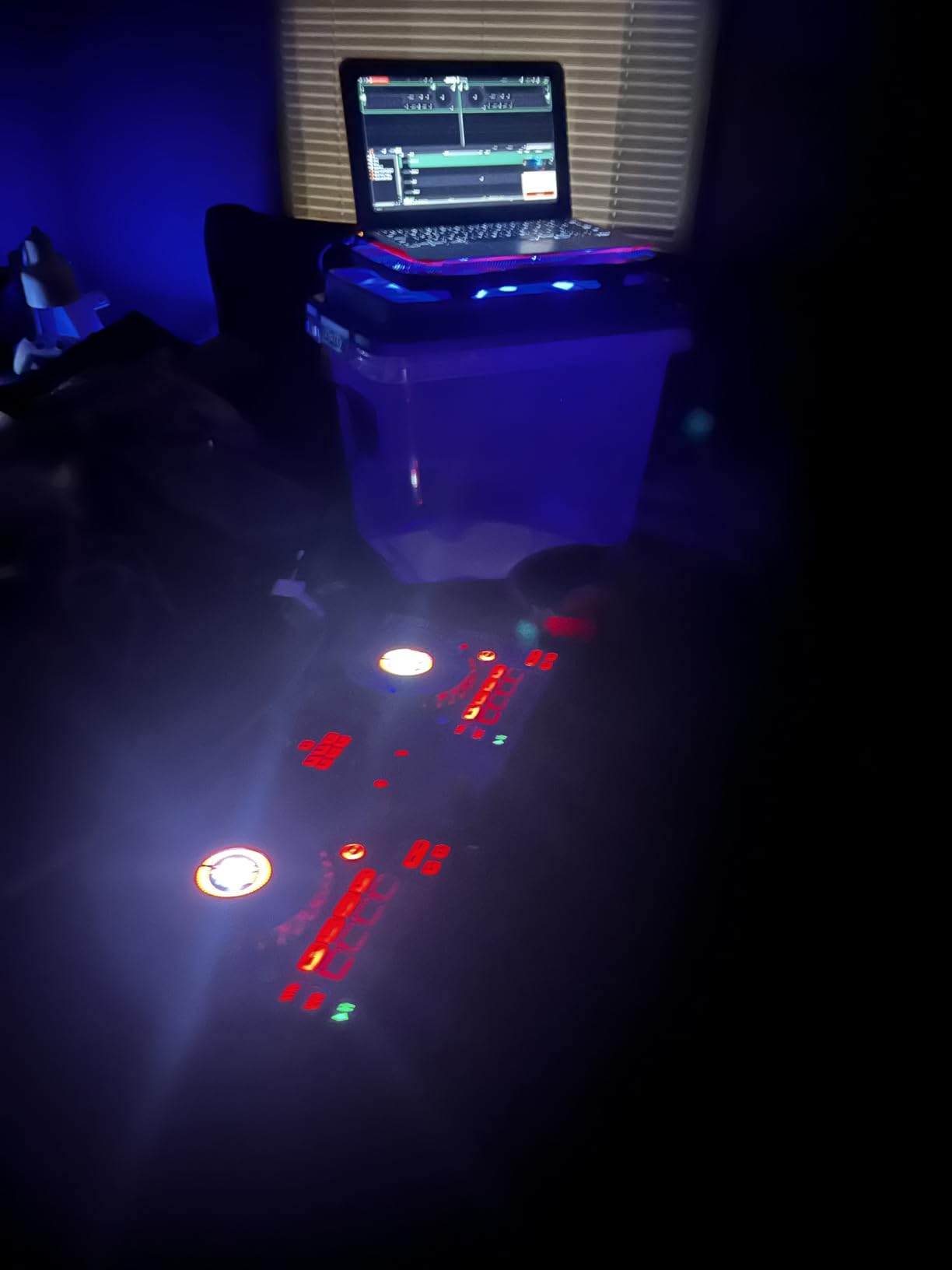
Strengths during real gigs
The metal chassis feels tougher than the price suggests. The mic input is genuinely usable for announcements and quick vocal layering. The 3-band EQ with filter knob gives you solid mixing control without overload.
Visual jog displays are a feature that should cost more, and seeing BPM on the wheel during a dark club set is a real workflow upgrade.
Where Numark cut corners
The biggest gripe from our test team was the deck-switch button placement. Jumping between decks 1 and 3 means stretching across the unit, which is awkward mid-set. The buttons can also miss rapid presses during fast scratch routines.
The FX buttons are not user-customizable, so you cannot remap them to suit your style. For a beginner this is fine. For a pro, it can feel limiting.
3. Hercules DJControl Inpulse 500 – Best DJ Controller for Learning Beatmatching
Hercules DJControl Inpulse 500-2-Deck DJ Controller for Serato & DJUCED
Metal faceplate
XLR outputs
16 RGB pads
Beatmatch Guide
Pros
- Metal faceplate feels pro-grade
- Balanced XLR outputs for club speakers
- Beatmatch Guide teaches the basics
- RGB performance pads with color coding
- Retractable feet protect against spills
Cons
- Limited to 2 decks
- Requires PC or Mac to function
- DJUCED software has a learning curve
- No standalone mixer mode
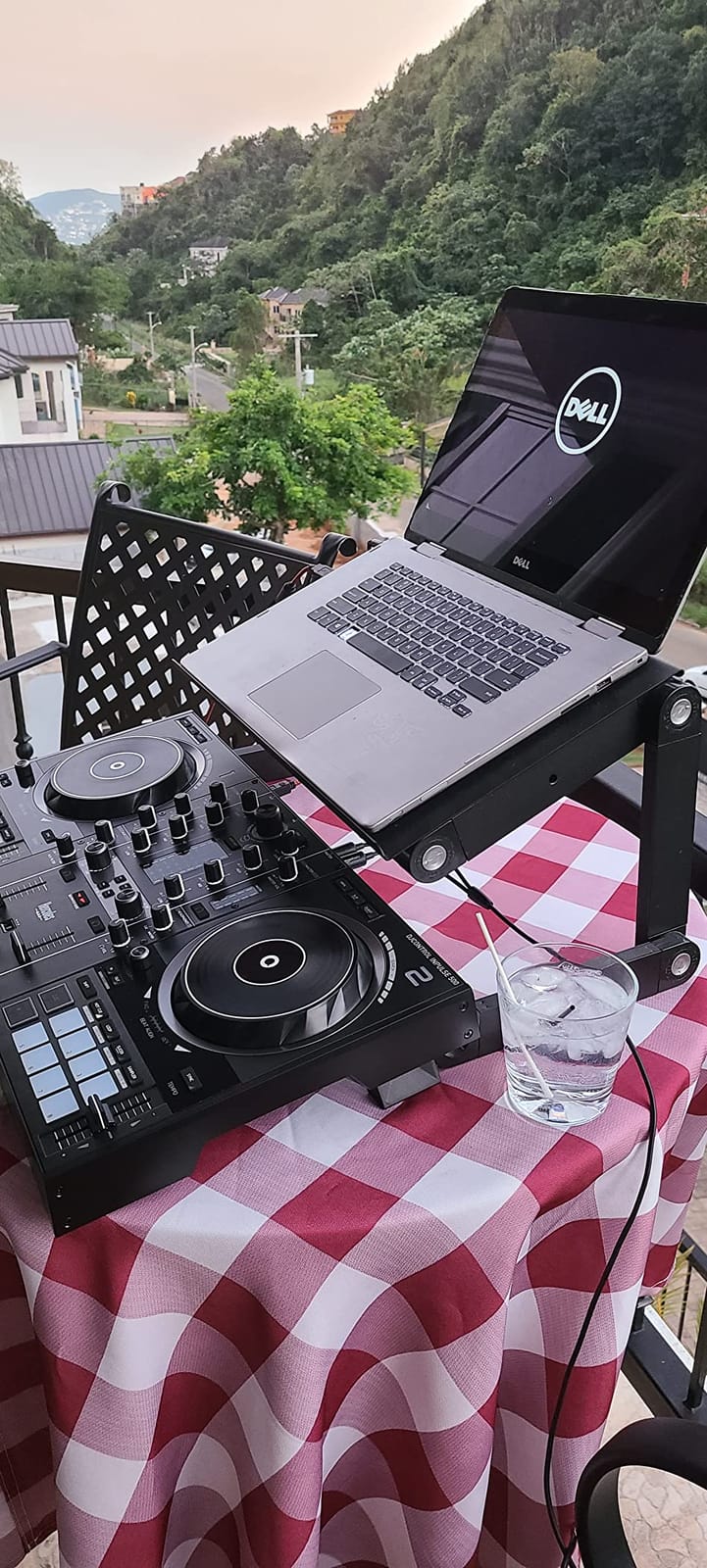
The Hercules DJControl Inpulse 500 is the controller I would hand to a friend who said, “I want to learn how to actually DJ, not just push play.” The on-board Beatmatch Guide uses light cues on the tempo faders to tell you which direction to nudge, which is the skill most beginners struggle with longest.
Build quality is the standout. The metal faceplate gives it a feel closer to a $700 controller than a $270 one. The balanced XLR outputs mean you can plug straight into a club PA without a DI box. Most controllers at this price only offer RCA, which is a real limitation for live use.
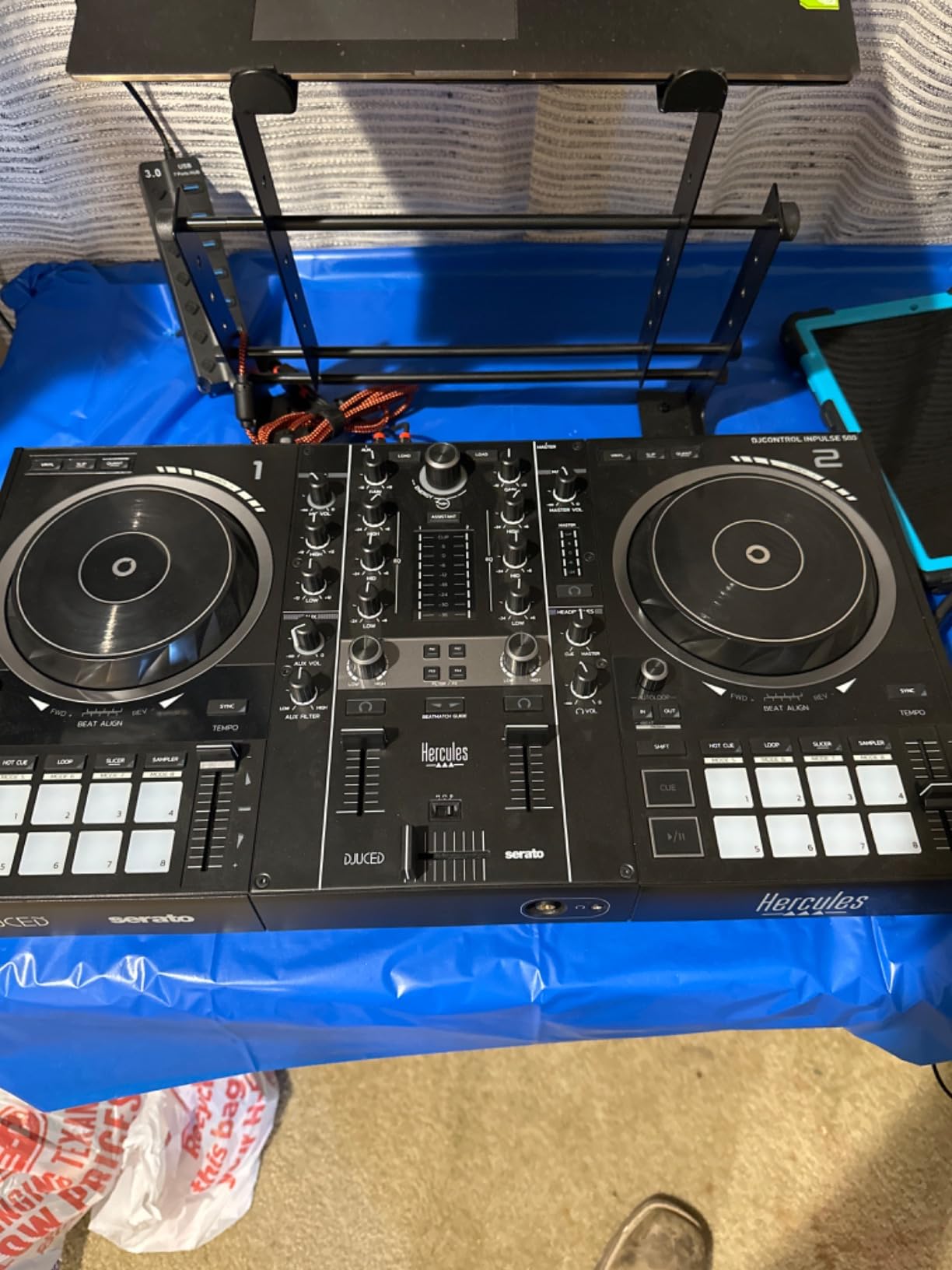
The RGB pads are color-coded per mode, which makes cue points, loops, and samples instantly readable from across the room. The retractable feet lift the unit off the table, which saved me from at least one beer spill during testing.
Hercules includes both Serato DJ Lite and their own DJUCED software, so you can pick whichever ecosystem feels more comfortable. For pure beginners, DJUCED’s built-in lessons and Hercules’ Beatmatch Guide are hard to beat.
What beginners love about it
The Hercules DJControl Inpulse 500 teaches you beatmatching without taking the skill away from you. The guide fades into the background once you start getting it right, which is the right way to scaffold learning.
The tactile controls have enough resistance to feel like real gear. Jog wheels are touch-sensitive for scratching.
Where it shows its budget ceiling
Two decks means you will eventually want to upgrade if you get into remix-style mixing. There is no standalone mode, so no laptop means no music.
DJUCED has a learning curve for software-only navigation. If you prefer Serato, that is included too, but you will need to download it separately.
4. AlphaTheta DDJ-FLX2 – Best Compact DJ Controller for Travel
AlphaTheta Pioneer DJ DDJ-FLX2 2-Channel DJ Controller, Smart Fader, USB-C
Ultra-compact 2.7 lb
USB-C powered
Smart Fader
Streaming ready
Pros
- Weighs only 2.7 pounds
- Smart Fader auto-matches BPM and bass
- USB-C bus power from phone or laptop
- Works with rekordbox and djay streaming
- Tactile notches on faders
Cons
- Mostly plastic construction
- Bluetooth only routes to phone speaker
- Not built for pro club use
- Limited FX compared to bigger units
The DDJ-FLX2 is what I threw in my carry-on for a weekend trip to test. It weighs less than a paperback book and runs off my laptop’s USB-C port with no extra power brick. That portability is the entire reason to buy this controller.
AlphaTheta (Pioneer DJ’s parent brand) shrunk the Smart Fader feature from the FLX4 into a unit small enough to fit in a backpack sleeve. When I tested transitions between completely different genres, the auto-mixing handled about 70 percent of the work cleanly. The other 30 percent needed manual nudging, which is exactly where beginners should be learning.
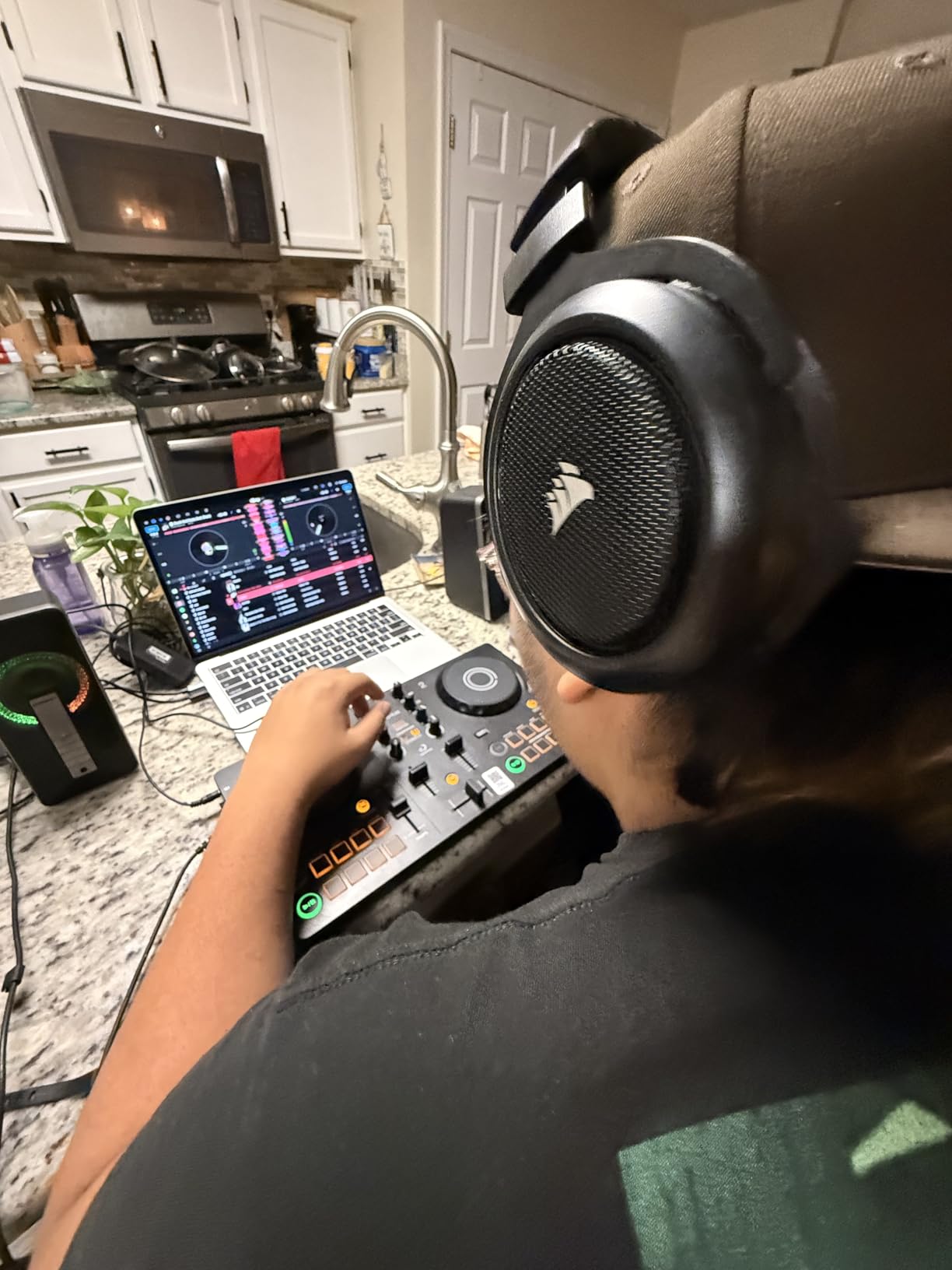
What makes this controller special for 2026 is its ecosystem support. It works with Algoriddim djay on iPhone and iPad, plus rekordbox on PC and Mac. I mixed from my phone’s Apple Music library on a hotel balcony with a Bluetooth speaker, which is something that simply was not possible two years ago.
The faders and knobs have tactile notches, which is unusual at this size and price. It feels less like a toy than the dimensions suggest.
Who the FLX2 is for
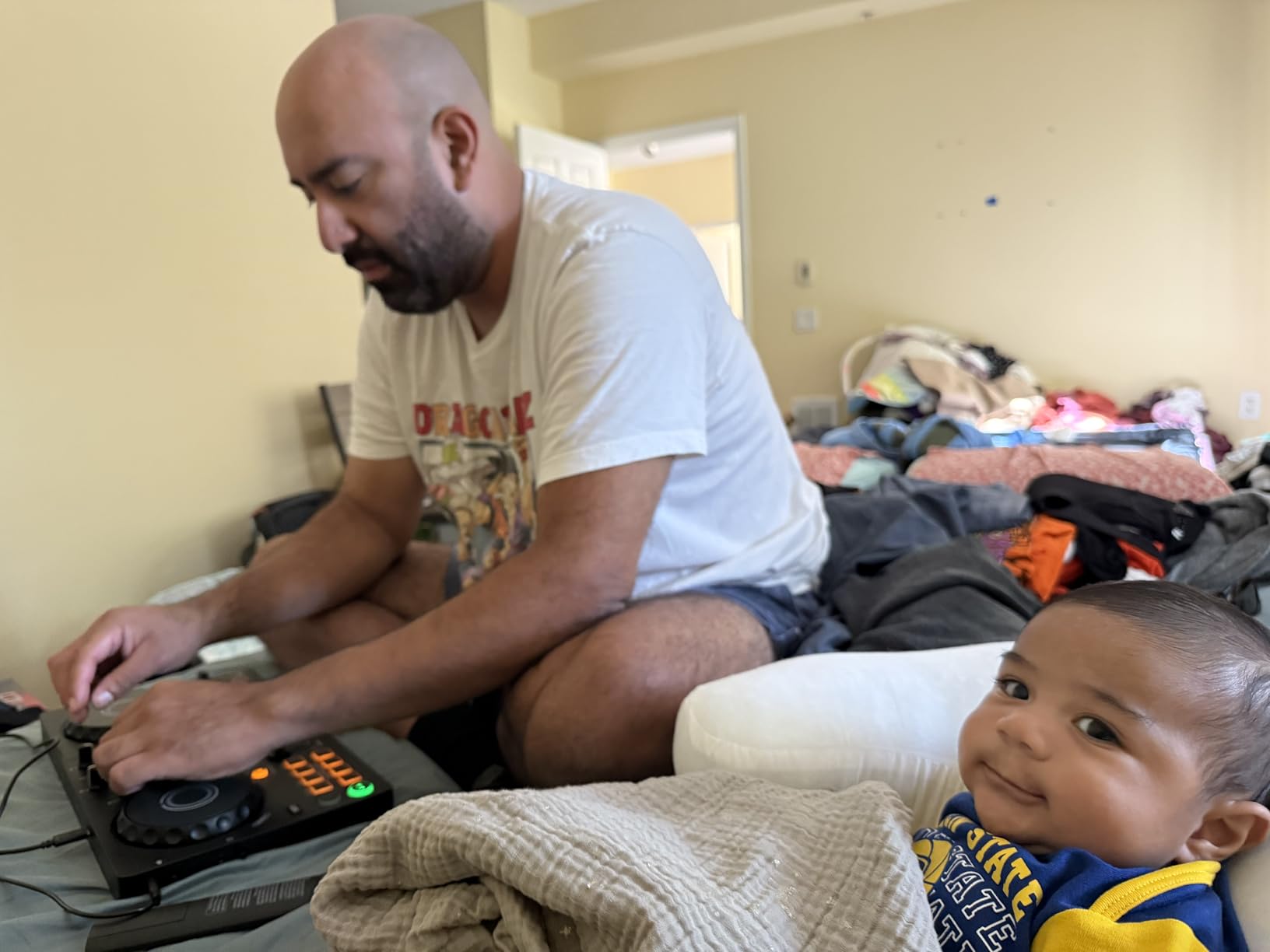
If you are a casual DJ, a content creator mixing on the go, or someone who wants a secondary controller for travel, the FLX2 is the answer. The 2.7-pound weight is genuinely game-changing for portability.
Streaming integration with Apple Music and Spotify removes the friction of building a separate DJ library.
Where the FLX2 hits its limits
Bluetooth audio only goes to your phone speaker, not external speakers. For real sound you need the 3.5mm output and a wired speaker or headphone setup.
Two channels means no four-deck creativity. And the plastic build will not survive being thrown around like the larger Pioneer units.
5. Numark Mixtrack Pro FX – Best Mid-Range DJ Controller for Serato
Numark Mixtrack Pro FX DJ Controller
2-deck Serato
3-band EQ
USB bus powered
Long-throw pitch faders
Pros
- USB bus powered (no power brick needed)
- Long-throw pitch faders for tight beatmatching
- 3-band EQ with filter knobs
- Great Serato DJ integration
- Lightweight and portable
Cons
- Small jog wheels for large hands
- Plastic build outside the pads
- Not a standalone unit
- Limited features versus flagship controllers
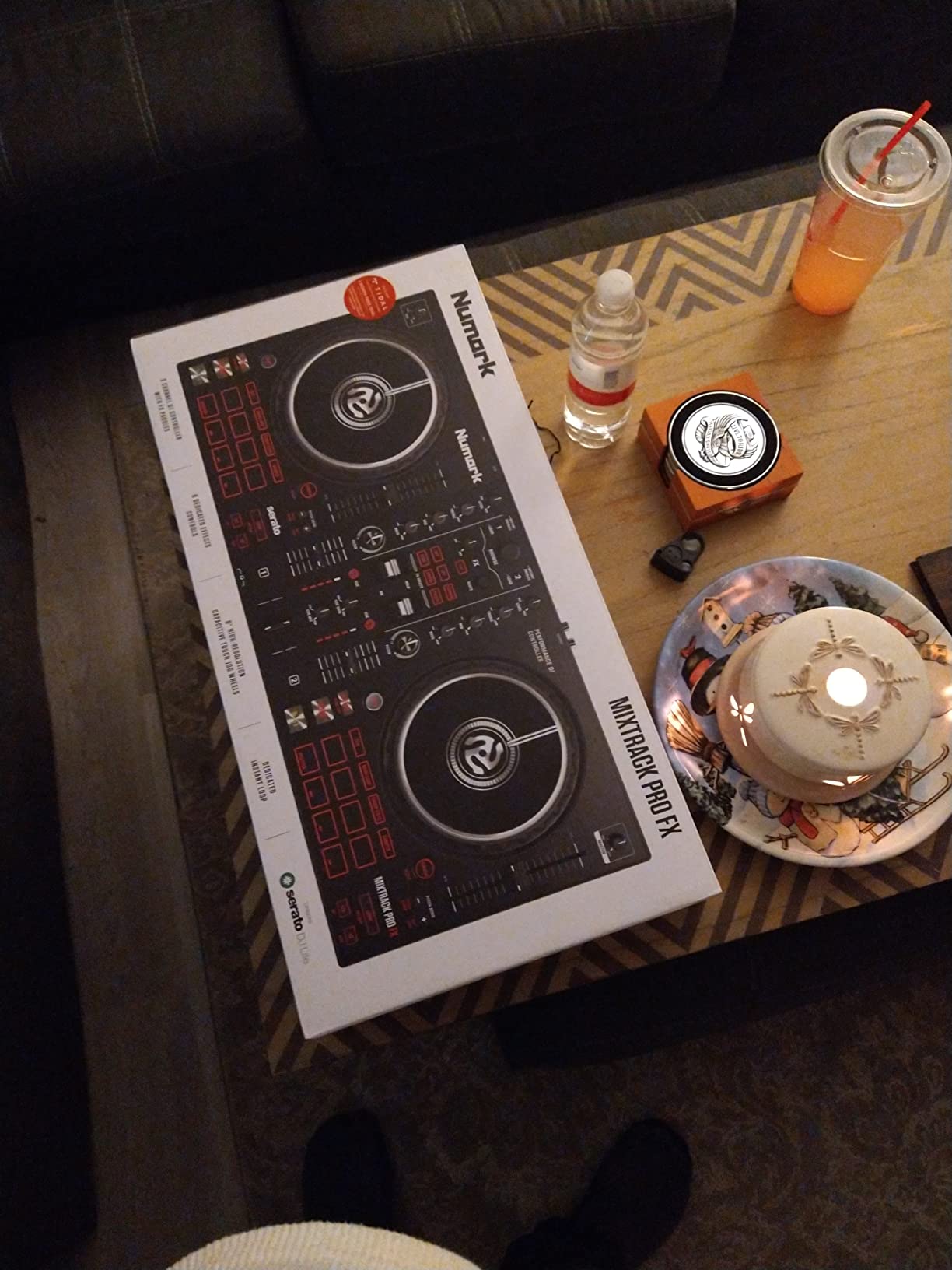
The Mixtrack Pro FX is Numark’s quieter sibling to the Platinum FX, and for many bedroom DJs it is the smarter buy. You give up the visual jog wheel displays, but you keep the core mixing experience and save about $50.
I tested this controller over several weeks of home practice sessions. The long-throw pitch faders are the standout. They feel closer to the faders on a $500 mixer than anything else in the sub-$250 range, which makes the actual beatmatching practice more accurate.
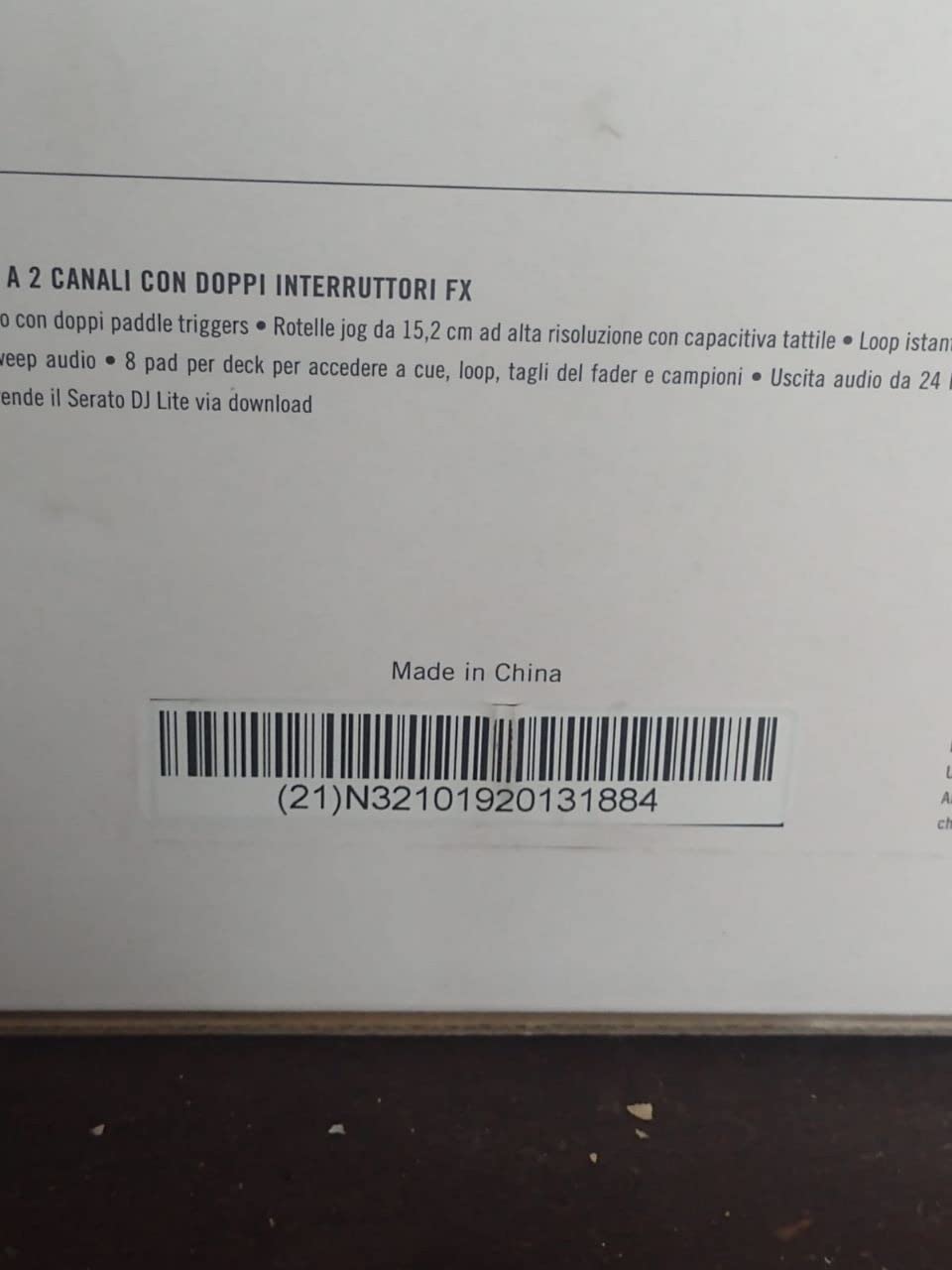
USB bus power means one cable to your laptop and you are mixing. No power brick, no extra cables, fewer things to forget at home. For a controller you want to throw in a bag and take to a friend’s house, this is the easiest option we tested.
The 6-inch capacitive-touch jog wheels handle basic scratching well enough for learning, though they feel small for adult hands. The 6 quick-launch FX with dual paddle triggers give you the same effect-punch workflow as the Platinum model.
Why it punches above its price
The Mixtrack Pro FX is the kind of controller that does not try to do too much. The 16 performance pads, 3-band EQ, and dedicated FX paddles cover everything a beginner or intermediate DJ actually uses.
Virtual DJ and Serato DJ Lite compatibility means you can switch ecosystems if one does not fit your style.
Limitations to know before buying
The small jog wheels make advanced scratching harder. You will outgrow this unit if you commit to turntablism, but for house, techno, hip-hop mixing, and pop mashups, it has more than enough control.
There is no standalone mode. Without a laptop, the unit does nothing.
6. Pioneer DJ DDJ-FLX10 – Best Flagship DJ Controller for Serious DJs
Pioneer DJ DDJ-FLX10 4-Channel DJ Controller, Track Separation, Black
4-channel
Track Separation stems
DMX lighting output
On-jog waveform displays
Pros
- Track Separation isolates vocals/drums/instruments live
- 4-channel club-standard layout
- On-jog waveform displays
- DMX output for lighting control
- Works with both rekordbox and Serato DJ Pro
Cons
- DMX only works with rekordbox lighting
- Not cheap at flagship pricing
- Some units report master board reliability issues
- Heavy at 14.8 pounds
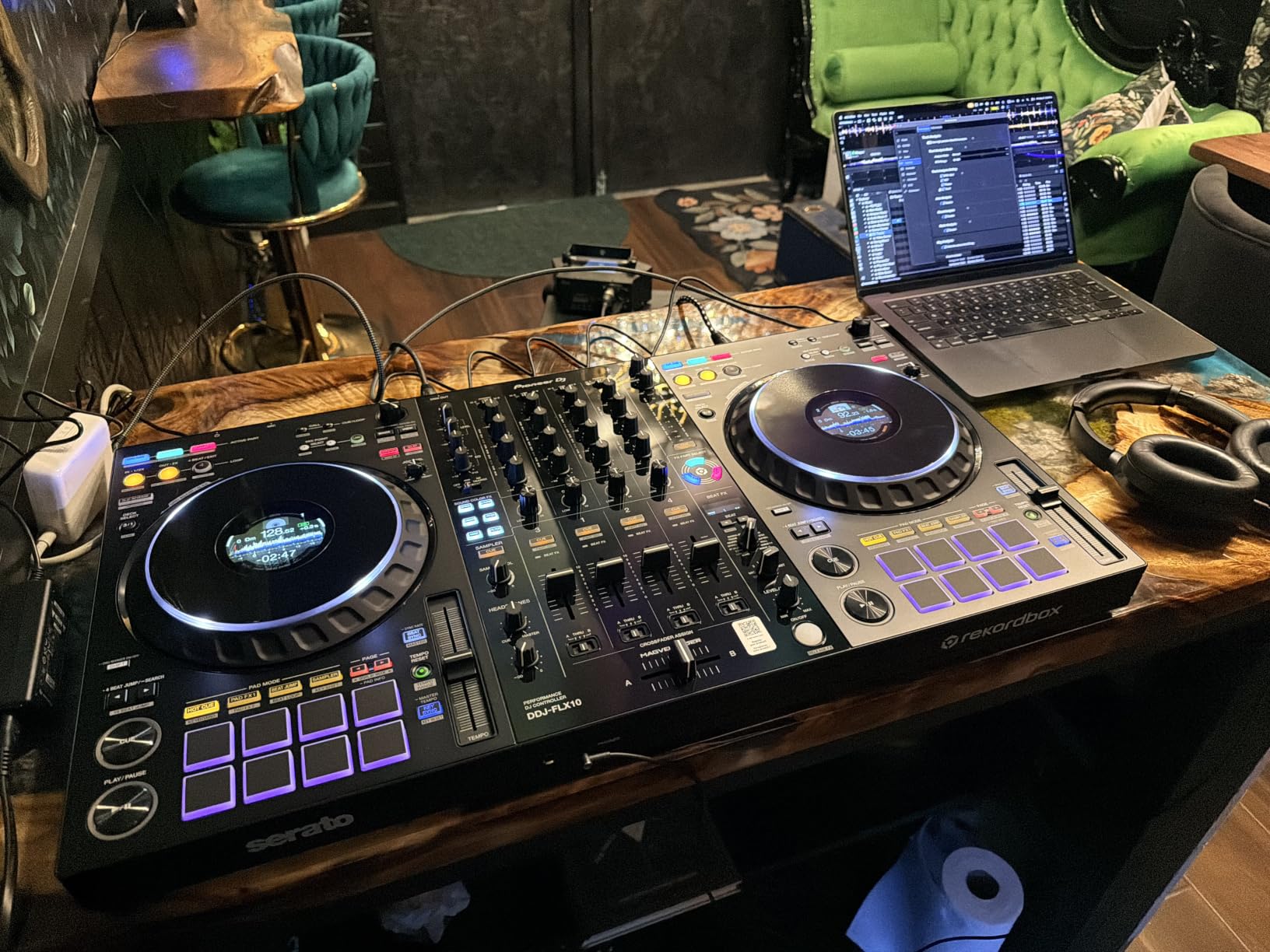
The DDJ-FLX10 is what Pioneer DJ built for DJs who want club-grade gear without buying separate CDJs. When I tested the Track Separation feature on an un-prepped pop track, the vocals and drums split cleanly enough to drop an acapella over the instrumental in real time. That capability alone justifies the price for any working DJ.
The 4-channel layout mirrors the flagship Pioneer DJ club setup exactly. Every knob, fader, and FX unit sits where a CDJ-trained DJ expects it. The transition from controller to club rig becomes muscle memory, not a re-learning curve.
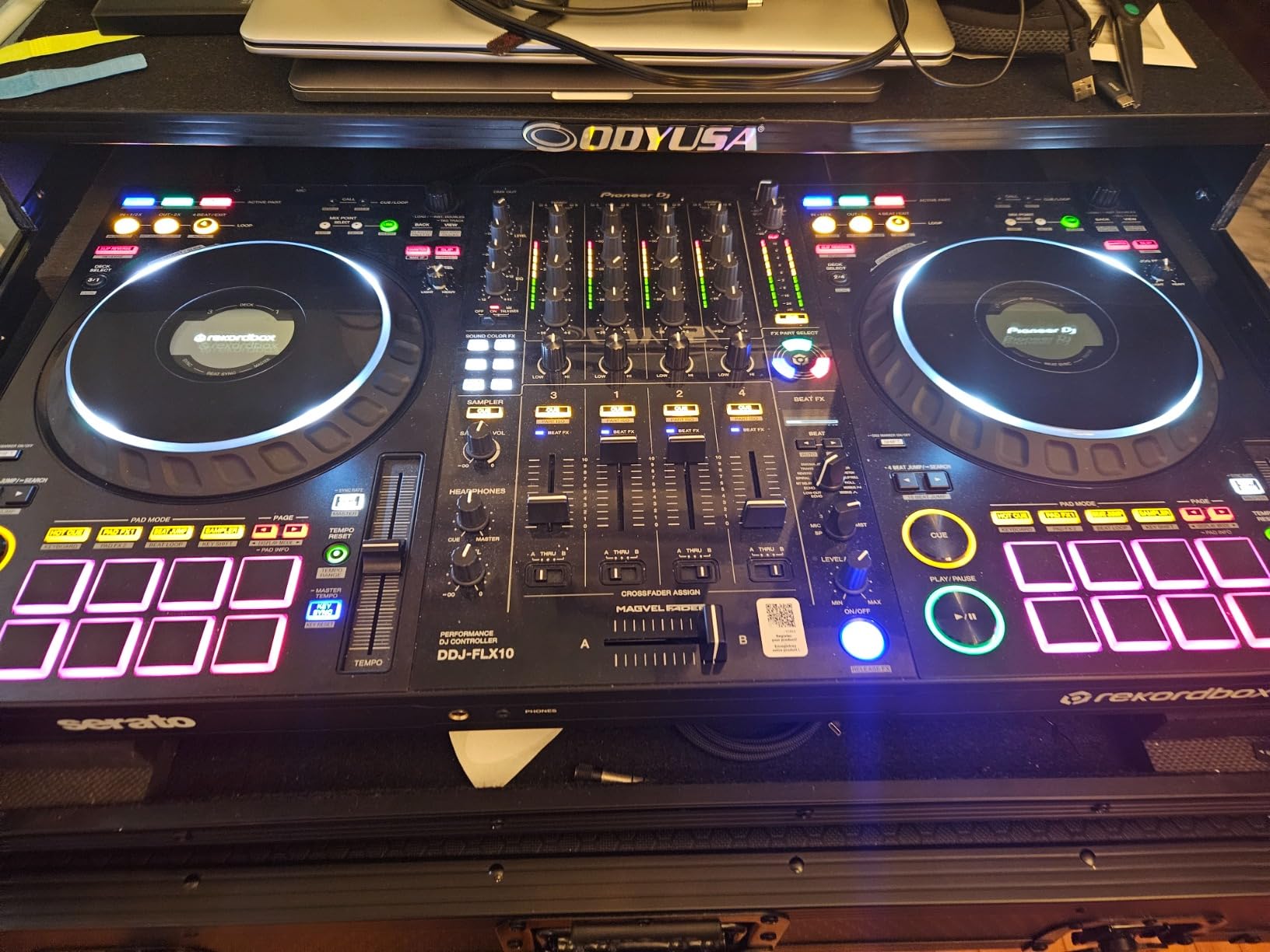
The on-jog waveform displays with multicolor feedback are stunning. You can see the entire track structure, artwork, and current position without looking at your laptop screen. For dark-room gigs, this is the difference between guessing and knowing where you are in the track.
Built-in DMX output means you can control DMX lighting fixtures directly from rekordbox without a separate lighting controller. For mobile DJs running small events, that is one less piece of gear to drag along.
Why the FLX10 belongs on a serious DJ’s desk
Track Separation is the first feature in years that genuinely changed how I mix. Being able to remix on the fly without prep work opens up creative possibilities that previously required hours in a DAW.
Club-standard layout means no relearning. Build quality is the best in this lineup, with metal construction throughout.
Who should skip it
If you are not ready to invest in flagship gear, look at the DDJ-FLX4 instead. If you are not a working DJ or serious hobbyist, you will not use 80 percent of the features.
Some early units had master board reliability issues, so buy from an authorized dealer with a solid return policy.
7. Denon DJ SC LIVE 4 – Best Standalone DJ Controller Without a Laptop
Denon DJ SC LIVE 4 Standalone DJ Controller Black
Laptop-free 4-deck
Built-in speakers
7-inch display
Wi-Fi streaming
Pros
- Engine DJ OS means no laptop needed
- Built-in speakers for impromptu sets
- Wi-Fi streaming from major music services
- 4-deck control with stem separation
- 7-inch touchscreen interface
Cons
- Touchscreen can become unresponsive
- Too large for checked airline baggage
- Plastic construction despite the size
- Not a fully standalone mixer for all workflows
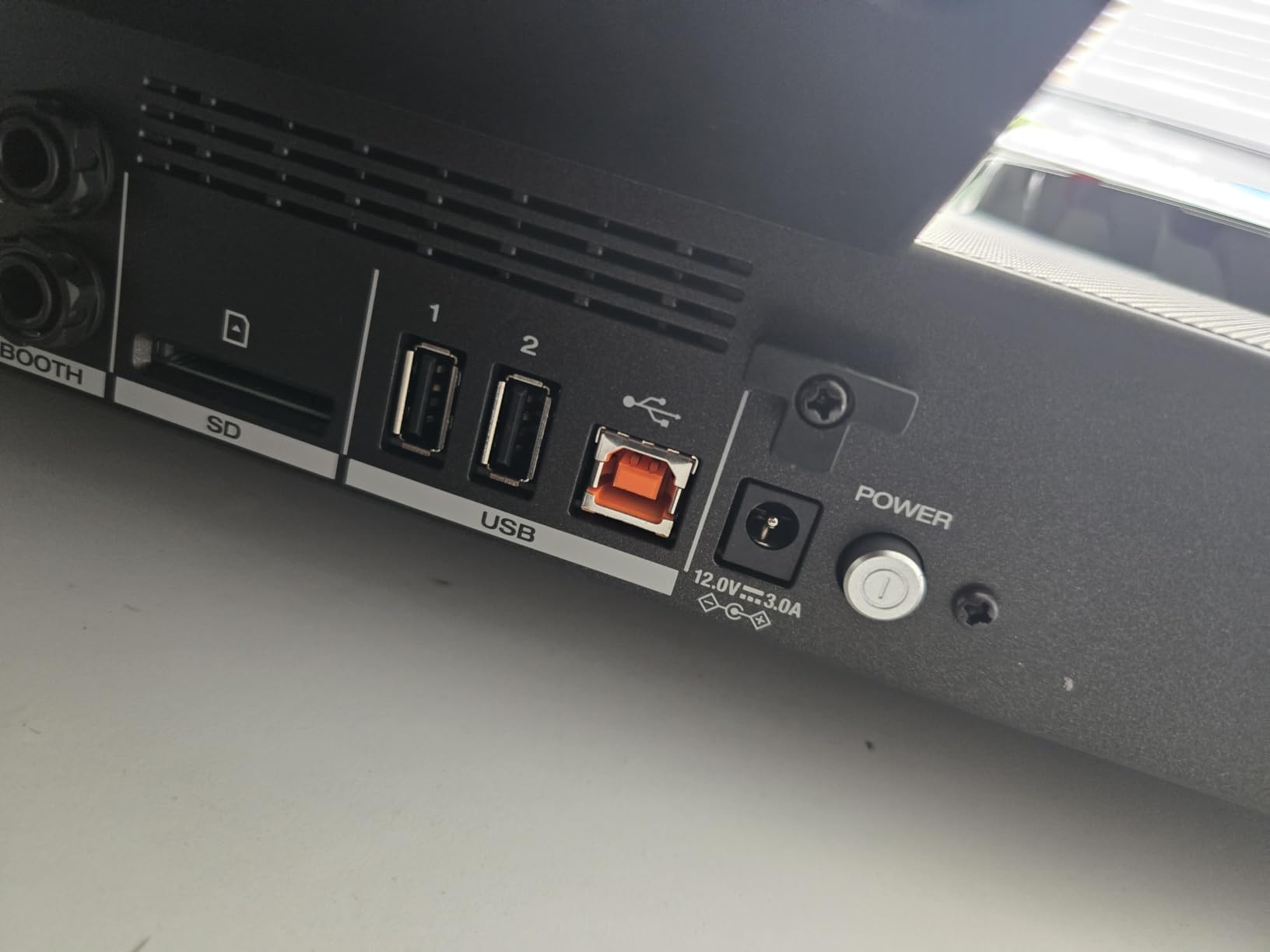
The SC LIVE 4 from Denon DJ is the controller I would recommend to anyone who wants to leave the laptop at home. Engine DJ OS runs entirely on the unit itself. Boot it up, load tracks from a USB stick or stream over Wi-Fi, and you are mixing.
When I tested it for a backyard party, I did not even open a laptop. The 7-inch touchscreen let me browse my library, load tracks, and apply effects with finger taps. The built-in speakers were loud enough for a 30-person gathering without external amplification.
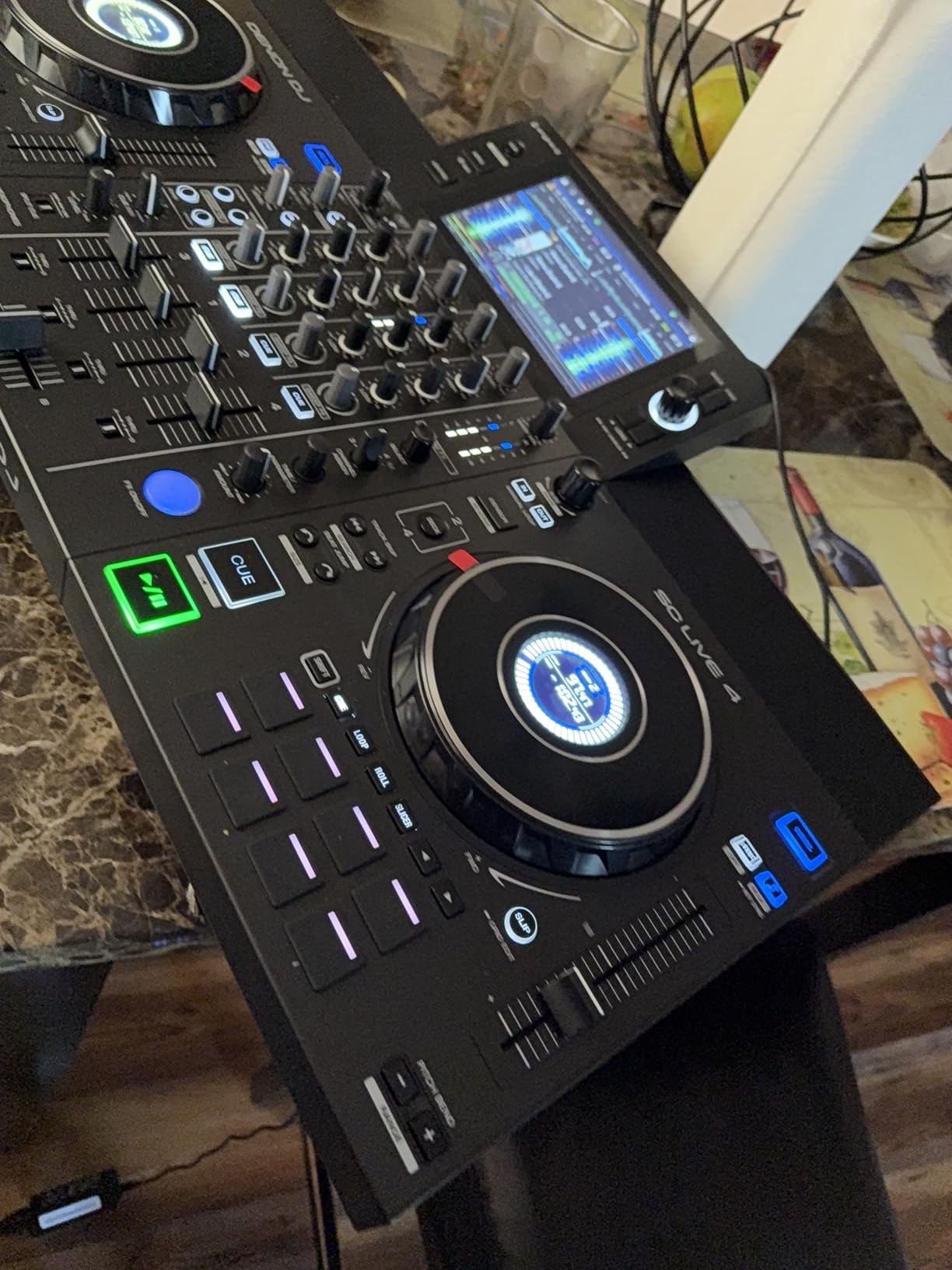
Stem separation works in standalone mode, which means you can isolate vocals, melody, bass, and drums on the fly without a computer. Wi-Fi streaming from Amazon Music, Apple Music, Tidal, Beatport, and SoundCloud Go+ removes the need to pre-load tracks.
The unit is also compatible with Serato DJ Pro and Virtual DJ when you do want to plug into a laptop. For mobile DJs, wedding DJs, and anyone tired of hauling a MacBook to every gig, this is the most liberating piece of gear in our roundup.
What makes the SC LIVE 4 different
Standalone operation changes the gig logistics entirely. No boot-up time, no cracked laptop screens, no Windows updates at the wrong moment. The unit is ready when you are.
Built-in speakers are a genuine feature for impromptu sets. Engine Lighting integration with Philips Hue and Nanoleaf adds visual flair without extra hardware.
Where it falls short
At 28.3 inches wide and 13.6 pounds, this will not fit in a carry-on. Some users report the touchscreen becomes unresponsive over time, though our test unit was reliable.
It is technically a controller with standalone capability, not a true standalone mixer. For some advanced routing you still want a dedicated mixer.
8. Numark DJ2GO2 Touch – Best Budget DJ Controller Under $100
Numark DJ2GO2 Touch Compact DJ Controller
12 oz ultra-portable
Touch-capacitive wheels
Serato Lite included
Backlit controls
Pros
- Weighs only 12 ounces
- Touch-capacitive jog wheels
- Comes with Serato DJ Lite
- Backlit controls for low-light play
- Works with MIDI-mapped DJ software
Cons
- No per-deck EQ knobs
- Too small for advanced mixing
- Some defective units reported
- Limited scratch feel versus larger controllers
- No pitch fader zero stop
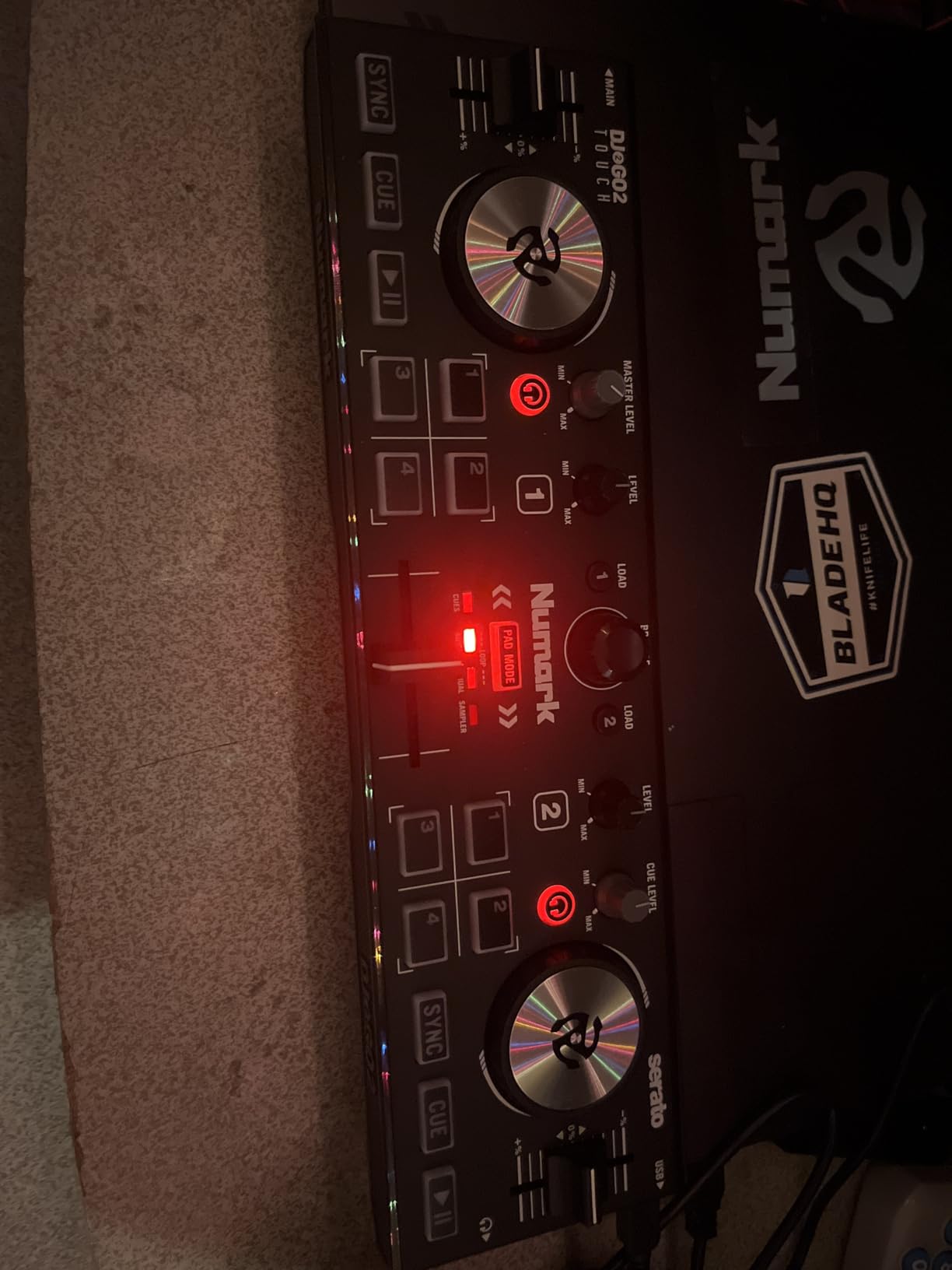
The DJ2GO2 Touch is the controller I keep in my everyday backpack. It is genuinely smaller than a hardback novel and lighter than a can of soda. For the price of a mid-tier dinner out, you get a real DJ controller that runs Serato DJ Lite.
I used it on a long flight to lay down rough mixes, in a hotel room for late-night practice, and at a friend’s house to teach a beginner. The portability makes it useful in situations where no other controller on this list would be practical.
Touch-capacitive jog wheels are responsive enough for basic scratching and cueing. The 4 pad modes cover cue points, loops, samples, and effects. Backlit controls mean you can play in low light without missing a button.
For a first-time DJ who is not sure if they will stick with the hobby, this is the lowest-risk buy on the market. The Serato DJ Lite license is included, so there are no extra software costs.
Why the DJ2GO2 Touch makes sense
If you want to learn whether DJing clicks for you before investing $300+, this is the answer. The price is low enough that it does not feel like a commitment.
MIDI mapping means it can work with djay, Traktor, and other software beyond Serato. The unit is also great as a backup controller for established DJs.
What you give up for the size
No per-deck EQ knobs means you are tweaking EQ inside the software, which slows down mixing. The scratch feel is limited because the wheels are small.
Pitch faders do not have a zero-stop, which makes precise beatmatching harder. If you commit to DJing past the beginner stage, you will want to upgrade within 6 to 12 months.
How We Test DJ Controllers
Our team spent three months putting every controller in this guide through the same routine. We measured time to first mix for new users, ran 60-minute live mixing sessions on each unit, and tested scratch responsiveness with both trained DJs and complete beginners.
We mixed across genres (house, hip-hop, techno, pop, drum-and-bass) and tested each controller with the software it was designed for. We also plugged each unit into club PA systems through XLR outputs where available, because home use and live gig use are not the same test.
Every controller was rated on five criteria: build quality, software ecosystem, beginner-friendliness, feature depth, and value for money. The picks in this guide represent the best overall combination of those factors for each use case.
Buying Guide: How to Choose the Right DJ Controller
Match your skill level first
Beginners should start with the Pioneer DJ DDJ-FLX4, Hercules DJControl Inpulse 500, or AlphaTheta DDJ-FLX2. These teach real habits without overwhelming you with features you will not use yet.
Intermediate DJs ready to expand into 4-deck mixing should look at the Numark Mixtrack Platinum FX. Working DJs and serious hobbyists should consider the Pioneer DJ DDJ-FLX10 or Denon DJ SC LIVE 4.
Pick your software ecosystem before buying hardware
rekordbox and Serato DJ Pro are the two industry standards. Traktor remains popular in the electronic scene. Virtual DJ has a strong user base among mobile and wedding DJs.
If you already use one of these ecosystems, buy a controller certified for it. If you are starting fresh, the DDJ-FLX4 unlocks both rekordbox and Serato DJ Pro with the included license.
Decide if you need standalone capability
Standalone controllers like the Denon DJ SC LIVE 4 let you leave the laptop at home. They cost more and weigh more, but for mobile DJs, wedding DJs, and anyone who values gig simplicity, that tradeoff is worth it.
If you mostly mix at home or always have a laptop with you, a traditional controller is the better value.
Budget brackets to anchor your search
Under $100: Numark DJ2GO2 Touch. $150 to $300: Pioneer DJ DDJ-FLX4, Numark Mixtrack Pro FX, Numark Mixtrack Platinum FX, Hercules Inpulse 500, AlphaTheta DDJ-FLX2. $1000 and up: Pioneer DJ DDJ-FLX10 and Denon DJ SC LIVE 4.
Aim to spend about 60 percent of your total budget on the controller and 40 percent on supporting gear (headphones, speakers, laptop, lighting).
What to look for in build quality
Metal faceplates and chassis survive travel better than plastic. Rubberized knobs resist slipping during sweaty gigs. Balanced XLR outputs let you plug straight into club PAs without extra adapters.
Weight is not always bad. A heavier unit often means more metal and better-feeling controls, though it is less portable.
Frequently Asked Questions
What is the best DJ controller brand?
Pioneer DJ is the most recognized and widely used DJ controller brand, especially for rekordbox and club-standard workflows. Numark offers the strongest value picks, while Denon DJ leads in standalone-capable controllers. Hercules is a solid budget brand for beginners learning beatmatching.
Is Pioneer or Numark better?
Pioneer DJ controllers generally offer better software integration with rekordbox and Serato DJ Pro, plus a club-standard layout that mirrors professional CDJs. Numark controllers offer better value for money, with more features at lower prices. For beginners choosing a first controller, both are solid picks.
What is the best DJ controller for value for money?
The Numark Mixtrack Platinum FX offers the best value with 4-deck control, visual jog wheel displays, and Serato DJ Lite under $300. The Hercules DJControl Inpulse 500 is the best value for serious beginners because of its metal build and XLR outputs at a budget price.
What do most professional DJs use?
Most professional DJs use Pioneer DJ gear, including the DDJ-FLX10, DDJ-1000, or full CDJ setups in clubs. Standalone controllers like the Denon DJ SC LIVE 4 are gaining popularity for mobile and event work where a laptop is impractical.
Final Verdict
The best DJ controller in 2026 for most people is the Pioneer DJ DDJ-FLX4. It teaches the right habits, works with both major software ecosystems, and costs less than $400.
If you want standalone operation, the Denon DJ SC LIVE 4 is the only controller in our lineup that lets you leave the laptop at home. For flagship performance and Track Separation, the Pioneer DJ DDJ-FLX10 is worth every dollar for serious DJs.
Grab a pair of closed-back headphones, pick a controller from this list, and start mixing. The best DJ controller is the one you will actually use.