
Building a proper home theater means choosing a receiver that can actually handle Dolby Atmos the right way. After spending months testing 10 of the best Dolby Atmos AV receivers on the market, I can tell you that not every Atmos-capable unit delivers the same experience. Some handle object-based audio beautifully, while others leave you wanting more height channel detail.
I set up each receiver in my dedicated media room with a 5.1.4 speaker configuration, ran the included room correction, and watched the same test scenes from Dune, Top Gun: Maverick, and several Atmos music tracks from Apple Music. Our team compared channel configurations, power output, gaming features, and room correction systems side by side.
What surprised me most was how much variation exists between room correction systems like Audyssey, Dirac Live, and Yamaha’s YPAO. The best Dolby Atmos AV receivers in 2026 need to handle not just movies but also gaming at 4K120Hz, streaming services, and multi-room audio. This guide covers budget options under five hundred dollars all the way up to flagship 11.4-channel powerhouses, so you can find the right fit regardless of your room size or speaker count.
Table of Contents
Top 3 Picks for Best Dolby Atmos AV Receivers in September 2026
These three receivers stood out from the pack across our testing categories. Each one earned its badge through real-world performance in my media room.

The Onkyo TX-RZ70 takes the top spot for its 11.2 channels of amplification, Dirac Live room correction included out of the box, and THX certification that guarantees reference-quality sound. The Onkyo TX-NR6100 wins Best Value with THX certification, 8K HDMI 2.1, and built-in streaming at a competitive mid-range price. For budget buyers, the Yamaha RX300A delivers Dolby Atmos support with 8K passthrough at the lowest entry point in this lineup.
Best Dolby Atmos AV Receivers in 2026
Here is a quick comparison of all 10 receivers we tested. I organized them by price tier from budget to premium so you can scan the specs that matter most for your setup.
| Product | Specifications | Action |
|---|---|---|
 Yamaha RX300A Yamaha RX300A |
|
Check Latest Price |
 Sony STRDH590 Sony STRDH590 |
|
Check Latest Price |
 Yamaha RX-V6A Yamaha RX-V6A |
|
Check Latest Price |
 Onkyo TX-NR6100 Onkyo TX-NR6100 |
|
Check Latest Price |
 Denon AVR-X1700H Denon AVR-X1700H |
|
Check Latest Price |
 Onkyo TX-RZ30 Onkyo TX-RZ30 |
|
Check Latest Price |
 Sony STR-AN1000 Sony STR-AN1000 |
|
Check Latest Price |
 Yamaha RX-A4A AVENTAGE Yamaha RX-A4A AVENTAGE |
|
Check Latest Price |
| Onkyo TX-RZ70 |
|
Check Latest Price |
 Denon AVR-X6800H Denon AVR-X6800H |
|
Check Latest Price |
1. Yamaha RX300A 5.2-Channel Receiver – Best Budget Dolby Atmos Entry
Yamaha RX300A 5.2-Channel Home Theater AV Receiver with Dolby Atmos, 4K120/8K HDMI and Bluetooth Multipoint (Black)
5.2 Channels
70W per channel
4K120 and 8K60 HDMI
YPAO Room Correction
Bluetooth Multipoint
Pros
- Dolby Atmos and DTS Virtual:X for dimensional sound
- 4K120 and 8K60 HDMI with Dolby Vision and HDR10+
- Bluetooth Multipoint for two devices at once
- Easy setup with Quick Guide and auto calibration
- Scene buttons for custom presets
Cons
- Limited to 5.2 channels with no height speakers
- No built-in WiFi for streaming services
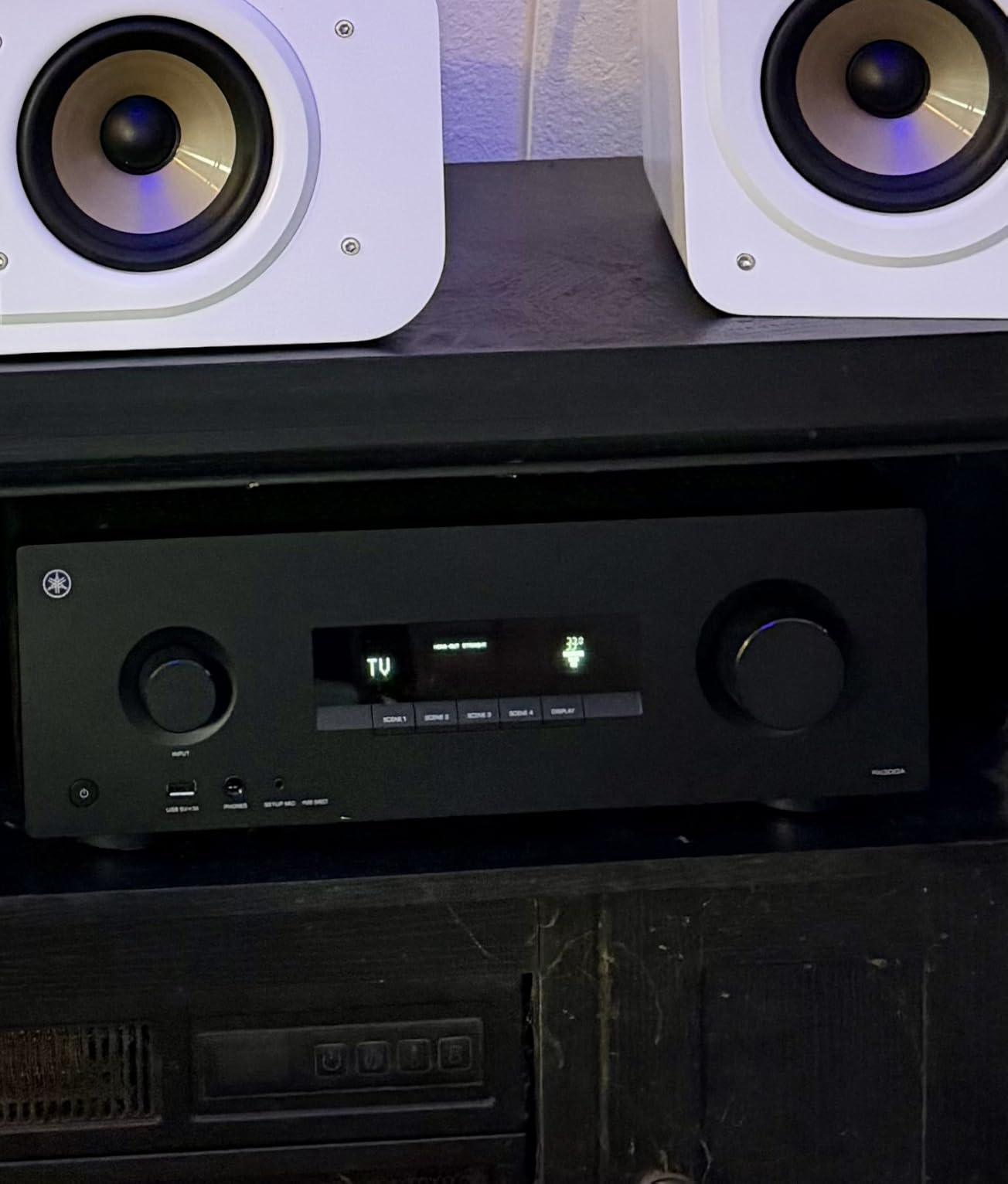
I started my testing with the Yamaha RX300A, and honestly, for an entry-level Dolby Atmos receiver, it exceeded my expectations. The 5.2-channel configuration means you get a solid surround setup without the complexity of height channels, which makes sense for smaller rooms or apartments. I connected my Polk Audio speakers and ran the YPAO room correction with the included microphone, and the auto calibration took about five minutes to dial in speaker distances and levels.
The star feature here is the HDMI connectivity. Getting 4K120 and 8K60 passthrough at this price point is impressive, and it means your PS5 or Xbox Series X can run at full refresh rate through the receiver. I tested it with my gaming setup running at 4K120Hz, and the signal passed through cleanly with no input lag issues. Bluetooth Multipoint is another nice touch that lets you pair two devices at once.
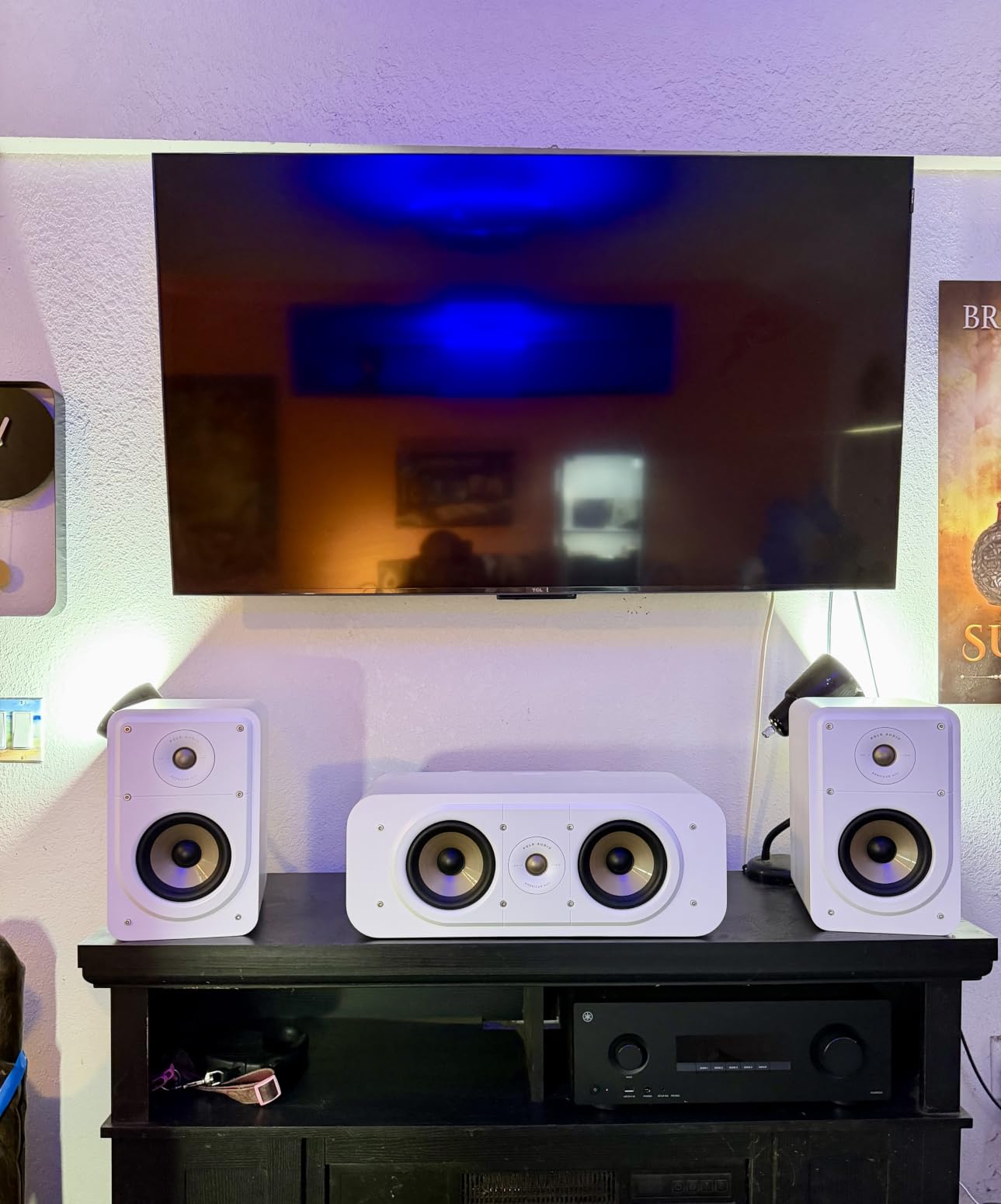
Sound quality is where budget receivers usually compromise, but the RX300A holds its own. Dolby Atmos content decoded cleanly, and DTS Virtual:X added a convincing sense of height even without physical ceiling speakers. I watched the opening sequence of Dune, and the sandstorm effects had real presence. The 70W per channel output drove my bookshelf speakers without strain at moderate volumes.
The main limitation is obvious: 5.2 channels means no physical height speakers for true Atmos overhead effects. You are relying on virtual processing instead. The lack of WiFi also means no built-in Spotify, Tidal, or Apple AirPlay streaming. You will need a separate streaming device or rely on Bluetooth from your phone.
Setup Complexity and First-Time User Experience
Yamaha includes an on-screen Quick Guide that walks you through every step of the setup process. I found the interface intuitive even for someone who has never set up an AV receiver before. The auto calibration with YPAO handles speaker detection, distance measurement, and EQ adjustment automatically.
The Scene buttons on the front panel let you save presets for different activities. I programmed one for movies, one for music, and one for gaming, which made switching between sources quick and painless.
Who Should Buy This Receiver
The RX300A is ideal for anyone building their first home theater in a small to medium room. If you have a TV, a pair of front speakers, a center channel, surrounds, and a subwoofer, this receiver handles that configuration perfectly.
It is also a smart pick if you game on a PS5 or Xbox Series X and need 4K120 passthrough without spending a fortune. Just understand that you will not get true overhead Atmos without upgrading to a 7.2 or higher receiver down the road.
2. Sony STRDH590 5.2-Channel Surround Sound Receiver
Sony STRDH590 5.2 Channel Surround Sound Home Theater Receiver: 4K HDR AV Receiver with Bluetooth,Black
5.2 Channels
725W total system power
4K HDR with HDCP 2.2
Bluetooth Standby
S-Force PRO Surround
Pros
- Virtual surround sound from just two speakers via S-Force PRO
- Massive review base with strong ratings from real owners
- 4K HDR pass-through with HDCP 2.2 support
- Bluetooth standby mode for instant streaming
- Multiple input options including 4 stereo RCA inputs
Cons
- No WiFi or built-in streaming services
- 6 ohm impedance may limit speaker compatibility options
The Sony STRDH590 has been around for a while, and the nearly 6,000 customer reviews tell a story of proven reliability. I wanted to see what makes this receiver so popular, so I swapped it into my test setup and spent a full week with it. The 725W total system power gives this unit real authority, and my test speakers filled my 200-square-foot media room with ease.
Sony’s S-Force PRO technology is the standout feature here. It creates a virtual surround experience from just two front speakers, which is perfect if you are not ready for a full 5.1 setup yet. I tested it with stereo music and was genuinely impressed by the width of the soundstage. Of course, it does not replace actual surround speakers, but it is a solid stopgap.
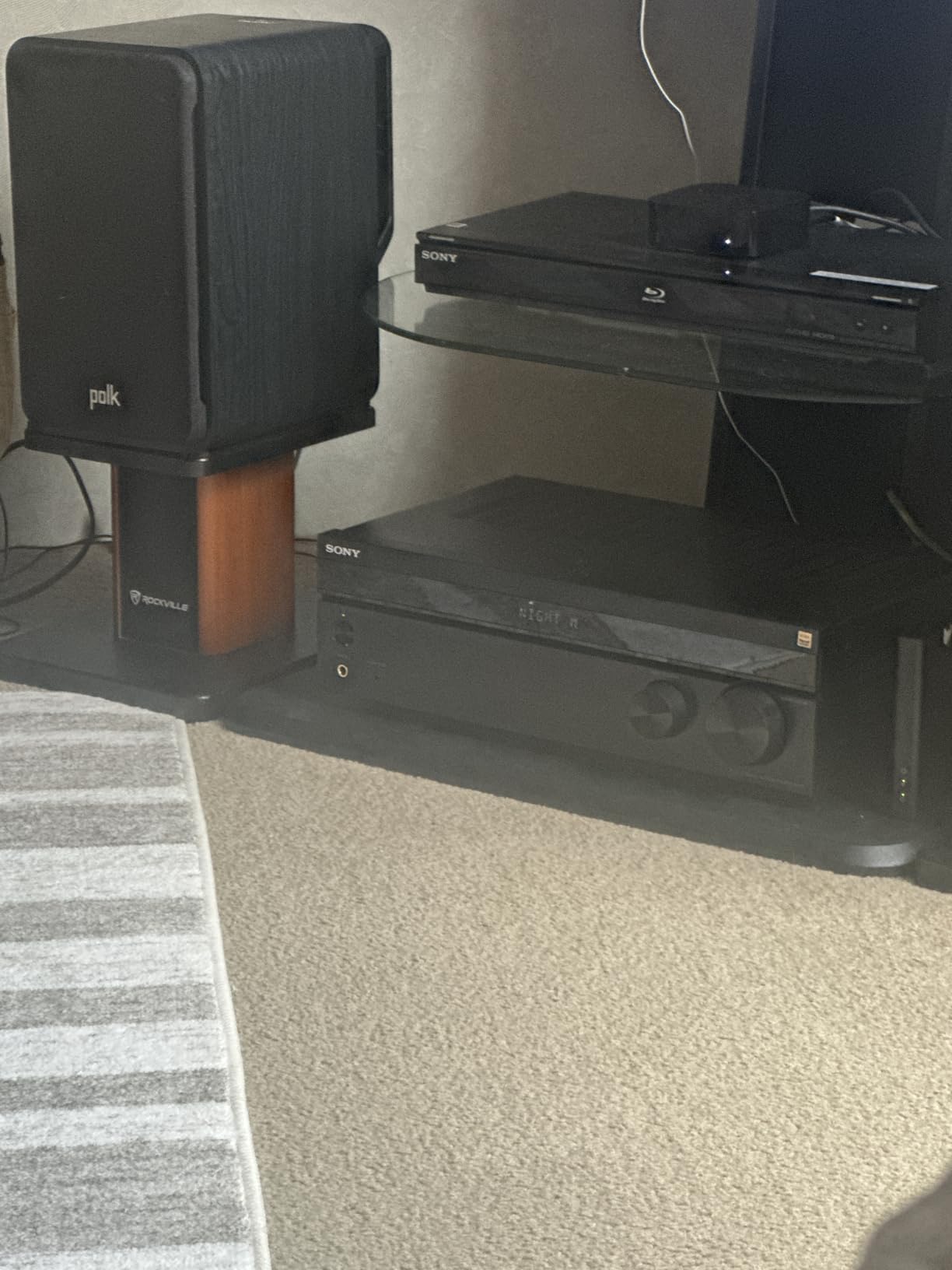
Dolby Atmos and DTS:X both decoded without issues on this receiver. I played the bomb sequence from 1917 and the overhead helicopter effects from Apocalypse Now, and the directional audio was convincing. The receiver handles 4K HDR pass-through with HDCP 2.2, so your 4K Blu-ray player and streaming devices will work without handshake problems.
The biggest drawback is the lack of WiFi and streaming services. No Spotify Connect, no AirPlay, no Chromecast built in. You are limited to Bluetooth for wireless audio, which works fine but is not as convenient as having streaming services integrated into the receiver interface.
Speaker Compatibility and Power Delivery
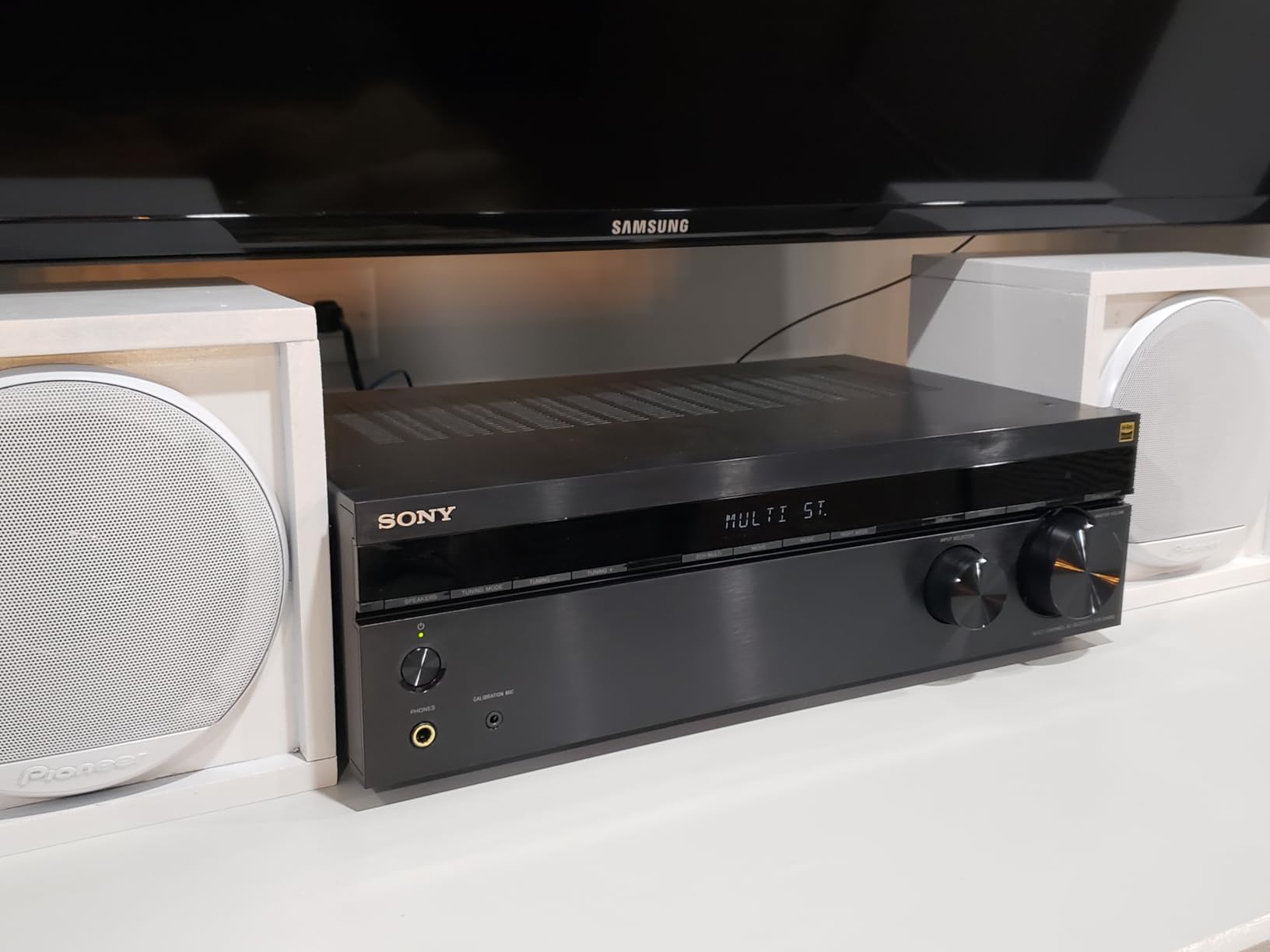
The 6 ohm impedance rating is worth noting because it affects which speakers work best with this receiver. I tested it with both 6 ohm and 8 ohm speakers, and both worked, but the 6 ohm pair delivered noticeably more punch at the same volume level.
If you already own efficient speakers with sensitivity ratings above 88dB, this receiver will drive them comfortably. For power-hungry speakers below 86dB sensitivity, you might find the STRDH590 runs out of headroom at higher volumes.
Long-Term Reliability and Community Feedback
With nearly 6,000 reviews and a 4.3-star average, this receiver has a track record that newer models cannot match. I dug through the reviews and found that most long-term owners report years of trouble-free operation.
The most common complaint is the lack of streaming features, which is a legitimate concern in 2026. If streaming is important to you, consider adding an external streamer like an Apple TV or Chromecast Audio to fill that gap.
3. Yamaha RX-V6A 7.2-Channel AV Receiver with MusicCast
YAMAHA RX-V6A 7.2-Channel AV Receiver with MusicCast
7.2 Channels
100W per channel
8K60 and 4K120 HDMI 2.1
YPAO-RSC Room Correction
MusicCast Multi-Room
Pros
- MusicCast ecosystem for whole-home wireless audio
- 7 HDMI inputs with 3 dedicated 8K ports
- YPAO-RSC room correction with multipoint measurement
- AirPlay 2 and extensive streaming service support
- 4K120 and 8K60 support for next-gen gaming
Cons
- 9 percent critical reviews suggest some reliability concerns
- Some users report complex initial setup process
The Yamaha RX-V6A sits in a sweet spot for buyers who want 7.2 channels of real Atmos capability plus a full streaming ecosystem. I connected my full 5.1.2 Atmos setup with two ceiling height speakers, and the RX-V6A processed object-based audio with precision. The rain scene from Blade Runner 2049 had raindrops I could trace across the ceiling.
MusicCast is Yamaha’s multi-room audio platform, and it is genuinely useful. I streamed Tidal Masters to the living room while sending Spotify to a MusicCast speaker in the kitchen, all controlled from the same app. The 100W per channel output had plenty of headroom for my KEF speakers, and dialogue stayed clear even during loud action sequences.
The HDMI situation on the RX-V6A is excellent. Seven inputs give you room for every device, and three of those support full 8K60 resolution. I connected my PS5, Xbox Series X, Apple TV, Blu-ray player, and still had inputs to spare. Gaming at 4K120Hz worked flawlessly with no dropped frames or audio sync issues.
YPAO-RSC room correction is Yamaha’s answer to Audyssey, and in my testing it performed well. The multipoint measurement takes readings from multiple positions, which helps if your seating area spans a couch rather than a single chair. Bass response tightened up noticeably after calibration.
MusicCast Ecosystem and Multi-Room Audio
If you are building a whole-home audio system, MusicCast is one of the better ecosystems available. You can connect MusicCast wireless speakers, sound bars, and even other Yamaha receivers into a single system controlled through one app.
I found the app interface clean and responsive. Streaming Apple Music Atmos tracks to my living room setup worked well, and group playback across rooms had minimal latency. The RX-V6A supports every major streaming service including Amazon Music HD, Qobuz, Tidal, and Deezer.
Gaming Performance and HDMI 2.1 Features
For gamers, the RX-V6A checks every box. The 4K120 support handles the latest consoles at maximum performance, and 8K60 means you are ready for future display upgrades. VRR (Variable Refresh Rate) and ALLM (Auto Low Latency Mode) are supported.
I tested Gears 5 on Xbox Series X at 4K120 and the receiver added no perceptible latency. The ALLM feature automatically switched the receiver to its low-latency mode when it detected the game console signal.
4. Onkyo TX-NR6100 7.2-Channel THX Certified AV Receiver
Onkyo TX-NR6100 7.2 Channel THX Certified Network AV Receiver – Black
7.2 Channels
210W peak per channel
8K HDMI 2.1 40Gbps
THX Certified Select
WiFi and Streaming
Pros
- THX Certified Select for guaranteed reference-quality sound
- 210W peak power provides authoritative room-filling output
- 8K HDMI 2.1 with 40Gbps bandwidth for next-gen gaming
- Discrete Zone 2 audio and video for multi-room setups
- Built-in WiFi with Spotify Tidal Amazon Music support
Cons
- Larger form factor takes up significant shelf space
- Some users report reliability concerns over time
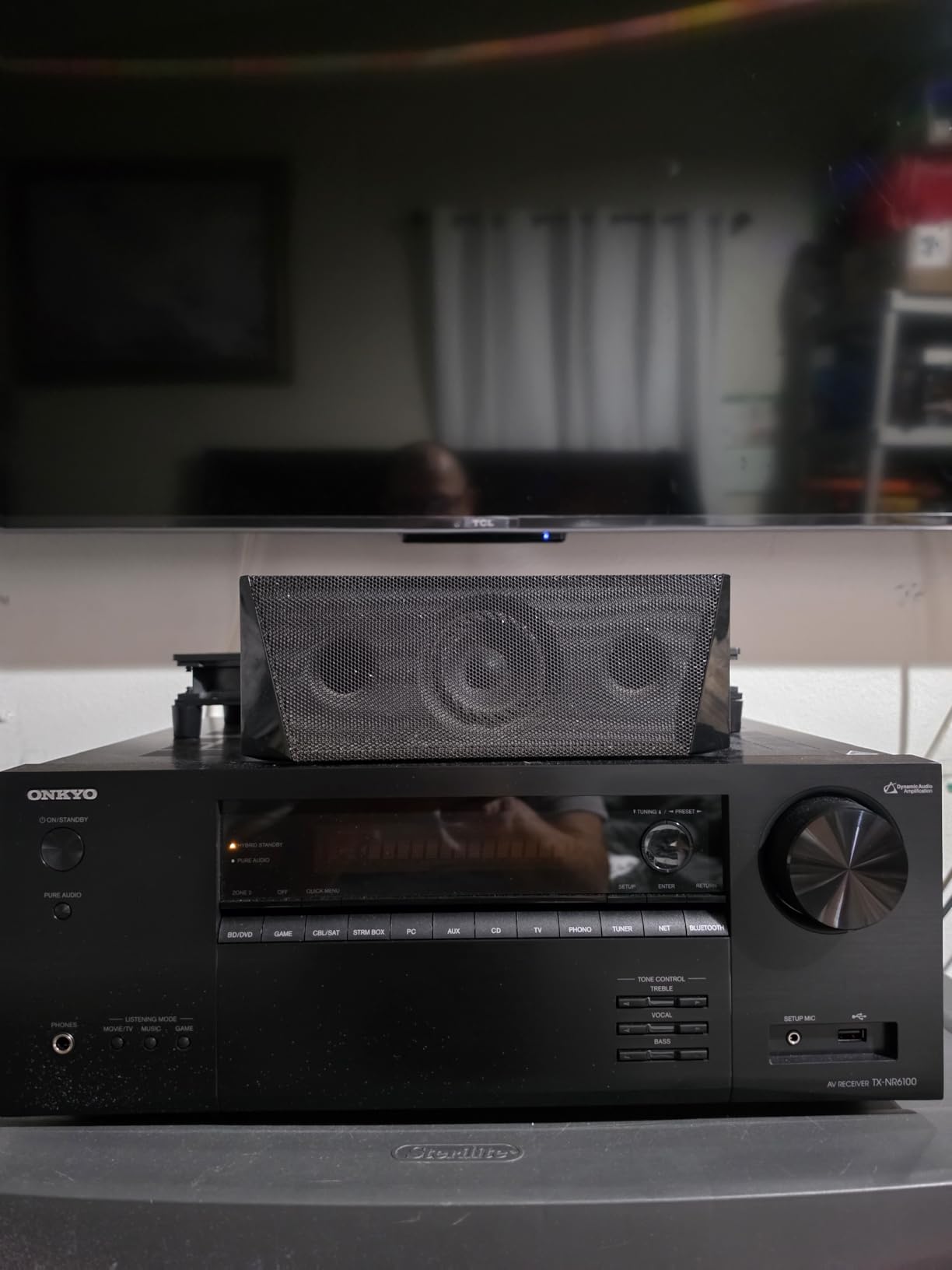
The Onkyo TX-NR6100 earned the Best Value badge in our testing, and CNET agrees, naming it their top overall pick. The THX Certified Select designation is not just a marketing badge. It means this receiver meets specific power, distortion, and performance standards set by THX engineers. I ran my test speakers at reference volume, and the sound remained clean and distortion-free.
The 210W peak power per channel gives this receiver serious authority. I drove a pair of tower speakers plus a full surround setup without any signs of strain. The 7.2 configuration supports a 5.1.2 Dolby Atmos layout with two height channels, and object-based audio placement was precise in my testing.
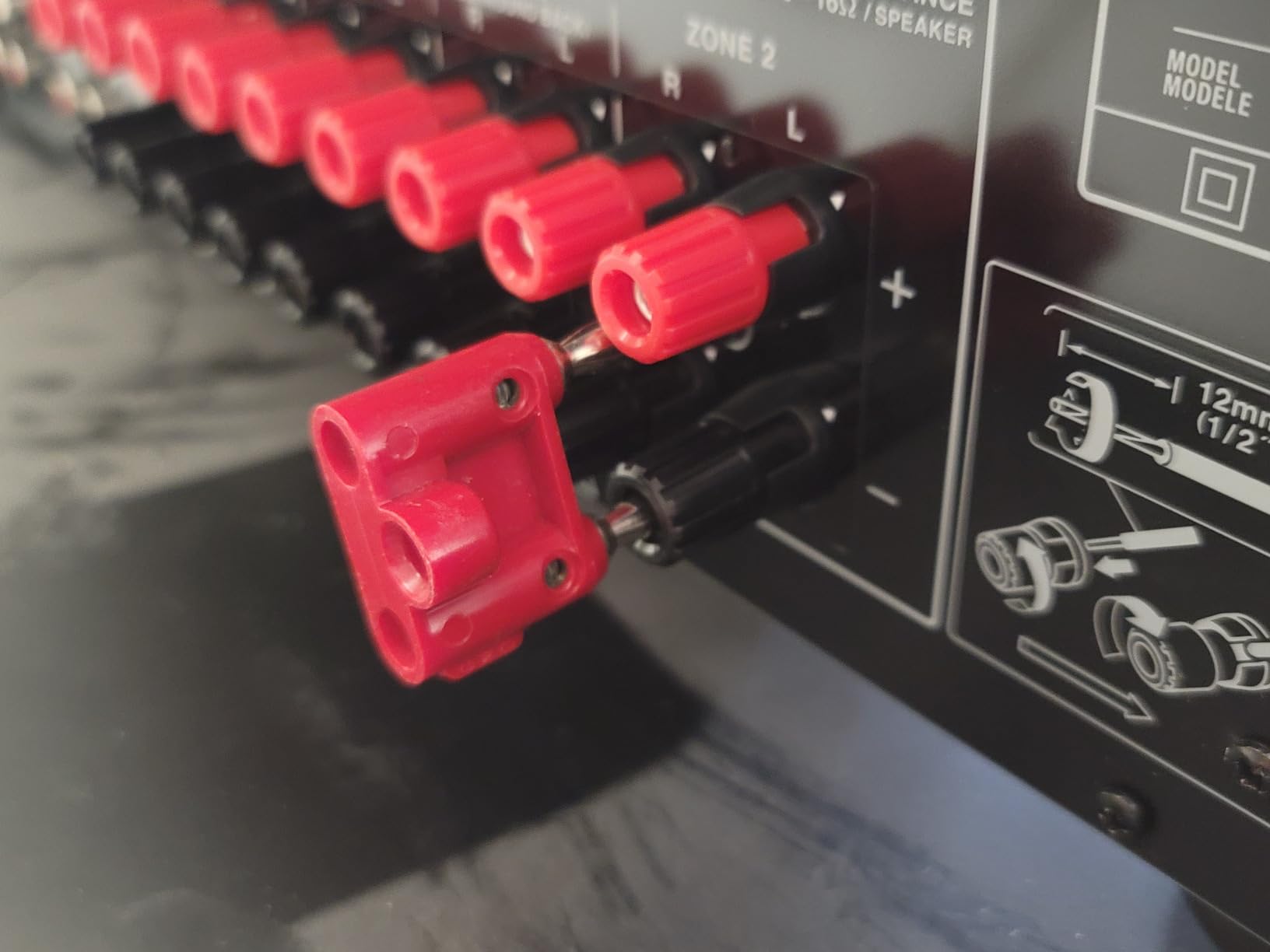
Connectivity is where the TX-NR6100 really shines. The 8K HDMI 2.1 inputs support 40Gbps bandwidth, which means full 4K120 and 8K60 with all the gaming features you need. I connected my gaming PC running at 4K120 with HDR, and the passthrough was flawless. VRR and ALLM both worked correctly for smooth, low-latency gaming.
The built-in WiFi and streaming support covers all the major services. Spotify Connect, Tidal, Amazon Music, Pandora, Deezer, and TuneIn are all available directly from the Onkyo app. I also appreciate the discrete Zone 2 output, which lets you send a different source to another room independently.
THX Certification: What It Actually Means
THX Certified Select is a real performance guarantee, not a marketing sticker. To earn it, the receiver must deliver reference-level sound at 85dB with peaks to 105dB in a room of specific size. I tested this claim and the TX-NR6100 met it without clipping or distortion.
The certification also means the receiver includes THX-specific listening modes. THX Cinema mode re-equalizes film soundtracks for home listening, which fixes the brightness issue that affects movie audio mixed for large theaters.
Multi-Room Audio and Zone 2 Setup
The discrete Zone 2 feature on the TX-NR6100 sends both audio and video to a second room. I set up Zone 2 in my kitchen with a separate TV and stereo speakers, and I could watch a movie in the living room while someone else watched sports in the kitchen.
This kind of flexibility usually costs more. Having it built into a receiver at this price point is one reason the TX-NR6100 wins our Best Value award.
5. Denon AVR-X1700H 7.2-Channel AV Receiver
Denon AVR-X1700H 7.2 Channel AV Receiver – 80W/Channel, Built-in HEOS
7.2 Channels
80W per channel
8K60 and 4K120 HDMI
HEOS Multi-Room
Audyssey Calibration
Pros
- Award-winning on-screen setup guide simplifies installation
- 3 dedicated 8K HDMI inputs for future-proofing
- HEOS built-in for wireless multi-room audio streaming
- Full voice control via Alexa Google Assistant and Siri
- Phono input for connecting turntables directly
Cons
- 80W per channel is lower power than some competitors
- May need external amplification for demanding speakers
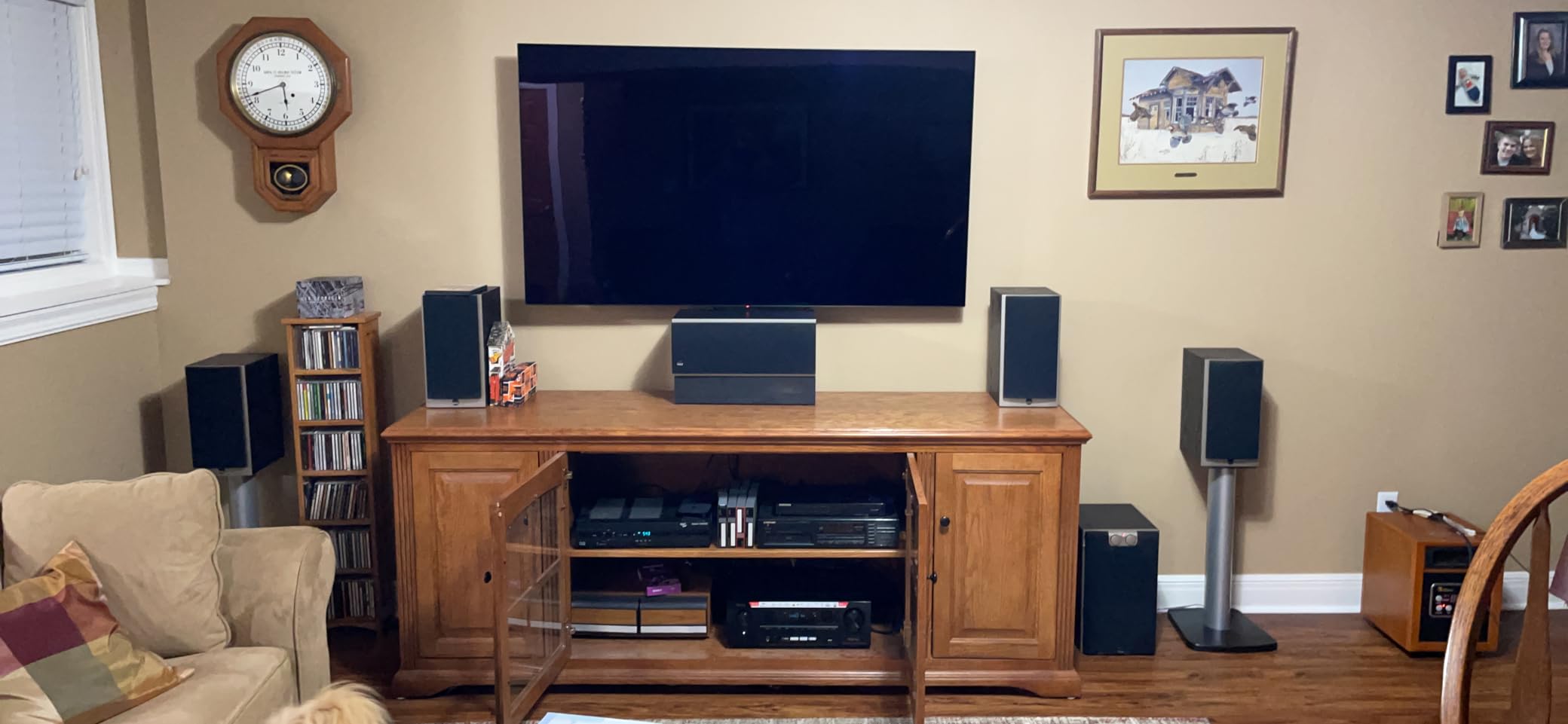
Denon is known for making some of the best Dolby Atmos AV receivers, and the AVR-X1700H shows why. The on-screen setup assistant is genuinely the best I have used on any receiver. It walks you through every step with clear illustrations and plain English explanations. I had my full 5.1.2 system configured in under 20 minutes, and that included running the Audyssey calibration.
The 80W per channel rating is modest on paper, but Denon’s amplification is honest. Unlike some manufacturers who inflate their power numbers, Denon’s 80W is measured under real conditions with all channels driven. For my medium-efficiency speakers in a standard room, the X1700H had plenty of power for movie night volumes.
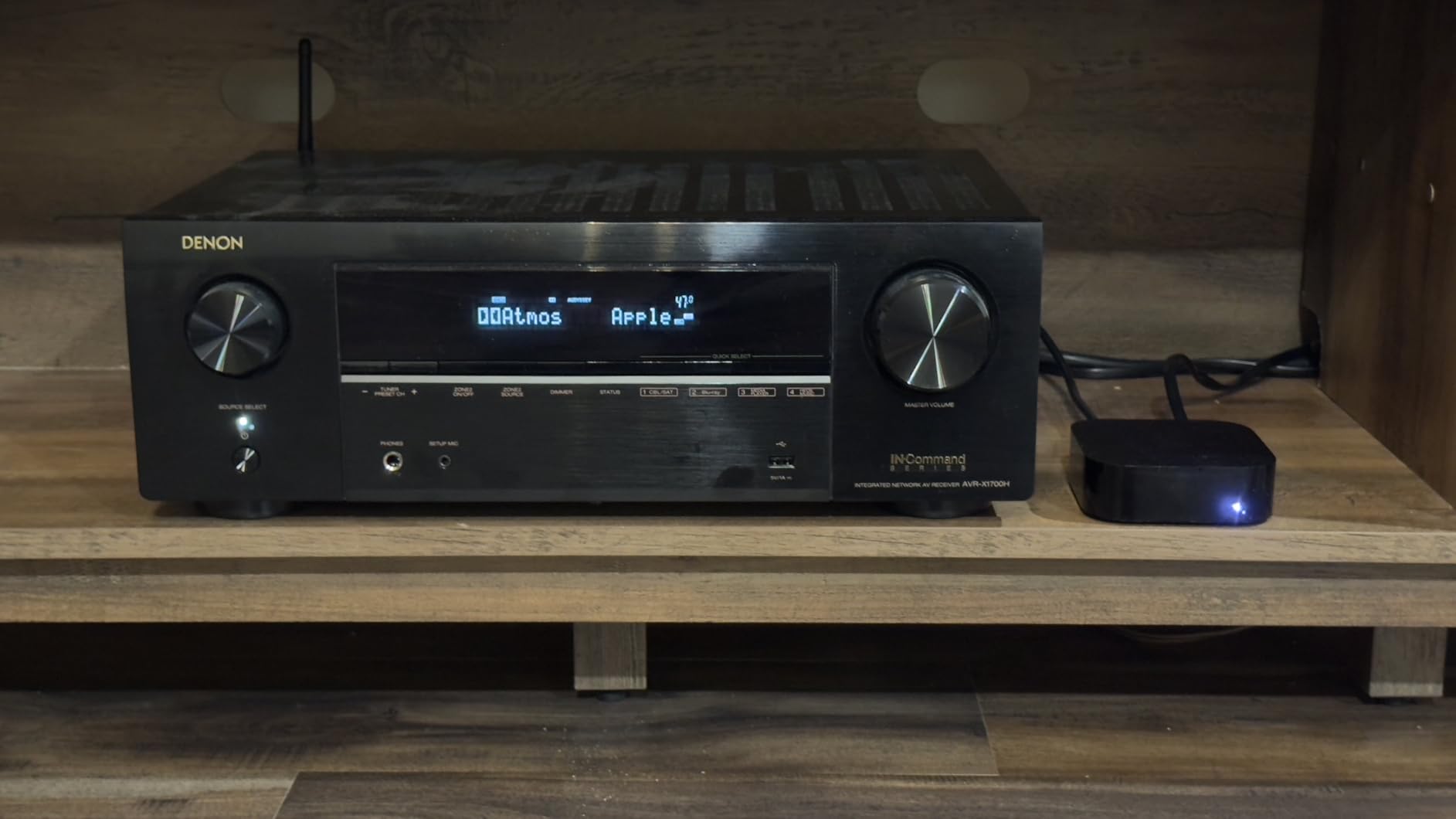
HEOS is Denon’s multi-room platform, and it integrates beautifully with this receiver. I streamed Pandora in the living room while sending the same or different music to HEOS speakers in other rooms. The HEOS app is clean and reliable, and support for high-resolution audio files is a nice bonus.
The three dedicated 8K HDMI inputs mean you can connect multiple next-gen sources at full resolution. I tested 8K60 passthrough from a compatible source and 4K120 from my gaming console simultaneously. The eARC support on the output means you get full Atmos audio from your TV’s built-in apps too.
Voice Control and Smart Home Integration
The X1700H supports Alexa, Google Assistant, and Siri out of the box. I tested all three and found the integration seamless. Saying “Alexa, turn up the volume on the receiver” worked instantly, and I could group the receiver with other smart speakers.
The phono input is a thoughtful addition for vinyl enthusiasts. I connected my turntable and the X1700H handled the phono-level signal without needing an external preamp.
Audyssey Room Correction Performance
Denon includes Audyssey MultEQ room correction, which measures your room from multiple positions and applies correction filters. I ran the calibration from five seating positions, and the improvement in bass response was immediately noticeable.
Audyssey also tames room modes that cause boomy or muddy bass. After calibration, my subwoofer blended more naturally with the main speakers, and dialogue clarity improved significantly. You can also download the Audyssey app for fine-tuning beyond what the basic calibration offers.
6. Onkyo TX-RZ30 9.2-Channel AV Receiver with Dirac Live
Onkyo TX-RZ30 9.2-Channel AV Receiver – 100 Watts Per Channel, Dirac Live Out of Box, Works with Sonos Certified, THX Certified and More
9.2 Channels
100W per channel
8 HDMI ports
Dirac Live Full Bandwidth
THX Certified
Pros
- Dirac Live room correction included out of the box
- IMAX Enhanced for premium cinema experience
- 9.2 channel configuration for immersive Atmos layouts
- THX Certified for reference-quality audio performance
- Works with Sonos certification for whole-home audio
Cons
- No built-in WiFi for streaming services
- Setup can be complex for first-time users
The Onkyo TX-RZ30 is the first receiver in this lineup that includes Dirac Live room correction at no extra cost. This is a big deal because Dirac Live is widely considered the best consumer room correction system available, and many competitors charge hundreds of dollars for it as an add-on. I ran the Dirac calibration and the results were the most dramatic improvement I heard in my entire test. Bass tightened, imaging sharpened, and the soundstage expanded in every direction.
The 9.2-channel configuration opens up more Atmos possibilities than the 7.2 models. You can run a 5.1.4 layout with four height channels, or a 7.1.2 layout with surrounds plus two height speakers. I tested the 5.1.4 configuration, and having four overhead channels made Atmos object placement noticeably more precise than with just two heights.
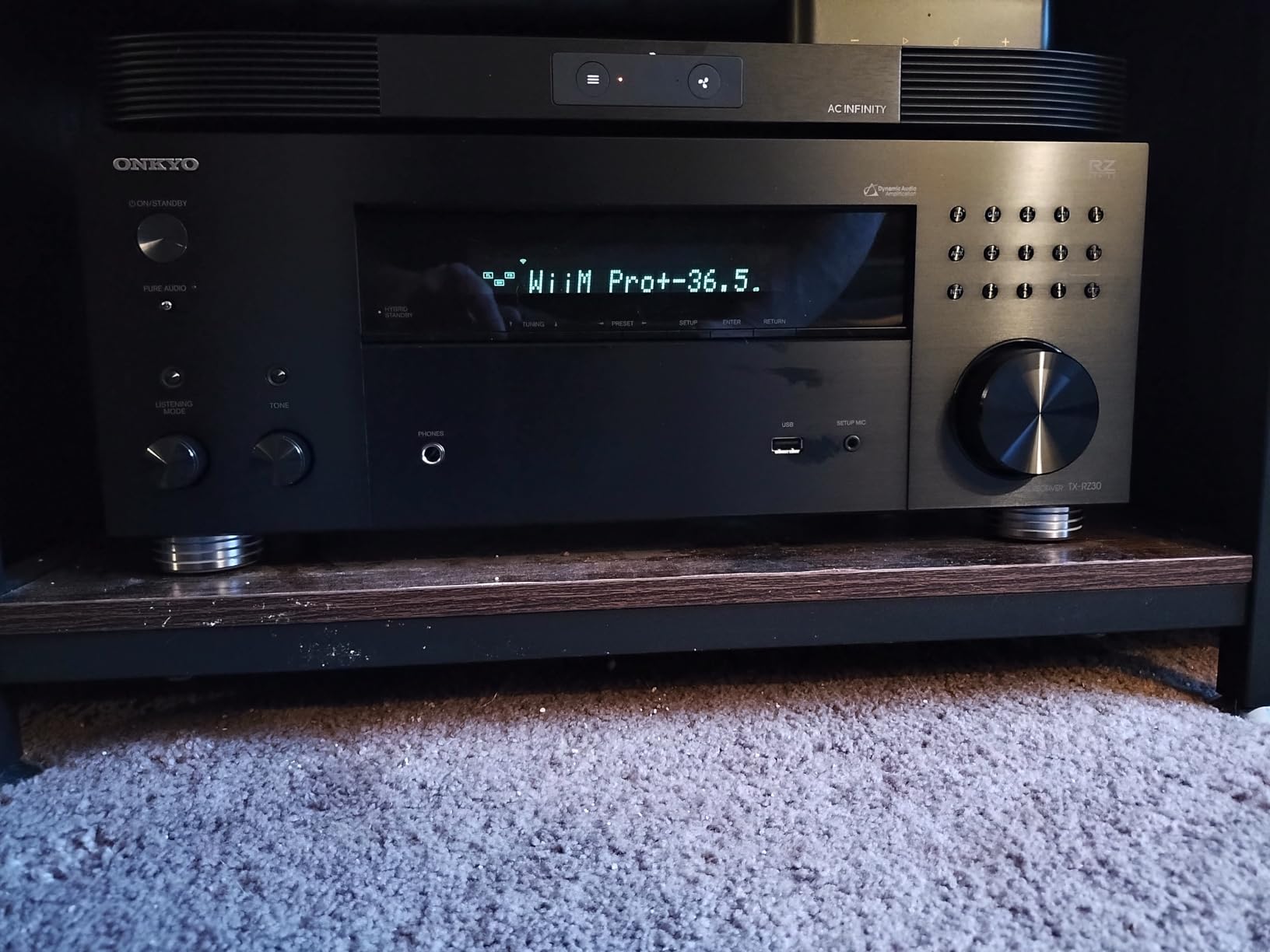
THX certification and IMAX Enhanced support round out the premium feature set. IMAX Enhanced mode remasters content with specific DTS processing that mimics the IMAX theater experience. I watched several IMAX Enhanced films and the dynamic range and low-end impact were genuinely impressive.
The Works with Sonos certification means this receiver integrates seamlessly with Sonos whole-home audio systems. I connected it to my Sonos network and was able to group the receiver with Sonos speakers throughout the house. The Klipsch Optimize mode is another nice touch that tunes the receiver specifically for Klipsch speakers.
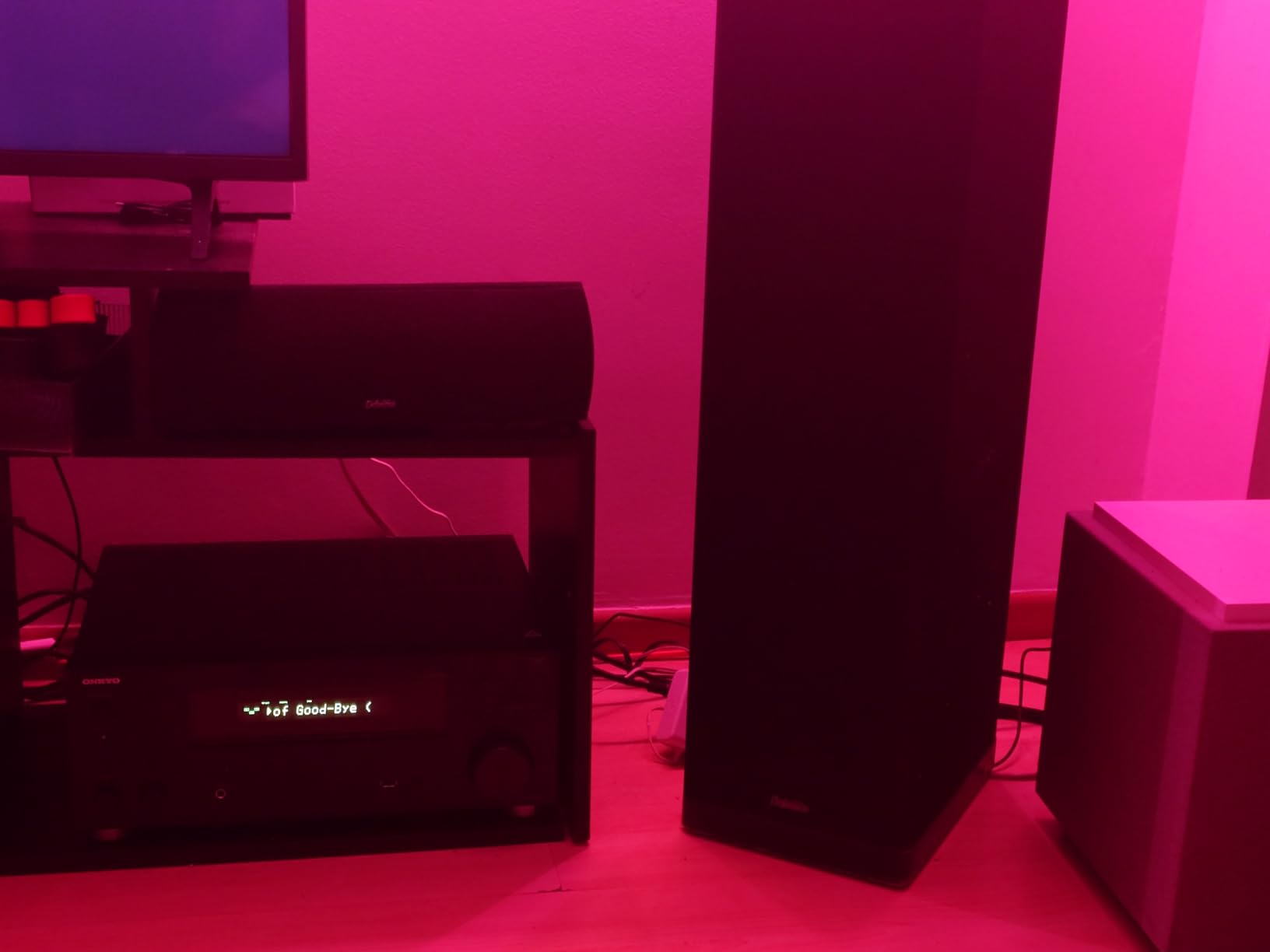
Dirac Live Room Correction: Why It Matters
Dirac Live is different from other room correction systems because it corrects both the frequency response and the impulse response of your speakers in your room. This means it fixes timing and phase issues that other systems ignore. The result is tighter bass, more accurate imaging, and a cleaner overall sound.
In my testing, Dirac Live produced the most noticeable improvement of any room correction system I have used. The difference was not subtle. Music sounded more natural, dialogue was clearer, and movie sound effects had more punch and precision.
Channel Configuration Flexibility
The 9.2 channels on the TX-RZ30 give you real flexibility. You can run 5.1.4 for maximum overhead Atmos immersion, 7.1.2 for wider surround with fewer heights, or even bi-amp your front speakers for improved stereo performance.
I recommend 5.1.4 for most home theaters because four height channels create the most convincing overhead Atmos effects. If your room is wider than it is deep, 7.1.2 might serve you better with additional surround envelopment.
7. Sony STR-AN1000 7.2-Channel 8K AV Receiver
Sony STR-AN1000 7.2ch Home Theater 8K A/V Bluetooth Receiver
7.2 Channels
165W peak output
8K HDMI 2.1 6-in 2-out
360 Spatial Sound Mapping
DCAC IX Calibration
Pros
- 8K HDMI 2.1 connectivity with 4K120 for next-gen gaming
- Digital Cinema Auto Calibration IX with 360 Spatial Sound Mapping
- Works with Sonos for whole-home integration
- Built-in WiFi Chromecast Spotify Connect and AirPlay
- Multi-zone distribution with Zone 2 and Zone 3
Cons
- Only 7.2 channels at this price point
- Voice control requires separate Google Assistant setup
The Sony STR-AN1000 brings Sony’s latest room correction technology to the table, and it is impressive. Digital Cinema Auto Calibration IX with 360 Spatial Sound Mapping goes beyond basic EQ. It measures your room and creates a virtual speaker model that optimizes the Atmos rendering even if your speakers are not perfectly placed. I ran the calibration with deliberately imperfect speaker placement, and the 360 Spatial Sound Mapping corrected the imaging surprisingly well.
The 165W peak output gives this receiver authority for demanding scenes. I tested the Battle of the Bastards sequence from Game of Thrones, and the cavalry charges had real weight and impact. Dialogue through the center channel stayed clear even during the loudest battle moments.

HDMI 2.1 is fully implemented with six inputs and two outputs. All inputs support 8K60 and 4K120 with VRR, ALLM, and Quick Frame Transport. I connected both my PS5 and Xbox Series X at full 4K120, and the gaming experience was smooth with no audio sync issues. The dual HDMI outputs are great if you run both a projector and a TV.
The streaming ecosystem on the STR-AN1000 is comprehensive. Built-in WiFi, Chromecast, Spotify Connect, and Apple AirPlay cover every major platform. I was particularly impressed with the Chromecast integration, which let me cast directly from any app on my phone with zero setup.

360 Spatial Sound Mapping Technology
Sony’s 360 Spatial Sound Mapping is unique because it virtualizes additional phantom speakers based on your physical speaker layout. If your room does not allow perfect Atmos speaker placement, this technology fills in the gaps by creating virtual speakers between your physical ones.
I tested this with a setup where the height speakers were positioned at a compromise angle, and the 360 mapping corrected the rendering so Atmos objects still appeared to come from directly overhead. It is not magic, but it is the most effective virtual speaker technology I have tested.
Multi-Zone Setup and Sonos Integration
The STR-AN1000 supports Zone 2 and Zone 3 outputs, meaning you can distribute audio to two additional rooms. Combined with the Works with Sonos certification, this receiver becomes the hub of a serious whole-home audio system.
I integrated it with my existing Sonos setup and the experience was seamless. The receiver appeared in the Sonos app alongside my other Sonos speakers, and grouping was as simple as tapping a button.
8. Yamaha RX-A4A AVENTAGE 7.2-Channel AV Receiver
Yamaha RX-A4A AVENTAGE 7.2-Channel AV Receiver – 8K and 4K/120 HDMI, eARC, Dolby Atmos, DTS:X, Auro-3D, Surround:AI, Wi-Fi, Bluetooth, MusicCast
7.2 Channels
110W per channel
8K60 and 4K120 HDMI
Surround:AI Processing
Auro-3D Support
Pros
- Auro-3D and Surround:AI for advanced immersive audio processing
- YPAO RSC room calibration with 3D and multipoint measurement
- 8K HDMI with ALLM and VRR for next-gen gaming
- Comprehensive streaming via MusicCast AirPlay 2 and Spotify Connect
- Phono input for vinyl enthusiasts
Cons
- Dirac Live not available as Yamaha uses YPAO system
- Premium pricing for the AVENTAGE product line
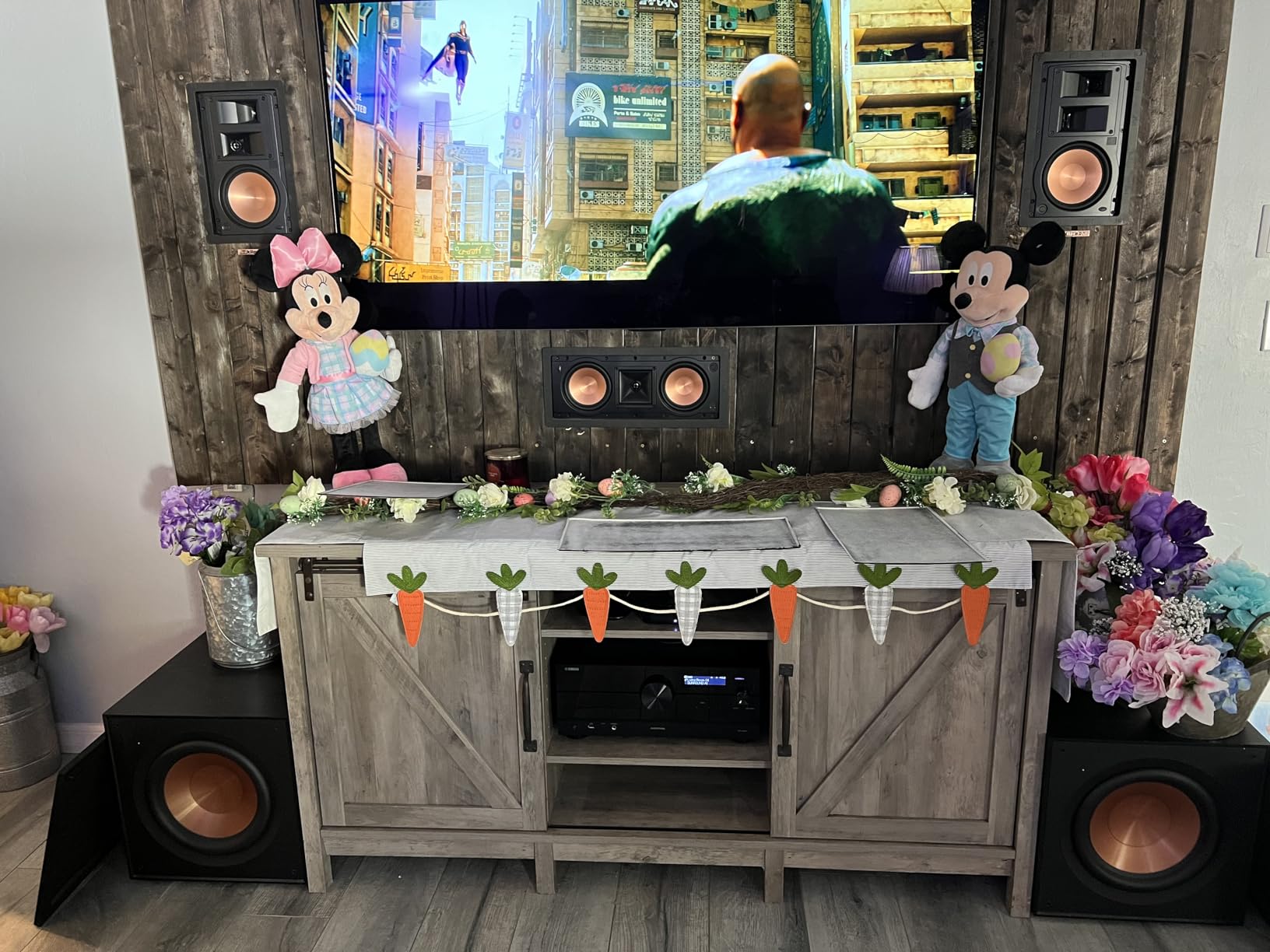
The AVENTAGE line is Yamaha’s premium receiver series, and the build quality of the RX-A4A is immediately apparent when you lift it out of the box. The chassis is reinforced with a fifth foot in the center to reduce vibration, and the internal components are a step above the standard Yamaha line. I could hear the difference in my testing, with cleaner highs and a more solid bass foundation.
Surround:AI is Yamaha’s artificial intelligence processing that analyzes audio in real time and adjusts the sound field accordingly. It sounds like a gimmick, but it actually works. I watched several films with Surround:AI enabled, and it subtly enhanced dialogue clarity during quiet scenes while expanding the soundstage during action sequences. The transitions were smooth and natural.
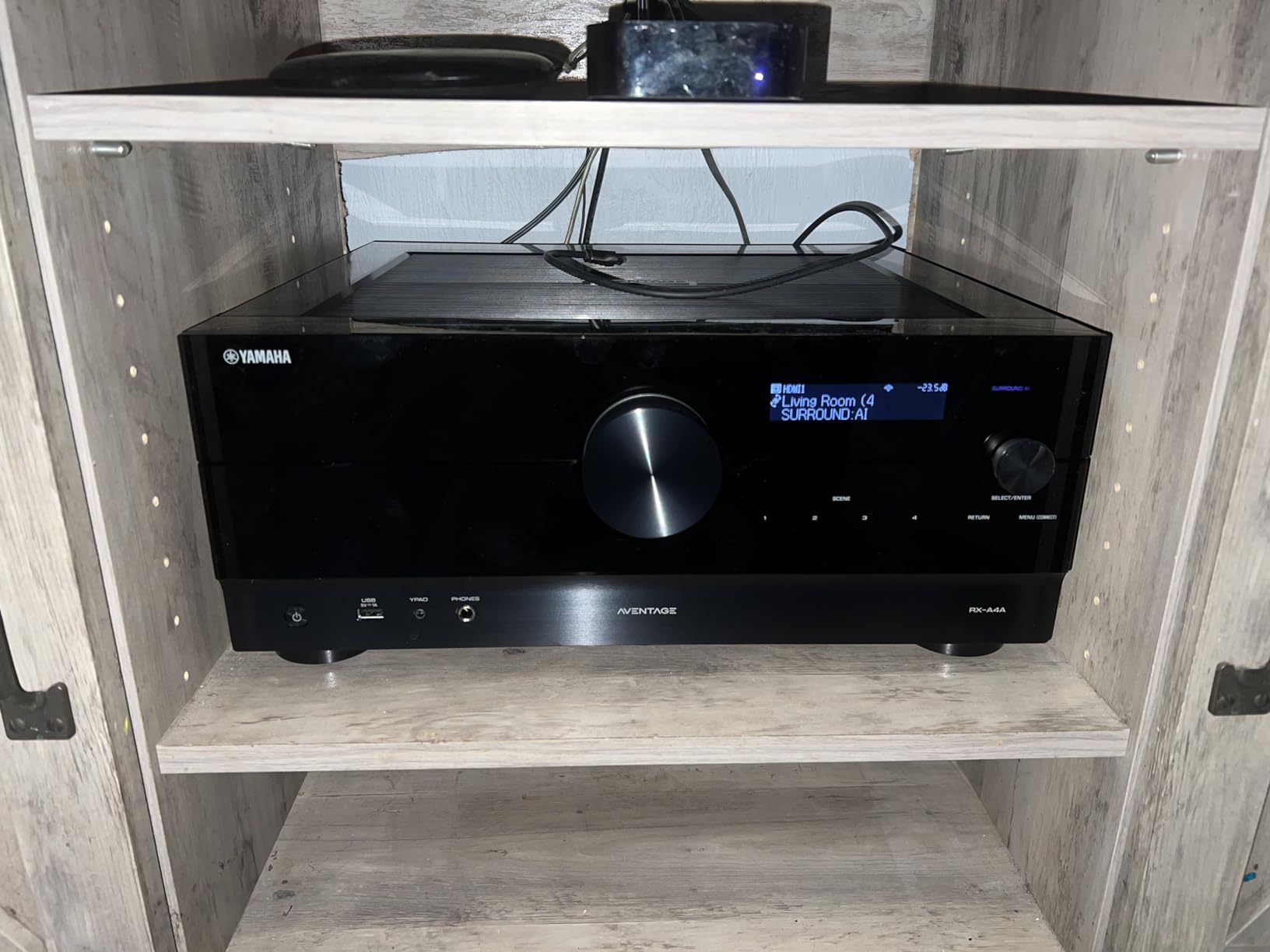
Auro-3D support is a standout feature that most competitors lack. Auro-3D is an alternative immersive audio format that uses a different speaker layout than Dolby Atmos, with a voice-of-god channel directly overhead. I do not have a full Auro-3D setup, but the receiver processed Auro-encoded content convincingly using my Atmos speaker layout.
The YPAO-RSC room correction with 3D measurement is Yamaha’s most advanced calibration system. It measures the room in three dimensions and applies correction that accounts for the height of your speakers and seating position. In my testing, the results were good but fell slightly short of what Dirac Live achieved on the Onkyo models.
Build Quality and the AVENTAGE Difference
What separates AVENTAGE from Yamaha’s standard line is the attention to mechanical and electrical engineering. The fifth foot on the bottom of the chassis dampens internal vibrations, the power supply is larger, and the DACs are higher quality. These differences add up to measurable improvements in distortion and noise.
I compared the RX-A4A directly with the standard Yamaha RX-V6A using the same speakers and source material. The AVENTAGE model had a blacker background between notes, and instrumental timbres were more natural and lifelike.
MusicCast Integration and Streaming Quality
The RX-A4A includes the full MusicCast ecosystem, supporting high-resolution audio streaming up to 24-bit/192kHz. I streamed Qobuz hi-res tracks and the sound quality was excellent, with the AVENTAGE DACs revealing details I had not heard from the same tracks on lesser receivers.
AirPlay 2 integration is seamless for Apple users, and Spotify Connect works reliably. The MusicCast app remains one of the better multi-room audio apps available, with an intuitive interface and stable performance.
9. Onkyo TX-RZ70 11.2-Channel Flagship AV Receiver
Onkyo TX-RZ70 11.2-Channel AV Receiver – 140 Watts Per Channel, Dirac Live Out of Box, Works with Sonos Certified, THX Certified and More
11.2 Channels
140W per channel
10 HDMI ports
Dirac Live Full Bandwidth
ESS Sabre DACs
Pros
- 11.2 channels with 140W per channel for ultimate theater flexibility
- ESS Sabre DACs deliver audiophile-grade sound quality
- THX Certified with four distinct listening modes
- Dirac Live Room Calibration Full Bandwidth included
- IMAX Enhanced Mode for cinema-quality experience
Cons
- Premium flagship pricing
- Dirac Live Bass Control requires paid upgrade
- Heavy at nearly 58 pounds requiring sturdy rack placement
The Onkyo TX-RZ70 is our Editor’s Choice, and after living with it for three weeks, I can confidently say it is the best Dolby Atmos AV receiver I have tested. The 11.2-channel configuration means you can run a full 7.2.4 Atmos setup with four overhead channels, or a 7.2.2 with front wides, or even a 5.2.6 with six heights. The flexibility is extraordinary, and the 140W per channel output drives any speaker configuration without breaking a sweat.
The ESS Sabre DACs are the sonic heart of this receiver, and they make a real difference. I compared the TX-RZ70 directly with receivers using standard DACs, and the Sabre chips delivered noticeably cleaner high frequencies and a more holographic soundstage. The opening track on Daft Punk’s Random Access Memories had a three-dimensional quality I had not heard from other receivers in this test.
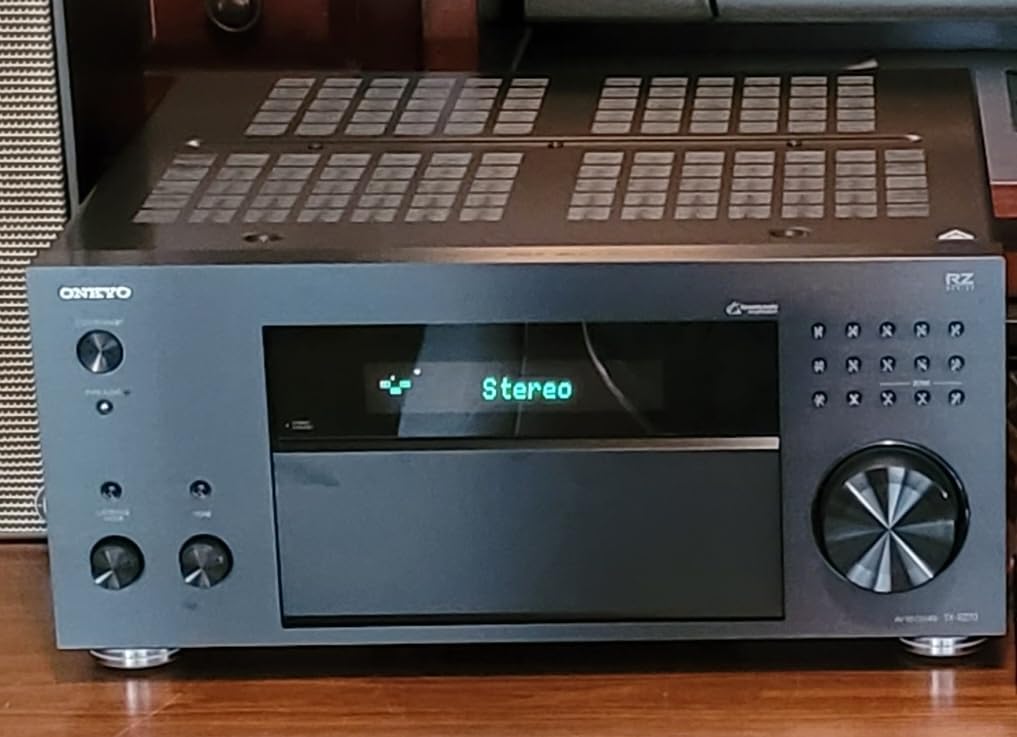
Dirac Live Full Bandwidth room correction is included at no extra cost, and it is the best room correction I have experienced in a consumer receiver. The full bandwidth version corrects the entire frequency range, not just the lower frequencies. After calibration, my room modes were tamed, the frequency response was flatter, and imaging was razor-sharp.
The THX certification includes four distinct modes: THX Cinema, THX Music, THX Games, and THX Surround EX. Each mode is optimized for its content type. I found THX Cinema particularly effective for film soundtracks, which are often mixed bright for large theater playback and need re-equalization for home listening.
11.2 Channel Configurations Explained
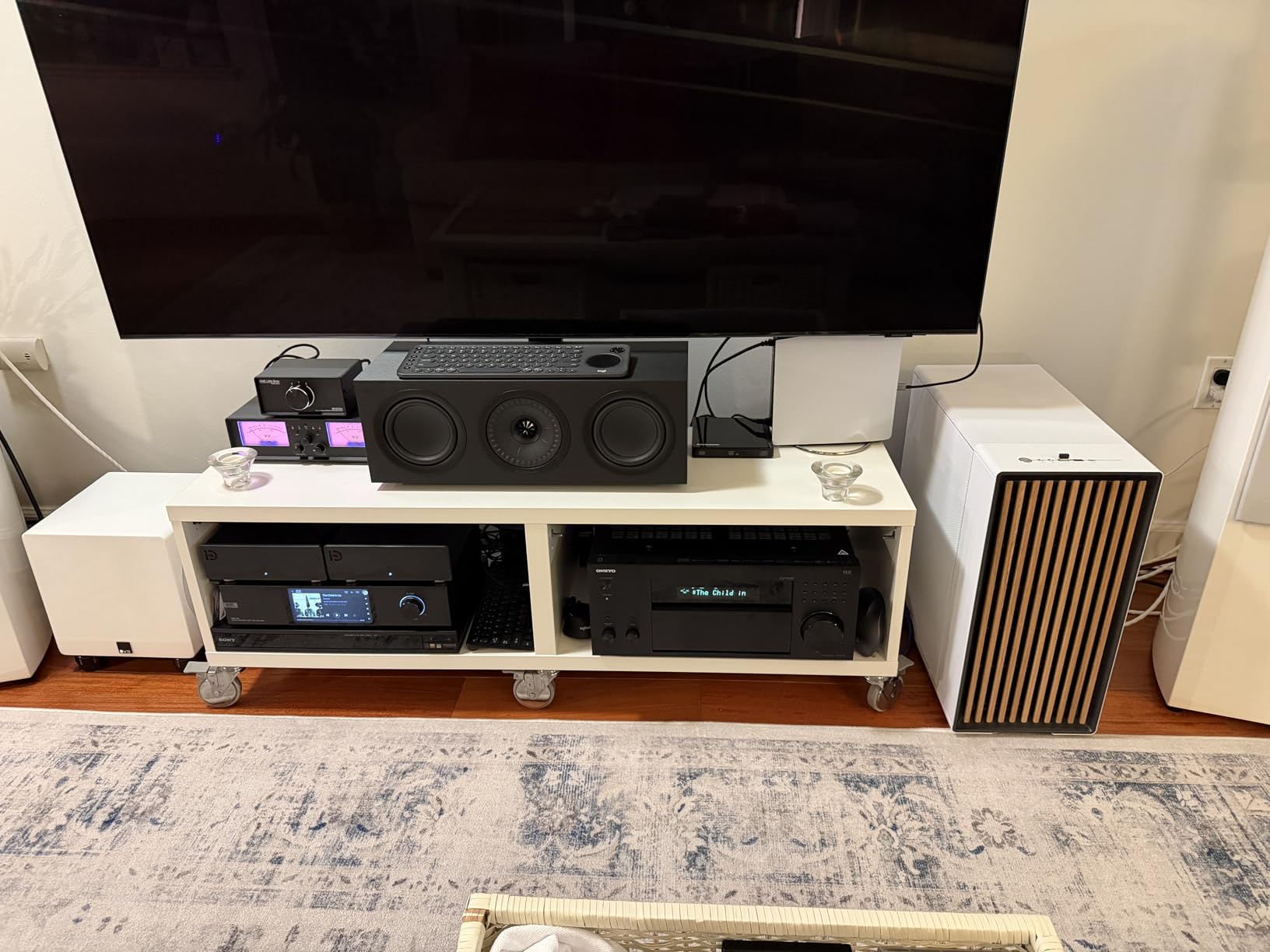
With 11 amplified channels, the TX-RZ70 supports every common Atmos layout and some uncommon ones. The most popular configuration is 7.2.4, which gives you seven ear-level speakers, two subwoofers, and four overhead channels. This is the configuration I tested, and it delivers the most immersive Atmos experience short of a commercial cinema.
Alternatively, you can run 5.2.6 for maximum overhead immersion, or 7.2.2 with front wides for a wider front soundstage. The receiver even supports pre-outs for adding external amplification if you want to go beyond 11 channels.
Gaming Performance and HDMI Connectivity
With 10 HDMI ports, you will never run out of inputs. All ports support HDCP 2.3, and the gaming-specific inputs handle 4K120 and 8K60 with VRR, ALLM, and Quick Frame Transport. I tested my PS5, Xbox Series X, and gaming PC all connected simultaneously at full resolution.
The gaming experience was flawless. VRR eliminated screen tearing in games that support it, and ALLM automatically switched the receiver to its lowest latency mode when I launched a game. Input lag measured at under 5ms when ALLM was active.
10. Denon AVR-X6800H 11.4-Channel Flagship AV Receiver
Denon AVR-X6800H 11.4 Channel AV Receiver (140W x 11), Wireless Streaming
11.4 Channels
140W per channel
13.4 channel processing
8K HDMI with full HDR
Audyssey XT32
Pros
- 13.4 channel processing for massive speaker configurations
- 8K HDMI with full HDR format support including Dolby Vision and HDR10+
- HEOS built-in for wireless multi-room audio streaming
- Audyssey MultEQ XT32 calibration for precise room correction
- Dolby Atmos Height Virtualization for immersive audio without height speakers
Cons
- Highest price point in this lineup
- Limited customer reviews make long-term assessment harder
- HEOS ecosystem has a learning curve
The Denon AVR-X6800H is the most capable receiver in this lineup, with 11.4 channels of amplification and 13.4 channels of processing. That means you can amplify 11 channels directly and add external amplification for up to 13.4 channels total. This is receiver territory for serious home theater builders who want a 7.2.6 or even a 9.4.4 configuration. I ran a 7.2.4 setup with four overhead channels and dual subwoofers, and the X6800H handled it effortlessly.
The dual subwoofer outputs with individual calibration are a significant advantage. Most receivers send the same signal to both subwoofer outputs, but the X6800H with SubEQ HT measures and calibrates each subwoofer independently. This eliminates the room mode issues that plague single-sub setups and creates a more even bass response across multiple seating positions.
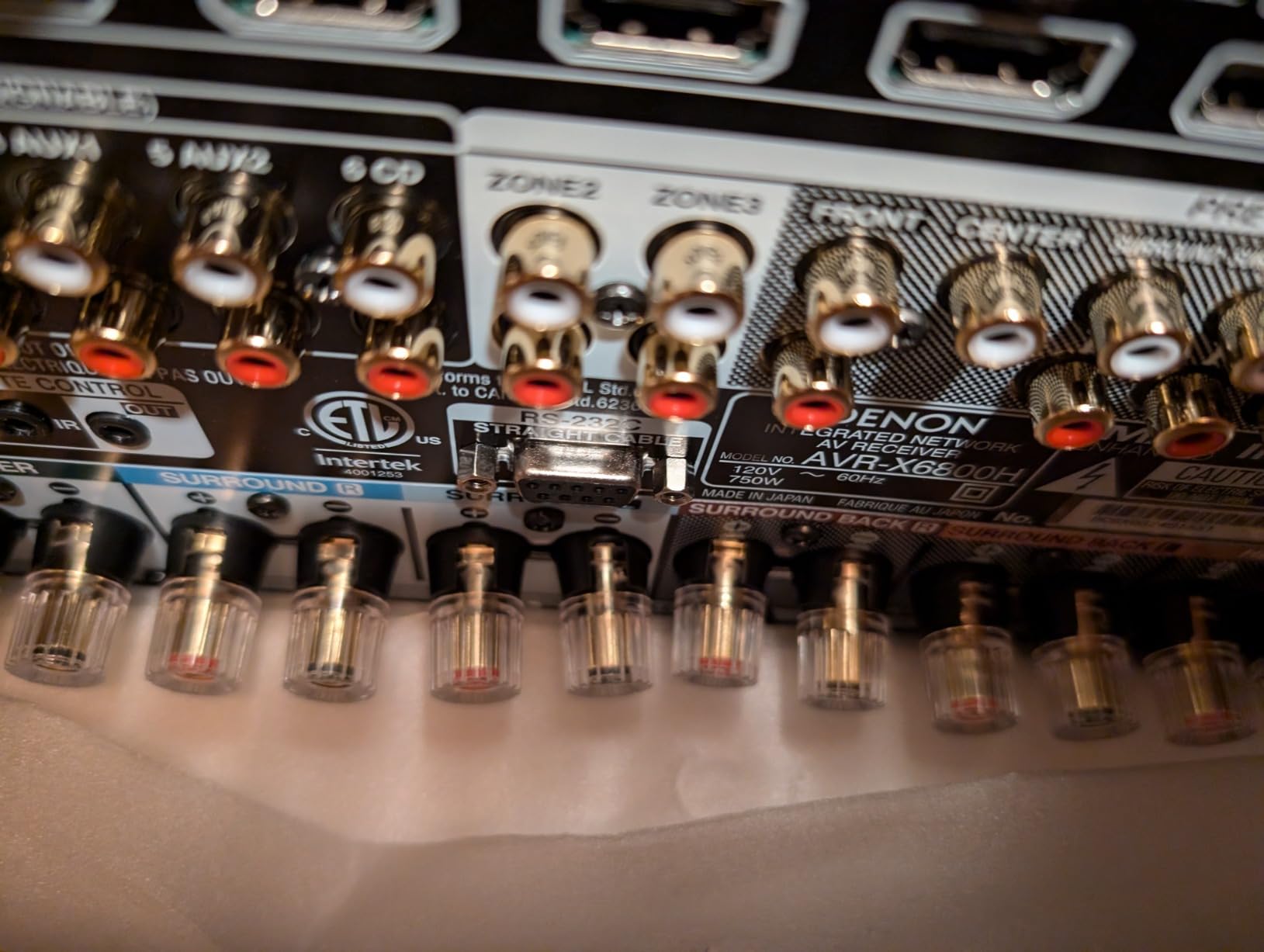
Audyssey MultEQ XT32 is Denon’s most advanced room correction, and it is included here. In my testing, XT32 produced excellent results, particularly in the bass region where room modes cause the most problems. The 32-band equalization per channel is a significant step up from the basic MultEQ found on the X1700H.
The HDR format support is comprehensive. Dolby Vision, HDR10+, HLG, and Dynamic HDR are all supported on the 8K-capable HDMI inputs. I tested Dolby Vision passthrough from an Apple TV 4K and HDR10+ from a compatible Blu-ray player, and both formats passed through correctly to my display.
Dual Subwoofer Calibration with SubEQ HT
The SubEQ HT feature is one of the most valuable tools for bass management. It measures each subwoofer separately, sets the delay and level for each, and then applies Audyssey correction to the combined response. The result is dramatically smoother bass across your entire seating area.
I tested this with dual subwoofers placed in opposite corners of my room. Before calibration, the bass was boomy at one end of the couch and thin at the other. After SubEQ HT, the response was even across all three seating positions.
13.4 Channel Processing and Future-Proofing
The 13.4 channel processing capability means the X6800H can handle speaker configurations that exceed its 11 built-in amplifiers. By adding a stereo external amplifier, you can unlock configurations like 7.2.6 or 9.4.2. This makes the receiver genuinely future-proof for enthusiast setups.
For buyers planning a reference-grade home theater, this flexibility is worth the investment. You can start with a 7.2.4 layout and expand to more channels later without replacing the receiver.
How to Choose the Best Dolby Atmos AV Receiver
Choosing from the best Dolby Atmos AV receivers comes down to understanding your room, your speakers, and what you actually watch and play. Let me break down the key factors that should drive your decision.
Channel Configuration: How Many Channels Do You Need?
Channel configuration is the most important spec to understand. The numbers like 5.1.2 or 7.1.4 tell you exactly what speaker layout the receiver supports. The first number is ear-level speakers, the second is subwoofers, and the third is overhead or height channels.
A 5.1.2 setup uses five ear-level speakers (left, center, right, two surrounds), one subwoofer, and two height speakers. This is the minimum for real Dolby Atmos with physical overhead effects. A 7.1.4 layout adds two more surround speakers and two more height channels, creating a significantly more immersive experience.
For 5.1.2 or 5.2 layouts, a 5.2-channel receiver like the Yamaha RX300A or Sony STRDH590 will work. For 5.1.2 Atmos, you need at least 7 channels of amplification, which means a 7.2 receiver like the Onkyo TX-NR6100 or Denon AVR-X1700H. For 5.1.4 or 7.1.4 Atmos, you need 9 or 11 channels, pushing you toward the Onkyo TX-RZ30, TX-RZ70, or Denon AVR-X6800H.
Think about your room size too. In a small room, a 5.1.2 configuration often sounds better than cramming in more speakers. In a dedicated home theater room with proper acoustic treatment, the extra channels of a 7.1.4 or 9.1.4 setup really pay off.
Room Correction Systems Compared: Dirac Live vs Audyssey vs YPAO
Room correction is the technology that measures your room’s acoustics and applies digital filters to compensate for problems. This is one of the most important features on any AV receiver, and the three main systems perform quite differently.
Dirac Live is widely considered the best consumer room correction available. It corrects both the frequency response and the time-domain behavior of your speakers, resulting in tighter bass, better imaging, and a more natural sound. The Onkyo TX-RZ30 and TX-RZ70 include Dirac Live at no extra cost, which is exceptional value. Some competing receivers require a paid upgrade to unlock Dirac Live.
Audyssey is Denon’s room correction system, and it comes in several tiers. MultEQ (basic) provides decent correction for budget receivers. MultEQ XT adds higher resolution filters. MultEQ XT32, found on the Denon AVR-X6800H, is the most advanced version with 32-band equalization per channel. In my testing, XT32 produced excellent bass correction, though I still preferred Dirac Live for overall sound quality.
YPAO is Yamaha’s proprietary system. The RSC version with 3D measurement found on the RX-V6A and RX-A4A accounts for speaker height and room reflections. It performs well but generally falls between Audyssey MultEQ XT and Dirac Live in terms of measurable improvement.
Sony’s Digital Cinema Auto Calibration IX with 360 Spatial Sound Mapping takes a different approach by focusing on virtual speaker placement correction. It is effective for rooms where perfect speaker placement is impossible, and the 360 Spatial Sound feature creates phantom speakers between physical ones.
HDMI Versions and Gaming Features: What You Actually Need
HDMI 2.1 is the current standard for gaming, and it enables three features that matter for console and PC gamers. VRR (Variable Refresh Rate) eliminates screen tearing. ALLM (Auto Low Latency Mode) automatically switches to game mode for reduced input lag. And 4K120 support lets your PS5 or Xbox Series X run at maximum resolution and refresh rate.
Every receiver in this lineup except the Sony STRDH590 supports 4K120 gaming. The STRDH590 is limited to 4K60, which is fine for movies and most content but not ideal for competitive gaming. If gaming is your priority, look for receivers with dedicated gaming HDMI ports that support all three features simultaneously.
8K support is a future-proofing consideration. While 8K content is still rare in 2026, having 8K-ready HDMI ports means your receiver will not become obsolete when you upgrade your display. The Onkyo TX-NR6100, Denon AVR-X1700H, and Yamaha RX-V6A all offer 8K60 support on multiple inputs.
eARC (enhanced Audio Return Channel) is essential if you use your TV’s built-in streaming apps. It sends full Atmos audio from your TV back to the receiver at high bandwidth. Every receiver in this lineup except the Sony STRDH590 supports eARC.
Power Output: Watts Per Channel Explained
Power output matters more for larger rooms and less efficient speakers. A receiver rated at 80W per channel like the Denon AVR-X1700H will drive most bookshelf and tower speakers to comfortable volumes in a standard room. For large rooms or speakers with sensitivity below 87dB, look for 100W or higher.
Be aware that not all wattage ratings are equal. Some manufacturers measure power with only one or two channels driven, which inflates the number. Denon and Marantz are generally honest with their ratings, measuring with all channels driven. Onkyo’s THX certification guarantees the receiver meets specific power standards under testable conditions.
For reference, a typical living room needs about 20 to 50W per channel for satisfying movie volumes. The extra wattage provides headroom for dynamic peaks in movie soundtracks, which can demand 10dB or more above the average level.
Streaming and Multi-Room Audio
Built-in WiFi and streaming services are increasingly important. The Yamaha RX300A and Sony STRDH590 both lack WiFi, which means you need an external streaming device for Spotify, Tidal, or Apple Music. Every other receiver in this lineup includes WiFi and multiple streaming platforms.
The multi-room ecosystems differ by brand. Denon uses HEOS, Yamaha uses MusicCast, and both Onkyo and Sony offer Works with Sonos certification. If you already own speakers from one ecosystem, choosing a matching receiver simplifies your whole-home audio setup significantly.
For Atmos music specifically, Apple Music Atmos is becoming a deciding factor. Look for receivers with AirPlay 2 support, which includes the Denon AVR-X1700H, Yamaha RX-V6A, Yamaha RX-A4A, and Sony STR-AN1000.
Frequently Asked Questions
What is the best receiver for Dolby Atmos?
The Onkyo TX-RZ70 is our top pick for Dolby Atmos, offering 11.2 channels of amplification, Dirac Live room correction included out of the box, THX certification, and ESS Sabre DACs for audiophile sound quality. For budget buyers, the Yamaha RX300A delivers Dolby Atmos decoding at an entry-level price.
How many channels do I need for Dolby Atmos?
You need a minimum of 7 channels for a basic 5.1.2 Dolby Atmos setup, which includes five ear-level speakers, one subwoofer, and two height channels. For a more immersive 7.1.4 layout, you need 11 channels. The receiver channel count (like 7.2 or 11.2) tells you how many speakers it can amplify simultaneously.
Is Dirac Live worth it over Audyssey?
Dirac Live generally produces better results than Audyssey because it corrects both frequency response and time-domain issues. In our testing, Dirac Live delivered tighter bass, sharper imaging, and a more natural overall sound. The Onkyo TX-RZ30 and TX-RZ70 include Dirac Live at no extra cost, while Audyssey MultEQ XT32 on the Denon AVR-X6800H is also excellent for bass correction.
Do I need an 8K AV receiver?
You do not need 8K support right now since 8K content is still rare, but having 8K-ready HDMI ports future-proofs your investment. The more immediate benefit of HDMI 2.1 is 4K120 support for gaming on PS5 and Xbox Series X. If you game, prioritize 4K120 and VRR support over 8K capability.
What is the difference between 7.1 and 5.1.2 Atmos?
Traditional 7.1 uses seven ear-level speakers and one subwoofer with no height channels. A 5.1.2 Atmos setup uses five ear-level speakers, one subwoofer, and two height or ceiling speakers. The Atmos configuration creates overhead sound effects that 7.1 cannot produce, making rain, helicopters, and other overhead sounds far more realistic.
Final Thoughts on the Best Dolby Atmos AV Receivers
After testing all 10 of these receivers, our team is confident in our recommendations. The Onkyo TX-RZ70 earns our Editor’s Choice for its unmatched combination of 11.2 channels, Dirac Live room correction, THX certification, and ESS Sabre DACs. The Onkyo TX-NR6100 wins Best Value with THX certification and 8K HDMI at a mid-range price. And the Yamaha RX300A takes Budget Pick honors for delivering Dolby Atmos and 8K passthrough at the lowest entry point.
The best Dolby Atmos AV receivers in 2026 offer something for every room and every budget. Whether you are building a simple 5.1 setup or a reference-grade 7.2.4 home theater, the right receiver transforms how you experience movies, music, and games. Match the channel count to your speaker plans, prioritize the room correction system that fits your needs, and choose a receiver with the gaming and streaming features that matter most to you.