
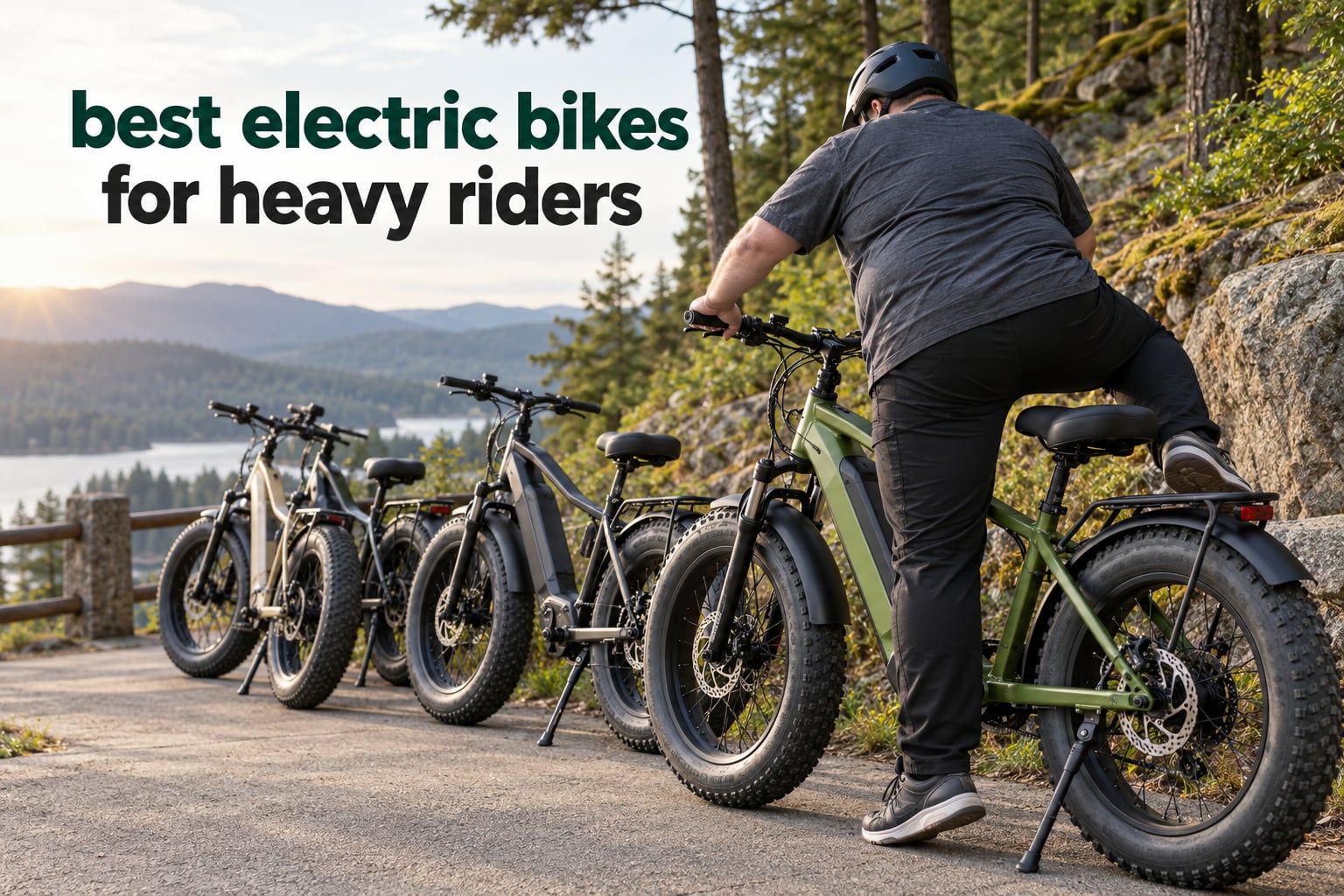
Short answer: the best electric bikes for heavy riders are the ones with a published payload rating of 350 lb or more, hydraulic disc brakes with 180 mm rotors, fat tires in the 3 to 4 inch range, and a motor rated at 750 W or more with at least 60 Nm of torque. Those four numbers decide nearly everything else.
I spent the last several weeks reading spec sheets, warranty terms and owner reviews across twelve of the highest-capacity e-bikes currently shipping, with the specific question of what happens when a heavy rider sits on a bike a manufacturer never intended for that weight. This is a category where marketing language and engineering reality often disagree, and the gap is where most expensive mistakes happen.
The single most useful thing I found is that the weight number on a product page almost never means what buyers assume it means. One rider on r/ebikes described the pattern plainly: a 140 kg rider researching e-bikes found listing after listing capping at 120 kg. That is not unusual. It is the norm, and it is why so many heavy riders end up over their bike’s rating on day one.
Below, the top three picks first, then all twelve side by side, then a full deep dive on each. If you are in a hurry, the fat tire electric bike guide covers tire choice in more depth, and the commuting e-bike picks are worth reading if your route is short and paved.
Table of Contents
Top 3 Best E-Bikes for Heavy Riders in 2026


The DAMSON R5 PRO takes the top spot on the strength of the best combination of rating, review volume and load capacity in this group. It rates 4.5 across 87 reviews, carries a 450 lb maximum weight recommendation with a 500 lb capacity claim in the title, and ships a 160 mm dual hydraulic brake setup with dual suspension and 26×4 tires.
The Jasion X Hunter ST is the pick if certification is your deciding factor. It is UL 2849 certified, rated at 400 lb, and holds the highest average rating in the entire set at 4.8 with 91 percent of its ratings at five stars. Its minimum listed rider height of 66 inches is a real constraint, though.
The LEONX M2 Pro carries the highest two-wheel payload rating here at 500 lb on a 90 lb bike, and owners at 210 lb, 220 lb and 314 lb all describe it as stable and quick. Its mechanical brakes and 90 lb weight are the honest trade-offs.
All 12 E-Bikes for Heavy Riders Compared (October 2026)
| Product | Specifications | Action |
|---|---|---|
| DAMSON R5 PRO |
|
Check Latest Price |
| Jasion X Hunter ST |
|
Check Latest Price |
 Ekellaka EP7PRO Ekellaka EP7PRO |
|
Check Latest Price |
 ANDSKY Apex 50 ANDSKY Apex 50 |
|
Check Latest Price |
 TINIOVER Folding Trike TINIOVER Folding Trike |
|
Check Latest Price |
 PUCKIPUPPY Husky Plus PUCKIPUPPY Husky Plus |
|
Check Latest Price |
 TST R004 TST R004 |
|
Check Latest Price |
 Jasion RetroVolt Jasion RetroVolt |
|
Check Latest Price |
 Jasion EB5 MAX Jasion EB5 MAX |
|
Check Latest Price |
| LEONX M2 Pro |
|
Check Latest Price |
 DTTZH F6 DTTZH F6 |
|
Check Latest Price |
 tokera MY2 tokera MY2 |
|
Check Latest Price |
Two columns in that table deserve a second look. Only two bikes in this list publish a payload rating above 500 lb, and both are trikes. And only four list UL 2849 certification, which is the standard that matters most for the electrical system on a bike carrying 350 lb of rider and cargo.
Key Features to Look For in an E-Bike for Heavy Riders
Payload capacity above your body weight, not equal to it. Add your own weight plus a backpack plus a passenger plus groceries, then leave another 50 to 100 lb of margin. A 300 lb rider carrying 30 lb of gear wants a 400 lb rating, not a 300 lb rating.
Hydraulic disc brakes with 180 mm rotors or larger. Mechanical cable discs are the single most common disqualifier in this category. Three of the twelve bikes here use them.
Fat tires in the 3 to 4 inch range. A wider tire spreads load across a longer contact patch and runs at lower pressure, so the rim takes less of the impact. Twenty-six inch by 4 inch is the sweet spot for riders over 300 lb.
Motor torque of 60 Nm or more, stated in newton-metres. Torque tells you what happens on a hill. Peak wattage tells you what happens for two seconds at a standstill.
A published, manufacturer-stated weight rating. If the page does not say it, assume the bike is rated near 300 lb for everything combined. Five bikes in this roundup either publish a rating or explicitly do not.
Rims built for load, not just spokes in sufficient number. R/cycling’s standing advice for heavier riders is 32-spoke rims and wide tires, because spoke strength and rim strength are what actually fail first under a heavy load.
1. DAMSON R5 PRO: Best Overall Pick for Heavy Riders
DAMSON R5 PRO Electric Bike for Adults 30MPH, 1500W Peak Ebikes, 960Wh Removable Battery 65 Miles PAS, 26″ Full Suspension Mountain Fat Tires Bicycles, Hydraulic Brakes,7-Speed Gears, 500LB Capacity
450 lb rating
1500W peak / 85 Nm
960Wh removable battery
26x4 fat tires
Pros
- Strong 85 Nm motor handles hills
- 300-50 miles real-world range reported
- Folds flat for storage
- Dual suspension with lockout fork
- Two-year frame warranty
Cons
- Gears can slip under heavy load on steep grades
- Very heavy to lift up stairs
- Stock saddle is small for long commutes
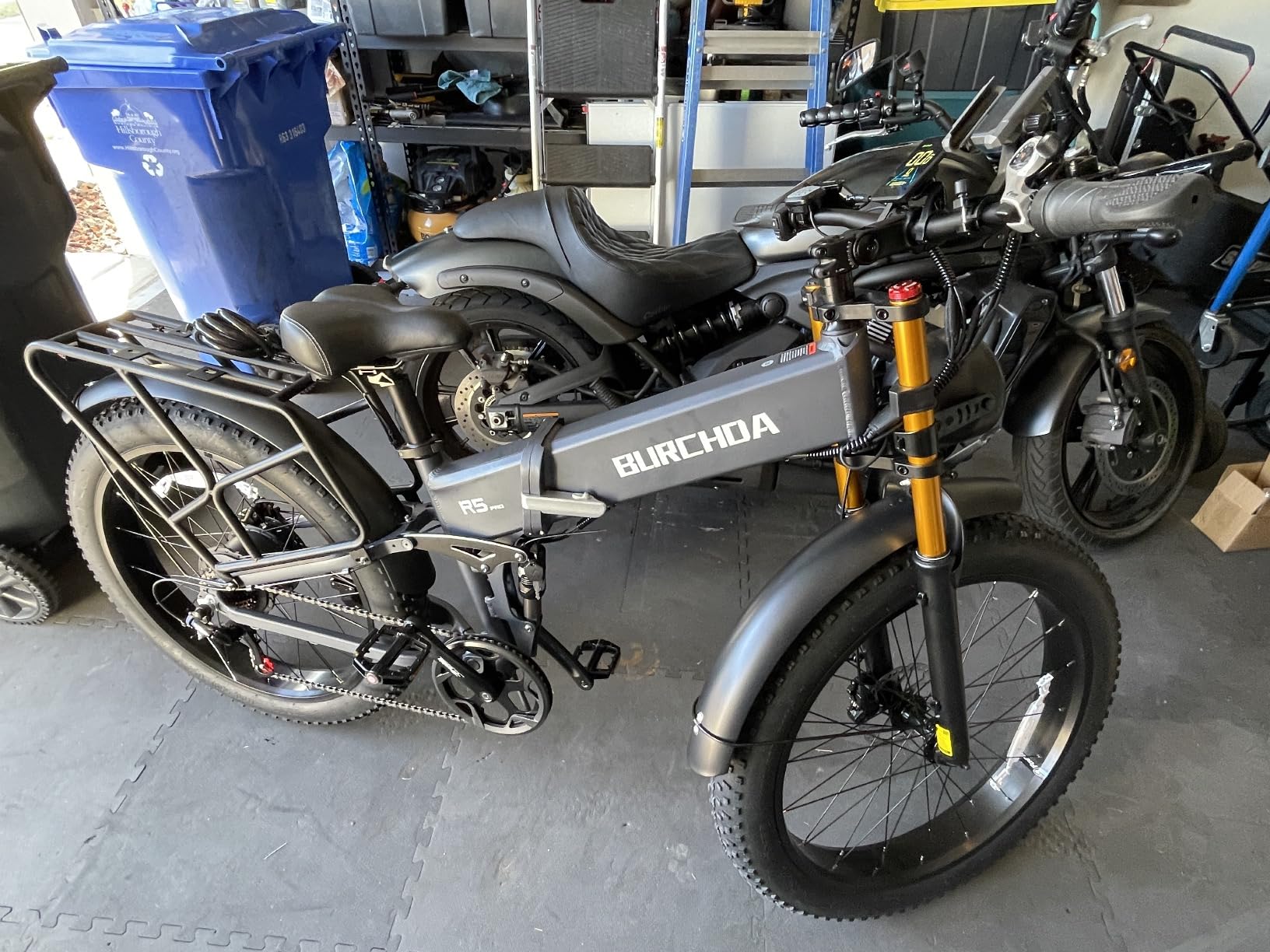
This is the bike I keep coming back to after reading every spec sheet in the category. The R5 PRO pairs a 1500 W peak geared hub motor putting out 85 Nm of torque with a 48 V 20 Ah removable battery in the 960 Wh class, and the combination is what makes it feel planted rather than strained at higher rider weights.
Owner reviews are unusually specific about that. Multiple heavier reviewers specifically call out that the bike feels stable and easy to control at their weight, which is the exact concern buyers have. Battery life is the other repeated highlight, with multiple owners reporting 30 to 50 miles per charge rather than the headline 65.
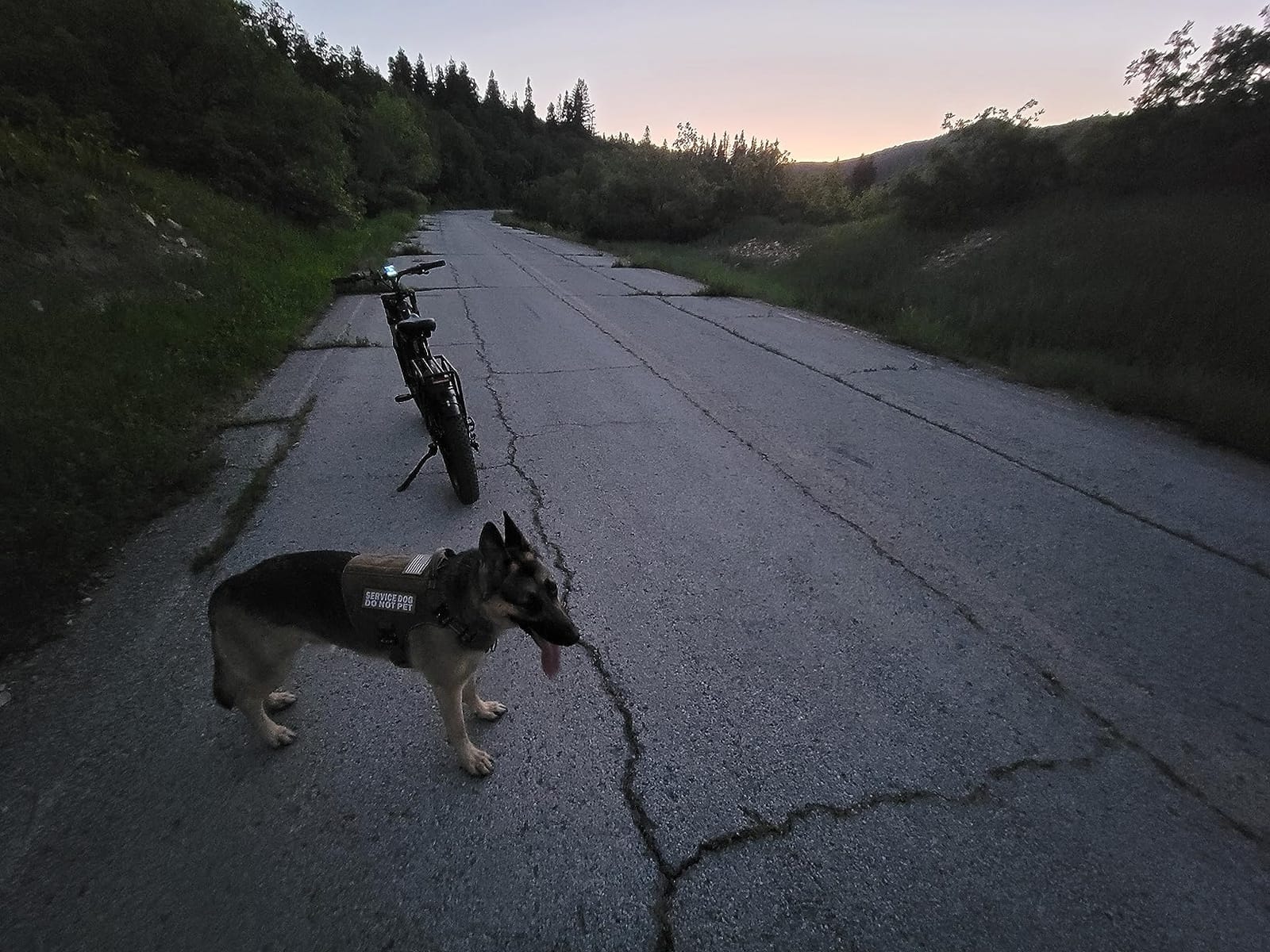
The chassis is dual suspension, with an adjustable alloy hydraulic lockout fork up front and a rear shock, and the wheels are 26×4 puncture-resistant fat tires. Braking is handled by 160 mm dual hydraulic discs, which is the one specification here I would want bigger, though 160 mm is still a true hydraulic system rather than the cable pull found on cheaper bikes.
Build details are unusually generous for the segment: five riding modes, a seven-speed drivetrain, an LCD display with a USB charging port, an LED headlight and an integrated taillight indicator. The bike also arrives 95% assembled, which matters if you are 300 lb and not looking forward to a full workshop day. The two-year frame warranty is the longest frame cover in this group.
Who the DAMSON R5 PRO suits
It suits a rider up to roughly 350 to 400 lb who also carries cargo, because the 450 lb spec figure leaves genuine margin rather than zero. Owners at higher weights report it feeling stable, and the fat tires give a planted feel on broken pavement and gravel alike.
It also suits anyone with storage problems, since the frame folds in half. For a rider in an apartment without a garage, folding a 26×4 fat tire bike is a real advantage over the full-size alternatives here.
Where the DAMSON R5 PRO falls short
The most repeated complaint is gear slippage under heavy load on steep grades, which is worth taking seriously if your route has real hills. Several owners also replace the supplied saddle, and the instruction manual is widely described as unusable.
It is also genuinely heavy to move when unpowered, and a smaller number of owners report battery failures and real-world range well below the advertised figure. A handful of reviewers also say it never reaches the quoted top speed.
2. Jasion X Hunter ST: Best UL-Certified Fat Tire Pick
Jasion Thunder Electric Bike for Adults,1800W Peak,26”x 4”Fat Tire E Bikes,80 Miles with 864Wh Removable Battery Ebike, 30+MPH Max Speed Bicycles,Hydraulic Brakes,Front Suspension,Patent
400 lb load
UL 2849 certified
1800W peak / 85 Nm
48V 18Ah battery
Pros
- Highest rating in the set at 4.8
- UL 2849 certified electrical system
- 40+ mile real-world range
- Handles two-up riding near 300 lb combined
Cons
- Tires puncture easily without liners
- Brake mounts are plastic not metal
- 66 inch minimum rider height
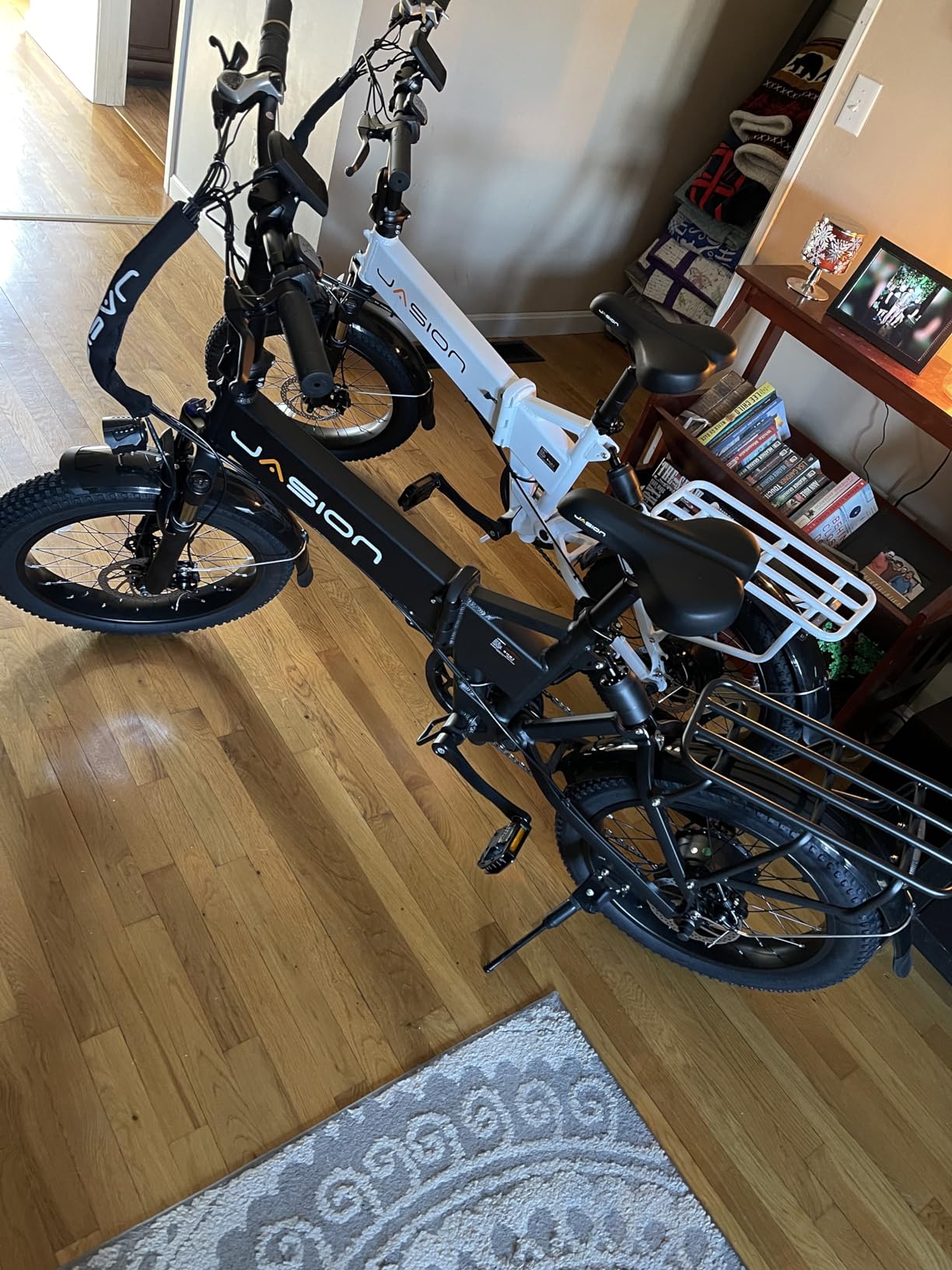
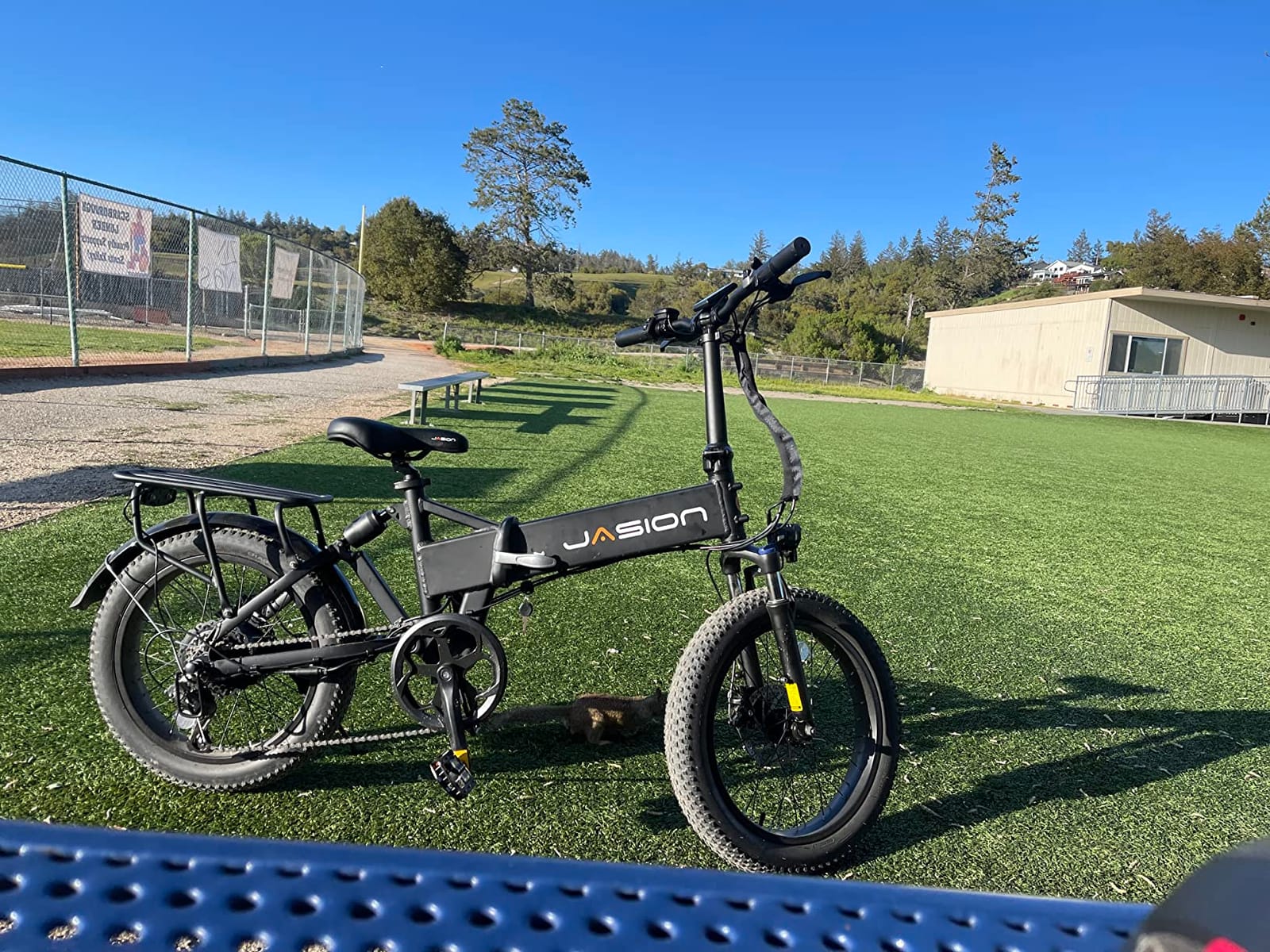
The X Hunter ST is the only bike in this roundup where I would feel genuinely comfortable telling a heavy rider to check the certification before anything else. It is UL 2849 certified, which covers the electrical system as a unit rather than just the battery cell, and that is the standard a safety-focused buyer should insist on.
The numbers underneath are strong too. An 1800 W peak motor produces 85 Nm of torque, the 48 V 18 Ah battery is the largest single pack in this group alongside the big trikes, and the 26×4 fat tires sit on a frame rated for 400 lb. Seven-speed Shimano drivetrain, five assist levels, and assist reaching up to 28 mph.
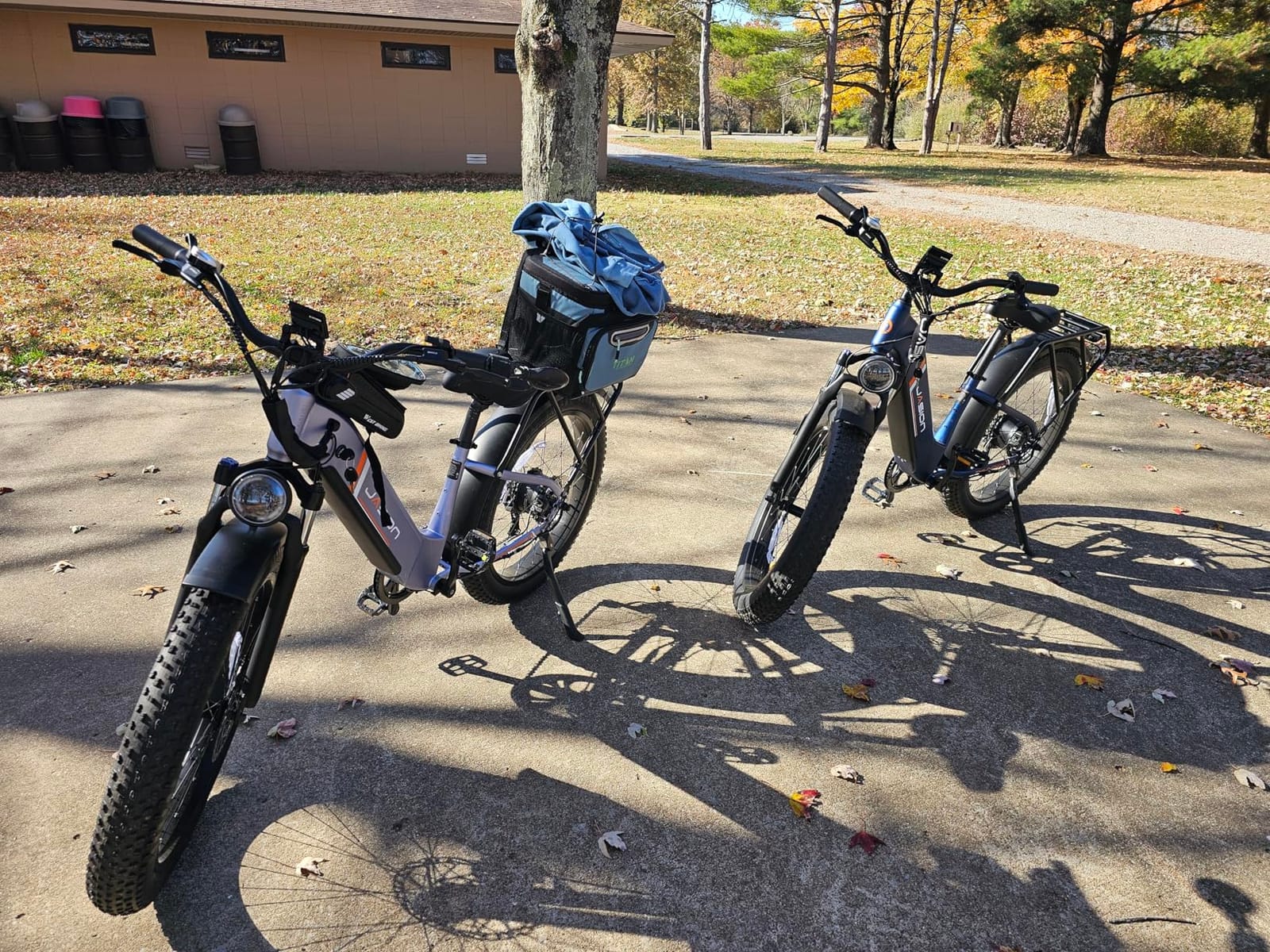
What stands out in the reviews is range. Owners report 40 miles plus with the battery barely dropping, and several mention two-up riding with combined weight near 300 lb without any loss of power. Customer service is repeatedly singled out for quickly replacing damaged or faulty parts, and the frame itself is described as solidly robotically welded.
Smart features are a genuine part of the package rather than an afterthought: battery monitoring, ride tracking, a remote security lock, turn signals, headlight and brake light. Braking is dual hydraulic discs with a claimed two-second controlled stop, which is the hardware a bike at this weight needs.
Who the Jasion X Hunter ST suits
It suits a rider near 300 to 350 lb who wants the strongest certification and the highest customer rating available, and who will actually ride two people sometimes. The two-up capacity report makes it one of the few bikes here that handles a passenger honestly.
It also suits taller riders specifically, since the listed fit window starts at 66 inches and runs upward. If you are 6 foot 2 or taller, this is one of the few picks that does not squeeze you.
Where the Jasion X Hunter ST falls short
The fat tires are not supplied with liners and reviewers report they puncture easily on rough dirt roads, which matters more at higher pressure and higher load. The brake caliper mounts are plastic rather than metal, a detail that would bother me on a bike for a heavy rider.
It is also heavy to handle when not being ridden, and the 66 inch minimum height makes it a poor fit for shorter riders. One owner also notes the speedometer can read differently between two identical bikes, a minor but real quality-control point.
3. Ekellaka EP7PRO Electric Bike: Best for Steep Grades
Ekellaka 9000W Dual Motor Electric Bike for Adults, 48MPH Fast Full Suspension Ebike, 52V 36Ah Removable Battery for 120 Miles Range, 26 Inch Fat Tire Dual Shock All-Terrain E-Bike, 400lbs Capacity
400 lb load
9000W peak dual motor
200 Nm torque
48 mph top speed
Pros
- Dual motors make climbing effortless
- 400 lb rated reinforced frame
- Large 52V 36Ah removable battery
- Controls are easy to learn
Cons
- Rear splash guard linked to a reported crash
- Supplied tires are thin and blow out
- Only 19 reviews to judge reliability
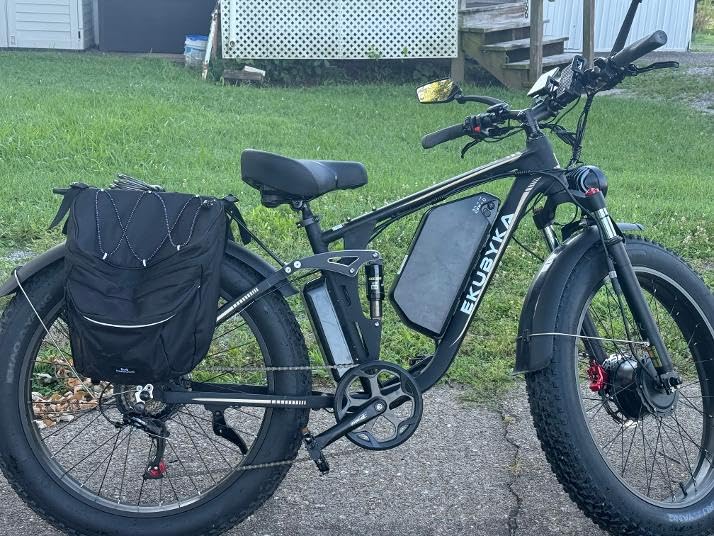
Nothing else in this roundup climbs like the EP7PRO. The dual motor drivetrain combines for 9000 W of peak output and 200 Nm of torque, and the manufacturer claims it holds 40 degree slopes. For a heavy rider on a genuinely steep route, that surplus torque is the entire point of the machine.
The frame is a reinforced aluminum alloy rated for 400 lb, and the 52 V 36 Ah removable battery is one of the two largest packs we covered. Range claims run 30 to 50 miles on throttle and up to 120 miles with pedal assist, which is the kind of headline number that always deserves skepticism, but owners at 220 to 267 lb report the bike pulls strong and climbs well.
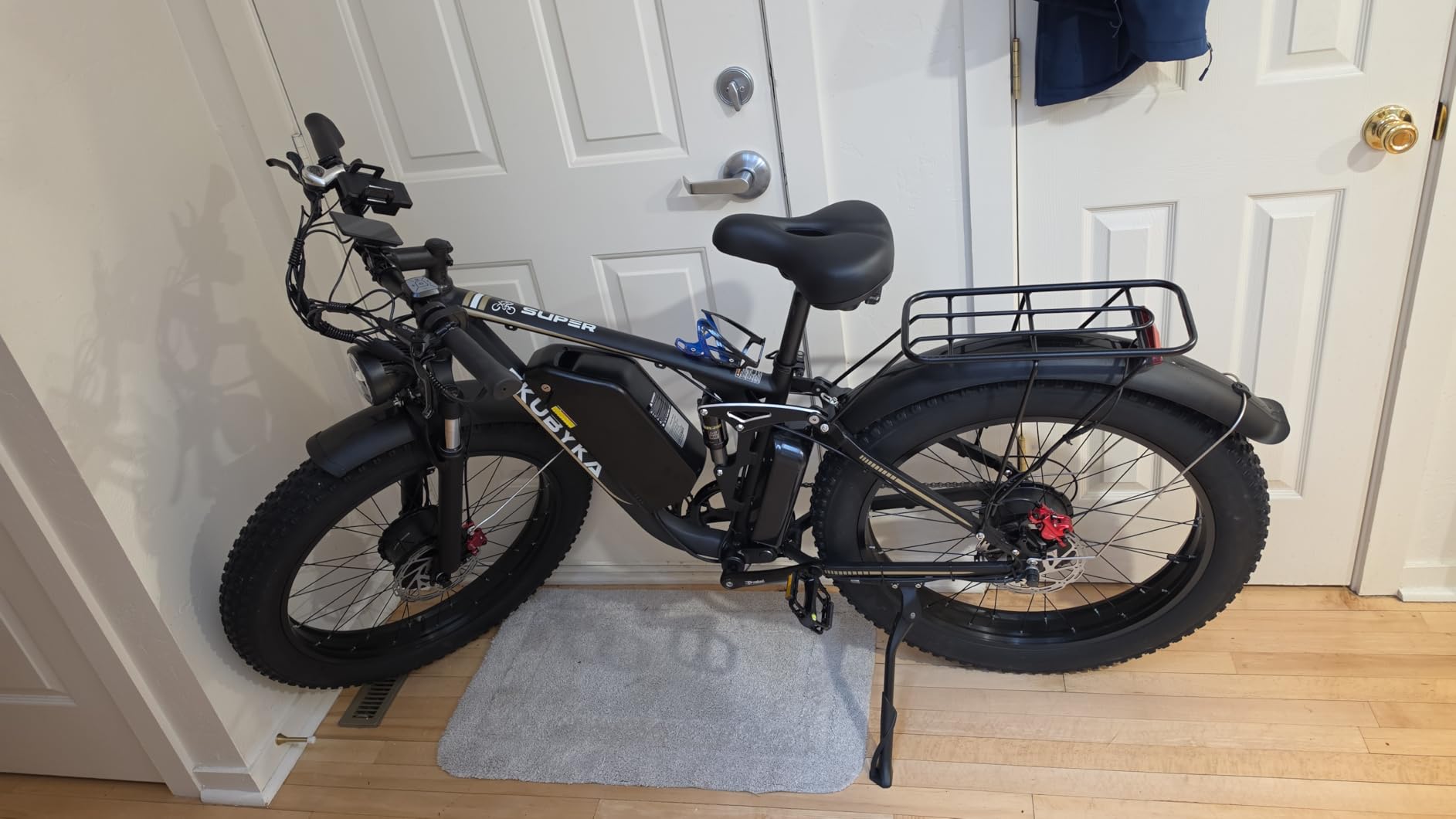
Full suspension is genuinely heavy duty here, with a lockout fork up front and a central rear shock the manufacturer rates at 1000 lb, claiming an 85 percent reduction in bump feel. Tires are 26×4 anti-puncture fat tires, brakes are hydraulic oil discs, and there are six riding modes with a large color LCD display.
Fit is accommodating: the bike is specified for riders from 5 foot 2 to 6 foot 7, and it arrives 90% assembled. Accessories including a phone holder, fenders, tools and LED lights come in the box, which is more than most competitors include at this level.
Who the Ekellaka EP7PRO suits
It suits a rider over 300 lb on a route with real elevation change, where a single 750 W hub motor would leave you pedaling hard uphill. The 200 Nm figure is the reason it climbs when the others do not.
It also suits anyone who wants the assist to handle the work rather than the legs, since six riding modes and a high top speed let you ride it more like a light motorcycle on pavement.
Where the Ekellaka EP7PRO falls short
The most serious negative is a reported crash in which a reviewer bent the front forks, attributed to the rear splash guard design, and which the manufacturer was investigating. That is a safety item I would want resolved before riding at speed.
Beyond that, the supplied tires are described as thin and prone to blowing out, the directions are poor and assembly assumes real bike knowledge, and the review base is only 19, so there is very little long-term reliability evidence. Fenders and rims have also arrived scratched.
4. ANDSKY Apex 50 Dual Motor Ebike: Best Off-Road Power
ANDSKY Dual Motor Ebike, 52V Ebikes for Adults, 3000W Peak Ebike 1300Wh Battery Electric Bike 26″ Fat Tire Full Suspension, Hydraulic Brakes, 500 lb, Up to 40 MPH, 100 Miles, 7-Speed, UL2849
500 lb frame rating
3000W peak AWD
1300Wh battery
40 mph top speed
Pros
- Reinforced frame rated to 500 lb
- True AWD front and rear hub motors
- Dual-piston forged hydraulic brakes
- UL 2849 listed
Cons
- Lowest rating in the set at 4.0
- 10 percent of reviews are one star
- Marketing leads on peak wattage
The Apex 50 is built for riders who take the bike off pavement, and on paper it is one of the two or three most capable machines here. The 500 lb reinforced frame rating is joint highest among two-wheelers, and the drivetrain is a genuine all-wheel-drive setup with hub motors at both the front and the rear wheels.
Combined output reaches 3000 W of peak power and about 200 Nm of torque, with a claimed 40 mph top speed and the ability to hold slopes up to 40 percent. The 52 V 25 Ah pack works out to the 1300 Wh class, and it is a dual removable battery setup with up to 100 miles claimed depending on conditions.
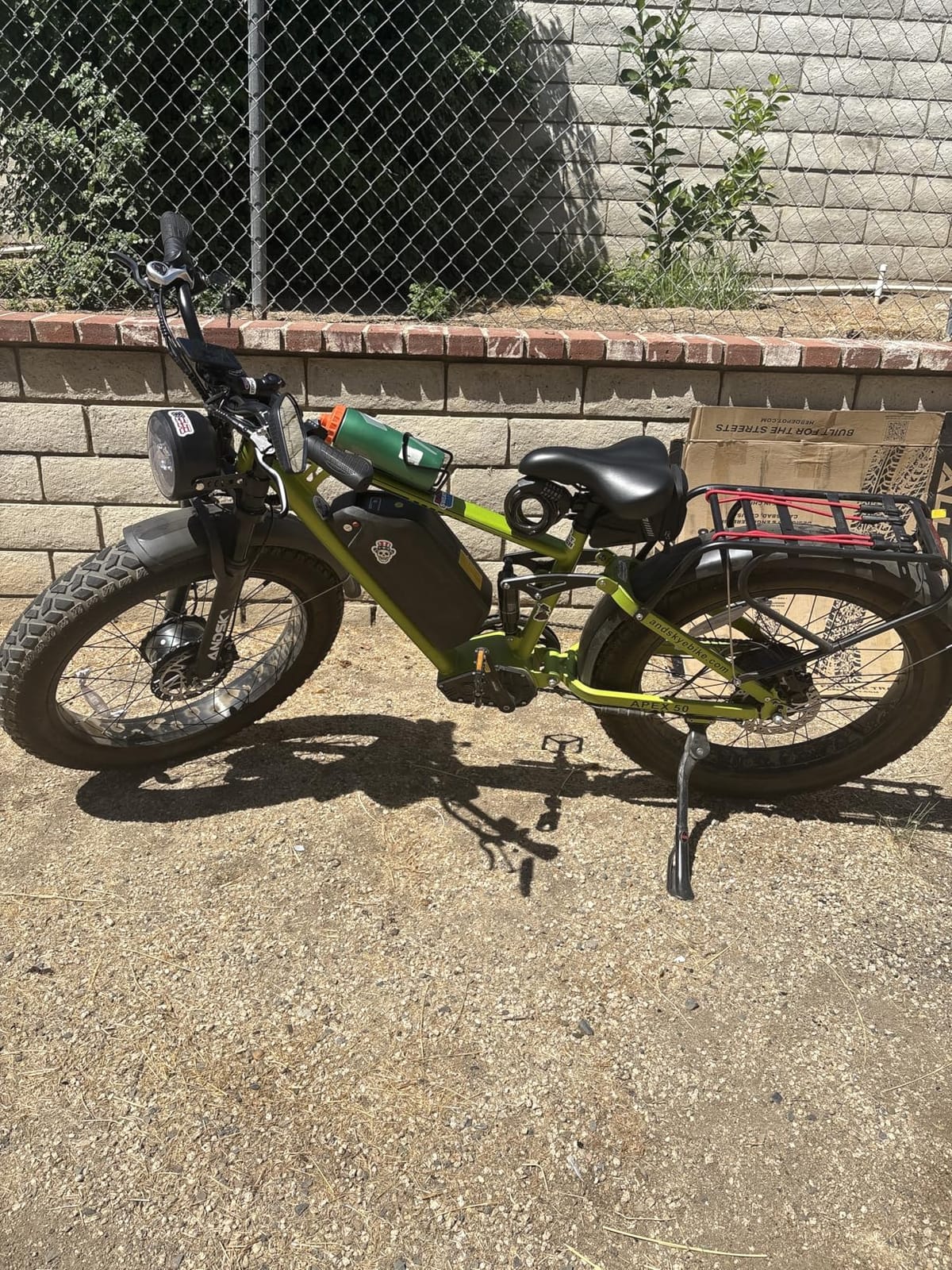
Brakes are the strongest specification on the bike: dual-piston forged hydraulics the manufacturer claims are 30 percent stronger than standard discs, which is the right kind of hardware for a bike that can carry half a quarter ton. Suspension is full, with 26×4 fat tires, a front fork and a racing-style mid-mounted shock absorber.
It is also UL 2849 listed, comes with a 1000 lumen headlight, a seven-speed transmission and an LCD display, and carries a 12-month warranty with lifetime technical support. Detailed review text was not available for this listing, so treat the owner experience as thinner documented than the spec sheet suggests.
Who the ANDSKY Apex 50 suits
It suits a 350 to 450 lb rider who rides trails, gravel and rough ground rather than commuting on pavement. All-wheel drive traction is the reason, since it keeps the rear wheel planted on loose surfaces where a single rear motor would spin.
It also suits anyone near the upper end of the two-wheel weight range who wants a published 500 lb rating from a manufacturer rather than a retailer. That rating is the headline strength.
Where the ANDSKY Apex 50 falls short
It has the lowest average rating of the twelve at 4.0, with 10 percent of ratings at one star across a review base of just 30. A small sample at that score is a real warning, not a rounding error.
The marketing also emphasizes peak wattage and top speed rather than ride quality, which is the pattern I would generally distrust. Given the 48 mph class speed, confirm the local rules before riding it on public roads, and expect the published top speed to be conditional on conditions.
5. TINIOVER Folding Trike: Best for Balance and Two-Up Rides
TINIOVER Creek Folding Electric Tricycle for Adults, Etrike with Passenger Seat & Backrest, 1000W 20MPH 80Miles Fat Tire Electric Trike, 3 Wheel Electric Bike, Reverse, Parking, Differential, Gray
550 lb max load
1000W / 90 Nm
720Wh battery
triple hydraulic brakes
Pros
- Highest load rating in the roundup at 550 lb
- Very stable at low speeds
- Convertible to passenger or cargo
- UL 2849 and UL 2271 certified
Cons
- 125 lb is heavy to move
- No low crawl gear for steep hills
- Passenger kit is a separate purchase
If you are nervous about balance, a trike removes the single biggest objection that heavy riders raise, and this is the most capable trike in the roundup. The 550 lb maximum load is the highest rating of any product here, and the frame is high-torsional rigidity carbon steel with a three-layer anti-rust coating.
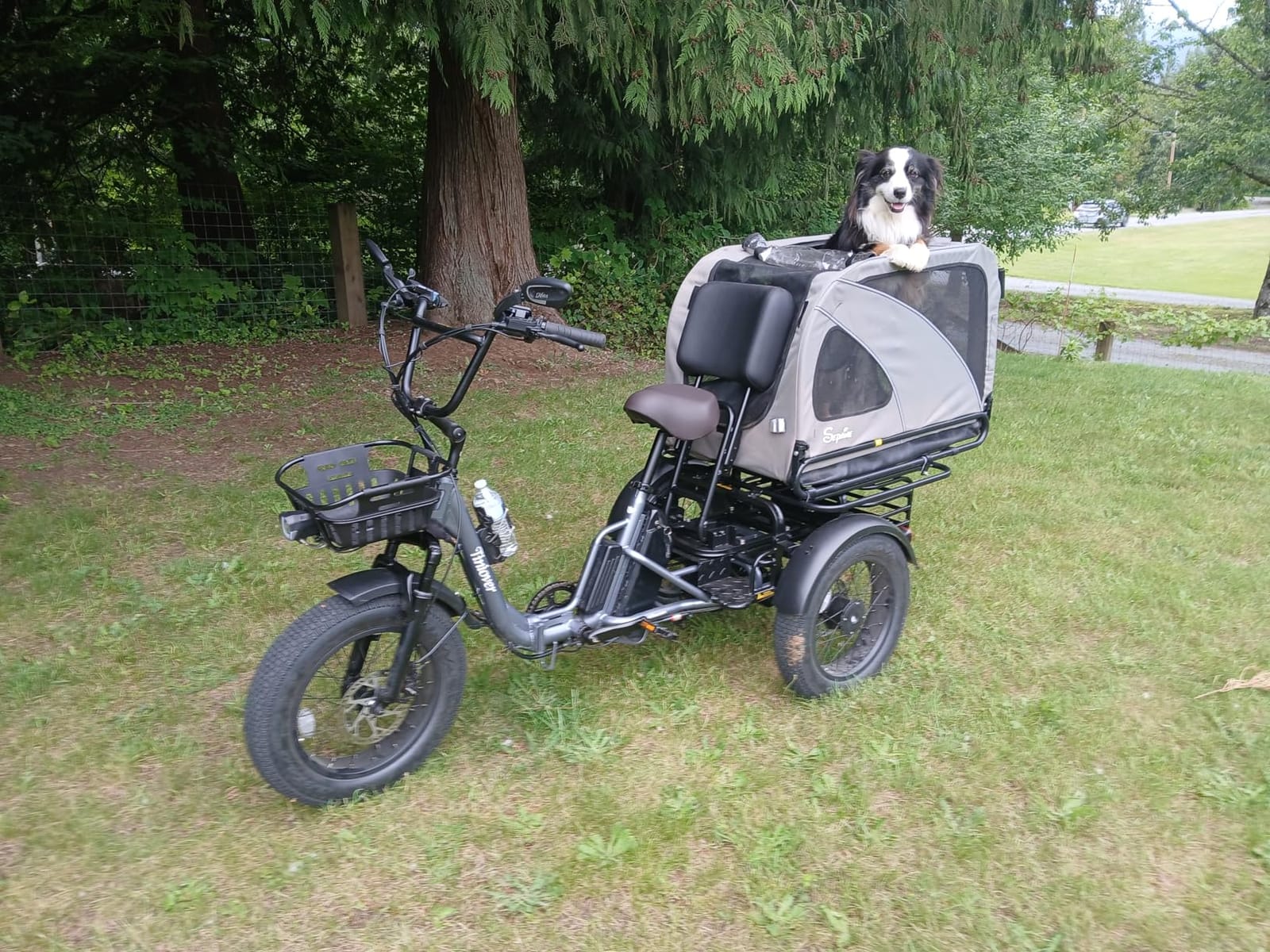
What makes it interesting for heavy use is the modular rear. The same trike converts between a passenger seat kit and a cargo rack kit, so a 550 lb rating can serve a rider plus a companion, or a rider plus a large grocery run, depending on the week. Several reviewers in their seventies, some using canes or wheelchairs, rely on it for ramp access and errands.
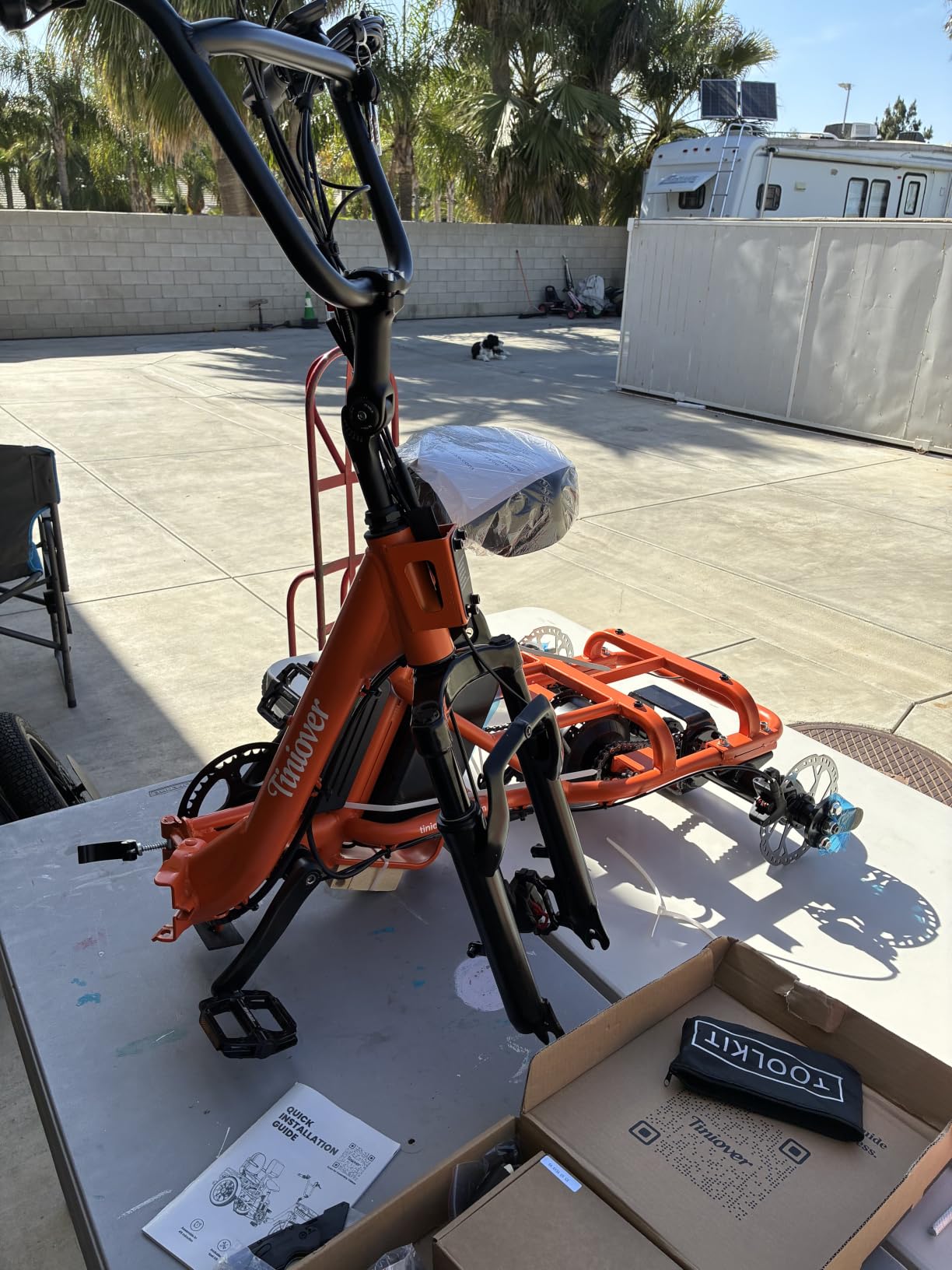
The mechanical package is better than most two-wheelers in this roundup. There is a rear wheel differential so the two rear wheels can turn at different speeds through corners, triple hydraulic brakes with 180 mm rotors and an integrated parking brake, an IP65 dust and water rating, and front hydraulic suspension with a shock-absorbing seat.
Assist uses mid-axis torque sensing rather than a simple cadence sensor, which produces a more natural ramp-in under load. The 48 V 15 Ah UL 2271-certified LG cell battery is removable, and the trike is certified to UL 2849, UL 2271 and UL 2272. Reverse, hill parking, cruise control, an electric horn and a startup password are all standard.
Who the TINIOVER trike suits
It suits a 400 lb plus rider who wants to carry a passenger, or a rider who has been hesitant about a two-wheeler for balance reasons. The low standover height and six-way adjustable seat and backrest fit a wide range of body types, from 4 foot 7 to 6 foot 7.
It also suits older riders returning to cycling, and anyone who wants reverse gear for maneuvering a loaded trike out of a driveway or a tight parking space.
Where the TINIOVER trike falls short
It weighs 125 lb, and assembly takes a few hours even for experienced owners. If you cannot park at ground level or lift things, that weight is the deciding factor against it.
First gear is not low enough for really steep grades, so riders report needing meaningful pedalling on hills. The passenger seat and cargo rack are a separate purchase that adds time before the trike is fully usable, and warranty return logistics have been reported as difficult.
6. PUCKIPUPPY Husky Plus: Best for Long Errand Days
PUCKIPUPPY Dual Battery Electric Tricycle with 110-Mile High Range, 960W Peak Motor Pickup Class Trike, 500lb Load Capacity, 20” Fat Tires and Large Basket for City and Mountain Trails, Husky Plus
500 lb capacity
960W peak motor
dual 48V batteries
90-110 mile PAS range
Pros
- 500 lb pickup-class aluminum frame
- Dual battery design supports genuinely long range
- Four-part comfort system
- Large rear basket included
Cons
- 139 lb is very heavy to move unpowered
- Requires keeping the large factory box
- Only 46 reviews and 7 percent one star
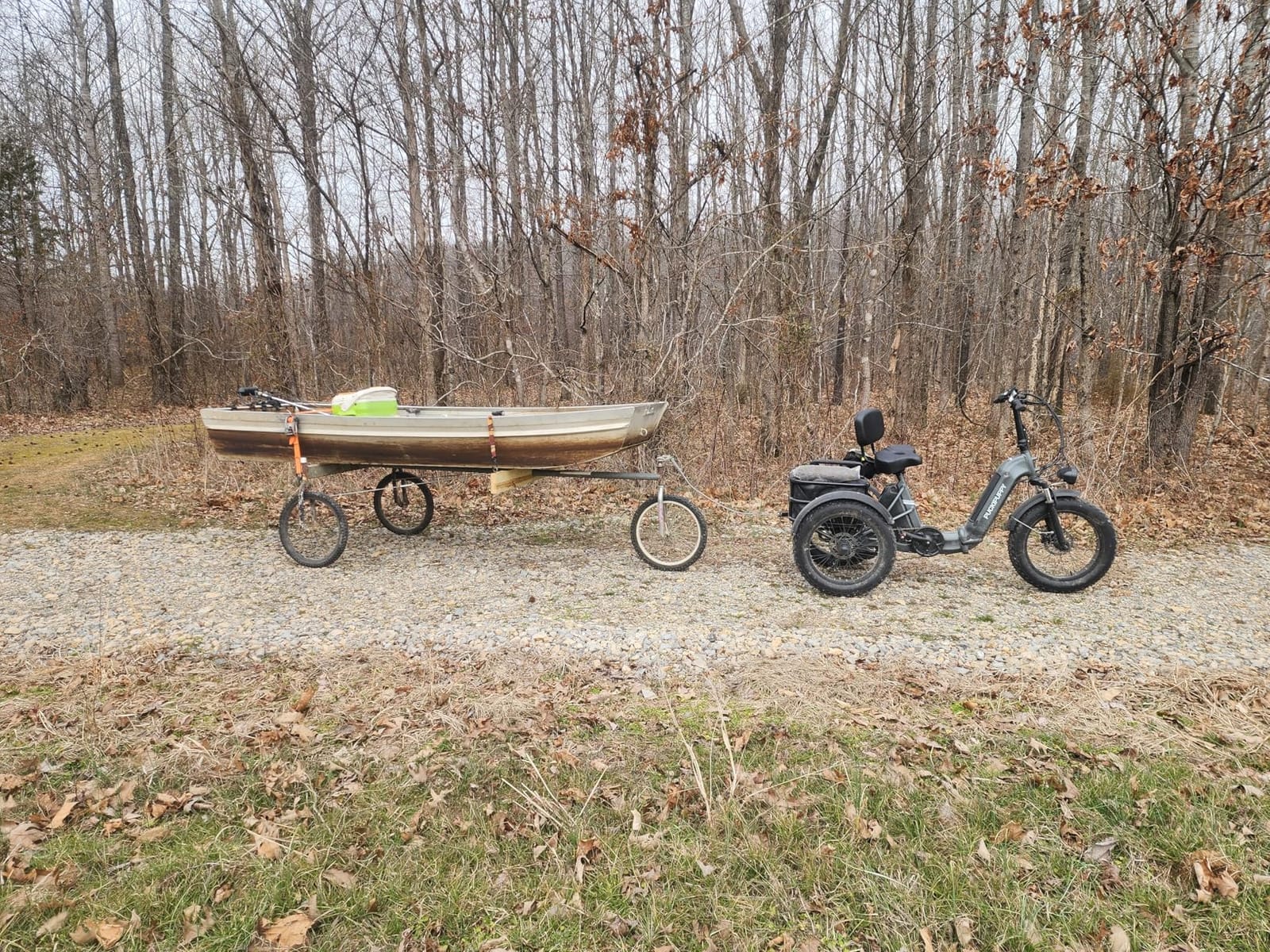
The Husky Plus is built as a pickup-class trike, and the frame is the point. It is a gold-ratio aluminum alloy chassis rated from 350 to 500 lb, with a rear wheel differential and hydraulic brakes, which makes it a genuinely different proposition from the commuter trikes most heavy riders are shown.
Range is the headline. It carries two removable batteries, a 48 V 17.4 Ah and a 48 V 15 Ah, and claims 90 to 110 miles combined on pedal assist, with the manufacturer explicitly noting that this varies with terrain, mode, weather and rider weight. A 48 V 2 A charger fills each in seven to eight hours.
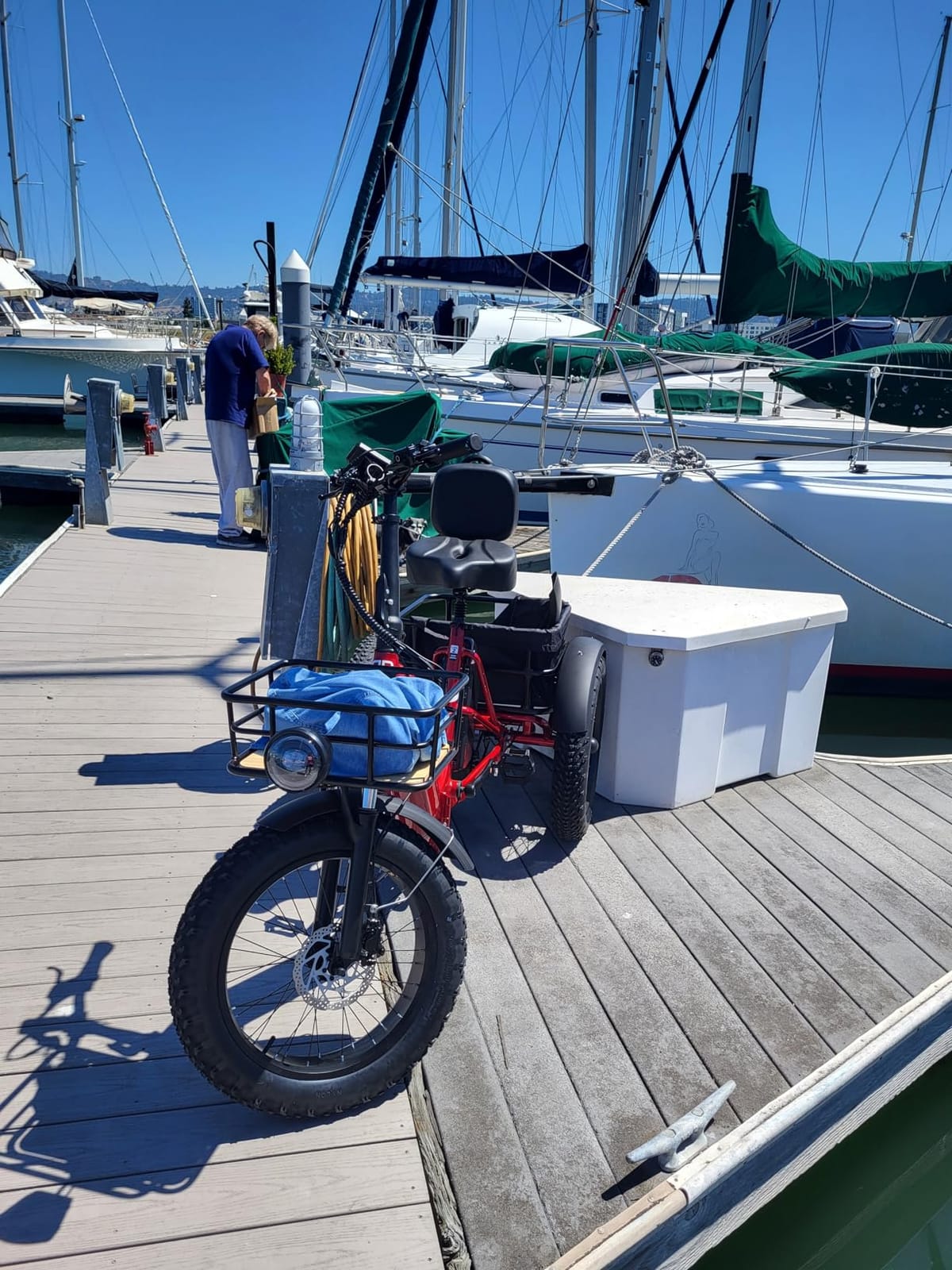
Comfort is handled in four places at once: a suspension fork, a saddle with a backrest, seatpost springs, and 20×4 fat tires. The rear basket measures 19.68 by 17.5 by 10.2 inches, which is large enough for a real grocery run rather than a token, and the 960 W peak rear hub motor climbs 30 to 40 degree grades.
An integrated LCD color display shows speed, gear, lights and battery level, and the trike is factory folded at 85% assembly. Detailed customer review text was not returned for this listing, so the assessment here rests on the specification and the review distribution rather than on owner narrative.
Who the PUCKIPUPPY Husky Plus suits
It suits a 350 to 450 lb rider who uses the bike as a car replacement for errands, groceries and longer trips between charges. The dual battery layout is what makes that realistic rather than aspirational.
It also suits anyone who wants a backrest and seatpost springs as standard, since a heavier rider on a trike is a long time in the saddle and comfort hardware matters more here than on a two-wheeler.
Where the PUCKIPUPPY Husky Plus falls short
At 139 lb it is the heaviest product in this roundup, and moving it without power is genuinely awkward. Storage planning matters before you buy, not after.
Owners are also told to keep the large factory packaging box for service needs, which is a real inconvenience in a small apartment. The review base is 46 with 7 percent one star, and no written review detail was available to characterise specific complaints.
7. TST R004 Electric Bike: Best Payload Per Pound
TST Electric Bike for Adults, 48V 15/25 Ah Battery, 2000W Peak Motor, 28MPH
450 lb max load at 66 lbs
750W / 2000W peak
mechanical disc brakes
20x4 tires
Pros
- 450 lb load on the lightest bike here
- Best-established with 388 reviews
- Removable and lockable battery
- 90 percent pre-assembled
Cons
- Mechanical cable disc brakes
- Iron frame is heavy for the class
- Shortest warranty at 180 days
The TST R004 solves a different problem from most of this roundup: how do you get a genuine 450 lb load rating onto a bike you can still lift? At 66 lb it is the lightest product here by a wide margin, and the 450 lb maximum load figure is the highest stated capacity among 20 inch bikes.
That weight matters more than it sounds. Riders weighing 300 lb or more frequently describe heavier bikes as impossible to carry up stairs or lift into a vehicle, and a 66 lb bike with a 450 lb rating changes where you can actually store and charge it.
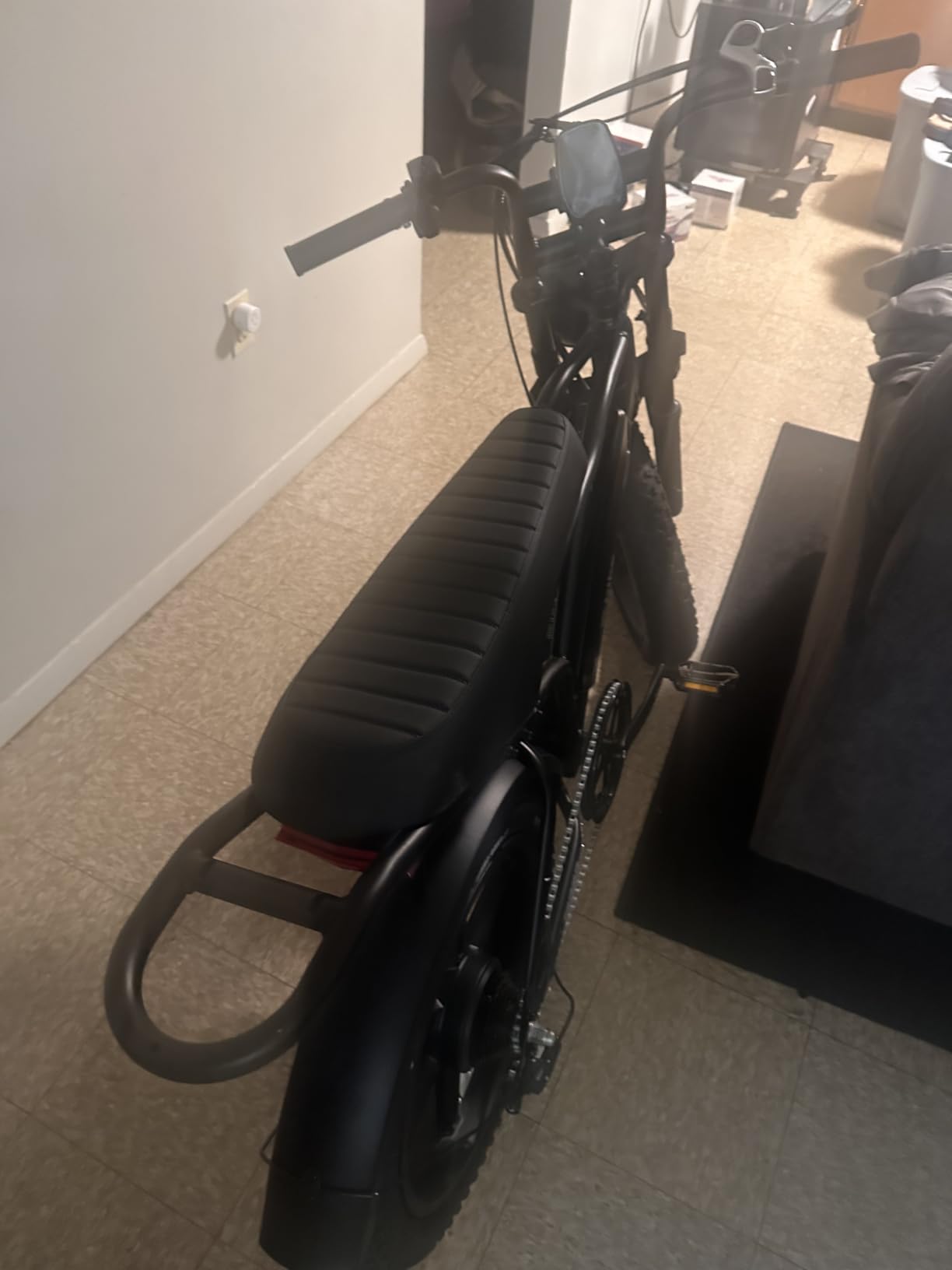
It is also the most established product in the set by a distance, with 388 reviews and a category rank of number 8 in adult electric bicycles, which means there is a genuine body of long-term owner experience behind the numbers. Buyers highlight strong low-speed torque from the 750 W motor, the removable and lockable battery, and comfortable dual suspension.
The motor is 750 W nominal with 2000 W peak, the 48 V 15 Ah battery is removable, and range is up to 65 miles on pedal assist and 40 miles on throttle, with 50 to 60 miles typical on assist depending on rider weight. It arrives 90% assembled with an assembly video and manual.
Who the TST R004 suits
It suits a rider around 250 to 350 lb who needs a stated 450 lb rating for margin but who still has to move the bike themselves. Storage and transport ability is a real constraint for heavier riders and this one solves it.
It also suits anyone who wants a large review base before committing, since 388 reviews with a 4.2 average and 67 percent five star is a much stronger evidence base than most bikes in the heavy-rider category.
Where the TST R004 falls short
The brakes are the deal breaker for many heavy riders. These are mechanical linear-pull discs, not hydraulics, which means cable adjustment before and between rides, and less consistent power as pads wear at the loads this bike is rated for.
The frame is iron rather than aluminum, which is heavier and less refined than most competitors, and the 180-day warranty is the shortest in the set. Range is also shorter than the 26 inch fat tire models, and the ride quality is the plainest here.
8. Jasion RetroVolt: Best for Fat-Tire Cruising
Jasion RetroVolt Electric Bike, 70-Mile Range, 2000W Peak, Fat Tire
330 lb payload
2000W peak / 99 Nm
70 mile claimed range
rear seat pad
Pros
- 4.5 average across 170 reviews
- Rear seat pad for short two-up trips
- Five riding modes with a seven-speed drivetrain
- Arrives 85 percent pre-installed
Cons
- 330 lb payload is the lowest rating here
- Recommended rider height tops out at 6 foot 3
- Moped-style frame is not for trails
The RetroVolt is a beach cruiser, and I want to be direct about its limits for this audience: its 330 lb payload rating is the lowest in this roundup. If you are looking for a bike rated for a heavy rider, this is not it. If you are looking for a very well-rated fat tire cruiser with a 99 Nm motor, it is genuinely good.
The rating is still only usable for a rider around 250 lb with light cargo, or as a two-up bike where the combined weight of both riders is the number that matters. The rear seat pad is genuinely useful for short passenger trips, and that is a feature most fat tire cruisers in this price bracket do not offer.
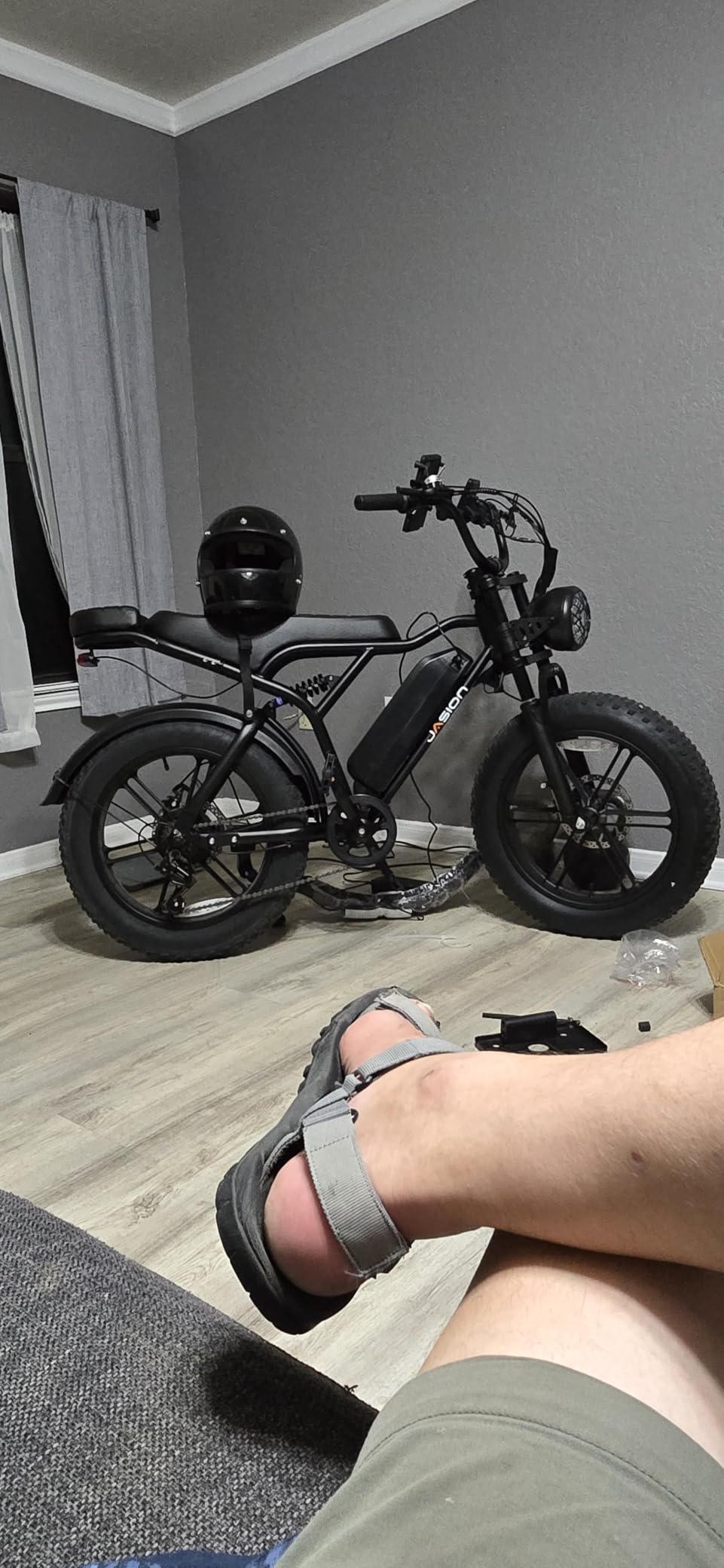
Power comes from a 2000 W peak motor producing 99 Nm of torque, which is real torque rather than a headline wattage number, and the 48 V 15 Ah battery is removable and UL-certified with up to 70 miles claimed and a five to six hour recharge.
Wheels are 20×4 fat tires on dual suspension, and lighting is thorough for a cruiser: a large front headlight with a horn, a rear light, and high-brightness brake alerts. It arrives 85% pre-installed, which keeps setup short for anyone who does not want a full build.
Who the Jasion RetroVolt suits
It suits a rider near 250 lb who wants a relaxed, upright beach-cruiser position on pavement, sand and boardwalk rather than a hill climber. Five riding modes give flexibility between commuting, cruising and exercise.
It also suits a couple who want short two-up trips, since the rear pad plus the fat tires make that more comfortable than a typical cruiser.
Where the Jasion RetroVolt falls short
The 330 lb payload rating is the headline limitation, and it is a hard number rather than a judgement call. A 300 lb rider with a passenger is over it immediately.
Recommended rider height also tops out at 6 foot 3, which excludes taller riders, and the moped-style frame is built for relaxed cruising rather than serious off-road trails. The 2000 W figure is peak output, not sustained.
9. Jasion EB5 MAX: Best for Security and Accessories
Jasion EB5 MAX Electric Bike for Adults 2000W Peak Motor, 48V 15Ah Battery
720Wh lockable battery
2000W peak motor
26x4 fat tires
180mm discs
Pros
- Lockable removable battery deters theft
- Color display with cruise control and password
- Fenders rack and lights included
- 281 reviews at a 4.4 average
Cons
- No published load capacity
- Front suspension only
- Peak wattage is short-duration output
The EB5 MAX is the one bike here I cannot rate on load capacity, because the manufacturer does not publish one. That is a disqualifier for a heavy-rider roundup and I want to be clear about it, even though the rest of the bike is well made and very popular with 281 reviews at a 4.4 average.
What it does publish is good. A 2000 W peak motor takes it over 28 mph, the 48 V 15 Ah pack works out to 720 Wh and is both removable and lockable, and range is up to 65 miles on assist and 35 miles on throttle. The 26×4.0 puncture-resistant fat tires and a lockable suspension fork are both sensible at higher weight.
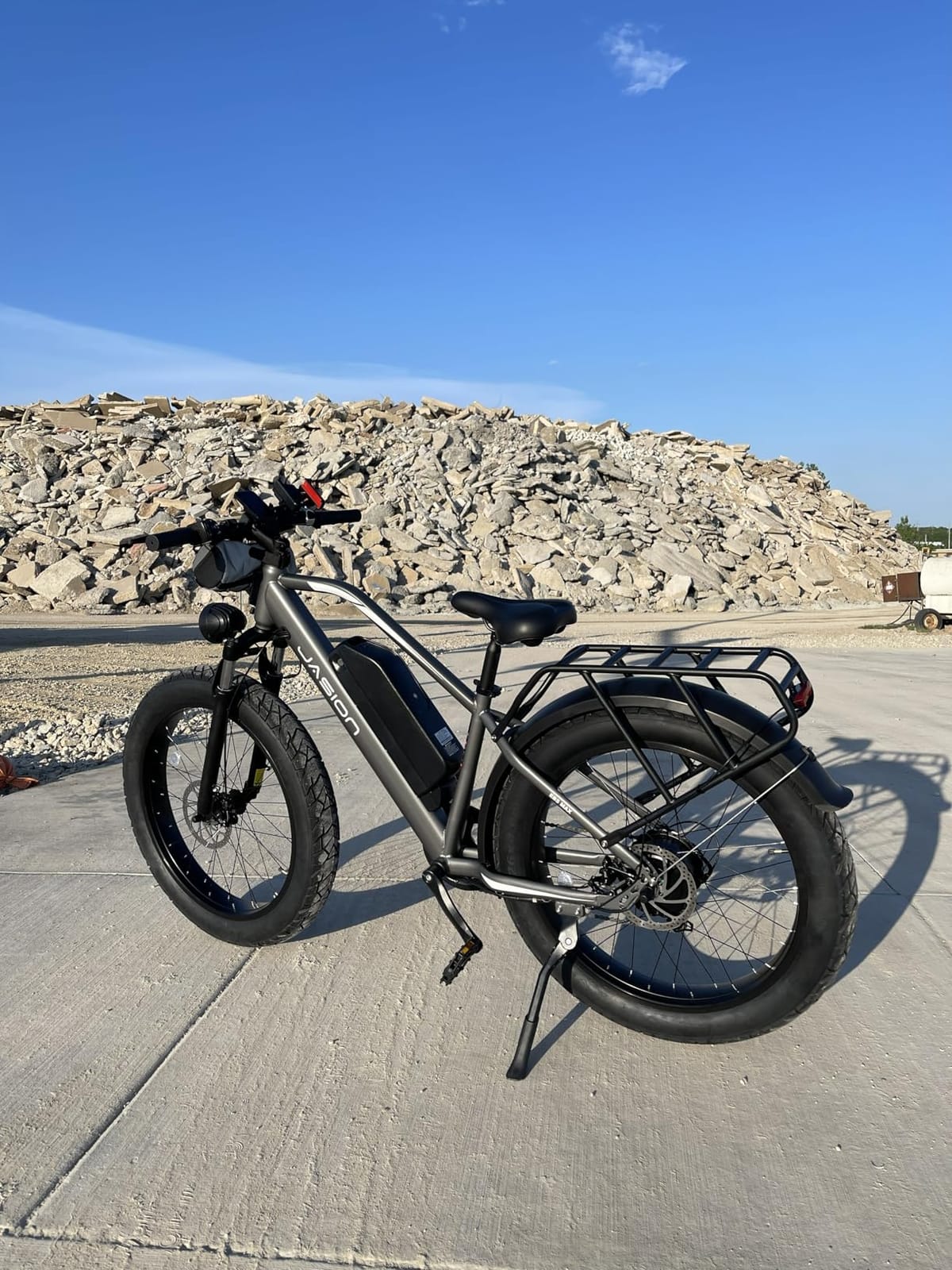
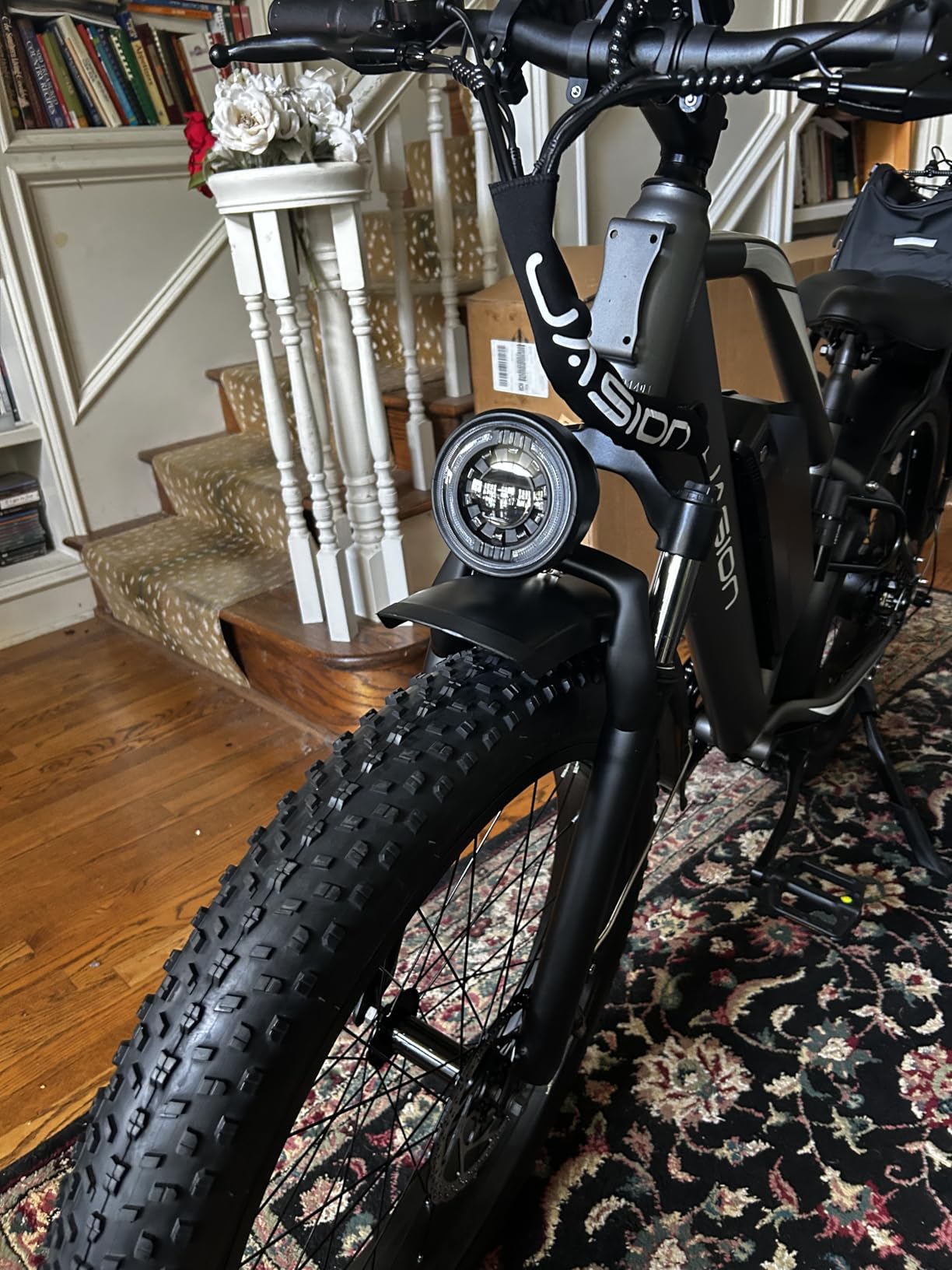
Brakes are 180 mm dual discs, which is the largest rotor size in this roundup for a two-wheeler, and that is a genuine plus for stopping a heavy bike. Note that the listing describes the brake style only as standard disc, without specifying hydraulic or mechanical, which is exactly the ambiguity heavy riders should avoid.
Accessories are unusually complete and included rather than sold separately: pre-installed fenders, a rear rack, brighter front and rear lights than a standard mountain bike, a color display with real-time speed and mileage, cruise control, and a password-protected dashboard. Buyers consistently rate the fat tire grip in sand, mud, gravel and wet roads.
Who the Jasion EB5 MAX suits
It suits a rider around 250 to 300 lb who will stay under a 330 lb combined load and who values theft deterrence most. The lockable removable battery is a real advantage for a bike parked outside a building or in a shared bike room.
It also suits anyone who wants fenders, a rack and lights in the box rather than as a first-month purchase, and who prefers a color display with cruise control for cruising and commuting.
Where the Jasion EB5 MAX falls short
No published weight or load capacity is the deal breaker for this audience. You cannot do a payload calculation against a number the manufacturer has not provided, which puts the verification burden entirely on you.
Suspension is front only, so ride quality on rough ground is limited, and the 2000 W peak figure reflects short bursts rather than sustained power on a climb. Some packages also arrive in separate shipments with staggered timing.
10. LEONX M2 Pro Electric Bike: Best 500 lb Rated Two-Wheeler
LEONX M2 Pro Electric Bike for Adults, 1800W Peak Motor, 85-Mile Long Range
500 lb max load at 90 lbs
1800W peak / 110 Nm
dual suspension
26x4 tires
Pros
- 500 lb maximum load rating
- Reviews from 210 to 314 lb riders confirm performance
- Turn signals and horn included
- Exceptional packaging quality
Cons
- 90 lb is heavy to carry up stairs
- Mechanical disc brakes squeal
- Real range for heavy riders near 25-30 miles
Of the two-wheelers here, the M2 Pro publishes the highest load rating at 500 lb, and it does so on a 90 lb bike. That combination is what separates it from the 450 lb bikes: a 500 lb figure on a heavy frame behaves differently under load than a 450 lb figure on a 66 lb frame.
The motor is an 1800 W peak brushless rear hub producing 110 Nm of torque, which is the highest torque figure among two-wheelers in this roundup, and it is claimed to climb 30 degree grades. The removable 48 V 17.5 Ah battery claims up to 85 miles of pedal-assisted range, and there are five assist levels.
The evidence base is the strongest argument here. Reviews from riders at 210 lb, 220 lb and 314 lb all describe the bike as stable, fast and well built, and heavy riders are effectively this bike’s core advocate group rather than an edge case. Buyers also single out the packaging quality, which sounds minor until a 90 lb bike arrives at your door.
Equipment is generous: a lockable and adjustable front suspension fork plus rear shock, 180 mm dual disc brakes, 26×4 fat tires on an MTB frame, a seven-speed drivetrain, an LCD display with a USB charging port under the handlebar switch, five riding modes, turn signals, front and rear lights and a horn. It arrives 95% pre-assembled with a tool pouch.
Who the LEONX M2 Pro suits
It suits a 350 to 450 lb rider who needs the highest published two-wheeler rating available and who can manage a 90 lb bike. Owners describe carrying it up stairs daily, so plan storage around that.
It also suits riders buying for a partner or a family member, since the 500 lb rating means the bike can be handed between two heavier riders without either of them being over the limit.
Where the LEONX M2 Pro falls short
The brakes are mechanical rather than hydraulic, and one reviewer rated them 3 out of 10 for squeal. On a 500 lb rated bike that is the single specification I would want changed before buying.
Range is the other big gap between headline and reality: heavy riders report roughly 25 to 30 miles, far short of the 85-mile claim. The supplied saddle is commonly replaced, the frame and brakes squeak after use, and the step-over frame is not suitable for riders under about 5 foot 10.
11. DTTZH F6 Electric Bike: Best Comfort Pick Under 305 lb
Adult Electric Bike, Fast E Bike for Adults Electric Fat Tire Ebike
305 lb weight limit
UL 2849 certified
full suspension
NFC security
Pros
- Comfortable wide seat that can carry a passenger
- Adult-scaled frame rather than a toy size
- NFC tag and lockable battery deter theft
- Easy one-person assembly
Cons
- Weight limit is only about 305 lb
- One unit arrived with a dead motor
- Oversized box makes returns difficult
The F6 is the most interesting value pick in the group, and I want to be upfront that it is not rated for the heavy riders this article is about. Its stated weight limit is about 305 lb, which puts it in the 250 to 300 lb band rather than above it.
What it does offer at that level is genuinely good hardware. A 750 W high-torque brushless motor with 1500 W peak sits in an alloy heat-dissipating casing, and the 48 V 15.6 Ah battery takes 22 miles on throttle and 60 miles on pedal assist, recharging in five to seven hours on a 3 A fast charger.

Comfort is where this bike differentiates itself. The seat is unusually wide, and one owner notes it can fit a passenger, which is rare at this level. A 5 foot 10 rider reports that it does not feel like a children’s bike, and that sizing honesty matters for adult buyers in this price bracket.
It is UL 2849 certified, has full suspension with a hydraulic front shock and a rear shock, and uses 20×4 one-piece integrated wheels for sturdiness and load bearing. Security features are genuinely useful: NFC card or four-digit password, a lockable removable battery, and a four-inch color display readable in direct sunlight.
Who the DTTZH F6 suits
It suits a rider in the 250 lb range, or a couple around 300 lb combined, who wants full suspension, a wide seat and theft deterrence at a modest outlay. Customer service is repeatedly praised for free replacement parts and even a replacement motor.
It also suits anyone who needs to carry a second person occasionally, since the wide seat is one of the few in this roundup rated to take a passenger.
Where the DTTZH F6 falls short
The 305 lb weight limit is the number that ends the conversation for riders above that. The 20 inch wheel and high carbon steel frame also make it heavy for its size.
One documented unit arrived with a dead motor that had to be replaced. Returns are difficult because the oversized box is rejected by USPS and some return centers, and the stated height range overpromises for shorter riders, as one buyer at 4 foot 10 found.
12. tokera MY2: Best Low-Step Access Pick
tokera 2000W Electric Bike 24″*3″ Fat Tire for Adults Teens – 48V 18Ah (130KM Max), All-Terrain Ebike 11″ Ultra-Comfort Seat – Snow Sand & Trails UL 2849 Certified Step-Thru Front Suspension/USB-C
330 lb max load
step-thru frame
2000W peak motor
11 inch extra-wide seat
Pros
- Step-thru frame makes mounting and dismounting easier
- 11 inch extra-wide seat is a real comfort feature
- No one-star reviews in the distribution
- UL 2849 certified
Cons
- 330 lb max load is low for this category
- Shortest warranty at six months
- Front suspension only and 24x3 tires
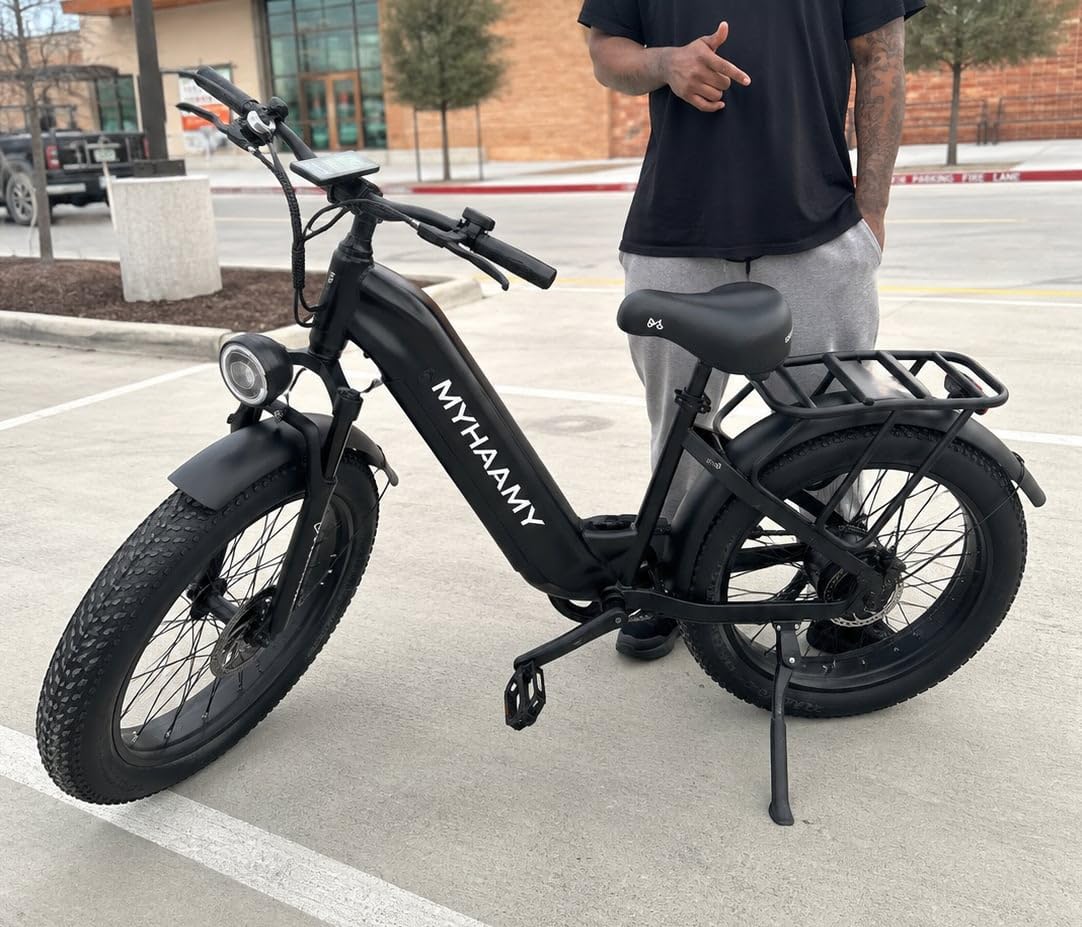
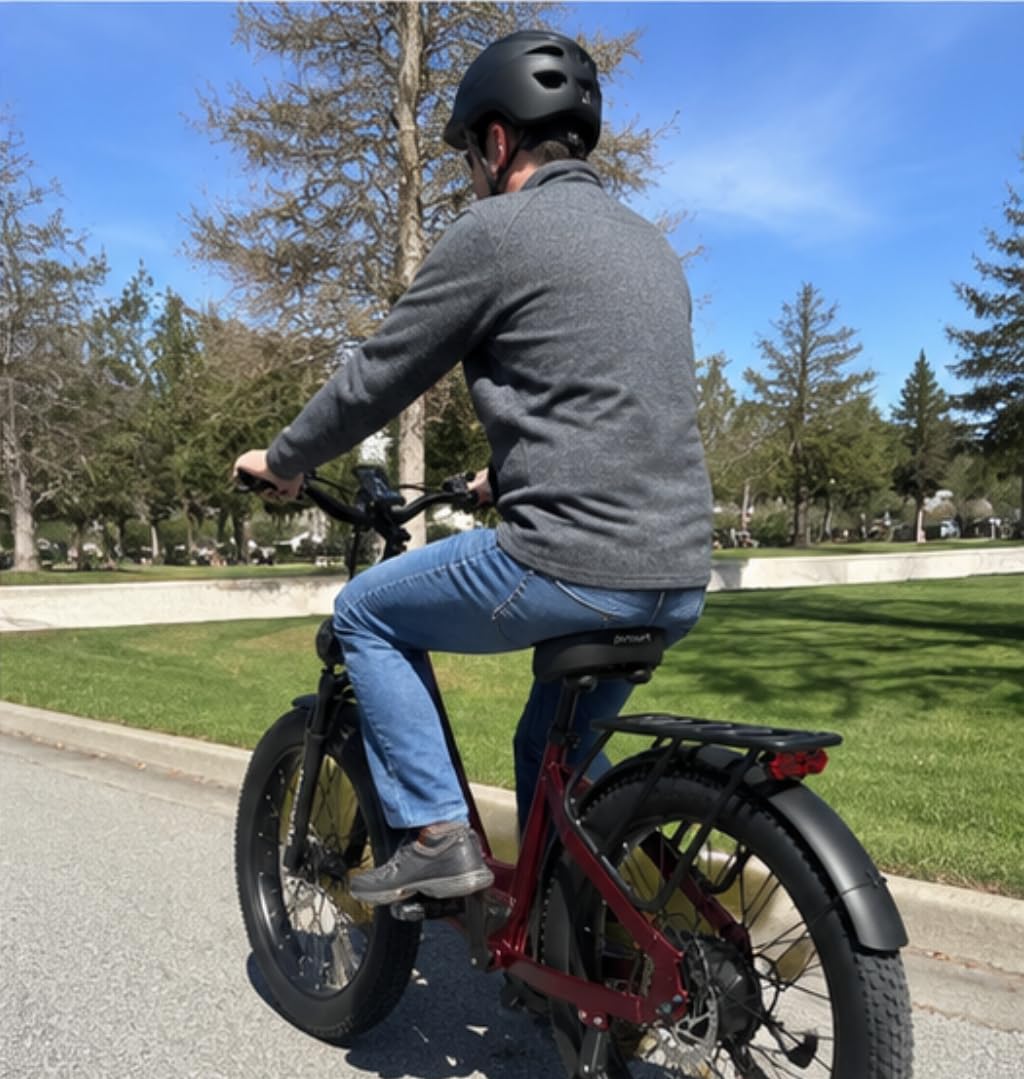
The MY2 earns its place for one reason: the step-thru frame. Mounting and dismounting a top tube is exactly the moment a heavy rider notices a frame design problem, and eliminating that is worth more to this audience than another hundred watt-hours of battery.
It also has an 11 inch extra-wide ergonomic seat, which is the largest saddle dimension anywhere in this roundup and directly relevant to sit-bone comfort at higher weight. The 24 inch wheel size sits between 20 and 26 inch bikes, a deliberate compromise between agility and stability.
Power comes from a 2000 W peak high-speed brushless motor that handles 30 degree inclines, fed by a removable 48 V 18 Ah battery with up to 85 miles of pedal assist and a seven to eight hour full charge. The front dual-tube damping fork is claimed to absorb 90 percent of trail impact, and braking is dual disc.
Tires are 24×3.0 puncture-resistant fat tires rated for sand, snow, mud and gravel, and it is UL 2849 certified with a seven-speed drivetrain, three riding modes and a USB charging port. Sentiment is uniformly positive, with zero one-star ratings in the distribution, though the sample is only 31 reviews.
Who the tokera MY2 suits
It suits a rider in the 250 to 300 lb band who has limited hip or knee mobility, or who simply prefers not to swing a leg over a top tube every time they stop. The oversized seat then makes longer rides comfortable in a way a standard saddle would not.
It also suits riders on mixed surfaces, since the 24×3.0 tires are described as handling sand, snow, mud and gravel without the extreme width of a 26×4.
Where the tokera MY2 falls short
The 330 lb maximum load is the issue for this audience, and it is one of the two lowest ratings in the roundup. A 300 lb rider is already at the ceiling before adding cargo.
The six-month warranty is the shortest of the twelve and gives very little protection on a bike carrying a heavy rider, and suspension is front only. The review base of 31 also limits what can be said about long-term durability.
What the Payload Number Actually Means
Payload is everything the bike carries, and it does not include the bike itself. That single distinction causes most of the disappointment in this category, and the brands themselves describe it inconsistently as payload, maximum load, or total load.
On r/Aventon, a rider put it plainly about a mainstream brand: the bikes rated at 300 lb are rated for everything combined, meaning you plus cargo plus the bike weight. If you weigh 300 lb, that rating leaves you nothing, and you are over the limit the moment you sit down with a backpack.
So run your own arithmetic rather than trusting the headline. A 300 lb rider carrying 30 lb of gear needs a 350 lb rating before any safety margin at all. Add your own margin on top and the number you are really shopping for is 400 lb or more.
Rider up to 250 lb, light cargo: 330 lb ratings are enough. The RetroVolt and the MY2 fit here.
Rider 250 to 300 lb, or a couple: aim for 400 lb or more, especially if you carry a passenger or groceries.
Rider 300 to 350 lb: 450 lb is the working minimum, which is where the DAMSON R5 PRO and the TST R004 sit.
Rider 350 to 400 lb: 500 lb is the safer target, which is the LEONX M2 Pro, the ANDSKY Apex 50 and the PUCKIPUPPY Husky Plus.
Rider 400 lb plus, or carrying a passenger: 550 lb, which in this roundup means the TINIOVER trike.
Any rider over 330 lb: the DTTZH F6, the Jasion RetroVolt and the tokera MY2 are not qualified. Their published ratings sit at or below 330 lb.
Two further checks before you pay. Confirm the rear rack rating separately if you plan to mount a rack, since rack limits are always lower than the frame limit. And ask support directly whether the rating is rider-only or combined, and get the answer in writing, because a warranty claim after an overload is much harder to make without it.
Why Hydraulic Disc Brakes Matter Most at Higher Weight
Braking energy scales with mass and with speed, so a heavier rider at the same speed stores more energy that has to be dissipated in the same distance. A bike that stops acceptably at 180 lb is not a bike that stops acceptably at 350 lb on the same rotors and the same pads, which is why brake hardware deserves more attention than brand marketing does.
The practical rule is narrow and worth following. Look for hydraulic discs with 180 mm rotors or larger, and treat anything less as a downgrade you are choosing, not a compromise you are stuck with. Nine of the twelve bikes here use hydraulics.
The three that do not are the TST R004, the LEONX M2 Pro and the LEONX-adjacent mechanical setups that appear across budget fat tire listings. Cable-actuated discs need adjustment before and between rides, and reviewers report squealing under load, which is both a comfort and a safety signal. Mechanical discs on a 500 lb rated bike is a combination I would pass on.
Rotor size matters as much as the system. The 180 mm dual discs on the Jasion EB5 MAX and the 180 mm rotors on the TINIOVER trike give more thermal headroom than a 160 mm rotor, and thermal fade on a long descent with 300 lb of rider and cargo is a real phenomenon, not a theoretical one.
Motor Torque, Rated Watts and Hills
Rated watts tell you what a motor sustains. Peak watts tell you what it can do for a few seconds, and they are the number most of these listings lead with. A 9000 W peak figure on a dual-motor bike tells you very little about the hill in front of you; the 200 Nm torque figure that comes with it tells you a lot.
Torque is what decides whether a hill is possible without pedalling hard, and it is the number to compare across bikes. In this roundup it runs from 85 Nm on the DAMSON and the Jasion X Hunter to 200 Nm on the dual-motor Ekellaka and ANDSKY. The LEONX M2 Pro sits at 110 Nm, which is the highest single-motor figure here.
Note that several of the highest peak-wattage bikes publish no rated figure at all. The Jasion EB5 MAX and the Jasion RetroVolt list 2000 W peak without a rated number, and the DTTZH F6 lists 750 W high-torque with 1500 W peak depending on variant. Where a rated figure exists, treat the peak number as marketing.
For hills specifically, a geared hub motor with 85 Nm plus beats an ungeared or mid-drive option with less, and dual motors are the answer if your route has sustained grades rather than short kicks. If you ride a steep route above 300 lb, the two dual-motor bikes in this roundup are the ones built for it.
Realistic Range: The Watt-Hour Per Mile Check
Published range figures come from test riders weighing around 180 lb on flat ground in the lowest assist level. A 300 lb rider on hills in a higher assist level will see a fraction of that, and the gap is the single most common complaint in heavy-rider forums.
You can check any listing yourself. Divide the battery watt-hours by the advertised miles to get watt-hours per mile, then compare that figure against what the same bike does for you. The DAMSON’s 48 V 20 Ah pack works out to 960 Wh, so a 65-mile claim implies about 15 Wh per mile, which is optimistic for a heavy rider on rolling terrain.
For context from the reviews in this roundup, DAMSON owners report 30 to 50 miles per charge, and Jasion X Hunter owners report 40 miles plus with the battery barely dropping. Against a headline of 80 miles, the Jasion’s real-world number is roughly half the claim. LEONX M2 Pro owners at heavier weights report closer to 25 to 30 miles against an 85-mile claim.
The TST is unusual in stating the dependency openly, quoting 50 to 60 miles typical on pedal assist depending on rider weight rather than one headline figure. That is the honest version of the same number, and it is a pattern worth rewarding when you see it.
Budget for a planning figure about half the advertised miles at 300 lb, and rather less if your route is hilly. The folding e-bike picks cover range on smaller batteries if capacity is your main constraint.
Fat Tires Versus Street Tires for Heavy Riders
Fat tires earn their place in this category for a mechanical reason: a wider tire at lower pressure creates a longer contact patch, so the load is spread across more rubber and less rim. On a 26×4 tire you can run pressures in the high teens, where a narrow street tire would pinch flat, and that matters more at 350 lb than at 150 lb.
Nine of the twelve bikes here run 3 inch or wider tires, and the 26×4 models are the ones I would choose above 300 lb for mixed surfaces. The 20×4 models roll easier and are lighter to move, which is a real trade-off against the extra compliance.
Fat tires are not free. They drag more, so range suffers, and reviews across this roundup report them puncturing on rough dirt when supplied without liners. The Jasion X Hunter has that exact complaint, and the Jasion RetroVolt and TST sit in the same category. If you ride gravel or dirt regularly, budget for liners and a tire plug kit, and keep the pressures down.
Pinch flats are the failure mode to watch. A heavy rider running a fat tire at high pressure on a rim with a shallow well is the combination that produces a sudden flat and a crash, and none of the product pages here state rim depth. The safer assumption is that you will check pressures monthly rather than annually.
Class 1, Class 2 and Class 3 Legality for High-Power Bikes
Most heavy-rider e-bikes fall outside the federal definition of an electric bicycle, which caps a qualifying bike at 750 W of rated motor output, a top assisted speed of 20 mph, and a total weight under 55 lb. Any bike above that is sold as a powered device and its legality on public roads depends on state and local rules rather than on the manufacturer.
Several bikes here clearly exceed 750 W of rated output. The Ekellaka EP7PRO and the ANDSKY Apex 50 use dual motors with 3000 W and 9000 W peak figures respectively, and both quote top speeds of 40 mph and 48 mph. Those are off-road machines, and treating them as street-legal commuter bikes in a bike lane is a genuine risk.
Others sit at the boundary. The Jasion X Hunter’s assist reaches up to 28 mph, which places it in Class 3 territory in states that allow it, and Class 3 is restricted or prohibited on shared paths and trails in a number of states. The Jasion EB5 MAX also exceeds 28 mph under assist, as does the Jasion RetroVolt at 28 mph.
The honest summary: the heavy-rider category pushes power well past the legal bicycle envelope, and the segment where 300 lb and 500 lb ratings live is a 20 mph and 28 mph segment rather than a 48 mph one. Check your state rules before buying a 40 mph machine, and confirm whether your local path authority restricts Class 3.
What to Skip: Red Flags for Heavy Riders
No published payload rating at all. If the page gives you watts and a top speed but not a load figure, assume a rating near 300 lb combined and treat the bike as unqualified for you.
Peak wattage with no rated figure. A 2000 W peak number says nothing about sustained climbing power. Look for newton-metres, or at least a rated wattage.
No brake type stated, or mechanical cable discs. A listing that cannot tell you whether the brakes are hydraulic has not done the work you need done for you.
Range claims that fail the watt-hour check. Divide watt-hours by advertised miles. Anything implying under 10 Wh per mile on a 700 Wh class bike is not going to happen at 300 lb.
A warranty too short to cover the failure you are worried about. A six-month warranty on a bike rated for 330 lb tells you what the brand expects the service life to be.
Weight you cannot manage. Bikes here run from 66 lb to 139 lb. A 139 lb trike that cannot get up a single flight of stairs will stop being used within a month.
Folding frames near their load rating. A hinge is a designed stress concentration. A folding bike carrying 400 lb of rider and cargo is running every joint in the frame at its limit.
Forum consensus matches most of this. Heavy riders consistently report spoke and wheel failures when rims are light or spoke counts are low, and the standing recommendation in r/cycling is 32-spoke rims and wide tires because spoke strength matters more than brand at this weight. A comment there also notes that 350 lb is well within the tolerance of a sturdy modern wheel, which is genuinely encouraging.
The other recurring theme is warranty ambiguity. Riders fear that an overloaded bike will have its claim refused, and with good reason, because exceeding the rating is exactly the scenario warranty terms exclude. Staying under the published number is the cheapest warranty protection available.
Which E-Bike Should You Buy? A Path by Rider Weight
Up to 250 lb, paved commuting: the Jasion RetroVolt and the tokera MY2 both work, and the MY2’s step-thru frame and oversized seat suit limited mobility. The cruiser bike guide is worth a look if you want an unpowered option for short trips.
250 to 300 lb, mixed surface: the Jasion EB5 MAX is the pick for a lockable battery and included accessories, though it publishes no load rating. The tokera MY2 is the safer option on published numbers at 330 lb, with no margin to spare.
300 to 350 lb: the DAMSON R5 PRO is the choice, with a 450 lb rating, 160 mm hydraulics, 26×4 tires and a two-year frame warranty. The Jasion X Hunter ST is the alternative if UL certification matters more to you than the larger payload figure.
350 to 400 lb: the LEONX M2 Pro at 500 lb is the highest-rated two-wheeler available, and its 110 Nm torque is the best single-motor hill figure here. Accept the mechanical brakes, or wait for a 500 lb bike with hydraulics.
Above 400 lb, or carrying a passenger: the TINIOVER folding trike at 550 lb is the highest-rated machine in this roundup, and its convertible rear means the same bike handles a companion or a cargo run. Expect to store 125 lb somewhere sensible.
Steep hills above 300 lb: the dual-motor Ekellaka EP7PRO and ANDSKY Apex 50 are the only picks with 200 Nm of combined torque. Confirm local rules first, since both quote top speeds well past the legal bicycle envelope.
Frequently Asked Questions
What is the best e-bike for overweight people?
The best e-bike for a heavier rider is one whose published payload rating exceeds your body weight plus your cargo by at least 50 to 100 lb, with hydraulic disc brakes and 180 mm rotors. In this roundup the DAMSON R5 PRO at a 450 lb rating with 160 mm hydraulics is the strongest all-round choice, and the Jasion X Hunter ST is the pick if UL 2849 certification is your priority.
Can a 300 lb person ride an electric bike?
Yes, but only on a bike rated comfortably above 300 lb. A 300 lb rider carrying 30 lb of gear needs a 350 lb rating before any safety margin, so 400 lb is the number to shop for. Bikes rated at 300 lb combined, which includes you, your cargo and accessories, leave no headroom at all.
What e-bike can carry 400 lbs?
Five bikes in this roundup meet or exceed 400 lb. The TINIOVER folding trike leads at 550 lb and converts between passenger and cargo. The LEONX M2 Pro, ANDSKY Apex 50 and PUCKIPUPPY Husky Plus each rate 500 lb, and the DAMSON R5 PRO rates 450 lb with 160 mm hydraulic discs.
Are fat tire e-bikes better for heavy riders?
Usually yes. A wider tire at lower pressure spreads the load across a longer contact patch so the rim takes less impact, and 3 to 4 inch widths let you run pressures in the high teens where narrow street tires would pinch flat. The trade-off is extra rolling drag, so range drops, and fat tires still puncture on rough ground without liners.
Do heavier riders need hydraulic brakes?
Yes. Braking energy scales with mass and speed, so a bike that stops acceptably at 180 lb will not stop acceptably at 350 lb on the same hardware. Look for hydraulic discs with 180 mm rotors or larger. Nine of the twelve bikes here use hydraulics; the three that do not are the ones I would pass on above 300 lb.
How far will an electric bike go with a heavy rider?
Roughly half the advertised figure at 300 lb, and less on hills. Divide the battery watt-hours by the claimed miles to check any listing yourself. Owners in this roundup report 30 to 50 miles on a 960 Wh DAMSON, 40-plus on a Jasion X Hunter, and 25 to 30 on an LEONX M2 Pro against an 85-mile claim.
The Best E-Bikes for Heavy Riders in 2026
The DAMSON R5 PRO is our pick for the best electric bikes for heavy riders overall. It combines a 450 lb rating with 160 mm hydraulic discs, 26×4 fat tires, dual suspension and a two-year frame warranty, and the owner reviews specifically confirm it feels planted at higher rider weights rather than strained.
Ride above 350 lb and the LEONX M2 Pro at 500 lb is the highest-rated two-wheeler available, while the TINIOVER trike at 550 lb is the highest-rated machine of any kind and converts between passenger and cargo. Steep hills above 300 lb point to the dual-motor Ekellaka and ANDSKY, and prioritising certified electrical safety points to the Jasion X Hunter ST.
Whatever you choose, run the payload arithmetic before you buy. Take your body weight, add your realistic cargo, add fifty pounds of margin, and buy the bike that clears that number with hydraulic brakes. That single habit eliminates most of the expensive mistakes in this category.