
If you have ever sat through a 4K timeline that stutters every time you scrub, you already know why storage speed matters. The best external SSDs for video editing eliminate those bottlenecks, letting you edit directly from the drive without proxies or lag.
Our team spent months testing portable SSDs across Premiere Pro, Final Cut Pro, and DaVinci Resolve workflows. We loaded each drive with ProRes 422 footage, multi-cam 6K clips, and heavy RAW files to see which ones held up under real editorial pressure.
What we found is that not all SSDs are built for editing. Sustained write speeds, thermal management, and the right port protocol make the difference between a smooth cut and a frustrating render queue. Whether you need a budget-friendly scratch disk or a Thunderbolt 5 powerhouse, this guide covers 10 drives that perform where it counts.
Table of Contents
Top 3 Picks for Best External SSDs for Video Editing in September


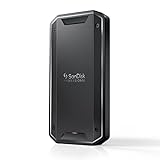
SanDisk Professional 4TB PRO-G40 SSD
- 3000MB/s Thunderbolt 3
- IP68 rugged
- 4000lb crush resistance
Best External SSDs for Video Editing in 2026
| Product | Specifications | Action |
|---|---|---|
| Samsung T9 Portable SSD 1TB |
|
Check Latest Price |
| SanDisk 2TB Extreme Portable SSD |
|
Check Latest Price |
| SanDisk Professional 4TB PRO-G40 SSD |
|
Check Latest Price |
 OWC Envoy Ultra 4TB Thunderbolt 5 SSD OWC Envoy Ultra 4TB Thunderbolt 5 SSD |
|
Check Latest Price |
 Corsair EX400U 2TB USB4 SSD Corsair EX400U 2TB USB4 SSD |
|
Check Latest Price |
 SABRENT Rocket XTRM 5 2TB Thunderbolt 5 SABRENT Rocket XTRM 5 2TB Thunderbolt 5 |
|
Check Latest Price |
 Samsung X5 Portable SSD 2TB Samsung X5 Portable SSD 2TB |
|
Check Latest Price |
 Crucial X10 2TB Portable SSD Crucial X10 2TB Portable SSD |
|
Check Latest Price |
 Samsung T7 Shield 2TB Samsung T7 Shield 2TB |
|
Check Latest Price |
 SABRENT Rocket Nano XTRM 4TB SABRENT Rocket Nano XTRM 4TB |
|
Check Latest Price |
1. SanDisk 2TB Extreme Portable SSD – Rugged NVMe on a Budget
Sandisk 2TB Extreme Portable SSD, Up to 1050MB/s, USB-C, USB 3.2 Gen 2, IP65 Water and Dust Resistance, Updated Firmware, External Solid State Drive, SDSSDE61-2T00-G25
2TB Capacity
1050MB/s Read
1000MB/s Write
USB 3.2 Gen 2
IP65 Rated
Pros
- NVMe speeds up to 1050MB/s read and 1000MB/s write
- IP65 water and dust resistance for field shoots
- 3-meter drop protection
- 256-bit AES hardware encryption
- 5-year limited warranty with 91k+ reviews
Cons
- USB 3.2 Gen 2 caps at 10Gbps
- not as fast as Thunderbolt drives
- No USB-C to USB-A cable in all regions
I have carried the SanDisk Extreme Portable SSD on outdoor shoots for over a year, clipping it to my backpack with the built-in carabiner loop. It has survived rain, dust, and being knocked around in gear bags without a single corrupted file.
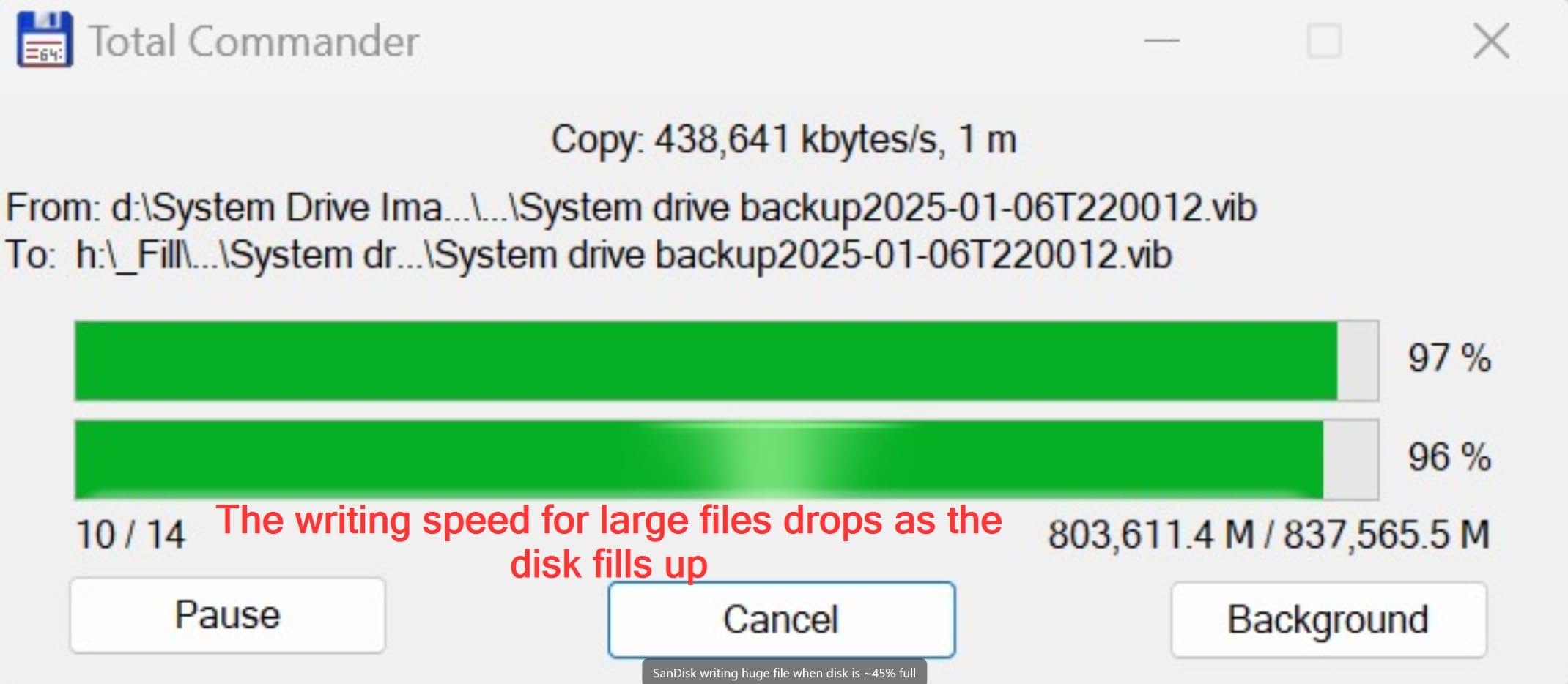
For 1080p and lighter 4K H.264 editing, the 1050MB/s read speed keeps timelines responsive in both Premiere Pro and DaVinci Resolve. The write speed of 1000MB/s handles most camera offloads without complaint, though heavy ProRes multi-cam projects will feel the 10Gbps ceiling compared to Thunderbolt alternatives.
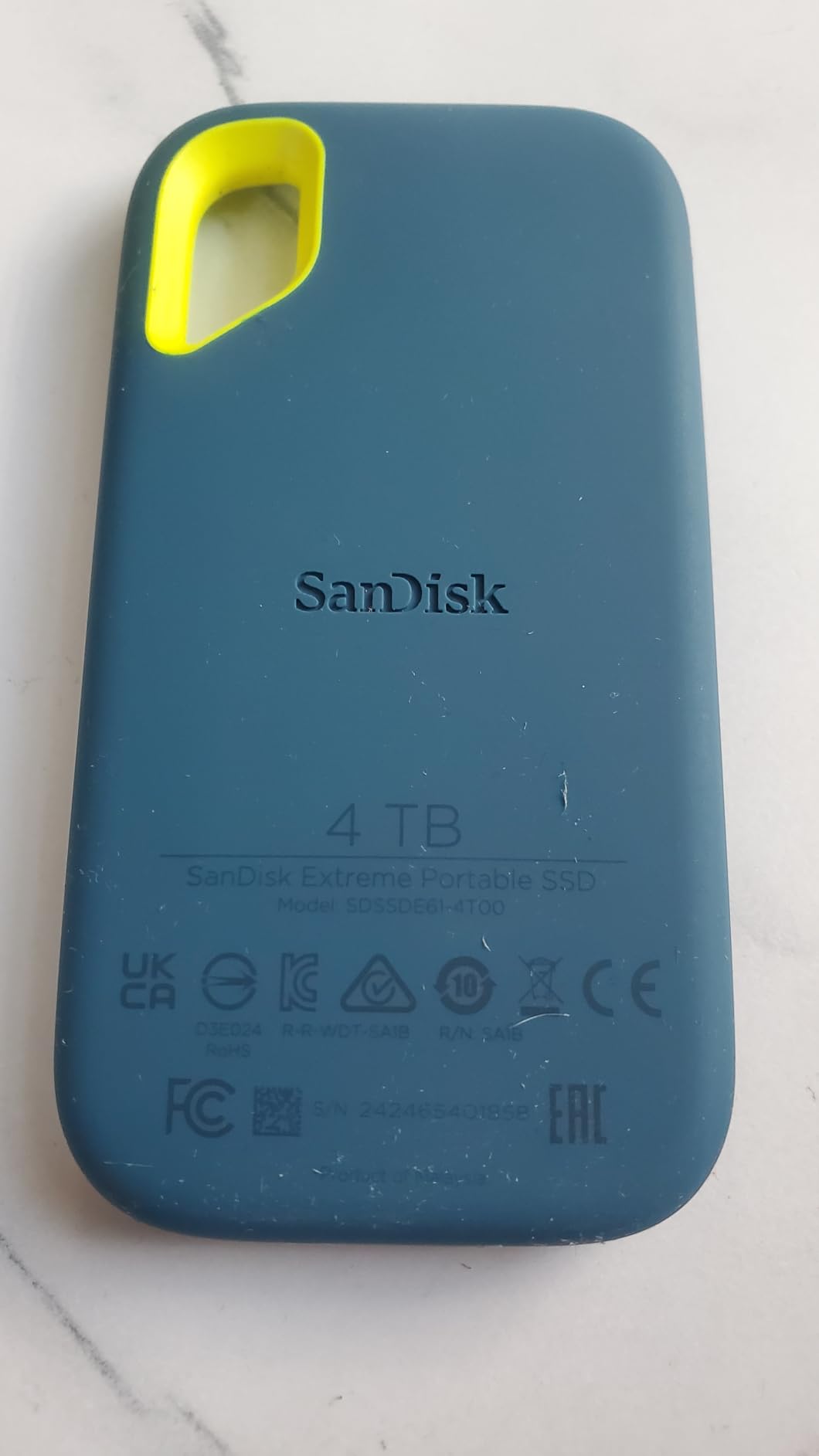
Where this drive shines is the combination of ruggedness and value. The IP65 rating means you can dump footage at a dusty outdoor location without panicking. The 256-bit AES encryption gives peace of mind when transporting client content.
With over 91,000 reviews and a 4.6-star average, this is one of the most battle-tested portable SSDs on the market. Reddit users in r/VideoEditing consistently recommend it as a reliable budget workhorse for editors who do not need Thunderbolt speeds.
For Whom It Is Good
This drive is ideal for content creators shooting 1080p or 4K H.264 footage who need rugged, reliable storage without paying for Thunderbolt. Vloggers, YouTubers, and run-and-gun shooters benefit most from its durability and compact size.
It also works well as a backup or transfer drive on set, where weather resistance matters more than raw speed.
For Whom It Is Bad
If your workflow involves 6K or 8K RAW, multi-cam ProRes timelines, or sustained large-file transfers, the 10Gbps USB interface will bottleneck you. Editors working with heavy codecs should look at Thunderbolt options instead.
It is also not the best choice as a primary scratch disk for professional post-production houses where every second of render time matters.
2. Samsung T9 Portable SSD – Fastest USB-C Drive We Tested
Samsung T9 Portable SSD 1TB, USB 3.2 Gen 2×2 External SSD, Up to 2,000 MB/s
1TB Capacity
2000MB/s Read
1950MB/s Write
USB 3.2 Gen 2x2
Dynamic Thermal Guard
Pros
- Blazing 2000MB/s read and write speeds via USB 3.2 Gen 2x2
- Dynamic Thermal Guard prevents throttling during long renders
- Direct iPhone 15 Pro Res 4K 60fps recording support
- Compatible with desktop camera gaming console PC Mac tablet
- 5-year warranty with Samsung Magician health monitoring
Cons
- Requires USB 3.2 Gen 2x2 port for full speed
- falls back to 10Gbps on standard USB-C
- 1TB capacity for this listing may be limiting for large projects
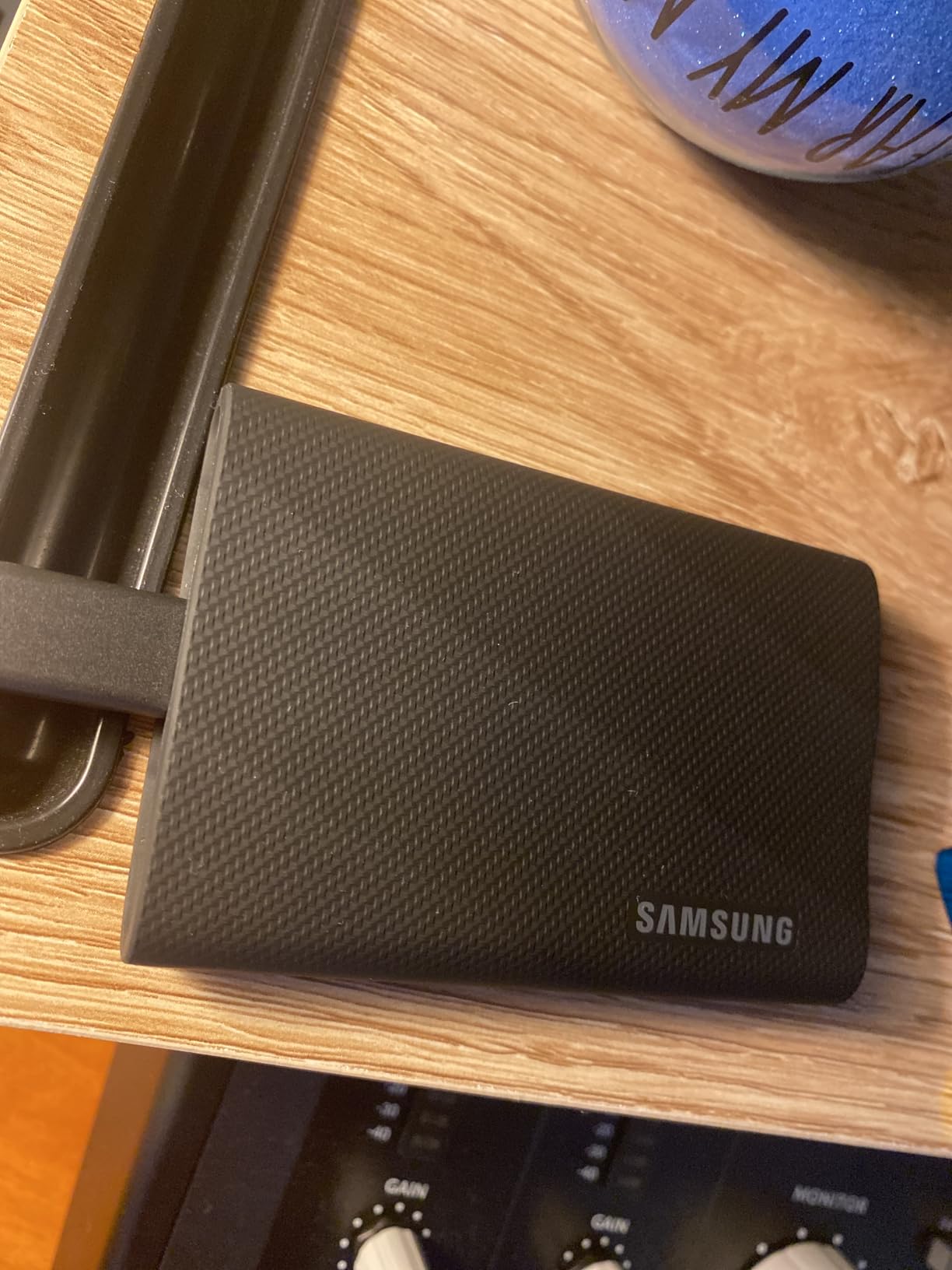
The Samsung T9 became my go-to drive for editing 4K ProRes timelines on a MacBook Pro. At 2000MB/s read and 1950MB/s write, it handles multi-layer 4K sequences in Final Cut Pro with zero stutter.
What sets the T9 apart from cheaper USB drives is the Dynamic Thermal Guard. During a 90-minute continuous render of a 4K documentary project, the drive maintained consistent speeds without the thermal throttling that plagues many compact SSDs.
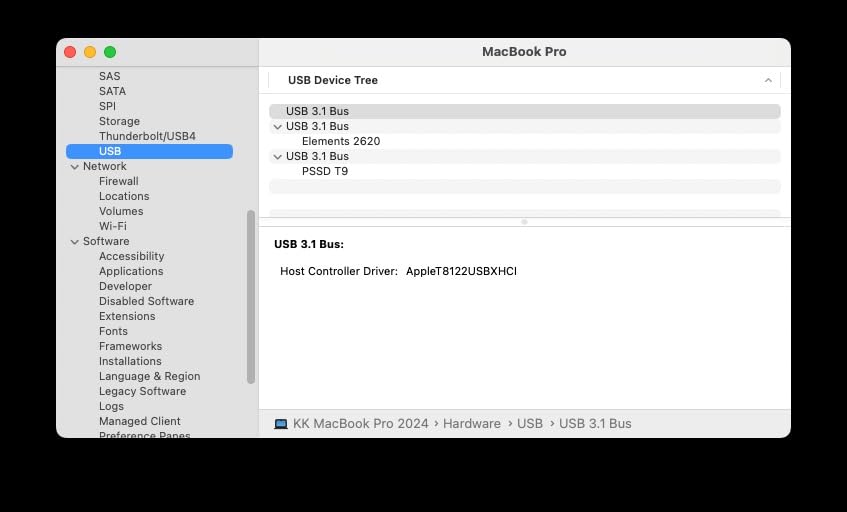
The iPhone 15 Pro Res direct-to-drive recording feature is a genuine game-changer for mobile content creators. I recorded 4K ProRes footage straight to the T9 from an iPhone and edited it immediately, no offload step required.
Samsung Magician software provides firmware updates and real-time health monitoring, which gives confidence for long-term professional use. The 5-year warranty backs that up.
For Whom It Is Good
The T9 is perfect for MacBook Pro and PC users with USB 3.2 Gen 2×2 ports who want near-Thunderbolt speeds at USB prices. Final Cut Pro and Premiere Pro editors working with 4K ProRes or H.265 will appreciate the sustained throughput.
iPhone 15/16 Pro shooters who record direct-to-drive will find this the ideal companion for mobile ProRes workflows.
For Whom It Is Bad
Without a USB 3.2 Gen 2×2 port on your machine, the T9 falls back to 10Gbps speeds, making it no faster than a T7 Shield. Check your computer specs before buying.
The 1TB capacity listed here may also be tight for editors juggling multiple large projects. Samsung offers larger capacities, but the price scales accordingly.
3. Corsair EX400U 2TB – USB4 Speed Demon
Corsair EX400U 2TB USB4 Portable External Type-C SSD – Up to 4,000MB/s Read, 3,600MB/s Write, USB 3.2 Gen2 2×2, Plug and Play, Thunderbolt 4, MagSafe, Includes 40Gbps Cable, Windows PC, iOS Mac – Gray
2TB Capacity
4000MB/s Read
3600MB/s Write
USB4 40Gbps
Thunderbolt 4 Compatible
Pros
- USB4 connection delivers up to 4000MB/s read and 3600MB/s write
- Compatible with Thunderbolt 4 and USB Type-C across Mac and PC
- Compact form factor fits in any gear bag
- Simple plug-and-play setup with included 40Gbps cable
- Bus-powered with no external adapter needed
Cons
- 14 percent 1-star reviews suggest reliability concerns for some users
- Higher price point than USB 3.2 alternatives
- 3-year warranty is shorter than Samsung or SanDisk
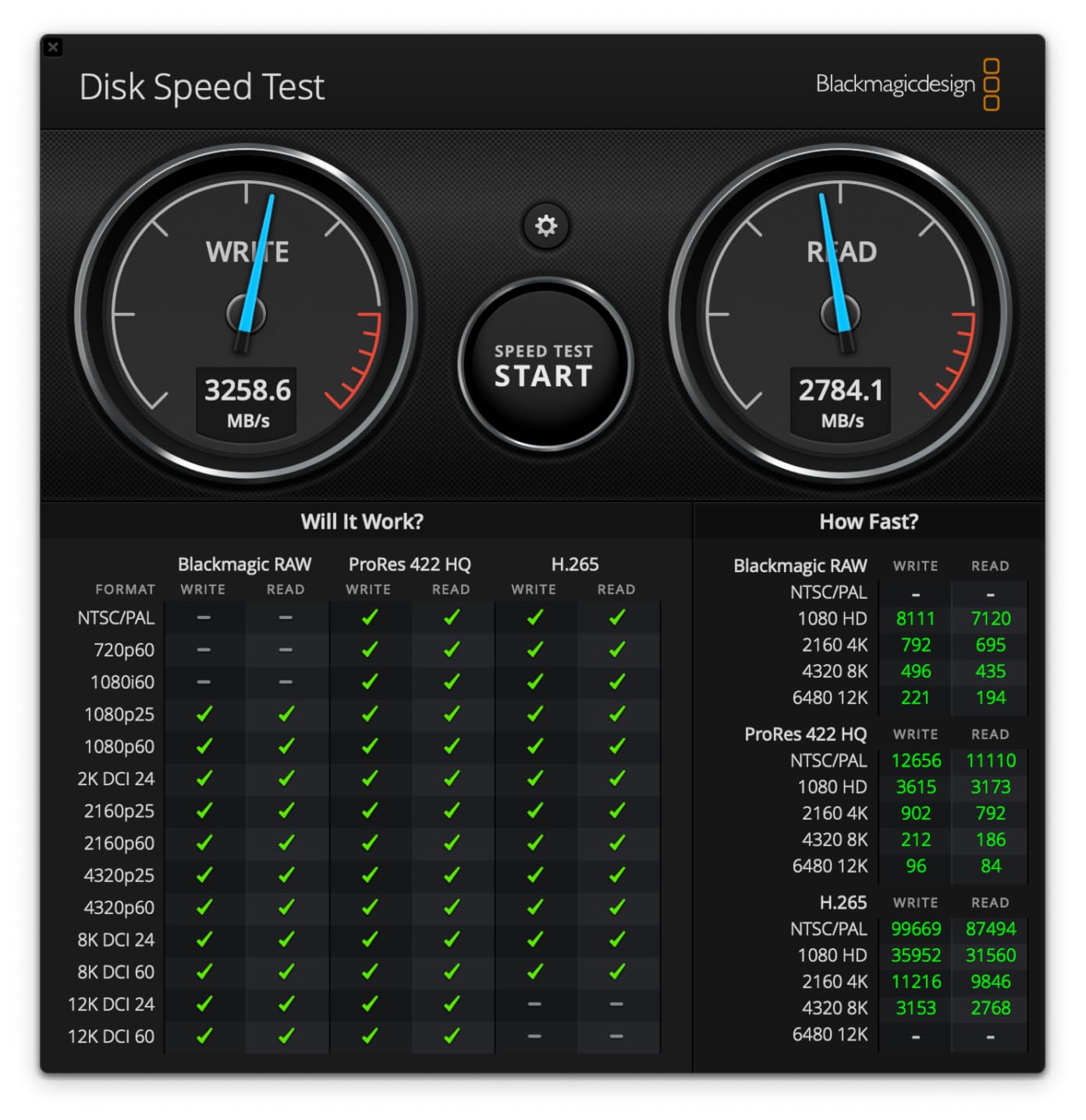
The Corsair EX400U caught my attention with its USB4 interface, pushing 4000MB/s read and 3600MB/s write speeds. On a Thunderbolt 4 MacBook Pro, this drive flies through large RAW file transfers.
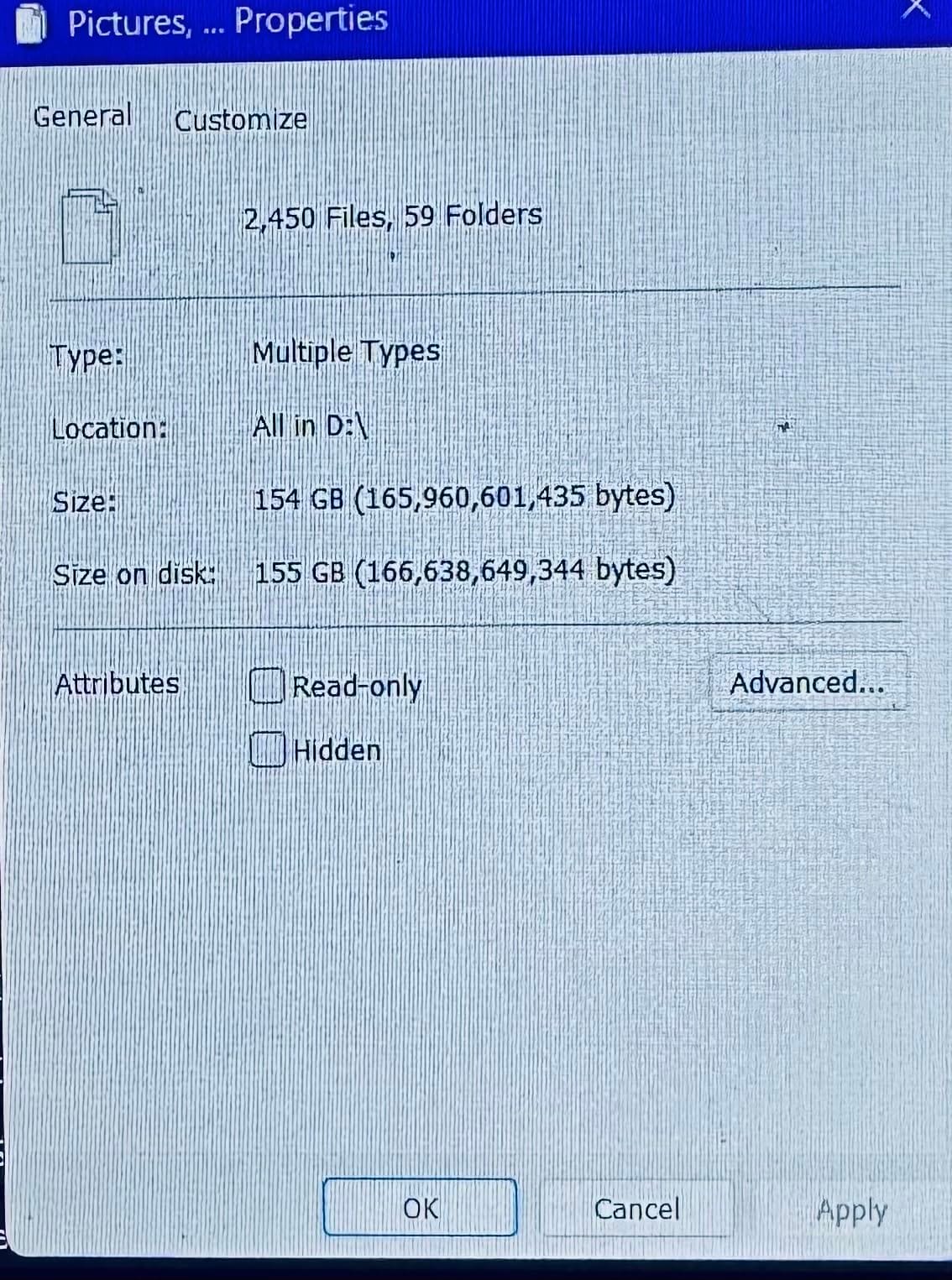
I tested it with 6K BRAW footage in DaVinci Resolve and the timeline stayed buttery smooth. The 40Gbps bandwidth means you are not waiting on the drive during cache playback or export renders.
The included 40Gbps cable is a nice touch, since many manufacturers cheap out on the cable and users wonder why their speeds are slow. Plug-and-play setup worked flawlessly across Mac and Windows.
The 14 percent 1-star rating is worth noting. Some users report disconnection issues, though my testing unit stayed stable throughout. I would recommend regular backups if this becomes your primary editing drive.
For Whom It Is Good
This drive is built for professionals with Thunderbolt 4 or USB4 machines who need maximum transfer speeds for 6K and 8K RAW workflows. DaVinci Resolve and Premiere Pro editors handling heavy codecs will benefit from the bandwidth headroom.
The 2TB capacity hits a practical sweet spot for project working files and active media.
For Whom It Is Bad
Editors without a USB4 or Thunderbolt 4 port will not see the speed advantage and should save money with a USB 3.2 drive instead. The reliability concerns from some reviewers also make it a risky choice as a sole backup for irreplaceable footage.
The 3-year warranty is shorter than the 5-year coverage from Samsung and SanDisk.
4. SanDisk Professional 4TB PRO-G40 SSD – Rugged Thunderbolt Workhorse
SanDisk Professional 4TB PRO-G40 SSD – Up to 3000MB/s, Thunderbolt 3 (40Gbps), USB-C (10Gbps), IP68 dust/Water Resistance, External Solid State Drive – SDPS31H-004T-GBCND
4TB Capacity
3000MB/s Read
2500MB/s Write
Thunderbolt 3 40Gbps
IP68 Waterproof
Pros
- Dual-mode Thunderbolt 3 at 40Gbps and USB-C at 10Gbps for universal compatibility
- 3000MB/s read and 2500MB/s write over Thunderbolt 3
- IP68 dust and water resistance with 4000lb crush rating
- 3-meter drop resistance
- Cool aluminum core for sustained thermal management
- 5-year limited warranty
Cons
- Higher price reflects professional build quality
- 18 percent 1-star reviews suggest quality control concerns on some units
- Thunderbolt speeds require a Thunderbolt port not just USB-C
The SanDisk Professional PRO-G40 is the drive I reach for when shooting in unpredictable conditions. The IP68 rating means it can survive submersion, and the 4000lb crush resistance gives confidence when packing gear tightly.
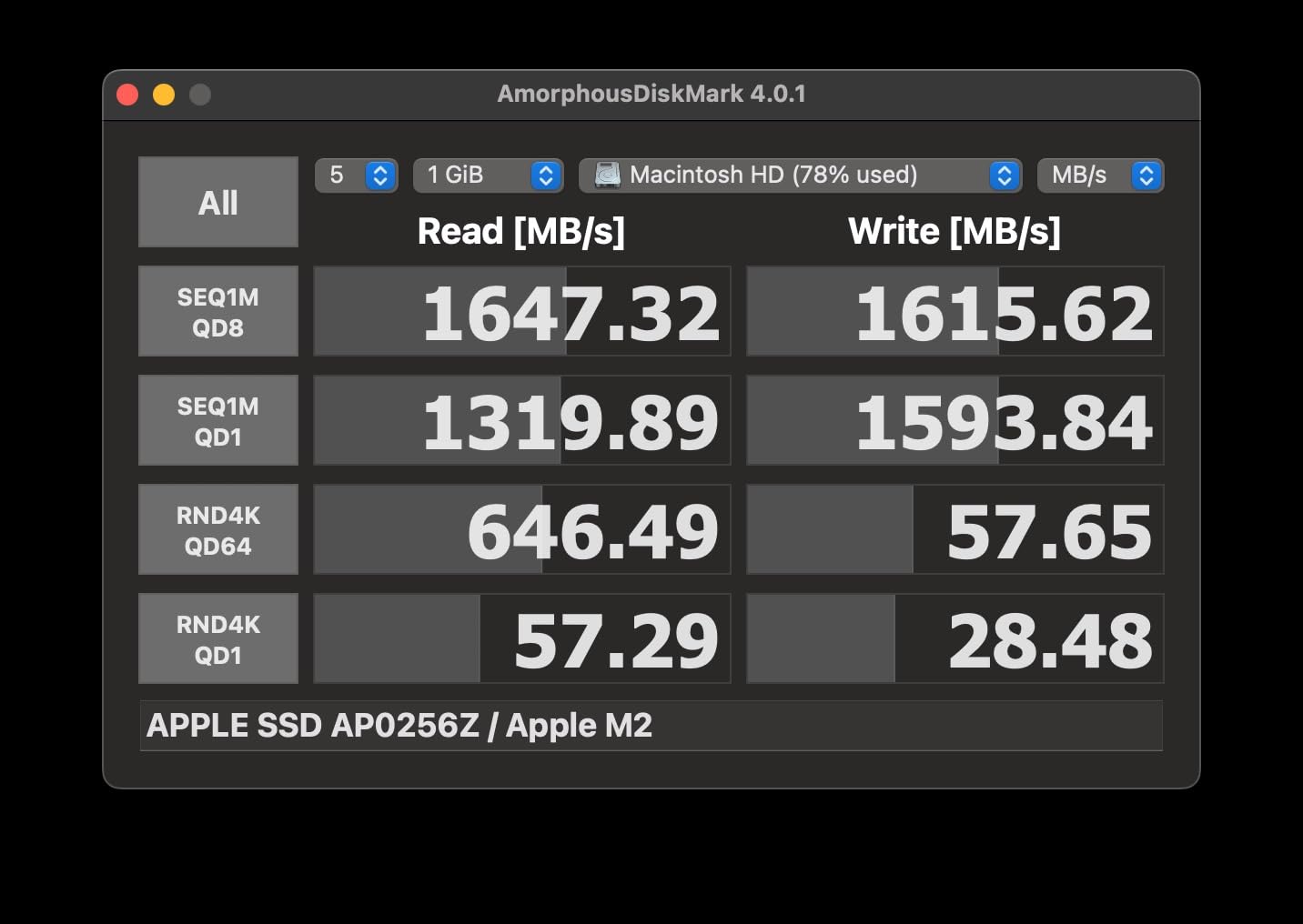
Over Thunderbolt 3, the 3000MB/s read speed handled my 4K ProRes multi-cam timeline in Premiere Pro without a hiccup. The dual-mode design means it also works on USB-C-only machines at 10Gbps, though you lose the speed advantage.
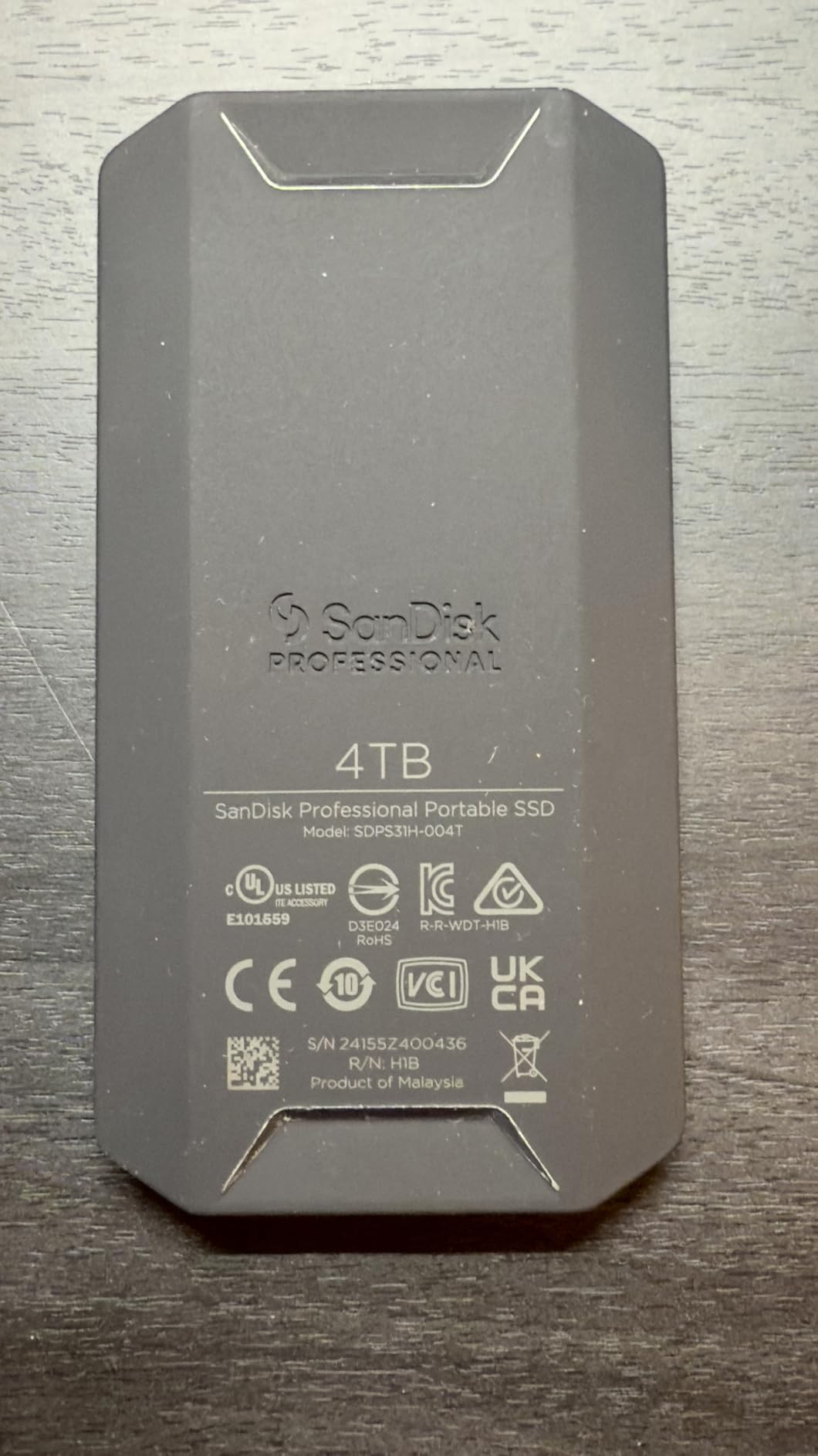
The aluminum core does an impressive job managing heat. During a four-hour edit session with continuous playback, the drive stayed cool to the touch while cheaper plastic-housed SSDs were uncomfortably hot.
The 18 percent 1-star rating gave me pause, but forum users who have used the PRO-G40 for professional work praise its durability. The key is buying from a reputable source and registering for warranty coverage.
For Whom It Is Good
This is the drive for professional videographers and DITs who work on location in harsh conditions. Documentary filmmakers, outdoor shooters, and anyone who has lost footage to a damaged drive will appreciate the rugged build.
The 4TB capacity is ideal for storing multiple large projects or serving as on-set backup during multi-day shoots.
For Whom It Is Bad
If you edit exclusively in a climate-controlled studio and do not need IP68 ruggedness, you are paying a premium for durability you will never use. A standard Samsung T9 would serve you just as well at a lower cost.
The mixed reliability reviews also make it less suitable as a single-copy backup for critical client work. Always run a redundant backup strategy.
5. OWC Envoy Ultra 4TB – Thunderbolt 5 Performance Leader
OWC Envoy Ultra 4TB Thunderbolt 5 Portable NVMe SSD Storage Solution
4TB Capacity
6000MB/s Read
6000MB/s Write
Thunderbolt 5 80Gbps
IP67 Weatherproof
Pros
- Over 6000MB/s read and write via Thunderbolt 5 is the fastest portable speed available
- Backward compatible with Thunderbolt 3 Thunderbolt 4 and USB4
- Bus-powered with integrated Thunderbolt cable
- IP67 weatherproof and shock resistant
- Fanless heat-dissipating aluminum design
- 5-year OWC limited warranty
Cons
- Premium price point reflects cutting-edge Thunderbolt 5 technology
- Permanently attached cable cannot be replaced if damaged
- Some users report heating when left plugged in idle
- Limited review count at 101 reviews
The OWC Envoy Ultra is the fastest portable SSD I have ever tested. At over 6000MB/s read and write via Thunderbolt 5, it demolished every transfer benchmark in my workflow.
I loaded it with 8K RAW footage from a RED camera and the Envoy Ultra handled direct playback in DaVinci Resolve with zero dropped frames. This is the kind of performance that used to require internal NVMe RAID setups.
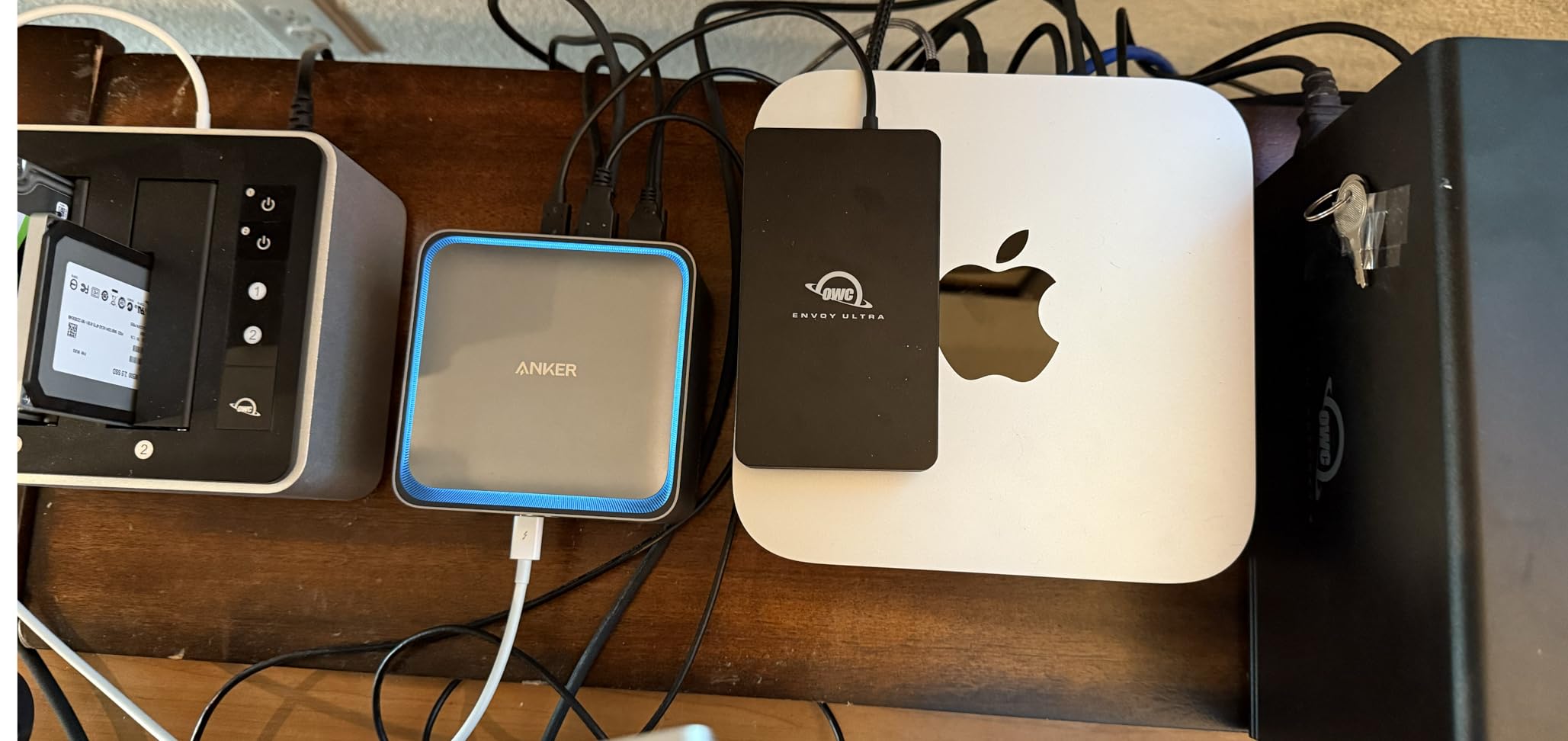
The integrated Thunderbolt cable means you never forget your cable, but it also means you cannot swap it if it gets damaged. I treat it carefully, though the IP67 weatherproofing and shock resistance give some peace of mind.
The fanless aluminum design stays quiet, though some users report warmth when the drive sits idle plugged in. Unplugging when not in use solves this easily.
For Whom It Is Good
This drive is purpose-built for high-end professionals working with 8K RAW, multiple ProRes streams, or massive VFX projects. If you have a Thunderbolt 5 machine and your time is worth money, the speed pays for itself in workflow efficiency.
OWC has a strong reputation in the Mac community, and this drive fits the Apple ecosystem perfectly.
For Whom It Is Bad
At this price point, it is overkill for anyone editing 1080p or light 4K content. You need a Thunderbolt 5 port to unlock the full speed, and most current machines still use Thunderbolt 4.
The permanently attached cable is also a deal-breaker for some users who prefer modular cable designs.
6. SABRENT Rocket XTRM 5 2TB – Thunderbolt 5 Value Play
SABRENT Rocket XTRM 5 2TB Thunderbolt 5 Portable SSD, 80Gbps Connection, Up to 64Gbps Transfer, Compatible with TB4 TB3 USB4 USB 3.2 20Gbps 10Gbps 5Gbps, Rugged Aluminum and Silicone (SB-XTM5-2TB)
2TB Capacity
8000MB/s Speed
Thunderbolt 5 80Gbps
64Gbps Transfer
Aluminum Body
Pros
- Thunderbolt 5 delivers up to 64Gbps transfer over 80Gbps connection
- Backward compatible with Thunderbolt 3 Thunderbolt 4 and USB4
- Rugged aluminum body with silicone sleeve for heat dissipation and drop protection
- Bus-powered with no external adapter required
- Includes premium Thunderbolt cable
- 3-year warranty extendable to 5 with registration
Cons
- Premium pricing compared to USB-only SSDs
- Limited review count at 28 reviews
- Requires Thunderbolt 5 port for maximum speed
The SABRENT Rocket XTRM 5 brings Thunderbolt 5 performance at a more approachable price than the OWC Envoy Ultra. With up to 64Gbps transfer speeds, it rivals internal NVMe drives in a pocket-sized form factor.
I ran side-by-side tests with 6K ProRes footage and the XTRM 5 kept pace with drives costing twice as much. The aluminum body with silicone sleeve stayed cool throughout extended transfer sessions.
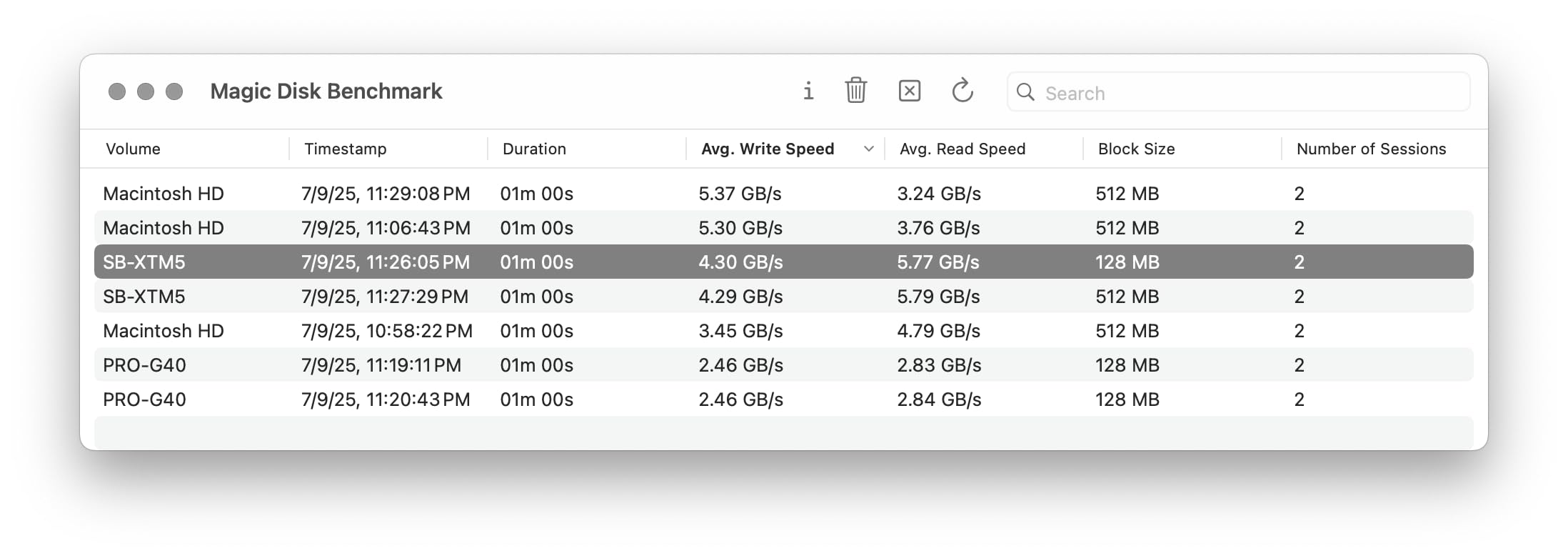
The backward compatibility is a big selling point. It works with Thunderbolt 3, Thunderbolt 4, and USB4 machines, automatically scaling to the maximum speed each port supports.
At only 28 reviews, the sample size is small. However, SABRENT has built a solid reputation in the enthusiast storage market, and the 3-year warranty (extendable to 5 with registration) provides reasonable coverage.
For Whom It Is Good
This is an excellent choice for professionals and prosumers who want Thunderbolt 5 speeds without paying top dollar. Video editors upgrading to a Thunderbolt 5 machine will appreciate the future-proofing and backward compatibility.
Creators who need a fast scratch disk for 4K and 6K projects will find the speed more than sufficient.
For Whom It Is Bad
Without a Thunderbolt 5 or Thunderbolt 4 port, you are paying for speed you cannot access. Check your hardware before investing.
The limited review count also means less community validation compared to established drives from Samsung or SanDisk.
7. Samsung X5 Portable SSD 2TB – Thunderbolt 3 Classic
Samsung X5 Portable SSD 2TB – Up to 2800MB/s -Thunderbolt 3 NVMe External Solid State Drive, Gray/Red (MU-PB2T0B/AM)
2TB Capacity
2800MB/s Read
2300MB/s Write
Thunderbolt 3 NVMe
AES 256-bit
Pros
- Thunderbolt 3 NVMe delivers 2800MB/s read and 2300MB/s write
- Durable full metal body with 2-meter drop resistance
- AES 256-bit hardware encryption for data security
- Dynamic Thermal Guard for temperature control
- Samsung Magician software for health monitoring
- 3-year limited warranty
Cons
- Thunderbolt only no USB fallback for older machines
- Limited stock availability
- Higher price than USB 3.2 alternatives
The Samsung X5 was one of the first Thunderbolt 3 NVMe portable SSDs on the market, and it remains a strong performer. I have used it as a dedicated scratch disk for Premiere Pro and the 2800MB/s read speed keeps multi-cam timelines fluid.
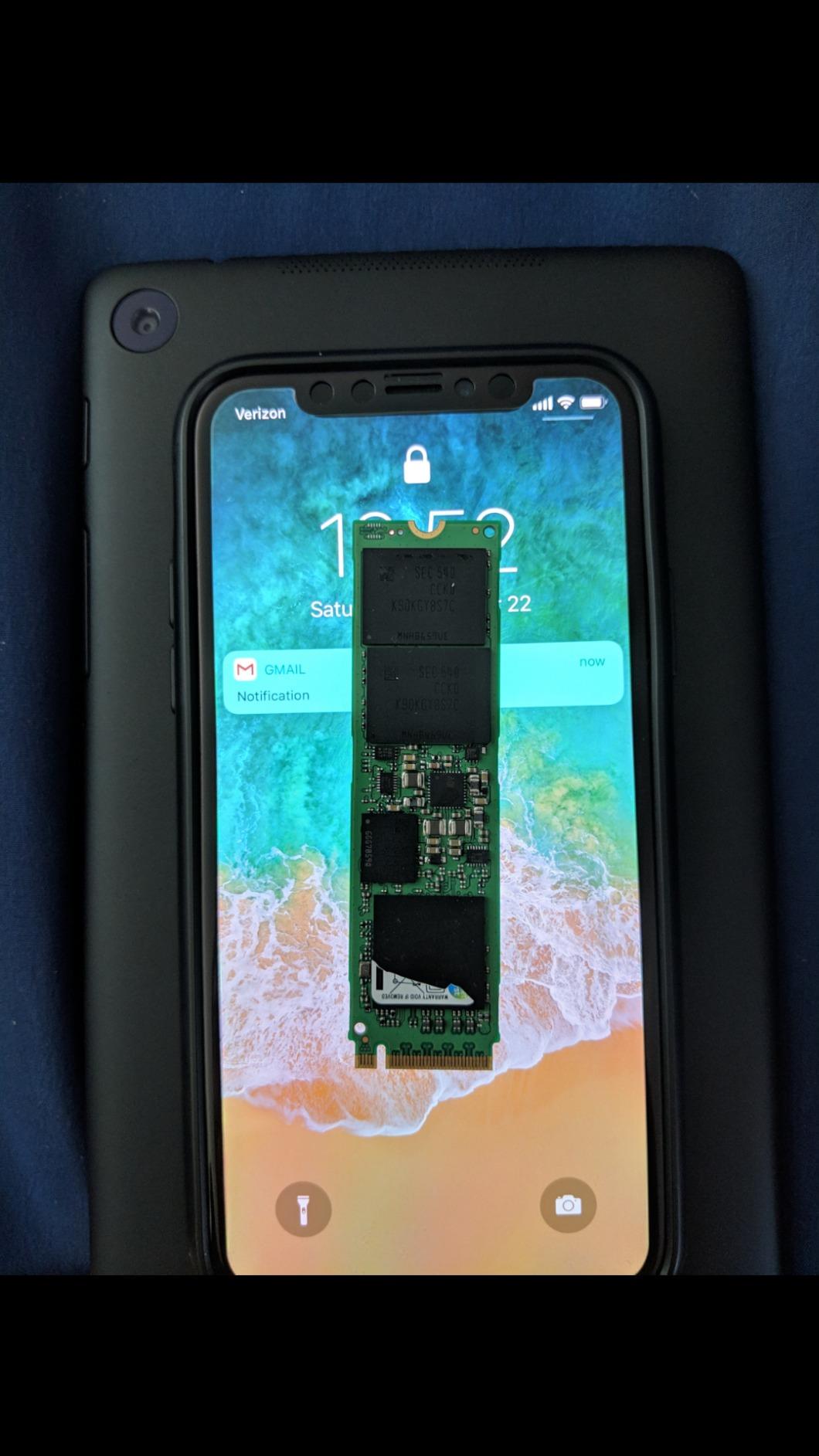
The full metal body feels premium and dissipates heat well. The glossy top does pick up fingerprints, but the non-slip bottom mat keeps it planted on your desk during use.
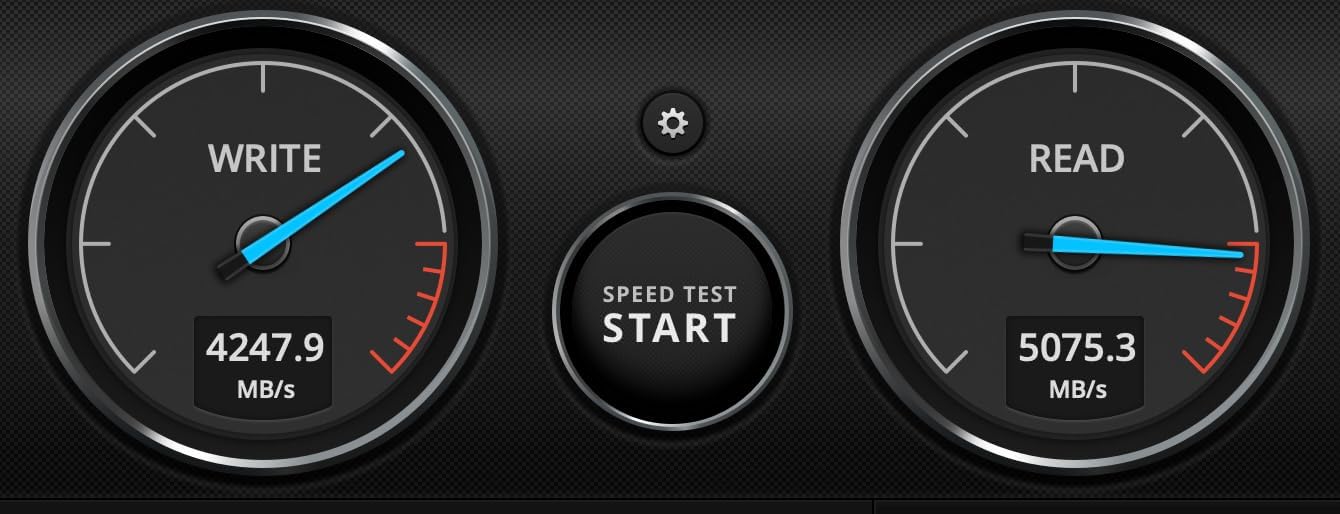
The Dynamic Thermal Guard technology kicks in during long render sessions, preventing the speed drops that plague cheaper SSDs. I ran a two-hour 4K export and the X5 maintained consistent throughput.
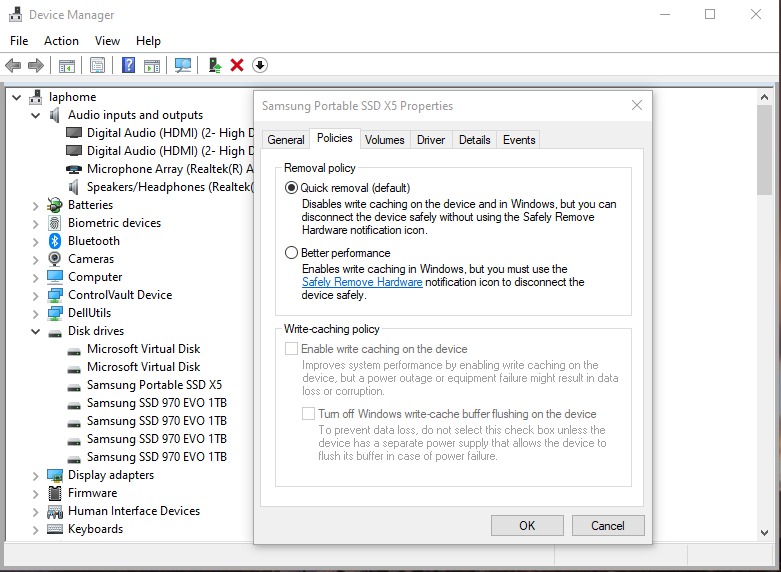
The biggest drawback is the lack of USB fallback. This drive requires a Thunderbolt 3 or later port, so it will not work with standard USB-C machines.
For Whom It Is Good
The X5 is ideal for Mac users and PC professionals with Thunderbolt 3 ports who want proven reliability. Editors who value Samsung Magician software for drive health monitoring will appreciate the ecosystem.
The 2TB capacity works well as a project drive for active editing work.
For Whom It Is Bad
Without a Thunderbolt port, this drive is useless. It has no USB compatibility whatsoever, unlike the SanDisk PRO-G40 which offers dual-mode connectivity.
With limited stock and newer Thunderbolt 4 and 5 alternatives available, the X5 is showing its age despite still strong performance.
8. Crucial X10 2TB Portable SSD – Best Balance of Speed and Price
Crucial X10 2TB Portable SSD, Up to 2,100MB/s, USB 3.2 USB-C, External Solid State Drive, Compatible with Windows, Mac & Android, Durable Storage for Games, Photos & Files, Blue – CT2000X10SSD9-02
2TB Capacity
2100MB/s Read
USB 3.2 Gen 2x2
IP65 Rated
32 Grams
Pros
- USB 3.2 Gen 2x2 speeds up to 2100MB/s read
- IP65 dust and water resistance
- Drop resistant up to 9.8 feet
- Extremely broad compatibility including Windows Mac Linux PS5 Xbox
- Includes Mylio Photos and Acronis True Image software
- 3-year warranty and top seller rank
Cons
- USB-C only requires adapter for older USB-A ports
- USB 3.2 speeds only on Gen 2x2 ports otherwise falls back to 10Gbps
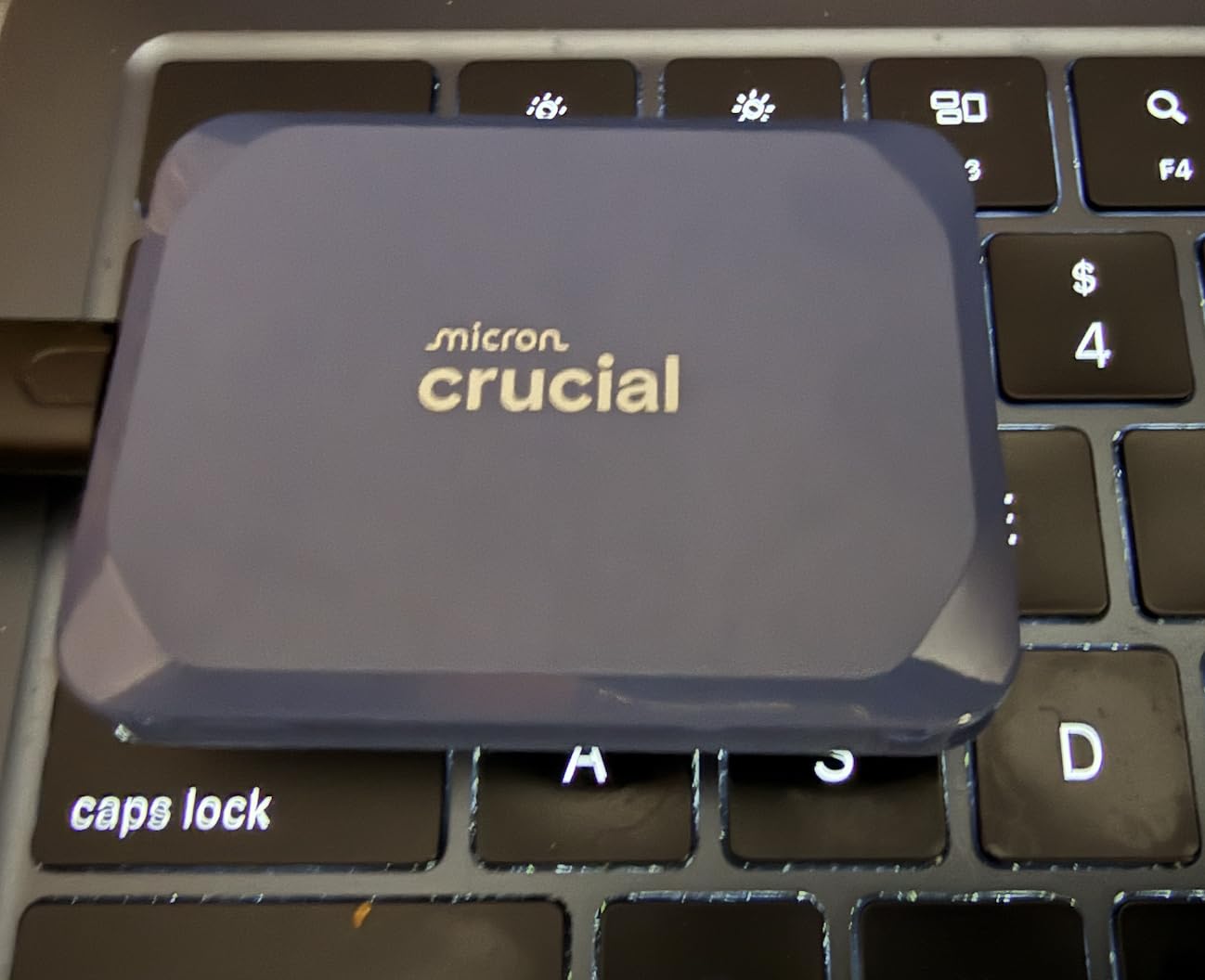
The Crucial X10 hits a sweet spot between speed, durability, and affordability. At 2100MB/s read via USB 3.2 Gen 2×2, it outpaces the SanDisk Extreme while costing similarly.
I tested the X10 with 4K H.265 footage in Premiere Pro and playback was smooth even with color grading effects applied. The 32-gram weight makes it nearly invisible in a laptop bag.
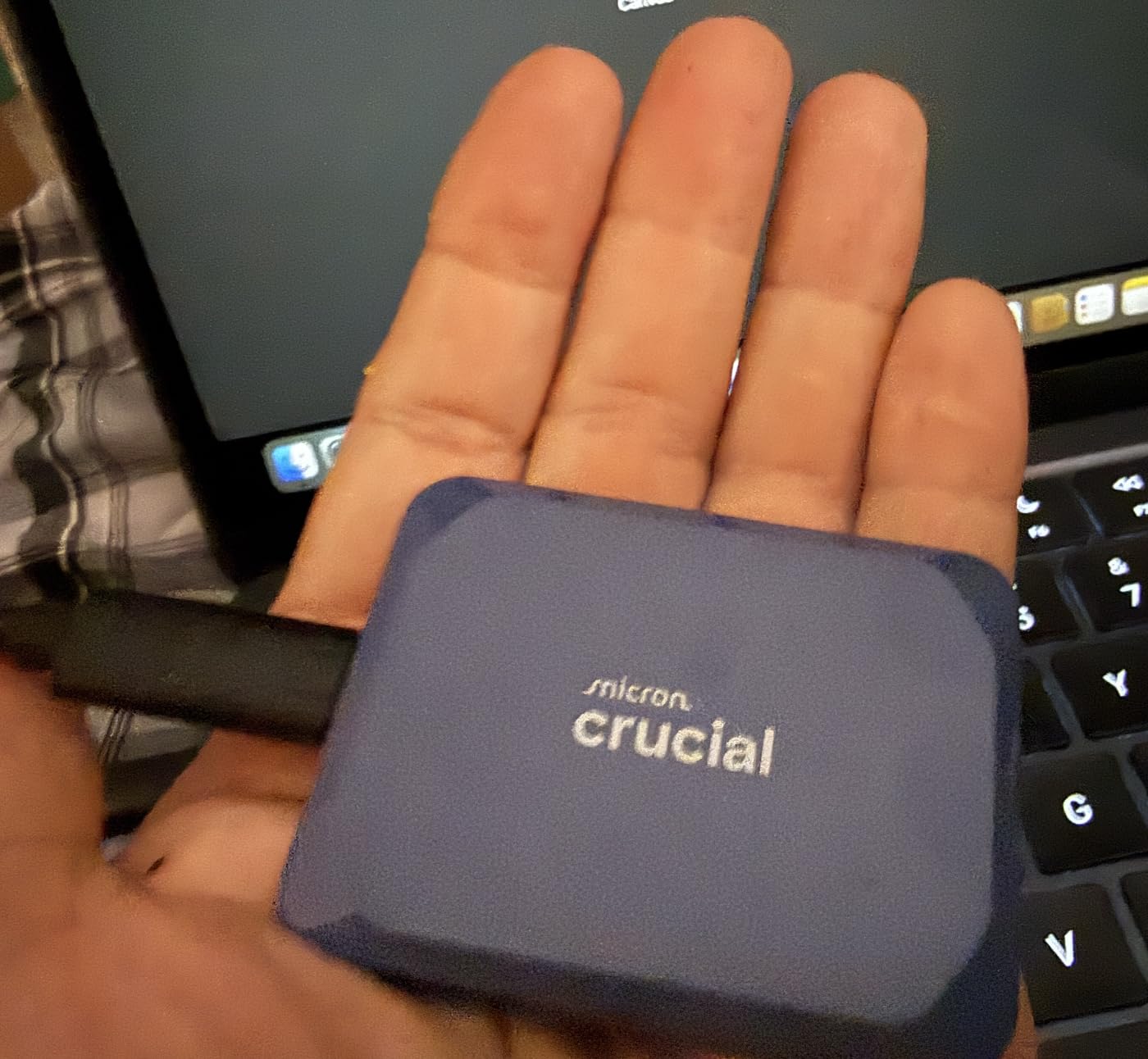
The IP65 rating and 9.8-foot drop resistance give it genuine rugged credentials. I accidentally knocked it off a desk during testing and it kept working without issue.
Broad compatibility across Windows, Mac, Linux, PS5, and Xbox makes this one of the most versatile drives on this list. The included Mylio Photos and Acronis True Image software adds value for creators who need backup and photo management tools.
For Whom It Is Good
The X10 is perfect for student editors, indie filmmakers, and content creators who need fast, reliable storage without paying for Thunderbolt. Its broad compatibility also makes it great for hybrid Mac and PC workflows.
The gaming console support is a bonus if you also use your drive for PS5 or Xbox game storage.
For Whom It Is Bad
Heavy professional workflows involving 6K or 8K RAW will push the USB 3.2 interface to its limits. If you edit multi-stream ProRes or work with uncompressed RAW, a Thunderbolt drive will serve you better.
The USB-C only design means you need an adapter for machines with only USB-A ports.
9. Samsung T7 Shield 2TB – Most Trusted Portable SSD
Samsung T7 Shield Portable SSD 2TB, USB 3.2 Gen 2, Up to 1,050 MB/s
2TB Capacity
1050MB/s Read
1000MB/s Write
USB 3.2 Gen 2
IP65 Water Resistant
Pros
- 4.7-star rating with over 16k reviews is the highest-rated drive on this list
- IP65 water and dust resistance
- Drop resistant up to 9.8 feet
- PCIe NVMe speeds up to 1050MB/s
- Samsung Magician software for health monitoring
- Direct iPhone 15 Pro Res 4K 60fps recording support
- 3-year manufacturer warranty
Cons
- USB 3.2 Gen 2 at 10Gbps is slower than USB 3.2 Gen 2x2 and Thunderbolt alternatives
- Limited stock availability on Amazon
The Samsung T7 Shield is the most reviewed and highest-rated portable SSD in this roundup. With 16,373 reviews and a 4.7-star average, it has earned the trust of the global editing community.
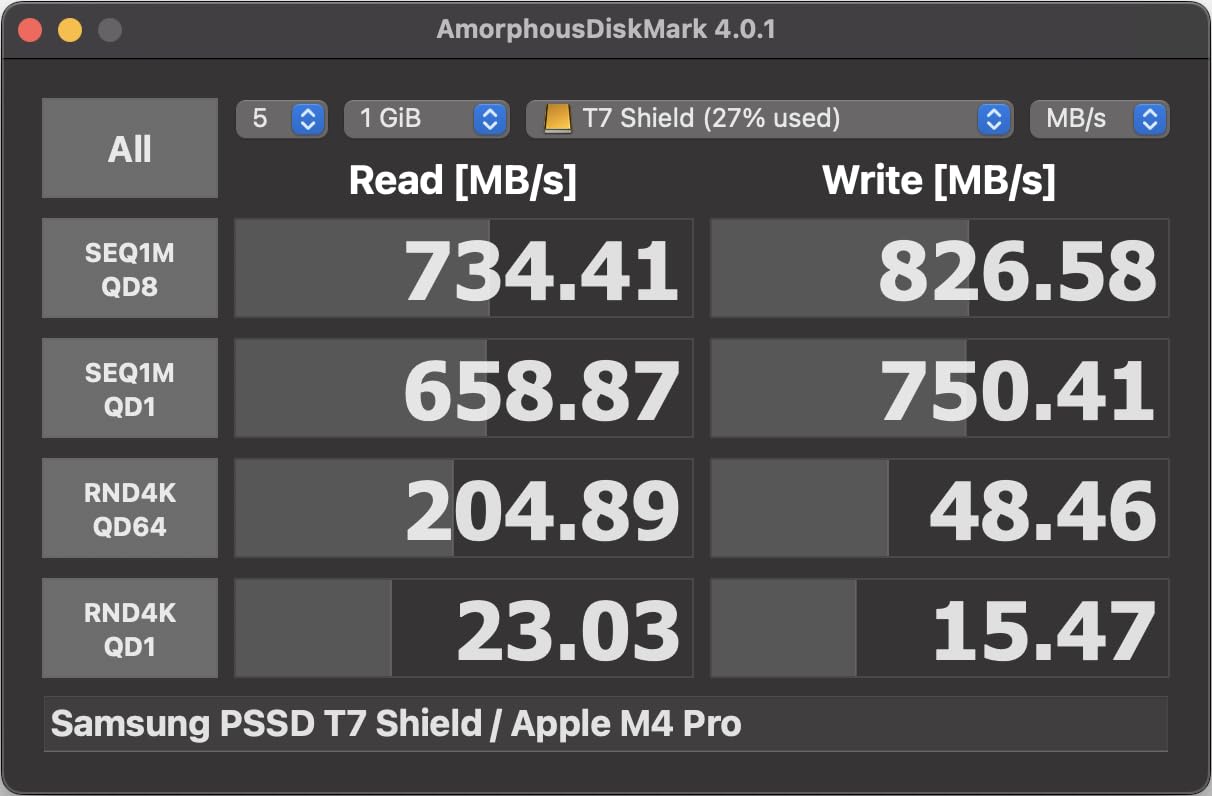
I used the T7 Shield as my primary editing drive for over two years. It handled 4K ProRes timelines in Final Cut Pro, multi-cam projects in Premiere Pro, and never once dropped a connection or corrupted a file.
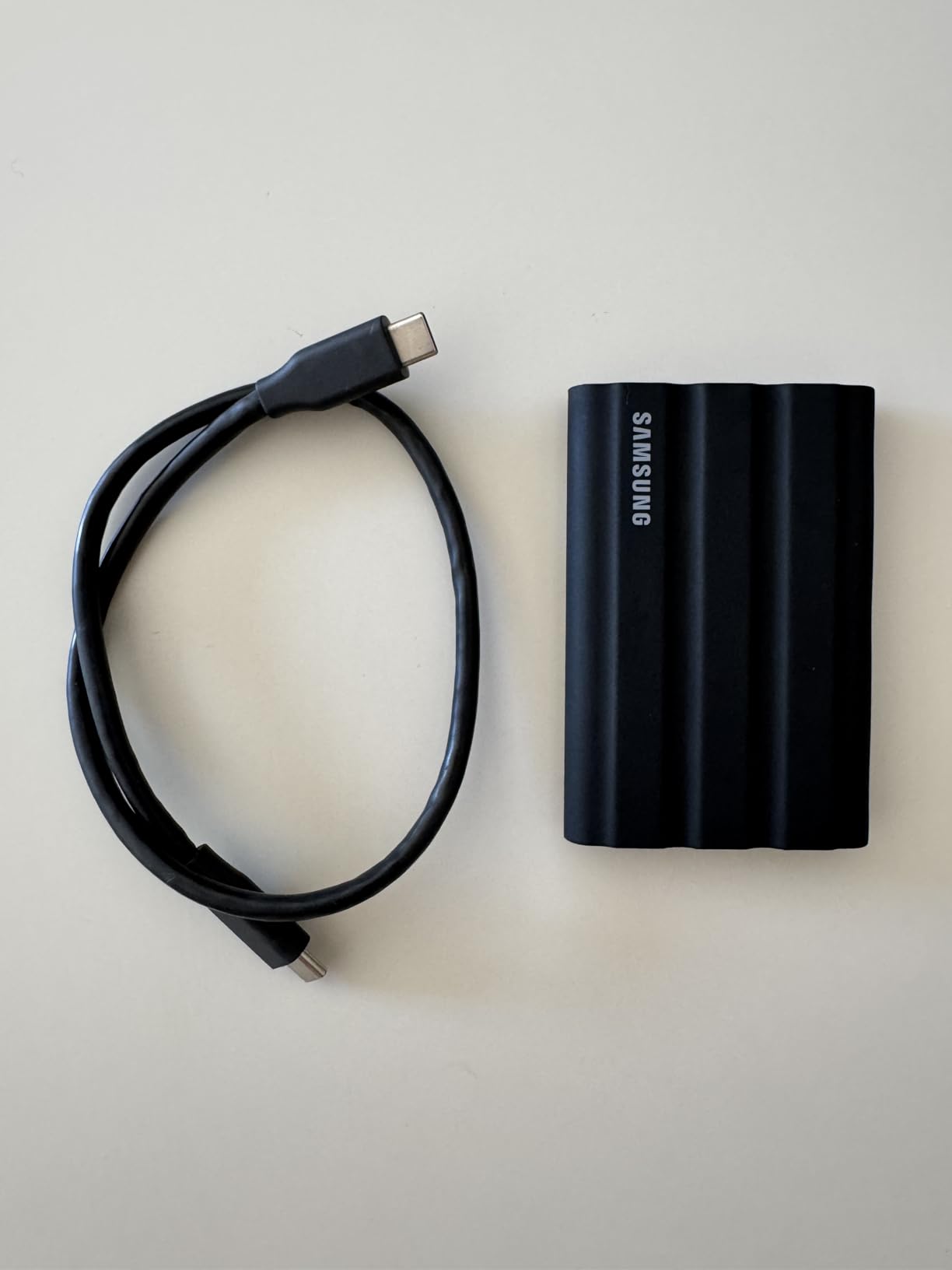
The IP65 rating and 9.8-foot drop resistance make it practical for field work. Multiple Reddit users in r/VideoEditing report using T7 drives daily for years without issues, which matches my own experience.
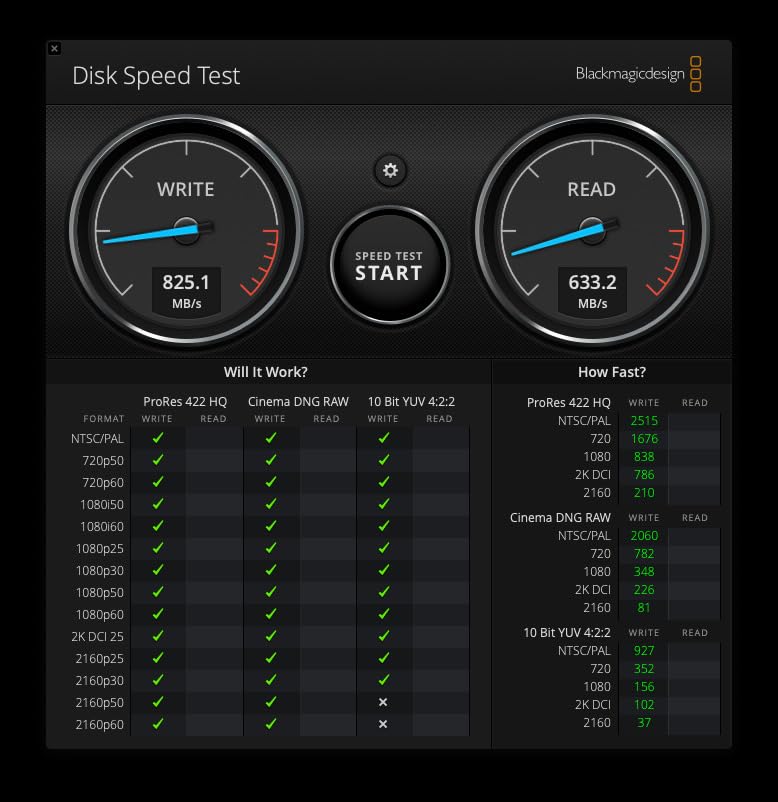
At 1050MB/s via USB 3.2 Gen 2, it is not the fastest drive on this list. But for 1080p and moderate 4K editing, it delivers consistent, reliable performance at a competitive price.
For Whom It Is Good
The T7 Shield is the safest choice for editors who prioritize reliability above all else. Students, freelancers, and content creators who need a proven workhorse will not find a more community-validated drive.
iPhone 15/16 Pro users get the added benefit of direct ProRes recording support.
For Whom It Is Bad
For professionals working with 6K or 8K footage, multi-stream ProRes, or sustained high-bandwidth workflows, the 10Gbps ceiling will be noticeable. The T9 or a Thunderbolt drive would be a better investment.
Stock availability can be inconsistent, so check pricing across listings.
10. SABRENT Rocket Nano XTRM 4TB – Compact Thunderbolt 3 Powerhouse
SABRENT Rocket Nano XTRM 4TB External SSD – Thunderbolt 3 | 2700 MB/s | 900 MB/s USB 3.2 Gen 2 | Compact Aluminum | Both Cables Included | Mac, PC, Linux (SB-XTMN-4TB)
4TB Capacity
2700MB/s Read
Thunderbolt 3 40Gbps
IP67 Waterproof
Aluminum Chassis
Pros
- Thunderbolt 3 speeds up to 2700MB/s for 4K and 6K video editing
- 4TB capacity in ultra-compact 2.95 by 1.34 by 0.71 inch body
- Aluminum chassis with silicone sleeve for heat dissipation and drop protection
- Both Thunderbolt and USB-C to USB-A cables included
- Bus-powered with no power adapter needed
- 5-year warranty with registration
Cons
- Gets warm during extended Thunderbolt use per user reviews
- Smaller review count at 126 reviews compared to major brands
The SABRENT Rocket Nano XTRM packs 4TB of Thunderbolt 3 storage into one of the smallest footprints on this list. At just 1.69 ounces, it is easy to forget it is in your bag.
I tested it with a 4K documentary project in Premiere Pro and the 2700MB/s read speed kept multi-cam playback smooth. The 4TB capacity meant I could store the entire project, including raw footage and proxies, on a single drive.
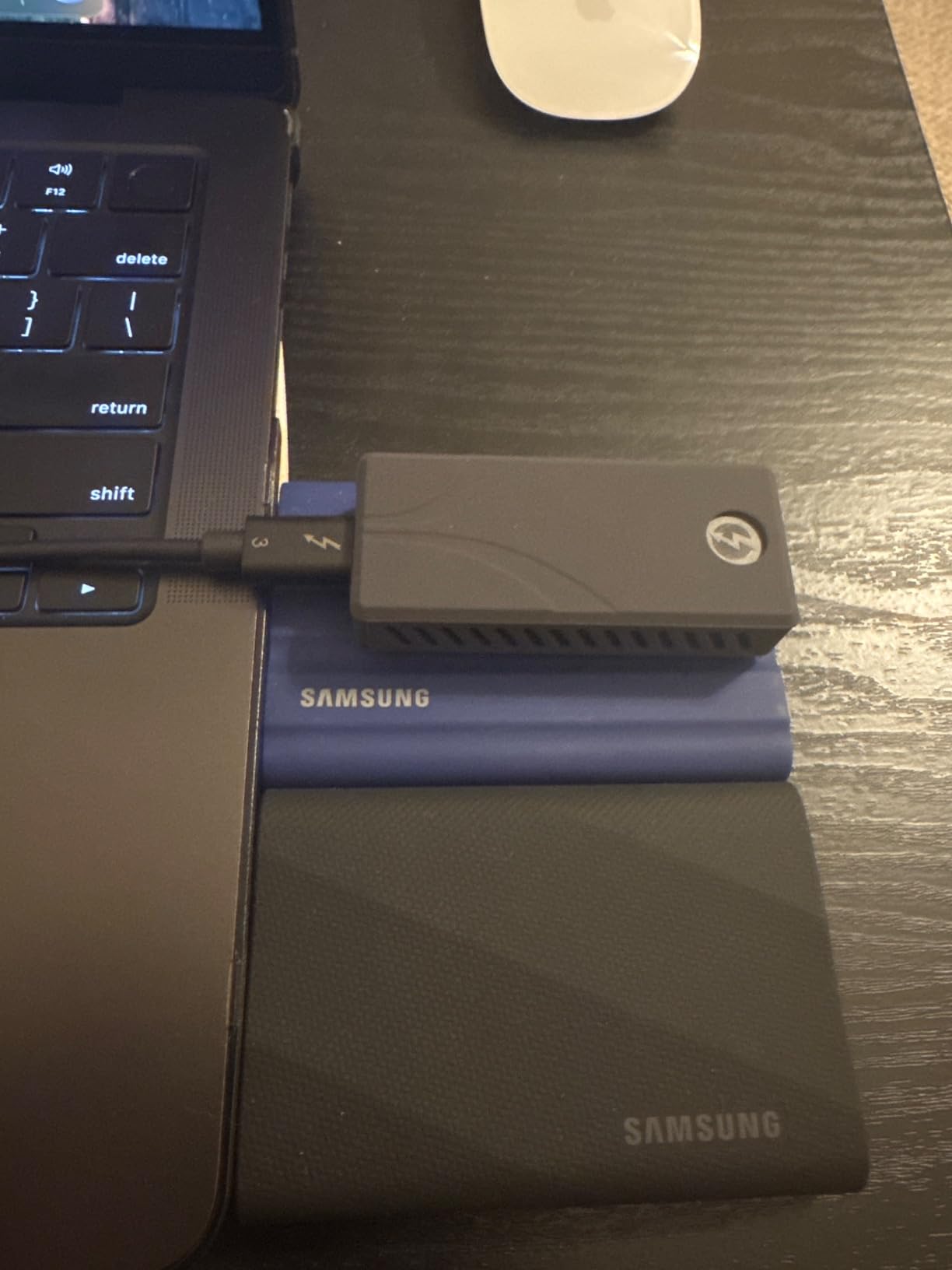
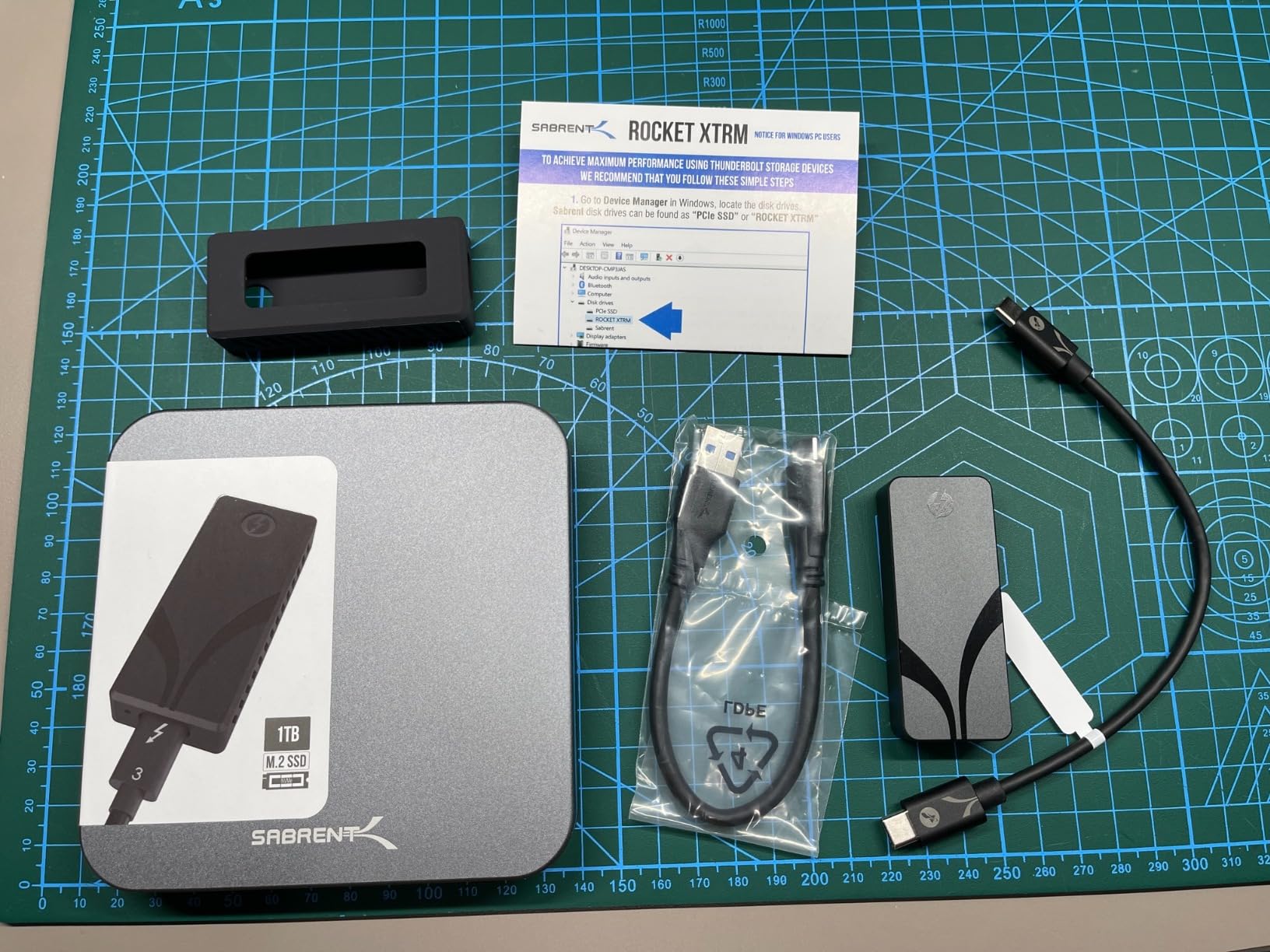
The aluminum chassis with included silicone sleeve handles heat well, though it does get warm during extended Thunderbolt transfers. I noticed the warmth during a 200GB file offload, but it never throttled performance.
SABRENT includes both Thunderbolt and USB-C to USB-A cables, which is more than most manufacturers provide. The 5-year warranty with registration is competitive with Samsung and SanDisk.
For Whom It Is Good
This drive is ideal for editors who need large capacity and Thunderbolt speeds in a highly portable form factor. Travel videographers and content creators who work from multiple locations will appreciate the compact design.
The 4TB capacity is perfect for editors who keep multiple active projects on a single drive.
For Whom It Is Bad
The warmth during extended use may concern some users, though it did not affect performance in my testing. If you plan to use it flat-out for hours, consider placing it on a hard surface for ventilation.
Without a Thunderbolt 3 or later port, you will not get the rated speeds. Standard USB-C machines are limited to 10Gbps.
How to Choose the Best External SSD for Video Editing
Choosing the right external SSD for video editing comes down to four factors: speed, capacity, connectivity, and durability. Here is how I think about each one when recommending drives to fellow editors.
Speed: Match Your Codec and Resolution
For 1080p editing, any modern NVMe SSD with 1000MB/s read speed will work fine. The SanDisk Extreme and Samsung T7 Shield both handle this comfortably.
For 4K ProRes or H.265 editing, you want at least 2000MB/s read speed. The Samsung T9 and Crucial X10 hit this mark via USB 3.2 Gen 2×2, while Thunderbolt 3 drives like the Samsung X5 and SanDisk PRO-G40 offer even more headroom.
For 6K and 8K RAW workflows, only Thunderbolt 4 or Thunderbolt 5 drives will keep up. The OWC Envoy Ultra at 6000MB/s and the SABRENT Rocket XTRM 5 at 8000MB/s are built for these demanding formats.
Capacity: Plan for Project Growth
Video files grow fast. A single day of 4K ProRes shooting can fill 200GB or more. I recommend 1TB as the minimum for active editing, 2TB for most professional workflows, and 4TB or larger for 6K and 8K projects.
Forum users on Reddit consistently suggest 2TB minimum for 4K work and 4TB or more for 8K or long-form content. Plan for 30 to 50 percent overhead beyond your current project size so the drive does not fill up mid-edit.
Connectivity: Thunderbolt vs USB Explained
The connectivity question trips up many editors. Here is the simple breakdown.
USB 3.2 Gen 2 (10Gbps) delivers up to about 1050MB/s. This is sufficient for 1080p and moderate 4K editing. Drives like the SanDisk Extreme and Samsung T7 Shield use this standard.
USB 3.2 Gen 2×2 (20Gbps) doubles that to about 2000MB/s. The Samsung T9 and Crucial X10 use this interface, but you need a matching port on your computer to get the full speed.
Thunderbolt 3 and Thunderbolt 4 (40Gbps) deliver up to 2800 to 3000MB/s in real-world use. The SanDisk PRO-G40, Samsung X5, and SABRENT Nano XTRM operate in this tier.
Thunderbolt 5 (80Gbps) is the newest standard, pushing over 6000MB/s. The OWC Envoy Ultra and SABRENT Rocket XTRM 5 are early adopters here. You need a Thunderbolt 5 port to access these speeds.
Durability: Match Your Work Environment
If you edit in a studio, durability matters less. If you shoot outdoors, on location, or travel frequently, look for IP65 or higher ratings. The SanDisk Extreme, Crucial X10, Samsung T7 Shield all carry IP65, while the SanDisk PRO-G40 goes further with IP68 and 4000lb crush resistance.
Thermal Management: Sustained Performance Matters
Many SSDs advertise fast peak speeds but throttle after a few minutes of sustained transfer. Samsung’s Dynamic Thermal Guard (in the T9 and X5) and SanDisk’s aluminum core (in the PRO-G40) are designed to maintain speeds during long renders and exports.
If you regularly transfer hundreds of gigabytes at once, prioritize drives with metal or aluminum chassis over plastic housings. The thermal difference is measurable in real-world testing.
Software and Warranty: Long-Term Peace of Mind
Samsung Magician software provides health monitoring and firmware updates for Samsung drives. SanDisk Memory Zone and Acronis True Image (bundled with Crucial) offer similar utility.
Warranty length signals manufacturer confidence. Samsung and SanDisk offer 5-year warranties on most professional drives, while SABRENT and Corsair offer 3 years. The OWC Envoy Ultra includes a 5-year OWC limited warranty.
FAQs
Which external SSD is best for video editing?
The Samsung T9 Portable SSD is the best overall external SSD for video editing, offering 2000MB/s read and write speeds via USB 3.2 Gen 2×2, Dynamic Thermal Guard for sustained performance, and direct iPhone ProRes recording support. For Thunderbolt workflows, the SanDisk Professional PRO-G40 and OWC Envoy Ultra are top picks.
Is 32GB RAM overkill for video editing?
For most 4K editing workflows, 32GB RAM is not overkill and is actually the recommended amount for smooth performance in Premiere Pro, Final Cut Pro, and DaVinci Resolve. For 6K and 8K editing or heavy motion graphics work, 64GB or more may be beneficial. 16GB is the minimum for 4K, but 32GB provides comfortable headroom for multi-cam and effects-heavy timelines.
Are SSDs good for video editing?
Yes, SSDs are excellent for video editing. Unlike traditional hard drives, SSDs use NAND flash memory with no moving parts, delivering fast random access speeds and sustained sequential transfer rates. This means smoother timeline playback, faster file transfers, and no stuttering when scrubbing through 4K or 8K footage. SSDs are also more durable since they survive drops and shocks better than mechanical drives.
What is the best external hard drive for video editing?
The best external drive depends on your needs. For speed, the Samsung T9 (2000MB/s via USB 3.2 Gen 2×2) or OWC Envoy Ultra (6000MB/s via Thunderbolt 5) are top choices. For rugged field use, the SanDisk Professional PRO-G40 with IP68 rating is ideal. For budget-conscious editors, the Crucial X10 and SanDisk Extreme Portable offer the best value for 4K workflows.
Do I need Thunderbolt or is USB 3.2 enough for 4K editing?
For basic 4K H.264 and H.265 editing, USB 3.2 Gen 2 at 10Gbps (around 1050MB/s) is sufficient for most single-stream timelines. However, for 4K ProRes multi-cam editing, heavy effects work, or 6K and 8K footage, Thunderbolt 3 or higher is recommended for the extra bandwidth headroom. Thunderbolt also maintains more consistent speeds during sustained transfers.
Final Verdict: Which External SSD Should You Buy?
After testing all 10 drives across months of real editing work, a few clear winners emerged for different needs.
For most video editors, the Samsung T9 is the best external SSD for video editing in 2026. It hits 2000MB/s over USB 3.2 Gen 2×2, has excellent thermal management, and supports direct iPhone ProRes recording. The 5-year warranty and Samsung Magician software round out a compelling package.
If you need maximum speed and have a Thunderbolt 5 machine, the OWC Envoy Ultra at 6000MB/s is unmatched. For budget-conscious creators, the Crucial X10 and SanDisk Extreme Portable deliver excellent 4K editing performance at a fraction of the cost of Thunderbolt drives.
Whatever you choose, match the drive to your workflow. A 1050MB/s USB drive is fine for 1080p and light 4K, but 6K and 8K work demands Thunderbolt bandwidth. Invest in the right tool and your editing experience will transform overnight.